Just International

Life hasn’t been the same, since I grew up- Perspective from a Kashmiri father

By Dr Adil Malik

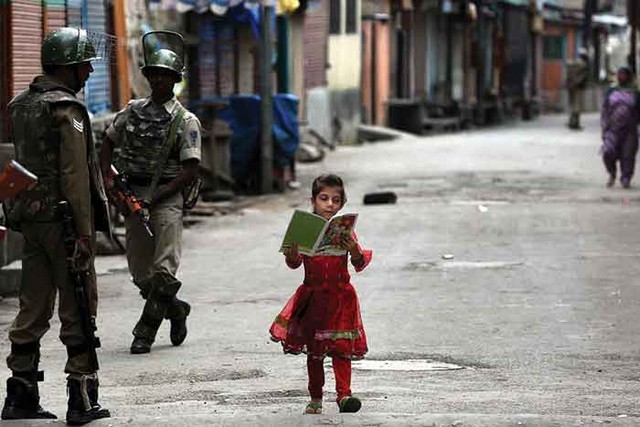
Often in life, when one has kids, they plant a thousand wishes, dreams and aspirations for them- the kind of life they’d want them to have, the kind of clothes they’d like to see them in, the kind of the person they envision them to be and numerous other colours of an ideal life. I was blessed too with the opportunity to be a father few years back, but sitting back in silence, I question sometimes if it was really that fortunate?… In a land of unending uncertainties and suffering, do I stand as someone blessed or as a condemned sinner for having dragged someone to this world, regardless of his will.

Born in what is called the golden era of Bollywood in Kashmir, my childhood in the 80s started as a surreal tale in the valleys of Kashmir. But as fate would have it, the roads soon turned into rivers of blood, the songs we played on our radio sets soon translated into elegies for deceased, our joyful shouts in the streets were soon drowned by the wailing of widows, Kashmir painted a grim contrast as I, including my peers, resisted growing up in those nights resounding gunshots and encounters. I now remember those dark nights and days filled with nothing but fear and tears.

Many years down the line, my heart still skips a beat whenever I see my children watching the news now. They often ask me, why and how does the torment spread in Kashmir like wildfire. This question used to often render me speechless and captivate my thoughts even as a child and it still leaves me speechless with shivers running down my spine. I still at times, keep a brave face on and tell my kids to not fear, switching channels on the screen; pretending everything is perfect in the land they live in. However, deep down, the child in me still fears losing them to reality.

For how long can I lie to myself and them? For how long can I prevent the fundamentalist or extremist ideological influences from affecting their pure souls? My children have an unbound access to news channels, internet and social networks. They are the next generation well-informed people with a rational thinking process. They have their own set of questions pertaining to the history and future of Kashmir and Kashmiris. For how long can I keep defending the sad realities of our life?

When I go out to earn a living for them, I have a persistent doubt if I would be fortunate enough to return home unharmed, if I would see my family, if I would be able to embrace them once again. Today I have no reason to hide that I still live all those traumas that I witnessed in my formative years. These are the wounds I have secretly hidden from myself and my family for very long under the garb of education, prosperity and future.

Although I have always been a man to continue believing in hope and future, there are moments like these when my hidden vulnerabilities resurface and I cannot help but recall Agha Shahid Ali’s poem, Kashmir is a country without a post office. I resonate with this every single time, when despite being born here, I am forced to feel I don’t belong here. Every single time while holding the tender hands of my children, I am forced to take sides, I invariably look into the sense of loss and bewilderment in my children’s eyes. What future do I promise them in a place where the future of their father remains sadly debatable.

I do not want them to suffer the fate, I did. I don’t want them to see dead bodies sprawling across their green meadows. I don’t want them to get locked in their secret bubbles and not have a chance to bloom in life. I don’t want them to grow up into hypocritical fathers that lie blatantly to their children.

This is a cry from a father, maybe to all those who share the same trouble as I, or maybe to thousands of those unborn children who are at the brink of slipping into a void of oblivion and uncertainty. Please do not arrive at our doorsteps, And for the parents who perhaps have eternally sinned by supplying the bodies that eventually burn, should we all sometime connect together and look for ways how to prevent those we have immensely and deeply loved?

Dr Adil Malik is a Social activist and Public Servant Serving as Govt employee in health and medical education department of J&K

27 September 2020

Source: countercurrents.org

The Death of Andre Vltchek, a Passionate Warrior for Truth

By Edward Curtin

“If the world is upside down the way it is now, wouldn’t we have to turn it over to get it to stand up straight?” – Eduardo Galeano, Upside Down, 1998

For decades, Andre Vltchek, an old-school journalist and artist (but a young man) who traveled the world in search of truth and who always stood up straight, tried to revolve the world and encourage people to revolt against injustice. In this age of arm-chair reporters, he stood out for his boldness and indefatigable courage. He told it straight. This irritated certain people and some pseudo-left publications, who sensed in him a no bullshit fierceness and nose for hypocrisy that frightened them, so they stopped publishing his writing. He went where so many others feared to tread, and he talked to people in places that were often the victims of Western imperialistic violence. He defended the defenseless and encouraged their defense.

Now he is dead. He died in the back seat of a chauffeur driven rental car on an overnight drive to Istanbul, Turkey. He was sleeping, and when his wife attempted to wake him upon arrival at their hotel, she couldn’t. He was 57-years-old.

Let him sleep in peace, but let his words ring out, his passionate cries for justice and peace in a world of violent predators.

Those who knew him and his work feel a great, great loss. His friend and colleague Peter Koenig wrote this touching goodbye.

As Koenig says, Vltchek was always defending those around the world who are considered disposable non-people, the Others, the non- whites, victims of Western wars, both military and economic, in places such as West Papua, Iraq, Syria, Africa, etc. He had a chip on his shoulder, a well justified chip, against the one-sided Western media and its elites that were always lecturing the rest of the world about their realities.

He was recently in the United States, and here is what he wrote:

But notice one thing: it is them, telling us, again, telling the world what it is and what it is not! You would never hear such statements in Africa, the Middle East, or Asia. There, people know perfectly well what it really is all about, whether it is about race or not!

I have just spent two weeks in the United States, analyzing the profound crises of U.S. society. I visited Washington, D.C., Minneapolis, New York, and Boston. I spoke to many people in all those places. What I witnessed was confusion and total ignorance about the rest of the world. The United States, a country which has been brutalizing our Planet for decades, is absolutely unable to see itself in the context of the entire world. People, including those from the media, are outrageously ignorant and provincial.

And they are selfish.

I asked many times: “Do black lives matter all over the world? Do they matter in the Democratic Republic of Congo, and do they matter in West Papua?” I swear, I received no coherent answer.

Somebody has to tell them… Somebody has to force them to open their eyes.

A few years ago, I was invited to Southern California to show my documentary work from Africa (my feature documentary film Rwanda Gambit, about West-triggered genocides in both Rwanda and later in the Democratic Republic of Congo), where millions of black people are dying, in order for the vast majority of the U.S. whites to live in piggish opulence.

But before I was allowed to present, I was warned: ‘Remember, people here are sensitive. Do not show too much of brutal reality, as it could disturb them.’

Hearing that, I almost left the event. Only my respect for the organizer made me stay.

Now I am convinced: it is time to force them to watch; to see rivers of blood, which their laziness, selfishness, and greed have triggered. It is time to force them to hear shouts of the agony of the others.

But as everyone knows, it is nearly impossible to force people to open their eyes and ears when they are dead set against doing so. Andre tried so hard to do that, and his frustration grew apace with those efforts that seemed to fall on deaf ears.

He was a relentless fighter, but he was a lover, too. His love for the people and cultures of the world was profound. Like Albert Camus, he tried to serve both beauty and suffering, the noblest of vocations. A lover of literature and culture, the best art and beauty ever produced, he was appalled at the way so many in the West had fallen into the pit of ignorance, illiteracy, and the grip of propaganda so tight that “what is missing is life. Euphoria, warmth, poetry and yes – love – are all in extremely short supply there.”

He sensed, and said it, that nihilism rules in the United States beneath the compulsive consumerism and the denial of the violence that the U.S. inflicts on people across the world. It was selfishness run amok. Me me me. It was, he felt, soul death, the opposite of all the ostensible religiousness that is a cover story for despair. He wrote:

It has to be stopped. I say it because I do love this life, the life, which still exists outside the Western realm; I’m intoxicated with it, obsessed with it. I live it to the fullest, with great delight, enjoying every moment of it.

Poetry, music, great literature, these he loved as he fought on the barricades for peace.

I urge you to read his article, Love, Western Nihilism and Revolutionary Optimism.

He was a rare and courageous man. Let us ring bells in his honor.

Here’s a Kenneth Rexroth poem for Andre, the fighter with the poet’s heart:

No Word

The trees hang silent

In the heat….

Undo your heart

Tell me your thoughts

What you were

And what you are….

Like the bells no one

Has ever rung

Edward Curtin is an independent writer.

25 September 2020

Source: countercurrents.org

The Dying Planet Report 2020

By Robert Hunziker

The World Wildlife Foundation, in collaboration with the Zoological Society of London, recently issued an eye-popping description of the forces of humanity versus life in nature, the Living Planet Report 2020, but the report should really be entitled the Dying Planet Report 2020 because that’s what’s happening in the real world. Not much remains alive.

The report, released September 10th, describes how the over-exploitation of ecological resources by humanity from 1970 to 2016 has contributed to a 68% plunge in wild vertebrate populations, inclusive of mammals, birds, amphibians, reptiles and fish.

The report offers a fix-it: “Bending the Curve Initiative,” described in more detail to follow. The causes of collapse are found in human recklessness and/or neglect of ecosystems. It’s partially fixable (maybe) but don’t hold your breath.

What if stocks plunged 68%? What then? Why, of course, that is an all-hands-on-deck panic scenario with the Federal Reserve Bank repeatedly pressing “a white hot printing press button,” hopefully, avoiding destructive deflationary forces looming in the background. But, an astounding jaw-dropping 68% loss of vertebrates doesn’t seem to budge the panic needle nearly enough to count.

Of special note, according to the Report, tropical sub-regions were clobbered, hit hard with 94% loss of vertebrate life, which is essentially total extinction. For comparison purposes, the worst extinction event in history, the Permian-Triassic, aka: the Great Dying, of 252 million years ago took down 96% of marine life and has been classified as “global annihilation.”

According to the Report, on a worldwide basis, two-thirds (2/3rds) of wild vertebrate life has vanished in only 46 years or within one-half a human lifetime. That is mind-boggling, and it is indicative of misguided mindlessness, prompting a query of what the next 46 years will bring. What remains is an operative question?

According to the report: “Until 1970, humanity’s Ecological Footprint was smaller than the Earth’s rate of regeneration. To feed and fuel our 21st century, we are overusing the Earth’s biocapacity by at least 56%.” (Report, page 6) Meaning, we’ve gone from equilibrium to a huge deficit of 50% in less than 50 years. Putting it mildly, that’s terrifying!

As stated in the Report, we’re effectively using and abusing and trampling the equivalence of one and one-half planets. How long does that last? The experience of the past 46 years provides an answer, which is: Not much longer.

The denuding, destructing of natural biodiversity is almost beyond description, certainly beyond human comprehension, which may be a big part of the problem of recognition. Still, by and large, people read the World Wildlife Foundation report and continue on with business as usual. This lackadaisical behavior by the public has been ongoing for decades and not likely to end anytime soon. Therefore, an eureka moment of radical change in farming practices and ecosystem husbandry is almost too much to wish for after years, and years, of preaching by environmentalists about the ills associated with the anthropogenic growth machine.

In all, with ever-faster approaching finality, and worldwide failure to act to save the planet, the answer may be that people must learn to adapt to a deteriorating world.

More to the point, the Report is “an extermination report.” Consider the opening sentence: “At a time when the world is reeling from the deepest global disruption and health crisis of a lifetime, this year’s Living Planet Report provides unequivocal and alarming evidence that nature is unraveling and that our planet is flashing red warning signs of vital natural systems failure.” (Report, page 4)

Accordingly, unequivocally “nature is unraveling.” And, the planet is “flashing red warning signs of vital natural systems failure.”

Why repeat that disheartening info? Simply put, it demands repeating over and over again. Yes, “nature is unraveling.” And, by all indications, time is short as “flashing red warning signs” are crying for help. But, will it happen? Or, does biz as usual rattle onwards towards total extinction of life way ahead of anybody’s best guess, which, based upon how rapidly the forces of the anthropocene are gobbling up the countryside, could be within current lifetimes. But, honestly, who knows when?

Still, with great hope but not enough fanfare, the Report proposes a new research initiative called “Bending the Curve Initiative” to reverse biodiversity loss via (1) unprecedented conservation measures and (2) a total remake of food production techniques.

One of the upshots of the breakdown in nature is the issue of “adequate food for humanity.” Accordingly: “Where and how we produce food is one of the biggest human-caused threats to nature and to our ecosystems, making the transformation of our global food system more important than ever,” Ibid

Which implies the end of rainforests obliteration, the end of industrial farming, full stop, eliminating mono-crop farming, and “stopping dead in its tracks” the use of toxic, deadly insecticides, which kill crucial life-originating ecosystems by bucketloads, as for example, 75% loss of flying insects over 27 years in nature reserves in portions of Europe (Source: Krefeld Entomological Society, est. 1905).

What kills 75% of flying insects?

Additionally, the Report recognizes the necessity of “transformation of the prevailing economic system.” Meaning, a transformation away from the radical infinite growth hormones that are attached to the world’s lowest offshore wages and lowest offshore regulations as an outgrowth of neoliberalism, which is rapidly destroying the world. It’s a terminal illness that’s fully recognized around the world as “progress.” But, its unrelenting disregard for the health of ecosystems and for workers’ rights makes it a serial killer.

The wonderful world of nature is not part of the neoliberal capitalistic formula for success. In fact, nature with its life-sourcing ecosystems is treated like an adversary or like one more prop to use and abuse on the way to infinite progress. Really?

The Report alerts to the dangers of a “business as usual world,” an epithet that is also found throughout climate change literature. These warnings of impending loss of ecosystems, and by extension survival of Homo sapiens, depict a biosphere on a hot seat never before seen throughout human history. In fact, there is no time in recorded history that compares to the dangers immediately ahead. The most common watchword used by scientists is “unprecedented.” The change happens so rapidly, so powerfully. It’s unprecedented.

Meanwhile, people are shielded from the complexities, and heartaches, of collapsing ecosystems in today’s world by the artificiality of living a life of steel, glass, wood, cement, as the surrounding world collapses in a virtual sea of untested chemicals.

In the end, humans are the last vertebrates on the planet to directly feel and experience the impact of climate change and ecosystems collapsing. All of the other vertebrates are first in line. Maybe that’s for the best.

Still, how many more 68% plunges in wild vertebrate populations can civilized society handle and remain sane and well fed?

Robert Hunziker, MA, economic history DePaul University, awarded membership in Pi Gamma Mu International Academic Honor Society in Social Sciences is a freelance writer and environmental journalist who has over 200 articles published, including several translated into foreign languages, appearing in over 50 journals, magazines, and sites worldwide.

23 September 2020

Source: countercurrents.org

André Vltchek – Remembered

By Peter Koenig

André, my good friend and comrade is no more.

We worked on several investigative projects together. André’s professional rigor, sharpness of understanding, vision and ability to connecting the dots is exemplary.

We shared some unforgettable moments, when we followed a refugee trail from Bodrum, Turkey, to the Greek Island of Kos in the Aegean Sea – onwards to Athens.

I’m deeply shocked and saddened beyond words by André’s sudden passing.

In the night from Monday to Tuesday 22 September, André traveled by chauffeur-driven car with his wife from Samsun on the Black Sea in Turkey to Istanbul. When they arrived in the early morning hours at the hotel and his wife wanted to wake him up, he didn’t react. He had passed away.

Turkish police said André’s death was “suspicious”. His body was immediately brought to a hospital for forensic analysis.

André traveled relentlessly from one battle field to another, from one conflict zone to a war zone. He exposed innumerable atrocities committed around the world, mostly by western powers. He never wavered from revealing the truth. From Afghanistan to Syria, Iraq, Iran, Sudan to Argentina, Chile, Peru to Hong Kong, to Xinjiang, the Uygur Autonomous Region of the People’s Republic of China – André was there. He reported on environmental crimes in Borneo, or originally called Kalimantan, Indonesia, where corruption is destroying vital rainforests – the lungs of Mother Earth – for the benefit of western corporations, killing wildlife and annihilating the livelihoods of indigenous people.

André stood always up for justice, in defense of the poor, for the persecuted, the oppressed – for those that by and large are considered non-people by the elitist Global North; the destitute, the refugees, political prisoners, those that disappear and wither away in the shadows. As an investigative journalist and geopolitical analyst, he fought Supremacist Might for Human Rights. André was a true Internationalist. He will be deeply missed.

May his soul rest in peace and his spirit live on.

Peter Koenig is an economist and geopolitical analyst.

23 September 2020

Source: countercurrents.org

The UAE-Israel deal’s historicity is in the fine print

By Dr James M Dorsey

A close read of the agreement between the United Arab Emirates and Israel suggests that the Jewish state has won far more than diplomatic recognition. It won acknowledgement of its claim to historic Jewish rights. By the same token, the UAE has received a significant boost to project itself as a leader in inter-faith dialogue.

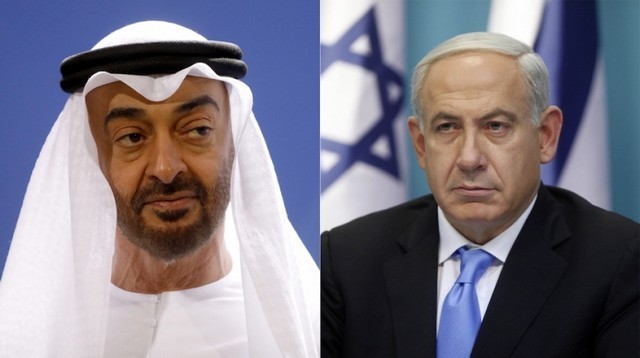
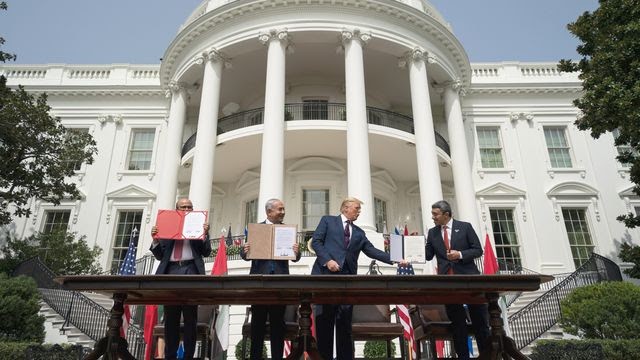
Israeli Prime Minister Benjamin Netanyahu and United Arab Emirates Crown Prince Mohammed bin Zayed walked away from this month’s White House signing ceremony with more than just an agreement to establish diplomatic relations.

Included in the agreement are references that are key to foundational Israeli arguments asserting the right of the Jewish people to a state on what was once predominantly Arab land rather than simple recognition of the fact that the Jewish state exists.

Recognition of Jewish rights has long been a demand put forward by Mr. Netanyahu.

In talks with the Palestinians as well as the building of relations with Arab states over the years, the Israeli leader asserted that mere diplomatic acceptance of Israel’s existence was not good enough. And yet, that was the basis of earlier peace treaties with Egypt and Jordan as well as Palestine Liberation Organization (PLO) Yasser Arafat’s 1988 recognition of Israel and the subsequent 1993 Oslo accords.

From the outset, the Israeli-Palestinian conflict has been as much a dispute about control of land as one of perceived rights.

Recognition of Jewish rights in Palestine bolsters Israeli assertions that its claims to territory occupied during the 1967 Middle East are legitimate rather than a land grab resulting from military conquest.

To be clear, it does not by definition endorse annexation, but it constitutes Arab acceptance of Israel’s position that any compromise between Israelis and Palestinians, a sine qua non for a resolution of their dispute, would involve mediation of claims that are historically and morally on par.

Arabs in the past have projected solutions as the need to address Palestinian rights while accepting Israel’s existence.

The agreement did not explicitly recognize Jewish rights, but enabled Israel to interpret the deal as doing so by stating that “Arab and Jewish peoples are descendants of a common ancestor, Abraham.”

The text of the agreement suggests that the reference was primarily related to allow the UAE to boost its efforts to project itself as a leader of inter-faith dialogue and a moderate interpretation of Islam – a pillar of the country’s well-funded soft power campaign that paints the Emirates as a militarily capable, forward-looking, religiously tolerant and technologically savvy, cutting edge state.

The interpretation of the phrasing as recognition of Jewish rights may have been an unintended consequence or icing on Israel’s cake.

It was a bonus that David Makovsky of The Washington Institute for Near East Policy — widely viewed as leaning towards Israel — was quick to point out. Mr. Makovsky noted that the reference implied that “both (Arabs and Jews are) indigenous to the Middle East.”

Mr. Makovsky suggested that the phrasing “is important because it clearly refutes longstanding allegations in the Arab world that Zionism is alien to the region.”

It puts past to Arab and Palestinian arguments that the long-touted two-state solution of the Israeli-Palestinian conflict was one of dividing up land claimed by two parties driven by facts on the ground rather than consideration of legal and moral claims.

This is not just of esoteric significance. It bolsters Israel’s long-standing rejection of Palestinian insistence on the right of refugees, including those who left during the 1948 war, to return to their homes and lands in what is now Israel.

Israel’s reading of the agreement as endorsement of its assertion that the Israeli-Palestinian conflict is about equally valid rights is likely to be interpreted differently on both sides of Israel’s right-left divide.

The country’s weakened left will see it as highlighting the need for territorial compromise. Significant segments of the Israeli right will view it as validation of its belief dating back to the period prior to the 1948 creation of Israel that the clash of Jewish and Palestinian rights is irreconcilable. That is a view that has historically also resonated among elements of the labor movement.

That may be what makes the UAE-Israel deal truly historic.

The icing on the UAE’s cake, beyond the significant geopolitical, military, security, technological and economic benefits of the agreement, is the stress on inter-faith dialogue.

Under the agreement, the UAE and Israel “undertake to foster mutual understanding, respect, co-existence, and a culture of peace between their societies in the spirit of their common ancestor, Abraham, and the new era of peace and friendly relations ushered in by this Treaty, including by cultivating people-to-people programs, (and) interfaith dialogue…”

The UAE, like Saudi Arabia, one of its multiple autocratic religious soft power rivals, has gone in recent years to great lengths to cultivate ties to Jewish and Evangelist communities and to position itself as a sponsor of an inter-faith dialogue in which Islam is represented by Muslim scholars who preach absolute obedience to the ruler and reject endorsement of the Universal Declaration of Human Rights. Its an interpretation of the faith intended to ensure regime survival and counter allegations of violations of human rights in the UAE.

The signing of a Document on Human Fraternity by the imam of the Al-Azhar Grand Mosque in Cairo, Ahmed El-Tayeb, and Pope Francis I during his 2019 visit to the UAE, the first by a head of the Vatican to the Gulf, served to offer an alternative to the Universal Declaration that allows the Emirates to pick and choose which rights it accepts.

The emphasis on inter-faith dialogue is bolstered and conditioned by the agreement’s implicit condemnation of political Islam, a key driver of UAE policy that is shared by Israel.

The agreement rejects “political manipulation of religions and…interpretations made by religious groups who, in the course of history, have taken advantage of the power of religious sentiment…in a way that has nothing to do with the truth of religion.”

Omar Ghobash, UAE Assistant Minister for Culture and Public Diplomacy, speaking in a US-UAE Council webinar, noted that one driver for the conclusion of the agreement was “what happened around the so-called Arab Spring and then the rise of vicious groups like ISIS, let alone Al Qaeda.”

Mr. Ghobash was referring to the 2011 popular Arab revolts that toppled the autocratic leaders of Tunisia, Egypt, Libya, and Yemen as well as the rise of the Islamic State in the aftermath of the uprisings, which was a product of the 2003 US invasion of Iraq rather than the rebellions.

He projected the agreement as part of the UAE’s institutionalization of its values.

“There is a distortion that has taken place over the last few decades…represented by groups like the Muslim Brotherhood, groups like Al Qaeda and ISIS … There is a recurring theme in conversations with my leaders and that is that Islam has been hijacked by these groups. The reality is that in taking Islam back, you need to free it from those constraints. You free it by presenting a different expression of Islam,” Mr. Ghobash said.

Critics suggest that the agreement’s formalization of Israeli support for the UAE’s propagation of a state-controlled Islam fails to tackle a core issue: the need to address religious concepts that are either outdated or outmoded or require reconceptualization and reinterpretation.

Those concepts legitimized decades of Muslim demonization of Israel as well as Jews, Christians, and other non-Muslims.

The UAE took a first major step to address the issue by distributing to schools barely two weeks after the announcement of the establishment of diplomatic relations textbooks that cite the agreement with Israel as an expression of fundamental Islamic and Emirati values.

However, the ultimate litmus test of the UAE’s effort to shape moderate Islam will be if and when it loosens the state’s grip on religion and allows for free-flowing, credible theological debate in which scholars tackle problematic religious concepts that have served their purpose but are out of place in a modern, forward-looking society.

A podcast version of this story is available on Soundcloud, Itunes, Spotify, Stitcher, TuneIn, Spreaker, Pocket Casts, Tumblr, Podbean, Audecibel, Patreon and Castbox.

Dr. James M. Dorsey is an award-winning journalist and a senior fellow at Nanyang Technological University’s S. Rajaratnam School of International Studies in Singapore.

23 September 2020

Source: countercurrents.org

Trump Induced Normalization Agreements with Gulf Monarchies: Is This What Peace Looks Like?

By Richard Falk

18 Sep 2020 – This is based on two interviews with a Brazilian journalist, Rodrigo Craveiro, who publishes in Correio Braziliense. The questions posed seek commentary on the normalization agreements reached between Israel and two Arab countries, United Arab Emirates (UAE) and Bahrain. My responses have been modified and enlarged since the interviews on 17-18 September 2020. These normalization agreements are being perceived from a variety of angles depending on the agendas of the various political actors. In the present context it seems a win for Israel and Trump, and a loss for the Palestinians and Iran, but will these assessments hold up when again Israel moves to foreclose Palestine’s future by proceeding to fulfill Netanyahu’s most solemn and oft-repeated pledge?

Interview #1

1– Trump signed with Israel, UAE and Bahrein a deal today and told this represents a change in the course of history. “After decades of division and conflict, we mark a dawn of a new Middle East. We take a major stride towards a future in which people of all faiths and backgrounds live together in peace and prosperity”, said Trump. How do you see the meaning of two Arab nations accepted to sign a deal with Israel?

These normalizing moves on the part of UAE and Bahrain, under pressure from the U.S., are a form of symbolic politics‘ that have weight because they are reinforced geopolitically by being so ardently promoted by the Trump presidency. By way of contrast, the 130 or so diplomatic recognitions of Palestine as a state by governments around the world have had little significance because they lack political traction to make anything concrete and substantive change.

Trump’s bravado is at best an exaggeration, and at worst a shortsighted and misguided prediction about the future. This agreement expresses the interests of these two Gulf regimes that want to concentrate their power to confront the Iranian challenge, and need Israel, with U.S. backing to do this, but the Arab people remain committed to the Palestinian struggle for basic rights. There are other motivations, including the acquisition of weapons, economic relations with Israel, and being seen as willing to please the U.S. Government, at least so long as Trump is in charge. It is largely symbolic as these governments were increasingly cooperating with Israel in any event, making the claim that this has brough the region closer to peace, indeed ‘a dawn’ seems fanciful. It is not a breakthrough but a symbolic victory for Israel, and a symbolic defeat for Palestine. Nothing substantial has changed, but the atmospherics of regional politics could make a difference either mobilizing a popular movement of opposition to suck a betrayal of the Palestinian struggle or leading to a cascade of normalizing initiatives by other countries, particularly Saudi Arabia. Whether this kind of development would lead to longer range adjustments in the region and beyond is highly conjectural at this stage, and depends on many unknowable factors.

2– Do you believe Trump is using this deal mostly for pushing votes in elections? Why?

Trump is motivated by his immediate interests in. the November election, but also by his dual strategy of being an autocrat at home and a self-promoting peacemaker internationally. I doubt that this signing ceremony attracted much attention, and is unlikely to swing many votes in Trump’s direction. The main election issues involve Trump’s controversial personal style as leader, the outlook for the economy, and the tensions between unrest in the cities, police racism, and middle class fears of disorder.

3– What would be the consequences of such deal for Middle East?

Much will depend on events that will unfold in coming months, including the degree to which there will be renewed Palestinian resistance, even something on the order of a Third Intifada. Also, important will be whether this normalization with Israel is a prelude to an escalated confrontation with Iran. If this occurs, it would change the intergovernmental alignments in the region, but also might induce renewed domestic turmoil culminating in a second Arab Spring. The behavior of Turkey, China, and Russia are highly relevant in shaping either a new regional balance in the Middle East or sparking a new conflict configuration. Also, continuing U.S, military disengagement would alter the overall situation rather fundamentally, although in unpredictable ways. It should be remembered that severe problems of prolonged internal strife currently exist is Yemen, Libya, Syria, and Lebanon, as well as potentially explosive conflicts pertaining to energy resources in the Eastern Mediterranean. The overall regional situation is extremely complicated, and it seems likely that these largely symbolic developments in relations between Israel and Arab countries will not have important lasting consequences, partly because de facto normalization and strategic Arab/Israeli cooperation had preceded this process of formalization by several years.

Interview #2

1-Bahrein joined Arab United Emirates in signing deal with Israel. In what ways these deals will harm Palestinian cause?

These normalization arrangements are symbolically and possibly substantively harmful to the Palestinian struggle and correspondingly helpful to Israel’s long-term efforts to overcome its isolation and questionable legitimacy as a Middle Eastern state. Israel demonstrated the importance attached to normalization by its willingness to put off formal annexation moves on the West Bank in exchange for these formalized moves toward normalization. In doing so, Israel gained feelings of greater security enlarging the scope of peaceful relations with neighbors. Israel also received certain substantive benefits: air navigation overflight rights, touristic and diplomatic interaction, export gains, and enhanced reputation of diplomatic flexibility, especially appreciated by the Trump presidency. Bahrain and the UAE also added to regime security by taking these normalizing steps with Israel through obtaining greater assurances of support from Washington should internal challenges arise.

This diplomatic sequence was harmful to the Palestinians from a psycho-political standpoint as the Arab countries had pledged in 2002 to refrain from any normalization moves until a peace agreement between Israel and Palestine was negotiated, a Palestinian state established, and East Jerusalem was declared as the its capital, enabling Islamic access to al-Aqsa, the third holiest Muslim sacred site. The Arab shift can be understood from three perspectives: to please Trump, to solidify security cooperation with Israel against Iran, and to obtain access to American advanced drones and fighter jet aircraft, and whatever weaponry and training it sought to control internal opposition. Of course, the Arab denial of such motivations, rests on the Israeli suspension of annexation moves toward extending its sovereignty to the West Bank, but this is a temporary concession and draws attention away from the widespread perception, not least by the Palestinians, that de facto annexation had been continually encroaching on Palestinian territorial expectations ever since the occupation began after the 1967 War. An open question is whether a renewed push by Israel for de jure annexation of 30+% of the West Bank will lead to any de-normalizing moves by Arab countries, or strong expressions of opposition in the West, including the United States. The failure of adverse consequences after the U.S. defied the UN consensus by announcing the movement of its embassy to Jerusalem at the end of 2017 suggests that there will be some strong rhetoric but little behavioral pushback, especially if a ‘decent interval’ has transpired and Arab priorities remain as at present.

2–Do you see an effort of Arab nations trying to punish Iran even they have to act as treason (betrayal) Palestinian fight? Why?

I do not see this diplomatic maneuver in that way, but rather as a way to clear the path to more robust regional cooperation with Israel in confronting Iran, and gaining more leverage in Washington for the pursuit of an anti-Iranian policy. I think it may be more reasonably interpreted as a further indication that Arab priorities and threat perceptions have shifted. This means that Israel no longer needs to be treated as adversary and enemy as a show of Arab solidarity in the face of a European incursion in the form of a Jewish state. Instead Iran is feared as a regional rival, and has become the primary threat to Arab political arrangements, especially dynastic governance. In this regard, Palestinians are feared, as well, potentially inducing democratizing challenges to these oppressive monarchies that are sustained by sustained by weaponry and support from the West, especially the U.S.. It is important to appreciate that despite decades of rhetorical solidarity with the Palestinian struggle, Arab elites were ambivalent, believing that a Palestinian victory would have negative repercussions for their own stability.

3–What would be consequences of such deals between Bahrein and UAE with Israel for Middle East geopolitics and for perspective of peace process in future?

At present, the US/Israeli governments do not favor a diplomatic solution to the Israel/Palestine confrontation. Israel is not interested in seeking a genuine political compromise involving territory and refugees, and is under no U.S. pressure to pretend otherwise. Israel’s territorial objectives continue to be expansionist, encompassing ‘the promised land,’ which presupposes an eventual de jure annexation of large parts of the West Bank, retention of an undivided Jerusalem as the Israeli capital, and the denial to Palestinian refugees and exiles of any right of return to pre-1967 Israel. If this is an accurate depiction of the underlying situation, there is nothing for the Palestinians to achieve, beyond some easing of material conditions (‘an economic peace’) by accepting the sort of one-sided ‘deals’ put on the table months ago by the Kushner/Trump. Although the Palestinians have been deliberately squeezed economically, especially in Gaza, the gains in Palestinian living standards that might follow from accepting what is being offered come with an the unacceptably price tag–the surrender of basic rights. It seems highly unlikely after a century of struggle, bloodshed, and displacement that the Palestinian would renounce their quest for basic rights, including the right of self-determination.

4–Trump is stimulating such deals to isolate Iran but also to gain votes among Israel lobby in US. How do you see such strategy?

I do not see any major gains for this latest Trump effort in the Middle East. Objectively, considered, the main American diplomatic gain from these normalization moves seem clearly intended to distract attention from the failure of the much heralded ‘deal of the century,’ which was released under with the more sober title of ‘From Peace to Prosperity.’ It received scant support in the Arab world or among allies in Western Europe. It was widely regarded as so one-sided in Israel’s favor as to be more in the nature of a diktat than a genuine attempt to find common ground between the parties on which to work toward a diplomatic settlement. I see little evidence that Trump will any significant additional support from the Israeli lobby or Jewish voters. It gives Trump cheerleaders something to boast about, including managing to

achieve the explicit acceptance of a Jewish state as a permanent and legitimate presence in the Middle East without having to obtain the agreement of properly constituted representatives of the Palestinian people. Iran was already isolated in the region, although with respect to Palestine it retains an approach that is supported by Turkey, and increases the plausibility of its claim to be leading the struggle against the remnants of European colonialism in the region. Such a claim resonates with public opinion throughout the entire Arab world, and is not so evident because harshly suppressed by the ruling elites.

More concretely, Trump’s foreign policy always welcomes arrangements that include new opportunities to increase the exports of arms merchants, and these agreements, especially with the UAE, include a commitment to provide expensive weapons, while ensuring Israel that its qualitative edge in military capabilities will be retained, thereby creating the possible basis for a regional arms race in the years ahead.

Finally, just as Trump seems to gain votes by helping Israel, the Arab monarchies would gain by Trump’s reelection. One ulterior motive for normalization at this time, that is just prior to the November election, is to bolster Trump’s tenuous claim to be a peacemaker in the Middle East.

Richard Falk is a member of the TRANSCEND Network, an international relations scholar, professor emeritus of international law at Princeton University, Distinguished Research Fellow, Orfalea Center of Global Studies, UCSB, author, co-author or editor of 60 books, and a speaker and activist on world affairs.

21 September 2020

Source: www.transcend.org

A Photo Gallery of Doomed Children Who Suffered Because of America’s Profitable Wars

By Gary G. Kohls

17 Sep 2020 – This morning I heard courageous patriot and Vietnam War-era whistleblower Daniel Ellsberg interviewed on Democracy Now!.

Referring to the Afghani refugee tragedies on the Greek Island of Lesbos and elsewhere, Ellsberg said:

“Our government is responsible for the flight of 37, 000,000 refugees worldwide because of United States-initiated wars.”

And he could have added,

“The US is also responsible for the sale of the lethal weapons that militaries and mercenary soldiers use to kill, maim and terrify innocent refugees-to-be all around the world. These weapons and militaries have destroyed families, freedoms, safety, shelter, jobs, food and water supplies, which naturally means that these innocents have to leave their destroyed homelands in search of safety, food, water and a future for them and their children.”

Just by coincidence, last night I also came across a 5-year old Duty to Warn column that contained photos of a small handful of the multitude of censored-out, “unpatriotic” war photos that documented some of what Ellsberg was talking about. Here is the slightly upgraded column.

*************************************

Below are a few disturbing examples of the “collateral damage” that accompanies America’s wars which usually have been endorsed or at least not significantly opposed by Christian clergypersons and their followers.

Stalking buzzard and a dying child in a war-ravaged African country that had been destabllized by the CIA – 1993

Carbonized Japanese child – US atomic bomb victim – Hiroshima 1945

Japanese child dying of radiation sickness from the Nagasaki bomb 1945

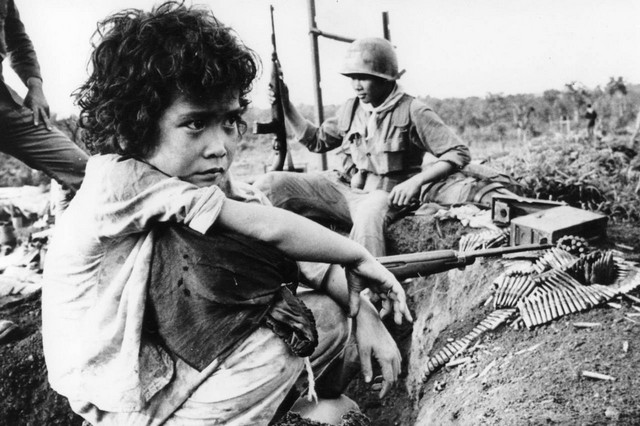
Terrified Vietnamese children, victims of American napalm bombs – Vietnam 1968

(Note: In 1965, Dow Chemical, a Michigan-based chemicals manufacturer, was awarded a $5 million Pentagon contract to produce napalm, a highly incendiary chemical used by American troops during the Vietnam War.)

Young Vietnamese casualty of war with his American GI captor – Vietnam 1968

Young Vietnamese being interrogated by an American GI – Vietnam 1968

Deformed, stillborn Vietnamese fetuses whose mothers had been exposed to American chemical manufacturers Monsanto, Dow Chemical and Diamond-Shamrock’s Agent Orange – Post-Vietnam War

(Note: Agent Orange has a very long-half-life and continues to contaminate the soil and water supplies in Vietnam. In addition, it has also sickened a multitude of US Vietnam-era soldiers – and even their family members back home.)

Iraqi fetus exposed in utero to America’s Lockheed Martin “depleted” uranium-tipped bombs – Iraq War

(Note: Highly radioactive “Depleted Uranium” has a half-life of many millions of years and will continue to contaminate the Afghanistan and Iraq soil and water that was exposed to it. Also, American soldiers were also contaminated.)

Iraqi children killed in an USAF air strike – Fallujah – 2009

Drowned Syrian toddler, most of whose refugee family also drowned fleeing the war begun by the US’s “Shock and Awe” wars – 2015

Two Malnourished Victims of US-led Corporate Capitalism

Each of the hard-to-look-at images above are of children – not to mention their parents – who suffered and died before their time. But the guilty American weapons-manufacturing corporations that profited from the wars prefer to not acknowledge that are at the root of the refugee problem.

So, I am obligated to end with a short list of some of the boycott-worthy, profiteering corporations (and their happy share-holders) that are at least partly responsible for the plight of the war—ravaged children pictured above:

Coca-Cola, Pepsi-Cola, McDonalds, Burger King, Walmart, Goldman Sachs, Morgan Stanley, JPMorgan Chase, Dow Chemical, Monsanto, Syngenta, Lockheed-Martin, Northrup-Grumman, Pfizer, Merck, Johnson & Johnson, GlaxoSmithKline, Novartis, Lilly, Exxon-Mobil, Royal Dutch Shell, British Petroleum, Halliburton, Deepwater Horizons, Rio Tinto, Antofagasta, Glencore.

And thousands others inherently exploitive, greedy, conscienceless, extractive corporations that are knowingly polluting the planet, always eager to profit from the militarization of our society while simultaneously harming children and other living things.

This sample list of corporations are the paymasters that also own, operate and/or control (and profit from) the Mainstream Media, Big Pharma’s vaccine and drug manufacturers, Big Medicine’s price-gouging, unaffordable but highly profitable healthcare corporations, Big Government’s private corporation-infiltrated and bribed HHS/NIH/CDC/NIAID/FDA, and many of the multi-millionaire US political candidates that are sanctioned by both political parties.

Identifying the billionaire culprits that are providing the economic support for the pro-business, pro-war, anti-environment, anti-worker, union-busting, pro-pollution, so-called “Christian” political agendas that keep unemployment high, wages low and corporate profits at an obscene level may somehow stimulate resistance efforts, prolong the survival of the planet, sustain the future of our democracy and the future of suffering humanity, especially the children.

Dr Gary G. Kohls is a retired rural family physician from Duluth, MN, USA and a member of the TRANSCEND Network.

21 September 2020

Source: www.transcend.org

How USA and Turkey Plunder and Loot Syria with Impunity

By Rick Sterling

15 Sep 2020 – While President Trump lashes out at rioting and looting in Portland and Kenosha, half way around the world, the USA and Turkey are plundering and looting Syria on a vastly greater scale with impunity and little publicity.

Turkey Loots Syria, then Disrupts Safe Water Supply

Turkey has been plundering the Syrian infrastructure for years. Beginning in late 2012 and continuing through 2013 some 300 industrial factories were dismantled and taken to Turkey from Aleppo, the industrial capital of Syria. “Machinery and goods were loaded on trucks and carried off to Turkey through the Cilvegozu and Ceylanpinar crossings. Unfortunately, ‘plundering’ and ‘terror’ have become permanent parts of the Syrian lexicon when explaining their saga.”

In October 2019 Turkish forces invaded Syria and now occupy a strip of land in north east Syria. The area is controlled by the Turkish military and pro Turkish militia forces misnamed the “Syrian National Army”. Turkish President Erdogan dubbed the invasion “Peace Spring” and said the goal was to create a “safe zone”. The reality was that 200 thousand Syrians fled the invasion and over 100 thousand have been permanently displaced from their homes, farms, workplaces and livelihoods.

The industrial scale looting continues. As reported recently in the story headlined Turkish-backed factions take apart power pylons in rural Ras Al-Ain:

“Reliable sources have informed SOHR that Turkish-backed factions steal electricity power towers and pylons in ‘Peace Spring’ areas in Ras Al-Ain countryside.”

Turkey now controls the border city of Ras al-Ain and the nearby Allouk water treatment and pumping station. This is the water station supplying safe water to the city Hasaka and entire region. The Turkish forces are using water as a weapon of war, shutting down the station to pressure the population to be compliant. For over two weeks in August, with daily temperatures of 100 F, there was no running water for nearly one million people.

With no tap water, civilians were forced to queue up for hours to receive small amounts from water trucks. Unable to buy the water, other civilians took their chances by drinking water from unsafe wells. According to Judy Jacoub, a Syrian journalist originally from Hasaka,

“The residents of Hasaka and its countryside have been pushed to rely on unsafe water sources ….Many residents have been suffering from the spread of fungi, germs and dirt in their hair and bodies as a result of using well water that is not suitable for drinking and personal hygiene. The people of Hasaka remain vulnerable to diseases and epidemics because of the high temperatures and spread of infectious diseases. If the situation is not controlled as soon as possible, the spread of Corona virus will undoubtedly be devastating.“

A hospital medical director says many people are getting sick from the contaminated water.

Judy Jacoub explains what has happened most recently:

“After Syrian and international efforts exerted pressure on the Turkish regime, 17 wells and three pumps were started . The main reservoirs were filled and pumping was started toward the city neighborhoods. However, despite the Turkish militia’s resumption of pumping water again, there is great fear among the citizens.”

USA Loots Syrian Oil and Plunders the Economy

The USA also has occupying troops and proxy / puppet military force in north east Syria. The proxy army is misnamed the “Syrian Democratic Forces” (SDF). How they got that name is revealing. They took on this name as they came under the funding and control of the US military. As documented here, US Army General Ray Thomas told their leadership,

“You have got to change your brand. What do you want to call yourselves besides the YPG?’

Then, he explained what happened:

“With about a day’s notice they declared that they are the Syrian Democratic Forces. I thought it was a stroke of brilliance to put democracy in there somewhere.”

There are numerous parties and trends within the Syrian Kurdish community. The US has been funding and promoting the secessionist element, pushing them to ally with Turkish backed jihadists against the Damascus government. The violation of Syrian sovereignty is extreme and grotesque.

Prior to the war, Syria was self-sufficient in oil and had enough to export and earn some foreign revenues. The primary oil sources are in eastern Syria, where the US troops and proxy forces have established bases. It is desert terrain with little population.

To finance their proxy army, the US has seized control of the major Syrian oil pumping wells. It is likely that President Trump thinks this is brilliant bold move – financing the invasion of Syria with Syrian oil.

In November 2019 President Trump said,

“We’re keeping the oil… The oil is secure. We left troops behind only for the oil.”

Recently, it was revealed that a “Little known US firm secures deal for Syrian oil“. Delta Crescent Energy will manage and escalate the theft of Syrian oil.

What would Americans think if another country invaded the US via Mexico, set up bases in Texas, sponsored a secessionist militia, then seized Texas oil wells to finance it? That is comparable to what the US is doing in Syria.

In addition to stealing Syria’s oil, the US is trying to prevent Syria from developing alternate sources. The “Caesar sanctions” on Syria threatens to punish any individual, company or country that invests or assists Syria to rebuild their war damaged country and especially in the oil and gas sector.

The US establishment seems to be doing everything it can to undermine the Syrian economy and damage the Syrian currency. Due to pressure on Lebanese banks, plus the Caesar sanctions, the Syrian pound has plummeted in value from 650 to 2150 to the US dollar in the past 10 months.

North east Syria is the breadbasket of the country with the richest wheat and grain fields. There are reports of US pressuring farmers to not sell their wheat crops to the Syrian government. One year ago, Nicholas Heras of the influential Center for New American Security argued

“Assad needs access to cereal crops in northeast Syria to prevent a bread crisis in the areas of western Syria that he controls….Wheat is a weapon of great power in this next phase of the Syrian conflict.”

Now, it appears the US is following this strategy. Four months ago, in May 2020, Syrian journalist Stephen Sahiounie reported,

“Apache helicopters of the US occupation forces flew low Sunday morning, according to residents of the Adla village, in the Shaddadi countryside, south of Hasaka, as they dropped ‘thermal balloons’, an incendiary weapon, causing the wheat fields to explode into flames while the hot dry winds fanned the raging fire.

“After delivering their fiery pay-load, the helicopters flew close to homes in an aggressive manner, which caused residents and especially small children to fear for their lives. The military maneuver was delivering a clear message: don’t sell your wheat to the Syrian government.”

To better loot the oil and plunder the Syria economy, in the past weeks the US is sending more heavy equipment and military hardware through the Kurdish region of Iraq.

In the south of Syria, the US has another base and occupation zone at the strategic Al Tanf border crossing. This is at the intersection of the borders of Syria, Iraq and Jordan. This is also the border crossing for the highway from Baghdad to Damascus. The US controls this border area to prevent Syrian reconstruction projects from Iraq or Iran. When Syrian troops have tried to get near there, they have been attacked on their own soil.

Meanwhile, international funds donated for “Syrian relief” are disproportionally sent to support and assist the last strong-hold of Al Qaeda terrorists in Idlib on the north west border with Turkey. The US and its partners evidently want to sustain the armed opposition and prevent the Syrian government from reclaiming their territory.

Flouting International Law and the UN Charter

The USA and Turkey have shown how easy it is to violate international law. The occupation of Syrian land and attacks on its sovereignty are being done in broad daylight. But this is not just a legal issue. Stopping the supply of safe drinking water and burning wheat fields to create more hunger violate the most basic tenets of decency and morality.

With supreme hypocrisy, the US foreign policy establishment often complains about the decline in the “rule of law”. In actuality, there is no greater violator than the US itself.

In his speech to the UN Security Council, Syrian Ambassador Ja’afari decried this situation saying “international law has become like the gentle lamb whose care is entrusted to a herd of wolves.”

Rick Sterling is a member of the TRANSCEND Network and an investigative journalist who lives in the SF Bay Area, California.

21 September 2020

Source: www.transcend.org

UN Assembly Approves Pandemic Resolution; US, Israel Object

By Edith M. Lederer

12 Sep 2020 – The U.N. General Assembly overwhelmingly approved a wide-ranging resolution on tackling the coronavirus pandemic Friday [11 Sep] over objections from the United States and Israel, which protested a successful last-minute Cuban amendment that strongly urged countries to oppose any unilateral economic, financial or trade sanctions.

The 193-member world body adopted the resolution by a vote of 169-2, with Ukraine and Hungary abstaining. It was a strong show of unity by the U.N.’s most representative body, though many countries had hoped for adoption by consensus.

The resolution, which is not legally binding, is the third and most extensive adopted by the General Assembly. A resolution adopted April 2 recognized “the unprecedented effects” of the pandemic and called for “intensified international cooperation to contain, mitigate and defeat” the new coronavirus. A Mexico-sponsored resolution approved April 20 urged global action to rapidly scale up development, manufacturing and access to medicine, vaccines and medical equipment to confront the pandemic.

In Friday’s resolution, the General Assembly says the pandemic poses “one of the greatest global challenges in the history of the United Nations,” and calls for “intensified international cooperation and solidarity to contain, mitigate and overcome the pandemic and its consequences.”

The resolution urges U.N. member states “to enable all countries to have unhindered timely access to quality, safe, efficacious and affordable diagnosis, therapeutics, medicines and vaccines … as well as equipment for the COVID-19 response.”

And it recognizes “the role of extensive immunization against COVID-19 as a global public good for health in preventing, containing and stopping transmission in order to bring the pandemic to an end, once safe, quality, efficacious, effective, accessible and affordable vaccines are available.”

Afghan Ambassador Adela Raz, who coordinated the drafting of the resolution with Croatian envoy Ivan Simonovic, told the assembly the resolution is not only a response to the disease “but a tribute to the victims,” noting that more than 900,000 people worldwide have died and over 25 million have been infected.

“The world is experiencing the worst economic recession since World War II, and equality and poverty are increasing, and more people are experiencing hunger,” she said. “We are indeed facing the most significant global catastrophe since the founding of this important organization, the United Nations.”

Raz said adoption of the resolution shows the world’s nations are ready to respond, despite failing to reach consensus, and are committed to U.N. goals for 2030 including ending extreme poverty, preserving the environment and achieving gender equality “for building back better after the pandemic.”

Simonovic said the great majority of nations “have chosen the path of solidarity and multilateralism” and called the resolution “a powerful tool for mobilization of political will and financial resources.”

He said political and financial support are badly needed “to curb COVID-19, strengthen our stressed health systems and to save jobs and livelihoods.”

The resolution calls on all countries “and other relevant stakeholders to advance, with determination, bold and concerted actions to address the immediate social and economic impacts of the COVID-19 pandemic, while striving to get back on track” to achieve the 2030 goals.

It calls on governments and international financial institutions “to provide more liquidity in the financial system, especially in all developing countries.” It supports recovery plans that “drive transformative change towards more inclusive and just societies including by empowering and engaging all women and girls.”

And it urges U.N. member nations “to adopt a climate- and environment-responsive approach to COVID-19 recovery efforts” including by aligning investments and domestic policies with the U.N. goals and the 2015 Paris agreement to combat climate change.

Cuba succeeded in changing a paragraph in the resolution that originally called for “the urgent removal of unjustified obstacles in order to ensure the universal, timely and equitable access to, and fair distribution of, all quality, safe, efficacious and affordable essential health technologies and products, including their components and precursors that are required in the response to the COVID-19 pandemic.”

By a vote of 132-3, the assembly amended the resolution to urge all countries “to refrain from promulgating and applying any unilateral economic, financial or trade measures not in accordance with international law and the Charter of the United Nations that impedes the full achievement of economic and social development, particularly in developing countries.”

The United States was then overwhelmingly defeated in attempts to remove two paragraphs from the resolution, one referring to women’s rights to “sexual and reproductive health” and the other to “promoting global sustainable transport.”

In addition to arguing against the language on sanctions, the United States opposed all references to the World Health Organization, which the Trump administration stopped funding, accusing the U.N. agency of failing to do enough to stop the virus from spreading when it first surfaced in China.

It accused China of hiding the truth about the outbreak from the world in the early days which “imperiled all of us and caused needless additional suffering and death.”

Chinese diplomat Xing Jisheng responded, alluding to the recent revelation that President Donald Trump “recognized the danger of the virus at a very early stage, but deliberately played it down to avoid panic.” He asked: “Who is hiding the truth?”

Xing also asked why the U.S., with the most advanced medical system in the world, has the most COVID-19 cases. “If the United States is serious about fighting the pandemic, it should focus on protecting lives and health of its people, instead of being busy with blame-shifting,” he said.

21 September 2020

Source: www.transcend.org
Did the US War on Terror Displace 37 Million?

By Juan Cole

The Brown University Watson Institute Costs of War Project put out a report with the astounding figure. Here’s what they got right and what they got wrong.

9 Sep 2020 – The Brown University Watson Institute Costs of War Project has put out the report ‘Costs of War 911 displacements war on terror’ concluding that the US-led “War on Terror” has displaced 37 million people.While there are parts of the report I agree with, some of the argument seems to me flawed. Let me explain why that is, below.

First of all, lead author David Vine and his colleagues are speaking of US “Post-9/11 Wars,” which is not exactly the same as the “War on Terror.”

The War on Terror is a stupid phrase that I have much criticized. I’m not alone– a Marine general once made fun of it to me when we were taking a walk in the woods together. But surely if it has any meaning at all, it means the fight against al-Qaeda and allied movements. The Congressional Authorization for the Use of military Force of 2002 specifically speaks of movements that planned out the September 11 attacks.

So even if the Bush, Obama and Trump administrations have invoked the AUMF in their various police actions, analytically speaking it does not apply to anti-al-Qaeda movements such as the Houthis in Yemen or the Baathist government in Syria (which in 2002-2003 tortured al-Qaeda operatives for the United States).

So the “War on Terror” would comprise US military actions mainly in Iraq and Afghanistan.

I am all on board with Vine and his colleagues in criticizing the Bush administration war on Iraq. Iraq was not involved in 9/11, and there was no al-Qaeda to speak of in Iraq in 2002. What little there was was being hunted by the Baath secret police. Iraq was not making weapons of mass destruction and delivered to the UN documentation of its destruction of such programs in the late 1990s.

There was no reason for the United States to launch an aggressive war on Iraq, occupy it for 8.5 years, and destroy its main institutions, including the army. These actions led to the rise of ISIL and yet another US intervention.

The study estimates 9.2 million displaced in Iraq by these wars. OK, I can live with that estimate. And I agree that the proximate cause was the US war of aggression on Iraq. That is, many of those displaced were not displaced by the US military, but by Sunni or Shiite militias or the reconstituted Iraqi Army. But, if Bush hadn’t invaded in the first place, none of that would have happened.

So blaming the US for the 9.2 million Iraqi displaced is fair.

Likewise, the US involvement in the Saudi-led war on Yemen is shameful, and the US bears a large share of blame for the 4.4 million displaced there. Although the US is not fighting there, it has refueled Saudi and other bombers, it sold sophisticated military equipment to the belligerents, it has provided strategic advice, and anything anyone says bad about Washington in this regard is richly deserved. Even the Congress has denounced US support for this war, which is like bank robbers denouncing greed, and tells you how awful and fruitless this war is.

Afghanistan is more complicated. The Soviet occupation from very late 1978 to 1988 killed about one million, wounded 3 million, displaced 2 million internally, displaced 2 million to Iran, and displaced 3 million to Pakistan. This is out of a population of some 16 million at the time!

As for the US and NATO after 2001, they in my view made an error in trying to stay in Afghanistan after they helped the Northern Alliance overthrow the Taliban in 2001-2002. But that initial campaign does not appear to have resulted in high levels of casualties or displacement. The attempt of Donald Rumsfeld and his successors to stay in Afghanistan helped alienate some of the population and led to a resurgence of the Taliban, which now hold 5-10% of the country and have a presence in half of provinces. This renewed war between the Kabul government and the Taliban has produced thousands of casualties a year, and has displaced millions.

The Brown report estimates “2.1 million Afghans fled the country with another 3.2 million” displaced internally.

I have no reason to doubt these figures. But it is also true that after the fall of the Taliban and the return of relative peace in some provinces, about half of the 3 million Afghans in Pakistan have been repatriated. So you’d have to say that the US and NATO partially reversed that emigration flow that had been caused by the Soviets. That is, the US permitted 1.5 million Afghans to return home, so if 2.1 million left during the past 19 years, the net outflow is more like 600,000.

Very little US war-fighting in Afghanistan was in Persian-speaking provinces, which were relatively calm. It was mostly in the Pushtun regions where the Taliban were strong. So I just am not convinced that enormous numbers of Tajiks and Hazaras went to Iran because of the ongoing fighting with the Taliban. In fact, many Shiite Hazaras were able to come back home because the Taliban were overthrown (the Taliban had massacred them).

We must remember that Iran is an oil state, which means it has a need for foreign guest workers, and there are now 3 million Afghans in Iran. They are largely Persian-speaking and from provinces that were relatively secure after the Tajik-Hazara-Uzbek alliance came to dominate the country. Many are therefore economic migrants like the Pakistanis who go to the Gulf. There may be advantages to claiming to be refugees as opposed to economic migrants. There is also a tendency toward refugee inflation on the part of governments seeking UN help.

So I’m not sure you could nail down a net foreign displacement at all.

Internally displaced persons of 3.2 million is plausible. But remember that the Taliban and more recently ISIL are responsible for some proportion of them. Unlike in Iraq, where there was nothing much going on before Bush invaded it, the Taliban controlled Afghanistan and were already widely displacing people, so you can’t blame the US for their continuing to do so. Taliban ideology is hard line Deobandi and they hate Shiites, Sufis, Sunni mainstream traditionalists, and Uzbek secularists, and have not scrupled to shoot them or blow them up at will.

I just think that the picture in Afghanistan is much more mixed, both with regard to responsibility and with regard to movements on the ground, than is true of Iraq.

I can’t understand the report’s allegations about Libya. They are reporting 1.2 million displacements. Are they counting everyone who was displaced since the Libyan Revolution of 2011, including those who then went home?

So the United Nations High Commission on Refugees says as of 2020 of Libya: “217,002 people displaced inside the country (IDPs) and 278,559 people who have returned home (returnees).”

There are also some 40,000 refugees in Libya from other countries, many of them trying to make their way by sea to Europe.

Anyway, I just think this part of the report is deeply flawed. The no-fly zone in Libya was not part of any war on terror, it was ordered by the United Nations Security Council. The International Criminal Court found the Gaddafis guilty of massive crimes against humanity. If there had been no no-fly zone, Gaddafi’s armor would have crush Misrata, Benghazi, Bayda and other cities, and would have also produced hundreds of thousands of displaced. We saw in Syria what an entrenched one-party state did to a rebelling population. The same thing would have happened in Libya.

The US role in 2011 was mainly to take out Gaddafi’s anti-aircraft batteries. The sorties flown to stop Gaddafi’s armor from advancing on revolutionaries were by various NATO states. I was in Libya in 2012 and it was fragile but not anything like Syria. Bad things happened from 2014, when militias started controlling politics, but I can’t for the life of me see what the US had to do with that.

As for Syria, that is a really complex situation that I can’t go into here at the length it deserves. But, again, if the US had not intervened against ISIL, then a lot more people would have been displaced by ISIL, and, indeed, ISIL did chase 600,000 Syrian Kurds into Turkey.

Millions were displaced in western Syria by the civil war. It isn’t clear to me that the US was a major player in all that. In fact, people complained about Obama’s reluctance to get involved.

Surely with regard to Syria, the millions displaced must be blamed on the al-Assad regime, on extremist groups like Jabhat al-Nusra, on Hizbullah and Iraqi militias, and most of all on Russia, the fighter jets of which have bombed the bejesus out of Syria. Nobody has done a report on all the people displaced by Russia.

In the end, I think the numbers arrived at and attributed to the US in this report are exaggerated. But even if the actual number of displaced caused by the US is probably closer to 13 million, that is more than the population of my state, Michigan, and is pretty damning in itself.

Bonus Video added by Informed Comment:

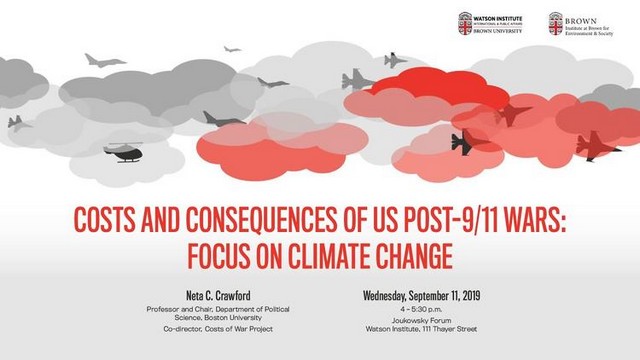
Watson Institute for International and Public Affairs: “Costs and Consequences of US Post-9/11 Wars: Focus on Climate Change”

Juan Cole is the founder and chief editor of Informed Comment.

21 September 2020

Source: www.transcend.org