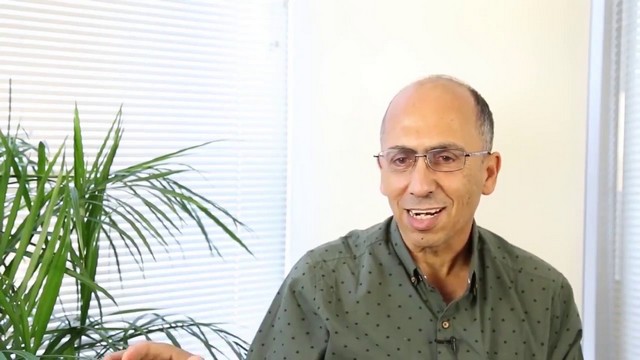
By Nils Melzer
A made-up rape allegation and fabricated evidence in Sweden, pressure from the UK not to drop the case, a biased judge, detention in a maximum security prison, psychological torture – and extradition to the U.S., where he could face up to 175 years in prison for exposing war crimes. For the first time, the UN Special Rapporteur on Torture, Nils Melzer, speaks in detail about the explosive findings of his investigation into the case of WikiLeaks founder Julian Assange.
1. The Swedish Police constructed a story of rape
Nils Melzer, why is the UN Special Rapporteur on Torture interested in Julian Assange?
That is something that the German Foreign Ministry recently asked me as well: Is that really your core mandate? Is Assange the victim of torture?
What was your response?
The case falls into my mandate in three different ways: First, Assange published proof of systematic torture. But instead of those responsible for the torture, it is Assange who is being persecuted. Second, he himself has been ill-treated to the point that he is now exhibiting symptoms of psychological torture. And third, he is to be extradited to a country that holds people like him in prison conditions that Amnesty International has described as torture. In summary: Julian Assange uncovered torture, has been tortured himself and could be tortured to death in the United States. And a case like that isn’t supposed to be part of my area of responsibility? Beyond that, the case is of symbolic importance and affects every citizen of a democratic country.
Why didn’t you take up the case much earlier?
Imagine a dark room. Suddenly, someone shines a light on the elephant in the room – on war criminals, on corruption. Assange is the man with the spotlight. The governments are briefly in shock, but then they turn the spotlight around with accusations of rape. It is a classic maneuver when it comes to manipulating public opinion. The elephant once again disappears into the darkness, behind the spotlight. And Assange becomes the focus of attention instead, and we start talking about whether Assange is skateboarding in the embassy or whether he is feeding his cat correctly. Suddenly, we all know that he is a rapist, a hacker, a spy and a narcissist. But the abuses and war crimes he uncovered fade into the darkness. I also lost my focus, despite my professional experience, which should have led me to be more vigilant.
Let’s start at the beginning: What led you to take up the case?
In December 2018, I was asked by his lawyers to intervene. I initially declined. I was overloaded with other petitions and wasn’t really familiar with the case. My impression, largely influenced by the media, was also colored by the prejudice that Julian Assange was somehow guilty and that he wanted to manipulate me. In March 2019, his lawyers approached me for a second time because indications were mounting that Assange would soon be expelled from the Ecuadorian Embassy. They sent me a few key documents and a summary of the case and I figured that my professional integrity demanded that I at least take a look at the material.
And then?
It quickly became clear to me that something was wrong. That there was a contradiction that made no sense to me with my extensive legal experience: Why would a person be subject to nine years of a preliminary investigation for rape without charges ever having been filed?
Is that unusual?
I have never seen a comparable case. Anyone can trigger a preliminary investigation against anyone else by simply going to the police and accusing the other person of a crime. The Swedish authorities, though, were never interested in testimony from Assange. They intentionally left him in limbo. Just imagine being accused of rape for nine-and-a-half years by an entire state apparatus and by the media without ever being given the chance to defend yourself because no charges had ever been filed.
You say that the Swedish authorities were never interested in testimony from Assange. But the media and government agencies have painted a completely different picture over the years: Julian Assange, they say, fled the Swedish judiciary in order to avoid being held accountable.
That’s what I always thought, until I started investigating. The opposite is true. Assange reported to the Swedish authorities on several occasions because he wanted to respond to the accusations. But the authorities stonewalled.
What do you mean by that: «The authorities stonewalled?»
Allow me to start at the beginning. I speak fluent Swedish and was thus able to read all of the original documents. I could hardly believe my eyes: According to the testimony of the woman in question, a rape had never even taken place at all. And not only that: The woman’s testimony was later changed by the Stockholm police without her involvement in order to somehow make it sound like a possible rape. I have all the documents in my possession, the emails, the text messages.
«The woman’s testimony was later changed by the police» – how exactly?
On Aug. 20, 2010, a woman named S. W. entered a Stockholm police station together with a second woman named A. A. The first woman, S. W. said she had had consensual sex with Julian Assange, but he had not been wearing a condom. She said she was now concerned that she could be infected with HIV and wanted to know if she could force Assange to take an HIV test. She said she was really worried. The police wrote down her statement and immediately informed public prosecutors. Even before questioning could be completed, S. W. was informed that Assange would be arrested on suspicion of rape. S. W. was shocked and refused to continue with questioning. While still in the police station, she wrote a text message to a friend saying that she didn’t want to incriminate Assange, that she just wanted him to take an HIV test, but the police were apparently interested in «getting their hands on him.»
What does that mean?
S.W. never accused Julian Assange of rape. She declined to participate in further questioning and went home. Nevertheless, two hours later, a headline appeared on the front page of Expressen, a Swedish tabloid, saying that Julian Assange was suspected of having committed two rapes.
Two rapes?
Yes, because there was the second woman, A. A. She didn’t want to press charges either; she had merely accompanied S. W. to the police station. She wasn’t even questioned that day. She later said that Assange had sexually harassed her. I can’t say, of course, whether that is true or not. I can only point to the order of events: A woman walks into a police station. She doesn’t want to file a complaint but wants to demand an HIV test. The police then decide that this could be a case of rape and a matter for public prosecutors. The woman refuses to go along with that version of events and then goes home and writes a friend that it wasn’t her intention, but the police want to «get their hands on» Assange. Two hours later, the case is in the newspaper. As we know today, public prosecutors leaked it to the press – and they did so without even inviting Assange to make a statement. And the second woman, who had allegedly been raped according to the Aug. 20 headline, was only questioned on Aug. 21.
What did the second woman say when she was questioned?
She said that she had made her apartment available to Assange, who was in Sweden for a conference. A small, one-room apartment. When Assange was in the apartment, she came home earlier than planned, but told him it was no problem and that the two of them could sleep in the same bed. That night, they had consensual sex, with a condom. But she said that during sex, Assange had intentionally broken the condom. If that is true, then it is, of course, a sexual offense – so-called «stealthing». But the woman also said that she only later noticed that the condom was broken. That is a contradiction that should absolutely have been clarified. If I don’t notice it, then I cannot know if the other intentionally broke it. Not a single trace of DNA from Assange or A. A. could be detected in the condom that was submitted as evidence.
How did the two women know each other?
They didn’t really know each other. A. A., who was hosting Assange and was serving as his press secretary, had met S. W. at an event where S. W. was wearing a pink cashmere sweater. She apparently knew from Assange that he was interested in a sexual encounter with S. W., because one evening, she received a text message from an acquaintance saying that he knew Assange was staying with her and that he, the acquaintance, would like to contact Assange. A. A. answered: Assange is apparently sleeping at the moment with the “cashmere girl.” The next morning, S. W. spoke with A. A. on the phone and said that she, too, had slept with Assange and was now concerned about having become infected with HIV. This concern was apparently a real one, because S.W. even went to a clinic for consultation. A. A. then suggested: Let’s go to the police – they can force Assange to get an HIV test. The two women, though, didn’t go to the closest police station, but to one quite far away where a friend of A. A.’s works as a policewoman – who then questioned S. W., initially in the presence of A. A., which isn’t proper practice. Up to this point, though, the only problem was at most a lack of professionalism. The willful malevolence of the authorities only became apparent when they immediately disseminated the suspicion of rape via the tabloid press, and did so without questioning A. A. and in contradiction to the statement given by S. W. It also violated a clear ban in Swedish law against releasing the names of alleged victims or perpetrators in sexual offense cases. The case now came to the attention of the chief public prosecutor in the capital city and she suspended the rape investigation some days later with the assessment that while the statements from S. W. were credible, there was no evidence that a crime had been committed.
But then the case really took off. Why?
Now the supervisor of the policewoman who had conducted the questioning wrote her an email telling her to rewrite the statement from S. W.
What did the policewoman change?
We don’t know, because the first statement was directly written over in the computer program and no longer exists. We only know that the original statement, according to the chief public prosecutor, apparently did not contain any indication that a crime had been committed. In the edited form it says that the two had had sex several times – consensual and with a condom. But in the morning, according to the revised statement, the woman woke up because he tried to penetrate her without a condom. She asks: «Are you wearing a condom?» He says: «No.» Then she says: «You better not have HIV» and allows him to continue. The statement was edited without the involvement of the woman in question and it wasn’t signed by her. It is a manipulated piece of evidence out of which the Swedish authorities then constructed a story of rape.
Why would the Swedish authorities do something like that?
The timing is decisive: In late July, WikiLeaks– in cooperation with the «New York Times», the «Guardian» and «Der Spiegel» – published the «Afghan War Diary». It was one of the largest leaks in the history of the U.S. military. The U.S. immediately demanded that its allies inundate Assange with criminal cases. We aren’t familiar with all of the correspondence, but Stratfor, a security consultancy that works for the U.S. government, advised American officials apparently to deluge Assange with all kinds of criminal cases for the next 25 years.
2. Assange contacts the Swedish judiciary several times to make a statement – but he is turned down
Why didn’t Assange turn himself into the police at the time?
He did. I mentioned that earlier.
Then please elaborate.
Assange learned about the rape allegations from the press. He established contact with the police so he could make a statement. Despite the scandal having reached the public, he was only allowed to do so nine days later, after the accusation that he had raped S. W. was no longer being pursued. But proceedings related to the sexual harassment of A. A. were ongoing. On Aug. 30, 2010, Assange appeared at the police station to make a statement. He was questioned by the same policeman who had since ordered that revision of the statement had been given by S. W. At the beginning of the conversation, Assange said he was ready to make a statement, but added that he didn’t want to read about his statement again in the press. That is his right, and he was given assurances it would be granted. But that same evening, everything was in the newspapers again. It could only have come from the authorities because nobody else was present during his questioning. The intention was very clearly that of besmirching his name.
Where did the story come from that Assange was seeking to avoid Swedish justice officials?
This version was manufactured, but it is not consistent with the facts. Had he been trying to hide, he would not have appeared at the police station of his own free will. On the basis of the revised statement from S.W., an appeal was filed against the public prosecutor’s attempt to suspend the investigation, and on Sept. 2, 2010, the rape proceedings were resumed. A legal representative by the name of Claes Borgström was appointed to the two women at public cost. The man was a law firm partner to the previous justice minister, Thomas Bodström, under whose supervision Swedish security personnel had seized two men who the U.S. found suspicious in the middle of Stockholm. The men were seized without any kind of legal proceedings and then handed over to the CIA, who proceeded to torture them. That shows the trans-Atlantic backdrop to this affair more clearly. After the resumption of the rape investigation, Assange repeatedly indicated through his lawyer that he wished to respond to the accusations. The public prosecutor responsible kept delaying. On one occasion, it didn’t fit with the public prosecutor’s schedule, on another, the police official responsible was sick. Three weeks later, his lawyer finally wrote that Assange really had to go to Berlin for a conference and asked if he was allowed to leave the country. The public prosecutor’s office gave him written permission to leave Sweden for short periods of time.
And then?
The point is: On the day that Julian Assange left Sweden, at a point in time when it wasn’t clear if he was leaving for a short time or a long time, a warrant was issued for his arrest. He flew with Scandinavian Airlines from Stockholm to Berlin. During the flight, his laptops disappeared from his checked baggage. When he arrived in Berlin, Lufthansa requested an investigation from SAS, but the airline apparently declined to provide any information at all.
Why?
That is exactly the problem. In this case, things are constantly happening that shouldn’t actually be possible unless you look at them from a different angle. Assange, in any case, continued onward to London, but did not seek to hide from the judiciary. Via his Swedish lawyer, he offered public prosecutors several possible dates for questioning in Sweden – this correspondence exists. Then, the following happened: Assange caught wind of the fact that a secret criminal case had been opened against him in the U.S. At the time, it was not confirmed by the U.S., but today we know that it was true. As of that moment, Assange’s lawyer began saying that his client was prepared to testify in Sweden, but he demanded diplomatic assurance that Sweden would not extradite him to the U.S.
Was that even a realistic scenario?
Absolutely. Some years previously, as I already mentioned, Swedish security personnel had handed over two asylum applicants, both of whom were registered in Sweden, to the CIA without any legal proceedings. The abuse already started at the Stockholm airport, where they were mistreated, drugged and flown to Egypt, where they were tortured. We don’t know if they were the only such cases. But we are aware of these cases because the men survived. Both later filed complaints with UN human rights agencies and won their case. Sweden was forced to pay each of them half a million dollars in damages.
Did Sweden agree to the demands submitted by Assange?
The lawyers say that during the nearly seven years in which Assange lived in the Ecuadorian Embassy, they made over 30 offers to arrange for Assange to visit Sweden – in exchange for a guarantee that he would not be extradited to the U.S. The Swedes declined to provide such a guarantee by arguing that the U.S. had not made a formal request for extradition.
What is your view of the demand made by Assange’s lawyers?
Such diplomatic assurances are a routine international practice. People request assurances that they won’t be extradited to places where there is a danger of serious human rights violations, completely irrespective of whether an extradition request has been filed by the country in question or not. It is a political procedure, not a legal one. Here’s an example: Say France demands that Switzerland extradite a Kazakh businessman who lives in Switzerland but who is wanted by both France and Kazakhstan on tax fraud allegations. Switzerland sees no danger of torture in France, but does believe such a danger exists in Kazakhstan. So, Switzerland tells France: We’ll extradite the man to you, but we want a diplomatic assurance that he won’t be extradited onward to Kazakhstan. The French response is not: «Kazakhstan hasn’t even filed a request!» Rather, they would, of course, grant such an assurance. The arguments coming from Sweden were tenuous at best. That is one part of it. The other, and I say this on the strength of all of my experience behind the scenes of standard international practice: If a country refuses to provide such a diplomatic assurance, then all doubts about the good intentions of the country in question are justified. Why shouldn’t Sweden provide such assurances? From a legal perspective, after all, the U.S. has absolutely nothing to do with Swedish sex offense proceedings.
Why didn’t Sweden want to offer such an assurance?
You just have to look at how the case was run: For Sweden, it was never about the interests of the two women. Even after his request for assurances that he would not be extradited, Assange still wanted to testify. He said: If you cannot guarantee that I won’t be extradited, then I am willing to be questioned in London or via video link.
But is it normal, or even legally acceptable, for Swedish authorities to travel to a different country for such an interrogation?
That is a further indication that Sweden was never interested in finding the truth. For exactly these kinds of judiciary issues, there is a cooperation treaty between the United Kingdom and Sweden, which foresees that Swedish officials can travel to the UK, or vice versa, to conduct interrogations or that such questioning can take place via video link. During the period of time in question, such questioning between Sweden and England took place in 44 other cases. It was only in Julian Assange’s case that Sweden insisted that it was essential for him to appear in person.
3. When the highest Swedish court finally forced public prosecutors in Stockholm to either file charges or suspend the case, the British authorities demanded: «Don’t get cold feet!!»
Why was that?
There is only a single explanation for everything – for the refusal to grant diplomatic assurances, for the refusal to question him in London: They wanted to apprehend him so they could extradite him to the U.S. The number of breaches of law that accumulated in Sweden within just a few weeks during the preliminary criminal investigation is simply grotesque. The state assigned a legal adviser to the women who told them that the criminal interpretation of what they experienced was up to the state, and no longer up to them. When their legal adviser was asked about contradictions between the women’s testimony and the narrative adhered to by public officials, the legal adviser said, in reference to the women: «ah, but they’re not lawyers.» But for five long years the Swedish prosecution avoids questioning Assange regarding the purported rape, until his lawyers finally petitioned Sweden’s Supreme Court to force the public prosecution to either press charges or close the case. When the Swedes told the UK that they may be forced to abandon the case, the British wrote back, worriedly: «Don’t you dare get cold feet!!»
Are you serious?
Yes, the British, or more specifically the Crown Prosecution Service, wanted to prevent Sweden from abandoning the case at all costs. Though really, the English should have been happy that they would no longer have to spend millions in taxpayer money to keep the Ecuadorian Embassy under constant surveillance to prevent Assange’s escape.
Why were the British so eager to prevent the Swedes from closing the case?
We have to stop believing that there was really an interest in leading an investigation into a sexual offense. What WikiLeaks did is a threat to the political elite in the U.S., Britain, France and Russia in equal measure. WikiLeaks publishes secret state information – they are opposed to classification. And in a world, even in so-called mature democracies, where secrecy has become rampant, that is seen as a fundamental threat. Assange made it clear that countries are no longer interested today in legitimate confidentiality, but in the suppression of important information about corruption and crimes. Take the archetypal WikiLeaks case from the leaks supplied by Chelsea Manning: The so-called «Collateral Murder» video. (Eds. Note: On April 5, 2010, WikiLeaks published a classified video from the U.S. military which showed the murder of several people in Baghdad by U.S. soldiers, including two employees of the news agency Reuters.) As a long-time legal adviser to the International Committee of the Red Cross and delegate in war zones, I can tell you: The video undoubtedly documents a war crime. A helicopter crew simply mowed down a bunch of people. It could even be that one or two of these people was carrying a weapon, but injured people were intentionally targeted. That is a war crime. «He’s wounded,» you can hear one American saying. «I’m firing.» And then they laugh. Then a van drives up to save the wounded. The driver has two children with him. You can hear the soldiers say: Well it’s their fault for bringing their kids into a battle. And then they open fire. The father and the wounded are immediately killed, though the children survive with serious injuries. Through the publication of the video, we became direct witnesses to a criminal, unconscionable massacre.
What should a constitutional democracy do in such a situation?
A constitutional democracy would probably investigate Chelsea Manning for violating official secrecy because she passed the video along to Assange. But it certainly wouldn’t go after Assange, because he published the video in the public interest, consistent with the practices of classic investigative journalism. More than anything, though, a constitutional democracy would investigate and punish the war criminals. These soldiers belong behind bars. But no criminal investigation was launched into a single one of them. Instead, the man who informed the public is locked away in pre-extradition detention in London and is facing a possible sentence in the U.S. of up to 175 years in prison. That is a completely absurd sentence. By comparison: The main war criminals in the Yugoslavia tribunal received sentences of 45 years. One-hundred-seventy-five years in prison in conditions that have been found to be inhumane by the UN Special Rapporteur and by Amnesty International. But the really horrifying thing about this case is the lawlessness that has developed: The powerful can kill without fear of punishment and journalism is transformed into espionage. It is becoming a crime to tell the truth.
What awaits Assange once he is extradited?
He will not receive a trial consistent with the rule of law. That’s another reason why his extradition shouldn’t be allowed. Assange will receive a trial-by-jury in Alexandria, Virginia – the notorious «Espionage Court» where the U.S. tries all national security cases. The choice of location is not by coincidence, because the jury members must be chosen in proportion to the local population, and 85 percent of Alexandria residents work in the national security community – at the CIA, the NSA, the Defense Department and the State Department. When people are tried for harming national security in front of a jury like that, the verdict is clear from the very beginning. The cases are always tried in front of the same judge behind closed doors and on the strength of classified evidence. Nobody has ever been acquitted there in a case like that. The result being that most defendants reach a settlement, in which they admit to partial guilt so as to receive a milder sentence.
You are saying that Julian Assange won’t receive a fair trial in the United States?
Without doubt. For as long as employees of the American government obey the orders of their superiors, they can participate in wars of aggression, war crimes and torture knowing full well that they will never have to answer to their actions. What happened to the lessons learned in the Nuremberg Trials? I have worked long enough in conflict zones to know that mistakes happen in war. It’s not always unscrupulous criminal acts. A lot of it is the result of stress, exhaustion and panic. That’s why I can absolutely understand when a government says: We’ll bring the truth to light and we, as a state, take full responsibility for the harm caused, but if blame cannot be directly assigned to individuals, we will not be imposing draconian punishments. But it is extremely dangerous when the truth is suppressed and criminals are not brought to justice. In the 1930s, Germany and Japan left the League of Nations. Fifteen years later, the world lay in ruins. Today, the U.S. has withdrawn from the UN Human Rights Council, and neither the «Collateral Murder» massacre nor the CIA torture following 9/11 nor the war of aggression against Iraq have led to criminal investigations. Now, the United Kingdom is following that example. The Security and Intelligence Committee in the country’s own parliament published two extensive reports in 2018 showing that Britain was much more deeply involved in the secret CIA torture program than previously believed. The committee recommended a formal investigation. The first thing that Boris Johnson did after he became prime minister was to annul that investigation.
4. In the UK, violations of bail conditions are generally only punished with monetary fines or, at most, a couple of days behind bars. But Assange was given 50 weeks in a maximum-security prison without the ability to prepare his own defense
In April, Julian Assange was dragged out of the Ecuadorian Embassy by British police. What is your view of these events?
In 2017, a new government was elected in Ecuador. In response, the U.S. wrote a letter indicating they were eager to cooperate with Ecuador. There was, of course, a lot of money at stake, but there was one hurdle in the way: Julian Assange. The message was that the U.S. was prepared to cooperate if Ecuador handed Assange over to the U.S. At that point, the Ecuadorian Embassy began ratcheting up the pressure on Assange. They made his life difficult. But he stayed. Then Ecuador voided his amnesty and gave Britain a green light to arrest him. Because the previous government had granted him Ecuadorian citizenship, Assange’s passport also had to be revoked, because the Ecuadorian constitution forbids the extradition of its own citizens. All that took place overnight and without any legal proceedings. Assange had no opportunity to make a statement or have recourse to legal remedy. He was arrested by the British and taken before a British judge that same day, who convicted him of violating his bail.
What do you make of this accelerated verdict?
Assange only had 15 minutes to prepare with his lawyer. The trial itself also lasted just 15 minutes. Assange’s lawyer plopped a thick file down on the table and made a formal objection to one of the judges for conflict of interest because her husband had been the subject of WikiLeaks exposures in 35 instances. But the lead judge brushed aside the concerns without examining them further. He said accusing his colleague of a conflict of interest was an affront. Assange himself only uttered one sentence during the entire proceedings: «I plead not guilty.» The judge turned to him and said: «You are a narcissist who cannot get beyond his own self-interest. I convict you for bail violation.»
If I understand you correctly: Julian Assange never had a chance from the very beginning?
That’s the point. I’m not saying Julian Assange is an angel or a hero. But he doesn’t have to be. We are talking about human rights and not about the rights of heroes or angels. Assange is a person, and he has the right to defend himself and to be treated in a humane manner. Regardless of what he is accused of, Assange has the right to a fair trial. But he has been deliberately denied that right – in Sweden, the U.S., Britain and Ecuador. Instead, he was left to rot for nearly seven years in limbo in a room. Then, he was suddenly dragged out and convicted within hours and without any preparation for a bail violation that consisted of him having received diplomatic asylum from another UN member state on the basis of political persecution, just as international law intends and just as countless Chinese, Russian and other dissidents have done in Western embassies. It is obvious that what we are dealing with here is political persecution. In Britain, bail violations seldom lead to prison sentences – they are generally subject only to fines. Assange, by contrast, was sentenced in summary proceedings to 50 weeks in a maximum-security prison – clearly a disproportionate penalty that had only a single purpose: Holding Assange long enough for the U.S. to prepare their espionage case against him.
As the UN Special Rapporteur on Torture, what do you have to say about his current conditions of imprisonment?
Britain has denied Julian Assange contact with his lawyers in the U.S., where he is the subject of secret proceedings. His British lawyer has also complained that she hasn’t even had sufficient access to her client to go over court documents and evidence with him. Into October, he was not allowed to have a single document from his case file with him in his cell. He was denied his fundamental right to prepare his own defense, as guaranteed by the European Convention on Human Rights. On top of that is the almost total solitary confinement and the totally disproportionate punishment for a bail violation. As soon as he would leave his cell, the corridors were emptied to prevent him from having contact with any other inmates.
And all that because of a simple bail violation? At what point does imprisonment become torture?
Julian Assange has been intentionally psychologically tortured by Sweden, Britain, Ecuador and the U.S. First through the highly arbitrary handling of proceedings against him. The way Sweden pursued the case, with active assistance from Britain, was aimed at putting him under pressure and trapping him in the embassy. Sweden was never interested in finding the truth and helping these women, but in pushing Assange into a corner. It has been an abuse of judicial processes aimed at pushing a person into a position where he is unable to defend himself. On top of that come the surveillance measures, the insults, the indignities and the attacks by politicians from these countries, up to and including death threats. This constant abuse of state power has triggered serious stress and anxiety in Assange and has resulted in measurable cognitive and neurological harm. I visited Assange in his cell in London in May 2019 together with two experienced, widely respected doctors who are specialized in the forensic and psychological examination of torture victims. The diagnosis arrived at by the two doctors was clear: Julian Assange displays the typical symptoms of psychological torture. If he doesn’t receive protection soon, a rapid deterioration of his health is likely, and death could be one outcome.
Half a year after Assange was placed in pre-extradition detention in Britain, Sweden quietly abandoned the case against him in November 2019, after nine long years. Why then?
The Swedish state spent almost a decade intentionally presenting Julian Assange to the public as a sex offender. Then, they suddenly abandoned the case against him on the strength of the same argument that the first Stockholm prosecutor used in 2010, when she initially suspended the investigation after just five days: While the woman’s statement was credible, there was no proof that a crime had been committed. It is an unbelievable scandal. But the timing was no accident. On Nov. 11, an official document that I had sent to the Swedish government two months before was made public. In the document, I made a request to the Swedish government to provide explanations for around 50 points pertaining to the human rights implications of the way they were handling the case. How is it possible that the press was immediately informed despite the prohibition against doing so? How is it possible that a suspicion was made public even though the questioning hadn’t yet taken place? How is it possible for you to say that a rape occurred even though the woman involved contests that version of events? On the day the document was made public, I received a paltry response from Sweden: The government has no further comment on this case.
What does that answer mean?
It is an admission of guilt.
How so?
As UN Special Rapporteur, I have been tasked by the international community of nations with looking into complaints lodged by victims of torture and, if necessary, with requesting explanations or investigations from governments. That is the daily work I do with all UN member states. From my experience, I can say that countries that act in good faith are almost always interested in supplying me with the answers I need to highlight the legality of their behavior. When a country like Sweden declines to answer questions submitted by the UN Special Rapporteur on Torture, it shows that the government is aware of the illegality of its behavior and wants to take no responsibility for its behavior. They pulled the plug and abandoned the case a week later because they knew I would not back down. When countries like Sweden allow themselves to be manipulated like that, then our democracies and our human rights face a fundamental threat.
You believe that Sweden was fully aware of what it was doing?
Yes. From my perspective, Sweden very clearly acted in bad faith. Had they acted in good faith, there would have been no reason to refuse to answer my questions. The same holds true for the British: Following my visit to Assange in May 2019, they took six months to answer me – in a single-page letter, which was primarily limited to rejecting all accusations of torture and all inconsistencies in the legal proceedings. If you’re going to play games like that, then what’s the point of my mandate? I am the Special Rapporteur on Torture for the United Nations. I have a mandate to ask clear questions and to demand answers. What is the legal basis for denying someone their fundamental right to defend themselves? Why is a man who is neither dangerous nor violent held in solitary confinement for several months when UN standards legally prohibit solitary confinement for periods extending beyond 15 days? None of these UN member states launched an investigation, nor did they answer my questions or even demonstrate an interest in dialogue.
5. A prison sentence of 175 years for investigative journalism: The precedent the USA vs. Julian Assange case could set
What does it mean when UN member states refuse to provide information to their own Special Rapporteur on Torture?
That it is a prearranged affair. A show trial is to be used to make an example of Julian Assange. The point is to intimidate other journalists. Intimidation, by the way, is one of the primary purposes for the use of torture around the world. The message to all of us is: This is what will happen to you if you emulate the WikiLeaks model. It is a model that is so dangerous because it is so simple: People who obtain sensitive information from their governments or companies transfer that information to WikiLeaks, but the whistleblower remains anonymous. The reaction shows how great the threat is perceived to be: Four democratic countries joined forces – the U.S., Ecuador, Sweden and the UK – to leverage their power to portray one man as a monster so that he could later be burned at the stake without any outcry. The case is a huge scandal and represents the failure of Western rule of law. If Julian Assange is convicted, it will be a death sentence for freedom of the press.
What would this possible precedent mean for the future of journalism?
On a practical level, it means that you, as a journalist, must now defend yourself. Because if investigative journalism is classified as espionage and can be incriminated around the world, then censorship and tyranny will follow. A murderous system is being created before our very eyes. War crimes and torture are not being prosecuted. YouTube videos are circulating in which American soldiers brag about driving Iraqi women to suicide with systematic rape. Nobody is investigating it. At the same time, a person who exposes such things is being threatened with 175 years in prison. For an entire decade, he has been inundated with accusations that cannot be proven and are breaking him. And nobody is being held accountable. Nobody is taking responsibility. It marks an erosion of the social contract. We give countries power and delegate it to governments – but in return, they must be held accountable for how they exercise that power. If we don’t demand that they be held accountable, we will lose our rights sooner or later. Humans are not democratic by their nature. Power corrupts if it is not monitored. Corruption is the result if we do not insist that power be monitored.
You’re saying that the targeting of Assange threatens the very core of press freedoms.
Let’s see where we will be in 20 years if Assange is convicted – what you will still be able to write then as a journalist. I am convinced that we are in serious danger of losing press freedoms. It’s already happening: Suddenly, the headquarters of ABC News in Australia was raided in connection with the «Afghan War Diary». The reason? Once again, the press uncovered misconduct by representatives of the state. In order for the division of powers to work, the state must be monitored by the press as the fourth estate. WikiLeaks is a the logical consequence of an ongoing process of expanded secrecy: If the truth can no longer be examined because everything is kept secret, if investigation reports on the U.S. government’s torture policy are kept secret and when even large sections of the published summary are redacted, leaks are at some point inevitably the result. WikiLeaks is the consequence of rampant secrecy and reflects the lack of transparency in our modern political system. There are, of course, areas where secrecy can be vital. But if we no longer know what our governments are doing and the criteria they are following, if crimes are no longer being investigated, then it represents a grave danger to societal integrity.
What are the consequences?
As the UN Special Rapporteur on Torture and, before that, as a Red Cross delegate, I have seen lots of horrors and violence and have seen how quickly peaceful countries like Yugoslavia or Rwanda can transform into infernos. At the roots of such developments are always a lack of transparency and unbridled political or economic power combined with the naivete, indifference and malleability of the population. Suddenly, that which always happened to the other – unpunished torture, rape, expulsion and murder – can just as easily happen to us or our children. And nobody will care. I can promise you that.
______________________________
Prof. Nils Melzer is the Human Rights Chair of the Geneva Academy of International Humanitarian Law and Human Rights.
8 February 2021
Spurce: www.transcend.org