Just International

Venezuela – A Tribute for Her Endless Pursuit of Democracy

By Peter Koenig

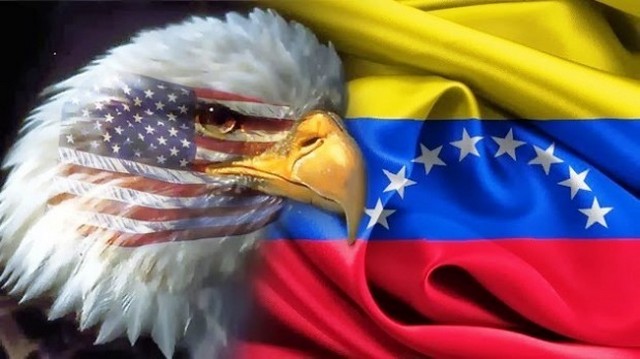
Venezuela is again the shining light of Democracy – pushing ahead with the 6 December 2020 National Assembly (NA) elections – despite the endless challenges of covid – of sanctions, of embargos, of confiscation of foreign assets, and even of a totally illicit blockage of reserve currencies – Venezuela’s gold – naturally in the world’s protectorate of international financial fraud, The City of London.

This unique drive for democracy against all odds succeeds to a great degree thanks to President Maduro, who relentlessly resists not only the attempts against his life, but the lies and vilifications about Venezuela from most of the western world, led, of course, by the United States, followed closely by the European Union which, it seems, dominated by NATO, can’t break loose from being at Washington’s bidding.

It is sad to see European states – hands and minds still dripping of colonial blood, not being able to break the stranglehold of their genocidal past – and step onto a new plate, into a new history – fighting for justice and human rights. An example how far from this eye-opening conscientious awakening Europe is, was again demonstrated today by the EU Commission’s call to “sanction” Russia for the totally unproven Navalny poisoning, by stopping the almost completed Nord Stream 2 German-Russian gas pipeline project.

Never mind the absurdity, that Germany and the EU are punishing themselves, not only because alternative badly needed gas supplies will be considerably more expensive – and god forbid – may be coming from US fracking sources. In other words, the EU would approve of an environmental disaster. Many of EU member countries are by their Constitution barred from using fracking gas or oil.

And again, the EU vassalhood – to call it what it is – refused President Maduro’s invitation to observe the December 6 elections. Mr. Maduro went out of his way to invite all the important opinion makers to come and observe the fairness of the elections, including the UN and the Europeans. The latter prefer not to see the correctness with their own eyes, but being able to criticize what they have not seen. There is no darker blindness than that emanating from not wanting to see.

And that of course only, because the European leaders (sic) – all shoe-ins by an international deep state elite – will do whatever it takes to preserve as long as possible the unsustainable – an unfettered, neoliberal no holds barred capitalism. The WEF (World Economic Forum) calls it best: The Great Reset – the upwards reorganization of assets. After the very elite-made global covid hoax has destroyed and continues to devastate most of what was the world economy, what gave work and food to billions of people – people are dwelling in the gutters with nothing left – no health care, no shelter, no food – no hope. The latter is the killer.

Venezuela is the antidote to this western usurping approach to civilization – what’s left of it. Venezuela pursues justice and fights for equality. By the way, Venezuela is in the honorable company of Cuba, Syria, Iran, Russia and China. The US, alias the west, cannot tolerate an example of ethics in its hegemonic orbit. Western allies – united under the boots of NATO – pretend freedom is their cause, while their own people suffer from unfathomable injustice every day – poverty and famine of children is skyrocketing in the Global North, the so-called developed or industrialized world – the bankers world, the world of those who indebt the Global South into dependence, into the Global North’s neo-colonies.

Venezuela, on the contrary, aims at eradicating poverty famine and misery – and that despite her constant strangulation by Washington and their western allies, and even by some of what should be their Latin Brothers, the Lima Group, formed in August 2017 in Lima, Peru (12 members as of December 2019: Argentina, Bolivia, Brazil, Canada, Chile, Colombia, Costa Rica, Guatemala, Haiti, Honduras, Mexico, Panama, Paraguay, Peru, Guyana, Saint Lucia, Bolivia and Haiti).

Imagine – how much pressure these Lima Group countries are under to accuse, boycott, denigrate and speak out in international fora against their fellow Latin Americans of Venezuela. Once upon a time there was a United Latin America – united under the leadership of Venezuela’s Simon Bolivar. With the onset of the British Empire’s transatlantic move of its power center to become the United States of America, the southern part of the America’s became what recent US Presidents called “our backyard” – ready to be usurped in any way possible, mostly in the form of military dictatorships and lately by Washington-induced coups against democratically elected heads of states.

However, the spirit of Simon Bolivar, El Libertador, lives on. Together with Nicolas Maduro’s tenacious will for freedom, for autonomy, for full sovereignty for Venezuelans, their use and destiny over natural resources, may prevail and influence upcoming elections in Bolivia (October 2020), Chile (October 2020 referendum on whether a new Constitution ought to be drafted, replacing the one dating back to Pinochet), Brazil (municipal election in November 2020) and Ecuador (general elections in February 2021).

Venezuela’s overarching strength by solidarity and endless fight for justice and Human Rights, brought the opposition to its knees. The right-wing Washington supported opposition, led by self-nominated “president” Juan Guaidó, boycotted past elections, so as not to show their weakness vis-à-vis the rest of the world. Now, perhaps the real head of opposition, Henrique Capriles, is changing tactics. Realizing that the only way to have any say in the political arena of Venezuela is by participating in it, he is calling for participation in the 6 December National Assembly elections.

President Maduro has always encouraged and invited participation of the opposition in elections and will welcome their presence for the December 2020 NA elections too. Because Democracy is at the heart of Chavismo, the very socialist thought being carried forward – steadily, without wavering, by President Maduro and his Government. – Viva! Venezuela’s Democracy – a shining light for the Americas and for the world.

Peter Koenig is an economist and geopolitical analyst.

20 September 2020

Source: countercurrents.org
Turkish airstrikes in northern Iraq anger Baghdad and expose relations with Iraqi Kurdistan

By Afro-Middle East Centre (AMEC)

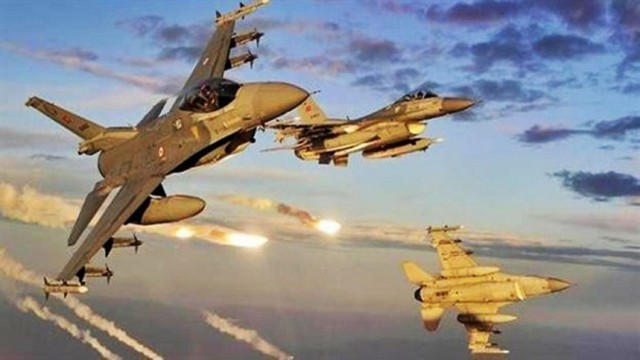
Turkish airstrikes against the Kurdistan Worker’s Party (PKK) in northern Iraq last month attracted the attention of regional and international players and angered Iraq’s prime minister Mustafa al-Kadhimi, who is seeking enough regional and international support to force Turkey to withdraw its troops and cease the bombardment. Although Turkey has occasionally bombed the PKK in the Qandil Mountains, near the Iraq-Iran border, for many years, the latest incursion that started in June, dubbed Operation Claw Tiger, has been unrelenting. Iraqi government protests have not stopped the Turkish incursion. On the other hand, the Kurdish Regional Government (KRG), in the autonomous Kurdish region of Iraq, seems to be ignoring the incursions, despite occasional statements of protest.

Iran, on 8 August, committed to joining the Turkish bombardment. Attempting to seize the initiative, especially with Iran joining in, on 25 August the USA offered to mediate between Baghdad, Ankara and the KRG. The US offer followed Kadhimi’s complaint to US president Donald Trump about the ongoing airstrikes and his appeal for American assistance. The appeal to Trump followed a Turkish drone strike that killed two high-ranking Iraqi border officials, the first casualties of Iraqi officials since the start of the Turkish campaign in June. Despite Baghdad’s condemnation of the killings, which led to the cancellation of a planned visit of the Turkish foreign minister to Baghdad, Turkey vowed not to back down.

On the same day as the US offer, at a summit between Egypt, Jordan and Iraq about the formation of an economic, diplomatic and security bloc, Egyptian president Abdel Fattah el-Sisi stressed the need to deal with foreign interventions destabilising countries in the region, hinting at Turkish activities in Iraq, Syria and Libya. Not to be left out, French president Emmanuel Macron visited Iraq on 2 September, and met Kadhimi and KRG leader Nechirvan Barzani to discuss Iraq’s sovereignty. Unimpressed by Macron’s visit, Turkey hosted Barzani in Ankara two days later. On 8 September, ignoring criticisms, Turkey and Iran vowed to continue the airstrikes against the PKK and its Iranian affiliate, the Kurdistan Free Life Party (PJAK), upsetting Baghdad further.

The incursion is not, however, a matter of Turkey against the Kurds, as it is sometimes portrayed. Turkey has strong and enduring relations with the KRG based largely on trade relations and security cooperation. Despite occasional public condemnation, Erbil seems to be broadly supportive of the Turkish incursion and has cooperated with Turkish intelligence, even providing information on PKK positions.

The PKK began an insurgency against the Turkish state in 1984, attempting to create an independent Kurdish state. Since then, the Turkish military has killed hundreds of PKK members and imprisoned thousands more, including the group’s founder, Abdullah Ocalan, captured in 1999 in Nairobi while en route to South Africa. A ceasefire between Turkey and the PKK, agreed in 2013 as part of a move towards a negotiated settlement, broke down in 2015, and Turkey, USA and the EU listed the PKK as a terrorist organisation. The group operates mainly from the Kurdish regions in northern Iraq and southern Turkey. Its Iranian affiliate, the PJAK, was formed in 2004 and operates between Iraq and Iran, launching attacks against Iran.

Mass demonstrations broke out in northern Iraq against the KRG’s response to the airstrikes, including in Sinjar where Turkish troops are present. In Baghdad, activists have accused Turkey of murdering civilians. The anti-Turkish demonstrations are likely to continue as the Turkish incursion persists, especially in the Sinjar region where many displaced Yazidis want to return to the homes that they had evacuated or were evicted from during the reign of terror of the Islamic State group in August 2014.

Turkish activities against the PKK in northern Iraq have also highlighted the rivalry between different Iraqi Kurdish groups, exposing historical tensions between them, which have differing views on Turkey and its role in northeastern Syria, where it has been battling Kurdish groups. The KRG’s ruling party, the Kurdistan Democratic Party (KDP), has close relations with Turkey, and, consequently, the KRG and Turkey have strong trade links that date back to late 2000s, as well as security cooperation and intelligence sharing. These relations were temporarily disrupted when the KRG held a referendum for independence in 2017. The referendum proved to be a miscalculation by the KRG as it was condemned by regional and global powers, including its allies Turkey and the USA, as well as Iran. Then-president of the KRG, Masoud Barzani, stepped down after the referendum, paving the way for his son to succeed him and repair damaged foreign relations.

The KRG was formed as an autonomous entity in 1992 after the UN imposed a no-fly zone in the Kurdish region following Iraq’s defeat by the USA in the first Gulf War. However, rivalry between Kurdish groups prevented a stable government being formed, and it was only in 1998 that the KDP and its main rival, the Patriotic Union of Kurdistan (PUK), signed a US-brokered ceasefire agreement. In 2005, the Iraqi constitution granted the region autonomous status. Unlike the PUK, the KDP shares Turkey’s hostility towards the PKK, leading the PUK to accuse its rival of collaborating with Turkey and being responsible for the increased Turkish bombing of the city of Sulaymaniyah in Iraq’s eastern Kurdish region. Apart from the PUK, other Iraqi Kurdish groups that are friendly towards the PKK include the Change Movement (Gorran) and the Freedom Movement of Kurdistan Society. Turkey has been agitating with the KRG for these groups to be banned.

These differences among Kurdish groups were again highlighted when, on 21 July, Turkey revealed that it had detained Dalia Muslim, the niece of Saleh Muslim, a prominent leader of the Syrian Kurdish group, the Democratic Union Party (PYD). Ankara claimed she had defected from from the Kurdistan Protection Units (YPG), the PYD’s armed wing; she had been a fighter in the YPG’s Women’s Protection Units (YPJ). The PYD denied that she had defected, and accused the KRG of having handed her over to Turkish intelligence agents after she had travelled to Erbil for medical treatment.

Allegations of KRG ‘collaboration’ with Turkey are partly based on the close economic relations between the two. The KRG exports oil via Turkish pipelines that connect Kurdish oilfields to the Turkish port of Ceyhan. Controlling huge oil and natural gas reserves, the KRG often clashes with Baghdad over the distribution of the revenues from the sale of these resources. This dispute escalated in 2014 when Baghdad lodged a complaint against the KRG at the International Chamber of Commerce’s International Court of Arbitration (ICA) in Paris. Baghdad is demanding US$25 billion in compensation for allowing the KRG to export oil without the central government’s consent.

The Baghdad-Ankara tension is likely to persist, especially now that Iran is involved. Turkey has found yet another reason for its antagonism to France, which it regards as interfering in its fight against ‘terrorism’. The KRG finds itself in a dilemma. On the one hand, it too wants to curb PKK activities and force it out of areas the KRG controls; on the other hand, it wants to maintain good relations with Baghdad and does not want to be seen to support foreign intervention in Iraq.

AMEC briefs is a fortnightly commentary on a current issue in the Middle East and North Africa region, providing short but trenchant analyses.

20 September, 2020

Source: www.amec.org.za

Open Letter: UAE and Bahrain’s Normalization with Israel Incentivizes Continued Colonization of Palestine

By Shawan Jabarin, General Director, Al-Haq

The decision of the United Arab Emirates and Bahrain to normalize relations with Israel lay bare what has been clear to Palestinians for decades: Israel’s illegal acts of annexation and apartheid will not deter those in power from the pursuit of their own interests, to the detriment, if not damnation, of justice, accountability, and human rights in Palestine. In effect, the normalization of diplomatic and trade relations between the UAE, Bahrain and Israel reveal a worrying and detrimental trend in regional State practice towards the acceptance and endorsement Israel’s illegal acts against our people including, the closure and collective punishment of the Gaza Strip, enforcement of an apartheid regime over the Palestinian people as a whole, the annexation of our land, and the erasure of the Palestinian people. The shameful recognition of Israel’s illegal acts by both these States must be collectively opposed, by the international community, and the Palestinian people.

Despite the UAE and Bahrain’s legal responsibilities as third States under international law to take effective action to oppose Israel’s illegal settler-colonial enterprise and other unlawful acts, they have instead opted to act in contravention of these responsibilities and embrace inexcusable violations of international law and human rights in the name of geopolitical expediency and gain.

Palestinian self-determination is not a matter which is up for debate; not as part of future negotiations between Israel and the State of Palestine, and certainly not as part of an agreement between Israel and the UAE or Bahrain, brokered by the United States, with intentionally excluded Palestinian voices and perspectives. In striking contrast to the recent wholesale dismissal of the centrality, or indeed relevance at all, of Palestine to Arab-Israeli relations, the 2002 Arab Peace Initiative, proposed by Saudi Arabia and endorsed by the Arab League, conditioned normalisation on the full withdrawal of Israeli occupying forces from the West Bank, including East Jerusalem, and the Gaza Strip, the recognition of a Palestinian State therein, and the permitting of Palestinians refugees and exiles to exercise their right to return. Instead, Israel has attained full normalisation with the UAE and Bahrain essentially without precondition, having claimed to suspend its plans of full de jure annexation of the West Bank, threatened previously in 2020 in the midst of the COVID-19 pandemic.

This purported suspension has done little to console the millions of Palestinians already living under de jure annexation in East Jerusalem, under de facto annexation in much of the West Bank, as refugees and exiles denied their right of return, or being treated as demographic threats and invaders within Israel’s borders. Whether American-backed de jure annexation comes now or in 2024, Palestinians will continue to be targeted with deadly force, will continue to watch their homes being demolished, will continue to be denied reunification with their families, will be denied the right to return to their homes and lands, and will be denied the dignity promised to them by an international rules-based order.

Emirati support for the struggle against Israeli colonialism, annexationist-aggression and apartheid was ultimately cowed by the allure of the lucrative partnership between the UAE and Israel’s private sectors. Defence, cybersecurity, and infrastructure corporations have for years made billions in revenue as Emirate-based multinationals in Israel, and vice versa. According to the Times of Israel, exports from Israel to the UAE stand to rise up to $500 million USD annually, whereas UAE investment in Israel may reach an annual $350 million USD. Similarly, conversations have taken place at the highest political level between Israeli and Bahraini officials. Economic benefit and “peace in the region” is thus the fig leaf for the abandonment and betrayal of the Palestinian people offered by American, Emirati, and Bahraini proponents of normalization. However, a peace which does not include the realization of the rights of all Palestinians will be one without justice, and so will be no peace at all. In the midst of continued human rights violations and the commission of international crimes in Yemen, Syria, Egypt, and Libya, stood over and perpetuated by a corrupt ruling elite and multinational profiteers, Palestine is once more left by the wayside.

It is critical that the international community intervenes to pressure the UAE and Bahrain to comply with their third State obligations towards Palestine and prevent aiding and abetting Israel in its continuing violation of peremptory norms of international law. It is now time, for the international community and the Palestinian people to collectively rise up and resist this egregious regional normalization, to ensure the realization of our people to self-determination and permanent sovereignty, and to prevent Israeli and regional measures towards the erasure of our people, culture, lands and home.

19 September 2020

Source: palestineupdates.com

Palestine is rotting Israel from inside – No Gulf peace deal can hide that

By Raja Shehadeh

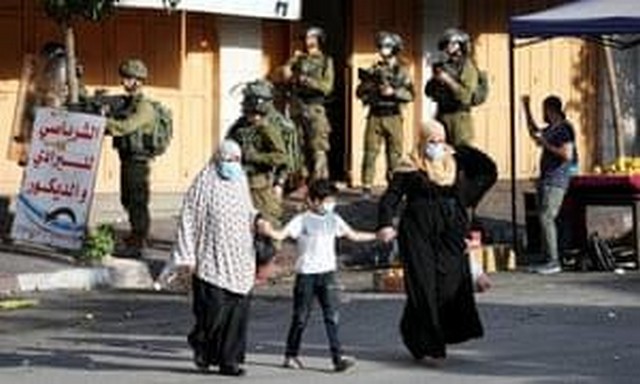
Palestinians and Israeli soldiers during protests

More than a quarter of a century after Yitzhak Rabin and Yasser Arafat shook hands on the White House lawn, Israel has managed to turn its occupation of Palestinian territory from a burden into an asset. What was for so long a liability – the flagrant violation of international law – has now become a valued commodity. Understanding this development is the key to explaining why the Israelis are making peace with two distant Gulf States but not their closest neighbours, the Palestinians – without whom there can be no real peace.

Israel has learned in recent years how to manage the occupation in perpetuity with minimal cost. But from the very beginning of the occupation in June 1967, Israel has been unwilling to recognize the Palestinian nation or cede control of the Palestinian territory occupied in order to make peace. The evidence to support this claim is easily found in Israel’s own archives. Two days after the occupation began; Israel passed military order number three, which referred to the fourth Geneva Convention relative to the protection of civilian persons in time of war – mandating that military courts apply the provisions of the convention to their proceedings. Four months later, this portion of the order was deleted.

In September 1967, the legal counsel to the Israeli foreign ministry, Theodor Meron, was asked by the Prime Minister, Levi Eshkol, whether building new settlements in the occupied territories would violate the Geneva Convention, which prohibits an occupying power from transferring its civilians into the territory seized in war. He answered in the affirmative. But his advice was rejected and the government proceeded from that moment to establish illegal Jewish settlements in the occupied Palestinian territories. Over the following months, Israel began a process that would continue for many years: amending laws governing Palestinian land – from the periods of Ottoman, British mandate and Jordanian control of the territory – to construct a false “legal” basis for the acquisition of land and other natural resources for the establishment of Jewish settlements.

I spent much of my working life, from 1979 until 1993, investigating and resisting Israel’s abuses of law in the occupied territories, and warning about the implications of building illegal settlements, all to no avail. Yet it was not the legal transformations alone that enabled settlements to be built and to flourish. The militant Zionist thinker Vladimir Jabotinsky had written, in the 1920s that “settlement [s] can … develop under the protection of a force that is not dependent on the local population behind an iron wall which they will be powerless to break down. And so it was.

——————————————————————————————————
“When the power of love overcomes the love of power, the world will know peace,” (Jimi Hendrix)
—————————————————————————————————–

There was an added component to the transformation of the laws to enable the settlement project and that was sheer violence by settlers: vigilante actions that seemed to go against the law Israel had put down and bound it to. In the early 80s Al-Haq, a West Bank-based human rights organisation that I was then directing, worked hard to document incidents of settler violence. At the time we naively believed that if only Israelis knew what was taking place and the failure of law enforcement to stop it, they would take action to prevent it. We were unaware that it was all part of the Israeli struggle for the land. The agents of the orderly state can stay within the boundaries of their rewritten laws while the unruly settlers do the work of intimidation and violence to achieve the desired goal. It is all part of the same scheme.

Since the start of the coronavirus pandemic, settler violence in the West Bank has become an almost daily occurrence. It is all out in the open and the government and the courts are on the same page in supporting the settlers and working to achieve the goal of greater Israel. The Knesset has passed the regularization bill, which “legalises” settlements built on privately owned Palestinian land via de facto expropriation.

While Jewish settler violence against the Palestinians rages – preventing Palestinians from working their land or using it as their own, with no real attempt by the Israeli military or police to prevent this – Israel declares any and all Palestinian resistance to occupation to be terrorism. When Palestinians began to organize non-violent resistance to the occupation, Israel redefined attacks by the army on these unarmed protesters to bring them under the category of “combat operations”. Recently, the villagers of Kafr Qaddum were staging weekly demonstrations against the blocking of a road, which prevented access to their village, because it was claimed that the road passes through a new part of the settlement of Kedumim. The army planted explosives on roads used by the villagers – but the soldiers who took this decision would be immune from prosecution for any injuries caused to the villagers.

With all these “victories” on Israel’s part, the country has now decided that it can manage the occupation rather than end it. The occupation even began to be seen as an asset. Israel has turned the occupied territories into a laboratory for testing weapons and systems of surveillance. Israelis now market their crowd control weapons and systems of homeland security to the US, based on testing in the occupied territories. Yet all this financial investment in the occupation – and all the twisting of domestic laws to protect the illegal settlement project, all the political contortions to cultivate authoritarian allies, from Trump to Orbán to Bolsonaro – is rotting Israel from the inside, turning it into an apartheid state that rules over millions of Palestinians without rights.

In Arundhati Roy’s novel The Ministry of Utmost Happiness, one of her characters, Musa, says that if Kashmiris have failed to gain independence from India, at least in struggling for it they have exposed the corruption of India’s system. Musa tells the book’s narrator, an Indian: “You’re not destroying us. It’s yourselves that you are destroying.” Palestinians today might say the same of our struggle with Israel.

Raja Shehadeh is a Palestinian writer and lawyer.

19 September 2020

Source: palestineupdates.com

Britain’s obsession with empire, as portrayed in yet another dreary TV drama, shows how marginal & mediocre the country really is

By Nirpal Dhaliwal

‘The Singapore Grip’ seeks to revive the UK’s sense of itself as exceptional and essential to the world – but actually achieves the opposite. Such TV shows need to start depicting the repressive reality of colonialism.

Britain’s empire has now been lost for almost as long as most of it existed. The Raj, for instance, disappeared with Indian and Pakistani independence 73 years ago, having been established only 90 years before that. Despite almost no Britons today having any lived experience of it, that very brief moment of imperial grandeur casts an unbreakable spell over their imagination, expressed in a national obsession with abysmally written, third-rate colonial dramas in which ham-faced Brits sweat profusely in their starched collars while swilling too much gin and lording over and lusting after the natives.

This year’s dreary, coma-inducing dose of nostalgia comes in the form of ‘The Singapore Grip’, a supposedly satirical drama about Britain’s ignominious defeat by the Japanese in 1942 that began airing on Sunday night. The Battle of Singapore was a moment as pivotal in modern history as that of Stalingrad or the Normandy landings, when European power in Asia collapsed for good, leading to the decolonising of the planet’s most populous region and America’s increasing enmeshment with it.

The rise of China, India and the rest of the continent all have an antecedent in that event, but rather than using it as an opportunity to teach the public something about the world and its position within it, the broadcaster, ITV, has chosen, yet again, to feed the national addiction to soothing, morphine-shot fantasies about a bygone age when the British were top dogs.

Posing as a historical drama, the show contains plenty of classic cars, tailored linen, Brylcreemed coiffs and plantation mansions – accompanied with a noisy, incessant big-band score to help the more stupid viewer to recognise that it’s all set, you know, in the 1940s – but pathetically little history. It focuses mostly on a seedy plotline in which a slimy three-piece-suited English businessman cajoles his nubile daughter into seducing his boss’s son. Blonde, bouncy and summer-frocked, “Of course, I will!” she exclaims. “Whatever he’s like!”

After an hour of this rubbish, one is left with no sense of how or why the British were in Asia, or why the Japanese were in the process of evicting them. One does, however, get a good insight into the deeply confused relationship the British have with their past and the rest of the world.

Britain is a country neurotically obsessed with its lost empire, yet obstinately reluctant to learning anything about it – a disorder that leads to shows such as this, full of white colonists intriguing among themselves for advancement, while having nothing to do with the natives other than giving orders to grovelling staff or when seeking sexual favours. The only significant non-white presence in the first episode is a beautiful Chinese woman who throws herself at the mercy of white saviours, and a pair of turbaned and semi-naked ‘yogis’, hired as party entertainment, who chant a Sikh liturgy before breaking tea cups on their heads and eating them, after which one bites the head off a live snake and eats that too – depictions that would sit well in a Leni Riefenstahl or DW Griffith feature.

The British characters are almost all either shysters, stupid or incompetent – a weak effort at satire that only obfuscates the politics rather than critiquing it. And the lack of any native narrative leads, of course, to a strong suggestion that the empire was a sort of mutually agreed voluntary enterprise, with no hint of the repressive system that kept a tiny clutch of white people sipping cocktails in palatial fan-cooled manor houses while millions of Asians slaved away in the fields: a wilful denialism adhered to by the British to this day.

The show is a dramatisation of a novel by JG Farrell, a third-rate writer whose trilogy of empire-era fiction, written in the 1970s – of which this is the last – are wisely ignored by the cognoscenti today. But the resurrection of this book for a TV series now is consistent with the popular, empty-headed manias of a Brexit Britain that last month had a fit of hysteria at the possibility that the BBC might stop broadcasting renditions of ‘RuleBritannia’ – a trashy if jaunty piece of jingoistic doggerel set to sailor music – as if were the equivalent of banning Wagner in Germany or Shostakovich in Russia. That a composition no better than the average nursery rhyme is an unofficial anthem should have been a cause for national embarrassment and its retirement welcomed, not railed against.

The saddest irony in this land where irony began is that the more Britain does to revive a sense of itself as exceptional and essential to the world – be it through leaving the EU, holding onto childish ditties or producing inane costume dramas – the more peripheral and mediocre it reveals itself to be.

Nirpal Dhaliwal is a novelist and journalist whose work has appeared in the Financial Times, The Times, The Sunday Times, The Telegraph, The Guardian, Haaretz, and India Today.

16 September 2020

Source: www.rt.com

As Bahrain, UAE sign peace deals with Israel, Trump says 5-6 more countries ready to follow soon

By Abdus Sattar Ghazali

President Donald Trump on Tuesday said five or six more countries are ready to make peace with Israel, Times of Israel reported. However, he did not name those countries.

Shortly before the signing of the Abraham Accords between Israel, the United Arab Emirates and Bahrain, Trump said, “We’re very far down the road with about five additional countries… Frankly, I think we could have had them here today.”

“We’ll have at least five or six countries coming along very quickly… They want to see peace. They’ve been fighting for a long time…. They’re warring countries but they’re tired of fighting.. You’re going to see a lot of very great activity. It’s going to be peace in the Middle East.”

Answering questions about what Israel gets from the new deals, Trump said, “We’ll be signing up [other] nations… These are very strong agreements. This is serious peace… What Israel gets, the most important thing Israel gets, is peace.”

Trump also quoted as saying: “I really believe Iran wants to make a deal.” He advised Tehran to wait until after the elections, however. If “sleepy Joe Biden” were to win the elections, he said Iran and especially China “would own the United States.”

He said he’d spoken with the king of Saudi Arabia, and “positive things will happen… This is peace in the Middle East without blood all over the sand.”

Israeli Prime Minister Netanyahu was quoted as saying: “Israel doesn’t feel isolated at all. It’s enjoying the greatest diplomatic triumph of its history.” Those who are feeling isolated, says Netanyahu, “are the tyrants of Tehran.”

Israel Hayom

Meanwhile, the Israeli newspaper Israel Hayom Tuesday quoted British-Pakistani analyst Noor Dahri as saying that Oman, Sudan, Morocco, and Saudi Arabia are likely to follow UAE and Bahrain and seek rapprochement with Israel sooner than believed.

Analyst Noor Dahri, founder and executive director of Islamic Theology of Counter Terrorism, a UK-based think tank, told Israel Hayom Monday that many other Arab countries have taken notice of the regional winds of change, and may follow in Abu Dhabi and Manama’s footsteps sooner that one may believe.

“The peace agreements of the UAE and Bahrain with Israel are just a door [for them] for opening further diplomatic, trade and strategic relations with the Israel. There are many countries that are awaiting their term to join the agreement, such as Oman, Sudan, Morocco and Saudi Arabia,” he said.

However, a diplomat in the Gulf was quoted Tuesday by Reuters as saying that for Saudi Arabia, the issue is more related to what he called its religious position as the leader of the Muslim world, and that a formal deal with Israel would take time and is unlikely to happen while King Salman is still in power.

“Any normalization by Saudi will open doors for Iran, Qatar and Turkey to call for internationalizing the two holy mosques,” he said, referring to periodic calls by critics of Riyadh to have Mecca and Medina placed under international supervision.

A big deal but not a peace deal

Fred Kaplan of the Slate Tuesday said It is a big deal not a peace deal because Israel has not been at war with either of the two Gulf Arab states. In fact, for years now, it has quietly been conducting trade and backroom diplomacy with both.”

However, “normalized relations”—which the accord establishes— marks a huge step forward: the creation of embassies, commercial air routes, tourism, security and intelligence ties, and access to Israel’s high-technology products and marketplace.

Bahrain and the UAE, tiny but oil-rich monarchies, bring to four the number of Arab states that have formal ties with Israel. (The others are Egypt and Jordan, since 1979 and 1994, respectively.) But the accord also holds the promise of more to come, especially since Bahrain would not have signed the deal without the explicit consent of the Saudi royal family, Kaplan said adding:

“As Malcolm Kerr observed more than a half century ago in his classic book, The Arab Cold War, the Israeli-Palestinian conflict has never been as central to Arab leaders’ concerns as they have claimed. The bogeyman of Israel has served mainly as a distraction from their own internal problems—and as a common enemy to paper over sectarian tensions.

“The losers in this deal are the Palestinians. For decades, most Arab leaders refused to recognize Israel until Israel allowed the creation of—and made peace with—an independent Palestinian state. The UAE and Bahrain are now saying they don’t really care about the Palestinians.”

Palestinians groups unify

Palestinians unify as Bahrain and UAE ‘normalize’ Israel relations. Last Saturday, Palestinian groups led by Hamas and Fatah agreed on a “unified field leadership” comprising all factions that will lead “comprehensive popular resistance” against the Israeli occupation.

The formation of the joint leadership group and progress in the intra-Palestinian unity talks came after a long-awaited September 3 meeting among Palestinian Authority President Mahmoud Abbas, Hamas’s Ismail Haniya, Islamic Jihad’s chief Ziyad al-Nakhala, and the leaders of various Palestinian entities. Gatherings were held in Ramallah in the occupied West Bank and Beirut, Lebanon.

Hamas and other Palestinian parties have for years demanded that such a meeting take place, but Abbas always rejected the move, calling on Hamas to honour previous unity pacts first.

But with the Palestinian cause lately facing so many challenges – the most important being the normalization between Arab countries and Israel – Abbas agreed to hold discussions.

Meanwhile, protests erupted in Palestine, Bahrain and UAE over signing of the deal. Thousands of protesters took to streets shouting anti-US and Anti-Israel slogans. The peace pact has been widely criticized mostly by heads of Muslim states who see it as a conspiracy to create rifts and harm unity among the Muslim world.

Abdus Sattar Ghazali is the Chief Editor of the Journal of America (www.journalofamerica.net)

16 September 2020

Source: countercurrents.org
Will They or Won’t They? Saudi Recognition of Israel is the $64,000 Question

By Dr James M Dorsey

Will the Saudis formalize relations with Israel or will they not? That is the 64,000-dollar question.

The odds are that Saudi Arabia is not about to formalize relations with Israel. But the kingdom, its image tarnished by multiple missteps, is seeking to ensure that it is not perceived as the odd man out as smaller Gulf states establish diplomatic relations with the Jewish state.

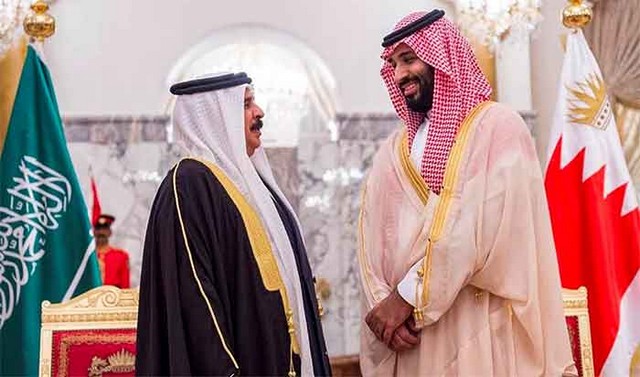
Bahrain’s announcement that it would follow in the footsteps of the United Arab Emirates was as much a Bahraini move as it was a Saudi signal that it is not opposed to normalization with Israel.

Largely dependent on the kingdom since Saudi troops helped squash mass anti-government protests in 2011, Bahrain, a majority Shia Muslim nation, would not have agreed to establish diplomatic relations with Israel without Saudi consent.

The Bahraini move followed several other Saudi gestures intended to signal the kingdom’s endorsement of Arab normalization of Israel even if it was not going to lead the pack.

The gestures included the opening of Saudi air space to Israeli commercial flights, and publication of a Saudi think tank report praising Crown Prince Mohammed bin Salman’s stewardship in modernizing the kingdom’s religious education system and encouraging the religious establishment to replace“extremist narratives” in school textbooks with “a moderate interpretation of Islamic rhetoric.”

They also involved a sermon by Abdulrahman al-Sudais, the imam of the Grand Mosque in Mecca – the world’s largest mosque that surrounds the Kaaba, Islam’s holiest site, that highlighted Prophet Mohammed’s friendly relations with Jews.

Mr. al-Sudais noted that the prophet had “performed ablution from a polytheistic water bottle and died while his shield was mortgaged to a Jew,” forged a peace agreement with Jewish inhabitants of the Khaybar region, and dealt so well with a Jewish neighbor that he eventually converted to Islam.

The imam’s comments, a day before US President Donald J. Trump was believed to have failed to persuade King Salman to follow the UAE’s example, were widely seen as part of an effort to prepare Saudi public opinion for eventual recognition of Israel.

Criticism on social media of the comments constituted one indication that public opinion in Gulf states is divided.

Expression of Emirati dissent was restricted to Emirati exiles given that the UAE does not tolerate expression of dissenting views.

However, small scale protests erupted in Bahrain, another country that curtails freedom of expression and assembly. Bahraini political and civil society associations, including the Bahrain Bar Association, issued a statement rejecting the establishment of diplomatic relations with Israel.

“What results from normalization will not enjoy popular backing, in line with what generations of Bahrainis have been brought up on in terms of adherence to the Palestinian cause,” the statement said.

Bahrain has long been home to a Jewish community and was the first and, so far, only Arab state to appoint a Jew as its ambassador to the United States.

The criticism echoes recent polls in various Gulf states that suggest that Palestine remains a major public foreign policy concern.

Polling by David Pollock of The Washington Institute for Near East Policy found that Palestine ranked second to Iran.

Earlier polls by James Zogby, a Washington-based pollster with a track record that goes back more than a decade, showed Palestine ranking in 2018 as the foremost foreign policy issue followed by Iran in Emirati and Saudi public opinion.

The same year’s Arab Opinion Index suggested that 80 percent of Saudis see Palestine as an Arab rather than a purely Palestinian issue.

Mr. Pollock said in an interview that with regard to Palestine, Saudi officials “believe that they have to be a little cautious. They want to move bit by bit in the direction of normalizing at least the existence of Israel or the discussion of Israel, the possibility of peace, but they don’t think that the public is ready for the full embrace or anything like that.”

Gulf scholar Giorgio Cafiero noted in a tweet that “Israel formalizing relations (with) unelected Arab (governments) is not the same as Israel making ‘peace’ (with) Arab people. Look at, for example, what Egypt’s citizenry thinks of Israel. Iran and Turkey will capitalize on this reality as more US-friendly Arab [governments] sign accords [with] Israel.”

This year’s Arab Opinion Index suggest that in Kuwait, the one country that has not engaged with Israel publicly, Turkey—the Muslim country that has taken a lead in supporting the Palestinians—ranked highest in public esteem compared to China, Russia, and Iran.

A rift in a UAE-backed Muslim group created to counter Qatari support of political Islam and promote a state-controlled version of Islam that preaches absolute obedience to the ruler serves as a further indication that Palestine remains an emotive public issue.

In Mr. Al-Sudais’ case, analysts suggest that the criticism is as much about Palestine as it is a signal that religious leaders who become subservient to the whims of government may be losing credibility.

Mr. Al-Sudais’ sermon contrasted starkly with past talks in which he described Jews as “killers of prophets and the scum of the earth” as well as “monkeys and pigs” and defended Saudi Arabia’s conflict with Iran as a war between Sunni and Shiite Muslims.

The criticism coupled with indications earlier this year that Saudi Arabia’s religious establishment was not happy with Prince Mohammed’s handling of the coronavirus pandemic may be one reason why Saudi Arabia is gesturing rather than formalizing already existing relations with Israel.

Authorities reportedly arrested in March Sheikh Abdullah al-Saad, an Islamic scholar, after he posted online an audio clip criticizing the government for banning Friday prayers. Mr. al-Saad argued that worshippers should be able to ask God for mercy.

An imam in Mecca was fired shortly after he expressed concern about the spread of the coronavirus in Saudi prisons.

Scholars Genevieve Abdo and Nourhan Elnahla reported that the kingdom’s Council of Senior Clerics had initially drafted a fatwa, or religious opinion, describing the closing of mosques as a violation of Islamic principles. They said that government pressure had persuaded the council not to issue the opinion.

Concern among the kingdom’s ultra-conservative religious scholars that the ruling Al-Saud family may break the power-sharing agreement with the clergy, concluded at the birth of the kingdom, predates the rise of King Salman and Prince Mohammed.

Indeed, the clerics’ concern stretches back to the reign of King Abdullah and has focused on attitudes expressed both by senior members of the ruling family who have since been sidelined or detained by Prince Mohammed and princes that continue to wield influence.

The scholars feared that the ruling family contemplated separating state and religion. This is a concern that has likely been reinforced since Prince Mohammed whipped the kingdom’s religious establishment into submission and downplayed religion by emphasizing nationalism.

Ultra-conservative Saudi religious scholars are also certain to have taken note of post-revolt Sudan’s recent decision to legally remove religion from the realm of the state.

Ultra-conservative sentiment does not pose an imminent threat to Prince Mohammed’s iron grip rule of a country in which many welcomed social reforms that have lifted some of the debilitating restrictions on women, liberalized gender segregation, and the as yet unfulfilled promise of greater opportunity for a majority youthful population.

It does however suggest one reason why Prince Mohammed, who is believed to favor formal relations with Israel, may want to tread carefully on an issue that potentially continues to evoke passions.

An initial version of this story was first published by Inside Arabia

A podcast version of this story is available on Soundcloud, Itunes, Spotify, Stitcher, TuneIn, Spreaker, Pocket Casts, Tumblr, Podbean, Audecibel, Patreon and Castbox.

Dr. James M. Dorsey is an award-winning journalist and a senior fellow at Nanyang Technological University’s S. Rajaratnam School of International Studies in Singapore.

16 September 2020

Source: countercurrents.org
Reforming the Society: Life and Mission of Swami Agnivesh

By Dr Ram Puniyani

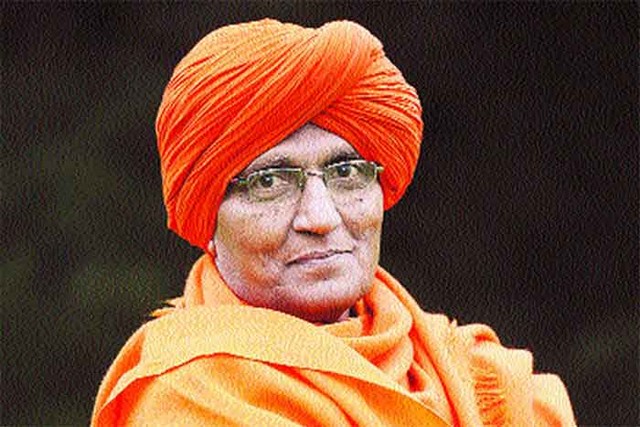
Before taking up the engagement with issues related to communal harmony and national integration, I was trying to associate with issues of labor movement. During that time I used to hear from friends the name of Swami Agnivesh in the context of movement against bonded labor. Later after the demolition of Babri Mosque, I decided to understand the issues of communalism in depth. This is what brought me closer to my late friend Dr. Asghar Ali Engineer. Dr. Enginner during the course of our discussions regularly used to bring up the name of Swamiji and his various initiatives. It’s from here that I came to know Swamiji from close quarters. I was invited by him in a talk show and also enjoyed the hospitality at his home. There was also an occasion when another dear friend Harsh Mander, organized a lecture for street children. The lecture on communal harmony was organized in Swamiji’s Ashram.

From the decade of 1990; I did have the privilege of interacting with Swamiji off and on and was deeply touched by his modesty, affectionate and loving nature. Also saw his deep commitment to oppose the communal forces. He was upright and never compromised on his principles even in the face of adverse circumstances. This is what led to attacks on him by the followers of Hindu nationalist politics. They were very much disturbed by Swamiji’s various bold stands regarding idol worship, and his opposition to using of Hindu identity for political goals. Here I do recount several of my observations and experiences which touched me and made me respect his commitment to abolition of Sati in particular. Globally he did make a mark for his dogged fight against bonded labor.

As far as Hindu nationalist politics is concerned, he had to face their wrath in a large measure. I do deal with some of those in this article.

On 17th August (2018), during the funeral procession of the former Prime Minster of India, Mr. Atal Bihari Vajpayee, Swamiji was assaulted outside the BJP head office, when he was trying to participate in the funeral procession. The assaulters, some members of the crowd, began to heckle him and then they physically attacked him. They were raising the slogans, Bharat Mata ki jai and ‘Deshdrohi Wapas jao’. (Go back anti-National). This reference of anti National was in tune with BJP followers abusing those who differed from their own values. This was mostly due to his criticizing Prime Minister Narendra Modi’s statement related to imagined glories of ancient India.

A month before this, in Pokur Jahrkhand, Agnivesh was brutally assaulted, allegedly by student wing of BJP. The attack was severe and as a matter of great relief he survived while his turban was taken away and his clothes were torn asunder. In the wake of this attack many a BJP supporters, justifying the attack circulated the video of Swamiji’s speech. In this video he is criticizing the Prime minister Modi for his statement that there was plastic surgery in Ancient India as seen in planting of elephant’s head on a boy’s neck or Kauravas’s being born though stem cell technology. He went on to criticize Modi for his public pujas in Nepal and Dhaka.

Attacking Amarnath yatra and idol worship, Agnivesh pointed out that the Barfani baba, the ice shivling is a natural phenomenon which gets formed due to natural processes of deposits of stalactite and stalagmite. In the same video he points out that one of the years, when the deposits were inadequate to form the ling (the Shiva idol), ice had to be put to give it the shape of linga (idol). Similarly criticizing the Kumbh mela, people congregating to wash their sins, he points out that bathing in such polluted water on contrary can lead to new diseases.

Overall, Swami has been part of various social movement like as mentioned earlier Bandhua Majdoor Mukti Morcha, (against bonded labor) for which he also participated in global eradication of modern form of bonded labor, under the aegis of UN. He has been associated with movements opposing female feticide and against sati. He has been part of Arya Samaj organization for long time.

In recognition of his work he has received various awards like Right Livelihood (Alternate Nobel) in 2004. This I remember with more fondness as he had shared the award with my dear friend Asghar Ali Engineer. Apart from this he received Rajiv Gandhi Sadbhavna Award again in same year. There are various issues on which one can disagree with him, like his interpretation of Hinduism exclusively to Vedic period etc., still what is important is his constant engagement with issues related to downtrodden of the society, to those related to modern forms of bonded labor, to sati, female feticide to name the few.

This saffron clad swami was regularly targeted by the followers of Hindu nationalist brigade. These attacks on him are akin to the series which began with murder of Dr. Dabholkar, and later took the lives of Com. Govind Pansare, Dr. Kalburgi and Gauri Lankesh. As intolerance is growing in the society, those having opinions contrary to ruling dispensation are being targeted. As the culprits are enjoying impunity, appreciation from the leaders of ruling party, they know they can get away with hate crimes of this dastardly nature. Lets imagine, a saffron clad Swami is coming to pay last respects to the ex Prime Minster of India and he is heckled and insulted! These hooligans, drunk on fake nationalism and false pride in things in the name of religion, get encouragement from the powers that be, the real culprits are those who support them, appreciate them, those who in the first place disseminate this ideology which is sectarian and looks down their opponents or their ideas as anti national or anti religion.

What is more surprising is that all this is being done in the name of Hindu religion, which celebrates diversity to its core. We know that most of the religions have a single founder and single holy book, still they develop sects within. Christianity has Catholics, Protestants, born again, Pentecostals among others. Muslims have Shia and Sunnis in the main while Sufis and Ahmadiya are also very much there. Buddhism Jainism Sikhism also have sects within them. In contrast Hinduism has no single founder, no single Holy book, and no single pattern of clergy or rituals. It is a collation of diverse traditions like Brahmanism, Tantra, Nath, Siddhanta, Shaiva, Vashanav and Bhakti among others. Diversity is the very core of Hindu religion. Right within Hindu fold Swami Dayanand Sarswati could form Arya Samaj and propound his ideology that Hinduism is primarily founded and based on Vedas.

While Idol worship is part of some sects of Hinduism, as such Hinduism also encompasses animist nature worship, to tri-theism, to polytheism to Nastik (atheist) tradition of Charvak as well. The concept of God also varies from the idol worshipers to those who believe in formless God. Swami Agnivesh propounds that Vedas are the base of Hindu religion.

The central focus of Agnivesh has been social reform, and that’s probably his most important of his engagement with the society. Irrespective of his views and his contribution to the cause of social issues, he has his own version of Hinduism. No one can usurp one’s right of following and propagating one’s own version of Hinduism/religion. The attacks on him by the followers of Hindu nationalists are not grounded in the values of tolerance of Hinduism, they are rooted in the politics, they are part of the sectarian interpretation of Hinduism and selective use of Hindu identity for mobilizing Hindus for political goals, there is nothing religious about it.

The nation did heave a sigh of relief that attack on Swamiji failed. With his consistent efforts for social reform with full strength and gusto; his contribution to social change is immense. Social change for a more just society is a long journey and Swamiji has contributed to it with all his might.

12 September 2020

Source: countercurrents.org

Assange’s Third Day at the Old Bailey: Bias, Politics and Wars on Journalism

By Dr Binoy Kampmark

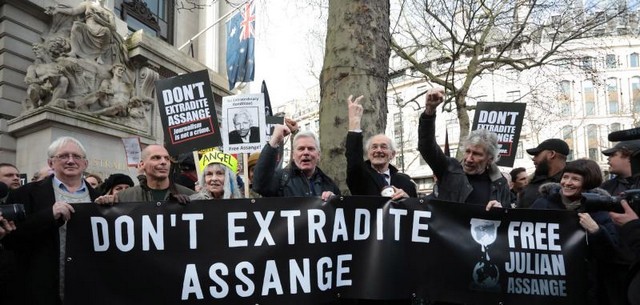
The third day of extradition proceedings against Julian Assange at the Old Bailey resumed on the point of politics. Assange as a figure of political beliefs; Assange as a target of the Trump administration precisely for having them. The man sketching the portrait was Paul Rogers, Emeritus Professor of Peace Studies at Bradford University.

It is no mean feat trying to pin down Assange’s political system. Leftward, rightward, with resistance to the centre? Lashings of libertarianism; heavy doses of anti-war and holding the powerful to account? Such figures tend to be sui generis. In his submitted statement to the court, Rogers suggests a uniform theme. “The political objective of seeking to achieve greater transparency in the workings of governments is clearly both the motivation and the modus operandi of Mr Assange and the organisation WikiLeaks.”

On the stand, Rogers described the Assange method of influence and disruption: the release of the war logs, their influence on public opinion regarding the US imperium’s engagements in Iraq and Afghanistan, the revelations of 15,000 unaccounted civilian casualties. The butcher’s bill of the imperium, in other words, was laid bare by the WikiLeaks’ releases.

For Rogers, this approach jarred with various US administrations, but none more so than that of Trump’s. Assange’s entire approach and “what he stands for represents a threat to normal political endeavour.”

James Lewis QC for the prosecution made his effort to narrow, clip and sharpen the focus on Assange, questioning the expanse of political belief being attributed by Rogers. At times, the prosecution seemed suspended in a time capsule, suggesting, for instance, that political opinions were only applicable to governments and leaders. Rogers preferred a more complex picture: the evolving nature of what political opinion might constitute (for instance, it could include “transnational elites” and attitudes towards corporations). The issue of publishing an item or not could also constitute a form of political opinion.

Lewis then went on the attack, grumpy at the length of Rogers’ responses and suggesting that his testimony was biased towards the defence. Why had he omitted the views of such individuals as US assistant attorney Gordon Kromberg, who argued that prosecuting Assange had been a criminal rather than political matter? Again, Rogers took preferred the broad approach. Prosecutors of a certain rank tend to mimic the views of their superiors – that is their due. What mattered were those higher-ups who had initiated a change in policy regarding WikiLeaks to instigate a “politically motivated prosecution”. This could be demonstrated with some plausibility by considering the wider political context of different administrations. The Obama administration had set its heart on not prosecuting Assange; those in the Trump administration had warmed to the idea.

Not quite getting his pound of flesh, Lewis moved on to targeting the reasons why the Obama administration had gone cold on prosecuting Assange. Like many black letter lawyers on this point, the issue of Assange being confined in the Ecuadorean embassy has them in knots. “What would be the point [of arresting Assange] if he’s hiding in the embassy?” posed Lewis. Rogers, rather sensibly, suggested that this would constitute a pressuring move. “It would have made very good sense to bring it at that time, to show a standing attempt to bring Mr Assange to justice.” Lewis had also made a specious point. As investigative journalist Stefania Maurizi points out, individuals such as Edward Snowden have been duly charged despite fleeing the jurisdiction. Practical custody was hardly a necessary precondition to getting that paperwork ready.

Lewis proceeded to till the same ground as that covered in the testimony of Mark Feldstein, attempting to push the suggestion that the case against Assange might yield future charges, at least as believed by himself and his defence team. Rogers offered similar parrying: the Trump administration’s approach to Assange was distinct, its attitudes conveyed through the hostile remarks of former CIA director Mike Pompeo and the then hungry Attorney General Jeff Sessions. A difference in approach might be gathered from President Barack Obama’s commutation of Chelsea Manning’s sentence. This was Trump’s possible counter.

Post-lunch interest then turned to Trevor Timm, Director of Freedom of the Press Foundation. As he points out in the submitted statement, “The decision to indict Julian Assange on allegations of a ‘conspiracy’ between a publisher and his source or potential sources, and for the publication of truthful information, encroaches on fundamental freedoms.” WikiLeaks was a pioneer in secure submission systems such as SecureDrop, one that had been emulated by media outlets such as the Wall Street Journal and Al Jazeera.

It was incumbent upon journalists that they “develop relationships with their sources” and attempts to punish publishing activity arising from the use of “leaked documents of public importance” would face First Amendment difficulties.

The Trump administration, however, had proved bolder than its predecessors. The Espionage Act had been previously floated at such journalists as James Bamford, Ben Bradlee, Seymour Hersh and Neil Sheehan. It took Assange’s arrest and charging in 2019 to break with tradition.

The indictment, particularly in alleging that Assange had engaged in a conspiracy with Chelsea Manning to crack a military computer passport for reasons of remaining anonymous, would criminalise a common news practice and the whole pursuit of national security journalism. Were the prosecution permitted “to go forward, dozens of reporters at the New York Times, Washington Post and elsewhere would also be in danger.”

Lewis took umbrage at Timm’s claim, outlined in his statement, that Trump had engaged in an enthusiastic “war on journalism”. The FPF director was unsparing, suggesting that the indictment of the WikiLeaks publisher was part of this war, “and it is no exaggeration to say the First Amendment itself is at risk.” To Lewis, Timm replied with a salient reminder that Trump had tweeted 2,200 times about the press, describing them at stages as the “enemy of the people”. It was “very telling that Trump’s is the first one to try to bring a case like this since the Nixon administration.”

The prosecution preferred returning to that exhausted nag of an idea: that Assange could not be seen as a journalist. A form of fallacious logic came into play: the US Department of Justice had no interest in prosecuting journalists and would be breaching their own prosecutorial guidelines in doing so; Assange was not a journalist, therefore showing appropriate discrimination.

Timm had an appropriate response to this nonsensical approach. “In the US, the First Amendment protects everyone. Whether you consider Assange a journalist doesn’t matter; he was engaging in journalistic activity.” And if the DOJ was in breach of federal rules, it should follow that they be held accountable.

Timm also refused to ingest the prosecution line that the indictment was sufficiently narrow to only cover the publication of documents that had revealed the names of informants working for the US. Other charges in the indictment focused on criminalising the act of possessing the documents. That every claim would implicate journalists across the spectrum, as would “the mere thought of obtaining these documents”. A sinister, dangerous implication.

The prosecution was also caught up in what a “responsible journalist” might do. While the issue of unnecessarily publishing the name of a third party thereby endangering that person might raise matters of ethical responsibility, that, suggested Timm, was a separate question “from what is illegal or legal conduct.” A previous attempt to criminalise publishing the name of a US intelligence source had been made, by Senator Joseph Lieberman among others, in 2010 as a direct response to the WikiLeaks disclosures. But the Securing Human Intelligence and Enforcing Lawful Dissemination (SHIELD) Act never became law.

As for whether WikiLeaks had behaved appropriately or not in publishing the entire tranche of uncensored US diplomatic cables, despite it not being responsible for leaking the password to the relevant encrypted file containing the documents, Timm was firm. Governments should not have a hand in making such editorial judgments; the question centred on illegality, something which WikiLeaks could not be accused of.

Dr. Binoy Kampmark was a Commonwealth Scholar at Selwyn College, Cambridge.

10 September 2020

Source: countercurrents.org
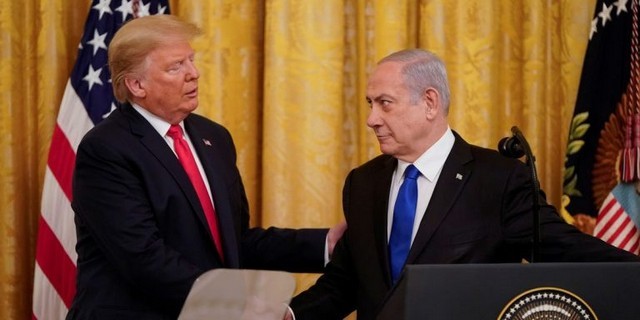
As Washington Retreats, Eastern Mediterranean Conflict Further Marginalizes NATO

By Dr Ramzy Baroud

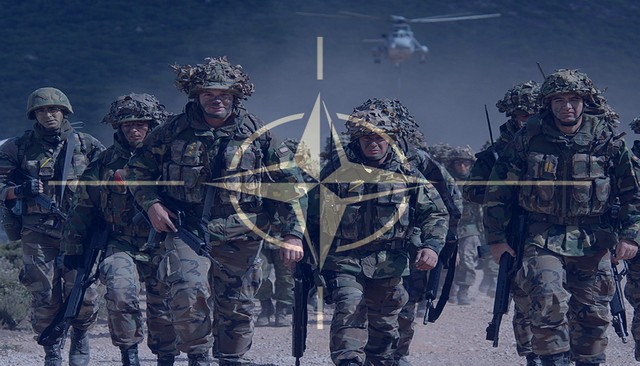
The North Atlantic Treaty Organization (NATO) is an alliance in name alone. Recent events notwithstanding, the brewing conflict over territorial waters in the Eastern Mediterranean indicates that the military union between mostly Western countries is faltering.

The current Turkish-Greek tension is only one facet of a much larger conflict involving, aside from the two Mediterranean countries, Israel, Egypt, Cyprus, France, Libya and other Mediterranean and European countries. Notably absent from the list are the United States and Russia; the latter, in particular, stands to gain or lose much economic leverage, depending on the outcome of the conflict.

Conflicts of this nature tend to have historic roots – Turkey and Greece fought a brief but consequential war in 1974. Of relevance to the current conflagration is an agreement signed by Israeli Prime Minister, Benjamin Netanyahu and his Greek and Cypriot counterparts, Kyriakos Mitsotakis and Nicos Anastasiades, respectively, on January 2. The agreement envisages the establishment of the EastMed pipeline which, once finalized, is projected to flood Europe with Israeli natural gas, pumped mostly from the Leviathan Basin.

Several European countries are keen on being part of, and profiting from, the project. But Europe’s gain is not just economic but also geostrategic. Cheap Israeli gas will lessen Europe’s reliance on Russia’s natural gas which arrives in Europe through two pipelines, Nord Stream and Gazprom, the latter extending through Turkey.

Gazprom alone supplies Europe with an estimated 40% of its natural gas needs, thus giving Russia significant economic and political leverage. Some European countries, especially France, have labored to liberate themselves from what they see as a Russian economic chokehold on their economies.

Indeed, the French and Italian rivalry currently under way in Libya is tantamount to colonial expeditions aimed at balancing out the over-reliance on Russian and Turkish supplies of gas and other sources of energy.

Fully aware of France’s and Italy’s intentions in Libya, the Russians and Turks are wholly involved in Libya’s military showdown between the Government of National Accord (GNA) and forces in the East, loyal to General Khalifa Haftar.

While the conflict in Libya has been under way for years, the Israel-et al EastMed pipeline has added fuel to the fire: infuriating Turkey, which is excluded from the agreement; worrying Russia, whose gas arrives in Europe partially via Turkey, and empowering Israel, which may now cement its economic integration with the European continent.

Anticipating the Israel-led alliance, on November 28, 2019, Turkey and Libya signed a Maritime Boundary Treaty, an agreement that gave Ankara access to Libya’s territorial waters. The bold maneuver allows Turkey to claim territorial rights for gas exploration in a massive region that extends from the Turkish southern coast to Libya’s north-east coast.

The ‘Exclusive Economic Zone’ (EEZ) is unacceptable in Europe because, if it remains in effect, it will cancel out the ambitious EastMed project and fundamentally alter the geopolitics – largely dictated by Europe and guaranteed by NATO – of this region.

However, NATO is no longer the once formidable and unified power. Since its inception in 1949, NATO has been on the rise. NATO members have fought major wars in the name of defending one another and also to protect ‘the West’ from the ‘Soviet menace’.

NATO remained strong and relatively unified even after the dismantlement of the Soviet Union and the abrupt collapse, in 1991, of its Warsaw Pact. NATO managed to sustain a degree of unity, despite its raison d’être – defeating the Soviets – being no longer a factor, because Washington wished to maintain its military hegemony, especially in the Middle East.

While the Iraq war of 1991 was the first powerful expression of NATO’s new mission, the Iraq war of 2003 was NATO’s undoing. After failing to achieve any of its goals in Iraq, the US adopted an ‘exit strategy’ that foresaw a gradual American retreat from Iraq while, simultaneously, ‘pivoting to Asia’ in the desperate hope of slowing down China’s military encroachment in the Pacific.

The best expression of the American decision to divest militarily from the Middle East was NATO’s war on Libya in March 2011. Military strategists had to devise a bewildering term, ‘leading from behind’, to describe the role of the US in the Libya conflict. For the first time since the establishment of NATO, the US was part of a conflict that was largely controlled by comparatively smaller and weaker NATO members – Italy, France, Britain and others.

While former US President, Barack Obama, insisted on the centrality of NATO in US military strategies, it was evident that the once-powerful alliance had outweighed its usefulness for Washington.

France, in particular, continues to fight for NATO with the same ferocity it fought to keep the European Union intact. It is this French faith in European and Western ideals that has compelled Paris to fill the gap left by the gradual American withdrawal. France is currently playing the role of the military hegemon and political leader in many of the Middle East’s ongoing crises, including the flaring East Mediterranean conflict.

On December 3, 2019, France’s Emmanuel Macron stood up to US President Donald Trump, at the NATO summit in London. Here, Trump chastised NATO for its reliance on American defense and threatened to pull out of the alliance altogether if NATO members did not compensate Washington for its protection.

It’s a strange and unprecedented spectacle when countries like Israel, Greece, Egypt, Libya, Turkey and others lay claims over the Mediterranean, while NATO scrambles to stave off an outright war, among its own members. Even stranger, to see France and Germany taking over the leadership of NATO while the US remains, thus far, almost completely absent.

It is hard to imagine the reinvention of NATO, at least a NATO that caters to Washington’s interests and diktats. Judging by France’s recent behavior, the future may hold irreversible paradigm shifts. In November 2018, Macron made what then seemed as a baffling suggestion, a ‘true, European army’. Considering the rapid regional developments and the incremental collapse of NATO, Macron may one day get his army, after all.

Ramzy Baroud is a journalist and the Editor of The Palestine Chronicle. He is the author of five books.

10 September 2020

Source: countercurrents.org