Just International

Caesar Tries to Suffocate 17 Million Syrians

By Rick Sterling

19 Jun 2020 – Since 2011, the US and allies have promoted, trained and supplied militants trying to bring about “regime change” in Damascus. Having failed in that effort, they have tried to strangle Syria economically. The goal has always been the same: to force Syria to change politically. This month, June 2020, the aggression reaches a new level with extreme sanctions known as the Caesar Syria Civilian Protection Act.

The new law is fraudulent on two counts. It is called “Caesar” in reference to a 2014 propaganda stunt involving an anonymous Syrian who was alleged to be a military photographer. He claimed to have 55,000 photos showing about eleven thousand victims of Syrian government torture. As the Christian Science Monitor said at the time, the “Caesar” report was “A well-timed propaganda exercise funded by Qatar.”  A 30 page analysis later confirmed that the “Caesar” report was a fraud with nearly half the photos showing the OPPOSITE of what was claimed: they documented dead Syrian soldiers and civilian victims of “rebel” car bombs and attacks.

The Caesar Syrian Civilian Protection Act is also fraudulent by claiming to “protect civilians”. In reality, it is punishes and hurts the vast majority of 17 million  persons living in Syria. It will result in thousands of civilians suffering and dying needlessly.

Pre-Existing Sanctions

The US has been hostile to Syria for many decades. Unlike Anwar Sadat of Egypt, Syria under Hafez al Assad refused to make a peace treaty with Israel.  Syria was designated a “state sponsor of terrorism” and first sanctioned by the U.S. in 1979.

After the US invasion and occupation of Iraq in 2003, Syria accepted about one million Iraqi refugees and supported the Iraqi resistance in various ways.  In retaliation, the US escalated punishing sanctions in 2004.

In 2010, US Secretary of State Hillary Clinton pressured Syria to change their foreign policy and be friendlier to Israel. Syrian President Bashar al Assad pointedly declined.  Twelve months later, when protests and violence began in Syria in 2011, the US, Europe and Gulf monarchies (Qatar, Saudi Arabia, United Arab Emirates) quickly supported the opposition and imposed more sanctions.

In 2016, after five years of crisis and war, a report on the humanitarian impact of sanctions on Syria was prepared for the United Nations Economic and Social Commission for Western Asia. It noted that “U.S. and E.U. sanctions on Syria are some of the most complicated and far-reaching sanctions regimes ever imposed.” The 30 page report went on document with case studies how humanitarian aid which is supposed to be permitted is effectively stopped. The sanction regulations, licenses, and penalties make it so difficult and risky that humanitarian aid is effectively prevented. The report concluded with thirteen specific recommendations to allow humanitarian and development aid.

But there was not relaxation or changes in the maze of rules and sanctions to allow humanitarian relief.   On the contrary,  as the Syrian government was expelling terrorists from east Aleppo, southern  Damascus, and Deir Ezzor,  the US and EU  blocked all aid for reconstruction.  The US and allies were intent to NOT allow Syria to rebuild and reconstruct.

In 2018, the United Nations Special Rapporteur, Idriss Jazairy, prepared a report on the negative impact of unilateral coercive measures on human rights in Syria. He noted,

“Unilateral  coercive measures on agricultural inputs and outputs, medicines, on many dual use items related to water and sanitation, public electricity and transportation, and eventually on rebuilding schools, hospitals and other public buildings and services, are increasingly difficult to justify, if they ever were justifiable.” 

Before 2011, 90% of pharmaceutical needs were filled by Syrian factories.  Those factories which remain have trouble getting raw materials and cannot get replacement parts for equipment. For example an expensive dialysis machine or MRI machine from Siemens or General Electric is rendered useless because Syria cannot import the spare part of software. On paper, they can purchase this but in reality they cannot.

Over 500,000 civilians returned to Aleppo after the terrorists were expelled at end of 2016. But reconstruction aid is prohibited by US sanctions and UN rules.  They can receive “shelter kits” with plastic but rebuilding with glass and cement walls is not allowed because “reconstruction” is prohibited. This article describes numerous case examples from war torn Aleppo.

The author had a personal experience with the impact of sanctions. A Syrian friend could not get hearing aid batteries for a youth who was hard of hearing. Sanctions prevented him from being able to order the item because financial transactions and delivery is prohibited without a special license. A stockpile of the specialized batteries was easy to purchase in the USA but took almost a year to get to the destination in Syria.

US Economic Bullying and Terrorism

The Caesar Act extends the sanctions from applying to US nationals and companies to any individuals and corporations. It claims the supra-national prerogative to apply US laws to anyone. “Sanctions with respect to foreign persons” include blocking and seizing the property and assets of a person or company deemed to have violated the US law. This is compounded by a fiscal penalty which can be huge. In 2014, one of the largest international banks, BNP Paribas, was fined $9 Billion for violating US sanctions against Cuba, Iran and Sudan.

The Caesar Act claims the Syria Central Bank is a “primary money laundering” institution and thus in a special category. It aims to make it impossible for Syrian companies to export and import from Lebanon. It will make it extremely difficult or impossible for Syrians abroad to transfer money to support family members in Syria.

In addition to these extraordinary attacks, the US is undermining and destabilizing the Syrian currency.  In October 2019, the Syrian currency was trading at about 650 Syrian pounds to one US dollar. Now, just 8 months later, the rate is 2600 to the US dollar.  Part of the reason is because of the threat of Caesar sanctions.

Another reason is because of US pressure on the main trading partner,  Lebanon.  Traditionally, Lebanon is the main partner for both imports and exports. In spring 2019 US Secretary of State, Mike Pompeo,  threatened Lebanon if they did not change their policies. It was blatant interference in Lebanese internal affairs. In Fall 2019 street protests began, and the Lebanese and Syrian banking crisis also began.

With the devaluation of their currency, prices of many items has risen dramatically. Agricultural, medical, industrial and other raw materials and finished goods are almost impossible to acquire.

The shortage of  food is compounded because wheat fields in North East Syria, the bread basket of Syria, have been intentionally set on fire.  In the past week, sectarian groups in Lebanon have blocked World Food Program trucks carrying food aid to Syria. Meanwhile, in eastern Syria,  the US and its proxy militia control and profit from the oil fields while the Syrian government and civilians struggle with a severe shortage oil and gas.

James Jeffrey and US Policy

In a June 7 webinar, the Special Representative for Syria Engagement, Ambassador James Jeffrey, brazenly stated the US policy.  The US seeks to prevent Syria from rebuilding. He said “We threw everything but the kitchen sink …. into the Caesar Act.”

The exceptions to punishing sanctions are:

  • Idlib province in the North West, controlled by Al Qaeda extremists and Turkish invading forces, and
  • Northeast Syria controlled by US troops and the proxy separatists known as the “Syrian Democratic Forces”.

The US has designated $50 million to support “humanitarian aid” to these areas. Other US allies will pump in hundreds of millions more in aid and “investments”.  US dollars and Turkish lira are being pumped into these areas in another tactic to undermine the Syrian currency and sovereignty.

In contrast, the vast majority of Syrians – about 17 million – are being suffocated and hurt by the extreme sanctions.

The US has multiple goals. One goal is to prevent Syria from recovering. Another goal is to prolong the conflict and damage those countries who have assisted Syria.  With consummate cynicism and amorality, the US Envoy for Syria James Jeffrey described his task: “My job is to make it a quagmire for the Russians.” Evidently there has been no significant change in foreign policy assumptions and goals since the US and Saudi Arabia began interfering in Afghanistan in 1979.

In his 2018 “End of Mission” statement, the United Nations Special Rapporteur was diplomatic but clear about the use of unilateral coercive sanctions against Syria:  “the use of such measures may be contrary to international law, international humanitarian law, the UN Charter and the norms and principles governing peaceful relations among States.”

Caesar and the Democrats

The economic and other attacks on Syria have been promoted by right wing hawks, especially fervent supporters of Israel. Eliot Engel, chairman of the Congressional Foreign Affairs Committee, pushed to get the Caesar Act into law for years. This was finally done by embedding it in the humongous 2020 National Defense Authorization Act.

In a hopeful sign that times may be changing, a progressive candidate named Jamaal Bowman may unseat Engel as the Democratic candidate in the upcoming election. Eliot Engel is supported by Hillary Clinton and other foreign policy hawks.  Jamaal Bowman is supported by Bernie Sanders.

While this may offer hope for the future, the vast majority of Syrians continue as victims of US foreign policy delusions, hypocrisy, cynicism and cruelty.

Rick Sterling is a member of the TRANSCEND Network and an investigative journalist who lives in the SF Bay Area, California. He can be contacted at rsterling1@gmail.com

22 June 2020

Source: www.transcend.org
Repudiating the International Criminal Court

By Prof. Richard Falk

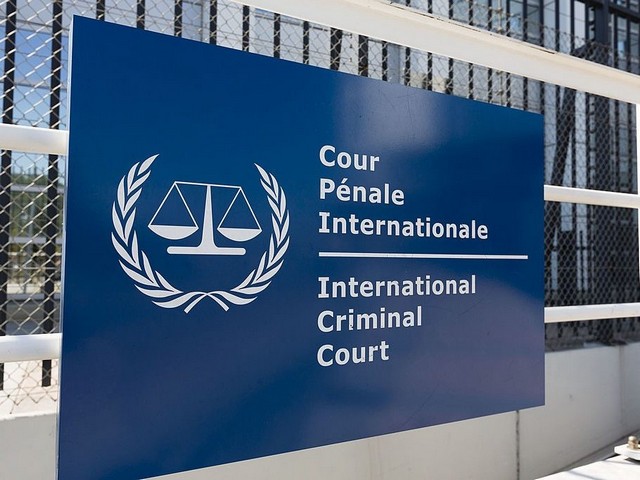
Even Orwell would be at a loss to make sense of some of the recent antics of leading governments. We would expect Orwell to be out-satirized by the U.S. actions to impose penalties and sanctions on officials of the International Criminal Court not because they are accused of acting improperly or seem guilty of some kind of corruption but because they were doing their appointed jobs carefully, yet fearlessly. Their supposed wrongdoing was to accept the request an investigation into allegations of war crimes committed in Afghanistan by military personnel and intelligence experts of the U.S. armed forces, the Taliban, and the Afghan military. It seemed beyond reasonable doubt that a string of war crimes and crimes against humanity had occurred in Afghanistan ever since the U.S.-led regime-changing attack in 2002, followed by many years of occupation and continuous combat amid a hostile population.

It should be noted that Israel is equally infuriated with that the ICC should have affirmed the authority its Prosecutor, Fatou Bensouda, to investigate allegations by Palestine of war crimes and crimes against humanity committed in the Occupied Palestinian Territories of the West Bank, East Jerusalem, and Gaza. These allegations include the unlawful transfer of Israeli civilians to establish settlements as well as administrative structures that constitute violations of the criminal prohibition on apartheid. Netanyahu, like his Washington sibling, has called for the ICC to be subject to sanctions for staging this ‘full frontal attack’ on Israeli democracy and somehow on ‘the Jewish people’s right to live in Israel.’ The Israeli Prime Minister contends that Israel as a sovereign state has the right to defend itself as it wishes, and should not be impeded by any obligation to respect international criminal law. Such a claim, and the abusive practices and policies that have followed over many years, amounts to a disturbing affirmation of what I have elsewhere called ‘gangster geopolitics.’

The angry U.S. pushback did not bother contesting the substantive allegations, but questioned the jurisdictional authority of the ICC, and attacked the audacity of this international entity for supposing that it could investigate, much less prosecute and punish the representatives of such a mighty state that should in no way be held internationally accountable. When the ICC was investigating, and indicting, only African leaders few Western eyebrows were raised, but recently when the Court finally dared to treat equals equally in accord with its own legal framework—the Rome Statute of 2000—it had in Washington’s and Tel Aviv’s eyes so overstepped its unspoken limits as to itself become a wrongdoer, and by this outlandish logic, making the institution and its officials legitimate targets for sanctions. What this kind of unprecedented pushback amounts to is a notable rejection of the global rule of law when it comes to international crime and a crude effort to remind international institutions that ‘impunity’ and ‘double standards’ remain an operational principal norm of world order.

Speaking for the U.S. Government the response of the Secretary of State, Mike Pompeo, stunningly exhibited the hubris that became the U.S. global brand well before Donald Trump disgraced the country and harmed the peoples of the world during his tenure as president. Pompeo’s reaction to the unanimous approval of the Prosecutor’s request to investigate war crimes in Afghanistan was little other than seizing the occasion to insult the ICC by describing it as “little more than a political tool employed by unaccountable international elites.” Such a statement crosses the borders of absurdity given the abundant documentation of numerous U.S. crimes in Afghanistan (the subject-matter of Chelsea Manning’s WikiLeaks 2010 disclosures that landed her in jail) and in several ‘black sites’ in European countries where foreign suspects are routinely tortured, and subject to rape. Contra Pompeo, it is not the ‘international elites’ that are unaccountable but the national elites running the U.S. and Israeli governments.

The Pompeo dismissal was a prelude to the issuance by Trump on 11 June of an Executive Order that extended the prior denial of a U.S. visa to Bensouda, and threatened a variety of sanctioning moves directed at anyone connected with the ICC and its undertaking, including freezing assets and withholding visas, not only of individuals, but also of their families, on the laughable pretext that the prospective ICC investigation was creating a ‘national emergency’ in the form of an “unusual and extraordinary threat to the national security and foreign policy of the United States.” Even before the present crisis, Trump had told the UN in a 2018 speech at the General Assembly that

“… the ICC has no jurisdiction, no legitimacy, and no authority… We will never surrender America’s sovereignty to an unelected, unaccountable, global bureaucracy.”

As crude as are the words and deeds of the Trump crowd, there were almost equally defiant precursors, especially during the presidency of George W. Bush, an anti-ICC campaign led by none other than John Bolton who was to become Trump’s notorious National Security Advisor, and is currently his antagonist due to his book publicizing Trump’s array of impeachable offenses. Remember that it was Bush who ‘un-signed’ the Rome Statute that Bill Clinton had signed on behalf of the U.S. on the last day of his presidency, but with the proviso that the treaty should not be submitted to the Senate for ratification and hence not be applicable, until the ICC had proved itself a responsible actor to Washington’s satisfaction. Congress stepped in to make sure that U.S. military personnel would not be charged with international crimes both by threatening preventive action and entering into over 100 agreements with other countries to ensure immunity from ICC jurisdiction, coupled with a threat to withhold aid if a government refused to so agree. Hillary Clinton also observed some years that since the U.S. was more globally present than other countries, it was important to be sure that its military personnel would not be brought before the ICC.

In other words, non-accountability and double standards have deeper roots than the extreme anti-internationalism of Trump. It can be usefully traced back to the ‘victors’ justice’ approach to war crimes during the second world war where only the crimes of the defeated were subjected to accountability at Nuremberg and Tokyo, a step hailed as a great advance despite its flaws. It was deeply flawed considering that arguably the most horrifying act during the four years of hostilities were the atomic bombs dropped on Japanese cities. Is there any doubt that if Germany or Japan had beaten the Allies to the bomb, and used it against cities in the UK or the U.S., and yet lost the war, those responsible for the decisions would have been held accountable, and punished in a harsh manner?

In some ways as bad from a law angle was the U.S. orchestrated trial of Saddam Hussein and his closest advisors for their state crimes, although the 2003 war arose from acts of aggression by the United States and UK, and subsequent crimes during a prolonged occupation of Iraq. In other words, the idea of unconditional impunity for the crimes of the United States is complemented by self-righteous accountability for those leaders of countries defeated in war by the United States. Such ‘exceptionalism’ should shock the conscience of anyone with a sense of the ideas of fairness and equality that should be core values in the application of international criminal law.

As might be expected, mainstream NGOs and liberal Democrats are not happy with such an insulting and gratuitous slap in the face of international institutions that have proved mainly useful in going after the wrongdoing of non-Western leaders, especially in Africa. It should be remembered that African countries and their leaders were the almost exclusive targets of ICC initiatives during its first ten years, and it was from Africa that one formerly heard complaints and threats of withdrawal from the treaty, but I doubt that ideas of sanctioning the ICC ever entered the imaginary of understandable African displeasure at an implicit ethos of ‘white crimes don’t matter’!

David Sheffer, the diplomat who headed the U.S. delegation that negotiated the Rome Statute on behalf of the Clinton presidency, but who was careful to preserve Anglo American geopolitical interests, expressed the liberal opposition to Trump’s arrogant style of pushback with these words:

“The [Trump] Executive Order will go down in history as a shameful act of fear and retreat from the rule of law.”

There is an element of hypocrisy present in such a denunciation due to withholding the pre-Trump record of one-sided imposition of international criminal law. True enough, it was the prior Republican president that had locked horns with the ICC some years ago, but the ambivalence of Congress and the Clintons is part of a consistent U.S. insistence of what I would label as ‘negative exceptionalism,’ that is, the right to act internationally without accountability while taking a hard line on holding others accountable; impunity for the powerful, accountability for the weak. It used to be that Anglo American exceptionalism was associated with a commitment to decency, human rights, and the rule of law that was missing elsewhere, and could serve as a catalyst for peace and justice in the world. Such self-glorification has long since been forfeited as at the altar of global geopolitics, which makes up the rules as it goes along, while showing contempt for the legal constraints that are deemed suitable for the regulation of adversaries.

Richard Falk is a member of the TRANSCEND Network, an international relations scholar, professor emeritus of international law at Princeton University, Distinguished Research Fellow, Orfalea Center of Global Studies, UCSB, author, co-author or editor of 60 books, and a speaker and activist on world affairs. In 2008, the United Nations Human Rights Council (UNHRC) appointed Falk to two three-year terms as a United Nations Special Rapporteur on “the situation of human rights in the Palestinian territories occupied since 1967.” Since 2002 he has lived in Santa Barbara, California, and associated with the local campus of the University of California, and for several years chaired the Board of the Nuclear Age Peace Foundation.

22 June 2020

Source: www.transcend.org
The Age of Disappointment? Or How the American Century Ends

By Tom Engelhardt

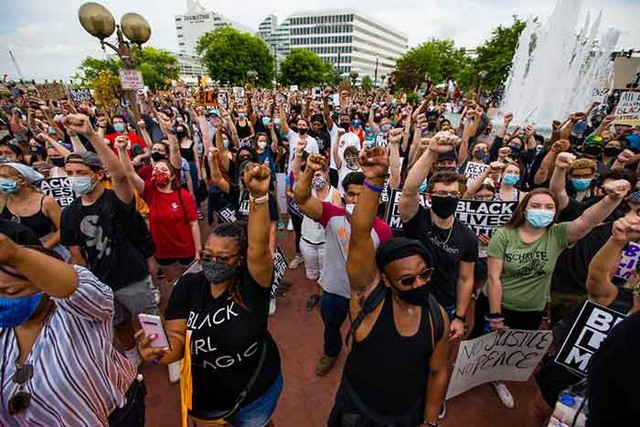
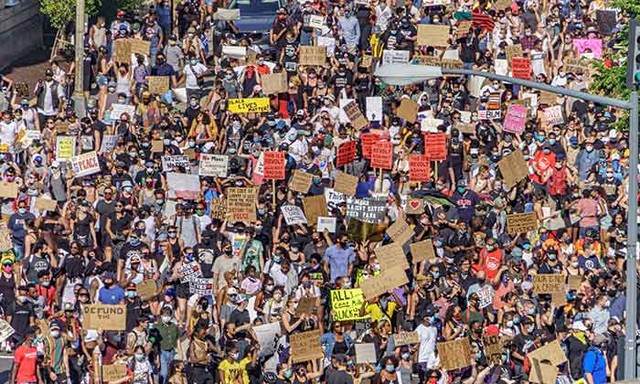
Let me rant for a moment. I don’t do it often, maybe ever. I’m not Donald Trump. Though I’m only two years older than him, I don’t even know how to tweet and that tells you everything you really need to know about Tom Engelhardt in a world clearly passing me by. Still, after years in which America’s streets were essentially empty, they’ve suddenly filled, day after day, with youthful protesters, bringing back a version of a moment I remember from my youth and that’s a hopeful (if also, given Covid-19, a scary) thing, even if I’m an old man in isolation in this never-ending pandemic moment of ours.

In such isolation, no wonder I have the urge to rant. Our present American world, after all, was both deeply unimaginable — before 2016, no one could have conjured up President Donald Trump as anything but a joke — and yet in some sense, all too imaginable. Think of it this way: the president who launched his candidacy by descending a Trump Tower escalator to denounce Mexican “rapists” and hype the “great, great wall” he would build, the man who, in his election campaign, promised to put a “big, fat, beautiful wall” across our southern border to keep out immigrants (“invaders!”) — my grandpa, by the way, was just such an invader — has, after nearly three and a half years, succeeded only in getting a grotesquely small wall built around the White House; in other words, he’s turned the “people’s house” into a micro-Green Zone in a Washington that, as it filled with National Guard troops and unidentified but militarized police types, was transformed into a Trumpian version of occupied Baghdad. Then he locked himself inside (except for that one block walk to a church through streets forcibly emptied of protesters). All in all, a single redolent phrase from our recent past comes to mind: mission accomplished!

From the second the Soviet Union imploded in 1991 to the spread of Covid-19, developments on this planet have been remarkably inconceivable and yet strangely predictable. Can you even remember that distant moment, almost three decades ago, when a stunned Washington political establishment (since its members had never imagined a world without the other Cold War superpower) suddenly found themselves alone on Planet Earth, freed to do their damnedest in a world lacking enemies of any sort? The globe seemed to be there for the taking, lock, stock, and barrel.

Their promised post-Cold War “peace dividend,” however, would involve arming the U.S. military to the teeth, expanding the country’s “intelligence” agencies until there were (count ’em!) 17 of them, bolstering an already vast national security state, and dispatching this country’s generals to fight “forever wars” that would unsettle the planet, while conquering nothing at all. The folly of this in such a moment on such a planet should have been obvious. And in fact, it was. In early 2003, facing only one small terrorist group and a completely concocted three-nation “axis of evil,” President George W. Bush decided to order the invasion of Saddam Hussein’s Iraq. Sensing what was coming, millions of people poured into the streets of cities worldwide to tell him the obvious: don’t do it! (“How did USA’s oil get under Iraq’s sand?” a typical protest sign of that moment read.) Of those millions, however, not one dreamed that, 13 years later, as a result of Bush’s decision to ignore them, this country, or at least its Electoral College, would put in the White House a president who would essentially launch the invasion of America.

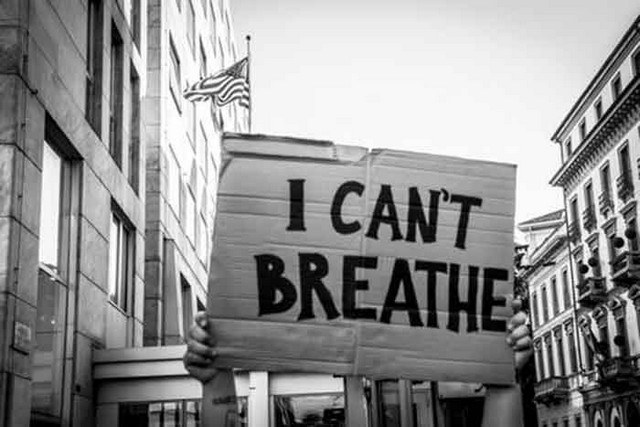
What else do you need to know about our mad moment than that the president of the land that had, for so long, fought a “war on terror” would call the all-American protesters once again turning out in the streets of hundreds of cities and towns in vast numbers “terrorists”? He would then label a 75-year-old white man shoved over by two cops in Buffalo, New York, and left bleeding on the ground as they walked away an “ANTIFA provocateur.” (He’s still in the hospital.) In this fashion, with the police armed to the teeth with weaponry and equipment off the battlefields of America’s forever wars and George Floyd literally breathless thanks to one of those policemen, the war on terror would come home big time.

Think of it this way: we Americans, the greatest power in history, the ultimate unchallenged victors on this planet as the last century ended, are now living in a disease-ridden parody version of occupied Iraq and my own generation is officially responsible.

A Flattened Planet

Outside that Green Zone in Washington, an age, a system, even a planet as we’ve known it may all be ending and that shouldn’t be taken in without emotion. So many things aren’t obvious when they should be. Still, to give myself a tad of credit, in the years after the invasion of Iraq, I did at least sense that this single superpower world of ours was some kind of sham. In October 2012, for instance, I suggested that

“one thing seems obvious: a superpower military with unparalleled capabilities for one-way destruction no longer has the more basic ability to impose its will anywhere on the planet. Quite the opposite, U.S. military power has been remarkably discredited globally by the most pitiful of forces… Given the lack of enemies — a few thousand jihadis, a small set of minority insurgencies, a couple of feeble regional powers — why this is so, what exactly the force is that prevents Washington’s success, remains mysterious.”

I added, however, that “the end of the Cold War, which put an end… to several centuries of imperial or great power competition… left the sole ‘victor,’ it now seems clear, heading toward the exits wreathed in self-congratulation.”

Now, those exits are truly in sight and the self-congratulation that once filled Washington has been ceded to the walled-in occupant of the Oval Office in a country visibly in dismay and disarray. With a regime that not only has autocratic tendencies but also a remarkable urge to take the planet down environmentally (and possibly via nuclear arms as well), it’s easier to see just how disastrous the post-1991 “sole superpower’s” decisions really were.

Hopeful as the grit and determination of those Black Lives Matter protesters may be in the face of police violence and repression, not to speak of the nastiest virus in memory, we’re also at what looks increasingly like one of those moments when worlds do end and it didn’t have to be this way.

After all, in a cocoon of seemingly ultimate triumphalism, those who were running the post-1991 American global system did anything — to steal a word from journalist Thomas Friedman’s 2005 book The World Is Flat — but flatten the world they inherited (as in creating a more level playing field of any sort). In fact, the American powers-that-be promptly put their energy into creating the least level playing field imaginable. In it, a single country, the United States, would invest more money in its military than the next 10 powers combined and, by 2017, three Americans would have more wealth than the bottom half of this society. Meanwhile, the wealth of 162 global billionaires would equal that of half of humanity. It was a world in which, once the coronavirus pandemic struck causing almost unspeakable economic disaster, those billionaires would once again make a rather literal killing — another half-trillion dollars-plus.

So Friedman was right, but only if by “flat” he meant the four flat tires on the American Humvee.

Here, in fact, was the strange reality of that moment of ultimate triumph in 1991: the American political ruling class, the people who had seemingly won it all, would prove remarkably brain-dead in a way few grasped then or we wouldn’t be in Donald Trump’s America today. Back then, the one thing they couldn’t imagine in a world without the Soviet Union was an all-American world of flatness, peace, and democracy.

The only thing they could imagine was another version of the militarized style of dominance that had long characterized the American Century, to use the famous phrase Life and Time publisher Henry Luce first put into the language in 1941. Those managing the imperial system that had dotted the planet with military garrisons in a historically unprecedented fashion, while creating a global economy centered on the accumulation of staggering wealth and power, had no idea that the United States would prove to be the second superpower victim of the end of the Cold War.

Saying Goodbye to the American Century

Now, let me truly launch that rant of mine — and note that there will be no more section breaks or breathing room. After all, that’s the nature of a rant in an era in which the man in the Oval Office is quite capable of running the country (into the ground) while tweeting or retweeting 200 times in a single day. Hey, what the hell else is there to do as the president of these disunited states, except tweet, watch Fox News, and disunite them further?

So take my word for it, more or less 75 years after it began, the American Century is over. So long! Au revoir! Arrivederci! Zaijian!

Having been born on July 20, 1944, the day of the failed officers’ plot against Adolf Hitler (and not much else in history), I’ve lived through just about all of that “century” and I’m still here. And yet think of this as an autopsy because the body (of my hopes and those of my generation) now lies in the morgue and a skilled medical examiner should be able to discover just what it died of.

Who knew what I really hoped for back then? I mean, you’re talking to a guy who can still remember reading quite a range of books, but not what was in many of them. So who knows, half a century or so ago, what exactly was in me? After all, I was then the equivalent of a book that I carried around endlessly but never stopped to fully read.

We’re talking about the late 1960s and early 1970s, the years when, for the first time in my life, however briefly, I suddenly felt strangely at home (and also movingly out of place) in this American world of ours. In the late 1960s, the radical politics of that moment blew me out of graduate school where, of all things, I was studying to be a China scholar at Harvard University. Yes, the Ming and Ching dynasties (rather than the Trump dynasty) then had my attention… until, of course, they didn’t. Those were the years when I suddenly became deeply aware that the American world I’d been brought up to admire (even if, in my childhood, my parents seemed to be having an awfully tough time in it) was deeply awry. And it tells you something about this white boy that it wasn’t the Civil Rights Movement that truly brought that home to me (though it should have been, of course) but an all-American conflict and slaughter taking place thousands of miles away.

Called the Vietnam War, it was a brutal American folly in the divided Vietnam, Laos, and Cambodia in which millions would die and it would unsettle my mind, my life, my being. Somehow, in those years, as I’ve also written elsewhere, it came to seem as if Vietnamese were being killed right outside my window in peaceful Cambridge, Massachusetts. While I would never end up in the U.S. military — my draft files were destroyed at the time by an activist group that called itself Women Against Daddy Warbucks — I would be mobilized into an anti-military, antiwar movement filled in a fashion unimaginable today with dissenting soldiers, many of whom had fought in Vietnam.

I was swept up by the idea of a better world that I began to imagine might actually come to pass. How naïve I was!

Had you told me at that moment that everything we then dreamt of beyond the ending of that terrible set of American wars would essentially go down in flames; that the U.S. would, in the ensuing nearly half-century, fight two endless conflicts in another Asian land, Afghanistan — one in a kind of open secrecy, the second (now nearly two decades old) in plain sight even as it turns into a pandemic war; that, in this century, my country would invade not only Afghanistan but Iraq and fight a war on “terror” across much of what once would have been known as the Third World; and that all of this would happen without — except for one brief moment — anyone out in the streets protesting or paying much attention at all (except to eternally “thank” the non-conscripted soldiers fighting in those wars), I would have thought you were nuts.

If you had told me that the president of the United States, a man of my generation, would be a narcissistic, autocratic-leaning, utterly self-obsessed version of whatever anyone who mattered to him wanted him to be, a man ready, even eager, to call troops from those distant wars onto American streets to put down a sudden surge of protest amid a viral pandemic and an economic collapse similar to the Great Depression, only to find himself opposed by the very generals, each whiter than the next, who fought the disastrous forever wars that paved his way to power (and that they would be greeted as saviors in the liberal media), I would have thought you mad as a hatter.

And here’s the saddest thing of all from my perspective: if those young people now in the streets can’t perform genuine miracles — and not just when it comes to racism — if they can’t sooner or later turn their mobilized attention to the planet-destroying side of the American ruling class, then forget about it. This world will be heading into a heat hell.

That my generation, whether in the form of Donald Trump or Mitch McConnell, would be responsible for turning imperial America into an autocratic-leaning, collapsing semi-democracy, and a first-class world annihilator, I would have found hard to imagine. If you had told me that, half a century into the future, the world’s fate would rest on a presidential election between a genuine madman and something close to a dead man (that, for all we know, may not prove to be an election at all), I would have dismissed you out of hand.

And yet that, it seems, is the pandemic legacy of my generation for which we should all be ashamed, even as we watch the young, driven by the insanity and inanity of it all, turning out in our diseased streets to protest a country coming apart at the seams.

Think of Donald Trump as the American imperial establishment’s ultimate gift to humanity. Yes, they were as shocked and horrified as so many of the rest of us when he won the 2016 election, but they created the perfect America for him to do so. He couldn’t have won if they hadn’t both built a world that was desperately unflat and been so destructive in the process of unflattening it. He couldn’t have won if they hadn’t launched almost 20 years of disastrous, never-ending wars across parts of Asia, the Greater Middle East, and much of Africa under the heading of the war on terror, conflicts that did indeed bring terror to vast populations and spawn a sea of uprooted refugees who helped spark a new right-wing “populism” across Europe and here. (Remember Donald Trump’s Muslim ban!)

It should have been obvious that, in some fashion, those wars and their failed generals would all come home.

Donald Trump couldn’t have entered the White House if the Republicans, once the party of the environment, hadn’t become the party of billionaires and oil magnates. Donald Trump couldn’t have entered the White House if George W. Bush hadn’t insisted on invading Iraq. Donald Trump couldn’t have happened if Barack Obama, a president who understood climate change as well as anyone imaginable, hadn’t been willing to look the other way while the fracking revolution took place and this country briefly became Saudi America. The oceans are already hotter than they’ve ever been; storms are intensifying, sea levels rising, floods increasing in intensity; the Arctic is burning in an unprecedented fashion, as wildfires growing wilder; and a genuine pyromaniac is in the White House.

The American century is ending decisively with a first-class declinist inside Washington’s Green Zone. My small suggestion: don’t hold your breath for the Chinese century either. I doubt it’s coming.

Whatever happens tomorrow or next week, or next month, or next year, despite the rare gleam of hope those young protesters offer, we are deep in the age of disappointment on (as Donald Trump has only accentuated) an increasingly disposable planet.

So here’s something I wonder about: thirty or forty years from now, when I’m long gone, will there be a modern Edward Gibbon around to write a multi-volume classic, The History of the Decline and Fall of the American Empire? And will she emerge from that movement of young people now in the streets denouncing racism? And will that movement be transformed somehow into a planetary one of people of every age determined to trump the Trumps of our world and save a planet worth saving by forever burying all those fossil fuels and the criminal companies that produce them, or will the dreams of my generation have turned into the nightmare of all times? Will this not just be the end of that foreshortened American century, but — in the deepest sense of the word — the age of disappointment?

And now, for that rant of mine…

Tom Engelhardt is a co-founder of the American Empire Project and the author of a history of the Cold War, The End of Victory Culture.

19 June 2020

Source: countercurrents.org

Do Not Belittle Protesters In U.S By Calling Their Struggle A “Color Revolution”!

By Andre Vltchek

For almost a decade, I have been covering “Color Revolutions” in virtually all parts of the world. While making a film for TeleSur, I was facing Egyptian tanks, risking my life under sniper fire, getting roughed-up in the middle of clashes of the supporters of al-Sisi and Morsi.

Together with Syrian commanders, I was also facing the terrorists in Idlib; challenged the Ukrainian fascists; encountering Bolivian indigenous elders high in the Altiplano, after the revolution of Evo Morales and MAS was crashed by the U.S.-sponsored coup in 2019. I regularly worked in Venezuela, Lebanon, and Iraq. And of course, again and again, I have been returning to Hong Kong, reporting on systematic Western attempts to radicalize SAR’s youth and to harm China.

I mention all this just in order to establish that I am very well aware of how those “Color Revolutions” are triggered and implemented.

“Color Revolutions!” Unlike many “analysts” who are now tossing this term left and right, often without ever experiencing the events first hand, I spoke with the people on the ground, examining dynamics, asking endless questions. On many occasions, I was risking my life to get a philosophical context and the story right.

Frankly, I am sick of conspiracy theories, ignorance, clichés, and arrogance of those “analysts” who, from the comfort of their couch, somewhere in Europe or North America, are passing judgments and conclusions, with that proud look of superiority.

Since the police murdered Mr. Floyd in Minneapolis, since the United States literally exploded, since the African Americans, Native Americans and other appallingly oppressed people went to the streets in hundreds of the cities demanding justice; a substantial group of mainly white ‘we-know-everything’ ‘analysts’ began belittling protesters, calling them ‘violent,’ calling them ‘riots,’ calling them ‘creations of Soros and the Zionists’! And at the end, with dark sarcasm, declaring that the United States itself is now suffering from what it has been spreading all over the world for years – from the so-called “Color Revolution.”

Many of those ‘analysts’ became so aggressive and vocal that they literally managed to monopolize the ‘alternative narrative.’ Suddenly, there was hardly any space left for those of us who were continuously writing, using traditional internationalist, left-wing perspective.

*

First of all, even the term itself – “Color Revolutions” – became a bad cliché.

The Western empire has been destroying the world for some 500+ years, in the most brutal ways imaginable. Hundreds of millions of lives were lost. Entire continents were plundered. People have been enslaved.

At the end of the colonial era, in various parts of our planet, at least some semi-independence was achieved. But countless governments in Africa, Asia, the Middle East, and Latin America were still taking diktat directly from Washington, London, Paris, and other Western capitals.

After the collapse of the Soviet Union, the situation looked desperate. But with the rise of China and Russia, as well as Iran, great hope returned, and many countries embarked on the second stage of de-colonialization.

The process was confused and confusing. Each country was different. There were attempts to trigger real revolutions (Egypt), but there were also some clearly anti-revolutionary and right-wing movements (Syria, Ukraine) born.

In many countries where genuine grievances of the people brought masses to the streets, masses which were demanding mainly social and political reforms, the West quickly infiltrated several movements and literally kidnaped the revolutions. This is what happened in Egypt, but also, a few years later, in Lebanon and Iraq.

But to claim that Egypt had not attempted a revolution would be insulting, patronizing, and incorrect! Egypt was suffering from the terrible pro-Western regime and from the military. Egyptian people rose. I was working with a group of Marxist doctors during the process; I saw it all, from the ground, so to speak. But the revolution was infiltrated and finally destroyed.

In Lebanon, too. For five years, I was based there; in Beirut and Asia. People were fed up with the so-called ‘confessional democracy,’ of the religions tearing-apart the nation, of savage capitalism, collapsed infrastructure, and non-existent social services. Hezbollah, hated by the West and Israel has been the only solid provider of social services to all deprived Lebanese people, for years and decades. And so, in Lebanon, too, people rose. Late, in 2019, but rose. Sure, a few weeks after, I began spotting clenched fists of “Odpor” and “Canvas” on the Martyr’s Square (those used in Serbia, when President Milosevich was forced out of power, with full sponsorship of the West). Sure, the West began supporting rebels, because it wanted to get rid of Hezbollah, which has been part of the ruling coalition. But people of Lebanon do have thousands of legitimate grievances; reasons to rebel. However, the West has been skillfully infiltrating and, to some extent manipulating the uprising, which is still going on until this day. And we have no idea where it is all going to lead.

Do you see how complex the situation is? It does not fit any of the simplifications, and clichés! And of course, it is even more complicated than how I describe it here. It takes entire books to explain.

Syria: another totally different story, and absolutely distinctive specie of “Color Revolutions,” if it is how you want to call it. Some grievances, yes. But also, a solid pan-Arab socialist state, which the West, Saudis, Qataris, Israelis, and other allies of Washington wanted desperately to destroy; government they were aiming to overthrow. After a relatively mild rebellion in Aleppo and Holms, supported by Gulf states coalition, and the West, Saudis, and Turks began injecting monstrous, murderous combat forces into Syria, from ISIS to Uyghurs, and everything in between.

All these cases of interference from the West are totally distinctive, although some patterns can be detected. And we are still in the same cultural and geographical area.

Now look further away: Bolivia, Cuba, Venezuela, Iran, Hong Kong (China).

In all these places, there are direct interventions, clear counter-revolution! It is financed, supported, and coordinated from Washington, London, Berlin, Paris, and other Western capitals.

In Bolivia, white, racist, fundamentalist Christian elites overthrew, with the full support of the White House, the legitimate multi-cultural, democratic, and enormously successful government of President Evo Morales. It was done after agitation by a small sector of Bolivians, clearly financed from abroad and by the local elites. One month after the coup, I was working all over the Altiplano, taking down testimonies of indigenous people who were humiliated, tortured, abused, even killed by a new illegitimate regime.

That’s quite different ‘scenario,’ isn’t it; different from that in Lebanon, Syria, and Egypt? Is it really legitimate to hide it all under one single “Color Revolutions” label?

Look at Cuba: decades and decades of terror against this marvelous island! Passenger airplanes being blown out of the sky. Countless assassination plots against its leaders. Chemical warfare, biological warfare, the bombing of cafes, restaurants, and hotels. All proven and documented. And constant attempts to recruit, radicalize Cuban citizens – to force them against their own government.

Venezuela, a nation that offered tremendous hope to the entire divided continent. Venezuela compassionate, brave, built on solidarity. Look what has been done to her. One coup attempts after another. Embargos. Recruitment of treasonous cadres. Attacks from neighboring Colombia. Another “Color Revolution?” Or merely a campaign of terror?

Hong Kong: a city, former British colony, which has been ‘sacrificed’ by the West, while literally converted into a battleground against the most optimistic country on Earth – China. There, the symbol used to be umbrellas, not colors. Now, there seems to be no symbol, whatsoever, just spite and violence and hate.

It is easy to understand that somehow the label of “Color Revolutions” is trivializing everything.

I am surprised that some conspiracy theorists did not come up with a scheme, yet, that would say that the very term – “Color Revolutions” – has been invented to belittle what has been done to the world by the imperialist West. To throw everything to one bag, and to confuse everything.

*

Back to the United States.

“Color Revolution” there, too? For heaven’s sake, really?

After the murder of Mr. Floyd, protests are being discredited, again and again, by the people who, one would believe, should be standing by the side of the oppressed. Instead, they call rebellion ‘riots,’ they claim that they are backed by Soros, Gates, others!

The terrible truth emerged: in the United States, there is almost no left anymore. No real left. No internationalist left.

Instead, there are tons of conspiracy theory sites.

Significantly, on the streets of Minneapolis, Atlanta, New York, black people are not just demanding justice for themselves; they have been shouting internationalist slogans, demanding justice for the world. It is something new, something marvelous, something you hardly hear in Paris or Berlin.

But this fact goes unnoticed, hardly reported.

The explosion of rage, brave uprising all over the United States, has been targeting those basic foundations of over 200 years long monstrous history, on which the country is based. First, the colonialist invasion by the genocidal Europeans, then extermination of the great majority of native people, and simultaneously the most repulsive slavery which was endorsed and used by the founding fathers.

The state of the oppressed people in the U.S.A. today is clearly and directly related, connected to that past. But not only that: the entire state of the world could only be comprehended if viewed in the context of what has been done to the native people and brutalized black slaves in the United States itself.

Colonialism, extermination campaigns in Asia, Africa, and Latin America, are inter-connected with the plight of non-white people in the United States.

Now, black people in the United States are fighting for themselves and their children, but also for their brothers and sisters in all corners of the world, which is still colonized and plundered by Washington and London.

Do all of the protesters know this? Some do, some don’t, and many feel it, intuitively.

Now, to the point which is made by those who are trying to discredit this uprising: is all this also a power-struggle inside the U.S. establishment? Are Democrats, for instance, trying to manipulate the situation, using it to their advantage?

I have no doubt that they are such attempts. Almost everyone in the United States is always using things, looking for advantages. This is what people are taught to do, living in a savage capitalist system.

But these are two distinct issues!

Even if Gates, Soror, deep state, Democrats, mass media outlets, and who knows who else, wants to kidnap the narrative and derail the uprising, it changes nothing on the fact that the peoples whose lives were, for generations, ruined, are now pissed off no end, and that their rebellion may shake the foundations of the entire country, and the terrible world order!

Even now, as this is being written, the uprising in the U.S. already inspired new movement @PapuanLivesMatter, which is referring to an ongoing genocide in West Papua, performed by the Indonesian state on behalf of Western governments and mining companies.

And this is just a beginning.

Grievances are legitimate. Struggle for justice is legitimate. The essential thing now is to separate the fight against racism, colonialism, and imperialism, from the political interests of the establishment, or part of it.

This separation can only happen on the barricades. And since the education has been kidnapped by the regime, there has to be an accelerated injection of the revolutionary education administered to both protesters and the general public. Education about both the past and the present.

But we should not give up on the protesters!

And calling their uprising “Color Revolution” is disrespectful and yes: racist!

Their rage is legitimate. And of course, the rage of the people all over the world is legitimate, too, without any doubt.

CONCLUSION

Point one: Blanket term “Color Revolutions” is wrong. Those who are promoting it are actually confusing the situation. During the last years and decades, the West has been using many different tactics on how to overthrow governments, subvert legitimate movements and revolutions, and deter revolutionary and anti-colonialist struggle. Each has to be examined and exposed separately, individually. Otherwise, it would create indigestible, on purpose confusing mass, and further damage independence struggle. Otherwise, nihilism would be spread, and revolutionary zeal deterred.

Point two: in the United States – the ongoing struggle against racism, segregation, and imperialism is a legitimate struggle, which is having a tremendous and positive influence on the entire world. If there are political interests that are trying to undermine and derail it, they should be exposed by the people in the United States. But it does not mean at all that the protesters should be discourages, let alone ridiculed. Those who are fighting for justice, and for the entire world, should be embraced and full-heartedly supported!

*

Andre Vltchek is a philosopher, novelist, filmmaker, and investigative journalist.

19 June 2020

Source: countercurrents.org

What about Minneapolis, dear?

By Farooque Chowdhury

Current domestic developments in the Empire’s political-sphere are a re-exposure of an old fact – failure of the centuries-old bourgeois “republic”. The propagandists of the Empire engage all their skills to hide the fact, and sermonize to other countries: democracy, equal opportunity, rights. But, today, anyone from any peripheral country can ask: what about Minneapolis and the following developments, dear?

Hundreds of thousands of people’s protest from coast to coast, imposition and defying of curfew in cities across the country, arrest of near to 10,000 people, assault on journalists, and many such developments are well known to the international media-audience. The same are the outburst of long-pressed discontent. There’s pain, rage and defiance. There’s demand for justice. There’s a resurrection of millions’ spirit for a humane life.

Mobilization of the National Guards (NG), in at least 30 states, and of other forces, and curfew in major cities including a weeklong curfew in New York, and floating of an idea for deployment of active-duty troops on streets tell width and power of the people-protest. Trump, as media reports said, had discussed invoking the little-used 1807 Insurrection Act to deploy active-duty troops in US cities. However, that act was not invoked. Nevertheless, the discussion of the subject – invoking the Insurrection Act – tells [1] force of the people-protest, [2] reaction of a sub-faction of the ruling classes, and [3] the extent state machine may go to control situation arising out of aspiration for equity.

The people-protest, in real terms, has not ended yet. Its appearance has changed only.

Elements, not part of the protesting people, resorted to sporadic anarchic moves, which were incidents with dubious identity and character, and, totally isolated from the protest, entirely isolated from the people’s message – citizens’ safety, and life is inviolable. The anarchic moves, which are essentially harmful to people’s cause, couldn’t overwhelm the massive peaceful people-protest.

A few of the developments were startling: police officers expressing solidarity with and taking knees along with the protesting people. Defiance of curfew is an astonishing act – a show of people power.

Appearance of a few individuals with firearms among the protesting people in places is a development with serious question: who were these armed individuals among the pain-pressed people marching peacefully, and, why those persons were with arms? The acts of loot and arson, detached from the peaceful marches, are of the same character and questions. The appearance of firearms, the loot and arson are not part of the people-protest. Rather, the opposite: hurt the people, harm the protest, distort the message, create opportunity for anti-people forces.

A disagreement A shift

At the same time, within the establishment, a few developments were astonishing. “President Donald Trump’s Pentagon chief shot down his idea of using troops to quell protests across the United States, then reversed course on pulling part of the 82nd Airborne Division off standby in an extraordinary clash between the US military and its commander-in-chief”, said an AP report. (June 4, 2020, “Pentagon-Trump clash breaks open over military and protests”, dateline: Washington)

Esper, the report said, “angered Trump early Wednesday when he said he opposed using military troops for law enforcement, seemingly taking the teeth out of the president’s threat to use the Insurrection Act. Esper said the 1807 law should be invoked in the United States ‘only in the most urgent and dire of situations.’ He added, ‘We are not in one of those situations now.’”

After Esper’s subsequent visit to the White House, according to the report, “the Pentagon abruptly overturned an earlier decision to send a couple hundred active-duty soldiers home from the Washington, D.C., region, a public sign of the growing tensions with the White House amid mounting criticism that the Pentagon was being politicized in response to the protests.” Army Secretary Ryan McCarthy told AP that, the decision was reversed after Esper’s visit to the White House.

Another report (The New York Times, June 3, 2020, “Esper breaks with Trump on using troops against protesters) said: Esper’s “comments reflected the turmoil within the military over Trump, who in seeking to put American troops on the streets alarmed top Pentagon officials fearful that the military would be seen as participating in a move toward martial law.”

Speaking at a news conference at the Pentagon, according to the report, “the defense secretary said that the deployment of active-duty troops in a domestic law enforcement role ‘should only be used as a matter of last resort and only in the most urgent and dire of situations.’”

The Army, the report said, “had made a decision to send a unit of the 82nd Airborne’s rapid deployment force, about 200 troops, home from the capital region. But, Trump ordered Esper during the angry meeting at the White House to reverse it, the administration official said. The reversal was first reported by The Associated Press.” Esper said, “I do not support invoking the Insurrection Act.”

“Esper’s explicit opposition to invoking the act came only days after he described the country as a “battle space” to be cleared, a comment that drew harsh condemnation from a number of former senior military officials — the kind who usually do not criticize the successors across the Pentagon leadership. The use of the term, bandied about in battlefield command centers, implies a piece of terrain, disassembled in grid squares, characterized by threats and awaiting one solution: military force through violence,” said the report.

There was also controversy over Trump’s visit to a church across from the White House (WH) and Esper’s presence there turned out as an issue. Esper said he was unaware of his destination when he set out with the president for what he thought was a visit to view troops near Lafayette Square. “I didn’t know where I was going,” Esper told NBC News in an interview on Tuesday. “I wanted to see how much damage actually happened.” (NBC News, June 3, 2020, “Esper revises account of what he knew about Trump’s church photo op”)

In addition, news reports said: WH officials were furious, and Esper tried to walk back his comments the next day. He acknowledged that he did know that he was accompanying Trump to St. John’s Church for what turned out to be a photo op after the authorities used some form of chemical spray against protesters to clear the way.

A question has also cropped up with helicopters. Esper said:

“[I]t took nearly 24 hours for the authorities to determine that a flight of helicopters that descended to rooftop level — kicking up debris and sending peaceful protesters running for cover — belonged to the District of Columbia National Guard. He said that episode was under investigation.

“Esper’s remarks about the delay in finding information on the helicopter mission stand in stark contrast to the level of military planning that occurred beforehand. An email obtained by The New York Times indicated that Ryan McCarthy, the Army secretary, and Gen. James C. McConville, the Army chief of staff, made clear their intent for the evening, including the clearance of airspace. The two men, officials said, were on hand in a command center in Washington belonging to the F.B.I., where they pored over maps, looking at streets.” (NYT, op. cit.)

The reported contention, the shift, the photo-op, the helicopter, the confusion, the dissent, management/mismanagement, etc. show something significant within the statecraft. And, the people-protest was at the root of all these. Had there been no such rising by people, there wouldn’t have been such oscillation, seems “ripples”, within establishment. Someone looking at the protest marches joined by hundreds of thousands over days across the country will look at more deeply, which will furnish insights in the state of the state machine, factions and fractions of the factions of the dominating classes, way and level of efficiency of dealing situations. For organizing people’s initiatives and moves, these/such insights are a requisite in all lands.

Not the same orientation

Not all parts of the state machine are on the same orientation.

On at least two occasions, Trump criticized a few governors who didn’t deploy the NG during the protest marches. Once, he told Fox News Radio: “You have to have a dominant force. We need law and order.”

On an earlier occasion, the US president, in a conference call with governors of both parties on June 1, 2020, told them that they need to arrest people, and that “most of you are weak.” “You have to dominate. If you don’t dominate, you’re wasting your time. They’re going to run over you, you’re going to look like a bunch of jerks. You have to dominate.” (Tennessean, June 1, 2020, updated June 2, 2020, “‘Nowhere to be found’: Governors blast Trump after he tells them they are ‘weak’ on phone call”)

But, governors including one Republican pushed back at the president. Democratic Michigan governor Gretchen Whitmer called the phone call “deeply disturbing”. Whitmer added that instead of offering support or leadership to bring down the temperature at protests, Trump told governors to “‘put it down’ or we would be ‘overridden’.” “The president repeatedly and viciously attacked governors, who are doing everything they can to keep the peace while fighting a once-in-a-generation global pandemic”, Whitmer said in a statement. “The president’s dangerous comments should be gravely concerning to all Americans, because they send a clear signal that this administration is determined to sow the seeds of hatred and division.” At least one Republican governor joined the criticism. Governor Charlie Baker, a moderate Republican, said: “I heard what the president said today about ‘dominating’ and fighting.” “I know I should be surprised when I hear incendiary words like this from him, but I’m not.” Democratic Illinois governor J.B. Pritzker raised concerns about Trump’s remarks directly to the president on the phone call. Pritzker told Trump he’s been “extraordinarily concerned by the rhetoric that’s been used by you.” He called it “inflammatory”. “[T]he rhetoric that’s coming out of the White House is making it worse”, Pritzker said.

Washington Democratic governor Jay Inslee, said on Twitter that Trump’s remarks are “the rantings of an insecure man trying to look strong […].”

Atlanta Mayor Keisha Lance Bottoms made a biting comment. During a campaign roundtable talk, Bottoms said: “To see the president of the United States say that he’s going to send the military into our communities, but hasn’t mentioned sending a single dime of support into our communities, speaks to where we are in America.” It’s a fact about state machine: No money for people, but force to dominate people.

A serious rupture A serious allegation

There appeared a serious rupture as former US secretary of state Colin Powell strongly criticized Trump’s handling of the protests, saying Trump has “drifted away” from the constitution. The former chairman of the Joint Chiefs of Staff (JCS) condemned Trump’s threats to use the army to quench the protest. Powell said he would vote for Democratic candidate in the coming presidential election. (BBC, June 8, 2020, “Trump ‘drifted away’ from constitution, says ex-military chief Colin Powell”) A president’s drifting away from constitution is a serious allegation, especially when the allegation is made by a person who was a responsible member of the establishment.

Speaking on CNN‘s “State of the Union” on June 7, 2020, Powell said: “We have a constitution. And we have to follow that constitution. And the president has drifted away from it.” Referring to Trump, the former top military officer said: “He lies about things, and he gets away with it because people will not hold him accountable.” (ibid.) “Lies” is also a serious allegation.

In the interview, he also backed former top US military officials who have criticized Trump. The list of these officials is not short.

Gen Martin Dempsey, JCS chairman under Barack Obama, told ABC’s “The Week” earlier that the president’s words had hurt relations between the US public and the military. Former US defense secretary James Mattis last week accused Trump of deliberately stoking division. (ibid.)

Along with the dissension, a fact-unexpected came out. As a reaction to Powell’s comments, Trump said on Twitter, Powell was “a real stiff who was very responsible for getting us into the disastrous Middle East Wars”.

Trump referred to the 1990-93 Gulf War and the US-led 2003-Iraq invasion. The wars were really disastrous for the Empire, and the Empire now admits the fact. Therefore, along with other meanings of the statement, it can be claimed that the Empire isn’t always wise, and a general/military leader, as a president, also commander-in-chief, claims, in a democracy can play determining role in engaging into a war. What’s the state of the democracy if the president’s/C-in-C’s claim is correct? Then, how decisions are made in the democracy, which claims to be a system of people? What’s the role of the political leadership, which is principally embodied in the system’s legislative chamber?

Question of public support

Senior Pentagon leaders, said a report by The New York Times, were “so concerned about losing public support […] that Gen. Mark A. Milley, the chairman of the Joint Chiefs of Staff, released a message to top military commanders on Wednesday affirming that every member of the armed forces swears an oath to defend the Constitution, which he said ‘gives Americans the right to freedom of speech and peaceful assembly’.” (June 3, 2020, op. cit.)

Milley acted after they came under sharp criticism, including from retired military officers, for walking with Trump to a church near the (WH).

As anger mounted over the president’s photo op at the church, former defense secretary Jim Mattis offered a withering denunciation of the president’s leadership.

“Donald Trump is the first president in my lifetime who does not try to unite the American people — does not even pretend to try,” Mattis said in a statement. “Instead he tries to divide us. We are witnessing the consequences of three years of this deliberate effort. We are witnessing the consequences of three years without mature leadership.” (ibid.)

Other former military figures focused on the specter of the military being used to police protesters.

Admiral Sandy Winnefeld, a retired vice chairman of the JCS, said in an email: “We are at the most dangerous time for civil-military relations I’ve seen in my lifetime. It is especially important to reserve the use of federal forces for only the most dire circumstances that actually threaten the survival of the nation. Our senior-most military leaders need to ensure their political chain of command understands these things.” (ibid.)

A memo from the Air Force chief of staff, General David L. Goldfein, deplored the killing of George Floyd as a “national tragedy”. Goldfein said every American “should be outraged.” (ibid.)

Since then, several service chiefs and secretaries released messages expressing solidarity to the armed forces. They cited the military’s history of staying out of politics. (ibid.)

General McConville and McCarthy sent letter to troops and their families underscoring the “right of the people peaceably to assemble and to petition the government for a redress of grievances.” (ibid.)

Admiral Michael M. Gilday, the Navy’s top officer, said in a message […] to all sailors: “I think we need to listen. We have black Americans in our Navy and in our communities that are in deep pain right now. They are hurting.” (ibid.)

More from Milley

General Milley, according to BBC, said he was wrong to have joined Trump during his walk to a church near the WH. The June 1 event created “a perception of the military involved in domestic politics”, he said. He was speaking in a video for a National Defense University commencement ceremony. (June 11, 2020, “George Floyd death: Gen Mark Milley sorry for joining Trump walk to church”)

He said:

“I should not have been there. [….]

“[…] it was a mistake […]

“We must hold dear the principle of an apolitical military […]” (ibid.)

He also said he was outraged at the “senseless, brutal killing” of George Floyd. “The protests that have ensued not only speak to his killing but also to centuries of injustice toward African Americans.” (ibid.)

Such a statement is rare in US politics. Significant is the incident – overtly thrusting of the issue of military in US politics.

Peter Bergen, director of international security at the think tank New America, and author of Trump and His Generals: The Cost of Chaos, said: “[T]his is the biggest split between the military and the civilian leadership. I can’t recall a time where there was more of a fissure.” (The Guardian, June 14, 2020, “Why Trump loves the US military – but it doesn’t love him back”)

I am George Floyd

The people’s surge stirred other areas also.

More than 280 retired diplomats, generals and senior national security officials on June 5 called on president Trump not to use the U.S. military for political ends, warning American democracy was at risk. “As former American ambassadors, generals and admirals, and senior federal officials, we are alarmed by calls from the President and some political leaders for the use of US military personnel to end legitimate protests in cities and towns across America,” the former officials said in a statement posted on the JustSecurity website, which listed the authors as retired senior diplomats Douglas Silliman, Deborah McCarthy and Thomas Countryman. (NBC News, June 6, 2020, “Retired diplomats, generals slam Trump over using U.S. military to ‘intimidate’ protesters”)

Black officers posted emotional videos expressing the agonies of bearing witness to systemic racism, and they “were backed by the top brass.” (The Guardian, June 14, 2020, op. cit.)

The movement strengthened efforts to shed symbols of the Confederacy. “The navy and marine corps banned displays of the Confederate flag and the army has been taking steps to review whether 10 of its bases should be named after Confederate officers.” (ibid.)

“Ahead of a recent West Point graduation ceremony, hundreds of its graduates wrote to the class of 2020. ‘We are concerned that fellow graduates serving in senior-level, public positions are failing to uphold their oath of office and their commitment to Duty, Honor, Country,’ the open letter said, in a reference to Esper, class of 1986. ‘Their actions threaten the credibility of an apolitical military.’” (ibid.)

Resounding was a message on Twitter. Chief Master Sgt. Kaleth O. Wright of the Air Force, who is black, wrote a Twitter thread declaring, “I am George Floyd.” (NYT, op. cit.)

These voices and positions/shifts signify people-power, on the one hand, and, on the other, the state of a few parts of a state machine perceived by many as the most powerful in the world. And, the two – people and state – are related to politics with respective dynamics and power that make/have far-reaching implication.

Farooque Chowdhury writes from Dhaka, Bangladesh.

19 June 2020

Source: countercurrents.org

Foreign interests paramount in Libyan war

By Afro-Middle East Centre (AMEC)

The Libyan conflict has endured for years despite numerous failed attempts at mediating a solution by the UN, African Union, and even Turkey and Italy. A 2011 arms embargo imposed on the country has been ineffective, mainly because France and Russia, which support one side in the conflict, are permanent members on the UNSC. Other states, including Egypt, the UAE and Turkey, have their own interests in the country and have thus largely ignored the embargo. Four UN special envoys have been appointed and have resigned, citing outside influence as an obstacle to their work. Despite this, foreign support for the belligerents continues to intensify, with Greece and Cyprus now also interested in the conflict’s outcomes.

Overview of the Libyan conflict
Since 2014, Libya has been divided between two governments and even, for a period between 2015 and 2017, three centres of power. This included a legislature in Tripoli, in the west of the country, formerly the General National Congress and now the High State Council (HSC); a parliament in Tobruk in the east, the House of Representatives (HoR); and the UN-recognised government, the Government of National Accord (GNA) in Tripoli. The influence and power of various militia often supersedes that of these political institutions. The HoR is dependent on the support of the largest militia, the Libyan National Army (LNA), headed by warlord Khalifa Haftar, while the GNA relies heavily on the support of the Bunyan Marsus militia in the western city of Misrata. UN attempts to mediate a power-sharing agreement have repeatedly failed, mainly because foreign support has ensured obduracy from the LNA, which by April 2019 had captured much of the south of Libya and had besieged the capital, Tripoli. A year later, in April 2020, the GNA began reversing many of these gains, but the LNA remains in control of the east and much of the south.

Foreign interference
Libya’s strategic position on the southern Mediterranean, its location as a transit route for migrants travelling to Europe, and its large oil resources have meant that it is regarded as a prize for Libyans and non-Libyans alike. Many foreign powers, including France, Russia and the USA, have significant economic and other interests in the country. Seemingly, the strategic importance of the country increased after the ouster and murder of Libya’s former leader, Muammar Gaddafi, especially since the country’s instability saw increasing numbers of migrants use the country as a transit route when travelling to Europe. Further, arms proliferation across Libya’s porous borders greatly influenced instability in the Sahel, infamously playing a role in the 2012 Malian coup. The power vacuum and contested centres of power meant that regional countries, including Egypt, the UAE, and Turkey, as well as extra-regional powers, have tried to exploit the situation for both financial and political gains.

Government of National Accord
The most recent phase of the conflict commenced in April 2019, when Haftar’s LNA besieged Tripoli. Haftar believed the capital would readily capitulate. However, after a siege lasting one year, the GNA has pushed the LNA militia out of most of the country’s western regions, recapturing the strategic Watiya airbase in May 2020 and forcing LNA troops out of their strategic base in Tarhuna thereafter. The LNA retreated from areas surrounding southern Tripoli and was pushed further east; it is now unable to mount a direct offensive on Tripoli. This new situation is due, mainly, to enhanced Turkish support for the GNA. Ankara, viewing Libya as being of strategic importance for Turkey, deployed Special Forces and recruits from among Syrian rebels, numbering around 10 000 according to some reports. Turkey also provided air support to the GNA, enabling it to end Haftar’s aerial dominance.
Turkey’s interests in Libya include a maritime border agreement signed in 2019 between Ankara and the GNA, strengthening Turkish claims over natural gas in the Mediterranean, and undermining the claims of Greece and Cyprus. Ankara also has long-standing commercial and economic interests in Libya, and is opposed to the regimes in Cairo and Abu Dhabi, Haftar’s key supporters. Egypt’s and the UAE’s recent attempts to curtail Ankara’s growing regional influence have included supporting the Asad regime in Syria. It is almost certain, however, that Turkey will increase its support to the GNA, since ensuring a GNA victory is now part of Turkey’s national interest.

The GNA also receives diplomatic support from Italy, its closest European neighbour, and Italy opposes France’s support of Haftar. Rome also assisted in financing and training the Libyan Coast Guard, but has avoided supporting the GNA financially or militarily in its confrontation with Haftar. Rome’s main interest is to prevent migration from Libya to Europe. Another strong GNA supporter is Qatar; its support is mainly financial. Recently, the new Tunisian government, which was elected in February 2020, has also begun expressing support for the GNA. Tunisia has allowed Turkish aircraft that are delivering aid to the GNA to land in the country, a move that has been vehemently criticised by the HoR.

The LNA and the HoR
Haftar’s main weapons suppliers are the UAE and Egypt. Chadian, Sudanese, and Russian mercenaries have also been recruited to bolster his ill-fated advance on Tripoli. Most of these countries view the Islamist components of the GNA as a threat. Egypt’s additional motivation is the possibility of benefiting from Libyan oil. Egypt’s president, Abdul Fattah El Sisi, regards Haftar as having similar interests as him, since both are military strongman, and because both oppose political Islam. Cairo has provided diplomatic and military backing for the LNA, and allowed Emirati aircraft to use Egyptian airspace and bases to carry out attack on Libya Dawn forces in Tripoli in August 2014.

Saudi Arabia and the UAE also increasingly regard their support to Haftar as a means of containing Turkey by engulfing Ankara in a potentially unwinnable conflict. Between April 2019 and April 2020 the UAE carried out over 850 air attacks on GNA targets, mainly through drones. In January and February 2020 alone, Abu Dhabi providedover 4.6 tons of military equipment to the LNA, allowing it to respond to Turkish attacks and also to snub ceasefire calls from the UN, EU and Turkey and Russia. Riyadh too has financially supported the LNA; Haftar visited Saudi Arabia in March 2019, just weeks before his April 2019 march on Tripoli.
For Russia, the reinstatement of Gadhafi-era weapons contracts, worth over four billion dollars, would be a big prize, one that a military like Haftar would be able to guarantee. Moscow also sees other economic benefits through eastern Libya, including the exploitation of Libya’s oil resources. In general, Russia’s President Vladimir Putin views strongmen as more reliable allies and more able to provide stability. Like some of the other state supporters of Haftar, Moscow does not always differentiate between militant and democratic Islamists. Moscow has, therefore, diplomatically and militarily supported the LNA, including by watering down and, at times, blocking UN statements and resolutions condemning Haftar. Recently, Moscow deployed fourteen fighter jets, including MiG29s and SU24s, to the Jafra airbase to support the LNA after the GNA’s military gains. Apart from state involvement, the Russian Wagner security group, which is said to have close links to Putin, is also active in Libya, supporting Haftar’s militia.

France regards Haftar as pivotal in its Sahelian counterterrorism strategy, which has resulted in it supporting strongmen in the Sahel, and turning a blind eye to the suppression of freedoms and narrowing political space. France was the first western state to dispatch special forces to support Haftar, and has worked to weaken EU statements criticising his actions, the most recent of which followed his march on Tripoli.

Haftar has skilfully used the Islamic State group (IS) bogey to garner western and Russian support. His 2014 ‘Operation Dignity’ was presented as a counterterrorism operation, and he includes elements of the GNA in his ‘terrorist’ category. France, a major player in the 2011 uprisings and the NATO campaign to unseat Gaddafi, initially supported Haftar ostensibly to counter IS. The group currently has little influence in Libya, with only a few hundred members, but its name has been useful for Haftar to use as a scare tactic.

Jordan, Greece and Cyprus have also recently increased their support for the LNA. Amman dispatched UAE-funded weapons and aircraft to the LNA in an attempt to mask their origination. Jordanian-manufactured armoured vehicles and weapons have also been used by Haftar. Amman is wary of Turkish support for the GNA. Jordan also regards support for the LNA as a politically tolerable method of ensuring that it continues to receive support from Saudi Arabia and the UAE. Although the country is opposed to the Qatari blockade and Saudi and Emirati support for Trump’s ‘deal of the century’ on Palestine, it is dependent on Saudi and Gulf Cooperation Council largess for its survival. Greek and Cypriot support for the LNA is mainly an attempt to scupper Turkish efforts to explore natural gas in the Mediterranean.

Haftar has also enlisted the services of private security companies from a number of countries, including, reportedly, South Africa, in the attempted capture of Tripoli. In May, a group of private military contractors, including eleven South Africans, evacuated to Malta from Libya, as reported by the UN panel monitoring the embargo. They were to engage in an assault on Tripoli using three SA341 Gazelle and three AS332 Super Puma helicopters that had been sourced in South Africa by UAE companies and transported to Libya via Botswana. The eleven South Africans included four pilots.

Current political situation
Until the LNA began to be pushed back and forced to retreat from April 2020, Haftar had remained resolutely opposed to a negotiated political settlement, believing that he had the means to achieve a military victory against the GNA. Once it became clear after the April 2020 GNA gains that Tripoli was no longer within the reach of the LNA, he began making calls for a ceasefire. Splits have also emerged between the HoR and Haftar. The HoR’s speaker, Ageela Saleh, announced a new peace initiative in April 2020 that called for a restructuring of the presidency council to three members, one from each of the country’s three main regions. The initiative would have partially curtailed Haftar’s powers, since he would be answerable to this new council. Haftar subsequently anointed himself in charge of the country, declaring the 2015 Skhirat agreement void, in a move that was criticised by most of his supporters, including Moscow.

The failed Tripoli offensive has weakened Haftar’s influence relative to Saleh’s. This is indicated by the shift away from Haftar by Egypt, the UAE and Russia since May. Haftar’s powerful militia, however, will ensure that, at least for the time being, he will continue being influential in the east. The HoR will likely continue supporting him for now, even though many of its members are disillusioned and frustrated that he controls most of the levers of power.

Although the GNA, currently enjoying many military victories, claims it is no longer interested in talks and wants to ‘liberate’ the whole country, it will likely be prepared to engage in peace talks after it establishes its dominance in the west and captures the city of Sirte. The recent gains have, however, granted the GNA new confidence and it is insisting that its leader, Fayez Sarraj, heads a reformed presidency council that would include Saleh. The GNA has also become more assertive in opposing Haftar’s remaining in charge of the LNA after a resolution is found.

Foreign powers impede political negotiations
The UN has been attempting to find a resolution to the Libyan crisis since 2015, but continues to be hamstrung by divisions in the UNSC. Haftar’s continued obduracy has been encouraged by support he receives from UNSC non-elected member France and, more recently, Russia. Further, the UN’s focus on elections as the sole means out of the conflict has resulted in it not concentrating more effort on consensus-building and bottom-up negotiations. These were hallmarks of the initial phases of the negotiations that resulted in the 2015 Libyan Political Agreement (LPA/Skhirat agreement). The UN planned for elections to be held in 2018, but these have repeatedly been postponed.

A 13 January 2020 ceasefire agreement, mediated by Turkey and Russia, failed because Haftar refused to endorse it. Further, a fifty-five-point roadmap endorsed by most of the roleplayers in Libya, as well as the UAE, Turkey, and France, and signed in Berlin on 19 January, is proving difficult to implement. UN-sponsored ceasefire talks between five military officials from each of the two sides convened in February in Geneva and agreed on a tentative ceasefire. However, the two rival governments subsequently overruled this. Negotiations have since recommenced following the LNA withdrawal from Western Libya, but no new agreement has been reached.

Conclusion
It is clear, as suggested by the one-year stalemate as Tripoli was besieged, that a political solution is the only way out of the Libyan crisis. However, most of the actors in that country have ulterior motives, and have hampered negotiations and, more importantly, implementation of agreements. They have thus continued to try to shape solutions by announcing their own initiatives outside the UN in attempts to provide political legitimisation for their interference. This was the case with the 2018 Paris and Palermo meetings and the unsuccessful January 2020 Turkey-Russia ceasefire. The 6 June Cairo declaration may be characterised in the same way. Although advocating a ceasefire, an elected governing structure and the expulsion of outside forces from the country, Egypt’s declaration is an attempt to protect the HoR, which had been suffering military losses since April. The Egyptian call for foreign forces to leave is directed at Turkey; it is unlikely that Sisi includes Haftar’s supporters – Egypt, UAE, France and Russia – in that call. They are unlikely to reduce their support to the LNA or withdraw forces from Libya.

It was no surprise, then, that the UAE, France and Russia vociferously supported Sisi’s call; Turkey, Germany and the USA have been more cautious, arguing that it was a good first step but that negotiations needed to be guided by the UN. Turkey is unlikely to accept an agreement that will see its interests negatively impacted. The agreement, similar to the 2018 meetings in France and Italy, will likely be stillborn. Turkey has already expressed its dissatisfaction over Saleh being seen as the main personality guiding the process. A 16 June meeting between the Turkish and Russian defence and foreign ministers was cancelled following Ankara’s opposition to Russian proposals that Saleh lead a new political process in the country.

The UN and AU are the only institutions that remain able to mediate and formulate a solution that would be acceptable to most parties. However, both institutions are hamstrung by the interests of powerful states; Egypt in the case of the AU, and France and Russia in the UNSC. The inability of the UNSC to appoint a replacement for former special envoy Ghassan Salame for three months also means that negotiations are not able to take place since there is no one to drive the process from the UN. Any lasting agreement will have to be in line with the fifty-five point roadmap agreed upon in Berlin in January to have a chance at success. Further, the UN’s three track negotiations process, dealing with economic, political and security/military issues, will need to be replicated to engender a more holistic solution.

AMEC insights is a series of publicly-accessible publications, providing trenchant analyses of topical issues related to the Middle East and North Africa.

20 June 2020

Source: www.amec.org.za

How We Sold Soviet Union And Czechoslovakia For Plastic Shopping Bags

By Andre Vltchek

For months, this has been a story that I want to share with young readers in Hong Kong. Now it seems to be the really appropriate time when the ideological battle between the West and China is raging, and as a result of it, Hong Kong and the entire world is suffering.

I want to say that none of it is new, that the West already destabilized so many countries and territories, brainwashed tens of millions of young people.

I know, because in the past, I was one of them. If I weren’t, it would be impossible to understand what is now happening in Hong Kong.

*

I was born in Leningrad, a beautiful city in the Soviet Union. Now it is called St. Petersburg, and the country is Russia. Mom is half Russian, half Chinese, artist, and architect. My childhood was split between Leningrad and Pilsen, an industrial city known for its beer, at the Western extreme of what used to be Czechoslovakia. Dad was a nuclear scientist.

Two cities were different. Both represented something essential in the Communist planning, a system that you were taught, by the Western propagandists, to hate.

Leningrad is one of the most stunning cities in the world, with some of the greatest museums, opera and ballet theatres, public spaces. In the past, it used to be the Russian capital.

Pilsen is tiny, with only 180.000 inhabitants. But when I was a kid, it counted with several excellent libraries, art cinemas, an opera house, avant-garde theatres, art galleries, research zoo, with things that could not be, as I realized later (when it was too late), found even in the U.S. cities of one million.

Both cities, a big and a small, had excellent public transportation, vast parks, and forests coming to its outskirts, as well as elegant cafes. Pilsen had countless free tennis facilities, football stadiums, even badminton courts.

Life was good, meaningful. It was rich. Not rich in terms of money, but rich culturally, intellectually, and health-wise. To be young was fun, with knowledge free and easily accessible, with the culture at every corner, and sports for everyone. The pace was slow: plenty of time to think, learn, analyze.

But, it was also the height of the Cold War.

We were young, rebellious, and easy to manipulate. We were never satisfied with what we were given. We took for granted everything. At night, we were glued to our radio receivers, listening to the BBC, Voice of America, Radio Free Europe, and other broadcasting services aiming at discrediting socialism and all countries which were fighting against Western imperialism.

Czech socialist industrial conglomerates were building, in solidarity, entire factories, from steel to sugar mills, in Asian, Middle East, and Africa. But we saw no glory in this because Western propaganda outlets were simply ridiculing such undertakings.

Our cinemas were showing masterpieces of Italian, French, Soviet, Japanese cinema. But we were told to demand junk from the U.S.

Music offering was great, from live to recorded. Almost all music was, actually, available although with some delay, in local stores or even on stage. What was not sold in our stores was nihilist rubbish. But that was precisely what we were told to desire. And we did desire it, and copied it with religious reverence, on our tape recorders. If something was not available, the Western media outlets were shouting that it is a gross violation of free speech.

They knew, and they still know now, how to manipulate young brains.

At some point, we were converted into young pessimists, criticizing everything in our countries, without comparing, without even a tiny bit of objectivity.

Does it sound familiar?

We were told, and we repeated: everything in the Soviet Union or Czechoslovakia was bad. Everything in the West was great. Yes, it was like some fundamentalist religion or mass-madness. Hardly anyone was immune. Actually, we were infected, we were sick, turned into idiots.

We were using public, socialist facilities, from libraries to theatres, subsidized cafes, to glorify West and smear our own nations. This is how we were indoctrinated, by Western radio and television stations, and by publications smuggled into the countries.

In those days, plastic shopping bags from the West became the status symbols! You know, those bags that you get in some cheap supermarkets or department stores.

When I think about it at a distance of several decades, I can hardly believe it: young educated boys and girls, proudly walking down the streets, exhibiting cheap plastic shopping bags, for which they paid a serious amount of money. Because they came from the West. Because they were symbolizing consumerism! Because we were told that consumerism is good.

*

We were told that we should desire freedom. Western-style freedom.

We were instructed to “fight for freedom.”

In many ways, we were much freer than the West. I realized it when I first arrived in New York and saw how badly educated were local kids of my age, how shallow was their knowledge of the world. How little culture there was, in regular mid-sized North American cities.

We wanted, we demanded designer jeans. We were longing for Western music labels in the center of our LPs. It was not about the essence or the message. It was form over substance.

Our food was tastier, ecologically produced. But we wanted colorful Western packaging. We demanded chemicals.

We were constantly angry, agitated, confrontational. We were antagonizing our families.

We were young, but we felt old.

I published my first book of poetry, then left, slammed the door behind me, went to New York.

And soon after, I realized that I was fooled!

*

This is a very simplified version of my story. Space is limited.

But I am glad I can share it with my Hong Kong readers, and of course, with my young readers all over China.

Two wonderful countries which used to be my home were betrayed, literally sold for nothing, for pairs of designer jeans, and plastic shopping bags.

West celebrated! Months after the collapse of the socialist system, both countries were literally robbed of everything by Western companies. People lost their homes and jobs, and internationalism was deterred. Proud socialist companies got privatized and, in many cases, liquidated. Theatres and art cinemas were converted into cheap second-hand clothes markets.

In Russia, life expectancy dropped to African sub-Saharan levels.

Czechoslovakia was broken into two parts.

Now, decades later, both Russia and Czechia are wealthy again. Russia has many elements of a socialist system with central planning.

But I miss my two countries, as they used to be, and all surveys show that the majority of people there miss them too. I also feel guilty, day and night, for allowing myself to be indoctrinated, to be used, and in a way to betray.

After seeing the world, I understand that what happened to both the Soviet Union and Czechoslovakia, also happened to many other parts of the world. And right now, the West is aiming at China, by using Hong Kong.

Whenever in China, whenever in Hong Kong, I keep repeating: please do not follow our terrible example. Defend your nation! Do not sell it, metaphorically, for some filthy plastic shopping bags. Do not do something that you would regret for the rest of your lives!

*

Andre Vltchek is a philosopher, novelist, filmmaker and investigative journalist.

21 June 2020

Source: countercurrents.org

Dear Leaders, You Can’t Silence India, Can You?

By John Dayal

Harsh Mander, distinguished former civil servant and a human rights activist, and founder of Karawan-e Mohabbat, of which I too am a member, has been mentioned in the charge sheet that the police have filed in their case against those protesting at Shaheen Bagh and other places against the Citizenships Act amendments.

I find this mention of Harsh Mander in the police document not just ridiculous and absurd. It is part of a criminal design to silence Harsh Mander himself — he is the most powerful voice currently in civil society in India – and to silence all the civil society, every dissent group, every individual, journalist, writer, speaker and artist who has the courage to question what the Government is doing on various counts. It’s not just the CAA, NRC, and what has happened in Assam, but also the atrocities that have been unleashed on all sorts of people, in Kashmir, in the north east and in the tribal belt.

What people such as I find most objectionable is the selective targeting by the Government of India, by the BJP Party, by the RSS that supports it, of the work that Harsh Mander is doing, and others like him. They are articulating the voice of common people, of all people, including me, including everybody else who do not have recourse to a smart phone, or can not speak on live media, or is not called to television studios, or doesn’t have recourse to reach out to a reporter of a newspaper.

People like Harsh Mander are speaking what everyone wants to speak; everybody hopes to speak, if he or she had the power to express himself or herself. And, therefore, in trying to silence, to intimidate and to coerce Harsh Mande,r mentioning his name in such an FIR or a charge sheet, signals as to what the Government’s intention is.

I have known Harsh Mander for many decades – as an officer in the Indian Administrative Service when he was there, when he headed several NGOs, and in recent years as the founder of Karwan E Mohabbat. I have been a member of the Karawan right from the beginning. Together with many other people, young adults, lawyers, scientists, activists, film makers, singers, and writers, we toured this country. We explored the damage that the NRC did to the psyche of the people of Assam; how it intimidated the common people, the poorest the poor, in the valley of Brahmaputra; how it targeted the Muslims.

We have toured this country visiting every spot almost you could say, where there has been a lynching; where mobs are aroused and radicalised by the dream that the regime is selling them of religion or religious-based supremacy, of the denial of citizenship and the right to live as equal citizens of India to members of a certain community who they see as the “Other”. And the aggressive propagation of islamophobia. These are people who get aroused by it, by religious symbols they see, and then go and attack perceived “enemies” – young people in trains, people traveling in the forest, men at their shops, and in their homes — and kill them in the most brutal manner possible.

We saw that in last two years. Harsh Mander lead the Karawan E Mohabbat from the front, consoling the people, trying to reconcile, trying to bring them hope that country has not forsaken them. He tried to tell them they were just a few people mad people, radicalised people, politically motivated people, and that the rest of the people of India are with them.

The method he used was absolutely Gandhian. In reconciling the victims with the rest of society, we sent out a message to these people, the victims, that they were not rejected. That they were not forgotten .They were not forsaken. And that they would not be targeted. Karawan E Mohabbat, in fact, brought succour and solace when we met widows, old fathers and mothers who would have bathed the body of the son who was stabbed a hundred times, or crushed by rocks or beaten by staves. We met them, looked into their wet eyes, held their hands. They were consoled. We wept with them, and they wept tears that they had not shed before strangers.

That is Harsh Mander’s work. And assuring them that the culprits will not be excused; the culprits will be chased in police stations and courts, using the full might of the law of the land, trusting ourselves in the law of the land. Young lawyers of the Karawan E Mohabbat have done that.

In recent times of the pandemic, the NGOs that Harsh Mander has founded, the people that he has challenged to extend themselves, the people that he encouraged, and the people for whom he became a symbol and an example, have gone out to bring food to people who were supposed to be fed by the government. His young women and men went to areas that are not on the Government’s map, because the Government doesn’t want to see the tragedy of real victims. The elephant in the room.

These were volunteers that Harsh has trained, motivated and galvanized with a dose of his own love, and it was this love that they went out and shared, not just giving them a packet of food. Anybody can bring a bag of grain. Government can go and throw chapatis from the helicopter from which they were showering flowers on the hospitals.

How do you share love? How do you shower love from a helicopter? You cannot. You have to go and touch the victim. You have to go and look into his eyes, or her eyes. Go to pat the child on the head. You have to take the child in your arms. Your love must come from your bosom. That is how a Gandhian would work. This love is Harsh Mander’s obsession, shared by members of Karawan E Mohhabat and mostly its young volunteers.

And this is the Harsh that the government and its political leadership wants to paint, as somebody of its kind, as somebody who hates somebody with the passion that they hate Muslims and Christians, and they have hated other communities. They have exploited Dalits, and Tribals.

I ask this of these political leaders in power – you have closed your eyes and ignored the victims of communally targeted violence. And now you are going to file cases against those who have been tormented; who lost their sons, brothers and husbands. You think they are like you? Or like one of your police man, one of your cadres, one of your party members, one of your MLAs, one of your MPs, or one of your cabinet colleagues who go and garland people who are murders?

Harsh and this kind that you are trying to trap in this web that you have woven is not one of these men. This is not that Harsh. You are trying not to silence one Harsh. You are trying to curb and silence and erase the very idea of India.

The concept that our ancestors fought the British with, the concept that our ancestors fought casteism with, the concept that our ancestors assimilated all elements throwing the windows and the doors open to create a people strong, to create a people who saw no difference in race, creed, sex, gender, age, income – that was Gandhi’s concept of nation building.

That is a concept that Harsh Mander follows. That is a concept which I follow. I may have problems with many of Gandhi’s arguments, arguments he himself had a problem with, as he has shown in his book “My Experiments with truth”.

Gandhi was an honest man, and his greatest honesty was to himself. He saw himself as others saw him, and he saw himself as no other could see, because when we see into our own soul who’s there to watch us.

He has been quoted, documented, mocked, laughed at; his statues in England and America have been sought to be pulled down. But the innate Gandhi is not the Gandhi of Africa, not the Gandhi of Porbandar, not a student in England; but the Gandhi who was shot, Gandhi who was killed by people who thought his idea was dangerous, that the concept of a united India was dangerous to the dream of a sectarian India. Their dream of some mythological regime where they would be Kings and I and the Dalits and the Muslims and the Sikhs, Parsees, Christians would be the subjects, slaves, third-grade citizens. Gandhi defeated them living, and he entombed their dream forever by dying of their bullets.

Those are the lessons that Harsh has learnt, and those are the lessons that Harsh preaches. I am a witness to his preaching. I may not be his follower, but I am his brother. I am not his employee, but I am his colleague, I am not on his staff. I say it because when I continue to be with him, I find something compelling, something strong, something deep in his words. Some of them bring tears to my eyes, some of them bring tears even to his eyes. He is a soft-spoken person. If ever there was a gentleman, that is he, but this is not an age for gentlemen. This is not an age for soft-spoken people.

Is this what you want us to believe, I ask our country’s leaders.

I tell them that I would like to hope that by so targeting Harsh Mander they have sown dragon seeds. They have sown the seeds that will sprout and ensure their own defeat by the people of India, who three generations after Mahatma Gandhi was shot, decades after Jawahar Lal Nehru died, continue to hold dear to the dream that they gave us.

This is a dream that now I would like to dream, not only for my son and my daughter, but for my grandchildren and your grandchildren. The dream is that we live like brothers and sisters in a large family, taking care of each other, loving each other, nourishing together; not targeting each other, not killing each other, not snatching the food over the mouths, and not tearing off each other’s clothes. A dream of living in camaraderie, in brotherhood in the very large village that is India.

The very large hut is full of windows and doors. It has many rooms for each one of us, rooms without doors so you can walk in and walk out into the hearts of each other.

I ask our leaders “You want to kill that dream by putting it in some FIR”. These FIRs and charge-sheets don’t hold water in the court of the people. They will not hold in the court of law.

They have made a move, have done a thing that will not only fail but bring them ridicule. They will be despised not just in New Delhi, not just in India, but in the world. They will be shown to be despotic. To their own people, they will be held out as a father who hates his own child. There are such people. I think it’s a political disease – people who have killed their own children, people who wage war on their own children, their own citizens. The monsters exist in mythology, and apparently they exist in reality.

We must work some for the defeat of such forces, for the defeat of such thought. The people of India have survived five thousand years, as have other civilisations such as China, Egypt, Greece. We know that this phase, too, shall pass.

I wish our leaders well. I hope all of us will live through this Covid pandemic. I hope our economy will rise again. I hope the poor will again find work. l hope the rich will make more money – as long as they don’t make their money by selling my blood, or make it on the bodies of tribals and dalits. We will survive our rulers.

[Edited transcript of John Dayal’s Facebook Live. John Dayal, Editor, occasional documentary maker, and activist is co-author with Ajoy Bose of For Reasons of State, Delhi Under the Emergency” [ 1977, and republished by Penguin in 2018], A Matter of Equity – Interrogating Secularism in India”[2007], and Co-editor with Harsh Mander and Natasha Badhwar of “Reconciliation – Karawan-E Mohabbat’s Journey of Solidarity Through A wounded India” [2019]

21 June 2020

Source: countercurrents.org

The Global Reset – Unplugged. “The Deep State”

By Peter Koenig

Imagine, you are living in a world that you are told is a democracy – and you may even believe it – but in fact your life and fate is in the hands of a few ultra-rich, ultra-powerful and ultra-inhuman oligarchs. They may be called Deep State, or simply the Beast, or anything else obscure or untraceable – it doesn’t matter. They are less than the 0.0001%.

For lack of a better expression, let’s call them for now “obscure individuals”.

These obscure individuals who pretend running our world have never been elected. We don’t need to name them. You will figure out who they are, and why they are famous, and some of them totally invisible. They have created structures, or organisms without any legal format. They are fully out of international legality. They are a forefront for the Beast. Maybe there are several competing Beasts. But they have the same objective: A New or One World Order (NWO, or OWO).

These obscure individuals are running, for example, The World Economic Forum (WEF – representing Big Industry, Big Finance and Big Fame), the Group of 7 – G7, the Group of 20 – G20 (the leaders of the economically” strongest” nations). There are also some lesser entities, called the Bilderberg Society, the Council on Foreign Relations (CFR), Chatham House and more.

The members of all of them are overlapping. Even this expanded forefront combined represents less than 0.001%. They all have superimposed themselves over sovereign national elected and constitutional governments, and over THE multinational world body, the United Nations, the UN.

In fact, they have coopted the UN to do their bidding. UN Director Generals, as well as the DGs of the multiple UN-suborganizations, are chosen mostly by the US, with the consenting nod of their European vassals – according to the candidate’s political and psychological profile. If his or her ‘performance’ as head of the UN or head of one of the UN suborganizations fails, his or her days are counted. Coopted or created by the Beast(s) are also, the European Union, the Bretton Woods Organizations, World Bank and IMF, as well as the World Trade Organization (WTO) – and – make no mistake – the International Criminal Court (ICC) in The Hague. It has no teeth. Just to make sure the law is always on the side of the lawless.

In addition to the key international financial institutions, WB and IMF, there are the so-called regional development banks and similar financial institutions, keeping the countries of their respective regions in check.

In the end its financial or debt-economy that controls everything. Western neoliberal banditry has created a system, where political disobedience can be punished by economic oppression or outright theft of national assets in international territories. The system’s common denominator is the (still) omnipresent US-dollar.

“Unelected Individuals”

The supremacy of these obscure unelected individuals becomes ever more exposed. We, the People consider it “normal” that they call the shots, not what we call – or once were proud of calling, our sovereign nations and sovereignly elected governments. They have become a herd of obedient sheep. The Beast has gradually and quietly taken over. We haven’t noticed. It’s the salami tactic: You cut off slice by tiny slice and when the salami is gone, you realize that you have nothing left, that your freedom, your civil and human rights are gone. By then it’s too late. Case in point is the US Patriot Act. It was prepared way before 9/11. Once 9/11 “happened”, the Patriot Legislation was whizzed through Congress in no time – for the people’s future protection – people called for it for fear – and – bingo, the Patriot Act took about 90% of the American population’s freedom and civil rights away. For good.

We have become enslaved to the Beast. The Beast calls the shots on boom or bust of our economies, on who should be shackled by debt, when and where a pandemic should break out, and on the conditions of surviving the pandemic, for example, social confinement. And to top it all off – the instruments the Beast uses, very cleverly, are a tiny-tiny invisible enemy, called a virus, and a huge but also invisible monster, called FEAR. That keeps us off the street, off reunions with our friends, and off our social entertainment, theatre, sports, or a picnic in the park.

Soon the Beast will decide who will live and who will die, literally – if we let it. This may be not far away. Another wave of pandemic and people may beg, yell and scream for a vaccine, for their death knell, and for the super bonanza of Big Pharma – and towards the objectives of the eugenicists blatantly roaming the world – see this. There is still time to collectively say NO. Collectively and solidarily.

Take the latest case of blatant imposture. Conveniently, after the first wave of Covid-19 had passed, at least in the Global North, where the major world decisions are made, in early June 2020, the unelected WEF Chairman, Klaus Schwab, announced “The Great Reset”. Taking advantage of the economic collapse – the crisis shock, as in “The Shock Doctrine” – Mr. Schwab, one of the Beast’s frontrunners, announces openly what the WEF will discuss and decide for the world-to-come in their next Davos Forum in January 2021. For more details see this.

Will, We, The People, accept the agenda of the unelected WEF?

It will opportunely focus on the protection of what’s left of Mother Earth; obviously at the center will be man-made CO2-based “Global Warming”. The instrument for that protection of nature and humankind will be the UN Agenda 2030 – which equals the UN Sustainable Development Goals (SDG). It will focus on how to rebuild the willfully destroyed global economy, while respecting the (“green”) principles of the 17 SDGs.

Mind you, it’s all connected. There are no coincidences. The infamous Agenda 2021 which coincides with and complements the so-called (UN) Agenda 2030, will be duly inaugurated by the WEF’s official declaration of The Great Reset, in January 2021. Similarly, the implementation of the agenda of The Great Reset began in January 2020, by the launch of the corona pandemic – planned for decades with the latest visible events being the 2010 Rockefeller Report with its “Lockstep Scenario”, and Event 201, of 18 October in NYC which computer-simulated a corona pandemic, leaving within 18 months 65 million deaths and an economy in ruin, programmed just a few weeks before the launch of the actual corona pandemic. See COVID-19, We Are Now Living the “Lock Step Scenario” and this and this.

The Race Riots

The racial riots, initiated by the movement Black Lives Matter (funded by the Ford Foundation and Soros’ Open Society Foundation), following the brutal assassination of the Afro-American George Floyd by a gang of Minneapolis police, and spreading like brush-fire in no time to more than 160 cities, first in the US, then in Europe – are not only connected to the Beast’s agenda, but they were a convenient deviation from the human catastrophe left behind by Covid-19. See also this.

The Beast’s nefarious plan to implement what’s really behind the UN Agenda 2030 is the little heard-of Agenda ID2020. See The Coronavirus COVID-19 Pandemic: The Real Danger is “Agenda ID2020”. It has been created and funded by the vaccination guru Bill Gates, and so has GAVI (Global Alliance for Vaccines and Immunizations), the association of Big Pharma – involved in creating the corona vaccines, and which funds along with the Bill and Melinda Gates Foundation (BMGF) a major proportion of WHO’s budget.

The Great Reset, as announced by WEF’s Klaus Schwab, is supposedly implemented by Agenda ID2020. It is more than meets the eye. Agenda ID2020 is even anchored in the SDGs, as SDG 16.9 “by 2030 provide legal [digital] identity for all, including free birth registration”. This fits perfectly into the overall goal of SDG 16: ”Promote peaceful and inclusive societies for sustainable development, provide access to justice for all and build effective, accountable and inclusive institutions at all levels.”

Following the official path of the UN Agenda 2030 of achieving the SDGs, the ‘implementing’ Agenda ID2020 – which is currently being tested on school children in Bangladesh – will provide digitized IDs possibly in the form of nano-chips implanted along with compulsory vaccination programs, will promote digitization of money and the rolling out of 5G – which would be needed to upload and monitor personal data on the nano chips and to control the populace. Agenda ID2020 will most likely also include ‘programs’ – through vaccination? – of significantly reducing world population. Eugenics is an important component in the control of future world population under a NOW / OWO – see also Georgia Guidestones, mysteriously built in 1980.

The ruling elite used the lockdown as an instrument to carry out this agenda. Its implementation would naturally face massive protests, organized and funded along the same lines as were the BLM protests and demonstrations. They may not be peaceful – and may not be planned as being peaceful. Because to control the population in the US and in Europe, where most of the civil unrest would be expected, a total militarization of the people is required. This is well under preparation.

In his essay “The Big Plantation”, John Steppling reports from a NYT article that a

“minimum of 93,763 machine guns, 180,718 magazine cartridges, hundreds of silencers and an unknown number of grenade launchers have been provided to state and local police departments in the US since 2006. This is in addition to at least 533 planes and helicopters, and 432 MRAPs — 9-foot high, 30-ton Mine-Resistant Ambush Protected armored vehicles with gun turrets and more than 44,900 pieces of night vision equipment, regularly used in nighttime raids in Afghanistan and Iraq.”

He adds that this militarization is part of a broader trend. Since the late 1990s, about 89 percent of police departments in the United States serving populations of 50,000 people or more had a PPU (Police Paramilitary Unit), almost double of what existed in the mid-1980s. He refers to these militarized police as the new Gestapo.

Even before Covid, about 15% to 20% of the population was on or below the poverty line in the United States. The post-covid lockdown economic annihilation will at least double that percentage – and commensurately increase the risk for civil turbulence and clashes with authorities – further enhancing the reasoning for a militarized police force.

China’s Crypto RMB

None of these scenarios will, of course, be presented to the public by the WEF in January 2021. These are decisions taken behind closed doors by the key actors for the Beast. However, this grandiose plan of the Great Reset does not have to happen. There is at least half the world population and some of the most powerful countries, economically and militarily – like China and Russia – opposed to it. “Reset” maybe yes, but not in these western terms. In fact, a reset of kinds is already happening with China about to roll out a new People’s Bank of China backed blockchain-based cryptocurrency, the crypto RMB, or yuan. This is not only a hard currency based on a solid economy, it is also supported by gold.

While President Trump keeps trashing China for unfair trade, for improperly managing the covid pandemic, for stealing property rights – China bashing no end – that China depends on the US and that the US will cut trading ties with China – or cut ties altogether, China is calling Trump’s bluff. China is quietly reorienting herself towards the ASEAN countries plus Japan (yes, Japan!) and South Korea, where trade already today accounts for about 15% of all China’s trade and is expected to double in the next five years.

Despite the lockdown and the disruption of trade, China’s overall exports recovered with a 3.2% increase in April (in relation to April 2019). This overall performance in China exports was nonetheless accompanied by a dramatic decline in US-China trade. China exports to the US decreased by 7.9% in April (in relation to April 2019).

It is clear that the vast majority of US industries could not survive without Chinese supply chains. The western dependence on Chinese medical supplies is particularly strong. Let alone Chinese dependence by US consumers. In 2019, US total consumption, about 70% of GDP, amounted to $13.3 trillion, of which a fair amount is directly imported from China or dependent on ingredients from China.

The WEF-masters are confronted with a real dilemma. Their plan depends very much on the dollar supremacy which would continue to allow dishing out sanctions and confiscating assets from those countries opposing US rule; a dollar-hegemony which would allow imposing the components of The Great Reset scheme, as described above.

At present, the dollar is fiat money, debt-money created from thin air. It has no backing whatsoever. Therefore, its worth as a reserve currency is increasingly decaying, especially vis-à-vis the new crypto-yuan from China. In order to compete with the Chinese yuan, the US Government would have to move away from its monetary Ponzi-scheme, by separating itself from the 1913 Federal Reserve Act and print her own US-economy- and possibly gold-backed (crypto) money – not fiat FED-money, as is the case today. That would mean cutting the more than 100-year old ties to the Rothschild and Co. clan-owned FED, and creating a real peoples-owned central bank. Not impossible, but highly improbable. Here, two Beasts might clash, as world power is at stake.

Meanwhile, China, with her philosophy of endless creation would continue forging ahead unstoppably with her mammoth socioeconomic development plan of the 21st Century, the Belt and Road Initiative, connecting and bridging the world with infrastructure for land and maritime transport, with joint research and industrial projects, cultural exchanges – and not least, multinational trade with “win-win” characteristics, equality for all partners – towards a multi-polar world, towards a world with a common future for mankind.

Today already more than 120 countries are associated with BRI – and the field is wide open for others to join – and to defy, unmask and unplug The Great Reset of the West.

*

Note to readers: please click the share buttons above or below. Forward this article to your email lists. Crosspost on your blog site, internet forums. etc.

Peter Koenig is an economist and geopolitical analyst.

17 June 2020

Source: www.globalresearch.ca

What Would the Buddha Do?

By David Loy

Maybe every modern generation feels confronted by some crisis that will affect the fate of the world, but unless your head is buried in the sand (or some Buddhist equivalent) it’s impossible to be ignorant of the extraordinary planetary emergency that confronts us today. The recent IPCC report states clearly that ecological collapse no longer merely threatens — we are well into it. It’s become apparent that civilization as we know it is about to be transformed in some very uncomfortable ways by climate breakdown, mass extinction of species, resource depletion and various types of pollution — perhaps including some kinds we don’t even know about yet.

Although our globalizing economic system is a wholly-owned subsidiary of the biosphere, most of the CEOs who supervise it (as much as anyone controls it) can’t seem to plan much further than the next quarterly report, anymore than most politicians can think further than the next election. Overpopulation and the deprivation of basic necessities for vast numbers of people threaten social breakdown, while the mainstream media — profit-making enterprises whose primary focus is the bottom-line, rather than exposing the truth — distract us with infotainment and assurances that the solution to our problems is more of the same — accelerating consumerism and a growing GNP.

The Cold War has been replaced by a never-ending “war on terror” that means never-ending profits for a bloated military-industrial complex that needs to keep finding enemies. And the latest Supreme Court decision on campaign finance, opening the floodgates for yet more money to distort the democratic process, reminds us yet again that the system is truly broken. The gap between rich and poor continues to widen.

Such is the critical situation we find ourselves in today, and Buddhists, like everyone else, need to face up to it quickly. If you are not at least dimly aware of these urgent problems, then either you are not paying attention or something is wrong with your ability to see. I suspect there is a special place in hell (the Buddhist hells as well as the Christian ones) reserved for those who refuse to give up the self-centered indifference that allows them to meditate indefinitely on their cushions while the rest of the world goes to hell. Our practice needs to extend beyond our sitting cushions and Dharma practice halls, to embrace a broader understanding of what is happening in our world, to our world. Like Kwan Yin, we need to hear and respond to its pain.

Sometimes we think that Buddhist practice means “just seeing, just hearing, just feeling is good! — concepts are bad.” There are times and places when we need to focus on immediate sensory and mental phenomena. Nevertheless, such meditation by itself is not enough. If our Buddhist practice makes us allergic to all concepts and abstractions, then we should visit the arctic ourselves, to observe the disappearing ice and melting permafrost, and the slums of Mumbai and Nairobi to see how families survive there, and Iraq to learn what “bringing democracy to the Middle East” really means . . . and lots of other places as well.

Those of us who do not have the money or time for such travels need to develop wider awareness in other ways, which do not rely on junk media or political and corporate spin machines. We must employ our critical faculties to understand the challenges facing us today. Concepts and generalizations are not bad in themselves. Rejecting them entirely is like blaming the victim, for the problem is the ways we misuse them.

Believing that mindfulness means attentiveness only to my immediate surroundings, and placing such limits on our awareness, amounts to another version of the basic problem: our sense of disconnection from each other and from the world we are “in.” Anatta, the Buddhist teaching of “not-self,” means that it is delusive to separate “my own best interests” from those of others. As the law of karma implies, the world is not that kind of zero-sum game.

Two other Buddhist responses attempt to justify focusing solely on one’s own practice and awakening: “I must tend to my own liberation before I can be of service to others” and “From the highest point of view all living beings are ‘empty,’ so we needn’t worry about their fate, or that of the biosphere.” Neither of these answers will do, because both are half-truths at best.

To begin with, we can’t wait until we have overcome all our own suffering before addressing that of others. Events are speeding up, and they are not going to wait for you and me to attain great enlightenment. If even the Buddha is only halfway there (according to the Zen saying), we need to do what we can according to who we are right now, including where we are in our practice right now.

Moreover, this objection misunderstands how spiritual practice works. We don’t wait until we overcome our self-centeredness before engaging with the world; addressing the suffering of the wider world is how we overcome our self-centeredness. Contrary to a common way of understanding the bodhisattva path, bodhisattvas don’t defer their own perfect enlightenment in order to help others; helping others is how they perfect their enlightenment. We awaken from our own self-suffering into a world full of suffering, with the realization I am not separate from that world.

But it’s all empty, right? Yes and no. To focus only on shunyata “emptiness” is to misunderstand the basic teaching of Mahayana. Although form is emptiness, emptiness is also form, as the Heart Sutra emphasizes. The point of our practice is not simply to rest serenely in emptiness, but to appreciate that the things of this world (including ourselves) are how it “presences.” Not to cherish the intricate web of life that the earth has miraculously spun is to denigrate the wondrous activity of the essential nature that we share with all other beings.

Awakening is not about attaining another reality or transcendent state of consciousness; it is realizing our essential nonduality with the world (which is also to realize the emptiness of our own self-being), and acting accordingly. Without healthy societies, the possibilities for fulfilling human activity, including the path to enlightenment, are damaged. Without a healthy biosphere, those possibilities may be destroyed.

What would the Buddha do? Is the answer that we can’t know, because he’s not here? If the Buddha doesn’t live in us and as us, he is dead indeed. If Buddhists are unable to answer that question, Buddhism is dead—or might as well be. The urgent and inescapable challenge is determining how to apply the most important Buddhist teachings to our present situation. If those teachings do not help us to understand and address the global crises we face today, so much the worse for those teachings.

Of course, I do not think that is what is called for. The most distinctive Buddhist teaching is also the one that gives us the most insight into the collective crises confronting us: the relationship between suffering (in the broadest sense) and the delusive sense of a self that feels disconnected from others. Such a self is inherently uncomfortable, because always insecure, and the ways it often tries to secure itself (to feel more “real”) tend to make things worse. This essential truth about the individual self is just as revealing about “collective selves,” which also try to secure themselves by promoting their own group self-interest at the price of other groups. This gets to the heart of why sexism, racism, nationalism, militarism, and species-ism (our alienation from the other beings of the biosphere) are self-defeating. If sense of separation is the problem, embracing interdependence must be at the heart of any solution.

Interdependence is not merely an insight to be cultivated on our cushions. A suffering world calls upon us to realize interdependence—to make it real—in the ways we actually live. If Buddhists do not want to do this or cannot find ways to do this, then Buddhism is not the spiritual path that the world needs today.

David Loy is a Zen teacher.

15 June 2020

Source: www.transcend.org