Just International

The Coronavirus Liability Craze: Holding China Accountable

By Dr Binoy Kampmark

Politicians, as any political class, will nurse their favourite prejudice. And when there is a crisis, those prejudices will be fanned and praised to the heavens. For some politicians, who find the whole business of lockdowns and business restrictions all too much, someone has to pay for COVID-19.

Australian Senator Malcolm Roberts takes up the theme that is being pushed by assortment of talking heads across the pandemic infested world: “Should China pay compensation for unleashing COVID19 on the world?” The answer is implicit in the question; intention and causality are assumed.

In the United States, Missouri Republican Senator Josh Hawley and New York Republican Representative Elise Stefanik introduced a bicameral resolution in March demanding a “full, international investigation”. The resolution found “that the Government of the People’s Republic of China should be held accountable for the impact, of its decision to hide the emergence and spread of COVID-19, on the lives and livelihoods of the people of the United States and other nations.” With an arrogance that tends to accompany the aggrieved, the drafters of the resolution also wished any such investigation to be led by public health officials drawn from the US and “other affected nations”. Not that any conflict of interest was at stake: the US and allies were there to lecture the PRC about matters of liability. “Simply put,” raged Congresswoman Stefanik, “China must, and will be, held accountable.”

President Donald Trump’s former deputy assistant secretary for policy and economic development is even more gung ho. “Based on China’s culpability,” writes Gavin Clarkson, “President Trump and Steven Mnuchin should immediately extract reimbursement, starting with the $1.1 trillion in US Treasury Department bonds Communist China currently holds.”

In the land of the lawsuit, courts are already being busied by claims about Chinese impropriety and bungling. A class action complaint was lodged in Florida last month “for damages suffered as a result of the Coronavirus epidemic”. The accusation: that China and its various arms of government “knew that COVID-19 was dangerous and capable of causing a pandemic, yet slowly acted, proverbially put their head in the sand, and/or covered it up for their own economic self-interest.” Such conduct had caused “incalculable harm” and injury “and will continue to cause personal injuries and deaths, as well as other damages.”

This brings that old hoary chestnut of sovereignty into play, and even those sympathetic to the argument that Chinese officials have behaved abominably find little room to overcome it. The Foreign Immunities Act of 1976 protects, in the words of a federal court decision, “foreign sovereigns from the burdens of litigation, including the cost and aggravation of discovery.” As the well-cited Queen’s Bench case of Mighell v Sultan of Johore (1894) put it, a sovereign could never waive immunity except through submitting to the jurisdiction of the court “by appearance to a writ.”

The Florida class action suit attempts to sidestep the obstacle of sovereign immunity by claiming an exception for commercial activities and for death and harm “caused by the tortious act or omission of that foreign state or of any official or employee of that foreign state while acting within the scope of his or her employment.” Another ground is even more adventurous, and one floated by Israeli-based attorney Nitsana Darshan-Leitner: the fanciful argument that China’s conduct amounted to “support for terrorism”. Deliberate concealment of “a deadly medical crisis” and concerted cover-ups were not among “the protected acts of a sovereign state or of responsible leaders.”

The neoconservative British-based Henry Jackson Society has taken an interest in the whole question of PRC liability, putting the claim in a report that China’s balance sheet of damages comes in at £3.2 trillion from G7 countries alone. “The People’s Republic of China (PRC) was bound by international law, in the form of International Health Regulations (2005), to report timely, accurate and detailed public health information.” The PRC failed to do this throughout December 2019 and January 2020. “In fact, it appears at least possible that this was a deliberate act of mendacity.” (The authors seem to cast aside those common historical tendencies: negligence through error; damage caused by complacence.) The report’s central sentiment is resentment: had the detection and sharing of accurate information taken place in good time, “the infection would not have left China.”

How this affected Britain is keenly felt. “Inadequate and inaccurate information” from the PRC hampered the UK’s response. Reliance was placed upon World Health Organization reports drawing upon faulty Chinese data claiming, at that point, that “there were no cases of medics contracting the diseases”. Much of this is undeniable, but the authors are desperate to find a guilty culprit, one who will stand up and shoulder the blame.

The report, having reduced the issue of claimed Chinese malfeasance and the pandemic to a matter of Us and Them, err on the matter of “the rules-based international system”, always cited when things do not go the way of Western industrialised states. Forgotten in such enthusiastic exhortations is the sense that such a rules-based system was imposed by the imperialist’s gun and statute book. To preserve that system “and to protect taxpayers from punitive liabilities, the world should seek to take legal action against the PRC for the breaches of international law and their consequences.”

The report fits the current mood among a good number of British Conservatives who see China as needing a good clipping, wings and all. A number of senior Tories, with former Deputy Prime Minister Damian Green leading a call, badgered Prime Minister Boris Johnson in a letter worried about the “damage to the rules-based system caused by China’s non-compliance with international treaties.” As with the Henry Jackson Society, the letter underlined those “Legally binding international healthcare regulations [that] require states to provide full information on all potential pandemics.” China, the petitioners claim, failed to abide by them, a grave omission that “allowed the disease to spread throughout with extraordinary serious consequences in terms of global health and the economy.”

Green was already ripe for persuasion, having suggested the adoption of an attitude towards the PRC “similar” to that towards Russia “in the more peaceful stages of the Cold War.” A reconsideration of relations was required. “Whatever your view of how well any Western government is handling the crisis it is clear that a deeper look at the long-term interdependence of Western capitalism and Chinese communism will take place.”

Compensation claims of this sort tread in murky waters. Historical wrongs will be revisited and Chinese responses to such accusations and urgings are already being heavily referenced by Britain’s own ruinous exploits during what is termed the “Century of Humiliation”. “Cool, great, you just pay us back for the Opium Wars,” came a Twitter comment, and not without merit. As The Economist put it in 2017, “Britain and China see each other through a narcotic haze”, but it was a haze very much forced upon China at its moment of weakness. That same year, President Xi Jinping, in an address in Hong Kong, that last outpost of British Empire, referred to a poisoned legacy that enfeebled a state. “After the Opium War, China has been repeatedly defeated by countries which were smaller and less populous.” There is little basis to assume that the PRC intends to acknowledge those, let alone be defeated by, the even smaller courts of those countries.

Dr. Binoy Kampmark was a Commonwealth Scholar at Selwyn College, Cambridge. He lectures at RMIT University, Melbourne.

18 April 2020

Source: countercurrents.org

Corona Prayer

By Rajkumar M

My God the Almighty!

I tender my sincere praises and thanks at your feet for having created a beautiful space of communication between you and me, through the crisis of Corona pandemic!

Many believe that it is you who have allowed this pandemic. Some others think that it is your wrath. The common perception is that you are punishing the world by allowing corona!

But given the nature of your Living Love, I strongly believe that it is not your wrath; it is not your anger; and not at all your punishment.

I deeply realize that it is the unbearable blunder of the human race that caused this colossal crisis! You gifted us this beautiful planet with a covenant that necessitated the human race to demonstrate Justice, Love and Righteousness so that Kingdom of Peace is established here. However, we are tempted to design our life system that crushes justice, kills love, and destroys righteousness!

I subscribed to a wrong economic system, which creates huge profit and wealth accumulation on one side while allowing massive misery, poverty and hunger deaths on the other. Since I got my share of richness, employment, financial security and status I welcomed this sinful economic system and have not bothered about sufferings of millions of my brothers and sisters and their children. In spite of my sinful role of supporting this worst economic system, I demonstrated my pride that I am a devoted godly person! And even I worshiped you that it is you who blessed me with all this richness, position and status! It is a shame on my part my God!

Next, I welcomed a rotten and stinking political system my God! I supported the leaders, their philosophies and ideas. I knew that their ideas and policies were supporting only the rich to become more rich; I knew very well that their formula of ‘GROWTH’ would potentially damage your beautiful creations on the planet – air, water, forest, living species. I even know that their governance would enable the rich to accumulate wealth by way of destroying the livelihood resources of the common people. Yet I supported them only because I could get my share of ‘development’ and ‘power’ in my life!

Similarly, I agreed to the idea of their most heinous social system my God! Ignoring the eternal truth that it is LOVE that energizes the life on the planet, I adapted to the worst form of social system my God! Following the cruel footsteps of the dominant forces, directly and indirectly I supported the phenomena of pride, dominance and purity by mistreating and ill-treating others. I cannot even think that women are equal to men! I developed hatred towards others. I regarded caste, class and color as the important factors for human life system. When that hatred bloomed into destructive inferno I kept watching silently! Yes God, when a eight year old shepherd girl was gang-raped, tortured and killed in a temple in the name of supreme god, my silence was so strong. When hundreds of people in the name of religion, language and caste, my silence was so strong! I was deeply silent when smell of Dalit-blood emanated from Sadhupura to Belchi, Kambalapalli to Kil Venmani! God, the list of my ‘silences’ is so big! The greatest sin, my God, is that the repetitive silences of mine have now become my ‘new meditation’, it has become my ‘new prayer’; thus I have become a ‘baktha’ – devotee of a ‘new-faith’ that thrives in destruction, insult, killing and blood-shed! I did so because this has ensured me some better position in my life. It gives me a dominant position in my life. It readily offers me respect and position in life!

Thus I put my status, my gain, my security and my future at the prominent place rather than keeping you at the centre, my God Almighty! This attitude of mine gave advantage to the evil forces to lure me and more people like me into their treacherous net. Thus we’ve become the new devotees of the new-god! However, now I start realize that it is no more a god, but a evil – mammon! My drawing closer to the mammon widened the gap between you and me, my God!

My beloved God! It is this widening gap that has given birth to Corona pandemic. My greed, my ego, my selfishness, my silence during the forest clearance, my addiction to the perilous ‘GROWTH’ formula, and my surrender to ‘share-market’ economy – all such things gave birth to these Corona viruses. But now we all blame you that it is your wrath! Forgive me! Forgive us! Our Almighty Parameshwar!

My loving God I surrender myself to you! You take care of everything! I do not ask you to save me from the ferocious attack of Corona. But, surly my God Parameshwar! Grant me wisdom and courage to fight the mammon that kills my consciousness of Love, Justice and Righteousness! Sure God! Once we regain our collective consciousness, we are sure of re-starting our journey towards PEACE!

Rajkumar

South India Volunteers Alliance-SIVA

18 April 2020

Source: countercurrents.org

THE CENTRE AGAINST NAKBA DENIAL – CAND

By Ilan Pappe

During the year 1948, Zionist forces, and later the Israeli army, ethnically cleansed half of Palestine’s indigenous population. The forces demolished half of Palestine’s villages and depopulated most of its towns. Palestinians lost their lands, real estate, houses, businesses, bank accounts and their homeland.

More than seventy years after the Nakba, it is still denied widely and ignored within the Western World. I have devoted all my adult life, both as a scholar and an activist, to struggle against the Nakba denial. I have contributed to the struggle by altering the discourse on the Nabka when I introduced in 2007 the concept of ‘ethnic cleansing’ to the public conversation on Palestine. Committing an ethnic cleansing in 1948 meant that Israel perpetrated a crime against humanity and has been doing so ever since. However, the denial is still widespread and has to be confronted more forcefully, in particular at this moment in time, with a global coalition that is intent in erasing both Palestine and its memory from history.

There were some significant achievements in this struggle. In many academic centres around the world, the joint work of Palestinian historians and critical Israeli historians has proved beyond doubt that the Palestinians were victims of a crime against humanity in 1948. Much of the basis for this scholarly conclusion has been drawn from declassified documents in the Israeli archives.

Since 2016 however, the Israeli government reclassified the documents relating to the Palestinian Nakba. What this has meant in practice is that historians are prevented from accessing both new documents, and those used in the past by researchers. It is quite clear that the documents will not be released in the foreseeable future and it is quite possible that they will be destroyed. There are many copies of these documents and they have to be salvaged, archived and protected.

There is a direct link between this policy of erasure and the “Deal of the Century” of Donald Trump and the international political indifference to the question of Palestine. The basic idea behind “the deal” is to transform the Palestinian question from a political issue into an economic problem. This, the architects of the programme hope will bury any Palestinian national aspiration for independence, freedom, self-determination and return.

One of the important means of achieving this is by delegitimising the Palestinian narrative on the Nakba, and al-Nakba al-Mustamera, the on-going Nakba. Zionism is a settler colonial movement and Israel is a settler colonial state. What this means is that as long as Israel adheres to this ideology, the native and indigenous Palestinians are its main obstacle for taking over historical Palestine in its entirety. Scholars of settler colonialism note that such movements work upon the logic of “the elimination of the native”, which in the past led to the genocide of native Americans and aboriginals, apartheid in South Africa and ethnic cleansing in Palestine.

The only space where this denial is now being fought energetically and in a committed way, is within Western civil society. This struggle will continue but it is diffused and not focused. It needs to be backed up by a professional organisational structure that would enable the archiving of the material that has been closed by Israel and many other sources on the Nakba and the expertise of historians who worked on the topic. This campaign also needs coordination between scholars, activists and various people who can disseminate the message: artists, actors, playwrights, cinema people and anyone working in PR and in public spaces.

The struggle against the Nakba denial is closely associated with the struggle for justice in Palestine today. That crime is an open wound and the policies that were behind it continue to oppress the Palestinians. The incompletion of the 1948 ethnic cleansing has informed Israeli policies ever since: the imposition of military rule on the Palestinians in Israel (until 1966) and in the occupied territories since 1967, and recently the siege on the Gaza Strip since 2005. The Palestinians quite accurately call this state of affairs, the on-going Nakba, (al-Nakba al-Mustamera).

Israel is still faced with the presence of six million Palestinians inside historical Palestine and millions of refugees demanding to return (and having this right sanctified by various UN resolutions). The Zionist project is incomplete. Without the physical erasure of any Palestinian political demands and as long as their narrative is still alive and their demand for return is still intact, the Zionists will be unable to complete their project.

While in many sections of global civil society there is now unprecedented support for the Palestine cause, the mainstream media and academia, as well as the political elites, refuse to acknowledge both the Nakba and the ongoing “logic of elimination” of the Israeli settler state.

Proving the horrors of 1948 is therefore not just a project of salvation, but a moral imperative to show that the destruction of the Palestinians happened and could happen again in the future.

Even seventy years after the event, and despite all the great scholarly work done on the topic, the Nakba is still denied in mainstream academia, media and politics. This denial has informed the policies of the West in the last seventy years vis-à-vis the Palestine question. The denial of the Nakba is behind the refusal of the international community to force Israel to respect resolution 194 that grants the right of all the Palestinian refugees to return to their homeland. Ignoring the Nakba also reduces Palestine to a mere 22 percent of the country (as if it only exists in the West Bank and the Gaza Strip) and excludes from any future solution almost half of the Palestinian people.

In the Trump and Netanyahu era, every part of historical Palestine seems to be destined to be under permanent Israeli control (whether they live in Israel, the West Bank or the Gaza Strip). A control that carries the danger of further ethnic cleansing and destruction. The wiping out of a people, quite often is accompanied by an attempt to expunge them out of history. The Palestinians are still there and the attempt to expunge them out of history will be resisted. This project will be part of this resistance and will play a central role in the struggle for years to come.

An effective, structured and independent campaign against the denial of the Nakba requires a centre. Such a centre would collate the documents that are still there, protect them and archive them for the future. It will constantly and effectively campaign against the Nakba Denial through education, culture, scholarship and media – disseminating the message in every possible way in the public space.

Structure and Responsibilities

Location: The Centre against Nakba Denial (CAND) will need its own building in order to operate effectively and independently and be registered as a private centre. Its preferred location should be in London, given Britain’s responsibility for the Nakba and its centrality in the international engagement with the Palestine question. It is also within a reasonable distance from Palestine itself.

The Director: Professor Ilan Pappe will have a full time salary and this would be his main employment and job as the academic director of CAND. Professor Ilan Pappe has devoted all his adult life to the struggle against the Nabka denial and wishes to enhance its struggle, in particular now that he is about to retire from his CURRENT academic post.

He founded in 2007, the European Centre for Palestine Studies (ECPS) in AT the University of Exeter (the first ever academic centre on Palestine studies in the West; today there are eight such centres). Until today, and hopefully also in the future, the ECPS, provides a safe space for post graduate students to work freely on topics associated with the Palestine question and which contribute to the Palestinian cause. This will continue, but it is impossible to undertake the mission of a structured and effective struggle against the Nakba denial in the West inside a university that is susceptible to pressure and criticism and would regard this is a political, rather than as a scholarly project.

Administrative Director: Coordinating and overseeing the maintenance and work of the various individuals in CAND and those associated with it.

Archivist and Librarian: Responsible for the archiving the Nakba documents, scholarly work, fiction, poems, film and documentaries. Overseeing occasional exhibitions and displays (alternate and permanent).

Media and Internet Person: Responsible for maintaining the CAND Website and other media communication and handle the PR issues together with the director. This person will also work closely with the academic director on a series of publications (in cooperation with an established publisher).

Annual visiting fellows: this program will include PhD Students, post-doctoral students and scholars, either associated with other institutions of freelance activists, wishing to work in the archive and library of CAND and join its monthly seminars and annual conferences.

BUDGET

LOCATION

One area suggested Brixton were suitable commercial property for sale is between £10-15 million. See websites Prime location and Realla.co.uk (for property around 25,000 sq. ft.)

HARDWARE :

OFFICE Furniture (CABINETS, DESKS, CHAIRS, TABLES) estimate:         £15,000

Photocopiers for digitization:: (eg Versalink, C405,    MF, Xerox)        £2,000

Software for digitization such as JANOME Digitizer MX:             £5,000

Software for archiving (date capture, access and management)

per annum        £15,000

Protection from cyberattack. A conventional anti-virus should be fine to begin with as most of the material would be kept on discs on key. Its cost IS built into the sums that are rounded in this section:                            per annum        £1,000

Buying a domain, establishing a website and maintaining it.

for five years      £2,000

Sub total:

Sum of hardware: original investment:                £25,000

Annual investment from the year after:               £17,000

COLLECTION OF MATERIAL.

Collating material in archives, personal collections and from individuals.

5 researchers in Israel/Palestine: two days a week, 120x4x12

(around £6000) for one year:        £30,000

5 researchers globally: £3000 a year x 3 years x 5:   £45,000

Sub total:

Sum for material collection for the first year:   £39,000

Annual amount form the year after another?  per annum   £9,000

SALARIES

Director (net salary including tax and national insurance):  £165,000

Administrative director: including tax and national insurance:  £75,000

Archive and librarian including tax and national insurance:   £75,000

Total budget summary

PROPERTY (including maintenance):  £15,000,000

OFFICE FURNITURE:  £15,000

HARDWARE:  £17,000

COLLECTION first year:   £39,000

FOR NEXT TEN YEARS:    £90,000

SALARIES at £315,000 per annum for ten years   £3,150,000

TOTAL SUM:   £18,311,000

18 April 2020

Where US and China will clash after the plague

By Nile Bowie

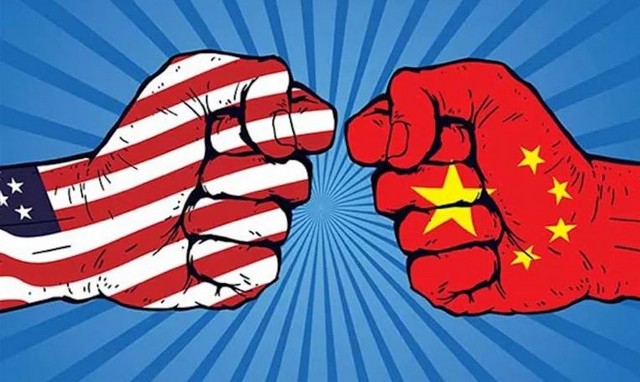
SINGAPORE – With the world at a standstill, the Covid-19 pandemic has laid bare an increasingly tense rivalry between China and the United States, the most dangerous dimensions of which could play out in Southeast Asia, a region at the heart of the superpowers’ strategic tensions and rival economic strategies.

On one hand, China has strived to position itself as a global leader in a time of crisis, pursuing a campaign of “face mask diplomacy” in Southeast Asia and beyond with certain success, despite being the initial source of the novel coronavirus that has since caused the most debilitating global disruption seen since World War II.

On the other, US President Donald Trump administration’s widely viewed as inept response to the pandemic, both domestically and internationally, has sown crucial doubts about American leadership, including its failure to work with both allies and adversaries to mount a credible and effective global response to the health emergency.

The superpowers have sparred in a war of narratives and nomenclature to apportion blame for the contagion-caused death and disruption, with a firebrand Chinese spokesperson at one point alleging the US military planted the virus in China and the Trump administration earlier insisting on referring to Covid-19 as the “Chinese” virus.

Those rising contagion-linked tensions have put Southeast Asia, a region struggling to contain its own outbreaks of the disease, on new edge.

“At a time when US-China cooperation is needed most, finger-pointing and squabbling by Washington and Beijing have left the rest of the world decidedly unimpressed,” said Ian Storey, a senior fellow at the ISEAS-Yusof Ishak Institute in Singapore. “Covid-19 has dealt a severe blow to the image of both China and the US.”

Decoupling of the world’s two largest economies was already well underway before the pandemic struck, with the Trump administration consistently casting China as a major threat to American economic and security interests.

With a US presidential election on the horizon, decoupling narratives will likely gain post-pandemic traction, particularly in sight of the acute US shortages of medical equipment that is produced largely in China and Beijing’s strategic, if not cynical, distribution of the supplies to reward allies and squeeze rivals.

In recent weeks, China has aimed to score diplomatic points in Southeast Asia through the provision of medical supplies, including in the Philippines, Laos and Thailand.

If Washington and Beijing each lose access to their single largest overseas market in such a post-pandemic scenario, trade-geared and resource-rich Southeast Asia will assume even greater strategic importance than previously.

Indeed, if the post-pandemic order gives rise to a zero-sum superpower contest for global leadership, diplomatic efforts will likely intensify to enlist Association of Southeast Asian Nations (ASEAN) members to their competing visions for the strategic region’s future.

Both have their merits. Washington’s Free and Open Indo-Pacific (FOIP) strategy deploys governance and economic programs focused on catalyzing private investment in infrastructure projects in the so-called “Indo-Pacific” region, a bid to counter Beijing’s US$1 trillion Belt and Road Initiative (BRI) global infrastructure building program.

The term “Indo-Pacific” refers to a recently adopted strategic concept advanced by the Trump administration that envisions the Indian and Pacific Oceans as a single strategic theater which intentionally and linguistically deemphasizes the regional centrality of China.

The US strategy’s security component refers to a “Quadrilateral” (Quad) alliance among major maritime powers India, Japan and Australia, all with power-projecting naval capabilities to challenge China’s rising assertiveness in maritime areas like the South China Sea.

The initiative, however, has notably failed to take-off in Southeast Asia, where there is an impression among experts and observers that the Trump administration has disengaged from the region, including through a dearth of top-level diplomacy.

Security-oriented engagement with ASEAN, led by the Pentagon, has instead guided Trump’s China-confronting policy.

“The biggest problem with the Trump administration and Southeast Asia is that the White House and State Department are absent or much less engaged [with the region] than during the [Barack] Obama administration,” said Malcolm Cook, a senior fellow at the ISEAS-Yusof Ishak Institute.

“The Department of Defense (DoD), State Department and White House each run their own engagement strategies with Southeast Asia. The DoD has done a much better job than the White House and State under the Trump administration, making the US posture look very defense-oriented,” Cook told Asia Times.

Prior to the Covid-19 pandemic, US-Southeast Asian relations had arguably hit their lowest point since Trump assumed the presidency in early 2017. Relations have faltered since Trump backed away from the Trans-Pacific Partnership (TPP) multilateral trade pact, designed by Obama’s administration explicitly to exclude China from a US-centric order. Ties have also been strained by the absence of US leaders at ASEAN annual summits.

Critiques of Trump’s strategy, including from Singapore’s Prime Minister Lee Hsien Loong, have opposed Washington’s use of unilateral tariffs to address trade imbalances and attempts to pressure countries to choose sides between the two superpowers, thereby splitting the region into rival US and China-aligned blocs.

“ASEAN countries simply won’t sign up to US initiatives that seek to compete with China and turn Southeast Asia into the primary arena of Sino-US competition,” said Storey. “There is a risk that if America pushes Southeast Asian countries too far vis-à-vis its competition with China, it will alienate those countries.”

While US cumulative foreign direct investment (FDI) in the Indo-Pacific region hit $941.2 billion in 2017, dwarfing China’s $307.7 billion, Beijing has been ASEAN’s largest trade partner for over a decade. Even so, the region’s foreign policy elites have raised concerns over the BRI.

The 2020 State of Southeast Asia Survey Report, published in January by the ISEAS-Yusof Ishak Institute, showed that while China is now widely viewed as the most influential strategic actor in the region, survey respondents – mainly from public office, academia and think tanks – view China’s growing dominance with unease.

Of the survey’s 1,300 respondents, over 60% “distrusted” China, up from around 52% in 2019. Nearly 40% of respondents agreed that Beijing was “a revisionist power and intends to turn Southeast Asia into its sphere of influence.”

The survey’s results also showed a precipitous decline in regional confidence in the US.

Nearly half of the respondents, or 47%, said they have little or no confidence in the US as a strategic partner and provider of regional security, while the percentage that picked the US as the foremost political power in the region fell to 27% from 31% in 2019.

Over 73% of the survey’s respondents said their top concern was ASEAN becoming an arena of major power competition. Meanwhile, almost 80% of respondents viewed China as the region’s most influential economic power, up from 73% in 2019.

What effect the Covid-19 crisis will have on regional perceptions of China as the region’s preeminent economic partner, however, remains to be seen. Some, however, believe the situation has laid bare an untenable overreliance on Chinese trade and investment.

“I think people [in Southeast Asia] will now realize that the Belt and Road Initiative and big-ticket Chinese-funded infrastructure projects that involve mostly Chinese state-owned banks and state-owned companies, that there are risks that come with that that are not simply financial,” said Ryan Clarke, a senior fellow at the East Asian Institute, a Singapore-based think tank.

“As the evidence and as the data becomes clearer around vectors of Covid-19 spread and the correlations between that and the intensity of activity around infrastructure projects in certain geographies, I think that is going to result in people viewing Chinese investment in funding big-ticket infrastructure projects in a much different way than they had previously.”

While there are no indications yet that Chinese personnel managing BRI and other projects contributed to Covid-19’s regional spread, Southeast Asia may have reason to be less open than previously to Chinese aid, investment and tourism as the health crisis spotlights the region’s strong reliance on manufacturing-related supply chain inputs from China.

“Everyone is aware that [China’s] cover-up in the suppression and in some cases the outright deletion of critical epidemiological information early on is a large reason that the spread happened the way it did,” said Clarke. “And that’s not lost on people, and I think that’s going to linger and condition interactions with China in Southeast Asia.”

While regional countries may now re-evaluate BRI and other infrastructure projects on more critical terms than previously, the severe Covid-19 driven economic downturns projected for ASEAN could see recovery-minded regional governments looking to China for new deals and growth.

China’s own economic performance hinges, however, on a major extent to sustained demand from European and US markets, both of which have been brought to a standstill by the deadly contagion. China’s growth could slow to 2.9% this year, potentially the slowest rate since the Cultural Revolution, economists from more than a dozen banks project.

“Key markets in Southeast Asia want to run their own affairs and have control over all the core variables that determine their overall economic future,” said Clarke, adding that the region will “start to be much more focused on determining their own destiny, as opposed to waiting for third parties who are outside of the region” as a result of the pandemic.

If ASEAN takes a more skeptical posture on integration and connectivity with China, the region’s foreign investment-geared economies could give more weight to economic initiatives promoted by Washington’s Indo-Pacific strategy, including the Blue Dot Network (BDN) plan to certify “sustainable” global infrastructure projects.

The US, Japan, and Australia announced the initiative last November, while denying it is a competitive response to China’s BRI. The BDN, which has yet to shed light on its planned monetary outlays, seeks to promote private-sector-led investment in development projects, contrasting Beijing’s state-led strategy.

No ASEAN countries have signed on to the network, which has yet to be fully fleshed-out, analysts say.

“America doesn’t do BRI-type initiatives,” said Storey, “but let’s not forget that America’s cumulative investment in Southeast Asia is greater than the combined totals of China, Japan and South Korea. It’s thousands of companies doing deals within the region, quietly, efficiently and often low-profile.”

Whether the Covid-19 emergency gives definitive shape to a bifurcated post-pandemic regional order is still too early to determine, many analysts say. “The only thing we can be certain of is that when we emerge from the other side of this crisis, the world will be a very different and more difficult place,” Storey said.

11 April 2020

Source: asiatimes.com

Commentary: As the US plays the blame game, China steps up its global leadership

By Vali Nasr

WASHINGTON DC: A pandemic is enveloping the world, endangering the lives and livelihoods of millions of people, and US President Donald Trump is thinking about how to get the upper hand vis-a-vis China.

But his obsession with winning this great-power competition – exemplified by his administration’s petty insistence on calling COVID-19 the “Chinese virus” or the “Wuhan virus” – is making victory less likely every day.

Nobody doubts that the COVID-19 coronavirus first appeared in China. Nor does anyone deny that Chinese bureaucrats were wrong to suppress information about it early on, rather than taking immediate action to contain it.

But, for most of the world, what matters is not so much where the pandemic started, but how it will end. And, as it stands, China is doing a lot more to help end the outbreak than the United States is.

COVID-19 RESPONSE: CHINA VS US

Despite their early missteps, it did not take long for China’s leaders to recognise their initial mistake and take decisive action. The government sealed off affected areas, locked down a huge swath of the population, built designated COVID-19 hospitals, and ramped up production of necessary equipment, including test kits, masks and ventilators.

The lockdowns may have been draconian, but China’s strategy seems to have worked. Within a few weeks, new infections began to decline, and new local infections have reportedly stopped. Steps are now being taken to ease the lockdown.

Unlike China, the US had plenty of warning that COVID-19 was coming. But, rather than take action, Trump downplayed the threat, dithered before fulfilling his pledge to use the Defense Production Act to force private companies to manufacture vital equipment, and refused to impose a nationwide shelter-in-place order.

Moreover, apparently fearing for his re-election prospects amid economic crisis, Trump announced his intention to “reopen” the US economy by Easter, only to reverse himself as the number of cases and deaths soared.

Simply put, he has prioritised politics over public health – precisely what he criticised Chinese officials for doing when COVID-19 emerged. The World Health Organization’s recent warning that the US could become the new epicentre of the pandemic seems to have been borne out: The country now has the world’s highest number of cases.

CHINA’S INTERNATIONAL PROFILE

Meanwhile, parts of Europe are struggling to cope with the outbreak, with Italy and Spain having now surpassed China in COVID-19 deaths.

This, together with Trump’s leadership failures, has lent credence to claims that China’s state-led governance model is better equipped than democratic systems – often politically deadlocked and dysfunctional – to respond to “black swans” (major unexpected shocks).

The US may succeed in its bid to prevent its allies from adopting Chinese telecommunications technology. But it cannot stop the world from emulating China’s approach to public health or social organisation if it proves effective during the COVID-19 crisis. And, so far, China’s track record is pretty convincing.

Photographs of planeloads of Chinese doctors and medical equipment arriving in places like Rome and Tehran, disseminated across social media worldwide, have raised China’s international profile further.

Now, countries are seeking China’s help. After the European Union reduced exports of medical equipment, Serbian President Aleksandar Vucic appealed to “his friend and brother,” Chinese President Xi Jinping to provide the necessary goods. A few days later, European Commission President Ursula von der Leyen publicly thanked China for its contributions.

AMERICA FIRST

Nobody has asked – let alone thanked – the US for anything. And the US has not offered anything, driving home the utter lack of empathy on the part of Trump’s “America First” administration.

In fact, the Trump administration has actively undermined countries’ ability to respond to the humanitarian crisis. Not only has it refused to ease sanctions on Cuba, Iran, and Venezuela; it likely contributed to the International Monetary Fund’s decision not to provide a US$5 billion emergency loan to Venezuela.

What the Trump administration seems not to understand is that any country that fails to contain the virus keeps the entire world at risk. Retaining sanctions that cripple health-care systems, such as in Iran (the third-most-affected country), is not only morally reprehensible; it undermines America’s own interests, both by enabling the virus to continue to spread and by reinforcing the image of the US as a villain.

Meanwhile, China – along with Russia – has urged the US to change its approach.

But the US is not only indifferent to the suffering of its adversaries; it also has little concern for its allies. Beyond offering zero assistance to its European partners, the Trump administration abruptly and unilaterally barred most European visitors from entering the US for 30 days – a move that caught European leaders by surprise, and which they roundly condemned.

Even more infuriating, however, was Trump’s brazen and predatory reported effort to secure rights to any COVID-19 vaccine developed by the German company CureVac (a US official called the report “wildly overplayed”).

Europe is by now accustomed to Trump’s animus, but this was a bridge too far. There is no longer any shadow of a doubt that the EU cannot trust the US, let alone depend on it. Both China and Russia have long dreamed of such a transatlantic rift.

As Trump fusses over semantics in a transparent and pathetic effort to shift blame for his own inept leadership, China is laying the groundwork for global leadership in the post-COVID-19 era. Thanks to Trump, the US will almost certainly lose the great-power competition – and countless lives.

Vali Nasr is Professor of Middle East Studies and International Affairs at Johns Hopkins University’s School of Advanced International Studies.

1 April 2020

Source: www.channelnewsasia.com

A Prayer in the Time of Pandemic

By Richard Falk

8 Apr 2020 – Affirming spirituality as the power over life and death I aspire to achieve

this spirituality that is nothing other than the blending of love and mystery

cherishing wonder at a precarious precipice, respecting knowledge

prayer seemed a weakening of spirit, a reaching out to the void, pretending

that there was someone there ready to respond, a metaphysical crutch in times of need

evading the loneliness of being when that other in our dreams is silent when and if we awake

we need not, must not, give up hope against hope, as nadezdha mandelstam never did

we need not, must not, cling to promises that can’t be kept, pretending as paul did when

praising abraham as he “believed against hope in hope” taking the greatest risk

put more simply, still falsely, in hebrews 11:1-“Now faith is the assurance of things hoped for, the conviction of things

not seen,” the assurance invented to banish uncertainty burglarizes

truth, demeaning faith as mere submission to authority, as refusal to live life fully, as refusal of the enchantments of

uncertainty, instead of continuing up mountains to heights where justice dwells, climbing as the air thins, sustained by

love by starlight truly certain and real


yet we can lean to see and understand anew, pushed by the crisis of the earth to open eyes more widely, prayer will be

loosened from moorings of church and state, only then becoming truly sacred: so realized, prayer becomes fervent

hope, not needing to be uttered as if a cry of desperation no longer needing assurances or false promises, prayer

becomes love and attentiveness a stone thrown from land far out falling beyond sight in an ocean of uncertainty


yet not lacking courage to stare at bodies piling up in churches, morgues overflowing, funerals on hold, statistics

replacing stories so that suffering stays abstract, leaders standing stiffly almost at a loss for words for the first time

ever, yet uttering prime time moonshine language as addressing sheep, confusing optimism with hope, curbing

science and scientists, treating misinformation, market-driven and gut-generated as knowledge, even wisdom

yet we go on listening restlessly waiting for a few words exhibiting love uncertainty, losing patience with what we hear

nightly we turn inward for knowledge for wisdom for love and outward for love for friendship invisible communities all

over the planet bonded by these fervent hopes are gathering the strength to be ready for whatever comes tomorrow

and stand by this prayer

Richard Falk is a member of the TRANSCEND Network, an international relations scholar, professor emeritus of international law at Princeton University, Distinguished Research Fellow, Orfalea Center of Global Studies, UCSB, author, co-author or editor of 60 books, and a speaker and activist on world affairs.

13 April 2020

Source: www.transcend.org

Do Not Be Afraid…. All Will Be Well….

By Mairead Maguire

Coronavirus COVID-19: Local and International Cooperation and Solidarity

9 Apr 2020 – We, as a human family, are living in extraordinary times but must not be afraid. Many people are traumatized as they face the shock and pain of a new virus called Corona Covid 19, which is spreading rapidly around the world, snatching the lives of loved ones.

The virus has forced scientists and health care experts in laboratories around the world to work for a life-saving vaccine. In the meantime, medical experts and political leaders are cooperating to face the challenges, both personally and collectively, to deal with this pandemic. The new virus has changed the world we live in literally overnight and even though it will pass in time, things will never be the same. We have been told by health officials, scientists and government leaders to stop shaking hands, self-isolate, stay at home, and in some cases whole cities are in lockdown to help stop the spreading of this disease. To all those who have lost loved ones, I express my deepest sympathy and to those suffering sickness my prayers go out to you.

We are all inspired and give thanks to health workers putting their own lives at risk on the front lines, doing their duty with love, and taking care of the sick and dying in societies all over the world. We can NEVER thank enough the carers in the British National Health Service for their sacrifice (many have died) in the service of others. I am sure the best way to thank the carers and the NHS is for us all to demand that governments throughout the world put their citizens’ health care on top of government policies in ‘Health Budgets’.

If this virus has done anything, it has reminded us that we are only human and very vulnerable; we need each other to survive and thrive. If anything, this virus hopefully will cement the opinion that we are All One, brothers and sisters; what affects one affects all. Hopefully, it will create a greater sense of community and solidarity within the human race in addition to respect for each other, for nature and the universe. We will become more aware that we are interconnected, interdependent, cooperation and solidarity being key to human and environmental survival. We have seen countries that have shown great compassion towards others and a willingness to help other nations. This may be our greatest hope and foundation to build upon for more cooperation.

But it is with great sadness that we watch the build-up of military forces and increased isolation and destruction by some of International Treaties such as Nuclear Non-proliferation Treaty, Climate Change Agreements, and Universal Declaration of Human Rights, etc.

However, we can take inspiration and get hope from countries such as China, Russia, and United States, cooperating to fight Covix 19. This hopefully is a foundation where Superpowers can work closer together. It is only with cooperation and solidarity that the human race will defeat the virus as we have many challenges ahead such as food shortages, global warming, pandemics, ethnic conflicts, but leaders, people, settling up structures to share information, resources, across the globe can work will achieve great things for humanity.

There should be no enmity between nations but rather a spirit of generosity and magnanimity across the globe; this is not only the right thing to do, but it is in all our interests that this virus be eradicated as soon as possible. Government policies of sanctions, militarism, nuclear weapons and war must be radically replaced by government policies that put their citizen’s health – both physical and mental – on top of the political agenda.

Government policies which are hampering their own and other countries ability to cope with Coronavirus should be changed immediately. The USA could lift sanctions placed on Iran, North Korea, Cuba, etc., and all 54 countries where these sanctions bring death and destruction to citizens, leaving their governments with no money for medicine and food or to help them cope with the coronavirus. For too long governments have squandered taxpayers’ money building military complexes and enforcing the West’s colonial system onto the developing world.

The USA spends over 600 billion on the military every year, and has 700 military bases around the world. The U.K. recently ordered three new nuclear submarines which are expected to cost around 60 billion pounds and yet we see the National Health Service facing a 15% budget reduction over the last ten years. For too long the taxpayers footed the bill for too many wars that have only served to enrich the elite at the top l% of our societies. We are told these wars are for our benefit but the poor get poorer while the rich get richer. Large corporations share the business, the assets and wealth seized in war and paid for by taxpayers who increasingly don’t see a share of the world’s wealth.

Through violence, sanctions and war, we export a version of colonialism to poorer countries forcing mass migration and poverty (including famine and starvation in some countries) in the developing/underdeveloped world. It is time we hold governments to account and put to bed our colonial past. Our civil societies need to question where is our tax money going. People of all countries need to unite to demand better governance, transparency and accountability from our political leaders and international organizations. Too long have we the people been divided; we need to unite and create a better, stronger human society that sees neighbour not as threats but as brothers and sisters.

Another policy to be changed is to cancel Third World debts, such as from Bangladesh, to help protect their country from flooding that would cause millions to flee to safety. The Secretary General has called for a Global Ceasefire (meaning governments and non-state fighters) to be observed in order to help governments to implement the UN Development Goals to be reached. He has offered his ambassadors and diplomatic core to help mediate peace agreements, etc.

This pandemic, among other causes, will force a recession. Government policies of putting the peoples’ tax money into bankers and the military industrial complexes, in many countries, have reached a tipping point and rightly people are demanding social equality and justice. It does not go unnoticed by the public everywhere that the bankers, corporations, and rich get the tax breaks and bailouts while the majority of people are left with no or low paid jobs (often two in a household working round the clock trying to survive without the basics of life). Capitalism does not work, the system is broken, and we are all challenged to build a system of real democracy that works for everyone.

Many will not survive COVID-19. There will be many families grieving for their loved ones, it will take a long time to recover, but a new consciousness has been born from this tragedy. We cannot go back to the old ways. We need a revolution of values from selfishness and greed to values of kindness, economic justice, empathy, compassion, equality and taking care of each other. We need to construct nonkilling, nonviolent societies built on forgiveness (which is the key to peace). Only by dedicating our lives to building such a world, can we build a monument of love to all those who have died and to all those on the front line of saving other people’s lives.

We are at a turning point in history of the human race. We can grasp this opportunity for change and build a civilization with a heart and give hope to millions. Let’s join together with the youth and take this quantum leap of faith and love into the future. Such a world is possible, there is hope for humanity. And in the words of the great English mystic, Julian of Norwich, let us believe that ‘All will be well; all manner of things will be well.’

Mairead Corrigan Maguire, co-founder of Peace People, is a member of the TRANSCEND Network for Peace Development Environment.

13 April 2020

Source: www.transcend.org

Ventilator Shortage Exposes the Cruelty of Neoliberal Capitalism: Noam Chomsky

By Noam Chomsky

C.J. Polychroniou Interviews Noam Chomsky

Trump has reacted during his years in office in the manner to which we have become accustomed: by defunding and dismantling every relevant part of government and assiduously implementing the instructions of his corporate masters to eliminate the regulations that impede profits while saving livesand leading the race to the abyss of environmental catastrophe, by far his greatest crime — in fact, the greatest crime in history when we consider the consequences

                                                                                                                                      — Noam Chomsky.

The pandemic had been predicted long before its appearance, but actions to prepare for such a crisis were barred by the cruel imperatives of an economic order in which “there’s no profit in preventing a future catastrophe”

— Noam Chomsky

COVID-19  has taken the world by storm. Hundreds of thousands are infected (possibly many times more than the confirmed cases), the list of dead is growing exponentially longer, and capitalist economies have come to a standstill, with a global recession now virtually inevitable.

 In the interview that follows, he discusses how neoliberal capitalism itself is behind the U.S.’s failed response to the pandemic.

C.J. Polychroniou: Noam, the outbreak of the new coronavirus disease has spread to most parts of the world, with the United States now having more infected cases than any other country, including China, where the virus originated. Are these surprising developments?

Noam Chomsky: The scale of the plague is surprising, indeed shocking, but not its appearance. Nor the fact that the U.S. has the worst record in responding to the crisis.

Scientists have been warning of a pandemic for years, insistently so since the SARS epidemic of 2003, also caused by a coronavirus, for which vaccines were developed but did not proceed beyond the pre-clinical level. That was the time to begin to put in place rapid-response systems in preparation for an outbreak and to set aside spare capacity that would be needed. Initiatives could also have been undertaken to develop defenses and modes of treatment for a likely recurrence with a related virus.

But scientific understanding is not enough. There has to be someone to pick up the ball and run with it. That option was barred by the pathology of the contemporary socioeconomic order.

Market signals were clear: There’s no profit in preventing a future catastrophe.

The government could have stepped in, but that’s barred by reigning doctrine: “Government is the problem,” Reagan told us with his sunny smile, meaning that decision-making has to be handed over even more fully to the business world, which is devoted to private profit and is free from influence by those who might be concerned with the common good.

The years that followed injected a dose of neoliberal brutality to the unconstrained capitalist order and the twisted form of markets it constructs.

The depth of the pathology is revealed clearly by one of the most dramatic — and murderous — failures: the lack of ventilators that is one the major bottlenecks in confronting the pandemic.

The Department of Health and Human Services foresaw the problem, and contracted with a small firm to produce inexpensive, easy-to-use ventilators. But then capitalist logic intervened.

The firm was bought by a major corporation, Covidien, which sidelined the project, and, “In 2014, with no ventilators having been delivered to the government, Covidien executives told officials at the [federal] biomedical research agency that they wanted to get out of the contract, according to three former federal officials. The executives complained that it was not sufficiently profitable for the company.”

Doubtless true.

The current administration had ample warning about a likely pandemic. In fact, a high-level simulation was run as recently as last October.

Neoliberal logic then intervened, dictating that the government could not act to overcome the gross market failure, which is now causing havoc.

As The New York Times gently put the matter, “The stalled efforts to create a new class of cheap, easy-to-use ventilators highlight the perils of outsourcing projects with critical public-health implications to private companies; their focus on maximizing profits is not always consistent with the government’s goal of preparing for a future crisis.”

Putting aside the ritual obeisance to the benign government and its laudatory goals, the comment is true enough. We may add that focus on maximizing profits is also “not always consistent” with the hope for “the survival of humanity,” to borrow the phrase of a leaked memo from JPMorgan Chase, [the U.S.’s] largest bank, warning that “the survival of humanity” is at risk on our current course, including the bank’s own investments in fossil fuels.

Thus, Chevron canceled a profitable sustainable energy project because there’s more profit to be made in destroying life on Earth. ExxonMobil refrained from doing so, because [it] had never opened such a project in the first place, having made more rational calculations of profitability.

And rightly so, according to neoliberal doctrine. As Milton Friedman and other neoliberal luminaries have instructed us, the task of corporate managers is to maximize profits. Any deviation from this moral obligation would shatter the foundations of “civilized life.”

There will be recovery from the COVID-19 crisis, at severe and possibly horrendous cost, particularly for the poor and more vulnerable.

But there will be no recovery from the melting of the polar ice sheets and the other devastating consequences of global warming. Here, too, the catastrophe results from a market failure — in this case, of truly earth-shaking proportions.

The current administration had ample warning about a likely pandemic. In fact, a high-level simulation was run as recently as last October.

 Trump has reacted during his years in office in the manner to which we have become accustomed: by defunding and dismantling every relevant part of government and assiduously implementing the instructions of his corporate masters to eliminate the regulations that impede profits while saving livesand leading the race to the abyss of environmental catastrophe, by far his greatest crime — in fact, the greatest crime in history when we consider the consequences.

By early January, there was little doubt of what was happening. On December 31, China informed the World Health Organization (WHO) of the spread of pneumonia-like symptoms with unknown etiology. On January 7, China informed the WHO that scientists had identified the source as a coronavirus and had sequenced the genome, which they made available to the scientific world.

 Through January and February, U.S. intelligence was trying hard to reach Trump’s ear, but failed. Officials informed the press that “they just couldn’t get him to do anything about it. The system was blinking red.”

Trump was not silent, however. He issued a stream of confident pronouncements informing the public that it was just a cough; he has everything under control; he gets a 10 out of 10 for his handling of the crisis; it’s very serious but he knew it was a pandemic before anyone else; and the rest of the sorry performance.

The technique is well-designed, much like the practice of reeling out lies so fast that the very concept of truth vanishes. Whatever happens, Trump is sure to be vindicated among his loyal followers. When you shoot arrows at random, some are likely to hit the target.

(Back home, we see its replicas in India –Ed)

To crown this impressive record, on February 10, when the virus was sweeping the country, the White House released its annual budget proposal, which extends further the sharp cuts in all the main health-related parts of the government (in fact just about anything that might help people) while increasing funding for what’s really important: the military and the wall.

The U.S. is now the global epicenter of the crisis.

One effect is the shockingly belated and limited testing, well below others, making it impossible to implement the successful test-and-trace strategies that have prevented the epidemic from breaking out of control in functioning societies. Even the best hospitals lack basic equipment. The U.S. is now the global epicenter of the crisis.

This only skims the surface of Trumpian malevolence, but there’s no space for more here.

It is tempting to cast the blame on Trump for the disastrous response to the crisis. But if we hope to avert future catastrophes, we must look beyond him. Trump came to office in a sick society, afflicted by 40 years of neoliberalism, with still deeper roots.

(Back home, we see its relevance  in India too –Ed)

The neoliberal version of capitalism has been in force since Reagan and Margaret Thatcher,            beginning shortly before. There should be no need to detail its grim consequences. Reagan’s generosity to the super-rich is of direct relevance today as another bailout is in progress. Reagan quickly lifted the ban on tax havens and other devices to shift the tax burden to the public, and also authorized stock buybacks — a device to inflate stock values and enrich corporate management and the very wealthy (who own most of the stock) while undermining the productive capacity of the enterprise.

Such policy changes have huge consequences, in the tens of trillions of dollars. Quite generally, policy has been designed to benefit a tiny minority while the rest flounder. That’s how we come to have a society in which 0.1 percent of the population hold 20 percent of the wealth and the bottom half have negative net worth and live from paycheck to paycheck.

While profits boomed and CEO salaries skyrocketed, real wages have stagnated. As economists Emmanuel Saez and Gabriel Zucman show in their book, The Triumph of Injustice, taxes are basically flat across all income groups, except at the top, where they decline.

The U.S.’s privatized for-profit health care system had long been an international scandal, with twice the per capita expenses of other developed societies and some of the worst outcomes.

Neoliberal doctrine struck another blow, introducing business measures of efficiency: just-on-time service with no fat in the system. Any disruption and the system collapses. Much the same is true of the fragile global economic order forged on neoliberal principles.

This is the world that Trump inherited, the target of his battering ram. For those concerned with reconstructing a viable society out of the wreckage that will be left from the ongoing crisis, it is well to heed the call of Vijay Prashad: “We won’t go back to normal, because normal was the problem.”

Yet, even now, with the country in the midst of a public health emergency unlike anything we have seen in a very long time, the American public continues to be told that the universal health care is not realistic. Is neoliberalism alone responsible for this peculiarly unique American perspective on health care?

It’s a complicated story. To begin with, for a long time, polls have shown favorable attitudes toward universal health care, sometimes very strong support. In the late Reagan years, about 70 percent of the population thought that guaranteed health care should be in the Constitution, and 40 percent thought it already was — the Constitution taken to be the repository of all that is obviously right. There have been referenda showing high support for universal health care — until the business propaganda offensive begins, warning of the heavy if not astronomical tax burden, much as what we have seen recently. Then popular support fades.

As usual, there is an element of truth to the propaganda. Taxes will go up, but total expenses should sharply decline, as the record of comparable countries shows. How much? There are some suggestive estimates. One of the world’s leading medical journals, The Lancet (U.K.), recently published a study estimating that universal health care in the U.S. “is likely to lead to a 13% savings in national health-care expenditure, equivalent to more than US$450 billion annually (based on the value of the US$ in 2017).” The study continues:

The entire system could be funded with less financial outlay than is incurred by employers and households paying for health-care premiums combined with existing government allocations. This shift to single payer health care would provide the greatest relief to lower-income households. Furthermore, we estimate that ensuring health-care access for all Americans would save more than 68,000 lives and 1.73 million life-years every year compared with the status quo.

But it would raise taxes. And it seems that many Americans would prefer to spend more money as long as it doesn’t go to taxes (incidentally killing tens of thousands of people annually). That’s a telling indication of the state of American democracy, as people experience it; and from another perspective, of the force of the doctrinal system crafted by business power and its intellectual servants. The neoliberal assault has intensified this pathological element of the national culture, but the roots go much deeper and are illustrated in many ways, a topic very much worth pursuing.

While some European countries are doing better than others in managing the spread of COVID-19, the countries that appear to have had greater success with this task lie primarily outside the Western (neo)liberal universe. They are Singapore, South Korea, Russia and China itself. Does this fact tell us something about Western capitalist regimes?

There have been various reactions to the spread of the virus. China itself seems to have controlled it, at least for now. The same is true of the countries in China’s periphery where the early warnings were heeded, including democracies no less vibrant than those of the West. Europe mostly temporized, but some European countries acted. Germany appears to hold the global record in low death rates, thanks to spare health facilities and diagnostic capacity, and rapid response. The same seems to be true in Norway. Boris Johnson’s reaction in the U.K. was shameful. Trump’s U.S. brought up the rear.

The distinguishing feature in responses seems not to be democracies vs. autocracies, but functioning vs. dysfunctional societies.

Germany’s solicitude for the population did not, however, extend beyond its borders. The European Union proved to be anything but. However, ailing European societies could reach across the Atlantic for succor. The Cuban superpower was once again ready to help with doctors and equipment. Meanwhile, its U.S. neighbor was cutting back health aid to Yemen, where it had helped create the world’s worst humanitarian crisis, and was using the opportunity of the devastating health crisis to tighten its cruel sanctions to ensure maximal suffering among its chosen enemies. Cuba is the most longstanding victim, back to the days of Kennedy’s terrorist wars and economic strangulation, but miraculously has survived.

It should, incidentally, be profoundly disturbing to Americans to compare the circus in Washington with Angela Merkel’s sober, measured, factual report to Germans on how the outbreak should be handled.

The distinguishing feature in responses seems not to be democracies vs. autocracies, but functioning vs. dysfunctional societies — what in Trumpian rhetoric are termed “shithole” countries, like what he is working hard to craft under his rule.

What do you think of the $2 trillion coronavirus economic rescue plan? Is it enough to stave off another possible great recession and to help the most vulnerable groups in American society?

The rescue plan is better than nothing. It offers limited relief to some of those who desperately need it, and contains an ample fund to help the truly vulnerable: the piteous corporations flocking to the nanny state, hat in hand, hiding their copies of Ayn Rand and pleading once again for rescue by the public after having spent the glory years amassing vast profits and magnifying them with an orgy of stock buybacks. But no need to worry. The slush fund will be monitored by Trump and his Treasury Secretary, who can be trusted to be fair and just. And if they decide to disregard the demands of the new inspector-general and Congress, who is going to do anything about it? Barr’s Justice Department? Impeachment?

There would have been ways to direct aid to those who need it, to households, beyond the pittance included for some. That includes those working people who had authentic jobs and the huge precariat who were getting by somehow with temporary and irregular employment, but also others: those who had given up, the hundreds of thousands of victims of “deaths of despair” — a unique American tragedy — the homeless, prisoners, the great many with such inadequate housing that isolation and storing food is not an option, and plenty of others that are not hard to identify.

Political economists Thomas Ferguson and Rob Johnson put the matter plainly: While the universal medical care that is standard elsewhere may be too much to expect in the U.S., “there is no reason why it should have one sided single payer insurance for corporations.” They go on to review simple ways to overcome this form of corporate robbery.

At the very least, the regular practice of public bailout out of the corporate sector should require stiff enforcement of a ban on stock buybacks, meaningful worker participation in management, an end to the scandalous protectionist measures of the mislabeled “free trade agreements” that guarantee huge profits for Big Pharma while raising drug prices far beyond what they would be under rational arrangements.

At least.

(C.J. Polychroniou, the Interviewer,  is a political economist/political scientist who has taught and worked in universities and research centers in Europe and the United States. His main research interests are in European economic integration, globalization, the political economy of the United States and the deconstruction of neoliberalism’s politico-economic project. He is a regular contributor to Truthout as well as a member of Truthout’s Public Intellectual Project. He has published several books and his articles have appeared in a variety of journals, magazines, newspapers and popular news websites. Many of his publications have been translated into several foreign languages, including Croatian, French, Greek, Italian, Portuguese, Spanish and Turkish. He is the author of Optimism Over Despair: Noam Chomsky On Capitalism, Empire, and Social Change, an anthology of interviews with Chomsky originally published at Truthout and collected by Haymarket Books.)

(This interview, published  April 1, 2020,  has been lightly edited for clarity)

9 April 2020

Source: countercurrents.org

King Covid Rules

By Satya Sagar

It is a capricious little virus with a funny crown and a flimsy protein coat, zipping across the planet, leaving behind a trail of utter confusion, death and destruction.

And as nations rush to prevent exposure to COVID-19’s deadly effects, the virus is in turn exposing each one of them for whatever they are – good, bad or ugly. Depending on their responses to the deadly pandemic – humane or cruel, systematic or clumsy – the very innards of their systems are today open for everyone to see – like in a public autopsy.

At another level altogether, COVID-19 is stripping the human species itself of its various pretensions- of being in command of Planet Earth, muscular enough to beat any foe or clever enough to manage any crisis. Or for that matter even being ‘human’, as societies respond to the crisis with a mix of panic, prejudice and quest for self-preservation over others.

Sure, this is not the first time our world has faced a pandemic – the history of deadly infectious diseases like small pox or the plague going back several millennia. Despite all the devastation wrought, humans have not just survived such microbial assaults, but also developed clever ways to prevent or overcome them repeatedly – and will perhaps do so in future too.

However, COVID-19 has arrived when, more than any time before in history, technological prowess has created the illusion, that our species is immune to the laws of nature itself. From captains of industry to the politicians who front their cause and even among large sections of the general population, hubris about human achievements has been the dominant sentiment for a long time now.

A good example is the sheer arrogance with which anyone trying to mobilize global action to deal with the problem of climate change -potentially an even bigger crisis than the current pandemic – was being dismissed by those in power for the last decade or more.

‘Don’t you dare interrupt my orgasm!’ was the refrain of climate-change deniers along with those who benefit from the way industrial capitalism is set up in the world today – of a tiny minority of humans consuming endless amounts of energy while destroying the ecology and very future of the planet. (Thanks to COVID-19 much of the globe is today in lockdown mode, which is what may be needed to mitigate climate change!)

The malaise in the modern human mindset stems from the belief they are above all evolutionary and ecological processes, which stretch back millions of years. While this is true of those who deny Darwin’s ideas on how life arose on Earth, even those who endorse it in theory, seem to believe ‘Yes, evolution happened in the distant past, but today we are in the driver’s seat’. This is due to their almost blind conviction, that tomorrow’s science can always overcome every problem created by the one from yesterday.

What COVID-19 is really telling us in a spectacular and scary way is – the story of evolution – a non-linear process driven by many chance events – is not over yet and never will be. To understand why not, one needs to consider that for much of its existence, our planet, formed 4.7 billion years ago, has been essentially run by microbes like bacteria and viruses. Homo Sapiens, our species, emerged just 200,000 years ago and while we seem to dominate the visible world, we are nobodies compared to the invisible one, which is stupendous in antiquity, diversity and sheer scale.

Bacteria are better known and recognised for their role in a very wide range of essential phenomenon from fertilizing the soil, recycling waste, regulating atmospheric gases and even running critical functions within the human body. Viruses, poorly understood and studied till recently and not even considered a form of ‘life’, are as important as bacteria, if not more, and the most abundant biological entities on Earth.

The best current estimate is that there are a whopping 1031 virus particles in the biosphere. If all the viruses on Earth were laid end to end, they would stretch for 100 million light years. And in every adult human body, while there are 30 trillion human cells and also around 39 trillion bacterial cells, that is nothing compared to the 380 trillion viruses that live inside us (COVID-19 has come to visit its in-laws).

More significantly, their huge population, combined with rapid rates of replication and mutation, make viruses the world’s leading source of genetic innovation and key drivers of the evolutionary process. They are the ones who have since time immemorial ‘invented’ new genes that find their way into other organisms, affecting all life on Earth and often determining what will survive.

In other words, what we face in COVID-19 is essentially a force of nature – like an invisible tsunami- that cannot be stopped. Yes, ‘infection control’ or ‘lockdowns’ can buy some time to prepare better, but in the absence of a vaccine the virus will find a way to infect a very large section of the human population. The only thing we can do now is deal with the consequences (still not clear in the fog of media-driven panic), to the best of our abilities and wait till much of the global population acquires herd immunity, as part of a natural ebb and tide of all viral pandemics in history.

Ultimately, COVID-19 is also reiterating something that all humans know very well, but don’t like to acknowledge because they lack humility – we are just perishable biological creatures, like any other plant or animal. In the larger context of our planet and certainly the universe, we are so minuscule as to be just like microbes themselves (one more reason to treat bacteria and viruses with greater respect).

Even more fundamentally, we are products of nature and not ‘above’ it in any way. We will be again and again subject to both its creative, productive cycles as its sometimes whimsical, destructive ways. That is why preservation and enabling of life in all its forms – using mutual cooperation, human solidarity and all resources at our command – can be the only meaningful goal for societies, instead of chasing GDP growth or accumulation of wealth and military might.

Nowhere is this more tragically clear, than from the current plight of the United States, the planet’s ‘top dog’, being ferociously wagged by its tail in the ongoing pandemic. The world’s only Superpower is painfully learning, that natural phenomenon like climate change or pandemics, cannot be fought by fighter aircraft or nuclear weapons or with all the money in the world.

And though POTUS will never acknowledge this, he surely understands today, it is not he but COVID-19 that wears a crown, because in fact, the virus is the real ‘king’ of the planetary jungle.

Satya Sagar is a journalist and public health activist who can be contacted at sagarnama@gmail.com

11 April 2020

Source: countercurrents.org
Save Rohingyas from catastrophic COVID- 19

By Saifur Rahman Saif

Spring, the best season, is twinkling Bangladesh. Mango pods adore trees here and there across the country. Hopes are pinching dreams for big profit.

In this flashy season optimism of Bangladeshis has been grabbed by a scare – COVID -19. Yes, ruling of coronavirus has been started the country. It has already occupied several places of the delta country- Bangladesh.

Coastal district Cox’s Bazar is home to over 1 million Rohingyas, the world’s most repressed, oppressed, tortured, persecuted and humiliated nation, who fled to Bangladesh from Myanmar, the birthplace at gunpoint and sexual assaults, a now vulnerable to coronavirus. They are living makeshifts in Cox’s Bazar refugee camps. Maintaining social distance is quite impossible for Rohingya people. If anyone of the fell in victim of COVID -19, the entire community will go under the risks. The risks must be overcome for sake of the distinct community.

According to the United Nations Office for the Coordination of Humanitarian Affairs (OCHA) – The Rohingya people have faced decades of systematic discrimination, statelessness and targeted violence in Rakhine State, Myanmar. Such persecution has forced Rohingya women, girls, boys and men into Bangladesh for many years, with significant spikes following violent attacks in 1978, 1991-1992, and again in 2016. Yet it was August 2017 that triggered by far the largest and fastest refugee influx into Bangladesh. Since then, an estimated 745,000 Rohingya—including more than 400,000 children—have fled into Cox’s Bazar.

OCHA added, “In Myanmar, entire villages were burned to the ground, families were separated and killed, and women and girls were gang raped. Most of the people who escaped were severely traumatized after witnessing unspeakable atrocities. These people found temporary shelter in refugee camps around Cox’s Bazar, Bangladesh, which is now home to the world’s largest refugee camp.”

It further said, “As of March 2019, over 909,000 stateless Rohingya refugees reside in Ukhiya and Teknaf Upazilas. The vast majority live in 34 extremely congested camps, including the largest single site, the Kutupalong-Balukhali Expansion Site, which is host to approximately 626,500 Rohingya refugees.”

OCHA stated, “more than one year into this multifaceted collaborative response, the situation has gradually begun to stabilize. Basic assistance has been provided, living conditions in the camps have improved somewhat and disaster risk mitigation measures have been largely successful. However, despite progress, the Rohingya remain in an extremely precarious situation. The root causes of their plight in Myanmar have not been addressed and their future is yet uncertain. Refugees have access to the basics, such as food and health care, but they are still extremely vulnerable, living in highly challenging circumstances, exposed to the monsoon elements and dependent on aid.”

The South China Morning Post, very recently carried out a report in which it described that the lack of easy access to medical care has left refugee camps particularly vulnerable to the Covid-19 outbreak. Health care workers were alarmed late last month by reports of the first coronavirus case in the Cox’s Bazar District in Bangladesh, near refugee camps that are home to nearly a million Rohingya.

“Paul Brockmann, Bangladesh head of Medecins Sans Frontieres (MSF, also known as Doctors Without Borders), said the organisation has rolled out a number of emergency preparations in the district to protect the refugees and MSF’s frontline staff, including training and increased isolation capacity,” it continued.

“While most of MSF’s clinics can isolate a small number of people while they are being tested for the virus, severe cases – including those who require mechanical ventilation – must be transferred to government facilities. Existing teams in disease outbreak response facilities in Cox’s Bazar can also be activated if necessary,” the news story added.

The Prime Minister Sheikh Hasina, while talking about probable transmission of coronavirus, pointed out Rohingya camps very recently.

The Bangladesh government took a little bit initiative to check coronavirus infection at Rohingya camps, which seems not enough for the protection of the stateless people.

Some organisations have emphasized the need of protection of the people who have no identities at all. The world community should come forward to do their best for the Rohingyas immediately. #

Saifur Rahman Saif is a Bangladeshi journalist. He works at New Age, a popular newspaper.

6 April 2020

Source: countercurrents.org