Just International

Can Israelis broaden their protests beyond Netanyahu?

By Jonathan Cook

Demonstrations have yet to draw a connection between Netanyahu’s personal abuses of office and the systemic corruption of Israeli politics, with the occupation its beating heart

Nazareth: Israel is roiling with angry street protests that local observers have warned could erupt into open civil strife – a development Prime Minister Benjamin Netanyahu appears to be encouraging.

For weeks, Jerusalem and Tel Aviv have been the scene of large, noisy demonstrations outside the official residences of Mr Netanyahu and his public security minister, Amir Ohana.

On Saturday night around 13,000 marched through Jerusalem shouting “Anyone but Bibi”, Netanyahu’s nickname. Their calls were echoed by tens of thousands more at locations across the country.

Turnout has been steadily growing, despite attacks on demonstrators from both the police and Netanyahu’s loyalists. The first protests abroad by Israeli expats have also been reported.

The protests, in defiance of physical distancing rules, are unprecedented by Israeli standards. They have bridged the gaping political divide between a small constituency of anti-occupation activists – disparagingly called “leftists” in Israel – and the much larger Israeli Jewish public that identifies politically as on the centre and the right.

For the first time, a section of Netanyahu’s natural supporters is out on the streets against him.

In contrast to earlier protests, such as a large social justice movement that occupied the streets in 2011 to oppose rising living costs, these demonstrations have not entirely eschewed political issues.

The target of the anger and frustration is decidedly personal at this stage – focused on the figure of Netanyahu, who is now Israel’s longest-serving prime minister. Protesters have renamed him Israel’s “crime minister”.

But also fuelling the protests is a larger mood of disenchantment as doubts grow about the state’s competence to deal with multiple crises unfolding in Israel. The virus has caused untold social and economic misery for many, with as much as one fifth of the labour force out of work. Netanyahu’s supporters in the lower middle-classes have been hit hardest.

Now well into a second wave, Israel has a per capita rate of infection that outstrips even the US. The shadow of a renewed lockdown amid government mishandling of the virus has undermined Netanyahu’s claim to be “Mr Security”.

There are concerns too about police brutality – starkly highlighted by the killing in May of an autistic Palestinian, Eyad Hallaq, in Jerusalem.

Police crackdowns on the protests, using riot squads, undercover agents, mounted police and water cannon, have underlined not just Netanyahu’s growing authoritarianism. There is a sense too that the police may be ready to use violence on dissenting Israelis that was once reserved for Palestinians.

After manipulating his right-wing rival, the former military general Benny Gantz, into joining him in a unity government in April, Netanyahu has effectively crushed any meaningful political opposition.

The agreement shattered Gantz’s Blue and White party, with many of his legislators refusing to enter the government, and has widely discredited the ex-general.

Netanyahu is reportedly preparing for a winter election – the fourth in two years – both to cash in on his opponents’ disarray and to avoid honouring a rotation agreement in which Gantz is due to replace him late next year.

According to the Israeli media, Netanyahu may find a pretext for forcing new elections by further delaying approval of the national budget, despite Israel facing its worst financial crisis in decades.

And, of course, overshadowing all this is the matter of the corruption charges against Netanyahu. Not only is he the first sitting prime minister in Israel to stand trial, but he has been using his role and the pandemic to his advantage, including by delaying court hearings.

In a time of profound crisis and uncertainty, many Israelis are wondering which policies are being pursued for the national good and which for Netanyahu’s personal benefit.

The government’s months-long focus on the annexation of swaths of Palestinian territory in the West Bank has looked like pandering to his settler constituency, creating a dangerous distraction from dealing with the pandemic.

Similarly, a one-off handout this week to every Israeli – over the strenuous objections of finance officials – looks suspiciously like an electoral bribe. As a result, Netanyahu is facing a rapid decline in support. A recent survey shows trust in him has fallen by half – from 57 per cent in March and April, when the Covid-19 pandemic began, to 29 per cent today.

Many Israelis increasingly see Netanyahu less as a father figure and more as a parasite draining resources from the body politic. Capturing the popular mood is a new art work called the “Last Supper” that was covertly installed in central Tel Aviv. It shows Netanyahu alone, gorging on a vast banquet by stuffing his hand into an enormous cake decorated with the Israeli flag.

In another move designed to highlight Netanyahu’s corrupt politics, better-off Israelis have been publicly organising to donate this week’s state handout to those in need.

Netanyahu’s repeated incitement against the protesters – disparaging them as “leftists” and “anarchists”, and suggesting they are spreading disease – appears to have backfired. It has only rallied more people to the street.

But the incitement and Netanyahu’s claims that he is the true victim – and that in the current climate he faces assassination – have been interpreted as a call to arms by some on the right. Last week five protesters were injured when his loyalists used clubs and broken bottles on them, with police appearing to turn a blind eye. Further attacks were reported at the weekend. Protest organisers said they had begun arranging defence units to protect demonstrators.

Ohana, the public security minister, has called for a ban on the protests and urged a heavy hand from the police. He has delayed appointing a new police chief – a move seen as incentivising local commanders to crack down on the protests to win favour. Large numbers of protesters have been forcefully arrested, with reports that police have questioned some on their political views.

Observers have wondered whether the protests can transcend party political tribalism and develop into a grassroots movement demanding real change. That might widen their appeal to even more disadvantaged groups, not least the one fifth of Israel’s citizens who belong to its Palestinian minority.

But it would also require more of the protesters to start drawing a direct connection between Netanyahu’s personal abuses of office and the wider, systemic corruption of Israeli politics, with the occupation its beating heart.

That may yet prove a tall order, especially when Israel faces no significant external pressure for change, either from the US or from Europe.

A version of this article first appeared in the National, Abu Dhabi.

Jonathan Cook won the Martha Gellhorn Special Prize for Journalism.

3 August 2020

Source: countercurrents.org

U.S. Cold War China Policy Will Isolate the U.S, Not China

Co-Written by Medea Benjamin and Nicolas J S Davies

Tensions between the United States and China are rising as the U.S. election nears, with tit-for-tat consulate closures, new U.S. sanctions and no less than three U.S. aircraft carrier strike groups prowling the seas around China. But it is the United States that has initiated each new escalation in U.S.-China relations. China’s responses have been careful and proportionate, with Chinese officials such as Foreign Minister Wang Yi publicly asking the U.S. to step back from its brinkmanship to find common ground for diplomacy.

Most of the U.S. complaints about China are long-standing, from the treatment of the Uighur minority and disputes over islands and maritime borders in the South China Sea to accusations of unfair trade practices and support for protests in Hong Kong. But the answer to the “Why now?” question seems obvious: the approaching U.S. election.

Danny Russel, who was Obama’s top East Asia expert in the National Security Council and then at the State Department, told the BBC that the new tensions with China are partly an effort to divert attention from Trump’s bungled response to the Covid-19 pandemic and his tanking poll numbers, and that this “has a wag the dog feel to it.”

Meanwhile, Democratic Presidential candidate Joe Biden has been going toe-to-toe with Trump and Secretary Pompeo in a potentially dangerous “tough on China” contest, which could prove difficult for the winner to walk back after the election.

Elections aside, there are two underlying forces at play in the current escalation of tensions, one economic and the other military. China’s economic miracle has lifted hundreds of millions of its people out of poverty, and, until recently, Western corporations were glad to make the most of its huge pool of cheap labor, weak workplace and environmental protections, and growing consumer market. Western leaders welcomed China into their club of wealthy, powerful countries with little fuss about human and civil rights or China’s domestic politics.

So what has changed? U.S.high-tech companies like Apple, which were once only too glad to outsource American jobs and train Chinese contractors and engineers to manufacture their products, are finally confronting the reality that they have not just outsourced jobs, but also skills and technology. Chinese companies and highly skilled workers are now leading some of the world’s latest technological advances.

The global rollout of 5G cellular technology has become a flashpoint, not because the increase and higher frequency of EMF radiation it involves may be dangerous to human health, which is a real concern, but because Chinese firms like Huawei and ZTE have developed and patented much of the critical infrastructure involved, leaving Silicon Valley in the unfamiliar position of having to play catch-up.

Also, if the U.S.’s 5G infrastructure is built by Huawei and ZTE instead of AT&T and Verizon, the U.S. government will no longer be able to require “back doors” that the NSA can use to spy on us all, so it is instead stoking fears that China could insert its own back doors in Chinese equipment to spy on us instead. Left out of the discussion is the real solution: repeal the Patriot Act and make sure that all the technology we use in our daily lives is secure from the prying eyes of both the U.S. and foreign governments.

China is investing in infrastructure all over the world. As of March 2020, a staggering 138 countries have joined China’s Belt and Road Initiative (BRI), a massive plan to connect Asia with Africa and Europe via land and maritime networks. China’s international influence will only be enhanced by its success, and the U.S.’s failure, in tackling the Covid-19 pandemic.

On the military front, the Obama and Trump administrations have both tried to “pivot to Asia” to confront China, even as the U.S. military remains bogged down in the Middle East. With a war-weary public demanding an end to the endless wars that have served to justify record military spending for nearly 20 years, the U.S. military-industrial complex has to find more substantial enemies to justify its continued existence and budget-busting costs. Lockheed Martin is not ready to switch from building billion-dollar warplanes on cost-plus contracts to making wind turbines and solar panels.

The only targets the U.S. can find to justify a $740-billion military budget and 800 overseas military bases are its familiar old Cold War enemies: Russia and China. They both expanded their modest military budgets after 2011, when the U.S. and its allies hi-jacked the Arab Spring to launch covert and proxy wars in Libya, where China had substantial oil interests, and Syria, a long-term Russian ally. But their increases in military spending were only relative. In 2019, China’s military budget was only $261 billion compared to the U.S.’s $732 billion, according to SIPRI. The U.S. still spends more on its military than the ten next largest military powers combined, including Russia and China.

Russian and Chinese military forces are almost entirely defensive, with an emphasis on advanced and effective anti-ship and anti-aircraft missile systems. Neither Russia nor China has invested in carrier strike groups to sail the seven seas or U.S.-style expeditionary forces to attack or invade countries on the other side of the planet. But they do have the forces and weapons they need to defend themselves and their people from any U.S. attack and both are nuclear powers, making a major war against either of them a more serious prospect than the U.S. military has faced anywhere since the Second World War.

China and Russia are both deadly serious about defending themselves, but we should not misinterpret that as enthusiasm for a new arms race or a sign of aggressive intentions on their part. It is U.S. imperialism and militarism that are driving the escalating tensions. The sad truth is that 30 years after the supposed end of the Cold War, the U.S. military-industrial complex has failed to reimagine itself in anything but Cold War terms, and its “New” Cold War is just a revival of the old Cold War that it spent the last three decades telling us it already won.

“China Is Not an Enemy”

The U.S. and China do not have to be enemies. Just a year ago, a hundred U.S. business, political and military leaders signed a public letter to President Trump in the Washington Post entitled “China Is Not an Enemy.” They wrote that China is not “an economic enemy or an existential national security threat,” and U.S opposition “will not prevent the continued expansion of the Chinese economy, a greater global market share for Chinese companies and an increase in China’s role in world affairs.”

They concluded that, “U.S. efforts to treat China as an enemy and decouple it from the global economy will damage the United States’ international role and reputation and undermine the economic interests of all nations,” and that the U.S. “could end up isolating itself rather than Beijing.”

That is precisely what is happening. Governments all over the world are collaborating with China to stop the spread of coronavirus and share the solutions with all who need them. The U.S. must stop pursuing its counterproductive effort to undermine China, and instead work with all our neighbors on this small planet. Only by cooperating with other nations and international organizations can we stop the pandemic—and address the coronavirus-sparked economic meltdown gripping the world economy and the many challenges we must all face together if we are to survive and thrive in the 21st century.

Medea Benjamin is cofounder of CODEPINK for Peace, and author of several books, including Inside Iran: The Real History and Politics of the Islamic Republic of Iran.

Nicolas J. S. Davies is an independent journalist, a researcher with CODEPINK and the author of Blood On Our Hands: the American Invasion and Destruction of Iraq.

3 August 2020

Source: countercurrents.org
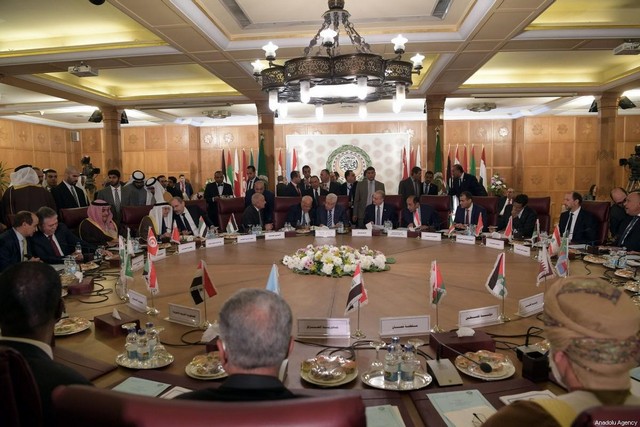
With John Lewis in Stockholm 1969

By Richard Falk

1 Aug 2020 – Moved by the iconic recognition of John Lewis’ exceptional courage and perseverance on behalf of human rights, nonviolence, and opposition to American militarism, I recall a weekend spent together in Stockholm. We were the two invited American speakers at a conference opposing the American War in Vietnam. Although I spoke at many events devoted to these themes this may have been my most memorable occasion because Lewis made such an indelible impression. We shared meals together, and were hosted at the same hotel.

It was the very late 1960s not long after the assassination of Martin Luther King, Jr. and Robert F. Kennedy, a time when these bloody events, including the Selma march and many others, brought success to the Civil Rights Movement, but far from a decisive victory that finally banished systemic racism from the American political and societal landscape. Lewis was the most radical figure in the movement against racial injustice I had encountered. At the time he was the activist leader of the Southern Nonviolent Coordinating Committee, better known as SNCC, which was seen as both dedicated to nonviolent struggle but more confrontational than the sort of national leadership provided by King.

I found Lewis engaging, brash, funny, charming, and above all, projecting a kind of radical aura that in the course of his life caused him, despite his lifelong adherence to principled nonviolence, to be the victim of repeated violent assaults by white supremacists, KKK members, and law enforcement as well as enduring 45 arrests and frequent jail time. I only learned later to appreciate his unswerving dedication to challenging racist moves to sustain the cruelties of white privilege throughout the South in every sphere of human existence, flagrantly trampling on both the rule of law and the U.S. Constitution.

In my experience of Lewis, he was as passionate about opposing American war making in Vietnam as he had been previously celebratory of African liberation struggles. He famously often asked the rhetorical question as to why Lyndon Johnson was willing to send American troops to kill Vietnamese peasants thousands of miles away but unwilling to order Federal troops to protect African Americans seeking to uphold their most basic human rights within their own country. He gave such a talk along this general theme in Stockholm, exhibiting anger about the long-embedded injustices he was devoting his life to struggle against in America, and declaring this commitment as inseparable from his opposition to the unlawful devastation and suffering being visited upon the Vietnamese, a distant people of color.

As much as I enjoyed and learned from John Lewis as he came across in Sweden on that weekend it never occurred to me that he would become a member of Congress, and even less, that he was destined to emerge as the most widely revered African American leader and inspirational figure since MLK. Of course, his death in the midst of the pandemic and in the wake of the eruption of the most sustained protests against systemic racism added a special poignancy to his death, making it a symbolic complement to the police murder of George Floyd weeks earlier. The funeral for John Lewis featured emotional eulogies by Barack Obama, George W. Bush, Bill Clinton, and Nancy Pelosi, whose collective eloquence lived up to this historic occasion, recognizing Lewis’ extraordinary dignity, persistence, and leadership. It could said that of his generation no single person better personified ‘the better angels’ of the American spirit that Lincoln summoned all of us to nurture than did John Lewis.

Thinking back to that weekend in Stockholm I marvel at how John Lewis reinvented himself, and rose to a position of moral preeminence and unsurpassed political wisdom and maturity, a progressive beacon for people like myself yet becoming mindful enough of the mainstream to win respect and exert influence almost across the entire political spectrum. The firebrand I had the precious experience of meeting over 50 years ago kept the fires within him burning brightly throughout his long life, while transforming his style so that all would listen and many would heed.

Unlike the other fallen heroes of the past century John Lewis realized the imminence of his death, and seized the opportunity to write a will and testament of faith and commitment to the American people as a whole, without a shred of bitterness or a trace of ethnic exclusiveness.

The text of his deathbed essay provide the guidance we so desperately need as a people, and an endangered species, to move toward the light despite the darkness of the hour.

I end with quotations from his essay that are so translucent as to make words of commentary or interpretation superfluous:

“Ordinary people with extraordinary vision can redeem the soul of America by getting in what I call good trouble, necessary trouble.”

“Continue to build a broad union between movements stretching across the globe because we must put away our willingness to profit from the exploitation of others.”

“So I say to you walk, walk with the wind, brothers and sisters, and let the spirit of peace and the power of everlasting love be your guide.”

Richard Falk is a member of the TRANSCEND Network, an international relations scholar, professor emeritus of international law at Princeton University, Distinguished Research Fellow, Orfalea Center of Global Studies, UCSB, author, co-author or editor of 60 books, and a speaker and activist on world affairs.

3 August 2020

Source: www.transcend.org

A 75th Commemorative Year for the Hibakusha (2020-2021)

By Robert Kowalczyk

Reflections on Our Tenuous Future

3 Aug 2020 – The year 2020 will long be remembered as the year of the coronavirus, unless more dramatic scenarios lie just ahead. Covid-19 has touched, perhaps transformed, humanity’s consciousness, and it will never be the same. Never before have so many of us been brought so close together while being requested to stay so far apart.

Over the first half of this year, most of the 8 billion of us have been advised to practice social distancing while experiencing the fear of being locked down.

All this long while, we find ourselves reflecting on our individual solitudes, along with pondering our children’s futures.

“It is our suffering that brings us together. It is not love. Love does not obey the mind, and turns to hate when forced. The bond that binds us is beyond choice. We know that there is no help for us but from one another, that no hand will save us if we do not reach out our hand. And the hand that you reach out is empty, as mine is. You have nothing. You possess nothing. You own nothing. You are free. All you have is what you are, and what you give.”
— Ursula K. Le Guin

The Hibakusha, those who 75 years ago survived the fires and black rains of Hiroshima and Nagasaki, know this well. They’ve lived through hell and have brought the world a message, a prayer to humanity that remains unanswered. A softly spoken hope, now nearly gone.

“What has kept the world safe from the bomb since 1945 has not been deterrence, in the sense of fear of specific weapons, so much as it has been memory. The memory of what happened at Hiroshima (and Nagasaki).”
— ­John Hersey

If John Hersey is correct, then perhaps we need to ask, how well do we remember? Have we evolved as quickly as necessary, towards what has long been so very essential? Have we now become more conscious of our fragility as a species?

If so, why have we so inadequately addressed this most existential issue, especially since the threat has been constant all these years, right up to this writing. Could it be mere complacency?

Or perhaps it’s the inherent pathological crack in our thought process, “Unless we possess the bomb we will not be safe.” / “Possession of the bomb will make all of us safe.” Belief in this madness makes us all perpetrators of a deadly serious yet global fallacy, nuclear deterrence.

“Ring the bells that still can ring
Forget your perfect offering
There is a crack, a crack in everything
That’s how the light gets in.”
(Leonard Cohen)

WATCH: Leonard Cohen – Anthem (w/lyrics) London 2008 -> YouTube

Many of the Hibakusha and their dependents have long held a light over the horrors of the August 1945 atomic bombings of their homes, families, cities . . . their existence. While doing so, they have never pointed any fingers of blame at either side of those engaged in that long and bitter war. For the Hibakusha were the humble accepting victims, along with countless others throughout the world who suffered in other ways.

However, only the Hibakusha have experienced a first instant of collective mass horror. A blinding yet illuminating flash that has lasted throughout their entire lives.

Mrs. Koko Kondo of Kobe, whose father, Reverend Kiyoshi Tanimoto, who inspired John Hersey’s writings, was one of them.

Perhaps the man often called The Father of the Atomic Bomb, J. Robert Oppenheimer expressed it most eloquently when explaining the results of the first testing of the bomb,

“We knew the world would not be the same, (a) few people laughed, (a) few people cried, most people were silent. I remembered the line from the Hindu scripture, The Bhagavad-Gita. Vishnu is trying to persuade the Prince that he should do his duty. And to impress him, (He) takes on His multi-armed form and says, ‘Now, I’m become death, the destroyer of worlds.’ I suppose we all thought that, one way or another.”

Atomic Age – J. Robert Oppenheimer Quote – YouTube:

Thus, the human story somehow carries on.

*******************************

Peace Mask Project, a Kyoto City registered international NPO worked with 100 of the Hibakusha (from Japan, Korea, Taiwan and the USA) and their descendants, (ages ranged from 8 to 92 years old) from October 2015 to March 2017. The goal was to create 100 Peace Masks, Washi paper facial impressions for exhibition. These Peace Masks were exhibited in Hiroshima with an event at the Hiroshima Peace Memorial Museum on March 26, 2017, that included a talk by Professor Ikuro Anzai, Honorary Director of the Kyoto Museum for World Peace and current General Coordinator of the International Network of Museums for Peace.

Two of the goals of that endeavor have been completed. The first was the making of the 100 Peace Masks with a subsequent exhibition and event program in Japan.

The second goal was the exhibiting of the Hibakusha Peace Masks at an appropriate international location. This was achieved at the Inaugural Summit of Emerging Leaders, November 28 to 30, 2018 at the United Nations Conference Center, Bangkok.

Along with the 100 Hibakusha Peace Masks exhibited behind the 347 participants from 46 countries, one of five Keynote Addresses was given by Kya Kim, Director of Peace Mask Project. The Founding Artist of PMP, Myong Hee Kim was also invited there to set up the exhibition and to conduct a demonstration mask-making workshop.

The third and final goal of the Hibakusha Peace Mask Project is to find a permanent home for the 100 Hibakusha Peace Masks at a meaningful and most appropriate international location. Peace Mask Project believes that the successful completion of this goal will contribute to a visible metaphoric presence of the Hibakusha as a reminder of their contributions to the grand endeavor to both limit and eventually abolish nuclear weapons.

It is sincerely believed that such a presence would greatly add to the expression and spirit of their 75-year prayer.

Peace Mask Project heartily welcomes all independent anti-nuclear organizations and individuals in the fulfillment of this meaningful goal.

Hiroshima Nagasaki Peace Mask Project | PEACE MASK PROJECT

Peace Summit 2018

For further information and consideration, please write to the International Coordinator of Peace Mask Project, Robert Kowalczyk at journey04@mac.com.

Robert Kowalczyk is a member of the TRANSCEND Network for Peace Development Environment.

3 August 2020

Source: www.transcend.org

The Crash of the American Empire

By David Adams

The American empire is crashing. What will it be like. Let us look at recent precedents.

1 Aug 2020 – The last empire to crash was the Soviet empire 30 years ago. At the time it was led by Mikhail Gorbachev, a man of peace and harmony, its population was not seriously divided or heavily armed, and the army stayed in their barracks. As a result, there was very little physical violence when the empire collapsed, although in the ensuing years there was great economic suffering because of the devaluation of the ruble (by a factor of almost 10,000) and in subsequent years, there were armed conflicts with the Ukraine and Georgia. In the end, the oligarchs (Russian mafia, etc.) and the secret police (Putin had been head of the KGB) consolidated their power.

The American empire is dying in the hands of Donald Trump, and the situation is completely different.

In recent months, we have said that to survive the United States needs the resignation of Trump and a non-violent revolution, but that does not seem to be coming soon. Many city administrations are progressive and progressive Congressional candidates are being nominated, and some elected. However, that, by itself, will not change a system where the electoral process is mostly in the hands of big money. Progressive mayors and Congressional candidates would have to be supported by mass movements in city halls, town meetings and on the streets if the military priorities of American society can be transformed into a new national unity that puts the priorities on racial and economic equality and full employment.

What seems more likely in the short term is a risk of civil war, as discussed in this article in The Nation and this Youtube video. Here’s why this must be taken seriously.

Trump’s campaign was formally endorsed recently (July 16) by the National Rifle Association, which claims over 5 million members, and they are armed, not just with hunting rifles, but often with military-grade weapons designed to kill efficiently large numbers of people. They are mostly white males without higher education, a group that supports Trump according to the polls. I suppose it is safe to assume that they live more in rural areas than in the big cities. With increasing unemployment and impoverishment they are angy against the bankers of New York and the entrepreneurs of Silicon Valley who are gaining enormous wealth during this crisis, but they take out their anger on women, Blacks and Hispanics who are more accessible.

The American military, on the other hand, has not agreed with Trump’s attempts to engage it in his support. It is perhaps relevant that the proportion of active military personnel that is Black and Hispanic has been growing, and as of 2017 it was already 43%, not to mention a growing proportion of women. Their families are more urban than rural.

The Trump presidency has made racism a major tactic in its campaign strategy for re-election. And while Trump is trailing in the polls, there are serious suggestions circulating that he and his supporters may refuse to accept an election result that is not in his favor.

Meanwhile, the rate of unemployment and families being thrown into poverty has reached proportions in the United States not seen since the 1930’s, and it seems likely to grow further, given the continued need for shutdowns to counter the coronavirus epidemic.

When the Soviet Union collapsed, it reverted to its constituent republics where there were relatively unified cultures, nurtured over the decades by Soviet support for cultural development. There is no such history of culturally uniform states and regions in the United States. One suggestion, that of Johan Galtung, is that there will be an East-West divide with the West Coast linking to Asia and the East Coast linking to Europe. But Galtung does not consider what will happen with the rest of the country, the South and the Middle West. It is there that we may expect the greatest risk of violence, rural versus urban.

A civil war would be bloody, but hopefully not to the extent of the first American Civil War in the 1860’s when tens of thousands were slaughtered in terrible battles between two distinct armies.

Perhaps more relevant that the crash of the Soviet Empire was the crash of Syria. When a revolt broke out against the government, the Syrian military split with some supporting the government and some going to the opposition. The civil war was especially bloody because of external interventions. The opposition received major support, though covert, from the United States and several Arab States, while the government received support from the Lebanese Hezbollah, Iran and Russia.

Unlike Syria, it seems less likely that an American civil war at this moment will receive much external intervention, and it is more likely that it will be decided by the balance of forces in the US. The need for a nonviolent revolution would then become more evident than ever.

What would be the effects in the rest of the world in the face of an American civil war? Would it reinforce the idea and make possible the reformation of the United Nations into a force for the culture of peace? Or would it look more like the 1930’s with the rise of fascist governments and the threat of another World War? We are at a turning point in human history!

Dr. David Adams is a member of the TRANSCEND Network for Peace Development Environment and coordinator of the Culture of Peace News Network.

3 August 2020

Source: www.transcend.org

The Heart of the Matter in the South China Sea

By Pepe Escobar

The battle for the contested maritime region is over before the shooting even begins and China has won.

30 Jul 2020 – When the USS Ronald Reagan and USS Nimitz carrier strike groups recently engaged in “operations” in the South China Sea, it failed to escape cynics that the US Pacific Fleet was doing its best to turn the infantile Thucydides trap theory into a self-fulfilling prophecy.

The pro forma official spin, via Rear Admiral Jim Kirk, commander of the Nimitz, is that the ops were conducted to “reinforce our commitment to a free and open Indo-Pacific, a rules-based international order, and to our allies and partners.”

Nobody pays attention to these clichés, because the real message was delivered by a CIA operative posing as diplomat, Secretary of State Mike “We Lie, We Cheat, We Steal” Pompeo. “The PRC has no legal grounds to unilaterally impose its will on the region,” he proclaimed, in a reference to the nine-dash line that lays claim to most of the disputed sea.

Once again, nobody paid attention, because the actual facts on the sea are stark. Anything that moves in the South China Sea – China’s crucial maritime trade artery – is at the mercy of the PLA, which decides if and when to deploy their deadly DF-21D and DF-26 “carrier killer” missiles.

There’s absolutely no way the US Pacific Fleet can win a shooting war in the South China Sea.

Electronically jammed

A crucial Chinese report, unavailable and not referred to by Western media, and translated by Hong Kong-based analyst Thomas Wing Polin, is essential to understand the context.

The report refers to US Growler electronic warplanes rendered totally out of control by electronic jamming devices positioned on islands and reefs in the South China Sea.

According to the report, “after the accident, the United States negotiated with China, demanding that China dismantle the electronic equipment immediately, but it was rejected. These electronic devices are an important part of China’s maritime defense and are not offensive weapons. Therefore, the US military’s request for dismantling is unreasonable.”

It gets better:

“On the same day, former commander Scott Swift of the US Pacific Fleet finally acknowledged that the US military had lost the best time to control the South China Sea. He believes that China has deployed a large number of Hongqi 9 air defense missiles, H-6K bombers, and electronic jamming systems on islands and reefs. The defense can be said to be solid. If US fighter jets rush into the South China Sea, they are likely to encounter their ‘Waterloo.’”

The bottom line is that the systems – including electronic jamming – deployed by the PLA on islands and reefs in the South China Sea, covering more than half of the total surface, are considered by Beijing to be part of the national defense system.

I have previously detailed what Admiral Philip Davidson, when he was still a nominee to lead the US Pacific Command (PACOM), told the US Senate. Here are his Top Three conclusions:

1) “China is pursuing advanced capabilities (e.g., hypersonic missiles) which the United States has no current defense against. As China pursues these advanced weapons systems, US forces across the Indo-Pacific will be placed increasingly at risk.”

2) “China is undermining the rules-based international order.”

3) “China is now capable of controlling the South China Sea in all scenarios short of war with the United States.”

Implied in all of the above is the “secret” of the Indo-Pacific strategy: at best a containment exercise, as China continues to solidify the Maritime Silk Road linking the South China Sea to the Indian Ocean.

Remember the nusantao

The South China Sea is and will continue to be one of the prime geopolitical flashpoints of the young 21st century, where a great deal of the East-West balance of power will be played.

I have addressed this elsewhere in the past in some detail, but a short historical background is once again absolutely essential to understand the current juncture as the South China Sea increasingly looks and feels like a Chinese lake.

Let’s start in 1890, when Alfred Mahan, then president of the US Naval College, wrote the seminal The Influence of Sea Power Upon History, 1660-1783. Mahan’s central thesis is that the US should go global in search of new markets, and protect these new trade routes through a network of naval bases.

That is the embryo of the US Empire of Bases – which remains in effect.

It was Western – American and European – colonialism that came up with most land borders and maritime borders of states bordering the South China Sea: Philippines, Indonesia, Malaysia, Vietnam.

We are talking about borders between different colonial possessions – and that implied intractable problems from the start, subsequently inherited by post-colonial nations.

Historically, it had always been a completely different story. The best anthropological studies (Bill Solheim’s, for instance) define the semi-nomadic communities who really traveled and traded across the South China Sea from time immemorial as the Nusantao – an Austronesian compound word for “south island” and “people”.

The Nusantao were not a defined ethnic group. They were a maritime internet. Over centuries, they had many key hubs, from the coastline between central Vietnam and Hong Kong all the way to the Mekong Delta. They were not attached to any “state”. The Western notion of “borders” did not even exist. In the mid-1990s, I had the privilege to encounter some of their descendants in Indonesia and Vietnam.

So it was only by the late 19th century that the Westphalian system managed to freeze the South China Sea inside an immovable framework.

Which brings us to the crucial point of why China is so sensitive about its borders; because they are directly linked to the “century of humiliation” – when internal Chinese corruption and weakness allowed Western “barbarians” to take possession of Chinese land.

A Japanese lake

The Nine Dash Line is an immensely complex problem. It was invented by the eminent Chinese geographer Bai Meichu, a fierce nationalist, in 1936, initially as part of a “Chinese National Humiliation Map” in the form of a “U-shaped line” gobbling up the South China Sea all the way down to James Shoal, which is 1,500 km south of China but only over 100 km off Borneo.

The Nine Dash Line, from the beginning, was promoted by the Chinese government – remember, at the time not yet Communist – as the letter of the law in terms of “historic” Chinese claims over islands in the South China Sea.

One year later, Japan invaded China. Japan had occupied Taiwan way back in 1895. Japan occupied the Philippines in 1942. That meant virtually the entire coastline of the South China Sea being controlled by a single empire for the fist time in history. The South China Sea had become a Japanese lake.

Well, that lasted only until 1945. The Japanese did occupy Woody Island in the Paracels and Itu Aba (today Taiping) in the Spratlys. After the end of WWII and the US nuclear-bombing Japan, the Philippines became independent in 1946 and the Spratlys immediately were declared Filipino territory.

In 1947, all the islands in the South China Sea got Chinese names.

And in December 1947 all the islands were placed under the control of Hainan (itself an island in southern China.) New maps duly followed, but now with Chinese names for the islands (or reefs, or shoals). But there was a huge problem: no one explained the meaning of those dashes (which were originally eleven.)

In June 1947 the Republic of China claimed everything within the line – while proclaiming itself open to negotiate definitive maritime borders with other nations later on. But, for the moment, there were no borders.

And that set the scene for the immensely complicated “strategic ambiguity” of the South China Sea that still lingers on – and allows the State Dept. to accuse Beijing of “gangster tactics”. The culmination of a millennia-old transition from the “maritime internet” of semi-nomadic peoples to the Westphalian system spelled nothing but trouble.

Time for COC

So what about the US notion of “freedom of navigation”?

In imperial terms, “freedom of navigation”, from the West Coast of the US to Asia – through the Pacific, the South China Sea, the Malacca Strait and the Indian Ocean – is strictly an issue of military strategy.

The US Navy simply cannot imagine dealing with maritime exclusion zones – or having to demand an “authorization” every time they need to cross them. In this case the Empire of Bases would lose “access” to its own bases.

This is compounded with trademark Pentagon paranoia, gaming a situation where a “hostile power” – namely China – decides to block global trade. The premise in itself is ludicrous, because the South China Sea is the premier, vital maritime artery for China’s globalized economy.

So there’s no rational justification for a Freedom of Navigation (FON) program. For all practical purposes, these aircraft carriers like the Ronald Reagan and the Nimitz showboating on and off in the South China Sea amount to 21st century gunboat diplomacy. And Beijing is not impressed.

As far as the 10-member Association of Southeast Asian Nations (ASEAN) is concerned, what matters now is to come up with a Code of Conduct (COC) to solve all maritime conflicts between Philippines, Vietnam, Malaysia, Brunei and China.

Next year, ASEAN and China celebrate 30 years of strong bilateral relations. There’s a strong possibility they will be upgraded to “comprehensive strategic partner” status.

Because of Covid-19, all players had to postpone negotiations on the second reading of the single draft of COC. Beijing wanted these to be face to face – because the document is ultra-sensitive and for the moment, secret. Yet they finally agreed to negotiate online – via detailed texts.

It will be a hard slog, because as ASEAN made it clear in a virtual summit in late June, everything has to be in accordance with international law, including the UN Convention on the Law of the Seas (UNCLOS).

If they can all agree on a COC by the end of 2020, a final agreement could be approved by ASEAN in mid-2021. Historic does not even begin to describe it – because this negotiation has been going on for no less than two decades.

Not to mention that a COC invalidates any US pretension to secure “freedom of navigation” in an area where navigation is already free.

Yet “freedom” was never the issue. In imperial terminology, “freedom” means that China must obey and keep the South China Sea open to the US Navy. Well, that’s possible, but you gotta behave. That’ll be the day when the US Navy is “denied” the South China Sea. You don’t need to be Mahan to know that’ll mean the imperial end of ruling the seven seas.

Pepe Escobar is a Brazilian independent geopolitical analyst.

3 August 2020

Source: www.transcend.org

Grand Ethiopian Renaissance Dam and the changing balance of power in the Nile Basin

By Afro-Middle East Centre (AMEC)

Ethiopia’s announcement on 21 July that it had already filled its Grand Ethiopian Renaissance Dam (GERD) to its first year’s target has temporarily quelled tensions between it, Egypt and Sudan. The GERD, which will be the largest dam in Africa when completed, has been a source of great tension between these three states since it was initially announced in April 2011. Sudan and Egypt, downstream from Ethiopia on the Nile River, regard the dam as a threat to their water security and dominance over the Nile. But the current easing of tensions is temporary. The three countries will return to talks, under the auspices of the African Union (AU), to negotiate future filling of the GERD and the conclusion of a comprehensive agreement. This will be no easy task, especially since Cairo stubbornly insists that it is entitled to the bulk of the Nile water, and should have a veto over upstream dam construction or other developments. This attitude, which originates in the British colonial era, is, however, incompatible with the changing balance of power in the Nile Basin and with international norms regarding water-sharing.

Historic overview

The two tributaries of the Nile flow through eleven countries, and are relied upon by over forty per cent of the African continent’s population. Its small capacity (eighty-four billion cubic metres relative to other large rivers, such as the Amazon River (5 500 billion cubic meters), Congo River (1 250 billion cubic meters), and even the Niger River (180 billion cubic meters), and large number of dependent people and countries means that it has often been seen as having the potential to create conflict. This is especially since two downstream states, Egypt and Sudan, individually receive less than twenty-five millimetres of rain annually, thus contributing little to nothing to the river, but consuming more of its water than any of the other Nile riparian states. Egypt, particularly, is dependent on the Nile for over ninety-five per cent of its fresh water and irrigation needs.

The Nile River originates through two main sources, Lake Victoria (bordered by Tanzania, Uganda and Kenya) giving rise to the White Nile, and Lake Tana in Ethiopia, the source of the Blue Nile, with feeder tributaries from Rwanda and Burundi. The White Nile comprises around fifteen per cent of the river, and the other eighty-five per cent is the Blue Nile. Both tributaries meet in Khartoum, Sudan, and then flow into Egypt. Egypt, South Sudan, Sudan and Ethiopia are very highly dependent on the Nile; Uganda is highly dependent; Tanzania, Rwanda, Kenya and Burundi are moderately dependent on it; and the Democratic Republic of the Congo has a low dependence on it.

Although the Nile has, for thousands of years, played a critical role in the lives of communities through which it flows, two more recent factors have influenced its current water usage: British colonisation of most of the area comprising the basin, and, thereafter, Egyptian attempts to ‘secure’ the river for itself. In relation to British colonialism, two main treaties regarding the Nile were agreed upon, one between Egypt and Britain, which, at the time, ruled many of the upstream states such as Tanzania and Uganda, and the other between Egypt and the Sudan. Egypt continues to cite these colonial-era treaties as its justification to deflect attempts to make Nile usage more equitable. The 1929 treaty recognised Egypt’s ‘natural’ and ‘historic’ rights to the river, and affording it the major share of the water. The treaty also tasked Egypt with monitoring the river, and gave it a veto vote over any Nile projects in upstream states.

The second treaty, signed in 1959 by Egypt and the Sudan, renewed the 1929 treaty, granting Sudan the use of four billion cubic metres of water, and Egypt 48 billion. This second treaty hinted at the possibility of other states sharing the water, but Sudan and Egypt would first have to agree to such usage. The water allocation to Sudan and Egypt has since been revised upwards as a result of the construction of the High Aswan Dam in Egypt, and the Roseires Dam in Sudan. Sudan is now allotted 18.5 billion cubic meters, and Egypt 55 billion. The two countries have historically negotiated between themselves regarding the building of dams in either of their territories, and regarding water allocations, and they have generally adopted a common stance in negotiations with upstream states. In light of the clean slate and Nyerere Doctrines on treaty succession, both of which assert that newly-independent states can choose which colonial era treaties to remain bound by, the legitimacy of the 1929 and 1959 treaties is questionable.

Egypt is almost totally dependent on the Nile, especially since ninety-seven per cent of its population resides in the Nile valley; it is reliant on the river for over ninety-five per cent of its fresh water needs. The Egyptian state therefore threatened to use force to secure the river’s flow through its territory. In order to do so, both Egypt and Sudan even supported Ethiopian rebel groups, including the Eritrean and Tikrayan liberation movements, to weaken the country. This ultimately led to the 1993 secession of Eritrea. Egypt also pressured financial institutions to refrain from funding dam construction projects in upper riparian states. Thus, even if they had wanted to, it was no financially not possible for most Nile basin states to carry out construction on the river.

Political and power balance alterations

Since the mid-1990s, the power balance in the region has been shifting. Ethiopia has strengthened politically, economically and militarily, while Egypt and Sudan have weakened. Sudan split into two entities in 2011, with the Republic of Sudan losing much of its oil and agricultural resources to the new South Sudan state. Funding difficulties were alleviated for some states with the entry of China into the continent; it funded a number of dam projects, including the Tana Belez and Tekez dams in Ethiopia and the Marowe Dam in Sudan. Furthermore, the global discourse around water usage has changed. Whereas treaties and hard power had previously been the norm, human security and equity are now increasingly being promoted. The Helsinki and Berlin rules on water usage developed by the international law association, and the 1997 UN Convention on the Law of the Non-Navigational Uses of International Watercourses, emphasise equity in water usage allowances.

A combination of these factors resulted in the 1999 creation of the Nile Basin Initiative (NBI), between the ten countries through which the Nile traversed. The NBI’s aim was to achieve sustainable socioeconomic development through the equitable utilisation of the Nile. A new water-sharing framework, the Cooperative Framework Agreement (CFA or Entebbe agreement) was conceptualised to replace the outdated 1959 treaty. Although Egyptian and Sudanese opposition stalled the process, it was adopted since upstream states had a majority of members The CFA provided for Nile water to be shared equitably among all Nile Basin countries while causing as little harm to downstream counties as possible. It also stipulated that upstream countries would no longer require Egypt’s consent for water projects. Water security rather than ‘historical rights’ would be the criterion for water usage, according to Article 14B of the CFA, resulting in it being vehemently opposed by Egypt and Sudan. They claimed this had crossed a ‘red line’, and Egypt predicted that it lead to the NBI’s collapse. Six states – Burundi, Rwanda, Tanzania, Uganda, Kenya, and Ethiopia – have signed the agreement, making it legally enforceable.

GERD and its consequences

Following the overthrow of Egypt’s Hosni Mubarak in 2011, Ethiopia saw an opportunity to assert itself in the matter of the Nile. In April 2011, it announced the creation of the Millennium Dam, now known as the Grand Ethiopian Renaissance Dam (GERD). The idea had previously been touted by the US National Bureau of Reclamation in 1966, in response to Soviet funding of Egypt’s Aswan High Dam, as part of the US-Soviet proxy war in Africa. The proposed dam was conceived as a strong source of hydroelectrical power for the country, which could supply over 6 000 megawatts annually. Sixty-five million of Ethiopia’s 110-million population could receive energy from it. Former Ethiopian Prime Minister Meles Zenawi also asserted that it would be used to irrigate 500 000 hectares of land. However, Addis Ababa subsequently asserted that it would used solely for electricity generation.

Funding for the dam was generated through a variety of measures, including the issuance of bonds to Ethiopian citizens and businesses, and public servants being docked a month’s salary. Wealthy Ethiopian businesspeople such as Mohammed Al-Amoudi also invested in the project, but this was minimal compared to the amount raised through public funding. Ethiopia thus did not require foreign funding, a factor Egypt had initially hoped would prevent the project going ahead. Costing around five billion dollars, the dam is being built in the Benishangul-Gumuz region of Ethiopia, about twenty kilometres away from the Sudanese border. It will be the largest dam on the continent, the tenth largest in the world, and its reservoir will hold around seventy-four-billion cubic metres of water once completed. Originally planned to be completed in 2017, delays and the suicide of its chief engineer meant that it is currently only seventy per cent complete. The current level of completion did, however, allow filling to begin in 2020.

Egypt and Sudan have opposed the dam from the planning stages, arguing for their ‘historical right’ to determine the Nile’s usage. Egypt insisted it would impair the Nile’s flow, and the electricity generation capacity of Egypt’s Aswan High Dam. Some studies, which were confirmed by Ethiopian officials during negotiations, put the losses at between eight and twenty billion cubic metres annually, accounting for between twenty and forty per cent of the Blue Nile’s flow to Sudan and then Egypt, which could drastically impact fresh water access for Egypt’s ninety million people. Further, the Aswan High Dam’s electricity generation capacity will drop by between twenty-five and forty per cent. However, this risk will be realised only if Ethiopia fills the dam in four years. Although this was the original intention, Ethiopia subsequently agreed to fill it in seven to nine years. Tensions came to a head in May 2013, when Ethiopia diverted the river’s course to facilitate the dam construction. Egyptian politicians in a parliamentary meeting, accidentally livestreamed by Egyptian television, called for the bombing of the dam and Egyptian support to rebel groups to destabilise Ethiopia. Both Ethiopia and Sudan condemned the calls.

Sudan subsequently dropped its opposition to the GERD in December 2013, mainly because it would also benefit with increased electricity supply through its connection to Ethiopia’s electricity grid. The dam would also regulate the flow of the river to South Sudan and Sudan, thus reducing floods during the rainy seasons and enabling Sudan to increase crop rotations to three times annually from the current once a year. It would also reduce sediment flow; currently, Sudan is able to use only half the water capacity of the Saddar and Roseires dams because of sediment. Sudan uses only around twelve billion of its eighteen billion cubic metre water allocation from the Nile, even though it is a water scarce country; the Sudanese are less dependent on Nile waters than Egypt. Sudan is also less dependent on the Blue Nile, whose flow Ethiopia will impede, because the White Nile, unaffected by the GERD also flows through it.

Sudan’s changed position, together with Ethiopia’s obduracy, forced Egypt to also alter its position. I August 2014, Cairo acquiesced to the GERD’s construction, insisting on an expert panel’s technical analysis of the dam’s impact, but dropping its demand that construction be halted until the completion of the analysis. This paved the way for a March 2015 agreement, the ‘Agreement on Declaration of Principles between Egypt, Ethiopia and Sudan on the GERDP’ The agreement recognised that Sudan and Egypt would be impacted by the dam’s construction, but stipulated water sharing among the three states. Principle four of the ten-principle declaration also acknowledged usage rights based on river drainage; Ethiopia has the third largest land drainage of the whole river, including its Blue and White branches, after Sudan and South Sudan. The agreement further clarified that the dam would only be used for electricity generation and not irrigation, which was a victory for Egypt. However, it implicitly excluded the International Court of Justice from adjudicating on the dam’s legality, instead proposing for mediation and negotiations in the case of differences. Egyptian politicians had touted the ICJ as a means of delaying and halting the GERD’s construction. By endorsing the agreement, Cairo acquiesced to the validity of the GERD’s construction, and, since then, has sought only to ensure that the filling period is extended as much as possible.

Following the election of Abiy Ahmed as prime minister of Ethiopia in April 2018, relations further warmed between Cairo and Addis Ababa, especially since Abiy has been, in general, critical of dam projects. He argued that such projects were used for ‘political expediency’. At a 2018 summit between him and Egyptian President Abdul Fattah el-Sisi, Abiy told Sisi that he would never harm Egyptians, a comment seen by Egyptians as an acknowledgement of his opposition to the GERD.

Current situation

Despite Ethiopia’s assertion that it has already filled the dam to its first year carrying capacity, agreement on its ongoing filling has not yet been concluded. Taking advantage of the heavy rains, Addis Ababa rapidly filled the dam unilaterally in about two weeks, causing much consternation in Sudan, which saw its dam levels drop, and Egypt.

In November 2019, Egypt had roped in Washington and the World Bank to mediate. The US Trump administration continues to see Cairo as an important ally, and thus supported its position during negotiations. A draft ‘agreement’ on the filling process, signed only by Egypt in February 2020, was criticised by Addis Ababa. Abiy’s mind seems to have changed on both his previous willingness to negotiate, and his previous opposition to dams, especially after Cairo’s attempts to involve the USA in negotiations, and because of his loss of domestic support.

There remain a number of contentious issues regarding the dam. One of them is about the period of the filling of the dam. Sudan, Egypt and Ethiopia agree that it should be phased, with the first phase spread over two years and the dam being filled to a depth of 595 metres, thus allowing for small-scale electricity generation and testing. Egypt, however, insists that Ethiopia releases over forty billion cubic metres of water each year, while Ethiopia wants to release thirty-billion cubic metres. Egypt currently receives forty-seven to forty-nine billion cubic metres of water from the Blue Nile annually. Ethiopia has conceded to providing a maximum of thirty-seven billion cubic metres annually, an amount Egypt will probably have to reluctantly accept. Addis Ababa is concerned that Cairo also wants it to empty the GERD’s reservoir to supplement the river’s flow in times of drought.

The parties have also not yet agreed on a monitoring and dispute resolution mechanism to ensure compliance. The UN asserts that the legality and binding nature of a possible agreement has not yet been agreed upon by all parties. Egypt and Sudan want the agreement to be legally binding and enforceable, while Ethiopia is wary that this may constrain it in the future, especially since it has a growing economy and because the GERD provides only one-fifth of the possible energy it could generate from the Nile.

Negotiations are being made more difficult by Egypt and Ethiopia both viewing the dam as an existential matter for their regimes. Article Forty-Four of Egypt’s constitution tasks the state with protecting the country’s ‘historic right’ to the Nile. Sisi already received much backlash for handing over the islands of Tiran and Sanafir to Saudi Arabia in June 2017, including from Egyptian nationalists and military officials who saw his act as a betrayal of Egypt’s territorial claims. He would be careful about creating another such scandal. With Egypt’s population predicted to rise to 150 million by 2050, the country will become even more dependent on the Nile for its survival. Egypt’s annual water capacity per capita is already predicted to be forced to diminish from 570 cubic metres per person annually to 500 cubic metres in the coming years as a result of climate change.

Meanwhile, in Ethiopia, the fact that many Ethiopians purchased GERD bonds to fund the building of the dam means that the regime has minimal wiggle room. Popular songs have been written in support of the dam, with some likening its construction to the 1896 battle of Adwa, when Ethiopians united to defeat Italian colonisers. The current domestic political context worsens the situation. Abiy’s popularity is waning, and the decision to postpone elections to 2021 has been criticised. Further, in recent weeks, the assassination of popular Oromo singer Hachalu Hundessa sparked riots in Oromia, with the Oromo people, who comprise a third of the country’s population, arguing that the prime minister was not benefiting them. Abiy thus sanctioned the filling of the dam unilaterally, without obtaining consent from Sudan and Egypt as the two countries had expected, partly in an attempt to deflect from his domestic travails. His unstable position will likely influence any negotiations regarding the second year’s filling process, and will likely be deployed in electoral campaigns, making compromise less likely.

Sudan, on the other hand, has adopted a more balanced approach, siding with Ethiopia and refusing to agree to a March 2020 Arab League resolution condemning the GERD. Although largely agreeing with Egypt regarding the GERD’s filling and the need for a binding agreement, Khartoum has recently indicated a further willingness to compromise. It has conceded that Ethiopia will have to have flexibility regarding releasing water from the reservoir during drought, and also accepted that Addis Ababa might want to build more dams on the Nile in the future. However, it wants an agreement between the three states to be binding and enforceable. Moreover, consistent with the emphasis on ‘historic rights’, Sudan wants Ethiopia to notify it and Egypt before any dam construction.

Ethiopia and Sudan requested the AU, in June, to mediate between the three states. This was after the failures of trilateral negotiations between the states themselves, and after Ethiopia accused the USA of being biased towards Egypt. Before this, the AU had been relatively uninvolved in the GERD issue, calling on the states to negotiate among themselves. Some commentators argue that the continental body did not want to be involved in mediating a conflict between two powerful member states, especially since this would inevitably be perceived as it siding with one side if an agreement was not concluded. Following a failed first round of AU mediation at the end of June, which was to result in an agreement within two weeks thereafter, the three countries again announced, on 22 July, their willingness to accept AU mediation. The issues under mediation are especially contentious since they may be precedent-setting, and upsetting either Egypt or Ethiopia is not what the AU would want. However, successfully dealing with the Nile matter can position the AU as a serious continental structure that can resolve conflicts even between its strongest members, especially after external structures and foreign states were unable to bring the matter to conclusion.

Conclusion

The AU’s involvement in the Nile dispute has the potential to both resolve the matter, and enhance the reputation of the body. However, while on many substantive issues the parties have come closer, there remains much ground still to be covered and many disputes still requiring compromises. Ethiopia’s unilateral filling of the dam and its announcement that the first year filling process has completed has deescalated the situation temporarily, giving the AU some breathing space to address the more with cooler heads. However, a few of the serious issues will continue to make negotiations difficult. Whether the agreement should be legally enforceable, and whether Ethiopia should accept Cairo’s demand to release large water reserves during droughts are among those thorny issues.

It is highly unlikely that differences over the GERD issue could result in military conflict between Egypt and Ethiopia, despite the rhetoric from both sides. Cairo is involved in a seemingly-unwinnable conflict against the Islamic State group’s ‘Sinai province’, and is getting itself mired in Libya. It is unlikely that it will want to open up a third front. Moreover, the balance of power in the Nile is shifting, with Ethiopia gaining influence regionally and continentally. Addis Ababa’s confidentially filling up the dam unilaterally in the past few months, without any consequences, clearly indicates this shift.

A comprehensive solution will need to be based on the Entebbe agreement if it is to have a chance of long-term success. Egypt will need to give up on its insistence that it has a ‘historic right’ to the Nile waters, and on its demand that upstream states obtain its approval before undertaking construction projects on the river. Climate change, coupled with the increasing growth of countries such as Tanzania and Ethiopia, will result in these states seek to use the river’s water much more than previously to sustain their growing populations.

AMEC insights is a series of publicly-accessible publications, providing trenchant analyses of topical issues related to the Middle East and North Africa. If you want to be added to our mailing list, please email info@amec.org.za

2 August 2020

Source: amec.org.za

Should Muslims sacrifice cattle on Eid-al-Adha?

By Dr Mike Ghouse

On Friday, July 31, 2020, over a billion and a half Muslims around the world, will be slaughtering millions of goats, camels, and cattle to carry out Abraham’s tradition of sacrificing the symbolic lamb. Is there an alternative to the ritual of slaying animals on Eid Al-Adha, the festival of sacrifice? The answer is yes!

Rituals are the pathways to accomplish milestones of peace for oneself and with what surrounds one; life and environment. None of us can escape from the ceremonies. Each of us instinctively follows certain routines, from waking up to the time we go to sleep. Whether we shower, eat breakfast, go to the office, or gym, we follow the rituals.

The essence of Islam is to create cohesive societies where every human feels secure about his/her faith, race, religion, region, or ethnicity. It is time for Muslims to consider the essence of sacrifice rather than the ritual itself.

Real sacrifice requires us to give up some of what is dear to us. It is about parents going to sleep without food but feeding their kids; it is clothing their kids while waiting to get their own. In the case of extremities, we would instead get the bullet and save our loved ones, we are willing to rescue an individual from a freezing lake risking our own lives, and even strangers do that.

A thousand years ago, a man’s assets were made up of his goats, camels, and cattle. The ultimate sacrifice one would make was to give away his precious assets in gifts. Today, the most cherished possession is money, and people must be willing to part some of it to give the ability to the receiver to spend on his/her critical needs.

One of the examples set up for guidance was the test of Abraham’s faith, love, and devotion to God, which humans do routinely, “If you love me, you would do this for me.” A simple assurance would suffice, be it your fiancé, spouse, kids, siblings, or parents.

It was Abraham’s turn to face the command of God to sacrifice his son. Upon hearing this, he prepared to submit to God’s will and places his son on the block. Right at that moment, a lamb appears as an alternative. Then God revealed to Abraham that his “sacrifice” has already been fulfilled.

Does God want animals to be sacrificed?

Not at all. Qur’an, Al-Hajj 22:37 (The Pilgrimage) is clear: “Never does their flesh reach God, and neither their blood. It is only your God-consciousness that reaches Him. It is to this end that we have made them subservient to your needs so that you might glorify God for all the guidance with which He has graced you. And give thou this glad tiding unto the doers of good.”

The act symbolizes our willingness to give up a part of our bounties to strengthen and preserve the web of the universe and help those in need. We recognize that all blessings come from God, and we should open our hearts and share with others.

What would you sacrifice instead?

It is customary for Muslims to sacrifice an animal on the day of the Hajj, a symbolic representation of Prophet Abraham’s act. What are our alternatives?

We can put that money to a different use that will do greater good like lending to a street hawker who can sell things from a cart and take care of his family or a single mom who can weave baskets or make sweaters to take care of her family. The beauty of this practice is you can make the same money repeatedly work for the common good. Muslims call it Sadaq-e-Jariah, which is continual giving.

Dr. Nauman Anwar: “Sacrificing animals without making a public spectacle is still a good idea, as long as no wastage of the meat and hides occur. Many Muslim countries have a lot of poverty, and if the meat reaches the deserving population, it will help improve the nutritional status of the poor.

Let your single sacrifice multiply rather than the one-time sacrifice of animals. Prophet Muhammad had emphasized service to fellow humans as the highest service to God. Quran (4:152) says, if you are kind to your fellow humans, which is my creation, you will earn my grace regardless of your faith.

Honoring police, firemen, and soldiers

Every day our police officers and firemen risk their own lives to protect ours, our freedom is protected by our men and women in the uniforms. I urge fellow Muslims to stop and salute every one of these men and women, honoring them for their love for humanity. Better yet, call the firemen, policemen, and let them know that as a Muslim you appreciate their sacrifice, and this festival is about appreciation for such sacrifice.

I did that in Louisville; within minutes, the officer had emailed the article to his fellow officers, appreciating the Muslims.

Prophet Muhammad (pbuh) had said the least you can do as a charity is to smile and appreciate the otherness of the others.

You can wish your Muslim friends by saying, Eid Mubarak, Eid Saeed, Happy Eid, Happy Festivities, etc.

Dr. Mike Ghouse is the founder and president of the Center for Pluralism.

30 July 2020

Source: countercurrents.org

Yemen: A Torrent of Suffering in a Time of Siege

By Kathy Kelly

“When evil-doing comes like falling rain, nobody calls out “stop!”

When crimes begin to pile up they become invisible. When sufferings become unendurable, the cries are no longer heard. The cries, too, fall like rain in summer.” —  Bertolt Brecht

In war-torn Yemen, the crimes pile up. Children who bear no responsibility for governance or warfare endure the punishment. In 2018, UNICEF said the war made Yemen a living hell for children. By the year’s end, Save the Children reported 85,000 children under age five had already died from starvation since the war escalated in 2015. By the end of 2020, it is expected that 23,500 children with severe acute malnutrition will be at immediate risk of death.

Cataclysmic conditions afflict Yemen as people try to cope with rampant diseases, the spread of COVID-19, flooding, literal swarms of locusts, rising displacement, destroyed infrastructure and a collapsed economy. Yet war rages, bombs continue to fall, and desperation fuels more crimes.

The highest-paying jobs available to many Yemeni men and boys require a willingness to kill and maim one another, by joining militias or armed groups which seemingly never run out of weapons. Nor does the Saudi-Led Coalition  which kills and maims civilians; instead, it deters relief shipments and destroys crucial infrastructure with weapons it imports from Western countries.

The aerial attacks displace traumatized survivors into swelling, often lethal refugee camps. Amid the wreckage of factories, fisheries, roads, sewage and sanitation facilities, schools and hospitals, Yemenis search in vain for employment and, increasingly, for food and water. The Saudi-Led-Coalition’s blockade, also enabled by Western training and weapons, makes it impossible for Yemenis to restore a functioning economy.

Even foreign aid can become punitive. In March, 2020, the U.S. Agency for International Development (USAID) decided to suspend most aid for Yemenis living in areas controlled by the Houthis.

Scott Paul, who leads Oxfam America’s humanitarian policy advocacy, strongly criticized this callous decision to compound the misery imposed on vulnerable people in Yemen. “In future years,” he wrote, “scholars will study USAID’s suspension as a paradigmatic example of a donor’s exploitation and misuse of humanitarian principles.”

As the evil-doing in Yemen comes “like falling rain,” so do the cries of “Stop!” from millions of people all over the world. Here’s some of what’s been happening:

  • U.S. legislators in both the House of Representatives and the Senate voted to block the sale of billions of dollars in weapons and maintenance to Saudi Arabia and its allies. But President Trump vetoed the bill in 2019.
  • Canada’s legislators declared a moratorium on weapon sales to the Saudis. But the Canadian government has resumed selling weapons to the Saudis, claiming the moratorium only pertained to the creation of new contracts, not existing ones.
  • The United Kingdom suspended military sales to Saudi Arabia because of human rights violations, but the UK’s international trade secretary  nevertheless resumed weapon sales saying the 516 charges of Saudi human rights violations are all isolated incidents and don’t present a pattern of abuse.
  • French NGOs and human rights advocates  urged their government to scale back on weapon sales to the Saudi-Led coalition, but reports on 2019 weapon sales revealed the French government sold 1.4 billion Euros worth of weapons to Saudi Arabia.
  • British campaigners opposing weapon transfers to the Saudi-Led Coalition have exposed how the British Navy gave the Saudi Navy training in tactics essential to the devastating Yemen blockade.
  • In Canada, Spain, France and Italy, laborers opposed to the ongoing war refused to load weapons onto ships sailing to Saudi Arabia. Rights groups track the passage of trains and ships carrying these weapons.

On top of all this, reports produced by Amnesty International, Human Rights Watch, Oxfam, the Norwegian Refugee Council, and the International Commission of the Red Cross repeatedly expose the Saudi-Led Coalition’s human rights violations.

Yet this international outcry clamoring for an end to the war is still being drowned out by the voices of military contractors with well-paid lobbyists plying powerful elites in Western governments. Their concern is simply for the profits to be reaped and the competitive sales to be scored.

In 2019 Lockheed Martin’s total sales reached nearly 60 billion dollars, the best year on record for the world’s largest “defense” contractor. Before stepping down as CEO, Marillyn Hewson predicted demand from the Pentagon and U.S. allies would generate an uptake between $6.2 billion and $6.4 billion in net earnings for the company in 2020 sales.

Hewson’s words, spoken calmly, drown out the cries of Yemeni children whose bodies were torn apart by just one of Lockheed Martin’s bombs.

In August of 2018, bombs manufactured by Raytheon, Boeing, General Dynamics and Lockheed Martin fell on Yemen like summer rain. On August 9, 2018, a missile blasted a school bus in Yemen, killing forty children and injuring many others.

Photos showed badly injured children still carrying UNICEF blue backpacks, given to them that morning as gifts. Other photos showed surviving children helping prepare graves for their schoolmates. One  photo showed a piece of the bomb protruding from the wreckage with the number MK82 clearly stamped on it. That number on the shrapnel helped identify Lockheed Martin as the manufacturer.

The psychological damage being inflicted on these children is incalculable. “My son is really hurt from the inside,” said a parent whose child was severely wounded by the bombing. “We try to talk to him to feel better and we can’t stop ourselves from crying.”

The cries against war in Yemen also fall like rain and whatever thunder accompanies the rain is distant, summer thunder. Yet, if we cooperate with war making elites, the most horrible storms will be unleashed. We must learn–and quickly–to make a torrent of our mingled cries and, as the prophet Amos demanded, ‘let justice roll down like waters and righteousness like a mighty stream.”

Kathy Kelly (kathy@vcnv.org) co-coordinates Voices for Creative Nonviolence (www.vcnv.org)

29 July 2020

Source: countercurrents.org
U.S. dollar’s grip on global markets might be over, warns Goldman

By Countercurrents Collective

Goldman Sachs has issued a bold warning Tuesday that the dollar is in danger of losing its status as the world’s reserve currency. Goldman Sachs Group Inc. has put a spotlight on the suddenly growing concern over inflation in the U.S.

With the U.S. Congress closing in on another round of fiscal stimulus to shore up the pandemic-ravaged economy, and the Federal Reserve (Fed) having already swelled its balance sheet by about $2.8 trillion this year, Goldman strategists cautioned that U.S. policy is triggering currency “debasement fears” that could end the dollar’s reign as the dominant force in global foreign-exchange markets.

While that view is clearly still a minority one in most financial circles – and the Goldman analysts don’t say they believe it will necessarily happen – it captures a nervous vibe that has infiltrated the market this month: Investors worried that this money-printing will trigger inflation in years ahead have been bailing out of the dollar and piling furiously into gold.

Gold is the currency of last resort

“Gold is the currency of last resort, particularly in an environment like the current one where governments are debasing their fiat currencies and pushing real interest rates to all-time lows,” wrote Goldman strategists including Jeffrey Currie. There are now, they said, “real concerns around the longevity of the U.S. dollar as a reserve currency.”

The Goldman report makes clear that Wall Street’s initial reluctance to sound the alarm on inflation back when the pandemic began is fading. Having been burned badly by ominous forecasts of runaway price gains following the fiscal and monetary stimulus that followed the 2008 financial crisis, many analysts have been hesitant to repeat such calls now, especially as the economy sinks into a deep recession.

But with gold surging to record highs and bond investors’ inflation expectations climbing almost daily, albeit from very low levels, the debate on the long-term effects of stimulus has gotten louder.

The 10-year breakeven rate, the gap between nominal and inflation-linked debt yields, has risen to about 1.51%, up from as low as 0.47% in March. That’s seen real yields, which strip out the impact of inflation, plunge further below zero — to about -0.93% on similar-maturity bonds.

“The resulting expanded balance sheets and vast money creation spurs debasement fears,” the analysts at Goldman wrote. This creates “a greater likelihood that at some time in the future, after economic activity has normalized, there will be incentives for central banks and governments to allow inflation to drift higher to reduce the accumulated debt burden,” they said.

Gold’s record-breaking rally highlights growing concern over the world economy.

Goldman raised its 12-month forecast for gold to $2300 an ounce from $2000 an ounce previously. That compares with a value of around $1950 currently. The bank sees U.S. real interest rates continuing to drift lower, boosting gold further.

The Bloomberg Dollar Spot Index is on course for its worst July in a decade. The drop comes amid renewed calls for the dollar’s demise following a game-changing rescue package from the European Union deal, which spurred the euro and will lead to jointly issued debt.

The dollar is used in 88% of all currency trades, according to the latest triennial Bank for International Settlements survey. And it still accounts for about 62% of the world’s foreign-exchange reserves, although that’s down from a peak of more than 85% in the 1970s, IMF data show.

Ballooning debt pile

For Goldman, the growing level of debt in the U.S. – which now exceeds 80% of the nation’s gross domestic product – and elsewhere, boosts the risk that central banks and governments may allow inflation to accelerate.

Investors are poised to hear more about the Fed’s view on inflation with its latest policy decision Wednesday.

“Until we get through the Fed, the dollar could strengthen as investors lock in profits,” Edward Moya, a senior market analyst at Oanda Corp. said in a note.

Goldman Sachs has tied the metal’s rally to a “potential shift in the U.S. Fed towards an inflationary bias against a backdrop of rising geopolitical tensions, elevated U.S. domestic political and social uncertainty and a second wave of Covid-19 related infection.”

“Gold is the currency of last resort, particularly in an environment like the current one where governments are debasing their fiat currencies and pushing real interest rates to all-time lows,” the bank said. “With more downside expected in U.S. real interest rates, we are once again reiterating our long gold recommendation from March.”

Year-to-date, gold has gained more than 27% and is currently trading near $1,940 an ounce.

Fed faces currency threat

Predictions of the mighty U.S. dollar’s fall from its place as the ultimate measure of value are nothing new.

“Gold bugs” — the slightly disrespectful term for people convinced the yellow metal is the only truly safe investment — roll out an attack on the U.S. dollar’s safety every few years.

The euro has been an aspiring candidate, but has had many troubles of its own. Countries that do not get along with the U.S., including Iran, have complained about the absurdity of having to sell their oil to third parties priced in U.S. dollars.

After the global financial meltdown of 2008, China’s then central banker, Zhou Xiaochuan, criticized the use of a single country’s currency for a world standard, calling it a historical anomaly.

“The crisis again calls for creative reform of the existing international monetary system toward an international reserve currency with a stable value, rule-based issuance and manageable supply,” wrote Zhou.

But the comments from New York bankers Goldman Sachs just as gold is hitting new highs and the greenback is hitting new lows are quite different from bellyaching from those who would like to take the dollar’s place.

The Goldman comments act as a warning of what might happen if the U.S. currency eventually becomes debased through too much government spending and too much borrowing at interest rates close to zero.

The Canadian dollar is up two cents against the U.S. currency in the last month. But as usual, that is deceptive. With most of our trade happening with the U.S., the loonie tends to rise and fall with the U.S dollar. The loonie continues to trade lower against the euro.

The Goldman Sachs report is making lots of headlines and offers a little thrill of dread to those who are looking for an even more dire outcome from the current pandemic. But gold quite regularly rises in value during times of financial uncertainty and it tends to fall shortly after.

Russia and China speed up de-dollarization process

After years of talking about abandoning the U.S. dollar, Russia and China are doing it for real. In the first quarter of 2020, the share of the dollar in trade between the countries fell below 50 percent for the first time.

Just four years ago, the greenback accounted for over 90 percent of their currency settlements.

According to Moscow daily Izvestia, the share has dropped to 46 percent, tumbling from 75 percent in 2018. The 54 percent of non-dollar trade is made up of Chinese yuan (17 percent), the euro (30 percent), and the Russian ruble (7 percent).

The dollar’s reduced role in international trade can mainly be blamed on the ongoing trade war between the U.S. and China.

In January, Russian Foreign Minister Sergey Lavrov explained that Moscow is continuing “its policy aimed at gradual de-dollarization” and is looking to make deals in local currencies, where possible.

Lavrov called the rejection of the greenback “an objective response to the unpredictability of U.S. economic policy and the outright abuse by Washington of the dollar’s status as a world reserve currency.”

Movement away from the dollar can also be seen in Russia’s trade with other parts of the world, such as the European Union. Since 2016, trade between Moscow and the bloc has been mainly in Euros, with its current share sitting at 46 percent.

30 July 2020

Source: countercurrents.org