Just International

My response on John Bolton’s latest memoir

By Ararat Kostanian

Memoirs written by prominent figures and professionals, often appear on the lists of best-selling books, due to the great interest of the readers that seek comprehensive understanding of issues not found in academic or theoretic publications that are mainly concentrated on pure facts and evidences. In this case, John Bolton’s latest book “The Room Where It Happened” became one of the best-selling memoirs in truly short period. Grasped the attention of the international media, remarks came from John Bolton himself and high US officials such as President Trump and secretary of State Mike Pompeo. Interestingly, both have criticized John Bolton for not covering the truth; President Trump has called him stupid, and Mike Pompeo have mentioned that John Bolton is a liar. It is evident that there are many controversies regarding John Bolton’s latest memoir; specially among the politicians close to Trump administration and the commentators who often appear on Fox TV Channel. Thus, this article will bring forward my response in terms of analysis of the important aspects that have been taken place in global politics. I will cover issues related to the Middle East, Russia, and the growing impact of China. Hence, this article should not be considered merely a book-review.

The Conservative hawk that seems has never changed

John Bolton, is known for many decades as one of the harshest politicians when it comes to issues such as Iraq, Syria, Iran, Russia, Venezuela, North Korea and China and he continues to believe that those countries are considered as threats to the United States. In his memoir, John Bolton often tries to persuade President Trump to take tough actions such as military interventions and regime changes in Iran, Venezuela, and North Korea. On Russia and China, the US administration have chosen the strategy of economic sanctions to balance the growing global influence of Russia and China; the two superpowers that have been deteriorating the world hegemony of the United States in global arena. It will be crystal clear for the memoir readers, that John Bolton as an expert, hasn’t developed and learnt about the new circumstances have taken place in global politics and his ideology-strategy looks the same as it was during the George W.Bush administration, as the United Stated had invaded Afghanistan, Iraq and called several countries as “Axis of evil”.

America’s old song and outdated lyrics VS Russian and Chinese new melodies

In my opinion, the Trump administration in general and John Bolton in particular, have shown lack of understanding of the changes have been taken place in global politics starting from the financial crisis that hit the United States in 2008. Meanwhile, China has used the chance and put all its attention on building effective social system and economic reforms, gradually developed its economy which resulted to the revelation of the “One Belt One Road Initiative” that is known today as a strategy to become from a regional actor to global superpower. Parallel to China’s economic advancements, the current situation in the Syrian war has shifted the balance of power in Middle East towards Iran and Russia. Currently, Russia and Iran considered as one of the most advanced countries in terms of its military and sophisticated defense systems. Particularly, Russia is the key military actor in Eurasia and Iran is the ballistic missiles champion in middle East.

As a consequence, such outcomes have been the pillars of the emergence of the multilateral world where the unilateral hegemony of the United States started to erode in such regions which are not under the influence of the Western orbit; the Middle East, East Asia, Southeast Asia, Latin America (Venezuela-Cuba). Although, the United Stated is still considered a superpower, but its influence shifted from global into local (specific spots). In other worlds, in all above mentioned regions, the United States has local allies with limited power of influence, and other emerging countries have started to play bigger role. For instance, Israel and the Kurds with no national country are the key allies of the United States in Middle East, whereas its adversary countries have been making alliances and presented in one anti-American faction; such as Iran, Syria, the resistance bloc in Lebanon, Shia militants in Iraq, Hamas in Palestine.

The current situation in Middle East shows that Israel is under constant threat and out of fear willing to annex the West Bank. As it is mentioned in the memoir, Israel does not have the capabilities and the chances to defend itself from any sudden attack orchestrated by Iran, Syria and Hezbollah. On the other side, Kurds are totally abandoned by their allies and left alone under the control of the Turkish invaded troops in Northers Syria. Thus, even localized allies of the United States seem incapable to shift the balance of power to their side, let alone their ambitions to defend American interests in the region. As a proof, Trump often used harsh language regarding Bashar al Assad, Nicolas Maduro and Kim Jong-un in John Bolton’s memoir during meetings with his administration members; such as “ kill Maduro” or “Assad is an Animal”, but in reality those words stayed only as an expressions and most of the time he wanted to have a meeting and solve problems through negotiations. Moreover, Trump’s harsh tweets and silent actions shows the inability of the United States of taking tough measures against its enemies. This means, the United States today, is very different from what have been during George W.Bush administration, where words very quick became into military actions.

As for “One Belt One Road Initiative” plan, international experts in general have been emphasizing its economic importance and the positive outcomes that the trade route could bring to the world from Asia to Europe; taking into consideration the high quality of some of the Chinese products and services specially in technology and robotics and its eligible price compared to its American products and services. Moreover, I should stress that the “One belt One Road Initiative” is more than simply a trade route. As it was during the Old Silk Road, people to people relations brought countless cultural, linguistic, and philosophical exchanges among the people who had been in interactions due to the trade. For Example, a Chinese dress with a dragon appeared in Armenia that time and a statue of Armenian man holding a cup of wine. The word (ma) in Chinese mandarin have appeared in Armenian (mi) that to this day it is used as a question mark. Today, China’s modern political and social system interests many people around the world, and that became evident after China won over the pandemic and have been able to reach for help to countries both with medical equipment and medicines and by online seminars linking doctors, academics and diplomats from all over the world. China’s model needs further exploration and know-how implementation specially for developing countries. On the Other hand, the United States in on the top of the countries who failed to combat the Coronavirus epidemic and for many years it represented itself as the most advanced, civilized, and powerful nation on earth. At last, to my surprise, John Bolton, in his 500 pages long memoir, blamed China for its communist regime, without mentioning China’s success in combatting the Coronavirus Pandemic.

John Bolton’s memoir is an interesting book for those who are interested in knowing the personal interactions in Trump administration, how decisions are made regarding US foreign and national policy and how American politicians see and evaluate the world. In terms of John Bolton’s writing style, the memoir was full of detailed facts, but lacks philosophy. At the same time too boring to read till the end. It cannot be compared with the memoirs of Henry Kissinger or Barack Obama.

Ararat Kostanian, Junior research fellow, Oriental Studies Institute, National Academy of Science of Armenia. Areas of specialty: Middle East current affairs, Turkish foreign policy, International politics.

7 July 2020

Mahatma Gandhi, Race and Caste

By Dr Ram Puniyani

During the course of agitation ‘Black lives matter’ some protestors defaced the statue of Mahatma Gandhi in US. Mahatma Gandhi, the Father of Indian Nation, has the unique distinction of leading the biggest ever mass movement in the World and leading the strong anti colonial movement. In this direction he contributed two major tools as the basis of the mass movements, the one of non violence and other of Satyagrah. He also stated that while making the policies what one should keep in mind is the last, weakest person in the society. His life, which he called as his message became the inspiration of many anti colonial, anti racial struggles in different parts of the World. He strongly supported the concept of equality in India, where eradication of caste also became one of the aims of his life.

All this comes to one’s mind as a section of people, writers and intellectuals are labelling him as racist and casteist, one who harmed the cause of dalits in India. Nothing can be farther from truth. These elements are not seeing the whole journey of the man but do the cherry picking from his early writings, when he was in the early phases of his work against prevalent injustices in the name of race and caste.

Earlier also his statue was uprooted in Ghana, where calling him racist, ‘Gandhi Must fall’, movement on the lines of ‘Rhodes must fall’ came up. Gandhi in no way can be put in the category of the likes of Rhodes and others whose central work revolved around enslaving the blacks. The warped understanding of Gandhi comes from focussing only on Gandhi’s early writings. Gandhi who began his campaign for the rights of Indians in South Africa, at times used derogatory terms against blacks. These terms were the one’s which were prevalent, introduced by colonial masters, words like ‘African Savages’. Gandhi while raising the voice for Indian working people in South Africa said that the colonialists are treating Indians like African savages.

There was another process which ran parallel to this one of taking up the cause of people of Indian origin in SA. Once he realized the plight of the blacks there, he started travelling in the third class to experience the hardships being faced by them and much later he stated that they deserve to be treated in a just manner. His overcoming of racial beliefs were best expressed in his sentence, “If we look into the future, is it not a heritage we have to leave to posterity, that all the different races commingle and produce a civilization that perhaps the world has not yet seen?” (1908). His beliefs kept evolving and in 1942, in a letter to Roosevelt, he wrote, ““I venture to think that the Allied declaration that the Allies are fighting to make the world safe for freedom of the individual and for democracy sounds hollow so long as India and, for that matter, Africa are exploited by Great Britain and America has the Negro problem in her own home.”

The best response to accusations of Gandhi being a racist came from Nelson Mandela, who wrote, “All in all, “Gandhi must be forgiven those prejudices and judged in the context of the time and the circumstances.” Mandela recognized the crucial point that Gandhi’s views changed as he matured. He wrote, “We are looking here at the young Gandhi, still to become Mahatma.” And from Martin Luther King (Jr.) who was totally inspired by Gandhi in his anti racial struggles.

Caste is another of the phenomenon, which is tricky. Gandhi in early periods of his life talked of Varna Dharma based on work; he glorified the work of scavenging and also called dalits as Harijans. Many a dalit intellectuals and leaders hold Gandhi responsible for opposing the ‘separate electorate’ granted to SCs by McDonald Award. Gandhi saw this as a move to fragment the electorate on narrow lines as being against Indian nationalism and went on hunger strike. Due to this hunger strike Ambedkar agreed for the reserved constituency.

While many leaders-intellectuals see this as a betrayal by Gandhi, Ambedkar himself actually thanked Gandhi for giving a satisfactory solution by giving higher reservation to SCs in reserved constituency. And stated “I am grateful to Mahatma: He came to my rescue.” Bhagwan Das, a close follower of Ambedkar, independently quotes Ambedkar’s speech: “I think in all these negotiations, a large part of the credit must be attributed to Mahatma Gandhi himself. I must confess that I was surprised, immensely surprised, when I met Mahatma, that there was so much in common between him and me.”

As such Race and Caste are akin and United Nations debated it in 2009, on these lines. In both the cases Gandhi, the humanitarian par excellence, begins with terminologies and notions about caste and race which were prevalent at those times. With his deeper engagement with the issues of society, he gives a totally different meaning to the same. In matters of caste, he was deeply influenced and empathetic to Ambedkar, to the extent that he recommended that Ambedkar’s ‘Annihilation of caste’ be read by all.

While he dealt with race issue from the margins, in case of caste he went miles. His campaign for eradication of untouchablity had far reaching back up effect to Ambedkar’s initiatives. It was Gandhi’s disciple Nehru, who brought Ambedkar to the forefront of policy making by including him in the Cabinet. Nehru also entrusted him with drafting Uniform Civil Code and it was Gandhi himself who suggested that Ambedkar be made the Chief of drafting committee of Indian Constitution.

Only those who focus on Early Gandhi, Gandhi in the formative phase of his values and ideas, accuse him of being a castist or racist. He did overcome these narrow, parochial social norms and policies to dream of a fraternity, Indian and Global where caste and race are relegated to the backyard of human history.

3 July 2020

Source: countercurrents.org
Large majority of Americans say U.S is a mess, finds new poll

By Countercurrents Collective

A new Yahoo News/YouGov poll shows that no matter how polarized they might be politically, Americans finally seem to agree on something: that everything about America is getting worse.

In his 1989 farewell address, President Ronald Reagan famously described the United States as a “shining city on a hill” — a beacon of hope and a model for the rest of the world.

But according to the Yahoo News/YouGov survey, which was conducted between June 29 and July 1, majority of Americans (52 percent) believe that Reagan’s remark was accurate at the time he said it; only 21 percent disagree.

Yet today a staggering 62 percent of Americans say the U.S. is no longer that shining city on a hill. Just 17 percent say it still is.

“I am in Texas, COVID-19 is on the rise, and there’s quite a lot of anxiety,” said poll respondent Alexandra Foulks, a 62-year-old native of France who now lives in Dallas with her husband.

Foulks scoffed at the notion of America as the proverbial “shining city on a hill.”

“We are banned from Europe right now,” she said. “How could we be shining?”

Overall, the poll found the American people in a historically pessimistic mood heading into a holiday weekend traditionally marked by family cookouts and fireworks displays — events that have been canceled across the country in the midst of a surging coronavirus pandemic that has killed more than 128,000 Americans and is currently infecting more than 50,000 each day.

According to the survey, 65 percent of Americans saying COVID-19 is “getting worse” versus just 16 percent who say it is “getting better.”

The number who think the U.S. coronavirus response has been “worse than expected” (49 percent) outpaces the number who think the response has been “better than expected” (11 percent) by 4 to 1 — while record numbers now predict that the deadly pathogen will be a problem for more than three months (68 percent) and believe they are very or somewhat likely to get infected themselves (46 percent).

The bleak outlook about the U.S goes beyond the pandemic. Sixty-four percent of Americans, including 67 percent of Democrats and 60 percent of Republicans, say race relations — the focus of mass protests since George Floyd was killed by a Minneapolis police officer in late May — are also getting worse, versus just 12 percent who say race relations are getting better.

Sixty-one percent say the economy is getting worse, versus just 21 percent who say it is getting better. Sixty percent say America’s standing in the world is getting worse, versus just 15 percent who say it’s getting better.

And 58 percent say crime is getting worse, versus just 10 percent who say it is getting better. (Violent crime in the U.S. has fallen sharply over the last quarter-century; it has also declined during the pandemic.)

As a result, a plurality of Americans (43 percent) — including similar numbers of Democrats (47 percent), Republicans (43 percent) and independents (44 percent) — say they were more proud of America when they were “growing up” than they are now. Across the board, the number who say they used to be “less proud” of America is about 20 to 25 points lower.

This dissatisfaction is driven largely by white Americans, who say they felt more pride in America while growing up by a wide 48 percent to 21 percent margin. Pluralities of Black Americans (41 percent) and Latino Americans (48 percent) say they are neither more nor less proud of America today, perhaps reflecting their personal experience of the nation’s racial troubles.

Asked which words they would and would not use to describe American society, the public gravitated toward the pejorative: “selfish” (47 percent yes vs. 11 percent no), “corrupt” (39 percent yes vs. 13 percent no), “hypocritical” (45 percent yes vs. 8 percent no), “irresponsible” (44 percent yes vs. 12 percent no) and “unfair” (33 percent yes vs. 15 percent no). More people said they would not describe the U.S. as “equal” or “just” than say they would.

The poll results indicate that America’s longstanding sense of its own exceptionalism may be on the wane. Just 40 percent of Americans agree that the U.S. is “an exceptional country whose values, history and political system are worthy of universal admiration.” The remaining 60 percent see the U.S. as “a country with its own unique strengths and weaknesses, much like other countries.”

For many, those weakness seem particularly pronounced today. Pluralities of Americans, in fact, say “the quality of life” is now better in Canada (44 percent better vs. 13 percent worse), Sweden (45 percent vs. 17 percent), Australia (35 vs. 15 percent), France (29 percent vs. 26 percent) and Japan (33 percent vs. 27 percent) than it is in the U.S. Only China, among the choices in the poll, is perceived as having a lower quality of life.

If the American dream is defined as the belief that your children will have a better life than you did, then for most Americans the dream isn’t coming true. A full 59 percent say they are either “somewhat worse off” (17 percent), “much worse off” (10 percent) or “about the same” (32 percent) as their own parents — while a similar 56 percent predict their own children will be either somewhat worse off (12 percent), much worse off (7 percent) or about the same (37 percent) as them.

Americans also largely agree — with predictable partisan variation — that President Trump is making matters worse. Half (50 percent) say Trump has “hurt” America’s standing in the world, compared with just 30 percent who say he has “helped” it. A plurality (46 percent) say Trump makes them feel “embarrassed” about their country — nearly 20 points higher than the number who say he makes them feel “proud” (28 percent). Most Americans say the president embodies American values either “very poorly” (43 percent) or “somewhat poorly” (13 percent).

Though Democrats largely account for that divide — 72 percent of them characterize Trump as a very poor embodiment of U.S. values, versus just 9 percent of Republicans — the contrast with other recent presidents is striking. Sizable majorities say Jimmy Carter (70 percent), Ronald Reagan (75 percent), George H.W. Bush (65 percent), Bill Clinton (54 percent), George W. Bush (58 percent) and Barack Obama (63 percent) embody American values either very or somewhat well.

Only 44 percent say the same about Trump.

The reason may be that a wide plurality of Americans (44 percent) “strongly agree” that Trump “often puts his own interests ahead of the country’s.” Another 19 percent “somewhat agree.” Just 28 percent of Americans strongly agree that former Vice President Joe Biden, the presumptive Democratic Party nominee, puts his own interests first. And though the latest Yahoo News/YouGov poll shows Biden leading Trump by a smaller margin (45 percent to 40 percent) than other recent polls do, the challenger is beating the incumbent on questions of who would do a better job handling the coronavirus pandemic (39 percent Biden vs. 32 percent Trump), race relations (42 percent Biden vs. 28 percent Trump), immigration (39 percent Biden vs. 36 percent Trump) and foreign policy (39 percent Biden vs. 36 percent Trump).

Majorities of Americans (54 percent) also say they trust Democrats and the Democratic-controlled House of Representatives to “do what’s best for the country” over Republicans and the Republican-controlled Senate (46 percent).

Despite all the doom and gloom, however, slivers of America’s trademark optimism remain. A plurality of Americans (43 percent to 35 percent) agree with the Mississippi Legislature’s decision to remove the Confederate battle emblem from its state flag; a similar plurality (42 percent to 31 percent) favors Princeton University’s decision to remove Woodrow Wilson’s name from its school of public policy. Both are seen as signs of progress.

However skeptical Americans may be about their elected leaders, they also trust those politicians to “do what’s best for the country” more than the CEOs of large corporations (70 percent vs. 30 percent) and more than the protesters who have taken to the streets in recent weeks (67 percent vs. 33 percent) — with large majorities of Democrats, Republicans and independents agreeing on both counts.

In the end, 61 percent of Americans describe themselves as “patriotic,” and far more of them, including 58 percent of Republicans, say patriotism means “pushing America to be a better country” (68 percent) rather than “loving America just the way it is” (32 percent) — which may be why a plurality (46 percent) still believe the nation’s “best days are still to come.”

Even so, that means most Americans are either unsure how to answer the question about America’s best days (29 percent) or believe those days are “behind us” (25 percent) — a reflection of what has become one of the most uncertain and unsettling moments in recent U.S. history.

Note: The Yahoo News survey was conducted by YouGov using a nationally representative sample of 1,525 U.S. adult residents interviewed online between June 29 and July 1, 2020. This sample was weighted according to gender, age, race, and education, as well as 2016 Presidential vote, registration status, geographic region, and news interest. Respondents were selected from YouGov’s opt-in panel to be representative of all U.S residents. The margin of error is approximately 3.2 percent.

3 July 2020

Source: countercurrents.org
VIDEO: The 2020 Economic Crisis. Global Poverty, Unemployment and Despair

By Prof Michel Chossudovsky

We are living one of the most serious crises in modern history.

According to Michel Chossudovsky, the coronavirus pandemic is used as a pretext and a justification to close down the global economy, as a means to resolving a public health concern.

A complex decision-making process is instrumental in the closing down of national economies Worldwide. We are led to believe that the lockdown is the solution.

Politicians and health officials in more than 150 countries obey orders emanating from higher authority.

In turn millions of people obey the orders of their governments without questioning the fact that closing down an economy is not the solution but in fact the cause of global poverty and unemployment.

What we are dealing with is a crime against humanity.

The 2020 Economic Crisis: Global Poverty, Unemployment, Despair – Prof. Michel Chossudovsky

Fear, intimidation, media disinformation prevail. The Lie has become the Truth

This is an imperial project emanating from powerful economic interests.

A global fear campaign is sustained by the media. And now a so-called second wave is envisaged.

The social and economic impacts are beyond description.

_____________________________________________________________________

FULL TRANSCRIPT

The 2020 Economic Crisis. Global Poverty, Unemployment and Despair

By Prof. Michel Chossudovsky

June 30, 2020

We are undoubtedly living (in) one of the most serious economic and social and crises in modern history. In some regards, we are living history and we are unable to comprehend the logic of the corona virus pandemic.

What is at stake is the pretext and the justification for closing down national economies worldwide based on a public health concern.

We have to understand the causalities. Closing down an economy, nationally and globally does NOT resolve the pandemic. In fact, it creates a situation of INSTITUTIONAL INSTABILITY.

It also results in massive unemployment, confinement of people in their homes, without employment, without food . . . That is what we’re living.

There is NO justification for closing down national economies based on a public health concern, which can be resolved, and SHOULD be resolved!

There is a very complex decision-making process, which has been PLANNED WELL IN ADVANCE. From ‘central authority’, governments are instructed to close down their economies and then, in turn, the governments instruct people to implement social engineering, not to meet, not to have family reunions . . .

And, essentially, what we do not understand, and which is fundamental, is that economic activity is the basis for the reproduction of real life. By that I mean, institutions, purchasing power of families, a whole series of activities, which have developed in the course of history – economic activity constitutes the foundation of all societies.

And what these measures have resulted in is a massive crisis, in which particularly small and medium sized enterprises are being precipitated into bankruptcy, millions of people have become unemployed, and in many countries this has resulted in mass poverty, famine, among certain groups of the population.

We have ample evidence to this effect and we have to understand that this process of closing down national economies is deliberate. IT’S A PLAN.

And, it’s co-ordinated with the financial crisis which took place in the month of February (2020), which led to massive collapse in banking institutions, stock markets and so on. Economists, conventional economists, have a tendency to say that there’s no relationship between the corona pandemic crisis and the financial crash in February. That is utterly mistaken. The fear campaign, the disinformation campaign, have facilitated the MANIPULATION OF STOCK MARKETS. And we’re (I’m) talking about the use of very sophisticated derivatives, speculative instruments and so on.

What is now happening is that governments have been indebted up to their ears. They’re paying out compensation to companies which have been affected; in some cases it’s generous bailouts, in other cases it’s part of a social safety net coming to the rescue of workers and small-scale enterprises.

And the next stage is the MOST SERIOUS DEBT CRISIS IN WORLD HISTORY. In other words, the levels of employment have crashed and companies are bankrupt. We will have a fiscal crisis of the state. In other words, a dramatic decline in (income) tax revenues due to the collapse in employment, and the companies (which have not gone bankrupt) are going to deduct corporate losses, of course (on their tax statements). How will the governments around the world continue to govern, finance social programs and so on?

It will ultimately be through a gigantic global debt operation implemented both in the so-called ‘developed’ countries – e.g. Italy, France, United States, Canada – and in the developing countries where it will be more the international financial institutions, the World Bank, the IMF, the regional development banks.

Now, the problem of Western governments is that that debt is NOT REPAYABLE. The Italian government has issued bonds with the support of Goldman Sachs and so on; that was done a couple of months back. And what has happened? Italy’s debt is categorized (by Standard and Poor). . . these Italian bonds, are classified ‘BB’, which essentially means junk bond status. In other words, that means that an entire state apparatus is now in the hands of the creditors. And these creditors are the financial institutions, the banks and so on.

And the next stage is ultimately the confiscation of the State! THE STATE WILL BE PRIVATIZED. All the programs will be under the helm of the creditors. We can say, “Goodbye” to the welfare state in Western Europe. Why? Because the creditors will immediately, following what they did in Greece a few years back . . . they will immediately impose austerity measures, and the privatization of social programs, the privatization of anything that can be privatized – cities, land, public buildings.

And, in other words, we are living a very important evolution because the State, as we know it, will no longer exist. It will be run by private banking interests, who will . . . and they’re already doing that . . . APPOINT their governments, or their politicians, their corrupt politicians, and essentially they will take over the whole political landscape.

That is happening in a number of countries. And in some countries they have even instructed the governments NOT to debate (in parliament) the enormous debts which have been accumulated in the last few months as a result of the pandemic, which now are the object of financing by these powerful financial institutions. In Canada there was an agreement between Prime Minister Trudeau on the one hand and the leader of the opposition – NO DEBATE in parliament on $150 billion of debt, which then has to be covered through public debt operations and loans from financial institutions.

And essentially the scenario that we are living. . . which is unfolding is that, on the one hand, the real economy in the course of the last few months starting in March, well, in fact, starting in February with the stock market crash is in a state of crisis, production activity has been affected, trade has been affected. Millions and millions of people are going to be unemployed, without earnings, and it’s not only poverty – it’s poverty and despair. It’s the marginalization of large sectors of the world population from the labour market. There are figures on that, published by the ILO (International Labour Organization) that in fact, at this stage, it is premature to even start estimating these impacts.

We can look at it country by country. We can see, for instance, that in developing countries the informal sector, let’s say in India or in certain countries in Latin America, (such as) Peru, a large sector of the labour force is involved in what is called the ‘informal sector’; self-employed, small-scale industries and so on. Well, this has been COMPLETELY WIPED OUT and the people affected are left very often, homeless. The only choice they have is to do it to go back to their home villages and in the process they are the victims of famine and a situation of TOTAL MARGINALIZATION.

That is the scenario. It’s beyond global poverty. It’s mass unemployment. It is something which has been ENGINEERED, it’s not something which is accidental. And it’s certainly not something which has been used to resolve a global health crisis.

The global health crisis pertaining to covid has been MULTIPLIED. People have been confined, they have fallen sick, they have lost their jobs, and at the same time the whole health apparatus has been in crisis, unable to function.

What we have to understand is that this process HAS TO BE CONFRONTED! There has to be an organized opposition. This is a neo-liberal project! It’s neo-liberalism to the extreme.

Now, bear in mind that today, what we have, (is that) in some regards, the stock market crash used speculative instruments, insider trading, but also the fear campaign to implement what is THE MOST SIGNIFICANT TRANSFER OF WEALTH IN WORLD HISTORY! In other words, everybody loses money in the stock market crash and the money goes into the hands of, you know, a limited number of billionaires. And there have been estimates as to the enrichment of this class in the course of the last three months. I won’t get into details. So that, this, in a sense, this crisis of February, the stock market crisis, sets the stage for the lockdown.

And on (the topic of) the lockdown, we can call it by another name. The lockdown is the CLOSURE OF THE GLOBAL ECONOMY! It is an act which instructs national governments to close down their economy, and they obey! That’s what we call, ‘global governance’. But it’s an imperial project. They obey and they close down everything.

And then they they try to convince their citizens that this is all for a good cause, we are closing down the economy so that we can save lives due to covid-19. That is a very strong statement and at the same time the statistics on covid-19 are the source of manipulation.

I won’t get into that particular dimension but I can say in all certitude that the impact of this crisis is so dramatic, the economic crisis, that it DOESN’T COMPARE to the impact of covid-19, which, according even to people like Anthony Fauci, is comparable to the seasonal influenza. They’ve written that in their peer-reviewed articles.

What they say online, on CNN is a different matter. But they do not consider covid-19 as an ultimate danger of all dangers. It’s not. There are many other health pandemics affecting the world. That does not mean that we shouldn’t take it seriously but we should understand, it’s common sense, it’s not by closing down the global economy that you’re going to resolve this pandemic.

So somebody’s lying, somewhere. And in fact, the lies are ‘becoming the truth’, they’re becoming part of the ‘consensus’ and THAT IS EXTREMELY DANGEROUS.

Because when the lie becomes ‘the truth’, there’s no turning backwards.

And we notice how independent scientists, independent analysts, are being CENSORED, that we have many doctors and nurses and scientists, virologists as well as economists who are speaking out. And you just have to look at the figures, the millions and millions of people who are unemployed as a result of this.

So, what we really need is a historical understanding of what’s going on, because closing down the economy through orders from ‘somewhere up there’ . . .

First of all, it’s DISTINCT FROM ANY PREVIOUS CRISIS. But secondly, we have to RESIST THAT MODEL. And it’s not by changing the paradigm, no. It’s a mass movement; it’s a mass movement against our governments, it’s a mass movement against the architects of this diabolical project . . .

And we can’t ask the Rockefellers, “Please lend us the money” to pay for our expenses, we have to do that on our own.

And that’s why all these NGOs, which are funded by corporate foundations Cannot . . . I’m not saying . . . some of the things they do are fine but they cannot wage a campaign against those who are sponsoring them, that’s an impossibility.

So we have to implement a grassroots movement, nationally and internationally, to CONFRONT THIS DIABOLICAL PROJECT and to restore our national economies, our national institutions. And, to DENY THE LEGITIMACY OF THE DEBT PROJECT. And to investigate the elements of corruption which have led to this diabolical adventure, which is affecting humanity in its entirety.

This is a war against humanity, implemented through complex economic instruments.

Goodbye and we will continue our battle and our analysis to the best of our abilities at Global Research.

***

Our thanks to Chris Green for the Transcript of the above video.

CAPS indicate emphasis

30 June 2020

Source: www.globalresearch.ca

Explainer: What Is the Deadly India-China Border Dispute About?

By Helen Davidson and Ben Doherty

The India-China border dispute, explaine

At least 20 soldiers have died in fighting along the disputed Himalayan border, the first fatal clash between the nations since 1975.

What has happened?

17 Jun 2020 – At least 20 people have died in clashes between Indian and Chinese troops along the disputed Himalayan border running along the Ladakh area of Kashmir. It is the first fatal clash since 1975 and the most serious since 1967.

Fighting broke out on Monday evening when an Indian patrol came across Chinese forces on a narrow ridge. During the confrontation an Indian commanding officer was pushed and fell into the river gorge, sources told the Guardian. Hundreds of troops from both sides were called in and fought with rocks and clubs. Several fell to their deaths.

The Indian Army said there were casualties on both sides, and confirmed three of its soldiers were killed during the clashes, with another 17 later succumbing to injuries.

Beijing has refused to confirm any deaths on its side, but accused India of crossing the border twice and “provoking and attacking Chinese personnel”. The editor in chief of state-run the Global Times, said he understood there had been Chinese casualties, but the People’s Liberation Army wanted to avoid “stoking public mood” by comparing numbers.

Why now?

Tensions have been escalating since late April, when China sent thousands of troops into the disputed territory along the Line of Actual Control (LAC), bringing artillery and vehicles.

Analysts say the Chinese government, which has been more assertive in building infrastructure in the area, is anxious to frustrate any effort by India to upgrade its own military installations.

Their refusal to leave disputed areas, including the Galwan Valley inside Indian territory, has triggered shouting matches, stone-throwing and fistfights in key border areas. Last month, there was a massive brawl between patrols, but no deaths.

Earlier this month senior military leaders from both sides met and made a commitment to disengagement.

What is the history of the dispute?

India and China fought a war in 1962 over their contested border in the Himalayas. The war ended with a truce and the formation of a de facto boundary, known as the Line of Actual Control.

There has been an uneasy and fragile peace since, punctuated by skirmishes on the border, including in 2013 and 2017.

No official border has ever been negotiated, the region where the clashes occurred is hostile terrain, at high altitude and sparsely populated, running through the Ladakh region bordering Tibet, home to a Buddhist-majority population. It is a popular tourist destination.

What is the Line of Actual Control?

The LAC is a rough demarcation line separating Indian-controlled territory from Chinese-controlled territory. The exact location of sections of the line, particularly in the western Ladakh region, have remained in dispute. Efforts between the two countries to clarify the LAC have stalled in the past two decades, according to Indian media.

What do the two sides want?

Both countries have sought to establish their claims to territory, by heavily militarising the region. Both have built roads, airstrips, outpost stations, and other infrastructure, such as telephone lines. Troops conduct regular patrols along the disputed border. China claims more than 90,000sq km in the eastern Himalayas and another 38,000sq km in the west, both of which are disputed by India.

What next?

The conflict has enormous geopolitical consequences for the world. China and India are the two most populous nations on earth, and both are nuclear powers. They are led by governments run strongly along nationalist lines, and whose militaries are seen as markers of national status and pride.

Both parties have been working towards de-escalation in recent weeks but the loss of life makes the situation even more complicated and precarious.

Chinese state media has reported the PLA is conducting joint military exercises “aimed at the destruction of key hostile hubs in a high-elevation mountainous region”. The PLA Tibet Military Command conducted live fire drills with heavy artillery on Tuesday, with reports linking the PLA’s preparedness for high elevation combat to the clashes with India.

29 June 2020

Source: www.transcend.org

Putin’s Discussion of the Second World War Can Prevent World War III!

By Helga Zepp-LaRouche

June 24, 2020 (EIRNS)—The following statement was issued today by Helga Zepp-LaRouche, Founder of the Schiller Institute.

Vladimir Putin’s detailed and very straightforward article on the background to the Second World War, which he substantiates with important historical documents, and his speech to the June 24 military parade in Red Square to commemorate the 75th anniversary of the Soviet victory over fascism, are urgent must-reads for every politician and politically aware person around the world. At the same time, one should definitely watch the entire military parade, but keep in mind that the overwhelming majority of the Russian population had already read Putin’s article as they followed the parade on television.

What comes across is an approach to understanding why May 9 is the most important holiday in Russia, and that the same almost superhuman determination that enabled the Soviet population to survive the barbaric attack by the Wehrmacht and to achieve victory over Nazi Germany despite the loss of 27 million people, still exists in Russia today. But Putin also extends an olive branch to the West by calling on all countries to publish the still secret historical documents from before and during the Second World War, and to use them together with the testimonies of contemporary witnesses to launch a truth-seeking debate among historians. Reflecting on why World War II came about should cause political forces in the world today to draw the necessary lessons and rudely awaken the world to the escalating war danger so as to avoid repeating the same mistakes.

Given the gigantic destructive power of the two world wars of the 20th century and the almost certainty that mankind would not survive a third world war, this time thermonuclear,, it is useful to realize the point at which these world wars could no longer have been prevented. Putin answers this question very clearly regarding World War II by saying that it was the “Munich Betrayal” as the Russians truthfully call it—called the “Munich Pact” in the West—that triggered the war.

Putin’s article also responds to various historical misrepresentations, such as the European Parliament’s declaration of September 19, 2019, which gave equal blame to the Nazis and the Soviet Union for the Second World War, or numerous accounts that mention all the participants in the anti-Hitler coalition with the exception of the Soviet Union, or the claim that it was primarily the United States and Britain that defeated the Nazi war machine. There is no longer any public awareness in the West of the fact that the Soviet Union, in reaction to the blitzkrieg attack carried out with never before seen destructive power by the Nazis on June 22, 1941, carried out an unprecedented evacuation of people and production facilities to the east. Within a year and a half, the Soviet Union had surpassed the military production of Germany and its allies.

As quoted in the 1945 report by the International Reparations Commission headed by the Russian diplomat, Ivan Maisky, the number of soldiers deployed by Germany on the Soviet front was at least ten times greater than on all other allied fronts, four fifths of the German tanks were deployed there, and about two thirds of the German aircraft; in total the Soviet Union accounted for about 75% of all military operations. Roosevelt’s Fireside Chat presentation to the American people on April 28, 1942 is quoted: “These Russian forces have destroyed and are destroying more armed power of our enemies—troops, planes, tanks and guns—than all the other united nations put together.”

Moreover, Churchill wrote in a letter to Stalin on September 27, 1944, that “it is the Russian army that tore the guts out of the German military machine.” Putin expresses gratitude for the efforts of all the countries and peoples who fought on different fronts and the eventual support of the Allies for the Red Army through the provision of ammunition, food and equipment, that accounted for seven percent of the total military production of the Soviet Union. It follows that one of the most important corrections to be made in the accounts of the Second World War is to emphasize, contrary to what is done today, the outstanding role of the Soviet Union in the victory over fascism.

Putin makes a clear distinction throughout between the German population and the National Socialists, who skillfully exploited the intention of the Western allies to rob Germany under the conditionalities of the Versailles Treaty and drove Germany into a new war. He notes that the Western states, especially political forces in the United Kingdom and the United States, directly or indirectly made this possible; certain financial and industrial circles invested very actively in German factories that were producing military products, and there were many supporters of extreme right-wing nationalist movements among the aristocracy of western nations and political establishments.

One could add to that that Hitler was extremely “socially acceptable” in these same circles: The New York Times fully supported Hitler until 1938, and Time magazine declared him “Man of the Year” that same year. What Putin states only summarily here, has been documented in great detail by Lyndon LaRouche and authors associated with him—from the support for Hitler coming from Averell Harriman and Prescott Bush to that of Montagu Norman, head of the Bank of England, as well as the American eugenics movement’s open support for the Nazis’ racial teachings. Prescott S. Bush’s banking partner Fritz Thyssen, in his 1941 book I Paid Hitler, openly admitted that he was Hitler’s most generous supporter. Putin also mentions the deliberate setting of arbitrary borders under the Treaty of Versailles (one could add Sykes–Picot and Trianon), which were intended to be time bombs for geopolitical manipulation.

Putin hits a particularly sensitive point when he addresses the fact that politicians in the West do not like to be reminded of the Munich Pact, in which under the guise of an appeasement policy, the booty was divvied up. Czechoslovakia was betrayed by its allies France and Great Britain, and war between Germany and the Soviet Union was in principle pre-programmed. It was absolutely clear to the British and French geopoliticians that “Germany and the Soviet Union would inevitably clash and bleed each other white,” Putin writes.

Documents are also cited that show how the British and Polish sides tried to prevent the formation of an anti-Hitler coalition, and that the signing of the Non-Aggression Pact, which in fact made the Soviet Union the last country to sign any such treaty with Germany, took place against the backdrop of the real threat of war against the Soviet Union on two fronts, as Japan was already involved in fierce fighting on the Khalhin-Gol River.

That France and Britain clung firmly to their plan to have Germany and the Soviet Union destroy each other, became even clearer when, after Hitler’s invasion, neither country came to Poland’s aid at all, moving militarily a few kilometers into German territory, to give the appearance of warlike activity, a farce called the “phony war” (Sitzkrieg in Germany and drôle de guerre in France). Putin quotes General Jodl during the Nuremberg Trials saying that Germany did not lose the war as early as 1939, only because the 110 or so French and British divisions, which were up against 23 German divisions in the West, remained completely idle during the war with Poland.

It will not please those in the West who have been writing a revisionist history of the Second World War, and its prelude, for some time now, but Putin has outlined in this article the essential process of these maneuvers that created the greatest catastrophe in history to date. He is now calling on all states, each of which is to blame in varying degrees because of their geopolitical interests, to cooperate in this historical reappraisal. Each believed they could outsmart the others, as Putin writes. But in the end, it was the short-sightedness of refusing to create a system of collective security, that sealed the road to the great war.

Putin’s call to create a comprehensive archive of the history of World War II, and the pre-war period, in which all film and photographic material, all documents already published and documents yet to be released would be available to historians, must be realized without delay.

I have been deeply convinced for a long time that the German population, for example, will never gain internal freedom and their sovereignty until they understand that Hitler and the Nazis were not a purely German phenomenon, but a project that was supported for geopolitical reasons by British and American circles. For this reason, I published The Hitler Book back in January 1984, which goes into some of the background that led to the Nazis, one among the many tendencies of the Conservative Revolution which was supported by the international oligarchy.

Such a public international debate is also urgent because thinking people can quickly recognize the parallels to politics today. The plan at that time, which was to let Germany and the Soviet Union bleed each other white, is now a plan to encircle Russia and China, and to bring about regime changes against the governments of both of nations, and in the United States it is the ongoing “Maidan” against President Trump, who waged his 2016 presidential campaign with the pledge to establish a good relationship with Russia, and who was building, at the beginning of his Presidency, a good relationship with China.

President Putin ends his article with a reference to the summit of the five permanent members of the UN Security Council, which he has proposed, and which the other four heads of state have already agreed to. This summit, he says, should frankly discuss, among other things, issues of preserving peace and in particular, of overcoming the economic crisis which has been exacerbated by the coronavirus pandemic. How severe the impact of the pandemic will be, he points out, depends decisively on the ability of these countries to work together, as real partners, in an open and coordinated manner, and to revive those high humanist ideals and values for which their fathers and grandfathers fought shoulder to shoulder.

Such a summit must be supported by all peace-loving nations and people, because only the combination of the United States, Russia and China can implement the needed reorganization of the hopelessly bankrupt financial system through a new Bretton Woods credit system, and hopefully, the desolate state of the world will convince France and Great Britain that they have to give up their colonial and imperial traditions.

Vladimir Putin’s initiative to use the 75th anniversary of the end of the Great Patriotic War to launch an international discussion about the historical truth of the causes of World War II is a brilliant flank, which may possibly prevent the world from sleepwalking once again into a new world war.

The Right to Food During the Coronavirus Pandemic: A Time of Bio-Ethical-Ecological Crisis

By Richard Falk

Ecological Imperatives and the Right to Food During the Coronavirus Pandemic: A Time of Bio-Ethical-Ecological Crisis[1]

A Perspective

14 Jun 2020 – Even before the Coronavirus Pandemic, humanity faced an unprecedented challenge in the coming decades that threatened the foundations of life itself, and yet, up to this time societal reactions have been disappointingly weak and evasive, aside from a few voices in the wilderness. Despite expertly documented studies from the most qualified climate scientists, the overall behavior of supposedly responsible political and economic elites has been tepid, escapist, and even denialist. The United State Government has been leading the way toward a dismal future by its anti-internationalism during the Trump presidency, above all, withdrawing from the 2015 UN Paris Climate Change Agreement. Although this international agreement that did not go as far as necessary to meet the challenges of climate change, it was rightfully praised as demonstrating the importance of global cooperative efforts to combat global warming. It was also encouraging that this initiative was supported by virtually every government on the face of the earth.

With nihilistic audacity the American president, Donald Trump, formally withdrew American participation from this international framework that mandates national reductions in carbon emissions. The proclaimed objective of the agreement was to keep global warming from increases in the earth’s average temperature above 2 degrees centigrade. This is higher than the 1.5 degrees that the scientific consensus puts forth as necessary. At the same time the Paris results in far lower carbon emissions than will occur if present emissions trends continue without significant international cutbacks and sufficient regulatory oversight. The withdrawal of the U.S., the largest and richest per capita emitter, sends the worse possible signal to the world at this time of growing threat.

The COVID-19 experience, with its planetary scope and concrete daily tales of morbidity confirms, the precariousness of human existence and its unforeseen vulnerabilities to a variety of threats to the well being of the human species. What is more, it is evident that the harm done by these events could be mitigated if not almost altogether avoided if the warnings of experts been prudently heeded, and acted upon, in a timely anticipatory manner. Even before this global health crisis of great severity shocked people around the world, the deficiencies of global governance became vividly evident for all who took the trouble to see. The reaction to the pandemic has been most disappointing at the governmental level in most, but not all countries. In contrast, many instances of bravery and empathy have been exhilarating and redemptive at the level of people. Instead of an ethos of ‘we are all in this together’ several of the most influential governments led by the United States have adhered to a zero/sum ethos of ‘going it alone.’ The U.S. also refused humanitarian appeals to suspend sanctions for the duration of the crisis on countries such as Iran and Venezuela, which were already suffering from severe food insecurities and shortages of medical supplies partly brought about by the sanctions.

Worse still, the United States at the Security Council blocked a formal endorsement of the UN Secretary General’s inspirational call for a global ceasefire during the health crisis. Trump withdrew U.S. support because the draft resolution contained an indirect favorable reference to the work of the World Health Organization (WHO). This was a sad development as this dramatic expression of global unity had achieved the approval of the other 14 members of the Security Council after weeks of negotiating political compromises on the appropriate message to send the world. Its passage would have signaled a commitment to world peace by leading governments, as well as showing all of us that the UN’s voice can serve as an uplifting alternative in such a crisis to the bickering and rivalry of sovereign states. This kind of initiative also might have renewed faith in the UN, demonstrating to the public and politicians how the UN might serve in the future to strengthen global governance on behalf of peace, justice, and food/water security for all. We might come to understand that the UN if properly used can be much more than a talk shop for clashing national interests or an exhibition hall displaying the rival strategic ambitions of the Permanent Members of the Security Council.

The onset of the pandemic added a sense of urgent immediacy to what was already an extremely disturbing evolving awareness by informed persons. To identify this as ‘the first bio-ethical crisis to confront humanity’ is to employ unfamiliar and strong language.  This underlying crisis was bio-ethical in the primary sense that its challenges are fundamentally directed at the collective wellbeing of humanity taken as a whole, as well as a challenge to the sustainability of modern civilization, and the ecosystem stability governing the fundamentals of human/nature interactions, and of life itself. Widespread recognition of the gravity of these threats would amount to a revolutionary change in the self-awareness of the human species, and lead the way to profound shifts in behavior.

This crisis also possesses an ethical character because knowledge and resources exist to meet the challenges facing humanity, and yet responsible, precautionary action is not taken. We need to ask ‘why?’ so as to understand what action should be taken. In essence, these challenges to our human future could be addressed within the broad framework of a feasible reconfiguring of the industrial foundations and ethical outlook of modernity, and yet it is not happening, nor likely to do so without further shocks. By having the knowledge of such a menacing future and yet choosing not to act sensibly is to make a fundamental ethical and biological choice, with possibly awful consequences. My point is this.

The unprecedented crisis facing humanity is not similar to a gigantic meteor hurtling toward the earth with no known way of diverting its path or cushioning its impact. We know mostly what needs be done and yet we lack the fortitude to act for the sake of persons currently alive, and even more for the sake of future generations. It is likely that the unborn will suffer the most acute adverse consequences of the irresponsibility of this current refusal to heed the warnings of the experts. As the divisiveness and global governance deficiencies of the response to COVID-19 have revealed, many of the most technologically sophisticated societies have turned out to be the most incompetent when it came to safeguarding the lives and livelihoods of even their own society, failing to adopt or unreasonably delaying the adoption of practical measures to protect the health and security of their own citizens, while neglecting neighbors in need near and far living in other countries throughout the world. We also learned the grim consequence of pronounced economic and social inequality. The poorest and socially disfavored, especially in cities, turned out to be the demographic sectors most at risk of infection and death during the pandemic. Any student of modern society should not have been surprised by this information, but the mainstream media acted as if it had just discovered the plight of the poor, including their massive dependence on public food distributions, acting as if this was a startling revelation of the class impacts of the pandemic.

The effects of the pandemic on food security are being felt, and there seems worse ahead. The 2020 Report on World Food Crises warns that the risk of famine has been greatly increased by disruptions of harvests and food supply chains due to the greatly reduced availability of migrant farm workers and the disease-prone sites of animal slaughterhouses. Already in such affluent countries as the UK, U.S., and Switzerland poorer people are waiting for hours on long lines to obtain food for their families from overstretched food banks, and are fortunate if the food remains available when their turn finally comes.

Putting these broader eco-ethical concerns in the context of the right to food and food security generally, we are keenly aware that food and water are the most indispensable aspects to the right to life itself. We also are beginning to realize that rights to material necessities are drained of meaning if extreme poverty means that the poorest among us lack the purchasing power to buy food that is affordable, sufficient, and nutritious. In other words, even if food supplies are sufficient to meet human needs, it will not prevent starvation, malnutrition, and food riots if people lack the means to buy what is being sold in markets. In this sense, the loss of tens of millions of jobs around the world means the disappearance of purchasing power for people with the least capacity to cope with unemployment, including very little savings.

Although some governments are more protective of the vulnerable segments of their population than others, experience teaches us that social protection cannot be left to the good will or charitable impulses of governments. Rights must be reinforced by practical remedies that are accessible to ordinary people, and can be successfully implemented. In many countries of the West where capitalism and fiscal austerity prevail, there is an ethically deficient ideological insistence on allowing the market to decide on the wellbeing of members of society. This sends a perverse ethical message: the rich deserve their bounty of plenitude, while the poor deserve their hardships. From such an austere capitalist standpoint, pleading for the intervention of the state even in an emergency is alleged by the staunchest guardians of capital to undermine public morality based on individual accountability and incentive structures.

To overcome this failure to respond effectively to the bio-ethical crisis, it is necessary to identify and understand the obstacles to rational and humane action, while suggesting how these might be overcome. To summarize the argument, we know what is wrong, we mostly know what should be done, yet it still is not happening, and to have any hope of doing something about this deplorable situation, we must try our best to know why. Furthermore, the longer that we defer prudent action, the more burdensome and painful will be a future adjustment. There are also unknowable risks present. By not acting responsibly in the present, tipping points of irreversibility seem likely to be soon crossed making societal adjustments if not impossible, almost so.

Illustratively, if diets were now to limit meat consumption by decreeing one or two meatless days a week, there would be good prospects of achieving ecological balance by gradual measures, but if diets are unregulated for the next two decades, an adjustment to avert catastrophe would likely require a mandatory vegetarian planetary survival diet. The COVID-19 experience is one more chance to undertake comprehensive transformational processes of adapting global governance to the dual demands of ecological balance and social justice, and ending the false security of managerial approaches that avoid fundamental change. Managers generally do nothing more than keep operations going, collapse or recovering from a severe crisis that disrupted the established order. This might temporarily calm anxieties, but this would be deceptive dynamic in this instance, a disastrous contentment with ‘business as usual,’ with the false assumption that all was well before the pandemic.

Confronting the Obstacles:

These obstacles overlap and reinforce one another, and should not be regarded as entirely distinct. My assessment is grounded on the advocacy of an integrated and transformational approach. To move forward in such a direction, I find it helpful to identify four clusters of obstacles.

(1) Ideological

Our social relationship to food and agriculture deeply reflect the interplay of capitalism—maximizing profits and inflating consumerism—which includes constantly increasing consumer choice, identified misleadingly as a kind of freedom. Interferences by governing authorities occur if overwhelming demonstrations of adverse health effects can be demonstrated, but usually only after costly delays resulting from ‘expert’ reassurances on food safety that are obtained from corporate high paid consultants. Such profit-driven patterns, fueled by advertising and addictive products produce unhealthy dietary habits throughout society, causing epidemics of obesity and many serious health issues.

Social concerns on an international level are understandably focused on avoiding humanitarian catastrophes in the form of mass starvation or famine. This kind of preoccupation places an emphasis on disaster relief and responses to emergencies while ignoring the underlying ideological problem arising from distorted priorities of profits, destructive competition, agribusiness, and unregulated markets as favored over human health and ecological stability. The same forces that suppress and distort information pertaining to health are irresponsible abusers of environment, disrespectful of culturally sanctified food traditions, and disrupters of ecological balance. A vivid recent example is the burning of the Brazilian rainforest to satisfy corporate greed taking the form of high-yield logging and deforestation to clear land for livestock farming, while eroding, and possibly dooming, the viability of the rainforest as a major carbon capture resource and a precious storehouse of biodiversity. The world’s major rainforests should be treated as falling within the ‘global commons’ and not be regarded as totally subject to Brazil’s priorities. It is a matter of finding the proper formula for ‘responsible sovereignty’ or, more accurately, how to reconcile sovereign rights with upholding the viability of the global commons.

(2) Structural

Seeking to balance food security and health against these ecological concerns is often at odds with human and global interests. The structures of authority that shape global policy and practices are overwhelmingly responsive to national interests as themselves distorted by corrupted elites and corporate influences on governance. This includes the UN System, which has been increasingly configured to serve the interests of states and mega-corporations. Again, the example of Brazil is instructive. Giving priority to development over planetary equilibrium with respect to the Amazon rainforest privileges irresponsible claims of territorial sovereignty. This overrides objections about the dangerous impacts of Brazilian behavior on global warming, ecological stability, and the quality of biodiversity. Despite the global scale of agriculture, particularly agribusiness, there exist presently no effective international mechanisms to achieve responsible behavior on national and transnational levels of behavior.

Even when governments do cooperate for the public common good, as was the case with the Paris Climate Change Agreement (2015), their commitments are framed in an unenforceable manner that allows national sovereignty to prevail over longer run global interests. This meant that even if the pledges of reductions in carbon emissions were made in good faith and somehow fulfilled, they would still fall inexcusably short of what the respected IPCC Panel and other expert bodies prescribed as the essential benchmark to avoid dangerous, possibly catastrophic effects of further global warming. Similar considerations bear on meat consumption undertaken without any effort at achieving a global regulatory perspective that takes due account of the future. This voluntaristic approach dependent on the good faith and responsible behavior of states, is further weakened by the current crop of irresponsible leaders in many key states. This irresponsibility was epitomized in 2019 by its show of support for Brazil’s sovereignty claims with respect to the management of the Amazon rainforest and by the U.S. withdrawal from the Paris agreement, creating dreadful precedents that will certainly affect poorer, more economically stressed countries, and eventually the rest of us. Why should a country confronted by a food and agriculture crisis, for instance, Zimbabwe, place limits on its developmental and growth opportunities by acting in a more ecologically responsible manner when the world’s largest per capita carbon emitter is behaving so irresponsibly?

(3) Temporal

The most influential sources and structures of influence and authority have evolved in the modern period by being excessively attentive to short-term results. Such short-termism is associated with holding political leaders and corporate executives accountable to citizens and shareholders. Democracy rests on this proposition that voters get the chance every four years to heed the call that “it is time for a change,” or more crudely, ‘to throw the bastards out.’ This pattern can be observed in the preoccupation of political leaders with the electoral cycles, which are treated as decisive when it comes to assessing their performance. Even non-democratic forms of governance give priority to short-term results, which either builds or undermines confidence in the political leadership of a country regardless of its form of government.

It is no different for the economy, which exhibits an even more pronounced tendency toward short-termism. Most corporate and financial executives are judged by quarterly balance sheets when it comes to performance, and given little or no credit by shareholders and hedge fund managers for normative achievements relating to health, safety, and environment or for responsiveness to long-term crisis prevention.

The importance of longer horizons of accountability is a consequence of the character of current world order challenges, with preservation of environment, avoidance of human-generated climate change, and maintenance of ecosystem stability being illustrative of the growing importance of thinking further ahead than in the past, especially when it comes to government and private sector behavior. Yet to propose such an adjustment is far easier than it is to envision how such temporal adjustments to human and ecological wellbeing could be brought about. These clusters of concerns bear directly on all dimensions of food and agricultural policy. In earlier periods adverse developments attributable to mismanagement and shortsightedness led to relatively local and national, or at most regional, harm, but the threats in the world today are more systemic, totalistic, and often difficult to reverse or correct. Such issues as land use, pesticides, herbicides, soil preservation, genetically modified foods, and agricultural productivity suggest how crucial it has become to plan in a time frame that is as sensitive as possible to the precautionary principle as it applies to risk taking, and thus relates to all aspects of food policy. Adverse health conditions, facilitating zoonotic transfers of a deadly virus from animals to humans also reflects disregard of natural surroundings, which are depriving wild animals of their normal habitats, bringing them into ever closer contact with people and city food markets, facilitating disease vectors.

(4) Normative

In considering these broad issues of risk and choice in a food context we encounter a distinctive array of normative concerns of an ethical, legal, and even spiritual character. At issue most basically is the way humanity interacts with nature. Modernity, with its vision of progress resting on science and technology, regarded the natural surrounding as a series of venues useful for exploitation to enrich human society materially. That path brought segments of humanity many interim benefits and pleasures, but it also set in motion trends that over time have produced the current bio-ethical crisis that challenges, as never before, the future wellbeing and even survival of the human species. It is relevant especially in this circumstance of bio-ethical crisis to alter our way of seeing so that it encompasses ecological wellbeing and social justice in addition to human comfort and longevity. It is my belief that this kind of ecological/ethical consciousness as an alternative to anthropocentric orientations will provide human society with benefits of a spiritual nature that go significantly beyond meeting the materialist challenges of human existence. If this is so, it would reenchant the human experience with meaning and purpose in ways that the great religions did in the past, and not link human happiness so closely, and now dangerously, with materialist satisfactions.

Food, health, and agriculture provide the vital linkages between this search for more harmonious forms of coexistence between nature and human experience, as well as respect for the carrying capacity of the earth.  Pre-modern societies often achieved this equilibrium either by design or automatically, but lost this capability with the advent of modernity. Translating such a vision of humane equilibrium into practical policies is the proper work of specialists and those who are attuned both to ethical and ecological imperatives. Enlightened guidance will fail unless leaders in all spheres of collective existence become themselves more receptive to such knowledge, and begin to be held accountable by popular will, reinforced by activism and education. The proper attunement to the balance of material, ethical, ecological, and spiritual concerns is always subject to this complex interplay of human activity with limits on the carrying capacity of the earth. Equitable burden-sharing is also essential in awakening public consciousness to the changing priorities of our historical moment.

Preliminary data collected during COVID-19 reveals a disturbing correlation between susceptibility to the disease and those segments of society that are impoverished or members of communities disfavored because of race, ethnicity, and religion. This pattern was especially evident in the slums of large cities, which experienced a disproportionately much higher number of fatalities. Such findings raised issues of social justice and human rights, bearing on equal protection of the rights to health and the right to life.

A Concluding Plea

Pointing toward a desired reconciliation between ecological imperatives, world health, and the fulfillment of the right to food requires attention, commitment, and resources, as well as the exertions of moral and political imagination. From such a perspective I offer these suggestions:

  • applying the precautionary principle in all policy-making arenas with an awareness of the need to reconcile food and agricultural policy with ecological imperatives, as well as to emphasize preventive responses and discontinue excessive reliance on reactive approaches and crisis management;
  • identifying the obstacles to such a reconciliation with a stress on the human as distinct from the national, on the ecological as distinct from the anthropocentric, on the intermediate and long-term as distinct from the short-term, all the while giving due attention given to climate justice and universal health coverage for everyone;
  • without minimizing the magnitude of the challenges or the resistance of the obstacles, I find hope in ‘a politics of impossibility’; many historical developments, including the collapse of colonialism, the dismantling of apartheid in South Africa and the sudden implosion of repressive communism in Soviet Russia demonstrate that ‘the impossible happens’ in real life even when unanticipated. As a result, the fact that the future is uncertain creates opportunities as well as responsibilities. As to what seems impossible, yet desirable and necessary, can still be made more likely to happen through concerted struggle, undoubtedly mostly as responsive to movements from below, from peoples not elites or governments. Such is our situation, such is our hope.

NOTE:

[1] Remarks as substantially modified, first presented at “The 2nd International Agricultural & Food Congress,” 25 October 2019, Izmir, Turkey.

Richard Falk is a member of the TRANSCEND Network, an international relations scholar, professor emeritus of international law at Princeton University, Distinguished Research Fellow, Orfalea Center of Global Studies, UCSB, author, co-author or editor of 60 books, and a speaker and activist on world affairs.

22 June 2020

Source: www.transcend.org

With the World Focused on the Pandemic, Israel Prepares to Annex Large Swaths of the West Bank

By Glenn Greenwald

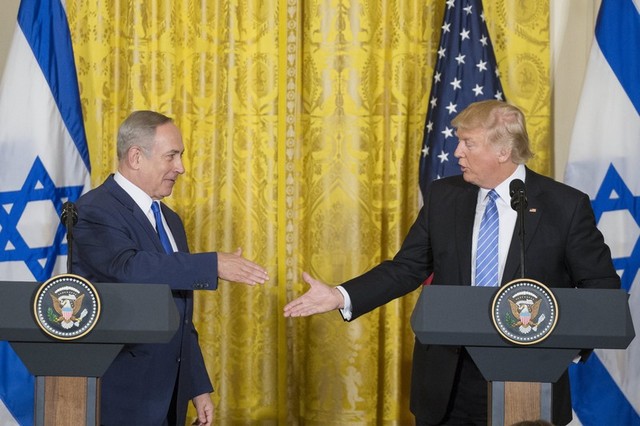
Israel is planning a move on July 1 that the international community has long regarded as one of the gravest assaults on the international order and international law: annexation of land that does not belong to it. The annexation plan developed by the Netanyahu government in consultation with the Trump administration would declare not only the decades-old settlements in the West Bank which the U.N. Security Council in 2016 declared illegal to be permanent Israeli land, but also other swaths of Palestinian territory, including the Jordan Valley, that is central to Palestinian agriculture.

There are multiple reasons why Israel is not just willing but seemingly eager to incur condemnations from the international community by proceeding with this plan. Prime Minister Benjamin Netanyahu is beset by political problems as he struggles to form a governing coalition for a new term and, even more importantly, by legal problems as he stands trial on felony charges of bribery and fraud. Emboldening the Israeli population and causing them to unite behind him in the face of international denunciations could distract attention away from those crises and solidify his hold on power.

Most importantly, Israel has become increasingly xenophobic, expansionist, militaristic, hostile to Arabs, and fascistic over the last decade. Aside from the Trump administration, its primary allies are no longer liberal democracies but Arab despots and far-right political movements in Central and Eastern Europe and in Latin America.

Illustrating the cultural and political shift among younger Israelis in particular, Netanyahu’s son, Yair, this week advocated that all minorities be removed — cleansed — from Tel Aviv. The Israeli left and even center are virtually nonexistent. That is the climate that now shapes Israel’s identity. Annexation of large chunks of the West Bank is, if anything, too moderate for a growing far-right Israeli movement that believes, on religious and militaristic grounds, that they are the owners of all of Palestine.

Regardless of motives, it is virtually certain that annexation of any part of the West Bank would trigger intense pressure in the west to impose serious sanctions on Israel. The last significant annexation took place in 2014, when Russia declared Crimea a formal part of its country, and that event triggered multi-level sanctions from the west despite the fact that a large majority of people in Crimea wanted to be part of Russia rather than Ukraine. Palestinians, needless to say, are virtually unanimous in their opposition to further control over their land and their lives by a foreign occupying government that grants them no political rights of any kind. Any attempt by the west to avoid sanctioning a post-annexation Israel would destroy whatever residual credibility is vested in their claims of a consistent system of international law.

This week’s SYSTEM UPDATE episode explores the implications of Israel’s annexation plan: what the fall-out would be both in Palestine and in the international community. This issue deserves far more attention that it has received, particularly in the U.S. where, pursuant to a 2016 agreement between the Obama and Netanyahu governments, billions of dollars in taxpayer money are transferred every year to the Israelis that enable this aggression.

Joining me to explore these questions is the long-time Palestinian human rights activist Omar Barghouti, one of the co-founders of the Boycott, Divestment and Sanctions (BDS) movement that is almost certain to see increased support if annexation occurs.

The episode debuts today at 2:00 p.m. on The Intercept’s YouTube channel. A transcript will be posted below after the show’s airing, and audio-only version will be available on Saturday

Glenn Greenwald – glenn.greenwald@​theintercept.com

22 June 2020

Source: www.transcend.org

Caesar Tries to Suffocate 17 Million Syrians

By Rick Sterling

19 Jun 2020 – Since 2011, the US and allies have promoted, trained and supplied militants trying to bring about “regime change” in Damascus. Having failed in that effort, they have tried to strangle Syria economically. The goal has always been the same: to force Syria to change politically. This month, June 2020, the aggression reaches a new level with extreme sanctions known as the Caesar Syria Civilian Protection Act.

The new law is fraudulent on two counts. It is called “Caesar” in reference to a 2014 propaganda stunt involving an anonymous Syrian who was alleged to be a military photographer. He claimed to have 55,000 photos showing about eleven thousand victims of Syrian government torture. As the Christian Science Monitor said at the time, the “Caesar” report was “A well-timed propaganda exercise funded by Qatar.”  A 30 page analysis later confirmed that the “Caesar” report was a fraud with nearly half the photos showing the OPPOSITE of what was claimed: they documented dead Syrian soldiers and civilian victims of “rebel” car bombs and attacks.

The Caesar Syrian Civilian Protection Act is also fraudulent by claiming to “protect civilians”. In reality, it is punishes and hurts the vast majority of 17 million  persons living in Syria. It will result in thousands of civilians suffering and dying needlessly.

Pre-Existing Sanctions

The US has been hostile to Syria for many decades. Unlike Anwar Sadat of Egypt, Syria under Hafez al Assad refused to make a peace treaty with Israel.  Syria was designated a “state sponsor of terrorism” and first sanctioned by the U.S. in 1979.

After the US invasion and occupation of Iraq in 2003, Syria accepted about one million Iraqi refugees and supported the Iraqi resistance in various ways.  In retaliation, the US escalated punishing sanctions in 2004.

In 2010, US Secretary of State Hillary Clinton pressured Syria to change their foreign policy and be friendlier to Israel. Syrian President Bashar al Assad pointedly declined.  Twelve months later, when protests and violence began in Syria in 2011, the US, Europe and Gulf monarchies (Qatar, Saudi Arabia, United Arab Emirates) quickly supported the opposition and imposed more sanctions.

In 2016, after five years of crisis and war, a report on the humanitarian impact of sanctions on Syria was prepared for the United Nations Economic and Social Commission for Western Asia. It noted that “U.S. and E.U. sanctions on Syria are some of the most complicated and far-reaching sanctions regimes ever imposed.” The 30 page report went on document with case studies how humanitarian aid which is supposed to be permitted is effectively stopped. The sanction regulations, licenses, and penalties make it so difficult and risky that humanitarian aid is effectively prevented. The report concluded with thirteen specific recommendations to allow humanitarian and development aid.

But there was not relaxation or changes in the maze of rules and sanctions to allow humanitarian relief.   On the contrary,  as the Syrian government was expelling terrorists from east Aleppo, southern  Damascus, and Deir Ezzor,  the US and EU  blocked all aid for reconstruction.  The US and allies were intent to NOT allow Syria to rebuild and reconstruct.

In 2018, the United Nations Special Rapporteur, Idriss Jazairy, prepared a report on the negative impact of unilateral coercive measures on human rights in Syria. He noted,

“Unilateral  coercive measures on agricultural inputs and outputs, medicines, on many dual use items related to water and sanitation, public electricity and transportation, and eventually on rebuilding schools, hospitals and other public buildings and services, are increasingly difficult to justify, if they ever were justifiable.” 

Before 2011, 90% of pharmaceutical needs were filled by Syrian factories.  Those factories which remain have trouble getting raw materials and cannot get replacement parts for equipment. For example an expensive dialysis machine or MRI machine from Siemens or General Electric is rendered useless because Syria cannot import the spare part of software. On paper, they can purchase this but in reality they cannot.

Over 500,000 civilians returned to Aleppo after the terrorists were expelled at end of 2016. But reconstruction aid is prohibited by US sanctions and UN rules.  They can receive “shelter kits” with plastic but rebuilding with glass and cement walls is not allowed because “reconstruction” is prohibited. This article describes numerous case examples from war torn Aleppo.

The author had a personal experience with the impact of sanctions. A Syrian friend could not get hearing aid batteries for a youth who was hard of hearing. Sanctions prevented him from being able to order the item because financial transactions and delivery is prohibited without a special license. A stockpile of the specialized batteries was easy to purchase in the USA but took almost a year to get to the destination in Syria.

US Economic Bullying and Terrorism

The Caesar Act extends the sanctions from applying to US nationals and companies to any individuals and corporations. It claims the supra-national prerogative to apply US laws to anyone. “Sanctions with respect to foreign persons” include blocking and seizing the property and assets of a person or company deemed to have violated the US law. This is compounded by a fiscal penalty which can be huge. In 2014, one of the largest international banks, BNP Paribas, was fined $9 Billion for violating US sanctions against Cuba, Iran and Sudan.

The Caesar Act claims the Syria Central Bank is a “primary money laundering” institution and thus in a special category. It aims to make it impossible for Syrian companies to export and import from Lebanon. It will make it extremely difficult or impossible for Syrians abroad to transfer money to support family members in Syria.

In addition to these extraordinary attacks, the US is undermining and destabilizing the Syrian currency.  In October 2019, the Syrian currency was trading at about 650 Syrian pounds to one US dollar. Now, just 8 months later, the rate is 2600 to the US dollar.  Part of the reason is because of the threat of Caesar sanctions.

Another reason is because of US pressure on the main trading partner,  Lebanon.  Traditionally, Lebanon is the main partner for both imports and exports. In spring 2019 US Secretary of State, Mike Pompeo,  threatened Lebanon if they did not change their policies. It was blatant interference in Lebanese internal affairs. In Fall 2019 street protests began, and the Lebanese and Syrian banking crisis also began.

With the devaluation of their currency, prices of many items has risen dramatically. Agricultural, medical, industrial and other raw materials and finished goods are almost impossible to acquire.

The shortage of  food is compounded because wheat fields in North East Syria, the bread basket of Syria, have been intentionally set on fire.  In the past week, sectarian groups in Lebanon have blocked World Food Program trucks carrying food aid to Syria. Meanwhile, in eastern Syria,  the US and its proxy militia control and profit from the oil fields while the Syrian government and civilians struggle with a severe shortage oil and gas.

James Jeffrey and US Policy

In a June 7 webinar, the Special Representative for Syria Engagement, Ambassador James Jeffrey, brazenly stated the US policy.  The US seeks to prevent Syria from rebuilding. He said “We threw everything but the kitchen sink …. into the Caesar Act.”

The exceptions to punishing sanctions are:

  • Idlib province in the North West, controlled by Al Qaeda extremists and Turkish invading forces, and
  • Northeast Syria controlled by US troops and the proxy separatists known as the “Syrian Democratic Forces”.

The US has designated $50 million to support “humanitarian aid” to these areas. Other US allies will pump in hundreds of millions more in aid and “investments”.  US dollars and Turkish lira are being pumped into these areas in another tactic to undermine the Syrian currency and sovereignty.

In contrast, the vast majority of Syrians – about 17 million – are being suffocated and hurt by the extreme sanctions.

The US has multiple goals. One goal is to prevent Syria from recovering. Another goal is to prolong the conflict and damage those countries who have assisted Syria.  With consummate cynicism and amorality, the US Envoy for Syria James Jeffrey described his task: “My job is to make it a quagmire for the Russians.” Evidently there has been no significant change in foreign policy assumptions and goals since the US and Saudi Arabia began interfering in Afghanistan in 1979.

In his 2018 “End of Mission” statement, the United Nations Special Rapporteur was diplomatic but clear about the use of unilateral coercive sanctions against Syria:  “the use of such measures may be contrary to international law, international humanitarian law, the UN Charter and the norms and principles governing peaceful relations among States.”

Caesar and the Democrats

The economic and other attacks on Syria have been promoted by right wing hawks, especially fervent supporters of Israel. Eliot Engel, chairman of the Congressional Foreign Affairs Committee, pushed to get the Caesar Act into law for years. This was finally done by embedding it in the humongous 2020 National Defense Authorization Act.

In a hopeful sign that times may be changing, a progressive candidate named Jamaal Bowman may unseat Engel as the Democratic candidate in the upcoming election. Eliot Engel is supported by Hillary Clinton and other foreign policy hawks.  Jamaal Bowman is supported by Bernie Sanders.

While this may offer hope for the future, the vast majority of Syrians continue as victims of US foreign policy delusions, hypocrisy, cynicism and cruelty.

Rick Sterling is a member of the TRANSCEND Network and an investigative journalist who lives in the SF Bay Area, California. He can be contacted at rsterling1@gmail.com

22 June 2020

Source: www.transcend.org

Repudiating the International Criminal Court

By Prof. Richard Falk

Even Orwell would be at a loss to make sense of some of the recent antics of leading governments. We would expect Orwell to be out-satirized by the U.S. actions to impose penalties and sanctions on officials of the International Criminal Court not because they are accused of acting improperly or seem guilty of some kind of corruption but because they were doing their appointed jobs carefully, yet fearlessly. Their supposed wrongdoing was to accept the request an investigation into allegations of war crimes committed in Afghanistan by military personnel and intelligence experts of the U.S. armed forces, the Taliban, and the Afghan military. It seemed beyond reasonable doubt that a string of war crimes and crimes against humanity had occurred in Afghanistan ever since the U.S.-led regime-changing attack in 2002, followed by many years of occupation and continuous combat amid a hostile population.

It should be noted that Israel is equally infuriated with that the ICC should have affirmed the authority its Prosecutor, Fatou Bensouda, to investigate allegations by Palestine of war crimes and crimes against humanity committed in the Occupied Palestinian Territories of the West Bank, East Jerusalem, and Gaza. These allegations include the unlawful transfer of Israeli civilians to establish settlements as well as administrative structures that constitute violations of the criminal prohibition on apartheid. Netanyahu, like his Washington sibling, has called for the ICC to be subject to sanctions for staging this ‘full frontal attack’ on Israeli democracy and somehow on ‘the Jewish people’s right to live in Israel.’ The Israeli Prime Minister contends that Israel as a sovereign state has the right to defend itself as it wishes, and should not be impeded by any obligation to respect international criminal law. Such a claim, and the abusive practices and policies that have followed over many years, amounts to a disturbing affirmation of what I have elsewhere called ‘gangster geopolitics.’

The angry U.S. pushback did not bother contesting the substantive allegations, but questioned the jurisdictional authority of the ICC, and attacked the audacity of this international entity for supposing that it could investigate, much less prosecute and punish the representatives of such a mighty state that should in no way be held internationally accountable. When the ICC was investigating, and indicting, only African leaders few Western eyebrows were raised, but recently when the Court finally dared to treat equals equally in accord with its own legal framework—the Rome Statute of 2000—it had in Washington’s and Tel Aviv’s eyes so overstepped its unspoken limits as to itself become a wrongdoer, and by this outlandish logic, making the institution and its officials legitimate targets for sanctions. What this kind of unprecedented pushback amounts to is a notable rejection of the global rule of law when it comes to international crime and a crude effort to remind international institutions that ‘impunity’ and ‘double standards’ remain an operational principal norm of world order.

Speaking for the U.S. Government the response of the Secretary of State, Mike Pompeo, stunningly exhibited the hubris that became the U.S. global brand well before Donald Trump disgraced the country and harmed the peoples of the world during his tenure as president. Pompeo’s reaction to the unanimous approval of the Prosecutor’s request to investigate war crimes in Afghanistan was little other than seizing the occasion to insult the ICC by describing it as “little more than a political tool employed by unaccountable international elites.” Such a statement crosses the borders of absurdity given the abundant documentation of numerous U.S. crimes in Afghanistan (the subject-matter of Chelsea Manning’s WikiLeaks 2010 disclosures that landed her in jail) and in several ‘black sites’ in European countries where foreign suspects are routinely tortured, and subject to rape. Contra Pompeo, it is not the ‘international elites’ that are unaccountable but the national elites running the U.S. and Israeli governments.

The Pompeo dismissal was a prelude to the issuance by Trump on 11 June of an Executive Order that extended the prior denial of a U.S. visa to Bensouda, and threatened a variety of sanctioning moves directed at anyone connected with the ICC and its undertaking, including freezing assets and withholding visas, not only of individuals, but also of their families, on the laughable pretext that the prospective ICC investigation was creating a ‘national emergency’ in the form of an “unusual and extraordinary threat to the national security and foreign policy of the United States.” Even before the present crisis, Trump had told the UN in a 2018 speech at the General Assembly that

“… the ICC has no jurisdiction, no legitimacy, and no authority… We will never surrender America’s sovereignty to an unelected, unaccountable, global bureaucracy.”

As crude as are the words and deeds of the Trump crowd, there were almost equally defiant precursors, especially during the presidency of George W. Bush, an anti-ICC campaign led by none other than John Bolton who was to become Trump’s notorious National Security Advisor, and is currently his antagonist due to his book publicizing Trump’s array of impeachable offenses. Remember that it was Bush who ‘un-signed’ the Rome Statute that Bill Clinton had signed on behalf of the U.S. on the last day of his presidency, but with the proviso that the treaty should not be submitted to the Senate for ratification and hence not be applicable, until the ICC had proved itself a responsible actor to Washington’s satisfaction. Congress stepped in to make sure that U.S. military personnel would not be charged with international crimes both by threatening preventive action and entering into over 100 agreements with other countries to ensure immunity from ICC jurisdiction, coupled with a threat to withhold aid if a government refused to so agree. Hillary Clinton also observed some years that since the U.S. was more globally present than other countries, it was important to be sure that its military personnel would not be brought before the ICC.

In other words, non-accountability and double standards have deeper roots than the extreme anti-internationalism of Trump. It can be usefully traced back to the ‘victors’ justice’ approach to war crimes during the second world war where only the crimes of the defeated were subjected to accountability at Nuremberg and Tokyo, a step hailed as a great advance despite its flaws. It was deeply flawed considering that arguably the most horrifying act during the four years of hostilities were the atomic bombs dropped on Japanese cities. Is there any doubt that if Germany or Japan had beaten the Allies to the bomb, and used it against cities in the UK or the U.S., and yet lost the war, those responsible for the decisions would have been held accountable, and punished in a harsh manner?

In some ways as bad from a law angle was the U.S. orchestrated trial of Saddam Hussein and his closest advisors for their state crimes, although the 2003 war arose from acts of aggression by the United States and UK, and subsequent crimes during a prolonged occupation of Iraq. In other words, the idea of unconditional impunity for the crimes of the United States is complemented by self-righteous accountability for those leaders of countries defeated in war by the United States. Such ‘exceptionalism’ should shock the conscience of anyone with a sense of the ideas of fairness and equality that should be core values in the application of international criminal law.

As might be expected, mainstream NGOs and liberal Democrats are not happy with such an insulting and gratuitous slap in the face of international institutions that have proved mainly useful in going after the wrongdoing of non-Western leaders, especially in Africa. It should be remembered that African countries and their leaders were the almost exclusive targets of ICC initiatives during its first ten years, and it was from Africa that one formerly heard complaints and threats of withdrawal from the treaty, but I doubt that ideas of sanctioning the ICC ever entered the imaginary of understandable African displeasure at an implicit ethos of ‘white crimes don’t matter’!

David Sheffer, the diplomat who headed the U.S. delegation that negotiated the Rome Statute on behalf of the Clinton presidency, but who was careful to preserve Anglo American geopolitical interests, expressed the liberal opposition to Trump’s arrogant style of pushback with these words:

“The [Trump] Executive Order will go down in history as a shameful act of fear and retreat from the rule of law.”

There is an element of hypocrisy present in such a denunciation due to withholding the pre-Trump record of one-sided imposition of international criminal law. True enough, it was the prior Republican president that had locked horns with the ICC some years ago, but the ambivalence of Congress and the Clintons is part of a consistent U.S. insistence of what I would label as ‘negative exceptionalism,’ that is, the right to act internationally without accountability while taking a hard line on holding others accountable; impunity for the powerful, accountability for the weak. It used to be that Anglo American exceptionalism was associated with a commitment to decency, human rights, and the rule of law that was missing elsewhere, and could serve as a catalyst for peace and justice in the world. Such self-glorification has long since been forfeited as at the altar of global geopolitics, which makes up the rules as it goes along, while showing contempt for the legal constraints that are deemed suitable for the regulation of adversaries.

Richard Falk is a member of the TRANSCEND Network, an international relations scholar, professor emeritus of international law at Princeton University, Distinguished Research Fellow, Orfalea Center of Global Studies, UCSB, author, co-author or editor of 60 books, and a speaker and activist on world affairs. In 2008, the United Nations Human Rights Council (UNHRC) appointed Falk to two three-year terms as a United Nations Special Rapporteur on “the situation of human rights in the Palestinian territories occupied since 1967.” Since 2002 he has lived in Santa Barbara, California, and associated with the local campus of the University of California, and for several years chaired the Board of the Nuclear Age Peace Foundation.

22 June 2020

Source: www.transcend.org