Just International

The Conservative Victory in Britain

By Zack Beauchamp

The British electorate voted Thursday in one of the most important elections in the country’s modern history. And the results show that they voted overwhelmingly for Conservative Prime Minister Boris Johnson and for Brexit: a 78-seat parliamentary majority for Johnson and the worst showing for the opposition, the left-wing Labour Party led by Jeremy Corbyn, in nearly 100 years.

This does not appear to be because Johnson was a particularly adept or well-liked political figure. His approval ratings were deeply in the negative, according to prelection data from YouGov. His central campaign promise, finally getting out of the European Union, divided the country in half. He has a reputation as an untrustworthy buffoon and an even more sinister history of racism: He has compared women in burkas to “letterboxes” and claimed that Muslim immigrants lack “loyalty to Britain” because of their religion: “Islam is the problem,” as he put it. He once penned a column describing Africans as “pickanninies” with “watermelon smiles.”

Johnson appears to have benefitted not from his own unique political talents, but from his opponent’s problems. Brexit put Corbyn in a much tougher position than Johnson, needing to appeal to both Leave and Remain voters while Johnson could focus on the former. But Corbyn was also profoundly unpopular personally: While Johnson was at minus 12 in the YouGov approval rating polling, Corbyn was at negative 40.

Corbyn’s attempt to straddle the line on the decisive issue of Brexit ended up with a wishy-washy and incoherent muddle that neither Remainers nor Leavers could believe in. Some of his leftist economic policies polled well, but Corbyn himself wasn’t viewed as a credible leader — even on issues like health care where his policy approach resonated with a lot of the public. He also presided over a significant rise in anti-Semitism in the party’s ranks; he had recently been condemned by the leading Jewish Labour organization for turning their party into “a welcoming refuge for anti-Semites.”

Corbyn is, in some ways, yesterday’s problem. He has already vowed to resign before the next UK election, his political ambitions in shambles.

But the question of how Labour can recover — and what this tells us about the global fight against parties like the Conservatives that embrace right-wing populism — is still very much unsettled.

What happened in the UK election results — and what it means

Historically, both British and European politics more broadly have been heavily determined by class divisions. Left-wing parties like Labour dominated among the industrial working class, while right-wing parties like the Tories did well among society’s upper crust.

But in the past several decades, this historical pattern became unglued. Educated urban professionals have drifted left and the working classes have tiled right, a shift that social scientists attribute to the rising importance of immigration and identity issues in European politics. In Britain, Brexit supercharged this long-running process, as highly educated city dwellers tended to oppose Brexit (making them more likely to vote Labour) while rural and less educated voters tended to support it (making them more likely to vote Conservative).

The 2019 election results reflected the post-Brexit realignment. Labour was absolutely devastated in its traditional working class constituencies (the UK equivalent to congressional districts), with the Conservatives — long caricatured as the parties of the rich — making historic inroads. “The resounding Conservative victory was driven by a dramatic swing of working-class support away from Labour,” as the Financial Times put it in a post-election data analysis.

“In seats with high shares of people in low-skilled jobs, the Conservative vote share increased by an average of six percentage points and the Labour share fell by 14 points. In seats with the lowest share of low-skilled jobs, the Tory vote share fell by four points and Labour’s fell by seven,” the FT said in its analysis. “The swing of working class areas from Labour to Conservative had the strongest statistical association of any explored by the FT.”

This is extremely preliminary: We don’t yet know which voters in these constituencies voted which way, so we can’t yet say whether class itself is the key. Indeed, another analysis by Will Jennings, a political scientist at the University of Southampton, suggested that education level — the percentage of college graduates in a constituency — was actually more important than income level or class per se, which would be consistent with long-term data on European political realignment.

But what’s clear is that Labour’s theory of the case — that its socialist policy manifesto would be able to win back Brexit voters in its traditional working-class heartland and secure the cities — was a failure. The question is why.

The debate among British analysts has largely polarized along pro- and anti-Corbyn lines.

The pro-Corbyn analysis is that Brexit was a unique event that swamped their otherwise popular economic agenda, creating an impossible task for Labour of appealing to both its Remain supporters in London and the Leavers in the north of England.

Anti-Corbyn analysts suggest that his attempt to have it both ways on Brexit — calling for a second referendum but not saying which side he would support — was a poor way of handling the dilemma, depressing Remain voters everywhere without winning over Leavers attracted to Johnson’s simple message. In this view, Corbyn was so incredibly unpopular, his socialism so out of touch with the British public, and his failure to tackle the anti-Semitism crisis so toxic, that he had doomed the party by leading it.

As is often the case in situations like this, the answer is somewhere in the middle. “In a shock move,” UK politics analyst Torsten Bell writes, “the ‘it was Brexit’ vs ‘it was Corbyn’ debate misses the blindingly obvious fact that it was both.”

It’s true that Labour was in a tough position on Brexit, needing to hold support in Leave constituencies and turn out Remain voters. The Tories, by contrast, figured out a way to win on a simple Leave message.

But it’s also clear that Labour did badly across the board: Jennings’s analysis finds that Labour lost support even in cities, a result that suggests that Corbyn’s personal unpopularity was depressing voters who should (on the Brexit theory) be supporting the more Remain-friendly party.

This early analysis suggests that Labour was simply unprepared to fight the battle on the terms the Tories were waging. Though Johnson was widely unpopular, his party also moved to the center on economic issues, a strategy that helped sideline Corbyn’s class-based appeal and emphasized the largely identity-based fight over Brexit. Brexit carried the day by appealing to British insularity and hostility to outsiders. Johnson mobilized voters who found this vision attractive, as well as those simply frustrated with the dragged-out Brexit process, and won a huge victory.

Due to a combination of legitimate strategic difficulty and the gross incompetence of its leader, Labour simply didn’t have an effective response. The question of how to fight back against the Tory embrace of right-wing populism, to mobilize a counter-movement in favor of a more inclusive British identity, is still an open one.

For those of us troubled by the illiberal drift among advanced democracies — not just Britain or Europe, but also the United States — these results cannot be taken as a good sign.

Zack Beauchamp is a senior correspondent at Vox, where he covers global politics and ideology, and a host of Worldly, Vox’s podcast on foreign policy and international relations.

13 December 2019

Source: www.vox.com

Non-Muslim states should be litigants against Myanmar

John Packer is Neuberger-Jesin Professor of International Conflict Resolution in the Faculty of Law and Director of the Human Rights Research and Education Centre at the University of Ottawa, Canada. He has followed the Rohingya issue since 1992 when he was a UN Human Rights officer and assistant to the first UN special rapporteur on human rights in Burma. He has investigated human rights violations in dozens of countries, specialising in international protection of minorities. In an e-mail interview with Prothom Alo, he speaks about the recent case against Myanmar at ICJ.

Prothom Alo: What could be the possible interim order of the International Court of Justice (ICJ)? How do you see Professor Sands’ pleading about an order within 4 months to have a new fact-finding mission to visit Rakhine?

John Packer: The Court should respond to the applicant’s request. It has the possibility to order what it believes is merited in line with the objectives of preserving rights and avoiding irreparable harm. The case, being about the most serious and urgent of matters – purportedly on-going genocide, is unusual compared with cases typically coming before the Court, so the Court could find merited the unusual (but arguably appropriate) request. Moreover, the Court has within its statute the possibility to order an enquiry, so this is not entirely beyond what might be envisioned and reasonably sought.

Prothom Alo: What about the double standard as shown by Burma’s lawyer? Do you think it has breached any ethical code?

John Packer: On substance, it may be that genocidal intent is not the only deducible conclusion, but at this stage of proceeding (seeking provisional measures) all that is required is to show a plausible connection between the risk and the protection sought (which includes the plausibility of genocidal intent). For example, the State may be motivated also by other reasons (e.g. to obtain land), but that, logically, does not in itself therefore negate the plausible intent at the same time to destroy the group as such at least in part (i.e. to commit genocide). Different violations may “co-exist” and one may even be a part of another. Of course, a motivation may be deduced from the full appreciation of the facts, in respect of which the inescapable and hugely disproportionate use of force, accompanied by egregious harms like mutilations, very substantially points to an intention to destroy; there can be little other rationale for it.

As for Professor Schabas deciding to act for Myanmar, it seems from reports that he is badly confused about the nature of the case – invoking, as reported, everyone’s “right of defense”. While Myanmar does possess that right at International Law, the case should not be confused with a criminal prosecution (which it is not at all) where the services of a highly competent lawyer may be justified on the noble basis of “service to the law” and defense against the power of prosecution given the risk of conviction (which is not at issue in this case). The State of Myanmar (with all its resources, powers, immunities and influential friends) faces no possibility of such risk. This case is a dispute between States – something closer to an international civil action. The best lawyers need feel no compulsion to act for a regime of the evident nature of Myanmar and assist it to avoid responsibility for its conduct – conduct which has self-evidently caused enormous harm to so many. Invoking a moral imperative to do so is entirely misplaced. I am saddened by Professor Schabas’ choice in the matter.

Prothom Alo: Schabas helped research a report in 2010 on systematic attacks against the Rohingya, which concluded that they met the international threshold of crimes against humanity, now he has retracted. Human Rights Watch says he is selling out the Rohingya.

John Packer: Self-evidently, the inconsistency of Professor Schabas’ previous public statements with positions he asserted before the Court could reasonably be expected to be observed and to undermine his credibility before the Court. Of course, he can also, reasonably, form a more definite opinion upon closer scrutiny of facts, or he may simply change his mind. But these possible explanations do not engender confidence within the Court or among others.

Prothom Alo: Aung San Suu Kyi has stated that genocidal intent is not the only hypothesis. She also confessed disproportionate use of force, etc. Do you find lapses on her part, legally speaking?

John Packer: In terms of the law, Aung San Suu Kyi and her lawyers seem to think that there exist permissible excuses for genocide – such as the existence of a purported terrorist threat (no matter how small or large) or some error in proportionate response, or perhaps even Burma’s stage of democratic development (e.g. seeking some leniency… to trust the Government NOW to punish some wrong-doers). None of these invoked reasons constitute, in law, permissible excuses. Indeed, there is no excuse in law for genocide. Rather, the positive duty is to prevent it!

Prothom Alo: Suu Kyi statement got into quite a bit of the factual, historical, and legal detail. She did not waste time honing in on what will be Myanmar’s central argument – that the patterns of conduct to which She did not utter the word ‘Rohingya’. I thought this omission –surely intentional – reflected poorly on her.

John Packer: Aung San Suu Kyi ‘s refusal – clearly her intention –not even to utter the word ‘Rohingya’ reveals a definite, deeply held position against the very existence of the group as such. Arguably, given her official position, that violates the human right of the group to exist and anyhow demonstrates the attitude of the government against the group for which the Genocide Convention is intended to afford essential protection. While it is not proof of genocide per se, it is proof of the attitude of the State which, combined with other facts, may reasonably lead the Court to conclude the existence of the ill intention.

Prothom Alo: Much of Aung San Suu Kyi’s presentation reframed the situation as an internal armed conflict between the military and a ‘rebellion’ or ‘separatist movement’. She mentioned a so-called independence movement and tacitly claimed that the part of present day Bangladesh was part of the ancient kingdom. Why did she venture so much into the pages of history?

John Packer: The arguments about history are strictly irrelevant to determination of breaches of the Genocide Convention. So, too, is the existence or not of an armed conflict (for which, of course, there was and is no armed conflict with the Rohingya); genocide may occur in time of peace or in war. Either Aung San Suu Kyi is simply lost in her misunderstanding of the Genocide Convention or is seeking to obfuscate and distract – or to reinforce narratives that play well for nationalist Burman politics back in Myanmar.

Prothom Alo: One expert said that she is blurring the idea of complementarity from the ICC context with a broader proposition that domestic justice mechanisms need to be allowed to work before a state can reasonably be accused of failing to meet its obligations. This sets up an argument about whether Myanmar’s domestic justice mechanisms are credible, probably an argument that Myanmar will have a hard time winning. It invites further scrutiny that may not be to Myanmar’s advantage.

John Packer: There is no principle of complementarity relating to the Genocide Convention. The argument might apply to the duty to punish individuals, but that is distinct from the State’s own obligations to prevent and not to commit genocide, as well as other obligations under the Genocide Convention which Myanmar has manifestly failed to fulfill and which raise questions about good faith and treaty law applicable between parties.

Prothom Alo: She has indicated that ‘resourceful countries’ are allowed to police and investigate themselves, but similar efforts by states such as Myanmar are never considered adequate. She even alluded to Trump’s pardoning of war criminals in the US. Comment please.

John Packer: The idea that Myanmar should be granted leniency –i.e. a lower standard of performance – raises obvious questions about equal sovereignty! Is she arguing that Myanmar is not reasonably to be expected to fulfill its obligations as an equally sovereign State (and not even a newly independent one)? As for the failures of others, that does not grant a right to breach obligations. These are extraordinarily weak arguments that indicate some grasping at straws. It is surprising her legal team would have concurred in the presentation of such arguments.

Prothom Alo: Do you agree that she has some constructive attitude to the distressed Rohingyas? Though strategic on genocidal intent, she emphasised that there are government programmes aimed at social cohesion, for people to go to school or university, etc. Her argument is that such programmes would be completely inconsistent with the presence of genocidal intent. She even showed a playground.

John Packer: This is utter nonsense. There is abundant and overwhelming evidence – inlarge part from Myanmar’s own policies and laws – that Myanmar overtly and badly discriminates against Rohingya and violates almost all their human rights. It is simply not credible that the Rohingya are well-served and happy people… with now some 85% of the entire population, over the last many years, having fled their homeland. In addition, it is not mutually exclusive that a few Rohingya may be provided some benefit (even one playground!) while the general position of the State is oppressive and genocidal. The Court will judge this, in the immediate in terms of the risks it must assess vis-à-vis the request for Provisional Measures.

Prothom Alo: Closer scrutiny may reveal that they add up to less than she has suggested, which will undermine the claim. Can the Court ask to provide a report? What would be the other means to go before the next hearing?

John Packer: The Court should adjudicate promptly on Provisional Measures, given that they must respond to urgency and the risks of irreparable harm. The rest of the (main) case will then unfold. Yes, the Court can order specific reporting notably on compliance with the Provisional Measures.

Prothom Alo: If Gambia is not happy with the Provisional Measures awarded then what options exist under the procedure?

John Packer: For The Gambia, this is a single opportunity. But, this does not preclude other states bringing their own applications – possibly for a broader or different case and seeking different Provisional Measures. This is, I believe, unlikely. However, it will depend in part on what the Court does – whether States believe the response is suitable. The Gambia followed its own belief and decided on its own application. 150 other States parties to the Genocide Convention are free to make the same decisions and act on their own rights.
There exists considerable scope in terms of the facts for such applications to be brought, alone or jointly, by States – notably since Myanmar has been a State Party to the Convention since 1956 and it has arguably committed or permitted breaches of the Convention for a long part of that period and also vis-à-vis other groups than the Rohingya (as some ethnic groups have long contended).

Prothom Alo: Why and how did The Gambia take the initiative?

John Packer: This is a result of a number of coincidences, linking the OIC’s long engagement and frustration, the change in politics and Government in The Gambia, the person of The Gambia’s Minister of Justice (as a prosecutor at the Rwanda Tribunal), connections with other international lawyers, the desire of others (including Sheikh Hasina) to see action taken, readiness of some to provide the required funding, etc. It is significant and unprecedented that The Gambia has taken forward the case purely on the basis of general public interest and as a State Party to the Genocide Convention. That is remarkable and laudable. It does beg the question why no other, more capable State was moved to act – including countries like Canada which declared genocide occurred but then choice not to act.

Prothom Alo: She came to the ICJ as Myanmar’s StateAgent, then on which basis has the Dutch Parliament afforded a State guest reception to her? Any breach?

John Packer: The case at the ICJ is against the STATE of Myanmar and not against any individual. Aung Sun Suu Kyi is de facto head of government (if not head of state) and is so far participating in presumed good faith in a legal process to which it is bound to participate. This is the proper unfolding of the rules-based order whereby a dispute is being peacefully litigated between equal States. As such, there is no reason, between States, not to accord usual courtesies. I presume Aung Sun Suu Kyi will have been subjected to some substantive questions in the Dutch Parliament. But until the Court would reach its conclusions, the process should not be overtaken by assumptions – indeed, the case is just beginning.

Prothom Alo: Her visit to the Dutch Parliament has been cancelled due to “unexpected changes” in her programme. How do the people of EU feel about Suu Kyi and her standing?

John Packer: From the news and from people – mainly scholars – I have spoken with, there is no doubt that the standing of both Suu Kyi and Myanmar have been diminished. The public process has revealed the poverty of their arguments in defense. This raises many questions about the character of existing and future relations.

Prothom Alo: What about the ICC proceedings? Will these continue?

John Packer: On the ICC investigation, that is entirely separate (as is the work of the new IIMM in Geneva) and will follow its own course. Both of these mechanisms (the ICC being judicial) focus on the responsibility and possible culpability of individuals. The ICJ case is against the State of Myanmar. While these are each distinct, there is evident overlap (e.g. regarding some events) and they may be viewed as complementary and potentially may inter-sect (e.g. evidence collected by ICC and IIMM may be brought into the case at the ICJ).

Prothom Alo: What role you do expect from Bangladesh and Myanmar? Do you think Dr Mahathir could direct Malaysia to join the case?

John Packer: There are certainly possible separate cases (or a joint case) to be brought at the ICJ by Bangladesh and/or Malaysia against Myanmar under the Genocide Convention. Indeed, it would be highly desirable because both Bangladesh and Malaysia have been directly and substantially affected, incurring costs and suffering other harms. Applications from them would have numerous advantages – notably what can be argued and requested especially in terms of substantial reparations. In addition, their participation would hold substantial political implications. There are procedural questions to be addressed, including with regard to reservations, but these could be fairly easily overcome (e.g. through withdrawal of the reservations which serve no good purpose).

Important, however, would be for other, non-Muslim States to join the proceedings as litigants and demonstrate that the issue is truly of general public interest and not motivated by religion or direct interest. Canada could well lead in this regard, perhaps accompanied by a handful of other States ideally from other parts of the world. That would also help when it comes to the eventual implementation of any judgment and order against Myanmar.

Prothom Alo: Did you notice that Articles 6, 7, and 8 of the Genocide Convention are ‘reserved’ by both Myanmar and Bangladesh. What can Bangladesh do? Do you think it would be detrimental to The Gambia case if Bangladesh develops good bilateral relations with the Burma leaders?

John Packer: The case will establish whether Myanmar has violated any of its obligations under the Genocide Convention. That does not preclude that Myanmar and Bangladesh cooperate in finding a solution. On the contrary, Myanmar must anyhow meet its obligations towards the Rohingya people and Bangladesh should be cooperative in regard to genuine and earnest efforts to that end. The ICJ case may help move Myanmar in that direction.

15 December 2019

Justice Markandey Katju launches Ibaadatkhana movement to promote peace in South Asia

By Abdus Sattar Ghazali

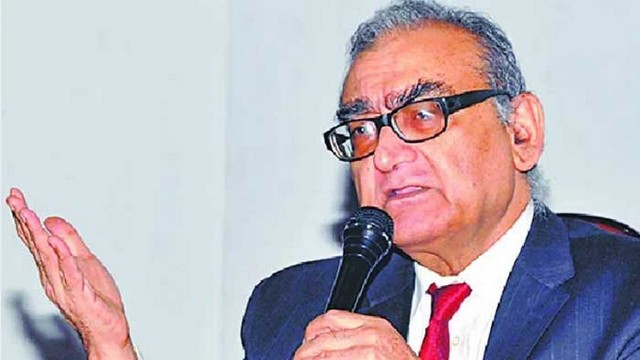
Justice Markandey Katju, a retired judge at the Supreme Court of India, has launched Ibaadatkahna movement to promote peace in South Asia.

Ibaadatkahna, a non-partisan movement, was launched on December 8, 2019 at a unity dinner held at the Chandni Restaurant, Newark CA.

The Unity event was attended by people from various faiths.  Justice Markandey Katju was the key note speaker. Ibaadatkahna is the brainchild of Justice Markandey Katju.

Other speakers included Mr. Javed Ellahie, an accomplished attorney and the council member at Monte Sereno City Council; Dr. Jasbir Singh Kang, a medical doctor and a prominent community leader of  the Punjabi American community in Yuba City, CA and Prof. Randolph Langenbach, Prof. at the UC Berkeley. He has served as Senior Analyst for the Federal Emergency Management Agency (FEMA).

A lively question and answer session followed the main speeches. Popular Bay Area activist Maryam Turab and journalist Ritu Jha were the moderators.

The agenda of the event was to highlight growing communal intolerance in the region and to bring people of differing thoughts on one platform. From Kashmir to Kartarpur, lynching of minorities, and growing communal tensions.

Justice Markandey Katju explains Why Ibadatkhana movement was launched from outside India?

He says: “We have launched the Ibadatkhana Movement from outside India, although it relates to India. This is because in the present surcharged communal atmosphere in India there was no free space in India to launch it from there. Free speech has directly or indirectly been gagged in India, the media is largely sold out. So, the best space available is in the free atmosphere of America.”

The Ibadatkhana was a meeting house built in 1575 CE by the Mughal Emperor Akbar at Fatehpur Sikri to gather spiritual leaders of different religious grounds so as to conduct a discussion on the teachings of the respective religious leaders.

According to Justice Markandey, Ibadatkhana was very forward-looking idea, well ahead of its time but something that can be quite relevant today as it can help strengthen the secular backbone of our country. If there is a fabric for our nation with such diversity it is definitely woven by a set of threads that include religions, belief systems, culture, customs, and languages. Ibadatkhana could be a wonderful concept to keep that fabric intact in a country like India with such tremendous diversity, particularly at a time when that fabric is under threat of disruption by certain forces.

Justice Markandey Katju

In his speech and question answer session Justice Markandey Katju pointed out up to 1857, there were no communal problems in India; all communal riots and animosity began after 1857. He went on to say that no doubt even before 1857, there were differences between Hindus and Muslims, but there was no animosity as  the Hindus were going to temples and the Muslims going to mosques. In fact, the Hindus and Muslims used to help each other; Hindus used to participate in Eid celebrations and Muslims in Holi and Diwali.

According to Justice Katju, the British collector would secretly call the Hindu Pandit, pay him money, and tell him to speak against Muslims, and similarly, he would secretly call the Molvi, pay him money, and tell him to speak against Hindus.

In 1909, the ‘Minto-Morley Reforms’ introduced separate electorates for Hindus and Muslims. The idea was propagated that Hindi is the language of Hindus, while Urdu of Muslims, although Urdu was the common language of all educated people, whether Hindu, Muslim or Sikh up to 1947.

When the British left India, they divided us so that we may remain backward and weak, and not emerge as a modern powerful industrial state (for which we have all the potential). This was the real reason for creating Pakistan.

Justice Katju said this time of the year is a very interesting time as the next few months bring together four significant religious dates when we had Diwali on  October 27, the birthday of Prophet Mohammed (Eid un Nabi or Eid al Milad) on  November 10, Gurpurab, the birthday of Guru Nanak on November 12, and Christmas on 25th December.

In Dallas, Texas the NRI community is planning to celebrate Eid-Diwali Milan on November 9.

Some people in the Bay Area of California gathered in San Jose in October and decided to take the concept of inter-faith celebration a step further, and also celebrate Gurpurab and Christmas along with Diwali and Eid.

It was also decided to imbibe into it the concept of Ibadat Khana or House of Worship that Mughal Emperor Akbar started in Fatehpur Sikri in 1575 with an idea to bring the teachings of various religions in a commonplace to discuss and learn.

Indian Reunification Association

The story of Ibadatkhana will be incomplete without the mentioning Justice Markandey Katju’s ideas about the partition of India in 1947 which he considers a British conspiracy. He says: When the British left India, they divided us so that we may remain backward and weak, and not emerge as a modern powerful industrial state (for which we have all the potential). This was the real reason for creating Pakistan.

Justice Markandey Katju believes that India, Pakistan and Bangladesh must reunite for their mutual good. He first announced his idea about reunification in 2012.

He wrote an article titled “Pakistan is a fake country, will reunite with India one day”, in India Today on April 7, 2013 arguing: Pakistan is a fake country and one day India, Pakistan and Bangladesh will reunite. It may take 15-20 years. Those who have divided us will not easily allow us to reunite. They will still want us to keep fighting. But we will reunite in the next 15-20 years under a strong secular modern-minded government.”

Not surprisingly, in April 2017, in a Twitter exchange with senior journalist R Jagannathan, Justice Markandey Katju ended up calling Mahatma Gandhi a ‘rascal’ and a ‘British agent.’

In April 2017, Justice Markandey Katju announced formation of an organization called IPBRA (Indo-Pak-Bangladesh Reunification Association).

Earlier on December 8, 2015, Justice Markandey Katju  wrote: When I first mooted the idea of reunification, many people scoffed at me, and said I was day dreaming. But the same was said of Mazzini when he put forward the idea of Italian unification, something which was later achieved by Garibaldi and Cavour. German unification was achieved under Bismarck.

Some people object that much water has flown after 1947, and hence reunification of India now is not feasible. But German reunification was achieved in 1990 after a separation of 45 years. Vietnam was reunited in 1975 after 30 years. China has still not given up its claim over Taiwan.

Of course, reunification will not be achieved easily or immediately. It will take time, maybe 10-20 years. Those who divided us will not allow us to reunite easily.

On February 5, 2019, Justice Markandey Katju alongwith a little known person, Yuhunna Lakhnavi, founded the Indian Reunification Association (IRA). The object of this Association will be diametrically opposed to the ‘ Akhand Bharat ‘ concept of the RSS. Justice Markandey Katju says hhile the RSS wants a united Hindu India, this Association wants a united secular India, in which religious freedom is guaranteed, but religious bigotry and extremism is not tolerated and is crushed.

Unity Event Resolution

The Unity dinner participants passed a resolution saying “the Ibadatkhana movement is a response to the dark clouds of religious polarization and oppression of minorities in the Indian subcontinent that has amplified in recent years and threatens the very core secular fabric of the region and may engulf the entire region.”

“Ibaadatkhana movement will strive to transform and uplift the region from the ranks of the underdeveloped countries and bring the region to the ranks of the developed and highly industrialized countries. Without doing so the people of the subcontinent will remain condemned to massive poverty, hunger, unemployment, lack of healthcare, good education, farmers distress, and other ills of poverty,” the resolution said adding:

“Transformation and uplifting can only be achieved by creating strong unity among people and through sustained struggle of people. Stand united against forces that seek to destroy the unity amongst people by taking advantage of the diversity and creating hatred and animosity based on religion, caste, language, and race.”

To achieve its goal of unity, the resolution said that yhe path of suleh-e-kul, the secular path shown by the great Mughal Emperor Akbar is the correct path to maintain unity among the people of diverse ethnicity, culture and religion.

The Ibadatkhana resolution demanded immediate restoration of democratic rights of all minorities, Muslims, especially Kashmiri Muslims, Kashmiri Pandits, Sikhs, Dalits and Christians.

On the current siege of Kashmir, the resolution condemned “undemocratic revocation of Article 370 and suppression of 8 million Kashmiri’s who are under unconstitutional detention and curfew since August 5tth 2019.”

It demanded “immediate restoration in Kashmir of internet and pre-paid mobile services, immediate release of all political prisoners and innocent youth detained under preventive and sedition laws on false and fabricated charges, violating the fundamental right of liberty guaranteed by Article 21 of the Indian Constitution, immediate restoration of freedom of speech and of the media guaranteed by Article 19(1)(a), lifting of curfew and doing all else necessary to enable Kashmiris to lead a normal civilized lives.”

The resolution pointed out that Ibaadatkhana movement is the result of collective effort of conscious individuals inspired by humanity and secularism and is geared towards upholding dignity of the people of all religions and races.

The Unity Dinner House resolved that December 8th will be observed internationally as Ibaadatkhana Day every year. The House approved the appointment of Tasawar Jalali as the Chairman of the Ibaadatkhana Foundation.

Abdus Sattar Ghazali is the Chief Editor of the Journal of America (www.journalofamerica.net) email: asghazali 2011 (@) gmail.com

13 December 2019

Source: countercurrents.org

Indigenous Bolivia Ready To Go To War Against Fascism

By Andre Vltchek

Bolivia, December 2019, three weeks after the fascist coup. It is devilishly cold. My comrade’s car is carefully navigating through the deep mud tracks. Enormous snow-covered mountain peaks are clearly visible in the distance.

The Bolivian Altiplano; beloved, yet always somehow hostile, silent, impenetrable.

So many times, in the past I came close to death here. In Peru as well as in Bolivia. More often in Peru.

Now, what I do is totally mad. Being a supporter of President Evo Morales from the beginning until this very moment, I am not supposed to be here; in Bolivia, in the Altiplano. But I am, because these mud huts on the left and right, are so familiar and so dear to me.

My comrade is a Bolivian farmer, an indigenous man. His hands are red, rough.He usually does not talk much, but after the coup, he cannot stop speaking. This is his country; the country that he loves and which has been stolen from him, from his wife and from his children.

We can both get screwed here, but if we do, that’s life; we know the risk and we are happy to take it.

Carlos (not his real name), my driver and a friend, explained:

“I called them, the elders, and they said it is ok that you come. I sent them your essays. You know, people here now read, even in the deep villages. After 14 years of Evo’s government, the entire country is covered by the mobile phone network. They read your stuff translated into Spanish. They liked what they read. They agreed to give you a statement. But they said, ‘if he is not really a Russian-Chinese left-wing writer, but instead some Camacho crony, we will break his head with a stone.’”

Camacho; Luis Fernando Camacho, a member of the fascist, U.S.-backed Revolutionary Nationalist Movement, and the Chair of the Civic Committee of Santa Cruz since 2019. A major adversary of Evo Morales, a man who during the 2019 Bolivian general election, sided with the West, with the treasonous Bolivianmilitary (trained in the United States), and demanded Evo’s resignation, on 5 November 2019.

I am fine with what they say. We are going.

We drive up, and then, at approximately 4,100 meters above sea level, we level up.

A new, wide road is being constructed. Of course, it is a project from the days of Evo’s presidency.

But it is not only the road building that can be detected all around us. There are water towers and water pumps and faucets in every village. Water is free, for all. There are schools, medical centers as well as sport facilities, and carefully attended fields.

The drive is long, tough. But at one point, we see a few buses and cars parked on the top of a hill.

There is a small plateau, and a giant white speaker sitting in the middle of the field.

People in colorful outfits are scattered all around the site: men, women and children. A group of elders is seated in a closed circle. They are chanting, and their appeal is broadcasted through the speaker. They are addressing what is sacred to them: Mother Earth. They need strength in order to go on, to struggle, to defend themselves.

I am first ‘scanned’ by the people, and only then allowed to approach the elders. I explain who I am, and soon, the formalities are over.

“Please record but do not film our faces, for security,” I am told. “But later, you can film the gathering.”

Soon after, I sit down, and they begin to talk:

“The situation which we are living in these days in our country, in the communities up here, in the Andean communities is very difficult.In reality we feel frustrated, often abandoned because during the previous government led by President Evo Morales, we as farmers and indigenous people, felt very good. Even if, sometimes, we did not receive too much help, still, the government, the very President Evo Morales, is of our own blood, our own class. For that reason, we were supporting him. And we keep supporting him.”

“And this, what we have, now is a government – dictatorship. They say the contrary, but it is a fascist government. It is a government which is burning Wiphala, our symbol.It dishonors us. We feel humiliated, we feel discriminated against. For that reason, we realize that we cannot fail; we cannot stay here like this, we will continue fighting. There will be elections in our country, and we will continue supporting that one person who has elevated our name; the name of the native people, of workers, of working people, and of the poor.”

“First, we will go to the elections, if of course there are elections. We will go and support our people; our leaders. In case that they will produce electoral fraud, then yes, we will rise!”

I told them that I have known their country, and Altiplano, for more than 25 years. Everything has changed. The villages consisting of mud huts came to life. They woke up, began to bloom. Water for all began to run through the pipes provided by the government. Modern ambulances have been deployed, serving all corners of the nation. Health centers opened their doors to millions of students, and so did schools, and vocation centers. New roads have been built. The government encouraged ecological farming.

Bolivia, for decades and centuries living under monstrous apartheid has been exploited, humiliated and robbed of everything, but lately has begun rising to its feet.

I told them this. I told them how I used to come here, again and again, in the 1990’s, from Peru; a country devastated by the so-called “Dirty War” which I have described in my novel “Point of No Return”. Peru was terribly broken, but here, in Bolivia, people were half-alive. There was no hope, only silent, frightening misery.

Now Bolivia, once the poorest country in South America, has beenway ahead of Peru, a state which has been relentlessly cannibalized by the neo-liberal economic model, while still racially and socially divided to the extreme.

I asked the elders, whether they agreed. They did.

“Certainly. Because with our own eyes we have seen enormous economic changes and we have witnessed how Bolivia rose and after those 14 years, got ahead of this entire Latin American region.”

I filmed, photographed.

Before we left, an elderly woman approached the car, and screamed something in a local language.

Carlos translated:

“We will all fight those evil beings who declared themselves our rulers. If they don’t disappear, soon again we will close the roads between El Alto and La Paz, and they will have to eat their own excrement. Our people will never again be defeated. Say this wherever you go!”

I said that I will.

*

In 1971, the great Uruguayan writer, journalist and poet, Eduardo Galeano, published his book Open Veins of Latin America, which soon became the most important tome for the Latin American left-wing thinkers and revolutionaries.

Inside the book, which was regularly banned all over the continent, Galeano had written about those 500 years of monstrous plunder, deceit and cruelty, committed by the Europeans and the North Americans against the people of South and Central America. Some of the most terrible crimes were committed on the territory which is now Bolivia, particularly in the silver mines of the city of Potosi, which helped to make Europe rich, but whose tens of thousands of people died, while forced to live and work as slaves.

Not long before he passed away, I worked with Eduardo Galeano in his café, in the old city of Montevideo.

It was during the heady days of the “Pink Revolutions” wave. We were celebrating our victories, sharing hope for the future.

But at one point, Eduardo paused, and said, simply:

“You know, all of our comrades who are holding power now have to be very careful. They have to understand that the poor people who voted them in, or who supported them when they were taking power, have only one thing left in their life, and that is hope. You take away their hope, and they are left with nothing. Robbing them of hope is like killing them. That is why, whenever I encounter our left-wing leaders, and I do it very often, I always tell them: ‘Comrades, careful, Do not play with hope! Never promise to people what you cannot deliver. Always keep your word.”

Juan Evo Morales Ayma, the first Bolivian indigenous president, understood Galeano and his work perfectly well. He and his Movement for Socialism (MAS), never betrayed the trust of the poor people. That is why he was never forgiven by the West, and by many individuals coming from the treasonous Bolivian elites and the military.

*

After my meeting with the indigenous leaders, I asked Carlos to drive us around Altiplano, without any particular plan. I wanted to talk to people; to the poorest of the poor of Bolivia.

At one point, we arrived at a tiny hamlet. A dog with a broken leg welcomed us with loud but innocuous barking. There were two sheep near the entrance to the house. An elderly farmer, his blind wife and a daughter were working in the field.

They were not afraid to speak, even to be recorded and photographed, as long as I promised not to reveal their names.

The farmer had half of his teeth missing, and he was leaning to one side, but his thoughts and words were clear:

“Thanks to Evo for everything. There is his work, and it speaks for itself; that road, infrastructure. Even this little house that we have is because of him.”

“Here we don’t want that so-called President Añez. She wants to mislead us, she lies to us. We are with MAS; all of us up here are strongly supporting MAS. We are supporting our brother Evo. We have always been suffering here, but Evo came with excellent projects… but now all progress will stop.”

The daughter is perhaps 14 years old. She is a product of Evo’s government. Neatly dressed, with nice glasses, she speaks fluently. Her words are well formulated:

“Those coup leaders have no pity on us. They have been shooting at us, beating us, gassing us. They have been violating our women. Lately, our mothers, our fathers suffered tremendously in La Paz. People were injured, people died, and the military and the coup leaders have no mercy. We don’t want to be slaves, like before. After the coup, the new government said terrible things about our president; things that we don’t like at all. We don’t want to be slaves, nor to be dammed by that new lady-president and by her people. She is a racist. The truth is that she is too racist. They call us ‘Indios’, and say things about us that make us furious. They are discriminating against us in all possible ways.”

“But you don’t lose hope?” I asked.

“I don’t,” she smiled. “I am with MAS. And MAS is going to be victorious. We will defeat those who are behind the coup.”

We left, heading towards the main road.

“One more stop,” I asked Carlos.

We drove, randomly, towards a partially damaged dwelling.

“What happened here?” I asked.

The family members spoke over each other:

“In November, Camacho sent here several buses full of his supporters, from Potosi. They arrived, and began beating us up, insulting us, killing our animals and destroying our houses. They forced us to our knees, tying our hands behind our backs. They called us the most insulting names. They humiliated us. They said that it is over, that now we will know again where we belong.”

I asked Carlos whether he had heard these stories before. He replied, without thinking:

“Of course. You can ask anyone up here, and they will confirm what you just heard.”

Before descending to La Paz, in El Alto, I asked Carlos to stop at several places, where in November, dozens of people died, blocking the capital as the protest against the coup, and against forcing Evo Morales into exile.

The bullet holes that damaged the walls were still visible, and they were clearly marked. There were flowers there, where people had fallen. Soon, hopefully very soon, there will be monuments.

The graffiti all over El Alto, spoke clearly and loudly:

“Añez, we will fish you off – you coup-maker!”, “Añez – dictator!” and “Añez – killer!”.

*

Just half a year ago, I witnessed great fiestas in El Alto. I filmed colorful processions, people dancing, fireworks. I admired the new public spaces, super-modern cable cars, public swimming pools as well as the playgrounds constructed for children.

Now, the city felt like a cemetery. It was eerie, silent, gloomy.

The enormous Mount Illimani, the symbol of this ancient land, was covered by snow. It was beautiful now, but it is always stunning, in good times as well as during the disasters. La Paz, sitting in a tremendous crater, was clearly visible from above.

“The Yankees coming,” said Carlos. “You know, Añez has restored full diplomatic ties with Washington. And their spies and agents are flooding the embassy; all in civilian clothes, of course…”

“With their backs covered by the treasonous Bolivian military,” I uttered, sarcastically.

Carlos was quiet for some time. Then he decided to speak:

“When I was young, I was in the military myself. In Cochabamba, you know, during the water crises, and popular rebellion aimed at making water free. I never told you. Those were tough times. People stood up, and some died. Our unit consisted of mainly indigenous soldiers. The officers were white; almost all were. At one point, we let them know that we would not fire at our brothers and sisters. They shat their pants: captains, colonels; you should have seen them: they were running around, in barracks and outside, with no marks of their ranks. You know, at one point, if they were to have forced us to slaughter our people, we would have refused, and slaughtered them, instead.”

“They were trained in the West?” I asked.

“Many, yes.”

“And now Carlos? What about now?”

He began whispering, although no one seemed to be around:

“I have two relatives in the army. I talked to one of them, a few days ago. It is the same as when I was serving in Cochabamba.The upper ranks are with the Yanquis, but the troops, most of them, are with MAS; they are with Evo. You see, if there is a mutiny, and there very well may beone, soon, then Añez, Camacho and their gringo friends will all soon be fucked!”

*

I went to the luxury hotel Suites Camino Real in La Paz, for lunch. I had to see “them”, the other side. Those who import exquisite beef from Santa Cruz province, those who consume it here, those who are now celebrating.

And celebrating they were.

Several parties were taking place, simultaneously. People were jumping around, hugging each other, shouting like mad. All white, all “tall and beautiful”, all blonde, peroxide or real. Wine was flowing.

Most of the waiters were indigenous, dressed in Western clothes; hushed and uncertain.

I met a former top economist in Evo’s government, Ernesto Yañez, who at one point served as the vice-President of the Central Bank of Bolivia. It was safe to meet here. We found a quite corner where we could talk:

“I certainly call what happened here, a coup. There was no election fraud.”

“Without any doubt, Evo’s years in power were marked by great economic stability. Especially in the beginning, there were almost no economic problems. The poverty rate decreased from 55% to below 30%. Quality of life increased dramatically.”

“In relatively poor Bolivia, poverty rates are lower than in the richest country on the continent, Argentina, after the reign of the neo-liberal President Macri”, I could not help but mention.

“Yes, but after the coup, the economy here is collapsing,” Ernesto Yañez said.

Half a year ago, I was here, and there were violent strikes by doctors all over Bolivia. Many of them were educated for free, by the state, but after that, they were demanding a neo-liberal medical system, in which doctors and nurses would gain unrealistically high salaries. Many Cuban doctors have been deployed by the government, all over the country, in order to improve medical care.

Ernesto Yañez further clarified:

“During Evo’s government, millions of people moved from lower to middle class. Most of them were young. Which means, before the coup, and after 14 years of MAS rule, many young middle-class people had no idea what it is to live in misery. They took all the achievements of Evo and MAS for granted. Then, when certain hardships arrived, including the slowing down of the economy after 2014, they saw them as the failures of Evo’s government.”

“You know, for instance the doctors that you mentioned; they thought that if they brought down MAS, all their requests would be immediately fulfilled by the right-wing government. It never happened. Now they have no idea what to do.”

“The same as in Santa Cruz,” I agreed with him. “Fuel and utility prices are going up. Now the right-wingers will realize what it is to have their dream come true – a neo-liberal regime. They are getting wiped-out; desperate.”

Ernesto Yañez concluded:

“You, know, Evo made many Bolivian businessmen rich, too. The country and its economy were very stable, for years. Before he came to power, the big players were North Americans, Europeans and Chileans. During his mandate, Bolivian companies were given priority. Bolivian elites were always racist, for them, Evo was ‘un Indio mas’ (just another Indian). But they hid their feelings well. It is because Evo did things well. He changed this country for the better, almost for everybody.”

“But now, things have gone from bad to worse. The new president comes with the bible and cross, burns Wiphala, and people die. Now the Indigenous people want Evo back.”

And not only indigenous people, although almost all indigenous people that I met this time in Bolivia, do.

*

I walked to Plaza Murillo in La Paz, where the Presidential Palace and the National Congress of Bolivia are located.

The police and military were everywhere. During Evo’s government, this was a quiet, open space, full of green trees, children and pigeons.

In front of the National Congress, several ladies dressed in beautiful indigenous clothes, were gathering, talking to each other. These were deputies from MAS.

I pulled out my cameras and approached them. Immediately, security dudes in plainclothes, began approaching me, but the two lady-deputies made protective gestures with their arms, smiled at me, and rebuffed the security officers: “Leave him alone, he is with us.”

I knew we had no time, and I asked only one thing: “Are we standing, comrades?”

They did not hesitate:

“We are standing. They will not defeat us. MAS is the legitimate government of Bolivia.”

And so, this is what I am reporting from the Plurinational Republic of Bolivia:

The country is under attack from the United States and its allies. It has been injured by its treasonous cadres, both military and civilian. Blood has been spilled. The legitimate president and vice-president are in exile. According to Reuters, “Bolivian minister seeks Israel help in fighting alleged leftist ‘terrorism‘”. Meaning, the legitimate government.

But the country is standing. People are not on their knees. First there will be a vote, but if there are any tricks from Washington or from the Organization of American States (OAS), there will be a fight.

Evo Morales and MAS won the recent elections. There is absolutely no way that MAS will not win again. I spoke to people, and now, even more than before, they are closing ranks around the Movement towards Socialism which made Bolivia one of the greatest nations inthe Western Hemisphere.

The indigenous people of Bolivia and the rest of South America are not beggars or slaves. Long before the arrival of those brutal religious fundamentalists and badly brought-up looters –the Spanish conquerors – they were the owners of this beautiful land. Their civilization was much greater than that of their tormentors.

Evo’s government did much more than just improving the social situation in his country. He began reversing 500 years of cruel injustice on this continent. He gave power to the powerless. He returned pride to the people who had been robbed of everything.

Washington shows clearly where it stands. Despite its hypocritical “political correctness”, it is on the side of racism, colonialism and fascist oppression. Instead of defending freedom, it oppresses freedom. Instead of promoting democracy (which is “rule of the people”), it is raping democracy: here in Bolivia, and elsewhere.

Until Bolivia is free again, the entire freedom-loving world should be waving theWiphala.

The elders from the Altiplano sent a clear message to the world. Elections will take place, but if the people are robbed of their government, there will be an uprising and an epic battle.

Sadly, if there is a battle, some people will join the Earth. But also, the Earth will not stay idle – it will join her People.

Añez together with her colonialist symbols, is already being cursed by the majority of Bolivian people, and so are Camacho and several other traitors. But perhaps, technically, they are not “traitors”, after all. Their allegiances are to those nations which had attacked and have been looting this part of the world, for several long centuries.

After 500 years of being tormented and humiliated, the mother Earth, Pachamama, is embracing her children. Evo and MAS brought them together. This is a tremendous moment in history. People here realize it. European, racist elites realize it. Washington is well aware of it.

Right now, there is a moment of silence; a brief one.

If the fascist coup leaders do not back up, there will be huge thunder, and the people of Altiplano will rise, Wiphala in hand, supported by their ancient, sacred Earth.

*

[Originally published by 21WIRE]

Andre Vltchek is a philosopher, novelist, filmmaker and investigative journalist.

13 December 2019

Source: countercurrents.org

Kerala Will Not Implement Citizenship Amendment Bill; Joins Bengal And Punjab In Opposing It

By Countercurrents Collective

The Kerala government has decided not to implement the Citizenship (Amendment) Bill enacted by the Centre, calling it unconstitutional.

Kerala chief minister Pinarayi Vijayan told reporters in Thiruvananthapuram on Thursday that his government had taken the decision based on the “unconstitutional” nature of the bill.

Another opposition-ruled state, Punjab, too, decided to not implement the law. Chief Minister Captain Amarinder Singh said the Congress will use its two-thirds majority in the state assembly to block the “unconstitutional” Bill. West Bengal CM Mamata Banerjee was the first to refuse implementation of the Bill in her state on Wednesday.

Kerala has a high ratio of Muslims, who along with the Christians, constitute 45% of the state’s 3.25 crore population. The remaining 55% population in the state is Hindu.

In Thiruvananthapuram, chief minister and CPM leader Vijayan said: “Such an unconstitutional law will have no place in Kerala and such a law will not be implemented in Kerala.”

The state would inform the Centre of the decision and why it was taken.

“Our state cannot accept something that is unconstitutional and that would divide the people on the basis of religion,” the chief minister said.

Asked whether the state would be able to circumvent a law that is applicable to the whole country, the chief minister said there are ways to stop its enforcement.

He termed the bill a part of the RSS strategy which is similar to the ones adopted by the British in India and Hitler in Germany to divide people on the lines of religion. “But history has proved that such a strategy does not have much of a longevity,” Vijayan said.

“With the CAB, the centre is trying to fulfil the dream of (VD) Savarkar and (MS) Golwalkar to divide India on the basis of religion,” he said.

It is also a diversionary tactic to deflect people’s attention from the financial mess the government of Narendra Modi has landed the country in, he added.

“There are plenty of data that establishes the financial mess the economy is in. These communal forces are trying to divide the people and divert attention from these unpleasant realities,” said Vijayan.

He urged all those who believe in the Constitution and democracy to stand up and be counted.

Vijayan said the RSS and the BJP have set up very cruel political targets by passing the bill in Parliament.

“What is being staged is a conspiracy to make India a Hindu Rashtra by tearing up all values of secularism and unity to achieve total domination…. One wouldn’t be wrong in suspecting that this move is also to destroy the democratic nature of Indian nation,” he said.

“But I am sure this piece of law will not stand the scrutiny of the Supreme Court that has time and again insisted that secularism is the foundation of India,” Vijayan added.

“Ours is a rich society that has evolved over the years with the idea of unity in diversity. Communally dividing India is a move that will weaken the unity among the people,” he cautioned.

He pointed out that Muslims who chose India over Pakistan took that decision as they believed in secularism. “Those Muslims who joined India did so because they wanted to live in a secular society,” he added.

13 December 2019

Source: countercurrents.org
Our America in the face of the onslaught of Imperialism and oligarchies

By Jorge Ruiz Miyares

Havana, December 4 (RHC)– A statement issued by the Cuban Foreign Ministry on Tuesday rejects any responsibility for the popular mobilizations currently rocking several Latin American countries. RHC brings you the full text of the statement.

Our America in the face of the onslaught of Imperialism and oligarchies

Statement by the Ministry of Foreign Affairs

The most recent events in the region confirm the U.S. government and reactionary oligarchies as the main culprits in the dangerous political and social upheaval and instability in Latin America and the Caribbean.

As the First Secretary of the Communist Party of Cuba, Army General Raúl Castro Ruz, anticipated on January 1, 2019: “Those who are excited about the restoration of imperialist rule in our region should understand that Latin America and the Caribbean have changed and so has the world (…) The region resembles a prairie in times of drought. A spark could generate an uncontrollable fire that would harm the national interests of all.”

President Donald Trump proclaims the validity of the Monroe Doctrine and appeals to McCarthyism to preserve imperialist domination over the region’s natural resources, hinder the exercise of national sovereignty and the aspirations of regional integration and cooperation; try to re-establish its unipolar hegemony on a world and hemispheric scale; eliminate progressive, revolutionary and alternative models to wild capitalism; reverse political and social conquests and impose neoliberal models, regardless of international law, the rules of the game of representative democracy, the environment or the welfare of peoples.

On Monday, December 2, Secretary of State Mike Pompeo threateningly accused Cuba and Venezuela of taking advantage of and helping to increase agitation in the countries of the region. He misrepresents and manipulates reality and conceals the central element of regional instability, which is the permanent intervention of the United States in Latin America and the Caribbean.

The legitimate protests and massive popular mobilizations taking place in the continent, particularly in the Plurinational State of Bolivia, Chile, Colombia, Ecuador and Brazil, are caused by poverty and growing inequality in the distribution of wealth; the certainty that neoliberal formulas aggravate the exclusionary and unsustainable situation of social vulnerability; the absence or precariousness of health, education and social security services; abuses against human dignity; unemployment and the restriction of labor rights; the privatization, increase in price and cancellation of public services and the increase of citizen insecurity.

They reveal the crisis of political systems, the lack of true democracy, the discredit of traditional conservative parties, the protest against the historical corruption typical of military dictatorships and right-wing governments, the scarce popular support for official authorities, the distrust of institutions and the justice system.

They also protest against brutal police repression, the militarization of the police under the pretext of protecting critical infrastructure, the exemption of repressors from criminal responsibility; the use of war weapons and riot police that cause deaths, serious injuries, including hundreds of young people with irreversible eye injuries from the use of pellets; the criminalization of demonstrations; rapes, beatings and violence against detainees, including minors; and even the murder of social leaders, demobilized guerrillas and journalists.

The United States defends and supports repression against demonstrators on the pretext of safeguarding the so-called “democratic order”. The cover-up silence of several governments, institutions and personalities who are very active and critical against the left is shameful. The complicity of the big corporate media is outrageous.

People rightly ask where is democracy and the rule of law; what do the institutions supposedly dedicated to the protection of human rights do; where is the justice system whose independence is proclaimed?

Let us review some facts. In March 2015, President Barack Obama signs an unprecedented Executive Order declaring the Bolivarian Republic of Venezuela “an unusual and extraordinary threat to the national security, economy and foreign policy” of the great power. In November 2015, the costly electoral defeat of the left in Argentina occurs.

The neoliberal offensive had a decisive moment in August 2016, with the parliamentary-judicial coup in Brazil against President Dilma Rousseff, the criminalization and imprisonment of the leaders of the Workers Party, and later of former president Luiz Inacio Lula Da Silva himself, with the early participation of the U.S. Department of Justice, through the Foreign Corrupt Practices Act, to install a dependent government, ready to reverse important social conquests through neoliberal adjustments, willing to the nefarious change of the development model, to allow the destruction of national businesses and the plundering privatization; to the cheap sale of the country’s resources and infrastructure to American transnational corporations.

At the end of 2017, there was a protest in Honduras against the electoral result which was met by terrible repression.

In January 2018, the United States aborted from Washington the signing of an agreement between the Venezuelan government and the opposition . A month later, the Secretary of State proclaimed the validity of the Monroe Doctrine and callded for a military coup against the Bolivarian and Chavista Revolution.

In March 2018, the atrocious assassination of Brazilian councilwoman Marielle Franco took place, raising a wave of indignation in her country and the world. The dark implications of power groups in her murder remains hidden. In April, Lula was imprisoned through spurious legal maneuvers. There is abundant evidence of U.S. intervention in the Brazilian elections, through specialized companies that use “big data” and polymetric technologies to manipulate the will of individual voters, such as those handled by the ultra-reactionary Steve Bannon and other Israelis.

In this period, judicial proceedings were opened against former Presidents Cristina Fernández de Kirchner and Rafael Correa. In April 2018, they attempted to destabilize Nicaragua through external interference and the application of unilateral coercive measures.

On August 4, 2018, the assassination attempt against President Nicolás Maduro took place. In January 2019, the self-proclamation of the unknown and corrupt Juan Guaidó, organized in Washington, happens. In March 2019, President Trump renewed the Executive Order considering Venezuela a threat. On April 30, an attempted military coup in Caracas failed resoundingly, and the United States, vindictively, ratchets up its unconventional war against the South American nation that resists tenaciously and heroically from the civic-military union of its people.

Throughout the period, the U.S. government applies savage anti-immigrant policies in an aggressive behavior, full of hatred, to feed fear and division in voters. It tries the xenophobic wall on the border with Mexico, threatens this and Central America with terrible tariffs and sanctions if they do not stop those fleeing poverty and insecurity, and multiplies deportations. It cruelly separates thousands of children from their parents, detains 69,000 minors and tries to expel the children of immigrants born and raised in U.S. territory.

Showing shameless subordination to the United States, the far-right government of Brazil headed by Jair Bolsonaro resorted to lies, xenophobic, racist, misogynist and homophobic discourse, combined with delirious projections about social and political phenomena such as climate change, indigenous populations, Amazon fires and emigration, which have generated the repudiation of numerous leaders and organizations. The Bolsonaro government has been dismantling the social policies that led Brazil during the governments of the Workers’ Party to reduce notably the levels of poverty and social exclusion.

Since May 2019, tens of thousands of demonstrators have taken to the streets against cuts in education, pension reforms, discriminatory policies and gender-based violence.

The Brazilian government has intervened in the internal affairs of neighboring countries such as Venezuela, Argentina, Paraguay and Uruguay, and has taken hostile positions towards Cuba, in violation of international law. As reported by Brazilian media outlets in April 2019, the Foreign Ministry instructed 15 of its embassies to coordinate with U.S. embassies to urge host governments to condemn Cuba in international forums.

Accompanied only by the United States and Israel, for the first time since 1992, Brazil voted this year against the United Nations General Assembly resolution calling for an end to the economic, commercial and financial blockade, which the United States is now tightening against Cuba, and for an end to the extraterritorial application of its laws against third states.

At the same time, the Colombian government abstained in the vote on the resolution it has supported since 1992, which calls, at a time when the genocidal blockade of the United States against Cuba and its extraterritorial scope is intensifying, for an end to the genocidal blockade of the United States against Cuba. To justify this reprehensible decision, the authorities of that country resorted to ungrateful and politically motivated manipulation of Cuba’s altruistic, consecrated, discreet and unobjectionable contribution to peace in Colombia, an issue in which our country’s conduct is universally recognized. It is well known the broad and critical debate that this fact generated in that nation. Cuba, in spite of everything, will continue to accompany Colombia’s efforts to achieve peace.

The American slander of attributing to Cuba supposed responsibilities in the organization of popular mobilizations against neoliberalism in South America constitutes an incredible excuse to justify and reinforce the blockade and the hostile policy against our people. Likewise, it is useless to hide the failure of the capitalist system, to protect lurching and repressive governments, to hide parliamentary, judicial and police coups; and to stir up the ghost of socialism in order to intimidate the peoples. In doing so, it also seeks to justify the repression and criminalization of social protest.

Cuba’s only responsibility is that which emanates from the example set by its heroic people in defending its sovereignty, in resisting the most brutal and systematic aggressions, in the invariable practice of solidarity and cooperation with sister nations in Latin America and the Caribbean.

It hurts imperialism to see that Cuba has shown that there is another possible world and that an alternative model to neoliberalism can be built, based on solidarity, cooperation, dignity, fair distribution of income, equal access to professional advancement, citizen safety and protection and the full liberation of human beings.

The Cuban Revolution is also a proof that a people closely united, owner of its country and its institutions, in permanent and deep democracy, can resist victoriously and advance in its development, while confronting the longest aggression and blockade in history.

The coup d’état in Bolivia, orchestrated by the United States, using the OAS and the local oligarchy as instruments, is a demonstration of the aggressiveness of the imperialist onslaught. Cuba reiterates its condemnation of the coup d’état, of the brutal repression unleashed and expresses its solidarity with comrade Evo Morales Ayma and the Bolivian people.

While the U.S. government continues its unconventional war to try to overthrow the legitimately constituted government of President Nicolás Maduro Moros and invokes the Inter-American Treaty of Reciprocal Assistance (TIAR), Cuba ratifies its unshakable will to maintain cooperation with the Venezuelan government and people.

To the Sandinista government and people of Nicaragua, led by President Daniel Ortega, who face destabilization attempts and unilateral US coercive measures, we reiterate our solidarity.

The legitimate government of the Commonwealth of Dominica and its Prime Minister Roosevelt Skerrit deserve international solidarity and they already have that of the Cuban people, at a time when that island is a victim of external interference that has already provoked violence and aims to thwart the electoral process.

In this complex scenario, the government of Andrés Manuel López Obrador in Mexico confronts neoliberalism and defends the principles of non-intervention and respect for sovereignty, while the election of Alberto Fernández and Cristina Fernández as President and Vice President in Argentina expresses the unequivocal rejection by that nation of the neoliberal formulas that impoverished it, indebted it and seriously damaged its people. The liberation of Lula is a triumph of the peoples, and Cuba reiterates its call for worldwide mobilization to demand his absolute freedom, the restitution of his innocence and of his political rights.

The corruption that characterizes the behavior of the current U.S. government cannot be hidden. Its impact on the peoples of Latin America and the Caribbean has a cost in lives, suffering, instability and economic damage.

In the dramatic situation that the region and the world are going through, Cuba reaffirms the principles of sovereignty, non-intervention in the internal affairs of other States and the right of every people to freely choose and build its political system, in an atmosphere of peace, stability and justice; without threats, aggressions or unilateral coercive measures. Cuba also calls for compliance with the postulates of the Proclamation of Latin America and the Caribbean as a Zone of Peace.

Cuba will continue to work towards the integration of Our America, which includes making every effort to ensure that the Community of Latin American and Caribbean States (CELAC), soon to be chaired by Mexico, continues to promote the common interests of our nations by strengthening unity within diversity.

To the relentless onslaught of the most reactionary forces in the hemisphere, Cuba opposes the unwavering resistance of its people together with the will to defend the unity of the nation, its social achievements, its sovereignty and independence, and socialism doing whatever it takes. We do so with optimism and unshakable confidence in the victory bequeathed to us by the Commander in Chief of the Cuban Revolution, Fidel Castro Ruz, under the guidance of our Party’s First Secretary, Army General Raúl Castro and the leadership of President Miguel Díaz-Canel.

Havana, December 3, 2019.

Source: www.radiohc.cu

Cuba Found to Be the Most Sustainably Developed Country in the World, New Research Finds

By Matt Trinder

29 Nov 2019 – Cuba is the most sustainably developed country in the world, according to a new report launched today.

The socialist island outperforms advanced capitalist countries including Britain and the United States, which has subjected Cuba to a punitive six-decades-long economic blockade.

The Sustainable Development Index (SDI), designed by anthropologist and author Dr Jason Hickel, calculates its results by dividing a nation’s “human development” score, obtained by looking at statistics on life expectancy, health and education, by its “ecological overshoot,” the extent to which the per capita carbon footprint exceeds Earth’s natural limits.

Countries with strong human development and a lower environmental impact score highly, but countries with poorer life expectancies and literacy rates as well as those which exceed ecological limits are marked down.

Based on the most recent figures, from 2015, Cuba is top with a score of 0.859, while Venezuela is 12th and Argentina 18th.

The SDI was created to update the Human Development Index (HDI), developed by Pakistani economist Mahbub ul Haq and used by the United Nations Development Programme to produce its annual reports since 1990.

The HDI considers life expectancy, education and gross national income per capita, but ignores environmental degradation caused by the economic growth of top performers such as Britain and the US.

“These countries are major contributors to climate change and other forms of ecological breakdown, which disproportionately affects the poorer countries of the global South, where climate change is already causing hunger rates to rise,” Mr Hickel said.

“In this sense, the HDI promotes a model of development that is empirically incompatible with ecology and which embodies a fundamental contradiction: achieving high development according to HDI means driving de-development elsewhere in the world. For a development indicator that purports to be universal, such a contradiction is indefensible.”

Britain, ranked 14th in 2018’s HDI, falls to 131st in the SDI, while the US, 13th in the ul Haq index, is 159th out of 163 countries featured in the new system.

Mr Hickel added: “The SDI ranking reveals that all countries are still “developing” – countries with the highest levels of human development still need to significantly reduce their ecological impact, while countries with the lowest levels of ecological impact still need to significantly improve their performance on social indicators.”

The SDI is available at sustainabledevelopmentindex.org.

9 December 2019

Source: www.transcend.org

NATO’s Deep Political and Legal Crises: The 2-Percent Goal as Defence Illiteracy

By Jan Oberg

Political

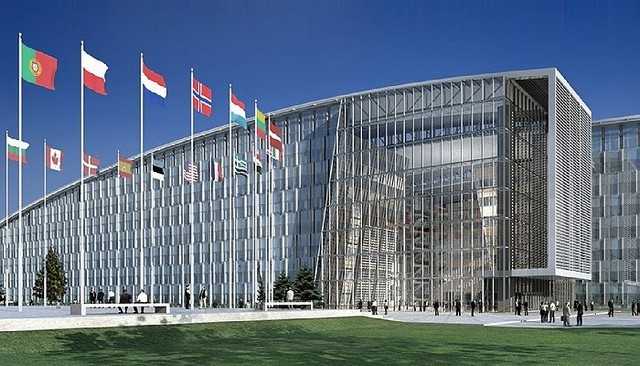
2 Dec 2019 – NATO’s London Summit on December 3 and 4, 2019 displays the deep political crisis of the 70-year-old alliance: Only a dinner and a short meeting, no statement to be issued, quarrels among the leading military members, accusations, substantial differences on Syria and many other issues, the deepest-ever Transatlantic conflict and the usual issues of burden-sharing.

Legal

But the political dimension of NATO’s crisis is only one. There is also a legal crisis. You’ll recognize it if you care to read the NATO Treaty text – something academic and media people don’t generally seem to have done. They would then have noticed that the Alliance of 2019 consistently operates outside – indeed in violation of – its own goals, purposes and values. For instance, the UN Charter which should be NATO’s guideline has been violated on a permanent basis for decades – such as in its out-of-area bombings of Yugoslavia with no UN mandate.

The contempt shown for international law in general and the UN Charter in particular is an integral part of NATO’s existential crisis.

Moral

And, third, there is a moral dimension to NATO’s crisis. Of course, no one talks about it.

It’s the simple fact that no war that individual NATO members states or NATO as NATO have engaged in can be termed anything but predictable fiascos when judged by the alliance’s own stated goals and criteria – just think of Vietnam, Yugoslavia, Afghanistan, Iraq, Libya, Syria… all crystal clear moral catastrophes causing unspeakable suffering, death and destruction to millions upon millions while achieving none of the stated goals that were set to explain and legitimize these wars such as creating democracy, respecting human rights, liberating women or stopping alleged genocides.

By now, the world should have been told enough lies about NATO’s benevolent motives, policies and actions for taxpaying citizens to mobilize resistance to it.

These three crises can all be related to the response of the Western world to the demise of the Soviet Union and the Warsaw Pact 30 years ago – i.e. to the choice to expand NATO and exploiting the weakness of Russia.

Intellectual

The last and perhaps most-hidden-of-all crisis is NATO’s intellectual crisis.

It’s now an alliance that operates in a kind of echo chamber with little, or no, sense of the realities of the world. It’s there for its own sake. When you listen to its Secretary-General – not only Stoltenberg but Fogh Rasmussen and earlier ones – you sense a level of creativity and intellectualism that reminds you of leaders who also happened to be Secretaries-General such as, say, Leonid Breznev.

Irrespective of some little objective analysis of the situation, NATO sings only one tune: There are new threats all the time, we must arm more, we need new and better weapons and we must, therefore, increase military expenditures.

And how is it legitimized?

By uttering mantras. No matter what NATO and its members choose to do, it is simply stated without a trace of argument or documentation that more money will increase four things: Defence, security, stability and peace. And be good for basic Western values such as freedom, democracy and peace.

How come – the small boy watching the Emperor would ask – that no matter what NATO has done the last 70 years, it is still maintaining that it needs more to create that defence, security, stability and peace?

What’s wrong with a system that keeps applying the same medicine decade after decade and gets further and further from achieving the stipulated goal?

Military Expenditures in General – No Balance and No Reality Check

NATO’s main enemy is supposed to be Russia. It doesn’t matter that Russia’s military expenditures are about 6-7 % of NATO’s total expenditures (29 countries). It doesn’t matter that NATO’s technical quality is superior. It doesn’t matter that Russia’s military expenditures are falling year-by-year – decreased to US $ 64 billion in 2018 from US $ 66 billion in 2017. It doesn’t matter that Russia’s military expenditures averaged only US $ 45 billion from 1992 until 2018.

Only? Yes, NATO’s total budget is US $ 1036 billion of which the US stands for 649.

And it doesn’t matter that the old Warsaw Pact budget were some 65-75% of NATO’s during the first Cold War and we were told back then that some kind of balance was good for stability and peace. Today we are told that the more superiority NATO has, the better it is for world peace.

In short, reality doesn’t matter anymore to NATO.

The 2 Per Cent Goal

And this is where the 2 per cent of BNP comes into play and reveals just how deep NATO’s crisis is. But have you seen anybody questioning this 2 per cent goal as the philosophical nonsense – or forgery – it is?

It resembles the Theatre of the Absurd to tie military expenditures to the economic performance of a country. Imagine a person sets off 10 % of her/his income to buy food. Sudden he or she wins in a lottery or is catapulted into a job that yields a 5 times higher income. Should that person then also begin to eat 5 times more?

The 2 per cent goal is an absurdity, an indicator of defence illiteracy. People who take it serious – in politics, media and academia – obviously have never read a basic book about theories and concepts in the field of defence and security. Or about how one makes a professional analysis of what threatens a country.

If military expenditures are meant to secure a country’s future, do the threats that this country faces also vary according to its own GNP? Of course not! It is a bizarre assumption.

Decent knowledge-based defence policies should be decided on the basis of a comprehensive analysis of threats and contain dimensions such as:

What threatens our nation, our society now and along various time horizons? Which threats that we can imagine are so big that we can do nothing to meet them? Which are such that it is meaningful to set off this or that sum to feel reasonably safe? What threats seem so small or unlikely that we can ignore them?

What threats are most likely to go from latent to manifest? How do we prioritize among scarce resources when we have other needs and goals than feeling secure such as developing our economy, education, health, culture, etc.?

And, most importantly, two more consideration: What threats can be met with predominantly military means and which require basically civilian means? And how do we act today to prevent the perceived threats from becoming a reality that we have to face – how do we, within our means, prevent violence and reduce risks as much as possible.

All these questions should be possible to answer with the new mantra: Just always give the military 2 per cent of the GNP and everything will be fine?

The MIMAC

MIMAC is the Military-Industrial-Media-Academic Complex – the vested interests of small elites in symbiosis with governments which run on and benefit from bizarre standards like the 2 per cent goal.

One purpose of that goal is to make serious, empirical and relevant threat analysis irrelevant. It’s a perpetuum mobile – a way of securing that MIMAC always gets what it needs, no matter what the consequences are for thosee who pay it all, the citizens and their tax money.

Imagine that Russia disappeared from the earth tomorrow. And NATO would quickly find some other “enemy” by which to legitimate that it anyhow needs also 2 per cent of your BNP in the future. At least!

NATO Titanic

It’s Secretary-General Jens Stoltenberg two days ago announced this mind-boggling news, swallowed by media as the most natural thing of the world in need of no questions – read it on NATO’s homepage:

“Ahead of the meeting of NATO Leaders in London to mark the Alliance’s 70th anniversary, Secretary General Jens Stoltenberg on Friday (29 November 2019) gave details of large increases in Allied defence spending. Mr. Stoltenberg announced that in 2019 defence spending across European Allies and Canada increased in real terms by 4.6 %, making this the fifth consecutive year of growth. He also revealed that by the end of 2020, those Allies will have invested $130 billion more since 2016. Based on the latest estimates, the accumulated increase in defence spending by the end of 2024 will be $400 billion. Mr. Stoltenberg said: “This is unprecedented progress and it is making NATO stronger.’ “

Read it carefully: NATO’s military expenditure increase 2016-2020 is US $ 130 billion – that is twice as much as Russia’s total annual budget!

There is only two words for it: Madness and irrationality. Madness in and of itself and madness when seen in the perspective of all the other problems humanity must urgently find funds to solve.

The total regular UN budget for the year 2016-17 was US $ 5.6 billion. That is, NATO countries spend 185 times more on the military than all the world does on the UN.

Do you find that sane and in accordance with the problems humanity need to solve? This author does not. I stand by the word madness. There exists no rational academic, empirical analysis and no theory that can explain NATO’s military expenditures as rational or in service of the common good of humankind.

*

The world’s strongest, nuclear alliance is a castle built on intellectual sinking sand. It’s a political, moral, legal and intellectual Titanic.

The only armament NATO needs is legal, moral and intellectual. And unless it now moves in this direction, it deserves to be dissolved.

The inverse proportion between its destructive power and its moral-intellectual power is – beyond any doubt – the largest single threat to humanity’s future.

This challenge is at least as serious and as urgent as is climate change.

Perhaps it is time to stop keeping NATO alive by taxpayers’ money and start a tax boycott in all NATO countries until it is dissolved or at least comes down to – say – one-tenth of its present wasteful military level? Not to speak of its bootprint destruction of the environment…

__________________________________________

TFF Director Prof. Jan Oberg is a member of the TRANSCEND Network for Peace Development Environment.

9 December 2019

Source: www.transcend.org

A Beautiful but Deceptive Documentary: “For Sama”

By Rick Sterling

8 Dec 2019 – The documentary movie “For Sama” has won a host of awards in Europe and North America. Its producers and protagonists, Syrians Waad Kateab and her husband Dr. Hamza Kateab plus English film-maker Edward Watts, have received gushing praise. And the awards will probably keep coming.

Unfortunately, behind a human interest story, the movie “For Sama” is propaganda: biased, misleading, and politically partisan.

Hiding Basic Facts about Aleppo

“For Sama” is a full length documentary with a moving personal story. It combines a story of young love and the birth of a child – Sama – in the midst of war. That makes it compelling and personal. But the movie fundamentally distorts the reality of east Aleppo in the years 2012-2016.  While the personal narrative may be true, the context and environment is distorted and hidden. The viewer will have no idea of the reality:

* Most residents of east Aleppo did not want the militants to take over their neighborhoods.  The short video, Nine Days from my Window, shows the takeover in one neighborhood. Many civilians fled the east side of Aleppo after the “rebels” took over. Those who stayed on were mostly militants (and families) plus those who had nowhere else to go or thought they could wait it out.  .

* The militants who took over east Aleppo became increasingly unpopular. As American journalist James Foley wrote,

“Aleppo, a city of about 3 million people, was once the financial heart of Syria. As it continues to deteriorate, many civilians here are losing patience with the increasingly violent and unrecognizable opposition — one that is hampered by infighting and a lack of structure, and deeply infiltrated by both foreign fighters and terrorist groups.”

Foley’s honest reporting may have contributed to his ultimate death.

* The opposition group which came to dominate east Aleppo was the Syrian version of Al Qaeda, Jabhat al Nusra. “For Sama” ignores their domination, extremism and sectarian policies. There is only one fleeting reference and no video showing who exactly was ruling east Aleppo.

* In fact, the militants (aka “rebels”) were incredibly violent and vicious. A few examples are when they threw postal workers off the building roof, when they sent suicide truck bomb into Al Kindi Hospital, when they slaughtered Syrian soldiers defending the hospital.

* 85% of the civilians in Aleppo were living in government controlled west Aleppo. Thousands were killed by “rebel” snipers, mortars and hell cannon missiles launched from east Aleppo.  This short video describes the situation in west Aleppo, completely ignored by For Sama.

Al Quds Hospital was NOT destroyed

“Al Quds Hospital” is featured in the documentary “For Sama”. This is where Hamza worked and Sama was born. According to the movie, the hospital was destroyed in February 2016. At the time there was enormous publicity about the hospital and allegations the Russians purposely bombed the hospital. Doctors without Borders (Medecins sans Frontieres) tweeted “We are outraged at the destruction of Al Quds hospital in #Aleppo. These claims are repeated in the documentary. At the time, there were questions and challenges about the authenticity of the account. It turned out “Al Quds Hospital” did not exist before the conflict and was one or two floors of an apartment building. It turned out Doctors Without Borders did not have any staff on site and simply accepted the account told to them. After east Aleppo was liberated, a prominent medical doctor from west Aleppo, Dr. Nabil Antaki, visited the location to find out the truth. He was a long time doctor but had never heard of Al Quds Hospital. He reported,

“I went Sunday February 12, 2017 visiting the Ansari-Sukari neighborhood in order to see Zarzour and Al Quds Hospitals. My guide was a young man who lived there and knows very well the area.

My first stop was Zarzour hospital (mentioned in MSF report) and I found out that it was burned. My guide told me that the rebels burned it the day before the evacuation (information confirmed by a high position responsible in the Syrian Red Crescent). On the side walk, I found hundreds of burned new blood bags (for collection of blood donation). A man met there invited me to visit his building just next to the hospital. His building was also burned and on the floors, I found hundreds of IV solution bags.

Then, we moved to Ain Jalout school. In fact, there are 3 contiguous schools. Two are completely destroyed; one is partially. Behind the schools, there is a mosque called Abbas mosque with its minaret. Answering my surprise to see schools destroyed by air strikes, my guide told me that the mosque was a headquarters of the rebels and one school was an ammunition depot and the other one was a food depot. I noticed the flag of Al Nosra painted on the external wall of the school, and dozens of buildings in the surrounding partially destroyed.

Then, we moved to see Al Quds Hospital. Obviously, it is the most preserved building of the street. Obviously, it was not hit directly by bombs and probably received some fragments from bombs fallen on other building. I asked my guide if any restoration or repair were done. He said no.

My feeling is the following: Ain Jalout school was the target of the strikes, the surrounding destroyed buildings were collateral damages and Al Quds hospital was not directly hit by strikes.”

So we have an eye witness account, plus photographs and video, which show that it is untrue “Al Quds Hospital” was destroyed. This means that claims in the movie about the death of a doctor at Al Quds Hospital, supposedly captured by closed caption camera, are also untrue.

The armed opposition and their western supporters have been faking events to demonize the Syrian government from the start. One example which became public was the Richard Engels Kidnapping Hoax where the militants staged the kidnapping and “rescue” of Engels and team.

Paid and Promoted by the West

Waad had an expensive video camera and endless hard drives. She even had a drone to take video from the air. As confirmed by Hillary Clinton in her book “Hard Choices”, the US provided “satellite-linked computers, telephones, cameras, and training for more than a thousand activists, students, and independent journalists.” Waad claims she is a citizen journalist but she has been paid and supplied by governments which have long sought the overthrow of the Syrian government. Even in 2005, CNN host Christiane Amanpour warned Bashar al Assad that

“the rhetoric of regime change is headed towards you from the United States. They are actively looking for a new Syrian leader … They’re talking about isolating you diplomatically and, perhaps, a coup d’etat or your regime crumbling.”  

Since 2011, the West, Turkey, Israel and the Gulf monarchies have spent many BILLIONS of dollars trying to overthrow the Syrian government. Just the CIA budget for Syria was near a billion per year. The “soft power” component includes video equipment and training to people like Waad to support the armed insurrection, demonize the Syrian government and persuade the public to continue the war.

“We all suffered… The difference is that some wanted the war.”

The medical doctor from west Aleppo. Dr Antaki, does not deny there was suffering in east Aleppo. But he points out the discrepancy in media coverage where all the attention goes to the “rebels”. He also points out that all suffered, but not all were responsible. Some, especially the “revolution” supporters, initiated and continued the conflict. He said,

“There were a lot of stories like ‘For Sama’ in West Aleppo. Unfortunately, nobody had the idea to document them because we were busy trying to protect ourselves from the rockets, to find water to drink, to find bread and essential products which were not available because of the blockade of Aleppo by the armed groups. They cut off electrical power, heating etc.. Yes, people who were in the East neighborhoods suffered from the war as well as those who lived in the West neighborhoods. We, all, suffered. The difference is that some people wanted the war, initiated or supported it and they suffer. The others didn’t support it and suffered.”

Aftermath

Waad Al Kateab and her husband Hamza are now living in the UK. He is working for a money transfer company and involved with “Al Quds Hospital” in  Idlib. As indicated in the movie, Waad was never proud to be Syrian and she wanted to emigrate to the West. From afar, she claims to be proud of the “revolution” that has led to this destruction and human tragedy.

Meanwhile people are returning to Aleppo and rebuilding the city. There are even a few tourists. Although there are pockets of snipers in Aleppo, Al Qaeda extremism is mostly confined to Idlib province.

Save Idlib?

The 2019 documentary movie “Of Fathers and Sons” is based on a film-maker who lived with militants in Idlib. Some of what is hidden in “For Sama” is revealed in this documentary. It shows life in Idlib province dominated by Nusra. Women are restricted to the house and must be veiled. Boys as young as ten are sent to sharia school and military training, preparing to join Nusra. They believe in the Taliban, glorify 9-11 and expel or punish any people who do not subscribe to their fundamentalist religion. Youth are indoctrinated with extremist ideology and belief in violence. This is the regime that those who want to “Save Idlib” are protecting.

For decades the West has supported fanatic extremist organizations to overthrow or undermine independent secular socialist states. Most people in the West are unaware of this though it is well documented in “Devil’s Game: How the United States Helped Unleash Fundamentalist Islam” and the new book “The Management of Savagery: How America’s National Security State Fueled the Rise of Al Qaeda, ISIS, and Donald Trump”.

The Future

Unknown in the West, the majority of Syrians support their government, admire their president, and feel the Syrian Army is protecting them. Even those who are critical of the government prefer it to chaos or salafi fundamentalism. Waad and Hamza Al Kateab represent a tiny minority of Syrians. Their voices, and the perspective of Edward Watts, the film maker who has never been to Syria, are being widely projected and disseminated through “For Sama” while others are being ignored.

When Waad and Hamza departed Aleppo with Nusra militants, the vast majority of Aleppans celebrated. On the surface, “For Sama” is about romance and childbirth. Underneath it is very political, as interviews with the producers confirm. I suspect it is being widely promoted precisely because it gives a distorted picture.  To continue the dirty war on Syria, public misunderstanding is required.

___________________________________________

Rick Sterling is a member of the TRANSCEND Network and an investigative journalist who lives in the SF Bay Area, California.

9 December 2019

Source: www.transcend.org

Millions Die in Congo while the UN ‘Keeps the Peace’

By Ann Garrison

4 Dec 2019 – The UN Peacekeeping Mission has been in Congo for 20 years without protecting the people or the peace.

“Rwanda is responsible for what is going wrong in the peace in Congo!”

In its most recent report  to the UN Security Council, the UN Stabilization Mission in the Democratic Republic of the Congo (MONUSCO) blandly recounted “progress” in service to their mission, but what is their mission? Up until 2013, MONUSCO had no combat mandate; they were somehow expected to keep the peace amidst a war for Congo’s resources without one. In 2013, however, as the M23 militia was ravaging North and South Kivu Provinces, the UN Group of Experts on the Democratic Republic of the Congo (DRC) reported that M23 answered to the command of Rwandan Defense Minister James Kabarebe, who of course answered to Rwandan President Paul Kagame himself. There were competing factions within M23, and some of its officers answered to high-level officials in Uganda, who of course answered to Ugandan President Yoweri Museveni.

This made Rwanda and Uganda’s wars of aggression so obvious that the UN Security Council finally felt obliged to do what the UN Charter compels them to: organize a UN military intervention to stop the Rwandan and Ugandan militias. The UN Force Intervention Brigade, composed of Tanzanian, South African, and Malawian troops, was the first UN Peacekeeping mission with an explicit combat mandate, and they did indeed chase M23 back into Rwanda and Uganda. Then the press reported that M23 had “surrendered” to Kagame and Museveni. That was more or less like reporting that the Confederate Army had fled South to surrender to General Robert E. Lee, but the world that had been horrified by M23’s atrocities applauded their defeat and turned its attention elsewhere.

Museveni, one of the aggressors, presided over a so-called peace conference in Uganda’s capital Kampala, which produced an agreement giving M23 everything it had asked for at the outset of the war. But who bothered to read or understand the agreement? Others no doubt did, but I’m the only one I know of who bothered to report what it said—on Pacifica Radio and in the San Francisco Bay View Newspaper , which the powerful players feel free to ignore, even if they were slightly discomfited.

The aggressors are not named

Violence has continued in the DRC’s Kivu Provinces. According to the Congo Research Group based at New York University, at least 99 Congolese civilians have been massacred since November 5 in North Kivu’s Beni Territory alone. UN Peacekeepers have failed to protect them from marauding militias, and protesters have taken to the streets in Beni, Goma, and Butembo to say that the peacekeepers are part of the problem and demand that they leave. In Beni they burned down most of at least one UN military base, and one protester has been reported killed, five wounded.

With 18,000 troops, the UN Peacekeeping Mission in Congo is the largest in the world, and it has been in Congo for 20 years without protecting the people or the peace. A young protester in Beni told Aljazeera,

“The UN is supposed to keep us safe, to keep peace in North Kivu, but we’ve never seen the peace. So we are so angry we don’t want them to stay here in North Kivu.”

Congolese Swiss historian Bénédicte Kumbi Njoko also spoke to Aljazeera:

“If we think about the UN and its presence, we need to go back to almost 59 years that the UN has been working in the Congo because there were problems in the country. And I think that if we take that into perspective, we can of course question the utility of this organization, because what we have seen the last 20 years now is that people are still dying and this war that is happening in the Congo has caused already more than 8 million deaths, so maybe the response that the UN is giving to that situation is not an appropriate one.”

South African mining researcher and community organizer David Van Wyk agreed.

“Sadly,” he said, “it’s one more failed intervention. The UN has failed the Congolese people from the very first day of the Congo’s independence 59 years ago.”

Rebels,” “rebellions,” and “rebel groups”

Kumbi told me that she had asked Aljazeera why, like the rest of the international press, they describe the militias killing the Congolese people as “rebel groups” when they are in fact gangs—Rwandan, Ugandan, and Congolese—fighting over Congolese territory and resource riches. They are not Congolese nationals fighting for power or social justice as the term “rebel groups” implies. They are fighting at the country’s easternmost edges, on its borders with Uganda, Rwanda, and Burundi. The war-torn Kivu Provinces couldn’t be farther from Congo’s capital, Kinshasa, which is on its western border with the Republic of Congo and near its Atlantic coast. So they are not trying to overthrow the existing government as any self-respecting rebels would.

Her question, Kumbi said, did not make it into Aljazeera’s final cut. It is essentially the same question that she demanded an answer to at a UN conference in Geneva back in 2013, where—until the gendarmes dragged her out—she interrupted then UN Secretary General Ban-Ki-Moon with this scream :

What about people of the Congo? Please! What about people of the Congo??? You don’t say anything about that! There’s been killed eight million people and you say you’re making fictitious peace and you’re telling us that this is peace when aggressors are not named! Rwanda is responsible for what is going wrong in the peace in Congo. And nobody says something about that! Burundi! Uganda! You should say that! We are sick and tired of hearing every time people just being so ‘peaceful’ with Africa. You should let Africa in peace!”

So long as the UN Security Council and the international press blame the war on non-existent “rebels” and “rebel groups” carrying out non-existent “rebellions,” the Congolese holocaust will go on. NGOs and UN agencies will continue to call for millions of dollars to help with the humanitarian crisis , comparing it to Syria, Yemen, and Iraq, and the displaced population already numbering four million will continue to rise. Neither the UNSC nor anyone else is going to defeat “rebels” or end a war they refuse to name.

_______________________________________________

Ann Garrison is an independent journalist based in the San Francisco Bay Area.

9 December 2019

Source: www.transcend.org