Just International

Coronavirus deaths in US nearing 4,000 as Trump washes his hands of responsibility

Co-Written by Benjamin Mateus and Patrick Martin

The coronavirus killed at least 812 people in the United States Tuesday, the highest death toll since the pandemic began, while nearly 25,000 new cases were reported, bringing the total number infected to more than 188,000, the largest number in the world by far.

Along with the unprecedented scale of the infection, its sheer speed is staggering. On March 10, there were only 1,000 reported coronavirus infections in the United States. Three weeks later, it is nearing 200 times that level. Another such three weeks would see 40 million people infected in the United States.

The US death toll has not yet reached the level of Italy (12,428) or Spain (8,464), but that is only a matter of days. And White House officials continue to escalate their projections of the total number of deaths in a “best-case” scenario, setting the figure at a staggering 240,000, with Trump himself hinting that the total could be double that.

Four countries—Italy, Spain, the US and France—have now seen more deaths than China, where the epidemic first broke out in the city of Wuhan last December. After 3,305 deaths, China claims to have largely suppressed the outbreak through systematic testing, contact tracing and quarantining of those exposed to the coronavirus.

The American media and the Trump administration continually describe efforts to counteract the coronavirus as a war, where the frontlines are being drawn in emergency rooms and ICUs throughout the United States, and especially in the New York metropolitan area, where half of all COVID-19 cases are located. On Tuesday the death toll in New York City itself hit 1,096, and 10,000 people were hospitalized, with 2,700 of them requiring ventilators.

But in this war, under the incompetent “commander-in-chief” Trump and his hapless lieutenants among the state governors, the troops are being sent into battle haphazardly, without weapons, and largely without regard for their own safety. Healthcare workers lack sufficient personal protection equipment, and they are being infected and incapacitated at an alarming rate, with many deaths.

In Spain, the healthcare workers accounted for 14 percent of the country’s cases, while in Italy, they accounted for 10 percent. The same process is under way in the United States. NPR reported that 345 employees of Boston’s four largest hospitals have tested positive for COVID-19. In New York City, hundreds of workers have fallen ill. At Columbia University Irving Medical Center in Manhattan, 50 percent of the intensive-care staff have been infected.

The result is that in addition to the shortages of hospital rooms, ICU beds, masks, and ventilators, there is a growing shortage of medical staff who can cope with the increasing volume of patients seeking medical attention.

Meanwhile, hospitals and healthcare systems are threatening doctors and nurses who make their concerns over working conditions public. An emergency room physician, Dr. Ming Lin, in Washington state, was fired because he gave an interview to a newspaper complaining about inadequate protective equipment. Ruth Schubert, a spokeswoman for the Washington State Nurses Association, told Bloomberg, “Hospitals are muzzling nurses and other healthcare workers in an attempt to preserve their image.” Nurses who have spoken under conditions of anonymity with WSW S reporters said that they have been told they would be fired if they talked to the media.

In some cases, state governors have made statements that amount to a confession of bankruptcy. On CNN Live, Governor Larry Hogan of Maryland said, “We are all trying to get more testing, but this is a pinch point on testing, on supplies, and materials, and PPE and ventilators. Everybody in America knows we don’t have enough of these things … and without the tests we are really flying blind. We are guessing about where the outbreaks are, what the infection rates in the hospitals are, and the mortality rates.”

However, the Trump White House manages to combine moronic expressions of optimism (largely in the form of testimonials to Trump’s personal genius) with ever more ominous declarations that the death toll in the United States will reach six or even seven figures.

On Sunday, White House adviser Dr. Anthony Fauci said that 100,000 to 200,000 deaths was a midrange figure that could be substantially lowered if proper measures were taken. On Monday, White House coronavirus coordinator Dr. Deborah Birx said that 100,000 to 200,000 was now the floor, the best-case scenario if everything went perfectly, while Trump himself declared that a death toll in that range would represent “a good job” by his administration.

On Tuesday, Fauci and Birx presented a slide show to a press briefing indicating projections that without severe mitigation, total deaths due to COVID-19 could reach 1.2 million to 2.2 million. Birx admitted that even with strict mitigation efforts throughout the month of April, the number of deaths could range as high as 240,000. At the peak of such a “best-case” outcome, 4,000 to 5,000 people would be dying every day.

Shocking as such figures are, even more outrageous is the blithe indifference displayed by Trump personally and his closest aides to the likely results of their own policy of refusing to conduct a serious struggle to contain the pandemic, not merely mitigate it.

Trump himself, towards the end of the press “briefing” that lasted more than two hours—a clear indication, in and of itself, that the White House antivirus campaign is an exercise in political propaganda and media manipulation—made comments that amounted to a self-indictment for criminal negligence on a monumental scale.

“We’re going through the worst thing this country has probably ever seen,” he said. “Look, we had the Civil War. We lost 600,000 people, right? Had we not done anything, we would have lost many times that, but we did something, so it’s going to be hopefully way under that. But you know, we lose more here potentially than you lose in world wars as a country.”

Given that the US death toll in the Second World War was 405,000, Trump is saying, in his semiliterate and meandering way, that the US death toll from the COVID-19 pandemic could well be between 400,000 and 600,000.

There was remarkably little push-back from the journalists of the corporate media who appeared to be in a daze. While several media outlets had taken note that on Tuesday morning, more Americans had died from coronavirus than were killed in the 9/11 terrorist attacks, not even this comparison, inadequate as it is, was made.

The US government’s response is best characterized as malign neglect to a pandemic that was both foreseen and preventable. With complete indifference to the fate of the people, the Trump administration’s primary focus was on ensuring the financial markets were protected. Only when the markets began to implode did the government’s machinery begin to churn to prevent its complete collapse. Everything else was deemed an afterthought.

First, on March 3, the Federal Reserve slashed rates by 0.5 percent, the most significant cut since the 2008 financial crisis. On March 12, the Federal Reserve added $1.5 trillion of liquidity into the banking systems by massively expanding short-term loans to the banks to keep money markets stable and provide banks with cash in hand. When the markets continued to plummet on March 15, the Federal Reserve cut interest rates by a full percentage point down to almost 0.00 percent. They also resumed quantitative easing by purchasing $500 billion in treasuries and $200 billion in mortgage-backed securities. Then Congress rushed through a record $2.2 trillion economic “rescue” bill, whose main purpose was to provide the Treasury and the Federal Reserve the necessary authority to bail out corporate America and Wall Street.

Comparing the gargantuan and energetic efforts to save the markets with the slapdash, indifferent and grossly incompetent actions in relation to public health, it is easy to see what are the priorities of the American financial aristocracy.

But there is another force to be heard from in this crisis—the working class. Instacart, Amazon, and Whole Foods workers have initiated strike actions against forced work under unsafe conditions. Workers at General Electric have protested, demanding their company begin producing ventilators. Many other workers are rebelling against being forced to remain on the job without protective gear.

As the crisis escalates, the decisive question is for the working class to develop a conscious political response, recognizing that it must fight the capitalist system as a whole, based on a socialist program.

1 April 2020

Source: countercurrents.org

Netanyahu uses coronavirus to lure rival Gantz into ‘emergency’ government

By Jonathan Cook

Nazareth: Benny Gantz, the former Israeli general turned party leader, agreed late last week to join his rival Benjamin Netanyahu in an “emergency government” to deal with the coronavirus epidemic.

Two weeks ago he had won a wafer-thin majority vote in the parliament that gave him first shot at trying to put together a coalition government.

Instead he has conceded to Netanyahu, who will remain prime minister for the next 18 months. Gantz is supposed to take over in late 2021, though Netanyahu has a formidable reputation for double-dealing.

Over the past year Gantz fought three hotly contested, though indecisive, general elections in which he vowed to bring down Netanyahu, who has ruled continuously for 11 years.

He had promised supporters he would never sit in a government alongside Netanyahu, who is due to stand trial on multiple corruption charges.

Predictably, the U-turn tore apart Gantz’s Blue and White party. Denouncing the decision, two of the alliance’s three constituent factions said they would head into the opposition.

There has been increasing governmental paralysis over the past year with neither Gantz nor Netanyahu able to cobble together a majority coalition with other parties.

The reason was the Joint List party, representing Israel’s Palestinian citizens, a fifth of the country’s population, which effectively held the balance of votes. None of the main Jewish parties was prepared to be seen relying on its 15 seats.

Even with Gantz’s depleted party, Netanyahu’s “emergency government” should now be able to muster more than 70 seats in the 120-member parliament, giving him a safe majority.

Renowned for his ability to pull off political miracles, Netanyahu appears to have gradually worn down Gantz’s resistance over the past 12 months. The coronavirus epidemic proved the final straw.

Netanyahu has exploited justifiable fears about the virus to cement his status as Father of the Nation. In regular addresses, he has presented himself as Israel’s Winston Churchill, the British wartime leader who helped vanquish the Nazis.

He has now served longer as prime minister than the country’s founding father, David Ben Gurion.

Gantz, it seems, assessed that there was no practical way to push for a fourth election during the current lockdowns. And in any case Netanyahu, given his complete dominance of the airwaves, would have been able to cast Gantz as recklessly endangering Israel’s health and its security by refusing to join him in government.

The Blue and White leader may have blanched too at the prospect of another no-holds-barred election campaign, unleashing yet more of the dirty tricks in which Netanyahu and his allies excel.

As Netanyahu has grown more desperate to stay in power – and fearful of being put on trial – the gloves have come off. In the last two elections, his officials have questioned Gantz’s mental health and spread unverifiable rumours that a phone stolen from him contained compromising photos passed on to Iran.

Further, because his path to power depended on backing from the Joint List, Gantz was the subject of endless smears from Netanyahu accusing him of getting into bed with “supporters of terrorism”. The result was a wave of death threats.

There was another consideration for Gantz. It had becoming increasingly clear that Netanyahu was prepared to provoke a constitutional crisis – and likely violence – to hold on to power.

Netanyahu’s strategy has been to undermine the court system and the parliament – the two main checks on the executive he controls.

Amir Ohana, his justice minister, has partially shut down the courts. That included postponing Netanyahu’s March 17 trial until the end of May. There is no certainty the case won’t be delayed again.

To deal with the resulting logjam of hearings, the cabinet passed emergency regulations last week to allow court cases to be conducted by video instead. But notably, an exemption was made for those facing indictment, such as Netanyahu.

The caretaker prime minister has also stood by mutely as his senior officials have unleashed a torrent of incitement against the Israeli supreme court, in a transparent effort to intimidate its judges and turn the public mood against the legal system.

Yuli Edelstein, the speaker of the parliament from Netanyahu’s Likud party, suspended the legislature on March 18 – two weeks after the election – and refused to hold a vote for his successor as speaker because Gantz’s bloc had a narrow majority.

The fear was that a new speaker would help pass legislation to prevent criminal suspects under indictment from serving as prime minister, ousting Netanyahu from power.

The supreme court ruled that Edelstein had committed “an unprecedented violation of the rule of law” and demanded that he allow the parliament to vote on his replacement. Instead, Edelstein resigned to avoid carrying out the ruling.

Netanyahu’s closest allies, including the justice minister, rounded on the judges. Yariv Levin, the tourism minister, accused the chief justice, Esther Hayut, of launching a judicial “coup”. He mocked her, suggesting she come to the Knesset, backed by court guards, and open the parliament herself.

As veteran Israeli analyst Ben Caspit observed: “The coronavirus outbreak allows Netanyahu to keep undermining the rule of law for his own survival, almost unchallenged.”

Defending his decision to join the government, Gantz said: “These are not normal times and they call for unusual decisions.”

He hopes to persuade his supporters that he has not capitulated completely. If things go to plan – a big if – Gantz should become prime minister in a year and a half’s time.

Reportedly, Gantz had also insisted that one of his legislators be justice minister – presumably to ensure Netanyahu cannot evade trial indefinitely. But that safeguard was almost immediately undermined by legislation the emergency government started drafting to exempt Netanyahu from a current law that would prevent him from serving as an ordinary minister while under criminal indictment.

As a Haaretz editorial observed this week: “It’s hard to stomach this new reality in which people who, until not long ago, presented themselves as warriors against government corruption in general and the corruption attributed to Netanyahu in particular, have now become its defense attorneys.”

A further plus for Netanyahu is that in the meantime he will likely have Gantz as foreign minister – where he will be responsible, as a supposed “moderate”, for burnishing Israel’s “democratic” credentials abroad.

It may not be plain-sailing.

This month Israel scored record lows in annual global democracy surveys. Freedom House noted Israel had slipped six points – “an unusually large decline for an established democracy” – even before the latest events, noting that Netanyahu had “anti-democratic tendencies”.

Israel’s president, Reuven Rivlin, from Netanyahu’s own party, has similarly warned that the country’s democratic institutions are under threat.

Convoys of cars have been defying the lockdowns to protest at Netanyahu’s increasing flouting of norms.

The first test of the emergency government will be whether Gantz’s inclusion stays the demonstrators’ hand for the time being or inflames yet more protests.

A version of this article first appeared in the National, Abu Dhabi.

Jonathan Cook won the Martha Gellhorn Special Prize for Journalism.

30 March 2020

Source: countercurrents.org
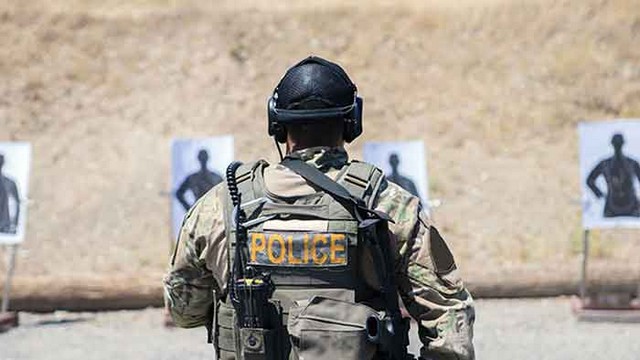
US Levies False Charges of Drug Trafficking against Venezuela

By Task Force of the Americas

The Task Force on the Americas condemns the false criminal charges by the US government against fourteen high-ranking Venezuelan officials for alleged involvement in international drug trafficking. The US government has, in effect, put a $15 million bounty on Venezuelan President Maduro and bounties of $10 million each for the head of the National Constituent Assembly and other leading officials and former officials.

The US claims that Venezuelan officials are conspiring to “flood the United States with cocaine” are unsubstantiated and bogus. Even WOLA, a Washington-based think tank that supports regime change for Venezuela, found in a recent detailed report using the US government’s own data that the facts do not support such claims. The authoritative US interagency Consolidated Counterdrug Database reports, in fact, that 93% of US-bound cocaine is trafficked through western Caribbean and eastern Pacific routes, not through Venezuela’s eastern Caribbean coast.

The US charges of drug trafficking against Venezuela are also the height of hypocrisy. The world’s leading source of illicit cocaine is the US client state of Colombia; the world’s leading source of heroin is US-occupied Afghanistan, and the US is the world’s largest cocaine market. The president of Honduras, the latest in a line of corrupt presidents since the 2009 US-backed coup there, was identified as an unindicted co-conspirator in October by a US federal court for smuggling multi-million dollars’ worth of cocaine into the US. And that’s only scratching the surface of the US’s history of complicity in international narcotrafficking, including the Iran-Contra scandal.

US Attorney General Barr’s indictments of March 26 against the government of Venezuela are a ramping up of a policy of regime change to replace the democratically elected president with Juan Guaidó (himself associated with a Colombian drug cartel) chosen by the US. Ever-tightening unilateral coercive measures by the US have created a blockade, costing Venezuela over 100,000 lives.

This latest escalation of the US hybrid war takes place within the context of the global coronavirus pandemic, which the US empire sees as an opportunity to further attack the Venezuelan people made more vulnerable by the health crisis. Indeed, the US State Department has declared “Maximum-pressure March” against Venezuela. Meanwhile, Cuba, Russia, and China are all supporting the Maduro government’s successful efforts to contain the spread of COVID-19.

The Task Force on the Americas demands that the US government:

  • Drop the unsupported indictments against President Maduro and other Venezuelan officials.
  • Lift the inhumane and illegal sanctions on Venezuela so that Venezuela can purchase medicines and equipment to better fight the coronavirus pandemic.
  • Restore normal relations with Venezuela based on respect for national sovereignty.

30 March 2020

Source: transcend.org

Cuba’s Coronavirus Response Is Putting Other Countries to Shame

By Ben Burgis

Cuba is caricatured by the Right as a totalitarian hellhole. But its response to the coronavirus pandemic — from sending doctors to other countries to pioneering anti-viral treatments to converting factories into mask-making machines — is putting other countries, especially the rich ones, to shame.

Last week, the MS Braemar, a transatlantic cruise ship carrying 682 passengers from the United Kingdom, found itself momentarily stranded. Five of the cruise’s passengers had tested positive for the coronavirus. Several dozen more passengers and crew members were in isolation after exhibiting flu-like symptoms. The ship had been rebuffed from several ports of entry throughout the Caribbean. According to sources in the British government who spoke to CNN, the UK then reached out to both the United States and Cuba “to find a suitable port for the Braemar.”Which country took them in? If you’ve paid attention to the Trump administration’s xenophobic rhetoric about “the Chinese virus” and its obsession with keeping foreign nationals out of the country, and you know anything about Cuba’s tradition of sending doctors to help with humanitarian crises all around the world, you should be able to guess the answer.The Braemar docked in the Cuban port of Mariel last Wednesday. Passengers who were healthy enough to travel to their home countries were transported to the airport in Havana. Those who were too sick to fly were offered treatment at Cuban hospitals — even though there had only been ten confirmed cases in the whole country, and allowing patients from the cruise ship to stay threatened to increase the number.

Cuba Mobilizes Against the Virus

Despite being a poor country that often experiences shortages — a product of both the economy’s structural flaws and the effects of sixty years of economic embargo by its largest natural trading partner — Cuba was better positioned than most to deal with the coronavirus pandemic.

The country combines a completely socialized medical system that guarantees health care to all with impressive biotech innovations. A Cuban antiviral drug (Interferon Alfa-2B) has been used to combat the coronavirus both inside the country and in China. Cuba also boasts 8.2 doctors per 1,000 people — well over three times the rate in the United States (2.6) or South Korea (2.4), almost five times as many as China (1.8), and nearly twice as many as Italy (4.1).

On top of its impressive medical system, Cuba has a far better track record of protecting its citizens from emergencies than other poor nations — and even some rich ones. Their “comprehensive, all-hands-on-deck” hurricane-preparedness system, for example, is a marvel, and the numbers speak for themselves. In 2016, Hurricane Matthew killed dozens of Americans and hundreds of Haitians. Not a single Cuban died. Fleeing residents were even able to bring their household pets with them — veterinarians were stationed at the evacuation centers.

The coronavirus will be a harder challenge than a hurricane, but Cuba has been applying the same “all-hands-on-deck” spirit to prepare. Tourism has been shut down (a particularly painful sacrifice, given the industry’s importance to Cuba’s beleaguered economy). And the nationalized health care industry has not only made sure that thousands of civilian hospitals are at the ready for coronavirus patients, but that several military hospitals are open for civilian use as well.

Masks: A Tale of Two Countries

In the United States, the surgeon general and other authorities tried to conserve face masks for medical professionals by telling the public that the masks “wouldn’t help.” The problem, as Dr Zeynep Tufekci argued in a recent New York Times op-ed, is that the idea that doctors and nurses needed the masks undermined the claim that they would be ineffective. Authorities correctly pointed out that masks would be useless (or even do more harm than good) if not used correctly, but as Tufekci notes, this messaging never really made sense. Why not launch an aggressive educational campaign to promote the dos and don’ts of proper mask usage rather than telling people they’d never be able to figure it out?

Many people also wash their hands wrong, but we don’t respond to that by telling them not to bother. Instead, we provide instructions; we post signs in bathrooms; we help people sing songs that time their hand-washing. Telling people they can’t possibly figure out how to wear a mask properly isn’t a winning message. Besides, when you tell people that something works only if done right, they think they will be the person who does it right, even if everyone else doesn’t.

The predictable result of all of this is that, after weeks of “don’t buy masks, they won’t work for you” messaging, so many have been purchased that you can’t find a mask for sale anywhere in the United States outside of a few on Amazon for absurdly gouged prices.

In Cuba, on the other hand, nationalized factories that normally churn out school uniforms and other non-medical items have been repurposed to dramatically increase the supply of masks.

Cuban Doctors Abroad

The same humanitarian and internationalist spirit that led Cuba to allow the Braemar to dock has also led the tiny country to send doctors to assist Haiti after that nation’s devastating 2010 earthquake, fight Ebola in West Africa in 2014, and, most recently, help Italy’s overwhelmed health system amid the coronavirus pandemic. (Cuba offered to send similar assistance to the United States after Hurricane Katrina ravaged the Gulf Coast, but was predictably rebuffed by the Bush administration.)

Even outside of temporary emergencies, Cuba has long dispatched doctors to work in poor countries with shortages of medical care. In Brazil, Cuban doctors were warmly welcomed for years by the ruling Workers’ Party. That began to change with the ascendance of far-right demagogue Jair Bolsonaro. When he assumed office, Bolsonaro expelled most of the Cuban doctors from the country, insisting that they were in Brazil not to heal the sick but “to create guerrilla cells and indoctrinate people.”

As recently as two weeks ago, Bolsonaro was calling the idea that the coronavirus posed a serious threat to public health a “fantasy.” Now that reality has set in, he’s begging the Cuban doctors to come back.

Embracing Complexity About Cuba

Last month, Bernie Sanders was red-baited and slandered by both Republicans and establishment Democrats for acknowledging the real accomplishments of the Cuban Revolution. It didn’t seem to matter to these critics that Sanders started and ended his comments by calling the Cuban government “authoritarian” and condemning it for keeping political prisoners. Instead, they seemed to judge his comments by what I called the “Narnia Standard.” Rather than frankly discussing both the positive and negative aspects of Cuban society, the island state is treated as if it lacks any redeeming features — like Narnia before Aslan, where it was “always winter and never Christmas.”

Democratic socialists value free speech, press freedom, multiparty elections, and workplace democracy. We can and should criticize Cuba’s model of social organization for its deficits. But Cuba’s admirably humane and solidaristic approach to the coronavirus should humble those who insist on talking about the island nation as if it were some unending nightmare.

Ben Burgis is a philosophy professor and the author of Give Them an Argument: Logic for the Left.

30 March 2020

Source: www.transcend.org

Venezuela’s Coronavirus Response Might Surprise Some

By Leonardo Flores

Within a few hours of being launched, over 800 Venezuelans in the U.S. registered for an emergency flight from Miami to Caracas through a website run by the Venezuelan government. This flight, offered at no cost, was proposed by President Nicolás Maduro when he learned that 200 Venezuelans were stuck in the United States following his government’s decision to stop commercial flights as a preventative coronavirus measure. The promise of one flight expanded to two or more flights, as it became clear that many Venezuelans in the U.S. wanted to go back to Venezuela, yet the situation remains unresolved due to the U.S. ban on flights to and from the country.

Those who rely solely on the mainstream media might wonder who in their right mind would want to leave the United States for Venezuela. Time, The Washington Post, The Hill and the Miami Herald, among others, published opinions in the past week describing Venezuela as a chaotic nightmare. These media outlets painted a picture of a coronavirus disaster, of government incompetence and of a nation teetering on the brink of collapse. The reality of Venezuela’s coronavirus response is not covered by the mainstream media at all.

Furthermore, what each of these articles shortchanges is the damage caused by the Trump administration’s sanctions, which devastated the economy and healthcare system long before the coronavirus pandemic. These sanctions have impoverished millions of Venezuelans and negatively impact vital infrastructure, such as electricity generation. Venezuela is impeded from importing spare parts for its power plants and the resulting blackouts interrupt water services that rely on electric pumps. These, along with dozens of other implications from the hybrid war on Venezuela, have caused a decline in health indicators across the board, leading to 100,000 deaths as a consequence of the sanctions.

Regarding coronavirus specifically, the sanctions raise the costs of testing kits and medical supplies, and ban Venezuela’s government from purchasing medical equipment from the U.S. (and from many European countries). These obstacles would seemingly place Venezuela on the path to a worst-case scenario, similar to Iran (also battered by sanctions) or Italy (battered by austerity and neoliberalism). In contrast to those two countries, Venezuela took decisive steps early on to face the pandemic.

As a result of these steps and other factors, Venezuela is currently in its best-case scenario. As of this writing, 11 days after the first confirmed case of coronavirus, the country has 86 infected people, with 0 deaths. Its neighbors have not fared as well: Brazil has 1,924 cases with 34 deaths; Ecuador 981 and 18; Chile 746 and 2; Peru 395 and 5; Mexico 367 and 4; Colombia 306 and 3. (With the exception of Mexico, those governments have all actively participated and contributed to the U.S.-led regime change efforts in Venezuela.) Why is Venezuela doing so much better than others in the region?

Skeptics will claim that the Maduro government is hiding figures and deaths, that there’s not enough testing, not enough medicine, not enough talent to adequately deal with a pandemic. But here are the facts:

First, international solidarity has played a priceless role in enabling the government to rise to the challenge. China sent coronavirus diagnostic kits that will allow 320,000 Venezuelans to be tested, in addition to a team of experts and tons of supplies. Cuba sent 130 doctors and 10,000 doses of interferon alfa-2b, a drug with an established record of helping COVID-19 patients recover. Russia has sent the first of several shipments of medical equipment and kits. These three countries, routinely characterized by the U.S. foreign policy establishment as evil, offer solidarity and material support. The United States offers more sanctions and the IMF, widely known to be under U.S. control, denied a Venezuelan request for $5 billion in emergency funding that even the European Union supports.

Second, the government quickly carried out a plan to contain the spread of the disease. On March 12, a day before the first confirmed cases, President Maduro decreed a health emergency, prohibited crowds from gathering, and cancelled flights from Europe and Colombia. On March 13, Day 1, two Venezuelans tested positive; the government cancelled classes, began requiring facemasks on subways and on the border, closed theaters, bars and nightclubs, and limited restaurants to take-out or delivery. It bears repeating that this was on Day 1 of having a confirmed case; many U.S. states have yet to take these steps. By Day 4, a national quarantine was put into effect (equivalent to shelter-in-place orders) and an online portal called the Homeland System (Sistema Patria) was repurposed to survey potential COVID-19 cases. By Day 8, 42 people were infected and approximately 90% of the population was heeding the quarantine. By Day 11, over 12.2 million people had filled out the survey, over 20,000 people who reported being sick were visited in their homes by medical professionals and 145 people were referred for coronavirus testing. The government estimates that without these measures, Venezuela would have 3,000 infected people and a high number of deaths.

Third, the Venezuelan people were positioned to handle a crisis. Over the past 7 years, Venezuela has lived through the death of wildly popular leader, violent right-wing protests, an economic war characterized by shortages and hyperinflation, sanctions that have destroyed the economy, an ongoing coup, attempted military insurrections, attacks on public utilities, blackouts, mass migration and threats of U.S. military action. The coronavirus is a different sort of challenge, but previous crises have instilled a resiliency among the Venezuelan people and strengthened solidarity within communities. There is no panic on the streets; instead, people are calm and following health protocols.

Fourth, mass organizing and prioritizing people above all else. Communes and organized communities have taken the lead, producing facemasks, keeping the CLAP food supply system running (this monthly food package reaches 7 million families), facilitating house-by-house visits of doctors and encouraging the use of facemasks in public. Over 12,000 medical school students in their last or second-to-last year of study applied to be trained for house visits. For its part, the Maduro administration suspended rent payments, instituted a nationwide firing freeze, gave bonuses to workers, prohibited telecoms from cutting off people’s phones or internet, reached an agreement with hotel chains to provide 4,000 beds in case the crisis escalates, and pledged to pay the salaries of employees of small and medium businesses. Amid a public health crisis – compounded by an economic crisis and sanctions – Venezuela’s response has been to guarantee food, provide free healthcare and widespread testing, and alleviate further economic pressure on the working class.

The U.S. government has not responded to the Maduro administration’s request to make an exception for Conviasa Airlines, the national airline under sanctions, to fly the Venezuelans stranded in the United States back to Caracas. Given everything happening in the United States, where COVID-19 treatment can cost nearly $35,000 and the government is weighing the option of prioritizing the economy over the lives of people, perhaps these Venezuelans waiting to go home understand that their chances of surviving the coronavirus – both physically and economically – are much better in a country that values health over profits.

Leonardo Flores is Latin American policy expert and campaigner with CODEPINK.

30 March 2020

Source: www.transcend.org

Does Religion Matter? Communal Violence in India

By Ram Puniyani

The carnage or to put it more precisely the anti Muslim violence in Delhi (February-March 2020) has shaken us all. Analysts are burning midnight oil yet again to understand the deeper causative factors of the same. One of the neglected aspects of analysis of communal violence has been the one related to prevalent factor of Caste in Indian society. Caste is inherent in the scriptures called as Hindu scriptures; caste has been the rigid frame work of Hindu society, which has also penetrated into other religious communities in India. The deeper connection between Hindu nationalism or Hindutva and caste has been explored somewhat but not too many studies have taken up the relationship between the communal violence and caste in India. Suraj Yengde (IE, Delhi Pogrom is an attempt to Divert attention from Government’s Failures, March 8, 2020) makes some points on this issue. Yengde points out, “Many are still downplaying the Delhi riot as an affliction of Hindutva or Hindu-Muslim binaries. It is neither. It is not religious but caste tensions that encourage such treacherous acts.”

He quotes from the Gujarat activist Raju Solanki, “in the 2002 Godhra riots there were 2,945 arrests in Ahmadabad. Of these, 1,577 were Hindus and 1,368 Muslims. Among the Hindus arrested, 797 were OBCs, 747 Dalits, 19 Patels, two Baniyas, and two Brahmins. The upper castes became MLAs, the rest were jailed. Also, it is not an accident that Dalits constitute nearly 22% of the total arrests in India; Adivasis 11%, Muslims 20% and OBCs 31%. More than 55% of under trials also come from the same communities (NCRB 2015).”

While this data is on the dot it must be stated that while caste has lot of role in the emergence of politics of Hindutva, in the resultant violence the primary focus has been religion, here caste plays a role which is secondary in some ways. To trace the outline of the Hindu nationalism’s prime mover RSS; one can definitely say that its formation and rise is primarily due to the rising caste consciousness and the beginnings of struggles aimed at injustices due to the caste Varna System. While Hindu Mahasabha was already on the scene as parallel and opposite to the Muslim League, these formations initially had only Kings and landlords. Later these formations were joined in by some elite, affluent sections of society.

RSS in particular was a response to the ground level changes resulting in coming up of low caste/average people in social and political space. It was the non-cooperation movement led by Gandhi and then the non Brahman movement in Nagpur-Vidarbha area which disturbed the Brahmanical sections, supported by landlord-kings, to take up the agenda of Hindu nation. The core articulation of Hindutva politics was to present the glorious ancient times, when Manu Smriti’s laws ruled the roost. These were getting a jolt now as the efforts of Joti Rao Phule and later the campaigns of Ambedkar started empowering the downtrodden dalits. This was a serious threat to Brahmanical system.

While this was the core an external threat was to be created to ‘unify’ Hindu society. And here the Muslims, Muslim Kings rule came in as handy. It is this anti Muslim tirade and actions which was the frontage for Hindutva, while the anti dalit-agenda was the real underlying motive. The whole of Shakha (RSS branches) baudhiks (intellectual sessions) were structured around this. The promotion of communal historiography, the hatred for Muslims was the visible part of RSS training, while glorification of past is the fulcrum which in a way is the code language for retaining the hierarchy of caste and also of gender.

Practically also if we see the strengthening of Hindutva began on the issue of a Muslim king destroying the temple of the birth place of Lord Ram, this campaign got its vitriol after the implementation of Mandal Commission in 1990. The anti Muslim Hate and promotion of values of caste and gender hierarchy are synthesized by Hindutva politics. That’s as far as the political agenda of Hindu nationalism goes. As far as communal violence is concerned, it has been an anti Muslim work through and through. All the statistics shows that victims of communal violence are primarily Muslims, around 80% of victims being Muslims. These Muslims do come from all sections of Muslims, more from the poor.

The caste comes into operation in the mechanism of riot production. Hindutva politics, through its extensive network has been working relentlessly among dalits. The recent book by Bhanwar Meghwanshi, “I was a Kar Sevak”, brilliantly describes the mechanism of co-opting dalits into the agenda of sectarian politics. RSS has floated innumerable organizations, like Samajik Samrasta Manch, which work among dalits to promote Brahmanical values and to integrate dalits into the scheme of Hindutva politics. They are made to act as foot soldiers of Hindu nationalist politics. Those who spread hate through indoctrination and propaganda are safe in their cozy houses or offices while the poor dalits are made to soil their hands with the blood of religious minorities.

The face of Gujarat violence, Ashok Mochi, now talks of dalit-Muslim unity. The data compiled by Raju Solanki and quoted by Yengde is the norm in the cases of violence in India. Those who are incited, those who are later charged with violence are not the ones who give donations to RSS or support its various activities. Most of these do come from the sections of indoctrinated youth from downtrodden communities.

Yengde has done a valuable job in drawing our attention to the role of caste in communal violence; the problem with his thesis is the undermining the role of ‘Hate against religious minorities’, which is the base on which the violence is orchestrated. The extent and degree of indoctrination done through shakhas is very powerful and effective. This can gauzed from the experiences of the likes of Bhanwar Meghwanshi, who tells us the difficulties he had to face to come to grips of reality of caste while overcoming the RSS propaganda.

Ram Puniyani was a professor in biomedical engineering at the Indian Institute of Technology Bombay, and took voluntary retirement in December 2004 to work full time for communal harmony in India.

28 March 2020

Source: countercurrents.org
Disease Distancing, Not “Social Distancing” | Kancha Ilaiah Shepherd

By Kancha Ilaiah Shepherd

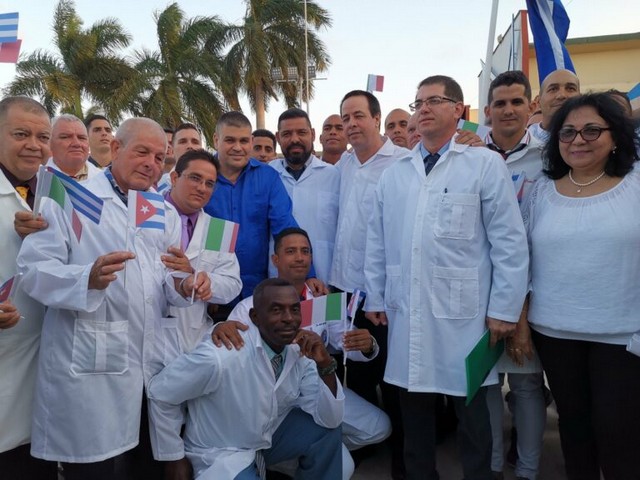
Ever since the Prime Minister, Narendra Modi, announced national lock down on March 24, 2020 to fight Covid–19 and declared that “Social Distancing” is the only solution to save India from the Corona Pandemic, all Chief Ministers are also using the same coinage in India. We must use ‘Disease Distancing’ not Social Distancing because India is a country of social Untouchability and caste distancing for millennia. If this goes in to the national psyche it will make Untouchability and casteism worse in future. India is not like Europe, America and China. This is a country of millennial practice of social distancing.

Unfortunately Rastriya Swayamsevak Sangh and Bharatiya Janatha Party are claimed to be the biggest organised network in the world. But their cadre are not seen anywhere among the poor, semi-starving labour, beggers across the country when they themselves were ruling. Mohan Bhagwat and Amit Shah are not seen giving calls to nation how to save the poor, unemployed, beggars, nomads and semi-nomads by their organizations. No Hindutva organization is seen distributing food, water to beggars, destitute and to the old poor in urban slums. This is a bad nationalism to say the least. Nationalism means saving the poor’s life in a crisis like this.

I request all organizations to not to use the phrase “Social Distancing” but use Disease Distancing or Corona Distancing. With great struggles from the days of Savitribai Phule and her son Dr.Yashvantharao Phule who died in serving the dying poor in Poona in the Bubonic Plague of 1897, we struggled a lot to fight caste social distancing. We should strengthen it again. The poor must be saved from not only disease but also from hunger and drinking water. Let us serve the poorest of the poor like Karalites are doing to save the country.

Kancha Ilaiah Shepherd is a Social Activist and Writer

28 March 2020

Source: countercurrents.org
Kerala is a Beacon to the World for Taking on the Coronavirus

Co-Written by Vijay Prashad & Subin Dennis

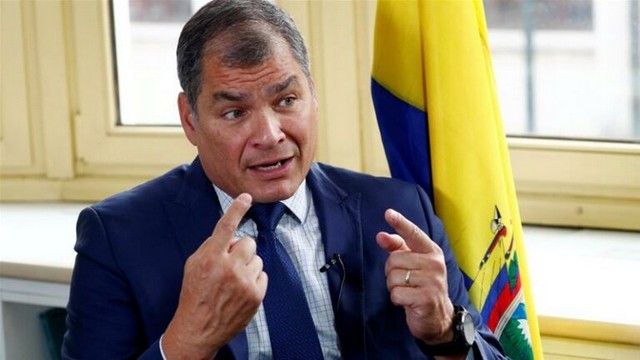
K.K. Shailaja is the health minister in the Left Democratic Front government in Kerala, the state in the southwest of India that has a population of 35 million people. On January 25, 2020, she convened a high-level meeting to discuss the outbreak of COVID-19 in Wuhan, China. What had particularly worried her is that there were many students from Kerala studying in that province of China. Shailaja had won widespread praise for the swift and efficient way she had steered her department through the Nipah virus that hit Kerala in 2018. She recognized that there was no time to be lost if the virus spread from Wuhan; the government had to set up mechanisms for identifying possibly infected persons, and then for testing, mitigation, and treatment. On January 26, 2020, her department set up a control room to coordinate the work.

Kerala’s Health Department, using the precedent of the Nipah virus campaign, went into action. They set up 18 committees to get to work and held daily evening meetings to evaluate their actions; a key feature of the work was the daily press conferences after these meetings, where Shailaja calmly and rationally explained what was going on and what her department was doing. These press conferences—and later those of the Chief Minister Pinarayi Vijayan—provided the leadership needed for a population that first needed to be educated about the severity of the virus and then needed to participate in a mass campaign to defeat its lethalness.

A medical student who was in Wuhan who had the coronavirus returned home and was tested positive on January 30; subsequently, two more students came back with the virus. The system set up by Kerala’s Health Department located them; they were tested and put into isolation. They recovered from the virus, and there was no secondary or community spread. The government did not dismantle the system, since it became clear immediately that this virus was going to be virulent, and it would not be so easily tackled.

By March, the numbers of coronavirus positive cases increased, largely as people came to Kerala from Europe. The population of Kerala is extraordinarily mobile, with large numbers of its people studying and working across the globe. This international character of the population makes the state susceptible to pandemics.

Break the Chain

“Break the Chain” was the slogan given by the Left government in Kerala. The idea is simple: a pandemic is spread when individuals who are positive for a virus come into contact with others, who then come into contact with even more people, and then the virus spreads further very fast. If those who are carrying the virus do not come into contact with others, then the chain of dispersal is broken.

But how do you know if you have the virus? The World Health Organization said that the only way to do this is to test the population—everyone who exhibits the key symptoms—and then make sure that those who are infected quarantine themselves. For a variety of reasons, largely to do with the inefficiency of governments that are more interested in the state of the stock markets than in the state of their populations, these tests are in short supply. The government of India has been remarkably lackadaisical about health care expenditure: it has spent merely 1.28 percent of the GDP on health, which has meant that there are only 0.7 hospital beds per 1,000 people, there are only 30,000 ventilators in the country, and there are only 20 health care workers per 100,000 people (below the WHO standard of 22). It is not prepared for a global pandemic.

The government of Kerala—run by a coalition of Communist and Left parties—has tested the highest number of samples for the coronavirus in India so far. In order to “break the chain,” the government has been conducting rigorous “contact tracing,” or studying whom the infected person has been in contact with and then whom that person has been in contact with so that the entire chain of possibly infected people can be informed and put into isolation. Route maps showing the places that the infected persons have been to are being published, and people who were present at that time at those places are asked to contact the Health Department so that they can be screened and tested. The route maps are widely disseminated through social media, and through GoK Direct, the government’s phone app. Local government officials and ASHA health workers (women who are the pillar of local public health) are doing the groundwork of finding people who are infected and making sure their contacts are also in isolation.

Physical Distance, Social Unity

As soon as it became clear that the virus lingers on surfaces and carries through the air, the state government mobilized its resources to produce hand sanitizers and masks. A public sector company started producing hand sanitizer. The youth movement—the Democratic Youth Federation of India—and other organizations also began to produce hand sanitizer, while units of the women’s cooperative—Kudumbashree (4.5 million members)—began to produce masks.

Local administrators formed their own emergency committees and set up groups to clean public areas. The mass fronts of the Communist Party of India (Marxist) sanitized buses, and set up sinks in bus stations for passengers to wash their hands and faces. The largest trade union federation in Kerala—the Centre of Indian Trade Unions—has appealed to workers to disinfect public spaces, and to assist their fellow workers who face distress as a consequence of the quarantines. These mass cleaning campaigns had a pedagogical impact on the society, since the volunteers were able to instruct the population about the social necessity to “break the chain.”

In a densely populated region of the world, quarantine is not an easy matter. The government has taken over vacant buildings to set up coronavirus care centers to quarantine patients, and it has made arrangements for people who need to be quarantined at home, but are in overcrowded homes, to move to facilities set up by the government. Everyone who is in quarantine and in these centers will be fed and treated by the Local Self-Governments, and the bill for the treatment will be paid by the state.

A key problem with physical isolation and quarantine is mental distress. The government has set up call centers with 241 counselors who—thus far—have conducted about 23,000 counseling sessions for those who are afraid or nervous about the situation. Chief Minister Pinarayi Vijayan, a politburo member of the Communist Party of India (Marxist), has become a kind of head therapist. His press conferences are calm and collected. In them, he refers to people who must use the government facilities with kindness and dignity. “Physical distance, social unity—that should be our slogan at this time,” said Pinarayi Vijayan.

Relief

India’s Prime Minister Narendra Modi took an odd attitude toward the coronavirus. He called for a partial curfew and urged Indians to clap hands and bang pans in public, as if this would scare away the virus. In fact, followers of his right-wing party circulated messages claiming that the virus would be killed by the noise. Kerala’s chief minister, on the same day as Modi’s lackluster speech, announced a relief package worth $270 million. The package includes loans to families through the women’s cooperative Kudumbashree, higher allocations for a rural employment guarantee scheme, two months of pension payments to the elderly, free food grains, and restaurants to provide food at subsidized rates. Utility payments for water and electricity as well as interest on debt payments will be suspended.

Money was rushed to bolster the relatively strong public health system in the state, which had been revamped during the tenure of the Left government from 2006 to 2011—exactly when public health systems around the world were eroded as a consequence of bad decisions made after the financial crisis of 2008-09.

Vigilance

One of the great victories of neoliberalism has been to portray a weak state and a government only interested in war and money as democracy, and to portray a state with robust institutions that consider the betterment of the people as authoritarianism. That is why there is a failure of imagination to see how China—at a much larger scale—or Kerala—as a state in the Indian Union—has been able to fight the virus outbreak. In both China and Kerala, the institutions of society remain relatively intact; more than that, the political world in these parts of the world with active socialist parties were able to summon the spirit of volunteerism amongst party members and members of mass organizations to give their time and energy in the fight against the virus.

The fight against COVID-19 is not over. Vigilance is necessary. Vaccines need to be tested and authorized; better cures—including those used effectively by Cuban doctors in China—need to be studied and shared. But even as one is vigilant, the lessons from places like Kerala should be absorbed.

In a pandemic, a rational person would much rather live in a society governed by the norms of socialism than of capitalism, a society where people rally together to overcome a virus; than to live in a society where fear pervades and where stigmatization becomes the antidote to collective action.

Vijay Prashad is an Indian historian, editor and journalist. He is a writing fellow and chief correspondent at Globetrotter, a project of the Independent Media Institute.

Subin Dennis is an economist and a researcher at Tricontinental: Institute for Social Research. He was the Delhi State vice president of the Students’ Federation of India.

27 March 2020

Source: countercurrents.org
Why is the U.S. so exceptionally vulnerable to Covid-19?

By Nicolas J S Davies

The United States has become the new center of the global coronavirus pandemic, with over 86,000 cases, more than China or Italy. More than a thousand Americans have already died, but this is surely only the very beginning of this deadly collision between the U.S.’s uniquely inadequate public healthcare system and a real pandemic.

On the other hand, China and South Korea, which both have universal public health systems that cover the bulk of their people’s healthcare needs, have already turned the tide on Covid-19 through targeted quarantines, mobilization of public healthcare resources and testing programs that quickly and efficiently test everyone who may have come into contact with the virus. China sent 40,000 doctors and medical staff, including 10,000 respiratory specialists, into Hubei province in the first month or two of the epidemic. It has now gone up to 3 days in a row with no new cases and is starting to lift social restrictions. South Korea quickly tested over 300,000 people, and only 131 of its people have died.

The WHO’s Bruce Aylward visited China at the end of February, and reported, “I think the key learning from China is speed… The faster you can find the cases, isolate the cases, and track their close contacts, the more successful you’re going to be… In China, they have set up a giant network of fever hospitals. In some areas, a team can go to you and swab you and have an answer for you in four to seven hours. But you’ve got to be set up — speed is everything.”

Researchers in Italy have experimentally confirmed that up to 3 out of 4 Covid-19 cases are asymptomatic and therefore undetectable by testing only people with symptoms. After a series of deadly missteps, the U.S., which had its first case on January 20th, the same day as South Korea, has over two months later only just begun widespread testing, when we already have the most cases and the 6th highest death toll in the world. Even now, the U.S. is mainly limiting testing to people with symptoms, not doing the targeted testing of new case contacts that was so effective in China. This ensures that otherwise healthy, asymptomatic carriers will unknowingly spread the virus and keep fueling its exponential growth.

So why is the United States so uniquely incapable of confronting this pandemic as efficiently or effectively as China, South Korea, Germany or other countries? The lack of a national, publicly-funded universal health system is a critical deficiency. But our persistent inability to set one up is itself the result of other dysfunctional aspects of American society, including the corruption of our political system by powerful commercial and class interests and the American “exceptionalism” that blinds us to what we can learn from other countries.

Also, the military occupation of the American mind has brainwashed Americans with strictly military concepts of “defense” and “security,” perverting federal spending priorities in the interest of war and militarism at the expense of all our country’s other vital needs, including the health of Americans.

Why can’t we just bomb the virus?

Of course this question is ridiculous. But this is how U.S. leaders respond to every danger we face, with massive diversions of our national resources to the military-industrial complex (MIC) that leave this otherwise wealthy country starved of resources to tackle problems our leaders can’t pretend to solve with weapons and war. Depending what is counted as “defense” spending, it accounts for up to two-thirds of federal discretionary spending. Even now, a bailout for Boeing, the 2nd largest U.S. weapons maker, is more important to Mr. Trump and many in Congress than helping American families get through this crisis.

At the end of the Cold War in 1989, senior officials told the Senate Budget Committee that the U.S. military budget could safely be cut by 50% over the next ten years. Committee chairman Jim Sasser hailed the moment as “the dawn of the primacy of domestic economics.” But by 2000, the influence of the military-industrial complex had shrunk the “peace dividend” to only a 22% reduction in military spending from 1990 (after adjusting for inflation).

Then, in 2001, the military-industrial complex seized on the crime of the new century by 19 mainly Saudi young men armed only with box-cutters to launch new wars and the most expensive U.S. military build-up since World War Two. As former Nuremberg war crimes prosecutor Benjamin Ferencz said at the time, this was not a legitimate response to the crimes of September 11th. “It is never a legitimate response to punish people who are not responsible for the wrong done,” Ferencz told NPR. “If you simply retaliate en masse by bombing Afghanistan, let us say, or the Taliban, you will kill many people who don’t approve of what has happened.”

Despite the abject, bloody failure of the so-called “Global War on Terror,” the opportunistic military-build-up it served to justify still wins every budget battle in Washington. After adjusting for inflation, the 2020 U.S. military budget is 59% higher than in 2000, and 23% higher than it was in 1990.

Over the past 20 years (in 2020 dollars), the U.S. has allocated $4.7 trillion more to the Pentagon than if it had just maintained its budget at the same level since 2000. Even between 1998 and 2010, as Carl Conetta documented in his paper, An Undisciplined Defense: Understanding the $2 Trillion Surge in US Defense Spending, actual war spending was matched dollar for dollar by unrelated additional military spending, mostly increased procurement spending to develop and buy very expensive new warships for the Navy, budget-busting warplanes like the F-35 fighter for the Air Force, and a wish-list of new weapons and equipment for every branch of the military.

Since 2010, this unprecedented diversion of our national resources to the military-industrial complex has outstripped actual war spending even further. Obama spent more on the military than Bush, and now Trump is spending even more. In addition to $4.7 trillion in extra Pentagon spending, U.S. wars and militarism have cost $1.3 trillion more for Veterans Affairs since 2000 (also adjusted for inflation), as Americans predictably come home from America’s wars needing levels of medical care that the U.S. does not otherwise provide to its people.

All that money is gone now, just as surely as if it had been heaped up somewhere in Afghanistan and incinerated by a few of the 80,000 bombs the U.S. has dropped on that poor country since 2001. So we do not have it to spend on public hospitals, ventilators, medical training, Covid-19 tests or any of the things we so desperately need in this distinctly non-military crisis.

Our $6 trillion have been utterly wasted – or worse. The U.S. war on terror did not defeat or end terrorism. It only fueled an endless spiral of violence and chaos across the world. The U.S. war machine has destroyed country after country: Afghanistan, Iraq, Somalia, Libya, Syria, Yemen – but it has never rebuilt or brought peace to any of them. Meanwhile, Russia and China have built effective 21st century defenses against America’s obsolete war machine at a small fraction of its cost.

As countries around the world face the common danger of Covid-19, perhaps the most cynical response of all has been the U.S. government’s decision to impose even more brutal sanctions on Iran, one of the worst-hit countries, already deprived of life-saving medicines and other resources by existing U.S. sanctions.

UN Secretary General Antonio Guterres has called for an immediate ceasefire in every war during this crisis, and for the U.S. to lift its deadly sanctions on all our neighbors around the world. That should include Iran; North Korea; Sudan; Syria; Venezuela; Zimbabwe; and not least Cuba, which is playing a courageous and active role in fighting the pandemic, rescuing the passengers of an infected British cruise ship that was refused entry by the U.S. and other countries, and sending medical teams to Italy and other infected countries around the world.

The 21st Century Command Economy

The “command economy” was a derisive term used to criticize the centrally planned economies of Eastern Europe during the Cold War. But economist Eric Schutz used the 21st Century Command Economy as a subtitle for his 2001 book Markets and Power, in which he analyzed the effects of the dominant market power of monopolistic multinational corporations on the U.S. economy.

As Schutz explained, neoliberal (or neoclassical) economic theory ignores a critical factor in the “free” markets a generation of Americans have been taught to revere. This ignored factor is power.  As more and more aspects of American life are entrusted to the mythical “invisible hand” of the market, the most powerful players in every market are free to use their market power to concentrate wealth and even greater market power in their own (not so invisible) hands, driving smaller competitors out of business and exploiting other stakeholders: customers; employees; suppliers; governments; and local communities.

Since 1980, every sector of the U.S. economy has been gradually taken over by fewer and fewer larger and larger corporations, with a predictably debilitating effect on American life: fewer opportunities for small business; diminishing investment in public infrastructure and services; shrinking or stagnant wages; rising rents; privatization of education and healthcare; the destruction of local communities; and the systematic corruption of politics. Critical decisions that affect all our lives are now made primarily at the bidding and in the interests of big banks, big pharma, big tech, big ag, big developers, the military-industrial complex and the wealthiest 1% of Americans.

The infamous revolving door through which senior officials move between the military, lobbying firms, corporate boards, Congress and the executive branch is duplicated in every sector of the economy. Liz Fowler, who wrote the “Affordable Care Act” as a Senate and White House staffer, was a senior executive at Wellpoint Health (now Anthem), the parent company of Blue Cross-Blue Shield, which now rakes in billions in federal subsidies under the law she wrote. She then returned to the “industry” as an executive at Johnson & Johnson – just as James “Mad Dog” Mattis returned to his seat on the board at General Dynamics to reap the rewards of his “public service” as Secretary of Defense.

Whatever mix of capitalism and socialism each American may favor as a model for the U.S. economy, very few Americans would pick this corrupt 21st century command economy as the system they would choose to live under. How many American politicians would win election if they honestly told voters that this is the system they believe in and plan to promote?

We are living in a society in which everybody knows the deal is rotten, as the Leonard Cohen song goes, and yet we remain lost in a hall of mirrors, victims of a “divide and rule” strategy by which the wealthy and powerful control politics and the media along with every other sector of this 21st century command economy. Trump, Biden and Congressional leaders are just their latest figureheads, demonizing and arguing with each other as they and their paymasters laugh all the way to the bank.

There is a savage irony in the way the Democratic Party closed ranks around Biden just as Covid-19 appeared on the scene. A month ago, it seemed that 2020 might be the year Americans would finally blow away the well-funded smoke and mirrors of the for-profit U.S. health insurance industry and achieve universal publicly-funded healthcare. Instead, Democratic leaders appear to be settling for the lesser evil of another humiliating defeat and four more years of Trump over (to their minds) the greater danger of a Sanders presidency and universal healthcare.

But now this exceptionally dysfunctional society has run smack-bang into a real force of nature, a tiny virus that can kill millions of people. Other countries are rising to this exacting test of their healthcare and social systems more successfully than we are. So will we finally wake up from our American dream, open our eyes and start learning from our neighbors in other countries, including ones that have different political, economic and healthcare systems than ours? Our lives may depend on it.

Nicolas J S Davies is the author of Blood On Our Hands: the American Invasion and Destruction of Iraq. He is a freelance journalist and a researcher for CODEPINK.

27 March 2020

Source: countercurrents.org

Lack of consequences emboldens Libya’s Haftar

The 18 February 2020 attack on Tripoli’s main seaport is the latest in a series of measures by Libyan warlord, General Khalifa Haftar, to secure a military victory over his rivals, the UN-recognised Government of National Accord (GNA). His self-styled ‘Libyan National Army (LNA)’ also seized the port city of Sirte in January, and halted shipments of Libyan oil in an attempt to weaken the Tripoli-based GNA. The Tripoli seaport attack ended UN-brokered ceasefire negotiations between the two sides. Haftar, who is supported by the UAE, Saudi Arabia, Egypt and France, among others, has been emboldened by the lack of censure for his actions. His decision not to endorse a January 2020 ceasefire agreement mediated by Turkey and Russia was rewarded by the UAE with two fighter jets.

The February port attack followed increased Turkish support for the GNA, enabling it to force back LNA troops to pre-April 2019 battle lines. Thus, apart from Haftar’s capture of the strategic city of Sirte in January 2020, his ten-month siege of the capital, Tripoli, which commenced in April 2019, has resulted in limited gains. This despite the fact that his forces have had an enormous military hardware advantage, having received arms from the UAE and Egypt, with Chadian, Sudanese, and Russian mercenaries being attracted to support his advance. To break the military stalemate, Haftar imposed an oil embargo in an attempt to strangle the GNA, which relies on oil revenues to provide services and compensate militias. Haftar has not attempted to resell the oil, but his control of most of Libya’s oil and water resources – which are located in the country’s east – allows him great leverage.

Between January and February this year, the UAE provided Haftar with over 4 600 tons of military equipment, allowing him to snub UN and Turkish-Russian mediation efforts. Turkey, on the other hand, supports the GNA. Ankara enhanced this support in recent months by deploying Syrian rebels and Turkish Special Forces to Libya after Haftar captured Sirte. Ankara and the GNA also concluded a maritime border agreement in 2019, strengthening Turkish claims over natural gas in the Mediterranean, and undermining the claims of Greece and Cyprus. Ankara thus regards support for the GNA as critical to its national interests, and will likely further augment its support, despite suffering dozens of casualties among its soldiers. It is noteworthy that Syria and the eastern House of Representatives, which Haftar is influential over, concluded an agreement in March jointly to confront Turkey; the two will likely soon exchange diplomatic representatives. The HoR followed the UAE and Bahrain in re-establishing ties with Syria, which were severed following the start of the Syrian uprising.

Meanwhile, the UN continues to be hamstrung by divisions within the Security Council. Haftar’s continued obduracy has been encouraged by support he receives from France, a permanent member of the UNSC, and, more recently, Russia, another permanent member. His march on Tripoli, a week before a UN-sponsored national conference scheduled to be in Libya (which was subsequently cancelled), and his issuance of an arrest warrant for the head of the GNA, Fayez al-Sarraj, elicited little censure from the UNSC, despite the UN’s now-former special envoy to Libya, Ghassan Salame, labelling the move a coup. In addition, Haftar’s shutting down of oil terminals also resulted in no repercussions, despite UNSC Resolution 2510, which affirms the need to resume oil production.

Further, the UN has had an obsessive focus on elections as a means out of the conflict, and has not given much attention to consensus-building and bottom-up negotiations, which were hallmarks of the initial phases of the 2015 Libyan Political Agreement and the subsequent Skhirat agreement. The UN had planned for elections to be held in 2018, but these have continually been postponed. In February, UNSC Resolution 2510 ratified the January 2020 Berlin Roadmap calling for a full ceasefire and an arms embargo on Libya. Implementation of the resolution will be difficult, however, especially since Russia, a key Haftar supporter, abstained from the vote, indicating it is unlikely that it will support the implementation of the resolution.

A 13 January 2020 ceasefire agreement, mediated by Turkey and Russia, failed because Haftar refused to endorse it, while a fifty-five point roadmap endorsed by most roleplayers in Libya, including the UAE, Turkey, and France, in Berlin on 19 January is also proving difficult to implement.  Ceasefire talks between five military officials from each of the two sides in February in Geneva agreed on a tentative ceasefire, but the two rival governments overruled this. Another seemingly-useless initiative is the EU’s February endorsement of a new mission to complement its Operation Sophia, which seeks to enforce the Libyan arms embargo, but which fails to account for the fact that this will not hamper Haftar since most of his weapons come through Egypt. France, which had despatched forces to support Haftar from 2014, and which had vociferously advocated for the new mission, opposes Turkey’s support of the GNA.

The current stalemate suggests that a political solution is the only real way out of the crisis. However, it is doubtful that Haftar will enter into negotiations in good faith; he has continually acted to scupper any talks that might limit his power. On the sidelines of the Berlin conference, he insisted that talks to form a government could only occur after Tripoli was disarmed, supporting an earlier LNA statement that a militarily-imposed solution was the only way to ensure security. His attitude is hardened by the support he continues to receive from regional and global powers, which emboldens him, even though consolidating control over Tripoli and the country’s western regions has proved more difficult when compared to his rapid march through the South in early 2019. Haftar’s recent announcement of a humanitarian ceasefire was a result of pressure from the USA, and is unlikely to lead to real change. Already, the LNA has undertaken attacks in Tripoli, killing two.

22 March 2020

Source: amec.org.za