Just International

Our Children’s Future

By John Scales Avery

Loving care for our children

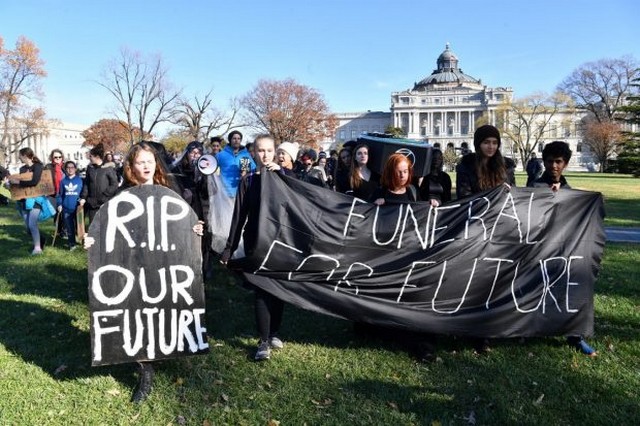
We give our children loving care, but it makes no sense to do so unless we do everything in our power to give them a future world in which they can survive. We also have a duty to our grandchildren, and to all future generations.

Today we are faced with the threat of an environmental megacatastrophe, of which the danger of catastrophic climate change is a part. We also face the threat of an all-destroying nuclear war.

Finally, because of population growth, the effect of climate change on agriculture, and the end of the fossil fuel era, there is a danger that by the middle of the present century a very large-scale famine could take the lives of as many as a billion people.

We owe it to our children to take urgent action to prevent these threats from becoming future realities. We must also act with dedication to save our children from other social ills that currently prevent their lives from developing in a happy and optimal way, for example child labor, child slavery, starvation, preventable disease and lack of education. These, too, are threats to our children’s future.

The climate emergency: Urgent action is needed

The annual Emissions Gap report from the U.N. Environmental Program (UNEP), released on November 26, 2019,  warned that nations’ commitments under the Paris climate accord – from which U.S. President Donald Trump began formally withdrawing this month – are not nearly sufficient to bring about the widespread changes needed to avert climate catastrophe.

The report stated that global temperatures are on track to rise as much as 3.2$^o$C by the end of the century, meaning only drastic and unprecedented emissions reductions can stave off the most devastating consequences of the climate crisis. What is needed, according to the report, is a complete halt in the production of fossil fuels.

Renewable energy is now cheaper than fossil fuels, so the transition to renewables could be driven by economic forces alone, if governments worldwide would stop their sponsorship of fossil fuel industries, to which they currently give enormous tax benefits and other subsidies.

Other urgently needed actions are a halt to deforestation, combined with massive reforestation, substitution of other building materials for cement, better climate coverage in the mass media, abandonment of growth-oriented economic goals, shift to more plant-based diet, and deep cuts in military activities.

We must rid the world of nuclear weapons

A Treaty banning nuclear weapons was adopted by an overwhelming majority vote on the floor of the UN General Assembly, following the precedent set by the Arms Trade Treaty. The Treaty on the Prohibition of Nuclear Weapons was passed on 7 July, 2017. It prohibits the development, testing, production, stockpiling, stationing, transfer, use and threat of use of nuclear weapons, as well as assistance and encouragement to the prohibited activities. For nuclear armed states joining the treaty, it provides for a time-bound framework for negotiations leading to the verified and irreversible elimination of its nuclear weapons programme.

The International Campaign to Abolish Nuclear Weapons (ICAN) campaigned vigorously for the adoption of the Treaty, and was awarded the 2017 Nobel Peace Prize for its efforts. Although bitterly opposed by nuclear weapons states, the Treaty has great normative value, and one fervently hopes that the force of public opinion will eventually force all governments to give their citizens what the vast majority long for: a nuclear-weapon-free world.

It is generally agreed that a full-scale nuclear war would have disastrous effects, not only on belligerent nations but also on neutral countries. As long as there are nations that possess nuclear weapons, there is a danger that they will be used, either deliberately or through a technical or human error, or through unconcontrollable escalation of a conflict. Only a nuclear-free world will be safe for our children and the biosphere.

We must address the threat of widespread famine

As glaciers melt in the Himalayas, depriving India and China of summer water supplies; as sea levels rise, drowning the fertile rice fields of Viet Nam and Bangladesh; as drought threatens the productivity of grain-producing regions of North America; and as the end of the fossil fuel era impacts modern high-yield agriculture, there is a threat of wide-spread famine. There is a danger that the 1.5 billion people who are undernourished today will not survive an even more food-scarce future.

People threatened with famine will become refugees, desperately seeking entry into countries where food shortages are less acute. Wars, such as those currently waged in the Middle East, will add to the problem.

What can we do to avoid this crisis, or at least to reduce its severity? We must urgently address the problem of climate change; and we must shift money from military expenditure to the support of birth control programs and agricultural research. We must also replace the institution of war by a system of effective global governance and enforcible international laws.

We must eliminate child labor and child slavery

Worldwide 10 million children are in slavery, trafficking, debt bondage and other forms of forced labor, forced recruitment for armed conflict, prostitution, pornography and other illicit activities, according to the International Labor Organization, (ILO). 151.6 million are estimated to be in child labor (ILO). 114 million child laborers are below the age of 14 (ILO). 72 million children are in hazardous work that directly endangers their health, safety and moral development (ILO). More than 700 million women alive today were married before their 18th birthday. More than one in three (about 250 million) entered into union before age 15 (UNICEF). 300,000 children are estimated to serve as child soldiers, some even younger than 10 years old (UNICEF). 15.5 million children are in domestic work worldwide – the overwhelming majority of them are girls (ILO).

Child labor is undesirable because it prevents children from receiving an education. Furthermore, when parents regard their children as a source of labor or income, it motivates the to have very large families, and our finite earth, unlimited growth of population is a logical impossibility. Population growth increases the threat of large-scale famine as well as ecological catastrophe.

Child slavery is unacceptable, as is any form of slavery. Forced marriage, and very early marriage of girls as young as 9 in some countries are also unacceptable practices. The international community has a duty to see that existing laws against these practices are enforced.

We must reduce starvation and preventable disease

According to a recent report published by the World Health Organization, in 2018 alone, 15,000 children died per day before reaching their fifth birthday. A WHO spokesman said, “It is especially unacceptable that these children and young adolescents died largely of preventable or treatable causes like infectious diseases and injuries when we have the means to prevent these deaths,” the authors write in the introduction to the report. The global under-five mortality rate fell to 39 deaths per 1,000 live births in 2018, down from 76 in 2000 – a 49% decline.

“Despite advances in fighting childhood illnesses, infectious diseases remain a leading cause of death for children under the age of 5, particularly in sub-Saharan Africa and Southern Asia,” says the report. Pneumonia remains the leading cause of death globally among children under the age of 5, accounting for 15% of deaths. Diarrhoea (8%) and malaria (5%), together with pneumonia, accounted for almost a third of global under-five deaths in 2018. “Malnourished children, particularly those with severe acute malnutrition, have a higher risk of death from these common childhood illnesses. Nutrition-related factors contribute to about 45 per cent of deaths in children under 5 years of age,” warns the report. The estimates also show vast inequalities worldwide, with women and children in sub-Saharan Africa facing a higher risk of death than in all other regions. Level of maternal deaths are nearly 50 times higher for women in sub-Saharan Africa compared to high-income countries. In 2018, 1 in 13 children in sub-Saharan Africa died before their fifth birthday – this is 15 times higher than the risk a child faces in Europe, where just 1 in 196 children aged less than 5 die.

We must provide universal reformed education

Illiteracy in the less developed countries exceeded that of the developed ones by a factor of ten in 1970. By 2000, this factor had increased to approximately 20. As our economies become more knowledge-based, education has become more and more important.

Besides universal education, educational reforms are urgently needed, particularly in the teaching of history. As it is taught today, history is a chronicle of power struggles and war, told from a biased national standpoint. Our own race or religion is superior; our own country is always heroic and in the right.

We urgently need to replace this indoctrination in chauvinism by a reformed view of history, where the slow development of human culture is described, giving adequate credit to all who have contributed.

The teaching of other topics, such as economics, should be reformed. Economics must be given both a social conscience and an ecological conscience. The mantra of growth must be abandoned, and the climate emergency must be addressed.

Childhood should be a time of joy

Children’s play is not a waste of time. Children at play are learning skills that they will use later in their lives. Let us allow our children to play and learn, while we work to give them a secure future world. Let us give our children, not predominantly material goods, but rather the love, happiness and future that they deserve.

A new freely downloadable book

I would like to announce the publication of a book, which examines the steps that we must take to give our children and their children a world in which thet can survive. The book may be freely downloaded and circulated from the following link:

http://eacpe.org/app/wp-content/uploads/2019/11/Our-Childrens-Future-by-John-Scales-Avery.pdf

Other books and articles about  global problems are on these links

http://eacpe.org/about-john-scales-avery/

https://wsimag.com/authors/716-john-scales-avery

I hope that you will circulate the links in this article to friends and contacts who might be interested.

John Scales Avery is a theoretical chemist at the University of Copenhagen.

4 December 2019

Source: countercurrents.org

Iraqi Children Born Near U.S. Military Base Show Elevated Rates of “Serious Congenital Deformities,” Study Finds

By Murtaza Hussain

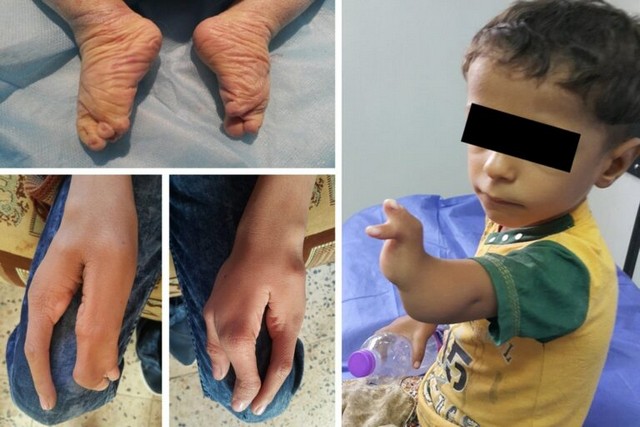
25 Nov 2019 – More than a decade and a half after the 2003 U.S. invasion of Iraq, a new study found that babies are being born today with gruesome birth defects connected to the ongoing American military presence there. The report, issued by a team of independent medical researchers and published in the journal Environmental Pollution, examined congenital anomalies recorded in Iraqi babies born near Tallil Air Base, a base operated by the U.S.-led foreign military coalition. According to the study, babies showing severe birth defects — including neurological problems, congenital heart disease, and paralyzed or missing limbs — also had corresponding elevated levels of a radioactive compound known as thorium in their bodies.

“Doctors are regularly encountering anomalies in babies that are so gruesome they cannot even find precedents for them.”

“We collected hair samples, deciduous (baby) teeth, and bone marrow from subjects living in proximity to the base,” said Mozhgan Savabieasfahani, one of the study’s lead researchers. “In all three tissues we see the same trend: higher levels of thorium.” Savabieasfahani, who has authored studies on the radioactive footprint of the U.S. military presence in Iraq for years, says that the new findings contribute to a growing body of evidence about the serious long-term health impact of U.S. military operations on Iraqi civilians. “The closer that you live to a U.S. military base in Iraq,” she said, “the higher the thorium in your body and the more likely you are to suffer serious congenital deformities and birth defects.”

The new study piles onto a growing wealth of knowledge about severe ill effects of the U.S. military on the environments in which it operates. All industrialized military activity is bad for ecological systems, but the U.S., with its enormous military engaged in activities spanning the globe has a particular large environmental footprint. Not only does the U.S. military lead the world in carbon output, but its prodigious presence around the globe leaves a toxic trail of chemicals that local communities have to deal with, from so-called burn pits on bases releasing poisonous smoke to the radiation of depleted uranium rounds mutating the DNA of nearby populations.

Related: Industrialized Militaries Are a Bigger Part of the Climate Emergency Than You Know

The suffering of Iraqis has been particularly acute. The results of the new study added to a laundry list of negative impacts of the U.S.’s long war there to the long-term health of the country’s population. Previous studies, including some contributed by a team led by Savabieasfahani, have pointed to elevated rates of cancer, miscarriages, and radiological poisoning in places like Fallujah, where the U.S. military carried out major assaults during its occupation of the country.

The study published in Environmental Pollution was conducted by a team of independent Iraqi and American researchers in Iraq during the summer and fall of 2016. They analyzed 19 babies born with serious birth defects at a maternity hospital in the vicinity of Tallil Air Base, compared with a control group of 10 healthy newborns.

“Doctors are regularly encountering anomalies in babies that are so gruesome they cannot even find precedents for them,” said Savabieasfahani. “The war has spread so much radiation here that, unless it is cleaned up, generations of Iraqis will continue to be affected.”

Some of these negative health effects of the American war in Iraq can be put down to U.S. forces’ frequent use of munitions containing depleted uranium. Depleted uranium, a byproduct of the enriched uranium used to power nuclear reactors, makes bullets and shells more effective in destroying armored vehicles, owing to its extreme density. But it has been acknowledged to be hazardous to the environment and the long-term health of people living in places where the munitions are used.

“Uranium and thorium were the main focus of this study,” the authors note. “Epidemiological evidence is consistent with an increased risk of congenital anomalies in the offspring of persons exposed to uranium and its depleted forms.” In other words: The researchers found that the more you were around these American weapons, the more likely you were to bear children with deformities and other health problems.

In response to an outcry over its effects, the U.S. military pledged to not use depleted uranium rounds in its bombing campaigns against the Islamic State group in Iraq and Syria, but, despite this pledge, a 2017 investigation by the independent research group AirWars and Foreign Policy magazine found that the military had continued to regularly use rounds containing the toxic compound.

These depleted-uranium munitions are among the causes of hazards not only to the civilians in the foreign lands where the U.S. fights its wars, but also to American service members who took part in these conflicts. The chronic illnesses suffered by U.S. soldiers during the 1991 war in Iraq — often from exposure to uranium munitions and other toxic chemicals — have already been categorized as a condition known as “Gulf War syndrome.” The U.S. government has been less interested into the effects of the American military’s chemical footprint on Iraqis. The use of “burn pits” — toxic open-air fires used to dispose military waste — along with other contaminants has had a lasting impact on the health of current and future Iraqi generations.

Researchers conducting the latest study said that a broader study is needed to get definitive results about these health impacts. The images of babies born with defects at the hospital where the study was conducted, Bint Al-Huda Maternity Hospital, about 10 kilometers from Tallil Air Base, are gruesome and harrowing. Savabieasfahani, the lead researcher, said that without an effort by the U.S. military to clean up its radioactive footprint, babies will continue to be born with deformities that her study and others have documented.

“The radioactive footprint of the military could be cleaned up if we had officials who wanted to do so,” said Savabieasfahani. “Unfortunately, even research into the problem of Iraqi birth defects has to be done by independent toxicologists, because the U.S. military and other institutions are not even interested in this issue.”

_____________________________________________

Murtaza Hussainmurtaza.hussain@​theintercept.com

2 December 2019

Source: www.transcend.org

Bolivia: Post-Coup Update

By Eric Zuesse

29 Nov 2019 – With every passing day, it becomes clearer that the military coup in Bolivia on November 10th was masterminded in Washington DC. This reality will create yet a new difficulty in relations between the U.S. regime and Mexico to its direct south, because the Mexican Government, under progressive President Lopez Obrador, took the courageous and very meaningful step of providing refuge to the U.S.-couped Bolivian President Evo Morales and therefore posed overtly a resistance to the U.S. dictatorship.

Unlike the U.S. itself, which has abandoned the substance of democracy while adhering to its fascist Supreme Court’s interpretations (distortions) of the original intent of the democratic America’s Founding Fathers in their U.S. Constitution, Bolivia’s imposed regime isn’t even nominally legitimate in any democratic sense, because it has abandoned that country’s Constitution, ever since it grabbed power there.

One of the first indications that this was another U.S. coup was that on November 10th, the New York Times, which along with the Washington Post is one of the regime’s two main mouthpieces, refused to call it a “coup” at all, though it obviously was. Headlining on November 10th with the anodyne “Bolivian Leader Evo Morales Steps Down”, they lied and alleged that “Mr. Morales was once widely popular” — as if there were any objective measures, such as polls, which indicated that he no longer was. Their concept of ‘democracy’ was like that of fascists everywhere: violent mob actions against a democratically elected Government. “Angry mobs attacked election buildings around the country, setting some on fire.” Far-right mobs are ‘democracy to ‘journalists’ such as at the New York Times.

The next day, November 11th, that fascist ‘news’-paper headlined an editorial “Evo Morales Is Gone. Bolivia’s Problems Aren’t.” Here is how they expressed their contempt for democracy: “When a leader resorts to brazenly abusing the power and institutions put in his care by the electorate, as President Evo Morales did in Bolivia, it is he who sheds his legitimacy, and forcing him out often becomes the only remaining option. That is what the Bolivians have done.” ‘Bolivians’ — meaning there that extreme-rightist minority of Bolivia’s electorate. The NYT even had the gall to say contemptuously: “Predictably, Mr. Morales’s left-wing allies across Latin America, including President Nicolás Maduro of Venezuela, President-elect Alberto Fernández of Argentina and President Miguel Díaz-Canel of Cuba, joined by the British Labour leader Jeremy Corbyn, cried ‘coup’.”

Britain’s BBC, on November 11th, was considerably more circumspect in their anti-democratic propaganda: for example, in this video, at 13:00, the BBC asks

“Why are so many of the people out there on the streets now then do you think [demonstrating against Morales]?”

and the respondent didn’t say that this is the way practically every CIA coup is done. So, the desired implication was left with gullible viewers, that this was an expression of a democracy instead of the expression of a fascist mob.

It was left to governments which are resisting U.S. rule to express more honestly, as the Turkish Government’s more honest propaganda-organ, the newspaper Yeni Safak, did finally on November 17th, “Bolivia’s Morales was overthrown by a Western coup just like Iran’s Mosaddeg”. Their columnist Abdullah Muradoğlu wrote:

There are indications that the U.S. was involved in the ousting of Bolivia’s first indigenous president, Evo Morales, in a military coup. Secret talks between American senators and Morales’ opponents were brought up before the elections on Oct. 20. The talks, which were leaked to the public, discussed action plans to destabilize Bolivia if Morales won the elections. It was stated that the Evangelical Church would support the coup attempt. The fact that Brazilian President Jair Bolsonaro, known as “Tropical Trump”, U.S. Vice President Mike Pence and U.S. Secretary of State Mike Pompeo are passionate Evangelicals, points to the ideological link to the Evangelical architects of the Bolivian coup. …

Bolivia has abundant resources of tin, copper, silver, gold, tungsten, petroleum and uranium, as well as large quantities of lithium. Lithium is a strategic mine for space technology. Morales became the target of a pro-U.S. military coup, and policies aimed at allocating the country’s resources to the poor rather than a small group played an important role in his demise. …

But it wasn’t only foreign news-media but also a very few honest alternative-news media which were reporting the realities. For example, on November 11th, The Gray Zone headlined “Bolivia coup led by Christian fascist paramilitary leader and millionaire – with foreign support”. The next day, on November 12th, Moon of Alabama’s anonymous blogger bannered “Lessons To Learn From The Coup In Bolivia” and he summarized the popular democratically elected and re-elected overthrown leader Evo Morales’s enormously successful record of leadership there, such as:

During his twelve years in office Evo Morales achieved quite a lot of good things:

Illiteracy rates:
2006 13.0%, 2018 2.4%

Unemployment rates
2006 9.2%, 2018 4.1%

Moderate poverty rates
2006 60.6%, 2018 34.6%

Extreme poverty rates
2006 38.2%, 2018 15.2%

It’s no wonder, then, that Morales is so popular in Bolivia.

Then, further about the fascist character of the U.S.-imposed regime, Mint Press News headlined on November 18th, “Media Silent as Bolivia’s New Right-Wing Gov’t Massacres Indigenous Protesters”.

On November 19th, Peoples Dispatch bannered “Hatred of the Indian. By Álvaro García Linera”, and presented a statement by Linera, who was Morales’s Bolivian Vice President. He opened:

Almost as a nighttime fog, hatred rapidly traverses the neighborhoods of the traditional urban middle-class of Bolivia. Their eyes fill with anger. They do not yell, they spit. They do not raise demands, they impose. Their chants are not of hope of brotherhood. They are of disdain and discrimination against the Indians. They hop on their motorcycles, get into their trucks, gather in their fraternities of private universities, and they go out to hunt the rebellious Indians that dared to take power from them.

In the case of Santa Cruz, they organize motorized hordes with sticks in hand to punish the Indians, those that they call ‘collas’, who live in peripheral neighborhoods and in the markets. They chant “the collas must be killed,” and if on the way, they come across a woman wearing a pollera [traditional skirt worn by Indigenous and mestizo women] they hit her, threaten her and demand that she leave their territory. In Cochabamba, they organize convoys to impose their racial supremacy in the southern zone, where the underprivileged classes live, and charge – as if it were a were a cavalry contingent – at thousands of defenseless peasant women that march asking for peace. They carry baseball bats, chains, gas grenades. Some carry firearms. …

On November 26th, the Libya 360 blog headlined “Bolivia: they are killing us, comrades!” and reported:

We are receiving audios all the time, from different parts of Bolivia: Cochabamba, El Alto, Senkata, La Paz… They bring desperate cries from women, from communities that resist with dignity, under the murderous bullets of the military, police, and fascist groups armed by the oligarchies with the support of Trump, Macri, and Bolsonaro. They also bring voices that denounce, voices that analyze, voices that organize, voices that are in resistance. There are weeping voices that are remade in slogans. The united peoples will never be defeated!

The racist, fascist, patriarchal, colonial, capitalist coup d’etat seeks to put an end to all these voices, silence them, erase them, make them inaudible. The communicational fence seeks to crush and isolate the words of the people. The conservative, capitalist restoration, goes for lithium, goes for the jungle, goes for bad examples.

The voices continue to arrive. New spaces of communication are generated. The social and family networks, the community radio stations, the home videos made from cell phones are functioning by the thousands. It is heartbreaking to hear bullets. To see their journey through the flesh, invading the bodies that rise from all humiliations. It generates anger, impotence, indignation, rage. …

On the same day, that same blog bannered “The People Will Not Allow the Coup in Bolivia, says Venezuelan Ambassador”. This opened:

One of the first ‘promises’ made by the self-proclaimed, de-facto government of opposition senator Jeanine Áñez was to “hunt down” ex-minister Juan Ramón Quintana, Raúl García Linera – brother of vice-president Álvaro García Linera -, as well as the Cuban and Venezuelan people that live in Bolivia.

The threat was publicly declared by the interior minister Arturo Murillo, designated by Áñez.

Later on, the communications minister of the de facto government, Roxana Lizárraga, accused Cuban and Venezuelan diplomats of being responsible for the violence unleashed in the country.

The statements came after an attack on the Venezuelan diplomatic office in La Paz on November 11. Armed paramilitaries surrounded the embassy with explosives and threatened to invade the building.

However, the aggression did not begin with the coup. According to Crisbeylee González, who served as the Venezuelan ambassador in Bolivia for more than 10 years, since 2008, the embassy has suffered threats from the organizations in opposition to Evo Morales and Álvaro García Linera.

During the days of tension, Crisbeylee, who is also a personal friend of Morales, decided to protect her team and she returned to her country.

On November 17, the Venezuelan diplomatic staff, made up of 13 functionaries and their family members, flew with the Venezuelan state company Conviasa from La Paz to Caracas.

Upon returning to her country, the ambassador spoke to Brasil de Fato and denounced the terror she suffered in the last couple of days.

Brasil de Fato:

How did you all take the news that you would have to leave the country? Was there any hostility before the coup?

Crisbeylee González:

For a while now, the opposition has talked about a “Chavista bunker” referring to the Venezuelan embassy, where we would supposedly be “ideologically orienting” the Bolivian people’s movements and youth. They even talked about us supposedly exerting pressure on Evo so that he would not abandon the socialist, Bolivarian proposal.

There were always certain times when the xenophobia increased, especially during elections. Every time that there were elections or a coup attempt, the principal target is always of course president Evo Morales but right after that, it’s the Venezuelan embassy. The diplomatic mission has always been an element that must be combated.

Since 2012 when there was a coup attempt by the police, they began to say that our embassy carried out military training with the Bolivians. A very similar discourse to what was created in Chile against the Cubans during the rule of Salvador Allende.

And with this, they were able to create a strong expression of xenophobia within the Bolivian middle classes against Venezuelans. The media also helped to create this adverse discourse against Venezuelans.

In these past couple of days [since the coup], one of the first things that they did was to say that the Venezuelans had to leave and that they were going to attack the Venezuelans. Before the elections on October 20, they already talked about attacking the embassy. …

The next day, on November 27th, they headlined “The U.S. Launches Itself in the Most Violent Way Imaginable to Definitively Seize Bolivia”. They interviewed Argentine sociologist Atilio Boron, one of the most internationally renowned political analysts today, so that in just three questions he can give us his vision of the crisis Bolivia is going through.

How would you characterize the coup d’état in Bolivia?

Without a doubt, the coup d’état in Bolivia is part of the tradition of the old military coups sponsored by the United States since the end of World War II. However, this practice dates back even further, as the history books show us. That means that the soft coup that was applied against Manuel Zelaya in Honduras, Lugo in Paraguay and Dilma Rousseff in Brazil, has been abandoned and the old formulas have returned. In Bolivia, the old formulas were applied, because in reality there was no possible propagandistic basis for the coup. There was no fraud in Bolivia and therefore the OAS avoided using that expression, instead making euphemistic recommendations.

Furthermore, recent studies from the United States convincingly prove that such fraud did not exist. The University of Michigan study (which is the most important center for electoral studies) confirms this. However, the coup plan was not going to stop in the face of these details. They wanted to get Evo out and take revenge. It was a very clear lesson against those Indians who, as they did in 1780, revolted against the Spanish viceroyalty. Somehow what is happening now is a replay of Túpac Katari’s deed. The scenarios have changed and imperialism is different, but the essence is the same. And now, as yesterday, it is being repressed with unprecedented ferocity. …

On November 28th, Peoples Dispatch and Libya 360 simultaneously headlined “Bolivia: What Comes After the Coup?” and opened:

It has been over two weeks since the coup d’état which forced the resignation and exile of President Evo Morales and Vice-president Álvaro García Linera. Since then, thousands of working-class and Indigenous Bolivians have been resisting on the streets the coup and the illegitimate government of Jeanine Áñez. They have been met with extreme violence from the Armed Forces and the National Police, over 30 have been killed, hundreds injured and hundreds have been arrested.

On Monday night, a new agreement was announced reached between the de facto government of Áñez and the legislators from the Movement Towards Socialism (MAS) to hold elections in the country in the next 3-4 months.

Peoples Dispatch spoke to Marco Teruggi, an Argentine sociologist and journalist who spent several weeks in Bolivia before and after elections were held in order to understand the agreement reached on elections and the state of resistance in the country.

Peoples Dispatch:

Starting with the most recent, what do you think about the agreement that MAS made with the de facto government of Jeanine Áñez? Did they have another option? Was there enough force on the streets and in the Assembly to achieve anything else?

Marco Teruggi:

The first thing to keep in mind is that in the design of the coup d’état, from the beginning, the possibility of an electoral solution was always contemplated in order to gain legitimacy.

If you had to arrange it in steps, there is the first step which is the overthrow, a second step which is the creation of a de facto government, and all of this accompanied by persecution, repression and massacres. The third moment is the call for elections and the fourth moment is when the elections themselves happen.

This was always proposed in the basic design, it was never about an old-style coup d’état where a de-facto government is installed for an undetermined amount of time, but precisely part of its presentation was to show itself as a democratic process, recognized internationally, under the condition that later they would go to elections.

It was always expected, the question was in what moment, with what conditions, both for the coup supporters and for those who are confronting it. In this sense, this issue was being discussed in the Assembly, where MAS has a majority, and as they had been announcing, they gave the OK for an agreement, in law, to call for elections, wherein the results of the elections of October 20 are also annulled.

I think that just as it was clear that the coup strategy counted with an electoral resolution to legitimize itself, it also was clear early on that the strategy of the MAS legislators was to hold these elections in the most favorable conditions possible. Basically that MAS could present itself in the elections, which it achieved, and with guarantees for Evo, not to participate, but to prevent political-juridical persecution. And also the retreat of the soldiers, for them to return to their barracks, and that the decree which exempts them from penal responsibility in operations of “re-establishing order” is withdrawn.

As such, it is not surprising that MAS has said yes to the elections because it was not going to be possible to remove Áñez through street pressure, even though the actions on the streets conditioned the initial strategy of the coup. It is very important to keep this in mind because otherwise, one could think that MAS proposed a change of tactics, of strategy. But no, it was always the electoral solution, and either way, the streets were an important component to accelerate this process on both ends. …

So, in short: rigged ‘elections’ will be held, in which Evo Morales is to be excluded, and in which there will be no repercussions against the U.S.-stooge-regime participants if their side fails to win those ‘elections’. The Bolivian people won’t have any legal right to hang the coupsters. The U.S. regime will see to that.

___________________________________________

Investigative historian Eric Zuesse is the author, most recently, of They’re Not Even Close: The Democratic vs. Republican Economic Records, 1910-2010, of Christ’s Ventriloquists: The Event that Created Christianity, and of Feudalism, Fascism, Libertarianism and Economics.

2 December 2019

Source: www.transcend.org

Interview with Ex-President of Bolivia Evo Morales: ‘The Murders Must Stop’

Interview by Jens Glüsing

28 Nov 2019 – Bolivia’s long-time president, Evo Morales, has fled to exile in Mexico. What led to his departure and the conditions under which he would consider returning.

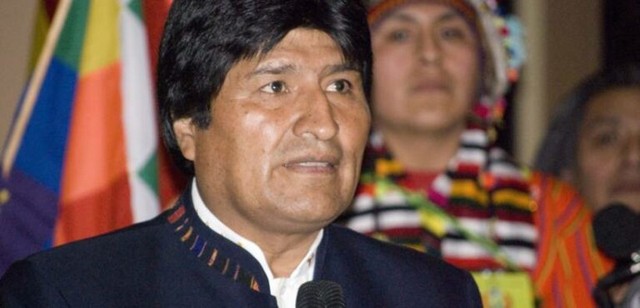
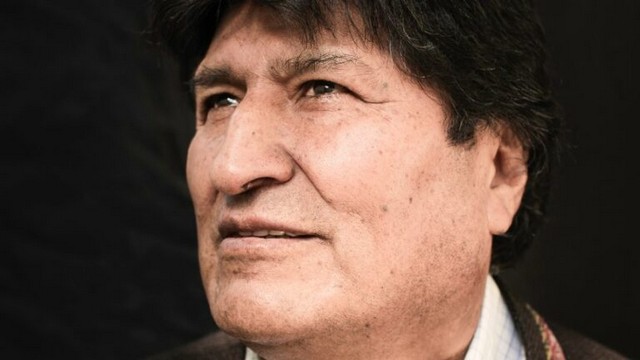
Morales, 60, was Bolivia’s first indigenous president. The former head of the coca-farmers’ union is a symbolic figure among the Latin American left. His tenure as president began in 2006 and lasted until his forced resignation two weeks ago. Election observers from the Organization of American States (OAS) found “irregularities” in his fourth election on October 20, which has led to violent unrest. Last week, the military called for him to step down. Fearing for his life, Morales fled into exile in Mexico and he is now living in a secret location in Mexico City. The Mexican government has provided him with four bodyguards and an armored SUV.

***********************

DER SPIEGEL: Mr. Morales, how should we address you? Mr. Ex-president?

Morales: After my resignation, you can’t actually call me president any longer. On the other hand, the parliament has not yet accepted my resignation. My parliamentary group has thus far been united in support of me.

DER SPIEGEL: Your opponents claim you willingly stepped down.

Morales: It was a coup that had been planned for a long time. It started when they started burning dolls that looked like me. Then they destroyed election documents and set fire to the homes belonging to members of my party and to union leaders. Then the police mutinied and the armed forces rose up against the constitutional order and called for my resignation. That is supposed to be a voluntary resignation? I stepped down so they wouldn’t kill even more Bolivians.

DER SPIEGEL: The OAS has accused you of having manipulated the outcome of the election.

Morales: That is precisely the reason why progressives, the left and moderate governments distrust this organization. It serves the rich and powerful, as I am personally experiencing. I was wrong when I trusted the election observers. They allied themselves with those behind the coup.

DER SPIEGEL: Yet election observers presented evidence of manipulation on the night of the election.

Morales: It is a preliminary report. It says that there were irregularities and other problems, but it does not accuse me of fraud. Of the 35,500 urns in the country, the election observers inspected 72 of them and now say I received more votes than in previous elections. But these were urns from rural and indigenous regions, where people have always voted overwhelmingly in my favor. I asked OAS Secretary General Luis Almagro to wait a couple of days before publication, because otherwise there would be deaths in Bolivia. But he refused. It was a political decision, not a technical or legal one.

DER SPIEGEL: You needed to beat your opponent Carlos Mesa by at least 10 percentage points to avoid a run-off. When the first results came in, it looked like you wouldn’t achieve that margin. Then the counting was suddenly interrupted, and when it continued, things suddenly started lookin better for you.

Morales: The irregularities the OAS found hurt me more than it hurt the opposition. The official count was never interrupted. Only the quick count was stopped. The official count is done publicly, with the participation of the parties. This result was not contested and the ultimate outcome is based on this count. For this reason, I called for a new count, urn by urn, vote by vote. I recognized that normal mistakes had been made, as happens with any election, but no fraud. Mistakes are human, one needs to recognize and rectify them.

DER SPIEGEL: Why was the count interrupted?

Morales: In the first projection of the results, I was seven percentage points ahead, so I said: Okay, with the votes from the countryside, we will win.

DER SPIEGEL: The general who called for your resignation last week was appointed by you. What role did the military play in your resignation?

Morales: I always had a good relationship with the armed forces. I’m the only president in the history of Bolivia who completed military service. I treated the armed forces well and equipped them with airplanes and helicopters. Now I have to watch on television as they use these weapons against the people. But the worst was the police. If they hadn’t risen up against me, we would have been able to put down this coup.

DER SPIEGEL: Since your resignation, over 30 of your supporters have been killed in clashes with government troops. Is Bolivia in danger of erupting into civil war?

Morales: The plotters are responsible for the deaths. Up until my resignation, the police and armed forces had not shot a single person. I watched on television as they fired from helicopters down at the protesters in Cochabamba. It scares me and makes me very sad. They are killing my indigenous brothers and sisters. Simple farm workers.

DER SPIEGEL: Your followers have supposedly called for civil war and they are blockading important cities in the countryside. Do you not have them under control?

Morales: I reject violence. I have said that multiple times. But it is a natural reaction, given the degree to which the poor have been humiliated. The plotters even burned the Wiphala flag, the symbol of the indigenous peoples and our national emblem.

DER SPIEGEL: Who is responsible for this upheaval, in your view?

Morales: All those who do not recognize the election results. Opposition leader Carlos Mesa, who lost the election, and Luis Fernando Camacho, the president of the so-called Santa Cruz Civic Committee. He comes from a very racist family. His father supported the dictatorship of General Hugo Banzer and earned a lot of money that way. The supposed electoral fraud was only a pretense for these people to topple me.

DER SPIEGEL: You have also argued that the U.S. government is partly responsible.

Morales: When I was elected president the first time, the mine workers who had suffered under the military dictatorship warned me: Be wary of the U.S. Embassy! In 2008, we expelled the U.S. ambassador from the country because he was conspiring against us. During the most recent election campaign, I called in the deputy head of mission, because he agitated against me in the countryside. Washington was also the first government to recognize the plotters’ regime.

DER SPIEGEL: Jeanine Añez, the vice-president of the senate, has declared herself the interim head of state, basing her claim on the constitution. Do you recognize that claim?

Morales: Where does her legitimacy come from? She has proclaimed herself president of her own accord and the military hung the sash on her. That is not a transitional government. It is a dictatorship.

DER SPIEGEL: You have called for a national dialogue. Does that call also apply to Jeanine Añez’s interim government?

Morales: We have asked the international community to facilitate a dialogue. We have three conditions. First, before negotiations begin, a commission must be appointed that names the people responsible for the murders of our supporters. The attacks are crimes against humanity, and they cannot go unpunished. Second, if someone is brought to court, they need to be accorded their constitutional rights. At the moment, people are being persecuted simply because they belonged to my government. I feel guilty, because my ministers are being persecuted while I am outside of the country. Third, the murders must stop.

DER SPIEGEL: The country is extremely polarized. You have called for peace, but does peace even have a chance in these circumstances?

Morales: That is, in any case, my greatest wish. Reconciliation needs to happen fast. The military needs to understand that we are all a big family. Some believe they can rule the country because they have a lot of money. This mentality needs to change.

DER SPIEGEL: According to the constitution, the new president needs to call for new elections by January. Do you believe that will happen?

Morales: The deadline is January 22. I have no idea how the plotters intend to accomplish that.

DER SPIEGEL: Will you run again?

Morales: I am legally entitled to run, but if it helps establish peace in the country, I will abstain.

DER SPIEGEL: You already have three terms behind you. Why did you decide to run for a fourth time at all, given that a majority of Bolivians rejected that idea in a referendum that you called yourself?

Morales: I am not clinging onto power. The constitutional court made my candidacy possible. I come from extremely poor conditions and started to work when I was eight. I didn’t want to become a union leader either, but when the coca farmers pushed me to do it, I accepted. And so it continued, until I had the possibility of becoming president. It was not my dream. It was not planned. I could simply have gone home and been happy. I took it on because I could no longer stand the repression and the injustice.

DER SPIEGEL: But it does seem like you are clinging onto power. Opponents accuse you of wanting to establish a socialist dictatorship in Bolivia like in Venezuela or Nicaragua.

Morales: For me, socialism is social justice. It is worth dying for. Without social justice, there is no peace. With our social programs we managed to lower extreme poverty from 15 percent to 8 percent. We have supported an economic model that allows us growth while keeping the International Monetary Fund at bay. We recently had higher economic growth than Chile, which was always heralded as a role model. Contrary to the suggestions of the IMF, we nationalized the energy sector. But nobody forgives us when the model of a socialist, pluralist, left-wing and anti-imperialist country works. It is a class struggle.

DER SPIEGEL: But you also controlled the judiciary, allowing you to acquire powers.

Morales: I always respected the laws. If, one day, I am going to be put on trial for abuse of my powers, it would only be because I don’t have a good lawyer. I did not become president out of a desire to become rich, but out of patriotism.

DER SPIEGEL: Bolivia has a lot of mineral resources, including lithium, which is coveted internationally for its use in batteries for electric cars and mobile phones. You have repeatedly claimed that this played a role in your removal? Why?

Morales: We had a nice agreement with Germany that included plans for the construction of a lithium factory of our own. But several multinational conglomerates did not approve. They are against us processing our raw materials ourselves.

DER SPIEGEL: But it was said that your own government wanted to stop the project.

Morales: I had a strategy for how we would carry on, but since I am no longer president, I no longer have influence over these big projects. The plotters will no doubt cancel the agreement.

DER SPIEGEL: Interim President Jeanine Añez has announced that she will charge you with corruption and electoral fraud if you return. Are you afraid?

Morales: I am not responsible for organizing the election. I was already charged with murder and drug dealing under previous governments. The evidence was faked. So I know how this goes. I am not afraid, because I am not corrupt and did not carry out any electoral fraud.

DER SPIEGEL: Your opponents describe you as godless and possessed by the devil. The interim president entered the presidential palace with a big Bible under her arm. How do you explain this religious fundamentalism?

Morales: Before we decided on a new constitution, Catholicism was the state religion. We made it so that Bolivia became a secular country. All churches have the same rights, no religion is given priority. Faith is something holy. It transmits values and should serve reconciliation. But the plotters are misusing it in order to spread hate and racism. I am Catholic, but I also believe in Pachamama — Mother Earth — and in our indigenous gods. Now my opponents claim that Pachamama is the Devil’s work and that I am Satan incarnate. I don’t understand it.

DER SPIEGEL: Jeanine Añez also claims that the Bolivian conflict is being controlled from outside the country and that agents from Venezuela and Cuba had infiltrated your movement. Is that true?

Morales: In truth, many Venezuelans came into the country in recent months in order to campaign against me. We deported over 1,000 Venezuelans because they became politically active. As for the Cubans, I always admired Fidel Castro. He helped us with our health services and Cuban doctors carried out cataract operations on over 700,000 Bolivians free of charge. That is what I call solidarity among the poor.

DER SPIEGEL: Latin America is more ideologically divided now than any time since the Cold War. That is largely due to the crisis in Venezuela.

Morales: I admire Venezuela, first Chávez, then Maduro. Maduro triumphed against the interventionism of the Americans and overcame an attempted coup. He will also overcome the economic blockade.

DER SPIEGEL: Maduro takes brutal measures against opposition figures and journalists. Do you seriously see him as a role model?

Morales: For how long has Ms. Merkel been in power in Germany? I won’t claim she is authoritarian just because she has been in office for 16 years.

DER SPIEGEL: That is a poor comparison. Germany has a parliamentarian system and the government can be voted out at any time. In presidential systems like in Venezuela, that is not possible. When do you intend to return to Bolivia?

Morales: If it were possible, immediately. I miss my homeland a lot. I miss my work, too. I worked every day from 5 a.m. to 10 or 11 p.m. Now it looks like future generations will have to carry on this struggle.

DER SPIEGEL: What is next for you personally?

Morales: My safety in Bolivia needs to be guaranteed. If they want to put me on trial, they should go for it. I’ll withstand it. But they cannot put me in jail, because I am innocent.

DER SPIEGEL: Mr. Morales, we thank you for this interview.

2 December 2019

Source: www.transcend.org

The Lies about Assange Must Stop Now

By John Pilger

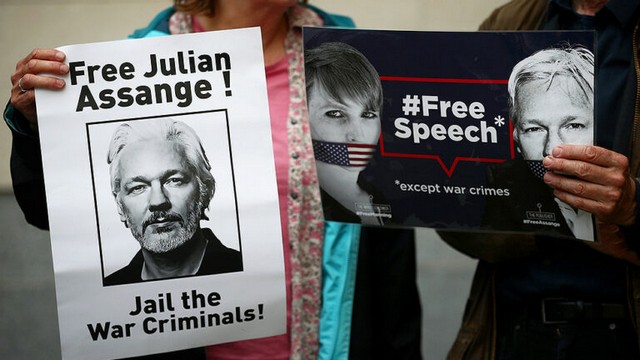
24 Nov 2019 – Newspapers and other media in the United States, Britain and Australia have recently declared a passion for freedom of speech, especially their right to publish freely. They are worried by the “Assange effect”.

It is as if the struggle of truth-tellers like Julian Assange and Chelsea Manning is now a warning to them: that the thugs who dragged Assange out of the Ecuadorean embassy in April may one day come for them.

A common refrain was echoed by the Guardian last week. The extradition of Assange, said the paper, “is not a question of how wise Mr. Assange is, still less how likable. It’s not about his character, nor his judgement. It’s a matter of press freedom and the public’s right to know.”

What the Guardian is trying to do is separate Assange from his landmark achievements, which have both profited the Guardian and exposed its own vulnerability, along with its propensity to suck up to rapacious power and smear those who reveal its double standards.

The poison that has fueled the persecution of Julian Assange is not as obvious in this editorial as it usually is; there is no fiction about Assange smearing faeces on embassy walls or being awful to his cat.

Instead, the weasel references to “character” and “judgement” and “likeability” perpetuate an epic smear which is now almost a decade old. Nils Melzer, the United Nations Rapporteur on Torture, used a more apt description. “There has been,” he wrote, “a relentless and unrestrained campaign of public mobbing.” He explains mobbing as “an endless stream of humiliating, debasing and threatening statements in the press”. This “collection ridicule” amounts to torture and could lead to Assange’s death.

Having witnessed much of what Melzer describes , I can vouch for the truth of his words. If Julian Assange were to succumb to the cruelties heaped upon him, week after week, month after month, year upon year, as doctors warn, newspapers like the Guardian will share the responsibility.

A few days ago, the Sydney Morning Herald’s man in London, Nick Miller, wrote a lazy, specious piece headlined, “Assange has not been vindicated, he has merely outwaited justice.” He was referring to Sweden’s abandonment of the so-called Assange investigation.

Miller’s report is not untypical for its omissions and distortions while masquerading as a tribune of women’s rights. There is no original work, no real inquiry: just smear.

There is nothing on the documented behaviour of a clutch of Swedish zealots who hi jacked the “allegations” of sexual misconduct against Assange and made a mockery of Swedish law and that society’s vaunted decency.

He makes no mention that in 2013, the Swedish prosecutor tried to abandon the case and emailed the Crown Prosecution Service in London to say it would no longer pursue a European Arrest Warrant, to which she received the reply: “Don’t you dare!!!” (Thanks to Stefania Maurizi of La Repubblica)

Other emails show the CPS discouraging the Swedes from coming to London to interview Assange – which was common practice – thus blocking progress that might have set him free in 2011.

There was never an indictment. There were never charges. There was never a serious attempt to put “allegations” to Assange and question him – behaviour that the Swedish Court of Appeal ruled to be negligent and the General Secretary of the Swedish Bar Association has since condemned.

Both the women involved said there was no rape. Critical written evidence of their text messages was wilfully withheld from Assange’s lawyers, clearly because it undermined the “allegations”.

One of the women was so shocked that Assange was arrested, she accused the police of railroading her and changing her witness statement. The chief prosecutor, Eva Finne, dismissed the “suspicion of any crime.”

The Sydney Morning Herald man omits how an ambitious and compromised politician, Claes Borgstrom, emerged from behind the liberal facade of Swedish politics and effectively seized and revived the case.

Borgstrom enlisted a former political collaborator, Marianne Ny, as the new prosecutor. Ny refused to guarantee that Assange would not be sent on to the United States if he was extradited to Sweden, even though, as The Independent reported, “informal discussions have already taken place between the US and Swedish officials over the possibility of the WikiLeaks founder Julian Assange being delivered into American custody, according to diplomatic sources.” This was an open secret in Stockholm. That libertarian Sweden had a dark, documented past of rendering people into the hands of the CIA was not news.

The silence was broken in 2016 when the United Nations Working Party on Arbitrary Detention, a body that decides whether governments are meeting their human rights obligations, ruled that Julian Assange was unlawfully detained by Britain and called on the British government to set him free.

Both the governments of Britain and Sweden had taken part in the UN’s investigation, and agreed to abide by its ruling, which carried the weight of international law. The British foreign secretary, Philip Hammond, stood up in Parliament and abused the UN panel.

The Swedish case was a fraud from the moment the police secretly and illegally contacted a Stockholm tabloid and ignited the hysteria that was to consume Assange. WikiLeaks’ revelations of America’s war crimes had shamed the hand-maidens of power and its vested interests, who called themselves journalists; and for this, the unclubbable Assange would never be forgiven.

It was now open season. Assange’s media tormenters cut and pasted each other’s lies and vituperative abuse. “He really is the most massive turd,” wrote the Guardian columnist Suzanne Moore. The received wisdom was that he had been charged, which was never true. In my career, reporting from places of extreme upheaval and suffering and criminality, I have never known anything like it.

In Assange’s homeland, Australia, this “mobbing” reached an apogee. So eager was the Australian government to deliver its citizen to the United States that the prime minister in 2013, Julia Gillard, wanted to take away his passport and charge him with a crime – until it was pointed out to her that Assange had committed no crime and she had no right to take away his citizenship.

Julia Gillard, according to the website Honest History, holds the record for the most sycophantic speech ever made to the US Congress. Australia, said she to applause, was America’s “great mate”. The great mate colluded with America in its hunt for an Australian whose crime was journalism. His right to protection and proper assistance was denied.

When Assange’s lawyer, Gareth Peirce, and I met two Australian consular officials in London, we were shocked that all they knew about the case “is what we read in the papers”.

This abandonment by Australia was a principal reason for the granting of political asylum by Ecuador. As an Australian, I found this especially shaming.

When asked about Assange recently, the current Australian prime minister, Scott Morrison, said, “He should face the music”. This kind of thuggery, bereft of any respect for truth and rights and the principles and law, is why the mostly Murdoch controlled press in Australia is now worried about its own future, as the Guardian is worried, and The New York Times is worried. Their concern has a name: “the Assange precedent.”

They know that what happens to Assange can happen to them. The basic rights and justice denied him can be denied to them. They have been warned. All of us have been warned.

Whenever I see Julian in the grim, surreal world of Belmarsh prison, I am reminded of the responsibility of those of us who defend him. There are universal principles at stake in this case. He himself is fond of saying: “It’s not me. It’s far wider.”

But at the heart of this remarkable struggle – and it is, above all, a struggle – is one human being whose character, I repeat character, has demonstrated the most astonishing courage. I salute him.

_________________________________________________

John Pilger has won an Emmy and a BAFTA for his documentaries, which have also won numerous US and European awards.

2 December 2019

Source: www.transcend.org

An Open Letter from Doctors: Julian Assange “Could Die in Prison”

24 Nov 2019 – The following letter was authored by more than 65 eminent medical doctors from the UK and around the world, calling for urgent action to protect the life of imprisoned WikiLeaks founder and journalist Julian Assange.

We write this open letter, as medical doctors, to express our serious concerns about the physical and mental health of Julian Assange. Our professional concerns follow publication recently of the harrowing eyewitness accounts of Craig Murray and John Pilger of the case management hearing on Monday 21 October 2019 at Westminster Magistrates Court. The hearing related to the upcoming February 2020 hearing of the request by the US government for Mr Assange’s extradition to the US in relation to his work as a publisher of information, including information about alleged crimes of the US government.

Our concerns were further heightened by the publication on 1 November 2019 of a further report of Nils Melzer, the United Nations Special Rapporteur on Torture and Other Cruel, Inhuman or Degrading Treatment or Punishment, in which he stated: ‘Unless the UK urgently changes course and alleviates his inhumane situation, Mr Assange’s continued exposure to arbitrariness and abuse may soon end up costing his life.’

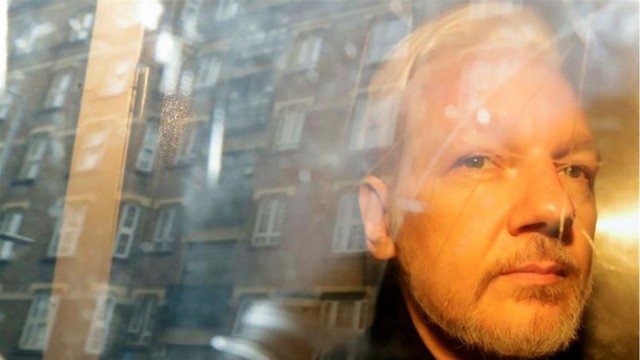
Having entered the Ecuadorian Embassy in London on 19 June 2012, Mr Assange sought and was granted political asylum by the Ecuadorian government. On 11 April 2019, he was removed from the Embassy and arrested by the Metropolitan Police. He was subsequently detained in Belmarsh maximum security prison, in what Mr Melzer described as ‘oppressive conditions of isolation and surveillance.’

During the seven years spent in the Embassy in confined living conditions, Mr Assange was visited and examined by a number of experts each of whom expressed alarm at the state of his health and requested that he be allowed access to a hospital. No such access was permitted. Mr Assange was unable to exercise his right to free and necessary expert medical assessment and treatment throughout the seven-year period.

A chronology, based on information available to the public, of relevant visits, events and reports from a medical perspective follows:

John Pilger- Julian Assange Could Barely Speak in Court!

  • On 31 July 2015, a dentist reported that Mr Assange’s ‘upper right first premolar (UR4) tooth had fractured along with the filling that was in it and the dental pulp of the tooth was exposed’ and ‘that failure to treat this promptly would lead to infection of the root leading to a dental abscess and pain.’ The dentist advised ‘saving this tooth would require root canal treatment’, however, ‘due to the specialised equipment and radiographic requirements this treatment could not be completed in the domiciliary setting.’ ‘Extraction of the tooth’ was identified as ‘another option but […] it may need a surgical extraction.’ This was ‘not recommended in a domiciliary setting especially as we would need preoperative radiographs to assess the root shape and the proximity of the root to the floor of the maxillary sinus. Extractions in this area carry a risk of creating a communication between the mouth and the sinus which could need surgical closure hence radiographs would be essential to assess this risk.’ The dentist ‘advised Mr Assange he should seek treatment in a clinical setting to prevent further progression of his symptoms as soon as possible.’ [1]
  • On 4 December 2015, an opinion of the United Nations Working Group on Arbitrary Detention (UNWGAD) was formally adopted and it was published on 5 February 2016. It concluded that Mr Assange was being arbitrarily detained by the governments of the UK and Sweden. Crucially, it was made clear at the time that any continued arbitrary detention of Mr Assange would constitute torture. The group concluded that ‘the Embassy of Ecuador in London is far less than a house or detention centre equipped for prolonged pretrial detention and lacks appropriate and necessary medical equipment or facilities — it is valid to assume, after five years of deprivation of liberty, that Mr Assange’s health could have deteriorated to such a level that anything more than a superficial illness would put his health at a serious risk, and he was denied access to a medical institution for a proper diagnosis, including a magnetic resonance imaging test.’ [2]
  • On 8 December 2015, a doctor who saw Mr Assange reported: ‘progressive inflammation and stiffness affecting his right shoulder. This requires an MRI scan to determine the exact diagnosis in order to inform a suitably qualified physiotherapist as to how best to treat him in an appropriately equipped medical facility. His current circumstances significantly compromise the ability to satisfactorily investigate and treat him.’ [3] Mr Assange was refused access to a hospital by the Foreign and Commonwealth Office. [4]
  • On 11 December 2015, a further doctor, a trauma and psychosocial expert, reported: ‘Mr Assange scored 15 out of 20 on the Patient Health Questionnaire […] a multipurpose instrument for screening, diagnosing, monitoring and measuring the severity of depression. […] A score of 15 indicates that Mr Assange suffers from Major Depression (moderately severe)’; ‘At a minimum, it is recommended that his urgent medical complaints regarding the pain in his shoulder be investigated with appropriate equipment’; ‘The Embassy is not a medical setting. The only way Mr Assange can access either urgent medical care or investigations would be to place himself in the hands of the British authorities. Mr Assange is in an invidious position of having to decide between his physical health and the risk of being extradited to the United States. His inability to access proper medical care and assessment — without placing himself into the hands of the authorities — transforms each physical complaint no matter how simple into something that could have catastrophic consequences either for his health or his liberty. He lives in a state of chronic health insecurity’; and ‘The unusual circumstances place Mr Assange in a precarious situation. The effects of the situation on Mr Assange’s health and well-being are serious and the risks will most certainly escalate with the potential to becoming life threatening if current conditions persist.’ [5]
  • In October 2017, Doctors Sondra S. Crosby, Brock Chisholm and Sean Love visited Mr Assange. [6] The group examined him for 20 hours over three days. [7] In an article for the Guardian published on 24 January 2018 they wrote: ‘We examined Julian Assange, and he badly needs care — but he can’t get it’; ‘We call on the British Medical Association and colleagues in the UK to demand safe access to medical care for Mr Assange and to oppose openly the ongoing violations of his human right to healthcare.’ [8]
  • On 19 June 2018, Dinah PoKempner, General Counsel at Human Rights Watch, stated: ‘Concern is growing over his access to medical care. His asylum is growing more and more difficult to distinguish from detention. The UK has the power to resolve concerns over his isolation, health, and confinement by removing the threat of extradition for publishing newsworthy leaks.’ [9]
  • On 22 June 2018, Dr Sean Love, who over the course of the previous year had visited Mr Assange several times at the embasy, reiterated his concerns regarding Mr Assange’s health and repeated his call for him to be given access to healthcare in the British Medical Journal. [10] Dr Love wrote that ‘Assange’s detention continues to cause a precipitous deterioration in his overall condition’ and that ‘Because of his health issues, in 2015, Ecuadorian authorities requested that he be permitted humanitarian safe passage to a hospital in London; however, this was denied by the UK.’ Dr Love stated that ‘To this day, Assange remains unable to access hospital based diagnostic testing and treatment — even for a medical emergency. In effect, he has gone without proper access to care for the duration of his six years in confinement.’
  • On 21 December 2018, the United Nations Working Group on Arbitrary Detention (UNWGAD) issued a further statement opposing the continued unlawful detention of Mr Assange: ‘States that are based upon and promote the rule of law do not like to be confronted with their own violations of the law, that is understandable. But when they honestly admit these violations, they do honour the very spirit of the rule of law, earn enhanced respect for doing so, and set worldwide commendable examples.’ It added: ‘The WGAD is further concerned that the modalities of the continued arbitrary deprivation of liberty of Mr Assange is undermining his health, and may possibly endanger his life given the disproportionate amount of anxiety and stress that such prolonged deprivation of liberty entails.’ [11]
  • On 5 April 2019, Nils Melzer, the United Nations Special Rapporteur on Torture and Other Cruel, Inhuman or Degrading Treatment or Punishment, issued a statement following reports that Mr Assange may soon be expelled from the Ecuadorian Embassy. He said, ‘According to information I have received, Mr Assange is at risk of extreme vulnerability, and his health is in serious decline. I therefore appeal to the Ecuadorian authorities to continue to provide him, to the fullest extent possible in the circumstances, with adequate living conditions and access to appropriate medical care.’ [12] On 11 April 2019, Mr Assange was expelled from the Embassy and arrested by the Metropolitan Police.
  • On 1 May 2019, Mr Assange was described as suffering from ‘moderate to severe depression’ at a hearing at Southwark Crown Court at which he was sentenced to 50 weeks imprisonment for a bail infringement dating back to 2012. [13]
  • On 3 May 2019, the UN Working Group on Arbitrary Detention issued a statement noting it was ‘deeply concerned’ over Assange’s 50 weeks imprisonment. ‘The Working Group regrets that the Government has not complied with its Opinion and has now furthered the arbitrary deprivation of liberty of Mr Assange. [14]
  • On 9 May 2019, Mr Melzer, the UN Special Rapporteur on Torture and Other Cruel, Inhuman or Degrading Treatment or Punishment, visited Belmarsh prison accompanied by two medical experts, with special expertise in assessing victims of torture. This involved a 60-minute conversation with Mr Assange, an hour-long physical examination and a two-hour psychiatric examination.
  • On 23 May 2019, the US government brought charges under the Espionage Act of 1917 against Mr Assange for his publishing activities on behalf of WikiLeaks. On 29 May 2019, Mr Assange was moved to the ‘hospital wing’ at Belmarsh prison following a reported significant deterioration in his health. On 30 May 2019, Mr Assange was too unwell to appear in court, even via video link, for a preliminary extradition hearing. [15] It should be noted that the medical facilities and staffing at Belmarsh prison ‘hospital wing’ have never been divulged to the public.
  • On 31 May 2019, Mr Melzer, the UN Special Rapporteur on Torture, reported on his 9 May 2019 visit to Mr Assange, ‘we all came to the conclusion that he showed all the symptoms that are typical for a person that has been exposed to psychological torture over an extended period of time.’ [16]
  • On 22 October 2019, Craig Murray, a former British Ambassador, published a detailed and shocking eye witness account of Mr Assange’s hearing the previous day, stating that he ‘exhibited exactly the symptoms of a torture victim.’ [17] His report was corroborated by the eyewitness account of John Pilger, the renowned investigative journalist and filmmaker. [18]
  • On 1 November 2019, UN Special Rapporteur on Torture Nils Melzer reiterated his alarm at the continued deterioration of Julian Assange’s health since his arrest and detention earlier this year, saying his life was now at risk. Mr Melzer said, ‘What we have seen from the UK Government is outright contempt for Mr Assange’s rights and integrity,’ and ‘Despite the medical urgency of my appeal, and the seriousness of the alleged violations, the UK has not undertaken any measures of investigation, prevention and redress required under international law.’ Mr Melzer concluded: ‘Unless the UK urgently changes course and alleviates his inhumane situation, Mr Assange’s continued exposure to arbitrariness and abuse may soon end up costing his life.’ [19]

Medical doctors have a professional duty to report suspected torture of which they become aware, wherever it may be occurring. That professional duty is absolute and must be carried out regardless of risk to reporting doctors. We wish to put on record, as medical doctors, our collective serious concerns and to draw the attention of the public and the world to this grave situation.

The World Health Organisation Constitution of 1946 envisages ‘the highest attainable standard of health as a fundamental right of every human being.’ [20] We are indebted to those who have sought to uphold this right in the case of Mr Assange.

From a medical point of view, on the evidence currently available, we have serious concerns about Mr Assange’s fitness to stand trial in February 2020.

It is our opinion that Mr Assange requires urgent expert medical assessment of both his physical and psychological state of health. Any medical treatment indicated should be administered in a properly equipped and expertly staffed university teaching hospital (tertiary care). Were such urgent assessment and treatment not to take place, we have real concerns, on the evidence currently available, that Mr Assange could die in prison. The medical situation is thereby urgent. There is no time to lose.

Appendix

The United Nations Special Rapporteur on Torture and Other Cruel, Inhuman or Degrading Treatment or Punishment, Nils Melzer, visited Mr Assange in Belmarsh Prison on 9 May 2019, over six months ago. Mr Melzer was accompanied by two medical experts specialised in examining victims of torture and other ill-treatment. The team was able to speak with Mr Assange in confidence and to conduct a thorough medical assessment.

Mr Melzer’s report was published on 31 May 2019:

‘It was obvious that Mr Assange’s health has been seriously affected by the extremely hostile and arbitrary environment he has been exposed to for many years,’ the expert said. ‘Most importantly, in addition to physical ailments, Mr Assange showed all symptoms typical for prolonged exposure to psychological torture, including extreme stress, chronic anxiety and intense psychological trauma.

‘The evidence is overwhelming and clear,’ the expert said. ‘Mr Assange has been deliberately exposed, for a period of several years, to progressively severe forms of cruel, inhuman or degrading treatment or punishment, the cumulative effects of which can only be described as psychological torture.

‘In 20 years of work with victims of war, violence and political persecution I have never seen a group of democratic States ganging up to deliberately isolate, demonise and abuse a single individual for such a long time and with so little regard for human dignity and the rule of law,’ Mr Melzer said. ‘The collective persecution of Julian Assange must end here and now!’

Report of Nils Melzer, dated 31 May 2019: [https://www.ohchr.org/EN/NewsEvents/Pages/DisplayNews.aspx?NewsID=24665]

In his annual report on 14 October 2019 to the Seventy-fourth session of the UN General Assembly in New York, Mr Melzer stated: ‘Further, I would like to thank the Government of the United Kingdom for having facilitated my visit to Mr Julian Assange in Belmarsh Prison in London in May 2019, including his examination by two experienced medical experts. Although Mr Assange showed a pattern of symptoms typical for long-term exposure to psychological torture, I regret to report that none of the concerned States have agreed to investigate or redress their alleged involvement in his abuse as required of them under human rights law.’

Report of Nils Melzer to the Seventy-fourth session of the UN General Assembly on 14 October 2019: [https://peds-ansichten.de/wp-content/uploads/2019/11/FinalSRTStatementGA14Oct-2019.pdf]

Eyewitness account of Craig Murray (former British Ambassador) of events at Westminster Magistrates Court on Monday 21 October 2019: [https://www.transcend.org/tms/2019/11/in-court-the-annihilation-of-julian-assange/]

Eyewitness account of John Pilger (investigative journalist) of events at Westminster Magistrates Court on Monday 21 October 2019:

Report of Nils Melzer, dated 5 April 2019: [https://www.ohchr.org/EN/NewsEvents/Pages/DisplayNews.aspx?NewsID=24454&LangID=E]

Report of Nils Melzer, dated 1 November 2019: [https://ohchr.org/EN/NewsEvents/Pages/DisplayNews.aspx?NewsID=25249&LangID=E]

Addendum

It is noteworthy that three of the medical practitioners, from whose reports we have drawn, are unidentified, their names having been redacted. In this context, a telling passage from the 26 page report of the psychological expert dated 11 December 2015 offers an insight into the climate of fear and intimidation surrounding the provision of medical care to Mr Assange. On page 20 of the report, under the heading ‘Medical Practitioners’ Concerns regarding examining and treating Mr Assange at the Embassy’, the unnamed psychological expert noted:

“One of Mr Assange’s colleagues commented that there had been many difficulties in finding medical practitioners who were willing to examine Mr Assange in the Embassy. The reasons given were uncertainty over whether medical insurance would cover the Embassy (a foreign jurisdiction); whether the association with Mr Assange could harm their livelihood or draw unwanted attention to them and their families; and discomfort regarding exposing this association when entering the Embassy. One medical practitioner expressed concern to one of the interviewees after the police taking notes of his name and the fact that he was visiting Mr Assange. One medical practitioner wrote that he agreed to produce a medical report only on condition that his name not be made available to the wider public, fearing repercussions.” [21]

It is likely that the aforementioned climate of fear and intimidation severely compromised the medical care available to Mr Assange, even within the Embassy, and given all the other concerns surrounding the extraordinary treatment of Mr Assange it is difficult to conclude other than that the creation of that climate of fear and intimidation was deliberate. If it was deliberate, we as medical doctors condemn such behaviour as reckless, dangerous and cruel. That all this has been played out in the heart of London for many years is a source of great sadness and shame to many of us.

Signed:

Dr Mariagiulia Agnoletto MD Specialist in Psychiatry ASST Monza San Gerardo Hospital, Monza (Italy)

Dr Vittorio Agnoletto MD Università degli Studi di Milano Statale, Milano (Italy)

Dr Sonia Allam MBChB FRCA Consultant in Anaesthesia and Pre-operative Assessment, Forth Valley Royal Hospital, Scotland (UK)

Dr Norbert Andersch MD MRCPsych Consultant Neurologist and Psychiatrist, South London and Maudsley NHS Foundation Trust (retired); Lecturer in Psychopathology at Sigmund Freud Private University, Vienna-Berlin-Paris (Germany and UK)

Dr Marianne Beaucamp MD Fachärztin (Specialist) in Neurology & Psychiatry Psychoanalyst and Psychotherapist (retired), Munich (Germany)

Dr Thed Beaucamp MD Fachärztin (Specialist) in Neurology, Psychiatry & Psychosomatic Medicine Psychoanalyst and Psychotherapist (retired), Munich (Germany)

Dr Margaret Beavis MBBS FRACGP MPH General Medical Practitioner (Australia)

Dr David Bell Consultant Psychiatrist and Psychoanalyst, London (UK)

Mr Patrick John Ramsay Boyd (signed John Boyd) MRCS LRCP MBBS FRCS FEBU Consultant Urologist (retired) (UK)

Dr Hannah Caller MBBS DCH Paediatrician, Homerton University Hospital, London (UK)

Dr Franco Camandona MD Specialist in Obstetrics & Gynaecology E.O. Ospedali Galliera, Genova (Italy)

Dr Sylvia Chandler MBChB MRCGP BA MA General Medical Practitioner (retired) (UK)

Dr Marco Chiesa MD FRCPsych Consultant Psychiatrist and Visiting Professor, University College London (UK)

Dr Carla Eleonora Ciccone MD Specialist in Obstetrics & Gynaecology AORN MOSCATI, Avellino (Italy)

Dr Owen Dempsey MBBS BSc MSc PhD General Medical Practitioner (retired) (UK)

Dr H R Dhammika MBBS Medical Officer, Dehiattakandiya Base Hospital, Dehiattakandiya (Sri Lanka)

Dr Tim Dowson MBChB MRCGP MSc MPhil Specialised General Medical Practitioner in Substance Misuse, Leeds (UK)

Miss Kamilia El-Farra MBChB FRCOG MPhil (Medical Law and Ethics) Consultant Gynaecologist, Essex (UK)

Dr Beata Farmanbar MD General Medical Practitioner (Sweden)

Dr Tomasz Fortuna MD RCPsych (affiliated) Forensic Child and Adolescent Psychiatrist, Adult Psychotherapist and Psychoanalyst, British Psychoanalytical Society and Tavistock and Portman NHS Foundation Trust, London (UK)

Dr C Stephen Frost BSc MBChB Specialist in Diagnostic Radiology (Stockholm, Sweden) (UK and Sweden)

Dr Peter Garrett MA MD FRCP Independent writer and humanitarian physician; Visiting Lecturer in Nephrology at the University of Ulster (UK)

Dr Rachel Gibbons MBBS BSc MRCPsych. M.Inst.Psychoanal. Mem.Inst.G.A Consultant Psychiatrist (UK)

Dr Bob Gill MBChB MRCGP General Medical Practitioner (UK)

Elizabeth Gordon MS FRCS Consultant Surgeon (retired); Co-founder of Freedom from Torture (UK)

Professor Derek A. Gould MBChB MRCP DMRD FRCR Consultant Interventional Radiologist (retired): BSIR Gold Medal, 2010; over 110 peer-reviewed publications in journals and chapters (UK)

Dr Jenny Grounds MD General Medical Practitioner, Riddells Creek, Victoria; Treasurer, Medical Association for Prevention of War, Australia (Australia)

Dr Paul Hobday MBBS FRCGP DRCOG DFSRH DPM General Medical Practitioner (retired) (UK)

Mr David Jameson-Evans MBBS FRCS Consultant Orthopaedic and Trauma Surgeon (retired) (UK)

Dr Bob Johnson MRCPsych MRCGP Diploma in Psychotherapy Neurology & Psychiatry (Psychiatric Institute New York) MA (Psychol) PhD (Med Computing) MBCS DPM MRCS Consultant Psychiatrist (retired); Formerly Head of Therapy, Ashworth Maximum Security Hospital, Liverpool; Formally Consultant Psychiatrist, Special Unit, C-Wing, Parkhurst Prison, Isle of Wight (UK)

Dr Lissa Johnson BA BSc(Hons, Psych) MPsych(Clin) PhD Clinical Psychologist (Australia)

Dr Anna Kacperek MRCPsych Consultant Child and Adolescent Psychiatrist, London (UK)

Dr Jessica Kirker MBChB DipPsychiat MRCPsych FRANZCP MemberBPAS Psychoanalyst and Consultant Medical Psychotherapist (retired) (UK)

Dr Willi Mast MD Facharzt für Allgemeinmedizin, Gelsenkirchen (Germany)

Dr Janet Menage MA MBChB General Medical Practitioner (retired); qualified Psychological Counsellor; author of published research into Post-Traumatic Stress Disorder (UK)

Professor Alan Meyers MD MPH Emeritus Professor of Paediatrics, Boston University School of Medicine, Boston, Massachusetts (USA)

Dr Salique Miah BSc MBChB FRCEM DTM&H ARCS Consultant in Emergency Medicine, Manchester (UK)

Dr David Morgan DClinPsych MSc Fellow of British Psychoanalytic Society Psychoanalyst, Consultant Clinical Psychologist and Consultant Psychotherapist (UK)

Dr Helen Murrell MBChB MRCGP General Medical Practitioner, Gateshead (UK)

Dr Alison Anne Noonan MBBS (Sydney) MD (Rome) MA (Sydney) ANZSJA IAAP AAGP IAP Psychiatrist, Psychoanalyst, Specialist Outreach Northern Territory, Executive Medical Association for Prevention of War (NSW) (Australia)

Dr Alison Payne BSc MBChB DRCOG MRCGP prev FRNZGP General Medical Practitioner, Coventry; special interest in mental health/trauma and refugee health (UK)

Dr Peter Pech MD Specialist in Diagnostic Radiology (sub-specialty Paediatric Radiology), Akademiska Sjukhuset (Uppsala University Hospital), Uppsala (Sweden)

Dr Tomasz Pierscionek MRes MBBS MRCPsych PGDip (UK)

Professor Allyson M Pollock MBChB MSc FFPH FRCGP FRCP (Ed) Professor of Public Health, Newcastle University (UK)

Dr Abdulsatar Ravalia FRCA Consultant Anaesthetist (UK)

Dr. med. Ullrich Raupp MD Specialist in Psychotherapy, Child Psychiatry and Child Neurology; Psychodynamic Supervisor (DGSv) Wesel, Germany (Germany)

Professor Andrew Samuels Professor of Analytical Psychology, University of Essex (recently retired); Honorary/Visiting Professor at Goldsmiths and Roehampton (both London), New York and Macau City Universities; Former Chair, UK Council for Psychotherapy (2009–2012); Founder Board Member of the International Association for Relational Psychoanalysis and Psychotherapy; Founder of Psychotherapists and Counsellors for Social Responsibility (UK)

Mr John H Scurr BSc MBBS FRCS Consultant General and Vascular Surgeon, University College Hospital, London (UK)

Dr Peter Shannon MBBS (UWA) DPM (Melb) FRANZCP Adult Psychiatrist (retired) (Australia)

Dr Gustaw Sikora MD PhD F Inst Psychoanalysis Fellow of British Psychoanalytic Society Specialist Psychiatrist (diploids obtained in Poland and registered in the UK); Psychoanalyst; currently in private practice (UK and Poland)

Dr Wilhelm Skogstad MRCPsych BPAS IPA Psychiatrist & Psychoanalyst, London, United Kingdom (UK and Germany)

Dr John Stace MBBS (UNSW) FRACGP FACRRM FRACMA MHA (UNSW) Country Doctor (retired), Perth (Australia)

Dr Derek Summerfield BSc (Hons) MBBS MRCPsych Honorary Senior Clinical Lecturer, Institute of Psychiatry, Psychology & Neuroscience, King’s College London (UK)

Dr Rob Tandy MBBS MRCPsych Consultant Psychiatrist in Psychotherapy & Psychoanalyst; Unit Head, Psychoanalytic Treatment Unit, Tavistock and Portman, London; City & Hackney Primary Care Psychotherapy Consultation Service, St Leonard’s Hospital, London (UK)

Dr Noel Thomas MA MBChB DCH DobsRCOG DTM&H MFHom General Medical Practitioner; homeopath; has assisted on health/education projects in six developing countries Maesteg, Wales (UK)

Dr Philip Thomas MBChB DPM MPhil MD Formerly Professor of Philosophy Diversity & Mental Health, University of Central Lancashire; Formally Consultant Psychiatrist (UK)

Dr Gianni Tognoni MD Istituto Mario Negri, Milano (Italy)

Dr Sebastião Viola Lic Med MRCPsych Consultant Psychiatrist, Cardiff (UK)

Dr Peter Walger MD Consultant, Infectious Disease Specialist, Bonn-Duesseldorf-Berlin (Germany)

Dr Sue Wareham OAM MBBS General Medical Practitioner (retired) (Australia)

Dr Elizabeth Waterston MD General Medical Practitioner (retired), Newcastle upon Tyne (UK)

Dr Eric Windgassen MRCPsych PGDipMBA Consultant Psychiatrist (retired) (UK)

Dr Pam Wortley MBBS MRCGP General Medical Practitioner (retired), Sunderland (UK)

Dr Matthew Yakimoff BOralH (DSc) GDipDent General Dental Practitioner (Australia)

Dr Rosemary Yuille BSc (Hons Anatomy) MBBS (Hons) General Medical Practitioner (retired), Canberra (Australia)

Dr Felicity de Zulueta Emeritus Consultant Psychiatrist in Psychotherapy, South London and Maudsley NHS Foundation Trust; Honorary Senior Clinical Lecturer in Traumatic Studies, King’s College London (UK)

Dr Paquita de Zulueta MBBChir MA (Cantab) MA (Medical Law & Ethics) MRCP FRCGP PGDipCBT CBT Therapist and Coach; Senior Tutor Medical Ethics; Honorary Senior Clinical Lecturer, Dept of Primary Care & Population Health, Imperial College London (UK)

To add your signature to the open letter, please email: doctors4assange@gmail.com – Please include your position title, medical qualifications and expertise.

Endnotes

[1] Dr [Redacted], BChD MFGDP(UK) MSc, Dental Surgeon, carried out an emergency dental appointment at the Embassy on 8 May 2015: [https://file.wikileaks.org/file/cms/Dentist%20report%20310715.pdf]

[2] Opinions adopted by the Working Group on Arbitrary Detention at its seventy-fourth session, 30 November-4 December 2015, Opinion №54/2015 concerning Julian Assange (Sweden and the United Kingdom of Great Britain and Northern Ireland): [http://www.ohchr.org/Documents/Issues/Detention/A.HRC.WGAD.2015.docx] [https://www.ohchr.org/EN/NewsEvents/Pages/DisplayNews.aspx?NewsID=17012&LangID=E]

[3] Dr [Redacted] MA MB BChir DCH MRCGP assessed Mr Assange on 12 August 2015 and 2 December 2015: [https://file.wikileaks.org/file/cms/Medical.pdf]

[4] [https://www.theguardian.com/media/2015/oct/15/ecuador-asks-britain-to-allow-julian-assange-safe-passage-for-mri-scan ; ][https://www.theguardian.com/uk-news/2015/oct/15/julian-assange-shoulder-pain-mri-scan-embassy-metropolitan-police ; ][https://www.telegraph.co.uk/news/wikileaks-files/11932732/Wikileaks-Julain-Assange-refused-safe-passage-for-MRI-scan.html]

[5] Dr [Redacted], Trauma and Psychosocial Expert, interviewed Mr Assange on five occasions between June 2014 and June 2015, and interviewed Mr Assange on two further occasions to validate previous findings: [https://file.wikileaks.org/file/cms/Psychosocial%20Medical%20Report%20December%202015.pdf]

[6] Dr Sean Love is a Resident Physician in Anaesthesiology and an Adult Critical Care Medicine Fellow at the Johns Hopkins University School of Medicine. Dr Sondra S Crosby is a medical doctor and Professor of Medicine at Boston University, specialising in internal medicine. She is also a faculty member of the Health Law, Bioethics and Human Rights department at the Boston University School of Public Health. Dr Brock Chisholm is a Consultant Clinical Psychologist with a degree in Psychology, a Masters in Psychological Research Methods and a Doctorate in Clinical Psychology and extensive experience in working with victims of trauma.

[7] [https://www.theguardian.com/media/2018/jan/24/julian-assanges-health-in-dangerous-condition-say-doctors ; ][https://www.theguardian.com/commentisfree/2018/jan/24/julian-assange-care-wikileaks-ecuadorian-embassy ; ][https://blogs.bmj.com/bmj/2018/06/22/sean-love-access-medical-care-must-guaranteed-julian-assange/#_ftn1]

[8] [https://www.theguardian.com/commentisfree/2018/jan/24/julian-assange-care-wikileaks-ecuadorian-embassy]

[9] [https://www.hrw.org/news/2018/06/19/uk-should-reject-extraditing-julian-assange-us]

[10] [https://blogs.bmj.com/bmj/2018/06/22/sean-love-access-medical-care-must-guaranteed-julian-assange/]

[11] [https://www.ohchr.org/EN/NewsEvents/Pages/DisplayNews.aspx?NewsID=24042]

[12] [https://www.ohchr.org/EN/NewsEvents/Pages/DisplayNews.aspx?NewsID=24454&LangID=E]

[13] [https://www.express.co.uk/life-style/health/1121387/julian-assange-depression-symptoms-mental-health-treatment]

[14] [https://www.ohchr.org/en/NewsEvents/Pages/DisplayNews.aspx?NewsID=24552&LangID=E]

[15] [https://metro.co.uk/2019/05/30/wikileaks-grave-concerns-julian-assange-moved-prison-hospital-9738883/ ; ][https://www.theguardian.com/media/2019/may/30/julian-assange-too-ill-appear-court-via-video-link-lawyers-say ; ][https://news.sky.com/story/julian-assange-moved-to-medical-wing-in-belmarsh-prison-over-significantly-deteriorated-health-11731364]

[16] [https://www.ohchr.org/EN/NewsEvents/Pages/DisplayNews.aspx?NewsID=24665]

[17] [https://www.craigmurray.org.uk/archives/2019/10/assange-in-court/]

[18] [https://youtu.be/GLXzudMCyM4]

[19] [https://www.ohchr.org/EN/NewsEvents/Pages/DisplayNews.aspx?NewsID=25249&LangID=E]

[20] [https://www.who.int/news-room/fact-sheets/detail/human-rights-and-health]

[21] Dr [Redacted], Trauma and Psychosocial Expert, interviewed Mr Assange on five occasions between June 2014 and June 2015, and interviewed Mr Assange on two further occasions to validate previous findings: [https://file.wikileaks.org/file/cms/Psychosocial%20Medical%20Report%20December%202015.pdf.]

____________________________________________

2 December 2019

Source: www.transcend.org

Buddhist and Muslims Leaders Reaffirm Commitment to Yogyakarta Statement

Cox’s Bazar – The second High-Level Summit of Buddhist and Muslim Leaders convened over 20 Buddhist and Muslim leaders across South and Southeast Asia to discuss current needs and efforts across the region in order to overcome violent extremism and hindrances to just and inclusive societies. This meeting reaffirms the leaders commitment to the ideals outlined in the historic 2015 Yogyakarta Statement of Shared Values and Commitments between Muslims and Buddhists to overcome extremism and advance societal peace with justice.

Religious leaders, including women and youth leaders, play an important role in shaping societies and values across Asia. This includes dedicated work that increases understanding among their communities, and breaks down stereotypes, prejudice, discrimination and hatred. This High-Level meeting, hosted by Religions for Peace Bangladesh, continued to develop inter- and intra-faith relations between Buddhist and Muslim actors by identifying challenges related to Buddhist-Muslim relations and ways of further strengthening this work. The participants identified shared core values and primary narratives of Buddhism and Islam relating to respect for human dignity, non-discrimination, peaceful coexistence, and shared well-being. This was further strengthened by the design of concrete actions to make them into reality.

Highlighted discussions during the meeting related to challenges faced by minority religious groups and the impact of regional conflicts such as the Rohingya refugee situation. Participants noted the role of the minorities, lack of adequate knowledge of religion and the difficulties faced by the host communities as some related challenges. Religious leaders can be well-equipped and position to address drivers of human rights abuses and marginalization of minority communities.

The participants concluded that the values embedded in the Yogyakarta Statement must be applied by religious actors to promote mutual understanding and tolerance amongst Buddhist and Muslim communities. As a key outcome, a task force to advance one of the seven shared values embodied in the Yogyakarta Statement on “Living in Harmony with the Environment” was formed, with a focus on Bangladesh. This effectively puts forward a thematic approach for future activities of the Buddhist and Muslim forum.

About the International Forum of Buddhist-Muslim Relations (BMF) & The Yogyakarta Statement

The Yogyakarta Statement was developed in 2015 by Buddhist and Muslim leaders representing 15 countries. The Statement reaffirms shared fundamental values between the two religions and emphasizes that both traditions, “respect the sacredness of life and inherent dignity of human existence, which is the foundation of all human rights without any distinction as to race, color, language or religion.” The High-Level summit was held in March 2015 in Indonesia and sponsored by the International Forum on Buddhist-Muslim Relations. Currently the International Forum on Buddhist Muslim Relations Core Group members include Religions for Peace (RfP), International Network of Engaged Buddhists (INEB), International Movement for a Just World (JUST), Persyarikatan Muhammadiyah (PM) and The Network for Religious and Traditional Peacemakers.

Contact Information:
K V Soon (Vidyananda)
Executive Committee Member,
International Network of Engaged Buddhists (BMF Core Group Member)
Mobile: +6012 3995273 Email: vidyananda@samma-ajiva.net

PILLARS, PITFALLS — AND SOLUTIONS

By Chandra Muzaffar

After changing government through the ballot-box more than 18 months ago, many Malaysians are beginning to wonder what the future holds for this nation. Instead of being overly optimistic or unduly pessimistic, we should as rational, thinking citizens assess our situation with a degree of objectivity and balance. My own humble assessment suggests that there are at least 7 pillars of strength in our society just as there are perhaps 3 major pitfalls which in turn are linked to three possible solutions.

Pillars of Strength.

1. Acceptance of religious and cultural diversity.

In spite of verbal eruptions now and then, Malaysians have over time developed a “live and let live” attitude. The vast majority of us accept that this is a land of different cultures and customs, rituals and religions, signs and symbols. This tolerance of differences — though not ideal — allows us to remain together as a nation. This is remarkable because Malaysia is undoubtedly one of the most complex multi-ethnic societies in the world where our differences stretch from geography to the economy, from language to politics.

2. Minimum communal violence.

This live and let live attitude is one of the many reasons why there has been very little communal violence in the country. With the exception of the “May 13th” Incident 50 years ago and a couple of minor skirmishes, we have been spared the sort of violence that has crippled less complex multi-ethnic societies. Violence once it becomes endemic emasculates a society and shackles it from achieving genuine social harmony.

3. Enduring consensus on fundamental religious, cultural and socio-economic principles governing the nation as embodied in the Malaysian Constitution.

It is seldom appreciated that on fundamental religious, cultural and socio-economic principles governing the nation as embodied in the Constitution there is a degree of inter-community consensus that one will not find in many other multi-ethnic societies. For instance the status of Islam as the religion of the Malaysian Federation has not been challenged by any community. Likewise, the right of non-Muslims to practise their religion has never been an issue. The position of Malay as the national and official language has not been questioned by any group. Similarly, the right of non-Malays to study their language and to use it for non-official purposes is accepted by the Malay majority.

Even the principle underlying the Special Position of the Malays and the natives of Sabah and Sarawak has not been disputed by the other communities. If controversy continues unabated, it is in the interpretation and implementation of that constitutional provision especially in relation to socio-economic justice. That the Constitution also explicitly protects the “legitimate interests” of the other communities has not raised eyebrows among Malays or the Bumiputras of Sabah and Sarawak.

It is largely because the Constitution takes cognisance of the rights and interests of the different communities while seeking to preserve a just equilibrium that it has been able to perpetuate a consensus of sorts on potentially divisive challenges linked to religion, culture and socio-economic needs. It is this consensus articulated in the Constitution and practised in reality that is one of Malaysia’s perennial strengths.

4. This strength was further reinforced by a national philosophy— the Rukunegara — that attempted to endow a national mission with a universal vision.

It is significant that in 1970, 15 months after the 1969 riots the nation reiterated its commitment to the nation-building process through a national philosophy which while rooted in the Constitution and loyalty to King and country, expounded a vision of a united, just, democratic, liberal and progressive Malaysia that the vast majority of Malaysians could identify with. It is a pity that after the seventies, the Rukunegara was accorded less significance. There was no concerted endeavour to socialise the nation into a superb philosophy which could have helped to check exclusive religious tendencies and communal cultural trends. Nonetheless, the present elites continue to pay lip-service to the Rukunegara.

5. Nation-building has been buttressed by massive changes in the occupational pattern where the identification of ethnicity with occupation has been reduced drastically in certain sectors of the economy.

By breaking down such identification through education, economic growth, social mobility and the New Economic Policy (NEP), functional interaction among the communities has been enhanced especially in the private sector. Unfortunately, the public services especially the civil service has become more mono-ethnic. It underscores the importance of unrelenting efforts to address ethnic challenges in a multi-ethnic society like ours.

6. Electoral realities have also emerged as a factor in curbing exclusivist communal politics.

With rapid urbanisation from the late seventies onwards, a sizeable number of Federal and State constituencies in Peninsular Malaysia have become more multi-ethnic.( A constituency is multi-ethnic when at least 30% of the voting population comprises ethnic groups that are not from the majority community in that constituency.) Candidates and parties competing in such constituencies would be constrained from making stark communal appeals in order to garner votes. By focussing upon issues that transcend ethnic boundaries they would be contributing towards the process of making politics more multi-ethnic.

7. Orderly political succession

Orderly political succession at the very apex of the political hierarchy is of immense significance in ensuring political stability. Within the Malaysian context, the transfer of power from an incumbent prime minister to his successor has been smooth even if there have been times when there was a bit of uncertainty. The last such transfer was different in that it was not within the same ruling party. The opposition had come to power on the 9th of May 2018. There may have been some anxious moments but in the end convention and good sense prevailed.

One hopes that the forthcoming transfer of power will also be orderly. It may be worth recalling that the only time that an intended transfer of power failed to materialise and instead led to a huge political crisis was in 1998 and it involved Tun Dr Mahathir Mohammad and Dato Seri Anwar Ibrahim — the two actors who will determine the next political succession.

Pitfalls

Having offered some reflections on our pillars of strength, let us examine briefly some of our major pitfalls as a nation.

1. Conception of the nation

Many non-Malays, inside and outside the public arena have a skewed view of what the nation is. For them Malaya or Malaysia began after Merdeka. They refuse to acknowledge that Islam, the Malay language and the Malay Sultanates have had a profound impact upon the nation as we know it today. These dimensions of our history form the bedrock of our nation which is why they are integral to our Constitution. The failure to accept that Malaya emerged from Malay polities as implied in our Proclamation of Independence in 1957 is one of the reasons why ethnic controversies in the country generate so much heat and do not seem to dissipate.

A segment of the Malay population also suffers from a psychological block. There is little understanding of how colonial migration, Chinese and Indian domicile and their eventual accommodation as citizens have changed the landscape forever. As citizens they have roles, rights and responsibilities which will not threaten the Malay position in any way if the larger challenge of integration is approached in a just and equitable manner.

2. Barriers in the economy and society

It is not just what we have inherited from history that stands in the way of unity and harmony. There are dichotomies and divisions in contemporary Malaysia that also impede integration. Class dichotomies that express themselves in yawning socio-economic disparities are far more significant in their impact upon the actual lives of people than ethnic differences. In fact, these disparities are often camouflaged through an over-emphasis upon the ethnic question in order to perpetuate elite power and privilege.

At the same time, injustices at the individual level are almost always perceived through ethnic lenses when availability of resources and socio-economic priorities may be far more decisive. These injustices become cannon fodder for politicians determined to perpetuate their power and influence through manipulation of ethnic sentiments.

3. Power and politics subverting unity

What this suggests is that the obsession with politics and power in Malaysia as elsewhere has subverted noble attempts to nurture and nourish unity and understanding among the communities. There are numerous instances to show how worthwhile ventures in education, the creative arts, sports and in the economy which would have contributed to national unity have been stymied by politicians and their underlings pursuing their own narrow political agendas. Indeed, it is the misuse of politics and power — more than any other activity —- that is the bane in the quest for unity and integration.

This brings us to some proposed solutions to the malaise generated by these pitfalls.

Solutions

1) Shared perspective on the nation’s past, present and future.

It is time that we develop a shared perspective on our past, present and future by using the Malaysian Constitution and the Rukunegara as the starting point. Through a deeper understanding of both these documents, we will develop a better grasp of the history and evolution of this land and why certain principles and aspirations are fundamental to our success as a nation. Such an understanding should not only lead to a deeper appreciation of our rights but also a more profound commitment to our responsibilities as citizens. Making all Malaysians aware of this should become a sacred mission.

2) An inclusive commitment to holistic justice

From the earliest days of our nationhood, there were elements in our policies and programmes that displayed an inclusive approach to matters of social justice. In a sense the two prongs of the NEP were both inclusive. This underlying principle should now be made the kernel of public policy. Need, not ethnicity, should be the basis of all policy making. In my very first evaluation of the NEP in the mid-seventies, I had argued for a needs approach. Such an approach has many advantages. It will reduce if not eliminate much of the ethnic angst which hinders national integration. It will curb vile attempts to misuse ethnicity to aggrandize one’s own position. It will endow real meaning to the notion of justice contained in the various spiritual-moral philosophies.

3) Integrity and accountability to temper politics and power

To control, to check the fanatical preoccupation with politics and power one has to strengthen integrity and accountability at all levels of society especially among those who wield power and influence. When integrity and accountability are widely observed, power as a source of privilege acquired through politics loses attraction. This is perhaps one of the reasons why in societies where the level of integrity and accountability is high, politics is also less immersed in power and wealth. The Scandinavian countries are in relative terms good examples.

Conclusion

The 7 pillars of strength weighed against the 3 pitfalls suggest that in spite of everything there is hope. The solutions offered here are also feasible mainly because they are already part of the environment and do not require any massive transformation. The only question is whether Malaysian elites and Malaysian society have the will and the courage to initiate the changes proposed here?

Dr Chandra Muzaffar has been writing and speaking on Malaysian politics since the early seventies.

2nd December 2019

Kuala Lumpur

Our Vanishing World: Wildlife

By Robert J Burrowes

Throughout its history, Earth has experienced five mass extinction events. See, for example, ‘Timeline Of Mass Extinction Events On Earth’. It is now experiencing the sixth.

1. The Ordovician-Silurian Extinction, which occurred about 439 million years ago, wiped out 86% of life on Earth at the time. Most scientists believe that this mass extinction was precipitated by glaciation and falling sea levels (possibly a result of the Appalachian mountain range forming), catastrophically impacting animal life which lived largely in the ocean at the time.

2. The Late Devonian Extinction happened about 364 million years ago and destroyed 75% of species on Earth. Possibly spread over hundreds of thousands of years, a sequence of events that depleted the oceans of oxygen and volcanic ash that cooled the Earth’s surface are believed to have driven the extinctions. It was to be 10 million years before vertebrates again appeared on land. ‘If the late Devonian extinction had not occurred, humans might not exist today.’

3. The Permian-Triassic extinction, which occurred 251 million years ago, is considered the worst in all history because around 96% of species were lost. ‘The Great Dying’ was precipitated by an enormous volcanic eruption ‘that filled the air with carbon dioxide which fed different kinds of bacteria that began emitting large amounts of methane. The Earth warmed, and the oceans became acidic.’ Life today descended from the 4% of surviving species.

4. The Triassic-Jurassic extinction happened between 214 million and 199 million years ago and, as in other mass extinctions, it is believed there were several phases of species loss. The blame has been placed on an asteroid impact, climate disruption and flood basalt eruptions. This extinction laid the path that allowed for the evolution of dinosaurs which later survived for about 135 million years.

5. The Cretaceous-Paleogene extinction, best known of ‘the Big 5’ mass extinctions, occurred 65 million years ago, ending 76% of life on Earth including the dinosaurs. A combination of volcanic activity, asteroid impact, and climate disruption are blamed. This extinction period allowed for the evolution of mammals on land and sharks in the sea.

6. The sixth mass extinction event in Earth’s history is the one that is being experienced now. Unlike earlier mass extinctions, which helped to pave the way for the evolution of Homo sapiens, the precipitating cause of this extinction event is Homo sapiens itself and, moreover, Homo sapiens is slated to be one of the species that becomes extinct.

Let me explain why this is so by touching on the diverse range of forces driving the extinctions, concepts such as ‘co-extinction’, ‘localized extinctions’ and ‘extinction cascades’, the ways in which extinction impacts are often ‘hidden’ in the short term, thus masking the true extent of the destruction, and the implications of all this for life on Earth, including Homo sapiens, in the near term.

But before I do this, consider this excerpt from the book Sapiens: A Brief History of Humankind written by Yuval Noah Harari, commenting on the expansion of ancient humans out of Africa:

‘If we combine the mass extinctions in Australia and America, and add the smaller-scale extinctions that took place as Homo sapiens spread over Afro-Asia – such as the extinction of all other human species – and the extinctions that occurred when ancient foragers settled remote islands such as Cuba, the inevitable conclusion is that the first wave of Sapiens colonisation was one of the biggest and swiftest ecological disasters to befall the animal kingdom. Hardest hit were the large furry creatures. At the time of the Cognitive Revolution [which Harari argues occurred during the period between 70,000 and 30,000 years ago and probably involved an internal restructuring of the Sapiens brain to facilitate learning, remembering, imagining and communicating while also, in the case of the earlier date, coinciding with the time when Sapiens bands started leaving Africa for the second time], the planet was home to about 200 genera of large terrestrial mammals weighing over fifty kilograms. At the time of the Agricultural Revolution [about 12,000 years ago], only about a hundred remained. Homo sapiens drove to extinction about half of the planet’s big beasts long before humans invented the wheel, writing or iron tools.

‘This ecological tragedy was restaged in miniature countless times after the Agricultural Revolution’ with mammoths, for example, vanishing from the Eurasian and North American landmasses by 10,000 years ago as Homo sapiens spread. Despite this, mammoths thrived until just 4,000 years ago on a few remote Arctic islands, most conspicuously Wrangel, then suddenly disappeared with the arrival of humans.

While there has been some debate about the full extent of the human impact compared to, say, climate and environmental changes including ice age peaks – see, for example, ‘What killed off the giant beasts – climate change or man?’ and ‘What Killed the Great Beasts of North America?’ – the archeological record provides compelling evidence of the role of Homo sapiens as, in Harari’s words, ‘an ecological serial killer’. There is further well-documented evidence in Professor Tim Flannery’s The Future Eaters: An Ecological History of the Australasian Lands and Peoplean excerpt of which in relation to New Zealand, where the megafauna survived until Maoris arrived just 800 years ago and then rapidly vanished, can be read here: ‘The Future Eaters’.

And the onslaught has never ended as the inexorable encroachment of Homo sapiens to the remotest corners of the Earth (including virtually all of the thousands of islands of the Atlantic, Indian and Pacific Oceans) has inevitably led to the extinction of myriad local species including birds, insects and snails. In fact, following the Industrial Revolution about 270 years ago which enabled the development of killing technologies on a scale unheard of previously, the human assault on life on Earth has accelerated so effectively that 200 species of life are now driven to extinction daily.

Whatever other claims they might make about themselves, human beings are truly the masters of death.

So where do we stand today?

According to one recent report, the Earth is experiencing what could be described as ‘just the tip of an enormous extinction iceberg’. See ‘Co-extinctions annihilate planetary life during extreme environmental change’. ‘Just the tip?’, you might ask.

Extinction-causing Behaviours

The primary human behaviours that are modifying Earth’s biosphere, with catastrophic outcomes for many species, are readily apparent and well-described in the scientific literature: destruction of habitat (such as oceans, rainforests, grasslands, wetlands, mangroves, lakes and coral reefs) whether through military violence, radioactive contamination, industrial activities (including ecosystem destruction to build cities, roads and railroads but a vast range of other activities besides), chemical poisoning or other means; over-exploitation; biotic invasion and the effects of environmental modification,including climatic conditions, leading to temperature rise, more frequent droughts, ocean acidification and other impacts which so alter a locality’s environmental conditions that tolerance limits for inhabiting species are breached causing localized extinctions. Unfortunately, however, there are other, more complicated, mechanisms that can exacerbate species loss.

‘In particular, it is becoming increasingly evident how biotic interactions, in addition to permitting the emergence and maintenance of diversity, also build up complex networks through which the loss of one species can make more species disappear (a process known as ‘co-extinction’), and possibly bring entire systems to an unexpected, sudden regime shift, or even total collapse.’ In simple language, a species cannot survive without the resources (the other species) on which it depends for survival and the accelerating loss of species now threatens ‘total collapse’ of ‘entire systems’.

This is because resource and consumer interactions in natural systems (such as food webs) are organized in various hierarchical levels of complexity (including trophic levels), so the removal of resources can result in the cascading (bottom-up) extinction of several higher-level consumers.

Summarizing the findings of several studies based on simulated or real-world data, Dr. Giovanni Strona and Professor Corey J. A. Bradshaw explain why ‘we should expect most events of species loss to cause co-extinctions, as corroborated by the worrisome, unnatural rate at which populations and species are now disappearing, and which goes far beyond what one expects as a simple consequence of human endeavour. In fact, even the most resilient species will inevitably fall victim to the synergies among extinction drivers as extreme stresses drive biological communities to collapse. Furthermore, co-extinctions are often triggered well before the complete loss of an entire species, so that even oscillations in the population size of a species could result in the local disappearance of other species depending on the first. This makes it difficult to be optimistic about the future of species diversity in the ongoing trajectory of global change, let alone in the case of additional external, planetary-scale catastrophes.’

In an attempt to emphasize the importance of this phenomenon, Strona and Bradshaw note that ‘As our understanding of the importance of ecological interactions in shaping ecosystem identity advances, it is becoming clearer how the disappearance of consumers following the depletion of their resources – a process known as “co-extinction” – is more likely the major driver of biodiversity loss’ [emphasis added] and that ‘ecological dependencies amplify the direct effects of environmental change on the collapse of planetary diversity by up to ten times.’ See ‘Co-extinctions annihilate planetary life during extreme environmental change’.

In their own recently published scientific study ‘Biological annihilation via the ongoing sixth mass extinction signaled by vertebrate population losses and declines’ the authors Professors Gerardo Ceballos, Paul R. Ehrlich and Rodolfo Dirzo document another frequently ignored element in understanding the accelerating nature of species extinctions.

‘Earth’s sixth mass extinction is more severe than perceived when looking exclusively at species extinctions…. That conclusion is based on analyses of the numbers and degrees of range contraction … using a sample of 27,600 vertebrate species, and on a more detailed analysis documenting the population extinctions between 1900 and 2015 in 177 mammal species.’ Their research found that the rate of population loss in terrestrial vertebrates is ‘extremely high’,even in ‘species of low concern’.

In their sample, comprising nearly half of known vertebrate species, 32% (8,851 out of 27,600) are decreasing; that is, they have decreased in population size and range. In the 177 mammals for which they had detailed data, all had lost 30% or more of their geographic ranges and more than 40% of the species had experienced severe population declines. Their data revealed that ‘beyond global species extinctions Earth is experiencing a huge episode of population declines and extirpations, which will have negative cascading consequences on ecosystem functioning and services vital to sustaining civilization. We describe this as a “biological annihilation” to highlight the current magnitude of Earth’s ongoing sixth major extinction event.’

Illustrating the damage done by dramatically reducing the historic geographic range of a species, consider the lion. Panthera leo ‘was historically distributed over most of Africa, southern Europe, and the Middle East, all the way to northwestern India. It is now confined to scattered populations in sub-Saharan Africa and a remnant population in the Gir forest of India. The vast majority of lion populations are gone.’

Why is this happening? Ceballos, Ehrlich and Dirzo tell us: ‘In the last few decades, habitat loss, over exploitation, invasive organisms, pollution, toxification, and more recently climate disruption, as well as the interactions among these factors, have led to the catastrophic declines in both the numbers and sizes of populations of both common and rare vertebrate species.’

Further, however, the authors warn ‘But the true extent of this mass extinction has been underestimated, because of the emphasis on species extinction.’ This underestimate can be traced to overlooking the accelerating extinction of local populations of a species.

‘Population extinctions today are orders of magnitude more frequent than species extinctions. Population extinctions, however, are a prelude to species extinctions, so Earth’s sixth mass extinction episode has proceeded further than most assume.’ Moreover, and importantly from a narrow human perspective, the massive loss of local populations is already damaging the services ecosystems provide to civilization (which, of course, are given no value by government and corporate economists and accountants).

As Ceballos, Ehrlich and Dirzo remind us: ‘When considering this frightening assault on the foundations of human civilization, one must never forget that Earth’s capacity to support life, including human life, has been shaped by life itself.’ When public mention is made of the extinction crisis, it usually focuses on a few (probably iconic) animal species known to have gone extinct, while projecting many more in future. However, a glance at their maps presents a much more realistic picture: as much as 50% of the number of animal individuals that once shared Earth with us are already gone, as are billions of local populations.

Furthermore, they claim that their analysis is conservative given the increasing trajectories of those factors that drive extinction together with their synergistic impacts. ‘Future losses easily may amount to a further rapid defaunation of the globe and comparable losses in the diversity of plants, including the local (and eventually global) defaunation-driven coextinction of plants.’

They conclude with the chilling observation: ‘Thus, we emphasize that the sixth mass extinction is already here and the window for effective action is very short.’

Another recent study examined ‘Experimental Evidence for the Population-Dynamic Mechanisms Underlying Extinction Cascades of Carnivores’, and was undertaken by Dr. Dirk Sanders, Rachel Kehoe &Professor F.J. Frank van Veen who sought to understand ‘extinction cascades’. Noting that ‘Species extinction rates due to human activities are high’, they investigated and documented how ‘initial extinctions can trigger cascades of secondary extinctions, leading to further erosion of biodiversity.’ This occurs because the diversity of consumer species is maintained due to the positive indirect effects that these species have on each other by reducing competition among their respective resource species. That is, the loss of one carnivore species can lead to increased competition among prey, leading to extinctions of those carnivore species dependent on prey that loses this competition.

Another way of explaining this was offered by Dr. Jose M. Montoya: ‘Species do not go extinct one at a time. Instead… ecosystems change in a kind of chain reaction, just like in bowling. The impact of the ball knocks down one or two pins, but they hit other pins and this ultimately determines your score. Likewise, when in an ecosystem one species goes extinct many others may follow even if they are not directly affected by the initial disturbance. The complex combination of direct and indirect effects resulting from species interactions determines the fate of the remaining species. To predict the conditions under which extinctions beget further extinctions is a major scientific and societal challenge under the current biodiversity crisis…. Sanders and colleagues… show how and why initial extinctions of predators trigger cascades of secondary extinctions of the remaining predators.’ See ‘Ecology: Dynamics of Indirect Extinction’.

To fully grasp the extent of the crisis in our biosphere, we must look well beyond Earth’s climate: There are a great many variables adversely impacting life on Earth, many of which individually pose the threat of human extinction and which, synergistically, now virtually guarantee it absent an immediate and profound response. As reported in the recent Global Assessment Report on Biodiversity and Ecosystem Services researched and published by the Intergovernmental Science-Policy Platform on Biodiversity and Ecosystem Services (IPBES) – the scientific body which assesses the state of biodiversity and the ecosystem services this provides to society – ‘Nature is declining globally at rates unprecedented in human history. The IPBES Global Assessment ranks, for the first time at this scale, the 5 direct drivers of change in nature with the largest global impact. So what are the culprits behind nature’s destruction?’ Number 1. on the IPBES list is ‘Changes in land and sea use, like turning intact tropical forests into agricultural land’ but, as noted, there are four others. According to this report: one million species of life on Earth are threatened with extinction.

And in their latest assessment of 100,000 species, the International Union for the Conservation of Nature (IUCN) concluded that not one species had improved prospects of averting extinction since their previous ‘Red List’ report. See ‘News Release’and‘From over 100,000 species assessments in IUCN update, zero improvements’.

Of course, separately from the systemic extinction drivers noted above, including the unmentioned destruction of Earth’s oceans through its absorption of carbon dioxide, pollution with everything from pesticides to plastic, and chronic overfishing which is pushing many ocean species to, or over, the brink of extinction as well, humans also engage in yet other activities that drive the rush to extinction. Hunting wildlife to kill it for trophies or pet food – see ‘Killing Elephants “for Pet Food” Condemned’ – and trafficking wildlife: a $10-20 billion-a-year industry involving illegal wildlife products such as jewelry, traditional ‘medicine’, clothing, furniture, and souvenirs, as well as exotic pets – see ‘Stop Wildlife Trafficking’ and ‘China must lead global effort against tiger trade’ – play vital roles as well.

In summary, the tragedy of human existence is that the Cognitive Revolution gave Homo sapiens the capacity to plan, organize and conduct an endless sequence of systematic massacres all over the planet but, assuming that we have the genetic capacity to do so, our parenting and education models since that time have ensured that we have been denied the emotional and intellectual capacities to fight, strategically, for our own survival. And the time we have left is now incredibly short.

So what can we do?

Given that the ongoing, systematic industrial-scale destruction of Earth’s wildlife has its origin in evolutionary events that took place some 70,000 years ago but which probably had psychological origins prior to this,it is clearly a crisis that is not about to be resolved quickly or easily.

‘Why the mention of psychology here?’ you might ask. Well, while many other factors have obviously played a part – for example, abundance of a species in a particular context might mean that the issue of killing its individual members for food does not even arise, at least initially – it is clear that, given the well-documented multifaceted crisis in which human beings now find themselves, only a grotesquely insufficient effort is being put into averting the now imminent extinction of our own species which critically requires us to dramatically stem (and soon halt) the tide of wildlife extinctions, among many other necessary responses. See, for example,‘Human Extinction by 2026? A Last Ditch Strategy to Fight for Human Survival’ and ‘Doomsday by 2021?’

It is psychologically dysfunctional, to put it mildly, to participate in or condone by our silence and inaction, activities that will precipitate our own extinction, whether these are driven by the insane global elite – see ‘The Global Elite is Insane Revisited’ – or by our own dysfunctional overconsumption. See ‘Love Denied: The Psychology of Materialism, Violence and War’.

For that reason, after 70,000 years, we must finally ask ‘Why?’ so that we can address the fundamental driversof our extinction-threatening behaviour as well the several vital symptoms that arise from those drivers. Let me explain what I mean.

The fundamental question is this: Why are humans behaving in a way that will precipitate our own extinction in the near term? Surely, this is neither sensible nor even sane. And anyone capable of emotional engagement and rational thinking who seriously considers this behaviour must realize this. So why is it happening?

Fundamentally it is because our parenting and education models since the Cognitive Revolution 70,000 years ago have failed utterly to produce people of conscience, people who are emotionally functional and capable of critical analysis, people who care and who can plan and respond to crises (or even problems) strategically. Despite this profound social shortcoming, some individuals have nevertheless emerged who have one or more of these qualities and they are inevitably ‘condemned’ to sound the alarm, in one way or another, and to try to mobilize an appropriate response to whatever crisis or problem confronts them at the time.

But, as is utterly obvious from the state of our world, those with these capacities have been rare and, more to the point, they have had few people with whom to work. This is graphically illustrated by the current failure to respond strategically to the ongoing climate catastrophe (with most effort focused on lobbying elite-controlled governments and international organizations), the elite-driven perpetual (and ongoing threat of nuclear) war as well as the other issues, such as the use of geoengineering and the deployment of 5G, that threaten human survival. See ‘The Global Climate Movement is Failing: Why?’, ‘The War to End War 100 Years On: An Evaluation and Reorientation of our Resistance to War’ and ‘Why Activists Fail’.

Given the preoccupation of modern society with producing submissively obedient students, workers, soldiers, citizens (that is, taxpayers and voters) and consumers, the last thing society wants is powerful individuals who are each capable of searching their conscience, feeling their emotional response to events, thinking critically and behaving strategically in response. Hence our parenting and education models use a ruthless combination of visible, ‘invisible’ and ‘utterly invisible’ violence to ensure that our children become terrified, self-hating and powerless individuals like virtually all of the adults around them.

This multifaceted violence ensures that the adult who emerges from childhood and adolescence is suppressing awareness of an enormous amount of fear, pain and anger (among many other feelings) and must live in delusion to remain unaware of these suppressed feelings. This, in turn, ensures that, as part of their delusion, people develop a strong sense that what they are doing already is functional and working (no matter how dysfunctional and ineffective it may actually be)while unconsciously suppressing awareness of any evidence that contradicts their delusion. See ‘Why Violence?’,‘Fearless Psychology and Fearful Psychology: Principles and Practice’,‘Do We Want School or Education?’and ‘Love Denied: The Psychology of Materialism, Violence and War’.

So if we are going to address the fundamental driver of both the destruction of Earth’s wildlife and the biosphere generally, we must address this cause. For those adults powerful enough to do this, there is an explanation in ‘Putting Feelings First’. And for those adults committed to facilitating children’s efforts to realize their potential and become self-aware (rather than delusional), see ‘My Promise to Children’and ‘Nisteling: The Art of Deep Listening’.

Beyond this cause, however, we must also resist, strategically, the insane elite-controlled governments and corporations that are a key symptom of this crisis – see ‘The Global Elite is Insane Revisited’ – by manufacturing and marketing a vast range of wildlife (and life)-destroying products ranging from weapons (conventional and nuclear) and fossil fuels to products made by the destruction of habitat (including oceans, rainforests, grasslands, wetlands, mangroves, lakes and coral reefs) and the chemical poisoning of agricultural land (to grow the food that most people eat) while also using geoengineering and deploying 5G technology worldwide. See Nonviolent Campaign Strategy.

But we can also undermine this destruction, for example,by refusing to buy the products provided by the elite’s corporations (with the complicity of governments) that fight wars (to enrich weapons corporations) to steal fossil fuels (to enrich energy, aircraft and vehicle-manufacturing corporations) or those corporations that make profits by destroying habitats orproducing poisoned food, for example. We can do this by systematically reducing and altering our consumption pattern and becoming more locally self-reliant as outlined in‘The Flame Tree Project to Save Life on Earth’or, even more simply, by committing to The Earth Pledge (below).

In a nutshell, for example, if we do not travel by car or aircraft, NATO governments will have much less incentive to invade and occupy resource-rich countries to steal their resources and corporations will gain zero profit from destroying wildlife habitat as they endlessly seek to extract the resources necessary to manufacture and fuel these commodities thus saving vast numbers of animals (and many other life forms besides) and easing pressure on the biosphere generally.

You can also consider joining those working to end violence in all contexts by signing the online pledge of ‘The People’s Charter to Create a Nonviolent World’.

The Earth Pledge

Out of love for the Earth and all of its creatures, and my respect for their needs, from this day onwards I pledge that:

1. I will listen deeply to children(see explanation above)
2. I will not travel by plane
3. I will not travel by car
4. I will not eat meat and fish
5. I will only eat organically/biodynamically grown food
6. I will minimize the amount of fresh water I use, including by minimizing my ownership and use of electronic devices
7. I will not buy rain forest timber
8. I will not buy or use single-use plastic, such as bags, bottles, containers, cups and straws
9 I will not use banks, superannuation (pension) funds or insurance companies that provide any service to corporations involved in fossil fuels, nuclear power and/or weapons
10. I will not accept employment from, or invest in, any organization that supports or participates in the exploitation of fellow human beings or profits from killing and/or destruction of the biosphere
11. I will not get news from the corporate media (mainstream newspapers, television, radio, Google, Facebook, Twitter…)
12. I will make the effort to learn a skill, such as food gardening or sewing, that makes me more self-reliant
13. I will gently encourage my family and friends to consider signing this pledge.

Conclusion

Perhaps the key point to be learned from the evidence cited above is that just as we have triggered a series of self-reinforcing feedback loops that ‘lock in’ an ongoing deterioration of Earth’s climate which we are now virtually powerless to halt (if we were even trying to do so), we have also precipitated a biodiversity crisis that is self-reinforcing because the loss of each and every species has an impact on those species that are dependent on it, precipitating chains of events that make further extinctions inevitable. This is one of the ‘negative synergies’, for example, contributing to the Amazon rainforest’s rapid approach to the tipping point at which it will collapse. See ‘Amazon Tipping Point’.

Hence, we are approaching the final act of a tragedy that had its origins in the Cognitive Revolution some 70,000 years ago and which we have not been able to contain in any way. The earlier acts of this tragedy were the countless species of plants, birds, animals, fish, amphibians, insects and reptiles that Homo sapiens has driven to extinction.

Now, in the final act, we will drive to extinction 200 species today. 200 species tomorrow. 200 species the day after….

Until, one day very soon now, unless you and those you know are willing to commit yourselves wholly to the effort to avert this outcome, the human assault on life on Earth will reach its inevitable conclusion: the extinction of Homo sapiens.

Robert J. Burrowes has a lifetime commitment to understanding and ending human violence.

1 December 2019

Source: countercurrents.org

Who is responsible for destroying magnificent Buddhist places of learning in Odisha

By Vidya Bhushan Rawat

Modern day Odisha is known to be the ‘epicenter’ of Brahmanism as the socio-cultural-economic dominance of the brahmanical castes in Odisha is complete. One wonders as what happened to it and why Odisha, once the hub of Buddhist activities and culture completely lost to it. I am sure a fair analysis of history need to be done in the greater interest of our secular values and retaining our original heritage.

The heart of brahmanical Odisha is Puri and its famous Jaggannath temple where the temple openly propagate division among communities. Non Hindus are not allowed which is fine as it is their fundamental right to deny people who dont have the faith, yet there are thousands who proclaim as Hindus but not allowed inside the temple. Dalits too are not allowed the entry inside the temple and we heard the story of President Kovind being unwelcome in the temple complex when he visited there.

The temple has enormous wealth. It has huge land space and devotees throng from all over the world. One local shop keeper told me that it is the ‘most powerful god’, I told him every ‘god’ is powerful because of ‘power’ and ‘politics’ of the dominant behind them. Can we say, Tirupathi god is lesser important. Can we say, Kashi Vishwnath is not important or the huge Laxmi Narayan Temple in Trivendram does not matter. Every temple matter in this country because common person expect ‘miracles’ here but the powerful get money and power from them. They have become shelter places for all kind of politicians who influence politics and are not keen on people’s welfare.

Some how, the politicians and power chums never ever interested in people’s welfare so traditionally you are ‘good’ if you do donate to a temple or build a temple but we know all these religious places are not merely religious, they are economy as well as politics for the powerful. So Odisha’s power flow from Lord Jaggannath.

Now, I see big banners and advertisement of Odisha government about its Buddhist heritage. You can find it at the airport but I feel there are not many visitors. I had earlier visited Dhaulagiri where Ashoka defeated his rival army in the battle of Kalinga in the year 261BC. It is assumed that over one lakh people were killed in this war which forced Ashoka to ponder over and reject violence as he embraced Buddhism and massively propagated Buddhism world over. As I visited two beautiful Buddhist heritage sites of Ratnagiri and Udayagiri hills, in Jaajpur district of Odisha, many things came in my mind.

Udayagiri hills are absolutely fascinating and the architecture there look like that it was a University. The sad part is that amidst the beatiful heritage site we have a ‘Mahakal temple’ which look planted and deliberate. I dont know how the archelogocal survey of India allow these things. The first thing should be to investigate as who planted this and whether this is really Mahakal or Buddhist statues ? The Udayagiri site is surrounded by beautiful lush green hills and must be developed fully. Nearly 30 kilometer from Udayagiri hills is Ratnagiri as you cross river Birupa. The Ratnagiri site showed the stunning artifacts of Buddhist era as well as diverse nature of worshipping pattern among the Buddhists. Once you go to see the marvelous structure which start from 2nd BC to 6th to 9th century BC, then you realise how India would have been a country of great minds, both in term of spiritualism as well as architecture. Buddhist era in India was dedicated to education and learning but then we must now explore who destroyed these places learning.

I was pained to see many of these artifacts which were targeted. The excavated artifacts and idols reveals that they must have been attacked by those who were not keen on Buddhism. If it had happened in Uttar Pradesh and Bihar, ‘historians’ blamed to Islam and Mughals for the assault on them but what about Odisha. Who were responsible for killing Buddhism and Buddhist places of learning in India. It is important to know because these are the same people who blame Muslims for every attack on India, including breaking the idols of the Hindu Gods and goddesses.

I was wondering as where has the Buddhist population disappeared. Isn’t it the duty of the anthropologists to look for, most of them have been too charitable and polite to the Hinduism and no questions are asked about the Hindu Rajas and their brutality towards Buddhism. A friend informed me that many people call Lord Jaggannath, an avatar of Buddha or Buddha an avtar of Jaggannath. If Jaggannath and Buddha are the same, then I have my doubts about Jaggannath temple which many people suggest was a Buddhist one and conquered by the brahmanical forces and converted into a highly orthdox Hindu temple.

It is good that Odisha government is developing these Buddhist sites which are extraordinary but historians owns a duty towards all to give us a unbiase picture as who were responsible for destruction of Buddhist places and Buddhists in India. The historians have their own biases as they never bothered to speak about Buddhist past of Ayodhya as well as how the brahmanical forces still control Baudh Gaya as a Shiva temple still exist inside the holiest shrine of Buddhist world over. Historical wrongs can not be corrected but it is important to give people the real picture. Historians in India discussed Buddhism in terms of an event and not give detailed picture of how great places of education and learning during Buddhist period were destroyed by the Brahmanical rulers. Perhaps, if this country has such a huge number illiterate and poor people, it is because the democratisation process during Buddhist period became the biggest challenge to brahmanism and its exclusive privileges for particular communities that they were not ready to share them with others and unleashed their caste superstructure with ‘divine sanction’ on the masses. India was never the same again and consequences of the brahmanical assault on Buddhism are being felt now when society is highly polarised and racist caste system being justified and encouraged all over in then name of traditions. It is time to embrace India of Buddhist period and bring equality and enlightenment in the lives of all Indians so that we do not suffocate in the dirty ritual and horrible traditions and survive as a better civilisation which can make all of us proud.

Vidya Bhushan Rawat is a social activist. Twitter @freetohumanity

30 November 2019

Source: countercurrents.org