Just International

Crisis bites Saudi Arabia: VAT tripled and state allowances cut

By Countercurrents Collective

Saudi Arabia announced a slew of austerity measures to cope with the fiscal impact of the coronavirus pandemic and oil price rout, tripling its value-added tax (VAT) and cutting allowances for government workers.

The steps taken to shore up revenue and rationalize spending are valued at about 100 billion riyals ($26.6 billion) in total, according to the official Saudi Press Agency.

“While the measures that were taken today may be painful, they are necessary and beneficial to protect fiscal and economic stability in the short and long term,” Finance minister Mohammed Al-Jadaan said in a statement on Saudi Press Agency.

He said non-oil revenues were affected by the suspension and decline in economic activity, while spending had risen due to unplanned strains on the healthcare sector and the initiatives taken to support the economy.

“All these challenges have cut state revenues, pressured public finances to a level that is hard to deal with going forward without affecting the overall economy in the medium to long term, which requires more spending cuts and measures to support non-oil revenues stability,” he added.

Already under a strict curfew to contain the spread of the coronavirus pandemic, the world’s largest oil exporter is facing a simultaneous crisis caused by the oil price rout and global crude production cuts to help balance the market. The price of Brent crude crashed by more than 50% in March, contributing to a record $27 billion monthly drop in the Saudi central bank’s net foreign assets.

The government announced the new austerity measures overnight, shortly after the dawn call to prayer that marks the beginning of the daily fast for the Islamic holy month of Ramadan.

The VAT, introduced in 2018, will be increased to 15% from 5% starting July 1.

Beginning in June, the government will end a monthly cost-of-living allowance paid to government workers.

The allowance was granted in 2018 after complaints from citizens about the financial impact of austerity measures taken during the last oil price rout.

A committee will study the salaries and benefits given by government entities outside the civil service umbrella – where employees are often paid significantly more than typical state employees – and give its recommendations within 30 days

Shortly before the measures were announced, King Salman ordered a payment of 1.85 billion riyals to be distributed to state welfare recipients to mark the occasion of Ramadan. The payments will include 1,000 riyals for each family and 500 riyals for each dependent.

The austerity measures introduced on Monday comes as spending outstripped income, pushing the kingdom into a $9 billion budget deficit in the first quarter.

The central bank’s foreign reserves fell in March at their fastest rate in at least 20 years and to their lowest since 2011.

Oil revenues in the first three months of the year fell 24% from a year earlier to $34 billion, pulling total revenues down 22%.

Some operational and capital spending will be canceled or delayed.

Spending will be reduced on some programs under Crown Prince Mohammed bin Salman’s “Vision 2030” economic transformation plan.

In a country that has no elections and where political legitimacy rests partly on distribution of oil revenue, the ability of citizens to adapt to reforms aimed at reducing oil dependence and improving self-reliance is crucial for stability.

On social media, some Saudis appeared prepared to accept austerity measures, posting pictures of, and pledging support to, Crown Prince Mohammed bin Salman who said in 2017 that the kingdom may go back to austerity measures if it passes through another critical stage.

When the kingdom last stared down the crash in crude, it wielded reserves that peaked at over $735 billion in 2014. The stockpile was down by over a third just three years later, channeled almost entirely toward deficit spending.

Saudi Arabia may now be blowing through its reserves at the fastest pace in at least two decades, but the government is barely using the holdings to cover fiscal needs. Following its debut in international bond markets in 2016, borrowing covered most of the budget deficit in the first quarter.

With its buffers already fragile and the economy waylaid by the coronavirus, Saudi Arabia is looking to scale back spending and rely more on debt.

March’s drop of over 5% in the central bank’s net foreign assets still brought the stockpile to just $464 billion, the lowest since 2011.

“It’s a very critical situation for Saudi Arabia,” said Monica Malik, chief economist at Abu Dhabi Commercial Bank. “Pressure will increase in the second quarter with lower oil prices and production.”

Now, as crude prices collapse again, the political implications are far-reaching: officials will need to find a way to contain the fiscal damage while still supporting the economy and jobs for Saudis. That’s increasingly urgent as a demographic bulge of young people enters the workforce.

In a recent presentation for Saudi officials, Harvard economist Ricardo Hausmann suggested that the government cut the public sector wage bill as well as “major planned investments” to help cope.

With a large portion of Saudis employed by the state, public sector salaries are the biggest chunk of government spending – 55% last quarter. That’s a 2% increase compared with the same period last year, while spending on health and social development fell 13% over the same period.

Yet slashing government salaries or firing workers are unlikely choices in the current crisis, as officials insist that supporting citizens is their top priority and roll out stimulus packages for businesses.

Meanwhile, military outlays were up 6% last quarter compared with the same period in 2019, highlighting how an end to the kingdom’s five-year war in Yemen, if it were to be negotiated, could give a small boost to the budget.

But despite the looming declines in Saudi oil revenue, Goldman Sachs says reserves may be depleted at a slower rate already this quarter, pointing to factors such as external borrowing and a likely drop in imports as a result of measures taken to contain the pandemic.

Saudi Arabia has already tapped international bond markets twice this year and has borrowed a total of $19 billion from local and international investors.

11 May 2020

Source: countercurrents.org

U.S. Policy toward Israel/Palestine in a Deglobalizing World: A Pre-Pandemic Perspective

By Richard Falk

7 May 2020 – The text below is drawn from my presentation at the TRT World Forum, 21-22 October 2019. The conference theme was ‘Globalisation in Retreat: Risks and Opportunities.’ What strikes me now is how different the world seems only six months later due to the surreal impacts of the Coronavirus Pandemic on all aspects of perception and assessment, the totality of dislocating developments, and the heightening of an existential appreciation of the precariousness of individual and collective experience and of the radical uncertainty clouding our expectations of the future. Surely my paper would read radically differently if rewritten in ways that took fuller account of intervening developments (the Trump/Kushner Plan) as well as the pandemic.

********************************

U.S. Policy toward Israel/Palestine in a Deglobalizing World

Points of Departure

This paper considers some impacts of the retreat from globalization on the evolution of Israel/Palestine relations, giving special attention to the regressive character U.S. policy toward the unresolved conflict. This retreat is a complex ongoing phenomenon, generating both risks and opportunities, which are changing through time, and the present character of these threats and opportunities will be explored here. A central feature of world order in the course of this retreat from globalization is the rise of ultra-nationalist political leadership in many important countries that has resulted in a generalized withdrawal of support from cooperative responses to global problem-solving, relying instead on transactional bargains between governments as shaped by geopolitical disparities rather than by deference to considerations of international law, diplomatic compromise, and global justice.

Despite these recent negative developments, the politics, culture, and economics of globalization should not be romanticized (Falk, 1999), or more specifically not viewed as achieving positive results in relation to the century of struggle by the Palestinian people to address their legitimate grievances. Above all, the Palestinians have endured the denial of their inalienable right of national self-determination and been victimized by the imposition of apartheid structures of control on the Palestinian people as a whole, that is, whether living under occupation or otherwise. (Falk & Tilley, 2017). The Palestinian people have been victimized by the primacy of geopolitics for more than a century, ever since the issuance of the Balfour Declaration in 1917, which has illustrated the limits of normative (legal and moral) globalization. The retreat from globalization seems to have accentuated the disregard of international law and the authority of the United Nations, highlighted in relation to Israel/Palestine by the release of the Trump/Kushner plan with the absurd claim to offer ‘the deal of the century.’(U.S. Government, 2020). Such a trend if allowed to continue does amount to a severe setback for Palestinian legitimate aspirations, but such a bleak prospect is being challenged by parallel developments.

Whether this retreat from globalization is cyclical, soon to be reversed, or a longer-term linear trend is difficult to discern at this time. Its trajectory is highly contingent on the impingement from unforeseeable political, economic, and ecological developments. It may depend on the outcome of such currently unpredictable developments as to whether the Democratic candidate selected to oppose Donald Trump will go on to win the November 2020 elections, and whether the COVID-19 virus can be contained without producing a global economic collapse. As well, it is important to interpret the depth and breadth of this retreat. It certainly reflects a populist reaction of angry frustration against various forms of inequality that led many people to feel disadvantaged by ‘neoliberal globalization,’ and a turn toward demagogic leaders who denounce such developments and point fingers at the imagined culprits, real and imagined. It has also given rise to an affirmation of nationalism as the most existentially relevant political and ideological alternative to globalism. This economistic mood of grassroots alienation also reflects hostile attitudes and disruptive adjustments that pertain to such historically conditioned challenges as global migration flows and trade tensions. Also relevant for achieving an understanding of these recent developments is whether the apparent re-bonding of peoples on the basis of nationalist, and even racist and civilizational conceptions of the outer limits of political community, is integral to the retreat or just a temporary shift in focus away from the global.

We need to keep in mind that despite these evident patterns of retreat, the world in many respects continues to be more interconnected and networked than at any time in human history, and these dynamics are continuing, perhaps even accelerating as technology advances, a largely unacknowledged new interconnections in this digitally driven form of ‘globalization-from-below.’ (Slaughter, 2004, 2019) As well, on ecological and health frontiers, climate change and the global spread of lethal disease, remind us that we cannot hope to address effectively the challenges of the contemporary world without strengthening mechanisms of global cooperation. The behavior of the United States Government in leading the retreat, withdrawing from the Paris Agreement on Climate Change and the Nuclear Program Agreement with Iran (JCPOA, 2015) help us to appreciate how dysfunctional from a world order standpoint is a generalized retreat from globalization, and more concretely, what the loss of U.S. leadership in many global policy domains has meant. Such an endorsement of globalization should not, for instance, be understood as the approval of neoliberal globalization as it unfolded after the end of the Cold War. Indeed, this largely under regulated market driven approach to economic globalization greatly contributed to various types of inequality and alienation that led many peoples throughout the world to be receptive to the appeals advanced in favor of ultra-nationalism. In other words, the ultra-nationalism of the present should not be separated from a variety of disappointments brought about by predatory capitalism (Falk, 1999).

U.S. Retreat and Israel/Palestine

The reality of retreat bears crucially on the particular conflict between Israel and Palestine as reflected in the shift of the U.S. approach from its earlier pre-Trump role as partisan intermediary to its hyperbolic identity during the Trump presidency as super-partisan deal maker. Such a shift is fully in keeping with the broader pattern of retreat from globalization, but it has some additional distinguishing features. Above all, the personality and style of Trump, as reinforced by the influence of extreme Zionists donors and Evangelical Christians who constitute powerful elements of his political base. Translated into foreign policy this has meant that undisguised pro-Israeli unilateralism has replaced the earlier American diplomatic public stance of peacemaker, which uneasily coincided with the undisguised ‘special relationship’ with Israel. This special relationship meant concretely unconditional support in all security domains, although tempered by occasional murmurs of disapproval as by calling Israel’s periodic moves to accelerate the expansion of its unlawful settlements as ‘unhelpful.’ By way of contrast, in relation to the settlement movement, which struck an Israeli dagger into the heart of the two-states approach, the presidency of George W. Bush and continued under Barack Obama, Trump’s Secretary of State, agreed to close his eyes on their unlawfulness, but only in the context of an agree peace arrangement. Mike Pompeo abandons altogether the view that the establishment of settlements violates international law without the precondition of reaching an overall agreement (Pompeo, 2020). Beyond this, even before the release of the Trump/Kushner plan, U.S. foreign policy toward Israel after Trump assumed the presidency in early 2017 exhibited a blatant form of one-sided unilateralism with regard to previously unresolved issues: appointing as his principal advisors on Israel and Middle East policy only Zionist extremists (Kushner, Friedman, Greenblatt), moving the American embassy to Jerusalem, recognizing Israeli sovereignty over the Golan Heights that were widely assumed to be occupied Syrian territory, cutting U.S. funding for UN humanitarian relief efforts in Gaza, and openly embracing Netanyahu’s racist leadership of Israel while turning his back on his Palestinian counterparts and their concerns.

Such a pattern of unilateralism is illustrative of the retreat hypothesis because it so directly undercuts not only the earlier somewhat more internationalist American approach, but also so bluntly departs from the global consensus at the UN that favored a negotiated solution that upheld Israel as a legitimate state but based its vision of peace on an agreed establishment of an independent and sovereign Palestinian state that would then be accepted as a full member of the UN. A major component of this consensus was the view that diplomacy would be relied upon to resolve the future of Jerusalem, settlements, the treatment of Palestinian refugees, the fixing of borders, and the overall arrangement of security guarantees. On all counts, Israel has recently moved with the apparent approval of Washington to resolve these issues on its own by completing its expansionist agenda. This coordinated Israel/U.S. provocative postures was dramatized by the movement of the American Embassy to Jerusalem in early 2019, an initiative overwhelmingly condemned to no avail by the UN General Assembly (UNGA Res., 2019). The Jerusalem provocation, in particular, was a direct assault on the earlier global consensus and strong Islamic that had insisted that such issues, and especially the status of Jerusalem, be settled by compromises achieved in a negotiating process so as to give both sides the sense of win/win outcomes.

In important respects, what this Trump turn represented beyond its affinity with other expressions of anti-globalization was an assessment that the Oslo diplomacy had been tried and failed, and that it was an opportune time to make a shift toward a more muscular, less consensual, geopolitics.

Daniel Pipes, long a Zionist proponent best articulated this approach on his website, Middle East Forum, months before its adoption is slightly less crude form by Trump/Kushner (Pipes, 2017). Pipes insisted that diplomacy had been tried in good faith as the means to resolve the Israel/Palestine conflict, but had failed, and it was time to try a different approach. In his view, conflicts of this sort that prove difficult to resolve by diplomacy are shown by history to be ended only through the victory of one side that then dictates the terms of peace, with the losing side being compelled to surrender its political objectives. Without a glimmer of surprise, it was Pipes’ view that objective analysis identified Israel as the winner, Palestine the loser. Yet despite this, the conflict dragged on because the Palestinian leadership with its head in the clouds refused to accept this reality. The task of Israel, with U.S. backing, was to intensify coercion until Palestine sees the light and surrenders, and a new normal can be established. Trump/Kushner use a twisted language of ‘peace’ rather than the transparency of a ‘victory’ to set forth their conception of the end-game in the long struggle. The substance of the plan legitimizes Israel’s territorial and security ambitions and offers the Palestinians what is called ‘a state,’ but is in fact ‘a statelet’ that is nothing more than ‘a Bantustan,’ a shorthand reference to South African way of setting up totally subordinates political entities subject to the rigors of its apartheid structures of control. To encourage the Palestinians to swallow the Kool Aid of the deal of the century, the Palestinians are threatened with unnamed dire consequences if they reject, and enticed with sugar-coated offers of economic development assistance if they accept.

It is too early to gauge whether Palestine’s immediate rejection of the Trump/Kushner/Netanyahu victory approach will prevail. This undoubtedly depends on whether such an outcome is endorsed by the Israeli and American election results in 2020, especially the latter. If Netanyahu and Trump both win, then the Palestinian Authority will likely experience coercive pressures to give up their political ambitions, and opt for a more normalized economic and social life as the best result they can hope for. What is striking from the perspective of the globalization hypothesis is the willingness of the U.S. to depart so unconditionally from the global consensus to support Israel in a manner that seems not only anti-internationalist, but also in all likelihood works against its broader and longer term strategic national interests in the Middle East, which cannot count on the indefinite repression of fiercely pro-Palestinian sentiments among Arab populations. As such, this path to ‘peace’ compounds the retreat from globalization with a costly challenge to stability in the region. This imprudent posture is domestically driven by narrowly parochial interests as epitomized by AIPAC lobbying leverage and Zionist donor pressures on the American political process (Mearcheimer & Walt, 2003). Although these features of the American political scene antedated Trump, his presidency has accentuated their relevance.

With respect to the U.S. approach to Israel/Palestine it might not have assumed such an extreme form without the specificity of the Trump election. In other words, retreat from globalization would likely have been present whoever was the Republican nominee in 2016 and even likely, in the event that Hillary Clinton had been elected. Yet the anticipated retreat would have taken place in those circumstances of new American political leadership without breaking the continuity of approach to Israel and the conflict in the radical manner adopted by Trump. The American retreat might have emphasized anti-migrant, economic nationalism, and confrontation with Russia to a greater extent, and possibly less drastic withdrawals from globalist engagements in the security domain. That is even with American leaders other than Trump accepting the politics of retreat, it seems rather likely that policy toward Israel and Palestine would have displayed only minor changes from the Bush/Obama years, probably becoming even more reluctant to criticize Israel on settlement expansion than was Obama’s willingness to break with his own practice by allowing the 2016 criticism of Israel by the Security Council to reach a decision, abstaining rather than as on prior occasions, using its veto to shield Israel from formal censure even if it stood alone in doing so. It is never possible to be very confident about ‘what if’ conjectures, but nevertheless it seems highly unlikely that had a different president been voted into office in 2016 the approach to Palestinian grievances would have abandoned diplomacy and opted so openly for coercion and unilateralism. (Falk, 2017)

What likely would have occurred with the Republican alternatives to Trump in 2016 but not so if Clinton had won is a retreat from what might be called ‘normative globalization,’ which is the most obvious common anti-globalization stance being taken across the globe. What this normative dimension of retreat entails is a general lessening of confidence in and respect for the UN and international law, and a declining reliance on global approaches to problem-solving, whether the subject-matter is trade relations, human rights, migrant flow, or climate change.

In such a transactional atmosphere, problem-solving with respect to international conflict resolution relies heavily on coercive diplomacy among states and the geopolitical priorities of dominant states. The effect could be to sharpen geopolitical tensions between the U.S. and China, U.S. and Russia, and possibly give rise to a new Cold War, with regional military confrontations and dangerous escalation dangers. In this set of circumstances, the emergence of autocratic and ultra-nationalist leadership would lead to more pragmatic relationships reflecting geopolitical priorities rather than normative affinities based on shared values and world order commitments.

Risks Associated with Trump’s Version of Retreat from Globalization

Superficially, and in the short run, Israel has been a beneficiary of this U.S. shift in diplomatic posture, but there are secondary effects and contingencies that may yet turn out to be favorable to the Palestinian struggle. More concretely, this means that the United States no longer seeks to act in general accord with the international consensus that has been shaped over the decades at the UN and elsewhere, which although reflecting a pro-Israel bias, endorsed the view that this conflict could only be resolved by some sort of negotiated accommodation between Israelis and Palestinians that set the terms and established a process for achieving a sustainable peace.

Of course, this shift in U.S. policy reflected several converging factors that resulted in the Trump presidency of which a retreat from the UN consensus and rule-governed global diplomacy was only one element. Other factors included the influence exerted by Zionist donors in American domestic politics and by Trump family members, the softening of the attitudes of Arab governments toward Israel, the reduced Western dependence on Middle Eastern oil, and the heightening of tensions with Iran. Yet the retreat from globalization is of the greatest importance as explaining the disregard of the international consensus exhibited at the UN that had somewhat constrained earlier U.S. policy, yet these limits should not be overstated as they did not prevent the continuous erosion of Palestinian rights and expectations as measured by the rules and principles of international law. That is, despite U.S. global leadership, and endorsement of globalization, in relation to Israel/Palestine an incremental coercive diplomacy that favored Israel was what led to a steady deterioration of the Palestinian position. In this respect the super-partisanship of the Trump presidency removed the pretenses and inconsistencies of normative globalization that had not materially helped the Palestinian side, while covering up the one-sided support of Israel’s political zero-sum agenda. Does this greater clarity give Palestinians new opportunities as well as pose more severe challenges?

The United States has for more than 25 years claimed the role of indispensable intermediary in working toward a negotiated peace arrangement between Israel and Palestine. Such a role reflected its global leadership status that was without challenge after the Cold War ended in the early 1990s, as well as Israel’s insistence that if negotiations were ever to occur, they had to be conducted within a framework presided over by the United States. The U.S. status as global leader also corresponded with a renewed emphasis on the Middle East (and East Asia) given the altered historical circumstance. This meant replacing Europe as the strategic site of geopolitical struggle in a globalizing world. The importance of the Middle East for the United States reflected four interrelated concerns: access to the regional oil reserves at affordable prices; ensuring Israeli security; containing the spread of political Islam in the aftermath of the Iranian Revolution (1979); avoiding any further proliferation of nuclear weapons in the region.

Given these realities there existed a strong diplomatic incentive on the part of the United States to find a solution to the Palestinian struggle that would alleviate pro-Palestinian pressures without appearing to weaken the ideological and strategic special relationship between the United States and Israel. After years of frustration on the diplomatic terrain, the Oslo Framework of Principles, agreed upon in 1993, seemed to provide a credible path to compromise and peace, consisting of the regional normalization of Israel as a legitimate state within agreed borders and the establishment of a Palestinian state based on 1967 borders, with Jerusalem as the joint capital of the two states, the satisfaction of Israeli security concerns, some kind of compensation as a substitute for the repatriation of Palestinian refugees, and the legalization of most of Israel unlawful encroachments (separation wall, settlements, road network, security zones) on formerly occupied Palestine. This peace dynamic, although sharply favorable to Israel, was viewed as the most realistic political compromise that could be achieved. Its adoption by the most affected parties also silenced most opposition in international arenas.

This new dynamic was celebrated as a major breakthrough, launched with theatrical fanfare by the dramatic handshake on the White House lawn. The famous 1993 picture of the Israeli leader, Yitzhak Rabin, shaking hands with the PLO leader, Yasir Arafat, and a smiling U.S. President, Bill Clinton standing in between, was the iconic climax of choosing this delusionary path to peace. These delusions were challenged two years later by the assassination of Rabin, and even more by the rightward drift of Israeli politics and the growing influence of the settler movement, but the diplomacy dragged on and on, and even the Palestinians seemed lulled to inaction as the diplomacy continued wending its way through a labyrinth without an exit.

What is most relevant to the focus adopted here is that this diplomatic approach under U.S. auspices was superficially respectful toward the international consensus on how to address the conflict—that is, by diplomacy that was framed as negotiations between the parties, and was understood to seek compromises on the main issues in contention (territory, settlements, refugees, Jerusalem, security). This outlook, supported by bipartisanship in the United States, meaning overwhelming Congressional support and a continuity of approach whether the president was a Democrat or Republican. This Oslo peace process seemed consistent with American foreign policy of ‘liberal internationalism’ that persisted throughout the Cold War, and endured until 9/11 occurred, and being finally discarded by Trump. The Trump orientation may be described as militarist geopolitics and ultra-nationalist illiberalism. As applied to Israel/Palestine this means the Pipes victory scenario presented as diktat with scant interest in enticing Palestinian acceptance. As such, with irony, this most pro-Israeli of all American presidents has ironically fractured Jewish support for Israel, alienating not only progressive Jews but also many liberal Zionists who believed in a negotiated two-state peace agreement (Bishara, 2020).

However, to gain a proper attitude toward the Trump stance, it is necessary to avoid an unjustified embrace of this prior American peace diplomacy. it is crucial to identify the weaknesses of an approach that claimed fairness to the Palestinians while strongly slanting the process and its intended outcome toward Israel. As with Pipes, yet skillfully disguised as a compromise, Oslo diplomacy when deconstructed reveals a weaker version of an Israeli victory scenario (Baake & Omer, 20–). By failing to mention a Palestinian right of self-determination or affirm the equality of the two sides, the Oslo framework of principles set in motion a one-sided diplomacy that gave weight to power disparities, a bias further reinforced by having an overtly partisan intermediary.

This imbalance was further accentuated by the insistence that Palestinian negotiators swallow all objections to Israeli violations of international law until the so-called ‘final status’ negotiations at the last stage of the process. Palestinians were told that objecting in the present context would jeopardize the negotiations. Israel never ceased building and expanding its network of unlawful settlements and further encroaching on the Palestinian territorial remnant by securitizing the settlements, including connections to Israel, which truly undercut the credibility of negotiations. Beyond this, what were called ‘negotiations’ were basically occasions for Israel to put forward self-serving proposals for conflict resolution on a take it or leave it basis, realizing Israeli goals and neglecting Palestinian priorities, and undoubtedly expecting the Palestinian side to reject. In this period, the two sides also sought agreement in direct secret negotiations that were similarly, yet more explicitly, weighted in Israel’s favor, and indicated that despite the willingness of the PLO to give Israel most of what it wanted by way of keeping its settlements and meeting its security concerns the their Israeli counterparts showed little interest (Palestine Papers, 2—).

Even if the two sides somehow had signed such a one-sided peace agreement it might not have produced anything more substantial than a pause in the struggle, in effect, one more periodic ceasefire, and quite likely rejected by both the Israeli and Palestinian publics. Succeeding generations of Palestinians would not be likely to accept the validity such permanent subjugation in what purports to be a post-colonial world order. The wild fires of the ethics of nationalism and the politics of self-determination would almost certainly have doomed an arrangement that left Palestinians languishing in an entity called a state, but lacking in the most elemental aspect of sovereignty, control over its own security.

Even on the Israeli side, the Oslo slant may not have satisfied the implicit Zionist agenda of recovering the whole of the Promised Land, the biblical entitlement on which Israel’s claims rest, but was temporarily and tactically acceptable as it improved overall prospects to reach such a goal. This helps explain Israeli contentment despite a diplomatic process that seemed a bridge to nowhere, and never acknowledged Jewish biblical entitlement. For Israel the Oslo process was a bridge to somewhere, allowing the country to accumulate many facts on the ground, while further structuring the kind of apartheid state needed to check Palestinian resistance, thereby ensuring the stability of an ethnically based hegemonic social, economic, and political order. For Palestine, Oslo diplomacy proved to be a political disaster despite its initial gift wrapping, as the noose of victimization tightened to the point that Palestinians became virtual strangers, or even captives, in their own homeland, slowly recognizing that when the wrappings were removed the package within was an empty box. Such a dual process of Israel’s gain and Palestine’s loss occurred while the globalization fever remained high, and this one-sided dynamic achieved its momentum years before deglobalization trends became evident.

When Trump arrived on the political scene in 2017, the de facto reality of an Israeli one-state solution coexisted with defunct governmental and UN continued adherence to a de jure vision of a two-state outcome. What Trump sought by dropping the pretense of negotiating the future for Israel and Palestine was a changed formula for ending the struggle over the sequel to the British Mandate. Even Trump did not overtly affirm the major Zionist premise of biblical entitlement, using the accepted international terminology of ‘the West Bank’ rather than the promised land language of ‘Judea and Samaria.’ The Trump/Kushner approach legitimized facts on the ground as of 2020, suspending all scrutiny of the lawlessness by which the facts were accumulated. Kushner expressed this outlook clearly in an interview the day after the White House finally released its peace plan: “I’m not looking at the world as it existed in 1967. I’m looking at the world as it exists in 2020.” As well, Trump/Kushner’s deal avoided an explicit endorsement of the analysis of Pipes based on using force to induce the Palestinian leadership to surrender its political goals and accept Israel’s victory in the long struggle between these two peoples to control the identity of the homeland in what had been a Palestinian entity during the Ottoman Empire and the British Mandate.

The other distinctive feature of the Trump approach was the explicit disregard of Palestinian rights under international law. The American Secretary of State in language rather parallel to the sentiments expressed by Kushner articulated the view that it was time to abandon the earlier U.S. official stance of regarding Israeli settlements on occupied Palestinian territory as unlawful. In Mike Pompeo’s words of explanation, “… arguments about who is right and wrong in international law will not bring peace.” On behalf of the PLO, Hanan Ashrawi articulated anger and frustration in a tone of understandable exasperation: “We cannot express horror and shock because this is a pattern, but that doesn’t make it any less horrific..total disregard of international law, what is right and just, and for peace.”

Although Ashrawi’s words resonate with attitudes toward international law pre-Trump and pre-retreat, the discontinuity is not as great as liberal internationalists contend (ICJ, 2004). All through the post-1967 period of occupation, while the settlement process and related encroachments on Palestinian rights and aspirations occurred, the Palestinians were counseled to withhold their international law objections so that the peace process might go forward, and the Israelis were lightly scolded as their expansionist dreams became building projects. In this spirit violating international law was ‘unhelpful,’ but if sustained, could gain legal acceptance as they did in 2004 when the Bush/Sharon exchange of letters (Bush/Sharon, 2004) declared that the settlement blocs would become part of Israel’s sovereign territory in any future peace arrangement.

Rhetoric matters. And this overt show of disregard for international law is an integral aspect of this broader retreat from globalization. Respect for and confidence in international law and procedures is a vital precondition for encouraging globally cooperative approaches to problems that affect the world as a whole. The proudest achievements of liberal internationalism along these lines were based on lawmaking treaties governing such disparate matters as the public order of the oceans, the development of Antarctica, and some aspects of military competition in the nuclear age. With the rise of ultra-nationalism and the decline of global leadership by the United States, world order is again reliant on the pre-1945 state-centric style of geopolitical rivalry, but facing the severe diverse challenges of global scope that threaten the world with catastrophe in the 2020s and beyond.

The main risks attributable to this interplay between the retreat from globalization and the super-partisanship of American policy toward Israel/Palestine can be summarized as follows:

  • stabilizing Israel’s apartheid state, while denying the Palestinian people basic human rights, particularly, the right of self-determination;
  • weakening respect for international law, the UN, and the authority of diplomatic resolution of international disputes;
  • expressing the transition in the American global and regional leadership roles from a liberal internationalist perspective to that of rogue superpower;
  • lending support to an outcome of the long struggle based on power rather than law or ethic, thereby establishing a very unfortunate precedent for conflict resolution in the 21st

Opportunities Resulting from the New Realities of Retreat and U.S. Hyper-Partisanship

At first glance, the situation following the release of the Trump/Kushner seems totally discouraging. It affirms the form and substance of Israel’s right-wing leadership, whether Likud or Blue/White, and reflects the dominant Zionist agenda reflecting ‘biblical entitlement’ to the whole of the promised land, either by direct or indirect sovereign control. As such it rejects a political compromise. It seems to confront Palestinians with the unhappy alternatives of political surrender or forcible resistance. Paths promising a political compromise, sovereign equality, and resting on international diplomacy seem indefinitely closed. Beyond this, the important Arab governments are silently siding with Israel, and Palestinians are without any realistic prospect of unified leadership. Given the recognition of this situation, it is difficult not to succumb to despair.

And yet, the Palestinians show no sign of regarding their struggle as ‘a lost cause.’ Resistance activity remains robust, and no element of the Palestinian leadership seems ready to sign on to the U.S. proposals, despite the temptations afforded by the offers of economic relief, which must be difficult to dismiss given the desperate plight of the 2 million Palestinians living in Gaza and the diminishing sense of national territory in the West Bank, given Israeli accelerating encroachments and Washington bright green light given expansionist ambitions and cruel, coercive tactics.

Such an unfavorable context is reinforced by the retreat from globalization. This retreat as complemented by ultra-nationalism has resulted in reduced respect for the authority of the UN, as well as weakened pressures for a genuine two-state compromise at the UN, which is itself supplemented by less willingness to challenge Israeli defiance of international humanitarian law. The utter disregard of Israeli continual reliance on excessive violence at the Gaza border is emblematic of both disregard by the media, UN, and EU for Palestinian rights and Israeli lawlessness.

Yet these developments, as paradoxical as it may sound, also have the potential to improve Palestinian prospects. There are two broad explanations. First, the earlier posture in international society had not been helpful to the Palestinian struggle for basic rights. As earlier suggested, Israel acted to undermine the core element in what was regarded as the international consensus, namely, the establishment of a viable sovereign Palestinian state with East Jerusalem as its capital. By allowing the settlement movement to go forward with subsidized government assistance and encouragement the Israeli government signaled its intention to never let go of control over ‘the promised land.’ Even if forced by geopolitical pressures to accept some kind of demilitarized Palestinian state, the obstacles involved in reversing the settlement dynamic in the West Bank and Jerusalem became more formidable with each passing month. Almost as tellingly, the internal Israeli reference points of ‘Judea and Samaria’ of the West Bank along with the unification and formal annexation of Jerusalem as the eternal capital of the Jewish people underscored the Zionist sense of biblical entitlement as the non-negotiable foundation of its claim rather than the mixture of legal, moral, and political considerations that formed the vision of both the consensus at the UN and the outlook project by ‘liberal Zionists’ in the Jewish diaspora (Khalidi, Brokers, 200-).

Secondly, the combination of releasing the Trump/Kushner plan and its embrace not only by Netanyahu, and the Likud Party, but by Gantz and Blue and White, clarifies two aspect of the overall situation that had been previously somewhat obscure: (1) present prospects of any form of political compromise to resolve the conflict by diplomacy between the parties are dead for the foreseeable future; (2) advancing the Palestinian struggle at this stage depends on sustaining the legitimacy war that uses all means available to react against Israeli lawlessness and immorality, including international judicial tribunals and the UN Human Rights Council and General Assembly (Falk, 2017), continuing various forms of Palestinian resistance to demonstrate that the struggle lives on within Palestinian society, and building momentum in global civil society by soft power means, currently most effectively expressed by the BDS Campaign.

In effect, the Palestinian struggle has shifted its center of gravity from its intergovernmental axes to that of the resistance and solidarity. In other words, the role of governments and international institutions, once dominant, is now discredited and subordinated. At some later stage of the conflict, if a balance more favorable to the protection of Palestinian rights is achieved or there is some kind of change of outlook in the United States and/or Israel, then there might again emerge a greater willingness to allow a diplomatic framework to help fashion a mutually acceptable political compromise, but with a major difference. The new diplomacy to have any chance of success in producing a sustainable peace arrangement, must proceed on the basis of the formal and existential equality of the parties, either relying on direct inter-governmental negotiations or by selecting a credibly neutral mediating framework.

This alternative more positive framework for conflict resolution not only depends on delegitimation, resistance, and solidarity, it also depends critically on a prior Israeli decision to dismantle the apartheid features of its state structures that now subordinate and victimize the Palestine people as a whole (including refugees, exiles, minority in pre-1967 Israel) on the basis of racial criteria (Falk & Tilley, 2017). Considering the similarities and dissimilarities with the South African experience is also illuminating. The changed balance achieved with respect to South African apartheid was largely achieved by resistance and solidarity initiatives, although unlike the Israel/Palestine conflict, aided by a globalized anti-apartheid campaign.

It was a soft power triumph in the end, although that the threat and reality of armed struggle was never eliminated. In the end, the white leadership made a calculated decision that their interest would be better served by accepting what a decade earlier seemed a utopian impossibility—that is, a transition to a multiracial constitutional democracy, which the demographics made clear, would means that the long victimized African majority would control the political destiny of the country. The bargain, a kind of ‘genuine deal of the century’ was a tribute to the skills of Nelson Mandela and the leadership of de Klierk, that made the white minority take their chances based on guarantees of their economic and social rights. Mandela has been criticized for allowing the white to retain their privileged economic position and social status, but without such flexibility, any transition to post-apartheid South Africa would have been violent and bloody.

Although Israeli Zionists have genuine demographic concerns given the relative size and fertility rates of the two peoples, their prospects in a secular constitutional democracy for a large share of control over the institutions of governance would remain much more favorable to Jews, provided Jews would not abandon such a post-apartheid state and Palestinians would uphold the rights of the Jews if they were to gain control over the governing process. Undoubtedly, the situation would reflect the context, including geopolitical factors and the motivations, wisdom, and skills of the leadership on both sides.

What seems clear, whether the retreat from globalization deepens or is reversed, is that the preconditions of ending Israeli apartheid and accepting commitments to the substance and spirit of equality on both sides is essential to overcoming the present approach premised on a victory scenario combined with the spirit and substance of inequality, which will add to Palestinian suffering without achieving Israeli peace and security. In these circumstances, unlikely to be altered in the near future, the present pattern of control and encroachment will continue.

A Concluding Comment

The preceding analysis leads to the conclusion that the retreat from globalization is one factor in altering the nature of the Palestinian struggle, but may not in the end affect the outcome. In the immediate setting, it seems like a major setback for the Palestinians as the Israelis have unambiguous geopolitical support for their most extravagant claims, and there is no meaning countervailing power at either the regional or global levels. Yet in the post-colonial period, a long subjugated people do not give up their dreams of political independence and their grievances of rights denied, especially in the Palestinian as long endorsed by the UN and international public opinion. One development favoring the Palestinians, and evidently worrying the Israelis, is the increasing acceptance of the view that Israel maintains an apartheid structure of control over the Palestinian people and that the Israel needs to be perceived as the last remaining significant settler colonial state. This chance of discourse has been countered by branding activists and critics as ‘anti-Semites’ although their opposition to Israel is nonviolent and unrelated to hostility to Jews as a people, but to the Israeli state as depriving the majority resident population of its rights of self-determination and its overall human rights.

Each struggle has its own features, and this is particularly true in the case of Israel/Palestine. A crucial such distinguishing feature is that Israel managed to impose its political will on Palestine with the help of British colonial support, yet able to come to independence as a powerful manifestation of anti-colonial struggle by coercing not only the Palestinians, but making life untenable for the British (Kaplan, 2019). Of course, the last stage of the struggle to establish Israel in the face of Palestinian and Arab opposition were a series of developments in Europe favorable to the Zionist project, especially the moral sympathy arising from Nazi genocidal behavior and the liberal guilt of Europe and North America arising from their failure to challenge German murderous racism. These factors led to the premature legitimation of Israel in 1948, reaching its climax by admission to the United Nations without first resolving Palestinian grievances in a satisfactory manner. Such an attempt might not have succeeded in any event as the Palestinian side refused the idea of partitioning its homeland, and the Zionist side, although outwardly ready to strike a pragmatic bargain never gave up its vision of restoring sovereignty over the biblical homeland of the Jewish people.

Finally, the retreat from globalization is too new and contingent, to serve as a basis for anticipating the future as it impacts on the Israel/Palestine struggle. As suggested, present realities suggest that the situation seems to favor Israeli ambitions, but some factors could strengthen the Palestinian position overnight, such as the rejection of Trump in the 2020 American elections, the true unification of Palestinian leadership, or the shift toward democratic populism in the Arab world as foreshadowed by the 2011 uprisings. In the event of a restored spirit of globalization an early undertaking might be renewed attention to Palestinian grievances, and a resolve to take action to complete the policy agenda of decolonization and racial equality that dominated the last decades of the prior century.

References:

Abunimah, A.(2014) The Battle for Justice in Palestine. Chicago,Il: Haymarket Books.

Bauck, P. & Omer, M. (eds) (2013)  The Oslo Accords: A Critical Assessment 1993-2013. Cairo, Egypt, American University in Cairo Press

Bishara, M. (2020) “U.S. and Israel Vote: Two ‘Racist’ Incumbents and Two Proud Jews,” https://www.aljazeera.com/indepth/opinion/israel-vote-racist-incumbents-proud-jews-200302062307608.html

“Exchange of Letters between PM Sharon and President Bush” (2004) <mfa.gov.il>

Falk, R.A. (1999) Predatory Globalization: A Critique. Cambridge, UK, Polity Press

Falk, R. A. (2014) Humanitarian Intervention and Legitimacy Wars: Seeking Peace and Justice in the 21st Century. London, UK: Routledge

Falk. R.A. & Tilley, V.Q. 2017. “Israeli Practices and the Question of Apartheid.” Beiirut, Lebanon, Economic and Social Council for West Asia (ESCWA

Falk, R.A. (2017)  Palestine Horizon: Toward a Just Peace. London,UK: Pluto Press.

Falk, R. Blog on Security Council 2016 decision on settlements

“Legal Consequences of Constructing a Wall on Occupied Palestinian Territory,” International Court of Justice, Advisory Opinion, 8 July 2004

Kaplan, A. (2018) Our American Israel: The Story of an Entangled Alliance. Cambridge, MA: Harvard University Press. )

Kattan, V. (2003) From Coexistence to Conquest: The Origins of the Arab-Israeli Conflict, 1871-1949. London, UK: Pluto Press.

Khalidi, R. (2013) Brokers of Deceit: How the U.S. Undermined Peace in the Middle East. Boston, MA: Beacon Press

Mearsheimer, J & S. Walt (2002) The Israeli Lobby and U.S. Foreign Policy. New York: Farrar, Straus, and Giroux.

Olson, P. (2011) Fast Times in Palestine: A Love Affair with a Homeless Homeland. Seal Press.

Pipes, D. (2018) “Achieving Peace Through Israeli Victory.” <www.danielpipes.org>

Said, E. W. (2000) The End of the Peace Process: Oslo and After. New York: Pantheon.

Slaughter, A-M. (2004) The New World Order. Princeton, NJ: Princeton University Press.

Slaughter, A-M. (2017) The Chessboard and the Web: Strategies of Connection in a Networked World. New Haven, CT: Yale University Press.

Swisher, C.E. (2011) The Palestine Papers The End of the Road. Chatham, UK: Hesperus Press.

UN General Assembly, Res. ES-10/L.22.  (2017) On Moving American Embassy in Israel to Jerusalem.

(2016) “Israel Settlements Without Legal Validity,” UN Security Council Res. 2334,

(2020) “Peace to Prosperity: A Vision to Improve the Lives of the Palestinian and Israeli People.” Washington, D.C.: White House.

________________________

Richard Falk is a member of the TRANSCEND Network, an international relations scholar, professor emeritus of international law at Princeton University, Distinguished Research Fellow, Orfalea Center of Global Studies, UCSB, author, co-author or editor of 60 books, and a speaker and activist on world affairs.

11 May 2020

Source: www.transcend.org


Listen to Your Mother: Nobody Should Be Too Rich or Too Poor

By Marilyn Langlois

The wisdom of our mothers and mothers’ mothers from the dawn of time is reverberating throughout the cosmos, “What part of share the resources of the earth don’t you understand? Why aren’t you challenging the sanctity of private property rights at the top and making sure nobody is too rich or too poor?”

Our mothers carried us in the womb and brought us into this world, introducing us to the magical healing power of tender human touch. They immersed us in unconditional love, empowering us to face the many challenges of life. They taught us to communicate with words and actions, to resolve conflicts without inflicting pain on others. Our mothers taught us to share with our brothers and sisters. Well, maybe not all mothers were able to do all of that, but they did their best. We forgive them and still love them.

When mothers teach their children to share they start by setting a good example, taking no more for themselves than they would grant others and often taking less so their children can be amply nourished. They impart a strong sense of love and belonging, allowing for the cultivation of empathy and solidarity.

In the course of relatively recent human history (several thousand years or so) the lesson of sharing has been forgotten countless times for myriad reasons involving traumas, abuse, and disasters both natural and man-made. As a result, young people growing up are exposed to greed-inducing practices like punishment, humiliation, shaming, judging, and winner-take-all competitions, that have become embedded in schools, churches, civic life and workplaces. Even mothers with the best intentions often fall into the trap of over-reliance on carrots and sticks, sending the message that good deeds like sharing are a commodity to be traded rather than intrinsically valuable.

Our human family has over seven billion people throughout globe. That’s a lot of relatives! We often lament the multitudes who are oppressed and too poor, lacking good jobs, housing, food, education, health care and basic freedoms. We’re also aware of the small yet powerful percentage of people who own assets worth tens of millions, hundreds of millions or even billions of dollars, in addition to their income, but we rarely consider the magnitude of those numbers. Here’s how a mother might explain to her children what “too rich” looks like, using basic math and a bit of imagination:

A former drug dealer (not a profession you should aspire to!) told me he used to handle so much money that when delivering cash to his suppliers they weighed it rather than count it. A $100 dollar bill weighs one gram, so a million dollars worth weighs 10 kilogram; 10 million dollars worth weighs 100 kilograms; 100 million dollars worth weighs 1,000 kilograms or one metric ton, and a billion dollars worth weighs 10,000 kilograms or 10 metric tons. Imagine what it would look like if no one could own more wealth than they were able to carry on their backs and the rest were used to eradicate poverty.

Now let’s use your favorite snack, the chocolate chip cookie, as an example. A chocolate chip cookie of 10 cm diameter and 1 cm thickness can be purchased for a dollar at the bakery. A one meter by 10 cm by 10cm box packed tight would contain 100 cookies, enough for several classes at your school.. A cubic meter would have 10,000 cookies. Ten million cookies would fill a structure the size of a house ten meters high, ten meters long and ten meters wide.. A billion dollars worth of cookies would fill a huge warehouse floor to ceiling, ten meters high, 100 meters long and 100 meters wide. That’s a lot of cookies for one individual to own when many children go to bed hungry every day and never get any treats or snacks.

Cookies disappear once they’re eaten, so let’s look at an asset that could keep on giving: houses for rent. The median home price in the US is currently around $250,000. (Much higher in popular regions). Assuming a net rental income averaging $12,500 per year (after paying taxes, insurance, repairs, maintenance and property management expenses), a millionaire could own four homes, live in one and rent out the other three, receiving $37,500 a year without lifting a finger. Might be nice for your grandparents who worked all their lives and want to supplement their old age pension. Someone with $10 million could own 40 homes, net close to $500,000 per year, live lavishly on half that and use the other half to buy yet another rental home and keep getting richer without working at all. With $100 million and 400 homes, your net earnings soar to near $5 million per year, and a billionaire with 4,000 homes rakes in just shy of $50 million per year. Who needs that much when billions of people don’t own their own home, can only afford to rent cramped and dilapidated housing, or are homeless and sleeping on the streets?

Now go out and use your communication skills with your fellow humans to come to a consensus about where to draw the lines between having a dignified life and being “too rich” or “too poor,” and follow through accordingly.

In our topsy turvy world, the vast majority of people appear to inexplicably consent to a cabal of oligarchs controlling most of the earth’s resources and refusing to share, finding it acceptable for a few dozen people own as much as half of humanity.

Wait a minute. When one child grabs all the toys for himself and refuses to let his sisters and brothers have any, we intervene with an emphatic “that’s not OK!” But when certain individuals are allowed to amass more wealth than they could possibly need or use in thousands of lifetimes, where’s the outrage?

The super-rich have become so adept at distracting and dividing the rest of us to keep us mired in clashes over all kinds of injustices—wars, racial oppression, patriarchy, partisanship, environmental degradation–that we often overlook the lust for power and profit at the root of every one of these evils. Hence, our most fundamental task is to make sure nobody is too rich or too poor:

  • by challenging the sanctity of private property rights at the top and expropriating the excess wealth of the super-rich, and
  • by empowering workers to build a society that ensures decent living standards, high quality of life and dignity for all; where everyone contributes, and the children, elderly and disabled are cared for.

Both of these tasks are incompatible with the capitalist-driven regimes governing most of the world.  Many governments, including the US, that are democracies in name only, pay a lot of lip service to (2), with no intention of ever fully implementing it.

When it comes to (1) –challenging the sanctity of private property at the top—just voicing those words, let alone advocating or implementing them is a cardinal sin according to power elites.  Absolutely unforgivable.  Even after their excess assets are expropriated, via a hefty wealth tax or other means of forced redistribution, the formerly super-rich would still have ample means for a good life, so there is no logic at all to their greed and fear of losing the gravy train. Governments bought and paid for by oligarchs and big corporations have no problem expropriating folks at the bottom on flimsy grounds–foreclosing homes, seizing cars, raiding bank accounts.  But the ill-gotten and obscenely excessive gains of those at the top are sacrosanct.

In the economic crises of 2008 and 2020, the US chose to bail out rapacious private financial institutions, leaving many foreclosed homeowners and unemployed workers hung out to dry.  The current COVID-19 crisis is being exploited by “the dysfunctional and violent psychology of the global elite,” who seek to consolidate their domination and control over our lives, ushering in a new high-tech era of increasing surveillance, robotics and social isolation as people are conditioned to view each other as potential biohazards rather than kinfolk and comrades in our human family.

Wherever bottom-up social movements have gained traction, the ruling elites have swiftly intervened with overt and covert sabotage. This has happened to varying degrees with iterations of socialism, communism, the election of Patrice Lumumba in DRC, the Poor People’s Campaign led by Dr. King, the Lavalas Movement in Haiti and the Bolivarian Revolution in Venezuela, as examples.   Their tools include massive propaganda campaigns, flattery, threats, lies, co-optation, infiltration of organizations to cause divisions, economic warfare, violent military attacks and assassination of charismatic leaders.

Cuba has survived these dirty tricks—a shining example of a revolutionary government walking the talk when it comes to healthcare, education, housing and making sure everyone can live a dignified life, despite being subjected to 60 years of crushing economic sanctions, which, if lifted, would substantially raise living standards.  Cuba has no billionaires or even multi-millionaires.   If Cuba can do it, so can we!  In the Americas, Africa, Asia, Europe and Oceania.

I invite all social movements and caring people–on the left, right and center–to join in a unifying rallying cry to smash private property supremacy at the top and proclaim nobody should be too rich or too poor.  It’s time to expropriate the excess wealth of the super-rich, redistributing and collectivizing it among state-owned enterprises, worker-owned cooperatives, and public services, supporting a modest amount of private possessions for all individuals.

The house we can all live in has a quality-of-life floor with a minimum material living standard and a ceiling of maximum material personal wealth, constructed on a stable foundation of “equi-archy,’ and surrounded by a beautiful garden, open to the sky, where everyone could enjoy unlimited intellectual, social and cultural wealth.

Encourage everyone you know to join in this chorus.  If enough of us speak out they cannot silence us all.  We are energized by our sense of fairness and justice, our love of community, our close relationships with family, friends and comrades.  In honor of Mothers’ Day, another potent motivator can propel us forward and make us unstoppable.  Let’s tap into that primal, renewable power source generated by a mother’s love.

During my 70 years on this earth, certain moments have touched that spark in the depths of my soul–unconscious memories of my near death at birth, when my mother never gave up and willed me to live–experiencing the miracles of birthing my two healthy daughters, cradling them in my arms overflowing with joy–sharing my daughter’s agony at losing her best friend to a fatal car accident–my sister and I accompanying our mother in her last days on this earth with love, tender touch, song and few words, endlessly grateful to her–coaching my daughter through a long and arduous childbirth, cheering her on for the final push and  her ecstatic shriek at holding her beautiful newborn–witnessing my niece’s anguished sobbing at losing her 16 year-old daughter to suicide, and holding her tight.

Look inside and find those spaces where you viscerally sense the potency of a mother’s love.  A power with the potential to overcome all misguided and destructive forces, if we band together. Let’s harness that invincible power together and make every day a Mother’s Day of revolutionary solidarity.

Marilyn Langlois is a member of TRANSCEND USA West Coast.

11 May 2020

Source: www.transcend.org

In The NYTimes, Only White Leaders Stand Out

By Indi Samarajiva

The New York Times recently published a list of ‘true leaders’ in the fight against COVID-19. They spend exactly one sentence on Asia and the rest on white leaders that mostly did worse than Iran. The structural racism is mind-boggling, and it’s getting people killed.

According to the NYTimes, Iran Completely and Utterly Botched Its Response to the Coronavirus, but countries with higher mortality rates like Germany, Italy, Sweden, and Denmark are listed as true leaders. It makes no sense. It’s just racism, so structural that the Editorial Board can’t even see it. It’s built into the edifice of the paper itself.

By any objective measure, the true leaders are all in Asia, with an asterisk for New Zealand and Australia and participation points for Iceland and Greece. That’s it. Every major western leader has failed and this list is actively making people stupider.

In an age of pandemic, this blithe ignorance doesn’t just mean random brown weddings are getting drone struck. The ignorance of the New York Times is now getting its own readers killed.

Truly True Leaders

Let me tell you what true leadership is. Zero. Zero people need to die from coronavirus. Every death is a failure of leadership. Vietnam has zero deaths. Taiwan has six. Korea has 250, which they mourn. These are true leaders, and we should praise and learn from them.

In its editorial on leadership, the New York Times devotes exactly one sentence to Asia. Here it is, in its entirety.

President Tsai Ing-wen of Taiwan likewise responded at the first sign of the new danger, keeping the virus under control and enabling her to send millions of face masks to the United States and Europe.

That’s it. The Times only discusses a non-white country once, and even that is in relation to white people.

Where Is Asia?

To be completely honest, it’s not clear that the Editorial Board even knows where Asia is.

South Asian countries have the added advantage of recent experience tangling with an epidemic.

I live in South Asia. The term has a meaning, we have SAARC for example, which ends in Bangladesh. This article only mentions Taiwan and South Korea, which are not in South Asia. These countries are in East Asia, which is a different place.

What Did They Miss? (Everything)

If the Editorial Board knew where East Asia was, they would know that it is next to China. By any measure, these countries should have been hammered, but they somehow fought the virus down. The entire region had fewer deaths in total than Europe has every day. To be clear, more people will die today in countries the Time praises than have died total in the countries they omit.

New York Times readers don’t even learn that countries like Vietnam or Thailand exist. There’s no discussion of South Korea, or the Indian state of Kerala — actual success stories where people didn’t die in droves and aren’t dying right now. There’s no talk of the institutions these people built, the diligent execution of test/trace/isolate regimes, how they took care of their people, and even avoided lockdowns.

Instead, it’s just a bunch of empty words spouted by white people. That’s what leadership means to the NYTimes. White people merely rising above the level of Donald Trump. For example, they include Italy, until recently the greatest public health failure on planet Earth.

In Italy, the European country hardest hit by the pandemic, Giuseppe Conte, a law professor who was originally plucked from obscurity by a coalition of rowdy anti-establishment parties and subsequently emerged at the head of a more orthodox government, has won respect for ordering stern measures and pledging that the state will take care of people.

Why is Italy in this article at all? Italy has had 115X the death toll of South Korea, and hundreds of people are still dying every day. The Italian Prime Minister recognized that this was bad… after it happened. That’s not leadership, it’s just not being a sociopath.

And let’s talk about the great white hope, German Chancellor Angela Merkel. A scientist, a woman, and a failure. By any objective, non-racist, standard, Germany has failed. Merkel presided over more deaths two days ago (287) than South Korea has had total. She has presided over a similar death toll to Iran, which is widely described as a basket case. And yet she is praised, because she’s so eloquent.

Like Ms. Ardern, Chancellor Angela Merkel of Germany acted early and calmly, warning Germans that many of them would fall prey to the novel coronavirus.

This is not leadership. Leadership is not calmly telling people that they’re going to die. Leadership is saving their lives.

People have done this. Many people have done this. Vietnam has a similar population to Germany, a fraction of the GDP, and a land border with China. They somehow prevented anyone from dying, but they are not mentioned in this article at all. Because racism. Because even the New York Times views Asia as hopelessly oriental and foreign and not just different human beings that could be learned from.

In fighting a pandemic, knowledge is power and racism has made the West stupid and weak.

Stupid Is As Stupid Does

Western countries wasted valuable time computer modeling white people and debating various outcomes when the best practices were clear from the beginning. If they had just followed Asian leadership they could have saved themselves.

Taiwan, South Korea, Vietnam, and basically every country near China reacted in January. They didn’t wait for anyone to warn them and they’re not blaming people now. These nations had all been preparing and building pandemic institutions for decades. The playbook they followed is hundreds of years old (find/isolate/trace), the only major additions being PCR testing and PPE. Every country could have just looked over there and copied them. Many other countries, like mine, have.

The west, however, was blind, and they did get hammered, even with months more to prepare. The crazy thing is that they’re still blind, even when the results are so abundantly and tragically clear.

The fact that the New York Times can write an article in April 2020 with one sentence on Asia is insane. By that, I mean doing the same thing over and over again and expecting a different result.

The west got into this mess because they did not follow Asian leadership. The couldn’t even understand that non-white leadership was possible. They remain in this mess because they’re still too stubborn and racist to learn. Asian countries copied and learned tons of things from the west, which is why they’re more advanced today. There’s no shame in it, it’s called progress. The west is too proud to copy back, and their people are dying as a result.

This is very real. All of the white countries mentioned besides New Zealand and Australia are still burying people every day. Every day a loved one dies a horrible death — gasping, terrified, and alone — and each death was preventable. They are dying from COVID, but Asian countries have shown that COVID is preventable. They are really dying from western hubris, as published in the New York Times.

True leaders aren’t a bunch of white people dragging around their excuses. True leadership isn’t talking after the fact, or telling people that they’re going to die. True leadership is being organized, planning ahead, and following common-sense public health measures, and right now that leadership is coming from Asia. The New York Times needs to pull its head out of its structurally white ass and see.

Indi Samarajiva A writer living in Colombo, Sri Lanka.

4 May 2020

Source: medium.com

Non-Aligned Movement Virtual Summit

By Countercurrents Collective

The Non-Aligned Movement (NAM) Virtual Summit “United against COVID-19” was held on Monday, May 4, via videoconference.

Azerbaijani President Ilham Aliyev chaired the NAM summit. The meeting took place in the format of the Contact Group, which includes regional representatives.

The Republic of Azerbaijan convoked the meeting as president of the Movement for the period 2019-2022, given the need for concerted and effective responses to current global challenges.

According to AzerNews, the head of the Presidency’s Foreign Policy Affairs Department, Hikmat Hajiyev, emphasized the importance of strengthening international solidarity, and mobilizing efforts of both states and international organizations in the COVID-19 battle.

“We hope the NAM Contact Group Summit will make a significant contribution to the mobilization of efforts, strengthening solidarity and multilateralism among member countries in the fight against the new coronavirus,” stated Hikmat Hajiyev, as reported by the source.

A communiqué issued by the Coordinating Bureau of the Non-Aligned Movement, March 25, 2020, in New York, expressed “concern over the rapid spread of COVID-19, which poses a major challenge to humanity” and noted “in the face of this type of global emergency, a spirit of solidarity must be at the heart of our efforts.”

The statement added:

“At this juncture, the enactment and application of unilateral coercive measures against member states of the Movement has an impact on the capacity of states to respond efficiently to procure medical equipment and supplies to adequately treat the population of entire peoples in the face of this pandemic” and expressed the long-standing NAM principle – reaffirmed by the heads of state and government, as well as by the foreign ministers at numerous Summits and Ministerial Meetings – of “strong condemnation of the promulgation and application of unilateral coercive measures against member states of the Movement, which violates the United Nations Charter and international law.”

Another NAM communiqué released April 9, 2020, extended the organization’s full support to the World Health Organization (WHO) and the leadership of its Director General, Dr. Tedros Adhanom Ghebreyesus.

“It is time to avoid the politicization of the virus and to set aside all political ideologies and discrimination for the good of humanity; it is time for global unity and the redoubling of international solidarity and multilateral cooperation to ensure that that our common enemy, COVID-19, with serious health and socio-economic consequences, is defeated sooner rather than later,” said the document.

The President of the Republic of Cuba Miguel Díaz-Canel Bermúdez in his statement during NAM virtual summit denounced the terrorist attack with an assault rifle and over 30 rounds that struck Cuban embassy in Washington on April 30.

He demanded from the U.S. government a thorough and swift investigation, harsh sanctions and security measures and guarantees for the Cuban diplomatic missions in U.S. territory, as it must do under the 1961 Vienna Convention on Diplomatic Relations.

The Cuban President said: NAM has shown its relevance in the present situation.

He said:

COVID-19 has proven to be a global challenge. It goes beyond borders, ideologies or levels of development. Therefore, the answer to it must also be global and joint and it should put political differences aside.

It is not possible to predict exactly the extent of its consequences. The high figures of infected persons and many human deaths are showing its devastating impact in an increasingly interconnected world which, still, has not been able to make use of such interconnection for the sake of solidarity and is paying today the price for its inability to correct serious social disbalance. It should be stated openly: Had we made solidarity global, as it was done with the market, the story would have been different.

There is a lack of solidarity and cooperation. Those values cannot be replaced with profit making, which is almost the only incentive for those who worship the market while forgetting about the value of human life.

He said:

An analysis of the events that have disturbed humanity in the last four months must include the costly mistakes of neoliberal policies, which led to a downsizing of state management and capabilities, excessive privatizations and a neglect of the majorities.

This pandemic has evidenced the fragility of a fractured and excluding world. Not even those who are most fortunate and powerful would survive in the absence of those whose work create and sustain wealth.

The multiple crises it is bringing about foretell ravaging and lasting effects for the economy and all spheres of society.

The Cuban President said:

The pandemic is worsening the pressing problems in a planet riddled with deep inequalities and where 600 million people are living in dire proverty and nearly half of the population have no access to basic health services, whose management is defined by the market and not by the noble goal of saving lives.

In the meantime, global military expenditures are over 1.9 trillion dollars, of which more than 38%, or 732 billion, were appropriated in the United States in 2020.

I wish to share with you this quotation from the Commander-in-Chief of the Cuban Revolution, Fidel Castro Ruz: “Instead of spending so much in the development of increasingly sophisticiated weapons, those having resources for that should promote medical research and put the results of science at the service of humanity, thus creating tools for health and life and not for death.”

he said:

Let us call, together with the Secretary General of the United Nations, for the end of wars, including non-conventional ones, so as to safeguard the right to peace.

We reject the recent and serious military threats by the government of the United States against the sisterly Bolivarian Republic of Venezuela.

We reaffirm our solidarity with the government and the people of Nicaragua and reject measures against their right to wellbeing, security and peace.

The attempts at re-imposing the neocolonial past to Our America by publicly declaring the validity of the Monroe Doctrine are running counter the Proclamation of Latin America and the Caribbean as a Zone of Peace.

In this complex situation, the United States is attacking multilateralism and it disqualifies unjustly the role of international organizations, particularly the World Health Organization.

He said:

We must be aware that assistance from the industrialized North shall be scarce. We have to complement each other, share what we have, support ourselves mutually, and learn from successful experiences. A useful choice could be resuming in the future the annual meetings of NAM health ministers in the framework of the World Health Assembly.

Cuba is ready to share its experiences with the NAM countries, to which it is bound by historic ties of friendship.

He mentioned the ruthless tightening of the US economic, commercial and financial blockade policy aimed at bringing Cuba’s trade and access to fuels and foreign currency to a full standstill.

He said:

Through tremendous effort and sacrifice, Cuba has been able under such conditions to keep in place our universal and free public health system that has dedicated and highly qualified professionals who enjoy world prestige in spite of the crude and slanderous campaigns by powerful adversaries.

Right away, Cuba has drawn a plan including measures based on our main strengths: A well-structured State that has the responsibility to protect the health of its citizens and a society with mass involvement as to decision-making and giving solutions to its problems.

The work resulting from years of resource appropriations to develop and strengthen health services and sciences has been put to a test and the evolution of the epidemic in Cuba in the last two months is showing the good impact social investment policies may have when facing the biggest and most unexpected challenges.

In spite of the huge constraints being imposed on us by the protracted U.S. economic, commercial and financial blockade, that are posing a big daily challenge to keeping our public health system in place and facing this pandemic in particular, Cuba has ensured the right to health of the Cuban people with the involvement of society as a whole.

Scientific development has allowed us to treat different communicable diseases successfully both in Cuba and in other nations. This time, the pharmaceutical industry has expanded the manufacturing of drugs of proven efficacy to prevent and deal with COVID-19 that we have shared with other countries.

He said:

In response to requests that were made, in the last month 25 new medical brigades of Cuban health professionals have joined the efforts in 23 countries to fight the pandemic. They have joined those who have already been providing services in 59 States, many of which are NAM members.

He reiterated:

Cuba shall not give up its solidarity vocation even when, out of political reasons, the U.S. government continues attacking and obstructing the international cooperation being provided by our country, which jeopardizes access to health services for tens of millions of people.

We have a responsibility to combine our willingness and efforts to face this immense challenge.

Let us promote international cooperation and solidarity. Our endeavor shall be decisive.

Let us do it for the right of our peoples to health, peace and development, fully abiding by the founding principles of NAM. Let us do it for life.

6 May 2020

Source: countercurrents.org
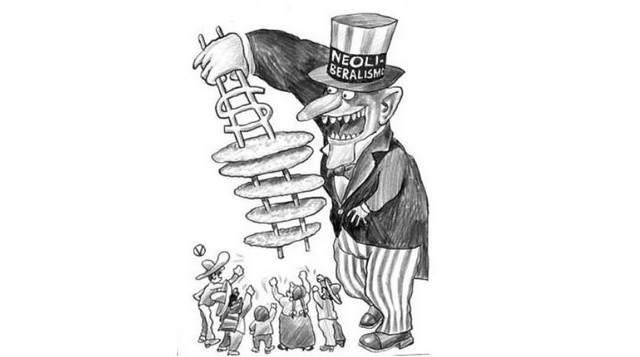
100 Years of Shame: Annexation of Palestine Began in San Remo

By Dr Ramzy Baroud

One hundred years ago, representatives from a few powerful countries convened at San Remo, a sleepy town on the Italian Riviera. Together, they sealed the fate of the massive territories confiscated from the Ottoman Empire following its defeat in World War I.

It was on April 25, 1920, that the San Remo Conference Resolution was passed by the post-World War I Allied Supreme Council. Western Mandates were established over Palestine, Syria and ‘Mesopotamia’ – Iraq. The latter two were theoretically designated for provisional independence, while Palestine was granted to the Zionist movement to establish a Jewish homeland there.

“The Mandatory will be responsible for putting into effect the (Balfour) declaration originally made on November 8, 1917, by the British Government, and adopted by the other Allied Powers, in favor of the establishment in Palestine of a national home for the Jewish people,” the Resolution read.

The Resolution gave greater international recognition to Britain’s unilateral decision, three years earlier, to grant Palestine to the Zionist Federation for the purpose of establishing a Jewish homeland, in exchange for Zionist support of Britain during the Great War.

And, like Britain’s Balfour Declaration, a cursory mention was made of the unfortunate inhabitants of Palestine, whose historic homeland was being unfairly confiscated and handed over to colonial settlers.

The establishment of that Jewish State, according to San Remo, hinged on some vague ‘understanding’ that “nothing shall be done which may prejudice the civil and religious rights of existing non-Jewish communities in Palestine.”

The above addition merely served as a poor attempt at appearing politically balanced, while in reality no enforcement mechanism was ever put in place to ensure that the ‘understanding’ was ever respected or implemented.

In fact, one could argue that the West’s long engagement in the question of Israel and Palestine has followed the same San Remo prototype: where the Zionist movement (and eventually Israel) is granted its political objectives based on unenforceable conditions that are never respected or implemented.

Notice how the vast majority of United Nations Resolution pertaining to Palestinian rights are historically passed by the General Assembly, not by the Security Council, where the US is one of five veto-wielding powers, always ready to strike down any attempt at enforcing international law.

It is this historical dichotomy that led to the current political deadlock.

Palestinian leaderships, one after the other, have miserably failed at changing the stifling paradigm. Decades before the establishment of the Palestinian Authority, countless delegations, comprised those claiming to represent the Palestinian people, traveled to Europe, appealing to one government or another, pleading the Palestinian case and demanding fairness.

What has changed since then?

On February 20, the Donald Trump administration issued its own version of the Balfour Declaration, termed the ‘Deal of the Century’.

The American decision which, again, flouted international law, paves the way for further Israeli colonial annexations of occupied Palestine. It brazenly threatens Palestinians that, if they do not cooperate, they will be punished severely. In fact, they already have been, when Washington cut all funding to the Palestinian Authority and to international institutions that provide critical aid to the Palestinians.

Like in the San Remo Conference, the Balfour Declaration, and numerous other documents, Israel was asked, ever so politely but without any plans to enforce such demands, to grant Palestinians some symbolic gestures of freedom and independence.

Some may argue, and rightly so, that the ‘Deal of the Century’ and the San Remo Conference Resolution are not identical in the sense that Trump’s decision was a unilateral one, while San Remo was the outcome of political consensus among various countries – Britain, France, Italy, and others.

True, but two important points must be taken into account: firstly, the Balfour Declaration was also a unilateral decision. It took Britain’s allies three years to embrace and validate the illegal decision made by London to grant Palestine to the Zionists. The question now is, how long will it take for Europe to claim the ‘Deal of the Century’ as its own?

Secondly, the spirit of all of these declarations, promises, resolutions, and ‘deals’ is the same, where superpowers decide by virtue of their own massive influence to rearrange the historical rights of nations. In some way, the colonialism of old has never truly died.

The Palestinian Authority, like previous Palestinian leaderships, is presented with the proverbial carrot and stick. Last March, US President Donald Trump’s son-in-law, Jared Kushner, told Palestinians that if they did not return to the (non-existent) negotiations with Israel, the US would support Israel’s annexation of the West Bank.

For nearly three decades now and, certainly, since the signing of the Oslo Accords in September 1993, the PA has chosen the carrot. Now that the US has decided to change the rules of the game altogether, Mahmoud Abbas’ Authority is facing its most serious existential threat yet: bowing down to Kushner or insisting on returning to a dead political paradigm that was constructed, then abandoned, by Washington.

The crisis within the Palestinian leadership is met with utter clarity on the part of Israel. The new Israeli coalition government, consisting of previous rivals Israeli Prime Minister, Benjamin Netanyahu and Benny Gantz, have tentatively agreed that annexing large parts of the West Bank and the Jordan Valley is just a matter of time. They are merely waiting for the American nod.

They are unlikely to wait for long, as Secretary of State, Mike Pompeo, said on April 22 that annexing Palestinian territories is “an Israeli decision.”

Frankly, it matters little. The 21st century Balfour Declaration has already been made; it is only a matter of making it the new uncontested reality.

Perhaps, it is time for the Palestinian leadership to understand that groveling at the feet of those who have inherited the San Remo Resolution, constructing and sustaining colonial Israel, is never and has never been the answer.

Perhaps, it is time for some serious rethink.

Ramzy Baroud is a journalist and the Editor of The Palestine Chronicle.

6 May 2020

Source: countercurrents.org
The deeper roots of Chinese demonization

By Pepe Escobar

Fasten your seat belts: the US hybrid war against China is bound to go on frenetic overdrive, as economic reports are already identifying Covid-19 as the tipping point when the Asian – actually Eurasian – century truly began.

The US strategy remains, essentially, full spectrum dominance, with the National Security Strategy obsessed by the three top “threats” of China, Russia and Iran. China, in contrast, proposes a “community of shared destiny” for mankind, mostly addressing the Global South.

The predominant US narrative in the ongoing information war is now set in stone: Covid-19 was the result of a leak from a Chinese biowarfare lab. China is responsible. China lied. And China has to pay.

The new normal tactic of non-stop China demonization is deployed not only by crude functionaries of the industrial-military-surveillance-media complex. We need to dig much deeper to discover how these attitudes are deeply embedded in Western thinking – and later migrated to the “end of history” United States. (Here are sections of an excellent study, Unfabling the East: The Enlightenment’s Encounter with Asia , by Jurgen Osterhammel).

Only Whites civilized

Way beyond the Renaissance, in the 17th and 18th centuries, whenever Europe referred to Asia it was essentially about religion conditioning trade. Christianity reigned supreme, so it was impossible to think by excluding God.

At the same time the doctors of the Church were deeply disturbed that in the Sinified world a very well organized society could function in the absence of a transcendent religion. That bothered them even more than those “savages” discovered in the Americas.

As it started to explore what was regarded as the “Far East,” Europe was mired in religious wars. But at the same time it was forced to confront another explanation of the world, and that fed some subversive anti-religious tendencies across the Enlightenment sphere.

It was at this stage that learned Europeans started questioning Chinese philosophy, which inevitably they had to degrade to the status of a mere worldly “wisdom” because it escaped the canons of Greek and Augustinian thought. This attitude, by the way, still reigns today.

So we had what in France was described as chinoiseries — a sort of ambiguous admiration, in which China was regarded as the supreme example of a pagan society.

But then the Church started to lose patience with the Jesuits’ fascination with China. The Sorbonne was punished. A papal bull, in 1725, outlawed Christians who were practicing Chinese rites. It’s quite interesting to note that Sinophile philosophers and Jesuits condemned by the Pope insisted that the “real faith” (Christianity) was “prefigured” in ancient Chinese, specifically Confucianist, texts.

The European vision of Asia and the “Far East” was mostly conceptualized by a mighty German triad: Kant, Herder and Schlegel. Kant, incidentally, was also a geographer, and Herder a historian and geographer. We can say that the triad was the precursor of modern Western Orientalism. It’s easy to imagine a Borges short story featuring these three.

As much as they may have been aware of China, India and Japan, for Kant and Herder God was above all. He had planned the development of the world in all its details. And that brings us to the tricky issue of race.

Breaking away from the monopoly of religion, references to race represented a real epistemological turnaround in relation to previous thinkers. Leibniz and Voltaire, for instance, were Sinophiles. Montesquieu and Diderot were Sinophobes. None explained cultural differences by race. Montesquieu developed a theory based on climate. But that did not have a racial connotation – it was more like an ethnic approach.

The big break came via French philosopher and traveler Francois Bernier (1620-1688), who spent 13 years traveling in Asia and in 1671 published a book called La Description des Etats du Grand Mogol, de l”Indoustan, du Royaume de Cachemire, etc. Voltaire, hilariously, called him Bernier-Mogol — as he became a star telling his tales to the royal court. In a subsequent book, Nouvelle Division de la Terre par les Differentes Especes ou Races d’Homme qui l’Habitent, published in 1684, the “Mogol” distinguished up to five human races.

This was all based on the color of the skin, not on families or the climate. The Europeans were mechanically placed on top, while other races were considered “ugly.” Afterward, the division of humanity in up to five races was picked up by David Hume — always based on the color of the skin. Hume proclaimed to the Anglo-Saxon world that only whites were civilized; others were inferiors. This attitude is still pervasive. See, for instance, this pathetic diatribe recently published in Britain.

Two Asias

The first thinker to actually come up with a theory of the yellow race was Kant, in his writings between 1775 and 1785, David Mungello argues in The Great Encounter of China and the West, 1500-1800.

Kant rates the “white race” as “superior,” the “black race” as “inferior” (by the way, Kant did not condemn slavery), the “copper race” as “feeble” and the “yellow race” as intermediary. The differences between them are due to a historical process that started with the “white race,” considered the most pure and original, the others being nothing but bastards.

Kant subdivided Asia by countries. For him, East Asia meant Tibet, China and Japan. He considered China in relatively positive terms, as a mix of white and yellow races.

Herder was definitely mellower. For him, Mesopotamia was the cradle of Western civilization, and the Garden of Eden was in Kashmir, “the world’s paradise.” His theory of historical evolution became a smash hit in the West: the East was a baby, Egypt was an infant, Greece was youth. Herder’s East Asia consisted of Tibet, China, Cochinchina, Tonkin, Laos, Korea, Eastern Tartary and Japan — countries and regions touched by Chinese civilization.

Schlegel was like the precursor of a Californian 60s hippie. He was a Sanskrit enthusiast and a serious student of Eastern cultures. He said that “in the East we should seek the most elevated romanticism.” India was the source of everything, “the whole history of the human spirit.” No wonder this insight became the mantra for a whole generation of Orientalists. That was also the start of a dualist vision of Asia across the West that’s still predominant today.

So by the 18th century we had fully established a vision of Asia as a land of servitude and cradle of despotism and paternalism in sharp contrast with a vision of Asia as a cradle of civilizations. Ambiguity became the new normal. Asia was respected as mother of civilizations — value systems included — and even mother of the West. In parallel, Asia was demeaned, despised or ignored because it had never reached the high level of the West, despite its head start.

Those Oriental despots

And that brings us to The Big Guy: Hegel. Hyper well informed – he read reports by ex-Jesuits sent from Beijing — Hegel does not write about the “Far East” but only the East, which includes East Asia, essentially the Chinese world. Hegel does not care much about religion as his predecessors did. He talks about the East from the point of view of the state and politics. In contrast to the myth-friendly Schlegel, Hegel sees the East as a state of nature in the process of reaching toward a beginning of history – unlike black Africa, which he saw wallowing in the mire of a bestial state.

To explain the historical bifurcation between a stagnant world and another one in motion, leading to the Western ideal, Hegel divided Asia in two.

One part was composed by China and Mongolia: a puerile world of patriarchal innocence, where contradictions do not develop, where the survival of great empires attests to that world’s “insubstantial,” immobile and ahistorical character.

The other part was Vorderasien (“Anterior Asia”), uniting the current Middle East and Central Asia, from Egypt to Persia. This is an already historical world.

These two huge regions are also subdivided. So in the end Hegel’s Asiatische Welt (Asian world) is divided into four: first, the plains of the Yellow and Blue rivers, the high plateaus, China and Mongolia; second, the valleys of the Ganges and the Indus; third, the plains of the Oxus (today the Amur-Darya) and the Jaxartes (today the Syr-Darya), the plateaus of Persia, the valleys of the Tigris and the Euphrates; and fourth, the Nile valley.

It’s fascinating to see how in the Philosophy of History (1822-1830) Hegel ends up separating India as a sort of intermediary in historical evolution. So we have in the end, as Jean-Marc Moura showed in L’Extreme Orient selon G. W. F. Hegel, Philosophie de l’Histoire et Imaginaire Exotique, a “fragmented East, of which India is the example, and an immobile East, blocked in chimera, of which the Far East is the illustration.”

To describe the relation between East and West, Hegel uses a couple of metaphors. One of them, quite famous, features the sun: “The history of the world voyages from east to west, Europe thus absolutely being the end of history, and Asia the beginning.” We all know where tawdry “end of history” spin-offs led us.

The other metaphor is Herder’s: the East is “history’s youth” — but with China taking a special place because of the importance of Confucianist principles systematically privileging the role of the family.

Nothing outlined above is of course neutral in terms of understanding Asia. The double metaphor — using the sun and maturity — could not but comfort the West in its narcissism, later inherited from Europe by the “exceptional” US. Implied in this vision is the inevitable superiority complex, in the case of the US even more acute because legitimized by the course of history.

Hegel thought that history must be evaluated under the framework of the development of freedom. Well, China and India being ahistorical, freedom does not exist, unless brought by an initiative coming from outside.

And that’s how the famous “Oriental despotism” evoked by Montesquieu and the possible, sometimes inevitable, and always valuable Western intervention are, in tandem, totally legitimized. We should not expect this Western frame of mind to change anytime soon, if ever. Especially as China is about to be back as Number One.

Asia Times Financial is now live. Linking accurate news, insightful analysis and local knowledge with the ATF China Bond 50 Index, the world’s first benchmark cross sector Chinese Bond Indices. Read ATF now.

2 May 2020

Source: asiatimes.com

Abdullah al-Hamid: Saudi human rights advocate and ‘national hero’

By Madawi al-Rasheed

The death of Arabic professor Abdullah al-Hamid on Friday after his health deteriorated in a Saudi prison is both shocking and revealing of the Saudi government’s brutality.

Born in Buraydah in the central Qasim province, Hamid was truly a unique activist whose political trajectory dates back to the early 1990s, when he emerged as a determined and stubborn human right defender and reformer seeking constitutional change.

Hamid graduated from the Arabic language department at Riyadh University in 1971. This was followed by a doctorate from Al-Azhar University in Egypt in the field of literary criticism. In addition to teaching Arabic literature, Hamid was a renowned poet.

In 1993, he was one of the six founding members of the Committee for the Defence of Legitimate Rights (CDLR), and was arrested on 15 June. He was subsequently released and arrested three times between 1993-1996.

Prison turned out to be his second home, as in the last 27 years Hamid continued to be arrested and released. The repression that Hamid was subjected to took place under three Saudi kings: Fahd, Abdullah and Salman.

In 2009 Hamid defied the ban on civil society, and together with other colleagues and activists announced the establishment of the Saudi Association for Civil and Political Rights, known in Arabic as HASM and English as ACPRA.

After several years spent defending his political project in Saudi courts, in 2013 Hamid was sentenced to 11 years in prison, alongside a further unserved six from a previous conviction, followed by a travel ban after his release.

He died before he was released.

Bridging traditions

Unlike other Saudi civil society groups, HASM was a genuine non-governmental organisation and unsurprisingly had no royal patron. Its mission statement was to defend human and political rights and call for political reform. Its activism focused on supporting prisoners of conscience, and exposing torture in Saudi prisons.

But Hamid’s most valued contribution to this political struggle was his articulation of the centrality of rights from within the Islamic tradition. He belongs to a long tradition of Islamic reformism that the Saudi government was determined to suppress, criminalise and target in the most brutal ways, lest their discourse appealed to others.

Unlike Salafi jihadis, Hamid and his comrades insisted on jihad silmi – peaceful struggle to protect society from the excesses of power – by deploying civil resistance, demonstrations, strikes and sit-ins.

Peaceful jihad rested on risky hard work. It must be performed for the collective interest of Muslims, and should be void of personal desires to seek wealth and privilege.

Hamid’s jihad was performed by the “word”, jihad al-kalima. In several pamphlets, he explained that military jihad may be necessary to defend the country from outside threats, but that internally only peaceful jihad by the word can lead to fortifying the internal structures of justice and respect for rights.

Hamid defended the right of Saudis to stage demonstrations and proved that the Islamic concept of rahat, the peaceful crowd which assembles in the public sphere demanding rights and exposing injustice, is a central right in Islam.

This of course angered the official Salafis of the establishment, who had always called upon people to “whisper in the ear of the sultan” should they want to voice their opinion. This whispering, otherwise known as secret advice, became a trademark of official Salafis.

But Hamid proved that demonstrations are legitimate actions from within Islam that allow people to engage in politics and correct injustices. He was consequently abhorred by official religious scholars, judges and above all the ruling establishment.

His Arabic writing skills and knowledge of the Islamic tradition, coupled with his longing for a just society, allowed him to reinterpret Islamic texts and combine them with global discourse on democracy, civil society and human rights. He was a veritable Islamic intellectual and advocate.

Enduring example

Hamid’s activism ended in March 2013 when he was arrested together with more than a dozen colleagues. HASM was officially dissolved by a court ruling, and its founders lingered in prison with no royal pardon on the horizon.

The Saudi charges against Hamid represented a mix of vague statements. They included: planting the seeds of discord and strife, questioning the independence of the Saudi judiciary and the Council of Higher Ulama, describing the Saudi regime as a police state, and inciting public opinion against the security and intelligence services, and, most importantly, against the legitimate Muslim ruler of Saudi Arabia.

As the frail Hamid stood in court during his trials and defended himself in eloquent and convincing prose, he emerged as an articulate advocate of human rights.

His own defence circulated on social media with supporters absorbing a new language of rights that had been suppressed under the auspices of the official religion of the state, namely the Wahhabi Salafi tradition, its judges and scholars.

Hamid’s project will remain alive even after his death.

The language of rights and entitlement will remain as a testimony of his nuanced articulations and fierce struggle to move Saudi Arabia from an absolute monarchy to a constitutional state in which citizens and their rights are guaranteed.

Hamid framed rights in a religious language rather than imported concepts. He fused tradition with new meanings that promised respect for human rights, property and the right to defend oneself against a brutal judiciary and monarchy.

While the Saudi government provided rehabilitation centres and re-educational forums for its violent militants who carried out serious and brutal attacks between 2003 and 2009, Hamid lingered in prison simply because he proved to be more dangerous than their outright violence.

His long prison sentence reflected the government’s fear of reformist Islam and the language of peaceful resistance. The five-star militant rehabilitation centres that the regime popularised as a flagship of its anti-terrorism efforts were propaganda opportunities, while peaceful reformers were incarcerated in the infamous al-Hayr prison.

Hamid tried to break the entrenched dividing lines between ideological groups that had in the past rejected each other – Islamists and liberals, for example. He also rejected the sectarian divide between Sunnis and Shia, and endeavoured to defend all prisoners of conscience, in addition to immigrants in Saudi Arabia.

He rejected the gender inequality and regarded women as equal citizens, long before the government officially endorsed women’s rights. He strongly believed in rights for all and was a true national hero.

The journey towards a just society, transparent government and political representation in Saudi Arabia will continue even after Hamid’s death. He will be remembered as a brave, determined and stubborn reformer.

While many of his colleagues are still in prison, including economist Mohammed al-Qahtani, lawyer Waleed Abu al-Khair, and many others, the harsh and cruel prison sentence and his eventual death are reminders of how far the Saudi government can go to silence peaceful reformers – especially those who follow Hamid’s arduous and dangerous path.

Madawi al-Rasheed is visiting professor at the Middle East Institute of the London School of Economics.

24 April 2020

Source: middleeasteye.net

From Emergency to Emergence

By David Korten

The COVID-19 emergency has exposed our societies’ failure to address the needs of billions of people. Simultaneously, we are witnessing a fundamental truth about human nature: There are those among us eager to exploit the suffering of others for personal gain. We can be reassured, however, by how few of them there are. Their actions contrast starkly with the far greater numbers at all levels of society demonstrating their willingness, even eagerness, to cooperate, share, and sacrifice for the well-being of all.

The pandemic has also exposed extreme vulnerabilities in the global market economy, including its long and highly specialized linear supply chains, corporate monopolies shielded from market forces, privatized technologies, and ruthless competition without regard for its impact on people and the Earth.

This is an unprecedented opportunity to rethink how our beliefs, values, and institutions shape our relationships. We can create a world that works for everyone or face a future that no longer works for anyone.

Discussions now underway in many community, national, and global forums suggest a significant widening of what is known as the Overton Window: the range of public policies that the mainstream population is prepared to consider at a given time.

While there is an almost universal desire to move rapidly beyond the COVID emergency, the spectrum of what we want post-pandemic is broadening. Many are articulating that they do not want to simply return to business as usual. In the United States, for example, we see the need for:

• A system of health care accessible to everyone regardless of income or documentation;

• Just compensation and job security for those who do our most essential but often least-rewarded work; and

• A guarantee that if your job evaporates, you won’t starve.

At a deeper level, this emergency is reminding us that we are living with another emergency—climate change. The combination of the two emergencies is helping us awaken to the profound implications of the simple truth that we are living beings born of and nurtured by a living Earth. Our well-being depends on Earth’s well-being. Life is the goal, community is essential, and money is only a tool.

To avoid a climate catastrophe, we must use this opportunity to join in creating an economy that:

• Meets our basic needs while simultaneously healing and securing the health of the human community and Earth’s living systems; and

• Prepares us to respond rapidly and appropriately to the array of significant future emergencies likely to arise with alarming frequency.

From these insights, many additional imperatives follow, including the need to:

• Shift power from profit-maximizing corporations to self-organizing, self-reliant, life-serving communities;

• Achieve an equitable distribution of power and resources among and within these communities; and

• Limit the human use of resources to those applications (such as recycling and regenerative agriculture) that increase the well-being of people and nature while eliminating those (such as war and financial speculation) that consume massive resources to no beneficial end.

The expanding Overton Window may allow us to consider vast new possibilities. Here are two:

1. We may see growing recognition of the distinctive social benefits of shopping in locally owned stores, operated by neighbors who pay local taxes and are in business to make a decent, but modest, living serving their neighbors. This contrasts starkly with the experience of impersonal corporate chains such as Amazon.com and Walmart that are in business solely to maximize the extraction of money from our local communities while leaving as little as possible behind.

2. For those of us able to work at home and meet remotely via the web, the many benefits of doing so may make this form of working and meeting the new norm. We reduce the time devoted to long commutes in heavy traffic or sitting in crowded airports and planes. This change in our behavior carries the potential for a dramatic reduction in the need for cars and airplanes and the pollution that their production and operation create, while increasing opportunities to get to know our family and our neighbors. Better for the health of people, family, community, and Earth.

But would such changes mean lost jobs? Actually, a vast amount of work must be done. Among the needs that will become more important in a post-COVID world are:

• Converting to wind and solar energy.

• Growing nutritious food locally in ways that restore the health of the soil.

• Eliminating waste by recycling everything.

• Assuring everyone access to affordable high-speed internet.

• Caring for and educating our children.

• Preparing for the inevitable emergencies ahead.

• Providing care and housing for the homeless while helping those who can transition back to community life.

• Providing health care for everyone.

The COVID-19 crisis has imposed immense hardship on billions of people. But that hardship is dwarfed by what lies ahead if we continue on our current path. Now we must step up to prevent the collapse of the regenerative systems by which Earth creates and maintains the conditions we need to exist.

This current emergency provides the possibility for a new emergence—the birthing of a truly civil civilization dedicated to the well-being of all people and the living Earth.

DAVID KORTEN is co-founder of YES! Media, president of the Living Economies Forum, a member of the Club of Rome, and the author of influential books, including “When Corporations Rule the World” and “Change the Story, Change the Future: A Living Economy for a Living Earth.” His work builds on lessons from the 21 years he and his wife, Fran, lived and worked in Africa, Asia, and Latin America on a quest to end global poverty.

24 April 2020

Source: countercurrents.org
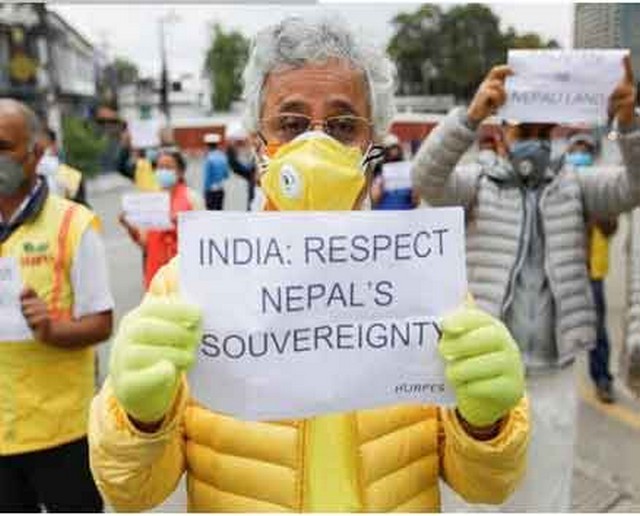
Four Dead in Ohio- Feeding the Beast

By Philip A Farruggio

Singer/Songwriter Neil Young wrote the song ‘ Four Dead in Ohio’ for Crosby, Stills, Nash and Young:

Four Dead In Ohio Lyrics

Tin soldiers and Nixon’s comin’.
We’re finally on our own.
This summer I hear the drummin’.
Four dead in Ohio.

Gotta get down to it.
Soldiers are gunning us down.
Should have been done long ago.
What if you knew her and
Found her dead on the ground?
How can you run when you know?

Gotta get down to it.
Soldiers are cutting us down.
Should have been done long ago.
What if you knew her and
Found her dead on the ground?
How can you run when you know?

Tin soldiers and Nixon’s comin’.
We’re finally on our own.
This summer I hear the drummin’.
Four dead in Ohio.
Four dead in Ohio.
Four dead in Ohio.
Four dead in Ohio.

It was a beautiful Spring day in May of 1970 when four Kent State University students, protesting the illegal bombing of Cambodia and the entire Vietnam ( so called ) War, were gunned down by Ohio National Guard troops, many the same age as them. The event made national headlines and ignited a mass of students from literally hundreds of universities to go on strike. This writer was in my third or fourth year at Brooklyn College, who remembers, and I finally became outraged. Up until then, at my own admission, I only cared about playing on our soon to be first year football team, and of course, chasing woman. Oh yeah, and enjoying the pot that my friends and I smoked each and every Friday and Saturday night. I was just 20 years of age and really ‘ feeling my oats’. Yet, when the news made the daily headlines about those four kids, well, just like ME, I swayed over to the campus looking for action. A large group of us literally chased the military recruiters from our campus. No violence. Those guys probably knew deep down that the shit was gonna eventually hit the fan over this ongoing Amerikan tragedy.

The stench from the dual killings of Martin Luther King Jr. and Bobby Kennedy still filled many of our young minds two years after the fact… Or should I say facts? Two well respected leaders gunned down and by now, 1970, the conspiracy theories were holding lots of water. I had already known about The Beast, ever since, believe it or not, I read the 1967 Playboy magazine interview with New Orleans district attorney Jim Garrison about the JFK assassination. It opened my eyes to what probably happened, as compared to what my government was telling us. The more I read of that fateful day in November of ’63 the more I knew, intuitively, that The Beast was real. So, we closed down the campus, took over the school president’s office, and waited for the cops to come. That event never occurred ( to my satisfaction) and we ended the strike after a few days. There were some concessions made, nothing of major importance, but enough to make us say that ‘ We Won!’. Those four kids at Kent State didn’t bask in our glory, did they? They say, from historians looking back , that President Nixon was affected enough to start realizing that he had to get out of this mess called Vietnam. Of course, when it comes to The Beast and how it operates, it only reacts when it already has the table turned. So, Nixon waited it out until he won re-election 30 months later to then slowly use the ‘ Get out of jail free ‘ card beginning the process… of course his impeachment/resignation left it to another. Point is, the Kent State killings, coupled with the illegal bombing of another sovereign nation, slowly woke up our Moms and Dads to the truth of it all: This ( so called ) war was not worth it! I can recall, at an Easter dinner a few weeks earlier, with all my aunts and uncles present, the famous words of my father, who voted for Nixon in 1960, Goldwater in ‘ 64 and Nixon again in ’68: ” Let me make this clear. Before I see either of my two sons being sent to Vietnam, I ‘m gonna personally drive them to Canada!! And that’s that!”

Perhaps it was when a guy a few blocks away from me, Tommy L., joined the Marines and came home in a box. I didn’t know him well at all, but I knew his mom. She was our crossing guard on Ocean Ave, which was right by our church, St. Edmunds. Each Sunday after Mass we would see Mrs. L. as we crossed Ocean Ave. She always had this beautiful smile and greeted everyone with it. After her son died in the Nam, you could see how she now had what I always called ‘ The Mona Lisa smile’ from that famous DaVinci portrait. It had that look, to me, of someone who was saying ‘ If you only know what I am going through’. Then, a year later, another guy from our neighborhood, a Polish born son of my friend’s building superintendent, Vito P., was killed on some famous ( for whom?) hill in Vietnam. The last time I saw Vito was , coincidentally,at Mass in St. Edmunds. He was home on leave from the Army, standing there in his Ranger uniform, replete with beret tucked onto his shoulder. Months later we got the word. I used to see his kid brother, who I knew adored Vito, at the school yard where we played softball. He would be hanging out with characters that I would always warn him against. He ignored me, and got into glue sniffing, Quaaludes and finally horse ( heroin). Sometime later, maybe a few years after Vito’s death, his brother OD’d and died. What is it they say ‘ When the war comes home’? Well in May of 1970 it had… and transformed me into the activist anti empire and anti war writer and street corner protestor I have been since then.

And what about ‘ Feeding the beast’? Well:

1933 Germany: Reichstag fire and Enabling Laws to snuff out political parties and dissent

1964 Amerika: Gulf of Tonkin resolution based upon imaginary attack by North Vietnam on our ship

1991: Saddam Hussein encouraged by US non commitment to Kuwait to invade Kuwait over oil drilling dispute. War on Iraq followed

2001, September 11th- Twin Towers and Pentagon attacked in highly suspicious manner, leading to the Patriot Act, increased military spending and 2nd war on Iraq to follow

March 19th , 2003 – Illegal and immoral war on Iraq over WMDs to this day never found. More increases in military spending along with occupations of Iraq & Afghanistan. Hundreds of thousands of innocent civilians and NATO servicemen dead or damaged for life.

2008-09 – Subprime scam costs taxpayers trillions of dollars to bail out failed Wall Street companies.

Meanwhile, health care system is still a joke as is the needs of infrastructure throughout Amerika.

2011 Libya- USA led NATO carpet bombing of Libya, causing death , destruction and refugee crisis that has still caused havoc throughout the region and Europe.

2020 Pandemic- Trump crew ignored the crisis for almost 2 months, even denying it as a HOAX. Our economy is teetering on default as the super rich get most of the bailout. Oh, but the increased military spending survives, eating up around HALF of our federal tax revenues.

Philip A Farruggio is a contributing editor for The Greanville Post. He is also frequently posted on Global Research, Nation of Change, Cross Currents and Off Guardian sites.

23 April 2020

Source: countercurrents.org