By Kees van der Pijl[1]
- Introduction. The MH17 Trial as Political Theatre
Legal Bases of the Prosecution
The Hallmarks of a Show Trial
The ‘Integrity Initiative’ and the anti-Russia Campaign
- From Outlawing War to ‘Humanitarian Intervention’
The UN Charter and Nuremberg
The Vietnam Tribunal: Salvaging the Nuremberg Legacy Privately
Human Rights and Intervention
- The NATO Intervention in Yugoslavia and the Yugoslavia Tribunal
The International Criminal Tribunal for the Former Yugoslavia
Extradition, Trial and Death of Milošević
The ICTY Precedent
- The Rwanda Tribunal and the International Criminal Court
Rwanda and the Inculpation of Africa
The International Criminal Court (ICC)
A Return to Nuremberg? Malaysia’s War Crimes Tribunal
- Lockerbie and Libya
The Lockerbie Trial in the Netherlands
Aftermath
- International Criminal Justice and the Historical Record
- Introduction. The MH17 Trials as Political Theatre
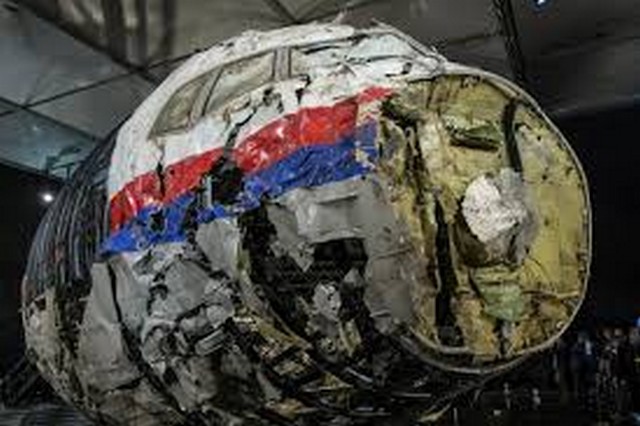
On 9 March, 2020, the trial of those accused of being responsible for the downing of Malaysia Airlines Flight MH17 on 17 July 2014, is planned to begin. The decision to hold a trial of MH17 suspects was taken by the Dutch Public Prosecution Service (Openbaar Ministerie, OM) on 19 June 2019, on the basis of the criminal investigation by the Joint investigation Committee, JIT. The JIT members conducting this investigation are the Netherlands, Australia, Belgium, and Ukraine and Malaysia (since March 2015). Prime Minister Mahathir of Malaysia has criticised the late admission of his country to the criminal prosecution, and also has raised doubts about the pertinence of the indictment for murder of three Russians and one Ukrainian, an indictment made public at the JIT press conference also on 19 June 2019.[2]
Whether the JIT under these circumstances is still able to function, is therefore in serious doubt. The decision by the JIT countries that the prosecution and trial of suspects would be conducted by and in the Netherlands, under Dutch law, dates from 5 July 2017. To facilitate the actual trial next year, a special treaty was concluded by the Netherlands and Ukraine covering a number of practical issues such as extradition, video hearing of defendants, and the like. The trial will be held before the Hague District Court, in a special location to accommodate a large trial, the Justice Complex Schiphol (JCS) near Schiphol Airport. On the special website launched to publicise the event, and via which its proceedings will be live-streamed, the court is already being recommended as having extensive experience with cases involving international elements. ‘It has, for instance, heard cases with regard to offences that nowadays are punishable in the International Crimes Act. Examples of offences under this law are genocide, crimes against humanity, war crimes and torture.’ As the website continues,
The quality of the Dutch justice system ranks above average compared with other countries. This is confirmed by the EU Justice Scoreboard (a comparison of the justice systems of the European Union member states) and the Rule of Law Index (a global comparison of justice systems). These rankings are based on matters such as the average duration of trials, how judges are trained and the extent to which the justice system is free from discrimination, corruption and political influence. In terms of experience with international proceedings, the Netherlands ranks number one in the world.[3]
These self-congratulatory qualifications notwithstanding, we cannot look forward to the trial with confidence, on the contrary. For the sort of justice being dispensed here is a very special, new form of justice, international criminal law. That type of law is not the familiar form of international law, based on treaties, of which states are the legal subjects. It is an individualised form of transnational penal law, national to varying degrees (‘involving international elements’), and with a record that does not give rise to optimism, certainly not where it concerns he role of the Netherlands.
In one of the most disturbing cases, the International Criminal Tribunal for the Former Yugoslavia (ICTY), which also sat in The Hague, the prosecution was principally directed against Serbians and the chief suspect, Yugoslav president Slobodan Milošević, died in his cell after the main charge against him had been dropped for lack of evidence. On the other hand, NATO bombing of Serbia, without even a UN mandate, was not prosecuted and the secessionists’ actions in the violent dissolution of Yugoslavia profited from a light touch.[4] Since one of the judges assigned to the MH17 trial, Ms. C.I.H. Kerstens-Fockens LLM, was an intern at the ICTY,[5] the Yugoslavia experience deserves to be investigated closely. In the parallel Rwanda tribunal, only Hutus were investigated and indicted for the massacres in 1994, whilst the Tutsi RPF, which triggered the bloodbath by shooting down the plane of the Rwandan president, was not. The International Criminal Court (ICC) only indicted Africans, whilst George W. Bush and Tony Blair, who ordered the invasion of Iraq, are seemingly above the law. In the Lockerbie trial held in the Netherlands (by a Scottish court), a Libyan who had nothing to do with that disaster was found guilty and sentenced. So if in the upcoming MH17 trial, only Russians and pro-Russian Ukrainians are the suspects, this fits the longer trend.
One must fear, then, that the upcoming trial of the MH17 suspects will not depart from the pattern established in the three decades of legal precedent in this area. Indeed, prosecution in international criminal cases has so far turned out to be nothing else but the continuation by different means of so-called ‘humanitarian intervention’. First comes the intervention itself (sanctions, ‘colour revolutions’, coups d’état, regime change wars), and then the judicial sequel follows, all part of a single punitive operation. Indeed ‘humanitarian intervention’, harking back to the mediaeval concept of ‘just war’, in all or most cases has been followed by the application of criminal justice to the parties against whom the intervention was launched in the first place. This is the one similarity with the trials of Nazi and Japanese war criminals at the end of World War II, except that the Nuremberg trial of the former laid down the principle that launching a war is the supreme war crime. Humanitarian intervention has functioned as a way round that principle.
In this introduction, I will first briefly summarise the legal bases of the prosecution, before addressing how in the context of the propaganda war accompanying the post -9/11 ‘War on Terror’, trials are approached from a theatrical, ‘spectacular’ angle rather than a strictly juridical one. For the MH17 trial in particular it is also necessary to bring in the so-called ‘Integrity Initiative’, revealed in late 2018 as a secret UK-led project to launch a full spectrum PR campaign against Russia over its alleged ‘hybrid warfare’ against the West. The rest of the document then deals with the separate court cases.
Legal Bases of the Prosecution
Criminal prosecution in a national setting is conducted by the state, which seeks to uphold criminal law. In accordance with the separation of powers (legislative, executive, and judicial), the prosecutor acts as an arm of the executive, making the case for the prosecution on behalf of the state. The judge then renders a verdict on the basis of the law and what else can be brought to bear on the case, such as jurisprudence, precedent, fairness, and the like. Internationally, however, there is no state, and the prosecution is established either by the United Nations (through the Security Council), by another international institution (in the case of MH17, by Eurojust, an arm of the European Union), or by a treaty between states.
In the case of MH17, an important component of the prosecution was the technical investigation by the Dutch Safety Board (DSB, Onderzoeksraad voor Veiligheid, OVV), which published its final report in October 2015. Now the law of 2010 establishing the DSB prescribes that the Board will not report on matters affecting the security of the Netherlands, or matters prejudicing the country’s relations with other states and international organisations, or harming its economic or financial interests (article 57, 1 and 2).[6] Given the prominent role of the Netherlands in fomenting ‘civil society’ movements in the run-up to the armed seizure of power in Ukraine in February 2014, the involvement of EU and NATO in it, the investments of Dutch companies in Ukraine, and the role of the Netherlands as a tax haven for Ukrainian (and Russian) oligarchs, the question arises what there remained for the DSB to report, with so many restrictions. Further constrained by a bilateral agreement with its Ukrainian counterpart that included a non-disclosure provision, the DSB eventually came to the conclusion that MH17 had been shot down by a surface-to-air missile ‘Buk’, fired from a rebel-held area in eastern Ukraine.[7]
The Joint Investigation Team (JIT) was established amidst dramatic political developments in Kiev on 7 and 8 August 2014. These events included a crisis of the Yatsenyuk cabinet established by the coup; the resignation of the fascist leader of that coup, Andrij Parubij, from the key post of Secretary of the National Security and Defence Council—three weeks after the downing of MH17; a possible new coup attempt by Far Right militias, and an impromptu visit of NATO Secretary-General Rasmussen to Kiev, apparently to shore up the position of president Poroshenko. The JIT, formally established under the auspices of Eurojust in The Hague, meanwhile had been constituted with the Netherlands, Australia and Belgium (4 nationals among the victims, against e.g. Indonesia, 12) as members. Ukraine, which is not a member of Eurojust and had no nationals to mourn in the MH17 disaster, was also included as the country where the tragedy happened. It was also granted an effective veto on what the criminal prosecution might reveal.[8] In combination with the initial exclusion of Malaysia, effectively till March 2015, this underscores the idea of a continuation of politics by different means. As with the DSB, the lead role in the JIT was given to the Netherlands, with Fred Westerbeke, a Dutch prosecutor (Officier van Justitie), coordinating the investigation.
Because of the prior role of the DSB, then, the JIT has continued the judicial process as if the guilty party was known in advance and the prosecution merely had to collect the evidence that would lead to a conviction. Here it has come to rely on two sources. One, the controversial Ukrainian intelligence service SBU, which as demonstrated in the Bonanza Media documentary of Yana Yerlashova and Max van der Werff, has exclusively provided the JIT with telephone taps, many of which have been tampered with or were even entirely pasted together from different conversations; and two, on the British amateur collective, Bellingcat, set up by Elliott Higgins, and which relies exclusively on Open Source Intelligence (OSINT) to construct narratives supporting the Kiev/NATO account.[9] This is all the more remarkable since the JIT, as a body evidently set up to serve the Western position, should have access to all the information that can be provided to it by the extensive US, NATO, and other Western intelligence services, including satellite images.
The Hallmarks of a Show Trial
One further characteristic that the MH17 prosecution shares with past instances of international criminal law is the use of well-timed press conferences and the weaving of a narrative from which neither the political mainstream nor the media serving as its mouthpiece will depart. Academic work on how to organise trials to back up this narrative strategy, consciously dramatising the situation in highly emotive, human interest terms, has been undertaken to allow the effective stage-management of trials in his sense. In the MH17 trial, bringing the next of kin into the court room as active participants (in the probable absence of defendants) would be a case in point.
Contemporary politics relies on heavily mediatised, mass-psychological operations utilising techniques of advanced public relations and advertising, such as repetition, amplification of what supports a given account and dissimulation of contradictory information. All this allows turning the dominant narrative into an imposed consensus from which it is very difficult to dissent. In his visionary work, The Society of the Spectacle, originally of 1967, Guy Debord described modern capitalist consumer society as one in which the gaze of the masses is fixed on a hypnotising spectacle performed on behalf of the providers of goods and services, in which political and entertainment celebrities play the lead roles. And just as it is difficult for anyone in the audience of a theatre play or a movie to tear oneself loose from what is shown, the society of the spectacle holds its audiences captive.[10]
The trials in the young tradition of international criminal law are also turned into spectacles. The demonisation of targeted political or military leaders as the incarnation of evil, the use of well-timed indictments, publicity on behalf of the prosecution to build up pressure towards a particular reading of events, abandoning the presumption of innocence of suspects prior to a judgment, and the use of grieving relatives to add emotional momentum towards achieving these political goals, all have featured in these trials and are amply in evidence in the MH17 case as well.
The similarity of public, political trials to the sort of collective hypnosis analysed by Debord is not just a metaphor. The idea of a theatrical mise en scène is being studied in a ‘Terrorists on Trial’ research project focusing on ‘the performative and communicative aspects of a terrorist trial’, has been running for several years. The project is led by and based on the insights of a Protestant fundamentalist International Relations scholar, Beatrice de Graaf, one of many academics recruited into the post-9/11 terrorism growth industry. Through a series of seminars on particular cases the project defines ‘the court room as a stage in the struggle for publicity, public support and legitimacy’ (subtitle of the ‘Terrorists on Trial’ project).
The seminars aim … to apply a performative perspective to terrorism trials, hence not solely concentrating on the immediate judicial performance of the magistrates and/or the defence, but putting trials in their wider sociological context, adopting notions of social drama and communication sciences.[11]
One expert meeting led by Ms De Graaf was titled ‘Terrorism Trials as Theatre’, an idea certainly not lost on those setting up the DSB presentation of its final report, organising the JIT press conferences, and preparing the 2020 trial of the MH17 suspects.
The exploitation of the bereaved as a source of emotional identification, referred to already, has been going on for years. Representatives of the MH17 family members not only came on stage in the media, but also were deployed as a tool in Dutch diplomacy. This included the sending of letters by or on behalf of the next of kin to Prime Minister Mahathir of Malaysia after he had expressed doubts on Russian guilt, or to exert pressure on the Council of Europe not to readmit Russia, again in the name of bereaved.[12] Neither did the diplomatic exploitation of the next of kin stop with the Dutch family members; when I attended the conference ‘MH17—Quest for Justice’ in Kuala Lumpur in August 2019, it turned out that the Dutch embassy had been closely involved in the decision of Malaysian next of kin to withdraw from the conference at the last minute, whilst the embassy had lodged a separate protest with the Malaysian government and the organisers over the fact it was being held at all and that ‘conspiracy theorists’ (i.e., critics of the official account, including this author) had been invited.[13]
The invitation to the next of kin to attend the trial is also intended to mobilise the public. The bereaved are being used to create the highly charged atmosphere in which ‘social drama’ and ‘the court room as a stage in the struggle for publicity, public support and legitimacy’ can work to move strictly criminal-legal considerations into the background. The planned appearance of the family members in the courtroom to ‘address the court’[14], as if their grief would count as evidence, is a key ingredient of this dramatisation. Or to cite the ICCT project again,
Terrorism trials serve multiple ends, depending on the actors involved, who are all busy trying to mobilise their respective target audiences around their narratives and (in)justice frames. Such trials are a very visible and theatrical means of demonstrating concepts and narratives of (in)justice.’[15]
The theatrical approach to political trials intersects with new strategies developed in the British Foreign Office and the US State Department to blockbuster public opinion by massive ‘fake news’ campaigns specifically targeting Russia.
The ‘Integrity Initiative’ and the Anti-Russia Campaign
In late 2018 it was revealed that the British Foreign Office (FCO) was running a secret disinformation programme, the ‘Integrity Initiative’. The programme was launched in 2015 by an ‘Institute for Statecraft’ nominally located in Scotland, but in fact headquartered in the heart of London, at 2 Temple Place. The Institute itself was set up in 2006 by figures with a background in UK military intelligence. Most of the personnel involved in the Integrity Initiative are also British military intelligence and senior military personnel involved in propaganda. The aim of both the Institute and the Initiative is to mobilise journalists, academics and others involved in propaganda in government and the military, into national clusters committed to a negative view of Russia. Secondly, to launch campaigns against security risks from a point of view of alleged Russian influence, from TV hosts in Serbia via Donald Trump to the leader of the Labour Party in Britain.[16]
The Integrity Initiative is led by Chris N. Donnelly, a former British intelligence officer (he also advises the Lithuanian Ministry of Defence), and co-founder of the Institute for Statecraft. Donnelly’s focus on Russia dates from the Cold War with the Soviet Union and his current mandate is ‘to insert anti-Russia propaganda into the Western media stream’. Possibly its prize achievement in this respect was the idea of one of the Institute for Statecraft writers, Mark Galeotti, to turn around an analysis of Western strategy by General Valerii Gerasimov, then Russia’s Chief of the General Staff, into a positive ‘Gerasimov Doctrine’. Published in February 2013, Gerasimov’s paper argued that ‘the West was waging a new type of war by mixing propaganda, proxy armies and military force into one unified operation’. Galeotti declared this instead to signify that Russia itself had switched to a doctrine of ‘hybrid war’.[17]
This ideological hoax had politicians and journalists all over the West up in arms about Russian ‘hybrid warfare’, coming on the heels of the highly embarrassing Snowden revelations and those of Wikileaks before them. The trope of Moscow undermining ‘our’ democracy by disinformation, disseminated by ‘troll farms’, allowed those favouring a normalisation of relations with Moscow, including Donald Trump after his surprise election to the US presidency in 2016, to be labelled ‘traitors’, and any information or opinion contradicting the official narrative, ‘Russian disinformation’ (and/or ‘conspiracy theory’).[18]
The Integrity Initiative’s documents were hacked and made public by the Anonymous network. They show it is primarily funded by the FCO (one-quarter of its £2 million budget, application for 2018-19); other sponsors include the US State Department, NATO, the Lithuanian MoD, Facebook, and the Smith-Richardson Foundation (which also funds the NATO-affiliated think tank, the International Institute for Strategic Studies, IISS, two doors away from the Institute for Statecraft on Temple Place).[19] The Integrity Initiative works closely with the Public Diplomacy Division at NATO HQ in Brussels and in the same city collaborates with the Institute for European Studies at the Free University (VUB-IES), which has a galaxy of partner institutions linked in turn to the Ministries of Defence of various Western countries. According to one hacked document,
Through VUB-IES the Integrity Initiative is firmly linked into the EU East Stratcom Taskforce, the EU Disinfo Lab and the European Parliament. The VUB-IES also supports our programme’s collaboration with HQ NATO, NATO’s International Confederation Reserve Officers (CIOR), the Atlantic Treaty Association and the NATO Parliamentary Assembly…. The VUB-IES also provides a valuable direct link for our programme with major national think tanks such as Egmont, Chatham House, Clingendael, etc.[20]
To propagate the Russia scare in the United States the Integrity Initiative hired the self-styled ‘information warrior’ who sold the Iraq war to the public, John Rendon, to train ‘a new generation of Russia-watchers’.[21] In 2012 Joel Harding, a former Special Forces officer, began work in the Hilary Clinton State Department to develop methods to create a dominant narrative towards Russia from which there would be no serious dissent. Specifically focussing on Ukraine, Harding envisaged controlling ‘all the information everyone has access to within the operation zone and every zone that can influence the operation outcome across the world’, including social media. Once this goal would have been achieved, a target like regime change in Russia would turn out to be feasible and would be ‘welcomed by every sane person reading, watching, or hearing the news his channels are publishing’. [22]
The Integrity Initiative also has a direct line to figures like the US Special Representative for Ukraine, Kurt Volker, besides contacts with Washington think tanks such as the Atlantic Council and the Center for European Policy Analysis, as well as the FBI.[23] Under Clinton’s successor, John Kerry, the State Department’s Global Engagement Center, originally established to combat online recruitment for jihadism, in 2016 was redirected to attack Trump over alleged Russian collusion. One of the Global Engagement Center’s senior officials, Todd Leventhal, is actually a member of the Institute for Statecraft’s ‘Temple Place resident team’.[24]
Nearby Chatham House (the Royal Institute of International Affairs in London, publisher of International Affairs, and linked to the Brussels VUB-IES network) is a key relay of the Institute for Statecraft/Integrity Initiative. Of the six authors of an influential Chatham House study of 2015, ‘The Russian Challenge’, four are listed as members of the Integrity Initiative’s UK cluster. One of them, former UK ambassador to Moscow Sir Andrew Wood, who allegedly handed compromising material about Donald Trump (the ‘Steele dossier’) to US counterparts, in his contribution discusses the prospects of regime change in Russia.[25]
Christopher Steele, a former MI6 agent stationed in Moscow, author of a salacious dossier supposedly exposing Trump’s ‘recruitment’ by Russia, is a colleague of one Pablo Miller in the private agency, Orbis Business Intelligence. Miller too was an MI6 agent and was the handler of the former Russian double agent, Sergei Skripal, whose botched ‘assassination attempt’ was turned into a major diplomatic crisis with Moscow. The Integrity Initiative documents show that both the Skripal affair and the downing of Flight MH 17 were considered in light of the fictional ‘Gerasimov doctrine’ as offering opportunities to ‘expose’ Russian disinformation.[26] However, the Mueller investigation into Trump’s alleged collusion with Russia did not uncover any wrongdoing,even though there is no doubt that as a real estate developer, Trump relied on Russian-American mafia connections to finance his business ventures.[27] Since the Integrity Initiative approach (or Harding’s at the State Department) requires a full spectrum coverage of information provision to counter the Russian threat, this has also brought in selected Internet sites as partners of the Integrity Initiative, including Buzzfeed, Irex, Detector Media, and Bellingcat, to name only a few.[28]
The MH17 prosecution too has effectively been made part of the Integrity Initiative. By relying increasingly on Bellingcat, the JIT has surrendered its fact-finding almost completely to this relay of NATO and Ukrainian propaganda. Bellingcat’s Open Source Intelligence (OSINT), analysed in depth by Hector Reban,[29] has come to function as a source for mainstream media too, further rounding out the government-media propaganda loop. Bellingcat’s founder, Elliott Higgins, made his name with Western sponsors when he claimed to have discovered, then still under the pseudonym ‘Brown Moses’, that a chemical warfare incident in Douma, a suburb of Damascus, had been the work of the Assad regime, contradicting the judgement of MIT missile experts and experienced investigative journalists.[30] With Bellingcat, which came online on 15 July 2017, two days before the MH17 tragedy, Higgins placed his OSINT experience at the service of those seeking to build a case against Russia. Because the JIT and the mainstream media chose to give him the credibility of an authoritative source, this could then become the basis for the trial.
Besides the aforementioned Chatham House ‘Russian Challenge’ collection, academic work backing up the Integrity Initiative/ Bellingcat claims has also specifically tackled Russian ‘digital disinformation’ surrounding the MH17 case. One freely available and much-cited article in the Chatham House journal, International Affairs, published in 2018, defines disinformation as a ‘purposeful effort to mislead, deceive, or confuse’.[31] Funded by the EU (through the European Research Council) and the Carlsberg Foundation, the research project ascribes disinformation on the MH17 tragedy exclusively to the Russian state and media, revealing its own propaganda intent by reserving the term ‘information’ (including ‘counter-disinformation’) for one side in the conflict (the West and its client regime in Kiev), and ignoring academic studies that place the civil war and the downing of MH17 in context.[32]
Ratcheting up the circular cross-referencing to the point of caricature, the project’s investigation of ‘citizens’ active on Twitter on the topic of MH17, finds that on the side of ‘information’/‘counter-disinformation’, ‘the most retweeted profile in the entire dataset’ is (surprise, surprise)… Higgins/Bellingcat. Spreading disinformation on the other hand is the investigative journalist, Max van der Werff, among others. Van der Werff’s name and details have meanwhile been posted on the Kiev Peacemaker (Myrotvorets) list of enemies of the new Kiev regime, several of whom have been assassinated.[33] Also targeted by the ERC/Carlsberg project is Pieter Omtzigt, the one Dutch parliamentarian who kept the government on its toes on the topic (without departing from the mainstream reading of the downing of MH17). In late 2017 Omtzigt was attacked over a trifle by the Dutch mainstream newspaper, NRC-Handelsblad, and forced to give up this portfolio. [34]
The ERC/Carlsberg authors themselves write that ‘historically, intelligence services and propaganda institutions have posed as ordinary citizens to assume a credibility that they lack in their own roles’, but seem oblivious to the possibility that their paragon of ‘information/counter-disinformation’, Bellingcat, might just fit the bill.[35] For according to David Miller, professor of political sociology at the University of Bristol and a propaganda specialist, the Integrity Initiative, the umbrella under which Bellingcat too operates, is such an intelligence operation, indeed a ‘military directed push’: ‘The “charity” lead on this [Donnelly] was also appointed as a colonel in military intelligence at the beginning of the project —a truly amazing fact that suggests this is a military intelligence cut-out.’[36]
With their own links to the Atlantic Council (a major source of the ‘Russian meddling’ hysteria via in-house providers of fake news such as Ben Nimmo)[37] Higgins and Bellingcat operate as mouthpieces of the anti-Russia campaign and thus obtain the unreserved support of the mainstream media and politics. Indeed in sharp contrast to that other ‘citizen’, Julian Assange of Wikileaks, who has now been effectively locked up for eight years under conditions denounced by the UN as torture, Higgins ‘gained mainstream acclaim, in part, because “his findings” always matched up with propaganda themes peddled by the US government and its Western allies. Though most genuinely independent bloggers are ignored by the mainstream media, Higgins has found his work touted’.[38]
Bellingcat has meanwhile found its most supportive environment in the Netherlands, which already was prominently involved in the preparations for the Maidan movement and regime change in Kiev before it was granted the lead role in the two MH17 investigations.[39] Besides being invited to provide training courses for mainstream media journalists, Bellingcat in 2019 also received a subsidy of half a million Euros from the Postcode Lottery, which allows it to set up a new headquarters in The Hague. The Dutch government has also launched its own propaganda unit, Raam op Rusland (‘Window on Russia’). Like Bellingcat, Raam op Rusland collaborates with the University of Leiden, but it is also connected to the Institute for Statecraft/Integrity Initiative network. The Raam op Rusland website on 1 November 2019 carried a puerile piece by Mark Galeotti, of ‘Gerasimov Doctrine’ fame, claiming that Putin was actually a minnow when still a KGB agent.[40] Because several of its collaborators are former Moscow correspondents of Dutch newspapers such as NRC-Handelsblad, Raam op Rusland and the mainstream media are on the same page against Russia and unfailingly committed to the Gerasmimov Doctrine fiction of ‘Russian meddling’.
Summing up, the choice of the Netherlands as the country where the MH17 trial will be held is entirely fitting, as it is firmly embedded into several layers of propaganda accompanying the forward push of the West into the former Soviet bloc and the USSR.
First, the Dutch-led JIT has allowed what it has presented as evidence to be mainly or even exclusively sourced by the SBU and Bellingcat. The prior DSB technical investigation also was executed by the Netherlands, and has been compromised by the legal limits of its reporting combined with the confidentiality agreement with Ukraine. The JIT itself has been compromised too by the effective veto granted to Ukraine and the initial exclusion of Malaysia.
Secondly, the trial by its exploitation of the emotional potential of statements by the family members will be set up as a theatrical, ‘performative’ rather than strictly juridical process as in al likelihood, no defendants will turn up. This sort of show trial has been prepared by the ICCT seminars of terrorism specialist Ms Beatrice de Graaf, also held in the Netherlands.
Finally, public opinion in the Netherlands and in the West at large has been massaged into a solid anti-‘Putin’ consensus by the combined propaganda flows coming from the Institute for Statecraft/Integrity Initiative complex, amplified in the Netherlands by the blanket endorsement of Bellingcat narratives, by Raam op Rusland and by mainstream media and academia connected with it. This has resulted in a climate of opinion in which an acquittal for lack of evidence of the current suspects of the downing of MH17 would probably not be accepted (and if it would be, there is a solid propaganda apparatus in place to correct that).
This raises the question of how such a profoundly partisan form of justice, prone to serious miscarriage, has come into being in the first place.
- From Outlawing War to ‘Humanitarian Intervention’
The planned trial against the presumed perpetrators of downing Flight MH17 fits in the tradition of international criminal law, although in this case it will be a trial by a Dutch court dispensing justice under Dutch law. So although ‘nationalised’ in the final stage, the criminal investigation and prosecution were international and bear all the hallmarks of previous international criminal trials beginning with the Yugoslavia and Rwanda tribunals. In the case of MH17. the prosecution was the responsibility of the Joint Investigation Team (JIT), composed of the Netherlands, Belgium, Australia, and the coup regime in Kiev. That this regime had seized power following a false flag massacre among demonstrators and police,[41] its members designated by the United States, and were encouraged by the CIA and NATO to begin a civil war against an insurrection in the Donbass area (where the plane came down) was apparently not an obstacle, even though the Kiev regime is the only party in the conflict which has in its arsenal all the weapon systems that can have been used, intentionally or by accident, in the downing of MH17—if it was not a bomb placed on board.[42] As noted, in March 2015, Malaysia was finally admitted to the criminal investigation and became the fifth member of the JIT, only to dissent from its conclusions again later.
Several characteristics of this prosecution place it in the tradition of a new form of law that has taken shape in the 1990s, after the collapse of the Soviet Union. With only the United States left as a superpower, the idea of ‘American exceptionalism’ at the time assumed a new form, that of dispensing justice for the world as a whole, ‘extra-territorially’. This form of law, emanating from the ‘new World Order’ proclaimed by George H.W. Bush in 1991, entailed a straightforward assault on the anti-war order established in the United Nations Charter and in the Nuremberg Trials of the Nazi war criminals in 1945-’46. In this section I will situate the international criminal law tradition in the context of the shift from the outlawing of war to the rise of the notion of ‘humanitarian intervention’ in which war is made legitimate again if it serves the higher goal of ending suffering in other countries, to be decided by the United States and its allies and whomever they can bring on board in the United Nations Security Council, or if not, with a ‘coalition of the willing’.[43]
The UN Charter and Nuremberg
The principles laid down in the UN Charter and applied and expanded in Nuremberg were the result of a movement against war that had been gathering strength in the course of the twentieth century. Already in the Hague Peace Conferences of 1899 and 1907, the Russian delegate unsuccessfully proposed the creation of a standing international criminal court to ensure the peace by making war illegal.[44] Again after the First World War, attempts were made to outlaw war, most notably in the Kellogg-Briand Pact of 1928, named after the foreign ministers of the United States and France. It was recognised early on that some form of justice would be needed to adjudicate conflicts that might spiral into war and in 1922 the League of Nations established the Permanent Court of International Justice (the precursor of the post-1945 International Court of Justice) to settle disputes between sovereign states by arbitration. These were instances of changing the rules governing the legitimacy of war. Older conceptions of just war, which go back to early Christianity, were now gradually abandoned. It needed the horrors of World War II with its 50 to 60 million victims to accelerate the drive towards outlawing war into an explicit prohibition.
The United Nations Charter replaced the right to go to war (jus ad bellum) by a right against war (jus contra bellum). Its Art. 2 (4) rules that ‘All members shall refrain in their international relations from the threat of use of force against the territorial integrity or political independence of any state, or in any other manner inconsistent with the purposes of the United Nations.’ The only exceptions were: a threat to the peace, breach of the peace, or an act of aggression; individual or collective self-defence; and (only for the duration of the Second World War) the fight against the enemies of the United Nations.[45] In this spirit the London Charter of August 1945, building on the work of the UN War Crimes Commission set up earlier, ruled that those politicians who had launched the war would be prosecuted as war criminals.
The Nuremberg and Tokyo trials (the latter of doubtful legal status given the unilateral way in which the US installed it) aimed to put the UN principles into practice. The Nuremberg Charter in its Article 6 defines the crimes of war under three headings. a) Crimes against the peace (the planning, preparation and initiation of a war of aggression); b) war crimes (killing, maltreatment or deportation of civilians, prisoners of war, and hostages, as well as wanton destruction), and c) crimes against humanity (killing, extermination, deportation and other inhuman measures against the civilian population on political, racial, or religious grounds). In 1946, the United Nations unanimously sanctioned the Nuremberg Charter as an integral part of positive international law, enlarging the Hague Convention of 1907 and the Geneva Convention of 1925.[46] Of course the designation of crimes against the peace, which only punished the country that went to war, as the supreme crime, solved the issue of Allied war crimes and crimes against humanity. For the nuclear bombardment of Hiroshima and Nagasaki, or the fire-bombing of Hamburg en Dresden, were cases of these latter two categories of crimes, or at least should be investigated as such. Also, the issue of the conditions under which Germany and Japan went to war, such as the Versailles peace treaty and the debt and reparations regime imposed on Germany, or the economic blockade of Japan by the United States, were conditions without which the annexations of the Rhineland and what followed, or Pearl Harbor, cannot be understood.
Even so, the Nuremberg legacy must be considered a massive step forward for international legality and a peaceful world, compelling states to negotiate rather than fight. The Tribunal famously declared that
War is essentially an evil thing. Its consequences are not confined to the belligerent states alone, but affect the whole world. To initiate a war of aggression, therefore, is not only an international crime; it is the supreme international crime differing only from other war crimes in that it contains within itself the accumulated evil of the whole.[47]
It was this principle that collapsed with the implosion of the USSR and the Soviet bloc, removing the counterweight in world affairs that had been established by the outcome of World War II.
The Vietnam Tribunal: Salvaging the Nuremberg Legacy Privately
Ever since Woodrow Wilson declared that the United States would enter World War I to ‘make the world safe for democracy’, the United States has sought to apply a superior jurisdiction over other states. Modelled on the Monroe Doctrine of 1823 that established US supremacy over Latin America, at the exclusion of the European powers, the Wilson programme of national self-determination and international organisation (through the League of Nations) sought to apply the Monroe principles to the world at large.
Because of the social linkages of the Democratic party’s historical voter base until the 1980s, Wilson’s call for economic liberalism, democracy and national self-determination, resonated most strongly with later Democratic presidents, from F.D. Roosevelt and H.F. Truman to J.F. Kennedy and Lyndon B. Johnson. In all cases, however, their international idealism led them into foreign wars—the First and Second World Wars, Korea, and the equally murderous interventions in Vietnam, Laos and Cambodia in the 1960s and early 70s. US and allied warfare in Southeast Asia, using all kinds of forbidden forms of warfare from chemical weapons and population displacement to massacres of entire villages, caused world-wide uproar as they were still reported by the mainstream media and contributed to the resurgence of the anti-imperialist Left.
Since the Nuremberg principles concerning the illegality of a war of aggression seemed no longer applicable, an attempt was made to resurrect them by private means. Bertrand Russell, the British philosopher and peace campaigner, took the initiative for a Vietnam Tribunal, assembling leading lawyers and intellectuals. The Tribunal sat in two sessions, in Stockholm in May 1967, and in Roskilde, Denmark, in December of the same year. This Tribunal aimed to apply the principles of Nuremberg to the case of the Vietnam War.
The Stockholm session came to the conclusion that by the norms of international law, the US government had committed aggression against Vietnam. It ruled that the United States had intentionally, systematically, and on a large scale bombed civilian targets in Vietnam; committed repeated violations of the sovereignty, neutrality and territorial integrity of Cambodia; whilst the governments of Australia, New Zealand, and South Korea had made themselves accomplices in the US aggression against Vietnam.[48]
In the subsequent session in Roskilde, the complicity of the governments of Thailand, the Philippines, and Japan, was established. It was also found that the US armed forces had indiscriminately used napalm (petroleum jelly that sticks to the skin when burning), as well as fragmentation bombs, gas, and defoliants, all in violation of the Geneva Protocol and other legal obligations; that prisoners had been subject to illegal killing, torture, and other forms of abuse; and that the civilian population had been systematically subjected to US Army brutality, deportation, the introduction of ‘free firing zones’, and detention.[49] In 1971, a former prosecuting counsel at the Nuremberg trials, General Telford Taylor, confirmed that if the standards of that trial would be applied to the American war in Vietnam, its architects would in all probability meet the same fate as the war criminals who were hanged, or jailed for life.[50]
Given that the Russell tribunal was convened privately, it did not have an effect on positive international law. It did however contribute to the hardening mood against the policies pursued by the Johnson and Nixon administrations in the United States. It would take until the Carter administration elected in 1976 boldly recaptured the moral high ground by proclaiming the United States the champion of universal human rights. This would effectively restore the notion of ‘just war’ on human rights grounds, humanitarian intervention, and in the process effectively suspended the notion of ‘crimes against the peace’ for the West. The other consequence of this change was the positing of a superior right for the West in the process.
Human Rights and Intervention
In 1948, the United Nations adopted the Universal Declaration of Human Rights in an obvious attempt to shift the normative agenda towards a liberal, ‘Lockean’ interpretation centring on individual rights. As colonial and neo-colonial wars waged by the West were proliferating across the emerging Third World and the Cold War was heating up in the Northern Hemisphere, the UN Charter and Nuremberg were becoming obvious anomalies from the Western perspective. The Universal Declaration aimed to restore priority to the principles of liberalism against the directive, ‘Hobbesian’ state. This Declaration is not, as the legal arrangements aimed at outlawing war, meant to consecrate sovereignty whilst containing the excesses that sovereign exercise of power may entail. Rather it stands in the tradition of the French Revolution’s Déclaration des droits de l’homme et du citoyen and the idea of missionary dissemination of these rights. John Locke’s heritage here is packaged in a militant doctrine of liberation, which already made its appearance in US wartime pronouncements such as Roosevelt’s ‘Four Freedoms’ of 1941. In the Universal Declaration (the draft of which had been prepared by a committee under Roosevelt’s widow, Eleanor), there is an obvious implication that no state can organise its society on principles that limit individual freedom. Hence the Soviet Union and Yugoslavia abstained in the vote, not just because their states’ confiscatory power over society would be implicated, but also, as planned economies based on collective property and social organisation, they were in no position to assimilate a set of principles entirely constructed from the liberal, Lockean vantage point of the sovereign individual and private property. The English vintage is even more pronounced in the fact that the Declaration does not attribute human rights to any legislative act or treaty, but considers them innate, known to us through revelation.[51]
The Cold War was not initially conducive to a human rights policy, and it is perhaps a sign of the erosion of the hegemony of the liberal West at the time that the UN in 1966 specified the 1948 Declaration by elaborating a separate Pact on Civil and Political rights, and one on Economic, Social and Cultural rights. Article 1 of both pacts included the right of self-determination entitling them to a free choice of political status and the free pursuit of their economic, social and cultural rights.[52] Only after the US had withdrawn from Vietnam, could Jimmy Carter raise the banner of human rights as the guiding principle of his foreign policy. This was not just propaganda, because it had its roots in the return of a Democratic president to power, one who brought with him the aspirations of a society aspiring to revive the domestic economy at the heart of a burgeoning world market embedded in multilateral agreement. The opening of a new era of civil global aspirations activated the natural law tradition, and this is the source from which the universalistic conception of human rights emanates. The idea of humanitarian intervention now began to reassert itself, although Carter was still reticent in the use of violence.
Humanitarian intervention harks back to the idea of ‘just war’. A just war is a pacifism for the future; it will bring a peace which will be eternal, if only its current enemies will have been defeated once and for all. War in this perspective is inevitable, and acquires a new quality—that of cleansing the world of evil (hence its origins, since St. Augustine, in religion). Its more radical form even claims that it is ‘ethical’ to wage war against foreign peoples for their own good, or that whatever the cost to the civilian population, an embargo can be imposed on a nation to help it. All this worked to absolve the self-styled ‘international community’, in practice, the West led by the US, from the legal restraint on applying force; whereas local violence in the context of civil wars remains outlawed. However, as Peter Malanczuk writes, the problem with a human rights doctrine which claims that ‘justice’ (or ‘morality’ or ‘humanity’) is a sufficient ground for action without a need for further explanation, is problematic. ‘This new version of bellum justum is based upon questionable assumptions to support the alleged universality of a moral theory drawn primarily from certain modern legal philosophers such as John Rawls and Ronald Dworkin, whose theories… are not only controversial with regard to domestic legal systems, but seem to be confined… to Western, or rather, Anglo-American realities.’[53] These ‘realities’ dictated ‘the development of theory in international humanitarian law…, in which the notion of collective responsibility had gradually yielded to that of individual responsibility.’[54] In David Wippman’s words,
International human rights law … reject[s] the primacy of popular sovereignty rooted in national communities… the ultimate goal is to overcome national politics through claims of right asserted on behalf of individuals and against states and other individuals.[55]
This illustrates the role of the West as the self-appointed executor of a ‘global civil society’ in the absence of a state at that level. The US already in the 1960s began to apply its domestic legislation extra-territorially. Export prohibitions for US companies were applied to foreign subsidiaries in France and elsewhere, a policy ratcheted up under Reagan, creating tensions between transnationally applied domestic legislation and international law. A critical step was taken when the US Supreme Court in June 1992 ruled 6 against 3 that the US government is allowed to abduct people from foreign countries and bring them to trial in the US. This established, one year after the collapse of the USSR, the United States as the one supreme power entitled to overruling other states, including in this case, Mexico and Canada, whose protests were ignored.[56] Yet this was only the beginning of the extraterritorial application of US prosecuting powers in criminal matters, which would acquire its full extent only in the War on Terror. However, the Supreme Court of decision of 1992 was significant in that it established that the citizenship of another state can be effectively suspended by the United States.
Against his background, the United States also arrogated itself the right to intervene in other countries on account of ‘human rights’, which essentially meant the individual’s rights against the state. In line with the neoliberal concept of civil society as the true source of a free economy and democracy, and the state as a likely obstacle to both (and certainly as an obstacle to capital operating from the West), Washington and its allies immediately after the Soviet demise stepped up their intervention in the dissolution of Yugoslavia. The doctrine of a ‘Responsibility to Protect’ (R2P) adhered to by the United States and its Western allies, attributed to them a superior right of armed intervention, by definition ‘humanitarian’.[57]
Since humanitarian intervention is strictly speaking illegal in international law, and the criminal prosecution of those targeted after the intervention therefore is also without legal basis, everything comes to depend on the massaging of public opinion by dramatising ‘humanitarian’ aspects such as the suffering of selected groups of people or the grief felt by the relatives of those who perished, as in the MH17 disaster. Clearly the project to cast ‘the court room as a stage in the struggle for publicity, public support and legitimacy’ (cited above as the subtitle of the ‘Terrorists on Trial’ project),[58] serves a very specific purpose, viz., to replace legality by emotional mobilisation, which already begins with the political or military intervention itself.
In the end we are looking at the extraterritorial application of a humanitarian re-interpretation of international law that is simultaneously an extension, by extraterritorial application, of American legal practice. This can be seen in the extension of the role of the prosecutor as a manager of public opinion. In the United States, prosecutors enjoy ‘exorbitant privileges’, whilst their ‘incendiary press conferences’ to build their case prior to the actual court session, contribute to a prejudicial climate against the accused. These in turn are subject to the humiliating practice of having their full names and portraits disseminated to the public prior to conviction, in a mockery of the presumption of innocence.[59] This is exactly what the JIT has been doing with its highly suggestive press conferences, rich in video animations, but poor in actual evidence and steadfastly followed, even after five years, by a call for witnesses. In its press conference of June 2019, the JIT published the names and pictures of three Russians and one Ukrainian who stand accused of mass murder on account of telephone intercepts. All this was based on a particular narrative in which the downing of MH17 was inserted into a narrative of a ‘Russian invasion’, downplaying the series of events that led to the breakaway of Crimea and the armed uprising in the Donbass. Only thus could the consensus of Russian guilt, played out in the sense of a Debord ‘spectacle’, be maintained. In this respect the equally illegal NATO intervention in Yugoslavia and the subsequent Yugoslavia tribunal were constructed around the one-sided notion of ‘Serbian guilt’, the Rwanda tribunal around Hutu perpetrators, and so on.
Below I sum up the main characteristics of three international criminal trials as a continuation of (different degrees of) Western intervention, and the one-sided verdicts that resulted. It must be feared that this will also happen in the MH17 case (Table 1).
Table 1. Three Precedents of the MH17 Court Case
| Special court |
Context of criminal acts |
Western intervention … |
…in support of
(immunity from prosecution for) |
Politically
targeted side |
Prosecuted side (individuals from) |
| Yugoslavia tribunal |
Violent dissolution of federation, ethnic cleansing |
Arms supplies, NATO air wars
1990s |
Croatia, Bosnian Muslims, Kosovo Liberation Army |
Bosnian Serbs, Serbia |
(mainly) Bosnian Serbs, Serbia |
| Rwanda tribunal |
Mass killings amidst ethno-political strife |
Invasion from Uganda & Tutsi seizure of power, withdrawal of UN forces 1990s |
Pro-Western Tutsi RPF |
Hutu gov’t, army |
Hutu government, army |
| Lockerbie court case |
US search for hostages in Israeli-occupied Lebanon |
DEA/CIA involvement with drug lords
1980s |
Drugs, arms dealers from Syria, Iran |
Libya
(regime change 2011) |
Libya
|
| MH17 court case |
Break-up of country, civil war |
Preparation & direction of seizure of power
2014 |
Ukrainian nationalists & fascists |
Pro-Russian separatistsRussia |
Pro-Russian separatists, Russia
|
There was also the International Criminal Court, which only convicted Africans, but it considered many separate cases not easily summed up in this way, and there were the Special Court for Sierra Leone, the Special Panels (in East Timor), and the tribunal for Cambodia. In all cases the same structure, that the politically targeted side becomes the prosecuted side in the juridical aftermath, whilst those supported are granted immunity from prosecution, can be detected. In the table are the cases I analyse in the present text and compare with the MH17 court case. As we will see, the Lockerbie case was special because the US search for hostages that got them involved with Syrian and Iranian drug lords active in Lebanon, and the downing of the PanAm flight in 1988, occurred when the existence of the Soviet Union still limited the possibility of Western regime change in countries allied formally or informally with the USSR, or in avowed neutrals. Hence the ‘postponement’ of the Libyan regime change to 2011.
- The NATO Intervention in Yugoslavia and the Yugoslavia Tribunal
If we want to grasp the significance of the events surrounding the violent dissolution of Yugoslavia for understanding the trial of the alleged perpetrators of the downing of Flight MH17, we must recognise the similarities between the (illegal) Western intervention and the subsequent criminal trial of those resisting that intervention. In the case of Ukraine, the intervention consisted of the US and EU interference in the country’s internal affairs to prevent Eurasian integration with Russia, culminating in the US-supported, armed seizure of power in February 2014, followed by the break-up of the country along the Ukrainian-nationalist and federalist fault-lines, and war against the Donbass rebellion.
In Yugoslavia, intervention consisted of an actual NATO military operation, first in 1995 over Bosnia targeting the Bosnian Serbs, and then, in 1999, the NATO air war against Serbia and Montenegro in support of the Kosovo Liberation Army (KLA). Yet the main target were Serbians, who were accused of genocide, war crimes, and crimes against humanity. At the origin of these crimes was an alleged project for a ‘Greater Serbia’, a charge in which we may recognise that the individualisation of criminal responsibility for what in reality are always collective acts, somehow must ascribe to these individuals some grandiose criminal project; in Rwanda it would be the planned mass murder of Tutsi’s. In both cases it turned out this ultimately could not be proved.
In both the break-up of Yugoslavia and that of Ukraine the large continental EU countries (Germany, France, and Italy) were inclined to a more conciliatory attitude in the original conflict, even though Germany precipitated the Yugoslav collapse by recognising Croatian and Slovenian secession without proper guarantees for Serbians and other minorities. Yet in both cases, it was the Anglo-US combination that drove through the anti-Serbian/anti-Russian line over such (in Germany’s case, belated) hesitations. In Yugoslavia this happened when the US recognised the secession of Bosnia and NATO unleashed limited air strikes against Bosnian Serbs in 1995 and a full-scale air war against Serbia and Montenegro in 1999, in which the first signs of future aggression against Russian and Chinese interests were evident as well.
Bosnia was at the heart of the ethno-cultural dividing lines the Yugoslav communist leadership had to deal with. Already during the guerrilla war against the Nazi occupiers from which it emerged victorious, the Tito leadership decided that to prevent Serbian predominance in Yugoslavia as in the interwar years, the territory of Serbia proper should be reduced so that Serbians would also come to live in, notably, Bosnia and Croatia. Even in Serbia itself, two autonomous regions were created, Vojvodina for the Hungarian nationality and Kosovo for the Albanians in the south. The main cultural dividing lines in Yugoslavia were between Slovenia and Croatia, which prior to 1918 had been part of the (Roman Catholic) Austro-Hungarian empire, and Serbia, which had early on liberated itself from the Ottomans and was Christian Orthodox; and between all these nationalities and the Muslims of Bosnia (once a frontier bulwark of the Ottoman empire) and Kosovo.
When Tito died in 1980, the country’s financial situation came into the open and the Federation had to find ways of servicing a debt of $20 billion, one year after the US ended dollar inflation by raising real interest rates. Faced with stringent austerity measures, powerful centrifugal forces were unleashed, led by new privatising propertied classes often working with Western partners, and criminal elements.[60] The West initially was unanimous about keeping Yugoslavia’s federal unity intact, if only because the chances that the country would be able to service its debt, were greatest as a functioning entity. However, the Vatican, Austria and Germany, notably catholic Bavaria, were receptive to Slovenian and Croatian secession. In response, a new Serbian leadership under Slobodan Milošević, a former banker seeking to introduce capitalist reforms, mobilised the Yugoslav worker base amidst long-simmering anxieties in the population over the wartime genocide of Serbs now that a new, nationalist Croatian leadership appeared to condone wartime fascism. In 1989 Milošević became president of the federation, which was then sliding towards dissolution. When Germany unilaterally recognised the secession of Slovenia and Croatia in December 1991, the United States responded by recognising the Muslim government of Bosnia whilst siding with the radical separatists of Kosovo in an obvious attempt to restore some prestige in the Muslim world after the First Gulf War, and also rein in German influence.[61] At the Brussels NATO summit in April 1992, the Bush administration obtained the allies’ consent with this fateful step. Encouraged by Washington, the Muslim government promptly mobilised against the Serbs, obtaining support from a range of Islamic countries, and turning Bosnia into the key battleground of the Yugoslav civil war and target of NATO intervention in 1995. The massacre of Muslim men by Bosnian Serb militia at Srebenica would be one of the consequences of this constellation of forces.[62]
After the collapse of the Soviet Union, the United Sates not only proceeded to set itself up as the supreme source of human rights, but also indicated it would not tolerate political-economic contenders any longer, neither from among the former communist world now converting to (state) capitalism, nor from nominal allies, certainly not reunified Germany. In a draft Defence Planning Guidance (DPG) for the Fiscal Years 1994-1999, which was modified later but continues to inspire US strategy well into the 21st century, it was claimed that the United States should ‘sufficiently account for the interests of the advanced industrial nations to discourage them from challenging our leadership or seeking to overturn the established political and economic order’. This then would again include the aspect of justice, for what was most important, the DPG claimed, is ‘the sense that the world order is ultimately backed by the U.S.’[63] Thus the directive role that the US would assume with regard to the prosecution of suspects from the ranks of those resisting its declared pre-eminence, was part of a larger strategy.
Following Bill Clinton’s re-election in 1996, UN ambassador Madeleine Albright was promoted to Secretary of State. She would play the role in the Yugoslav collapse that Hillary Clinton would later play with respect to regime changes in Libya and Ukraine (although she resigned before the actual take-over there). In Albright’s case the Yugoslav crisis was turned into a moral drama in which Milošević was cast as a latter-day Hitler and ‘genocide’ became a term loosely applied to vigilante atrocities. Social Democratic governments elected one after another in France, Britain and Germany in the same period proved more inclined to support Washington’s human rights rhetoric than their conservative predecessors. Washington in turn used the Balkans situation to discipline the NATO allies, pressuring chancellor-elect Schröder and his Green foreign secretary Joschka Fischer to agree to a NATO campaign against rump-Yugoslavia without a UN mandate. Although other NATO countries, even Blair’s Britain, wanted a Security Council mandate for war, Madeleine Albright skilfully manoeuvred the alliance into actual operations without one, earning the label ‘Madeleine’s war’ for the ensuing NATO operations.[64] The air war over Kosovo then entailed the inevitable war crimes such as the bombing of the Serb TV station, use of cluster bombs and depleted uranium, the mass displacement of civilians in Kosovo, bombing of bridges over the Danube far away from the contested province, and much more.[65]
Crucially, when European resistance to the NATO campaign began to mount due to the growing list of war crimes (‘collateral damage’), the chief prosecutor of the Yugoslavia Tribunal, Louise Arbour, a personal friend of Albright’s (she would later become a member of the Canadian Supreme Court), was provided with NATO satellite images to back up a claim that not the Atlantic alliance, but Milošević and a handful of fellow Serbian leaders were the war criminals. The timely indictment of the Serbian leadership had the effect of suspending all diplomatic dealings with the Yugoslav state.[66] This takes us to the International Criminal Tribunal for the Former Yugoslavia, which was meant to become the showcase of international criminal justice even though it was set up to provide the illegal NATO intervention in the dissolution of the federation with a legal veneer and would end with the death of Milošević in his cell in the Netherlands.
The International Criminal Tribunal for the Former Yugoslavia
The ICTY and the subsequent tribunal for Rwanda, where a bloodbath took place in 1994 that killed hundreds of thousands of people, were instituted by the UN Security Council in 1993 and 1994. The UNSC has this prerogative under Chapter VII, article 29 of the UN Charter which regulates the right to use force to prevent aggression and preserve the peace. Hence these tribunals are part of the international police role of the Security Council and they cannot therefore be neutral; that would only be possible if the tribunal would be instituted by a treaty.[67] They are therefore, as noted already, the continuation of intervention and regime change by different means.
At first sight, the Yugoslavia tribunal (ICTY), established by UN Security Council resolution 827 (May 1993) appears to continue the line of development that runs from Nuremberg, even taking into account the Vietnam tribunal. However, the rise to global pre-eminence of the United States following the Soviet demise fuelled a desire to ‘constrain national politics and advance a human rights-oriented conception of international society.’[68] Hence the ICTY’s mandate includes war crimes and crimes against humanity, but not crimes against the peace; in addition, only individuals can be brought to trial, not states, organisations, or legal persons. In other words, the criminal sphere itself has been refracted to the individual level, blotting out the sphere of structures, organisations, and states. By turning a blind eye to the fact that the NATO actions were illegal, the ICTY (and also subsequent tribunals and the ICC) had to develop a ‘substitute legality’ by which to judge the actions of its opponents.[69]
The West, already absolved of the charge of crimes against the peace, could not, as it turned out, be accused of war crimes either. Thus in the case of the bombing of the RTS studio in Belgrade, in which 16 civilians were killed for the sole purpose, as Amnesty International put it, ‘of disrupting Serb television broadcasts in the middle of the night for approximately three hours’, both Louise Arbour and her successor as chief prosecutor, Carla del Ponte, only conceded that ‘mistakes had been made’. When pressed on the issue, an anonymous committee was established to investigate, but it concluded that there was ‘insufficient evidence’ of war crimes.[70] As David Wippman points out, ‘the Nuremberg, Yugoslavia, and Rwanda tribunals were all imposed on particular states by other states whose own actions would not be subject to scrutiny’.[71]
The mobilisation of public opinion that we have seen in the press conferences of the DSB and JIT in the case MH17, amplified by media reports and interviews, in the case of Yugoslavia was achieved by NATO press conferences. These concentrated on Serbian brutality amounting to war crimes, whilst downplaying actions by Croat or Bosnian Muslim forces, let alone NATO’s. Croats prosecuted were given very light sentences with an eye to reinforcing the position of the Croat government unwilling to extradite generals involved in the ethnic cleansing of Serbs from the Krajina in north-eastern Croatia.[72] Louise Arbour claimed that the Serbians under Milošević had conducted ethnic cleansing in Kosovo, causing the death of two hundred thousand civilians, although observers on the ground contradicted this claim. Forensic team leader Brian Strongman, whose group had discovered mass graves holding up to two hundred victims in Bosnia, declared that he and his colleagues had found nothing like that in Kosovo.[73]
The Yugoslavia Tribunal was a straightforward case of continuing the NATO intervention by legal means; at every step, the origins of the tribunal in US strategy relative to the Balkans (and indirectly, relative to German aspirations) were in evidence. Indeed as Jamie Shea, the NATO spokesman during the Kosovo intervention, stated at a press conference on 17 May, 1999, the costs of the ICTY were covered by the NATO countries which had also set up the tribunal.[74] On the other hand, concerning the complaint by the Yugoslav government against NATO, submitted to the International Court of Justice two weeks earlier on 29 April, the Court considered there was no case to answer because the United States is not a signatory to the Genocide Convention on which the main accusation was based.[75] Thus the victim of NATO aggression was denied legal redress.
In the post-Cold War world, the United States was and would remain the director and stage manager of international criminal trials, often assisted by Britain and Canada and occasionally by France and the Netherlands. The impunity granted to the NATO countries demonstrated the extent to which the R2P doctrine represents a repudiation of the prohibition of war established by Nuremberg. By removing the crime against the peace for the West, the post-1991 ‘humanitarian turn’ (taking the place of the wars fought against communism rarlier such as Vietnam) also effectively ended the UN prohibition of violating state sovereignty.
Extradition, Trial and Death of Milošević
One of the most disconcerting aspects of international criminal law is the fate of those prosecuted and then acquitted. This concerns both the selectivity of the categories of alleged perpetrators, and more particularly, the fate of those whose guilt could not be established and who should accordingly have been released from custody, indemnified, or whatever would have been appropriate. As noted, the specific weakness of these tribunals has been the requirement to amplify individual guilt to make it fit into collective actions that constitute mass violence and war. Hence the accusation of grand conspiracies that in the end could not be proven because they did not exist.
In the case of the Yugoslavia Tribunal this applies to the president of Yugoslavia, Slobodan Milošević. Milošević was found dead in his cell in Scheveningen near The Hague on 11 March 2006, after the main charge against him, that of harbouring a secret plan for a ‘Greater Serbia’, had to be dropped for lack of evidence, and with it, the accusation of genocide implicit in that scheme. Milošević had been indicted in May 1999, and a month later the US even put a $5 million bounty on his head. All on the assumption that all Serbians active in the disintegration process of the Yugoslav federation were ultimately under his command.[76]
Following on its earlier indictment, the ICTY issued arrest warrants of Milošević and four other Serbian leaders on 23 January 2001. To this the US attached the condition that IMF and World Bank credit would only be granted after Milošević would have been extradited, with a deadline set for 31 March. Milošević, who had resigned the previous October to avoid a colour revolution turning into a civil war, was arrested on behalf of the new (rump-) Yugoslav government of prime minister Zoran Djindić. On 28 June the Yugoslav Constitutional Court declared the government’s extradition decision invalid, a decision confirmed by president Kostunica. However, at 6 o’clock that same evening Milošević was told to pack his things and without even being allowed to inform his wife, was transported by an SFOR (NATO stabilisation force) helicopter to the Bosnian SFOR base of Tuzla, where he was officially informed of the charges against him—war crimes and genocide. Shortly after midnight, Milošević was delivered to The Hague where a notorious photo shows him being escorted, manhandled by two police officers, to his prison cell.[77] In Yugoslavia, the dramatic abduction caused a cabinet crisis. President Kostunica had to read the news in the newspaper, and several ministers resigned. Djindić had acted on his own, believing Western promises would vindicate him—only to conclude he had been tricked when it turned out that credits for Yugoslavia’s reconstruction were much reduced and Tito-era debt was deducted as well (in March 2003 he would be assassinated).
Meanwhile the trial began with revelations that were most painful for the prosecution. Milošević initially had been accused only of the ethnic cleansing of Kosovo, something that turned out difficult to prove, after which the charges were enlarged by including Bosnia and Croatia. His first statement was to deny the tribunal the right to judge him, and that the tribunal was only set up to provide the NATO war against Serbia with a legal cover. Since his microphone was turned off when he began speaking, Milošević’s statement was passed on to a Belgrade newspaper which published it on 18 July 2001. Generally, the arguments of the accused in trials following Western intervention, considered ‘political’, are off-limits and the media have increasingly accepted this as well. However in the ICTY case, it was obvious early on that not all was going as planned. In the sessions of 24 to 27 July 2002, a former head of Serbian state security revealed under cross-examination that he had been promised immunity and a new identity if he would produce statements inculpating Milošević; if not, there would be ‘consequences’. In February 2004 Dutch newspapers reported that the trial was in disarray and on 28 February NRC-Handelsblad headlined ‘Case against Milošević “Falls Apart”’.[78]
In August 2005 the prosecutor, Geoffrey Nice, announced that Milošević would no longer be prosecuted for his presumed intent to establish a Greater Serbia by violent means. By removing this element, on the basis of which Milošević had been cast as the head of a criminal organisation and from which a whole series of subsidiary crimes had been derived, the entire complex of charges unravelled. On 28 November, after three years of trial and less than three months before his death, Milošević asked the judges what he actually was still charged with.[79] Up to that point the former Yugoslav president had produced evidence (mainly on the basis of testimony of Western witnesses) that the humanitarian catastrophe in Kosovo had been caused by NATO bombing and that until that time, it was the Kosovo Liberation Army that had committed war crimes.
In the meantime, as reported by his Dutch lawyer, Steijnen, several incidents had happened that began to raise doubts about whether Milošević was being consciously weakened to undermine his defence, or worse. On 1 September 2004, he himself told the judges how his food had been wrongly given to another prisoner, causing a lot of commotion although the food did not look any different from the meal intended for him. In fact on 23 November 2002 NRC-Handelsblad already published a report headlined ‘Milošević Was Given Wrong Medicine’. However, all his complaints and requests to be examined by independent medical experts were rejected. Russian experts travelled to The Hague to examine him and offered to treat him in their clinic in Moscow under a Russian government guarantee he would be brought back, but this too was denied.[80]
The incident with the confusion of dinners in 2004 happened just after the doctors had declared him sufficiently fit to conduct his own defence, only to state the opposite briefly after, causing him to be assigned a lawyer against his preferences (an amicus curiae, ‘friend of the court’ procedure); it was only after witnesses refused to testify under these circumstances that Milošević was allowed to conduct his own defence again.[81]
In January 2006 rifampicine was found in his blood, a medicine to treat lepra and tuberculosis and which happens to neutralise the medication Milošević took to control his high blood pressure and cardiovascular problems. The medical report on this was withheld for two months, whereas normally Milošević received his medical reports without delay.[82] All this happened at a stage in the trial where Milošević was not only gaining the upper hand but also, by calling scores of witnesses from NATO countries, might cause irreparable reputation damage to the West. On 8 March, one day after the rifampicine report had finally got to him, Milošević wrote a letter to the Russian government expressing his suspicion that his health was being consciously undermined; the rejection by the court of his request to be examined in Moscow (other defendants had in fact been allowed to travel abroad for medical examinations) may have been motivated by the fact that specialists there would be able to confirm that. Three days later he was dead.[83]
The ICTY Precedent
The death of Milošević, whether by conscious neglect or worse, should serve as a warning for anyone placing his trust in the state of law supposedly prevailing in the West and in the Netherlands in particular. Once targeted on geopolitical grounds and subjected to sanctions, regime change operations of various types, or overt military intervention, anyone on the receiving end would be well advised to stay away and take precautions against abduction, even by one’s own government as happened in the case of the former Yugoslav president. The effect of the ICTY and subsequent international criminal trials was to set a false precedent, the ‘Kosovo precedent’. Not a proper legal precedent, but the ‘open abandonment of legality itself as a fundamental point of reference in international relations’.[84]
Under the influence of the United States, the Statute of the ICTY excluded the crime against the peace from being investigated. Milošević was not allowed to cross-examine about the NATO war against Yugoslavia. An important precedent relevant to the JIT case concerning MH17 was that the ICTY, on the recommendation of an expert committee reporting to the Office of the Prosecutor, ‘tended to assume that the NATO and NATO countries’ press statements are generally reliable and that explanations have been honestly given’.[85] The same sort of impunity would be awarded to the Ukrainian government installed by the coup of February 2014, also a potential suspect placed above the law and uniquely, even made part of the prosecution team with a right to veto.
The Kosovo precedent also resonated in the theatrical use of press conferences.
In the course of the war, the ICTY prosecutor made dramatic announcements against Serb leaders targeted by NATO, often at press conferences with NATO leaders; unveiled a secret indictment of President Milošević at a time when enthusiasm for the war was flagging in the West; and even assigned NATO the task of pursuing ICTY indictees.[86]
Already at the time of the Tokyo trial of Japanese war criminals, the question arose whether a decision by the US commander, general Douglas MacArthur, was a sufficient basis for justice. In the ICTY, no questions as to the basis of justice were asked any longer. This was pure victors’ justice based on a prior assumption of guilt for selected war crimes and crimes against humanity, on the part of those in violation of the Nuremberg Principle IV and the UN Charter, but considering themselves above the law.
This does not mean that those under attack should be absolved of responsibility for war crimes of crimes against humanity in the context of defending their country and its inhabitants. However, by excluding the crime against the peace, and thus justifying the right to go to war, the logical connection established at Nuremberg and in the UN Charter is broken. Indeed the entire constellation of forces involved in the outbreak of violence is reduced to the sole acts of those indicted after the victorious onslaught of the West, supposedly acting for humanity. Yet in the words of Peter Gowan, ‘we know enough about the dynamics of politics to be able to identify not only the perpetrators of atrocities, but the international actors who helped and continue to help create the conditions in which such perpetrators arise.’[87] Those who create the conditions—the structures and agents of transnational capital demanding ‘reform’, the West backing up capitalist discipline by economic warfare or military means—know this too. There is, therefore,
Something deeply disturbing about a system of Western power-politics which can casually and costlessly make a contribution to plunging [countries] into turmoil and wars, can then use these wars to further their geopolitical ends and then seek to make political capital out of War Crimes Court judgements of perpetrators of atrocities, while themselves refusing all responsibility.[88]
So even if the actual shift in the relations of power has removed, for the West, the prohibition of crimes against the peace, effectively allowing regime change by force; the legal structures put in place simultaneously are meant to allow the West and especially the US, to assume the mantle of justice in its aftermath. The rule of law itself, in other words, must be suspended to allow its spread, which of course is a contradiction that should be challenged. The tribunals for which the ICTY served as a precedent, were left with only small windows to prosecute crimes because the West was absolved beforehand from the supreme crime of breaking the peace.
- The Rwanda Tribunal and the International Criminal Court
On 8 November 1994, the UN Security Council in Resolution 995 established the tribunal for Rwanda (ICTR). Like the Yugoslavia tribunal it was instituted under Chapter VII of the UN Charter and initially shared its chief prosecutor, Louise Arbour, with the ICTY. Again like its Yugoslav counterpart, the ICTR process created important precedents that bring out the flawed nature of international criminal justice following on illegal foreign intervention, in this case the Western-supported invasion of Rwanda from Uganda and the subsequent invasion by RPF-ruled Rwanda of the eastern Democratic Republic of Congo (DRC). Here too the roles of the United States and Britain were essential, as they would be with respect to the tribunal’s operations.
The Rwandan Patriotic Front of Paul Kagame was effectively granted immunity from prosecution, as were the Ukrainian ultra-nationalists and fascists brought to power in Kiev in February 2014 (they of course were even invited to be part of the prosecution in the case of MH17, which is an all-time novelty). One result of the ICTR was that it entailed the effective inculpation of the continent of Africa as the ultimate bedrock of international criminality, whereas in the same period the NATO intervention in Yugoslavia took place without a UN mandate, just as in 2003, the Anglo-American invasion of Iraq initiated a series of regime change operations. That the International Criminal Court, which should have covered all countries, only prosecuted and indicted Africans, was preordained by the Rwanda tribunal and by Anglo-America’s claim of moral superiority, exclusively entitling it to ‘humanitarian intervention’.
Rwanda and the Inculpation of Africa
Like the other cases, the dubious nature of the eventual criminal prosecution in the case of Rwanda was presaged by criminal violence and aggression by forces later exempted from prosecution. The former Belgian colony of Rwanda is inhabited by an originally agricultural, majority Hutu population and a once mainly pastoral Tutsi people, victims of persecution in the past. The event at the root of the eventual massacres of 1994 was the invasion by troops of the (Tutsi-dominated and English-speaking) RPF led by Paul Kagame, in October 1990. This invasion was launched from neighbouring Uganda, and was supported by that country and by the US and the UK. The RPF army (RPA) for all practical purposes was part of the Ugandan army; they wore Ugandan uniforms and Kagame himself had served as director of Ugandan military intelligence in the 1980s. France dispatched 600 paratroops to the capital Kigali to protect its citizens resident there. [89]
By the time of the Arusha Peace Accords of August 1993, imposed under US pressure on the government of Hutu president Juvénal Habyarimana, the RPF troops had occupied much of northern Rwanda and driven out several hundred thousand Hutu farmers. The Arusha agreement among other things required Rwanda to integrate the RPA into the Rwandan army. In contrast to the prompt response by the UN Security Council to Iraq’s invasion of Kuwait, the Council did not respond to the RPF invasion until October 1993, after the Arusha Accords, when it dispatched an observer mission, UNOMOR, expected to comprise 5,500 men once fully operational. In December, France withdrew its troops again.[90] The Arusha agreement also included a commitment to new elections in 1995, but since the Tutsi represent only 15 percent of the population and given the resentment over the RPA invasion and the subsequent eviction of Hutus, this was not an attractive prospect for Kagame’s RPF.
In April 1994, RPF commandos shot down the plane carrying Habyarimana, his Burundian counterparty, Cyprien Ntaryamira, and the commander of the Rwandan army along with the entire delegation to the Arusha negotiations. Within two hours after the downing, 50,000 RPF soldiers moved into action on two fronts. Hutu extremists responded by massacres in which the population took part on a large scale, using French arms stockpiled in advance; hundreds of thousands perished (precise figures remain disputed), but the US and Britain still refused to speak of ‘genocide’ (which would have required an intervention) and the Security Council even reduced the strength of UNOMOR to less than 500 men over the protest of Secretary-General Boutros Boutros-Ghali.[91]
In July 1994, the RPF prevailed over the forces of the Habyarimana government and took Kigali. The US response followed promptly: by the end of the month Washington had recognised the RPF government, this time dispatching US troops and large-scale aid to Kigali.[92] The RPF aim was the ethnic cleansing of Hutus from the area adjacent to Tutsi-majority Burundi; millions of Hutus sought refuge in the Democratic Republic of Congo (DRC) as the Kagame forces, the ‘heroes of the story’ for putting out the flames of genocide, in turn committed crimes against humanity too. Gérard Prunier speaks of a ‘deliberate policy of terror which allowed a new power, both ethnically and politically a minority, to impose itself’. Hutus in all likelihood were the most numerous among the victims in the massacres and the RPF terror combined, ruling out a straightforward attribution of guilt to one ethnic group.[93] This then was the case placed before the Rwanda tribunal.
Yet the ICTR proceeded on the basis of a narrative which had the RPF fighting a government and army carrying out a well-planned genocide of Tutsis, not unlike the plan for a ‘greater Serbia’ attributed to Milošević. With US and British support, former Rwandan government and military leaders were arrested in various places and delivered to the seat of ICTR, also in Arusha, Tanzania.[94] Under the principle of judicial notice, the genocide was also declared non-international, which made evidence to the contrary inadmissible, even though the RPF invasion was launched from Uganda, and was followed by an invasion by Rwandan forces into the DRC.[95]
The RPF was effectively granted immunity from the start; not one of its members would be prosecuted by the ICTR. When in 1997 one of the investigators working for the prosecution, Michael Hourigan, found conclusive evidence that the RPF had shot down the plane of president Habyarimana, his inquiry was stopped by Louise Arbour, and his career terminated. A French investigation into the death of the French crew of the downed jet came to the conclusion that Kagame had to get Habyarimana and the Arusha Peace Accords out of the way to realise his aim, a seizure of power in Rwanda. The court’s request to the ICTR to prosecute Kagame was not followed up though.[96]
In 2000 Carla del Ponte was installed as the new prosecutor at the ICTR (and simultaneously at the ICTY). When she decided to broaden her investigation on behalf of the latter to NATO war crimes (when she had not yet been appointed chief prosecutor), she also wanted to begin an investigation into the role of the RPF for the ICTR. In 2000 she publicly stated that the RPF had shot down the government plane and that the history of the Rwandan massacres would have to be rewritten. In response the Kagame government took steps to prevent witnesses against the RPF from reaching the ICTR.[97]
In the case of MH17, the Ukrainian authorities brought to power by the US in the armed coup of February 2014 were likewise awarded immunity from prosecution, indeed they were even included in the criminal investigation. In the case of Rwanda, things never reached that stage but when it appeared that Del Ponte wanted to prosecute Kagame’s RPF, the American prosecutor for the ICTR in Arusha, Michael Johnston, in September 2002 put a stop to that prosecution without notifying her. When three months later Del Ponte ordered it to be resumed, the US Ambassador-at-Large for War Crimes Issues, Pierre Prosper, told her to discontinue any investigations into the RPF/RPA.[98] When she refused, the Security Council under US and British pressure decided to split the prosecutor’s office of the ICTR from that of the ICTY in September 2003. In a cable made public by Wikileaks, the US ambassador reported on a conversation with the ICTR president, judge Theodor Meron, in which Meron recommended that Del Ponte should not be renewed as prosecutor given how she had come to understand her role. A Gambian lawyer, Hassan Bubacar Jallow, appointed in her place, did not prosecute either the RPF or RPA for its crimes either.[99]
When Del Ponte later wrote a book about her experiences, she revealed that the Rwandan authorities kept a close watch on every step of the investigation. They were actually supplied by the Americans with equipment to monitor telephone calls, faxes and Internet traffic. In addition Rwandan intelligence had agents in the interpreter team and among other personnel of the Office of the Prosecutor in Kigali.[100] Thus the Rwandan Patriotic Front, the victorious party that took power in the wake of the massacres and imposed its own dictatorship by terror, secured its immunity from prosecution to the detail, assisted throughout by the United States and Britain.[101] Even though it was never given a mandate for such a selective prosecution, the Security Council did not hold the tribunal accountable for the fact it only prosecuted Hutu suspects. Even after the RPF invaded the eastern DRC, where it linked up with its local proxy, the M23 militia, this did not change. Not content with exculpating the RPF-RPA-M23 bloc, the ICTR went even further when it decreed that Rwanda could henceforth hold its own trials.[102] This gesture would later be repeated in the case of Libya, when the ICC, after first having inculpated Gaddafi and his sons, after the regime change suddenly made it known that the new authorities could be trusted to prosecute the surviving Gaddafi son, Saif al-Islam (cf. below). In other words, justice is in safe hands once ‘our’ side, the pro-Western forces, are in control.
Chief Taku concludes in his contribution to Justice Belied that the ICTR established a new concept of international law, viz., ‘genocidal, ethnic-based justice’. Instead of prosecuting those who had targeted their victims on the basis of their ethnicity, one category of perpetrators were prosecuted on the basis of their ethnicity. This established the myth of the Hutus as sole perpetrators, with dire consequences of their civil rights henceforth; and the Tutsi as sole victims.[103] ‘The moment the RPF seized power, the US gave them immediate recognition. They chose the strongman [Kagame] over the Arusha Peace Accord and arranged for the defeated government to go to the Arusha court.’ So what about the plan for the genocide?
All these years of imprisonment later, the courts have not found a conspiracy or orders to commit genocide. Supporters of the Arusha Peace Accord have been doing time, while a military adventurer, personally advised by former British Prime Minister Tony Blair, rules Rwanda, intervenes in Congo, assassinates opponents, and receives foreign admirers in Kigali.[104]
In a further confirmation that the treatment of Milošević by the ICTY was not an isolated incident, the fate of those whom the ICTR was not able to convict was equally appalling. Most acquitted remained in semi-detention in Arusha nevertheless, mocking the idea of a fair trial. In line with the idea of victors’ justice backed up by the US as the political director of the tribunal, ‘the prosecution served as a lifeline with which the Rwandan Patriotic Front consolidated its grip on power, ensured its political survival, and settled political and ethnic scores.’[105] Although the idea of a conspiracy, as with the alleged plot to create a Greater Serbia, fell through, its alleged architects were kept imprisoned. One of them, Protais Zigiranyirazo, was kept in detention for nine years before being cleared. The fate of other ‘conspirators’ was similar and besides their imprisonment, they were also not returned to Belgium (where they had been arrested)[106] Indeed in a direct repeat of Milošević’s fate, Dr Jean-Bosco Barayagwiza, who had been part of a Rwandan government delegation to the UN to plead for an intervention to save lives and guarantee the Arusha Peace Accord, died in prison.[107]
The ICTR in the end did not convict a single Hutu of the nation-wide conspiracy to commit genocide, allegedly agreed in April 1994. After seven-and-a-half years of trial of four high-ranking Hutu members of Rwandan army, all four were acquitted.[108] Yet the immunity of the RPF remained intact. When in 2006, a French magistrate again initiated legal proceedings against the presumed perpetrators of the downing of Habyarimana’s presidential plane, the Kagame government broke off relations with France, repaired only by Sarkozy four years later, with dire consequences for further legal procedure.[109]
Only when the Security Council established the International Residual Mechanism for International Criminal Tribunals in July 2012, the possibility of the ICTR to indict suspects was suspended. With it the impunity of the RPF and its ability to arrange the prosecution of its enemies should have ended as well. Thus the West and the RPF ‘lost a valuable tool of their Great Lakes, East, and Central Africa geopolitical strategy’, a loss partly compensated (for crimes committed after 2002) by the ICC’s enhanced prosecution of Rwandan Hutu perpetrators of war crimes, who no longer fell under the ICTR’s jurisdiction.[110] By declaring the genocide an internal affair and leaving out the causes of the extreme violence in Rwanda (the RPF invasion and the downing of the presidential plane), casting it instead as a planned genocide of Tutsis by Hutus, the ICTR failed in its mission. In fact, as the work of Judi Rever, based almost entirely on RPF and internal ICTR sources, has documented, there was a conscious RPF policy to exterminate the Hutus[111]. Yet the ICTR left behind a narrative of a Hutu genocide of Tutsis and few among those who still remember the events, would be able to dissent from that account, or even connect the tragedy to the prior invasion from Uganda and the subsequent war in mineral-rich eastern Congo with its death toll of an estimated four million. Nevertheless Kagame is showered with honorary doctorates in the United States and invited for lectures in places like the Oxford University business school—all thanks to the impunity awarded to him by the ICTR.[112]
There is no Dutch connection to the ICTR as there was in the Yugoslavia tribunal, the Lockerbie case, or the MH17 investigation, prosecution and trial, except for some Dutch investigators helping to gather evidence against minor suspects.[113] However it is worth citing the letter of resignation of the Belgian academic and expert witness, Filip Reyntjens, to the chief prosecutor of the ICTR, in which he took issue with the impunity protecting the RPF. As Reyntjens wrote,
[RPF] crimes fall squarely within the mandate of the ICTR. They are well documented, testimonial and material proof is available, and the identity of the RPF suspects is known… It is precisely because the regime in Kigali had been given a sense of impunity that, during the years following 1994, it has committed massive internationally recognized crimes in both Rwanda and the DRC.[114]
Had the ICTR done its duty, it would have prosecuted RPF members for crimes against humanity too, ‘and the special “heroic” status [of Kagame and his party] would have been undermined’.[115] In the same vein, one of the clear dangers of an MH17 trial on the current evidentiary basis is that it would enshrine the innocence of the Ukrainian coup regime as part of official history and set in stone a false, but ‘performative’ narrative enacted in a one-sided, theatrical prosecution. The ability of Kagame, wearing the ‘mask of virtue’ granted him by the ICTR, to ‘vet and choose who can serve in public life’ in Rwanda, would be repeated in Ukraine if a verdict of the Dutch court in the MH17 case would likewise exculpate and leave moral authority with the regime in Kiev.
The International Criminal Court (ICC)
In the slipstream of the Rwanda tribunal, the International Criminal Court has proven to be primarily if not exclusively a court to prosecute and convict Africans.[116] This is far from self-evident because the 2002 Rome Treaty establishing the ICC ‘potentially subjects nationals from all states to scrutiny and possible criminal prosecution.’[117]
However, chief among states refusing its jurisdiction over their citizens (which also include Israel, Sudan, and a few others) the United States has sought exemptions for its military. Right in 2002 the US Congress adopted the American Service-Members’ Protection Act to ‘protect United States military personnel and other elected and appointed officials of the United States government against criminal prosecution by an International Criminal Court to which the United States is not party’. The act earned its nickname ‘Hague Invasion Act’ because of the provision allowing the President to use military force to liberate any American or citizen of a US-allied country held by the court in The Hague.[118] Eventually Washington concluded a long series of bilateral treaties with countries ensuring no US subject will ever appear before it.
The US attitude was already well brought out when Washington called for an international tribunal to try the surviving members of the Khmer Rouge of Cambodia for war crimes, but demanded that it restrict its work to the period 1975-79; excluding, as a result, the period of the US decision to widen the war to Cambodia and the carpet bombing that killed an estimated three-quarters of a million people, amounting to crimes against the peace and war crimes; and also the period when the US actually collaborated with the Khmer Rouge against Vietnam and thus became an accomplice of its crimes against humanity.[119]
As to the focus on Africa, Chief Taku writes that in spite of the claim by the ICC’s prosecutor, Fatou Bensouda, that she will protect victims wherever they may be threatened, it would seem the ICC mainly serves to shield ‘warmongers, Western economic predators, arms-dealers, and Western-protected promoters of the culture of impunity’.
Over the decade of the existence of the ICC, victims of war crimes, crimes against humanity, and other international violations have been crying relentlessly for prosecutorial intervention, from the streets of Gaza, the forests of Sri Lanka, the towns and villages of Iraq, the hills and villages of Afghanistan, to the forests of Colombia and Guatemala.[120]
It is not only the United States that is guilty of directing the focus of ICC prosecution on Africa. In fact, the provision in the ICC statute that the UN Security Council may make referrals to the court, tends to shift its attention to the weakest part of the geopolitical economy, Africa.[121] Only the United States has a special military command for Africa, ‘Africom’, established in 2008 but unable to be headquartered there until the removal of Muammar Gaddafi from power in Libya in 2011. By a strategy of identifying ‘terror threats’ the Pentagon would hen secure military access to the different states on the African continent. By 2014, only Zimbabwe, Eritrea and Sudan had no dealings with Africom through training, aid, or otherwise.[122]
ICC prosecutor Moreno Ocampo would later express his confidence in the post-Gaddafi forces enthroned by the NATO regime change intervention by declaring them capable of prosecuting Gaddafi’s son Saif al-Islam themselves (cf. below). However, with respect to Kenya, he denied that that country was able to sort out the troubles after violence following elections in 2007. Chief Taku concludes from Ocampo’s attitude that he apparently considered that ‘African countries in which the ICC intervened had surrendered their sovereignty to the ICC’. Besides meddling in Kenya, two politicians from Côte d’Ivoire, Laurent Gbagbo and Charles Blé Goudé, were arrested in 2011, only to be summarily acquitted in 2019 after almost eight years’ detention. The humiliating treatment of Africa has given rise to calls for the continent to set up its own war crimes court through the African Union. However, the African Court on Human and People’s Rights, meant to fill the gap, would demonstrate an ‘alarming timidity’, effectively allowing African dictators a free hand against their subjects.[123]
Justice through special tribunals did not in practice contribute to closure and even less to reconciliation. Thus in the case of Sierra Leone, the United Nations through a treaty with Sierra Leone created a tribunal in 2000. The tribunal prosecuted different parties involved in civil war, but also president Charles Taylor of Liberia. Yet Taylor in fact contributed to the peace process in Sierra Leone that led to the Lomé peace accord of July 1999. Even so he was indicted, tried and convicted. As it turns out, closure and peace are actually much better served by the Truth and Reconciliation commissions as they were set up in Sierra Leone as well as in South Africa and Liberia, than by criminal justice under Western auspices.[124]
Taken together, the experience of the war crimes’ tribunals that prosecuted individuals responsible for war crimes, crimes against humanity, and genocide, but absolved those guilty of starting wars in the first place, is profoundly unsatisfactory. It has made the return to the Nuremberg principles more urgent than ever, but so far there has only been one instance, again private, to achieve that goal—the Malaysia War Crimes Tribunals.
A Return to Nuremberg? Malaysia’s War Crimes Tribunal
Echoing the Vietnam Tribunals at Stockholm and Roskilde in the 1960s, another initiative to fill a gap in international legal practice, also private but much closer to state power, was the Kuala Lumpur Initiative to Criminalise War. The initiative was taken by the Perdana Global Peace Foundation, set up in 2005 by Dr Mahathir Mohamad, who had been prime minister of Malaysia from 1981 to 2003. The foundation’s goal was to restore the Nuremberg rule that going to war for other reasons than self-defence was a crime against the peace, established by the Nuremberg trials as the supreme war crime from which all others follow. As founder and chairman of the Perdana Foundation, Mahathir wanted to initiate a ‘sustained struggle against war’, on the grounds that ‘it would be morally reprehensible for us to stand by and just watch people being killed while whole nations are being turned into battlefields and reduced to rubble.’[125] The Kuala Lumpur Initiative in fact goes further than Nuremberg by also looking at ‘economic processes which underlie the war economy’ and explicitly criminalises ‘all commercial, financial, industrial, and scientific activities that aid and abet war.’[126]
To prosecute such acts of war, the Kuala Lumpur Tribunal for War Crimes and the War Crimes Commission were instituted, and a number of cases opened for prosecution. The initial prosecution over the invasion of Iraq inculpated the US administration, inviting it to defend the actions of George W. Bush, Dick Cheney, Donald Rumsfeld and the Attorney General, Albert Gonzales. The charges were communicated to the accused through the US embassy in Kuala Lumpur; in the absence of the accused, the amicus curiae procedure for the defence was followed.
The trial took two years, in which the tribunal heard witnesses giving testimony about the Abu Ghraib prison, about the punitive operation against the city of Fallujah, and also on the prison camp of Guantánamo. Ali Shalal, a professor of theology sent to Abu Ghraib, and whose image (hidden under a hood whilst being tortured) went all over the world, was one of the key witnesses for the prosecution. The Malaysian judges all had been active as judges before; one was a member of the Supreme Court of Malaysia; one or more foreign judges also participated throughout the sessions.[127] In November 2011 the tribunal unanimously arrived at the verdict that George W. Bush and Tony Blair by their decision to invade Iraq were guilty of crimes against the peace, crimes against humanity, and genocide. The judges ruled that the names of Bush and Blair be inscribed in the register of war criminals kept by the Kuala Lumpur War Crimes Commission and that the verdict be reported to the International Criminal Court in The Hague.[128]
In his memoirs, Mahathir relates how he initially was favourably impressed by Blair, but in the financial crisis of 1997-98 had been left out in the cold; then on the issue of going to war with Iraq on a false pretext, the British prime minister (like John Howard of Australia) sided with Bush. This made Mahathir lose all respect for Blair: ‘I now regard him as a war criminal who should be tried as the German and Japanese leaders were tried and punished after World War II.’[129] Since these leaders were hanged, this statement obviously did not go down well given that Blair continues to enjoy celebrity status as an elder statesman in the West.
In November 2013, the Kuala Lumpur Tribunal also condemned the state of Israel for genocide of the indigenous Palestinian population in the areas occupied by the Israeli state since its foundation and after 1967. Three issues were specifically addressed: Sabra and Shatila, where Israeli troops under the command of Ariel Sharon allowed Lebanese Falangists to enter Palestinian refugee camps and massacre its inhabitants, and Gaza and the West Bank, on the basis of testimony going back to different periods.[130]
Once again, the views of Mahathir were an important source of inspiration. In October 2003, briefly before he stepped down as prime minister after 22 years (in which he had presided over Malaysia’s modernisation and international reorientation in ways not ingratiating him to the West), Mahathir gave a speech to the 10th summit of the Organisation of the Islamic Conference, which he chaired at the time. His avowed aim at the OIC event, hosted by Malaysia, was to inspire Muslims now that they had been identified as the target in the ‘War on Terror’ after 9/11. After the invasion of Iraq it was obvious that this was not mere rhetoric. Mahathir’s speech, provoking fury over its alleged anti-Semitism, actually spoke admiringly of the tenacity the Jews as a people had shown in their resistance to oppression over the centuries; an attitude he held up to Muslims as an example to follow. However, he also noted that although the Jews had suffered the loss of half their entire number in the Second World War, they had come back strongly and ‘today they rule Israel with an iron hand and wield influence and authority in countries like the US’. As a result they also ‘rule the world by proxy. They get others to fight and die for them.’[131]
Clearly these were strong statements, which to Western ears sound uncannily close to traditional anti-Semitic tropes about a Jewish world conspiracy. But this does not mean that they are therefore mistaken. In the meantime, former Italian president Cossiga and many others including people of Jewish background, have made similar statements in relation to 9/11 and the ‘War on Terror’.[132] Mahathir’s vehemence must also be related to the fact that his domestic nemesis, Anwar Ibrahim, was close to neoconservative hawk Paul Wolfowitz. As Deputy Secretary of Defence under Rumsfeld, Wolfowitz played key roles in both 9/11 and the Iraq invasion; along with figures like Richard Perle, he is a key player in the belligerent, dual-national Zionist bloc linking the United States to Israel.
Against this background, Mahathir’s speech at the OIC was very badly received in the West, and the verdict condemning Israel for genocide by the Kuala Lumpur Tribunal was met with fury as well. It is a different matter to connect this verdict, in November 2013, to the fact that Malaysian Airlines lost two passenger planes, MH370 and MH17, four and eight months later, respectively. In my book I argue that it is unlikely that Malaysia’s independent course angering the West including Israel, would be a direct cause of those tragedies. However, if we are looking at conscious decisions in one or both of these cases, the nationality of the plane(s) may have worked to lower a moral barrier in the context of a more complex causal structure n which many other factors too have played a role.[133] But this is speculative as long as we, in spite of the JIT claims in the case of MH17, do not know the full story. Yet the above is again relevant in judging the response in the West to Mahathir’s reservations concerning the responsibility of Russia for the downing.
- Lockerbie and Libya
The story of the Lockerbie trial, held to judge those suspected of the downing of a PanAm jet over the Scottish locality of that name on 21 December 1988, is that of a flagrant miscarriage of justice and another dark chapter in the history of international criminal law. The disaster had its origins in the shady world of Israel’s war against its neighbours and the way it manipulated the United States into complicity with it. It is also imbricated with the drugs trade, which as Peter Dale Scott has shown, has all along accompanied US foreign policy as a means of financing covert operations not authorised by Congress. In many cases, and also in this one, such doubtful, clandestine allies at some point became uncontrollable and turned against their former, covert paymasters.[134]
In the Lockerbie case it was not different. The foreign minister of Australia, Julie Bishop, suggested not long ago that a Lockerbie-style tribunal might be the solution for the MH17 case after her earlier proposal to adopt a Security Council resolution to establish an international war crimes tribunal on the issue, was vetoed by Russia.[135] Hence the Lockerbie case is as important as a precedent as the Yugoslavia one, and an equally distressing precedent at that.
In 1982, Israel invaded southern Lebanon, long coveted as part of the Holy Land, also for its fresh water resources and to destroy the PLO, which had found refuge there. After PLO leader Yasser Arafat had been chased from the country in August, Ariel Sharon allowed Falangist militia into the Palestinian refugee camps where they committed their massacre of civilians, as noted above. A US-French multinational force was deployed in Beirut to try and contain further excesses. In October 1983 241 US Marines perished in a suicide bomb attack; a subsequent attack on a French military contingent killed 56 soldiers. The attacks were ascribed to Lebanese Shia militia (who would form Hezbollah in 1986), but a former Mossad officer later revealed that Sharon did not want US and French forces there and that Israel at the least had advance knowledge.[136]
With the US officially disengaging to avoid further losses, Shia militants took or still held a number of American hostages (including the CIA station chief, kidnapped in early 1985). Washington in the circumstances decided to bribe them free by using the covert arms supply route to Iran (then in a murderous war with Iraq and in dire need of arms and spare parts), later exposed in the Iran-Contra scandal. In January 1986, Reagan authorised the deal; national security adviser McFarlane, Oliver North and a team of CIA agents went to Iran to hammer out the details. At the NSC North handled the transfer of spare parts and anti-tank missiles, working with Israeli, Iranian and other arms traders. The huge profits made on the secret arms deliveries to Iran were then used to fund the Contras in Nicaragua in spite of the congressional ban, in what William Casey called ‘the ultimate covert operation’.[137] The operation also soon became mired in the networks of drugs and arms trafficking and organised crime exploiting the poppy and hashish growing areas concentrated in the then Syrian-occupied Bekaa valley.[138]
When Reagan authorised the Iranian arms-for-hostages plan, US narcotics agents of the Drugs Enforcement Agency (DEA) had become deeply involved in the Lebanese drugs underworld, along with the CIA, also with the aim of obtaining the release of hostages. US businessman Ross Perot, one-time independent presidential candidate, member of the President’s Foreign Intelligence Advisory Board, and active in a number of US prisoners of war and hostage affairs, told vice-president George H.W. Bush that on his searches for prisoners, he kept ‘discovering the government has been moving drugs around the world and is involved in illegal arms deals… I can’t get at the prisoners because of the corruption among our own covert people.’[139]
In the series of events that ended with the blowing up of the PanAm plane over Lockerbie, agents of the Defence Intelligence Agency (DIA), dispatched to Lebanon to find hostages, ran into the CIA-DEA arms-for-drugs operation that was part of the Iran-Contra network. Inter-service rivalry along with genuine exasperation led to a decision to return and report to Washington. However, Iranians and Syrians close to the Assad family in power in Syria, had infiltrated the drugs route to the US run by the CIA-DEA. Concerned about exposure, they arranged to have the plane carrying the DIA team back to the US blown up. The disaster was conveniently pinned on Libya, keeping the CIA’s contacts in Syria and Iran away from public view.[140]
The Lockerbie Trial in the Netherlands
Right after downing, the United States as the home country of the plane and Britain as the country over which it was blown up, dispatched detectives who immediately engaged in an investigation. After three years this led to the warrant for the arrest of two Libyans in mid-November 1991: one issued by the sheriff of the Scots village of Dumfries, the other by a US grand jury in Washington , D.C.[141] So the accusation came, not from an international prosecution but from two enemies of Libya, both deeply involved in the Middle East quagmire, none more direcly than the United States.
Libya had offered to try the accused itself on the condition of being provided by the evidence. Because in the meantime a French passenger plane had been brought down over Chad, France joined the UK and US in demanding extradition of the suspects and got the UN Security Council to adopt a resolution (731) ‘requesting’ Libya to comply. When it didn’t, a new resolution made the request mandatory under Chapter VII of the UN Charter (Resolution 748), which imposed a range of sanctions, expanded in 1993 under UNSCR 883. Thanks to mediation by South African president Nelson Mandela (who had to remind Tony Blair of the separation of powers when he observed that in a case like Lockerbie, ‘no one nation should be complainant, prosecutor and judge’—a remark still valid regarding the MH17 trial), the solution of a Scottish court sitting in the Netherlands was agreed on. The court was established in accordance with United Nations Security Council Resolution 1192, and obtained its authority and full control of the premises for the duration of the trial under a special treaty between the UK and the Netherlands.[142]
Two Libyans were charged with 270 counts of murder in connection with the bombing of PanAm Flight 103 in a trial held in the old school building of a former USAF base, Camp Zeist, in the province of Utrecht. It began on 3 May 2000, eleven years and four months after the disaster. Cynthia P. Schneider, US ambassador to the Netherlands at the time, organised a reception for the victims’ families on the eve of the first session,[143] a gesture casting the United States as a compassionate supporter of justice whereas in reality, the tragedy had been the result of its covert operations in Lebanon. On 31 January 2001 the court convicted Abdelbaset al-Megrahi of 270 counts of murder, acquitting a second Libyan. Megrahi appealed but the appeal was rejected on 14 March 2002 and he was imprisoned in Greenock prison in Scotland. On 28 June 2007 the Scottish Criminal Cases Review Commission granted Megrahi leave for a second appeal against conviction. After having served eight years in prison, and before his second appeal had been decided on, he was diagnosed with cancer and allowed to return to Libya where he died in 2012.[144]
Five years after the trial, the former Lord Advocate, Lord Fraser, who issued the arrest warrants in 1991, was reported to have doubts on the reliability of the main prosecution witness, and considering the evidence unsatisfactory. At the second appeal by Megrahi, UN Observer Dr Hans Köchler in a letter dated July 2008 accused the British government of ‘delaying tactics’. Two months later, Köchler protested that Megrahi was defended by a lawyer designated by the court (an amicus curiae arrangement), stating that ‘In no country can the situation be allowed where the accused or the appellant is not free to have his own defence team, and instead someone is imposed upon him’.[145]
The representative of the families of the British victims in fact declared that he thought Megrahi was innocent. UN observer Köchler in hindsight considered the trial politically influenced, in breach of the rule of law, leading to a ‘spectacular miscarriage of justice’ and in 2008 he claimed the entire process bore ‘the hallmarks of an “intelligence operation”.’ For those familiar with the background, this should not have come as a surprise. But then, a trial like this is not necessarily about justice.
The verdict of murder was in the first place a matter of framing Libya as a source of terrorism. That was also the view of law professor Robert Black, who had devised the non-jury trial in Camp Zeist (a Libyan condition). Black called the murder conviction ‘the most disgraceful miscarriage of justice in Scotland for 100 years’. In spite of all this, Libya paid compensation of £4.5 million ($8 million) to each family of the 270 victims, a total of £1.23 billion ($2.16 billion), in August 2003.[146]
No wonder the Australian minister of foreign affairs thought of the Lockerbie trial as the model for a trial of MH17. In that way the accusation of three Russians and an Ukrainian of 298 counts of murder should then ideally lead to compensation by Russia—except that Russia is not Libya and has learned to live with sanctions.
Aftermath
The subtext of the Lockerbie trial and the willingness of Libya to collaborate, was the role the trial played in allowing the country’s return into ‘the community of nations’, as one observer put it. In December 2003, the Bush Jr. administration, eight months after the Iraq invasion that no doubt intimidated all potential regime change target countries, announced it had reached agreement with Libya that weapons inspectors would be allowed in. This was followed by the surrender and dismantling of equipment potentially usable for the production of weapons of mass destruction. In September of the next year, the payments to the family members were made.[147]
However, all of Gaddafi’s concessions on his weapons programmes, and also his willingness to undergo the humiliation of the Lockerbie trial, entailing the damages paid for something the country was not responsible for, eventually proved to have been in vain. In 2011, on the basis of a UNSC resolution instituting a no-fly zone over Libya and mandating the ‘protection of the civilian population’ against government forces, NATO conducted an air war supporting the armed insurrection that led to regime change.
Mindful of the Kosovo precedent, the ICC in the midst of NATO operations indicted Gaddafi and his sons, thus closing off any negotiations and providing the war with a veneer of pseudo-legality. The indictment was supposedly based on prior investigations, whilst NATO was indiscriminately bombing the country for eight months with no objections of a legal nature. However, when Gaddafi was caught and eventually murdered in cold blood, the prosecutor, Mr Moreno Ocampo, fell silent. He was heard of again when he declared, amidst the ruins of war and rival groups claiming power, that ‘the judicial system of Libya was well-equipped’ to try the surviving Gaddafi son, Saif al-Islam, invoking the principle of complementarity—in spite of having indicted him earlier.[148]
For the ‘Terrorism Trials as Theatre’ researchers, on the other hand, the murder of Gaddafi and the NATO regime change in Libya were only a fresh opportunity to reflect on the theatrical possibilities to uphold a particular narrative, and it was even reported at the ICCT event on Lockerbie that ‘the Libyan interim government would perhaps be ready to probe possible other Lockerbie suspects’.[149] Of course that would all come to depend on who the actual interim Libyan government would turn out to be, even apart from the fact that as explained above, the suspects would have to be looked for elsewhere in the first place.
The idea of a ‘third country trial’ did in no way invite repetition. Given the enormous efforts made, the time consumed and the incredible £150 million costs to conduct it, with a grave miscarriage of justice as the outcome, even David Andrews, hired as a legal consultant by the US State Department under Madeleine Albright (and not in any way contesting the final verdict) concluded that a ‘third country trial is not a model that we ought to consider lightly, if ever’. Indeed it is ‘hard to imagine a situation in the future that would lend itself to a similar solution’.[150]
For MH17, the Lockerbie model has obviously been found wanting too, not only for the reasons mentioned (cost, time, effort), but also given the overwhelming evidence that this was a miscarriage of justice. Therefore even the Australian government on reflection came up with the alternative of a domestic criminal prosecution, which has meanwhile turned out to be the Netherlands (Australia too had been named as a possible site for such a procedure). In the words of the Australian website cited above,
Domestic prosecutions may be mounted under ordinary criminal law—for example, for the crime of murder—rather than under international criminal law. However, any such prosecutions would face the same (if not greater) challenges in terms of apprehending accused persons and acquiring necessary evidence as those faced by international or hybrid tribunals.[151]
They also share, as the DSB/JIT process so far has amply demonstrated, the same characteristics of political direction, manipulation of public opinion and ultimately, trial theatrics. ‘The verdict of murder was a matter, not of justice, but of framing Libya’—what if, on the basis of equally flimsy evidence in the MH17 case, the verdict of murder will be a matter, not of justice, but of framing Russia? That is what must be seriously feared unless the judges choose to uphold the state of law and reject the ‘evidence’. Otherwise a new, sad chapter will be added to the series of political show trials in the service of Anglo-American geopolitical strategy described here.
- International Criminal Justice and the Historical Record
The coming MH17 trial would be held, as argued above, on the doubtful legal basis of the DSB/JIT investigations; organised as a theatrical, ‘performative’ rather than on a strictly juridical basis, in line with the findings of the ICCT seminars of terrorism specialist Ms Beatrice de Graaf; and embedded in a propaganda offensive against Russia launched by the UK with the US, NATO, the Netherlands, and a range of private organisations, linked together by the UK-based Integrity Initiative.
Whilst different in detail and in the actual balance between international tribunals such as Yugoslavia, Rwanda, and the ICC, and national law, the projected MH17 trial on the basis of the experience so far shares the worst aspects of those earlier prosecutions: the designation in advance of a guilty party, which happens to be, once again, the party which the West, and the UK and US in particular, see as an immediate obstacle to the West’s global pre-eminence—in this case, Russia. These similarities are
- the theatrical presentation of the final report of the Dutch Safety Board in October 2015, the press conferences by the JIT and the use of video animations with swirling, butterfly-shaped Buk missile particles (the tell-take ammunition of the Russian version of a surface-to-air missile allegedly responsible for downing the plane, of which two were found out of the 2,800 or so in a Buk missile warhead),[152]
- abandoning the presumption of innocence of the suspects by accusing, with picture and full name, a number of people of murder on the basis of the flimsiest of evidence, and
- the use of grieving relatives of victims to play on emotions and mobilise an impatient media and public opinion demanding convictions. In the case of MH17, the Dutch relatives were used to try and prevent the return of Russia to the Council of Europe and by having them send a letter of protest to Prime Minister Mahathir of Malaysia when he publicly expressed his doubts on the merits of the accusations levelled against Russia.[153] And as the author himself learned in Kuala Lumpur in August 2019, Malaysian family members were also encouraged to withdraw from the MH17 conference they earlier had agreed to address.
But then, as argued above, the prosecution in international criminal cases in the lineage in which we must also situate the Dutch trial of the MH17 suspects, from Yugoslavia and Rwanda via the International Criminal Court to Lockerbie, has revealed a steady growth of theatrical, politically directed elements confirming the fundamentally flawed nature of this type of judicial process. As a spectacle meant to keep the public in thrall, the coming MH17 trial too relies on a prior consensus established by galvanising public opinion along a broad front with massive media backing of the official account.
Why then is it important that a court operating in the context of an international criminal prosecution in the end arrives at a balanced judgement, comparable in terms of legitimacy to a verdict in a purely national court? This concerns both historical truth and the general legitimacy of the principle of impartial justice. If the evidence presented to support the conviction of suspects identified prior to any investigation, but representing a publicly designated adversary, departs too much from the observed reality, the value of a judicial verdict is seriously devalued. Also, because in the past, international criminal prosecutions turned out to have been the continuation of Western intervention by different means, a miscarriage of justice works to continue the conflict in which the intervention took place by lodging in the collective memory a narrative in which the original ‘enemy’ is conformed as such ‘in court’.
Court cases can also contribute to peace and reconciliation by reconstructing an accurate rendition of events but with an eye to achieving closure. Even if there is no real closure, a proper judicial process can help prevent that a verdict in a criminal case continues to be undermined by subsequent accusations from either side, leaving a legacy of lingering suspicions of guilt.[154]
In the case of MH17, a trial in spirit of the accusation of murder along the lines of the JIT press conference on 19 June 2019, and on the basis of profoundly contestable evidence of doubtful provenance, would only serve to confirm the .biased attitude towards Russia, which then once again would be confirmed as the villain. in the story. The aim of the present dossier is to document the weak or even fraudulent evidentiary basis of the MH17 trial as currently envisaged. In that respect it fits entirely in the young tradition of international criminal law: for the weak link of all international criminal prosecutions has been their weak evidentiary basis. On the basis of the Rwanda tribunal, the Special Court for Sierra Leone, and the Special Panels (in East Timor), Nancy Combs concludes that they ‘operate in a fact-finding fog of inconsistent, vague, and sometimes incoherent testimony that leaves them unable to say with any measure of certainty who did what to whom’.[155]
Because of the individualisation of guilt in collective political processes involving violence, on which international criminal prosecutions are based, and the need that a verdict identifies a guilty party in a conflict, there will never be a generally accepted dossier.[156] In the case of MH17, the JIT is effectively acting for the NATO-backed Ukrainian coup government (viz., the government ruling on account of an illegal seizure of power in February 2014) facing secession and armed insurrection. The accused represent Russia and the Donbass insurgents, who have refused to accept the seizure of power. The aim of the West is to humiliate Russia once again, destabilise its political structure, and confirm its president, Putin, as the ultimate villain who should be deposed. The trial over MH17 planned for March 2020 is intended to provide a spectacle to convince the public that these are worthy aims. When it will be over and done with, the West will once again have ratcheted up, in its own eyes, its moral superiority over the rest of the world. On that basis, further geopolitical manoeuvres will follow, with fresh prosecutions against those in the way—unless justice prevails.
References
Andrews, David R. 2004. ‘A Thorn on the Tulip—A Scottish Trial in the Netherlands: The Story behind the Lockerbie Trial’. Case Western Reserve Journal of International Law, 36 (2) 307-318.
Azim Idris, A. 2014. ‘Malaysia a full member of joint probe team’. New Straits Times. December 2. https://www.nst.com.my/news/2015/09/malaysia-full-member-joint-probe-team. (last accessed 11 August 2019).
Blumenthal, Max, and Ames, Mark. 2019. ‘New Documents Reveal a Covert British Military-Intelligence Smear Machine Meddling In American Politics.’ TheGrayZone, 8 January. https://thegrayzone.com/2019/01/08/new-documents-reveal-a-covert-british-military-intelligence-smear-machine-meddling-in-american-politics/ (last accessed 3 October 2019)
Bollyn, Christopher. 2012. Solving 9/11. The Deception That Changed the World [foreword, G. Stanish]. n.p.:www.bollyn.com .
Bonanza Media. 2019. MH17—Call for Justice (Yana Yerlashova, Max van der Werff) https://www.youtube.com/watch?v=wkDWwYk4-Ho (last accessed 19 August 2019).
Bougarel, Xavier. 2002. ‘Du bon usage du Tribunal pénal international’. Le Monde Diplomatique, April (CD-ROM ed.).
Boyd-Barrett, Oliver. 2018 [2017]. Western Mainstream Media and the Ukraine Crisis. A study in conflict propaganda. London: Routledge.
Braeckman, Colette. 2004. ’Rwanda, retour sur un aveuglement international. Dix ans après le génocide’. Le Monde Diplomatique, March (CD-ROM ed.)
Cafruny, Alan W. 2003 ‘The Geopolitics of U.S. Hegemony in Europe. From the Breakup of Yugoslavia to the War in Iraq’, in A.W. Cafruny and M. Ryner, eds. A Ruined Fortress? Neoliberal Hegemony and Transformation in Europe. Lanham, Maryland: Rowman and Littlefield.
Chartrand, Sébastien and Philpot, John, eds. 2014. Justice Belied. The unbalanced Scales of International Criminal Justice. Montréal: Baraka Books.
Chossudovsky, Michel. 2014. ‘The Kuala Lumpur War Crimes Tribunal: Interview with Professor Michel Chossudovsky’.In Sébastien Chartrand and John Philpot, eds. Justice Belied. The Unbalanced Scales of International Criminal Justice. Montréal: Baraka Books.
Combs, Nancy. 2010. Fact-Finding Without Facts: The Uncertain Evidentiary Foundations of International Criminal Convictions. Cambridge: Cambridge University Press.
Conversation, The. 2016. ‘Lockerbie experience is no model for the effective prosecution of MH17 bombers’ 5 October. http://theconversation.com/lockerbie-experience-is-no-model-for-the-effective-prosecution-of-mh17-bombers-66396 (last accessed 28 September 2019)
De Ruiter, Robin. 2006. Het Joegoslavië-Tribunaal : De vermoorde onschuld van Slobodan Milošević. N.p.: Mayra Publications.
Debord, Guy. 1992 [1967]. La société du spectacle. Paris: Gallimard.
Digital Forensic Services. 2019. Project MH17. Digital Forensic Reporting—Final Report V1.0. (Bonanza Media. MH17 Video and Audio Forensic Analysis). https://www.scribd.com/document/429622981/MH17 (last accessed 3 November 2019)
DPG 1992: Defence Planning: Guidance FY 1994-1999 (16 April 1992, declassified 2008). https://www.archives.gov/files/declassification/iscap/pdf/2008-003-docs1-12.pdf (last accessed 16 December 2018).
Dupuy, René-Jean. 1989. La clôture du système international. La cité terrestre. Paris: Presses Universitaires de France.
Eliason, George. 2019. ‘The Terrorists Among US—The Coup Against the Presidency’. The Saker, 16 September. https://thesaker.is/the-terrorists-among-us-the-coup-against-the-presidency/ (last accessed 19 September 2019).
Elmaazi, Mohamed, and Blumenthal, Max. 2018. ‘The Integrity Initiative and the UK’s Scandalous Information War. The carefully concealed offices of a covert, British government-backed propaganda mill at the center of an international scandal the mainstream media refuses to touch.’ MintPress, 18 December. https://www.mintpressnews.com/the-integrity-initiative-and-the-uks-scandalous-information-war/253014/ (last accessed 3 October 2019)
Elmaazi, Mohamed, and Blumenthal, Max. 2018. ‘Inside The Temple Of Covert Propaganda: The Integrity Initiative & UK’s Scandalous Information War’. Zero Hedge, 26 December. https://www.zerohedge.com/news/2018-12-25/inside-temple-covert-propaganda-integrity-initiative-uks-scandalous-information-war (last accessed 6 January 2019)
Eyffinger, Arthur. 2003. The Hague—International Centre of Justice and Peace. The Hague: Jongbloed Law Booksellers.
Falk, Richard. 2011. ‘Kuala Lumpur Tribunal: Bush and Blair Guilty’. Al Jazeera, 28 November. http://www.aljazeera.com/indepth/opinion/2011/11/20111128105712109215.html (last accessed 2 February 2016).
Ferguson, Thomas. 1995. Golden Rule. The Investment Theory of Party Competition and the Logic of Money-Driven Political Systems. Chicago: Chicago University Press.
Ford, Glen. 2014. ‘The Ailing Empire’s Full Spectrum Dominance’. In Sébastien Chartrand and John Philpot, eds. Justice Belied. The Unbalanced Scales of International Criminal Justice. Montréal: Baraka Books.
Galeotti, Mark. 2019. ‘Putin’s KGB record: not a high-flier or leader, but a solid B’. Raam op Rusland, 1 November. https://raamoprusland.nl/dossiers/kremlin/1448-putin-s-kgb-record-not-a-high-flier-or-leader-but-a-solid-b (last accessed 3 November 2019).
Giles, Keir; Hanson, Philip; Lyne, Roderic; Nixey, James; Sherr, James, and Wood, Andrew.2015. The Russian Challenge. [Chatham House Report, June]. London: The Institute of International Affairs.
Golovchenko, Yevgeniy; Hartmann, Mareike, and Adler-Nissen, Rebecca. 2018. ‘State, media and civil society in the information warfare over Ukraine: citizen curators of digital disinformation.’ International Affairs, 94 (5) 975–994.
Gowan, Peter. 1999. ‘The NATO Powers and the Balkan Tragedy’. New Left Review, 234, 83-105.
Hague District Court, The. 2019. ‘About the MH17 Trial’. https://www.courtmh17.com/over-de-zaak.html (last accessed 3 October 2019).
Herman, Edward S. and Peterson, David. 2010. ‘Rwanda and the Democratic Republic of Congo in the Propaganda System’. Monthly Review, 62 (1) 20-36.
Hitchens, Christopher. 2002 [2001]. The Trial of Henry Kissinger, rev. ed., London: Verso.
Human Rights Watch. 2002 ‘U.S.: ‘Hague Invasion Act’ Becomes Law’(3 August) https://www.hrw.org/news/2002/08/03/us-hague-invasion-act-becomes-law (last accessed 18 October 2019).
International Centre for Counter-Terrorism (ICCT). 2011. ‘Terrorists on Trial: The Lockerbie Case’ (part of the seminar series, Terrorists on Trial: A Performative Perspective). Netherlands Institute for Advanced Studies in the Humanities and Social Sciences (NIAS) https://icct.nl/event/terrorists-on-trial-the-lockerbie-case/ (last accessed 29 September 2019)
Jacobs, David 2014. ‘How the International Criminal Law Movement Undermined International law—Michael Mandel’s Groundbreaking Analyses’. In Sébastien Chartrand and John Philpot, eds. Justice Belied. The Unbalanced Scales of International Criminal Justice. Montréal: Baraka Books.
Johnson, Chalmers. 2002 [2000]. Blowback. The Costs and Consequences of American Empire, rev. ed. London: TimeWarner.
Katchanovski, Ivan. 2015. ‘The “Snipers’ Massacre” on the Maidan in Ukraine’. Paper, American Political Science Association, San Francisco, 3-6 September. https://www.academia.edu/8776021/The_Snipers_Massacre_on_the_Maidan_in_Ukraine (last accessed 19 February 2019).
Lafontaine, Fannie, and Sullivan, Érick. 2014. ‘And Justice for All? International Criminal Justice in the Time of High Expectations’. In Sébastien Chartrand and John Philpot, eds. Justice Belied. The Unbalanced Scales of International Criminal Justice. Montréal: Baraka Books.
Lyons, Beth S. 2014. ‘Prosecutorial Failure to Disclose Exculpatory Material: A Death Knell to Fairness’. In Sébastien Chartrand and John Philpot, eds. Justice Belied. The Unbalanced Scales of International Criminal Justice. Montréal: Baraka Books.
Mahathir. 2018 [2011]. A Doctor in the House. The Memoirs of Tun Dr. Mahathir Mohamad, rev. ed. Petaling Jaya: MPH Publishing.
Malanczuk, Peter. 1993. Humanitarian Intervention and the Legitimacy of the Use of Force [inaugural lecture, University of Amsterdam] Amsterdam: ‘t Spinhuis.
Mandel, Michael. 2004. How America Gets Away With Murder. Illegal Wars, Collateral Damage and Crimes Against Humanity. London: Pluto Press.
McKeigue, Paul; Miller, David; Mason, Jake, and Robinson, Piers. 2018. ‘Briefing Note on the Integrity Initiative’. Working Group on Syria Propaganda and Media, 21 December. http://syriapropagandamedia.org/working-papers/briefing-note-on-the-integrity-initiative (last accessed 24 October 2019).
Monde Diplomatique, Le. 2011. ‘Rwanda 1994 : opération “Turquoise”’. December (CD-ROM ed.).
Moon of Alabama. 2018. ‘British Government Runs Secret Anti-Russian Smear Campaigns’ (24 November). https://www.moonofalabama.org/2018/11/british-government-behind-secret-anti-russian-disinformation-campaign.html (last accessed 6 January 2019).
Moon of Alabama. 2018. ‘The ”Integrity Initiative”—A Military Intelligence Operation, Disguised As Charity, To Create The “Russian Threat”.’ 15 December https://www.moonofalabama.org/2018/12/the-strange-mind-of-christopher-nigel-donnelly.html (last accessed 6 January 2019)
Palou-Loverdos, Jordi. 2014. ‘Transitional Justice in Rwanda and Democratic Republic of the Confo: From War to Peace?’ In Sébastien Chartrand and John Philpot, eds. Justice Belied. The Unbalanced Scales of International Criminal Justice. Montréal: Baraka Books.
Philpot, John. 2014. ‘The Dubious Heritage of the International Tribunal for Rwanda.’ In Sébastien Chartrand and John Philpot, eds. Justice Belied. The Unbalanced Scales of International Criminal Justice. Montréal: Baraka Books.
Prunier, Gérard. 1999. ‘Au Rwanda, le génocide tel qu’il s’est produit’. Le Monde Diplomatique, October (CD-ROM ed.).
Pryer, Francis. 2019. ‘Ce que révèle l’affaire Epstein. Ue justice américaine sous influence’. Le Monde Diplomatique, December, p. 10.
Reban, Hector. 2019. ‘MH17 and open source intelligence, a suspicious narrative–part 1.’ Hector Reban MH17, 26 September. https://hectorreban.wordpress.com/2019/09/26/mh17-and-open-source-intelligence-a-suspicious-narrative-part-1/ (last accessed 28 September 2019).
Regtien, Ton, and Van Dullemen, Maarten. 1968. Het Vietnam-tribunaal Stockholm-Roskilde 1967. [preface, Jean-Paul Sartre]. Amsterdam: Polak & van Gennep.
Rever, Judi. 2018. In Praise of Blood. The Crimes of the Rwandan Patriotic Front. Toronto: Penguin Random House.
Rijkswet Onderzoeksraad voor veiligheid. 2010. Geldend van 10-10-2010 t/m heden http://wetten.overheid.nl/BWBR0017613/2010-10-10#Hoofdstuk5 (last accessed 12 April 2019).
Rosman , Cyril. 2019. ‘Brandbrief MH17-nabestaanden aan Maleisische premier: “Stop met verdeeldheid zaaien”.’ Algemeen Dagblad 30 August. https://www.ad.nl/binnenland/brandbrief-mh17-nabestaanden-aan-maleisische-premier-stop-met-verdeeldheid-zaaien~aafc6451/?referrer=https://www.google.com/ (last accessed 2 October 2019)
Rowan, Roy. 2001 [1992]. ‘Pan Am 103 Why Did They Die?’ Time. June 24. http://content.time.com/time/magazine/article/0,9171,159523,00.html (last accessed 20 September 2019)
Samary, Cathérine. 1995. Yugoslavia Dismembered [trans. P. Drucker]. New York: Monthly Review Press.
Samary, Cathérine. 2002. ‘Fiasco à La Haye’, Le Monde Diplomatique, April (CD-ROM ed.).
Sampson, Anthony. 1991 [1977]. The Arms Bazaar in the Nineties. From Krupp to Saddam, rev. ed. London: Coronet.
Schneider, Cynthia P. 2009 ‘International Justice and Diplomacy’, Brookings, 21 August. https://www.brookings.edu/opinions/the-lockerbie-trial-a-unique-moment-in-international-justice-and-diplomacy/ (last accessed 20 September 2019)
Scott, Peter Dale. 1986. ‘Transnationalised Repression: Parafascism and the U.S.’ Lobster, 12, 1-30.
Scott, Peter Dale. 2003. Drugs, Oil, and War. The United States in Afghanistan, Colombia, and Indochina. Lanham, Maryland: Rowman & Littlefield.
Scott, Peter Dale. 2007. The Road to 9/11. Wealth, Empire, and the Future of America. Berkeley, Cal.: University of California Press.
Scott, Peter Dale and Marshall, Jonathan. 1991. Cocaine Politics. Drugs, Armies, and the CIA in Central America. Berkeley, Cal.: University of California Press.
Steijnen, N.M.P. 2006. ‘Het tribunaal had een motief voor Milošević’ dood’. De AntiFascist (May) 3-5. 30-23.
Taku, Chief Charles A. 2014. ‘African Court and International Criminal Courts: Discriminatory International Justice and the Quest for a New World Judicial Order’. In Sébastien Chartrand and John Philpot, eds. Justice Belied. The Unbalanced Scales of International Criminal Justice. Montréal: Baraka Books.
Taylor, Phil. 2014. ‘“The ICTR is war by other means”—Ramsey Clark.’ In Sébastien Chartrand and John Philpot, eds. Justice Belied. The Unbalanced Scales of International Criminal Justice. Montréal: Baraka Books.
Unger, Craig. 2017. ‘Trump’s Russian Laundromat. How to use Trump Tower and other luxury high-rises to clean dirty money, run an international crime syndicate, and propel a failed real estate developer into the White House.’ The New Republic, 13 July. https://newrepublic.com/article/143586/trumps-russian-laundromat-trump-tower-luxury-high-rises-dirty-money-international-crime-syndicate (last accessed 25 July 2018)
Van der Pijl, Kees. 2006. Global Rivalries from the Cold War to Iraq. London: Pluto Press; New Delhi: Sage Vistaar.
Van der Pijl, Kees. 2018. Flight MH17, Ukraine and the New Cold War. Manchester: Manchester University Press.
Van der Pijl, Kees. 2019. ‘Academic Corruption, the Israel Lobby, and 9/11, or, Why I have resigned from my emeritus status at the University of Sussex’. (march) Statement at http://KeesvanderPijl.nl (last accessed 6 November 2019).
Van der Pijl, Kees. 2019. ‘Towards an alternative international investigation of Flight MH17? Personal impressions from the conference MH17: The Quest for Justice, Kuala Lumpur, 17 August 2019.’ (21 August). http://keesvanderpijl.nl/2019/08/21/towards-an-alternative-international-investigation-of-flight-mh17/ (last accessed 3 November 2019).
Van Heerde, Johan. 2019. ‘Nabestaanden MH17: Geef Rusland pas stemrecht in Raad van Europa als het meewerkt met onderzoek’. Trouw, 23 June. https://www.trouw.nl/nieuws/nabestaanden-mh17-geef-rusland-pas-stemrecht-in-raad-van-europa-als-het-meewerkt-met-onderzoek~b81e763e/?referer=https%3A%2F%2Fwww.google.com%2F (last accessed 1 October 2019)
WhatHappenedtoFlightMH17.com. 2015. ‘Background on the membership of Malaysia of the Joint Investigation Team.’ November 24. http://www.whathappenedtoflightmh17.com/background-on-the-membership-of-malaysia-of-the-joint-investigation-team/ (last accessed 11 August 2019)
Wheeler, Nicholas J. 2004. ‘The Kosovo Bombing Campaign’. In C. Reus-Smit, ed. The Politics of International Law. Cambridge: Cambridge University Press.
Wiebes, Cees. 2002. Intelligence en de oorlog in Bosnië 1992-1995. De rol van de inlichtingen- en veiligheidsdiensten [vol. 2 of Nederlands Instituut voor Oorlogsdocumentatie, eds., Srebenica, een “veilig” gebied, 5 vols.].Amsterdam: Boom.
Wippman, David. 2004. ‘The International Criminal Court’ in C. Reus-Smit ed. The Politics of International Law. Cambridge: Cambridge University Press.
Woodward, Susan L. 1995. Balkan Tragedy. Chaos and Dissolution After the Cold War. Washington, D.C.: The Brookings Institution.
[1] This is Part I of a project jointly undertaken with Hector Reban and Max van der Werff after the author’s return from attending a conference MH17—The Quest for Justice, in Kuala Lumpur in August 2019. Many thanks to Mr. John Philpot, international criminal lawyer, for valuable comments.
· [2] Bonanza Media, MH17—Call for Justice (Yana Yerlashova, Max van der Werff) 2019. (online); Cyril Rosman, ‘Brandbrief MH17-nabestaanden aan Maleisische premier: “Stop met verdeeldheid zaaien”. ’ Algemeen Dagblad 30 August 2019 (online).
[3] Hague District Court, ‘About the MH17 Trial’, 2019 (online). Emphasis added.
[4] Michael Mandel, How America Gets Away With Murder. Illegal Wars, Collateral Damage and Crimes Against Humanity. London: Pluto Press, 2004..
[5] Hague District Court, ‘About the MH17 Trial’, and see below.
[6] Rijkswet Onderzoeksraad voor veiligheid. 2010 (online).
[7] See my Flight MH17, Ukraine and the new Cold War. Prism of disaster. Manchester: Manchester University Press, 2018, pp. 139-43.
[8] Flight MH17, Ukraine and the new Cold War, pp. 137-8 on the circumstances of the establishment of the JIT. Numbers of victims in Hague District Court, ‘About the MH17 Trial’.
[9] Bonanza Media, MH17—Call for Justice. A separate 143-page report on the falsification of the phone taps is available as Digital Forensic Services. 2019. Project MH17. Digital Forensic Reporting—Final Report V1.0. (Bonanza Media. MH17 Video and Audio Forensic Analysis) (online).
[10] Guy Debord, La société du spectacle. Paris: Gallimard, 1992 [1967]. I was reminded of this reference by Hector Reban.
[11] International Centre for Counter-Terrorism (ICCT). ‘Terrorists on Trial: The Lockerbie Case’, Netherlands Institute for Advanced Studies in the Humanities and Social Sciences (NIAS) 2011 (online), emphasis added. I came across this project when investigating the Lockerbie case but others are scrutinised by it as well.
[12] Rosman,‘Brandbrief MH17-nabestaanden aan Maleisische premier’; Johan van Heerde,. ‘Nabestaanden MH17: Geef Rusland pas stemrecht in Raad van Europa als het meewerkt met onderzoek’. Trouw, 23 June 2019 (online).
[13] Kees van der Pijl, ‘Towards an alternative international investigation of Flight MH17? Personal impressions from the conference MH17: The Quest for Justice, Kuala Lumpur, 17 August 2019.’ (21 August 2019).(online).
[14] Hague District Court, ‘About the MH17 Trial’, gives a detailed list of who qualifies as a relative to be granted this privilege.
[15] ICCT, ‘Terrorists on Trial: The Lockerbie Case’, emphasis added.
[16] Paul McKeigue, David Miller, Jake Mason, and Piers Robinson. ‘Briefing Note on the Integrity Initiative’, Working Group on Syria Propaganda and Media, 21 December 2018 (online).
[17] Moon of Alabama, ‘The ”Integrity Initiative”—A Military Intelligence Operation, Disguised As Charity, To Create The “Russian Threat”.’ 15 December 2018 (online).
[18] Max Blumenthal and Mark Ames, ‘New Documents Reveal a Covert British Military-Intelligence Smear Machine Meddling In American Politics’. TheGrayZone, 8 January 2019.(online)..
[19] Cited in Mohamed Elmazi and Max Blumenthal, The Integrity Initiative and the UK’s Scandalous Information War’, MintPress, 18 December.2018 (online); Moon of Alabama, ‘British Government Runs Secret Anti-Russian Smear Campaigns.’ 24 November 2018 (online)..
[20] Initially the Dutch partner was the Hague Institute of Strategic Studies, but this was discontinued, Moon of Alabama,. ‘British Government Runs Secret Anti-Russian Smear Campaigns.’
[21] Blumenthal and Ames, ‘New Documents Reveal a Covert British Military-Intelligence Smear Machine Meddling In American Politics’..
[22] George Eliason, ‘The Terrorists Among US – The Coup Against the Presidency’, The Saker, 16 September 2019 (online). Emphasis added.
[23] Blumenthal and Ames, ‘New Documents Reveal a Covert British Military-Intelligence Smear Machine Meddling In American Politics’.
[24] McKeigue et al. ‘Briefing Note on the Integrity Initiative’.
[25] Keir Giles, Philip Hanson, Roderic Lyne, James Nixey, James Sherr and Andrew Wood, The Russian Challenge. London: The Institute of International Affairs, 2015; Moon of Alabama. ‘British Government Runs Secret Anti-Russian Smear Campaigns’.
[26] Blumenthal and Ames, ‘New Documents Reveal a Covert British Military-Intelligence Smear Machine’; Moon of Alabama, ‘The ”Integrity Initiative”—A Military Intelligence Operation, Disguised As Charity’.
[27] Craig Unger, ‘Trump’s Russian Laundromat. How to use Trump Tower and other luxury high-rises to clean dirty money, run an international crime syndicate, and propel a failed real estate developer into the White House.’ The New Republic, 13 July.2017 (online).
[28] Moon of Alabama. ‘British Government Runs Secret Anti-Russian Smear Campaigns’.
[29] Hector Reban, ‘MH17 and open source intelligence, a suspicious narrative–part 1.’ MH17, 26 September (online)
[30] Flight MH17, Ukraine and the new Cold War, p. 139. Meanwhile the Douma gas incident has been exposed by an OPCW whistleblower as a false flag attack (already revealed by BBC Syria producer Riam Dalati in February), further undermining Elliott Higgins’ credibility.
[31] Yevgeniy Golovchenko, Mareike Hartmann and Rebecca Adler-Nissen, ‘State, media and civil society in the information warfare over Ukraine: citizen curators of digital disinformation’ International Affairs, 94 (5) 2018.
[32] Oliver Boyd-Barrett, Western Mainstream Media and the Ukraine Crisis. A study in conflict propaganda, London: Routledge 2017, and my own Flight MH17, Ukraine and the new Cold War.
[33] Flight MH17, Ukraine and the new Cold War, p. 147.
[34] Golovchenko et al., ‘State, media and civil society’, pp. 991 and 986, Figure 1, respectively. Meanwhile Omtzigt has come to champion the cause of the Magnitsky Act, the anti-Russian sanctions project of the fraudster, William Browder, who is a member of the Integrity Initiative UK cluster, Moon of Alabama, ‘British Government Runs Secret Anti-Russian Smear Campaigns’.
[35] Golovchenko et al., ‘State, media and civil society’, p. 992..
[36] Cited in Mohamed Elmaazi, and Max Blumenthal, ‘Inside The Temple Of Covert Propaganda: The Integrity Initiative & UK’s Scandalous Information War’. Zero Hedge, 26 December 2018 (online).
[37] Moon of Alabama, ‘The ”Integrity Initiative”—A Military Intelligence Operation, Disguised As Charity’.
[38] Boyd-Barrett, Western Mainstream Media, p. 115.
[39] Flight MH17, Ukraine and the new Cold War, chapter 3..
[40] Mark Galeotti, ‘Putin’s KGB record: not a high-flier or leader, but a solid B’. Raam op Rusland, 1 November 2019 (online).
[41] Ivan Katchanovski.,‘The “Snipers’ Massacre” on the Maidan in Ukraine’. Paper, American Political Science Association, San Francisco, 3-6 September, 2015 (online).
[42] Flight MH17, Ukraine and the new Cold War, pp. 109-13.
[43] I will rely extensively on my Global Rivalries from the Cold War to Iraq. London: Pluto Press; New Delhi: Sage Vistaar, 2006, especially chapter 11.
[44] Chief Charles A. Taku, ‘African Court and International Criminal Courts: Discriminatory International Justice and the Quest for a New World Judicial Order’. In Sébastien Chartrand and John Philpot, eds., Justice Belied. The Unbalanced Scales of International Criminal Justice. Montréal: Baraka Books 2014, p. 19.
[45] Peter Malanczuk, Humanitarian Intervention and the Legitimacy of the Use of Force [inaugural lecture, University of Amsterdam]. Amsterdam::‘t Spinhuis 1993, p. 14.
[46] Ton Regtien and Maarten van Dullemen, Het Vietnam-tribunaal Stockholm-Roskilde 1967. [preface, Jean-Paul Sartre]. Amsterdam: Polak & van Gennep 1968, pp. 18-9.; Arthur Eyffinger, The Hague—International Centre of Justice and Peace. The Hague: Jongbloed Law Booksellers, 2003, pp. 74-5.
[47] Cited in David Jacobs, ‘How the International Criminal Law Movement Undermined International law—Michael Mandel’s Groundbreaking Analyses’. In Chartrand and Philpot, eds. Justice Belied, p. 241.
[48] Regtien and Van Dullemen, Het Vietnam-tribunaal Stockholm-Roskilde 1967, p. 174.
[49] Regtien and Van Dullemen, Het Vietnam-tribunaal Stockholm-Roskilde 1967, pp. 174-83
[50] Cited in Christopher Hitchens, The Trial of Henry Kissinger, rev. ed., London: Verso, 2002, pp. 24-6.
[51] René-Jean Dupuy, La clôture du système international. La cité terrestre. Paris: Presses Universitaires de France, 1989, p. 104.
[52] Dupuy, La clôture du système international, p. 103; private communication of Mr John Philpot.
[53] Malanczuk, Humanitarian Intervention, p. 5.
[54] Eyffinger, The Hague—International Centre of Justice and Peace, p. 78, emphasis added.
[55] David Wippman, ‘The International Criminal Court’ in C. Reus-Smit ed. The Politics of International Law. Cambridge: Cambridge University Press, 2004, p. 163 emphasis added
[56] See my Global Rivalries, p. 402, citing International Herald Tribune, 16 June, 1992.
[57] Wikipedia, ‘Responsibility to Protect’.
[58] ICCT, ‘Terrorists on Trial: The Lockerbie Case.’
[59] Francis Pryer, ‘Ce que révèle l’affaire Epstein. Une justice américaine sous influence’. Le Monde Diplomatique, December 2019, p. 10.
[60] Cathérine Samary, Yugoslavia Dismembered [trans. P. Drucker]. New York: Monthly Review Press, 1995, p. 11; Susan L. Woodward, Balkan Tragedy. Chaos and Dissolution After the Cold War. Washington, D.C.: The Brookings Institution, 1995, .p. 155.
[61] Woodward, Balkan Tragedy, pp. 159-60.
[62] Cees Wiebes, Intelligence en de oorlog in Bosnië 1992-1995. De rol van de inlichtingen- en veiligheidsdiensten [vol. 2 of Nederlands Instituut voor Oorlogsdocumentatie, eds., Srebenica, een “veilig” gebied, 5 vols.].Amsterdam: Boom, 2002, pp. 166-7, 185, 189, 205-6.
[63] Defence Planning: Guidance FY 1994-1999 (16 April 1992, declassified 2008). (online)
[64] See my Global Rivalries, p. 277, citing State Department spokesman James Rubin in Financial Times, 30 September/1 October 2000.
[65] Alan W. Cafruny, ‘The Geopolitics of U.S. Hegemony in Europe. From the Breakup of Yugoslavia to the War in Iraq’, in A.W. Cafruny and M. Ryner, eds. A Ruined Fortress? Neoliberal Hegemony and Transformation in Europe. Lanham, Maryland: Rowman and Littlefield., 2003, p. 106.
[66] Xavier Bougarel, ‘Du bon usage du Tribunal pénal international’. Le Monde Diplomatique, April 2002. (CD-ROM ed.); Cf. Global Rivalries, chapter 8, ‘America over Europe in the Balkans Crisis’; indictment of the Serbian leadership on p. 279, cf. sources
[67] Sébastien Chartrand and John Philpot, ‘Conclusion’, in Chartrand and Philpot, eds. Justice Belied. The unbalanced Scales of International Criminal Justice. Montréal: Baraka Books, 2014, p. 274.
[68] Wippman, ‘The International Criminal Court’ 2004, p. 156
[69] Jacobs, ‘The International Criminal Law Movement’, pp. 240-41.
[70] Nicholas J. Wheeler, ‘The Kosovo Bombing Campaign’. In C. Reus-Smit, ed. The Politics of International Law. Cambridge: Cambridge University Press., 2004, pp. 208-10
[71] Wippman, ‘The International Criminal Court’, p. 152.
[72] Bougarel, ‘Du bon usage du Tribunal pénal international’.
[73] Cited in Robin de Ruiter, Het Joegoslavië-Tribunaal : De vermoorde onschuld van Slobodan Miloševič, n.p.: Mayra Publications, p. 107. The use of ‘innocence’ in the title in my view is not appropriate for leaders in wartime. At issue is whether he was guilty of the charges against him or not.
[74] Cited in N.M.P. Steijnen, ‘Het tribunaal had een motief voor Miloševič’ dood’. De AntiFascist , May 2006, p. 5; the ICTY cost rose from $276,000 in 1994 to $96 million in 2001. Cathérine Samary, ‘Fiasco à La Haye’, Le Monde Diplomatique, April 2002 (CD-ROM ed.).
[75] Cited in De Ruiter, Het Joegoslavië-Tribunaal, p. 143.
[76] De Ruiter, Het Joegoslavië-Tribunaal, p.128.
[77] De Ruiter, Het Joegoslavië-Tribunaal, pp. 132-5. Eight years later, when ‘Putin’ had been substituted for Miloševič as the incarnation of evil, the Dutch mainstream newspaper De Volkskrant carried a photo montage in which the head of the Russian president was pasted on the figure being manhandled on the way to the Scheveningen prison.
[78] Both cited in De Ruiter, Het Joegoslavië-Tribunaal, p. 31.
[79] Ibid..
[80] De Ruiter, Het Joegoslavië-Tribunaal, p. 21; Samary, ‘Fiasco à La Haye’.
[81] Steijnen, ‘Het tribunaal had een motief’, pp, 22-3.
[82] Steijnen, ‘Het tribunaal had een motief’, pp. 20, 22.
[83] Steijnen, ‘Het tribunaal had een motief’, p. 21. Six days earlier, another Serbian defendant, Milan Babič, had been found dead in his cell already, De Ruiter, Het Joegoslavië-Tribunaal, p. 23.
[84] Michael Mandel cited in Jacobs, ‘The International Criminal Law Movement’, p. 242.
[85] Expert report cited in Jacobs, ‘The International Criminal Law Movement’, p. 244.
[86] Jacobs, ‘The International Criminal Law Movement’, p. 244.
[87] Peter Gowan, ‘The NATO Powers and the Balkan Tragedy’, New Left Review, 234, p. 103.
[88] Gowan, ‘The NATO Powers and the Balkan Tragedy’, p. 104.
[89] Edward S. Herman, and David Peterson, ‘Rwanda and the Democratic Republic of Congo in the Propaganda System’. Monthly Review, 62 (1) 2010, p. 2, Le Monde Diplomatique, ‘Rwanda 1994’opération “Turquoise”’.December 2011.
[90] Le Monde Diplomatique, ‘Rwanda 1994 opération “Turquoise”’.
[91] Colette Braeckman,.’Rwanda, retour sur un aveuglement international. Dix ans après le génocide’. Le Monde Diplomatique, March 2004.
[92] Herman and Peterson, ‘Rwanda and the Democratic Republic of Congo’, pp. 24-5, 30.
[93] Gérard Prunier, ‘Au Rwanda, le génocide tel qu’il s’est produit’. Le Monde Diplomatique, October 1999; Herman and Peterson, ‘Rwanda and the Democratic Republic of Congo’, p. 25.
[94] Phil Taylor, ‘“The ICTR is war by other means”—Ramsey Clark.’ In Chartrand and Philpot, eds. Justice Belied, p. 180.
[95] John Philpot, ‘The Dubious Heritage of the International Tribunal for Rwanda.’ In Chartrand and Philpot, eds. Justice Belied, p. 169.
[96] Herman and Peterson, ‘Rwanda and the Democratic Republic of Congo’, pp. 26-7.
[97] Philpot, ‘The Dubious Heritage of the International Tribunal for Rwanda,’ p. 163.
[98] Chief Taku, ‘African Court and International Criminal Courts’, pp. 24-5.
[99] Philpot, ‘The Dubious Heritage of the International Tribunal for Rwanda’, p. 164.
[100] Philpot, ‘The Dubious Heritage of the International Tribunal for Rwanda’, p. 163.
[101] Jacobs, ‘The International Criminal Law Movement’, p. 246.
[102] Philpot, ‘The Dubious Heritage of the International Tribunal for Rwanda’, p. 165.
[103] Chief Taku, ‘African Court and International Criminal Courts’, p. 27.
[104] Taylor, ‘“The ICTR is war by other means”—Ramsey Clark,’, p. 181.
[105] Chief Taku, ‘African Court and International Criminal Courts’, p. 28
[106] Philpot, ‘The Dubious Heritage of the International Tribunal for Rwanda’, pp. 166-7.
[107] Taylor, ‘“The ICTR is war by other means”—Ramsey Clark.’, p. 183. Taylor notes in passing that Alison Des Forges of Human Rights Watch sought to undermine the Rwandan delegation to the UN and later even became a witness for the prosecution at the ICTR.
[108] Herman and Peterson, ‘Rwanda and the Democratic Republic of Congo’, p. 23.
[109] Benoît Francès, ‘France-Rwanda, le prix d’une réconciliation : Vers l’enterrement des dossiers du génocide’, Le Monde Diplomatique, September 2010.
[110] Chief Taku, ‘African Court and International Criminal Courts’, pp. 28-9
[111] Judi Rever, In Praise of Blood. The Crimes of the Rwandan Patriotic Front, Toronto: Penguin Random House 2018.
[112] Philpot, ‘The Dubious Heritage of the International Tribunal for Rwanda’, p. 176.
[113] Private communication of Mr. John Philpot
[114] Cited in Herman and Peterson, ‘Rwanda and the Democratic Republic of Congo’, p. 32.
[115] Taylor, ‘“The ICTR is war by other means”—Ramsey Clark.’, p. 182.
[116] Sébastien Chartrand and John Philpot, ‘Introduction’, in Chartrand and Philpot, eds. Justice Belied, p. 13.
[117] Wippman, ‘The International Criminal Court’, p. 152.
[118] Human Rights Watch, ‘U.S.: ‘Hague Invasion Act’ Becomes Law’ (3 August 2002) (online).
[119] Chalmers Johnson,. Blowback. The Costs and Consequences of American Empire, rev. ed. London: TimeWarner, 2002 [2000], pp. 12-3.
[120] Chief Taku, ‘African Court and International Criminal Courts’, p. 29.
[121] Chief Taku, ‘African Court and International Criminal Courts’, p., 33.
[122] Glen Ford, ‘The Ailing Empire’s Full Spectrum Dominance’. In Chartrand and Philpot, eds. Justice Belied.‘
[123] Chief Taku, ‘African Court and International Criminal Courts’, pp. 34-6; Ocampo characterisation on p. 37
[124] Chief Taku, ‘African Court and International Criminal Courts’, pp. 30-32.
[125] Mahathir, A Doctor in the House. The Memoirs of Tun Dr. Mahathir Mohamad, rev. ed. Petaling Jaya: MPH Publishing 2018 [2011], p. 795.
[126] Michel Chossudovsky, ‘The Kuala Lumpur War Crimes Tribunal: Interview with Professor Michel Chossudovsky’.In Chartrand and Philpot, eds. Justice Belied, p. 211.
[127] Chossudovsky, ‘The Kuala Lumpur War Crimes Tribunal’, p. 212.
[128] Richard Falk,‘Kuala Lumpur Tribunal: Bush and Blair Guilty’. Al Jazeera, 28 November.2011 (online); Chossudovsky, ‘The Kuala Lumpur War Crimes Tribunal’, pp. 212-3.
[129] Mahathir, A Doctor in the House, p. 438.
[130] Chossudovsky, ‘The Kuala Lumpur War Crimes Tribunal’, p. 214.
[131] Mahathir, A Doctor in the House, pp. 772-3.
[132] Cited in my ‘Academic Corruption, the Israel Lobby, and 9/11’ (online).
[133] Flight MH17, Ukraine and the New Cold War, p. 117.
[134] Peter Dale Scott, Drugs, Oil, and War. The United States in Afghanistan, Colombia, and Indochina. Lanham, Maryland: Rowman & Littlefield., 2003; The Road to 9/11. Wealth, Empire, and the Future of America. Berkeley, Cal.: University of California Press, 2007, and Scott and Jonathan Marshall, Cocaine Politics. Drugs, Armies, and the CIA in Central America. Berkeley, Cal.: University of California Press, 1991.
[135] The Conversation, ‘Lockerbie experience is no model for the effective prosecution of MH17 bombers’, 5 October 2016 (online).
[136] Cited in Christopher Bollyn, Solving 9/11. The Deception That Changed the World [foreword, G. Stanish]. n.p.: www.bollyn.com., 2012, p. 66..
[137] Cited in Anthony Sampson, The Arms Bazaar in the Nineties. From Krupp to Saddam, rev. ed. London: Coronet. 1991 [1977], Sampson, 1991, p. 357.
[138] Details in Peter Dale Scott, ‘Transnationalised Repression: Parafascism and the U.S.’ Lobster, 12, 1986, pp. 18, 26.
[139] Cited in Thomas Ferguson, Golden Rule. The Investment Theory of Party Competition and the Logic of Money-Driven Political Systems. Chicago: Chicago University Press, 1995, p. 317. In 1987, in a later interview Perot added that ‘if you go back and follow the trail, these guys have been working together since the Bay of Pigs.’ Ibid, p. 318.
[140] Roy Rowan, ‘Pan Am 103: Why Did They Die?’ Time, June 24, 2001 (online). The original cover story by Rowan in Time, 27 April, 1992, which was much more detailed and had boxes summarising other plane crashes related to the Iran-Contra scandal; has disappeared and only the sanitised web version remains. For the original account and further sources see my Global Rivalries, pp. 340, 371.
[141] David R. Andrews, ‘A Thorn on the Tulip—A Scottish Trial in the Netherlands: The Story behind the Lockerbie Trial’. Case Western Reserve Journal of International Law, 36 (2) 2004., p. 308.
[142] Wikipedia, ‘Scottish Court in the Netherlands’ and ‘Pan Am Flight 103 Bombing Trial’; Andrews, ‘A Thorn on the Tulip’, pp. 309-10, 317.
[143] Cynthia P. Schneider, ‘International Justice and Diplomacy’, Brookings, 21 August 2009 (online).
[144] Wikipedia, ‘Scottish Court in the Netherlands’ and ‘Pan Am Flight 103 Bombing Trial’.
[145] Wikipedia, ‘Pan Am Flight 103 Bombing Trial’.
[146] Wikipedia, ‘Pan Am Flight 103 Bombing Trial’.
[147] Andrews, ‘A Thorn on the Tulip’, pp. 307-8.
[148] Jacobs, ‘The International Criminal Law Movement’, p. 245; Ocampo cited by Chief Taku, ‘African Court and International Criminal Courts’, p. 33.
[149] ICCT, ‘Terrorists on Trial: The Lockerbie Case.’
[150] Andrews, ‘A Thorn on the Tulip’, p. 318.
[151] The Conversation, ‘Lockerbie experience is no model’
[152] Flight MH17, Ukraine and the new Cold War, pp. 141-2.
[153] Van Heerde,. ‘Nabestaanden MH17: Geef Rusland pas stemrecht in Raad van Europa’.
[154] Fannie Lafontaine and Érick Sullivan, ‘And Justice for All? International Criminal Justice in the Time of High Expectations’. In Chartrand and Philpot, eds. Justice Belied, p. 223.
[155] Beth S. Lyons, ‘Prosecutorial Failure to Disclose Exculpatory Material: A Death Knell to Fairness’. In Chartrand and Philpot, eds. Justice Belied, p. 135, citing Nancy Combs, Fact-Finding Without Facts: The Uncertain Evidentiary Foundations of International Criminal Convictions. Cambridge: Cambridge University Press, 2010, p. 174;.
[156] Lafontaine and Sullivan, ‘And Justice for All?’, p. 225.