Just International

Was the Founder of White Helmets Killed by Islamic State?

By Nauman Sadiq

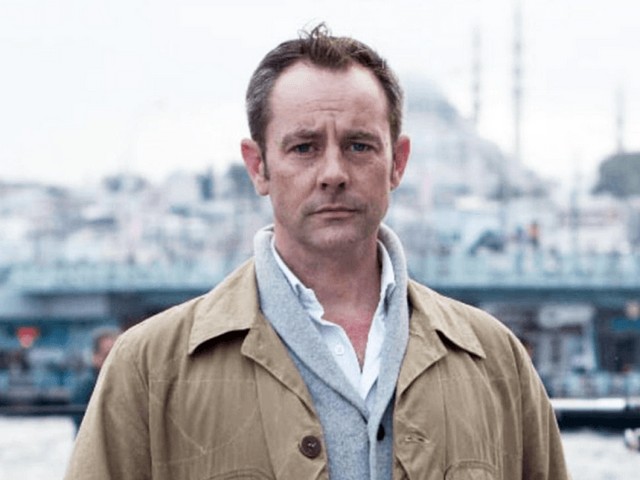
The founder of the White Helmets, James Le Mesurier, was found dead on November 11 in suspicious circumstances after falling off a two-story apartment building in downtown Istanbul. He was a former British army veteran and a private security contractor from 2008 to 2012 working for Good Harbor [1], run by Richard Clarke, the former Bush administration counter-terrorism czar.

Much like Erik Prince of the Blackwater fame, Le Mesurier’s work included training several thousand mercenaries for the United Arab Emirates (UAE) oil and gas field protection force, and designing security infrastructure for the police state of Abu Dhabi.

Although the police in Istanbul are treating the incident as suicide, it’s obvious that a person of his background and training would never attempt suicide by jumping off a two-story building. Because such a fall might have fractured a few bones but it was highly unlikely to cause death.

The assassination of James Le Mesurier should be viewed in the backdrop of the killing of the Islamic State’s chief Abu Bakr al-Baghdadi on October 27 in a US special-ops raid. It’s important to note in the news coverage of the killing of al-Baghdadi that although the mainstream media has been trumpeting for the last several years that the Islamic State’s fugitive leader was hiding somewhere on the Iraq-Syria border in the east, he was found hiding in the northwestern Idlib governorate, under the control of Turkey’s militant proxies and al-Nusra Front, and was killed while trying to flee to Turkey in Barisha village five kilometers from the border.

The reason why the mainstream media scrupulously avoided mentioning Idlib as al-Baghdadi’s most likely hideout in Syria was to cover up the collusion between the militant proxies of Turkey and the jihadists of al-Nusra Front and the Islamic State. Unsurprisingly, the White Helmets area of operations is also Idlib governorate in Syria where they are allowed to conduct purported “rescue operations” and “humanitarian work” under the tutelage of al-Nusra Front.

In fact, the corporate media takes the issue of Islamic jihadists “commingling” with Turkey-backed “moderate rebels” in Idlib so seriously – which could give the Syrian government the pretext to mount an offensive in northwest Syria – that the New York Times cooked up an exclusive report [2] a couple of days after the special-ops night raid, on October 30, that the Islamic State paid money to al-Nusra Front for hosting al-Baghdadi in Idlib.

The morning after the night raid, the Syrian Observatory for Human Rights reported [3] on Sunday, October 27, that a squadron of eight helicopters accompanied by warplanes belonging to the international coalition had attacked positions of Hurras al-Din, an al-Qaeda-affiliated group, in Idlib province where the Islamic State chief was believed to be hiding.

Despite detailing the operational minutiae of the special-ops raid, the mainstream news coverage of the raid deliberately elided over the crucial piece of information that the compound in Barisha village five kilometers from Turkish border where al-Baghdadi was killed belonged to Hurras al-Din, an elusive terrorist outfit which has previously been targeted several times in the US airstrikes.

Although Hurras al-Din is generally assumed to be an al-Qaeda affiliate, it is in fact the regrouping of the Islamic State jihadists under a different name in northwestern Idlib governorate after the latter terrorist organization was routed from Mosul and Anbar in Iraq and Raqqa and Deir al-Zor in Syria and was hard pressed by the US-led coalition’s airstrikes in eastern Syria.

According to “official version” [4] of Washington’s story regarding the killing of al-Baghdadi, the choppers took off from an American airbase in Erbil, the capital of Iraqi Kurdistan, flew hundreds of miles over the enemy territory in the airspace controlled by the Syrian and Russian air forces, killed the self-proclaimed “caliph” of the Islamic State in a Hollywood-style special-ops raid, and took the same route back to Erbil along with the dead body of the “caliph” and his belongings.

Although Washington has conducted several airstrikes in Syria’s Idlib in the past, those were carried out by fixed-wing aircraft that fly at high altitudes, and the aircraft took off from American airbases in Turkey, which is just across the border from Syria’s northwestern Idlib province. Why would Washington take the risk of flying its troops at low altitudes in helicopters over the hostile territory controlled by myriads of Syria’s heavily armed militant outfits?

In fact, several Turkish journalists, including Rajip Soylu, the Turkey correspondent for the Middle East Eye, tweeted [5] on the night of the special-ops raid that the choppers took off from the American airbase in Turkey’s Incirlik.

As for al-Baghdadi, who was “hiding” with the blessing of Turkey, it now appears that he was the bargaining chip in the negotiations between Trump and Erdogan, and the quid for the US president’s agreeing to pull out of Syria was the pro quo that Erdogan would hand Baghdadi to him on a silver platter.

It’s worth noting that although Idlib governorate in Syria’s northwest has firmly been under the control of Hayat Tahrir al-Sham (HTS) led by al-Nusra Front since 2015, its territory was equally divided between Turkey-backed rebels and al-Nusra Front.

In a brazen offensive in January, however, al-Nusra Front’s jihadists completely routed Turkey-backed militants, even though the latter were supported by a professionally trained and highly organized military of a NATO member, Turkey. And al-Nusra Front now reportedly controls more than 70% territory in the Idlib governorate.

The reason why al-Nusra Front has been easily able to defeat Turkey-backed militants appears to be that the ranks of al-Nusra Front have now been swelled by highly motivated and battle-hardened jihadist deserters from the Islamic State after the fall of the latter’s “caliphate” in Mosul in Iraq and Raqqa in Syria.

In all likelihood, some of the Islamic State’s jihadists who joined the battle in Idlib in January were part of the same contingent of thousands of Islamic State militants that fled Raqqa in October 2017 under a deal brokered [6] by the US-backed Syrian Democratic Forces (SDF).

The merger of al-Nusra Front and Islamic State in Idlib doesn’t come as a surprise, though, since the Islamic State and al-Nusra Front used to be a single organization before a split occurred between the two militant groups in April 2013 over a leadership dispute. In fact, al-Nusra Front’s chief Abu Mohammad al-Jolani was reportedly appointed [7] the emir of al-Nusra Front by Abu Bakr al Baghdadi, the leader of Islamic State, in January 2012.

Finally, regarding the assassination of the founder of the White Helmets, James Le Mesurier, in downtown Istanbul, it’s worth pointing out that Turkey has been hosting 3.6 million Syrian refugees and myriad factions of Ankara-backed militant proxies. It’s quite easy for the jihadists of al-Nusra Front and the Islamic State to intermingle with Syrian refugees and militants in the Turkish refugee camps.

Evidently, one of the members of the White Helmets operating in al-Nusra’s territory in Syria’s Idlib betrayed his patrons for the sake of getting a reward, and conveyed crucial piece of information to Le Mesurier who then transmitted it to the British and American intelligence leading to the October 27 special-ops raid killing al-Baghdadi. In all likelihood, the assassination of the founder of the White Helmets was the Islamic State’s revenge for betraying its slain chief.

Footnotes:

[1] The most dangerous job in the World: Syria’s Elite Rescue Force:

[https://web.archive.org/web/20161105185720/https://www.mensjournal.com/magazine/the-most-dangerous-job-in-the-world-syrias-elite-rescue-force-20141210]

[2] ISIS Leader Paid Rival for Protection but Was Betrayed by His Own:

[https://www.nytimes.com/2019/10/30/world/middleeast/isis-leader-al-baghdadi.html]

[3] Islamic State leader Abu Bakr al-Baghdadi killed in US raid:

[https://www.middleeasteye.net/news/isis-leader-abu-bakr-al-baghdadi-targeted-us-raid-officials]

[4] Official story of the night raid killing al-Baghdadi:

[https://www.nytimes.com/2019/10/27/us/politics/baghdadi-isis-leader-trump.html]

[5] Trump Confirms ISIS Leader Al-Baghdadi Killed In US Raid:

[https://www.zerohedge.com/geopolitical/trump-make-statement-after-isis-chief-al-baghdadi-killed-turkish-border-while-fleeing]

[6] Raqqa’s dirty secret: the deal that let Islamic State jihadists escape Raqqa:

[http://www.bbc.co.uk/news/resources/idt-sh/raqqas_dirty_secret]

[7] Al-Jolani was appointed as the emir of al-Nusra Front by al-Baghdadi:

[http://english.al-akhbar.com/node/16689]

Nauman Sadiq is an Islamabad-based attorney, columnist and geopolitical analyst focused on the politics of Af-Pak and Middle East regions, neocolonialism and petro-imperialism.

15 November 2019

Source: countercurrents.org

Growth continues to slow in major economies

By Nick Beams

Data from the world’s major economies, released over the past few days, show that the “synchronised” global slowdown pointed to by the International Monetary Fund is worsening.

In its report on the latest figures from China, the world’s second largest economy, Bloomberg said the “engines of China’s economy are spluttering with exports falling, factory output slowing, investment at a record low and consumption coming off the boil.”

The National Bureau of Statistics reported that value-added industrial output in October rose by 4.7 percent from a year earlier, down from a 5.8 percent increase in September and below the forecast of a 5.2 percent increase.

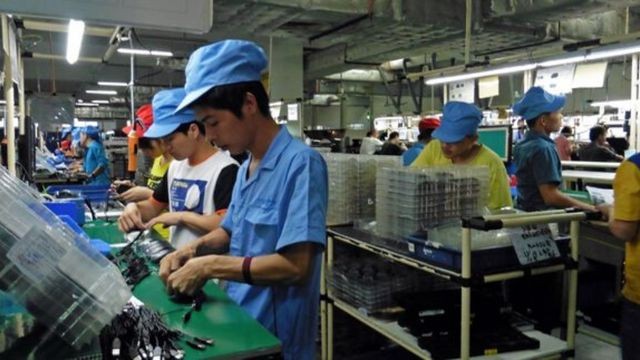
Electronics factory in Zhuhai, China [Credit: http://www.flickr.com-people-76224602atN00]

Retail sales rose by 7.2 percent, down from a rise of 7.8 percent in September and below the 7.8 percent forecast.

The most significant figure was the fall in fixed investment growth. It slowed to 5.2 percent for the first ten months of the year, the lowest level in comparable data going back to 1998.

Speaking to reporters yesterday, Liu Aihua, a spokesperson for the statistics bureau, said: “There are many external uncertainties. Domestic cyclical issues have coincided with structural issues. Downward pressure on the economy has increased continuously. Risks and challenges we are facing cannot be underestimated.”

Julia Wang, an economist at HSBC, told Bloomberg the “momentum for slowdown” was not over and because it was “so sharp” it could impact on the labour market at some point next year.

Growth in Japan, the world’s third largest economy, slowed sharply in the third quarter as the government of Prime Minister Shinzo Abe considers the size of a stimulus package. Abe ordered the package last week but the size is yet to be decided.

Gross domestic product expanded at an annualized rate of just 0.2 percent in the September quarter, compared to a rate of 1.8 percent in the three months to June and below the expected increase of 0.9 percent. The Japanese economy has been adversely impacted by the US-China trade conflict, tensions with South Korea, sparked by a conflict over reparations to victims of forced labour during World War 2, and a recent typhoon.

Figures released yesterday show that Germany, the world’s fourth largest economy, and the driving force of the eurozone economy, only narrowly escaped a technical recession—defined as two consecutive quarters of negative growth.

The economy expanded by just 0.1 percent in the third quarter while the contraction for the second was revised down from minus 0.1 percent to minus 0.2 percent.

A research note by Claus Vistesen, the chief eurozone economist at Pantheon Macroeconomics, cited by the US business channel CNBC, said there was “no recession, but most definitely a very weak economy.”

He said in some sense this was the worst of both worlds. “Today’s data confirm that the German economy has now stalled, but the headlines are probably not dire enough to prompt an immediate and aggressive fiscal response from Berlin.”

German Economy Minister Peter Altmaier said while the figures showed Germany had avoided a technical recession in the third quarter, economic development in the region was fragile.

Speaking to CNBC, Daniela Schwarzer, director of the German Council on Foreign Relations, said there was “only a minor difference” between growth of 0.1 percent and a contraction of minus 0.1 percent.

“The truth of the matter is that Germany doesn’t have a robust growth perspective at the moment,” she said, pointing out that its export-dependent economy was being hit by the shift in international trade relations—a reference to the US-China trade war and the aggressive orientation of Washington towards the European Union.

Looking beyond the immediate situation, she continued: “The whole question is what will be the sources of future growth be for Germany and the challenge to actually structurally change the German economy is huge … There needs to be strong investment in education, research and innovation, and Germany needs infrastructure investment as well.”

One of the starkest expressions of the worsening situation in the global economy and its impact on the working class is contained in the latest economic data from the UK, the world’s fifth largest economy.

According to figures from the Office for National Statistics released on Monday, the UK economy grew by just 0.3 percent in the third quarter. While this was a recovery from the 0.2 percent contraction for the second quarter, growth over the year to September was just 1 percent—the lowest level since 2010.

A report by the Institute for Fiscal Studies pointed to the underlying worsening of the economic situation. It said that over the past 11 years productivity, as measured by output per hour worked, had grown “by just 2.9 percent. That is about as much as it grew on average every 15 months in the preceding 40 years.”

One of the consequences is lower wages, which are no higher in real terms than they were 11 years ago. According to a study by the Resolution Trust, “the past decade has been the worst for earnings growth since the Napoleonic Wars.”

The study punctured claims that the growth of employment numbers indicated economic health. It noted that a “deep recession in which wages fell dramatically followed by an unprecedentedly sluggish earnings recovery” meant household incomes dropped and more people sought employment.

Employment, it said, had increased particularly rapidly for women in their early 60s and those in the lowest income deciles. This was evidence that the increase in the lift in the pension age, combined with welfare cuts, had contributed to what it called the “labour supply shift” as working households tried to counter the wage squeeze and nonworking ones experienced an “income shock.”

In the United States, the world’s largest economy, where, in the midst of the rise of stock markets to record highs, President Trump claims to have “launched an economic boom the like of which we have never seen before,” economic growth was down to 1.9 percent for the third quarter and investment in the real economy is at its lowest level since 2015.

Data released yesterday showed that applications to collect unemployment benefits increased by 14,000 to 225,000 in the week to November 9, higher than all forecasts.

The economic slowdown, and in some cases outrights contraction, is extending beyond the major economies. The economies of Singapore and Hong Kong, heavily impacted by the trade war, are in recession.

The South Korean economy grew by 2 percent for the year to September, but this was the lowest level for a decade. The manufacturing sector, the mainstay of the Korean economy, lost 81,000 jobs last month, with the country’s finance minister, Hong Nam-ki, telling reporters that government stimulus efforts were having little effect.

“We have expected fiscal spending to play the supporting role in adding vitality to the private sector,” he said. “However it is not working well with limited spillover effects, making us worried.”

In Australia, where the central bank has cut its base interest rate three times this year, setting it at a record low of 0.75 percent in a bid to boost the economy, the Bureau of Statics reported yesterday that total employment fell by 19,000 in October, the biggest decline since August 2016.

The Morrison Liberal government claimed that its tax cuts introduced in July, following its narrow re-election in May, would lift household incomes and boost spending at local businesses. Nothing of the sort has happened.

With private sector wages rising by just 0.5 percent in the September quarter, retailers are expecting a dismal Christmas period, according to a report by the accounting and finance firm Deloitte.

It noted that retailers began the year with high expectations but this optimism had faded “with a combination of weak consumer spending, higher input prices and a subdued economy resulting in some of the toughest trading conditions in recent history.”

Originally published in WSWS.org

15 November 2019

Source: countercurrents.org

Ecuador: The Restoration of Neoliberalism and the Monroe Doctrine

By Dr. Birsen Filip

On November 7, 2019, the National Court of Justice of Ecuador ratified the preventive detention of former president Rafael Correa, along with a number of his former officials. Immediately after the court rendered its decision for pretrial detention, Correa rejected accusations of bribery, illicit association and contributions to his political campaign between 2012 and 2016, while he was the leader of Alianza Patria Altiva i Soberana (PAIS). Correa founded Alianza PAIS in 2006, as a democratic socialist political party with an objective to achieve economic and political sovereignty, and foment a social and economic revolution in the nation, which came to be known as The Citizens’ Revolution (La Revolución Ciudadana).

During his presidency, which lasted from January 15, 2007 to May 24, 2017, Correa introduced a brand of 21st century socialism to Ecuador, with a focus on improving the living standards of the poorest and most vulnerable segments of the population. His presidency was part of ‘the revolutionary wave’ in Latin America, referred to as ‘Pink tide’, where a number of left-wing and socialist governments swept into power throughout the continent during the 2000s, including Cristina Néstor Kirchner and Fernández de Kirchner in Argentina, Evo Morales in Bolivia, Luiz Inácio Lula da Silva in Brazil, Manuel Zelaya in Honduras, Daniel Ortega in Nicaragua, Fernando Lugo in Paraguay, and Hugo Chávez in Venezuela. All of these governments were opposed to neo-liberal economic policies and American imperialism.

While he was president, Correa raised taxes on the rich and cut down on tax evasion, and increased public investment on infrastructure and public services, including publicly-funded pensions, housing, free health care and education. His government ended up building many schools in different parts of the nation, particularly the countryside, and provided students with nearly all of the materials needed to further their studies. President Correa also more than doubled the minimum wage, which contributed to significantly reducing socioeconomic inequality. In 2018, a World Bank report explained that:

Ecuador has made notable improvements in reducing poverty over the last decade. Income poverty decreased from 36.7 percent in 2007 to 21.5 percent in 2017. In addition, the share of the population living in extreme poverty fell by more than half, from 16.5 percent in 2007 to 7.9 percent in 2017, representing an average annual drop of 0.9 percentage points. In absolute numbers, these changes represent a total of 1.6 million individuals exiting poverty, and about one million exiting extreme poverty over the last decade.[i]

Furthermore, the unemployment rate fell from an ‘all time high of 11.86 percent in the first quarter of 2004’ to ‘a record low of 4.54 percent in the fourth quarter of 2014’[ii]. The World Bank also reported that Ecuador posted annual economic growth of ‘4.5 percent during 2001-2014, well above the average for the Latin America and the Caribbean (LAC) region of 3.3 percent. During this period, real GDP doubled and real GDP per capita increased by 50 percent.’[iii]

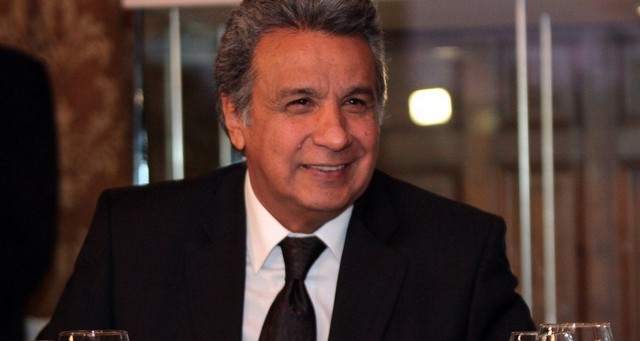
On October 1, 2016, Correa announced the nomination of Lenín Boltaire Moreno Garcés, who served as his vice president from 2007 to 2013, as his party’s candidate for the 2017 presidential election at the conference of Alianza PAIS. Moreno was elected president, and it was expected that he would continue and build on Correa’s left-wing economic policies. However, within a few months of winning the election, president Moreno began to dismantle many of the social, economic and political reforms enacted by Correa during his decade as president. Contrary to Correa’s government, many of the domestic policies pursued by president Moreno included reducing public spending, weakening worker rights, and providing significant tax cuts to the rich and large corporations. In other words, president Moreno has gradually shifted Ecuador’s left-wing policies to the political centre-right.

Moreno’s presidency also shifted Ecuador’s foreign policy stance, giving it a more neo-liberal and pro-American orientation. When Correa’s socialist government was in power, Ecuador enjoyed close diplomatic and economic relations with Venezuela, and was more independent of American hegemony. For example, president Correa closed a US military base in Manta, Ecuador when Washington’s lease expired in 2009. Prior to that, in 2007, Correa stated:

We’ll renew the [Manta air] base on one condition: that they let us put a base in Miami — an Ecuadorean base…if there’s no problem having foreign soldiers on a country’s soil, surely, they’ll let us have an Ecuadorean base in the United States.[iv]

Subsequently, on September 18, 2009, he also said:

As long as I am president, I will not allow foreign bases in our homeland, I will not allow interference in our affairs, I will not negotiate our sovereignty and I will not accept guardians of our democracy.

Contrary to Correa, the US-Ecuador military relationship has expanded under the Moreno government ‘through training, assistance, and the reestablishment of an Office of Security Cooperation at the U.S. Embassy in Quito.’[v]Ecuador and the US have also signed deals for the purchase of weapons and other military equipment, and agreed to cooperate more closely in the areas of security, intelligence, and counter-narcotics.

In 2011, president Correa expelled US ambassador Heather Hodges from Quito. Subsequently, in 2014, his government expelled the United States Agency for International Development (USAID) from the country, where it had been operating since 1961 as part of John F. Kennedy’s Alliance for Progress (AFP)[vi]. USAID regularly exercises ‘soft power’ in Latin American nations in order to help the US establish itself as an ‘international police power’[vii]. In May 2019, Moreno’s government announced that USAID would return to Ecuador.

President Correa also became renowned for providing Wikileaks founder Julian Assange with political asylum in Ecuador’s London embassy in 2012 to prevent his arrest and possible extradition to the US. However, shortly after his election, there were indications that Moreno might be willing to hand him over to authorities in the UK. In addition to calling Assange an ‘inherited problem,’ a ‘spoiled brat’ and a ‘miserable hacker’, Moreno accused him of repeatedly violating his asylum conditions and of trying to use the embassy as a ‘centre for spying’[viii]. Then, on April 11, Assange’s political asylum was revoked, which allowed him to be forcibly removed from the Ecuadorian Embassy by British police.In response, Correa called Moreno ‘the greatest traitor in Ecuadorian and Latin American history’ for committing ‘a crime humanity will never forget’[ix].

President Correa’s government supported the integration of South America countries into a single economic and political bloc. However, since Moreno came to power, Ecuador has distanced itself from the Venezuelan government, and withdrew from the Bolivarian Alternative for the Americas[x](ALBA) in August 2018, as well as the Union of South American Nations (UNASUR) in September 2019. UNASUR was established by 12 South American countries in 2008to address important issues in the region without the presence of the United States. Currently, only five members remain: Bolivia, Guyana, Suriname, Uruguay and Venezuela. The other seven members, Argentina, Brazil, Colombia, Chile, Ecuador, Peru and Paraguay, agreed to create the Forum for the Progress of South America (PROSUR) in March 2019. The goal of this alternative organization is to achieve the right-wing agenda in Latin America, as its members support neo-liberal austerity measures and closer ties with Washington. It could be said that PROSUR aligns well with the goals and objectives of the Monroe Doctrine.

Another major shift in president Moreno’s political stance pertains to lawsuits brought against Texaco/Chevron by the Correa government to obtain compensation for environmental damages caused when the operations of Texaco (acquired by Chevron in 2001) dumped 16 billion gallons of toxic wastewater in the Amazon region of Ecuador between 1964 and 1992, affecting more than 30,000 Indigenous people and Campesinos in the area. ‘Chevron left 880 pits full of crude oil which are still there, the rivers are still full of hydrocarbon sediment and polluted by the crude oil spills in Amazonia, which is one of the most biodiversity rich regions in the world’[xi], and ‘the damage has been left unrepaired for more than 40 years’[xii]. To raise public awareness about this environmental disaster, president Correa’s government established an international campaign called the ‘Dirty Hand of Chevron’. In 2011, the Ecuadorian Constitutional Court ordered Chevron to pay $9.5 billion in compensation for social and environmental damages it caused.

In September 2018, the Permanent Court of Arbitration (PCA), an agency of the United Nations based in the Hague, Netherlands, ruled that the Ecuadorian court decision against Chevron was illegal, because it was an outcome of fraud, bribery, and corruption. The PCA ‘also ruled that Ecuador will have to pay economic compensation’[xiii]to Chevron. ‘The amount has not been established yet, but Chevron requested that Ecuador assume the US$9.5 billion’ awarded to affected communities by the Ecuadorean court.[xiv]Following the PCA decision, the government of president Moreno announced that:

the state will sue former President Rafael Correa and his government officials if Ecuador lost the international arbitration process.[xv]

In this matter, president Moreno also accused Correa of ‘failing to defend the country’s interests correctly and spending money on “The Dirty Hand of Chevron” campaign, which according to the government sought to “manipulate national and international public opinion.”’[xvi] In reality, president Moreno supports the PCA decision, thereby prioritizing the interest of Texaco/Chevron over those of his own citizens. In fact, his government has been attempting to nullify the Constitutional Court ruling against Chevron. In response, former president Correa has accused the Moreno government of ‘doing homework ordered by (the United States Vice President Mike) Pence’. Even some of Moreno’s own cabinet ministers condemned the PCA ruling and expressed their support for Ecuador’s Constitutional Court for defending of the country’s nationals interest and the rights of the people of the Amazon.

Correa exhibited a hostile attitude towards the Bretton Woods Institutions during his presidency. He sought to renegotiate Ecuador’s external debt of US$10.2 billion, which he called ‘illegitimate’ because ‘it was accrued during autocratic and corrupt regimes of the past. Correa threatened to default on Ecuador’s foreign debt, and ordered the expulsion of the World Bank’s country manager’[xvii], which was carried out on April 26, 2007. His government also opposed the signing of any agreements that would permit the IMF to monitor Ecuador’s economic plan. As a result of such actions on the part of Correa’s government, ‘Ecuador was able to renegotiate its debt with its creditors and redirect public funds towards social investments.’[xviii]

To the contrary, Moreno has enthusiastically embraced the IMF during his short time as president. On March 1, 2019, Ecuador’s central bank manager, Verónica Artola Jarrín, and economy and finance minister, Richard Martínez Alvarado,submitted a letter of intent to the IMF requesting a three-year $4.2 billion Extended Fund Facility (EFF) agreement. An EFF allows the IMF to assist countries that are facing ‘serious medium-term balance of payments problems.’ More precisely, EFF is designed to:

to provide assistance to countries: (i) experiencing serious payments imbalances because of structural impediments; or (ii) characterized by slow growth and an inherently weak balance of payments position. The EFF provides assistance in support of comprehensive programs that include policies of the scope and character required to correct structural imbalances over an extended period.[xix]

The IMF agreement signed in March allowed Ecuador to borrow $4.2 billion. However, as is always the case, the IMF agreement was not without conditionalities, as it required the Ecuadorian government to implement a series of neo-liberal economic reforms. According to IMF statements, these reforms aim to transform Ecuador’s fiscal deficit into a surplus, reduce the country’s debt-to-GDP ratio, and increase foreign investment. On March 11, 2019, Christine Lagarde, former Managing Director of the IMF, claimed that:

The Ecuadorian authorities are implementing a comprehensive reform program aimed at modernizing the economy and paving the way for strong, sustained, and equitable growth.[xx]

On March 11, 2019, Christine Lagarde also explained that:

Achieving a robust fiscal position is at the core of the authorities’ program, which will be supported by a three-year extended arrangement from the IMF. The aim is to reduce debt-to-GDP ratio through a combination of a wage bill realignment, a careful and gradual optimization of fuel subsidies, a reprioritization of capital and goods and services spending, and a tax reform. The savings generated by these measures will allow for an increase in social assistance spending over the course of the program. The authorities will continue their efforts to strengthen the medium-term fiscal policy framework, and more rigorous fiscal controls and better public financial management will help to enhance the effectiveness of fiscal policy.[xxi]

Protecting the poor and most vulnerable segments in society is a key objective of the authorities’ program. In this context, the authorities plan to extend the coverage of, and increase the nominal level of benefits under the existing social protection programs. Work is also underway to improve the targeting of social programs.[xxii]

Ecuador’s participation in the Organization of the Petroleum Exporting Countries (OPEC) represents another point of contention between Correa and the Moreno government. Ecuador was a member of OPEC from 1973 and 1992. After a period of absence, it rejoined the organization in 2007 after Correa became president of the country. However, on October 1st, president Moreno announced that Ecuador would once again end its membership in OPEC effective January 1, 2020. Given Moreno’s penchant for implementing neo-liberal economic policies, this decision was likely based on the notion that freeing the country from the burden of having to abide by quotas would bring fiscal sustainability to Ecuador. This is evidenced by the fact that Ecuador contacted OPEC to request permission to produce above its quota in February 2019, though it was never confirmed whether a response was received[xxiii]. While increasing production in its Amazonian oil fields would likely bring more foreign investment to Ecuador and open up new markets, it would also lead to serious conflicts between the Moreno government and the indigenous people living in the area, who are strongly opposed to oil extraction.

In addition to announcing Ecuador’s departure from OPEC, president Moreno also selected October 1stas the date to introduce Decree 883, a series of economic measures that included ending longstanding subsidies for fuel, the removal of some import tariffs, and cuts to the benefits and wages of public employees. In particular, the elimination of fuel subsidies, which had been in place for 40 years, was instituted in order to meet IMF requirements to keep the $4.2 billion programme on track, and to satisfy international investors. The EFF agreement between the IMF and the Ecuadorean government also called for thousands of public employees to be laid off, the privatization of public assets, the separation of the central bank from the government, cutting public expenditures, and raising taxes over the next three years. IMF representatives claim that these types of reforms bring more foreign direct investment into the economy.

In fact, a close examination of the neo-liberal economic reforms recommended by the IMF in many countries reveals that they are almost identical, meaning that they do not take the diverse needs and realities of each country into account; rather, they are driven by the interests of the countries and other stakeholders that provide the funds. Generally, the IMF’s recommendations[xxiv]consist of cutting deficits, liberalizing trade, privatizing state-owned enterprises, reforming the banking and financial systems, increasing taxes, raising interest rates, and reforming key sectors. However, countless studies have revealed that these types of reforms, have raised the unemployment rate, created poverty, and have often preceded recessions. On October 2, 2019, the IMF issued a press release on Ecuador stating that:

The reforms announced yesterday by President Lenin Moreno aim to improve the resilience and sustainability of Ecuador’s economy and foster strong, and inclusive growth. The announcement included important measures to protect the poor and most vulnerable, as well as to generate jobs in a more competitive economy.

The authorities are also working on important reforms aimed at supporting Ecuador’s dollarization, including the reform of the central bank and the organic code of budget and planning.

IMF staff will continue to work closely with the authorities to improve the prospects for all Ecuadorians. The second review is expected to be submitted to the Executive Board in the coming weeks.[xxv]

President Moreno’s decision to end the subsidies on fuel led to the prices of diesel and petroleum increasing by 100% and 30%, respectively, overnight, which directly contributed to significantly raising the costs of public transportation. In response, protests erupted against Moreno’s austerity measures on October 3rd, featuring students, unions and indigenous organizations. They declared an indefinite general strike until the government reversed its neo-liberal adjustment package. Moreno’s initial response was to reject the ultimatum and state that he would ‘not negotiate with criminals.’

The following day, on October 4, 2019, president Moreno declared a state of emergency under the pretext of ensuring the security of citizens and to ‘avoid chaos.’ Nonetheless, the protests continued and intensified to the point that the government was forced to relocate to city of Guayaquil because Quito had been overrun by anti-government protestors. However, this attempt to escape the protestors proved ineffective as taxi, bus and truck drivers blocked roads and bridges in Guayaquil, as well as in Quito, which disrupted transportation nationwide.

In the following days, thousands of demonstrators continued to demand the reversal of austerity measures, as well as the resignation of the president. However, Moreno remained defiant, refusing both demands under all circumstances. Subsequently, Ecuador’s main oil pipeline ceased operations after it was seized by indigenous protesters. Petro-Ecuador was concerned that production losses could reach 165,000 barrels a day. Indigenous protesters also occupied two water treatment plants in the city of Ambato. Meanwhile, violent clashes between protesters and police resulted in seven deaths, about 2,000 injuries, and over 1,000 arrests. Eventually, Moreno’s government was forced to back down and make concession with the well-organised protesters.

On October 13, president Moreno agreed to withdraw Decree 883 and replace the IMF-backed plan with a new proposal, involving negotiations with the Confederation of Indigenous Nationalities of Ecuador (CONAIE) and other social groups. The following day, president Moreno signed Decree 894, which reinstated the cancelled fuel subsidies. However, on October 23, CONAIE released a statement informing the public that ‘it paused talks with President Lenin Moreno because of the government’s “persecution” of the group’s leaders [Jaime Vargas] since a halt to violent anti-austerity protests.’[xxvi]

It is unlikely that president Moreno would be willing to give up on his austerity policies or start the process of cancelling the IMF loan, given his apparent commitment to helping the US realize the spirit of the Monroe Doctrine. Many of the reforms and policies that his government has introduced will help keep Ecuador firmly entrenched in America’s backyard for years to come.

This is not a new development, as history has revealed that, for more than a century, ‘in Latin America there are more than enough of the kind of rulers who are ready to use Yankee troops against their own people when they find themselves in crisis’ (Fidel Castro, Havana 1962). However, the eruption of protests in response to Moreno’s neo-liberal reforms suggests that he faces an uphill battle, as his fellow Ecuadorians do not appear to share his enthusiasm for selling his country to external creditors and foreign influences. Although Moreno has managed to successfully drive Rafael Correa out of Ecuador, the former president’s opposition to capitalism and imperialism remain strong among the population.

*

Note to readers: please click the share buttons above or below. Forward this article to your email lists. Crosspost on your blog site, internet forums. etc.

Global Research contributor Dr. Birsen Filip holds a Ph.D. in philosophy from the University of Ottawa.

Notes

[i] http://documents.worldbank.org/curated/en/835601530818848154/pdf/Ecuador-SCD-final-june-25-06292018.pdf

[ii] https://tradingeconomics.com/ecuador/unemployment-rate

[iii] http://documents.worldbank.org/curated/en/835601530818848154/pdf/Ecuador-SCD-final-june-25-06292018.pdf

[iv] https://uk.reuters.com/article/ecuador-base/ecuador-wants-military-base-in-miami-idUKADD25267520071022

[v] https://www.state.gov/u-s-relations-with-ecuador/

[vi] ‘AFP was a 10-year, multibillion-dollar aid program targeting Latin American countries, whereas USAID sought to support economic growth and progress in the agriculture and health care services sectors, while also promoting democratic institutions and democratic forms of governance. The impetus for the establishment of the AFP and its involvement in Latin American countries, in conjunction with USAID, was the success of the Cuban Revolution in 1959, which culminated in the overthrow of the oppressive regime led by Fulgencio Batista, who ruled the country as a dictator with full US backing. This led to the Americans losing their considerable influence over the island. More importantly, this outcome made the US leadership paranoid that other countries situated in their “backyard” might follow Cuba’s example and revolt against US-supported dictators and regimes, nationalize businesses and resources, and establish closer ties with the Soviet Union. Washington used the AFP and USAID as mechanisms by which to improve trade ties with Latin American countries with the ultimate objective of preventing the spread of communism in the region.’ https://www.globalresearch.ca/the-flower-industrys-impacts-on-colombia-on-mothers-day/5640156

[vii] https://www.globalresearch.ca/the-flower-industrys-impacts-on-colombia-on-mothers-day/5640156

[viii] https://www.theguardian.com/media/2019/apr/14/assange-tried-to-use-embassy-as-centre-for-spying-says-ecuadors-moreno

[ix] https://www.rt.com/news/456229-correa-slams-moreno-assange-arrest/

[x] To counter the influence that the US exercised over Latin American economies, Chávez proposed the creation of an alternative economic agreement that was anti-imperialist in nature. In 2004, the Bolivarian Alternative for the Americas (ALBA) was established, initially funded by Cuba and Venezuela.

[xi] https://www.stopcorporateimpunity.org/21st-may-the-global-antichevron-day-of-action-is-coming/

[xii] https://www.stopcorporateimpunity.org/21st-may-the-global-antichevron-day-of-action-is-coming/

[xiii] https://www.telesurenglish.net/news/Arbitration-Tribunal-Rules-Against-Ecuador-Favors-Chevron-20180907-0011.html

[xiv] https://www.telesurenglish.net/news/Arbitration-Tribunal-Rules-Against-Ecuador-Favors-Chevron-20180907-0011.html

[xv] https://www.telesurenglish.net/news/Arbitration-Tribunal-Rules-Against-Ecuador-Favors-Chevron-20180907-0011.html

[xvi] https://www.telesurenglish.net/news/Arbitration-Tribunal-Rules-Against-Ecuador-Favors-Chevron-20180907-0011.html

[xvii] https://www.telesurenglish.net/analysis/Ecuadors-Citizens-Revolution-A-Shift-in-Foreign-Policy-20150107-0029.html

[xviii] https://www.telesurenglish.net/analysis/Ecuadors-Citizens-Revolution-A-Shift-in-Foreign-Policy-20150107-0029.html

[xix] https://www.imf.org/en/About/Factsheets/Sheets/2016/08/01/20/56/Extended-Fund-Facility

[xx] https://www.imf.org/en/News/Articles/2019/03/11/ecuador-pr1972-imf-executive-board-approves-eff-for-ecuador

[xxi] https://www.imf.org/en/News/Articles/2019/03/11/ecuador-pr1972-imf-executive-board-approves-eff-for-ecuador

[xxii] https://www.imf.org/en/News/Articles/2019/03/11/ecuador-pr1972-imf-executive-board-approves-eff-for-ecuador

10 November 2019

Source: www.globalresearch.ca

Qatar: Education As A Weapon

By Andre Vltchek

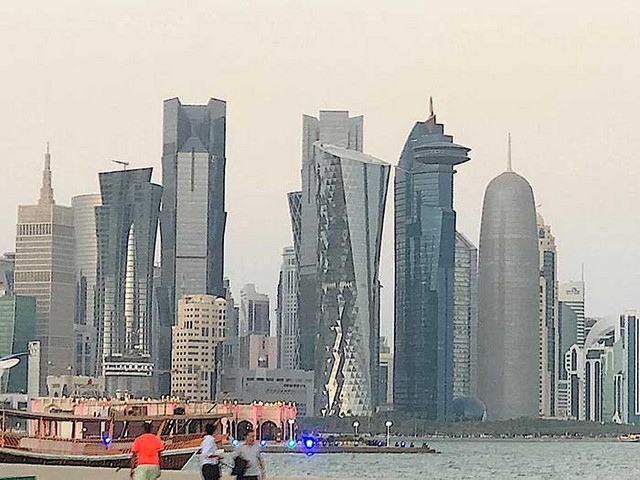
There seems to be no limit to Qataris tossing around their wealth. This tiny kingdom with 2.6 million inhabitantsis full of ridiculously lavish gold-plated palaces, most of them built with terrible taste. It is overflowing with Lamborghini racing cars and Rolls Royce limousines, and now, even with ludicrously wasteful air-conditioned sidewalks (cold air blows from below, into the 35C heat).

Ruled by the House of Thani, the State of Qatar is truly a strange place: according to the latest count conducted in early 2017, its total population was 2.6 million, of which 313,000 were Qatari citizens and 2.3 million ‘expatriates’, both the low-wage migrant workers, and the lavishly remunerated Western professionals.

Foreigners are doing everything; sweeping the floors, cleaning garbage, cooking, taking care of babies, flying Qatar Airways planes, performing medical surgeries and building office towers. Manual laborers are discriminated against; beaten, cheated, humiliated. Many migrant workers have been dying under “mysterious circumstances”. But they are still coming, mainly because Qatar, withits GDP per capita of $128,702, is the richest country on earth, and because there is huge demand for hundreds of different professions. Never mind that the perks are for the ‘natives’ only, while the minimum wage for foreigners is only around $200 per month.

Locked in a bitter dispute with its neighbors, including Saudi Arabia and the United Arab Emirates, Qatar is moving closer and closer to its best allies – the United States and United Kingdom. The Al Udeid Air Base hosts over 100 aircraft of the United States Air Force, Royal Air Force, and other Gulf War Coalition partners. It accommodates the forward headquarters of United States Central Command, No. 83 Expeditionary Air Group RAF, and the 379th Air Expeditionary Wing of the USAF. Presently, at least 11,000 U.S. servicemen are permanently located here. Al Udeid Air Base is considered the most important military airport in the region, used for operations in countries such as Syria and Afghanistan.

Qatar has been playing an extremely important role in destabilizing Syria, and other countries in the Middle East. It has been spreading fundamentalist religious dogmas, as well as extreme capitalist creeds.

*

Qatar has plenty of money, and it uses some of its funds for various ‘educational programs’, which are closely linked to the Western, particularly US and British but also Wahhabi propaganda apparatus.International experts hired from the West have been promoting such extreme concepts as the privatization of schools, keeping the governments away from developing curricula, and spreading pro-Western and pro-market doctrines throughout the region and beyond.

Under the cover of ‘saving children’, Qatari foundations and programs are promoting Muslim fundamentalism, as well as the commercialization of education. And that is not just in Qatar itself, but also as far away as Somalia, South Sudan and Kenya.

While at Qatar University, I noticed that even the libraries are segregated (predictably, I was told by a UN staff member based in Qatar, that the so-called “Men’s Library” is incomparably better supplied than women’s), Qatar wants to present itself as a regional leader in higher education, by spreading around regressive philosophy and mindsets.

Naturally, the main goal is to maintain the status quo in the region.

In terms of quality education, things don’t work in Qatar itself, either. With all those huge budgets burnt, or more precisely wasted, Qatar has very little to be proud of. According to the OECD:

“In 2012, Qatar was ranked third from the bottom of the 65 OECD countries participating in the PISA test of math, reading and skills for 15- and 16-year-olds, comparable to Colombia or Albania, despite having the highest per capita income in the world.”

Since then, things have not improved much, although statistics on the subject are suddenly not too widely available.

*

At the end of October 2019, I found myself attending a conference, organized by the Center for Conflict and Humanitarian Studies, hosted by the Doha Institute for Graduate Studies.

Except one highly qualified UN expert (who had been working, for years, on the ground, in Syria and other places destroyed by the West and its Gulf allies), the panel of speakers consisted of individuals based in and pampered by Qatar.

The line that was tugged here was predictable:

Professor Frank Hardman basically explained how the states in the region “became weak”, and how the private sector should be taking and pushing for the education reforms.

But the most astonishing discourse came from Prof. Maleiha Malik, Executive Director, of the Protection of Education in Insecurity and Conflict (PEIC), Education Above All Foundation. She spoke about the importance of protecting vulnerable schools as well as children, in conflict zones, and about the international legal mechanisms “which are now in place”, designed to bring those who are destroying schools and pupils to justice.

In brief, a typical mainstream “development” and NGO talk.

Qatar is far from being a place where one could be free to speak up his or her mind.

But I had no patience left. I have worked in countless war and conflict zones, all over the world. And what I was witnessing at the Doha Institute for Graduate Studies was nothing short of an indoctrination process of both the participants of the conference, as well as the students.

I demanded they let me speak. When the microphone was passed on to me, I said that I needed an exact answer:

“Professor Malik, I have a question for you. I have been covering dozens, perhaps hundreds of conflicts and wars, all over the world. I saw hundreds of schools burning. I saw hundreds of children dead. Most of these atrocities were triggered by the United States, by Europe, or both. It all began long before I was born, of course, it is going on until now”.

I saw the horror on the faces of the organizers. They were devouring me with their eyes, they were begging me to stop. Most likely, this has never happened here, before. Everything was being filmed, recorded. But I was not ready to stop.

The students in aula did not react. They were clearly conditioned not to get excited by speeches delivered by ‘elements’ hostile to the regime.

I continued:

“Professor Malik, I am asking you, I demand to know, whether there was one single case when the United States, United Kingdom, France, Australia or any other Western country, was put on trial and condemned, by those international mechanisms that you mentioned earlier… Condemned for murdering millions of children, or for carpet-bombing thousands of schools in such places like Vietnam, Laos, Cambodia, and later in Iraq, Afghanistan, and Syria? For, right now, trying to starve children in Venezuela? For keeping people, including children, from having access to medicine…”

Then I turned to Frank Hardman:

“Professor Hardman, aren’t those states that you mention and defined as ‘weak’, in such a situation, because they are being antagonized, attacked and terrorized by the West; by historically imperialist countries?”

Total silence.

Then, I concluded:

“Wouldn’t it be the most effective way to protect schools and children, if we’d make sure that the West and its allies, would finally stop destroying dozens of countries all over the world?”

The Chair of the conference, Prof. Sultan Barakat, went to work, immediately, trying to contain the damage:

“Professor Malik, obviously, the question is about what is happening in Palestine…”

But Professor Malik was a tough warrior, like myself, only from the opposite side. She knew precisely that it was all beyond Israel and Palestine. Israel and Palestine were part of it, but they were not the only issue here. She brushed off Sultan Barakat and went straight after my throat:

“It is not about the West! It is not about one group of countries. All members of the UN Security Council are responsible! Look at Russia, committing atrocities in Syria…”

And the shouting match began. Our personal “Doha debate”.

“Which atrocities?” I shouted at her. “Prove it.”

“We have proof.”

“You?” I wondered. “You went to Syria? Or is it that you were given so-called proof by your handlers? You put Russia, a country which is saving Syria and Venezuela, on the same level as the countries that are murdering hundreds of millions of people in all corners of the world?”

I recalled, how many times during this ‘conference’, USAID was mentioned. All references were Western.Here, people from the Arab countries were speaking and thinking like the IMF, or The Economist.

I sat down. I had nothing else to add.

The controlled discussion somehow resumed. The faces of the students remained unmoved.

At night, I met for dinner a comrade with whom I used to work with in Afghanistan. Doha is a strange place. A place of unexpected encounters.

*

Qatar is doing to the arts what it is doing to education.

The next day I tried to visit several museums which the country is bragging about online and through its advertisements. All were closed, except the Museum of Islamic Art, which used to be free to the public, but is now charging a $15 entry fee.

The monstrously fragmented state and its individuals are now investing billions of dollars, purchasing art works from all over the world. Bragging about it. Manipulating content. As it is manipulating, what is being produced in its ‘international’ film studios.

Departing from Doha to Beirut on Qatar Airways, I realized that there was not one Qatari citizen working onboard. The pilots were from the UK and Australia, while the flight attendants were recruited in the Philippines, India and Africa.

A few minutes after take-off, an aggressive advertisement began promoting Educate a Child (EAC), which is a program of the Education Above All Foundation.

In Qatar, everything seems to be inter-connected. Deadly US military bases, ‘foreign policy’, the arts, and yes, even education and charity.

*

[First published by NEO – New Eastern Outlook – a journal of the Russian Academy of Sciences]

Andre Vltchek is a philosopher, novelist, filmmaker and investigative journalist. He has covered wars and conflicts in dozens of countries.

10 November 2019

Source: countercurrents.org

SC Verdict on Ayodhya: My Conscience Does Not Allow Me to Celebrate It

By Abhay Kumar

What if the Ram temple were demolished on December 6, 1992 instead of the Babri mosque in Ayodhya? Do you think the Supreme Court judgment would have been the same?

Do you think the demolished structure would have been given to the party that was involved in razing it to the ground or supporting its demolition? These questions are unlikely to be raised in debates and TV shows.

Would you not share the apprehension that the mainstream Indian media, the opposition parties and civil society members lack courage to go again the majoritarian frenzy?

The so-called secular and liberal forces have also disappointed us. They, too, do not want to appear “unpopular” and “insensitive” to the so-called “astha” (belief) of the majority Hindu community.

In a long-awaited verdict on November 9, the Supreme Court allowed the Hindus to build a Ram Temple on the disputed site in Ayodhya. Muslims, another party to the dispute, were asked to build a mosques at another place in Ayodhya.

The Hindutva forces have argued that the Babri Masjid, built in 16th century, stood at the exact place of the demolished Ram temple. In their fabricated history, “the Muslim invaders” demolished the temple to build up the mosque. The Muslims as well the eminent histrorians have denied such allegations.

Abandoned by the secular parties, the minority Muslim community is perhaps most vulnerable today. They are increasingly being told to appear “tolerant”, “friendly” to the majority Hindus, “loyal” to the country and become “rooted in Indian (read Brahminical) culture.

Perceiving a possible threat to their security, the Muslim minority is trying to keep a smile on their face even if they feel hurt and let down by the apex court of the country.

For example, the All India Muslim Personal Law Board, following the SC ruling, is giving contradictory statements. The Board says that they respect the judgment, yet they feel disappointed with it. The Board, which is under huge pressure, is trying to keep “quiet”.

But Muslims perceive a threat to their safety. They are also doing best to avoid any provocation. As a result, a large number of Muslims have put up messages on social media, welcoming the judgment. Some others are taking part in procession organised by the Hindutva outfits. Some of them have also appeared before media to “congratulate their Hindu brothers” over this “historical” judgment.

Unlike the minority community, the majority community is celebrating the judgment. The celebration includes chanting and writing ‘Jai Sri Ram’ on social media. “If temple was not built in Ayodhya where it would be built!”, argues one of them. The extremists among them say the time has come to solve the controversy of Kashi and Mathura as well. While the so-called liberals, among them, deny use of coercion in this process, saying that there is nothing wrong in building up the temple after the Supreme Court has upheld the position of the Hindus.

Note how the position of the majoritarian forces is being justified by invoking the ruling of the apex court of the country. However, one should not forget that till recently the Hindutva forces were saying that the question of building a temple is a matter of “faith”.

Even if the majority of the majority Hindu community are celebrating the Ram Temple Babri Masjid judgment by the Supreme Court, my conscience does allow me to celebrate it.

My conscience does not allow me to forget the gross injustice done in the broad-day light on December 6, 1992.

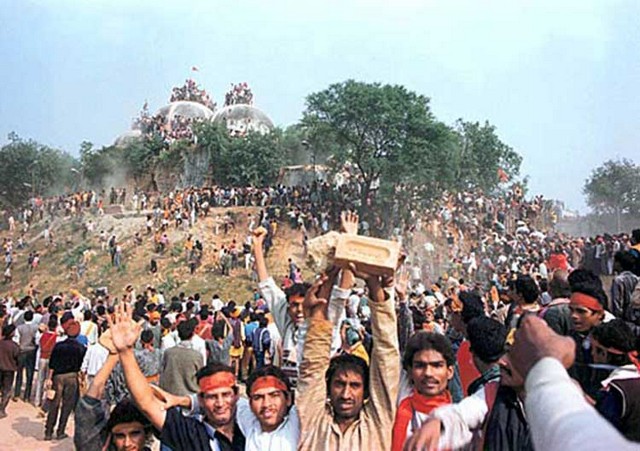
How could we forget that thousands of fanatic Hindu mobs were mobilised to demolish centuries-old religious place of the minority community?

How could we forget that the Ram Temple mobilisation sparked off violence and riots, taking the lives of 2000 people?

How could we forget innocent people were injured, displaced and killed in the name of building a temple at a place where no historical evidence can suggest that it had existed there? How could we forget this tragedy?

My conscience, let me say it again, does not allow me to celebrate a judgement that appear to “honour” the so-called majoritarian sentiment. The judgement that does not show courage to challenge the brute power of a majoritarian government cannot appeal to my conscience.

Irrespective of what the mainstream media and the ruling elite say, I think that December 6 was one of the darkest days in the Indian history. On that day, not only the doom of mosque was razed to the ground but also the pillars of secularism and democracy were broken.

Justice, therefore, cannot ignore the questions of majoritarian tyranny, violation of law and order and the Constitution and mindless murder and violence. But the judgment today hurried to please the majoritarian sentiments constructed and maintained by the Hindutva forces. The so-called bench comprising several judges made a historical blunder to paint a false picture of ‘India (read Hindus) being a tolerant and secular’.

Would the judgment going to bring peace in society and put an end to communal politics? I doubt.

I wish I were proven wrong. But I doubt if communal conflicts are going be be a thing of the past in the wake of the judgment. I do not think the majoritarian forces are going to be contented with winning the Ram Temple and Babri Masjid case.

I am afraid the judgement of the day is likely to boost the morale of communal forces to take laws in their hands. If this happens, the attitude of the Indian state would become more aggressive and hostile towards the minorities.

I am afraid the Ayodhya judgment may encourage the majoritarian forces to make a claim to other religious places of the minority community.

I know my views are against the majoritarian frenzy. At the time of writing this note I am sitting at bonfire. People around me are greeting me with ‘Jai Sri Ram’. I also received a message last night to my Whatsup number in which I was alleged to be a “a certain local friend” of Babur who would “start his long journey back home to Samarkand”, following the verdict.

Contrary to all these allegations and the frenzy mood of the Hindu India, I want to register my dissent. I know my statement does not have much impact today but I am confident that history and posterity would understand the pain of my heart.

Abhay Kumar has recently submitted his PhD at Centre of Historical Studies, Jawaharlal Nehru University, Delhi.

10 November 2019

Source: countercurrents.org

Ayodhya verdict incomplete without bringing perpetrators of the demolition of Babari Masjid to justice

By Vidya Bhushan Rawat

The Ayodhya verdict is out. People are interpreting it according to their positions. A one thousand page verdict will have many point and perhaps would be useful for the scholars as a research material. There are things which make verdict the best possible solution in todays vitiated political climate. It is unambiguous that the court has been unanimous in ‘respecting’ the ‘sentiments’ of Hindus. While it suggested that it would put facts over faith yet reading the judgment and listening to the justification of various points, I would suggest it is a ‘settlement’ of a case and not really a ‘judgment’ which really uphold the sanctity of the law and our secular constitution.

The verdict did not even take into consideration the Buddhist claims despite the known fact that Ayodhya is saket in many old texts and that circuit from Shravasti to Sarnath-Kushinagar till Lumbini is termed as Buddhist circuit.

We know that the popular opinion too influence judges and they knew it well that this judgment cant be delivered purely on ‘technicality’ and that was the reason why the court wanted mediation. They knew it well that the situation would go out of hand if the Hindu parties lose the case and they wanted to ensure that Muslims should not be seen as ‘losing’ party and that is why while granting whole write of 2.77 acres of disputed land to Hindus, the court also asked the government to allot five acres of land to Muslims to construct a mosque.

Muslim party is rightly aggrieved because the judgment is not really based on supremacy of law otherwise the courts would have stood strongly against the demolition of the Babari Mosque. They made important observations regarding the same. That idols Ram Lalla were surreptitiously placed inside the mosque in November 1948 and then the demolition of the Babari Mosque on December 6th, 1992, were against the rule of the law and illegal.

Indian constitution is secular but the nature of Indian state remained brahmanical to say the least. It has not happened all of a sudden. The continuous failure of the secular politicians and politics has helped the Hindutva to get legitimized and courts cant be uninfluenced and unaffected with the political climate of the country. We need not to discuss things here but a chronology of events and court’s responses on many of the issues concerning civil liberty and human rights are a matter of grave concern. In wake of the Ayodhya judgment, the court actually did not hear many important petitions during the last two months.

It is a fact that such cases of faith are difficult to evaluate when the dispute is over centuries. Frankly speaking court’s are not here to decide where a God is born. It is the faith and judges being human being realize the great responsibility on them. As a nation, we have not yet matured to accept any kind of verdict. The court verdict prove that India, though is constitutionally a secular nation yet it is defecto a Hindu state and sentiments of Hindus mattered more in this judgment. There is no doubt that courts observations are important and they have tried to analyse things in a very balanced way yet the judgment fall short of many things.

I am sure Muslims as well as secular progressive liberal people would not have any issue with respecting the ‘sentiments’ of Hindus who consider Ayodhya as birth place of Lord Rama but the disturbing thing is that while accepting that the incidents of putting the idols of Rama Lalla in the mosque as well as razing of the Babari Masjid in 1992 was ‘an egregious violation of the rule of law”, very little is being done to punish the guilty of these two crimes.

L K Advani, Vinay Katiyar, Uma Bharti, Murli Manohar Joshi, Kalyan Singh; VHP leaders Ashok Singhal (deceased), Giriraj Kishore (deceased), Vishnu Hari Dalmia, Champat Rai Bansal; Shiv Sena leaders Bal Thackeray (deceased) and Moreshwar Save (deceased) are the main accused in the Babari Masjid demolition case along with many other BJP leaders as well as so called Car Sevaks who were present there and participated in the demolition of the historic mosque. 27 years have passed since the demolition of the mosque and CBI has not been able to do anything credible in the case.

The political fortune of all the accused had grown disproportionately after the demolition of Babari Masjid and BJP tasted powers not only in various states but at the center also. It is important for the Courts to assert their power in such cases and direct for a time bound trial. Supreme Court must ask the government what has happened on the trial and why is CBI unable to expedite the case ?

The court’s silence and merely passing reference does not do any justice to this. If the court were speaking on the entire issue of Ayodhya dispute and then it is important for them to speak up categorically that the perpetrators of the Babari Demolition have not done anything ‘heroic’ but attacked on the constitution of India and must be severely punished so that none can do such cowardly act in future.

We must not forget the fact that after the demolition of the Babari Masjid, the then Prime Minister P V Narsihmarao promised the country that the masjid would be built at the same place. It was not a party promise but a promise made by the government. When the court is asking the government to expedite the temple building process, which means asking the government to build the temple, which in any secular society is not desirable then why nobody reminded them that there is a solemn promise of a government to build the Babari masjid. Though the court asked the government to provide the Sunni Waqqf Board five acres of land to build a mosque, it remained silent on the government’s promise to the nation that Narsimharao made. If the temple is to be constructed at exchequer’s money then why not the mosque which was promised by the government.

The third vital question is about future of such conflicts. Will the Ayodhya conflict end all other conflict or will it open up windows for more places. Will the court become adjudicator of the ‘birth’ places of various mythological gods. Should the court be doing this which is not their domain area ? We have thousands of mythological issues and every stone in our country has a mythological value, not necessarily historical. The Hindutva groups are not going to sit silently because now with this massive power, they will keep the pot boiling. The popular slogan that ‘mandir wahi banayenge, lekin taarikh nahi bataayenge’ can not be used as Supreme Court has ordered the process of temple construction. It means that next elections of Uttar Pradesh, temple remain the major issue. Though the court has categorically said that law and order and peace are important for the construction of Ram Temple, they failed to assure the nation that this was a very special case and in future, they would warn any citizen or political goons to take law unto his hand and demolish the place of worship of any community. History cannot be undone. If Babar had demolished a mandir and built up a mosque, which was highly unlikely, then the answer is not to correct this ‘wrong’ by demolishing the masjid and making the mandir at the same place. Will the slogan, ‘ abhi to ye bas jhaanki hai, kashi, Mathura baaki hai’, ( this is just a trailer, the issues of Kashi and Mathura will be settled later) disappear now ? My opinion is that the Supreme Court should have spoken categorically that it will not allow such frivolous and disruptive activities in the name of ‘history’ and ‘sentiments’.

Whatever the verdict is and people are deliberating on it purely on legal basis, the responses from the Muslim community as well as common Hindus is a welcome step. If the building of Ram Temple help us resolve the bitterness between Hindus and Muslim, then we should welcome it. Fact is that attempt were made for a out of court settlement though the court appointed committee could not reach to a conclusion. The fact is the language of the judgment is balance which does not target the Hindus in harsh word though condemn the act of vandalism, at the same point of time assure Muslims their place in the country and equal treatment as per the constitution of India.

Response of political parties is as usual. They all took shelter in the garb of ‘matter’ being subjudice. Now the matter is ‘resolved’, the political parties including the Hindutva forces should now focus on issues confronting the nation. It would be good if the court appoint a committee to monitor the process and not allow political parties to use it for their ulterior political motives. Now as the judgment has come, parties might seek review of it, but if the court has to do anything, I hope they must not allow attempt to use such toxic and vitiated campaign to vilify the minorities particularly Muslims who have been at the receiving end. We know, this case had gone into such a situation that it would not have satisfied all the parties. The best part is that the court must ensure that no future incident like this should happen again. Demolishing the place of worship of any religion needs not mere condemnation but also strong action against the perpetrators of the crime. It is in this context that we hope the criminals of the Babari demolition would be booked and brought to justice. Supreme Court has a duty to ensure that this task is done in a time bound manner as they did in the case. Let the court not allow this verdict to be misused by the same forces who demolished Babari Masjid, at the other places. The court has reemphaised on constitutional values particularly its secular character and it is important now that while faith is important, the constitution also mandate us including courts, to strengthen scientific thinking, critical inquiry and humanism in our people. All this will remain a pipedream if the religious rights dictate terms and conditions to us and all institutions buckle under their combine assault.

This judgment has numerous important observations by the courts and we hope, it will be useful in strengthening our resolve for a secular, plural and liberal society. India need to move ahead now, learning its lessons from the failure to protect the constitution and should not allow such things to happen again which may endanger our social fabric and rule of law. Let the legal people understand the entire verdict reading its judgment carefully and take the necessary action. If the court hear anything in this matter, it must ensure that perpetrators of the violence and criminal assault on Babari Masjid should be prosecuted as soon as possible and for that the courts would do well, to monitor the CBI court’s proceeding and direct it for necessary action. A failure on that account will make this verdict incomplete and strengthen the perpetrators of the crime who are eyeing the other such projects and are in a celebratory mode. The Court must warn them and act.

Vidya Bhushan Rawat is a social activist. Twitter @freetohumanity

10 November 2019

Source: countercurrents.org

It doesn’t end with Babri Mosque: The dispute may cast a long shadow on the future of mosques in India

By Abdus Sattar Ghazali

India’s Supreme Court on Saturday granted Hindus permission to build a temple at the centuries-old site of Babri Mosque demolished in 1992 by Bharatiya Janata party (BJP) led right-wing mobs.

In their unanimous and historic judgment, the five Supreme Court judges stated that the site rightfully belonged to Hindus, based upon the claim it is the birthplace of their god Ram. The judges ruled a mosque that had stood on the site since the 16th century, and was the basis of the Muslim claim to Ayodhya, was “not built on vacant land” and that the Hindu belief that this site was where Lord Ram was born could not be disputed.

The judges declared that a separate “prominent” five-acre piece of land would be allocated to the Muslim community to build a mosque near the contested site. In a 1024-page verdict, the SC said that the mosque should be constructed at a “prominent site” and a trust should be formed within three months for the construction of the temple at the site many Hindus believe Lord Ram was born.

The court observed that the demolition of the mosque in 1992 was “in violation of the status quo orders of this court.” But the justices left it at that and didn’t order any punitive action against those who demolished the mosque in the presence of several top leaders of Modi’s party.

The judgment shot down a 2010 Allahabad High Court decision splitting up the site, saying that it must be allocated as a whole. On September 30, 2010 Allahabad High Court ruled that the 460-year-old Babri mosque site in Ayodhya would be split into thirds with two-thirds belonging to Hindu groups and the remaining third going to the Muslim community.

The Supreme Court ruling, just six months after his landslide election win, is another huge victory for Prime Minister Narendra Modi and his Bharatiya Janata party (BJP) government, who have made the restoration of Ram Temple at Ayodhya a focal point of their Hindu nationalist agenda. The supreme court judges said plans for the temple would be drawn up within the next three months.

“The judgment is not satisfactory but we respect it. We will have discussions and then decide further course of action,” Zafaryab Jilani, Sunni Waqf Board lawyer, was quoted as saying. “We are not satisfied with the verdict and it’s not up our expectation,” said Jilani, who is representing the Muslim community’s Babri Action committee. “These 5 acres of land don’t mean anything to us,” he said. “We are examining the verdict and whatever legal course is open for us.” He hinted at filing a review petition in the Supreme Court challenging Saturday’s verdict. At the same time, he appealed to members of all communities to maintain peace.

Faizan Mustafa, Vice-Chancellor of NALSAR University of Law, Hyderabad, termed the verdict “controversial”.”The judges tried their best to have a kind of a balance but ultimately it’s the mystery of the faith over rule of law, because they [judges] said that we can’t be doing anything about the Hindu belief and if they believe that Ram was born here … we have to accept it,” he said. “Belief is good for the purposes of religion, but can it become a basis to resolve property disputes?”

The Supreme Court judgment in the Babri Mosque dispute is likely to cast a shadow on the future of various mosques in the country contested by Hindu groups.

The mosques are protected under the Places of Worship (Special Provisions) Act, which states that a religious place will retain the same character it had on the day of India’s independence—Aug. 15, 1947. The law was enacted in 1991, at the height of the Ramjanmabhoomi protests, and did not extend to the contested Babri Masjid in Ayodhya.

However, Legal sanctity is not enough to protect religious structures in India, as the Babri Masjid’s demolition showed, according to Quartz India.

Tellingly, Acharya Giriraj Kishore, the international vice president of the Vishwa Hindu Parishad, one of India’s largest Hindu fundamentalist organizations, said after the 2010 verdict, that the Babri mosque ruling could pave the way for Hindus to retrieve more “Hindu holy places from Muslim occupation”.

“Muslims would now also have to be ready to return to us the land beneath the two mosques where we used to have our temples in Mathura and Varanasi,” Mr Kishore was quoted as saying. He was alluding to the Gyanvapi mosque in Varanasi and the Shahi Idgah mosque in Mathura. Hindu groups say Hindu temples were originally built on the sites and that the Hindu deity Krishna was born in Mathura.

It is a known fact that Hindu fundamentalists are claiming that thousands of Hindu temples were demolished to build mosques on those sites during the Muslim rule. One list names 299 Mosques in various districts of U.P, which were allegedly built after demolishing Hindu temples.

The latest Supreme Court verdict will open a flood gate of law suits against any mosque claiming that it was built on a temple site. Lower courts are likely to follow the Supreme Court verdict allowing building a temple on the site of a mosque.

In this situation observers believe that the Muslim Sunni Waqf Board, a petitioner in the Babri Mosque case, should not avail the offer of land to build a mosque instead of the 16th century Babri mosque. This may help in diluting the impact of the Supreme Court decision on the future of mosques in India, the abode of 200 million Muslims.

Abdus Sattar Ghazali is the Chief Editor of the Journal of America (www.journalofamerica.net) email: asghazali2011 (@) gmail.com

10 November 2019

Source: countercurrents.org

Babri Masjid Verdict: My House Demolished, I Go To Court, Court Awards The Land To The Demolisher, Is This Justice?

By Binu Mathew

Someone demolished my house. I went to court to get justice. The court ordered that the demolisher can build house in the place where my house stood. As a consolation I’ve been allotted some land. Is this justice?

This is a fictitious scenario, but not dissimilar to what happened to Rama Janmabhumi – Babri Masjid that was delivered in the Supreme Court of India today. In a unanimous verdict, the Supreme Court held that the entire disputed land of 2.77 acres in Ayodhya must be handed over for the construction of Ram temple. At the same time, the Court held that an alternate plot of 5 acres must be allotted to the Sunni Waqf Board for construction of mosque. The Central Government has been directed to formulate a scheme for construction of temple within three months. A Board of Trustees must be set up for temple construction.

Babri Masjid, a muslim mosque, was built in 1528–29 by a general Mir Baqi, on orders of the Mughal emperor Babur. Some Hindus believe that it was built on the birth place of the Hindu God Rama.

The land was disputed by the Hindus since 1885. Court cases have been going on since then on the ownership of the land.

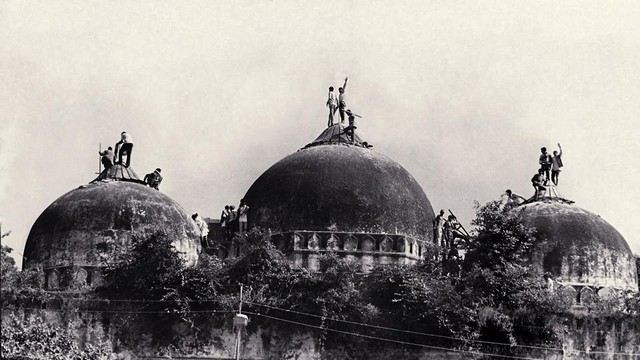
On 6 December 1992, a violent crowd consisting of Hindu fanatics demolished the mosque, resulting in communal riots leading to over 2,000 deaths.

A land title case on the site was lodged in the Allahabad High Court, the verdicts of which was pronounced on 30 September 2010. In their verdict, the three judges of The Allahabad High Court ruled that the 2.77 acres (1.12 ha) of Ayodhya land be divided into 3 parts, with 1/3 going to the Ram Lalla or Infant Lord Rama represented by the Hindu Maha Sabha for the construction of the Ram temple, 1/3 going to the Islamic Sunni Waqf Board and the remaining 1/3 going to a Hindu religious denomination Nirmohi Akhara.

Today the Supreme Court of India set aside the Allahabad High Court order and gave the land to the Hindus with certain conditions.

The duty of the Supreme Court was only to ascertain the title suit of the disputed territory. But the court went beyond its jurisdiction and granted the land to the Hindu party.

The five judge panel said in a unanimous decision that Hindu petitioners had established their case that they were in possession of outer courtyard at the site and the Sunni Waqf Board had failed to establish its case. The judges said that the faith of Hindus that Lord Ram was born at the site of the demolished structure is undisputed, and the existence of Sita Rasoi, Ram Chabutra and Bhandar grih are testimony to the religious fact of the place.

The court going above their jurisdiction and awarding the land to the Hindus has opened a pandora’s box in India.

The comparison of right wing Hindutva forces and the racist Zionists in Israel is apt. In fact they are the best friends when it comes to dealing with Muslims.

The Supreme Court verdict is not end of the controversial Ayodhya – Ram Janmabhumi dispute. This opens only a new chapter in the Hindu – Muslim relations in India. One can only hope that harmony will prevail. The mute question is that will there be harmony when one’s house is occupied by another?

Binu Mathew is the editor of Countercurrents.org

9 November 2019

Source: Countercurrents.org

Did Iran Conduct the Abqaiq Attack with Russia’s Blessings?

By Nauman Sadiq

Although the Houthi rebels based in Yemen claimed the responsibility for the September 14 complex attack involving drones and cruise missiles on the Abqaiq petroleum facility and the Khurais oil field in the Eastern Province of Saudi Arabia, and they have UAV-X drones having a range of 1,500 kilometers, Washington dismissed the possibility.

Instead, it accused Tehran of mounting the attack from Iran’s territory which is unlikely because Tehran would never leave behind smoking gun evidence because the Persian Gulf is monitored round the clock by American satellites and surveillance aircraft. The most likely suspects were Iran-backed militias in Iraq because 18 drones and 7 cruise missiles were launched from the north.

Quoting Iraqi intelligence officials, David Hearst reported for the Middle East Eye a day after the September 14 attack that the attack was mounted by the Hashed al-Shabi militias from its bases in southern Iraq. What lends credence to the report is the fact that in the weeks preceding the attack, Washington had accused the Hashed al-Shabi militias of mounting another attack in eastern Saudi Arabia claimed by the Houthi rebels because the oil-rich Eastern Province of Saudi Arabia is nearer the Iraq border than to the Houthi stronghold in Saada, Yemen.

Moreover, weeks before the attack, the Iran-backed militias blamed the US and Israel in August for airstrikes on their bases in Iraq targeting the missile storage facilities. The missiles were recently provided to the militias by Iran. It’s worth noting that 5,000 American troops and numerous aircraft are still deployed in Iraq, therefore the likely culprit targeting the Iran-backed militias in Iraq was Washington.

Besides planting limpet mines on the UAE’s oil tankers and shooting down an American Global Hawk surveillance drone, the September 14 attack on the Abqaiq petroleum facility was the third major attack against the US interests in the Persian Gulf. That the UAE had forewarning about imminent attacks is proved by the fact that weeks before the attacks, it had recalled forces from Yemen battling the Houthi rebels and redeployed them to man the UAE’s borders.

Nevertheless, a puerile prank like planting limpet mines on oil tankers can be overlooked but major provocations like downing a $200-million surveillance aircraft and mounting a drone and missile attack on the Abqaiq petroleum facility that crippled its oil-processing functions for weeks can have serious repercussions. Unless Iran got the green light to go ahead with the attacks from a major power that equals Washington’s military might, such confrontation would amount to a suicidal approach.

Therefore, the recent acts of subversion in the Persian Gulf should be assessed in the broader backdrop of the New Cold War that has begun after the Ukrainian crisis in 2014 when Russia occupied the Crimean peninsula and Washington imposed sanctions on Russian entities.

The Kremlin’s immediate response to the escalation by Washington was that it jumped into the fray in Syria in September 2015 when the militant proxies of Washington and its regional clients were on the verge of drawing a wedge between Damascus and the Alawite heartland of coastal Latakia, which could have led to the imminent downfall of the Assad government.

With the help of the Russian air power, the Shia-led government has since liberated most of Syria’s territory from the Sunni insurgents, excluding Idlib in the northwest occupied by the Turkish-backed jihadists and Deir al-Zor and the Kurdish-held areas in the east, thus inflicting a humiliating defeat on Washington and its militant proxies.

Several momentous events have taken place in the Syrian theater of proxy wars and on the global stage that have further exacerbated the New Cold War between Moscow and Washington:

On February 7, 2018, the US B-52 bombers and Apache helicopters struck a contingent of Syrian government troops and allied forces in Deir al-Zor province of eastern Syria that reportedly killed and wounded scores of Russian military contractors working for the Russian private security firm, the Wagner Group.

The survivors described the bombing as an absolute massacre, and Moscow lost more Russian nationals in one day than it had lost throughout its more than two-year-long military campaign in support of the Syrian government since September 2015.

Washington’s objective in striking Russian contractors was that the US-backed and Kurdish-led Syrian Democratic Forces (SDF) – which is mainly comprised of Kurdish YPG militias – had reportedly handed over the control of some areas east of the Euphrates River to Deir al-Zor Military Council (DMC), which is the Arab-led component of SDF, and had relocated several battalions of Kurdish YPG militias to Afrin and along Syria’s northern border with Turkey in order to defend the Kurdish-held areas against the onslaught of the Turkish armed forces and allied Syrian militant proxies during Ankara’s “Operation Olive Branch” in Syria’s northwest that lasted from January to March 2018.

Syrian forces with the backing of Russian contractors took advantage of the opportunity and crossed the Euphrates River to capture an oil refinery located to the east of the Euphrates River in the Kurdish-held area of Deir al-Zor.

The US Air Force responded with full force, knowing well the ragtag Arab component of SDF – mainly comprised of local Arab tribesmen and mercenaries to make the Kurdish-led SDF appear more representative and inclusive in outlook – was simply not a match for the superior training and arms of the Syrian troops and Russian military contractors, consequently causing a carnage in which scores of Russian nationals lost their lives.

A month after the massacre of Russian military contractors in Syria, on March 4, 2018, Sergei Skripal, a Russian double agent working for the British foreign intelligence service, and his daughter Yulia were found unconscious on a public bench outside a shopping center in Salisbury. A few months later, in July last year, a British woman, Dawn Sturgess, died after touching the container of the nerve agent that allegedly poisoned the Skripals.

In the case of the Skripals, Theresa May, then the prime minister of the United Kingdom, promptly accused Russia of attempted assassination and the British government concluded that Skripal and his daughter were poisoned with a Moscow-made, military-grade nerve agent, Novichok.

Sergei Skripal was recruited by the British MI6 in 1995, and before his arrest in Russia in December 2004, he was alleged to have blown the cover of scores of Russian secret agents. He was released in a spy swap deal in 2010 and was allowed to settle in Salisbury. Both Sergei Skripal and his daughter have since recovered and were discharged from hospital in May last year.

Nevertheless, besides the killings of Russian contractors in Syria, another factor that might have prompted the Vladimir Putin government to escalate the conflict with the Western powers was that the Russian presidential elections were slated for March 18, 2018, which Putin was poised to win anyway but he won a resounding electoral victory with 77% vote by whipping up chauvinism of the Russian electorate in the aftermath of the war of words with the Western powers.

After the Salisbury poisonings in March last year, the US, UK and several European nations expelled scores of Russian diplomats and the Trump administration ordered the closure of the Russian consulate in Seattle. In a retaliatory move, Russia also expelled a similar number of American, British and European diplomats, and ordered the closure of American consulate in Saint Petersburg. The relations between Moscow and Western powers reached their lowest ebb since the break-up of the former Soviet Union and the end of the Cold War in December 1991.

Then, an alleged chemical weapons attack took place in Douma, Syria, on April 7, 2018, and Donald Trump ordered a cruise missile strike in Syria on April 14 last year in collaboration with the Theresa May government in the UK and the Emmanuel Macron administration in France. The strike took place little over a year after a similar cruise missile strike on al-Shayrat airfield on April 6, 2017, after an alleged chemical weapons attack in Khan Sheikhoun, though both cruise missile strikes were nothing more than a show of force.

It bears mentioning that the American air and missile strikes in Syria are not only illegal under the international law but are also unlawful according to the American laws. While striking the Islamic State targets in Iraq and Syria, Washington availed itself of the war on terror provisions in the US laws, known as the Authorization for the Use of Military Force (AUMF), but those laws do not give the president the power to order strikes against the Syrian government targets without the approval of the US Congress which has the sole authority to declare war.

The Intercept reported last year that the Trump administration derived the authority to strike the Syrian government targets based on a “top secret” memorandum of the Office of Legal Counsel that even the US Congress couldn’t see. Complying with the norms of transparency and the rule of law were never the strong points of the American democracy but the Trump administration has done away even with the pretense of accountability and checks and balances.

The fact that out of 105 total cruise missiles deployed in the April 14, 2018, strikes against a military research facility in the Barzeh district of Damascus and two alleged chemical weapons storage facilities in Homs, 85 were launched by the US, 12 by the French and 8 by the UK aircrafts demonstrated the unified resolve of the Western powers against Russia in the aftermath of the Salisbury poisonings in the UK a month earlier.

Finally, over the years, Israel has not only provided medical aid and material support to the militant groups battling Damascus – particularly to various factions of the Free Syria Army (FSA) and al-Qaeda’s Syrian affiliate al-Nusra Front in Daraa and Quneitra bordering the Israel-occupied Golan Heights – but Israel’s air force has virtually played the role of the air force of Syrian militants and conducted hundreds of airstrikes in Syria during the eight-year conflict.

In an interview to New York Times in January, Israel’s outgoing Chief of Staff Lt. General Gadi Eisenkot confessed that the Netanyahu government approved his shift in strategy in January 2017 to step up airstrikes in Syria. Consequently, more than 200 Israeli airstrikes were launched against the Syrian targets in 2017 and 2018, as revealed by the Israeli Intelligence Minister Israel Katz in September last year.

In 2018 alone, Israel’s air force dropped 2,000 bombs in Syria. The purpose of Israeli airstrikes in Syria has been to degrade Iran’s guided missile technology provided to Damascus and its Lebanon-based proxy, Hezbollah, which poses an existential threat to Israel’s regional security.

Taking cover of the Israeli airstrikes, however, Washington has conducted several of its own airstrikes on targets in Syria and Iraq and blamed them on Israel. Besides the airstrikes on the missile storage facilities of Iran-backed militias in Iraq, it is suspected that the US could be behind a recent airstrike at the newly built Imam Ali military base in eastern Syria at al-Bukamal-Qaim border crossing alleged to be hosting the Iranian Quds Force operatives.

Though after Russia provided S-300 missile system to the Syrian military after a Russian surveillance aircraft was shot down during an Israeli incursion into the Syrian airspace, on September 18 last year, killing 15 Russians onboard, and then after the recent subversive events in the Persian Gulf threatening the global oil supply, the Israeli and American airstrikes in Syria have been significantly scaled down. In fact, the main objective of the attack on the Abqaiq petroleum facility was to send a clear signal to Washington and its regional clients that any further confrontation in the region will be met with befitting reprisals.

Nauman Sadiq is an Islamabad-based attorney, columnist and geopolitical analyst focused on the politics of Af-Pak and Middle East regions, neocolonialism and petro-imperialism.

8 November 2019

Source: countercurrents.org

Microsoft Should Not Fund Israeli Spying on Palestinians

By Dr Ramzy Baroud

The act of Palestinian activists covering their faces during anti-Israeli occupation rallies is an old practice that spans decades. The masking of the face, often by Kufyias – traditional Palestinian scarves that grew to symbolize Palestinian resistance – is far from being a fashion statement. Instead, it is a survival technique, without it, activists are likely to be arrested in subsequent nightly raids; at times, even assassinated.

In the past, Israel used basic technologies to identify Palestinians who take part in protests and mobilize the people in various popular activities. TV news footage or newspaper photos were thoroughly deciphered, often with the help of Israel’s collaborators in the Occupied Territories, and the ‘culprits’ would be identified, summoned to meet Shin Bet intelligence officers or arrested from their homes.

That old technique was eventually replaced by more advanced technology, countless images transmitted directly through Israeli drones – the flagship of Israel’s “security industry”. Thousands of Palestinians were detained and hundreds were assassinated in recent years as a result of drones data, analyzed through Israel’s burgeoning facial recognition software.

If, in the past, Palestinian activists were keen on keeping their identity hidden, now they have much more compelling reasons to ensure the complete secrecy of their work. Considering the information sharing between the Israeli army and illegal Jewish settlers and their armed militias in the occupied West Bank, Palestinians face the double threat of being targeted by armed settlers as well as by Israeli soldiers.

True, when it comes to Israel, such a grim reality is hardly surprising. But what is truly disturbing is the direct involvement of international corporate giants, the likes of Microsoft, in facilitating the work of the Israeli military, whose sole aim is to crush any form of dissent among Palestinians.

Microsoft prides itself on being a leader in corporate social responsibility (CSR), emphasizing that “privacy (is) a fundamental human right.”

The Washington-State based software giant dedicates much attention, at least on paper, to the subject of human rights. “Microsoft is committed to respecting human rights,” Microsoft Global Human Rights Statement asserts. “We do this by harnessing the beneficial power of technology to help realize and sustain human rights everywhere.”

In practice, however, Microsoft’s words are hardly in line with its action, at least not when its human rights maxims are applied to occupied and besieged Palestinians.

Writing in the American news network NBC News on October 27, Olivia Solon reported on Microsoft funding of the Israeli firm, AnyVision, which uses facial recognition “to secretly watch West Bank Palestinians”.

Through its venture capital arm M12, Microsoft has reportedly invested $78 million in the Israeli startup company that “uses facial recognition to surveil Palestinians throughout the West Bank, in spite of the tech giant’s public pledge to avoid using the technology if it encroaches on democratic freedoms”.

AnyVision had developed an “advanced tactical surveillance” software system, dubbed “Better Tomorrow” that, according to a joint NBC News-Haaretz investigation, “lets customers identify individuals and objects in any live camera feed, such as a security camera or smartphone, and then track targets as they move between different feeds.”

As disquieting as “Better Tomorrow’s” mission sounds, it takes on a truly sinister objective in Palestine. “According to five sources familiar with the matter,” wrote Solon, “AnyVision’s technology powers a secret military surveillance project throughout the West Bank.”

“One source said the project is nicknamed ‘Google Ayosh,’ where ‘Ayosh’ means occupied Palestinian territories and ‘Google’ denotes the technology’s ability to search for people.”

Headquartered in Israel, AnyVision has several offices around the world, including the US, the UK and Singapore. Considering the nature of AnyVision’s work, and the intrinsic link between Israel’s technology sector and the country’s military, it should have been assumed that the company’s software is likely used to track down Palestinian dissidents.

In July, the Israeli newspaper Haaretz pointed out that “AnyVision is taking part in two special projects in assisting the Israeli army in the West Bank. One involves a system that it has installed at army checkpoints that thousands of Palestinians pass through each day on their way to work from the West Bank.”

Former AnyVision employees spoke to NBC News about their experiences with the company, one even asserting that he/she “saw no evidence that ethical considerations drove any business decisions” at the firm.

The alarming reports invited strong protests by human rights organizations, including the American Civil Liberties Union (ACLU).

Alas, Microsoft carried on with supporting AnyVision’s work unhindered.

This is not the first time that Microsoft is caught red-handed in its support of the Israeli military or criticized for other unethical practices.

Unlike Facebook, Google and others, who are constantly, albeit deservingly being chastised for violating privacy rules or allowing politics to influence their editorial agenda, Microsoft has been left largely outside the brewing controversies. But, like the rest, Microsoft should be held to account.

In its ‘Human Rights Statement’, Microsoft declared its respect for human rights based on international conventions, starting with the United Nations Universal Declaration of Human Rights.

In occupying and oppressing Palestinians, Israel violates every article of that declaration, starting with Article 1, which states that “All human beings are born free and equal in dignity and rights,” and including Article 3: “Everyone has the right to life, liberty and security of person.”

It will take Microsoft more than hyperlinking to a UN document to show true and sincere respect for human rights.

Indeed, for a company that enjoys great popularity throughout the Middle East and in Palestine itself, an inevitable first step towards respecting human rights is to immediately divest from AnyVision, coupled with an apology for all of those who have already paid the price for that ominous Israeli technology.

Dr. Ramzy Baroud is a journalist, author and editor of The Palestine Chronicle.

7 November 2019

Source: countercurrents.org