Just International

Ventilator Shortage Exposes the Cruelty of Neoliberal Capitalism: Noam Chomsky

By Noam Chomsky

C.J. Polychroniou Interviews Noam Chomsky

Trump has reacted during his years in office in the manner to which we have become accustomed: by defunding and dismantling every relevant part of government and assiduously implementing the instructions of his corporate masters to eliminate the regulations that impede profits while saving livesand leading the race to the abyss of environmental catastrophe, by far his greatest crime — in fact, the greatest crime in history when we consider the consequences

                                                                                                                                      — Noam Chomsky.

The pandemic had been predicted long before its appearance, but actions to prepare for such a crisis were barred by the cruel imperatives of an economic order in which “there’s no profit in preventing a future catastrophe”

— Noam Chomsky

COVID-19  has taken the world by storm. Hundreds of thousands are infected (possibly many times more than the confirmed cases), the list of dead is growing exponentially longer, and capitalist economies have come to a standstill, with a global recession now virtually inevitable.

 In the interview that follows, he discusses how neoliberal capitalism itself is behind the U.S.’s failed response to the pandemic.

C.J. Polychroniou: Noam, the outbreak of the new coronavirus disease has spread to most parts of the world, with the United States now having more infected cases than any other country, including China, where the virus originated. Are these surprising developments?

Noam Chomsky: The scale of the plague is surprising, indeed shocking, but not its appearance. Nor the fact that the U.S. has the worst record in responding to the crisis.

Scientists have been warning of a pandemic for years, insistently so since the SARS epidemic of 2003, also caused by a coronavirus, for which vaccines were developed but did not proceed beyond the pre-clinical level. That was the time to begin to put in place rapid-response systems in preparation for an outbreak and to set aside spare capacity that would be needed. Initiatives could also have been undertaken to develop defenses and modes of treatment for a likely recurrence with a related virus.

But scientific understanding is not enough. There has to be someone to pick up the ball and run with it. That option was barred by the pathology of the contemporary socioeconomic order.

Market signals were clear: There’s no profit in preventing a future catastrophe.

The government could have stepped in, but that’s barred by reigning doctrine: “Government is the problem,” Reagan told us with his sunny smile, meaning that decision-making has to be handed over even more fully to the business world, which is devoted to private profit and is free from influence by those who might be concerned with the common good.

The years that followed injected a dose of neoliberal brutality to the unconstrained capitalist order and the twisted form of markets it constructs.

The depth of the pathology is revealed clearly by one of the most dramatic — and murderous — failures: the lack of ventilators that is one the major bottlenecks in confronting the pandemic.

The Department of Health and Human Services foresaw the problem, and contracted with a small firm to produce inexpensive, easy-to-use ventilators. But then capitalist logic intervened.

The firm was bought by a major corporation, Covidien, which sidelined the project, and, “In 2014, with no ventilators having been delivered to the government, Covidien executives told officials at the [federal] biomedical research agency that they wanted to get out of the contract, according to three former federal officials. The executives complained that it was not sufficiently profitable for the company.”

Doubtless true.

The current administration had ample warning about a likely pandemic. In fact, a high-level simulation was run as recently as last October.

Neoliberal logic then intervened, dictating that the government could not act to overcome the gross market failure, which is now causing havoc.

As The New York Times gently put the matter, “The stalled efforts to create a new class of cheap, easy-to-use ventilators highlight the perils of outsourcing projects with critical public-health implications to private companies; their focus on maximizing profits is not always consistent with the government’s goal of preparing for a future crisis.”

Putting aside the ritual obeisance to the benign government and its laudatory goals, the comment is true enough. We may add that focus on maximizing profits is also “not always consistent” with the hope for “the survival of humanity,” to borrow the phrase of a leaked memo from JPMorgan Chase, [the U.S.’s] largest bank, warning that “the survival of humanity” is at risk on our current course, including the bank’s own investments in fossil fuels.

Thus, Chevron canceled a profitable sustainable energy project because there’s more profit to be made in destroying life on Earth. ExxonMobil refrained from doing so, because [it] had never opened such a project in the first place, having made more rational calculations of profitability.

And rightly so, according to neoliberal doctrine. As Milton Friedman and other neoliberal luminaries have instructed us, the task of corporate managers is to maximize profits. Any deviation from this moral obligation would shatter the foundations of “civilized life.”

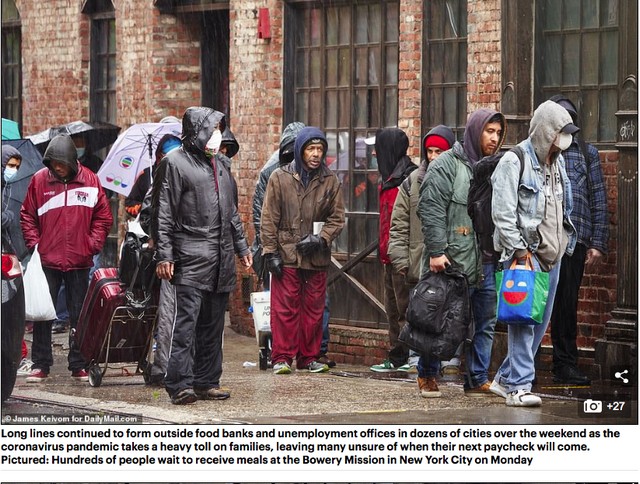
There will be recovery from the COVID-19 crisis, at severe and possibly horrendous cost, particularly for the poor and more vulnerable.

But there will be no recovery from the melting of the polar ice sheets and the other devastating consequences of global warming. Here, too, the catastrophe results from a market failure — in this case, of truly earth-shaking proportions.

The current administration had ample warning about a likely pandemic. In fact, a high-level simulation was run as recently as last October.

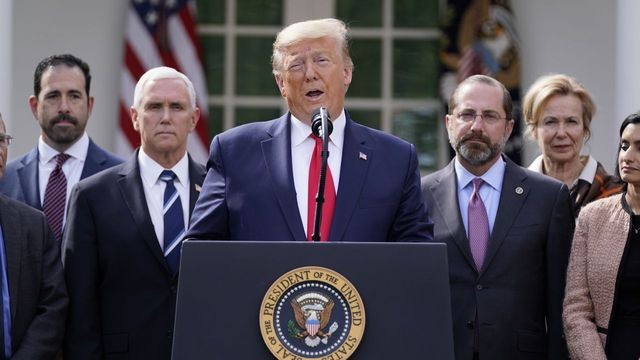
 Trump has reacted during his years in office in the manner to which we have become accustomed: by defunding and dismantling every relevant part of government and assiduously implementing the instructions of his corporate masters to eliminate the regulations that impede profits while saving livesand leading the race to the abyss of environmental catastrophe, by far his greatest crime — in fact, the greatest crime in history when we consider the consequences.

By early January, there was little doubt of what was happening. On December 31, China informed the World Health Organization (WHO) of the spread of pneumonia-like symptoms with unknown etiology. On January 7, China informed the WHO that scientists had identified the source as a coronavirus and had sequenced the genome, which they made available to the scientific world.

 Through January and February, U.S. intelligence was trying hard to reach Trump’s ear, but failed. Officials informed the press that “they just couldn’t get him to do anything about it. The system was blinking red.”

Trump was not silent, however. He issued a stream of confident pronouncements informing the public that it was just a cough; he has everything under control; he gets a 10 out of 10 for his handling of the crisis; it’s very serious but he knew it was a pandemic before anyone else; and the rest of the sorry performance.

The technique is well-designed, much like the practice of reeling out lies so fast that the very concept of truth vanishes. Whatever happens, Trump is sure to be vindicated among his loyal followers. When you shoot arrows at random, some are likely to hit the target.

(Back home, we see its replicas in India –Ed)

To crown this impressive record, on February 10, when the virus was sweeping the country, the White House released its annual budget proposal, which extends further the sharp cuts in all the main health-related parts of the government (in fact just about anything that might help people) while increasing funding for what’s really important: the military and the wall.

The U.S. is now the global epicenter of the crisis.

One effect is the shockingly belated and limited testing, well below others, making it impossible to implement the successful test-and-trace strategies that have prevented the epidemic from breaking out of control in functioning societies. Even the best hospitals lack basic equipment. The U.S. is now the global epicenter of the crisis.

This only skims the surface of Trumpian malevolence, but there’s no space for more here.

It is tempting to cast the blame on Trump for the disastrous response to the crisis. But if we hope to avert future catastrophes, we must look beyond him. Trump came to office in a sick society, afflicted by 40 years of neoliberalism, with still deeper roots.

(Back home, we see its relevance  in India too –Ed)

The neoliberal version of capitalism has been in force since Reagan and Margaret Thatcher,            beginning shortly before. There should be no need to detail its grim consequences. Reagan’s generosity to the super-rich is of direct relevance today as another bailout is in progress. Reagan quickly lifted the ban on tax havens and other devices to shift the tax burden to the public, and also authorized stock buybacks — a device to inflate stock values and enrich corporate management and the very wealthy (who own most of the stock) while undermining the productive capacity of the enterprise.

Such policy changes have huge consequences, in the tens of trillions of dollars. Quite generally, policy has been designed to benefit a tiny minority while the rest flounder. That’s how we come to have a society in which 0.1 percent of the population hold 20 percent of the wealth and the bottom half have negative net worth and live from paycheck to paycheck.

While profits boomed and CEO salaries skyrocketed, real wages have stagnated. As economists Emmanuel Saez and Gabriel Zucman show in their book, The Triumph of Injustice, taxes are basically flat across all income groups, except at the top, where they decline.

The U.S.’s privatized for-profit health care system had long been an international scandal, with twice the per capita expenses of other developed societies and some of the worst outcomes.

Neoliberal doctrine struck another blow, introducing business measures of efficiency: just-on-time service with no fat in the system. Any disruption and the system collapses. Much the same is true of the fragile global economic order forged on neoliberal principles.

This is the world that Trump inherited, the target of his battering ram. For those concerned with reconstructing a viable society out of the wreckage that will be left from the ongoing crisis, it is well to heed the call of Vijay Prashad: “We won’t go back to normal, because normal was the problem.”

Yet, even now, with the country in the midst of a public health emergency unlike anything we have seen in a very long time, the American public continues to be told that the universal health care is not realistic. Is neoliberalism alone responsible for this peculiarly unique American perspective on health care?

It’s a complicated story. To begin with, for a long time, polls have shown favorable attitudes toward universal health care, sometimes very strong support. In the late Reagan years, about 70 percent of the population thought that guaranteed health care should be in the Constitution, and 40 percent thought it already was — the Constitution taken to be the repository of all that is obviously right. There have been referenda showing high support for universal health care — until the business propaganda offensive begins, warning of the heavy if not astronomical tax burden, much as what we have seen recently. Then popular support fades.

As usual, there is an element of truth to the propaganda. Taxes will go up, but total expenses should sharply decline, as the record of comparable countries shows. How much? There are some suggestive estimates. One of the world’s leading medical journals, The Lancet (U.K.), recently published a study estimating that universal health care in the U.S. “is likely to lead to a 13% savings in national health-care expenditure, equivalent to more than US$450 billion annually (based on the value of the US$ in 2017).” The study continues:

The entire system could be funded with less financial outlay than is incurred by employers and households paying for health-care premiums combined with existing government allocations. This shift to single payer health care would provide the greatest relief to lower-income households. Furthermore, we estimate that ensuring health-care access for all Americans would save more than 68,000 lives and 1.73 million life-years every year compared with the status quo.

But it would raise taxes. And it seems that many Americans would prefer to spend more money as long as it doesn’t go to taxes (incidentally killing tens of thousands of people annually). That’s a telling indication of the state of American democracy, as people experience it; and from another perspective, of the force of the doctrinal system crafted by business power and its intellectual servants. The neoliberal assault has intensified this pathological element of the national culture, but the roots go much deeper and are illustrated in many ways, a topic very much worth pursuing.

While some European countries are doing better than others in managing the spread of COVID-19, the countries that appear to have had greater success with this task lie primarily outside the Western (neo)liberal universe. They are Singapore, South Korea, Russia and China itself. Does this fact tell us something about Western capitalist regimes?

There have been various reactions to the spread of the virus. China itself seems to have controlled it, at least for now. The same is true of the countries in China’s periphery where the early warnings were heeded, including democracies no less vibrant than those of the West. Europe mostly temporized, but some European countries acted. Germany appears to hold the global record in low death rates, thanks to spare health facilities and diagnostic capacity, and rapid response. The same seems to be true in Norway. Boris Johnson’s reaction in the U.K. was shameful. Trump’s U.S. brought up the rear.

The distinguishing feature in responses seems not to be democracies vs. autocracies, but functioning vs. dysfunctional societies.

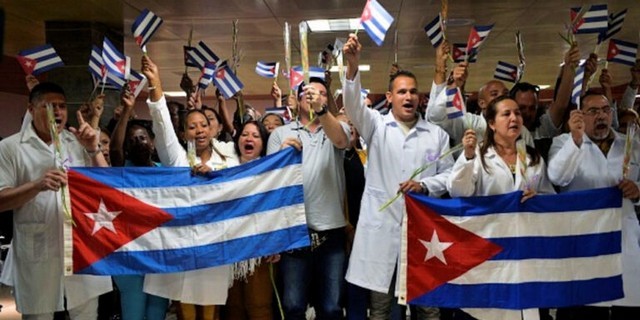
Germany’s solicitude for the population did not, however, extend beyond its borders. The European Union proved to be anything but. However, ailing European societies could reach across the Atlantic for succor. The Cuban superpower was once again ready to help with doctors and equipment. Meanwhile, its U.S. neighbor was cutting back health aid to Yemen, where it had helped create the world’s worst humanitarian crisis, and was using the opportunity of the devastating health crisis to tighten its cruel sanctions to ensure maximal suffering among its chosen enemies. Cuba is the most longstanding victim, back to the days of Kennedy’s terrorist wars and economic strangulation, but miraculously has survived.

It should, incidentally, be profoundly disturbing to Americans to compare the circus in Washington with Angela Merkel’s sober, measured, factual report to Germans on how the outbreak should be handled.

The distinguishing feature in responses seems not to be democracies vs. autocracies, but functioning vs. dysfunctional societies — what in Trumpian rhetoric are termed “shithole” countries, like what he is working hard to craft under his rule.

What do you think of the $2 trillion coronavirus economic rescue plan? Is it enough to stave off another possible great recession and to help the most vulnerable groups in American society?

The rescue plan is better than nothing. It offers limited relief to some of those who desperately need it, and contains an ample fund to help the truly vulnerable: the piteous corporations flocking to the nanny state, hat in hand, hiding their copies of Ayn Rand and pleading once again for rescue by the public after having spent the glory years amassing vast profits and magnifying them with an orgy of stock buybacks. But no need to worry. The slush fund will be monitored by Trump and his Treasury Secretary, who can be trusted to be fair and just. And if they decide to disregard the demands of the new inspector-general and Congress, who is going to do anything about it? Barr’s Justice Department? Impeachment?

There would have been ways to direct aid to those who need it, to households, beyond the pittance included for some. That includes those working people who had authentic jobs and the huge precariat who were getting by somehow with temporary and irregular employment, but also others: those who had given up, the hundreds of thousands of victims of “deaths of despair” — a unique American tragedy — the homeless, prisoners, the great many with such inadequate housing that isolation and storing food is not an option, and plenty of others that are not hard to identify.

Political economists Thomas Ferguson and Rob Johnson put the matter plainly: While the universal medical care that is standard elsewhere may be too much to expect in the U.S., “there is no reason why it should have one sided single payer insurance for corporations.” They go on to review simple ways to overcome this form of corporate robbery.

At the very least, the regular practice of public bailout out of the corporate sector should require stiff enforcement of a ban on stock buybacks, meaningful worker participation in management, an end to the scandalous protectionist measures of the mislabeled “free trade agreements” that guarantee huge profits for Big Pharma while raising drug prices far beyond what they would be under rational arrangements.

At least.

(C.J. Polychroniou, the Interviewer,  is a political economist/political scientist who has taught and worked in universities and research centers in Europe and the United States. His main research interests are in European economic integration, globalization, the political economy of the United States and the deconstruction of neoliberalism’s politico-economic project. He is a regular contributor to Truthout as well as a member of Truthout’s Public Intellectual Project. He has published several books and his articles have appeared in a variety of journals, magazines, newspapers and popular news websites. Many of his publications have been translated into several foreign languages, including Croatian, French, Greek, Italian, Portuguese, Spanish and Turkish. He is the author of Optimism Over Despair: Noam Chomsky On Capitalism, Empire, and Social Change, an anthology of interviews with Chomsky originally published at Truthout and collected by Haymarket Books.)

(This interview, published  April 1, 2020,  has been lightly edited for clarity)

9 April 2020

Source: countercurrents.org

King Covid Rules

By Satya Sagar

It is a capricious little virus with a funny crown and a flimsy protein coat, zipping across the planet, leaving behind a trail of utter confusion, death and destruction.

And as nations rush to prevent exposure to COVID-19’s deadly effects, the virus is in turn exposing each one of them for whatever they are – good, bad or ugly. Depending on their responses to the deadly pandemic – humane or cruel, systematic or clumsy – the very innards of their systems are today open for everyone to see – like in a public autopsy.

At another level altogether, COVID-19 is stripping the human species itself of its various pretensions- of being in command of Planet Earth, muscular enough to beat any foe or clever enough to manage any crisis. Or for that matter even being ‘human’, as societies respond to the crisis with a mix of panic, prejudice and quest for self-preservation over others.

Sure, this is not the first time our world has faced a pandemic – the history of deadly infectious diseases like small pox or the plague going back several millennia. Despite all the devastation wrought, humans have not just survived such microbial assaults, but also developed clever ways to prevent or overcome them repeatedly – and will perhaps do so in future too.

However, COVID-19 has arrived when, more than any time before in history, technological prowess has created the illusion, that our species is immune to the laws of nature itself. From captains of industry to the politicians who front their cause and even among large sections of the general population, hubris about human achievements has been the dominant sentiment for a long time now.

A good example is the sheer arrogance with which anyone trying to mobilize global action to deal with the problem of climate change -potentially an even bigger crisis than the current pandemic – was being dismissed by those in power for the last decade or more.

‘Don’t you dare interrupt my orgasm!’ was the refrain of climate-change deniers along with those who benefit from the way industrial capitalism is set up in the world today – of a tiny minority of humans consuming endless amounts of energy while destroying the ecology and very future of the planet. (Thanks to COVID-19 much of the globe is today in lockdown mode, which is what may be needed to mitigate climate change!)

The malaise in the modern human mindset stems from the belief they are above all evolutionary and ecological processes, which stretch back millions of years. While this is true of those who deny Darwin’s ideas on how life arose on Earth, even those who endorse it in theory, seem to believe ‘Yes, evolution happened in the distant past, but today we are in the driver’s seat’. This is due to their almost blind conviction, that tomorrow’s science can always overcome every problem created by the one from yesterday.

What COVID-19 is really telling us in a spectacular and scary way is – the story of evolution – a non-linear process driven by many chance events – is not over yet and never will be. To understand why not, one needs to consider that for much of its existence, our planet, formed 4.7 billion years ago, has been essentially run by microbes like bacteria and viruses. Homo Sapiens, our species, emerged just 200,000 years ago and while we seem to dominate the visible world, we are nobodies compared to the invisible one, which is stupendous in antiquity, diversity and sheer scale.

Bacteria are better known and recognised for their role in a very wide range of essential phenomenon from fertilizing the soil, recycling waste, regulating atmospheric gases and even running critical functions within the human body. Viruses, poorly understood and studied till recently and not even considered a form of ‘life’, are as important as bacteria, if not more, and the most abundant biological entities on Earth.

The best current estimate is that there are a whopping 1031 virus particles in the biosphere. If all the viruses on Earth were laid end to end, they would stretch for 100 million light years. And in every adult human body, while there are 30 trillion human cells and also around 39 trillion bacterial cells, that is nothing compared to the 380 trillion viruses that live inside us (COVID-19 has come to visit its in-laws).

More significantly, their huge population, combined with rapid rates of replication and mutation, make viruses the world’s leading source of genetic innovation and key drivers of the evolutionary process. They are the ones who have since time immemorial ‘invented’ new genes that find their way into other organisms, affecting all life on Earth and often determining what will survive.

In other words, what we face in COVID-19 is essentially a force of nature – like an invisible tsunami- that cannot be stopped. Yes, ‘infection control’ or ‘lockdowns’ can buy some time to prepare better, but in the absence of a vaccine the virus will find a way to infect a very large section of the human population. The only thing we can do now is deal with the consequences (still not clear in the fog of media-driven panic), to the best of our abilities and wait till much of the global population acquires herd immunity, as part of a natural ebb and tide of all viral pandemics in history.

Ultimately, COVID-19 is also reiterating something that all humans know very well, but don’t like to acknowledge because they lack humility – we are just perishable biological creatures, like any other plant or animal. In the larger context of our planet and certainly the universe, we are so minuscule as to be just like microbes themselves (one more reason to treat bacteria and viruses with greater respect).

Even more fundamentally, we are products of nature and not ‘above’ it in any way. We will be again and again subject to both its creative, productive cycles as its sometimes whimsical, destructive ways. That is why preservation and enabling of life in all its forms – using mutual cooperation, human solidarity and all resources at our command – can be the only meaningful goal for societies, instead of chasing GDP growth or accumulation of wealth and military might.

Nowhere is this more tragically clear, than from the current plight of the United States, the planet’s ‘top dog’, being ferociously wagged by its tail in the ongoing pandemic. The world’s only Superpower is painfully learning, that natural phenomenon like climate change or pandemics, cannot be fought by fighter aircraft or nuclear weapons or with all the money in the world.

And though POTUS will never acknowledge this, he surely understands today, it is not he but COVID-19 that wears a crown, because in fact, the virus is the real ‘king’ of the planetary jungle.

Satya Sagar is a journalist and public health activist who can be contacted at sagarnama@gmail.com

11 April 2020

Source: countercurrents.org
Save Rohingyas from catastrophic COVID- 19

By Saifur Rahman Saif

Spring, the best season, is twinkling Bangladesh. Mango pods adore trees here and there across the country. Hopes are pinching dreams for big profit.

In this flashy season optimism of Bangladeshis has been grabbed by a scare – COVID -19. Yes, ruling of coronavirus has been started the country. It has already occupied several places of the delta country- Bangladesh.

Coastal district Cox’s Bazar is home to over 1 million Rohingyas, the world’s most repressed, oppressed, tortured, persecuted and humiliated nation, who fled to Bangladesh from Myanmar, the birthplace at gunpoint and sexual assaults, a now vulnerable to coronavirus. They are living makeshifts in Cox’s Bazar refugee camps. Maintaining social distance is quite impossible for Rohingya people. If anyone of the fell in victim of COVID -19, the entire community will go under the risks. The risks must be overcome for sake of the distinct community.

According to the United Nations Office for the Coordination of Humanitarian Affairs (OCHA) – The Rohingya people have faced decades of systematic discrimination, statelessness and targeted violence in Rakhine State, Myanmar. Such persecution has forced Rohingya women, girls, boys and men into Bangladesh for many years, with significant spikes following violent attacks in 1978, 1991-1992, and again in 2016. Yet it was August 2017 that triggered by far the largest and fastest refugee influx into Bangladesh. Since then, an estimated 745,000 Rohingya—including more than 400,000 children—have fled into Cox’s Bazar.

OCHA added, “In Myanmar, entire villages were burned to the ground, families were separated and killed, and women and girls were gang raped. Most of the people who escaped were severely traumatized after witnessing unspeakable atrocities. These people found temporary shelter in refugee camps around Cox’s Bazar, Bangladesh, which is now home to the world’s largest refugee camp.”

It further said, “As of March 2019, over 909,000 stateless Rohingya refugees reside in Ukhiya and Teknaf Upazilas. The vast majority live in 34 extremely congested camps, including the largest single site, the Kutupalong-Balukhali Expansion Site, which is host to approximately 626,500 Rohingya refugees.”

OCHA stated, “more than one year into this multifaceted collaborative response, the situation has gradually begun to stabilize. Basic assistance has been provided, living conditions in the camps have improved somewhat and disaster risk mitigation measures have been largely successful. However, despite progress, the Rohingya remain in an extremely precarious situation. The root causes of their plight in Myanmar have not been addressed and their future is yet uncertain. Refugees have access to the basics, such as food and health care, but they are still extremely vulnerable, living in highly challenging circumstances, exposed to the monsoon elements and dependent on aid.”

The South China Morning Post, very recently carried out a report in which it described that the lack of easy access to medical care has left refugee camps particularly vulnerable to the Covid-19 outbreak. Health care workers were alarmed late last month by reports of the first coronavirus case in the Cox’s Bazar District in Bangladesh, near refugee camps that are home to nearly a million Rohingya.

“Paul Brockmann, Bangladesh head of Medecins Sans Frontieres (MSF, also known as Doctors Without Borders), said the organisation has rolled out a number of emergency preparations in the district to protect the refugees and MSF’s frontline staff, including training and increased isolation capacity,” it continued.

“While most of MSF’s clinics can isolate a small number of people while they are being tested for the virus, severe cases – including those who require mechanical ventilation – must be transferred to government facilities. Existing teams in disease outbreak response facilities in Cox’s Bazar can also be activated if necessary,” the news story added.

The Prime Minister Sheikh Hasina, while talking about probable transmission of coronavirus, pointed out Rohingya camps very recently.

The Bangladesh government took a little bit initiative to check coronavirus infection at Rohingya camps, which seems not enough for the protection of the stateless people.

Some organisations have emphasized the need of protection of the people who have no identities at all. The world community should come forward to do their best for the Rohingyas immediately. #

Saifur Rahman Saif is a Bangladeshi journalist. He works at New Age, a popular newspaper.

6 April 2020

Source: countercurrents.org
Why Inequality Could Spread COVID-19

By Joseph Stiglitz et al.

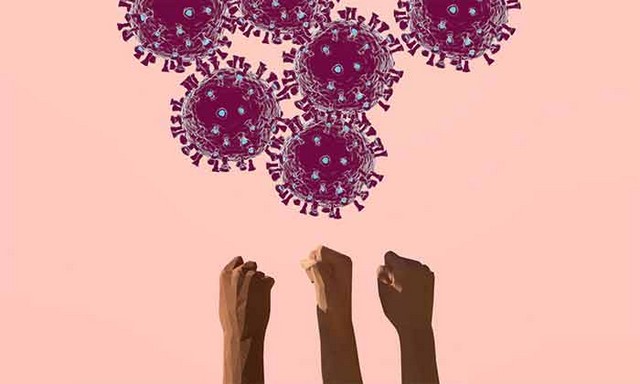
Pandemics rarely affect all people in a uniform way. The Black Death in the 14th century reduced the global population by a third, with the highest number of deaths observed among the poorest populations.

Densely populated with malnourished and overworked peasants, medieval Europe was a fertile breeding ground for the bubonic plague. Seven centuries on—with a global gross domestic product of almost US$100 trillion—is our world adequately resourced to prevent another pandemic?
Current evidence from the coronavirus disease 2019 (COVID-19) pandemic would suggest otherwise. Estimates indicate that COVID-19 could cost the world more than $10 trillion, although considerable uncertainty exists with regard to the reach of the virus and the efficacy of the policy response. For each percentage point reduction in the global economy, more than 10 million people are plunged into poverty worldwide.
Considering that the poorest populations are more likely to have chronic conditions, this puts them at higher risk of COVID-19-associated mortality. Since the pandemic has perpetuated an economic crisis, unemployment rates will rise substantially and weakened welfare safety nets further threaten health and social insecurity.

Working should never come at the expense of an individual’s health nor to public health. In the USA, instances of unexpected medical billings for uninsured patients treated for COVID-19 and carriers continuing to work for fear of redundancy have already been documented.

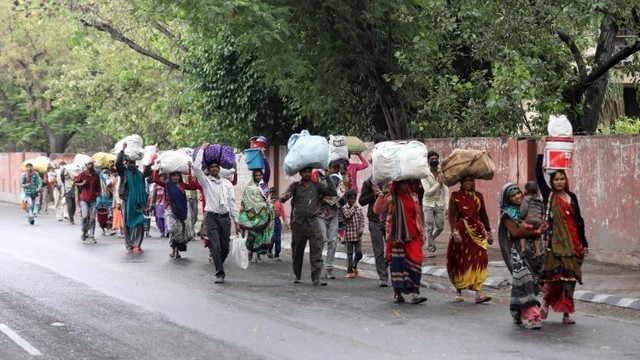
Despite employment safeguards recently being passed into law in some high-income countries, such as the UK and the USA, low-income groups are wary of these assurances since they have experience of long-standing difficulties navigating complex benefits systems, and many workers (including the self-employed) can be omitted from such contingency plans. The implications of inadequate financial protections for low-wage workers are more evident in countries with higher levels of extreme poverty, such as India.

In recent pandemics, such as the Middle East respiratory syndrome, doctors were vectors of disease transmission due to inadequate testing and personal protective equipment.

History seems to be repeating itself, with clinicians comprising more than a tenth of all COVID-19 cases in Spain and Italy. With a projected global shortage of 15 million health-care workers by 2030, governments have left essential personnel exposed in this time of need.

Poor populations lacking access to health services in normal circumstances are left most vulnerable during times of crisis. Misinformation and miscommunication disproportionally affect individuals with less access to information channels, who are thus more likely to ignore government health warnings.

With the introduction of physical distancing measures, household internet coverage should be made ubiquitous. The inequitable response to COVID-19 is already evident. Healthy life expectancy and mortality rates have historically been markedly disproportionate between the richest and poorest populations. The full effects of COVID-19 are yet to be seen, while the disease begins to spread across the most fragile settings, including conflict zones, prisons, and refugee camps. As the global economy plunges deeper into an economic crisis and government bailout programmes continue to prioritise industry, scarce resources and funding allocation decisions must aim to reduce inequities rather than exacerbate them. We declare no competing interests.

References:

1. Duncan CJ Scott S (2005). What caused the black death?. Postgrad Med J. 2005; 81: 315-320

2. Roser M The short history of global living conditions and why it matters that we know it. https://ourworldindata.org/a-history-of-global-living-conditions-in-5-charts Date: 2019 Date accessed: March 23, 2020

3. International Food Policy Research Institute. How much will poverty increase because of COVID-19?. https://www.ifpri.org/blog/how-much-will-global-poverty-increase-because-covid-19 Date accessed: March 23, 2020

4. Hoadley J Fuchs B Lucia K- Update on federal surprise billing legislation: new bills contain key differences. https://www.commonwealthfund.org/blog/2020/update-surprise-billing-legislation-new-bills-contain-key-differences Date: Feb 20, 2020 Date accessed: March 23, 2020

5. Bedford J Enria D Giesecke J et al. COVID-19: towards controlling of a pandemic. Lancet. 2020; (published online March 17.) https://doi.org/10.1016/S0140-6736(20)30673-5

6. Pirisi A Low health literacy prevents equal access to care. Lancet. 2000; 3561828

Joseph Eugene Stiglitz is an American economist and a professor at Columbia University.

6 April 2020

Source: www.transcend.org

COVID-19: Sinophobia Threatening to Endanger Strengthening the Biological Weapons Convention

By Kalinga Seneviratne

SYDNEY (IDN) – With the spread of COVID-19 to Europe and the US a bout of Sinophobia seems to have infected the western media. On March 29, Australia’s 60-minute program – that is well known for sensational reporting – broadcast a program that portrayed China as the villain of the COVID-19 pandemonium, and just stopped short of calling for war against China.

This reminded me of the propaganda that the Anglo-American media broadcast around the world about alleged ‘weapons of mass destruction’ that Saddam Hussein had, that led to the attack and invasion of Iraq in 2003.

With the US surpassing China on the number of COVID-19 deaths, the western media would like us to believe that this is because of some form of bio-warfare that originated from China. The 60-minute program claimed that the virus originated in Wuhan in mid-November and China hid it from the world until late January. By which time they have allowed thousands of Chinese to fly out of Wuhan to all parts of the world. They showed a map that tends to suggest China has sent an army of bio-warfare soldiers to infect the world[1].

Unfortunately, the Indian media is no different to the Anglo-American media in their coverage of the COVID-19 threat. There is a clear slant towards labelling the virus as a Chinese virus. I watched on India Today television a report on how the TikTok application is used in India to discourage Muslims from following the social distancing measures introduced by the Indian government. They claimed it is campaign by Pakistan using this application and they labelled TikTok as a “Chinese App” implying a Chinese hand of course.

As the inefficiencies of western governments and especially their health systems are exposed, we are bound to see more such reports coming out of Anglo-American media, in particular. If the Asian media is not able to confront this with a counter narrative, the stage will be set to pacify populations around the world for a possible war scenario in Asia, similar to the chaos created in the Middle East beginning with the invasion of Iraq in 2003.

For few years now, even going back to the Obama administration, the US has been looking for an excuse to start a war in Asia. Deft diplomacy by South Korean leader Moon Jae-in avoided such a scenario in East Asia, and some skilful geo-political diplomacy by the Philippines leader Rodrigo Duterte has avoided a similar scenario in the South China Sea.

While the virus wreaks havoc across the globe, many conspiracy theories are being transmitted pointing out an outbreak of bio-warfare, with US and China accusing each other. It appears that the conspiracy theorists do not know that there is a Biological Weapons Convention for which both countries have signed up.

The global media is becoming the battleground in a propaganda war between the two sides. One of the most potent weapons the western media has is to paint China as a secretive authoritarian state that hides the truth – thus anything they say cannot be trusted. This narrative is widely at play currently in the Anglo-American media and unfortunately transmitted by some Asian media.

While the 60-mnute programme said that China had hidden information about the virus, the truth is that on December 31, 2019, WHO China office was informed by the Chinese health authorities that “cases of pneumonia of unknown etiology” has been detected in Wuhan City, and on January 3, 2020, a total of 44 patients with such pneumonia have been reported to the WHO by China.

When the WHO asked for more information the Chinese promptly provided reports giving details of the clinical signs and symptoms. They also said that some patients were operating dealers and vendors at the Huanan Seafood Market in Wuhan City.

On January 11-12, WHO received further detailed information from the Chinese National Health Commission about the outbreak. China informed WHO that the market was closed on January 1 and that a total of 763 close contacts including healthcare workers, had been identified and followed up.

China also shared the genetic sequence of the novel coronavirus on January 12, “which will be of great importance for other countries to use in developing specific diagnostic kits”, WHO said in a statement on January 12.

From February 9 to 24 WHO sent a 25-member joint-mission to China that included experts from the US, Japan, Germany, Singapore, Russia, Korea as well as from China and the WHO. During the 9-day visit there was a lot of consultation with the Chinese health authorities along with collection of testing samples from patients.

WHO released a 40-page report of its findings, pointing out that they have been receiving daily reports from Chinese authorities on investigation clusters and household transmission studies.

WHO paid glowing tribute to China’s handling of the health emergency, saying “in the face of a previously unknown virus, China has rolled out perhaps the most ambitious, agile and aggressive disease containment effort in history” and they recommend that the world urgently look at China’s experience in responding to COVID-19, because it “provides vital lessons for the global response”.

All this information is freely available from the WHO website. But instead the western media ignores it and continues to paint China as a threat to global peace claiming that its “authoritarian” model hides information. To balance the picture, media needs also to consider China’s claim of a bio-warfare conspiracy.

On August 5, 2019, New York Times (NYT)[2] reported that a US Army deadly germ research center in Fort Detrick in Maryland was shut down by the Centers for Disease Control and Prevention (CDC) over safety concerns. The report also said that in 2009, research at the institute was suspended because it was storing pathogens not listed in its database. “The institute is a biodefense center that studies germs and toxins that could be used to threaten the military or public health, and also investigates disease outbreaks,” noted NYT.

Just a few weeks before the first COVID-19 victims were identified in Wuhan, an exercise named “Event 201” was held at John Hopkins Centre for Heath Security in Baltimore, Maryland, that was funded by the Bill and Melinda Gates Foundation, where the theme was simulating a high-level pandemic exercise, which produces 65 million deaths.

The press release[3] says: “Event 201 simulates an outbreak of a novel zoonotic coronavirus transmitted from bats to pigs to people that eventually becomes efficiently transmissible from person to person, leading to a severe pandemic. The pathogen and the disease it causes are modeled largely on SARS, but it is more transmissible in the community setting by people with mild symptoms”.

It goes on to describe the virus as originating in pig farms in Brazil that quietly spreads to the community. It then transmits by air travel to the US, Europe and China, and ultimately creates health scare chaos globally.

While the COVID-19 outbreak is spreading at a rapid pace in the US, there is a widespread theory espoused especially by the right-wing media there that the virus spread from the Wuhan Institute of Virology, either where it was being engineered as a bio-weapon, or being studied in the lab after being isolated from animals, then was escaped or leaked because of poor safety protocol. Chinese have argued that the emergence of the virus in the same city as China’s only ‘Level 4′ biosafety lab, is pure coincidence.

This is where the Biological Weapons Convention (BWC) passed by the United Nations in 1972 that entered into force in March 1975 comes into play. During the Third Review Conference in 1991, State parties agreed to provide annual reports on specific activities related to the BWC such as data on research centres and laboratories, information on national biological defense research and developments programs, etc.

Media need to ask – have the US and China adhered to the BWC in their research or simulation activities? Spread of COVID-19 and the accompanying bio-wafare conspiracy theories indicate that the BWC need an urgent review and States need to be transparent in complying with its mandate.

In a statement issued on the 45th anniversary of its implementation on March 26, the Indian government called upon the international community to help strengthen the WHO to fully and effectively to implement the BWC. In view of the 9th Review Conference of the BWC coming up in 2021, India has called upon State Parties to negotiate “a comprehensive and legally binding protocol” to the convention. India has also highlighted the dangers from the possible use, in future, of microorganisms as biological weapons by terrorists.

The international media need to shed some of its Sinophobia, to put in the public agenda the need to strengthen the BWC during its review in 2021.

Dr Kalinga Seneviratne’s latest book “Myth of ‘Free Mediaand Fake News in the Post-Truth Era” was published by SAGE in January 2020. [IDN-InDepthNews – 04 April 2020]

Source: www.indepthnews.net

Coronavirus deaths in US nearing 4,000 as Trump washes his hands of responsibility

Co-Written by Benjamin Mateus and Patrick Martin

The coronavirus killed at least 812 people in the United States Tuesday, the highest death toll since the pandemic began, while nearly 25,000 new cases were reported, bringing the total number infected to more than 188,000, the largest number in the world by far.

Along with the unprecedented scale of the infection, its sheer speed is staggering. On March 10, there were only 1,000 reported coronavirus infections in the United States. Three weeks later, it is nearing 200 times that level. Another such three weeks would see 40 million people infected in the United States.

The US death toll has not yet reached the level of Italy (12,428) or Spain (8,464), but that is only a matter of days. And White House officials continue to escalate their projections of the total number of deaths in a “best-case” scenario, setting the figure at a staggering 240,000, with Trump himself hinting that the total could be double that.

Four countries—Italy, Spain, the US and France—have now seen more deaths than China, where the epidemic first broke out in the city of Wuhan last December. After 3,305 deaths, China claims to have largely suppressed the outbreak through systematic testing, contact tracing and quarantining of those exposed to the coronavirus.

The American media and the Trump administration continually describe efforts to counteract the coronavirus as a war, where the frontlines are being drawn in emergency rooms and ICUs throughout the United States, and especially in the New York metropolitan area, where half of all COVID-19 cases are located. On Tuesday the death toll in New York City itself hit 1,096, and 10,000 people were hospitalized, with 2,700 of them requiring ventilators.

But in this war, under the incompetent “commander-in-chief” Trump and his hapless lieutenants among the state governors, the troops are being sent into battle haphazardly, without weapons, and largely without regard for their own safety. Healthcare workers lack sufficient personal protection equipment, and they are being infected and incapacitated at an alarming rate, with many deaths.

In Spain, the healthcare workers accounted for 14 percent of the country’s cases, while in Italy, they accounted for 10 percent. The same process is under way in the United States. NPR reported that 345 employees of Boston’s four largest hospitals have tested positive for COVID-19. In New York City, hundreds of workers have fallen ill. At Columbia University Irving Medical Center in Manhattan, 50 percent of the intensive-care staff have been infected.

The result is that in addition to the shortages of hospital rooms, ICU beds, masks, and ventilators, there is a growing shortage of medical staff who can cope with the increasing volume of patients seeking medical attention.

Meanwhile, hospitals and healthcare systems are threatening doctors and nurses who make their concerns over working conditions public. An emergency room physician, Dr. Ming Lin, in Washington state, was fired because he gave an interview to a newspaper complaining about inadequate protective equipment. Ruth Schubert, a spokeswoman for the Washington State Nurses Association, told Bloomberg, “Hospitals are muzzling nurses and other healthcare workers in an attempt to preserve their image.” Nurses who have spoken under conditions of anonymity with WSW S reporters said that they have been told they would be fired if they talked to the media.

In some cases, state governors have made statements that amount to a confession of bankruptcy. On CNN Live, Governor Larry Hogan of Maryland said, “We are all trying to get more testing, but this is a pinch point on testing, on supplies, and materials, and PPE and ventilators. Everybody in America knows we don’t have enough of these things … and without the tests we are really flying blind. We are guessing about where the outbreaks are, what the infection rates in the hospitals are, and the mortality rates.”

However, the Trump White House manages to combine moronic expressions of optimism (largely in the form of testimonials to Trump’s personal genius) with ever more ominous declarations that the death toll in the United States will reach six or even seven figures.

On Sunday, White House adviser Dr. Anthony Fauci said that 100,000 to 200,000 deaths was a midrange figure that could be substantially lowered if proper measures were taken. On Monday, White House coronavirus coordinator Dr. Deborah Birx said that 100,000 to 200,000 was now the floor, the best-case scenario if everything went perfectly, while Trump himself declared that a death toll in that range would represent “a good job” by his administration.

On Tuesday, Fauci and Birx presented a slide show to a press briefing indicating projections that without severe mitigation, total deaths due to COVID-19 could reach 1.2 million to 2.2 million. Birx admitted that even with strict mitigation efforts throughout the month of April, the number of deaths could range as high as 240,000. At the peak of such a “best-case” outcome, 4,000 to 5,000 people would be dying every day.

Shocking as such figures are, even more outrageous is the blithe indifference displayed by Trump personally and his closest aides to the likely results of their own policy of refusing to conduct a serious struggle to contain the pandemic, not merely mitigate it.

Trump himself, towards the end of the press “briefing” that lasted more than two hours—a clear indication, in and of itself, that the White House antivirus campaign is an exercise in political propaganda and media manipulation—made comments that amounted to a self-indictment for criminal negligence on a monumental scale.

“We’re going through the worst thing this country has probably ever seen,” he said. “Look, we had the Civil War. We lost 600,000 people, right? Had we not done anything, we would have lost many times that, but we did something, so it’s going to be hopefully way under that. But you know, we lose more here potentially than you lose in world wars as a country.”

Given that the US death toll in the Second World War was 405,000, Trump is saying, in his semiliterate and meandering way, that the US death toll from the COVID-19 pandemic could well be between 400,000 and 600,000.

There was remarkably little push-back from the journalists of the corporate media who appeared to be in a daze. While several media outlets had taken note that on Tuesday morning, more Americans had died from coronavirus than were killed in the 9/11 terrorist attacks, not even this comparison, inadequate as it is, was made.

The US government’s response is best characterized as malign neglect to a pandemic that was both foreseen and preventable. With complete indifference to the fate of the people, the Trump administration’s primary focus was on ensuring the financial markets were protected. Only when the markets began to implode did the government’s machinery begin to churn to prevent its complete collapse. Everything else was deemed an afterthought.

First, on March 3, the Federal Reserve slashed rates by 0.5 percent, the most significant cut since the 2008 financial crisis. On March 12, the Federal Reserve added $1.5 trillion of liquidity into the banking systems by massively expanding short-term loans to the banks to keep money markets stable and provide banks with cash in hand. When the markets continued to plummet on March 15, the Federal Reserve cut interest rates by a full percentage point down to almost 0.00 percent. They also resumed quantitative easing by purchasing $500 billion in treasuries and $200 billion in mortgage-backed securities. Then Congress rushed through a record $2.2 trillion economic “rescue” bill, whose main purpose was to provide the Treasury and the Federal Reserve the necessary authority to bail out corporate America and Wall Street.

Comparing the gargantuan and energetic efforts to save the markets with the slapdash, indifferent and grossly incompetent actions in relation to public health, it is easy to see what are the priorities of the American financial aristocracy.

But there is another force to be heard from in this crisis—the working class. Instacart, Amazon, and Whole Foods workers have initiated strike actions against forced work under unsafe conditions. Workers at General Electric have protested, demanding their company begin producing ventilators. Many other workers are rebelling against being forced to remain on the job without protective gear.

As the crisis escalates, the decisive question is for the working class to develop a conscious political response, recognizing that it must fight the capitalist system as a whole, based on a socialist program.

1 April 2020

Source: countercurrents.org
Netanyahu uses coronavirus to lure rival Gantz into ‘emergency’ government

By Jonathan Cook

Nazareth: Benny Gantz, the former Israeli general turned party leader, agreed late last week to join his rival Benjamin Netanyahu in an “emergency government” to deal with the coronavirus epidemic.

Two weeks ago he had won a wafer-thin majority vote in the parliament that gave him first shot at trying to put together a coalition government.

Instead he has conceded to Netanyahu, who will remain prime minister for the next 18 months. Gantz is supposed to take over in late 2021, though Netanyahu has a formidable reputation for double-dealing.

Over the past year Gantz fought three hotly contested, though indecisive, general elections in which he vowed to bring down Netanyahu, who has ruled continuously for 11 years.

He had promised supporters he would never sit in a government alongside Netanyahu, who is due to stand trial on multiple corruption charges.

Predictably, the U-turn tore apart Gantz’s Blue and White party. Denouncing the decision, two of the alliance’s three constituent factions said they would head into the opposition.

There has been increasing governmental paralysis over the past year with neither Gantz nor Netanyahu able to cobble together a majority coalition with other parties.

The reason was the Joint List party, representing Israel’s Palestinian citizens, a fifth of the country’s population, which effectively held the balance of votes. None of the main Jewish parties was prepared to be seen relying on its 15 seats.

Even with Gantz’s depleted party, Netanyahu’s “emergency government” should now be able to muster more than 70 seats in the 120-member parliament, giving him a safe majority.

Renowned for his ability to pull off political miracles, Netanyahu appears to have gradually worn down Gantz’s resistance over the past 12 months. The coronavirus epidemic proved the final straw.

Netanyahu has exploited justifiable fears about the virus to cement his status as Father of the Nation. In regular addresses, he has presented himself as Israel’s Winston Churchill, the British wartime leader who helped vanquish the Nazis.

He has now served longer as prime minister than the country’s founding father, David Ben Gurion.

Gantz, it seems, assessed that there was no practical way to push for a fourth election during the current lockdowns. And in any case Netanyahu, given his complete dominance of the airwaves, would have been able to cast Gantz as recklessly endangering Israel’s health and its security by refusing to join him in government.

The Blue and White leader may have blanched too at the prospect of another no-holds-barred election campaign, unleashing yet more of the dirty tricks in which Netanyahu and his allies excel.

As Netanyahu has grown more desperate to stay in power – and fearful of being put on trial – the gloves have come off. In the last two elections, his officials have questioned Gantz’s mental health and spread unverifiable rumours that a phone stolen from him contained compromising photos passed on to Iran.

Further, because his path to power depended on backing from the Joint List, Gantz was the subject of endless smears from Netanyahu accusing him of getting into bed with “supporters of terrorism”. The result was a wave of death threats.

There was another consideration for Gantz. It had becoming increasingly clear that Netanyahu was prepared to provoke a constitutional crisis – and likely violence – to hold on to power.

Netanyahu’s strategy has been to undermine the court system and the parliament – the two main checks on the executive he controls.

Amir Ohana, his justice minister, has partially shut down the courts. That included postponing Netanyahu’s March 17 trial until the end of May. There is no certainty the case won’t be delayed again.

To deal with the resulting logjam of hearings, the cabinet passed emergency regulations last week to allow court cases to be conducted by video instead. But notably, an exemption was made for those facing indictment, such as Netanyahu.

The caretaker prime minister has also stood by mutely as his senior officials have unleashed a torrent of incitement against the Israeli supreme court, in a transparent effort to intimidate its judges and turn the public mood against the legal system.

Yuli Edelstein, the speaker of the parliament from Netanyahu’s Likud party, suspended the legislature on March 18 – two weeks after the election – and refused to hold a vote for his successor as speaker because Gantz’s bloc had a narrow majority.

The fear was that a new speaker would help pass legislation to prevent criminal suspects under indictment from serving as prime minister, ousting Netanyahu from power.

The supreme court ruled that Edelstein had committed “an unprecedented violation of the rule of law” and demanded that he allow the parliament to vote on his replacement. Instead, Edelstein resigned to avoid carrying out the ruling.

Netanyahu’s closest allies, including the justice minister, rounded on the judges. Yariv Levin, the tourism minister, accused the chief justice, Esther Hayut, of launching a judicial “coup”. He mocked her, suggesting she come to the Knesset, backed by court guards, and open the parliament herself.

As veteran Israeli analyst Ben Caspit observed: “The coronavirus outbreak allows Netanyahu to keep undermining the rule of law for his own survival, almost unchallenged.”

Defending his decision to join the government, Gantz said: “These are not normal times and they call for unusual decisions.”

He hopes to persuade his supporters that he has not capitulated completely. If things go to plan – a big if – Gantz should become prime minister in a year and a half’s time.

Reportedly, Gantz had also insisted that one of his legislators be justice minister – presumably to ensure Netanyahu cannot evade trial indefinitely. But that safeguard was almost immediately undermined by legislation the emergency government started drafting to exempt Netanyahu from a current law that would prevent him from serving as an ordinary minister while under criminal indictment.

As a Haaretz editorial observed this week: “It’s hard to stomach this new reality in which people who, until not long ago, presented themselves as warriors against government corruption in general and the corruption attributed to Netanyahu in particular, have now become its defense attorneys.”

A further plus for Netanyahu is that in the meantime he will likely have Gantz as foreign minister – where he will be responsible, as a supposed “moderate”, for burnishing Israel’s “democratic” credentials abroad.

It may not be plain-sailing.

This month Israel scored record lows in annual global democracy surveys. Freedom House noted Israel had slipped six points – “an unusually large decline for an established democracy” – even before the latest events, noting that Netanyahu had “anti-democratic tendencies”.

Israel’s president, Reuven Rivlin, from Netanyahu’s own party, has similarly warned that the country’s democratic institutions are under threat.

Convoys of cars have been defying the lockdowns to protest at Netanyahu’s increasing flouting of norms.

The first test of the emergency government will be whether Gantz’s inclusion stays the demonstrators’ hand for the time being or inflames yet more protests.

A version of this article first appeared in the National, Abu Dhabi.

Jonathan Cook won the Martha Gellhorn Special Prize for Journalism.

30 March 2020

Source: countercurrents.org
US Levies False Charges of Drug Trafficking against Venezuela

By Task Force of the Americas

The Task Force on the Americas condemns the false criminal charges by the US government against fourteen high-ranking Venezuelan officials for alleged involvement in international drug trafficking. The US government has, in effect, put a $15 million bounty on Venezuelan President Maduro and bounties of $10 million each for the head of the National Constituent Assembly and other leading officials and former officials.

The US claims that Venezuelan officials are conspiring to “flood the United States with cocaine” are unsubstantiated and bogus. Even WOLA, a Washington-based think tank that supports regime change for Venezuela, found in a recent detailed report using the US government’s own data that the facts do not support such claims. The authoritative US interagency Consolidated Counterdrug Database reports, in fact, that 93% of US-bound cocaine is trafficked through western Caribbean and eastern Pacific routes, not through Venezuela’s eastern Caribbean coast.

The US charges of drug trafficking against Venezuela are also the height of hypocrisy. The world’s leading source of illicit cocaine is the US client state of Colombia; the world’s leading source of heroin is US-occupied Afghanistan, and the US is the world’s largest cocaine market. The president of Honduras, the latest in a line of corrupt presidents since the 2009 US-backed coup there, was identified as an unindicted co-conspirator in October by a US federal court for smuggling multi-million dollars’ worth of cocaine into the US. And that’s only scratching the surface of the US’s history of complicity in international narcotrafficking, including the Iran-Contra scandal.

US Attorney General Barr’s indictments of March 26 against the government of Venezuela are a ramping up of a policy of regime change to replace the democratically elected president with Juan Guaidó (himself associated with a Colombian drug cartel) chosen by the US. Ever-tightening unilateral coercive measures by the US have created a blockade, costing Venezuela over 100,000 lives.

This latest escalation of the US hybrid war takes place within the context of the global coronavirus pandemic, which the US empire sees as an opportunity to further attack the Venezuelan people made more vulnerable by the health crisis. Indeed, the US State Department has declared “Maximum-pressure March” against Venezuela. Meanwhile, Cuba, Russia, and China are all supporting the Maduro government’s successful efforts to contain the spread of COVID-19.

The Task Force on the Americas demands that the US government:

  • Drop the unsupported indictments against President Maduro and other Venezuelan officials.
  • Lift the inhumane and illegal sanctions on Venezuela so that Venezuela can purchase medicines and equipment to better fight the coronavirus pandemic.
  • Restore normal relations with Venezuela based on respect for national sovereignty.

30 March 2020

Source: transcend.org

Cuba’s Coronavirus Response Is Putting Other Countries to Shame

By Ben Burgis

Cuba is caricatured by the Right as a totalitarian hellhole. But its response to the coronavirus pandemic — from sending doctors to other countries to pioneering anti-viral treatments to converting factories into mask-making machines — is putting other countries, especially the rich ones, to shame.

Last week, the MS Braemar, a transatlantic cruise ship carrying 682 passengers from the United Kingdom, found itself momentarily stranded. Five of the cruise’s passengers had tested positive for the coronavirus. Several dozen more passengers and crew members were in isolation after exhibiting flu-like symptoms. The ship had been rebuffed from several ports of entry throughout the Caribbean. According to sources in the British government who spoke to CNN, the UK then reached out to both the United States and Cuba “to find a suitable port for the Braemar.”Which country took them in? If you’ve paid attention to the Trump administration’s xenophobic rhetoric about “the Chinese virus” and its obsession with keeping foreign nationals out of the country, and you know anything about Cuba’s tradition of sending doctors to help with humanitarian crises all around the world, you should be able to guess the answer.The Braemar docked in the Cuban port of Mariel last Wednesday. Passengers who were healthy enough to travel to their home countries were transported to the airport in Havana. Those who were too sick to fly were offered treatment at Cuban hospitals — even though there had only been ten confirmed cases in the whole country, and allowing patients from the cruise ship to stay threatened to increase the number.

Cuba Mobilizes Against the Virus

Despite being a poor country that often experiences shortages — a product of both the economy’s structural flaws and the effects of sixty years of economic embargo by its largest natural trading partner — Cuba was better positioned than most to deal with the coronavirus pandemic.

The country combines a completely socialized medical system that guarantees health care to all with impressive biotech innovations. A Cuban antiviral drug (Interferon Alfa-2B) has been used to combat the coronavirus both inside the country and in China. Cuba also boasts 8.2 doctors per 1,000 people — well over three times the rate in the United States (2.6) or South Korea (2.4), almost five times as many as China (1.8), and nearly twice as many as Italy (4.1).

On top of its impressive medical system, Cuba has a far better track record of protecting its citizens from emergencies than other poor nations — and even some rich ones. Their “comprehensive, all-hands-on-deck” hurricane-preparedness system, for example, is a marvel, and the numbers speak for themselves. In 2016, Hurricane Matthew killed dozens of Americans and hundreds of Haitians. Not a single Cuban died. Fleeing residents were even able to bring their household pets with them — veterinarians were stationed at the evacuation centers.

The coronavirus will be a harder challenge than a hurricane, but Cuba has been applying the same “all-hands-on-deck” spirit to prepare. Tourism has been shut down (a particularly painful sacrifice, given the industry’s importance to Cuba’s beleaguered economy). And the nationalized health care industry has not only made sure that thousands of civilian hospitals are at the ready for coronavirus patients, but that several military hospitals are open for civilian use as well.

Masks: A Tale of Two Countries

In the United States, the surgeon general and other authorities tried to conserve face masks for medical professionals by telling the public that the masks “wouldn’t help.” The problem, as Dr Zeynep Tufekci argued in a recent New York Times op-ed, is that the idea that doctors and nurses needed the masks undermined the claim that they would be ineffective. Authorities correctly pointed out that masks would be useless (or even do more harm than good) if not used correctly, but as Tufekci notes, this messaging never really made sense. Why not launch an aggressive educational campaign to promote the dos and don’ts of proper mask usage rather than telling people they’d never be able to figure it out?

Many people also wash their hands wrong, but we don’t respond to that by telling them not to bother. Instead, we provide instructions; we post signs in bathrooms; we help people sing songs that time their hand-washing. Telling people they can’t possibly figure out how to wear a mask properly isn’t a winning message. Besides, when you tell people that something works only if done right, they think they will be the person who does it right, even if everyone else doesn’t.

The predictable result of all of this is that, after weeks of “don’t buy masks, they won’t work for you” messaging, so many have been purchased that you can’t find a mask for sale anywhere in the United States outside of a few on Amazon for absurdly gouged prices.

In Cuba, on the other hand, nationalized factories that normally churn out school uniforms and other non-medical items have been repurposed to dramatically increase the supply of masks.

Cuban Doctors Abroad

The same humanitarian and internationalist spirit that led Cuba to allow the Braemar to dock has also led the tiny country to send doctors to assist Haiti after that nation’s devastating 2010 earthquake, fight Ebola in West Africa in 2014, and, most recently, help Italy’s overwhelmed health system amid the coronavirus pandemic. (Cuba offered to send similar assistance to the United States after Hurricane Katrina ravaged the Gulf Coast, but was predictably rebuffed by the Bush administration.)

Even outside of temporary emergencies, Cuba has long dispatched doctors to work in poor countries with shortages of medical care. In Brazil, Cuban doctors were warmly welcomed for years by the ruling Workers’ Party. That began to change with the ascendance of far-right demagogue Jair Bolsonaro. When he assumed office, Bolsonaro expelled most of the Cuban doctors from the country, insisting that they were in Brazil not to heal the sick but “to create guerrilla cells and indoctrinate people.”

As recently as two weeks ago, Bolsonaro was calling the idea that the coronavirus posed a serious threat to public health a “fantasy.” Now that reality has set in, he’s begging the Cuban doctors to come back.

Embracing Complexity About Cuba

Last month, Bernie Sanders was red-baited and slandered by both Republicans and establishment Democrats for acknowledging the real accomplishments of the Cuban Revolution. It didn’t seem to matter to these critics that Sanders started and ended his comments by calling the Cuban government “authoritarian” and condemning it for keeping political prisoners. Instead, they seemed to judge his comments by what I called the “Narnia Standard.” Rather than frankly discussing both the positive and negative aspects of Cuban society, the island state is treated as if it lacks any redeeming features — like Narnia before Aslan, where it was “always winter and never Christmas.”

Democratic socialists value free speech, press freedom, multiparty elections, and workplace democracy. We can and should criticize Cuba’s model of social organization for its deficits. But Cuba’s admirably humane and solidaristic approach to the coronavirus should humble those who insist on talking about the island nation as if it were some unending nightmare.

Ben Burgis is a philosophy professor and the author of Give Them an Argument: Logic for the Left.

30 March 2020

Source: www.transcend.org

Venezuela’s Coronavirus Response Might Surprise Some

By Leonardo Flores

Within a few hours of being launched, over 800 Venezuelans in the U.S. registered for an emergency flight from Miami to Caracas through a website run by the Venezuelan government. This flight, offered at no cost, was proposed by President Nicolás Maduro when he learned that 200 Venezuelans were stuck in the United States following his government’s decision to stop commercial flights as a preventative coronavirus measure. The promise of one flight expanded to two or more flights, as it became clear that many Venezuelans in the U.S. wanted to go back to Venezuela, yet the situation remains unresolved due to the U.S. ban on flights to and from the country.

Those who rely solely on the mainstream media might wonder who in their right mind would want to leave the United States for Venezuela. Time, The Washington Post, The Hill and the Miami Herald, among others, published opinions in the past week describing Venezuela as a chaotic nightmare. These media outlets painted a picture of a coronavirus disaster, of government incompetence and of a nation teetering on the brink of collapse. The reality of Venezuela’s coronavirus response is not covered by the mainstream media at all.

Furthermore, what each of these articles shortchanges is the damage caused by the Trump administration’s sanctions, which devastated the economy and healthcare system long before the coronavirus pandemic. These sanctions have impoverished millions of Venezuelans and negatively impact vital infrastructure, such as electricity generation. Venezuela is impeded from importing spare parts for its power plants and the resulting blackouts interrupt water services that rely on electric pumps. These, along with dozens of other implications from the hybrid war on Venezuela, have caused a decline in health indicators across the board, leading to 100,000 deaths as a consequence of the sanctions.

Regarding coronavirus specifically, the sanctions raise the costs of testing kits and medical supplies, and ban Venezuela’s government from purchasing medical equipment from the U.S. (and from many European countries). These obstacles would seemingly place Venezuela on the path to a worst-case scenario, similar to Iran (also battered by sanctions) or Italy (battered by austerity and neoliberalism). In contrast to those two countries, Venezuela took decisive steps early on to face the pandemic.

As a result of these steps and other factors, Venezuela is currently in its best-case scenario. As of this writing, 11 days after the first confirmed case of coronavirus, the country has 86 infected people, with 0 deaths. Its neighbors have not fared as well: Brazil has 1,924 cases with 34 deaths; Ecuador 981 and 18; Chile 746 and 2; Peru 395 and 5; Mexico 367 and 4; Colombia 306 and 3. (With the exception of Mexico, those governments have all actively participated and contributed to the U.S.-led regime change efforts in Venezuela.) Why is Venezuela doing so much better than others in the region?

Skeptics will claim that the Maduro government is hiding figures and deaths, that there’s not enough testing, not enough medicine, not enough talent to adequately deal with a pandemic. But here are the facts:

First, international solidarity has played a priceless role in enabling the government to rise to the challenge. China sent coronavirus diagnostic kits that will allow 320,000 Venezuelans to be tested, in addition to a team of experts and tons of supplies. Cuba sent 130 doctors and 10,000 doses of interferon alfa-2b, a drug with an established record of helping COVID-19 patients recover. Russia has sent the first of several shipments of medical equipment and kits. These three countries, routinely characterized by the U.S. foreign policy establishment as evil, offer solidarity and material support. The United States offers more sanctions and the IMF, widely known to be under U.S. control, denied a Venezuelan request for $5 billion in emergency funding that even the European Union supports.

Second, the government quickly carried out a plan to contain the spread of the disease. On March 12, a day before the first confirmed cases, President Maduro decreed a health emergency, prohibited crowds from gathering, and cancelled flights from Europe and Colombia. On March 13, Day 1, two Venezuelans tested positive; the government cancelled classes, began requiring facemasks on subways and on the border, closed theaters, bars and nightclubs, and limited restaurants to take-out or delivery. It bears repeating that this was on Day 1 of having a confirmed case; many U.S. states have yet to take these steps. By Day 4, a national quarantine was put into effect (equivalent to shelter-in-place orders) and an online portal called the Homeland System (Sistema Patria) was repurposed to survey potential COVID-19 cases. By Day 8, 42 people were infected and approximately 90% of the population was heeding the quarantine. By Day 11, over 12.2 million people had filled out the survey, over 20,000 people who reported being sick were visited in their homes by medical professionals and 145 people were referred for coronavirus testing. The government estimates that without these measures, Venezuela would have 3,000 infected people and a high number of deaths.

Third, the Venezuelan people were positioned to handle a crisis. Over the past 7 years, Venezuela has lived through the death of wildly popular leader, violent right-wing protests, an economic war characterized by shortages and hyperinflation, sanctions that have destroyed the economy, an ongoing coup, attempted military insurrections, attacks on public utilities, blackouts, mass migration and threats of U.S. military action. The coronavirus is a different sort of challenge, but previous crises have instilled a resiliency among the Venezuelan people and strengthened solidarity within communities. There is no panic on the streets; instead, people are calm and following health protocols.

Fourth, mass organizing and prioritizing people above all else. Communes and organized communities have taken the lead, producing facemasks, keeping the CLAP food supply system running (this monthly food package reaches 7 million families), facilitating house-by-house visits of doctors and encouraging the use of facemasks in public. Over 12,000 medical school students in their last or second-to-last year of study applied to be trained for house visits. For its part, the Maduro administration suspended rent payments, instituted a nationwide firing freeze, gave bonuses to workers, prohibited telecoms from cutting off people’s phones or internet, reached an agreement with hotel chains to provide 4,000 beds in case the crisis escalates, and pledged to pay the salaries of employees of small and medium businesses. Amid a public health crisis – compounded by an economic crisis and sanctions – Venezuela’s response has been to guarantee food, provide free healthcare and widespread testing, and alleviate further economic pressure on the working class.

The U.S. government has not responded to the Maduro administration’s request to make an exception for Conviasa Airlines, the national airline under sanctions, to fly the Venezuelans stranded in the United States back to Caracas. Given everything happening in the United States, where COVID-19 treatment can cost nearly $35,000 and the government is weighing the option of prioritizing the economy over the lives of people, perhaps these Venezuelans waiting to go home understand that their chances of surviving the coronavirus – both physically and economically – are much better in a country that values health over profits.

Leonardo Flores is Latin American policy expert and campaigner with CODEPINK.

30 March 2020

Source: www.transcend.org