Just International

Neoliberalism’s children rise up to demand justice in Chile and the world

Co-Written by Medea Benjamin and Nicolas J S Davies

Uprisings against the corrupt, generation-long dominance of neoliberal “center-right” and “center-left” governments that benefit the wealthy and multinational corporations at the expense of working people are sweeping country after country all over the world.

In this Autumn of Discontent, people from Chile, Haiti and Honduras to Iraq, Egypt and Lebanon are rising up against neoliberalism, which has in many cases been imposed on them by U.S. invasions, coups and other brutal uses of force. The repression against activists has been savage, with more than 250 protesters killed in Iraq in October alone, but the protests have continued and grown. Some movements, such as in Algeria and Sudan, have already forced the downfall of long-entrenched, corrupt governments.

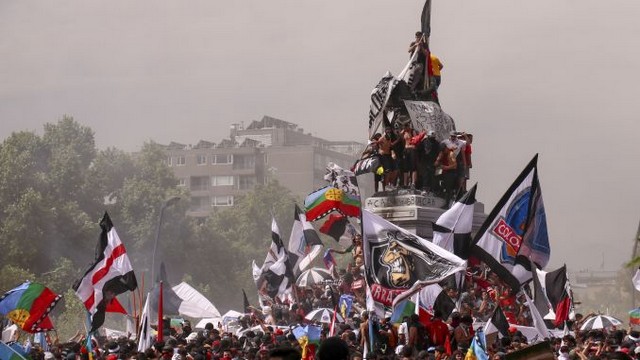
A country that is emblematic of the uprisings against neoliberalism is Chile. On October 25, 2019, a million Chileans–out of a population of about 18 million–took to the streets across the country, unbowed by government repression that has killed at least 20 of them and injured hundreds more. Two days later, Chile’s billionaire president Sebastian Piñera fired his entire cabinet and declared, “We are in a new reality. Chile is different from what it was a week ago.”

The people of Chile appear to have validated Erica Chenoweth’s research on non-violent protest movements, in which she found that once over 3.5% of a population rise up to non-violently demand political and economic change, no government can resist their demands. It remains to be seen whether Piñera’s response will be enough to save his own job, or whether he will be the next casualty of the 3.5% rule.

It is entirely fitting that Chile should be in the vanguard of the protests sweeping the world in this Autumn of Discontent, since Chile served as the laboratory for the neoliberal transformation of economics and politics that has swept the world since the 1970s.

When Chile’s socialist leader Salvador Allende was elected in 1970, after a 6-year-long covert CIA operation to prevent his election, President Nixon ordered U.S. sanctions to “make the economy scream.”

In his first year in office, Allende’s progressive economic policies led to a 22% increase in real wages, as work began on 120,000 new housing units and he started to nationalize copper mines and other major industries. But growth slowed in 1972 and 1973 under the pressure of brutal U.S. sanctions, as in Venezuela and Iran today. U.S. sabotage of the new government intensified, and on September 11th, 1973, Allende was overthrown in a CIA-backed coup. The new leader, General Augusto Pinochet, executed or disappeared at least 3,200 people, held 80,000 political prisoners in his jails and ruled Chile as a brutal dictator until 1990, with the full support of the U.S. and other Western governments.

Under Pinochet, Chile’s economy was submitted to radical “free market” restructuring by the “Chicago Boys,” a team of Chilean economics students trained at the University of Chicago under the supervision of Milton Friedman for the express purpose of conducting this brutal experiment on their country. U.S. sanctions were lifted and Pinochet sold off Chile’s public assets to U.S. corporations and wealthy investors. Their program of tax cuts for the wealthy and corporations, together with privatization and cuts in pensions, healthcare, education and other public services, has since been duplicated across the world.

The Chicago Boys pointed to rising economic growth rates in Chile as evidence of the success of their neoliberal program, but by 1988, 48% of Chileans were living below the poverty line. Chile was and still is the wealthiest country in Latin America, but it is also the country with the largest gulf between rich and poor.

The governments elected after Pinochet stepped down in 1990 have followed the neoliberal model of alternating pro-corporate “center-right” and “center-left” governments, as in the U.S. and other developed countries. Neither respond to the needs of the poor or working class, who pay higher taxes than their tax-evading bosses, on top of ever-rising living costs, stagnant wages and limited access to voucherized education and a stratified public-private healthcare system. Indigenous communities are at the very bottom of this corrupt social and economic order. Voter turnout has predictably declined from 95% in 1989 to 47% in the most recent presidential election in 2017.

If Chenoweth is right and the million Chileans in the street have breached the tipping point for successful non-violent popular democracy, Chile may be leading the way to a global political and economic revolution.

Medea Benjamin, co-founder of CODEPINK for Peace, is the author of several books, including Inside Iran: The Real History and Politics of the Islamic Republic of Iran and Kingdom of the Unjust: Behind the U.S.-Saudi Connection.

Nicolas J S Davies is an independent journalist, a researcher for CODEPINK and the author of Blood On Our Hands: the American Invasion and Destruction of Iraq.

7 November 2019

Source: countercurrents.org

The Metamorphosis of the Deep State

By Edward Curtin

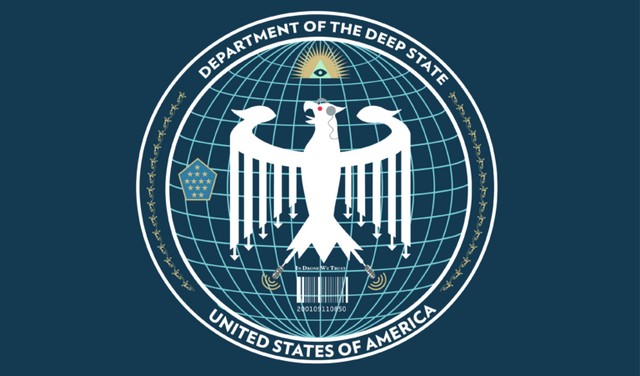
It gets funny, this shallow analysis of the deep state that is currently big news. There’s something ghoulish about it, perfectly timed for Halloween and masked jokers. What was once ridiculed by the CIA and its attendant lackeys in the media as the paranoia of “conspiracytheorists” is now openly admitted in reverent tones of patriotic fervor. But with a twisted twist.

The “Deep State” has been redefined as career bureaucrats doing their patriotic duty.

It was two years ago, early in the Trump administration, when The New Yorker and Salon, among many others, were asserting in no uncertain terms that there was no deep state in the United States, and so Trump had nothing to fear from that quarter since it was a figment of his paranoia. Kit Knightly brilliantly demolished this spurious propaganda on March 21, 2017 in a must-read reminder of how tricksters play their games. See his “There is No Deep State…it just looks like there is” in the Off-Guardian.

Thecorporate mass-mediahaverecently discovered a “deep state” that they claim to be not some evil group of assassins who work for the super-rich owners of the country and murder their own president (JFK) and other unpatriotic dissidents (Malcom X, MLK, RK, among others) and undermine democracy home and abroad, but are now said to be just fine upstanding American citizens who work within the government bureaucracies and are patriotic believers in democracy intent on doing the right thing.

This redefinition has been in the works for a few years, and it shouldn’t be a surprise that this tricky treat was being preparedfor our consumption a few years ago by The Council on Foreign Relations. In its September/October 2017 edition of its journal Foreign Affairs, Jon D. Michaels, in “Trump and the Deep State: The Government Strikes Back,” writes:

Furious at what they consider treachery by internal saboteurs, the president and his surrogates have responded by borrowing a bit of political science jargon, claiming to be victims of the “deep state,” a conspiracy of powerful, unelected bureaucrats secretly pursuing their own agenda. The concept of a deep state is valuable in its original context, the study of developing countries such as Egypt, Pakistan, and Turkey, where shadowy elites in the military and government ministries have been known to countermand or simply defy democratic directives. Yet it has little relevance to the United States, where governmental power structures are almost entirely transparent, egalitarian, and rule-bound.

The White House is correct to perceive widespread resistance inside the government to many of its endeavors. But the same way the administration’s media problems come not from “fake news” but simply from news, so its bureaucratic problems come not from an insidious, undemocratic “deep state” but simply from the state—the large, complex hive of people and procedures that constitute the U.S. federal government.

Notice how in these comical passages about U.S. government transparency and egalitarianism,Michaels slyly and falsely attributes to Trump the very definition – “unelected bureaucrats” – that in the next paragraph he claims to be the real deep state, which is just the state power structures. Pseudo-innocence conquers all here as there is no mention of the Democratic party, Russiagate, etc., and all the machinations led by the intelligence services and Democratic forces to oust Trump from the day he waselected. State power structures just move so quickly, as anyone knows who has studied the speed with which bureaucracies operate. Ask Max Weber.

Drip by drip over the past few years, this “state bureaucracy”meme has been introducedby the mainstream media propagandists as they have gradually revealed that the government deep-statersare just doing their patriotic duty in trying openly to oust an elected president.

Many writers have commented on the recent New York Times article,Trump’s War on the ‘Deep State’ Turns Against Him”asserting that the Times has finally admitted to the existence of the deep state, which is true as far as it goes, which is not too far. But in this gameof deceptive revelations – going shallower to go deeper – what is missing is a focus on the linguistic mind control involved in the changed definition.

In a recent article by Robert W. Merry, whose intentions I am not questioning ––“New York Times Confirms: It’s Trump Versus the Deep State” – originally published at The American Conservative and widely reprinted, the lead-in to the article proper reads: “Even the Gray Lady admits the president is up against a powerful bureaucracy that wants him sunk.” So the “powerful bureaucracy” redefinition, this immovable force of government bureaucrats, is slipped into public consciousness as what the deep state supposedly is. Gone are CIA conspirators and evil doers. In their place we find career civil servants doing their patriotic duty.

Then there is The New York Times’ columnist James Stewart who, appearing on the Today Show recently, where he was promoting his new book, told Savannah Guthrie that:

Well, you meet these characters in my book, and the fact is, in a sense, he’s [Trump] right. There is a deep state…there is a bureaucracy in our country who has pledged to respect the Constitution, respect the rule of law. They do not work for the President. They work for the American people. And, as Comey told me in my book, ‘thank goodness for that,’ because they are protecting the Constitution and the people when individuals – we don’t have a monarch, we don’t have a dictator – they restrain them from crossing the boundaries of law. What Trump calls the deep state in the United States is protecting the American people and protecting the Constitution. It’s a positive thing in this sense.

So again we are told that the deep-state bureaucracy is defending the Constitution and protecting the American people, as James Comey told Stewart, “in my book, ‘thank goodness for that,’” as he put it so eloquently. These guys talk in books, of course, not person to person, but that is the level not just of English grammar and general stupidity, but of the brazen bullshit these guys are capable of.

This new and shallow deep state definition has buried the old meaning of the deep state as evil conspirators carrying out coup d’états, assassinations, and massive media propaganda campaigns at home and abroad, and who, by implication and direct declaration,never existed in the good old U.S.A. but only in countries such as Egypt, Turkey, and Pakistan where shadowy elites killed and deposed leaders and opponents in an endless series of coup d’états. No mention in Foreign Affairs, of course, of the American support for the ruthless leaders of these countries who have always been our dear allies when they obey our every order and serve as our servile proxies in murder and mayhem.

Even Edward Snowden, the courageous whistleblower in exile in Russia, in a recent interview with Joe Rogan, repeats this nonsense when he says the deep state is just “career government officials” who want to keep their jobs and who outlast presidents. From his own experience, he should know better. Much better. Interestingly, he suggests that he does when he tells Rogan that “every president since Kennedy” has been successfully “feared up” by the intelligence agencies so they will do their bidding. He doesn’t need to add that JFK, for fearlessly refusing the bait, was shot in the head in broad daylight to send a message to those who would follow.

Linguistic mind control is insidious like the slow drip of a water faucet. After a while you don’t hear it and just go about your business, even as your mind, like a rotting rubber washer, keeps disintegrating under propaganda’s endless reiterations.

To think that the deep state is government employees just doing their patriotic duty is plain idiocy and plainer propaganda, just as denying its existence was.

It is a trick, not the treat it is made to seem.

Edward Curtin is a writer whose work has appeared widely. He teaches sociology at Massachusetts College of Liberal Arts.

5 November 2019

Source: countercurrents.org

Castle Black, the Syrian Withdrawal, and the Battle of the Bases

By Nick Turse

They called it Castle Black, an obvious homage to the famed frozen citadel from the HBO series Game of Thrones. In the fantasy world of GoT, it’s the stronghold of the Night’s Watch, the French Foreign Legion-esque guardians of the northern border of the Seven Kingdoms.

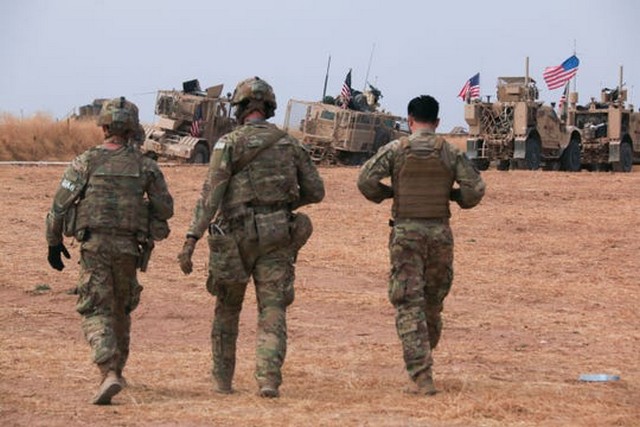
This Castle Black, however, was all too real and occupied by U.S. Special Operations forces, America’s most elite troops. In its location, at least, it was nearly as remote as its namesake, even if in far warmer climes — not on the northern fringe of Westeros but at the far edge of eastern Syria.

Today, the real Castle Black and most of the archipelago of U.S. outposts only recently arrayed across the Syrian frontier are emptying out, sit abandoned, or are occupied by Russian and Syrian troops. At least one — located at the Lafarge Cement Factory — lies in partial ruins after two U.S. Air Force F-15 jets conducted an airstrike on it. The purpose, according to Colonel Myles Caggins, a spokesman for Combined Joint Task Force-Operation Inherent Resolve (CJTF-OIR), the U.S.-led military coalition fighting ISIS, was to “destroy an ammunition cache, and reduce the facility’s military usefulness.”

“Only yesterday they were here and now we are here,” a Russian journalist announced after taking selfies at the abandoned base at Manbij where U.S. forces had served since 2015 alongside allied Syrian Democratic Forces (SDF), a coalition of mainly Kurdish and Arab fighters. “It appears as though the U.S. servicemen fled in their armored vehicles,” said another reporter with RT’s Arabic service, as she walked in front of American tents and equipment at the hastily abandoned outpost. Photographs show that when U.S. troops bugged out, they also left behind other standard stuff from American bases abroad: “crude dick drawings,” a football, fridges stocked with Coca-Cola, an open package of animal crackers, a can of Pringles, and a paperback copy of The Girl With The Dragon Tattoo.

“I see a big problem with it. And it shows just how unplanned and half-assed this ‘withdrawal’ is,” U.S. Marine veteran Anderson Bryant, who — in 2016 — fought alongside the SDF after leaving the Corps, told Military Times. “Though ISIS doesn’t have the infrastructure to take and hold territory or bases anymore, just leaving equipment to be taken after a retreat looks bad for sure.”

Bryant was just one of many to decry the abandonment of most of Washington’s Syrian outposts. “U.S. troops and their allies feel humiliated after abandoning their bases in Syria to be taken over by gleeful Russians,” read the headline of a Business Insider article, while a New York Times piece put it this way: “Pullback Leaves Green Berets Feeling ‘Ashamed,’ and Kurdish Allies Describing ‘Betrayal.’”

A Base by Any Other Name…

After President Trump abruptly ordered the withdrawal of most U.S. forces from Syria earlier this month, a Turkish military incursion into the area those troops had previously occupied set off a humanitarian catastrophe — sending nearly 200,000 civilians fleeing from the Syrian frontier, about one third of them children. President Trump implied the troops were coming “back home,” but his secretary of defense promptly contradicted him and indicated they would simply be redeployed in the region. After being abandoned by their U.S. allies, the SDF struck a deal with Syrian dictator Bashar al-Assad and Syrian and allied Russian troops moved into the area as well. In the chaos, some Islamic State prisoners escaped from SDF prisons.

Back in the United States, rare bipartisan outrage erupted as members of Congress lambasted the president for his decision. Vice President Mike Pence was then dispatched to Turkey to try to mitigate what was widely hailed by the Washington establishment as a foreign policy disaster. Then, in the wake of a Pence-negotiated “ceasefire” that Turkey didn’t agree to and that failed to fully materialize, President Trump took a victory lap after which Turkish President Recep Tayyip Erdogan vowed to “crush” the heads of America’s abandoned Kurdish allies if they didn’t ethnically cleanse themselves from the area. In the end, the withdrawal of 1,000 U.S. military personnel turned out to be largely illusory, as an influx of new forces to a different part of Syria left troop levels almost unchanged.

In the midst of this chaos, however, something strange occurred. Just as America’s Syrian bases, including its two main headquarters — Advanced Operational Base West and Advanced Operational Base East — the Lafarge Cement Factory, and a facility at Manbij were being abandoned, in another sense entirely they suddenly came to exist (at least in news reports anyway). This is something that Castle Black, in its relatively brief life, never officially did. When I asked about its status in late August, for example, Combined Joint Task Force-Operation Inherent Resolve refused to even acknowledge the existence of such a base. Now, the outpost and its status are no secret at all. “Castle Black is closed,” CJTF-OIR’s media team told TomDispatch more recently.

According to the Pentagon’s official inventory of bases, the Department of Defense (DoD) “manages a worldwide real property portfolio” that spans 45 foreign countries. All told, there are 514 official “DoD sites” overseas, the majority of them in Germany (194 sites), Japan (121 sites), and South Korea (83 sites). This list, however, has never included mention of even one base in Syria — or, for that matter, any of the well-known U.S. garrisons, large and small, in Afghanistan or Iraq.

The common estimate of foreign U.S. military bases is actually around 800. Such a count is little more than an educated guess because of the cloak of secrecy the Pentagon has thrown over the subject. To obfuscate things further, the military employs a plethora of euphemisms to avoid calling U.S. military outposts like Castle Black precisely what they are.

Officially, Castle Black was never a base. It was, instead, a “Mission Support Site” or MSS. And while U.S. Central Command (CENTCOM), which oversees United States military operations in the Middle East, acknowledges the existence of MSSes, it won’t provide even a basic count of them, let alone more detailed information about such outposts, significant numbers of which exist across the region. The media operations staff of CJTF-OIR responded in an email to a TomDispatch request on the subject this way: “Due to operational security reasons, a total number and locations of the various mission support sites are not available.”

And keep in mind that such Military Support Sites only begin to scratch the surface when it comes to the Pentagon’s inventory of non-base outposts. So when else is a military base not a military base? When, for example, it’s an Initial Contingency Location, which, according to a Pentagon “Contingency Basing” manual, is characterized by austere infrastructure and limited services. Or when it’s a Temporary Contingency Location, which provides “near-term support for a contingency operation” and is characterized by “expedient infrastructure.” Or even when it’s a Semipermanent Contingency Location, which provides support for prolonged contingency operations and is characterized by “enhanced infrastructure.” Or when it’s a full-fledged Contingency Location — a “non-enduring location outside of the United States that supports and sustains operations during contingencies or other operations.”

Such U.S. non-bases also include Forward Operating Sites (FOSes), which are officially defined as “scalable” locations intended for “rotational use by operating forces.” While “rotational use” might make such a place sound like a distinctly temporary location, possibly one abandoned for long stretches, that’s hardly the case. Camp Lemonnier in the sun-bleached Horn-of-Africa nation of Djibouti, for example, is not only an FOS, but also America’s largest base on the African continent and the headquarters for Combined Joint Task Force-Horn of Africa (CJTF-HOA), which includes soldiers, sailors, and airmen, some of them members of the Special Operations forces. The camp — which also supports CENTCOM — couldn’t be less temporary, having expanded from 88 acres to 600 acres, while the number of troops stationed there has jumped by more than 500%, to 5,500, since 2002.

Another type of outpost is a cooperative security location, or CSL, which is supposedly neither “a U.S. facility or base.” According to the Pentagon’s official definition, it has “little or no permanent United States presence” and “is maintained by periodic Service, contractor, or host nation support.” This, too, is completely disingenuous. A CSL in the remote smuggling hub of Agadez, Niger, for example, is the premier U.S. military outpost in West Africa. That drone non-base, located at Nigerien Air Base 201, not only boasts a $100 million-plus construction price tag but, with operating expenses, is expected to cost U.S. taxpayers more than a quarter of a billion dollars by 2024 when the 10-year agreement for its use ends.

The primary types of places that the Pentagon will actually call “bases” are huge World War II and Cold War legacy sites like Ramstein Air Base in Germany, Kadena Air Base in Okinawa, Japan, and Camp Humphreys in South Korea. These they call “Main Operating Bases.” Humphreys, for example, began its existence in 1919 as Pyeongtaek Airfield, a product of the brutal Japanese occupation of Korea. Since the Korean War (1950-1953), the U.S. military has occupied the site, transforming it into America’s largest overseas military base. The Pentagon refers to Forward Operating Sites, Cooperative Security Locations, and Main Operating Bases as “enduring locations” which are meant to afford “strategic access” to American forces and support Washington’s security interests for the “foreseeable future.”

Despite these and other euphemisms for bases that appear in the Defense Department’s 2019 edition of Joint Publication 4-04 “Contingency Basing” and its most recent “Base Structure Report,” many other types of smaller baselets get scant attention — including Combat Outposts and Fire Support Bases. Even more types are noted in various official publications and military news releases, often with conflicting definitions. The Army’s Ranger Handbook, for instance, defines a “patrol base” as a “security perimeter” set up when a squad or platoon is “conducting a patrol,” but notes that it should “not be occupied for more than a 24-hour period (except in an emergency).” An Army counterinsurgency manual, on the other hand, states that a “patrol base can be permanent or temporary.” And a 2008 CENTCOM news release mentioned that soldiers with the 2nd Battalion, 502nd Infantry Regiment had been stationed at Iraq’s Patrol Base Copper for seven months.

While Mission Support Sites are mentioned in a few Pentagon publications, they are also poorly defined. When asked just what an MSS actually is, an official at CENTCOM offered this none-too-illuminating response: “Mission support sites, or bases, are sites that temporarily exist to provide support for as long as a mission requires.” That same official went on to note that the U.S. and its allies had “opened and closed numerous bases throughout the campaign in Syria and Iraq,” but refused to provide details or even a simple count of how many bases had been closed, let alone opened. The CJTF-OIR media team was a bit more forthcoming, explaining that a mission support site is “comparable to an initial contingency location (ICL) or a patrol base” and that such facilities support up to 200 personnel for a “total duration of operations lasting less than six months.”

Winter Is Coming for U.S. Military

Castle Black is now officially shuttered. Despite its closing and that of its sister outposts, as part of Donald Trump’s “withdrawal” from Syria, American troops remain in that country. “CJTF-OIR continues to maintain a presence in Syria and Iraq as part of our mission to achieve the enduring defeat of Daesh,” spokesperson Col. Myles Caggins III told TomDispatch, using the Arabic acronym for ISIS.

Commander Sean Robertson, a Pentagon spokesperson, was even more specific. “U.S. forces continue a deliberate, phased, and orderly withdrawal from Syria, with the exception of the al-Tanf garrison,” he told TomDispatch. While Robertson refused to “discuss operational details such as numbers or timelines,” it has been widely reported that al-Tanf, a small base in the south of Syria, is still home to about 150 U.S. forces. (It, in turn, is supported from across the Jordanian border by a quick reaction force, additional troops, and artillery.) The CJTF-OIR media team also added that the “Kobani Landing Zone and other sites remain open to facilitate the additional movement of troops and equipment outside of Syria.” Reports now indicate that U.S. troop levels will stabilize at around 900, just 100 troops less than before the announced withdrawal.

The abandonment of about a dozen outposts across northeastern Syria likely constitutes the largest mass closure of military bases of the Trump presidency. (Since the Pentagon refuses to provide an accurate count of overseas outposts, however, there’s no way to make certain of that.) Still, while this reduction of outposts in Syria is significant, it hardly constitutes a substantial drawdown of U.S. forces in the region (especially at a moment when President Trump may be sending tanks and armored vehicles, with all the necessary supporting forces, into the area around Syria’s oil fields). With the president either reshuffling troops in Syria or merely relocating them elsewhere in the Middle East and a new contingent of American forces deploying to Saudi Arabia, there will actually be a net gain in U.S. troops in the region at this moment of supposed reduction.

Perhaps the only true end result of the drawdown in Syria — given that the finale of Game of Thrones ran earlier this year — is the likely demise of U.S. military outposts named for that HBO show’s fictional redoubts. With the real Castle Black gone and the fictional one consigned to the dustbin of pay-for-play streaming services, tomorrow’s bases will undoubtedly be named for emerging cultural touchstones, not last season’s leavings.

Still, given Washington’s penchant for Middle Eastern military missions, the likelihood of yet more U.S. bases across the region (whatever their official designations), and talk of several Game of Thrones prequels still to come, there may be ample opportunities for the next set of off-the-books military bases to carry the names of even more ancient Seven Kingdoms castles, keeps, and citadels.

Nick Turse is the managing editor of TomDispatch and a fellow at the Type Media Center.

5 November 2019

Source: countercurrents.org

Death toll mounts as Iraqi protests defy repression

By Bill Van Auken

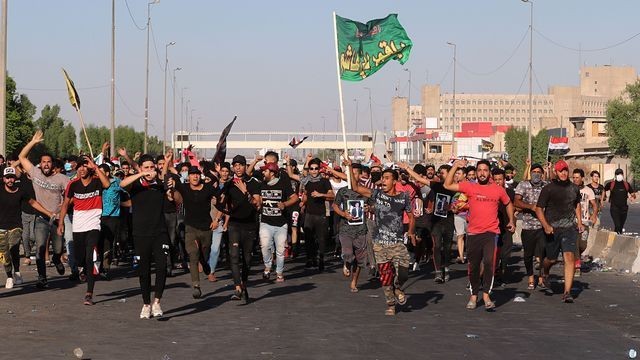
Iraqi protesters and security forces clashed at the edge of Baghdad’s heavily fortified Green Zone Monday, leaving at least another six demonstrators dead and scores more wounded as the mass protests that have gripped the country continued into their second month.

Monday’s clashes came after demonstrators forced their way across the Ahar Bridge, which spans the Tigris River, and into the Green Zone, a restricted area that is the center for government buildings and residences of top officials, as well as both embassies and offices of military contractors and other foreign entities. The crowds reportedly came within 500 yards of the prime minister’s office and reached the headquarters of Iraq’s state-run television.

Protesters set tires and dumpsters ablaze and hurled rocks inside the Green Zone, which was quickly flooded by security forces firing live ammunition, military-grade tear gas and water cannon.

The clashes came a day after a fatal confrontation between security forces and a crowd that attempted to storm the Iranian consulate in the Shia Muslim holy city of Karbala, south of Baghdad.

The latest killing brings the known death toll since the start of the demonstrations in early October to over 260, with thousands of protesters wounded, in some cases grievously injured by live rounds, rubber bullets and tear gas canisters fired directly at demonstrators.

Friday saw the largest mass demonstrations since the US invasion of 2003, with crowds filling Baghdad’s Tahrir Square as well as wide avenues funneling into it. It was organized in defiance of the Iraqi military, which attempted to clamp down on the protests by imposing a nightly curfew. Ignoring the order, crowds remained in the square overnight, erecting tents and occupying an 18-story building overlooking the area, which has been dubbed “Revolution Mountain.”

Prime Minister Abdul Mahdi made a statement late Sunday calling for an end to the protests and declaring that “it’s time for life to return to normal.” The appeal expressed the increasing fears within the corrupt Iraqi ruling oligarchy that growing sections of the working class are joining the mass upsurge and threatening its wealth and power.

Mahdi in particular condemned the roadblocks that have shut down Umm Qasr, Iraq’s main Persian Gulf port in the southern city of Basra, as well as the joining of the demonstrations by oil workers outside key oil installations in the south of the country. There is also a continuing strike by teachers that has shut down schools throughout much of southern Iraq, as well as by public employees. Government buildings in many cities have been shut down, in some cases draped with banners proclaiming, “Closed by order of the people.”

Mahdi warned that the closing of the port and the threat to the oil fields risked “causing big losses exceeding billions of dollars.”

As Monday’s events showed, this appeal clearly failed to produce the desired effect. The protests are driven by mass unemployment, particularly among younger Iraqis, including those who graduate from universities to find there are no jobs. It is further fueled by stark social inequality and the knowledge that the “billions” in oil revenues that Mahdi is worrying about losing are flowing into the pockets of foreign and domestic capitalists and corrupt politicians, rather than benefiting the Iraqi masses.

Mahdi’s remarks were also notable for their failure to mention a promise made just days earlier by President Barham Salih that Mahdi was prepared to resign once a suitable replacement had been found, and that early elections would be held following the drafting of a new electoral law.

Even if Mahdi were to resign, this alone, along with the meager social concessions that have been proffered by the government, would not pacify the hundreds of thousands who have taken to the streets. They are demanding an end to the entire political setup imposed under the US military occupation that followed the criminal American invasion of Iraq in 2003, along with a fundamental social transformation.

The chant being taken up by the Iraqi protesters is the same one used by Egyptians and Tunisians in 2011: “The people want the fall of the regime.”

In the case of Iraq, the US-imposed regime was constructed upon reactionary sectarian lines aimed at furthering Washington’s divide-and-rule strategy. State positions and spoils were divided up between Shia, Sunni and Kurdish parties that would supposedly represent their respective ethnoreligious constituencies, while looting the country’s resources to line their own pockets and reward their followers.

The revolt that has erupted since last month has been directed at this entire reactionary setup and has explicitly rejected religion and ethnicity as the lines of political division, posing instead that of class interests.

The fear of this movement within the Iraqi ruling establishment has found sharp expression in efforts to prevent any spread of the protests into the Sunni areas of Anbar Province, which were devastated in the-called “war on ISIS.”

Human Rights Watch (HRW) reported Monday that security forces had arrested two men in Anbar for posting statements of solidarity with the protests on Facebook. It cited the case of Sameer Rashed Mahmoud, who posted a comment stating that students and public employees should strike in support of the protests on October 26. Within an hour and a half, counterterrorism police raided his home and arrested him for the post, charging him with incitement. He has been imprisoned ever since without charges.

A second case cited by HRW was that of a 25-year-old man who also indicated solidarity with the protests on his Facebook page on October 26. Within four hours, five police cars came to his house to drag him away. “They hit him and accused him of inciting protests, before handcuffing him and putting him in one of their cars,” a relative said.

The Anbar security forces issued a statement calling on all of the province’s residents “to head to work and continue with construction, preserving security, supporting security forces, and benefiting from past lessons, from which the province has only gotten destruction, killings and displacement.” This was an unmistakable threat of more mass killings in response to any attempt to emulate the protests in Baghdad.

The character of the mass protests has cut across Iran’s relations with the Iraqi government, which have centered upon Shia sectarian parties, whose political leaders, such as Mahdi, willingly offered themselves as functionaries in the puppet regime set up under the US occupation.

Last week, Iran’s Supreme Leader Ayatollah Ali Khamenei stated, “I seize this opportunity to tell those who care about Iraq … to remedy insecurity as their priority,” while warning, “The US and Western intelligence agencies, with the help of money from regional countries, are instigating unrest in the region.”

While US imperialism will no doubt do whatever it can to exploit the crisis in Iraq to further its own interests in the region, the social explosion that has taken place not only there, but also in neighboring Lebanon, is driven by an intensification of social inequality, anger over conditions of poverty and unemployment, and hatred for corrupt ruling establishments that are totally subordinated to the interests of international finance capital.

To the extent that the Iranian bourgeoisie has sought to defend its own interests in the region by cementing alliances with these ruling elites, it has joined US imperialism as a target of the protesters’ ire.

Washington has responded cautiously to the events in Iraq, where it maintains thousands of troops and military contractors, using the country as a base for its operations in Syria as well.

US Secretary of State Mike Pompeo advised the Iraqi government to “listen to the legitimate demands made by the Iraqi people,” while cautioning all sides—the security forces and their victims alike—to avoid “violence.”

Originally published by WSWS.org

5 November 2019

Source: countercurrents.org
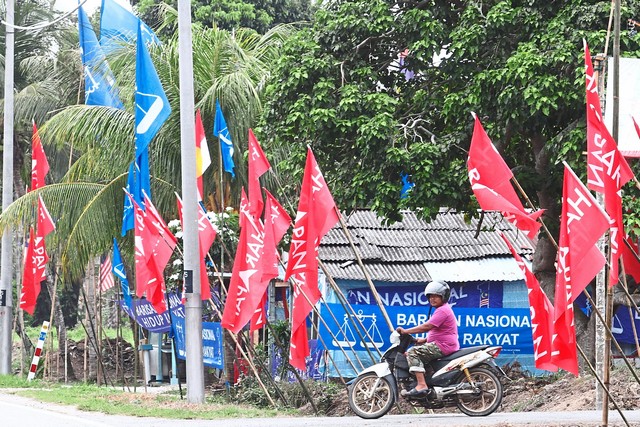
TANJUNG PIAI — WHAT IT MAY REVEAL ABOUT OUR INTEGRITY

By Chandra Muzaffar

No single by-election in a parliamentary democracy can provide a clear indication of the outcome of a future general election. Even the pattern emerging from a series of by-elections between general elections will not be able to tell us who the winner will be in the next overall contest. The by-elections between the thirteenth General Election in 2013 and the 14th General Election in 2018 testify to this.

Nonetheless, the Tanjung Piai by-election is significant. It will not only reflect how major political parties in Malaysia stand in relation to a sizeable, semi-rural, ethnically mixed constituency. TP will also be a measure of prevailing attitudes and orientations among our voters in the face of changes and challenges that may well shape the future of our nation.

The first set of voter attitudes we should look for is in connection with the changes that the new Pakatan Harapan government has introduced at the Federal and State level. There is no doubt at all that PH as a reform oriented government has initiated important changes in various areas ranging from public accountability and democratic governance to the management of the environment and the protection of women. Are grassroots rural and semi-rural communities aware of these changes? Do they appreciate their significance to their daily lives? Why is it important to a voter in TP that it is now an Opposition Member of Parliament and not a government backbencher who heads the powerful Public Accounts Committee in Parliament? Do youths in TP who are sometimes forced to seek employment in Singapore understand why lowering the voting age to eighteen — a reform introduced by the PH government — enhances their power in a democracy?

If these and other such changes that strengthen the democratic process and public accountability do not appear to have had a huge impact upon people in rural and semi-rural Malaysia and indeed a big segment of the citizenry, it is partly because they have not been explained and analysed to them in a manner that they would understand and appreciate. Effective political communication which is crucial when reforms are high on one’s agenda does not seem to be PH’s forte. It is a major weakness that has hampered and hindered PH’s effectiveness since it came to power in May 2018.

Related to communication and governance is yet another set of attitudes which the TP contest may bring to the fore. Do the voters in TP and the rest of rural Malaysia appreciate the efforts of the PH government in settling the massive debts accumulated by its Barisan Nasional predecessor? Some of the debts are intimately linked to corruption on a grand scale most vividly revealed in the 1MDB mega scandal. How concerned are the voters of TP about 1MDB and corruption as a phenomenon especially since it is a virus that has infected almost every artery of the body politic? Is fighting this scourge — given what has been revealed so far — a mission that every Malaysian is committed to? Or, is it true, as some surveys have shown, that only a small fraction of Malaysians sincerely abhor corruption and are prepared to act against it?

To put it differently, will TP expose the truth about how Malaysians actually feel about corruption and the abuse of power? Will it confirm how morally bankrupt we are as a people? Or will Tanjung Piai express mass revulsion against corruption and elite betrayal and therefore emerge as the TP, Turning Point, in the struggle for an ethical and upright society?

There is a third set of attitudes that may be put to the test in Tanjung Piai. Since it was ousted from power in May 2018, some UMNO leaders have been harping upon the alleged decline of Malay political power, the marginalisation of the Malay position, and the failure of the PH government to protect Malay interests. A lot of these reckless allegations are utterly baseless and are geared towards the manipulation of Malay communal sentiments for obvious political mileage. Have these pernicious communal perspectives seeped into the thinking of the 57% Malay voters in TP? How would the 42% Chinese voters respond to UMNO’s starkly exclusive communal rhetoric especially since the UMNO banner is being held aloft by an MCA candidate this time?

Or will Chinese and Malay voters in TP use the ballot on the 16th of November to protest against the rising cost of living, the lack of new economic programmes and the paucity of jobs in TP and Johor? Will the PH be able to counter all this through their communication channels? Will the PH be able to convince TP voters that integrity has to be restored as the foundation of the nation if we are to resolve all our other challenges?

Dr Chandra Muzaffar has been a commentator on Malaysian politics since the early seventies.

Kuala Lumpur.

6 November 2019.

The nine-year-old Palestinian with 100 wounds

By Ramzy Baroud

Kafr Qaddum is a small Palestinian village located between Nablus and Qalqilya in the northern West Bank. The inhabitants of the village feel angry and abandoned, with most of their land located under total Israeli military control. Thus, they are subjected to land theft by the ever-expanding nearby illegal Jewish colonies. Protesting the Israeli occupation and the illegal colony expansion is a recurring event in Kafr Qaddum and it is likely that the little boy, Abdul Rahman Shatawi, had taken part in these protests in the past. But not on that particular day.

It was a Friday, and Abdul Rahman was visiting and playing with his friends outside one of the village’s humble dwellings. When the boy was first shot in the head, the Israeli army claimed that he was most likely hit by a rubber bullet. But that was not the case at all. According to an independent investigation conducted by the London-based research group, Forensic Architecture, the near-lethal shooting was carried out by live ammunition.

Three months after the accident, Abdul Rahman is still lying in a hospital surrounded by his devastated parents and family. His brain has been damaged by the immediate impact of the bullet, but also by more than 100 bullet fragments that are still lodged in his brain, according to forensic experts.

Expectedly, Israel refuses to take any responsibility for the boy’s tragic fate, just as they refuse to take any responsibility for thousands of such cases of children who have been killed, maimed for life, tortured and imprisoned. The sad reality is that Abdul Rahman’s story is a regular occurrence in occupied Palestine where there is little or no accountability for those who routinely violate human rights and have no qualms about treating children as adults.

In fact, Israel has its own definition of what constitutes a ‘child’ that only applies to Palestinian children. Although the United Nations Convention on the Rights of the Child defines a “child” as “every human being below the age of 18 years”, Israel chooses not to abide by that definition. For Israel, there are two kinds of children: Israeli children who are 18 years old or younger, and Palestinian children, 16 years and younger. This definition allows Israel to expand the list of Palestinians it can arrest, torture and imprison.

According to a research conducted by Israeli rights group B’Tselem, at the end of August 2019, 185 Palestinian children, including two younger than 14 years, were held in various Israeli prisons as “security detainees and prisoners”. Thousands of Palestinian children are constantly being rotated through the Israeli prison system, often accused of “security” offences, which include taking part in anti-Israeli occupation protests and rallies in the West Bank. The Palestinian Prisoner’s Association estimates that at least 6,000 Palestinian children have been detained in Israeli prisons since 2015.

In a statement issued last April, the Association revealed that “98 per cent of the children held had been subjected to psychological and/or physical abuse while in Israeli custody” and that many of them were detained “after first being shot and wounded by Israeli troops”. Numbers demonstrate that Israel’s targeting of children is part of a calculated strategy aimed at thwarting Palestinian protests. On Friday, October 4, the theme of the popular weekly mobilisation at the fence separating besieged Gaza from Israel was honouring the 78 children who have been killed by Israeli snipers. The weekly protest began in March 2018 under the banner of the ‘March of Return’.

Criminally reprehensible treatment
‘Friday of 78 Children’ was commemorated and yet another Palestinian was killed and 57 others wounded. Time and again, international rights groups have highlighted Israel’s criminally reprehensible treatment of Palestinian children. In a written submission by Human Rights Watch (HRW) to the Committee on the Rights of the Child on the State of Palestine last March, the group reported that “Palestinian children aged between 12 and 17 years from the West Bank and [occupied] East Jerusalem, continue to be detained and arrested by Israeli forces”.

“Israeli security forces routinely interrogate children without a guardian or lawyer present, use unnecessary force against children during arrest, which often takes place in the middle of the night, and physically abuse them in custody,” HRW reported. For the families of the victims, charts, figures and statistics can never achieve long-denied justice. “He can’t speak and no changes [to his condition] occurred since he was shot,” Abdul Rahman’s family told the International Solidarity Movement. While millions of Palestinians wait and pray for some good news on Abdul Rahman and many like him, the international community should not assign itself the role of the bystander. Israel should be held accountable for these crimes, for its dismal human rights record and for the 100 bullet fragments in Abdul Rahman’s innocent little head.

*Ramzy Baroud is a journalist, author and editor of The Palestine Chronicle.

3 November 2019

China Breaks the Western Debt Stranglehold on the World

By Peter Koenig

The west has colonized, exploited, ravaged and assassinated the people of the Global South for hundreds of years.

Up to the mid-20th Century Europe has occupied Africa, and large parts of Asia.

In Latin America, though much of the sub-Continent was “freed” from Spain and Portugal in the 19th Century – a new kind of colonization followed by the new Empire of the United States – under the so-called Monroe Doctrine, named after President James Monroe (1817 -1825), forbidding Europeans to interfere in any “American territory”. Latin America was then and is again today considered Washington’s Backyard.

In the last ten years or so, Washington has launched the Monreo Doctrine 2.0. This time expanding the interference policy beyond Europe – to the world. Democratic sovereign governments in Latin America that could choose freely their political and economic alliances in the world are not tolerated. China, entering into partnership agreements with Latin American countries, sought after vividly by the latter – is condemned by the US and the west, especially vassalic Europe.

Therefore, democratically elected center-left governments had to be “regime-changed’ – Honduras, Argentina, Chile, Ecuador, Brazil, Peru, Paraguay. So far, they stumbled over Venezuela, Cuba, Nicaragua – and maybe Mexico.

Venezuela and Cuba are being economically strangled to exhaustion. But they are standing tall as pillars in defending the Latin American Continent – with economic assistance and military advice from China and Russia.

Latin America is waking up – and so is Africa.

In Latin America, street protests against the US / IMF imposed debt trap and de consequential austerity programs, making the rich richer and the poor poorer, are raging in Honduras, Nicaragua, Ecuador, Chile, Argentina and even in Brazil. In Argentina, in a democratic election this past weekend, 27 October, the people deposed neoliberal President Macri.He wasput in the Presidencyvia“tricked” elections by Washington in 2015. Macri ruined the prosperous country in his 4 year-reign. He privatized public services and infrastructure, education, health, transportation – and more, leading to hefty tariff increases, worker layoffs, unemployment and poverty. Poverty, at about 15% in 2015, when Macri took office, soared to over 40% in October 2019.

In 2018 Macri contracted the largest ever IMF loan of US$ 57.2 billion – a debt trap, if there was ever one. The new, just elected Fernandez-Fernandez center-left Government will have to devise programs to counter the impact of this massive debt.

All over in Latin America, people have had enough of the US / western imposed austerity and simultaneous exploitation of their natural resources. They want change – big style. They seek to detach from the economic and financial stranglehold of the west. They are looking for China and Russia as new partners in trade and in financial contracts.

The same in Africa – neocolonialism by the west, mostly France and the UK, through financial oppression, unfair trading deals and wester imposed – and militarily protected – despotic and corrupt leaders, has kept Africa poor and desolate after more than 50 years of so-called Independence. Africa is arguably still the Continent with the most natural resources the west covets and needs to preserve its luxury life style and continuous armament.

People, who do not conform, especially younger politicians and economists, who protest and speak out, because they see clearly through the western imposed economic crimes committed on a daily basis, are simply assassinated or otherwise silenced.

Africans are quietly seeking to move out of the claws of the west, seeking new relations with China and Russia. The recent Russian-African summit in Sochi was a vivid example.

China is invited to build infrastructure, fast trains, roads, ports and industrial parks – and the Belt and Road Initiative (BRI) is more than welcomed in Africa, as it projects common and equal development for all to benefit. BRI is the epitome for building a Community with a Shared Future for Mankind. China also offers a gradual release from the US / western dominated dollar-debt claws. Freeing a country from the dollar-based economy, is freeing it from the vulnerability of US /western imposed sanctions. This is an enormous relief that literally every country of the Global South – and possibly even Europe – is hoping for.

However, as could be expected, the west, led by the US of A, is pouncing China for engaging in “debt trap diplomacy” (https://www.rt.com/op-ed/472185-china-debt-trap-diplomacy-debunked/?utm_source=Newsletter&utm_medium=Email&utm_campaign=Email ). Exactly the contrary of what is actually happening.

The truth is, though, countries throughout the world, be it in Africa, Asia, South Pacific and Latin America, are choosing to partner with China by their free will. According to a statement by a high-level African politician “China does not force or coerce us into a deal, we are free to choose and negotiate a win-win situation.” – That says it all.

The difference between the west and east is stark. While anybody and any country that does not agree with the US dictate and doctrine, risks being regime-changed or bombed, China does not impose her new Silk Road – the BRI – to any country. China invites, respecting national sovereignty. Who wants to join is welcome to do so. That applies as much to the Global South, as it does to Europe.

China’s President Xi Jinping launched the BRI in 2013. In 2014 Mr. Xi visited Madame Merkel in Germany, offering her to be at that time the western-most link to the BRI. Ms. Merkel under the spell of Washington, declined. President Xi returned and China continued working quietly on this fabulous worldwide economic development project – BRI – THE economic venture of the 21st Century, so massive that it was incorporated in 2017 into the Chinese Constitution.

It took the west however 6 years to acknowledge this new version of the more than 2000-year-old Silk Road. Only in 2019, the western mainstream media started reporting on the BRI – and always negatively, of course. The preaching was and still is – beware of the Chinese Dragon, they will dominate you and everything you own with their socialism.

This train of thought is typically western. Aggression seems to be in the genes of western societies, of western culture, as the hundreds of years of violent and despotic colonization and exploitation – and ongoing – are proving. Does it have to do with western monotheistic doctrines? – This is pure speculation, of course.

Again, the truth is multi-fold. – First, China does not have a history of invasion. China seeks a peaceful and egalitarian development of trade, science and foremost human wellbeing – a Tao tradition of non-aggression. Second, despite the “warnings” from the throne of the falling empire, about a hundred countries have already subscribed to participate in BRI – and that voluntarily. And third, China and Russia and along with them the Shanghai Cooperation Organization (SCO) are in a solid economic and defense alliance which encompasses close to half of the world population and represents about one third of the globes total economic output.

Hence, SCO members are – or may be, if they so choose – largely detached from the dollar hegemony. The western privately run and Wall Street controlled monetary transfer system, SWIFT, is no longer needed by SCO countries. They deal in local currencies and / or through the Chinese Interbank Payment System (CIPS).

It is no secret, that the empire, headquartered in Washington, is gradually decaying, economically as well as militarily. It’s just a matter of time. How much time, is difficult to guess. But Washington’s everyday behavior of dishing out sanctions left and right, disrupting international monetary transactions, confiscating and stealing other countries assets around the world, putsever more nails in the Empire’s coffin. By doing this, America is herself committing economic and monetary suicide. Who wants to belong to a monetary system that can act willy-nilly to a county’s detriment? There is no need for outside help for this US-sponsored pyramid fiat monetary system to fall. It’s a house of cards that is already crumbling by its own weight.

The US dollar was some 20-25 years ago still to the tune of 90% the domineering reserve currency in the world. Today that proportion has declined to less than 60% – and falling. It is being replaced primarily by the Chinese yuan as the new reserve currency.

This is what the US-initiated trade war is all about – discrediting the yuan, a solid currency, based on China’s economy – and on gold. “Sanctioning” the Chinese economy with US tariffs, is supposed to hurt the yuan, to reduce its competition with the dollar as a world reserve currency. To no avail. The yuan is a worldwide recognized solid currency, the currency of the world’s second largest economy. By some standards, like accounted by PPP (Purchasing Power Parity), the most important socioeconomic indicator for mankind, China is since 2017 the world’s number one economy.

This, and other constant attacks by Washington, is a typical desperate gesture of a dying beast – thrashing wildly left and right and above and below around itself to bring down into its grave as many perceived adversaries as possible. There is of course a clear danger that this fight for the empire’s survival might end nuclear – god forbid!

China’s and Russia’s policy, philosophy and diplomacy of non-aggression may save the world from extinction – including the people of the United States of America.

Peter Koenig is an economist and geopolitical analyst. He is also a water resources and environmental specialist.

3 November 2019

Source: countercurrents.org
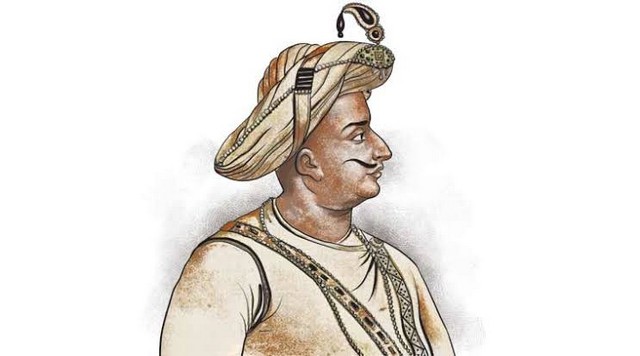
Goodbye, Tipu Sultan

By Subhash Gatade

Ghatam Bhindyat, Patam Chhindyat, Kuryat Rasbharohanam

Yenken Prakaren, Prasidho Purusho Bhavet

Break earthen pots, tear clothes, ride a donkey:

Men try to achieve popularity by any means.

It was 2006 and DH Shankarmurthy, a nondescript swayamsevak, was handling the higher education ministry in the HD Kumarswamy-led coalition government suddenly hit the national headlines. The trigger was his unusual demand to recast history books in the mould of the Sangh Parivar. Especially his proposal to obliterate the great warrior Tipu Sultan’s name from the annals of Kannada history.

The proposal was based on the completely false pretext that Tipu did not give due importance to the Kannada language and promoted Persian language instead. Never mind that the Mysore state archaeological department holds in its possession more than thirty letters sent from Tipu to the shankaracharya of the Shringeri math, all written in Kannada.

Shankaramurthy wanted Tipu Sultan—who sacrificed his children to end the British rule—obliterated from Karnataka history on the spurious logic that the alleged neglect of Kannada language was reason enough. Even then, the demand had caused a national uproar cutting across party lines. At the time, the Bharatiya Janata Party (BJP) and the Janata Dal Secular (JD-S) were sharing power in the state. As a result, their plans fell flat. Much water has flown down the Kaveri, Godavari and every other Indian river and now a BJP-led government, holding power in the state of Karnataka and the centre has drawn up fresh plans to fulfill a task left unfinished.

Just last fortnight, home minister Amit Shah, number two in Prime Minister Narendra Modi’s cabinet, had said that history should be rewritten, this time from an “Indian perspective”. That, perhaps, made the Karnataka government flail for an immediate target for saffron-washing, and Tipu was pulled from the rubble of history.

First, Tipu Jayanti celebrations were cancelled. Now, there is news that the Karnataka government is considering removing a lesson “glorifying” him from the state’s primary school textbooks.

Interestingly, today’s pretext is not language but Tipu’s alleged cruelty. He was a “cruel ruler whose only aim was to loot temples and churches and kill and convert non-Muslims”, a petition sent by MP Appachu Ranjan, the Member of Legislative Assembly from from the Madikeri constituency, to S Suresh Kumar, minister for primary and secondary education.

The negative portrayal of Tipu by BJP leaders should not blind us to the fact that for the Hindu Right, the Tiger of Mysore, as Tipu is called, was not not always untouchable. There was a time when Tipu was everybody’s icon. In the 1970s, the Rashtriya Swayamsevak Sangh (RSS), the parent body of the BJP, had released a book on on him in its “Bharata Bharati” series of publications.

Thus, the recent efforts of the Hindu right to project him as a Muslim bigot show how their political stakes in him have changed. In the new scenario, the RSS spokesperson denies knowledge about this endorsement.

“Like every other party in Karnataka, the BJP, too, has celebrated Tipu Sultan before 2015,” a news report points out. “In fact, back in 2012, the Department of Kannada and Culture had published a book titled Tipu Sultan: A Crusader for Change. This 338-page monograph written by Sheikh Ali extolls Tipu’s achievements, acquisitions, and praises his fight against the British empire. There is even a message from the then chief minister, the BJP’s Jagadish Shettar.”

During the launch of this monograph, Shettar had said, “…[Tipu Sultan’s] concept of nation state, his idea of state entrepreneurship, his advanced military skill, his zeal for reforms, etc. make him a unique leader far ahead of his age.”

Then, when the Siddaramaiah-led Congress government in Karnataka was organising Tipu Jayanti celebrations, the BJP had objected to it. At the time, JD-S leader Basavaraj Horatti had released photographs of Yeddyurappa and Shettar, dressed up as Tipu on various occasions.

If the BJP’s campaign succeeds, it will find itself on the same side as the colonialists. Tipu, a ruler far ahead of his times, had sensed the designs of the British and tried to forge a broader unity with the domestic rulers to counter them. He even tried to connect with the French, the Turks and the Afghans in response to the hegemonic designs of the British. These proved a major deterrent in their all-India designs.

History is witness that Tipu defeated the British armies twice with his superior planning and better techniques, and died on the battlefield fighting them, sword in his hand.

As for his alleged persecution of Hindus and Christians, the works of early British authors are the basis for such claims. Such writers, modern historians have found, were motivated by a strong vested interest to present Tipu Sultan as a tyrant and the British as liberators. Historian Kate Brittlebank, a well known expert on Tipu Sultan and his times, has said that both Mark Wilks and James Kirkpatrick had taken part in the wars against Tipu Sultan. They were closely connected to the administrations of Lord Cornwallis and Richard Wellesley, [British officials] and therefore “must be used with particular care”. She also notes in her book, Tipu Sultan’s Search for Legitimacy, “It is perhaps ironic that the aggressive Hinduism of some members of the Indian community in the 1990s should draw upon an image of Tipu which…was initially constructed by the Subcontinent’s colonisers.”

The extent to which history is being falsified is mind boggling at times; but it was always done to further the British divide and conquer policy. In a speech given in 1977 in the Rajya Sabha, BN Pandey, a former historian in Allahabad University, who later became Governor of Orissa [now Odisha], said that way back in 1928 he addressed some students’ concerns with respect to Tipu Sultan. The students believed that some 3,000 Brahmins were forced by Tipu to convert to Islam on the threat of death. Those 3,000 committed suicide according to these students, rather than become Muslims. The students attributed this statement to a book written by Harprasad Shastri, a professor in Calcutta.

Pandey asked Shastri the basis of his claims and their source, to which he got the reply that it was in the Mysore Gazetteer. Thereafter, Pandey wrote to Shrikantia, a professor of history in Mysore University, seeking to verify this information. The response he got was that it is a totally false claim. That he had worked in this field and that the Mysore Gazetteer made the reverse claim, namely that Tipu Sultan “used to give annual grants to 156 Hindu temples, he used to send grants to the Shankaracharya of Shringheri, and so on.”

Tipu’s martyrdom fighting the British preceded the historic revolt of 1857 by around 60 years. This is not surprising, considering the trajectory of the Hindu Right. Their history is replete cowardice painted as virtue. Thousands of pages have been written about how they remained aloof from the anti-colonial struggle of the Indian people on the ruse that they wanted to “unify” the Hindus. Enough has been written also on how they sought to break wider anti-colonial unity by pitting the Hindus against the Muslims.

It is also well known that the colonisers distorted the Indian subcontinent’s history to suit their imperial interests. They called the uprisings against them mutinies, painted heroes as villains and freedom fighters as usurpers and terrorists. The move to obliterate Tipu’s name from Kannada history proves that the Hindu Right has finally undertaken the task left unfinished by the colonisers.

The writer is an independent journalist.

3 November 2019

Source: countercurrents.org
Islamic State Exacts Revenge on Turkey for Selling Al-Baghdadi Out

By Nauman Sadiq

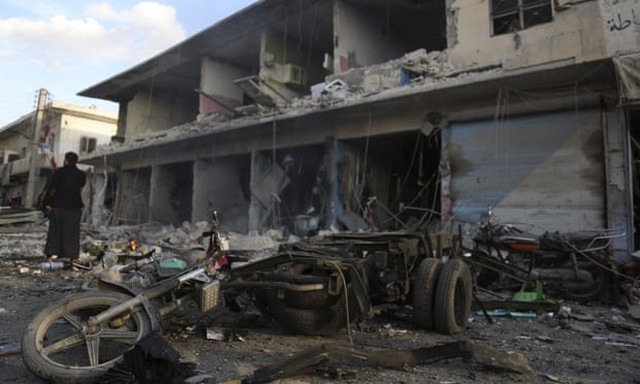
A car bomb exploded in northern Syria killing 13 and wounding 20. The blast on Saturday ripped through a crowded market in Tal Abyad, a town recently occupied by Turkish-backed militant proxies. The Syrian Observatory for Human Rights said the blast targeted pro-Turkey fighters and civilians were also among the dead.

Even though the Turkish Defense Ministry promptly laid the finger of blame on Turkey’s arch-foe, the Kurdish YPG militia, without conducting an investigation, car bombing as a tactic for causing widespread fear is generally employed by jihadist groups and not by the Kurds.

It’s important to note in the news coverage about the killing of al-Baghdadi that although the mainstream media had been trumpeting for the last several years that the Islamic State’s fugitive chief had been hiding somewhere on the Iraq-Syria border in the east, he was found hiding in the northwestern Idlib governorate, under the control of Turkey’s militant proxies and al-Nusra Front, and was killed while trying to flee to Turkey in Barisha village five kilometers from the border.

The morning after the night raid, the Syrian Observatory for Human Rights reported on Sunday, October 27, that a squadron of eight helicopters accompanied by warplanes belonging to the international coalition had attacked positions of Hurras al-Din, an al-Qaeda-affiliated group, in Idlib province where the Islamic State chief was believed to be hiding.

According to “official version” of Washington’s story regarding the killing of al-Baghdadi, the choppers took off from an American airbase in Erbil, the capital of Iraqi Kurdistan, flew hundreds of miles over the enemy territory in the airspace controlled by the Syrian and Russian air forces, killed the self-proclaimed “caliph” of the Islamic State in a Hollywood-style special-ops raid, and took the same route back to Erbil along with the dead body of the “caliph” and his belongings.

Although Washington has conducted several airstrikes in Syria’s Idlib in the past, those were carried out by fixed-wing aircraft that fly at high altitudes, and the aircraft took off from American airbases in Turkey, which is just across the border from Syria’s northwestern Idlib province. Why would Washington take the risk of flying its troops at low altitudes in helicopters over the hostile territory controlled by myriads of Syria’s heavily armed militant outfits?

In fact, several Turkish journalists, including Rajip Soylu, the Turkey correspondent for the Middle East Eye, tweeted on the night of the special-ops raid that the choppers took off from the American airbase in Turkey’s Incirlik. As for al-Baghdadi, who was “hiding” with the blessing of Turkey, it now appears that he was the bargaining chip in the negotiations between Trump and Erdogan, and the quid for the US president’s agreeing to pull out of Syria was the pro quo that Erdogan would hand Baghdadi to him on a silver platter.

After the betrayal of its erstwhile allies, the Islamic jihadists, by the Erdogan administration, a tidal wave of terrorism in Turkey was expected, and its first installment has apparently been released in the form of a car bombing in Tal Abyad in northern Syria occupied by Turkish-backed militant proxies.

The reason why the Trump administration is bending over backwards to appease Ankara is that Turkish President Erdogan has been drifting away from Washington’s orbit into Russia’s sphere of influence. Even though the Kurds too served the imperialist masters loyally for the last five years of Syria’s proxy war, the choice boiled down to choosing between the Kurds and Turkey, and Washington understandably chose its NATO ally.

Turkey, which has the second largest army in NATO, has been cooperating with Russia in Syria against Washington’s interests for the last several years and has also placed an order for the Russian-made S-400 missile system, whose first installment has already been delivered.

In order to understand the significance of relationship between Washington and Ankara, it’s worth noting that the United States has been conducting airstrikes against targets in Syria from the Incirlik airbase and around fifty American B-61 hydrogen bombs have also been deployed there, whose safety became a matter of real concern during the foiled July 2016 coup plot against the Erdogan administration; when the commander of the Incirlik airbase, General Bekir Ercan Van, along with nine other officers were arrested for supporting the coup; movement in and out of the base was denied, power supply was cut off and the security threat level was raised to the highest state of alert, according to a report by Eric Schlosser for the New Yorker.

Perceptive readers who have been keenly watching Erdogan’s behavior since the foiled July 2016 coup plot against the Erdogan administration must have noticed that Erdogan has committed quite a few reckless and impulsive acts during the last few years.

Firstly, the Turkish air force shot down a Russian Sukhoi Su-24 fighter jet on the border between Syria and Turkey on 24 November 2015 that brought the Turkish and Russian armed forces to the brink of a full-scale confrontation in Syria.

Secondly, the Russian ambassador to Turkey, Andrei Karlov, was assassinated at an art exhibition in Ankara on the evening of 19 December 2016 by an off-duty Turkish police officer, Mevlut Mert Altintas, who was suspected of being an Islamic fundamentalist.

Thirdly, the Turkish military mounted the seven-month Operation Euphrates Shield in northern Syria, immediately after the attempted coup plot, from August 2016 to March 2017 that brought the Turkish military and its Syrian militant proxies head-to-head with the Kurdish-led Syrian Democratic Forces and their American backers.

Fourthly, Ankara invaded Idlib in northwestern Syria in October 2017 on the pretext of enforcing a de-escalation zone between the Syrian militants and the Syrian government, despite official protest from Damascus that the Turkish armed forces were in violation of Syria’s sovereignty and territorial integrity.

Fifthly, Turkey mounted Operation Olive Branch in the Kurdish-held enclave Afrin in northwestern Syria from January to March 2018.

And lastly, the Turkish armed forces and their Syrian jihadist proxies invaded and occupied 120 kilometers stretch of Syrian territory between the northern towns of Tal Abyad and Ras al-Ayn on October 9, even before the American forces had a chance to fully withdraw from their military bases in northern Syria, as soon as an understanding between Trump and Erdogan was reached in a telephonic conversation on October 6.

To avoid confrontation between myriads of local militant groups and their regional and international backers, Russia once again displayed the stroke of a genius by playing the role of a peace-maker in Syria, and concluded an agreement with Turkey in a Putin-Erdogan meeting in Sochi, Russia, on October 22 to enforce a “safe zone” in northern Syria.

According to the terms of the agreement, Turkish forces would have exclusive control over 120 kilometers stretch between Tal Abyad and Ras al-Ayn to the depth of 32 kilometers in northern Syria. To the west and east of the aforementioned area of the Turkish Operation Peace Spring, Turkish troops and Russian military police would conduct joint patrols to the depth of 10 kilometers in the Syrian territory, and the remaining 20 kilometers “safe zone” would be under the control of Syrian government which would ensure that the Kurdish forces and weapons are evacuated from Manbij, Kobani and Tal Rifat to the west and the Kurdish areas to the east, excluding the city of Qamishli.

Nauman Sadiq is an Islamabad-based attorney, columnist and geopolitical analyst focused on the politics of Af-Pak and Middle East regions, neocolonialism and petro-imperialism.

4 November 2019

Source: countercurrents.org
U.S. debt exceeds $23 trillion for the first time in history

By Countercurrents Collective

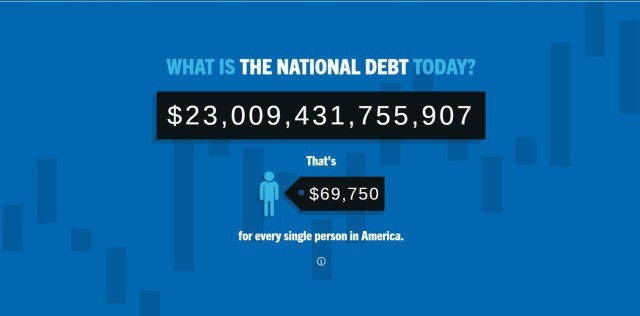
U.S. Treasury Department figures released Friday show: U.S. public debt has surpassed $23 trillion for the first time in history, rising more than 100 percent in less than a decade and more than a trillion dollars this year alone.

Of the total, less than US$17 trillion is owed to individuals, while the remaining $6 trillion comes from loans within government agencies.

The figure marks a new record after the national debt reached US$22 billion dollars in February this year while the fiscal imbalance as a percentage of Gross Domestic Product (GDP) rose from 3.8% in 2018 to 4.6% this year.

According to Michael Peterson, the head of the fiscally conservative Peter G. Peterson Foundation, “reaching a debt of US$23 billion on Halloween is a terrifying milestone for our economy and the next generation, but Washington shows no fear.”

“Accumulating debts like this is especially reckless and unnecessary in a strong economy,” he added.

“This is the first time in our history that we are seeing a boom in the economy at the same time deficits are rapidly rising. It’s alarming,” said Marc Goldwein, senior policy director of the Committee for a Responsible Federal Budget, which supports reducing the deficit.

2008 financial crisis

U.S. debt began to rise after the 2008 financial crisis, but after Trump came to power it declined slightly. Thus, in January 2017, the national debt was estimated at $19,899 billion.

However, due to the fiscal reform, at the end of that year, it started to grow again and by the end of 2018, it amounted to 21,974 billion dollars.

U.S. President Donald Trump, who repeatedly criticized the deficit of his predecessor, Democrat Barack Obama, looks now responsible of the U.S. deficit rising almost 50 percent in his first three years in office.

Growing budget deficits have added to the U.S. debt at a speedy rate since President Trump took office. The debt has grown some 16 percent since Trump’s inauguration, when it stood at $19.9 trillion. It passed $22 trillion for the first time just 10 months ago.

Of the $23 trillion figure, just under $17 trillion was in the category of debt held by the public, which is a more useful gauge of the debt the government has to pay down, and the number typically used in calculating the nation’s debt burden. The other $6 trillion comes from loans within government bodies.

Still, the $23 trillion figure marks a milestone.

High levels of debt can push up borrowing costs and interest rates, “crowd out” private borrowing and weigh down budgets.

In the 2019 fiscal year, the government had to devote $376 billion just to pay the interest on the debt, equivalent to nearly half the defense budget, and more than the amount spent on the combined costs of education, agriculture, transportation and housing.

The deficit for 2019 came in just under $1 trillion, at $984 billion, and is only expected to grow in coming years.

Trump administration officials did not defend the marked deficit increase, but they cast blame on Congress for not doing more to reduce expenditures.

While the main drivers of spending are mandatory programs such as Social Security, Medicare and anti-poverty programs, major legislation has grown the deficit considerably since Trump came to office.

Neither Trump nor Congress

Neither Trump nor Congress has done much to cut spending in recent years, with Trump repeatedly backing away from his own budget proposals. Trump has also demanded new spending on the military and for a border wall.

Dramatic rise in military spending

Military spending has risen dramatically under Trump, from about $550 billion annually to more than $700 billion in 2019, and Democrats successfully pushed for increases to other parts of the budget in exchange for their support to boost money for defense.

Republicans are quiet

Though the total national debt has continued to grow under the Trump administration, Republicans have remained quiet over an issue they once championed.

The national debt was formerly a major Republican talking point against “debt king” Obama, so much so that Republicans shut the government down for 16 days in 2013.

“There are very little discussions among Republicans about the deficit and virtually no serious outreach to Democrats for any sort of bipartisan deal,” said Brian Riedl, a budget expert at the Manhattan Institute, a libertarian-leaning think tank, and former chief economist for Sen. Rob Portman (R-Ohio). “The parties are not talking on this issue.”

The Republican National Committee slammed Obama’s oversight of the federal deficit in 2011, saying that the deficit held “America’s future in the balance” and saying that Democrats failed to recognize “that our mounting debt is one of the biggest threats to our ability to compete with the rest of the world’s economies.”

As late as 2016, the GOP warned that Obama administration was on an “unsustainable path toward crippling debt while raising taxes on middle-class families who can’t afford it.”

GOP Sen. Mitch McConnell of Kentucky called the federal debt “the nation’s most serious long-term problem,” on CBS’s “Face the Nation” in 2012, adding that Obama “needs to become the adult” in conversations on debt.

“If we don’t begin to deal with our debt and deficit in a serious way, we’re not going to have many options,” said former Republican House Speaker John A. Boehner in 2012, according to The Washington Post. “I’m not going to apologize for leading. The real issue here is, will the president lead?”

Boehner added in 2013 that the debt was “killing our economy.”

“It’s causing investors to sit on their cash,” Boehner said, according to The Wall Street Journal. “They’re afraid to invest. It’s a wet blanket on top of our economy.”

In 2013, when federal debt totaled $16.7 trillion, Trump tweeted: “Obama is the most profligate deficit & debt spender in our nation’s history.” The federal government is now more than $22 trillion in debt, according to the White House.

Vice President Pence called the debt increases under the Obama administration “atrocious.”

Mick Mulvaney, the president’s acting chief of staff, held “Spending, Debt and Deficit” town halls during the Obama administration and repeatedly criticized lawmakers of both parties for increasing the deficit, including through funding relief for Hurricane Sandy.

Spending increases, tax cuts and political apathy fueled the surge in deficit.

The government spent $4.4 trillion on numerous programs and services and brought in $3.5 trillion through taxes and other revenue.

It is unusual for the government to run such a large budget deficit during a period of economic growth, because spending on unemployment and other benefits tends to contract and tax revenue often grows.

But the White House and Congress have contributed to the deficit’s surge by enacting large spending increases and passing the 2017 tax cut law. The budget deficit was $665 billion in 2017.

U.S. debt is considered one of the safest investments in the world and interest rates remain low, which is why the government has been able to borrow money at cheap rates to finance the large annual deficits.

But the costs are adding up. The government spent about $380 billion in interest payments on its debt last year, almost as much as the entire federal government contribution to Medicaid.

The Obama administration and Republicans in Congress enacted measures to reduce the deficit starting in 2011, and those measures — and a growing economy — led the deficit to fall by almost 50 percent.

But those gains were lost by a recent apathy among policymakers about addressing the fiscal imbalance.

The government recorded four straight years of budget deficits that exceeded $1 trillion around the time of the Great Recession, with the worst overrun occurring in 2009 when the deficit reached nearly 10 percent of the U.S. economy, the highest level since World War II.

A growing economy and steps taken by the Obama administration and Congress shrank the deficit to 2.4 percent of the economy in 2015, but it slowly began expanding again, largely because of spending increases. In 2019, the deficit was 4.6 percent of the economy.

Budget experts also say the tax cut has led revenue to come in lower than they normally would during an economic expansion.

U.S. tax revenue remained roughly flat the first year the law was in effect, despite economic growth of nearly 3 percent. Tax revenue was modestly higher in fiscal 2019, aided in part by a 70 percent increase in tariff revenue.

Overall spending is projected to rise by about 16 percent between 2017 and 2020, largely because of bipartisan deals struck by Congress, including a 2018 law that lifted spending limits and disaster relief funding, according to the Committee for a Responsible Federal Budget.

The leading Democratic presidential candidates are running on plans for enormous new spending programs that would likely add to the deficit, though some have said they will offset the costs with tax increases.

Republicans have demonstrated little appetite for raising tax revenue after dramatically slashing them in 2017.

U.S. fiscal outlook could deteriorate even further should interest rates rise. The Federal Reserve has kept interest rates relatively low during this recovery, reducing the cost of borrowing and easing concerns that the deficit could trigger runaway inflation.

U.S. expanding federal deficit is an anomaly among developed nations around the world. Nearly all other advanced-economy countries are on track to see their debt shrink as a share of their economy over the next five years, according to the International Monetary Fund.

Some economists, particularly on the left, warn against expressing alarm over the widening deficit, arguing that because inflation remains low there is little reason to fear higher deficits.

4 November 2019

Source: countercurrents.org