Just International

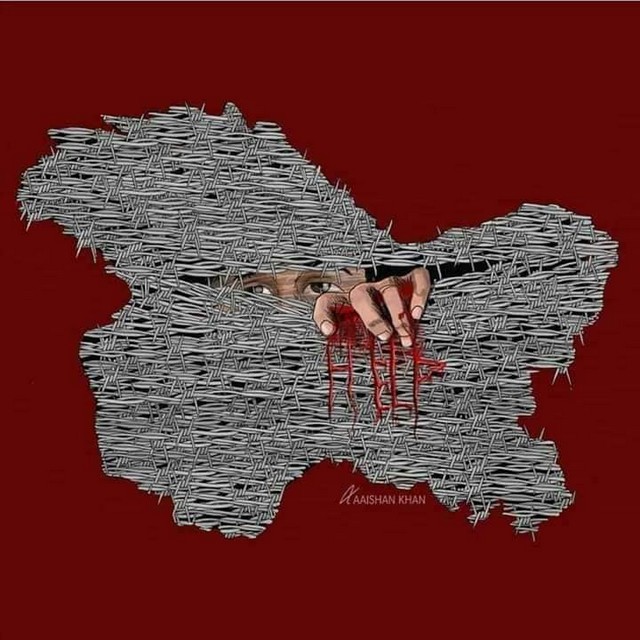
Kashmir- The curious case of Indian Collective Conscience

By Dr Mudasir Firdosi

Kashmir has been cut off from the rest of the world for more than two months now, with little certainty about what is coming next. Kashmiris living in and outside the erstwhile state of Jammu and Kashmir remain disconnected with hardly any means to communicate with each other. Just a few days ago some mobile connectivity was restored. Terrible stories of loss, grief, and mourning are making rounds on social media, few news outlets, and mostly within the minds of Kashmiris. The days of siege have become another statistic with most losing count. People are hearing about the deaths and ill-health of their loved ones with little detail or ability to make it to the funeral or the bedside. No one is talking out about the children stuck in homes, shut schools, and not to mention those beaten, tortured, and incarcerated. People with chronic and acute diseases are dying undocumented with only God to blame. The collective punishment of Kashmiris is working.

The perpetual worry about that ‘phone call’ has traumatized so many. One fears that people are developing traumatic stress even when not physically present in the valley. Even when people do manage a phone call after begging or borrowing, the harrowing silence on the other side says it all. Although most people talk about everything being well, the deafening silence you hear even when words are being spoken is unmissable. How does a nation reconcile and sleep at night with this travesty in their name? Here a billion or more souls if not always celebrating, are content with what is being done to millions of other human beings in an alleged part of the same country in their name. Who shares the blame if something wrong is happening? The home minister of India declared that ‘It is all in your mind’ and everything is ‘normal’ in Kashmir. You may refuse to agree with him but most of the Indians, educated, illiterate, liberal, religious, atheists, left-wing, right-wing, rich, poor, men, and women are convinced that Kashmiris need disciplining and that this is for their best. How does one argue with that?

Most Indians are ordinary, hardworking, friendly people, who claim to love animals and would not harm a fly. How do they reconcile with what their state is doing to fellow human beings? Indian friends, the close ones, like others, decided to remain silent. They would not even ask if the family was alright and did we manage to get in touch. They will bleed for you in case of an accidental injury to you and will remain by your bedside till recovery. But what is happening here then? What kind of morality has been created? Would sympathizing with Kashmiris mean a betrayal of their own country? What about the claim of belonging to the same country? Please feel free to ponder. Something has happened. Somewhere the fear of the other has been used so convincingly that it has managed to break all the bonds, be it of friendship or simply of being human. After all,India claims to be the propagator of vegetarianism, desperately trying to save cows even if that means ignoring the lynching of fellow citizens while practicing ahimsa and non-violence.

Lately, the concept of the ‘nation first’ is doing rounds. Nothing can be said or written against ‘the nation’. But what makes the nation; the current ruling party and the Prime Minister, the land, or the idea of a map in one’s head? Or it is the religion of the majority, the conquest of minorities or something else. What about the people who live in that besieged piece of land? Do they also make the nation? Maim, punish, and kill people to save the nation from some unknown force. Does the nation need saving or a self-fulfilling prophecy of destroying the nation is in action? Treating Kashmiris as an extension of the neighbouring country and punishing them collectively to revenge generational hate for the neighbour only proves Kashmir is not part of the ‘alleged nation’ on whose name all this is being done.

History is a witness that nationhood was used by most tyrants, convincing the majority using fear, prosperity, and superiority as tools to rise to power. Once in power, unimaginable things were done in the name of the nation, building on the fear of minorities and weaker sections. Although none of the fascists remained to live their dreams and were victims of their own cruelty, but in the process the death and destruction they managed to offer humankind is unimaginable. Once they are done with one group, they do have to go after others. You cannot fathom that a fire set in a neighbour’s backyard will not spread to burn the whole village. It has already started, people are even being booked for writing open letters, and students are being thrown out of colleges just for some minor criticism of the dear Prime Minister.

The generational trauma, displacement, and human suffering change the course of history both for good and bad. What is then the solution, dignity in living or living with dignity? It does not take long to realize that putting others through pain and suffering does not make any nation happy. You may think that whatever is happening has nothing to do with you, but everything done in your name is your burden. More so, instead of thinking and questioning, blindly condoning the state action seals the deal. Some argue that if Kashmiris did not create trouble, in other words, aspire for freedom and demand a referendum as per the promises made to them by all the parties involved, Jammu & Kashmir will still have been a statehood the least. Blaming victims is not a new strategy. Like Kashmiris have a choice to decide. They are still to make to the table allegedly meant to decide on their fate. Who does not desire freedom?

Lastly, it is not late to question yourself, if not the state. Are you sure you know what is being done in your name? Are you the nation or the next victim of the nation? If you are the nation, then own it and live with the consequences. Democracy cannot be imposed, neither can freedom.Everyone knows it is not about development, freedom of women or education of youth. Neither is it about terrorism as mostly purported to slander Kashmiris. There is still time to question the alleged truth unless you have decided to be the hangman in a mask.

Dr Mudasir Firdosi is a Kashmiri psychiatrist and writer currently based in London. Email – mudasirfirdosi@gmail.com Twitter: @drmfirdosi

19 October 2019

Source: countercurrents.org

Why Cuba will present the resolution against the blockade again?

By Ibete Fernández Hernández

Cuba has been the victim for almost six decades of an unfair financial, economic and commercial blockade that was formalized on February 3, 1962 with the sole objective of overthrowing the nascent Cuban Revolution.

In a secret memorandum in 1960, Lester D. Mallory, a state department official said: “We must quickly use all possible means to weaken Cuba’s economic life (…) deprive it of money and supplies, to reduce its resources financial and real wages, provoke hunger, despair and the overthrow of the Government ”. The official came to this conclusion by recognizing that there was no effective opposition to the revolutionary process in Cuba.

The basis of this addiction towards Cuba, were established by Thomas Jefferson in 1810 with a geopolitical statement, known as the “ripe fruit” theory referring to the need for the island to belong to the United States and not another power, to ensure the safety of the giant of the north and the protection of its commerce, this vision was put in danger after the Cuban people demonstrated in 1959 that it was possible defeat the power of the north in its own hemisphere.

In 57 years, the blockade has caused damages to Cuba worth 138,843.4 million dollars representing a total of 922 thousand 630 million usd, taking into account the depreciation of the dollar against gold between 1961 and 2018. Suffice it to say that each and every one of the sectors of the social economic life of the country, have been affected. I propose to review some effects between April 2018 and March 2019:

• Health 104 million 148 thousand 178 usd
• Food- 421 million 230 thousand 614 usd
• Tourism- 49 million usd
• Transportation- 170 million usd
• Energy- 78 million 336 thousand 424 usd
• Foreign trade 2,896 million 581 thousand usd

The figures may be cold, but we will illustrate with examples, included in Cuba’s report to the UN:

• Between June 2018 and April 2019, the US government imposed nine sanctions on companies or banks from third countries, including from the US itself.

• The blockage hinders the acquisition of technologies, raw materials, reagents, diagnostic means, equipment and spare parts, as well as medicines for the treatment of serious diseases, such as cancer. These inputs must be obtained in distant markets, on many occasions, through intermediaries.

• The companies responsible for the elaboration of food products in the country import approximately 70% of their raw materials from different markets. To date, the blockade has made it impossible to make purchases in the US market, which is very attractive due to its prices and proximity.

• The University of Sancti Spíritus could not acquire 20 SMART Braille typewriters and hearing aids from the Perkins company, which are necessary for the training of undergraduate and graduate students in Special Education. Both technologies are American made.

• The Cuban team, winner of the second place in the Caribbean Baseball Series, held in Panama from February 4 to 10, 2019, could not receive its cash prize of $ 72,000. The same happened with several Cuban athletes who could not receive their prize of $ 5,000 per player.

• If the blockade does not exist, it is estimated that 35% of total visitors to Cuba in a year could be Americans.

• The blockade prevents access to brands and / or equipment of high performance and leaders in the market of infocommunications or that are distributed or have patents of US entities, including landlines, mobiles, antennas, computer systems, etc.

• Refusal to transfer funds to or from Cuba and to provide other banking services: 15 entities, including nine Asian, three European, two Latin American and one from Oceania.

In this context in which the resurgence of the bloc has become the cornerstone of the current US administration policy towards Cuba, we will present the resolution once, because we are assisted by the right to demand justice for the millions of Cubans who have lived under this stigma.

It is not a bilateral issue as the phenomenon has intended to be observed, but an intrusion into the sovereignty of other states that due to restrictions, threats and intimidation are unable to trade regularly with Cuba.

For 27 years a resolution the international community has condemned the blockade against Cuba. This claim has been ignore the claims, not only in UN but in other forums. Blockade must stop without conditions. Cannot be used to provoke political changes that are not of the will of Cuban people.

Cuba, while appreciating the accompaniment of the international community, will not give up its efforts to end the blockade. It is the longest and most unfair in the history of mankind and constitutes the greatest obstacle to the development of the economic potential of the island.

In the midst of the complex situation in the world today, we aspire to have the support of all countries that defend their sovereignty and self-determination.

Ibete Fernández Hernández

Ambassador of Cuba in Malaysia

19 October 2019

Israel prepares to turn Bedouin citizens into refugees in their own country

By Jonathan Cook

Nazareth: The decades-long struggle by tens of thousands of Israelis against being uprooted from their homes – some for the second or third time – should be proof enough that Israel is not the western-style liberal democracy it claims to be.

Last week 36,000 Bedouin – all of them Israeli citizens – discovered that their state is about to make them refugees in their own country, driving them into holding camps. These Israelis, it seems, are the wrong kind.

Their treatment has painful echoes of the past. In 1948, 750,000 Palestinians were expelled by the Israeli army outside the borders of the newly declared Jewish state established on their homeland – what the Palestinians call their Nakba, or catastrophe.

Israel is regularly criticised for its belligerent occupation, its relentless expansion of illegal settlements on Palestinian land and its repeated and savage military attacks, especially on Gaza.

On rare occasions, analysts also notice Israel’s systematic discrimination against the 1.8 million Palestinians whose ancestors survived the Nakba and live inside Israel, ostensibly as citizens.

But each of these abuses is dealt with in isolation, as though unrelated, rather than as different facets of an overarching project. A pattern is discernible, one driven by an ideology that dehumanises Palestinians everywhere Israel encounters them.

That ideology has a name. Zionism provides the thread that connects the past – the Nakba – with Israel’s current ethnic cleansing of Palestinians from their homes in the occupied West Bank and East Jerusalem, the destruction of Gaza, and the state’s concerted efforts to drive Palestinian citizens of Israel out of what is left of their historic lands and into ghettoes.

The logic of Zionism, even if its more naive supporters fail to grasp it, is to replace Palestinians with Jews – what Israel officially terms Judaisation.

The Palestinians’ suffering is not some unfortunate side effect of conflict. It is the very aim of Zionism: to incentivise Palestinians still in place to leave “voluntarily”, to escape further suffocation and misery.

The starkest example of this people replacement strategy is Israel’s long-standing treatment of 250,000 Bedouin who formally have citizenship.

The Bedouin are the poorest group in Israel, living in isolated communities mainly in the vast, semi-arid area of the Negev, the country’s south. Largely out of view, Israel has had a relatively free hand in its efforts to “replace” them.

That was why, for a decade after it had supposedly finished its 1948 ethnic cleansing operations and won recognition in western capitals, Israel continued secretly expelling thousands of Bedouin outside its borders, despite their claim on citizenship.

Meanwhile, other Bedouin in Israel were forced off their ancestral lands to be driven either into confined holding areas or state-planned townships that became the most deprived communities in Israel.

It is hard to cast the Bedouin, simple farmers and pastoralists, as a security threat, as was done with the Palestinians under occupation.

But Israel has a much broader definition of security than simple physical safety. Its security is premised on the maintenance of an absolute demographic dominance by Jews.

The Bedouin may be peaceable but their numbers pose a major demographic threat and their pastoral way of life obstructs the fate intended for them – penning them up tightly inside ghettoes.

Most of the Bedouin have title deeds to their lands that long predate Israel’s creation. But Israel has refused to honour these claims and many tens of thousands have been criminalised by the state, their villages denied legal recognition.

For decades they have been forced to live in tin shacks or tents because the authorities refuse to approve proper homes and they are denied public services like schools, water and electricity.

The Bedouin have one option if they wish to live within the law: they must abandon their ancestral lands and their way of life to relocate to one of the poor townships.

Many of the Bedouin have resisted, clinging on to their historic lands despite the dire conditions imposed on them.

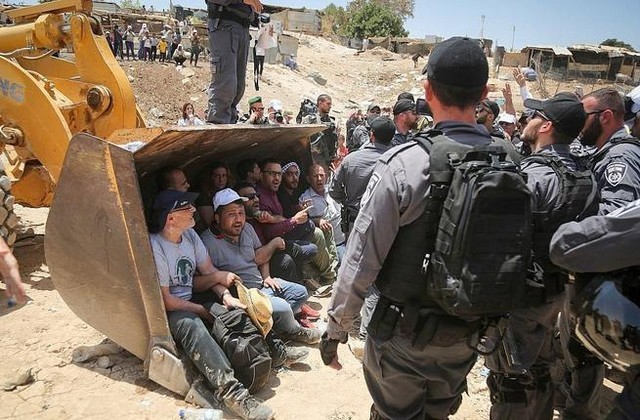
One such unrecognised village, Al Araqib, has been used to set an example. Israeli forces have demolished the makeshift homes there more than 160 times in less than a decade. In August, an Israeli court approved the state billing six of the villagers $370,000 (Dh1.6 million) for the repeated evictions.

Al Araqib’s 70-year-old leader, Sheikh Sayah Abu Madhim, recently spent months in jail after his conviction for trespassing, even though his tent is a stone’s throw from the cemetery where his ancestors are buried.

Now the Israel authorities are losing patience with the Bedouin.

Last January, plans were unveiled for the urgent and forcible eviction of nearly 40,000 Bedouin from their homes in unrecognised villages under the guise of “economic development” projects. It will be the largest expulsion in decades.

“Development”, like “security”, has a different connotation in Israel. It really means Jewish development, or Judaisation – not development for Palestinians.

The projects include a new highway, a high-voltage power line, a weapons testing facility, a military live-fire zone and a phosphate mine.

It was revealed last week that the families would be forced into displacement centres in the townships, living in temporary accommodation for years as their ultimate fate is decided. Already these sites are being compared to the refugee camps established for Palestinians in the wake of the Nakba.

The barely concealed aim is to impose on the Bedouin such awful conditions that they will eventually agree to be confined for good in the townships on Israel’s terms.

Six leading United Nations human rights experts sent a letter to Israel in the summer protesting the grave violations of the Bedouin families’ rights in international law and arguing that alternative approaches were possible.

Adalah, a legal group for Palestinians in Israel, notes that Israel has been forcibly evicting the Bedouin over seven decades, treating them not as human beings but as pawns in its never-ending battle to replace them with Jewish settlers.

The Bedouin’s living space has endlessly shrunk and their way of life has been crushed.

This contrasts starkly with the rapid expansion of Jewish towns and single-family farming ranches on the land from which the Bedouin are being evicted.

It is hard not to conclude that what is taking place is an administrative version of the ethnic cleansing Israeli officials conduct more flagrantly in the occupied territories on so-called security grounds.

These interminable expulsions look less like a necessary, considered policy and more like an ugly, ideological nervous tic.

A version of this article first appeared in the National, Abu Dhabi.

Jonathan Cook won the Martha Gellhorn Special Prize for Journalism.

17 October 2019

Source: countercurrents.org

Silent anger: Kashmiri civil disobedience has become a headache for Delhi

Bharat Bhushan, BS

The Kashmiris have Delhi confounded. They have refused to engage the security forces in street confrontations. Their children are not queuing up to take up arms and by and large there has been no significant targeting of security posts and establishments. Having taken a ‘bold’ step in Jammu and Kashmir, decision makers in New Delhi seem undecided about how to deal with the evolving civil disobedience in the Valley.

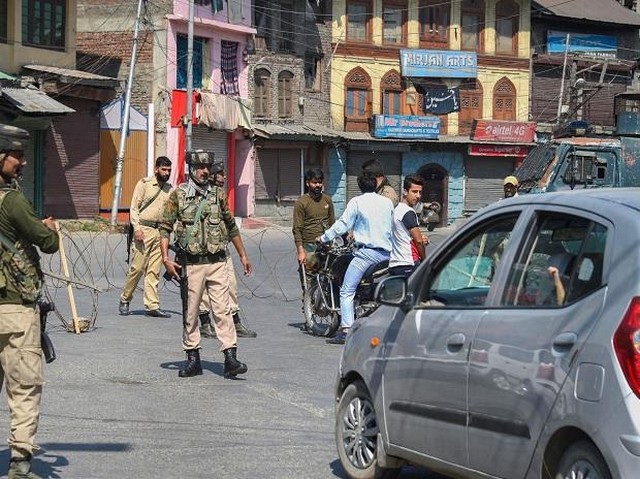
More than two months after the lockdown, upset Kashmiris are refusing to open their business establishments, notwithstanding the government’s exhortations through newspaper advertisements. Wherever restrictions are lifted in the Valley, people impose their own brand of civil disobedience they call “civil curfew”. This involves closure of business establishments for most of the working day. Shops open either a couple of hours in the morning or evening. The market closure is spontaneous. This form of passive resistance to the state, denying it the symbols of normality – was never witnessed in Kashmir earlier.

The full page newspaper advertisements issued in J&K enjoining people to open their shops and establishments disingenuously suggest that the shopkeepers are under pressure from armed militants. While there have been stray incidents of militants urging people to shut shops – a shopkeeper was even killed in the early days of the lockdown – but subsequently there is no evidence that their influence is widespread. If the militants are really to blame then the government must ask itself how a hundred-odd militants are able to control more than 80 lakh people in the Valley? And it must further ask what then does the state administration control with the assistance of an estimated 9 lakh security personnel deployed there?

In a bid to ‘convince’ the Kashmiris, the speeches of a senior minister who is at the forefront of the Modi government’s Kashmir policy are apparently being translated into Urdu. Either the government is groping in the dark or it has become a victim of its own propaganda. People the world over understand when they are being slighted irrespective of the language used by those in power.

If the civil disobedience of the Kashmiris continues the government would have few options. Without restoration of a semblance of “normalcy” it cannot be repackaged for national and international propaganda. Nor can the government use force to restore business as usual. Any use of force can precipitate a violent confrontation with the people, an outcome that policy makers in Delhi want to avoid at any cost. It would give the lie to those who have been shouting from the rooftops that not a single bullet has been fired and the ground situation is therefore normal. The Kashmiri civil disobedience, has therefore become a major headache for the government.

Today it is hard to find any Kashmiris who stand with India. It would seem that they have finally cut the psychological umbilical cord with India. Perhaps their disillusionment with India as an inclusive, diverse and thriving democracy is complete.

Their disappointment is not only with the Modi government. The people of the Valley feel abandoned by the entire Indian political class. The Bharatiya Janata Party government after all only did what it had promised in its election manifesto. What has shocked them more is that not a single other political party or national leader has asked for the restoration of status quo ante by reinstating Article 370 and the pre-August 5 status of the state. Even the Opposition parties have not objected to the dramatic decision taken through subterfuge to remove the special status of the state and its bifurcation through a presidential ordinance. In giving parliamentary approval to the decisions, they have only objected to the absence of consultation – i.e. to the process by which it was done.

The judiciary has also appeared partisan on events in Kashmir. It has avoided taking quick and judicially sound decisions for protection of civil liberties of the citizens in the state. By allowing suspension of these rights, by default it has discarded well-established judicial principles. Petitions challenging the government’s constitutional and administrative decisions, restrictions on freedom of expression by cutting communication links that make it difficult for the media to function freely and even writs for habeas corpus have been repeatedly adjourned. Strangely the apex court has been adjudicating visitation rights of detained Kashmiri politicians which are normally governed by the Jail Manual. It has also offered its unsolicited opinion that considerations of national security supersede citizens’ rights in Kashmir in the present situation.

The disappointment with Indian civil society is equally acute. Abandoned and isolated, the more political among them warn their friends of the long-term consequences of their silence for the rest of the country.

It is no surprise then that Kashmiris have mentally shut themselves off from India and Indians. This is why neither government propaganda nor stray sympathetic attempts by Indian civil society to open a dialogue with them is likely to fetch results.

The government will go ahead with Block Development Council (BDC) elections later this month as planned. Whether that will allow it to project the Kashmir situation as business as usual is uncertain. Like the village body elections, sullen Kashmiris are unlikely to go to the polling booths on October 24. As in the elections for Panchs and Sarpanchs, the government may produce acceptable poll data by using the turnout in Jammu region to “average” out the figures. But that is unlikely to make those elected any more acceptable to people in the Valley. The new elected council members may well have to live as guests of the government in hotels in Srinagar, unable to travel back to their villages and face public anger. This is what those ‘elected’ to village panchayats last December have had to do in the Valley.

It is increasingly clear is that after August 5, Kashmiris feel that this is the end of the road for politics within India. In their assessment, all avenues of normal politics have ended and a phase of controlling them from Delhi has begun.

16 October 2019

Saudi Arabia Is Opening Its Doors: But What Will You See Once There?

By Andre Vltchek

The Kingdom of Saudi Arabia is opening up to the world. It used to be absolutely impossible to get a visa to enter, unless you were a religious pilgrim (therefore officially a Muslim), NATO military personnel, or a businessman or woman, invited by a local company or by the Saudi government.Even if you secured approval, visas were outrageously expensive, costing several hundreds of dollars. The only loophole was a “transit visa” for those who were going to drive from Oman or Bahrain, to Jordan.

Tourism was not recognized as a reason to visit the KSA. There were simply no tourist visas issued. Full stop.

Then, suddenly, everything changed, at the very end of September 2019. The Saudi government introduced e-visas, for 49 nation nationalities, including the USA, Canada, all nationals of the European Union, as well asthe Russian Federation and the People’s Republic of China (including Hong Kong and Macau).

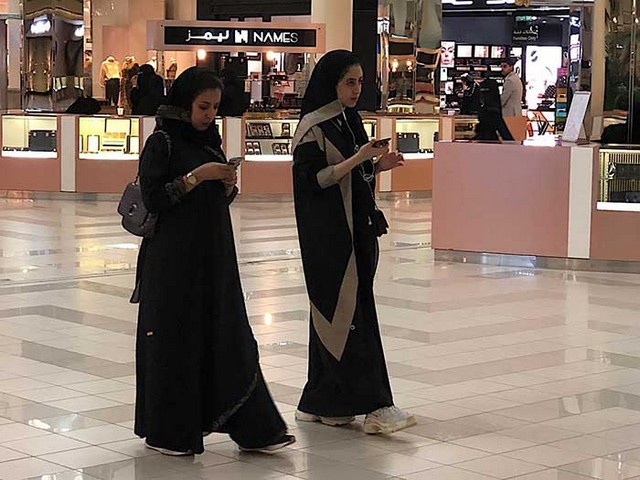
Everything has been streamlined. The formerly brutal international airports of Riyadh (the capital), Jeddah and Dammam, received incredible face lifts. Now, friendly ladies (still in hijab), speaking perfect English, are processing first-time visitors, taking their fingerprints, photographing them, then welcoming them to Saudi Arabia. There are rating buttons on the walls of the immigration booths: “How are we serving you?” From excellent, to terrible. Riyadh Airport is now clean, well illuminated, and pleasant.

All over the capital city, foreign women are now walking with fully exposed hair: at the airport, in all major hotels of Riyadh, office buildings, even inside the luxury malls.

The Royal Family is sending a clear message to the world: things are rapidly changing: Saudi Arabia is not what it used to be a few years ago. Women can now drive, foreigners (some, at least from the rich countries) can enter the country, and the dress-code for women is getting more and more relaxed.

Words like “the arts” and “culture” have been reintroduced into the local lexicon, after being nearly extinct for decades.

Saudi Arabia has a wide range of problems. They include corruption,the increasing dissatisfaction of the middle classes, the great desperation of the poor, vulnerability of oil prices, cross-border retaliatory attacks by the Houthis in Yemen, the imminent defeat of the Saudi extremist allies in Syria, the prolonged conflict with Qatar, as well as a still undiversified economy based on the export of oil.

After cutting the journalist, Jamal Khashoggi into pieces,precisely one year ago, the KSA suddenly drew strong criticism from all corners of the world.

The continuous killing of tens of thousands of innocent Yemeni civilians has evoked wrath in progressive circles worldwide.

The rulers in Riyadh had to re-think many issues. They calculated, and came to the conclusion that the best way to act would be to open up the country, and basically demonstrate to the would that the Kingdom is “not as bad” as many would like to believe.

The risk is great. Could this strategy really work? Or would it backfire?

*

Politics aside, Saudi Arabia is a “specific place”, and definitely not to everyone’s liking.

To give it credit where it is due, it counts on some stunning vistas, on endless deserts, dunes and oases producing dates and delicious fruits. It is dotted with castles and forts, and of course, as the cradle of Islam, it has some of the most incredible historic sites.

A few years ago, the National Museum in Beijing, China, exhibited thousands of historic objects and images from the KSA. To those of us who visited, it was a tremendous discovery.

Unfortunately, what can be shown in China, could not always be allowed in Riyadh, Jeddah, Macca and Medina.

For decades, the Saudi extremist Wahhabism has been fighting against everything that is not perceived as holy: music, films, non-religious books, even the images of animals.

This religious extremism has been exported to all corners of the world. Paradoxically and bizarrely, it has been intertwined with Western, particularly North American, “culture”. Extreme capitalism has been thriving all over the Kingdom. More oil, more kitsch.

Tremendous Muslim monuments had been dwarfed by lavish malls, badly designed and overpriced hotels, car culture and cheap US eateries such as Big M, Dunkin Donuts and Pizza Hut.

There is hardly any city planning, or connectivity in the major cities like Dammam, Jeddah and Riyadh, even when compared with the neighboring Dubai, Doha or Muscat.

According to The Independent:

“The destruction of sites associated with early Islam is an ongoing phenomenon that has occurred mainly in the Hejaz region of western Saudi Arabia, particularly around the holy cities of Mecca and Medina. The demolition has focused on mosques, burial sites, homes and historical locations associated with the Islamic prophet Muhammad and many of the founding personalities of early Islamic history.”

Vulgar luxury malls and 5-star hotels for the super-rich pilgrims are now literally encircling the holiest site in Macca.

But it is not only religious sites that are being ruined.

During this recent visit, I drove to the At-Turaif District in ad-Dir’iyah, some 20 kilometers from Riyadh, once a stunning World Heritage site designated by UNESCO. This location of the first Saudi Dynasty was “undergoing renovation”. Read: entire areas of traditional houses and ancient streets, squares and courtyards have been “rearranged”; destroyed. A modern mall has been erected. I was told that soon, more areas will give way to the fake buildings.Al-Turaif District has already been nicknamed the “Beverly Hills of Saudi Arabia.”

What’s next, nobody knows. But one thing is certain: if the rulers of Saudi Arabia want to attract visitors from the West, Russia, China or Japan, in order to diversify its economy, they’d have to offer a bit more than clogged roads, shopping malls, broken sidewalks and kitschy hotels and restaurants.

*

Saudi Arabia is extremely rich (although not as rich as Qatar), at least on paper. But it is full of absolute misery, from slums to beggars whose arms were amputated at a young age, so they could evoke the pity of motorists, and generate higher incomes for the mafias that are pimping them.

In many luxury malls, there are sexy, almost pornographic lingerie stores for the upper class wives, while outside, millions of manual workers, mainly from the sub-Continent, Africa and the Philippines, are living in destitution, not unlike that which they left behind in their native lands.

Politically, Saudi Arabia is, together with Israel, the closest ally of the United States.

And it shows. In those proverbial 5-star hotels that cost in Riyadh,double what they do even in Qatar, stereotypical Western ‘development-types’ are lecturing locals, openly, arrogantly and without any shame.

Visa restrictions have been eased, but mass tourism in the KSA is still hard to imagine. The country is not ready for culture-oriented types, for history connoisseurs, or for people on average budgets.

There is no way of walking here. There is no public transportation to speak of, yet. Even getting a taxi can be an ordeal, as everything is designed for private cars.

The prices are outrageous and the quality of services very, very low. Crime rates high.

It will take some time to convince foreigners to come.

*

But an attempt to bring the world into KSA is there. Changes are in the air.

The National Museum in Riyadh opened its doors. The building is magnificent, although exhibitions are, to put it mildly, very poor. The new National Library is stunning, although the selection of books is very limited. Research centers mainly highlight the activities of the Royal Family. A new mass rapid system is being constructed, but no one knows exactly when it will become operational.

I am interested in this complex country. I want to come back, and understand more; for years I am writing about Wahhabism and the deadly alliance with the UK, and then the US.And, honestly, I have always been fascinated with the deserts and with the people who inhabit them.

Considering my strong criticism of the KSA foreign policy, including my frequent appearances on the Iranian Press TV, I was a bit worried about this visit, but I was holding an “official”, not “e” visa, and in the end, nothing bad happened. The people that I met were kind and open with me. Now, I am writing this short essay on board Sri Lankan Airlines, bound for Colombo, alive and well.

*

Diversification could prove to be extremely positive for the people of Saudi Arabia. Both Russia and China are now making important inroads, and soon, there will be substantial investment from both countries, in the Saudi oil industry, as well as tourism and other sectors. Chinese and Russian people are curious and daring. They will come. Many will. Saudis know it.

At the National Museum in Riyadh, a receptionist asked where I was from, in English. I answered, “I am Russian”. He hesitated for just a few seconds, then smiled and uttered: “Privet! Kakdela?” (“Greetings, how are you doing?”) Perhaps he had to learn those few words of greeting in all world languages. Or perhaps not. Maybe he was studying Russian.

The rulers of the KSA are very secretive people. No one really knows which direction the country is going to evolve in the next few years. Could the KSA one day become “neutral”? I don’t know.

But one thing is certain: something is moving, brewing and evolving. KSA is not the same country as it was five years ago. In the future, perhaps five years from now, it may become unrecognizable.

*

[First published by NEO – New Eastern Outlook – a journal of the Russian Academy of Sciences]

Andre Vltchek is a philosopher, novelist, filmmaker and investigative journalist.

15 October 2019

Source: countercurrents.org

Syrian army, Iran threaten counterattack against Turkish invasion of Syria

By Alex Lantier

The war unleashed by Turkey’s invasion of Syria, targeting formerly US-backed Kurdish forces, escalated out of control this weekend as the Syrian army and Iran moved to counterattack. With Turkish troops and allied Al Qaeda militias advancing deep into Kurdish-held territory in Syria, the Middle East is only days away from an all-out war between the major regional powers that could trigger a global conflict between nuclear-armed world powers.

UN reports show that 130,000 Syrians have fled their homes in the region amid the Turkish offensive, and Turkish officials claim they had “neutralized” at least 415 Kurdish fighters. Turkish troops seized the cities of Tal Abyad and Ras al-Ayn, amid heavy fighting including ongoing Turkish air raids, and seized a road crossing that cut off US and Kurdish troops in Kobani. Turkish troops also fired artillery at US troops near Kobani in what former US envoy Brett McGurk said was “not a mistake,” although Turkish officials later denied this.

Smoke billows from fires on targets in Ras al-Ayn, Syria, caused by bombardment by Turkish forces [Credit:”AP Photo/Emrah Gurel]

Turkey’s Syrian “rebel” allies, the Islamist Syrian National Army (SNA, formerly the Free Syrian Army), are executing Kurdish civilians in areas they hold, according to multiple reports. Kurdish politician Hevrin Khalaf was executed; her bullet-riddled car appeared in a video surrounded by SNA fighters. Beyond Al Qaeda-linked calls to destroy infidels, the British Daily Telegraph noted, the SNA’s main outlook “is sectarian: they are anti-Kurdish and they are Arab chauvinists.”

Yesterday evening, the Syrian army announced it would march on the area. The official Syrian Arab News Agency (SANA) reported: “Syrian Arab Army units began moving north to confront Turkish aggression on Syrian territory… The movement comes to confront the ongoing Turkish aggression on towns and areas in the north of Hasaka and Raqqa provinces, where the Turkish forces committed massacres against locals, occupied some areas and destroyed infrastructure.”

The Syrian army has reportedly reached an agreement with the Kurdish-led Syrian Democratic Forces (SDF) militia, whose alliance with the United States was broken by Washington a week ago. Under this agreement, Syrian army troops would reach the city of Kobani near the Syrian-Turkish border in 48 hours. On Saturday, President Donald Trump had authorized the remaining 1,000 US troops in Kobani to withdraw, and US forces were in full retreat across northern Syria this weekend to avoid being cut off by advancing Turkish troops.

Iran, which has deployed tens of thousands of troops as well as drones to Syria in recent years to back the Syrian regime against a NATO-led proxy war, indicated it would support the Syrian army.

Iranian Supreme Leader Ali Khamenei’s Advisor for International Affairs Ali Akbar Velayati met with Syrian Ambassador to Iran Adnan Mahmoud yesterday in Tehran. He gave Iran’s “full support to Syria’s sovereignty and territorial integrity, calling for the withdrawal of the Turkish forces,” SANA reported. Velayati added, “The principled policy of Iran is based on supporting the people and government of Syria and defending their righteous stances in a way that entails continuing joint cooperation until terrorism and terrorist organizations are completely eliminated.”

At the same time, military tensions between Iran and Saudi Arabia are surging amid mutual attacks on tankers carrying Persian Gulf oil supplies that are critical to the world economy. Last month, the US and Saudi governments blamed a September 14 missile attack on Saudi oil facilities that caused a sharp rise in world oil prices on Iran, without providing any evidence. Then on October 11, two missiles hit the Iranian tanker Sabiti off Saudi Arabia’s Red Sea coast.

Ali Shamkhani, the secretary of the Iranian Supreme National Security Council, said yesterday that Iran would retaliate against unnamed targets for the attack on the Sabiti. “A special committee has been set up to investigate the attack on Sabiti… Its report will soon be submitted to the authorities for decision,” Shamkhani told Fars News. “Piracy and mischief on international waterways aimed at making commercial shipping insecure will not go unanswered.”

Saudi officials declined to comment on the Sabiti attack, and officials with the US Fifth Fleet in the Gulf sheikdom of Bahrain claimed to have no information on it. But there is widespread speculation in the international media that the attack was carried out by Saudi Arabia or with its support.

The conflicts erupting between the different capitalist regimes in the Middle East pose an imminent threat not only to the population of the region, but to the entire world. Workers can give no support to any of the competing military plans and strategic appetites of these reactionary regimes. With America, Europe, Russia and China all deeply involved in the proxy war in Syria, a large-scale Middle East war could strangle the world oil supply and escalate into war between nuclear-armed powers. The working class is coming face to face with the real possibility of a Third World War.

The Kurdish-led SDF militias in Syria, vastly outgunned by Turkish forces and vulnerable to air strikes, warned US officials in talks leaked by CNN that they would appeal for Russia to attack Turkey and protect SDF and Syrian army forces. As Turkey is legally a NATO ally of Washington and the European powers, such an attack could compel the United States and its European allies to either break the 70-year-old NATO alliance or go to war with Russia to protect Turkey.

“You are leaving us to be slaughtered,” SDF General Mazloum Kobani Abdi told US officials in a meeting last Thursday. “You are not willing to protect the people, but you do not want another force to come and protect us. You have sold us.”

Mazloum dismissed US officials when they replied by demanding that the SDF not cut a deal with Russia, but instead keep taking huge casualties from Turkish air raids. He said, “I need to know if you are capable of protecting my people, of stopping these bombs falling on us or not. I need to know, because if you’re not, I need to make a deal with Russia and the regime now and invite their planes to protect this region.”

US forces across Syria were in full retreat, however, and US Defense Secretary Mark Esper told US television news yesterday that the Turkish-Kurdish conflict “gets worse by the hour.” Given the attempts by the Kurds to work out an alliance with Syria and Russia, he added, Trump “directed that we begin a deliberate withdrawal of forces from northern Syria.”

Esper said he would “not place American service members in the middle of a longstanding conflict between the Turks and the Kurds. This is not why we are in Syria.”

Esper said the Turkish army was rejecting the Pentagon’s appeals for a ceasefire with the Kurds and instead expanding its war aims inside Syria. “In the last 24 hours, we learned that they likely intend to expand their attack further south than originally planned, and to the west,” he said. Esper added that “all the exact things” US officials warned their Turkish counterparts would likely happen if they invaded Syria were now taking place, including the release of tens of thousands of Islamic State (ISIS) fighters held in prison camps by Washington’s former Kurdish allies.

What is unfolding in the Middle East is a bloody debacle produced by three decades of imperialist wars waged by Washington and its European allies since the 1991 Gulf War in Iraq. Their inflaming of national, ethnic and sectarian divisions in an attempt to divide and rule this oil-rich region has placed it on the brink of an all-out conflagration. Former US allies across the region are turning against Washington amid the deep discrediting of these wars and of the entire capitalist political order among hundreds of millions of people in the Middle East, America and Europe.

Radio France Internationale journalists along the Syrian border inside Turkey reported intense anger over US foreign policy among Turkish civilians and soldiers. One told RFI, “The United States do not fear God, they trust their strength. But they take 15 hours to arrive here by plane, and to do what? They interfere in our affairs and act like a fighter who only fights those he knows he can defeat. When they face a strong opponent, they run away.”

The only force giving a progressive expression to this elemental anger against imperialist war is the international working class and the resurgence of the class struggle. Mass protests against the US-backed regime in Iraq and the military dictatorships in Algeria and Sudan, and an escalating strike movement among US autoworkers, teachers and miners, testify to the growing radicalization of the working class. However, this international movement faces enormous dangers and enormous tasks.

To the extent that this growing anger is diverted behind the national ambitions and military staffs of the competing capitalist nation states, truly catastrophic global wars can break out—as they did twice in the 20th century.

It is critical to mobilize the workers independently of all the warring capitalist states in an international antiwar movement of the working class fighting for socialism.

Originally published by WSWS.org

15 October 2019

Source: countercurrents.org

Ecuador – and the IMF’s Killing Spree

By Peter Koenig

For close to 40 years the IMF has weaponized its handle on the western economy through the dollar-based western monetary system, and brutally destroyed nation after nation, thereby killed hundreds of thousands of people. Indirectly, of course, as the IMF would not use traditional guns and bombs, but financial instruments that kill – they kill by famine, by economic strangulation, preventing indispensable medical equipment and medication entering a country, even preventing food from being imported, or being imported at horrendous prices only the rich can pay.

The latest victim of this horrifying IMF scheme is Ecuador. For starters, you should know that since January 2000, Ecuador’s economy is 100% dollarized, compliments of the IMF (entirely controlled by the US Treasury, by force of an absolute veto). The other two fully dollarized Latin American countries are El Salvador and Panama.

The Wall Street Journal recently stated that Ecuador “has the misfortune to be an oil producer with a ‘dollarized’ economy that uses the U.S. currency as legal tender.” The Journal added, “the appreciation of the U.S. dollar against other currencies has decreased the net exports of non-oil commodities from Ecuador, which, coupled with the volatility of oil prices, is constraining the country’s potential for economic growth.”

Starting in the mid 1990’s, culminating around 1998, Ecuador suffered a severe economic crisis, resulting from climatic calamities, and US corporate and banking oil price manipulations (petrol is Ecuador’s main export product), resulting in massive bank failures and hyper-inflation. Ecuador’s economy at that time had been semi-dollarized, like that of most Latin American countries, i.e. Peru, Colombia, Chile, Brazil – and so on.

The ‘crisis’ was a great opportunity for the US via the IMF to take full control of the Ecuadorian (petrol) economy, by a 100% dollarizing it. The IMF propagated the same recipe for Ecuador as it did ten years earlier for Argentina, namely full dollarization of the economy in order to combat inflation and to bring about economic stability and growth. In January 2000, then President Jorge Jamil Mahuad Witt, from the “Popular Democracy Party”, or the Ecuadorian Christian Democratic Union (equivalent to the German CDU), declared the US dollar as the official currency of Ecuador, replacing their own currency, the Sucre.

Adopting another country’s currency is an absurdity and can only bring failure. And that it did, almost to the day, 10 years after Argentina was forced by the same US-led villains to revalue her peso to parity with the US-dollar, no fluctuations allowed. Same reason (“economic crisis”, hyper-inflation), same purpose: controlling the riches of the country – absolute failure was preprogrammed. Did Ecuador not learn from the Argentinian experience and converted her currency at the very moment the Argentinian economy collapsed due to dollarization, into the US dollar? – That is not only a fraud, but a planned fraud.

Ecuadorian goods and services quoted in dollars, became unaffordable for locals and uncompetitive for exports. This led to social unrests, resulting in a popular ‘golpe’. President Mahuad was disposed, had to flee the country, and was replaced by Gustavo Noboa, from the same CDU party (2000 – 2003). Ever since the dollar remained controversial among the Ecuadorian population. President Rafael Correa’s quiet attempt to return to the Sucre, was answered by a CIA-inspired police coup attempt on 30 September 2010.

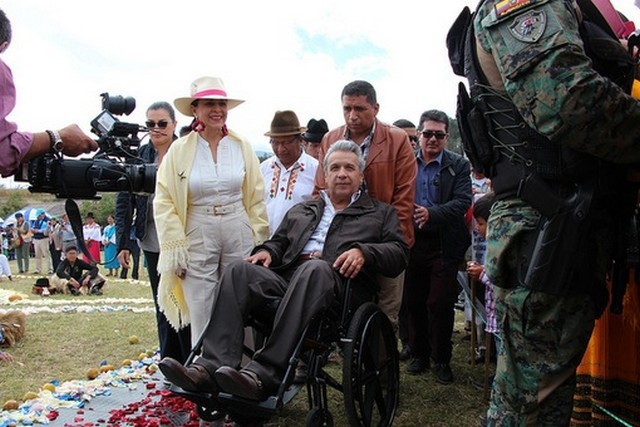
In 2017, the CIA / NED (National Endowment for Democracy) and the US State Department have brought about a so-called “soft” regime change. They urged (very likely coerced) Rafael Correa to abstain from running again for President, as the vast majority of Ecuadorians requested him to do. This would have required a Constitutional amendment which probably would have been easily accepted by Parliament. Instead they had Correa endorse his former Vice-President (2007-2013) Lenin Moreno, who run on Correa’s platform, the socialist PAIS Alliance. Therefore, expected to continue in Correa’s line with same socioeconomic policies.
Less than a year later, Moreno turned tables, became an outright traitor to his country and the people who voted for him. He converted Ecuador’s economy to the neoliberal doctrine – privatization of everything, stealing the money from the social sectors, depriving people of work, drastically reducing social services and converting a surplus economy of tremendous social gains into one of poverty and misery.

President Correa left the country a modest debt of about 40% to GDP at the end of his Presidency in 2017. A debt-GDP ratio that would be no problem anywhere in the world. Compare this to the US debt vs. GDP – 105% in current terms and about 700% in terms of unmet obligations (net present value of total outstanding obligations). There was absolutely no reason to call the IMF for help. The IMF, the long arm of the US Treasury – ‘bought’ its way into Moreno’s neoliberal Ecuador, coinciding with Moreno evicting Julian Assange from the Ecuadorian Embassy in London.

The IMF loan of US$ 4,2 billion increases the debt / GDP ratio by 4% and brings social misery and upheaval in return, and that as usual, at an unimaginable cost, by neoliberal economists called “externalities”. It was practically a US “present” for Moreno’s treason, bringing Assange closer into US custody. What most people are unaware of, is that at the same time, Moreno forgave US$ 4.5 billion in fines, interest and other dues to large corporations and oligarchs, hence decapitalizing the country’s treasury. The amount of canceled corporate fiscal obligations is about equivalent to the IMF loan, plunging large sectors of the Ecuadorian population into more misery.

Besides, under wrong pretexts it allowed Moreno to apply neoliberal policies, all those that usually come as draconian conditions with IMF loans and that eventually benefit only a small elite in the country – but allowswestern bankingand corporations to further milk the countries social system.

According to a 2017 report of the Center for Economic and Policy Research (CEPR), an economic thinktank in Washington, Ecuador’s economy has done rather well under Rafael Correa’s 10-year leadership (2007 – 2017). The country has improved her key indicators significantly: Average annual GDP growth was 1.5% (0.6% past 26 years average); the poverty rate declined by 38%, extreme poverty by 47%, a multiple of poverty reduction of that in the previous ten years, thanks to a horizontally distributive growth; inequality (Gini coefficient) fell substantially, from 0.55 to 0.47; the government doubled social spending from 4.3% in 2006 to 8.6% in 2016; tripled education spending from 0.7% to 2.1% with a corresponding increase in school enrollments; increased public investments from 4% of GDP in 2006 to 10% in 2016.

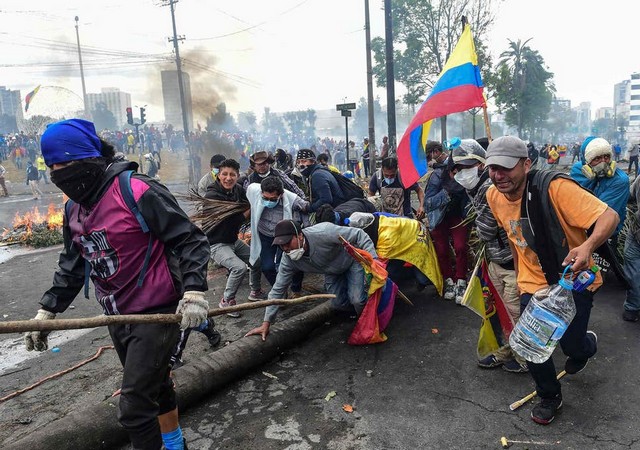
Now, Moreno is in the process of reversing these gains. Only six months after contracting the IMF loans, he has already largely succeeded. The public outcry can be heard internationally. Quito is besieged by tens of thousands of demonstrators, steadily increasing as large numbers, in the tens of thousands, of indigenous people are coming from Ecuador’s Amazon region and the Andes to Quito to voice their discontent with their traitor president. Government tyranny is rampant. Moreno declared a 60-day state of emergency – with curfew and a militarized country. As a consequence, Moreno moved the Government Administration to Guayaquil and ordered one of the most severe police and military repressions, Ecuador has ever known, resulting within ten days to at least 7 people killed, about 600 injured and about 1,000 people arrested.
The protests are directed against the infamous Government Decree 883, that dictates major social reforms, including an increase in fuel prices by more than 100%, reflecting directly on public transportation, as well as on food prices; privatization of public services, bringing about untold layoffs, including some 23,000 government employees; an increase in Aggregated Value Taxes– all part of the so-called “paquetazo”, imposed by the IMF. Protesters called on Moreno, “Fuera asesino, fuera” – Get out, murderer, get out! – Will they succeed?

The IMF’s guns are needlessly imposed debt, forced privatization of social services and public assets as railways, roads, and worst of all, health, education, water supply and sewerage services. Unemployment rises, extreme poverty skyrockets, public service tariffs – water, electricity, transportation – increase, often exponentially, depriving people from moving to work or look for new employment elsewhere. Diseases that otherwise may have been curable, like cancers, under the new regime lack medication. Patients die prematurely. Depression brings about rapidly rising suicide rates, as the British medical journal Lancet has observed in many IMF oppressed countries, but especially in Greece.

Targeted are primarily those nations that do not want to bend to the dictate of Washington, and even more so those with natural resources the west covets, or countries that are in strategic geographic locations, where NATO wants to establish itself or get a stronger foothold, i.e. Greece. The IMF is often helped by the World Bank. The former providing, or rather coercing, a ‘debt-strapped’ country into accepting so-called rescue packages, billions of dollars of loans, at exorbitant “high-risk” interest rates, with deadly strings attached.

The latter, the WB, would usually come in with loans – also euphemistically called “blank checks” – to be disbursed against a matrix of fulfilled conditions, of economic reforms, privatizations. Again, all usually resulting in massive government layoffs, unemployment, poverty. In fact, both the IMF and the WB approaches are similar and often overlapping – imposing “structural adjustment” (now in disguise given different names), to steal a countries resources, and sovereignty, by making them dependent on the very financial institutions that pretend to ‘help’ them.

The three most recent and flagrant cases of IMF interference were Greece, Ukraine and Argentina. Greece was doubly destroyed, once by her brothers and sisters of the European non-Union that blackmailed them into staying with the euro, instead of exiting it and converting to their local currency and regaining financial sovereignty.

Ukraine, possibly the richest country in terms of national resources and with an enormous agricultural potential due to her fertile soil, was “regime changed” by a bloody coup, The Maidan massacre in February 2014, instigated and planned by the CIA, the EU and NATO and carried out through the very US Embassy in Kiev. This was all long-term planning. Remember Victoria Nuland boasting that the US has spent more than 5 billion dollars over the past five year to bring about regime change and to convert Ukraine into a fully democratic country and making it ready to enter the European Union?

The western allies put a Nazi Government into Kiev, created a “civil war” with the eastern Russia-aligned part of Ukraine, the Donbass. Thousands of people were killed, millions fled the country, mostly to Russia – the country’s debt went through the roof, and – in comes the IMF, approving in December 2018 a 14-month Stand-By Arrangementfor Ukraine, with an immediate disbursement of US$ 1.4 billion. This is totally against the IMF’s own Constitution, because it does not allow lending to a country at war or conflict. Ukraine was an “exception”, dictated by the US. Blamed for the ever-changing and escalating Ukraine fiasco was Russia.

Another IMF victim is Argentina. In December 2015 through fraudulent election, Washington put a neoliberal henchman into the Presidency, Mauricio Macri. He carried out economic and labor reforms by decree and within the first 12 months in office, increased unemployment and poverty from about 12% he inherited from his predecessor, Christine Kirchner, to over 30%.

Within 15 years of Kirchner Governments, Argentina largely recovered from the collapse of 2000 / 2001 / 2002, accumulating a healthy reserve. There was no need to call the IMF to the rescue, except if it was a pre-condition for Macri to become president. In September 2018, Argentina contracted from the IMF the largest ever IMF loan of 57.1 billion dollars, to be disbursed over a three-year period, plunging Argentina in an almost irrecoverable debt situation.

The Bretton Woods Organizations –World Bank and IMF, were created in 1944 precisely for that reason, to enslave the world, particularly the resources-rich countries. The purpose of these so-called international financial institutions, foresaw an absolute veto power of the United States, meaning they are doing the bidding of the US Treasury. They were created under the UN Charter for good disguise, and are to work hand-in-glove with the fiat monetary system created in 1913 by the Federal Reserve Act. The pretext was to monitor western “convertible” currencies that subscribed to the also newly modified gold standard (1 Troy ounce [31.1 grams] of gold = US$ 35) , also established during the Bretton Woods Conference in 1944.

Both organizations started lending money – the Marshall Fund, managed by the world Bank in the 1950s – to war devastated Europe, moving gradually into economic development of “Third World” countries – and, eventually, in the 1980s showing their evil heads by introducing the neoliberal doctrines of the Washington Consensus worldwide. It is a miracle how they get away with spewing so much misery – literally unopposed for the last 30 – 40 years – throughout the world. Why are they not be stopped and dismantled? – The UN has 193 members; only a small proportion of them benefit from the IMF-WB financial crimes. Why does the vast majority – also potential victims, remain silent?

Peter Koenig is an economist and geopolitical analyst. He is also a water resources and environmental specialist.

14 October 2019

Source: countercurrents.org

People’s protest in Ecuador compels Moreno government to drop IMF’s prescription of neo-liberal measure

By Countercurrents Collective

United Nations-backed dialogue between the right wing Lenin Moreno’s government and leaders of protesting people including indigenous people’s organizations reached a deal Sunday to revoke pro-International Monetary Fund (IMF) Decree 883, end strikes across the country, and to set up a commission that will write the new document, which will replace the decree issued earlier. Indigenous groups that led the protest rallies consented to stopping the people’s mobilization that was going for 11 days.

Arnaud Peral, the U.N. Representative in Ecuador, informed that the new decree would be drawn up by organizations of the Indigenous movement.

In a televised speech on October 3, Moreno announced executive order 883, which, it claimed, “liberates the price of diesel and extra gasoline.”

Moreno justified his decision by saying that the Ecuadorean state allocates more than US$1.3 billion a year in fuel subsidies.

The next day prices increased by 25 to 120 percent, as the gallon of gasoline went from US$1.85 to US$2.30, and of diesel, used by most freight transport, rose from US$1.03 to US$2.27. It was part of a measure in compliance with the IMF’s US$4.2 billion loan to the country.

An influx of protesters from all over the country came to Quito following the government announced sweeping austerity policies, a part of the IMF loan package. Most of all people were angry at the decree cancelling fuel subsidies that saw the prices skyrocket.

The protesters occupied the parliament building and other administrative buildings for a short period.

Massive protests by people, mainly led by the Indigenous sector, began, and it reached 12th day on Sunday. President Moreno even fled away the capital city. He moved the government to a city, which is a bastion of right wing forces.

The protests rocked the capital, set up barricades, burned tire. The capital city took the look of a war battered city. Police used tear gas, military equipment and even mounted officers pushed back the protesters. Curfew was imposed several times. But the people defied the curfews.

“We’ve got more than 2,000 injured, 1.000 prisoners, 10 killed, 100 missing. We have had human rights violations. We ask for the resignation of Minister Romo and Minister Jarrín, only then will we have peace and freedom,” said Jaime Vargas president of the Confederation of Indigenous Nationalities of Ecuador, CONAIE in short, (Ecuadorean Confederation of Indigenous Nationalities).

Jaime Vargas thanked all the people joining the protests or helping the protesters that came to Quito.

The negotiations brokered by UN started in Quito, the country’s capital.

The parties agreed to create a commission to develop a new decree repealing the one that caused the discontent.

Jaime Vargas, said that anti-government mobilizations would be lifted throughout the territory.

He criticized the police and the military for their actions against the demonstrators calling them “violation of human rights” and called for the removal of the Ministers of Interior and Defense.

Private secretary of Moreno defended the work of the law enforcers.

Fireworks went off in Quito and cars honked their horns in celebration after the UN negotiator Arnaud announced an agreement had been reached following three hours of televised negotiations.

14 October 2019

Source: countercurrents.org

Farewell to the World Social Forum?

By Roberto Savio

13 Oct 2019 – Looking Back

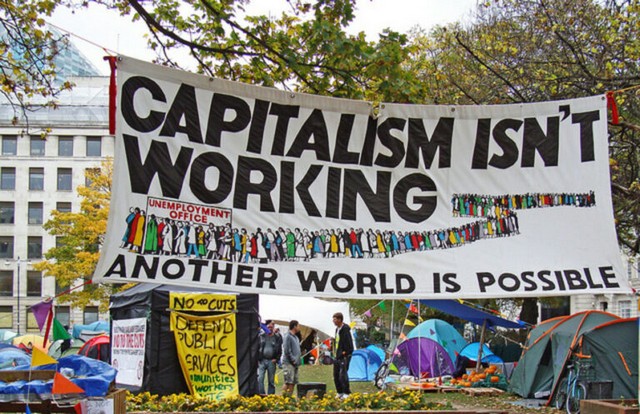
The first World Social Forum in 2001 ushered in the new century with a bold affirmation: “Another world is possible.”

That gathering in Porto Alegre, Brazil, stood as an alternative and a challenge to the World Economic Forum, held at the same time an ocean away in the snowy Alps of Davos, Switzerland.

A venue for power elites to set the course of world development, the WEF was then, and remains now, the symbol for global finance, unchecked capitalism, and the control of politics by multinational corporations.

The WSF, by contrast, was created as an arena for the grassroots to gain a voice. The idea emerged from a 1999 visit to Paris by two Brazilian activists, Oded Grajew, who was working on corporate social responsibility, and Chico Whitaker, the executive secretary of the Commission of Justice and Peace, an initiative of the Brazilian Catholic Church.

Incensed by the ubiquitous, uncritical news coverage of Davos, they met with Bernard Cassen, editor of Le Monde Diplomatique, who encouraged them to organize a counter-Davos in the Global South. With support from the government of Rio Grande do Sul, a committee of eight Brazilian organizations launched the first WSF.

The expectation was that about 3,000 people attend (the same as Davos), but instead 20,000 activists from around the world came to Porto Alegre to organize and share their visions for six days.

WSF annual meetings enjoyed great success, invariably drawing close to 100,000 participants (even as high as 150,000 in 2005). Eventually, the meetings moved out of Latin America, first to Mumbai in 2004, where 20,000 Dalits participated, then to Caracas, Nairobi, Dakar, Tunis, and Montreal.

Along the way, two other streams—Regional Social Forums and Thematic Social Forums—were created to complement the annual central gathering, and local Forums were held in many countries. Cumulatively, the WSF has brought together millions of people willing to pay their travel and lodging costs to share their experiences and collective dreams for a better world.

WSF’s Charter of Principles, drafted by the organizing committee of the first Forum and adopted at the event itself, reflected these dreams.

The Charter presents a vision of deeply interconnected civil society groups collaborating to create new alternatives to neoliberal capitalism rooted in “human rights, the practices of real democracy, participatory democracy, peaceful relations, in equality and solidarity, among people, ethnicities, genders and peoples.”

Yet, the “how” of realizing any vision was hamstrung from the start. The Charter’s first principle describes the WSF as an “open meeting place,” which, as interpreted by the Brazilian founders, precluded it from taking stances on pressing world crises.

This resistance to collective political action relegated the WSF to a self-referential place of debate, rather than a body capable of taking real action in the international arena.

It didn’t have to be this way. Indeed, the 2002 European Social Forum called for mass protest against the looming US invasion of Iraq, and the subsequent 2003 Forum played a major role in organizing the day of action the following month with 15 million protesters in the streets of 800 cities on all continents—the largest demonstration in history at the time.

However, the WSF’s core organizers, who were not interested in this path, held sway, a phenomenon inextricable from the democratic deficit that has always dogged the Forum.

Indeed, the WSF has never had a democratically elected leadership. After the first gathering, the Brazilian host committee convened a meeting in Sao Paolo to discuss how best to carry the WSF forward.

They invited numerous international organizations, and on the second day of the meeting appointed us all as the International Council. Several important organizations, not interested in this meeting, were left off the council, and those who did attend were predominately from Europe and the Americas.

In the ensuing years, efforts to change the composition created as many problems as they solved. Many organizations wanted to be represented on the Council, but due to vague criteria for evaluating their representativeness and strength, the Council soon became a long list of names (most inactive), with the roster of participants changing with every Council meeting.

Despite repeated requests from participating organizations, the Brazilian founders have refused to revisit the Charter, defending it as an immutable text rather than a document of a particular historical moment.

At a Crossroads

The future of the WSF remains uncertain. Out of a misguided fear of division, the Brazilian founders have thwarted efforts to allow the WSF to issue political declarations, establish spokespeople, and reevaluate the principle of horizontality, which eschews representative decision-making structures, as the basis for governance.

Perhaps most significantly, they have resisted calls to transcend the WSF’s original mission as a venue for discussion and become a space for organizing. With WSF spokespeople forbidden, the media stopped coming, since they had no interlocutors. Even broad declarations that would not cause schism, like condemnation of wars or appeals for climate action, have been prohibited.

As a result, the WSF has become akin to a personal growth retreat where participants come away with renewed individual strength, but without any impact on the world.

Because of its inability to adapt, and thereby act, the WSF has lost an opportunity to influence how the public understands the crises the world faces, a vacuum that has been filled by the resurgent right-wing. In 2001, globalization’s critics emerged mainly on the left, pointing out how market-driven globalization runs roughshod over workers and the environment.

Since then, as the WSF has floundered and social democratic parties have bought into the governing neoliberal consensus, the right has managed to capitalize on the broad and growing hostility to globalization, rooted especially in the feeling of being left behind experienced by working-class people.

Prior to the US financial crisis of 2008 and the European sovereign bond crisis of 2009, the National Front in France was the only established right-wing party in the West. Since then, with a decade of economic chaos and brutal austerity, right-wing parties have blossomed everywhere.

The unsettling rise of the anti-globalization right has scrambled many political assumptions and alliances. At the start of the WSF, our enemies were the international financial institutions, such as the International Monetary Fund and the World Bank. Now, these institutions support reducing income inequality and increasing public investment.

The World Trade Organization, the infamous target of massive protests in 1999, was our enemy as well, for skewing the rules of global trade toward multinational corporations; now, US president Donald Trump is trying to dismantle it for having any rules at all.

We criticized the European Commission for its free market commitment, and lack of social action: now we have to defend the idea of a United Europe against nationalism, xenophobia, and populism. These forces have upended and transformed global political dynamics. Those fighting globalization and multilateralism, using our diagnosis, are now the right-wing forces.

Looking Ahead

Is there, then, a future for the World Social Forum? Logistically, the outlook is not good. Rightwing Brazilian president Jair Bolsonaro, an ally of authoritarian strongmen around the world, has announced that he will forbid any support for the Forum, putting its future at grave risk.

Holding a forum of such size requires significant financial support, and a government at least willing to grant visas to participants from across the globe. The vibrant Brazilian civil society groups of 2001 are now struggling for survival.

Indeed, right-wing governments around the world attack global civil society as a competitor or an enemy. In Italy, Interior Minister Matteo Salvini has been pushing to eliminate the tax status of nonprofits. Like Salvini in Italy, Trump in the US, Viktor Orban in Hungary, Narendra Modi in India, and Shinzo Abe in Japan, among others, are unwilling to hear the voice of civil society.

Their escalating assault on civil society might spell the formal end of the World Social Forum, although the WSF’s refusal to evolve with the times left the organization vulnerable to such assaults.

If the World Social Forum does fade away as an actor on the global stage, we can take many valuable lessons from its history as we mount new initiatives for a “movement of movements.” First, we need to support civil society unity. Boaventura de Sousa Santos, the Portuguese anthropologist and a leading participant in the WSF, stresses the importance of “translation” between movement streams.

Women’s organizations focus on patriarchy, indigenous organizations on colonial exploitation, human rights organizations on justice, and environmental organizations on sustainability. Building mutual understanding, trust, and a basis for collective work requires a process of translation and interpretation of different priorities, embedding them in a holistic framework.

Any initiative to build transnational movement coordination must address this challenge. While it is easier to build a mass action against a common enemy, nurturing a common movement culture requires a process of sustained dialogue.

The WSF was instrumental in creating awareness of the need for a holistic approach to fight, under the same rubric, climate change, unchecked finance, social injustice, and ecological degradation. Building on that experience with how the issues intersect is critical to a viable global movement.

The WSF has made possible alliances among the social movements, which got their legitimacy by fighting the system, and the myriad NGOs, which got theirs from the agenda of the United Nations. This is certainly a significant historical contribution, enabling the next phase in the evolution of global civil society. Second, we need to balance movement horizontalism and organizational structure.

For the vast majority of participants in cutting-edge progressive movements over the past half-century, the notion of a political party, or any such organization, has been linked to oppressive power, corruption, and lack of legitimacy. This suspicion of organization, reflected in the core ideology of the WSF, has contributed to its lack of action.

This tendency to reject verticality out of fear of its association with oppression poses a major challenge to the formation of a global movement: those who would be, in principle, its largest constituency will question overarching organizational structures.

Based on historical experience, they fear the generation of unhealthy structures of power, the corruption of ideals, and the lack of real participation.

Nevertheless, coordination is essential for a diverse global movement to develop sufficient coherence. The task is to find legitimate forms of collective organization that balance the tension between the commitments to both unity and pluralism.

Third, a global movement effort must navigate a new media landscape. The Internet has changed the character of political participation. Space has shrunk, and time has become fluid and compressed. Social media has become more important than conventional media.

Indeed, it was essential, for example, to the election of Bolsonaro in Brazil and Salvini in Italy, as well as Brexit in the UK. US newspapers have a daily run of 62 million copies (ten million from quality papers like the Wall Street Journal, New York Times, and Washington Post), while Trump tweets to as many followers.

Contemporary communications technology, while used to sow confusion and abuse by the right, must be central to transnational mobilization campaigns fostering awareness and solidarity.

Political apathy among potential allies remains as great a challenge as the right-wing surge. This is not a new phenomenon.

The triumphant pronouncements of the end of ideology and history three decades ago helped mute explicit debate on the long-term vision for society. Instead, the technocrats of the International Monetary Fund, the World Bank, and the US Treasury foisted the Washington Consensus on the rest of the world: financial deregulation, trade liberalization, privatization, and fiscal austerity.

The benefits of globalization would lift all boats; curb nonproductive social costs; privatize health and more; and globalize trade, finance, and industry. Center-left parties across the West resigned themselves to this brave new world.

“Third Way” leaders like British Prime Minister Tony Blair argued that since corporate globalization was inevitable, progressives could, at best, give it a human face. In the absence of a real alternative to the dominant paradigm, the left lost its constituency. The wreckage left behind by neoliberal governments has become the engine for the populist and xenophobic forces from across the globe.

Looking ahead, to build a viable political formation for a Great Transition, we must find a banner under which people can rally. Climate action has increasingly served this function, with the youthfulness of the climate movement a reason for hope. The climate strike movement, led by Swedish student Greta Thunberg, has engaged tens of thousands of students worldwide and shown that the fight for a better world is on.

These new young activists, many of whom have probably never heard of the WSF, do not pretend to come with a pre-made platform; they simply ask the system to listen to scientists. The lack of a full vision allows them to avoid many of the WSF’s problems, yet still underscore how the system has exhausted its viability in the face of spiraling crises.

Millions of people across the globe are engaged at the grassroots level, hundreds of times more than related to the WSF. The great challenge is to connect with those working to change the present dire trends, making clear that we are not part of the same elite structures and, indeed, share the same enemy.

The historic preconditions undergird the possibility of such a project, our visions of another world give it a direction, and the growing restlessness of countless ordinary people is a hopeful harbinger.

Can we find the modes of communication and alliance to galvanize the global movement and propel it forward? I do not see much value in a coalition of organizations and militants who meet merely to discuss among themselves.

Collective action is necessary for counterbalancing the decline of democracy, increasing civic participation, and keeping values and visions at the forefront. In the WSF, the debate about moving in this direction has been going for quite some time, but has repeatedly run up against the intransigence of the founders.

It would be a mistake to lose the WSF’s impressive history and convening authority. But we need to recreate it in order to reflect the present barbarized. Will we be able to reform WSF, and if this is not possible, create an alternative?

Citizens have become more aware of the need for change than they were when we first met in Porto Alegre many years ago. But they are also more divided, some taking the reactionary path of following authoritarian leaders, some the progressive path of social justice, participation, transparency, and cooperation.

As the conventional system destabilizes and loses legitimacy, giving life to a revamped WSF—or creating a new platform—might be easier than the challenge of launching the process eighteen years ago.

Still, realizing the next phase will take new leaders, wide participation, and recognition of the need for new structures. In these times, this is a tall order.

_____________________________________________

Roberto Savio is the founder and president emeritus of Inter Press Service-IPS, publisher of Other News, and a member of the World Social Forum International Committee.

14 October 2019

Source: www.transcend.org

How Israeli Doctors Enable the Shin Bet’s Torture Industry

By Ruchama Marton

7 Oct 2019 – From approving brutal interrogation techniques to writing false medical reports, doctors in Israel have taken an active role in the torture of Palestinian prisoners.

If the Shin Bet runs a school for its agents and interrogators, the curriculum most certainly includes a class on how to tell a lie. The texts taught, it seems, do not change with the years. In 1993, responding to accusations that the Shin Bet brutally tortured Palestinian detainee Hassan Zubeidi, then Commander of the IDF Northern Command Yossi Peled told Israeli journalist Gabi Nitzan that “there is no torture in Israel. I served for 30 years in the IDF and I know what I am talking about.”

Twenty-six years later, Deputy Chief of the Shin Bet and former Shin Bet interrogator, Yitzhak Ilan repeated the same line to news presenter Ya’akov Eilon on national television while speaking about Samer Arbeed, a 44-year-old Palestinian who was hospitalized in critical condition after he had been reportedly tortured by the Shin Bet. Arbeed is suspected of organizing a deadly bombing that killed a teenage Israeli girl and wounded her father and brother at a spring in the West Bank in August. Ilan bristled at the notion that the Shin Bet was somehow responsible for Arbeed’s condition.

Putting aside these absurd forms of denial, as a doctor and founder of Physicians for Human Rights – Israel, I have always been troubled by how Israeli doctors cooperate with and enable Israel’s torture industry.

In June 1993, I organized an international conference in Tel Aviv on behalf of PHR against torture in Israel. At the conference, I presented a Shin Bet medical document that had been discovered by chance by Israeli journalist Michal Sela. In the document, the Shin Bet doctor was asked whether the prisoner in question had any medical restrictions when it came to keeping them in isolation, whether they could be tied, whether their face could be covered, or whether they could be made to stand for prolonged periods of time.

The Shin Bet denied such a document ever existed. “There is no document. It was simply an experimental paper that is not in use,” the agency claimed. Four years later, a second document, suspiciously similar to the first, came to light. That document asked doctors to sign off on torture in accordance with several previously agreed-upon clauses.

The first document, along with other findings, were published in the book titled “Torture: Human Rights, Medical Ethics and the Case of Israel.” The book cannot be found in Israel; Steimatzky, Israel’s oldest and largest bookstore chain, has banned its sale. Perhaps this is further proof that there is no torture in Israel.

After the document was uncovered, PHR turned to the Israel Medical Association and asked it to join the struggle against torture. The IMA requested that PHR hand over the names of the Shin Bet doctors who signed off on the document so that they could be dealt with internally.

I refused to hand over the names and told the IMA attorney that I was not interested in going after rank-and-file doctors — I wanted to change the entire system. That meant doing away with legitimacy granted to confessions exacted under torture, educating IMA members about non-cooperation with torturers, and particularly providing active help to those doctors who do report on suspicion of torture or brutal interrogations.

Back then, the IMA was satisfied with putting our statements while doing nothing to prevent the Shin Bet’s doctors from cooperating with torture. Furthermore, the organization failed to fulfill its obligation to establish a forum for doctors to report on suspected torture.

An ethical, moral, and practical failure

But it is not only doctors in the Shin Bet and the Israel Prison Service that collaborate with torture. Doctors in emergency rooms across Israel write false medical opinions in accordance with the demands of the Shin Bet. Take, for example, the case of Nader Qumsieh from the West Bank city of Beit Sahour. He was arrested in his home on May 4, 1993 and was brought to Soroka Medical Center in Be’er Sheva five days later. There a urologist diagnosed him a hemorrhage and a torn scrotum.

Qumsieh testified that he was beaten during his interrogation and kicked in his testicles.

Ten days later, Qumsieh was brought before the same urologist for a medical examination, after the latter had received a phone call from the Israeli military. The urologist wrote a retroactive letter (as if it had been written two days earlier), without actually conducting an additional examination of the patient, in which he said that “according to the patient, he fell down the stairs two days before he arrived in the emergency room.” This time, the diagnosis was “superficial hematoma in the scrotal area, which corresponds to local bruises sustained between two and five days prior to the examination.” The urologist’s original letter, written after the first examination, disappeared from Qumsieh’s medical file.

History teaches us that doctors everywhere easily and effectively internalize the regime’s values, and many of them become loyal servants of the regime. That was the case in Nazi Germany, in the United States, and in various countries in Latin America. The same goes for Israel. Qumsieh’s case, along with countless others, reflects the ethical, moral, and practical failure of the medical establishment in Israel vis-à-vis torture.

Already back in the 18th century, jurists — rather than doctors — published legal opinions accompanied by proof that there is no connection between causing pain and getting to the truth. Thus, both torture and confessions exacted through pain were legally disqualified. One can only assume that the heads of the Shin Bet, the army, and the police know this bit of history.

And yet, torture — which includes both mental and physical cruelty — continues to take place on a large scale. Why? Because the real goal of torture and humiliation is to break the spirit and body of the prisoner. To eliminate his or her personality.

The legal understanding for forbidding torture is based on the utilitarian idea that one cannot arrive at the truth through inflicting pain . But doctors are committed — first and foremost — to the idea that anything that causes physical or mental harm to a patient is prohibited.

The Shin Bet medical eligibility document allows for sleep prevention, it allows interrogators to expose prisoners to extreme temperatures, to beat them, to tie them for long hours in painful positions, to force them to stand for hours until the vessels in their feet burst, to cover their heads for prolonged periods of time, to sexually humiliate them, to break their spirits by severing their ties to family and lawyers, to keep them in isolation until they lose their sanity.

The Shin Bet’s medical eligibility form is not the same as the one used to check eligibility to join the air force or even to drive a car. This kind of “eligibility” leads the prisoner directly into the torture chamber — and the doctor knows this. The doctor knows to what kind of systematic process of pain and humiliation he or she is lending their consent and approval. It is doctors who oversee the torture, examine the tortured prisoner, and write the medical opinion or the pathology report.

The white robe passes through the torture chamber like a lurking shadow during interrogations. A doctor who cooperates with Israel’s torture industry is complicit in that very industry. If a prisoner dies during interrogation, the doctor is an accomplice to his or her murder. Doctors, nurses, medics, and judges who know what is taking place and prefer to remain silent are all accomplices.

We must unconditionally oppose all forms of torture — without exceptions. We, citizens of a democratic state, must refuse to cooperate with the crime of torture, and all the more so when it comes to doctors.

We must also not hide behind the idea that torture is a symptom of the occupation while telling ourselves that the practice will disappear when the occupation ends. Torture is a worldview according to which human rights have no place or value. It existed well before the occupation and it will continue to exist if we do not change that worldview.

Violent and cruel investigative practices do not benefit national security even if they are committed on its behalf. Torture causes a spiraling destruction of our very social fabric. Not only do those who carry out this terrible kind of “work” lose the values of morality, human dignity, and democracy, but also all those who remain silent, unwilling to know. In fact, all of us.

Dr. Ruchama Marton is the founder of Physicians for Human Rights – Israel.

14 October 2019

Source: www.transcend.org