Just International

Julian Assange Must Be Freed, Not Betrayed

By John Pilger

On Saturday, there will be a march from Australia House in London to Parliament Square, the centre of British democracy. People will carry pictures of the Australian publisher and journalist Julian Assange who, on 24 February, faces a court that will decide whether or not he is to be extradited to the United States and a living death.

I know Australia House well. As an Australian myself, I used to go there in my early days in London to read the newspapers from home. Opened by King George V over a century ago, its vastness of marble and stone, chandeliers and solemn portraits, imported from Australia when Australian soldiers were dying in the slaughter of the First World War, have ensured its landmark as an imperial pile of monumental servility.

As one of the oldest “diplomatic missions” in the United Kingdom, this relic of empire provides a pleasurable sinecure for Antipodean politicians: a “mate” rewarded or a troublemaker exiled.

Known as High Commissioner, the equivalent of an ambassador, the current beneficiary is George Brandis, who as Attorney General tried to water down Australia’s Race Discrimination Act and approved raids on whistleblowers who had revealed the truth about Australia’s illegal spying on East Timor during negotiations for the carve-up of that impoverished country’s oil and gas.

This led to the prosecution of whistleblowers Bernard Collaery and “Witness K”, on bogus charges. Like Julian Assange, they are to be silenced in a Kafkaesque trial and put away.

Australia House is the ideal starting point for Saturday’s march.

“I confess,” wrote Lord Curzon, Viceroy of India, in 1898, “that countries are pieces on a chessboard upon which is being played out a great game for the domination of the world.””

We Australians have been in the service of the Great Game for a very long time. Having devastated our Indigenous people in an invasion and a war of attrition that continues to this day, we have spilt blood for our imperial masters in China, Africa, Russia, the Middle East, Europe and Asia. No imperial adventure against those with whom we have no quarrel has escaped our dedication.

Deception has been a feature. When Prime Minister Robert Menzies sent Australian soldiers to Vietnam in the 1960s, he described them as a training team, requested by a beleaguered government in Saigon. It was a lie. A senior official of the Department of External Affairs wrote secretly that “although we have stressed the fact publicly that our assistance was given in response to an invitation by the government of South Vietnam”, the order came from Washington.

Two versions. The lie for us, the truth for them. As many as four million people died in the Vietnam war.

When Indonesia invaded East Timor in 1975, the Australian Ambassador, Richard Woolcott, secretly urged the government in Canberra to “act in a way which would be designed to minimise the public impact in Australia and show private understanding to Indonesia.” In other words, to lie. He alluded to the beckoning spoils of oil and gas in the Timor Sea which, boasted Foreign Minister Gareth Evans, were worth “zillions”.

In the genocide that followed, at least 200,000 East Timorese died. Australia recognised, almost alone, the legitimacy of the occupation.

When Prime Minister John Howard sent Australian special forces to invade Iraq with America and Britain in 2003, he – like George W. Bush and Tony Blair – lied that Saddam Hussein had weapons of mass destruction. More than a million people died in Iraq.

WikiLeaks was not the first to call out the pattern of criminal lying in democracies that remain every bit as rapacious as in Lord Curzon’s day. The achievement of the remarkable publishing organisation founded by Julian Assange has been to provide the proof.

WikiLeaks has informed us how illegal wars are fabricated, how governments are overthrown and violence is used in our name, how we are spied upon through our phones and screens. The true lies of presidents, ambassadors, political candidates, generals, proxies, political fraudsters have been exposed. One by one, these would-be emperors have realised they have no clothes.

It has been an unprecedented public service; above all, it is authentic journalism, whose value can be judged by the degree of apoplexy of the corrupt and their apologists.

For example, in 2016, WikiLeaks published the leaked emails of Hillary Clinton’s campaign manager John Podesta, which revealed a direct connection between Clinton, the foundation she shares with her husband and the funding of organised jihadism in the Middle East – terrorism.

One email disclosed that Islamic State (ISIS) was bankrolled by the governments of Saudi Arabia and Qatar, from which Clinton accepted huge “donations”. Moreover, as US Secretary of State, she approved the world’s biggest ever arms sale to her Saudi benefactors, worth more than $80 billion. Thanks to her, US arms sales to the world – for use in stricken countries like Yemen – doubled.

Revealed by WikiLeaks and published in The New York Times, the Podesta emails triggered a vituperative campaign against editor-in-chief Julian Assange, bereft of evidence. He was an “agent of Russia working to elect Trump”; the nonsensical “Russiagate” followed. That WikiLeaks had also published more than 800,000 frequently damning documents from Russia was ignored.

On an Australian Broadcasting Corporation programme, Four Corners, in 2017, Clinton was interviewed by Sarah Ferguson, who began: “No one could fail to be moved by the pain on your face at [the moment of Donald Trump’s inauguration] … Do you remember how visceral it was for you?”

Having established Clinton’s visceral suffering, the fawning Ferguson described “Russia’s role” and the “damage done personally to you” by Julian Assange.

Clinton replied, “He [Assange] is very clearly a tool of Russian intelligence. And he has done their bidding.”

Ferguson said to Clinton, “Lots of people, including in Australia, think that Assange is a martyr of free speech and freedom of information. How would you describe him?”

Again, Clinton was allowed to defame Assange – a “nihilist” in the service of “dictators” – while Ferguson assured her interviewee she was “the icon of your generation”.

There was no mention of a leaked document, revealed by WikiLeaks, called Libya Tick Tock, prepared for Hillary Clinton, which described her as the central figure driving the destruction of the Libyan state in 2011. This resulted in 40,000 deaths, the arrival of ISIS in North Africa and the European refugee and migrant crisis.

For me, this episode of Clinton’s interview – and there are many others – vividly illustrates the division between false and true journalism. On 24 February, when Julian Assange steps into Woolwich Crown Court, true journalism will be the only crime on trial.

I am sometimes asked why I have championed Assange. For one thing, I like and I admire him. He is a friend with astonishing courage; and he has a finely honed, wicked sense of humour. He is the diametric opposite of the character invented then assassinated by his enemies.

As a reporter in places of upheaval all over the world, I have learned to compare the evidence I have witnessed with the words and actions of those with power. In this way, it is possible to get a sense of how our world is controlled and divided and manipulated, how language and debate are distorted to produce the propaganda of false consciousness.

When we speak about dictatorships, we call this brainwashing: the conquest of minds. It is a truth we rarely apply to our own societies, regardless of the trail of blood that leads back to us and which never dries.

WikiLeaks has exposed this. That is why Assange is in a maximum security prison in London facing concocted political charges in America, and why he has shamed so many of those paid to keep the record straight. Watch these journalists now look for cover as it dawns on them that the American fascists who have come for Assange may come for them, not least those on the Guardian who collaborated with WikiLeaks and won prizes and secured lucrative book and Hollywood deals based on his work, before turning on him.

In 2011, David Leigh, the Guardian’s “investigations editor”, told journalism students at City University in London that Assange was “quite deranged”. When a puzzled student asked why, Leigh replied, “Because he doesn’t understand the parameters of conventional journalism”.

But it’s precisely because he did understand that the “parameters” of the media often shielded vested and political interests and had nothing to do with transparency that the idea of WikiLeaks was so appealing to many people, especially the young, rightly cynical about the so-called “mainstream”.

Leigh mocked the very idea that, once extradited, Assange would end up “wearing an orange jumpsuit”. These were things, he said, “that he and his lawyer are saying in order to feed his paranoia”.

The current US charges against Assange centre on the Afghan Logs and Iraq Logs, which the Guardian published and Leigh worked on, and on the Collateral Murder video showing an American helicopter crew gunning down civilians and celebrating the crime. For this journalism, Assange faces 17 charges of “espionage” which carry prison sentences totalling 175 years.

Whether or not his prison uniform will be an “orange jumpsuit”, US court files seen by Assange’s lawyers reveal that, once extradited, Assange will be subject to Special Administrative Measures, known as SAMS. A 2017 report by Yale University Law School and the Center for Constitutional Rights described SAMS as “the darkest corner of the US federal prison system” combining “the brutality and isolation of maximum security units with additional restrictions that deny individuals almost any connection to the human world … The net effect is to shield this form of torture from any real public scrutiny.”

That Assange has been right all along, and getting him to Sweden was a fraud to cover an American plan to “render” him, is finally becoming clear to many who swallowed the incessant scuttlebutt of character assassination. “I speak fluent Swedish and was able to read all the original documents,” Nils Melzer, the United Nations Rapporteur on Torture, said recently, “I could hardly believe my eyes. According to the testimony of the woman in question, a rape had never taken place at all. And not only that: the woman’s testimony was later changed by the Stockholm Police without her involvement in order to somehow make it sound like a possible rape. I have all the documents in my possession, the emails, the text messages.”

Keir Starmer is currently running for election as leader of the Labour Party in Britain. Between 2008 and 2013, he was Director of Public Prosecutions and responsible for the Crown Prosecution Service. According to Freedom of Information searches by the Italian journalist Stefania Maurizi, Sweden tried to drop the Assange case in 2011, but a CPS official in London told the Swedish prosecutor not to treat it as “just another extradition”.

In 2012, she received an email from the CPS: “Don’t you dare get cold feet!!!” Other CPS emails were either deleted or redacted. Why? Keir Starmer needs to say why.

At the forefront of Saturday’s march will be John Shipton, Julian’s father, whose indefatigable support for his son is the antithesis of the collusion and cruelty of the governments of Australia, our homeland.

The roll call of shame begins with Julia Gillard, the Australian Labor prime minister who, in 2010, wanted to criminalise WikiLeaks, arrest Assange and cancel his passport – until the Australian Federal Police pointed out that no law allowed this and that Assange had committed no crime.

While falsely claiming to give him consular assistance in London, it was the Gillard government’s shocking abandonment of its citizen that led to Ecuador granting political asylum to Assange in its London embassy.

In a subsequent speech before the US Congress, Gillard, a favourite of the US embassy in Canberra, broke records for sycophancy (according to the website Honest History) as she declared, over and again, the fidelity of America’s “mates Down Under”.

Today, while Assange waits in his cell, Gillard travels the world, promoting herself as a feminist concerned about “human rights”, often in tandem with that other right-on feminist Hillary Clinton.

The truth is that Australia could have rescued Julian Assange and can still rescue him.

In 2010, I arranged to meet a prominent Liberal (Conservative) Member of Parliament, Malcolm Turnbull. As a young barrister in the 1980s, Turnbull had successfully fought the British Government’s attempts to prevent the publication of the book, Spycatcher, whose author Peter Wright, a spy, had exposed Britain’s “deep state”.

We talked about his famous victory for free speech and publishing and I described the miscarriage of justice awaiting Assange – the fraud of his arrest in Sweden and its connection with an American indictment that tore up the US Constitution and the rule of international law.

Turnbull appeared to show genuine interest and an aide took extensive notes. I asked him to deliver a letter to the Australian government from Gareth Peirce, the renowned British human rights lawyer who represents Assange.

In the letter, Peirce wrote, “Given the extent of the public discussion, frequently on the basis of entirely false assumptions… it is very hard to attempt to preserve for [Julian Assange] any presumption of innocence. Mr. Assange has now hanging over him not one but two Damocles swords, of potential extradition to two different jurisdictions in turn for two different alleged crimes, neither of which are crimes in his own country, and that his personal safety has become at risk in circumstances that are highly politically charged.”

Turnbull promised to deliver the letter, follow it through and let me know. I subsequently wrote to him several times, waited and heard nothing.

In 2018, John Shipton wrote a deeply moving letter to the then prime minister of Australia asking him to exercise the diplomatic power at his government’s disposal and bring Julian home. He wrote that he feared that if Julian was not rescued, there would be a tragedy and his son would die in prison. He received no reply. The prime minister was Malcolm Turnbull.

Last year, when the current prime minister, Scott Morrison, a former public relations man, was asked about Assange, he replied in his customary way, “He should face the music!”

When Saturday’s march reaches the Houses of Parliament, said to be “the Mother of Parliaments”, Morrison and Gillard and Turnbull and all those who have betrayed Julian Assange should be called out; history and decency will not forget them or those who remain silent now.

And if there is any sense of justice left in the land of Magna Carta, the travesty that is the case against this heroic Australian must be thrown out. Or beware, all of us.

The march on Saturday, 22 February begins at Australia House in Aldwych, London WC2B 4LA, at 12.30pm: assemble at 11.30pm

John Pilger is an Australian journalist and documentary maker, based in London.

18 February 2020

Source: countercurrents.org
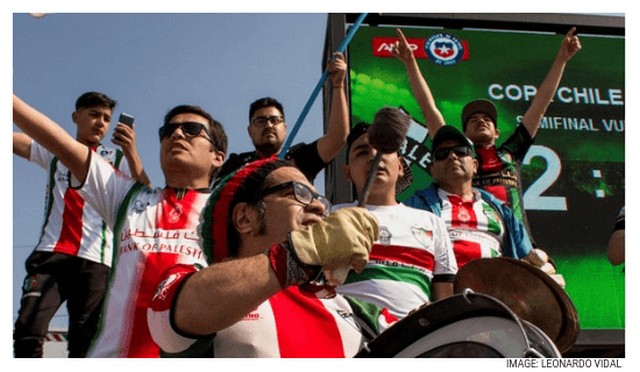
U.S. troops clash with villagers in Syria, teenager killed

By Countercurrents Collective

Media reports said: A Syrian was killed and another was wounded when villagers attacked U.S. troops and tried to block their way as their convoy drove through an army checkpoint in northeastern Syria. The incident prompted a rare clash.

Another report said: A Syrian teenager was killed while another man was injured during the altercation between U.S. troops and locals.

The altercation between Syrian villagers and U.S. troops drew in a large group of local residents and at one point, the U.S. troops opened fire on them, killing a 14-year–old boy and injuring another person.

Russian military police arrived at the scene and were able to quell the tensions before they could have spiraled into a major confrontation.

“Only thanks to the efforts of the Russian servicemen who arrived at the scene of the incident, it was possible to prevent a further escalation of the conflict with local residents,” the Russian military said.

Footage has emerged of U.S. troops getting involved in a heated exchange and a shootout with angry locals. A Russian military convoy then moved to de-escalate the situation.

Earlier, Syrian and Turkish media said U.S. warplanes had carried out at least one air strike subsequently. The coalition statement made no reference to any air strike.

Syrian state news agency SANA said the shooting was followed by an air strike on the village in rural Qamishli, near the border with Turkey.

Turkey’s state-owned Anadolu agency said there were two air strikes.

A large group of civilians tried to block the convoy from advancing any further.

The U.S. military said its force came under fire, and that troops responded in self-defense. It said an investigation of the incident was underway.

SANA said: Residents of a village had gathered at the checkpoint and pelted the U.S. convoy with stones.

A video posted on SANA’s website showed angry men firing small arms at a convoy of several armored U.S. vehicles flying the U.S. flag. Some residents pelted the convoy with stones, while another dumped a bucket full of dirt on the back of one vehicle.

In one of the worst incidents of violence against U.S. troops deployed in northeastern Syria, a small fire appears to ignite on an armored vehicle, apparently from fire bombs lobbed at the convoy. U.S. soldiers were seen standing in the middle of the melee, trying to disperse the crowd.

Other videos showed another vehicle stuck in the dirt, apparently having veered into a ditch, while another had a flat tire.

In one video, a resident walked up to U.S. soldiers at one of the vehicles, holding a U.S. flag, screaming: “What do you want from our country? What is your business here?” A soldier tells the shouting man to “back off.”

At that point, American troops fired live ammunition and smoke bombs at the residents, the reports said.

Video footage show people in civilian clothing – as well as in military uniforms – fire their Kalashnikovs in the direction of the U.S. armored vehicles. It remains unclear who opened fire first, as each side blamed the other for the shooting.

“What are nine armored vehicles doing in a peaceful village? They were confronted by the locals,” said Abdul Salah Bakri, a resident of the village, in a voice recording sent on an internet messaging application.

Residents said a Russian patrol from a contingent in Qamishli airport was sent to the village, which lies in an area in northeast Syria where Russian, U.S.-backed Syrian Kurdish forces and the Syrian army all have a presence.

The clash marked a rare confrontation involving U.S. and Syrian troops in the crowded region where Russian forces are also deployed and was certain to escalate tensions.

At one point during the incident, U.S., Russian and Syrian flags could be seen next to each other, reflecting the complicated terrain in northeastern Syria. Some reports said a Russian convoy arrived on the scene to defuse the tension.

Hundreds of U.S. troops are stationed in northeastern Syria. The U.S. carries out patrols in the area, but it was not immediately clear why the convoy drove into a government-controlled area Wednesday.

A U.S. military spokesperson said coalition forces conducting a patrol near Qamishli encountered a checkpoint occupied by Syrian government forces who ignored a series of warnings by coalition troops to de-escalate the situation. The patrol came under small-arms fire from unknown individuals, coalition spokesperson Myles Caggins said, adding that coalition troops returned fire in self-defense.

He said one U.S. soldier had “a minor superficial scratch while operating their equipment” and was back at work.

“The situation was de-escalated and is under investigation,” he said in a statement. Air Force Lt. Col. Carla Gleason, traveling with the U.S. defense secretary in Brussels, said no Americans were killed in the incident.

Asked about the incident, U.S. Secretary of Defense Mark Esper said in Brussels he was told there was an “altercation,” without providing details.

“As far as I know today’s incident did not involve the Russians,” he said.

The Syrian war, now in its ninth year, has pulled in international players including the U.S., Russia and Turkey. Russia supports Syria government, while Turkey is the rebels’ main backer.

13 February 2020

Source: countercurrents.org
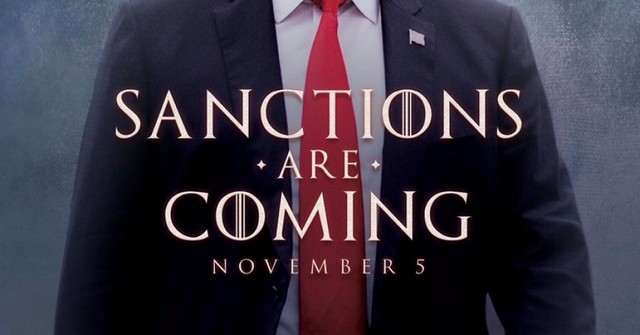
Palestine: Still Chasing The Mirage

By Jafar M Ramini

In all my years on this earth I have never had any doubt that we Palestinians will one day get our rights recognised and our land liberated and that we will, at last, have the right to return home. When I say, ‘we the Palestinians’ I do not refer to officialdom. I do not refer to The Palestinian Authority, to the Palestine Liberation Organisation, Fatah, Hamas, Islamic Jihad, the Popular Front For The Liberation of Palestine or any other faction. My faith is not in any of these. My faith is solely in my brethren in Palestine and the diaspora. It is incumbent upon us all to work diligently and relentlessly to achieve our goals of liberation and freedom by all means available to us. We are Palestine.

This faith, no this conviction, has been tested, shaken to its core, but never lost. Not even when Fatah and Hamas decided to war amongst themselves and not against our enemy and occupier, Israel. Not even when Trump came to power and started his demolition plan of all our hopes and aspirations did I lose faith.

We Palestinians need a world order that does not only recognise might but gives morality, the rule of law and humanity a chance. We need a level playing field.

This scenario has been tested over and over and over again since Mr Trump came to power. He first gifted the Israelis Jerusalem as their eternal and ‘undivided’ capital against all international norms and conventions. Israel demanded more and he obliged by moving his embassy to Jerusalem. Against all international norms and conventions. Then he went a step further by closing the offices of the PLO in Washington and deporting the Palestinian representative there and stopping all aid to The Palestinian Authority. That was not enough. He went one step further. He decided to starve UNRWA – the United Nations Relief and Works Agency, which takes care of the welfare of 5 million Palestinian refugees, from any further American funds, putting the lives and the livelihoods of 5 million Palestinians in jeopardy. His team, mostly composed of Jewish Zionists, advised him to remove the words ‘Palestinian Refugees’ from the vocabulary of American Foreign Policy. All of this was a concerted effort to pressurise the Palestinian Authority to accept his so-called peace plan. Then, to top it all he gifted Israel the occupied Syrian Golan Heights.

And then came the coup de gråce, when on the 28th January 2020, at a gathering in The White House with his bosom pal, Benjamin Netanyahu at his side and a room full of sycophants, Jewish and Christian Zionists he announced what I can only call ‘The Steal Of The Century’.

We all know what’s in it. We all know it’s violently one-sided and biased to a farcical degree and we know how utterly unfair to the Palestinians it is. They were not even there. As such, the Palestinian Authority objected to it, so did the Arab League, so did The Organisation of Islamic Cooperation as did most of Europe, Russia and China. The exception was the British Prime Minister, Boris Johnson and his Foreign Secretary, Dominic Raab who gave it a luke-warm welcome and regurgitated the same banal rhetoric about the two state solution.

All the above made not a jot of difference. Not to Israel, not to their main benefactor, the United States of America. They decided it’s a good deal and is an opener for dialogue. What dialogue I wonder? Hasn’t the Palestinian Authority been having a dialogue with Israel for a quarter of a century? No matter.

Yesterday, the 11th February 2020 was the 30th anniversary of the release from prison in South Africa of the great Nelson Mandela, who famously said, “ We know full well that our freedom is incomplete without the freedom of the Palestinians”. Yesterday, the 11th of February also saw our President, Mr Abbas trotting off to the Security Council to put his case – yet again – and literally to beg the international community to give peace, not Apartheid in Palestine, a chance.

I sat through two and a half hours of speeches by the fifteen member states, all of whom repeated the usual mantra of how committed they are to the two-state solution based on the June 4th, 1967 borders and equally committed to all the UN resolutions, of which there are many, and all respect international law and conventions. With the exception of United States of America and Israel who both insisted that all agreements of the past and resolutions were irrelevant and that their ‘deal’ was the only way forward.

Strangely, at the end of it all there was no vote.

What is the point of stating the obvious and not taking a stand? Even knowing full well that America would have vetoed it?

The Israeli ambassador, Danny Danone, openly called for the removal of Mr Abbas from office and described him as ‘not being ‘sincere’ in his search for peace. Why, asked Mr Danone, is he here at the Security Council and not in Jerusalem talking to Mr Netanyahu?

Hasn’t Mr. Abbas been talking to Mr Netanyahu for over twenty five years? What has he achieved? Apartheid.

Mr Abbas would have done much better if he had gone to Gaza, repaired the damage that has been done over the last thirteen years, gathered all the factions around him and started formulating a plan to confront and quell the Steal Of The Century. Sadly, he chose otherwise. As usual.

If the definition of madness is to do the same thing over and over and over again while each time expecting a different result is true then all our leaders must be institutionalised. When you know that if you go to any of the capitals of the western world to air your legitimate grievances against Israel that the answer will always be, ‘Israel has a right to exist and Israel has a right to defend itself” why bother?

And when you know that every time you scurry like cockroaches to the UN and, in particular, the UN Security Council to lodge another legitimate complaint against the myriad of crimes Israel commits against Palestine you are faced with the solid wall that is the American veto, why do it?

The conclusion I have reached is nobody is coming to our aid. Nobody is coming to our rescue and most of the Arab leaders are more interested in preserving their shaky thrones than protecting Jerusalem, Hebron, Palestine or even us, the Palestinians.

All that I can live with because we,Palestinians, given half a chance, are capable of doing what is needed to protect our holy sites and liberate our land. What I can’t live with is the continuous to-ing and fro-ing of Mr. Mahmoud Abbas and his colleagues to the UN to justify their existence, knowing full well that nothing good or useful will come out of these visits.

Insanity indeed.

Jafar M Ramini is a Palestinian writer and political analyst, based in London, presently in Perth, Western Australia.

13 February 2020

Source: countercurrents.org
The Philippines scrap security agreement with U.S.

By Countercurrents Collective

Philippines President Rodrigo Duterte has terminated the 1998 Visiting Forces Agreement (VFA) with the U.S.

The Philippines announced its decision Tuesday – a move the U.S. embassy in the Philippines called a “serious step” – touching off a six-month countdown to the end of the deal.

Duterte’s disdain for the Philippines’ close ties with the U.S. is well-known, He sees the ties as subservience to an abusive and hypocritical former colonial ruler. Duterte is determined to build a strong relationship with China.

Duterte’s spokesperson Salvador Panelo said U.S. disagreement with the president’s move was motivated by its own strategic interests, and that it was time for the Philippines to be militarily independent.

“Reliance on another country for our own defenses against the enemies of the state will ultimately weaken and stagnate our defense mechanisms,” Panelo said in a statement. “We must stand on our own and put a stop to being a parasite to another country in protecting our independence and sovereignty.”

The VFA was signed in 1998. It is the legal framework allowing thousands of rotating U.S. troops, ships, and aircraft to visit the Philippines and train soldiers, conduct 300 joint exercises a year. It specifies which country will have jurisdiction over the U.S. soldiers who may be accused of crimes while in the Philippines, a sensitive issue in the former U.S. colony.

Some Philippines lawmakers hope it can be saved in the 180 days before the termination takes effect.

They worry that without it, two other U.S. military agreements will be irrelevant.

Duterte has threatened since his 2016 election to put an end to the Filipino-U.S. alliance. He specifically mentioned a desire to do away with the VFA again in January, after the US cancelled the travel visa of senator and former national police chief Ronald Dela Rosa. “I’m warning you … if you won’t do the correction on this, I will terminate” the agreement,” he said, adding, “I’ll end that son of a b—-.”

The VFA is divisive in the Philippines, with leftist and nationalist critics arguing it guarantees preferential treatment for U.S. service members accused of crimes.

Its rightist defenders say ending the agreement would compromise the country’s ability to defend itself and undermine the U.S. goal of containing China.

After the U.S. embassy in Manila received notice of the Philippines’ desire to end the VFA —one of three defense agreements, among which are also the Mutual Defense Treaty and the Enhanced Defense Cooperation Agreement, that collectively serve as a cornerstone for the alliance — it called the move a “serious step with significant implications for the U.S.-Philippines alliance.”

A separate defense pact subsequently signed in 2014, the Enhanced Defense Cooperation Agreement, allows the extended stay of U.S. forces and authorizes them to build and maintain barracks and warehouses and store defense equipment and weapons inside five designated Philippine military camps.

A Filipino senator and former national police chief, Panfilo Lacson, said terminating the treaty would reduce the 1951 Mutual Defense Treaty “to a mere paper treaty as far as the U.S. is concerned.”

Military backs the scrap

The Philippine military on Wednesday stood by the president’s decision to scrap the security agreement with the U.S., saying the country could now develop its own defense capabilities and alliances, and would do fine without it.

The military chief backed President Rodrigo Duterte’s termination of the 1998 VFA and said doing so would allow the Philippines to expand its modernization program and its engagement with Australia and Japan – both U.S. allies.

Armed forces commander, General Felimon Santos, said planes and ships were being procured from countries other than the U.S., such as South Korea, while Filipinos were now “doing the leg work” on intelligence gathering on Islamist extremists.

“You know these sentiments of soldiers, we are all high morale,” he told reporters. “It will make us more eager to build up our own capabilities.”

“Wrong direction”

U.S. Defense Secretary Mark Esper is a little concerned about the Philippines’ decision.

Esper on Tuesday said the decision was a move in the wrong direction at a time when Washington and its Asian allies were trying to press China.

Esper said the decision was “unfortunate,” while admitting he was still processing the news.

“I do think it would be a move in the wrong direction as we both, bilaterally with the Philippines and collectively with a number of other partners and allies in the region, are trying to say to the Chinese, ‘You must obey the international rules of order. You must obey, you know, abide by international norms,” he said, according to USNI News.

“As we try and bolster our presence and compete with [China] in this era of great power competition, I think it’s a move in the wrong direction for the longstanding relationship we’ve had with the Philippines for their strategic location, the ties between our peoples, our countries.”

“Right direction”

Duterte’s spokesperson Panelo rejected that, calling it “a move in the right direction that should have been done a long time ago.”

Trump shrugs off

Mark Esper’s boss, U.S. President Donald Trump thinks the Philippines moves is no big deal.

When asked about the decision Wednesday, Trump said he really doesn’t mind, not least of all because it will likely save the U.S. money down the road.

The U.S. president acknowledged his view likely differs from other officials.

Trump dismissed concerns about the Philippines decision canceling a major military accord.

Trump has also put pressure on other East Asian alliances, namely those with Japan and South Korea, through repeated requests for allies to pay more for U.S. security assurances.

U.S. admiral’s hope

The move by the Philippines potentially “challenged” future U.S. operations with Filipino forces, a U.S. admiral said on Thursday.

Adm. Philip S. Davidson, commander of the U.S. Indo-Pacific Command, told a foreign policy think-tank in Sydney that he hoped the U.S. State Department would be able to negotiate a solution that would keep the VFA in place.

“It’s a 180-day notice, so we have some time for diplomatic efforts to be pursued here,” Davidson said. “I hope we can get to a successful outcome.”

Davidson said the U.S. did not have such agreements with every country in the region.

Davidson said countries in the Indo-Pacific region are beginning to take a stand against Chinese attempts to manipulate them through debt-trap diplomacy, coercion and bullying.

All nations in the region were involved in a strategic competition “between a Beijing-centric order and a free and open Indo-Pacific,” he said.

“Through excessive territorial claims, debt-trap diplomacy, violations of international agreements, theft of intellectual property, military intimidation and outright corruption, the Communist Party of China seeks to control the flow of trade, finance, communications, politics and a way of life throughout the Indo-Pacific,” Davison said.

The U.S. admiral did not mention the World Bank-IMF debt trap.

China has scoffed at what it calls U.S. interference in the Asia-Pacific region and has denied linking aid to politics.

13 February 2020

Source: countercurrents.org

OPINION – A hard look into the genesis of Myanmar’s genocide

Genesis of sustained, institutionalized destruction of Rohingya is anchored in group’s identity as Muslims

By Maung Zarni

The writer is a Burmese coordinator of the Free Rohingya Coalition and a fellow of the Genocide Documentation Center in Cambodia.

LONDON

The International Court of Justice’s Jan. 23 interim order in a case filed by Gambia against Myanmar is designed to protect the Rohingya and preserve the crime sites. It has brought a sense of vindication to several million Rohingya victims – in the diaspora, inside Myanmar, and in refugee camps in Bangladesh.

It was by far the most significant act the international community has taken since the Rohingya have been subjected to a national policy of discrimination, disenfranchisement, displacement and destructive deportation by various organs of the state in Myanmar.

The case which Gambia brought before the court has focused narrowly on the violent events of 2016 and 2017. However, it is crucial to see this group destruction in the proper context which began under the false pretext of Myanmar’s attempts at cracking down on the “illegal immigration” across Myanmar-Bangladesh borders which stretch 270 miles.

As a matter of fact, today (Feb. 12) marks the 42nd anniversary of the first violently genocidal purge — centrally organized by the then military dictatorship of General Ne Win in Rangoon involving various agencies, not only the government troops and police force but also departments or ministries of religious affairs, customs and various branches of intelligence

Paradoxically, this is also the date in which Myanmar celebrates “Union Day” — when the country’s majority Buddhist Burmese public and several national minorities along the borders of colonial Burma agreed to merge their regions voluntarily to form a single federated independent nation in 1947.

On the very same day, in Rakhine, a state in western Myanmar that borders Bangladesh, Myanmar launched the first-ever violent deportation of literally hundreds of thousands of Rohingya — the majority of whom were born and raised in the region and had official IDs and documentation that proved their Myanmar nationality.

The purges were carried out in two phases under military-style operations collectively known as Operation Dragon King.

The first phase was launched in Rakhine state’s capital Sittwe on Feb. 12, 1978, and lasted only a week, involving 200 interagency forces that resorted to various acts of violence and terror. The second phase was carried out in the northern Rakhine towns of Buthidaung and Maungdaw with 400 interagency security forces.

Myanmar troops resorted to arson, slaughter, rape and other terror methods in the region where the population was peaceful, unarmed and compliant as evidenced in the newspaper reports of the time from Bangladesh, Pakistan and other Asian regions.

The “terror” or “panic” run resulted in the first-ever large-scale Rohingya exodus — about 250,000 according to Myanmar intelligence records — across the borders into the new nation-state of Bangladesh which, with India’s direct military intervention, emerged victorious from its civil war of liberation from West Pakistan in 1971.

In his Burmese language book “The Problem at Myanmar’s Western Gate” (2016), Khin Nyunt, a former general, chief of Myanmar’s military intelligence services and prime minister, recorded the number of Muslim residents who could not prove their nationality or legal residency — or “(immigration) law breakers” in his words — as 643 (out of the total residents of 108,431) in Buthidaung town and 458 (out of the total residents of 125,893) in Maungdaw town.

The minuscule numbers of those found without any proper Myanmar national identification papers indicated the drastic achievement in Myanmar’s attempts to control its porous borders with Bangladesh, one of the world’s largest predominantly Muslim populations.

In 1959, the Myanmar military had conducted a similar immigration crackdown in the same northern Rakhine region.

According to “Myanmar’s Journey Towards Democracy and Thura U Tin Oo,” a two-volume authorized Burmese language biography of ex-General Tin Oo, the former commander-in-chief of Myanmar’s Armed Forces (published in Yangon in 2016), the then Lt. Col. Tin Oo, in his capacity as the regional commander of Rakhine, rounded up and deported 11,380 illegal migrants residing in the Rohingya region of Northern Rakhine to East Pakistan.

Tin Oo recounted that he set up two expulsion points along the two countries’ land borders from where all the East Pakistani residents without any legal documents were made to walk across the borders into Teknaf in Chittagong district in batches of several hundred each. In his words, “many of these illegals were dragging their feet upon order to cross the borders. And Myanmar troops had to load the guns and point at them as if we were going to fire unless they started crossing the borders as ordered. Under the real threats of violence, these mobs all of a sudden ran into East Pakistan.”

Now as vice-chair and co-founder of Myanmar’s ruling National League for Democracy, Tin Oo is Suu Kyi’s closest colleague. Tin Oo’s racist and violent views towards Muslim Rohingya undoubtedly influence the party’s refusal to recognize them as a national minority, a verifiable fact.

Both of these prominent veterans from Myanmar’s armed forces had the first-hand experience as military commanders tasked with taking care of illegal immigration from across East Pakistan (until 1971) and Bangladesh (since 1971).

The number of illegal migrants from across Myanmar’s western borders had verifiably nosedived from 11,380 in 1959 to 1,100 in 1978. Despite these well-documented numbers, Myanmar governments since the 1970s, particularly the Ministry of Defense and the state-controlled mass media, have continued to fuel the myth that Myanmar is under the very real threat of a large and uncontrolled incessant influx of “Bengali” who take “our Buddhist women,” grab “our Buddhist lands” and overwhelm “our Buddhist villages.”

In their respective books linguistically inaccessible for international journalists and Myanmar watchers, not once did either general Tin Oo or Khin Nyunt — who knew the region in question expertly — use the words “terrorist threats” “secession by Muslims” or “territorial grabs,” for neither Rohingya nor Bengalis from across the borders pose any threats to predominantly Buddhist Myanmar — neither demographically nor culturally nor economically.

Despite Myanmar’s official and popular discourses on the “Bengali threat at the Western Gate of Myanmar,” the illegal immigration of unwanted Muslims from East Pakistan or Bangladesh has long stopped being a real issue on the ground. The real issue is the Myanmar military’s attempts to remake the western Myanmar state of Rakhine in line with their ideological vision, according to which the region was once “purely Buddhist.”

In his introduction to the aforementioned book “The Crisis at Myanmar’s Western Gate,” ex-general Khin Nyunt spelled out this historical myth which has long guided the military’s policies of persecution — and destruction — of the Rohingya, a predominantly Muslim community: “Rakhine chroniclers have prominently characterized their nation and region as an absolutely Muslim-clean, Bengali-absent region.”

Over the last eight years since the two bouts of violence in Rakhine in 2012, Myanmar leaders including Aung San Suu Kyi have offered the world evolving narratives about the crisis in Rakhine, including “counter-insurgency” “communal conflict” “lack of economic development” “Muslim terrorism” and “excessive violence”– explanations and justifications for the country’s pattern of violent and institutionalized abuses — or crimes against Rohingya.

But the genesis of the sustained and institutionalized destruction of Rohingya is firmly anchored in the group’s identity as Muslims.

Although the country is bordered by giant neighbors such as Northeast India and Southern China with populations of over 1 billion respectively, both densely populated and both with a thousand years of overlapping migratory histories, neither Indo-Burmese borders nor Sino-Burmese borders are framed in the Burmese military’s narrative as a crisis or threat. Neither China nor India is predominantly Muslim, while both countries — particularly China — are sources of mass irregular immigration to Myanmar.

Throughout the upper Myanmar region, there are estimated 1 million Han Chinese from the bordering Yunnan province who are known to have moved into Myanmar and acquired Myanmar citizenship through bribes and other means. Neither Suu Kyi nor the military make any fuss over this.

Only Rohingya Muslims are falsely made out to be “illegals” and their presence “the crisis”.

This faith-based framing of Rohingya, a borderland population, as a threat is precisely what qualifies Myanmar’s policies as genocidal.

*Opinions expressed in this article are the author’s own and do not necessarily reflect the editorial policy of Anadolu Agency

Maung Zarni is a Burmese educator, academic, and human rights activist.

12 February 2020

Source: www.aa.com.tr

Duh, Jared! So who built the PA as a ‘police state’?

By Jonathan Cook

Nazareth: Maybe something good will come out of the Trump plan, after all. By pushing the Middle East peace process to its logical conclusion, Donald Trump has made crystal clear something that was supposed to have been obscured: that no US administration has ever really seen peace as the objective of its “peacemaking”.

The current White House is no exception – it has just been far more incompetent at concealing its joint strategy with the Israelis. But that is what happens when a glorified used-car salesman, Donald Trump, and his sidekick son-in-law, the schoolboy-cum-businessman Jared Kushner, try selling us the “deal of the century”. Neither, it seems, has the political or diplomatic guile normally associated with those who rise to high office in Washington.

During an interview with CNN’s Fareed Zakaria this week, Kushner dismally failed to cloak the fact that his “peace” plan was designed with one goal only: to screw the Palestinians over.

The real aim is so transparent that even Zakaria couldn’t stop himself from pointing it out. In CNN’s words, he noted that “no Arab country currently satisfies the requirements Palestinians are being expected to meet in the next four years – including ensuring freedom of press, free and fair elections, respect for human rights for its citizens, and an independent judiciary.”

Trump’s senior adviser suddenly found himself confronted with the kind of deadly, unassailable logic usually overlooked in CNN coverage. Zakaria observed:

“Isn’t this just a way of telling the Palestinians you’re never actually going to get a state because … if no Arab countries today [are] in a position that you are demanding of the Palestinians before they can be made a state, effectively, it’s a killer amendment?”

Indeed it is.

In fact, the “Peace to Prosperity” document unveiled last week by the White House is no more than a list of impossible preconditions the Palestinians must meet to be allowed to sit down with the Israelis at the negotiating table. If they don’t do so within four years, and quickly reach a deal, the very last slivers of their historic homeland – the parts not already seized by Israel – can be grabbed too, with US blessing.

Preposterous conditions

Admittedly, all Middle East peace plans in living memory have foisted these kinds of prejudicial conditions on the Palestinians. But this time many of the preconditions are so patently preposterous – contradictory even – that the usually pliable corporate press corps are embarrassed to be seen ignoring the glaring inconsistencies.

The CNN exchange was so revealing in part because Kushner was triggered by Zakaria’s observation that the Palestinians had to become a model democracy – a kind of idealised Switzerland, while still under belligerent Israeli occupation – before they could be considered responsible enough for statehood.

How was that plausible, Zakaria hinted, when Saudi Arabia, despite its appalling human rights abuses, nonetheless remains a close strategic US ally, and Saudi leaders continue to be intimates of the Trump business empire? No one in Washington is seriously contemplating removing US recognition of Saudi Arabia because it is a head-chopping, women-hating, journalist-killing religious fundamentalist state.

But Zakaria could have made an even more telling point – was he not answerable to CNN executives. There are also hardly any western states that would pass the democratic, human rights-respecting threshold set by the Trump plan for the Palestinians. Nor, of course, would Israel.

Think of Britain’s flouting last year of a ruling by the International Court of Justice in The Hague that the Chagos Islanders must be allowed to return home decades after the UK expelled them so the US could build a military base on their land. Or the Windrush scandal, when it was revealed that a UK government “hostile environment” policy was used to illegally deport British citizens to the Caribbean because of the colour of their skin.

Or what about the US evading due process by holding prisoners offshore at Guantanamo? Or its use of torture against Iraqi prisoners, or its reliance on extraordinary rendition, or its extrajudicial assassinations using drones overseas, including against its own citizens?

Or for that matter, its jailing and extortionate fining of whistleblower Chelsea Manning, despite the Obama administration granting her clemency. US officials want to force her to testify against Wikileaks founder Julian Assange for his role in publishing leaks of US war crimes committed in Iraq, including the shocking Collateral Murder video.

And while we’re talking about Assange and about Iraq…

Would the records of either the US or UK stand up to scrutiny if they were subjected to the same standards now required of the Palestinian leadership.

Impertinent questions

But let’s fast forward to the heart of the matter. Angered by Zakaria’s impertinence at mildly questioning the logic of the Trump plan, Kushner let rip.

He called the Palestinian Authority a “police state” and one that is “not exactly a thriving democracy”. It would be impossible, he added, for Israel to make peace with the Palestinians until the Palestinians, not Israel’s occupying army, changed its ways. It was time for the Palestinians to prioritise human rights and democracy, while at the same time submitting completely to Israel’s belligerent, half-century occupation that violates their rights and undermines any claims Israel might have to being a democracy.

Kushner said:

“If they [the Palestinians] don’t think that they can uphold these standards, then I don’t think we can get Israel to take the risk to recognize them as a state, to allow them to take control of themselves, because the only thing more dangerous than what we have now is a failed state.”

Let’s take a moment to unpack that short statement to examine its many conceptual confusions.

First, there’s the very obvious point that “police states” and dictatorships are not “failed states”. Not by a long shot. In fact, police states and dictatorships are usually the very opposite of failed states. Iraq was an extremely able state under Saddam Hussein, in terms both of its ability to provide welfare and educational services and of its ruthless, brutal efficiency in crushing dissent.

Iraq only became a failed state when the US illegally invaded and executed Saddam, leaving a local leadership vacuum that sucked in an array of competing actors who quickly made Iraq ungovernable.

Oppressive by design

Second, as should hardly need pointing out, the PA can’t be a police state when it isn’t even a state. After all, that’s where the Palestinians are trying to get to, and Israel and the US are blocking the way. It is obviously something else. What that “something else” is brings us to the third point.

Kushner is right that the PA is increasingly authoritarian and uses its security forces in oppressive ways – because that’s exactly what it was set up to do by Israel and the US.

Palestinians had assumed that the Oslo accords of the mid-1990s would lead to the creation of a sovereign state at the completion of that five-year peace process. But that never happened. Denied statehood ever since, the PA now amounts to nothing more than a security contractor for the Israelis. Its unspoken job is to make the Palestinian people submit to their permanent occupation by Israel.

The self-defeating deal contained in Oslo’s “land for peace” formula was this: the PA would build Israeli trust by crushing all resistance to the occupation, and in return Israel would agree to hand over more territory and security powers to the PA.

Bound by its legal obligations, the PA had two possible paths ahead of it: either it would become a state under Israeli licence, or it would serve as a Vichy-like regime suppressing Palestinian aspirations for national liberation. Once the US and Israel made clear they would deny the Palestinians statehood at every turn, the PA’s fate was sealed.

Put another way, the point of Oslo from the point of view of the US and Israel was to make the PA an efficient, permanent police state-in-waiting, and one that lacked the tools to threaten Israel.

And that’s exactly what was engineered. Israel refused to let the Palestinians have a proper army in case, bidding to gain statehood, that army turned its firepower on Israel. Instead a US army general, Keith Dayton, was appointed to oversee the training of the Palestinian police forces to help the PA better repress internal dissent – those Palestinians who might try to exercise their right in international law to resist Israel’s belligerent occupation.

Presumably, it is a sign of that US programme’s success that Kushner can now describe the PA as a police state.

Freudian slip

In his CNN interview, Kushner inadvertently highlighted the Catch-22 created for the Palestinians. The Trump “peace” process penalises the Palestinian leadership for their very success in achieving the targets laid out for them in the Oslo “peace” process.

Resist Israel’s efforts to deprive the Palestinians of statehood and the PA is classified as a terrorist entity and denied statehood. Submit to Israel’s dictates and oppress the Palestinian people to prevent them demanding statehood and the PA is classified as a police state and denied statehood. Either way, statehood is unattainable. Heads I win, tails you lose.

Kushner’s use of the term “failed state” is revealing too, in a Freudian slip kind of way. Israel doesn’t just want to steal some Palestinian land before it creates a small, impotent Palestinian state. Ultimately, what Israel envisions for the Palestinians is no statehood at all, not even of the compromised, collaborationist kind currently embodied by the PA.

An unabashed partisan

Kushner, however, has done us a favour inadvertently. He has given away the nature of the US bait-and-switch game towards the Palestinians. Unlike Dennis Ross, Martin Indyk and Aaron David Miller – previous American Jewish diplomats overseeing US “peace efforts” – Kushner is not pretending to be an “honest broker”. He is transparently, unabashedly partisan.

In an earlier CNN interview, one last week with Christiane Amanpour, Kushner showed just how personal is his antipathy towards the Palestinians and their efforts to achieve even the most minimal kind of statehood in a tiny fraction of their historic homeland.

He sounded more like a jilted lover, or an irate spouse forced into couples therapy, than a diplomat in charge of a complex and incendiary peace process. He struggled to contain his bitterness as he extemporised a well-worn but demonstrably false Israeli talking-point that the Palestinians “never miss an opportunity to miss an opportunity”.

He told Amanpour: “They’re going to screw up another opportunity, like they’ve screwed up every other opportunity that they’ve ever had in their existence.”

https://twitter.com/CNN/status/1222267596210343940?ref_src=twsrc%5Etfw%7Ctwcamp%5Etweetembed%7Ctwterm%5E1222267596210343940&ref_url=https%3A%2F%2Fwww.haaretz.com%2Fus-news%2F.premium-sorry-jared-this-time-it-s-not-the-palestinians-who-ve-screwed-up-it-s-you-1.8467901

The reality is that Kushner, like the real author of the Trump plan, Israeli prime minister Benjamin Netanyahu, would prefer that the Palestinians had never existed. He would rather this endless peace charade could be discarded, freeing him to get on with enriching himself with his Saudi pals.

And if the Trump plan can be made to work, he and Netanyahu might finally get their way.

This article first appeared on Jonathan Cook’s blog: https://www.jonathan-cook.net/blog/

Cook won the Martha Gellhorn Special Prize for Journalism.

6 February 2020

Source: countercurrents.org

Crisis and Opportunity: The ‘Deal of the Century’ Challenge for Palestinians

By Dr Ramzy Baroud

After several postponements, US President, Donald Trump, has finally revealed the details of his Middle East plan, dubbed ‘Deal of the Century’, in a press conference in Washington on January 28.

Standing triumphantly beside Trump, Israeli Prime Minister, Benjamin Netanyahu, must have surely understood that the timing of the announcement, only a few weeks before Israel’s third general elections in one year, was tailored especially to fit the embattled Israeli leader’s domestic agenda.

Consisting of 80 pages, 50 of which are entirely dedicated to the plan’s economic component, the document was a rehash of previous Israeli proposals that have been rejected by Palestinians and Arab governments for failing to meet the minimum standards of justice, equality and human rights.

Former Palestinian negotiator, Saeb Erekat, contended in an interview that the plan is not even American, but an Israeli one.

“What you heard last night from Trump is what I heard from Netanyahu and his negotiating team in 2011-2012,” Erekat said. “I can assure you that the US team did not make a single word or comma in this program. I have the protocols and I am willing to reveal to you what we have been offered. This is the plan of Netanyahu and the settler council.”

It was no surprise, then, to read the reaction of Palestinian Authority (PA) President Mahmoud Abbas, who assigned Trump’s plan to the “dustbin of history”.

As expected, Trump has granted Netanyahu everything that he and Israel ever wanted. The American vision for Middle East ‘peace’ does not demand the uprooting of a single illegal Jewish settlement and recognizes Jerusalem as Israel’s ‘undivided’ capital. It speaks of a conditioned and disfigured Palestinian state that can only be achieved based on vague expectations; it wholly rejects the Right of Return for Palestinian refugees, and fails to mention the word ‘occupation’ even once.

Obviously, only Israel benefits from the US plan; the Zionist discourse, predicated on maximum territorial gains with minimal Palestinian presence, has finally prevailed. Every Israeli request has been met, to the last one. Meanwhile, Palestinians received nothing, aside from the promise of chasing another mirage of a Palestinian state that has no territorial continuity and no true sovereignty.

Palestinian concerns continue to be ignored, as Palestinian rights have been ignored for many years, even during the heyday of the ‘peace process’, in the early and mid-1990s. At the time, all fundamental issues had been relegated to the ‘final status negotiations’, which have never taken place.

The ‘Deal of the Century’ merely validated the status quo ante as envisioned and unilaterally carried out by Israel.

That said, Trump’s plan will fail to resolve the conflict. Worse, it will exacerbate it even further, for Israel now has a blank check to speed up its colonial venture, to entrench its military occupation and to further oppress Palestinians, who will certainly continue to resist.

As for the economic component of the plan, history has proven that there can be no economic prosperity under military occupation. Netanyahu, and others before him, tried such dubious methods, of ‘economic peace’ and such, and all have miserably failed.

Time and again, the UN has made it clear that it follows a different political trajectory than that followed by Washington, and that all US decisions regarding the status of Jerusalem, the illegal settlements and the Golan Heights, are null and void. Only international law matters, as none of Trump’s actions in recent years have succeeded in significantly altering Arab and international consensus on the rights of the Palestinians.

As for the status of – and Palestinian rights in their occupied city – East Jerusalem, rebranding a few neighborhoods – Kafr Aqab, the eastern part of Shuafat and Abu Dis – as al-Quds, or East Jerusalem, is an old Israeli plan that has already failed in the past. The late Palestinian leader, Yasser Arafat, had enough political sagacity to reject it, and neither Abbas nor any other Palestinian official would dare compromise on the historic and legal Palestinian rights in the city.

The Palestinian leadership cannot be absolved from its responsibility towards the Palestinian people, and its unmitigated failure to develop a comprehensive national strategy.

Immediately after Trump announced his plan, Abbas called on all Palestinian factions, including his rivals in the Hamas movement, to unite and to develop a common strategy to counter the ‘Deal of the Century’.

Knowing that the US-Israeli plot was imminent, why did Abbas wait this long to call for a common strategy?

National unity among Palestinians should never be used as a bargaining chip as a scare tactic, or as a last resort option aimed at validating ineffectual Abbas in the eyes of his people.

The PA is now facing an existential crisis. Its very formation in 1994 was meant to marginalize the more democratically-encompassing Palestine Liberation Organization (PLO).

According to the new American diktats, the PA has already outlasted its usefulness.

As for Israel, the PA is only needed to maintain ‘security coordination’ with the Israeli army, which essentially means ensuring the safety of the illegal and armed Jewish settlers in occupied Palestine.

While unity among Palestinian parties is an overriding demand, Abbas’ PA cannot expect to maintain this ridiculous balancing act: expecting true and lasting national unity while still diligently serving the role expected of him by Israel and its allies.

While Trump’s sham ‘plan’ does not fundamentally alter US foreign policy in Israel and Palestine – as US bias towards Israel preceded Trump by decades – it has definitely ended the so-called ‘peace process’ charade, which divided the Palestinians into ‘moderate’ and ‘extremist’ camps.

Now, all Palestinians have become ‘extremists’ from Washington’s viewpoint, all equally shunned and marginalized.

Abbas would be terribly mistaken if he thinks that the old political discourse can be saved, which was, oddly enough, written in Washington.

The problem with the Palestinian leadership is that, despite its frequent protestations and angry condemnations, it is yet to take independent initiatives or operate outside the American-Israeli paradigm.

And this is the Palestinian leadership’s greatest challenge at this stage. Will it move forward with a Palestinian-centric strategy or persist in the same place, regurgitating old language and reminiscing of the good old days?

Ramzy Baroud is a journalist and the Editor of The Palestine Chronicle.

6 February 2020

Source: countercurrents.org

Increased USA-Iran tensions after Soleimani’s assassination and their regional impact

By Afro-Middle East Centre (AMEC)

The assassination of Quds Force head, Qasem Soleimani, in January intensified tensions in the MENA region. Iran responded with missiles targeting bases housing US troops. Its long-term strategy, however, is likely a low-level war of attrition targeting US and allied targets in the region.

The US assassination, on 3 January 2020, of Major-General Qasem Soleimani, head of the Quds Force unit of Iran’s Islamic Revolutionary Guard Corps (IRGC), greatly intensified tensions in the MENA region, taking it, by some accounts, to the brink of war. Iran responded five days later with attacks on American troops in Iraq, and will likely use its allies and proxies to undertake further attacks on US soldiers stationed in Iraq, thus maintaining a low-level war of attrition, less intense in the days after Soleimani’s assassination, but a longer-term strategy.

The assassination followed and intensified a series of incremental and escalating indirect attacks by Iran and the USA on each other’s interests in the MENA region, especially after the 2018 US withdrawal from the Joint Comprehensive Plan of Action (the 2015 Iran Nuclear deal), and more so after around March 2019, when Iran decided to respond more assertively to the US withdrawal. The USA subsequently accused Iran of increasing its support to armed groups in Iraq, Syria and Yemen; and of being involved in the May 2019 Fujairah sabotage of four oil tankers, and an attack on Saudi Aramco facilities in Al-Qaiq and Khuraise in September 2019. Both the tanker and the Aramco attacks were blamed on Iranian-backed groups. Contributing to a tense situation, The USA deployed a carrier strike-group to the gulf in May 2019, increased its troop presence in the region, and resolved to no longer grant oil wavers to countries purchasing Iranian oil.

However, neither Iran nor the USA wants an all-out war. Instead, the USA will continue pressuring Iran through current and further sanctions, while Tehran and its allies will conduct numerous low-level actions aimed at disrupting US operations and interests. Further, two of Iran’s main rivals in the region, Saudi Arabia and the UAE, have stretched their resources over the Middle East and North Africa, and have realised that they cannot rely on the USA to fight their battles with Iran. Both have thus made overtures to Tehran, especially after the tanker and Aramco operations; Riyadh advocated de-escalation after Soleimani’s assassination, and is negotiating an end to the Yemeni conflict.

Roots of current tensions
Iran and the USA have had long-standing tensions, heightened after the US role in the coup against Iran’s democratically-elected president, Mohammad Mosaddegh, in 1953. The ouster was supported, financially and diplomatically, by the CIA and the Eisenhower Administration. The Shah, whose powers were then strengthened, making him an absolute ruler, was subsequently propped up by successive US administrations through the 1960s and 1970s.

Relations between the two states further deteriorated after the 1979 Islamic Revolution, which forced the Shah out of power and into exile. He was granted asylum in the USA, prompting Iranian students to storm and besiege the US embassy in Tehran in November 1979, holding US diplomats hostage for 444 days. The USA imposed an economic embargo on Iran, and US sanctions have progressively been strengthened over the past forty-one years. Washington also actively supported Saddam Hussein in Iraq’s eight-year war against Iran, which sought to overthrow that country’s new government, and resulted in a million deaths.

In 2011, the USA, prodded by Israel, added sanctions on Iranian oil as a means of pressurising Iran to halt its nuclear programme. Since Donald Trump’s entry into the White House in 2016, relations between USA and Iran have mainly been related to or a consequence of Trump’s withdrawal from the 2015 Iran Nuclear Deal or Joint Comprehensive Plan of Action (JCPOA). The American president hoped to pressure Tehran to negotiate a more comprehensive agreement with him, to also address its support for groups such as the Houthi and Hizbullah, and the Syrian regime, as well as Iran’s ballistic missile capability. US allies Saudi Arabia and the UAE have used their economic clout, purchasing large quantities of American weapons, to convince Trump to maintain pressure on Iran. The Saudis successfully slowed down the initial JCPOA negotiations in 2013 by using its arms’ purchases to lobby France to demand more restrictions on Iran’s Arak reactor and on Tehran’s stockpile of uranium.

Measures, countermeasures
In 2018, after pulling out of the JCPOA, the USA began instituting new sanctions on Iranian companies, and, more significantly, decided not to issue new waivers on the import of Iranian oil, a key source of foreign exchange for Iran. These waivers previously allowed certain countries, such as Turkey, South Korea, Japan and India, to purchase Iranian oil. Then, in April 2019, Washington declared the IRGC a terrorist organisation, the first time the administration had labelled an entire military arm of another state in this way. Trump also deployed an additional 3 000 troops to the region, including an aircraft carrier and destroyer group. He imposed additional sanctions on Iran and Iranian officials, including on Iran’s supreme leader, Ayatollah Ali Khamenei and on its chief diplomat, Iran’s foreign minister Mohammed Javad Zarif, severely limiting his ability to travel within New York.

With an economy ravaged by the sanctions, rebellion from hardliners within the regime, and because of the failures of the EU’s proposed special purpose financial vehicle, which was supposed to facilitate the circumvention of US sanctions, the Rouhani administration began to incrementally reduce its compliance with the JCPOA, hoping to pressure the EU to comply with its side of the agreement and to ease trade and investment with Iran. This series of violations is what Iranian deputy foreign minister Abbas Araqchi referred to as a ‘rebalancing’ of, rather than a withdrawal from, the JCPOA. Tehran will still allow International Atomic Energy Agency (IAEA) officials to inspect its uranium enrichment facilities, has not (yet) increased the level of enrichment to twenty per cent, and has not sought to repurpose the design of its Arak nuclear reactor to process plutonium. This suggests the country wants to salvage the JCPOA, but wants compliance form other partners, especially the EU.

The EU responded by declaring a dispute under the JCPOA. Little will result from this, since any decision on imposing sanctions on Iran will need to be adopted by the UNSC in which Russia and China, both Iranian allies, hold veto powers. A key factor in Iran’s favour is that it has not enriched uranium to twenty per cent – the level which would radically decrease the time and effort required to enrich to weapons-grade ninety per cent.

Tehran has deployed mobile short-range missiles on naval vessels in the Gulf, in Iranian waters, in response to Washington’s deployment of an aircraft carrier and destroyer group to the region. Iran also used its proxies, especially the Hashd al-Shabi (Popular Mobilization Forces/Units) in Iraq and the Houthi in Yemen to attack US troops and interests in the region, and in June 2019 Tehran shot down an American Global Hawk surveillance drone, one of only four the USA possessed at the time.

Soleimani assassination – on a knife edge
On 3 January 2020, the USA military assassinated Soleimani and Abu Mahdi al-Muhandis, one of the most influential leaders of Iraq’s Popular Mobilisation Forces (PMF), largely supported by Iran. The assassinations, widely recognised by international scholars – including the UN Special Rapporteur for Extrajudicial, Summary or Arbitrary Executions, Agnès Callamard – as being illegal under international law, and even domestic US law. The White House initially claimed the assassination was a pre-emptive strike because Soleimani had been planning ‘imminent attacks’ on US interests, including American embassies in the region. This claim proved to be hollow, with even the US Defense Secretary, Mark Esper, stating that no evidence existed around the imminence and targets of the supposed plans.

Soleimani’s influence and popularity meant that the assassination was especially contentious for both Iran and the USA. He had been the key person involved in providing advice, training and weapons to Iran’s allies in Syria and Iraq, and coordinating between Iran and various PMF forces in Syria and Iraq, as well as with Hamas and Hizbullah. He was also revered by many Iranians who credited him with preventing the Islamic State group (IS) gaining a foothold in Iran. But he was also despised by many Syrians and Iraqis for his role in protecting regimes in their countries. Critics also blame him for Russia’s entry into the Syrian civil war, arguing that his July 2015 meeting with Russia’s president, Vladimir Putin, secured Moscow’s aerial support for the Syrian regime, without which it might have fallen. In Iraq, Soleimani consolidated support in the past few months for the Adel Abdul Mahdi administration, which has been accused of corruption and ineptitude, and which has violently cracked down on protests, killing hundreds.

Soleimani had previously worked with the USA in Afghanistan and Iraq. In the former, Soleimani coordinated certain activities with the USA in the fight against the Taliban, which both viewed as an enemy. The ‘relationship’ broke down, however, after then-US president, George W Bush, named Iran as part of an ‘axis of evil’ in 2002. Later, in Iraq, Soleimani was the point person dealing with the USA for Iran, including in discussions to form the Iraqi governing council, which took office in July 2003, and in 2009-10 to install the Nouri al-Maliki government.
After Soleimani’s assassination and funeral, which millions of Iranians and Iraqis participated in, Iran had to respond to the US aggression. Tehran decided on a two-pronged approach: a direct attack, in its name, on US troops, and a longer war of attrition with the USA through its partners and proxies. The direct response was through the attacks on the Ayn Al-Asad Airbase, west of Baghdad, and on the Irbil base, which host US troops, using around twenty Fateh and Qaim ballistic missiles on the 8 January 2020. Before the attack, the Iranians stressed that they would target only US military interests. They also informed the Iraqis which bases would be targeted. The warning, coupled with the fact that Iran conveyed a message to the USA, first via a Swiss back channel and later publicly, that this was the totality of its response, suggests that Tehran sought immediate de-escalation. The ‘indirect’ responses began soon after, in Iraq, with rockets launched at bases hosting US troops and even a the American embassy, but ensuring there were no casualties. Such attacks will likely continue, in Iraq and perhaps also in Syria and Yemen, targeting either US interests or those of its allies.

Run-up to the assassination
Before Soleimani’s assassination, regional tensions had been increasing. On 12 May 2019, four oil tankers belonging to Saudi Arabia, the UAE and Norway, were sabotaged off the UAE port of Fujairah; two days later, Houthi drones damaged Saudi Arabia’s reserve oil pipeline in Riyadh province, forcing its closure. While no one claimed responsibility for the tanker attacks, the Norwegian insurer alleged that the shrapnel from the explosions displays similarities to shrapnel from IEDs used by Houthi fighters in Yemen. Further, a Saudi-UAE-Norwegian investigation alleged ‘state involvement’ in the sabotage.

A month later, Iran shot down an American drone that had entered its airspace. Trump initially contemplated retaliatory airstrikes on Iranian missile defence systems, but later stood down. Then, in September 2019, precision drone and missile attacks on Saudi-Aramco oil facilities in Al-Qaiq and Khuraise forced a shutdown of over half of Saudi Arabia’s oil capacity, resulting in a loss of over two billion dollars. Although Yemen’s Houthi claimed the attack, a UN report suggests that the missiles originated from the north, likely from Iraq.

The USA and Israel responded by increasing attacks on Iranian troops in Syria, killing scores of people. US strikes were more limited than Israel’s, commencing in December 2019 after the death of an American contractor in a PMF attack on a military base in Iraq. Israel was more blatant, continually violating Lebanese and Syrian airspace, and launching missiles at Iranian assets in Syria. The USA also increased its troop deployment to the region, and dispatched more naval hardware to the Gulf.
Gulf countries, specifically Saudi Arabia and the UAE, shocked by what they saw as a lack of an adequate response by the USA to the tanker and Aramco attacks, and believing they could no longer rely on the USA for protection, responded through attempts at rapprochement with Iran. Riyadh sought to initiate indirect talks with Iran, having Iraq and Pakistan simultaneously acting as mediators. The UAE also sought to negotiate with Iran. In August 2019, in the aftermath of the Fujairah attack, a maritime border agreement was concluded between the UAE and Iran, regarding Abu Dhabi’s access to sea lanes. It is worth noting that the UAE’s Jebel Ali port is the largest in the region, while DP World, an Emirati port operator is the fourth largest globally. Abu Dhabi is thus invested in maintaining and enhancing sea lane access as a means of both economic growth and military influence.

In September 2019, Riyadh entered direct talks with the Houthi; Saudi coalition airstrikes in Yemen decreased by over eighty per cent in November 2019; and hundreds of prisoners, including around 130 in besieged Taiz, were exchanged between the two parties as a confidence-building measure. Further, the perceived lack of American support also saw Saudi Arabia commence negotiations to end the Qatar blockade, which Riyadh – along with the UAE, Bahrain and Egypt – imposed in 2017. Although differences still remain, the blockade has weakened at a diplomatic level with the Saudi, Emirati and Bahraini teams attending the Gulf Cup in Qatar in November 2019, and Qatar’s prime minister, Abdullah bin Nasser bin Khalifa Al Thani, attending the annual GCC Summit in Saudi Arabia in December 2019. A ‘cold peace’ between the two sides is likely soon to emerge.

Conclusion
It seems that both the USA and Iran, and regional heavyweight Saudi Arabia, do not want an all-out confrontation, especially since Iran possesses powerful military assets that can cause real damage, and Iran seems willing to use these. Saudi Arabia called for calm after Soleimani’s assassination, while Israel’s prime minister, Benjamin Netanyahu, shortened his trip to Greece and returned to Israel in an attempt to prepare for any Iranian response. Further, both the Iranian and American governments have cautioned against a war, even though Soleimani’s assassination had the potential to cause events to spiral out of control.

With 2020 being a presidential election year in the USA, Trump is unlikely to want a war (especially one that could result in a large number of American casualties) when a key promise of his 2016 campaign was to halt America’s wars and remove American troops from the Middle East. Even though he has not succeeded in this regard, Trump would not want the negative publicity that another war would bring, unless his popularity rapidly drops and he requires something to create a rally-around-the-flag effect.
For the moment, it seems as if Iraq will bear the brunt of these tensions, serving as a key battleground between the USA and Iran, especially since it is dependent on both countries, and because it is seen by Tehran as falling within its sphere of influence. Soleimani was assassinated in Iraq, and Iran’s response was to target American troops in Iraq. The Iraqi protests over unemployment, corruption and for a restructuring of the political system have thus been overshadowed. The protests, which saw tens of thousands gather in December 2019 in opposition to the government, waned after the US attacks on PMF forces in Iraq in late December. More recently, the larger protests have been those calling for US troops to leave, rather than the earlier ones which called for Iranian influence in Iraq to be decreased.

Afro-Middle East Centre (AMEC)

6 February 2020

Source: www.amec.org.za

Free Rohingya Coalition calls for Religious Harmony and Respect for Freedom of Religion among Rohingya Refugee Communities

February 5, 2020

The Free Rohingya Coalition, an international grassroots network of Rohingya refugee activists and supporters, are profoundly dismayed by the news that on 26 January evening, certain members of Rohingya refugee community had attacked 17 Rohingya Christian families and destroyed their make-shift homes in the Kutupalong refugee camp in Bangladesh. The victims of the religiously motivated attacks have now been relocated to a secure camp by Bangladesh camp authorities. The coalition condemns the violence perpetrated against Christian Rohingyas by their fellow Rohingyas who are part of the overwhelming Muslim majority.

On 3 February, Nay San Lwin, the cofounder and coordinator of the coalition, spoke out against such act and urged his fellow Rohingya refugees to respect freedom of religion and to refrain from religious discrimination and intolerance in his interview with Kutapalong Podcast news at https://medium.com/kutupalong/violence-between-muslim-and-christian-rohingya-in-kutupalong-c7a833665259

“We refugee activists have been focused on ending Myanmar’s institutionalized destruction or genocide of our Rohingya community. Our activism internationally has never been about the safety and welfare of only Muslim Rohingyas, but for all Rohingya people, irrespective of faiths among us as an ethnic community” said Nay San Lwin, himself a devout Muslim and a refugee based in Germany.

Although Rohingyas are predominantly Muslim there are approximately 500 Hindu Rohingya and 1500 Christian Rohingya said to be living in various refugee camps in Bangladesh. The religious tensions among Rohingya Muslims and Christians have been attributed to the zealous efforts by evangelical groups that attempt to convert Muslim refugees in dire situations.

Nay San Lwin called on Rohingya communities not to fear the Christianization of Rohingyas. He reminded the community, that “we all fled the religiously and racially-motivated violence, persecution, physical destruction and segregation by the pre-dominantly Buddhist Myanmar. Particularly, we as the dominant Muslims among Rohingya, must not mirror that of the violent Myanmar society whose persecution we fled.”

Ref: https://www.ucanews.com/news/probe-sought-into-attack-on-rohingya-christians-in-bangladesh/87105

Media Contact:

Maung Zarni – Coordinator for Strategic Affairs – +44 771 047 3322
Nay San Lwin – Coordinator for Campaign & Media Relations – +49 176 62139138
E-mail: info@freerohingyacoalition.org

Source: freerohingyacoalition.org

Will the Coronavirus Cause a Major Growth Slowdown in China?

By Shang-Jin Wei

Some fear that the timing of China’s coronavirus outbreak – at the start of the country’s week-long New Year celebration, and in the middle of traditional school-break travels – will exacerbate the economic fallout from the epidemic. But three important factors may limit the virus’s impact on Chinese and global GDP.

NEW YORK – The panic generated by the new coronavirus, 2019-nCov, which originated in Wuhan, one of China’s largest cities and a major domestic transport hub, reminds many of the fear and uncertainty at the peak of the 2003 SARS crisis. China’s stock market, after rising for months, has reversed itself in recent days, and global markets have followed suit, apparently reflecting concerns about the epidemic’s impact on the Chinese economy and global growth. Are these worries justified?

My baseline projection is that the coronavirus outbreak will get worse before it gets better, with infections and deaths possibly peaking in the second or third week of February. But I expect that both the Chinese authorities and the World Health Organization will declare the epidemic to be under control by early April.

Under this baseline scenario, my best estimate is that the virus will have only a limited negative economic impact. Its effect on Chinese GDP growth rate in 2020 is likely to be small, perhaps a decline on the order of 0.1 percentage point. The effect in the first quarter of 2020 will be big, perhaps lowering growth by one percentage point on an annualized basis, but this will be substantially offset by above-trend growth during the rest of the year. The impact on world GDP growth will be even smaller.

Such a prediction recalls the experience of the 2003 SARS crisis: a big decline in China’s GDP growth in the second quarter of that year was then largely offset by higher growth in the subsequent two quarters. While the full-year growth rate in 2003 was about 10%, many investment banks’ economists over-predicted the epidemic’s negative impact on growth. Looking at annual real GDP growth rates from 2000 to 2006, it is very hard to see a SARS effect in the data.

Some fear that the epidemic’s timing – at the start of the week-long Chinese New Year celebration, and in the middle of traditional school-break travels – will exacerbate the economic fallout by keeping many people away from shops, restaurants, and travel hubs. But three important factors may limit the virus’s impact.

First, in contrast to the SARS outbreak, China is now in the Internet commerce age, with consumers increasingly doing their shopping online. Much of the reduction in offline sales owing to the virus will likely be offset by an increase in online purchases. And most of the vacations canceled today will probably be replaced by future trips, because better-off households have already set aside a holiday travel budget.

Many factories have scheduled production stoppages during the Chinese New Year holidays anyway, so the timing of the epidemic may minimize the need for further shutdowns. Similarly, many government offices and schools had planned holiday closures independently of the virus outbreak. The government has just announced an extension of the holiday period, but many companies will find ways to make up the lost time later in the year. The short-term negative impact is thus likely to be concentrated among restaurants, hotels, and airlines.

Second, all reports indicate that the Wuhan coronavirus is less deadly than SARS (although it may have a faster rate of transmission initially). Equally important, the Chinese authorities have been much swifter than they were during the SARS episode in moving from controlling information to controlling the spread of the virus. By implementing aggressive measures to isolate actual and potential patients from the rest of the population, the authorities have improved their chances of containing the epidemic much sooner. That, in turn, increases the likelihood that the lost economic output this quarter will be offset by increased activity in the remainder of the year.

Third, whether or not China’s trade negotiators realized the severity of the Wuhan virus when they signed the “phase one” trade deal with the United States on January 15, the timing of the agreement has turned out to be fortunate. By greatly increasing its imports of facemasks and medical supplies from the US (and elsewhere), China can simultaneously tackle the health crisis and fulfill its promise under the deal to import more goods.

The virus’s impact on other economies will be even more limited. During the last half-decade, many major central banks have developed models to gauge the impact of a slowdown in China on their economies. These models were not built with the current health crisis in mind, but they do take into account trade and financial linkages between China and their respective economies.

As a rule of thumb, the negative impact of a decrease in China’s GDP growth on the US and European economies is about one-fifth as large in percentage terms. For example, if the current coronavirus epidemic lowers China’s growth rate by 0.1 percentage point, then growth in the US and Europe is likely to slow by about 0.02 percentage point. The impact on Australia’s economy may be twice as large, given its stronger commodity-trade and tourism links with China, but a 0.04-percentage-point reduction in growth is still small.

Such calculations assume that the coronavirus does not spread widely to these countries and cause direct havoc. This currently seems unlikely, given the low number of cases outside China.

Of course, the impact on China and other economies could be more severe if the coronavirus crisis were to last much longer than this baseline scenario assumes. In that case, it is important to remember that Chinese policymakers still have room for both monetary and fiscal expansion: the banking-sector reserve ratio is relatively high, and the share of public-sector debt to GDP is still manageable compared to China’s international peers. By using this policy space when necessary, China’s authorities could limit the ultimate impact of the current health crisis.

The coronavirus outbreak is understandably causing alarm in China and elsewhere. But from an economic perspective, it is too early to panic.

Shang-Jin Wei, a former chief economist at the Asian Development Bank, is Professor of Finance and Economics at Columbia Business School and Columbia University’s School of International and Public Affairs.

27 January 2020

Source: www.project-syndicate.org