Just International

Iran vs. US – The Murder of General Qassem Suleimani

By Peter Koenig

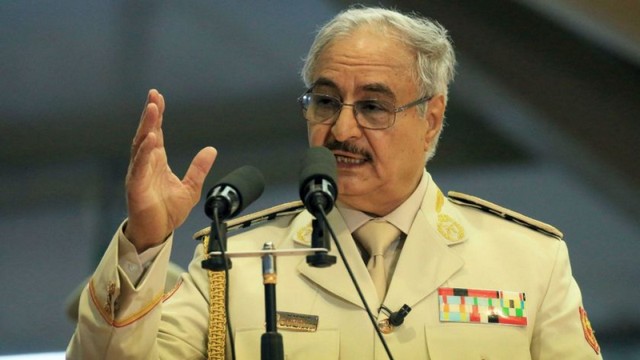
Interestingly, after the US attack on Iraqi Militia fighters on 31 December 2020, and the assassination of General Qassem Suleimani, on 2 January, the first thing President Trump could come up with, was bragging that it was him who gave the order to murder the popular military leader. General Qassem Suleimani, was the commander of the Iranian special Quds Force. The Quds Force was created during the Iran–Iraq War as a special unit from the broader Islamic Revolutionary Guard Corps (IRGC). It has the mission of liberating Muslim land, especially al-Quds, from which it takes its name – “Jerusalem Force“, in English.

General Suleimani was killed by a US drone. He was not only the most popular and prominent military officer in Iran, but he was also influential and respected throughout the Middle East.He was chief in training Iraqi forces who eventually defeated ISIS in Iraq within less than a year, when the US and NATO estimated it would take at least 3 years. General Suleimani, along with Russia was also instrumental in training the Syrian armed forces with the objective of defeating ISIS / IS / DEASH in Syria, and they succeeded. This US act of impunity, the General Suleimani killing, was unmistakenly targeted with precision and as such a clear declaration of war on Iran.

Trump expected applause from the public at large. Let’s not forget he is entering the year 2020 of his re-election… that’s what he wants. So, he needs increased popularity and approval ratings.To be reelected, he, like others before him, doesn’t shy away from committing murder or entering a new war, killing millions. That’s what American Presidents do to win elections. That’s what Obama has done. He entered the Presidency with two ongoing US wars – Afghanistan and Iraq – when he left office the US was engaged in seven wars around the globe, in Libya, Syria, Sudan, Somalia, Pakistan, as well as Afghanistan and Iraq.

Plus, numerous proxy-conflicts, meaning, they are fought by mercenaries and / or US trained, funded and armed terrorists, i.e. ISIS / DAESH, Islamic State (IS) and whatever other names the empire gives its agents of terror to confuse the world. And let’s not forget, the algorithmically manipulated regime-change elections in Latin America and Europe, the steady NATO advances with new military bases encircling Russia and China, including the stationing of more than 50% of the US Naval force in the South China Sea.

Most of the US Presidents are elected on the basis of their aggression, planned or ongoing, on how much they are willing to kill around the world – and how well they are representing the interests of the US War Industry — and, of course, the Israeli AIPAC (American Israel Public Affairs Committee). In other words, Americans who go to the polls, are duped into believing they are electing a president, when in reality their president had been pre-selected by a small group of elitists, representing the key US interests, the War Industry, Big Finance, Big Oil, Big Pharma – and who else, of course, the State of Israel.

The unarmed Iraqi protests and attack on 31 December on the US Embassy in Bagdad was a response to a US assault on Militia Iraqi forces on 29 December – leaving at least 25 dead and more than 50 wounded.

The US has absolutely no business in Iraq. Not now, not ever – nor in Syria, nor anywhere else in the Middle East –for that matter, outside the frontiers of the United States of America. Its as simple as that.

And the world, the UN the UN Security Council should act accordingly.

The boundless US aggression must be stopped.

The world has become used to it – and, for the most part, is just silent. The ABNORMAL has become normal. That must be reversed.

Yes, the Iranian Government warned of retaliation. Understandably. However, that is precisely what Washington and the Pentagon wants; that’s what they were provoking, with this assassination of General Suleiman, and earlier with confiscated oil tankers and tanker attacks in the Gulf. The US hawks are just waiting for Iraq to retaliate, so they can attack in full force – or ask Israel to attack in full force with US backing, of course.

Knowing how the US is acting around the world with impunity – and especially in the countries they want to dominate – Iran has to count with the worst. So far, Iran has been acting wisely with a lot of restraint, not to risk MAD – Mutually Assured Destruction, in other words, a World War scenario.

A retaliation must be well-thought out – and foremost not be obvious. It must be strategic with long-term impact not the short-term face-saving military act. In the long-term, non-aggression, non-confrontation – the contrary of what Washington is seeking – may prevail. Let the American war hawks continue shadow boxing.
What the Middle East and world is dealing with, is a dying beast – that’s what the US empire has become. The beast, in its last breath, is lashing out round itself no matter how many other countries it pulls with it into the abyss, no matter how many people are killed in the process.

What will be the world’s reaction to this open and flagrant murder? – Do not expect much from the US-submissive West, especially the Europeans.

However, Iran can certainly count on Russia and China and on a number of other allies. And in the UN on the more than 120 non-aligned countries, that also stand behind Venezuela and Cuba, and now behind Evo Morales.

This is important. These unaligned countries are now in the majority of the UN body of member states. They have to speak out in the Security Council, as well as in the General Assembly. This case of US impunity should be elevated to world attention. Therefore,Iran may want to call a special UN General Assembly Meeting to discuss the case. It would show where the UN stands – and would accordingly provide Iran with more leverage on their reaction.

Iran cannot elevate this case high enough on the world stage. So that each and every nation realizes that their own sovereignty is at risk – is every day at risk – of being annihilated by the wannabe World Hegemon – the self-declared Exceptional Nation, US of A.

Only united this monster can be beaten.

Washington is weak, knows no long-term thinking, no long-term strategy – lives off instant gratification. This works for a while, by sheer military force, but not forever.

Russia and China have now far advanced precision weaponry – and are allies of Iran, short-term thinking may be a suicide mission.

Peter Koenig is an economist and geopolitical analyst. He is also a water resources and environmental specialist.

5 January 2020

Source: countercurrents.org

A BRIEF REPORT ON THE MUSLIM WORLD SUMMIT IN KUALA LUMPUR

By Hassanal Noor Rashid

The Kuala Lumpur Summit entitled: The Role of Development in Achieving National Sovereignty, was held at the Kuala Lumpur Convention Centre, the 18th to 21st December 2019. As a background the Kuala Lumpur Summit is “an international platform for Muslim leaders, intellectuals and scholars from around the world to discuss and exchange ideas about the issues revolving in the Muslim world.”

The Summit saw the gathering of various representatives from Muslims countries ranging from diplomats, to civil society members. Notable attendees were, Hassan Rouhani President of Iran, Recep Tayyip Erdogan President of Turkey, Sheikh Tamim bin Hamad al-Thani, Emir of Qatar, Al-Sultan Abdullah Ri’ayatuddin Al-Mustafa Billah Shah Ibni Almarhum Sultan Haji Ahmad Shah Al-Musta’in Billah, Yang di-Pertuan Agong of Malaysia, Dr. Mahathir Mohamad, Prime Minister of Malaysia

Joko Widodo, President of Indonesia, who had initially declined to attend the KL Summit, had nominated his Vice President Ma’ruf Amin, to attend in his place. However Ma’ruf Amin had cancelled his visit as well, due to health issues.

Imran Khan, the Prime Minister of Pakistan had also withdrawn his attendance to the conference, which some have speculated was due Pakistan’s financial ties with Saudi Arabia, the latter had displayed deep disapproval for the summit

The Organization of Islamic Cooperation (OIC) had also officially protested against the Summit, describing it is as an attempt to directly rival and delegitimize the OIC, and in said that it would only serve to divide the Muslim Ummah

In Dr. Mahathir’s opening address, Mahathir clarified the position of the Summit was not to challenge any official cooperative bodies and states, and the aim of the summit was to bring out in the open and clarify the various challenges facing the Ummah which impede advancing developments in technology, economy and society.

Various topics were covered throughout the two days’ worth of panel discussions. Topics covered issues such as Education, redistribution of wealth, Food Security, Technology, and National Identity. While the talks were fairly holistic and very well-received by the attendees, as some have noted, there were numerous other issues which were not discussed such as the matter of the role and voices of Muslim converts in Muslim societies, the concept of Waqf when discussing on matters to do with Islamic Economical developments. The issue of women’s participation in the wider role of development was mainly touched in a single panel on the 20th December 2019.

While the issue of the on-going refugee crisis that has displaced millions of Muslims across various conflict zones was touched upon during the Summit, most notably by Erdogan during the opening ceremony, as well as by Sultan Nazrin Muizzuddin Shah, Sultan of Perak during the closing ceremony, the main thrust of the summit revolved mainly around potential implementable strategies and how to address the major issues in the Muslim world. Topics such as the Uyghur issue in China, was largely absent in the discussions. This reflected Dr. Mahathir’s earlier statement that the focus of the summit should be one mainly on economic development, and not one primarily centred on religion and politics

The Summit’s highlight was ultimately the exchange of various Memorandum of Commitments between various the various participating countries, mainly in the fields of technology, trade and even youth training engagements.

While the summit can be considered a success in the sense that some progressive discussions took place to highlight the various challenges of the contemporary Ummah, it remains to be seen if this Summit will be much like all other previous high level talks that see only discussions but lacking any implementation and actualization from both a governmental and societal level

Report by Hassanal Noor Rashid, JUST Programme Coordinator

War With Iran

By Chris Hedges

The assassination by the United States of Gen. Qassem Soleimani, the head of Iran’s elite Quds Force, near Baghdad’s airport will ignite widespread retaliatory attacks against U.S. targets from Shiites, who form the majority in Iraq. It will activate Iranian-backed militias and insurgents in Lebanon and Syria and throughout the Middle East. The existing mayhem, violence, failed states and war, the result of nearly two decades of U.S. blunders and miscalculations in the region, will become an even wider and more dangerous conflagration. The consequences are ominous. Not only will the U.S. swiftly find itself under siege in Iraq and perhaps driven out of the country—there is only a paltry force of 5,200 U.S. troops in Iraq, all U.S. citizens in Iraq have been told to leave the country “immediately” and the embassy and consular services have been closed—but the situation could also draw us into a war directly with Iran. The American Empire, it seems, will die not with a whimper but a bang.

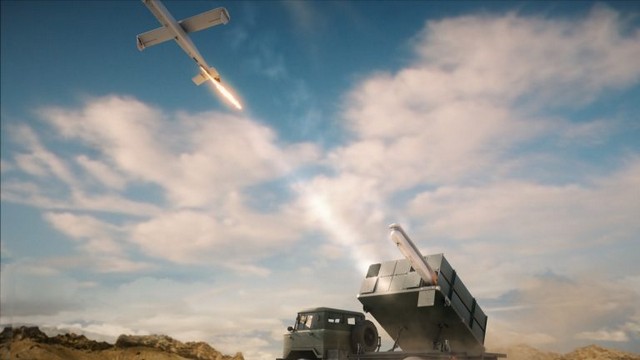
The targeting of Soleimani, who was killed by a MQ-9 Reaper drone that fired missiles into his convoy as he was leaving the Baghdad airport, also took the life of Abu Mahdi al-Muhandis, the deputy commander of Iran-backed militias in Iraq known as the Popular Mobilization Forces, along with other Iraqi Shiite militia leaders. The strike may temporarily bolster the political fortunes of the two beleaguered architects of the assassination, Donald Trump and Israeli Prime Minister Benjamin Netanyahu, but it is an act of imperial suicide by the United States. There can be no positive outcome. It opens up the possibility of an Armageddon-type scenario relished by the lunatic fringes of the Christian right.

A war with Iran would see it use its Chinese-supplied anti-ship missiles, mines and coastal artillery to shut down the Strait of Hormuz, which is the corridor for 20% of the world’s oil supply. Oil prices would double, perhaps triple, devastating the global economy. The retaliatory strikes by Iran on Israel, as well as on American military installations in Iraq, would leave hundreds, maybe thousands, of dead. The Shiites in the region, from Saudi Arabia to Pakistan, would see an attack on Iran as a religious war against Shiism. The 2 million Shiites in Saudi Arabia, concentrated in the oil-rich Eastern province, the Shiite majority in Iraq and the Shiite communities in Bahrain, Pakistan and Turkey would turn in fury on us and our dwindling allies. There would be an increase in terrorist attacks, including on American soil, and widespread sabotage of oil production in the Persian Gulf. Hezbollah in southern Lebanon would renew attacks on northern Israel. War with Iran would trigger a long and widening regional conflict that, by the time it was done, would terminate the American Empire and leave in its wake mounds of corpses and smoldering ruins. Let us hope for a miracle to pull us back from this Dr. Strangelove self-immolation.

Iran, which has vowed “harsh retaliation,” is already reeling under the crippling economic sanctions imposed by the Trump administration when it unilaterally withdrew in 2018 from the Iranian nuclear arms deal. Tensions in Iraq between the U.S. and the Shiite majority, at the same time, have been escalating. On Dec. 27 Katyusha rockets were fired at a military base in Kirkuk where U.S. forces are stationed. An American civilian contractor was killed and several U.S. military personnel were wounded. The U.S. responded on Dec. 29 by bombing sites belonging to the Iranian-backed Kataib Hezbollah militia. Two days later Iranian-backed militias attacked the U.S. Embassy in Baghdad, vandalizing and destroying parts of the building and causing its closure. But this attack will soon look like child’s play.

Iraq after our 2003 invasion and occupation has been destroyed as a unified country. Its once-modern infrastructure is in ruins. Electrical and water services are, at best, erratic. There is high unemployment and discontent over widespread government corruption that has led to bloody street protests. Warring militias and ethnic factions have carved out competing and antagonistic enclaves. At the same time, the war in Afghanistan is lost, as the Afghanistan Papers published by The Washington Post detail. Libya is a failed state. Yemen after five years of unrelenting Saudi airstrikes and a blockade is enduring one of the world’s worst humanitarian disasters. The “moderate” rebels we funded and armed in Syria at a cost of $500 million, after instigating a lawless reign of terror, have been beaten and driven out of the country. The monetary cost for this military folly, the greatest strategic blunder in American history, is between $5 trillion and $7 trillion.

So why go to war with Iran? Why walk away from a nuclear agreement that Iran did not violate? Why demonize a government that is the mortal enemy of the Taliban, along with other jihadist groups, including al-Qaida and Islamic State? Why shatter the de facto alliance we have with Iran in Iraq and Afghanistan? Why further destabilize a region already dangerously volatile?

The generals and politicians who launched and prosecuted these wars are not about to take the blame for the quagmires they created. They need a scapegoat. It is Iran. The hundreds of thousands of dead and maimed, including at least 200,000 civilians, and the millions driven from their homes into displacement and refugee camps cannot, they insist, be the result of our failed and misguided policies. The proliferation of radical jihadist groups and militias, many of which we initially trained and armed, along with the continued worldwide terrorist attacks, have to be someone else’s fault. The generals, the CIA, the private contractors and weapons manufacturers who have grown rich off these conflicts, the politicians such as George W. Bush, Barack Obama and Donald Trump, along with all the “experts” and celebrity pundits who serve as cheerleaders for endless war, have convinced themselves, and want to convince us, that Iran is responsible for our catastrophe.

The chaos and instability we unleashed in the Middle East, especially in Iraq and Afghanistan, left Iran as the dominant country in the region. Washington empowered its nemesis. It has no idea how to reverse its mistake other than to attack Iran.

Trump and Netanyahu, as well as Saudi Crown Prince Mohammed bin Salman, are mired in scandal. They believe a new war would divert attention from their foreign and domestic crises. But they have no more rational strategy for war with Iran than they did for the wars in Afghanistan, Iraq, Libya, Yemen and Syria. European allies, whom Trump alienated when he walked away from the Iranian nuclear agreement, will not cooperate with Washington if the U.S. goes to war with Iran. The Pentagon lacks the hundreds of thousands of troops it would need to attack and occupy Iran. And the Trump administration’s view that the marginal and discredited Iranian resistance group Mujahedeen-e-Khalq (MEK), which fought alongside Saddam Hussein in the war against Iran and is seen by most Iranians as composed of traitors, is a viable counterforce to the Iranian government is ludicrous.

International law, along with the rights of 80 million people in Iran, is ignored just as the rights of the peoples of Afghanistan, Iraq, Libya, Yemen and Syria were ignored. The Iranians, whatever they feel about their despotic regime, would not see the United States as allies or liberators. They do not want to be occupied. They would resist.

A war with Iran would be seen throughout the region as a war against Shiism. But these are calculations that the ideologues, who know little about the instrument of war and even less about the cultures or peoples they seek to dominate, cannot fathom. Attacking Iran would be no more successful than the Israeli airstrikes on Lebanon in 2006, which failed to break Hezbollah and united most Lebanese behind that militant group. The Israeli bombing did not pacify 4 million Lebanese. What will happen if we begin to pound a country of 80 million people whose land mass is three times the size of France?

The United States, like Israel, has become a pariah that shreds, violates or absents itself from international law. We launch preemptive wars, which under international law is defined as a “crime of aggression,” based on fabricated evidence. We, as citizens, must hold our government accountable for these crimes. If we do not, we will be complicit in the codification of a new world order, one that would have terrifying consequences. It would be a world without treaties, statutes and laws. It would be a world where any nation, from a rogue nuclear state to a great imperial power, would be able to invoke its domestic laws to annul its obligations to others. Such a new order would undo five decades of international cooperation—largely put in place by the United States—and thrust us into a Hobbesian nightmare. Diplomacy, broad cooperation, treaties and law, all the mechanisms designed to civilize the global community, would be replaced by savagery.

Chris Hedges writes a regular column for Truthdig.com.

5 January 2020

Source: countercurrents.org

An eyewitness to the horrors of the US ‘forever wars’ speaks out

By Kathy Kelly

The 2003 “shock and awe” bombing of Iraq had finally stopped. From the balcony of my room in Baghdad’s Al Fanar Hotel, I watched U.S. Marines moving between their jeeps, armored personnel carriers, and Humvees. They had occupied the street immediately in front of the small, family-owned hotel where our Iraq Peace Team had been living for the past six months. Looking upward, a U.S. Marine could see enlarged vinyl photos of beautiful Iraqi children strung across balconies of our fifth-floor rooms. We silently stood on those balconies when the U.S. Marines arrived in Baghdad, holding signs that said “War = Terror” and “Courage for Peace, Not for War.” When she first saw the Marine’s faces, Cynthia Banas commented on how young and tired they seemed. Wearing her “War Is Not the Answer” T-shirt, she headed down the stairs to offer them bottled water.

From my balcony, I saw Cathy Breen, also a member of the Iraq Peace Team, kneeling on a large canvas artwork entrusted to us by friends from South Korea. It depicts people suffering from war. Above the people, like a sinister cloud, is a massive heap of weapons. We unrolled it the day the Marines arrived and began to “occupy” this space. Marines carefully avoided driving vehicles over it. Sometimes they would converse with us. Below, Cathy read from a small booklet of daily Scripture passages. A U.S. Marine approached her, knelt down, and apparently asked to pray with her. He placed his hands in hers.

April Hurley, of our team, is a doctor. She was greatly needed in the emergency room of a nearby hospital during the bombing. Drivers would only take her there if she was accompanied by someone they had known for a long time, and so I generally accompanied her. I’d often sit on a bench outside the emergency room while traumatized civilians rushed in with wounded and maimed survivors of the terrifying U.S. aerial bombings. When possible, Cathy Breen and I would take notes at the bedsides of patients, including children, whose bodies had been ripped apart by U.S. bombs.

The ER scenes were gruesome, bloody and utterly tragic. Yet no less unbearable and incomprehensible were the eerily quiet wards we had visited during trips to Iraq from 1996 to 2003, when Voices in the Wilderness had organized 70 delegations to defy the economic sanctions by bringing medicines and medical relief supplies to hospitals in Iraq. Across the country, Iraqi doctors told us the economic war was far worse than even the 1991 Desert Storm bombing.

In pediatrics wards, we saw infants and toddlers whose bodies were wasted from gastrointestinal diseases, cancers, respiratory infections and starvation. Limp, miserable, sometimes gasping for breath, they lay in the arms of their sorrowful mothers, and seemingly no one could stop the U.S. from punishing them to death. “Why?” mothers murmured. Sanctions forbade Iraq to sell its oil. Without oil revenues, how could they purchase desperately needed goods? Iraq’s infrastructure continued to crumble; hospitals became surreal symbols of cruelty where doctors and nurses, bereft of medicines and supplies, couldn’t heal their patients or ease their agonies.

In 1995, UN officials estimated that economic sanctions had directly contributed to the deaths of at least a half-million Iraqi children, under age 5.

The economic war continued for nearly 13 harsh and horrible years.

Shortly after the Marines arrived outside of our hotel, we began hearing ominous reports of potential humanitarian crises developing in Baghdad and other major Iraqi cities. A woman who had been in charge of food distribution for her neighborhood, under the “Oil for Food” program, showed us her carefully maintained ledger books and angrily asked how all who had depended on the monthly food basket would now feed their families. Along with food shortages, we heard alarming reports about contaminated water and a possible outbreak of cholera in Basra and Hilla. For weeks, there had been no trash removal. Bombed electrical plants and sanitation facilities had yet to be restored. Iraqis who could help restore the broken infrastructure couldn’t make it through multiple check points to reach their offices; with communication centers bombed, they couldn’t contact colleagues. If the U.S. military hadn’t yet devised a plan for emergency relief, why not temporarily entrust projects to U.N. agencies with long experience of organizing food distribution and health care delivery?

Cathy, who is a nurse, Dr. April Hurley, and Ramzi Kysia, also a member of our group, arranged a meeting with the civil and military operations center, located in the Palestine Hotel, across the street from us. An official there dismissed them as people who didn’t belong there. Before telling them to leave, he did accept a list of our concerns, written on Voices in the Wilderness stationery.

The logo for our stationery reappeared a few hours later, at the entrance to the Palestine Hotel. It was taped to the flap of a cardboard box. Surrounding the logo were seven silver bullets. Written in ball-point pen on the cardboard was a message: “Keep Out.”

In response, Ramzi Kysia wrote a press release headlined: “Heavy-handed & Hopeless, The U.S. Military Doesn’t Know What It’s Doing In Iraq.”

In 2008, our group, renamed Voices for Creative Nonviolence, was beginning a walk from Chicago to the Republican National Convention in Minneapolis. We asked Imam Abdul Malik Mujahid to speak at a “send-off” event. He encouraged and blessed our “Witness Against War” walk but then surprised us by saying he had never heard us mention the war in Afghanistan, even though people there suffered terribly from aerial bombings, drone attacks, targeted assassinations, night raids and imprisonments. Returning from our walk, we began researching drone warfare, and then created an “Afghan Atrocities List,” on our website, carefully updating it each week with verifiable reports of U.S. attacks against Afghan civilians.

The following year, Joshua Brollier and I headed to Pakistan and then Afghanistan. In Kabul, Afghanistan, we were guests of a deeply respected non-governmental organization Emergency, which has a Surgical Centre for War Victims there.

Filippo, a sturdy young nurse from Italy who was close to completing three terms of service with Emergency, welcomed us. As he filled a huge backpack with medicines and supplies, he described how the hospital personnel managed to reach people in remote villages who have no access to clinics or hospitals. The trip was relatively safe since no one had ever attacked a vehicle marked with the Emergency logo. A driver would take him to one of Emergency’s 41 remote first aid clinics. From there, he would hike further up a mountainside and meet villagers awaiting him and the precious medicines he carried. In a previous visit, after he had completed a term in Afghanistan, he said people had walked four hours in the snow to come and say goodbye to him. “Yes,” he said, “I fell in love.”

How different Filippo’s report was from those compiled in our Afghan Atrocities List. The latter tells about U.S. special operations forces, some of the most highly trained warriors in the world, traveling to remote areas, bursting into homes in the middle of the night, and proceeding to lock the women in one room, handcuff or sometimes hogtie the men, rip apart closets, mattresses and furniture, and then take the men to prisons for interrogation. Amnesty International and Human Rights Watch filed chilling reports about torture of Afghan prisoners held by the U.S.

In 2010, two U.S. Veterans for Peace, Ann Wright and Mike Ferner, joined me in Kabul. We visited one of the city’s largest refugee camps. People faced appalling conditions. Over a dozen, including infants, had frozen to death, their families unable to purchase fuel or adequate blankets. When the rain, sleet and snow came, the tents and huts become mired in mud. Earlier, I had met with a young girl there whose arm had been cut off, her uncle told me, by a U.S. drone attack. Her brother, whose spine was injured, huddled under a blanket, inside their tent, visibly shaking.

Opposite the sprawling refugee camp is a huge U.S. military base. Ann and Mike felt outraged over the terrible contrast between the Afghan refugee camp with a soaring population of people displaced by war, and the U.S. base housing military personnel who had ample supplies of food, water, and fuel.

Most of the funds earmarked by the U.S. for reconstruction in Afghanistan have been used to train and equip Afghan Defense and Security forces. My young friends in the Afghan Peace Volunteers (APV) were weary of war and didn’t want military training. Each of them had lost friends and family members because of the war.

In December 2015, I again visited Emergency’s Surgical Centre for War Victims in Kabul, joined by several Afghan Peace Volunteers. We donated blood and then visited with hospital personnel. “Are you still treating any victims of the U.S. bombing in Kunduz?” I asked Luca Radaelli, who coordinates Emergency’s Afghan facilities. He explained how their Kabul hospital was already full when 91 survivors of the U.S. attack on the Kunduz hospital operated by Médecins Sans Frontières were transported for five hours over rough roads to the closest place they could be treated, this surgical center. The Oct. 15 attack had killed at least 42 people, 14 of whom were hospital staff.

Even though Kunduz hospital staff had immediately notified the U.S. military, the U.N., and the Afghan government that the U.S. was bombing their hospital, the warplane continued bombing the hospital’s ER and intensive care unit, in 15-minute intervals, for an hour and a half.

Luca introduced our small team to Khalid Ahmed, a former pharmacy student at the Kunduz hospital, who was still recovering. Khalid described the terrible night, his attempt to literally run for his life by sprinting toward the front gate, his agony when he was hit by shrapnel in his spine, and his efforts to reassemble his cell phone — guards had cautioned him to remove the batteries so that he wouldn’t be detected by aerial surveillance — so that he could give a last message to his family, as he began to lose consciousness. Fortunately, his call got through. His father’s relatives raced to the hospital’s front gate and found Khalid in a nearby ditch, unconscious but alive.

Telling his story, Khalid asked the Afghan Peace Volunteers about me. Learning I’m from the U.S., his eyes widened. “Why would your people want to do this to us?” he asks. “We were only trying to help people.”

Images of battered and destroyed hospitals in Iraq and Afghanistan, and of hospital personnel trying nevertheless to heal people and save lives, help me retain a basic truth about U.S. wars of choice: We don’t have to be this way.

Admittedly, it’s difficult to uproot entrenched systems, like the military-industrial-congressional-media-Washington, D.C., complex, which involves corporate profits and government jobs. Mainstream media seldom help us recognize ourselves as a menacing, warrior nation. Yet we must look in the mirror held up by historical circumstances if we’re ever to accomplish credible change.

The recently released “Afghanistan Papers” criticize U.S. military and elected officials for misleading the U.S. public by covering up disgraceful military failures in Afghanistan. Pentagon officials were quick to dismiss the critiques, assuring an easily distracted U.S. public that the documents won’t impact U.S. military and foreign policy. Two days later, UNICEF reported that more than 600 Afghan children had died in 2019, because of direct attacks in the war. From 2009 through 2018, almost 6,500 children lost their lives in this war.

Addressing the U.S. Senate and Congress during a visit to Washington, D.C., Pope Francis voiced a simple, conscientious question. “Why are deadly weapons being sold to those who plan to inflict untold suffering on individuals and society?” Answering his own question, he said: “the answer, as we all know, is simply for money: money that is drenched in blood, often innocent blood.”

What are the lessons learned from the rampage, destruction and cruelty of U.S. wars? I believe the most important lessons are summed up in the quote on Cynthia Banas’s T-shirt as she delivered water to Marines in Baghdad, in April, 2003: “War Is Not the Answer”; and in an updated version of the headline Ramzi Kysia wrote that same month: “Heavy-handed & Hopeless, The U.S. Military Doesn’t Know What It’s Doing” -in Iraq, Afghanistan or any of its “forever wars.”

[Kathy Kelly co-coordinates Voices for Creative Nonviolence. While in Kabul, she is a guest of the Afghan Peace Volunteers.]

4 January 2020

Source: countercurrents.org

A New Year and a New Trump Foreign Policy Blunder in Iraq

Co-Written by Medea Benjamin and Nicolas J S Davies

It’s a new year, and the U.S. has found a new enemy—an Iraqi militia called Kata’ib Hezbollah. How tragically predictable was that? So who or what is Kata’ib Hezbollah? Why are U.S. forces attacking it? And where will this lead?

Kata’ib Hezbollah is one of the Popular Mobilization Units (PMU) that were recruited to fight the Islamic State after the Iraqi armed forces collapsed and Mosul, Iraq’s second-largest city, fell to IS in June 2014. The first six PMUs were formed by five Shiite militias that all received support from Iran, plus Muqtada al-Sadr’s Iraqi nationalist Peace Company, the reincarnation of his anti-occupation Mahdi Army militia, which he had previously disarmed in 2008 under an agreement with the Iraqi government.

Kata’ib Hezbollah was one of those five original Shiite militias and it existed long before the fight against IS. It was a small Shiite group founded before the U.S. invasion of Iraq in 2003, and was part of the Iraqi Resistance throughout the U.S. occupation. In 2011, it reportedly had 1,000 fighters, who were paid $300 to $500 per month, probably mainly funded by Iran. It fought fiercely until the last U.S. occupation forces were withdrawn in December 2011, and claimed responsibility for a rocket attack that killed 5 U.S. soldiers in Baghdad in June 2011. Since forming a PMU in 2014, its leader, Abu Mahdi al-Muhandis, has been the overall military commander of the PMUs, reporting directly to the National Security Adviser in the Prime Minister’s office.

In the fight against IS, the PMUs proliferated quickly. Most political parties in Iraq responded to a fatwa by Grand Ayatollah al-Sistani to form and join these units by forming their own. At the peak of the war with IS, the PMUs comprised about 60 brigades with hundreds of thousands of Shia fighters, and even included up to 40,000 Sunni Iraqis.

In the context of the war against the Islamic State, the U.S. and Iran have both provided a great deal of military support to the PMU and other Iraqi forces, and the Iraqi Kurdish peshmerga have also received support from Iran. Secretary of State John Kerry met with Iranian Foreign Minister Mohammad Zarif in New York in September 2014 to discuss the crisis, and U.S. Ambassador Stuart Jones said in December 2014, “Let’s face it, Iran is an important neighbor to Iraq. There has to be cooperation between Iran and Iraq. The Iranians are talking to the Iraqi security forces and we’re talking to Iraqi security forces… We’re relying on them to do the deconfliction.”

U.S. officials and corporate media are falsely painting Kata’ib Hezbollah and the PMUs as independent, renegade Iranian-backed militias in Iraq but they are really an official part of the Iraq security forces. As a statement from the Iraqi prime minister’s office made clear, the U.S. airstrikes were an “American attack on the Iraqi armed forces.” And these were not just any Iraqi military forces, but forces that have borne the brunt of some of the fiercest fighting against the Islamic State.

Open hostility between U.S. forces and Kata’ib Hezbollah began six months ago, when the U.S. allowed Israel to use U.S. bases in Iraq and/or Syria to launch drone strikes against Kata’ib Hezbollah and other PMU forces in Iraq. There are conflicting reports on exactly where the Israeli drones were launched from, but the U.S. had effective control of Iraqi airspace and was clearly complicit in the drone strikes. This led to a campaign by Shia cleric/politician Muqtada al-Sadr and other anti-occupation parties and politicians in the Iraqi National Assembly to once again call for the expulsion of U.S. forces from Iraq, as they successfully did in 2011, and the U.S. was forced to accept new restrictions on its use of Iraqi airspace.

Then, at the end of October, U.S. bases and the Green Zone in Baghdad came under a new wave of rocket and mortar attacks. While previous attacks were blamed on the Islamic State, the U.S. blamed the new round of attacks on Kata’ib Hezbollah. After a sharp increase in rocket attacks on U.S. bases in December, including one that killed a U.S. military contractor on December 27, the Trump administration launched air strikes on December 29 that killed 25 members of Kata’ib Hezbollah and wounded 55. Prime Minister Abdul-Mahdi called the strikes a violation of Iraqi sovereignty and declared three national days of mourning for the Iraqi troops that U.S. forces killed.

The U.S. attacks also led to massive protests that besieged the U.S. Embassy and former U.S. occupation headquarters in the Green Zone in Baghdad. U.S. forces at the embassy reportedly used tear gas and stun grenades against the protesters, leaving 62 militiamen and civilians wounded. After the siege, the Trump administration announced that it would send more troops to the Middle East. Approximately 750 troops are expected to be sent as a result of the embassy attack and another 3,000 could be deployed in the next few days.

The U.S. retaliation was bound to inflame tensions with the Iraqi government and increase popular pressure to close U.S. bases in Iraq. In fact, if Kata’ib Hezbollah is indeed responsible for the rocket and mortar attacks, this is probably exactly the chain of events they intended to provoke. Incensed at the Trump administration’s blatant disregard for Iraqi sovereignty and worried about Iraq being dragged into a U.S. proxy war with Iran that will spiral out of control, a broad swath of Iraqi political leaders are now calling for a withdrawal of U.S. troops.

The U.S. military presence in Iraq was reestablished in 2014 as part of the campaign against the Islamic State, but that campaign has wound down substantially since the near destruction and reoccupation of Mosul, Iraq’s second largest city, in 2017. The number of attacks and terrorist incidents linked to the Islamic State in Iraq has declined steadily since then, from 239 in March 2018 to 51 in November 2019, according to Iraq researcher Joel Wing. Wing’s data makes it clear that IS is a vastly diminished force in Iraq.

The real crisis facing Iraq is not a growing IS but the massive public protests, starting in October, that have exposed the dysfunction of the Iraqi government itself. Months of street protests have forced Prime Minister Abdul-Mahdi to submit his resignation–he is now simply acting as a caretaker pending new elections. Severe repression by government forces left over 400 protesters dead, but this has only fuelled even greater public outrage.

These demonstrations are not just directed against individual Iraqi politicians or against Iranian influence in Iraq but against the entire post-2003 political regime established by the U.S. occupation. Protesters blame the government’s sectarianism, its corruption and the enduring foreign influence of both Iran and the U.S. for the failure to invest Iraq’s oil wealth in rebuilding Iraq and improving the lives of a new generation of young Iraqis.

The recent attack on Kata’ib Hezbollah has actually worked in favor of Iran, turning Iraqi public opinion and Iraqi leaders more solidly against the U.S. military presence. So why has the U.S. jeopardized what influence it still has in Iraq by launching airstrikes against Iraqi forces? And why is the U.S. maintaining a reported 5,200 U.S. troops in Iraq, at Al-Asad airbase in Anbar province and smaller bases across Iraq? It already has nearly 70,000 troops in other countries in the region, not least 13,000 in neighboring Kuwait, its largest permanent foreign base after Germany, Japan and South Korea.

While the Pentagon continues to insist that the U.S. troop presence is solely to help Iraq fight ISIS, Trump himself has defined its mission as “also to watch over Iran.” He told that to U.S. servicemen in Iraq in a December 2018 Christmas visit and reiterated it in a February 2019 CBS interview. Iraqi Prime Minister Abdul-Mahdi has made clear that the U.S. does not have permission to use Iraq as a base from which to confront Iran. Such a mission would be patently illegal under Iraq’s 2005 constitution, drafted with the help of the United States, which forbids using the country’s territory to harm its neighbors.

Under the 2008 Strategic Framework Agreement between the U.S. and Iraq, U.S. forces may only remain in Iraq at the “request and invitation” of the Iraqi government. If that invitation is withdrawn, they must leave, as they were forced to do in 2011. The U.S. presence in Iraq is now almost universally unpopular, especially in the wake of U.S. attacks on the very Iraqi armed forces they are supposedly there to support.

Trump’s effort to blame Iran for this crisis is simply a ploy to divert attention from his own bungled policy. In reality, the blame for the present crisis should be placed squarely on the doorstep of the White House itself. The Trump administration’s reckless decision to withdraw from the 2015 nuclear deal with Iran and revert to the U.S. policy of threats and sanctions that never worked before is backfiring as badly as the rest of the world predicted it would, and Trump has only himself to blame for it – and maybe John Bolton.

So will 2020 be the year when Donald Trump is finally forced to fulfill his endless promises to bring U.S. troops home from at least one of its endless wars and military occupations? Or will Trump’s penchant for doubling down on brutal and counterproductive policies only lead us deeper into his pet quagmire of ever-escalating conflict with Iran, with the U.S.’s beleaguered forces in Iraq as pawns in yet another unwinnable war?

We hope that 2020 will be the year when the American public finally looks at the fateful choice between war and peace with 20/20 vision, and that we will start severely punishing Trump and every other U.S. politician who opts for threats over diplomacy, coercion over cooperation and war over peace.

Medea Benjamin is cofounder of CODEPINK for Peace, and author of several books, including Inside Iran: The Real History and Politics of the Islamic Republic of Iran.

Nicolas J. S. Davies is an independent journalist, a researcher with CODEPINK and the author of Blood On Our Hands: the American Invasion and Destruction of Iraq.

3 January 2020

Source: countercurrents.org

US Strategy and What the Gas Pipeline War Is Costing Us

By Manlio Dinucci

Although they were locked in a convoluted struggle concerning the impeachment of President Trump, Republicans and Democrats in the Senate laid down their arms in order to vote, in quasi-unanimity, for the imposition of heavy sanctions on the companies participating in the construction of North Stream 2, the doubling of the gas pipeline which delivers Russian gas to Germany across the Baltic Sea. The main victims were the European companies which had helped finance the 11 billion dollar project with the Russian company Gazprom.

The project is now 80 % finished. The Austrian company Omy, British/Dutch Royal Dutch Shell, French Engie, German companies Uniper and Wintershall, Italian Saipem and Swiss Allseas are also taking part in the laying of the pipeline.

The doubling of North Stream increases Europe’s dependence on Russian gas, warn the United States. Above all, they are preoccupied by the fact that the gas pipeline – by crossing the Baltic in waters belonging to Russia, Finland, Sweden and Germany – thus avoids the Visegrad countries (Czech Republic, Slovakia, Poland and Hungary), the Baltic States and Ukraine. In other words, the European countries which have the closest ties to Washington through NATO (to which we must add Italy).

Rather than being economic, the goal for the USA is strategic. This is confirmed by the fact that the sanctions on North Stream 2 are included in the National Defense Authorization Act, the legislative act which, for fiscal year 2020, hands the Pentagon the colossal sum of 738 billion dollars for new wars and new weapons (including space weapons), to which must be added other posts which bring the US military expenditure to approximately 1,000 billion dollars. The economic sanctions on North Stream 2 are part of a politico-military escalation against Russia.

An ulterior confirmation can be found in the fact that the US Congress has established sanctions not only against North Stream 2, but also against the Turk-Stream, which, in its final phase of realisation, will bring Russian gas across the Black Sea to Eastern Thrace,the small European area of Turkey. From there, by another pipeline, Russian gas should be delivered to Bulgaria, Serbia and other European countries. This is the Russian riposte to the US action which managed to block the South Stream pipeline in 2014. South Stream was intended to link Russia to Italy across the Black Sea and by land to Tarvisio (Udine). Italy would therefore have become a switch platform for gas in the EU, with notable economic advantages. The Obama administration was able to scuttle the project, with the collaboration of the European Union.

The company Saipem (Italian Eni Group), once again affected by the US sanctions against North Stream 2, was severely hit by the blockage of South Stream – in 2014, it lost contracts to the value of 2.4 billion Euros, to which other contracts would have been added if the project had continued. But at the time, no-one in Italy or in the EU protested against the burial of the project which was being organised by the USA. Now German interests are in play, and critical voices are being raised in Germany and in the EU against US sanctions against North Stream 2.

Nothing is being said about the fact that the European Union has agreed to import liquified natural gas (LNG) from the USA, an extract from bituminous shale by the destructive technique of hydraulic fracturation (fracking). In order to damage Russia, Washington is attempting to reduce its gas exports to the EU, obliging European consumers to foot the bill.

Since President Donald Trump and the President of the European Commission, Jean-Claude Juncker, signed in Washington in July 2018 the Joint Statement of 25 July: European Union imports of U.S. Liquefied Natural Gas (LNG), the EU has doubled its importation of LNG from the USA, co-financing the infrastructures via an initial expenditure of 656 million Euros. However, this did not save European companies from US sanctions.

*

Note to readers: please click the share buttons above or below. Forward this article to your email lists. Crosspost on your blog site, internet forums. etc.

This article appeared on the Italian web newspaper, Il Manifesto. Translation is by Pete Kimberley

Manlio Dinucci is a Research Associate of the Centre for Research on Globalization.

30 December 2019

Source: www.globalresearch.ca

If There’s Such a Thing as a Murderous Culture, Then It Exists in Israel

By Gideon Levy

19 Aug 2019 – This is what the editor of Haaretz’s Culture and Literature supplement, Benny Ziffer, wrote on his Facebook page upon returning from paying a condolence call in the settlement of Ofra:

“En route I looked at the Palestinian villages alongside the Jewish communities, and I thought of how for the Palestinians murder is a type of sport or enjoyment, perhaps a substitute for erotica. From that perspective we will never have anything culturally in common with them.”

And if that weren’t enough, Ziffer also wrote,

“Regarding this evil and undignified people living among us, we can only yearn for the land to vomit it out, because it isn’t worthy of this land, which is full of Jewish blood that it has spilled.”

His post generated no comment. Ziffer has apparently exhausted his allotted attention. By contrast, Yaron London succeeded in raising a bigger momentary storm with less serious remarks:

“Arabs are savages … they don’t only hate Jews, they kill their own first and foremost.”

More than one straight line connects London and Ziffer. Their comments reflect the spirit of the times in Israel.

Both were once considered leftists; the unbridled right still considers London to be one. Both are extraordinarily talented, brilliant intellectuals, of enviable erudition. Sometimes it’s tempting to say that because of their rare media talent their remarks should be forgiven, lest we be left with Ayala Hasson and Yaakov Bardugo. In contrast to their images as avant garde, they express what many people think, not to mention the majority opinion in Israel, which only the rules of political correctness keep from breaking out into the consensus.

More than they are racists, London and Ziffer are disseminating lies. I was sitting in London’s studio when he said his piece; I tried to respond in real time but to no avail. So I will try here.

We examined the past decade; those murderous, bloodletting Palestinians, have since January 2009 killed 190 Israelis. How many Palestinians were killed by Israel, the seeker of peace and goodness, which will never have anything culturally in common with the Arabs? Some 3,500. Israel was 18 times more murderous. Was it for sport? Erotic pleasure? Of course not, but the blood speaks: Israel draws far more of it.

Is it permitted to say that it’s Israeli culture to spill blood wholesale? According to London, yes. There is something called national culture, even if it’s a culture of killing. But when one speaks about genetic characteristics, it’s racism. One can even generalize, as London said, a generalization will always be unjust to the individual and the exceptional. But it has to based on reality, and the reality is that the enlightened whites have, in the past 100 years, massacred more people than all the Muslims and savages combined. Not only were Hitler and Stalin not Muslims, since World War II the United States, the land of the free, is guilty of more killing than any other country. Most of its mass killers are decidedly non-Muslim.

Someone who generalizes isn’t necessarily a racist. But he may turn out to be a liar. If there’s a culture of killing, it actually exists in Israel. Soldiers and policemen who shoot to kill as a first choice testify to a warped morality. Fear, hatred, self-pity, the security cult, dehumanization and an itchy trigger finger are all Israeli cultural traits that lead to this mass blood-letting, but woe unto anyone who dares define Israel as having a murderous culture. He’d be condemned as an anti-Semite. The Palestinian people, on the other hand, are one of the most restrained people in history in its violent resistance to occupation and injustice. That’s the truth, there’s no denying it.

Israel actually likes cultural and national generalizations, especially when they glorify its image. The “Jewish genius,” “the chosen people,” “Jewish morality,” and “eternal Israel,” are evidence of baseless arrogance. Ziffer has every right to think that the Palestinians enjoy murder and London can think they are savages compared to us, the enlightened and developed. It is our right (and duty) to answer them: There are no lies more abominable than these.

Gideon Levy is a Haaretz columnist and a member of the newspaper’s editorial board.

30 December 2019

Source: www.transcend.org

Media’s Deafening Silence on Latest from WikiLeaks about the Organisation for the Prohibition of Chemical Weapons Fake Douma Report Blaming Syria

By Caitlin Johnstone

28 Dec 2019 – This is getting really, really, really weird.

WikiLeaks has published yet another set of leaked internal documents from within the Organisation for the Prohibition of Chemical Weapons (OPCW) adding even more material to the mountain of evidence that we’ve been lied to about an alleged chemical weapons attack in Douma, Syria last year which resulted in airstrikes upon that nation from the US, UK and France.

This new WikiLeaks drop includes an email from the OPCW Chief of Cabinet Sebastien Braha (who is reportedly so detested by organisation inspectors that they code named him “Voldemort”) throwing a fit over the Ian Henderson Engineering Assessment which found that the Douma incident was likely a staged event. Braha is seen ordering OPCW staff to “remove all traces, if any, of its delivery/storage/whatever” from the organisation’s secure registry.

The drop also includes the minutes from an OPCW toxicology meeting with “three Toxicologists/Clinical pharmacologists, one bioanalytical and toxicological chemist”, all four of whom are specialists in chemical weapons analysis.

“With respect to the consistency of the observed and reported symptoms of the alleged victims with possible exposure to chlorine gas or similar, the experts were conclusive in their statements that there was no correlation between symptoms and chlorine exposure,” the document reads.

According to the leaked minutes from the toxicology meeting, the chief expert offered “the possibility of the event being a propaganda exercise” as one potential explanation for the Douma incident. The other OPCW experts agreed that the key “take-away message” from the meeting was “that the symptoms observed were inconsistent with exposure to chlorine and no other obvious candidate chemical causing the symptoms could be identified”.

Like all the other many, many, many, many different leaks which have been hemorrhaging from the OPCW about the Douma incident, none of the important information contained in these publications was included in any of the OPCW’s public reports on the matter. According to the OPCW’s Final Report published in March 2019, the investigative team found “reasonable grounds that the use of a toxic chemical as a weapon took place. This toxic chemical contained reactive chlorine. The toxic chemical was likely molecular chlorine.”

We now know that these “reasonable grounds” contain more holes than a spaghetti strainer executed by firing squad. This is extremely important information about an unsolved war crime which resulted in dozens of civilian deaths and led to an act of war which cost taxpayers tens of millions of dollars and had many far-reaching geopolitical consequences.

Yet the mass media, freakishly, has had absolutely nothing to say about this extremely newsworthy story.

As of this writing, a Google News search for this story brings up an article by RT, Al-Masdar News, and some entries by alternative outlets you’ve almost certainly never heard of like UrduPoint News and People’s Pundit Daily.

Make no mistake about it: this is insane. The fact that an extremely important news story of immense geopolitical consequence is not getting any mainstream news media coverage, at all, is absolutely stark raving insane.

Up until the OPCW leaks, WikiLeaks drops always made mainstream news headlines. Everyone remembers how the 2016 news cycle was largely dominated by leaked Democratic Party emails emerging from the outlet. Even the relatively minor ICE agents publication by WikiLeaks last year, containing information that was already public, garnered headlines from top US outlets like The Washington Post , Newsweek, and USA Today. Now, on this exponentially more important story, zero coverage.

The mass media’s stone-dead silence on the OPCW scandal is becoming its own scandal, of equal or perhaps even greater significance than the OPCW scandal itself. It opens up a whole litany of questions which have tremendous importance for every citizen of the western world; questions like, how are people supposed to participate in democracy if all the outlets they normally turn to to make informed voting decisions adamantly refuse to tell them about the existence of massive news stories like the OPCW scandal? How are people meant to address such conspiracies of silence when there is no mechanism in place to hold the entire mass media to account for its complicity in it? And by what mechanism are all these outlets unifying in that conspiracy of silence?

We can at least gain some insight into that last question with the internal Newsweek emails which were published by journalist Tareq Haddad two weeks ago. The emails feature multiple Newsweek editors telling Haddad that they would not publish a word about the OPCW leaks for two reasons: (1) because no other outlets were reporting on them, and (2) because the US government-funded narrative management firm Bellingcat had published a laughably bogus article explaining why the leaks weren’t newsworthy. Haddad has since resigned from Newsweek.

We may be certain that this story is being killed in news rooms all around the world in similar fashion, and possibly using those very same excuses. As long as no other “respectable” (i.e. establishment) outlets are covering this story, it can be treated as a non-story, using a deceitful US government-funded narrative management operation as justification as needed. If one journalist threw his life into chaos and uncertainty by resigning and blowing the whistle on this conspiracy of silence, we may be certain that the same is happening to countless others who don’t have to courage and/or ability to do the same.

Many alternative media commentators are highlighting this news media blackout on social media today.

“Our fearless media watchdogs still maintaining complete blackout on OPCW whistleblower leaks debunking WMD attack in Douma. The leaks show that Trump—like Dubya— used fake WMDs to bomb Arab country—then strong-armed OPCW to cover up the lies,” tweeted journalist Mark Ames.

“The US attacked Syria for a chemical attack by Assad last year. But official OPCW scientists who investigated the event didn’t find evidence the Syrian military used chemical weapons. The media has chosen to ignore this story and fire its own journalists who try to report on it,” tweeted author and analyst Max Abrahms.

“This is the FOURTH leak showing how the OPCW fabricated a report on a supposed Syrian ‘chemical’ attack,” tweeted journalist Ben Norton. “And mainstream Western corporate media outlets are still silent, showing how authoritarian these ‘democracies’ are and how tightly they control info.”

“Media silence on this story is its own scandal,” tweeted journalist Aaron Maté.

But this spin machine is twirling off its axis trying to normalize this silence.

Bellingcat narrative jockeys such as “senior investigator” Nick Waters are already scrambling to perception manage everyone into believing their own eyes are lying to them. Waters has a thread on Twitter that’s being shared around by all the usual Syria spinmeisters claiming, based on no evidence whatsoever, that WikiLeaks is selectively publishing the documents it has to create a false impression of events in the OPCW. Waters falsely claims that an email by Sebastien “Voldemort” Braha — the guy at the center of the scandal — proves that Ian Henderson was not a part of the Fact-Finding Mission (FFM) in Douma, in contradiction to the claims made by the anonymous second OPCW whistleblower who goes by the pseudonym of “Alex”.

As Waters is one hundred percent aware, Henderson absolutely was part of the Douma Fact-Finding Mission, and one of the FFM members who actually went to Douma no less. I’ve put together a Twitter thread refuting Waters’ ridiculous claims which you can read by clicking here, but in short an arbitrary distinction seems to have been made between the FFM and the “FFM core team”, or what is labeled the “FFM Alpha team” in a newly leaked email trying to marginalize Henderson’s assessment. Henderson actually went to Douma as part of the FFM, unlike almost all members of the so-called “core team” who except for one paramedic operated solely in another nation (probably Turkey).

Of course, the distinction of whether Henderson was or was not “in the FFM” is also itself irrelevant and arbitrary, since we know for a fact that he is a longtime OPCW inspector who went to Douma and contributed an assessment which was hidden from the public by the OPCW.

So this narrative being spun by the US government-funded propagandists at Bellingcat is bogus from top to bottom, but what’s infuriating is that we already know who editors in news rooms are going to listen to.

It’s absolutely amazing how tightly interlaced Bellingcat is with the upper echelons of mainstream news media and the public framing of what’s going on in Syria. Mere hours after the latest WikiLeaks drop, CNN pundit Brian Stelter shared an article about Bellingcat founder and former Atlantic Council Senior Fellow Eliot Higgins, who warns of the dangers posed by alternative media reporters who cover underreported stories like the OPCW scandal.

“We have this alternative media ecosystem that is driving a lot of disinformation. It is not understood by journalists or anyone really beyond a very small group of people who are really engaged with it,” reads the ironic Higgins quote in the excerpt shared by Stelter.

We’ve been seeing a mad rush from mass media pundits to give this US government-funded narrative management operation unearned and undeserved legitimacy, churning out tweets like Stelter’s and fawning puff pieces by The New York Times, The Guardian and The New Yorker. This unearned and undeserved legitimacy is then used by editors to justify looking to Bellingcat for instructions on how to think about important information on Syria rather than doing their own basic investigation and analysis. It’s a self-validating feedback loop which just so happens to work out very conveniently for the government which funds Bellingcat.

It remains unknown exactly what’s transpiring in news rooms around the world to maintain the conspiracy of silence on the OPCW scandal, but what is known is that by itself this scandalous silence is enough to fully discredit the mass media forever. WikiLeaks has exposed these outlets for the monolithic propaganda engine that they really are, and they did it just by publishing extremely newsworthy leak after extremely newsworthy leak.

In order to perception manage us any harder, these freaks are going to have to go around literally confiscating our ears and eyeballs.

Caitlin Johnstone – Rogue journalist. Bogan socialist. Anarcho-psychonaut. Guerilla poet. Utopia prepper.

30 December 2019

Source: www.transcend.org

Afghanistan War – The Crime of the Century

By Ron Paul

16 Dec 2019 – “We were devoid of a fundamental understanding of Afghanistan. We didn’t know what we were doing.” So said Gen. Douglas Lute, who oversaw the US war on Afghanistan under Presidents Bush and Obama. Eighteen years into the longest war in US history, we are finally finding out, thanks to thousands of pages of classified interviews on the war published by the Washington Post last week, that General Lute’s cluelessness was shared by virtually everyone involved in the war.

What we learned in what is rightly being called the “Pentagon Papers” of our time, is that hundreds of US Administration officials – including three US Presidents – knowingly lied to the American people about the Afghanistan war for years. This wasn’t just a matter of omitting some unflattering facts. This was about bald-faced lying about a war they knew was a disaster from almost day one.

Remember President Bush’s Defense Secretary Donald Rumsfeld? Remember how supremely confident he was at those press conferences, acting like the master of the universe? Here’s what he told the Pentagon’s special inspector general who compiled these thousands of interviews on Afghanistan: “I have no visibility into who the bad guys are.”

It is not only members of the Bush, Obama, and Trump Administrations who are guilty of this massive fraud. Falsely selling the Afghanistan war as a great success was a bipartisan activity on Capitol Hill. In the dozens of hearings I attended in the House International Relations Committee, I do not recall a single “expert” witness called who told us the truth. Instead, both Republican and Democrat-controlled Congresses called a steady stream of neocon war cheerleaders to lie to us about how wonderfully the war was going. Victory was just around the corner, they all promised. Just a few more massive appropriations and we’d be celebrating the end of the war.

Congress and especially Congressional leadership of both parties are all as guilty as the three lying Administrations. They were part of the big lie, falsely presenting to the American people as “expert” witnesses only those bought-and-paid-for Beltway neocon think tankers.

What is even more shocking than the release of this “smoking gun” evidence that the US government wasted two trillion dollars and killed more than three thousand Americans and more than 150,000 Afghans while lying through its teeth about the war is that you could hear a pin drop in the mainstream media about it. Aside from the initial publication in the Washington Post, which has itself been a major cheerleader for the war in Afghanistan, the mainstream media has shown literally no interest in what should be the story of the century.

We’ve wasted at least half a year on the Donald Trump impeachment charade – a conviction desperately in search of a crime. Meanwhile one of the greatest crimes in US history will go unpunished. Not one of the liars in the “Afghanistan Papers” will ever be brought to justice for their crimes. None of the three presidents involved will be brought to trial for these actual high crimes. Rumsfeld and Lute and the others will never have to fear justice. Because both parties are in on it. There is no justice.

Just days after the “Afghanistan Papers” were published, only 48 Members of Congress voted against the massive military spending of the 2020 National Defense Authorization Act. They continue as if nothing happened. They will continue lying to us and ripping us off if we let them.

Ronald Ernest Paul (born 20 Aug 1935) is an American author, physician, and retired politician.

30 December 2019

Source: www.transcend.org

AMLO is Bringing New Hope to Mexico

By Rick Sterling

17 Dec 2019 – Jeremy Corbyn lost the election but one of his political friends, the progressive Mexican leader named Andres Manuel Lopez Obrador, has been in power for one year. He is carrying out the plans and priorities described in his 2018 book, New Hope for Mexico.

With 129 million people, Mexico is the 10th most populous country in the world. It has the largest population of any Spanish speaking country and is twice the size of the United Kingdom.

Mexico is in a period of profound change. President Andrés Manuel López Obrador (AMLO) and the Morena Party are charting a dramatically new path for the country.

From 2000 to 2005 Lopez Obrador was head of government for Mexico City. He left office with an 84% approval rating according to one study, having implemented 80% of his campaign pledges. In 2006 he ran for the presidency as candidate of the PRD (Party of Democratic Revolution). The election was extremely controversial, with 49% of the population believing it was rigged against Lopez Obrador. Felipe Calderón was declared the winner.

In 2012 AMLO ran for president again. And again there were widespread “irregularities” and Enrique Peña Nieto declared the winner. Following the election, AMLO founded a new party called the Movimiento de Regeneración Nacional (MORENA).

Finally, in the 2018 election, AMLO decisively defeated the other candidates and his party, MORENA, won a majority in both the Chamber of Deputies and Senate. He assumed office on December 1st, 2018.

New Hope for Mexico

López Obrador analyzed Mexico’s problems and his solutions in the 2018 book “A New Hope for Mexico”. He describes how corruption and neoliberal politics have led to “rampant inequality, shocking poverty, frustration, resentment, hate, and violence.”

AMLO says,

“In Mexico the governing class constitutes a gang of plunderers…the astounding dishonesty of the neoliberal period (from 1983 to the present) is wholly unprecedented.”

He names the officials and oligarchs who have profited from privatizing public institutions. He describes how changes implemented under Salinas’ rule even took away the right of children to free education.

López Obrador explains,

“The first thing we must do is to democratize the state and retool it as an engine of political, economic and social growth. We must rid ourselves of the myth that development requires blind acquiescence to market forces… Mexico will not grow strong if our public institutions remain at the service of the wealthy elites.”

AMLO describes the decline of Mexico’s industrial infrastructure in the neoliberal period. Banks were bailed out while

“neoliberal technocracy has led to partiality with respect to hiring, and always at the expense of unions. There have been massive waves of firings.”

AMLO describes ambitious plans: building sources of renewable energy and refineries to make the country energy self-sufficient; building a transportation corridor to move containers between the Atlantic and the Pacific Oceans; having guaranteed crop prices to enable food self-sufficiency; expanding tourism in the Caribbean, Mayan and Olmec regions; planting large areas with timber and fruit trees; giving loans to hundreds of thousands of small farmers; providing training and internships for youth.

He says that development is possible by cutting wasteful spending,

“by cutting back on purchases of ships, planes and helicopters…[we will] sell those used by high ranking officials including the president; we will keep only those used for medical emergencies, security and public safety… The first priority must be serving the poor. Only through the creation of a just society will we achieve the revitalization of Mexico.”

He contrasts his goals for Mexico with those of the US, where the Trump administration has increased military spending while slashing spending on housing, transportation and education.

López Obrador believes neoliberal economic policies have been especially detrimental in villages and rural areas of Mexico. As a result of these policies, small farmers have lost their livelihoods and food imports have risen dramatically. He writes,

“The abandonment of our rural areas has taken a heavy toll on production, has increased migration, and fostered societal breakdown and violence.”

López Obrador says,

“The crisis of public safety and violence that we face today is the product of a poorly conceived war on drugs that relies solely on coercive means. The security crisis that plagues Mexico is a result of a confluence of factors: poverty, injustice, and exclusion, aggravated by the inefficiency of the authorities and corruption within the police and the judiciary.”

He proposes to combat police and judicial corruption, to use the army and navy to protect public safety, to develop and utilize a National Guard, and to change laws regarding drug use. Above all, he emphasizes, it is necessary to provide positive alternatives for youth:

“The belief that the deterioration of our social fabric can be combated only through use of force is profoundly wrong and highly dangerous, as Mexican history amply confirms.”

During his 2018 presidential campaign, López Obrador visited several US cities to address Mexican Americans. His words are relevant for all Americans:

“We must convince and persuade those who were brainwashed by Trump’s campaign rhetoric… We must reach out to lower and middle class American workers, explaining that their problems are rooted in the poor distribution of income… We must raise awareness among Americans of good faith who have been tricked by the propaganda campaign against Mexicans and foreigners….”

One Year as President

After one year in office, the AMLO government has significant accomplishments: the minimum salary was dramatically increased while top government salaries and outlandish pensions were cut, small loans and grants are going directly to farmers, five key agricultural crops have a guaranteed price, the billion dollar gas thieving cartel has been exposed and attacked, a 44 billion dollar infrastructure plan has been launched, and programs to benefit youth, the disabled and elderly have begun.

AMLO sets an example of hard work and transparency. Each day begins with a 7 AM press conference broadcast on his twitter feed. The Presidential jet is up for sale and he flies on commercial air planes. During this first year in office, he has not left the country but travels constantly within Mexico seeing the conditions hospitals, schools, factories and the small cities and towns that make up so much of the country. The presidential palace has been opened to the public.

While AMLO has a 67% approval rating, and is steadily implementing his campaign pledges, there are challenges and opposition. The Mexican economy has been near recession throughout the year. The bond rating for the state owned oil company (Pemex) has been downgraded so that investment loans will be more expensive. Some major development plans have significant opposition. For example, indigenous organizations have opposed the proposed Maya Train. In response, AMLO says the project will only go ahead if the people want it.

Violence is still a major problem. As one analyst has written,

“The Mexican right is cynically using a crisis of its own making in an attempt to destabilize AMLO, taking Mexico’s people as hostages.”

The MORENA majority in Congress plans to legalize marijuana and create a federal agency to regulate its sale. But as the analyst says,

“Legalization and the targeting of cartel finances must go hand in hand with the slow but necessary work of reestablishing the presence of a social state that decades of savage capitalism have allowed to wither: education, health care, housing, arts and culture, dignified alternatives to cartel employment, and an urgent redistribution of wealth…” ~

These goals are precisely what is outlined in AMLO’s book and seemingly where he wants to go.

The changes in Mexico are also important on the international stage. Through most of the 20th century Mexico had a foreign policy of non-intervention and independence from Washington. They maintained relations with Cuba, supported the Sandinistas in Nicaragua, and broke relations with the Pinochet coup government in Chile. But in recent decades Mexican foreign policy has been subordinate to Washington. With AMLO and the Morena Party in power, Mexico is returning to a foreign policy based on independence, self-determination and non-interference.

The difference was important early this year when the US and Canada tried to impose a new government on Venezuela. The subordinate Latin American countries went along with Washington. Mexico did not.

As the recent coup in Bolivia unfolded, President Evo Morales’ life was threatened. Mexico sent a plane for his escape and granted him asylum. AMLO said to a huge crowd,

“Evo was the victim of a coup d’etat! And from Mexico, we tell the world, ‘Yes to democracy, no to militarism!’”

As the Trump administration escalates its economic and political attacks on Cuba, Venezuela and Nicaragua, Mexico’s independent stance is especially important. AMLO’s administration has stood up against the US at the Organization of American States and the anti-Venezuela Lima Group. Recently AMLO welcomed Ecuador’s former socialist leader Rafael Correa, followed by Cuba’s President Díaz-Canel. Argentina’s newly elected progressive president, Alberto Fernández, made his first foreign trip to meet AMLO.

Both internally and internationally, a new and hopeful process is happening in Mexico.

Rick Sterling is a member of the TRANSCEND Network and an investigative journalist who lives in the SF Bay Area, California.

30 December 2019

Source: www.transcend.org