Just International

Kashmir: Modi’s ‘Bangladesh Moment’?

By Satya Sagar

If any confirmation was needed Narendra Modi is determined to cast himself as a carbon copy of Indira Gandhi- albeit one with a venomous, communal edge – you need not look further than his latest Kashmir gamble.

There is true ‘Indira-style’ audacity written all over his regime’s decision to scrap the

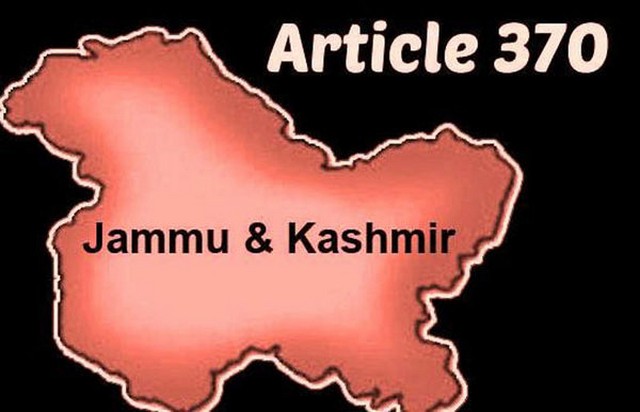
special status given to the Himalayan state under the Indian Constitution, boldly bifurcating it and downgrading it to a union territory for direct rule from Delhi. The move goes against long-standing Indian government approach to Kashmir, risks a geopolitical backlash and stands a good chance of being struck down by the courts.

Not that Modi, who has become synonymous with the BJP he leads just as Indira was with the Congress party, really cares. For, this is his own ‘Bangladesh moment’ – the equivalent of Mrs. Gandhi’s dismemberment of regional rival Pakistan in 1971, by enabling the liberation of its eastern, Bengali speaking territories.

And just as Indira intervened in Pakistan’s civil conflict, following a sweeping victory in the Indian elections at that time, Modi has also ‘made history’ within months of a massive mandate for his regime in the mid-2019 pools. The forcible ‘integration’ of Kashmir, flouting all democratic and even Constitutional norms, is likely to seal Modi’s reputation among ‘real estate’ Indian nationalists[i] as a ‘great leader’ – on par with the ‘Iron Lady’ of Indian politics.

As Yashwant Sinha, former BJP leader turned bitter critic of Modi conceded to the Indian media, if an election is held tomorrow Modi will probably win more seats in parliament, than any other leader since Indian independence seven decades ago. It is no longer ‘Narendra’ but Nar’Indira’ Modi now.

However, while there are other similarities between Modi and Indira, including a common authoritarian streak (Watch out! The Emergency is coming soon!), there are crucial differences too in the convictions involved, context and the consequences of their actions. It is these differences that will determine whether Modi is really BJP’s answer to Indira Gandhi or is only a farcical repetition of the latter’s history.

Going back to the Bangladesh parallel, Indira Gandhi’s momentous decision to send troops to liberate East Pakistan was done – not only from an Indian military strategic point of view – but as a genuine move to end the then ongoing genocide of Bengali-speaking Muslims there, by the Punjabi-Muslim dominated Pakistani army. The Indian action was fully supported by the people of Bangladesh and it was a resounding success.

In sharp contrast, in the case of Kashmir, India’s only Muslim-dominated state, it is the Indian government itself that has been the main oppressor for long, robbing the people of the state of their democratic rights and treating it like a colony of India. Despite the Constitutional guarantee of autonomy provided by Article 370, very little of it was implemented in practice by successive Indian regimes. It is safe to say, Kashmir remains Indian territory only because of the presence of over half a million of its armed troops there, making it one of the most heavily militarized zones in the world.

In his first term as Prime Minister, though the Modi-led BJP managed to form a government in Kashmir with the People’s Democratic Party, a regional outfit, the alliance collapsed and worsened the strife in Kashmir. Dozens have been killed, thousands injured- mostly civilians- in street battles between Kashmiri citizens and the Indian armed forces in the last few years.

On the geopolitical front also, the Bangladesh story is completely different from what Modi is attempting in Kashmir now. Half a century ago Indira’s decision to take on the Pakistani army head on was an act of some courage, as it was also done in defiance of threats from the superpower United States, then a close ally of the generals running Islamabad.

In the case of Kashmir though the Modi government has denied recent claims by US President Donald Trump that he was asked to ‘mediate’ in the conflict, there is evidence that its move on Kashmir has all the blessings of Washington. According to Indian media reports the US had been ‘consulted’ well in advance before announcing the abolition of Kashmir’s special status and its geographical dismembering.

Perhaps the biggest divergence between Indira Gandhi and Modi’s ‘Bangladesh moment’ is the impact of their actions on the Indian Republic itself. Back in 1971, Mrs Gandhi managed to unite the political and social spectrum with her action – billed rightly or wrongly as a noble mission undertaken by India – and also won global admiration to boot.

Modi’s move on Kashmir, despite initial euphoria, however is likely to divide the nation deeply. For all its audacity the ideologically driven decision shows a complete lack of sagacity about its long-term implications. In that sense it is quite like his surprise demonetization of high value Indian currency notes three years ago – hailed by his cheerleadersas a ‘masterstroke’ but which brought disastrous consequences for the Indian economy. Kashmir is going to be a repeat of India’s ‘notebandi’ experience, except the damage will be even higher- both politically and socially.

No, this is not going to be because of what the people of Kashmir feel, think or want. It is quite clear that, not just successive Indian governments, but much of the Indian public itself, has really cared very much about them at all. Internationally too, India’s open imitation of Israel’s ‘Gaza model’, will not raise too many eyebrows except of course in Pakistan and to some extent in China – but there is nothing much either can do immediately.

Yes, there will be turmoil and brutal suppression of protests but also carrots dangled before the Kashmiri public in the form of fresh, speculative investments from around India. And strange as it may sound, even a significant section of the population may actually welcome Modi’s ‘bold step’ – despite opposition from the current lot of Kashmiri politicians –who have neither the credibility nor the clout to prevent turning of minds and bodies that money makes possible.

The real impact of revoking Kashmir’s autonomy and the dubious way in which it has been done, is going to be on the rest of India, a federation of diverse cultures, religious, ethnic and linguistic groups held together – ultimately by nothing much more really than goodold-fashioned trust. Trust in the inviolability of the Indian Constitution, the fairness of various state institutions, in the honoring of past promises and the belief that,in a dispute,no partywill pull a fast one on the other.

The simple question for many around the country will be, if the Indian government can so cunningly and casually discard a historical agreement or turn a full-fledged state into a union territory without consulting anyone in Kashmir– can’t this also be done to Bengal, Kerala or Punjab tomorrow? In other words, the entire organization of India into states demarcated along linguistic lines – a cornerstone of the country’s federal structure- is today in question.

Nobody caught the real meaning of the Modi government’s Kashmir ploy better than Chidambaram, the former finance minister, a constitutional lawyer and a senior leader of the Congress Party.

“People of India, people of every State must wake up to the grave danger that was set as an example today by these completely unconstitutional and illegal resolutions. I want to warn every party, every State, every citizen of India that the idea of India as a union of States is in grave danger,” he told the press soon after the Indian parliament rammed through the measure changing Kashmir’s status drastically.

Chidambaram’s insight had nothing to do with being part of the Congress party or his legal background. It rather came from the fact he is from Tamil Nadu, where the idea of a ‘united’ India has been challenged, for decades, by the leaders and ideologues of the Dravidian movement as a power grab by ‘Aryan supremacists’[ii] of northern India.

The founder of the Dravidian movement, E.V. Ramasamy Periyar, sounded the warning bell at the time of Indian independence itself about how the new nation of India was going to control and suppress all other cultures and nationalities on behalf of upper caste Hindus. If he had been around he would have seen the Kashmir development as an open land grab by politicians from India’s Hindi-speaking, cow-belt states.

“Who are India and Pakistan to talk about the Kashmir issue? The Kashmiris have all the rights to decide for themselves. The Kashmir issue must be left in the hands of Kashmiris alone”, thundered Periyar more than six decades ago.

Substitute ‘Kashmiri’ with Tamil, Malayali, Bengali, Oriya, Punjabi, Manipuri, Mizo or Naga – Periyar’s message is going to resonate more and more with the people of the Indian sub-continent in the days ahead.

Nar ‘Indira’ Modi and his sidekick Home Minister, Amit Shah, can jump around for the moment , claiming they ‘made history’ – but when history actually happens it is going to be nothing like they wanted or expected. Many more ‘Bangladeshs’ are waiting to happen.

Satya Sagar is a journalist and public health worker who can be reached at sagarnama@gmail.com

6 August 2019

Source: countercurrents.org

The Article 370 Amendments: Key Legal Issues

By Gautam Bhatia

In this post, I will attempt to break down the constitutional changes to Article 370, and highlight some key legal issues surrounding them. In essence, to understand what has happened today, there are three important documents. At the heart of everything is Presidential Order C.O. 272, which constitutes the basis for everything that follows. The second is a Statutory Resolutionintroduced in the Rajya Sabha, which – invoking the authority that flows from the effects of Presidential Order C.O. 272 – recommends that the President abrogate (much of) Article 370. The third is the Reorganisation Bill, that breaks up the state of Jammu and Kashmir into the Union Territories of Ladakh (without a legislature) and Jammu and Kashmir (with a legislature).

To understand the legal issues, we need to begin with the language of unamended Article 370. Article 370, as is well known, limited the application of the provisions of the Indian Constitution to the state of Jammu and Kashmir. Under Article 370(1)(d), constitutional provisions could be applied to the state from time to time, as modified by the President through a Presidential Order, and upon the concurrence of the state government (this was the basis for the controversial Article 35A, for example). Perhaps the most important part of 370, however, was the proviso to clause 3. Clause 3 itself authorised the President to pass an order removing or modifying parts of Article 370. The proviso stated that:

Provided that the recommendation of the Constituent Assembly of the Statereferred to in clause (2) shall be necessary before the President issues such a notification.

In other words, therefore, for Article 370 itself to be amended, the recommendation of the Constituent Assembly of J&K was required. Now, the Constituent Assembly of J&K ceased functioning in 1957. This has led to a long-standing debate about whether Article 370 has effectively become permanent(because there is no CA to give consent to its amendment), whether it would require a revival of a J&K CA to amend it, or whether it can be amended through the normal amending procedure under the Constitution.

C.O. 272, however, takes an entirely different path. C.O. 272 uses the power of the President under Article 370(1) (see above), to indirectly amend Article 370(3), via a third constitutional provision: Article 367. Article 367 provides various guidelines about how the Constitution may be interpreted. Now, C.O. 272 adds to Article 367 an additional clause, which has four sub-clauses. Sub-clause 4 stipulates that “in proviso to clause (3) of Article 370 of this Constitution, the expression ‘Constituent Assembly of the State referred to in clause (2)” shall read “legislative Assembly of the State.”

In other words, this is what has happened. Article 370(1) allows the President – with the concurrence of the government of J&K (more on that in a moment) – to amend or modify various provisions of the Constitution in relation to J&K. Article 370(3) proviso states that Article 370 itself is to be amended by the concurrence of the Constituent Assembly. C.O. 272, therefore, uses the power under 370(1) to amend a provision of the Constitution (Article 367) which, in turn, amends Article 370(3), and takes out the Constituent Assembly’s concurrence for any further amendments to Article 370. And this, in turn, becomes the trigger for the statutory resolution, that recommends to the President the removal of (most of) Article 370 (as the Constituent Assembly’s concurrence is no longer required).

This is very clever. Is it legal? One serious objection is Article 370(1)(c). Article 370(1)(c) (unamended) stated that “notwithstanding anything contained in this Constitution, the provisions of Article 1 and this Article shall apply in relation to that State.” This is absolutely crucial, because it makes clear that the power of the President to amend provisions of the Constitution in relation to J&K does not extend to Article 1 and “this Article”, i.e., Article 370 itself. 370(1)(d) makes it even clearer where it refers to the “other provisions” of the Constitution that may be altered by Presidential Order (and this is how the present Presidential Order is different from previous ones, such as those that introduced Article 35A). Article 370 itself, therefore, cannot be amended by a Presidential Order such as C.O. 272 (the one exception was a clarificatory amendment, which is not analogous to this one).

Now, it may be immediately objected that C.O. 272 does not amend Article 370: it amends Article 367. The point, however, is that the content of those amendments do amend Article 370, and as the Supreme Court has held on multiple occasions, you cannot do indirectly what you cannot do directly. I would therefore submit that the legality of C.O. 272 – insofar as it amends Article 370 – is questionable, and as that is at the root of everything, it throws into question the entire exercise.

There is a second important point to be noted here. C.O. 272 says – as it must – that the concurrence of the government of the state of Jammu and Kashmir has been taken. However, Jammu and Kashmir has been under President’s Rule for many months now. Consequently, actually, the consent is that of the Governor. However, there are two serious problems with basing C.O. 272 upon the consent of the Governor. The first is that the Governor is a representative of the Central Government – like the President. In effect, therefore, Presidential Order 272 amounts to the Central Government taking its own consent to amend the Constitution.

There is, however, a more important issue. President’s Rule is temporary. It is only meant to happen when constitutional machinery breaks down in a state, and an elected government is impossible. President’s Rule is meant to be a stand-in until the elected government is restored. Consequently, decisions of a permanent character – such as changing the entire status of a state – taken without the elected legislative assembly, but by the Governor, are inherently problematic. Formally, they may be within the bounds of legality; however, as the Supreme Court held in D.C. Wadhwa, on the question of re-promulgation of Ordinances, formal legality can nonetheless, in effect, amount to a fraud on the Constitution. Using the Governor to sign off on a Presidential Order that fundamentally alters the constitutional character of a federal unit appears, to me, to be straying dangerously close to the constitutional fraud line.

For these two reasons, therefore – first, on the indirect amendment of Article 370(3) proviso via 370(1), and secondly, on the use of the Governor as a substitute for the elected assembly in a matter of this kind – I would submit that there are serious legal and constitutional problems with Presidential Order C.O. 272 – which, of course, forms the basis of both the statutory resolution and the Reorganisation Bill.

Gautam Bhatia is a lawyer

Originally published in Indian Constitutional Law and Philosophy

5 August 2019

Source: countercurrents.org

Financial Capitalism Gone Amok: Ultra-low Interest Rates and Price Bubbles

By Prof Rodrigue Tremblay

“The first panacea for a mismanaged nation is inflation of the currency; the second is war. Both bring a temporary prosperity; both bring a permanent ruin. But both are the refuge of political and economic opportunists.” — Ernest Hemingway (1899-1961), (September 1932)

“Armies, and debts, and taxes are the known instruments for bringing the many under the domination of the few.” — James Madison, (1751-1836), 4th U.S. President, (April 20, 1795)

“If the American people ever allow private banks to control the issue of their money, first by inflation and then by deflation, the banks and corporations that will grow up around them (around the banks), will deprive the people of their property until their children will wake up homeless on the continent their fathers conquered.” — Thomas Jefferson, (1743-1826), 3rd U.S. President

“We know now that government run by organized money is the same as government run by the organized mob.” — Franklin D. Roosevelt (1882-1945), 32nd American President, 1933-1945, (in a speech at Madison Square Garden, Oct. 31, 1936)

Don’t look now, but there is a new monetary craze going on in some parts of the world, and it is the new so-called ‘unconventional’ monetary policy adopted by some central banks to push interest rates to ultra-low levels, and even into negative territory. For some time now, some central banks and some governments have been pushing nominal interest rates down, so much so that a few countries have negative short-term interest rates and, when inflation is factored in, even more deeply negative real interest rates. Why suddenly such an unconventional monetary policy? Their rationale is a fear that the economy could otherwise be saddled with an overvalued currency and be faced with a too heavy debt burden, and this would hurt their economic growth.

How is this possible? How could a central bank push interest rates to zero or to below zero, and with what consequences? A central bank does that by offering zero or negative returns on private banks’ excess reserves or extra funds that those banks want to store at the central bank. This is a complex matter, but essentially this occurs when private banks are awash with cash that they have trouble lending profitably to private borrowers. They are then forced to find alternative ways to invest their funds, one of them is to park those funds at the central bank, or alternatively, to buy government bonds and other securities. The result is an increase in the prices of those assets and a lowering of interest rates.

The question to be asked is why many banks are saddled with too much excess cash, above and beyond what is required to meet the ordinary private demands for loans? To answer that question, we have to go back to the international financial crisis of 2007 and later years.

This all began with the subprime financial crisis, which started at the end of the summer of 2007, when some mega-banks in the United States and in other financial centers were teetering on the edge of bankruptcy. Indeed, they had created a new type of financial products, the so-called mortgage-and debt-backed securities (MBS) and other asset-backed paper (ABCP), which were bundles of risky debt and were sold as new esoteric securities. When the housing market collapsed, these artificially created securities also collapsed, and the banks found themselves in financial trouble.

To prevent large banks from failing, the American central bank, i.e. the Fed, began printing new money to the extent of more than three thousand billion $ to rescue them. The Fed called its generosity “Quantitative Easing” (QE), a fancy and innocuous word to cover the largest expansion ever of the monetary base in the United States, which is to a large extent made up of the Fed’s balance sheet (i.e. the private banks’ reserves held at the central bank) and of bank notes and coins circulating in the economy.

— With the newly printed money, the Fed bought Treasuries but also large amounts of private banks’ bad debts. And it did it for six years from 2008 to late 2014, in three successive rounds of money printing.

— Historically speaking, it was really an orgy of money printing. This was done, however, on the premise that the banks would leave most of their newly created bank excess reserves deposited at the central bank. Nevertheless, the result (withso much excess liquidity in the system) was to push the prices of bonds and securities up and to lower interest rates across the board. And, in fact, interest rates have been declining ever since. The Fed said that it was ‘reflating’ the economy. In fact, what it was doing could be more accurately called ‘reflating’ the private banks’ balance sheets.

— During that period, the Fed’s own total balance sheet ballooned, jumping from roughly $1,000 billion in 2008, (ordinarily, it is mostly made up of Treasury securities and its net interest income is returned to the Treasury), to slightly more than $4,500 billion en 2017, an increase of 350 percent.

Today, the Fed’s total balance sheet is made up of Treasuries for about 55 percent, while mortgage-and-debt backed securities that it bought from the private banks account for about 40 percent, with gold and other assets accounting for the rest. An important point is the fact that the Fed’s balance sheet before 2008 represented around 6 percent of annual U.S. output (GDP) but it reached 25 percent in 2014. It has since declined somewhat to 20 percent of GDP, and the Fed would like to “normalize it “, i.e. shrink it further to prevent future inflation and above all, to be in a position to intervene if a new crisis were to arise.

Let us now do some fast-forward thinking to today’s economic situation.

Enter the Trump administration in 2017 with its big increase in the pubic debt and with its bullying of the Powell Fed to bring down interest rates, possibly to zero

The last economic recession in the United States, (dubbed the Great Recession), was the worst since the Great Depression of the 1930’s. It began in December 2007, and it ended in June 2009. The economic recovery, however, has been the longest in U.S. history, having passed the 121-month mark, and it is already more than 10 years old.

The Trump administration’s economic policy as been characterized by trade protectionism, an anti-immigration policy, the lowering of taxes especially for large corporations and large banks, trillion-dollars yearly fiscal deficits, a very loose monetary policy, and a 13 percent jump in the total U.S. public debt since Jan. 20, 2017, when President Donald Trump took office.

[N. B.: The total national debt stood at $19.95 trillion on January 20, 2017. As of July 31, 2019, it has been galloping past $22.54 trillion.]

It could be expected that when the public debt has grown so large that there is fear that it could not be managed if interest rates were to rise. Governments and central banks would then be tempted to push interest rates down, in order to alleviate the burden of debt service (essentially interest payments on government bonds). It is like imposing a stealth tax on savers and creditors.

It is worth pointing out that the Fed has recently done just that. Indeed, by artificially lowering interest rates below the inflation rate and a risk premium, it has made it possible for the U.S. Treasury to pay negative real interest rates on its public debt. This means that when the inflation rate is higher than the nominal interest rate paid on the public debt, the U.S. government gets a free ride at the expense of its creditors.

If interest rates were to fall to zero, for example, or even to below zero, (as it is the case nowadays in Japan, after its two-decade long experiment withzero interest rates, and presently in some European countries, such as Switzerland, Germany, Netherlands, France, Sweden, etc.), savers, retirees, pension funds, insurance companies and lenders in general are the big losers.

Indeed, in countries where ten-year government bonds, for example, are generating a zero or a negative return, this means that the principle of compound interest has de facto been abolished for investors. Such a development may have serious consequences for savers, retirees and pension funds.

However, when the central bank buys government bonds and issues newly created money in exchange, this is called “debt monetization”. If this is done on a large scale, it could eventually lead to a form of gallopinginflation, possibly even to hyperinflation.

It is also worth noting that when central banks push interest rates to ultra low levels or to negative levels, investors have no other alternative than to purchase assets that offer positive returns, such as shares in companies or ownership titles of real estate. Price bubbles in the stock market and in the real estate market can be expected to ensue. Such investments become a refuge from the negative returns received on fixed-income financial assets. Historically, when this has happened, such developments have ultimately ended up in crashes and panics down the road.

The 1920s all over again?

The economic situation of today is, to a certain extent, reminiscent of the U.S. economy in the 1920s, leading to the Great Depression of the 1930s. Indeed, the U.S. economy had been growing by 2.7 percent per year between 1920 and 1929. There was overall full employment and inflation was stable.

Also, economic growth had been extended through protectionist measures, such as the Fordney-McCumber Tariff of 1922. During the presidential campaign of 1928, for example, republican presidential candidate Herbert Hoover (1874-1964) proposed large tariff increases on imports, as part of his platform. Once in power, his promise was implemented with the passage of the infamous Smoot-Hawley tariff of 1930, which is thought to have accelerated the global economic depression.

The economy was also stimulated through increased spending on public works and through tax cuts in 1921, 1924, and 1925.

Moreover, President Calvin Coolidge (1872-1933) signed an anti-immigration bill called the Immigration Act of 1924, (also called the Johnson–Reed Act), whose main purpose was to prevent immigration to the United States of people from Asia. There was also widespread hostility toward Catholic Americans, many of Italian origin, toward Jews, and toward blacks.

— These were the “roaring ‘20s”.

Considering the many similarities between the two periods, politically, socially and economically, a few questions beg to be asked: Is not history repeating itself? Might the excesses of today lead also to a day of reckoning? Might the current central bankers and politicians be leading the U.S. and other economies into a severe global economic downturn? Trade protectionism, lower taxes, higher debt levels, anti-immigration legislation, wholesale deregulation… etc.

— It’s ‘déjà vu all over again’!

Conclusion

Artificially low interest rates may be on their way in the United States. Fed Chairman Jerome Powell appears to have been intimidated by Donald Trump’s bullying tactics into lowering interest rates. Therefore, even though the U.S. economy is presently at full employment—partly a demographic consequence of the retirement in droves of baby-boomers—it is also saddled with very loose fiscal and monetary policies.

This is most unusual and it flies in the face of the principles of sound economic management. Such a situation is bound to create financial excesses and bubbles, to be corrected down the road.

In fact, the policy mix of today is a typical example of a government going after short-run economic and political gains at the expense of future medium- and long-run pains.

*

Note to readers: please click the share buttons above or below. Forward this article to your email lists. Crosspost on your blog site, internet forums. etc.

International economist Dr. Rodrigue Tremblay is the author of the book “The Code for Global Ethics, Ten Humanist Principles”, of the book “The New American Empire”, and the recent book, in French “La régression tranquille du Québec, 1980-2018“.

31 July 2019

Source: www.globalresearch.ca

Germany won’t take part in U.S.’ Strait of Hormuz initiative

By Countercurrents Collective

United States’ Iran-show is not moving smoothly. It is not always getting wholehearted support from all of its friends. The Strait of Hormuz initiative by the U.S. is part of the show, and it is facing the same problem. An example is Germany.

Germany will refuse to take part in a U.S.-led maritime mission in the Strait of Hormuz, German Foreign Minister Heiko Maas announced.

Maas said that there “cannot be a military solution” to the current crisis in the Persian Gulf.

Speaking in Warsaw on Wednesday, Maas said that Germany will turn down Washington’s request, which was revealed by the U.S. Embassy in Berlin on Tuesday.

The request from Washington was a joint U.S., British, and French operation is aimed at protecting sea traffic in the Strait of Hormuz, and combating so-called “Iranian aggression”.

The mission was conceived following Iran’s seizure of the British-flagged Stena Impero oil tanker earlier this month, itself widely considered a tit-for-tat response to Britain’s seizure of an Iranian tanker off the coast of Gibraltar several weeks earlier.

That Germany would refuse to assist the American-led mission is no surprise. Washington’s request was the subject of intense debate in Berlin, with opposition parties on the left and right pressuring Chancellor Angela Merkel’s coalition government into saying no.

“We have to avoid further escalation in the Strait of Hormuz,” Maas said on Wednesday. “That has always been out position.”

Compared to the U.S. and some of its allies, Germany has enjoyed relatively cordial relations with Tehran since the 1970s.

Germany remains a party to the 2015 Joint Comprehensive Plan of Action (JCPOA, or Iran nuclear deal), a landmark agreement that granted Iran sanctions relief in exchange for a curb on its nuclear weapons program. The U.S. unilaterally withdrew from the deal last year, precipitating the current standoff with Tehran.

Despite Germany’s refusal to join the U.S.-led mission, some politicians in Berlin remain open to another kind of deployment.

“The alternative is a European mission, if necessary without the British, if they decide for the U.S.,” Norbert Roettgen, a member of Merkel’s CDU party, told German media on Tuesday.

German govt split over sending navy to Gulf

A prospect of German warships being sent to patrol the troubled waters of the Strait of Hormuz has ignited a debate in Berlin.

Critics are warning against joining a potential US- and UK-led mission.

Proponents of the London-proposed mission say Germany should take part just because it is an inherent part of global trade.

“Hardly any other country is as dependent on the freedom of international shipping as export champion Germany,” former envoy to the US Wolfgang Ischinger told Die Welt. That said, Germans should not just “watch from the sidelines,” he argued.

His words were echoed by the influential Association of German Industries, whose president told the paper that such a mission would be “a question of solidarity among us Europeans.”

But the opposition slammed the proposal, warning that events could ultimately spin out of control. Germany “should not walk into the trap of Trump and his poodle Johnson and let itself be led into a conflict or the preparation for war against Iran,” Sevim Dagdelen, a Left Party MP, was quoted by Deutsche Welle as warning.

The Social Democrats (SPD), the junior coalition partners in Chancellor Angela Merkel’s center-right coalition government, were equally unappreciative of the idea.

Karl-Heinz Brunner, an SPD member of the parliamentary defense committee, said that while maritime shipping is important, securing it could be done through diplomacy.

“In the current situation, military options could contribute to further destabilization,” he cautioned.

Later in the day, the US embassy in Berlin told DPA news agency that Washington had formally asked Germany to embark on the mission to “combat Iranian aggression.”

The embassy maintained that the government was “clear that freedom of navigation should be protected. Our question is protected by whom?”

That aside, sending ships to the Gulf could be akin to a ‘mission impossible’ for the military. Last year, it was reported that Germany’s Navy is running out of combat-capable warships and had six out of fifteen frigates decommissioned.

Newer-generation warships are either going through trials or are under construction.

Last week, the UK called for a joint effort to protect the safety of shipping in the Strait of Hormuz, a narrow but important waterway that connects the Persian Gulf with the Indian Ocean.

The call was made shortly after Iran’s Revolutionary Guard Corps seized British-flagged oil tanker Stena Impero in the area.

The seizure followed an earlier incident in which British Royal Marines and Gibraltar police seized the Iranian oil supertanker Grace 1 off the southern coast of Spain. London said the ship was suspected of carrying oil to Syria in violation of EU sanctions, but Tehran denied any wrongdoing.

Tehran has lashed out at the prospective European mission, saying that Western nations will jeopardize security in waters mainly shared between Iran, the UAE and Oman. The effort “naturally carries a hostile message, [and] is provocative and will increase tension,” Iranian government spokesperson Ali Rabiei was quoted by AFP as saying.

1 August 2019

Source: countercurrents.org

US scrapping of INF treaty heightens threat of nuclear war

By Bill Van Auken

Washington formally scrapped the Intermediate-range Nuclear Forces (INF) Treaty Friday, bringing the world a major step closer to nuclear war.

The treaty, signed over 30 years ago by US President Ronald Reagan and Soviet leader Mikhail Gorbachev, banned a whole class of weapons that had placed the world on a hair trigger for a nuclear conflict. Both countries agreed to end all use and production of ground-launched ballistic and cruise missiles with ranges of 500 to 5,500 kilometers (310 to 3,417 miles).

CNN reported that the Pentagon will test within weeks a new cruise missile designed for ranges previously banned by the INF accord. The US military has reportedly been working on the weapon for the last two years.

An unnamed US official told the television news network that Washington aims to deploy the weapon in areas of Europe where it could overpower Russian air defense systems and strike “the country’s ports, military bases or critical infrastructure.”

Short and medium-range surface-to-surface missiles, including the Pershing II and the MGM Lance were deployed by the United States in Western Europe in the early 1980s, while the Soviet Union had deployed SS-20 mobile missile launchers in the western USSR. These weapons had the capability of striking most major cities in Western Europe and the Soviet Union within minutes. The threat of a nuclear conflict on the continent triggered mass demonstrations against the US missile deployment, particularly in West Germany.

The abrogation of the agreement is bound up with Washington’s turn toward “great power conflict” with Russia and China, in which US imperialism is seeking to leverage its military power as a means of containing Russia and countering the economic rise of China and its challenge to US global hegemony.

US Secretary of State Mike Pompeo issued the formal announcement of the US repudiation of the treaty, placing the full blame for its demise on Russia, even as it was the US that has ripped up the agreement. “Russia failed to return to full and verified compliance through the destruction of its noncompliant missile system,” he said.

Moscow has repeatedly denied this claim, insisting that its SSC-8 ground launched cruise missile that Washington says is out of compliance with the treaty is not in violation. While it has invited the US and other powers as well as foreign journalists to inspect the weapons system, Washington has rebuffed all appeals for negotiations, issuing ultimatums to Russia that it knows will not be accepted.

Russia, meanwhile has insisted that the US is out of compliance with the accord, having deployed missile defense systems in Poland and Romania that are equipped with launchers identical to those used by US warships that are capable of firing medium-range Tomahawk cruise missiles. It has also charged that the US deployment of armed drones on the continent is a further violation of the accord.

The US government’s determination to upend the treaty and its restrictions on the development of medium-range missiles is aimed not just at escalating its military siege against Russia, but more fundamentally at preparing for “great power” conflict with China.

In response to the US encirclement of China and the deployment of massive naval and air power in the Pacific region as part of the “pivot to Asia” begun under the Obama administration, Beijing, which is not a signatory of the INF treaty, developed its own medium range missiles.

The Pentagon wants to answer this development by deploying offensive missile systems of its own in the region aimed at China’s major cities. It is no accident that the termination of the treaty prohibiting such a deployment coincides with the sharp escalation of US trade war measures against China

While the decision to abrogate the treaty was announced by the Trump administration last February, the formal repudiation of the accord provoked condemnations from both Moscow and Beijing.

“On the famous symbolic clock that shows the time left until nuclear conflict, we have unfortunately passed yet another minute towards midnight,” Russia’s Deputy Foreign Minister Sergei Ryabkov said in an English-language interview with RT. He added that “even though President Trump is saying that there is no point in an arms race and investment in military equipment, this will continue.”

Chinese Foreign Ministry spokesperson Hua Chunying, meanwhile said that “China opposes such actions,” adding, “We call on the United States to abide by its obligations.”

She went on to accuse Washington of seeking “superiority in strategic weaponry” and warning that this would “seriously affect stability and undermine the global balance of power,” threatening “security in many regions.”

While most Western European governments and NATO echoed Washington’s claims that Russia was responsible for the treaty’s demise, there were nonetheless expressions of concern. German Foreign Minister Maas stated that “With the end of the INF treaty, Europe is losing part of its security.” He added, “I am convinced that today we must again succeed in agreeing [to] rules on disarmament and arms control in order to prevent a new nuclear arms race.”

Belgian Foreign Minister Didier Reynders, meanwhile, wrote on Twitter: “I regret the ending of the INF Treaty, which has served our security for over 30 years. Belgium reaffirms its commitment to nuclear arms control and disarmament and calls upon the US and Russia to conduct a constructive dialogue and agree on stabilizing measures.”

Belgium, along with the Netherlands, Germany, Italy and Turkey, is one of the countries where US nuclear bombs are deployed.

None of Washington’s Western European allies have given any indication that they are prepared to accept the deployment of medium-range missiles on their territory. Moscow has made clear that any such missile installations would immediately become targets.

Behind the statements about the abrogation of the INF Treaty undermining Europe’s security, lies a turn toward the escalation by the major European powers, and in particular Germany, of remilitarization independently of the US.

The ripping up of the INF Treaty is widely expected to be followed by the ending of the even more significant New START (Strategic Arms Reduction Treaty) agreement, which if not renewed, will expire in 2021. The pact caps the number of deployed strategic nuclear warheads by both Russia and the US to 1,550 and places similar limits on the two countries’ number of intercontinental ballistic missiles.

Trump has described the pact as “one of several bad deals negotiated by the Obama administration,” while his national security adviser, John Bolton, has been telling the media that it will likely not be renewed. This would mean that there would be no remaining treaties restricting the buildup toward nuclear war.

The Pentagon is openly preparing for such a conflict. A “joint doctrine” on nuclear operations briefly posted on the internet in mid-June states that: “nuclear weapons could create conditions for decisive results and the restoration of strategic stability. Specifically, the use of nuclear weapons will fundamentally change the scope of a battle and develop situations that call for commanders to win.”

The Pentagon is working to develop an arsenal of “usable”, low-yield “tactical” nuclear weapons to be utilized to turn the tide of battle in confrontations with US imperialism’s “great power” rivals. The underlying and highly unlikely scenario is that such weapons can be used without provoking a full-scale nuclear exchange putting an end to life on the planet.

The immense dangers posed by the Trump administration’s abrogation of the INF Treaty and the significant step closer to nuclear war provoked no response from its ostensible political rival, the Democratic Party.

Having voted overwhelmingly in both the House and Senate for a record $738 billion US military budget, the Democrats are fully committed to the march toward a nuclear conflagration. Neither House Speaker Nancy Pelosi, who negotiated the budget deal with the Trump White House, nor Senate minority leader Chuck Schumer said anything about the scrapping of the INF treaty. For his part, Democratic presidential front-runner Joe Biden tweeted that the US “must lead the free world” along with anti-Chinese comments. Similarly, Elizabeth Warren kept silent about the treaty’s abrogation while tweeting that the US has “to get tough on China”, while Bernie Sanders said nothing.

There is clearly no antiwar faction within the US ruling establishment, nor any interest on the part of the Democrats or the corporate media in alerting the American people to the growing threat of a global nuclear conflagration.

This threat can be answered only through the construction of a new mass antiwar movement based on the struggle for the unification of the international working class in the struggle against capitalism.

Originally published by WSWS.org

3 August 2019

Source: countercurrents.org

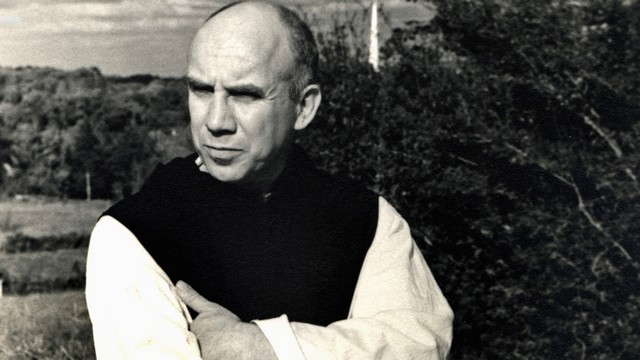
The Martyrdom of Thomas Merton: An Investigation

By Matthew Fox

For years I have spoken out about how fishy the official story of Thomas Merton’s sudden death smelled to me. I have also, over the years, met three CIA agents who were present in Southeast Asia at the time and asked them pointedly whether they killed Thomas Merton. One said:

“I will neither affirm it nor deny it.”

The second (who spoke to a friend of mine, not to me) said:

“We were swimming in cash at the time with absolutely no accountability. If there was just one agent who felt Merton was a threat to the country he could have had him done in with no questions asked.”

The third I met a month after my book A Way To God: Thomas Merton’s Creation Spirituality Journey came out and he answered:

“Yes. And the last 40 years of my life I have been cleansing my soul from what I did as a young man working for the CIA in Southeast Asia in the 1960s.”

Now, Hugh Turley and David Martin offer The Martyrdom of Thomas Merton: An Investigation – a solid and very convincing investigation that provides what seems to be a thorough inquiry of all the parties involved including the four religious (three men and one sister who was also a doctor, falsely called a “nurse” in official documents) who first discovered the body.

The book includes important information about the body and the room, revealing, among other things, that there was blood coming from Merton’s neck and his body was neatly staged. How could this be anything other than

  • A gunshot wound from a silencer gun? or
  • A stab with a pick knife or something similar?

The problem is, of course, that no autopsy was performed. Now whose decision was that?

The cover up was immense, involving the Thai police (very much in league with the American military at the time); the American Embassy; the American Army; even key members of Merton’s Gethsamine monastery including the abbot and Merton’s secretary, Brother Hart. The latter two deserve a certain leniency since surely the monastery was threatened and urged to keep silent about the facts. But to make a cover story—that Merton stepped out of a shower soaking wet and plugged in a fan and was electrocuted—is a lie and a cover up.

Turley and Martin provide detail after detail refuting the false information that has been disseminated for five decades. There is even a Judas figure—a Belgian monk, whose room in the retreat center was above Merton’s, and who was the last person seen talking to Merton before he entered his fateful cell. Others report this monk acting peculiarly after the murder. Strange to tell—or perhaps not so strange—he seems to have totally disappeared. Even his monastery claims to have no idea on earth where he could be. It would seem he is either

  • sipping mai-tais on some island some place having been paid far more than 30 pieces of silver, or
  • resting not at all in peace six feet under the sod.

So Thomas Merton, Cistercian monk and one of the greatest spiritual writers of the twentieth century died a martyr. A martyr to peace (because he was a loud voice against the Vietnam War and a mentor to the Berrigan brothers and others committed to nonviolent protest). And he died at the hands of the American government in the very year, 1968, that Martin Luther King Jr and Robert Kennedy also suffered a similar fate.

Pope Francis, who praised Thomas Merton’s work in his speech to Congress, might want to canonize three American martyrs together and do it swiftly (since in Catholic theology a martyr goes directly to heaven): Dr Martin Luther King Jr, a prophet for social and racial justice; Thomas Merton, a prophet for peace and deep ecumenism or interfaith; and Sister Dorothy Stang, a prophet for eco-justice gunned down in the Amazon by paid thugs for large land owners and corporate big shots.

History evolves and it is ironic that today’s CIA is less an enemy of the people than yesterday’s – in fact acting in some ways a welcome buffer against today’s enemies of American democracy, whether emanating from Russia or from internal bodies beholden to Russia. But lessons abound. First among them is what a martyr is about: As Jesus put it, “no greater love has a person than this, to lay down one’s life for their friends.”

Thank you, Thomas Merton. Thank you Hugh Turley and David Martin for getting to the truth.

Matthew Fox is a spiritual theologian, an Episcopal priest and an activist for gender justice and eco-justice.

29 July 2019

Source: www.transcend.org

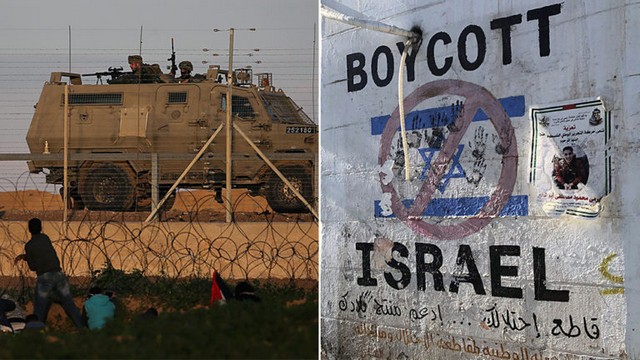
US Congress Overwhelmingly Condemns Movement to Boycott Israel

By Sheryl Gay Stolberg

The House, brushing aside Democratic voices of dissent over American policy in the Middle East, today overwhelmingly passed a bipartisan resolution condemning the boycott-Israel movement as one that “promotes principles of collective guilt, mass punishment and group isolation, which are destructive of prospects for progress towards peace.”

The 398-to-17 vote, with five members voting present, came after a debate that was equally lopsided; no one in either party spoke against the measure. The House’s two most vocal backers of the boycott movement — Representatives Rashida Tlaib of Michigan and Ilhan Omar of Minnesota, freshman Democrats and the first two Muslim women in Congress — did not participate in the floor debate.

However, earlier in the day, Ms. Tlaib, who is Palestinian-American, delivered an impassioned speech in defense of the boycott movement. She branded Israel’s policies toward Palestinians “racist” and invoked American boycotts of Nazi Germany, among others, as an example of what she described as a legitimate economic protest to advance human rights around the world.

“I stand before you as the daughter of Palestinian immigrants, parents who experienced being stripped of their human rights, the right to freedom of travel, equal treatment,” Ms. Tlaib said. “So I can’t stand by and watch this attack on our freedom of speech and the right to boycott the racist policies of the government and the state of Israel.”

The Boycott, Divestment and Sanctions, or B.D.S., movement is intended, among other things, to pressure Israel into ending the occupation of the West Bank, and backed by some who advocate a single state with equal rights for all, instead of a Palestinian state alongside Israel. Opponents warn it would lead to the destruction of Israel as a Jewish state; during Tuesday’s debate, they repeatedly quoted from a founder of the movement, Omar Barghouti, who has argued for the creation of a “secular democratic state” and has called for Israel to “accept the dismantling of its Zionist apartheid regime.”

“Boycotts have been previously used as tools for social justice in this very country,” said Representative Ted Deutch, Democrat of Florida and a backer of the resolution. “But B.D.S. doesn’t seek social justice. It seeks a world in which the state of Israel doesn’t exist.”

For months, Ms. Tlaib and Ms. Omar have been the target of intense criticism for statements about Israel and Israel’s supporters that many have regarded as anti-Semitic tropes, including insinuations that Jews have dual loyalty to the United States and Israel. Ms. Omar drew the condemnation of House Democratic leaders, and was forced to apologize after invoking an ancient trope about Jews and money by suggesting that American support for Israel was “all about the Benjamins” — a reference to $100 bills.

At a hearing last week, Ms. Omar spoke out forcefully against Israel, and the resolution.

“We should condemn in the strongest terms violence that perpetuates the occupation, whether it is perpetuated by Israel, Hamas or individuals,” she said. “But if we are going to condemn violent means of resisting the occupation, we cannot also condemn nonviolent means.”

Ms. Tlaib, Ms. Omar and two other freshman Democratic women of color — Representatives Ayanna S. Pressley of Massachusetts and Alexandria Ocasio-Cortez of New York — have lately been under fire from President Trump, who has accused them of being anti-American and suggested they should “go back” to their home countries, even though just one of them, Ms. Omar, was born outside the United States. Ms. Ocasio-Cortez voted against the resolution, as did a number of other progressives; Ms. Pressley voted in favor.

The timing of the vote drew complaints from Palestinian rights activists and supporters of Ms. Omar and Ms. Tlaib, who said House Democratic leaders were effectively isolating them. Both women have also joined with Representative John Lewis, Democrat of Georgia and a civil rights icon, in introducing a measure affirming that “all Americans have the right to participate in boycotts in pursuit of civil and human rights at home and abroad,” as protected by the First Amendment.

“They are displaying leadership even as the president is attacking and marginalizing people of color,”

said Yousef Munayyer, the executive director of the U.S. Campaign for Palestinian Rights.

But Democratic backers of Israel were eager to have their votes on record before Congress goes home for its six-week August recess. Earlier Tuesday, Representative Josh Gottheimer, an ardent supporter of Israel, was joined in his home state, New Jersey, by Elan Carr, the State Department’s envoy to combat anti-Semitism, at an event billed to address anti-Semitism.

The coming vote proved to be a central topic.

“There is of course nothing wrong about having a robust debate about our foreign policy, as I said, but that debate veers into something much darker when there is talk of dual loyalty or other ancient tropes,” Mr. Gottheimer said. “These are not legitimate opinions about our foreign policy. We have often seen such anti-Semitic tropes and rhetoric when it comes to the global B.D.S. movement.”

Asked if he thought the timing of the vote was inopportune, Mr. Gottheimer said,

“We should look for any moment to stand up to anti-Semitism, and I think, to me, the sooner the better.”

Backers of the boycott movement say the resolution threatens free speech rights, and they argue that boycotts are a legitimate form of economic protest. In her remarks, Ms. Tlaib cited civil rights boycotts, boycotts of apartheid South Africa and American boycotts of Nazi Germany “in response to dehumanization, imprisonment and genocide of Jewish people” — a comment that raised eyebrows among Republicans.

Proponents of the resolution argue that nothing in it abridges the right to free speech; indeed, House Democrats rejected a more far-reaching bill, passed by the Republican-led Senate, that would allow state and local government to break ties with companies that participate in the boycott movement.

The chief sponsor of the Senate bill, Senator Marco Rubio, Republican of Florida, on Tuesday accused Speaker Nancy Pelosi of promoting a watered-down measure and allowing “the radical, anti-Semitic minority in the Democratic Party to dictate the House floor agenda.”

During Tuesday’s floor debate, many Republicans, including Representative Lee Zeldin of New York and Representative Steve Scalise of Louisiana, the Republican whip, argued for the Rubio measure. But in a rare moment of House comity, both sounded eager to join with Democrats in passing the bipartisan resolution.

“If a boycott is being used to advance freedom, that’s one we should support,” Mr. Scalise said. “But if a boycott is being used to undermine the very freedoms that exist in the only real elective democracy in the Middle East, we all need to rise up against that.”

__________________________________________________

Nick Corasaniti contributed reporting from Paramus, N.J.

A version of this article appears in print on July 24, 2019, Section A, Page 16 of the New York edition with the headline: Lopsided Vote in the House Against a Movement to Boycott Israel.

29 July 2019

Source: www.transcend.org

Johan Galtung Predictions: Fall of U.S. Empire, End to U.S. Wars

By RT

Some analysts say the US – bogged down in wars and pressed by emerging powers – will have to rethink its role in world affairs. Norwegian sociologist Johan Galtung, a peace and conflict expert, goes further by predicting the fall of the “US Empire” by 2020. Military defeats in wars of choice will generate political loss of influence and irrelevance externally, what may trigger a soul-searching internally. The Vietnam War was but a prelude. Iraq, Afghanistan, Libya follow the script. Israel may become a burden to the USA.

Galtung suggests solutions based on 50 years of research in the areas of conflict transformation, mediation, peace studies, and related disciplines.

Fall of Empire, End to Wars: Johan Galtung Predictions

Johan Galtung, a professor of peace studies, dr hc mult, is founder of TRANSCEND International and rector of TRANSCEND Peace University.

29 July 2019

Source: www.transcend.org

Geopolitical Crimes: A Revolutionary Proposal

By Richard Falk

23 Jul 2019 – This is a modified version of the 2018 Annual Lecture of the International State Crime Initiative (ISCI) of Queen Mary’s University London, given on March 22 of that year. Its original title was “Geopolitical Crimes: A Preliminary Jurisprudential Proposal.” The text of the lecture has been further revised since publication in the Spring 2019 issue of the Journal of State Crime. Its major premise is that international criminal law has developed a framework for judging the criminal conduct of states with respect to armed conflict and in the relations of state/society relations, but is silent about even the most severe crimes of diplomacy. It is these ‘geopolitical crimes’ that are more responsible for inflicting mass suffering on civilian populations than are most of the forms of international behavior currently criminalized. I am aware that criminalizing acts of diplomacy is a revolutionary idea, but no less for that, deserving of commentary and debate.

*************************

Points of Departure

When we think about international relations in a general way we typically presuppose a state-centric world order. I find this misleading. Actually, there are two intersecting and overlapping systems of rules and diplomatic protocols that are operative in international relations: a juridicalsystem linking sovereign states on the basis of equality before the law; and a geopoliticalsystem linking dominant states regionally and globally with other states on the basis of inequalities in power, scale, wealth and status. It is convenient to consider the juridical system as horizontal and the geopolitical system as vertical so long as this distinction is understood as a metaphor to distinguish hierarchical from non-hierarchical relations that are operative in international politics.

The United Nations (UN) embodies this structural dualism that pervades world order, and is hierarchical: the subordinate horizontal organizational axis based on juridical equality as exhibited by membership procedures and by the recommendatory authority of the General Assembly. This compares to the supervening vertical axis as embodied in the Security Council in which the permanent membership of the five states considered victors in World War II enjoy a right of veto, and possess an exclusive authority vested in the Security Council to make decisions that are theoretically enforceable.

My purpose in these remarks is to extend the notion of international state crime from its familiar horizontal axis, and suggest the significance of state crime on the vertical axis, which I will call “Geopolitical Crime”. I believe that this category of criminality has been “overlooked” in international criminal law (ICL) despite its responsibility for massive human suffering, and directly linked to some of the most serious deficiencies and unresolved turmoil in contemporary world order. Perhaps, overlooked is not the best word to describe the malign neglect. Maybe “blocked” is more accurate, as consistent with successful efforts of geopolitical actors through the centuries to evade all forms of accountability under international law for state crime unless adversary leaders are. targeted by the winners in major wars.

Of course, I am mindful of the fact that Geopolitical Crimes have not yet been formally or conceptually delimited, and are not even conceptually delimited in aspirational language at the present time, and are likely to never be accepted by the current breed of juridical gatekeepers as a valid legal category. Nevertheless, I believe that the identification and articulation of Geopolitical Crime is of pedagogical value in understanding the causal antecedents of some of the worst features of global politics, as well as of normative value in identifying what kinds of behavior in certain diplomatic settings are likely to produce future harm and by so identifying, encourage more mindful statecraft in the future.

At the outset it needs to be appreciated that international criminal law (ICL) as part of the horizontal/vertical normative mix is currently a very flawed system of law: in such crucial areas as humanitarian intervention, criminal accountability, human rights and the International Criminal Court (ICC), the application of ICL exhibits double standards, which has been producing a pattern of increasing accountability for the weak and vulnerable, and almost total impunity for the rich and geopolitically powerful and politically insulated. The result is a form of “liberal legality” that is structure blind when it comes to holding geopolitical actors to the same standards of criminal accountability as other sovereign states.

My intention is to put forward in an exploratory and tentative spirit a somewhat comprehensive proposal to imagine and delimit two closely related behavior patterns that deserve to be properly classified as Crimes Against Humanity, but are not now so treated. I am provisionally calling these “crimes” “Geopolitical Crimes of War” and “Geopolitical Crimes of Peace”.

My purpose is to identify patterns of deliberate behavior by leading governments in global or regional contexts that inflict severe harm on the individual and collective wellbeing of people, and do so knowingly, willfully, or with extreme negligence, especially in the contexts of war and post-war “peace diplomacy”. Actually, I would be receptive to suggestions of a more suitable label for these patterns of behavior than “Geopolitical Crime”, but for now will stick with this terminology. These proposed “crimes” have yet to be acknowledged as such, much less formally prohibited by treaty or practice. In this sense, this proposal for their inclusion in a jurisprudence fit for humanity is ‘revolutionary.’

On one level, I realize that I may be casting myself in the role of a latter day Don Quixote tilting at the windmills of an ideal legal order rather as did the erstwhile nobleman of La Mancha as he yearned for the gallantry of knights of old. I am sensitive to the fact that delimiting the behavior of leading states as a Geopolitical Crime may strike many persons as a wildly romantic or utopian non-starter, if not seen more destructively, as an effort to subvert the authority of liberal legality by highlighting its jurisprudential deficiencies.

My central critique of ICL is its grant of a free pass or exemption to geopolitical actors and their close allies, which has caused so much harm in the past, continuing into the present, and threatens to do even greater harm in the future. It can be argued that even if this is the case, why call attention to the weakness of ICL by proposing a form of criminalization that is unlikely to ever happen, and if it does, will never be implemented. The experience of the ICC makes these low expectations seem realistic. Nevertheless, while aware of these concerns, I believe there are several reasons that make it worthwhile to delimit Geopolitical Crimes.

First of all, to discuss what I propose to identify as “Geopolitical Crimes” by pointing to historical examples helps us consider why many things have gone so badly wrong in international relations over the course of the last hundred years at the cost of millions of lives. I am well aware that counterfactual narratives of history are inevitably problematic as we can never know what might have happened had we chosen “the road not taken” to recall the motif of Robert Frost’s famous poem.

Secondly, aspirational norms of ICL can become meaningful for civil society actors, even if ignored or rejected by the diplomacy of geopolitical actors (e.g. BAN Treaty – UN Treaty on the Prohibition of Nuclear Weapons, New York, United Nations General Assembly 2017). Delimiting Geopolitical Crimes seeks to fill serious world order and international law gaps created by destructive and intentional policies and practices of geopolitical actors. Raising an awareness of such gaps also helps us understand the degree to which the UN, including its subsidiary organs, is similarly constrained when seeking to fulfil its substantive undertakings as set forth in the Preamble to the UN Charter.

Indeed, civil society tribunals, ever since the Russell Tribunal (International War Crimes Tribunal, Stockholm/Roskilde, 1967) have examined allegations of unacknowledged war crimes of geopolitical actors, including Crimes Against Humanity, by the U.S. in Vietnam, back in 1966 to 1967. Such an undertaking was dismissed and denigrated at the time by mainstream thinking as an absurdly misguided challenge to the behavior of a geopolitical giant in the midst of an aggressive war. In fact, the Vietnam War was the kind of war that international criminal law in the aftermath of World War II had no trouble classifying as a Crime Against Peace at the Nuremberg Tribunal when addressing the behavior of a defeated Axis power.

Despite these efforts to discredit the Russell Tribunal its inquiries and testimonies produced valuable commentaries on the Vietnam War that would not otherwise be available to us. In this regard, in a manner similar to the government-organized war crimes tribunals after World War II, the main value of such civil society initiatives is to narrate on the basis of substantial evidence the wrongdoings of the defendants, whose punishment is of secondary importance, despite these individuals having done terrible things on behalf of a particular state.

I was involved in the Iraq War Tribunal that in 2005 brought to Istanbul before a jury composed of internationally known. moral authority figures, Iraqi testimonies of combat experiences and an array of international experts to record the violations of international law and of the UN Charter on the part of the United States and United Kingdom. In the end, in a manner no other institutional actor could do, this civil society initiative documented and supplied moral and legal reasoning as to why this war should be regarded as a criminal enterprise.

Part of my argument here is that the failure to delimit “Geopolitical Crimes” deprives us of a truer understanding of what went wrong and was wrong, particularly in the course of and the aftermath of World War I and II, and more recently in the responses to the 9/11 attacks on the United States. The wrongfulness in these instances arises from the manner in which the war and peace diplomacy was used to demonize the adversary and exonerate the victor, or in the 9/11 instance, to embolden a wounded and traumatized superpower to take steps previously treated as prohibited by international law. Considering Geopolitical Crimes is also a matter of attentiveness to the historical antecedents of conflict and political extremism that are habitually misrepresented by propaganda and one-sided interpretations, if treated at all.

The third justification for this line of prescriptive thinking is essentially pedagogical to influence normative discourse in relation to war and peace, suggesting that to ignore geopolitical wrongdoing is to overlook one of the major causes of conflict, chaos, injustice and extremism in the world order experience of the last hundred or more years. Jurisprudential innovations of the kind recommended here has taken place in the past. Raphael Lemkin is often heralded as the person who single-handedly invented the word “genocide” in 1944, and finally produced its acceptance by the powers that be, leading to its incorporation in the authoritative Convention on the Prevention and Punishment of the Crime of Genocide in New York (United Nations General Assembly 1951).

In the course of the Vietnam War, in response to the conduct of environmental warfare, a biologist at Yale, Arthur Galston, came up with the term “ecocide”, an analogue to genocide, but in relation to natural surroundings. I later drafted a proposed Ecocide Convention that I hoped at the time could and should become part of international criminal law (see Falk 1973). Unfortunately, unlike genocide, ecocide has not yet been incorporated into ICL, at least never at the inter-governmental level, although civil society actors are active in promoting ecocide as an international crime that should be implemented by enforcement. In this regard, the idea of ecocide as a crime has been widely accepted in several influential civil society settings, and has become part of the progressive public discourse relating human activity to environmental harm.

And fourth and finally, the articulation of geopolitical crimes, as crimes, might induce greater care on the part of some policy planners and governmental leaders in avoiding harmful practices in the future, even if such decision makers continue to deny any legal obligation to do so. The nuclear taboo is an example of a tradition of non-use of nuclear weapons that in part stems from the horrific realization of the atomic antecedent of these weapons in the closing days of World War II. The normative discourse reinforced this taboo, most notably by General Assembly Resolutions (United Nations General Assembly 1946), the Shimoda Case decided by a (Tokyo District Court 1962) and by a 1996 Advisory Opinion of the International Court of Justice (International Criminal Court 1996). We might describe such a taboo as “informal law” that if backed by practical wisdom can lead to impressive levels of compliance, sometimes higher than what is achieved by formal law, even in a treaty form, especially if compliance is geopolitically inconvenient (Article VI, United Nations Treaty on the Non-Proliferation of Nuclear Weapons, New York, United Nations 1968). Beyond this, if such taboos are violated, the perpetrators might appropriately be deemed responsible for criminal behavior if what is done is widely regarded as Geopolitical Crimes, which might have the effect of expanding the jurisprudential and pedagogical influence of civil society tribunals.

Delimiting “Geopolitical Crimes”: Jurisprudential Clarifications and Historical Illustrations

It is appropriate to consider Geopolitical Crimes from a jurisprudential perspective, and then provide illustrative cases. I will choose the impact Geopolical Crimes on the practices and policies imposed on the Middle East in the peace diplomacy of the victors after World War I. I will also make brief reference to the Geopolitical Crimes of War and of Peace associated with the conduct of World War II and the conditions of peace established subsequent to the war, especially the ambiguous legacies of the Nuremberg and Tokyo War Crimes Trials. I would also point to early initiatives of the United Nations, which bears serious unacknowledged responsibility for the ordeals of the Palestinian people and the failure over the course of decades to find a sustainable peace based on the respective rights of these two long embattled peoples.

These various historical circumstances present complicated and controversial contexts, and as I am suggesting, my commentaries at this point are more intended as a means to initiate discussion than a claim to achieve an authoritative interpretation of such multiply contested and layered historical events.

An alternative illustrative situation that qualifies as geopolitical criminality could have been provided by offering a critical account of punitive restrictions imposed on German sovereignty by the Versailles Treaty in the form of reparations and demilitarization. It is arguable that this diplomacy constituted Geopolitical Crimes of gross negligence contributing to the rise of Hitler and Nazism. It is significant, suggesting an informal learning process, that peace diplomacy after World War II deliberately avoided the imposition of a punitive peace upon the defeated Axis Powers, although these defeated states and their leaders were guilty of a far worse path of criminality than what the countries defeated in World War I had done.

More recently, in the context of the First Gulf War in 1992, the victorious coalition again imposed a punitive peace on Iraq in the form of economic sanctions that pro- duced catastrophic predictable losses of civilian lives, including among children (see Beres 1992). Why these punitive and indiscriminate sanctions were imposed remains not entirely clear. Partly it reflected a substitute or compensatory course of action for the failure of the victorious coalition to pursue all out political victory of the sort that ended both world wars. The post-war sanctions imposed on Iraq can be thought of as compromise between pushing for regime change in Baghdad and the grudging acceptance of the government of Saddam Hussein as legitimate. The Geopolitical Crime arises from the failure to take steps to avoid causing suffering to the civilian population of Iraq. To target civilians is an instance of state terror that should be treated as an international crime.

Let me first try to describe more adequately what I mean by “Geopolitical Crimes”. My reference is to deliberate or grossly negligent undertakings by leading governments representing sovereign states or international institutions that violate core norms of international law, diplomatic customary practices and the protocols of international relations, and fundamental principles of international ethics. Often, the most serious harm done by these violations results from longer term dislocations that should reasonably have been foreseen. If this is so, it provides a rationale for imposing legal responsibility as reasonable and appropriate, especially with an eye towards inhibiting the repetition of comparable behavior in the future. It could be thought of as ‘a precautionary principle’ for diplomats. For example, if the imposition of “punitive peace” had been rendered unlawful in light of the World War I experience it might have exerted some deterrent impact on imposed harsh conditions on Iraq in 1992.

Historically, there is a tendency for the victors in major wars to have opportunities to alter international relations according to their values, interests and fears. This was certainly true of the outcomes of the major wars involving Europe (see Beres 1992). However, this is not always the case. Sometimes Geopolitical Crimes have immediate, intended and foreseeable effects. Two obvious recent examples: the 2017 blockade and related steps coercively imposed on Qatar in response to its failure to meet the 13 Demands made by a coalition of members of the Gulf Cooperation Council plus Egypt (see Falk 2018). The Geopolitical Crime present centers on the unlawful intrusion on Qatari sovereignty, with intended harm to public and private sector activities, as associated with the impact of the 13 unreasonable demands as reinforced by administrative decrees and blockades.

My second example is President Trump’s thrashing (Borger et al. 2018) and subsequent repudiation of the P5 + 1 Agreement on Iran’s Nuclear Program (Joint Comprehensive Plan of Action 2015), a course of action that makes a destructive and unlawful war in the Middle East far more likely, and its threat, a certainty.

It is, of course, entirely reasonable to argue that some alleged “Geopolitical Crimes” produced bad outcomes that could not have been reasonably anticipated or that the political actors involved had been motivated at the time by good faith, conventional wisdom and political realism. One important context for geopolitical criminality, as earlier suggested, is in post-conflict peace diplomacy where the victor calls the shots.

For instance, at the Nuremberg and Tokyo trials of surviving German and Japanese military and political leaders, the criminal activities of the victors were exempted from scrutiny, and could not be mentioned by the defense, however serious and relevant. In partial deference to such a constraint on prosecution, German and Japanese defendants were not charged with crimes that the Allied countries had committed. This selectivity was extensively critiqued as “Victors’ Justice” (see Minear 1971). More specifically, in light of the Allied “saturation” bombing of German cities, the German, Italian and Japanese bombing of civilian populations was not among the crimes alleged. Such forbearance in the manner of victors’ justice not only exempted the practice from accountability in the war crimes tribunals, it unwittingly normalized for the future saturation bombing as beyond the reach of international law.

This double effect was particularly striking in light of the pre-war denunciations of

Germany, Italy, and Japan for the “inhuman barbarism” of the bombing of cities in their military operations, which of course were far smaller. It led Franklin Delano Roosevelt to address an “urgent appeal to every Government which may be in hostilities to publicly affirm its determination that its armed forces shall in no event, and under no circumstances, under- take the bombardment from the air of civilian populations” (quoted in Franklin 2018; reactions to German bombing of Guernica in Spain, Japan in Manchuria, Italy in Ethiopia. No effort to condemn at Nuremberg & Tokyo in view of Allied practice, also McNamara’s acknowledgement to LeMay in The Fog of War, [2003], that if war lost, they would likely be prosecuted as war criminals.). What seemed “inhuman barbarism” when done by the enemy became a matter of “military necessity” when done by the victorious side in the course of the war, despite being done on a far larger and more destructive scale. Such an exemption from legal accountability offered the West de facto justifications for recourse to massive bombing tactics in the Korean War (1950– 1952) and the Vietnam War (1962–1975) that cost several million civilian lives.

In partial acknowledgement of this failure to hold the strong responsible for compliance with international law in a manner equivalent to those formally charged, the American prosecutor at Nuremberg, Justice Jackson, famously declared in his closing statement, “We must never forget that the record on which we judge these defendants is the record on which history will judge us tomorrow. To pass these defendants a poisoned chalice is to put it to our own lips as well.” Robert H. Jackson’s (1945) belief that Nuremberg would generate new standards of international behavior applicable to the victors quickly turned out to be wishful thinking. It is of the essence of being a geopolitical actor to refuse as a matter of principle, the discipline of legal or moral restraint. Each of the states that pre- vailed in World War II subsequently committed acts violating the Nuremberg findings without incurring any serious normative backlash, but worse than this, their wrongdoing in this prior war established precedents that so normalized the behavior as to place outside the orbit of legal accountability.

Often, the complexities, subtleties and secrecy surrounding diplomacy make it virtually impossible to establish the mental state of mind of the perpetrators of Geopolitical Crimes. One notable exception is an exchange on the U.S. news pro- gram, “60 Minutes”, between Lesley Stahl, TV journalist, and Madeline Albright, on 12 May 1996, then the U.S. Secretary of State, on the impact of harsh sanctions imposed on Iraq after the Gulf War. Lesley Stahl asked the American official, “(w)e have heard that half a million children have died. I mean, that’s more children than died in Hiroshima. And, you know, is the price worth it?” and Albright replied “we think the price is worth it.” Although this chilling response was later partially retracted by Albright, it offers a striking example of a high government official endorsing the indiscriminate targeting of civilians by way of a sanctions policy framed to punish the Iraqi regime for its Kuwait attack and as a warning to Iraq and others to remain within its borders in the future of face the geopolitical fury of the United States.

There are, then, two complementary tendencies that bear on my inquiry into the interplay of state crime and world order: the first, is to obscure crimes of state by manipulating the public discourse in misleading ways; Israel has been very effectively done this with respect to the victimization of the Palestinian people in the course of implementing the Zionist project; e.g. persuading the U.S. Government to describe the unlawful Israeli settlements in Occupied Palestine as “unhelpful” rather than “criminal”; the second, is to treat as “crimes” morally and politically distasteful past acts, which were not crimes at the time of their commission, which is my main theme in these remarks, that is, retrospectively criminalizing past behavior. In the first case, the crimes of state are denied or obscured, while in the second instance past governmental wrongdoing is irresponsibly criminalized.

A similar issue is presented by the frequent assertion that indigenous peoples in various settings in the Western Hemisphere and elsewhere were victims of genocide perpetrated by settler communities, generally backed by colonial powers. Again, there is an inevitable normative ambiguity present – the behavior can be properly castigated as “genocide” if this is understood to be a moral and political condemnation, but the implication that such past behavior was also “a crime” in a legal sense is misleading absent an acceptance of natural law thinking based on notions of intrinsic wrong. This would itself be a rather strange jurisprudential move in a modern context where valid international law is based on the consent, or secondarily on the pronouncement of respected civil society organizations..

Nuremberg never directly addressed the criminality of the Holocaust as the most systematic and massive form of genocide out of this respect for “legalism”. It should be remembered that Stalin and Churchill favored summarily executing Nazi war criminals without the ritual of a trial, enabling the moral and political condemnation to be clear and absolute, as well as focused on the core evil without the distracting irrelevance of a long trial. The American view prevailed but at the previously discussed heavy jurisprudential cost of legalizing and normalizing civilian bombing, which had previously been viewed as falling outside the scope of acceptable behavior (see Bruce 2018),

There was a notable progression from strategic bombing to saturation bombing as Allied tactics against Germany intensified in the latter stages of the European theatre of combat. In relation to Japan’s case, this refusal to apply legal standards of accountability to both sides in the war had the momentous side effect of legalizing the atomic bomb for the future, which set the stage for the legalization of nuclear weaponry. (Nuclear weapons are geopolitically legal, while being considered juridically unlawful, at least under most circumstances. (See International Court of Justice, Advisory Opinion, 1996.) This unfortunate byproduct of the war crimes approach was further distorted by the NPT approach, which allows nuclear weapons states to possess, deploy, threaten, and use, while denying even pre-acquisition development options to other sovereign states. (After waiting for disarmament over the course of decades the patience of non-nuclear states and civil society has begun to run out; (See United Nations Treaty on the Prohibition of Nuclear Weapons, 2017, and International Campaign to Abolish Nuclear Weapons [ICAN] Nobel Peace Prize 2017 counter-moves; Geopolitical Crimes of World War II). In this sense, the NPT approach, as supplemented by a geopolitical regime of implementation currently threatening to unleash a war with a Iran, has given geopolitical support to a highly dangerous feature of world order as currently operationalized.

Geopolitical Crimes Arising from World War I’s Peace Diplomacy

As suggested, the Geopolitical Crimes of World War I and II are specified as including an extended conception of war as encompassing “peace diplomacy”, that is, the arrangements imposed on the defeated side after active combat ended. The basic contention is that diplomacy that was deliberately wrongful should be held subject to accountable procedures if responsible for inflicting massive suffering on innocent people and their societies. More specifically, the argument set forth suggest the desirability of adding Geopolitical Crimes to the list of Crimes against Humanity set forth in Article 7 of the Rome Statute (United Nations General Assembly 1998) governing the activities of the ICC.

It seems relevant to ignore chronology and mention the most obvious Geopolitical Crimes of World War II before turning to World War I. As earlier suggested, the most consequential Geopolitical Crime involved the normalization of bombing of civilian populations and cities as exemplified by post-1945 patterns of warfare in Korea, Vietnam and more recently in Iraq, Syria and Yemen; this normalization covered atomic bombs, which without comment also extended the cover of legal- ity to nuclear weapons under the positivist precept that whatever is not explicitly forbidden is permitted; imposed “partition” arrangements for Korea, Vietnam and Germany, disrupting natural and traditional political communities of these countries giving rise to warfare and war-threatening tensions that lasted for decades, and reflecting geopolitical arrangements of convenience that under later Cold War conditions could have led to the outbreak of World War III, Korean War and Vietnam War. These divided country arrangements were implemented with- out consulting the people affected and ignored what became known as “the inalienable right of self-determination” in the decolonization period.

Turning to the peace diplomacy that followed the ending of World War I, it too created by design severe problems that would haunt the affected populations for generations. Although mindlessly indifferent, given the failure to prohibit such behavior, it is admittedly not responsible to suggest after such a lapse of time that this peace diplomacy was a Geopolitical Crime in any plausible legal sense. However, it is in my view quite reasonable to suggest, even retroactively, that the Allied powers were politically and ethically responsible for the commission of grave Geopolitical Crimes. A similar logic seems applicable to Armenian contentions that Ottoman Turkey was guilty of “genocide” due to its responsibility for the organized massacres of hundreds of thousands of Armenians in 1915. A genocide occurred, as noted by Hitler and the world did nothing to stop it. This distinction between what is unlawful and what is political and ethically wrong is important. In 1915, the word genocide had not yet been invented and no norm of prohibition was formally adopted prior to 1951, making any attempted legal application retroactive in violation of the fundamental principle of criminal justice “no punishment without a prior law”.

And so unlike Albright’s assertion, which is contemporaneous with the events, the World War I allegations are of a political and ethical nature, but with the encouragement that such negative diplomacy be stigmatized by being criminalized. In the context of World War I’s peace diplomacy I would call attention to three major initiatives each of which contributed to the current regional landscape of turmoil, extremism and violence causing massive suffering: the Sykes-Picot Agreement (1916), the Balfour Declaration (1917) and the abolition of the Islamic Caliphate (1924). The first two of these initiatives occurred prior to the ending of World War I but were explicitly incorporated into the peace arrangement imposed on the Middle East. These two colonialist initiatives embedded in the peace diplomacy, did not as such violate prevailing legal norms, nor directly contradict Western political and ethical standards, but seemed imprudent in view of nationalist challenges emanating from the non-West and the wholly disruptive nature of the Zionist project (creating a Jewish state, temporarily disguised as a Jewish “homeland” in a non-Jewish society; at the time of Balfour the Jewish population in Palestine was in the vicinity of 8%).

Kemal Ataturk decreed the abolition of the Caliphate in 1924 as part of his central project of making Turkey a Europeanized secular state along the specific lines of France. Although such an undertaking would have negative reverberations later in Turkey, it would not be reasonable to expect a political leader to anticipate this, and in fact, the secularization of Turkey was consistent with the modernization

norms that prevailed politically and ethically in the West. In actuality, however, Ataturk’s modernization project had a dislocating effect in Turkey that bears comparison with the Zionist impact on Palestine: it represented an attempt from above to impose a secular Europeanized state on a religiously oriented and non-Western multiethnic society that had long existed in Turkey. The Shah of Iran attempted the same sort of social engineering transformation of Iran that also produced a drastic backlash.

In my view the basic Geopolitical Crime committed with respect to the Ottoman Empire involved the imposition of European territorial states on a region that had been previously governed in a loose and largely non-territorial manner. More concretely, the region had for centuries been under the rule of the Ottoman Empire that divided the Arab world into “millets” vested with responsibility for local self- government, based on distinct units reflecting ethnic and religious identities. This system of governance was long largely accepted by inhabitants as “natural” or legitimate political communities, with identities that were local and tribal as well as civilizational and religious, and essentially non-territorial in the sense of the modern state system based on the central juridical idea of territorial sovereignty.

What Sykes-Picot attempted to do was to satisfy the colonial ambitions of Britain and France substituting territorial colonies within fixed international boundaries for Ottoman millets. This meant overriding the preceding natural and established communities by imposing borders and authority structures responsive to colonial priorities (e.g. Britain wanted to secure Palestine so as to be in a better position to protect the Suez Canal and trade routes to India; France wanted to establish Lebanon within borders that would ensure the presence of a Christian majority state in the region subject to its control).

I find it significant that the most influential and stark critiques of this extension of the European state system to the Middle East emphasize the illegitimacy of this element of territoriality. For instance, Ayatollah Khomeini expressed the view that neither territorial European style states nor dynastic monarchies were legitimate forms of political community. He contended that the revolution in Iran was “Islamic” (that is, non-territorial) and not “Iranian” (that is, territorial). Osama Bin Laden in explaining the ethos of his movement challenging the status quo in the Arab world pointed to 80 years of humiliation for Muslims due to the abolition of the Islamic Caliphate. The first slogan after ISIS established its ill-fated caliphate in 2014 was “the end of Sykes-Picot”, exhibiting a historical consciousness hostile to territoriality. It is possible to discount such statements as the voice of Islamic extremists that are not representative of the region, and cannot validly claim to be the voice of the people, which is more accepting of modernity, secularism and territoriality, and the accompaniment of territorial states. At the same time, one notices that these states have not succeeded in establishing any kind of voluntary or natural political community, have confronted recurrent chaos, geopolitical interventions, a series of governing authorities relying on brute force to establish and maintain order. The region has experienced a century of violent conflict, punctuated by periodic regional wars and a series of large-scale military operations, and leading to the expulsion of several hundred thousand Palestinians from their homeland.

One of the worst Geopolitical Crimes involved the coercive fragmentation and victimization of the Palestinian people as a whole. It is little wonder that in the era of decolonization, the establishment of Israel would occasion cycles of resistance and repression with still no end in sight. Surely, Balfour, despite the colonial arrogance of the declaration, could not be held responsible for foreseeing what would unfold, and colonial ambitions were later somewhat moderated by being forced into the mandates system that promised, although vaguely, eventual political independence. As with the Armenian case, what we can learn by looking back a century is that if the Balfour Declaration and its subsequent implementation had been undertaken in today’s post-colonial world it would qualify without question in the sense used here as a Geopolitical Crime, although not from the perspective of ICL.

Similarly, with the third initiative which was a spillover from World War I although distinct from its formal diplomacy. Turkey achieved independence by force of arms under the leadership of Kemal Ataturk, a visionary leader who deter- mined to take Turkey down the path of modernization, which meant secularism, nationalism, industrialization, and statism. This led Ataturk to shift course, and in 1924 abolish the Islamic caliphate that had its administrative center in Istanbul, once again reinforcing the trend away from statelessness in the Ottoman Middle East and towards a statist region organized around the somewhat alien European model of territorial sovereignty.

I am suggesting that these three initiatives constitute the deep roots of the tragedy we currently witness in the Middle East undoubtedly aggravated by the presence of abundant oil reserves vital for the functioning of the world economy. This is not meant to diminish the relevance of more proximate realities that help up grasp the more immediate con- text of the present awful conjuncture of forces in the region. The Cold War, starting with the Truman Doctrine, led to rigidity and confrontation that also produced regime-changing interventions, as in Iran in 1953, protecting foreign investment in the oil industry and also ensuring ideological alignment with the West. These realities underlay the later inducements of geopolitical actors to intervene in the region to protect their access to the vast oil reserves of the Gulf, the concern of the West to stem the tide of political Islam that flowed from the Iranian experience in 1979, and to act in ways that bolstered Israel’s security. The 9/11 attacks, an outgrowth of these earlier developments, further aggravated by internal and external engagements that sought to shape the political future of the region. The Arab Spring of 2011 followed by counterrevolutionary responses have led to the chaos and violence evident in Syria, Yemen, Libya, and Iraq, as well as the kind of repressive regime brought about by the 2013 military coup in Egypt.

Conclusion

I think so many Geopolitical Crimes are ongoing and others are being initiated to reflect current realities. In. my judgment, the democratic citizenries of the world have strong incentives to oppose their commission. To illustrate this contemporary dimension, I would regard the withdrawal by Trump from the Paris Agreement on Climate Change (2016) or his decertification of the Iran Nuclear Program Agreement (2015) as blatant Geopolitical Crimes that should be so understood and in a more humane world order, would be prohibited, if possible prevented, and if necessary, accordingly punished.

Telford Taylor, one of the American prosecutors at Nuremberg, ends his book comparing Nuremberg with Vietnam with this provocative quote from the French statesman, Georges Clemenceau: “It was worse than a crime it was a mistake.” (Taylor, Nuremberg and Vietnam: An American Tragedy, 1970). What I have been suggesting is that we should criminalize geopolitical mistakes of grave magnitude. In this more normative sense, crimes are far worse than mistakes.

We can no longer afford the occurrence of deliberate choices by representatives of leading governments that should be foreseen as producing grave harm to the human interest in achieving humane societies and a sustainable future for the species. In effect, the vertical dimension of world order needs to become subject to the discipline of international criminal law for the sake of human wellbeing, species survival, and ICL needs to be expanded to include Geopolitical Crimes.

References:

Beres, L. (1992) “Prosecuting Iraqi Gulf War Crimes: Allied and Israeli Rights under International Law”, Hastings International and Comparative Law Review 16(1): 41–66.

Borger, J., Dehghan, S. and Holmes, O. (2018) “Iran Deal: Trump Breaks with European Allies over ‘Horrible, One-Sided’ Nuclear Agreement”, The Guardian, 9 May. Available online at https:// http://www.theguardian.com/world/2018/may/08/iran-deal-trump-withdraw-us-latest-news-nuclear- agreement (accessed 5 February 2019).

Franklin, B.(2018) Crash Course: From the Good War to the Forever War. New Brunswick, NJ: Rutgers University Press.

Falk, R. (1973) “Environmental Warfare and Ecocide – Facts, Appraisal, and Proposals”, Bulletin of Peace Proposals 4(1): 80–96.

Falk, R. (2018) “A Normative Evaluation of the Gulf Crisis”. Humanitarian Studies Foundation Policy Brief. Available online at http://humsf.org/wp-content/uploads/2018/02/HSF_PolicyBrief_2.pdf.

International Criminal Court. (1996) “Legality of the Threat or Use of Nuclear Weapons”, Advisory Opinion of 8 July 1996, No. 96/23. The Hague: United Nations.

Joint Comprehensive Plan of Action (2015) “Vienna, 14 July 2015”. Available online at: https://www. state.gov/documents/organization/245317.pdf (accessed 5 February 2019).

Minear, R. (1971) Victors’ Justice: Tokyo War Crimes Trial. Princeton: Princeton Legacy Library. Robert H. Jackson Center. (1945) “Opening Statement before the International Military Tribunal”, November 21. Available online at: https://www.roberthjackson.org/article/justice-jackson-delivers-opening-statement-at-nuremberg-november-21-1945/ (accessed 5 February 2019).

Tokyo District Court. (1962) “Shimoda et al. v. The State”, The Japanese Annual of International Law 8: 231.

United Nations. (1968) “Multilateral Treaty on the Non-Proliferation of Nuclear Weapons”, New York, 5 March 1970, United Nations Treaty Series, vol. 729, No. 10485, p. 173. New York: United Nations. United Nations General Assembly. (1946) “Establishment of a Commission to Deal with the Problem

Raised by the Discovery of Atomic Energy”. New York: United Nations. United Nations General Assembly. (1951) “Convention on the Prevention and Punishment of the Crime of Genocide”, vol. 78. New York: United Nations.

United Nations General Assembly. (1998) “Rome Statute of the International Criminal Court”, A/CONF.183/9, 17 July, p. 3. New York: United Nations.

United Nations General Assembly. (2017) “Treaty on the Prohibition of Nuclear Weapons”, A/CONF.229/2017/8, pp. 1–10. New York: United Nations.

__________________________________________

Richard Falk is a member of the TRANSCEND Network, an international relations scholar, professor emeritus of international law at Princeton University, Distinguished Research Fellow, Orfalea Center of Global Studies, UCSB, author, co-author or editor of 40 books, and a speaker and activist on world affairs. He is a member of JUST’s International Advisory Panel.

29 July 2019

Source: www.transcend.org

New MH17 Documentary Proves Beyond a Doubt that a Cover-Up Took Place

By Andrew Korybko

The newly released documentary directed by Yana Yerlashova and independent Dutch investigator Max van der Werff proves beyond a doubt that Ukraine and its Western partners did all that they could to cover up the true cause of MH17’s tragic downing half a decade ago, introducing new evidence and testimonies that cast serious doubt on the “official” narrative of what really took place on that dreadful day.

***

The entire world is already aware of the two competing theories about MH17’s downing half a decade ago, with the West insisting that a supposedly Russian-supplied BUK surface-to-air missile accidentally destroyed the passenger aircraft while Moscow has always maintained its innocence and claimed that it’s being framed as part of a politically motivated cover-up. Most people have already made up their minds about what they think really happened on that dreadful day, but those who doubt that an actual conspiracy took place might finally reconsider their views after the newly released documentary by Yana Yerlashova together with Dutch investigator Max van der Werff.

The “official” narrative blames Russia for this tragedy, but it’s since been revealed through the new evidence and testimonies that active efforts involving a broad array of countries were undertaken from the get-go to paint Moscow as the culprit despite there being no facts whatsoever to back up that provocative claim.

“MH17 – Call For Justice” sheds light on the dark truth of what happened immediately after the plane’s downing, with journalist John Helmer’s summary of the 28-minute-long documentary pointing out the key takeaways for those who don’t have the time to watch it in full. The video powerfully includes a brief interview with Malaysian Prime Minister Mahathir, who had earlier spoken out about the cover-up and reaffirms that Russia was blamed for what happened even before any information was conclusively known about the incident.

Click here for the video.

The Prime Minister of Malaysia Tun Dr. Mahathir Mohamad also revealed that the West tried to prevent his country’s meaningful involvement in the investigation, which is extremely scandalous, to say the least. The Malaysians weren’t going to be deterred in their quest for justice, however, as the documentary includes a testimony from Colonel Mohamad Sakri, the head of the Malaysian team, disclosing that he secretly took a small team to Donetsk to gather evidence from the site after Poroshenko’s officials originally blocked them from doing so.

Malaysia’s possession of the black boxes ensured that the country would know the truth about what really occurred, which explains why Colonel Sakri also said that both the FBI and the Ukrainian government desperately tried to convince him to hand this evidence over to them immediately afterwards. He rightly refused, and that’s why his government never jumped on the bandwagon of blaming Russia since they were aware that there’s no conclusive evidence proving its complicity in this affair. This carries immense normative weight that has unfairly been ignored by the Mainstream Media when discussing this case, though it’s understandable why they wouldn’t want to draw attention to it since that “inconvenient fact” dismantles their anti-Russian infowar. It also would make more people across the world question why they weren’t made aware of any of this in the first place, which in today’s populist-driven environment could produce more anti-elite outrage than ever before.

Few independent investigators have done as much to reveal the truth about MH17 as Yana Yerlashova and Max Van den Werff, who have done the entire world an enormous service with their latest documentary which has proven once that the Mainstream Media narrative was nothing but a politically motivated lie to blame Moscow while deflecting attention from Kiev and its probable culpability in causing this tragedy.

Those who already knew this won’t be surprised, but there are nevertheless many more who had no idea about this side of the story, which is why this documentary is a much-watch and should be shared with as many people as possible, especially on social media so that others can become aware of the evidence and testimonies that his work includes in order to finally make up their minds about what really happened.

*

Note to readers: please click the share buttons above or below. Forward this article to your email lists. Crosspost on your blog site, internet forums. etc.

Andrew Korybko is an American Moscow-based political analyst specializing in the relationship between the US strategy in Afro-Eurasia, China’s One Belt One Road global vision of New Silk Road connectivity, and Hybrid Warfare.

25 July 2019

Source: www.globalresearch.ca