Just International

BHRN Applauds Sanctions on Burmese Generals But Calls for Further Action

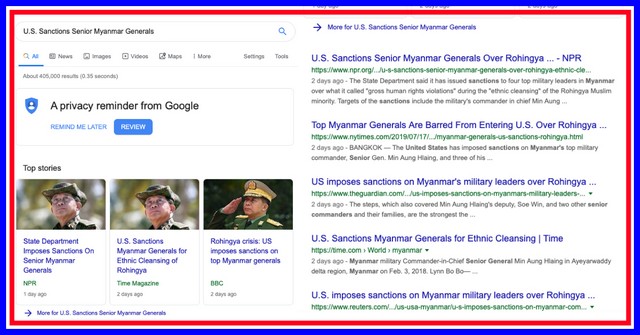
London, UK — The Burma Human Rights Network welcomes the public designation of four senior military figures by US Secretary of State, Michael Pompeo, but calls on the United States to follow with targeted sanctions against military owned companies and businesses. The four military figures were Burma’s Military Commander and Chief, Min Aung Hlaing, Deputy Commander-in-Chief Soe Win, Brigadier General Than Oo, and Brigadier General Aung Aung. The US sanctioned the four for their roles in crimes in northern Rakhine State against the Rohingya and what the State Department described as ethnic cleansing. The designation will prohibit travel to the United States for the four generals and their immediate families but does not affect them economically.

“The State Department’s public designation of Min Aung Hlaing and three others is a major step in acknowledging and punishing their cruel and inhumane actions against the Rohingya and other minorities inside of Burma. We would like to thank Mr. Pompeo and the dedicated staff at the State Department for taking these steps but we also ask them to go further as the military will not be thwarted from committing further crimes by symbolic actions alone. We are hopeful that targeted sanctions against military owned companies and businesses will follow, and that other nations will do the same. It is time that the world recognises the awful crimes committed by these men and that they are held accountable,” said BHRN Executive Director, Kyaw Win.

As Commander and Chief of the Burmese Military, Min Aung Hlaing is responsible for genocide against the Rohingya and leads military atrocities in current conflicts against the Rakhine and Kachin communities. The Military in Burma maintains a constitutionally mandated 25 percent control of the Parliament with veto power, effectively allowing Min Aung Hlaing to serve as a shadow dictator. Recognising his role and destructive influence in the country is vital to its progression towards democracy and peace.

BHRN calls on the rest of the international community to follow the lead of the United States in designating and sanctioning Min Aung Hlaing and all other high ranking military figures involved in human rights abuses and other atrocities. BHRN also calls upon the United States to impose economic sanctions against these individuals, including military owned companies and businesses and all others directly involved in atrocities throughout Burma. It is imperative that these men are isolated, cut off economically, and pressured to relinquish power to allow a free and peaceful future for all people living inside of Burma. Targeted sanctions against Burmese military figures must include their business interests and partners operating in the country and abroad to ensure their effectiveness.

Organisation’s Background
BHRN is based in London, operates across Burma and works for human rights, minority rights and religious freedom in Burma. BHRN has played a crucial role advocating for human rights and religious freedom with politicians and world leaders.

18 July 2019

Media Enquiries
Please contact:
Kyaw Win, Executive Director
Burma Human Rights Network (BHRN)
E: kyawwin78@gmail.com
T: +44(0) 740 345 2378

Why Are Anti-migrant Arguments In The E.U., U.S. Pure Hypocrisy?

By Andre Vltchek

Almost every day we read about the latest outbursts in Europe, targeting pro-immigration policies. There are protests, even riots. Right-wing governments get voted in, allegedly, because the Europeans “have had enough of relaxed immigration regulations”.

That is what we are told. That’s what we are supposed to understand, and even sympathize with. Anti-immigration sentiments are even pitched to the world as something synonymous with the desire of Europeans “to gain independence from Brussels and the elites”.The right-wing, often racist, spoiled and selfish proletariat is portrayed by many as a long-suffering, hard-working group of people, with progressive aspirations.

If seen from a distance, such arguments are outrageous and even insulting; at least to the billions of those who have already lost their lives, throughout history; victims of the European and North American expansionist genocides. And to those individuals who have, until this day, had their motherlands ruined, livelihoods destroyed, political will violated, and in the end, free and unconditional entry denied; entry into those very countries that keep violating all international laws,while spreading terror and devastation to virtually all corners of the world.

*

In this essay, let us be as concrete as possible. Let us be brief.

I declare from the start, that every African person, every Asian, every citizen of the Middle East and every Latin American (how perverse this very name “Latin” and “America”is, anyway) should be able to freely enter both Europe and North America. Furthermore, he or she should be then allowed to stay for as long as desired, enjoying the free benefits and all those goodies that are being relished by Westerners.

To back this statement, here are several (but not all) basic moral and logical arguments:

First of all, Europe and North America do not belong to their people. They belong to the people from all corners of the globe. In order to build the so-called West, close to one billion (cumulatively, according to my friends, the UN statisticians) had to die, throughout modern and the not so modern history. Virtually everything, from theatres, schools, hospitals, parks, railroads, factories and museums, have been built, literally, on the bones and blood of the conquered peoples. And nothing much has really changed, to these days. Europe and later North America invaded almost the entire planet; they looted, killed, enslaved and tortured. They robbed the world of everything, and gave back nothing, except religion and a servile and toxic bunch of ‘elites’,who are continuously plundering their countries, on behalf of the West. Therefore, Europe and North America were built on credit, and now this credit is due.

Secondly, the Western culture, without any competition, is the most violent civilization on earth. I repeat, without any competition. It cannot be defeated militarily, without further losses; losses which could be easily counted in billions of human lives. Therefore, the only possibility of how to reduce the scale of further global tragedies, is to ‘dilute’ the West and its fundamentalist culture of racial and cultural superiority. The fact that Westerners are now in minority in such cities like London or New York, has not fully stop the U.K. and U.S.A. from committing monstrous crimes, attacking and pillaging foreign countries. But were Europe and North America still homogeneous, there would hardly be any free, independent country left anywhere in the world. Migration to the West is helping, at least to some extent, to save the world. Migrants, from the first and oldest generations, demand that the voices of non-westerners, would be listened to, at least some extent.

Furthermore, and this is of a course well-known argument: the only reason why people from previously wealthy countries like Iraq, Libya, Venezuela, Iran or Syria are forced to emigrate, is because their nations were either bombed back to the Stone Age, or destroyed through sadistic sanctions. Why? So, there would be change of the government, and instead of local citizens, the profits from natural resources would benefit Western corporations. Also, of course, in order to prevent the “Domino Effect”. The West hates the idea of the “Domino Effect”: read,the regional or global influence of Communist, socialist or progressive governments which would be determined to improve the lives of their people.West needs obedient, frightened slaves, not great heroes and bright thinkers! To stop the “Domino Effect”, millions had to die in the 1965 coup in Indonesia, in Indochina (Vietnam, Laos and Cambodia), in the Democratic Republic of Congo, Iraq, to name just a few unfortunate nations. If you come to a rich, socially-balanced nation, rob it of everything, overthrow its government, and reduce it to a ‘failed state’, in order for your own nation and people to prosper, would you be shocked if some of its people were to decide to try to follow the resources that you have stolen; meaning, moving to your own country?

The reason why people in the West do not follow this train of logic is simply because they are thoroughly ignorant; trying extremely hard, for decades and centuries, to remain blind. If they claim ignorance, they don’t have to act. They can just enjoy the loot, without paying the price. It is simple, isn’t it?

*

Are those right-wing voters in the U.K., in Hungary, in Greece, France and Italy, as well as in other EU countries, really so blind, or so morally corrupt, that they do not see the reality?

Do they expect to have a ‘free ride’ for another century or two?

Do they teach history in European schools? I wonder. And if they do, what kind of history? I was shocked to realize that even some of my Spanish friends who are working for the United Nations, have absolutely no clue about the barbarity their country had committed in Central and South America. Or Portugal, in what is now Brazil or Cape Verde.

Now, the Italians with their Northern League (oh yes, “anti-establishment”, they love to say) firmly in government, are criminalizing people who are helping the ‘boat people’ sailing from Libya and other devastated African countries (mainly ruined by France and other EU nations) to reach Italian shores.Good ‘working people’ would rather if the refugees sank in the middle of the Mediterranean Sea, as hundreds and thousands already have. And this anti-immigration rhetoric is actually being glorified as ‘brave’ and ‘anti-establishment’. How beastly, how low, the European culture continues to be. It was always ultra-violent and aggressive, but now it is also shallow, illogical and fanatic. It is not racist, anymore. It is far beyond that. It is turbo-racist, monstrously selfish. I often describe it as ‘fundamentalist’, not unlike what one encounters in the so-called ‘logic’ of movements such as ISIS and al Nusra.

In the U.S.A., the situation is not much better. Wall on the Mexican border? Study your history! The United States robbed half of Mexico, through expansionist wars. Most of migrants who are crossing the border illegally, are actually not Mexicans (Mexico is, with all its social problems, an OECD country), but from impoverished Central American nations. And why are these nations impoverished? Every time they democratically elect their progressive governments which would be ready to work on behalf of the people, the U.S. immediately applies its fascist dictatorial “Monroe Doctrine”, overthrows the government, injects right-wing death-squads, forces privatization, and strips the country of everything, like a locust. Don’t the people from Guatemala, Salvador, Honduras or Dominican Republic, have the full right to follow the loot, too, and settle near it, in the United States?

*

The Western doctrine is simple and at the same time, absolutely irrational. It is not defined, but if it were, it would read like this: “We can attack, rob, migrate wherever we choose to. Because we are white, Christian people with a superior culture and much better weapons than everyone else. No other reason, but this should suffice. Other people have to stay away, far away. Or else! If they disobey, they will be sunk by the Italians, beaten with rubber hoses on the open seas by the Greeks.Walls will be built, and people concentrated in repulsive camps, like what is being done if refugees try to cross from the south to North America.”

Oh, North America, where predominately first but also second and other generations of Europeans hunted down local native people like animals. Where the great majority of the First Nation died horrible deaths. Where the native people, in the U.S.A. and Canada, are often forced to live, to this day, in total destitution. North America, but also Australia – the same culture, same pattern, same ‘logic’.

And after murdering native people, what came next? Millions of Africans, in chains, brought as slaves by the Europeans, to build “the new world”. Men tortured and robbed of their dignity. Women tied in the fields and raped, day after day, by white plantation owners. Democracy. Freedom. Western-style.

Does such a ‘nation’, like the United States, have any moral right to decide who should cross its borders, and who to settle on its territory?

I don’t think so. Do you?

*

Things can be very different. Look at Russia during the Soviet Union. It never occupied the Central Asian republics. They joined voluntarily, and if you talk to people in Uzbekistan or Kyrgyzstan, a great majority would happily join Russia, again; almost all feel nostalgic about the Soviet Union.

During the USSR, Moscow made sure that the standards of living in Tajikistan or Kirgizstan were almost the same as in Russia. Instead of plundering, Russia provided great subsidies and internationalist support.

And then, after the Soviet Union was destroyed by external forces, (the arms race with the West and by Western propaganda), the country broke into several independent states. And the flow of migrants began.

Russia never closed its borders. Travel from Central Asia (destabilized by Washington) to now rich Russia is easy. Millions of people from the former Soviet republics are happily working all over the Russian Federation. And there is no ‘moral obligation’ that the Russian state has towards them. All this is actually just common sense, respect for shared history and values, and normal human kindness.

*

Some will say, what the West did, it all happened long time ago. But no, it did not. It is still happening now, right now.

Of course, if you are frying your brains in some pub or club in London, or if you are sitting in a posh café in Paris, you would never think so. All you want is to be left alone, and to live your suave European life. A life built on the bones and blood of hundreds of millions of victims.

Huge and super-rich Europe cannot accommodate even one million of people flowing from the ruined Middle East? Seriously? Tiny Lebanon managed to survive an influx of 2 million refugees at the height of so-called “Syrian crises”. Crime rate did not skyrocket, country did not collapse. You know why? Because Lebanese people have heart and decency. While the West has nothing of that nature.

If your family became rich because it was robbing and murdering, would you want to return the booty? Would you open the doors to those whom your parents and brothers tortured and pillaged? Some would. After opening their eyes, they would. But not the West. It only takes. It never gives. It hates those who give. It smears, even attacks all decent nations.

The horrors are still happening right now, in devastated Afghanistan, a country reduced to ashes, after being designated as a training base for the fundamentalists ready to infiltrate and damage China, Russia, former Soviet Central Asia republics, Iran and Pakistan. I work there, I know. Or Syria. I work there too. Or Venezuela, one of my favorite countries on earth. And the list goes on and on.

I cannot anymore read those self-righteous, hypocritical outbursts, coming from the British, French, Italian, North American and Greek voters who only want benefits, while choosing to remain blind to the global genocides their regime is committing all over the world.

These people could not care less about who pays for their welfare, or how many millions die supplying them with their privileges.

They want more. They always complain “how poor and exploited they are”. They do not want to stop neo-colonialism. They only desire more money and better living conditions for themselves. “We are all humans”, they say. “We are all victims”. And then they vote in the extreme right-wing, and demand that the “refugees” be kept out.

They have blood on their hands. And most of them are not victims, but victimizers. They are not internationalists. Just mini-imperialists, selfish products of their culture of colonialism.

The West has to open the doors to the world which has been devastated during the long centuries.

Some people ‘outside’ have been literally turned into beggars, so the West could thrive.

‘Political correctness’ in London or New York lies, saying how wonderful the world outside is. No! It is not. Much of it is poor, gangrenous, horrid! Disgusting. Because it was made like that. Because it was beaten, violated, and robbed for centuries.

These people, the true victims, are demanding only two things: to be left alone and to be allowed to build their own nations, without Western military interventions, without self-serving NGO’s and Western-controlled U.N. agencies. That’s one.

Two, to go when they want to go, where their stolen riches are!

Either they will be let in, compensated and asked for forgiveness, or they will do what is their right: break the gates!

*

[First published by NEO – New Eastern Outlook]

Andre Vltchek is a philosopher, novelist, filmmaker and investigative journalist.

13 July 2019

Source: countercurrents.org

Defying US threats Turkey receives Russian S-400 missile defense system

By Abdus Sattar Ghazali

Turkey on Friday (July 12) received first shipment of Russian S-400 missile defense system hardware from Russia, Turkish Defense Ministry announced.

“The first batch of equipment of S-400 missile defense system, which is procured to meet Turkey’s air and missile defense needs, has started to arrive at Murted Air Base in Ankara,” the ministry said in a statement.

The second Russian military transport aircraft carrying the S-400 missile systems will depart for Turkey soon, according to the Russian news agency TASS.

“The Russian Aerospace Force’s military transport aircraft carrying parts of a S-400 regiment set has arrived in Turkey. Another plane will soon deliver the second batch of equipment to the country,” TASS quoted a diplomatic source as saying. “The third batch, containing more than 120 guided missiles of various types, will be dispatched later by sea. It is expected to happen at the end of the summer,” the agency added.

Turkish S-400 operators plan to train Turkish military service members this month and in August, according to TASS. In May, about 20 Turkish service members underwent training at a Russian training center.

The S-400 Triumph, which became operational in 2007, is designed to destroy aircraft, cruise and ballistic missiles, including medium-range ones. The S-400 system can hit targets at a distance of round 250 miles and at an altitude up to around 22 miles.

The purchase sparked a row within NATO, with the US threatening sanctions against Turkey for buying the Russian-made military technology.

Specifically, the Pentagon fears that Russia will be able to spy on the US-made F-35, the latest generation fighter jet, once S-400 becomes part of Turkey’s defense network, according to German news agency Deutsche Welle. Earlier this year, the US suspended deliveries related to the F-35 and gave Turkey a deadline until the end of July to cancel the S-400 deal. If Ankara did not comply, Turkish pilots training to fly F-35 in the US would be expelled from the country.

US officials also pressured Turkey to buy the more expensive, US-made Patriot missiles instead.

“S-400 is at least twice as cheap as the US system Patriot-2,” UK military expert Richard Connolly at Birmingham University told DW’s Russian service.

“The Russians and before them the Soviet Union were always leading in missile technology,” he added. “The reason for that was that the Americans and the West produced better aircraft.”

Recep Tayyip Erdogan

Less than two weeks ago, Turkish strongman Recep Tayyip Erdogan said that US President Donald Trump reassured him there will be no sanctions over buying the S-400s.

“We heard from him that there won’t be anything like this (sanctions),” Erdogan told a press conference in Osaka, Japan, following a meeting with Trump on the sidelines of the G20 summit.

“It is out of the question that such a thing takes place between two strategic allies. I believe it cannot happen,” Erdogan said.

“By accepting delivery of the S-400 from Russia, President Erdogan has chosen a perilous partnership with Putin at the expense of Turkey’s security, economic prosperity and the integrity of the NATO alliance,” the Wall Street Journal reported a joint statement by Sens. Jim Risch (R., Idaho), Bob Menendez (D., N.J.), Jim Inhofe (R., Okla.) and Jack Reed (D., R.I.).

During a visit to NATO headquarters in Belgium late last month, acting Secretary of Defense Mark Esper said: “If Turkey accepts delivery of the S-400, they will not receive the F-35. It’s that simple.”

According to the UPI, Shanahan sent a letter on June 6 to Turkish Defense Minister Hulusi Akar that Turkey would be pulled from the F-35 Lightning II jet program — including sales and the banning of Turkish contractors — unless Ankara decides not to go ahead with purchasing S-400.

U.S.-Turkish relations

The events in the coming weeks could determine the future of U.S.-Turkish relations, and raise questions about Turkey’s long-term role in the North Atlantic Treaty Organization as Russia attempts to build on its own influence in the country in a bid to weaken the alliance, the Wall Street Journal said adding:

“Turkey’s decision to source critical weapons from Russia is a setback for the U.S., which courted Ankara throughout the Cold War for its strategic location on the southwestern flank of the Soviet empire. It is also an economic issue. The U.S. and Russia are world’s biggest arms exporters and their contractors compete for dominance in the sector.”

“The S-400 issue has further roiled years of frayed U.S.-Turkey relations. U.S. officials still recall a key breaking point in 2003 when Turkish officials refused to allow U.S. troops to use Turkey as a launch pad for the invasion of Iraq. American presidents have tried repeatedly to reset relations with Turkey, only to hit new snags,” the Wall Street Journal argued and said:

“Former President Obama’s initial strong relationship with Mr. Erdogan was strained by the U.S. decision to arm and train Syrian Kurdish fighters in the battle against Islamic State that Turkey views as terrorists. The same issue has dogged relations between Messrs. Trump and Erdogan.

“The relationship also was strained by an American refusal to deport a U.S.-based cleric who Mr. Erdogan accuses of fomenting a failed coup in 2016 that led Mr. Erdogan to impose mass arrests and purges. The cleric, Fethullah Gulen, denies the accusation.

“Last summer, Washington imposed sanctions on Turkey when Ankara failed to release an American pastor who had been detained as part of the post-coup sweeps. Turkey eventually released the pastor, Andrew Brunson, and the U.S. partly lifted the sanctions, but the episode left scars, say U.S. diplomats.”

Resistance of Western Hegemony

“For the political elite of both countries, for Erdogan and Putin, it became kind of a symbol of their resistance of Western hegemony,” Ruslan Pukhov, director of the Center for Analysis of Strategies and Technologies, think tank in Moscow. “That’s why they try to peddle the deal by showing both the internal and external public…that surrender is not an option, Pukho was quoted by WSJ as saying.”

The S-400 reflects growing cooperation between Turkey and Russia, including construction of the Russia-financed Akkuyu nuclear power plant, Turkey’s first such facility, and the TurkStream natural-gas pipeline that runs from Russia to Turkey.

Making good on the delivery of the S-400s “shows the whole world that Russia is a reliable supplier,” Mr. Pukhov said. “Imagine: Turkey was a longstanding partner for F-35s, paid down-payments, and the United States refused to deliver.”

Deployed across Russia, from its Kaliningrad exclave in the Baltics to Vladivostok in the Far East, the S-400 has also become a successful export product. In addition to Turkey, Russia has sold the weapon to China and India. Saudi Arabia, one of the top buyers of U.S. military equipment, is in talks with Moscow over a possible S-400 purchase.

Russian state-owned holding conglomerate Rostec said earlier this year that as of late 2018 its arms export order book exceeded $51 billion, a record for the past 10 years, with S-400 supply contracts accounting for some of the largest deals.

“Turkish officials say closer ties with the Kremlin are compatible with NATO membership, and have expressed interest in not being entirely dependent on Russia for air-defense equipment. While taking delivery of the S-400, Turkey has been pursuing talks with France and Italy over the joint production of a rival European system. Industrial partners in the project are expected to submit a detailed study on how to divide workload in the autumn, according to European officials. Turkish Defense Minister Hulusi Akar said Friday that Ankara had not closed the door to buying Patriots from the U.S.,” the Wall Street Journal concluded.

Abdus Sattar Ghazali is the Chief Editor of the Journal of America (www.journalofamerica.net) email: asghazali2011 (@) gmail.com

13 July 2019

Source: countercurrents.org
24th anniversary: Srebrenica genocide remembered

By Abdus Sattar Ghazali

July 11 marks the 24th anniversary of the Srebrenica genocide, the worst atrocity on European soil since the World War Two. In July, 1995, Serb forces systematically killed more than 8,000 Bosniak Muslim men and boys in the UN-protected enclave in Srebrenica, Bosnia.

Al Jazeera provides a graphic account of the Srebrenica genocide.

On July 11, 1995 at 16:15 General Ratko Mladic (now a convicted war criminal) entered Srebrenica with Serb forces, including paramilitary units from Serbia, claiming the town for Serbs. Strolling through the streets with the TV cameras rolling, Mladic announced that there will be “revenge against the Turks”.

Panicked residents in the enclave fled to the UN Dutch Battalion base only to find that the 400 lightly-armed peacekeepers were unable to defend them. Serb forces had inherited much larger resources of the former Yugoslav army, the fourth largest in the world at the time.

On that day, thousands of Bosniak men start to make their escape through the woods, forming a column and hiking some 100km in an attempt to reach free territory controlled by the Bosnian army.

The journey was known as the death march, as they were ambushed, shot at and attacked by Serb forces. Less than a quarter of them survived.

Over the course of six days, more than 8,000 Bosniaks were killed. Women and small children were deported.

In an attempt to conceal the killings, Serb forces transported the dead bodies with bulldozers and trucks and buried them in numerous locations, leaving the victims’ remains fragmented and crushed.

Human bones can be found as far as 20km apart, making it difficult for families to give their loved ones a proper burial.

What led to the massacre?

Genocide is not committed by a small group of individuals, rather a large number of people and the state all contribute to genocide.

The idea of a Greater Serbia (including the territories of Bosnia, Kosovo, Croatia, Montenegro and other neighboring countries) dates back to the 19th century, and was revived following the death of Yugoslav leader Josip Broz Tito in 1980.

With the decline of the Communist bloc, Serbian President Slobodan Milosevic and Serbian nationalists saw a chance to mobilise the masses in support of establishing a homogenous Serbian state.

In Milosevic’s famous address to a crowd in Belgrade in 1989, he presented himself as the savior of Serbdom and Europe. It enforced the notion of “us [Serbs] vs them”.

Bosniaks were typically called Turks, Balije (a slur for a Bosnian Muslim) and branded as terrorists and Islamic “extremists”.

A plan to destroy Bosnia and “completely exterminate its Muslim people” was drawn up as early as the 1980s by the General Staff of the Yugoslav People’s Army, according to Vladimir Srebrov, a politician who cofounded the SDS party with convicted Bosnian Serb war criminal Radovan Karadzic.

One document, written by the army’s special services including experts in psychological warfare, stated that the most effective way to create terror and panic among the Bosniak population would be by raping women, minors, and even children.

How genocide was organized?

Organized from Belgrade, Serbia, weapons were distributed to the Serb population by the truckload throughout 1990 and 1991 in Bosnia, according to Al Jazeera.

“Weapons and military equipment were even flown in by military helicopters to Serbian military officers. It is said that by the end, almost no Serbian house was without an automatic gun,” according to a UN report from 1994.

“The pretext for the arms deliveries and the rearmament was that this was necessary for the defence against ‘the enemies of the people’ – the Muslim extremists.”

As Serb troops arrived in each town, they killed non-Serbs, often after torturing them. Bosniak properties were confiscated.

As many as 50,000 Bosniak and Croat women, girls and young children were raped in Bosnia from 1992- 1995.

In Prijedor, a city in western Bosnia, Bosniaks were forced to wear white armbands to be clearly identified and tie white flags to their doors.

Across the country 200,000 people were deported to concentration camps where they were tortured, starved and killed.

Others living under siege, such as in Sarajevo and Mostar, starved while being targeted by snipers and heavy shelling.

Srebrenica, which was known as the world’s biggest detention camp, was under siege for three years, before it fell to Bosnian Serb forces in July 1995.

Serb troops separated boys and men aged between 12 and 77 from the rest of the population and took them to fields, schools and warehouses to be executed.

International Court of Justice

The systematic murder of over 8,000 Bosniaks (Bosnian Muslims) in Srebrenica by Serb forces in July 1995 was ruled as an act of genocide by the International Criminal Tribunal for former Yugoslavia (ICTY) and the International Court of Justice.

Theodor Meron, the presiding judge at the ICTY, stated in 2004 that “by seeking to eliminate a part of the Bosnian Muslims, the Bosnian Serb forces committed a genocide.”

“They targeted for extinction of the 40,000 Bosnian Muslims living in Srebrenica, a group which was emblematic of Bosnian Muslims in general,” he said.

Serbian General Vladimir Lazarevic, Bosnian Croat Dario Kordic and Bosnian Serb Momcilo Krajisnik were convicted for “horrific crimes against humanity”, yet they were given a hero’s welcome upon release from prison with government officials in attendance, the report noted. Fourteen Serb war criminals were convicted of genocide and other crimes at the ICTY including former Military Commander Radislav Krstic, former President of Republika Srpska Radovan Karadzic, and Bosnian Serb Military Leader Ratko Mladic.

“All three, as senior officials and commanders, participated in ethnic cleansing and campaigns harming millions and devastating communities. The mentality that can regard those men as heroes is difficult to understand,” Meron wrote.

The systematic murder of over 8,000 Bosniaks (Bosnian Muslims) in Srebrenica by Serb forces in July 1995 was ruled as an act of genocide by the International Criminal Tribunal for former Yugoslavia (ICTY) and the International Court of Justice.Denial of facts established in the Tribunal’s judgments are widespread in the education system throughout former Yugoslavia, the report noted, where students are taught “widely different and irreconcilable versions of the recent past”. International Court of Justice

Theodor Meron, the presiding judge at the ICTY, stated in 2004 that “by seeking to eliminate a part of the Bosnian Muslims, the Bosnian Serb forces committed a genocide.”

“They targeted for extinction of the 40,000 Bosnian Muslims living in Srebrenica, a group which was emblematic of Bosnian Muslims in general,” he said.

Serbian General Vladimir Lazarevic, Bosnian Croat Dario Kordic and Bosnian Serb Momcilo Krajisnik were convicted for “horrific crimes against humanity”, yet they were given a hero’s welcome upon release from prison with government officials in attendance, the report noted. Fourteen Serb war criminals were convicted of genocide and other crimes at the ICTY including former Military Commander Radislav Krstic, former President of Republika Srpska Radovan Karadzic, and Bosnian Serb Military Leader Ratko Mladic.

“All three, as senior officials and commanders, participated in ethnic cleansing and campaigns harming millions and devastating communities. The mentality that can regard those men as heroes is difficult to understand,” Meron wrote.

Canadians launch petition to ban Srebrenica genocide denialDenial of facts established in the Tribunal’s judgments are widespread in the education system throughout former Yugoslavia, the report noted, where students are taught “widely different and irreconcilable versions of the recent past”.

An online petition has been launched in Canada by the Institute for Research of Genocide (IRGC), requesting the Canadian government to enact a law making Srebrenica genocide denial a punishable offence.

If the petition is adopted, Canada would join nine other countries in Europe including Switzerland, Slovakia, Hungary, Croatia and Macedonia in prohibiting genocide denial.

Canada has already adopted two resolutions recognizing the Srebrenica genocide, launched by the IRGC.

However, its Director Emir Ramic noted that the process of adopting the first resolution took five years as the Conservative Party – under the influence of the Serbian and Russian lobby – had rejected the resolution.

He told Al Jazeera that the threats intensified as discourse changed from denial to glorification and triumphalism.Ramic’s work with the institute has made him a target of death threats and verbal abuse for years by genocide deniers.

However, he says it has made him all the more determined to make sure a law is enacted banning the denial of Srebrenica genocide. If adopted, Canada would make a major contribution in the fight against genocide denial worldwide, Ramic told Al Jazeera.

“Denying the genocide in Srebrenica is very dangerous. We need to learn from history, recognise [what happened in Srebrenica] and call it by its real name,” he said.

“The aggression and genocide in Bosnia have shown that … there aren’t adequate mechanisms in place to protect freedom and human rights.””Human rights are under attack worldwide,” Ramic added. “Bosniaks, as the only people in Europe who survived aggression and genocide [since the Holocaust], are exposed to unacceptable discrimination not just in the motherland, but in the Diaspora as well.”

“We’ve seen this with Holocaust denial, we’ve seen this with denial for Rwanda and of course with Srebrenica,” said Parliamentarian Brian Masse on the necessity of a law.

“It’s very hurtful for the victims and families of the survivors to continue to wrestle with something based on facts, so the initiative will help in preventing denial and create awareness that we will never forget.”

On April 24, 2015, the House of Commons passed a motion to include the Srebrenica genocide, and Srebrenica Remembrance Day as part of “Genocide Remembrance, Condemnation and Awareness Month” every April. Earlier on October 19, 2010, the House of Commons passed a motion to recognize July 11 annually as Srebrenica Remembrance Day in Canada.

Abdus Sattar Ghazali is the Chief Editor of the Journal of America (www.journalofamerica.net) email: asghazali2011 (@) gamil.com

12 July 2019

Source: countercurrents.org
Don’t expect justice from the Imperial Criminal Court

By Justin Podur

The ICC provides no legal counterbalance to the arrogance of an empire’s power. It is the empire’s court.

In June, a group of international lawyers sued the European Union for crimes against humanity at the International Criminal Court (ICC). The lawyers claim that when the EU switched to a policy of deterring refugees trying to cross the Mediterranean in 2014, in particular trying to prevent Libyan refugees from fleeing their destroyed state, they killed thousands of refugees and sent tens of thousands more back to Libya to be enslaved, tortured, raped, and killed.

As a symbolic gesture, the lawsuit is powerful. But the possibility of getting justice for Libyan refugees from the ICC is practically nonexistent.

In fact, the ICC bears some responsibility for the destruction of the Libyan state that led to the refugee crisis in the first place. When the United States decided to overthrow Gaddafi in 2011, it had the UN Security Council make a “referral” of the Libyan situation to the ICC. There were some peculiarities in the details of the referral as well: the ICC was directed to investigate the situation in Libya, exempting non-state actors, since February 15, 2011. “It would appear,” scholar Mark Kersten writes in a chapter in the 2015 book “Contested Justice” (pg. 462), “that the restriction to events after 15 February 2011 was included in order to shield key Western states… In the years preceding the intervention, many of the same Western states that ultimately intervened in Libya and helped overturn the regime had maintained close economic, political and intelligence connections with the Libyan government.” The African Union, led by the South African president, tried to broker a peace deal between Gaddafi and the rebels: Gaddafi accepted, but the rebels refused. For them, Gaddafi had to go. And the ICC investigation strengthened their hand. In Libya, the ICC was harmful to a negotiated solution.

In general, the ICC prefers war to negotiated peace. As scholar Phil Clark pointed out in his 2018 book “Distant Justice” (pg. 91): “… the ICC has expressed immense skepticism toward peace negotiations involving Ugandan and Congolese suspects whom it has charged — especially when those talks involve the offer of amnesty — but has strongly supported militarized responses to these suspects and their respective rebel movements. In short, the ICC has viewed ongoing armed conflict rather than peace talks as more useful for its own purposes.” The president of the DR Congo’s Truth and Reconciliation Commission told Clark in an interview (pg. 223): “The ICC came up forcefully in our discussions with several rebel leaders… We would start talking to them, make good progress, then the conversation would stop. They didn’t want to incriminate themselves, even when we stressed that the amnesty was in place.” In the DR Congo, the ICC made offers of amnesty less credible. Rebel leader Mathieu Ngudjolo was pardoned in 2006, integrated into the army, promoted to the rank of colonel, and then arrested on an ICC warrant 18 months later: the government’s “duplicity toward an amnesty recipient undermined the broader use of amnesty as an incentive for members of rebel groups to disarm” (pg. 203).

The ICC’s careful selection of when it investigates crimes (like limiting its Libya investigation to crimes after February 15, 2011, or its predecessor the International Criminal Tribunal for Rwanda limiting its investigation to crimes committed after the assassination of the Rwandan president on April 6, 1994) is mirrored in its careful selection of where it investigates and where it ignores. Take the DR Congo again: the ICC limited its mandate to the province of Ituri. Horrific violence took place in Ituri, but there was less violence overall than in the Kivu provinces (especially North Kivu). Why didn’t the ICC investigate in the Kivus? Because in the Kivus, the worst crimes were committed by armed groups supported by Rwanda and Uganda, favored U.S. allies in the region. When Sri Lanka’s government killed tens of thousands of people at the end of its counterinsurgency war against the Tamil Tigers in 2009, the ICC wrung its hands: Sri Lanka wasn’t a signatory to the Rome Statute that empowered the ICC.

The ICC gets even twistier when it comes time to prevent accountability for Israel. After the Goldstone report on Israel’s massacres in Gaza in 2008/9, Palestinians tried to bring a suit to the ICC against the Israeli generals and politicians who organized them. David Bosco reports in his book Rough Justice(pg. 162) that the Israelis met with Ocampo and “pressed Moreno-Ocampo to determine quickly that Palestine was not a state and that the court could therefore not accept its grant of jurisdiction.” The Americans told Ocampo “that they saw little value in ‘criminalizing the world’s longest running and most intractable regional dispute.’” Moreno saw the light: “The prosecutor’s long-awaited decision on Palestine — released in April 2012… more than three years after Palestine asked the court to investigate, the prosecutor decided that it was not his role to determine Palestine’s legal status.” The massacred Palestinians were colonized, and therefore stateless. Only states can sign the Rome Statute and bring the ICC in. Therefore, the ICC had no jurisdiction over the 2008/9 massacres of the Palestinians.

When the U.S. and UK saw no benefit to having the ICC involved in Afghanistan, the ICC prosecutor (Bosco, pg. 163): “limited himself to occasional private requests and put no pressure on involved states. That approach contrasted sharply with his willingness to sharply chastise states for their failure to enforce existing arrest warrants.”

Given the proclivity of the Western coalition in Afghanistan for bombing weddings and operating death squads (sometimes euphemistically called “kill teams”), their squeamishness in the face of potential legal probes is understandable. The ICC, like its predecessor tribunals on Rwanda and Yugoslavia, fully understands that the U.S. and UK are exempt from its brand of justice. Bosco (pg. 66) quotes British Foreign Minister Robin Cook speaking about the international tribunal after the Kosovo war in 1999: “If I may say so, this is not a court set up to bring to book Prime Ministers of the United Kingdom or Presidents of the United States.” Legal scholar Hans Kochler, writing in 2003 (pg. 178), quoted NATO spokesman Jamie Shea, who responded, when asked if he would accept the International Criminal Tribunal for Yugoslavia (ICTY)’s jurisdiction over NATO officials: “… I think we have to distinguish between the theoretical and the practical. I believe when Justice [Louise] Arbour starts her investigation, she will because we will allow her to. It’s not [Serbian President Slobodan] Milosevic that has allowed Justice Arbour her visa to go to Kosovo to carry out her investigations. If her court, as we want, is to be allowed access, it will be because of NATO… So NATO is the friend of the Tribunal, NATO are the people who have been detaining indicted war criminals for the Tribunal in Bosnia.”

NATO’s spokesman reminded the world that as a “practical” matter, since it was Western militaries and police services that provide the law enforcement services to the ICC, these Western militaries wouldn’t subject themselves to the ICC’s justice. The second ICTY prosecutor, Carla Del Ponte, admitted her dependence on NATO forces and the partiality of justice that ensued (quoted in Bosco pg. 66): “if I went forward with an investigation of NATO, I would not only fail in this investigative effort, I would render my office incapable of continuing to investigate and prosecute the crimes committed by the local forces during the wars of the 1990s.”

The ICC’s prosecutors depend on Western forces to make arrests and renditions. The ICC also recycles intelligence material from these Western countries into evidence against ICC suspects. This should be a legal problem: intelligence material is not evidence. There are many people trapped in Kafkaesque situations precisely because courts used intelligence materials — which are best guesses and probabilities used to inform police and military actions usually before events occur — as evidence, which should consist of provable facts intended to hold people accountable after the fact. Canadian academic Hassan Diab — imprisoned in France based on a similar-sounding name in a notebook from an intelligence agency interrogation — is just one example.

There was a time, decades ago, when the ICC was forming, when American and Israeli officials were actually worried about the prospect of a court that had universal jurisdiction. Suddenly, U.S. officials talked about national sovereignty. At that time you could hear John Bolton arguing that it was a bad idea “assert the primacy of international institutions over nation-states.” Bolton was very explicit about his problems with the U.S. being a party to the ICC, as quoted by Mahmood Mamdani in 2008:

“‘Our main concern should be for our country’s top civilian and military leaders, those responsible for our defense and foreign policy.’ Bolton went on to ask ‘whether the United States was guilty of war crimes for its aerial bombing campaigns over Germany and Japan in World War II’ and answered in the affirmative: ‘Indeed, if anything, a straightforward reading of the language probably indicates that the court would find the United States guilty. A fortiori, these provisions seem to imply that the United States would have been guilty of a war crime for dropping atomic bombs on Hiroshima and Nagasaki. This is intolerable and unacceptable.’ He also aired the concerns of America’s principal ally in the Middle East, Israel: ‘Thus, Israel justifiably feared in Rome that its pre-emptive strike in the Six-Day War almost certainly would have provoked a proceeding against top Israeli officials. Moreover, there is no doubt that Israel will be the target of a complaint concerning conditions and practices by the Israeli military in the West Bank and Gaza.’”

Near the end of his term, Clinton signed the Rome Statute. At the beginning of his term, George W. Bush had Bolton “unsign” it, and negotiate bilateral agreements with the countries of the world that they would never hand Americans over to any international courts. The U.S. went even further, passing in 2002 the Armed Service-Members Protection Act, which includes the line: “The United States is not a party to the Rome Statute and will not be bound by any of its terms. The United States will not recognize the jurisdiction of the International Criminal Court over United States nationals.” Then the U.S. got the Security Council to pass resolutions enshrining U.S. immunity.

Israel also never signed the Rome Statute, which is why its officials are now arguing that the ICC has no jurisdiction in an ICC suit about another massacre it committed, this time on a boat trying to relieve the Gaza siege in 2010.

The powerful are exempt from the ICC’s justice. But the U.S. does believe in a kind of universal jurisdiction: its own. Kochler (2003, pg. 106) cites an internal Department of Justice memorandum from the George H.W. Bush era stating the opinion that the FBI has the power “to apprehend and abduct a fugitive residing in a foreign state when those actions would be contrary to customary international law.” That memo was from 1989, and it was about arresting Manuel Noriega, the president of Panama who fell afoul of the U.S., whose country was bombed and invaded, and who was taken away to jail.

The ICC won’t be doing anything for Libyan refugees or the victims of Israel’s massacres, but it continues to make strong statements about Sudan’s now ousted president Omar al-Bashir, who is wanted for crimes committed as part of a counterinsurgency campaign in Darfur. The trial of an African leader from an enemy state, more than a decade after the crimes took place: now this is where the ICC shines.

In 2008, writing about the ICC’s arrest warrant for al-Bashir, Uganda-based scholar Mahmood Mamdani warned that the ICC was becoming a tool of neocolonial domination. The theory implicit in the ICC’s interventions, he wrote, “…turns citizens into wards. The language of humanitarian intervention has cut its ties with the language of citizen rights. To the extent the global humanitarian order claims to stand for rights, these are residual rights of the human and not the full range of rights of the citizen. If the rights of the citizen are pointedly political, the rights of the human pertain to sheer survival… Humanitarianism does not claim to reinforce agency, only to sustain bare life. If anything, its tendency is to promote dependence. Humanitarianism heralds a system of trusteeship.” And what is an empire if not a system of trusteeship?

The ICC provides no legal counterbalance to the arrogance of an empire’s power. It is the empire’s court.

Justin Podur is a Toronto-based writer and a writing fellow at Globetrotter, a project of the Independent Media Institute.

12 July 2019

Source: countercurrents.org
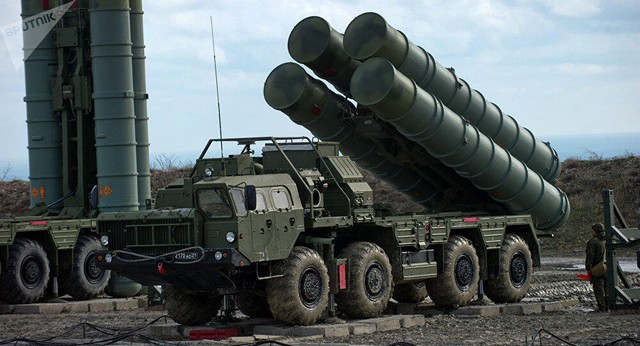
The Missing Three-Letter Word in the Iran Crisis – Oil’s Enduring Sway in U.S. Policy in the Middle East

By Michael T Klare

It’s always the oil. While President Trump was hobnobbing with Saudi Crown Prince Mohammed bin Salman at the G-20 summit in Japan, brushing off a recent U.N. report about the prince’s role in the murder of Washington Post columnist Jamal Khashoggi, Secretary of State Mike Pompeo was in Asia and the Middle East, pleading with foreign leaders to support “Sentinel.” The aim of that administration plan: to protect shipping in the Strait of Hormuz and the Persian Gulf. Both Trump and Pompeo insisted that their efforts were driven by concern over Iranian misbehavior in the region and the need to ensure the safety of maritime commerce. Neither, however, mentioned one inconvenient three-letter word — O-I-L — that lay behind their Iranian maneuvering (as it has impelled every other American incursion in the Middle East since World War II).

Now, it’s true that the United States no longer relies on imported petroleum for a large share of its energy needs. Thanks to the fracking revolution, the country now gets the bulk of its oil — approximately 75% — from domestic sources. (In 2008, that share had been closer to 35%.) Key allies in NATO and rivals like China, however, continue to depend on Middle Eastern oil for a significant proportion of their energy needs. As it happens, the world economy — of which the U.S. is the leading beneficiary (despite President Trump’s self-destructive trade wars) — relies on an uninterrupted flow of oil from the Persian Gulf to keep energy prices low. By continuing to serve as the principal overseer of that flow, Washington enjoys striking geopolitical advantages that its foreign policy elites would no more abandon than they would their country’s nuclear supremacy.

This logic was spelled out clearly by President Barack Obama in a September 2013 address to the U.N. General Assembly in which he declared that “the United States of America is prepared to use all elements of our power, including military force, to secure our core interests” in the Middle East. He then pointed out that, while the U.S. was steadily reducing its reliance on imported oil, “the world still depends on the region’s energy supply and a severe disruption could destabilize the entire global economy.” Accordingly, he concluded, “We will ensure the free flow of energy from the region to the world.”

To some Americans, that dictum — and its continued embrace by President Trump and Secretary of State Pompeo — may seem anachronistic. True, Washington fought wars in the Middle East when the American economy was still deeply vulnerable to any disruption in the flow of imported oil. In 1990, this was the key reason President George H.W. Bush gave for his decision to evict Iraqi troops from Kuwait after Saddam Hussein’s invasion of that land. “Our country now imports nearly half the oil it consumes and could face a major threat to its economic independence,” he told a nationwide TV audience. But talk of oil soon disappeared from his comments about what became Washington’s first (but hardly last) Gulf War after his statement provoked widespread public outrage. (“No Blood for Oil” became a widely used protest sign then.) His son, the second President Bush, never even mentioned that three-letter word when announcing his 2003 invasion of Iraq. Yet, as Obama’s U.N. speech made clear, oil remained, and still remains, at the center of U.S. foreign policy. A quick review of global energy trends helps explain why this has continued to be so.

The World’s Undiminished Reliance on Petroleum

Despite all that’s been said about climate change and oil’s role in causing it — and about the enormous progress being made in bringing solar and wind power online — we remain trapped in a remarkably oil-dependent world. To grasp this reality, all you have to do is read the most recent edition of oil giant BP’s “Statistical Review of World Energy,” published this June. In 2018, according to that report, oil still accounted for by far the largest share of world energy consumption, as it has every year for decades. All told, 33.6% of world energy consumption last year was made up of oil, 27.2% of coal (itself a global disgrace), 23.9% of natural gas, 6.8% of hydro-electricity, 4.4% of nuclear power, and a mere 4% of renewables.

Most energy analysts believe that the global reliance on petroleum as a share of world energy use will decline in the coming decades, as more governments impose restrictions on carbon emissions and as consumers, especially in the developed world, switch from oil-powered to electric vehicles. But such declines are unlikely to prevail in every region of the globe and total oil consumption may not even decline. According to projections from the International Energy Agency (IEA) in its “New Policies Scenario” (which assumes significant but not drastic government efforts to curb carbon emissions globally), Asia, Africa, and the Middle East are likely to experience a substantially increased demand for petroleum in the years to come, which, grimly enough, means global oil consumption will continue to rise.

Concluding that the increased demand for oil in Asia, in particular, will outweigh reduced demand elsewhere, the IEA calculated in its 2017 World Energy Outlook that oil will remain the world’s dominant source of energy in 2040, accounting for an estimated 27.5% of total global energy consumption. That will indeed be a smaller share than in 2018, but because global energy consumption as a whole is expected to grow substantially during those decades, net oil production could still rise — from an estimated 100 million barrels a day in 2018 to about 105 million barrels in 2040.

Of course, no one, including the IEA’s experts, can be sure how future extreme manifestations of global warming like the severe heat waves recently tormenting Europe and South Asia could change such projections. It’s possible that growing public outrage could lead to far tougher restrictions on carbon emissions between now and 2040. Unexpected developments in the field of alternative energy production could also play a role in changing those projections. In other words, oil’s continuing dominance could still be curbed in ways that are now unpredictable.

In the meantime, from a geopolitical perspective, a profound shift is taking place in the worldwide demand for petroleum. In 2000, according to the IEA, older industrialized nations — most of them members of the Organization for Economic Cooperation and Development (OECD) — accounted for about two-thirds of global oil consumption; only about a third went to countries in the developing world. By 2040, the IEA’s experts believe that ratio will be reversed, with the OECD consuming about one-third of the world’s oil and non-OECD nations the rest. More dramatic yet is the growing centrality of the Asia-Pacific region to the global flow of petroleum. In 2000, that region accounted for only 28% of world consumption; in 2040, its share is expected to stand at 44%, thanks to the growth of China, India, and other Asian countries, whose newly affluent consumers are already buyingcars, trucks, motorcycles, and other oil-powered products.

Where will Asia get its oil? Among energy experts, there is little doubt on this matter. Lacking significant reserves of their own, the major Asian consumers will turn to the one place with sufficient capacity to satisfy their rising needs: the Persian Gulf. According to BP, in 2018, Japan already obtained 87% of its oil imports from the Middle East, India 64%, and China 44%. Most analysts assume these percentages will only grow in the years to come, as production in other areas declines.

This will, in turn, lend even greater strategic importance to the Persian Gulf region, which now possesses more than 60% of the world’s untapped petroleum reserves, and to the Strait of Hormuz, the narrow passagewaythrough which approximately one-third of the world’s seaborne oil passes daily. Bordered by Iran, Oman, and the United Arab Emirates, the Strait is perhaps the most significant — and contested — geostrategic location on the planet today.

Controlling the Spigot

When the Soviet Union invaded Afghanistan in 1979, the same year that militant Shiite fundamentalists overthrew the U.S.-backed Shah of Iran, U.S. policymakers concluded that America’s access to Gulf oil supplies was at risk and a U.S. military presence was needed to guarantee such access. As President Jimmy Carter would say in his State of the Union Address on January 23, 1980,

“The region which is now threatened by Soviet troops in Afghanistan is of great strategic importance: It contains more than two thirds of the world’s exportable oil… The Soviet effort to dominate Afghanistan has brought Soviet military forces to within 300 miles of the Indian Ocean and close to the Strait of Hormuz, a waterway through which most of the world’s oil must flow… Let our position be absolutely clear: an attempt by any outside force to gain control of the Persian Gulf region will be regarded as an assault on the vital interests of the United States of America, and such an assault will be repelled by any means necessary, including military force.”

To lend muscle to what would soon be dubbed the “Carter Doctrine,” the president created a new U.S. military organization, the Rapid Deployment Joint Task Force (RDJTF), and obtained basing facilities for it in the Gulf region. Ronald Reagan, who succeeded Carter as president in 1981, made the RDJTF into a full-scale “geographic combatant command,” dubbed Central Command, or CENTCOM, which continues to be tasked with ensuring American access to the Gulf today (as well as overseeing the country’s never-ending wars in the Greater Middle East). Reagan was the first president to activate the Carter Doctrine in 1987 when he ordered Navy warships to escort Kuwaiti tankers, “reflagged” with the stars and stripes, as they traveled through the Strait of Hormuz. From time to time, such vessels had been coming under fire from Iranian gunboats, part of an ongoing “Tanker War,” itself part of the Iran-Iraq War of those years. The Iranian attacks on those tankers were meant to punish Sunni Arab countries for backing Iraqi autocrat Saddam Hussein in that conflict. The American response, dubbed Operation Earnest Will, offered an early model of what Secretary of State Pompeo is seeking to establish today with his Sentinel program.

Operation Earnest Will was followed two years later by a massive implementation of the Carter Doctrine, President Bush’s 1990 decision to push Iraqi forces out of Kuwait. Although he spoke of the need to protect U.S. access to Persian Gulf oil fields, it was evident that ensuring a safe flow of oil imports wasn’t the only motive for such military involvement. Equally important then (and far more so now): the geopolitical advantage controlling the world’s major oil spigot gave Washington.

When ordering U.S. forces into combat in the Gulf, American presidents have always insisted that they were acting in the interests of the entire West. In advocating for the “reflagging” mission of 1987, for instance, Secretary of Defense Caspar Weinberger argued (as he would later recall in his memoir Fighting for Peace), “The main thing was for us to protect the right of innocent, nonbelligerent and extremely important commerce to move freely in international open waters — and, by our offering protection, to avoid conceding the mission to the Soviets.” Though rarely so openly acknowledged, the same principle has undergirded Washington’s strategy in the region ever since: the United States alone must be the ultimate guarantor of unimpeded oil commerce in the Persian Gulf.

Look closely and you can find this principle lurking in every fundamental statement of U.S. policy related to that region and among the Washington elite more generally. My own personal favorite, when it comes to pithiness, is a sentence in a report on the geopolitics of energy issued in 2000 by the Center for Strategic and International Studies, a Washington-based think tank well-populated with former government officials (several of whom contributed to the report): “As the world’s only superpower, [the United States] must accept its special responsibilities for preserving access to [the] worldwide energy supply.” You can’t get much more explicit than that.

Of course, along with this “special responsibility” comes a geopolitical advantage: by providing this service, the United States cements its status as the world’s sole superpower and places every other oil-importing nation — and the world at large — in a condition of dependence on its continued performance of this vital function.

Originally, the key dependents in this strategic equation were Europe and Japan, which, in return for assured access to Middle Eastern oil, were expected to subordinate themselves to Washington. Remember, for example, how they helped pay for Bush the elder’s Iraq War (dubbed Operation Desert Storm). Today, however, many of those countries, deeply concerned with the effects of climate change, are seeking to lessen oil’s role in their national fuel mixes. As a result, in 2019, the countries potentially most at the mercy of Washington when it comes to access to Gulf oil are economically fast-expanding China and India, whose oil needs are only likely to grow. That, in turn, will further enhance the geopolitical advantage Washington enjoyed as long as it remains the principal guardian of the flow of oil from the Persian Gulf. How it may seek to exploit this advantage remains to be seen, but there is no doubt that all parties involved, including the Chinese, are well aware of this asymmetric equation, which could give the phrase “trade war” a far deeper and more ominous meaning.

The Iranian Challenge and the Specter of War

From Washington’s perspective, the principal challenger to America’s privileged status in the Gulf is Iran. By reason of geography, that country possesses a potentially commanding position along the northern Gulf and the Strait of Hormuz, as the Reagan administration learned in 1987-1988 when it threatened American oil dominance there. About this reality President Reagan couldn’t have been clearer. “Mark this point well: the use of the sea lanes of the Persian Gulf will not be dictated by the Iranians,” he declared in 1987 — and Washington’s approach to the situation has never changed.

In more recent times, in response to U.S. and Israeli threats to bomb their nuclear facilities or, as the Trump administration has done, impose economic sanctions on their country, the Iranians have threatened on numerous occasions to block the Strait of Hormuz to oil traffic, squeeze global energy supplies, and precipitate an international crisis. In 2011, for example, Iranian Vice President Mohammad Reza Rahimi warned that, should the West impose sanctions on Iranian oil, “not even one drop of oil can flow through the Strait of Hormuz.” In response, U.S. officials have vowed ever since to let no such thing happen, just as Secretary of Defense Leon Panetta did in response to Rahimi at that time. “We have made very clear,” he said, “that the United States will not tolerate blocking of the Strait of Hormuz.” That, he added, was a “red line for us.”

It remains so today. Hence, the present ongoing crisis in the Gulf, with fierce U.S. sanctions on Iranian oil sales and threatening Iranian gestures toward the regional oil flow in response. “We will make the enemy understand that either everyone can use the Strait of Hormuz or no one,” said Mohammad Ali Jafari, commander of Iran’s elite Revolutionary Guards, in July 2018. And attacks on two oil tankers in the Gulf of Oman near the entrance to the Strait of Hormuz on June 13th could conceivably have been an expression of just that policy, if — as claimed by the U.S. — they were indeed carried out by members of the Revolutionary Guards. Any future attacks are only likely to spur U.S. military action against Iran in accordance with the Carter Doctrine. As Pentagon spokesperson Bill Urban put it in response to Jafari’s statement, “We stand ready to ensure the freedom of navigation and the free flow of commerce wherever international law allows.”

As things stand today, any Iranian move in the Strait of Hormuz that can be portrayed as a threat to the “free flow of commerce” (that is, the oil trade) represents the most likely trigger for direct U.S. military action. Yes, Tehran’s pursuit of nuclear weapons and its support for radical Shiite movements throughout the Middle East will be cited as evidence of its leadership’s malevolence, but its true threat will be to American dominance of the oil lanes, a danger Washington will treat as the offense of all offenses to be overcome at any cost.

If the United States goes to war with Iran, you are unlikely to hear the word “oil” uttered by top Trump administration officials, but make no mistake: that three-letter word lies at the root of the present crisis, not to speak of the world’s long-term fate.

Michael T. Klare, a TomDispatch regular, is the five-college professor emeritus of peace and world security studies at Hampshire College and a senior visiting fellow at the Arms Control Association.

11 July 2019

Source: countercurrents.org
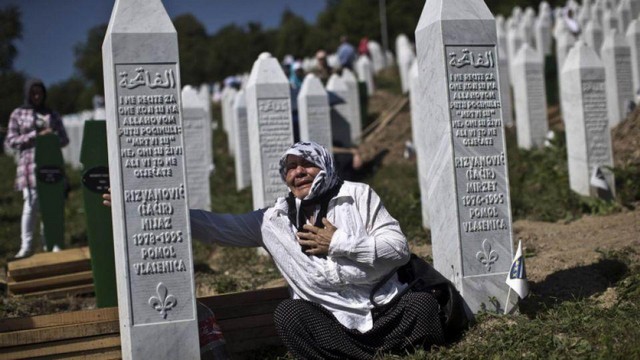
Iran vs. Spineless Europe

By Peter Koenig

Iran announced the second step in reducing her commitment under the 2015 so-called Nuclear Deal, officially known as The Joint Comprehensive Plan of Action (JCPOA), by exceeding the limit set by agreement of 3.67% uranium enrichment and 300 kg of enriched uranium accumulation. When asked by the media about his reaction, Trump says, “they know what they are doing” and adds, “they better be careful”. Pompeo warns Iran of “more isolation, more sanctions.”

Iran waited for 60 weeks, after the US unilaterally withdrew from the deal in May 2018, hoping that the Europeans, the so-called E3 (Germany, France and the UK) would honor their commitment to JCPOA, signed in July 2015 in Vienna, Austria. But to this day, the Europeans cannot bring themselves to detach from the US tyranny of sanctions. So, Iran went ahead with this crucial decision to also step out from the agreement.

Today, RT reports that Iran is forced to step further away from the nuclear deal. Iran is “pushing back against US sanctions and European inaction on trade, Iran is stepping up its uranium enrichment.”

In fact, Iran has already exceeded the 3.67% of enrichment and the 300 kg cap set under the JCPOA. And according to Iran’s deputy foreign minister Abbas Araghchi, who spoke to a press conference a few days ago, the enrichment levels would stand at 5 percent for now. Iran would give it another 60 weeks to wait for the European reaction.

Iran’s Foreign Minister, Javad Zarif, tweeted that “All such steps are reversible only through E3 compliance. Having failed to implement their obligations under JCPOA – including after the US withdrawal – EU/E3 should at a minimum politically support Iran’s remedial measures under Para 36 [of the JCPOA], including at the International Atomic Energy Agency (IAEA).”Mr.Zarif added, “E3 have no pretexts to avoid a firm political stance to preserve JCPOA and counter U.S unilateralism.”

IAEA’s Director General, Yukiya Amano has informed the Board of Governors that the Agency verified on 1 July that Iran’s total enriched uranium stockpile exceeded the deal’s limit, and that Iran was in breach of the agreement.

But that is not true. There is no breach. Foreign Minister Zarif, rightly pointed out that Iran’s amassing more enriched uranium than permitted under the deal, was not a violation. Iran was exercising its right to respond to the US unilateral withdrawal from the pact a year ago, to the E3 not honoring their part of the deal, and to Washington’s imposed totally illegal and unjustified punishing sanctions on Tehran.

Zarif confirmed Iran’s action and why, by tweeting, “We triggered and exhausted para 36 after US withdrawal. Para 36 of the accord illustrates why. We gave E3+2 [also including Russia and China] a few weeks, while reserving our right. We finally took action after 60 weeks. As soon as E3 abide by their obligations, we’ll reverse.”

Mr. Zarif is absolutely right. Here is what the famous para 36 of the JCPOA says:

Disputed Resolution Mechanism

36. If Iran believed that any or all of the E3/EU+3 were not meeting their commitments under this JCPOA, Iran could refer the issue to the Joint Commission for resolution; similarly, if any of the E3/EU+3 believed that Iran was not meeting its commitments under this JCPOA, any of the E3/EU+3 could do the same. The Joint Commission would have 15 days to resolve the issue, unless the time period was extended by consensus. After Joint Commission consideration, any participant could refer the issue to Ministers of Foreign Affairs, if it believed the compliance issue had not been resolved. Ministers would have 15 days to resolve the issue, unless the time period was extended by consensus. After Joint Commission consideration – in parallel with (or in lieu of) review at the Ministerial level – either the complaining participant or the participant whose performance is in question could request that the issue be considered by an Advisory Board, which would consist of three members (one each appointed by the participants in the dispute and a third independent member). The Advisory Board should provide a non-binding opinion on the compliance issue within 15 days. If, after this 30-day process the issue is not resolved, the Joint Commission would consider the opinion of the Advisory Board for no more than 5 days in order to resolve the issue. If the issue still has not been resolved to the satisfaction of the complaining participant, and if the complaining participant deems the issue to constitute significant nonperformance, then that participant could treat the unresolved issue as grounds to cease performing its commitments under this JCPOA in whole or in part and/or notify the UN Security Council that it believes the issue constitutes significant non-performance.

The provocations by the west seem to be inexhaustible. On Thursday, 4 July, the UK, ordered by Washington, has seized an Iranian oil tanker which they suspected of carrying oil for Syria. Al Jazeera reports: “British Royal Marines, police and customs agents on Thursday [4 July] stopped and seized the Grace 1 vessel in Gibraltar on suspicion it carried Iranian crude oil to Syria in breach of European union sanctions against President Bashar al-Assad’s government.”

Foreign Minister Zarif tweeted that UK’s unlawful seizure of a tanker with Iranian oil is piracy, pure and simple. Iran denied that the tanker was bound for Syria’s Baniyas refinery – which does not even have the capacity for such a super tanker to dock, says Iran’s deputy foreign minister, Abbas Araghchi. He did not elaborate on the final destination of the super tanker.

It is clear, the UK, in connivance with its transatlantic empire, does the bidding for Trump’s warrior team, Bolton and Pompeo. – How much farther will they go, the provocateurs? Do they want to incite war with Iran, a retaliatory action, like Iran seizing a UK tanker in return – so as to ‘justify’ a western, possibly Israeli, aggression on Iran, with a counter attack by Iran, triggering a direct intervention by Washington – of course, in defense of Israel – and a major conflict, possibly nuclear, might erupt?

Iran most likely will not fall into this trap. But the question must be asked, how far will the US-western threats, sanctions and physical aggressions go?

This morning, 10 July, RT reports, “The latest out of Washingtonis that the US is looking to put together a “coalition” that would “ensure freedom of navigation both in the Straits of Hormuz and Bab al-Mandeb,” as Chairman of the Joint Chiefs of Staff General Joseph Dunford said on Tuesday. These are the waterways connecting the Persian Gulf to the Gulf of Oman, and the Red Sea to the Gulf of Aden, respectively.”

What this “freedom of navigation” means, is outsourcing naval blockade and wester piracy of Iranian oil tankers. And that in the 21st Century. How deep can you, WEST, fall to go for this kind of high sea crime practiced centuries ago? Your moral and ethical deterioration is accelerating rapidly into a bottomless black hole from where there is no return.

There is no question, that Iran does not seek to become a nuclear power, that was never the intention in the first place as was attested already almost ten years ago by the American 16 foremost intelligence agencies, but Iran wants to use its nuclear power generation capacity more efficiently – and that is their full right, especially if the Nuclear Deal is broken. The saber rattling, fear mongering and sanctions are meant to intimidate and punish Iran for not bending to the tyranny of Washington – mainly changing regime and hand over Iran’s riches to the US-western corporatocracy.

What it boils down to is whether the E3 – Germany, France and the UK – have sufficient backbone to go ahead on their own, honoring the JCPOA accord, and whether they and the European Union as a whole, would be willing and sovereignly capable of defending their companies from US sanctions, if they start trading with Iran. This is the question that many European corporations are already asking, especially European oil corporations.

At one point, there seems to have been political will by Europe to circumvent the US sanctions regime by introducing a special payment method, called the Instrument in Support of Trade Exchanges (INSTEX) which would allow companies in Europe to do business with Iran outside the US-and dollar-dominated SWIFT payment system. However, this works only, if the EU stands up for their companies defending them from US sanctions. Otherwise, as Pompeo already hinted, “We will simply sanction all companies that use INSTEX.”

In the long run there are three realities to keep in mind.

First, US sanctions will not go away, unless the rest of the world stands up to the US and sanctions them back, in other words stops trading with the US and uses different payment modes than SWIFT and the US-dollar, for example, local currencies, or yuan and ruble through the Chinese International Payment System (CIPS), or the Russian MIR system (MIR – meaning, world, or peace), introduced by the Bank of Russia in 2015 and which is also opening up to worldwide use.

Second, it is only a matter of time until the Europeans, either as a union or as individual countries will realize that trading with the East – Russia, China and all of the huge mega-Continent of Eurasia which also includes the Middle East, is the most natural trading that can be. It has existed for thousands of years, before the ascent of the AngloZionist empire, some 300 years ago. There is no division of seas. It is a contiguous landmass. And everybody from other continents is welcome to join, peacefully, without the intention of domination and ransacking natural resources.

Third, this second reality will be enhanced and accelerated by China’s Belt and Road Initiative (BRI), also called the New Silk Road – which makes already significant inroads with peoples connecting infrastructure – roads, railways, maritime routes – plus industry, education, research and cultural connections and bridges along the BRI-routes. BRI will very likely become the future for connecting humanity with equitable socioeconomic development for decades to come.

Therefore, Iran may seriously consider dropping for now her ambition to trade with the west – the west is a sinking ship. And instead look to the East for the future. It may mean temporary losses – yes, but so what – the future is not composed of a pyramid of fake dollar-based instant profit – but of foresight and vision. Iran is on the right track by aspiring and most likely shorty entering the Shanghai Cooperation Organization (SCO) as a full-fledged member. But, yes, it means dropping the west for now – until the west sees the light on her own.

Peter Koenig is an economist and geopolitical analyst.

12 July 2019

Source: countercurrents.org
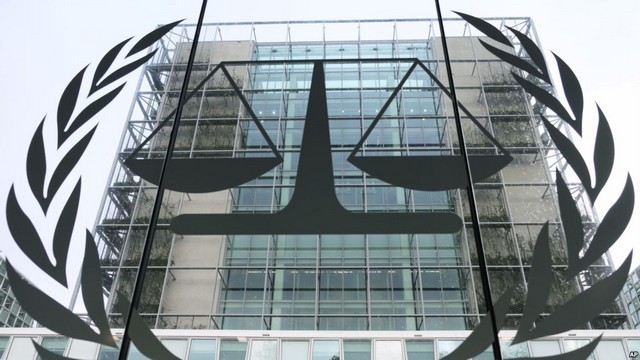
After alleged UK tanker incident in Persian Gulf, EU powers threaten Iran

By Alex Lantier

US and UK military sources claim that Iranian boats intercepted a British oil tanker in the Strait of Hormuz Wednesday, before a British warship, the HMS Montrose, chased them off.

None of the reports about this incident can be taken at face value. Iran has flatly denied that it took place, and US officials making allegations have not posted videos they claim to have of it. It comes amid a US-led war drive targeting Iran, after Washington unilaterally suspended the 2015 Iranian nuclear accord, launched a major military buildup in the region, and demanded that US allies support it. Yet before anything firm is known about this incident, a press campaign has started in Europe, demanding that the European powers back Washington against Iran.

Wednesday night, European time, US Central Command spokesman Captain Bill Urban accused Iranian Fast-Attack Craft/Fast Inland-Attack Craft (FAC/FIAC) of harassing the tanker. He stated that the Pentagon was “aware of the reports of Islamic Revolutionary Guard Corps Navy’s FAC/FIAC harassment and attempts to interfere with the passage of the UK-flagged merchant vessel British Heritage today near the Strait of Hormuz.”

The HMS Montrose “pointed its guns at the Iranian boats,” who then allegedly fled. “It was harassment and attempt to interfere with the passage,” US military officials contacted by Britain’s Independent newspaper said, speaking on condition of anonymity.

A UK Ministry of Defense statement alleged: “Contrary to international law, three Iranian vessels attempted to impede the passage of a commercial vessel, British Heritage, through the Strait of Hormuz.” It said the HMS Montrose “was forced to position herself between the Iranian vessels and British Heritage and issue verbal warnings to the Iranian vessels, which then turned away.”

Iranian authorities flatly denied the incident took place. Iranian Revolutionary Guard naval forces issued a statement to the Fars News Agency, claiming: “During the last 24 hours, there were no encounters with foreign vessels…”

Iranian Foreign Minister Javad Zarif dismissed the allegations as an attempt by US and European officials to escalate tensions with Iran, telling the ISNA News Agency: “They make such claims to create tension, yet these claims are worthless and they have made many such claims. They say such things to cover up their own weaknesses.”

It is for now impossible to determine what happened Wednesday in the Straits of Hormuz; by all accounts, no shots were fired. However, a push for another military escalation is underway. Despite the unpopularity of Middle East wars and of Trump and his administration among workers in Europe and beyond, and explosive foreign policy conflicts between Washington and the European Union (EU), powerful voices in the European ruling class are demanding Europe back a US war drive against Iran.

Asked whether London would escalate its naval presence in the Persian Gulf, a spokesman at the UK prime minister’s office indicated it would: “We have a longstanding maritime presence in the Gulf. We are continuously monitoring the security situation there and are committed to maintaining freedom of navigation in accordance with international law.”

With stunning hypocrisy, the fact that UK troops acting on US orders seized a tanker July 4 off Gibraltar, allegedly taking Iranian oil to Syria, an act of piracy after which Tehran warned of “repercussions,” is being cited as proof that the US-UK allegations against Iran are credible.

On Tuesday, the US magazine Foreign Policy reported that Britain and France had agreed to a 10-15 percent increase in their troop presence in Syria. This bucked Berlin’s temporary refusal Monday to send more troops to fight alongside US troops working with Syrian Kurdish militias against Syrian President Bashar al-Assad’s regime, which is backed by Russia and Iran.

It added that London and Paris “also expressed interest in contributing to Sentinel, a maritime partnership designed to enhance security for commercial ships traversing the Strait of Hormuz and other choke points.” Both London and Paris declined to comment on this decision, citing the secrecy of special forces operations. Their war drive thus is developing behind the back of the British and French people.

Calls are rapidly emerging particularly in Germany for an about-face on its previous opposition to an escalation in Syria and across the Middle East. After Wednesday’s incident, a wave of articles appeared in the German press calling for Berlin to join the US-led war drive against Iran.

In a comment titled, “On the Iran question, Europe must back Trump,” Die Weltargued that Berlin should support Trump’s unilateral ripping-up of the 2015 Iranian nuclear accord. “The atomic treaty with Iran was originally correct,” it writes. “But its ostensible goal, to pacify the region, has failed. The regime is more aggressive than ever. So the US president’s critique of the treaty is justified.”

A similar outlook emerged in the Süddeutsche Zeitung ’s comment, headlined, “Europe and Asia must protect trade ships better.” It stated, “Freedom of navigation is a major priority, especially for an export-dependent nation like Germany.” It similarly called for the formation of an international flotilla of warships to patrol off Iranian waters, “even if this plays into US President Trump’s hand.”

The newspaper wrote, “An international flotilla would also internationalize the conflict, which could well be a goal of the US strategy. But that should not be a reason to rule it out. Warships from Europe or Asia would be less provocative for Iran than US or Saudi patrol boats. They would also be a further signal to Tehran, that while Europe also wants to preserve the nuclear treaty, it will not quietly accept the aggressive regional policy of the Islamic Republic.”

The strategies outlined by representatives of the leading European imperialist powers do indeed play directly into the Pentagon’s plans. On Tuesday, the day before the Strait of Hormuz incident, General Joseph Dunford, the chairman of the US Joint Chiefs of Staff, called on US military allies worldwide to join a US-led battle fleet that would surround Iran.

Dunford said, “We’re engaging now with a number of countries to see if we can put together a coalition that would ensure freedom of navigation both in the Strait of Hormuz and the Bab al-Mandab. And so I think probably over the next couple of weeks we’ll identify which nations have the political will to support that initiative, and then we’ll work directly with the militaries to identify the specific capabilities that’ll support that.”

He said the Pentagon would provide “command and control” ships to direct operations. America’s allies would provide escort vessels to follow US command ships’ orders.

Dunford left unsaid that this plan would leave the US Navy with a death grip over not only Iran’s economy, but the oil supply of its main imperialist “allies” in Europe and East Asia, and of Asia’s two most populous countries, China and India.

The US Energy Information Administration (EIA) notes, “In 2018, [the Strait of Hormuz’s] daily oil flow averaged 21 million barrels per day, or the equivalent of about 21 percent of global petroleum liquids consumption. … EIA estimates that 76 percent of the crude oil and condensate that moved through the Strait of Hormuz went to Asian markets in 2018. China, India, Japan, South Korea, and Singapore were the largest destinations for crude oil moving through the Strait of Hormuz to Asia, accounting for 65 percent of all Hormuz crude oil and condensate flows in 2018.”

Approximately 4 million barrels pass daily through the Bab al-Mandab straits towards Europe.

Such figures lay bare the bitter inter-imperialist struggle for profits and strategic-military influence that have underlain three decades of war in the Middle East since the Soviet bureaucracy dissolved the USSR in 1991. As Trump threatens major Asian and European powers with hundreds of billions of dollars in trade-war tariffs, these tensions are reaching unprecedented intensity. For now, it appears that, fearing a clash with a militarily superior US imperialism, the European powers are deciding to bide their time and abet Washington’s war drive.

This policy, which shows that the EU powers are fundamentally no less predatory than Washington, also exposes the bankruptcy of illusions that workers can rely on rival capitalist powers to restrain Washington from a new, even greater bloodbath. Desperate to seize their share of the plunder, and to continue shoveling hundreds of billions of euros into military budgets despite mounting strikes and protests, the EU powers do not oppose US wars. They respond to US pressure by intensifying their drive to remilitarize and repress protest against austerity and militarism at home.

Originally published in WSWS.org

12 July 2019

Source: countercurrents.org
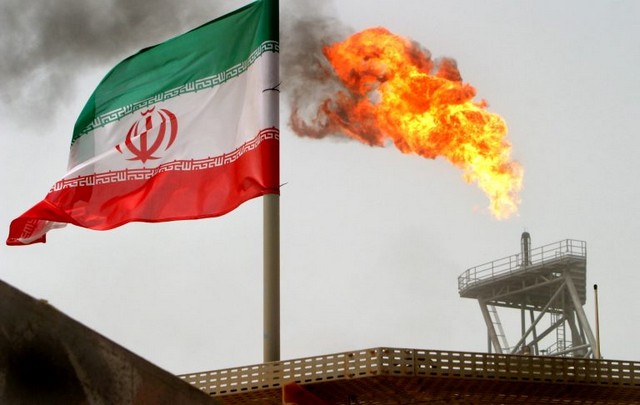
US steps up threats as Iran exceeds uranium enrichment cap

By Bill Van Auken

The International Atomic Energy Agency (IAEA) Monday confirmed that Iran has breached the limit imposed by the 2015 nuclear agreement on the level at which it is allowed to enrich uranium.

Iran had announced its breach of the limit on Sunday, a deliberate step aimed at pressuring the remaining signatories to the nuclear accord—particularly Germany, France and the UK—to take substantive steps to counter crippling US economic sanctions that are tantamount to a state of war.

Washington has taken a series of actions that have placed the threat of a war in the Persian Gulf on a hair trigger, raising the specter of a catastrophic military confrontation in a region that is the source of a third of the world’s natural gas and a fifth of its oil.

In May 2018, the Trump administration unilaterally abrogated the agreement, known as the Joint Comprehensive Plan of Action (JCPOA), that was reached between Tehran and six major world powers—the US, China, Russia, Britain, France and Germany. It not only reimposed nuclear sanctions that had been suspended with the agreement but implemented a series of even more punishing measures.

The increase in the enrichment level—which had been capped at 3.67 percent and has risen to 4.5 percent, according to Iranian authorities—follows last month’s announcement by Iran that it was deliberately exceeding the 300 kg cap imposed by the JCPOA on its enriched uranium stockpiles. The country is supposed to export any excess amounts, but even that option has been undermined by the US “maximum pressure” sanctions regime.

Tehran indicated that it will impose another 60-day deadline for the European powers to take concrete steps to ensure that Iran receives the sanctions relief that it was promised in return for its submission to drastic limits on its nuclear program.

Behrouz Kamalvandi, the spokesman for the Atomic Energy Organization of Iran (AEOI), told the official news agency ISNA Monday that if such relief is not forthcoming, Iran could take a third step of installing more centrifuges and enriching uranium to 20 percent.

While the increase from 3.67 to 4.5 percent is largely symbolic, the rise to 20 percent would place the Iranian nuclear program in a position to move more rapidly toward the 90 percent enrichment level needed to produce weapons-grade uranium.

Tehran has steadfastly denied, both before and after entering into the 2015 agreement, that it has ever sought nuclear weapons or utilized its nuclear program for anything other than peaceful purposes.

Iran’s latest actions provoked a flurry of new threats from top US officials. President Donald Trump told reporters on the White House lawn Monday that “Iran better be careful,” while suggesting that the minimal increase in its uranium enrichment was aimed at securing a nuclear weapon.

Similarly, US Secretary of State Mike Pompeo tweeted that “Iran’s latest expansion of its nuclear program will lead to further isolation and sanctions.”

And Vice President Mike Pence, speaking before a sympathetic audience of right-wing evangelicals at the Christians United For Israel conference in Washington Monday, said: “Iran should not confuse American restraint with a lack of American resolve … the United States of America and our military are prepared to protect our interests and protect our personnel and our citizens in the region.”

A prepared text released before the speech described the US administration as “willing to talk” with Tehran, but Pence dropped the line in his delivered remarks.

Last month, Trump called off air strikes that could have triggered a spiraling escalation into a full-scale war with only 10 minutes to spare before bombs and missiles were set to fly. The US bombardment had been ordered in response to Iran’s downing of a $200 million Golden Hawk spy drone that Tehran charged had violated Iranian airspace.

The threat of a military conflagration remains high, with Iran ringed by reinforced US garrisons containing tens of thousands of US troops, a naval armada that includes an amphibious assault group carrying a Marine expeditionary unit and a nuclear-capable B-52-led bombing strike force.

The response of the European powers to Iran’s latest action has been to call upon Tehran to reverse its breaches of the 2015 accord, while resisting demands from Washington that they respond with the immediate reimposition of sanctions.

French President Emmanuel Macron is sending his chief diplomatic adviser back to Tehran for talks on the nuclear accord. The Élysée Palace said Monday that Emmanuel Bonne would fly to Iran on Tuesday, his second trip in a matter of weeks.

Berlin, meanwhile, placed the onus on Tehran for the increasing crisis surrounding the nuclear deal. “The ball is clearly in Iran’s court,” a spokesman for the German Foreign Ministry told a news conference on Monday. “We want to preserve the deal. For this, parties must stick to it.”

The reality, however, is that Tehran has no reason to “stick to it” under conditions in which the US sanctions regime has robbed Iran of the promise of economic normalization that was made in return for its sweeping nuclear concessions.

While the European powers announced last month the activation of Instex (Instrument to Support Trade Exchanges), a trade mechanism meant to evade US sanctions and bypass the dollar-based financial system, there is no indication that the measure will lead to any significant increase in oil exports, which as a result of US sanctions have fallen to 300,000 barrels per day (bpd), compared to more than 2.5 million bpd in April.

For its part, Britain remains embroiled in bitter conflict with Tehran over its act of state piracy and military aggression in its July 4 seizure of an Iranian supertanker loaded with oil in what Iran insists were international waters near the strait of Gibraltar. London made the preposterous claim that it acted at the behest of the Gibraltar police in furtherance of European Union economic sanctions seeking to curtail oil shipments to Syria.

It is obvious, however, that the action was undertaken on behalf of Washington with the aim of further ratcheting up the military confrontation with Iran.

Iranian officials have insisted that the tanker was not bound for Syria, whose terminal could not even accommodate a ship of its size. It has also charged that neither the UK nor any other European power has the legal right to enforce EU sanctions against non-EU members.

The head of Iran’s judiciary, Hojatoleslam Seyyed Ebrahim Raisi demanded that the UK “immediately release the oil tanker, otherwise, they’ll have to face the consequences.”

The threat that Iran may retaliate by seizing a British-flagged vessel has reportedly led the London-based BP energy conglomerate to halt the voyage of a UK-flagged oil tanker through the Persian Gulf on Monday. According to Bloomberg News, the tanker, the British Heritage, had been bound for Iraq’s Basra oil terminal, but turned back on Saturday, stopping off the coast of Saudi Arabia.

Meanwhile, both Beijing and Moscow responded to Iran’s latest breach of the terms of the JCPOA by indicting Washington for its unilateral abrogation of the treaty.

Chinese Foreign Ministry Geng Shuang told a press briefing in Beijing, “The maximum pressure exerted by the US on Iran is the root cause of the Iranian nuclear crisis.” He added that “it has been proven that unilateral bullying has become a worsening ‘tumor’ and is creating more problems and greater crises on a global scale.”

China is defying the US sanctions regime and is expected to import 200,000 barrels per day from Iran.

Similarly, Kremlin spokesman Dmitry Peskov declared Russia’s continuing support for the JCPOA and described Iran’s action on uranium enrichment as one of the “consequences” of the Trump administration’s tearing up of the agreement.

The Russian Foreign Ministry described as an “ironic quirk” Washington’s demand for a July 10 extraordinary meeting of the IAEA Board of Governors to discuss Iran’s violation of an agreement that the US itself has completely repudiated. Moscow pointed out that Tehran’s concessions under the JCPOA had nothing to do with its continuing compliance with nuclear non-proliferation agreements or other protocols it has signed with the international nuclear agency.

In another sign of the tensions provoked by Washington in its campaign against Iran, members of the Iranian men’s volleyball team were held and interrogated for four hours after landing at Chicago’s O’Hare International Airport on Saturday, as other national teams were waved through. Tehran filed a formal diplomatic protest over the incident Monday with the Swiss embassy in Iran, which represents US interests in the country. The Iranian foreign ministry said that the US should no longer host international sporting events if it cannot treat teams fairly.

9 July 2019

Source: countercurrents.org

A new cold war on Africa

By Mehari Taddele Maru

Increasing tensions between China and the US will be detrimental to African prosperity and peace.

Last month, the twelfth US-Africa Business Summit, a high-level event attended by eleven African heads of state and government and some 1 000 business leaders, was held in Maputo, Mozambique. During the three-day event, US officials unveiled a $60bn investment agency that will seek to invest in low and middle-income countries, with a focus on Africa.

The announcement came six months after US president Donald Trump’s National Security Advisor, John Bolton, presented the Trump administration’s ‘New Africa Strategy’. He asserts: ‘Great power competitors, namely China and Russia, are rapidly expanding their financial and political influence across Africa. They are deliberately and aggressively targeting their investments in the region to gain a competitive advantage over the United States.’

Although both China and Russia are mentioned, the US has demonstrated over the past few months that it is mainly concerned about the former. In fact, it already appears that Africa is set to become yet another battleground for the escalating trade war between Beijing and Washington. With increasing foreign military presence and growing diplomatic tensions, the continent is already witnessing the first signs of an emerging new cold war. And just as the previous one devastated Africa, fuelling wars and forcing African governments to make economic choices not in their best interests, this one will also be detrimental to African development and peace.
Economic war
China’s approach to Africa has always been trade oriented. The continent became one of the top destinations for Chinese investment after Beijing introduced its ‘Go Out’ policy in 1999, which encouraged private and state-owned business to seek economic opportunities abroad. As a result, Chinese trade with Africa has increased forty-fold over the past two decades; in 2017, it stood at $140bn. Between 2003 and 2017, Chinese foreign directed investment (FDI) flows have jumped close to sixty-fold to $4bn a year; FDI stocks stand at $43bn – a significant part of which has gone to infrastructure and energy projects.

China has significantly expanded African railways, investing in various projects in Kenya, Ethiopia, Djibouti, Angola and Nigeria; it is currently building a massive hydropower plant in Angola, and has built Africa’s longest railway connecting Ethiopia and Djibouti. It also built the headquarters of the African Union in Addis Ababa, and that of the West African regional bloc, ECOWAS, in Abuja.

By contrast, the USA has long viewed Africa as a battlefield where it can confront its enemies: the Soviets during the Cold War, ‘terrorists’ after 9/11, and now the Chinese. Washington has never really made a concerted effort to develop its economic relations with the continent. As a result, trade between the USA and Africa has decreased from $120bn in 2012 to just over $50bn today. US FDI flows have also slumped from $9.4bn in 2009 to around $330m in 2017. The new $60bn investment fund announced last month is a welcome initiative, but it will not be able to challenge Chinese economic presence on the continent. Just last year, Chinese president Xi Jinping pledged $60bn dedicated solely to investment in Africa.

The US has repeatedly accused China of using ‘debt to hold states in Africa captive to [its] wishes and demands’, and has warned African states to avoid Chinese ‘debt diplomacy’ that is supposedly incompatible with the independence of African nations and civil society, and poses ‘a significant threat to US national security interests’. Yet Africa is only the fourth-biggest recipient of Chinese FDI after Europe (mainly Germany, UK and Netherlands), the Americas (mainly the USA and Canada) and Asia. The USA has also borrowed heavily from China; its current debt to its rival stands at $1.12 trillion. By contrast, Africa owes China around $83bn.

Africans are fully aware of and concerned about high indebtedness, trade imbalances, the relatively poor quality of Chinese goods and services and Beijing’s application of lower standards of labour and environmental practices. But many do not share the American perspective that their economic relationship with China is detrimental to them, and rather see it as an opportunity that provides much-needed unconditional funding and that takes local priorities into account. As Djibouti’s President Ismail Omar Guelleh argued, ‘The reality is that no one but the Chinese offers a long-term partnership.’

The pressure the USA is currently exerting on African countries to move away from partnerships with China could hurt African economies. It could force African countries into making choices that are not in their best economic interests, and could cause them to miss out on important development projects or funding. Meanwhile, the USA-China trade war is already affecting the continent. According to the African Development Bank, it could cause as much as a 2.5 per cent decrease in GDP for resource-intensive African economies, and a 1.9 per cent dip for oil-exporting countries.
Militarisation
The escalating tensions between the USA and China could also threaten the security of the continent since both countries are militarily involved in Africa. Over the past fifteen years, the Chinese People’s Liberation Army has been engaged in a number of security missions across the continent, making modest auxiliary troop contributions to peacekeeping operations in Sudan, South Sudan, Liberia, Mali and the Democratic Republic of Congo. It has also contributed millions of dollars of peacekeeping equipment to the African Union Mission in Somalia (AMISOM), and provided significant funding to the Intergovernmental Authority on Development (IGAD) for its mediation efforts in South Sudan.

In 2017, the first Chinese overseas military base was opened in Djibouti. The facility, which hosts some 400 staff and troops, and has the capacity to accommodate 10 000, is officially supposed to provide support for the ongoing anti-piracy operations of the Chinese navy, but it also plays a role in securing maritime routes, part of Beijing’s Belt and Road Initiative. There has been speculation that this is the first of a number of planned bases meant to secure Chinese interests in Africa.

China’s military presence in Africa, however, pales in comparison to that of the USA. Over the past few years, the US Africa Command (AFRICOM) has run some thirty-six different military operations in thirteen African countries, including Burkina Faso, Cameroon, Central African Republic, Chad, Democratic Republic of Congo, Kenya, Libya, Mali, Mauritania, Niger, Somalia, South Sudan and Tunisia. It has more than 7 000 troops deployed on the continent. It maintains a massive military base in Djibouti – the biggest and only permanent US military base in Africa, but also runs at least thirty-four other military outposts scattered across the west, east and north of the continent where US troops are deployed and military operations (including drone attacks) are launched from. The US also directly supports the armies of Egypt, Nigeria, Ethiopia, Mali, Niger and others, as well as the G5 Sahel force tasked with counterterrorism.

While a direct confrontation between US and Chinese forces in Africa is unlikely, their growing presence is becoming increasingly destabilising. Already, Washington’s strategy to contain Chinese influence over Africa is playing out at different conflict and social upheaval hotspots across the continent. The fallout of the US-Chinese competition is particularly apparent in the strategic Red Sea region, through which passes one of the most important maritime routes. Countries in the region are not only feeling growing US and Chinese pressure to take one side or the other, but are also increasingly exposed to outside interference by various regional powers.
Growing regional tensions
Djibouti recently found itself at the centre of US-Chinese diplomatic confrontation. Being host to military bases of both superpowers, the small country has had to play a difficult balancing act. In 2018, Djibouti seized control of its Doraleh Container Terminal from the Emirati company DP World, claiming the company’s operation of the facility was threatening Djibouti’s sovereignty. The authorities had feared that the UAE’s investment in the nearby Port of Berbera in the autonomous Somali region of Somaliland could challenge its position as the main maritime hub for Ethiopia’s large economy. The decision to terminate the contract with DP World, however, triggered a sharp reaction from Washington, a close Emirati ally. The Trump administration fears that Djibouti could hand control of the terminal over to China.

Bolton warned: ‘Should this occur, the balance of power in the Horn of Africa – astride major arteries of maritime trade between Europe, the Middle East, and South Asia – would shift in favor of China. And, our U.S. military personnel at Camp Lemonnier could face even further challenges in their efforts to protect the American people.’

Djibouti was forced to publicly declare that it would not allow China to take control of the terminal, but that did not assuage US fears. Ever since, the USA has sought to secure a possible alternative location for its African military base: neighbouring Eritrea. It encouraged regional actors, including Saudi Arabia and the UAE, to pull Eritrea out of its decades-long isolation. In a matter of months, long-time enemies Ethiopia and Eritrea concluded a peace agreement to end their twenty-year-old cold conflict, while the UN lifted sanctions on Asmara. As a result, Eritrea was able to emerge as a strategic rival to Djibouti, offering its coast for foreign military and economic facilities. The UAE has already set up a military base near the Eritrean port of Assab.

Sudan, to the north, has also been a battleground of the ongoing superpower turf war. China had long been a supporter of Sudan’s president, Omar al-Bashir. Under his rule, Beijing came to dominate its oil industry, buying some eighty per cent of Sudanese oil, and thus providing Khartoum with much-needed cash to wage war against various rebel groups. It was also one of the few countries, along with Russia, that broke the UN arms embargo and sold weapons to Bashir’s regime. After South Sudan gained independence in 2011, China continued to be a close partner of the Sudanese regime, remaining its main trading partner. Sudan, in fact, became the biggest beneficiary of the $60bn Africa investment package that China had pledged in 2018, having some $10bn in Chinese debt written off. The Chinese government also made plans to develop facilities in Port Sudan, where it already operates an oil terminal. Qatar and Turkey also signed deals with Bashir for various facilities in the port city. When mass protests erupted on the streets of Sudan in December 2018, Beijing stood by Bashir, who it saw as the main guarantor of stability in the country, which lies on strategic routes, inlcudes China’s Belt and Road Initiative.

Meanwhile, the USA had repeatedly demonstrated that it did not want Bashir running for another term. His removal was approved in Washington, which has since appeared to back the interests of Saudi Arabia and the UAE in Sudan. The two Gulf states hope to install another strongman sympathetic to their regional politics, who would maintain Sudan’s participation in the war in Yemen and curb Turkish and Qatari influence. At this point, it seems China is at risk of being sidelined by the significant sway the UAE and Saudi Arabia have with Sudan’s Transitional Military Council (TMC).
Apart from Djibouti and Sudan, various other countries in the region have also felt the consequences of the US bid to contain China. This political confrontation has added to the already-rising tensions between other players in the region, including Egypt, the Gulf countries, Iran and Turkey. The Trump administration has particularly favoured Emirati, Saudi and Egyptian interests, which have emboldened these three countries in their efforts to shape regional dynamics to their advantage.

Thus, in the long-term, given the pre-existing faultlines and conflicts in the region, the US-China cold war could have a detrimental effect, not only on its economy but also on its security. At this stage, to preserve its interests and its peace, Africa has only one option: to reject pressures for it to swear allegiance to either of the two powers. African countries should uphold their sovereignty in policy and decision making, and pursue the course that is in the best interests of their nations.
If the USA wants to compete with China on the continent, it should do so in good faith. It can gain a competitive advantage by offering African countries better, more credible and principled alternatives to those put forward by China. But that can only happen if the USA develops a strategy that focuses on Africa itself, not on containing and undermining the business of a third party.

Mehari Taddele Maru is an independent consultant on matters of peace and security in Africa.

8 July 2019

Source: www.amec.org.za