Just International

Occupied Palestine: From BDS To ODS

Co-Written by Kevin Zeese and Margaret Flowers

We spent the last week in Occupied Palestinian Territory, commonly referred to as Israel, where we traveled around the country to visit communities in Jerusalem, Jaffa, Bethlehem, the West Bank, the Nagab, and more.

We call Israel Occupied Palestine because it is not just the West Bank and Gaza that are occupied, but all of historic Palestine, the entire Palestinian nation. Palestinian people do not have equal rights and their communities are constantly encroached upon by settlers pushing them into small, crowded areas. The mistreatment of Palestinians happens right before the eyes of the Israeli Jews. If they do not see it, it is either because they do not want to see it or because they are encouraged not to see it. Just as Jim Crow racism was evident to all in the southern states of the US, apartheid in Palestine is obvious.

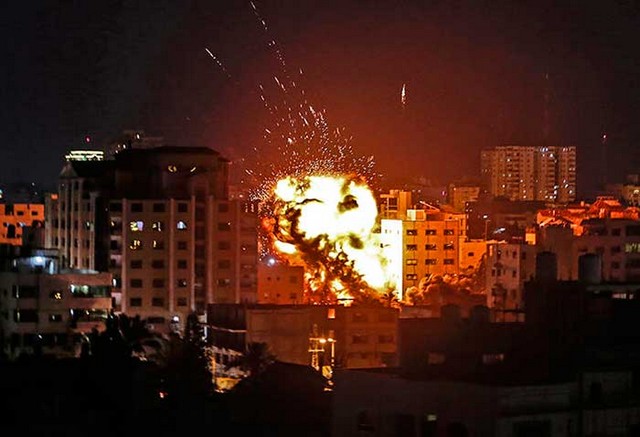
This visit deepened our support for the Boycott, Divestment, and Sanctions (BDS) movement because we saw modern apartheid, Jim Crow-segregation laws, ongoing land theft, and ethnic cleansing. For example, we were in Jerusalem when a squadron of fighter jets flew over our heads to bomb the open-air prison of Gaza killing more than 30 people. The Israeli people, media and politicians applauded that, displaying a sickness that runs deep in this colonized land founded on theft, terrorism, and violence.

To end the colonization, there is great hope of developing a movement for the creation of One Democratic State (ODS). This is being organized by a large group of Palestinians and Jews as the formation of two separate states is impossible. ODS envisions a universally equal and democratic nation where minority communities are protected and every person can vote. ODS is the first step to the decolonization and healing of Palestine.

Correcting The Record

Palestinians are disenfranchised: Occupied Palestine is called a liberal democracy. In reality, while Palestinians are the majority, most of them can’t vote. Out of a total population of twelve million people, five million Jews can vote and five million Palestinians can’t. The remaining two million Palestinians who live in “The 48,” the land between the West Bank and Gaza, can vote but often boycott elections in protest. The dominant parties all support anti-Palestinian policies.

Palestine has hyper-segregation: Palestine can only be described as a modern apartheid state with updated Jim Crow laws. We drove on Jewish-only roads where the color of a person’s license plate determines if they can use the road. There are military checkpoints along these roads. Palestinians are often forced to take long detours to get around the segregated roads and walls. Many Jews never meet a Palestinian because their lives are so segregated.

Under the 1993 Oslo Accords, Occupied Palestine was divided into Areas A, B and C. We visited Bethlehem, classified as Area A, where a sign upon entry warns it is against the law for Israeli-citizens to enter. In Area A, the Palestinian Authority (PA) serves as police and can arrest Israeli-Jews and turn them over to Israeli-police. In Area B, both the PA and Israeli-police have power. And, in Area C, the majority of the country, only the Israeli-police have authority.

Land Theft Against Palestinians Continues: People are often told that no one lived here before 1948 when the occupation of the area by Jewish settlers began. This massive land theft continues today. Although the German Holocaust is used to justify this, the Zionist project began well before then.

This false picture is depicted by the well-known Zionist artist Nahum Gutman. His famous painting of the major Arab city of Jaffa showed only sand dunes and a few buildings where hundreds of houses stood. Today Sir Charles Clore Park covers the remains of this section of the city. Similar tactics have hidden thousands of Palestinian villages that existed before “The Nakba” in 1948.

Forests planted by the Jewish National Fund (JNF), founded in 1901, are still being used to hide the sites of Palestinian villages. We visited the village of Al-Araqib, which has been destroyed 167 times. All that remains is a cemetery built in 1914 and a few residents who hold space under a tree near the cemetery in fear of losing access to it. In Canada, there is a campaign to end the non-profit status of the JNF.

Jaffa was an important Arab port city with a population of 90,000 before 1948 that served as an entry point into Jerusalem and beyond. The first Jewish neighborhoods were built there in the late 19th Century. Tel Aviv, the first Jewish-governed city, began in the early 20th century as a suburb of Jaffa. More than ninety-five percent of the population of Jaffa was expelled by Zionist militias in 1948 and beyond. The remaining residents were confined to an area under guard and forced to operate the port. Between 1947 and 1949, the Nakba terrorized Palestinians and forced 800,000 to flee their homes. The Absentee Property Law was used to seize the homes of those who fled.

Zionist settlers continue encroaching on land in Palestinian neighborhoods. In the historic walled city of Old Jerusalem, they come up from underground tunnels to seize homes in the Palestinian quadrant and put them under armed guards. In Palestinian East Jerusalem, Zionists continue to confiscate houses and land, pushing Palestinians to the other side of the segregation wall where they are crowded into areas without city services. Similar forced urbanization and crowding is occurring throughout Palestine. Gaza is perhaps the most severe example of this. Over the last 50 years, the Israeli government has transferred between 600,000 and 750,000 settlers to the West Bank and East Jerusalem in at least 160 settlements and outposts.

In the West Bank, Jerusalem, and Gaza, this land annexation has made a two-state solution physically impossible. The combination of hundreds of thousands of settlers, Jewish-only roads plus the Expansion (or Annexation) Wall that divides Palestinian communities, and more than 200 checkpoints have severely restricted movement for Palestinians and seized 78% of their country.

Judaism is not Zionism: In the 1880s, Palestinian Jews amounted to three percent of the total population. They were apolitical and did not aspire to build a Jewish state. We met with Rabbi Meir Hirsch in the Mea Sharim neighborhood of Jerusalem. This tightly-knit ultra-Orthodox Jewish neighborhood has signs posted on the walls that say: ‘A Jew Not a Zionist,’ ‘Zionism is Dying’ and ‘Arabs are Good.’

Hirsch’s family came to Palestine 150 years ago from Russia. His people came to better worship God, not to take land from Palestinians. Hirsch told us about Jacob Israël de Haan, a Dutch-Jew who worked to prevent the 1917 Balfour Declaration and almost succeeded. The Balfour Declaration, issued by the British government, announced support for the establishment of a “national home for the Jewish people” in Palestine. De Haan was assassinated in Jerusalem by the Jewish paramilitary organization Haganah for his anti-Zionist political activities. His murder led to the Neturei Karta movement, which resists Zionism to this day.

Hirsch views Zionism as contradictory to the Jewish religion. His community believes the Torah does not allow Jewish sovereignty of any kind over the Holy Land and those who want to live there must have the approval of the native Palestinian people. Hirsch says that ultra-Orthodox Jews “want to see the end of the Zionist tragedy and the restoration of peace to the Middle East.” His views counter those who claim criticism of Israel is anti-Semitic as, he says, “Judaism and Zionism are as foreign to each other as day and night, good and evil.”

One Democratic State

There is a positive path to resolving the conflict between Jews and Palestinians. The path comes from the movement for One Democratic State, which envisions a genuinely just and workable political agreement developed by Palestinians and Jews together.

There has been a marked decline in support for a two-state solution. A poll conducted by the Palestinian Center for Policy and Survey Research from September 11-14, 2019 found only 42% of Palestinians now support the two-state solution. When President Netanyahu entered office a decade ago, that figure was 70%. Similarly, fewer than half of the Jews now support a two-state solution. Further, 63% of Palestinians believe a two-state solution is no longer practical or feasible due to the expansion of the settlements and 83% support the local and international boycott (BDS) movement against Israel.

We met separately with two leaders of this campaign, Awad Abdelfattah, a founder of the Arab Balad Party, and Ilan Pappe, an Israeli historian. Along with many others in the ODS campaign, they seek a multicultural and constitutional democracy in which all people enjoy a common citizenship, a common parliament, and equal civil rights, with constitutional protection granted to national, ethnic and religious views. ODS means equal rights for Palestinians and protection of the rights of Jews.

Their vision includes making the Palestinian ‘right of return’ a reality. Palestinian homes and communities were demolished years ago. According to the Palestinian geographer Salman Abu-Sitta, 85% of Palestinian lands taken in 1948 are still available for resettlement. While more than 530 villages, towns, and urban areas were systematically demolished, their agricultural lands still exist. Other lands lie under public parks and forests. Refugees could actually return, if not to their former homes, at least to the parts of the country where they originated. Palestinian planners could design modern communities for refugees and their descendants in the areas they left with new communities and economic infrastructure that is integrated with other segments of the society. Land redistribution, financial compensation, and equal access to education, training and the economy would enable refugees, like other Palestinians, to achieve economic parity with Jews within a fairly short time.

For Jews, their security will increase by providing constitutional protection of their collective rights. While structures of privilege and domination would be dismantled, the “collective rights” of groups to maintain their community in the framework of a multi-cultural democracy (e.g., communities of ethnic Russians, African asylum-seekers, foreign workers, anti-Zionist ultra-orthodox Jews, and others) give Jews the collective security they need.

ODS views the establishment of a just and working state as requiring: decolonization, restoration, and reconciliation. Decolonization includes ending economic, cultural, political, and legal domination. This means building an egalitarian, inclusive and sustainable society that restores the rights, properties (actual or through compensation), identities and social position of those expelled, excluded and oppressed. This is followed by reconciliation to confront the still-open wounds of the Nakba and the Occupation, and the suffering they have caused.

While the view may sound Utopian to some, in fact, it is the practical path out of the current disaster of Occupied Palestine. Palestine is already one nation. The issue is whether it will be a democratic state with equal rights for all citizens that dismantles the apartheid system or whether it will remain an undemocratic and unequal settler-colonial nation.

We titled this article “BDS to ODS” because while this solution must come from the Palestinian people, along with Jews, people in the United States and throughout the world who support peace and justice have an important role to play through the growing BDS campaign to pressure Israel into accepting ODS. This struggle will be won through solidarity between popular movements inside and outside Occupied Palestine.

We encourage you to visit Occupied Palestine to see and learn for yourself. If you visit Jerusalem, be sure to take the tour offered by Grassroots Jerusalem. They also offer a guide to Palestinian places to stay, shop and eat. Zochrot is an organization that also offers tours and resources about the Nakba. If you are interested in direct service, you can volunteer to assist with the olive harvest or volunteer in places such as the Aida Refugee Camp. They need all sorts of volunteers, especially those who can provide instruction to children in music and arts. Visit Volunteer Palestine to see the many opportunities available.

Kevin Zeese and Margaret Flowers are directors of Popular Resistance

20 November 2019

Source: countercurrents.org
Mahathir’s reform dream fading away in Malaysia

By Nile Bowie

Resounding by-election defeat and rising internal dissent signal ruling Harapan coalition is losing steam

alaysia’s ruling coalition is reeling from a by-election loss that saw voters opt for an opposition candiate associated with ex-premier Najib Razak’s Barisan Nasional (BN) coalition was toppled at May 2018 polls after decades of consecutive rule.

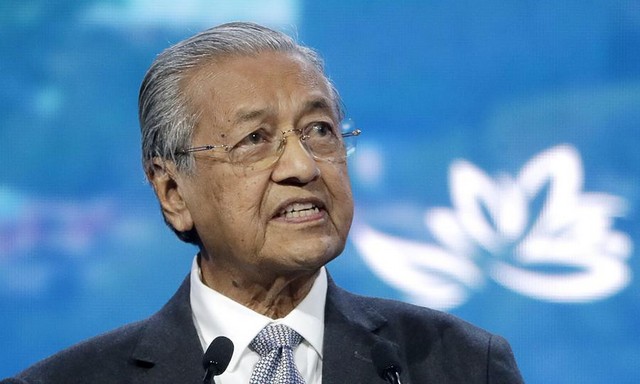
Mired by factional infighting and uncertainty over a leadership succession plan, Prime Minister Mahathir Mohamad’s government is increasingly perceived to be backsliding on promised reforms to advance inclusiveness and democracy.

Critics had even cast the weekend’s poll, staged in the southern state of Johor, as a referendum on the 94-year-old’s premiership.

While political watchers did not expect his governing Pakatan Harapan (PH) to retain the parliamentary seat for Tanjung Piai, the stunning majority obtained by the opposition BN coalition – reportedly the largest seen in any by-election in Malaysia’s history – far exceeded expectations.

Wee Jeck Seng, a former two-term parliamentarian with the Malaysian Chinese Association (MCA), a BN component party, won with 65.6% of the vote. Mahathir had personally campaigned for Harapan’s candidate, Karmaine Sardini, who took just 26.7% of the ballot.

“It is too early to say whether this is a bellwether. But nonetheless, if I were in the ruling coalition, I would be concerned,” said political scientist Chandra Muzaffar, a former deputy president of Parti Keadilan Rakyat (PKR), now the ruling coalition’s largest party. “I would be concerned largely because of the magnitude of the defeat.”

The defeat marked the worst electoral showing in a parliamentary by-election of Mahathir’s decade-spanning political career, including a previous 22-year stint as prime minister leading a BN coalition.

Ethnic Chinese-majority polling districts previously seen as supportive of the ruling coalition abandoned it at a rate more than twice that of ethnic Malay-majority polling districts, post-election data showed.

Strong backing from the nation’s ethnic Chinese community, representing around 23% of the multi-ethnic nation’s population, helped bring Harapan to power at last year’s historic general election.

The young coalition was voted in with the support of about 95% of Chinese voters and only 25% to 30% of the total Malay vote share. Around 62% of Malaysia’s population is ethnic Malay.

Mohamed Farid bin Md Rafik of Mahathir’s Parti Pribumi Bersatu Malaysia (PPBM) won the seat for Tanjung Piai, where Malay and Chinese electorates are almost equally split, with a slim majority of 524 votes in 2018.

Mohamed Farid died of a heart attack in September, triggering the by-election vote. Analysts view the swing in ethnic Chinese support away from Harapan as a sign of frustration with its unfulfilled promises and stances on communal issues, and not necessarily an endorsement of the opposition’s more right-wing political agenda.

“It’s actually a warning to PH that people are tired of the politicking,” said Serina Abdul Rahman, a visiting fellow from Singapore’s ISEAS-Yusof Ishak Institute. “This is a rural community with many fishermen and they have always voted BN. People on the outskirts feel that the PH government doesn’t know, or care to know, what they need.”

The researcher pointed to economic pressures compounding local grievances. “[The] cost of living hasn’t come down, things are harder. [Voters] don’t understand issues like institutional change that PH say they want to do. For them, it’s bread and butter issues, and those haven’t been dealt with,” she told Asia Times.

Nine parliamentary by-elections have been held since May 2018, with two seats changing hands to the opposition since. Voters have supported BN in four out of five contests this year, retaking Tanjung Piai with a record majority.

Chinese voters were upset with “the government’s need to outdo the Malay ultra-nationalists,” said Serina, amid posturing on matters of race and religion by Mahathir’s PPBM and its stance on issues affecting Chinese education, concerns that have put the ruling coalition’s ethnic Chinese-majority Democratic Action Party (DAP) in a bind.

Some feel that Harapan’s second-largest component party has been rendered “unable to stand up for the Chinese cause,” she said.

Opposition politicians accuse the party of masterminding a conspiratorial agenda to undermine special privileges accorded to the country’s Malay Muslim majority with the aim of denying them political power.

Though not backed by evidence, this oft-repeated mantra pedaled by critics from the BN’s United Malays National Organization (UMNO) and Parti Islam SeMalaysia (PAS), the two largest ethnic Malay-based opposition parties, undergirds the already widespread skepticism of Harapan among ethnic Malay voters.

Ahmad Faizal Azumu, chief minister of Perak state and a member of PPBM, even controversially appeared to pander to this narrative while campaigning in Tanjung Piai, telling residents that he is fighting a “lone battle” against coalition partner DAP to defend Islam and Malay land, a remark that suggests deepening intra-coalition cracks.

Harapan now finds itself on the horns of a dilemma, says Oh Ei Sun, a senior fellow at the Singapore Institute of International Affairs (SIIA) think tank. “On the one hand, the Malay voters are blaming PH for not preserving and even enhancing their special rights and privileges as much as UMNO used to do, or not advancing a hardline religious agenda enough,” he said.

“On the other hand, the Chinese voters who voted overwhelmingly for PH in the last general election were sorely disappointed in PH’s inaction on an otherwise progressive social agenda, but rather stern actions to promote a regressive social agenda,” Oh told Asia Times, referring to stances taken by Harapan that critics view as a bid to win back Malay support.

They include a government proposal to teach Malay-Arabic calligraphy, or khat, in constitutionally protected Chinese and Tamil vernacular schools that caused an uproar among the local Chinese community in August, leading Mahathir to label Chinese educationist group Dong Zong “racist” for opposing the inclusion of the script lessons into school syllabi.

While the Cabinet eventually opted to make the calligraphy course an optional elective, the leadership’s slow pace in keeping its promise to recognize the United Examinations Certificate (UEC), a standardized test administered by self-funded Chinese independent high schools, shored up perceptions of it having a pro-Islamic bias in public education.

“I think there was that underlying expectation [among non-Malay voters] that once you get rid of UMNO, you’re going to get rid of all those elements related to the Malay position as it affects the Chinese and others, whether its education or business, or social mobility and so on,” Muzaffar opined. “That was not going to happen.”

Finance Minister Lim Guan Eng’s calls for MCA to relinquish its ownership over a non-profit private university in Kuala Lumpur in order to be eligible to receive public funding was also seen as a misstep. Deputy Education Minister Teo Nie Ching reportedly said the issue was among the reasons why Chinese voters embraced the MCA’s candidate in Tanjung Piai.

At face value, the Chinese vote swing there was validation for Malaysia’s race and religion-based opposition bloc. UMNO president Ahmad Zahid Hamidi said as much, calling the outcome a recognition of Muafakat Nasional (MN) – a political pact formed between UMNO and PAS in September – as the “defender of their (voters’) future.”

Some analysts see it differently. “The Chinese vote swing is by no means an endorsement of MN’s racially supremacist and religiously extremist agendas,” said Oh regarding the pact’s exclusivist positions on Malay rights and Islam. “The Chinese voters want to send a strong protest message to PH, and a by-election is a ‘safe’ occasion for doing so.”

PKR president Anwar Ibrahim, who Mahathir has promised will eventually succeed him, described the by-election result as “a shock” and a message to the coalition’s leadership.

BN’s Wee, meanwhile, celebrated his victory hand-in-hand with scandal-plagued former premier Najib and Zahid, who served as his deputy prior to their election defeat last May.

Both men could potentially spend the rest of their lives in prison if found guilty on various charges relating to money laundering, criminal breach of trust and abuse of power. Najib and Zahid are similarly adamant in denying any wrongdoing. Analysts believe a resurgence of support for the opposition could be their get-out-of-jail-free card.

“They’ve not cowed down” despite various legal cases against them, said Serina said of Najib and his former deputy who, in her words, are “constantly declaring their innocence, perhaps delaying court proceedings in the belief that they might win back power before they can be charged, then everything will be forgotten.”

“They are hoping they can come back to power and avoid jail,” Muzaffar concurred. “It is a shame that voters, both Malays and non-Malays, failed to pronounce judgment on blatant corruption, and from what we know, the kleptocracy, theft and manipulation that had taken place (under BN),” he told Asia Times.

“Not only did they not pronounce judgement, they seemed to give the impression this wasn’t something that they should stand up against,” he said.

19 November 2019

Nile Bowie is a journalist and correspondent with Asia Times, an all-digital outlet dedicated to Asian political, economic and security news. He is based in Singapore and reports on current affairs, trade, diplomacy and international relations in Southeast Asia and Greater China. He is also a JUST member.

How Western Media Bias Allows Israel to Getaway with Murder in Gaza

By Dr Ramzy Baroud

An Israeli attack on Gaza was imminent, and not because of any provocations by Palestinian groups in the besieged, impoverished Gaza Strip. The Israeli military escalation was foreseeable because it factors neatly in Israel’s contentious political scene. The war was not a question of “if”, but “when”.

The answer came on November 12, when the Israeli military launched a major strike against Gaza, killing an Islamic Jihad Commander, Bahaa Abu al-Ata, along with his wife Asma.

More strikes followed, targeting what the Israeli military described as Islamic Jihad installations. However, the identities of the victims, along with damning social media footage, pictures, and eyewitness accounts indicate that civilians and civilian infrastructure were bombed and destroyed as well.

As of November 14, when a truce was announced, 32 Palestinians have been killed and over 80 wounded in the Israeli aggression.

What truly frustrates any meaningful discussion on the horrific situation in Gaza is the feeble response, whether by international organizations that exist with the sole purpose of ensuring world peace or by Western mainstream media, that ceaselessly celebrates its own accuracy and impartiality.

A most disappointing response to the Israeli violence was offered by Nickolay Mladenov, the United Nations Special Coordinator for the Middle East Peace Process.

Mladenov, whose job should have long been deemed pointless considering that no “peace process” actually exists, expressed his “concern” about the “ongoing and serious escalation between Palestinian Islamic Jihad and Israel”.

Not only Mladenov’s statement creates a moral equivalence between an occupying power, which instigated the war in the first place, and a small group of a few hundred armed men, it is also dishonest.

“The indiscriminate launching of rockets and mortars against population centres is absolutely unacceptable and must stop immediately,” Mladenov elaborated, putting great emphasis on the fact that, “there can be no justification for any attacks against civilians”.

Shockingly, Mladenov was referring to Israeli, not Palestinian civilians. At the time that his statement was released to the media, there were already dozens of Palestinian civilians that had been killed and wounded, while Israeli media reports spoke of few Israelis who had been treated for “anxiety”.

The European Union did not fare any better. The EU parroted the same American knee-jerk response by condemning “the barrage of rocket attacks reaching deep into Israel”.

“The firing of rockets on civilian populations is totally unacceptable and must immediately stop,” a statement by the European bloc read.

Is it not possible that Mladenov and top EU foreign policymakers do not truly comprehend the political context of the latest Israeli onslaught – that embattled Israeli Prime Minister Benjamin Netanyahu is using military escalation as a way of fortifying his weakening grip on power.

Considering this, what is one to make of the poor media coverage, the inept analyses and the absence of balanced reports in major Western news media?

In a report published by the BBC on November 13, the British broadcaster referred to “cross-border violence between Israel and militants in Gaza”.

But Gaza is not an independent country and, per international law, it is still under Israeli occupation. Israel declared Gaza a “hostile territory” in September 2007, arbitrarily establishing a “border” between it and the besieged Palestinian territory. For some reason, the BBC finds this designation acceptable.

CNN, on the other hand, reported on November 13 that “Israel’s military campaign against Islamic Jihad” is entering its second day, while emphasizing the UN condemnation of the rocket attacks.

CNN, like most of its American mainstream counterparts, reports on Israeli military campaigns as a part and parcel of some imagined “war on terror”. Therefore, analyzing the language of US mainstream media with the purpose of underlining and emphasizing its failures and biases, is a useless exercise.

Sadly, US bias regarding Palestine has extended to mainstream media in European countries that were, to some degree, fairer, if not somewhat sympathetic, with the Palestinian peoples’ situation.

El Mundo of Spain, for example, spoke of a number of Palestinians – making sure to emphasize that they were “mostly militants”, – who “died” as opposed to “were killed” by the Israeli military.

“The escalation followed the death of Gaza’s armed branch leader,” El Mundo reported, failing once more to pinpoint the culprits in these seemingly mysterious deaths.

La Repubblica, which is perceived in Italy as a “leftist” outlet, sounded more like a rightwing Israeli newspaper, in its description of the events that led to the death and wounding of many Palestinians. The Italian newspaper used a fabricated timeline that only exists in the mind of Israeli military and decision-makers.

“Violence continued. Several rockets were thrown towards Israel by Gaza’s Islamic Jihad (militants), breaking the brief truce, according to (rightwing Israeli newspaper) The Jerusalem Post and to the Israeli army”.

It remains unclear what “truce” La Repubblica was referring to.

France’s Le Monde followed suit, reporting the same deceptive and cliched Israeli lines and emphasizing statements by the Israeli military and government. Interestingly, the death and wounding of many Palestinians in Gaza did not deserve a place on the French newspaper’s homepage. Instead, it chose to highlight a comparatively irrelevant news item where Israel denounced the labeling of illegal settlement products as “discriminatory”.

Maybe, one could have excused these across-the-board journalistic and moral failings if it were not for the fact that the Gaza story has been one of the most covered news topics anywhere in the world for over a decade.

It is obvious that the West’s “newspapers of record” have maintained their blindspot on fairly reporting on Gaza and intentionally kept the truth from their readers for many years so as not to offend the sensibilities of the Israeli government and its powerful allies and lobbies.

While one cannot help but bemoan the death of good journalism in the West, it is also important to acknowledge with much appreciation the courage and sacrifices of Gaza’s young journalists and bloggers who, at times, are targeted and killed by the Israeli army for conveying the truth on the plight of the besieged but tenacious Strip.

Dr. Ramzy Baroud is a journalist, author and editor of The Palestine Chronicle.

17 November 2019

Source: countercurrents.org
Bolivia – A Color Revolution – or a New Surge for Latin American Independence?

By Peter Koenig

Like Túpac Katari, indigenous Aymara leader more than 200 years ago, confronting the Spaniards, Evo Morales was betrayed and ‘dismembered’ by his own people, recruited and paid by the agents of the most destructive, nefarious and murderous dark elite that governs and has governed for over two hundred years our planet, the United States of America. With their worthless fiat-Ponzi-pyramid money, the made-out-of-thin-air US dollar, they create poverty throughout the globe, then buy off the weak and poor to plot against the very leaders that have worked for years to improve their social conditions.

It’s become a classic. It’s being called a Color Revolution, and it’s been taking place on all Continents. The list of victim-countries includes, but is not exhaustive – Colombia, Honduras, Argentina, Paraguay, Ecuador, Chile, Brazil, in some ways also Uruguay (the current left-leaning government is powerless and has to remain so, otherwise it will be “changed”… that’s the name of the game) – and now also Bolivia. – Then there are Georgia, Ukraine, Iraq, South Sudan, Libya, Afghanistan, Indonesia; and the lawless rulers of the universe are attempting to “regime change” North Korea, Syria, Iran, Venezuela, Cuba, Nicaragua – and on a larger scale China and Russia (I just returned from China – where the Government and people are fully aware what Washington’s intentions are behind every move they make).

In Africa, Africom, the US military Africa Command, buys off almost every corrupt African leader put in place by Africa’s former and new European colonialists, so they may continue sucking the riches out of Africa. These African leaders backed by Africom keep the African population in check, so they will not stand up. In case they won’t quite manage, “they” created the fear-squad called, Boko Haram, an off-spring of ISIS / IS – the Islamic State, created by the same creator, the CIA, Pentagon and NATO. The latter represents the European US-puppet allies; they keep raping Africa and reaping the benefits of her plentiful natural resources, and foremost, make sure that Africans stay subdued and quiet. Those who don’t may easily be “disappeared”. It’s Arica. But, have “they” noticed, Africa is moving, is gradually waking up?

And yes, not to forget, the “developed” and industrialized Europe, where sophisticated “regime change” over the years has subdued a largely well-off population, numbed and made apathetic by endless pro-capitalist propaganda and consumerism – Germany, UK, Netherlands, Denmark, Sweden, France, Italy, Spain – look what they have done to Greece! – Greece has become a red-flag warning for every EU nation that may dare to step out of US-dictated lockstep, of what might happen to them.
The list goes on with Eastern European EU countries, mostly former Soviet republics or Soviet satellites. They are EU members thanks to the UK, Washington’s mole in the EU, or as I like to call it – the European non-union – no Constitution, no solidarity, no common vision. They are all fiercely anti-Russia and most are also anti-Europe, but are made to – and love to eat and drink from the bowl of the EU-handouts, compliments of EU taxpayers. That’s about the state of the affairs we are in. There is, of course, much more coercion going on, but you get the picture. US interference is endless, merciless, reckless, without scruples and deadly.

Bolivia is just the latest victim. The process of Color Revolution is always more or less the same – a long preparation period. The coup d’état against Evo has been under preparation for years. It began already before Evo was first elected, when Washington realized that after the Bolivian people’s purging of two of Washington’s imposed “stooges” Presidents, in 2003 and 2005, Bolivia needed a respite. But the empire never gives up. That is a golden rule written in their unofficial Constitution, the PNAC (Plan for a New American Century), the writing of which has begun just after WWII, is regularly adjusted and updated, even name-changed (from Pax Americana to PNAC), but is still very much alive and ticking.
The coup against Evo Morales’ Government is not only because Washington does not tolerate any socialist government, and least in its “backyard”, but also – and maybe foremost – because of Bolivia’s riches in natural resources, gas, oil, a long list of minerals and metals – and lithium, the use of which is expected to triple over the next ten years, as it is used in electric cars and batteries. And as we know from the rapidly growing Green Movement, the future is out of hydrocarbon-driven into electric cars. No matter how the electricity is produced and how much environmental damage is done in producing the new flag, but still individual ‘mobility’. As neoliberal economists would say, “that’s just an externality”.

The first of the two US-imposed Presidents at the turn of the century, was Gonzalo Sánchez de Lozada, also called “Goni”, who privatized Bolivia’s rich hydrocarbon resources to foreign, mostly US, petro-corporations for a pittance. He was “elected” in 2002 against the indigenous, Aymara candidate, Evo Morales. When Goni was disposed of in a bloody people’s coup (about 60 dead) in 2003, he was replaced by his Vice-President, Carlos Mesa, the very key opponent of Evo’s, in the 20 October 2019 elections – who, following the same line of Goni’s privatization policies, was also overthrown by the Bolivian people in 2005. This led to a new election late in 2005 – and that’s when Evo finally won by a landslide and started his Presidency in January 2006.

What he has achieved in his almost 14 years of Presidency is just remarkable – more than significant reductions of poverty, unemployment, analphabetism, increase in health indicators, in national reserves, in minimum wages, pension benefits, affordable housing – in general wellbeing, or as Evo calls it, “living well”.

That’s when Washington decided to step back for a while – and regroup, to hit again in an appropriate moment. This moment was the election three weeks ago. Preparation for the coup intensified a few months before, when Bolivia’s Vice-President, Álvaro Marcelo García Linera, told the media that every day there were reports that US Embassy agents were interfering in the country’s internal and local affairs.

The manipulated election in 2002 is recorded in an outstanding film, “Our Brand is Crisis”, a 2005 American documentary by Rachel Boynton on American political campaign marketing tactics in Bolivia by Greenberg Carville Shrum (GCS) – James Carville was previously President Clinton’s personal assistant – the documentary:https://www.dailymotion.com/video/x6dqysa.

Then, like today, the coup was orchestrated by the CIA via the “legitimate” body of the Organization of American States (OAS). The US Ambassador to the OAS openly boasts paying 60% of OAS’ budget – “so, better don’t mess with us”.

Less than a week before the October 20 election, Carlos Mesa was trailing Evo Morales with 22 against 38 points. Under normal circumstances it’s is virtually impossible that in a few days a candidate picks up that much of a difference. The election result was Mesa 37% and Morales 47% which would give Morales a first-round win, as the winning candidate needs a margin of ten points. However, already before the final tally was in, the OAS, the US and the usual puppets, the European Union, complained about election ‘irregularities’ – when the only irregularities were manufactured in the first place, namely the drastic increase in Mesa’s percentage from 22 to 37 points.

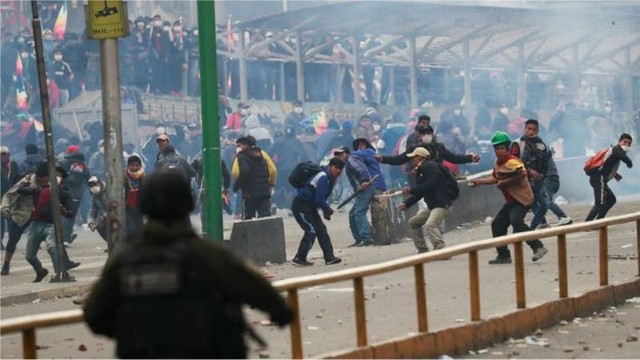
Evo declared himself the winner on 20 October, followed immediately by violent anti-Evo riots throughout the country, but mostly in the oil-rich Santa Cruz area – home of Bolivia’s oligarchs and elite. The protests lasted for about three weeks during which at least three people died, when last Sunday, November 10, Evo was “suggested” by the military brass, supported by the OAS (US) to step down with his entire entourage, or else. He resigned, because he wanted the riots to stop and his countrymen to continue living in peace. But violence hasn’t stopped, to the contrary, the opposition has become fiercer in their racist attacks on indigenous people, targeting them with live ammunition. The dead toll as of today has reached at least 20.

President Morales asked for, and was granted political asylum in Mexico. The Vice-President, Alvaro Linera, and most of Morales’ cabinet members followed him to Mexico. The President of the Senate, Ms. Adriana Salvatierra, also of the MAS party, according to the Constitution, would have been the legitimate interim-President. But she was also forced to resign, and so were Victor Borda, the leader of the Chamber, and Rubén Medinaceli, First Vice President of the Senate. They all had to resign. In total some 20 high-ranking officials of Evo’s Government took refuge in the Mexican Embassy in La Paz, before they flew to Mexico.
Evo has since said he wants to return to Bolivia, to be there for the millions of his supporters. Yes, still a sizable majority of Bolivians support Evo and his Movement towards Socialism (MAS). There is a mass of peaceful unarmed Evo supporting demonstrators, growing every day. They are being brutally beaten by US trained and “bought” police and military forces. Indeed, the commander of Bolivia’s armed forces, Williams Kaliman, served in earlier days as a military attaché at the Bolivian Embassy in Washington. During that time he was secretly ‘recruited’ to be trained by what then was called the School of the Americas, and which is now the Western Hemisphere Institute for Security Cooperation, located at Fort Benning near Columbus, Georgia. Apparently Kaliman was not the only one of high-ranking Bolivian military and police officers having been subjected to this torturer and coup plotter training.

On Tuesday, 12 November, an extraordinary session of both chambers (Deputies and Senate) of the Plurinational Legislative Assembly (Parliament) was convened, to officially accept President Morales’ resignation, but the representatives of the Movement to Socialism (MAS), which are the majority in both chambers, did not attend because they were told by the opposition that their safety and that of their families could not be guaranteed. As a consequence, Parliament had suspended its session due to the lack of quorum.

Nevertheless, Jeanine Añez, an opposition senator, declared herself interim-President, and even though her nomination is illegal and unconstitutional, the Constitutional Court confirmed the legality of the transfer of power. But who could blame the judges of the Constitutional Court? They want to be on the right side of the fence, now that the Americans are soon expected to rule the country. Ms. Añez is from the right-wing Social Democrat Movement (not to confuse with MAS = movement towards socialism), and she is known to be fiercely anti-Morales. If her coronation looks and sounds like the one of Juan Guaidó in Venezuela, it is because her self-nomination is like Juan Guido’s, a US-supported farce. Washington has immediately recognized Ms. Jeanine Añez as (interim) President of Bolivia. She, as well as Carlos Mesa, have been groomed to become the next Bolivian leaders, when new elections are held – probably sometime in January 2020. Especially, Carlos Mesa is well known as a US-supporter from his earlier failed stint at the Bolivian Presidency (2003 – 2005).

Earlier, Jeanine Añez, tweeted,“I dream of a Bolivia free of satanic indigenous rites, the city is not for the Indians who should stay in the highlands or the Chaco”. That says it all, where Bolivia is headed, unless – unless another people’s revolution will stop this nefarious course. Ms. Añez apparently has since removed the tweet.

One of the internal drivers of the ‘golpe’ is Luis Fernando Camacho, a far-right multi-millionaire, from the Santa Cruz region, where the US have supported and encouraged separatism. Camacho, a religious bible fanatic, received support from Colombia, Brazil and the Venezuelan opposition – and, of course, he is the US henchman to lead the ‘coup’ internally.

As Max Blumenthal from “The Grayzone” reports, “When Luis Fernando Camacho stormed into Bolivia’s abandoned presidential palace in the hours after President Evo Morales’s sudden November 10 resignation, he revealed to the world a side of the country that stood at stark odds with the plurinational spirit its deposed socialist and Indigenous leader had put forward. – With a Bible in one hand and a national flag in the other, Camacho bowed his head in prayer above the presidential seal, fulfilling his vow to purge his country’s Native heritage from government and “return God to the burned palace.” Camacho added “Pachamama will never return to the palace,” referring to the Andean Mother Earth spirit. “Bolivia belongs to Christ.”

Still, there is hope. Bolivians are known to be sturdy and staunch defenders of their rights. They have proven that best in the overthrow of two foreign-imposed successive Presidents in 2003 and 2005, “Goni” and Carlos Mesa respectively. They brought their Aymaran Evo Morales to power in 2006, by an internationally observed, fully democratic election.

There are other signs in Latin America that things are no longer the way they used to be for decades. Latin Americans are sick and tired of their status of US backyard citizens. There is movement in Brazil, where Lula was just released from Prison, against the will of Brazil’s fascist also foreign, i.e. US-imposed, Jair Bolsonaro. Granted, Lula’s release from prison is temporary, but with the massive people’s support he musters, it will be difficult for Bolsonaro to put him back in prison – and preserve his Presidency.

Social upheavals in Chile for justice and equality, against a racist Pinochet era Constitution, violently oppressed by President Piñera’s police and military forces, have lasted for weeks and will not stop before a new Constitution is drafted, in which the protesters demands are largely integrated. That too is a sign for an awakening of the people. And the enduring resistance against North America’s aggression by Venezuela, Cuba and Nicaragua, are all positive vibes for Bolivia – not to be trampled over.

Peter Koenig is a Research Associate of the Centre for Research on Globalization.

17 November 2019

Source: countercurrents.org
Does The Appeal For Peace And Harmony Apply To Hindutva Brigade As Well For Future?

Co-Written by Sandeep Pandey, Yugal Kishore Shashtri and Lubna Sarwath

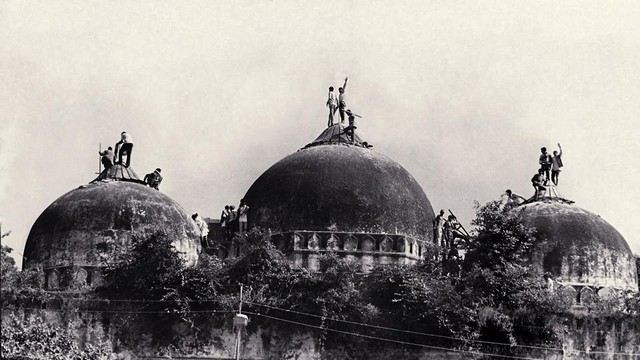
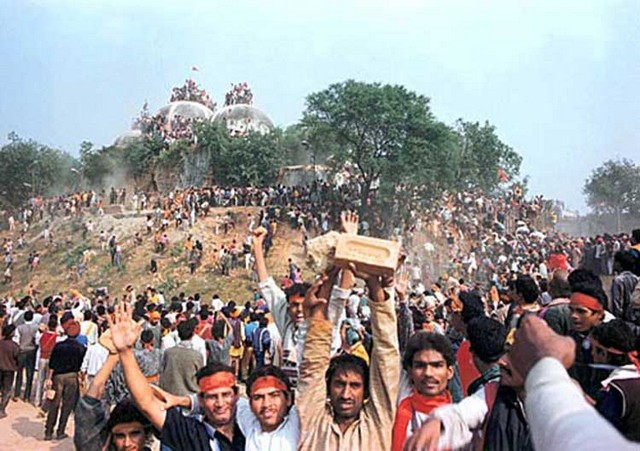
With the exception of few, every leader of political or social importance is making an appeal to the common people to maintain peace and communal harmony in the wake of Supreme Court judgement in the Ram Janambhumi-Babri Masjid case as part of which the entire 2.77 acres of disputed land has been given for construction of Ram temple and Government has been directed to provide 5 acres of land elsewhere for construction of mosque. The Prime Minister has said, ‘After the verdict, the way every section of society, of every religion, has welcomed it is a proof of India’s ancient culture and tradition of social harmony.’ He also said, ‘The calm and peace maintained by 130 crore Indians in the run-up to today’s verdict manifests India’s inherent commitment to peaceful coexistence.’ The Rashtriya Swayamsewak Sangh chief has made an appeal, ‘I urge the people of India to maintain law and order.’ Lal Krishna Advani’s reaction is, ‘I stand vindicated, and feel deeply blessed,..’ It will be interesting to see how the Court will now judge him as an accused in the Babri Masjid demolition case.

The SC observes, ‘As regards the inner courtyard, there is evidence on preponderance of probabilities to establish worship by the Hindus prior to the annexation of Oudh by the British in 1857. The Muslims have offered no evidence to indicate that they were in exclusive possession of the inner structure prior to 1857 since the date of construction in the sixteenth century.’ This has been the basis of handing over the disputed site to Hindus. It further observes, ‘The exclusion of the Muslim from worship and possession took place on the intervening night between 22/23 December 1949 when the mosque was desecrated by the installation of Hindu idols.’ And then it goes on to say, ‘The Muslims have been wrongly deprived of a mosque which had been constructed well over 450 years.’

While acknowledging Muslims offering namaz from 1857 to 1949 in the inner structure but saying there is no evidence of this before 1857, although accepting that the mosque existed for at least 450 years, the judgement says, ‘Dividing the land will not subserve the interest of either of the parties or secure a lasting sense of peace and tranquility,’ and offers the land to Hindus. It balances by saying, ‘Justice would not prevail if the Court were to overlook the entitlement of the Muslims who have been deprived of the structure of the mosque through means which should not have been employed in a secular nation committed to the rule of law. The Constitution postulates the equality of all (emphasis in the judgement) faiths. Tolerance and mutual co-existence nourish the secular commitment of our nation and its people.’

The purpose of the judgement and the national appeals, before and after the delivery of judgement – issued by authorities as well as social-political leaderships – are understandable. At best the judgement is a compromise to appease the majority while assuaging the feelings of minority, whether justice has been done is questionable. Similar to the clampdown in Jammu and Kashmir, a tight security control ensured that ‘peace’ would be prevailed.

The first two authors were not allowed to hold a two day communal harmony workshop on 17-18 August, 2019, at Ram Janaki temple at Saryu Kunj in Ayodhya in which Professor Ram Puniyani was to speak and have been issued notices soon after that by the Resident Magistrate of Ayodhya prohibiting them from opening a bank account of their ‘Sarva Dharm Sadbhav Trust.’ The Sarva Dharm Sadbhav Trust has plans to build a multi-faith harmony centre in Ayodhya to convey the message that Ayodhya, sacred to at least five religions – Hinduism, Islam, Buddhism, Jainism and Sikhism – is a place which is symbol of communal harmony. They were detained again on 19th August when they wanted to hold a press conference at the temple. The Government obviously didn’t want any other point of view, than in favour of Ram temple, to be expressed by anybody for the last four months. This is how ‘peace’ and ‘social harmony’ has been enforced upon the country.

If such a tight control had been observed in 1992, when Bhartiya Janata Party’s government was in power in Uttar Pradesh, probably the mosque would not have been demolished. The Chief Minister Kalyan Singh went back on his word given to SC, that he would be faithful to the Constitution, to claim that he was a RSS worker first and CM later, after the mosque was demolished. In 2002, in spite of PM Atal Behari Vajpayee admonishing Narendra Modi, the then CM of Gujarat, to follow ‘Rajdharm,’ and Defence Minister George Fernandes wanting to deploy Army, rioting went on in Gujarat for three days. And we should remember that this violence was triggered by burning of a train in Godhra carrying kar-sewaks who had gone to perform shila-pujan at Ayodhya, 17 years in advance of a judgement in favour of Ram temple. Earlier this year Amit Shah, the Home Minister, and Mohan Bhagwat, both have rejected the SC judgement allowing entry of women of menstruating age to Sabrimala temple in Kerala. The Home Minister is also openly discriminating against Muslims, contrary to the Constitutional principle of equality of all faiths, by excluding them from the possibility of obtaining Indian citizenship as part of the proposed Citizenship Amendment Bill.

It is interesting that the politics of Hindtuva which has built itself up on violence and hatred, starting with the murder of Mahatma Gandhi, and doesn’t care if the copy of Constituion is burnt at Jantar-Mantar and holds an unfavourable SC judgement in contempt, is displaying a new found faith in Constiution, values like equality and fraternity enshrined in it, and respect for a favourable SC judgement. It is obvious that it has worked to build a consensus, taking most Muslim organizations on board and also the SC judges into confidence, to arrive at this judgment. But the larger question is, has this consensus for maintaining peace and harmony been built selectively only for the Ayodhya judgement?

If the BJP/RSS genuinely believe that peace and harmony should prevail from now on, can we expect no more mob-lynching incidents, killing of intellectuals, discrimination against minorities and dalits and in general politics of hate? Are they also going to respect Places of Worship (Special Provisions) Act, 1991 which prohibits conversion of any place of worship? And conversion doesn’t always take place in the manner in which it has been done in Ayodhya. At Mazar mod in Indira Nagar, Lucknow at a corner plot where Muslims used to offer namaz, gradually over years, after a stone was kept under a tree, Hindus have started worshipping a deity and now there is a Provincial Armed Constabulary camp as well at the site. In a TV channel discussion on Indian Ahead on 23 Ocotber, 2019, in anticipation of the Ayodhya judgement, in which the third author was also invited, Vishwa Hindu Parishad spokesperson Vinod Bansal has admitted that they have a list of 30,000 sites in addition to Kashi and Mathura, where Hindu temples were demolished to build some Islamic structures. The working President of VHP Alok Kumar has said that SC judgement on Ayodhya is not the end of the story, it is the beginning, in the context of Kashi and Mathura. Will the BJP/RSS top brass counsel VHP leadership and make it clear to the country that observance of peace and harmony is meant for them as well?

The demolition of Babri Masjid invited the problem of terrorism to India. More such misadventure is going to plunge India into deeper problems.

By Sandeep Pandey, Yugal Kishore Shashtri and Lubna Sarwath – The first and third authors are with Socialist Party (India) and Yugal Kishore Shashtri is Mahant of Ram Janaki temple in Ayodhya.

14 November 2019

Source: countercurrents.org
Was the Founder of White Helmets Killed by Islamic State?

By Nauman Sadiq

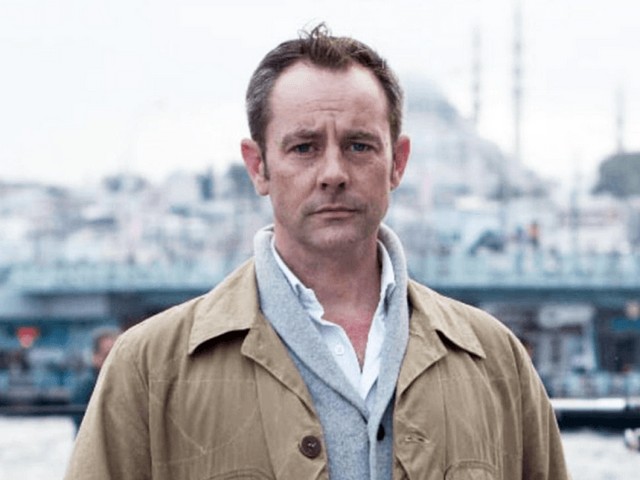
The founder of the White Helmets, James Le Mesurier, was found dead on November 11 in suspicious circumstances after falling off a two-story apartment building in downtown Istanbul. He was a former British army veteran and a private security contractor from 2008 to 2012 working for Good Harbor [1], run by Richard Clarke, the former Bush administration counter-terrorism czar.

Much like Erik Prince of the Blackwater fame, Le Mesurier’s work included training several thousand mercenaries for the United Arab Emirates (UAE) oil and gas field protection force, and designing security infrastructure for the police state of Abu Dhabi.

Although the police in Istanbul are treating the incident as suicide, it’s obvious that a person of his background and training would never attempt suicide by jumping off a two-story building. Because such a fall might have fractured a few bones but it was highly unlikely to cause death.

The assassination of James Le Mesurier should be viewed in the backdrop of the killing of the Islamic State’s chief Abu Bakr al-Baghdadi on October 27 in a US special-ops raid. It’s important to note in the news coverage of the killing of al-Baghdadi that although the mainstream media has been trumpeting for the last several years that the Islamic State’s fugitive leader was hiding somewhere on the Iraq-Syria border in the east, he was found hiding in the northwestern Idlib governorate, under the control of Turkey’s militant proxies and al-Nusra Front, and was killed while trying to flee to Turkey in Barisha village five kilometers from the border.

The reason why the mainstream media scrupulously avoided mentioning Idlib as al-Baghdadi’s most likely hideout in Syria was to cover up the collusion between the militant proxies of Turkey and the jihadists of al-Nusra Front and the Islamic State. Unsurprisingly, the White Helmets area of operations is also Idlib governorate in Syria where they are allowed to conduct purported “rescue operations” and “humanitarian work” under the tutelage of al-Nusra Front.

In fact, the corporate media takes the issue of Islamic jihadists “commingling” with Turkey-backed “moderate rebels” in Idlib so seriously – which could give the Syrian government the pretext to mount an offensive in northwest Syria – that the New York Times cooked up an exclusive report [2] a couple of days after the special-ops night raid, on October 30, that the Islamic State paid money to al-Nusra Front for hosting al-Baghdadi in Idlib.

The morning after the night raid, the Syrian Observatory for Human Rights reported [3] on Sunday, October 27, that a squadron of eight helicopters accompanied by warplanes belonging to the international coalition had attacked positions of Hurras al-Din, an al-Qaeda-affiliated group, in Idlib province where the Islamic State chief was believed to be hiding.

Despite detailing the operational minutiae of the special-ops raid, the mainstream news coverage of the raid deliberately elided over the crucial piece of information that the compound in Barisha village five kilometers from Turkish border where al-Baghdadi was killed belonged to Hurras al-Din, an elusive terrorist outfit which has previously been targeted several times in the US airstrikes.

Although Hurras al-Din is generally assumed to be an al-Qaeda affiliate, it is in fact the regrouping of the Islamic State jihadists under a different name in northwestern Idlib governorate after the latter terrorist organization was routed from Mosul and Anbar in Iraq and Raqqa and Deir al-Zor in Syria and was hard pressed by the US-led coalition’s airstrikes in eastern Syria.

According to “official version” [4] of Washington’s story regarding the killing of al-Baghdadi, the choppers took off from an American airbase in Erbil, the capital of Iraqi Kurdistan, flew hundreds of miles over the enemy territory in the airspace controlled by the Syrian and Russian air forces, killed the self-proclaimed “caliph” of the Islamic State in a Hollywood-style special-ops raid, and took the same route back to Erbil along with the dead body of the “caliph” and his belongings.

Although Washington has conducted several airstrikes in Syria’s Idlib in the past, those were carried out by fixed-wing aircraft that fly at high altitudes, and the aircraft took off from American airbases in Turkey, which is just across the border from Syria’s northwestern Idlib province. Why would Washington take the risk of flying its troops at low altitudes in helicopters over the hostile territory controlled by myriads of Syria’s heavily armed militant outfits?

In fact, several Turkish journalists, including Rajip Soylu, the Turkey correspondent for the Middle East Eye, tweeted [5] on the night of the special-ops raid that the choppers took off from the American airbase in Turkey’s Incirlik.

As for al-Baghdadi, who was “hiding” with the blessing of Turkey, it now appears that he was the bargaining chip in the negotiations between Trump and Erdogan, and the quid for the US president’s agreeing to pull out of Syria was the pro quo that Erdogan would hand Baghdadi to him on a silver platter.

It’s worth noting that although Idlib governorate in Syria’s northwest has firmly been under the control of Hayat Tahrir al-Sham (HTS) led by al-Nusra Front since 2015, its territory was equally divided between Turkey-backed rebels and al-Nusra Front.

In a brazen offensive in January, however, al-Nusra Front’s jihadists completely routed Turkey-backed militants, even though the latter were supported by a professionally trained and highly organized military of a NATO member, Turkey. And al-Nusra Front now reportedly controls more than 70% territory in the Idlib governorate.

The reason why al-Nusra Front has been easily able to defeat Turkey-backed militants appears to be that the ranks of al-Nusra Front have now been swelled by highly motivated and battle-hardened jihadist deserters from the Islamic State after the fall of the latter’s “caliphate” in Mosul in Iraq and Raqqa in Syria.

In all likelihood, some of the Islamic State’s jihadists who joined the battle in Idlib in January were part of the same contingent of thousands of Islamic State militants that fled Raqqa in October 2017 under a deal brokered [6] by the US-backed Syrian Democratic Forces (SDF).

The merger of al-Nusra Front and Islamic State in Idlib doesn’t come as a surprise, though, since the Islamic State and al-Nusra Front used to be a single organization before a split occurred between the two militant groups in April 2013 over a leadership dispute. In fact, al-Nusra Front’s chief Abu Mohammad al-Jolani was reportedly appointed [7] the emir of al-Nusra Front by Abu Bakr al Baghdadi, the leader of Islamic State, in January 2012.

Finally, regarding the assassination of the founder of the White Helmets, James Le Mesurier, in downtown Istanbul, it’s worth pointing out that Turkey has been hosting 3.6 million Syrian refugees and myriad factions of Ankara-backed militant proxies. It’s quite easy for the jihadists of al-Nusra Front and the Islamic State to intermingle with Syrian refugees and militants in the Turkish refugee camps.

Evidently, one of the members of the White Helmets operating in al-Nusra’s territory in Syria’s Idlib betrayed his patrons for the sake of getting a reward, and conveyed crucial piece of information to Le Mesurier who then transmitted it to the British and American intelligence leading to the October 27 special-ops raid killing al-Baghdadi. In all likelihood, the assassination of the founder of the White Helmets was the Islamic State’s revenge for betraying its slain chief.

Footnotes:

[1] The most dangerous job in the World: Syria’s Elite Rescue Force:

[https://web.archive.org/web/20161105185720/https://www.mensjournal.com/magazine/the-most-dangerous-job-in-the-world-syrias-elite-rescue-force-20141210]

[2] ISIS Leader Paid Rival for Protection but Was Betrayed by His Own:

[https://www.nytimes.com/2019/10/30/world/middleeast/isis-leader-al-baghdadi.html]

[3] Islamic State leader Abu Bakr al-Baghdadi killed in US raid:

[https://www.middleeasteye.net/news/isis-leader-abu-bakr-al-baghdadi-targeted-us-raid-officials]

[4] Official story of the night raid killing al-Baghdadi:

[https://www.nytimes.com/2019/10/27/us/politics/baghdadi-isis-leader-trump.html]

[5] Trump Confirms ISIS Leader Al-Baghdadi Killed In US Raid:

[https://www.zerohedge.com/geopolitical/trump-make-statement-after-isis-chief-al-baghdadi-killed-turkish-border-while-fleeing]

[6] Raqqa’s dirty secret: the deal that let Islamic State jihadists escape Raqqa:

[http://www.bbc.co.uk/news/resources/idt-sh/raqqas_dirty_secret]

[7] Al-Jolani was appointed as the emir of al-Nusra Front by al-Baghdadi:

[http://english.al-akhbar.com/node/16689]

Nauman Sadiq is an Islamabad-based attorney, columnist and geopolitical analyst focused on the politics of Af-Pak and Middle East regions, neocolonialism and petro-imperialism.

15 November 2019

Source: countercurrents.org
Growth continues to slow in major economies

By Nick Beams

Data from the world’s major economies, released over the past few days, show that the “synchronised” global slowdown pointed to by the International Monetary Fund is worsening.

In its report on the latest figures from China, the world’s second largest economy, Bloomberg said the “engines of China’s economy are spluttering with exports falling, factory output slowing, investment at a record low and consumption coming off the boil.”

The National Bureau of Statistics reported that value-added industrial output in October rose by 4.7 percent from a year earlier, down from a 5.8 percent increase in September and below the forecast of a 5.2 percent increase.

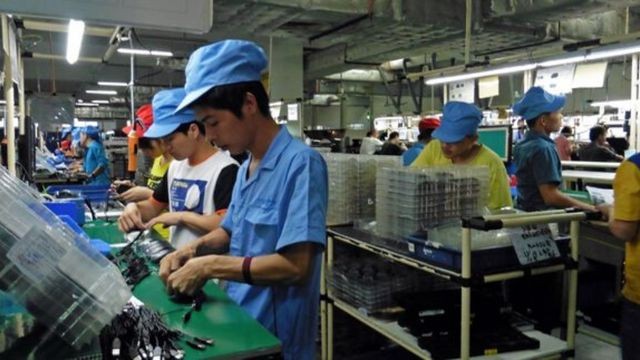
Electronics factory in Zhuhai, China [Credit: http://www.flickr.com-people-76224602atN00]

Retail sales rose by 7.2 percent, down from a rise of 7.8 percent in September and below the 7.8 percent forecast.

The most significant figure was the fall in fixed investment growth. It slowed to 5.2 percent for the first ten months of the year, the lowest level in comparable data going back to 1998.

Speaking to reporters yesterday, Liu Aihua, a spokesperson for the statistics bureau, said: “There are many external uncertainties. Domestic cyclical issues have coincided with structural issues. Downward pressure on the economy has increased continuously. Risks and challenges we are facing cannot be underestimated.”

Julia Wang, an economist at HSBC, told Bloomberg the “momentum for slowdown” was not over and because it was “so sharp” it could impact on the labour market at some point next year.

Growth in Japan, the world’s third largest economy, slowed sharply in the third quarter as the government of Prime Minister Shinzo Abe considers the size of a stimulus package. Abe ordered the package last week but the size is yet to be decided.

Gross domestic product expanded at an annualized rate of just 0.2 percent in the September quarter, compared to a rate of 1.8 percent in the three months to June and below the expected increase of 0.9 percent. The Japanese economy has been adversely impacted by the US-China trade conflict, tensions with South Korea, sparked by a conflict over reparations to victims of forced labour during World War 2, and a recent typhoon.

Figures released yesterday show that Germany, the world’s fourth largest economy, and the driving force of the eurozone economy, only narrowly escaped a technical recession—defined as two consecutive quarters of negative growth.

The economy expanded by just 0.1 percent in the third quarter while the contraction for the second was revised down from minus 0.1 percent to minus 0.2 percent.

A research note by Claus Vistesen, the chief eurozone economist at Pantheon Macroeconomics, cited by the US business channel CNBC, said there was “no recession, but most definitely a very weak economy.”

He said in some sense this was the worst of both worlds. “Today’s data confirm that the German economy has now stalled, but the headlines are probably not dire enough to prompt an immediate and aggressive fiscal response from Berlin.”

German Economy Minister Peter Altmaier said while the figures showed Germany had avoided a technical recession in the third quarter, economic development in the region was fragile.

Speaking to CNBC, Daniela Schwarzer, director of the German Council on Foreign Relations, said there was “only a minor difference” between growth of 0.1 percent and a contraction of minus 0.1 percent.

“The truth of the matter is that Germany doesn’t have a robust growth perspective at the moment,” she said, pointing out that its export-dependent economy was being hit by the shift in international trade relations—a reference to the US-China trade war and the aggressive orientation of Washington towards the European Union.

Looking beyond the immediate situation, she continued: “The whole question is what will be the sources of future growth be for Germany and the challenge to actually structurally change the German economy is huge … There needs to be strong investment in education, research and innovation, and Germany needs infrastructure investment as well.”

One of the starkest expressions of the worsening situation in the global economy and its impact on the working class is contained in the latest economic data from the UK, the world’s fifth largest economy.

According to figures from the Office for National Statistics released on Monday, the UK economy grew by just 0.3 percent in the third quarter. While this was a recovery from the 0.2 percent contraction for the second quarter, growth over the year to September was just 1 percent—the lowest level since 2010.

A report by the Institute for Fiscal Studies pointed to the underlying worsening of the economic situation. It said that over the past 11 years productivity, as measured by output per hour worked, had grown “by just 2.9 percent. That is about as much as it grew on average every 15 months in the preceding 40 years.”

One of the consequences is lower wages, which are no higher in real terms than they were 11 years ago. According to a study by the Resolution Trust, “the past decade has been the worst for earnings growth since the Napoleonic Wars.”

The study punctured claims that the growth of employment numbers indicated economic health. It noted that a “deep recession in which wages fell dramatically followed by an unprecedentedly sluggish earnings recovery” meant household incomes dropped and more people sought employment.

Employment, it said, had increased particularly rapidly for women in their early 60s and those in the lowest income deciles. This was evidence that the increase in the lift in the pension age, combined with welfare cuts, had contributed to what it called the “labour supply shift” as working households tried to counter the wage squeeze and nonworking ones experienced an “income shock.”

In the United States, the world’s largest economy, where, in the midst of the rise of stock markets to record highs, President Trump claims to have “launched an economic boom the like of which we have never seen before,” economic growth was down to 1.9 percent for the third quarter and investment in the real economy is at its lowest level since 2015.

Data released yesterday showed that applications to collect unemployment benefits increased by 14,000 to 225,000 in the week to November 9, higher than all forecasts.

The economic slowdown, and in some cases outrights contraction, is extending beyond the major economies. The economies of Singapore and Hong Kong, heavily impacted by the trade war, are in recession.

The South Korean economy grew by 2 percent for the year to September, but this was the lowest level for a decade. The manufacturing sector, the mainstay of the Korean economy, lost 81,000 jobs last month, with the country’s finance minister, Hong Nam-ki, telling reporters that government stimulus efforts were having little effect.

“We have expected fiscal spending to play the supporting role in adding vitality to the private sector,” he said. “However it is not working well with limited spillover effects, making us worried.”

In Australia, where the central bank has cut its base interest rate three times this year, setting it at a record low of 0.75 percent in a bid to boost the economy, the Bureau of Statics reported yesterday that total employment fell by 19,000 in October, the biggest decline since August 2016.

The Morrison Liberal government claimed that its tax cuts introduced in July, following its narrow re-election in May, would lift household incomes and boost spending at local businesses. Nothing of the sort has happened.

With private sector wages rising by just 0.5 percent in the September quarter, retailers are expecting a dismal Christmas period, according to a report by the accounting and finance firm Deloitte.

It noted that retailers began the year with high expectations but this optimism had faded “with a combination of weak consumer spending, higher input prices and a subdued economy resulting in some of the toughest trading conditions in recent history.”

Originally published in WSWS.org

15 November 2019

Source: countercurrents.org
Ecuador: The Restoration of Neoliberalism and the Monroe Doctrine

By Dr. Birsen Filip

On November 7, 2019, the National Court of Justice of Ecuador ratified the preventive detention of former president Rafael Correa, along with a number of his former officials. Immediately after the court rendered its decision for pretrial detention, Correa rejected accusations of bribery, illicit association and contributions to his political campaign between 2012 and 2016, while he was the leader of Alianza Patria Altiva i Soberana (PAIS). Correa founded Alianza PAIS in 2006, as a democratic socialist political party with an objective to achieve economic and political sovereignty, and foment a social and economic revolution in the nation, which came to be known as The Citizens’ Revolution (La Revolución Ciudadana).

During his presidency, which lasted from January 15, 2007 to May 24, 2017, Correa introduced a brand of 21st century socialism to Ecuador, with a focus on improving the living standards of the poorest and most vulnerable segments of the population. His presidency was part of ‘the revolutionary wave’ in Latin America, referred to as ‘Pink tide’, where a number of left-wing and socialist governments swept into power throughout the continent during the 2000s, including Cristina Néstor Kirchner and Fernández de Kirchner in Argentina, Evo Morales in Bolivia, Luiz Inácio Lula da Silva in Brazil, Manuel Zelaya in Honduras, Daniel Ortega in Nicaragua, Fernando Lugo in Paraguay, and Hugo Chávez in Venezuela. All of these governments were opposed to neo-liberal economic policies and American imperialism.

While he was president, Correa raised taxes on the rich and cut down on tax evasion, and increased public investment on infrastructure and public services, including publicly-funded pensions, housing, free health care and education. His government ended up building many schools in different parts of the nation, particularly the countryside, and provided students with nearly all of the materials needed to further their studies. President Correa also more than doubled the minimum wage, which contributed to significantly reducing socioeconomic inequality. In 2018, a World Bank report explained that:

Ecuador has made notable improvements in reducing poverty over the last decade. Income poverty decreased from 36.7 percent in 2007 to 21.5 percent in 2017. In addition, the share of the population living in extreme poverty fell by more than half, from 16.5 percent in 2007 to 7.9 percent in 2017, representing an average annual drop of 0.9 percentage points. In absolute numbers, these changes represent a total of 1.6 million individuals exiting poverty, and about one million exiting extreme poverty over the last decade.[i]

Furthermore, the unemployment rate fell from an ‘all time high of 11.86 percent in the first quarter of 2004’ to ‘a record low of 4.54 percent in the fourth quarter of 2014’[ii]. The World Bank also reported that Ecuador posted annual economic growth of ‘4.5 percent during 2001-2014, well above the average for the Latin America and the Caribbean (LAC) region of 3.3 percent. During this period, real GDP doubled and real GDP per capita increased by 50 percent.’[iii]

On October 1, 2016, Correa announced the nomination of Lenín Boltaire Moreno Garcés, who served as his vice president from 2007 to 2013, as his party’s candidate for the 2017 presidential election at the conference of Alianza PAIS. Moreno was elected president, and it was expected that he would continue and build on Correa’s left-wing economic policies. However, within a few months of winning the election, president Moreno began to dismantle many of the social, economic and political reforms enacted by Correa during his decade as president. Contrary to Correa’s government, many of the domestic policies pursued by president Moreno included reducing public spending, weakening worker rights, and providing significant tax cuts to the rich and large corporations. In other words, president Moreno has gradually shifted Ecuador’s left-wing policies to the political centre-right.

Moreno’s presidency also shifted Ecuador’s foreign policy stance, giving it a more neo-liberal and pro-American orientation. When Correa’s socialist government was in power, Ecuador enjoyed close diplomatic and economic relations with Venezuela, and was more independent of American hegemony. For example, president Correa closed a US military base in Manta, Ecuador when Washington’s lease expired in 2009. Prior to that, in 2007, Correa stated:

We’ll renew the [Manta air] base on one condition: that they let us put a base in Miami — an Ecuadorean base…if there’s no problem having foreign soldiers on a country’s soil, surely, they’ll let us have an Ecuadorean base in the United States.[iv]

Subsequently, on September 18, 2009, he also said:

As long as I am president, I will not allow foreign bases in our homeland, I will not allow interference in our affairs, I will not negotiate our sovereignty and I will not accept guardians of our democracy.

Contrary to Correa, the US-Ecuador military relationship has expanded under the Moreno government ‘through training, assistance, and the reestablishment of an Office of Security Cooperation at the U.S. Embassy in Quito.’[v]Ecuador and the US have also signed deals for the purchase of weapons and other military equipment, and agreed to cooperate more closely in the areas of security, intelligence, and counter-narcotics.

In 2011, president Correa expelled US ambassador Heather Hodges from Quito. Subsequently, in 2014, his government expelled the United States Agency for International Development (USAID) from the country, where it had been operating since 1961 as part of John F. Kennedy’s Alliance for Progress (AFP)[vi]. USAID regularly exercises ‘soft power’ in Latin American nations in order to help the US establish itself as an ‘international police power’[vii]. In May 2019, Moreno’s government announced that USAID would return to Ecuador.

President Correa also became renowned for providing Wikileaks founder Julian Assange with political asylum in Ecuador’s London embassy in 2012 to prevent his arrest and possible extradition to the US. However, shortly after his election, there were indications that Moreno might be willing to hand him over to authorities in the UK. In addition to calling Assange an ‘inherited problem,’ a ‘spoiled brat’ and a ‘miserable hacker’, Moreno accused him of repeatedly violating his asylum conditions and of trying to use the embassy as a ‘centre for spying’[viii]. Then, on April 11, Assange’s political asylum was revoked, which allowed him to be forcibly removed from the Ecuadorian Embassy by British police.In response, Correa called Moreno ‘the greatest traitor in Ecuadorian and Latin American history’ for committing ‘a crime humanity will never forget’[ix].

President Correa’s government supported the integration of South America countries into a single economic and political bloc. However, since Moreno came to power, Ecuador has distanced itself from the Venezuelan government, and withdrew from the Bolivarian Alternative for the Americas[x](ALBA) in August 2018, as well as the Union of South American Nations (UNASUR) in September 2019. UNASUR was established by 12 South American countries in 2008to address important issues in the region without the presence of the United States. Currently, only five members remain: Bolivia, Guyana, Suriname, Uruguay and Venezuela. The other seven members, Argentina, Brazil, Colombia, Chile, Ecuador, Peru and Paraguay, agreed to create the Forum for the Progress of South America (PROSUR) in March 2019. The goal of this alternative organization is to achieve the right-wing agenda in Latin America, as its members support neo-liberal austerity measures and closer ties with Washington. It could be said that PROSUR aligns well with the goals and objectives of the Monroe Doctrine.

Another major shift in president Moreno’s political stance pertains to lawsuits brought against Texaco/Chevron by the Correa government to obtain compensation for environmental damages caused when the operations of Texaco (acquired by Chevron in 2001) dumped 16 billion gallons of toxic wastewater in the Amazon region of Ecuador between 1964 and 1992, affecting more than 30,000 Indigenous people and Campesinos in the area. ‘Chevron left 880 pits full of crude oil which are still there, the rivers are still full of hydrocarbon sediment and polluted by the crude oil spills in Amazonia, which is one of the most biodiversity rich regions in the world’[xi], and ‘the damage has been left unrepaired for more than 40 years’[xii]. To raise public awareness about this environmental disaster, president Correa’s government established an international campaign called the ‘Dirty Hand of Chevron’. In 2011, the Ecuadorian Constitutional Court ordered Chevron to pay $9.5 billion in compensation for social and environmental damages it caused.

In September 2018, the Permanent Court of Arbitration (PCA), an agency of the United Nations based in the Hague, Netherlands, ruled that the Ecuadorian court decision against Chevron was illegal, because it was an outcome of fraud, bribery, and corruption. The PCA ‘also ruled that Ecuador will have to pay economic compensation’[xiii]to Chevron. ‘The amount has not been established yet, but Chevron requested that Ecuador assume the US$9.5 billion’ awarded to affected communities by the Ecuadorean court.[xiv]Following the PCA decision, the government of president Moreno announced that:

the state will sue former President Rafael Correa and his government officials if Ecuador lost the international arbitration process.[xv]

In this matter, president Moreno also accused Correa of ‘failing to defend the country’s interests correctly and spending money on “The Dirty Hand of Chevron” campaign, which according to the government sought to “manipulate national and international public opinion.”’[xvi] In reality, president Moreno supports the PCA decision, thereby prioritizing the interest of Texaco/Chevron over those of his own citizens. In fact, his government has been attempting to nullify the Constitutional Court ruling against Chevron. In response, former president Correa has accused the Moreno government of ‘doing homework ordered by (the United States Vice President Mike) Pence’. Even some of Moreno’s own cabinet ministers condemned the PCA ruling and expressed their support for Ecuador’s Constitutional Court for defending of the country’s nationals interest and the rights of the people of the Amazon.

Correa exhibited a hostile attitude towards the Bretton Woods Institutions during his presidency. He sought to renegotiate Ecuador’s external debt of US$10.2 billion, which he called ‘illegitimate’ because ‘it was accrued during autocratic and corrupt regimes of the past. Correa threatened to default on Ecuador’s foreign debt, and ordered the expulsion of the World Bank’s country manager’[xvii], which was carried out on April 26, 2007. His government also opposed the signing of any agreements that would permit the IMF to monitor Ecuador’s economic plan. As a result of such actions on the part of Correa’s government, ‘Ecuador was able to renegotiate its debt with its creditors and redirect public funds towards social investments.’[xviii]

To the contrary, Moreno has enthusiastically embraced the IMF during his short time as president. On March 1, 2019, Ecuador’s central bank manager, Verónica Artola Jarrín, and economy and finance minister, Richard Martínez Alvarado,submitted a letter of intent to the IMF requesting a three-year $4.2 billion Extended Fund Facility (EFF) agreement. An EFF allows the IMF to assist countries that are facing ‘serious medium-term balance of payments problems.’ More precisely, EFF is designed to:

to provide assistance to countries: (i) experiencing serious payments imbalances because of structural impediments; or (ii) characterized by slow growth and an inherently weak balance of payments position. The EFF provides assistance in support of comprehensive programs that include policies of the scope and character required to correct structural imbalances over an extended period.[xix]

The IMF agreement signed in March allowed Ecuador to borrow $4.2 billion. However, as is always the case, the IMF agreement was not without conditionalities, as it required the Ecuadorian government to implement a series of neo-liberal economic reforms. According to IMF statements, these reforms aim to transform Ecuador’s fiscal deficit into a surplus, reduce the country’s debt-to-GDP ratio, and increase foreign investment. On March 11, 2019, Christine Lagarde, former Managing Director of the IMF, claimed that:

The Ecuadorian authorities are implementing a comprehensive reform program aimed at modernizing the economy and paving the way for strong, sustained, and equitable growth.[xx]

On March 11, 2019, Christine Lagarde also explained that:

Achieving a robust fiscal position is at the core of the authorities’ program, which will be supported by a three-year extended arrangement from the IMF. The aim is to reduce debt-to-GDP ratio through a combination of a wage bill realignment, a careful and gradual optimization of fuel subsidies, a reprioritization of capital and goods and services spending, and a tax reform. The savings generated by these measures will allow for an increase in social assistance spending over the course of the program. The authorities will continue their efforts to strengthen the medium-term fiscal policy framework, and more rigorous fiscal controls and better public financial management will help to enhance the effectiveness of fiscal policy.[xxi]

Protecting the poor and most vulnerable segments in society is a key objective of the authorities’ program. In this context, the authorities plan to extend the coverage of, and increase the nominal level of benefits under the existing social protection programs. Work is also underway to improve the targeting of social programs.[xxii]

Ecuador’s participation in the Organization of the Petroleum Exporting Countries (OPEC) represents another point of contention between Correa and the Moreno government. Ecuador was a member of OPEC from 1973 and 1992. After a period of absence, it rejoined the organization in 2007 after Correa became president of the country. However, on October 1st, president Moreno announced that Ecuador would once again end its membership in OPEC effective January 1, 2020. Given Moreno’s penchant for implementing neo-liberal economic policies, this decision was likely based on the notion that freeing the country from the burden of having to abide by quotas would bring fiscal sustainability to Ecuador. This is evidenced by the fact that Ecuador contacted OPEC to request permission to produce above its quota in February 2019, though it was never confirmed whether a response was received[xxiii]. While increasing production in its Amazonian oil fields would likely bring more foreign investment to Ecuador and open up new markets, it would also lead to serious conflicts between the Moreno government and the indigenous people living in the area, who are strongly opposed to oil extraction.

In addition to announcing Ecuador’s departure from OPEC, president Moreno also selected October 1stas the date to introduce Decree 883, a series of economic measures that included ending longstanding subsidies for fuel, the removal of some import tariffs, and cuts to the benefits and wages of public employees. In particular, the elimination of fuel subsidies, which had been in place for 40 years, was instituted in order to meet IMF requirements to keep the $4.2 billion programme on track, and to satisfy international investors. The EFF agreement between the IMF and the Ecuadorean government also called for thousands of public employees to be laid off, the privatization of public assets, the separation of the central bank from the government, cutting public expenditures, and raising taxes over the next three years. IMF representatives claim that these types of reforms bring more foreign direct investment into the economy.

In fact, a close examination of the neo-liberal economic reforms recommended by the IMF in many countries reveals that they are almost identical, meaning that they do not take the diverse needs and realities of each country into account; rather, they are driven by the interests of the countries and other stakeholders that provide the funds. Generally, the IMF’s recommendations[xxiv]consist of cutting deficits, liberalizing trade, privatizing state-owned enterprises, reforming the banking and financial systems, increasing taxes, raising interest rates, and reforming key sectors. However, countless studies have revealed that these types of reforms, have raised the unemployment rate, created poverty, and have often preceded recessions. On October 2, 2019, the IMF issued a press release on Ecuador stating that:

The reforms announced yesterday by President Lenin Moreno aim to improve the resilience and sustainability of Ecuador’s economy and foster strong, and inclusive growth. The announcement included important measures to protect the poor and most vulnerable, as well as to generate jobs in a more competitive economy.

The authorities are also working on important reforms aimed at supporting Ecuador’s dollarization, including the reform of the central bank and the organic code of budget and planning.

IMF staff will continue to work closely with the authorities to improve the prospects for all Ecuadorians. The second review is expected to be submitted to the Executive Board in the coming weeks.[xxv]

President Moreno’s decision to end the subsidies on fuel led to the prices of diesel and petroleum increasing by 100% and 30%, respectively, overnight, which directly contributed to significantly raising the costs of public transportation. In response, protests erupted against Moreno’s austerity measures on October 3rd, featuring students, unions and indigenous organizations. They declared an indefinite general strike until the government reversed its neo-liberal adjustment package. Moreno’s initial response was to reject the ultimatum and state that he would ‘not negotiate with criminals.’

The following day, on October 4, 2019, president Moreno declared a state of emergency under the pretext of ensuring the security of citizens and to ‘avoid chaos.’ Nonetheless, the protests continued and intensified to the point that the government was forced to relocate to city of Guayaquil because Quito had been overrun by anti-government protestors. However, this attempt to escape the protestors proved ineffective as taxi, bus and truck drivers blocked roads and bridges in Guayaquil, as well as in Quito, which disrupted transportation nationwide.

In the following days, thousands of demonstrators continued to demand the reversal of austerity measures, as well as the resignation of the president. However, Moreno remained defiant, refusing both demands under all circumstances. Subsequently, Ecuador’s main oil pipeline ceased operations after it was seized by indigenous protesters. Petro-Ecuador was concerned that production losses could reach 165,000 barrels a day. Indigenous protesters also occupied two water treatment plants in the city of Ambato. Meanwhile, violent clashes between protesters and police resulted in seven deaths, about 2,000 injuries, and over 1,000 arrests. Eventually, Moreno’s government was forced to back down and make concession with the well-organised protesters.

On October 13, president Moreno agreed to withdraw Decree 883 and replace the IMF-backed plan with a new proposal, involving negotiations with the Confederation of Indigenous Nationalities of Ecuador (CONAIE) and other social groups. The following day, president Moreno signed Decree 894, which reinstated the cancelled fuel subsidies. However, on October 23, CONAIE released a statement informing the public that ‘it paused talks with President Lenin Moreno because of the government’s “persecution” of the group’s leaders [Jaime Vargas] since a halt to violent anti-austerity protests.’[xxvi]

It is unlikely that president Moreno would be willing to give up on his austerity policies or start the process of cancelling the IMF loan, given his apparent commitment to helping the US realize the spirit of the Monroe Doctrine. Many of the reforms and policies that his government has introduced will help keep Ecuador firmly entrenched in America’s backyard for years to come.

This is not a new development, as history has revealed that, for more than a century, ‘in Latin America there are more than enough of the kind of rulers who are ready to use Yankee troops against their own people when they find themselves in crisis’ (Fidel Castro, Havana 1962). However, the eruption of protests in response to Moreno’s neo-liberal reforms suggests that he faces an uphill battle, as his fellow Ecuadorians do not appear to share his enthusiasm for selling his country to external creditors and foreign influences. Although Moreno has managed to successfully drive Rafael Correa out of Ecuador, the former president’s opposition to capitalism and imperialism remain strong among the population.

*

Note to readers: please click the share buttons above or below. Forward this article to your email lists. Crosspost on your blog site, internet forums. etc.

Global Research contributor Dr. Birsen Filip holds a Ph.D. in philosophy from the University of Ottawa.

Notes

[i] http://documents.worldbank.org/curated/en/835601530818848154/pdf/Ecuador-SCD-final-june-25-06292018.pdf

[ii] https://tradingeconomics.com/ecuador/unemployment-rate

[iii] http://documents.worldbank.org/curated/en/835601530818848154/pdf/Ecuador-SCD-final-june-25-06292018.pdf

[iv] https://uk.reuters.com/article/ecuador-base/ecuador-wants-military-base-in-miami-idUKADD25267520071022

[v] https://www.state.gov/u-s-relations-with-ecuador/

[vi] ‘AFP was a 10-year, multibillion-dollar aid program targeting Latin American countries, whereas USAID sought to support economic growth and progress in the agriculture and health care services sectors, while also promoting democratic institutions and democratic forms of governance. The impetus for the establishment of the AFP and its involvement in Latin American countries, in conjunction with USAID, was the success of the Cuban Revolution in 1959, which culminated in the overthrow of the oppressive regime led by Fulgencio Batista, who ruled the country as a dictator with full US backing. This led to the Americans losing their considerable influence over the island. More importantly, this outcome made the US leadership paranoid that other countries situated in their “backyard” might follow Cuba’s example and revolt against US-supported dictators and regimes, nationalize businesses and resources, and establish closer ties with the Soviet Union. Washington used the AFP and USAID as mechanisms by which to improve trade ties with Latin American countries with the ultimate objective of preventing the spread of communism in the region.’ https://www.globalresearch.ca/the-flower-industrys-impacts-on-colombia-on-mothers-day/5640156

[vii] https://www.globalresearch.ca/the-flower-industrys-impacts-on-colombia-on-mothers-day/5640156

[viii] https://www.theguardian.com/media/2019/apr/14/assange-tried-to-use-embassy-as-centre-for-spying-says-ecuadors-moreno

[ix] https://www.rt.com/news/456229-correa-slams-moreno-assange-arrest/

[x] To counter the influence that the US exercised over Latin American economies, Chávez proposed the creation of an alternative economic agreement that was anti-imperialist in nature. In 2004, the Bolivarian Alternative for the Americas (ALBA) was established, initially funded by Cuba and Venezuela.

[xi] https://www.stopcorporateimpunity.org/21st-may-the-global-antichevron-day-of-action-is-coming/

[xii] https://www.stopcorporateimpunity.org/21st-may-the-global-antichevron-day-of-action-is-coming/

[xiii] https://www.telesurenglish.net/news/Arbitration-Tribunal-Rules-Against-Ecuador-Favors-Chevron-20180907-0011.html

[xiv] https://www.telesurenglish.net/news/Arbitration-Tribunal-Rules-Against-Ecuador-Favors-Chevron-20180907-0011.html

[xv] https://www.telesurenglish.net/news/Arbitration-Tribunal-Rules-Against-Ecuador-Favors-Chevron-20180907-0011.html

[xvi] https://www.telesurenglish.net/news/Arbitration-Tribunal-Rules-Against-Ecuador-Favors-Chevron-20180907-0011.html

[xvii] https://www.telesurenglish.net/analysis/Ecuadors-Citizens-Revolution-A-Shift-in-Foreign-Policy-20150107-0029.html

[xviii] https://www.telesurenglish.net/analysis/Ecuadors-Citizens-Revolution-A-Shift-in-Foreign-Policy-20150107-0029.html

[xix] https://www.imf.org/en/About/Factsheets/Sheets/2016/08/01/20/56/Extended-Fund-Facility

[xx] https://www.imf.org/en/News/Articles/2019/03/11/ecuador-pr1972-imf-executive-board-approves-eff-for-ecuador

[xxi] https://www.imf.org/en/News/Articles/2019/03/11/ecuador-pr1972-imf-executive-board-approves-eff-for-ecuador

[xxii] https://www.imf.org/en/News/Articles/2019/03/11/ecuador-pr1972-imf-executive-board-approves-eff-for-ecuador

10 November 2019

Source: www.globalresearch.ca

Qatar: Education As A Weapon

By Andre Vltchek

There seems to be no limit to Qataris tossing around their wealth. This tiny kingdom with 2.6 million inhabitantsis full of ridiculously lavish gold-plated palaces, most of them built with terrible taste. It is overflowing with Lamborghini racing cars and Rolls Royce limousines, and now, even with ludicrously wasteful air-conditioned sidewalks (cold air blows from below, into the 35C heat).

Ruled by the House of Thani, the State of Qatar is truly a strange place: according to the latest count conducted in early 2017, its total population was 2.6 million, of which 313,000 were Qatari citizens and 2.3 million ‘expatriates’, both the low-wage migrant workers, and the lavishly remunerated Western professionals.

Foreigners are doing everything; sweeping the floors, cleaning garbage, cooking, taking care of babies, flying Qatar Airways planes, performing medical surgeries and building office towers. Manual laborers are discriminated against; beaten, cheated, humiliated. Many migrant workers have been dying under “mysterious circumstances”. But they are still coming, mainly because Qatar, withits GDP per capita of $128,702, is the richest country on earth, and because there is huge demand for hundreds of different professions. Never mind that the perks are for the ‘natives’ only, while the minimum wage for foreigners is only around $200 per month.

Locked in a bitter dispute with its neighbors, including Saudi Arabia and the United Arab Emirates, Qatar is moving closer and closer to its best allies – the United States and United Kingdom. The Al Udeid Air Base hosts over 100 aircraft of the United States Air Force, Royal Air Force, and other Gulf War Coalition partners. It accommodates the forward headquarters of United States Central Command, No. 83 Expeditionary Air Group RAF, and the 379th Air Expeditionary Wing of the USAF. Presently, at least 11,000 U.S. servicemen are permanently located here. Al Udeid Air Base is considered the most important military airport in the region, used for operations in countries such as Syria and Afghanistan.

Qatar has been playing an extremely important role in destabilizing Syria, and other countries in the Middle East. It has been spreading fundamentalist religious dogmas, as well as extreme capitalist creeds.

*

Qatar has plenty of money, and it uses some of its funds for various ‘educational programs’, which are closely linked to the Western, particularly US and British but also Wahhabi propaganda apparatus.International experts hired from the West have been promoting such extreme concepts as the privatization of schools, keeping the governments away from developing curricula, and spreading pro-Western and pro-market doctrines throughout the region and beyond.

Under the cover of ‘saving children’, Qatari foundations and programs are promoting Muslim fundamentalism, as well as the commercialization of education. And that is not just in Qatar itself, but also as far away as Somalia, South Sudan and Kenya.

While at Qatar University, I noticed that even the libraries are segregated (predictably, I was told by a UN staff member based in Qatar, that the so-called “Men’s Library” is incomparably better supplied than women’s), Qatar wants to present itself as a regional leader in higher education, by spreading around regressive philosophy and mindsets.

Naturally, the main goal is to maintain the status quo in the region.

In terms of quality education, things don’t work in Qatar itself, either. With all those huge budgets burnt, or more precisely wasted, Qatar has very little to be proud of. According to the OECD:

“In 2012, Qatar was ranked third from the bottom of the 65 OECD countries participating in the PISA test of math, reading and skills for 15- and 16-year-olds, comparable to Colombia or Albania, despite having the highest per capita income in the world.”

Since then, things have not improved much, although statistics on the subject are suddenly not too widely available.

*

At the end of October 2019, I found myself attending a conference, organized by the Center for Conflict and Humanitarian Studies, hosted by the Doha Institute for Graduate Studies.

Except one highly qualified UN expert (who had been working, for years, on the ground, in Syria and other places destroyed by the West and its Gulf allies), the panel of speakers consisted of individuals based in and pampered by Qatar.

The line that was tugged here was predictable:

Professor Frank Hardman basically explained how the states in the region “became weak”, and how the private sector should be taking and pushing for the education reforms.

But the most astonishing discourse came from Prof. Maleiha Malik, Executive Director, of the Protection of Education in Insecurity and Conflict (PEIC), Education Above All Foundation. She spoke about the importance of protecting vulnerable schools as well as children, in conflict zones, and about the international legal mechanisms “which are now in place”, designed to bring those who are destroying schools and pupils to justice.

In brief, a typical mainstream “development” and NGO talk.

Qatar is far from being a place where one could be free to speak up his or her mind.

But I had no patience left. I have worked in countless war and conflict zones, all over the world. And what I was witnessing at the Doha Institute for Graduate Studies was nothing short of an indoctrination process of both the participants of the conference, as well as the students.

I demanded they let me speak. When the microphone was passed on to me, I said that I needed an exact answer:

“Professor Malik, I have a question for you. I have been covering dozens, perhaps hundreds of conflicts and wars, all over the world. I saw hundreds of schools burning. I saw hundreds of children dead. Most of these atrocities were triggered by the United States, by Europe, or both. It all began long before I was born, of course, it is going on until now”.

I saw the horror on the faces of the organizers. They were devouring me with their eyes, they were begging me to stop. Most likely, this has never happened here, before. Everything was being filmed, recorded. But I was not ready to stop.

The students in aula did not react. They were clearly conditioned not to get excited by speeches delivered by ‘elements’ hostile to the regime.

I continued:

“Professor Malik, I am asking you, I demand to know, whether there was one single case when the United States, United Kingdom, France, Australia or any other Western country, was put on trial and condemned, by those international mechanisms that you mentioned earlier… Condemned for murdering millions of children, or for carpet-bombing thousands of schools in such places like Vietnam, Laos, Cambodia, and later in Iraq, Afghanistan, and Syria? For, right now, trying to starve children in Venezuela? For keeping people, including children, from having access to medicine…”

Then I turned to Frank Hardman:

“Professor Hardman, aren’t those states that you mention and defined as ‘weak’, in such a situation, because they are being antagonized, attacked and terrorized by the West; by historically imperialist countries?”

Total silence.

Then, I concluded:

“Wouldn’t it be the most effective way to protect schools and children, if we’d make sure that the West and its allies, would finally stop destroying dozens of countries all over the world?”

The Chair of the conference, Prof. Sultan Barakat, went to work, immediately, trying to contain the damage:

“Professor Malik, obviously, the question is about what is happening in Palestine…”

But Professor Malik was a tough warrior, like myself, only from the opposite side. She knew precisely that it was all beyond Israel and Palestine. Israel and Palestine were part of it, but they were not the only issue here. She brushed off Sultan Barakat and went straight after my throat:

“It is not about the West! It is not about one group of countries. All members of the UN Security Council are responsible! Look at Russia, committing atrocities in Syria…”

And the shouting match began. Our personal “Doha debate”.

“Which atrocities?” I shouted at her. “Prove it.”

“We have proof.”

“You?” I wondered. “You went to Syria? Or is it that you were given so-called proof by your handlers? You put Russia, a country which is saving Syria and Venezuela, on the same level as the countries that are murdering hundreds of millions of people in all corners of the world?”

I recalled, how many times during this ‘conference’, USAID was mentioned. All references were Western.Here, people from the Arab countries were speaking and thinking like the IMF, or The Economist.

I sat down. I had nothing else to add.

The controlled discussion somehow resumed. The faces of the students remained unmoved.

At night, I met for dinner a comrade with whom I used to work with in Afghanistan. Doha is a strange place. A place of unexpected encounters.

*

Qatar is doing to the arts what it is doing to education.

The next day I tried to visit several museums which the country is bragging about online and through its advertisements. All were closed, except the Museum of Islamic Art, which used to be free to the public, but is now charging a $15 entry fee.

The monstrously fragmented state and its individuals are now investing billions of dollars, purchasing art works from all over the world. Bragging about it. Manipulating content. As it is manipulating, what is being produced in its ‘international’ film studios.

Departing from Doha to Beirut on Qatar Airways, I realized that there was not one Qatari citizen working onboard. The pilots were from the UK and Australia, while the flight attendants were recruited in the Philippines, India and Africa.

A few minutes after take-off, an aggressive advertisement began promoting Educate a Child (EAC), which is a program of the Education Above All Foundation.

In Qatar, everything seems to be inter-connected. Deadly US military bases, ‘foreign policy’, the arts, and yes, even education and charity.

*

[First published by NEO – New Eastern Outlook – a journal of the Russian Academy of Sciences]

Andre Vltchek is a philosopher, novelist, filmmaker and investigative journalist. He has covered wars and conflicts in dozens of countries.

10 November 2019

Source: countercurrents.org
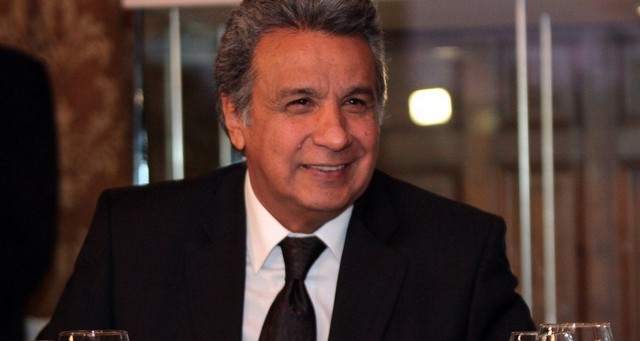
SC Verdict on Ayodhya: My Conscience Does Not Allow Me to Celebrate It

By Abhay Kumar

What if the Ram temple were demolished on December 6, 1992 instead of the Babri mosque in Ayodhya? Do you think the Supreme Court judgment would have been the same?

Do you think the demolished structure would have been given to the party that was involved in razing it to the ground or supporting its demolition? These questions are unlikely to be raised in debates and TV shows.

Would you not share the apprehension that the mainstream Indian media, the opposition parties and civil society members lack courage to go again the majoritarian frenzy?

The so-called secular and liberal forces have also disappointed us. They, too, do not want to appear “unpopular” and “insensitive” to the so-called “astha” (belief) of the majority Hindu community.

In a long-awaited verdict on November 9, the Supreme Court allowed the Hindus to build a Ram Temple on the disputed site in Ayodhya. Muslims, another party to the dispute, were asked to build a mosques at another place in Ayodhya.

The Hindutva forces have argued that the Babri Masjid, built in 16th century, stood at the exact place of the demolished Ram temple. In their fabricated history, “the Muslim invaders” demolished the temple to build up the mosque. The Muslims as well the eminent histrorians have denied such allegations.

Abandoned by the secular parties, the minority Muslim community is perhaps most vulnerable today. They are increasingly being told to appear “tolerant”, “friendly” to the majority Hindus, “loyal” to the country and become “rooted in Indian (read Brahminical) culture.

Perceiving a possible threat to their security, the Muslim minority is trying to keep a smile on their face even if they feel hurt and let down by the apex court of the country.

For example, the All India Muslim Personal Law Board, following the SC ruling, is giving contradictory statements. The Board says that they respect the judgment, yet they feel disappointed with it. The Board, which is under huge pressure, is trying to keep “quiet”.

But Muslims perceive a threat to their safety. They are also doing best to avoid any provocation. As a result, a large number of Muslims have put up messages on social media, welcoming the judgment. Some others are taking part in procession organised by the Hindutva outfits. Some of them have also appeared before media to “congratulate their Hindu brothers” over this “historical” judgment.

Unlike the minority community, the majority community is celebrating the judgment. The celebration includes chanting and writing ‘Jai Sri Ram’ on social media. “If temple was not built in Ayodhya where it would be built!”, argues one of them. The extremists among them say the time has come to solve the controversy of Kashi and Mathura as well. While the so-called liberals, among them, deny use of coercion in this process, saying that there is nothing wrong in building up the temple after the Supreme Court has upheld the position of the Hindus.

Note how the position of the majoritarian forces is being justified by invoking the ruling of the apex court of the country. However, one should not forget that till recently the Hindutva forces were saying that the question of building a temple is a matter of “faith”.

Even if the majority of the majority Hindu community are celebrating the Ram Temple Babri Masjid judgment by the Supreme Court, my conscience does allow me to celebrate it.

My conscience does not allow me to forget the gross injustice done in the broad-day light on December 6, 1992.

How could we forget that thousands of fanatic Hindu mobs were mobilised to demolish centuries-old religious place of the minority community?

How could we forget that the Ram Temple mobilisation sparked off violence and riots, taking the lives of 2000 people?

How could we forget innocent people were injured, displaced and killed in the name of building a temple at a place where no historical evidence can suggest that it had existed there? How could we forget this tragedy?

My conscience, let me say it again, does not allow me to celebrate a judgement that appear to “honour” the so-called majoritarian sentiment. The judgement that does not show courage to challenge the brute power of a majoritarian government cannot appeal to my conscience.

Irrespective of what the mainstream media and the ruling elite say, I think that December 6 was one of the darkest days in the Indian history. On that day, not only the doom of mosque was razed to the ground but also the pillars of secularism and democracy were broken.

Justice, therefore, cannot ignore the questions of majoritarian tyranny, violation of law and order and the Constitution and mindless murder and violence. But the judgment today hurried to please the majoritarian sentiments constructed and maintained by the Hindutva forces. The so-called bench comprising several judges made a historical blunder to paint a false picture of ‘India (read Hindus) being a tolerant and secular’.

Would the judgment going to bring peace in society and put an end to communal politics? I doubt.

I wish I were proven wrong. But I doubt if communal conflicts are going be be a thing of the past in the wake of the judgment. I do not think the majoritarian forces are going to be contented with winning the Ram Temple and Babri Masjid case.

I am afraid the judgement of the day is likely to boost the morale of communal forces to take laws in their hands. If this happens, the attitude of the Indian state would become more aggressive and hostile towards the minorities.

I am afraid the Ayodhya judgment may encourage the majoritarian forces to make a claim to other religious places of the minority community.

I know my views are against the majoritarian frenzy. At the time of writing this note I am sitting at bonfire. People around me are greeting me with ‘Jai Sri Ram’. I also received a message last night to my Whatsup number in which I was alleged to be a “a certain local friend” of Babur who would “start his long journey back home to Samarkand”, following the verdict.

Contrary to all these allegations and the frenzy mood of the Hindu India, I want to register my dissent. I know my statement does not have much impact today but I am confident that history and posterity would understand the pain of my heart.

Abhay Kumar has recently submitted his PhD at Centre of Historical Studies, Jawaharlal Nehru University, Delhi.

10 November 2019

Source: countercurrents.org