Just International

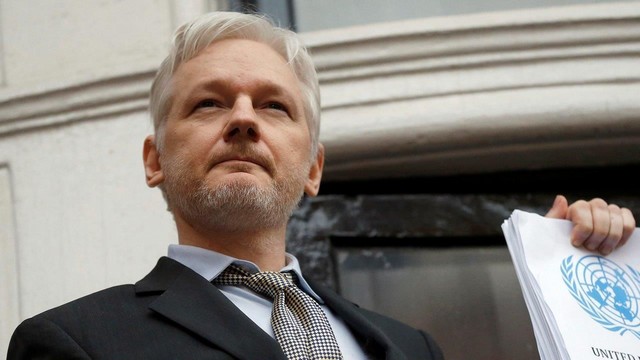
UN Special Rapporteur on Torture warns Julian Assange could die in prison

By Kevin Reed

In a June 1 interview with ABC Radio Adelaide, UN Special Rapporteur on Torture Nils Melzer warned that Julian Assange could die in prison if his persecution is not stopped immediately.

Last week, Melzer issued a scathing denunciation of Assange’s persecution, calling it “psychological torture.”

Reporter Philip Williams asked Melzer, “If your calls are ignored, do you fear that he could actually die in prison?” Melzer replied, “Absolutely, yes. That’s a fear that I think is very real … the cumulative effects of that constant pressure, it will become unpredictable how this will end. What we see is that his health condition is currently deteriorating to the point that he cannot even appear at a court hearing. This is not prosecution; this is persecution and it has to stop here and it has to stop now.”

The full radio interview with Melzer can heard here. WikiLeaks publisher and journalist Julian Assange was sentenced to 50 weeks in jail on May 1 by a British court in a vindictive show trial on fabricated charges of “skipping bail.” Following his eviction from the Ecuadorian embassy on April 11, where Assange had sought asylum and was effectively detained for seven years, he was arrested by British authorities and is now held in Her Majesty’s Prison Belmarsh in southeast London.

Melzer’s comment about Assange’s dire condition follows a statement he issued on May 31 demanding an immediate end to the “collective persecution” by the United States and its allies.

The UN torture expert visited Assange in Belmarsh on May 9 along with a medical doctor and psychologist in order to evaluate the condition of the heroic journalist. Melzer issued his statement just one week after the US Justice Department announced 17 counts on charges of violating the Espionage Act—which carry up to 170 years in prison if convicted—and renewed the demand that the WikiLeaks publisher be extradited to the US for prosecution.

Melzer warned that the nine-year “persistent and progressively severe abuse” of Assange by US, British and Ecuadorian authorities and the threat of his being extradited to the US would pose “a real risk of serious violations of his human rights, including his freedom of expression, his right to a fair trial and the prohibition of torture and other cruel, inhuman or degrading treatment or punishment.”

Speaking from Geneva during his interview with ABC Radio Adelaide, Melzer reiterated his warning that Assange cannot get a fair trial in the US “in light of the prevalent prejudice against him and the image of the public enemy that has been portrayed over there.”

In answering a question from Williams about the role of the Australian government in the unfolding attacks on Assange, Melzer said, “The Australian government has been the glaring absentee in this case from my perspective. I would have expected Australia to take steps to protect their national … to protect him from this excessive persecution that he is experiencing currently.”

Assange is the target of an international campaign of vilification, persecution and silencing due to WikiLeaks’ exposure to the people of the world both the war crimes American imperialism and its allies.

Melzer’s warning points to the urgent need to organize a struggle to defend Assange. We urge all of our readers to take up this fight .

Originally published by WSWS.org

6 June 2019

Source: countercurrents.org

Eid Mubarak! From Hindu Rashtra

By Binu Mathew

Eid Mubarak!

I’m writing this article on the eve of Eid. Two weeks after the Modi 2.0 government was installed in India.

When the election results came out on May 23 I was baffled. How come a government which put India through enormous pain through its anti-people policies like Demonetisation which killed over 200 people and destroying small scale industries with job loss for millions, ignoring of farmer’s distress which killed over 300,000 farmers through suicide, divisive policies which divided India on religious, ethnic and linguistic lines, painful Good and Services Tax (GST) which put small traders under severe stress, can come back to power?

Several theories were floated. Electronic Voting Machine (EVM) tampering, the willful support of Election Commission of India for the ruling regime, money power, mass media support, fake news….All these must have played a part. However, none of these arguments are convincing.

Then why? How?

I believe the RSS project of Hindu Rashtra is reaping rich dividends for their loyal work for over nine decades. RSS or Rashtriya Swayam Sevak Sangh has about 60,000 branches across India and its ideology is to make India into a Hindu Rashtra. Prime Minister Narendra Modi’s Bharatiya Janata Party (BJP) is the political wing of RSS.

RSS openly challenges the constitution of India and wants to make Manusmriti (Manu’s code) as the constitution of India. Manusmriti dehumanizes everyone except the upper castes, including women of all castes.

RSS ideologue Golwalkar wrote in his book “Bunch of Thoughts”

“The most important and effective step will be to bury deep for good all talk of a federal structure of our country’s Constitution, to sweep away the existence of all ‘autonomous’ or semi-autonomous ‘states’ within the one state viz., Bharat and proclaim ‘One Country, One State, One Legislature, One Executive’ with no trace of fragmentational, regional, sectarian, linguistic or other types of pride being given a scope for playing havoc with our integrated harmony. Let the Constitution be re-examined and re-drafted, so as to establish this Unitary form of Government and thus effectively disprove the mischievous propaganda indulged in by the British and so unwittingly imbibed by the present leaders, about our being just a juxtaposition of so many distinct ‘ethnic groups’ or ‘nationalities’ happening to live side by side and grouped together by the accident of geographical contiguity and one uniform supreme foreign domination.”

Golwalker also wrote in his book “We or our nationhood defined”,

“From the standpoint sanctioned by the experience of shrewd nations, the non-Hindu people in Hindustan must either adopt the Hindu culture and language, must learn to respect and revere Hindu religion, must entertain no idea but the glorification of Hindu nation i.e. they must not only give up their attitude of intolerance and ingratitude towards this land and its age long traditions, but must also cultivate the positive attitude of love and devotion instead; in one word, they must cease to be foreigners or may stay in the country wholly subordinated to the Hindu nation, claiming nothing, deserving no privileges, for less any preferential treatment, not even the citizen’s rights.”

This is actually happening NOW. A de facto HINDU RASHTRA is here. Whether it will stay or not is OUR choice.

By the way who are the Indians? The name India is derived from Indus river, which originates from the Old Persian word Hindush. The ancient Greeks referred to the Indians as Indoi which translates as “The people of the Indus”. Actually it was the colonial westerners gave the name “India” to the subcontinent. There is no historical evidence that India belongs to Hindus.

Tony Joseph in his path breaking book “Early Indians” proved that India is a land of migrants. All Indians are migrants. The earliest civilization, “The Indus Valley civilization” was kick started by West Asian migrants. All others, including the Aryan Hindus are migrants. India in its millennia old history has accepted migrants from all parts of the world and absorbed religion, culture and languages. This is this history that RSS and BJP want to rub aside.

India is a land of varied cultures. Originator of great religions like Budhism and Jainism and Sikhism. A great number of Indians adopted Islam, making it the second-largest Muslim population in the world after Indonesia. Indian constitution has recognized 22 official languages. Thousands of other languages are being spoken by, from a few thousand to many millions. RSS and BJP want to rub it all away. Their motto is ‘’HINDU, HINDI, HINDUSTAN’’.

This kind of monolithic culture is the foundation of the Hindu Rashtra envisioned by the RSS ideologues. It seems like decades long hard work by RSS is coming to fruition. Unless we step up!

Only way to keep India as we know it is to celebrate the cultural, linguistic, religious diversity of India. That’s the only way we can undermine the Hindu Rashtra project by the RSS. If we cannot do it we can say good bye to India and welcome HINDUSTAN.

So, once again I say Eid Mubarak. Let’s celebrate each other’s festivals more than ours. That’s the only way we can save India from falling into a fascist, Hindu theocratic, failed state.

Binu Mathew is the Editor of www.countercurrents.org. He can be reached at editor@countercurrents.org

4 June 2019

Source: countercurrents.org

50 years of failure of the Organization of Islamic Conference

By Abdus Sattar Ghazali

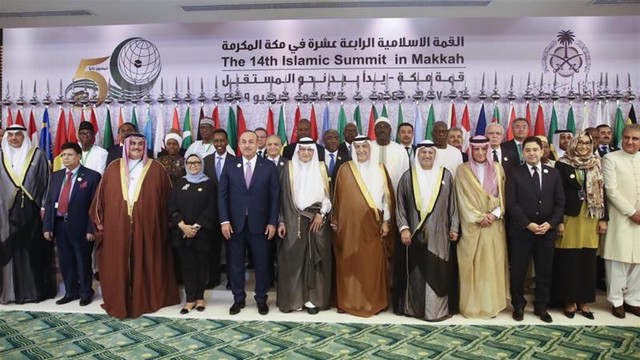
The 14th Islamic Summit Conference ended Friday Night (May 31) in Mecca. A final statement accused Iran of supporting Yemen’s Houthi rebel group; illegally occupying three islands in the Persian Gulf; and “interfering” in the domestic affairs of both Syria and Bahrain.

Not surprisingly, the Mecca summit reiterated support for Saudi/western-backed Yemeni government of President Abdu Rabuh Mansour Hadi which is fighting the Houthi rebels.

The OIC summit condemned a “terrorist attack” on Saudi Arabia’s oil pumping stations which targeted global oil supplies. The summit statement also condemned “sabotage operations” against four vessels near the territorial waters of the United Arab Emirates, which it said threatened international maritime traffic safety.

Tehran rejects OIC statement

Iran on Friday rejected a final communique issued following a Mecca-hosted summit of the Organization of Islamic Cooperation (OIC), saying it did not reflect the views of all OIC member-states, according to Iran’s state-run IRNA news agency.

Foreign Ministry spokesman Abbas Mousavi accused summit host Saudi Arabia of “exploiting the holy month of Ramadan, and the holy city of Mecca, to level allegations against Iran.”

Mousavi also reportedly accused Riyadh of “missing the opportunity provided by International Quds Day and the OIC summit to press for the rights of the Palestinian people… and choosing instead to sow discord among Muslim and regional countries”.

Saudi Arabia’s behavior at Thursday’s summit, he added, “are in line with the futile efforts of the U.S. and the Zionist regime against… Iran”.

Mousavi went on to voice hope that leaders of OIC member-states “will not allow the Palestinian issue to be overshadowed by divisive policies”.

Syria also rejects OIC statement

Syria is rejecting the final statement of the Arab emergency summit held in Saudi Arabia, which criticizes what it calls Iranian intervention into Syrian affairs.

Syria says the statement is an unacceptable interference in the internal affairs of Syria.

A Syrian Foreign Ministry statement said the Iranian presence is “legitimate because it came at the request of the Syrian government and contributed to support Syria’s efforts in combating terrorism supported by some of the participants in this summit.”

The Syrian statement said the summit should instead condemn the involvement of other countries in Syrian affairs, “which lacked legitimacy and legality” and provided “unlimited support in various forms to terrorist groups and prolonging the crisis in Syria.”

The leader of the Iranian-backed Hezbollah group told supporters in Lebanon on Friday the Mecca summits are a Saudi call for help from Arab countries after Saudi Arabia failed to win in Yemen, where the kingdom and its allies have been at war since 2015 against Iranian-allied Yemeni rebels.

“It is a sign of failure,” Hassan Nasrallah said. “These summits are calls for help …that express the failure and the inabilities in confronting the Yemeni army, popular resistance and people.”

OIC summit condemns any decision to recognize Jerusalem as Israel’s capital

The OIC summit condemned any position adopted by an international body that supports prolonging occupation, including a U.S. decision to recognize Jerusalem as Israel’s capital, it said on Saturday.

The Mecca summit also refused all illegal Israeli measures aimed at changing facts in occupied Palestinian territories including Jerusalem, and undermining the two-state solution, it said in a statement.

The summit urged member countries to take “appropriate measures” against countries that move their embassies to Jerusalem, it added.

The summit refused any proposal for peaceful settlement that did not accord with Palestinians’ legitimate inalienable rights, the statement said.

Iran’s President Hassan Rouhani had his own message for OIC leaders ahead of the summit, urging them to stay focused on the rights of Palestinians.

In a letter published online Friday, Rouhani said Muslim leaders should not let the importance of Palestinian statehood be “marginalized” in the face of the Trump administration’s forthcoming Israeli-Palestinian plan.

Rouhani also noted in the letter he was not invited to the Islamic summit, but expressed Iran’s readiness to work with all Muslim leaders to confront the White House’s so-called “Deal of the Century.”

Syrian Golan Heights

The Islamic summit condemned President Trump’s decision to annex the occupied Syrian Golan Heights into Israeli territory. Paragraph 17 of the joint communiqué said:

“The conference called for Israel’s full withdrawal from the Occupied Syrian Golan to the borders of 4 June 1967, in accordance with Security Council Resolutions Nos. 242 (1967) and 338 (1973), the principle of ‘land for peace, the terms of reference of the Madrid Peace Conference and the Arab Peace Initiative adopted by the Arab Summit in Beirut in 2002. It also affirmed non-recognition of any decision or action aiming to change the legal and demographic status of the Golan. The Conference specifically rejected and condemned the American President’s decision to annex the Golan into Israeli territory, dismissing it as null and void and of no legal effect.”

Tellingly, the US State Department spokesperson Morgan Ortagus confirmed Thursday that the State Department has changed its maps to show the disputed Golan Heights as Israeli territory. Ortugas statement came after Israel’s Prime Minister Benjamin Netanyahu said he had received one of the updated versions.

“I know we have for sure we updated the maps,” Ortagus said when asked whether the State Department had taken such steps after President Donald Trump in March officially recognised the Golan Heights as part of Israel.

Fifty years on

The Islamic summit convenes every three years to make decisions about how to confront and contain conflicts and crises in Muslim-majority countries. This year it coincides with two emergency summits – The Arab League and Gulf Cooperation Council summits- called for by Saudi King Salman Ben Abdulaziz amid heightened tensions with Iran.

On September 25, 1969, representatives from 24 Muslim-majority countries held a summit in Rabat, Morocco, in response to the burning of al-Aqsa Mosque in Jerusalem. Fifty years later, the summit still regularly convenes, with the latest set to take place in Mecca on May 31, 2019.

The historic Rabat meeting resulted in a decision to establish the Organization of Islamic Cooperation (OIC), which was designated to handle the Islamic Summit, turning it into a permanent and fundamental executive body.

At the 13th Summit, held in Istanbul in 2016, a statement was issued stressing the need for “cooperative relations” between Iran and Islamic countries, including “abstaining from the use or threat of force.”

The OIC is the second largest intergovernmental institution, just after the UN, with 57 member states from four continents. It is the voice of 1.5 billion Muslims around the world.

OIC members represent 22 per cent of the world population, have 2 per cent of the world’s GDP, 1.3 per cent of the world trade and only 1.5 per cent of the investments. Twenty five per cent of OIC population does not have access to medical facilities or safe drinking water.

Half of the population lives below the poverty line classified as the most poor. No Muslim country is in the top list of the Human Development Index or in any other global economic indicators.

This depressing picture of the Islamic countries is not limited to the economic and social spheres, in the realm of education and technology the facts are equally disappointing.

The OIC member countries possess 70 per cent of the world’s energy resources and 40 per cent of available raw material but their GDP is only 5 per cent of the world GDP. Muslim countries miserably lag behind in education and technology.

They produce only 500 PhDs each year as compared to 3,000 in India and 5,000 in the United Kingdom. None of their educational or research institutions or centres of excellence find place in the top 100 in the world.

The OIC today has 57 Muslim member-states and has held 14 summits in response to the challenges confronting the Muslim world. Since its establishment, the Islamic world has suffered several major catastrophes which have reduced it to almost a non-factor in international politics.

The breakup of Pakistan through armed intervention by India in 1971, the invasion of Lebanon by Israel in 1982, the Iran-Iraq war (1980-88), the US invasion of Iraq 2003, recent US attempts for regimes change in Iran and Syria have dealt a mortal blow to the unity, dignity and sovereignty of the Muslim world.

The OIC has failed to respond meaningfully to any of these crises or demonstrate any unity of thought and action apart from issuing high-sounding declarations at the end of each summit. Nothing was done to contain the crises or avert the tragedies. The OIC remained merely a silent spectator.

Limited influence

While the OIC has been known for its cultural and social projects, its political influence has been relatively limited.

“Typically, in the past, the OIC has been effective in promoting cultural and educational projects across the Muslim world,” Sami Hamdi, a Middle East expert, told Al Jazeera. “However, its political capabilities remain severely limited.”

According to Mamoon Alabbasi, a political analyst focusing on the Middle East and North Africa region, while the OIC has relative political weight, its rhetoric does not always translate into action on the ground.

“With 57 member states… the OIC carries a [relatively] heavy political weight… [and] impact. But how much change that makes on the ground is not always clear,” said Alabbasi.

Adding to its political limitations is its inability to unify its stance on issues, say experts.

“Like other international organizations, such as the UN General Assembly, the OIC is supposed to have a unified voice but it does not because policies of the individual countries greatly differ,” said Alabbasi.

“Most importantly, the OIC doesn’t have a unified voice because most of its member countries are not democracies. So, while their populations may be in agreement [over an issue] they do not always represent the views of their populations.”

Hamdi agrees: “The OIC has a broad spectrum of different cultures. This means that on the political front, even if there is a united stance, it means very little, practically.”

Final Analysis

The Palestinian cause and support for Somalia, Djibouti, poor Islamic countries, and oppressed minorities have been permanent points in the Islamic Summit’s resolutions during its 50 years history. The 14th Islamic summit issued three documents: A joint communiqué of 18 pages with 102 paragraph, a special resolution on the Cause of Palestine and Al-Quds and a three page Mecca Declaration.

Among other issues, the Mecca Declaration stressed “the importance of standing by those Muslims in non-Islamic countries who suffer persecution, injustice, coercion and aggression; extending full support to them and adopting their causes in international forums to ensure the realization of their political and social rights in their countries and develop programs and mechanisms that would guarantee their integration in their societies without any discrimination.”

Rohingya Muslims of Myanmar

The Conference condemned the inhumane situation in which the Rohingya Muslim community lives and called for urgent action to end acts of violence and all brutal practices targeting this minority and give it all its rights without any discrimination or racial profiling. It emphasized that the Government of Myanmar is fully responsible for the protection of its citizens and underscored the need to stop the use of military power in Rakhine State immediately.

The Conference urged the Government of Myanmar to take practical, time bound and concrete steps to restore the citizenship of Rohingya IDPs and forcibly displaced Rohingya Muslim Minority Community who were deprived of their nationality, with all associated rights, especially the right to full citizenship, and to allow and facilitate the return in safely, security and dignity of all Rohingyas internally and externally displaced, including those forced into taking shelter in Bangladesh.

The Conference condemned the inhumane situation in which the Rohingya Muslim community lives and called for urgent action to end acts of violence and all brutal practices targeting this minority and give it all its rights without any discrimination or racial profiling. It emphasized that the Government of Myanmar is fully responsible for the protection of its citizens and underscored the need to stop the use of military power in Rakhine State immediately.

The Conference urged the Government of Myanmar to take practical, time bound and concrete steps to restore the citizenship of Rohingya IDPs and forcibly displaced Rohingya Muslim Minority Community who were deprived of their nationality, with all associated rights, especially the right to full citizenship, and to allow and facilitate the return in safely, security and dignity of all Rohingyas internally and externally displaced, including those forced into taking shelter in Bangladesh.

The Conference insisted on the importance of conducting international, independent and transparent investigations into the human rights violations in Myanmar, including sexual violence and aggression against children, and to hold accountable all those responsible for these brutal acts in order to make justice to the victims. The Conference affirmed its support for the ad hoc ministerial committee on human rights violations against the Rohingyas in Myanmar, using all international legal instruments to hold accountable the perpetrators of crimes against the Rohingya. In this connection, the Conference urged upon the ad hoc Ministerial Committee led by the Gambia to take immediate measures to launch the case at the International Court of Justice on behalf of the OIC. It further called for ensuring free and unrestricted access to humanitarian assistance by affected persons and communities.

Sri Lanka

The Conference expressed deep concern and strong condemnation of the recent acts of violence against Muslims in Sri Lanka and urged the Government of this country to hold accountable to perpetrators of these acts, bring them to justice and counter firmly the spread of rhetoric of hatred and intolerance, while ensuring the security and safety of the Muslim community in Sri Lanka.

Jammu and Kashmir

The Conference reaffirmed its principled support for the people of Jammu and Kashmir for the realization of their legitimate right to self-determination, in accordance with relevant UN resolutions. It condemned the recent outbreaks of violence in the region and invited India to implement the relevant Security Council resolutions to settle its protracted conflict with its neighbor. It further welcomed the recommendations included in the UN report on Kashmir issued in June 2018; called for the expedited establishment of a UN commission of inquiry to investigate into the grave human rights violations in Kashmir, and called on India to allow this proposed commission and international human rights organizations to access Indian-administered Kashmir.

Islamophobia is a form of racism

The Conference noted with concern that Islamophobia, as a form of racism and religious discrimination today, has spread across the world, as evidenced by the increase in religious intolerance, negative stereotyping, hatred and violence against Muslims. In this connection, the Conference encouraged the United Nations and other regional and international organizations to declare 15 March an international day to combat Islamophobia.

It condemned roundly the horribly appalling terrorist attack, perpetrated out of hatred for Islam, against innocent worshipers at Al-Noor and Linwood mosques in the New Zealand city of Christchurch on 15 March 2019. In the meantime, it expressed appreciation to the Government of New Zealand for its unequivocal condemnation of the terrorist attacks, hailing the firm and clear position of the Prime Minister of New Zealand, who displayed compassion toward and sympathy with the Muslim community in their bereavement. The Conference equally paid tribute to the wider New Zealand society for showing such a deep empathy with the families of the victims and the Muslim community.

The Conference urged all countries with Muslim minorities, communities and migrants to refrain from all policies, statements and practices associating Islam with terrorism, extremism or dangers posing a threat to society.

The Conference called upon all Member States, in coordination with the General Secretariat, to adopt a comprehensive OIC Strategy on Combating Islamophobia, in order to establish a legally binding international instrument to prevent the growing trend of intolerance, discrimination and hatred on the grounds of religion and faith.

The Conference welcomed the establishment of the OIC Contact Group on Peace and Dialogue and called on the Contact Group to develop a Plan of Action on Combating Islamophobia in preparation to the Contact Group meeting at the ministerial level at the sidelines of the UN General Assembly in September 2019.

Abdus Sattar Ghazali is the Chief Editor of the Journal of America (www.journalofamerica.net) email: asghazali2011 (@) gmail.com

3 June 2019

Source: countercurrents.org

China is not the source of our economic problems — corporate greed is

By Jeffrey Sachs

公众号【侃英语】整理(id:KanEnglish)

(CNN) China is not an enemy. It is a nation trying to raise its living standards through education, international trade, infrastructure investment, and improved technologies. In short, it is doing what any country should do when confronted with the historical reality of being poor and far behind more powerful countries. Yet the Trump administration is now aiming to stop China’s development, which could prove to be disastrous for both the United States and the entire world.

China is being made a scapegoat for rising inequality in the United States. While US trade relations with China have been mutually beneficial over the years, some US workers have been left behind, notably Midwestern factory workers facing competition due to rising productivity and comparatively low (though rising) labor costs in China. Instead of blaming China for this normal phenomenon of market competition, we should be taxing the soaring corporate profits of our own multinational corporations and using the revenues to help working-class households, rebuild crumbling infrastructure, promote new job skills and invest in cutting-edge science and technology.

We should understand that China is merely trying to make up for lost time after a very long period of geopolitical setbacks and related economic failures. Here is important historical background that is useful to understand China’s economic development in the past 40 years.

In 1839, Britain attacked China because it refused to allow British traders to continue providing Chinese people with addictive opium. Britain prevailed, and the humiliation of China’s defeat in the First Opium War, ending in 1842, contributed in part to a mass uprising against the Qing Dynasty called the Taiping Rebellion that ended up causing more than 20 million deaths. A Second Opium War against Britain and France ultimately led to the continued erosion of China’s power and internal stability.

Toward the end of the 19th century, China lost a war to the newly industrializing Japan, and was subjected to yet more one-sided demands by Europe and the United States for trade. These humiliations led to another rebellion, followed by yet another defeat, at the hands of foreign powers.

China’s Qing Dynasty fell in 1911, after which China quickly succumbed to warlords, internal strife and Japan’s invasion of China beginning in 1931. The end of World War II was followed by civil war, the creation of the People’s Republic of China in 1949 and then the upheavals of Maoism, including millions of deaths from famine in the Great Leap Forward, which ended in the early 1960s, and the mass destabilization of the Cultural Revolution and its aftermath until 1977.

China’s rapid development on a market basis therefore started only in 1978, when Deng Xiaoping came to power and launched sweeping economic reforms. While China has seen incredible growth in the past four decades, the legacy of more than a century of poverty, instability, invasion and foreign threats still looms large. Chinese leaders would like to get things right this time, and that means they are unwilling to bow to the United States or other Western powers again.

China is now the second-largest economy in the world, when GDP is measured at market prices. Yet it is a country still in the process of catching up from poverty. In 1980, according to IMF data, China’s GDP per capita was a mere 2.5% of the United States, and by 2018 had reached only 15.3% of the US level. When GDP is measured in purchasing-power-parity terms, by using a common set of “international prices” to value GDP in all countries, China’s income per capita in 2018 was a bit higher at 28.9% of the United States.

China has roughly followed the same development strategy as Japan, Korea, Taiwan, Hong Kong and Singapore before it. From an economic standpoint, it is not doing anything particularly unusual for a country that is playing catch up.The constant US refrain that China “steals” technologies is highly simplistic.

Countries that are lagging behind upgrade their technologies in many ways, through study, imitation, purchases, mergers, foreign investments, extensive use of off-patent knowledge and, yes, copying. And with any fast-changing technologies, there are always running battles over intellectual property. That’s true even among US companies today — this kind of competition is simply a part of the global economic system. Technology leaders know they shouldn’t count on keeping their lead through protection, but through continued innovation.

The United States relentlessly adopted British technologies in the early 19th century. And when any country wants to close a technology gap, it recruits know-how from abroad. The US ballistic missile program, as it is well known, was built with the help of former Nazi rocket scientists recruited to the United States after World War II.

If China were a less populous Asian country, say like South Korea, with a little more than 50 million people, it would simply be hailed by the United States as a great development success story — which it is. But because it is so big, China refutes America’s pretensions to run the world. The United States, after all, is a mere 4.2% of the world’s population, less than a fourth of China’s. The truth is that neither country is in a position to dominate the world today, as technologies and know-how are spreading more quickly across the globe than ever before.

Trade with China provides the United States with low-cost consumer goods and increasingly high-quality products. It also causes job losses in sectors such as manufacturing that compete directly with China. That is how trade works. To accuse China of unfairness in this is wrong — plenty of American companies have reaped the benefits of manufacturing in China or exporting goods there. And US consumers enjoy higher living standards as a result of China’s low-cost goods. The US and China should continue to negotiate and develop improved rules for bilateral and multilateral trade instead of stoking a trade war with one-sided threats and over-the-top accusations.

The most basic lesson of trade theory, practice and policy is not to stop trade — which would lead to falling living standards, economic crisis and conflict. Instead, we should share the benefits of economic growth so that the winners who benefit compensate the losers.

Yet under American capitalism, which has long strayed from the cooperative spirit of the New Deal era, today’s winners flat-out reject sharing their winnings. As a result of this lack of sharing, American politics are fraught with conflicts over trade. Greed comprehensively dominates Washington policies.

The real battle is not with China but with America’s own giant companies, many of which are raking in fortunes while failing to pay their own workers decent wages. America’s business leaders and the mega-rich push for tax cuts, more monopoly power and offshoring — anything to make a bigger profit — while rejecting any policies to make American society fairer.

Trump is lashing out against China, ostensibly believing that it will once again bow to a Western power. It is willfully trying to crush successful companies like Huawei by changing the rules of international trade abruptly and unilaterally. China has been playing by Western rules for the past 40 years, gradually catching up the way that America’s Asian allies did in the past. Now the United States is trying to pull the rug out from under China by launching a new Cold War.

Unless some greater wisdom prevails, we could spin toward conflict with China, first economically, then geopolitically and militarily, with utter disaster for all. There will be no winners in such a conflict. Yet such is the profound shallowness and corruption of US politics today that we are on such a path.

A trade war with China won’t solve our economic problems. Instead we need homegrown solutions: affordable health care, better schools, modernized infrastructure, higher minimum wages and a crackdown on corporate greed. In the process, we would also learn that we have far more to gain through cooperation with China rather than reckless and unfair provocation.

27 May 2019

Jeffrey David Sachs is an American economist, public policy analyst and former director of The Earth Institute at Columbia University, where he holds the title of University Professor, the highest rank Columbia bestows on its faculty.

The Bilderbergers in Switzerland

By Peter Koenig

The 67th Bilderberg Meeting is taking place in Montreux, Switzerland from 30 May – 2 June 2019, where the about 130 invitees – so far confirmed – from 23 countries, are staying at one of Switzerland’s most luxurious venues, the Montreux Palace hotel. About a quarter of the attendees are women.

The Bilderberg meetings started at the onset of the Cold War, as a discussion club of American and European leaders, a fortification against communism, in clear text, against the Soviet Union. The first event took place in 1954 at the Bilderberg hotel in the Dutch town of Oosterbeek. Ever since, meetings of the Bilderberg Group were held annually, in different locations in the western world, most of them, though, in North America.

It’s not a coincidence that the Bilderbergers meet in Switzerland. Switzerland is one of the Group’s favored host country outside the US. Switzerland hosted their gatherings at least five times before this upcoming Montreux event (1960 – Palace Hotel, Bürgenstock; 1970 – Grand Hotel Quellenhof, Bad Ragaz, St. Gallen; 1981 – Palace Hotel, Bürgenstock; 1995 – Palace Hotel, Bürgenstock; 2011 – Suvretta House, St. Moritz).

The conferences of the Bilderbergers are the most secretive events, managed by those who pull the strings behind world leaders – politicians, corporate CEOs, big finance, and other business execs – artists, and the who-is-who of the world elite. And we are talking of the western world. Other than about ten attendees from Turkey, Poland, Bulgaria and Estonia, participants are North Americans or Europeans. The rest of the world doesn’t count.

The Bilderbergers are strictly a western dominion. The farthest east they go is Turkey. It’s like the carrot to Erdogan, hoping to draw NATO Turkey back into the camp of the west. But how much longer? – Turkey, forever wavering between east and west, has more than one leg already in the east – eyeing entry into the Shanghai Cooperation Organization (SCO) – not exactly the eastern version of the Bilderbergers, because the SCO is an open forum for economic development policies and defense strategies, no secrets, no manipulation western style.

This year’s Bilderberg meeting will be chaired by Henri Castries, France,Chairman of the Paris-based Institut Montaigne, a non-profit thinktank working on public policy and social cohesion. Other prominent attendees include Mike Pompeo, US Secretary of State, and the driving force of these events and protégé of Rockefeller’s, former US Secretary of State (and war criminal), Henry Kissinger; France’s Minister of Economy and Finance, Bruno Le Maire; Mark Rutte, Dutch Prime Minister, from the far-right People’s Party for Freedom and Democracy; Ursula von der Leyen, Germany’s Defense Minister from the conservative Christian Democratic Union (CDU); – and, perhaps most noteworthy, Jared Kushner, personal advisor and son-in-law of US President Donald Trump, and intimate friend of Israel’s Prime Minister Bibi Netanyahu.

This means that Israel will be represented at the highest level. From Switzerland attending will be – among others – the current President, Ueli Maurer, who, it is rumored, will hold behind closed-doors talks with Mike Pompeo about Iran whom Switzerland is representing vis-à-vis Washington. The Presence of Kushner, Pompeo, secretive Iran talks – smells a rat.

The Bilderbergers are associated and its members are overlapping with those of the Council on Foreign Relations (CFR), the Trilateral Commission and the London-based Chatham House which makes the rules for the meetings – and let’s not forget, the World Economic Forum, the infamous WEF that takes place every January in Davos, Switzerland. The WEF represents a relatively transparent window to the world, with, of course, also its secret, behind closed doors meetings, whereas the Bilderbergers are an all-round secret organization. The Bilderberg meetings – so they say – are informal talks, allowing the participants to freely use the information they receive. But they are not allowed to reveal the identity or the affiliation of the speakers, nor of any participant in the particular talks.

Switzerland, one of the most secretive countries in the world – the world of banking, the world of big finance, safe haven for international corporations which not only get away with low taxes, but also escape standards of ethics they otherwise may have to apply doing business, exploiting natural resources, in developing countries. They are privileged, just by being domiciled in Switzerland. The Helvetic Confederacy is a country run by the fiefs of western money, of the western FED-directed and debt-based pyramid monetary system, a Ponzi scheme that has survived for the last hundred years – led by the Rothschild banking clan an Co.

They are closely associated and control the western banking system’s gold bunker, the Bank for International Settlement (BIS) in Basle, also called the central bank of central banks. The BIS is intimately linked to Swiss finance. The BIS, located conveniently close to the German border, has also served as intermediary for the FED to finance Hitler’s war against the Soviet Union.

What better place for the Bilderbergers to concoct – not to say conspire – their vision of the world’s future?

It is no coincidence that Switzerland was spared from the destruction of both WWs. It’s the only OECD country, where laws are made directly by big-finance and big-business, i.e. where parliamentarians are sitting on the Boards of Directors of corporations and financial institutions, while making the laws for the people, a country where basic business and corporate ethics get short-shrifted and are overruled by flagrant conflicts of interest, a country where a white collar interest group makes the laws that suit big capital. Again, what better place for the Bilderbergers to meet?

Switzerland has become the epicenter of neoliberalism over the past 30 years or so – and is ideal for the behind the scene discussions and agreements, visions of New World Order strategies. The first item in this year’s Bilderberg meeting’s agenda is “A Stable Strategic Order”, a euphemism for One World Order or New World Order.

Other official agenda items include “The Future of Capitalism”, “Russia”, “China”, “Weaponizing Social Media”, “BREXIT”, “What’s Next for Europe”; “Ethics of Artificial Intelligence” – and of course, not to be missed in conferences of such importance, “Climate Change”. – Imagine, with such a benign agenda, what will take place behind closed doors?

One of the permanent agenda items which is close to Rockefeller’s heart, the current thriving force behind the Bilderbergers, and is being propagated, by his disciple, Henry Kissinger, is the reduction of world population – so that the few on top may live better and longer with the world’s rapidly diminishing resources.

So – what are not agenda items, but might certainly enter the realm of population reduction, are, permanent “wars on terror” – that justify mass killings and the related horrendous, never-spoken about quantities CO2 and other greenhouse gases they emit; 5G (the 5th Generation of deadly radiation) to facilitate our communication, meaning more effective surveillance, imposed artificial intelligence (AI), more efficient digitalization of money – and likely though delayed, but exponentially increasing cancer rates; Bayer-Monsanto’s poisonous GMOs and glyphosate products; artificially planted deadly epidemics, like Ebola; the US Air Force’s High Frequency Active Auroral Research Program(HAARP) for weaponizing climate change, bringing about famine and misery by droughts, floods, hurricanes, tornadoes and other climatic calamities – and probably much more.

This is of course, only speculation, being deducted from the Master Goal of the Bilderbergers, i.e. population reduction.

But perhaps I’m totally wrong.

As everything is secret and most likely nothing of the behind the scene talks and decisions will penetrate into the media, only hear-say and, of course, conspiracy theories, it is well possible that the Bilderbergers are what they propagate to be – a peaceful, dialogue seeking group of people, who is committed to the values of democracy and freedom – and entrepreneurship.

And – hear-hear! – “Talking about the future of capitalism does not mean that we consider it to be the only possible system,” as organizer André Kudelski told the Swiss newspaper 24 Heures.

In that he is right. Capitalism is not the only viable system. In fact, it is THE system that is NOT viable, as it spreads injustice, inequality, crime and misery around the globe and, therefore, is certainly not sustainable. Yes, Bilderbergers, start thinking of an alternative, one that brings social justice, inclusion, equal opportunities and spreads wealth more evenly around the globe – one that brings PEACE, so that we all may live well, not wealthy, but well.

Peter Koenig is an economist and geopolitical analyst. He is also a water resources and environmental specialist. He worked for over 30 years with the World Bank and the World Health Organization around the world in the fields of environment and water. He lectures at universities in the US, Europe and South America. He writes regularly for Global Research; ICH; RT; Sputnik; PressTV; The 21st Century; TeleSUR; The Saker Blog, the New Eastern Outlook (NEO); and other internet sites. He is the author of Implosion – An Economic Thriller about War, Environmental Destruction and Corporate Greed – fiction based on facts and on 30 years of World Bank experience around the globe. He is also a co-author of The World Order and Revolution! – Essays from the Resistance.

Peter Koenig is a Research Associate of the Centre for Research on Globalization.

30 May 2019

Source: www.globalresearch.ca

The Western Media Is Key to Syria Deceptions

By Jonathan Cook

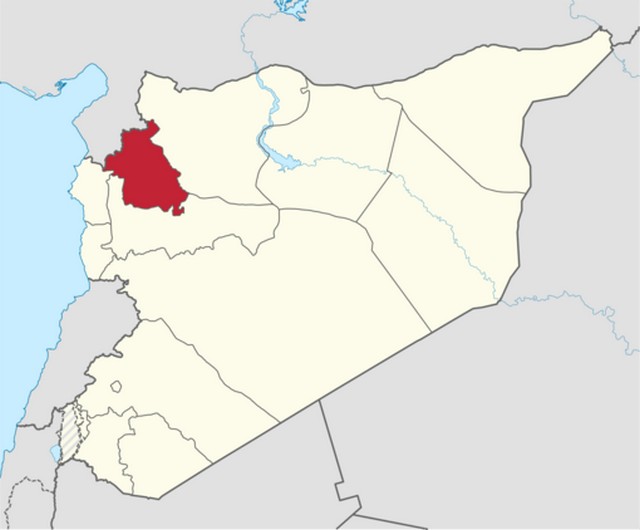
24 May 2019 – By any reckoning, the claim made this week by al-Qaeda-linked fighters that they were targeted with chemical weapons by the Syrian government in Idlib province – their final holdout in Syria – should have been treated by the western media with a high degree of scepticism.

That the US and other western governments enthusiastically picked up those claims should not have made them any more credible.

Scepticism was all the more warranted from the media given that no physical evidence has yet been produced to corroborate the jihadists’ claims. And the media should have been warier still given that the Syrian government was already poised to defeat these al-Qaeda groups without resort to chemical weapons – and without provoking the predictable ire (yet again) of the west.

But most of all scepticism was required because these latest claims arrive just as we have learnt that the last supposed major chemical attack – which took place in April 2018 and was, as ever, blamed by all western sources on Syria’s president, Bashar Assad – was very possibly staged, a false-flag operation by those very al-Qaeda groups now claiming the Syrian government has attacked them once again.

Addicted to incompetence

Most astounding in this week’s coverage of the claims made by al-Qaeda groups is the fact that the western media continues to refuse to learn any lessons, develop any critical distance from the sources it relies on, even as those sources are shown to have repeatedly deceived it.

This was true after the failure to find WMD in Iraq, and it is now even more true after the the international community’s monitoring body on chemical weapons, the Organisation for the Prohibition of Chemical Weapons (OPCW), was exposed this month as deeply dishonest.

It is bad enough that our governments and our expert institutions deceive and lie to us. But it is even worse that we have a corporate media addicted – at the most charitable interpretation – to its own incompetence. The evidence demonstrating that grows stronger by the day.

Unprovoked attack

In March the OPCW produced a report into a chemical weapons attack the Syrian government allegedly carried out in Douma in April last year. Several dozen civilians, many of them children, died apparently as a result of that attack.

The OPCW report concluded that there were “reasonable grounds” for believing a toxic form of chlorine had been used as a chemical weapon in Douma, and that the most likely method of delivery were two cylinders dropped from the air.

This as good as confirmed claims made by al-Qaeda groups, backed by western states, that the cylinders had been dropped by the Syrian military. Using dry technical language, the OPCW joined the US and Europe in pointing the finger squarely at Assad.

It was vitally important that the OPCW reached that conclusion not only because of the west’s overarching regime-change ambitions in Syria.

In response to the alleged Douma attack a year ago, the US fired a volley of Cruise missiles at Syrian army and government positions before there had been any investigation of who was responsible.

Those missiles were already a war crime – an unprovoked attack on another sovereign country. But without the OPCW’s implicit blessing, the US would have been deprived of even its flimsy, humanitarian pretext for launching the missiles.

Leaked document

Undoubtedly the OPCW was under huge political pressure to arrive at the “right” conclusion. But as a scientific body carrying out a forensic investigation surely it would not simply doctor the data.

Nonetheless, it seems that may well be precisely what it did. This month the Working Group on Syria, Propaganda and Media – a group of academics who have grown increasingly sceptical of the western narratives told about Syria – published an internal, leaked OPCW document.

A few fays later the OPCW reluctantly confirmed that the document was genuine, and that it would identify and deal with those responsible for the leak.

The document was an assessment overseen by Ian Henderson, a senior OPCW expert, of the engineering data gathered by the OPCW’s fact-finding mission that attended the scene of the Douma attack. Its findings fly in the face of the OPCW’s published report.

Erased from the record

The leaked document is deeply troubling for two reasons.

First, the assessment, based on the available technical data, contradicts the conclusion of the final OPCW report that the two chemical cylinders were dropped from the air and crashed through building roofs. It argues instead that the cylinders were more likely placed at the locations they were found.

If that is right, the most probable explanation is that the cylinders were put there by al-Qaeda groups – presumably in a last desperate effort to persuade the west to intervene and to prevent the jihadists being driven out of Douma.

But even more shocking is the fact that the expert assessment based on the data collected by the OPCW team is entirely unaddressed in the OPCW’s final report.

It is not that the final report discounts or rebuts the findings of its own experts. It simply ignores those findings; it pretends they don’t exist. The report blacks them out, erases them from the official record. In short, it perpetrates a massive deception.

Experts ignored

All of this would be headline news if we had a responsible media that cared about the truth and about keeping its readers informed.

We now know both that the US attacked Syria on entirely bogus grounds, and that the OPCW – one of the international community’s most respected and authoritative bodies – has been caught redhanded in an outrageous deception with grave geopolitical implications. (In fact, it is not the first time the OPCW has been caught doing this, as I have previously explained here.)

The fact that the OPCW ignored its own expert and its own team’s technical findings when they proved politically indigestible casts a dark shadow over all the OPCW’s work in Syria, and beyond. If it was prepared to perpetrate a deception on this occasion, why should we assume it did not do so on other occasions when it proved politically expedient?

Active combatants

The OPCW’s reports into other possible chemical attacks – assisting western efforts to implicate Assad – are now equally tainted. That is especially so given that in those other cases the OPCW violated its own procedures by drawing prejudicial conclusions without its experts being on the ground, at the site of the alleged attacks. Instead it received samples and photos via al-Qaeda groups, who could easily have tampered with the evidence.

And yet there has been not a peep from the corporate media about this exposure of the OPCW’s dishonesty, apart from commentary pieces from the only two maverick mainstream journalists in the UK – Peter Hitchens, a conservative but independent-minded columnist for the Mail on Sunday, and veteran war correspondent Robert Fisk, of the little-read Independent newspaper (more on his special involvement in Douma in a moment).

Just as the OPCW blanked the findings of its technical experts to avoid political discomfort, the media have chosen to stay silent on this new, politically sensitive information.

They have preferred to prop up the discredited narrative that our governments have been acting to protect the human rights of ordinary Syrians rather than the reality that they have been active combatants in the war, helping to destabilise a country in ways that have caused huge suffering and death in Syria.

Systematic failure

This isn’t a one-off failure. It’s part of a series of failures by the corporate media in its coverage of Douma.

They ignored very obvious grounds for caution at the time of the alleged attack. Award-winning reporter Robert Fisk was among the first journalists to enter Douma shortly after those events. He and a few independent reporters communicated eye-witness testimony that flatly contradicted the joint narrative promoted by al-Qaeda groups and western governments that Assad had bombed Douma with chemical weapons.

The corporate media also mocked a subsequent press conference at which many of the supposed victims of that alleged chemical attack made appearances to show that they were unharmed and spoke of how they had been coerced into play-acting their roles.

And now the western media has compounded that failure – revealing its systematic nature – by ignoring the leaked OPCW document too.

But it gets worse, far worse.

Al-Qaeda propaganda

This week the same al-Qaeda groups that were present in Douma – and may have staged that lethal attack – claimed that the Syrian government had again launched chemical weapons against them, this time on their final holdout in Idlib.

A responsible media, a media interested in the facts, in evidence, in truth-telling, in holding the powerful to account, would be dutybound to frame this latest, unsubstantiated claim in the context of the new doubts raised about the OPCW report into last year’s chemical attack blamed on Assad.

Given that the technical data suggest that al-Qaeda groups, and the White Helmets who work closely with them, were responsible for staging the attack – even possibly of murdering civilians to make the attack look more persuasive – the corporate media had a professional and moral obligation to raise the matter of the leaked document.

It is vital context as anyone tries to weigh up whether the latest al-Qaeda claims are likely to be true. To deprive readers of this information, this essential context would be to take a side, to propagandise on behalf not only of western governments but of al-Qaeda too.

And that is exactly what the corporate media have just done. All of them.

Media worthy of Stalin

It is clear how grave their dereliction of the most basic journalistic duty is if we consider the Guardian’s uncritical coverage of jihadist claims about the latest alleged chemical attack.

Like most other media, the Guardian article included two strange allusions – one by France, the other by the US – to the deception perpetrated by the OPCW in its recent Douma report. The Guardian reported these allusions even though it has never before uttered a word anywhere in its pages about that deception.

In other words, the corporate media are so committed to propagandising on behalf of the western powers that they have reported the denials of official wrongdoing even though they have never reported the actual wrongdoing. It is hard to imagine the Soviet media under Stalin behaving in such a craven and dishonest fashion.

The corporate media have given France and the US a platform to reject accusations against the OPCW that the media themselves have never publicly raised.

Doubts about OPCW

The following is a brief statement (unintelligible without the forgoing context) from France, reported by the Guardian in relation to the latest claim that Assad’s forces used chemical weapons this week: “We have full confidence in the Organisation for the Prohibition of Chemical Weapons.”

But no one, except bloggers and academics ignored by the media and state authorities, has ever raised doubts about the OPCW. Why would the Guardian think these French comments worthy of reporting unless there were reasons to doubt the OPCW? And if there are such reasons for doubt, why has the Guardian not thought to make them public, to report them to its readers?

The US state department similarly came to the aid of the OPCW. In the same Guardian report, a US official was quoted saying that the OPCW was facing “a continuing disinformation campaign” from Syria and Russia, and that the campaign was designed “to create the false narrative that others [rather than Assad] are to blame for chemical weapons attacks”.

So Washington too was rejecting accusations against the OPCW that have never been reported by the state-corporate media.

Interestingly, in the case of US officials, they claim that Syria and Russia are behind the “disinformation campaign” against the OPCW, even though the OPCW has admitted that the leaked document discrediting its work is genuine and written by one of its experts.

The OPCW is discredited, of course, only because it sought to conceal evidence contained in the leaked document that might have exonerated Assad of last year’s chemical attack. It is hard to see how Syria or Russia can be blamed for this.

Colluding in deception

But more astounding still, while US and French officials have at least acknowledged that there are doubts about the OPCW’s role in Syria, even if they unjustifiably reject such doubts, the corporate media have simply ignored those doubts as though they don’t exist.

The continuing media blackout on the leaked OPCW document cannot be viewed as accidental. It has been systematic across the media.

That blackout has remained resolutely in place even after the OPCW admitted the leaked document discrediting it was genuine and even after western countries began alluding to the leaked document themselves.

The corporate media is actively colluding both in the original deception perpetrated by al-Qaeda groups and the western powers, and in the subsequent dishonesty of the OPCW. They have worked together to deceive western publics.

The question is, why are the media so obviously incompetent? Why are they so eager to keep themselves and their readers in the dark? Why are they so willing to advance credulous narratives on behalf of western governments that have been repeatedly shown to have lied to them?

Iran the real target

The reason is that the corporate media are not what they claim. They are not a watchdog on power, or a fourth estate.

The media are actually the public relations wing of a handful of giant corporations – and states – that are pursuing two key goals in the Middle East.

First, they want to control its oil. Helping al-Qaeda in Syria – including in its propaganda war – against the Assad government serves a broader western agenda. The US and NATO bloc are ultimately gunning for the leadership of Iran, the one major oil producer in the region not under the US imperial thumb.

Powerful Shia groups in the region – Assad in Syria, Hizbullah in Lebanon, and Iraqi leaders elevated by our invasion of that country in 2003 – are allies or potential allies of Iran. If they are in play, the US empire’s room for manoeuvre in taking on Iran is limited. Remove these smaller players and Iran stands isolated and vulnerable.

That is why Russia stepped in several years ago to save Assad, in a bid to stop the dominoes falling and the US engineering a third world war centred on the Middle East.

Second, with the Middle East awash with oil money, western corporations have a chance to sell more of the lucrative weapons that get used in overt and covert wars like the one raging in Syria for the past eight years.

What better profit-generator for these corporations than wasteful and pointless wars against manufactured bogeymen like Assad?

Like a death cult

From the outside, this looks and sounds like a conspiracy. But actually it is something worse – and far more difficult to overcome.

The corporations that run our media and our governments have simply conflated in their own minds – and ours – the idea that their narrow corporate interests are synonymous with “western interests”.

The false narratives they generate are there to serve a system of power, as I have explained in previous blogs. That system’s worldview and values are enforced by a charmed circle that includes politicians, military generals, scientists, journalists and others operating as if brainwashed by some kind of death cult. They see the world through a single prism: the system’s need to hold on to power. Everything else – truth, evidence, justice, human rights, love, compassion – must take a back seat.

It is this same system that paradoxically is determined to preserve itself even if it means destroying the planet, ravaging our economies, and starting and maintaining endlessly destructive wars. It is system that will drag us all into the abyss, unless we stop it.

___________________________________________

Jonathan Cook is an award-winning British journalist based in Nazareth, Israel, since 2001.

27 May 2019

Source: www.transcend.org

Newly Revealed Documents Show Syrian Chemical “Attacks Were Staged”

By Institute for Public Accuracy

21 May 2019 – The British-based Working Group on Syria, Propaganda and Media recently revealed an internal engineering assessment by the Organization for the Prohibition of Chemical Weapons that undermines claims justifying U.S. attacks on Syria.

Last year, many claimed that the Syrian government had launched a chemical weapons attack on Douma on April 7. This was used to justify strikes on Syrian government targets on April 14. The British Guardian claimed: “Syria: U.S., U.K. and France launch strikes in response to chemical attack.” NPR headlined a story: “U.S., Allies Hit 3 Syrian Sites Linked To Chemical Weapons Program.”

Theodore Postol, professor of science, technology, and international security at the Massachusetts Institute of Technology, provided the Institute for Public Accuracy with his initial assessment of the newly revealed OPCW document:

“The OPCW engineering assessment unambiguously describes evidence collected by the OPCW Fact-Finding Mission (FFM) that indicates two analyzed chlorine cylinder attacks were staged in April 2018 in Douma. The holes in the reinforced concrete roofs that were supposedly produced by high-speed impacts (impact at speeds of perhaps 100 m/s or more, 250 mph) of industrial chlorine canisters dropped from helicopters were instead created by earlier explosions of either artillery rockets or mortar shells. In one event a chlorine canister that was damaged on another occasion was placed on the roof with its head inserted into an existing crater hole, and in the other case a damaged chlorine cylinder was placed on a bed supposedly after it penetrated the building roof and bounced from its original trajectory into a bed. In both cases the damage to the chlorine cylinders was incompatible with the damage to the surroundings that was allegedly caused by the cylinder impacts.

“As such, 35 deaths that were originally attributed to these staged chlorine events cannot be explained and it cannot be ruled out that these people were murdered as part of the staging effort.

“The evidence provided in the OPCW report is quite clear. For example, rebar in the cement roof slabs was splayed out from the forces of an intense supersonic shockwave that produced the holes. The only source of such a violently impulsive force in this environment would be that of the shockwave from the forward end of an explosive warhead that impacted and detonated on the roof. The forward end of the explosive charge in the warhead would have been touching or nearly-touching the roof surface when it detonated. Under these conditions the near-in shockwave generated from the forward end of the cylinder shaped explosive produces a shockwave that is traveling at a very high Mach number. Such a shockwave creates a reflected shock that is tremendously hotter and more intense than the incident shock due to the extreme compression of the supersonic incident shock as it violently decelerates during its encounter with a rigid surface.

“The net result of the shock interactions is that the incident and tremendously amplified reflected shocks coalesce together to produce an extremely intense impulse at the surface of the concrete slab. This impulse is so intense that it might well cut through rebar and readily splay the rebar in the forward direction in a geometry like that of the petals of a flower pointing downward.

“This is what is described in the report.

“I will have a much more detailed summary of the engineering report later this week. For now, it suffices to say that the UN OPCW engineering report is completely different from the UN OPCW report on Khan Sheikhoun, which is distinguished by numerous claims about explosive effects that could only have been made by technically illiterate individuals. In very sharp contrast, the voices that come through the engineering report are those of highly knowledgeable and sophisticated experts.

“A second issue that is raised by the character of the OPCW engineering report on Douma is that it is entirely unmentioned in the report that went to the UN Security Council. This omission is very serious, as the findings of that report are critical to the process of determining attribution. There is absolutely no reason to justify the omission of the engineering report in the OPCW account to the UN Security Council as its policy implications are of extreme importance.”

__________________________________________________

The Institute for Public Accuracy was founded by Norman Solomon and opened its national office in San Francisco in October 1997.

27 May 2019

Source: www.transcend.org

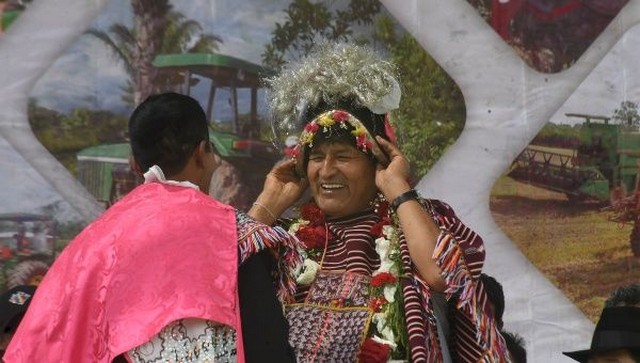
UN: Bolivia’s Universal Healthcare Is ‘Model for the World’

By teleSUR

23 May 2019 – The U.N.’s World Health Organization (WHO) praised Bolivia’s newly implemented universal health care system, known in the country as the Single Health System (SUS). The WHO pointed out that Bolivia’s leftist government has given generous funding and resources to health, ensuring free treatment for all.

Alfonso Tenorio, a representative of the WHO and the Pan American Health Organization, spoke Wednesday in Geneva, in praise of Bolivia’s health system and the country’s health minister Gabriela Montaño.

Tenorio spoke afterwards with state radio company Red Patria Nueva, saying: “Bolivia has become an important model for the world … the minister is always taking advantage of the strength of others and the exchange of knowledge to strengthen the SUS.”

The day before, Carina Vance, UNASUR representative, also praised Bolivia’s leftist government, saying that they have “deepened the right to healthcare.”

The SUS was officially formed on March 1, 2019, ensuring that millions of previously uninsured Bolivians now have access to free treatment. In the first 20 days of the system being launched, it was announced that over 30,000 had already received free treatment. The SUS has also initiated vaccination campaigns across the country, in one such campaign, over 80,000 were inoculated in just one week, in the department of Cochabamba. Experts have argued that such social programs are possible thanks to the nationalization of much of the country’s natural resources in 2006.

Other leftist governments in the region have also achieved significant results in health. On Tuesday, the Sandinista government in Nicaragua announced a 40% drop in infant mortality in the first few months of 2019.

Go to Original – telesurenglish.net

27 May 2019

Source: www.transcend.org

Watch: Interview with Brazil’s Ex-President Lula from Prison, Discussing Global Threats, Neoliberalism, Bolsonaro, and More

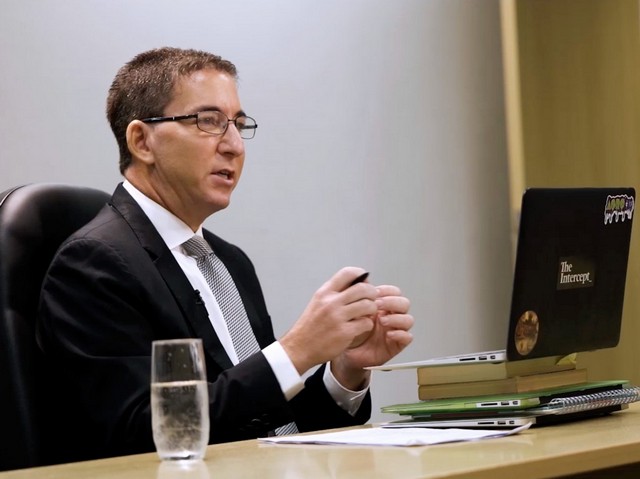
By Glenn Greenwald

22 May 2019 – Among the planet’s significant political figures, no one is quite like Lula. Born into extreme poverty, illiterate until the age of 10, forced to quit school at the age of 12 to work as a shoe shiner, losing a finger at his factory job at 19, and then becoming a labor activist, union leader, and founder of a political party devoted to a defense of laborers (the Workers’ Party, or PT), Lula has always been, in all respects, the exact opposite of the rich, dynastic, oligarch-loyal, aristocratic prototype that has traditionally wielded power in Brazil.

That’s precisely what makes Lula’s rise to power, and his incomparable success once he obtained it, so extraordinary. And that’s what, to this very day, makes him so worth listening to regarding the world’s most complex and pressing political questions: As the ascension of right-wing nationalism and populism at times seems unstoppable, Lula is one of the world’s very few political figures of the last several decades able to figure out how to win national elections in a large country based on left-wing populism in the best sense of that term.

So unlikely was Lula’s rise to power that he ran for president, and lost, three times before finally being elected by an overwhelming margin in 2002 and then reelected by an even larger margin in 2006. His eight-year presidency, despite being marred by corruption scandals long endemic to Brazilian politics, was a stunning testament to the power of politics to improve the lives of people and transform a country: implementation of innovative social programs that lifted millions of Brazilians out of poverty and created opportunities and hope for a huge segment of the population which, for generations, had none.

So bold and charismatic was Lula’s leadership that it not only transformed the lives of millions but also the perception of Brazil itself: both domestically and globally. Brazil was awarded the World Cup and then became the first South American country to host the Olympics. Tens of millions of Brazilians who resigned themselves to eternal, inescapable deprivation began to believe for the first time that a brighter future was possible. When Obama saw him at the G-20 summit in 2008, he anointed Lula “my man,” adding: “He’s the most popular politician on Earth.”

Obama was right: By the time he left office in 2010, Lula had an approval rating of 86 percent. And in a highly patriarchal country, he chose as his successor a little-known PT minister, Dilma Rousseff, who in 2010 was, with Lula’s vehement support, comfortably elected as the country’s first female president and then reelected in 2014. Somehow, a pro-worker leftist party founded by an impoverished labor leader became the dominant political force — winning four consecutive national elections and restoring Brazil’s belief in itself — in an oil-rich country long notorious for its extreme inequality of all types.

But then, just as quickly and dramatically as Lula built these successes, everything fell apart: for Lula, for Dilma, for PT and, most tragically, for Brazil. During Dilma’s presidency, the economy collapsed, millions returned to unemployment and poverty, an epidemic of street violence emerged, Dilma’s approval ratings dropped to near single-digits, she was impeached during her second term under highly dubious circumstances, and a routine investigation of money laundering through a car wash in the mid-sized Brazilian town of Curitiba quickly exploded into a massive corruption scandal. Aptly referred to as Operation Car Wash, or Lava Jato, it implicated and sent to prison Brazil’s richest and most powerful figures, including the billionaire funders of multiple parties, PT’s leaders, and, finally in March 2018, Lula himself.

Lula’s criminal conviction on corruption charges last year came under highly suspicious circumstances. All year long, polls showed him as the clear front-runner for the 2018 presidential race. After anti-PT forces finally succeeded with Dilma’s impeachment in doing what they spent 16 years trying with futility to accomplish at the ballot box — removing PT from power — it seemed that Lula’s 2018 return to presidency was virtually inevitable and that only one instrument existed for preventing it: quickly convicting him of a felony which, under Brazilian law, would render him ineligible to run as a candidate.

And that’s precisely what happened. While Lula faced a variety of allegations of large-scale, complex corruption schemes, Lava Jato prosecutors instead selected one of the smallest and simplest cases against him that had long been regarded as trivial but which enabled a conviction to be quickly obtained: accusations that he received a modest-sized “triplex” in exchange for helping a construction company secure contracts. The judge who presided over the Lava Jato investigations and became heralded as an anti-corruption icon around the world, Sérgio Moro, quickly convicted Lula and sentenced him to almost 10 years in prison, a conviction upheld in early 2018 by an appeals court that mildly increased Lula’s prison term.

Ever since, Lula has been held in a makeshift prison cell inside a Federal Police building in Curitiba, thanks to a 6-5 Supreme Court ruling that he could be imprisoned pending his final appeal. An electoral court then barred Lula’s candidacy for president. Barring Lula from running as a candidate paved the way for the election of the far-right extremist Jair Bolsonaro, who defeated Lula’s handpicked replacement from PT, the little-known and charisma-challenged former mayor of São Paulo, Fernando Haddad, by a wide margin.

In a transaction that even anti-Lula crusaders found highly distasteful, the judge who found Lula guilty and cleared the path for Bolsonaro’s ascension to the presidency — Judge Moro — thereafter accepted a position in Bolsonaro’s government that has been described as a “Super Justice Minister”: a newly designed position consolidating powers under Moro that had previously been dispersed among various agencies. It rendered Judge Moro — less than a year after putting Lula in prison and thus removing Bolsonaro’s key obstacle — one of the most powerful men in Brazil.

Beyond his imprisonment, Lula has recently suffered a series of deep personal and political tragedies. In 2017, his wife of 43 years, Marisa, suddenly died of a stroke at the age of 66. In January, his brother died of cancer, but judicial permission to attend his funeral arrived too late. In March of this year, Lula’s 7-year-old grandson died of meningitis. All the while, Lula has had to watch the growth and progress of Brazil to which he has devoted his entire life being reversed, unraveled, and trampled upon by a far-right extremist spouting hatred for an endless number of marginalized groups, while Bolsonaro’s Chicago-trained, Pinochet-admiring economics minister prepares to sell off and privatize national resources, including those in the Amazon, to the highest bidder.

Throughout the election of 2018, the Intercept Brazil, and me personally, relentlessly sought judicial permission to interview Lula from prison, as did several other outlets. Even as the country’s most violent and dangerous criminals were permitted to be interviewed in prison, our requests to interview Lula were systematically denied by a judiciary clearly petrified of Lula’s singular ability to persuade the electorate. Only after the election was complete and Bolsonaro’s victory secure did the Brazilian judiciary suddenly begin granting authorizations for him to be interviewed. We were granted one hour with him alone, and I traveled to Curitiba last week to conduct the interview.

Despite the intense personal tragedies and harsh political defeats he has suffered, I encountered a Lula who was remarkably similar to the one I interviewed in 2016: intense, energetic, charismatic, combative, and highly insightful. I confronted him with numerous criticisms about his own conduct and that of his party — including policies many believed helped lead the way to Bolsonaro’s victory — but also used the opportunity to ask one of the only world leaders with a proven track record of winning with real leftist politics what the international left must do if it has any chance of stopping the inexorably growing nationalistic right-wing movement sweeping the democratic world.

We present the entire one-hour interview with very few edits so that the full vibrancy of our exchange can be seen. It was a sweeping discussion with one of the world’s most incisive political minds, involving a wide range of issues, some of which were about Bolsonaro and Brazil, but most of which were about the dangers the planet faces from collective threats and global political changes around the world. The complete transcript is below.

[https://www.youtube.com/watch?v=93MgeyNqc_k]

Read the full interview:

Glenn Greenwald: Good morning, Mr. President. It’s good to see you again, and thank you for the interview. This interview is for a Brazilian audience as well as for an international audience. Everyone outside Brazil already knows that you think you’ve been unjustly sentenced, a point we’ll get back to in a moment. But many people have also been asking me how you’ve been treated in prison, and you’ve said many times that the authorities here are humane and professional. Is this still the case?

Luiz Inácio Lula da Silva: I don’t know what humanitarian treatment in a prison means. I’m locked up, and I’m in solitary confinement — and it really is solitary, because most of the time I’m completely alone. I meet with my lawyers, and that’s it. And with my family once a week. I don’t know whether to consider this decent. What allows me to endure all of this without loathing it, and with a brighter outlook, is knowing that there are millions and millions of Brazilians living in freedom who, even so, are in worse conditions than I am. At least I have the opportunity to have lunch, to have dinner, you know?

But Brazil is the country you ran for eight years, and there are plenty of people in jail. How do you compare your treatment here to the treatment common prisoners receive in common prisons?

Take the Brazilians who have to live in stilt houses above swamps: They’re living as second-class citizens. A citizen who has to live in a single 9-square-meter room, who has to have lunch, dinner, has to cook, make love, go to the bathroom, and do everything within those 9 square meters — they’re not living any better than I am here. That’s why I’m less concerned about my own situation and more concerned with that of millions of people …

I get it, but are you being abused or tortured? That’s what people want to know.

No, listen: We’ve been fighting for many years to end torture. These days, torture has more sophisticated forms. It’s based on plea bargaining, on the thousands of lies told simultaneously over and over, and people imprisoned for two or three years until they say what the prosecutor or police commissioner wants to hear. I could cite the example of [Antonio] Palocci’s plea bargain, where he’s lying in the most unbelievable manner. Or take Leo [Pinheiro], for example, who’s in prison and lying through his teeth to get out. The secret is to talk about Lula. This has been going on for five years. You know that I’m here even though neither the judge, the prosecutor, or the Federal Police commissioner who launched the investigation have any proof against me. They know that the apartment isn’t mine, they know that the ranch isn’t mine, but they keep up these lies …

So are they mistreating people in order to elicit accusations against others?

Yes, and it continues to this day. I joke with my lawyers that I’d like to plea bargain and denounce Sérgio Moro, denounce the TRF4 [the 4th Regional Federal Court], to be a whistleblower against the commissioner that launched that deceitful investigation, I’d like to denounce [Deltan] Dallagnol. I’d love to, you know, but nobody would accept my plea bargain. Let’s see if you arrange for my whistleblowing to see the light of day, Glenn, because I need to make something clear. There’s this phrase by an English philosopher, that the curse of the first lie you tell is that you spend the rest of your life telling more lies to justify the first one. Do you remember when I went for my first deposition with Moro? I said to his face, “You’re condemned to condemn me,” given the huge amount of lies they’ve told, you know, in this agreement between Operation Car Wash and the Brazilian press. Because Operation Car Wash would be nothing without press coverage. But it’s a collusion between media, television, radio, and newspapers, where the press editors get the material before even the lawyers do. Before the defense lawyers received any news, the press already had. Thanks to this collusion, you’ve woven a gigantic lie. Every day, every hour I keep wondering, will GloboNews ever use the Jornal Nacional to say, “We made a mistake with Lula’s case”?

In the interview that we did in 2016, you harshly criticized Operation Car Wash, insisting that it was selective and an operation dedicated to destroying PT — as you said just now. But Operation Car Wash went on to imprison Eduardo Cunha, who led the impeachment process against Dilma, and also Michel Temer, who became president after Dilma’s impeachment (though he’s been released, he then went back, was released again, but at least he’s on trial), and also Sérgio Cabral, the governor of the state of Rio de Janeiro. And now they’re aggressively going after Aécio Neves, Dilma’s center-right opponent in 2014. After all this, can you really say that Operation Car Wash was launched to destroy PT?

Glenn, let me tell you something: Operation Car Wash has been selective most of the time it’s been running. You’re a foreign journalist, so you can investigate impartially. Check out who made donations to PSDB [the Brazilian Social Democracy Party], and who made donations to PT. How much did PSDB receive, and how much did PT receive? And what about other parties? Conduct a thorough study, an impartial one, and figure out why only [João] Vaccari of PT was sentenced for campaign finances. What about the other treasurers from the other parties??

But isn’t Aécio on trial?

But Aécio isn’t a campaign treasurer. I’m talking about campaign finances to show you that there’s been a focus on going after PT from the outset. Why? Because they needed to take out PT from the government, and since they didn’t manage to do so over the course of nearly four elections, they needed to create clear ways to stir up hatred of PT. Historically in Brazil, and I think the whole world over, this kind of loathing increases once you accuse someone of corruption.

Listen, let me be crystal clear: I think if someone steals, they should go to jail, whether they’re PT or not, whether they’re Catholic or evangelical, you know? You steal, you go to jail. If the sentence has been pronounced, if the facts have been established, and if it’s been proven that you stole, you must go to jail. This is the kind of lawful state we want to establish. Now, I want to challenge the people who imprisioned me to show the world a single shred of evidence against me. I’m not asking for anything else.

But do you agree that Operation Car Wash is going after other politicians, including your opponents from the center-right?

Glenn, Operation Car Wash has been gradually changing into a political operation that benefits whoever participates in it. I’ll give you a tip-off here, a bit of whistleblowing that you can help investigate: Not long ago, we found out that there was an agreement made by the U.S. Department of Justice with what Dallagnol was handling for the Federal Public Ministry, for Operation Car Wash, to the tune of $600 million.

From the U.S.?

From the U.S. And afterwards, it surfaced that Sérgio Moro had authorized another agreement to the tune of $1.6 billion from Odebrecht, here in Brazil. We also know that there are other monetary agreements funding Operation Car Wash, but right now we don’t have access to the figures. In fact, PT is demanding that the leader of the House of Representatives get the Federal Savings Bank involved to help us find out who’s made agreements with Operation Car Wash. Because in fact, any time someone makes an agreement like this involving hundreds of millions of dollars, they’re trying to build a political machine, they’re setting up a racket..

All right, well, I promise you that we’re working on these issues, and investigating these …

Just let me finish, Glenn, I don’t want to stop in the middle of saying …

Go ahead.

The only thing I really want, the only thing, is that my case be judged objectively. I don’t want anything else. I want the judges at some point to care about having hard evidence, either from the side of the prosecution or from the defendants. Did you know I had 73 witnesses but that Dallagnol didn’t even show up to the hearings? He made up that deceitful PowerPoint presentation and then vanished. The only person he talks to is Miriam Leitão from Rede Globo news, and once in a while, he grants an interview. He’s probably going around now on lecture tours to make money. Anyway, I don’t want his beliefs to be the last word. I want evidence to be the last word. If he can prove that I own what he says I own, that shouldn’t cost him anything. In the meantime, I’ve been completely demoralized in the face of public opinion.

We won’t be able to settle this right now. You’ve got your accusations, but it’s a question of evidence …

Listen: When PT denounced the foundation that was set up with these funds, Dallagnol went to Caixa Economica [federal bank] to try sign a document and take over the foundation. Let’s put it this way: I’m being convicted without any foundation, without any dollars behind me, without any funds, and he’s walking free, trying to seize $2.5 billion. We denounced him to the National Justice Council. But who’s going to judge the case? The Council, which consists of, you know who? 8 members of the Federal Public Ministry. So what do you think the result will be? Is there any doubt?

During the 2018 elections, we spent a year trying to get an interview with you, like other journalists, but nobody was authorized to interview you, even though some of the most violent people behind bars in the country, including Nem, the head drug trafficker in Rio de Janeiro, were interviewed in prison. But now that the elections are over and Bolsonaro has won, all of a sudden the courts are allowing some journalists, like Folha de São Paulo, El País, and Kennedy Alencar for the BBC to interview you. How would you explain this?

I have no doubt, Glenn, that everything that’s happened in connection with Operation Car Wash has been to prevent Lula from running for president. Nowadays I’m certain of this, the same way that I’m certain that the U.S. Department of Justice is behind this, and the same way that I’m certain …

Is there evidence of that?

Sorry?

Is there evidence? Is there proof?

I can only have strong beliefs, you know, about everything. The same way that I’m absolutely certain that it’s interest in the petroleum resources of Brazil’s pre-salt layer that’s behind everything that’s happened to me and Dilma. Namely, the coup against Dilma, my imprisonment, the accusations. You see, Operation Car Wash could have had an important role in punishing the businessmen — if they’re guilty — and allowing the businesses to keep on creating jobs, paying salaries. They could have kept Petrobras from going broke, from being sold, from being divvied up as it is. Anyway, I’m very glad that today they’ve allowed this interview, and I’m grateful to you all for demanding this in the courts. I should have been allowed to have interviews before the elections.

Well, we requested the interview a long time ago, before the elections.

I know. And I’m grateful that you requested one. But it was denied. First, Minister of the Supreme Court [Ricardo] Lewandowski allowed it, but then it was vetoed by [Dias] Toffoli, I think, as president of the Supreme Court. I knew that it was a game they were playing, and that the game was: Let’s prevent Lula from competing in the elections. Why? Because the worst nightmare of the Brazilian elite is Lula returning to the presidency. But why exactly, if they made so much money during my presidency?

Yes, and isn’t it true, for example, that bank profits went through the roof during your presidency?

I don’t know if they went through the roof, but they grew significantly.

They did, didn’t they?

But the truth is that the poor ascended a whole rung on the economic ladder. And as the lower classes began to go to university, to go out to the theater, to go out to eat at restaurants, to travel more by airplane, this began to bother part of the elite.

But the upper classes also saw great improvements during your presidency. So why would this upper class, who profited so much while you were president, be so against your return to office?

It’s because this isn’t just an economic question; it’s a cultural issue. One has to remember that it was only a little over a hundred years ago that slavery was legally abolished, and that it continues in the minds of many. That’s why the greatest victims of police violence are black, that’s why those who are black earn 50 percent less than those who are white, and that’s why black women earn less than white women. That’s why those who are black have a lower average level of schooling than those who are white. Why? Because slavery is still prevalent deep within people’s consciousness. It’s a harsh thing to say, but it’s true. And this doesn’t change overnight. If we think about civil rights in the U.S., things began to change in the 1960s, but how many people had to die, including Martin Luther King Jr., in order to guarantee that black people would be treated with dignity? Really, I think deep down, it’s not an economic question. It’s set of a cultural, political, and sociological issues.

Well, let’s talk about some cultural issues. Your government was responsible, for example, for approving the changes in drug laws in 2006, which were a great advance in differentiating between drug users and drug traffickers. But as a result of these laws, the number of incarcerations rose, specifically of black people and of women. Looking back, how would you judge the policies of your government, given that it led to increase incarcerations during your presidency and Dilma’s too?

Let me tell you something. Between 2003 and 2014, we rolled out a range of strategies and approved as many laws as possible to improve the system of policing in this country, to reduce the rate of corruption, and to put more criminals behind bars. If you look at anything that’s functioning well in the Ministry of Justice, you’ll realize that these advances were put in place specifically during PT’s government. Exactly then. Now listen, we didn’t manage to solve the problems of public safety in Brazil, but we did create the mechanisms, including more civil ones, for the police to act more professionally, and we equipped the Federal Police, we set up the National Police, all with the objective of getting things done. And all of this is going down the drain now. I remember when Minister of Justice Tarso Genro approved PRONASCI, the National Program for Public Safety, which was a great initative for reducing crime and helping out young adults. It no longer exists. I think what’s really needed is a series of public policies to help resolve the overall situation. What are two extremely important components?

First, take PAC, the Growth Acceleration Program. You mentioned Nem earlier, and I remember in one of his interviews with a magazine, I think it was Istoé, he said that the president who got the most criminals off the streets was Lula, because during PAC, they lost 20 percent of their crooks who instead went to go work in PAC programs. In other words, if you want to reduce violence, you shouldn’t hand out weapons; you should hand out education, jobs, salaries, opportunities, and hope.

But did this actually work during your presidency? Because for many people, the problem was that violence and crime increased during the PT government. These problems were exactly what Bolsonaro exploited in his rhetoric. Isn’t it true that the problems of …

It did not increase during the PT government. During the PT government, we enacted the greatest policies of social mobility in 500 years of Brazilian history.

But did crime increase or decrease?

It decreased, definitely. It decreased. And there’s something one has to take into account when discussing this in the context of Brazil. One thing is being serious and keeping records of every case that happens, and another thing is just making the crime rate look lower by hiding the crimes. What we emphasized was greater transparency, with the goal of avoiding the same old trend of poor people being the victims. When you can guarantee that a young person will have a job, you know, then he won’t have to steal someone’s cellphone or tennis shoes. He won’t have to kill someone to steal their jacket. This is a no-brainer. When you give a young person the opportunity to dream, to dream “I can have a job, I can go to a technical school, I can go to university,” then this young person will grab and hold on to such opportunities..

I see what you mean.

What kinds of dreams do they have today?

I’d like to turn to discussing the political situation here in Brazil and its relation to international politics, because the whole world is interested in understanding Brazil after Bolsonaro took power. In 2015 in the U.S., it was unthinkable that Trump would win the elections, and nobody believed it would happen, but he’s now president. The same thing in the U.K. with Brexit. The same thing in Europe with nationalist and far-right parties. A year ago in Brazil, nobody believed that Bolsonaro would be elected. It was unthinkable, but he won. Now I know that you believe that Bolsonaro’s victory was due to causes and factors unique to Brazil, like the media’s attack on PT, but right now, can we see Bolsonaro’s victory as part of a larger global pattern in the democratic world of far-right parties overturning center-left parties?

Well, as part of the democratic process in the whole word, shifts and alternations in power are a normal pattern. This holds in the U.S., it holds in Germany, and it holds in Brazil. In one election, the right wins, in the next one the left wins, and in the next one …

But the right-wing is gaining ground in many countries.

Now, look: We had a very extraordinary period in Latin America. The period with the most growth, the greatest distribution of wealth, and of the most social inclusion in Latin America happened between 2000 and 2014 with the elections of [Cristina] Kirchner, [Ricardo] Lagos, Lula, Evo Morales, [Hugo] Chavez, Rafael Correa — it was a golden age for Latin America. We’re now in a far-right phase that’s failing in absurd ways. Macri is a disaster for Argentina, and he was supposed to be the answer. There’s this book …

Why is this happening?

Well, there’s this book by the Mozambican writer Mia Couto, with the following phrase: “In times of terror, we choose monsters to protect us.” Now, when you create hatred within a society, when you create anti-political sentiment, when you take away any kind of hope in people or in existing institutions, then, well, anything goes. I know that Americans thought Trump had no chance. So why did he end up winning the elections? It wasn’t with Putin’s help, as everyone’s saying. It was because of the lies of fake news, just like here in Brazil.

Was that the only reason?

That’s not the only reason, it was because of unemployment, because of despair, and because of this discourse of the shrinking the government, which is always a concern in the air. You know what I mean? When Reagan and Thatcher created so-called globalization, the fad in the 1980s was to say that being modern was being globalized, and opening the economy up to the whole world and letting capital transit freely — even though people could not freely transit. Now that globalization has caused problems for developed countries, above all for the U.S., Trump found an easy line of discourse: “The U.S. is for Americans, and jobs are for Americans.”

Well, it’s not very well known that many people who voted for Obama in 2008 and 2012 then went on to vote for Trump in 2016. In Brazil, the same thing happened: Many people who voted for you and then for Dilma went on to vote for Bolsonaro. How do you explain this?

Glenn, let me share something with you: I know Hillary Clinton pretty well. It would have been very easy to find someone more popular than her. She’s not an appealing personality. Trump’s victory was due to him having the right kind of discourse for the white blue-collar workers, you know, from the automobile industry, who were unemployed. He promised the obvious: more jobs for Americans. He promised to fight the Chinese to create more jobs, and this won him the elections. Now it’s obviously possible that many people who voted for Obama voted for Trump, just like many people who voted for Lula voted for Bolsonaro, especially since Lula wasn’t running for office. If Obama was running, I don’t know if Trump would have won. Concretely, I don’t know if, even in spite of the extraordinary performance by [Fernando] Haddad — if I were to have run, would the people have voted, would PT voters have elected Bolsonaro? Concretely …

I know people who voted for you, and then for Dilma, and then for Bolsonaro.

Well, maybe if I’d been a candidate, these people wouldn’t have voted for Bolsonaro. Glenn, since you’re a journalist, you know what’s happened in Brazil. First of all, Brazil has always had politics based on a monolithic “conventional wisdom.” Fernando Henrique Cardoso had eight years of conventional wisdown that was favorable to him, I had eight years of conventional wisdom that was against me, and Dilma had favorable conventional wisdom when the press tried to create a rift between Dilma and Lula, but then that didn’t work out, so they were against her. And as soon as the idea of impeachment came about, they were 100 percent against her.

There was this climate of hatred running throughout society, trying to blame PT for all of the misfortunes of Brazil, but when the elections were on the horizon, there wasn’t a single viable right-wing candidate. (I mean, normal right-wing, because as for Bolsonaro, he’s comparable to Nero standing by while Rome burned down to the ground.) And in fact, Bolsonaro’s been in office for five months and we’ve never heard the words “growth,” “development,” “investment,” “job creation,” “distribution of wealth” — these words have simply vanished from the dictionary. The only thing you see is everyone making this gun gesture with their fingers all the time, and this is actually the same shape they used before to make an “L” for Lula. I guess Bolsonaro borrowed this gesture from when it was used in my presidential campaigns. The point is, our country is abandoned, everyone only speaks of budget cuts and welfare reform, and promising the society …

Abandoned by who? I mean, during your interview with El País, you chalked up the rise of the global right to the failures of neoliberalism. I’d like to know more about this issue of neoliberalism failing here in Brazil and internationally as well. What’s the relation between the population suffering and their sudden embrace of far-right leaders like Bolsonaro and others throughout the democratic world?

Neoliberalism, as it arose during the era of globalization, is losing ground everywhere. It’s not just losing ground to the left, but also to the right, as it lost to Hitler and to Mussolini. At the same time, we’ve had two recent examples, in Spain and Portugal, of the left coming back during the elections. And even in Germany, where Angela Merkel is a very strong politician, if she hadn’t formed coalitions with the Social Democrats, she wouldn’t be in power.

But even there, the far-right is growing.

I know, it’s growing the whole world over, and I think it’s a warning call for the left, yes. But the right-wing won’t … you can be sure that after Bolsonaro and Macri, Cristina [Fernández de Kirchner] will win the next elections. You can be certain that if Evo Morales runs for president, he’ll win in Bolivia, and that the same will happen in many countries.

I hope that Americans will have the good sense to prevent another term of Trump as president, because he’s not just a problem for the U.S., he’s a problem for the whole world. He has to learn that given the importance of the U.S. on the international stage, he can’t make impulsive decisions without reflecting on their global consequences. He can’t threaten to wage war on everyone, threatening to attack all the time. Enough is enough! We’ve had enough lies, like in Vietnam, like the lies about Iraq, like the lies about Libya.

It’s time to stop this, you know, the world needs peace, the world needs schools, the world needs more books, and not more weapons, the world needs jobs. Sometimes I get really upset thinking about the G20 meeting we had in London, the first one that Obama went to, where we reached important decisions to deal with the 2008 financial crisis, and one of the suggestions was that richer nations, in accord with the reduction in their internal consumption, could enable financial means for poorer countries to develop and to modernize, to buy newer machines, to have greater access to technology and science. But this didn’t happen, and protectionism is back.

But Mr. President, it’s a common criticism, for PT as well, that while you and Dilma have a reputation and a political past as left-wing, your form of government was neoliberal, and there are a number of examples which we’ve already discussed, like the increase in bank profits during your presidency. The same way that the Democratic Party in the U.S. is financed by Wall Street and Silicon Valley, PT was financed by the richest corporations in Brazil, such as Odebrecht, OAS, JBS, and lots of banks. You implemented a welfare reform in 2004, and Dilma implemented austerity in 2014 and went ahead with the hydroelectric dam in Belo Monte that environmental and indigenous activists were against, and you implemented tax cuts for the rich. If you think that Bolsonaro’s victory was due to the failures caused by neoliberalism, don’t you think that PT built it up?

Oh, no, no. No, Glenn, I won’t answer your question before responding to all of these things you’ve just said about PT and my government.

I don’t want you to respond to those …

It’s important to keep in mind that …

It’s a common criticism, that’s why I’m asking.

During my presidency, I never said that my government was socialist. First of all, when you win an election, you have to figure out the relations between the forces that you’ll have on your side in order to implement political decisions. It’s important to remember, Glenn, that when I was elected president of the republic with a parliament of 513 representatives, I had 91 representatives from my party. Collor and Bolsonaro, they had 50. He’s going to need, much more than I did, to construct allegiances with forces who will be amenable to approving what he wants. There’s no point in his talking of “old politics” when he’s the old politician himself! He’s been in office for 28 years. He’s the old politician, and I’m the new one. I had only been a representative for four years, and I didn’t want to be a representative anymore, and he was one for 28 years. So enough of this “old politics” nonsense. And if you want to run a country, you have to work with what you have!

I ran the country that I happened to be in. I wasn’t running France, or Germany or the U.S., I was running Brazil. And when I arrived in office, there were 54 million people dying of hunger, who couldn’t afford to eat breakfast, and I pledged that by the end of my term, every person in Brazilian would have breakfast, lunch, and dinner. I didn’t get the chance to go to college, but I made it my duty to see to it that, since I didn’t have the chance go to college, the workers would. For all these reasons, even though I’m the only president without a college degree, I wouldn’t switch places with many people who have one, you know? I’m the president who sent the highest number of students to university, who opened the most public universities, who launched the most technical schools in the history of the country, who had the largest policies of distribution of wealth, who raised the minimum wage the most, and who helped the most in settling the landless.

So how do you explain the suffering that people felt that brought Bolsonaro to office, after 14 years of PT in power?

Why did I do all those things that I just mentioned? Because I understand that if one wants to solve the problems of Brazil, we have to use the word “people.” We have to look at people and see human beings instead of just seeing numbers or debt figures. Do you want to reduce the government debt in Brazil? Grow the economy. Do you want to reduce the welfare debt? Create jobs. Why was the welfare at a surplus in 2014? Because we created 20 million jobs with regularized work contracts, and because we legally approved six million individual microenterprises. We got the economy functioning. Just talking about cuts, cuts, cuts won’t hack it; one needs to speak of growth, development, and look toward people, not toward the banks. Come on, what kind of growth can our country expect with a president who goes around saluting the American flag?

No, what I’m trying to ask is why you blame the rise of Bolsonaro and other extremists on neoliberalist ideologies. I’m trying to understand the difference in how you ran the country, how Dilma ran the country, and those ideologies. What differences do you see?

Glenn, when we started this interview, I said clearly that PT’s biggest problems come not from its errors, but its successes. Every time that a president tries to enact socially-minded policies in Latin America, they’re eventually ousted. The elite in Brazil and in other countries don’t accept economic development policies that contain social inclusion. PT managed to enact — and this is according to the U.N., not me — the greatest changes in social inclusion in the history of this country. It’s important to remember that during our mandate, it was the only time in history that the poor had a higher rate of economic upturn than the rich. The rich made gains too, but the poor at an even greater percentage. It was the only time in history, and this bothered people. You should have heard it in the Rio de Janeiro airport, in the São Paulo airport, when people said, “This airport is beginning to look like a bus station, with these poor people all around, people who have never taken a plane in their life.”

Yeah, so why is there so much anger in this country, leading to Bolsonaro’s election?

Well now, you’re giving me the opportunity to explain to the Brazilian people what happened. Let’s take the case of Bolsonaro. He had 39 percent of the total votes, not of those who went to the polls, but 39 percent of the total.

In the first round?

No, in the second round runoff. If you do the math, he had 57 percent of the votes of people who picked a candidate, but only 39 percent of the total number of voters.

But he won by a large margin.

It was a third, but yes, he won. He won the elections, but the majority of the people did not vote for him. But why did anyone vote for him? They voted for him because of that phrase I said earlier: “In times of terror, many people choose a monster to protect them.” So there were people who preferred to believe in a lie called Bolsonaro, in a man who preached hate, who preached violence, in a man who hates black people, who hates gay people, who hates poor people, in a man who said that killing was the answer, yes, they voted for him. Why? Because the opposition was PT, and PT had been demonized.

Who knows, Glenn, you know that when they ask me, I say that maybe God didn’t want me to win the elections back in 1989. Why? I lost in 1989, I lost in 1994, I lost in 1998, and I never got angry, nobody ever saw me infuriated about losing. I went back home and got ready for the next election. The hatred all started with Dilma’s victory in 2014 — no, actually with the demonstrations in 2013, and came to a head when Aécio lost, and then rants against Dilma began, and the hatred, the hatred …

They couldn’t accept this loss. But I want to ask you something important, because you just said that PT was demonized and talked about the hatred of PT. And there’s a common criticism that I often hear about your strategy in 2018, which is that you did everything possible to weaken the candidacy of Ciro Gomes of the center-left, who many think had a better chance of beating Bolsonaro than the candidate who you chose from your party, Fernando Haddad.

Because of the hate and loathing of PT in Brazil, because Haddad was unknown outside of São Paulo. And now this is for the international audience: In the first runoff, Haddad ended up in second place, while in the second runoff, Bolsonaro defeated your PT candidate by a huge margin. The critics say that you preferred to lose to Bolsonaro and maintain control over the left with PT, than to have a better chance of beating Bolsonaro if it meant letting another party, namely Ciro’s, represent the left. Is this a valid criticism?

Do you believe this?

Well, I’m asking what you think.

I’m asking if you believe this, you know why?

I’ll tell you what I know. I know that the candidate who you endorsed so that he could make it to the second round ended up losing by a large margin to Bolsonaro, and I’m asking whether this was the right strategy.

I’ll try to explain. My main strategy, my most basic strategy, goes back to 1989. In 1989, [Leonel] Brizola, who I remember fondly, thought he would win the elections. Brizola came back from exile ready to be president, but I was the one who went to the second round runoff. Did you know Brizola asked me to give up, so that he and I could support Mario Covas instead? So I said, “Brizola, if the people wanted to elect Mario Covas, they would have voted for him, so why didn’t they? How would I look for the voters who wanted me in office? Should I give up to support Mario Covas who is way behind?” Really, if the people wanted Ciro to win the second round runoff, why didn’t they vote for him in the first round?

Because you endorsed Haddad and not Ciro, and because your party also blocked his alliance with the PSB [the Brazilian Socialist Party], and gave up a possible candidacy for the governor of Pernambuco all to help the PT candidate. You’ve heard all these criticisms.

Come on, does Ciro really complain because PT had the political means to bring in PCdoB [the Communist Party of Brazil] and PSB [the Brazilian Socialist Party]? What did he want PT to do? Nothing? He wanted PT to talk to PSB, because …

You were the one who said that PT was demonized, was always under attack …

Listen, let me tell you something. Ciro’s gotten learn something, this is important in politics, and if you ever want to go into politics, then learn this: If you want someone to like you, then you’ve gotta learn to like them back. If you want someone to respect you, then you’ve got to respect people. So if Ciro really wanted PT’s support, he could have come and discussed things with PT. I’m gonna tell you a story that you might not know, that nobody’s ever told, and that Ciro never told anyone. There was a time that Mangabeira Unger came to my office and said, “Me, Haddad, and Ciro had a meeting, and we agreed that Haddad would be Ciro’s vice president.” And I said, “Mangabeira, don’t you think you should’ve discussed this with PT first?” What do you think? Mangabeira, and now this is back in 1994, I was at a dinner at his house in Boston with him, with the beloved Marco Aurelio Garcia, with his beloved wife, and he says to me, “Brizola’s gonna win the election.” I had over 20 percent of the votes, and Brizola had none, and he says, “Brizola’s gonna win.” So I said, “Why do you think so, Mangabeira?” And he says, “Because as soon as Leonel Brizola gets in front of the cameras, all of the workers will vote for him!” And I said, “Mangabeira, you must be out of it, this isn’t gonna happen.” Well, the elections came, and I don’t know if you remember what happened that year. They banned the use of outside images, and only allowed candidates to speak directly in front of the camera. So how many votes did Brizola get? He lost to Enéas Carneiro. I ran again in 1994 and had 27 percent of the votes, but there was no second round. Ciro went to the elections, and didn’t run — no, he did, and he got 11 percent of the votes. He then ran again in 2002, and got 11 percent or 12 percent, and last year he ran again. So I lost four times before winning, and Ciro has already lost three times, maybe he’ll have to lose once more. If Ciro wants to make alliances, he has to learn to have conversations, he has to learn how to convince people, and he has to assume certain programmatic commitments.

Well, Ciro will definitely hear this interview.

I think Ciro knows what kind of relationship I have with him. I’ve always had a great deal of respect for him, and I thank Ciro for working with me in my government, and I’ll tell you something else: I thought Ciro shouldn’t have even run for the House of Representatives, because I invited him instead to be the president of BNDES [the Brazilian Development Bank].

Well, this is exactly the reason that he thought he had a better chance than the candidate that you endorsed in the second round runoff. But anyway, I want to take this opportunity to talk a little bit about the challenges that the left faces internationally, because it’s really important, and you are one of the few great leaders of the left in the past twenty years, who managed to win national elections in a huge nation and to reach out to the most destitute and marginalized.

I think it’s really important to hear what you think of the problems that the left is facing worldwide, because in the majority of countries in the democratic world, including Brazil, the left is facing great difficulties in attracting support from lower socioeconomic classes, but at the same time is seeing increased support for higher classes, people with higher education, and university degrees. So I want to ask, what’s needed in order for the Brazilian left and the left worldwide to be able to reconnect with the people, as you were able to do?

Listen, during the economic crisis in 2008, I discovered that the world was lacking leadership. I went to meetings with the 20 main leaders of the world, and I realized that nobody knew what to do. I was worried, for example, about the EU, because the EU had become very bureaucratic, and it was no longer the politicians who spoke, it was the bureacrats, it was this committe and that commission, and everything was a committee or commission without the politicians deciding anything. I thought this was pretty bad, you know.

And in the U.S., Obama also had no way out. I remember calling up Obama during the automobile industry crisis and telling him my plans with the BNDES, with the Bank of Brazil, with the Caixa Economica — with three public banks that enabled us to kickstart economic growth in Brazil and prevent the crisis from strangling us. Obama regretted that in the U.S. there was no way to have such bank involvement, but there were ways to create development banks. Anyway, here’s what I think the left has to do: First, the left needs, you know … there are left-wing parties with 100 years of experience, with 150 years of experience, with 80 years, and PT has 40 years of experience, and I think PT has had a very successful experience.

Now, some folks have said that PT has gotten too far removed from the people. Listen, I would say that PT needs to take a step back but not to its origins — because you don’t govern for the sake of a party, you govern for the sake of the whole society. When you win an election, you have to govern for the sake of everyone, and of course you can choose who you want to focus on serving more or less, but you have to govern for the sake of everyone, you have to respect everyone, you have to like everyone, you have to serve everyone, and this was how I did things. I doubt, Glenn, that you’ll find any other country, during my presidency, I doubt you’ll find a mayor, a governor, or a representative from an opposition party who had anything bad to say about my government, because we treated everyone with decency.

I agree, and you left office with an 86 percent approval rate, and one of the most important aspects, in my opinion, of your political appeal was your childhood and background: that you came from poverty, that you only learned to read at age 10, and that you were a laborer at age 16, like millions of other Brazilians. I want to know whether you think it’s important for left-wing parties to be represented by people who learned about poverty not only in theory while in college, but who grew up in poverty themselves and, therefore, have that experience in their bones and can speak with credibility to the people about poverty and about their experience. Do you think that the Brazilian left, or the left internationally, can manage to do this the way you did?

Well, I think the left has many people who have studied very hard and who are serious intellectuals who can achieve this. What we need is …

But is that the same has having experienced it?

What’s really needed is to be committed to these causes. There’s no way to govern a country if … Do you remember my attitude when I won the election? Do you remember that I put every minister on a plane and took them all to the four most destitute places in Brazil? Why did I do that, anyway? I wanted [Henrique] Meirelles, a banker, and [Antonio] Palocci, a doctor, and [Luiz] Furlan, a businessman — I wanted them to see a stilt house above a swamp up close, I wanted them to see a man and woman having to defecate in the same room they eat in, I wanted them to see the vast number of young girls with two or three kids and no dad around, I wanted them to see the poverty of Jequitinhonha Valley, I wanted them to see the real world as it is, not just the world as it is in Brasilia. What the left needs is this kind of commitment.

You’re not going to manage to govern if you can’t define which part of the population it’s your priority to serve. So I might like everyone, I might like Glenn, I might like Lula, I might like anyone, but I have to choose. Does Glenn manage to eat three meals a day? Does Glenn have access to education? Does Glenn own a car? Well, then Glenn isn’t my priority. The priority are those who are downtrodden, who don’t have what Glenn has, but who need to.

But to make this happen, do you think it’s important to have candidates coming from these neighborhoods that have real poverty and that don’t seem overly academic?

No, what we have to do is prepare ourselves. I prefer that we find candidates who come from backgrounds with popular struggles in their blood, in their veins, but obviously there are many good people out there, not necessarily from poor backgrounds, who are committed to the cause of the poor.

But most important is having the candidates. Do you think this is what’s missing in Brazil?

Definitely. This is why the party … I think what’s missing is more people being involved, more women, more black people, more Indigenous people.

I’ve only got 5 minutes left, and I need to ask you …

I want to know whether you’re going to ask me about Venezuela?

Sure, but I have to ask you about something else too, or everyone will kill me, because it’s one of the greatest concerns internationally about the situation in Brazil: the Amazon — given its importance and what it represents in terms of the capacity of human beings to protect the planet, against catastrophic climate disasters. Do you think that the Amazon is under threat because of the Bolsonaro government?

I do think so, because really they have no limits. The only thing they know how to do is destroy, and they don’t give a damn about the biodiversity and ecosystems in Brazil. They just want to destroy it, and I’m concerned about this, because sustainability and the defense of the Amazon are part of the policy of national sovereignty. Brazil has nearly 16,000 kilometers of borders with 10 countries and nearly 8,000 kilometers of ocean borders. The pre-salt layer is 200 miles away from our coastline, and thus right on the limits of our territorial waters and in need of protection, and Brazil has 12 percent of the fresh water on the planet. Brazil needs to treat our borders, our people, our flora and fauna, and our biodiversity as part of the heritage of all humanity, but administered by Brazil according to our interests. We need to put science and technology at the forefront, along with pharmaceutical advances that the Amazon might contain, as a source of solutions to dozens of diseases around the world. Really, Brazil really needs to take care of all of this. I’m proud of the fact that I participated in COP 15 [2009 U.N. Climate Change Conference] in Copenhagen, when we made a commitment, and Dilma’s commitment to the agreement in Paris. In other words …

But you were also criticized by Marina Silva, who fought for environmental causes, and by now we are all more aware of the dangers that our planet faces. So with this in mind, are there things that you would have done differently?

Listen, Glenn, do you know what I figured out? I came to appreciate some of my mother’s principles only after she died. I didn’t realize how much I appreciated her. Now as for Marina having criticisms, well, Marina was the minister of the environment. She was minister for five years. She has no right to complain, she was minister! I didn’t tell her what to do; she told me which environmental policies to implement. In other words, we obviously couldn’t do everything, but I doubt that anyone else achieved as much as we did.

OK. Well, according to my interview permit, I have a little more than one minute left, so I have one question.

Aren’t you gonna cut me some slack and ask me about Venezuela? Come on.

No, I guess not, because you already discussed this with Kennedy [Alencar and the BBC], so today I really want to ask about Moro, because he’s the judge that condemned you and put you in this prison, and the one who got you disqualified for running for president. And after all that, he was appointed by Bolsonaro as his minister of justice, a choice that many people consider downright suspect, if not corrupt, while Moro’s conviction was upheld by the Supreme Court. And this week it was revealed that Bolsonaro apparently promised Moro the next seat on the Supreme Court. How do you view this new development in relation to the role Moro had in your criminal case and to the fact that you’re here in prison?

There was another disclosure yesterday, which you might not know about: The minister who convicted me during the second trial revealed yesterday night at a debate in Curitiba that she just cut-and-paste the same pronouncement from the first trial with Moro. Basically now, let me look you in the eyes with the utmost seriousness and responsibility and tell you something: Moro is a liar. Moro is a byproduct of Rede Globo news television and the media. Worse than anyone, he planned things out with the Estado de São Paulo newspaper, he visited all the communication media outlets before launching Operation Car Wash, and he wrote an article admitting that the success of any of their operations depended on the press.

A judge who depends on the media in order to make convictions is not a real judge. A judge who is making a conviction needs to go carefully through the records of the proceedings, needs to look through all the evidence, both for and against. So I’ll tell you loud and clear: He’s a liar, the commissioner who led the investigation about the apartment is a liar, and the TRF4 lied about me as well. Don’t get me wrong, I don’t enjoy saying any of this, and I know what the consequences are. What I actually want is for Moro to have to make speeches every day, because the more he talks, the more he exposes who he really is. He was not born to anything but read the penal code. As for me, I have a lifelong commitment to prove that these people are lying about me.

I’ve been locked up here for a year and two months. I’m really, you know … every day I do exercise to keep myself under control, to avoid seething with rage while watching Brazil being destroyed, while watching our national sovereignty and military officers selling out, while witnessing these nonsensical attacks — this is all a state of affairs that I can’t imagine how we arrived at. Brazil in 2008 was poised to become the fifth-largest economy in the world. Now we’ve turned into the scourge of the earth. Brazil was the country who helped strengthen Mercosul, who helped create UNASUL, helped create CELAC, helped create BRICS, helped create IBAS, established meetings between South America and the Arab world, established meetings between African countries and Latin America …

Our time is almost up …

Let me tell you something: This country is throwing away everything that’s been built up, and now is throwing away a dream with these budget cuts at universities. It’s beyond belief that they can be so ignorant. Some of them even have university degrees, so don’t they know that there is no better way to invest in the future than education? This was exactly what we built up, and this is what they’re destroying. There’s only one thing for the people to do, and that’s to react. He wasn’t elected to destroy Brazil. He wasn’t elected for this. He didn’t even participate in debates, he has no plan, he has nothing.

We need to wrap up. I want to thank you …

[As the police officer approaches Lula] I want you to know the following, I want to end with a question that you didn’t ask and that I’m gonna answer. I think it’s not right, it’s just not right, the way that Venezuela is being treated. Venezuela deserves its own sovereignty, they have the right to self-determination, and Venezuela’s problems are Venezuelans’ problem, they’re not the USA’s problems. Trump should take care of the U.S. and stop sticking his nose where he’s not wanted.

Mr. President, again, thank you so much for the interview.

Thank you.

____________________________________________________

Glenn Greenwald – glenn.greenwald@​theintercept.com

27 May 2019

Source: www.transcend.org

98.3% of Ghana’s Gold Remains in the Hands of Multinational Corporations

By Celina della Croce

22 May 2019 – Every year, the vast majority of Ghana’s natural wealth is stolen. The country is among the largest exporters of gold in the world, yet—according to a study by the Bank of Ghana—less than 1.7 percent of global returns from its gold make their way back to the Ghanaian government. This means that the remaining 98.3 percent is managed by outside entities—mainly multinational corporations, who keep the lion’s share of the profits. In other words, of the $5.2 billion of gold produced from 1990 to 2002, the government received only $87.3 million in corporate income taxes and royalty payments.

Even in cases where the corruption of local governments does exist, the amount of money pilfered pales in comparison to the wealth extracted by transnational corporations.

The dominant discourse propagated by institutions like the International Monetary Fund (IMF) that control the levers of global finance blames the bad governance of local officials for the consequences of this plunder, citing corruption scandals as the main reason for a lack of resources. However, the discourse around bad governance—the idea that corrupt local officials are to blame for endemic poverty, low health indicators, education, and other measures of national well-being—focuses on what happens with the 1.7 percent of the returns that Ghana receives. Sarah Bracking points out that “the company would argue that the market value of output is not synonymous with their surplus, or profits, as working capital, wages, depreciation of machines and so forth must be paid from this. However, the figures do act as a good illustration of the low returns to the sovereign owners of sub-soil resources, as a proportion of their final market value, which, in Africa, can be estimated as typically in the region of between three and five percent, but which in this case is lower (about 1.7 percent).” Holding officials accountable for their use of public funds should be a given, but what about the remaining 98.3 percent of the returns generated by Ghana’s gold exports?

Individuals are blamed, fingers angrily pointed at corrupt governments, while the nations they govern are robbed blind by transnational corporations. It is these corporations, working with institutions like the IMF and the World Bank, that define the terms of this conversation. These international lenders bury borrowing countries with steep interest rates and terms that grant lending institutions the power to determine and approve national policies.

National leaders of countries that fall into the debt trap are forced to forfeit the right to create their own policies for access to loans. These leaders are then blamed for the consequences of policies and terms crafted by lending institutions (a key form of neocolonialism). They are also blamed for the vestiges of hundreds of years of colonialism that came before.

In some cases, it is true that national leaders are involved in corruption scandals. In others, corruption scandals are fabricated, relying on a deeply embedded narrative and lack of faith in national leadership in the Global South, despite a lack of evidence (seen recently in Brazil with the imprisonment of leading presidential candidate Lula da Silva).

Even in cases where the corruption of local governments does exist, the amount of money pilfered pales in comparison to the wealth extracted by transnational corporations. In other words, robber barons are blaming petty thieves for the consequences of their large-scale robbery schemes. According to the United Nations Conference on Trade and Development (UNCTAD), multinational corporations’ offshore tax hubs result in an estimated $100 billion in annual tax revenue losses for developing countries. Vijay Prashad of Tricontinental: Institute for Social Research calls this phenomenon “tax strikes,” or the idea that “those who hold capital, who are the masters of property, have been—essentially—on strike against regimes of taxation. They use their vast wealth to either hide their money or change tax laws to offer them increasing protections.” Rather than using this money for the social good—to invest in public services, infrastructure, health, or education—they use it to increase their own wealth, often by “inflat[ing] the stock market and various asset bubbles.”

Comparatively, during a 2013 keynote address, World Bank President Jim Yong Kim cited that corruption in the form of bribery and theft by government officials costs developing countries between $20 billion and $40 billion each year. In other words, by a rough calculation, the amount that corrupt government officials cost developing countries is anywhere from 40 to 80 percent less than half of the amount that these nations lose in offshore tax havens.

The real power, then, remains in the hands of multinational corporations, which not only make off with vast sums of wealth belonging to the “darker nations,” but also continue to exercise control over nations in the Global South, where they use access to finance as a lever to impose policies that benefit themselves at the expense of the people who live there.

When local leaders are deemed too much of a threat to multinational corporations’ interests, they are quickly deposed through coups, as we saw in Haiti (2004) and Honduras (2009), or destabilization campaigns, as we see in Venezuela today.

When local leaders are deemed too much of a threat to multinational corporations’ interests, they are quickly deposed through coups, as we saw in Haiti (2004) and Honduras (2009), or destabilization campaigns, as we see in Venezuela today. Kwame Nkrumah, a leader in Ghana’s independence struggle and the country’s first president, referred to this process as neocolonialism. “The essence of neo-colonialism is that the State which is subject to it is, in theory, independent and has all the outward trappings of international sovereignty. In reality its economic system and thus its political policy is directed from outside,” Nkrumah wrote in his book Neo-Colonialism, the Last Stage of Imperialism. Through organizations like the IMF and World Bank, former colonialists would strive for “the general objective … to achieve colonialism in fact while preaching independence.”

Fifty-four years after Nkrumah wrote Neo-Colonialism, The Last Stage of Imperialism (1965) and 62 years after Ghana’s independence from Great Britain (1957), Nkrumah’s assessment remains as clear and relevant as ever. The preferred words of imperialism have shifted, but the underlying structure remains the same: a system where an illusion of freedom obscures the power relations and where monopoly capital, in the form of transnational corporations and lending institutions, exercises control over the country’s economic and political reality.

The narrative of today’s neocolonialists blames “bad governance” as the obstacle to a better future in which Ghanaians benefit from their vast mineral wealth, as Gyekye Tanoh of the Third World Network (Africa) points out in his recent interview with Tricontinental: Institute for Social Research. According to this trope, the corruption of local governments is to blame. However, this narrative leaves out of the picture the pillage of natural resources and exploitation of labor by colonizers (Great Britain, in the case of Ghana).

Not only were the systems to process crude forms of minerals such as oil and gold not developed by colonizers, but the country’s reliance on foreign capital to buy and process these resources has kept the country in a position similar to its colonial status pre-1957, as Nkrumah predicted, where transnational corporations, rather than the state of Great Britain, keep the vast majority of revenues produced from Ghanaian gold and other resources. Tanoh explains: “[t]he entire system that was set in place since the 1980s to force countries to rely upon raw material exports and to become dependent on foreign buyers is what leaves countries like Ghana with such a minuscule amount of the wealth taken from Ghana’s land. ‘Good governance’ is not going to solve this, unless ‘good governance’ refers as well to the deep structural dynamics.”

Pointing a proverbial finger at those responsible for the distribution of 1.7 percent of wealth generated and framing them as the main culprits of corruption, poverty, and underdevelopment, is not just reckless and irresponsible; it is part of a systemic narrative that deflects attention away from the real thieves.

Pointing a proverbial finger at those responsible for the distribution of 1.7 percent of wealth generated and framing them as the main culprits of corruption, poverty, and underdevelopment, is not just reckless and irresponsible; it is part of a systemic narrative that deflects attention away from the real thieves: the multinational corporations that preside over the 98.3 percent of the remaining wealth. It is intellectually dishonest to ignore the broader historical context that is responsible for the low returns of Ghanaian gold to Ghanaian citizens. True bad governance is the appropriation of 98.3 percent of wealth produced by Ghanaian resources that lines the coffers of transnational corporations instead of being returned to benefit the Ghanaian people.

Of the 10 top multinational firms that operate on the African continent, only one (Vale, of Brazil) is located in the Global South. Of the remaining nine, three are United States corporations, three are Canadian, two are Australian, and one is British. All are private transnational corporations. In other words, the gold that is extracted from Ghanaian soil (like the natural wealth extracted from across the African continent and Global South) is immediately handed over to multinational corporations—almost entirely based in and controlled by the Global North (or, at best, by the national elite)—to be processed, refined, and distributed. Death, rape, and preventable illnesses that plague those who work in or live near the mines are rampant in the area where these companies operate (as illustrated by Tricontinental: Institute for Social Research’s latest briefing).

Though Ghana won its independence in 1957, the vestiges of colonialism and underdevelopment did not magically leave with it. Under colonialist rule, resources were extracted from former colonies—like Ghana—to sustain the wealth of their colonizers. Wealth produced from gold (further enhanced by enslaved or bonded labor) quickly left the country, promoting development in England while leaving Ghana void of the infrastructure to develop or refine its own resources, and leaving its people without access to basic services.

To accept the narrative on bad governance is to forfeit what Fidel Castro called the Battle of Ideas. It is to let the powerful—transnational corporations, and the web of institutions that protects their interests, from the IMF to corporatized non-profits and mainstream media—define the terms of the conversation on development, sovereignty, and the lives of the people who inhabit the resource-rich land. It is to forfeit the control of Ghanaian resources to transnational corporations, the very thieves of the majority of the country’s wealth, under the false pretext that they are incapable of managing it themselves. To quote Gyekye, “the language of ‘good governance’… implies that it is only the aberrant behaviors of the public officials that should be seen as corruption. Yet of course the lack of resources available to accountable public institutions makes it impossible to create or sustain meaningful domestic anti-corruption mechanisms.”

It is intellectually dishonest to blame local leaders as the main culprits for bad governance, conveniently leaving multinational corporations out of the picture. It is the vestiges of colonialism, and its continued neocolonialist forms, that deprive the Ghanaian people of the right to process, develop, and manage their natural wealth and to be the drivers of their own policies—in other words, their right to national sovereignty. It is transnational corporations, the stand-ins of yesterday’s British empire—often aided by an enthusiastic national bourgeoisie—that have robbed the Ghanaian people of sovereignty over their resources, their wealth, and their future.

____________________________________________________

Celina della Croce is a coordinator at Tricontinental: Institute for Social Research as well as an organizer, activist, and advocate for social justice.

27 May 2019

Source: www.transcend.org