Just International

UN official visits Julian Assange, investigating Ecuador’s illegal surveillance

By Mike Head

The United Nations special rapporteur on the right to privacy, Joe Cannataci, was finally permitted yesterday to meet with Julian Assange inside London’s Belmarsh prison.

The WikiLeaks journalist and publisher has been held virtually incommunicado, in denial of his fundamental legal and democratic rights, since the British police dragged him out of Ecuador’s embassy more than two weeks ago.

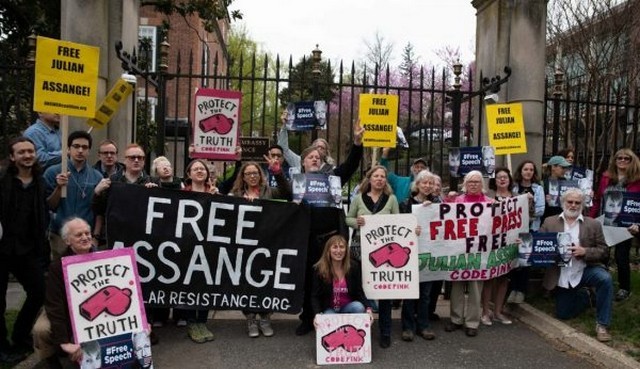
This has become a global battle for free speech and right of the public to know the truth about the crimes being committed by governments and their state agencies around the world.

Assange is being persecuted, and subjected to an unprecedented legal assault, for publishing millions of secret documents exposing political conspiracies and corporate crimes. Without this extraordinary record of authentic investigative journalism since 2006, this information would have remained suppressed.

Confronted by worldwide protests and petitions against the illegal termination of Assange’s political asylum and the immediate launching of proceedings to extradite Assange to the US, the British government felt compelled to grant the UN access. Cannataci became the first person allowed into Belmarsh prison to visit Assange, who has even been denied his right to speak to his family.

For weeks, the UN has been investigating the blanket surveillance conducted by Ecuador’s government against Assange inside its embassy.

On April 10, WikiLeaks revealed that hundreds of thousands of documents, audio recordings, videos and photos were taken in the embassy. Assange was arrested the very next day, preventing a scheduled April 25 visit by Cannataci.

Ecuadorian officials spied on every aspect of Assange’s life for more than a year, including his medical consultations and confidential meetings with his lawyers. The obvious purpose of this illegal operation was to gather or concoct evidence that the Trump administration could use to indict and extradite Assange on manufactured conspiracy and espionage charges.

Outside the prison yesterday, Cannataci told the Australian Broadcasting Corporation: “There are strong indications that some elements of his privacy may have been breached.” He added: “The case is important because it concerns a very special set of circumstances where a person who is not formally under detention yet was subjected to surveillance.”

Having met with Assange for two hours, the UN special envoy reported that Assange was “in fairly good shape and certainly very cogent in replying to our questions.” This is another indication of Assange’s defiant determination to fight his removal to the US, despite the damage done to his health by his seven-year confinement inside the Ecuadorian embassy.

Interviewed by the Italian newspaper Repubblica, Cannataci pointed to the far-reaching nature of the spying. He said he was seeking access to the material currently held by the Spanish police, who are investigating an attempt to extort WikiLeaks for copies of the documents and videos.

“If and when my access is granted, that evidence might consist of thousands of hours of surveillance footage, which will take some time to watch.”

The UN rapporteur agreed with the Repubblica journalist, Stefania Maurizi, that the spying operation against Assange threatened an entire range of human rights, including lawyer-client confidentiality. “[T]here are many dimensions to the case, including freedom of expression, including whistleblowing, protection of journalistic sources,” he said.

The UN is investigating whether Ecuador violated Assange’s privacy under two cornerstones of international law—the Universal Declaration of Human Rights and the International Covenant on Civil and Political Rights—by placing him under strict surveillance.

Jennifer Robinson, a lawyer representing Assange, an Australian citizen, said in a statement that his legal team welcomed the UN’s continued engagement in the case. “It is a matter of grave concern that Ecuador expelled Mr Assange from the embassy before the scheduled UN visit could take place,” she said.

Robinson said the legal team had also requested a visit to Assange by the UN special rapporteur on torture. She recalled that the UN Working Group on Arbitrary Detention had ruled in late 2015 that Assange was “arbitrarily detained,” as a result of having to remain in the embassy to protect himself from US extradition, and called for his release.

Chelsea Manning, the courageous whistleblower who leaked the infamous “Collateral Murder” video and many thousands of incriminating US diplomatic cables to WikiLeaks, has been held in solitary confinement for over six weeks because she has refused to give perjured testimony against Assange before a Grand Jury. Her continued detention is a transparent attempt to force her to cooperate in the US-led vendetta against Assange.

If Assange is dispatched to the US on bogus computer hacking charges, he will soon face additional charges, carrying a maximum sentence of life imprisonment or the death penalty. This would set an international precedent for the jailing of journalists everywhere who expose government crimes and wrongdoing.

Since Assange’s arrest, numerous corporate publications have lined up directly behind this offensive. They have brazenly used Ecuador’s video footage and other illegal surveillance material to repeat the personal smears against Assange fabricated by the corrupt Ecuadorian regime to justify its termination of his political asylum.

These lies and slanders against Assange are in contrast to the immense support that he enjoys among the millions of workers, students and young people internationally who regard him and Manning as heroes. The mass opposition to Assange’s persecution must be transformed into a political movement to prevent his extradition and secure his freedom. The WSWS and the Socialist Equality Parties (SEP) around the world are playing a central role in this decisive fight.

Over the past 18 months, the SEP (Australia) has held a series of rallies, demanding that the Australian government immediately fulfil its obligations to Assange, as an Australian citizen, by securing his return to Australia, with a guarantee against extradition to the US.

Another rally, aimed at placing this demand at the centre of the May 18 Australian federal election, will be held in Sydney this Saturday, followed by meetings in a number of cities.

The SEP in the UK has taken part in protests and vigils calling for an all-out mobilisation against the moves to extradite Assange. It will participate in a London public meeting, called by the Julian Assange Defence Committee, today.

This crucial struggle is entirely bound up with the fight for genuine socialism. As the all-out assault on Assange and Manning by governments and the corporate media conglomerates demonstrates, securing fundamental democratic rights requires nothing less than the worldwide transformation of society by the working class to meet social needs, not the profit interests of the financial aristocracy.

This internationalist and socialist perspective animates the 2019 International Online May Day Rally, organised by the International Committee of the Fourth International and the World Socialist Web Site. We urge our readers to register today.

Originally published in WSWS.org

26 April 2019

Source: countercurrents.org
A Step Forward in the U.N.’s Efforts Against Rape as a Weapon of War

By Rene Wadlow

On Tuesday, 23 April 2019, the United Nations Security Council voted resolution N° 2467 concerning the use of rape as a weapon in times of armed conflict. This resolution builds on an earlier resolution of 24 June 2013 which called for the complete and immediate cessation of all acts of sexual violation by all parties in armed conflicts. The new resolution introduced by Germany contained two new elements, both of which were eliminated in the intense negotiations in the four days prior to the vote of 13 in favor and two abstentions, those of Russia and China.

The first new element in the German proposed text concerned help to the victims of rape. The proposed paragraph was “urges United Nations entities and donors to provide non-discrimatory and comprehensive health services including sexual and reproductive health, psychosocial, legal and livelihodd support and other multi-sectoral services for survivors of sexual violence, taking into account the special needs of persons with disabilities.”

The U.S. delegation objected to this paragraph claiming that “sexual and reproductive health” were code words that opened a door to abortion. Since a U.S. veto would prevent the resolution as a whole, the paragraph was eliminated. There had been four days of intense discussions among the Security Council members concerning this paragraph, with only the U.S. opposed to any form of planned parenthood action. After the resolution was passed with the health paragraph eliminated, the Permanent Representative of France, Ambassador Francois Delatte spoke for many of the members saying “It is intolerable and incomprehensible that the Security Council is incapable of acknowledging that women and girls who suffered from sexual violence in conflict and who obviously didn’t choose to become pregnant should have the right to terminate their pregnancy.”

The second concept of the German draft that was eliminated was the proposal to create a working group to monitor and to review progress on ending sexual violence in armed conflict. Such a working group was opposed by the diplomats of Russia and China, both of which have the veto power. Thus, for the same reason as with the U.S. opposition, the idea of a monitoring working group was dropped. Both China and Russia are opposed to any form of U.N. monitoring, fearing that their actions on one topic or another would be noted by a monitoring group. The Russian diplomat had to add that he was against the added administrative burden that a monitoring group would present but that Russia was against sexual violence in conflict situations.

Thus the new U.N. Security Council resolution 2467 is weaker than it should have been, but is nevertheless a step forward in building awareness. The Association of World Citizens first raised the issue in the U.N. Commission on Human Rights in March 2001 citing the judgement of the International Criminal Tribunal for Former Yugoslavia which maintained that there can be no time limitations on bringing an accused to trial. The Tribunal also reinforced the possibility of universal jurisdiction that a person can be tried not only by his national court but by any court claiming universal jurisdiction and where the accused is present.

The Association of World Citizens again stressed the use of rape as a weapon of war in the Special Session of the Commission on Human Rights Violations in the Democratic Republic of Congo citing the findings of Meredeth Turshen and Clotilde Twagiramariya in their book What Women Do in Wartime: Gender and Conflict in Africa. (London: Zed Press, 1998). They write “There are numerous types of rape. Rape is committed to boast the soldiers’ morale, to feed soldiers’ hatred of the enemy, their sense of superiority, and to keep them fighting: rape is one kind of war booty; women are raped because war intensifies men’s sense of entitlement, superiority, avidity, and social licence to rape: rape is a weapon of war used to spread political terror; rape can destabilize a society and break its resistance; rape is a form of torture; gang rapes in public terrorize and silence women because they keep the civilian population functioning and are essential to its social and physical continuity; rape is used in ethnic cleansing; it is designed to drive women from their homes or destroy their possibility of reproduction within or “for” their community; genocidal rape treats women as “reproductive vessels”; to make them bear babies of the rapists’ nationality, ethnicity, race or religion, and genocidal rape aggravates women’s terror and future stigma, producing a class of outcast mothers and children – this is rape committed with consciousness of how unacceptable a raped woman is to the patriarchal community and to herself. This list combines individual and group motives with obedience to military command; in doing so, it gives a political context to violence against women, and it is this political context that needs to be incorporated in the social response to rape.”

The Security Council resolution opens the door to civil society organizations to build on the concepts eliminated from the governmental resolution itself. Non-governmental organizations must play an ever-more active role in providing services to rape victims with medical, psychological and socio-cultural services. In addition, if the U.N. is unable to create a monitoring and review of information working group, then such a monitoring group will have to be the task of cooperative efforts among NGOs. It is always to be hoped that government acting together would provide the institutions necessary to promote human dignity. But with the failure of governments to act, our task as non-governmental representatives is set out for us.

Rene Wadlow, President, Association of World Citizens

26 April 2019

Source: countercurrents.org
White House Insider: War with Iran Planned by Trump to Occur in the Fall of 2019

By Israel Today News

Tactical nukes and ground invasion planned for Iran, according to whistleblower.

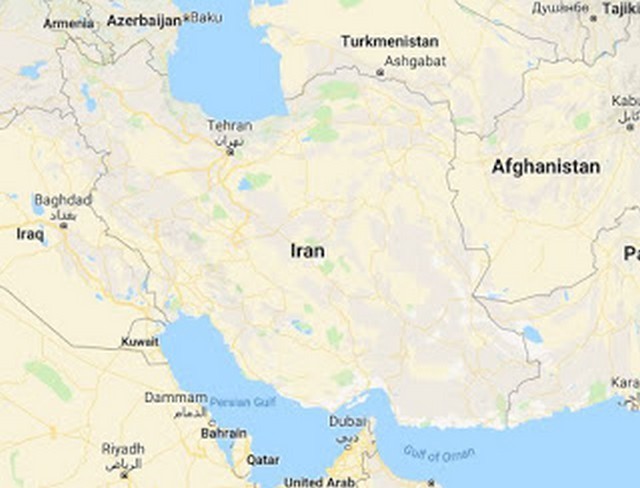
18 Apr 2019 – President Donald Trump and his inner circle are planning an extensive invasion of Iran, according to a source working in the White House.

The plan involves a ground invasion and the use of tactical nuclear weapons, in a campaign planned for the Fall of 2019. Iran will be “wiped off the map” according to the source, and the war effort is expected to cost “two and half times the Iraq War.”

The war will be promoted by the news media and Trump will go right along with it, after an “expected False Flag pinned on Iran, probably something involving the boats in the Strait of Hormuz.” The False Flag is an “integral part of the plan” as Iran has reportedly no desire or intent to start a war, according to the whistleblower.

The war plans have the White House staff “in an excited tizzy” as war-hawks like John Bolton put the “finishing touches” on the planned strike. President Trump initially showed resistance to the plan, but has since jumped on board with enthusiasm, convinced Iran is an “existential threat to Israel” and as such, a war is required to “eliminate them.”

Further details have been revealed, including:

  • 100 tactical nukes will be used to eliminate the Iranian military.
  • 120,000 U.S. ground troops will be used in the invasion.
  • France, the U.K., Canada, Saudi Arabia and Israel are expected to join a “coalition” in support of the war.
  • CIA assets and counter-intel efforts have been ramped-up over the past year in preparation.
  • A “False Flag” is being prepared to be used before the war with Iran.
  • Propaganda is being prepped by White House and Israeli counterparts.
  • Israel will support the effort and Benjamin Netanyahu was reportedly “smiling ear to ear” during a recent meeting with John Bolton.
  • There are concerns Trump’s “base” may resist or criticize the efforts, so further propaganda efforts are being made to “shore up support” for the war.
  • Expected casualties range between 1.2 Million and 2 Million Iranians and 5,000 US troops.

Due to President Trump’s close relationship with Jared Kushner, a sense of “sober import” has been placed on the war effort, which is being as a fulfillment of “Jewish prophecy” within White House circles. Many in the White House believe Jared Kushner is the “Messiah” or Jewish “Moshiach” who cannot attain his “throne” until Iran is wiped out.

The White House source is a high level official who has been right about many other things in the past, and their identity has been verified.

The information in this article was provided to David Goldberg, a Jewish advocate and fellow at the Jewish Center for Antisemitic Study, by a former White House employee only known by the name of “Isabel”. Her story has been aired on Mr. Goldberg’s YouTube channel, and she continues to provide valuable information about what is going on in the Trump White House.

Antisemitic attacks against Mr. Goldberg continue, and are documented in his video series. Efforts to block this information and shut down the social media accounts of Mr. Goldberg continue to be an issue.

Israel Today News

22 April 2019

Source: www.transcend.org

We Already Know Who Will Win the War in Libya – Western Arms Dealers

By Paul Rogers

They armed Gadaffi and the forces that ousted him alike – now they’re repeating that profitable trick.

18 Apr 2019 – Top of FormIn the shadow world of the arms trade there is one business model that outshines all others: selling arms to both sides in the same war. Ideally it works best when weapons you have sold to one side destroy weapons you have sold to the other. Thus if one side uses air-launched precision-guided missiles to destroy the other’s aircraft (or tanks, armoured personnel carriers or whatever), then it will need to buy replacement missiles, will need to have your people service its aircraft and, if it ‘wins’ the war it will most likely buy new planes from you as it rearms. The other side will need to replace the materiel destroyed, will want to upgrade its weapons and also buy in heavily for the next phase of the conflict.

All this is a matter of routine business and the results of a war will often be reflected in marketing afterwards. In 1982 the UK fought a short and bitter war with Argentina for control of the Falklands/Malvinas; in the months that followed military magazines carried full-page adverts for ship-based anti-aircraft missiles that had been successfully used to shoot down Argentine aircraft. The adverts were the same as those published before that war but for the words ‘combat proven’ stamped across them.

There was bitter irony in this when it was learned that one such missile, fired from a British Type 42 destroyer, had shot down a British army helicopter by mistake, killing all four people on board. To add to the bitterness, two Type 42s had also been sold by Britain to Argentina before the war.

Arms companies maintained teams in Libya upgrading planes and armoured vehicles until just a few days before the western bombing campaign started

Arming both sides happens more often than is realised. One of the classic examples was Libya towards the end of the Gaddafi regime in 2011. What makes this particularly relevant just now is that it looks like happening again as Khalifa Haftar’s forces move slowly towards Tripoli.

For and against Gaddafi

First, though, look at the earlier example. As far as western countries were concerned, the autocratic Gaddafi regime had come in from the cold in 2004 after the war in Iraq. The previous arms embargo had been lifted in 2005 and within a couple of years this oil- and gas-rich state was seen as a prime customer for arms. From 2005 to 2009 the EU granted €834.5m of arms export licences, Italy being the largest seller at €276.7m, with the UK also doing well at €119.35m. Then a British company, NMS International, organised the UK Pavilion at the Tripoli Arms Fair in November 2010, barely four months before the west went to war with Gaddafi on 19 March 2011.

The connection got even closer for some countries, with French and Italian arms companies maintaining teams in Libya upgrading Mirage planes and armoured vehicles until just a few days before the western bombing campaign started – with one aim being to destroy those same planes and armoured vehicles.

It is a hidden war that is very good indeed for business

From the arms industry’s point of view, what should have happened then was that western states would have spent plenty of money replacing the expensive missiles and guided bombs they used, while a pro-western Libya established after Gaddafi had been lynched would have wanted to build a modern air force, army and navy, buying lots of weapons from those friendly western states that had helped terminate the previous regime.

A lucrative desert war

The first part worked fine but the second didn’t. Libya descended into disarray – but even that disaster was not all bad news for the arms trade. One of the grim results of the 2011 war was that arms cascaded out of Libya across the Sahara and Sahel, greatly boosting the numerous Islamist paramilitary movements across the region. To counter this, thousands of western troops are now deployed across the region, air and drone strikes are commonplace, millions of dollars’ worth of precision-guided munitions are being used and vast amounts of equipment are being provided to many governments.

It is a hidden war that is very good indeed for business and is now being enhanced by a sudden escalation of the burgeoning civil war to the north in Libya itself. There, the UN-backed Government of National Accord in Tripoli is facing the forces of the self-styled Libyan National Army from the east of the country, headed by Haftar, a former Gaddafi military leader. In the past few days Haftar’s army has moved closer to Tripoli itself as it tries to take over the whole of the country, even as UN personnel seek vainly to arrange a ceasefire.

The government has recently been equipped by western states. In one episode over the weekend government forces shot down a Libyan National Army aircraft. Since then, the LNA has moved close enough to Tripoli to fire artillery that has killed at least four people and wounded twenty in the southern district of Abu Salim. Thousands of people have been displaced from their homes with at least 150 killed in this most recent bout of the war.

Wealthy supporters

One aspect of the war is particularly good news for the arms industry. While the conflict is between the government and the LNA, above them are outside actors. Much of the weaponry of the UN-backed government comes from western states, with Italy being the most prominent. That is one of the reasons why the government is proving more resilient than some had expected, although there are also regional supporters involved, including Qatar.

On the other side, the insurgent LNA is strongly backed by Egypt and the United Arab Emirates. They both want a united Libya under Haftar or another strong leader who will suppress dissent and be especially hard on Islamist paramilitaries. This backing extends to their direct military involvement, with UAE air force strike aircraft aiding the rebels as they move towards the capital.

This is where history repeats itself: the UAE is one of the heaviest buyers of western aircraft and munitions in recent years, second only to Saudi Arabia among the Arab states across the Middle East. In short, the western-backed government is fighting the western-equipped LNA. However it ends, and however many people are killed, injured or displaced, the arms companies and their shareholders will come out of it well.

Paul Rogers is professor in the department of peace studies at Bradford University, northern England.

22 April 2019

Source: www.transcend.org

A Cathedral and a Mosque Engulfed in Fire; One Ravages the Past, the Other Threatens the Future

By Soraya Sepahpour-Ulrich

The world reacted with shock to the fire that engulfed the Notre Dame Cathedral. A symbol of Paris, this 13th Century architectural marvel is home to precious historical religious relics and artwork; made even more famous throughout the world by Victor Hugo’s famous novel, The Hunchback of Notre-Dame.

World leaders were quick to react to the tragedy of this fire. News headlines around the world brought this disastrous incident to every living room around the globe and nations commiserated with the French. The inaudible sigh of relief was palpable when the structure was saved and with it, the history that laid within the walls. The past was not lost.

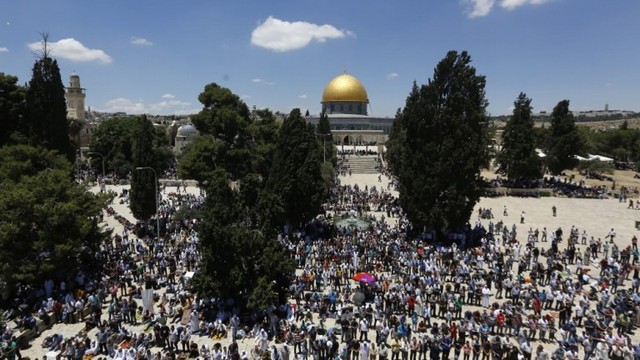
But another fire may well stop the future. Concurrent with the fire that ravaged Notre Dame, another historical place of worship, the al Aqsa mosque in Jerusalem fell victim to a fire of an unknown origin. The Mosque which was completed in 705 CE, is the third holiest site in Islam. But its fate is not shared by Moslems alone – it touches us all.

The world can be forgiven for their ignorance of this tragedy – and the importance of al Aqsa. The media simply dismissed it, as it does with all things that must be kept from the general public. This is not the first fire that was left unmentioned by mainstream media (MSM). A previous fire set to the Mosque by a zealous Australian Christian in 1969 failed to capture headlines. Indeed, the threats to al Aqsa Mosque have accelerated over the years to a point of no return. Given that the fate of this Mosque holds the fate of us all, how can the media be forgiven for their deafening silence?

In 2006, the Israeli government began work on an exact replica of the Hurva synagogue on its original site. The rebuilding of the Hurva is designed to usher in the rebuilding of the Third Temple. Rabbis were tailored for the special kind of garments they would be wearing in a “rebuilt temple” – the ‘end of time’. But the Mosque still stands in the way of building the Third Temple – for now.[i]

It took four years to complete the work on Hurva. When presidential candidate, Barack Obama promised AIPAC an undivided Jerusalem in 2008, the building of the Hurva synagogue was well on the way – which signaled continued future attacks on the al-Aqsa Mosque to make way for construction of the Third Temple.

In 2009, Israeli news headlines reassured Israelis that “Netanyahu would build the Third Temple”. Soon after, in 2010, JTA reported that “Our Land of Israel” party had put posters on 200 city buses in Jerusalem showing an artist’s rendition of the Third Temple on the al-Aqsa Mosque site with the slogan, “May the Temple be built in our lifetime.”

Donald Trump deliverance on Obama’s promise has made these fanatics more hopeful. How could they not be with Senator Broxon telling a cheering crowd

“Now, I don’t know about you, but when I heard about Jerusalem — where the King of Kings where our soon coming King is coming back to Jerusalem, it is because President Trump declared Jerusalem to be capital of Israel”.

And how do we ignore Benjamin Netanyahu taking ownership of Jerusalem stating that the Bible, the holy book for Jews and Christians, had justified it. Should we then be surprised that rabbis sent a letter of gratitude to Trump, praising him for “fulfilling prophecies”.

In March, as Israeli elections were approaching, it was reported that “The Israeli Third Temple” party had gained traction. And while the mainstream media can ignore the latest fire that broke out at the al Aqsa mosque on April 15, can we afford to ignore the blazing headlines of the same day: “END OF THE WORLD: Jerusalem third temple ‘fulfills Biblical prophecy’ of the end times” and other Israeli news ushering in the building of the Third Temple and the ‘end of times’?

Some may take comfort in the fact that this is all sheer madness, but one cannot ignore the insanity of which we were warned of by Warner D. Farr, LTC, U.S. Army who in 1999 reported his findings in the “Counterproliferation papers, Future Warfare Series No. 2, USAF Counterproliferation Center”. This fascinating report, among other things, sounded the alarm over the probability of Gush Emunim, a right- wing religious organization, or others, hijacking a nuclear device to “liberate” the Temple Mount for the building of the third temple. This is powerful insanity with insane powers enabling it.

Is the world ready to embrace this madness and accept this fate at this juncture? Are you?

NOTE:

[i] Tom Mountain. Preparing for the Third TempleJewish Advocate. Boston:Aug 22, 2008. Vol. 199, Iss. 34, p. 9 (1 pp.)

__________________________________________________________

Soraya Sepahpour-Ulrich is an independent researcher and writer with a focus on U.S. foreign policy and the role of lobby groups in influencing US foreign policy.

22 April 2019

Source: www.transcend.org

Stop the Ongoing U.S. Economic Terrorism against Iran and Help Its People!

By Jan Oberg

15 Apr 2019 – You have certainly not heard much about this in the West. And it didn’t get a fraction of the media attention (and none of the hundreds of millions of Euro pledges by the perversely rich) that the Notre Dame fire did.

However, if disastrous floods had hit 28 out of 31 provinces and affected 10 million people in some European country or in the US, I believe you would have heard about it from Day One.

But now it is Iran. Only the Iranians.

The situation is disastrous but not so much because thousands have died. Rather, because floods of this magnitude are likely to have terrible long-term consequences for agricultural and other production, infrastructure, energy production, transport and daily lives (see pictures below and on the links).

The basic facts about 3 weeks into the disaster are:

28 of 31 provinces affected, the area around Shiraz the most. 78 people have died and 1076 have been injured. 10 million Iranians have been affected and 2 million seem to be in direct need of assistance. More can be studied at the UN OCHA’s Reliefweb.

Please enlighten yourself also by some Iranian media sources and Iranian foreign minister Javad Zarif’s statements here. And here.

This comes on top of economic sanctions that have already hit virtually every single Iranian very hard when going about their daily lives. The author has seen how this was already bad in 2012-2016 – since then, everything has grown worse.

Here some data by the IMF.

Yes, the corruption is everywhere in Iran but the US sanctions are extremely tight, the loss of oil export income is severe (to benefit Saudi Arabia and others).

And now this flood disaster on top of it all (more background and pictures from Iran’s Fars News Agency here).

The cruelty of not helping in this situation can only be condemned from a humanitarian, human rights and moral perspective no matter what one may otherwise think about Iranian politics and leadership.

Sanctions make humanitarian aid much more difficult

It is well known that the Trump administration wants others to think about Iran and how it puts pressure and threats to bear on other countries to prevent them from cooperating with Iran and bringing humanitarian aid in violation of these US sanctions.

Reuters reports the statement of the Iranian Red Crescent three weeks into the disaster:

“U.S. sanctions have prevented the Iranian Red Crescent from obtaining any foreign financial aid to assist victims of flooding that has killed at least 70 people and inundated some 1,900 communities, the group said on Sunday.”

As of today, the only Europeans to deliver assistance are Russia, Turkey, Switzerland, Germany and France according to the UN OCHA’s Reliefweb.

The main reason, one may assume, is that the US has imposed sanctions on Iran since 1979 and now applies the toughest sanctions ever on the Iranian people (after having withdrawn from the nuclear deal, the JCPOA, in clear violation of international law, since it was embedded in a UN Security Council resolution).

Iran, you may say, is being punished for having fulfilled all its obligations of the JCPOA and accepting the most severe inspections ever.

The US also applies so-called secondary sanctions – sanctions against other countries which do not adhere to US sanctions but continue to deal with Iran. The US believes, it seems, that it can intimidate and financially punish countries – including NATO and EU – should they not adhere to US laws (and diktats) on their own territory

Such extra-territorial application of US laws should, of course, be unacceptable for any other sovereign states. And it goes without saying that the US would never accept foreign laws to be implemented on its territory. But the US seems to believe that it is so exceptional that others should make exceptional decisions in favour of this exceptionally unlawful US policy.

The Trump administration – also defiant of the UN Court ruling

What few have noticed is that Iran won a case at the UN International Court of Justice in October last year. Read Newsweek’s report here. The ICJ ruled and ordered that the United States remove sanctions that target humanitarian trade, food, medicine and civil aviation.

But instead of abiding by the ICJ’s decision, Secretary of State, Mike Pompeo announces with what must be termed outrageous arguments that the U.S. couldn’t care less.

Mainstream US-obedient media of course politely refrained from putting such a law-defying US statement on their front pages – omission being much more important than fake as I have pointed out time and again before.

As if this should not be enough, the US announced on April 8, 2019 – i.e. also Pompeo – that the US places Iran’s Revolutionary Guard Corps on its list of terrorist organisations.

Listen very carefully to the justifications and the accusations. One doesn’t have to be psychologist or psychiatrist to get the thought that we are here witnessing a brilliant piece of psycho-political projection – projection of one’s own dark sides on somebody else.

This is also outrageous in the light of the fact that the Corps is a major agent in dealing with the flood disaster on the ground (as it has holds proportionately huge resources in the Iranian budget). Are we likely to soon hear the argument that no aid should go to Iran because it would go (also) to this “terrorist” organisation?

EU and NATO countries should practise civil disobedience in support of the Iranian people

One must wonder how much longer the United States will get away with such step-by-step measures and exceptional arrogance vis-a-vis the international “community” without loud and clear criticism and alternative action by EU and NATO countries.

As I say in the video above, it is high time that EU and NATO countries – and other countries for that matter – practise civil disobedience against US diktat. If only a few countries, companies and banks continue co-operating with Iran, it will be easy for US authorities such as US Treasury to pursue them legally and punish them in various ways.

But not so if some 25-30 countries, all their companies and banks simply ignored US policies and accelerated their civilian co-operation with Iran. It would, beyond the slightest doubt, be a win-win strategy on contrast to US policies which may look like win (US/West) and loose (Iran) but, sooner or later will – drag down these other countries in the decline and fall process of the US. That is – loose/loose

And I made a small donation to the Iranian Red Crescent on this link, also to try my Swedish bank. It went through.

You can do it too.

Actions and words go best together.
__________________________________________________

Further recommended reading and watching:

TFF Director Prof. Jan Oberg is a member of the TRANSCEND Network for Peace Development Environment.

22 April 2019

Source: www.transcend.org

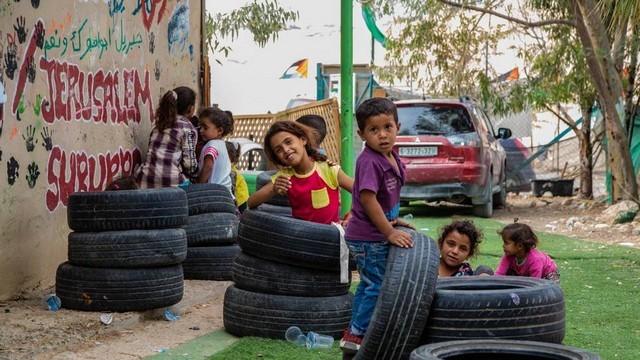
Who will speak up for Palestinian kids like us?

By Ahed Tamimi

A year ago I was in an Israeli prison, denied my basic rights and stripped of my childhood. The crime that led to eight months of incarceration was not mine, but that of Israel’s continued occupation of Palestine.

As with so many child prisoners who are subjected to the horrors of Israeli military detention, one of the toughest daily struggles was being separated from my family. Last week, my family was torn apart once again: this time, Israeli forces came and took away my 15-year-old brother Mohammed.

This is the price we pay for Israel’s occupation. Every mother and father is forced to live in fear of their children being the next target. Palestinians in the West Bank are subjected to military law, which is used as a tool to repress, silence, and prevent our resistance to occupation.

We do not have equal rights to the Israeli settlers who live on stolen land in our neighbourhoods. This prevents us from living normal lives and threatens our existence, but it is protected by Israel’s legal system.

Across the West Bank exists a framework of dual legal systems: Jewish settlers are afforded rights under Israeli civilian law, while we Palestinians have ours taken away by military law – two very different processes and outcomes implemented on grounds of ethnicity. Experts say this meets the definition of apartheid, and children are not immune from this suffering.

There are currently more than 200 Palestinian children, including my brother, in Israeli jails. Each year, Israel arrests and prosecutes around 700 children, some as young as 12. They are usually accused of throwing stones. After being separated from their families, exposed to physical, psychological, and emotional abuse, a number of children are coerced into signing confessions put in front of them by Israeli interrogators – often in a language they do not understand. Very few children are granted access to a lawyer or allowed a family member present during interrogation.

With 99 per cent of court cases against Palestinians resulting in conviction, signing a confession and making a plea bargain is often presented as the fastest way of being released and reunited with family.

From the moment of arrest, Palestinian children encounter abuse at the hands of Israeli forces. In 2013, UNICEF published a report into the widespread, systematic and institutionalised ill treatment of children in the military detention system. Of the 38 requirements they set out to protect Palestinian children, Israel has implemented only one. According to the charity Defence for Children International Palestine, three out of four experience physical violence, and nearly half suffer the traumatic experience of being ripped from their families in the middle of the night by armed soldiers.

The British government is aware of what is happening. A delegation of lawyers was sent by the Foreign Office to report on the situation in 2012. It came back with damning conclusions that mirrored those of UNICEF a year later.

More recently, the Palestine Solidarity Campaign submitted a petition with over ten-thousand signatures demanding urgent action, and MPs tabled an Early Day Motion (EDM 563) that is the fourth most supported in this Parliamentary session.

Today, on Palestinian Prisoners Day, I join them in asking the British government to hold Israel accountable and give Palestinians back their childhoods.

My case garnered international attention, and I’m thankful for the many messages of support I received from people in the UK during my nightmarish ordeal in prison. But I will not truly be free until we all are.

18 April 2019

Ahed Tamimi is a Palestinian activist who was imprisoned for assaulting an Israeli soldier in December 2017.

The heritage of Notre Dame – less European than people think

By Diana Darke

Few seem to know that the Parisian cathedral’s architectural design owes a vast debt to Middle Eastern predecessors

On Monday, as Notre Dame burned before our eyes, it was striking to note how few seemed to know that the Parisian cathedral’s original architectural design, its twin towers flanking an elaborate entrance, its rose windows, its rib vaulting and its spire (la fleche) owe their origins to Middle Eastern predecessors.

Tributes flowed in from round the world, praising the cathedral’s status as an icon of our shared European heritage and identity. “All of us are burning,” declared French president Emmanuel Macron, addressing the nation.

‘Heart of the Almond’

Let’s start with the twin tower design. The earliest example stands on a hillside in northwest Syria, in Idlib province, in a church built from local limestone in the mid-5th century.

It’s called Qalb Lozeh (‘Heart of the Almond’ in Arabic), and is rightly praised as one of the best preserved examples of Syrian church architecture, a magnificently proportioned broad-aisled basilica, the forerunner of what came to be known as the Romanesque period.

In a belated recognition of its importance, it was included in 2011 within a UNESCO World Heritage Site labelled Ancient Villages of Northern Syria. Locally they are known as the “Dead Cities”, clusters of nearly 800 Byzantine stone-built settlements with over 2,000 churches dating from the 4th to 6th centuries.

They were renamed the “Forgotten Cities” by the Syrian ministry of tourism before the war.

Inside, the church is divided into three, with a central nave, echoes of the Trinity everywhere in the design – the three aisles, three pillars on each side of the nave, three facade windows, three apse windows and three arches dividing the nave from the side aisles.

The nave would originally have had a wooden roof, long since gone, but the vaulted dome over the semi-circular apse still survives.

The Gothic arch

When Frankish crusaders saw these designs in the 12th century, they brought the idea back to Europe.

What we today call the Gothic arch, prevalent in Notre Dame and in all the great cathedrals of Europe, evolved from the pointed arch, was an architectural design first seen in the Ibn Tulun Mosque in Cairo and passed via Amalfi merchants to Sicily.

With their advanced knowledge of geometry and the laws of statics, Muslims developed both the horseshoe
(also known as Moorish arch, first seen in Damascus’s Umayyad Mosque, then further developed by the Umayyads in Andalusia in the Great Mosque of Cordoba) and the pointed arch to give more height than the classical arch.

The first building to use them in Europe was the Abbey of Monte Cassino in 1071, financed by Amalfi merchants. It then moved north to Cluny Abbey, which boasted 150 pointed arches in its aisles.

Muslim designs

The fashion quickly spread from these, two of the most influential churches in Europe, as this pointed “Gothic” arch was stronger than the rounded arch used by the Romans and the Normans, so allowed the construction of bigger, taller, grander and more complex buildings like the great cathedrals of Europe.

Other borrowings from Muslim designs, also to be found in Notre Dame, include ribbed vaulting (traced to the 8th century Abbasid Palace of Ukhaider in Iraq), rose windows (first seen at the 8th century Umayyad palace of Khirbat Mafjar in the West Bank near Jericho) and the spire (which collapsed so spectacularly on Notre Dame as the timber roof gave way beneath it).

The first known spire is on the Umayyad Mosque of Damascus, built in the early 8th century.

In England, the first ever spire was on top of St Paul’s Cathedral in 1221. It was destroyed in the Great Fire of London in 1666 then rebuilt in 1710 by Christopher Wren, an avowed admirer of Muslim architecture, who studied and extensively researched Moorish and Ottoman mosques.

“The Goths,” he said, talking of the “Gothic” style, “were rather destroyers than builders: I think it should with more reason be called the Saracen (Arab Muslim) style”.

The combination of dome and tower in his masterpiece of St Paul’s, together with the structure of the domes in the aisles, shows this strong Muslim influence, also clearly visible in Notre Dame.

This article first appeared in Diana Darke’s blog.

The views expressed in this article belong to the author and do not necessarily reflect the editorial policy of Middle East Eye.

Diana Darke is a Middle East cultural expert with special focus on Syria.

17 April 2019

Source: www.middleeasteye.net

War Versus Peace: Israel Has Decided and So Should We

By Dr Ramzy Baroud

So, what have we learned from the Israeli legislative elections on April 9?

A whole lot.

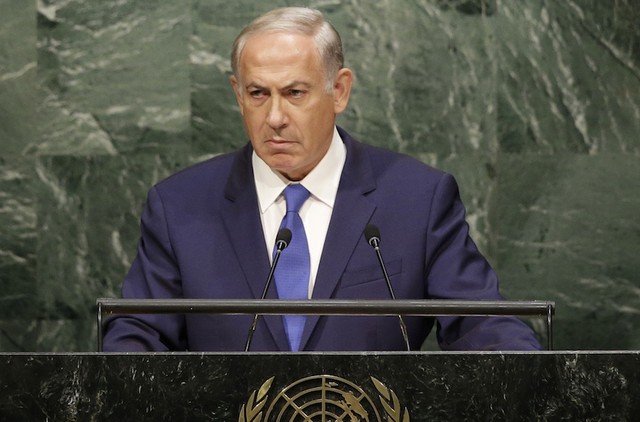
To start with, don’t let such references as the “tight race” between Israeli Prime Minister Benjamin Netanyahu, and his main rival, Benny Gantz, fool you.

Yes, Israelis are divided on some issues that are particular to their social and economic makeup. But they are also resolutely unified around the issue that should concern us most: the continued subjugation of the Palestinian people.

Indeed, ‘tight race’, or not, Israel has voted to cement Apartheid, support the ongoing annexation of the Occupied West Bank, and carry on with the Gaza siege.

In the aftermath of the elections, Netanyahu emerged even more powerful; his Likud party has won the elections with 36 seats, followed by Gantz’s Kahol Lavan (Blue and White) with 35 seats.

Gantz, the rising star in Israeli politics was branded throughout the campaign as a centrist politician, a designation that tossed a lifeline to the vanquished Israeli ‘left’ – of which not much is left anyway.

This branding helped sustain a short-lived illusion that there is an Israeli alternative to Netanyahu’s extremist right-wing camp.

But there was never any evidence to suggest that Gantz would have been any better as far as ending the Israeli occupation, dismantling the Apartheid regime and parting ways with the country’s predominantly racist discourse.

In fact, the opposite is true.

Gantz has repeatedly criticized Netanyahu for supposedly being too soft on Gaza, promising to rain yet more death and destruction on an a region that, according to the United Nations, will be unlivable by 2020.

A series of videos, dubbed “Only the Strong Survives”, were issued by the Gantz campaign in the run up to the elections. In the footage, Gantz was portrayed as the national savior, who had killed many Palestinians while serving as the army’s chief of staff between 2011 and 2015.

Gantz is particularly proud of being partly responsible for bombing Gaza “back to the stone age.”

It apparently mattered little to Israeli centrists and the remnants of the left that in the 2014 Israeli war on Gaza, dubbed Operation “Protective Edge”, over 2,200 Palestinians were killed and over 11,000 were injured. In that most tragic war, over 500 Palestinian children were killed, and much of Gaza’s already ailing infrastructure was destroyed.

But then again, why vote for Gantz when Netanyahu and his right-wing extremist camp are getting the job done?

Sadly, Netanyahu’s future coalition is likely to be even more extreme than the previous one.

Moreover, thanks to new possible alliances, Netanyahu will most likely free himself of burdensome allies, the likes of former Israeli Defense Minister, Avigdor Lieberman.

One significant change in the likely makeup of the Israeli right is the absence of such domineering figures, who, aside from Lieberman also include former Education Minister, Naftali Bennett and former Justice Minister Ayelet Shaked.

All the grandstanding from Bennett and Shaked, who had recently established a new party called “The New Right”, didn’t even garner them enough votes to reach the threshold required to win a single seat in the Israeli Parliament, the Knesset. They needed 3.25 percent of the vote, but only achieved 3.22 percent. They are both out.

The defeat of the infamous duo is quite revealing: the symbols of Israel’s extreme right no longer meet the expectations of Israel’s extremist constituencies.

Now the stage is wide open for the ultra-orthodox parties, Shas, which now has eight seats, and United Torah Judaism, with seven seats to help define the new normal in Israel.

The Israeli left – if it was ever deserving of the name – received a final blow; the once prominent Labor Party, won merely six seats.

On the other hand, Arab parties that ran in the 2015 elections under the united banner of the “Joint List”, fragmented once more, to collectively achieve only 10 seats.

Their loss of three seats, compared to the previous elections, can be partly blamed on factional and personal agendas. But, that is hardly enough to explain the massive drop in Arab voter participation in the elections: 48 percent compared to 68 percent in 2015.

This record low participation can only be explained through the racist ‘Nation State Law”, which was passed by the right wing-dominated Knesset on July 19, 2018. The new Basic Law, declared Israel as the “nation state of the Jewish people” everywhere, relegating the rights of the Palestinian people, their history, culture and language, while elevating everything Jewish, making self-determination in the state an exclusive right for Jews only.

This trend is likely to continue, as Israel’s political institutions no longer offer even a symbolic margin for true democracy and fair representation.

But perhaps the most important lesson that we can learn in the aftermath of these elections is that in today’s Israel, military occupation and apartheid have been internalized and normalized as uncontested realities, unworthy of national debate. This in particular should summon our immediate attention.

During election campaigns, no major party spoke about peace, let alone provided a comprehensive vision for achieving it. No leading politician called for the dismantling of the illegal Jewish settlements that have been erected on Palestinian land in violation of international law.

More importantly and tellingly, no one spoke of a two-state solution.

As far as Israelis are concerned, the two-state solution is dead. While this is also true for many Palestinians, the Israeli alternative is hardly co-existence in one democratic secular state. The Israeli alternative is Apartheid.

Netanyahu and his future government coalition of like-minded extremists are now armed with an unmistakably popular mandate to fulfill all of their electoral promises, including the annexation of the West Bank.

Moreover, with an emboldened and empowered right-wing coalition, we are also likely to witness a major escalation in violence against Gaza this coming summer.

Considering all of this, we must understand that Israel’s illegal policies in Palestine cannot and will not be challenged from within Israeli society.

Challenging and ending the Israeli occupation and dismantling Apartheid can only happen through internal Palestinian resistance and external pressure that is centered around the strategy of Boycott, Divestment and Sanctions (BDS).

It is now incumbent on the international community to break this vicious Israeli cycle and support the Palestinian people in their ongoing struggle against Israeli occupation, racism and apartheid.

Ramzy Baroud is a journalist, author and editor of Palestine Chronicle.

18 April 2019

Source: countercurrents.org
Abdus Sattar Ghazali – Trump vetoes congressional resolution to end Yemen war

By Abdus Sattar Ghazali

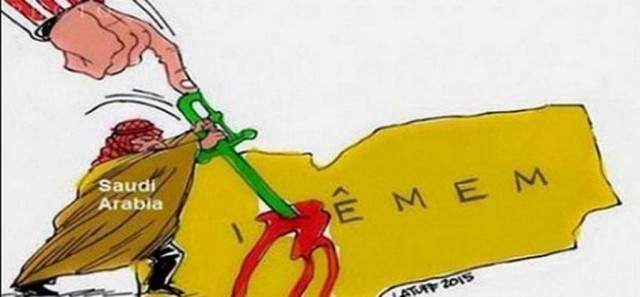
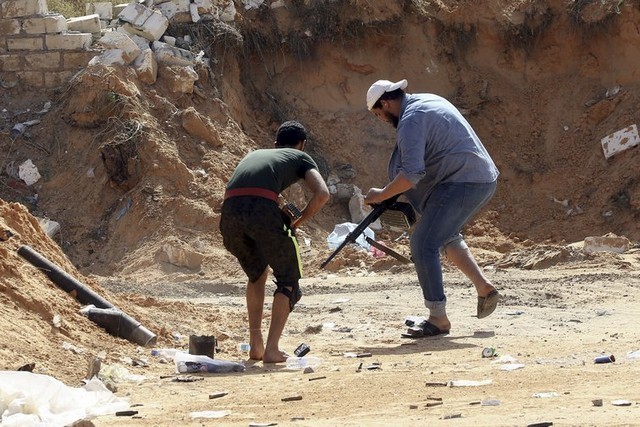
President Donald Trump has rejected a resolution from the Congress to end the 4-year old Yemen war which has killed tens of thousands of people and spawned what the United Nations calls the world’s most dire humanitarian crisis, with the country on the brink of famine.

The resolution passed the House of Representatives in April and the Senate in March, marking the first time both chambers of Congress had supported a War Powers resolution, which limits the president’s ability to send troops into action.

Trump wrote explaining why he issued the veto: “This resolution is an unnecessary, dangerous attempt to weaken my constitutional authorities, endangering the lives of American citizens and brave service members, both today and in the future.”

The president also argued the resolution would “harm the foreign policy of the United States” and “harm our bilateral relationships.”

“Peace in Yemen requires a negotiated settlement,” the president said. He also highlighted that the US was not actively engaged in hostilities, except against al-Qaeda extremists.

The move marked the second time that Trump has used his veto power to reject a bill from the legislature. To override the president’s veto, the resolution would need a two-thirds majority, which it currently does not have in the deeply divided Congress.

The resolution’s approval in both the House of Representatives and the Senate had been seen as a historic milestone already, as it was the first time that a bill invoking the 1973 War Powers Resolution reached the president’s desk.

Trump issued his first veto last month on legislation related to immigration. Trump had declared a national emergency so he could use more money to construct a border wall. Congress voted to block the emergency declaration and Trump vetoed that measure.

President Trump also said that the measure would harm bilateral relations and interferes with his constitutional power as commander in chief.

He said the U.S. is providing the support to protect the safety of more than 80,000 Americans who live in certain areas of the coalition countries subject to Houthi attacks from Yemen.

“Houthis, supported by Iran, have used missiles, armed drones and explosive boats to attack civilian and military targets in those coalition countries, including areas frequented by American citizens, such as the airport in Riyadh, Saudi Arabia,” Trump said. “In addition, the conflict in Yemen represents a ‘cheap’ and inexpensive way for Iran to cause trouble for the United States and for our ally, Saudi Arabia.”

Tellingly, President Trump’s veto on Saudi-led war in Yemen came as Princess Reema Bint Bandar Bin Sultan, who took oath of office as the Kingdom’s first female ambassador to the US. Princess Reema is the daughter of Prince Bandar bin Sultan, who was Saudi ambassador from 1983 to 2005.

Not surprisingly, United Arab Emirates Minister of State for Foreign Affairs Anwar Gargash swiftly welcomed Trump’s veto. “President Trump’s assertion of support to the Arab Coalition in Yemen is a positive signal,” Gargash said on Twitter. The decision is both “timely and strategic” he added. The UAE is the Saudi Arabia’s principal ally in the coalition.

Ro Khanna: Trump was risking the lives of millions: Democratic Congressman Ro Khanna, sponsor of the resolution, said Trump was “risking the lives of millions of Yemeni civilians to famine, deadly airstrikes, and the war crimes of the Saudi regime.”

House Speaker Nancy Pelosi issued a statement saying: “The conflict in Yemen is a horrific humanitarian crisis that challenges the conscience of the entire world. Yet the President has cynically chosen to contravene a bipartisan, bicameral vote of the Congress and perpetuate America’s shameful involvement in this heartbreaking crisis.”

Pelosi added: “This conflict must end, now. The House of Representatives calls on the President to put peace before politics, and work with us to advance an enduring solution to end this crisis and save lives.”

International Rescue Committee president and CEO David Miliband said that vetoing the measure represents an “effective green light for the war strategy that has created the world’s worst humanitarian crisis to continue.”

The American Conservative:Writing under the title: “Trump’s Shameful Yemen Veto Defines His Presidency,” The American Conservative commented:

“Today Trump has proven once more to the people of Yemen just how cynical he and the other supporters of the war are. Support for the war on Yemen is the most disgraceful U.S. policy today, and it is one of the most despicable policies of the last fifty years. That is what Trump chooses to continue and defend. He has chosen again and again to cater to and indulge some of the worst governments on earth, and he has done so for the basest reasons of protecting future weapons sales. If we knew nothing else about him, this would tell us all we need to know about his contempt for the law, his cruelty, and his disregard for innocent life.”

Breitbart News: Not surprisingly, Writing under the title: “Trump was right to veto empty resolution against Saudi War in Yemen,” Joel B. Pollak, Senior Editor-at-Large at Breitbart News wrote:

“….Yemen sits on the eastern side of the Bab el-Mandeb strait — a key shipping lane for traffic through the Suez Canal. The U.S. Navy has a major base across the strait, in Djibouti — as do many other countries, including China. Allowing an Iranian proxy to command the eastern side of the strait, across from a crucial U.S. Navy asset that helps control piracy and terror, and where China is challenging U.S. dominance, would be foolish to the point of lunacy….

“Some critics contend Trump is risking the support of an “anti-war coalition” in his base. But the anti-war movement is largely a left-wing phenomenon. Those elements of Trump’s base that approve his criticisms of previous wars, such as the Iraq war, are not opposed to war as such, but rather to war without victory, or end. Trump would create more, not fewer, political problems for himself by giving up Yemen to Iran — even as his sanctions have Iran on the ropes.

“For some members of Congress, the Yemen resolution is a principled objected to foreign entanglements. For most, it is a cheap way to criticize Trump. Few have been asked to explain why they are supporting an effective surrender to Iran that would endanger American lives and interests. That question must be asked if Congress tries to mount an override,” Breitbart concluded.

Humanitarian crisis in Yemen: Yemen has been devastated by a conflict that escalated in March 2015, when the rebel Houthi movement seized control of much of the west of the country and forced President Abdrabbuh Mansour Hadi to flee abroad.

According to a UN report of February 2019, 14.3 million people are classified as being in acute need, with around 3.2 million requiring treatment for acute malnutrition; that includes two million children under-five, and more than one million pregnant and lactating women.

Highlighting that more than 20 million people across the country are food insecure, half of them suffering extreme levels of hunger, the report focuses on some key humanitarian issues: basic survival needs, protection of civilians and livelihoods and essential basic services.

“The escalation of the conflict since March 2015 has dramatically aggravated the protection crisis in which millions face risks to their safety and basic rights”, the UN report said.

The UN agency data shows that a total of 17.8 million people lack access to safe water and sanitation, and 19.7 million lack access to adequate healthcare. Poor sanitation and waterborne diseases, including cholera, left hundreds of thousands of people ill last year.

Meanwhile, grain which could help feed millions, is still at risk of rotting in a key Red Sea storage facility because conditions are too unsafe to reach it, UN Special Envoy Martin Griffiths and UN Emergency relief chief Mark Lowcock said.

During the past four years of intense conflict between Government forces and Houthi rebels have left tens of thousands dead or injured including at least 17,700 civilians as verified by the UN.

The agency adds that an estimated 3.3 million people remain displaced, up from 2.2 million last year, including 685,000 people who fled fighting in Hudaydah and on the west coast, from June onwards.

According to the UN Refugee Agency, the number of sites hosting displaced people has increased by almost half over the past 12 months.

Abdus Sattar Ghazali is the Chief Editor of the Journal of America (www.journalofamerica.net) email: asghazali2011 (@) gmail.com

18 April 2019

Source: countercurrents.org