Just International

Geopolitical Crimes: A Revolutionary Proposal

By Richard Falk

23 Jul 2019 – This is a modified version of the 2018 Annual Lecture of the International State Crime Initiative (ISCI) of Queen Mary’s University London, given on March 22 of that year. Its original title was “Geopolitical Crimes: A Preliminary Jurisprudential Proposal.” The text of the lecture has been further revised since publication in the Spring 2019 issue of the Journal of State Crime. Its major premise is that international criminal law has developed a framework for judging the criminal conduct of states with respect to armed conflict and in the relations of state/society relations, but is silent about even the most severe crimes of diplomacy. It is these ‘geopolitical crimes’ that are more responsible for inflicting mass suffering on civilian populations than are most of the forms of international behavior currently criminalized. I am aware that criminalizing acts of diplomacy is a revolutionary idea, but no less for that, deserving of commentary and debate.

*************************

Points of Departure

When we think about international relations in a general way we typically presuppose a state-centric world order. I find this misleading. Actually, there are two intersecting and overlapping systems of rules and diplomatic protocols that are operative in international relations: a juridicalsystem linking sovereign states on the basis of equality before the law; and a geopoliticalsystem linking dominant states regionally and globally with other states on the basis of inequalities in power, scale, wealth and status. It is convenient to consider the juridical system as horizontal and the geopolitical system as vertical so long as this distinction is understood as a metaphor to distinguish hierarchical from non-hierarchical relations that are operative in international politics.

The United Nations (UN) embodies this structural dualism that pervades world order, and is hierarchical: the subordinate horizontal organizational axis based on juridical equality as exhibited by membership procedures and by the recommendatory authority of the General Assembly. This compares to the supervening vertical axis as embodied in the Security Council in which the permanent membership of the five states considered victors in World War II enjoy a right of veto, and possess an exclusive authority vested in the Security Council to make decisions that are theoretically enforceable.

My purpose in these remarks is to extend the notion of international state crime from its familiar horizontal axis, and suggest the significance of state crime on the vertical axis, which I will call “Geopolitical Crime”. I believe that this category of criminality has been “overlooked” in international criminal law (ICL) despite its responsibility for massive human suffering, and directly linked to some of the most serious deficiencies and unresolved turmoil in contemporary world order. Perhaps, overlooked is not the best word to describe the malign neglect. Maybe “blocked” is more accurate, as consistent with successful efforts of geopolitical actors through the centuries to evade all forms of accountability under international law for state crime unless adversary leaders are. targeted by the winners in major wars.

Of course, I am mindful of the fact that Geopolitical Crimes have not yet been formally or conceptually delimited, and are not even conceptually delimited in aspirational language at the present time, and are likely to never be accepted by the current breed of juridical gatekeepers as a valid legal category. Nevertheless, I believe that the identification and articulation of Geopolitical Crime is of pedagogical value in understanding the causal antecedents of some of the worst features of global politics, as well as of normative value in identifying what kinds of behavior in certain diplomatic settings are likely to produce future harm and by so identifying, encourage more mindful statecraft in the future.

At the outset it needs to be appreciated that international criminal law (ICL) as part of the horizontal/vertical normative mix is currently a very flawed system of law: in such crucial areas as humanitarian intervention, criminal accountability, human rights and the International Criminal Court (ICC), the application of ICL exhibits double standards, which has been producing a pattern of increasing accountability for the weak and vulnerable, and almost total impunity for the rich and geopolitically powerful and politically insulated. The result is a form of “liberal legality” that is structure blind when it comes to holding geopolitical actors to the same standards of criminal accountability as other sovereign states.

My intention is to put forward in an exploratory and tentative spirit a somewhat comprehensive proposal to imagine and delimit two closely related behavior patterns that deserve to be properly classified as Crimes Against Humanity, but are not now so treated. I am provisionally calling these “crimes” “Geopolitical Crimes of War” and “Geopolitical Crimes of Peace”.

My purpose is to identify patterns of deliberate behavior by leading governments in global or regional contexts that inflict severe harm on the individual and collective wellbeing of people, and do so knowingly, willfully, or with extreme negligence, especially in the contexts of war and post-war “peace diplomacy”. Actually, I would be receptive to suggestions of a more suitable label for these patterns of behavior than “Geopolitical Crime”, but for now will stick with this terminology. These proposed “crimes” have yet to be acknowledged as such, much less formally prohibited by treaty or practice. In this sense, this proposal for their inclusion in a jurisprudence fit for humanity is ‘revolutionary.’

On one level, I realize that I may be casting myself in the role of a latter day Don Quixote tilting at the windmills of an ideal legal order rather as did the erstwhile nobleman of La Mancha as he yearned for the gallantry of knights of old. I am sensitive to the fact that delimiting the behavior of leading states as a Geopolitical Crime may strike many persons as a wildly romantic or utopian non-starter, if not seen more destructively, as an effort to subvert the authority of liberal legality by highlighting its jurisprudential deficiencies.

My central critique of ICL is its grant of a free pass or exemption to geopolitical actors and their close allies, which has caused so much harm in the past, continuing into the present, and threatens to do even greater harm in the future. It can be argued that even if this is the case, why call attention to the weakness of ICL by proposing a form of criminalization that is unlikely to ever happen, and if it does, will never be implemented. The experience of the ICC makes these low expectations seem realistic. Nevertheless, while aware of these concerns, I believe there are several reasons that make it worthwhile to delimit Geopolitical Crimes.

First of all, to discuss what I propose to identify as “Geopolitical Crimes” by pointing to historical examples helps us consider why many things have gone so badly wrong in international relations over the course of the last hundred years at the cost of millions of lives. I am well aware that counterfactual narratives of history are inevitably problematic as we can never know what might have happened had we chosen “the road not taken” to recall the motif of Robert Frost’s famous poem.

Secondly, aspirational norms of ICL can become meaningful for civil society actors, even if ignored or rejected by the diplomacy of geopolitical actors (e.g. BAN Treaty – UN Treaty on the Prohibition of Nuclear Weapons, New York, United Nations General Assembly 2017). Delimiting Geopolitical Crimes seeks to fill serious world order and international law gaps created by destructive and intentional policies and practices of geopolitical actors. Raising an awareness of such gaps also helps us understand the degree to which the UN, including its subsidiary organs, is similarly constrained when seeking to fulfil its substantive undertakings as set forth in the Preamble to the UN Charter.

Indeed, civil society tribunals, ever since the Russell Tribunal (International War Crimes Tribunal, Stockholm/Roskilde, 1967) have examined allegations of unacknowledged war crimes of geopolitical actors, including Crimes Against Humanity, by the U.S. in Vietnam, back in 1966 to 1967. Such an undertaking was dismissed and denigrated at the time by mainstream thinking as an absurdly misguided challenge to the behavior of a geopolitical giant in the midst of an aggressive war. In fact, the Vietnam War was the kind of war that international criminal law in the aftermath of World War II had no trouble classifying as a Crime Against Peace at the Nuremberg Tribunal when addressing the behavior of a defeated Axis power.

Despite these efforts to discredit the Russell Tribunal its inquiries and testimonies produced valuable commentaries on the Vietnam War that would not otherwise be available to us. In this regard, in a manner similar to the government-organized war crimes tribunals after World War II, the main value of such civil society initiatives is to narrate on the basis of substantial evidence the wrongdoings of the defendants, whose punishment is of secondary importance, despite these individuals having done terrible things on behalf of a particular state.

I was involved in the Iraq War Tribunal that in 2005 brought to Istanbul before a jury composed of internationally known. moral authority figures, Iraqi testimonies of combat experiences and an array of international experts to record the violations of international law and of the UN Charter on the part of the United States and United Kingdom. In the end, in a manner no other institutional actor could do, this civil society initiative documented and supplied moral and legal reasoning as to why this war should be regarded as a criminal enterprise.

Part of my argument here is that the failure to delimit “Geopolitical Crimes” deprives us of a truer understanding of what went wrong and was wrong, particularly in the course of and the aftermath of World War I and II, and more recently in the responses to the 9/11 attacks on the United States. The wrongfulness in these instances arises from the manner in which the war and peace diplomacy was used to demonize the adversary and exonerate the victor, or in the 9/11 instance, to embolden a wounded and traumatized superpower to take steps previously treated as prohibited by international law. Considering Geopolitical Crimes is also a matter of attentiveness to the historical antecedents of conflict and political extremism that are habitually misrepresented by propaganda and one-sided interpretations, if treated at all.

The third justification for this line of prescriptive thinking is essentially pedagogical to influence normative discourse in relation to war and peace, suggesting that to ignore geopolitical wrongdoing is to overlook one of the major causes of conflict, chaos, injustice and extremism in the world order experience of the last hundred or more years. Jurisprudential innovations of the kind recommended here has taken place in the past. Raphael Lemkin is often heralded as the person who single-handedly invented the word “genocide” in 1944, and finally produced its acceptance by the powers that be, leading to its incorporation in the authoritative Convention on the Prevention and Punishment of the Crime of Genocide in New York (United Nations General Assembly 1951).

In the course of the Vietnam War, in response to the conduct of environmental warfare, a biologist at Yale, Arthur Galston, came up with the term “ecocide”, an analogue to genocide, but in relation to natural surroundings. I later drafted a proposed Ecocide Convention that I hoped at the time could and should become part of international criminal law (see Falk 1973). Unfortunately, unlike genocide, ecocide has not yet been incorporated into ICL, at least never at the inter-governmental level, although civil society actors are active in promoting ecocide as an international crime that should be implemented by enforcement. In this regard, the idea of ecocide as a crime has been widely accepted in several influential civil society settings, and has become part of the progressive public discourse relating human activity to environmental harm.

And fourth and finally, the articulation of geopolitical crimes, as crimes, might induce greater care on the part of some policy planners and governmental leaders in avoiding harmful practices in the future, even if such decision makers continue to deny any legal obligation to do so. The nuclear taboo is an example of a tradition of non-use of nuclear weapons that in part stems from the horrific realization of the atomic antecedent of these weapons in the closing days of World War II. The normative discourse reinforced this taboo, most notably by General Assembly Resolutions (United Nations General Assembly 1946), the Shimoda Case decided by a (Tokyo District Court 1962) and by a 1996 Advisory Opinion of the International Court of Justice (International Criminal Court 1996). We might describe such a taboo as “informal law” that if backed by practical wisdom can lead to impressive levels of compliance, sometimes higher than what is achieved by formal law, even in a treaty form, especially if compliance is geopolitically inconvenient (Article VI, United Nations Treaty on the Non-Proliferation of Nuclear Weapons, New York, United Nations 1968). Beyond this, if such taboos are violated, the perpetrators might appropriately be deemed responsible for criminal behavior if what is done is widely regarded as Geopolitical Crimes, which might have the effect of expanding the jurisprudential and pedagogical influence of civil society tribunals.

Delimiting “Geopolitical Crimes”: Jurisprudential Clarifications and Historical Illustrations

It is appropriate to consider Geopolitical Crimes from a jurisprudential perspective, and then provide illustrative cases. I will choose the impact Geopolical Crimes on the practices and policies imposed on the Middle East in the peace diplomacy of the victors after World War I. I will also make brief reference to the Geopolitical Crimes of War and of Peace associated with the conduct of World War II and the conditions of peace established subsequent to the war, especially the ambiguous legacies of the Nuremberg and Tokyo War Crimes Trials. I would also point to early initiatives of the United Nations, which bears serious unacknowledged responsibility for the ordeals of the Palestinian people and the failure over the course of decades to find a sustainable peace based on the respective rights of these two long embattled peoples.

These various historical circumstances present complicated and controversial contexts, and as I am suggesting, my commentaries at this point are more intended as a means to initiate discussion than a claim to achieve an authoritative interpretation of such multiply contested and layered historical events.

An alternative illustrative situation that qualifies as geopolitical criminality could have been provided by offering a critical account of punitive restrictions imposed on German sovereignty by the Versailles Treaty in the form of reparations and demilitarization. It is arguable that this diplomacy constituted Geopolitical Crimes of gross negligence contributing to the rise of Hitler and Nazism. It is significant, suggesting an informal learning process, that peace diplomacy after World War II deliberately avoided the imposition of a punitive peace upon the defeated Axis Powers, although these defeated states and their leaders were guilty of a far worse path of criminality than what the countries defeated in World War I had done.

More recently, in the context of the First Gulf War in 1992, the victorious coalition again imposed a punitive peace on Iraq in the form of economic sanctions that pro- duced catastrophic predictable losses of civilian lives, including among children (see Beres 1992). Why these punitive and indiscriminate sanctions were imposed remains not entirely clear. Partly it reflected a substitute or compensatory course of action for the failure of the victorious coalition to pursue all out political victory of the sort that ended both world wars. The post-war sanctions imposed on Iraq can be thought of as compromise between pushing for regime change in Baghdad and the grudging acceptance of the government of Saddam Hussein as legitimate. The Geopolitical Crime arises from the failure to take steps to avoid causing suffering to the civilian population of Iraq. To target civilians is an instance of state terror that should be treated as an international crime.

Let me first try to describe more adequately what I mean by “Geopolitical Crimes”. My reference is to deliberate or grossly negligent undertakings by leading governments representing sovereign states or international institutions that violate core norms of international law, diplomatic customary practices and the protocols of international relations, and fundamental principles of international ethics. Often, the most serious harm done by these violations results from longer term dislocations that should reasonably have been foreseen. If this is so, it provides a rationale for imposing legal responsibility as reasonable and appropriate, especially with an eye towards inhibiting the repetition of comparable behavior in the future. It could be thought of as ‘a precautionary principle’ for diplomats. For example, if the imposition of “punitive peace” had been rendered unlawful in light of the World War I experience it might have exerted some deterrent impact on imposed harsh conditions on Iraq in 1992.

Historically, there is a tendency for the victors in major wars to have opportunities to alter international relations according to their values, interests and fears. This was certainly true of the outcomes of the major wars involving Europe (see Beres 1992). However, this is not always the case. Sometimes Geopolitical Crimes have immediate, intended and foreseeable effects. Two obvious recent examples: the 2017 blockade and related steps coercively imposed on Qatar in response to its failure to meet the 13 Demands made by a coalition of members of the Gulf Cooperation Council plus Egypt (see Falk 2018). The Geopolitical Crime present centers on the unlawful intrusion on Qatari sovereignty, with intended harm to public and private sector activities, as associated with the impact of the 13 unreasonable demands as reinforced by administrative decrees and blockades.

My second example is President Trump’s thrashing (Borger et al. 2018) and subsequent repudiation of the P5 + 1 Agreement on Iran’s Nuclear Program (Joint Comprehensive Plan of Action 2015), a course of action that makes a destructive and unlawful war in the Middle East far more likely, and its threat, a certainty.

It is, of course, entirely reasonable to argue that some alleged “Geopolitical Crimes” produced bad outcomes that could not have been reasonably anticipated or that the political actors involved had been motivated at the time by good faith, conventional wisdom and political realism. One important context for geopolitical criminality, as earlier suggested, is in post-conflict peace diplomacy where the victor calls the shots.

For instance, at the Nuremberg and Tokyo trials of surviving German and Japanese military and political leaders, the criminal activities of the victors were exempted from scrutiny, and could not be mentioned by the defense, however serious and relevant. In partial deference to such a constraint on prosecution, German and Japanese defendants were not charged with crimes that the Allied countries had committed. This selectivity was extensively critiqued as “Victors’ Justice” (see Minear 1971). More specifically, in light of the Allied “saturation” bombing of German cities, the German, Italian and Japanese bombing of civilian populations was not among the crimes alleged. Such forbearance in the manner of victors’ justice not only exempted the practice from accountability in the war crimes tribunals, it unwittingly normalized for the future saturation bombing as beyond the reach of international law.

This double effect was particularly striking in light of the pre-war denunciations of

Germany, Italy, and Japan for the “inhuman barbarism” of the bombing of cities in their military operations, which of course were far smaller. It led Franklin Delano Roosevelt to address an “urgent appeal to every Government which may be in hostilities to publicly affirm its determination that its armed forces shall in no event, and under no circumstances, under- take the bombardment from the air of civilian populations” (quoted in Franklin 2018; reactions to German bombing of Guernica in Spain, Japan in Manchuria, Italy in Ethiopia. No effort to condemn at Nuremberg & Tokyo in view of Allied practice, also McNamara’s acknowledgement to LeMay in The Fog of War, [2003], that if war lost, they would likely be prosecuted as war criminals.). What seemed “inhuman barbarism” when done by the enemy became a matter of “military necessity” when done by the victorious side in the course of the war, despite being done on a far larger and more destructive scale. Such an exemption from legal accountability offered the West de facto justifications for recourse to massive bombing tactics in the Korean War (1950– 1952) and the Vietnam War (1962–1975) that cost several million civilian lives.

In partial acknowledgement of this failure to hold the strong responsible for compliance with international law in a manner equivalent to those formally charged, the American prosecutor at Nuremberg, Justice Jackson, famously declared in his closing statement, “We must never forget that the record on which we judge these defendants is the record on which history will judge us tomorrow. To pass these defendants a poisoned chalice is to put it to our own lips as well.” Robert H. Jackson’s (1945) belief that Nuremberg would generate new standards of international behavior applicable to the victors quickly turned out to be wishful thinking. It is of the essence of being a geopolitical actor to refuse as a matter of principle, the discipline of legal or moral restraint. Each of the states that pre- vailed in World War II subsequently committed acts violating the Nuremberg findings without incurring any serious normative backlash, but worse than this, their wrongdoing in this prior war established precedents that so normalized the behavior as to place outside the orbit of legal accountability.

Often, the complexities, subtleties and secrecy surrounding diplomacy make it virtually impossible to establish the mental state of mind of the perpetrators of Geopolitical Crimes. One notable exception is an exchange on the U.S. news pro- gram, “60 Minutes”, between Lesley Stahl, TV journalist, and Madeline Albright, on 12 May 1996, then the U.S. Secretary of State, on the impact of harsh sanctions imposed on Iraq after the Gulf War. Lesley Stahl asked the American official, “(w)e have heard that half a million children have died. I mean, that’s more children than died in Hiroshima. And, you know, is the price worth it?” and Albright replied “we think the price is worth it.” Although this chilling response was later partially retracted by Albright, it offers a striking example of a high government official endorsing the indiscriminate targeting of civilians by way of a sanctions policy framed to punish the Iraqi regime for its Kuwait attack and as a warning to Iraq and others to remain within its borders in the future of face the geopolitical fury of the United States.

There are, then, two complementary tendencies that bear on my inquiry into the interplay of state crime and world order: the first, is to obscure crimes of state by manipulating the public discourse in misleading ways; Israel has been very effectively done this with respect to the victimization of the Palestinian people in the course of implementing the Zionist project; e.g. persuading the U.S. Government to describe the unlawful Israeli settlements in Occupied Palestine as “unhelpful” rather than “criminal”; the second, is to treat as “crimes” morally and politically distasteful past acts, which were not crimes at the time of their commission, which is my main theme in these remarks, that is, retrospectively criminalizing past behavior. In the first case, the crimes of state are denied or obscured, while in the second instance past governmental wrongdoing is irresponsibly criminalized.

A similar issue is presented by the frequent assertion that indigenous peoples in various settings in the Western Hemisphere and elsewhere were victims of genocide perpetrated by settler communities, generally backed by colonial powers. Again, there is an inevitable normative ambiguity present – the behavior can be properly castigated as “genocide” if this is understood to be a moral and political condemnation, but the implication that such past behavior was also “a crime” in a legal sense is misleading absent an acceptance of natural law thinking based on notions of intrinsic wrong. This would itself be a rather strange jurisprudential move in a modern context where valid international law is based on the consent, or secondarily on the pronouncement of respected civil society organizations..

Nuremberg never directly addressed the criminality of the Holocaust as the most systematic and massive form of genocide out of this respect for “legalism”. It should be remembered that Stalin and Churchill favored summarily executing Nazi war criminals without the ritual of a trial, enabling the moral and political condemnation to be clear and absolute, as well as focused on the core evil without the distracting irrelevance of a long trial. The American view prevailed but at the previously discussed heavy jurisprudential cost of legalizing and normalizing civilian bombing, which had previously been viewed as falling outside the scope of acceptable behavior (see Bruce 2018),

There was a notable progression from strategic bombing to saturation bombing as Allied tactics against Germany intensified in the latter stages of the European theatre of combat. In relation to Japan’s case, this refusal to apply legal standards of accountability to both sides in the war had the momentous side effect of legalizing the atomic bomb for the future, which set the stage for the legalization of nuclear weaponry. (Nuclear weapons are geopolitically legal, while being considered juridically unlawful, at least under most circumstances. (See International Court of Justice, Advisory Opinion, 1996.) This unfortunate byproduct of the war crimes approach was further distorted by the NPT approach, which allows nuclear weapons states to possess, deploy, threaten, and use, while denying even pre-acquisition development options to other sovereign states. (After waiting for disarmament over the course of decades the patience of non-nuclear states and civil society has begun to run out; (See United Nations Treaty on the Prohibition of Nuclear Weapons, 2017, and International Campaign to Abolish Nuclear Weapons [ICAN] Nobel Peace Prize 2017 counter-moves; Geopolitical Crimes of World War II). In this sense, the NPT approach, as supplemented by a geopolitical regime of implementation currently threatening to unleash a war with a Iran, has given geopolitical support to a highly dangerous feature of world order as currently operationalized.

Geopolitical Crimes Arising from World War I’s Peace Diplomacy

As suggested, the Geopolitical Crimes of World War I and II are specified as including an extended conception of war as encompassing “peace diplomacy”, that is, the arrangements imposed on the defeated side after active combat ended. The basic contention is that diplomacy that was deliberately wrongful should be held subject to accountable procedures if responsible for inflicting massive suffering on innocent people and their societies. More specifically, the argument set forth suggest the desirability of adding Geopolitical Crimes to the list of Crimes against Humanity set forth in Article 7 of the Rome Statute (United Nations General Assembly 1998) governing the activities of the ICC.

It seems relevant to ignore chronology and mention the most obvious Geopolitical Crimes of World War II before turning to World War I. As earlier suggested, the most consequential Geopolitical Crime involved the normalization of bombing of civilian populations and cities as exemplified by post-1945 patterns of warfare in Korea, Vietnam and more recently in Iraq, Syria and Yemen; this normalization covered atomic bombs, which without comment also extended the cover of legal- ity to nuclear weapons under the positivist precept that whatever is not explicitly forbidden is permitted; imposed “partition” arrangements for Korea, Vietnam and Germany, disrupting natural and traditional political communities of these countries giving rise to warfare and war-threatening tensions that lasted for decades, and reflecting geopolitical arrangements of convenience that under later Cold War conditions could have led to the outbreak of World War III, Korean War and Vietnam War. These divided country arrangements were implemented with- out consulting the people affected and ignored what became known as “the inalienable right of self-determination” in the decolonization period.

Turning to the peace diplomacy that followed the ending of World War I, it too created by design severe problems that would haunt the affected populations for generations. Although mindlessly indifferent, given the failure to prohibit such behavior, it is admittedly not responsible to suggest after such a lapse of time that this peace diplomacy was a Geopolitical Crime in any plausible legal sense. However, it is in my view quite reasonable to suggest, even retroactively, that the Allied powers were politically and ethically responsible for the commission of grave Geopolitical Crimes. A similar logic seems applicable to Armenian contentions that Ottoman Turkey was guilty of “genocide” due to its responsibility for the organized massacres of hundreds of thousands of Armenians in 1915. A genocide occurred, as noted by Hitler and the world did nothing to stop it. This distinction between what is unlawful and what is political and ethically wrong is important. In 1915, the word genocide had not yet been invented and no norm of prohibition was formally adopted prior to 1951, making any attempted legal application retroactive in violation of the fundamental principle of criminal justice “no punishment without a prior law”.

And so unlike Albright’s assertion, which is contemporaneous with the events, the World War I allegations are of a political and ethical nature, but with the encouragement that such negative diplomacy be stigmatized by being criminalized. In the context of World War I’s peace diplomacy I would call attention to three major initiatives each of which contributed to the current regional landscape of turmoil, extremism and violence causing massive suffering: the Sykes-Picot Agreement (1916), the Balfour Declaration (1917) and the abolition of the Islamic Caliphate (1924). The first two of these initiatives occurred prior to the ending of World War I but were explicitly incorporated into the peace arrangement imposed on the Middle East. These two colonialist initiatives embedded in the peace diplomacy, did not as such violate prevailing legal norms, nor directly contradict Western political and ethical standards, but seemed imprudent in view of nationalist challenges emanating from the non-West and the wholly disruptive nature of the Zionist project (creating a Jewish state, temporarily disguised as a Jewish “homeland” in a non-Jewish society; at the time of Balfour the Jewish population in Palestine was in the vicinity of 8%).

Kemal Ataturk decreed the abolition of the Caliphate in 1924 as part of his central project of making Turkey a Europeanized secular state along the specific lines of France. Although such an undertaking would have negative reverberations later in Turkey, it would not be reasonable to expect a political leader to anticipate this, and in fact, the secularization of Turkey was consistent with the modernization

norms that prevailed politically and ethically in the West. In actuality, however, Ataturk’s modernization project had a dislocating effect in Turkey that bears comparison with the Zionist impact on Palestine: it represented an attempt from above to impose a secular Europeanized state on a religiously oriented and non-Western multiethnic society that had long existed in Turkey. The Shah of Iran attempted the same sort of social engineering transformation of Iran that also produced a drastic backlash.

In my view the basic Geopolitical Crime committed with respect to the Ottoman Empire involved the imposition of European territorial states on a region that had been previously governed in a loose and largely non-territorial manner. More concretely, the region had for centuries been under the rule of the Ottoman Empire that divided the Arab world into “millets” vested with responsibility for local self- government, based on distinct units reflecting ethnic and religious identities. This system of governance was long largely accepted by inhabitants as “natural” or legitimate political communities, with identities that were local and tribal as well as civilizational and religious, and essentially non-territorial in the sense of the modern state system based on the central juridical idea of territorial sovereignty.

What Sykes-Picot attempted to do was to satisfy the colonial ambitions of Britain and France substituting territorial colonies within fixed international boundaries for Ottoman millets. This meant overriding the preceding natural and established communities by imposing borders and authority structures responsive to colonial priorities (e.g. Britain wanted to secure Palestine so as to be in a better position to protect the Suez Canal and trade routes to India; France wanted to establish Lebanon within borders that would ensure the presence of a Christian majority state in the region subject to its control).

I find it significant that the most influential and stark critiques of this extension of the European state system to the Middle East emphasize the illegitimacy of this element of territoriality. For instance, Ayatollah Khomeini expressed the view that neither territorial European style states nor dynastic monarchies were legitimate forms of political community. He contended that the revolution in Iran was “Islamic” (that is, non-territorial) and not “Iranian” (that is, territorial). Osama Bin Laden in explaining the ethos of his movement challenging the status quo in the Arab world pointed to 80 years of humiliation for Muslims due to the abolition of the Islamic Caliphate. The first slogan after ISIS established its ill-fated caliphate in 2014 was “the end of Sykes-Picot”, exhibiting a historical consciousness hostile to territoriality. It is possible to discount such statements as the voice of Islamic extremists that are not representative of the region, and cannot validly claim to be the voice of the people, which is more accepting of modernity, secularism and territoriality, and the accompaniment of territorial states. At the same time, one notices that these states have not succeeded in establishing any kind of voluntary or natural political community, have confronted recurrent chaos, geopolitical interventions, a series of governing authorities relying on brute force to establish and maintain order. The region has experienced a century of violent conflict, punctuated by periodic regional wars and a series of large-scale military operations, and leading to the expulsion of several hundred thousand Palestinians from their homeland.

One of the worst Geopolitical Crimes involved the coercive fragmentation and victimization of the Palestinian people as a whole. It is little wonder that in the era of decolonization, the establishment of Israel would occasion cycles of resistance and repression with still no end in sight. Surely, Balfour, despite the colonial arrogance of the declaration, could not be held responsible for foreseeing what would unfold, and colonial ambitions were later somewhat moderated by being forced into the mandates system that promised, although vaguely, eventual political independence. As with the Armenian case, what we can learn by looking back a century is that if the Balfour Declaration and its subsequent implementation had been undertaken in today’s post-colonial world it would qualify without question in the sense used here as a Geopolitical Crime, although not from the perspective of ICL.

Similarly, with the third initiative which was a spillover from World War I although distinct from its formal diplomacy. Turkey achieved independence by force of arms under the leadership of Kemal Ataturk, a visionary leader who deter- mined to take Turkey down the path of modernization, which meant secularism, nationalism, industrialization, and statism. This led Ataturk to shift course, and in 1924 abolish the Islamic caliphate that had its administrative center in Istanbul, once again reinforcing the trend away from statelessness in the Ottoman Middle East and towards a statist region organized around the somewhat alien European model of territorial sovereignty.

I am suggesting that these three initiatives constitute the deep roots of the tragedy we currently witness in the Middle East undoubtedly aggravated by the presence of abundant oil reserves vital for the functioning of the world economy. This is not meant to diminish the relevance of more proximate realities that help up grasp the more immediate con- text of the present awful conjuncture of forces in the region. The Cold War, starting with the Truman Doctrine, led to rigidity and confrontation that also produced regime-changing interventions, as in Iran in 1953, protecting foreign investment in the oil industry and also ensuring ideological alignment with the West. These realities underlay the later inducements of geopolitical actors to intervene in the region to protect their access to the vast oil reserves of the Gulf, the concern of the West to stem the tide of political Islam that flowed from the Iranian experience in 1979, and to act in ways that bolstered Israel’s security. The 9/11 attacks, an outgrowth of these earlier developments, further aggravated by internal and external engagements that sought to shape the political future of the region. The Arab Spring of 2011 followed by counterrevolutionary responses have led to the chaos and violence evident in Syria, Yemen, Libya, and Iraq, as well as the kind of repressive regime brought about by the 2013 military coup in Egypt.

Conclusion

I think so many Geopolitical Crimes are ongoing and others are being initiated to reflect current realities. In. my judgment, the democratic citizenries of the world have strong incentives to oppose their commission. To illustrate this contemporary dimension, I would regard the withdrawal by Trump from the Paris Agreement on Climate Change (2016) or his decertification of the Iran Nuclear Program Agreement (2015) as blatant Geopolitical Crimes that should be so understood and in a more humane world order, would be prohibited, if possible prevented, and if necessary, accordingly punished.

Telford Taylor, one of the American prosecutors at Nuremberg, ends his book comparing Nuremberg with Vietnam with this provocative quote from the French statesman, Georges Clemenceau: “It was worse than a crime it was a mistake.” (Taylor, Nuremberg and Vietnam: An American Tragedy, 1970). What I have been suggesting is that we should criminalize geopolitical mistakes of grave magnitude. In this more normative sense, crimes are far worse than mistakes.

We can no longer afford the occurrence of deliberate choices by representatives of leading governments that should be foreseen as producing grave harm to the human interest in achieving humane societies and a sustainable future for the species. In effect, the vertical dimension of world order needs to become subject to the discipline of international criminal law for the sake of human wellbeing, species survival, and ICL needs to be expanded to include Geopolitical Crimes.

References:

Beres, L. (1992) “Prosecuting Iraqi Gulf War Crimes: Allied and Israeli Rights under International Law”, Hastings International and Comparative Law Review 16(1): 41–66.

Borger, J., Dehghan, S. and Holmes, O. (2018) “Iran Deal: Trump Breaks with European Allies over ‘Horrible, One-Sided’ Nuclear Agreement”, The Guardian, 9 May. Available online at https:// http://www.theguardian.com/world/2018/may/08/iran-deal-trump-withdraw-us-latest-news-nuclear- agreement (accessed 5 February 2019).

Franklin, B.(2018) Crash Course: From the Good War to the Forever War. New Brunswick, NJ: Rutgers University Press.

Falk, R. (1973) “Environmental Warfare and Ecocide – Facts, Appraisal, and Proposals”, Bulletin of Peace Proposals 4(1): 80–96.

Falk, R. (2018) “A Normative Evaluation of the Gulf Crisis”. Humanitarian Studies Foundation Policy Brief. Available online at http://humsf.org/wp-content/uploads/2018/02/HSF_PolicyBrief_2.pdf.

International Criminal Court. (1996) “Legality of the Threat or Use of Nuclear Weapons”, Advisory Opinion of 8 July 1996, No. 96/23. The Hague: United Nations.

Joint Comprehensive Plan of Action (2015) “Vienna, 14 July 2015”. Available online at: https://www. state.gov/documents/organization/245317.pdf (accessed 5 February 2019).

Minear, R. (1971) Victors’ Justice: Tokyo War Crimes Trial. Princeton: Princeton Legacy Library. Robert H. Jackson Center. (1945) “Opening Statement before the International Military Tribunal”, November 21. Available online at: https://www.roberthjackson.org/article/justice-jackson-delivers-opening-statement-at-nuremberg-november-21-1945/ (accessed 5 February 2019).

Tokyo District Court. (1962) “Shimoda et al. v. The State”, The Japanese Annual of International Law 8: 231.

United Nations. (1968) “Multilateral Treaty on the Non-Proliferation of Nuclear Weapons”, New York, 5 March 1970, United Nations Treaty Series, vol. 729, No. 10485, p. 173. New York: United Nations. United Nations General Assembly. (1946) “Establishment of a Commission to Deal with the Problem

Raised by the Discovery of Atomic Energy”. New York: United Nations. United Nations General Assembly. (1951) “Convention on the Prevention and Punishment of the Crime of Genocide”, vol. 78. New York: United Nations.

United Nations General Assembly. (1998) “Rome Statute of the International Criminal Court”, A/CONF.183/9, 17 July, p. 3. New York: United Nations.

United Nations General Assembly. (2017) “Treaty on the Prohibition of Nuclear Weapons”, A/CONF.229/2017/8, pp. 1–10. New York: United Nations.

__________________________________________

Richard Falk is a member of the TRANSCEND Network, an international relations scholar, professor emeritus of international law at Princeton University, Distinguished Research Fellow, Orfalea Center of Global Studies, UCSB, author, co-author or editor of 40 books, and a speaker and activist on world affairs. He is a member of JUST’s International Advisory Panel.

29 July 2019

Source: www.transcend.org

New MH17 Documentary Proves Beyond a Doubt that a Cover-Up Took Place

By Andrew Korybko

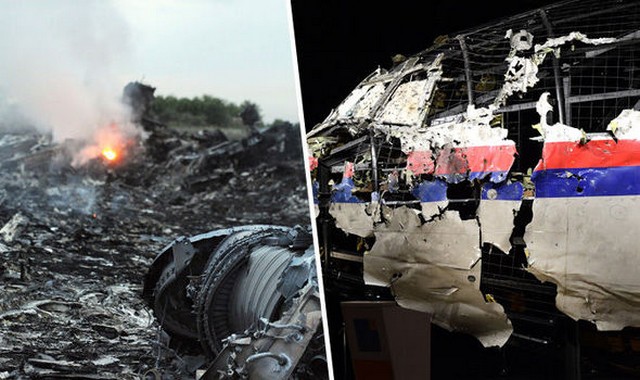
The newly released documentary directed by Yana Yerlashova and independent Dutch investigator Max van der Werff proves beyond a doubt that Ukraine and its Western partners did all that they could to cover up the true cause of MH17’s tragic downing half a decade ago, introducing new evidence and testimonies that cast serious doubt on the “official” narrative of what really took place on that dreadful day.

***

The entire world is already aware of the two competing theories about MH17’s downing half a decade ago, with the West insisting that a supposedly Russian-supplied BUK surface-to-air missile accidentally destroyed the passenger aircraft while Moscow has always maintained its innocence and claimed that it’s being framed as part of a politically motivated cover-up. Most people have already made up their minds about what they think really happened on that dreadful day, but those who doubt that an actual conspiracy took place might finally reconsider their views after the newly released documentary by Yana Yerlashova together with Dutch investigator Max van der Werff.

The “official” narrative blames Russia for this tragedy, but it’s since been revealed through the new evidence and testimonies that active efforts involving a broad array of countries were undertaken from the get-go to paint Moscow as the culprit despite there being no facts whatsoever to back up that provocative claim.

“MH17 – Call For Justice” sheds light on the dark truth of what happened immediately after the plane’s downing, with journalist John Helmer’s summary of the 28-minute-long documentary pointing out the key takeaways for those who don’t have the time to watch it in full. The video powerfully includes a brief interview with Malaysian Prime Minister Mahathir, who had earlier spoken out about the cover-up and reaffirms that Russia was blamed for what happened even before any information was conclusively known about the incident.

Click here for the video.

The Prime Minister of Malaysia Tun Dr. Mahathir Mohamad also revealed that the West tried to prevent his country’s meaningful involvement in the investigation, which is extremely scandalous, to say the least. The Malaysians weren’t going to be deterred in their quest for justice, however, as the documentary includes a testimony from Colonel Mohamad Sakri, the head of the Malaysian team, disclosing that he secretly took a small team to Donetsk to gather evidence from the site after Poroshenko’s officials originally blocked them from doing so.

Malaysia’s possession of the black boxes ensured that the country would know the truth about what really occurred, which explains why Colonel Sakri also said that both the FBI and the Ukrainian government desperately tried to convince him to hand this evidence over to them immediately afterwards. He rightly refused, and that’s why his government never jumped on the bandwagon of blaming Russia since they were aware that there’s no conclusive evidence proving its complicity in this affair. This carries immense normative weight that has unfairly been ignored by the Mainstream Media when discussing this case, though it’s understandable why they wouldn’t want to draw attention to it since that “inconvenient fact” dismantles their anti-Russian infowar. It also would make more people across the world question why they weren’t made aware of any of this in the first place, which in today’s populist-driven environment could produce more anti-elite outrage than ever before.

Few independent investigators have done as much to reveal the truth about MH17 as Yana Yerlashova and Max Van den Werff, who have done the entire world an enormous service with their latest documentary which has proven once that the Mainstream Media narrative was nothing but a politically motivated lie to blame Moscow while deflecting attention from Kiev and its probable culpability in causing this tragedy.

Those who already knew this won’t be surprised, but there are nevertheless many more who had no idea about this side of the story, which is why this documentary is a much-watch and should be shared with as many people as possible, especially on social media so that others can become aware of the evidence and testimonies that his work includes in order to finally make up their minds about what really happened.

*

Note to readers: please click the share buttons above or below. Forward this article to your email lists. Crosspost on your blog site, internet forums. etc.

Andrew Korybko is an American Moscow-based political analyst specializing in the relationship between the US strategy in Afro-Eurasia, China’s One Belt One Road global vision of New Silk Road connectivity, and Hybrid Warfare.

25 July 2019

Source: www.globalresearch.ca

Iran – Seizure of a British Tanker – more than Tit for Tat

By Peter Koenig

The British-flagged tanker “Steno Impero”, heading for Saudi Arabia, was seized on Friday, 19 July 2019, by the Islamic Revolutionary Guard Corps (IRGC), in the Strait of Hormuz, after it rammed an Iranian fishing boat, whose distress call it ignored.

The tanker was taken to an Iranian port, because it was not complying with “international maritime laws and regulations,” Iran’s Revolutionary Guard said. Most importantly, the ship did not respond to several warnings from helicopters and Iranian boats, as apparently it turned off its transponder. How could that happen under control of professional sailors, other than as an open provocation.

Shipping safety in the Strait of Hormuz is crucial. Between 20% and 30% of the world’s hydrocarbons are shipped through this narrow passage of international water way before entering the Gulf of Oman. The strait is closely watched by Iran, as it is of utmost security concern for Iran.If this passage were to be closed due to conflict, it could bring down the world economy.

Do those that play these provocations, the UK as a handler dancing to the strings pulled by of Washington, realize what’s at stake? – Do they want to bring the Middle East to the brink of war? A regional war that could easily convert into a world war? – That may well be the longer-term intention. In the short-run, though it looks like pushing the escalation to a point where US ‘Client Europe’ may be discouraged from insisting on maintaining their part of the Iran Nuclear deal, or the Joint Comprehensive Plan of Action (JCPOA), and to blackmail Iran into a bilateral negotiation with the US on Iran’s nuclear program.

The first objective may be achieved; the second – no way. Iran is not falling for such fraud, especially with the country that pulled unilaterally out of the deal that was negotiated for two years (since November 2013) before it was signed in Vienna, Austria on 14 July 2015, by the 5+1 (the five permanent members of the UN Security Council – China, France, Russia, UK and US – plus Germany – and the European Union, and of course Iran).

Not only did President Trump, guided by his buddy, Israel’s Netanyahu, tear up the agreement unilaterally, but he also reinstated one of the most severe economic sanctions programs on Iran, plus all the western lies and smear propaganda launched against Iran. It is sheer insanity to believe that Iran would under these circumstances go to the negotiating table with her hangman. That will not happen. But war tensions are being further raised which is fully in the direction of the war criminal-in-chief, John Bolton’s dream, ever since the invasion in 2003 of Iraq which he also helped to engineer. It is like this sick man’s raison d’être. Mass killing by war and conflict is in his genes. The world can only hope that Trump, or those who pull the strings behind Trump, will eventually dismiss Bolton.

Iran has already said that they will launch a full investigation into the British tanker’s, Steno Impero’s, sailing off course and ramming a fishing boat – and that the UK is invited to participate in the investigation.

Backtracking to 4 July, when the British Royal Marines seizedthe Iranian tanker Grace 1 in Spanish waters, off the coast of Gibraltar, under the pretext that the super tanker was carrying oil destined for Syria which was under the EU’s sanction program. Iran’s Foreign Minister Javad Zarif, denied that the oil was destined for Syria; did however not elaborate further.

Spanish Foreign Minister, Mr. Josep Borrell, said that Washington informed Spain about the impending capture by the UK of the Iranian tanker in Spanish territorial waters. Spain could have said ‘no’ – but didn’t. Why not? Afraid of sanctions?

The UK did the bidding of Washington against her own interests, because the UK was one of three EU countries – Germany, France and UK – who at least made appear as if they wanted to preserve their part of the Iran Nuclear Deal. Mind you, this is not for love of Iran, but pure business interest. Iran should be aware of that – meaning, Iran could be shot in the back at any time by the EU, by the very countries that try – or make appear they try – to circumvent the US sanctions.

What happened on 4 July was an act of sheer piracy, nothing less. A crime on high seas which the west just tolerated. The vessel is still under British control, while the arrested crew has since been liberated. Aside from the fact that Iran’s capture of the British oil tanker may look like tit for tat – Iran acted fully legitimate, as it’s Revolutionary Guard is policing the Strait of Hormus for security of other ships sailing through the narrow passage.

In one of his typical outbreaks of a madman, President Trump warned in a televised ‘fire and fury’ speech at the white House on Friday 19 July, “We have the greatest ships – the most deadly ships, we don’t want to have to use them. We hope for [Iran’s] sake they don’t do anything foolish. If they do, they will pay a price like nobody’s ever paid.”

Why would Trump not use the same language to warn the Brits for their pirating an Iranian vessel in Spanish waters? – well, we know this is the crazy, unbalanced and off-kilter world we live in. Its so normal, people in the west take this imbalance and injustice, this double-talk and hypocrisy as the gospel.

All indications are however, while building up a war scene, the US are seeking justification for what they had already called out – an alliance of the willing to send war ships to the Straight of Hormus to assure safe passage for ‘everybody’. Well, this would certainly not fly with Iran. But important to know is what’s behind this idea. Imagine the US navy and her puppet allies controlling the sea passage through which almost a third of all the world’s hydrocarbon sails every day – Washington would have one more tool to sanction, strangle countries they feel do not bend enough to Washington’s dictate. Their oil shipment would be withheld, to bring their economy down – this might be the most effective weapon yet.

World beware! Even those who are in favors with the self-declared hegemon, you never know when the pendulum may swing the other way, simply because the Israel-driven US of A may be on a whim aggression course against an imaginary enemy, or corporate interests are shifting — in conclusion nobody would be safe – and, the world economy could come crashing down, like a house of cards, making 2008 look like a walk in the park.

Peter Koenig is an economist and geopolitical analyst.

25 July 2019

Source: countercurrents.org

Killing Tariq: Why We Must Rethink the Roots of Jewish Settlers Violence

By Dr Ramzy Baroud

Seven-year-old Tariq Zabania from Al-Khalil (Hebron) was killed on the spot when an Israeli Jewish settler ran his car over him on July 15. Little Tariq’s photograph, lying face down on the road, was circulated on social media. His untimely death is heartbreaking.

Tariq’s innocent blood must not go in vain. For this to happen, we are morally obliged to understand the nature of Jewish settler violence, which cannot be viewed in isolation from the inherent racism in Israeli society as a whole.

We are all often guilty of perpetuating the myth that militant Jewish settlers in the occupied Palestinian territories are a different and distinct category from other Israelis who live beyond the so-called “Green Line”.

Undoubtedly, the violent mentality that propels Israeli society, wherever it is located, is not governed by imaginary lines but by a racist ideology, of which disciples can be found everywhere in Israel, not just in the illegal Jewish colonies of the West Bank.

Israel is a sick society and its ailment is not confined to the 1967 Occupation of East Jerusalem, the West Bank and Gaza.

While Palestinians are imprisoned behind walls, fences and enclosed regions, Israelis are a different kind of prisoners, too. “A man who takes away another man’s freedom is a prisoner of hatred, he is locked behind the bars of prejudice and narrow-mindedness,” wrote the late anti-Apartheid hero and long-time prisoner, Nelson Mandela.

It is this racism and bigotry that makes Tariq invisible to most Israelis. For most Israelis, Palestinian children do not exist as real human beings, deserving of a dignified life of freedom. This callousness is a defining quality, common among all sectors of Israeli society – right, left and center.

An example is the terrorist attack carried out by Jewish settlers against the Palestinian Dawabshe family in the village of Duma, in the northern West Bank in July 2015, resulting in the death of Riham and Sa’ed, along with their 18-months old son, Ali. The only member of the family spared that horrific death was Ahmad, 4, who was severely burned.

This cruelty was further accentuated in the episodes that followed this criminal incident. Later that year, Israeli wedding guests were caught on tape while dancing with knives, chanting in celebration of the death of the Palestinian baby.

Three years later, as the Dawabshe family members were leaving an Israeli court, accompanied by Arab parliamentarians, they were greeted by a crowd of Israelis chanting “Where is Ali? Ali’s dead” and “Ali’s on the grill”.

The passing of time only cemented Israelis’ hatred of a little child whose only crime was his Palestinian identity.

The only survivor, Ahmad, was punished thrice: when he lost his whole family; with his severe burns and when he was denied compensation. The then Israeli Defense Minister, Avigdor Lieberman, simply resolved that the boy was not a “terror victim.” Case closed.

Although the Dawabshes were killed by Jewish settlers, the Israeli court, army and political system all conspired to ensure the protection of the killers from any accountability.

This was no different in the case of Israeli soldier, Elor Azaria, who, on March 24, 2016, killed an unconscious Palestinian man in Hebron. In his defense, Azaria insisted that he was following army manual instructions in dealing with alleged attackers, while top Israeli government officials came out in droves to support him.

When Azaria was triumphantly released following only nine months in jail, he was hailed by many Israelis as a hero. Possibly, he will have a successful career in politics should he decide to pursue that route. In fact, he was courted by Israeli politicians to help them garner more votes in April’s general elections.

Condemning solely Jewish settlers while sparing the rest of Israeli society is equivalent to political whitewashing, one that presents Israel as a healthy society prior to the occupation of the West Bank and Gaza. This view presents Jewish settlements as a cancerous disease that is eating up at the otherwise proud and noble achievements of early Zionists.

It is convenient to classify Jewish settlers as rightwing extremists and to link them with Israel’s ruling right-wing political parties. But history proves otherwise.

It was Israel’s Labor Party that created the settlement projects originally, soon after the colonization of the West Bank. Some of Israel’s largest, and most militant colonial enterprises, in occupied East Jerusalem – Ramat Eshkol, Gilo, Ramot and Armon Hanatziv – are all the creation of the Labor Party, not the Likud.

Neither is the ‘settler’ a new phenomenon. Historically, the early settlers who preceded the establishment of Israel in 1948 were idealized as true Zionists, celebrated as “cultural heroes” – the Jewish redeemers, who eventually ethnically cleansed historic Palestine from its native inhabitants.

“The original Labor movement,” wrote Amotz Asa-El in The Jerusalem Post, “never thought settling beyond the Green Line was illegal, much less immoral.” If there was any debate in Israel regarding settlements, it was never truly concerned with the issue of legitimacy or legality, but practicality: whether these colonial projects can be sustained or defended.

Protecting the settlements is now the overriding task of the Israeli occupation army. The Israeli human rights organization, B’Tselem, which monitors the conduct of the Israeli army and Jewish settlers in the West Bank, explained the nature of this relationship in a report published in November 2017.

“Israeli security forces not only allow settlers to harm Palestinians and their property as a matter of course – they often provide the perpetrators escort and back-up. In some cases, they even join in on the attack,” B’Tselem wrote.

Another Israeli organization, Yesh Din, concluded in a report published earlier that 85% of cases involving settler violence against Palestinians are never pursued by law. Of the remaining cases, only 1.9% led to conviction, which is likely to be inconsequential.

Jewish settler violence should not be analyzed separately from the violence meted out by the Israeli army, but seen within the larger context of the violent Zionist ideology that governs Israeli society entirely.

This violence can only end with the end of the racist ideology that rationalizes murder, like that of little Tariq Zabania.

Ramzy Baroud is a journalist, author and editor of Palestine Chronicle.

25 July 2019

Source: countercurrents.org

A Zionist At The Helm

By Jafar M Ramini

This is the morning after the night before. This is the reality check. This is the most ominous thing that could happen to us Palestinians at this stage of our struggle against occupation and persecution. Britain has its new Prime Minister.

Who is Boris Johnson? The shambolic, disheveled, stuttering Boris Johnson we all know is but an act. it is a put up job to hide the real ambitious, narcissist and vain man who will not stop at anything, no matter what it is, to achieve his goal. Witness what Martin Hammond, his house-master at Eton wrote to Boris’s father in 1982 while the boy Johnson was under his care.

“Boris really has adopted a disgracefully cavalier attitude to his classical studies . . . Boris sometimes seems affronted when criticised for what amounts to a gross failure of responsibility (and surprised at the same time that he was not appointed Captain of the School for next half): I think he honestly believes that it is churlish of us not to regard him as an exception, one who should be free of the network of obligation which binds everyone else.”

So this is our new Prime Minister. He has a mixed heritage. He had a Turkish Muslim great grandfather on his father’s side and a Lithuanian Jewish Rabbi great grandfather on his mother’s side. He was born in New York, brought up in England, educated at Eton and finished off at Oxford via a must-do for aspiring Zionists, a spell at a Kibbutz. He was in Occupied Palestine in 1984 where he acquired his Zionist education and credentials.

“I am a passionate Zionist. I am a supporter of Israel. I believe in its existence. I’ve been on a kibbutz for heaven’s sake.” speaking on LBC radio, July 23 2019.

He is known for his strong views about the right of Israel to exist. Speaking in the House of Commons on the centenary of the Balfour Declaration, Johnson said in 2017: “A century after those words were written, I believe that the Balfour Declaration paved the way for the birth of a great nation. The State of Israel has prevailed over every obstacle, from the harshness of nature to the visceral hostility of its enemies, to become a free society with a thriving and innovative economy and the same essential values that we in Britain hold dear.

He never stopped to demonstrate his passion for Zionism and Israel. He does not shy away from ridiculing any supporters of Palestinian rights, specially the BDS movement. He has continuously criticised calls for a boycott of Israeli goods, describing the campaign as “completely crazy” and promoted by a “few lefty academics in corduroy jackets pursuing a cause”.

Welcome to the new Britain. Let’s hope we survive it.

Jafar M Ramini is a Palestinian writer and political analyst, based in London, presently in Perth, Western Australia.

25 July 2019

Source: countercurrents.org

Kabul seeks explanation on Trump’s boast: Wiping out Afghanistan off the face of the earth

By Countercurrents Collective

The Afghanistan government requested Tuesday U.S. President Donald Trump explain his boast of terminating the Afghan war in 10 days by wiping out Afghanistan and its 10 million residents.

“The Afghan nation has not and will never allow any foreign power to determine its fate,” Sediq Sediqqi, the spokesperson for the President of Afghanistan, said in a statement.

The statement said: “Given the multifaceted relationship between Afghanistan and the United States, the Government of the Islamic Republic of Afghanistan calls for clarification on the US President’s statements.”

The statement said: “The government underscores that foreign heads of state cannot determine Afghanistan’s fate in absence of the Afghan leadership.”

The strong Afghan response comes after Trump, following a meeting with Pakistan Prime Minister Imran Khan at the White House on Monday, said that Pakistan could help broker a political settlement to end the nearly 18-year-old war in Afghanistan.

“If we wanted to fight a war in Afghanistan and win it, I could win that war in a week. I just don’t want to kill 10 million people,” Trump said, seated beside Imran Khan at the White House. “I have plans on Afghanistan, that if I wanted to win that war, Afghanistan would be wiped off the face of the Earth. It would be gone. It would be over in – literally, in 10 days, and I don’t want to do – I don’t want to go that route.”

Fallout from the U.S. President’s remarks rippled through a tense and confrontational meeting in Kabul between the U.S. special representative for Afghanistan reconciliation, Zalmay Khalilzad, and Afghan President Ashraf Ghani.

During the meeting, Afghan officials said Trump’s comments were “unacceptable”, given the relationship between the U.S. and Afghanistan.

Afghan officials also told Khalilzad that Trump should show more respect for Ghani’s leadership. The State Department declined to comment.

The U.S. has been pursuing a diplomatic strategy to end the 18-year war in Afghanistan, holding on-again, off-again talks with the Taliban in Qatar to reach a peace deal. Earlier this month, a group of prominent Afghans – including some Afghan government officials acting in a personal capacity — held two days of joint talks with the Taliban, unofficially agreeing on a roadmap on how they might reach a peace deal.

Afghanistan government has been excluded from talks between the U.S. and the Taliban.

Afghanistan accuses Pakistan of supporting the insurgency.

After the September 11 attacks in New York City, the U.S. government invaded Afghanistan as part of the so-called “war on terror”, with the objective to dismantle Al-Qaeda by removing the Taliban from power.

The U.S. is hoping Pakistan can help push the Taliban to directly meet with the Afghan government.

Khalilzad’s visit began just hours after Trump’s comments. He announced his arrival on Twitter Tuesday and said that he was there to focus on “achieving an enduring peace that ends the war, ensures terrorists do not use Afghanistan to threaten the US, honors the sacrifices that US, our allies & Afghans made, and cements an enduring relationship w/ Afghanistan.”

Afghan officials have also been concerned about the role that Pakistan has played in the peace negotiations with the Taliban.

While Trump described Pakistan as a helpful force in pushing ahead the peace process with the Taliban during his press appearance with Khan, that is not how Afghanis view Pakistan’s influence.

The Afghan government sees Pakistan as harboring and supporting terrorism in Afghanistan, including its support for the Taliban.

U.S. Secretary of State Mike Pompeo said last month that the U.S. is prepared to remove American troops from Afghanistan, but has not agreed on a timeline.

Pompeo said he “hopes” a deal will be reached by September 1, ahead of the Afghan presidential elections later that month.

The Afghan government was the second country since Monday to push back against Trump’s remarks made during that Oval Office meeting with Khan.

Trump had claimed that India’s Prime Minister Narendra Modi personally asked him if he would like to be a mediator in the decades-long conflict between India and Pakistan over the Kashmir region.

A spokesman for India’s Ministry of External Affairs, Raveesh Kumar, denied Trump’s claim, saying on Twitter that “no such request has been made” by Modi.

24 July 2019

Source: countercurrents.org

How Iran’s Soviet Era Air Defense System Shot Down America’s Global Hawk UAV over Strait of Hormuz

By Prof Michel Chossudovsky

On the night of June 19-20, Iran shot down a US Global Hawk reconnaissance UAV over the Strait of Hormuz.

President Trump responded by calling for retaliatory air strikes against Iran.

In response to the President and Commander in Chief’s instructions, US Central Command (CENTCOM), confirmed the deployment of US Air Force F-22 stealth fighters at CENTCOM’s Middle East forward headquarters at the al-Udeid airbase in Qatar, with a mandate to “defend American forces and interests” in the region against Iran. (See Michael Welch, Persian Peril, Global Research, June 30, 2019).

And then Commander in Chief Donald Trump decided spontaneously to retract his decision to bomb Iran, while intimating in his tweet that:

“any attack by Iran on anything American will be met with great and overwhelming force. In some areas overwhelming will mean obliteration”

According to the Washington Post

Early in the day, the president said he called off the attack at the last minute because it would have killed 150 people in retaliation for the downing of the drone. “We were cocked & loaded to retaliate last night on 3 different sights when I asked, how many will die,” he tweeted.

But administration officials said Trump was told earlier Thursday how many casualties could occur if a strike on Iran were carried out and that he had given the green light that morning to prepare the operation.

The confusion reinforced concerns about the Trump administration’s credibility at a time of military crisis.

Trump’s concern for casualties was a smokescreen. What the Pentagon was concerned with was not only Iran’s ability to defend itself in the case of a US attack, but also its potential to strike back, targeting US military facilities in the Middle East.

In a bitter irony, the “high tech” Global Hawk AUV (“with state-of-the-art electronic protection”) was shot down by the “low tech” Raad anti-aircraft missile system, “which bears a striking resemblance to the outdated Soviet Kub (Cube) system”.

“That does not look good”. Visibly there was also an issue of self-esteem, face saving on the part of Donald Trump and failure of US advanced weapons systems.

While Iran possesses Russia’s S-300 air defense system (and will soon be acquiring Russia’s state of the art S-400), Tehran chose not to deploy its most advanced air defense system in the Strait of Hormuz:

The Raad has a modified homing head, and Iran may have received the homing head technology from Russia.This may explain why the US drone outfitted with state-of-the-art electronic protection failed to escape the attack of the Iranian missile.” (Dmitriy Sudakov, Pravda Report, July 15, 2019)

Sudakov’s analysis published by Pravda provides important details regarding the June 19-20 incident, focussing on Iran’s air defense capabilities as well as the vulnerability of the US in the case of an air attack.

It just so happens that the 15-ton giant drone worth $220 million with a wingspan of 40 meters failed to escape from an Iranian missile. Iran has ceased to reckon with the United States. Amir-Ali Hajizade, the head of the Revolutionary Guard’s aerospace division, said that there was a P-8 Poseidon military aircraft flying next to the US UAV. The P-8 Poseidon was carrying 35 people on board. The military aircraft, the official said, invaded Iranian air space too, but Iran chose not to shoot the airplane down. Instead, Iran shot down the drone.

While the drone was brought down with an upgraded version of an outdated Soviet era technology, Iran is in possession (since 2015) of the S-300 Air defense system, which is considered to be more advanced than the US Patriot system:

In 2016, Iran bought four divisions of S-300 Favorit anti-aircraft missile systems from Russia. Each division includes 12 launchers. The Favorit (“Favorite”) range reaches 200 km; the system can easily eliminate all aircraft, including medium-range missiles.

It is worthy of note that Russia readies to launch a new generation of air defense systems known as S-500 Prometei (Prometheus), while the United States has not been able to design anything that could be superior to Russia’s S-300 missile complex. The THAAD system has a different purpose – to strike trans-atmospheric ballistic missiles. The Patriot system clearly lags behind the S-300. (Dmitriy Sudakov, Pravda Report, July 15, 2019)

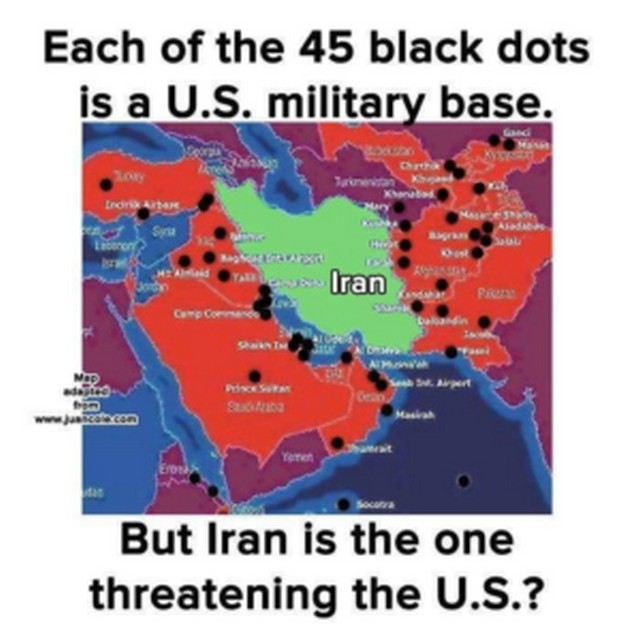
According to Sudakov, “Iran can launch a total of about 400 S-300 missiles to distances up to 200 kilometres and 1,500 missiles – up to 40 kilometers.” What this suggests is that Iran has the ability to trigger extensive damage to US military installations in The Persian Gulf (including US military bases located in Kuwait, Bahrain and Saudi Arabia).

*

Note to readers: please click the share buttons above or below. Forward this article to your email lists. Crosspost on your blog site, internet forums. etc.

Featured image is from Mil.ru

16 July 2019

Source: www.globalresearch.ca

Judaization of Jerusalem: Could it get any worse?

By Baraah Darazi

Palestinians recently marked 52 years since Israel started occupying the eastern part of Jerusalem, including Al-Aqsa Mosque. However, celebrating Naksa Day this year has come with a new challenge, namely the so-called peace plan being tailored by the Donald Trump administration to allegedly resolve the Palestinian-Israeli conflict and the economic workshop in Bahrain declared as the first part of this plan. An old challenge, however, remains intact and can be traced to the Arab official stance, which is showing further deterioration away from the Palestinian issue and more inclination toward warm relations with Israel.

Between 1948 and 2019, Jerusalem endured much under Israeli occupation. Its western part has been completely cleansed of its Arab presence and rendered a Jewish area, while its eastern part is being subjugated to an unrelenting process of Judaization led by Israel to change its face and identity on the demographic, religious and cultural levels. To this end, Israel has employed different tools to turn Jerusalem into a city of Jewish majority and sought to use it as the “eternal capital of the Jewish people.” On the demographic level, the occupation has embraced a policy aimed at diminishing the Arab presence in Jerusalem, estimated in 2016 at 38 percent, to the lowest possible point. Different means have been incorporated to achieve this goal, including settlement construction and expansion, restricting building permits and demolishing Jerusalemite houses to serve the settlement enterprise.

The occupation in numbers
Numbers say much here: A report published by Haaretz in 2015 mentioned that only 7 percent of the building permits issued in Jerusalem between 2011 and 2015 went to Palestinian neighborhoods. While Jerusalemites need around 2,000 new housing units annually, half of them today live in unlicensed homes. Since 1967, Israel has destroyed more than 5,000 houses and just recently, its high court granted municipal authorities the right to demolish all 60 buildings in the Silwan neighborhood of Wadi Yasoul in addition to approving the demolition of 16 apartment buildings comprising around 100 apartments in the Wadi al-Hummus neighborhood of Sur Baher. Other means include stripping Jerusalemites of their permanent residency status and expelling them from their city. Noticeably, Israel has stripped more than 15,600 Jerusalemites of their residency status since 1967; whereas the number of those affected by this measure is far beyond this figure.

The separation wall surrounding the eastern side of Jerusalem is yet another tool to pursue demographic changes as its route is planned to put entire Arab neighborhoods, home to around 100,000 Jerusalemites, on the side of the West Bank. Key lawmakers in the Israeli Knesset have proposed that these neighborhoods be subject to regional authority and removed from the municipal borders of the occupation.

In addition to the above, Israel has crowned its Judaization policy with a total neglect of Jerusalemites’ rights as stipulated in international law. The dire situation in the eastern part of Jerusalem was recently criticized by Israel’s State Comptroller, regardless that his stance is based on the idea that Jerusalem is unified under Israeli sovereignty and its eastern part should not be receiving fewer services than those received in the western part.

Thus, the report released on June 2, 2019 denounced the lack of social services and educational opportunities as well as neglected sanitation and high poverty rates. It also talked about suspicions that the Interior Ministry’s Population and Immigration Authority has not made sufficient effort to provide efficient and realistic services to the residents of the eastern side of Jerusalem.

In addition to the demographic mutation in Jerusalem, Israeli attempts are underway to change the city’s Arab and Muslim aspects through imposing religious and cultural changes. This is well demonstrated in threats imposed on Christian holy sites and in the targeting of Muslim holy sites, particularly Al-Aqsa Mosque, which has been subjected to a dangerous Judaization policy to serve the claims of temple movements.

Israel’s policy targeting Al-Aqsa can be summarized in its relentless attempts to change the historic status quo predating the Israeli occupation of the mosque in 1967, through the attempts to impose spatial and temporal division and place it under Israeli sovereignty while terminating Jordanian custodianship.

Cultural Judaization is also evident in the so-called national parks seeking to serve settlers and biblical narratives, and in changing the Arab names of villages, sites and streets in Jerusalem into Hebrew names. In this context, the occupation has Judaized more than 22,000 names in Jerusalem since 1948, and only lately the Israeli Municipality decided to name five streets in the Silwan neighborhood after Jewish rabbis.

Still, this is not the whole story and while this is the current trend embraced by Israel, the future does not seem to be brighter. A report published recently by the International Crisis Group has portended that, in 2045, Jews would be a minority in Jerusalem, which would push Israel to embrace more measures to prevent such a situation from crystallizing. Namely, it would excise Palestinian neighborhoods located east of the Separation Wall, entrenching its de facto annexation of most of eastern Jerusalem.

A bombshell plan
As the scene in Jerusalem is overwhelmed with Judaization, U.S. President Donald Trump and his administration have adopted an approach completely biased in favor of the Israeli narrative and interests.

This was revealed, for example, in the recognition of Jerusalem as the capital of Israel, moving the U.S. Embassy to the occupied city, and the ongoing efforts to cancel the right of return. The economic workshop in Bahrain, held in June 2019, is yet another demonstration of American keenness on Israeli interests as it is meant to have Palestinians trade their rights for economic investments that would eventually serve the interests of the occupation. Even worse is the Arab official stance toward unfolding developments, accepting American plans in the region and embracing normalization with Israel while it continues to infringe on Palestinian rights.

This environment has made Israel more comfortable about proceeding with further Judaizing Jerusalem, thus ratcheting up its efforts to impose more facts on the ground. Expectations for Jews to become a minority in the city make it more likely for Israel to work exhaustively to prevent the development of such a change in the demographic balance, especially after Knesset elections in September 2019 and before Trump is completely engaged in the presidential race scheduled for 2020. In light of this, one sentence says it all about Judaization in the eastern side of Jerusalem: Tougher days are yet to come.

23 July 2019

Source: palestineupdates.com

Non-Aligned Movement Demands End of Sanctions against Venezuela

By teleSUR

The Non-Aligned Movement (NAM) presented a statement condemning U.S. hostile policies against Venezuela.

21 Jul 2019 – Non-Aligned Countries demanded today that the United States Government immediately lift the economic and financial sanctions imposed on Venezuela.

In a statement signed by the members of the international organization, which met for two days in Caracas, the delegations of 120 NAM countries indicated that only Venezuela can decide its fate, no other State can intervene in accordance with the United Nations Charter.

NAM countries reject foreign intervention in the South American country and reiterated their commitment to redouble efforts aimed at channeling the Government and the Venezuelan opposition to find a peaceful solution to the problems of the country.

The group of countries supports the Montevideo mechanism, the mediation of Norway and other mechanisms that seek stability in Venezuela.

Prior to reading the statement in support of Venezuela, several representatives of the entity participated in a session held on Sunday morning, in the framework of the Ministerial Meeting.

Russian Deputy Minister Sergei Riabkov said that US measures are suffocating Venezuela.

For his part, the foreign minister of the Islamic Republic of Iran, Javad Zarif, said that the sanctions of the United States against sovereign countries are part of pure terrorism.

22 July 2019

Source: www.transcend.org

July 1995 Srebrenica Genocide: A Mirror for All Europeans

By Dunja Mijatović

This happened with the complicity of a passive international community which knew what was happening but chose to look away.

Nermin Subašić was only 19 years old when paramilitary groups butchered him and scattered his bones in and around Srebrenica. Nermin was not the only one. More than 8,300 men, women and children were brutally slaughtered during the Srebrenica genocide, one of the darkest most heinous pages of Europe’s recent history. Their stories might have been forgotten if it were not for the Mothers of Srebrenica and Žepa.

These mothers, wives, and sisters have wiped away their tears and given their suffering a purpose. Not seeking revenge, for 24 years they have been relentlessly calling for justice. And they have a message for us: stop dehumanising the Other.

Many do not know and do not want to know about the Srebrenica genocide. Others think that it was a local issue, an accident of history that does not bear relevance for the rest of the world. This mindset is not only one of disinterest or relativism: it also reveals the underlying anti-Muslim feeling so common in Europe. The Srebrenica genocide undeniably had a religious matrix. Those human beings were killed only because they were Muslims. And this happened with the complicity of a passive international community which knew what was happening but chose to look away.

Those human beings were killed only because they were Muslims.

In this sense, the Srebrenica genocide is a mirror in which all of us Europeans should take a long, hard look at ourselves. Europe is certainly not on the verge of seeing another Srebrenica occurring any time soon. However, the resurgence of nationalist movements stomping across our continent and proclaiming themselves the defenders of a “Christian Europe of traditional values” does not bode well for the peaceful future of our society.

The defence of a “Christian Europe” does not bode well

In this context Muslims are, once again, among the preferred targets not only of extremist groups, but also of mainstream politicians. For centuries Europeans have looked at Muslims with wary eyes. However, since the string of terrorist acts which began with the attacks on the World Trade Center in New York on 9/11, all Muslims have been tarred with the same brush and have been living in increasingly hostile societies.

Over the past two decades, reports have consistently warned against raising anti-Muslim feelings and practices in Europe. However, despite the compelling evidence, the situation has not improved. A report of the experts of the European Commission against Racism and Intolerance published a few weeks ago has confirmed this and warned against the persistence of anti-Muslim feelings in most Council of Europe member states.

One only has to read reliable news sources to find evidence for this. In many European countries, Muslim women are frequently assaulted for wearing face veils or headscarves; mosques are being attacked and cemeteries desecrated; discriminatory practices make it harder for Muslims to get a job, a house or citizenship. Law enforcement officers still engage in the illegal practice of stopping and searching Muslims based only on their appearance. Since most new immigrants are from countries of Muslim faith, they are met with the same distrust and suspicion that European Muslims have endured for decades now.

Is this clear to Europe’s political leaders and decision makers?

Muslims are not alone. Hate incidents continue to scar the lives of Jews and Roma, who are also among the preferred scapegoats of those who still separate humankind into “races”, classes and hierarchies. This is compounded by a toxic, nationalistic, irresponsible and cynical discourse spread by many prominent political leaders in Europe. Where all this can lead is very clear to me and to many of my compatriots, but the question is if this is clear to the political leaders and decision makers in Europe and beyond?

I grew up in a country that no longer exists because of those who fanned the flames of ethnic hatred and division. I saw the brutality and bloodshed of rampant nationalism, the division it sows and the subtle ways in which it seduces with false promises.

It took its final form in deliberate acts intended to destroy a group of people – before the unseeing eyes of those who did not feel concerned.

By now, history should have taught us that such a situation only brings destruction. However, it seems that we have not listened carefully enough.

If we want to reverse this dangerous trend, we had better draw the right lessons from the Srebrenica genocide. It did not happen by accident and began well before its full horror became visible. It started when human beings were singled out because of their identity. It took shape with public discourse that dehumanised the Other and marginalised critical voices. It took its final form in deliberate acts intended to destroy a group of people – before the unseeing eyes of those who did not feel concerned by the situation.

Stand up now

As with any other genocide, what happened in Srebrenica has a meaning that goes well beyond the borders of where it took place. It tells us a cautionary tale. One that warns us that if we accept, condone or ignore attacks against specific groups of people, our societies will provide fertile ground for the seeds of hate to grow.

The message of the Mothers of Srebrenica and Žepais that we must not fall prey to this mistake again. They tell us that if we want to live as equals in diversity, if we want to live free from indoctrination, hate and violence, if we want future generations to have the same hopes and expectations as us, then we must stand up now.

We must defend the values and principles of equality, respect, diversity and inclusiveness on which Europe is based. The time has come to take sides and work together to replace the seeds of hate with those of respect.

Dunja Mijatović is the Council of Europe Commissioner for Human Rights and former Organisation for Security and Co-operation in Europe representative on freedom of the media.

22 July 2019

Source: www.transcend.org