Just International

Chelsea Manning faces $441,000 in fines and another year in jail for refusing to testify against WikiLeaks

By Niles Niemuth

Federal District Judge Anthony Trenga rejected a motion Monday from imprisoned whistleblower Chelsea Manning to reconsider the imposition of daily fines for her principled refusal to testify before a grand jury impaneled to bring frame-up charges against WikiLeaks founder and publisher Julian Assange.

Manning has been held in contempt of court for 149 days in the Alexandria City Jail. She now owes $40,000 in fines and is being assessed $1,000 for every day she refuses to testify, up from $500 per day assessed in her second month of confinement.

Manning expects to spend approximately 400 more days in jail if the grand jury does not conclude before its 18-month term is up. This means she would face a total of $441,000 in fines.

The 31-year-old former Army intelligence analyst is being vindictively pursued by the Trump administration for her role in exposing US war crimes in Afghanistan and Iraq. She leaked to WikiLeaks hundreds of thousands of military war logs, diplomatic cables and the infamous Collateral Murder video, which showed an Apache helicopter airstrike in Baghdad that killed at least a dozen civilians, including two Reuters journalists.

Manning was already convicted in 2013 on a number of charges, including under the Espionage Act. She served seven years in military detention, including one year in solitary confinement, before her 35-year sentence was commuted by President Barack Obama in 2017 as part of a cynical effort to burnish his record just before leaving office.

Assange is currently being imprisoned at Belmarsh Prison in England after being illegally snatched by police from the Ecuadorian embassy in London where he had been granted asylum. He was quickly convicted on a bogus bail-jumping charge and is awaiting an extradition hearing February 25 on his rendition to the United States.

Assange currently faces 18 charges, including 17 under the Espionage Act, and up to 175 years in prison for publishing the information which he received from Manning in 2010.

Last month, federal district judge John Koeltl dismissed a civil lawsuit filed by the Democratic National Committee which attempted to smear WikiLeaks and Assange as assets of the Russian government for publishing leaked DNC emails during the 2016 election. The ruling was a vindication of WikiLeaks’s rights as a publisher and exposed the ongoing effort to prosecute Assange over the publication of the documents provided by Manning.

The fact that Manning is still being detained in an effort to compel her testimony indicates that further charges are being considered which would be unsealed once Assange is firmly in Washington’s grips—even though current British and US law does not allow for further charges to be unsealed after a formal extradition request.

The charge which was used to justify the ending of his asylum and removal from the embassy, conspiracy to commit computer intrusion, names Manning as a co-conspirator, raising the prospect that she could also face criminal charges.

However, Manning has not yet been charged with any crime, and therefore cannot legally be punished. Trenga was at pains to insist in his ruling that the fines are merely coercive and not punitive.

Trenga, appointed to the bench by George W. Bush in 2008, ruled that there are no “reasonable grounds” to reconsider the fines since Manning “has the ability to comply with the court’s financial sanctions or will have the ability after her release from confinement.”

Her attorneys have argued that the fines are punitive rather than coercive, since there is nothing which will convince Manning to testify before the current grand jury or any other and since the unprecedented financial penalties threaten her with financial bankruptcy.

Manning has already lost her apartment, has no personal savings and is unable to work while in jail. Her only source of income prior to being incarcerated came from intermittent speaking fees.

In the face of the mounting fines and continued imprisonment, Manning has remained steadfast in her convictions.

“I am disappointed but not at all surprised” by the ruling, she said. “The government and the judge must know by now that this doesn’t change my position one bit.” During her contempt hearing in May, Manning told Trenga that she would “rather starve to death than to change my opinion in this regard.”

At the end of that month she submitted a letter outlining her politically principled objections to the grand jury system in general and its specific use against Assange and WikiLeaks.

“I believe in due process, freedom of the press, and a transparent court system,” Manning wrote. “I object to the use of grand juries as tools to tear apart vulnerable communities. I object to this grand jury in particular as an effort to frighten journalists and publishers, who serve a crucial public good. I have had these values since I was a child, and I’ve had years of confinement to reflect on them. For much of that time, I depended for survival on my values, my decisions, and my conscience. I will not abandon them now.”

The World Socialist Web Site and the Socialist Equality Parties (SEP) affiliated with the International Committee of the Fourth International (ICFI) put out the call in June for the formation of a Global Defense Committee to secure the freedom of Assange and Manning. Protests and interventions to raise awareness about their joint persecution have been organized by the ICFI and other supporters of WikiLeaks around the world, including in England, Australia, Sri Lanka and India.

Time is of the essence for Manning and Assange, whose health, journalist John Pilger reports, is deteriorating and who is being treated worse than a murder suspect. The attack on Manning and Assange is part of a global assault on democratic rights, aimed at silencing journalists and intimidating all those who would expose the war crimes of the imperialist powers.

Manning and Assange’s freedom will not be won through moral appeals to the various governments that are engaged in a conspiracy against them, whether in London and Canberra or Quito and Washington, D.C. Instead, this movement must come from below through a campaign to mobilize the international working class, students, artists, intellectuals and journalists to save the lives of these two courageous individuals.

Originally published by WSWS.org

9 August 2019

Source: countercurrents.org

Listen to People of Jammu & Kashmir: End ‘Reign of Occupation and Terror’

By National Alliance of People’s Movements

National Alliance of People’s Movements (NAPM) unequivocally condemns the indefensible and totalitarian move of the BJP-led NDA Govt. to repeal Article 370 of the Constitution by way of a Presidential Order and introduce a Bill for bifurcation of the state of Jammu and Kashmir into two union territories, not only without but seemingly in violation of the consent of the people and key political actors of the state.

It is also an extremely unfortunate day in our parliamentary politics that some key opposition parties (in Rajya Sabha) as well failed to raise the voice of people of Jammu & Kashmir and succumbed to the majoritarian politics, exposing the political bankruptcy of a section of the ‘Opposition’. However, we place on record our appreciation for those parties who stood by constitutional norms and the people of Jammu & Kashmir and opposed the Ordinance and the Bill.

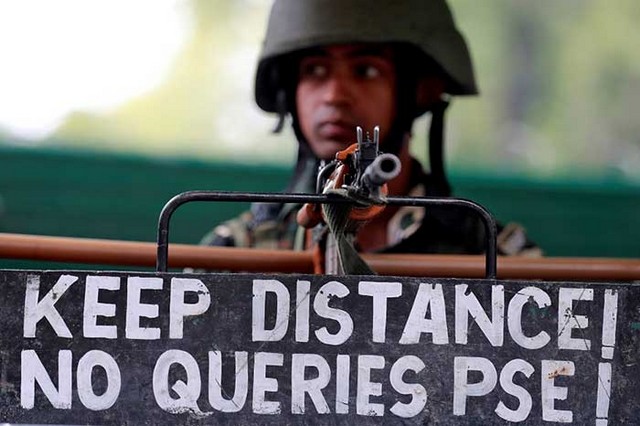
Over the past one week, the entire nation as well as international community has been witnessing with bated breath the ‘actions’ of the Union Government, which kept the Kashmiris and citizens-at-large on tenterhooks and in utter darkness. This included a series of draconian measures like heavy upscaling in deployment of military forces, random frisking of people, arrests of former Chief Ministers and key leaders in J&K, disruption of mobile communication and internet, suspension of civil activity, evacuation of tourists and Amarnath pilgrims in an attempt to terrorise citizens and bulldoze the aspirations of the people of Jammu & Kashmir. It is in such a climate of fear and uncertainty that 370 has been abrogated.

It also needs to be noted that all the scare-mongering at the highest level of the Prime Minister turned out a complete hoax since the motives of this Govt. became crystal clear after the announcement in the Parliament yesterday. It is now evident that the imposition of President’s rule last year and further delay in holding Assembly elections, were all done with a purpose to abrogate Article 370.

This period would undoubtedly go down as one of the darkest days in the history of any democracy and the hurried, authoritarian and unilateral manner in which the Presidential Order and Bill were brought in would, unfortunately, remain as a blot on our seriousness to address the long-standing Kashmir question.

These steps not only violate the basis of conditional accession of Kashmir with the Indian Union in 1947 (which granted a special status to J & K) that was built into the constitution, but grossly betray the trust of the Kashmiri people and all sections of the Kashmiri political class in the Indian State and is bound to have a long term adverse impact on the democratic future of the country.

The manner of introducing the presidential order and Reorganization Bill is tantamount to a clear fraud on the Constitution. While provisions of Article 370 can be amended or dropped by the President only upon the recommendation of the Constituent Assembly of the State of J&K (which ceased to exist in 1947), the present Ordinance was passed mischievously by interpreting the word ‘Constituent Assembly of the State of J & K as “Legislative Assembly” and since from Dec 2018, President’s rule has been imposed, the Parliament has ‘legally’ assumed authority to pass the present reorganization law for J&K.

It is an ostensible abuse of constitutional authority that the President has used his power under Art 370 (1) meant to amend the provisions of the Constitution of J & K to amend Sec 367 of the Indian Constitution, which has then been used to replace the words Constituent Assembly of the State of J & K as “Legislative Assembly”. Thus, the very legality of the Presidential Order insofar as it amends Article 370 is questionable, and therefore the Reorganization Bill based on the same is also legally untenable. This flies in the face of numerous judgements of the Supreme Court that no attempt should be made to amend a law or the Constitution indirectly, if the same cannot be done directly.

In the light of the above, it is amply clear that Jammu and Kashmir Re-organization Bill 2019 is grossly unconstitutional. In fact even two years back, in 2017, the Supreme Court held that Article 370 is “not a temporary provision”

Further, it is a matter or great political and constitutional concern that such a major change has been made during the period of imposition of the President’s rule (which should only be a temporary, emergency measure) and by merely consulting with the Governor and not the elected Legislature of J&K. This is a blatant assault on the federal character of the Indian Constitution as well as the federal spirit of the Instrument of Accession of 1947.

The manner in which the State of Jammu & Kashmir has been ‘constitutionally’ done away with portends a potential threat to all provinces, parts and territories within the Indian Union, especially fifth and sixth schedule areas and jeopardizes the very federal structure of the Indian constitution.

While it is true that “abrogation” of Article 370 has been a key communal agenda of the RSS-BJP since long, which is now being executed in a fascist ‘parliamentary’ manner, the pursuit of such agendas at the present time also absolves this Govt. of any accountability on its (lack of) performance on the economic front, particularly at a moment of severe recession.

We also would like to emphasize that Art 35 A has been made infructuous not because the BJP has any ‘concern’ for dalits and women (its track record on this front being pathetic in the rest of India), but because of its twin sinister design to a) change the religious and ethnic demograhy of J&K and b) to facilitate large-scale ‘developmental terror’ in the Himalayan state by throwing open its lands and resources to be ‘purchased’ and ‘owned’ by private players and corporates. Within a day, we have seen announcements that the PM is likely to inaugurate an ‘Investors Summit’ in October and there is no doubt now that more repression lay in store for the people of J&K and Ladakh region for questioning or resisting BJP’s ‘Vibrant Development Model’.

The past two months have seen Parliament push through a series of regressive, unconstitutional or flawed bills on important matters like RTI, Triple Talaq, UAPA, Trangender Rights, Surrogacy etc with barely any discussion or referral to parliamentary committees.

What is also evident is that with many of these Bills, especially Triple Talaq, Citizenship Amendment Bill and Article 370, BJP is making a clear attempt to legally institutionalize its communal agenda and destroy our constitutional secular ethos. The harm that this Govt is thus causing to the democratic fabric is this country is moumental and unforgivable. Parliament which is supposed to be the custodian of democratic values seems to be fast becoming a space where democratic values are eroded ruthlessly.

We the people’s movements from various states of India are protesting and shall protest across the country, this atrocious move to abrogate Article 370. The democratic forces in India have always demanded a peaceful political solution to the Kashmir question based on the right of self-determination of the people in Kashmir. The present imbroglio only complicates the whole situation instead of peacefully and maturely addressing it, leading to peace with our neighbours as well.

In these troubled times, we appeal to all sections of the society, political parties, mass, student organizations and concerned individuals to stand with Kashmiris, especially with young people and students from Jammu & Kashmir who are in workplaces, neighborhoods and educational institutions everywhere in India and ensure their safety and well-being.

We recognise that the people of Jammu & Kashmir are the most important stakeholders in this entire legal-political discourse and any action undertaken without involving them would be undemocratic. People of J&K have faced untold violence for decades and the Govt. has a mandate and responsibility to ensure that there are no more human rights violations. Our heart goes out to our sisters and brothers in Kashmir whose lives are being made miserable for the ulterior political motives of this Govt. We stand in solidarity with the resistance of the peoples of Jammu & Kashmir for a peaceful democracy. We request the people of Kashmir, especially youth and students to maintain calm and fight for their rights in a peaceful way and by democratic means.

We, the movements of this country demand the following immediately:

1. President must withdraw the Order repealing Sections of Article 370 and withhold consent to the State Reorganisation Bill, after its passage through both the Houses.

2. Election Commission must make arrangements to hold Elections to constitute Legislative Assembly of J&K because that is the only body authorised to take decision regarding the state

3. President and Govt of India must refrain from undertaking any further actions in the absence of the full and informed consent of the people of Jammu & Kashmir.

4. An immediate withdrawal of the additional military and para-military forces deployed in the area and maintaining forces only to the limited extent of verified strategic and intelligence requirement.

5. Immediate release of all the political leaders and civil society activists, ensuring no further arrests are made without any cogent justification and removal of bar on peaceful assembly.

6. Immediate restoration of communications, mobile and internet networks as well as safe resumption of all civil activity, especially schools, colleges, hospitals, transportation etc.

We condemn attacks online and on ground on people who are resisting this ‘abrogation’ and demand action. We call upon the peace loving common citizens of this country as well as people’s organizations to see through the nefarious designs of this government and defeat the attempt to destabilize our social and democratic fabric.

We also urge upon the people’s movements, trade unions and conscientious citizens of this country and leaders of the opposition parties to undertake a national mission to Kashmir to break this veil of security and complete blackout of the Kashmir valley and curfew in many other parts of the State.

Medha Patkar, Narmada Bachao Andolan (NBA) and National Alliance of People’s Movements (NAPM);

Aruna Roy, Nikhil Dey, Shankar Singh, Mazdoor Kisan Shakti Sangathan (MKSS), National Campaign for People’s Right to Information, NAPM;

Gautam Bandopadhyay, Nadi Ghati Morcha; Kaladas Dahariya, RELAA, NAPM Chhattisgarh;

Prafulla Samantara, Lok Shakti Abhiyan; Lingraj Azad, Samajwadi Jan Parishad & Niyamgiri Suraksha Samiti, Manorama, Ant-Posco Movement, NAPM Odisha;

P. Chennaiah, Andhra Pradesh Vyavasaya Vruthidarula Union-APVVU, Ramakrishnam Raju, United Forum for RTI and NAPM, P. Shankar (Dalit Bahujan Front), Vissa Kiran Kumar (Rythu Swarajya Vedika), Chakri (Samalochana), M. Venkatayya (TVVU), Balu Gadi, Bapji Juvvala, Meera Sanghamitra, Rajesh Serupally, NAPM Telangana – Andhra Pradesh;

Kavita Srivastava, People’s Union for Civil Liberties (PUCL); Kailash Meena, NAPM Rajasthan;

Sandeep Pandey, NAPM, Richa Singh, Sangatin Kisaan Mazdoor Sangathan; Arundhati Dhuru, Manesh Gupta, Suresh Rathaur, Mahendra, NAPM, Uttar Pradesh;

Sister Celia, Domestic Workers Union; Maj Gen (Retd) S.G.Vombatkere, NAPM, Karnataka;

Gabriele Dietrich, Penn Urimay Iyakkam, Madurai; Geetha Ramakrishnan, Unorganised Sector Workers Federation; Arul Doss, NAPM Tamilnadu;

Dr. Sunilam, Adv. Aradhna Bhargava, Kisan Sangharsh Samiti; Rajkumar Sinha, Chutka Parmaanu Virodhi Sangharsh Samiti,NAPM, Madhya Pradesh;

Vilayodi Venugopal, CR Neelakandan, Prof. Kusumam Joseph, Sharath Cheloor, NAPM, Kerala;

Dayamani Barla, Aadivasi-Moolnivasi Astivtva Raksha Samiti, Basant Hetamsaria, Ashok Verma, Aloka Kujur, NAPM Jharkhand;

Anand Mazgaonkar, Swati Desai, Krishnakant, Parth, Nita Mahadev, Mudita, Paryavaran Suraksha Samiti, Lok Samiti, NAPM Gujarat;

Vimal Bhai,Matu Jan sangathan; Jabar Singh, NAPM, Uttarakhand;

Samar Bagchi, Amitava Mitra, NAPM West Bengal;

Suniti SR, Suhas Kolhekar, Prasad Bagwe, NAPM, Maharashtra; Bilal Khan, Ghar Bachao Ghar Banao Andolan, Mumbai, NAPM Maharashtra;

Anjali Bharadwaj, National Campaign for People’s Right to Information (NCPRI), NAPM;

Faisal Khan, Khudai Khidmatgar, J S Walia, NAPM Haryana; Guruwant Singh, NAPM Punjab;

Kamayani Swami, Ashish Ranjan, Jan Jagran Shakti Sangathan; Mahendra Yadav,KosiNavnirman Manch; Sister Dorothy, Ujjawal Chaubey, NAPM Bihar;

Bhupender Singh Rawat, Jan Sangharsh Vahini; Sunita Rani, Domestic Workers Union;Nanu Prasad, Nirman Mazdoor Union; Rajendra Ravi, Madhuresh Kumar, Himshi Singh, Uma, Aryaman, NAPM, Delhi

For any further details, contact: | napmindia@gmail.com

7 August 2019

Source: countercurrents.org
Kashmir: Modi’s ‘Bangladesh Moment’?

By Satya Sagar

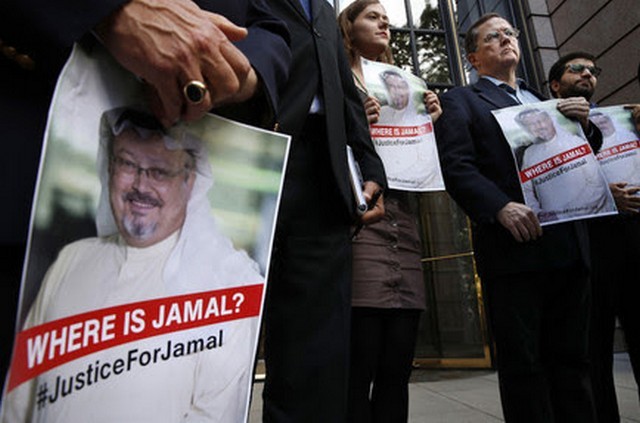
If any confirmation was needed Narendra Modi is determined to cast himself as a carbon copy of Indira Gandhi- albeit one with a venomous, communal edge – you need not look further than his latest Kashmir gamble.

There is true ‘Indira-style’ audacity written all over his regime’s decision to scrap the

special status given to the Himalayan state under the Indian Constitution, boldly bifurcating it and downgrading it to a union territory for direct rule from Delhi. The move goes against long-standing Indian government approach to Kashmir, risks a geopolitical backlash and stands a good chance of being struck down by the courts.

Not that Modi, who has become synonymous with the BJP he leads just as Indira was with the Congress party, really cares. For, this is his own ‘Bangladesh moment’ – the equivalent of Mrs. Gandhi’s dismemberment of regional rival Pakistan in 1971, by enabling the liberation of its eastern, Bengali speaking territories.

And just as Indira intervened in Pakistan’s civil conflict, following a sweeping victory in the Indian elections at that time, Modi has also ‘made history’ within months of a massive mandate for his regime in the mid-2019 pools. The forcible ‘integration’ of Kashmir, flouting all democratic and even Constitutional norms, is likely to seal Modi’s reputation among ‘real estate’ Indian nationalists[i] as a ‘great leader’ – on par with the ‘Iron Lady’ of Indian politics.

As Yashwant Sinha, former BJP leader turned bitter critic of Modi conceded to the Indian media, if an election is held tomorrow Modi will probably win more seats in parliament, than any other leader since Indian independence seven decades ago. It is no longer ‘Narendra’ but Nar’Indira’ Modi now.

However, while there are other similarities between Modi and Indira, including a common authoritarian streak (Watch out! The Emergency is coming soon!), there are crucial differences too in the convictions involved, context and the consequences of their actions. It is these differences that will determine whether Modi is really BJP’s answer to Indira Gandhi or is only a farcical repetition of the latter’s history.

Going back to the Bangladesh parallel, Indira Gandhi’s momentous decision to send troops to liberate East Pakistan was done – not only from an Indian military strategic point of view – but as a genuine move to end the then ongoing genocide of Bengali-speaking Muslims there, by the Punjabi-Muslim dominated Pakistani army. The Indian action was fully supported by the people of Bangladesh and it was a resounding success.

In sharp contrast, in the case of Kashmir, India’s only Muslim-dominated state, it is the Indian government itself that has been the main oppressor for long, robbing the people of the state of their democratic rights and treating it like a colony of India. Despite the Constitutional guarantee of autonomy provided by Article 370, very little of it was implemented in practice by successive Indian regimes. It is safe to say, Kashmir remains Indian territory only because of the presence of over half a million of its armed troops there, making it one of the most heavily militarized zones in the world.

In his first term as Prime Minister, though the Modi-led BJP managed to form a government in Kashmir with the People’s Democratic Party, a regional outfit, the alliance collapsed and worsened the strife in Kashmir. Dozens have been killed, thousands injured- mostly civilians- in street battles between Kashmiri citizens and the Indian armed forces in the last few years.

On the geopolitical front also, the Bangladesh story is completely different from what Modi is attempting in Kashmir now. Half a century ago Indira’s decision to take on the Pakistani army head on was an act of some courage, as it was also done in defiance of threats from the superpower United States, then a close ally of the generals running Islamabad.

In the case of Kashmir though the Modi government has denied recent claims by US President Donald Trump that he was asked to ‘mediate’ in the conflict, there is evidence that its move on Kashmir has all the blessings of Washington. According to Indian media reports the US had been ‘consulted’ well in advance before announcing the abolition of Kashmir’s special status and its geographical dismembering.

Perhaps the biggest divergence between Indira Gandhi and Modi’s ‘Bangladesh moment’ is the impact of their actions on the Indian Republic itself. Back in 1971, Mrs Gandhi managed to unite the political and social spectrum with her action – billed rightly or wrongly as a noble mission undertaken by India – and also won global admiration to boot.

Modi’s move on Kashmir, despite initial euphoria, however is likely to divide the nation deeply. For all its audacity the ideologically driven decision shows a complete lack of sagacity about its long-term implications. In that sense it is quite like his surprise demonetization of high value Indian currency notes three years ago – hailed by his cheerleadersas a ‘masterstroke’ but which brought disastrous consequences for the Indian economy. Kashmir is going to be a repeat of India’s ‘notebandi’ experience, except the damage will be even higher- both politically and socially.

No, this is not going to be because of what the people of Kashmir feel, think or want. It is quite clear that, not just successive Indian governments, but much of the Indian public itself, has really cared very much about them at all. Internationally too, India’s open imitation of Israel’s ‘Gaza model’, will not raise too many eyebrows except of course in Pakistan and to some extent in China – but there is nothing much either can do immediately.

Yes, there will be turmoil and brutal suppression of protests but also carrots dangled before the Kashmiri public in the form of fresh, speculative investments from around India. And strange as it may sound, even a significant section of the population may actually welcome Modi’s ‘bold step’ – despite opposition from the current lot of Kashmiri politicians –who have neither the credibility nor the clout to prevent turning of minds and bodies that money makes possible.

The real impact of revoking Kashmir’s autonomy and the dubious way in which it has been done, is going to be on the rest of India, a federation of diverse cultures, religious, ethnic and linguistic groups held together – ultimately by nothing much more really than goodold-fashioned trust. Trust in the inviolability of the Indian Constitution, the fairness of various state institutions, in the honoring of past promises and the belief that,in a dispute,no partywill pull a fast one on the other.

The simple question for many around the country will be, if the Indian government can so cunningly and casually discard a historical agreement or turn a full-fledged state into a union territory without consulting anyone in Kashmir– can’t this also be done to Bengal, Kerala or Punjab tomorrow? In other words, the entire organization of India into states demarcated along linguistic lines – a cornerstone of the country’s federal structure- is today in question.

Nobody caught the real meaning of the Modi government’s Kashmir ploy better than Chidambaram, the former finance minister, a constitutional lawyer and a senior leader of the Congress Party.

“People of India, people of every State must wake up to the grave danger that was set as an example today by these completely unconstitutional and illegal resolutions. I want to warn every party, every State, every citizen of India that the idea of India as a union of States is in grave danger,” he told the press soon after the Indian parliament rammed through the measure changing Kashmir’s status drastically.

Chidambaram’s insight had nothing to do with being part of the Congress party or his legal background. It rather came from the fact he is from Tamil Nadu, where the idea of a ‘united’ India has been challenged, for decades, by the leaders and ideologues of the Dravidian movement as a power grab by ‘Aryan supremacists’[ii] of northern India.

The founder of the Dravidian movement, E.V. Ramasamy Periyar, sounded the warning bell at the time of Indian independence itself about how the new nation of India was going to control and suppress all other cultures and nationalities on behalf of upper caste Hindus. If he had been around he would have seen the Kashmir development as an open land grab by politicians from India’s Hindi-speaking, cow-belt states.

“Who are India and Pakistan to talk about the Kashmir issue? The Kashmiris have all the rights to decide for themselves. The Kashmir issue must be left in the hands of Kashmiris alone”, thundered Periyar more than six decades ago.

Substitute ‘Kashmiri’ with Tamil, Malayali, Bengali, Oriya, Punjabi, Manipuri, Mizo or Naga – Periyar’s message is going to resonate more and more with the people of the Indian sub-continent in the days ahead.

Nar ‘Indira’ Modi and his sidekick Home Minister, Amit Shah, can jump around for the moment , claiming they ‘made history’ – but when history actually happens it is going to be nothing like they wanted or expected. Many more ‘Bangladeshs’ are waiting to happen.

Satya Sagar is a journalist and public health worker who can be reached at sagarnama@gmail.com

6 August 2019

Source: countercurrents.org
The Article 370 Amendments: Key Legal Issues

By Gautam Bhatia

In this post, I will attempt to break down the constitutional changes to Article 370, and highlight some key legal issues surrounding them. In essence, to understand what has happened today, there are three important documents. At the heart of everything is Presidential Order C.O. 272, which constitutes the basis for everything that follows. The second is a Statutory Resolutionintroduced in the Rajya Sabha, which – invoking the authority that flows from the effects of Presidential Order C.O. 272 – recommends that the President abrogate (much of) Article 370. The third is the Reorganisation Bill, that breaks up the state of Jammu and Kashmir into the Union Territories of Ladakh (without a legislature) and Jammu and Kashmir (with a legislature).

To understand the legal issues, we need to begin with the language of unamended Article 370. Article 370, as is well known, limited the application of the provisions of the Indian Constitution to the state of Jammu and Kashmir. Under Article 370(1)(d), constitutional provisions could be applied to the state from time to time, as modified by the President through a Presidential Order, and upon the concurrence of the state government (this was the basis for the controversial Article 35A, for example). Perhaps the most important part of 370, however, was the proviso to clause 3. Clause 3 itself authorised the President to pass an order removing or modifying parts of Article 370. The proviso stated that:

Provided that the recommendation of the Constituent Assembly of the Statereferred to in clause (2) shall be necessary before the President issues such a notification.

In other words, therefore, for Article 370 itself to be amended, the recommendation of the Constituent Assembly of J&K was required. Now, the Constituent Assembly of J&K ceased functioning in 1957. This has led to a long-standing debate about whether Article 370 has effectively become permanent(because there is no CA to give consent to its amendment), whether it would require a revival of a J&K CA to amend it, or whether it can be amended through the normal amending procedure under the Constitution.

C.O. 272, however, takes an entirely different path. C.O. 272 uses the power of the President under Article 370(1) (see above), to indirectly amend Article 370(3), via a third constitutional provision: Article 367. Article 367 provides various guidelines about how the Constitution may be interpreted. Now, C.O. 272 adds to Article 367 an additional clause, which has four sub-clauses. Sub-clause 4 stipulates that “in proviso to clause (3) of Article 370 of this Constitution, the expression ‘Constituent Assembly of the State referred to in clause (2)” shall read “legislative Assembly of the State.”

In other words, this is what has happened. Article 370(1) allows the President – with the concurrence of the government of J&K (more on that in a moment) – to amend or modify various provisions of the Constitution in relation to J&K. Article 370(3) proviso states that Article 370 itself is to be amended by the concurrence of the Constituent Assembly. C.O. 272, therefore, uses the power under 370(1) to amend a provision of the Constitution (Article 367) which, in turn, amends Article 370(3), and takes out the Constituent Assembly’s concurrence for any further amendments to Article 370. And this, in turn, becomes the trigger for the statutory resolution, that recommends to the President the removal of (most of) Article 370 (as the Constituent Assembly’s concurrence is no longer required).

This is very clever. Is it legal? One serious objection is Article 370(1)(c). Article 370(1)(c) (unamended) stated that “notwithstanding anything contained in this Constitution, the provisions of Article 1 and this Article shall apply in relation to that State.” This is absolutely crucial, because it makes clear that the power of the President to amend provisions of the Constitution in relation to J&K does not extend to Article 1 and “this Article”, i.e., Article 370 itself. 370(1)(d) makes it even clearer where it refers to the “other provisions” of the Constitution that may be altered by Presidential Order (and this is how the present Presidential Order is different from previous ones, such as those that introduced Article 35A). Article 370 itself, therefore, cannot be amended by a Presidential Order such as C.O. 272 (the one exception was a clarificatory amendment, which is not analogous to this one).

Now, it may be immediately objected that C.O. 272 does not amend Article 370: it amends Article 367. The point, however, is that the content of those amendments do amend Article 370, and as the Supreme Court has held on multiple occasions, you cannot do indirectly what you cannot do directly. I would therefore submit that the legality of C.O. 272 – insofar as it amends Article 370 – is questionable, and as that is at the root of everything, it throws into question the entire exercise.

There is a second important point to be noted here. C.O. 272 says – as it must – that the concurrence of the government of the state of Jammu and Kashmir has been taken. However, Jammu and Kashmir has been under President’s Rule for many months now. Consequently, actually, the consent is that of the Governor. However, there are two serious problems with basing C.O. 272 upon the consent of the Governor. The first is that the Governor is a representative of the Central Government – like the President. In effect, therefore, Presidential Order 272 amounts to the Central Government taking its own consent to amend the Constitution.

There is, however, a more important issue. President’s Rule is temporary. It is only meant to happen when constitutional machinery breaks down in a state, and an elected government is impossible. President’s Rule is meant to be a stand-in until the elected government is restored. Consequently, decisions of a permanent character – such as changing the entire status of a state – taken without the elected legislative assembly, but by the Governor, are inherently problematic. Formally, they may be within the bounds of legality; however, as the Supreme Court held in D.C. Wadhwa, on the question of re-promulgation of Ordinances, formal legality can nonetheless, in effect, amount to a fraud on the Constitution. Using the Governor to sign off on a Presidential Order that fundamentally alters the constitutional character of a federal unit appears, to me, to be straying dangerously close to the constitutional fraud line.

For these two reasons, therefore – first, on the indirect amendment of Article 370(3) proviso via 370(1), and secondly, on the use of the Governor as a substitute for the elected assembly in a matter of this kind – I would submit that there are serious legal and constitutional problems with Presidential Order C.O. 272 – which, of course, forms the basis of both the statutory resolution and the Reorganisation Bill.

Gautam Bhatia is a lawyer

Originally published in Indian Constitutional Law and Philosophy

5 August 2019

Source: countercurrents.org
Financial Capitalism Gone Amok: Ultra-low Interest Rates and Price Bubbles

By Prof Rodrigue Tremblay

“The first panacea for a mismanaged nation is inflation of the currency; the second is war. Both bring a temporary prosperity; both bring a permanent ruin. But both are the refuge of political and economic opportunists.” — Ernest Hemingway (1899-1961), (September 1932)

“Armies, and debts, and taxes are the known instruments for bringing the many under the domination of the few.” — James Madison, (1751-1836), 4th U.S. President, (April 20, 1795)

“If the American people ever allow private banks to control the issue of their money, first by inflation and then by deflation, the banks and corporations that will grow up around them (around the banks), will deprive the people of their property until their children will wake up homeless on the continent their fathers conquered.” — Thomas Jefferson, (1743-1826), 3rd U.S. President

“We know now that government run by organized money is the same as government run by the organized mob.” — Franklin D. Roosevelt (1882-1945), 32nd American President, 1933-1945, (in a speech at Madison Square Garden, Oct. 31, 1936)

Don’t look now, but there is a new monetary craze going on in some parts of the world, and it is the new so-called ‘unconventional’ monetary policy adopted by some central banks to push interest rates to ultra-low levels, and even into negative territory. For some time now, some central banks and some governments have been pushing nominal interest rates down, so much so that a few countries have negative short-term interest rates and, when inflation is factored in, even more deeply negative real interest rates. Why suddenly such an unconventional monetary policy? Their rationale is a fear that the economy could otherwise be saddled with an overvalued currency and be faced with a too heavy debt burden, and this would hurt their economic growth.

How is this possible? How could a central bank push interest rates to zero or to below zero, and with what consequences? A central bank does that by offering zero or negative returns on private banks’ excess reserves or extra funds that those banks want to store at the central bank. This is a complex matter, but essentially this occurs when private banks are awash with cash that they have trouble lending profitably to private borrowers. They are then forced to find alternative ways to invest their funds, one of them is to park those funds at the central bank, or alternatively, to buy government bonds and other securities. The result is an increase in the prices of those assets and a lowering of interest rates.

The question to be asked is why many banks are saddled with too much excess cash, above and beyond what is required to meet the ordinary private demands for loans? To answer that question, we have to go back to the international financial crisis of 2007 and later years.

This all began with the subprime financial crisis, which started at the end of the summer of 2007, when some mega-banks in the United States and in other financial centers were teetering on the edge of bankruptcy. Indeed, they had created a new type of financial products, the so-called mortgage-and debt-backed securities (MBS) and other asset-backed paper (ABCP), which were bundles of risky debt and were sold as new esoteric securities. When the housing market collapsed, these artificially created securities also collapsed, and the banks found themselves in financial trouble.

To prevent large banks from failing, the American central bank, i.e. the Fed, began printing new money to the extent of more than three thousand billion $ to rescue them. The Fed called its generosity “Quantitative Easing” (QE), a fancy and innocuous word to cover the largest expansion ever of the monetary base in the United States, which is to a large extent made up of the Fed’s balance sheet (i.e. the private banks’ reserves held at the central bank) and of bank notes and coins circulating in the economy.

— With the newly printed money, the Fed bought Treasuries but also large amounts of private banks’ bad debts. And it did it for six years from 2008 to late 2014, in three successive rounds of money printing.

— Historically speaking, it was really an orgy of money printing. This was done, however, on the premise that the banks would leave most of their newly created bank excess reserves deposited at the central bank. Nevertheless, the result (withso much excess liquidity in the system) was to push the prices of bonds and securities up and to lower interest rates across the board. And, in fact, interest rates have been declining ever since. The Fed said that it was ‘reflating’ the economy. In fact, what it was doing could be more accurately called ‘reflating’ the private banks’ balance sheets.

— During that period, the Fed’s own total balance sheet ballooned, jumping from roughly $1,000 billion in 2008, (ordinarily, it is mostly made up of Treasury securities and its net interest income is returned to the Treasury), to slightly more than $4,500 billion en 2017, an increase of 350 percent.

Today, the Fed’s total balance sheet is made up of Treasuries for about 55 percent, while mortgage-and-debt backed securities that it bought from the private banks account for about 40 percent, with gold and other assets accounting for the rest. An important point is the fact that the Fed’s balance sheet before 2008 represented around 6 percent of annual U.S. output (GDP) but it reached 25 percent in 2014. It has since declined somewhat to 20 percent of GDP, and the Fed would like to “normalize it “, i.e. shrink it further to prevent future inflation and above all, to be in a position to intervene if a new crisis were to arise.

Let us now do some fast-forward thinking to today’s economic situation.

Enter the Trump administration in 2017 with its big increase in the pubic debt and with its bullying of the Powell Fed to bring down interest rates, possibly to zero

The last economic recession in the United States, (dubbed the Great Recession), was the worst since the Great Depression of the 1930’s. It began in December 2007, and it ended in June 2009. The economic recovery, however, has been the longest in U.S. history, having passed the 121-month mark, and it is already more than 10 years old.

The Trump administration’s economic policy as been characterized by trade protectionism, an anti-immigration policy, the lowering of taxes especially for large corporations and large banks, trillion-dollars yearly fiscal deficits, a very loose monetary policy, and a 13 percent jump in the total U.S. public debt since Jan. 20, 2017, when President Donald Trump took office.

[N. B.: The total national debt stood at $19.95 trillion on January 20, 2017. As of July 31, 2019, it has been galloping past $22.54 trillion.]

It could be expected that when the public debt has grown so large that there is fear that it could not be managed if interest rates were to rise. Governments and central banks would then be tempted to push interest rates down, in order to alleviate the burden of debt service (essentially interest payments on government bonds). It is like imposing a stealth tax on savers and creditors.

It is worth pointing out that the Fed has recently done just that. Indeed, by artificially lowering interest rates below the inflation rate and a risk premium, it has made it possible for the U.S. Treasury to pay negative real interest rates on its public debt. This means that when the inflation rate is higher than the nominal interest rate paid on the public debt, the U.S. government gets a free ride at the expense of its creditors.

If interest rates were to fall to zero, for example, or even to below zero, (as it is the case nowadays in Japan, after its two-decade long experiment withzero interest rates, and presently in some European countries, such as Switzerland, Germany, Netherlands, France, Sweden, etc.), savers, retirees, pension funds, insurance companies and lenders in general are the big losers.

Indeed, in countries where ten-year government bonds, for example, are generating a zero or a negative return, this means that the principle of compound interest has de facto been abolished for investors. Such a development may have serious consequences for savers, retirees and pension funds.

However, when the central bank buys government bonds and issues newly created money in exchange, this is called “debt monetization”. If this is done on a large scale, it could eventually lead to a form of gallopinginflation, possibly even to hyperinflation.

It is also worth noting that when central banks push interest rates to ultra low levels or to negative levels, investors have no other alternative than to purchase assets that offer positive returns, such as shares in companies or ownership titles of real estate. Price bubbles in the stock market and in the real estate market can be expected to ensue. Such investments become a refuge from the negative returns received on fixed-income financial assets. Historically, when this has happened, such developments have ultimately ended up in crashes and panics down the road.

The 1920s all over again?

The economic situation of today is, to a certain extent, reminiscent of the U.S. economy in the 1920s, leading to the Great Depression of the 1930s. Indeed, the U.S. economy had been growing by 2.7 percent per year between 1920 and 1929. There was overall full employment and inflation was stable.

Also, economic growth had been extended through protectionist measures, such as the Fordney-McCumber Tariff of 1922. During the presidential campaign of 1928, for example, republican presidential candidate Herbert Hoover (1874-1964) proposed large tariff increases on imports, as part of his platform. Once in power, his promise was implemented with the passage of the infamous Smoot-Hawley tariff of 1930, which is thought to have accelerated the global economic depression.

The economy was also stimulated through increased spending on public works and through tax cuts in 1921, 1924, and 1925.

Moreover, President Calvin Coolidge (1872-1933) signed an anti-immigration bill called the Immigration Act of 1924, (also called the Johnson–Reed Act), whose main purpose was to prevent immigration to the United States of people from Asia. There was also widespread hostility toward Catholic Americans, many of Italian origin, toward Jews, and toward blacks.

— These were the “roaring ‘20s”.

Considering the many similarities between the two periods, politically, socially and economically, a few questions beg to be asked: Is not history repeating itself? Might the excesses of today lead also to a day of reckoning? Might the current central bankers and politicians be leading the U.S. and other economies into a severe global economic downturn? Trade protectionism, lower taxes, higher debt levels, anti-immigration legislation, wholesale deregulation… etc.

— It’s ‘déjà vu all over again’!

Conclusion

Artificially low interest rates may be on their way in the United States. Fed Chairman Jerome Powell appears to have been intimidated by Donald Trump’s bullying tactics into lowering interest rates. Therefore, even though the U.S. economy is presently at full employment—partly a demographic consequence of the retirement in droves of baby-boomers—it is also saddled with very loose fiscal and monetary policies.

This is most unusual and it flies in the face of the principles of sound economic management. Such a situation is bound to create financial excesses and bubbles, to be corrected down the road.

In fact, the policy mix of today is a typical example of a government going after short-run economic and political gains at the expense of future medium- and long-run pains.

*

Note to readers: please click the share buttons above or below. Forward this article to your email lists. Crosspost on your blog site, internet forums. etc.

International economist Dr. Rodrigue Tremblay is the author of the book “The Code for Global Ethics, Ten Humanist Principles”, of the book “The New American Empire”, and the recent book, in French “La régression tranquille du Québec, 1980-2018“.

31 July 2019

Source: www.globalresearch.ca

Germany won’t take part in U.S.’ Strait of Hormuz initiative

By Countercurrents Collective

United States’ Iran-show is not moving smoothly. It is not always getting wholehearted support from all of its friends. The Strait of Hormuz initiative by the U.S. is part of the show, and it is facing the same problem. An example is Germany.

Germany will refuse to take part in a U.S.-led maritime mission in the Strait of Hormuz, German Foreign Minister Heiko Maas announced.

Maas said that there “cannot be a military solution” to the current crisis in the Persian Gulf.

Speaking in Warsaw on Wednesday, Maas said that Germany will turn down Washington’s request, which was revealed by the U.S. Embassy in Berlin on Tuesday.

The request from Washington was a joint U.S., British, and French operation is aimed at protecting sea traffic in the Strait of Hormuz, and combating so-called “Iranian aggression”.

The mission was conceived following Iran’s seizure of the British-flagged Stena Impero oil tanker earlier this month, itself widely considered a tit-for-tat response to Britain’s seizure of an Iranian tanker off the coast of Gibraltar several weeks earlier.

That Germany would refuse to assist the American-led mission is no surprise. Washington’s request was the subject of intense debate in Berlin, with opposition parties on the left and right pressuring Chancellor Angela Merkel’s coalition government into saying no.

“We have to avoid further escalation in the Strait of Hormuz,” Maas said on Wednesday. “That has always been out position.”

Compared to the U.S. and some of its allies, Germany has enjoyed relatively cordial relations with Tehran since the 1970s.

Germany remains a party to the 2015 Joint Comprehensive Plan of Action (JCPOA, or Iran nuclear deal), a landmark agreement that granted Iran sanctions relief in exchange for a curb on its nuclear weapons program. The U.S. unilaterally withdrew from the deal last year, precipitating the current standoff with Tehran.

Despite Germany’s refusal to join the U.S.-led mission, some politicians in Berlin remain open to another kind of deployment.

“The alternative is a European mission, if necessary without the British, if they decide for the U.S.,” Norbert Roettgen, a member of Merkel’s CDU party, told German media on Tuesday.

German govt split over sending navy to Gulf

A prospect of German warships being sent to patrol the troubled waters of the Strait of Hormuz has ignited a debate in Berlin.

Critics are warning against joining a potential US- and UK-led mission.

Proponents of the London-proposed mission say Germany should take part just because it is an inherent part of global trade.

“Hardly any other country is as dependent on the freedom of international shipping as export champion Germany,” former envoy to the US Wolfgang Ischinger told Die Welt. That said, Germans should not just “watch from the sidelines,” he argued.

His words were echoed by the influential Association of German Industries, whose president told the paper that such a mission would be “a question of solidarity among us Europeans.”

But the opposition slammed the proposal, warning that events could ultimately spin out of control. Germany “should not walk into the trap of Trump and his poodle Johnson and let itself be led into a conflict or the preparation for war against Iran,” Sevim Dagdelen, a Left Party MP, was quoted by Deutsche Welle as warning.

The Social Democrats (SPD), the junior coalition partners in Chancellor Angela Merkel’s center-right coalition government, were equally unappreciative of the idea.

Karl-Heinz Brunner, an SPD member of the parliamentary defense committee, said that while maritime shipping is important, securing it could be done through diplomacy.

“In the current situation, military options could contribute to further destabilization,” he cautioned.

Later in the day, the US embassy in Berlin told DPA news agency that Washington had formally asked Germany to embark on the mission to “combat Iranian aggression.”

The embassy maintained that the government was “clear that freedom of navigation should be protected. Our question is protected by whom?”

That aside, sending ships to the Gulf could be akin to a ‘mission impossible’ for the military. Last year, it was reported that Germany’s Navy is running out of combat-capable warships and had six out of fifteen frigates decommissioned.

Newer-generation warships are either going through trials or are under construction.

Last week, the UK called for a joint effort to protect the safety of shipping in the Strait of Hormuz, a narrow but important waterway that connects the Persian Gulf with the Indian Ocean.

The call was made shortly after Iran’s Revolutionary Guard Corps seized British-flagged oil tanker Stena Impero in the area.

The seizure followed an earlier incident in which British Royal Marines and Gibraltar police seized the Iranian oil supertanker Grace 1 off the southern coast of Spain. London said the ship was suspected of carrying oil to Syria in violation of EU sanctions, but Tehran denied any wrongdoing.

Tehran has lashed out at the prospective European mission, saying that Western nations will jeopardize security in waters mainly shared between Iran, the UAE and Oman. The effort “naturally carries a hostile message, [and] is provocative and will increase tension,” Iranian government spokesperson Ali Rabiei was quoted by AFP as saying.

1 August 2019

Source: countercurrents.org
US scrapping of INF treaty heightens threat of nuclear war

By Bill Van Auken

Washington formally scrapped the Intermediate-range Nuclear Forces (INF) Treaty Friday, bringing the world a major step closer to nuclear war.

The treaty, signed over 30 years ago by US President Ronald Reagan and Soviet leader Mikhail Gorbachev, banned a whole class of weapons that had placed the world on a hair trigger for a nuclear conflict. Both countries agreed to end all use and production of ground-launched ballistic and cruise missiles with ranges of 500 to 5,500 kilometers (310 to 3,417 miles).

CNN reported that the Pentagon will test within weeks a new cruise missile designed for ranges previously banned by the INF accord. The US military has reportedly been working on the weapon for the last two years.

An unnamed US official told the television news network that Washington aims to deploy the weapon in areas of Europe where it could overpower Russian air defense systems and strike “the country’s ports, military bases or critical infrastructure.”

Short and medium-range surface-to-surface missiles, including the Pershing II and the MGM Lance were deployed by the United States in Western Europe in the early 1980s, while the Soviet Union had deployed SS-20 mobile missile launchers in the western USSR. These weapons had the capability of striking most major cities in Western Europe and the Soviet Union within minutes. The threat of a nuclear conflict on the continent triggered mass demonstrations against the US missile deployment, particularly in West Germany.

The abrogation of the agreement is bound up with Washington’s turn toward “great power conflict” with Russia and China, in which US imperialism is seeking to leverage its military power as a means of containing Russia and countering the economic rise of China and its challenge to US global hegemony.

US Secretary of State Mike Pompeo issued the formal announcement of the US repudiation of the treaty, placing the full blame for its demise on Russia, even as it was the US that has ripped up the agreement. “Russia failed to return to full and verified compliance through the destruction of its noncompliant missile system,” he said.

Moscow has repeatedly denied this claim, insisting that its SSC-8 ground launched cruise missile that Washington says is out of compliance with the treaty is not in violation. While it has invited the US and other powers as well as foreign journalists to inspect the weapons system, Washington has rebuffed all appeals for negotiations, issuing ultimatums to Russia that it knows will not be accepted.

Russia, meanwhile has insisted that the US is out of compliance with the accord, having deployed missile defense systems in Poland and Romania that are equipped with launchers identical to those used by US warships that are capable of firing medium-range Tomahawk cruise missiles. It has also charged that the US deployment of armed drones on the continent is a further violation of the accord.

The US government’s determination to upend the treaty and its restrictions on the development of medium-range missiles is aimed not just at escalating its military siege against Russia, but more fundamentally at preparing for “great power” conflict with China.

In response to the US encirclement of China and the deployment of massive naval and air power in the Pacific region as part of the “pivot to Asia” begun under the Obama administration, Beijing, which is not a signatory of the INF treaty, developed its own medium range missiles.

The Pentagon wants to answer this development by deploying offensive missile systems of its own in the region aimed at China’s major cities. It is no accident that the termination of the treaty prohibiting such a deployment coincides with the sharp escalation of US trade war measures against China

While the decision to abrogate the treaty was announced by the Trump administration last February, the formal repudiation of the accord provoked condemnations from both Moscow and Beijing.

“On the famous symbolic clock that shows the time left until nuclear conflict, we have unfortunately passed yet another minute towards midnight,” Russia’s Deputy Foreign Minister Sergei Ryabkov said in an English-language interview with RT. He added that “even though President Trump is saying that there is no point in an arms race and investment in military equipment, this will continue.”

Chinese Foreign Ministry spokesperson Hua Chunying, meanwhile said that “China opposes such actions,” adding, “We call on the United States to abide by its obligations.”

She went on to accuse Washington of seeking “superiority in strategic weaponry” and warning that this would “seriously affect stability and undermine the global balance of power,” threatening “security in many regions.”

While most Western European governments and NATO echoed Washington’s claims that Russia was responsible for the treaty’s demise, there were nonetheless expressions of concern. German Foreign Minister Maas stated that “With the end of the INF treaty, Europe is losing part of its security.” He added, “I am convinced that today we must again succeed in agreeing [to] rules on disarmament and arms control in order to prevent a new nuclear arms race.”

Belgian Foreign Minister Didier Reynders, meanwhile, wrote on Twitter: “I regret the ending of the INF Treaty, which has served our security for over 30 years. Belgium reaffirms its commitment to nuclear arms control and disarmament and calls upon the US and Russia to conduct a constructive dialogue and agree on stabilizing measures.”

Belgium, along with the Netherlands, Germany, Italy and Turkey, is one of the countries where US nuclear bombs are deployed.

None of Washington’s Western European allies have given any indication that they are prepared to accept the deployment of medium-range missiles on their territory. Moscow has made clear that any such missile installations would immediately become targets.

Behind the statements about the abrogation of the INF Treaty undermining Europe’s security, lies a turn toward the escalation by the major European powers, and in particular Germany, of remilitarization independently of the US.

The ripping up of the INF Treaty is widely expected to be followed by the ending of the even more significant New START (Strategic Arms Reduction Treaty) agreement, which if not renewed, will expire in 2021. The pact caps the number of deployed strategic nuclear warheads by both Russia and the US to 1,550 and places similar limits on the two countries’ number of intercontinental ballistic missiles.

Trump has described the pact as “one of several bad deals negotiated by the Obama administration,” while his national security adviser, John Bolton, has been telling the media that it will likely not be renewed. This would mean that there would be no remaining treaties restricting the buildup toward nuclear war.

The Pentagon is openly preparing for such a conflict. A “joint doctrine” on nuclear operations briefly posted on the internet in mid-June states that: “nuclear weapons could create conditions for decisive results and the restoration of strategic stability. Specifically, the use of nuclear weapons will fundamentally change the scope of a battle and develop situations that call for commanders to win.”

The Pentagon is working to develop an arsenal of “usable”, low-yield “tactical” nuclear weapons to be utilized to turn the tide of battle in confrontations with US imperialism’s “great power” rivals. The underlying and highly unlikely scenario is that such weapons can be used without provoking a full-scale nuclear exchange putting an end to life on the planet.

The immense dangers posed by the Trump administration’s abrogation of the INF Treaty and the significant step closer to nuclear war provoked no response from its ostensible political rival, the Democratic Party.

Having voted overwhelmingly in both the House and Senate for a record $738 billion US military budget, the Democrats are fully committed to the march toward a nuclear conflagration. Neither House Speaker Nancy Pelosi, who negotiated the budget deal with the Trump White House, nor Senate minority leader Chuck Schumer said anything about the scrapping of the INF treaty. For his part, Democratic presidential front-runner Joe Biden tweeted that the US “must lead the free world” along with anti-Chinese comments. Similarly, Elizabeth Warren kept silent about the treaty’s abrogation while tweeting that the US has “to get tough on China”, while Bernie Sanders said nothing.

There is clearly no antiwar faction within the US ruling establishment, nor any interest on the part of the Democrats or the corporate media in alerting the American people to the growing threat of a global nuclear conflagration.

This threat can be answered only through the construction of a new mass antiwar movement based on the struggle for the unification of the international working class in the struggle against capitalism.

Originally published by WSWS.org

3 August 2019

Source: countercurrents.org
The Martyrdom of Thomas Merton: An Investigation

By Matthew Fox

For years I have spoken out about how fishy the official story of Thomas Merton’s sudden death smelled to me. I have also, over the years, met three CIA agents who were present in Southeast Asia at the time and asked them pointedly whether they killed Thomas Merton. One said:

“I will neither affirm it nor deny it.”

The second (who spoke to a friend of mine, not to me) said:

“We were swimming in cash at the time with absolutely no accountability. If there was just one agent who felt Merton was a threat to the country he could have had him done in with no questions asked.”

The third I met a month after my book A Way To God: Thomas Merton’s Creation Spirituality Journey came out and he answered:

“Yes. And the last 40 years of my life I have been cleansing my soul from what I did as a young man working for the CIA in Southeast Asia in the 1960s.”

Now, Hugh Turley and David Martin offer The Martyrdom of Thomas Merton: An Investigation – a solid and very convincing investigation that provides what seems to be a thorough inquiry of all the parties involved including the four religious (three men and one sister who was also a doctor, falsely called a “nurse” in official documents) who first discovered the body.

The book includes important information about the body and the room, revealing, among other things, that there was blood coming from Merton’s neck and his body was neatly staged. How could this be anything other than

  • A gunshot wound from a silencer gun? or
  • A stab with a pick knife or something similar?

The problem is, of course, that no autopsy was performed. Now whose decision was that?

The cover up was immense, involving the Thai police (very much in league with the American military at the time); the American Embassy; the American Army; even key members of Merton’s Gethsamine monastery including the abbot and Merton’s secretary, Brother Hart. The latter two deserve a certain leniency since surely the monastery was threatened and urged to keep silent about the facts. But to make a cover story—that Merton stepped out of a shower soaking wet and plugged in a fan and was electrocuted—is a lie and a cover up.

Turley and Martin provide detail after detail refuting the false information that has been disseminated for five decades. There is even a Judas figure—a Belgian monk, whose room in the retreat center was above Merton’s, and who was the last person seen talking to Merton before he entered his fateful cell. Others report this monk acting peculiarly after the murder. Strange to tell—or perhaps not so strange—he seems to have totally disappeared. Even his monastery claims to have no idea on earth where he could be. It would seem he is either

  • sipping mai-tais on some island some place having been paid far more than 30 pieces of silver, or
  • resting not at all in peace six feet under the sod.

So Thomas Merton, Cistercian monk and one of the greatest spiritual writers of the twentieth century died a martyr. A martyr to peace (because he was a loud voice against the Vietnam War and a mentor to the Berrigan brothers and others committed to nonviolent protest). And he died at the hands of the American government in the very year, 1968, that Martin Luther King Jr and Robert Kennedy also suffered a similar fate.

Pope Francis, who praised Thomas Merton’s work in his speech to Congress, might want to canonize three American martyrs together and do it swiftly (since in Catholic theology a martyr goes directly to heaven): Dr Martin Luther King Jr, a prophet for social and racial justice; Thomas Merton, a prophet for peace and deep ecumenism or interfaith; and Sister Dorothy Stang, a prophet for eco-justice gunned down in the Amazon by paid thugs for large land owners and corporate big shots.

History evolves and it is ironic that today’s CIA is less an enemy of the people than yesterday’s – in fact acting in some ways a welcome buffer against today’s enemies of American democracy, whether emanating from Russia or from internal bodies beholden to Russia. But lessons abound. First among them is what a martyr is about: As Jesus put it, “no greater love has a person than this, to lay down one’s life for their friends.”

Thank you, Thomas Merton. Thank you Hugh Turley and David Martin for getting to the truth.

Matthew Fox is a spiritual theologian, an Episcopal priest and an activist for gender justice and eco-justice.

29 July 2019

Source: www.transcend.org

US Congress Overwhelmingly Condemns Movement to Boycott Israel

By Sheryl Gay Stolberg

The House, brushing aside Democratic voices of dissent over American policy in the Middle East, today overwhelmingly passed a bipartisan resolution condemning the boycott-Israel movement as one that “promotes principles of collective guilt, mass punishment and group isolation, which are destructive of prospects for progress towards peace.”

The 398-to-17 vote, with five members voting present, came after a debate that was equally lopsided; no one in either party spoke against the measure. The House’s two most vocal backers of the boycott movement — Representatives Rashida Tlaib of Michigan and Ilhan Omar of Minnesota, freshman Democrats and the first two Muslim women in Congress — did not participate in the floor debate.

However, earlier in the day, Ms. Tlaib, who is Palestinian-American, delivered an impassioned speech in defense of the boycott movement. She branded Israel’s policies toward Palestinians “racist” and invoked American boycotts of Nazi Germany, among others, as an example of what she described as a legitimate economic protest to advance human rights around the world.

“I stand before you as the daughter of Palestinian immigrants, parents who experienced being stripped of their human rights, the right to freedom of travel, equal treatment,” Ms. Tlaib said. “So I can’t stand by and watch this attack on our freedom of speech and the right to boycott the racist policies of the government and the state of Israel.”

The Boycott, Divestment and Sanctions, or B.D.S., movement is intended, among other things, to pressure Israel into ending the occupation of the West Bank, and backed by some who advocate a single state with equal rights for all, instead of a Palestinian state alongside Israel. Opponents warn it would lead to the destruction of Israel as a Jewish state; during Tuesday’s debate, they repeatedly quoted from a founder of the movement, Omar Barghouti, who has argued for the creation of a “secular democratic state” and has called for Israel to “accept the dismantling of its Zionist apartheid regime.”

“Boycotts have been previously used as tools for social justice in this very country,” said Representative Ted Deutch, Democrat of Florida and a backer of the resolution. “But B.D.S. doesn’t seek social justice. It seeks a world in which the state of Israel doesn’t exist.”

For months, Ms. Tlaib and Ms. Omar have been the target of intense criticism for statements about Israel and Israel’s supporters that many have regarded as anti-Semitic tropes, including insinuations that Jews have dual loyalty to the United States and Israel. Ms. Omar drew the condemnation of House Democratic leaders, and was forced to apologize after invoking an ancient trope about Jews and money by suggesting that American support for Israel was “all about the Benjamins” — a reference to $100 bills.

At a hearing last week, Ms. Omar spoke out forcefully against Israel, and the resolution.

“We should condemn in the strongest terms violence that perpetuates the occupation, whether it is perpetuated by Israel, Hamas or individuals,” she said. “But if we are going to condemn violent means of resisting the occupation, we cannot also condemn nonviolent means.”

Ms. Tlaib, Ms. Omar and two other freshman Democratic women of color — Representatives Ayanna S. Pressley of Massachusetts and Alexandria Ocasio-Cortez of New York — have lately been under fire from President Trump, who has accused them of being anti-American and suggested they should “go back” to their home countries, even though just one of them, Ms. Omar, was born outside the United States. Ms. Ocasio-Cortez voted against the resolution, as did a number of other progressives; Ms. Pressley voted in favor.

The timing of the vote drew complaints from Palestinian rights activists and supporters of Ms. Omar and Ms. Tlaib, who said House Democratic leaders were effectively isolating them. Both women have also joined with Representative John Lewis, Democrat of Georgia and a civil rights icon, in introducing a measure affirming that “all Americans have the right to participate in boycotts in pursuit of civil and human rights at home and abroad,” as protected by the First Amendment.

“They are displaying leadership even as the president is attacking and marginalizing people of color,”

said Yousef Munayyer, the executive director of the U.S. Campaign for Palestinian Rights.

But Democratic backers of Israel were eager to have their votes on record before Congress goes home for its six-week August recess. Earlier Tuesday, Representative Josh Gottheimer, an ardent supporter of Israel, was joined in his home state, New Jersey, by Elan Carr, the State Department’s envoy to combat anti-Semitism, at an event billed to address anti-Semitism.

The coming vote proved to be a central topic.

“There is of course nothing wrong about having a robust debate about our foreign policy, as I said, but that debate veers into something much darker when there is talk of dual loyalty or other ancient tropes,” Mr. Gottheimer said. “These are not legitimate opinions about our foreign policy. We have often seen such anti-Semitic tropes and rhetoric when it comes to the global B.D.S. movement.”

Asked if he thought the timing of the vote was inopportune, Mr. Gottheimer said,

“We should look for any moment to stand up to anti-Semitism, and I think, to me, the sooner the better.”

Backers of the boycott movement say the resolution threatens free speech rights, and they argue that boycotts are a legitimate form of economic protest. In her remarks, Ms. Tlaib cited civil rights boycotts, boycotts of apartheid South Africa and American boycotts of Nazi Germany “in response to dehumanization, imprisonment and genocide of Jewish people” — a comment that raised eyebrows among Republicans.

Proponents of the resolution argue that nothing in it abridges the right to free speech; indeed, House Democrats rejected a more far-reaching bill, passed by the Republican-led Senate, that would allow state and local government to break ties with companies that participate in the boycott movement.

The chief sponsor of the Senate bill, Senator Marco Rubio, Republican of Florida, on Tuesday accused Speaker Nancy Pelosi of promoting a watered-down measure and allowing “the radical, anti-Semitic minority in the Democratic Party to dictate the House floor agenda.”

During Tuesday’s floor debate, many Republicans, including Representative Lee Zeldin of New York and Representative Steve Scalise of Louisiana, the Republican whip, argued for the Rubio measure. But in a rare moment of House comity, both sounded eager to join with Democrats in passing the bipartisan resolution.

“If a boycott is being used to advance freedom, that’s one we should support,” Mr. Scalise said. “But if a boycott is being used to undermine the very freedoms that exist in the only real elective democracy in the Middle East, we all need to rise up against that.”

__________________________________________________

Nick Corasaniti contributed reporting from Paramus, N.J.

A version of this article appears in print on July 24, 2019, Section A, Page 16 of the New York edition with the headline: Lopsided Vote in the House Against a Movement to Boycott Israel.

29 July 2019

Source: www.transcend.org

Johan Galtung Predictions: Fall of U.S. Empire, End to U.S. Wars

By RT

Some analysts say the US – bogged down in wars and pressed by emerging powers – will have to rethink its role in world affairs. Norwegian sociologist Johan Galtung, a peace and conflict expert, goes further by predicting the fall of the “US Empire” by 2020. Military defeats in wars of choice will generate political loss of influence and irrelevance externally, what may trigger a soul-searching internally. The Vietnam War was but a prelude. Iraq, Afghanistan, Libya follow the script. Israel may become a burden to the USA.

Galtung suggests solutions based on 50 years of research in the areas of conflict transformation, mediation, peace studies, and related disciplines.

Fall of Empire, End to Wars: Johan Galtung Predictions

Johan Galtung, a professor of peace studies, dr hc mult, is founder of TRANSCEND International and rector of TRANSCEND Peace University.

29 July 2019

Source: www.transcend.org