Just International

Can We Imagine Peace for Palestine?

By Richard Falk

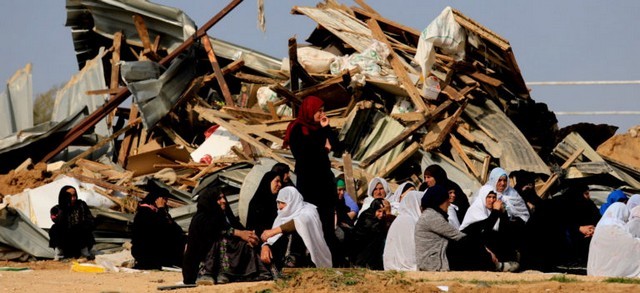
While waiting without positive expectations for the Trump ‘deal of the century’ the Palestinian ordeal unfolds day by day. Many Israelis would like us to believe that the Palestinian struggle to achieve self-determination has been defeated, and that it is time to admit that Israel is the victor and Palestine the loser. Recent events paint a different picture. Every Friday since the end of March 2018 the Great March of Return has confronted Israel at the Gaza fence. Israel has responded with lethal force killing more than 250 Palestinians and injuring over 18,000, using grossly excessive force to deal with almost completely nonviolent demonstrations. The world allows these weekly atrocities to go without any concerted adverse reaction and the UN is awkwardly silent.

It would seem that there is a feeling in international circles that nothing much can be done to bring about a peaceful and just solution at this stage. Such a conclusion partially explains the various recent moves in the Arab world toward an acceptance of Israel as a legitimate state, which has included diplomatic normalization. Beyond these developments, Israel has joined with Saudi Arabia and the United States in a war mongering escalation of an unwarranted confrontation with Iran. In addition, Israel and Egypt are collaborating on security issues at the border and in the Sinai, as well as in developing off shore oil and gas projects.

All and all, this is a moment for stocktaking with respect to this conflict that has gone on for more than a century, and assessing what would be the best way forward.

A fundamental point is how peace might be made in a manner that realizes the fundamental right of the Palestinian people to achieve self-determination in a territorial space that was for centuries their own homeland. The prevailing assumption had been that a solution would be achieved by geopolitically framed negotiations between Israel and governmental representatives of the Palestinian people. The framing was entrusted to the United States, which itself insinuated a fatal flaw into the diplomatic process if the goal was to achieve a peaceful compromise that was fair to both sides. How could this happen if the stronger party had the unconditional backing of the geopolitical intermediary and the weaker party was not even clearly the legitimate representative of the Palestinian people?

Additionally, this already flawed framework was further abused by subordinating the so-called peace process to Zionist expansionist goals, expressed by annexing Jerusalem, denying refugee rights of return, and expanding unlawful settlements in occupied Palestine. Such a geopolitical framework, associated with the Oslo Framework of Principles, as adopted in 1993, has by now been widely discredited but not before Israel had used the past 25 years to achieve their expansionist goals, making the establishment of an independent Palestinian state a political impossibility, and putting the Palestinians in a far weaker position than when the Oslo approach was adopted.

Against this background, the perverse failure of the top down approach to a sustainable outcome has led to a public attitude of defeatism when it comes to achieving a peaceful compromise. The residual top down option is the coercive imposition of ‘peace’ by declaring an Israeli victory and a Palestinian defeat. In other words, if diplomacy fails, the winner/loser calculus of war is all that is left over.

Such thinking, although prevalent in elite circles, overlooks the historical agency of people, both those resisting injustice and those mobilized throughout the world in solidarity. These are the bottom-up kinds of political dynamics that changed the history of the last century. It was national mass movements that challenged successfully, although at heavy human costs, the unjust structures of colonialism and South African apartheid, and eventually prevailed despite military inferiority and geopolitical resistance. In other words, people had the superior historical agency despite their inferior capabilities on the battlefield and diplomatically. This populist potency is a reality with a potential to subvert the established order and for this reason is treated as irrelevant by mainstream thinking and policy planners.

It is precisely on the basis of this deconstruction of power and change that hope for a brighter Palestinian future lies. The strength of the Palestinian national movement is on the level of people as fortified by the moral consensus that Israeli apartheid colonialism is wrong, indeed a crime against humanity according to international criminal law [see Article 7 of the Rome Statute governing the International Criminal Court and the International Apartheid Convention of 1973 on the Suppression and Punishment of the Crime of Apartheid] It is this bottom up process of struggle, spearheaded by Palestinian resistance and given leverage by global solidarity initiatives such as the BDS [Boycott, Divestment, and Sanctions] Campaign as it gains momentum and heightens pressure. Historical outcomes are never certain, but the flow of history has been against this Israeli/Zionist combination of colonial appropriation of Palestine and the apartheid structures relied upon to maintain the subjugation of the Palestinian people.

Against this background, some general propositions can be put forward.

The Two-State Solution Is Dead

For several years, at least since the de facto abandonment of the Oslo diplomacy in 2014, the two-state solution has not been seen as a viable political option. Yet it continues to be affirmed by many governments and at the UN. This is not because there is any belief that it might finally happen, but because every other outcome seemed either impossible or too horrible to contemplate. In other words, many leading political figures and opinion leaders held onto the two-state approach as an alternative to zero. This reflect an impoverishment of the political and moral imagination, only capable of conceiving a solution to conflict as deriving from top down approaches; bottom up approaches are not even considered.

It seems better to admit the defeat of two-state diplomacy and take account of the existing situation confronting Palestinians and Israelis so as to consider alternatives. To come to this point, it might be helpful to explain why the two-state solution has become so irrelevant. Above all, it seems evident that the Likud leadership of Israel never wanted an independent Palestinian state established. Netanyahu pledged during the 2014 presidential campaign in Israel that a Palestinian state would never come into existence as long as he was Israel’s leader.

Perhaps, more fundamental, the settler movement has passed a point of no return. There are more than 600,000 Israeli settlers living in more than 130 settlements spread all over the West Bank and East Jerusalem. Settler leaders believe that the settlements have so changed the map of Israel to exclude any possibility of an independent Palestine, and their leaders now envisage the settler population growing to 2,000,000 to drive this point home.

True, the Palestinian Authority has long seemed ready to accept even a territorially abridged state, ceding sovereignty over the settlement blocs near the border, but insisting on its capital being in Jerusalem. A broad spectrum of Israeli political leaders agrees that the future of Jerusalem is non-negotiable, and that the city will remain forever unified under sole Israeli sovereignty and administration. Under these conditions it can be safely concluded that it is no longer plausible to consider seriously the two-state path to peace between the two peoples.

The Arab Accommodation Is Tenuous

Israel feels little pressure to seek a political compromise given present conditions. With Trump in the White House and Arab governments scrambling toward normalization and accommodation, Israeli leaders and public opinion seem ill-disposed to make concessions for the sake of peace. As such keeping the two-state non-solution alive as a Zombie solution is a way to proceed with Israel’s continuing efforts to expand the settlements while implementing its coercive version of a one-state solution.

There are strong reasons to feel that this Israeli confidence that the Palestinian demand for rights can be indefinitely ignored is premature and is likely tol be undermined by events in the near future. For one thing, the Arab moves toward normalization are unstable as is the entire region. If there is a renewal of Arab uprisings, in the spirit of 2011, it is quite possible that support for Palestinian self-determination would surge to the top of the regional political agenda, stronger form than ever before. The Arab people, as distinct from the governments, continue to feel deep bonds of solidarity with their Palestinian brothers and sisters.

Beyond this, should Trump presidency be defeated in 2020, there is likely to be an Israeli reevaluation of their interests. Such a prospect is heightened by signs that Jewish unconditional support for Israel is dramatically weakening, including in the United States. Furthermore, the global solidarity movement supportive of the Palestinian national movement is spreading and growing. It is becoming more militant, engaging moderate global public opinion, and has the symbolic benefit of strong backing in South Africa, which sees the fight for Palestinian rights as analogous to their own anti-apartheid campaign.

What Next?

Two conclusions emerge from this analysis: first, a continued reliance on the two-state diplomacy within a framework that relies on the United States as an intermediary or peace broker is now irrelevant and discredited. It is at this point only a distraction. Secondly, despite Israel’s recent gains in acceptance within the Middle East and its one-sided support in Washington, the Palestinian national movement persists, and under certain conditions, will mount a threat to Israel’s future.

In light of these conclusions, what is best to be done? It would seem that only a democratic and secular single state could uphold self-determination for both peoples, holding out a promise of sustainable peace. It would need to be carefully envisioned and promoted with international safeguards along the path toward realization. It does not seem a practical possibility at present, but putting it forward as the only outcome that can be regarded as just avoids despair and holds out hopes for a humane peace when the time is right. Such an outcome would require a major modification of Israeli goals.

In such a binational situation, the newly created single state could offer homelands to Jews and Palestinians, while finding a name for the new state that is congenial to both peoples. Maybe this will never happen, but it the most sustainable vision of a peaceful future that responds to decades of diplomatic failure, massive Palestinian suffering and abuse, and recognizes the moral authority and political potency of national resistance and global solidarity, a legislative victory by that unacknowledged Parliament of Humanity.

Richard Falk is a member of the TRANSCEND Network, an international relations scholar, professor emeritus of international law at Princeton University, author, co-author or editor of 40 books, and a speaker and activist on world affairs.

25 February 2019

Source: transcend.org

A Personal Testimony of Kashmiriyat

By Binu Mathew

When Kashmiris are being attacked across India, let me telly you a story about Kashmiriyat. Last summer I was in Kashmir with my family. We were coming back from Sonamarg. The road to Sonamarg goes through Zojila Pass, one of the highest motorable road in the world. It’s a desert land for dozens of kilometers. Even in summer the temperature is near freezing.

As we were coming back from Sonamarg, we spotted a man walking alone in the road in the freezing cold. It was also raining. Our driver Sultan stopped the taxi asked him what he’s doing in this chilling cold. Sultan told him he’ll freeze to death. He didn’t answer. Sultan asked him to get into the taxi. He got into the taxi and Sultan tried to get him into a conservation. He mumbled. He had no clue as to where he’s. He didn’t answer where he comes from. By his looks, he was not a Kashmiri. He’s probably from the Hindi heartland. Probably he was mentally deranged. Sultan handed him over to the police in the nearest police check post.

I’m sure that back home in Kerala, no driver would’ve picked up a stranger, evena a Malayali not speak of an OTHER, in similar circumstances to a family vehicle. That’s Kashmiriyat. With that incident I fell in love with Kashmir and Kashmiris. There are many other similar stories from that trip to Kashmir.

As ‘Indian’ people were on a murderous spree across India, attacking Kashmiri traders and Kashmiri students, people from Indian mainland who were travelling in Kashmir did not face any hardship. Kashmiriyat still still lives in the event of terrorist attcks and even when Kashmiri brethren are being attacked in mainland India.

Binu Mathew is the Editor of Counatercurrents.org.

23 February 2019

Source: Counatercurrents.org

Aid in reverse: how poor countries develop rich countries

By Jason Hickel

We have long been told a compelling story about the relationship between rich countries and poor countries. The story holds that the rich nations of the OECD give generously of their wealth to the poorer nations of the global south, to help them eradicate poverty and push them up the development ladder. Yes, during colonialism western powers may have enriched themselves by extracting resources and slave labour from their colonies – but that’s all in the past. These days, they give more than $125bn (£102bn) in aid each year – solid evidence of their benevolent goodwill.

This story is so widely propagated by the aid industry and the governments of the rich world that we have come to take it for granted. But it may not be as simple as it appears.

The US-based Global Financial Integrity (GFI) and the Centre for Applied Research at the Norwegian School of Economics recently published some fascinating data. They tallied up all of the financial resources that get transferred between rich countries and poor countries each year: not just aid, foreign investment and trade flows (as previous studies have done) but also non-financial transfers such as debt cancellation, unrequited transfers like workers’ remittances, and unrecorded capital flight (more of this later). As far as I am aware, it is the most comprehensive assessment of resource transfers ever undertaken.

The flow of money from rich countries to poor countries pales in comparison to the flow that runs in the other direction

What they discovered is that the flow of money from rich countries to poor countries pales in comparison to the flow that runs in the other direction.

In 2012, the last year of recorded data, developing countries received a total of $1.3tn, including all aid, investment, and income from abroad. But that same year some $3.3tn flowed out of them. In other words, developing countries sent $2tn more to the rest of the world than they received. If we look at all years since 1980, these net outflows add up to an eye-popping total of $16.3tn – that’s how much money has been drained out of the global south over the past few decades. To get a sense for the scale of this, $16.3tn is roughly the GDP of the United States

What this means is that the usual development narrative has it backwards. Aid is effectively flowing in reverse. Rich countries aren’t developing poor countries; poor countries are developing rich ones.

It’s not aid in reverse, illicit financial flows are more complicated than that

What do these large outflows consist of? Well, some of it is payments on debt. Developing countries have forked out over $4.2tn in interest paymentsalone since 1980 – a direct cash transfer to big banks in New York and London, on a scale that dwarfs the aid that they received during the same period. Another big contributor is the income that foreigners make on their investments in developing countries and then repatriate back home. Think of all the profits that BP extracts from Nigeria’s oil reserves, for example, or that Anglo-American pulls out of South Africa’s gold mines.

But by far the biggest chunk of outflows has to do with unrecorded – and usually illicit – capital flight. GFI calculates that developing countries have lost a total of $13.4tn through unrecorded capital flight since 1980.

Most of these unrecorded outflows take place through the international trade system. Basically, corporations – foreign and domestic alike – report false prices on their trade invoices in order to spirit money out of developing countries directly into tax havens and secrecy jurisdictions, a practice known as “trade misinvoicing”. Usually the goal is to evade taxes, but sometimes this practice is used to launder money or circumvent capital controls. In 2012, developing countries lost $700bn through trade misinvoicing, which outstripped aid receipts that year by a factor of five.

Forget ‘developing’ poor countries, it’s time to ‘de-develop’ rich countries

Multinational companies also steal money from developing countries through “same-invoice faking”, shifting profits illegally between their own subsidiaries by mutually faking trade invoice prices on both sides. For example, a subsidiary in Nigeria might dodge local taxes by shifting money to a related subsidiary in the British Virgin Islands, where the tax rate is effectively zero and where stolen funds can’t be traced.

GFI doesn’t include same-invoice faking in its headline figures because it is very difficult to detect, but they estimate that it amounts to another $700bn per year. And these figures only cover theft through trade in goods. If we add theft through trade in services to the mix, it brings total net resource outflows to about $3tn per year.

That’s 24 times more than the aid budget. In other words, for every $1 of aid that developing countries receive, they lose $24 in net outflows. These outflows strip developing countries of an important source of revenue and finance for development. The GFI report finds that increasingly large net outflows have caused economic growth rates in developing countries to decline, and are directly responsible for falling living standards.

Who is to blame for this disaster? Since illegal capital flight is such a big chunk of the problem, that’s a good place to start. Companies that lie on their trade invoices are clearly at fault; but why is it so easy for them to get away with it? In the past, customs officials could hold up transactions that looked dodgy, making it nearly impossible for anyone to cheat. But the World Trade Organisation claimed that this made trade inefficient, and since 1994 customs officials have been required to accept invoiced prices at face valueexcept in very suspicious circumstances, making it difficult for them to seize illicit outflows.

Still, illegal capital flight wouldn’t be possible without the tax havens. And when it comes to tax havens, the culprits are not hard to identify: there are more than 60 in the world, and the vast majority of them are controlled by a handful of western countries. There are European tax havens such as Luxembourg and Belgium, and US tax havens like Delaware and Manhattan. But by far the biggest network of tax havens is centered around the City of London, which controls secrecy jurisdictions throughout the British Crown Dependencies and Overseas Territories.

In other words, some of the very countries that so love to tout their foreign aid contributions are the ones enabling mass theft from developing countries.

The aid narrative begins to seem a bit naïve when we take these reverse flows into account. It becomes clear that aid does little but mask the maldistribution of resources around the world. It makes the takers seem like givers, granting them a kind of moral high ground while preventing those of us who care about global poverty from understanding how the system really works.

Poor countries don’t need charity. They need justice. And justice is not difficult to deliver. We could write off the excess debts of poor countries, freeing them up to spend their money on development instead of interest payments on old loans; we could close down the secrecy jurisdictions, and slap penalties on bankers and accountants who facilitate illicit outflows; and we could impose a global minimum tax on corporate income to eliminate the incentive for corporations to secretly shift their money around the world.

We know how to fix the problem. But doing so would run up against the interests of powerful banks and corporations that extract significant material benefit from the existing system. The question is, do we have the courage?

Join our community of development professionals and humanitarians. Follow @GuardianGDP on Twitter.

14 January 2017

Source: theguardian.com

The War On Venezuela Is Built On Lies

By John Pilger

Travelling with Hugo Chavez, I soon understood the threat of Venezuela. At a farming co-operative in Lara state, people waited patiently and with good humour in the heat. Jugs of water and melon juice were passed around. A guitar was played; a woman, Katarina, stood and sang with a husky contralto.

“What did her words say?” I asked.

“That we are proud,” was the reply.

The applause for her merged with the arrival of Chavez. Under one arm he carried a satchel bursting with books. He wore his big red shirt and greeted people by name, stopping to listen. What struck me was his capacity to listen.

But now he read. For almost two hours he read into the microphone from the stack of books beside him: Orwell, Dickens, Tolstoy, Zola, Hemingway, Chomsky, Neruda: a page here, a line or two there. People clapped and whistled as he moved from author to author.

Then farmers took the microphone and told him what they knew, and what they needed; one ancient face, carved it seemed from a nearby banyan, made a long, critical speech on the subject of irrigation; Chavez took notes.

Wine is grown here, a dark Syrah type grape. “John, John, come up here,” said El Presidente, having watched me fall asleep in the heat and the depths of Oliver Twist.

“He likes red wine,” Chavez told the cheering, whistling audience, and presented me with a bottle of “vino de la gente”. My few words in bad Spanish brought whistles and laughter.

Watching Chavez with la gente made sense of a man who promised, on coming to power, that his every move would be subject to the will of the people. In eight years, Chavez won eight elections and referendums: a world record. He was electorally the most popular head of state in the Western Hemisphere, probably in the world.

Every major chavista reform was voted on, notably a new constitution of which 71 per cent of the people approved each of the 396 articles that enshrined unheard of freedoms, such as Article 123, which for the first time recognised the human rights of mixed-race and black people, of whom Chavez was one.

One of his tutorials on the road quoted a feminist writer: “Love and solidarity are the same.” His audiences understood this well and expressed themselves with dignity, seldom with deference. Ordinary people regarded Chavez and his government as their first champions: as theirs.

This was especially true of the indigenous, mestizos and Afro-Venezuelans, who had been held in historic contempt by Chavez’s immediate predecessors and by those who today live far from the barrios, in the mansions and penthouses of East Caracas, who commute to Miami where their banks are and who regard themselves as “white”. They are the powerful core of what the media calls “the opposition”.

When I met this class, in suburbs called Country Club, in homes appointed with low chandeliers and bad portraits, I recognised them. They could be white South Africans, the petite bourgeoisie of Constantia and Sandton, pillars of the cruelties of apartheid.

Cartoonists in the Venezuelan press, most of which are owned by an oligarchy and oppose the government, portrayed Chavez as an ape. A radio host referred to “the monkey”. In the private universities, the verbal currency of the children of the well-off is often racist abuse of those whose shacks are just visible through the pollution.

Although identity politics are all the rage in the pages of liberal newspapers in the West, race and class are two words almost never uttered in the mendacious “coverage” of Washington’s latest, most naked attempt to grab the world’s greatest source of oil and reclaim its “backyard”.

For all the chavistas’ faults – such as allowing the Venezuelan economy to become hostage to the fortunes of oil and never seriously challenging big capital and corruption – they brought social justice and pride to millions of people and they did it with unprecedented democracy.

“Of the 92 elections that we’ve monitored,” said former President Jimmy Carter, whose Carter Centre is a respected monitor of elections around the world, “I would say the election process in Venezuela is the best in the world.” By way of contrast, said Carter, the US election system, with its emphasis on campaign money, “is one of the worst”.

In extending the franchise to a parallel people’s state of communal authority, based in the poorest barrios, Chavez described Venezuelan democracy as “our version of Rousseau’s idea of popular sovereignty”.

In Barrio La Linea, seated in her tiny kitchen, Beatrice Balazo told me her children were the first generation of the poor to attend a full day’s school and be given a hot meal and to learn music, art and dance. “I have seen their confidence blossom like flowers,” she said.

In Barrio La Vega, I listened to a nurse, Mariella Machado, a black woman of 45 with a wicked laugh, address an urban land council on subjects ranging from homelessness to illegal war. That day, they were launching Mision Madres de Barrio, a programme aimed at poverty among single mothers. Under the constitution, women have the right to be paid as carers, and can borrow from a special women’s bank. Now the poorest housewives get the equivalent of $200 a month.

In a room lit by a single fluorescent tube, I met Ana Lucia Ferandez, aged 86, and Mavis Mendez, aged 95. A mere 33-year-old, Sonia Alvarez, had come with her two children. Once, none of them could read and write; now they were studying mathematics. For the first time in its history, Venezuela has almost 100 per cent literacy.

This is the work of Mision Robinson, which was designed for adults and teenagers previously denied an education because of poverty. Mision Ribas gives everyone the opportunity of a secondary education, called a bachillerato.(The names Robinson and Ribas refer to Venezuelan independence leaders from the 19th century).

In her 95 years, Mavis Mendez had seen a parade of governments, mostly vassals of Washington, preside over the theft of billions of dollars in oil spoils, much of it flown to Miami. “We didn’t matter in a human sense,” she told me. “We lived and died without real education and running water, and food we couldn’t afford. When we fell ill, the weakest died. Now I can read and write my name and so much more; and whatever the rich and the media say, we have planted the seeds of true democracy and I have the joy of seeing it happen.”

In 2002, during a Washington-backed coup, Mavis’s sons and daughters and grandchildren and great-grandchildren joined hundreds of thousands who swept down from the barrios on the hillsides and demanded the army remained loyal to Chavez.

“The people rescued me,” Chavez told me. “They did it with the media against me, preventing even the basic facts of what happened. For popular democracy in heroic action, I suggest you look no further.”

Since Chavez’s death in 2013, his successor Nicolas Maduro has shed his derisory label in the Western press as a “former bus driver” and become Saddam Hussein incarnate. His media abuse is ridiculous. On his watch, the slide in the price of oil has caused hyper inflation and played havoc with prices in a society that imports almost all its food; yet, as the journalist and film-maker Pablo Navarrete reported this week, Venezuela is not the catastrophe it has been painted. “There is food everywhere,” he wrote. “I have filmed lots of videos of food in markets [all over Caracas] … it’s Friday night and the restaurants are full.”

In 2018, Maduro was re-elected President. A section of the opposition boycotted the election, a tactic tried against Chavez. The boycott failed: 9,389,056 people voted; sixteen parties participated and six candidates stood for the presidency. Maduro won 6,248,864 votes, or 67.84 per cent.

On election day, I spoke to one of the 150 foreign election observers. “It was entirely fair,” he said. “There was no fraud; none of the lurid media claims stood up. Zero. Amazing really.”

Like a page from Alice’s tea party, the Trump administration has presented Juan Guaido, a pop-up creation of the CIA-front National Endowment for Democracy, as the “legitimate President of Venezuela”. Unheard of by 81 per cent of the Venezuelan people, according to The Nation, Guaido has been elected by no one.

Maduro is “illegitimate”, says Trump (who won the US presidency with three million fewer votes than his opponent), a “dictator”, says demonstrably unhinged vice president Mike Pence and an oil trophy-in-waiting, says “national security” adviser John Bolton (who when I interviewed him in 2003 said, “Hey, are you a communist, maybe even Labour?”).

As his “special envoy to Venezuela” (coup master), Trump has appointed a convicted felon, Elliot Abrams, whose intrigues in the service of Presidents Reagan and George W. Bush helped produce the Iran-Contra scandal in the 1980s and plunge central America into years of blood-soaked misery.

Putting Lewis Carroll aside, these “crazies” belong in newsreels from the 1930s. And yet their lies about Venezuela have been taken up with enthusiasm by those paid to keep the record straight.

On Channel 4 News, Jon Snow bellowed at the Labour MP Chris Williamson, “Look, you and Mr Corbyn are in a very nasty corner [on Venezuela]!” When Williamson tried to explain why threatening a sovereign country was wrong, Snow cut him off. “You’ve had a good go!”

In 2006, Channel 4 News effectively accused Chavez of plotting to make nuclear weapons with Iran: a fantasy. The then Washington correspondent, Jonathan Rugman, allowed a war criminal, Donald Rumsfeld, to liken Chavez to Hitler, unchallenged.

Researchers at the University of the West of England studied the BBC’s reporting of Venezuela over a ten-year period. They looked at 304 reports and found that only three of these referred to any of the positive policies of the government. For the BBC, Venezuela’s democratic record, human rights legislation, food programmes, healthcare initiatives and poverty reduction did not happen. The greatest literacy programme in human history did not happen, just as the millions who march in support of Maduro and in memory of Chavez, do not exist.

When asked why she filmed only an opposition march, the BBC reporter Orla Guerin tweeted that it was “too difficult” to be on two marches in one day.

A war has been declared on Venezuela, of which the truth is “too difficult” to report.

It is too difficult to report the collapse of oil prices since 2014 as largely the result of criminal machinations by Wall Street. It is too difficult to report the blocking of Venezuela’s access to the US-dominated international financial system as sabotage. It is too difficult to report Washington’s “sanctions” against Venezuela, which have caused the loss of at least $6billion in Venezuela’s revenue since 2017, including $2billion worth of imported medicines, as illegal, or the Bank of England’s refusal to return Venezuela’s gold reserves as an act of piracy.

The former United Nations Rapporteur, Alfred de Zayas, has likened this to a “medieval siege” designed “to bring countries to their knees”. It is a criminal assault, he says. It is similar to that faced by Salvador Allende in 1970 when President Richard Nixon and his equivalent of John Bolton, Henry Kissinger, set out to “make the economy [of Chile] scream”. The long dark night of Pinochet followed.

The Guardian correspondent, Tom Phillips, has tweeted a picture of a cap on which the words in Spanish mean in local slang: “Make Venezuela fucking cool again.” The reporter as clown may be the final stage of much of mainstream journalism’s degeneration.

Should the CIA stooge Guaido and his white supremacists grab power, it will be the 68th overthrow of a sovereign government by the United States, most of them democracies. A fire sale of Venezuela’s utilities and mineral wealth will surely follow, along with the theft of the country’s oil, as outlined by John Bolton.

Under the last Washington-controlled government in Caracas, poverty reached historic proportions. There was no healthcare for those could not pay. There was no universal education; Mavis Mendez, and millions like her, could not read or write. How cool is that, Tom?

John Pilger is an Australian journalist and documentary maker, based in London.

23 February 2019

Source: countercurrents.org

Mensaje urgente a las fuerzas políticas y sociales del continente:

Mensaje urgente a las fuerzas políticas y sociales del continente:

Como enfatiza la Declaración del Gobierno Revolucionario de Cuba, del pasado 13 de febrero, “la escalada de presiones y acciones del Gobierno de los Estados Unidos para preparar una aventura militar disfrazada de intervención humanitaria”, no solamente constituye una amenaza real contra la Revolución Bolivariana, sino que entraña un peligro real para la paz continental. Washington no debería subestimar los costos de una agresión contra Venezuela. La posibilidad de una desastrosa regionalización del conflicto armado afectaría a nuestros pueblos y a todos sus sectores sociales, económicos y políticos.

Estamos ante una típica amenaza de guerra de agresión imperialista, se disfrace como se disfrace, cuyo objetivo principal es la apropiación, por parte de los Estados Unidos, de las mayores reservas certificadas de petróleo del planeta. Se evidencia, una vez más,el desprecio de Washington a las decenas de miles de víctimas civiles que podría producir una conflagración como la que está a la vista.

No sería solo un ataque contra la Revolución Bolivariana. En la lógica de los halcones que controlan la política de la administración de Trump hacia la América Latina, la acción es vista como una embestida final contra la izquierda y las fuerzas progresistas en el continente. Hoy es Venezuela, mañana serán Nicaragua, Bolivia o Cuba.

La defensa de la Revolución Bolivariana, en consecuencia, pasa a ser la primera trinchera en la lucha por la soberanía de Nuestra América, por el ideal de justicia social, paz con dignidad, y unidad latinoamericanista que nos legaran los fundadores de nuestras nobles naciones.

Reafirmamos la posición del Gobierno Revolucionario de Cuba, cuando recuerda que “se decide hoy en Venezuela la soberanía y la dignidad de América Latina y el Caribe y de los pueblos del Sur. Se decide también la supervivencia de las normas del derecho internacional y la Carta de las Naciones Unidas. Se define si la legitimidad de un gobierno emana de la voluntad expresa y soberana de su pueblo, o del reconocimiento de potencias extranjeras”.

Llamamos a la marcha unida y a mostrar al Imperio yanqui que los pueblos del continente sí tienen sentido de su independencia y soberanía.

Es momento oportuno para que las fuerzas del Foro de Sao Paulo reivindiquen el potencial político que representan. Nuestros pueblos lo demandan.
Los sectores políticos y sociales de izquierda, democráticos y patrióticos, tenemos por delante la posibilidad de demostrar que el mejor modo de decir, es hacer, como subrayó en su momento José Martí. Desde Cuba, les instamos a ganar la guerra: impidamos que se desate, garanticemos la paz para todos. Hagamos honor a esta histórica decisión de los antifascistas españoles: ¡no pasarán!

Partido Comunista de Cuba

(Unofficial translation)
Urgent message to the political and social forces of the continent:
As the Declaration of the Revolutionary Government of Cuba emphasizes, on February 13, “the escalation of pressure and actions of the United States Government to prepare a military adventure disguised as a humanitarian intervention”, not only constitutes a real threat against the Bolivarian Revolution , but it entails a real danger for continental peace.
Washington should not underestimate the costs of an aggression against Venezuela. The possibility of a disastrous regionalization of the armed conflict would affect our peoples and all their social, economic and political sectors.

We are facing a typical threat of imperialist aggression, disguised as it is disguised; whose main objective is the appropriation by the United States of the largest certified oil reserves on the planet. Once again, there is evidence of Washington’s contempt for the tens of thousands of civilian victims that a conflagration like the one in sight could produce.

It would not be just an attack against the Bolivarian Revolution. In the logic of the hawks that control the Trump administration’s policy toward Latin America, the action is seen as a final onslaught against the left and progressive forces on the continent. Today it is Venezuela; tomorrow it will be Nicaragua, Bolivia or Cuba.

The defense of the Bolivarian Revolution, consequently, becomes the first trench in the struggle for the sovereignty of Our America, for the ideal of social justice, peace with dignity, and Latin American unity that the founders of our noble nations bequeath to us.

We reaffirm the position of the Revolutionary Government of Cuba, when it recalls that “the sovereignty and dignity of Latin America and the Caribbean and of the peoples of the South are decided today in Venezuela. The survival of the norms of international law and the Charter of the United Nations are also decided. It will determine if the legitimacy of a government emanates from the express and sovereign will of its people, or from the recognition of foreign powers.”

We call for a united march to show the Yankee Empire that the peoples of the continent do have a sense of their independence and sovereignty. It is an opportune moment for the forces of the Sao Paulo Forum to reclaim the political potential they represent. Our people demand it. The political and social sectors of the left, democratic and patriotic, we have before us the possibility of demonstrating that the best way to say, is to do, as José Martí emphasized. From Cuba, we urge to win the war by preventing it from starting, let’s guarantee peace for all. Let us honor this historic decision of the Spanish antifascists: they will not pass!

Communist Party of Cuba

Hands Off Venezuela: Historic Stance at the United Nations against US Imperialism

By Carla Stea

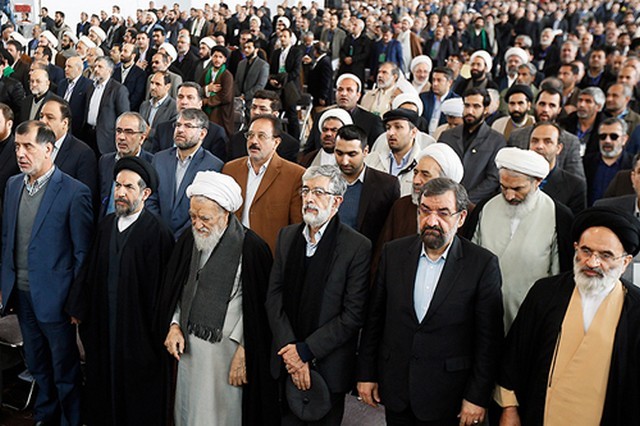
In a spectacular display of solidarity and strength, envoys from such distant capitals as Beijing and Havana, Moscow and Tehran, Pyongyang and Caracas, Damascus and Managua and numerous other states stood together, side by side, in front of the United Nations Security Council, declaring their determination to protect the UN Charter and International Law, and holding sacrosanct the sovereignty and inviolability of each member state.

All these present, and approximately 50 more aligned, are states whose combined populations comprise more than half the people of the world, and all have been victimized and pauperized by the predations of neoliberal capitalist states bleeding the wealth of their peoples.

As Venezuelan Foreign Minister Jorge Arreaza read out their new statement, declaring the illegality of unilateral coercive economic sanctions, and territorial invasions, it became obvious that the power of this new solidarity, which includes China, Russia, Cuba, DPRK, Syria, Iran, Palestine, Nicaragua, Venezuela, etc. constitutes a formidable force which Western capitalism will antagonize at its own peril. This is a long overdue counterforce to Western domination of the United Nations, a domination based on money, on the large payments enabling the US and other capitalist powers to bribe, threaten and otherwise control the direction of the UN, and distort and destroy the independence, impartiality and integrity which the UN requires in order to maintain its legitimacy, and implement the sustained global peace and justice for which Franklin Delano Roosevelt created it.

Since the collapse of the USSR it has become blatantly clear at the UN (and virtually everywhere else) that money talks – indeed money shrieks . It therefore now seems obvious that the combined UN dues of these newly affiliated nations probably exceeds the contributions of the United States to the United Nations, and, if skillfully managed, this new organization of hitherto ravaged states will now have the power to threaten to withhold their combined dues, threatening a strike would could paralyze the United Nations unless their own interests, and not solely the interest of the United States and Saudi Arabia, are respected, and their own voices honored. There is incessant talk of the need for reform of the United Nations. It is probable that this new organization within the UN is the reform that is necessary – indeed inevitable.

*

Note to readers: please click the share buttons above. Forward this article to your email lists. Crosspost on your blog site, internet forums. etc.

Carla Stea is Global Research’s correspondent at United Nations Headquarters, New York, N.Y.

16 February

Source: globalresearch.ca

Beyond Westoxification and Orientalism: How to Read Iranian Politics

By Giorgia Perletta

Using fixed categories to describe Iranian politics is often a risk. Western readings are frequently imbued with misconceptions and prejudices due to an Orientalist approach. At the same time, the official narrative of the Islamic Republic reflects a self-representation in conscious reaction to Western views of Iran. These two readings clash with each other at the expense of a deep and fair understanding of Iranian politics.

The Western interpretation of Iran’s politics and domestic dynamics is often based on a dichotomous reading that confines spaces and actors within two confronting dimensions. Political debates are described as a constant clash between conservatives and reformists, pragmatists and radicals, or moderates and hardliners.

Internal factionalism is defined and thus understood as a contradiction between more strict political forces, linked to unelected and cleric-dominated institutions, and more moderate ones that emerge from direct elections and are struggling to introduce gradual reforms.

Terms like radicalism and conservatism come from a Western historical-political process and do not always fit the Iranian context. Translation is also a problem as is evident in the use of the word “principalist,” from the Persian /usulgarayan/—followers of principles or /usul/. In Western literature about Iran, this term refers to hardliners who emerged in the political arena after 2004 and consolidated their power during the presidency of Mahmoud Ahmadinejad. However, a group opposing Ahmadinejad in 2008 parliamentary elections used the word /usulgarayan/to distinguish itself from the president’s circle.

In the West, there is a deep misunderstanding of Persian nomenclature that leads to the misattribution of Western labels to Iranian political groups. Descriptions of the Supreme Leader Ayatollah Ali Khamenei are emblematic of this shallow analysis. Khamenei has been labelled a conservative figure, suggesting orthodox adherence to revolutionary values and political factions linked to conservatism. What this label neglects is Khamenei’s ability to move within the political arena, maintaining a conservative posture but generally avoiding fractures and deep crises in the system (the post-2009 election period is an exception). During the presidency of Ahmadinejad’s successor, Hassan Rouhani, Khamenei has proven himself to be a pragmatic leader able to read the internal dynamics of the country and rejecting the intransigent posture often attributed to Iranian conservatives.

Orientalist readings also generate misconceptions about the relations between the state and society. Iranian society is often described as liberal, educated, modern and in an endless struggle with the political elite. The latter are labelled as oppressive, authoritarian and embracing religious traditionalism. When protests occur in the country, Western media disseminates images of women removing their veils to emphasize modernity and a demand for more personal freedom. However, Western media misinterpreted many of the protests that occurred at the end of 2017 and beginning of 2018 as political when the primary motivation was economic.

The image of women unveiling themselves embodies the Orientalist lens of the West in reading Iranian dynamics. Moreover, in the Western perspective, criticism of compulsory /hijab /is a symbol of social redemption in Iran and a priority for the emancipation of Iranian women. This perspective, however, tends to slight years of women’s activism for more rights in the family, in employment and in politics in which rejection of the compulsory veil is only a minor grievance and mainly an urban and middle-class phenomenon.

Iranian society, as well as the political elite, is active, pluralistic and in a constant redefinition of its identity. Trying to overcome fixed categories and biased interpretations could help create a more nuanced understanding of internal dynamics in place of the unconditional condemnation of the government and excessive praise of a part of society. Both the Iranian population and the government have witnessed profound transformation that cannot be ignored, nor be understood through dichotomous approaches.

At the official level, the Islamic Republic insists on concepts such as self-sufficiency and the economy of resistance. This narrative re-emerges every time relations with Western states are facing a phase of confrontation as they are now with the US withdrawal from the 2015 nuclear deal. There are important economic, political and rhetorical reasons behind the calls for self-sufficiency, which attempts to crystalize national identity /vis/-à-/vis/the outside world. In building its own political identity, post-revolutionary Iran inherited an anti-Western narrative. The emphasis on national traditions and Iran’s long history also provided a strong sense of distinctiveness that underlined the emphasis on independence. However, Tehran has also shown a deep commitment to try to overcome political and economic isolation, first by establishing a “critical dialogue” with the European Union in the 1990s, then a “comprehensive” dialogue in the 2000s and finally, the Joint Comprehensive Plan of Action. These pragmatic policies, while emphasizing the need for dialogue with the West, never really abandoned the domestic rhetoric of confrontation and mistrust. The heritage of Jalal Al-e Ahmad’s “Westoxification” as a rejection of Western cultural paradigms is still evident at the official level.

Despite such antagonistic rhetoric, however, the Islamic Republic is in constant exchange with the West, from a cultural, political and economic point of view. The Western gaze should overcome partial readings to avoid diplomatic deadlock and try to understand Iran with more nuance and objectivity.

Giorgia Perletta is a PhD candidate in institutions and policies at Catholic University of Milan, Italy. She has been a visiting researcher at the University of Toronto and received her two MAs in international relations and in Middle Eastern studies at the Catholic University of Milan.

31 January 2019

War With China? It’s Already Under Way

By Michael T Klare

In his highly acclaimed 2017 book, Destined for War, Harvard professor Graham Allison assessed the likelihood that the United States and China would one day find themselves at war. Comparing the U.S.-Chinese relationship to great-power rivalries all the way back to the Peloponnesian War of the fifth century BC, he concluded that the future risk of a conflagration was substantial. Like much current analysis of U.S.-Chinese relations, however, he missed a crucial point: for all intents and purposes, the United States and China are already at war with one another. Even if their present slow-burn conflict may not produce the immediate devastation of a conventional hot war, its long-term consequences could prove no less dire.

To suggest this means reassessing our understanding of what constitutes war. From Allison’s perspective (and that of so many others in Washington and elsewhere), “peace” and “war” stand as polar opposites. One day, our soldiers are in their garrisons being trained and cleaning their weapons; the next, they are called into action and sent onto a battlefield. War, in this model, begins when the first shots are fired.

Well, think again in this new era of growing great-power struggle and competition. Today, war means so much more than military combat and can take place even as the leaders of the warring powers meet to negotiate and share dry-aged steak and whipped potatoes (as Donald Trump and Xi Jinping did at Mar-a-Lago in 2017). That is exactly where we are when it comes to Sino-American relations. Consider it war by another name, or perhaps, to bring back a long-retired term, a burning new version of a cold war.

Even before Donald Trump entered the Oval Office, the U.S. military and other branches of government were already gearing up for a long-term quasi-war, involving both growing economic and diplomatic pressure on China and a buildup of military forces along that country’s periphery. Since his arrival, such initiatives have escalated into Cold War-style combat by another name, with his administration committed to defeating China in a struggle for global economic, technological, and military supremacy.

This includes the president’s much-publicized “trade war” with China, aimed at hobbling that country’s future growth; a techno-war designed to prevent it from overtaking the U.S. in key breakthrough areas of technology; a diplomatic war intended to isolate Beijing and frustrate its grandiose plans for global outreach; a cyber war (largely hidden from public scrutiny); and a range of military measures as well. This may not be war in the traditional sense of the term, but for leaders on both sides, it has the feel of one.

Why China?

The media and many politicians continue to focus on U.S.-Russian relations, in large part because of revelations of Moscow’s meddling in the 2016 American presidential election and the ongoing Mueller investigation. Behind the scenes, however, most senior military and foreign policy officials in Washington view China, not Russia, as the country’s principal adversary. In eastern Ukraine, the Balkans, Syria, cyberspace, and in the area of nuclear weaponry, Russia does indeed pose a variety of threats to Washington’s goals and desires. Still, as an economically hobbled petro-state, it lacks the kind of might that would allow it to truly challenge this country’s status as the world’s dominant power. China is another story altogether. With its vast economy, growing technological prowess, intercontinental “Belt and Road” infrastructure project, and rapidly modernizing military, an emboldened China could someday match or even exceed U.S. power on a global scale, an outcome American elites are determined to prevent at any cost.

Washington’s fears of a rising China were on full display in January with the release of the 2019 Worldwide Threat Assessment of the U.S. Intelligence Community, a synthesis of the views of the Central Intelligence Agency and other members of that “community.” Its conclusion: “We assess that China’s leaders will try to extend the country’s global economic, political, and military reach while using China’s military capabilities and overseas infrastructure and energy investments under the Belt and Road Initiative to diminish U.S. influence.”

To counter such efforts, every branch of government is now expected to mobilize its capabilities to bolster American — and diminish Chinese — power. In Pentagon documents, this stance is summed up by the term “overmatch,” which translates as the eternal preservation of American global superiority vis-à-vis China (and all other potential rivals). “The United States must retain overmatch,” the administration’s National Security Strategyinsists, and preserve a “combination of capabilities in sufficient scale to prevent enemy success,” while continuing to “shape the international environment to protect our interests.”

In other words, there can never be parity between the two countries. The only acceptable status for China is as a distinctly lesser power. To ensure such an outcome, administration officials insist, the U.S. must take action on a daily basis to contain or impede its rise.

In previous epochs, as Allison makes clear in his book, this equation — a prevailing power seeking to retain its dominant status and a rising power seeking to overcome its subordinate one — has almost always resulted in conventional conflict. In today’s world, however, where great-power armed combat could possibly end in a nuclear exchange and mutual annihilation, direct military conflict is a distinctly unappealing option for all parties. Instead, governing elites have developed other means of warfare — economic, technological, and covert — to achieve such strategic objectives. Viewed this way, the United States is already in close to full combat mode with respect to China.

Trade War

When it comes to the economy, the language betrays the reality all too clearly. The Trump administration’s economic struggle with China is regularly described, openly and without qualification, as a “war.” And there’s no doubt that senior White House officials, beginning with the president and his chief trade representative, Robert Lighthizer, see it just that way: as a means of pulverizing the Chinese economy and so curtailing that country’s ability to compete with the United States in all other measures of power.

Ostensibly, the aim of President Trump’s May 2018 decision to impose $60 billion in tariffs on Chinese imports (increased in September to $200 billion) was to rectify a trade imbalance between the two countries, while protecting the American economy against what is described as China’s malign behavior. Its trade practices “plainly constitute a grave threat to the long-term health and prosperity of the United States economy,” as the president put it when announcing the second round of tariffs.

An examination of the demands submitted to Chinese negotiators by the U.S. trade delegation last May suggests, however, that Washington’s primary intent hasn’t been to rectify that trade imbalance but to impede China’s economic growth. Among the stipulations Beijing must acquiesce to before receiving tariff relief, according to leaked documents from U.S. negotiators that were spread on Chinese social media:

  • halting all government subsidies to advanced manufacturing industries in its Made in China 2025 program, an endeavor that covers 10 key economic sectors, including aircraft manufacturing, electric cars, robotics, computer microchips, and artificial intelligence;
  • accepting American restrictions on investments in sensitive technologies without retaliating;
  • opening up its service and agricultural sectors — areas where Chinese firms have an inherent advantage — to full American competition.

In fact, this should be considered a straightforward declaration of economic war. Acquiescing to such demands would mean accepting a permanent subordinate status vis-à-vis the United States in hopes of continuing a profitable trade relationship with this country. “The list reads like the terms for a surrender rather than a basis for negotiation,” was the way Eswar Prasad, an economics professor at Cornell University, accurately described these developments.

Technological Warfare

As suggested by America’s trade demands, Washington’s intent is not only to hobble China’s economy today and tomorrow but for decades to come. This has led to an intense, far-ranging campaign to deprive it of access to advanced technologies and to cripple its leading technology firms.

Chinese leaders have long realized that, for their country to achieve economic and military parity with the United States, they must master the cutting-edge technologies that will dominate the twenty-first-century global economy, including artificial intelligence (AI), fifth-generation (5G) telecommunications, electric vehicles, and nanotechnology. Not surprisingly then, the government has invested in a major way in science and technology education, subsidized research in pathbreaking fields, and helped launch promising startups, among other such endeavors — all in the very fashion that the Internet and other American computer and aerospace innovations were originally financed and encouraged by the Department of Defense.

Chinese companies have also demanded technology transfers when investing in or forging industrial partnerships with foreign firms, a common practice in international development. India, to cite a recent example of this phenomenon, expects that significant technology transfers from American firms will be one outcome of its agreed-upon purchases of advanced American weaponry.

In addition, Chinese firms have been accused of stealing American technology through cybertheft, provoking widespread outrage in this country. Realistically speaking, it’s difficult for outside observers to determine to what degree China’s recent technological advances are the product of commonplace and legitimate investments in science and technology and to what degree they’re due to cyberespionage. Given Beijing’s massive investment in science, technology, engineering, and mathematics education at the graduate and post-graduate level, however, it’s safe to assume that most of that country’s advances are the result of domestic efforts.

Certainly, given what’s publicly known about Chinese cybertheft activities, it’s reasonable for American officials to apply pressure on Beijing to curb the practice. However, the Trump administration’s drive to blunt that country’s technological progress is also aimed at perfectly legitimate activities. For example, the White House seeks to ban Beijing’s government subsidies for progress on artificial intelligence at the same time that the Department of Defense is pouring billions of dollars into AI research at home. The administration is also acting to block the Chinese acquisition of U.S. technology firms and of exports of advanced components and know-how.

In an example of this technology war that’s made the headlines lately, Washington has been actively seeking to sabotage the efforts of Huawei, one of China’s most prominent telecom firms, to gain leadership in the global deployment of 5G wireless communications. Such wireless systems are important in part because they will transmit colossal amounts of electronic data at far faster rates than now conceivable, facilitating the introduction of self-driving cars, widespread roboticization, and the universal application of AI.

Second only to Apple as the world’s supplier of smartphones and a major producer of telecommunications equipment, Huawei has sought to take the lead in the race for 5G adaptation around the world. Fearing that this might give China an enormous advantage in the coming decades, the Trump administration has tried to prevent that. In what is widely described as a “tech Cold War,” it has put enormous pressure on both its Asian and European allies to bar the company from conducting business in their countries, even as it sought the arrest in Canada of Huawei’s chief financial officer, Meng Wanzhou, and her extradition to the U.S. on charges of tricking American banks into aiding Iranian firms (in violation of Washington’s sanctions on that country). Other attacks on Huawei are in the works, including a potential banon the sales of its products in this country. Such moves are regularly described as focused on boosting the security of both the United States and its allies by preventing the Chinese government from using Huawei’s telecom networks to steal military secrets. The real reason — barely disguised — is simply to block China from gaining technological parity with the United States.

Cyberwarfare

There would be much to write on this subject, if only it weren’t still hidden in the shadows of the growing conflict between the two countries. Not surprisingly, however, little information is available on U.S.-Chinese cyberwarfare. All that can be said with confidence is that an intense war is now being waged between the two countries in cyberspace. American officials accuse China of engaging in a broad-based cyber-assault on this country, involving both outright cyberespionage to obtain military as well as corporate secrets and widespread political meddling. “What the Russians are doing pales in comparison to what China is doing,” said Vice President Mike Pence last October in a speech at the Hudson Institute, though — typically on the subject — he provided not a shred of evidence for his claim.

Not disclosed is what this country is doing to combat China in cyberspace. All that can be known from available information is that this is a two-sided war in which the U.S. is conducting its own assaults. “­The United States will impose swift and costly consequences on foreign governments, criminals, and other actors who undertake significant malicious cyber activities,” the 2017 National Security Strategy affirmed. What form these “consequences” have taken has yet to be revealed, but there’s little doubt that America’s cyber warriors have been active in this domain.

Diplomatic and Military Coercion

Completing the picture of America’s ongoing war with China are the fierce pressures being exerted on the diplomatic and military fronts to frustrate Beijing’s geopolitical ambitions. To advance those aspirations, China’sleadership is relying heavily on a much-touted Belt and Road Initiative, a trillion-dollar plan to help fund and encourage the construction of a vast new network of road, rail, port, and pipeline infrastructure across Eurasia and into the Middle East and Africa. By financing — and, in many cases, actually building — such infrastructure, Beijing hopes to bind the economies of a host of far-flung nations ever closer to its own, while increasing its political influence across the Eurasian mainland and Africa. As Beijing’s leadership sees it, at least in terms of orienting the planet’s future economics, its role would be similar to that of the Marshall Plan that cemented U.S. influence in Europe after World War II.

And given exactly that possibility, Washington has begun to actively seek to undermine the Belt and Road wherever it can — discouraging allies from participating, while stirring up unease in countries like Malaysia and Ugandaover the enormous debts to China they may end up with and the heavy-handed manner in which that country’s firms often carry out such overseas construction projects. (For example, they typically bring in Chinese laborers to do most of the work, rather than hiring and training locals.)

“China uses bribes, opaque agreements, and the strategic use of debt to hold states in Africa captive to Beijing’s wishes and demands,” National Security Advisor John Bolton claimed in a December speech on U.S. policy on that continent. “Its investment ventures are riddled with corruption,” he added, “and do not meet the same environmental or ethical standards as U.S. developmental programs.” Bolton promised that the Trump administration would provide a superior alternative for African nations seeking development funds, but — and this is something of a pattern as well — no such assistance has yet materialized.

In addition to diplomatic pushback, the administration has undertaken a series of initiatives intended to isolate China militarily and limit its strategic options. In South Asia, for example, Washington has abandoned its past position of maintaining rough parity in its relations with India and Pakistan. In recent years, it’s swung sharply towards a strategic alliance with New Dehli, attempting to enlist it fully in America’s efforts to contain China and, presumably, in the process punishing Pakistan for its increasingly enthusiastic role in the Belt and Road Initiative.

In the Western Pacific, the U.S. has stepped up its naval patrols and forged new basing arrangements with local powers — all with the aim of confining the Chinese military to areas close to the mainland. In response, Beijing has sought to escape the grip of American power by establishing miniature bases on Chinese-claimed islands in the South China Sea (or even constructingartificial islands to house bases there) — moves widely condemned by the hawks in Washington.

To demonstrate its ire at the effrontery of Beijing in the Pacific (once knownas an “American lake”), the White House has ordered an increased pace of so-called freedom-of-navigation operations (FRONOPs). Navy warships regularly sail within shooting range of those very island bases, suggesting a U.S. willingness to employ military force to resist future Chinese moves in the region (and also creating situations in which a misstep could lead to a military incident that could lead… well, anywhere).

In Washington, the warnings about Chinese military encroachment in the region are already reaching a fever pitch. For instance, Admiral Philip Davidson, commander of U.S. forces in the Pacific, described the situation there in recent congressional testimony this way: “In short, China is now capable of controlling the South China Sea in all scenarios short of war with the United States.”

A Long War of Attrition

As Admiral Davidson suggests, one possible outcome of the ongoing cold war with China could be armed conflict of the traditional sort. Such an encounter, in turn, could escalate to the nuclear level, resulting in mutual annihilation. A war involving only “conventional” forces would itself undoubtedly be devastating and lead to widespread suffering, not to mention the collapse of the global economy.

Even if a shooting war doesn’t erupt, however, a long-term geopolitical war of attrition between the U.S. and China will, in the end, have debilitating and possibly catastrophic consequences for both sides. Take the trade war, for example. If that’s not resolved soon in a positive manner, continuing high U.S. tariffs on Chinese imports will severely curb Chinese economic growth and so weaken the world economy as a whole, punishing every nation on Earth, including this one. High tariffs will also increase costs for American consumers and endanger the prosperity and survival of many firms that rely on Chinese raw materials and components.

This new brand of war will also ensure that already sky-high defense expenditures will continue to rise, diverting funds from vital needs like education, health, infrastructure, and the environment. Meanwhile, preparations for a future war with China have already become the number one priority at the Pentagon, crowding out all other considerations. “While we’re focused on ongoing operations,” acting Secretary of Defense Patrick Shanahan reportedly told his senior staff on his first day in office this January, “remember China, China, China.”

Perhaps the greatest victim of this ongoing conflict will be planet Earth itself and all the creatures, humans included, who inhabit it. As the world’s top two emitters of climate-altering greenhouse gases, the U.S. and China must work together to halt global warming or all of us are doomed to a hellish future. With a war under way, even a non-shooting one, the chance for such collaboration is essentially zero. The only way to save civilization is for the U.S. and China to declare peace and focus together on human salvation.

Michael T. Klare, a TomDispatch regular, is the five-college professor emeritus of peace and world security studies at Hampshire College and a senior visiting fellow at the Arms Control Association.

18 February 2019

Source: countercurrents.org

Real ‘Obscene Masquerade’: How BBC Depicted Staged Hospital Scenes as Proof of Douma Chemical Attack in Syria

By Vanessa Beeley

16 Feb 2019 – In an extraordinary turn of events, corporate media appears to have been exposed again as an extension of state foreign policy, by a member of the establishment media cabal, manufacturing consent for regime change in Syria.

Riam Dalati is on the BBC production team based in Beirut and describes himself, on his Twitter page, as an “esteemed colleague” of Quentin Sommerville, the BBC’s Middle East correspondent. Dalati broke ranks with his UK Government-aligned media, on Twitter, to announce that

“after almost 6 months of investigation, I can prove, without a doubt, that the Douma hospital scene was staged.”

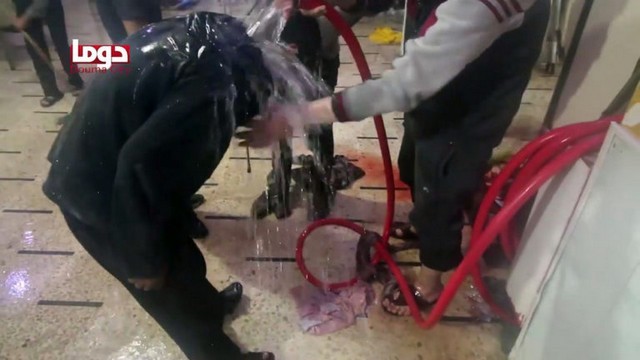
The scenes in question are those manufactured by the White Helmet pseudo-humanitarian group and activists affiliated to Jaish al-Islam, the extremist armed group in charge of Douma at the time of the alleged chemical weapon attack on April 7, 2018. The scenes of children being hosed down, following a “chemical attack” were immediately accepted as credible and appeared alongside sensationalist headlines in most Western media outlets, including the BBC, CNN and Channel 4. Simon Tisdall of the Guardian wrote an opinion piece, with the headline ‘After Douma the West’s response to Syria regime must be military’ – only two days after Douma, effectively calling for all out war.

@bbclysedoucet will the #BBC take instructions fm regime change “troll” Idrees Ahmad? This is turning into a very interesting infight between those who were all on the same side until recently. How will the BBC manage this credibility crisis? @21WIRE@ukcolumn@RussiaUNpic.twitter.com/iF1N2Zxfsn

— vanessa beeley (@VanessaBeeley) 15 февраля 2019 г.

While Dalati’s tweets have clearly distressed some notables in the establishment camp, Dalati is no stranger to such controversy. Almost immediately after the alleged incident in Douma, he tweeted out his frustration that “activists and rebels” had used “corpses of dead children to stage emotive scenes for Western consumption.” The emotive wording of Dalati’s tweet, he was “sick and tired” of such manipulation of events, suggested that this was not the first time children had been used as props in a macabre war theatre designed to elicit public sympathy for escalated military intervention in Syria disguised as a necessary “humanitarian” crack down on “Assad’s gassing of his own people.”

Dalati had been referring to the arranging of two children’s corpses into a “last hug” still life composition, a photo that went viral, rocketed into the social media sphere by activists who had collaborated with the brutal Jaish al-Islam regime while it tortured and abused the Syrian civilians under its control.

Perhaps Dalati’s apparent outburst could be explained by his participation in the production of the controversial September 2013 BBC Panorama documentary, ‘Saving Syria’s Children’. An independent researcher, Robert Stuart, has made it his life’s work to present a compelling argument that

“sequences filmed by BBC personnel and others at Atareb Hospital, Aleppo on August 26, 2013 purporting to show the aftermath of an incendiary bomb attack on a nearby school are largely, if not entirely, staged.”

Perhaps Dalati had witnessed one too many stagings of events that would precipitate the potential for war in Syria between the US and Russia.

Whatever the reason for Dalati’s exasperation, the tweet was deleted before a watered down version appeared. Dalati claimed that a “breach of editorial policy” and lack of context was behind this alteration. Apparently BBC employees are not allowed to be “sick and tired” of the exploitation of children to promote a war that will inevitably kill more children. Simultaneously, Dalati’s account was protected, making tweets visible only to approved followers.

Here is an example of how BBC’s Riam Dalati, along with so many in US UK media, saw it as their role to smear those who raised legitimate questions suggesting for example that #Syria chemical attack scenes eg Douma may have been staged. Now, Dalati (see above) admits it was true pic.twitter.com/OIV2HFgoCs

— Charles Shoebridge (@ShoebridgeC) 13 февраля 2019 г.

On two significant occasions to date, Dalati appears to deviate from the BBC narrative road map in Syria. However, Dalati had participated in the corporate media lynching of journalists and academics who had dared to question the dominant “chemical attack” narrative, at the time of the alleged incident in Douma, dismissing them as conspiracy theorists. These “conspiracy theorists” included acclaimed journalist, Robert Fisk and Uli Gack, an experienced war correspondent with ZDF, a German public media outlet. Independent journalist, Eva Bartlett, and Pearson Sharpe of One American News Network also reported evidence of staging and mainstream media distortion of events in Douma.

Hey @mwendling remember this question you asked me before your smear puff piece? “Do you believe that the alleged chemical attack in Douma was staged, a “false flag” event, or was faked?” Any comment now? #BBC#Douma#WhiteHelmets@21WIRE@stranahan@GarlandNixon@RussiaUNpic.twitter.com/UZeqcrwPqQ

— vanessa beeley (@VanessaBeeley) 15 февраля 2019 г.

I visited Douma shortly after the alleged attack. I interviewed medical staff and civilians who were adamant that a chemical attack had not taken place. Doctors and nurses, some of whom were on duty on the night in question, told me that adults and children were suffering the effects of smoke inhalation. They described the panic generated by the activists and White Helmet operatives who arrived crying “chemical attack” before they hosed down the traumatised patients.

20-year-old Suleiman Saour told me:

“At 7pm we had been receiving wounded people all day long. At 7pm someone came in carrying a little boy, he laid him on a bed and said he had been hit with chemical weapons. Basically I checked the boy […] he was suffering from smoke inhalation [..] we washed his face, used a spray and Ventolin. Later on we found out the child had asthma and it got worse because of the smoke.”

Academics, Professors Piers Robinson and Tim Hayward, came under concerted attack as did other members of the Working Group on Syria, Propaganda and Media when they analysed the events and questioned the veracity of it being a chemical attack. In the UK, the Times published no less than four articles labeling myself and the “rogue” academics as “Assad’s useful idiots,” timed to perfection on the day that the UK, US and France launched their unlawful bombing campaign against Syria. A bombing campaign that was fully enabled by the ignominious rush to judgement by corporate media in the West.

It has taken Dalati six months to arrive at the same conclusion as those he condemned as compromised “conspiracy theorists,” therefore we must question his motives for suddenly releasing these conclusions. Peter Ford, former UK Ambassador to Syria, gave me his opinion on Dalati’s revelations.

“The UK joined Trump and Macron in illegally bombing Syria largely on the basis of a video clip shown ad nauseam on the BBC, which a BBC Syria producer has now said he has evidence was staged. The BBC in their statement are not denying the claim. The implications are shattering: firstly that the state broadcaster effectively connived at a manipulation of public opinion, and secondly that the British government launched its attack on Syria on a false and fabricated premise. This demands a public enquiry.”

Ford’s statement highlights the seriousness of Dalati’s statement which must surely raise questions about the possibility of previous “chemical attack” narratives also being manipulated, staged or fabricated. Swedish Doctors for Human Rights investigated the alleged chlorine gas attack in Sarmin, March 2015 and found the medical procedures conducted by doctors at the scene to be extremely questionable.

Dr Leif Elinder, a Swedish medical doctor and paediatric specialist, found that

“after examination of the video material, I found that the measures inflicted upon those children, some of them lifeless, are bizarre, non-medical, non-lifesaving, and even counterproductive in terms of life-saving purposes of children.”

his video, produced and presented by the White Helmets and their colleagues at the Syrian American Medical Society (SAMS), was shown during a UN Security Council “closed door” session to promote a no-fly zone which translates to protection for the US coalition-backed terrorist forces on the ground in Syria.

As BBC producer has stated publicly that the hospital scenes during the Douma “attack” are staged, the BBC has distanced itself by stating that these are the personal claims of an employee which do not mean an attack did not take place. The July 2018 OPCW interim report has already discredited the early sensationalism of western media reporting.

“No organophosphorus nerve agents or their degradation products were detected, either in the environmental samples or in plasma samples from the alleged casualties,” it stated. No Sarin.

The OPCW Fact Finding Mission (FFM) has not yet reached a conclusion that a chemical attack of any kind took place in Douma. The environmental samples were reported to contain chlorinated organic molecules such as trichloroacetic acid and chloral hydrate, which could be attributed to something as basic as chlorinated drinking water. Despite this ambiguity, the BBC initially ran with the headline that ‘Chlorine was used’ in the Douma attack before altering to ‘Possible Chlorine at Douma Attack Site’. Another mistake? Or another deliberate attempt to mislead and shore up the UK FCO regime change storyline in Syria?

Dalati’s revelations must also be viewed in context. They follow similar conclusions arrived at by corporate media colleague and journalist, James Harkin, a Guardian contributor who published a long-winded Douma investigation in the Intercept. Harkin also conceded that the Douma hospital scenes were likely staged and that the Sarin canard was a non-starter.

It is very unlikely, despite the BBC protestation, that Dalati would risk publishing his claims without approval from BBC hierarchy. Timing is always crucial when examining events that have the potential to expose colonial media, particularly the BBC, as the refined state PR agencies they are in reality.

Based on an informed and intelligent interpretation of events with historical context, we could speculate that the OPCW is about to release its final findings on the Douma attack. A report which has the potential to lay bare the full extent of the BBC’s deception and falsification of facts in Douma. A report which could raise unpleasant questions about corporate media reporting, particularly on alleged chemical weapon use by the Syrian government, throughout the 8 year conflict in Syria. Was Dalati’s shock information release nothing more than a damage limitation tactic by the BBC or is Dalati genuinely a rogue truth-teller? Only time will tell.

1/2 Important to note that Dalati #Douma revelation likely isn’t some mea culpa, but the start of a damage limitation process by preempting perhaps imminent @OPCW report, the likely inconvenient findings of which BBC & UK govt by now almost certainly awarehttps://t.co/EDSL8VYPgj

— Charles Shoebridge (@ShoebridgeC) 15 февраля 2019 г.

What Dalati has done is highlight the hypocrisy and bias of Western media and government officials. The BBC report on the Russian “production” of Douma-chemical-attack-denying witnesses at the HQ of the OPCW in the Hague emphasises the dismissal of the event as a “despicable stunt” by the UK, US and France who boycotted the proceedings. French ambassador to the Netherlands described the Syrian civilian testimonies as an “obscene masquerade.” The Guardian ran with this statement as its headline, reducing Russia’s attempt to bring some clarity to the Douma attack to the unveiling of “supposed witnesses” in order to discredit such attempts to derail their preferred narrative.

@patrickwintour#Guardian “Diplomatic” Editor – do you still claim the Russian presentation of #Douma witnesses at The Hague was “obscene masquerade”? You know, now the #WhiteHelmet hospital scenes are confirmed by BBC to be a really obscene masquerade. @21WIRE@PiersRobinson1pic.twitter.com/lASkPMTyAw

— vanessa beeley (@VanessaBeeley) 15 февраля 2019 г.

Now, it appears that the real obscene masquerade took place in the Medical Point in Douma, was constructed by the UK FCO-financed White Helmets, and was adopted by the BBC and other state stenographers as gospel in order to further criminalise the Syrian Arab Army just as the final liberation of Douma from Jaish al-Islam brutal rule was fast approaching. This obscene masquerade resulted in the unlawful bombing of Syria by the US, France and the UK. As Peter Ford stated, “this demands a public enquiry.”

Vanessa Beeley is an independent investigative journalist and photographer.

18 February 2019

Source: transcend.org

“Largest Land Grab since 1948” — Israel to Expel 36,000 Palestinians from Negev

By Whitney Webb

Given the Israeli state’s rejection of their existence, government officials have called the Palestinians living in these villagers “violators” and “squatters” – accusing them of illegally occupying “state lands.”

1 Feb 2019 — According to an Israeli media report, the Israeli government has completed work on a massive, far-reaching plan that would expel an estimated 36,000 Palestinians from “unrecognized” villages in the Negev Desert. If the plan is approved by the Knesset, Israel’s legislative body, its implementation could begin as soon as this year and would take four years to complete. News of the plan was first published by Israel Hayom – Israel’s largest Hebrew-language newspaper, funded by Sheldon Adelson, the top donor to both U.S. President Donald Trump and Israeli Prime Minister Benjamin Netanyahu.

The plan — compiled by Uri Ariel, Israel’s Minister of Agriculture and Rural Development, and his staff — features the seizure of an estimated 260,00 dunams (64,247 acres) from Palestine’s Bedouins. The size of the territory in question and the high number of Palestinians set to be affected has led some to call the plan the largest “land grab” of Palestinian-inhabited land since 1948, when the state of Israel was founded.

Israel Hayom’s report stated that, per the new plan, the Palestinian villages would be demolished and the ruins of their homes would then become the sites of “national projects,” infrastructure projects, and “security” installations after the forcible “transfer” of the land’s current inhabitants to other “state-approved” settlements such as Tel Sheva, Abu Talul and Umm Batin. The report noted that a major motivation behind the plan’s creation was the transfer of an arms-industry factory from another part of Israel to the Negev, as well as the expansion of the “Trans-Israel Highway” system.

Furthermore, the plan involves calling for a budget increase to boost the presence of law enforcement officials involved in the forcible “transfer” and in the demolition of Palestinian villages.

Rights groups have yet to comment on the newly announced plan targeting Palestinian communities in the Negev. However, Human Rights Watch has previously condemned Israel’s targeting of “unrecognized” Palestinian villages in the region. In 2016, Sarah Leah Whitson, executive director of Human Rights Watch’s Middle East and North Africa Division, stated:

The forcible eviction of Bedouin residents to make way for a new Jewish town would be a blatant and ugly episode of discrimination mirroring Israel’s unlawful settlements. Long after most of the rest of the world has such rejected racist policies, the Israeli government keeps building and razing communities on the basis of religion and ethnicity.”

No recognition, no rights

The Bedouin Palestinians who inhabit these lands face an uphill battle in any effort to oppose the newly drafted plan. This is because their villages have long been “unrecognized” by the state of Israel, which has claimed that Palestinian Bedouins cannot “prove” their ownership or claim to the land. This has been used to justify the withholding of basic services, such as running water and electricity, from these areas. Residents, even though they are technically Israeli citizens, also lack addresses and their villages do not appear on official Israeli maps.

As a consequence of their lack of formal recognition, Israeli authorities do not regard the Palestinian inhabitants of these villages as having any rights to the land, even though many of the villages were established several decades ago by Palestinians forced from their homes following the creation of the Israeli state in 1948.

Given the state’s rejection of their existence, Israeli government officials have called the Palestinians living in these villagers “violators” and “squatters” – accusing them of illegally occupying “state lands.” As a result, these villages have constantly been under threat of demolition, with the Israeli government even forcing the inhabitants of demolished villages to pay for the destruction of their own homes.

Pushing towards complete annexation and ethnic cleansing

The newly announced plan is part of a wider Israeli government push to annex Palestinian territory and ethnically cleanse areas that have already been annexed by Israel. With the support of the Trump administration in the United States, right-wing Israeli politicians have been emboldened to introduce and promote measures that would result in the Israeli government’s complete annexation of Palestine’s West Bank, which has been under Israeli military rule since 1967 and has lost substantial amounts of land to the construction of illegal Jewish-only settlements supported by the Israeli government. Those efforts prompted the UN to warn last July that Israel’s government was poised to formally annex the West Bank in the coming years.

In addition, within areas already controlled by Israel, the effort to erase Palestinian communities is also picking up steam, as evidenced by the promotion of this new plan to expel 36,000 Palestinians with Israeli citizenship from their homes.

Last year, an Israeli Supreme Court ruling essentially authorized and justified the Israeli government’s demolition of “unrecognized” Palestinian villages after hearing the case of the Palestinian village of Khan al-Ahmar, located east of Jerusalem. That ruling has now set a precedent that critics claimed would allow the Israeli government to “ethnically cleanse” any Palestinian village within its territory, despite the fact that the practice is considered illegal by international law.

A man on a mission

It should be no surprise then that Uri Ariel, who drafted this latest plan, is one of the Israeli government’s top proponents of ethnic cleansing of Palestinian-inhabited territories. A member of the far-right Jewish Home party and vocal proponent of illegal settlements, Ariel stated last June that the Israeli government should forcibly annex 60 percent of the West Bank.

This past December, Ariel then stepped up his rhetoric regarding Palestinian Bedouins in the Negev, stating:

I am happy to announce a revolution in the Negev regarding the illegal construction. The enforcement agencies, together with the proper activities of the Bedouin Settlement Authority according to my instructions, created a new situation in the Negev: in 2019, we will aspire to zero illegal construction in the Negev.

We have increased the means of enforcement, we have demonstrated the validity of an attack along with significant land marketing, and we are on the right path to dramatically reduce and later eliminate the illegal takeover of state land in the Negev. The Negev will no longer be a no-man’s-land area without governance.”

Ariel reiterated this policy in January, stating that he would implement a “zero tolerance” policy for “illegal” Bedouin construction on Bedouin land, and again accusing Bedouin Palestinians of “taking over” Israeli state land.

A recent Haaretz report found that Ariel has been drafting plans to evict Palestinian Bedouins from their homes since the 1970s. Now, with a top post in Netanyahu’s government, Ariel seems to have finally garnered the power and the political support to make his long-planned push to ethnically cleanse Palestinian communities a reality.

Whitney Webb is a MintPress contributor who has written for several news organizations in both English and Spanish; her stories have been featured on ZeroHedge, the Anti-Media, 21st Century Wire, and True Activist among others – she currently resides in Southern Chile.

18 February 2019

Source: transcend.org