Just International

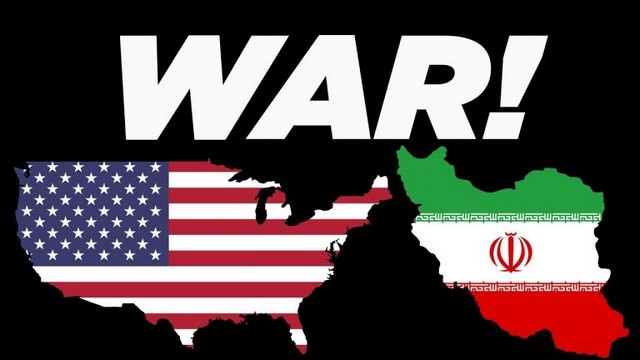
Attacking Iran Would Mean Global Disaster

By John Scales Avery

On Monday, 13 May 2019, the New York Times posted an article with the title “White House Reviews Military Plans against Iran in Echoes of Iraq War”. Besides the aircraft carrier and other naval forces already sent to the Persian Gulf, plans include sending as many as 120,000 US troops to the region. There is a great danger that an attack on Iran might be sparked by a Gulf-of-Tonkin-like false flag incident involving Saudi oil ships.

Why is this threat especially worrying? Such a war would completely destabilize the already-unstable Middle East. In Pakistan, the unpopularity of the US-Israel alliance, as well as the memory of numerous atrocities, might lead to the overthrow of Pakistan’s less-than-stable government. Israel’s response might be a preemptive attack on Pakistan’s nuclear installations. Russia and China might also be drawn into the conflict. There would be a grave danger of escalation into a full-scale nuclear war.

Iran Is a Peaceful Nation but Has Often Been Attacked

Iran has an ancient and beautiful civilization, which dates back to 7,000 BC, when the city of Susa was founded. Some of the earliest writing that we know of, dating from from approximately 3,000 BC, was used by the Elamite civilization near to Susa. Today’s Iranians are highly intelligent and cultured, and famous for their hospitality, generosity and kindness to strangers. Over the centuries, Iranians have made many contributions to science, art and literature, and for hundreds of years they have not attacked any of their neighbors. Nevertheless, for the last 90 years, they have been the victims of foreign attacks and interventions, most of which have been closely related to Iran’s oil and gas resources. The first of these took place in the period 1921-1925, when a British-sponsored coup overthrew the Qajar dynasty and replaced it by Reza Shah.

Reza Shah (1878-1944) started his career as Reza Khan, an army officer. Because of his high intelligence he quickly rose to become commander of the Tabriz Brigade of the Persian Cossacks. In 1921, General Edmond Ironside, who commanded a British force of 6,000 men fighting against the Bolsheviks in northern Persia, masterminded a coup (financed by Britain) in which Reza Khan lead 15,000 Cossacks towards the capital. He overthrew the government, and became minister of war. The British government backed this coup because it believed that a strong leader was needed in Iran to resist the Bolsheviks. In 1923, Reza Khan overthrew the Qajar Dynasty, and in 1925 he was crowned as Reza Shah, adopting the name Pahlavi.

Reza Shah believed that he had a mission to modernize Iran, in much the same way that Kamil Ata Turk had modernized Turkey. During his 16 years of rule in Iran, many roads were built, the Trans-Iranian Railway was constructed, many Iranians were sent to study in the West, the University of Tehran was opened, and the first steps towards industrialization were taken. However, Reza Shah’s methods were sometimes very harsh.

In 1941, while Germany invaded Russia, Iran remained neutral, perhaps leaning a little towards the side of Germany. However, Reza Shah was sufficiently critical of Hitler to offer safety in Iran to refugees from the Nazis. Fearing that the Germans would gain control of the Abadan oil fields, and wishing to use the Trans-Iranian Railway to bring supplies to Russia, Britain invaded Iran from the south on August 25, 1941. Simultaneously, a Russian force invaded the country from the north. Reza Shah appealed to Roosevelt for help, citing Iran’s neutrality, but to no avail. On September 17, 1941, he was forced into exile, and replaced by his son, Crown Prince Mohammed Reza Pahlavi. Both Britain and Russia promised to withdraw from Iran as soon as the war was over. During the remainder of World War II, although the new Shah was nominally the ruler of Iran, the country was governed by the allied occupation forces.

Reza Shah, had a strong sense of mission, and felt that it was his duty to modernize Iran. He passed on this sense of mission to his son, the young Shah Mohammed Reza Pahlavi. The painful problem of poverty was everywhere apparent, and both Reza Shah and his son saw modernization of Iran
as the only way to end poverty.

In 1951, Mohammad Mosaddegh became Prime Minister of Iran through democratic elections. He was from a highly-placed family and could trace his ancestry back to the shahs of the Qajar dynasty. Among the many reforms made by Mosaddegh was the nationalization of the Anglo-Iranian Oil Company’s possessions in Iran. Because of this, the AIOC (which later became British Petroleum), persuaded the British government to sponsor a secret coup that would overthrow Mosaddegh. The British asked US President Eisenhower and the CIA to join M16 in carrying out the coup, claiming that Mosaddegh represented a communist threat (a ludicrous argument, considering Mosaddegh’s aristocratic background). Eisenhower agreed to help Britain in carrying out the coup, and it took place in 1953. The Shah thus obtained complete power over Iran.

The goal of modernizing Iran and ending poverty was adopted as an almost-sacred mission by the young Shah, Mohammed Reza Pahlavi, and it was the motive behind his White Revolution in 1963, when much of the land belonging to the feudal landowners and the crown was distributed to landless villagers. However, the White Revolution angered both the traditional landowning class and the clergy, and it created fierce opposition. In dealing with this opposition, the Shahs methods were very harsh, just as his fathers had been. Because of alienation produced by his harsh methods, and because of the growing power of his opponents, Shah Mohammed Reza Pahlavi was overthrown in the Iranian Revolution of 1979. The revolution of 1979 was to some extent caused by the British-American coup of 1953.

One can also say that the westernization, at which both Shah Reza and his son aimed, produced an anti-western reaction among the conservative elements of Iranian society. Iran was “falling between two stools”, on the one hand western culture and on the other hand the country’s traditional culture. It seemed to be halfway between, belonging to neither. Finally in 1979 the Islamic clergy triumphed and Iran chose tradition.

Meanwhile, in 1963 the US had secretly backed a military coup in Iraq that brought Saddam Hussein’s Ba’ath Party to power. In 1979, when the western-backed Shah of Iran was overthrown, the United States regarded the fundamentalist Shi’ite regime that replaced him as a threat to supplies of oil from Saudi Arabia. Washington saw Saddam’s Iraq as a bulwark against the Shi’ite government of Iran that was thought to be threatening oil supplies from pro-American states such as Kuwait and Saudi Arabia.

In 1980, encouraged to do so by the fact that Iran had lost its US backing, Saddam Hussein’s government attacked Iran. This was the start of a extremely bloody and destructive war that lasted for eight years, inflicting almost a million casualties on the two nations. Iraq used both mustard gas and the nerve gases Tabun and Sarin against Iran, in violation of the Geneva Protocol.

The present attacks on Iran by Israel and the United States, both actual and threatened, have some similarity to the war against Iraq which was launched by the United States in 2003. In 2003, the attack was nominally motivated by the threat that nuclear weapons would be developed, but the real motive had more to do with a desire to control and exploit the petroleum resources of Iraq, and with Israel’s extreme nervousness at having a powerful and somewhat hostile neighbor. Similarly, hegemony over the huge oil and gas reserves of Iran can be seen as one the main reasons why the United States is presently demonizing Iran, and this is combined with Israel’s almost paranoid fear of a large and powerful Iran. Looking back on the “successful” 1953 coup against Mosaddegh, Israel and the United States perhaps feel that sanctions, threats, murders and other pressures can cause a regime change that will bring a more compliant government to power in Iran – a government that will accept US hegemony. But aggressive rhetoric, threats and provocations can escalate into full-scale war.

I do not wish to say that Iran’s present government is without serious faults. However, any use of violence against Iran would be both insane and criminal. Why insane? Because the present economy of the US and the world cannot support another large-scale conflict; because the Middle East is already a deeply troubled region; and because it is impossible to predict the extent of a war which, if once started, might develop into World War III, given the fact that Iran is closely allied with both Russia and China. Why criminal? Because such violence would violate both the UN Charter and the Nuremberg Principles. There is no hope at all for the future unless we work for a peaceful world, governed by international law, rather than a fearful world where brutal power holds sway.

References:

1. Sir Percy Sykes, A History of Persia – 2nd edition, MacMillan, (1921).

2. Paula K. Byers, Reza Shah Pahlavi, Encyclopedia of World Biography
(1998).

3. Roger Hoffman, The Origins of the Iranian Revolution, International
A airs 56/4, 673-7, (Autumn 1980).

4. Daniel Yergin, The Prize: The Epic Quest for Oil, Money and Power,
Simon and Schuster, (1991).

5. Sampson, The Seven Sisters: The Great Oil Companies of the World
and How They Were Made, Hodder and Staughton, London, (1988).

6. James Risen, Secrets of History: The C.I.A. in Iran, The New York
Times, April 16, (2000).

7. Mark Gasiorowski and Malcolm Byrne, Mohammad Mosaddegh and the
1953 Coup in Iran, National Security Archive, June 22, (2004).

8. Roosevelt, Countercoup: The Struggle for the Control of Iran, McGraw-
Hill, New York, (1979).

9. Abrahamian, Iran Between Two Revolutions, Princeton University
Press, Princeton, (1982).

10. T. Klare, Resource Wars: The New Landscape of Global Conflict, Owl Books reprint edition, New York, (2002).

11. M. Blair, The Control of Oil, Random House, New York, (1976).

__________________________________________

John Scales Avery, Ph.D., who was part of a group that shared the 1995 Nobel Peace Prize for their work in organizing the Pugwash Conferences on Science and World Affairs, is a member of the TRANSCEND Network and Associate Professor Emeritus at the H.C. Ørsted Institute, University of Copenhagen, Denmark.

20 May 2019

Source: www.transcend.org

The Mysterious “Sabotage” of Saudi Oil Tankers: a Dangerous Moment in Trump’s Escalating Conflict With Iran

By Patrick Cockburn

Saudi Arabia’s claim that two of its oil tankers have been sabotaged off the coast of the UAE is vague in detail – but could create a crisis that spins out of control and into military action.

Any attack on shipping in or close to the Strait of Hormuz, the 30-mile wide channel at the entrance to the Gulf, is always serious because it is the most important choke point for the international oil trade.

A significant armed action by the US or its allies against Iran would likely provoke Iranian retaliation in the Gulf and elsewhere in the region. Although the US is militarily superior to Iran by a wide margin, the Iranians as a last resort could fire rockets or otherwise attack Saudi and UAE oil facilities. Such apocalyptic events are unlikely – but powerful figures in Washington, such as the national security adviser John Bolton and secretary of state Mike Pompeo, appear prepared to take the risk of a war breaking out.

Bolton has long publicly demanded the overthrow of the Iranian government. “The declared policy of the United States should be the overthrow of the mullahs’ regime in Tehran,” he said last year before taking office.

“The behaviour and the objectives of the regime are not going to change and, therefore, the only solution is to change the regime itself.”

Bolton and Pompeo are reported to have used some mortar rounds landing near the US embassy in Baghdad in February as an excuse to get a reluctant Pentagon to prepare a list of military options against Iran. These would include missile and airstrikes, but it is unclear what these would achieve from the US point of view.

Paradoxically, the US and Saudi Arabia have been talking up war against Iran just as economic sanctions are seriously biting. Iranian oil exports have dropped from 2.8 to 1.3 million barrels a day over the last year and are likely to fall further. Inflation in Iran is at 40 per cent and promises by the EU, UK, France and Germany to enable the Islamic republic to avoid sanctions on its oil trade and banking have not been fulfilled. Commercial enterprises are too frightened of being targeted by the US treasury to risk breaching sanctions.

Iran is becoming economically – though not politically – isolated. This is in contrast to previous rounds of sanctions on Iran under President Obama prior to the nuclear deal when the reverse was true. One reason why it is unlikely that Iran would carry out sabotage attacks on Saudi oil tankers is that its strategy has been to play a long game and out-wait the Trump administration. Though the Iranian economy may be badly battered, it will probably be able to sustain the pressure. Much tighter sanctions against Saddam Hussein after his invasion of Kuwait in 1990 did not lead to the fall of his regime.

The circumstance of the alleged sabotage at 6am on Sunday remain mysterious. Saudi Arabia’s energy minister Khalid al-Falih says the attack “didn’t lead to any casualties or oil-spill” but did cause damage to the structure of the vessels.

The incident has the potential to lead to conflict in the context of an escalating confrontation between the US and Iran. The rise in temperature reached particularly menacing levels this month as the US sent an aircraft carrier to the Gulf and Iran suspended in part its compliance with the 2015 nuclear deal after President Trump withdrew last year.

However, Iran has made serious efforts to show moderation and cultivate support from the EU, Russia and China. For this reason, it appears unlikely that it has had a hand in attacking the Saudi oil tankers. Iranian foreign ministry spokesperson Abbas Mousavi asked for more information about what had really happened to the tankers. He warned against any “conspiracy orchestrated by ill-wishers” and “adventurism” by foreigners.

It is the unpredictability of US and Saudi foreign policy that has exacerbated the danger of military action – particularly when it comes to Iran. President Trump has accused the country of supporting “terrorism” and aggression in the Middle East.

Saudi Arabia policy is even more mercurial ever since Crown Prince Mohammed bin Salman took charge in 2015, initiating a war in Yemen, detaining the prime minister of Lebanon, locking up Saudi businessmen, and being accused by the US congress of being behind the assassination of the Saudi journalist Jamal Khashoggi in Istanbul last year.

The crown prince has displayed extreme hostility towards Iran since he took power. Saudi Arabia executed 33 members of its Shia minority on 23 April, accusing 11 of them of being spies for Iran, an overwhelmingly Shia country. The defendants said they had been tortured into making false confessions and Human Rights Watch said that none of them had received a fair trial.

In this febrile atmosphere, almost any incident, true or false – such as the unconfirmed sabotage of tankers or a few mortar rounds fired towards the US embassy in Baghdad – might provide the spark to ignite a wider conflict.

Patrick Cockburn is the author of The Rise of Islamic State: ISIS and the New Sunni Revolution.

14 May 2019

Source: www.counterpunch.org

It’s Time for the Leaders of Saudi Arabia and Iran to Talk

By Hossein Mousavian and Abdulaziz Sager

We write as citizens and foreign policy veterans of two countries that most Americans presume are locked in mortal combat: Iran and Saudi Arabia. In fact, after decades of proxy conflict and frozen ties between our countries, we believe now is the time to explore a new foundation for a lasting peace in our region.

Neither of us is a starry-eyed idealist. We are both hardened realists with distrust for one another, and that mistrust is shared at the top levels of our respective governments. At the same time, we have seen the destructive consequences of crises in which our countries side with one or another government or movement involved in a competition for power — for example in Yemen, Syria, Lebanon, Bahrain or Iraq. While we each blame the other side for this pattern, we agree that the net result has been costly, has eroded the confidence of the people our governments serve, and has wasted incalculable resources and countless lives that should have been used to build a new Middle East, rather than tear it down.

The time for dialogue is now, because the situations in the historic conflict zones are ripe for diplomacy.

First, in Iraq, both Iran and Saudi Arabia have embraced a new government in Baghdad led by a prime minister and a president who are pragmatic and have good ties to both of our countries. This is an important opening we must seize.

Second, the war in Syria has reached a point near an ending, with less violence and the defeat of the Islamic State there. Both of our countries believe Syria’s territorial integrity must be maintained. We call for respect of the principle of noninterference in Syria’s internal affairs, and respect for the Syrian people’s right to determine their own fate.

In Yemen, we disagree about the root causes of the conflict, but we agree that it has ushered in a humanitarian disaster. Both of our countries should support the process being led by the United Nations to end the conflict in the coming months.

Lebanon is now led by a new government and we agree that it is up to the people of Lebanon to sort out their affairs on their own.

Finally, in Bahrain, we both support the country’s sovereignty, integrity, democratic aspirations, and stability based on the will of its people.

The bottom line is that these five conflict zones, long sources of contests and misery, appear to be settling into a relatively stable status quo from which we can begin to restore a lasting peace in our region. Although we each accuse the other side of being the source of instability in the region, we know through our own difficult dialogue over many months that the conditions exist for direct and continuous discussions with open channels between our capitals and our citizens. We do not need to agree on everything before agreeing on some things and taking the first, most difficult, steps of dialogue.
Editors’ Picks
‘Although I Tried to Look Away, I Saw Him Gesture Toward Me’
The Aperol Spritz Is Not a Good Drink
From ‘Smallville’ to a Sex Cult: The Fall of the Actress Allison Mack

Our citizens should be first and foremost in our minds, and the world’s. Iran and Saudi Arabia have a combined population of 115 million, nearly a third of whom are under the age of 25. The future is upon us, and our youth will be interconnected whether we like it or not.

Sustainable peace and security require good bilateral relations and regional cooperation between Tehran and Riyadh. Iran and Saudi Arabia have significant differences, but they share common interests in many critical issues, such as energy security, nuclear nonproliferation, and Middle East stability. We hope that instead of widening the gulf between our two countries, our leaders will build on the common ground between our nations, which represent the two main pillars of the Muslim world.

Abdulaziz Sager is the chairman and founder of the Gulf Research Center, based in Jeddah, Saudi Arabia. Hossein Mousavian is a specialist in Middle East security and nuclear policy at Princeton University and a former spokesman for Iran’s nuclear negotiating team.

Mr. Mousavian was a spokesman for the Iranian nuclear negotiation team between 2003 and 2005. Mr. Sager leads the Gulf Research Center, based in Saudi Arabia.

14 May 2019

Source: www.nytimes.com

Maximum Pressure in the Strait of Hormuz: The US-Iran Standoff

By Dr Binoy Kampmark

Hegemons are never going to sound too sensible when they lock horns or joust in spats of childish anger. Power corrupts, not merely in terms of perspective but language, and making sense about the next move, the next statement, is bound to be challenging. Otherwise justified behaviour can be read as provocative; retaliatory moves duly rattle and disturb.

The Iran-US standoff is finding a surge of increments, provocations and howlers. Since the Trump administration withdrew from the 2015 Iran Nuclear deal (the Joint Comprehensive Plan of Action) last year, Tehran has gnawed and scratched at the arrangements. Threats to close the Strait of Hormuz as a retaliation for frustrating Iranian oil sales have been made. President Hassan Rouhani last week made it clear that the Islamic republic would scale back on certain JCPOA commitments. Limits on building up stockpiles of low-enriched uranium and heavy water would be abandoned. A 60-day period has been stipulated in the hope that the E3 (Britain, France and Germany), China and Russia provide relief for the Iranian oil and banking sector. More suspensions of compliance orders threaten to follow if the powers do not muck in.

Despite not being part of the JCPOA anymore, the Trump administration persists in sticking its oar in the matter. In May 3, the State Department explicitly warned it would sanction individuals and entities involved in swapping permitted uranium (enriched or natural) with Iran. Nor would excess heavy water limits be permitted.

With such moves to strangle Iran’s economic feelers, it is little wonder that Rouhani has called on “surgery” to be performed on the JCPOA, one far more effectual than “the painkiller pills of the last year”. Such a process, he promised, was “for saving the deal, not destroying it.”

News this week that Saudi Arabian oil tankers had been sabotaged near the Strait of Hormuz had its effect, even if the Trump administration has yet to pin its colours to the claim that Iran is responsible. Give it time, and not much at that. As the Wall Street Journal put it, “The assessment, while not conclusive, was the first suggestion by any nation that Iran was responsible for the attack”.

To reporters in the Oval Office, Trump was keen to make his usual remarks about happiness, or its absence, if things turned out to be darker than he thought. “It’s going to be a bad problem for Iran if something happens, I can tell you that.” What, pressed reporters, did the president mean by a “bad problem”? “You can figure it out for yourself. They know what I mean by it.”

Brian Hook, the US State Department’s special envoy on Iran, has been doing the circuit in Europe with Washington’s allies, hoping to stir some action against the meddling mullahs in a campaign of “maximum pressure”. “Everything we are doing,” Hook tried to reason with the Sunday Times, “is defensive.” Secretary of State Mark Pompeo also journeyed to Brussels to stir the matter. According to Hook, “The secretary shared information and intelligence with allies and discussed the multiple plot vectors emerging from Iran.” What a boon Iran is proving to be for the parched hawks, an endless well of threat, much of it imaginary, to draw upon in the hope of actual military engagement.

National Security Advisor John Bolton is making do with the situation, creating much mischief, turning the furniture and belongings of the entire diplomatic stable inside out like a brat in search of attention. He blames Iran, naturally, for “a number of troubling and escalatory indications and warnings”. As is the manner with all chicken hawks, he craves the blood of others and is not shy pushing it. The problem with this attitude is that having a playmate such as Iran is bound to get you, and your fellow playmates, hurt on the way. The school mistress should intervene, but her sense, and sensibility, is yet to be found.

Washington is certainly keen to make it a bad problem, a habit it has fallen into during stretches of its violent and imperial history. At Bolton’s instigation, an aircraft carrier and B-52 bombers are being deployed to the Persian Gulf on the supposedly clear grounds that Iran and its proxies are readying themselves for a strike on US forces in the region, bringing to mind similar provocations sought to stoke a potential conflict.

The planning of Operation Prairie Fire was one such ignominious example, designed to provoke Muammar Qaddafi’s Libya into a military incident in 1986. In what seemed to be a true overegging of the pudding, US Navy Task Force 60 involved three aircraft carriers operating in the Mediterranean off the Libyan coast. They were involved in exercises falling within that most stretched of terms: freedom-of-navigation. Prairie Fire turned out to be a bellicose affair, with Task Force 60 put on essentially a wartime footing. Military exercises were duly conducted to stir the beast; patrols along the coast were conducted. The beast responded with some six surface-to-air missiles. A Libyan patrol boat was duly obliterated with some satisfaction, along with two more naval vessels and a missile site in Sirte. “We now consider all approaching Libyan forces,” claimed the White House note with some smugness, “to have hostile intent.”

US-Iran encounters in the Strait of Hormuz are also not new: the Iran-Iraq War, one which saw the US throw in its lot with Saddam Hussein’s invading armies against the Iranian Republic, featured a fair share of attacks on merchant shipping. The importance of the Strait to shipping and international traffic is again coming into play.

Trump has remained inflexible and obstinate regarding Iran. (In his wheeler-dealer world, every crook with a silver lining must be matched by a Lucifer who will be given no quarter.) In these calculations, the silver lining of North Korea’s Kim Jong-un shines far brighter than any the Islamic Republic of Iran might have. But by any referee’s estimate of recent conduct by Trump and company, Washington must be seen as responsible for the most aggravating fouls.

Dr. Binoy Kampmark was a Commonwealth Scholar at Selwyn College, Cambridge.

14 May 2019

Source: countercurrents.org

Washington pushes to brink of war against Iran

By Bill Van Auken

The abrupt trip staged by US Secretary of State Mike Pompeo to Brussels to push Washington’s hard line against Iran, combined with the deployment of still more US military assets to the Persian Gulf, point to Washington’s calculated escalation of a war crisis in the region.

Late Monday, the New York Times posted an article under the headline “White House Reviews Military Plans Against Iran, in Echoes of Iraq War.” The article cited as sources “more than half a dozen national security officials” and reported that a meeting of President Trump’s top national security aides last week discussed a plan to send as many as 120,000 troops to the Middle East.

The spark for an all-out conflict can come from any one of a number of staged provocations, including the alleged sabotage of two Saudi oil tankers and two other vessels off the coast of the United Arab Emirates (UAE) reported on Sunday.

Saudi Energy Minister Khalid al-Falih stressed that one of the Saudi tankers that was allegedly damaged was en route to pick up Saudi oil to take to the United States, a detail apparently highlighted to make the case that “US interests” were at stake in the incident.

Pompeo, national security adviser John Bolton and other US officials have repeatedly vowed to take “swift and decisive” military action in defense of US interests in the oil-rich region. They have threatened to unleash “unrelenting” force against Iran in retaliation for any action alleged to be carried out by a wide array of forces dubbed by Washington as Iranian “proxies,” ranging from Hezbollah in Lebanon to Hamas in the Palestinian Gaza Strip, the Houthi rebels in Yemen and various Shia militias in Iraq and Syria.

The alleged sabotage of the four vessels took place in the Gulf of Oman, east of Fujairah, a major oil port that lies approximately 85 miles south of the strategic Strait of Hormuz, through which passes roughly one-third of the world’s oil transported by sea.

Saudi and UAE officials indicated that there were no casualties and no oil spills resulting from the alleged sabotage. A video posted online showed a hole torn into the hull of a Norwegian-owned ship at its waterline.

The timing of the incident dovetailed neatly with the US escalation of tensions in the region. It came just days after the May 9 warning issued by the US Maritime Administration (MARAD) that commercial ships, including oil tankers, could be targeted in the growing buildup to war.

“Iran or its proxies could respond by targeting commercial vessels, including oil tankers, or US military vessels in the Red Sea, Bab-el-Mandeb Strait, or the Persian Gulf,” the MARAD statement said.

Iranian officials expressed concern over the incident. Foreign Ministry spokesman Abbas Moussavi described the incident as “lamentable” and “worrying” and called for a thorough investigation. Moussavi also warned countries of the Persian Gulf to stay vigilant in the face of potential “adventurism by foreign players” or any “conspiracy orchestrated by ill-wishers” to undermine maritime security.

There has been no clear explanation from either the UAE or the Saudi monarchy of what exactly took place in the Gulf of Oman. The involvement of covert operations aimed at creating the pretext for war, either on the part of Washington or its two principal regional allies, Israel and Saudi Arabia itself, both of which have long sought to bring the US into a war with Iran, is a very real possibility.

One thing is certain. Nothing coming from the US government or its propaganda servants in the corporate media regarding the crisis in the Persian Gulf can be believed. The pretexts for war this time around will prove as fabricated as Iraq’s “weapons of mass destruction” or the lies about a US warship being attacked in the Gulf of Tonkin that were used to justify the War in Vietnam.

The Trump administration has continued to escalate its military intervention in the region, dispatching a Patriot missile battery to the Persian Gulf along with a Navy amphibious assault ship. This follows last week’s arrival in the Red Sea of the USS Abraham Lincoln aircraft carrier battle group, as well as the landing of a bomber strike wing consisting of four B-52s at the US Al Udeid airbase in Qatar.

The Pentagon announced on Monday that the B-52s had carried out their “first mission… to defend American forces and interests in the region,” consisting of operations near Iranian airspace.

Such is the war threat that even a White House reporter questioned Trump during his Monday appearance with the far-right prime minister of Hungary, Viktor Orbán: “Are you at war with Iran? Are you seeking regime change there?”

Trump did not deny the looming war threat, declaring: “If they do anything, they will suffer greatly. We’ll see what happens with Iran.”

Underscoring the brazen recklessness of the US drive to war, Secretary Pompeo abruptly shifted his travel plans for the second time in a week, canceling a trip to Moscow to fly to Brussels and effectively crash a scheduled meeting of European foreign ministers called to discuss their response to the Persian Gulf crisis.

The US military buildup as well as the tightening of US sanctions described by the Trump administration as “maximum pressure” against Iran, designed to suffocate the country’s economy and drive its oil exports down to zero, have sharpened tensions between Washington and its erstwhile European allies.

Since the beginning of the month, Washington has withdrawn waivers that had allowed China, South Korea, Japan, India and Turkey to continue purchasing oil from Iran, and has imposed a new round of sanctions aimed at halting all exports of Iranian iron, steel, aluminum and copper.

The US and the major European powers have been divided since Trump unilaterally abrogated the so-called Joint Comprehensive Plan of Action (JCPOA) nuclear agreement reached between Iran and the US, Russia, China, Germany, the UK and France. Washington reimposed sanctions that are tantamount to a state of war. The European governments, as well as the UN nuclear inspection agency, the International Atomic Energy Agency, have insisted that Iran has remained in compliance with the agreement, which was supposed to combine strict limits on the Iranian nuclear program with the lifting of economic sanctions.

The issue for the Trump administration, however, has never been the nuclear deal, but rather the drive for regime-change, i.e., the restoration of a US-backed puppet dictatorship in the oil-rich country like that of the Shah.

As Bolton, one of the architects of the current military buildup, put it a year before becoming national security adviser: “The declared policy of the United States should be the overthrow of the mullahs’ regime in Tehran… The behavior and the objectives of the regime are not going to change and, therefore, the only solution is to change the regime itself.”

Pompeo’s meetings in Brussels with the EU foreign policy chief Federica Mogherini and the foreign ministers of Germany, France and the UK only underscored the transatlantic tensions over Iran. Mogherini said the European representatives had stressed that the crisis in the Persian Gulf had produced a “crucial delicate moment” in which “maximum restraint and avoiding any escalation on the military side” was necessary.

She said the European ministers “continue to fully support the nuclear deal with Iran,” meaning the normalization of trade and investment. She added that this included the “operationalization” of the so-called Instrument in Support of Trade Exchange (INSTEX), which is supposed to create a non-dollar direct payment channel with Iran to circumvent US sanctions. Transactions through this exchange, she claimed, would begin within the next few weeks.

Tehran last week put the European signatories to the accord on notice that it would resume uranium enrichment at a higher grade within 60 days unless they took measures to allow Iran to export its oil and access financial markets. European companies and banks, which had previously seen an opportunity for exploiting the country’s oil wealth, have withdrawn in the face of threats to be frozen out of the US market.

The European powers’ opposition to the US drive toward war against Iran is based not on any concern for the fate of 80 million Iranians, but rather on the pursuit of their own imperialist interests in the region. The conflict exposes fault lines that point to the danger of a new military conflict in the Persian Gulf becoming the antechamber of a third, nuclear, world war.

Bill Van Auken is a full-time reporter for the World Socialist Web Site, and resides in New York City.

14 May 2019

Source: countercurrents.org

Blackwater Founder Calling for 5,000 Mercenaries to Topple Maduro

By Tyler Durden | Zero Hedge

30 Apr 2019 – As if the past months of US push for regime change in Venezuela with officials like Elliott Abrams of Iran-Contra conviction infamy at the helm wasn’t bizarre enough, things just got weirder, as Erik Prince has apparently been pitching a plan around Washington to privatize US coup efforts using his latest Blackwater inspired mercenary empire.

According to Reuters, Prince — the brother of billionaire Education Secretary Betsy DeVos who has over the past years since selling his mired-in-controversy Blackwater group (now Academi) revived his mercenary empire in China in the form of Frontier Services Group (FSG) — intends to “deploy a private army to help topple Venezuela’s socialist president, Nicholas Maduro”.

Price has reportedly sought access to Trump administration officials to whom he’s attempting to pitch the whole operation, said to involve some 5,000 soldiers-for-hire to be used by opposition leader Juan Guaido, according to multiple sources who spoke to Reuters. The controversial private security CEO has sought investments from both Trump supporters and wealthy Venezuelan exiles, and reportedly held meetings over the plan as recently as mid-April.

Neither the White House nor Guaido opposition representatives have confirmed they were entertaining such a plan, with the latter denying altogether that Guado’s team had even spoken with Prince or FSG reps.

Reuters’ sources described some of the details of the proposed Venezuela coup plan as follows:

The two sources with direct knowledge of Prince’s pitch said it calls for starting with intelligence operations and later deploying 4,000 to 5,000 soldiers-for-hire from Colombia and other Latin American nations to conduct combat and stabilization operations.

Perhaps the most interesting detail to be revealed is the need for a triggering event that could set a final bid for coup over the top, after a number of small attempts failed to gain enough momentum in the past months.

Reuters’ sources described what Prince called a “dynamic event”:

One of Prince’s key arguments, one source said, is that Venezuela needs what Prince calls a “dynamic event” to break the stalemate that has existed since January, when Guaido – the head of Venezuela’s National Assembly – declared Maduro’s 2018 re-election illegitimate and invoked the constitution to assume the interim presidency.

In 2017, Prince is known to have lobbied the Trump administration for using private contractors to stabilize the Middle East.

He’s made headlines last year after pitching an idea to privatize the wars in Afghanistan and Syria to Trump administration officials, which has reportedly met with little progress, though there were some indicators Trump could be open to the idea.

Iraq-style mercenary occupation of Venezuela? Erik Prince hopes so…

To the shock and surprise of many, a subsidiary of his Hong Kong-based Frontier Services Group has been allowed to operate in Iraq, showing up in the southern city of Basra, after both Prince and Blackwater were formally barred by Iraq’s government from ever entering the country again following the 2007 Nisour Square massacre.

As for Venezuela, things look to slowly destabilize further as continued total economic collapse fuels an ongoing humanitarian emergency, and on news of more armed uprisings by military defectors backing Guaido come out of Caracas.

________________________________________________

Zero Hedge is an English-language financial blog that aggregates news and presents editorial opinions from original and outside sources. The news portion of the site is written by a group of editors who collectively write under the pseudonym “Tyler Durden” (a character from the novel and film Fight Club).

13 May 2019

Source: www.transcend.org

How the West’s War in Libya Has Spurred Terrorism in 14 Countries

By Mark Curtis

3 May 2019 – The true extent of the fall-out from the Libya war is remarkable: it has spurred terrorism in Europe, Syria, North Africa and sub-Saharan Africa.

Eight years on from NATO’s war in Libya in 2011, as the country enters a new phase in its conflict, I have taken stock of the number of countries to which terrorism has spread as a direct product of that war.

The number is at least 14. The legacy of David Cameron’s, Nicolas Sarkozy’s and Barack Obama’s overthrow of Libyan leader Muammar Gaddafi has been gruesomely felt by Europeans and Africans.

Yet holding these leaders accountable for their decision to go to war is as distant as ever.

Ungoverned space

The 2011 conflict, in which NATO worked alongside Islamist forces on the ground to remove Gaddafi, produced an ungoverned space in Libya and a country awash with weapons, ideal for terrorist groups to thrive.

But it was Syria that suffered first.

The legacy of David Cameron’s, Nicolas Sarkozy’s and Barack Obama’s overthrow of Libyan leader Muammar Gaddafi has been gruesomely felt by Europeans and Africans

After civil war broke out there in early 2011, at the same time as in Libya, the latter became a facilitation and training hub for around 3,000 fighters on their way to Syria, many of whom joined al-Qaeda affiliate, Jabhat al-Nusra and the Islamic State-affiliated Katibat al-Battar al-Libi (KBL), which was founded by militants from Libya.

In Libya itself, a rebranding of existing al-Qaeda-linked groups in the north-eastern area of Derna produced Islamic State’s first official branch in the country in mid-2014, incorporating members of the KBL.

During 2015, IS Libya conducted car bombings and beheadings and established territorial control and governance over parts of Derna and Benghazi in the east and Sabratha in the west. It also became the sole governing body in the north-central city of Sirte, with as many as 5,000 fighters occupying the city.

By late 2016, IS in Libya was forced out of these areas, largely due to US air strikes, but withdrew to the desert areas south of Sirte, continuing low-level attacks.

In the last two years, the group has re-emerged as a formidable insurgent force and is again waging high-profile attacks on state institutions and conducting regular hit-and-run operations in the southwestern desert.

Last September, UN Special Representative to Libya Ghassan Salame told the UN Security Council that the IS “presence and operations in Libya are only spreading”.

Terror in Europe

After the fall of Gaddafi, IS Libya established training camps near Sabratha which are linked to a series of terrorist attacks and plots.

“Most of the blood spilled in Europe in the more spectacular attacks, using guns and bombs, really all began at the time when Katibat al-Battar went back to Libya,” Cameron Colquhoun, a former counterterrorism analyst for Britain’s Government Communications Headquarters, told The New York Times.

“That is where the threat trajectory to Europe began – when these men returned to Libya and had breathing space.”

Salman Abedi, who blew up 22 people at a pop concert in Manchester in 2017, met with members of the Katibat al-Battar al-Libi, a faction of IS, several times in Sabratha, where he was probably trained.

Other members of the KBL were Abdelhamid Abaaoud, the ringleader of the 2015 Paris attacks on the Bataclan nightclub and sports stadium, which killed 130 people, and the militants involved in the Verviers plot to attack Belgium in 2015.

The perpetrator of the 2016 Berlin truck attack, which left 12 people dead, also had contacts with Libyans linked to IS.

So too in Italy, where terrorist activity has been linked to IS Libya, with several individuals based in Italy involved in the attack on the Bardo museum in Tunis in 2015, which killed 22 people.

Libya’s neighbours

Tunisia suffered its deadliest terrorist attack in 2015 when a 23-year-old Tunisian armed with a machine gun mowed down 38 tourists, mainly Britons, at a beach hotel in the resort of Port El Kantaoui.

The perpetrator was reportedly an adherent of IS and, like Salman Abedi, had been trained in the camp complex at Sabratha from where the attack was staged.

Libya’s eastern neighbour, Egypt, has also been struck by terrorism emanating from the country. IS officials in Libya have been linked to, and may have directed, the activities of Wilayat Sinai, the terrorist group formerly known as Ansar Bayt al-Maqdis, which has carried out several deadly attacks in Egypt.

After the fall of Gaddafi, the Western Desert became a corridor for the smuggling of weapons and operatives on their way to the Sinai.

Egypt conducted air strikes against militant camps in Libya in 2015, 2016 and again in 2017, the latter following the killing of 29 Coptic Christians near Cairo.

Into the Sahel

But Libya has also become a hub for jihadist networks stretching south into the Sahel. Libya’s 2011 uprising opened a flow of weapons into northern Mali, which helped revive an ethno-tribal conflict that had been brewing since the 1960s.

By 2012, local allies of Al-Qaeda in the Islamic Maghreb (AQIM) had taken control of day-to-day governance in the northern Mali towns of Gao, Kidal and Timbuktu.

After France intervened in Mali, the ongoing lack of governance in Libya precipitated several groups to relocate their operational centres to Libya, including both AQIM and its offshoot, Al-Mourabitoun, from where these groups could acquire weapons more easily.

With Libya as its rear base, Al-Mourabitoun under its leader Mokhtar Belmokhtar was behind the attack on the Amenas hydrocarbon complex in eastern Algeria in January 2013, which left 40 foreign workers dead; the gun attack on the Radisson Blu hotel in Bamako, Mali in November 2015, which killed 22 people; and for the attack on Hotel Splendid in Ouagadougou, Burkina Faso, which killed 20 people in January 2016.

Al-Mourabitoun has also attacked a military academy and French-owned uranium mine in Niger.

Disastrous foreign policy

The fall-out from Libya spreads even wider, however. By 2016, US officials reported signs that Nigeria’s Boko Haram jihadists, responsible for numerous gruesome attacks and kidnappings, were sending fighters to join IS in Libya, and that there was increased cooperation between the two groups.

The International Crisis Group notes that it was the arrival of weapons and expertise from Libya and the Sahel that enabled Boko Haram to fashion the insurgency that plagues north-western Nigeria today.

There have even been claims that Boko Haram answers to IS commanders in Libya.

In addition to these 14 countries, fighters from several other states have joined IS militants in Libya in recent years. Indeed, it is estimated that almost 80 percent of IS membership in Libya is non-Libyan, including from countries such as Kenya, Chad, Senegal and Sudan.

These foreign fighters are potentially available to return to their own countries after receiving training.

The true extent of the fall-out from the Libya war is remarkable: it has spurred terrorism in Europe, Syria, North Africa and sub-Saharan Africa. Islamic State, although now nearly defeated in Syria and Iraq, is far from dead.

Indeed, while Western leaders seek to defeat terrorism militarily in some places, their disastrous foreign policy choices have stimulated it in others.

Mark Curtis is a historian and analyst of UK foreign policy and international development and the author of six books, the latest being an updated edition of Secret Affairs: Britain’s Collusion with Radical Islam.

13 May 2019

Source: www.transcend.org

Istanbul Elections: A Turkish Constitutional Crisis? Davutoglu’s Manifesto

By Richard Falk

There are important recent developments in Turkey. An unprecedented decision by the High Electoral Council(HEC) of Turkey to cancel the outcome of the election of mayor in Istanbul that had been narrowly won by Ekram Imamoglu of the leading opposition party, CHP, or Republican People’s Party. The rerun of the March 31stelection is scheduled for June 23rd. The HEC justified its 7-4 decision by citing ‘electoral irregularities,’ but many in Turkey believe the overturning of the result reflected pressures exerted by the AKP leadership, particularly, its controversial president, Recep Tayip Erdogan and his close circle of advisors, who contend that the earlier election in Istanbul was ‘unlawful.’ An interesting further development is the withdrawal from the rerun of three small minority parties that together gained 2.6% of the vote, which overshadows the .02% margin of victory by Imamoglu on March 31st. It is assumed that this withdrawal from the second election will help Imamoglu win a second time, presuming a fair election.

One notable consequence of this development have been the public assertions of Ahmet Davutoglu, former head of the governing party, AKP or Justice and Development Party, as well as former Foreign Minister and Prime Minister in the Erdogan-led government that has been running the country since 2002. Davutoglu’s Manifesto, really a statement of critique and a visionary reaffirmation of the original identity of the AKP, was written in response to the election results on March 31st, interpreted as sending a message of disapproval by the voters to the AKP and its leadership. It is significant that Davutoglu voiced his criticisms and hopes as situated within the party, but his Manifesto was released prior to the electoral reversal on May 6th, which underscored the mainline of his criticism that the AKP had lost touch with its own animating values and approach, and was thus losing the confidence of the Turkish citizenry. It should also be observed that there was sharp Kemalist opposition to Erdogan and the AKP ever since the 2002 elections, but what is new is for this criticism to come from a highly respected political figure long associated with the AKP. Whether this prefigures a reformist struggle within the AKP or an entirely new political constellation in Turkey is an unknown at this time, and may be influenced by how the control of Istanbul is finally resolved. In any event, the two statements by Davutoglu are themselves important political texts to be understood both in relation to the June 23rdIstanbul rerun, and in relation to the political future of Turkey during this period of exceptional regional instability and continuing turbulence.

These texts are posted here as suggesting the perspectives of a leading political personality in the Turkish context who is highly respected for his academic achievements as well as his dedication to the ideals of inclusive democracy as the basis of legitimate governance in Turkey. Davutoglu’s book Systemic Earthquake: The Struggle for World Order—Exclusive Populism versus Inclusive Democracy will be published in coming months by Cambridge University Press. It surveys the global scene from an ethically principled perspective that is informed by an impressive grasp of the geopolitical, cultural, and historical dimensions of contemporary world order. In the spirit of full disclosure, I should mention that Ahmet Davutoglu has been a cherished and admired friend for more than 25 years. I am fully aware that in the present atmosphere any commentary on Turkish political developments is bound to be controversial, and elicit strong reactions pro and contra.

*********************

Ahmet Davutoğlu’s Statement in Response to Annulling & Redoing the March 31, 2019 Election for Mayor of Istanbul

Despite all the deficiencies of Turkish political life and democracy, the most important power is the legitimacy of the elections.

The most fundamental value of our political future is the voice of the people, and this will be manifested at the ballot box.

Regardless of the excuse given and whatever the rationale, what happened after the March 31st election and the decision of annulment by the High Electoral Council has inflicted damage on these core values.

Elections that are fair and respected to rules and principles are the reference point for our democracy as well as our consciousness of communal belonging. The decision of the High Electoral Council contradicts universal law and established traditions and damages this consciousness.

The biggest loss for political movements is not the loss of elections but it is the loss of moral superiority as embodied in the social conscience. Now what we should do: To carry out the election process in accordance with our maturity, and avoid further tension and polarization so as to prevent any further deterioration of our democracy.

The following text constitutes Professor Ahmet Davutoğlu’s Manifesto, a document based on his observations and proposals in the context of the political conditions prevailing in the wake of the Turkish local elections of 31stMarch 2019:

“We are living through a historical process in which the most intensive transformations of human history are unfurling, communications and interactions between societies have gained extraordinary pace, and great opportunities as well as risks may come into play to the same degree and at the same time. The huge momentum that the flow of history has picked up informs the spirit of the age.

In the coming period, a fundamental differentiation is set to emerge between those who manage and steer this momentum by seizing this spirit of the age, and those who break away from it, only to be dragged headlong through the rapids of history. While countries that manage to overcome internal tensions to pursue a consistent approach and craft a vision in harmony with the zeitgeistshall master the shape of future decades and even centuries, nations whose energies are consumed on their own sterile internal tensions will turn into passive elements in history. Recent crises at national, regional and international levels are in fact the birth pangs emanating from the womb of history.

At the early years of the 2000s, our country, Turkey, achieved a self confidence-boosting democratization, rising economic development and a worldwide international influence as our Justice and Development (AK) Party swept to power on the wings of a vision that embraced the spirit of the age and the nation’s values; Turkey’s performance seized the momentum of the historical flow. However, internal tensions that began with the Gezi events in 2013, continued with the 17/25 December conspiracies of the same year, then took on a more perilous dimension with the trench warfare instigated by the PKK in 2015-2016 before peaking with the attempted coup d’état of 15thJuly 2016, drove our country from a position of vision and enterprise towards one that was reactionary and defensive.

The fact that our party, which remained the only political actor capable of managing this entire process, began to expend its own energy on the provocations and manipulations of certain power centers that disregarded the national will to play a leading role in these conspiratorial processes, served to shake our internal harmony, as well as restricting our capacity to forge and implement a fresh vision.

Today, we find ourselves at a critical threshold. I have communicated my assessments and concerns about our country and party during the critical processes of the past three years to our President verbally and in writing, but I chose not to share them publicly in order to avoid providing ammunition to various circles to indulge in malicious debate.

For the future of our party and our country, the 31stMarch elections and the social and political picture that has emerged in their wake necessitate an open, transparent and level headed accounting before the court of public opinion. With the responsibility I feel as the second chairman of the AK Party and our country’s last democratically elected Prime Minister, I regard it as my inescapable duty to share my views with the beloved people of Turkey on the eve of the 99thAnniversary of the founding of the Turkish Grand National Assembly.

The 31stMarch elections have yielded significant results that require our prudent examination; the electorate issued important messages that we need to consider carefully. It is crucial that these messages on the future of our party and country are properly understood and that the necessary steps are taken. If we fail to take on board the essential messages from changes in the people’s preferences and decisively take the necessary measures, a difficult period awaits both us as the AK Party, and our country. In this context, and in the wake of the election results from the Istanbul and Ankara metropolitan municipalities that are such key symbols of our movement’s popularization and march to power and that have been administered by our personnel for a quarter of a century, we have to face the fact that there has been a visible fall in society’s support for our party and appraise this fact coolly.

First and foremost, we need to recall that the AK Party is not a neophyte political entity that emerged by happenstance in a particular political state of affairs. On the contrary, it is the product of having melded the anonymous legacy created by doggedly overcoming difficult conditions through cross-generational elbow grease and mental struggle, with the people, the nation and history. This is why the justification and future of its existence is not and must not be dependent on the fate, preferences or discretion of any transitory person, limited section of society, or economic interest group. This movement, the deep past of which shows how it rose up on the sweat of past generations, its future based on the hopes of the generations to come, must not be sacrificed to cronyism, increasingly swollen egos and fruitless strife.

We all owe a great deal to the past generations who strengthened the foundations on which our party was built, and the anonymous heroic men and women who carry the burdens of today on their shoulders. I had the honor of seeing the depth of this great legacy on the devoted faces of these anonymous heroes and heroines during the two general election campaigns I fought as Party leader on 7thJune and 1stNovember 2015. I still have a vivid picture in my mind’s eye of the women from Bergama in Izmir who so enthusiastically filled the public square for hours under the rain; the valiant people of Diyarbakır who greeted and embraced me in front of the Great Mosque as we carried on the struggle against the trenches dug by the PKK terror organization in Sur, the city’s historic heart; the elderly Istanbul gentlemen raising their hands to the sky in prayer at our rally in Sancaktepe; the garrulous people of Trabzon who brought their Black Sea exuberance into the main square in the middle of the night; the people of Konya who waved me off to Ankara in sadness on 7thJune just as they did in the jubilation of 1stNovember; and the steadfast people of this country who greeted me in all its 81 provinces.

We owe all our achievements, positions and authority to the voluntary sacrifices of past generations who endured all kinds of ordeals in order to clear our path, to heroic unnamed individuals who worked so ardently in every election, and to our party apparatus for organizing them so vigorously. As I pen these lines I bear the heavy burden of responsibility that comes from such a sense of indebtedness. This is the context in which I present my findings about the future of our party and our country to the conscience of our nation.

  • There are five basic elements that make political movements and parties dominant players on the stage of history: (i) an internally coherent set of principles and values; (ii) a discourse and rhetoric consistent with the spirit of these values; (iii) a network of social relationships open to all sections of society; (iv) a robust organizational structure that is able effectively to manage this network and (v) the free thinking and shared wisdom that enables the development of policies, in line with the spirit of the age.
  • The secret that has distinguished our party from others in our political history and that forms the basis for our extended periods in office lies within these fundamental characteristics. However, the events of recent years have shown that when it comes to these essential elements, serious weaknesses have become ever more pervasive. The drift and disorder observed from every perspective during and after the recent local elections reflect these failings.
  • First of all, the deviations in word and deed from the principles and values upon which political ethics are based constitute a barrier preventing engagement with the conscience of society. The break from any sense of humility through an arrogant, self-centered idiom; the competition between even the smallest-scale politicians to have streets, schools and buildings named after them even while they seek to emphasize their virtue; the effort to do anything to be on the agenda based on an impulse to be constantly visible and recognized; the opening of the widest possible gap between the language used and the attitude exhibited; the crude exploitation of our sacred values in the service of political interests; efforts to establish and consolidate the influence of an entire family and circle by forgetting the fact that assumed duties are exclusive to an individual; the proliferation of all kinds of slander including social media operations in order to destroy people seen as political rivals; lending support through silence to accusations designed to ruin the reputations of people who have devoted a lifetime to the common struggle for this cause; and taking a wrecking ball to the sense of loyalty that we used to regard as our most cherished value: all these things demand our candid consideration.
  • The drift at the level of fundamental values and principles has also directly impacted our political discourse and rhetoric. Our party’s people-oriented, human rights-based, freedom-loving, reformist, inclusive political rhetoric, confident in itself and the future, has been replaced in recent years by a discourse based on statist, security-oriented concerns focused on maintaining the status quo and mere survival.
  • The state is the embodiment of the common will of the people who make up the nation, and cannot survive in the absence of this will. The state is a political organism that exists not beyond us, but through the will of the individuals who make up society as a whole; it is an administrative mechanism that can endure as long as it enjoys social legitimacy. Reinterpreting the principles of the great Sufi Sheikh Edebali, we may say that no state that neglects or deprioritizes fundamental human rights can last.
  • There has evidently been a severe contraction in the social inclusivity and network of relations that had previously lifted our party to the top of the polls nationwide. The results of the last election show that even in conjunction with the main Nationalist party as the “People’s Alliance”, we have got detached from the coastal regions and find ourselves squeezed into an area of political activity tapering into Central Anatolia and the Black Sea. And in Central Anatolia, intra-alliance balances disfavor our party. If this narrowing in geographical and social support is not carefully dealt with in word and deed, it will become a political pincer.
  • The chief factor in preventing such social contraction is the presence of an organization melded into the fabric of society and ready to assume a dynamic role in critical processes. Yet the recent exclusion of and insults against our provincial leaders and organizations, who put themselves bodily at the forefront of the national resistance at the time of the 15thJuly coup has opened up a wound deep in the conscience of our organization.
  • Even more dangerous has been the emergence of a power center that sees itself as being above our party’s institutional bodies, which has tried to overrule the party’s elected officials, committees and institutions as a parallel structure attempting to rule over it, crippling the very essence of organizational institutionalization. The lack of enthusiasm observed in our organization during the last two elections is to some extent the product of frustration and disappointment at the disloyalty shown to organization members who have made such sacrifices for the party.
  • In addition, restricting the authority of individuals directly elected by the people at general and local elections, then forcing them to leave office by means of direct or indirect accusations and pressure, has damaged the institutionalization of politics as well as dealing a severe blow to the principle of the supremacy of the national will and our party’s links with the fabric of society.
  • One of the most important founding principles of our party is the quest for a shared wisdom and reasoning. Thanks to its institutional consultative mechanisms and this quest for shared wisdom, our party gained public favor by overcoming a number of severe crises. Unfortunately, however, the AK Party committees and consultative mechanisms that had functionalized shared wisdom have recently either been entirely disabled or lost their operability by becoming the approval authority for a single view. In this context, our party’s institutional structure should be restored to its real function of fostering the political manifestation of ideas and proposals emanating from our grassroots organizations.
  • Our party and our country, founded on the nation’s tears, labor, hearts and minds, cannot be abandoned to the status-seeking concerns of a narrow, self-serving circle that is a slave to its own ambitions. In this framework, our party’s institutional structure should be strengthened, its consultative and shared wisdom mechanisms operated effectively, our grassroots organizations should have their original qualities and function restored, and our bonds to our people should be rebuilt on the basis of humility without delay.
  • The review to be conducted in the wake of our party’s election results should also cover alliance politics. The development of dialogue, constructive cooperation and mutual understanding between different political parties is of critical importance with respect to our democracy and national unity. In this sense, the close dialogue and cooperative atmosphere embodied by the “Spirit of Yenikapı” (named after the Istanbul square that saw the largest gathering of people in the history of the Republic after the 15thJuly 2016 coup attempt), was correct. However, the election results showed that alliance politics harmed our party in terms of both votes and party identity. Our party failed to reach its objectives in the race within and between alliances and lost control of numerous municipalities.
  • In addition, alliance politics has damaged our distinctively inclusive stance towards all parts of the country and every section of society by confining our party to a narrow political discourse and identity. Our party should therefore analyze the election results and review alliance politics. Its unique political identity and philosophy should be preserved while developing close cooperation with different political parties on a shared agenda for our country.
  • In a nutshell, our party is now in need of a comprehensive renewal. The next four-year period, expected to be election-free, should provide sufficient time for this. If the AK Party undergoes a fundamental process of renewal, it could regain the discourse and the political dynamism that it has lost. Most crucially, it could take back the moral superiority that it is rapidly shedding. This great historical legacy and heritage, independent of transient personalities, cannot be expected to be left unclaimed.
  • For the future of our country, I consider it necessary to share my convictions on these matters.
  • Contrary to expectations, the alliance structures accompanying the introduction of the presidential system failed to declutter the political spectrum and have led to the formation of political poles and the destruction of the common values that hold society together. The harsh rhetoric stemming from the confrontational character of the alliance structures has damaged our social peace and shared sense of belonging by elevating political polarization to dangerous levels.
  • Election competitors are not enemies, they are political rivals. And whoever emerges from the ballot, the winner is our nation and democracy.Respecting the result is the duty of politicians before anyone else. Concerns over survival cannot justify a readiness to suspend democracy. On the contrary, the basis of the survival of our state is democratic legitimacy.
  • Unfortunately, we have recently experienced what can happen when rival parties turn into enemies through the rhetoric of survival and polarization and overstep the bounds of political rivalry at an ugly attack that took place at the funeral of a fallen soldier in Ankara, an occasion that should have brought us all together. I repeat my condemnation of this attack on the leader of the opposition and call on everyone to act within the constraints of the democratic order and avoid polarizing political rhetoric.
  • The principal element in nations’ internal peace, the survival of states and the order of societies is a shared sense of belonging. The most fundamental fact that we need to bear in mind is that the Republic of Turkey is the product of a common will and the sense of ownership of its 82 million citizens. Therefore, no one identified as a citizen of the Republic of Turkey, a status crowned with human dignity, should be insulted or defamed by any authority or power, discriminated against on grounds of faith, gender, disability, language, race, political belief, philosophical concepts or lifestyle, or exposed to any kind of hate speech whatsoever.
  • The primary virtue and merit of social order based on such a shared sense of belonging is justice. Social and political orders whose legal structures are not based on a sound philosophy of justice and fail to guarantee people’s lives, minds, beliefs, lineage and property are open to all kinds of internal and external intervention, attack and chaos. The law is not a field of power accumulation but one of power control and moral lines. Attempts to take control of the judiciary should be seen as the greatest crime, whoever does it and under whatever justification.
  • In our recent history, we saw how the power that stopped the coup attempt that threatened our country and its people on the night of 15thJuly 2016 was honorable mass resistance; what carries this resistance to ultimate victory is the proper operation of the scales of justice in the judicial process. No judge or prosecutor should be subject to any kind of interference or criticism when making their judgment or preparing an indictment, beyond the nature of the case and the ultimate measure of justice.
  • The implementation of various criteria by various people in the struggle against the FETO organization, which needs to be uncompromising, only damages that struggle. On this matter, the ‘individual criminal responsibility’ principle that constitutes the most fundamental principle of law needs to be painstakingly safeguarded. The fact that in certain cases there has been no objection to the appointment of alumni of the organization’s schools whose siblings or relatives played an important role in the organization and the coup attempt to the state offices at the highest level while the relative of a low-level clerk is dismissed for some low-level relationship casts a question mark over the struggle against FETO.
  • Turkey’s need for a civilian, democratic and inclusive constitution is greater than ever. Immediately after the presentation of the last constitutional amendment package to the Turkish Grand National Assembly, I expressed my concerns and proposals to the President verbally and in writing. Unfortunately, what has transpired in the meantime has only served to justify my concerns. I regret to say that the new system fails to meet the expectations of the nation in terms either of its structuring or its implementation. In this context, we need to carry out a serious and frank review concerning changes to the system.
  • The starting point for such a review should be the existence and protection of the principle of the rule of law. The capacity to protect the rule of law depends on the rebuilding of the principle of the separation of powers. The duality caused by Turkey being governed by the “12thSeptember Constitution” drawn up following the 1980 military coup led to administrative crises. Although the new system resolves this problem, it undermines the separation of powers principle by giving the executive dominance over the legislature and the judiciary, disabling balance and control mechanisms.
  • In order to guarantee the separation of powers, the legislature must have a balancing autonomy vis-à-vis the executive and judiciary. In this context, the representative power of individual Members of Parliament and their effectiveness in the legislative process should be strengthened by revising the electoral system and the law on political parties.
  • Another issue we need to address in the context of this review is that of the reorganization of the state architecture. The state manifests itself on the stage of history through the conventions and institutions it perpetuates. The natural flow of history obliges us to reorganize these conventions and institutions in line with changing conditions. The balance between continuity and change needs to be meticulously protected in such a reorganization process. Delaying the required change by distorting the balance in favor of continuity leads to stasis and opacity, while tipping it too far in the direction of change leads the state structure to be constantly sent back to the drawing board, weakening the perpetuation of the state.
  • During the process of reorganizing the state, status quo-based institutionalism should be abandoned, institutional culture and memory preserved. This reorganization should be carried out not by means of conjectural, arbitrary and abrupt decisions, but exercising a degree of prudence that takes into account accumulated experience and the requirements of time, as well as mobilizing the sense of shared wisdom.
  • One of the key continuity features of the state architecture in this context is the Presidency’s functioning as representative of the whole of society, embracing all its sections. One of the most sensitive issues we need to bear in mind when transitioning from the parliamentary system that ran contrary to the nature of the 12thSeptember Constitution to a presidential system is the prevention of conflict between the inclusive presidency of our state tradition and a presidential system based on party identity.
  • Although, as we observe in democratic presidential systems, the fact that the President is also the member of a political party is not of itself a problem, the exercise of the role of party leader by the same person gives rise to problems with respect to the functioning of the state as well as party institutionalization. The fact that the President, as a first-degree party in elections, has to get involved in intense and often harsh political polemics as a requirement of the electoral environment causes the Presidency to suffer a psychological rupture with at least half of society, whereas in our state tradition the President should be equidistant from all sections of society.
  • In this framework, the party-affiliated presidency regarded as one of the essential elements of the new system should be re-evaluated independently from the person of the current President, and the predicaments caused by the concurrent operation of the presidential and party leader functions should be removed.
  • Matters such as the redefinition of horizontal institutional communications and vertical hierarchical relationships in the state architecture, elucidation of the role of ministries that appear to be stuck between political/technocratic identities and functions, and determining the status of newly established policy boards in the state architecture, should be clarified. No state architecture that lacks a holistic, inclusive vision and an esthetic functioning mechanism can last.
  • It is clear that due to its geography Turkey faces security tests that cannot be compared to those of any other country. The fact that our army, the most powerful resistance element in these tests, has regained its internal order after overcoming the most profound trauma any army could possibly face on 15thJuly 2016, is beyond appreciation. The most essential transformation now required in order to avoid our country and its people having to face further coup attempts is the democratization of military-political relations to ensure that civilian political will is the ultimate influence and determinant of all bureaucratic mechanisms. In terms of the security risks we face, the justified struggle that we began on 23rdJuly 2015 against the PKK, DAESH and DHKP-C, on 17th-25thDecember 2013 against conspiratorial actions, and on 15thJuly 2016 against FETO in the wake of the attempted coup d’état, must be relentlessly maintained.
  • That said, during the course of this struggle, taking care over the sensitive calibration of the freedom-security balance is of great importance in terms of the adoption of the struggle being undertaken by the general public. Identifying the declaration of differing views with terrorism and equating political differences with treason serves only to damage our national unity as well as dealing a severe blow to democracy, political and economic life by perpetuating the perception of crisis.
  • It is unacceptable that security concerns have evolved to such an extent that after the recent local elections the constitutional right of those who had been dismissed from public office under state of emergency conditions without any court decision having been issued are deprived of their constitutional right to vote and to stand for election. I do not even want to think about what misapplications of executive decisions could result from such arbitrariness in the long term. The Constitution is everyone’s fundamental text, it cannot be interpreted arbitrarily.
  • The reestablishment of our proudly coveted self-confidence and, most importantly, our trust and confidence in one another, is conditional on the earliest possible expansion of the area of freedom. Journalists, academicians, opinion leaders, politicians or anyone who expresses their ideas should never have to face dismissal, stigma, social media lynching or abusive threats. The freedom to criticize and to express ones ideas must be protected to the end.
  • The press, the fundamental element of free thinking and criticism known as the Fourth Estate in developed democracies, has become a propaganda tool under the direction of a single hand. Real freedom of the press is our democracy’s immune system. Destroying it and steering us to media monopolization by means of irregular and repressive methods only serves to narrow Turkey’s intellectual capacity.
  • In this context, a new freedom-security balance should be established in which the areas of freedom are expanded without forfeiting what we have gained in security matters.
  • The strength of civil society manifests itself not in high rise buildings but deep in our conscience. Participatory democracy flourishes in an environment in which civil society influences political institutions legitimately and transparently and supervises public administration. The efforts of secret structures such as FETO to place politics under its tutelage by taking over the power of the state through illegitimate means, and the instrumentalization of the state by taking civil society under its control, damages democracy. The annexation of civil society by the state and the use of various concerns to make it impossible for people to express their views is destroying the spirit and conscience of civil society.
  • The main factor in politics regaining its prestige in the eyes of society in the past was our party’s emphasis on the fight against prohibitions, corruption and poverty. Today, it looks like it will be extremely hard for politics to regain its reputation and its capacity to breathe fresh trust and confidence into society without a frank review on the question of where we currently stand on the matter of these three objectives.
  • The sine qua nonfor the effective governance of a state is that its politics and public administration are based on competence and merit. On the other hand, the spread of cronyism and nepotism in public administration constitutes both the leading cause, and the most striking indication, of all kinds of corruption as well as the arrogance and hubris of power. The proliferation of this corruption makes it impossible for rational control mechanisms to function. For the rational functioning of political institutions and the bureaucracy, close relatives should have no place in the subordinate-superior hierarchy in the state administration, there should be no focus on a person’s origins, region or hometown in personnel recruitment, and exceptional appointments should be clearly and transparently defined.
  • Contrariwise, the reflection of family relationships that should remain in the private sphere in the public and official realm harms family life as well as leading to the emergence of relationships that go beyond the field of legal responsibility. When it comes to benefiting from the possibilities afforded by the state, family members of politicians and public officials should neither be granted any special privileges nor be subject to unwarranted criticism.
  • The most effective solution to all these issues of political ethics is the predominance of the principle of transparency in every area of the life of society. As well as being a moral principle, transparency is also the most fundamental means of preventing any kind of tutelage initiative such as that attempted by FETO. The key factor in preventing all kinds of coup attempt, whatever their objective, is for transparency to predominate in every area of life, from civil society to state institutions, corporate structures to charitable organizations, and traditional local papers to social media.
  • In the reverse case, cases that give the impression of corruption such as the completion of public tenders without society’s knowledge, the effective disablement of the law on tenders and procurement through the use of exceptions and loopholes in the law, and the granting of publically financed public opinion contracts continuously to the same companies needs to be confronted and dealt with as a matter of urgency.
  • Laws on political ethics, transparency, political financing and unearned rental income that include fundamental principles such as the auditable use of public resources, a ban on the use of public resources for personal gain and fame, and the avoidance of any conflicts of interest between public officials’ private economic activities and their public duties, need to be enacted urgently. In this way, the rules of political ethics should be defined in such a way that they will not be left to personal interpretation or any individual’s personal understanding of ethics, and strengthened with robust practices and rules.
  • One of the principal areas of achievement underlying public approval of the AK Party was its economic policy. When the AK Party came to power in 2002, successive economic crises had thrown the country into despair, per capita income had fallen back to the levels of a decade before, and Turkey’s room for maneuver was restricted in many fields, from foreign policy to security.
  • At the root of the dazzling successes recorded in the economy was the restoring of a sense of trust. Today, unfortunately, we see that we are way beneath the level we had attained in the past in this area. The most striking example of this is the fact that in US dollar terms, per capita income in 2018 fell back below its 2007 level. Denying this reality while every section of society is personally experiencing an atmosphere of crisis in the economy serves no purpose other than to shake trust in the government. We cannot manage the economic crisis by denying its existence.
  • A crisis of governance underlies the current economic crisis. Confidence and trust in the government is lost if the view spreads that decisions on economic policy are disconnected from reality, made in defiance of market practices and the laws of economics, and implemented arbitrarily and prejudicially. The economy cannot be brought back to its feet without reestablishing trust and confidence. And self-confidence in economic governance is required before confidence and trust can be restored to society. However, self-confidence must be justified by knowledge and experience; doing what is necessary is essential. Self-confidence that is not backed up by knowledge and experience and propped up by personal close relations only gives the impression of an exaggerated show that appears to lack seriousness.
  • Trying to deal with the situation by addressing sections of society who are anyhow in difficulty in an accusatory and patronizing manner, attempting to create the necessary balances that need to be formed within the rules of the market by applying pressure in spite of the market, and scaring off the global investors from whom we need to benefit for Turkey’s development, are dead ends that need to be avoided at all costs. What our citizens expect from the state in running the economy is not belligerence and turmoil but the protection of their work and business, the food on their table and their wellbeing.
  • The precondition for economic success is the provision of the rule of law in such a manner that puts it beyond dispute. A competitive economy and an entrepreneur-friendly investment environment can only be established when predictability is ensured, rules are applied equally to everyone, and property rights are guaranteed. In turn, this is only possible in a state of law in which the judiciary is impartial, independent, efficient, effective, and above all operates in accordance with universal law.
  • Our party has had a free market economic philosophy ever since the day it was founded. A free market economy is a structure in which the state does not intervene directly and arbitrarily in the economy, and prices are determined by supply and demand. Recent decisions on the running of the economy are moving us away from free market principles. In a market economy the state only guides the economy by setting objective general rules and controlling compliance with these rules. Control and supervision must be independent, impartial and objective and never used as a means of pressure or threat. In this context, problems cannot be resolved through direct intervention in banks’ deposit and lending policies.
  • Bearing in mind that the economy exists not in a vacuum but in an international environment, the urgent realization of the EU visa exemption, which reached its final stage in 2016, and revisions to the Customs Union, will add momentum to the economy.
  • A key component in the AK Party’s economic success story was the process of institutionalization that it implemented in the economy. The recent preference for criteria other than qualifications and merit in appointments to state bodies and an arbitrariness that has made it impossible to preserve institutional memory and culture has seriously harmed this institutionalization.
  • The public finances are entrusted to those who govern the state. I have observed with great sadness that recent practices have given the impression that public administrators are profligate and excessively ostentatious. The growth in non-interest public expenditure and the attempt to conceal the resulting budget deficit with one-off revenues also serves to undermine confidence. Transparency and accountability in public spending must be robustly implemented.
  • Confidence in the data released in decisions related to the economy is an absolute must. Unfortunately, certain recent practices have shaken that confidence. Moreover, when confidence that the economic data completely, accurately and without exception reflects the actual situation is shaken, news and speculation about the resort to non-transparent “back door operation” methods in the market spreads. This leads to excessive fluctuations in exchange and interest rates and the sudden loss of our manufacturers’ hard-earned gains and the income that our workers have made through the sweat of their brow. There can be no greater capital in economic governance than integrity, no greater credit than reputation. The operation of economic governance must be restructured in line with this principle.
  • The solution is to reduce inflation permanently, increase predictability and reduce risks in the economy, and develop an investment environment in which global capital will come safely to Turkey to invest while domestic capital in Turkey will not be forced to seek ways to exit. In such an environment interest rates will fall permanently and the Turkish Lira will gain in strength and standing.
  • Finally, I would like to emphasize that what we now need to do in the face of the significant challenges of recent years is to liberate our minds, renew our psychologies, strengthen our social ties and take the necessary steps for our common future. I call on our party leaders and concerned bodies sensibly and level headedly to assess all these matters and our future vision, to prepare for the future with steadfastness and perseverance without causing our party’s loyal and self-sacrificing base to lose hope, and to stand shoulder to shoulder with our opinion leaders, intellectuals and citizens of every political persuasion in order to determine our common future based on our common conscience, common mind and common will. Today is the day to bring together the mind of the state, the dignity of the people, and the conscience of the nation.”

Ahmet Davutoğlu

__________________________________________

Richard Falk is a member of the TRANSCEND Network, an international relations scholar, professor emeritus of international law at Princeton University, Distinguished Research Fellow, Orfalea Center of Global Studies, UCSB, author, co-author or editor of 40 books, and a speaker and activist on world affairs.

13 May 2019

Source: www.transcend.org

Venezuela: How one local council is working to overcome the crisis through people’s power

By Federico Fuentes

In the midst of Venezuela’s prolonged economic crisis, in which state budgets and support for the governing socialists steadily contract, at least one municipal council is bucking the trend. The key, according to the local mayor, has been focusing on people’s power and self-management.

Paéz is a rural municipality located in Apure state, along the tense border with Colombia. Opposition-controlled Tachira state lies to its west.

Despite this conflictive surrounding, José María “Chema” Romero managed to increase the United Socialist Party of Venezuela’s (PSUV) vote in the 2017 mayoral elections by 70% from its 2013 result (when it lost to the right-wing opposition).

Moreover, in the first two months of this year, the municipal council has generated more revenue than its entire annual budget allocated by the national government.

How has this occurred?

Chema explained to Green Left Weekly in March that, as in most of the country, the PSUV in Paéz had lost support in successive elections since 2013.

“At the national level,” Chema explained, “the vote has been decreasing because of the economic blockade and because of the corruption that has encrusted itself in the state.”

The local situation was further complicated by the former government-aligned mayor — whose political loyalties had been heavily questioned by community activists during his controversial tenure — joining the opposition after being booted out of office in 2013.

Paéz has a strong level of community organisation. Some of Venezuela’s first communes, which unite communal councils encompassing between 20 and 400 families to discuss and resolve local issues, were formed there.

So too was the first communal city, bringing together neighbouring communes and envisaged as the next level in grassroots self-government.

The Bolivar and Zamora Revolutionary Current (CRBZ), of which Chema is a member, also has a strong presence in the municipality. Tracing its origins back to a local campaign for peasant rights, the CRBZ today operates as a radical left tendency within the PSUV.

Due to his ties with the CRBZ and the local communes’ movement, regional party authorities twice blocked Chema from running as a PSUV candidate. But out of office and faced with a declining vote, the PSUV turned to him as its last option.

“It took us years to recuperate the mayor’s office,” Chema said. “But, by working together with popular power, with the communal movement, we were able to regain this municipality.”

Since winning in 2017, Chema has lost no time in turning the municipality’s situation around.

“As a municipal government, our focus is on four areas: production; people’s participation; transparency and efficiency, that is, the struggle against corruption; and people’s wellbeing.

“In the one year and two months that we have been in government, we have, among other things, recuperated damaged machinery and equipment that belonged to the municipality; we have improved access to health and water; and we have set up Juntas de Gobierno para el Buen Vivir(Government Boards for Living Well) in each of the municipality’s parishes [wards].

“This has been possible because of our vision of self-management, which rests on two pillars: people’s power and participation; and a self-reliance on the resources and potentialities that exist in our territory.

“Given the country is in a very delicate economic situation, we believe self-management is what is needed to resolve the problems.”

The boards, Chema explained, sit between the commune and the municipal council. They are made up of six appointed representatives from the main departments of the mayor’s office (finance, sports and culture, services, production, security and an overall coordinator) and spokespeople elected from the communes.

“Importantly, people’s power has a majority, as there is a maximum of six representatives of the constituted power, whereas each parish has 9, 11, or 17 communes, depending on the parish.

“On top of this, spokespeople are also elected to represent each sector of production in the municipality.

“The municipality has 13 productive sectors, and in each parish at least three, four, or five of these productive sectors are present, each with their own spokesperson.

“Finally, the local commander of the militia battalion is also on the board as a spokesperson for security and defence.

“What we have is constituent power working with the constituted power in an assembly to discuss and prioritise problems and projects.”

In terms of funding community projects in the middle of a crisis, Chema explained: “When there was abundance and oil was at more than $100 a barrel, the state provided everything; the national government could guarantee funds for all types of projects.

“That is not possible today with the economic blockade and decline in oil production.

“So now, if we need to deal with a problem, the municipality contributes 70% of the funds and the community contributes the other 30%”, through fundraising or individual contributions.”

In order to generate revenue, the municipality has sought to benefit from its increasingly prominent role as a gateway for people seeking to buy and sell products across the Venezuela-Colombia border. It applies a small tax on local hotels and transport companies profiting from the boom in the number of people passing through Paéz.

“On top of this, we have implemented a way in which people can contribute to the cost of basic services such as water and electricity that are currently provided essentially for free by the national government.

“The idea is to encourage people to contribute to compliment the budget.”

Though these taxes have been adopted in municipal law, they remain voluntary. The idea is to convince people, through assemblies and a communicational campaign, “that they need to pay something to be able to sustain the services.”

“The people have cooperated: the municipality has collected more money in the first two months of this year than our entire allocated budget for 2018.”

To avoid corruption, an electronic system has been established so that no one pays in cash and the council’s books are open for residents to see what money has come in and out. How funds are spent is decided by public debate in the communal councils, communes and boards.

“All of the resources are dedicated to tending to people’s needs, whether it is access to water, or improved roads; all of this money is reinvested in the municipality.”

Some of the projects the municipality has embarked on include sowing 550 hectares with rice (a feat it hopes to repeat this year) and fixing up the municipal hospital and several local health centres. It has also set up popular pharmacies, where the municipality sells medicine it buys in Colombia at much cheaper prices than private pharmacies.

The municipality now has its own food company, slaughterhouse and recycling plant.

“We know that the country is facing an economic crisis, so we are not sitting back, waiting for the central government to send us resources,” Chema said.

“We have sought out our own responses, using our resources, together with our people. And we have the results to show for it.”

13 May 2019

Source: countercurrents.org

The “Swedish Allegations” concerning Julian Assange:

By Justice for Assange

The Facts

There is widespread media misreporting about allegations made against Julian Assange in Sweden in 2010. Here are the facts:

First, Assange was always willing to answer any questions from the Swedish authorities and repeatedly offered to do so, over six years. The widespread media assertion that Assange “evaded” Swedish questioning is false. It was the Swedish prosecutor who for years refused to question Assange in the Ecuadorian embassy: they only did so, in November 2016, after the Swedish courts forced the prosecutor to travel to London. Sweden dropped the investigation six months later, in May 2017.

Second, Assange sought asylum in the Ecuadorian embassy in 2012 to avoid onward extradition to the US – not to avoid extradition to Sweden or to refuse to face the Swedish allegations. Assange would have accepted extradition to Sweden had it provided an assurance against onward extradition to the US (as Amnesty International also urged at the time) – but both Sweden and the UK refused to provide an assurance that he would not be extradited to the US.

Third, Sweden wanted to drop its arrest warrant for Assange in 2013. It was the British government that insisted that the case against him continue. This is confirmed in emails released under a tribunal challenge following a Freedom of Information Act request. UK prosecutors admitted to deleting key emails and engaged in elaborate attempts to keep correspondence from the public record. Indeed, the lawyer for the Crown Prosecution Service advised the Swedes in January 2011 not to visit London to interview Assange. An interview at that time could have prevented the long-running embassy standoff.

Fourth, despite widespread false reporting, Assange was never charged with anything related to the Swedish allegations. These only reached the level of a “preliminary investigation”. The Swedish prosecution questioned Assange on two separate occasions, in 2010 and 2016. He has consistentlyprofessed his innocence.

Fifth, almost entirely omitted from current media reporting is that the initial Swedish preliminary investigation in 2010 was dropped after the chief prosecutor of Stockholm concluded that “the evidence did not disclose any evidence of rape” and that “no crime at all” had been committed. Text messages between the two women, which were later revealed, do not complain of rape. Rather, they show that the women “did not want to put any charges on JA but that the police were keen on getting a grip on him” and that they “only wanted him to take a test”. One wrote that “it was the police who made up the charges” and told a friend that she felt that she had been “railroaded by police and others around her”.

Sixth, Assange left Sweden after the prosecutor told him that he was free to leave as he was not wanted for questioning. Assange had stayed in Sweden for five weeks. After he left, Interpol bizarrely issued a Red Notice for Assange, usually reserved for terrorists and dangerous criminals – raising concerns that this was not just about sexual accusations.

Seventh, Sweden’s investigation is now entirely closed. It was shelved for six years during the period 2010-2016 while the Swedish prosecutor refused to question Assange in London. Sweden’s Court of Appeal ruled that that the prosecutor had breached her duty because a preliminary investigation either has to be open and active leading to a charge, or closed—there is no intermediate phase. The UN Working Group on Arbitrary Detention also concluded that the prosecutor’s inaction had resulted in Sweden and the UK violating international obligations.

Eighth, there was no technical impediment for the prosecutor to proceed to charge Assange after he was questioned in the Ecuadorian embassy. In early 2017, Assange’s lawyers asked a Swedish court to force the prosecutor to either charge Assange or drop the arrest warrant. The prosecutor closed the investigation in May 2017 without attempting to charge him.

Since his arrest on 11 April 2019, there has been considerable political pressure on Sweden to reopen the investigation. Theoretically any closed investigation can be reopened until the statute of limitations expires—August 2020 in this case. Such calls serve to displace the critical issue of Assange’s impending US extradition over WikiLeaks publications (whether from UK or Sweden). They also obfuscate critical facts, such as the fact that the UK and Swedish authorities had actively prevented Assange from responding to the allegations, which is contrary to basic principles of due process.

It is critical to note that the re-opened Swedish allegations in September 2010 occurred after WikiLeaks published the Iraq “Collateral Murder” video in April 2010 and the Afghanistan war logs in July 2010. In fact, US grand jury proceedings already began against Assange in June 2010 and by July, the US was publicly describing WikiLeaks as a “very real and potential threat”. The Intercept’s Charles Glass has reported that “Sources in Swedish intelligence told me at the time that they believed the U.S. had encouraged Sweden to pursue the case.” Other reports from just days before the Swedish allegations were initiated show that the U.S. State Department was encouraging allied statesto initiate prosecutions against Assange. To ignore all this, as much media reporting does, is to ignore vital further context.

In December 2018, the UN Working Group on Arbitrary Detention, together with the UN Special Rapporteur on the Situation of Human Rights Defenders, reiterated their finding from 2016 and urged Assange’s freedom to be restored. UN Special Rapporteur on Privacy and the UN Special Rapporteur on Torture are currently investigation Assange’s case.

13 May 2019

Source: Justice for Assange