Just International

Israel’s Judaization of Palestine is failing

By Romana Rubeo & Ramzy Baroud

Decades of Israeli efforts to demolish, destroy, rename, rewrite and erase everything Palestinian have been in vain

“Everything Palestinian in Jerusalem is targeted by Israeli occupation,” said Palestinian Archbishop of Jerusalem’s Greek Orthodox Church, Atallah Hanna on January 29 during a meeting with a delegation from the medical aid organisation Doctors without Borders. “The Islamic and Christian holy sites and endowments are targeted in order to change our city, hide its identity and marginalise our Arabic and Palestinian existence,” the archbishop added. Hanna, who has been at the forefront of the Palestinian Muslim and Christian struggle against Israel’s Judaisation schemes, is, of course, correct in his assertion that Jerusalem is targetted. But the truth is that there is a systematic campaign to strip not just the holy city off of its Palestinian character, but also the whole of Palestine. A few days after the Palestinian Christian leader made his comments, Israeli authorities carried out excavations in the historic al-Bahr Mosque in the city of Tiberias, on the western shores of the Sea of Galilee. In its place, Israel aims to establish a museum, a practice it has used many times in the past in order to erase historic symbols of Palestinian existence.

An ‘invented people’
Israel’s disregard for the historical rights of Palestinians is deeply rooted in Zionist ideology. Indeed, from the very start, Zionist ideologues promoted the idea that Palestine was a place bereft of culture or heritage – an arid desert, waiting for Zionist pioneers to make it “bloom”. For those claims to acquire a degree of plausibility and for the myth of Palestine as “a land without a people for a people without a land” to be solidified, the Zionist movement needed to erase the very existence of the Palestinian people.

After the establishment of the Israeli state, its leaders never made it a secret that this is indeed their intention. “It is not as though there was a Palestinian people in Palestine considering itself as Palestinian people and we came and threw them out and took their country away from them. They did not exist,” Israeli Prime Minister Golda Meir (1969-74) said in an interview with the Sunday Times in June 1969. The notion that Palestinians are not a people with a collective sense of nationhood has remained a defining concept of Zionism until this day and has spread well beyond Israel’s borders. American Christian evangelicals are particularly avid supporters of the idea, which has led some American politicians to also publicly embrace it. In 2011, for example, then US presidential candidate Newt Gingrich told the Jewish Channel that the Palestinians were an “invented people”.

The practical application of this idea has meant that the construction of anything Jewish Israeli – whether it is cities, settlements, bypass-roads or numerous edifices of art, culture, religion and so on – has had to take place in parallel to the demolition and erasure of Palestinian cities, villages, streets, homes, cultural and religious sites.

Erasing Palestinian existence
On July 19, 2018, the Israeli Knesset passed the “nation-state bill”, practically making apartheid official by defining Israel as the national homeland of the Jewish people and marginalising Palestinians, their history and language. However, that bill was the mere culmination of decades-long efforts.

During the British mandate, the colonial authorities, for example, were using predominantly Arabic names of localities, towns and villages; there were some about 3,700 of them. By contrast, there were just 200 Hebrew toponyms, most of them being names of Jewish settlements, including new ones that were being built under the patronage of the Zionist movement. This was quite indicative of the demographic distribution and land ownership in Palestine at the time (at the beginning of the British mandate in the 1920s, the Jews, including newly arrived settlers, were just 11 percent of the total population).

However, as soon as the Israeli state was created against the will of the Palestinians and the rest of the Arab population of the Middle East, a vicious campaign to “remap” Palestine was launched. A 1948 letter sent to first Israeli Interior Minister Yitzhak Gruenbaum read: “The conventional names should be replaced by new ones … since, in an anticipation of renewing our days as of old and living the life of a healthy people that is rooted in the soil of our country, we must begin in the fundamental Hebraicization of our country’s map.” Soon after, a government commission was created and tasked with renaming everything Palestinian so the new state can lay its claim on towns, villages and various other geographical areas.

Another letter written in August 1957 by an Israeli foreign ministry official urged the Israeli Department of Antiquities to speed up the destruction of Palestinian homes conquered during the Nakba. “The ruins from the Arab villages and Arab neighbourhoods, or the blocs of buildings that have stood empty since 1948, arouse harsh associations that cause considerable political damage,” he wrote. “They should be cleared away.”

For Israel, erasing Palestine and writing the Palestinian people out of the history of their own homeland have always been a strategic endeavour. “Considered as a major accomplishment of modern Jewish nationalism, the ‘Hebraicization of Israel’ usually refers to the revival of the Hebrew language undertaken by and associated with Zionism as a restorative project of nation-building,” Israeli academics Maoz Azaryahu and Arnon Golan wrote in their paper “(Re)naming the Landscape: the Formation of the Hebrew Map of Israel”.

“A lesser known aspect of the ‘Hebraicization of Israel’, however, has been the ‘Hebraicization of the map’, a state-promoted national project whose objective was “To Judaize (sic) the map of Israel and to affix Hebrew names to all geographical features in the map of Israel”. This is as true in the case of Palestine, as it was in the case of all colonised nations. And like other settler-colonialist powers, Israel is well aware of the important rapport between places, names and collective identities of the indigenous, colonised people. As Canadian historian Kaleigh Bradley pointed out in a recent essay: “For indigenous peoples, place names act as mnemonic devices, embodying histories, spiritual and environmental knowledge, and traditional teachings. Place names also serve as boundary markers between home and the world of outsiders.”

The Israeli Zionist campaign to rename Palestinian places, destroy Palestinian heritage sites, claim Palestinian culture, undermine the Arabic language and erase cultural contributions of the Palestinian people has continued for over 70 years now. More recently, the Israeli army has used its violent military assaults on Palestinians not only to take Palestinian lives but also to destroy cultural monuments and places of worship of historical significance. According to official Palestinian reports, Israel destroyed 73 mosques in the 51-day war on the besieged Gaza Strip in 2014.

Some of these mosques, like al-Omari Mosque in Jabaliya, are ancient structures that date back more than a thousand years. Al-Omari Mosque was built nearly 1365 years ago and has served as a symbol of hope for Palestinians in Gaza, a reminder of past grandeur. The Israeli authorities have also increased pressure on Islam’s third-holiest site: al-Aqsa Mosque. It has facilitated the forceful incursions of the Temple Mount Faithful, an extremist Jewish group, into the Haram al-Sharif compound, where the mosque is located. The group has declared that it is keen on destroying al-Aqsa Mosque in order to build a “Third Temple on Temple Mount” – something the Israeli government clearly also wishes for. There have been various attacks on Palestinian cultural heritage in Nablus, al-Khalil (Hebron), Ariyha (Jericho), Yaffa (Jaffa), Haifa and many other Palestinian towns and villages.

Yet, despite all of this destruction, on intellectual and political levels, Israel still remains insecure about its past and uncertain of its future.

Palestinian ‘sumud’
In an interview with the Israeli newspaper, Haaretz, prominent Israeli historian Benny Morris predicted a grim future for his country. “This place will deteriorate into a Middle Eastern state with an Arab majority,” he said referring to Israel and Palestine. “The violence between various populations inside the state will continue to increase … The Arabs will demand the return of the refugees. The Jews will remain as a small minority in a large Arab sea of Palestinians – a persecuted minority or a slaughtered minority, as it was when they lived in Arab countries…In another 30 to 50 years, they will overcome us, one way or another,” he added.

It doesn’t matter whether Morris’ offensive prediction was meant to manipulate existing fears among his countrymen, to hype the sense of victimisation that continues to define the collective Israeli Jewish mindset, or to communicate his honest feelings. Either way, his statement explains why Israel acts against the Palestinian identity with such a great sense of urgency, intensifying attacks on Palestinian culture, speeding up annexation of Palestinian land, expanding Jewish settlements and Jewish-only roads, renaming streets, marginalising the Arabic language or, to use Archbishop Hanna’s, targeting “everything Palestinian”.

But the foretold demise of Israel as a “Jewish state” will come not as a result of the Arab majority “slaughtering” the “persecuted minority”, but as a result of Israel’s own reckless actions. Before the Zionists, there were many other invaders. Many fled, but many others chose to stay and were naturally integrated into the fabric of the diverse Palestinian society. Israel refuses to accept the fact that the Palestinians’ relationship with their land cannot be dictated or terminated by violence, Knesset bills or army decrees. To the contrary, the more aggression is unleashed onto the Palestinians, the stronger the Palestinian sense of nationhood grows.

The late Palestinian poet Mahmoud Darwish in his seminal poem, “ID Card” was able to capture brilliantly this Palestinian spirit of resistance:

I am a name with no honorific.
Patient in a land
Where everything lives in bursting rage
My roots were planted before time was born
Before history began
Before the cypress and the olive trees
Before grass sprouted

Early Zionists were wrong. Destroying Palestinian villages, changing street names and demolishing mosques and churches cannot succeed in erasing a nation’s sense of identity.

Palestinian “sumud” (steadfastness) has turned out to be far superior and more powerful than any and all of Israel’s military and political stratagems. And it is this steadfastness that will guarantee that Morris’ prediction comes true. The great Palestinian sea will swallow the occupier.

Romana Rubeo is a writer and freelance translator based in Italy.

Ramzy Baroud is an internationally-syndicated columnist, a media consultant, an author.

17 February 2019

Source: palestineupdates.com
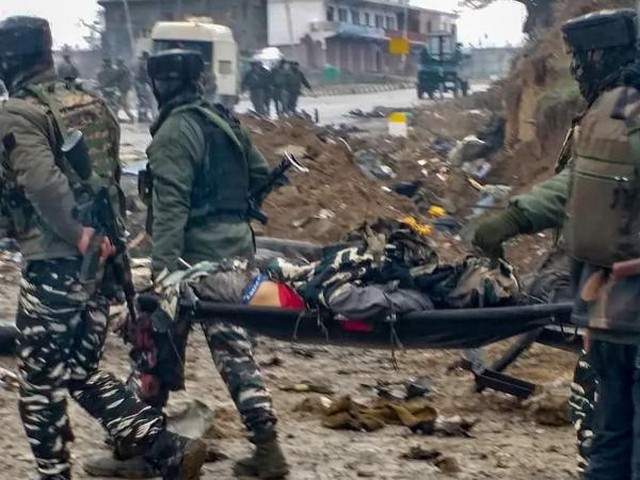
Pulwama Attack: Why Nobody Is Questioning The Intelligence Failure?

By Binu Mathew

The Pulwama attack is not a time for revenge as is already happening in many parts of the country. Yesterday, vehicles from Kashmir valley were attacked and set on sire. Curfew was declared in Jammu. Today, students from Kashmir valley were attacked in different parts of the country. Let me make it clear at the outset that Kashmiris in general have nothing to do with the Pulwama attack. The failure of Kashmir is collective failure of the country. To put the blame on Kashmiris alone is lying to ourselves.

Coming to the particular attack in Pulwama is due to the failure of security agencies, as the attacker was under the radar of J&K security agencies.

The Print reported ,

“According to sources in the Jammu & Kashmir police, Dar, a local from Gandibagh, Pulwama, was a class 11 student when he joined the JeM. A police source said he had been on the radar of J&K police ever since he started “ground work” for the terror outfit and was among those who were part of the early stone-throwers in the Valley. “He was highly radicalised and joined JeM while he was a student,” said the police source.”

The Quint reported that CRPF demanded that the Jawans be airlifted but was refused permission

“A grieving CRPF jawan told The Quint on the condition of anonymity after the fidayeen attack on a CRPF convoy in Pulwama, Jammu & Kashmir on 14 February which killed 40 jawans. The convoy comprised over 2,500 CRPF personnel travelling in 78 vehicles. It turns out the CRPF had indeed requested air transit for the jawans to the Ministry of Home Affairs (MHA) earlier this week. However, the request was ignored.”

How come the attacker procured hundreds of kgs of explosives, procured a car, planned this elaborate terrorist attack on a high security convoy? There was intelligence information from the 8th February about such an attack. Why it was overlooked and why responsible officers did not act?

The responsibility should not be left to just the officers in charge. Remember J & K is under Governor’s rule. Home minister Rajnath Singh is directly responsible for this intelligence failure. So is National Security Advisor to the Prime Minister of India, Ajit Doval. Ultimately Prime Minister Narendra Modi is responsible for this intelligence failure. The Modi government should answer these questions, take responsibility and Modi should resign.

Even after the tragedy, the Prime Minister Narendra Modi did not take it as a priority. As the event happened he was on capaign trail in Jhansi, Uttar Pradesh. There he made some rhetorical statements against the terrosists. However, he didn’t find time to attend the all party meeting convened in Delhi to discuss about the attack. Instead he was campaigning in Maharashtra! Modi was on his 56 inch mode, while the opposition parties were in Delhi propping up his 56 inch chest!

Kashmirs living in Jammu and Indian main land don’t have to bear the brunt of this failure. Why don’t the opposition parties don’t question the security failure? Time is not for revenge but for soul searching and accountability for whoever failed in their responsibilities. That’s what India should do in memory of the poor departed souls.

Binu Mathew is the editor of Countercurrents.org

16 February 2019

Source: Countercurrents.org

Pakistan: The Global Pivot State

By Andrew Korybko

Pakistan’s promising economic potential, international connectivity capabilities, and unparalleled geostrategic location combine with its world-class military and proven diplomatic finesse over the decades to turn the South Asian country into the global pivot state of the 21stcentury.

As astounding as it may sound to most observers, the global pivot state of the 21st century isn’t China, the US, nor Russia, but Pakistan. The South Asian state regrettably has a terrible international reputation as a result of the joint Indo-American infowar that’s been waged against it over the past few decades, but an objective look at the country’s geostrategic and domestic capabilities reveals that it’s in a prime position to influentially shape the contours of the coming century. It therefore shouldn’t be surprising that China had the foresight to partner with it decades before anyone else did, but other Great Powers like Russia are finally awakening to its importance, and this is in turn making Pakistan the most strategically sought-after country in the world.

The China-Pakistan Economic Corridor (CPEC) is Beijing’s flagship project of its world-changing Belt & Road Initiative (BRI) because it crucially enables the People’s Republic to avoid the South China Sea and Strait of Malacca hotspots and obtain reliable access to the Mideast and Africa, which provide China with energy resources for its economy and growing consumer markets for its products, respectively. BRI is redirecting global trade routes from West to East and literally building the basis for the emerging Multipolar World Order, so considering Pakistan’s irreplaceably important role in this process by virtue of CPEC, China’s South Asian partner can be reconceptualized as the cornerstone of Beijing’s future world vision. This in and of itself makes Pakistan pivotal, but there’s actually much more to it than just that.

CPEC isn’t just a “highway” from Xinjiang to the Arabian Sea but a series of megaprojects through which Pakistan can transform itself from being a passive object of International Relations to a leading subject of the rapidly changing global order if it creatively expands this central corridor throughout the rest of the supercontinent in order to become the Zipper of Eurasia. The country’s domestic economic potential is extremely promising when remembering that it’s a nation of over 200 million people uniquely positioned at the crossroads of China’s future trade route with the rest of the “Global South”. With this in mind, Prime Minister Khan recently told the world at the UAE’s World Government Summit not to “miss the boat” and lose out on their chance to capitalize off of his country’s expected growth.

It’s little wonder then that major investment players such as Saudi Arabiaand the UAE are jumping at the opportunity to take part in this before any of their competitors can, wanting to get ahead of the race by establishing a premier presence in Pakistan as it becomes the shortest trade route between their economies and China’s. That’s not all there is to it, however, since Pakistan is capable of expanding CPEC in the Northern, Western, and Southern directions via the CPEC+ branch corridors to connect itself with Central Asia and Russia, the rest of West Asia (Iran, Turkey), and Africa, which could altogether make it the Convergence of Civilizations and the antidote to Huntington’s poisonous attempt to divide and rule the Eastern Hemisphere through his “Clash of Civilizations” thesis.

Building off of its CPEC+ civilizational-geostrategic connectivity prospects, Pakistan can institutionalize its role as the Zipper of Eurasia by bringing together the two incipient multilateral strategic partnerships that it’s a part of – the Multipolar CENTO with Iran and Turkey, and the Multipolar Trilateral with China and Russia – to form the Golden Ring of Multipolar Great Powers smack dab in the center of Eurasia, greatly aided as it would be by the instrumental role that Islamabad will naturally play in the post-American multipolar blueprint for Afghanistan. Pakistan can pull this off because it has a proven track record of diplomatic success in balancing between various powers, be it the US and China or Saudi Arabia and Iran, and its world-class nuclear-armed military is an impressive partner for all.

Simply put, Pakistan is the pivot state upon which all of China’s future plans depend, therefore recasting it as the kingmaker of the New Cold War and the world-changing multipolar processes of the 21st century. That said, Pakistan is also a pivot state in its own right, one that’s capable of zipping together the various forces of Eurasia and becoming the convergence point of the Eastern Hemisphere’s many diverse civilizations, which can be institutionalized through the Golden Ring framework that it’s the key component of. Prophetically, Pakistani founding father Muhammad Ali Jinnah predicted all of this when he famously proclaimed in 1948 that “Pakistan is the pivot of the world, placed on the frontier on which the future position of the world revolves”, and each passing day proves that he was right.

DISCLAIMER: The author writes for this publication in a private capacity which is unrepresentative of anyone or any organization except for his own personal views. Nothing written by the author should ever be conflated with the editorial views or official positions of any other media outlet or institution.

14 February 2019

Source: eurasiafuture.com

Uncertainty follows Moroccan-Saudi spat

By Hassan Aourid

Moroccan-Saudi relations have never been as cool and strained as they have become in the past week, following a report on the Western Sahara disputebroadcast on Al-Arabiya, a television channel close to decision-making circles in Riyadh. The report blatantly deviated from Saudi Arabia’s traditional pro-Rabat line, and was a reaction to an interview on Al Jazeera by Morocco’s foreign minister,Nasser Bourita where he had sketched Morocco’s new foreign policy guidelines, focusing on Morocco’swithdrawal from the Saudi-led coalition in the war in Yemen.

Morocco’s immediate response to the Al-Arabiya report was to recall its ambassador from Riyadh ‘for consultations’. This is an inappropriate reaction since it was not an official Saudi position that overtly threatened Morocco’s strategic interests. Reports on a media channel cannot be construed as reflecting the official stance of a state, regardless of its connections with those in power, especially when considering the assertion made by Morocco’s top diplomat that his country has strategic relations with the Gulf states.

Since three Gulf countries – Saudi Arabia, UAE and Bahrain – and Egypt had decided to blockade Qatar, signs of a quiet crisis had emerged not only in relations between Rabat and Riyadh, but also between Rabat and the Abu Dhabi. Morocco did not yield to calls to boycott Qatar, but rather sent food to Qatar and sought to heal the rift between the Gulf countries. This did not sit well with Saudi Arabia and the UAE, whose leaders expected Morocco to abide by the decisions of Riyadh and Abu Dhabi, or, more correctly, the decisions of their respective strongmen, Mohammed bin Salman (MbS) and Mohammed bin Zayed.

Tensions worsened when Saudi Arabia refused to back Morocco’s bid to host the 2026 Football World Cup. Turki Al-Sheikh, then chair of Saudi Arabia’s General Sports Authority and an official close to the Saudi crown prince, tweeted provocatively that grey zones were no longer acceptable and that ‘you are either with us or against us’. He mocked Morocco for leaning towards a little ‘emirate’ – meaning Qatar – and, in a spiteful tone, advised the north African kingdom to turn to the ‘tiny emirate’ for help, which, he said, would be futile since everyone knew ‘where the lion’s den can be found’. Prince Bandar bin Sultan, an expert in Morocco-Saudi relations and a former Saudi intelligence official, further asserted that the time for flattery had passed.

When MbS was in Paris in March 2018, the French president, Emmanuel Macron, attempted to bring together the Moroccan king, Mohammed VI, the Lebanese prime minister, Saad Hariri, and MbS, even recording the event for posterity through a selfie. However, that did not persuade the Saudis to reconsider their position on the Moroccan bid. Not only did Saudi Arabia vote against Morocco – even though all Arab states had undertaken at an Arab League summit in Riyadh to back Morrocco – it also led a campaign supporting the US-Canada bid. Further, it went to great lengths to vilify Morocco, mocking its Berber origins and economic situation through social media.

The straw that broke the camel’s back, however, was Morocco’s neutrality over the murder of Saudi journalist Jamal Khashoggi. Riyadh refused to accept such a position a state it viewed as a strategic ally. The situation became more complicated when Rabat declined to host the Saudi crown prince while he was on a regional tour en route to the G20 summit in Buenos Aires at a time when he was desperate to break out of his isolation. MbS visited Tunis and Algiers but skipped Rabat, ostensibly due to the Moroccan king’s tight schedule which did not allow for a meeting, as Morocco’s foreign minister explained.

Is it ‘a passing cloud’?

Morocco’s ambassador to Riyadh referred to the spat between the two countries as ‘a passing cloud’. However, the current diplomatic crisis between Morocco and Saudi Arabia is actually the culmination of a series of successive developments. Moroccan-Saudi relations will not return to their former state of close relations whose foundations were laid during the rule of Morocco’s King Hassan II and Saudi Arabia’s King Fahd. It was during this period that Hassan II established an American-style university in the heart of the Atlas and named it the Akhawan University (the university of the two brothers) in reference to himself and Fahd.

Spurred on by the aftershocks of the ‘Arab Spring’, Saudi Arabia set up what has been referred to as a ‘club of monarchs’, which included Gulf Cooperation Council (GCC) states together with Morocco and Jordan. During the 2016 GCC summit, Morocco pledged unqualified commitment to the security of Gulf states, a position best illustrated by the king’s pronouncement that ‘whatever affects you, affects us’.

But this posture did not sit well with the new crop of leaders in Saudi Arabia and the UAE, whose education and outlook starkly contrast with those of their predecessors. The old generation remained true to their Arab pride and to a sense of belonging to the Islamic community – even if these were leveraged as stock-in-trade, as in a business. The new generation, however, does not care much about Arab values, fully embraces current global financial trends, comes across as pragmatic (at times even beyond the bounds of reasonableness), and sees Islam and movements operating under its banner as a threat that warrants their enmity.

What Saudi Arabia did through the Al-Arabiya documentary was not merely a rap on the knuckles; it signalled a new way of dealing with Morocco, one where all means of inflicting harm and causing disparagement are legitimate. It feels betrayed by its closest ally in the region, and decided to inflict on Morocco similar treatment to that it meted out to Lebanon in 2015, when it closed sea routes and released the names of collaborators and recipients of remuneration, privileges or commissions from Saudi Arabia.

Morocco’s firm and wise response should not focus only on defending its strategic interests, but on doing it well. Securing the right to host an international sporting tournament cannot be considered a strategic interest, and should not be identified as a factor in determining relations with any other state. Those in power in Rabat must be reminded of this principle. The strength of any county’s foreign policy stems from its ability to reflect the interests of all its people, not only the interests of a specific category of people, and not by yielding to transient considerations of unknown origins and objectives.

Hassan Aourid is a former spokesperson of the Moroccan royal palace and a lecturer in political science at Muhammad the Fifth University in Rabat.

16 February 2019

Source: www.amec.org.za

In Countries Destroyed By The West, People Should Stop Admiring The U.S And Europe

By Andre Vltchek

It may sound incredible, but it is true: in countries that have been damaged, even totally robbed and destroyed by the West, many people are still enamored with Europe and North America.

For years, I have been observing this ‘phenomena’, even in the most plundered, devastated war zones and slums. Often I was shocked, other times thoroughly desperate. I did not know how to respond, how to react, how to describe what I have been observing.

Then, a few days ago, in Syria, right next to the Idlib battlefield, close to the deadly positions of Al-Nusra Front, in a country where the West and its allies have murdered hundreds of thousands of people, one of my interpreters exclaimed in a ‘patriotic’ outburst: “Look how beautiful this land is! It is almost as beautiful as Europe!”

And at night, another guide of mine began nostalgically recalling his glorious days in Europe, when he could still go there; before the Syrian war began.

An interpreter did not know who Fidel Castro was (I had his portrait, lighting up cigar, as my phone screensaver), but both of them – my local companions at the battle ground – were fluent in Western slang and the worldview. They knew, however, near zero about China.They were patriotic and they fully supported their country, but at the same time they admired the West and Western journalists from the mainstream media – those very same propagandists who helped to bring their beautiful and unique Syria to the state in which it is now.

It all felt schizophrenic, but definitely not new.

I could not take it, anymore. I decided to write this story, despite the fact that it is an intellectual ‘minefield’. I decided to write it, because it is how it is. Because I have to tell it; someone has to. And above all, because it is absolutely essential to combat the crooked selfie image with which the West has been infecting almost all nations of the world, including all those that it has been plundering and raping.

*

Are we dealing with the so-called “Stockholm Syndrome” here? Most likely, yes. The victim falls in love with her or his tormentor.

For long centuries, the West has been colonizing, usurping, literally terrorizing the entire planet. Hundreds of millions have died as a result of colonialism, neo-colonialism, and imperialism. Wealth, cultural and educational institutions, hospitals, transportation, parks – all that Europe and North America possess to date and boast about, was constructed on mountains of bones, on genocide and unbridled plunder.

That cannot be disputed, can it?

Slavery, mass murder, genocidal expansions; the West robbed the world, and then consolidated its power, promoting its exceptionalism through relentless brainwashing (called ‘education’), propaganda (called ‘information’), and twisted entertainment for the masses that inhabit poor countries (called ‘culture’ and ‘the arts’).

Shockingly and absurdly, Europe and North America are still loved and admired by many, even (or especially) in such places where Western governments and companies plagued everything like locusts, leaving to the locals only burned land, poison and miserable slums.

*

How is it possible?

For years, I have been working in Africa, a continent which was entirely subjugated by the U.K., France, Germany, Belgium and other European expansionist nations. Africa from where millions of men, women and children were brought in chains to the “New World”, as slaves. Where millions died during the ‘hunt’, where millions died in ‘transit centers’, and then, on the open seas. That’s tens of millions of ruined lives. The complete plunder of the resources,the unimaginable humiliation of the people,broken cultures,genocides and holocaust against local individualsfrom what is now Namibia, to the Democratic Republic of Congo. Great African heroes like Lumumba assassinated by the Western rulers.

And yet, many Africans see the West as some great ‘example’, as a ‘guiding light’, as a severe but respectable ‘daddy’, who uses the belt when it is necessary, but who also rewards justly those of his ‘children’ who ‘behave properly’.

It is repulsive, but undeniable.

The greatest African writers are now teaching at U.S. and U.K. universities. They have been ‘neutralized’ and ‘pacified’, many of them out rightly bought. In many countries, African judges wear comical white wigs, doing their best to look like their British counterparts.The children of corrupt elites are collecting diplomas from the U.K. and French universities, imitating upper-class European accents.

To behave, to look and sound like the colonizers, is something that brings respect.

The same on the Sub-Continent, of course.

The mannerism among the upper classes in India and Pakistan are those of the U.K. (and lately, of the U.S.). Elites there go out of their way to be more British than the Brits; more Californian than the inhabitants of the U.S. West Coast. Countless private Indian universities call themselves ‘American’ or ‘British’, with ‘Oxford’ or ‘Cambridge’ frequently ‘decorating’ their names.

‘To be accepted’ in Europe or North America is the highest honor, in almost all former colonies, therefore, in almost the entire world.

‘Well groomed’, well-educated and modern Asians, Latin Americans, Africans and the Middle Easterners are expected to ape Westerners;to dress like Westerners, eat (and drink) like the Westerners and to ‘defend the same values’ as them.

In fact, they are expected to be much more Western than the Westerners.

But ‘expected’ by whom? Yes, you guess correctly: very often by their own people!

*

Ask and many in the ‘South’ will tell you: everything that comes from the West is beautiful, progressive and dandy.

“Every bule is beautiful,” I was informed, recently, by a young indigenous professional lady in the totally environmentally plundered island of Borneo/Kalimantan. Bule is a vulgar, derogatory Indonesian word for the ‘whites’, and literally means ‘albino’. However, the lady was not joking, it was a compliment: she was brought up believing that every bule is actually superior and fine-looking.

In the indigenous Mexican state of Yucatan, right after the elections that brought to power the left-wing President Obrador, I overheard the conversation of a dozen or so upper-class housewives in a Western chain café. Their references were fully European and North American: From vacations in Italy and Spain, to the films they were watching, books they were reading. Europe was their ‘mother-continent’, while Miami, their only true comparison. Before Obrador came to power, indigenous people were increasingly living in misery, their roofs broken, jobs disappearing. But the elites were, as always, in a European state of mind.The real Mexico was not on their radar. It did not matter, or didn’t even exist.

Even some of the poor in the ‘conquered world’ who are actually ‘concerned’ about Western imperialism, see it as an abstract problem.They see it as a strictly political, military or economic issue. The fact that Western imperialism has ‘culturally’ immobilized entire nations and continents is hardly addressed.

Even in those proud countries that are determinedly struggling against Western imperialism – China, Russia, Iran, or Venezuela – the Western narrative of exceptionalism has already managed to cause tremendous damage.

In China, for instance, almost everything ‘Western’ had been, until recently, associated with modernity. Being ‘against the West’ was considered boring, gray and outdated, somehow connected to the ‘Communist propaganda’ of the past (the fact that the ‘Communist propaganda’ was often correct, mattered nothing). This attitude allowed the great infiltration of Chinese universities by Western academia, as well as the injection of Western nihilism into Chinese arts, culture, even way of life. Only recently, has this dangerous trend been reversed, but not after it had already caused great damage.

The admiration of everything Western destroyed the greatest progressive experiment of modern history – The Soviet Union and the so-called “Eastern Bloc”.

The power of negative Western propaganda packaged together with the promotion of extreme individualism, selfishness and consumerism, literally wiped out all internationalist zeal, humanism and higher principles,from the minds of tens of millions of young Czechs, Poles, East Germans, Bulgarians, and even Soviets.

The once proud Communist Eastern Bloc, after liberating dozens of countries from colonialism, after fighting for an egalitarian world, showing solidarity with all oppressed nations, was then gradually defeated by such shallow bullshit as blue jeans labels, the nonsensical lyrics of rock and pop songs (a favorite weapon of the West), greed, religions (another Western weapon), and slogans like ‘freedom’ and ‘democracy’ (the Western world which has been denying freedom and democracy to almost all countries on our planet, cynically turned the truth upside down, and fooled East Europeans, by skillfully applying centuries long propaganda methods).

In the end, confused and increasingly cynical, what many East Europeans demanded was not ‘freedom’, but more money, more labels, and the ability to join the bloc of the countries that have been plundering the world.

*

So, what makes the West so successful, when it comes to brainwashing people all around the world? How is it possible after all that banditry, terror and ruthlessness, that most of the oppressed and conquered countries are still showing plenty of respect to the masters that reside in New York, London or Paris?

I believe that if we find the answers to this question, we will be able to save the world, and reverse this deadly trend.

First of all, after interacting with thousands of people in Africa, Asia, the Middle East, Oceania and Latin America, I am coming to the conclusion that the West (and Japan) is often admired forthe ‘high standards of living’.

In such miserable and collapsed countries like Indonesia, I often hear nonsense like: “European countries are more ‘Muslim’ than we are. They treat people much better than we do.”

Middle and upper class Southeast Asian families are travelling to Netherlands or Germany, and then exclaim after returning home: “Look at their parks, hospitals, bicycle lanes, trams, museums… We have to learn from them! They do so much for improving our world.”

That’s precisely what Africans admire about Europe. That’s how many ‘educated’ Indians or Southeast Asians feel. That’s what Peruvians, Hondurans or Paraguayans love about their Miami.

Are they wrong? Isn’t there, after all, plenty that poor countries could learn from the West?

Yes; definitely they are wrong. Totally wrong!

Let’s see ‘why’?

The West ‘arranged’ the entire world in accordance with its own feudal system of the past centuries. It brought the system of shameless oppressive regime to the global level.

To admire this monstrous and regressive global system would be like admiring the arrangement of European societies some three hundred years ago. It would be essentially like saying: “Look, the aristocracy of France or England was actually quite fine, egalitarian, educated and healthy, and we should learn from how they lived, and copy their examples!”

Of course, the aristocracy, the royalty and the church of Europe has always lived well, even 300 years ago. They had good schools for their children, they had decent medical care, palaces, summer villas, sanatoriums with mineral waters, theatres, lavish parks, and tons of servants.

The only ‘tiny’ problem was that some 95% of the population had to work for the luxury they enjoyed, subsisting in total misery. Plus, of course, those tens of millions of un-people in the colonies were being exterminated like animals.

The same is happening now. The entire Europe (with the exception of the poor people there) has moved to the bracket of new aristocracy, at least comparatively. And the rest of the world is laboring, dying, being raped and plundered, in order to maintain this ‘wonderful-looking’ social-state project of the West. Even the U.S. and its relatively brutal turbo-capitalist model is still ‘socialist’ (for the U.S. citizens), compared to such countries as Indonesia, India, Peru or Nigeria.

Western standards of living cannot be replicated elsewhere. To believe that the West would allow Africans or Southeast Asians to build a social state is naïve, almost intellectually insulting. Singapore, South Korea and Japan are rare exceptions, where the West closed both eyes, for strictly strategic reasons.

In order for the West to prosper, maintaining a super high standard of living, with all the benefits for its citizens, billions of the ‘serfs’ all over the world have to suffer, sacrifice themselves, and work for close to nothing;the more of them that live in hell, the better.

Nature has to be plundered in places like Borneo and Papua, DR Congo and soon in Brazil.

People have to be ruled by pro-Western corrupt oligarchs, and by the military and religious leaders. Saudi Arabia, Indonesia and now Brazil, are perfect countries for the West: they happily and willingly sacrifice their own people, guaranteeing Western prosperity.

You did not know? Nonsense! You did not want to know. All those people who matter are very happy with this arrangement: The Western rulers, citizens of Europe, North America, Australia, New Zealand and Japan, as well as the rulers/elites in the poor countries. The only ones who are truly suffering are those billions of the poor, worldwide, but they matter nothing, and they are not told anything anyway, because the media is in the hands of the West and their lackeys, and so is ‘education’.

And as they are not told anything, they – the wretched of the Earth – are admiring the West, too. They eat Western junk food if they can save few dollars a month, they drink Nescafe instead of their traditional coffee, listen to the shittiest music, watch pirated Hollywood blockbuster movies, wear fake sneakers and jeans, and masturbate to Western porn (if they have internet). They also dutifully follow religions, which were injected and upheld by the West, into their countries.

The poorer the country, the greater appear to be the green hills and pastures of the Western paradise.

And so, it goes on and on.

In India, Indonesia, Uganda, Jordan, Fiji, Honduras, I hear the same crap, from semi-educated, or West-educated local citizens: “People in the West are actually very good people, but their governments are bad.” Are they sure about that? I wonder.

*

Frankly and honestly, I am tired of this status quo. And I don’t find this amusing at all: hearing admiring statements about European and other Western countries in the middle of the monstrous war zones, famine-stricken areas, brutal mines, on the banks of poisoned rivers and inside the slums.

I am an ‘old-fashioned’ revolutionary. Slaves have to rise and fight, if necessary die for freedom; not to admire their masters and tormentors.

The crimes of the colonialists have to be exposed. The insane arrangement of the world has to be defined and then smashed into pieces.

The cute trams, bicycle lanes, parks, museums, operas, cafes, universities and hospitals in Europe are built on rivers of blood and the bones of ‘The Others’. I said it three years ago on the floor of the Italian Parliament, and I will repeat it again and again, wherever I go.

There is no other topic that matters, right now, on our planet.

Everything is connected to this, including the fear and hate that the West feels and spreads about countries like Venezuela, Russia, China, Iran, South Africa, Syria or Cuba.

They hate us; they hate those who resist, who are standing tall. And they should and will get back the same in return, hopefully, if the truth is pronounced often enough!

*

[First published by NEO – New Eastern Outlook]

Andre Vltchek is a philosopher, novelist, filmmaker and investigative journalist.

16 February 2019

Source: countercurrents.org

A Nonviolent Strategy to Defeat a US Military Invasion of Venezuela

By Robert J. Burrowes

To the People of Venezuela

Recently I wrote an article explaining how you could defeat, using nonviolent strategy, the US coup attempt that is taking place in your country. See ‘A Nonviolent Strategy to Defeat the US Coup Attempt in Venezuela’.

I would like to complement that article by now briefly explaining how you can also defeat a military invasion by the United States and any collaborating invaders by using a strategy of nonviolent defense as well.

In making this suggestion, I acknowledge the extraordinary difficulties inflicted on Venezuela by the US sanctions imposed over many years as part of its ‘undeclared war against Venezuela’ (partly designed to destroy its progressive social banking model), explained straightforwardly by Ellen Brown in her article ‘The Venezuela Myth Keeping Us From Transforming Our Economy’ as well as alternative proposals to resolve the crisis, ranging from that by several governments to facilitate dialogue between the Venezuelan government and the opposition – see, for example, ‘Russia Proposes Venezuelan “Peaceful Measures” Initiative to UN’ – to Stephen Lendman’s suggestion that a peacekeeping force be deployed to Venezuela by such countries as Russia, China and non-aligned nations. See ‘Save Venezuelan Sovereignty: Oil Economy Destabilized. Peace-keeping Role by Russia, China, Non-alligned Nations?’

I understand that your first reaction to the idea of a strategy of nonviolent defense might be one of scepticism or even outright disbelief. However, if you are willing to consider what I write below, I will briefly explain why a strategy of nonviolent defense is theoretically and empirically sound, has often been successful in a wide range of contexts in the past, and why I believe it is important and how it can be done.

Of course, I am well aware that this history of successful nonviolent defense is little known because it has been, and still is, suppressed. And yet the history of nonviolent resistance in many diverse contexts clearly demonstrates that a strategy of nonviolent defense has the best chance of defending your country while minimizing the death and destruction in doing so (which does not mean that it would be without cost).

Moreover, if you want to read many carefully documented historical accounts of nonviolent struggles that were successful against military opponents, including those that were ruthlessly violent, you can do so in The Strategy of Nonviolent Defense: A Gandhian Approach. The book also carefully explains why these successes occurred without incurring heavy casualties on the defense, particularly in comparison to military campaigns and guerrilla struggles.

In my view then, the idea of implementing a strategy of nonviolent defense is important to consider for two essential reasons.

First, you are dealing with an opponent that is insane – see ‘The Global Elite is Insane Revisited’ with a more detailed explanation in ‘Why Violence?’ and ‘Fearless Psychology and Fearful Psychology: Principles and Practice’ – incredibly ignorant – see this interview of US Secretary of State, Mike Pompeo ‘Venezuelan military will realize Maduro’s time is up: Mike Pompeo’ which is critiqued in these articles ‘Pompeo: America “obligated” to fight “Hezbollah” in Venezuela to save “duly elected” Guaido’ and ‘Pompeo Attempts to Link Iran, Hezbollah to Crisis in Venezuela’ – and grotesquely violent – see ‘The History – and Hypocrisy – of US Meddling in Venezuela’ and Killing Hope: US Military and CIA Interventions Since World War II – that, history teaches us, is highly likely to destroy your country to gain the geostrategic advantage and natural resources that control of your country offers, as the people of Iraq and Libya, for example, can testify.

And second: no matter how committed and courageous are the (loyal) members of your military forces and civilian militia (the National Bolivarian Militia of Venezuela), and the military forces of any allies who will stand with you in the defense of Venezuela, even a ‘successful’ outcome, such as that which Syria may be on the verge of ‘celebrating’, will only come at enormous cost in terms of human lives, infrastructure (including national heritage), ecological impact and time, all of which can be far more gainfully employed to continue building Venezuela, including overcoming outstanding problems, as you decide.

The Background

As I know that you are well aware, given the declared interest of the US elite in stealing your natural resources, including oil – see, for example, ‘“Good for business”: Trump adviser Bolton admits US interest in Venezuela’s “oil capabilities”’ and ‘Regime Change for Profit: Chevron, Halliburton Cheer On US Venezuela Coup’ – the US elite has long interfered with – see, for example, ‘US Influence in Venezuela Is Part of a Two Centuries-old Imperial Plan’ – and threatened military invasion of Venezuela to seize control of these resources in clear violation of international law. For recent examples only, see ‘Trump pressed aides on Venezuela invasion, US official says’ and ‘Time for talks “long passed”: US weaponizes aid amid push for regime change in Venezuela’.

Consequently, the US administration has finally used the pretext of an unfair election result in 2018 to call for the overthrow of your government despite the widely accepted result, verified by independent sources, and even the testimony of a former US president that your electoral system is without peer. See ‘Former US President Carter: Venezuelan Electoral System “Best in the World”’.

Moreover, the US puppet Juan Guaidó, anointed by the US to replace your elected President, has effectively indicated his support for US intervention, which clearly reveals where his loyalties lie, his willingness to now provide a pretext for a US invasion, and his complete disregard for the well-being of those Venezuelans who will inevitably be killed, injured and/or dispossessed during an invasion to support the ‘neocon regime-changers’ in Washington. See ‘Venezuela’s self-proclaimed “president” Guaido isn’t ruling out “authorizing” US intervention’ and ‘The Cynicism of Empire: Sen. Rubio Tells Venezuelans to Overthrow Their Government… or Starve!’

This threat of military intervention, as the historical record clearly demonstrates, has every prospect of being carried out. See ‘Before Venezuela: The long history of U.S. intervention in Latin America’ and ‘Overthrowing other people’s governments: The Master List’.

Despite this threat, as you are aware, President Nicolás Maduro has persisted in offering to discuss the issues arising from this conflict while also calling on the international community to ‘“Stop Trump’s insane actions!” Venezuela’s Maduro talks to RT about avoiding war’ and even writing an appeal to the people of the United States which, of course, was ignored by the corporate media so that it does not even reach a wide audience. See ‘An Open Letter to the People of the United States from President Nicolas Maduro’.

While I applaud your President for his persistent calls for dialogue to resolve this issue – for a recent example, see ‘Maduro Asks International Community to End US’s Threats of War’ – there are simply three realities that make it highly unlikely that his call will be heeded, whether by the US administration that has already rejected such a call – see ‘Time for talks “long passed”: US weaponizes aid amid push for regime change in Venezuela’ – or by the international community, a substantial section of which has already declared their support for the US puppet Juan Guaidó, who has been carefully groomed for a decade for the role he is now playing. See ‘The Making of Juan Guaidó: How the US Regime Change Laboratory Created Venezuela’s Coup Leader’.

These three realities are those I mentioned above: You are dealing with an insane, incredibly ignorant and grotesquely violent opponent: an elite that seeks geopolitical control and endless resources for profit no matter what the cost to fellow human beings and the biosphere, as the record demonstrates.

Moreover, in seeking to secure its objectives, the US elite will endeavour to control the narrative in relation to Venezuela. Hence, as you have noticed, the corporate media is lying prodigiously about Venezuela as it ‘beats the drums of war’. See, for example, ‘Dissecting the jingoistic media coverage of the Venezuela crisis’, ‘Venezuela Blitz – Part 1: Tyrants Don’t Have Free Elections’, ‘Venezuela Blitz – Part 2: Press Freedom, Sanctions And Oil’ and ‘The BBC and Venezuela: bias and lies’.

For you and those of us outside Venezuela who have some knowledge of your country’s history, we are well aware of the enormous gains made by the Bolivarian movement, despite the enormously damaged country that the movement inherited. See, for example, ‘Venezuela: From Oil Proxy to the Bolivarian Movement and Sabotage’.

This progress, of course, does not mean that all problems have been resolved, most of which have been exacerbated by the sanctions imposed in recent years by the United States government. See, for example, the report by Alfred de Zayas on behalf of the United Nations Human Rights Council – ‘Report of the Independent Expert on the promotion of a democratic and equitable international order on his mission to the Bolivarian Republic of Venezuela and Ecuador’ – which identified the crisis the US ‘economic warfare’ was precipitating. See ‘Former UN Rapporteur: US Sanctions Against Venezuela Causing Economic and Humanitarian Crisis’.

Defending Against a US Military Invasion of Venezuela

So, while your effort to defeat the coup attempt continues, even if the United States military invades Venezuela before or after this issue is resolved, you have the powerful option of resisting any invasion effectively by employing a strategy of nonviolent defense.

I have explained the essential points of this strategy on the website Nonviolent Defense/Liberation Strategy. The pages of this website provide clear guidance on how to easily plan and then implement the twelve components of this strategy.

If you like, you can see a diagrammatic representation of this strategy by looking at the Nonviolent Strategy Wheel.

And on the Strategic Aims page you can see the basic list of 30 strategic goals necessary to defeat a military invasion. These strategic goals can easily be adopted, modified and/or added to if necessary, in accordance with your precise circumstances as you decide.

If you want to read a straightforward account of how to plan and conduct a nonviolent tactic so that it has strategic impact, you can do so here: ‘Nonviolent Action: Why and How it Works’.

This will require awareness of the difference between ‘The Political Objective and Strategic Goal of Nonviolent Actions’.

And, to ensure that the military violence directed against you is made as difficult as possible to perpetrate and, in many cases, does not eventuate, you are welcome to consider the 20 points designed to ensure that you are ‘Minimizing the Risk of Violent Repression’ whenever you take nonviolent action to defend yourselves when repression is a risk. This information is useful for both neutralizing violent provocateurs but also to ensure that invading military forces are compelled to deal with complex emotional and moral issues that do not arise against a violent opponent who is threatening them, and which will lead some, and perhaps very many, to desist as the historical record clearly documents. Again, for many examples, see The Strategy of Nonviolent Defense: A Gandhian Approach.

Conclusion

The US government and its sycophantic allies might not invade Venezuela. It may transpire that the diplomatic and other efforts of your government to defeat the coup and avert a US-led military invasion of Venezuela will be successful. There is also a fracturing of the opposition forces within Venezuela, in several ways, which works against the success of ongoing efforts to remove your government. See ‘Venezuela Regime Change “Made in the USA”’.

However, the extensive historical evidence of US interventions in violation of international law, the geostrategic and natural resource advantages that will accrue to the US elite from an invasion that removes your elected government, the anointment of a puppet president of Venezuela, the recent posturing and declarations by key members of the US administration and many US-allied governments, and the manufacture of public acquiescence by the corporate media all point heavily in the direction of invasion. And, as you are well aware, it is wise to treat this possibility seriously.

The elite conducting these preparatory moves is insane and, if it attacks Venezuela, there is a serious risk it will destroy your country as it has destroyed Iraq and Libya, especially if it meets significant military resistance. Their insanity precludes them caring about you, the people of Venezuela (even as they present any intervention as ‘humanitarian’). See ‘Love Denied: The Psychology of Materialism, Violence and War’. They care about nothing more than geostrategic advantage, eliminating progressive elements of your society’s development, and seizing your natural resources from which they can profit enormously.

Nevertheless, a strategy of nonviolent defense would enable you to defend yourselves and enable every last member of your population, irrespective of age and ability, to be strategically involved, as well as any solidarity activists overseas. It would also minimize the loss of life and destruction inflicted on your country.

Importantly, even if you suffer setbacks, unless and until you accept outright defeat, your strategy of nonviolent defense, ongoingly refined to maintain effective strategic coordination and to retain the initiative, will ultimately prevail.

As always, however, whether or not you decide to consider/adopt my suggestion, you have my solidarity.

13 February 2019

Robert J. Burrowes has a lifetime commitment to understanding and ending human violence.

In Hebron, Israel Removes The Last Restraint on Its Settlers’ Reign of Terror

By Jonathan Cook

Nazareth: You might imagine that a report by a multinational observer force documenting a 20-year reign of terror by Israeli soldiers and Jewish settlers against Palestinians, in a city under occupation, would provoke condemnation from European and US politicians.

But you would be wrong. The leaking in December of the report on conditions in the city of Hebron, home to 200,000 Palestinians, barely caused a ripple.

About 40,000 separate cases of abuse had been quietly recorded since 1997 by dozens of monitors from Sweden, Norway, Switzerland, Italy and Turkey. Some incidents constituted war crimes.

Exposure of the confidential report has now provided the pretext for Israeli prime minister Benjamin Netanyahu to expel the international observers. He shuttered their mission in Hebron this month, in apparent violation of Israel’s obligations under the 25-year-old Oslo peace accords.

Israel hopes once again to draw a veil over its violent colonisation of the heart of the West Bank’s largest Palestinian city. The process of clearing tens of thousands of inhabitants from central Hebron is already well advanced.

Any chance of rousing the international community into even minimal protest was stamped out by the US last week. It blocked a draft resolution at the United Nations Security Council expressing “regret” at Israel’s decision, and on Friday added that ending the mandate of the Temporary International Presence in Hebron (TIPH) was an “internal matter” for Israel.

The TIPH was established in 1997 after a diplomatic protocol split the city into two zones, controlled separately by Israel and a Palestinian Authority created by the Oslo accords.

The “temporary” in its name was a reference to the expected five-year duration of the Oslo process. The need for TIPH, most assumed, would vanish when Israel ended the occupation and a Palestinian state was built in its place.

While Oslo put the PA formally in charge of densely populated regions of the occupied territories, Israel was effectively given a free hand in Hebron to entrench its belligerent hold on Palestinian life.

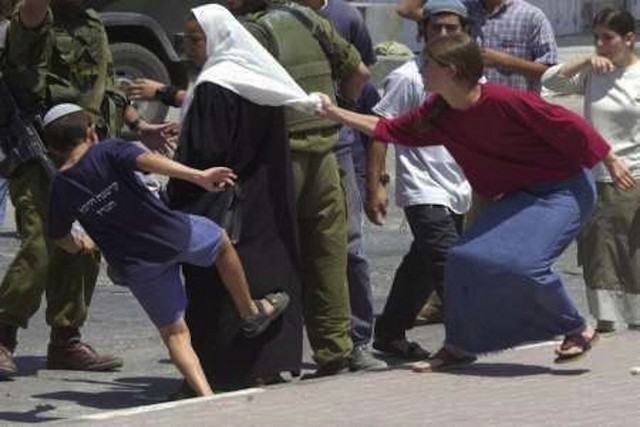
Several hundred extremist Jewish settlers have gradually expanded their illegal enclave in the city centre, backed by more than 1,000 Israeli soldiers. Many Palestinian residents have been forced out while the rest are all but imprisoned in their homes.

TIPH faced an impossible task from the outset: to “maintain normal life” for Hebron’s Palestinians in the face of Israel’s structural violence.

Until the report was leaked, its documentation of Israel’s takeover of Hebron and the settlers’ violent attacks had remained private, shared only among the states participating in the task force.

However, the presence of observers did curb the settlers’ worst excesses, helping Palestinian children get to school unharmed and allowing their parents to venture out to work and shop. That assistance is now at an end.

Hebron has been a magnet for extremist settlers because it includes a site revered in Judaism: the reputed burial plot of Abraham, father to the three main monotheistic religions.

But to the settlers’ disgruntlement, Hebron became central to Muslim worship centuries ago, with the Ibrahimi mosque established at the site.

Israel’s policy has been gradually to prise away the Palestinians’ hold on the mosque, as well the urban space around it. Half of the building has been restricted to Jewish prayer, but in practice the entire site is under Israeli military control.

As the TIPH report notes, Palestinian Muslims must now pass through several checkpoints to reach the mosque and are subjected to invasive body searches. The muezzin’s call to prayer is regularly silenced to avoid disturbing Jews.

Faced with these pressures, according to TIPH, the number of Palestinians praying there has dropped by half over the past 15 years.

In Hebron, as at Al Aqsa mosque in Jerusalem, a Muslim holy site is treated solely as an obstacle – one that must be removed so that Israel can assert exclusive sovereignty over all of the Palestinians’ former homeland.

A forerunner of TIPH was set up in 1994, shortly after Baruch Goldstein, an Israeli army doctor, entered the Ibrahimi mosque and shot more than 150 Muslims at prayer, killing 29. Israeli soldiers aided Goldstein, inadvertently or otherwise, by barring the worshippers’ escape while they were being sprayed with bullets.

The massacre should have provided the opportunity for Yitzhak Rabin, Israel’s prime minister of the time, to banish Hebron’s settlers and ensure the Oslo process remained on track. Instead he put the Palestinian population under prolonged curfew.

That curfew never really ended. It became the basis of an apartheid policy that has endlessly indulged Jewish settlers as they harass and abuse their Palestinian neighbours.

Israel’s hope is that most will get the message and leave.

With Israeli Prime Minister Benjamin Netanyahu in power for a decade, more settlers are moving in, driving out Palestinians. Today Hebron’s old market, once the commercial hub of the southern West Bank, is a ghost town, and Palestinians are too terrified to enter large sections of their own city.

TIPH’s report concluded that, far from guaranteeing “normal life”, Israel had made Hebron more divided and dangerous for Palestinians than ever before.

In 2016 another army medic, Elor Azaria, used his rifle to shoot in the head a prone and badly wounded Palestinian youth. Unlike Goldstein’s massacre, the incident was caught on video.

Israelis barely cared until Azaria was arrested. Then large sections of the public, joined by politicians, rallied to his cause, hailing him a hero.

Despite doing very little publicly, TIPH’s presence in Hebron had served as some kind of restraint on the settlers and soldiers. Now the fear is that there will be more Azarias.

Palestinians rightly suspect that the expulsion of the observer force is the latest move in efforts by Israel and the US to weaken mechanisms for protecting Palestinian human rights.

Mr Netanyahu has incited against local and international human rights organisations constantly, accusing them of being foreign agents and making it ever harder for them to operate effectively.

And last year US President Donald Trump cut all aid to UNRWA, the United Nations’ refugee agency, which plays a vital role in caring for Palestinians and upholding their right to return to their former lands.

Not only are the institutions Palestinians rely on for support being dismembered but so now are the organisations that record the crimes Israel has been committing.

That, Israel hopes, will ensure that an international observer post which has long had no teeth will soon will soon lose its sight too as Israel begins a process of annexing the most prized areas of the West Bank – with Hebron top of the list.

A version of this article first appeared in the National, Abu Dhabi.

Jonathan Cook won the Martha Gellhorn Special Prize for Journalism.

13 February 2019

Source: countercurrents.org

Ethics Probe for Trudeau And Legitimacy Problem for Guaido

By Countercurrents.org

Justin Trudeau, the Canadian Prime Minister, and an over-active participant in imperialist intervention in Venezuela, and Juan Guaido, the self-proclaimed “interim president” of Venezuela, and one of the leading proxies in the imperialist venture are facing serious problem. The problems of the two leaders are of two types. But the two are related to interference, and both of the cases are producing similar effect – the problem of credibility.

Media reports said:

Trudeau is being investigated for illegally attempting to shield SNC-Lavalin, a Montreal engineering firm, from criminal fraud and corruption charges. The case involves millions of dollars in bribes to members of government in Libya, a victim of imperialist intervention.

However, Trudeau has “welcomed” the probe. The Conflict of Interest and Ethics Commissioner has launched the probe a few days ago. By that time, Trudeau has extended his interventionist role in Venezuela.

Two MPs from the New Democrat party made requests for the probe. Before the requests came, the Globe and Mail (G&M) carried a report on the issue last week.

According to the G&M report, the Canadian leader was at the heart of the case, which the Conservative opposition has termed an “unprecedented” effort to illegally influence a criminal proceeding. No law allows anyone to influence any criminal proceeding.

Trudeau, one of the leaders of the imperialist democratic world, allegedly pressured former justice minister and attorney general Jody Wilson-Raybould to curtail the criminal prosecution of a multi-million-dollar corruption and fraud case against SNC-Lavalin, redirecting the matter out of the courts, and into a “remediation agreement,” which would have spared the company the negative financial and reputational consequences of a criminal trial – the most devastating of which would include a 10-year ban from accepting government contracts, a stipulation which would economically cripple the firm.

When Wilson-Raybould refused to ask federal prosecutors to make the non-prosecution deal with SNC-Lavalin in December, according to the G&M, Trudeau essentially fired her, leaving her to wash up at Veterans Affairs, a significant demotion.

Trudeau denies the allegations. The Canadian leader claims: “Neither the current nor the previous attorney general was ever directed by me or anyone in my office to take a decision in this matter.”

Conservative Leader Albert Scheer said: “Obviously Justin Trudeau’s trying to hide something.”

SNC-Lavalin was charged with paying out $48 million in bribes to Libyan officials in the decade leading up to the NATO-led overthrow of Muammar Gaddafi’s government in 2011, payments intended to influence government decision-making, though the company was also charged with defrauding Libyan companies of about $130 million.

Intervention and corruption go hand-in-hand.

Problem of a proxy, Guaido

Roger D. Harris with the Campaign to End US/Canada Sanctions against Venezuela writes in “Juan Guaido: The Man Who Would Be President of Venezuela Doesn’t Have a Constitutional Leg to Stand On”:

Donald Trump, the U.S. President, imagines Guaido is the rightful president of Venezuela. But Guaido, a man of impeccable illegitimacy, was exposed by Dan Cohen and Max Blumenthal as “a product of a decade-long project overseen by Washington’s elite regime change trainers.”

Roger Harris refers to Argentinean sociologist Marco Teruggi, who described Guaido as “a character that has been created for this circumstance” of regime change.

These findings, writes Roger Harris, deconstruct Guaido’s constitutional credentials to be interim president of Venezuela.

Educated at George Washington University in Washington, DC, Guaido was unknown in Venezuela before thrusting in the active duty of a proxy warrior. A poll, conducted about a week ago, before Guaido appointed himself president of the country, 81% of Venezuelans had never even heard of the leader.

Roger Harris, also a board member for the 32-year-old anti-imperialist human rights organization Task Force on the Americas, informs:

US Vice President Pence phoned Guaido on the evening of January 22 and asked him how’d he like to be made president of Venezuela. The next day, Guaido announced that he considered himself president of Venezuela.

Only a few weeks before to that “historical” self-appointment, Guaido was selected as president of the country’s National Assembly. It was his party’s – Popular Will – turn for the presidency of the assembly.

He was elected to the assembly from a coastal area with 26% of the vote.

Guaido, even within his own party, was not in the top leadership.

Roger Harris, also an election observer in Venezuela for both of Maduro’s elections, most recently on a delegation with Venezuela Analysis and the Intrepid News Fun, writes:

“Popular Will, is a far-right marginal group whose most enthusiastic boosters are John Bolton, Elliott Abrams, and Mike Pompeo. Popular Will had adopted a strategy of regime change by extra-parliamentary means rather than engage with the democratic electoral process and had not participated in recent Venezuelan elections.”

Although anointed by Trump and company, writes Roger Harris, Popular Will is not representative of the “Venezuelan opposition,” a fractious bunch whose hatred of Maduro is only matched by their abhorrence of each other. Leading opposition candidate Henri Falcon, who ran against Maduro in 2018 on a neoliberal austerity platform, had been vehemently opposed by Popular Will. The party demanded that Falcon join their US-backed boycott of the election.

In the article, which was published in many alternative news and views outlets, Roger Harris informs:

Ultimas Noticias, a Venezuelan news outlet, reported that prominent opposition politician Henrique Capriles, who had run against Maduro in 2013, “affirmed during an interview that the majority of opposition parties did not agree with the self-swearing in of Guaido as interim president.”

Claudio Fermin, president of the party Solutions for Venezuela, wrote: “we believe in the vote, in dialogue, we believe in coming to an understanding, we believe Venezuelans need to part ways with the extremist sectors that only offer hatred, revenge, lynching.”

Key opposition governor of the State of Táchira, Laidy Gómez, has rejected Guaido’s support of intervention by the US, warning that it “would generate death of Venezuelans.”

The Guaido/Trump cabal does not reflect the democratic consensus in Venezuela, where polls consistently show super majorities oppose outside intervention. Popular opinion in Venezuela supports negotiations between the government and the opposition. The Maduro administration has embraced the negotiations as a peaceful solution to the crisis.

But the US government rejects a negotiated solution, in the words of Vice President Pence: “This is no time for dialogue; this is time for action.”

This intransigent position is faithfully echoed by Guaido. So while most Venezuelans want peace, the self-appointed president, backed by the full force of US military power, wrote in a New York Times op-ed that it was possible to “end the Maduro regime with a minimum of bloodshed.”

Roger Harris adds:

The Guaido/Trump cabal’s fig leaf for legitimacy is based on the bogus argument that Article 233 of the Venezuelan constitution gives the National Assembly the power to declare a national president’s “abandonment” of the office. In which case, the president of the National Assembly can serve as an interim national president, until presidential elections are held. The inconvenient truth is that Maduro has shown no inclination to abandon his post, and the constitution says no such thing.

In fact, the grounds for replacing a president are very clearly laid out in the first paragraph of Article 233 of the Venezuelan constitution and do not include fraudulent or illegitimate election, which is what the cabal has been claiming. In the convoluted logic of the US government and its epigones, if the people elect someone the cabal doesn’t like, the election is by definition fraudulent and the democratically elected winner is ipso facto a dictator.

The function of adjudicating the validity of an election, as in any country, is to be dealt with through court challenges, not by turning to Donald Trump for his approval. And certainly not by anointing an individual from a party that could have run in the 2018 election but decided to boycott.

The National Electoral Council (CNE), Venezuela’s separate electoral branch, has certified Maduro’s reelection, as have independent international observers. A transparent and redundant auditing process of the vote had been conducted at each polling station and all party representatives – including opposition ones – signed off on the validity of the process when the polls closed. Further, no appeal was filed by any of the boycotting parties, although Falcón – who ran – subsequently asserted irregularities in the process before the high court.

Maduro was sworn into office under Article 231 of the Venezuelan constitution before the Supreme Tribunal of Justice (TSJ), which is the separate high court branch of the Venezuelan government. The TSJ had previously found the National Assembly to be in judicial contempt under Article 336:7, because the assembly had sworn in three deputies temporarily suspended because of voting irregularities.

The far-right opposition has boycotted the high court as well as the electoral process. They contest the legitimacy of the TSJ because some members of the TSJ were appointed by a lame duck National Assembly favorable to Maduro, after a new National Assembly with a majority in opposition had been elected in December 2015 but not yet seated.

Even if President Maduro were somehow deemed to have experienced what is termed a falta absoluta (i.e., some sort of void in the presidency due to death, insanity, absence, etc.), the National Assembly president is only authorized to take over if the falta absoluta occurs before the lawful president “takes possession.” However, Maduro was already “in possession” before the January 10, 2019 presidential inauguration and even before the May 10, 2018 presidential election. Maduro had won the presidency in the 2013 election and ran and won reelection last May.

If the falta absoluta is deemed to have occurred during the first four years of the presidential term, the vice president takes over. Then the constitution decrees that a snap election for the presidency must be held within 30 days. This is what happened when President Hugo Chávez died while in office in 2013. Then Vice President Nicolas Maduro succeeded to the presidency, called for new elections, and was elected by the people of Venezuela.

If it is deemed that the falta absoluta occurred during the last two years of the six-year presidential term, the vice president serves until the end of the term, according to the Venezuelan constitution. And if the time of the alleged falta absoluta is unclear – when Maduro presided over “illegitimate” elections in 2018, as is claimed by the far-right opposition – it is up to the TSJ to decide, not the head of the National Assembly or even such an august authority as US Senator Marco Rubio. Or the craven US press (too numerous to cite), which without bothering to read the plain language of the Bolivarian Constitution, repeatedly refers to Guaido as the “constitutionally authorized” or “legitimate” president.

Roger Harris concludes the article with the following paragraph:

As Alfred de Zayas, United Nations independent expert on the promotion of a democratic and equitable international order, tweeted: “Article 233 of the Venezuelan constitution is inapplicable and cannot be twisted into legitimizing Guaido’s self-proclamation as interim President. A coup is a coup.”

13 February 2019

Source: Countercurrents.org

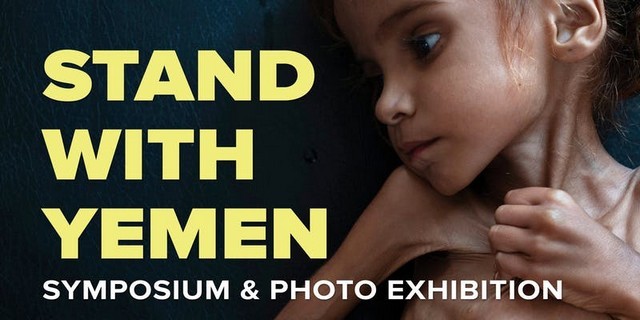
Stand With Yemen

Date: Saturday, 23rd February 2019

Time: 9AM – 2PM
Venue: International Institute of Islamic Civilization & Malay World (ISTAC)
24 Persiaran Tuanku Syed Sirajuddin, Taman Duta, 50480 Kuala Lumpur

Welcoming address by Tan Sri Razali Ismail, SUHAKAM

Keynote address by YAB Tun Dr Mahathir Mohamad, Prime Minister of Malaysia

Background

The war in Yemen has been on-going for the last three years. More than 10,000 Yemenis have been killed with tens of thousands wounded, many as a direct result of the Saudi-led bombing campaign supported by the United States and Britain and nine other African and Middle-East countries. Women and children in particular have borne the brunt of the hardship and deprivation of the war. More than 60,000 people have been killed in Yemen and an estimated 85,000 children under the age of five may have died from acute malnutrition. And some 3.5 million Yemenis have had to flee their homes and now live under the most deplorable conditions.

The Saudi blockade, in place since 2015, together with the deliberate targeting of means of food production and distribution in Yemen such as farms, fishing boats, ports and food factories have pushed Yemen – which imports 80% of its food – to the brink of famine reaching critical levels. The UN estimates that 130 children die every day in Yemen as a result of the war, famine and disease. To make matters worse, cholera and diphtheria are now also ravaging the land. There were 120,000 cases suspected of cholera between January and August 2018 with 19.3 million Yemenis do not have access to clean water and sanitation. According to UNICEF, more than 22 million Yemenis or 78% of the population need humanitarian assistance every day. The World Health Organization WHO also estimated that 1.8 million under the age of five suffer acute malnutrition including 500,000 children suffered from severe acute malnutrition.

According to UN estimates, around 8.4 million Yemenis are on the verge of starvation and do not know when their next meal will come from. No wonder then that Yemen’s situation has been described as the worst humanitarian catastrophe in the world.

Aims

To raise awareness of the conflict in Yemen and the unfolding humanitarian crisis there;
To encourage the Government of Malaysia to play a more active role in the search for a peaceful settlement of the conflict and in particular to assist in alleviating the suffering people of Yemen in their hour of need;
To encourage Malaysians and civil society groups to help raise funds for humanitarian assistance to Yemen;
To deliver a Declaration on Yemen to the Parliament.

PROGRAM

830 – 900AM: Registration & arrival of guests

900 – 915AM: Arrival of YAB Tun Dr Mahathir Mohamad,
Prime Minister of Malaysia

Brief remarks by Ambassador Dato Dennis Ignatius,
Chairman of Stand with Yemen Coalition

915 – 930AM: Officiating of Photo Exhibition by YAB Tun Dr Mahathir Mohamad & Tour

930 – 1000AM: Tun Dr Mahathir Mohamad to meet the Press at the Holding Room

Photo exhibition for participants

Adjournment to the Lecture Hall

1000 – 1005AM: Welcome remarks by the Rector of International Islamic University of Malaysia, Prof Dr Dzulkifli Abdul Razak

1005 – 1015AM: Remarks by Tan Sri Razali Ismail, Chairman of SUHAKAM

1015 – 1045AM: Keynote Address by YAB Tun Dr Mahathir Mohamad, Prime Minister of Malaysia

1045 – 1100AM: Tea break

1100 – 1110AM: Speech by Chairperson, Siti Jasmine Zulkifli

Qur’an recitation by Muhammad Thufail Sayuti,
Surah al-Hajj: 38-41

1110-1120AM: Opening speech by Tan Sri Razali Ismail, Chairman of SUHAKAM

1120- 1130AM: Video screening of “The War in Yemen – a first-hand account”
by Fatima Noman

1130 – 1230AM: Forum moderated by Dato’ Dr Ahmad Farouk Musa,
Islamic Renaissance Front

Panelists
1) Dr Abdul Rahman Al Maamari, Tangible Association for Yemeni Refugees – TAYR
2) Dr James M. Dorsey, Nanyang Technological University
3) Dr Chandra Muzaffar, International Movement for a JUST World
4) Dato’ Saifuddin Abdullah, Foreign Minister of Malaysia

1230 – 130PM: Discussion and Q&A

130 – 200PM: Lunch & Presentation by GPM on their
recent mission to Yemen at the Banquet Hall

200PM: Press Conference & Release of the Symposium Declaration
at the Ibnu Khaldun Room, Lower Ground, ISTAC

Speakers’ Profile:

Dr Abdul Rahman Al Maamari
Dr. Abdul Rahman Al-Maamari has a PhD in Post-colonial Literature from the National University of Malaysia (UKM). Currently a researcher and freelance translator, Dr. Al-Maamari devotes his time to assisting the Tangible Association for Yemeni Refugees (TAYR), an NGO which is registered under the UNHCR and based in Negeri Sembilan.

Dr James M. Dorsey
Dr James M. Dorsey is a Senior Fellow at the S. Rajaratnam School of International Studies at Singapore’s Nanyang Technological University focused on the Middle East and North Africa who publishes widely in peer-reviewed journals as well as non-academic publications. A veteran, award-winning foreign correspondent for four decades in the Middle East, Africa, Latin America, Europe and the United States for publications such as The Wall Street Journal, The New York Times and the Financial Times, James has met a multitude of the region’s leaders. As a journalist, James covered primarily ethnic and religious conflict, including some of recent history’s most dramatic events such as the 1973 Middle East war; the Lebanese civil war; the 1979 Soviet invasion of Afghanistan and the U.S.-backed insurgency that ultimately led to the withdrawal of Soviet troops; the Palestinian intifadas; the Iranian revolution, U.S. embassy hostage crisis and the Iran-Iraq war; the Iraqi invasion of Iraq and the toppling of Saddam Hussein; the Israeli-Palestinian peace process; the wars in Croatia, Bosnia, Kosovo and Serbia; the armed struggles in the Western Sahara, Algeria, the Philippines, Kashmir, Eritrea, Tigre, the Ogaden, Chad, Niger, Chechnya, the Caucasus and Georgia; the Columbian drug cartels; the fall of Noriega in Panama; the wars in Nicaragua and El Salvador; the Kurdish insurgency in south-eastern Turkey, post-revolution Iran and Saddam’s Iraq; and the war on terror. James writes a widely acclaimed blog, The Turbulent World of Middle East Soccer, has published a book with the same title, and authors a syndicated column. He is a frequent speaker at international conferences, workshops and seminars and is consulted by governments, corporations and judicial authorities. James won the Dolf van den Broek prize in 2003 and was a two-time nominee for the Pulitzer Prize in 1980 and 1988 as well as was a finalist for the 2012 European Press Prize; the Kurt Schork Award and the Amnesty International Media Award in 2002 and the Index on Censorship Award in 2012. James also co-directs the Institute of Fan Culture of the University of Wuerzburg.

Dr Chandra Muzaffar
Dr. Chandra Muzaffar is the President of the International Movement for a Just World (JUST), an international NGO based in Malaysia, which seeks to critique global injustice and to develop an alternative vision of a just and compassionate civilisation guided by universal spiritual and moral values. He has published extensively on civilizational dialogue, international politics, religion, human rights and Malaysian society. The author and editor of 32books in English and Malay, many of his writings have been translated into other languages. Among Chandra’s latest publications are,A World in Crisis: Is There a Cure?and Reflections on Malaysian Unity and Other Challenges. In l977, he founded a multi-ethnic social reform group called Aliran Kesedaran Negara (ALIRAN) which he led for 14 years. Today, apart from his role in JUST, Chandra sits on the board of a number of international NGOs concerned with social justice and civilizational dialogue. Chandra was Professor at, and Director of,the Centre for Civilisational Dialogue, University of Malaya (1997-1999) and Professor of Global Studies at Universiti Sains Malaysia (2007-2012) Chandra travels abroad frequently, giving lectures and speaking at seminars and conferences. He is also a regular speaker at meetings at home in Malaysia. Chandra is the recipient of a number of international awards related to his scholarship and social activism, including the Harry J. Benda Prize for distinguished scholarship on Southeast Asia by the Association of Asian Studies, North America (1989) and the Juliet Hollister recognition as an “inter-faith Visionary” by the New York based Temple of Understanding (2010)

YB Dato’ Saifuddin Abdullah
YB Dato’ Saifuddin Abdullah is the Malaysian Minister of Foreign Affairs. He serves as Chief Secretary of Pakatan Harapan Secretariat and Chairman of Youth Academy. Previously, he was CEO of Global Movement of Moderates (GMM), Deputy Minister of Higher Education, Member of Parliament for Temerloh and Member of UMNO Supreme Council. He is a progressive politician who advocates the idea of New Politics, youth empowerment and social entrepreneurship. He is also actively promoting debate and basketball. Before joining politics, he was President of the Malaysian Youth Council, Member of the United Nations Secretary General’s High-Level Panel on Youth Employment, Consultant of the Economic and Social Commission for Asia and the Pacific (ESCAP) and a student activist. Dato’ Saifuddin has published six books and is columnist at Sinar Harian, The Edge Malaysia and Sin Chew Daily.

Organizers:

Angkatan Belia Islam Malaysia (ABIM)
G25 Malaysia (G25)
Global Peace Malaysia (GPM)
International Movement for a Just World (JUST)
Islamic Renaissance Front (IRF)
Pertubuhan IKRAM Malaysia (IKRAM)
Sisters in Islam (SIS)
Suruhanjaya Hak Asasi Manusia Malaysia (SUHAKAM)
United Nations Association of Malaysia (UNAM)
Citizen’s Network for a Better Malaysia (CNBM)
Persatuan Patriot Kebangsaan (Patriot)

Media Partner:

Free Malaysia Today
To donate to the humanitarian aid fund for Yemen by Global Peace Mission Malaysia:

Maybank: 5642 2161 1602
Bank Islam: 1402 3010 02922 4
Ref: Yaman
Email: gpmkewangan@gmail.com

Harsh Turkish condemnation of Xinjiang cracks Muslim wall of silence

By Dr James M Dorsey

In perhaps the most significant condemnation to date of China’s brutal crackdown on Turkic Muslims in its north-western province of Xinjiang. Turkey’s foreign ministry demanded this weekend that Chinese authorities respect human rights of the Uighurs and close what it termed “concentration camps” in which up to one million people are believed to be imprisoned.

Calling the crackdown an “embarrassment to humanity,” Turkish Foreign Ministry spokesman Hami Aksoy said the death of detained Uighur poet and musician Abdurehim Heyit had prompted the ministry to issue its statement.

Known as the Rooster of Xinjiang, Mr. Heyit symbolized the Uighurs’ cultural links to the Turkic world, according to Adrian Zenz, a European School of Culture and Theology researcher who has done pioneering work on the crackdown.

Turkish media asserted that Mr. Heyit, who was serving an eight-year prison sentence, had been tortured to death.

Mr. Aksoy said Turkey was calling on other countries and United Nations Secretary-General Antonio Guterres to take steps to end the “humanitarian tragedy” in Xinjiang.

The Chinese embassy in Ankara rejected the statement as a “violation of the facts,” insisting that China was fighting seperatism, extremism and terrorism, not seeking to “eliminate” the Uighurs’ ethnic, religious or cultural identity.

Mr. Aksoy’s statement contrastèd starkly with President Recep Tayyip Erdogan’s declaration six months earlier that China was Turkey’s economic partner of the future. At the time, Turkey had just secured a US$3.6 billion loan for its energy and telecommunications sector from the Industrial and Commercial Bank of China (ICBC).

The Turkish statement constitutes the first major crack in the Muslim wall of silence that has enabled the Chinese crackdown, the most frontal assault on Islam in recent memory. The statement’s significance goes beyond developments in Xinjiang.

Like with Muslim condemnation of US President Donald J. Trump’s decision last year to recognize Jerusalem as the capital of Israel, Turkey appears to be wanting to be seen as a spokesman of the Muslim world in its one-upmanship with Saudi Arabia and to a lesser degree Iran.

While neither the kingdom or Iran are likely to follow Turkey’s example any time soon, the statement raises the stakes and puts other contenders for leadership on the defensive.

The bulk of the Muslim world has remained conspicuously silent with only Malaysian leaders willing to speak out and set an example by last year rejecting Chinese demands that a group of Uighur asylum seekers be extradited to China. Malaysia instead allowed the group to go to Turkey.

The Turkish statement came days after four Islamist members of the Kuwaiti parliament organized the Arab world’s first public protest against the crackdown.

By contrast, Pakistani officials backed off initial criticism and protests in countries like Bangladesh and India have been at best sporadic.

Like the Turkish statement, a disagreement between major Indonesian religious leaders and the government on how to respond to the crackdown raises questions about sustainability of the wall of silence.

Rejecting a call on the government to condemn the crackdown by the Indonesian Ulema Council, the country’s top clerical body, Indonesian vice-president Jusuf Kalla insisted that the government would not interfere in the internal affairs of others.

The council was one of the first, if not the first, major Muslim religious body to speak out on the issues of the Uighurs. Its non-active chairman and spiritual leader of Nahdlaltul Ulama, the world’s largest Muslim organization, Ma’ruf Amin, is running as President Joko Widodo’s vice-presidential candiate in elections in April.

The Turkish statement could have its most immediate impact in Central Asia, which like Turkey has close ethnic and cultural ties to Xinjiang, and is struggling to balance relations with China with the need to be seen to be standing up for the rights of its citizens and ethnic kin.

In Kazakhstan, Turkey’s newly found assertiveness towards China could make it more difficult for the government to return to China Sayragul Sautbay, a Chinese national of ethnic Kazakh descent and a former re-education camp employee who fled illegally to Kazakhstan to join her husband and child.

Ms. Sautbay, who stood trial in Kazakhstan last year for illegal entry, is the only camp instructor to have worked in a reeducation camp in Xinjiang teaching inmates Mandarin and Communist Party propaganda and spoken publicly about it.

She has twice been refused asylum in Kazakhstan and is appealing the decision. China is believed to be demanding that she be handed back to the Xinjiang authorities.

Similarly, Turkey’s statement could impact the fate of Qalymbek Shahman, a Chinese businessman of Kazakh descent, who is being held at the airport in the Uzbek capital of Tashkent after being denied entry into Kazakhstan.

“I was born in Emin county in China’s Xinjiang Uyghur Autonomous Region to a farming family. I wanted to go to Kazakhstan, because China’s human rights record was making life intolerable. I would have my ID checked every 50 to 100 meters when I was in Xinjiang, This made me extremely anxious, and I couldn’t stand it anymore,” Mr. Shahman said in a video clip sent to Radio Free Asia from Tashkent airport.

A guide for foreign businessmen, Mr. Shahman said he was put out of business by the continued checks that raised questions in the minds of his clients and persuaded local businessmen not to work with him.

Said Mr. Zenz, the Xinjiang scholar, commenting on the significance of the Turkish statement: “A major outcry among the Muslim world was a key missing piece in the global Xinjiang row. In my view, it seems that China’s actions in Xinjiang are finally crossing a red line among the world’s Muslim communities, at least in Turkey, but quite possibly elsewhere.”

Dr. James M. Dorsey is a senior fellow at the S. Rajaratnam School of International Studies, co-director of the University of Würzburg’s Institute for Fan Culture, and co-host of the New Books in Middle Eastern Studies podcast.

11 February 2019

Source: countercurrents.org