Just International

Entering a Major Regional Re-set: The Syria Outcome Will Haunt Those Who Started This War

By Alastair Crooke

The Middle East is metamorphosing. New faultlines are emerging, yet Trump’s foreign policy ‘hawks’ still try to stage ‘old movies’ in a new ‘theatre’.

14 Jan 2019 – The ‘old movie’ is for the US to ‘stand up’ Sunni, Arab states, and lead them towards confronting ‘bad actor’ Iran. ‘Team Bolton’ is reverting back to the old 1996 Clean Break script – as if nothing has changed. State Department officials have been briefing that Secretary Pompeo’s address in Cairo on Thursday was “ slated to tell his audience (although he may not name the former president), that Obama misled the people of the Middle East about the true source of terrorism, including what contributed to the rise of the Islamic State. Pompeo will insist that Iran, a country Obama tried to engage, is the real terrorist culprit. The speech’s drafts also have Pompeo suggesting that Iran could learn from the Saudis about human rights, and the rule of law.”

Well, at least that speech should raise a chuckle around the region. In practice however, the regional faultline has moved on: It is no longer so much Iran. GCC States have a new agenda, and are now far more concerned to contain Turkey, and to put a halt to Turkish influence spreading throughout the Levant. GCC states fear that President Erdogan, given the emotional and psychological wave of antipathy unleashed by the Khashoggi murder, may be mobilising newly re-energised Muslim Brotherhood, Gulf networks. The aim being to leverage present Gulf economic woes, and the general hollowing out of any broader GCC ‘vision’, in order to undercut the rigid Gulf ‘Arab system’ (tribal monarchy). The Brotherhood favours a soft Islamist reform of the Gulf monarchies – along lines, such as that once advocated by Jamal Khashoggi .

Turkey’s leadership in any case is convinced that it was the UAE (MbZ specifically) that was the author behind the Kurdish buffer being constructed, and mini-state ‘plot’ against Turkey – in conjunction with Israel and the US. Understandably, Gulf states now fear possible Turkish retribution for their weaponising of Kurdish aspirations in this way.

And Turkey is seen (by GCC States) as already working in close co-ordination with fellow Muslim Brotherhood patron and GCC member, Qatar, to divide the collapsing Council. This prefigures a new round to the MB versus Saudi Wahhabism spat for the soul of Sunni Islam.

GGC states therefore, are hoping to stand-up a ‘front’ to balance Turkey in the Levant. And to this end, they are trying to recruit President Assad back into the Arab fold (which is to say, into the Arab League), and to have him act, jointly with them, as an Arab counter to Turkey.

The point here is obvious: President Assad is closely allied to Iran – and so is Moscow and Turkey. To be fashionably Iranophobic – as Pompeo might wish the GCC to be – simply would spoil the GCC’s anti-Turkey ‘play’. Syria indeed may be (justly) skeptical of Turkey’s actions and intent in Syria, but from President Assad’s perspective, Iran and Russia are absolutely crucial to the managing of an erratic Turkey. Turkey does represent an existential Syrian concern. And trying to lever President Assad – or Lebanon or Turkey – away from Iran, would be absurd. It won’t happen. And the GCC states have enough nous to understand this now (after their stinging defeat in Syria). The Gulf anti-Iranian stance has had ‘the burner’ turned sharply down, (except when their need is to stroke US feathers).

They can see clearly that the Master of Ceremonies in the Levant – putting together the new regional ‘order’ – is not Mr Bolton, but Moscow, with Tehran (and occasionally Ankara), playing their equal part ‘from behind the curtain’.

Presumably, America’s intelligence services know, (and Gulf states certainly are aware), that in any case, Iranian forces are almost all gone from Syria (though of course Syria’s ‘Iranian connection’ remains as firm, as ever) – even as Pompeo and Israel say the precisely the opposite: that they are pushing-back hard at the ‘threatening’ Iranian military ‘footprint’ in Syria. Few in the region will believe it.

The second notable emerging regional fault line then, evidently is the one that is opening between Turkey and the US and Israel. Turkey ‘gets it’: Erdogan ‘gets it’ very clearly: that Washington now deeply distrusts him, suspects that Turkey is accelerating into Moscow and Beijing’s orbit, and that DC would be happy to see him gone – and a more NATO-friendly leader installed in his stead.

And it must be clear to Washington too ‘why’ Turkey would be heading ‘East’. Erdogan precisely needs Russia and Iran to act as MCs to moderate his difficult relations with Damascus for the future. Erdogan needs Russia and Iran even more, to broker a suitable political solution to the Kurds in Syria. He needs China too, to support his economy.

And Erdogan is fully aware that Israel (more than Gulf States) still hankers after the old Ben Gurion ideal of an ethnic Kurdish state – allied with Israel, and sitting atop major oil resources – to be inserted at the very pivot to south-west and central Asia: And at Turkey’s vulnerable underbelly.

The Israeli’s articulated their support for a Kurdish state quite plainly at the time of Barzani’s failed independence initiative in Iraq. But Erdogan simply, unmistakably, has said to this ‘never’ (to Bolton, this week). Nonetheless, Ankara still needs Russian and Iranian collaboration to allow Bolton to ‘climb down his tree’ of a Kurdish mini-state in Syria. He needs Russia to broker a Syrian-led buffer, vice an American-Kurdish tourniquet, strapped around his southern border.

It is unlikely however, that despite the real threat that America’s arming of the Kurds poses to Turkey, that Erdogan really wants to invade Syria – though he threatens it – and though John Bolton’s ‘conditions’ may end by leaving Turkey no option, but to do it. Since, for sure, Erdogan understands that a messy Turkish invasion of Syria would send the delicately balanced Turkish Lire into free-fall.

Still … Turkey, Syria, Iran and Russia now all want America gone from Syria. And for a moment, it seemed it might proceed smoothly after Trump had acquiesced to Erdogan’s arguments, during their celebrated telephone call. But then – Senator Lindsay Graham demurred (against the backdrop of massed howls of anguish issuing from the Beltway foreign policy think-tanks). Bolton did the walk-back, by making US withdrawal from Syria contingent on conditions (ones seemingly designed not to be met) and not tied any specific timeline. President Erdogan was not amused.

It should be obvious now that we are entering a major regional re-set: The US is leaving Syria. Bolton’s attempted withdrawal-reversal has been rebuffed. And the US, in any event, forfeited the confidence of the Kurds in consequence to the original Trump statement. The Kurds now are orientated toward Damascus and Russia is mediating a settlement.

It may take a while, but the US is going. Kurdish forces (other than those linked with the PKK) are likely to be assimilated into the Syrian army, and the ‘buffer’ will not be directed against Turkey, but will be a mix of Syrian army and Kurdish elements – under Syrian command – but whose overall conduct towards Turkey will be invigilated by Russia. And the Syrian army will, in due time, clear Idlib from a resurgent al-Qaida (HTS).

The Arab states are returning to their embassies in Damascus – partly out of fear that the whipsaw of American policy, its radical polarisation, and its proclivity to be wholly or partially ‘walked-back’ by the Deep State – might leave the Gulf unexpectedly ‘orphaned’ at any time. In effect, the GCC states are ‘hedging’ against this risk by trying to reconnect a bifurcated Arab sphere, and to give it a new ‘purpose’ and credibility – as a balance against Turkey, Qatar and the Muslim Brotherhood (Syria’s old nemesis).

And yet – there remains still another layer to this calculus, as described by veteran Middle East journalist, Elijah Magnier:

“Indeed the Levant is returning to the centre of Middle East and world attention in a stronger position than in 2011. Syria has advanced precision missiles that can hit any building in Israel. Assad also has an air defence system he would have never dreamed of before 2011 – thanks to Israel’s continuous violation of its airspace, and its defiance of Russian authority. Hezbollah has constructed bases for its long and medium range precision missiles in the mountains and has created a bond with Syria that it could never have established – if not for the war. Iran has established a strategic brotherhood with Syria, thanks to its role in defeating the regime change plan.

NATO’s support for the growth of ISIS has created a bond between Syria and Iraq that no Muslim or Baathist link could ever have created: Iraq has a “carte blanche” to bomb ISIS locations in Syria without the consent of the Syrian leadership, and the Iraqi security forces can walk into Syria anytime they see fit to fight ISIS. The anti-Israel axis has never been stronger than it is today. That is the result of 2011-2018 war imposed on Syria”.

Yes. This is the third of the newly emergent faultlines: that of Israel on the one hand, and the emerging reality in the Syrian north, on the other – a shadow that has returned to haunt the original instigators of the ‘war’ to undermine Syria. PM Netanyahu since has put all the Israeli eggs into the Trump family ‘basket’. It was Netanyahu’s relationship with Trump which was presented in Israel as being the true ‘Deal of the Century’ (and not the Palestinian one). Yet when Bibi complained forcefully about US withdrawal from Syria (leaving Syria vulnerable, Netanyahu asserts, to an Iranian insertion of smart missiles), Trump nonchalantly replied that the US gives Israel $ 4.5 billion per year – “You’ll be all right”, Trump riposted.

It was seen in Israel as an extraordinary slap to the PM’s face. But Israelis cannot avoid, but to acknowledge, some responsibility for creating precisely the circumstances of which they now loudly complain.

Bottom line: Things have not gone according to plan: America is not shaping the new Levantine ‘order’ – Moscow is. And Israel’s continual, blatant disregard of Russia’s own interests in the Levant, firstly infuriated, and finally has provoked the Russian high command into declaring the northern Middle East a putative no-fly zone for Israel. This represents a major strategic reversal for Netanyahu (and the US).

And finally, it is this repeating pattern of statements being made by the US President on foreign policy that are then almost casually contradicted, or ‘conditioned’, by some or other part of the US bureaucracy, that poses to the region (and beyond) the sixty-four-thousand-dollar question. The pattern clearly is one of an isolated President, with officials emptying his statements of executive authority (until subsequently endorsed, or denied, by the US bureaucracy). It is making Trump almost irrelevant (in terms of the setting of foreign policy).

Is this then a stealth process – knowingly contrived – incrementally to remove Trump from power? A hollowing out of his Presidential prerogatives (leaving him only as a disruptive Twitterer) – achieved, without all the disruption and mess, of formally removing him from office? We shall see.

And what next? Well, as Simon Henderson observes, no one is sure – everyone is left wondering:

“What’s up with Secretary Pompeo’s extended tour of the Middle East? The short answer is that he is trying to sell/explain President Trump’s “we are leaving Syria” policy to America’s friends … Amman, Jordan; Cairo, Egypt; Manama, Bahrain; Abu Dhabi, United Arab Emirates (UAE); Doha, Qatar; Riyadh, Saudi Arabia; Muscat, Oman; Kuwait City, Kuwait. Wow, even with his own jet and no immigration hassles, that’s an exhausting itinerary … The fact that there now are eight stops in eight days, probably reflects the amount of explaining that needs to be done.”

Alastair Crooke, a former top British MI-6 agent in the Middle East, is founder and director of the Beirut-based Conflicts Forum and author of Resistance: The Essence of Islamic Revolution.

21 January 2019

Source: transcend.org
Response to US Global Bullying: Iran, India Ditch Dollar to Continue Trading Oil despite Sanctions

By Darius Shahtahmasebi

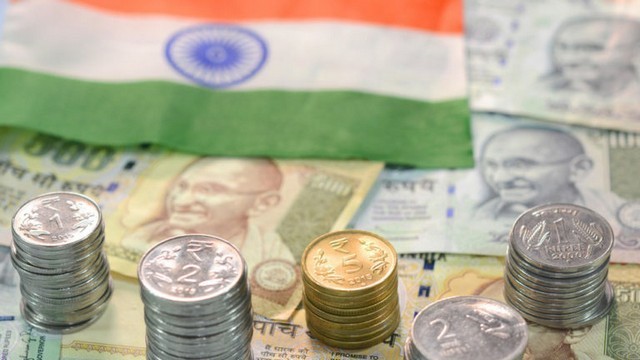
14 Jan 2019 – In an effort to circumvent US-imposed sanctions, India and Iran have reportedly ditched the US dollar and are trading oil in rupees. The reason becomes clear after considering the dynamics at play in the region.

In mid-February last year, Iranian President Hassan Rouhani visited India, and the two countries signed nine agreements signalling a strengthening of ties. Indian Prime Minister Narendra Modi appeared to celebrate the growing relationship, stating that it was “a matter of great pleasure” for India that an Iranian president came to India “after a gap of 10 years.”

Fast-forward a few months later, and then-UN ambassador Nikki Haley was bluntly telling India that they should rethink their relationship with Tehran.

Donald Trump’s decision to rip up the Joint Comprehensive Plan of Action (JCPOA) last year, also known as the Iranian nuclear accord, was a particularly significant blow to Iran-India relations. At the time the JCPOA was formulated, Indian officials believed the deal to be the “best deal available.” After the JCPOA’s implementation in 2016, exports of Iranian oil to India increased by more than 110 percent.

Maybe the issue isn’t always that Washington wants to contain its rivals in the Middle East and Asia, but perhaps there is a chance that it also wants to keep a lid on its so-called allies as well. Right now, India is the third largest oil consumer in the world, and is expected to become the largest by the year 2040. As its domestic reserves are not meeting the needs of its rapidly expanding economy, India has been importing 80 percent of its oil supply from overseas, including and especially Iran.

Prior to Washington’s Iran-sanctions regime, Iran was India’s third largest supplier of crude oil (it is now about sixth place). It is no surprise therefore, that India’s Foreign Ministry spokesperson responded by saying that Haley had

“her views, and our views on Iran are very clear.”

He also warned that India would

“take all necessary steps, including engagement with relevant stakeholders to ensure our energy security.”

It does seem like the days of foreign states being bullied into adopting a dangerous foreign policy are over. If Washington has any doubt about this, they need only turn to this exclusive Reuters report which revealed that India had begun paying Iran for its oil in rupees, according to a senior bank official, under the guise of a six-month waiver which was given to seven other countries (including China). According to the report, in a previous round of US-imposed sanctions, India settled approximately half of oil payments in rupees and the remainder in euros. However, this time around, all payments are to be made in rupees.

Furthermore, the agreement, worth $1.5 billion, reportedly hands Iran a tax break of $637 million. For its part, Iran will use its rupee supply to fund its imports of pharmaceuticals and other items from India, invest in Indian businesses and pay for Iranian missions and students in India.

Prior to this arrangement, US-led sanctions continued to decimate Iran’s ability to trade freely with its partner. Oilprice explains that in December, Indian oil imports from Iran plunged by 41 percent to just over 300,000 barrels per day (bpd). This is effectively the amount allowed under Washington’s waiver.

Insurance companies are becoming increasingly unwilling to engage in transactions involving Iran, due to the risk that sanctions attract. However, according to a separate Reuters report, Russian and Chinese shipping companies had been pitching to facilitate India-Iran trade.

It seems to me that if enough countries continue to pull together to override Washington’s sanctions, they will at some point be rendered completely ineffective. It also seems as though Washington is pushing these countries to work more closely together, whereas these countries may have been freer to explore their differences and their disagreements had they been left to their own devices.

The blunt truth is that India and Iran have too much in common for India to submit fully to Washington’s strategy of global bullying. There is also a lot of things that Iran can give India which the United States cannot, and not just free shipping, insurance and extended credit. As the Diplomat explains, India and Iran both share an interest in combating Sunni-backed extremism, especially in Pakistan and Afghanistan. They both have an interest in doing what they can to outmanoeuvre China in certain aspects.

In February last year, the two nations came to an agreement involving a lease between Iran’s Port and Maritime Organization and India Ports Global Limited, which allowed India to run part of Chabahar Port for 18 months.

The two countries released a joint statement at the time, describing the port as a “golden gateway” that will help the two countries in reaching out to Afghanistan and Central Asia. This gateway is so golden, it seems, that India has already committed over $500 million to the project, with indications that it could become a multi-billion dollar project.

The idea of the project is to improve “energy, security and regional connectivity” to reach Afghanistan. In reality, it allows India to ship supplies to Afghanistan while bypassing Pakistan. Chabahar Port in southeastern Iran is approximately 90km (56 miles) west of the Pakistani port of Gwadar, the epicentre of an enormous Chinese infrastructure program in Pakistan. This is the same location where it was rumored that China was establishing a military base.

In other words, if India is forced to join the US effort to completely isolate Iran on the world stage, it may risk losing out on a significant chunk of the regional fruits to Pakistan and China. This is not conjecture; Iran has already reached out to Pakistan and China to participate in the Chabahar project. As the all-knowing Atlantic Council summarised, if India bows to the US, it risks losing Iran to China.

India also needs Iran’s ports to complete the so-called International North-South Transport Corridor (INSTC), which would ideally connect India to the Persian Gulf, Central Asia, Russia and even Europe, and would allegedly increase India’s $1 billion trade with Central Asia to a whopping $170 billion.

China already has a direct connection to Central Asia, placing India at a disadvantage by default, and its trade with Central Asian nations is already at $30 billion; well above India’s. In 2000, India, Iran and Russia signed an agreement for the purpose of developing the North-South transport corridor.

India, Iran and Afghanistan held a tripartite meeting in September last year in which they discussed the Afghanistan peace process, cooperation against terrorism, as well as Chabahar Port. It is noticeable, to say the least, that Pakistan and China were not involved in this discussion. Just last week, Iran and India held a similar meeting.

India is also currently developing two gas fields, Farzad-B in Tehran and the South Pars field located between Iran and Qatar (which is the largest gas field in the world). Trump may soon begin to realise how difficult it is to isolate these states from one another after the simple examination of a world atlas.

Even the effect of US sanctions on ordinary people that the United States consider allies appear to not have been taken into account. Most reports allege that the absence of Iranian oil makes oil market prices shoot through the roof, affecting common Indian residents who had been enjoying cheaper oil prices under the JCPOA. Does the US want the people of India to hate Iran, or to hate the enforcer of these sanctions?

Reportedly, a “preferential trade”agreement between Iran and India is also in the works which will come into force in the not-so-distant future. The two nations have also already signed an agreement worth $2 billion on cooperation in the railway sector. At the start of this year, Iran also announced it would invest Rs 1,500 crore to expand a refinery run by Chennai Petroleum Corp, in a move that sees Iran attempting to counter US-imposed sanctions and cement its position in India.

You won’t see this in the mainstream media, but India also quietly allowed an Iranian bank to open a branch in Mumbai just last week.

Despite undue pressure from Washington, at the end of the day India still has indicated it will abide by its sanctions and the waiver that it has been given (as far as possible).

It is therefore unclear what the US is hoping to achieve through this strategy. Yes, sanctions greatly weaken Iran’s economy and threaten the collapse of its currency, but they also push these adversarial states to consider agreements which circumvent the use of the US dollar, even with Washington’s more traditional allies. If enough countries drop the use of the dollar in bilateral trade, the dollar will no longer have the international use it once had. As of right now, Venezuela, Qatar, China, Russia, India and Iran – just to name a few – are all nations who have considered the use of alternative currencies to counter Washington’s sanctions regime.

If the ultimate aim of the US is to weaken the dollar’s status on the global markets, then it can be my guest.

Darius Shahtahmasebi is a New Zealand-based legal and political analyst, currently specializing in immigration, refugee and humanitarian law.

21 January 2019

Source: transcend.org
A New Spectre Is Haunting Europe

By Roberto Savio

After Teresa May’s defeat in the British parliament it is clear that a new spectre is haunting Europe. It is no longer the spectre of communism, which opens Marx’s Manifesto of 1848; it is the spectre of the failure of neoliberal globalisation, which reigned uncontested following the fall of the Berlin Wall, until the financial crisis of 2009.

17 Jan 2019 – In 2008, governments spent the astounding amount of 62 trillion dollars to save the financial system, and close to that amount in 2009 (see Britannica Book of the Year, 2017), According to a US Federal Reserve study, it cost each American 70,000 dollars.

Belatedly, economic institutions left macroeconomics, which were until then used to assess GNP growth and started to look at how growth was being redistributed.

And the IMF and the World Bank, (also because of the prodding of civil society studies, foremost those of Oxfam), concluded that there was a huge problem in the rise of inequality.

Of course, if the 117 trillion dollars had gone to people, that money would have led to a jump in spending, an increase in manufacturing, services, schools, hospitals, research, etc. But people were totally absent from the priorities of the system.

Under the Matteo Renzi government in Italy, 20 billion dollars went to save four banks, while in the same year total subsidies for Italian youth could be calculated at best at 1 billion dollars.

Then after the crisis of 2008-9, all went haywire. In every country of Europe (except for Spain, which has now caught up), a populist right-wing party came to life, and the traditional political system started to crumble.

The new parties appealed to the losers of globalisation: workers whose factories has been delocalised for the cheapest possible place to maximise gains; small shop owners displaced by the arrival of supermarkets; those made redundant by new technologies, by Internet like secretaries; retired people whose pensions were frozen to reduce the national deficit (in the last 20 years public debts have doubled worldwide).

A new divide built up, between those who rode the wave of globalisation and those who were its victim.

Obviously, the political system felt that it was accountable to the winners, and budgets were stacked in their favour. Priority went to towns, where over 63% of citizens now live.

The losers were more concentrated in the rural world, where few investments were made in infrastructure. On the contrary, in the name of efficiency, many services were cut, railway stations closed, along with hospitals, schools and banks.

In order to reach work, people often had to go several kilometres from home by car. A modest increase in the cost of petrol fuelled the rebellion of the ‘yellow jackets’. It did not help that out of the 40 billion that the French government obtains from taxes on energy, less than one-quarter went back into transportation infrastructure and services.

Universities, hospital and other services in towns suffered much less, were points of excellence, public transportation was available, and a new divide arose between those in towns and those from the rural world, those with studies and education and those who were far away and atomised in the interior.

A new divide had come about, and people voted out the traditional party system, which ignored them. This device brought Trump to power and led to the victory of Brexit in the United Kingdom.

This divide is wiping the traditional parties, and bringing back nationalism, xenophobia and populism. It is not bringing back the ideological right wing, but a gut right and left with little ideology …

All this should be obvious.

Now, for the first time, the system is turning its attention to the losers, but is too late. The left is paying the dramatic illusion of Tony Blair who, considering globalisation inevitable, decided that it would be possible to ride its wave. So, the left lost any contact with the victims, and kept the fight on human rights as its main identity and difference with the right.

That was good for towns, where gays and LGBTs, minorities (and majorities like women), could congregate, but it was hardly a priority for those of the interior.

Meanwhile, finance continued to grow, become a world by itself, no longer linked to .industry and service, but to financial speculation. Politics became subservient.

Governments lowered taxes on the who stashed the unbelievable amount of 62 trillion dollars in tax havens, according to the Tax Justice Network. The estimated yearly flow is 600 billion dollars, double the cost of the Millennium Goals of the United Nations.

And the Panama Papers, which revealed just a small number of the owners of accounts, identified at least 140 important politicians among them from 64 countries: the prime minister of Iceland (who was obliged to resign), Mauricio Macri of Argentina, President Petro Poroshenko of Ukraine, a bunch of close associates of Vladimir Putin, David Cameron’s father, the prime minister of Georgia, and so on.

No wonder that politicians have lost their shine, and are now considered corrupt, or useless, or both.

In the current economic order, Emmanuel Macron acted rationally by lowering the tax on the rich people to attract investments. But he totally ignored that for those French who have difficulty in reaching the end of the month, this was proof that they were being totally ignored. And sociologists agree that the real ‘Spring’ of the yellow jackets was their search for dignity.

Ironically, British parties, and especially the Conservative and Labour parties, should be thankful to the debate on Brexit. It is clear that the United Kingdom is committing suicide, in economic and strategic terms. With a ‘hard’ Brexit, without any agreement with the European Union, it could lose at least seven percent of its GDP.

But the divide which makes Brexit win with all towns, the City, the economic and financial sector, academics, intellectuals and all institutions has confirmed the fear of those of the interior. Belonging to the European Union was profitable for the elites, and not for them. Scotland voted against, because it has now a different agenda from England. And this divide is not going to change with a new referendum.

That the cradle of parliamentarian democracy, Westminster, is not able to reach a compromise is telling proof that the debate is not political but a clash of mythologies, like the idea of returning to the former British Empire. It is like Donald Trump’s idea of reopening coal mines.

We look at a mythical past as our future. This is what led to the explosion of Vox in Spain, by those who believe that under Franco life was easier and cheaper, that there was no corruption, woman stayed in their place, and Spain was a united country, without separatists in Catalonia and the Basque Country.

It is what Jair Bolsonari in Brazil is exploiting, presenting the military dictatorship at a time when violence was limited. Our future is the past …

So this divide – once in one way or another the United Kingdom solves its Brexit dilemma – will pass into normal politics, and will bring about a dramatic decline, like elsewhere, of the two main traditional parties.

Unless, meanwhile, populist, xenophobe and nationalist parties take over government and show that they do not have the answer to the problems they have rightly identified.

In that sense, the Italian experience could be of significant help … look how the government has performed with the European Union.

Roberto Savio is the founder and president emeritus of Inter Press Service-IPS, publisher of Other News, and a member of the World Social Forum International Committee.

21 January 2019

Source: transcend.org
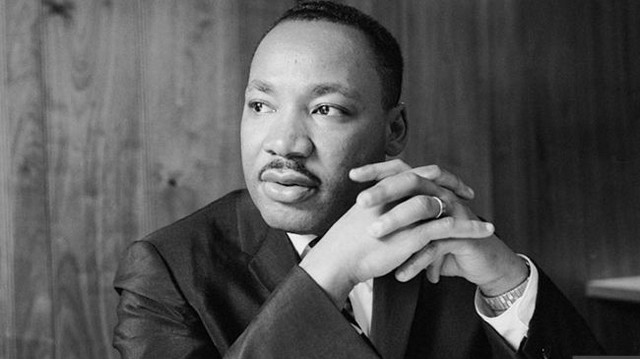
Martin Luther King Day and the Unspeakable

By Edward Curtin

As Martin Luther King’s birthday is celebrated with a national holiday, his death day disappears down the memory hole. Across the country – in response to the King Holiday and Service Act passed by Congress and signed by Bill Clinton in 1994 – people will be encouraged to make the day one of service.Such service does not include King’s commitment to protest a decadent system of racial and economic injustice or non-violently resist the U.S. warfare state that he called “the greatest purveyor of violence on earth.”

Government sponsored service is cultural neo-liberalism at its finest, the promotion of individualism at the expense of a mass movement for radical institutional change.

“Nothing in all the world is more dangerous,” warned Dr. King,“than sincere ignorance and conscientious stupidity.”

How true those words. For the government that honors Dr. King with a national holiday killed him. This is the suppressed truth behind the highly promoted day of service. It is what you are not supposed to know. It is what Thomas Merton, as quoted by James W. Douglass, called The Unspeakable: “It is the void that contradicts everything that is spoken even before the words are said; the void that gets into the language of public and officials declarations at the very moment when they are pronounced, and makes them ring dead with the hollowness of the abyss. It is the void out of which Eichmann drew the punctilious exactitude of his service.”

The word service is a loaded word; it has become a smiley face and vogue word over the past 35 years. Its use for MLK Day is clear: individuals are encouraged to volunteer for activities such as tutoring children, painting senior centers, or delivering meals to the elderly, activities that are good in themselves but far less good when used to conceal an American prophet’s radical message. After all, Martin Luther King’s work was not volunteering at the local food pantry with Oprah Winfrey cheering him on.

The Assassination

King was not murdered because he had spent his heroic life promoting individual volunteerism. To understand his life and death – to celebrate the man – “it is essential to realize although he is popularly depicted and perceived as a civil rights leader, he was much more than that. A non-violent revolutionary, he personified the most powerful force for a long overdue social, political, and economic reconstruction of the nation.” Those are the words of William Pepper, the King family lawyer, from his comprehensive and definitive study of the King assassination, The Plot to Kill King, a book that should be read by anyone concerned with truth and justice.

Revolutionaries are, of course, anathema to the power elites who, with all their might, resist such rebels’ efforts to transform society. If they can’t buy them off, they knock them off. Fifty one years after King’s assassination, the causes he fought for – civil rights, the end to U.S. wars of aggression, and economic justice for all – remain not only unfulfilled, but have worsened in so many respects. And King’s message has been enervated by the sly trick of giving him a national holiday and then urging Americans to make it “a day of service.” The vast majority of those who innocently participate in these activities have no idea who killed King, or why. If they did, they might pause in their tracks, and combine their “service” activities with a teach-in on the truth of his assassination.

Because MLK repeatedly called the United States the “greatest purveyor of violence on earth,” he was universally condemned by the mass media and government that later – once he was long and safely dead and no longer a threat – praised him to the heavens. This has continued to the present day of historical amnesia.

Educating people about the fact that U.S. government forces conspired to kill Dr. King, and why, and why it matters today, is the greatest service we can render to his memory.

William Pepper’s decades-long investigation not only refutes the flimsy case against the alleged assassin James Earl Ray, but definitively proves that King was killed by a government conspiracy led by J. Edgar Hoover, the FBI, Army Intelligence, and the Memphis Police, assisted by southern Mafia figures.

The Trial

This shocking truth is accentuated when one is reminded (or told for the first time) that in 1999 a Memphis jury, after a thirty day civil trial with over seventy witnesses, found the U.S. government guilty in the killing of MLK. The King family had brought the suit and Pepper represented them. They were grateful that the truth was confirmed, but saddened by the way the findings were buried by the media in cahoots with the government.

Pepper not only demolishes the government’s self-serving case with a plethora of evidence, but shows how the mainstream media, academia, and government flacks have spent years covering up the truth of MLK’s murder through lies and disinformation. Another way they have accomplished this is by convincing a gullible public that “service” is a substitute for truth.

But service without truth is a disservice to the life, legacy, and radical witness of this great American hero. It is propaganda aimed at convincing decent people that they are serving the essence of MLK’s message while they are obeying their masters, the very government that murdered him.

It is time to rebel against the mind manipulation served by the MLK Day of Service. Let us offer service, but let us also learn and speak the truth.

“He who lives with untruth lives in spiritual slavery,” King told us, “Freedom is still the bonus we receive for knowing the truth.”

Edward Curtin is a writer whose work has appeared widely.

19 January 2019

Source: countercurrents.org

The Malign Incompetence of the British Ruling Class

By Pankaj Mishra

With Brexit, the chumocrats who drew borders from India to Ireland are getting a taste of their own medicine.

Describing Britain’s calamitous exit from its Indian empire in 1947, the novelist Paul Scott wrote that in India the British “came to the end of themselves as they were” — that is, to the end of their exalted idea about themselves. Scott was among those shocked by how hastily and ruthlessly the British, who had ruled India for more than a century, condemned it to fragmentation and anarchy; how Louis Mountbatten, accurately described by the right-wing historian Andrew Roberts as a “mendacious, intellectually limited hustler,” came to preside, as the last British viceroy of India, over the destiny of some 400 million people.

Britain’s rupture with the European Union is proving to be another act of moral dereliction by the country’s rulers. The Brexiteers, pursuing a fantasy of imperial-era strength and self-sufficiency, have repeatedly revealed their hubris, mulishness and ineptitude over the past two years. Though originally a “Remainer,” Prime Minister Theresa May has matched their arrogant obduracy, imposing a patently unworkable timetable of two years on Brexit and laying down red lines that undermined negotiations with Brussels and doomed her deal to resoundingly bipartisan rejection this week in Parliament.

Such a pattern of egotistic and destructive behavior by the British elite flabbergasts many people today. But it was already manifest seven decades ago during Britain’s rash exit from India.

Mountbatten, derided as “Master of Disaster” in British naval circles, was a representative member of a small group of upper- and middle-class British men from which the imperial masters of Asia and Africa were recruited. Abysmally equipped for their immense responsibilities, they were nevertheless allowed by Britain’s brute imperial power to blunder through the world — a “world of whose richness and subtlety,” as E.M. Forster wrote in “Notes on the English Character,” they could “have no conception.”

Forster blamed Britain’s political fiascos on its privately educated men, callow beneficiaries of the country’s elitist public school system. These eternal schoolboys whose “weight is out of all proportion” to their numbers are certainly overrepresented among Tories. They have today plunged Britain into its worst crisis, exposing its incestuous and self-serving ruling class like never before.

From David Cameron, who recklessly gambled his country’s future on a referendum in order to isolate some whingers in his Conservative Party, to the opportunistic Boris Johnson, who jumped on the Brexit bandwagon to secure the prime ministerial chair once warmed by his role model Winston Churchill, and the top-hatted, theatrically retro Jacob Rees-Mogg, whose fund management company has set up an office within the European Union even as he vehemently scorns it, the British political class has offered to the world an astounding spectacle of mendacious, intellectually limited hustlers.

Even a columnist for The Economist, an organ of the British elite, now professes dismay over “Oxford chums” who coast through life on “bluff rather than expertise.” “Britain,” the magazine belatedly lamented last month, “is governed by a self-involved clique that rewards group membership above competence and self-confidence above expertise.” In Brexit, the British “chumocracy,” the column declared, “has finally met its Waterloo.”

It is actually more accurate, for those invoking British history, to say that partition — the British Empire’s ruinous exit strategy — has come home. In a grotesque irony, borders imposed in 1921 on Ireland, England’s first colony, have proved to be the biggest stumbling block for the English Brexiteers chasing imperial virility. Moreover, Britain itself faces the prospect of partition if Brexit, a primarily English demand, is achieved and Scottish nationalists renew their call for independence.

It is a measure of English Brexiteers’ political acumen that they were initially oblivious to the volatile Irish question and contemptuous of the Scottish one. Ireland was cynically partitioned to ensure that Protestant settlers outnumber native Catholics in one part of the country. The division provoked decades of violence and consumed thousands of lives. It was partly healed in 1998, when a peace agreement removed the need for security checks along the British-imposed partition line.

The re-imposition of a customs and immigration regime along Britain’s only land border with the European Union was always likely to be resisted with violence. But Brexiteers, awakening late to this ominous possibility, have tried to deny it. A leaked recording revealed Mr. Johnson scorning concerns about the border as “pure millennium bug stuff.”

Politicians and journalists in Ireland are understandably aghast over the aggressive ignorance of English Brexiteers. Businesspeople everywhere are outraged by their cavalier disregard for the economic consequences of new borders. But none of this would surprise anyone who knows of the unconscionable breeziness with which the British ruling class first drew lines through Asia and Africa and then doomed the people living across them to endless suffering.

The malign incompetence of the Brexiteers was precisely prefigured during Britain’s exit from India in 1947, most strikingly in the lack of orderly preparation for it. The British government had announced that India would have independence by June 1948. In the first week of June 1947, however, Mountbatten suddenly proclaimed that the transfer of power would happen on Aug. 15, 1947 — a “ludicrously early date,” as he himself blurted out. In July, a British lawyer named Cyril Radcliffe was entrusted with the task of drawing new boundaries of a country he had never previously visited.

Given only around five weeks to invent the political geography of an India flanked by an eastern and a western wing called Pakistan, Radcliffe failed to visit any villages, communities, rivers or forests along the border he planned to demarcate. Dividing agricultural hinterlands from port cities, and abruptly reducing Hindus, Muslims and Sikhs on either side of the new border to a religious minority, Radcliffe delivered a plan for partition that effectively sentenced millions to death or desolation while bringing him the highest-ranked knighthood.

Up to one million people died, countless women were abducted and raped, and the world’s largest refugee population was created during the population transfers across Radcliffe’s border — an extensive carnage that exceeds all apocalyptic scenarios of Brexit.

In retrospect, Mountbatten had even less reason than Mrs. May to speed up the exit clock — and create insoluble and eternal problems. Just a few months after the botched partition, for instance, India and Pakistan were fighting a war over the disputed territory of Kashmir. None of the concerned parties were pushing for a hasty British exit. As the historian Alex von Tunzelmann points out, “the rush was Mountbatten’s, and his alone.”

Mountbatten was actually less pigheaded than Winston Churchill, whose invocation stiffens the spines of many Brexiteers today. Churchill, a fanatical imperialist, worked harder than any British politician to thwart Indian independence and, as prime minister from 1940 to 1945, did much to compromise it. Seized by a racist fantasy about superior Anglo-Americans, he refused to help Indians cope with famine in 1943 on the grounds that they “breed like rabbits.”

Needless to say, such ravings issued from an ignorance about India as intractable as that of the Brexiteers about Ireland. Churchill’s own secretary of state for India claimed that his boss knew “as much of the Indian problem as George III did of the American colonies.” Churchill displayed in his long career a similarly imperial insouciance toward Ireland, sending countless young Irishmen to their deaths in a catastrophic military fiasco at Gallipoli, Turkey, during World War I and unleashing brutal paramilitaries against Irish nationalists in 1920.

The many crimes of the empire’s bumptious adventurers were enabled by Britain’s great geopolitical power and then obscured by its cultural prestige. This is why images cherished by the British elite of itself as valiant, wise and benevolent could survive, until recently, much damning historical evidence about these masters of disaster from Cyprus to Malaysia, Palestine to South Africa. In recent years, such privately educated and smooth-tongued men as Niall Ferguson and Tony Blair could even present the British as saviors of suffering and benighted humanity, urging American neoconservatives to take up the white man’s burden globally.

Humiliations in neo-imperialist ventures abroad, followed by the rolling calamity of Brexit at home, have cruelly exposed the bluff of what Hannah Arendt called the “quixotic fools of imperialism.” As partition comes home, threatening bloodshed in Ireland and secession in Scotland, and an unimaginable chaos of no-deal Brexit looms, ordinary British people stand to suffer from the untreatable exit wounds once inflicted by Britain’s bumbling chumocrats on millions of Asians and Africans. More ugly historical ironies may yet waylay Britain on its treacherous road to Brexit. But it is safe to say that a long-cosseted British ruling class has finally come to the end of itself as it was.

Pankaj Mishra is the author, most recently, of “Age of Anger: A History of the Present.”

17 January 2019

Source: nytimes.com

Human Beings are Destroying Life on Earth but Deluding Ourselves that We are Not

By Robert J. Burrowes

It is easy to identify the ongoing and endless violence being inflicted on life on Earth. This ranges from the vast multiplicity of assaults inflicted on our children and the biosphere to the endless wars and other military violence as well as the grotesque exploitation of many peoples living in Africa, Asia and Central/South America. But for a (very incomplete) list of 40 points see ‘Reflections on 2018, Forecasting 2019’.

However, despite the obvious fact that it is human beings who are inflicting all of this violence, it is virtually impossible to get people to pay attention to this simple and incontrovertible fact and to ask why, precisely, are human beings behaving in such violent and destructive ways? And can we effectively address this cause?

Of course, one part of this problem is the existence of many competing ideas about what causes violence. For example, some ideologies attribute the cause to a particular structural manifestation of violence, such as patriarchy (which generates a gendered system of violence and exploitation) or capitalism (which generates a class system of violence and exploitation). However, none of these ideologies explains why humans participate in structures of violence and exploitation in the first place. Surely a person who was not violent and exploitative to begin with would reject such violent and exploitative structures out of hand and work to create nonviolent and egalitarian structures instead.

But most people really just accept the elite-promulgated delusion that humans are innately dysfunctional and violent and this must be contained and controlled by socialization processes, laws, legal systems, police forces and prisons or, in the international arena, by such measures as economic sanctions and military violence. It is a rare individual who perceives the blatant dysfunctionality and violence of socialization, laws, legal systems, police forces, prisons, economic sanctions and military violence, and how these institutions and their violence serve elite interests.

Hence, humans are trapped in a cycle of attempting to address the vast range of manifestations of violent human behaviour – the wars, the climate catastrophe, destruction of the environment, the economic exploitation of vast sectors of the human population (women, indigenous peoples, working peoples…), the military dictatorships and occupations – without knowing what, fundamentally, causes dysfunctional and violent human behaviours and draws many people to participate in (and benefit from) violence in whatever form it takes.

Well I, for one, find it boring to see the same manifestations of violence repeated endlessly because we do not understand or address the fundamental cause (and so even well-meaning efforts to address it in a variety of contexts are doomed to fail). How about you?

Moreover, I find it boring to listen to (or read about) people endlessly deluding themselves about the violence; that is, deluding themselves that it isn’t happening, ‘it was always like that’, ‘it isn’t as bad as it seems’, ‘nothing can be done’, ‘there is another explanation’, that I am ‘doing enough already’, and so on.

To illustrate the above let me write some more frequent examples of people deluding themselves about the cause. You may have heard delusions like these expressed yourself; you may know some of the many others.

1. ‘The child deserved the punishment.’

2. ‘She asked for it.’

3. Violence is innate: it is ‘in our nature’.

4. ‘War is inevitable.’

5. The people in Africa/Asia/Central/South America ‘have always been poor’.

6. ‘The weather hasn’t changed; it was like that when I was a child.’

7. ‘We can’t control Mother Nature.’

8. ‘Nature is abundant.’

Of course, the most common delusional state is the one in which most people are trapped: they are just not paying significant attention to critical issues and have no knowledge (and informed opinion) about them but allow themselves to be distracted from reality by the various elite channels used for doing so, such as the corporate media.

So why do most people delude themselves rather than carefully observe reality, seek out and analyze the evidence in relation to it, and then behave appropriately and powerfully in response?

Because they are (unconsciously) terrified.

‘Is that all?’ you might say. ‘Surely the explanation for dysfunctional (and violent) human behaviour is more complex than that! Besides, when people I observe doing the sorts of dysfunctional and violent behaviours you mention above, they don’t look frightened, let alone terrified.’

So let me explain why the explanation above – that most human beings live in delusion, behave dysfunctionally and violently, fail to observe and analyze reality and then behave powerfully in response to it, because they are terrified – is the complete explanation and why people who are utterly terrified don’t ‘look frightened’.

At the moment of birth, the human individual has a genetically-embedded potential to seek out and powerfully pursue their own unique destiny by progressively developing a complex set of capacities to observe and listen, to think and feel, to analyze and evaluate, to plan and strategize, and to behave with awareness and power in response to their own astute insight into reality and the guidance provided by their conscience.

However, rather than nurture this potential so that the child grows up deeply in touch with their conscience, sensing capacities, thoughts, feelings and other faculties necessary to seek out and powerfully travel their own unique path, the significant adults in the child’s life immediately start to ‘socialize’ (that is, terrorize) the child into conforming with culturally and socially-acceptable norms of thought and behaviour on the basis that one human is more-or-less identical with another (give or take some minor variations among races, languages….).

The idea that each human mind might be unique in the way that each body is unique (while conforming to a general pattern in relation to shape, height and other physical characteristics) never even occurs to anyone. The idea that their child could have the potential to be as creative, powerful and unique as Leonardo Da Vinci, Mary Wollstonecraft, Sojourner Truth, Albert Einstein, Mohandas K. Gandhi or Rosalind Franklin never enters the mind of the typical parent.

Instead, we parent and teach children to conform to an endless sequence of beliefs and behavioural norms on the basis that ‘one size fits all’ because we are literally (but unconsciously) terrified that our child might be ‘different’ or, horror of horrors, unique! And we reward most highly those individuals who do conform and can demonstrate their conformity by passing, often literally, the endless series of socially-approved tests, formal and otherwise, that we set. See, for example, ‘Do We Want School or Education?’

The last thing we want is an individual who fearlessly thinks, feels and behaves as they personally decide is best for themself, perhaps even because their conscience dictates. But when they do act out of their own volition, we punish them to ensure that behaviour that is generated by their unique ‘Self’ is, if possible, terrorized out of them.

Of course, there are ‘good reasons’ for doing this. If we want obedient students, soldiers, employees and citizens, it is the perfect formula. Terrorize the child when they are young and obedience to a set of parentally/socially-approved beliefs and behaviours is virtually guaranteed.

Equally importantly, by starting this onslaught against the child from the moment of birth, they will grow up utterly unaware of the fact that they were terrorized out of becoming their ‘True Self’ and seeking their own unique destiny so that they could be the slave of their society, performing some function, menial or even ‘professional’, after they have submitted to sufficient training. The slave who never questions their role is truly a slave. And that is what we want!

Equally importantly, the person who has fearfully surrendered their Self at the alter of physical survival cannot observe or listen to the fear expressed by anyone else, including their own children. So they simply ‘fail to notice’ it.

So what, exactly, do we do so that each human being’s individual Self is crushed and they are rendered too terrified, self-hating and powerless to pursue their own life path, to honestly observe and listen to their own children and to mindfully consider the state of our world and act powerfully in response?

We inflict enormous, ongoing violence on the child, starting immediately after their birth.

‘How?’ you might ask. ‘I don’t scream at or hit my child. And I never punish them.’

Well, if that is true, it is a good start.

But, unfortunately, it is far more complex than these obvious types of violence and, strange though it may seem, it is not just the ‘visible’ violence (such as hitting, screaming at and sexually abusing) that we normally label ‘violence’ that causes the main damage, although this is extremely damaging. The largest component of damage arises from the ‘invisible’ and ‘utterly invisible’ violence that we adults unconsciously inflict on children during the ordinary course of the day. Tragically, the bulk of this violence occurs in the family home and at school. See ‘Why Violence?’ and ‘Fearless Psychology and Fearful Psychology: Principles and Practice’.

So what is ‘invisible’ violence? It is the ‘little things’ we do every day, partly because we are just ‘too busy’. For example, when we do not allow time to listen to, and value, a child’s thoughts and feelings, the child learns to not listen to themSelf thus destroying their internal communication system. When we do not let a child say what they want (or ignore them when they do), the child develops communication and behavioral dysfunctionalities as they keep trying to meet their own needs (which, as a basic survival strategy, they are genetically programmed to do).

When we blame, condemn, insult, mock, embarrass, shame, humiliate, taunt, goad, guilt-trip, deceive, lie to, bribe, blackmail, moralize with and/or judge a child, we both undermine their sense of Self-worth and teach them to blame, condemn, insult, mock, embarrass, shame, humiliate, taunt, goad, guilt-trip, deceive, lie, bribe, blackmail, moralize and/or judge.

The fundamental outcome of being bombarded throughout their childhood by this ‘invisible’ violence is that the child is utterly overwhelmed by feelings of fear, pain, anger and sadness (among many others). However, mothers, fathers, teachers and other adults also actively interfere with the expression of these feelings and the behavioral responses that are naturally generated by them and it is this ‘utterly invisible’ violence that explains why the dysfunctional behavioral outcomes actually occur.

For example, by ignoring a child when they express their feelings, by comforting, reassuring or distracting a child when they express their feelings, by laughing at or ridiculing their feelings, by terrorizing a child into not expressing their feelings (e.g. by screaming at them when they cry or get angry), and/or by violently controlling a behavior that is generated by their feelings (e.g. by hitting them, restraining them or locking them into a room), the child has no choice but to unconsciously suppress their awareness of these feelings.

However, once a child has been terrorized into suppressing their awareness of their feelings (rather than being allowed to have their feelings and to act on them) the child has also unconsciously suppressed their awareness of the reality that caused these feelings. This has many outcomes that are disastrous for the individual, for society and for nature because the individual will now easily suppress their awareness of the feelings that would tell them how to act most functionally in any given circumstance and they will progressively acquire a phenomenal variety of dysfunctional behaviors, including some that are violent towards themself, others and/or the Earth.

From the above, it should also now be apparent that punishment should never be used. ‘Punishment’, of course, is one of the words we use to obscure our awareness of the fact that we are using violence. Violence, even when we label it ‘punishment’, scares children and adults alike and cannot elicit a functional behavioural response. See ‘Punishment is Violent and Counterproductive’.

If someone behaves dysfunctionally, they need to be listened to, deeply, so that they can start to become consciously aware of the feelings (which will always include fear and, often, terror) that drove the dysfunctional behaviour in the first place. They then need to feel and express these feelings (including any anger) in a safe way. Only then will behavioural change in the direction of functionality be possible. See ‘Nisteling: The Art of Deep Listening’.

‘But these adult behaviors you have described don’t seem that bad. Can the outcome be as disastrous as you claim?’ you might ask. The problem is that there are hundreds of these ‘ordinary’, everyday behaviors that destroy the Selfhood of the child. It is ‘death by a thousand cuts’ and most children simply do not survive as Self-aware individuals. And why do we do this? As noted above, we do it so that each child will fit into our model of ‘the perfect citizen’: that is, obedient and hardworking student, reliable and pliant employee/soldier, and submissive law-abiding citizen.

Moreover, once we destroy the Selfhood of a child, it has many flow-on effects. For example, once you terrorize a child into accepting certain information about themself, other people or the state of the world, the child becomes unconsciously fearful of dealing with new information, especially if this information is contradictory to what they have been terrorized into believing. As a result, the child will unconsciously dismiss new information out of hand.

In short, the child has been terrorized in such a way that they are no longer capable of learning (or their learning capacity is seriously diminished by excluding any information that is not a simple extension of what they already ‘know’).

Fundamentally, the child is now incapable of carefully observing reality, analyzing the evidence in relation to that reality and responding strategically so that conflicts and problems are moved closer to resolution. That is, the child is now unconsciously trapped, believing and behaving precisely within the spectrum of socially-approved beliefs and behaviours that society terrorized them into accepting, no matter how dysfunctional and violent these beliefs and behaviours might be.

In industrialized countries, for example, this will invariably include overconsuming, which is standard (but highly dysfunctional and violent) behaviour, particularly given the current state of the biosphere. See ‘Love Denied: The Psychology of Materialism, Violence and War’.

Responding Powerfully to Reality

So how do we nurture children to become the unique and powerful individual that is their birthright? Someone who is able to clearly identify what they need and what outcomes work for them, and who does not learn to progressively compromise themselves until there is nothing left of their unique identity. Someone, in short, who is so powerless, that they are incapable of considering themself, others and the state of the biosphere. Someone who lives in delusion.

Well, if you want a powerful child, you can read what is required in ‘My Promise to Children’.

If, after reading this ‘Promise’, you feel unable to nurture children properly, you might consider doing the healing necessary so that you can do so. See ‘Putting Feelings First’.

If you already feel free of the delusions that afflict most people and able to respond powerfully to the state of our world, then consider joining those participating in the fifteen-year strategy outlined in ‘The Flame Tree Project to Save Life on Earth’ and signing the online pledge of ‘The People’s Charter to Create a Nonviolent World’.

If you are powerful enough to campaign for change against one or more of the ongoing manifestations of violence in the world, consider doing so strategically so that you have maximum impact. See Nonviolent Campaign Strategy.

And if none of the options I have offered immediately above appeals, ask yourself if you are serious about helping to end the violence or just deluding yourself like all of those people I described above.

17 January 2019

Robert J. Burrowes has a lifetime commitment to understanding and ending human violence.

The Moral Travesty of Israel Seeking Arab, Iranian Money for its Alleged Nakba

By Dr Ramzy Baroud

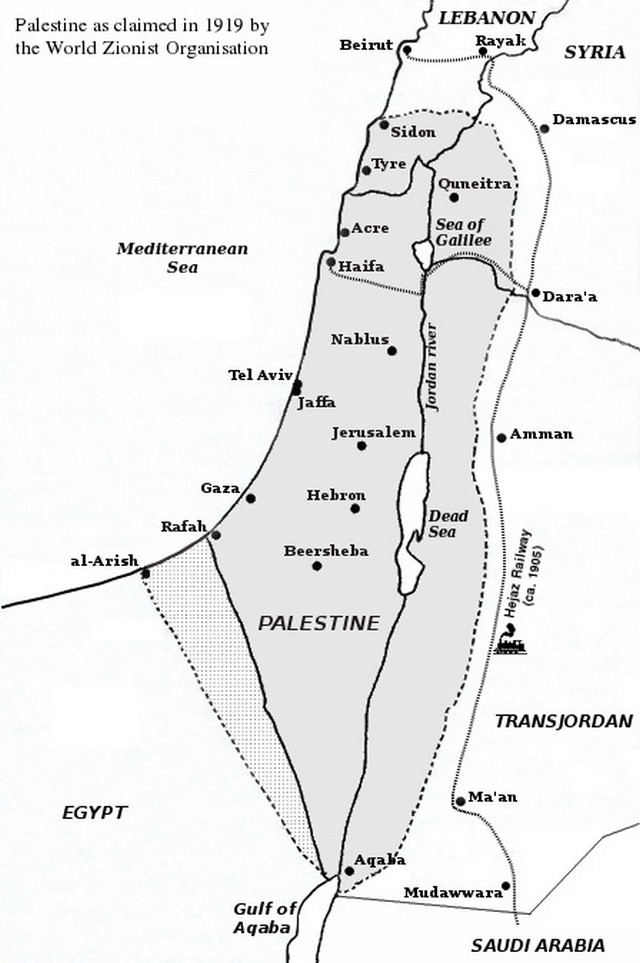
The game is afoot. Israel, believe it or not, is demanding that seven Arab countries and Iran pay $250 billion as compensation for what it claims was the forceful exodus of Jews from Arab countries during the late 1940s.

The events that Israel is citing allegedly occurred at a time when Zionist Jewish militias were actively uprooting nearly one million Palestinian Arabs and systematically destroying their homes, villages and towns throughout Palestine.

The Israeli announcement, which reportedly followed “18 months of secret research” conducted by the Israeli government’s Ministry of Social Equality, should not be filed under the ever-expanding folder of shameless Israeli misrepresentations of history.

It is part of a calculated effort by the Israeli government, and namely by Minister Gila Gamliel, to create a counter-narrative to the rightful demand for the ‘Right of Return’ for Palestinian refugees ethnically cleansed by Jewish militias between 1947-1948.

But there is a reason behind the Israeli urgency to reveal such questionable research: the relentless US-Israeli attempt in the last two years to dismiss the rights of Palestinian refugee rights, to question their numbers and to marginalize their grievances. It is all part and parcel of the ongoing plot disguised as the ‘Deal of the Century’, with the clear aim of removing from the table all major issues that are central to the Palestinian struggle for freedom.

“The time has come to correct the historic injustice of the pogroms (against Jews) in seven Arab countries and Iran, and to restore, to hundreds of thousands of Jews who lost their property, what is rightfully theirs,” said Gamliel.

The language – “.. to correct the historic injustice” – is no different from language used by Palestinians who have for 70 years and counting been demanding the restoration of their rights per United Nations Resolution 194.

The deliberate conflating between the Palestinian narrative and the Zionist narrative is aimed at creating parallels, with the hope that a future political agreement would resolve to having both grievances cancel each other out.

Contrary to what Israeli historians want us to believe, there was no mass exodus of Jews from Arab countries and Iran, but rather a massive campaign orchestrated by Zionist leaders at the time to replace the Palestine Arab population with Jewish immigrants from all over the world. The ways through which such a mission was achieved often involved violent Zionist plots – especially in Iraq.

In fact, the call on Jews to gather in Israel from all corners of the world remains the rally cry for Israeli leaders and their Christian Evangelical supporters – the former wants to ensure a Jewish majority in the state, while the latter is seeking to fulfill a biblical condition for their long-awaited Armageddon.

To hold Arabs and Iran responsible for this bizarre and irresponsible behavior is a transgression on the true history in which neither Gamliel nor her ministry are interested.

On the other hand, and unlike what Israeli military historians often claim, the ethnic cleansing of Palestine in 1947- 48 (and the subsequent purges of the native population that followed in 1967) was a premeditated act of ethnic cleansing and genocide. It has been part of a long-drawn and carefully calculated campaign that, from the very start, served as the main strategy at the heart of the Zionist movement’s ‘vision’ for the Palestinian people.

“We must expel the Arabs and take their place,” wrote Israel’s founder, military leader and first prime minister, David Ben Gurion in a letter to his son, Amos in October 5, 1937. That was over a decade before Plan D – which saw the destruction of the Palestinian homeland at the hands of Ben Gurion’s militias – went into effect.

Palestine “contains vast colonization potential,” he also wrote, “which the Arabs neither need nor are qualified to exploit.”

This clear declaration of a colonial project in Palestine, communicated with the same kind of unmistakable racist insinuations and language that accompanied all western colonial experiences throughout the centuries was not unique to Ben Gurion. He was merely paraphrasing what was, by then, understood to be the crux of the Zionist enterprise in Palestine at the time.

As Palestinian professor Nur Masalha concluded in his book, the ‘Expulsion of the Palestinians’, the idea of the ‘transfer’ – the Zionist term for “ethnic cleansing’ of the Palestinian people – was, and remains, fundamental in the realization of Zionist ambitions in Palestine.

Palestinian Arab “villages inside the Jewish state that resist ‘should be destroyed .. and their inhabitants expelled beyond the borders of the Jewish state,” Masalha wrote quoting the ‘History of the Haganah’ by Yehuda Slutsky. .

What this meant in practice, as delineated by Palestinian historian, Walid Khalidi was the joint targeting by various Jewish militias to systematically attack all population centers in Palestine, without exception.

“By the end of April (1948), the combined Haganah-Irgun offensive had completely encircled (the Palestinian city of) Jaffa, forcing most of the remaining civilians to flee by sea to Gaza or Egypt; many drowned in the process, ” Khalidi wrote in ‘Before Their Diaspora’.

This tragedy has eventually grown to affect all Palestinians, everywhere within the borders of their historic homeland. Tens of thousands of refugees joined up with hundreds of thousands more at various dusty trails throughout the country, growing in numbers as they walked further, to finally pitch their tents in areas that, then were meant to be ‘temporary’ refugee encampments. Alas, these became the Palestinian refugee camps of today, starting some 70 years ago.

None of this was accidental. The determination of the early Zionists to establish a ‘national home’ for Jews at the expense of the country’s Palestinian Arab nation was communicated, openly, clearly and repeatedly throughout the formation of early Zionist thoughts, and the translation of those well-articulated ideas into physical reality.

70 years have passed since the Nakba’ – the ‘Catastrophe’ of 1948 – and neither Israel took responsibility for its action, nor Palestinian refugees received any measure of justice, however small or symbolic.

For Israel to be seeking compensation from Arab countries and Iran is a moral travesty, especially as Palestinians refugees continue to languish in refugee camps across Palestine and the Middle East.

Yes, indeed “the time has come to correct the historic injustice,” not of Israel’s alleged ‘pogroms’ carried out by Arabs and Iranians, but the real and most tragic destruction of Palestine and its people.

Ramzy Baroud is a journalist, author and editor of Palestine Chronicle.

16 January 2019

Source: countercurrents.org

UK parliament votes down Prime Minister May’s Brexit deal

By Robert Stevens and Chris Marsden

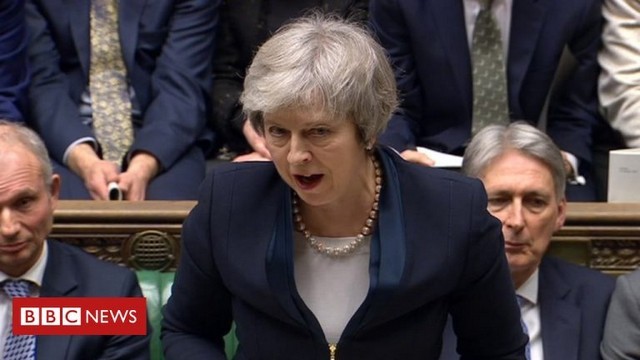
MPs voted by a massive majority Tuesday evening against Prime Minister Theresa May’s proposed deal with the European Union (EU) on the terms of Britain’s exit from the bloc.

May was defeated by a majority of 230, with 432 MPs against the deal and just 202 for in the biggest vote against a sitting prime minister in history.

The vote was held after a five-day debate. Opposing May were 118 rebels from her own Conservative Party (nearly 40 percent of Tory MPs). They joined 248 MPs from the main opposition Labour Party and 35 from the Scottish National Party (SNP). May’s defeat would have been even greater had not three Brexit supporting Labour MPs, Ian Austin, Sir Kevin Barron and John Mann, not voted with her. Also voting with May were three Independents—former Labour MP Frank Field, Lady Hermon, and Stephen Lloyd.

Following the historic defeat, May announced that if Labour leader Jeremy Corbyn exercised his right to call a no-confidence vote it would be heard today. Making capital over his previous refusal to do so, she added that consideration would be given to a debate if one of the smaller opposition parties demanded one. If she won a no confidence vote, she would meet with the Tories’ “confidence and supply partner” the Democratic Unionist Party (DUP), “and senior parliamentarians from across the House to identify what would be required to secure the backing of the House . ”

Corbyn immediately tabled a vote of no confidence that was backed by the SNP and the leaders of the Liberal Democrats, Plaid Cymru and the Greens.

May is expected to win the no confidence vote, to be held this evening at 7 p.m., with the DUP stating that it would continue to prop up the Tories and support her government. The pro-Brexit Conservatives in the European Research Group said they would also back her. Both said they would do nothing that would bring Corbyn and Labour to power. Leading Brexiteer and May’s former Foreign Secretary, Boris Johnson, said that he would back May, but insisted that the scale of her Brexit deal defeat meant that she had to return to talks with the EU and demand a deal more amenable to the Brexiteers—including abandoning the “backstop” arrangements keeping Northern Ireland in a customs union.

May had cancelled a vote on her deal in December, on the basis that it was expected to be heavily defeated. She spent the next weeks seeking to gain concessions from the EU, in the hope that she could persuade her hard Brexit opponents to change their minds. But all May was able to present before the vote was a perfunctory exchange of letters with European Commission President Jean-Claude Juncker and President of the European Council Donald Tusk. The EU leaders offered nothing that could satisfy hard Brexiteers, insisting that a backstop was the only way to prevent a hard-border with the Republic of Ireland until a future free trade agreement is signed between the UK and Brussels.

A letter from Juncker to May promised only to make “this period [when the backstop is in place] as short as possible.” This had no impact, with DUP leader Arlene Foster saying the party’s 10 MPs would vote against the deal and that “What we want the prime minister to do after today is to go back to the European Union and say that the backstop has to go.”

The vote was confirmation of parliament’s overall support for a soft-Brexit, with a core of Blairite Labour MPs, the SNP, Liberal Democrats and some Tories all favouring remaining in the EU and wanting a second “People’s Vote” referendum to reverse the 2016 result.

In expectation of the proposed deal with the UK being rejected by MPs, Juncker cancelled a planned engagement in Strasbourg Wednesday to return to Brussels for emergency talks on Brexit with May. MPs voted last week to ensure that May has only limited time to come up with a “Plan B” that parliament can vote on, meaning May must return to parliament with new proposals by next Monday. May promised to do so and that her deal would be subject to amendments.

The Confederation of British Industry called on May to quickly put forward a new deal. CBI director-general Carolyn Fairbairn said, “Every business will feel no deal is hurtling closer … All MPs need to reflect on the need for compromise and to act at speed to protect the UK’s economy.”

While the strategy of the EU leaders over the past two years has been to maintain a hard line against the UK in negotiations—in order to ward off any other countries contemplating an exit from the bloc—there are concerns that a no-deal Brexit will provoke serious economic and social turmoil. The EU’s official line prior to the vote was that the deal had taken two years to finalise and was the only one on the table. However, on Tuesday afternoon, German Foreign Minister Heiko Maas declared, “If it goes wrong tonight, there could be further talks.”

Europe’s fears were articulated in the starkest terms by Deutsche Bank chief executive, Christian Sewing, who warned that a “disorderly Brexit” would have “dramatic consequences” for the British economy. He predicted, “The UK would fall into a recession for at least two years,” with economic output cut by half a percentage point in the remaining EU countries. This was dire, as “the distortions would be too great for trade, financing conditions and investor confidence.”

The most striking aspect of yesterday’s debate is how the interests of working people have been entirely excluded from official politics—with Corbyn playing the central role in his insistence that parliamentary arithmetic must be respected and restoring “national unity” must be prioritised.

A few hundred pro-EU and pro-Leave protesters demonstrated outside Westminster, but inside the Commons all discussion was on how best to secure a deal with the EU, combining an ability for UK business to sign independent trade deals with tariff-free access to the Single European Market.

The pro-Brexit Tories plans to fashion the UK as Europe’s Singapore are overtly based on ramping up the exploitation of the working class. But the Remain faction, including Corbyn, all know that EU membership or even some form of “customs union” is just as firmly rooted in ongoing effort to make the UK competitive against its rivals at the expense of the working class. They offer nothing to the 5,000 Jaguar Land Rover workers, 1,000 Ford workers and thousands of retail staff told they face redundancy this past week.

Austerity is hard-wired into the EU. The Social Europe think-tank issued a report on the day of the vote noting that, after a decade of attacks on workers’ living standards and based on the at-risk-of-poverty threshold for the EU as a whole (60 percent of median EU income or €9,760), the “EU-wide poverty rate is 28.2 per cent (equivalent to around 142 million out of a total EU population of around 500 million).”

Last week, a visit by German Chancellor Angela Merkel to Athens provoked clashes between riot police and protesters, including striking teachers—giving expression to how millions of Greeks feel about EU-dictated austerity. The Syriza government of Alexis Tsipras, which Corbyn cites as a model and ally, is now so hated for imposing austerity that it is 10.5 percent behind the conservative New Democracy in opinion polls. The same sentiment animates France’s Yellow Vests, the strike wave gripping Poland and labour disputes throughout the continent.

16 January 2019

Source: countercurrents.org

World Bank warns of “storm clouds” over global economy

By Nick Beams

The World Bank has added its voice to those warning of a worsening outlook for the global economy this year, amid signs that some major economies could experience a recession.

In its Global Economic Prospects report issued last week, entitled “Darkening Skies,” it stated that “storm clouds are brewing for the global economy” and contrasted the situation with that of a year ago.

“At the beginning of 2018 the global economy was firing on all cylinders, but it lost speed during the year and the ride could get even bumpier ahead,” the World Bank chief executive Kristalina Georgieva said.

Pointing to the main reasons for the slowdown, the bank said international trade and investment had softened, trade tensions remain elevated and several large emerging markets experienced “substantial financial pressures last year.” Growth in emerging markets and developing economies is expected to remain flat, the pickup in economies that rely heavily on commodity exports is likely to be much slower than hoped for and “growth in many other economies is anticipated to be decelerate.”

The bank cut its June forecast for global growth of 3 percent this year to 2.9 percent and warned that “the risks are growing that growth could be even weaker than anticipated.” It predicted that growth in world trade will slow to 3.6 percent this year, down from 3.8 percent in 2018 and 5.7 percent in 2017.

After downgrading its forecasts for global growth last November, saying “global expansion has peaked,” the Organisation for Economic Cooperation and Development (OECD) issued a series of leading indicators yesterday pointing in the same direction.

“In the United States and Germany, the tentative signs of easing growth momentum, that were flagged in last month’s assessment, have been confirmed,” it stated. For the third consecutive month, the OECD’s index for the US was below the 100 mark, which points to steady growth, and the index for Germany was below 100 for the fourth straight month.

One of the clearest indications of economic weakening comes from Europe. Data published last week showing that eurozone labour productivity had stopped growing for the first time in almost a decade. Since the financial crisis of 2008, eurozone productivity growth has been around half its previous levels. But in the third quarter of last year it dropped to zero compared to the same period in 2017. In Germany, Europe’s leading economy, it contracted at an annual rate of 0.3 percent, the first decline since 2009.

Industrial production is falling in the main eurozone economies, bringing warnings that Germany and Italy could record a technical recession with a second consecutive contraction in gross domestic production in the final quarter of last year.

In an editorial comment on Saturday, the Financial Times warned that after a “staggered” economic expansion, “a bout of nerves is now gripping the major economies in an unhelpfully synchronised wave” with “signs of trouble” in China and the US, “accompanied by an ever-extending period of weakness in the eurozone.”

Having “chugged along” for the past five years, the eurozone economy seemed to hit some turbulence in the summer months but “more recently, data seem to suggest the blip is at risk of turning into a sustained downturn” and “eurozone growth ended the year very weakly.”

The slowdown is centred in Germany. Economic problems that started to emerge six months ago were initially attributed to the effect of new emissions regulations in the car industry.

“The longer the weakness has continued, however, the more the slowdown has appeared more fundamental,” the editorial noted, with the most recent data showing German industrial production falling sharply, and imports and exports contracting in November.

Another key area of concern is China. The stock market fell by 25 percent last year and there are indications that growth rate of 6.5 percent could move down to 6 percent over the next year.

The China slowdown made a major impact earlier this month. For the first time in 16 years, Apple was forced to cut its sales forecasts for the coming year, citing the contracting Chinese market and rising trade tensions with the US. It led a 660-point fall in Wall Street’s Dow index.

The fall in the sales of iPhones is only one indicator of the slowdown in Chinese consumption spending which is impacting on all global brands. When the final data for last year are issued they are expected to show that car sales in China fell in 2018 for the first time in 28 years.

The car sector represents about 5 percent of the country’s GDP and around 30 percent of the global car market but the significance of China extends far beyond the auto market.

China accounted for around 16 percent of global GDP last year and over the decade since the global financial crisis has contributed around 30 percent of global growth. This has been largely the result of the vast stimulus package initiated by the Chinese government and financial authorities in the wake of the 2008-09 global financial crisis. But now the government is seeking to rein in credit expansion in order to lower debt levels in the economy.

At the same time, the economic problems to which this gives rise are being compounded by the trade war measures of the US. Anti-China hawks in the Trump administration are actively seeking to weaken the Chinese economy in order to extract greater concessions in negotiations.

Evidence of the impact of the US trade war measures emerged yesterday when government data revealed that exports had fallen 4.4 percent in December, far below the predictions of a 3 percent increase from a poll of economists. Imports also shrank 7.6 percent against expectations of a 5 percent rise.

In the US, the turbulence in financial markets is giving rise to concerns that a recession is in the making as the prospect of a yield inversion in bond markets draws closer. An inversion, which occurs when the yield on long-term bonds fall below that on shorter term bonds, is regarded as an indicator of recession as investors seek a safe haven. Inversion has not yet occurred but the gap between the yield on two-year Treasury bonds and of ten-year bonds has been narrowing.

While growth in the rest of the world slowed in 2018, the US continued to advance largely because of the stimulus effect of the corporate tax cuts enacted by the Trump administration at the end of the 2017. While Trump promised this would boost investment and jobs, most of the money went towards share buybacks in an effort to boost equity values and its effect will now start to wear off.

At least one major investor has countered claims by Trump that he is presiding over a strong economy. According to Jeffrey Gundlach, the head of DoubleLine Capital LP, the US economy is floating on an “ocean of debt.”

“I’m not looking for a terrible economy, but an artificially strong one, due to stimulus spending,” he told a forum organised by the investment and financial news service Barron’s. “We have floated incremental debt when we should be doing the opposite if the economy is so strong.”

Short-term economic data are not the only cause for concern. A major issue is whether the long-term increase in debt, which has continued since the global financial crisis, and rising geo-political tensions, will exacerbate the impact of any significant global slowdown.

In a comment published last week, Financial Times economics correspondent Martin Wolf wrote that the economy appeared to be heading into what he called a “mild cyclical downturn.” However, this was taking place amid profound structural changes, characterised by the growth of debt and major political shifts. These included the rise of nationalism, Brexit, the election of Trump as well as “a trade war between the world’s two most important economies and an erosion of the liberal global economic order.”

The “worry” was not over the short-term cycle, he wrote, but rather “the context in which such a slowdown might occur.”

“It is the political and policy instability, combined with the exhaustion of safe options for credit expansion, that would make handling even a limited and natural short-term slowdown potentially so tricky.”

But, he concluded, there were “no simple mechanisms” for reducing these “deeply ingrained” developments which were more likely to get worse than better.

15 January 2019

Source: countercurrents.org

What Trump’s Syrian Withdrawal Really Reveals

By Stephen F. Cohen

A wise decision is greeted by denunciations, obstructionism, imperial thinking, and more Russia-bashing.

9 Jan 2019 – President Trump was wrong in asserting that the United States destroyed the Islamic State’s territorial statehood in a large part of Syria—Russia and its allies accomplished that—but he is right in proposing to withdraw some 2,000 American forces from that tragically war-ravaged country. The small American contingent serves no positive combat or strategic purpose unless it is to thwart the Russian-led peace negotiations now underway or to serve as a beachhead for a US war against Iran. Still worse, its presence represents a constant risk that American military personnel could be killed by Russian forces also operating in that relatively small area, thereby turning the new Cold War into a very hot conflict, even if inadvertently. Whether or not Trump understood this danger, his decision, if actually implemented—it is being fiercely resisted in Washington—will make US-Russian relations, and thus the world, somewhat safer.

Nonetheless, Trump’s decision on Syria, coupled with his order to reduce US forces in Afghanistan by half, has been “condemned,” as The New York Times approvingly reported, “across the ideological spectrum,” by “the left and right.” Analyzing these condemnations, particularly in the opinion-shaping New York Times and Washington Post and on interminable (and substantially uninformed) MSNBC and CNN segments, again reveals the alarming thinking that is deeply embedded in the US bipartisan policy-media establishment.

First, no foreign-policy initiative undertaken by President Trump, however wise it may be in regard to US national interests, will be accepted by that establishment. Any prominent political figure who does so will promptly and falsely be branded, in the malign spirit of Russiagate, as “pro-Putin,” or, as was Senator Rand Paul, arguably the only foreign-policy statesman in the senate today, “an isolationist.” This is unprecedented in modern American history. Not even Richard Nixon was subject to such establishment constraints on his ability to conduct national-security policy during the Watergate scandals.

Second, not surprisingly, the condemnations of Trump’s decision are infused with escalating, but still unproven, Russiagate allegations of the president’s “collusion” with the Kremlin. Thus, equally predictably, the Times finds a Moscow source to say, of the withdrawals, “Trump is God’s gift that keeps on giving” to Putin. (In fact, it is not clear that the Kremlin is eager to see the United States withdraw from either Syria or Afghanistan, as this would leave Russia alone with what it regards as common terrorist enemies.) Closer to home, there is the newly reelected Speaker of the House, Nancy Pelosi, who, when asked about Trump’s policies and Russian President Putin, told MSNBC’s Joy Reid: “I think that the president’s relationship with thugs all over the world is appalling. Vladimir Putin, really? Really? I think it’s dangerous.” By this “leadership” reasoning, Trump should be the first US president since FDR to have no “relationship” whatsoever with a Kremlin leader. And to the extent that Pelosi speaks for the Democratic Party, it can no longer be considered a party of American national security.

But, third, something larger than even anti-Trumpism plays a major role in condemnations of the president’s withdrawal decisions: imperial thinking about America’s rightful role in the world. Euphemisms abound, but, if not an entreaty to American empire, what else could the New York Times’ David Sanger mean when he writes of a “world order that the United States has led for the 79 years since World War II,” and complains that Trump is reducing “the global footprint needed to keep that order together”? Or when President Obama’s national-security adviser Susan Rice bemoans Trump’s failures in “preserving American global leadership,” which a Times lead editorial insists is an “imperative”? Or when General James Mattis in his letter of resignation echoes President Bill Clinton’s secretary of state Madeline Albright—and Obama himself—in asserting that “the US remains the indispensable nation in the free world”? We cannot be surprised. Such “global” imperial thinking has informed US foreign-policy decision-making for decades—it’s taught in our schools of international relations—and particularly the many disastrous, anti-“order” wars it has produced.

Fourth, and characteristic of empires and imperial thinking, there is the valorization of generals. Perhaps the most widespread and revealing criticism of Trump’s withdrawal decisions is that he did not heed the advice of his generals, the undistinguished, uninspired Jim “Mad Dog” Mattis in particular. The pseudo-martyrdom and heroizing of Mattis, especially by the Democratic Party and its media, remind us that the party had earlier, in its Russiagate allegations, valorized US intelligence agencies, and, having taken control of the House, evidently intends to continue to do so. Anti-Trumpism is creating political cults of US intelligence and military institutions. What does this tell us about today’s Democratic Party? More profoundly, what does this tell us about an American Republic purportedly based on civilian rule?

Finally, and potentially tragically, Trump’s announcement of the Syrian withdrawal was the moment for a discussion of the long imperative US alliance with Russia against international terrorism, a Russia whose intelligence capabilities are unmatched in this regard. (Recall, for example, Moscow’s disregarded warnings about one of the brothers who set off bombs during the Boston Marathon.) Such an alliance has been on offer by Putin since 9/11. President George W. Bush completely disregarded it. Obama flirted with the offer but backed (or was pushed) away. Trump opened the door for such a discussion, as indeed he has since his presidential candidacy, but now again, at this most opportune moment, there has not been a hint of it in our political-media establishment. Instead, a national security imperative has been treated as “treacherous.”

In this context, there is Trump’s remarkable, but little-noted or forgotten, tweet of December 3 calling on the presidents of Russia and China to join him in “talking about a meaningful halt to what has become a major and uncontrollable Arms Race.” If Trump acts on this essential overture, as we must hope he will, will it too be traduced as “treacherous”—also for the first time in American history? If so, it will again confirm my often-expressed thesis that powerful forces in America would prefer trying to impeach the president to avoiding a military catastrophe. And that those forces, not President Trump or Putin, are now the gravest threat to American national security.

Stephen F. Cohen is a professor emeritus of Russian studies and politics at New York University and Princeton University.

14 January 2019

Source: transcend.org