Just International

15 Years Ago: US Sponsored Coup d’état. The Destabilization of Haiti

By Prof Michel Chossudovsky

29 Feb 2019 – Author’s Note

This article was written 15 years ago, in the last days of February 2004 in response to the barrage of disinformation in the mainstream media. It was completed on February 29th, the day of President Jean Bertrand Aristide’s kidnapping and deportation by US Forces.

The armed insurrection which contributed to unseating President Aristide on February 29th 2004 was the result of a carefully staged military-intelligence operation, involving the US, France and Canada.

The 2004 coup had set the stage for the installation of a US puppet government in Port au Prince, which takes orders directly from Washington.

And today, a US Coup is on the drawing board of the White House. Canada as well as France are once again complicit in supporting the over-through of the duly elected president of Venezuela.

It’s all for a good cause: install “American Democracy”, “Alleviate poverty”. And the self-proclaimed “international community” applauds.

*********************

The below article was subsequently published as a Chapter in Michel Chossudovsky’s book entitled The Globalization of War.

Minor editorial corrections were made to the original draft since its publication on February 29th 2004; the title of the article predates the actual Coup d’état which was in the making at the time of writing.

Original article published at http://globalresearch.ca/articles/CHO402D.html

US Sponsored Coup d’état: The Destabilization of Haiti

By Michel Chossudovsky

29 Feb 2004 – The Rebel paramilitary army crossed the border from the Dominican Republic in early February. It constitutes a well armed, trained and equipped paramilitary unit integrated by former members of Le Front pour l’avancement et le progrès d’Haiti (FRAPH), the “plain clothes” death squadrons, involved in mass killings of civilians and political assassinations during the CIA sponsored 1991 military coup, which led to the overthrow of the democratically elected government of President Jean Bertrand Aristide

The self-proclaimed Front pour la Libération et la reconstruction nationale (FLRN) (National Liberation and Reconstruction Front) is led by Guy Philippe, a former member of the Haitian Armed Forces and Police Chief. Philippe had been trained during the 1991 coup years by US Special Forces in Ecuador, together with a dozen other Haitian Army officers. (See Juan Gonzalez, New York Daily News, 24 February 2004).

The two other rebel commanders and associates of Guy Philippe, who led the attacks on Gonaives and Cap Haitien are Emmanuel Constant, nicknamed “Toto” and Jodel Chamblain, both of whom are former Tonton Macoute and leaders of FRAPH.

In 1994, Emmanuel Constant led the FRAPH assassination squadron into the village of Raboteau, in what was later identified as “The Raboteau massacre”:

“One of the last of the infamous massacres happened in April 1994 in Raboteau, a seaside slum about 100 miles north of the capital. Raboteau has about 6,000 residents, most fishermen and salt rakers, but it has a reputation as an opposition stronghold where political dissidents often went to hide… On April 18 [1994], 100 soldiers and about 30 paramilitaries arrived in Raboteau for what investigators would later call a “dress rehearsal.” They rousted people from their homes, demanding to know where Amiot “Cubain” Metayer, a well-known Aristide supporter, was hiding. They beat people, inducing a pregnant woman to miscarry, and forced others to drink from open sewers. Soldiers tortured a 65-year-old blind man until he vomited blood. He died the next day.

The soldiers returned before dawn on April 22. They ransacked homes and shot people in the streets, and when the residents fled for the water, other soldiers fired at them from boats they had commandeered. Bodies washed ashore for days; some were never found. The number of victims ranges from two dozen to 30. Hundreds more fled the town, fearing further reprisals.” (St Petersburg Times, Florida, 1 September 2002)

During the military government (1991-1994), FRAPH was (unofficially) under the jurisdiction of the Armed Forces, taking orders from Commander in Chief General Raoul Cedras. According to a 1996 UN Human Rights Commission report, FRAPH had been supported by the CIA.

Under the military dictatorship, the narcotics trade, was protected by the military Junta, which in turn was supported by the CIA. The 1991 coup leaders including the FRAPH paramilitary commanders were on the CIA payroll.

(See Paul DeRienzo, http://globalresearch.ca/articles/RIE402A.html , See also see Jim Lobe, IPS, 11 Oct 1996). Emmanuel Constant alias “Toto” confirmed, in this regard, in a CBS “60 Minutes” in 1995, that the CIA paid him about $700 a month and that he created FRAPH, while on the CIA payroll. (See Miami Herald, 1 August 2001). According to Constant, the FRAPH had been formed “with encouragement and financial backing from the U.S. Defense Intelligence Agency and the CIA.” (Miami New Times, 26 February 2004)

The Civilian “Opposition”

The so-called “Democratic Convergence” (DC) is a group of some 200 political organizations, led by former Port-au-Prince mayor Evans Paul. The “Democratic Convergence” (DC) together with “The Group of 184 Civil Society Organizations” (G-184) has formed a so-called “Democratic Platform of Civil Society Organizations and Opposition Political Parties”.

The Group of 184 (G-184), is headed by Andre (Andy) Apaid, a US citizen of Haitian parents, born in the US. (Haiti Progres, http://www.haiti-progres.com/eng11-12.html ) Andy Apaid owns Alpha Industries, one of Haiti’s largest cheap labor export assembly lines established during the Duvalier era. His sweatshop factories produce textile products and assemble electronic products for a number of US firms including Sperry/Unisys, IBM, Remington and Honeywell. Apaid is the largest industrial employer in Haiti with a workforce of some 4000 workers. Wages paid in Andy Apaid’s factories are as low as 68 cents a day. (Miami Times, 26 Feb 2004). The current minimum wage is of the order of $1.50 a day:

“The U.S.-based National Labor Committee, which first revealed the Kathie Lee Gifford sweat shop scandal, reported several years ago that Apaid’s factories in Haiti’s free trade zone often pay below the minimum wage and that his employees are forced to work 78-hour weeks.” (Daily News, New York, 24 Feb 2004)

Apaid was a firm supporter of the 1991 military coup. Both the Convergence démocratique and the G-184 have links to the FLRN (former FRAPH death squadrons) headed by Guy Philippe. The FLRN is also known to receive funding from the Haitian business community.

In other words, there is no watertight division between the civilian opposition, which claims to be non-violent and the FLRN paramilitary. The FLRN is collaborating with the so-called “Democratic Platform.”

The Role of the National Endowment for Democracy (NED)

In Haiti, this “civil society opposition” is bankrolled by the National Endowment for Democracy which works hand in glove with the CIA. The Democratic Platform is supported by the International Republican Institute (IRI) , which is an arm of the National Endowment for Democracy (NED). Senator John McCain is Chairman of IRI’s Board of Directors.

(See Laura Flynn, Pierre Labossière and Robert Roth, Hidden from the Headlines: The U.S. War Against Haiti, California-based Haiti Action Committee (HAC), http://www.haitiprogres.com/eng11-12.html ).

G-184 leader Andy Apaid was in liaison with Secretary of State Colin Powell in the days prior to the kidnapping and deportation of President Aristide by US forces on February 29. His umbrella organization of elite business organizations and religious NGOs, which is also supported by the International Republican Institute (IRI), receives sizeable amounts of money from the European Union.(http://haitisupport.gn.apc.org/184%20EC.htm ).

It is worth recalling that the NED, (which overseas the IRI) although not formally part of the CIA, performs an important intelligence function within the arena of civilian political parties and NGOs. It was created in 1983, when the CIA was being accused of covertly bribing politicians and setting up phony civil society front organizations. According to Allen Weinstein, who was responsible for setting up the NED during the Reagan Administration: “A lot of what we do today was done covertly 25 years ago by the CIA.” (‘Washington Post’, Sept. 21, 1991).

The NED channels congressional funds to the four institutes: The International Republican Institute (IRI), the National Democratic Institute for International Affairs (NDI), the Center for International Private Enterprise (CIPE), and the American Center for International Labor Solidarity (ACILS). These organizations are said to be “uniquely qualified to provide technical assistance to aspiring democrats worldwide.” See IRI, http://www.iri.org/history.asp )

In other words, there is a division of tasks between the CIA and the NED. While the CIA provides covert support to armed paramilitary rebel groups and death squadrons, the NED and its four constituent organizations finance “civilian” political parties and non governmental organizations with a view to instating American “democracy” around the World.

The NED constitutes, so to speak, the CIA’s “civilian arm”. CIA-NED interventions in different part of the World are characterized by a consistent pattern, which is applied in numerous countries.

The NED provided funds to the “civil society” organizations in Venezuela, which initiated an attempted coup against President Hugo Chavez. In Venezuela it was the “Democratic Coordination”, which was the recipient of NED support; in Haiti it is the “Democratic Convergence” and G-184.

Similarly, in former Yugoslavia, the CIA channeled support to the Kosovo Liberation Army (KLA) (since 1995), a paramilitary group involved in terrorist attacks on the Yugoslav police and military. Meanwhile, the NED through the “Center for International Private Enterprise” (CIPE) was backing the DOS opposition coalition in Serbia and Montenegro. More specifically, NED was financing the G-17, an opposition group of economists responsible for formulating (in liaison with the IMF) the DOS coalition’s “free market” reform platform in the 2000 presidential election, which led to the downfall of Slobodan Milosevic.

The IMF’s Bitter “Economic Medicine”

The IMF and the World Bank are key players in the process of economic and political destabilization. While carried out under the auspices of an intergovernmental body, the IMF reforms tend to support US strategic and foreign policy objectives.

Based on the so-called “Washington consensus”, IMF austerity and restructuring measures through their devastating impacts, often contribute to triggering social and ethnic strife. IMF reforms have often precipitated the downfall of elected governments. In extreme cases of economic and social dislocation, the IMF’s bitter economic medicine has contributed to the destabilization of entire countries, as occurred in Somalia, Rwanda and Yugoslavia.

(See Michel Chossudovsky, The Globalization of Poverty and the New World Order, Second Edition, 2003, http://globalresearch.ca/globaloutlook/GofP.html )

The IMF program is a consistent instrument of economic dislocation. The IMF’s reforms contribute to reshaping and downsizing State institutions through drastic austerity measures. The latter are implemented alongside other forms of intervention and political interference, including CIA covert activities in support of rebel paramilitary groups and opposition political parties.

Moreover, so-called “Emergency Recovery” and “Post-conflict” reforms are often introduced under IMF guidance, in the wake of a civil war, a regime change or “a national emergency”.

In Haiti, the IMF sponsored “free market” reforms have been carried out consistently since the Duvalier era. They have been applied in several stages since the first election of president Aristide in 1990.

The 1991 military coup, which took place 8 months following Jean Bertrand Aristide’s accession to the presidency, was in part intended to reverse the Aristide government’s progressive reforms and reinstate the neoliberal policy agenda of the Duvalier era.

A former World Bank official Mr. Marc Bazin was appointed Prime minister by the Military Junta in June 1992. In fact, it was the US State Department which sought his appointment.

Bazin had a track record of working for the “Washington consensus.” In 1983, he had been appointed Finance Minister under the Duvalier regime, In fact he had been recommended to the Finance portfolio by the IMF: “President-for-Life Jean-Claude Duvalier had agreed to the appointment of an IMF nominee, former World Bank official Marc Bazin, as Minister of Finance”. (Mining Annual Review, June, 1983). Bazin, who was considered Washington’s “favorite”, later ran against Aristide in the 1990 presidential elections.

Bazin, was called in by the Military Junta in 1992 to form a so-called “consensus government”. It is worth noting that it was precisely during Bazin’s term in office as Prime Minister that the political massacres and extra judicial killings by the CIA supported FRAPH death squadrons were unleashed, leading to the killing of more than 4000 civilians. Some 300,000 people became internal refugees, “thousands more fled across the border to the Dominican Republic, and more than 60,000 took to the high seas” (Statement of Dina Paul Parks, Executive Director, National Coalition for Haitian Rights, Committee on Senate Judiciary, US Senate, Washington DC, 1 October 2002). Meanwhile, the CIA had launched a smear campaign representing Aristide as “mentally unstable” (Boston Globe, 21 Sept 1994).

The 1994 US Military Intervention

Following three years of military rule, the US intervened in 1994, sending in 20,000 occupation troops and “peace-keepers” to Haiti. The US military intervention was not intended to restore democracy. Quite the contrary: it was carried out to prevent a popular insurrection against the military Junta and its neoliberal cohorts.

In other words, the US military occupation was implemented to ensure political continuity.

While the members of the military Junta were sent into exile, the return to constitutional government required compliance to IMF diktats, thereby foreclosing the possibility of a progressive “alternative” to the neoliberal agenda. Moreover, US troops remained in the country until 1999. The Haitian armed forces were disbanded and the US State Department hired a mercenary company DynCorp to provide “technical advice” in restructuring the Haitian National Police (HNP).

“DynCorp has always functioned as a cut-out for Pentagon and CIA covert operations.”

(See Jeffrey St. Clair and Alexander Cockburn, Counterpunch, February 27, 2002, http://www.corpwatch.org/issues/PID.jsp?articleid=1988 )

Under DynCorp advice in Haiti, former Tonton Macoute and Haitian military officers involved in the 1991 Coup d’Etat were brought into the HNP.

(See Ken Silverstein, Privatizing War, The Nation, July 28, 1997, http://www.mtholyoke.edu/acad/intrel/silver.htm )

In October 1994, Aristide returned from exile and reintegrated the presidency until the end of his mandate in 1996. “Free market” reformers were brought into his Cabinet. A new wave of deadly macro-economic policies was adopted under a so-called Emergency Economic Recovery Plan (EERP) “that sought to achieve rapid macroeconomic stabilization, restore public administration, and attend to the most pressing needs.”

(See IMF Approves Three-Year ESAF Loan for Haiti, Washington, 1996, http://www.imf.org/external/np/sec/pr/1996/pr9653.htm ).

The restoration of Constitutional government had been negotiated behind closed doors with Haiti’s external creditors. Prior to Aristide’s reinstatement as the country’s president, the new government was obliged to clear the country’s debt arrears with its external creditors. In fact the new loans provided by the World Bank, the Inter-American Development Bank (IDB), and the IMF were used to meet Haiti’s obligations with international creditors. Fresh money was used to pay back old debt leading to a spiraling external debt.

Broadly coinciding with the military government, Gross Domestic Product (GDP) declined by 30 percent (1992-1994). With a per capita income of $250 per annum, Haiti is the poorest country in the Western hemisphere and among the poorest in the world.

(see World Bank, Haiti: The Challenges of Poverty Reduction, Washington, August 1998, http://lnweb18.worldbank.org/External/lac/lac.nsf/0/8479e9126e3537f0852567ea000fa239/$FILE/Haiti1.doc ).

The World Bank estimates unemployment to be of the order of 60 percent. (A 2000 US Congressional Report estimates it to be as high as 80 percent. See US House of Representatives, Criminal Justice, Drug Policy and Human Resources Subcommittee, FDHC Transcripts, 12 April 2000).

In the wake of three years of military rule and economic decline, there was no “Economic Emergency Recovery” as envisaged under the IMF loan agreement. In fact quite the opposite: The IMF imposed “stabilization” under the “Recovery” program required further budget cuts in almost non-existent social sector programs. A civil service reform program was launched, which consisted in reducing the size of the civil service and the firing of “surplus” State employees. The IMF-World Bank package was in part instrumental in the paralysis of public services, leading to the eventual demise of the entire State system. In a country where health and educational services were virtually nonexistent, the IMF had demanded the lay off of “surplus” teachers and health workers with a view to meeting its target for the budget deficit.

Washington’s foreign policy initiatives were coordinated with the application of the IMF’s deadly economic medicine. The country had been literally pushed to the brink of economic and social disaster.

The Fate of Haitian Agriculture

More than 75 percent of the Haitian population is engaged in agriculture, producing both food crops for the domestic market as well a number of cash crops for export. Already during the Duvalier era, the peasant economy had been undermined. With the adoption of the IMF-World Bank sponsored trade reforms, the agricultural system, which previously produced food for the local market, had been destabilized. With the lifting of trade barriers, the local market was opened up to the dumping of US agricultural surpluses including rice, sugar and corn, leading to the destruction of the entire peasant economy. Gonaives, which used to be Haiti’s rice basket region, with extensive paddy fields had been precipitated into bankruptcy:

“By the end of the 1990s Haiti’s local rice production had been reduced by half and rice imports from the US accounted for over half of local rice sales. The local farming population was devastated, and the price of rice rose drastically “ ( See Rob Lyon, Haiti-There is no solution under Capitalism! Socialist Appeal, 24 Feb. 2004.

http://cleveland.indymedia.org/news/2004/02/9095.php ).

In matter of a few years, Haiti, a small impoverished country in the Caribbean, had become the World’s fourth largest importer of American rice after Japan, Mexico and Canada.

The Second Wave of IMF Reforms

The presidential elections were scheduled for November 23, 2000. The Clinton Administration had put an embargo on development aid to Haiti in 2000. Barely two weeks prior to the elections, the outgoing administration signed a Letter of Intent with the IMF. Perfect timing: the agreement with the IMF virtually foreclosed from the outset any departure from the neoliberal agenda.

The Minister of Finance had sent the amended budget to the Parliament on December 14th. Donor support was conditional upon its rubber stamp approval by the Legislature. While Aristide had promised to increase the minimum wage, embark on school construction and literacy programs, the hands of the new government were tied. All major decisions regarding the State budget, the management of the public sector, public investment, privatization, trade and monetary policy had already been taken. They were part of the agreement reached with the IMF on November 6, 2000.

In 2003, the IMF imposed the application of a so-called “flexible price system in fuel”, which immediately triggered an inflationary spiral. The currency was devalued. Petroleum prices increased by about 130 percent in January-February 2003, which served to increase popular resentment against the Aristide government, which had supported the implementation of the IMF economic reforms.

The hike in fuel prices contributed to a 40 percent increase in consumer prices (CPI) in 2002-2003

(See Haiti—Letter of Intent, Memorandum of Economic and Financial Policies, and Technical Memorandum of Understanding, Port-au-Prince, Haiti June 10, 2003, http://www.imf.org/external/np/loi/2003/hti/01/index.htm ).

In turn, the IMF had demanded, despite the dramatic increase in the cost of living, a freeze on wages as a means to “controlling inflationary pressures.” The IMF had in fact pressured the government to lower public sector salaries (including those paid to teachers and health workers). The IMF had also demanded the phasing out of the statutory minimum wage of approximately 25 cents an hour. “Labour market flexibility”, meaning wages paid below the statutory minimum wage would, according to the IMF, contribute to attracting foreign investors. The daily minimum wage was $3.00 in 1994, declining to about $1.50- 1.75 (depending on the gourde-dollar exchange rate) in 2004.

In an utterly twisted logic, Haiti’s abysmally low wages, which have been part of the IMF-World Bank “cheap labor” policy framework since the 1980s, are viewed as a means to improving the standard of living. In other words, sweatshop conditions in the assembly industries (in a totally unregulated labor market) and forced labor conditions in Haiti’s agricultural plantations are considered by the IMF as a key to achieving economic prosperity, because they “attract foreign investment.”

The country was in the straightjacket of a spiraling external debt. In a bitter irony, the IMF-World Bank sponsored austerity measures in the social sectors were imposed in a country which has 1,2 medical doctors for 10,000 inhabitants and where the large majority of the population is illiterate. State social services, which were virtually nonexistent during the Duvalier period, have collapsed.

The result of IMF ministrations was a further collapse in purchasing power, which had also affected middle income groups. Meanwhile, interest rates had skyrocketed. In the Northern and Eastern parts of the country, the hikes in fuel prices had led to a virtual paralysis of transportation and public services including water and electricity.

While a humanitarian catastrophe is looming, the collapse of the economy spearheaded by the IMF, had served to boost the popularity of the Democratic Platform, which had accused Aristide of “economic mismanagement.” Needless to say, the leaders of the Democratic Platform including Andy Apaid –who actually owns the sweatshops– are the main protagonists of the low wage economy.

Applying the Kosovo Model

In February 2003, Washington announced the appointment of James Foley as Ambassador to Haiti . Foley had been a State Department spokesman under the Clinton administration during the war on Kosovo. He previously held a position at NATO headquarters in Brussels. Foley had been sent to Port au Prince in advance of the CIA sponsored operation. He was transferred to Port au Prince in September 2003, from a prestige diplomatic position in Geneva, where he was Deputy Head of Mission to the UN European office.

It is worth recalling Ambassador Foley’s involvement in support of the Kosovo Liberation Army (KLA) in 1999.

Amply documented, the Kosovo Liberation Army (KLA) was financed by drug money and supported by the CIA.

( See Michel Chossudovsky, Kosovo Freedom Fighters Financed by Organized Crime, Covert Action Quarterly, 1999, http://www.heise.de/tp/english/inhalt/co/2743/1.html )

The KLA had been involved in similar targeted political assassinations and killings of civilians, in the months leading up to the 1999 NATO invasion as well as in its aftermath. Following the NATO led invasion and occupation of Kosovo, the KLA was transformed into the Kosovo Protection Force (KPF) under UN auspices. Rather than being disarmed to prevent the massacres of civilians, a terrorist organization with links to organized crime and the Balkans drug trade, was granted a legitimate political status.

At the time of the Kosovo war, the current ambassador to Haiti James Foley was in charge of State Department briefings, working closely with his NATO counterpart in Brussels, Jamie Shea. Barely two months before the onslaught of the NATO led war on 24 March 1999, James Foley had called for the “transformation” of the KLA into a respectable political organization:

“We want to develop a good relationship with them [the KLA] as they transform themselves into a politically-oriented organization,’ ..`[W]e believe that we have a lot of advice and a lot of help that we can provide to them if they become precisely the kind of political actor we would like to see them become… “If we can help them and they want us to help them in that effort of transformation, I think it’s nothing that anybody can argue with..’ (quoted in the New York Times, 2 February 1999)

In the wake of the invasion “a self-proclaimed Kosovar administration was set up composed of the KLA and the Democratic Union Movement (LBD), a coalition of five opposition parties opposed to Rugova’s Democratic League (LDK). In addition to the position of prime minister, the KLA controlled the ministries of finance, public order and defense.”

(Michel Chossudovsky, NATO’s War of Aggression against Yugoslavia, 1999, http://www.globalresearch.ca/articles/CHO309C.html )

The US State Department’s position as conveyed in Foley’s statement was that the KLA would “not be allowed to continue as a military force but would have the chance to move forward in their quest for self government under a ‘different context’” meaning the inauguration of a de facto “narco-democracy” under NATO protection. (Ibid).

With regard to the drug trade, Kosovo and Albania occupy a similar position to that of Haiti: they constitute “a hub” in the transit (transshipment) of narcotics from the Golden Crescent, through Iran and Turkey into Western Europe. While supported by the CIA, Germany’s Bundes Nachrichten Dienst (BND) and NATO, the KLA has links to the Albanian Mafia and criminal syndicates involved in the narcotics trade.

( See Michel Chossudovsky, Kosovo Freedom Fighters Financed by Organized Crime, Covert Action Quarterly, 1999, http://www.heise.de/tp/english/inhalt/co/2743/1.html )

Is this the model for Haiti, as formulated in 1999 by the current US Ambassador to Haiti James Foley?

For the CIA and the State Department the FLRN and Guy Philippe are to Haiti what the KLA and Hashim Thaci are to Kosovo.

In other words, Washington’s design is “regime change”: topple the Lavalas administration and install a compliant US puppet regime, integrated by the Democratic Platform and the self-proclaimed Front pour la libération et la reconstruction nationale (FLRN), whose leaders are former FRAPH and Tonton Macoute terrorists. The latter are slated to integrate a “national unity government” alongside the leaders of the Democratic Convergence and The Group of 184 Civil Society Organizations led by Andy Apaid. More specifically, the FLRN led by Guy Philippe is slated to rebuild the Haitian Armed forces, which were disbanded in 1995.

What is at stake is an eventual power sharing arrangement between the various Opposition groups and the CIA supported Rebels, which have links to the cocaine transit trade from Colombia via Haiti to Florida. The protection of this trade has a bearing on the formation of a new “narco-government”, which will serve US interests.

A bogus (symbolic) disarmament of the Rebels may be contemplated under international supervision, as occurred with the KLA in Kosovo in 2000. The “former terrorists” could then be integrated into the civilian police as well as into the task of “rebuilding” the Haitian Armed forces under US supervision.

What this scenario suggests, is that the Duvalier-era terrorist structures have been restored. A program of civilian killings and political assassinations directed against Lavalas supporter is in fact already underway.

In other words, if Washington were really motivated by humanitarian considerations, why then is it supporting and financing the FRAPH death squadrons? Its objective is not to prevent the massacre of civilians. Modeled on previous CIA led operations (e.g. Guatemala, Indonesia, El Salvador), the FLRN death squadrons have been set loose and are involved in targeted political assassinations of Aristide supporters.

The Narcotics Transshipment Trade

While the real economy had been driven into bankruptcy under the brunt of the IMF reforms, the narcotics transshipment trade continues to flourish. According to the US Drug Enforcement Administration (DEA), Haiti remains “the major drug trans-shipment country for the entire Caribbean region, funneling huge shipments of cocaine from Colombia to the United States.” (See US House of Representatives, Criminal Justice, Drug Policy and Human Resources Subcommittee, FDHC Transcripts, 12 April 2000).

It is estimated that Haiti is now responsible for 14 percent of all the cocaine entering the United States, representing billions of dollars of revenue for organized crime and US financial institutions, which launder vast amounts of dirty money. The global trade in narcotics is estimated to be of the order of 500 billion dollars.

Much of this transshipment trade goes directly to Miami, which also constitutes a haven for the recycling of dirty money into bona fide investments, e.g. in real estate and other related activities.

The evidence confirms that the CIA was protecting this trade during the Duvalier era as well as during the military dictatorship (1991-1994). In 1987, Senator John Kerry as Chairman of the Subcommittee on Narcotics, Terrorism and International Operations of the Senate Foreign Affairs Committee was entrusted with a major investigation, which focused on the links between the CIA and the drug trade, including the laundering of drug money to finance armed insurgencies. “The Kerry Report” published in 1989, while centering its attention on the financing of the Nicaraguan Contra, also included a section on Haiti:

“Kerry had developed detailed information on drug trafficking by Haiti’s military rulers that led to the indictment in Miami in 1988, of Lt. Col. Jean Paul. The indictment was a major embarrassment to the Haitian military, especially since Paul defiantly refused to surrender to U.S. authorities.. In November 1989, Col. Paul was found dead after he consumed a traditional Haitian good will gift—a bowel of pumpkin soup…

The U.S. senate also heard testimony in 1988 that then interior minister, Gen. Williams Regala, and his DEA liaison officer, protected and supervised cocaine shipments. The testimony also charged the then Haitian military commander Gen. Henry Namphy with accepting bribes from Colombian traffickers in return for landing rights in the mid 1980’s.

It was in 1989 that yet another military coup brought Lt. Gen. Prosper Avril to power… According to a witness before Senator John Kerry’s subcommittee, Avril is in fact a major player in Haiti’s role as a transit point in the cocaine trade.”

( Paul DeRienzo, Haiti’s Nightmare: The Cocaine Coup & The CIA Connection, Spring 1994, http://globalresearch.ca/articles/RIE402A.html )

Jack Blum, who was Kerry’s Special Counsel, points to the complicity of US officials in a 1996 statement to the US Senate Select Committee on Intelligence on Drug Trafficking and the Contra War:

“…In Haiti … intelligence “sources” of ours in the Haitian military had turned their facilities over to the drug cartels. Instead of putting pressure on the rotten leadership of the military, we defended them. We held our noses and looked the other way as they and their criminal friends in the United States distributed cocaine in Miami, Philadelphia and New, York.“

(http://www.totse.com/en/politics/central_intelligence_agency/ciacont2.html )

Haiti not only remains at the hub of the transshipment cocaine trade, the latter has grown markedly since the 1980s. The current crisis bears a relationship to Haiti’s role in the drug trade. Washington wants a compliant Haitian government which will protect the drug transshipment routes, out of Colombia through Haiti and into Florida.

The inflow of narco-dollars –which remains the major source of the country’s foreign exchange earnings– are used to service Haiti’s spiraling external debt, thereby also serving the interests of the external creditors.

In this regard, the liberalization of the foreign-exchange market imposed by the IMF has provided (despite the authorities pro forma commitment to combating the drug trade) a convenient avenue for the laundering of narco-dollars in the domestic banking system. The inflow of narco-dollars alongside bona fide “remittances” from Haitians living abroad, are deposited in the commercial banking system and exchanged into local currency. The foreign exchange proceeds of these inflows can then be recycled towards the Treasury where they are used to meet debt servicing obligations.

Haiti, however, reaps a very small percentage of the total foreign exchange proceeds of this lucrative contraband. Most of the revenue resulting from the cocaine transshipment trade accrues to criminal intermediaries in the wholesale and retail narcotics trade, to the intelligence agencies which protect the drug trade as well as to the financial and banking institutions where the proceeds of this criminal activity are laundered.

The narco-dollars are also channeled into “private banking” accounts in numerous offshore banking havens. (These havens are controlled by the large Western banks and financial institutions). Drug money is also invested in a number of financial instruments including hedge funds and stock market transactions. The major Wall Street and European banks and stock brokerage firms launder billions of dollars resulting from the trade in narcotics.

Moreover, the expansion of the dollar denominated money supply by the Federal Reserve System , including the printing of billions of dollars of US dollar notes for the purposes of narco-transactions constitutes profit for the Federal Reserve and its constituent private banking institutions of which the most important is the New York Federal Reserve Bank.

See (Jeffrey Steinberg, Dope, Inc. Is $600 Billion and Growing, Executive Intelligence Review, 14 Dec 2001, http://www.larouchepub.com/other/2001/2848dope_money.html )

In other words, the Wall Street financial establishment, which plays a behind the scenes role in the formulation of US foreign policy, has a vested interest in retaining the Haiti transshipment trade, while installing a reliable “narco-democracy” in Port-au-Prince, which will effectively protect the transshipment routes.

It should be noted that since the advent of the Euro as a global currency, a significant share of the narcotics trade is now conducted in Euro rather than US dollars. In other words, the Euro and the dollar are competing narco-currencies.

The Latin American cocaine trade –including the transshipment trade through Haiti– is largely conducted in US dollars. This shift out of dollar denominated narco-transactions, which undermines the hegemony of the US dollar as a global currency, largely pertains to the Middle East, Central Asian and the Southern European drug routes.

Media Manipulation

In the weeks leading up to the Coup d’Etat, the media has largely focused its attention on the pro-Aristide “armed gangs” and “thugs”, without providing an understanding of the role of the FLRN Rebels.

Deafening silence: not a word was mentioned in official statements and UN resolutions regarding the nature of the FLRN. This should come as no surprise: the US Ambassador to the UN (the man who sits on the UN Security Council) John Negroponte. played a key role in the CIA supported Honduran death squadrons in the 1980s when he was US ambassador to Honduras. (See San Francisco Examiner, 20 Oct 2001 http://www.flora.org/mai/forum/31397 )

The FLRN rebels are extremely well equipped and trained forces. The Haitian people know who they are. They are Tonton Macoute of the Duvalier era and former FRAPH assassins.

The Western media is mute on the issue, blaming the violence on President Aristide. When it acknowledges that the Liberation Army is composed of death squadrons, it fails to examine the broader implications of its statements and that these death squadrons are a creation of the CIA and the Defense Intelligence Agency.

The New York Times has acknowledged that the “non violent” civil society opposition is in fact collaborating with the death squadrons, “accused of killing thousands”, but all this is described as “accidental”. No historical understanding is provided. Who are these death squadron leaders? All we are told is that they have established an “alliance” with the “non-violent” good guys who belong to the “political opposition”. And it is all for a good and worthy cause, which is to remove the elected president and “restore democracy”:

“As Haiti’s crisis lurches toward civil war, a tangled web of alliances, some of them accidental, has emerged. It has linked the interests of a political opposition movement that has embraced nonviolence to a group of insurgents that includes a former leader of death squads accused of killing thousands, a former police chief accused of plotting a coup and a ruthless gang once aligned with Mr. Aristide that has now turned against him. Given their varied origins, those arrayed against Mr. Aristide are hardly unified, though they all share an ardent wish to see him removed from power.” (New York Times, 26 Feb 2004)

There is nothing spontaneous or “accidental” in the rebel attacks or in the “alliance” between the leader of the death squadrons Guy Philippe and Andy Apaid, owner of the largest industrial sweatshop in Haiti and leader of the G-184.

The armed rebellion was part of a carefully planned military-intelligence operation. The Armed Forces of the Dominican Republic had detected guerilla training camps inside the Dominican Republic on the Northeast Haitian-Dominican border. ( El ejército dominicano informó a Aristide sobre los entrenamientos rebeldes en la frontera, El Caribe, 27 Feb. 2004,

http://www.elcaribe.com.do/articulo_multimedios.aspx?id=2645&guid=AB38144D39B24C6FBA4213AC40DD3A01&Seccion=64 )

Both the armed rebels and their civilian “non-violent” counterparts were involved in the plot to unseat the president. G-184 leader Andre Apaid was in touch with Colin Powell in the weeks leading up to the overthrow of Aristide; Guy Philippe and “Toto” Emmanuel Constant have links to the CIA; there are indications that Rebel Commander Guy Philippe and the political leader of the Revolutionary Artibonite Resistance Front Winter Etienne were in liaison with US officials.

(See BBC, 27 Feb 2004, http://news.bbc.co.uk/2/hi/americas/3496690.stm ).

While the US had repeatedly stated that it will uphold Constitutional government, the replacement of Aristide by a more compliant individual had always been part of the Bush Administration’s agenda.

On Feb 20, US Ambassador James Foley called in a team of four military experts from the U.S. Southern Command, based in Miami. Officially their mandate was “to assess threats to the embassy and its personnel.” (Seattle Times, 20 Feb 2004). US Special Forces are already in the country. Washington had announced that three US naval vessels “have been put on standby to go to Haiti as a precautionary measure”. The Saipan is equipped with Vertical takeoff Harrier fighters and attack helicopters. The other two vessels are the Oak Hill and Trenton. Some 2,200 U.S. Marines from the 24th Marine Expeditionary Unit, at Camp Lejeune, N.C. could be deployed to Haiti at short notice, according to Washington.

With the departure of President Aristide, Washington, however, has no intention of disarming its proxy rebel paramilitary army, which is now slated to play a role in the “transition”. In other words, the Bush administration will not act to prevent the occurrence of killings and political assassinations of Lavalas and Aristide supporters in the wake of the president’s kidnapping and deportation.

Needless to say, the Western media has not in the least analyzed the historical background of the Haitian crisis. The role played by the CIA has not been mentioned. The so-called “international community”, which claims to be committed to governance and democracy, has turned a blind eye to the killings of civilians by a US sponsored paramilitary army. The “rebel leaders”, who were commanders in the FRAPH death squadrons in the 1990s, are now being upheld by the US media as bona fide opposition spokesmen. Meanwhile, the legitimacy of the former elected president is questioned because he is said to be responsible for “a worsening economic and social situation.”

The worsening economic and social situation is largely attributable to the devastating economic reforms imposed by the IMF since the 1980s. The restoration of Constitutional government in 1994 was conditional upon the acceptance of the IMF’s deadly economic therapy, which in turn foreclosed the possibility of a meaningful democracy. High ranking government officials respectively within the Andre Preval and Jean Bertrand Aristide governments were indeed compliant with IMF diktats. Despite this compliance, Aristide had been “blacklisted” and demonized by Washington.

The Militarization of the Caribbean Basin

Washington seeks to reinstate Haiti as a full-fledged US colony, with all the appearances of a functioning democracy. The objective is to impose a puppet regime in Port-au-Prince and establish a permanent US military presence in Haiti.

The US Administration ultimately seeks to militarize the Caribbean basin.

The island of Hispaniola is a gateway to the Caribbean basin, strategically located between Cuba to the North West and Venezuela to the South. The militarization of the island, with the establishment of US military bases, is not only intended to put political pressure on Cuba and Venezuela, it is also geared towards the protection of the multibillion dollar narcotics transshipment trade through Haiti, from production sites in Colombia, Peru and Bolivia.

The militarisation of the Caribbean basin is, in some regards, similar to that imposed by Washington on the Andean Region of South America under “Plan Colombia’, renamed “The Andean Initiative”. The latter constitutes the basis for the militarisation of oil and gas wells, as well as pipeline routes and transportation corridors. It also protects the narcotics trade.

______________________________________________________

Michel Chossudovsky is an award-winning author, Professor of Economics (emeritus) at the University of Ottawa, Founder and Director of the Centre for Research on Globalization (CRG), Montreal and Editor of the globalresearch.ca website.

11 March 2019

Source: www.transcend.org

Solidarity To Venezuela From Indonesia

By Press Release

We, the undersigned, Indonesian people and organizations who are profoundly concerned with various diabolical measures inflicted by the government of the United States of America and its allies upon Venezuela and its people, hereby express the following assertions :

1. We denounce and condemn the hostile interventions of the USA against Maduro’s administration and the people of Venezuela, and strongly insist that the USA immediately cease any intervention attempts on the Venezuelan people ;

2. We denounce the manipulations made by the national and international media about the real situation in Venezuela ;

3. We support every measures taken by the Maduro’s government and the Venezuelan people to defend the sovereignty of Venezuela ;

4. We do not acknowledge Juan Guaido as president, and we condemn any coup attempted by the opposition ;

5. We appeal to all common people of the world, especially the peoples of Latin America and the United States, to work together to fight against any intervention attempts by the USA and its allies ;

6. We appeal to all the Indonesian common people to strengthen the international solidarity for all countries that are colonized, or are about to be colonized, and those that are fighting against imperialism-capitalism.

Jakarta, Indonesia, March 4, 2019

the undersigned :

1. Abdul Rosid (Federasi Buruh Transportasi dan Pelabuhan Indonesia – KPBI)
2. Ade Kenzo (Jamkes Watch)
3. Aditya Pratama (Komunitas Pencinta Alam Kerakyatan)
4. Akira Rostandi (Komunitas Ruang Bebas)
5. Aldi Winata (Capitalism Kills)
6. Ali Akbar Muhammad (Cakrawala Mahasiswa Yogyakarta)
7. Allan Aprianus Depari
8. Alviansyah Akbar
9. Ama Riantoby (Cakrawala Mahasiswa Yogyakarta)
10. Anastasia Regina
11. Andi Ibrahim Amiruddin (Forum Penggiat Alam Farmasi Sul-Sel)
12. Andreas Iswinarto
13. Anhar (DPD Pergerakan Pelaut Indonesia Sulsel)
14. Anindita Atmaja
15. Annisa Nurul Jannah
16. Anshar (Liga Mahasiswa Nasional untuk Demokrasi)
17. Anzhal (Pergerakan Mahasiswa Islam Indonesia)
18. Aris Panji Irianto
19. Arlandy Ghiffari (Studen Sarekat Demokratik)
20. Arthur Robert J. Simbolon (Pengajar)
21. Asbar
22. Aulia Rizal (Pengacara Publik LBH Padang)
23. Ayu Nuzul
24. Bambang Utomo (Advokasi SP Danamon)
25. Bima Andra S. (Aksi Kaum Muda Indonesia)
26. Boni Ambarita (Aksi Kaum Muda Indonesia)
27. Budi Wardoyo
28. Clamber Bandung
29. Darmawansyah (Jaringan Kerja Mahasiswa Kerakyatan)
30. Dimas Prayoga (Akademi Kerakyatan)
31. Dina Saputri (Sejarah Bergerak UNJ)
32. Domin Dhamayanti
33. Eddy Susilo
34. Edo Hia
35. Enggar Giovani
36. Erza Kurnia Dwi Putranto (Mahasiswa Ilmu Administrasi Negara UNY)
37. Fahrisal (Cakrawala Mahasiswa Yogyakarta)
38. Fajar Islami (Gerakan Mahasiswa Nasional Indonesia Kom. UNINDRA)
39. Fajrin Rusli (Pangkalan Joger)
40. Fatma Susanti
41. Fauzi Fadhlurrahman (Gerakan Mahasiswa Nasional Indonesia UNAND)
42. Federasi Mahasiswa Kerakyatan
43. Firnalisa Husen Habibi (Norma Rae)
44. Front Mahasiswa Demokratik – Sentra Gerakan Mahasiswa Kerakyatan
45. Garda Sembiring (Keluarga Besar Rakyat Demokratik)
46. Ginda Sari Dg Lu’ (Pangkalan Joger)
47. Gun Gun Gunawan
48. Haji Limbong (Cakrawala Mahasiswa Yogyakarta)
49. Harfani (Aksi Kamisan Bukittinggi)
50. Haryadinur
51. Hasyim Ilyas
52. Herdiansyah Hamzah
53. Heri Sugiri (Serikat Pekerja – Awak Mobil Tangki Pertamina)
54. Ibnu Rangga Hermawan (Ikatan Petani Holtikultura Indonesia DPW Banten – Jabar)
56. Ida Ayu Wulan Purnama Sari (Norma Rae)
57. Ikahlasy Anugrah Marhami
58. Ilham Desri
59. Imtitsal Nabibah (Sejarah Bergerak UNJ)
60. Indri Galus (Perempuan Kritis)
61. Inggrid Silitonga (Indonesia untuk Kemanusiaan)
62. Irfan (Solidaritas Perjuangan Mahasiswa untuk Demokrasi)
63. Isra Nurpadillah
64. Jaenul Anwar
65. Jaringan Muda Setara
66. Jostianto
67. Junaidi Jauhar (Cakrawala Mahasiswa Yogyakarta)
68. Kiri Sosial
69. Luthfi Andriawan
70. M. Afif (Sekjend SP Danamon)
71. M. Yusuf Ramadhan (Studen Sarekat Demokratik)
72. Malik Fery Kusuma (Aktivis HAM)
73. Mardi Balamo (Front Mahasiswa Kerakyatan Makassar)
74. Maria Yuno
75. Masinah Dhede (Cakrawala Mahasiswa Yogyakarta)
76. Melkias Kia (Liga Mahasiswa Nasional untuk Demokrasi)
77. Merah Johansyah (Aktivis Lingkungan Hidup)
78. Michael Jarda
79. Moh Taqi Syariati
80. Muh. Imam Hidayat (HMI Komisariat Syariah & Hukum UIN Alauddin Makassar)
81. Muhammad Al-Fayyadl (Islam Bergerak)
82. Muhammad Fajar Ar (Front Mahasiswa Kerakyatan)
83. Muhammad Farhan (Sejarah Bergerak UNJ)
84. Muhammad Ihsan Kamil (Sekolah Mahasiswa Progresif)
85. Muhammad Ramadhan (Aksi Kaum Muda Indonesia)
86. Muhammad Syahfizwan (Front Mahasiswa Kerakyatan Makassar)
87. Muhammad Yusuf Fajar
88. Muhammah Rizky Suryana (LPM Didaktika UNJ)
89. Nico D. Alfian (Aksi Kaum Muda Indonesia)
90. Nurul Annisa Nabila Nur (Ikatan Pelajar Mahasiswa Indonesia Luwu UNIMERS)
91. Petrus Putut Pradhopo Wening
92. Purnama Sandy (Capitalism Kills)
93. Qory Dellasera
94. Rachmat Rizqa
95. Rassela Melinda
96. Reza Muharam (Aktivis HAM/Perhimpunan IPT ’65)
97. Rhyno Reyhan Djawas (Serikat Pekerja PT Makassar Terminal Service)
98. Ridwan Akmal (Jager UNJ)
99. Rifdi Clara (Akademi Kerakyatan)
100 Rumah Pengetahuan Daulat Hijau
100. Santi The (Front Mahasiswa Nasional)
101. Saut Situmorang (Penyair tinggal di Yogyakarta)
102. Sekolah Rakyat Bukittinggi
104. Serikat Pekerja – Awak Mobil Tangki Pertamina
103. Soni Muhammad Ridwan
106. Sri Maryanti
104. Sri Palupi (The Institute for Ecosoc Rights)
105. Stefanus Willa (Aktivis Buruh Bogor)
109. Sulez Escariot (Jaringan Kerja Mahasiswa Kerakyatan)
110. Sumatera Senja Padangpanjang
111. Sunarno (Konfederasi Kongres Aliansi Serikat Buruh Indonesia)
106. Suryani (Aksi Kaum Muda Indonesia)
113. Taufik Tan Panghulu
114. Tri Muhammad Husdi (Cakrawala Mahasiswa Yogyakarta)
115. Tri Puspital (Koalisi Korban PHK PT. Freeport Indonesia)
116. Tubagus Fikram Al-Bantani (Koor, Perpus Jalanan Rangkasbitung)
117. Tuty Kastury (Serikat Perempuan Indonesia)
118. Vera Anggraeni Dewi (Komunitas Pecinta Sastra dan Literasi)
107. Veronica Koman
108. Villarian Burhan (Aktivis Mahasiswa Ciputat)
109. Virtuous Setyaka
122. Wanda Pratama
110. Wanggi Hoed
111. Wilson (Ikatan Orang Hilang Indonesia)
125. Yoga Alfiansyah (Capitalism Kills)
126. Yudi N. (Aktivis Buruh Pulo Gadung)
112. Yulia Arsa (Ikatan Perempuan Keluarga Buruh Migran Indonesia

_______________________________________

10 March 2019

Source: countercurrents.org
Syria Accuses U.S. Stole 40+ Tons of Its Gold

By Eric Zuesse

The Syrian National News Agency headlined on February 26th, “Gold deal between United States and Daesh” (Daesh is ISIS) and reported that,

Information from local sources said that US army helicopters have already transported the gold bullions under cover of darkness on Sunday [February 24th], before transporting them to the United States.

The sources said that tens of tons that Daesh had been keeping in their last hotbed in al-Baghouz area in Deir Ezzor countryside have been handed to the Americans, adding up to other tons of gold that Americans have found in other hideouts for Daesh, making the total amount of gold taken by the Americans to the US around 50 tons, leaving only scraps for the SDF [Kurdish] militias that serve them [the U.S. operation].

Recently, sources said that the area where Daesh leaders and members have barricaded themselves in, contains around 40 tons of gold and tens of millions of dollars.

Allegedly, “US occupation forces in the Syrian al-Jazeera area made a deal with Daesh terrorists, by which Washington gets tens of tons of gold that the terror organization had stolen, in exchange for providing safe passage for the terrorists and their leaders from the areas in Deir Ezzor where they are located.”

ISIS was financing its operations largely by the theft of oil from the oil wells in the Deir Ezzor area, Syria’s oil-producing region, and they transported and sold this stolen oil via their allied forces, through Turkey, which was one of those U.S. allies trying to overthrow Syria’s secular Government and install a Sunni fundamentalist regime that would be ruled from Riyadh (i.e., controlled by the Saud family). This gold is the property of the Syrian Government, which owns all that oil and the oil wells, which ISIS had captured (stolen), and then sold. Thus, this gold is from sale of that stolen black-market oil, which was Syria’s property.

The U.S. Government claims to be anti-ISIS, but actually didn’t even once bomb ISIS in Syria until Russia started bombing ISIS in Syria on 30 September 2015, and the U.S. had actually been secretly arming ISIS there so as to help ISIS and especially Al Qaeda (and the U.S. was strongly protecting Al Qaeda in Syria) to overthrow Syria’s secular and non-sectarian Government. Thus, whereas Russia started bombing ISIS in Syria on 30 September 2015, America (having become embarrassed) started bombing ISIS in Syria on 16 November 2015. The U.S. Government’s excuse was “This is our first strike against tanker trucks, and to minimize risks to civilians, we conducted a leaflet drop prior to the strike.” They pretended it was out of compassion — not in order to extend for as long as possible ISIS’s success in taking over territory in Syria. (And, under Trump, on the night of 2 March 2019, the U.S. rained down upon ISIS in northeast Syria the excruciating and internationally banned white phosphorous to burn ISIS and its hostages alive, which Trump’s predecessor Barack Obama had routinely done to burn alive the residents in Donetsk and other parts of eastern former Ukraine where voters had voted more than 90% for the democratically elected Ukrainian President whom Obama’s coup in Ukraine had replaced. It was a way to eliminate some of the most-undesired voters — people who must never again be voting in a Ukrainian national election, not even if that region subsequently does become conquered by the post-coup, U.S.-imposed, regime. The land there is wanted; its residents certainly are not wanted by the Obama-imposed regime.) America’s line was: Russia just isn’t as ‘compassionate’ as America. Zero Hedge aptly headlined “’Get Out Of Your Trucks And Run Away’: US Gives ISIS 45 Minute Warning On Oil Tanker Strikes”. Nobody exceeds the United States Government in sheer hypocrisy.

The U.S. Government evidently thinks that the public are fools, idiots. America’s allies seem to be constantly amazed at how successful that approach turns out to be.

Indeed, on 28 November 2012, Syria News headlined “Emir of Qatar & Prime Minister of Turkey Steal Syrian Oil Machinery in Broad Daylight” and presented video allegedly showing it (but unfortunately providing no authentication of the date and locale of that video).

Jihadists were recruited from throughout the world to fight against Syria’s secular Government. Whereas ISIS was funded mainly by black-market sales of oil from conquered areas, the Al-Qaeda-led groups were mainly funded by the Sauds and other Arab royal families and their retinues, the rest of their aristocracy. On 13 December 2013, BBC headlined “Guide to the Syrian rebels” and opened “There are believed to be as many as 1,000 armed opposition groups in Syria, commanding an estimated 100,000 fighters.” Except in the Kurdish areas in Syria’s northeast, almost all of those fighters were being led by Al Qaeda’s Syrian Branch, al-Nusra. Britain’s Center on Religion & Politics headlined on 21 December 2015, “Ideology and Objectives of the Syrian Rebellion” and reported: “If ISIS is defeated, there are at least 65,000 fighters belonging to other Salafi-jihadi groups ready to take its place.” Almost all of those 65,000 were trained and are led by Syria’s Al Qaeda (Nusra), which was protected by the U.S.

In September 2016 a UK official “FINAL REPORT OF THE TASK FORCE ON COMBATING TERRORIST AND FOREIGN FIGHTER TRAVEL” asserted that, “Over 25,000 foreign fighters have traveled to the battlefield to enlist with Islamist terrorist groups, including at least 4,500 Westerners. More than 250 individuals from the United States have also joined.” Even just 25,000 (that official lowest estimate) was a sizable U.S. proxy-army of religious fanatics to overthrow Syria’s Government.

On 26 November 2015, the first of Russia’s videos of Russia’s bombing ISIS oil trucks headed into Turkey was bannered at a U.S. military website “Russia Airstrike on ISIS Oil Tankers”, and exactly a month later, on 26 December 2015, Britain’s Daily Express headlined “WATCH: Russian fighter jets smash ISIS oil tankers after spotting 12,000 at Turkish border”. This article, reporting around twelve thousand ISIS oil-tanker trucks heading into Turkey, opened: “The latest video, released by the Russian defence ministry, shows the tankers bunched together as they make their way along the road. They are then blasted by the fighter jet.” The U.S. military had nothing comparable to offer to its ‘news’-media. Britain’s Financial Times headlined on 14 October 2015, ”Isis Inc: how oil fuels the jihadi terrorists”. Only America’s allies were involved in this commerce with ISIS — no nation that supported Syria’s Government was participating in this black market of stolen Syrian goods. So, it’s now clear that a lot of that stolen oil was sold for gold as Syria’s enemy-nations’ means of buying that oil from ISIS. They’d purchase it from ISIS, but not from Syria’s Government, the actual owner.

On 30 November 2015 Israel’s business-news daily Globes News Service bannered “Israel has become the main buyer for oil from ISIS controlled territory, report”, and reported:

An estimated 20,000-40,000 barrels of oil are produced daily in ISIS controlled territory generating $1-1.5 million daily profit for the terrorist organization. The oil is extracted from Dir A-Zur in Syria and two fields in Iraq and transported to the Kurdish city of Zakhu in a triangle of land near the borders of Syria, Iraq and Turkey. Israeli and Turkish mediators come to the city and when prices are agreed, the oil is smuggled to the Turkish city of Silop marked as originating from Kurdish regions of Iraq and sold for $15-18 per barrel (WTI and Brent Crude currently sell for $41 and $45 per barrel) to the Israeli mediator, a man in his 50s with dual Greek-Israeli citizenship known as Dr. Farid. He transports the oil via several Turkish ports and then onto other ports, with Israel among the main destinations.

After all, Israel too wants to overthrow Syria’s secular, non-sectarian Government, which would be replaced by rulers selected by the Saud family, who are the U.S. Government’s main international ally.

On 9 November 2014, when Turkey was still a crucial U.S. ally trying to overthrow Syria’s secular Government (and this was before the failed 15 July 2016 U.S.-backed coup-attempt to overthrow and replace Turkey’s Government so as to impose an outright U.S. stooge), Turkey was perhaps ISIS’s most crucial international backer. Tayyip Erdogan, Turkey’s leader, had received no diploma beyond k-12, and all of that schooling was in Sunni schools and based on the Quran. (He pretended, however, to have a university diploma.) On 15 July 2015, AWD News headlined “Turkish President’s daughter heads a covert medical corps to help ISIS injured members”. On 2 December 2015, a Russian news-site headlined “Defense Ministry: Erdogan and his family are involved in the illegal supply of oil”; so, the Erdogan family itself was religiously committed to ISIS’s fighters against Syria, and they were key to the success of the U.S. operation against Syrians — theft from Syrians. The great investigative journalist Christof Lehmann, who was personally acquainted with many of the leading political figures in Africa and the Middle East, headlined on 22 June 2014, “U.S. Embassy in Ankara Headquarter for ISIS War on Iraq – Hariri Insider”, and he reported that the NATO-front the Atlantic Council had held a meeting in Turkey during 22-23 of November 2013 at which high officials of the U.S. and allied governments agreed that they were going to take over Syria’s oil, and that they even were threatening Iraq’s Government for its not complying with their demands to cooperate on overthrowing Syria’s Government. So, behind the scenes, this conquest of Syria was the clear aim by the U.S. and all of its allies.

The U.S. had done the same thing when it took over Ukraine by a brutal coup in February 2014: It grabbed the gold. Iskra News in Russian reported, on 7 March 2014, that “At 2 a.m. this morning … an unmarked transport plane was on the runway at Borosipol Airport” near Kiev in the west, and that, “According to airport staff, before the plane came to the airport, four trucks and two Volkswagen minibuses arrived, all the truck license plates missing.” This was as translated by Michel Chossudovsky at Global Research headlining on 14 March, “Ukraine’s Gold Reserves Secretly Flown Out and Confiscated by the New York Federal Reserve?” in which he noted that, when asked, “A spokesman for the New York Fed said simply, ‘Any inquiry regarding gold accounts should be directed to the account holder.’” The load was said to be “more than 40 heavy boxes.” Chossudovsky noted that, “The National Bank of Ukraine (Central Bank) estimated Ukraine’s gold reserves in February to be worth $1.8 billion dollars.” It was allegedly 36 tons. The U.S., according to Victoria Nuland (Obama’s detail-person overseeing the coup) had invested around $5 billion in the coup. Was her installed Ukrainian Prime Minister Arseniy Yatsenyuk cleaning out the nation’s gold reserves in order to strip the nation so that the nation’s steep indebtedness for Russian gas would never be repaid to Russia’s oligarchs? Or was he doing it as a payoff for Nuland’s having installed him? Or both? In any case: Russia was being squeezed by this fascist Ukrainian-American ploy.

On 14 November 2014, a Russian youtube headlined “In Ukraine, there is no more gold and currency reserves” and reported that there is “virtually no gold. There is a small amount of gold bars, but it’s just 1%” of before the coup. Four days later, Zero Hedge bannered “Ukraine Admits Its Gold Is Gone: ‘There Is Almost No Gold Left In The Central Bank Vault’”. From actually 42.3 tons just before the coup, it was now far less than one ton.

The Syria operation was about oil, gold, and guns. However, most of America’s support was to Al-Qaeda-led jihadists, not to ISIS-jihadists. As the great independent investigative journalist Dilyana Gaytandzhieva reported on 2 July 2017:

“In December of last year while reporting on the battle of Aleppo as a correspondent for Bulgarian media I found and filmed 9 underground warehouses full of heavy weapons with Bulgaria as their country of origin. They were used by Al Nusra Front (Al Qaeda affiliate in Syria designated as a terrorist organization by the UN).”

The U.S. had acquired weapons from around the world, and shipped them (and Gaytandzhieva’s report even displayed the transit-documents) through a network of its embassies, into Syria, for Nusra-led forces inside Syria. Almost certainly, the U.S. Government’s central command center for the entire arms-smuggling operation was the world’s largest embassy, which is America’s embassy in Baghdad.

Furthermore, On 8 March 2013, Richard Spenser of Britain’s Telegraph reported that Croatia’s Jutarnji List newspaper had reported that “3,000 tons of weapons dating back to the former Yugoslavia have been sent in 75 planeloads from Zagreb airport to the rebels, largely via Jordan since November. … The airlift of dated but effective Yugoslav-made weapons meets key concerns of the West, and especially Turkey and the United States, who want the rebels to be better armed to drive out the Assad regime.”

Also, a September 2014 study by Conflict Armaments Research (CAR), titled “Islamic State Weapons in Iraq and Syria”, reported that not only east-European, but even U.S.-made, weapons were being “captured from Islamic State forces” by Kurds who were working for the Americans, and that this was very puzzling and disturbing to those Kurds, who were risking their lives to fight against those jihadists.

In December 2017, CAR headlined “Weapons of the Islamic State” and reported that “this materiel was rapidly captured by IS forces, only to be deployed by the group against international coalition forces.” The assumption made there was that the transfer of weapons to ISIS was all unintentional.

That report ignored contrary evidence, which I summed up on 2 September 2017 headlining “Russian TV Reports U.S. Secretly Backing ISIS in Syria”, and reporting there also from the Turkish Government an admission that the U.S. was working with Turkey to funnel surviving members of Iraq’s ISIS into the Deir Ezzor part of Syria to help defeat Syria’s Government in that crucial oil-producing region. Moreover, at least one member of the ‘rebels’ that the U.S. was training at Al Tanf on Syria’s Jordanian border had quit because his American trainers were secretly diverting some of their weapons to ISIS. Furthermore: why hadn’t the U.S. bombed Syrian ISIS before Russia entered the Syrian war on 30 September 2015? America talked lots about its supposed effort against ISIS, but why did U.S. wait till 16 November 2015 before taking action, “’Get Out Of Your Trucks And Run Away’: US Gives ISIS 45 Minute Warning On Oil Tanker Strikes”?

So, regardless of whether the U.S. Government uses jihadists as its proxy-forces, or uses fascists as its proxy-forces, it grabs the gold — and grabs the oil, and takes whatever else it can.

This is today’s form of imperialism. Grab what you can, and run. And call it ‘fighting for freedom and democracy and human rights and against corruption’. And the imperial regime’s allies watch in amazement, as they take their respective cuts of the loot. That’s the deal, and they call it ‘fighting for freedom and democracy and human rights and against corruption around the world’. That’s the way it works. International gangland. That’s the reality, while most of the public think it’s instead really “fighting for freedom and democracy and human rights and against corruption around the world.” For example, as RT reported on Sunday, March 3rd, about John Bolton’s effort at regime-change in Venezuela, Bolton said: “I’d like to see as broad a coalition as we can put together to replace Maduro, to replace the whole corrupt regime,’ Bolton told CNN’s Jake Tapper.” Trump’s regime wants to bring clean and democratic government to the poor Venezuelans, just like Bush’s did to the Iraqis, and Obama’s did to the Libyans and to the Syrians and to the Ukrainians. And Trump, who pretends to oppose Obama’s regime-change policies, alternately expands them and shrinks them. Though he’s slightly different from Obama on domestic policies, he never, as the U.S. President, condemn’s any of his predecessors’ many coups and invasions, all of which were disasters for everybody except America’s and allies’ billionaires. They’re all in on the take.

The American public were suckered into destroying Iraq in 2003, Libya in 2011, Syria in 2011-now, and so many other countries, and still haven’t learned anything, other than to keep trusting the allegations of this lying and psychopathically vicious and super-aggressive Government and of its stenographic ‘news’-media. When is enough finally enough? Never? If not never, then when? Or do most people never learn? Or maybe they don’t really care. Perhaps that’s the problem.

On March 4th, the Jerusalem Post bannered “IRAN AND TURKEY MEDIA PUSH CONSPIRACY THEORIES ABOUT US, ISIS: Claims pushed by Syrian regime media assert that US gave ISIS safe passage out of Baghuz in return for gold, a conspiracy picked up in Tehran and Ankara”, and simply assumed that it’s false — but provided no evidence to back their speculation up — and they closed by asserting “The conspiracies, which are manufactured in Damascus, are disseminated to Iraq and Turkey, both of whom oppose US policy in eastern Syria.” Why do people even subscribe to such ‘news’-sources as that? The key facts are hidden, the speculation that’s based on their own prejudices replaces whatever facts exist. Do the subscribers, to that, simply want to be deceived? Are most people that stupid?

Back on 21 December 2018, one of the U.S. regime’s top ‘news’-media, the Washington Post, had headlined “Retreating ISIS army smuggled a fortune in cash and gold out of Iraq and Syria” and reported that “the Islamic State is sitting on a mountain of stolen cash and gold that its leaders stashed away to finance terrorist operations.” So, it’s not as if there hadn’t been prior reason to believe that some day some of the gold would be found after America’s defeat in Syria. Maybe they just hadn’t expected this to happen quite so soon. But the regime will find ways to hoodwink its public, in the future, just as it has in the past. Unless the public wises-up (if that’s even possible).

—————

Investigative historian Eric Zuesse is the author, most recently, of They’re Not Even Close: The Democratic vs. Republican Economic Records, 1910-2010, and of CHRIST’S VENTRILOQUISTS: The Event that Created Christianity.

9 March 2019

Source: countercurrents.org
Iran and North Korea highlight pitfalls of Trump’s ‘maximum pressure’ strategy

By Dr James M Dorsey

Donald J. Trump’s hitherto failed ‘maximum pressure’ approach to Iran, as well as for that matter North Korea, begs the question what the US president’s true objectives are and what options he is left with should the policy ultimately fail.

In the case of North Korea, it remains to be seen whether the country’s reported rebuilding of a rocket launch site after the US president last month walked away from his summit in Hanoi with Kim-Jong-un constitutes a negotiating tactic or a breakdown. The site was partially dismantled as a goodwill gesture after the two men first met in Singapore last year.

A breakdown coupled with even harsher sanctions that similarly may not do the job risks leaving Mr. Trump with few good options beyond some kind of military operation.

Mr. Trump has so far credibly conveyed his intent of wanting to fully denuclearize North Korea rather than ultimately change its regime, a further indication of the apparent comfort he finds in dealing with at least some autocratic and authoritarian leaders.

The picture with regard to North Korea and Iran is both similar and different.

Iranian resilience backed by key players in the international community determined to salvage the 2015 international agreement that curbed Iran’s nuclear program could blunt the impact of harsh US sanctions, again leaving the United States with few good options beyond either backing away from its maximalist approach or weighing overt or covert military action.

Mr. Trump’s intentions regarding Iran, in contrast to North Korea, are far less clear. Increasingly strident language by the president’s hard-line national security advisor, John Bolton, as well as his Secretary of State, Mike Pompeo, coupled with the specific changes of Iranian policies that the US is demanding, suggest that regime change rather than reform may be the president’s true objective. It is hard to see how Iran could comply with the US demands without a change of regime.

For now, Iran’s strategy appears to be circumventing sanctions in every way it can, ensuring continued support by Europe, China and Russia, and waiting it out to see whether Mr. Trump gets a second term in the 2020 US elections in the hope that a Democratic president comes to office who would negotiate a return of the United States to the nuclear accord.

“A pressure campaign will only be effective if enough time is dedicated to it. In other words, there are no quick and easy victories, as the North Korean case demonstrates. And attempts to get them will only push the goalposts further away,” said political scientist Ariane M. Tabatabai.

In a twist of irony, carrot-and-stick-backed efforts by international regulators to get Pakistan and Iran to significantly upgrade their legal abilities to counter political violence potentially are proving to be more effective than maximum pressure.

Concern that Pakistan could be blacklisted by the Financial Action Task Force (FATF), the international anti-money laundering and terrorism finance watchdog, compounded by mounting tension with India, prompted Pakistan in recent days to crackdown on long tolerated militant groups.

Blacklisting potentially would have a debilitating impact on Pakistan’s crisis-ridden economy. It would restrict the ability of multilateral organizations like the International Monetary Fund (IMF), the World Bank and the Asian Development Bank (ADB) to aid or lend to Pakistan.

The fact that Iran faces a similar dilemma has sparked intense debate in the Islamic republic about how to deal with FATF demands that it join the watchdog and significantly upgrade its legal anti-money laundering and terrorism finance infrastructure to evade being blacklisted.

Iran’s parliament has so far passed two of four bills required for membership and together with the Expediency and Discernment Council is debating Iranian accession to the Combating the Financing of Terrorism Convention (CFT) and the United Nations Convention against Transnational Organized Crime or Palermo Convention.

The FATF demands have put Iran between a rock and a hard place.

Iranian ratification of those conventions coupled with FATF membership holds out the promise of more effectively and more quickly than US maximum pressure curtailing Iran’s ability to fund regional proxies.

Failure to comply could significantly increase the pain of US sanctions by prompting those banks and financial institutions still willing to do business with Iran to rethink their positions.

It would also likely restrict the ability of supporters of the nuclear agreement to help Iran soften the impact of the sanctions.

“If you want us to succeed in the talks with Europe, at least the four proposed bills must be ratified,” said member of the Iranian parliament, Abulfazle Mousavi.

“By joining, Iranian banks will be under what will be unprecedented international scrutiny. This will make it more difficult, although not impossible, for Iran to transfer money to terror organizations… such as Hezbollah, Hamas and the Islamic Jihad. Additionally, Iranian membership in the FATF would weaken the financial strength of the Iranian hard-liners, who have always called for a more aggressive foreign policy in the region,” said Iran scholar Meir Javedanfar.

That is what has fuelled opposition in Iran to acceptance of FATF’s requirements. Hardliners have warned that FATF would effectively impair Iran’s ability to pursue a defense strategy focused on fighting the country’s foreign policy and military battles far beyond its borders and would give US sanctions more bite.

“Joining these conventions will lead to interference with Iran’s internal affairs, including financial and economic issues,” said Abolfazl Hasanbeygi, a member of the Iranian parliament’s National Security and Foreign Policy Commission.

Mr. Hasanbeygi warned that FATF would be the vehicle that the country’s detractors would use to gain access to the workings of Iran’s banking and economic system and its flows of funds.

As a result, Iran is at a crossroads more because of the application of a rules-based international and multilateral system than the coercion of punitive sanctions imposed by a world power. In reality, Iran is emerging as a litmus test of the effectiveness of varying forms of global governance.

If Iran “does not comply with the FATF regulations, the whole Iranian banking system could become thoroughly isolated from the global financial system. This means that it would be almost impossible to transfer the country’s oil revenue internationally and even into its national economy,” said political analyst Shahir Shahidsaless.

“And if it does comply, it will face complications such as the creation of an FIU, becoming exposed to sanctions as a result of its chaotic banking system, greater difficulty bypassing US sanctions and, finally, risk getting trapped in allegations of financing terrorism,” he added referring to FATF’s insistence that members create a financial intelligence unit that monitors and reports on the funding of political violence.

Dr. James M. Dorsey is a senior fellow at the S. Rajaratnam School of International Studies, co-director of the University of Würzburg’s Institute for Fan Culture.

9 March 2019

Source: countercurrents.org
Brave Heart: The Unrelenting Courage of Chelsea Manning

By Mary Metzger

It takes a lot of courage to be who and what you are when who or what you are contradicts the values of your society. Thus, even under the best of circumstances it takes a lot of courage to be out and gay. No matter what laws may exist on the books to protect your rights, there are narrow minded, hateful, fearful and religious people in every corner of every nation, including America, who would do you harm, even go so far as to kill you, and get some deep sense of worth and satisfaction out of doing it. This is particularly true when the individual involved in transsexual. One in two transgender individuals are sexually abused or assaulted at some point in their lives. . This indicates that the majority of transgender individuals are living with the aftermath of trauma and the fear of possible repeat victimization. (https://www.ovc.gov/pubs/forge/sexual_numbers.html. A new report highlights just how perilous it is to be a transgender person in the United States. The Human Rights Campaign (HRC) in conjunction with the Trans People of Color Coalition (TPOCC) analyzed the known data surrounding the untimely deaths of transgender people and released the findings. At least 25 transgender people were killed in the United States in 2017 https://www.fastcompany.com/40498772/2017-was-the-deadliest-year-for-transgender-people

While 2018 was not as deadly, it did see some horrific murders of transgender people such as Blaze Bernstein who was stabbed more than 20 times by an avowed neo-Nazi and member of the Nazi group Atomwaffen Division. In another horrific case Amia Tyrae, a black transgender woman, was found dead in a motel room in Baton Rouge, Louisiana with multiple gunshot wounds. Nevaa White, a friend of Tyrae’s, said that Tyrae had lived her life as an openly trans woman since 2009. White also said Tyrae was bullied and “didn’t have an easy life. https://en.wikipedia.org/wiki/History_of_violence_against_LGBT_people_in_the_United_State

All things considered, how much courage did it take then for Bradley Manning to announce before the world that she was Chelsea Manning? A whole lot.

Then there is the issue of how much courage it takes to expose the crimes of one’s nation? How much courage did it take for Bradley Manning to become a whistle blower? How much courage did it take to turn over secret government files to Wikileaks knowing that he then would be charged with serious crimes and face the death penalty for?

Manning, 24, was arrested on May 29, 2010 at the Forward Operating Base Hammer where he was working as an intelligence analyst, and initially held for almost three months at Camp Arifjan in Kuwait, and then transferred in July 2010 to the Marine corps base at Quantico in Virginia. He was held there for another eight months in conditions that aroused widespread condemnation, including being held in solitary confinement for 23 hours a day and being made to strip naked at night. For a period of time he was held under Prevention of Injury rules meaning he is ‘deprived of sheets and a separate pillow’. In response to the harsh treatment of Manning Judge Juan Mendez, special rapporteur for the UN, completed a 14 – month .investigation and concluded “The special rapporteur concludes that imposing seriously punitive conditions of detention on someone who has not been found guilty of any crime is a violation of his right to physical and psychological integrity as well as of his presumption of innocence,”

In his opening letter to the US government on December 30 2010, Mendez said that the prolonged period of isolated confinement was believed to have been imposed “in an effort to coerce him into ‘cooperation’ with the authorities, allegedly for the purpose of persuading him to implicate others.” Mendez said that he could not reach a definitive conclusion as to whether Manning had actually been tortured because he had consistently been denied permission by the US military to interview the prisoner under acceptable circumstances, The Pentagon has refused to allow Mendez to see Manning in private, insisting that all conversations must be monitored. “You should have no expectation of privacy in your communications with Private Manning,” the Pentagon wrote. Mendez countered that “the lack of privacy is a violation of human rights procedures”, and so unacceptable to him.

The conditions under which Manning found himself while in prison, particularly the humiliation of being stripped naked each night and kept on 23-hour lockdown, led him to attempt suicide twice. After his attempts he was forced to wear a suicide-proof suit. https://www.dailymail.co.uk/news/article-1365493/Pentagon-tells-Obama-Bradley-Mannings-prison-treatment-appropriate–gets-just-hour-outside-cell.html

So, Chelsea Manning does know what it is like to be in prison; she knows that it can be bad enough to make you want to kill yourself. And knowing what it was like Manning once again stood up to the powers that be and refused to answer questions from a federal grand jury in Virginia knowing she would be put in jail for her defiance. She knew beforehand what would be asked of her, how she would respond, and what the cost would be, and accepted it all. She told reporters before she entered the courtroom that she was prepared to go to jail following the closed contempt hearing for her resistance to provide testimony. On Wednesday, Manning did appear before a grand jury in the U.S. District Court for the Eastern District of Virginia in an undisclosed case but refused to answer any questions.

She responded to each question with the following statement: ‘I object to the question and refuse to answer on the grounds that the question is in violation of my First, Fourth, and Sixth Amendment, and other statutory rights.”. US district judge Claude Hilton held Manning in contempt of court and ordered her jailed-on Friday after a brief hearing where Manning confirmed she has no intention of testifying. She told the judge she “will accept whatever you bring upon me”.

The judge said Chelsea will remain jailed until she testifies or until the grand jury concludes its work, which could be 18 months or more.

The justice department has been investigating WikiLeaks for some time. Last year, prosecutors in Alexandria inadvertently disclosed that WikiLeaks founder Julian Assange is facing unspecified, sealed criminal charges in the district. Assange has been living in the Ecuadorian embassy in London to avoid arrest.

“In solidarity with many activists facing the odds, I will stand by my principles. I will exhaust every legal remedy available,” she said. “My legal team continues to challenge the secrecy of these proceedings, and I am prepared to face the consequences of my refusal.”

That Chelsea Manning has a brave heart.

Mary Metzger is a 72 year old retired teacher who has lived in Moscow for the past ten years.

9 March 2019

Source: countercurrents.org
Chelsea Manning jailed for refusal to testify against WikiLeaks

By Patrick Martin

A federal judge ordered Chelsea Manning to prison Friday morning for an indefinite period of time, after the former Army private, jailed for seven years for providing information to WikiLeaks exposing US war crimes in Iraq and Afghanistan, refused on principle to answer any questions before a secret grand jury investigating the media organization and its founder Julian Assange.

“The Socialist Equality Party unequivocally condemns the US government’s vindictive and criminal persecution of Chelsea Manning,” said Joseph Kishore, the national secretary of the Socialist Equality Party (SEP) in the US.

“Chelsea suffered solitary confinement, abuse and torture, and over six years of imprisonment for letting the American and world population know the truth. Yesterday, she once again stood firm to fundamental democratic principle and refused to assist the Trump administration in its vendetta to falsely incriminate WikiLeaks and Julian Assange. She is a heroic figure and she must be defended.

“Working people all over the world will never forget Chelsea’s courageous exposure, at vast personal cost, of the crimes of American imperialism. Amid a growing global strike wave, the Socialist Equality Party will do everything in its power to mobilize the working class to defend Chelsea, and free Julian Assange and all other class war prisoners.”

The Socialist Equality Parties in the UK and Australia are participating in rallies on Sunday, March 10 outside Ecuador’s London embassy and at the State Library in Melbourne, called last month to oppose the continued confinement of Julian Assange at the London embassy, and demanding that the Australian government intervene on his behalf and obtain his release from Britain with the right to return home to Australia. The demonstrations will demand the immediate release of Manning as inseparable from the struggle to free Assange.

James Cogan, national secretary of the SEP in Australia, issued the following statement Friday:

“The Trump administration’s imprisonment of Chelsea Manning for refusing to give false testimony against WikiLeaks and Julian Assange is an outrage. She has suffered more than enough for her courage and service to the truth. American democracy rolls in the gutter and is rapidly descending into the sewer of dictatorship.

“The working class everywhere must come to Chelsea’s defence and take up the demand for the immediate release of Assange and all persecuted class war prisoners. The SEP in Australia will be redoubling our effort to secure Julian’s immediate return to this country with full protection. And we will be joining all international action to fight for the immediate restoration of Chelsea Manning’s freedom.”

The brief hearing before Judge Claude M. Hilton was the only part of the court proceedings involving Manning that was open to the public. Hilton rejected the argument by Manning’s lawyers that confining her to house arrest would better serve her medical needs. She has received gender reassignment surgery and requires complex medical attention. Hilton said the US Marshals Service would provide adequate care.

“I’ve found you in contempt,” Hilton declared, ordering Manning to jail immediately. The imprisonment in a federal facility in Alexandria, Virginia would continue indefinitely, he said, “either until you purge yourself [agree to testify] or the end of the life of the grand jury.”

The grand jury has been empaneled to bring espionage and conspiracy charges against Julian Assange and WikiLeaks. Manning revealed that the questions she had refused to answer on Thursday all concerned her interaction with the organization, which receives documents delivered to it anonymously and avoids learning the identity of contributors in order not to undermine their security.

Manning provided WikiLeaks more than 500,000 documents which she copied from military and government archives while serving as an intelligence analyst in Iraq during the US military occupation, in 2009. The material showed extensive war crimes in both Iraq and Afghanistan, including the notorious gun-camera video of a US helicopter gunship mowing down unarmed Iraqi civilians, including two Reuters reporters, later published by WikiLeaks under the title “Collateral Murder.”

Manning was arrested in 2010, convicted in a 2013 trial and sentenced to 35 years in prison, serving a total of seven years before her sentence was commuted by President Barack Obama three days before he left office.

Federal prosecutors subpoenaed Manning to testify before the grand jury and gave her immunity for her testimony, in the hopes of using it against Assange and WikiLeaks. But Manning has refused on principle to collaborate with the secret grand jury. She answered each question posed to her by invoking her rights under the First, Fourth and Sixth amendments to the US Constitution.

“All of the substantive questions pertained to my disclosures of information to the public in 2010—answers I provided in extensive testimony, during my court-martial in 2013,” she said.

A statement issued by Manning after being sent to prison reads:

“I will not comply with this, or any other grand jury. Imprisoning me for my refusal to answer questions only subjects me to additional punishment for my repeatedly-stated ethical objections to the grand jury system.

“The grand jury’s questions pertained to disclosures from nine years ago, and took place six years after an in-depth computer forensics case, in which I testified for almost a full day about these events. I stand by my previous public testimony.”

The statement concludes with Manning’s courageous declaration that she “will not participate in a secret process that I morally object to, particularly one that has been historically used to entrap and persecute activists for protected political speech.”

Manning’s lawyer, Moira Meltzer-Cohen, told the World Socialist Web Site after the decision, “Chelsea’s actions speak for themselves. She is a person of tremendous honor and courage, and this latest struggle is just the most recent in a long serious of principled stands she has taken.”

Asked if she is concerned about the conditions Chelsea will face in jail, Meltzer-Cohen said that the government has made assurances that her health needs will be taken care of, but that “we all need to be vigilant that those assurances are made good on.”

Manning’s lawyers said they expected to file an appeal of Hilton’s order jailing Chelsea, citing in particular the fact that jailing for refusal to testify can only be coercive, not punitive. In other words, if they can demonstrate that Manning will never agree to testify, no matter how long she is jailed, the court cannot simply keep her in prison to punish her for her silence.

The jailing of Chelsea Manning is a particularly outrageous attack on democratic rights, carried out by a federal judge who is a byword for reactionary pro-government, pro-police and pro-employer bias, and a longtime collaborator with the national security state.

Hilton was one of a relative handful of federal judges selected by Chief Justice William Rehnquist to serve on the Foreign Intelligence Surveillance Act (FISA) court, the special judicial panel set up to secretly rubber-stamp requests for spying authorizations for the FBI, CIA, NSA and other intelligence agencies. The court is notorious for approving 99.9 percent of such requests. Hilton was on the panel from 2000 to 2007, during the period when the Bush administration set up secret CIA torture camps and enormously escalated the NSA spying on telecommunications and the internet.

Appointed to the bench by Ronald Reagan in 1985, Hilton proved his value to the military-intelligence apparatus early in his career, with a 1989 decision that cleared CIA operative Joseph Fernandez, charged with four criminal counts in the Iran-Contra affair, after the CIA refused to release documents required for the prosecution of the case. In effect, the intelligence apparatus ensured impunity for its own criminal operations by refusing to cooperate with the investigation by Special Counsel Lawrence Walsh, a legal dodge approved by Judge Hilton.

According to the website “The Robing Room,” which allows lawyers and litigants appearing before federal judges to rate their demeanor, legal knowledge, and bias, Hilton routinely incorporates prosecution and government briefs into his legal “opinions,” almost never rules in favor of individuals suing their employers, the police or the government, and frequently sleeps through oral arguments by defense attorneys.

One attorney, posting on the site, called Hilton, “The most prejudiced judge with regard to average and below average income United States citizens that I have ever observed. This judge has no sense whatsoever of the search for Truth and Justice and he clearly avoids any reasonable search for Truth and Justice, especially if a large corporation or the federal government is the defendant!”

The SEP in the United States and its youth movement, the International Youth and Students for Social Equality (IYSSE), will announce a series of meetings and demonstrations to demand the immediate release of Chelsea Manning. The World Socialist Web Site urges all of its readers and supporters to join our mailing list to get meeting announcements and updates on the campaign to free Chelsea.

Originally published by WSWS.org

9 March 2019

Source: countercurrents.org
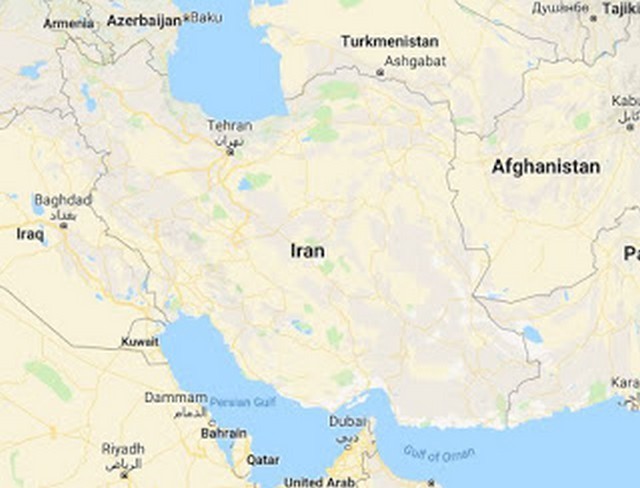
How Trump can forge a new path towards diplomacy with Iran

By Seyed Hossein Mousavian

A termination of hostilities will be impossible as long as Washington thinks it can coerce Tehran into submission

In a statement issued on 20 February, more than 50 pro-diplomacy organisations representing millions of American voters urged US policymakers to respect the Iran nuclear deal, which verifiably blocks Iran’s pathway to a nuclear weapon, supports good-faith diplomacy and opposes war with Iran.

Earlier last month, as millions of Iranians rallied to mark the 40th anniversary of the 1979 revolution that ended 2,500 years of monarchy in Iran, US President Donald Trump tweeted in Persian and English: “40 years of corruption. 40 years of repression. 40 years of terror. The regime in Iran has produced only #40YearsofFailure. The long-suffering Iranian people deserve a much brighter future.”

In response, Iranian Foreign Minister Mohammad Javad Zarif tweeted: “#40YearsofFailure to accept that Iranians will never return to submission. #40YearsofFailure to adjust US policy to reality. #40YearsofFailure to destabilize Iran through blood & treasure.”

Nuclear fallout

Both Iranian and US leaders concur that Washington has imposed the most biting sanctions ever on Tehran. It bears noting, however, that with the exception of the brief period from 2013 to 2016, when Tehran and Washington negotiated at the highest levels to resolve one of their most complicated disagreements – the nuclear issue – US policy towards Iran has been constantly focused on economic sanctions, pressure and regime change.

The question remains whether Trump wants to continue on this ineffective and costly path, or pursue a new approach with Iran to break decades of deadlock in their bilateral relations. “Change and our attitude will change,” Iranian Supreme Leader Ayatollah Ali Khamenei has said. Trump could, in fact, end decades of US-Iran animosity by adopting a five-pronged strategy.

First is intention. Washington must convey to Tehran its intention to abandon its regime-change policy, something that is only attainable if Washington shows its sincerity through both words and actions. Empty words followed up by hostile actions would only demonstrate Washington’s disingenuousness and lack of seriousness, likely leading to the opposite of the intended results.
Second is language. The US has always talked down to Iran, employing disrespectful and offensive language towards the country, calling it a “pariah state” and adding it to the “axis of evil”. To be fair, Iran has used the same derogatory language in reference to the US, which it brands as the “Great Satan”.

Even if Washington and Tehran want to remain eternal enemies, at least they could refrain from insulting each other’s people, history and culture. Khamenei recently clarified that Iranians would chant “Death to America” as long as Washington’s hostile policies continued, but noted that the slogan is directed at US leaders, not the American nation.

Diplomatic approach

Third is approach. A termination of hostilities will be impossible as long as Washington thinks it can coerce Iran into submission. A diplomatic approach must replace the threat of war and coercive policies – but diplomacy is not about issuing maximalist demands to a sovereign state and expecting total capitulation.

Fourth is having a pragmatic plan of action. A number of reports by US think tanks have recommended a “grand bargain, big for big” approach, but this is not realistic. A more practical approach is to begin with “small for small” measures.

The existing mistrust between Iran and the US runs deep, and Trump’s unilateral withdrawal from the nuclear deal has only exacerbated the situation. Therefore, the more realistic path forward involves smaller confidence-building steps, such as Iran-US cooperation on counter-narcotic and anti-piracy operations.

Fifth is the end state. Washington and Tehran will only enter such a roadmap if they can see the end state. During nuclear negotiations, the end state for the US was to prevent Iran from acquiring a nuclear weapon; for Iran, it was “nuclear rights” under the non-proliferation treaty and the lifting of sanctions. Negotiating for the mere purpose of negotiating is not in the interests of either country.

Resolving the current animosities between Iran and the US can be based on non-intervention and a joint respect for sovereignty. There can also be win-win solutions for some of the ongoing practical issues, such as a fair regional arrangement for conventional and unconventional weapons in the Middle East.

Sustainable peace

While Iran has voluntarily limited the range of its ballistic missiles to 2,000 kilometres, Israel and Saudi Arabia both possess missiles with more than double that range. And while Israel is the only country in the Middle East with a nuclear weapons arsenal, Iran – which does not have any nuclear weapons – is under pressure and biting sanctions.

Repeated UN resolutions have called for establishing nuclear-weapon-free zones in the Middle East. The implementation of UN resolutions, without double standards, will open the path towards sustainable peace, potentially resolving many of the disputes between Tehran and Washington.

A day after Trump’s hostile remarks about Iran during his State of the Union address, Iranian President Hassan Rouhani said Iran was ready to establish “friendly relations” with the US if it apologised for past wrongs.

A change in relations is possible, but it requires patience and the right approach. A real change – a big change – would take many years, requiring both sides to embrace the obligations and opportunities that come under the banner of peace.

The views expressed in this article belong to the author and do not necessarily reflect the editorial policy of Middle East Eye.

Seyed Hossein Mousavian is Middle East security and nuclear policy specialist at Princeton University and a former spokesman for Iran’s nuclear negotiators.

4 March 2019

Source: www.middleeasteye.net

Idlib- Reportage From The Last Front In Syria

By Andre Vltchek

For a while, all the guns have fallen silent.

I am near Idlib, the last stronghold of the terrorists in Syria. The area where the deadliest anti-government fighters, most of them injected into Syria from Turkey, with Saudi, Qatari and Western ‘help’, are literally holed up, ready for the final showdown.

Just yesterday, mortars were falling on villages near the invisible frontline, separating government troops and the terrorist forces of Al Nusra Front. The day before yesterday, two explosions rocked the earth, only a couple of meters from where we are now standing.

They call it a ceasefire. But it’s not. It is one-sided. To be more precise: the Syrian army is waiting, patiently. Its cannons are pointing towards the positions of the enemy, but the orders from Damascus are clear: do not fire.

The enemy has no scruples. It provokes, endlessly. It fires and bombs, indiscriminately. It kills. Along the frontline, thousands of houses are already ruined. Nothing gets spared: residential districts, sport gymnasiums, even bakeries.There is an established routine: assaults by the terrorists, rescue operations organized by Syrian armed forces (SAA – Syrian Arab Army) and Syrian National Defense Forces, then immediate rebuilding of the damage.

Hundreds of thousands of Syrian people have lost their lives in this war. Millions had to leave their homeland. Millions have been internally displaced. For many, the conflict became a routine. Rescue operations became routine. Rebuilding tasks became routine, too.

Now, it is clear that the final victory is near. Syria survived the worse. It is still bleeding, but most of its territories are beginning to heal. People are slowly returning home, from Lebanon and Turkey, from Germany and elsewhere. They go through rubble – their former homes. They sit down and cry. Then, they get up and start rebuilding. That’s in other parts of the country: Duma, Homs, Aleppo, Deir ez-Zur.

But in the villages and towns north of Hama and towards Idlib, the war is far from being over.

In the town of Squalbiah, Commander Nabel Al-Abdallah of the National Defense Forces (NDF) explained to me:

“SAA could easily use force and win militarily; it could take Idlib. But the SAA operates under command of President Assad, who believes in negotiations. If we take the city now, there would be huge casualties.”

The situation is not as simple, as we would like it to be. Victory may be near, but the West is not giving up, nor is Turkey. There are still pockets that are held by the US and French troops, and around Idlib (including Manbij), a large area is still controlled by the terrorists, who were transported here from all corners of Syria, under the Russian-sponsored agreement.

And there is more to it: My sources in Syria shared the latest:

“Some 4 months ago, the ’new ISIS’ appeared in the south of Idlib, not far from where we are right now. They were injected into Syria by the Turks. They were wearing brand new uniforms, white long dresses. Before, they were recognizable by black or gray outfits – ‘Afghan-style’. They now call themselves ‘HurrasAldeen’, or ‘The Guardians of Religion’. Why? In order for the United States, and the West in general, to continue to support them. The ISIS are officially on the list of the terrorist organizations’, but this new ‘brand’ is not.”

I ask Commander Nabel Al-Abdallah, what the West really wants? He replies, immediately:

“The West wants terrorism to spread to Russia and China. Many terrorists work and fight directly for the interests of the United States.

We need to take care of the innocent civilians. But we also have to find the solution, very quickly. If we fail, terrorism will spread all around the world.”

We sit in the Commander’s provisory headquarters, having a quick cup of tea, before moving to the frontline.

He wants to say something. He thinks, how. It is not easy. Nothing is easy under the circumstances, but he tries, and what he utters makes sense:

“If we don’t have solution, soon, terrorists will damage the world. Our problems are not just the ISIS, but above all, the ideology that they represent. They use Islam, they say that they fight in the name of Islam, but they are backed by the United States. And here, the SAA, our military and our defense forces, are fighting for the world, not just for Syria.”

We embrace and I go. His men drive me in a military vehicle to the outskirts of As Suqaylabiyah (also known as Squalbiah). From there, I photograph a hospital and the positions of Al Nusra Front. They are there, right in front of me, just a couple of hundreds of meters.

I am told that I am like a sitting duck, exposed. I work fast. Luckily, today the terrorists are not in the mood for shooting.

Before returning to the vehicle, I try to imagine how life must bethere, under Al Nusra Front or the ISIS occupation.

From the hill where I stand, the entire area looks green, fertile and immensely beautiful. But I know, I clearly understand that it is hell on earth for those who live in those houses down below; in the villages and towns controlled by some of the most brutal terrorists on earth.

I also know that, these terrorist monsters are here on foreign orders, trying to destroy Syria, simply because its government and people have been refusing to succumb to the Western imperialist dictates.

Here, it is not only about theory. The lives of millions have been already destroyed. Here it isall concrete and practical – it is reality.

We can hear explosions, in a distance. The war may be over in Damascus, but not here. Not here, yet.

My friend Yamen is from the city of Salamiyah, some 50 kilometers from Hama. Only recently the area around his hometown was liberated from the extremist groups.

Twenty kilometers west from Salamiyah lies the predominantly Ismaili village of Al Kafat,which used to be surrounded by both Al-Nusra Front and the ISIS.

Mr. Abdullah, President of local Ismaili Council, recalls the horrors which his fellow citizens had to endure:

“In the past, we had two car bomb explosions here. In January 2014, 19 people were killed, 40 houses totally destroyed and 300 damaged. Fighting was only 200 meters away from here. Both Al-Nusra Front and ISIS surrounded the village, and were cooperating. We are very close to one of the main roads, so for the terrorists, it was an extremely important strategic position. This entire area was finally liberated only in January 2018.”

Whom do they blame?

Mr. Abdullah does not hesitate:

“Saudis, Turks, the USA, Europe, Qatar…”

We walk through the village. Some homes are still lying in ruins, but most of them have at least been partially restored. On the walls and above several shops, I can see the portrait of a beautiful young woman, who was killed during one of the terrorist assaults. 65 villagers were slaughtered, in total. Before the war, the population of the village was 3,500, but traumatized and impoverished by war, many decided to leave and now only 2,500 inhabitants live here, cultivating olive trees, herding sheep and cows.

Before my visit here, I was told that education played an extremely important role in defending this place, and in keeping morale high during the darkest days of combat and crises. Mr. Abdullah readily confirmed it:

“The human brain has the capacity to solve problems, and to defuse crises. During a war like this, education is extremely important. Or more precisely, it is mainly about learning, not only about education. Al-Nusra and ISIS – they are synonymous with ignorance. If your brain is strong, it easily defeats ignorance. I think we succeeded here. And look now: this poor village has at this moment 103 students attending universities, allover Syria.”

As we drive on, east, large portraits of a brother of my friend Yamen decorate many military posts. He was one of the legendary commanders here, but was killed in 2017.

Then I see a castle: monstrous, more than two millennia old, overlooking the city of Salamiyah. There are green fields all around,so much beauty, in all the corners of Syria.

“Come back and visit all these marvels when the war is over,” someone around me jokes.

I don’t see it as a joke.

“I will,” I think. “I definitely will”. But we have to win, and win very soon,as soon as possible! To make sure that nothing else goes up in flames.

I drop my bag in at a local inn in Salamiyah, and ask my comrades to drive me on, further east. I want to see, to feel how life was under ISIS, and how it is now.

There are ruins, all around us. I saw plenty of terrible urban ruins during my previous visit: all around Homs and the outskirts of Damascus.

Here I see rural ruins, in their own way as horrifying as those scarring all the major cities of Syria.

This entire area had recently been a frontline. Or it was screaming in the hands of the terrorist groups, mainly ISIS.

Now it is a minefield.The road is cleared, but not the fields; not the remains of the villages.

I photograph a tank that used to belong to the ISIS; burned and badly damaged. It is an old Soviet tank, which used to belong to the Syrian army. It was captured by the ISIS, and then destroyed by either the SAA or a Russian airplane. Next to the tank – a chicken farm burned to the ground.

The Lieutenant, who is accompanying me, goes on, monotonously, with his grizzly account:

“Today, outside Salamiyeh, 8 people were killed by the landmines.”

We leave the vehicle, and walk slowly down the road, which is full of craters.

Suddenly, the Lieutenant stops without any warning:

“And here, my cousin was killed by another mine.”

We reach Hardaneh Village, but almost no one is left here. There are ruins everywhere. Before – 500 people lived here, now only 30. This is where heavy fighting against the ISIS took place. 13 local people were killed, 21 soldiers ‘martyred’. Other civilians were forced to leave.

Mr. Mohammad Ahmad Jobur is the local administrator (el muchtar), 80 years old:

“First, we fought ISIS, but they overwhelmed us. Most of us had to leave. Now some of us returned, but only few…Yes, now we have electricity; at least 3 hours a day, and our children can go to school. The old school was destroyed by the ISIS, so kids are now collected and taken to a bigger town for education. Every villager wants to come back, but most of the families have no money to rebuild their houses and farms. The government made a list of the people whose dwellings were destroyed. They will get help, but help will be distributed gradually, stage by stage.”

Naturally: almost the entire country lies in ruins.

Are villagers optimistic about the future?

“Yes, very optimistic,” declares the village chief. “If we get help, if we can rebuild, we will all come back.”

But then, they show me the water wells, destroyed by the ISIS.

It is all smiles through tears. So far only 30 have come back. How many will come home this year?

I asked the chief what the main aim of the ISISwas?

“No aim, no logic. ISIS was created by the West. They tried to destroy everything, this village, this area, this entire country. They made no sense… they do not think like us… they only brought destruction.”

*

Soha, a village even further east,a place where men, women and children were forced to live under the ISIS.

I am invited into a traditional house. People sit in a circle. Several younger women are hiding their faces, not wanting to be photographed. I can only guess why. Others don’t care. What happened here; what horrors took place? Nobody will pronounce it all.

This is a traditional village inhabited by a local tribe; very conservative.

Testimonies begin to flow:

“First, they banned us from smoking, and shaving. Women had to cover their faces and feet; they had to wear black… Strict rules were imposed… education was banned. The ISIS created terrible prisons… They were often beating us with rubber hoses, in public. Some people were beheaded. Severed heads were exhibited above the main square.”

“When ISIS arrived, they brought with them their slaves – kidnapped people from Raqqah. Some women got stoned in public, alive. Other women were thrown to their death from the roofs and from other high places. They were amputating hands… Various women were forced to marry ISIS fighters…”

An uncomfortable silence followed, before the topic got changed.

“They killed 2 men from this village…”

Some say more, many more.

Several youngsters joined the ISIS. 3 or 4… ISIS would pay $200 to each new combatant who subscribed. And of course, they were promising heaven…

In one of the villages, I am shown a big rusty cage for ‘infidels’ and “sinners”. People were locked in there like wild animals, and kept exposed, in the open.

I see the destroyed ‘police’ building of the ISIS. At one point I am offered some papers – documents – which are just scattered all over the floor. I don’t want to take any with me, not even as a ‘souvenir’.

Testimonies continue to flow:

“They were beheading people for being in possession of mobile phones… Local villagers were disappearing… they were kidnapped…”

At some point, I have to halt this flow of testimonies. I can hardly process all that is being said. People are shouting over each other. One day, someone should take it all down, to record it, to file it. I do what I can, but I realize that it is not enough. It is never enough. The scale of the tragedy is too great.

By now it is getting dark… and then it is dark. I have to return to Salamiyeh, to rest a bit; to sleep fora few hours, and then to return to the frontline, where both the Syrian and Russian soldiers are bravely facing the enemy. Where they are doing all that is humanly possible to prevent those gangsters sponsored by the West and their allies, from returning to the already liberated areas of the country.

But before I fall asleep, I recall; I am haunted bythe image of a little girl who survived the occupation of her village by the ISIS. She stood resting her back against the wall. She looked at me for a while, then lifted her hands and moved her fingers quickly across her throat.

The next day, the Commander of the National Defense Forces in Muhradah, Simon Al Wakel, drives me all around the city and the outskirts, Kalashnikovresting next to his seat. It is a quick and matter-of-fact ‘tour’:

“This is where the mortars landed two days ago, there is a power plant which was liberated from the terrorists, and this is a huge gymnasium attacked by the terrorists simply because they hate that our girls excel in volleyball and basketball.”

We talk to locals. Commander Simon gets stopped in the middle of the streets, embraced by total strangers, kissed on both cheeks.

“I have been targeted more than 60 times,” he tells me. One of his former cars is rotting at a remote parking lot, after it was hit and burned by the terrorists.

He shrugs his shoulders:

“Russians and Turks negotiated the ceasefire, but obviously, terrorists do not respect any agreements.”

We return to the frontline. I am shown the Syrian cannons pointing towards the positions of Al Nusra Front. The local headquarters of the terrorists is clearly visible, not too far from the magnificent ruins of theSheizar Citadel.

First, I see the Syrian soldiers, operating slightly outdated Soviet as well as newer Russian equipment: armed vehicles, tanks, “Katyushas”. Then I spot several Russian boys settling down in two houses with a commanding view of the valley and the enemy territory.

Both the Syrian and Russian armies, shoulder to shoulder, are now facing the last enclave of the terrorists.

I wave at the Russians, and they wave back at me.

Everyone seems to be in a good mood. We are winning. We are ‘almost there’.

We all also know that it is still too early to celebrate. Terrorists from all over the world are hoarded in the area in and around the city of Idlib. The US, UK and French “Special Forces” are operating in several parts of the country. The Turkish military keeps holding big chunk of the Syrian land.

The weather is clear. The green fields are fertile and beautiful. The nearby citadel is imposing. Just a little bit more of determination and endurance, and this wonderful country will be fully liberated.

We all realize it, but no one is celebrating, yet. Nobody is smiling. The facial expressions of the Syrian and Russian comrades are serious. Men are looking down towards the valley, weapons ready. They are fully concentrated. Anything may happen; anytime.

I know why there are no smiles; we all know: Soon, we may defeat the enemy.Soon, the war may end. But hundreds of thousands of Syrian people have already died.

Reportage first published by NEO – New Eastern Outlook

Andre Vltchek is a philosopher, novelist, filmmaker and investigative journalist.

8 March 2019

Source: www.informationclearinghouse.info

The Recolonization of Latin America and the War on Venezuela

By Prof. James Petras

“The Western Hemisphere is our Region” Michael Pompeo, US Secretary of State

Introduction

Not since the US pronounced the Monroe Doctrine proclaiming its imperial supremacy over Latin America, nearly 200 years ago, has a White House regime so openly affirmed its mission to recolonize Latin America.

The second decade of the 21st century has witnessed, in word and deed, the most thorough and successful US recolonization of Latin America, and its active and overt role as colonial sepoys of an imperial power.

In this paper we will examine the process of recolonization and the strategy tactics and goals which are the driving forces of colony- building. We will conclude by discussing the durability, stability and Washington’s capacity to retain ownership of the Hemisphere.

A Brief History of 20th Century Colonization and Decolonization

US colonization of Latin America was based on direct US military, economic, cultural and political interventions with special emphasis on Central America, North America (Mexico) and the Caribbean. Washington resorted to military invasions, to impose favorite trade and investment advantages and appointed and trained local military forces to uphold colonial rule and to ensure submission to US regional and global supremacy.

The US challenged rival European colonial powers – in particular England and Germany, and eventually reduced them to marginal status, through military and economic pressure and threats.

The recolonization process suffered severe setbacks in some regions and nations with the onset of the Great Depression which undermined the US military and economic presence and facilitated the rise of powerful nationalist regimes and movements in particular in Argentina, Brazil, Chile Nicaragua and Cuba.

The process of ‘decolonization’ led to, and included, the nationalization of US oil fields, sugar and mining sectors; a shift in foreign policy toward relatively greater independence; and labor laws which increased workers’ rights and leftwing unionization.

The US victory in World War II and its economic supremacy led Washington to re-assert its colonial rule in the Western Hemisphere. The Latin American regimes lined up with Washington in the Cold and Hot wars, backing the US wars against China, Korea, Vietnam and the confrontation against the USSR and Eastern Europe.

For Washington, working through its colonized dictatorial regimes, invaded every sector of the economy, especially agro-minerals; it proceeded to dominate markets and sought to impose colonized trade unions run by the imperial-centered AFL-CIO.

By the early 1960’s a wave of popular nationalist and socialist social movements challenged the colonial order, led by the Cuban revolution and accompanied by nationalist governments throughout the continent including Argentina, Bolivia, Venezuela, Peru, Ecuador and the Dominican Republic. US multi-national manufacturing firms were forced to engage in joint ventures or were nationalized, as were oil, mineral and energy sectors.

Nationalists proceeded to substitute local products for imports, as a development strategy. A process of decolonization was underway!

The US reacted by launching a war to recolonize Latin America by through military coups, invasions and rigged elections. Latin America once more lined up with the US in support of its economic boycott of Cuba,and the repression of nationalist governments. The US reversed nationalist policies and denationalized their economies under the direction of US controlled so-called international financial organizations – like the International Monetary Fund (IMF), World Bank (WB) Inter-American Development Bank.

The recolonization process advanced, throughout the 1970’s and 1980’s, under the auspices of newly imposed military regimes and the new ‘neo-liberal’ free-market doctrine.

Once again recolonization led to highly polarized societies in which the domestic colonized elites were a distinct minority. Moreover, the colonial economic doctrine allowed the US banks and investors to plunder the Latin countries, impose out- of -control debt burdens, de-industrialization of the economies, severe increases in unemployment and a precipitous decline in living standards.

By the early years of the 21st century, deepening colonization led to an economic crisis and the resurgence of mass movements and new waves of nationalist-popular movements which sought to reverse – at least in part – the colonial relationship and structures.

Colonial debts were renegotiated or written off; a few foreign firms were nationalized; taxes were increased on agro-exporters; increases in public welfare spending reduced poverty ; public investment increased salaries and wages. A process of de-colonization advanced, aided by a boom in commodity pieces.

Twenty-first century decolonization was partial and affected only a limited sector of the economy; it mainly increased popular consumption rather than structural changes in property and financial power.

De-colonization co-existed with colonial power elites. The major significant changes took place with regard to regional policies. Decolonizing elites established regional alliance which excluded or minimized the US presence.

Regional power shifted to Argentina and Brazil in Mercosur; Venezuela in Central America and the Caribbean; Ecuador and Bolivia in the Andean region.

But as history has demonstrated, imperial power can suffer reverses and lose collaborators but while the US retains its military and economic levers of power it can and will use all the instruments of power to recolonize the region, in a step by step approach, incorporating regions in its quest for hemisphere supremacy.

The Recolonization of Latin America: Brazil, Argentina, and the Lima Pact Against Venezuela

As the first decade of the 21st century unfolded numerous Latin American governments and movements began the process of decolonization, displacing US client regimes, taking the lead in regional organizations, diversifying their markets and trading partners.

Nevertheless, the leaders and parties were incapable and unwilling to break with local elites tied to the US colonization project.

Vulnerable to downward movements in commodity prices, composed of heterogeneous political alliances and unable to create or deepen anti-colonial culture, the US moved to reconstruct its colonial project.

The US struck first at the ‘weakest link’ of the decolonization process. The US backed coups in Honduras and Paraguay. Then Washington turned to converting the judiciary and congress as stepping stones for launching a political attack on the strategic regimes in Argentina and Brazil and turning secondary regimes in Ecuador, Chile, Peru and El Salvador into the US orbit.

As the recolonization process advanced, the US regained its dominance in regional and international organizations. The colonized regimes privatized their economies and Washington secured regimes willing to assume onerous debts, previously repudiated.

The US advances in recolonization looked toward targeting the oil rich, dynamic and formidable anti-colonial government in Venezuela.

Venezuela was targeted for several strategic reasons.

First, Venezuela under President Chavez opposed US regional and global colonial ambitions.

Secondly, Caracas provided financial resources to bolster and promote anti-colonial regimes throughout Latin America especially in the Caribbean and Central America.

Thirdly, Venezuela invested in, and implemented, a profound and comprehensive state social agenda, building schools and hospitals with free education and health care, subsidized food and housing. Socialist democratic Venezuela contrasted with the US abysmal dismantling of the welfare state among the reconstructed colonial states.

Fourthly, Venezuela’s national control over natural resources, especially oil, was a strategic target in Washington imperial agenda.

While the US successfully reduced or eliminated Venezuela’s allies in the rest of Latin America, its repeated efforts to subdue Venezuela failed.

An abortive coup was defeated; as was a referendum to impeach President Chavez.

US boycotts and the bankrolling of elections failed to oust the Venezuelan government

Washington was unable to pressure and secure the backing of the mass of the population or the military.

Coup techniques, successful in imposing colonial regimes elsewhere, failed.

The US turned to a multi-prong, continent-wide, covert and overt military, political, economic and cultural war.

The White House appointed Juan Guaido, a virtual unknown, as ‘interim President’. Guaido was elected to Congress with 25% of the vote in his home district. Washington spent millions of dollars in promoting Guaido and funding NGOs and self-styled human rights organization to slander the Venezuelan government and launch violent attacks on the security forces.

The White House rounded up its recolonized regimes in the region to recognize Guaido as the ‘legitimate President’.

Washington recruited several leading European Union countries, especially the UK, France and Germany to isolate Venezuela.

The US sought to penetrate and subvert the Venezuelan populace via so-called humanitarian aid, refusing to work through the Red Cross and other independent organizations.

The White House fixed the weekend of Feb. 23 – 24 as the moment to oust President Maduro. It was a total, unmitigated failure, putting the lie to all of Washington’s fabrications.

The US claimed the Armed Forces would defect and join with the US funded opposition – only a hundred or so , out of 260,000 did so. The military remained loyal to the Venezuelan people, the government and the constitution despite bribes and promises.

Washington claimed ‘the people’ in Venezuela would launch an insurrection and hundreds of thousands would cross the border. Apart from a few dozen street thugs, tossing Molotov cocktails there was no uprising and less than a few hundred tried to cross the border.

Tons of US ‘aid’ remained in the Colombian warehouses. The Brazilian border patrol sent the US funded ‘protestors’ packing for blocking free passage across the frontier

Even US provocateurs who incinerated two trucks carrying ‘aid’ were exposed, the vehicles in flames remained on the Colombian side of the border. US sponsored boycotts of Venezuelan oil exports partially succeed because Washington illegaly seized Venezuela export revenues.

The recolonized Lima Group passed hostile resolutions and re-anointed Trump’s President Guaido, but few voters in the region took their pronouncements serious.

Conclusion

What are the colonized states expected to serve? Why has the White House failed to recolonize Venezuela as it did in the rest of Latin America?

The recolonized states in Latin America serve to open their markets to US investors on easy terms, with low taxes and social and labor costs, and political and economic stability based on repression of popular class and national struggles.

Colonized regimes are expected to support US boycotts, coups and invasions and to supply military troops as ordered.

Colonized regimes take the US side in international conflicts and negotiations; in regional organizations they vote with the US and meet debt payments on time and in full.

The recolonized nations ensure favorable results for Washington by manipulating elections and judicial decisions and by excluding anti-colonial candidates and officials and arresting political activists.

The colonized regimes anticipate the needs and demands of Washington and introduce resolutions on their behalf in regional organizations.

In the case of Venezuela, they promote and organize regional bloc like the Lima Group to promote US led intervention.

As Washington proceeds to destabilize Venezuela the colonized allies recycle US mass media propaganda and offer sanctuaries for opposition defectors and refugees.

In sum the recolonized elites facilitate domestic plunder and overseas conquests.

Venezuela success in resisting and defeating the US drive for reconquest is the result of nationalist and socialist leaders who re-allocate private wealth and re-distribute public expenditures to the workers, peasants and the unemployed.

Under President Chavez, Venezuela recruited and promoted military and security forces loyal to the constitutional order and in line with a popular socio-economic and anti-colonial agenda. Venezuela ensured that elections and judicial appointments were free and in-line with the politics of the majority.

The Venezuelans ensured that military advisers were independent of US military missions and aid agencies which plot coups and are disloyal to the nationalist state.

Venezuelan social democracy, its social advances and the massive reduction of poverty and inequality, contributed to reinforcing commitments to endogenous cultural values and national sovereignty.

Despite the US accumulation of colonial vassals throughout Latin America and Europe, Venezuela has consolidated mass support. Despite Washington’s capture of the global mass media it has not influenced popular opinion on a world scale. Despite US threats of a ‘military option’it lacks global support. In the face of prolonged and large scale resistance ,Washington hesitates. In addition the Latin Americans colonized states face domestic social and economic crises and political resistance. Europe confronts a regional break-up. Washington is riven by partisan divisions and a constitutional crisis.

The failure of the imperialist ultra’s in Washington to defeat Venezuela can set in motion a new wave of decolonization struggles which can force the US to look inward and downward – in order to decolonize its own electorate.

*

Note to readers: please click the share buttons above. Forward this article to your email lists. Crosspost on your blog site, internet forums. etc.

Award winning author Prof. James Petras is a Research Associate of the Centre for Research on Globalization.

6 March 2019

Source: www.globalresearch.ca

Hezbollah’s ban in the UK is a badge of honour

By John Wight

Hezbollah has earned a formidable reputation for military prowess on the battlefield and political nous off it. It’s no wonder ‘they’ want to ban it.

Attaining to the status of rule of thumb is that whenever a military and/or political organization is proscribed in the West, prudence demands a closer look; this on the basis that in most cases (though not all) what ‘they’ deem worthy of being proscribed and banned is in truth worthy of support.

Take Hezbollah, for example, and the British government’s decision to criminalise the Shiite group’s political wing. Previously only the group’s military wing had been banned in the UK. Is there anyone left in the room that seriously believes this constitutes anything other than another feeble manifestation of the UK’s servile toadying to Washington?

In what stands as a monument to opportunism, the Trump administration has consistently placed Hezbollah in same terrorism box as Islamic State (IS, formerly ISIS) and Al-Qaeda, conveniently eliding the small detail that the Lebanese resistance and national liberation movement has done as much as, if not more than, any single military force in fighting and defeating IS and Al-Qaeda in Syria.

Author of ‘The Battle For Syria’, Christopher Phillips, writes, “Given Hezbollah’s reputation as the most impressive military force in the Arab world, [the group’s involvement in the conflict] sapped rebel morale and boosted the regime. By offering expertise that Assad lacked, such as light infantry and urban warfare expertise, training, or directing military tactics, from 2013 [Hezbollah] became a vital component of Assad’s forces and greatly shaped the conflict.”

The move to ban Hezbollah’s political wing in the UK combines with the organization’s consistent demonization in Washington as part of the ongoing neocon crusade against Iran. It is a crusade that attests to the Shia behemoth’s resolute stance in resistance to and defiance of US hegemony and its regional proxies, Israel and Saudi Arabia.

Joining Iran in what has come to be known as an axis of resistance in the region is Hezbollah in southern Lebanon, where it enjoys overwhelming support and allegiance, and Syria.

Hezbollah, it is worth remembering, is also an electoral force of note in Lebanon, playing a full and transparent part in the country’s politics. In fact the group’s legitimacy in Lebanon is not in doubt, reflected in its endorsement by the country’s Christian president, Michel Aoun, no less.

A proper accounting of Hezbollah requires a grasp of the organization’s roots as a child of Israeli militarism and aggression over the course of repeated military incursions and invasions into Lebanon by the Israel Defense Forces (IDF), stretching back to the late 1970s.

Veteran Middle East correspondent David Hirst, in his work ‘Beware Of Small States,’ delineates the factors responsible for the group’s birth in the mid-1980s, revealing that “Israel, with its invasion” [of southern Lebanon] supplied “the provocation, the anger, the turmoil, or, as Israel’s like-minded American friends, the neoconservatives, might have put it, the ‘constructive chaos’ out of which new orders grow.”

Confirming Hirst’s analysis are the words of Hezbollah leader Hassan Nasrallah himself, whom Hirst quotes, “Had the enemy [Israel] not taken this step, I don’t know whether something called Hizbullah (sic) would have been born.”

Hezbollah’s establishment in resistance to an apartheid state bears an historical comparison with the African National Congress (ANC) in South Africa. British Prime Minister Margaret Thatcher’s branding of the ANC as a terrorist organization in the 1980s is no surprise either, considering the British establishment’s long tradition of standing on the side of the oppressor against the oppressed.

Hezbollah is, then, the Middle East’s answer to the ANC; like its African counterpart born of apartheid, along with the militarism and aggression it spawns.

The group’s formidable military reputation was elevated to near legendary status during its short conflict against Israeli forces in 2006. Hezbollah is widely perceived to have out-thought and outfought its IDF adversary.

Former MI6 officer Alastair Crooke, in a comprehensive analysis of the conflict, revealed, “Hezbollah’s fighters proved to be dedicated and disciplined. Using intelligence assets to pinpoint Israeli infantry penetrations, they proved the equal of Israel’s best fighting units. In some cases, Israeli units were defeated on the field of battle, forced into sudden retreats or forced to rely on air cover to save elements from being overrun.”

Hezbollah’s victory over the IDF in 2006 mirrors the victory of Cuban forces against the forces of white apartheid South Africa at the Battle of Cuito Cuanavale in Angola between 1987-88.

Nelson Mandela, a totemic and towering symbol of the struggle against apartheid in South Africa, described the outcome of Cuito Cuanavale as “a historic turning point in the struggle for the total liberation of the region from racist rule and aggression.”

Though too soon to assert that Hezbollah’s victory over the apartheid forces of Israel in 2006 marked a similar historic turning point, it is impossible to argue that it went some way to demoralizing the Israeli military and political establishment, which hitherto operated on the basis of the invincibility of Israeli military power in the region, bolstered by its close alliance with Washington and other Western states, the UK among them.

Crooke says “Hezbollah’s military defeat of Israel [in 2006] was decisive, but its political defeat of the United States – which unquestioningly sided with Israel during the conflict and refused to bring it to an end – was catastrophic and has had a lasting impact on US prestige in the region.”

One man’s terrorist is another man’s freedom fighter, goes the well-worn truism, and is ineffably appropriate when it comes to the standing of Hezbollah.

Organized on the basis of non-sectarianism, the organization has been at the forefront of resistance to Islamic State and other Salafi-jihadi groups in the region, while enjoying a vaunted reputation as a positive force in Lebanon itself for its dedication to upholding the country’s sovereignty and dignity, defending it from Israeli aggression and militarism.

Taking all these factors into account, and seasoning them with Britain’s own regressive role in the region, Hezbollah’s UK ban has to count as a badge of honor.

John Wight has written for a variety of newspapers and websites, including the Independent, Morning Star, Huffington Post, Counterpunch, London Progressive Journal, and Foreign Policy Journal.

7 March 2019

Source: www.rt.com