By Robert Burrowes
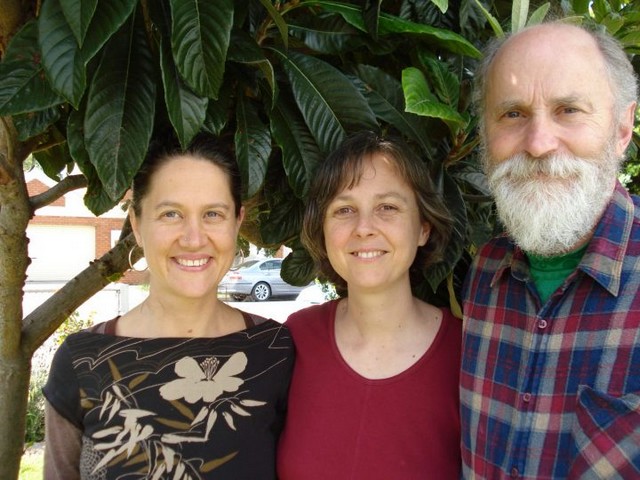
Authored by Robert J Burrowes, Anita McKone and Anahata Giri
Dear Fellow Signatories of the Nonviolence Charter,
How are you all? And welcome to our most recent signatories and organizations!
This is the latest six-monthly report on progress in relation to ‘The People’s Charter to Create a Nonviolent World’ – with the Spanish translation, kindly done by Antonio Gutiérrez Rodero in Venezuela, here – together with a sample of news about Charter signatories and organizations.
Our collective effort to build a worldwide consensus against the use of violence in all contexts continues to make progress, even against rather overwhelming odds!
Our last report on 14 October 2018 was kindly published by Antonio C.S. Rosa in the TRANSCEND Media Service Weekly Digest and by Pía Figueroa at the Pressenza International Press Agency. Many thanks to both of you!
At the time of today’s report, we have signatories in 105 countries. We also have 117 organizations/networks from 37 countries, with the ‘Pressenza International Press Agency’, the most recent endorsing network. If you wish, you can see the list of organizational endorsements on the Charter website.
If you wish to see individual signatories, click on the ‘View signatures’ item in the sidebar. You can use the search facility if you want to look for a specific name.
The latest progress report article ‘Tackling the “Impossible”: Ending Violence’, showcasing the efforts of several Charter signatories, was recently distributed to many progressive news websites: it was published by a number of outlets in 13 countries, thanks to very supportive editors (several of whom are Charter signatories: special thanks to Antonio Rosa at ‘TRANSCEND’, Gifty Ayim-Korankye at ‘Ghana web Online’ and Pía Figueroa at the ‘Pressenza International Press Agency’ ). Apart from these sites, where you can read the article in English, thanks to its translation into Spanish by María Cristina Sánchez, you can read it in that language here: ‘Hacer frente a lo “imposible”: poner fin a la violencia’.
If you feel inclined to do so, you are welcome to help raise awareness of the Nonviolence Charter using whatever means are easiest for you.
And our usual invitation and reminder: You are most welcome to send us a report on your activities for inclusion in the next report. We would love to hear from you!
Anyway, here is another (inadequate) sample of reports of the activities of individuals and organizations who are your fellow Charter signatories.
To begin, we are deeply saddened to report the passing of Tom Shea, a long-time stalwart in the struggle for a better world and one of the original team of individuals who launched the Nonviolence Charter on 11 November 2011. As in the article above, at the end of this report we have included the full tribute to Tom Shea by his great friend and fellow nonviolent activist, Leonard Eiger at the Ground Zero Center for Nonviolent Action.
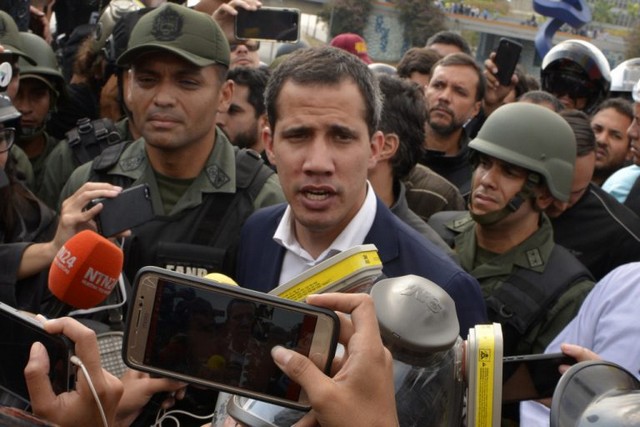
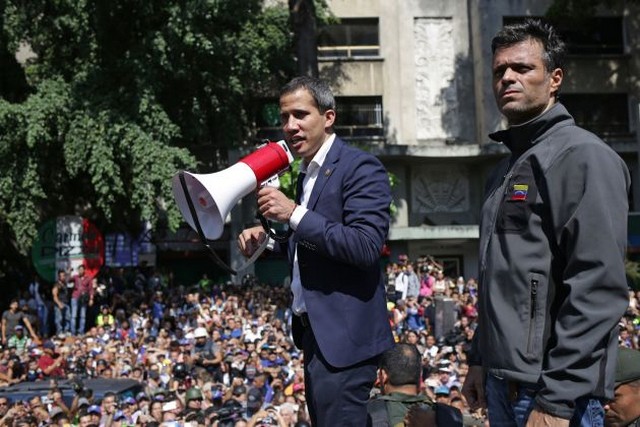
With much attention on Venezuela recently as it struggles to grapple with the onerous and illegal sanctions imposed on it as well as the threat of US military intervention, several Charter signatories have been acting in solidarity.
Following the 13-member peace and solidarity delegation, including Charter signatories Margaret Flowers and Kevin Zeese, that visited Venezuela in March – with an account of this delegation’s findings in Kevin and Margaret’s highly informative report ‘Venezuela: US Imperialism Is Based On Lies And Threats’ – Margaret and Kevin are now part of the Embassy Protection Collective (Colectivos Por La Paz) defending the Venezuelan Embassy in Washington DC from illegal takeover by the US government. If interested, you can sign the solidarity declaration and find out how to join the Embassy Protection Collective in this article: ‘Action: 24/7 Protection of DC Venezuelan Embassy’.
Another initiative to support our friends in Venezuela was outlined in the article ‘A Nonviolent Strategy to Defeat a US Military Invasion of Venezuela’.
Activist and eminent progressive journalist Abby Martin, creator and presenter of ‘The Empire Files’ on TeleSUR (based in Venezuela), continues her fearless telecasting of the truth in relation to vital world issues. Her recent telecasts have included this one on the situation in Venezuela, sharply contrasting the garbage published by the corporate media: ‘An Ocean of Lies on Venezuela’ which involved her interview of UN Human Rights Rapporteur Alfred de Zayas who recently wrote a report on Venezuela for the UN Human Rights Council – ‘Report of the Independent Expert on the promotion of a democratic and equitable international order on his mission to the Bolivarian Republic of Venezuela and Ecuador’ – identifying the crisis that the US ‘economic warfare’ against that country was precipitating.
Abby also interviewed Peter Phillips, professor of political sociology at Sonoma State University in the USA and another Charter signatory, about his recent book Giants: The Global Power Elite. But before giving this interview, Peter had written an article which highlighted key aspects of his book. Titled ‘Wealth Concentration Drives a New Global Imperialism’, the article will give you a superb introduction to the book, which identifies the world’s top seventeen asset management firms, such as BlackRock and J.P Morgan Chase, each with more than one trillion dollars of investment capital under management, as the ‘Giants’ of world capitalism. As of 2019, the seventeen firms collectively manage more than $US50 trillion in a self-invested network of interlocking capital that spans the globe. An invaluable book for understanding how our world works, Peter!
So if you want to watch Abby’s excellent interview of Peter, allowing him to focus on key issues, you can do so on her website: ‘Giants: Who Really Rules The World?’ Great stuff Abby and Peter.
Environmental journalist Robert Hunziker continues to fearlessly research and truthfully document the ongoing assaults that humans are inflicting on Earth’s biosphere. In two recent articles, focused on ice, Robert points out that ‘Arctic Permafrost No Longer Freezes… Even in Winter’ and discusses ‘The Blue Ocean Event and Collapsing Ecosystems’.
If you really want to grapple with climate reality, this second article of Robert’s is beyond sobering. The article outlines the content of a recent interview of Dr. Peter Wadhams, the world’s leading Arctic scientist. Robert notes that ‘Currently, the Arctic is heating up about 4 times faster than the rest of the planet… the temp difference between the Arctic and the tropics is dropping precipitously… thus, driving the jet streams less… creating meandering jet streams… in turn, producing extreme weather events throughout the Northern Hemisphere, especially in mid-latitudes where most of the world’s food is grown.’ Robert also notes that the study of ancient ice cores by a team from the British Antarctic Survey, University of Cambridge and University of Birmingham found ‘major reductions in sea ice in the Arctic’ which will crank up (via temperature amplification as a result of no Arctic sea ice) Greenland regional temperatures ‘by 16° C in less than a decade’. Thank you, Robert, for reporting what the corporate media won’t touch and even many activists find too terrifying to seriously contemplate.
In one of many older articles, Robert spelled out what is happening to the world’s rainforests and fresh water supply: ‘The world’s rainforests are under attack at a rate of 2.5 acres per second. Global warming and clear-cutting for growing palm oil and raising cattle are some of the biggest annihilators. The repercussions are devastating. For example, one of the consequences is harmful alteration of hydrological cycles for major grain-growing regions of the planet. But, that’s just the start of trouble.’ See ‘Drought-Laden Rainforests’.
Antonio Gutiérrez Rodero in Venezuela has kindly translated into Spanish two articles designed to assist parents to understand what their children need to reach their full potential: ‘Mi promesa a los niños y las niñas’ and ‘Nisteling: El arte de la escucha profunda’.
Charter signatory Tarak Kauff can’t seem to keep out of trouble! Tarak and six other members of US Veterans for Peace entered the US military base at Shannon Airport, Ireland on 17 March 2019 ‘to inspect and investigate an OMNI Air International plane on contract to the U.S. military’. Tarak and fellow veteran Ken Mayers were arrested for trespassing, despite the far greater international law violation of transiting U.S. military flights through Shannon to take troops and weapons to the illegal U.S. wars in North Africa and West Asia that have already killed up to a million children, and displaced millions of refugees. Tarak’s next court date is 8 May. You can read more about Tarak’s actions and his court, bail and jail experiences so far, along with that of fellow veteran Ken Mayers, in this article: ‘Antiwar Protesters, Tarak Kauff & Ken Mayers, Out Of Jail, Still In Ireland’.
Anyway, not one to ‘sit around’, Tarak has been actively supporting, from a distance, the ongoing activism of fellow activists in the USA, such as those involved in the Embassy Protection Collective who are staying in the Venezuelan embassy in Washington, DC to defend it against takeover by US authorities.
Dean Walker was deeply affected by watching the television program ‘The Undersea World of Jacques Cousteau’ as a child in the late 1960s and early 1970s. In his book ‘The Impossible Conversation’ he notes that ‘watching this series with its particular focus on how our human activity was impacting the planet’s oceans set a foundation for me’. He subsequently went on to a career in ‘transformation-based training’ which involved ‘the integration of very powerful curriculum with some form of engaging activity in the classroom or risk-perceived activities outside’. He worked with a wide range of audiences: corporate executives, gang kids, couples desiring more intimacy and spiritual students seeking greater peace and grace. But then, in 2014, he attended a life-changing event: a lecture by Professor Guy McPherson on ‘Abrupt Climate Change’ which outlined the range of self-reinforcing feedback loops that now have the Earth heading for a 4-10 degree Celsius temperature increase by 2026. Dean goes on to thoughtfully explain what is needed to engage meaningfully with this information. You can obtain his book on his website above.
Among her many activist commitments, Mairead Maguire continues her solidarity work in support of WikiLeaks editor Julian Assange, recently arrested and jailed by UK authorities after the corrupt ‘new’ president of Ecuador illegally rescinded Julian’s asylum. See ‘Mairead Maguire Requests Permission to Visit Assange’. Really appreciate your support for Julian, Mairead.
Professor Noam Chomsky continues, indefatigably, to present the truth about the US empire and its costs to all of us, including US citizens. You can see a compelling video on this subject here: ‘Requiem for the American Dream’.
In a recent article, Kathy Kelly points out that ‘Every War Is a War against Children’ and she evocatively documents examples of what this means for those children living in the war zones we call Yemen and Afghanistan. In an earlier article, Kathy questioned the morality of those corporations – such as Lockheed Martin, Boeing, General Dynamics and Raytheon – that profit from the killing their weapons make possible. See ‘Can We Divest from Weapons Dealers?’
Under the leadership of its Vice President, Dr. Steve Rajan, the International Association of Educators for World Peace recently made a preliminary announcement for its latest initiative ‘I Walk for Peace’, a Peace Walkathon in support of the UN International Day of Peace on 21 September 2019. Steve advises that ‘We are planning to mobilize about a million people in all the 14 states in Malaysia to take part in their own locality in celebration of the above event. If we can get the other national Chancellors to do the same, then we could create a global event. Then athletes in their respective countries could be appointed as IAEWP Peace Walkathon Ambassadors. We would be engaging the police, Armed Forces, Scouts Federation of Malaysia, The Red Cross/Crescent as well as the other uniformed enforcement agencies and public universities to participate, in the Peace Walkathon, at their own locations and states.’ Steve also continues to seek out and recruit suitable personnel for key roles in the IAEWP, recently announcing the new National Chancellor of Indonesia.
Remarkable journalist Jonathan Power continues to report what you won’t find in the corporate media. A recent article reviews a forthcoming book that exposes the underside of US foreign policy. You can read about this book in his article ‘The CIA: Surprise, Kill, Vanish’.
A 28-member US peace delegation to Iran from 25 February to 6 March 2019 included Margaret Flowers, Kevin Zeese and David Hartsough. Unfortunately, for Quaker and lifetime peace activist David, author of Waging Peace: Global Adventures of a Lifelong Activist and director of Peaceworkers, his trip didn’t go as planned. If you would like to read a compelling account of his time in Iran with some wonderful Iranians, while learning something about what it means to be on the wrong end of US sanctions, you will find it here: ‘An American Casualty of U.S. Economic Sanctions on Iran’. Glad you got the vital treatment you needed David. Plenty of work for you in this violent world of ours yet, we are sorry to remind you.
On 29 January 2019, the Supreme Court of Pakistan upheld its decision to acquit Ms. Asia Bibi, a Christian mother of five imprisoned and held in solitary confinement on death row for most of the past eight years, after she was convicted of blasphemy and sentenced to death in 2010. Two signatories have reported engagement with this shocking case. René Wadlow, President of the Association of World Citizens based in France, circulated a summary of the facts of the case with a relevant brief history of the issue of religious freedom in Pakistan. He also reported the very negative reaction to the decision within Pakistan where Ms. Bibi originally remained in prison after her acquittal on 29 October 2018 while her lawyer was forced to flee the country for his safety after demonstrations against the Supreme Court decision in the larger cities of Pakistan, with Islamist groups detrimentally focusing on the case. René called those who believe in liberty of conscience and belief to be active on the issue by sending expressions of concern to the authorities in Pakistan as well as strong statements concerning religious liberty and the need to abolish outdated laws on blasphemy. See ‘Pakistan Blasphemy Death Sentence Overturned: A One-time Event or a Trend Toward Justice?’ Pakistani High Court Advocate and Chairman of the Child Rights Committee of the Lahore Bar Association, Waheed Ahmad, also circulated the Supreme Court judgment in the case.
In another evocative reflection, Bob Koehler discusses the difference between what it means to feel (and be) connected and what it means to feel (and be) separated. He considers this question in the context of different issues that confront humanity today: the climate catastrophe, white supremacy, war. You can read Bob’s delightful account in ‘Our Wounded Planet’.
Angie Zelter reports the activities of Trident Ploughshares in the UK. A major action took place on 24 October 2018 when the Burghfield Atomic Weapons Establishment was blockaded by a group of Trident Ploughshares activists from across the UK who blocked the approach roads preventing workers from entering. Hidden in the leafy lanes of Berkshire, Burghfield A.W.E. and it’s partner facility Aldermaston are where the UK’s nuclear warheads are planned and produced before being loaded onto lorries for trucking up public roads to the Trident submarine fleet in Scotland. The Mearings which is a private road with access to the Main gate of AWE Burghfield was blocked at both ends by a car with two people locked to it. The construction gate had a line of five people locked across it with their arms in ‘lock-on’ tubes. 24 October marked 73 years since the birth of the United Nations. ‘The UK government has totally failed to have anything to do with the ground-breaking U.N. Treaty on the Prohibition of Nuclear Weapons.’ The trials for the above actions took place from 22 to 24 April 2019. ‘Trident Ploughshares continues to organize direct action against the nuclear weapons in the UK. This is increasingly important as Trump’s withdrawal from the INF Treaty puts us all in danger.’ You can read more on their website: Trident Ploughshares.
Professor Tarcisio Praciano-Pereira reports grim news from Brazil where, as he expressed it, ‘We didn’t lose the election, it was violated.’ The personal safety of those resisting the dictatorship is clearly far from guaranteed. In solidarity Tarcisio!
Daniel Dalai happily reports his return to his visionary initiative Earthgardens in Guatemala where their programs have proceeded in his absence. Providing opportunities for girls to realize and practice their inherent leadership potential, Earthgardens focuses on the preservation of natural biodiversity and the sustainable satisfaction of local needs. The Sembradores’ model of Girl Power is gaining acceptance as people realize that girls are more efficient, more concerned, and less corruptible in solving the simple problems of local needs. If you haven’t seen the beautiful Earthgardens website, with its stunning photos, you can see what these remarkable girls are doing here: Earthgardens.
In grappling with the struggle to get the core message of Earthgardens out to a wider audience, Daniel reflectively observes as follows: ‘The decision by the Russian Duma to completely separate Russia’s Web from the worldwide Internet is hugely significant. I cannot predict what result it will have in Russia, but we have found here in Guatemala that our efforts to protect biodiversity are squashed and nullified by the persistent SELL SELL SELL of international corporations. Example, Guatemala’s chief import is gasoline-powered automobiles, even as all the roads are rendered useless for hours each day by traffic jams. (Not because of conscious decisions by authorities, but because of the pressure exerted on weak-minded leaders by persistent media-based propaganda and advertising). We have found that the first absolutely necessary requirement of a new green culture is to TURN OFF the yammering blaring errors of the outgoing culture in all the media. Russia has shown it’s possible. A start. A good start, in my opinion.’
Ghanaweb Online News has evolved under the leadership of Gifty Ayim-Korankye who launched a new, bigger and mobile-friendly website to educate her audience on human rights, nonviolent strategies on war, parenting without violence, and ending violence against women and children. In addition, however: ‘I got so sick with violence against women in the news I started “Daughters Of Africa” to empower and educate women in entrepreneurship.’ The latest statistics show that 51% of African women report that being beaten by their husbands is justified if they either go out without permission, neglect the children, argue back, refuse to have sex, or burn the food. ‘Our cultural and social norms encourage these forms of violence. Poverty plays a major role as most of these women who were abused are young girls forced into early marriage without education or skills to stand on their own. As a result, they and their offspring are fully dependent on their abusers and it’s difficult for them to report any incident to their family, let alone report the abuser to authorities because, at the end of the day, they have to go back home and it can only get worse. That is why we empower these women in various types of skills to earn money to be able to care for their children and at the same time end the circle of poverty which leads to domestic violence. You can’t empower without inspiring stories of other women who have made it through difficult times so we share stories to encourage others that no matter how hard your situation is, you can make it through life without violence, in peace, unity and strength.’
Gifty also set up the Twitter feed ‘End it [violence] Now’ which continues to attract significant interest from a diverse range of people around the world. Really appreciate your commitment Gifty!
Karina Lagdameo-Santillan is from Manila in the Philippines and is currently a freelance writer and a volunteer editor for Pressenza International News Agency in Asia. A retired Creative Director and Adperson, she was also a member of the Community for Human Development for many years, a socio-cultural organization of the Humanist Movement dedicated to helping build a culture of peace, non-discrimination, and nonviolence. Karina is a longtime advocate of New Humanism and has helped organize community groups interested in addressing different forms of violence at the grassroots level, facilitated personal and social development workshops to strengthen volunteers, organized different fora and launched campaigns to raise awareness of the need to end all forms of violence.
Pía Figueroa in Chile reports progress in relation to the ‘Pressenza International Press Agency’, the latest organization to endorse the Nonviolence Charter. Pressenza continues to advance its contribution, with a journalism focused on peace and nonviolence, to a world in which all human beings have a place and their rights are fully respected, in a framework of disarmed and demilitarized societies, capable of re-establishing the ecological balance through governments of real and participatory democracy.
Since the last edition of the Nonviolence Charter Progress Report, Pía has been busy organizing the upcoming Latinamerican Humanist Forum in Santiago with the objective of ‘Building Convergences’, as its slogan points out. It will be held on 10-12 May with the participation of many grassroots and social organizations configured on more than twenty nets of NonViolent actions, inspired by the European Humanist Forum that took place in Madrid, Spain, in May 2018, in which Figueroa took place participating in the Media and Social Movements.
Last November, Pressenza celebrated 10 years, a milestone that gave us the occasion to celebrate in more than 40 places of the world.
Before that, during last October, as part of the ‘Pressenza’ team, Pía attended the Media Forum organized in the city of Chongqing, China, by CCTV+ and CGTN. After that, she stopped at New York City, establishing contact with different media partners that, like ‘Pressenza’, contribute every day with news related to the creation of a worldwide atmosphere favorable to Peace and Nonviolence.
Pakistani Canadian scholar Mahboob A. Khawaja, offered this update on the status of his son M. Momin Khawaja, a prisoner of conscience in Canada since 2004. Momin, a computer science graduate and IT entrepreneur, is an inmate at the Bath Medium Security Prison to which he was transferred from high-security last December. This enabled him to resume his interrupted university education. Recently, he was one of the major speakers at the celebration of Black History Month in the prison: the only speaker representing the Bath Institution and its multicultural population of several hundred. He highlighted the power of moral and intellectual freedom as sustainable forces to articulate One People and One Humanity without distinction.
Why was Momin imprisoned? He remains an innocent victim of the politically geared crime of ‘terrorism’, a crime he did not commit, nor was he even charged with it by the government. Yet, the judges sentenced him to a sentence of 10.5 years, which was later increased by the supreme court to Life and 24 years! We continue to appeal to human conscience for justice. During his ten years at the high-security prison, he was kept in solitary confinement continuously for three years, a clear violation of Canadian and international laws. Once in early 2012, he was attacked by another inmate with boiling water causing physical harm to almost 60-70% of his body. The scars of that tormenting experience remain fresh on his body and in his mind. Even so, Momin is true to his spirit of forgiveness, peace and human brotherhood and shares an enlightened vision of the future. Once he is allowed to leave the prison, he will serve the society with his best skills and abilities as before. You can read a fuller account of Momin’s story on his website, add comments and join illustrious individuals such as Noam Chomsky in signing the petition requesting his freedom.
Mahboob’s latest article can be read here: ‘Global Peace and Security: Why Wars on Humanity?’
Ayo Ayoola-Amale in Ghana reports the ongoing fine work of the Women’s International League for Peace and Freedom, Ghana. ‘WILPF Ghana is a member of the Campaign to Stop Killer Robots, the global coalition working to preemptively ban fully autonomous weapons. These weapons systems would lack meaningful human control over the critical functions of selecting and engaging targets. They would cross a moral frontier, create accounting gaps and trigger a host of other serious concerns.
‘WILPF Ghana recognizes how the rapid speed of technological development in the fields of artificial intelligence, life sciences and digital technology is driving the development of new military applications that could result in weapons systems that select and attack targets without further human intervention. Such lethal autonomous weapons systems raise multiple serious ethical, legal, technical, proliferation, and international security concerns. As concerns mount, we are intensifying the work to prohibit killer robots by urging Ghana to actively participate in the negotiation of a new, binding international treaty banning weapon systems that can select and attack targets without human control. Through our letters and meetings with government officials and stakeholders, we have been able to create awareness regarding the urgent need to stop killer robots. We have held Roundtable meetings / Sensitization workshops, seminars and press briefings and rallies on the future of arms control and looming threats such as killer robots.
‘WILPF Ghana was also one of the members of the global coalition of Campaign to Stop Killer Robots that participated in the conference held in March on arms control in Berlin during which Germany, Sweden and the Netherlands signed a declaration at the conference vowing to work to prevent weapons proliferation.’ The conference speakers included Jody Williams, Nobel Peace Prize Laureate, Mary Wareham, Campaign Coordinator of Human Rights Watch, Noel Sharkey, Professor of Artificial Intelligence and Robotics, and Thomas Küchenmeister, Managing Director of Facing Finance (which promotes ‘a more responsible and sustainable financial system’).
West Papuan Akouboo Amatus Douw reports that military conflict in the highlands of West Papua between the West Papua Liberation Army, the military wing of the Free West Papua Movement (OPM), and the occupying military forces of Indonesia has intensified since last year. Nevertheless, as its coordinator for negotiation, he reports that the OPM is willing to negotiate a peaceful settlement of the conflict and has called on the international community to mediate negotiations with Indonesia’s government to achieve that end. He stresses, however, that the OPM would only negotiate with the government of Indonesia through an internationally mediated process, rejecting other forms of internal ‘dialogue’ or ‘consultation’ with Jakarta, citing the farcical Act of Free Choice in 1969, involving just 1025 West Papuan men and women selected by the Indonesian military who were threatened to accept incorporation into Indonesia, and which culminated in that end. ‘That process, orchestrated by Indonesia with the support of the United States and the Netherlands via the United Nations, violated all internationally recognized principles of self-determination and was hence illegitimate.’
Apart from military operations, the humanitarian situation in West Papua continues to deteriorate with the ongoing arrival of thousands of colonial settlers (‘transmigrants’) to occupy traditional lands and marginalize Papuan owners, poor health facilities and limited educational opportunities. With demands for improvement ignored, the Indonesian government has put infrastructure, including road construction, as its priority to mainly benefit its military operations and colonial settlements.
Needless to say, the ongoing Indonesian military and police violence in West Papua results in deaths and significant numbers of displaced people as people flee their villages for the forest. Details of this humanitarian crisis are sporadic, however, because the Indonesian government has banned virtually all media and humanitarian organizations from West Papua.
Amatus has also initiated a petition, which you are invited to consider signing, titled ‘Global Campaign for United Nations Peacekeeping Mission to West Papua’.
In a recent reflection ‘Animating freedom’, Dr.Jason MacLeod has pondered what it means to ‘accompany… Indigenous struggles for decolonization’ based on his nearly 30 years of solidarity work with the people of West Papua, under Indonesian occupation, as they struggle to achieve their right to self-determination. Denied this right by three successive colonizing powers – The Netherlands, Japan and Indonesia – Jason reflects deeply on the traditional Melanesian culture of West Papua – which predates the influence of the cultures of the occupying powers by millennia – noting that whatever damage colonization has inflicted, it has not erased indigenous culture. ‘Papuan ways of knowing, being, and doing, continue.’ And so does Papuan resistance, in many forms, both violent and nonviolent.
Because Jason is not Papuan, he reflects on the importance of five principles – invitation, accountability, non-partisanship, non-interference and nonviolence – in guiding his engagement as a solidarity activist with the people of West Papua.
Separately from this recent reflection to be shared with Friends who have supported his journey, Jason reports ‘that we are developing a nonviolent campaign to disrupt and ultimately stop foreign government support for the Indonesian police and military. We are calling it #MakeWestPapuaSafe. One hope is that this [campaign] will become a vehicle for learning strategy skills.’ Hopefully, we will hear more about Jason’s deepening journey of engagement with West Papuans and this campaign in the next report.
In Afghanistan, the Afghan Peace Volunteers, mentored by Dr. Teck Young Wee (Dr. Hakim), continue their inspirational work in extraordinarily difficult circumstances to bring a green, equal and nonviolent future to Afghanistan and the world. One of Hakim’s recent articles ‘Love Letter 9: From Afghanistan, the Outrageous Abolition of War’ written to 15 year-old Inaam, drew attention to the links between those young people in Afghanistan who struggle to survive in their war-torn country and those Japanese activists, including those in Okinawa, resisting the machinery of war in that country: ‘No to US military bases in Okinawa and Afghanistan!’. Hakim’s grandfather was killed in World War II when the Japanese invaded Singapore.
Kathie Malley-Morrison, professor of psychology at Boston University who specializes in ‘peace studies and in life-span human development’ maintains her own ‘Engaging Peace’ website on which she recently posted her poignant article ‘Honor Thy Children (to save humanity)’.
John McKenna, a leading advocate of disability rights in Australia, has recently ventured into making podcasts as part of his work. To check out his initial efforts, choose from those listed here. Good on you John! Appreciate your thoughtful and fearless advocacy.
David Polden’s ‘Non-Violent Resistance Newsletter’ is published every couple of months and reports news on campaigns of nonviolent resistance in the UK and elsewhere, notably Europe and Palestine. If you would like to receive this valuable Newsletter, you can do so by contacting David at <davidtrpolden@gmail.com> and he will add you to his email list.
The International Movement for a JUST World (JUST), based in Malaysia, continues its high level of insightful engagement in world affairs. The JUST Executive Director, Askiah Adam, reports the following:
‘Given the approach we take, JUST’s struggle for peace has been to focus on imperialism and hegemony. For, without an entity that aims to dominate all of the world, peace would not be as elusive.
‘JUST, therefore, focuses on regions already in chaos and those where the empire looks to throw them into chaos, prevent growth and prosperity and, most all, disrupt national unity so that the state is unable to ward off the chaos that the empire thrives on. Our last year has included talks on the dangers of nuclear wars of any kind. Our speaker for the forum, roundtable and FB Live was Professor Dr.Michel Chossudovsky, chief editor of “Global Research”. And more recently we have been actively doing as much as we can to resist the blatant attempt at regime change in Venezuela.
‘Our President, Dr.Chandra Muzaffar, was speaker at several fora, including a recent one on Yemen and the war that has starved to death some 85,000 children. He spoke, too, of China’s alleged Uyghur problem on FB Live urging China to be more open allowing civil society groups to help prove or disprove the allegations of a million Uyghurs in concentration camps. Throughout the past year, he has remained prodigious in his observations on contemporary issues. His media statements have included comments on “The Significance of Human Duties and Responsibilities” on the occasion of the 70th anniversary of the adoption and proclamation of the Universal Declaration of Human Rights (UDHR). In another JUST press statement he asked a very pertinent question for our times, is China “A New Imperial Power”?
‘When not organizing events on peace and justice on its own, JUST works with other civil society organizations. This practice has been ongoing as in the case of the online Free Tariq Ramadan Asia Campaign, which sought the freedom of a scholar incarcerated in Paris on the basis of accusations that have proven flimsy, at best. His freedom on bail has been very satisfying for JUST as a part of a global campaign.’
Over the past 18 months, Maria Santelli and her colleagues at the Center on Conscience and War in the USA, have been engaging with the activities of The National Commission on Military, National, and Public Service to study whether ‘there continues to be a continuous or potential need for a military selective service process… and if so, whether such a system should include mandatory registration by all citizens and residents, regardless of sex.’ They will make recommendations to Congress next year. You can read more about the CCW’s relentless efforts to end the draft for everyone in the USA on their website: CCW. A long struggle hey Maria?
Joám Evans Pim, Director of the Center for Global Nonkilling (CGNK), recently defended his doctoral thesis titled ‘Verbal and Non-verbal Communication as Evolutionary Restraint Mechanisms for Nonkilling Conflict Management’ at the Åbo Akademi University in Finland. He has kindly made the Introduction to his thesis and three academic articles, including ‘Preventing violence through hip hop: an evolutionary perspective’ available to read from here: ‘Doctoral thesis on nonkilling restraint mechanisms defended in Åbo Akademi University’. We appreciate your fine scholarship Joám and look forward to hearing the final outcome of your thesis.
Commenting on the current project that she is organizing with friends, Lori Lightning outlines the rationale behind ‘Bear Bones Parenting’:
‘There’s no course or exam to pass to become a parent, and most try to figure this out once a parent, and usually in an exhausted overwhelmed state. Bedtimes, meals, chores, and healthy open communication all become a task without a trusted framework in place.
‘Based on 51 years of combined wisdom as educators, counselors, health practitioners, moms, stepmoms and foster moms, Bear Bones Parenting offers an intuitive formula to demystify the basics of parenting and a workbook with tools for reflection and wellness practices to take you actively through day to day living no matter where you are at in your life. You dedicate 15 minutes a day and in trade, top being overwhelmed. A “do it yourself” workbook filled with tools to turn life into what you envision for yourself and your family.
‘Our cast of puppets help to inspire playful reflection on our children’s temperaments and our own. The eventual creation of short videos will be easily accessible for busy parents and provide some examples of how things typically play out with temperaments and inspiration of the Bear way, which is curious, intuitive, firm and loving.
‘We hope that BBP can help reduce parental stress and frustration so there is time to connect in joy and curiosity with our children and foster their independence.’
For more information, you can contact Lori at this email address: <BearBonesParenting@gmail.com>
Anwar A. Khan was born into ‘a liberal Muslim family in Bangladesh’. As a 16-year-old college student, he participated in the ‘Bangladesh Liberation War of 1971, which resulted in the horrendous loss of life, genocide against Bangladesh’s intelligentsia and systematic rapes.’ This experience taught him the nature of the US establishment as he was ‘on the battlefield along with so many friends of mine and Indian soldiers to fight back the obnoxious nexus of the Pakistani military regime and the Whitehouse establishment’ to establish Bangladesh. Khan Bhai went on to complete a post-graduate education, before embarking on a 43-year (so far) business career, involving many different levels of corporate engagement and which took him to many countries of the world, including Venezuela in 2010 where he met both Hugo Chavez and Nicholas Maduro. He also writes regularly in his spare time and recently penned these words in solidarity with the people of Venezuela: ‘The chronicle and fulsomeness of US Meddling in Venezuela’.
But, among many other subjects, Khan Bhai has also recently written about the lax law enforcement that allowed an inferno to occur when a building in suburban Dhaka was illegally used to store chemicals that caught fire killing about 100 people and injuring many as well: ‘After Nimtali, now Chawkbazar inferno hell, a crisis of humanity’.
Once again throwing light on a conflict in a part of the world readily ignored, René Wadlow carefully explains what is taking place in the conflict between pastoralists and (settled) agriculturalists in Mali, which is reflective of such conflicts in other parts of Africa. You can see his informative article here: ‘Dogon-Peul Conflict in Mali Draws U.N. Attention to Broader Settled Agriculturalist-Pastoralists Tensions in Africa’.
Professor John Scales Avery of Denmark recently announced the publication of a new book titled We Need an Ecological Revolution which can be freely downloaded and circulated from that link. In the announcement with the same title, John outlined some basic points of his argument noting that ‘Our present crisis of civilization is unique’ and that ‘Fundamental changes are needed’ if we are to preserve life. He also notes the important learning we can do and the inspiration we can receive by studying the lives of ‘many famous nonviolent revolutionaries’ such as Gandhi. See ‘We Need an Ecological Revolution’. We continue to appreciate the enormous energy you put into this struggle, John.
In this thoughtful debunking of the fallacy that the use of atomic weapons on Japan in World War II saved lives, Professor Timothy Braatz discusses a hypothetical alternative to the use of these weapons if the US had been led by a humane President Harry Truman who abandoned the ‘unconditional surrender’ doctrine and called instead for a ceasefire in the Pacific and peace negotiations based on the notion of ‘positive peace’: the ‘nonviolent resolution of underlying conflicts that otherwise lead to war.’ You can read more about this highly credible and visionary alternative in ‘Atomic Bombs Are Not Lifesavers’.
In an insightful article explaining why hunger in India cannot be addressed simply by reducing waste in the national food system, Professor George Kent writes that ‘One has to pay attention to how the political economy of a place determines who gets what benefits and who gets what harms. This is important in understanding how countries work and also how the world as a whole work.’ You can read more in his fine article: ‘Hunger, Universal Health Care, and the Right to Food in India’.
Lily Thapa, the inspirational founder and leader of Women for Human Rights, Single Women Group (WHR) in Nepal continues her remarkable work to empower widowed women throughout Nepal, South Asia and around the world. Given that WHR focuses on Advocacy and Social Mobilization, Economic Empowerment for Sustainable Livelihood, Sustainable Peace for Human Rights and Justice, Local Governance and Institutional Development, as well as Regional and International Networking to enhance its impact, Lily’s impact is, indeed, far-reaching. For some insight into this, an article published recently will tell you much more. See ‘Nepal’s widows aren’t settling for subjugation any more’. In appreciation Lily!
Professor Richard Jackson, Director of the National Centre for Peace and Conflict Studies at the University of Otago in New Zealand, continues his work teaching, researching, writing and supervising (graduate students) in a range of disciplines including pacifism, nonviolent resistance, peace research and critical terrorism studies. You can learn more about Richard’s remarkable work at his academic website and also his personal website.
Taking up a struggle that afflicts many nations, however, see Richard’s superb account of ‘The Need to Diversify New Zealand’s War Narratives’, written in response to the four-year commemoration of World War I that concluded last November. Richard wrote: ‘In particular, historic and recent commemorations of WWI have largely failed to give a voice to, or adequately acknowledge the narratives of, the thousands of war resisters and conscientious objectors (COs), including many Māori.’ He goes on to argue that ‘The problem with the dominant war-based national identity narrative is that it excludes important voices and distorts the historical record. Aotearoa New Zealand and its people are also home to many long-standing and historic peace traditions, both indigenous and settler, which have also shaped the nation’s character and identity in important ways. Anti-militaristic, nonviolent peace traditions can be seen in the history of Moriori, Waitaha, Parihaka and other indigenous groups, as well as in conscientious objectors and war resisters, the anti-nuclear movement, local activism and many other peace groups operating today. As frequently as ordinary New Zealanders have volunteered to fight, just as many have mobilized to oppose war and violence. Arguably, Aotearoa New Zealand’s national identity today is as much defined by its pacifist and anti-nuclear traditions as it is by its involvement in past wars.’ Richard, fellow Charter signatory Professor Kevin Clements, and a group of others with the same concern established, in 2013, The Archibald Baxter Memorial Trust ‘to build a national memorial to conscientious objectors and undertake educational activities about their role in WWI and beyond.’ Despite ‘official disinterest and continuing attitudes of derision and hostility towards COs… In late 2018, the Trust has secured a site, a design and some initial funding to build the memorial which will commemorate the bravery, sacrifices, stories and voices of those who stood against the tide of war and refused, on the grounds of conscience, to fight and kill.’ Good on you Richard! A tough fight, in itself, as you well know.
Cheryl Anne in the USA continues to reflect on the state of our world, as she astutely observes what is happening around her. ‘If a tree falls in a forest and there’s no human to hear it, does it make a sound? If a million baby cows drown in a flood in Nebraska and the media doesn’t cover it, did it happen? If no one knows about Fukushima, is it real? If we feed our children highly addictive genetically modified high fructose corn syrup and heavily pesticided artificially colored chemically enriched bleached white flour from endocrine disrupting plastic bowls looking the other way, does believing the illusion that such normalcy shared by millions of consumers must be right and good make it right and good? Such is the nature of evil, invisible and long loose in the world, that its ever faithful minions, those that aspire to power and rise to claim leadership, have made the world a playground for psychopaths and narcissists instead of giraffes and toddlers. Trained to neither think nor question, consumers and human resources, once citizens and personnel, obediently believe the illusion that extinct animals will come back and children will find a way to restore the planet we were placed on by God, His serpent cast amidst us testing us for integrity, mettle, and character but instead, off we went shopping to find a good sale on stuff at the mall as advertised on screen. Does sheer willful ignorance or believing the illusion we had to trash the planet absolve us from being responsible for the consequences we collectively bequeathed on the children? Does believing it’s not our fault or there’s nothing we can do mean we don’t have to even try to refrain from buying more stuff or feed the children real food?’
Paul Buchheit continues to draw attention to the grotesque maldistribution of wealth in society by writing articles that, for example, provide some of the detail of how large corporations fail any test that might give them credibility as ‘good corporate citizens’. In this recent article, for instance, he explains how major corporations manage to not only evade tax but to actually secure tax refunds! ‘The big cheat of 2018: Corporations make billions in profits, demand tax refunds from the American public’. Not content with exposing this corporate ripoff, he also explains one way to ameliorate this grotesque inequality as he did in his book Disposable Americans: Extreme Capitalism and the Case for a Guaranteed Income.
Reflecting on John Lennon’s song ‘Gimme Some Truth’, Phillip Farruggio asks why most people these days seem to have so little interest in it. See ‘Gimme Some Truth’.
Dr.Marty Branagan at the University of New England reports that their annual Nonviolence Film Festival runs from 6-10 May at UNE’s Oorala Centre. It will feature films such as Shadow World, Prison Songs and A Simpler Way. On a lighter note, Marty’s latest novel was published recently: ‘Ever wondered what it’s like to feel so strongly about an issue that you’ll go to jail for it? This novel, based on real-life environmental blockades but set within a humorous sci-fi universe, is a journey to the center of nonviolent civil disobedience by an author who has been there repeatedly over decades. In a hilarious romp through the universe, e meet eco-pirates, space heroines, Indigenous people and farmers united against corporate greed, corrupt governments and environmental destruction.’ So check out Marty Branagan’s Locked On.
Jill Gough and our other friends at CND Cymru http://www.cndcymru.org/ continue their campaign with like-minded souls both in Wales and around the world ‘to rid Britain and the world of all weapons of mass destruction’. In the latest edition of their magazine ‘Heddwch’, which is full of news of their activities, one item highlights ‘the health risks of inhaling plutonium and uranium particles from the mud’ that is dumped from Hinkley Point nuclear power station in Cardiff Grounds, less than 2 kilometers from the capital! Unbelievable.
David Buller played the key role in establishing the ‘Australian Living Peace Museum’. While it is a work in progress, the ALPM includes galleries such as ‘Resisting Australia’s Wars’, ‘Peacemakers’, ‘Practicing Peace’ and ‘Reflections on Peace Campaigns’. Given that much of peace movement history is lost, among other benefits this initiative will help to stem the losses by allowing records to be compiled and retained as campaigns and events happen.
Leon Simweragi of the AJVDC Youth Peace group & Green Brigade in the Democratic Republic of the Congo reports as follows: ‘Indeed, we are struggling to empower disadvantaged groups – former child soldiers and women farmers – through environmental education and reforestation projects. We are calling for support for our tree-planting project in Lake Kivu Basin, Eastern DRC. We expect to plant one million trees by 2020 and we are calling for interested people to restore degraded lands in this region, which has been adversely impacted by war, other conflicts and climate change. This project will reduce poverty and fight against climate change.’ You can see more on their website: Association de Jeunes Visionnaires pour le Développement du Congo.
Vijay Mehta in the UK advises the ongoing efforts and progress of Uniting for Peace, of which he is Chair. Vijay is an author and long-time peace activist whose books include The Economics of Killing and Peace Beyond Borders. His latest book, How Not To Go To War: Establishing Departments for Peace and Peace Centres Worldwide – described in the last report – has now been published and is stirring up considerable interest keeping Vijay busy with book talks, interviews and other engagements. The book was endorsed by such luminaries as Jeremy Corbyn, Leader of the Labour Party in the UK, and His Holiness the Dalai Lama, Nobel Peace Prize Laureate in 1989, and can be accessed here: How Not To Go To War. Vijay was also interviewed about this book by fellow signatory David Swanson on ‘Talk Nation Radio’ in the USA where David noted that The Sunday Times, in its edition of 1 February 2009 described Vijay as a ‘longstanding activist for peace, development, human rights and the environment, who along with his daughter Renu Mehta has set a precedent for striving to change the world’. We appreciate your inspirational example, Vijay.
Ina Curic in Romania spent some time in Zambia recently and continues her work to create beautiful illustrated children’s books that focus on empowering children with the learning to live healthily and meaningfully, and to deal effectively with conflict in their lives. Following the publication in 2018 of Queen Rain, King Wind: The Practice of Heart Gardening and Anagrania’s Challenge: Turning Conflict into Opportunity, her most recent book due for publication shortly is Uniconn(ed). You can read more about Ina and access all of her superb books at ‘Imagine Creatively’.
Graham Peebles in the UK reflects thoughtfully on ‘A World Divided by Ideologies’ in his recent article and suggests steps that might be taken ‘to create a unified harmonious world’. Good on you Graham!
Ella Polyakova and her colleagues at the Soldiers’ Mothers of Saint-Petersburg in Russia continue their fine work to defend the rights of servicemen and conscripts by making sure that individuals are equipped with knowledge of their rights, the law and all relevant circumstances to be able to take responsibility for defending themselves from abuse.
In Hawai’i, Jim Albertini and fellow activists and associates of the Malu ‘Aina Center for Non-violent Education & Action, which organizes the weekly Hilo Peace Vigil, now in its 920th week, at the downtown post office from 3:30-5pm on Fridays, recently handed out a leaflet titled ‘War with Russia?’ explaining some of the extraordinary damage, including the heightened risk of ‘catastrophic nuclear confrontation with Russia’, caused by the whole ‘Russiagate’ episode: ‘Former CIA Director John Brennan and former Director of National Intelligence James Clapper are key figures, along with mainstream media parrots, in fueling the new demonization of Russia on behalf of the U.S. Military Industrial Complex.’ Deeply appreciate your perseverance Jim and that of your fellow activists at the Malu ‘Aina Center. As a matter of interest, has any other individual or group also undertaken a weekly event of significant length? We would love to report it next time!
Bruce Gagnon and the Global Network Against Weapons & Nuclear Power in Space is conducting another ‘bridge-building mission’ to Russia from 25 April to 10 May 2019. Bruce, who is the GN Coordinator, explained the purpose of the visit: ‘Our primary goal is to stand against the constant demonization of Russia, which is being used to justify U.S.-NATO military expansion up to Russian borders.’ GN Chair Dave Webb (of CND-UK) adds: ‘We want to see and hear for ourselves what Russia is really like. We want to meet with Russian citizens, teachers, students, political leaders, journalists and others in order to listen and ask questions, so we get unfiltered information.’ Also helping to facilitate this understanding, in a recent edition of ‘This Issue’, Bruce interviewed Russian Tanya Burkharina on the subject ‘What’s Going On In Crimea?’ If you like, you can also see a list of Bruce’s broadcast interviews at Bruce Gagnon TV.
Displaying his usual doggedness, Dr Gary G. Kohls has been relentless in his efforts to alert ‘everyone’ (from so-called ‘authorities’ to media personnel to ‘ordinary’ people) to the ongoing dangers of Big Pharma’s excessive and highly profitable promotion of over-vaccination to the staggering health cost of vast numbers of people because the risks are simply not widely or well known among those unfortunate enough to fall victim to their doctor’s scare-mongering inducement to over-vaccinate children, particularly in many western countries. In just one of his well-researched and documented but highly readable articles, Gary offers ‘A Comprehensive List of Vaccine-Associated Toxic Reactions’. In another, Gary explains ‘Why Children that Have Been Recently Vaccinated with Live Virus Vaccines Should be the Ones that Are Isolated (Rather than the Healthy Unvaccinated Ones)’. Despite the critically adverse health impacts of these vaccines, you won’t find mention of it in any corporate news outlet. Fortunately, Gary and others who work in this field are nevertheless gaining traction in the struggle to remove this health and life-threatening scourge to our children. If you would like to receive Gary’s distributions on this and other equally important health issues, you can contact him here: “Gary G. Kohls, MD” <ggkohls@mydutytowarn.org> Genuinely appreciate your commitment and tenacity, Gary.
Annette Brownlie has advised that the Independent and Peaceful Australia Network (IPAN) will conduct their annual national conference on the subject ‘Australia at the crossroads: Time for an independent foreign policy’ in Darwin from 2-4 August 2019. The subjects to be considered include why Australia needs an independent foreign policy, the extent of foreign military facilities in Australia, the impact of militarism on the environment and the costs of militarism to Australians. Among other speakers, there will be a video link with fellow signatory Abby Martin of ‘The Empire Files’.
While this interview is from a couple of years ago, it provides considerable insight into the shaping of the mind of Gary Corseri and, like many personal histories, is entertaining too! See ‘Not only neocons but “neo-liberals” see no space between the interests of the US and Israel!’ Enjoyed the read, Gary!
Professor Mazin Qumsiyeh is volunteer Director of The Palestine Institute for Biodiversity and Sustainability (PIBS) and the Palestine Museum of Natural History (PMNH) but he is also actively engaged in the Palestinian struggle for liberation from Israeli occupation. As he evocatively noted in a recent Easter reflection: ‘This is the tenth Easter I celebrate after returning to Palestine in 2008. When we native Christian Palestinians have a few moments to meditate and reflect in this season, we reflect that some 2.5 billion human beings believe in a message that originated with a Palestinian baby born in a manger here and was crucified for being the first revolutionary Palestinian to push for caring for the sick and the poor.
‘We reflect on the real message of Jesus, a message of love and coexistence. The harsh reality on the ground reminds us of our responsibility to shape a better future.
‘We are hopeful because we take a long view of history. Some 150,000 years ago, humans migrated from Africa using Palestine as the passageway to Western Asia and then the rest of the world. 12,000 years ago, this area became the center of development for agriculture (the Fertile Crescent). This was where we humans first domesticated animals like goats and donkeys and plants like wheat, barley, chickpeas, and lentils. This transformation allowed our ancestors time to evolve what we now call “civilization”. Hence, the first writings, the first music, and art, and the first thoughts of deities. From our Aramaic alphabet came the Latin, Arabic, Syriac, and Hebrew alphabets. Aramaic was the language of Jesus and much of our current Palestinian Arabic is still Aramaic words.’
Mazin continues to travel regularly, lecturing about initiatives of the museum but also about the political reality in Palestine. If you would like to volunteer to assist the museum’s projects or to donate money, books, natural history items or anything else that would be useful, you are welcome to contact Mazin and his colleagues at <info@palestinenature.org>
In March, ‘Nuclear Resister’ coordinators Felice and Jack Cohen-Joppa were at the Pacific Life Community (PLC) gathering, which concluded with the arrest of 11 activists during a blockade of Lockheed Martin in Sunnyvale, California. PLC is a network of spiritually motivated activists from the U.S. Pacific coast and other western states who are committed to nonviolent action for a nuclear-free future. In Tucson, the ‘Nuclear Resister’ continues to join with activists from Veterans for Peace and other groups for two monthly peace vigils at Raytheon Missile Systems and Davis Monthan Air Force Base.
Felice and Jack are working on issue #191 of the ‘Nuclear Resister’ newsletter, which has had the same focus since 1980: to report on anti-nuclear and anti-war resistance actions and support people who are incarcerated as a result of these acts of conscience. You can read more at Nuclear Resister and for a free sample copy send your name and postal address to “Felice & Jack Cohen-Joppa” <nukeresister@igc.org> Among those currently behind bars are U.S. Army whistleblower Chelsea Manning, who was recently sent to prison again after refusing to cooperate with a grand jury investigation into WikiLeaks; Salvatore “Turi” Vaccaro, who was sentenced to nearly a year for damaging a U.S. MUOS satellite communication station in Sicily; and Fr. Steve Kelly, SJ, Charter signatory Elizabeth McAlister and Mark Colville, who have been in jail for the past year after their nuclear disarmament action at the Trident nuclear submarine base in Kings Bay, Georgia along with the other four Kings Bay Plowshares activists who are out on bond with ankle bracelets. All seven await court decisions on pre-trial motions. You can join several Nobel peace laureates in signing a petition calling for the dismissal of charges against the Kings Bay Plowshares and for a renewal of the movement to abolish nuclear weapons: ‘The Kings Bay Plowshares 7 petition’.
Gar Smith and his fellow activists at ‘Environmentalists Against War’ continue their efforts to ‘Stop the war against the planet and all its peoples’. Making the clearcut link between war and destruction of the environment, Gar works to mobilize environmentalists to see war as a key threat to the biosphere and its inhabitants. You can see their website at Environmentalists Against War.
Tess Burrows in the UK continues her efforts to use adventure to inspire activism. Tess is ‘dedicated to the pursuit of World Peace and the healing of the Earth. I passionately believe that we are making a difference by collecting thousands of Pledges for the Environment and Messages of Peace to carry to the far corners of our planet. This is in the long-held tradition of Himalayan prayer flags which are flown high to help bring peace and harmony to all beings.’ Tess has a degree in ecological science from Edinburgh University but her early working life was as a forester growing trees on a farm in Australia. Tess returned to the UK as a single mother devoted to her three boys and experienced a life-changing moment when she knew it was time to ‘work for the Earth’. Tess has subsequently undertaken many events for charity. These have included hanging a ‘Save Antarctica from mining’ banner on the Old Man of Hoy, an intercontinental U.N. climb on the Eiger and a protest climb on Rio’s Sugar Loaf to stop street children being murdered. But so that she doesn’t get bored just climbing, Tess also cycles, runs, walks and parachutes as fundraisers for environmental, animal and educational projects. ‘I enjoy being a healer in the White Eagle tradition, an inspirational speaker and a best-selling author.’ Tess has been ‘featured in the national press as a 50 yr old living the life of a 20 yr old. Now in my 60s and blessed with four beautiful grandchildren, my claim to fame is as the first and only grandmother to race to the South Pole!’ For more, if you are not exhausted already, see her website: Tess Burrows.
Dr Maung Zarni of Burma/Myanmar perseveres in his relentless efforts to draw attention to the plight of the Rohingya in Burma as they continue to suffer the genocidal assault of the Tatmadaw, the Burmese military, with the active support of prominent Buddhist monks and the silent complicity of Aung San Suu Kyi and the local Catholic clergy, among others. In this thoughtful article, Zarni explains why the recent decision by the UN to conduct an investigation into the evidence of international crimes committed by Myanmar against the Rohingya is fatally flawed and ‘will NOT end Myanmar genocide nor will it deliver what Rohingyas as a community need’. See ‘KEY FACTS ABOUT the newly established UN-mandated International Independent Mechanism, ICC or ad hoc tribunal on Myanmar’.
Sami Awad, who is Director of the Holy Land Trust based in Bethlehem, Palestine, and many colleagues, associates and friends continue their exceptional work to create a just and peaceful Middle East. Based on principles of empathy and compassion, nonviolence, community and individuality, equality and justice, trust and respect, and spirituality, the Holy Land Trust encourages people to travel to bear witness and meet those who are marginalized, teaches in order to help build communities where love, peace, justice and equality are at their core, opens space for the healing of the historic wounds and narratives that have shaped us to live in fear, and opens up space for new visions of the future to become possible. Sami makes it clear that you are most welcome to be part of these initiatives.
Finally, as promised, here is the full tribute to Tom Shea by his great friend and fellow nonviolent activist, Leonard Eiger:
‘For Tom Shea, Peace WAS the Way
‘My dear friend and fellow Ground Zero member Tom Shea passed away peacefully in the early morning hours of April 3rd surrounding by his family.
‘Earlier in his life Tom had been a Jesuit, a high school teacher, and had started an alternative high school and Jesuit Volunteer Corp: Midwest. He had also been involved in social justice issues on the national level with the Jesuits. Ground Zero member Bernie Meyer remembers Tom with great fondness, from being a student at St. Ignatius High School in Cleveland where Tom was teaching, to resisting together at Ground Zero many years later.
‘Tom was 47 when he left Cleveland for Traverse City, Michigan in 1977. There he met his partner Darylene, and they were inseparable from then on. Together, they participated in the Nuclear Freeze movement and were part of the Michigan Peace Team. They traveled to New York for the second Conference on Disarmament in 1982. They protested both the first Gulf War and the war in Iraq. They also engaged in war tax resistance.
‘At Darylene’s suggestion, they attended a course in conflict mediation in the early ’80s at a time when there was little written on the subject. That experience led them to a course taught by Quakers at Swarthmore College in 1986. In 1990 Tom and Darylene founded the five-county Conflict Resolution Service in Northern Michigan and trained the first group of volunteer mediators. Their mission was to promote peace and civility in the community through the use of mediator guided dialogue. In the early days of the program, volunteers met in church basements and around kitchen tables to train, role play and share experiences. The would travel to the homes of people needing mediation, focusing on resolving family and neighborhood conflicts.
‘Tom and Darylene moved to Snoqualmie, Washington in 2007 to spend more time with Darylene’s children. Tom got involved in community issues and continued his war tax resistance work. You could find him every April 15th, in front of the local post office, offering tax resistance information.
‘I was still leading a social justice ministry at the Snoqualmie United Methodist Church when one day Tom called the church office and asked who was doing social justice work in the area. We connected immediately due to common work and friends. Soon, Tom and I were making the pilgrimage together across the water to Ground Zero Center for Nonviolent Action, and the rest (as they say) is history.
‘I have spent countless hours with Tom and Darylene, discussing world affairs and working together on strategies and tactics for our work with Ground Zero. Tom and Darylene have been inseparable as both life partners and co-conspirators for peace. Tom once said that Darylene is like a Jesuit herself: “Jesuits are taken as very scholarly people and she’s very scholarly.”
‘In addition to working on media and communications for Ground Zero, and planning vigils and nonviolent direct actions at the Bangor Trident nuclear submarine base, Tom put himself on the line many times, often entering the roadway blocking traffic, both on the County and Federal sides, symbolically closing the base and risking arrest. Tom also created street theatre scripts that have been used during vigils at the submarine base to entertain and educate people.
‘Robert Burrowes, who co-founded “The People’s Charter to Create a Nonviolent World”, said that, “Tom was one of the true legends in my life. A long-standing symbol of, and nonviolent fighter for, everything that could be in our world.” When all is said and done, Tom’s life can be summed by A.J Muste: “There is no way to peace. Peace is the way.”
‘We will be scattering some of Tom’s ashes (per his wishes) at Ground Zero Center during our August Hiroshima-Nagasaki weekend of remembrance and action.
‘I invite you to honor Tom’s memory by supporting the work of the National War Tax Resistance Coordinating Committee. There are many ways we can engage in war tax resistance in the context of a broad range of nonviolent strategies for social change.’
While diminished by the passing of Tom, the Ground Zero Center for Nonviolent Action continues ‘to explore the meaning and practice of nonviolence from a perspective of deep spiritual reflection, providing a means for witnessing to and resisting all nuclear weapons, especially Trident. We seek to go to the root of violence and injustice in our world and experience the transforming power of love through nonviolent direct action.’ You can read about their ongoing efforts on their website, Ground Zero, which also features a ‘Current Action Alert: Stop the “Low-Yield” Trident Warhead!’
We have no doubt that all Charter signatories will mourn the loss of a great nonviolent activist. Vale Tom Shea.
Well, as indicated above, an inadequate summary but it gives you some idea of our shared efforts.
Finally, if you or someone you know has the means and inclination to do so, any financial support for Anita and Robert to help us do this work will be much appreciated. You can see how here.
In appreciation of all of your efforts (including all of those not mentioned above)…
And don’t forget to write to us with a report on what you do!
For a world without violence; Robert, Anita and Anahata
P.S. This Charter progress report is being emailed, in a sequence of emails, to all signatories of the Nonviolence Charter for whom we have a current email address. It will also be published in the next TRANSCEND Media Service Weekly Digest.
Anita McKone, Anahata Giri and Robert J. Burrowes
Australia
Email: flametree@riseup.net
2 May 2019
Source: www.pressenza.com