Just International

Venezuela: US Pursuing Humanitarian Aid Path To War

Co-Written by Kevin Zeese and Margaret Flowers

The United States has been working with oligarchs in Venezuela to remove President Maduro since he came to office in 2013 after the death of Hugo Chavez and was re-elected that year. After he won re-election to another six-year term in 2018, the regime change planners sought new strategies to remove Maduro, including an assassination attempt last August. The coup campaign escalated recently with the self-appointment of president Juan Guaido, who President Trump and US allies have recognized. Now, the ongoing coup attempt is escalating through a strategy of humanitarian intervention.

Trump has been talking openly about war to take control of Venezuela’s vast oil reserves since mid-2017. Pentagon and former administration officials, who have since been removed from office, opposed the action. Now, Trump is surrounded by neocons who share his goal of removing Maduro and taking control of the country’s natural resources. War is an option being openly considered.

The US has no excuse to legally attack Venezuela. As Defense One reports,“International law forbids ‘the threat or use of force against the territorial integrity or political independence of any state.’” There are two exceptions mentioned in the UN Charter: self-defense and authorization by the U.N. Security Council, neither of which have been met in Venezuela. Domestically, Trump would also need the US Congress to authorize an attack, which is unlikely with a Democratic-controlled House not because Democrats oppose war but because they oppose Trump.

The United States has also claimed a highly questionable right to use force for “humanitarian intervention.” For example, the US and NATO 1999 intervention in Kosovo was a humanitarian intervention that became a war.

After a long-term economic war that has sought to starve Venezuela of resources and has cost the country billions of dollars annually, the United States is now claiming there is a humanitarian crisis in Venezuela. It is moving to use this humanitarian crisis it helped to create as a path to war with Venezuela, with the help of US proxies, Colombia and Brazil. The tactic is to proclaim a humanitarian crisis in Venezuela requiring a humanitarian intervention and then to bring troops in to provide humanitarian aid as the BBC explains. Once the foot is in the door, it is simple to manufacture an excuse for conflict.

This weekend, the humanitarian intervention began to unfold when the coup president, Juan Guaido, announced the imminent distribution of humanitarian aid. Guaido announced the aid would be gathered at three points, and Venezuela’s army would be pressured to allow it into the country. The collection centers will be in Colombia, Brazil and on an island in the Caribbean. He announced aid will begin to be distributed in the coming days. He claimed the Venezuela military will have to make a decision whether or not to let this aid in to Venezuela. Guaido said he wants the people to play a supportive role by staying in the streets with demonstrations that will be announced soon.

Also over the weekend, National Security Adviser John Bolton said the US will send “critical supplies” requested by Guaido. Previously, Bolton has openly called for a military coup and sanctions to starve millions of Venezuelans into submission. On Twitter, USAID administrator Mark Green shared images of boxes embossed with the US flag en route to Venezuela.

Elliot Abrams, who has a long history of war crimes and was convicted in the Iran-Contra scandal, said the US government is considering opening a “humanitarian corridor” and has maintained contacts with Brazil and Colombia on the issue. He acknowledged that Maduro’s “cooperation” would be necessary to transport the aid to the country. El Pais reported, “The opening of this supply channel could require the participation of troops, whether Americans or from another country in the region, something that Chavism interprets as a clear threat.”

Vice President Mike Pence spoke this week about the deployment of humanitarian assistance with Carlos Vecchio, Guaidó’s ambassador to the United States, as well as Julio Borges, appointed as representative to the Lima Group. Borges will ask the Lima Group, which meets in Canada this week, for the “urgent” opening of a humanitarian corridor. Canada has played a junior role in the ongoing coup. Trudeau, who also levied economic sanctions against Venezuela, promised $53 million in humanitarian aid. Media critical of the coup have been denied access to these meetings

The United States launched this major operation in coordination with the right-wing governments of Colombia and Brazil, the most belligerent anti-Maduro allies of Guaido. The US National Security Council confirmed on Saturday that the deployment of aid has already begun. The initial aid will contain medicines, surgical supplies, and nutritional supplements. It was scheduled to come from USAID to Bogota on Monday and then be moved for storage in a collection center in the border city of Cúcuta, the main entrance route for Venezuelans migrating to Colombia. Cúcuta has a high presence of Colombian paramilitaries and smuggling mafias and is where those who attempted to assassinate Nicolas Maduro last year were trained.

One of the goals of the humanitarian aid is to divide the Venezuela militarywhich has refused to recognize Guaido. They seek to deepen the pressure on the military in order to break the solidarity of the Maduro government. TIME Magazine reports, “The aid has become something of a litmus test for the military’s backing of Maduro.” Sen. Marco Rubio (R-FL), said on Twitter that, “Military & police leaders in #Venezuela must now decide to either help food & medicine reach people, or help #Maduro instead.”

UN Secretary-General, Antonio Guterres, who has not recognized Guaido, said the United Nations “will not be part of” distributing the aid, as it wants to maintain “credibility” in order to help “find a political solution to the crisis.”

El Pais reports that “Diplomats from several Latin American countries and from the more moderate sectors of the opposition fear that this will serve as a pretext to drag the conflict into the military.” President Maduro has repeatedly rejected the entry of humanitarian aid because he knew it would provide justification for foreign intervention. He knows the US seeks Venezuela’s oil and other resources,“gold, gas, iron, diamonds, other material riches.”

Maduro called on the international community to stop the US threats of war against Venezuela. He said a war would be a blood bath, a David and Goliath struggle that would “leave Trump bloodstained.” Maduro said the Venezuelan people were prepared to defend their “sacred“ land from a US military invasion, but emphasized that he “prayed to God” such a conflict will never occur. Trump’s “military aggression” must be rejected so that “peace prevails.”

Kevin Zeese and Margaret Flowers are directors of Popular Resistance

6 February 2019

Source: countercurrents.org

Farewell to INF Treaty: Setting Multilateralization for N-Person’s Game?

By K M Seethi

The Unites States withdrawal from the Intermediate-Range Nuclear Forces (INF) Treaty (1987) and the subsequent Russian decision to quit the regime generated considerable fears and anxieties across the world about a renewed nuclear arms race and showdown. The allegations and counter-allegations in respect of the violation of the Treaty by both parties continued for several years and Washington and Moscow crossed swords over the issue on many occasions and across different fora. US President Donald Trump had indicated the possibility of Washington’s pull out in 2018, in the wake of the reports about Russian violation of the Treaty. Yet, many tend to believe that the action has been pre-planned to extend the coverage of the regime to China, in the emerging geo-strategic environs involving Russia and China. So far, the INF Treaty is a bilateral instrument between the US and Russia and many nuclear weapon powers are outside the ambit of the Treaty.

President Donald Trump in his statement said that Russia has, for long, violated the Treaty “with impunity, covertly developing and fielding a prohibited missile system that poses a direct threat” to US allies and troops abroad. He said that NATO allies also “fully support” insofar as “they understand the threat posed by Russia’s violation and the risks to arms control posed by ignoring treaty violations” Trump further claimed that Washington “has fully adhered to the INF Treaty for more than 30 years” but it “will not remain constrained by its terms while Russia misrepresents its actions.” Indicating that the US “cannot be the only country in the world unilaterally bound by this treaty, or any other,” he said that the US “will move forward with developing (its) own military response options and will work with NATO and (its) other allies and partners to deny Russia any military advantage from its unlawful conduct (US, White House 2019a).

The White House statement continues:

“Nearly 6 years of diplomacy and more than 30 meetings have failed to convince Russia to return to compliance with the INF Treaty. Enough is enough. At President Trump’s direction, the United States will suspend its obligations under the INF Treaty effective February 2, 2019. The United States will also deliver formal notice on February 2, 2019, to Russia and other Treaty Parties, that the United States will withdraw from the INF Treaty in 6 months. Only Russia’s complete and verifiable destruction of its INF-violating missiles, their launchers, and associated equipment can save the INF Treaty” (US, White House 2019b).

The White House statement accused Russia of having “produced and fielded multiple battalions of its INF-violating, nuclear-capable missile, which threaten our allies and troops in Europe and Asia.” It further warmed that Washington “will move forward with developing its own intermediate-range, conventionally-armed, ground-launched missile system. In addition, China and Iran, which are not parties to the Treaty, each possess more than 1,000 INF Treaty-range missiles” (Ibid).

In December 2018, NATO Allies had declared that Russia “developed and fielded a missile system, the 9M729, which violates the INF Treaty, and poses significant risks to Euro-Atlantic security. Allies strongly supported the finding of the United States that Russia is in material breach of its obligations under the INF Treaty and called upon Russia to urgently return to full and verifiable compliance. Since that announcement, the United States and other Allies have remained open to dialogue, and have engaged Russia on its violation, including at a NATO-Russia Council meeting on 25 January 2019. Allies regret that Russia, as part of its broader pattern of behaviour, continues to deny its INF Treaty violation, refuses to provide any credible response, and has taken no demonstrable steps toward returning to full and verifiable compliance.” It Further said that the United States “is taking this action in response to the significant risks to Euro-Atlantic security posed by Russia’s covert testing, production, and fielding of 9M729 ground-launched cruise missile systems. Allies fully support this action (NATO 2019).

Responding to the US suspending its obligations under the INF Treaty, Russian President Vladimir Putin said that “Moscow’s proposals remain on the table. Moscow issued a ‘mirror’ response to the US move by suspending its own observance of the treaty” Russian Foreign Minister Sergei Lavrov warned that “Moscow would react to military threats related to the US withdrawal from the INF Treaty “by military-technical means”, i.e. with weapons development” (Sputnik 2019). According to Russian experts, “US plans to build low-power nuclear weapons will sharply lower the threshold for the use of nuclear weapons.” Moreover, Russian Foreign Ministry charged that NATO states were “not ready for meaningful dialogue on the Mk-41 launchers, which are located in Romania, and will appear in Poland next year, in violation of the INF Treaty. These are integrated into the NATO missile defence system, so the alliance is also directly responsible for undermining the treaty”(Ibid). The Russian president said that Moscow would suspend its obligations under the INF Treaty in response to a similar decision announced by US. He reminded that “the use of target rockets and the deployment of Mk 41 launchers in Europe since 2014 by the United States is a direct violation of the Intermediate-Range Nuclear Forces Treaty” (Ibid).

INF Setting

The history of INF Treaty goes back to 1970s when the US was so exercised over the control of intermediate-range missiles emerged in the wake of Moscow’s domestic deployment of SS-20 intermediate-range missiles during the decade. The SS-20 appeared to be qualitatively improved version of Soviet nuclear forces in the European theater by providing a longer-range, multiple-warhead alternative to the earlier versions of Soviet SS-4 and SS-5 single-warhead missiles (Arms Control Association 2019).

NATO ministers responded to this with its “dual-track” strategy—a parallel drive for arms control negotiations with the deployment of intermediate-range, nuclear-armed U.S. missiles (ground-launched cruise missiles and the Pershing II) in Europe to balance the SS-20. Negotiations, however, fell through even a US missile deployments continued in the early 1980s. Efforts began to make headway when Mikhail Gorbachev became the General-Secretary of the CPSU in March 1985. Moscow and Washington held talks and negotiations in the following year(Ibid). The efforts by President Ronald Reagan and Gorbachev eventually culminated in the signing of the INF Treaty on 8 December 1987, and the treaty came into force on 1 June 1988 (US, Department of State 1987).

The ban under the regime originally applied only to US and Soviet forces, but the Treaty’s membership expanded in 1991 with a view to including successor states of the former Soviet Union. Currently, Belarus, Kazakhstan, and Ukraine, which had inspectable facilities on their territories at the time of the Soviet Union’s disintegration, joined Russia and the United States in the treaty’s implementation. Turkmenistan and Uzbekistan also possessed INF Treaty-range facilities (SS-23 operating bases) but forgo treaty meetings with the consent of the other states-parties (Arms Control Association 2019).

Thus, active states-parties to the regime were just five countries. However, many European countries also dismantled the INF Treaty-range missiles in the post-Cold war era. Germany, Hungary, Poland, and the Czech Republic dismantled their intermediate-range missiles in the decade, and Slovakia removed all of its missiles by October 2000 after extensive US pressure. On 31 May 2002, Bulgaria, the remaining possessor of intermediate-range missiles in Eastern Europe entered into an agreement with the United States to dismantle all of its INF Treaty-related missiles. Within six months, Bulgaria completed the dismantling of its missiles (Ibid).

By 31 May 2001, the States-parties’ right to carry out on-site inspection under the Treaty came to an end. Yet, the use of surveillance satellites for data gathering followed. The Treaty had set up the Special Verification Commission (SVC) to function as an implementing agency for the Treaty. It apparently addressed issues of compliance and agreeing on measures to “improve (the treaty’s) viability and effectiveness.” Insofar as the INF Treaty is of an indefinite period, states-parties could arrange the SVC at any time (Ibid). However, Article XV of the Treaty says that each party “shall, in exercising its national sovereignty, have the right to withdraw from this Treaty if it decides that extraordinary events related to the subject matter of this Treaty have jeopardized its supreme interests. It shall give notice of its decision to withdraw to the other Party six months prior to withdrawal from this Treaty. Such notice shall include a statement of the extraordinary events the notifying Party regards as having jeopardized its supreme interests” (US, Department of State 1987). It is this clause that enables both parties to pull out from the regime.

However, the INF Treaty’s protocol on missile elimination identified the specific types of ground-launched missiles to be dispensed with and the acceptable means of doing so (Ibid). Under the regime, the US was obliged to get rid of its Pershing II, Pershing IA, and Pershing IB ballistic missiles and BGM-109G cruise missiles. The Soviet Union had to eliminate its SS-20, SS-4, SS-5, SS-12, and SS-23 ballistic missiles and SSC-X-4 cruise missiles. Besides, both the US and Soviet Union were obliged to destroy all INF Treaty-related training missiles, rocket stages, launch canisters, and launchers. Nearly all missiles were done away with through different processes and procedures (Arms Control Association 2019).

Meanwhile, Russia, at least since 2000, began to raise the question of withdrawing from the Treaty arguing that the regime unjustly constrained it from having weapons that its neighbours such as China were developing and deploying. Russia also had warned that the proposed American deployment of strategic anti-ballistic missile systems in Europe might cause its withdrawal from the Treaty. Despite all this, both parties issued a statement at the United Nations General Assembly in October 2007 reaffirming their support for the Treaty and calling on all other states to join them in renouncing the missiles banned by the regime. However, the declaration of such commitments did not continue for long. During 2013-14, several reports indicated that Washington had concerns about Russia’s ‘violations’ of the Treaty. In July 2014, the State Department accused Russia of violating the accord by “producing and testing an illegal ground-launched cruise missile.” Though Russia dismissed such ‘allegations’, the US publicly stated that Russia continued to violate the Treaty. Meanwhile, press reports suggested that Russia had deployed an operational unit of the treaty-noncompliant cruise missile now known as the SSC-8. In March 2017, the Pentagon officials again confirmed that Russia had deployed a ground-launched cruise missile that “violates the spirit and intent” of the INF Treaty. The State Department’s 2017 annual assessment again pointed to Russian noncompliance with the INF Treaty for the fourth consecutive year (Ibid).

In December 2017, the Trump administration brought out an integrated strategy to offset alleged Russian violations of the Treaty. It also involved the initiation of research and development on a conventional, road-mobile, intermediate-range missile system. In October 2018 President Trump announced his intention to “terminate” the INF Treaty, pointing to “Russian noncompliance and concerns about China’s intermediate-range missile arsenal.” On 4 December 2018, the Secretary of State Mike Pompeo announced that the United States had “found Russia in “material breach” of the treaty and will suspend its treaty obligations in 60 days if Russia does not return to compliance in that time” (US, Department of State 2019). This was followed by the Trump administration’s suspension of US obligations under the Treaty and announced its plan to pullout in six months. Russian President Putin immediately thereafter announced that Russia would be officially suspending its treaty obligations as well.

The reciprocal actions, on the part of both the US and Russia, in effect wrap up a regime viewed by many as one of the most vital safeguards against nuclear confrontation. The situation makes the US-Russia relations more complicated even as issues from the immediate past remain such as Russia’s attempts to take over Crimea from Ukraine, and its alleged meddling in the 2016 US presidential elections. Experts fear that the INF-free world will help strengthen Russia’s efforts to redesign its strategic balancing in Eurasian geopolitics. Mark Fitzpatrick, Executive Director of the non-proliferation programme at the International Institute for Strategic Studies, says that “Nothing good will come out of the US withdrawal.” According to him, “The Trump administration has made a huge mistake – it’s a breakdown of arms control. It’s a breakdown of trust between US and Russia. The US will have problems with its European allies, and it will engage in a new arms race with China as well” (Al Jazeera 2019). Tom Nichols, a security expert, pointed out that it was “a provocation to menace the Europeans and to see if they could bait the Americans into walking away.” He said that the Washington’s response brought to light how ‘confused’ its nuclear arms policy was (Ibid). Observers also pointed out that most European counties, including NATO Allies would not welcome any land-based intermediate-range missiles that the US might develop. Fitzpatrick, another nuclear expert, says that the ‘real reason’ for the US withdrawal was America’s anxiety over China’s buildup of intermediate-range missiles in the Western Pacific. Reports say that China’s stock holds as much as 2,000 ballistic and cruise missiles, almost 95 per cent of which would violate the INF Treaty if Beijing were a signatory. However, the Treaty prohibits Washington from deploying short and intermediate range missiles on land near China as a deterrent (Ibid). It is not even clear if the American allies in Asia-Pacific such as Japan or South Korea would be willing to let such weapons come to the region (Ibid). However, China appealed to the US and Russia to adhere to the Treaty. It warned that “scrapping the treaty would be the beginning of the collapse of the global arms control system. It’s highly likely a new arms race will start.”

The Global Times editorial says:

“Washington has been hyping the Russian threats in recent years, but Russia’s strategic deterrence is clearly weaker than in the Soviet era. The US has also complained about China’s development of missile capabilities. This is even more unreasonable. China’s nuclear deterrence isn’t comparable to that of the US and Russia. Portraying China’s military development as part of an “arms race,” the US is creating an excuse to suppress China’s legitimate build-up of its national defense. If the treaty is abolished, security risks will be reassessed and major powers will redefine what “security” is. Overall international relations will be implicated. Such a scenario is unfavorable to an end to the nuclear crisis on the Korean Peninsula and runs the risk of a rise in conflicts in other regions. As far as China is concerned, the US intends to make the INF treaty a multilateral agreement, which may become an excuse for Washington to exert pressure on Beijing. Without the restraints of the treaty, the US may intensify its deployment of offensive missiles and anti-missile systems around China, further increasing China’s strategic security challenges. Beijing will never accept the treaty becoming a multilateral agreement. It must reject any request from the US on the issue. Instead of relying too much on land-based missiles for national security, China must diversify its strategic nuclear deterrence. It’s an urgent task” (Global Times 2 February 2019).

China had taken a similar stand even before. In the UN General Assembly meeting last year, the representative of China said the “Treaty is important, playing a crucial role in history and maintaining global stability. Maintaining the INF Treaty is highly relevant.” China said that “the countries concerned can honour their commitments and properly handle relevant issues through consultation. China opposes any unilateral act of withdrawal. Treaty multilateralization involves a host of legal issues. Many countries have their own concerns about this and do not support Treaty multilateralization (UN, General Assembly 2018).

Obviously, the Trump administration, which has been pulling out of several international treaties during the last three years, on the ground of its opposition to multilateral arrangements that ‘threaten’ the American interests, is reversing its game strategy by withdrawing from a bilateral treaty that has tremendous international implications. While Trump seeks to have promoted more and more bilateral arrangements for international trade and commerce (2-person model), he seems to be fixed for multilateral options on questions of security and strategic balancing. In any case, his game-plan has apparently the larger objective of netting China within a new package and thereby setting a new ‘level playing field’ for a N-persons’ game. The end result is, the global strategic landscape will again witness the fear of an apocalypse of MAD (Mutual Assured Destruction).

References

Al Jazeera (2019): “‘Huge mistake’: Fears of arms race as US, Russia suspend INF pact,” 3 February, https://www.aljazeera.com/news/2019/02/mistake-fears-arms-race-russia-suspend-inf-pact-190203152747235.html

Arms Control Association (2019): “The Intermediate-Range Nuclear Forces (INF) Treaty at a Glance,” 2 February , https://www.armscontrol.org/factsheets/INFtreaty

NATO (2019): “Statement on Russia’s failure to comply with the Intermediate-Range Nuclear Forces (INF) Treaty, Issued by the North Atlantic Council, Brussels, 1 February 2019,” https://www.nato.int/cps/en/natohq/news_162996.htm

Sputnik (2019): “Russia to React to US Exit From INF Treaty by Military-Technical Means – Lavrov,”

4 February , https://sputniknews.com/world/201902041072099247-russia-inf-treaty-lavrov-usa/

UN, General Assembly (2018): “General Assembly Rejects Resolution Calling for Strengthening Russian-United States Compliance with Intermediate-Range Nuclear Forces Treaty,’ 21 December, https://www.un.org/press/en/2018/ga12116.doc.htm

US, Department of State (1987): “Treaty Between The United States Of America And The Union Of Soviet Socialist Republics On The Elimination Of Their Intermediate-Range And Shorter-Range Missiles (INF Treaty), 8 December , https://www.state.gov/t/avc/trty/102360.htm

US, White House (2019a):” Statement from the President Regarding the Intermediate-Range Nuclear Forces (INF) Treaty,” 1 February, https://www.whitehouse.gov/briefings-statements/statement-president-regarding-intermediate-range-nuclear-forces-inf-treaty/

US, White House (2019b): “President Donald J. Trump to Withdraw the United States from the Intermediate-Range Nuclear Forces (INF) Treaty,” 1 February, https://www.whitehouse.gov/briefings-statements/president-donald-j-trump-withdraw-united-states-intermediate-range-nuclear-forces-inf-treaty/

The author is Dean of Social Sciences and Professor, School of International Relations and Politics, Mahatma Gandhi University, Kerala. He can be reached at kmseethimgu@gmail.com

5 February 2019

Source: countercurrents.org

Venezuela: The U.S.’s 68th Regime Change Disaster

Co-Written by Medea Benjamin & Nicolas J S Davies

In his masterpiece, Killing Hope: U.S. Military and C.I.A. Interventions Since World War II, William Blum, who died in December 2018, wrote chapter-length accounts of 55 U.S. regime change operations against countries around the world, from China (1945-1960s) to Haiti (1986-1994). Noam Chomsky’s blurb on the back of the latest edition says simply, “Far and away the best book on the topic.” We agree. If you have not read it, please do. It will give you a clearer context for what is happening in Venezuela today, and a better understanding of the world you are living in.

Since Killing Hope was published in 1995, the U.S. has conducted at least 13 more regime change operations, several of which are still active: Yugoslavia; Afghanistan; Iraq; the 3rd U.S. invasion of Haiti since WWII; Somalia; Honduras; Libya; Syria; Ukraine; Yemen; Iran; Nicaragua; and now Venezuela.

William Blum noted that the U.S. generally prefers what its planners call “low intensity conflict” over full-scale wars. Only in periods of supreme overconfidence has it launched its most devastating and disastrous wars, from Korea and Vietnam to Afghanistan and Iraq. After its war of mass destruction in Iraq, the U.S. reverted to “low intensity conflict” under Obama’s doctrine of covert and proxy war.

Obama conducted even heavier bombing than Bush II, and deployed U.S. special operations forces to 150 countries all over the world, but he made sure that nearly all the bleeding and dying was done by Afghans, Syrians, Iraqis, Somalis, Libyans, Ukrainians, Yemenis and others, not by Americans. What U.S. planners mean by “low intensity conflict” is that it is less intense for Americans.

President Ghani of Afghanistan recently revealed that a staggering 45,000 Afghan security forces have been killed since he took office in 2014, compared with only 72 U.S. and NATO troops. “It shows who has been doing the fighting,” Ghani caustically remarked. This disparity is common to every current U.S. war.

This does not mean that the U.S. is any less committed to trying to overthrowing governments that reject and resist U.S. imperial sovereignty, especially if those countries contain vast oil reserves. It’s no coincidence that two of the main targets of current U.S. regime change operations are Iran and Venezuela, two of the four countries with the largest liquid oil reserves in the world (the others being Saudi Arabia and Iraq).

In practice, “low intensity conflict” involves four tools of regime change: sanctions or economic warfare; propaganda or “information warfare”; covert and proxy war; and aerial bombardment. In Venezuela, the U.S. has used the first and second, with the third and fourth now “on the table” since the first two have created chaos but so far not toppled the government.

The U.S. government has been opposed to Venezuela’s socialist revolution since the time Hugo Chavez was elected in 1998. Unbeknownst to most Americans, Chavez was well loved by poor and working class Venezuelans for his extraordinary array of social programs that lifted millions out of poverty. Between 1996 and 2010, the level of extreme poverty plummeted from 40% to 7%. The government also substantially improved healthcare and education, cutting infant mortality by half, reducing the malnutrition rate from 21% to 5% of the population and eliminating illiteracy. These changes gave Venezuela the lowest level of inequality in the region, based on its Gini coefficient.

Since Chavez’ death in 2013, Venezuela has descended into an economic crisis stemming from a combination of government mismanagement, corruption, sabotage and the precipitous fall in the price of oil. The oil industry provides 95% of Venezuela’s exports, so the first thing Venezuela needed when prices crashed in 2014 was international financing to cover huge shortfalls in the budgets of both the government and the national oil company. The strategic objective of U.S. sanctions is to exacerbate the economic crisis by denying Venezuela access to the U.S.-dominated international financial system to roll over existing debt and obtain new financing.

The blocking of Citgo’s funds in the U.S. also deprives Venezuela of a billion dollars per year in revenue that it previously received from the export, refining and retail sale of gasoline to American drivers. Canadian economist Joe Emersberger has calculated that the new sanctions Trump unleashed in 2017 cost Venezuela $6 billion in just their first year. In sum, U.S. sanctions are designed to “make the economy scream” in Venezuela, exactly as President Nixon described the goal of U.S. sanctions against Chile after its people elected Salvador Allende in 1970.

Alfred De Zayas visited Venezuela as a UN Rapporteur in 2017 and wrote an in-depth report for the UN. He criticized Venezuela’s dependence on oil, poor governance and corruption, but he found that “economic warfare” by the U.S. and its allies were seriously exacerbating the crisis. “Modern-day economic sanctions and blockades are comparable with medieval sieges of towns,” De Zayas wrote. “Twenty-first century sanctions attempt to bring not just a town, but sovereign countries to their knees.” He recommended that the International Criminal Court should investigate U.S. sanctions against Venezuela as crimes against humanity. In a recent interview with the Independent newspaper in the U.K., De Zayas reiterated that U.S. sanctions are killing Venezuelans.

Venezuela’s economy has shrunk by about half since 2014, the greatest contraction of a modern economy in peacetime. The World Health Organization (WHO) reported that the average Venezuelan lost an incredible 24 lb. in body weight in 2017.

Mr. De Zayas’ successor as UN Rapporteur, Idriss Jazairy, issued a statement on January 31st, in which he condemned “coercion” by outside powers as a “violation of all norms of international law.” “Sanctions which can lead to starvation and medical shortages are not the answer to the crisis in Venezuela,” Mr. Jazairy said, “…precipitating an economic and humanitarian crisis…is not a foundation for the peaceful settlement of disputes.”

While Venezuelans face poverty, preventable diseases, malnutrition and open threats of war by U.S. officials, those same U.S. officials and their corporate sponsors are looking at an almost irresistible gold mine if they can bring Venezuela to its knees: a fire sale of its oil industry to foreign oil companies and the privatization of many other sectors of its economy, from hydroelectric power plants to iron, aluminum and, yes, actual gold mines. This is not speculation. It is what the U.S.’s new puppet, Juan Guaido, has reportedly promised his American backers if they can overthrow Venezuela’s elected government and install him in the presidential palace.

Oil industry sources have reported that Guaido has “plans to introduce a new national hydrocarbons law that establishes flexible fiscal and contractual terms for projects adapted to oil prices and the oil investment cycle… A new hydrocarbons agency would be created to offer bidding rounds for projects in natural gas and conventional, heavy and extra-heavy crude.”

The U.S. government claims to be acting in the best interests of the Venezuelan people, but over 80 percent of Venezuelans, including many who don’t support Maduro, are opposed to the crippling economic sanctions, while 86% oppose U.S. or international military intervention.

This generation of Americans has already seen how our government’s endless sanctions, coups and wars have only left country after country mired in violence, poverty and chaos. As the results of these campaigns have become predictably catastrophic for the people of each country targeted, the American officials promoting and carrying them out have a higher and higher bar to meet as they try to answer the obvious question of an increasingly skeptical U.S. and international public:

“How is Venezuela (or Iran or North Korea) different from Iraq, Afghanistan, Libya, Syria and at least 63 other countries where U.S. regime change operations have led only to long-lasting violence and chaos?”

Mexico, Uruguay, the Vatican and many other countries are committed to diplomacy to help the people of Venezuela resolve their political differences and find a peaceful way forward. The most valuable way that the U.S. can help is to stop making the Venezuelan economy and people scream (on all sides), by lifting its sanctions and abandoning its failed and catastrophic regime change operation in Venezuela. But the only things that will force such a radical change in U.S. policy are public outrage, education and organizing, and international solidarity with the people of Venezuela.

Medea Benjamin, co-founder of Global Exchange and CODEPINK: Women for Peace, is the author of the new book, Inside Iran: The Real History and Politics of the Islamic Republic of Iran.

Nicolas J S Davies is the author of Blood On Our Hands: the American Invasion and Destruction of Iraq and of the chapter on “Obama At War” in Grading the 44th President: A Report Card on Barack Obama’s First Term as a Progressive Leader.

5 February 2019

Source: countercurrents.org

Iran’s Islamic Revolution at 40 -setting the stage for a New World Order.

By Firoz Osman

Forty years ago a momentous event took place when the Shah of the Pahlavi dynasty, installed by the CIA, fled Iran, ushering in the Iranian Islamic Revolution led by Ayatollah Ruhollah Khomeini on February 1, 1979.

Western countries and Israel, who had dominated and exploited the oil-rich region through the puppet Arab regimes they installed and protected, felt vulnerable and in danger.

Iran closed the Apartheid SA embassy and halted its oil supplies, 90% of which SA imported from Iran. And within three weeks Iran severed relations with Israel, handing over the embassy to the Palestinian Liberation Organisation (PLO), and welcoming Yasser Arafat as the first foreign dignitary.

This unexpected, unanticipated and popular revolution sent shockwaves regionally and globally because it was based on Islamic values and principles. It was not just another palace coup in which one set of elite grabbed power from another.

Iran fearlessly spoke out against American and British hegemony, and the Zionist occupation of Palestinian and its holy lands, regarding Israel as a cancer implanted into the heart of the Arab and Islamic world.

They pledged their support to liberate all of Palestine, forming the Resistance Axis with Syria, Hizbullah of Lebanon, and the Palestinian Islamic Jihad and Hamas.

The dominant powers reaction was predictable. The West, Israel and the Arab despotic regimes implemented strangulating embargoes and a series of counter-revolutionary, state-sponsored acts of terrorism and sabotage against the people and the nation of Iran.

Iraq’s Saddam Hussein invaded Iran, armed with Western weapons including chemical weapons, all financed by the Gulf Sheikhdoms. The war lasted eight years at a cost of a million lives.

The Mojahidin-e Khalgh Organisation (MKO), a Western-backed terror outfit, bombed the headquarters of the Islamic Republican Party and other installations killing 1200 leading figures of the Revolution.

The USA, Saudi Arabia and Israel continue to threaten Iran with unprovoked aggression, killing Iranian scientists, provoking protests and engineering instability. Iran is falsely accused of developing nuclear weapons and of posing a “threat” to world peace and stability.

Iran has not attacked or threatened to attack any country. In fact, Iran is surrounded by hostile U.S. forces and is confronting the menace of Israel’s nuclear missiles and U.S. warships. Iran anticipated that the destabilization of Syria and Lebanon was a step towards attacking Iran itself.

The Pentagon, 16 major U.S. intelligence agencies, the National Intelligence Estimate (N.I.E.) and the IAEA confirmed that Iran is not developing nuclear weapons and poses no military threat. Yet, Iran is subjected to sanctions and threatened with military aggression by the U.S. and Israel.

It is déjà vu in Iraq, using the same false propaganda campaign to rally world opinion for war against Iran. The hype about the threat posed by Iraq’s nonexistence “Weapons of Mass Destruction” (WMD) is replaced by the hype about the threat posed by Iran’s nuclear bomb.

Iran has watched the Western -orchestrated destruction, destabilization and regime change in Afghanistan, Iraq, Libya, Egypt, Lebanon and Syria, primarily to maintain Western hegemony over the oil supplies and to protect the Zionist entity.

The West and its surrogates have always played the divisive sectarian and tribal card to maintain the inter- Muslim conflict, in this case within the Sunni-Shi’a framework, in order to weaken Iran and its strategic allies.

The war on Syria is a proxy war against Iran. Both Syria and Iran are on the U.S. list of “rogue states” that are targeted for military intervention. Hence, an attack on Syria is an attack on Iran.

The removal of the current Syrian government of Bashar al-Assad will isolate Iran and allows the U.S. and Israel to consolidate their dominance of the region and intensify their aggression against Iran.

Iran is targeted because it stands in the trench of resistance to Western hegemony and Israel’s occupation of Arab and Islamic lands and holy places. Should the Iranians accept Israel’s regional dominance, it will be embraced as a cherished friend and lavished with economic favors.

Iran has not only survived but flourished, without the protection of America. Iran has remained fiercely independent, stoically defending its rights, and succeeded in developing and achieving incredible scientific progress in spite of the illegal Western embargo.

Israel, the West and the Saudis, having failed to secure a surrender from Syria, Hizbullah, Hamas or Islamic Jihad, have now planned a conference in Warsaw, Poland, specifically targeting Iran and its allies.

Mike Pompeo, USA Secretary of State, has called for a summit on 14 February, to form a “Sunni Arab Nato” to spearhead the attack on the Resistance Axis.

So, the challenge for genuine freedom and independence remain. However, there can be little doubt that Iran’s Islamic revolution 40 years ago was a turning point in contemporary history, altering the dynamics of the Middle East and setting the stage for a new world order.

Dr Firoz Osman is an Executive Member of the Media Review Network, an advocacy group based in Johannesburg.

22 January 2019

Gaza Rallies for Caracas: On the West’s Dangerous Game in Venezuela

Co-Written by Ramzy Baroud & Romana Rubeo

Hundreds of Palestinians took to the streets of besieged Gaza to show their support of the democratically-elected government of Venezuela and it’s legitimate leader, President Nicolas Maduro.

Venezuela is struggling to defeat a coup attempt that is supported by the United States, Israel and many Western governments.

The relationship between Venezuela and Palestine has been particularly strong under the presidencies of late Venezuelan leader, Hugo Chavez and current president Maduro. Neither leader has missed an opportunity to show their solidarity towards the Palestinian people, a fact that has always irked Tel Aviv and its western benefactors.

The Gaza rallies, however, were more than a display of gratitude towards a country that had enough courage to break off ties with Israel following the latter’s 2008-9 war on Gaza – a bloody campaign known as “Operation Cast Lead”. Thousands of Palestinians were killed in that one-sided war. No Arab government that has diplomatic ties with Israel severed its relations with Tel Aviv. While Caracas – over 10 thousand kilometers away – did. Then, former President Chavez, accused Israel of “state terrorism”.

But there is more to Palestinian solidarity with Venezuela than this recent history. Palestinians have experienced decades-long collective trauma from US-funded Israeli colonialism and military occupation. The US has imposed itself as an ‘honest peace broker’ as a way to mask its political interference and meddling in the Middle East, while fully and blindly supporting Israeli aggressions.

While the Venezuelan people have every right to protest their government, demanding greater accountability and economic solutions to the crushing poverty facing the country, no one has the right to meddle in the affairs of Venezuela or any other sovereign country anywhere.

We must remember that the US government has hardly ever been a source of stability in South America, certainly not since the Monroe Doctrine of 1823. Since then, the US has done more than mere meddling, but outright political and military interventions, supporting various coups that toppled or attempted to overthrow democratically-elected governments.

What is underway in Caracas is a repeat of that sad and tragic history.

The unhealthy relationship between the US and its southern neighbors took an even darker turn when, in 1904, then US President Theodore Roosevelt declared the “right” of his country to hold “international police power” in Latin America. Since then, the entire region has been Washington’s business.

Always looking for opportunities to exploit, Washington now sees a chance to undermine Venezuela and its elected government.

The Venezuelan people are dealing with overwhelming poverty and a very unstable social situation. Hyperinflation and the crumbling of the country’s oil industries led to a dramatic economic downturn, with about 10% of the population fleeing the country. Poor policy choices led to an escalation of the already endemic corruption, to a significant weakening of local production and increasing devaluation of the country’s currency.

However, consensus around president Maduro’s socialist government is still broad, as witnessed by their victory in the 2018 presidential election.

Despite the presence of about 150 international observers from 30 countries and international organizations, which declared that the last Venezuelan election was transparent, domestic opponents, supported by the US and its western and regional allies denounced it as “fraud foretold”, even before Maduro delivered his victory speech.

The US and its Western allies are frustrated by the fact that despite its economic problems, most Venezuelans remained united around Chavez, and now Maduro, who are perceived, especially by the poorer classes, as independent national leaders fighting against constant US destabilization and neocolonialism.

The world order is vastly changing, but US ruling elites refuse to change. While speaking about Washington’s need to “protect democracy” in Venezuela, US National Security Advisor, the infamous Israel supporter, John Bolton admitted that the coup in Venezuela is an opportunity to exploit the country’s oil and natural resources.

“It will make a big difference to the United States economically”, Bolton told Fox News in an interview this week, “if we could have American oil companies invest in and produce the oil capabilities in Venezuela.”

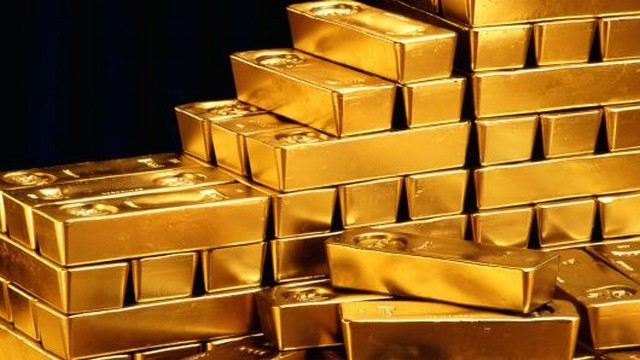
Tragically, the US boycott against Venezuela forced the country to sell its gold in return for valuable currency, as well as consumer goods, food and medicinal products. The coup is meant to completely push Caracas to its knees.

Western predators are all moving in, each party playing the role entrusted of them, as if history is repeating itself. Bank of England (BoE) has blocked Maduro’s officials from withdrawing $1.2 billion worth of Venezuela’s gold. Worse, brazen interference from foreign countries is becoming so pronounced that UK foreign office minister, Sir Alan Duncan has suggested that the BoE grant access to the gold reserves to the self-proclaimed opposition leader Juan Guaido.

Germany, and France and Spain gave Venezuela’s Maduro an ultimatum: the President has eight days to call elections, otherwise they’ll recognize Guaido as president. On January 31, the European Parliament recognized Guaido as a de facto leader of Venezuela in complete disregard of the democratic rights of the Venezuelan people.

Yet, as odd as this may seem to some, Maduro still enjoys greater legitimacy in his country than Donald Trump or Emmanuel Macron do in the US and France respectively. Yet, no entity is threatening to intervene in France, for example on behalf of the ‘Yellow Vests’, who have protested in their hundreds of thousands for weeks, demanding an end to Macon’s rule.

It is doubly important that Venezuela doesn’t collapse before this US-led sinister campaign because of the rising far-right powers in South and Latin America, namely the upsurge of reactionary forces in Brazil.

If Venezuela’s political order disintegrates, others, too will become target: Bolivia, Cuba, and even Mexico.

Since the US partial withdrawal from Iraq in December 2011, and the Obama Administration’s ‘pivot to Asia’, to challenge the inevitable dominance of China, US policy makers have been keen on staging a comeback in South America as well. More recently, the just-departed US ambassador to the UN, Nikki Haley was instrumental in shaping the aggressive US policy towards Venezuela.

Now that the country is struggling with extreme poverty – itself resulting from the manipulation of oil prices – the US sees an opportunity to make its move, and reclaim its destructive, domineering role in that part of the world. The election in Brazil of far-right leader, Jair Bolsonaro, who wants to “make Brazil great again’ is tipping the balance in favor of reactionary forces in the whole region.

But the plot against Venezuela is also an opportunity for those who want to challenge the old order, to tell the US government ‘enough is enough’; that the age of coups and blood-soaked interventions should be behind us, and that South America must not be subjugated again.

As Palestinians have fought Israeli tyranny for years, Venezuelans will continue to fight foreign tyranny and unlawful political and military interventions as well. And with true and tangible global solidarity, both nations will prevail – sooner or later.

– Ramzy Baroud is a journalist, author and editor of Palestine Chronicle.

– Romana Rubeo is a writer and freelance translator based in Italy.

4 February 2019

Source: countercurrents.org

US – Led Coup In Venezuela: The Plot Thickens

Co-Written by Kevin Zeese & Margaret Flowers

A lot has happened and we have learned more since last week when we wrote, Venezuela: What Activists Need To Know About The US-Led Coup. This article updates activists so we remain well-informed and can educate others in the face of a bi-partisan and corporate media narrative supporting the coup.

This weekend, there were competing protests in Venezuela. At a protest celebrating the 20th anniversary of the Bolivarian Process, the day Hugo Chavez was sworn into office, tens of thousands watched as President Maduro called for National Assembly elections. The current Assembly has been in contempt of court since July 2016 and their decisions were nullified because they have refused to remove illegally-elected members. The defunct legislature’s president, Juan Guaido, appointed himself president of the country in violation of Venezuelan law and is under investigation.

Some scenes at Guaido’s rallies were surreal. At the Caracas rally where Guaido spoke, the stage featured massive US and Israeli flags and in the crowd, there were pro-Trump puppets, one with Trump as the Statute of Liberty with a Christian cross around his neck. At another rally, opposition protesters removed the Venezuelan flag replacing it with the US flag.

Details of long term plan for Venezuela’s oil and domination of Latin America

First, it is important to understand why the US is supporting this poorly thought out and poorly planned coup. The Trump coup is a new phase of the long-term goals of US foreign policy when it comes to Venezuela and Latin America.

Vijay Prashad describes the long-term reality of US coups and domination of Latin America in The U.S. 12-Step Method to Conduct Regime Change, writing what is happening in Venezuela is “nothing unique in American history.” Prashad describes the coup in Chile, which Nixon and Kissinger began in 1970 and completed in 1973. In Venezuela, the National Endowment for Democracy, USAID and CIA have been involved in regime change operations and building opposition to Hugo Chavez and Nicolas Maduro from the beginning of this century. The US spends tens of millions of dollars annually to support opposition oligarchs and big business interests.

The Grayzone Project documents the more than ten-year effort by US regime change operatives that created a series of young opposition leaders including fake president Juan Guaido. Guaido was a little known right-wing politician who came in second in a legislative election in the second smallest state in Venezuela. He was thrust on the national scene by the coup. In our last article, we described how Canadian and US officials encouraged him to become a self-appointed president.

In our next Clearing the FOG, we interview Dan Cohen of the Grayzone Project. You’ll find it here.

The Wall Street Journal, in “U.S. Push to Oust Venezuela’s Maduro Marks First Shot in Plan to Reshape Latin America,” reveals the motive is to place Latin America back under US control. Commenting on this article, Yves Smith expresses how the US seems to have not learned from the failed wars in the Middle East, which cost the US trillions and created chaos and suffering while weakening the US’ global standing.

Eric Draitser at Counterpunch focuses on how this coup is about defeating what is perceived as socialism in Venezuela. The defeat of Chavismo is critical to the US controlling the region. Venezuela cannot be allowed to refuse US domination. John Bolton made the coup very personal this week, threatening Maduro to accept Guaido’s offer of amnesty or find himself in the Guantanamo Bay prison.

Mexico and Uruguay announced an international conference set to take place in Montevideo on February 7, but the US is rejecting dialogue. The US and coup plotters do not want dialogue, they want regime change and nothing less.

Dimitri Orlov points to the end of the fracking boom in the US as a reason why there is haste in trying to dominate Venezuela. He writes “the fracking bonanza is ending. Most of the sweet spots have already been tapped; newer wells are depleting faster and producing less while costing more.” Fracking is already losing billions and soon will be losing trillions of dollars. As a result, a “rather large oil shortage is coming, and it will rather specifically affect the US, which burns 20% of the world’s oil.” While a sensible country would use this as a reason for a rapid transition to a clean energy economy, the US seeks to prop up its oil companies by stealing Venezuela’s oil.

The US signaled how abusive it could become by appointing war criminal Elliot Abrams to the coup team. The Intercept details Abrams’ long-term work of violently crushing democracy. His record: In the 1980s, 75,000 Salvadorans died mostly from government death squads; in Guatemala, he supported a government that committed widespread human rights violations in a war that killed 200,000 people; in the Contra War in Nicaragua, Abrams pled guilty to lying to Congress about the Iran-Contra Deal that resulted in tens of thousands of deaths. After he was pardoned by George H.W. Bush, Abrams returned to the White House of George W. Bush where among other things he gave the green light to the failed coup against Hugo Chavez in 2002.

The Economic War as An Excuse for Humanitarian Intervention

The Grayzone Project reports on documents that expose US plans for economic war in Venezuela. Ben Norton writes, the “documents acknowledge that Washington has been using what it clearly describes as ‘financial weapons’ to wage ‘economic warfare’ on the oil-rich South American nation.” Sanctions began under Bush in 2004, escalated under Obama when he declared Venezuela a national security threat in 2015 and escalated under Trump. Sanctions imposed by Trump have bled Venezuela of billions of dollars.

WikiLeaks published an excerpt from what it titled the “US coup manual,” which describes how the US uses “financial weapons” to wage “economic warfare.” These documents describe how sanctions and other punitive economic policies are not a mere prelude to war; they are a form of war. As Norton writes, the US is not considering war, but has “already been waging a war, for years.”

Even under this tremendous economic war, which worsened with a drop in oil prices, the Maduro government has focused on uplifting people. Telesur describes gains made under Maduro’s administration:

  • Venezuela expanded its free health care coverage to more than 60 percent of the population.
  • Earlier this year, the United Nations Program for Development placed Venezuela among the countries with the highest Human Development Index, surpassing most Latin American countries.
  • Venezuela has built 3 million homes for the poor and working class, 1.6 million under Maduro, to house up to ten million people in a population of 30 million.
  • Maduro’s administration has provided more than 4,800,000 computers, over 100 million technology textbooks to students across the country, and more than 20,000 schools have received new computer equipment.
  • Venezuela ranks sixth in the world in terms of enrollment in primary education and has increased its coverage of secondary education to 73 percent of the population.
  • There have also been gains in civil rights of historically oppressed sectors of Venezuelan society, like women, Afro-Indigenous people and the LGBTQ community.

These gains do not make Venezuela a socialist economy, indeed Norway is more socialist than Venezuela. Venezuela remains a capitalist country with 70% of the economy in private businesses. Some on the left criticize Maduro for not moving the country more rapidly to institute a socialist economy. Why is Venezuela attacked and not Norway? Glen Ford of Black Agenda Report argues another reason they are targeted is racism. Another is that Venezuela has rejected US domination.

The combination of tremendous drops in oil prices, the US economic war and oligarch’s undermining the economy has resulted in the economy shrinking by 50% in five years – worse than the US depression.

This week, John Bolton offered to send humanitarian assistance at the request of Guaido. When Venezuela has tried to buy essential goods and pharmaceuticals, they have been blocked and offered humanitarian aid instead. This presents a problem because if Venezuela accepts humanitarian aid, then it would provide an excuse for the Organization of American States (OAS) to intervene. And it would allow US institutions such as USAID into the country to bring the aid.

The irony of the US offering aid while conducting an economic war is evident. The UN rapporteur said that sanctions are killing people in Venezuela. Mark Weisbrot of the Center for Economic and Policy Studies writes that the US is seeking to take control of Venezuela even if their actions are illegal and kill thousands of people.

Venezuela wouldn’t need aid if it were not for the sanctions and blockade. Venezuela, which has the second largest gold reserves, is currently raising hundreds of billions of dollars by selling 29 tons of gold reserves to UAE as well as selling gold to Russia.

The Flawed Coup is Failing Because of Mistaken Assumptions

An eye witness account from Venezuela describes how the coup is lacking popularity. A protest called earlier in the week had a very small turnout. Jessica Dos Santos, who writes about daily life in Venezuela, describes people trying to live normal lives and while people have criticisms of Maduro, they are more opposed to US intervention. She writes “when it comes to fighting against foreign intervention, then there isn’t much to think about: Our home country is and must be first. And this is because of our love for it, but also because we have historical awareness. There isn’t one single nation that has come out better after a US or NATO intervention. In addition to that, intervention presupposes that we don’t have the capacity to solve our own problems.”

Moon of Alabama described big flaws in the poorly thought out Trump coup. This includes false perceptions on the ground in Venezuela where they underestimated support for Maduro and opposition to US imperialism among people and the military. He describes the lack of support for the coup in the Venezuelan constitution, with their misinterpretation of Article 233, which requires the president to be unable to serve in order for the president of the National Assembly to replace him. Further, he describes how Guaido has no support base and how the coup was rushed without input from the Pentagon, Southcom, or Department of Justice, who were likely to oppose such a measure.

Guaido is now being investigated in Venezuela. His assets have been frozen and he is not allowed to leave the country. In most countries, he would already have been imprisoned. The vast majority of the military has stood by Maduro. CNN interviewed fake “veterans” not even in Venezuela asking for US military aid. And there have been false reports that the military was recruiting minors (youth) to rise up against Maduro.

Support the Venezuelan People: End the Sanctions and Prevent War

Maduro sent a video message to the people of the United States describing the false media coverage and urging people of the United States to stop their government from intervening in Venezuela. He said “If the U.S. intends to invade us, they will have a Vietnam worse than they can imagine. Let’s not allow violence,” urging viewers to “not permit a new Vietnam in Venezuela.”

People in the United States have a lot of work to do to convince the government not to intervene in Venezuela, i.e. end economic sanctions, stop military threats. Max Blumenthal interviewed members of Congress and asked them about whether the US was meddling in Venezuela. Most denied it or were misinformed and those that understood what was going on refused to speak out. Some have spoken out against the coup, notably, Tulsi Gabbard, Ro Khanna, Barbara Lee, Bernie Sanders, and the Progressive Caucus, although even some of them perpetuate falsehoods about the situation.

Being in solidarity with the people of Venezuela means opposing war and intervention. A recent poll found 86% of Venezuelans oppose war and 81% oppose the economic sanctions.

The threat of war against Venezuela is real. The US already has military bases in Colombia. There was more evidence this week. John Bolton displayed a notepad that said “5,000 troops to Colombia” and US military transport planes are flying over and landing in Colombia.

Activists must demand the United States follow the rule of law. The coup and sanctions violate international law as this letter from NGOs to the United Nations explains. Idriss Jazairy, the UN Special Rapporteur on the negative impact of the unilateral coercive measures, explains how the US economic sanctions violate international law. He wrote, “Coercion, whether military or economic, must never be used to seek a change in government in a sovereign state. The use of sanctions by outside powers to overthrow an elected government is in violation of all norms of international law.” The United Nations Secretary-General Antonio Guterres recognized Maduro as president and rejected Guaido’s claim to the presidency.

The OAS, which is dominated by the United States, refused to recognize Guaidoand rejected intervening in Venezuela. Even the Lima Group, made up of right-wing governments in Latin America that oppose Venezuela, has rejected military intervention.

This article and Venezuela: What Activists Need To Know About The US-Led Coup, provide people with the information they need to combat the false media narrative about Venezuela. The Alliance for Global Justice has prepared an activist tool kit on Venezuela.

Protests have already been held in the US and around the world have already been held and more are being organized. On Monday, February 4, 2019 at 3PM, at the United States Permanent Mission to the United Nations located on the corner of 45th Street and First Avenue, NYC. On February 23, the one month anniversary of the soup, there will be a national day of actions protesting the coup.

This week Popular Resistance joined a call for a national march on Saturday, March 16, in Washington, D.C. against the Trump administration’s effort to engineer a coup in Venezuela and start a new devastating war there. If we unite and mobilize, we can stop this war and end US sanctions in Venezuela.

Kevin Zeese and Margaret Flowers are directors of Popular Resistance

4 February 2019

Source: countercurrents.org

US issues new threats of war for oil against Venezuela

By Eric London

President Trump, Vice President Pence and National Security Advisor John Bolton escalated threats to launch a war against Venezuela, as large pro- and anti-government demonstrations filled Venezuela’s streets on Saturday.

In an interview with CBS’s “Face the Nation” program that aired before the Super Bowl yesterday, Trump reiterated that military intervention “is an option.” Pence assured a crowd of far-right Venezuelan exiles in Miami on Friday that “this is no time for dialogue, it is the moment for action, and the time has come to end the Maduro dictatorship once and for all… Those looking on should know this: all options are on the table.”

Bolton, who helped author the playbook that was used to launch the 2003 invasion of Iraq, issued a blunt threat Friday that the US would kill or jail and torture Venezuelan President Nicolas Maduro if he did not resign. Comparing Maduro to Nicolae Ceaușescu and Benito Mussolini—both of whom were killed—Bolton told right-wing radio host Hugh Hewitt: “The sooner he takes advantage of that [i.e., resignation], the sooner he’s likely to have a nice quiet retirement on a pretty beach rather than being in some other beach area like Guantanamo.”

Self-proclaimed “interim president” Juan Guaidó, the US and their allies in South America and Europe are preparing a new provocation aimed at forcing the Venezuelan military to abandon Maduro, with Guaidó announcing that the US will deliver aid at three locations along the Venezuelan border in the coming days.

While Maduro and the Venezuelan military leadership have said they will refuse the aid, the US hopes that images of crowds gathering to receive food and medication will either provoke the military to defect to the opposition and help distribute the aid or provide valuable propaganda footage justifying the need for a “humanitarian” intervention.

Over the weekend, hundreds of armed Colombian soldiers dressed in battle fatigues deployed to one of the three “aid distribution” centers, Cúcuta, on the Venezuela-Colombia border. Colombia’s far-right President Iván Duque issued a statement proclaiming, “Few hours remain to the Venezuelan dictatorship.” At a press conference last week announcing Washington’s moves to topple Maduro, Bolton held under his arm a note pad with the words written in plain view: “5,000 troops to Colombia.”

Guaidó also announced that one of the “aid” locations would be on the border with Brazil, which deployed troops to the border last year, while the third would be on an island in the Caribbean.

The stepped-up pressure produced an initial crack in the Venezuelan military, which remains the backbone of the Maduro government. Over the weekend, one Air Force general and a small group of mid-level Air Force officials defected and issued public statements calling on their colleagues to join them.

Germ án Ferrer, a sitting Venezuelan legislator and United Socialist Party member who opposes Maduro, told the CBC that Maduro has disabled combat aircraft for fear the Air Force will turn on the government.

The US is imposing blanket sanctions on Venezuelan oil that amount to a blockade on oil exports. This act of economic war is intended to increase social misery.

Shannon O’Neil of the Council on Foreign Relations told a conference call of bankers, government officials and oil executives last week that the sanctions will lead to “more deprivation, even given the low base we’re at, more among the population.” The sanctions will force thousands to flee the country, she added: “You’re going to see more refugees pouring into countries throughout the hemisphere and elsewhere around the world.”

The Brookings Institution explained that the present stage of the coup operation is aimed at “building an off-ramp for the Maduro regime.” In the parlance of US imperialism, countries whose leaders do not take the “off-ramp” are, like Saddam Hussein in Iraq, Gaddafi in Libya and Assad in Syria, subject to a hailstorm of bombs and missiles from the air and US troops or proxy armies on the ground.

As the Council on Foreign Relations’ O’Neil told the corporate conference call, “If it [sanctions] doesn’t work in dislodging this regime, then there’s not a lot left in the toolkit besides things like military intervention.”

A military intervention in Venezuela—population 30 million—could kill hundreds of thousands or millions of people and transform Latin America into an imperialist slaughterhouse.

The geopolitical intelligence think tank Stratfor recently noted, “A military intervention could quickly snowball into one of the largest worldwide military operations since the 2003 invasion of Iraq.”

Francisco Toro, a Washington Post columnist and anti-Maduro think tank analyst, told the Council on Foreign Relations gathering that a military intervention would lead to “a kind of Syrian civil war” and confrontation between nuclear-armed powers.

He said: “There is this definite threat that if a military operation takes any amount of time in Venezuela, that other countries then start to move in too. And you can imagine, easily, Brazil moving into the southeast, Colombia into the southwest. You can imagine Russia trying to defend its oil interests, because Russia has big oil investments in Venezuela. You can imagine China doing I don’t know what. And Cuba has already intelligence penetration into the Venezuelan armed forces.”

Maduro’s strategy is three-fold. First, he is seeking to present himself as palatable to US imperialism and open to negotiation with the far-right opposition. Second, he is using the threat of “another Vietnam” as bargaining leverage against a US military intervention. Third, he is violently crushing working class opposition over inflation, poverty and record levels of social inequality.

Maduro rejected the demand of several European imperialist powers that he announce by February 2 the holding of new presidential elections. As the deadline passed, European governments—including the UK, France, Spain, Austria, Portugal, Belgium, the Netherlands and Germany—officially joined the US in recognizing Guaidó as president.

Maduro will now participate in large military exercises scheduled to last from February 5 to February 10. His government has also reportedly armed tens of thousands of members of a civilian reserve force with World War Two-era bolt-action rifles in anticipation of a possible invasion.

Key to the government’s strategy is a ferocious military crackdown on working class demonstrations and food riots. While the military and police have maintained a more passive presence at “official” demonstrations held by the right-wing opposition, government forces have murdered dozens of workers and youth participating in demonstrations over lack of access to food, water and other basic necessities.

The Maduro regime has responded to these demonstrations, which largely take place at night in the slum areas, with midnight raids by death squads, “disappearing” working class opponents in an effort to terrorize the areas that once were bastions of support for Maduro’s predecessor, Hugo Chávez Frias. The corporate media does not report these crackdowns.

In this way, Maduro is attempting to prove to his opponents in the US and Europe—as well as his backers in Russia and China—that he remains the best option for ending instability and keeping the oil flowing.

At its roots, Washington’s intensifying efforts at regime-change in Venezuela are part of a “pivot to Latin America” aimed at eradicating Chinese and Russian influence and transforming the whole Western Hemisphere into the exclusive cheap-labor and primary resource platform for US imperialism.

In November 2018, when Bolton announced the “Troika of Tyranny”—Cuba, Venezuela and Nicaragua—he was elaborating the strategic view that the US cannot successfully conduct operations against Russia in Eastern Europe, against China in South Asia, or against both Russia and China in Central Asia, without eliminating their presence in “America’s backyard” and freeing up the region’s resources for the US war machine. The establishment of a US-ruled “Fortress Americas” was a central foreign policy component of the “America First” movement in the early 1940s.

In a March 2018 document published by the US Army War College titled “The Strategic Relevance of Latin America in the US National Security Strategy,” the Army notes that in the aftermath of the fall of the dictatorships of the 1970s and 1980s, “most democratic societies in the Western Hemisphere” are “feckless and unconsolidated, thereby representing a threat to the national security of the United States by external actors (such as China and Russia) opposing US interests in the region.”

The strategy document indicated another reason for possible military operations in Venezuela: the need for the US military to test its operating capacities in heavily populated urban areas.

“Latin American megacities are also a laboratory for the US Army in cooperation with its strategic partners in addressing another important issue, or, perhaps, an old issue in the post-Cold War international system: how to fight a conventional war in an unconventional environment,” the document states. “Megacities are the new arena for conflicts in the 21st century. Therefore, the US Government and Army cannot afford to be caught off guard when called upon to exercise and accomplish its mission.”

Originally published by WSWS.org

4 February 2019

Source: countercurrents.org

Mystery of the Venezuelan Gold: Bank of England Is Independent of UK Govt – But Not of Foreign Govt

By George Galloway

20 Jan 2019 – Pirates don’t have to look like Johnny Depp in Pirates of the Caribbean. They can fly the Union Jack rather than the skull and crossbones. They can be called the Bank of England rather than the Jolly Roger.

The ‘Old Lady of Threadneedle Street’ is a port in a stormy world for all kinds of countries in which to moor their national wealth. And it’s not even necessarily voluntary.

After the fall of the communist regime in Albania, I had a brief tenure as joint chairman of the Britain-Albania Society with the Tory MP Steve Norris. He and I had to move mountains to try and persuade the British government (which then entirely controlled the Bank of England) to give the Albanians back their gold, which had been seized by the British during Second World War.

This week’s brigandry – unnoticed by any commentator I read – took place in an era when the Bank of England is officially independent of government control. And yet it was triggered by a phone call from a foreign government official.

The bank’s decision to seize – a polite word for steal – more than a billion dollars’ worth of Venezuelan gold was reported to have been ordered by the governor after a call from US National Security Advisor John Bolton and Secretary of State Mike Pompeo – not even the president himself.

If I’m right, then this decision to damage – hopefully irreparably – the safety of deposits in the Bank of England was taken by an unelected, unaccountable Canadian citizen (who only got his British citizenship in November). He is here today but gone tomorrow as the governor of the Bank of England. The foreign policy of the state – whose bank it is – was thus at least anticipated if not usurped by Bolton, a minor official of a foreign country. Was that what the Tory champions of Brexit had in mind when they campaigned for Britain to “take back control”?

Of course the governor, Mark Carney, will have known that Bolton was pushing at an open bank vault door and that Britain is no more independent from the United States than the Bank of England is independent from the British government.

In addition, no Caribbean crocodile could shed tears more insincere than those currently being shed by British politicians for the “poor suffering people” of Venezuela. After all, what kind of monster could seize a billion dollars from “poor and suffering people”?

In around 72 hours last week, Venezuelan President Nicolas Maduro was transformed from somebody hardly anyone in Britain had ever heard of, into the new “Hitler on the Nile.”

This appellation was first applied in post-war Britain to President Nasser of Egypt when he nationalized the Suez Canal. Unfortunately for the imperium, this was actually in Egypt, the country of which he was the president. After all, to paraphrase Donald Rumsfeld, it wasn’t Britain’s fault that God put Britain’s canals in other people’s countries.

And there have been many since: Yasser Arafat, Muammar Gaddafi, Bashar Assad, Slobodan Milosevic, Vladimir Putin, and more.

The transformation has been astonishing to watch, even for me, who has been active in politics for 50 years.

All the carefully tended gardens of NGOs, “independent journalists,” and experts all flooded forward with their long-husbanded narratives about the perfidy of the Chavez revolution in Venezuela. They did universally suffer two disadvantages however: none of them could even pronounce the name of the man in a street in Caracas whose self-proclaimed presidency they were recognizing. And none of them appeared to know that the US had been imposing a medieval siege of sanctions, sabotage and subversion against Venezuela. At least none of them mentioned it.

None of them, like in every other foreign regime-change operation they’d pushed for, had the remotest idea of what would happen in Venezuela if they succeeded, not least how the many millions of armed Chavez supporters might take to their government being overthrown by foreigners. It is hard to work out whether these journalists and politicians demanding civil war on the world’s biggest oil-fields are criminally insane, just criminals, or whether they can plead diminished responsibility on the grounds they didn’t actually know what had already happened in Afghanistan, Iraq, Yemen, Syria, Ukraine, etc.

The demonization of Venezuela across even those Western countries which scarcely have functioning governments themselves has been a tidal wave. The pitiful resources Venezuela has invested in solidarity work in Britain – or if they did invest it no-one can explain where it went – was summed up by the complete refusal of the Venezuelan Solidarity Campaign to put someone up for my RT show Sputnik last week, referring me to the Cuba Solidarity Campaign next door.

They, in turn, suggested the Englishman who ably edits the British newspaper, the Morning Star. Seldom can a big and important oil-rich country – vulnerable to Western invasion as it has predictably turned out to be – have bothered to make so few friends.

Events on the ground in Venezuela will decide what happens next, however. In my view, there will be many cutlasses flashing and slashing before this is through. And just like in all the other cases I’ve referre

______________________________________

George Galloway was a member of the British Parliament for nearly 30 years. He presents TV and radio shows and is a film-maker, writer and a renowned orator.

4 February 2019

Source: transcend.org

Venezuela: What Activists Need to Know about the US-Led Coup

By Kevin Zeese and Margaret Flowers

28 Jan 2019 – Two things stand out about the US coup in Venezuela.

  • First, it is unusually open. Typically, the US tries to hide its coups.
  • Second, the coup is built on a series of obvious falsehoods, yet the bi-partisans in Washington, with a few exceptions, keep repeating them.

First, we will correct the falsehoods so readers are all working from the same facts. Second, we will describe how this coup is being defeated. It will be another major embarrassment for the Trump administration and US foreign policy.

It is important to understand Venezuela has become a geopolitical conflict as Russia and China are closely allied with Venezuela. China and Russia coming into the backyard of the United States challenges the antiquated Monroe Doctrine.

Venezuela has the largest oil reserves in the world and the second largest gold reserves, as well as diamonds and other minerals such as coltan (needed for electronic devices). And, Venezuela is taking over as president of OPEC and will be in a position to push for oil payments in non-dollar currencies or in cryptocurrencies, a major threat to the US dollar.

Correcting the Record

There are a series of false statements repeated by DC officials and corporate media to justify the coup that are so obvious, it is hard to believe they are not intentional. In his two-paragraph comment on the coup, even Senator Bernie Sanders repeated them.

1. Truth: President Nicolás Maduro is the legitimate president.

President Maduro was re-elected on May 20, 2018, in response to the opposition demanding an early election. The legitimacy of the election of Maduro is so evident that it must be assumed those who say he is illegitimate are either intentionally false or ignorant. The election was scheduled consistent with the Venezuelan Constitution and in consultation with opposition parties. When it became evident that the opposition could not win the election, they decided, under pressure from the United States, to boycott the election in order to undermine its legitimacy. The facts are 9,389,056 people voted, 46% of eligible voters. Sixteen parties participated in the election with six candidates competing for the presidency.

The electoral process was observed by more than 150 election observers. This included 14 electoral commissions from eight countries among them the Council of Electoral Experts of Latin America; two technical electoral missions; and 18 journalists from different parts of the world, among others. According to the international observers, “the elections were very transparent and complied with international parameters and national legislation.”

Venezuela has one of the best electoral systems in the world. Voter fraud is not possible as identification and fingerprints are required for each voter. Voting machines are audited before and immediately after the election. Venezuela does something no other country in the world does — a public, citizen’s audit of a random sample of 53% of voting machines that is televised. All 18 parties signed the audits.

Maduro won by a wide margin, obtaining 6,248,864 votes, 67.84%; followed by Henri Falcón with 1,927,958, 20.93%; Javier Bertucci with 1,015,895, 10.82%; and Reinaldo Quijada, who obtained 36,246 votes, 0.39% of the total.

This same voting system has been used in elections that Maduro’s party has lost in governor’s and legislative elections. Venezuela is a real democracy with transparent elections. The United States could learn a good deal about real democracy from Venezuela.

2. Truth: The economic crisis is caused by outside intervention, internal sabotage and the decline in oil prices.

There is no doubt the economic situation in Venezuela is dire. The cause is the economic war conducted by the United States, the major decline in oil prices and economic sabotage by the opposition. In essence, the United States and opposition created problems in the Venezuelan economy and now say Maduro must be replaced because of problems they created.

Oil was discovered in Venezuela in the early part of the 20th Century and has dominated the economy since then. The Dutch Disease, the negative impact of an economy based on one natural resource, causes a sharp inflow of foreign currency, which raises the value of the country’s currency, making the country’s other products less price competitive. It is cheaper to import products rather than create them. This makes it more difficult for segments of the economy like agriculture and manufacturing to develop.

Chavez/Maduro sought to diversify the economy. They put in place thousands of communes and hundreds of thousands of people working in cooperatives to build agriculture and manufacturing. When the global price of oil was cut by more than half, it collapsed Venezuela’s public finances undermining these efforts. The economic war by the US made it difficult for Venezuela to borrow and trade with some countries.

Economic sanctions against Venezuela began under President Obama, and the Trump administration escalated them with financial sanctions. United States sanctions cost Venezuela some $6 billion since August, according to an October analysis. Measures against the nation’s oil industry have prohibited the Venezuelan majority-owned company, CITGO, from sending profits back to Venezuela, a $1 billion loss to the government yearly. Now, the Bank of England is refusing to return $1.2 billion in gold reserves after US officials, including Secretary of State Michael Pompeo and National Security Adviser John Bolton, lobbied them to cut Venezuela off from its overseas assets.

The US economic war and sabotage of the economy by business interests has been exposed as part of the effort to remove Maduro by creating social unrest and lack of confidence in the government. This has included hoarding of goods, storing essentials in warehouses and selling Venezuelan goods in Colombia.

In September 2018, Venezuela pointed to a false media campaign exaggerating migration from Venezuela. They highlighted statistics from the United Nations High Commissioner for Refugees to affirm that Venezuela has the fewest volunteer migrants in the continent. They pointed out 5.6 million Colombians have fled violence in their country and live in Venezuela. Venezuela has programs that have helped thousands of Venezuelans return home.

Socialism strengthens economies, as demonstrated in Portugal. Indeed, one criticism of Venezuela is that the Bolivarian Process is moving too slowly to put in place a socialist economy. There is a need for more sectors to be nationalized and put under democratic control of the people.

3. Truth: The opposition is violent, not the Maduro government.

Opposition protesters have been extremely violent. One tactic of the opposition was to be violent and then film the government’s response to make the government look violent. When Abby Martin was confronted by opposition protesters, they told her, “Do not film anything that we do. Just film what the government does to us.” She reported on the violence saying, “the vast majority has been caused by either indirect or direct violence by the opposition.”

Martin reports the opposition attacked hospitals, burned down the Housing Ministry, assassinated Chavistas and attacked citizen communes such as an art commune that gave free dance and music lessons to local children. Afro-Venezuelans were burned alive. Protesters pulled drivers out of buses and torched the buses. When photos and videos of opposition violence were put on social media, Martin and her colleague, Mike Prysner, became the target of a false media campaign on social media. The opposition did all they could to prevent them from reporting the truth using hundreds of death threats and threats they would be lynched.

In 2017, Venezuela Analysis reported that violent opposition protests included an attack on a maternity hospital endangering the lives of more than 50 newborn babies. Another report described the opposition using snipers to shoot government officials and civilians. Opposition newspapers urged that blunt objects be used to “neutralize” pro-government protesters, resulting in serious injuries and death.

Steve Ellner also reported that violence was coming from the opposition. He pointed to attacks at grocery stores, banks, buses, and government buildings. Other commentators described specific incidents of violence by the opposition including killing people. Maduro ordered the arrest of a retired general who tweeted how to use wire to decapitate people on motorcycles, which happened, and how to attack armored vehicles with Molotov cocktails.

Documents show that violence was the opposition’s strategy. They sought to “Create situations of crisis in the streets that will facilitate US intervention, as well as NATO forces, with the support of the Colombian government. Whenever possible, the violence should result in deaths or injuries.”

The tales of government violence are rooted in lies. The government’s response was Maduro calling for a peace conference describing it as “a national peace conference with all the country’s political sectors … so we Venezuelans can try to neutralize violent groups.”

4. Truth: The National Assembly acted in violation of the law and is in contempt of court.

The National Assembly is not the only democratic body in Venezuela. Indeed, its actions since the opposition won a majority have violated the law and protected the violence of the opposition with an embarrassing amnesty bill.

On December 6, 2015, the opposition won a parliamentary majority in the Assembly. There were allegations of vote buying in Amazonas state that were investigated by the National Electoral Council, another branch of the government. The Supreme Court barred four legislators from Amazonas taking office, two from the opposition, one allied with the opposition and one from the ruling party. The National Assembly allowed three candidates to take office. The Assembly has been held in contempt of court since July 2016 and their decisions were nullified.

Before the court ruling, the Assembly passed an amazing amnesty law, which granted amnesty for crimes the opposition has committed since 1999 (Chavez’ election). The law is an admission of guilt and provides a well-organized catalog of crimes including felonies, crimes committed at public rallies, terrorist acts involving explosives and firearms and undermining the economy. They essentially admitted exactly what Chavez/Maduro have claimed — crimes to overthrow the government for 17 years. Venezuela’s Supreme Court ruled the amnesty law was unconstitutional. Inaccurately, the Trump administration calls the Assembly Venezuela’s only remaining democratic institution.

This January, a subsidiary of the state oil company asked the Assembly to intervene claiming the president cannot make reforms to mixed public-private oil businesses without the prior approval of the National Assembly. On January 16, the court ruled that the Assembly was still in contempt of court and could not act. This is also when the Assembly elected Juan Guaidó as their president, who would later appoint himself President of Venezuela, as part of the US-led coup. Guaidó’s election to head the legislature was illegal and nullified by the court.

The Assembly still exists but remains in a state of contempt of the judiciary. It can rectify the situation by removing the lawmakers accused of electoral fraud. The Assembly refuses to do so because their goal is to remove Maduro from office and they need a super-majority to do so.

A Timeline of the US Coup in Venezuela

In “Anti-Maduro Coalition Grew from Secret Talks,” the Associated Press explains the coup was “only possible because of strong support from the Trump administration, which led a chorus of mostly conservative Latin American governments that immediately recognized Guaidó.”

Since August 2017, Donald Trump has been saying that military interventionagainst Venezuela was a distinct possibility. AP describes this as a “watershed moment” in the coup planning. They report Trump pressuring aides and Latin American countries to invade Venezuela. In September, the New York Times reported that the Trump administration had been meeting with coup plotters since mid-2017.

The Wall Street Journal reports Trump has long viewed Venezuela as one of his top-three foreign policy priorities, with Iran and North Korea. Trump requested a briefing on Venezuela on his second day in office, talking of the immense potential of Venezuela to become a rich nation through its oil reserves. AP reports that Trump “personally sparked” this as he brought up regime change in Venezuela in every meeting with Latin American leaders.

After Maduro was re-elected, administration plans began taking shape, driven in part by key members in the National Security Council and anti-Maduro advocates in Congress like extreme interventionist Senator Marco Rubio.

On November 1, John Bolton zeroed in on Latin America, calling Cuba, Nicaragua, and Venezuela a “troika of tyranny.” On January 2, Bolton met with his Brazilian and Colombian counterparts to collaborate to “return Venezuela to its democratic heritage.”

On January 10, Maduro was sworn in for his second term, Pompeo spoke with opposition leader Guaidó, pledging support. Canada also played a key role, AP reports that Foreign Minister Chrystia Freeland spoke to Guaidó the night before Maduro’s inauguration offering Canada’s support. This was 13 days before Guaidó announced he was president of Venezuela.

On January 12, the State Department backed Guaidó’s move to invoke his authority as president of the assembly, saying, “It is time to begin the orderly transition to a new government.” On January 15, the National Assembly declared Maduro as illegitimate. The Trump administration worked to get allies lined up to support Guaidó’. By January 18, the Venezuela Foreign Minister was describing a US coup in progress.

The night before Guaidó’s announcement on January 23, Vice President Mike Pence put out a video message encouraging Venezuelans to overthrow their government, saying, “We are with you. We stand with you, and we will stay with you.” Guaidó also received a phone call from Pence the night before he appointed himself president where he pledged that the U.S. would back Guaidó.

Guaidó declared that Maduro’s government was illegitimate and he was assuming the presidency. In a well-coordinated charade, almost instantly, Trump recognized Guaidó as the country’s rightful leader. To further demonstrate the preconceived, tightly coordinated and efficiently carried out the coup, US allies, among them Canada, Brazil, Argentina, Colombia, Chile, and Peru, quickly recognized the coup president.

The Trump administration is claiming Guaidó represents the lawful government and is entitled to all Venezuelan revenues. The State Department notified the Federal Reserve that Guaidó is the agent for access to Venezuelan assets in US banks.

Nearly as quickly, Maduro drew statements of support from Russia, China, Turkey, Mexico, Cuba, Bolivia, and others. The Venezuelan Supreme Court called for an investigation into the National Assembly and Guaidó, regarding the illegal usurpation of Executive power. The Venezuelan military announced it supported Maduro and Russia warned the US not to intervene militarily.

On January 25, the Organization of American States, which is traditionally a US tool, rejected a resolution to recognize Guaidó. Medea Benjamin of CODE PINK interrupted Pompeo at the OAS holding a sign that said: “a coup is not a democratic transition!” Venezuelan Foreign Minister Jorge Arreaza thanked Benjamin, saying, “With her protest, she revealed the macabre coup plan against Venezuela, we will always prevail, thank you!” Eighteen countries defeated the proposal.

At the UN Security Council meeting on January 26, Russia’s UN Ambassador Vassily Nebenzia accused the United States of attempting “to engineer a coup d’etat.” He demanded to know whether the Trump administration “is ready to use military force” against Venezuela. European countries gave Venezuela eight days to hold an election, a suggestion Venezuela rejected. Secretary of State Mike Pompeo called Venezuela an “illegitimate mafia state.” He accused Russia and China of trying “to prop up Maduro.”

Both China and Russia have told the US not to intervene in Venezuela’s internal affairs. In December, Russia sent two nuclear-capable strategic Tu-160 bombers to Venezuela along with an An-124 heavy military transport plane and an II-62 long-haul plane. As of December, Russia has one brigade in Venezuela and was discussing sending a second military brigade to Venezuela even before the coup due to the continued threat of intervention from the United States.

China has lent over $50 billion to Venezuela through oil-for-loan agreements over the past decade and has become a partner in the Venezuelan oil industry. In December, seven months since signing a financial business venture with China, Venezuela’s oil production has doubled to 130,000 barrels per day. The take-over of Venezuela’s oil would also be an attack on China. China and Venezuela signed 28 bilateral strategic cooperation agreements on September 14 in the areas of oil, mining, security, technology, finance, and health.

Demonstrating the nature of the coup president, the first acts that Guaidó took were to seek a loan from the International Monetary Fund, which would put Venezuela in debt to western bankers and under their control, and to privatize the Venezuelan oil industry, which would rob Venezuela of the funds being used to lift up the poor and working class.

The appointment by Mike Pompeo of Elliott Abrams as the person in charge of overseeing operations “to restore democracy in Venezuela” is an ominous sign. It is scandalous and demonstrates the most extreme elements of the US establishment are leading the charge. Abrams was convicted during the Iran-Contra scandal, supported US-backed death squads in Guatemala and El Salvador in the 1980s, played a key role in the Reagan administration support for the murderous Contras in Nicaragua and was the person who gave approval for the US-backed coup in Venezuela in 2002.

Analyst Vijay Prashad writes the coup violated the charters of the United Nations and of the Organisation of American States and describes efforts to call on the military to rise up against the government have failed. The Trump administration is now threatening a total oil embargo on Venezuela and is leaving the “military option” open.

The concerted campaign by the US and Canada to install Juan Guaidó as the new ‘self-declared’ interim President of Venezuela has been met with initial failure. Unfortunately, the illegal and undemocratic attempts to destabilize the country and overthrow the democratically-elected President will continue with harmful consequences. The people of Venezuela are rising once again to defend their country against hostile foreign intervention. It is essential that we support them in this fight. Many groups are holding solidarity rallies and issuing statements of support. Find rallies and protests here and here.

While Sanders got all the facts wrong about Venezuela, he did reach the right conclusion: “The United States has a long history of inappropriately intervening in Latin American countries. We must not go down that road again.” People in the United States have an important role to play in supporting Venezuela and defeating the coup.

__________________________________________________

Kevin Zeese and Margaret Flowers are directors of Popular Resistance.

4 February 2019

Source: transcend.org

Trump’s Brilliant Strategy to Dismember U.S. Dollar Hegemony

By Michael Hudson

1 Feb 2019 – The end of America’s unchallenged global economic dominance has arrived sooner than expected, thanks to the very same Neocons who gave the world the Iraq, Syria and the dirty wars in Latin America. Just as the Vietnam War drove the United States off gold by 1971, its sponsorship and funding of violent regime change wars against Venezuela and Syria – and threatening other countries with sanctions if they do not join this crusade – is driving European and other nations to create their alternative financial institutions.

This break has been building for quite some time, and was bound to occur. But who would have thought that Donald Trump would become the catalytic agent? No left-wing party, no socialist, anarchist or foreign nationalist leader anywhere in the world could have achieved what he is doing to break up the American Empire. The Deep State is reacting with shock at how this right-wing real estate grifter has been able to drive other countries to defend themselves by dismantling the U.S.-centered world order. To rub it in, he is using Bush and Reagan-era Neocon arsonists, John Bolton and now Elliott Abrams, to fan the flames in Venezuela. It is almost like a black political comedy. The world of international diplomacy is being turned inside-out. A world where there is no longer even a pretense that we might adhere to international norms, let alone laws or treaties.

The Neocons who Trump has appointed are accomplishing what seemed unthinkable not long ago: Driving China and Russia together – the great nightm1are of Henry Kissinger and Zbigniew Brzezinski. They also are driving Germany and other European countries into the Eurasian orbit, the “Heartland” nightmare of Halford Mackinder a century ago.

The root cause is clear: After the crescendo of pretenses and deceptions over Iraq, Libya and Syria, along with our absolution of the lawless regime of Saudi Arabia, foreign political leaders are coming to recognize what world-wide public opinion polls reported even before the Iraq/Iran-Contra boys turned their attention to the world’s largest oil reserves in Venezuela: The United States is now the greatest threat to peace on the planet.

Calling the U.S. coup being sponsored in Venezuela a defense of democracy reveals the Doublethink underlying U.S. foreign policy. It defines “democracy” to mean supporting U.S. foreign policy, pursuing neoliberal privatization of public infrastructure, dismantling government regulation and following the direction of U.S.-dominated global institutions, from the IMF and World Bank to NATO. For decades, the resulting foreign wars, domestic austerity programs and military interventions have brought more violence, not democracy.

In the Devil’s Dictionary that U.S. diplomats are taught to use as their “Elements of Style” guidelines for Doublethink, a “democratic” country is one that follows U.S. leadership and opens its economy to U.S. investment, and IMF- and World Bank-sponsored privatization. The Ukraine is deemed democratic, along with Saudi Arabia, Israel and other countries that act as U.S. financial and military protectorates and are willing to treat America’s enemies are theirs too.

A point had to come where this policy collided with the self-interest of other nations, finally breaking through the public relations rhetoric of empire. Other countries are proceeding to de-dollarize and replace what U.S. diplomacy calls “internationalism” (meaning U.S. nationalism imposed on the rest of the world) with their own national self-interest.

This trajectory could be seen 50 years ago (I described it in Super Imperialism [1972] and Global Fracture [1978].) It had to happen. But nobody thought that the end would come in quite the way that is happening. History has turned into comedy, or at least irony as its dialectical path unfolds.

For the past half-century, U.S. strategists, the State Department and National Endowment for Democracy (NED) worried that opposition to U.S. financial imperialism would come from left-wing parties. It therefore spent enormous resources manipulating parties that called themselves socialist (Tony Blair’s British Labour Party, France’s Socialist Party, Germany’s Social Democrats, etc.) to adopt neoliberal policies that were the diametric opposite to what social democracy meant a century ago. But U.S. political planners and Great Wurlitzer organists neglected the right wing, imagining that it would instinctively support U.S. thuggishness.

The reality is that right-wing parties want to get elected, and a populist nationalism is today’s road to election victory in Europe and other countries just as it was for Donald Trump in 2016.

Trump’s agenda may really be to break up the American Empire, using the old Uncle Sucker isolationist rhetoric of half a century ago. He certainly is going for the Empire’s most vital organs. But it he a witting anti-American agent? He might as well be – but it would be a false mental leap to use “cui bono” to assume that he is a witting agent.

After all, if no U.S. contractor, supplier, labor union or bank will deal with him, would Vladimir Putin, China or Iran be any more naïve? Perhaps the problem had to erupt as a result of the inner dynamics of U.S.-sponsored globalism becoming impossible to impose when the result is financial austerity, waves of population flight from U.S.-sponsored wars, and most of all, U.S. refusal to adhere to the rules and international laws that it itself sponsored seventy years ago in the wake of World War II.

Dismantling international law and its courts

Any international system of control requires the rule of law. It may be a morally lawless exercise of ruthless power imposing predatory exploitation, but it is still The Law. And it needs courts to apply it (backed by police power to enforce it and punish violators).

Here’s the first legal contradiction in U.S. global diplomacy: The United States always has resisted letting any other country have any voice in U.S. domestic policies, law-making or diplomacy. That is what makes America “the exceptional nation.” But for seventy years its diplomats have pretended that its superior judgment promoted a peaceful world (as the Roman Empire claimed to be), which let other countries share in prosperity and rising living standards.

At the United Nations, U.S. diplomats insisted on veto power. At the World Bank and IMF they also made sure that their equity share was large enough to give them veto power over any loan or other policy. Without such power, the United States would not join any international organization. Yet at the same time, it depicted its nationalism as protecting globalization and internationalism. It was all a euphemism for what really was unilateral U.S. decision-making.

Inevitably, U.S. nationalism had to break up the mirage of One World internationalism, and with it any thought of an international court. Without veto power over the judges, the U.S. never accepted the authority of any court, in particular the United Nations’ International Court in The Hague. Recently that court undertook an investigation into U.S. war crimes in Afghanistan, from its torture policies to bombing of civilian targets such as hospitals, weddings and infrastructure. “That investigation ultimately found ‘a reasonable basis to believe that war crimes and crimes against humanity.’”[1]

Donald Trump’s National Security Adviser John Bolton erupted in fury, warning in September that: “The United States will use any means necessary to protect our citizens and those of our allies from unjust prosecution by this illegitimate court,” adding that the UN International Court must not be so bold as to investigate “Israel or other U.S. allies.”

That prompted a senior judge, Christoph Flügge from Germany, to resign in protest. Indeed, Bolton told the court to keep out of any affairs involving the United States, promising to ban the Court’s “judges and prosecutors from entering the United States.” As Bolton spelled out the U.S. threat: “We will sanction their funds in the U.S. financial system, and we will prosecute them in the U.S. criminal system. We will not cooperate with the ICC. We will provide no assistance to the ICC. We will not join the ICC. We will let the ICC die on its own. After all, for all intents and purposes, the ICC is already dead to us.”

What this meant, the German judge spelled out was that: “If these judges ever interfere in the domestic concerns of the U.S. or investigate an American citizen, [Bolton] said the American government would do all it could to ensure that these judges would no longer be allowed to travel to the United States – and that they would perhaps even be criminally prosecuted.”

The original inspiration of the Court – to use the Nuremburg laws that were applied against German Nazis to bring similar prosecution against any country or officials found guilty of committing war crimes – had already fallen into disuse with the failure to indict the authors of the Chilean coup, Iran-Contra or the U.S. invasion of Iraq for war crimes.

Dismantling Dollar Hegemony from the IMF to SWIFT

Of all areas of global power politics today, international finance and foreign investment have become the key flashpoint. International monetary reserves were supposed to be the most sacrosanct, and international debt enforcement closely associated.

Central banks have long held their gold and other monetary reserves in the United States and London. Back in 1945 this seemed reasonable, because the New York Federal Reserve Bank (in whose basement foreign central bank gold was kept) was militarily safe, and because the London Gold Pool was the vehicle by which the U.S. Treasury kept the dollar “as good as gold” at $35 an ounce. Foreign reserves over and above gold were kept in the form of U.S. Treasury securities, to be bought and sold on the New York and London foreign-exchange markets to stabilize exchange rates. Most foreign loans to governments were denominated in U.S. dollars, so Wall Street banks were normally name as paying agents.

That was the case with Iran under the Shah, whom the United States had installed after sponsoring the 1953 coup against Mohammed Mosaddegh when he sought to nationalize Anglo-Iranian Oil (now British Petroleum) or at least tax it. After the Shah was overthrown, the Khomeini regime asked its paying agent, the Chase Manhattan bank, to use its deposits to pay its bondholders. At the direction of the U.S. Government Chase refused to do so. U.S. courts then declared Iran to be in default, and froze all its assets in the United States and anywhere else they were able.

This showed that international finance was an arm of the U.S. State Department and Pentagon. But that was a generation ago, and only recently did foreign countries begin to feel queasy about leaving their gold holdings in the United States, where they might be grabbed at will to punish any country that might act in ways that U.S. diplomacy found offensive. So last year, Germany finally got up the courage to ask that some of its gold be flown back to Germany. U.S. officials pretended to feel shocked at the insult that it might do to a civilized Christian country what it had done to Iran, and Germany agreed to slow down the transfer.

But then came Venezuela. Desperate to spend its gold reserves to provide imports for its economy devastated by U.S. sanctions – a crisis that U.S. diplomats blame on “socialism,” not on U.S. political attempts to “make the economy scream” (as Nixon officials said of Chile under Salvador Allende) – Venezuela directed the Bank of England to transfer some of its $11 billion in gold held in its vaults and those of other central banks in December 2018. This was just like a bank depositor would expect a bank to pay a check that the depositor had written.

England refused to honor the official request, following the direction of Bolton and U.S. Secretary of State Michael Pompeo. As Bloomberg reported: “The U.S. officials are trying to steer Venezuela’s overseas assets to [Chicago Boy Juan] Guaido to help bolster his chances of effectively taking control of the government. The $1.2 billion of gold is a big chunk of the $8 billion in foreign reserves held by the Venezuelan central bank.”[2]

Turkey seemed to be a likely destination, prompting Bolton and Pompeo to warn it to desist from helping Venezuela, threatening sanctions against it or any other country helping Venezuela cope with its economic crisis. As for the Bank of England and other European countries, the Bloomberg report concluded: “Central bank officials in Caracas have been ordered to no longer try contacting the Bank of England. These central bankers have been told that Bank of England staffers will not respond to them.”

This led to rumors that Venezuela was selling 20 tons of gold via a Russian Boeing 777 – some $840 million. The money probably would have ended up paying Russian and Chinese bondholders as well as buying food to relieve the local famine.[3] Russia denied this report, but Reuters has confirmed is that Venezuela has sold 3 tons of a planned 29 tones of gold to the United Arab Emirates, with another 15 tones are to be shipped on Friday, February 1.[4] The U.S. Senate’s Batista-Cuban hardliner Rubio accused this of being “theft,” as if feeding the people to alleviate the U.S.-sponsored crisis was a crime against U.S. diplomatic leverage.

If there is any country that U.S. diplomats hate more than a recalcitrant Latin American country, it is Iran. President Trump’s breaking of the 2015 nuclear agreements negotiated by European and Obama Administration diplomats has escalated to the point of threatening Germany and other European countries with punitive sanctions if they do not also break the agreements they have signed. Coming on top of U.S. opposition to German and other European importing of Russian gas, the U.S. threat finally prompted Europe to find a way to defend itself.

Imperial threats are no longer military. No country (including Russia or China) can mount a military invasion of another major country. Since the Vietnam Era, the only kind of war a democratically elected country can wage is atomic, or at least heavy bombing such as the United States has inflicted on Iraq, Libya and Syria. But now, cyber warfare has become a way of pulling out the connections of any economy. And the major cyber connections are financial money-transfer ones, headed by SWIFT, the acronym for the Society for Worldwide Interbank Financial Telecommunication, which is centered in Belgium.

Russia and China have already moved to create a shadow bank-transfer system in case the United States unplugs them from SWIFT. But now, European countries have come to realize that threats by Bolton and Pompeo may lead to heavy fines and asset grabs if they seek to continue trading with Iran as called for in the treaties they have negotiated.

On January 31 the dam broke with the announcement that Europe had created its own bypass payments system for use with Iran and other countries targeted by U.S. diplomats. Germany, France and even the U.S. poodle Britain joined to create INSTEX — Instrument in Support of Trade Exchanges. The promise is that this will be used only for “humanitarian” aid to save Iran from a U.S.-sponsored Venezuela-type devastation. But in view of increasingly passionate U.S. opposition to the Nord Stream pipeline to carry Russian gas, this alternative bank clearing system will be ready and able to become operative if the United States tries to direct a sanctions attack on Europe.

I have just returned from Germany and seen a remarkable split between that nation’s industrialists and their political leadership. For years, major companies have seen Russia as a natural market, a complementary economy needing to modernize its manufacturing and able to supply Europe with natural gas and other raw materials. America’s New Cold War stance is trying to block this commercial complementarity. Warning Europe against “dependence” on low-price Russian gas, it has offered to sell high-priced LNG from the United States (via port facilities that do not yet exist in anywhere near the volume required). President Trump also is insisting that NATO members spend a full 2 percent of their GDP on arms – preferably bought from the United States, not from German or French merchants of death.

U.S. overplaying its position is leading to the Mackinder-Kissinger-Brzezinski Eurasian nightmare that I mentioned above. In addition to driving Russia and China together, U.S. diplomacy is adding Europe to the heartland, independent of U.S. ability to bully into the state of dependency toward which American diplomacy has aimed to achieve since 1945.

The World Bank, for instance, traditionally has been headed by a U.S. Secretary of Defense. Its steady policy since its inception is to provide loans for countries to devote their land to export crops instead of giving priority to feeding themselves. That is why its loans are only in foreign currency, not in the domestic currency needed to provide price supports and agricultural extension services such as have made U.S. agriculture so productive. By following U.S. advice, countries have left themselves open to food blackmail – sanctions against providing them with grain and other food, in case they step out of line with U.S. diplomatic demands.

It is worthwhile to note that our global imposition of the mythical “efficiencies” of forcing Latin American countries to become plantations for export crops like coffee and bananas rather than growing their own wheat and corn has failed catastrophically to deliver better lives, especially for those living in Central America. The “spread” between the export crops and cheaper food imports from the U.S. that was supposed to materialize for countries following our playbook failed miserably – witness the caravans and refugees across Mexico. Of course, our backing of the most brutal military dictators and crime lords has not helped either.

Likewise, the IMF has been forced to admit that its basic guidelines were fictitious from the beginning. A central core has been to enforce payment of official inter-government debt by withholding IMF credit from countries under default. This rule was instituted at a time when most official inter-government debt was owed to the United States. But a few years ago Ukraine defaulted on $3 billion owed to Russia. The IMF said, in effect, that Ukraine and other countries did not have to pay Russia or any other country deemed to be acting too independently of the United States. The IMF has been extending credit to the bottomless it of Ukrainian corruption to encourage its anti-Russian policy rather than standing up for the principle that inter-government debts must be paid.

It is as if the IMF now operates out of a small room in the basement of the Pentagon in Washington. Europe has taken notice that its own international monetary trade and financial linkages are in danger of attracting U.S. anger. This became clear last autumn at the funeral for George H. W. Bush, when the EU’s diplomat found himself downgraded to the end of the list to be called to his seat. He was told that the U.S. no longer considers the EU an entity in good standing. In December, “Mike Pompeo gave a speech on Europe in Brussels — his first, and eagerly awaited — in which he extolled the virtues of nationalism, criticised multilateralism and the EU, and said that “international bodies” which constrain national sovereignty “must be reformed or eliminated.”[5]

Most of the above events have made the news in just one day, January 31, 2019. The conjunction of U.S. moves on so many fronts, against Venezuela, Iran and Europe (not to mention China and the trade threats and moves against Huawei also erupting today) looks like this will be a year of global fracture.

It is not all President Trump’s doing, of course. We see the Democratic Party showing the same colors. Instead of applauding democracy when foreign countries do not elect a leader approved by U.S. diplomats (whether it is Allende or Maduro), they’ve let the mask fall and shown themselves to be the leading New Cold War imperialists. It’s now out in the open. They would make Venezuela the new Pinochet-era Chile. Trump is not alone in supporting Saudi Arabia and its Wahabi terrorists acting, as Lyndon Johnson put it, “Bastards, but they’re our bastards.”

Where is the left in all this? That is the question with which I opened this article. How remarkable it is that it is only right-wing parties, Alternative for Deutschland (AFD), or Marine le Pen’s French nationalists and those of other countries that are opposing NATO militarization and seeking to revive trade and economic links with the rest of Eurasia.

The end of our monetary imperialism, about which I first wrote in 1972 in Super Imperialism, stuns even an informed observer like me. It took a colossal level of arrogance, short-sightedness and lawlessness to hasten its decline — something that only crazed Neocons like John Bolton, Eliot Abrams and Mike Pompeo could deliver for Donald Trump.

NOTES:

[1] Alexander Rubenstein, “It Can’t be Fixed: Senior ICC Judge Quits in Protest of US, Turkish Meddling,” January 31, 2019. https://www.mintpressnews.com/icc-judge-quits-turkish-meddling/254443/

[2] Patricia Laya, Ethan Bronner and Tim Ross, “Maduro Stymied in Bid to Pull $1.2 Billion of Gold From U.K.,” Bloomberg, January 25, 2019. https://www.bloomberg.com/news/articles/2019-01-25/u-k-said-to-deny-maduro-s-bid-to-pull-1-2-billion-of-gold . Anticipating just such a double-cross, President Chavez acted already in 2011 to repatriate 160 tons of gold to Caracas from the United States and Europe.

[3] Patricia Laya, Ethan Bronner and Tim Ross, “Maduro Stymied in Bid to Pull $1.2 Billion of Gold From U.K.,” Bloomberg, January 25, 2019,. https://www.bloomberg.com/news/articles/2019-01-25/u-k-said-to-deny-maduro-s-bid-to-pull-1-2-billion-of-gold

[4] Corina Pons, Mayela Armas, “Exclusive: Venezuela plans to fly central bank gold reserves to UAE – source,” Reuters, January 31, 2019. https://www.reuters.com/article/us-venezuela-politics-gold-exclusive/exclusive-venezuela-prepares-to-fly-tonnes-of-central-bank-gold-to-uae-source-idUSKCN1PP2QR

[5] Constanze Stelzenmüller, “America’s policy on Europe takes a nationalist turn,” Financial Times, January 31, 2019.

_______________________________________________________

Michael Hudson is President of The Institute for the Study of Long-Term Economic Trends (ISLET).

4 February 2019

Source: transcend.org