Just International

Have Islamic State’s Jihadists Joined Al-Nusra Front in Syria’s Idlib?

By Nauman Sadiq

At its peak in 2014, when the Islamic State declared its “caliphate” in Mosul in Iraq and Raqqa in Syria, the Islamic State, according to the mainstream media’s count, used to have 70,000 jihadists. But now, only several hundred fighters seem to have been left within its ranks, who have been cornered in a holdout in Hajin in eastern Syria near the town of Al-Bukamal on the border between Syria and Iraq.

The divisions within the rank and file of the terrorist organization seem to be growing as it has lost all its territory and is now surrounded in a border town, with the US-backed Kurdish militias pressing their offensive from the west on the Syrian side and the Iran-backed militias from the east on the Iraqi side of the border.

Moreover, tens of thousands of Islamic State jihadists and civilians have been killed in the airstrikes conducted by the US-led coalition against the Islamic State and the ground offensives by the Iraqi armed forces and allied militias in Iraq and the Kurdish-led Syrian Democratic Forces in Syria.

Furthermore, due to frequent desertions, the number of fighters within the Islamic State’s ranks has evidently dwindled. But a question would naturally arise in the minds of curious observers of the war against the Islamic State in Iraq and Syria that where did the remaining tens of thousands of Islamic State’s jihadists vanish?

The riddle can be easily solved, though, if we bear in mind that although Idlib Governorate in Syria’s northwest has firmly been under the control of Hayat Tahrir al-Sham (HTS) led by al-Nusra Front since 2015, its territory was equally divided between Turkey-backed rebels and al-Nusra Front.

In a brazen offensive last month, however, the al-Nusra jihadists completely routed Turkey-backed militants even though the latter are supported by a professionally trained and highly organized and disciplined military of a NATO member Turkey. And al-Nusra Front now reportedly controls 70% territory in Idlib Governorate.

The reason why al-Nusra Front has been easily able to defeat Turkey-backed militants appears to be that the ranks of al-Nusra Front have now been filled by hardcore jihadist deserters from the Islamic State after the fall of the latter’s “caliphate” in Mosul in Iraq and Raqqa in Syria.

The merger of al-Nusra Front and Islamic State in Idlib doesn’t come as a surprise, though, since the Islamic State and al-Nusra Front used to be a single organization [1] before a split occurred between the two militant groups in April 2013 over a leadership dispute.

Regarding the nexus between Islamic jihadists and purported “moderate rebels” in Syria, while the representatives of Free Syria Army (FSA) were in Washington in January last year, soliciting the Trump administration to restore the CIA’s “train and equip” program for the Syrian militants that was shuttered in July 2017, hundreds of Islamic State’s jihadists joined the so-called “moderate rebels” in Idlib in their battle against the advancing Syrian government troops backed by Russian airstrikes to liberate the strategically important Abu Duhur airbase, according to a January last year’s AFP report authored by Maya Gebeily.

The Islamic State already had a foothold in neighboring Hama province and its foray into Idlib was an extension of its outreach. The Islamic State captured several villages and claimed to have killed two dozen Syrian soldiers and taken twenty hostages, according to the report.

Though the AFP report titled “Four years and one caliphate later, Islamic State claims Idlib comeback” [2] has been taken down by Yahoo News, because it mentioned that on January 12, 2018, the Islamic State officially declared Idlib one of its “Islamic emirates.”

The reason why the AFP report has been redacted appears to be that it did not meet the editorial line of the mainstream media, as it mentioned Idlib, which is surrounded by the Syrian government troops, as an “Islamic emirate” of the Islamic State, which could provide a pretext to the Syrian armed forces backed by Russian airstrikes to mount an offensive against the jihadists in Idlib Governorate.

Nevertheless, in all likelihood, some of the Islamic State’s jihadists who joined the battle in Idlib in January last year were part of the same contingent of thousands of Islamic State militants that fled Raqqa in October 2017 under a deal brokered [3] by the US-backed Syrian Democratic Forces (SDF).

In fact, one of the main objectives of the deal was to let the jihadists fight the Syrian government forces in Idlib and elsewhere in Syria, and to free up the Kurdish-led SDF in a scramble against the Syrian government troops to capture oil and gas fields in Deir al-Zor in eastern Syria and the border posts along Syria’s border with Iraq.

Notwithstanding, according to a December 29 report by RT [4]: “A high-ranking Turkish delegation arrived in Moscow on December 29, only a day after international media broke news of Kurdish militias inviting Syrian forces to enter Manbij before the Turks do. Syria’s military proclaimed they ‘raised the flag’ over Manbij, but there have been no independent reports confirming the moving of troops into the city.”

The report notes: “The Saturday Moscow meeting was key to preventing all actors of the Syrian war from locking horns over the Kurdish enclave. Obviously, Turkey will insist that it is their forces that should enter Manbij, Russia will of course insist the city should be handed over to Assad’s forces, Kirill Semenov, an Islamic studies expert with Russia’s Institute for Innovative Development, told RT.”

The report further adds: “Realpolitik, of course, plays a role here as various locations across Syria might be used as a bargaining chip by all parties to the conflict. Semenov suggested the Turks may agree on Syrian forces taking some parts of Idlib province in exchange for Damascus’ consent for a Turkish offensive toward Manbij or Kobani.”

It becomes abundantly clear after reading the RT report that a land swap agreement between Ankara and Damascus under the auspices of Moscow is in the works to avoid standoff over Arab-majority towns of Manbij and Kobani which have been occupied by the Kurds since August 2016 and January 2015, respectively.

The regions currently being administered by the Kurds in Syria include the Kurdish-majority Qamishli and al-Hasakah in northeastern Syria along the border with Iraq, and the Arab-majority towns of Manbij to the west of the Euphrates River in northern Syria and Kobani to the east of the Euphrates River along the southern Turkish border.

The oil- and natural gas-rich Deir al-Zor governorate in eastern Syria has been contested between the Syrian government and the Kurdish-led Syrian Democratic Forces, and it also contains a few pockets of the remnants of the Islamic State militants alongside both eastern and western banks of the Euphrates River.

The Turkish “East of Euphrates” military doctrine basically means that the Turkish armed forces would not tolerate the presence of the Syrian PYD/YPG Kurds – which the Turks regard as “terrorists” allied to the PKK Kurdish separatist group in Turkey – in Manbij and Kobani, in line with the longstanding Turkish policy of denying the Kurds any territory in the traditionally Arab-majority areas of northern Syria along Turkey’s southern border.

The aforementioned Moscow-brokered agreement would likely stipulate that Damascus would permit Ankara to mount offensives in the Kurdish-held towns Manbij and Kobani in northern Syria in return for Ankara withdrawing its militant proxies from Maarat al-Numan, Khan Sheikhoun and Jisr al-Shughour, all of which are strategically located in the south of Idlib Governorate.

Just as Ankara cannot tolerate the presence of the Kurds in northern Syria along Turkey’s southern border, similarly even Ankara would acknowledge the fact that Damascus cannot possibly conceive the long-term presence of Ankara’s militant proxies in the aforementioned strategic locations in the south of Idlib Governorate threatening the Alawite heartland of coastal Latakia, particularly now that al-Nusra Front jihadists have overrun 70% of Idlib Governorate and the hardcore deserters from the Islamic State have also established their foothold in northwestern Syria. If such a land swap agreement is concluded between Ankara and Damascus under the auspices of Moscow, it would be a win-win for all parties to the Syrian conflict.

Footnotes:

[1] Al-Nusra Front: Islamic State’s Breakaway Faction in Syria’s Idlib:

[https://www.globalresearch.ca/al-nusra-front-islamic-states-breakaway-faction-in-syrias-idlib/5667920]

[2] Four years and one caliphate later, Islamic State claims Idlib comeback:

https://uk.news.yahoo.com/four-years-one-caliphate-later-claims-idlib-comeback-143938964.html

[3] Raqqa’s dirty secret: the deal that let Islamic State jihadists escape Raqqa:

http://www.bbc.co.uk/news/resources/idt-sh/raqqas_dirty_secret

[4] Land swap between Turkey and Syria – an option to avoid standoff over Manbij:

https://www.rt.com/news/447698-syria-manbij-russia-turkey-talks/

Nauman Sadiq is an Islamabad-based attorney, columnist and geopolitical analyst focused on the politics of Af-Pak and Middle East regions, neocolonialism and petro-imperialism.

9 February 2019

Source: countercurrents.org

Prince Mohammed’s Khashoggi bullet: An insight into Saudi strategic thinking

By Dr James M Dorsey

Continued, albeit slower-paced US and Turkish leaks potentially provide insight into far more than the circumstances of the October killing of Saudi journalist and Washington Post columnist Jamal Khashoggi. They focus attention on crown prince Mohammed bin Salman’s strategic thinking as well as his tightened control of the kingdom’s media.

In the latest disclosure, The New York Times, quoting anonymous US intelligence sources, reported that Prince Mohammed had threatened a year before the killing in the Saudi consulate in Istanbul to take out Mr. Khashoggi with “a bullet” if he refused to return to the kingdom or continued to publicly criticise Saudi policies.

While significant in and of itself, equally interesting is the fact that the crown prince was speaking at the time to Turki Aldakhil, a prominent Saudi columnist and former general manager of the of Al Arabiya television nework.

Prince Mohammed is believed to have obtained a controlling share in satellite broadcaster Middle East Broadcasting Center, Al Arabiya’s mother company, when he detained scores of members of the kingdom’s ruling family, senior current and former officials and prominent businessmen in November 2017 in what amounted to a power and asset grab.

Disclosures this week by The Wall Street Journal and Amazon Inc. Founder and Washington Post owner Jeff Bezos as well as earlier cooperation agreements with Bloomberg News and Britain’s online Independent newspaper suggest that Prince Mohammed’s media ambitions are global, not just limited to Saudi Arabia.

The Walll Street Journal reported that Prince Mohammed had in August of last year invited Vice Media Executive Chairman Shane Smith to his yacht moored off the Red Sea coast to discuss cooperation. Vice had already been contracted to produce videos about Prince Mohammed’s social and economic reforms.

In a blog post, Mr. Bezos alleged National Enquirer publisher American Media Inc. had tried to blackmail him and potentially colluded with Saudi Arabia to damage his reputation. The National Enquirer last year published a front-page cover of Prince Mohammed and nearly 100 pages dedicated to his kingdom’s reform efforts.

In what was seen at the time as a reflection of his master’s voice, Mr. Aldakhil detailed two weeks after Mr. Khashoggi’s killing a laundry list of potential Saudi responses if the the United States were to sanction the kingdom and/or the crown prince for the murder.

The list included allowing oil prices to rise up to US$200 per barrel, which according to Mr. Aldhakhil, would lead to “the death” of the US economy, pricing Saudi oil in Chinese yuan instead of dollars, an end to intelligence sharing, and a military alliance with Russia that would involve a Russian military base in the kingdom.

It remained unclear whether Mr. Aldhakhil was reflecting serious discussions among secretive Saudi leaders or whether his article was intended either as a scare tactic and/or a trial balloon. Mr. Aldakhil’s claim that a Saudi response to Western sanctions could entail a reconciliation with the kingdom’s arch enemy, Iran, seemed to make his assertion more of a geopolitical and economic bluff.

Similarly, Mr. Aldakhil’s suggestion that Saudi Arabia still maintained the ability to singlehandedly manipulate world oil prices was called into question in December when the kingdom needed an agreement with non-OPEC member Russia on production levels as well as Russian assistance in managing Iranian resistance to achieve an understanding within the oil cartel.

Mr. Aldakhil’s column did, however, highlight the fact that uncertainty about US President Donald J. Trump’s reliability as an ally and mounting anti-Saudi sentiment in the US Congress has prompted Prince Mohammed to hedge his bets by forging closer ties to Russia despite Russia’s alliance with Iran and Syrian president Bashar al-Assad.

Prince Mohammed has been in Moscow several times since first travelling there in March 2017 with his father, King Salman, the first Saudi monarch to visit Russia. Oil and weapons topped the agenda of Prince Mohammed, who doubles up as Saudi Arabia’s defense minister and oil czar.

Saudi Arabia is in advanced discussions for the purchase of Russia’s S-400 anti-aircraft defense missile system and is entertaining a Russian bid to build 16 nuclear reactors worth US$80 billion with far less restrictions on enrichment of uranium and reprocessing of spent fuel than the United States would likely impose.

Gulf analyst Theodore Karasik argues that Russia has been creating a ‘north-south’ economic corridor built on a web of commercial deals, monetray arrangements and soft power instruments such as business councils focused on the Gulf in general and Saudi Arabia in particular.

Russia’s sovereign wealth fund, Russian Direct Investment Fund (RDIF), is discussing with Saudi Arabia billions of dollars worth of deals in oil refining, petrochemicals, gas chemicals and oilfield services.

Saudi Arabia has pledged to invest up to US$10 billion in Russia’s economy, with Saudi companies interested in investing in Russian infrastructure, agriculture, hi-tech, energy and mining sectors, including US$5 billion in a liquefied natural gas project in the Russian Arctic.

Russia’s strategy of what Russian national security scholar Stephen Blank dubs ‘strategic denial,’ denying the United States the role of sole dominant power in the Middle East, serves Prince Mohammed’s hedging of his bets.

Prince Mohammed would like the Trump administration to believe that Russia’s strategy could work.

“Now we know who our best friends are, and who our best enemies are,” the crown prince told Russian, Chinese, Japanese and French businessmen on the sidelines of an investment conference in Riyadh last October that was attended by a 40-man Russian delegation and boycotted by numerous Western CEOs and officials because of the Khashoggi killing.

Dr. James M. Dorsey is a senior fellow at the S. Rajaratnam School of International Studies, co-director of the University of Würzburg’s Institute for Fan Culture.

9 February 2019

Source: countercurrents.org

What the Press Hides From You About Venezuela — A Case of News-Suppression

By Eric Zuesse

INTRODUCTION

This news-report is being submitted to all U.S. and allied news-media, and is being published by all honest ones, in order to inform you of crucial facts that the others — the dishonest ones, who hide such crucial facts — are hiding about Venezuela. These are facts that have received coverage only in one single British newspaper: the Independent, which published a summary account of them on January 26th. That newspaper’s account will be excerpted here at the end, but first will be highlights from its topic, the official report to the U.N. General Assembly in August of last year, which has been covered-up ever since. This is why that report’s author has now gone to the Independent, desperate to get the story out, finally, to the public:

THE COVERED-UP DOCUMENT

On 3 August 2018, the U.N.’s General Assembly received the report from the U.N.s Independent Expert on the Promotion of a Democratic and Equitable International Order, concerning his mission to Venezuela and Ecuador. His recent travel though both countries focused on “how best to enhance the enjoyment of all human rights by the populations of both countries.” He “noted the eradication of illiteracy, free education from primary school to university, and programmes to reduce extreme poverty, provide housing to the homeless and vulnerable, phase out privilege and discrimination, and extend medical care to everyone.” He noted “that the Bolivarian Republic of Venezuela, and Ecuador, both devote around 70 per cent of their national budgets to social services.” However (and here, key paragraphs from the report are now quoted):

22. Observers have identified errors committed by the Chávez and Maduro Governments, noting that there are too many ideologues and too few technocrats in public administration, resulting in government policies that lack coherence and professional management and discourage domestic investment, already crippled by inefficiency and corruption, which extend to government officials, transnational corporations and entrepreneurs. Critics warn about the undue influence of the military on government and on the running of enterprises like Petróleos de Venezuela. The lack of regular, publicly available data on nutrition, epidemiology and inflation are said to complicate efforts to provide humanitarian support.

23. Meanwhile, the Attorney General, Tarek Saab, has launched a vigorous anticorruption campaign, investigating the links between Venezuelan enterprises and tax havens, contracting scams, and deals by public officials with Odebrecht. It is estimated that corruption in the oil industry has cost the Government US$ 4.8 billion. The Attorney General’s Office informed the Independent Expert of pending investigations for embezzlement and extortion against 79 officials of Petróleos de Venezuela, including 22 senior managers. The Office also pointed to the arrest of two high-level oil executives, accused of money-laundering in Andorra. The Ministry of Justice estimates corruption losses at some US$ 15 billion. Other stakeholders, in contrast, assert that anti-corruption programmes are selective and have not sufficiently targeted State institutions, including the military. …

24. … Over the past sixty years, non-conventional economic wars have been waged against Cuba, Chile, Nicaragua, the Syrian Arab Republic and the Bolivarian Republic of Venezuela in order to make their economies fail, facilitate regime change and impose a neo-liberal socioeconomic model. In order to discredit selected governments, failures in the field of human rights are maximized so as to make violent overthrow more palatable. Human rights are being “weaponized” against rivals. Yet, human rights are the heritage of every human being and should never be instrumentalized as weapons of demonization. …

25. The principles of non-intervention and non-interference in the internal affairs of sovereign States belong to customary international law and have been reaffirmed in General Assembly resolutions, notably [a list is supplied]. …

26. In its judgment of 27 June 1986 concerning Nicaragua v. United States, the International Court of Justice quoted from [U.N.] resolution 2625 (XXV): “no State shall organize, assist, foment, finance, incite or tolerate subversive, terrorist or armed activities directed towards the violent overthrow of the regime of another State, or interfere in civil strife in another State”. …

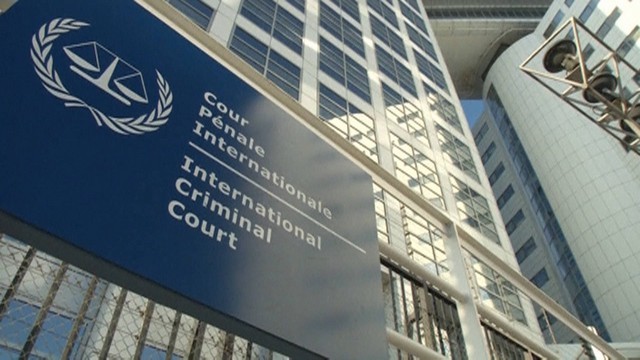
27. The effects of sanctions imposed by Presidents Obama and Trump and unilateral measures by Canada and the European Union have directly and indirectly aggravated the shortages in medicines such as insulin and anti-retroviral drugs. To the extent that economic sanctions have caused delays in distribution and thus contributed to many deaths, sanctions contravene the human rights obligations of the countries imposing them.Moreover, sanctions can amount to crimes against humanity under Article 7 of the Rome Statute of the International Criminal Court. An investigation by that Court would be appropriate, but the geopolitical submissiveness of the Court may prevent this.

28. Modern-day economic sanctions and blockades are comparable with medieval sieges of towns with the intention of forcing them to surrender. Twenty-first century sanctions attempt to bring not just a town, but sovereign countries to their knees. A difference, perhaps, is that twenty-first century sanctions are accompanied by the manipulation of public opinion through “fake news”, aggressive public relations and a pseudo-human rights rhetoric so as to give the impression that a human rights “end” justifies the criminal means. …

29. Economic asphyxiation policies are comparable to those already practised in Chile, the Democratic People’s Republic of Korea, Nicaragua and the Syrian Arab Republic. In January 2018, Middle East correspondent of The Financial Times and The Independent, Patrick Cockburn, wrote on the sanctions affecting Syria: There is usually a pretence that foodstuffs and medical equipment are being allowed through freely and no mention is made of the financial and other regulatory obstacles making it impossible to deliver them. An example of this is the draconian sanctions imposed on Syria by the US and EU which were meant to target President Bashar al-Assad and help remove him from power. They have wholly failed to do this, but a UN internal report leaked in 2016 shows all too convincingly the effect of the embargo in stopping the delivery of aid by international aid agencies. They cannot import the aid despite waivers because banks and commercial companies dare not risk being penalised for having anything to do with Syria. The report quotes a European doctor working in Syria as saying that “the indirect effect of sanctions … makes the import of the medical instruments and other medical supplies immensely difficult, near impossible”. In short: economic sanctions kill. …

30. Bearing in mind that Venezuelan society is polarized, what is most needed is dialogue between the Government and the opposition, and it would be a noble task on the part of the Secretary-General of the United Nations to offer his good offices for such a dialogue. Yet, opposition leaders Antonio Ledezma and Julio Borges, during a trip through Europe to denounce the Government of the Bolivarian Republic of Venezuela, called for further sanctions as well as a military “humanitarian intervention”. …

31. Although the situation in the Bolivarian Republic of Venezuela has not yet reached the humanitarian crisis threshold, there is hunger, malnutrition, anxiety, anguish and emigration. What is crucial is to study the causes of the crisis, including neglected factors of sanctions, sabotage, hoarding, black market activities, induced inflation and contraband in food and medicines.

32. The “crisis” in the Bolivarian Republic of Venezuela is an economic crisis, which cannot be compared with the humanitarian crises in Gaza, Yemen, Libya, the Syrian Arab Republic, Iraq, Haiti, Mali, the Central African Republic, South Sudan, Somalia, or Myanmar, among others. It is significant that when, in 2017, the Bolivarian Republic of Venezuela requested medical aid from the Global Fund to Fight AIDS, Tuberculosis and Malaria, the plea was rejected, because it ”is still a high-income country … and as such is not eligible”. …

33. It is pertinent to recall the situation in the years prior to the election of Hugo Chávez. 118 Corruption was ubiquitous and in 1993, President Carlos Pérez was removed because of embezzlement. The Chávez election in 1998 reflected despair with the corruption and neo-liberal policies of the 1980s and 1990s, and rejection of the gulf between the super-rich and the abject poor.

34. Participatory democracy in the Bolivarian Republic of Venezuela, called “protagónica”, is anchored in the Constitution of 1999 and relies on frequent elections and referendums. During the mission, the Independent Expert exchanged views with the Electoral Commission and learned that in the 19 years since Chávez, 25 elections and referendums had been conducted, 4 of them observed by the Carter Center. The Independent Expert met with the representative of the Carter Center in the Bolivarian Republic of Venezuela, who recalled Carter’s positive assessment of the electoral system. They also discussed the constitutional objections raised by the opposition to the referendum held on 30 July 2017, resulting in the creation of a Constitutional Assembly. Over 8 million Venezuelans voted in the referendum, which was accompanied by international observers, including from the Council of Electoral Specialists of Latin America.

35. An atmosphere of intimidation accompanied the mission, attempting to pressure the Independent Expert into a predetermined matrix. He received letters from NGOs asking him not to proceed because he was not the “relevant” rapporteur, and almost dictating what should be in the report. Weeks before his arrival, some called the mission a “fake investigation”. Social media insults bordered on “hate speech” and “incitement”. Mobbing before, during and after the mission bore a resemblance to the experience of two American journalists who visited the country in July 2017. Utilizing platforms such as Facebook and Twitter, critics questioned the Independent Expert’s integrity and accused him of bias, demonstrating a culture of intransigence and refusal to accept the duty of an independent expert to be neutral, objective, dispassionate and to apply his expertise free of external pressures. …

36. The Independent Expert recommends that the General Assembly: (g) Invoke article 96 of the Charter of the United Nations and refer the following questions to the International Court of Justice: Can unilateral coercive measures be compatible with international law? Can unilateral coercive measures amount to crimes against humanity when a large number of persons perish because of scarcity of food and medicines? What reparations are due to the victims of sanctions? Do sanctions and currency manipulations constitute geopolitical crimes? (h) Adopt a resolution along the lines of the resolutions on the United States embargo against Cuba, declaring the sanctions against the Bolivarian Republic of Venezuela contrary to international law and human rights law. …

37. The Independent Expert recommends that the International Criminal Court investigate the problem of unilateral coercive measures that cause death from malnutrition, lack of medicines and medical equipment. …

38. The Independent Expert recommends that, until the International Court of Justice and the International Criminal Court address the lethal outcomes of economic wars and sanctions regimes, the Permanent Peoples Tribunal, the Russell Tribunal and the Kuala Lumpur War Crimes Commission undertake the task so as to facilitate future judicial pronouncements.

On January 26th, Britain’s Independent headlined “Venezuela crisis: Former UN rapporteur says US sanctions are killing citizens”, and Michael Selby-Green reported that:

The first UN rapporteur to visit Venezuela for 21 years has told The Independent the US sanctions on the country are illegal and could amount to “crimes against humanity” under international law.

Former special rapporteur Alfred de Zayas, who finished his term at the UN in March, has criticized the US for engaging in “economic warfare” against Venezuela which he said is hurting the economy and killing Venezuelans.

The comments come amid worsening tensions in the country after the US and UK have backed Juan Guaido, who appointed himself “interim president” of Venezuela as hundreds of thousands marched to support him. …

The US Treasury has not responded to a request for comment on Mr de Zayas’s allegations of the effects of the sanctions programme.

US sanctions prohibit dealing in currencies issued by the Venezuelan government. They also target individuals, and stop US-based companies or people from buying and selling new debt issued by PDVSA or the government.

The US has previously defended its sanctions on Venezuela, with a senior US official saying in 2018: “The fact is that the greatest sanction on Venezuelan oil and oil production is called Nicolas Maduro, and PDVSA’s inefficiencies,” referring to the state-run oil body, Petroleos de Venezuela, SA.

Mr De Zayas’s findings are based on his late-2017 mission to the country and interviews with 12 Venezuelan government minsters, opposition politicians, 35 NGOs working in the country, academics, church officials, activists, chambers of commerce and regional UN agencies.

The US imposed new sanctions against Venezuela on 9 March 2015, when President Barack Obama issued executive order 13692, declaring the country a threat to national security.

The sanctions have since intensified under Donald Trump, who has also threatened military invasion and discussed a coup. …

Despite being the first UN official to visit and report from Venezuela in 21 years, Mr de Zayas said his research into the causes of the country’s economic crisis has so far largely been ignored by the UN and the media, and caused little debate within the Human Rights Council.

He believes his report has been ignored because it goes against the popular narrative that Venezuela needs regime change. …

The then UN high commissioner, Zeid Raad Al Hussein, reportedly refused to meet Mr de Zayas after the visit, and the Venezuela desk of the UN Human Rights Council also declined to help with his work after his return despite being obliged to do so, Mr de Zayas claimed. …

Ivan Briscoe, Latin America and Caribbean programme director for Crisis Group, an international NGO, told The Independent that Venezuela is a polarising subject. … Briscoe is critical of Mr de Zayas’s report because it highlights US economic warfare but in his view neglects to mention the impact of a difficult business environment in the country. … Briscoe acknowledged rising tensions and the likely presence of US personnel operating covertly in the country. …

Eugenia Russian, president of FUNDALATIN, one of the oldest human rights NGOs in Venezuela, founded in 1978 before the Chavez and Maduro governments and with special consultative status at the UN, spoke to The Independent on the significance of the sanctions.

“In contact with the popular communities, we consider that one of the fundamental causes of the economic crisis in the country is the effect that the unilateral coercive sanctions that are applied in the economy, especially by the government of the United States,” Ms Russian said.

She said there may also be causes from internal errors, but said probably few countries in the world have suffered an “economic siege” like the one Venezuelans are living under. …

In his report, Mr de Zayas expressed concern that those calling the situation a “humanitarian crisis” are trying to justify regime change and that human rights are being “weaponised” to discredit the government and make violent overthrow more “palatable”….

Venezuela has the largest oil reserves in the world and an abundance of other natural resources including gold, bauxite and coltan. But under the Maduro government they’re not easily accessible to US and transnational corporations.

US oil companies had large investments in Venezuela in the early 20th century but were locked out after Venezuelans voted to nationalise the industry in 1973.

Other than readers of that single newspaper, where has the public been able to find these facts? If the public can have these facts hidden from them, then how much trust should the public reasonably have in the government, and in the news-media?

(NOTE: Zeid Raad Al Hussein, who “reportedly refused to meet Mr de Zayas after the visit,” is Prince Zeid Raad Al Hussein, a Jordanian Prince. Jordan is a vassal-state in the U.S. empire. But Prince Hussein is a Jordanian diplomat who served as United Nations High Commissioner for Human Rights from 2014 to 2018 — hardly an unbiased or independent person in such a supposedly nonpartisan role.)

(NOTE: Here is the garbage that a reader comes to, who is trying to find online Mr. de Zayas’s report on this matter: https://documents-dds-ny.un.org/doc/UNDOC/GEN/G18/239/29/PDF/G1823929.pdf. As intended, the document remains effectively hidden to the present day. Perhaps the U.N. needs to be replaced and located in Venezuela, Iran, or some other country that’s targeted for take-over by the people who effectively own the United States Government and control the U.N.’s bureaucracy. The hiding of this document was done not only by the press but by the U.N. itself.)

(NOTE: On January 23rd, Germany’s Die Zeit headlined “Christoph Flügge: ‘I am deeply disturbed’: The U.N. International Criminal Court Judge Christoph Flügge Accuses Western Nations of Threatening the Independence of the Judges”. Flügge especially cited U.S. President Trump’s agent, John Bolton. That same day, the Democratic Party and Labour Party organ, Britain’s Guardian, bannered “International criminal court: UN court judge quits The Hague citing political interference”. This news-report said that, “A senior judge has resigned from one of the UN’s international courts in The Hague citing ‘shocking’ political interference from the White House and Turkey.” The judge especially criticised Bolton: “The American security adviser held his speech at a time when The Hague was planning preliminary investigations into American soldiers who had been accused of torturing people in Afghanistan. The American threats against international judges clearly show the new political climate. It is shocking. I had never heard such a threat.” Flügge said that the judges on the court had been “stunned” that “the US would roll out such heavy artillery”. Flügge told the Guardian: “It is consistent with the new American line: ‘We are No 1 and we stand above the law’.”)

(NOTE: On February 6th, a former UK Ambassador to Syria vented at an alt-news site, 21st Century Wire (since he couldn’t get any of the major-media sites to publish it), “A Guide to Decoding the Doublespeak on Syria”, and he brazenly exposed there the Doublespeak-Newspeak that the U.S. Government and press (what he called America’s “frothing neocons and their liberal interventionist fellow travellers”) apply in order to report the ‘news’ about Syria. So: how can the public, in a country such as the U.S., democratically control the Government, if the government and its press are lying to them, like that, all the time, and so routinely?)

—————

Investigative historian Eric Zuesse is the author, most recently, of They’re Not Even Close: The Democratic vs. Republican Economic Records, 1910-2010, and of CHRIST’S VENTRILOQUISTS: The Event that Created Christianity.

9 February 2019

Source: countercurrents.org

Urging Defections, Trump Administration Reportedly Holding Secret Talks With Venezuelan Military

By Jake Johnson

In an effort to encourage defections from Venezuela’s elected President Nicolas Maduro, the Trump administration is reportedly holding secret talks with members of the Venezuelan military as top U.S. cabinet officials continue to issue aggressive threats and push for regime change.

According to Reuters, which cited an anonymous senior White House official, the U.S. “is holding direct communications with members of Venezuela’s military urging them to abandon President Nicolas Maduro and is also preparing new sanctions aimed at increasing pressure on him.”

“The Trump administration expects further military defections from Maduro’s side,” Reuters reported, “despite only a few senior officers having done so since opposition leader Juan Guaido declared himself interim president last month, earning the recognition of the United States and dozens of other countries.”

As Common Dreams reported, Guaido’s move to declare himself “interim president”—which was denounced by experts and activists as the beginnings of a possible coup—was highly coordinated with the Trump White House, which vowed ahead of time to back the opposition leader in his attempt to seize power.

In an interview with Reuters, the anonymous Trump official said the White House believes the few officers who have defected from Maduro are the “first couple pebbles before we start really seeing bigger rocks rolling down the hill.”

News that the Trump administration is holding direct talks with members of the Venezuelan military comes after Venezuelan government officials said they discovered a crate of weapons and ammunition delivered by a U.S.-based plane this week to an airport in the city of Valencia.

Venezuela’s vice minister of citizen security said the weapons shipment was “destined for criminal groups and terrorist actions in the country, financed by the fascist extreme right and the government of the United States.”

With hawkish Trump White House officials like national security adviser John Bolton continuing to warn that U.S. military intervention in Venezuela remains “on the table,” Maduro published an open letter to the American public urging opposition to “warmongering and war.”

“I say this to the people of the United States of America to warn them of the serious and dangerous intent that factions in the White House have for invading Venezuela, which would have unforeseeable consequences for my nation and for all of the Americas,” Maduro wrote.

“The people of the United States should know that this complex, multi-form aggression is being carried out with total impunity and in flagrant violation of the United Nations Charter, which expressly forbids the threat or use of force, among other principles and resolutions in the pursuit of peace and relations of friendship amongst nations,” he added.

While criticizing Maduro for his crackdown on protesters and other abuses, progressive lawmakers in the U.S. have denounced the Trump administration’s interference in Venezuela’s internal political affairs.

“We must condemn the use of violence against unarmed protesters and the suppression of dissent,” Sen. Bernie Sanders (I-Vt.) wrote last month. “However, we must learn the lessons of the past and not be in the business of regime change or supporting coups—as we have in Chile, Guatemala, Brazil, and the Dominican Republic.”

This work is licensed under a Creative Commons Attribution-Share Alike 3.0 License
Originally published by CommonDreams.org

9 February 2019

Source: countercurrents.org

Some Want Iran’s Past to Poison its Future

By Peter Jenkins

The Washington Times reported on January 14 that the Institute for Science and International Security (ISIS) is accusing Iran of having failed to declare to the International Atomic Energy Agency (IAEA) a site charged with “producing components for nuclear weapons.” The accusation is based, apparently, on satellite imagery and documents that the Israeli intelligence service claims to have stolen from a warehouse in a suburb of Tehran. ISIS urges the IAEA to “verify sites, locations, facilities, and materials involved in these activities.”

This accusation came to the notice of the National Security Advisor John Bolton. According to the Washington Times, he used it as a pretext to accuse Iran, in a tweet, of “fudging its reports to the nuclear disarmament watchdog” and of “not-identifying a former nuclear weapons site under Project 110 of the Amad Plan.” Bolton added: “Pressure on Iran to abandon nuclear ambitions will increase.”

These accusations are curious in a number of ways.

The 2015 Joint Comprehensive Plan of Action (JCPOA) commits Iran to refrain from engaging in activities that could contribute to the development of a nuclear explosive device. The commitment came into effect in January 2016. The stolen warehouse material relates to Iranian nuclear weapon activities prior to 2004. Whether or not, prior to 2004, Iran ran a site producing components for nuclear weapons is irrelevant to a post-2015 JCPOA commitment. A belief that something was happening prior to 2004 cannot serve as a reason to suspect that the same thing is happening in 2019. In fact, since Iran’s Supreme Leader ordered a stop to nuclear weapon research and development in late 2003, it is very unlikely that Iran is still running a site “charged with producing components for nuclear weapons.”

It may be, however, that ISIS—not to mention the Israeli suppliers of the stolen material and John Bolton—wants the IAEA to revisit Iran’s historic nuclear weapon activities, which used to be referred to as a “possible military dimension” (PMD). If so, they are likely to be disappointed. The PMD file was closed in December 2015. That was when the IAEA Board of Governors noted (in resolution GOV/2015/72) that “all the activities in the Road-map for the clarification of past and present outstanding issues regarding Iran’s nuclear programme were implemented in accordance with the agreed schedule,” and further that “this closes the Board’s consideration of this item.”

In theory, of course, the Board could decide that it had been a little hasty in closing its consideration of a PMD. It could ask the IAEA director general to re-open the file and request access to the location that ISIS has in its sights. But that would be a gross breach of faith. One of the understandings that made possible the JCPOA was that, if Iran did everything the IAEA asked to clarify “past and present outstanding issues,” the file would be closed.

Perhaps a gross breach of faith is precisely what ISIS and its Israeli backers hope to cause. If so, they will probably fail. Why would the remaining JCPOA parties and most IAEA Board members provoke Iran, through a breach of faith, into renouncing the JCPOA? Their interest is to sustain an agreement that gives the IAEA an exemplary opportunity to acquire confidence that there are no undeclared nuclear materials or activities in Iran, and in complying, unlike the United States, with UN Security Council resolution 2231.

Another curiosity is that Bolton referred to the IAEA as a “nuclear disarmament watchdog.” In as much as the IAEA has any canine features, it is a nuclear non-proliferation watchdog. It verifies the non-diversion of nuclear materials to uses incompatible with Nuclear Non-Proliferation Treaty (NPT) obligations. It would be surprising if Bolton, for all his limitations, were unaware of this. So presumably the reference to disarmament is intended to mislead. It conveys the impression that Iran possessed nuclear weapons and is being deprived of them. This is the sort of alternative reality usually associated with Bolton’s current boss.

Bolton’s reference to Iran abandoning nuclear ambitions is similarly off base. It seems improbable that Bolton has in mind Iran’s civil nuclear energy program. Almost certainly, he wants readers of his tweet to believe that Iran still harbors an ambition to be a nuclear weapon possessor-state. If so, he is ignoring that for more than a decade the U.S. national Intelligence community has judged Iran’s decision-makers to have abandoned a nuclear weapon program in 2003 and to have no plan to acquire nuclear weapons.

Reader, beware attempts to use Iran’s past to poison its future!

Peter Jenkins was a British career diplomat for 33 years, following studies at the Universities of Cambridge and Harvard.

21 January 2019

Venezuela – The Straw that Breaks the Empire’s Back?

By Peter Koenig

Venezuela in the limelight, on practically all the written, audio and visual mainstream media, as well as alternative media. A purposeful constant drip of outright lies and half-truths, “fake news”, as well as misleading information of all shades and hues about Venezuela is drumming our brains, slowly bending our minds towards believing that – yes, the US has a vital interest in meddling in Venezuela and bringing about “regime change”, because of primarily, the huge reserves of oil, but also of gold, coltan and other rare minerals; and, finally, simply because Washington needs full control of its “backyard”. – BUT, and yes, there is a huge BUT, as even some of the respected progressive alternative media pretend to know: Amidst all that recognition of the AngloZionist empire’s evil hands in Venezuela, their ‘but’ claims that Venezuela, specifically Presidents Chavez and now Maduro, are not blameless in their ‘economic chaos’. This distorts already the entire picture and serves the empire and all those who are hesitant because they have no clue, whom to support in this antagonistic US attempt for regime change.

For example, one alternative news article starts, “It is true that some of Venezuela’s economic problems are due to the ineptitudes of the Bolivarian government’s “socialist command” economy, but this overlooks the role played by the United States, the United Nations, and the European Union….”. Bingo, with such a low-blow beginning, the uninformed reader is already primed to ‘discount’ much of the interference by Washington and its minions. Some of the-so-called progressive writers have already been brain-smeared, by calling Nicolás Maduro a “dictator”, when in fact, there is hardly any country farther away from a dictatorship than Venezuela.

In the last 20 years and since Comandante Hugo Chavez Frias was first elected in 1998 and came to power in 1999, Venezuela had another 25 fully democratic elections, of which 6 took place in the last year and a half. They were all largely observed by the US based Carter Institute, the Latin American CELAC, some were even watched by the European Union (EU), the very vassal states that are now siding with Washington in calling President Maduro an illegitimate dictator – and instead, they support the real illegitimate, never elected, US-CIA trained and appointed, Juan Guaidó. Former President Carter once said, of all the elections he and his Institute observed, the ones in Venezuela were by far the most transparent and democratic ones. By September 2017, the Carter Center had observed 104 elections in 39 countries.

Despite this evidence, Washington-paid and corrupted AngloZionist MSM are screaming and spreading lies, ‘election fraud’; and Nicolás Maduro is illegal, a dictator, oppressing his people, depriving them of food and medication, sowing famine – he has to go. Such lies are repeated at nauseatum. In a world flooded by pyramid-dollars (fake money), the presstitute media have no money problem. Dollars, the funding source for the massive lie-propaganda, are just printed as debt, never to be repaid again. So, why worry? The same Zionists who control the media also control the western money machines, i.e. the FED, Wall Street, the BIS (Bank for International Settlement, the so-called Central bank of central banks), the European Central Bank, the Bank of England and the banks of London. The western public, armchair warriors, all the way to caviar socialists, believe these lies. That’s how our unqualified brains apparently work.

A recent independent poll found that 86% of all Venezuelans, including from the opposition, want no interference by the US and her puppet allies, but want to remain a sovereign state, deciding themselves on how to resolve their internal problem – economics and otherwise.

Let me tell you something, if Mr. Maduro would be a dictator – and all the diabolical adjectives that he is smeared with were to apply, he would have long ago stopped the western propaganda machine, which is the western controlled media in Venezuela; they control 90% of the news in Venezuela. But he didn’t and doesn’t, because he believes in freedom of speech and freedom of the ‘media’ – even if the “media” are really nothing more than abject western lie-machine presstitute. Mr. Maduro is generous enough not to close them down – which any dictator – of which there are now many in Latin America (take your pick: Argentina, Chile, Ecuador, Brazil, Colombia, Paraguay, Uruguay, Guatemala, Honduras….) would have done long ago.

From the very beginning, when Hugo Chavez was first elected in 1998, Washington attempted to topple him to bring about “régime change”. The first real coup attempt took place on 11 April 2002. Under full command by Washington, Chavez was ousted for less than 2 days, when an on-swell of people and the vast majority of the military requested his reinstatement. Chavez was brought back from his island seclusion and, thus, the directly Washington-led coup d’état was defeated (“The Revolution Will Not Be Televised”). But the pressure mounted with economic sanctions becoming ever bolder and, in the case of Venezuela, they had severe economic and humanitarian impacts because Venezuela imports close to 90% of her food and medication – still today – and most of it from the US.

Both Chavez and Maduro had very little leeway of doing differently what they have already done. Sanctions, boycotts, outside money manipulations, driving inflation to astronomical levels and constant smear propaganda, these predicaments are biting hard. The US has a firm grip on Venezuela’s dollar dependency.

Last week, Washington confiscated about US$ 23 billion of Venezuela’s reserve money in US banks, blocked them from use by the legitimate Maduro government, and, instead, handed them to their US-appointed, puppet, never elected, “president”, Juan Guaidó. – He is now able to use Venezuela’s money in his US-EU-and Lima-Group supported “shadow” government. Will he dare? – I don’t think so. However, he has already invited US petrol companies to come to Venezuela and invest in and take over the petrol industry. Of course, it will not happen, as President Maduro stays in power, firmly backed by the military.

All of this sounds like a bad joke. Did you ever hear of Juan Guaidó, before the US and her European vassals almost unanimously and obediently aped Washington in supporting him?

Likewise, the Bank of England withheld 1.2 billion dollars’ worth of Venezuelan reserve gold, refusing to respond to the Maduro Government’s request to return the gold to Caracas. Both cases represent an extreme breach of confidence. Up to now, it was ethically, commercially and financially unthinkable that reserve money and gold deposited in foreign banks would not be safe from hooligan theft – because that’s what it is, what the US is doing, stealing other countries money that was deposited in good fate in their banks.

In a recent interview with RT, President Maduro, said there was absolutely no need for “humanitarian aid”, as the UN suggested, prompted by the US. This so-called humanitarian aid has everywhere in the world only served to infiltrate ‘foreign and destabilizing’ elements into countries, just look at Syria, Libya, Iraq, Afghanistan, to name just a few. While the US$ 23 billion blocked in New York banks could have supplied Venezuela with 20 years-worth of medication for the Venezuelan people, Maduro asserted, Venezuela has enough liquidity to feed and medicate her people.

However, what this latest Trump plunder (the money and gold confiscation) does, is hammering one more nail in the western monetary system’s suicide coffin. It sends an ever-clearer signal to the rest of the world, to those that haven’t noticed yet, the AngloZionist empire cannot – I repeat – CANNOT – be trusted. Ever. And the European Union is intrinsically and “vassalically” linked to the Washington rogue state – not to be trusted either. There is virtually no circumstance under which a countries’ assets in western foreign lands – as bank deposits, or foreign investments – are safe. It will prompt a move away from the dollar system, away from the western (also entirely privately-owned) SWFT international transfer system by which sanctions can be enacted.

Indeed, the Russia and China and much of the SCO (Shanghai Organization Cooperation) members are no longer dealing in US dollars but in their own currencies. We are talking about half the world’s population broke free from the dollar hegemony. Europe has started a half-assed attempt to circumvent the dollar and SWIFT system for dealing with Iran. Europe’s special purpose vehicle, or SPV, is called INSTEX — short for Instrument in Support of Trade Exchanges. It is a project of Germany, France and the UK, suspiciously chaired by the latter, to be endorsed by all 28 EU members.

It aims in a first instance at shipping “humanitarian aid” to Iran. Similarly, to Venezuela, Iran’s foreign Minister, Javad Zarif, after learning about the details, considered the conditions of INSTEX as insulting and rejected any dealings with Europe under this system. Iran, he said, does not need “humanitarian aid”, not from Europe, not from anybody. In the meantime, what was to be expected, has already happened. The Trump Administration issued a stern warning of “sanctions” to the EU, if they would attempt to deal with Iran outside of the dollar system. Europe is likely caving in, as they always do.

Back in Venezuela, the NED (National Endowment for Democracy), the extended arm of the CIA, has for the last two decades trained funded and infiltrated ‘traitor’ agents into Venezuela, with the goal to assist the opposition to foment unrest, to carry out assassinations and other ‘false flags’, and to simply create chaos and unrest. However, some of these agents are also lodged in Venezuela’s financial institutions, as the Fifth Column, where they sabotage – often with threats – any economic policies that could rescue Venezuela from its economic predicament.

In June 2017, I was privileged to be a member of an economic advisory team to Mr. Maduro. During three days of intense discussions with government, a number of potential short- medium and long-term solutions emerged. They were well received by Mr. Maduro and his economic team. What became of these recommendations? – Well, maybe there are strong foreign-directed forces at play to prevent their implementation.

Clearly, any accusation that the Maduro Government may bear the blame for some of the economic chaos, have to be vigorously rejected. Mr. Maduro has very little space to maneuver the economy other than what he is already doing. His actions are severely limited by the ever-stronger squeeze by western claws.

With or without Venezuela’s new crypto currency, the oil-based Petro, the Venezuelan economy, including a major proportion of her imports, is strongly linked to the US dollar. With military threats and sanctions left and right, there is little that the Government can do in the immediate future to become autonomous. Yes, Russia and especially China will most likely help with balance of payment support loans, with investments in the oil industry to ease Venezuela’s US-dollar debt burden and vamp up oil production; and in the medium and longer run they may also help boosting Venezuela’s agricultural sector towards 100% food self-sufficiency.

What is the real reason, you may ask, behind Trump’s intense ‘coup d’état’ attempt – aka, Bolton, Pompeo and Elliott Abrams (the ‘regime change’ envoy), or the diabolical troika’s killer mission?

  • Is it oil and other natural riches, like gold, coltan, diamonds and many more rare minerals? Venezuela with some 301,000 MMbbl (billions of barrels) of known reserves has about 12% more hydrocarbon reserves than Saudi Arabia. Shipping from the Gulf to Texas refineries takes 40-45 days and the risk of passing through the Iran-controlled strait of Hormuz. Delivering oil from Venezuela to Texas takes some 2-4 days.
  • Is it that Venezuela committed a mortal sin when circumventing the petro-dollar, when trading her hydrocarbons, notably with China and Russia in other currencies, like the gold-convertible yuan? – Remember, Saddam Hussein and Muamar Gadhafi attempted similar dollar-escaping actions – and look what it brought them. The US-dollar hegemony depends very much on oil and gas trade in US dollars, as per an agreement of the seventies between the US and Saudi Arabia, head of OPEC.
  • Is it that Washington cannot tolerate any socialist or socialist leaning country in its “backyard”? – Cuba and Nicaragua beware!
  • Is Venezuela a crucial stepping stone to fully dominate Latin America and her resources? – And, hence, a step closer to ‘full power dominance’ of the world?
  • Or all of the above?

I believe it’s all of the above, with a strong accent on Venezuela’s abandoning the US-dollar as hydrocarbon trading currency – putting the dollar-hegemony even more at risk. Once the dollar ceases to be the main reserve currency, the US economy will slowly collapse – what it is already doing. Twenty years ago, the US-dollar dominated world reserve coffers with about 90%. Today that proportion has sunk to less than 60%. The dollar is rapidly being replaced by other currencies, notably the Chinese yuan.

Now let’s cut to the chase. – It is clear that the Trump Administration with these stupid actions of dishing out sanctions left and right, punishing allies and foes alike, if they deal with Russia, Iran, or Venezuela – and this special blunt regime change aggression in Venezuela, nominating a 35 year old US puppet, trained in the US by CIA as Venezuela’s new ‘interim president’, confiscating Venezuela’s reserve assets in New York and London, stopping importing petrol from Venezuela and punishing anybody who imports Venezuelan oil – except, of course, Russia and China. The ‘might’ of the US stops short of interfering in these non-dollar deals. With these and more ridiculous actions and military threats – Washington is actually not only isolating itself, but is accelerating the fall of the US economy. Ever more countries are seeking alternative ways of doing business with currencies and monetary systems other than the dollar-based fraudulent SWIFT, and eventually they will succeed. All they need to do is joining the China-Russia-SCO system of transfer in their local currencies and the currencies of the eastern SCO block – and dedollarization is moving a step further ahead.

Dedollarization is the key to the end of the US (dollar) hegemony, of the US economic supremacy. The arrogant Trump, plus the impunity of the unfettered diabolical and outright dumb Bolton-Pompeo-Abrams approach of military threats and intimidations, may just make Venezuela the straw that breaks the Empire’s back.

Peter Koenig is a Research Associate of the Centre for Research on Globalization.

8 February 2019

Source: countercurrents.org

Neopatrimonialism, corruption and the Palestinian Authority: Pathways to real reform

By Marwa Fatafta

Palestinians recently ranked corruption as the second largest problem they face after the economic crisis – higher than the Israeli occupation, which ranked third. Indeed, Palestinians generally view Palestinian Authority (PA) officials as a self-serving, elitist group disconnected from the Palestinian national struggle and the daily sufferings of the people. Such perceptions are fostered by the failure of the Oslo Accords, the death of the Palestinian statehood project, and the continued fragmentation of political leadership in the context of Israel’s ongoing oppressive occupation and its violations of Palestinians’ fundamental rights.1

Despite this dissatisfaction, there has been little change in the last two decades, whether at the top leadership level or within the ranks of PA institutions. What remains a constant is the ‘old guard’ maintaining a tight grip on power, rampant and systemic corruption, and the alienation of Palestinians from participation in decisions that impact their lives and future.

The present reality of the PA in no way resembles the kind of Palestinian government promised since the heady years of the Oslo Accords. As Nathan Brown observed, ‘Palestine is, in short, a model liberal democracy. Its most significant flaw is that it does not exist.’ This discrepancy between envisaged democratic leadership and reality can be explained by the neopatrimonial nature of the Palestinian political system. Neopatrimonialism is a hybrid model in which state structures, laws, and regulations are formally in place but overridden by informal politics and networks of patronage, kinship, and tribalism. Instead of being organised according to merit, public function, or administrative grades, a neopatrimonial regime finds its glue in bonds of loyalty to those at the top of the political hierarchy.

In an institutional context in which Palestinians have no mechanisms to hold their leaders accountable, Palestinian neopatrimonialism has created a situation impervious to serious change in leadership or political system. Though the PA, after the onset of the Second Intifada, began to make attempts at reform, Palestinian political structures have remained corrupt and captured by one political faction, Fatah. The assets and resources of the Palestine Liberation Organization (PLO) and the PA have been channelled toward serving the interests of the few at the expense of the majority.

The question of what can be done to remedy this crisis cannot be answered without understanding the nature of Palestinian political corruption and how it has led to the failure to serve the Palestinian people and rendered any attempt at reform useless. This policy brief examines Palestinian neopatrimonialism and corruption through a consideration of PA overreach, patronage practices, and collusion with Israel, as well as pressures from the international community. It ultimately proposes avenues for genuine reform, with the goal of building a truly democratic leadership and a governance system that represents all Palestinian people.

The PA: Overstepping its mandate

A Weakened legislature and judiciary

The two main Palestinian political bodies, the PLO and the PA, in principle should be democratic and representative as set out in the Palestinian Basic Law and the PLO’s constitution. However, the PLO has not only failed in the mission it carries in its name, but has also failed to act as the ‘sole, legitimate representative of the Palestinian people’. The PLO’s weakness can be seen in the fact that its legislative arm, the Palestinian National Council (PNC), convened in May 2018 after 22 years of inaction. The absence, during which the Oslo ‘peace process’ proved a total failure, demonstrates how the Palestinian leadership impeded the PLO from fulfillingits duty as a representative of Palestinians inside and outside the occupied territories.

The PA, on the other hand, has overstepped its role as an interim government as stipulated in the Oslo Accords, and has increasingly become an authoritarian governing force in the West Bank. Hamas has followed suit in suppressing political dissent in the Gaza Strip.

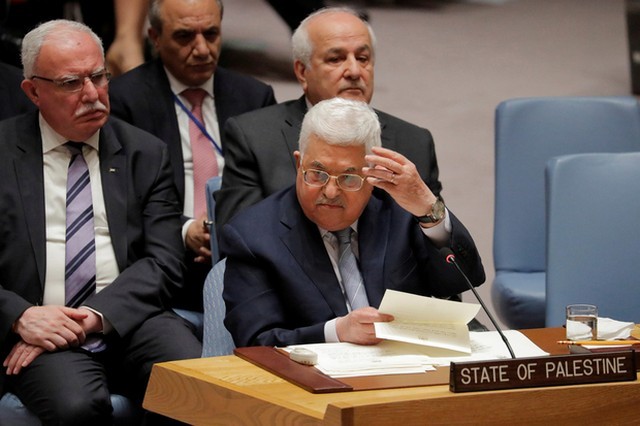
PA President Mahmoud Abbas enjoys almost absolute power as the highest executive authority – an arrangement inherited from former President Yasser Arafat, who is often credited for institutionalising the neopatrimonial regime. During his presidency, Arafat maintained power via political cooptation and suppression.

Since the 2007 shutdown of the PA’s legislative arm, the Palestinian Legislative Council (PLC), Abbas has consolidated more power by assuming the roles of both the executive and the legislative branches of government, issuing legislation through presidential decrees and often in a process that lacks transparency and proper consultation with the public.

Among Abbas’s most recent legislative decrees is the Palestinian cybercrime law of 2017. The law, despite being amended following a public outcry, allows authorities to block websites and conduct surveillance on ordinary social media users. Palestinians can be arrested for expressing their opinions and political views online and charged with ‘cybercrimes’, punishable by up to fifteen years in prison.

The executive capture of power also extends to the judiciary. In April 2017, Palestinian judges, lawyers, and prosecutors gathered in Ramallah to protest a draft amendment that would grant the Palestinian president the authority to appoint the head of the High Judicial Council and the head of a committee that oversees judges. The amendment would also allow for the early retirement of judges, opening the door for the executive to interfere and threaten judges’ independence. Under such a provision, judges would have to think twice before issuing a ruling that challenges or opposes the executive authority. In an example of such forced pressure from the executive, former Supreme Court Chief Justice Sami Sarsour signed an undated letter of resignation shortly before he was sworn in.

The constant failure to reach a reconciliation agreement between Hamas and Fatah, despite announcing a national unity government in early 2017, also speaks volumes in regard to Fatah’s power monopoly and its marginalisation of other Palestinian political actors and their constituencies. Power sharing is a prerequisite to the establishment of a solid national unity government, and requires fundamental changes to the current political setup.

Patronage and loyalty

As a result of Fatah’s control of the PA and the PLO, the Palestinian administrative and political machines run on dynamics of inclusion vs. exclusion and reward vs. punishment – fundamentally, according to loyalty. Appointments of public positions and promotions, for example, are awarded or withdrawn not on the basis of performance or professional merit but on the level of loyalty to the leadership.

For instance, holders of senior positions in the PA have invariably been appointed. Position descriptions are not publicly posted, nor are there openly established criteria for determining job scales, salaries, promotions, benefits, and bonuses. According to the Coalition for Accountability and Integrity – AMAN, the salaries and bonuses of the heads of some non-ministerial institutions have been higher than the salary of the president of the PA, whose monthly income, as stipulated by law, stands at $10 000. The appointment of freed Palestinian prisoners in the cadres of the civil workforce as compensation for their contribution to the Palestinian liberation movement is another example of the informal nature of PA positions.

Relatedly, in 2017 President Abbas forced 6 145 PA employees in Gaza into early retirement to pressure Hamas to cede control of the Strip. The number of PA employees in Gaza – both civil and security – is estimated to be around 50 000. Despite Hamas seizing control in Gaza, their salaries continue to be paid – albeit at a lower rate – to secure their loyalty to the PA. At the same time, Abbas uses government resources for political exclusion and punishment. A particularly abominable instance of this was the cutting of PA payments to Israel for electricity in Gaza, reducing the electricity supply to the Strip’s two million inhabitants to four hours a day.

Covert dealings

The dysfunction of the PLC and the PNC, two toothless legislative bodies, has resulted in the executive monopolising and signing secret negotiations and agreements. The Oslo Accords are a prime example of how the PLO executive monopolised negotiations with Israel and took decisions in the name of the Palestinian people that proved disastrous. In a similar vein, the PA’s executive ignored on numerous occasions the PLC’s decisions mandating that the leadership must immediately stop negotiations with Israel in response to its continuous oppression of the Palestinian people and the expansion of illegal settlements in the West Bank.

The PA’s clandestine signing of agreements with Israel on matters related to energy, electricity, water, and communications demonstrates how far the leadership will go in ignoring formal processes and consultation with the public. These agreements have catastrophic political, economic, social, and environmental implications. One electricity-related agreement signed between Israel and the Palestinian private sector in September 2016 settled the PA’s outstanding $550 million debt to the Israel Electric Corporation with the aim of transferring the responsibility of providing electricity in the West Bank to the PA.

The PA, which celebrated the agreement as a national victory and a step toward liberation, kept the agreement confidential despite public demands to disclose its terms. Palestinian civil society, media, and electric companies wanted to know: How will the power to distribute electricity be transferred to the PA? How will it be regulated? What are the implications? Every Palestinian citizen, as service recipients, should have the right to know of such an agreement. In the absence of basic transparency, Palestinians are denied their right to access information that impacts their daily lives and the basic services delivered to them by their government. This also impedes them from exercising any accountability over the PA.

The Red Sea-Dead Sea agreement, signed by the PA, Jordan, and Israel, was also completed in secret. Palestinian water and environment experts protested, warning that the agreement would cause irreversible environmental damage if implemented, as it will destroy what little is left of the Dead Sea’s ecosystem. Palestinians also protested the pact because it will entrench Israel’s denial of Palestinians’ rights to water, as the agreement undermines Palestinian sovereignty over the West Bank and part of the Jordan River basin. The PA, represented by the Palestinian Water Authority, excluded Palestinian experts from consultation and ignored them when they questioned the motivation behind signing such an agreement that achieves nothing for – and in fact damages – Palestinians.

This lack of transparency and accountability has translated into the misappropriation, misuse, and waste of public funds. For example, Abbas constructed a presidential palace on a 4,700 square meter parcel of land (with another 4,000 square meters for auxiliary buildings, including a helipad) to host guests and foreign delegations. He decided last year to convert the building into a national library, to the cost of $17.5 million. While a national library is a noble idea, the investment in costly infrastructure by a government who is heavily in debt and dependent on foreign aid is a testament to misplaced priorities.

International pressures and partnerships

The PA’s reliance on foreign aid has also undermined the Palestinian political system by making it accountable to international donors rather than the Palestinian people. The PA’s reform agenda and anti-corruption efforts have mostly stemmed from US and EU pressure since the outbreak of the Second Intifada, when the security situation on the ground deteriorated. The intent behind the agenda has been clear: Emphasise security over administrative reform and thus ensure the security of Israel at the expense of the security and basic civil and political freedoms of Palestinians. This has been reflected in the prioritisation of security in the PA’s budget allocations, with that sector taking twenty eight per cent of the annual budget at the expense of other, more vital sectors such as health, education, and agriculture.

In his critique of the Oslo aid model – a model based on the neoliberal policy of investing in peace – Alaa Tartir argues that the donor-driven development agenda has worsened the economic and political circumstances for Palestinians. For example, agriculture – a lost, key pillar of the Palestinian economy – received only one per cent of the PA’s annual budget between 2001 and 2005, while around eighty-five per cent went to staff salaries. Consequently, the agricultural sector’s contribution to GDP shrunk from around 13.3 per cent in 1994 to 5.9 per cent in 2011.

Palestinians have launched grassroots campaigns and union strikes, demanding better education and health services, including a massive teacher strike, a campaign against medicine shortages led by a coalition of Palestinian civil society organisations, a campaign against the electricity cuts in Gaza, and a campaign urging the PA to address medical negligence. The PA often leaves these public demands unanswered, and they are rarely reflected in its fiscal planning and public policies. As one member of the National Social Security movement, which leads the opposition to the controversial national social security law, said, ‘The government is not listening to our concerns.’ The law, which obliges private sector employees to pay seven per cent of their monthly salary and employers to pay nine per cent of salaries in exchange for social security coverage, has caused a wave of anger among Palestinians, who have protested mainly against the high monthly deductions as well as the lack of a guarantee to safeguard their money in the context of political and economic instability.

In February 2017, the PA adopted a new agenda, ‘National Policy Agenda: Citizen First 2017-2022’, that aims to prioritise the Palestinian citizen in the government’s policies, promoting accountability and transparency in managing public funds and affairs. This is a US- and EU-supported financial and administrative reform that began during the tenure of former Prime Minister Salam Fayyad; the agenda states that it is a second phase, following the previous one of building state institutions and enhancing their capacity. It proclaims that it is now time ‘to improve our citizens’ quality of life by providing high-quality public services, fostering job creation in the private sector, and protecting the vulnerable.’

The PA’s new agenda does not acknowledge that Fayyad’s state-building phase failed to lead to statehood, let alone democracy. The international donor community hailed Fayyad as the Palestinian good governance messiah as his cabinet led efforts to create a de factoPalestinian state under the Israeli occupation in the context of a major political schism between the two largest Palestinian political factions. Fayyad’s reforms did not go beyond technical and administrative parameters to ensure that whatever shakeup the cabinet made did not rock the entire boat.

The 2003 restructuring of the prime minister position itself under US and EU pressure to loosen Yasser Arafat’s executive grip is another example of how futile these structural reforms are in such a context. The prime minister’s role, decisions, and policies must be in line with Fatah and the president, as the prime minister simply implements the president’s decisions and has no political standing of his own. When Fayyad filled the position in 2007 and embarked on his reform plan, he became the target of senior Fatah officials who continuously pinned the PA’s ailments and the effects of the economic crisis on Fayyad’s policies. The international community’s strong financial and political backing of Fayyad also constituted a threat to Abbas, who did not defend his premier against the attacks of his party and challenged his authority by overruling some of his decisions.

The international community also dictates which Palestinian political figures are in power through financial and political support. This was the case when the US attempted to overturn Fayyad’s resignation, and when it withdrew funds to suffocate unwanted authority even if it was fairly and legitimately elected, such as when Hamas won the majority of seats in the 2006 legislative elections.

Any additional reforms dependent on international approval will not address the legitimacy crisis in leadership, nor will they lead to the much-needed rebirth of a united Palestinian national movement that could fulfil the aspirations of the Palestinian people. These reforms reinforce the same neopatrimonial dynamics that underlie systemic corruption in the Palestinian Authority by acting as a band aid rather than a solution that tackles corruption from the root.

Essentially, any PA effort to end the occupation and achieve independence – often the stated goal in many of these reform agendas – translates into the PA simply continuing to override the role of the PLO. By doing so, it continues to marginalise if not ignore altogether the voices of the millions of Palestinians who live in the diaspora and have a direct stake in whatever course of action the PA’s executive takes vis-à-vis the Israeli occupation and the ‘peace process’.

Out of the Quagmire

If Palestinians are serious about democratic, representative, and transparent leadership, they must end the farce of reform and build a representative and democratic system from the bottom up. Palestinians, especially the youth living in the occupied territories, in Israel, and in the diaspora, have a significant role to play in mobilising and initiating national grassroots dialogues to debate and build a common vision for future democratic Palestinian leadership. This task requires a massive effort given the existing challenges. However, the continuation of the status quo offers only a bleak future.

To ensure that a new model, whatever its shape or form, does not recycle the same neopatrimonial dynamics, three fundamental elements must be considered:

1. Decentralisation and separation of powers

To break the monopoly of one group or party, there must be a healthy political ecosystem of counterbalancing powers. The limitations of the PLO as an umbrella body representing all Palestinians invites the question of whether such a central authority infrastructure is capable of representing Palestinians everywhere. Any Palestinian governance model must be agile enough to lead and be responsive to the Palestinian polities living in different geographical, juridical, and administrative jurisdictions in the West Bank, Gaza, East Jerusalem, Israel, and the diaspora. The experience of the PA thus far suggests that a central authority, as it exists, cannot fulfill such a role.

Decentralisation of power, through empowering grassroots and local community leadership, is essential to break the existing power monopoly. The leadership and organisation during the First Intifada, albeit belonging to a different political and social context, offers one example of what a collective leadership could look like.

2. Vertical and horizontal accountability

Corruption and abuse of power thrive when those in power cannot be held to account. Any new governance model will be vulnerable to capture of power without the following parallel accountability mechanisms in place:

First: A vertical accountability line that enables the Palestinian people to question their leaders and participate in the decision making process. This is not limited to local and national elections but can extend to grassroots public committees and hearings, shadow councils, robust protection of freedom of expression and the media, and Palestinian civil society taking an active role in monitoring not only Palestinian government institutions but also the private sector and service providers.

Second: Horizontal accountability – such as an independent parliament, independent audit organisations, and so forth – is important to investigate and stop the wrongdoings of public officials.

While the current system has these institutions formally in place to some extent, the neopatrimonialism of the Palestinian political system renders these internal accountability mechanisms useless. This is why power sharing, decentralisation, and public scrutiny are important first steps to ensure that no Palestinian authority can abuse its power.

3. End impunity

To restore the Palestinian public’s trust in leadership, the impunity of the corrupt must be eliminated. Despite the various attempts and claims of the Palestinian anti-corruption committee to investigate and prosecute corrupt officials, Palestinian officials and politicians remain largely immune to any serious consequences for their actions. Impunity of the corrupt makes individuals hesitant to report corruption they witness or experience because they see no value in, or change resulting from, taking such action.

There are existing hotlines and legal centers available to Palestinians in the West Bank and Gaza to report corruption cases in a safe and confidential manner, such as the one operated by the Palestinian anti-corruption organisation, AMAN. However, encouraging Palestinians to report corruption must be accompanied by the availability of solid anti-corruption laws and an independent judiciary that can hold the corrupt to account regardless of their political, financial, or social position.

To end corruption and ensure accountability in the Palestinian context, an institutional and political overhaul, rather than limited and fragmented political and legal reforms, is necessary. The repeated patterns of Fatah’s power monopoly, systemic corruption, and informal politics, in addition to the current political stagnation, suggests that it is past time for Palestinians to build new institutions that are more democratic and more representative of their rights and needs.

* Marwa Fatafta is a Palestinian analyst based in Berlin. The MENA Regional Advisor for Transparency International, her work focuses on issues of governance, corruption, accountability and civil society in the Arab world.

7 February 2019

Source: amec.org.za

Avoiding War With Iran

By Seyed Hossein Mousavian

In his State of Union, President Trump focused his comments about the Middle East on Iran, the fight against the Islamic State (ISIS or IS), and the U.S. troop withdrawal from Syria. Despite his negative rhetoric about Iran, Trump did identify some potential common ground with the government in Tehran. The challenge for the next two years is to focus on that common ground, avoid a war between the United States and Iran, and prepare for an eventual U.S. return to the nuclear agreement with Tehran.

While Iraqi President Barham Salih hailed Iran for supporting the Iraqi nation in the fight against IS, Donald Trump singled out Iran as the world’s leading state sponsor of terror. Moreover the Iraqi president rejected a plan floated by President Trump that calls for keeping U.S. forces in Iraq to “watch” neighboring Iran, saying that the United States should not burden Iraq with its own “policy priorities.” He reiterated that Iraq and Iran play an important role in upholding peace and stability in the region.

Israeli Prime Minister Benjamin Netanyahu spoke with Trump once and Pompeo twice before Trump’s December 19 announcement of a U.S. troop withdrawal from Syria. Netanyahu lobbied very hard to keep America’s military presence in Syria to support an Israeli campaign of airstrikes aimed at threatening war with Iran. “We struck thousands of targets (in Syria) without claiming responsibility,” said Gadi Eisenkot, chief of staff of the Israel Defense Forces about Israel’s undeclared military campaign against Iran. The deputy commander of the Islamic Revolution Guards Corps (IRGC), Hossein Salami, declared that Israel will be eliminated and the entire occupied Palestinian territories will be retaken if it embarks on a new war. “The U.S. aircraft carriers would be destroyed, its air bases in the region burned, and the skies set ablaze…we have built our strength for the purpose of long, extended wars”, he said.

According to a Brown University study, U.S. wars in Afghanistan, Iraq, Yemen, Syria, and Libya have cost the $8 trillion. In addition, 480,000 people have died due to direct war violence, 244,000 civilians were killed in direct violence by other parties, and many times more have died indirectly. Over 6,950 U.S. soldiers have died and at least 7,800 US contractors killed. Last but not least, 21 million people became refugees or were displaced within their own countries.

In the State of Union, President Trump criticized long drawn-out wars. “As a candidate for president, I pledged a new approach. Great nations do not fight endless wars,” he said. Trump’s strategy is to avoid entering new wars coupled with a gradual withdrawal of U.S. forces from the Middle East. This strategy is on par with what Hillary Clinton envisioned in her 2011 Foreign Policy article, where she proposed refocusing on East Asian powers critical to U.S. national interests. America seems to realized that the current crises in the Middle East cannot be resolved any time soon, instability and terrorism will engulf the region for the years to come, and substantial financial resources, perhaps in the trillions of dollars, are required for long-term peace, stability, and reconstruction of the region.

Meanwhile, Iran since the Islamic Revolution of 1979 has always emphasized the need for U.S. troops to withdraw from the region. In this sense, Iran and the United States now share common views despite different interests. Nevertheless, this is only feasible through a safe and gradual withdrawal that could take some years to accomplish. Furthermore, it is in the interests of not only Iran and the United States, but also the entire region and the world, that a U.S. withdrawal from the region not lead to further instability and chaos in the region.

This commonality, which is also pivotal to international peace and security, has the potential to break the deadlock in the recurring confrontation between Iran and the United States. In 2001, under General Suleimani’s leadership, Iranian Quds Force played a decisive role defeating the Taliban and al-Qaeda in the war in Afghanistan. “His shrewd pragmatism has transformed the unit into a major influencer in intelligence, financial, and political spheres beyond Iran’s borders,” said Gen. Stanley McChrystal, former chief of the U.S. Joint Special Operations Command. Today, Tehran can facilitate a face-saving, safe, and reliable exit of U.S. forces from the region. Such cooperation would deescalate tensions between the two countries’ security and military forces, eliminating the possibility of another unnecessary military conflict in the region and setting the stage for a U.S. return to the nuclear deal.

However, concerns may remain about Iran’s regional influence. Therefore, it would be more prudent if the UN secretary general oversees the vacuum left behind. Moreover, UN Security Council resolution 598 requests the secretary general to examine, in consultation with Iran and Iraq and other Arab States in the Persian Gulf, measures to enhance the security and stability of the region. Based on this resolution, the UNSC can take practical steps to create a regional security and cooperation system in the Persian Gulf where Iran, Saudi Arabia, Iraq, and five other states around the Persian Gulf would take collective responsibility in the absence of U.S. forces, transforming current regional rivalries into partnerships.

Fortunately, a majority of Congress, U.S. public opinion, and even Trump himself are against a potential war with Iran. In Iran also, the majority of people and Iranian officials are against any military conflict. Nevertheless, there are influential players in key decision-making positions who view America’s current domestic turmoil as an opportunity to drag the United States into a war with Iran, and to dismember the country. Some of the heads of states of America’s regional allies, too, are working hard to realize this scenario before Trump leaves office.

The U.S. withdrawal from the Iran nuclear deal, a critical international agreement achieved only after direction negotiations between Washington and Tehran, has eliminated any chances of resolving other outstanding issues. Despite fundamental disagreements, Iran and the United States also have some mutual interests. The art of diplomacy is to find a way to set the stage for a dignified U.S. return to the nuclear deal by paving the way for the U.S.-Iranian cooperation on mutual interests.

Seyed Hossein Mousavian is Middle East Security and Nuclear Policy Specialist at Princeton University and a former Iranian diplomat.

7 February 2019

Source: lobelog.com

INTELLECTUALS AND ARTISTS IN DEFENCE OF HUMANITY UNITED STATES

The members of the Network of Intellectuals, Artists and Social Movements in Defense of Humanity (REDH), participants in the International Day for Democracy and Peace and in Solidarity with the Bolivarian Revolution held in Caracas, support the constitutional President Nicolás Maduro Moros and the Venezuelan people in the face of the ongoing coup d’état and the announced military intervention by the U.S. government, along with its satellites.

Organized in commemoration of the National Day of Dignity in February 4, 1992, this day made it possible for us to receive updated and first-hand information on the effects of the economic war, the financial and commercial blockade, the intentional and selective shortages, the induced hyperinflation and an unprecedented media attack. It was inspiring to see once again the moral strength and patriotic conscience with which the Venezuelan people are facing this difficult moment in their history.

We received very significant data showing that Venezuela does not need “humanitarian aid”. As an example, the funds held in the U.S., which amounts to about $23 billion dollars, the country could import the medicines needed by the Venezuelan people for 20 years.

The Bolivarian process is a political project that has built and delivered to the population 2.5 million modern homes in only 8 years, it has carried out a massive annual vaccination campaign and ensures that 7.6 million children are in school cannot be compared to being a “humanitarian crisis”.

President Maduro’s legitimacy is beyond question. The data of the same electoral entity that recognized the victory of the opposition in the 2015 parliamentary elections, has documented that more than 9 million people participated in the presidential election of which 67.84 percent opted for Maduro (more than 6 million votes).

We appeal to the conscience of men and women who love peace and a world order based on dialogue, respect for civilized coexistence among nations, and the principles of international law. In Venezuela, the principle of State sovereignty is defended today. The Bolivarian Republic of Venezuela is at the epicenter of the global geopolitical dispute. The aggression of U.S. imperialism is against the peoples of Our America.

We support the path of sovereignty and independence of the Bolivarian process with all our forces. We call upon all intellectuals, artists and social movements to be protagonists in the defense of the Venezuelan people against the threat posed by the attitude of surrender that characterizes the Lima Group or Cartel.

Returning to the diplomacy of peace and Latin American unity promoted by Chávez and Fidel, the REDH ratifies its unwavering commitment to the Bolivarian revolutionary process and its self-determination.

Network in Defense of Humanity

Caracas February 4, 2019

The CIA Then and Now: Old Wine in New Bottles

By Edward Curtin

“And as the flames climbed high into the night
To light the sacrificial rite
I saw Satan laughing with delight
The day the music died”

– Don McLean, “American Pie”

The Nazis had a name for their propaganda and mind-control operations: weltanschauungskrieg – “world view warfare.” As good students, they had learned many tricks of the trade from their American teachers, including Sigmund Freud’s nephew, Edward Bernays, who had honed his propagandistic skills for the United States during World War I and had subsequently started the public relations industry in New York City, an industry whose raison d’ȇtre from the start was to serve the interests of the elites in manipulating the public mind.

In 1941, U.S. Intelligence translated weltanschauungskrieg as “psychological warfare,” a phrase that fails to grasp the full dimensions of the growing power and penetration of U.S. propaganda, then and now. Of course, the American propaganda apparatus was just then getting started on an enterprise that has become the epitome of successful worldview warfare programs, a colossal beast whose tentacles have spread to every corner of the globe and whose fabrications have nestled deep within the psyches of many hundreds of millions of Americans and people around the world. And true to form in this circle game of friends helping friends, this propaganda program was ably assisted after WW II by all the Nazis secreted into the U.S. (“Operation Paperclip”) by Allen Dulles and his henchmen in the OSS and then the CIA to make sure the U.S. had operatives to carry on the Nazi legacy (see David Talbot’s The Devil’s Chessboard: Allen Dulles, The CIA, and The Rise of America’s Secret Government, an extraordinary book that will make your skin crawl with disgust).

This went along quite smoothly until some people started to question the Warren Commission’s JFK assassination story. The CIA then went on the offensive in 1967 and put out the word to all its people in the agency and throughout the media and academia to use the phrase “conspiracy theory” to ridicule these skeptics, which they have done up until the present day. This secret document – CIA Dispatch 1035-960 – was a propaganda success for many decades, marginalizing those researchers and writers who were uncovering the truth about not just President Kennedy’s murder by the national security state, but those of Malcolm X, Martin Luther King, and Robert Kennedy. Today, the tide is turning on this score, as recently more and more Americans are fed up with the lies and are demanding that the truth be told. Even the Washington Post is noting this, and it is a wave of opposition that will only grow.

The CIA Exposed – Partially

But back in the mid-1960s to the mid-1970s, some covert propaganda programs run by the CIA were “exposed.” First, the Agency’s sponsorship of the Congress of Cultural Freedom, through which it used magazines, prominent writers, academics, et al. to spread propaganda during the Cold War, was uncovered. This was an era when Americans read serious literary books, writers and intellectuals had a certain cachet, and popular culture had not yet stupefied Americans. The CIA therefore secretly worked to influence American and world opinion through the literary and intellectual elites. Frances Stonor Saunders comprehensively covers this in her 1999 book, The Cultural Cold War: The CIA And The World Of Arts And Letters, and Joel Whitney followed this up in 2016 with Finks: How the CIA Tricked the World’s Best Writers, with particular emphasis on the complicity of the CIA and the famous literary journal The Paris Review.

Then in 1975 the Church Committee hearings resulted in the exposure of abuses by the CIA, NSA, FBI, etc. In 1977 Carl Bernstein wrote a long piece for Esquire – “The CIA and the Media” – naming names of journalists and publications (The New York Times, CBS, etc.) that worked with and for the CIA in propagandizing the American people and the rest of the world. (Conveniently, this article can be read on the CIA’s website since presumably the agency has come clean, or, if you are the suspicious type, or maybe a conspiracy theorist,it is covering its deeper tracks with a “limited hangout,” defined by former CIA agent Victor Marchetti, who went rogue, as “spy jargon for a favorite and frequently used gimmick of the clandestine professionals. When their veil of secrecy is shredded and they can no longer rely on a phony cover story to misinform the public, they resort to admitting—sometimes even volunteering—some of the truth while still managing to withhold the key and damaging facts in the case. The public, however, is usually so intrigued by the new information that it never thinks to pursue the matter further.”)

Confess and Move On

By the late 1970s, it seemed as if the CIA had been caught in flagrante delicto and disgraced, had confessed its sins, done penance, and resolved to go and sin no more.Seeming, however, is the nature of the CIA’s game. Organized criminals learn to adapt to the changing times, and that is exactly what the intelligence operatives did. Since the major revelations of the late sixties and seventies – MK Ultra, engineered coups all around the world, assassinations of foreign leaders, spying on Americans, etc. – no major program of propaganda has been exposed in the mainstream media. Revealing books about certain CIA programs have been written – e.g. Douglas Valentine’s important The Phoenix Program being one – and dissenting writers, journalists, researchers, and whistle blowers (Robert Parry, Gary Webb, Julian Assange, James W. Douglass, David Ray Griffin, Edward Snowden, et al.) have connected the U.S. intelligence services to dirty deeds and specific actions, such as the American engineered coup d’état in Ukraine in 2013-14, electronic spying, and the attacks of September 11, 2001. But the propaganda has for the most part continued unabated at a powerful and esoteric cultural level, while illegal and criminal actions are carried out throughout the world in the most blatant manner imaginable, as if to say fuck you openly while insidiously infecting the general population through the mass electronic screen culture that has relegated intellectual and literary culture to a tiny minority.

Planning Ahead

Let me explain what I think has been happening.

Organizations like the CIA are obviously fallible and have made many mistakes and failed to anticipate world events. But they are also very powerful, having great financial backing, and do the bidding of their masters in banking, Wall St., finance, etc. They are the action arm of these financial elites, and are, as Douglass Valentine has written, organized criminals. They have their own military, are joined to all the armed forces, and are deeply involved in the drug trade.They control the politicians. They operate their own propaganda network in conjunction with the private mercenaries they hire for their operations. The corporate mass media take their orders, orders that need not be direct, but sometimes are, because these media are structured to do the bidding of the same elites that formed the CIA and own the media. And while their ostensible raison d’ȇtre is to provide intelligence to the nation’s civilian leaders, this is essentially a cover story for their real work that is propaganda, killing, and conducting coups d’états at home and abroad.

Because they have deep pockets, they can afford to buy all sorts of people, people who pimp for the elites. Some of these people do work that is usually done by honest academics and independent intellectuals, a dying breed, once called free-floating intellectuals. These pimps analyze political, economic, technological, and cultural trends. They come from different fields: history, anthropology, psychology, sociology, political science, cultural studies, linguistics, etc. They populate the think tanks and universities. They are often intelligent but live in bad faith, knowing they are working for those who are doing the devil’s work. But they collect their pay and go their way straight to the bank, the devil’s bank. They often belong to the Council of Foreign Relations or the Heritage Foundation. They are esteemed and esteem themselves. But they are pimps.

El Diablo

Ah, the devil! He’s their man. A man of many names, but always an impostor. These pimps know his story and how he works his magic, and this is what their paymasters want from them: ways to use the old bastard’s bag of tricks to conjure confusion, and sow fear and paranoia. And to do this slow and easy in ways no one will recognize until it is too late.

For like culture, propaganda relies on myths, symbols, and stories. Some prefer to say narratives. But nothing is more powerful. Controlling the stories is the key to powerful propaganda. The pimps can spin many a tale.

Tell people endless tales of the good guys and the bad, of how the bad are out to get you and the good to save you. Think of the use of symbols in the telling of these stories. They are crucial. The word symbol comes from a Greek word to throw together. Symbols that represent the in-group or the “good guys” are used to create social solidarity within the in-group. Stories are told to accompany the symbols; stories, narratives, or myths tell of how the good guys are fighting to hold the group together and the bad guys are trying to rip the community apart. The symbolic and its opposite – the diabolic (to throw apart) – the angels against the devils – el diablo. Very simple, very old. The aliens are out to get us. And el diablo is always the ultimate other, the man in red, the reds, the commies, the Russians, the others, immigrants, the blacks who want to move next door, Muslims, gays – take your pick. Satanic rituals. Black magic. Witchcraft.

Methods of Propaganda

Infecting minds with such symbols and stories must be done directly and indirectly, as well as short-term and long-term. Long term propaganda is like a slowly leaking water pipe that you are vaguely aware of but that rots the metal from within until the pipe can no longer resist the pressure. Drip drop, drip drop, drip drop – and the inattentive recipients of the propaganda gradually lose their mettle to resist and don’t know it, and then when an event bursts into the news – e.g. the attacks of September 11, 2001 or Russia-gate – they have been so softened that their assent is automatically given. They know without hesitation who the devil is and that he must be fought.

The purpose of the long-term propaganda is to create certain predispositions and weaknesses that can be exploited when needed. Certain events can be the triggers to induce the victims to react to suggestions. When the time is ripe, all that is needed is a slight suggestion, like a touch on the shoulder, and the hypnotized one acts in a trance. The gun goes off, and the entranced one can’t remember why (see: Sirhan Sirhan). This is the goal of mass hypnotization through long-term propaganda: confusion, memory loss, and automatic reaction to suggestion.

Intelligence Pimps and Liquid Screen Culture

When the CIA’s dirty tricks were made public in the 1970s, it is not hard to imagine that the intellectual pimps who do their long-range thinking were asked to go back to the drawing board and paint a picture of the coming decades and how business as usual could be conducted without further embarrassment. By that time it had become clear that intellectual or high culture was being swallowed by mass culture and the future belonged to electronic screen culture and images, not words. What has come to be called “post modernity” ensued, or what the sociologist Zygmunt Bauman calls “liquid modernity” and Guy Debord “the society of the spectacle.” Such developments, rooted in what Frederic Jameson has termed “the cultural logic of late capitalism,” have resulted in the fragmentation of social and personal life into pointillistic moving pictures whose dots form incoherent images that sow mass confusion and do not cohere. From the mid-1970s until today, this generalized disorientation with its flowing and eternal present of appearing and dissolving images has resulted in what is surely a transformed world, and with it, transformed worldviews. The foundations have collapsed. Meaning and coherence have become difficult to discern. Stable personality has been disassociated, memory downloaded, attention lost, the psyche materialized, sexual identity confused, the electronic mind-body interface established, and the electronic and pharmaceutical drugging of the population accomplished. Really? Yes.

Did not the intelligence agencies foresee all this? Did not they see it and plan accordingly? Did they not notice that about the time their old dirty deeds were being exposed, a movie burst onto the screen that introduced a theme familiar to them and their Nazi friends? I mean the 1973 hit, The Exorcist, wherein Satan struts his stuff, four years after Mick Jagger strut his across the stage at Altamont, singing “Sympathy for the Devil,” while shortly after a killing took place down in front of him and the 1960s were laid to rest.But during the 1970s The Exorcist and its theme of the devil’s hold on people came to life and was taken up with a religious fervor by the entertainment industry and promoted by Oprah Winfrey, Geraldo Rivera, and other media luminaries, who went about promoting el diablo’s hold on so many helpless victims. Occult, magic, and satanic themes became pop staples and would remain so up until the present day.I would suggest that readers put aside their reservations at what may seem sensational and watchthis video. Then ask yourself: what is going on here?

The CIA as Prophetic

But maybe a better question than did the CIA foresee these developments, would be to ask if it has been involved in the occult and satanic world itself, before and after the social developments of “liquid modernity.” The answer is yes. Indeed, all the characteristics of the social and cultural developments I mentioned previously in reference to post modernity have been a major part of its work before this new world emerged: “the disassociation of stable personalities, memory erasure and the implanting of false memories, materializing the psyche, confusing sexual identity, establishing the electronic mind-body interface, and electronic, hallucinogenic (the CIA introduced and spread LSD in the 1960s), and pharmaceutical drugging,” to name but a few. In anticipating these developments the CIA was at the very least predictive. Disinformation, acts of terrorism, coup d’états, assassinations flow out of a marriage to the Nazis made in hell – Talbot’s “devil’s chessboard” – but they are linked to much more. Peter Levenda, in Sinister Forces: A Grimoire of American Political Witchcraft, a trilogy on sinister forces in American history, puts it this way:

The CIA, satanic cults, and UFOs, the mythology of the late twentieth century is surprisingly coherent even though the masks change from case to case, from victim to alleged victim. The CIA, of course, does exist; their mind control programs from BLUEBIRD to ARTICHOKE to MK-ULTRA are a matter of public record. Their history of political assassinations and the overthrow of various foreign governments is also a matter of record. Satanic cults – or perhaps we should qualify that and say ‘occult secret societies’ – also exist and are a matter of public record; their attempts to contact alien forces by means of ceremonial magic and arcane ritual (including the use of some of the same drugs and other techniques as the CIA used in its mind control programs) are also well-known and documented. Some of these practitioners were – and are – well-known men and women who have not denied their involvement (such as rocket scientist Jack Parsons in the 1950s and Army Colonel and intelligence officer Michael Aquino in the 1990s). The CIA also aggressively researched American cults and secret societies in an effort to discover the source of paranormal abilities and ancient mind control mechanisms. And while the jury is still out on the question of UFOs, there is no doubt that government agencies have attempted to track, to analyze them, and to explain them away. Again this is a matter of public record, including FBI and CIA documents in addition to military records.

Skeptical readers may find this strange to consider. That would be a mistake. The web of connections is there for anyone who cares to look. For more than fifty years occult themes and rituals have been part of world view warfare. Drugs, shamanism, black magic, and the occult – staples of the CIA then and now. It is well known that Hollywood, television, and the media in general have been working closely with the intelligence agencies for a long time. Especially since 2001, films and television programs have glorified the CIA, our “good” spies, and the military. The mystification of reality has found its best friend in the electronic and internet revolution as strange and “subversive” beliefs are dangled like candy for little children. Good and evil move through the public consciousness like passing sun and shadows. Weird conspiracy theories“pop up” to titillate and obsess, and to drive out the serious findings of dedicated and disciplined writers and researchers who have discovered the truth about real government conspiracies. Sowing confusion is the name of this deadly game, and if you find yourself confused, you are in good company.

But many are catching on and realizing that what seems strange but innocent is part of a much larger effort to hypnotize the public to agree to their own destruction through the ingestion of what can only be called black magic.

The eloquent writer and brave American, Jim Garrison, the former District Attorney of New Orleans and the only person to bring a trial in the assassination of President Kennedy, put it this way in On The Trail of The Assassins, the story of his quest to solve the murder of JFK.

I knew by now that when a group of individuals gravitated toward one another for no apparent reason, or a group of individuals inexplicitly headed in the same directions as if drawn by a magnetic field, or coincidence piled upon coincidence too many times, as often as not the shadowy outlines of a covert intelligence operation were somehow becoming visible.

Rub Lucifer, the Prince of Darkness, the right way and the CIA emerges into the light.You can see its shadowy outline with your eyes wide shut. As it says on CIA headquarters: “You shall know the Truth, and the Truth will set you free.”

Edward Curtin is a writer whose work has appeared widely. He teaches sociology at Massachusetts College of Liberal Arts.

6 February 2019

Source: countercurrents.org