Just International

Trump’s ‘deal of the century’ and its impact on Palestinians

By Afro-Middle East Centre (AMEC)

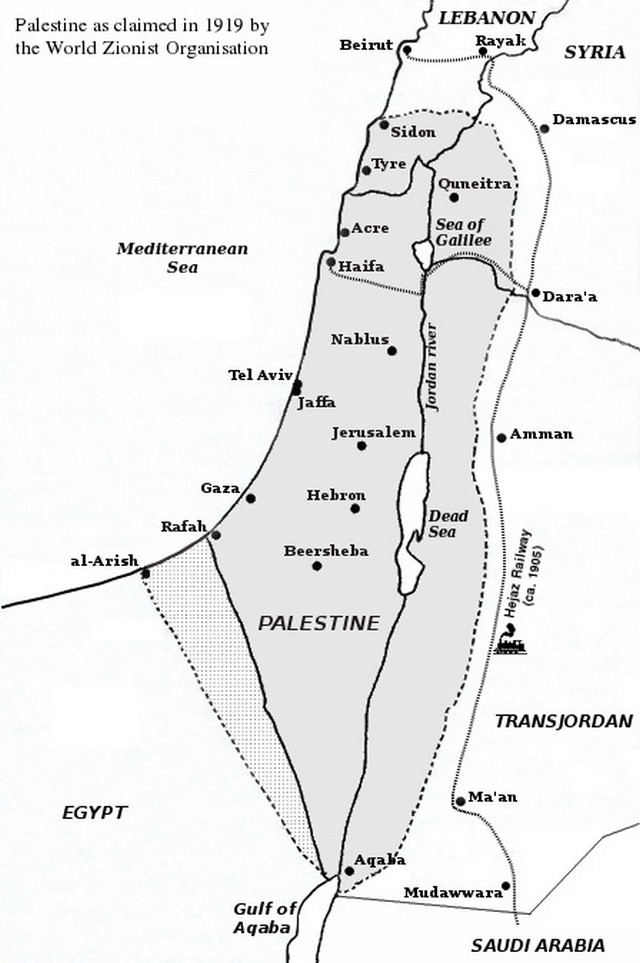
With the US Republican Party having lost control of the House of Representatives, expectations are that the White House, under President Donald Trump, will have a difficult time meeting its domestic policy or legislative objectives. American presidents, in such circumstances, often focus their attention on foreign policy, attempting to achieve victories there rather than engaging the hopelessness of victories in domestic policy. In Trump’s case, one foreign policy issue that is closely linked to his retaining support within his electoral base is that of his full backing of Israel. It can be expected, then, that over the next few months Trump will focus on concluding what he calls his ‘deal of the century’, which aims to decisively establish Israel’s control of all Palestinian territory and end the Palestinian struggle.

The promise of an Israeli-Palestinian ‘deal’ featured prominently in Trump’s election campaign two years ago. Even then, it was clear that the deal he sought would guarantee Israel’s needs and would be imposed on Palestinians – whether they liked it or not. After assuming the presidency, Trump lobbied selected Arab leaders while virtually ignoring the Palestinian Authority (PA) or any other Palestinian interlocutor. It is accepted by many that his ‘deal of the century’ has largely been crafted already. Although its contents are yet to be made public, various leaks suggest it recycles Israeli demands that had previously been rejected by the Palestinians, and even by previous US administrations.

Ultimately, Trump’s ‘deal’ will likely enable Israel to continue illegal settlement building on Palestinian land; crush Palestinian ambitions of building a sovereign state with a capital in Jerusalem; subject West Bank Palestinians to continued military rule with a bantustan-type administration that controls none of its borders; ensure that there is no Palestinian-controlled airspace; and there will be no prospect of the realisation of the right of return for Palestinian refugees. Gaza will become a protectorate of Egypt, which will facilitate the Strip’s economic transformation, freeing Israel from the Gaza problem.
With Palestinians not being consulted, the PA has emphasised that it will have nothing to do with such a deal, and has rejected the USA as a mediator between it and Israel. The proposals, which are much worse for Palestinians than the disastrous Oslo Agreements of the 1990s were, have seemingly, however, been supported by certain Arab leaders.

Key players

Since assuming office in January 2017, Trump has repeatedly mentioned his efforts to conclude his deal. He appointed his son-in-law, Jared Kushner, as his special adviser in January 2017, making him the lead person in the ‘deal of the century’ initiative. Kushner and his father-in-law both relate to the resolution of the Israeli occupation as a business arrangement where Israel is the client that needs to be satisfied and Palestinians (and their land) the real estate that has to be disposed of. Kushner, a businessperson like Trump, is part of a family empire that has been funding illegal settlement building in the West Bank. His family contributed $315 000to the Friends of the Israeli Defense Forces (FIDF) between 2011 and 2013, and he served on the FIDF board until he joined the Trump administration. His father is also a close friend of Israeli prime minister Benyamin Netanyahu. Apart from Trump’s nepotistic streak, the other reason he appointed Kushner is because the latter ‘loves Israel’ and is intimately connected to Netanyahu. These connections mean that any deal will be heavily influenced by Netanyahu, who will definitely be pleased with the outcomes.

Trump also appointed Jason Greenblatt – a Trump confidante and lawyer – as his special envoy to the Middle East. Kushner and Greenblatt undertook numerous trips to the Middle East, meeting various Arab leaders and Israeli officials, as well as PA president Mahmoud Abbas (in August 2017), but ceased engaging the PA when the PA announced it would boycott US involvement in the process. That announcement followed Trump’s recognition of Jerusalem as Israel’s capital, and the move of the US embassy from Tel Aviv to Jerusalem in May 2018. In their many visits to the region, the pair met, on numerous occasions, with Saudi crown prince Mohammad Bin Salman (MbS), Egyptian president Abdel Fattah el-Sisi and the Jordanian king, Abdullah. MbS has been most involved with Kushner and Greenblatt, and has seemingly promised to give up most of the rights that Palestinians have demanded, and to accept the Trump deal. In April, he told heads of US-based Jewish groups, ‘Palestinians must accept the conditions that will be set up by this deal or shut up and stop complaining.’ He also attempted to bully the PA into accepting a US role and to accept US conditions. In December 2017, he even summoned Abbas to Riyadh to threaten him into acquiescing to the USA. However, MbS appears to differ on this matter with his father, Salman, who expressed support for the Palestinians and said Saudi Arabia remained committed to the 2002 Arab Peace Initiative, which proposed a Palestinian state along the 1967 armistice line, with East Jerusalem as its capital. Salman’s statement followed an MbS-Netanyahu secret meeting in Amman, facilitated by the Jordanian king, which signalled a strengthening public relations campaign for the acceptance of Trump’s conditions.

Trump regards Arab leaders’ support for his deal as critical for Israel’s pursuit of legitimacy, and the US goal of countering Iranian influence in the region. Abdullah played a key role in crafting the deal, trying thereby to safeguard Amman’s interests, particularly its role as the custodian of the holy sites in Jerusalem. Abdullah is also concerned about the potential implications of the deal’s announcement on Jordan, where a large number of Palestinian refugees reside. Jordan has thus served as a key meeting point for many Kushner-Greenblatt talks, signalling that Amman has been identified as a strategic partner in achieving their desired outcomes. The collaboration of Arab countries such as Egypt, Jordan and Saudi Arabia shows that Israel has made substantial headway in its relations in the region – with the support of the USA. Israel has been growing closer to Arab governments despite the latter’s proclaimed support for Palestinians.

On 15 August, Egypt’s intelligence chief Abbas Kamel arrived in Tel Aviv as his attempts to broker a ceasefire deal with Hamas and to implement economic reform in Gaza were under way. Egypt, like Saudi Arabia, has relations with Israel, although it also claims to support the Palestinians. Its involvement seeks to rid Israel of the political nuisance that Gaza has become, especially with the intensifying peaceful Friday return marches at the Israeli blockade fence.

The PA’s rejection of a US role in negotiations with Israel has not negatively affected the attitude of Arab leaders in Egypt and Jordan. This is despite Abbas’s efforts to forge a united Arab response in rejecting a US role, especially after Trump’s embassy move. With growing Palestinian disillusionment, and the worsening humanitarian conditions in Gaza, Trump’s ‘deal of the century’ is unlikely to be warmly welcomed by Palestinians, especially considering that the deal proposes old conditions that have long been rejected by Palestinians, and new conditions that are unacceptable to Palestinians and in violation of international law.

Contents of the ‘deal’

Although no official announcement has yet been made about the contents of Trump’s proposal, a number of leaks and positions articulated by the US president, Kushner and Greenblatt, suggest the general direction of the proposal and even certain specific provisions. It is no secret that the Trump administration takes its cue on Middle East issues from the Israeli government. The ‘deal of the century’ will therefore represent and uphold Israeli interests over and above everything else. For Palestinians, the demands for a state, an end to illegal settlement building, and the return of all Palestinian refugees will be subjugated to Israeli interests.

Jerusalem

When Trump met with Netanyahu in February 2017, in Washington, he said he supported what ‘both parties like’. ‘I’m looking at two-state and one-state,’ he said, ‘I’m very happy with the one that both parties like. I can live with either one.’ What he understood by a two- or one-state solution remained unclear. What isevident is that Trump is determined that there will not be a Palestinian capital in Jerusalem. He sealed this matter, in his mind at least, by the US decision to recognise Jerusalem as Israel’s capital. US recognition, the US and Israel believe, legitimises Israeli ambitions to annex all of Jerusalem and to deny any Palestinian claim to it, a plan set in motion after the 1967 war. Clearly, the ‘deal of the century’ is unlikely to refer to a Palestinian state in the way that Palestinians envision it.
Instead, MbS attempted to persuade Abbas to accept Abu Dis as the Palestinian capital in order to smooth the way for Trump’s proposal. A rural village that overlooks the old city of Jerusalem, Abu Dis was touted as the home for the Palestinian Legislative Council in 1995, in the wake of the Oslo Accords. The administration of then-US president Bill Clinton proposed renaming Abu Dis ‘Al-Quds’ (the Arabic name for Jerusalem) in order to deceive Palestinians, but it was roundly rejected by Palestinians. With a population of just 12 000, Abu Dis lies in ‘Area C’ of the West Bank, meaning it is fully under Israeli control. Part of the massive illegal settlement of Maale Adumim lies in the Abu Dis district. Palestinians will certainly reject Trump’s proposal for Abu Dis as a Palestinian capital, as they had previously done, knowing that such an acceptance will mean the permanent loss of Jerusalem and access to it, its holy sites and its 300 000 Palestinian residents.

Jerusalem’s status is a major issue of contestation, and if the protests that marked Trump’s Jerusalem decision are any indication, Palestinians will not accept the usurpation of the city by Israel and the USA. It is noteworthy that the Second Intifada was sparked by a large Israeli military entry into the Al-Aqsa mosque; placing the entire old city of Jerusalem under permanent Israeli control could spark another intifada.

Airspace, resources, borders

With Jerusalem promised to Israel by the USA, Trump’s proposal looks to craft a fictitious Palestinian ‘state’ crammed into tiny pieces of West Bank land separated from each other and from Gaza, and having no control over its borders, natural resources or airspace. The Palestinian ‘state’ will also have no sovereignty. The USA and Israel will attempt to convince the world that the bantustan they create is a state, and will attempt to gain entry for that entity to international bodies such as the UN by providing it the trappings of an independent state, much like apartheid South Africa attempted with its bantustans.

The Israeli government currently controls the territorial borders of the Occupied Palestinian Territory, Palestinian water sources and Palestinian airspace. Israel also collects Palestinian taxes on behalf of the PA, supplies electricity to Gaza (until last year when the PA refused to pay for Gaza’s electricity), and continues its military control of the West Bank. The Trumpian ‘state’ will maintain this reality. The Trump-Kushner proposal is being drafted based on the assumption that Palestinians will accept its conditions as long as a sufficiently large financial package incentivises it. Palestinians will almost definitely refuse this, and Palestinian airspace, resources and territorial borders will continue to be controlled by Israel.

Gaza

Trump’s plan for Gaza consists mainly of an economic initiative, with control of the strip largely being handed over to Egypt. Trump seems to believe that easing Gaza’s economic strain will solve the political headache that the strip represents for Israel. He will thus propose a free-trade zone in El-Arish in the Egyptian Sinai desert bordering Gaza. This plan, its drafters hope, will alleviate the deteriorating humanitarian conditions in Gaza, which were created by an eleven-year land and sea blockade by Israel and Egypt. The plan will propose that five industrial projects be established, which will be funded by the United Arab Emirates (UAE) and other Arab states. This plan resembles Israel’s long-time ambition to move responsibility for Gaza to Egypt.

The economic initiative seems to be based on a proposal by Israeli general Yoav Mordechai, which he had submitted to the Trump team in a White House meeting in March. It includes the construction of air and sea ports, and the establishment of a trade zone and power station. Mordechai’s plans are premised on Egyptian cooperation and supervision of the implementation of the projects. Egyptian president el-Sisi discussed the plan with Kushner and Greenblatt, who encouraged Egyptian intelligence officials to present the proposal to Hamas, the de facto rulers of Gaza. The plan to relegate Gaza to a quasi-Egyptian province is not new, and has been an idea that Israel has pushed since it redeployed its soldiers out of Gaza in August 2005. Israel seeks to cement and formalise Gaza’s separation from the West Bank and, with US encouragement, Egypt is expected to come to the party.

The plan will, undoubtedly, be rejected by Palestinians, especially the political and civil society groups that have been participating in the Friday marches of return at the Gaza-Israel fence. Egypt has thus been working tirelessly to get Hamas on board, as Egypt faces stiff pressure from Trump and the Saudi-supporting Arab states. Hamas has engaged in several talks with Egypt in pursuit of humanitarian relief in Gaza and reconciliation with the Fatah-led Palestinian Authority in Ramallah. The reconciliation project is in tatters because of non-cooperation from Fatah, but the Egyptians are keen to move ahead without the group, especially since most other Palestinian groups have accepted the Egyptian role. If implemented, the plan will alienate Hamas from the PA, which is facing an internal succession battle and declining Palestinian support. This week’s Israeli operation in Gaza, when a Hamas commander and seven other Palestinians were killed, might delay progress of the Egyptian initiative, but it is expected to resume soon with the next stage: negotiations around prisoner exchanges.

Return of refugees

Palestinians have always been very clear about the return of Palestinian refugees who were displaced in 1948 when Israel was created. The issue of refugees has thus been a huge sticking point in previous negotiations, with Israel refusing to recognise the right of return of the refugees, who now number around five million (about 700 000 were originally displaced) on the basis that they would be a ‘demographic threat’ to the ‘Jewish character’ of the Israeli state. The Kushner-Trump deal will certainly protect Israel on this issue. To lay the foundation for this protection, the USA has already cut funding to the UN Relief and Works Agency for Palestine Refugees in the Near East (UNRWA). Kushner said he wanted to expunge the refugee status of the five million Palestinians living in West Bank, Gaza, Jordan, Lebanon, Syria and other countries in the world. This plan has already been set in motion as Trump has started pressuring the Jordanian king, Abdullah, to strip Palestinians living there of their refugee status. This is consistent with Trump’s guarantee to secure and protect Israeli security. The attack against UNRWA is thus part of the US attempt at protecting Israeli interests by ensuring that Palestinian refugees lose their refugee status and can never return to their homes.

Conclusion

Trump hopes to end years of deadlock in talks between Israelis and Palestinians, even though biased US support for Israel has already been demonstrated. Trump, his son-in-law Kushner and the Israelis want an Israeli state with all of Jerusalem as its capital, while maintaining the status quo of Israel building and expanding illegal settlements in Palestinian territories, controlling Palestinian borders, resources and airspace, while subjecting Palestinians to indefinite military control. Under this arrangement, Palestinians will be given limited control over small parts of the West bank, separated from Gaza and Jerusalem. Gaza will be handed over to Egypt with an economic aid package to solve the deteriorating economic conditions created by the Israeli- and Egyptian-imposed land and sea blockade.

Abbas’s PA has refused to engage with the USA on the crafting of this deal, giving Trump, Kushner and Israelis the opportunity to label Palestinians as being opposed to peace, even though any PA involvement would have been unlikely to significantly influence the shape of the final proposal. The ‘deal’ has thus been negotiated without Palestinian input and will certainly not protect any Palestinian interests. Trump and the Israelis hope for international applause when they announce their ‘deal’, despite knowing that Palestinians will reject it. With the proposal having received the support of certain Arab leaders, Palestinians are being set up to lose their land and rights in exchange for crumbs from the Trump and Israeli table. The deal will simply reproduce old proposals which have been rejected multiple times, now packaged under the Trumpian label.

Afro-Middle East Centre (AMEC),
PO Box 411494, Craighall, 2024, Johannesburg, South Africa
info@amec.org.za, www.amec.org.za

13 November 2018

Source: http://www.amec.org.za/palestine/item/1577-trump-s-deal-of-the-century-and-its-impact-on-palestinians.html

Saudi Arabia Is Misusing Mecca

By Khaled M. Abou El Fadl

The rulers of Saudi Arabia derive much of their legitimacy and prestige in the Muslim world from their control and upkeep of the Grand Mosque and the Kaaba in Mecca and the mosque of Prophet Muhammad in Medina. King Salman, like the rulers before him, wears the title of the “Khadim al-Ḥaramayn al-Sharifayn,” which is translated as the “Custodian of the Two Holy Mosques” or, more precisely, “The Servant of the Two Noble Sanctuaries.”

Despite the humility of the royal title, the Saudi monarchy has a long history of exploiting the podium of the Grand Mosque in Mecca by using its imams to praise, sanctify and defend the rulers and their actions.

In the aftermath of the murder of the journalist Jamal Khashoggi, as the world’s accusatory gaze was transfixed on Prince Mohammed bin Salman, the Saudi monarchy has again used the Grand Mosque to defend and deify the crown prince in a manner that makes its legitimacy and control of Mecca and Medina morally troubling like never before.

On Oct. 19, Sheikh Abdulrahman al-Sudais, the officially appointed imam of the Grand Mosque and the highest religious authority in the kingdom, delivered his Friday sermon from a written script. Friday sermons at the Grand Mosque are broadcast live on cable networks and social media sites, watched with great reverence by millions of Muslims and carry a great deal of moral and religious authority.

Imam Sudais delivered a troubling sermon, violating the sanctity of the sacred space he occupied. He referenced a saying attributed to Prophet Muhammad that once every century, God sends a mujaddid, a great reformer to reclaim or reinvigorate the faith. He explained that the mujaddid is needed to address the unique challenges of each age.

He proceeded to extol Prince Mohammed bin Salman as a divine gift to Muslims and implied that the crown prince was the mujaddid sent by God to revive the Islamic faith in our age. “The path of reform and modernization in this blessed land … through the care and attention from its young, ambitious, divinely inspired reformer crown prince, continues to blaze forward guided by his vision of innovation and insightful modernism, despite all the failed pressures and threats,” the imam declared, from the podium where Prophet Muhammad delivered his last sermon.

Invoking the debate following the Khashoggi murder, Imam Sudais warned Muslims against believing ill-intended media rumors and innuendos that sought to cast doubt on the great Muslim leader. He described the conspiracies against the crown prince as intended to destroy Islam and Muslims, warning that “all threats against his modernizing reforms are bound not only to fail, but will threaten international security, peace and stability.”

He cautioned that the attacks against “these blessed lands” are a provocation and offense to more than a billion Muslims. Imam Sudais used the word “muhaddath,” or “uniquely and singularly gifted” to describe Prince Mohammed. “Muhaddath” was the title given by Prophet Muhammad to Umar Ibn al-Khattab, his companion and the second caliph of Islam. The imam implicitly compared the crown prince to Caliph Umar.

Imam Sudais prayed for God to protect Prince Mohammed against the international conspiracies being woven against him by the enemies of Islam, the malingerers and hypocrites, and concluded that it was the solemn duty of all Muslims to support and obey the king and the faithful crown prince, the protectors and guardians of the holy sites and Islam.

Saudi clerics had never weaponized the podium of the prophet at the Grand Mosque so brazenly to serve the monarchy. No imam of the Grand Mosque had ever anointed a Saudi ruler as the mujaddid of the age or dared to imply as much.

The sermons in Mecca and Medina are read from a script, which is approved beforehand by Saudi security forces. While the king appoints a leading imam for the Grand Mosque and the Prophet’s Mosque in Medina, each imam has a number of officially appointed deputies who rotate in leading prayers and delivering sermons.

For decades, the sermons delivered in Mecca and Medina have been pietistic, dogmatic and predictable. They have always concluded with a prayer for the Saudi royals, but the imams would not attribute sacred qualities to the monarchy and insisted that the rulers should be obeyed only to the extent that they obey God.

A lot has changed since Prince Mohammed’s rise to power. The crown prince has imprisoned hundreds of prominent Saudi imams who have shown even a modicum of resistance — including very prominent and influential jurists such as Sheikh Saleh al-Talib and Sheikh Bandar Bin Aziz Bilila, former imams of the Grand Mosque. Saudi prosecutors have sought the death penalty for Salman al-Awdah, a prominent, reformist cleric who was arrested last September. Some reports claim that another prominent cleric, Sheikh Suleiman Daweesh, who was arrested in April 2016, has died in a Saudi prison after being tortured.

The only imams who seem to be allowed to lead prayers and give sermons at the Grand Mosque in Mecca and the Prophet’s Mosque in Medina are those who have agreed to go along with whatever the crown prince wants. Some influential Saudi scholars such as Sheikh Abd al-Aziz Al Rayes went as far as saying in a lecture that even if the Saudi ruler “fornicates in public on television for half an hour each day, you are still required to bring people together around the ruler, not to aggravate people against him.”

Imam Sudais’s recent sermon put Muslims at an axial turning point: Accept the crown prince as the divinely inspired reformer of Islam and believe and accept his words and deeds or you are an enemy of Islam. Muslim scholars reacted to the sermon primarily on social media with disdain and outrage. Numerous Arabic language comedy shows and talk shows on YouTube reacted with mockery and condemnation.

When an imam of the Grand Mosque calls upon Muslims to obediently accept Prince Mohammed’s incredulous narrative about the murder of Mr. Khashoggi; to accept his abduction, jailing and torture of dissenters, including imprisonment of several revered Islamic scholars; to ignore his pitiless and cruel war in Yemen, his undermining the democratic dreams in the Arab world, his support for the oppressive dictatorship in Egypt, it makes it impossible to accept the imam’s categorization of the crown prince as a divinely inspired reformer. The sanctified podium of the prophet in Mecca is being desecrated and defiled.

The control of Mecca and Medina has enabled the clerical establishment and the monarchy flush with oil money to extend their literalist and rigid interpretations of Islam beyond the borders of the kingdom. Most Muslims will always prefer a tolerant and ethically conscientious Islam to the variant championed by the crown prince and the acquiescent Saudi clergy.

By using the Grand Mosque to whitewash acts of despotism and oppression, Prince Mohammed has placed the very legitimacy of the Saudi control and guardianship of the holy places of Mecca and Medina in question.

Khaled M. Abou El Fadl is a law professor at the University of California, Los Angeles.

12 November 2018

Source: https://www.nytimes.com/2018/11/12/opinion/saudi-arabia-mbs-grandmosque-mecca-politics.html

A MOTHERS PLEA TO SAVE HER SON… held 8 years WITHOUT CHARGE by UK Government

By Mairead Maguire, Nobel Peace Laureate

On 4th November, 2018, Christine Assange, mother of Julian Assange, made a deeply moving video public appeal to save the life of her son Julian.

Julian Assange is Editor in Chief of Wikileaks. Because of Wikileaks reporting of acts during US/NATO’s illegal wars against Afghanistan, Iraq, etc., and the highlighting of corruption by USA/CIA and Corporate powers, and continuing his fight in disclosing the links between the private corporations and government agencies, Julian Assange has been threatened by high profile USA citizens, and a Grand Jury has been set up in America to try Julian Assange and Wikileaks, for their publications. For this he is being persecuted and deprived of his right to liberty, basic human rights etc., Six years ago Julian Assange, aware of these extradition plans of America, sought asylum in the Ecuadorian Embassy, in London, where he remains. Julian Assange is now six years within the Ecuadorian Embassy, and has now been detained WITHOUT CHARGES for eight years.

In her appeal for her sons life, Christine Assange says he is in immediate critical danger. He is now all alone, sick, cut off from all contacts including computer phone mail and being persecuted in the heart of London. Ms. Assange says‚

‘for the past six years the UK Gov. has refused his request for basic health care, fresh air, sunshine for vitamin D, access to proper medical and dental care. As a result his health has seriously deteriorated. Doctors have said the detention conditions are life threatening. In 2016 after in-depth investigations the UN ruled that Julians legal and human rights had been violated on multiple occasions and that he has been illegally detained in 2010 and they ordered his immediate release, safe passage and compensation. The UK Gov has refused to abide by this UN decision’.

When US Vice President Mike Pence visited Ecuador several months ago, behind scenes, Ecuador done a deal with US to have Julian Assange extradited for life to USA prison. Ecuador are trying to make this acceptable by saying that the US has agreed not to kill him. Now its a propaganda war with the US and UK to reduce his support enough to get away with it politically. The UK/US extradition act means he could be held in Guantanamo Prison and face torture, 45 years indefinite detention and/or death penalty.

Currently there is a court case in Ecuador fighting the threats to violate his asylum given by the previous President of Ecuador. There are strict protocol set down by the Ecuadorian Embassy regarding visitors and to date Julian has not managed to have visitors for many months now.

The Ecuadorian Embassy has admitted formal restrictions on Julian Assange and he is gagged from saying anything about politics, foreign policy human rights abuses, in fact anything critical about any country in the world.

This is political persecution of Julian Assange by high level people and it is punishment for exposing high level corruption when he was editor of Wikileaks.

Christine Assange has appealed to save her sons life, and her appeal deserves an immediate response by us all and the Parties responsible. Mr. Assange is not asking for special treatment, he simply insists that the UK applies standard laws and procedures to him. The United Nations Working Group on Arbitrary Detention’s opinion confirmed Mr. Assange’s right to liberty and right to protection. A text between Ecuador and the United Kingdom guaranteeing Assange would not be extradited to the USA,would provide an immediate resolution to the continued illegal and arbitrary detention of Mr. Assange.

Mr. Assange is an Australian Citizen and the Australian Government have a moral and legal responsibility to renew his passport and facilitate his safe return to his own country, should he wish to do so. Julian Assange deserves all our admiration and gratitude for his courage and bravery in truth-telling. He is an inspiration to us all, together with his colleagues at Wikileaks, who are paying a high price for informing the public and upholding our right to know when Governments’ violate human rights and international laws.

Mairead Corrigan Maguire, co-founder of Peace People, is a member of the TRANSCEND Network for Peace, Development and Environment.

Nobel Peace Laurete www.peacepeople.com

5 November 2018

Russia & China Invest in Infrastructure; U.S. Instead Spends on Military

By Eric Zuesse

China’s “Belt and Road Initiative” is famous as an extension of their domestic infrastructure investments, but Russia is also investing heavily in infrastructure. Both countries need to do it in order to improve the future for their respective populations, and both Governments have avoided the Western development model of going heavily into debt in order to pay for creating and maintaining infrastructure. Both are, in fact, exceptionally low-debt Governments.

According to the “Global Debt Clock” at Economist, China has a public debt/GDP of 17.7%, and Russia’s is 8.0%. For comparison, America’s is 93.6%. (Others are: Germany 85.8%, Spain 91.2%, Italy 122.6%, Greece 147.1%, India 54.2%, Pakistan 47.0%, and Brazil 55.0%.)

The United States isn’t going into public debt in order to finance building or maintenance of infrastructure, but instead to finance expansions of its military, which is already (and by far) the world’s largest (in terms of its costs, but not of its numbers of troops).

While the U.S. Government now spends around half of the world’s military expenditures and plans to conquer Russia, China, and all countries (such as Iran and Syria) that cooperate with those ‘enemies’ (and please click onto a link wherever you question the truthfulness of an allegation made here), Russia and China plan to improve their infrastructures, in order to boost their national economies and to minimize the impacts that (the mainly U.S.-caused) global warming will have. These infrastructure projects are optimistic and long-term expenditures, which are being planned and built only because the countries that the U.S. aristocracy are targeting to conquer, expect the U.S. aristocracy to fail to achieve its clear #1 goal, of controlling the entire world and conquering them — of America’s rulers finally achieving the global fascist empire that, in World War II, Hitler and the other Axis powers had been hoping to become.

By contrast, U.S. infrastructure is rotting; and, while every recent U.S. President has promised to reverse that decline, none has done anything significant to repair this nation’s rotting infrastructure — it has always been just talk and empty promises. A nation that spends over a trillion dollars a year on ‘national defense’ can’t have much left over to spend on things that ‘can wait’ — such as repairing its bridges, roads, etc. — and so those repairs do wait, while even more money, than before, becomes devoted to purchases of new weaponry, such as the F-35 program.

Meanwhile, Russia and China prepare for their future, and hope it won’t be war.

On November 1st, Russian Television bannered “Russia, India & Iran want to create alternative trade route to Suez Canal – report” and described “The 7,200-kilometers long corridor [that] will combine sea and rail routes”:

The route will make it possible to deliver cargoes from India to the Iranian port of Bandar Abbas. Then, the goods will be transported by land to Bandar Anzali, Iran’s port on the Caspian Sea. After that, goods will be shipped to the Russian southern port of Astrakhan, from where they will move to Europe by rail. The new transport artery will potentially reduce the time and costs of shipping by up to 40 percent.

A linked news-report there headlined “Top of the world: Russia to build world’s northernmost railway in Arctic”, and another headlined “Japan turns to Trans-Siberian Railway to test potential connection with Russia, China & S. Korea”.

If the U.S. Government’s plans to destroy Russia succeed, then any of these new or extended infrastructures will either be destroyed or else be taken over by the U.S. and its allies. (If taken over, then presumably Japan’s aristocracy will be part of the new regime there that does so.) Consequently, building and extending these new infrastructures is Russia’s bet — and a concrete testimonial to the bet — that outright war by the destroyers can be avoided. The nations that America and its allies want to conquer are looking to the future, not to conquest or any type of war (though they must also be prepared for war, if the U.S. does invade). Right now, the U.S. and its NATO allies are holding the largest war-games in history, and these preparations to invade Russia are occurring all along and near Russia’s borders, in the countries that formerly were the Soviet Union’s Warsaw Pact military alliance. Though the U.S. and its allies say that Russia and China are threatening to them, these massings of soldiers and of tanks and planes on Russia’s borders are aggressions, not defensive at all as claimed. How would we Americans feel if Russia were doing this along America’s borders? Would we feel that Russia is defending itself, then? Russians have sound reason to be terrified by the U.S. and its allies. Americans were terrified by the Soviets when the issue was Soviet missiles located in Cuba only a hundred miles from the U.S. This country then threatened: if you do that, then we’ll launch war against you. Russia isn’t responding similarly, even though America’s threat to them is much bigger than that threat to the U.S. was in 1962 during the Cuban Missile Crisis.

All that today’s U.S. Government wants is to conquer the world, which now especially means Russia, China, and countries that do business with those ‘enemies’. Iran is also a major target of the U.S., because the U.S. aristocracy’s main allies are the Sauds and Israel, both of which hate and crave to destroy Iran. Though those three targeted countries want to avoid being conquered by the U.S. Government, most of their expenditures are for their own domestic economies, instead of for defending against the U.S. and its allies. (However, the U.S. and its allies are clearly and consistently the aggressor since 1991, and expanded their NATO alliance up to Russia’s borders; Russia didn’t expand its Warsaw Pact alliance up to America’s borders, but ended the Warsaw Pact in 1991. None of Russia’s expenditures are for conquering foreign countries, such as the U.S. alliance now is trying to do in countries such as Syria and Yemen, and perhaps soon in Iran, too; so, the U.S. Government has no excuse whatsoever in this matter, but pure guilt in it, pure aggression.)

There really is a difference between “The West” and “The East” in our era, but it’s more like the difference between The Axis powers in WW II versus The Allies, than it is between democracy versus dictatorship; and, in fact, the U.S. Government is the world’s only Government that has been scientifically analyzed to determine whether it is a democracy or instead a dictatorship, and it has consistently been found, in these rigorous studies, to be a dictatorship, against the public, by its billionaires, the aristocrats, and not a democracy, at all. Furthermore, the preponderance of the major outcome-indicators of the extent to which a given nation is a dictatorship or even a police-state, or is instead a democracy that’s ruled by its public, are showing that the U.S. is a dictatorship or even a police-state, and that the nations it calls its ‘enemies’ are more toward the democratic side — serving their respective public, instead of any such narrow and exclusive elite as the owners of “the military-industrial complex.” (U.S.-allied propaganda to the contrary alleging that the U.S. and its allies are the ones which are ‘democracies’, like this piece from the U.S. stooge-nations that constitute the EU, are always based on ranking — without clearly explaining how — the mere formalities of ‘democracy’, no authentic measures of democracy itself, but only the associated formalities, which often are mere fronts, behind which the given nation’s aristocracy control that given country.)

The U.S. has emerged into the very model of the modern dictatorship, relying maximally upon a coordination between deceit and military power. This is the reason why it now spends half of the world’s military costs — to serve its aristocracy, who have perfected Joseph Goebbels’s system of calling good bad, and bad good, and of otherwise imposing what the novelist George Orwell subsequently called “Newspeak” in its ‘news’-reporting and commentaries, to serve the controlling aristocracy, “Big Brother.” It’s here, and now. On November 1st, Jonathan Cook at Global Research headlined “Bolsonaro: A Monster Engineered by Our Media” and he explained how even the “liberal” aristocrats in the U.S. and its allied countries have brought back racist fascism, the ideology known as nazism, as a globally spreading plague now.

Here is how America’s master of Newspeak, Barack Obama, represented, to West Point Military Academy’s graduating cadets on 28 May 2014, the new, American, version, of Adolf Hitler’s beloved “Deutschland, Deutschland über alles, über alles in der Welt”:

The United States is and remains the one indispensable nation. [Every other nation is therefore ‘dispensable’; we therefore now have “Amerika, Amerika über alles, über alles in der Welt”.] That has been true for the century passed and it will be true for the century to come. … America must always lead on the world stage. If we don’t, no one else will. … Russia’s aggression toward former Soviet states unnerves capitals in Europe, while China’s economic rise and military reach worries its neighbors. From Brazil to India, rising middle classes compete with us. [He was here telling these future U.S. military leaders that they are to fight for the U.S. aristocracy, to help them defeat any nation that resists.] … In Ukraine, Russia’s recent actions recall the days when Soviet tanks rolled into Eastern Europe. But this isn’t the Cold War. Our ability to shape world opinion helped isolate Russia right away. Because of American leadership, the world immediately condemned Russian actions; Europe and the G7 joined us to impose sanctions; NATO reinforced our commitment to Eastern European allies; the IMF is helping to stabilize Ukraine’s economy; OSCE monitors brought the eyes of the world to unstable parts of Ukraine.

Actually, his — Obama’s — regime, had conquered Ukraine in February 2014 by a very bloody coup, and installed a racist-fascist anti-Russian Government there next door to Russia, a stooge-regime to this day, which instituted a racial-cleansing campaign to eliminate enough pro-Russia voters so as to be able to hold onto power there. It has destroyed Ukraine and so alienated the regions of Ukraine that had voted more than 75% for the democratically elected Ukrainian President whom Obama overthrew, so that those pro-Russia regions quit Ukraine. What remains of Ukraine after the U.S. conquest is a nazi mess and a destroyed nation in hock to Western taxpayers and banks.

Furthermore, Obama insisted upon (to use Bush’s term about Saddam Hussein) “regime-change” in Syria. Twice in one day the Secretary General of the U.N. asserted that only the Syrian people have any right to do that, no outside nation has any right to impose it. Obama ignored him and kept on trying. Obama actually protected Al Qaeda’s Syrian affiliate against bombing by Syria’s Government and by Syria’s ally Russia, while the U.S. bombed Syria’s army, which was trying to prevent those jihadists from overthrowing the Government. Obama bombed Libya in order to “regime-change” Muammar Gaddafi, and he bombed Syria in order to “regime-change” Bashar al-Assad; and, so, while the “U.S. Drops Bombs; EU Gets Refugees & Blame. This Is Insane.” And Obama’s successor Trump continues Obama’s policies, regarding not only Ukraine, but regarding also Yemen and Syria, and much else, except that Trump goes even more nazi than Obama did. The change from Obama to Trump was from soft nazi to hard nazi. That’s all. Trump is the U.S. regime’s going wild.

Every day, the U.S. regime murders lots of people in foreign lands. Today, as this is being written, on November 3rd, Syria News, which I’ve found to be far more reliably truthful about the situation in Syria than is for example the New York Times, headlined “US-Led Coalition Murders 15 Civilians in a New Bombing in Hajin”, and reported that, “Under the guise of fighting ISIS, the US and its cronies, are trying to establish a de facto barrier on the Syrian-Iraqi border which is run by ISIS and SDF, who both receive support from the US and both have occasional clashes [against each other] in between.” Aggression (and lying about it) is normal for the U.S. Government.

On January 19th, U.S. ‘Defense’ Secretary James Mattis said that“great power competition, not terrorism, is now the primary focus of U.S. national security,” and this means war by the U.S. against both Russia and China, and perhaps also Iran; but if the people of Europe don’t rise up against that plan, then not only will they have even more refugees from America’s “regime-change” bombs, but they will soon have Russia’s bombs retaliating against Europe itself for being a part of America’s aggression, via the NATO military alliance, an alliance that should have ended when the Warsaw Pact military alliance did, back in 1991. Either End NATO Now, or else join the carnage that America’s aristocracy are clearly determined to impose upon the world in order to conquer it. The choice is that simple.

The only ways that the global public can effectively fight back against the U.S.-and-allied aristocracies’ plan to enslave the entire world to their coercive and sanctions-laden ‘free market’ are:

(1) to boycott America’s brands and, as much as possible, conduct all international transactions in any other type of currency than the U.S. dollar; and,

(2) to vote against any politician who has endorsed America’s invasions, such as of Iraq 2003, Libya 2011, Syria 2012-, Yemen 2015-, and U.S. coups, including its coup that conquered Ukraine in 2014and installed a nazi Government there. And,

(3) to organize marches, if possible, against any U.S. military base occupying their nation. The occupying power needs to be expelled in order for the given nation’s public to control their own country.

Otherwise, the U.S. aristocracy can simply continue with its pillage of our planet. The global public needs to do its part, not to leave it to the targeted countries alone to try to put down this global resurgence of fascism, by America’s oligarchs. This also means abandoning the two aristocracies that work the most closely with America’s: Israel’s and Saudi Arabia’s (both of which target Iran and its allies, even more than they target Russia and its allies). The listed three steps are the only path toward a survivable planet: isolating and publicly shaming the nazis.

Also the Newspeak needs to end, right now, because without honesty, no type of progress is even possible.

All of these measures are not only morally right; they are necessary, because the present path leads to not only profound injustices, but a hellish global future.

Unfortunately, the U.N. cannot do any of these essential things. But only the global public can — and will, if there is to be continued life of this planet, and lives here that are worth living.

PS: For anyone who might consider odd that an American (the present writer) views Russia as a core ally of the American people, and views recent American Presidents (starting with George Herbert Walker Bush on 24 February 1990) as traitors to America — as being enemies of the American people and of the entire world — please consider the following historical facts:

According to Jan Ludvík’s “The Poverty of Statistics: Military Power, Defence Expenditure and Strategic Balance”, in the January 2014 Central European Journal of International and Security Studies (p. 157), the relative expenditures in order to win World War I were Russia 24%, UK 22%, U.S. 21%, France 20%, and Italy 13%. Russia spent the most of all the allies. In WW II, the relative expenditures in order to win were Russia 58%, UK 20%, U.S. 12%, France 10%. Yet again — and this time overwhelmingly — Russia spent the most of all the allies, 58% of the total allied cost. The only country that spent more on that war was Germany, which of course was on the losing (“Axis”) side, and which spent 37% more to lose that war than Russia spent to win it. During WW II, Germany spent 75% of its side’s entire costs; Japan spent 17%, and Italy spent 8%. So: WW I was mainly between Russia and Germany, and so was WW II. And that’s clear also from another calculation:

The same source (p. 159) indicates that Russia’s troops were 46% of those fighting on the winning side of WW I (and #2 on that was France with 20%), and were 55% of the troops fighting on the winning side of WW II. (France was #2 again in WW II, also 20%.)

Furthermore, in WW I, Russia’s troops were 38% more (in numbers) than both Germany’s and Austria’s put together; and, in WW II, Russia’s troops were 4% less than Germany’s, Japan’s and Italy’s combined, but were twice as many as Germany’s number.

So: by far the biggest contributions to the winning not only of WW II, but also of WW I, were made by one and the same country, both times: Russia. America’s contribution was much smaller, on both occasions. And, now, America’s leaders and their foreign allies have become nazis, heirs of Hitler’s tradition, who call Russia an “enemy,” for refusing to do what these nazis demand.

Of course, there were also other nations on each side of each of those wars (for example, Wikipedia lists over a dozen “Allies of World War I”), but Ludvik calculated the numbers only for these, the main ones, on both sides.

So: everyone who can should now become active on this!

—————

Investigative historian Eric Zuesse is the author, most recently, of They’re Not Even Close: The Democratic vs. Republican Economic Records, 1910-2010, and ofCHRIST’S VENTRILOQUISTS: The Event that Created Christianity.

8 November 2018

Source: https://countercurrents.org/2018/11/08/russia-u-s-instead-spends-on-military/

How not to pay homage to Maulana Azad

By Abhay Kumar

On November 11, 1888 Abul Kalam, better known as Maulana Azad, was born in Mecca and two years later his father came to Calcutta to consult a surgeon. Since then his family never went back and stayed in India. It is here that Maulana Azad was educated in traditional knowledge. He never went to any university and did not have modern education. He learnt English later. He had a great skill of writing and he wrote on politics, religion and theology.

In politics, he was very active during the Khilafat Movement in the early 1920s. He rose to become the president of the Congress and was one of the longest serving presidents of the Congress from the late 1930s to 1946. During the period, he participated in the British Cabinet Mission Talks, showed his great skill and reached an understanding with the Muslim League.

As per the agreement, the Muslim majority provinces would be given utmost autonomy and the central government would give all subjects, except defence, communication and foreign affairs, to provinces.

Just after the conclusion of the British Cabinet Mission Talks, Maulana Azad was happy that the communal dispute had been solved through discussion and even the Muslim League agreed to the formula. Note that the formula reflected the spirit of Azad, that is, the sharing of power among different social groups.

But his hope turned out to be a short-lived affair. Just before entering the Constituent Assembly, the newly- elected Congress President Jawaharlal Nehru gave a statement to the press that he was not fettered by the Cabinet Mission agreement, contradicting his own party and creating suspicion in the minds of Jinnah, his Muslim League and a considerable section of Muslims.

Maulana did not have much hope from the politics of Jinnah but why did Sardar Patel become supporter of the Partition? Why did Nehru refuse to accept Maulana Azad’s request that the Partition was not the solution to the communal problem? But the most shocking for Azad was the lack of will shown by Mahatma Gandhi at the last moment to oppose the Partition.

The message of Maulana Azad is undobtedly sharing of power as opposed to the concentration of power at one place. He also appealed all through his life to rise above the communal prejudice.

It was the same communal prejudice which was operating in the minds of top Congress leaders when Syed Mahmood and Mr Nariman, a Muslim and a Parsi respectively and the most deserving Congress candidates, were rejected. It happened in 1937 when the Congress came to power in Bihar and Bombay provinces. Both Rajendra Prasad and Sardar Patel worked to remove them in their respective province and ensured that Hindu Congress leaders should grab the post of chief ministership.

Maulana Azad then believed that the Congress nationalism had not become mature to rise above communal consideration. In spite of this, he was hopeful of the bright future for Muslims post-Partition and he appealed to them not feel unsafe in India where they lived for centuries.

Ironically, our governments have opened university and library after his name and launched several schemes after him and even posthumously conferred on him the highest civilian award Bharat Ratna in 1991/92. Despite that they have never tried to follow the real message of Maulana Azad.

On his coming birthday, we should ask our government and leaders about why the representation of minorities is going down with each passing days in Parliament, legislative assemblies and public and private institutions.

Are we really paying homage to Maulana Azad when the BJP formed a central government with full majority in 2014 and did not ensure victory for a single Muslim candidate on its banner? How could the same party not give a single ticket to Muslims in UP and still managed to win overwhelming majority?

Not to talk of a communal party, even Maulana Azad’s own Congress, which has been in power for several decades with the overwhelming support of Muslims, seems prepared to abandon the Muslim cause. It is, instead, trying to project itself more concerned about the majority Hindus. This shows how the Congress has deviated from Maulana Azad’s message as it is desperate to play soft Hindutva.

Abhay Kumar has recently submitted his PhD at Centre for Historical Studies, Jawaharlal Nehru University, New Delhi. His broad areas of interest include the Indian Muslims and social justice. His other writings are available at www.abhaykumar.org

7 November 2018

Source: https://countercurrents.org/2018/11/07/how-not-to-pay-homage-to-maulana-azad/

Why Is Israel Afraid of Khalida Jarrar?

By Dr Ramzy Baroud

When Israeli troops stormed the house of Palestinian parliamentarian and lawyer, Khalida Jarrar, on April 2, 2015, she was engrossed in her research. For months, Jarrar had been leading a Palestinian effort to take Israel to the International Criminal Court (ICC).

Her research on that very evening was directly related to the kind of behavior that allows a group of soldiers to handcuff a respected Palestinian intellectual, throwing her in jail with no trial and with no accountability for their action.

Jarrar was released after spending over one year in jail in June 2016, only to be arrested once more, on July 2, 2017. She remains in an Israeli prison.

On October 28 of this year, her ‘administrative detention’ was renewed for the fourth time.

There are thousands of Palestinian prisoners in Israeli jails, most of them held outside the militarily Occupied Palestinian Territories, in violation of the Fourth Geneva Convention.

However, nearly 500 Palestinians fall into a different category, as they are held without trial, detained for six-month periods that are renewed, sometimes indefinitely, by Israeli military courts with no legal justification whatsoever. Jarrar is one of those detainees.

Jarrar is not beseeching her jailers for her freedom. Instead, she is keeping busy educating her fellow female prisoners on international law, offering classes and issuing statements to the outside world that reflect not only her refined intellect, but also her resolve and strength of character.

Jarrar is relentless. Despite her failing health – she suffers from multiple ischemic infarctions, hypercholesterolemia and was hospitalized due to severe bleeding resulting from epistaxis – her commitment to the cause of her people did not, in any way, weaken or falter.

The 55-year-old Palestinian lawyer has championed a political discourse that is largely missing amid the ongoing feud between the Palestinian Authority’s largest faction, Fatah, in the Occupied West Bank and Hamas in besieged Gaza.

As a member of the Palestine Legislative Council (PLC) and an active member within the Popular Front for the Liberation of Palestine (PFLP), Jarrar has advocated the kind of politics that is not disconnected from the people and, especially, from the women who she strongly and uncompromisingly represents.

According to Jarrar, no Palestinian official should engage in any form of dialogue with Israel, because such engagement helps legitimize a state that is founded on genocide and ethnic cleansing, and is currently carrying out various types of war crimes; the very crimes that Jarrar tried to expose before the ICC.

Expectedly, Jarrar rejects the so-called ‘peace process’, a futile exercise that has no intention or mechanism that is aimed at “implementing international resolutions related to the Palestinian cause and recognizing the fundamental rights of the Palestinians.”

It goes without saying that a woman with such an astute, strong position, vehemently rejects the ‘security coordination’ between the PA and Israel, seeing such action as a betrayal to the struggle and sacrifices of the Palestinian people.

While PA officials continue to enjoy the perks of ‘leadership’, desperately breathing life into a dead political discourse of a ‘peace process’ and a ‘two state solution’, Jarrar, a Palestinian female leader with a true vision, subsists in HaSharon Prison. There, along with dozens of Palestinian women, she experiences daily humiliation, denial of rights and various types of Israeli methods aimed at breaking her will.

But Jarrar is as experienced in resisting Israel as she is in her knowledge of law and human rights.

In August 2014, as Israel was carrying out one of its most heinous acts of genocide in Gaza – killing and wounding thousands in its so-called ‘Protective Edge’ war – Jarrar received an unwelcome visit by Israeli soldiers.

Fully aware of Jarrar’s work and credibility as a Palestinian lawyer with an international outreach – she is the Palestine representative in the Council of Europe – the Israeli government unleashed their campaign of harassment, which ended in her imprisonment. The soldiers delivered a military edict ordering her to leave her home in al-Bireh, near Ramallah, for Jericho.

Failing to silence her voice, she was arrested in April the following year, beginning an episode of suffering, but also resistance, which is yet to end.

When the Israeli army came for Jarrar, they surrounded her home with a massive number of soldiers, as if the well-spoken Palestinian activist was Israel’s greatest ‘security threat.’

The scene was quite surreal, and telling of Israel’s real fear – that of Palestinians, like Khalida Jarrar, who are able to communicate an articulate message that exposes Israel to the rest of the world.

It was reminiscent of the opening sentence of Franz Kafka’s novel, The Trial: “Somebody must have made a false accusation against Joseph K., for he was arrested one morning without having done anything wrong.”

Administrative detention in Israel is the re-creation of that Kafkaesque scene over and over again. Joseph K. is Khalida Jarrar and thousands of other Palestinians, paying a price for merely calling for the rights and freedom of their people.

Under international pressure, Israel was forced to put Jarrar on trial, levying against her twelve charges that included visiting a released prisoner and participating in a book fair.

Her other arrest, and the four renewals of her detention, is a testament not just to Israel’s lack of any real evidence against Jarrar, but for its moral bankruptcy as well.

But why is Israel afraid of Khalida Jarrar?

The truth is, Jarrar, like many other Palestinian women, represents the antidote of the fabricated Israeli narrative, relentlessly promoting Israel as an oasis of freedom, democracy and human rights, juxtaposed with a Palestinian society that purportedly represents the opposite of what Israel stands for.

Jarrar, a lawyer, human rights activist, prominent politician and advocate for women, demolishes, in her eloquence, courage and deep understanding of her rights and the rights of her people, this Israeli house of lies.

Jarrar is the quintessential feminist; her feminism, however, is not mere identity politics, a surface ideology, evoking empty rights meant to strike a chord with western audiences.

Instead, Khalida Jarrar fights for Palestinian women, their freedom and their rights to receive proper education, to seek work opportunity and to better their lives, while facing tremendous obstacles of military occupation, prison and social pressure.

Khalida in Arabic means “immortal”, a most fitting designation for a true fighter who represents the legacy of generations of strong Palestinian women, whose ‘sumoud’ – steadfastness – shall always inspire an entire nation.

Ramzy Baroud is a journalist, author and editor of Palestine Chronicle.

7 November 2018

Source: https://countercurrents.org/2018/11/07/why-is-israel-afraid-of-khalida-jarrar/

Saudi Arabia Has To Be Stopped And This Time It May Get Stopped

By Andre Vltchek

It appears that the KSA has crossed all lines of decency, if there were ever any.

In the eyes of many in the West, it crossed them not because it has been brutally killing tens of thousands of innocent people in Yemen, not even because it keeps sponsoring terrorists in Syria, (and in fact all over the world), often on behalf of the West. And not even because it is trying to turn its neighboring country, Qatar, from a peninsula into an island.

The crimes against humanity committed by Saudi Arabia are piling up, but the hermit kingdom (it is so hermit that it does not even issue tourist visas, in order to avoid scrutiny) is not facing any sanctions or embargos, with some exceptions like Germany. These are some of the most barbaric crimes committed in modern history, anywhere and by anyone. Executing and then quartering people, amputating their limbs, torturing, bombing civilians.

But for years and decades, all this mattered nothing. Saudi Arabia served faithfully both big business and the political interests of the United Kingdom first, and of the West in general later. That of course includes Israel, with which the House of Saud shares almost a grotesque hatred towards Shi’a Islam.

And so, no atrocities have been publicly discussed, at least not in the Western mass media or by the European and the US governments,while weapons, worth hundreds of billions of dollars, have been arriving into the KSA, and the oil, that dark sticky curse, kept flowing out.

Was Riyadh enjoying total impunity? Definitely!

But all this may soon stop, because of a one single man, Mr. Jamal Khashoggi or more precisely, because of his alleged tragic, terrifying death behind the walls of the Saudi Consulate in the city of Istanbul.

According to the Turkish authorities, quoted by The New York Times on October 11, 2018:

“Fifteen Saudi agents arrived on two charter flights on Oct. 2, the day Mr. Khashoggi disappeared.”

Supposedly, they brutally murdered Mr. Khashoggi, a Saudi citizen, and then they used saw mills to severe his legs and arms from the body.

All this, while Mr. Khashoggi’s Turkish fiancé, Hatice Cengiz, was waiting for him on a bench, in front of the consulate. He went in,in order to take care of the paperwork required to marry her. But he never came back.

Now the Turkish nation is indignant.

Ten years ago, even one year ago, everything would have been, most likely, hushed up. As all mass murders committed by the Saudis all over the world were always hushed up. As was hushed up the information about the Saudi royal family smuggling drugs from Lebanon, using their private jets – narcotics that are clouding senses and are therefore used in combat zones and during terrorist attacks.

But now, this is the end of 2018. And Turkey is not ready to tolerate an atrocity by an increasingly hostile country; an atrocity committed in the middle of its largest city. For quite some time, Turkey and the KSA are not chums, anymore. Turkish military forces were already deployed to Qatar several months ago, in order to face the Saudi army and to protect the small (although also not benign) Gulf State from possible attack and imminent destruction. In the meantime, Turkey is getting closer and closer to Iran, an archenemy of Saudi Arabia, Israel and US.

It has to be pointed out that, Mr. Khashoggi is not just some common Saudi citizen – he is a prominent critic of the Saudi regime, but most importantly, in the eyes of the empire, a correspondent for The Washington Post. Critic but not an ‘outsider’. And some say, he was perhaps too close to some Western intelligence agencies.

Therefore, his death, if it is, after all, death, could not be ignored, no matter how much the West would like the story to disappear from the headlines.

President Trump remained silent for some time, then he became “concerned”, and finally Washington began indicating that it could even take some actions against its second closest ally in the Middle East. The Saudi Crown Prince Mohammed bin Salman has been ‘cultivated’ both by Washington and other Western powers, but now he may actually fall from grace. Is he going to end up as Shah Pahlavi of Iran? Not now, but soon, or at least ‘at some point’? Are the days of the House of Saud numbered? Perhaps not yet. But Washington has track record of getting rid of its ‘uncomfortable allies.

*

The Washington Post, in its editorial “Trump’s embrace emboldened Saudi Crown Prince’, snapped at both the ‘Saudi regime’ (finally that derogatory word, ‘regime’ has been used against the House of Saud) and the US administration:

“Two years ago it would have been inconceivable that the rulers of Saudi Arabia, a close US ally, would be suspected of abducting or killing a critic who lived in Washington and regularly wrote for the Post – or that they would dare to stage such operation in Turkey, another US ally and a NATO member. That the regime now stands accused by Turkish government sources of murdering Jamal Khashoggi, one of the foremost Saudi journalists, in the kingdom’s Istanbul consulate could be attributed in part to the rise of Crown Prince Mohammed bin Salman, the kingdom’s 33-year-old de facto ruler, who has proved as ruthless as he is ambitious. But it also may reflect the influence President Donald Trump, who has encouraged the Crown Prince to believe – wrongly, we trust – that even his most lawless ventures will have the support of the United States.”

“Wrongly, we trust?” But Saudi Arabia and its might are almost exclusively based on its collaboration with the global Western ‘regime’ imposed on the Middle East and on the entire world, first by Europe and the UK in particular, and lately by the United States.

All terror that the KSA has been spreading all over the region, but also Central Asia, Asia Pacific, and parts of Africa, has been encouraged, sponsored or at least approved in Washington, London, even Tel Aviv.

The Saudis helped to destroy the Soviet Union in Afghanistan, and then the socialist and progressive Afghanistan itself. They fought Communism and all left-wing governments in the Muslim world, on behalf of the West. They still do.

Now both the West and the KSA are inter-dependent. The Saudis are selling oil and buying weapons, signing ‘monumental’ defense contracts with the US companies, such as Lockheed Martin. They are also ‘investing’ into various political figures in Washington.

The current alleged murder of a journalist triggered an unusual wave of soul-searching in the Western media. It is half-hearted soul searching, but it is there, nevertheless. On October 2018, the Huffington Post wrote:

“By directing billions of dollars of Saudi money into the U.S. for decades, Riyadh’s ruling family has won the support of small but powerful circles of influential Americans and courted wider public acceptance through corporate ties and philanthropy. It’s been a solid investment for a regime that relies heavily on Washington for its security but can’t make the same claims to shared values or history as other American allies like Britain. For years, spending in ways beneficial to the U.S. ― both stateside and abroad, such as its funding Islamist fighters in Afghanistan to combat the Soviet Union ― has effectively been an insurance policy for Saudi Arabia.”

It means that the White House will most likely do its best not to sever relationships with Riyadh. There may be, and most likely will be, some heated exchange of words, but hardly some robust reaction, unless all this tense situation ‘provokes’ yet another ‘irrational’ move on the part of the Saudis.

The report by Huffington Post pointed out that:

“One of the few traditions in American diplomacy that Trump has embraced wholeheartedly is describing weapons sales as jobs programs. The president has repeatedly said Khashoggi’s fate should not disturb the $110 billion package of arms that Trump says he got the Saudis to buy to support American industry. (Many of the deals were actually struck under Obama, and a large part of the total he’s describing is still in the form of vague statements of intent.)

Keen to keep things on track with the Saudis, arms producers often work in concert with Saudi Arabia’s army of Washington lobbyists, congressional sources say.”

This is where the Western reporting stops short of telling the whole truth, and from putting things into perspective. Nobody from the mainstream media shouts: ‘There is basically no independent foreign policy of Riyadh!’

Yes, oil buys weapons that are ‘giving jobs to men and women working in the US and UK factories’, and then these weapons are used to murder men, women and children in Afghanistan, Yemen, Syria and elsewhere; they threaten Iran, Qatar and several other countries. Oil and Western support also help to recruit terrorists for the perpetual wars desired by the West, and they also help to build thousands of lavish mosques and to convert tens of millions of people in Southeast Asia, Africa and elsewhere to Wahhabism, which is an extreme, Saudi-UK religious dogma. (My book “Exposing Lies of the Empire”. contains important chapter on this topic – “The West Manufacturing Muslim Monsters: Who Should Be Blamed for Muslim Terrorism”).

*

Despite what many in the West think, there is hardly any love for Saudi Arabia in the Middle East. The KSA is sometimes supported, out of ignorance, commercial interests, or religious zeal, by such far-away Muslim countries like Indonesia and Malaysia, but as a rule, not bythose who live ‘in the region’.

Many if not most in the Arab countries have already had enough of Saudi arrogance and bullying, by such monstrous acts like the war against Yemen, or implanting/supporting terrorists in Syria, Afghanistan, Libya and elsewhere, or by recent the de facto kidnapping of the Lebanese Head of State, by moral hypocrisy and by turning holy Muslim sites into business ventures with vulgar commercialism all around them, and the clear segregation of the rich and poor.

Many Arabs hold Saudi Arabia responsible for turning an essentially socialist and egalitarian religion into what it has become now, of course with the determined support from the West, which desires to have an obedient and rituals-oriented population all over the Muslim world, in order to control it better, while plundering, without any opposition, its natural resources. Saudi Arabia is a country with some of the greatest disparities on earth: with some of the richest elites on one hand, and widespread misery all around the entire territory. It is an ‘unloved country’, but until now, it has been ‘respected’. Mainly out of fear.

Now, the entire world is watching. Those who were indignant in silence are beginning to speak out.

Few days ago, an Indonesian maid was mercilessly executed in the KSA. Years ago, she killed her tormentor, her old ‘a patron’ who was attempting to rape her, on many occasions. But that was not reported on the front pages. After all, she was ‘just a maid’; a poor woman from a poor country.

All of us, writers and journalists all over the world, are hoping that Mr. Khashoggi(no matter what his track record was so far) is alive, somewhere, and that one day soon he will be freed. However, with each new day, the chances that it will happen are slimmer and slimmer. Now even Saudi officials admit that he was murdered.

If he was killed by Saudi agents, Mr. Khashoggi’s death may soon fully change both his country and the rest of the Middle East. He always hoped for at least some changes in his country. But most likely, he never imagined that he would have to pay the ultimate piecefor them.

This time, the Saudi rulers hoped for a breeze, which would disperse the smell of blood. They may now inherit the tempest.

*

Andre Vltchek is a philosopher, novelist, filmmaker and investigative journalist.

7 November 2018

Source: https://countercurrents.org/2018/11/07/saudi-arabia-has-to-be-stopped-and-this-time-it-may-get-stopped/

Europe and America clash over Washington’s economic war on Iran

By Keith Jones

Washington’s imposition of sweeping new sanctions on Iran—aimed at strangling its economy and precipitating “regime change” in Tehran—is roiling world geopolitics.

As of today, the US is embargoing all Iranian energy exports and freezing Iran out of the US-dominated world financial system,so as to cripple the remainder of its trade and deny it access to machinery, spare parts and even basic foodstuffs and medicine.

In doing so, American imperialism is once again acting as a law unto itself. The sanctions are patently illegal and under international law tantamount to a declaration of war. They violate the UN Security Council-backed 2015 Iran nuclear accord or Joint Comprehensive Plan of Action (JCOPA)—an agreement that was negotiated at the behest of Washington and under its duress, including war threats.

All the other parties to the JCOPA (Russia, China, Britain, France, Germany and the EU) and the International Atomic Energy Agency, which is charged with verifying Iranian compliance, are adamant that Iran has fulfilled its obligations under the accord to the letter. This includes dismantling much of its civil nuclear program and curtailing the rest.

Yet, having reneged on its support for the JCOPA, Washington is now wielding the club of secondary sanctions to compel the rest of the world into joining its illegal embargo and abetting its regime-change offensive. Companies and countries that trade with Iran or even trade with those that do will be excluded from the US market and subject to massive fines and other penalties. Similarly, banks and shipping insurers that have any dealings with companies that trade with Iran or even with other financial institutions that facilitate trade with Iran will be subject to punishing US secondary sanctions.

Israeli Prime Minister Benjamin Netanyahu, who like US President Donald Trump has repeatedly threatened to attack Iran and ordered military strikes on Iranian Islamic Revolutionary Guard forces in Syria, has hailed the US sanctions as “historic.” Saudi Arabia and the United Arab Emirates, two other US client states, are pledging to ramp up oil production to make up for the shortfalls caused by Washington’s embargoing of Iranian oil exports.

But America’s economic war against Iran is not just exacerbating tensions in the Middle East. It is also roiling relations between the US and the other great powers, especially Europe.

On Friday, the foreign ministers of Britain, France, and Germany and European Union (EU) Foreign Policy Chief Frederica Mogherini issued a statement reaffirming their support for the JCOPA and vowing to circumvent and defy the US sanctions. “It is our aim,” they declared, “to protect European economic operators engaged in legitimate business with Iran, in accordance with EU law and with UN Security Council resolution 2231.”

They declared their commitment to preserving “financial channels with” Iran, enabling it to continue exporting oil and gas, and working with Russia, China and other countries “interested in supporting the JCPOA” to do so.

The statement emphasized the European powers’ “unwavering” “collective resolve” to assert their right to “pursue legitimate trade” and, toward that end, to proceed with the establishment of a Special Purpose Vehicle (SPV) that will enable European businesses and those of other countries, including potentially Russia and China, to conduct trade with Iran using the Euro or some other non-US dollar medium of exchange, outside the US-dominated world financial system.

Friday’s statement was in response to a series of menacing pronouncements from Trump, Secretary of State Mike Pompeo and other top administration officials earlier in the same day. These fleshed out the new US sanctions and reiterated Washington’s resolve to crash Iran’s economy and aggressively sanction any company or country that fails to fall into line with the US sanctions.

In reply to a question about the European SPV, US Treasury Secretary Steven Mnuchin, said he had “no expectation” it will prove to be a conduit for “significant” trade. “But if there are transactions that have the intent of evading our sanctions, we will aggressively pursue our remedies.”

Trump officials also served notice that they will sanction SWIFT, the Brussels-based network that facilitates secure inter-bank communications, and the European bankers who comprise the majority of its directors if they do not expeditiously expel all Iranian financial institutions from the network.

And in a step intended to demonstratively underscore Washington’s disdain for the Europeans, the Trump administration included no EU state among the eight countries that will be granted temporary “waivers” on the full application of the US embargo on oil imports.

Germany, Britain, France and the EU are no less rapacious than Washington. Europe’s great powers are frantically rearming, have helped spearhead NATO’s war build-up against Russia and over the past three decades have waged numerous wars and neocolonial interventions in the Middle East and North Africa, from Afghanistan and Libya to Mali.

But they resent and fear the consequences of the Trump administration’s reckless and provocative offensive against Iran. They resent it because Washington’s scuttling of the nuclear deal has pulled the rug out from European capital’s plans to capture a leading position in Iran’s domestic market and exploit Iranian offers of massive oil and natural gas concessions. They fear it, because the US confrontation with Iran threatens to ignite a war that would invariably set the entire Mideast ablaze, triggering a new refugee crisis, a massive spike in oil prices and, last but not least, a repartition of the region under conditions where the European powers as of yet lack the military means to independently determine the outcome.

To date, the Trump administration has taken a haughty, even cavalier, attitude to the European avowals of opposition to the US sanctions. Trump and the other Iran war-hawks like Pompeo and National Security Adviser John Bolton who lead the administration are buoyed by the fact that numerous European businesses have voted with their feet and cut off ties with Iran, for fear of running afoul of the US sanctions.

The Financial Times reported last week that because they fear US reprisals no European state has agreed to house the SPV, which, according to the latest EU statements will not even be operational until the new year.

The European difficulties and hesitations are real. But they also speak to the enormity and explosiveness of the geopolitical shifts that are now underway.

Whilst European corporate leaders, whose focus is on maximizing market share and investor profit in the next few business quarters, have bowed to the US sanctions threat; the political leaders, those charged with developing and implementing imperialist strategy, have concluded they must push back against Washington.

This is about Iran. But also about developing the means to prevent the US using unilateral sanctions to dictate Europe’s foreign policy, including potentially trying to thwart Nord Stream 2 (the pipeline project that will transport Russian natural gas to Germany under the Baltic Sea and which Trump has repeatedly denounced.)

As Washington’s ability to impose unilateral sanctions is bound up with the role of the US dollar as the world’s reserve currency and US domination of the world banking system, the European challenge to America’s sanctions weapon necessarily involves a challenge to these key elements of US global power.

The European imperialist powers are taking this road because they, like all the great powers, are locked in a frenzied struggle for market, profits and strategic advantage under conditions of a systemic breakdown of world capitalism. Finding themselves squeezed between the rise of new powers and an America that is ever more reliant on war to counter the erosion of its economic might and that is ruthlessly pursing its own interests at the expense of foe and ostensible friend alike, the Europeans, led by German imperialism, are seeking to develop the economic and military means to assert their own predatory interests independently of, and when necessary against, the United States.

Those developing the SPV are acutely conscious of this and have publicly declared that it is not Iran-specific.

Speaking last month, only a few weeks after European Commission President Jean-Claude Juncker had used his State of the EU address to called for measures to ensure that the Euro plays a greater global role, French Finance Minister Bruno Le Maire declared the “crisis with Iran” “a chance for Europe to have its own independent financial institutions, so we can trade with whomever we want.” The SPV, adds French Foreign Ministry spokesperson Agnes Von der Muhl, “aims to create an economic sovereignty tool for the European Union … that will protect European companies in the future from the effect of illegal extraterritorial sanctions.”

The strategists of US imperialism are also aware that the SPV is a challenge to more than the Trump administration’s Iran policy. Writing in Foreign Affairs last month, former Obama administration official Elizabeth Rosenberg expressed grave concern that the Trump administration’s unilateral sanctions are causing the EU to collaborate with Russia and China in defying Washington, and are inciting a European challenge to US financial dominance. Under conditions where Russia and China are already seeking to develop payments systems that bypass Western banks and the future promises further challenges to dollar-supremacy and the US-led global financial system, “it is worrying,” laments Rosenberg, “that the United States is accelerating this trend.”

With its drive to crash Iran’s economy and further impoverish its people, the Trump administration has let lose the dogs of war. Whatever the sanctions’ impact, Washington has committed its prestige and power to bringing Tehran to heel and to making the rest of the world complicit in its crimes. The danger of another catastrophic Mideast war thus looms ever larger, while the growing antagonism between Europe and America and descent of global inter-state relations into a madhouse of one against all is setting the stage—absent the revolutionary intervention of the international working class—for a global conflagration that would dwarf even the world wars of the last century.

Originally published by WSWS.org

5 November 2018

Source: https://countercurrents.org/2018/11/05/europe-and-america-clash-over-washingtons-economic-war-on-iran/

Bolsonaro: a monster engineered by our media

By Jonathan Cook

With Jair Bolsonaro’s victory in Brazil’s presidential election at the weekend, the doom-mongers among western elites are out in force once again. His success, like Donald Trump’s, has confirmed a long-held prejudice: that the people cannot be trusted; that, when empowered, they behave like a mob driven by primitive urges; that the unwashed masses now threaten to bring down the carefully constructed walls of civilisation.

The guardians of the status quo refused to learn the lesson of Trump’s election, and so it will be with Bolsonaro. Rather than engaging the intellectual faculties they claim as their exclusive preserve, western “analysts” and “experts” are again averting their gaze from anything that might help them understand what has driven our supposed democracies into the dark places inhabited by the new demagogues. Instead, as ever, the blame is being laid squarely at the door of social media.

Social media and fake news are apparently the reasons Bolsonaro won at the ballot box. Without the gatekeepers in place to limit access to the “free press” – itself the plaything of billionaires and global corporations, with brands and a bottom line to protect – the rabble has supposedly been freed to give expression to their innate bigotry.

Here is Simon Jenkins, a veteran British gatekeeper – a former editor of the Times of London who now writes a column in the Guardian – pontificating on Bolsonaro:

“The lesson for champions of open democracy is glaring. Its values cannot be taken for granted. When debate is no longer through regulated media, courts and institutions, politics will default to the mob. Social media – once hailed as an agent of global concord – has become the purveyor of falsity, anger and hatred. Its algorithms polarise opinion. Its pseudo-information drives argument to the extremes.”

This is now the default consensus of the corporate media, whether in its rightwing incarnations or of the variety posing on the liberal-left end of the spectrum like the Guardian. The people are stupid, and we need to be protected from their base instincts. Social media, it is claimed, has unleashed humanity’s id.

Selling plutocracy

There is a kind of truth in Jenkins’ argument, even if it is not the one he intended. Social media did indeed liberate ordinary people. For the first time in modern history, they were not simply the recipients of official, sanctioned information. They were not only spoken down to by their betters, they could answer back – and not always as deferentially as the media class expected.

Clinging to their old privileges, Jenkins and his ilk are rightly unnerved. They have much to lose.

But that also means they are far from dispassionate observers of the current political scene. They are deeply invested in the status quo, in the existing power structures that have kept them well-paid courtiers of the corporations that dominate the planet.

Bolsonaro, like Trump, is not a disruption of the current neoliberal order; he is an intensification or escalation of its worst impulses. He is its logical conclusion.

The plutocrats who run our societies need figureheads, behind whom they can conceal their unaccountable power. Until now they preferred the slickest salespeople, ones who could sell wars as humanitarian intervention rather than profit-driven exercises in death and destruction; the unsustainable plunder of natural resources as economic growth; the massive accumulation of wealth, stashed in offshore tax havens, as the fair outcome of a free market; the bailouts funded by ordinary taxpayers to stem economic crises they had engineered as necessary austerity; and so on.

A smooth-tongued Barack Obama or Hillary Clinton were the favoured salespeople, especially in an age when the elites had persuaded us of a self-serving argument: that ghetto-like identities based on colour or gender mattered far more than class. It was divide-and-rule dressed up as empowerment. The polarisation now bewailed by Jenkins was in truth stoked and rationalised by the very corporate media he so faithfully serves.

Fear of the domino effect

Despite their professed concern, the plutocrats and their media spokespeople much prefer a far-right populist like Trump or Bolsonaro to a populist leader of the genuine left. They prefer the social divisions fuelled by neo-fascists like Bolsonaro, divisions that protect their wealth and privilege, over the unifying message of a socialist who wants to curtail class privilege, the real basis of the elite’s power.

The true left – whether in Brazil, Venezuela, Britain or the US – does not control the police or military, the financial sector, the oil industries, the arms manufacturers, or the corporate media. It was these very industries and institutions that smoothed the path to power for Bolsonaro in Brazil, Viktor Orban in Hungary, and Trump in the US.

Former socialist leaders like Brazil’s Luiz Inácio Lula da Silva or Hugo Chavez in Venezuela were bound to fail not so much because of their flaws as individuals but because powerful interests rejected their right to rule. These socialists never had control over the key levers of power, the key resources. Their efforts were sabotaged – from within and without – from the moment of their election.

Local elites in Latin America are tied umbilically to US elites, who in turn are determined to make sure any socialist experiment in their backyard fails – as a way to prevent a much-feared domino effect, one that might seed socialism closer to home.

The media, the financial elites, the armed forces were never servants of the socialist governments that have been struggling to reform Latin America. The corporate world has no interest either in building proper housing in place of slums or in dragging the masses out of the kind of poverty that fuels the drug gangs that Bolsonaro claims he will crush through more violence.

Bolsonaro will not face any of the institutional obstacles Lula da Silva or Chavez needed to overcome. No one in power will stand in his way as he institutes his “reforms”. No one will stop him creaming off Brazil’s wealth for his corporate friends. As in Pinochet’s Chile, Bolsonaro can rest assured that his kind of neo-fascism will live in easy harmony with neoliberalism.

Immune system

If you want to understand the depth of the self-deception of Jenkins and other media gatekeepers, contrast Bolsonaro’s political ascent to that of Jeremy Corbyn, the modest social democratic leader of Britain’s Labour party. Those like Jenkins who lament the role of social media – they mean you, the public – in promoting leaders like Bolsonaro are also the media chorus who have been wounding Corbyn day after day, blow by blow, for three years – since he accidentally slipped past safeguards intended by party bureacrats to keep someone like him from power.

The supposedly liberal Guardian has been leading that assault. Like the rightwing media, it has shown its absolute determination to stop Corbyn at all costs, using any pretext.

Within days of Corbyn’s election to the Labour leadership, the Times newspaper – the voice of the British establishment – published an article quoting a general, whom it refused to name, warning that the British army’s commanders had agreed they would sabotage a Corbyn government. The general strongly hinted that there would be a military coup first.

We are not supposed to reach the point where such threats – tearing away the façade of western democracy – ever need to be implemented. Our pretend democracies were created with immune systems whose defences are marshalled to eliminate a threat like Corbyn much earlier.

Once he moved closer to power, however, the rightwing corporate media was forced to deploy the standard tropes used against a left leader: that he was incompetent, unpatriotic, even treasonous.

But just as the human body has different immune cells to increase its chances of success, the corporate media has faux-liberal-left agents like the Guardian to complement the right’s defences. The Guardian sought to wound Corbyn through identity politics, the modern left’s Achille’s heel. An endless stream of confected crises about anti-semitism were intended to erode the hard-earned credit Corbyn had accumulated over decades for his anti-racism work.

Slash-and-burn politics

Why is Corbyn so dangerous? Because he supports the right of workers to a dignified life, because he refuses to accept the might of the corporations, because he implies that a different way of organising our societies is possible. It is a modest, even timid programme he articulates, but even so it is far too radical either for the plutocratic class that rules over us or for the corporate media that serves as its propaganda arm.

The truth ignored by Jenkins and these corporate stenographers is that if you keep sabotaging the programmes of a Chavez, a Lula da Silva, a Corbyn or a Bernie Sanders, then you get a Bolsonaro, a Trump, an Orban.

It is not that the masses are a menace to democracy. It is rather that a growing proportion of voters understand that a global corporate elite has rigged the system to accrue for itself ever greater riches. It is not social media that is polarising our societies. It is rather that the determination of the elites to pillage the planet until it has no more assets to strip has fuelled resentment and destroyed hope. It is not fake news that is unleashing the baser instincts of the lower orders. Rather, it is the frustration of those who feel that change is impossible, that no one in power is listening or cares.

Social media has empowered ordinary people. It has shown them that they cannot trust their leaders, that power trumps justice, that the elite’s enrichment requires their poverty. They have concluded that, if the rich can engage in slash-and-burn politics against the planet, our only refuge, they can engage in slash-and-burn politics against the global elite.

Are they choosing wisely in electing a Trump or Bolsonaro? No. But the liberal guardians of the status quo are in no position to judge them. For decades, all parts of the corporate media have helped to undermine a genuine left that could have offered real solutions, that could have taken on and beaten the right, that could have offered a moral compass to a confused, desperate and disillusioned public.

Jenkins wants to lecture the masses about their depraved choices while he and his paper steer them away from any politician who cares about their welfare, who fights for a fairer society, who prioritises mending what is broken.

The western elites will decry Bolsonaro in the forlorn and cynical hope of shoring up their credentials as guardians of the existing, supposedly moral order. But they engineered him. Bolsonaro is their monster.

Jonathan Cook won the Martha Gellhorn Special Prize for Journalism.

1 November 2018

Source: https://countercurrents.org/2018/11/01/bolsonaro-a-monster-engineered-by-our-media/

FREE ROHINGYA COALITION CONDEMNS PREMATURE REPATRIATION OF ROHINGYAS

By Maung Zarni

The Free Rohingya Coalition is deeply troubled by yesterday’s announcement by Bangladesh and Myanmar that both countries will begin repatriating Rohingyas in mid-November.

We are Rohingya activists and international supporters who have been extremely appreciative of the political leadership of Bangladesh Prime Minister Sheikh Hasina and her compassionate embrace of Rohingyas, which has won worldwide praise and admirations.

So we are saddened and shocked by Bangladesh’s Foreign Secretary Md. Shahidul Haque telling the media that: “we are looking forward to start the repatriation in mid-November”. The Free Rohingya Coalition is, therefore, extremely disturbed that the Government of Bangladesh might be prepared to resort to the unconscionable and internationally illegal practices that characterized previous waves of repatriation.

The Rohingya have long been very much aware of the past waves of bilateral repatriations since 1978 —particularly the 1978 and 1992/93 large scale repatriations — wherein a total of nearly 500,000 Rohingyas were sent back to Myanmar under questionable circumstances, and with UNHCR’s awareness of the unfavourable and unsafe conditions for repatriation once the Rohingyas were back in their homeland of Myanmar. The two waves of exodus of the past 2 years — in 2016 and 2017 — which resulted in the cross-border deportation of nearly 1 million Rohingyas, have proved Bangladesh’s policy failure in forcibly repatriating thousands of Rohingyas back.

This time, not even the UN High Commission for the Refugees can stomach this repatriation, which will be tantamount to refoulment, an illegal act of expulsion of individuals who deserve protection and refugee.

Chris Melzer, the UNHCR’s senior external officer based in Cox’s Bazar, Bangladesh, openly opposed the latest development: “UNHCR was not a party to that agreement. We would advise against imposing any timetable or target figures for repatriation in respect of the voluntary nature and sustainability of return. It is unclear if refugees know their names are on this list that has been cleared by Myanmar. They need to be informed. They also need to be consulted if they are willing to return … It is critical that returns are not rushed or premature.”

Neither Bangladesh nor the Myanmar civilian government of Aung San Suu Kyi has been able to assuage Rohingyas’ widespread and well-founded fear that their lives, families and communities will once again face further attacks once they are back in their homeland of Western Myanmar.

Only a week ago on 24 October, the UN Fact Finding Mission Chief and former Indonesian Attorney General Marzuki Darusman officially told the Security Council that Myanmar’s genocide is “on-going” — pointing to the unchanging nature of the structures of genocidal repression and persecution, the same military leadership and the same public opinion which calls for the extermination of the Rohingyas.

It is widely acknowledged that neither Suu Kyi not her bureaucratic representatives led by permanent secretary Mr Myint Thu who came to negotiate the latest bilateral deal in Dhaka, have any control or influence over either armed Rakhine nationalists or Myanmar security forces.

Suu Kyi’s representative Myint Thu was heard promising the “esteemed people” of the Rohingyas in the camps 300 elementary schools, seed money for businesses, future jobs in an industrial park under construction, prefabricated homes, rows of toilets,mobile clinics, 10-days of exam coaching for Rohingya distance education students, and the official offer of a pathway to citizenship via NVC-cards – which Rohingyas have risked their lives rejecting.

Neither Myanmar nor Bangladesh nor international donors appear to grasp the fundamental driver behind periodic waves of the exodus of Rohingya from their homeland in Northern Rakhine: the hellish conditions which Myanmar’s genocidal policies have produced, and since August 2017, large scale mass slaughter, systematic mass rape, and the burning down of nearly 400 villages.

Dr Maung Zarni, a noted Burmese genocide scholar, and coordinator of the Free Rohingya Coalition, said: “sending Rohingyas back to Myanmar without their consent is sending them back to genocide with the hollow promise of new amenities and opportunities”.

As a grassroots international network of genocide scholars, rights activists and Rohingya exiles, with a broad base of supporters among Rohingya refugees in Bangladesh, we have been extremely supportive of the Government of Dhaka and sought to cooperate in whatever ways we could.

We therefore appeal to the Government of Bangladesh to ensure that no Rohingyas be sent back to Myanmar’s killing fields, without addressing Rohingyas’ need for a protection mechanism or “safe zone”, as Sheik Hasina has proposed to the United Nations in two consecutive General Assemblies.

Backgrounder:

Natalie Brinham “Genocide cards”: Rohingya refugees on why they risked their lives to refuse ID cards, Open Democracy, 21 October 2018

“‘Primitive people’: the untold story of UNHCR’s historical engagement with Rohingya refugees”.

Contact:

Nay San Lwin, Coordinator for Media Relations and Campaigns at nslwin@rohingyablogger.com; +49 176 62139138

Tun Khin, Coordinator for International Outreach at tunkhin80@gmail.com; +44 788 871 4866

Maung Zarni, Coordinator for Strategic Affairs at fanon2005@gmail.com; +44 771 047 3322

1 November 2018

Source: https://freerohingyacoalition.org/en/?p=1166