Just International

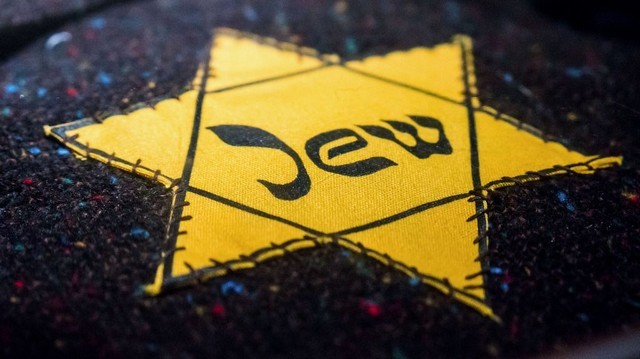
79 Percent of Right-wingers Believe Jews Are the Chosen People. Are You for Real?

By Gideon Levy

I would like to meet representatives of that absolute, decisive, arrogant and patronizing majority reflected in a recent Haaretz polland ask them: Are you guys for real? How did you come up with that? On whose say-so? Are you, the absolute majority, so sure that we are the chosen, the very best, that we are the champions, head and shoulders above the rest?

How did you come to this conclusion? I’d like to ask you, dear majority: On what basis are you convinced that we are the chosen people, that we know everything better than all the other nations; that we deserve more than everyone else; that what applies to them does not apply to us, because we are superior.

This is how a majority of Israeli Jews responded in the Haaretz-Dialog poll published last week: We are a chosen people. A majority, 56 percent, are sure of this. The figure rises to 79 percent, an overwhelming majority, among self-identified right-wingers. In a country where 76 percent of people believe in God or another higher power, perhaps that is obvious. But whereas belief in God is a private matter, the belief in a chosen people provides the outlines of policy that explains a great deal about Israel’s actions.

Let’s turn from theology to pathology. The Israeli Jews who think they belong to a chosen and select people owe an accounting to themselves and to others. It’s easy to declare that God does or doesn’t exist. No one is expecting evidence, but when the majority of a nation is convinced that it is superior to all other nations, some evidence is necessary. In Israel’s case, it’s easy to prove that it’s a case of detachment from reality, a dangerous delusion. In any event, a people that is convinced that it is chosen poses a danger to itself and its surroundings.

The Jewish people is indeed special, with a glorious and bloody history. Israeli Jews, too, have cause for pride. But when they say that they are the chosen people, it reveals their psychosis. It’s doubtful that any other nation thinks that of itself today. Israeli Jews have no grounds to think this either. In what way are we chosen? In what way are we better? And what is the Swede, the French person, the American, the Briton or the Arab supposed to think about this insufferable arrogance?

There’s no need to elaborate on Israel’s questionable morality as an occupier. Any Israeli with even a modicum of self-awareness recognizes that an occupying nation cannot be the chosen people. Nor would a bit of humility hurt when it comes to a few other characteristics of the people of Israel, before it crowns itself a light unto the nations. I recommend, for example, reading the comprehensive, horrifying analysis in Haaretz by Dan Ben-David of the country’s education system, which did not prompt the necessary outcry. Half of Israel’s children receive a Third World education.

A little modesty would also become the citizens of a state that ranks 87th in the 2018 World Press Freedom Index, below Togo and the Ivory Coast. Nor is No. 32 on Transparency International’s 2017 Corruption Perceptions Index something to celebrate. Health care is yet another area where Israel’s self-esteem should be curbed: The country ranks 28th in health-care spending, of the 36 Organization for Economic Cooperation and Development member states, and 30th in the number of hospital beds.

The behavior of Israeli tourists abroad is also not always befitting a chosen people. Perhaps Israel ranks high on an index of German submarine purchases, and maybe that’s the key to understanding the sense of superiority.

Basking in self-glorification has recently become a salient characteristic of Israel’s national character. Just regularly read the Israel Hayom daily or listen to the prime minister: How lovely we are from morning to night.

The right spreads this lie, for its own purposes. Sycophantic populism thrives not only in Israel, but it is only here that the disparity between dream and reality is so great. A chosen people? If only it were finally like all the other nations.

Gideon Levy is a Haaretz columnist and a member of the newspaper’s editorial board.

15 September 2018

Source: https://www.haaretz.com/opinion/.premium-79-percent-of-right-wingers-believe-jews-are-the-chosen-people-are-you-for-real-1.6471893?=&ts=_1537083883018

Egyptian Junta continues mass executions spree

By Abdus Sattar Ghazali

The US-client regime of Field Marshal Abdul Fattah Al-Sisi continues mass executions spree as an Egyptian kangaroo court sentences another 75 anti-government people to death.

According to Reuters report, an Egyptian kangaroo court sentenced 75 people to death on Saturday (Sept 8) including prominent opposition leaders Essam al-Erian and Mohamed Beltagi over a 2013 sit-in which ended with killing hundreds of protesters by the Egyptian security force.

The sentencing, which included jail terms for more than 600 others, concluded a mass trial of people accused of murder and inciting violence during the pro-Muslim Brotherhood protest at Rabaa Adawiya square in Cairo in 2013.

Rights groups say more than 800 protesters died in the single most deadly incident during the unrest that followed Egypt’s 2011 popular uprising against longtime President Hosni Mubarak.

Death sentences have been handed down to hundreds of Al-Sisi’s political opponents on charges such as belonging to an illegal organization or planning to carry out an attack.

The protest occurred weeks after General Abdul Fattah Al-Sisi (who later assumed the title of Field Marshal) ousted Egypt’s first freely elected head of state, president Mohamed Mursi.

“We condemn today’s verdict in the strongest terms,” Amnesty International said in a statement. “The fact that not a single police officer has been brought to account.. shows what a mockery of justice this trial was.”

Amnesty International and Human Rights Watch have both described the situation in Egypt as the worst human rights crisis in the country in decades, with the state systematically using torture, arbitrary arrests and enforced disappearances to silence political dissent.

Last year, the Egyptian government pledged to take action against Human Rights Watch after it released a damning report on state torture.

Two parliamentary groups in Algeria have called for official national and international action to halt mass executions against activists, human rights workers and political figures in Egypt.

Movement of Society for Peace; the largest political party in Algeria and Union for Development, Justice and Building said in a joint statement that lawmakers “are following with great concern the developments of the human rights situation in the Arab world; the most recent of which was the issuance of mass death sentences against political, human rights and community symbols”.

The signatories described the executions as “a flagrant attack on the right to life”, which is politically motivated “amounting to genocide or mass murder according to international law”.

UN Human Rights chief urges Egypt to overturn mass death sentences

United Nations human rights chief Michelle Bachelet has urged Egypt’s appeals court to overturn mass death sentences handed down by a lower court after what she said was an “unfair trial”.

The former Chilean president, who took office as UN High Commissioner for Human Rights earlier this month, criticised a law giving immunity from future prosecution to senior military officers.

An Egyptian court on Saturday delivered death sentences to 75 people, including prominent Islamist leaders Essam al-Erian and Mohamed Beltagi, over a 2013 sit-in that ended with security forces killing hundreds of protesters.If carried out, the sentences “would represent a gross and irreversible miscarriage of justice”, Bachelet said in a statement.

Defendants were denied the right to individual lawyers and to present evidence, while “the prosecution did not provide sufficient evidence to prove individual guilt”, she said.

“I hope that the Egyptian Court of Appeal will review this verdict and ensure that international standards of justice are respected by setting it aside,” Bachelet said.

Bachelet decried the “lethal military crackdown” saying it had led to the killing of “up to 900 mostly unarmed protesters by members of the Egyptian security forces”. The government later claimed that many protesters had been armed and that a number of police were killed, she added.

“Despite the huge death toll, no State security personnel have ever been charged in relation to the so-called ‘Rabaa massacre’,” Bachelet said.

Tellingly, a law was passed in July gives Field Marshal al-Sisi the right to name officers who are eligible for immunity from investigation of offences alleged to have been committed while Egypt’s constitution was suspended between President Mursi’s overthrow on July 3, 2013, and the reconvening of parliament on January 10, 2016.

Not surprisingly, US Secretary of State Mike Pompeo has authorised the release of $1.2 billion in military aid to Egypt, overriding previous human rights concerns that had held up funding.

“Strengthened security cooperation with Egypt is important to US national security. Secretary Pompeo determined that continuing with the obligation and expenditure of these foreign military financing (FMF), funds is important to strengthening our security cooperation with Egypt,” the State Department said in a statement.

Abdus Sattar Ghazali is the chief editor of the Journal of America (www.journalofamerica.net) email: asghazali2011 (@) gmail.com

16 September 2018

Source: https://countercurrents.org/2018/09/16/egyptian-junta-continues-mass-executions-spree/

Decoding the Pipes/Trump/Kushner ‘Deal of the Century’

By Richard Falk

11 Sep 2018 – You didn’t have to be a ‘never Trump’ loyalist to have qualms about proposing to bring peace to Palestinians and Jews by creating conditions that would produce ‘The Deal of the Century.’ And let’s be fair, if the game of nations is now played according to the rules of Madison Avenue, the phrase was a winner despite being a loser if evaluated from a problem-solving perspective. Even in the present degraded political atmosphere, to bet on an advertising slogan as a substitute for healing ideas may be a good formula for ensuring a large audience for a reality TV episode, but it is a cruel evasion when it comes to addressing the daily ordeal of the Palestinian people consigned to the victimization associated with living under the Israeli apartheid state.

What may be worse than Trump’s bombastic boasts is that here there seems to be a malevolent logic that underpins this mad proposal that springs from the ultra-Zionist imagination of Daniel Pipes. It was Pipes months ago, using the Middle East Forum as his ideational vehicle, issued a call for what he named ‘a victory caucus.’ Pipes, an intelligent and trained scholar, reasoned that the Oslo diplomatic track had failed badly as a means for ending the conflict via negotiations. He coupled this conclusion with the historical assertion that prolonged conflicts between ethnic antagonists rarely end by compromise or accommodation. They end with the victory on one side, and the acceptance of defeat by the other side.

So the trick, as Pipes came to believe, is to convince the Palestinians to accept the writing on the wall and acknowledge to themselves and the world that they have lost the battle to prevent the establishment of a Jewish state in Palestine or to bring into existence a sovereign state of their own. Pipes argues that an objective look at the diplomatic and military relation of forces in Palestine and the Middle East confirms this assessment of the political income even without factoring in the unwavering geopolitical support of the United States that provides unconditional support to Israel’s priorities with respect to the Palestinians.

With this understanding, the policy puzzle to solve for Pipes then becomes two-fold: how to convince the U.S. Government to shift from its failed promotional effort to negotiate a solution to one of helping Netanyahu’s Israel successfully impose one, and beyond this, how to exert enough additional pressure on the Palestinian situation on the ground and internationally so that their leaders will face reality and surrender their political claims once and for all, and be content with what would then be offered to them—a pledge of economic improvement in their circumstances.

On reflection, it does not seem so surprising that such extreme supporters of Israel as the trio of Kushner, Friedman, and Greenblatt are receptive to such an approach, and might have moved in a similar direction even without the Pipes contribution that provides a coherent rationalization. Consider the steps taken by the U.S. government over the course of the past eight months and a pattern emerges that seems to be only compressible as seeking the implementation of the Victory Caucus proposal:

Moving the American Embassy from Tel Aviv to Jerusalem, attacking the UN –including withdrawing from the Human Rights Council because of its anti-Israeli bias, freezing and then cutting off essential financial aid to the UNRWA operations in Gaza and the West Bank, closing the PLO office in Washington, turning a blind eye to Israel’s crimes against humanity committed in response to the Great March of Return at the Gaza fence, threatening the International Criminal Court, and giving tacit blessing to the accelerated expansion of unlawful Israeli settlements (already surpassing 600,000 settlers). There is no other way to read this series of provocative maneuvers other than as a series of signals to the Palestinian people, and most of all to their leaders, to grasp the futility of their suffering, which will intensify more and more if they do not act sensibly, and submit to whatever Israel proposes so as to complete the Zionist Project of dominating the whole of historic Palestine, the biblical rendering of ‘the promised land’ of Jewish entitlement.

To call this kind of coercive diplomacy on an already oppressed people ‘a deal’ is a linguistic travesty. It is more a bullying ploy than a deal, which implies the semblance of a meeting of minds. It is what I have called in this and other contexts a ‘geopolitical crime’ that deserves punishment and international condemnation, not careful consideration given to a serious effort to bring peace to the two peoples. In the future such an initiative is likely to be known as ‘the attempted ultimate crime of the century.’

Putting aside sentiments of distaste for the immorality and unlawfulness of this Pipes/Trump/Kushner approach, it is important to ask the awkward question, ‘will it work?’ Given the struggles and suffering endured by the Palestinian people over the course of more than a century, it seems that the Pipes Victory Caucus, like the Trump ‘deal,’ will face scornful repudiation, likely accompanied by dramatic renewals of Palestinian resistance as complement by more militant expressions of global solidarity activities. If we take account of the heroic persistence of the Great March at the Gaza border, despite the repeated atrocities committed by IDF defenders of Israel, and of the increasing worldwide support of the BDS Campaign, it seems reasonable to conclude that the deal of the century has been rejected even before it has been revealed with all its shabby window dressing, including ideas of redrawn boundaries with neighboring countries, permanently fragmenting the Palestinian people beyond the darkest imaginings. If, a big if, the Trump trio of ‘Israel, First’ advisors is at all smart this is a deal whose detailed nature will never be revealed for public scrutiny, and whose anticipated rejection will be hidden behind a PR avalanche of denunciations of Palestinian rejectionism as responsible of killing Trump’s plan for peace.

Underneath this attempt to make the Palestinians drink such a toxic brew is a misleading reading of the flow of history in our time. The sun has set on colonialism, and no matter how much geopolitical muscle is applied, this reality cannot be overcome. This kind of geopolitical crime will doubtless intensify Palestinian suffering while it also strengthens Palestinian resolve. In these kind of decolonizing struggles it is shifts in the soft power balances that most often produces change, and not the tilting of the geopolitical scales or dominance on the battlefield. People, not states and their armed forces, are the movers and shakers of our era, with governments left on the sidelines to weep over the outcome. The European colonial powers learned this the hard way in a series of bloody wars, which they lost despite their military superiority. The United States, despite its experiences in Vietnam, Iraq, and Afghanistan has yet to grasp the limits of military power in the post-colonial world, and so it keeps inventing weapons, tactics, and doctrine without learning this indispensable lesson in the shifting nature of power.

True, Oslo diplomacy was a failure that worked to the political benefit of Israel, and was rightly abandoned. But the Trump response to this failure amount to the criminalization of diplomacy that violates the most basic precepts of international law, as spelled out in the UN Charter. It amounts to waging an aggressive war against a vulnerable and helpless people. If the UN and the leading governments watch this dismal spectacle in stony silence it can only be fervently hoped that the peoples of the world will recognize the need for radical reform to avoid a catastrophic future, not just for the Palestinians, but for all of humanity.

Richard Falk is a member of the TRANSCEND Network, an international relations scholar, professor emeritus of international law at Princeton University, author, co-author or editor of 40 books, and a speaker and activist on world affairs.

17 September 2018

Source: https://www.transcend.org/tms/2018/09/decoding-the-pipes-trump-kushner-deal-of-the-century/

Demonization of Russia in a New Cold War Era

By Mairead Maguire

Inventing a foe to sell military ambitions: still the most dangerous of games.

13 Sep 2018 – In examining the future, we must look to the past.

As we watch the media today, we are spoon fed more and more propaganda and fear of the unknown, that we should be afraid of the unknown and have full faith that our government is keeping us safe from the unknown. But by looking at media today, those of us who are old enough will be reminded of the era of Cold War news articles, hysteria of how the Russians would invade and how we should duck and cover under tables in our kitchens for the ensuing nuclear war.

Under this mass hysteria, all Western governments were convinced that we should join Western allies to fight the unknown evil that lies to the east. Later through my travels in Russia during the height of the Cold War with a peace delegation, we were shocked by the poverty of the country and questioned how we ever were led to believe that Russia was a force to be afraid of. We talked to the Russian students who were dismayed by their absolute poverty and showed anger against NATO for leading their country into an arms race that they could not win. Many years later, when speaking to young Americans in the US, I was in disbelief about the fear the students had of Russia and their talk of invasion. This is a good example of how the unknown can cause a deep routed paranoia when manipulated by the right powers.

All military is expensive, and we can see in Europe that the countries are reluctant to expand their military spending and find it hard to justify this to their people. In looking at this scenario, we can ask ourselves what is beneficial about this hysteria and fear caused on both sides. All armies must have an enemy to deem them necessary. An enemy must be created, and the people must be convinced that there is need for action to safeguard the freedom of their country. Right now, we can see a shifting of financial power from old Western powers to the rise of the Middle East and Asia. Do we honestly believe that the Western allies are going to give up their power? My suggestion is: not easily. The old dying empires will fight tooth and nail to protect their financial interests such as the petrol dollar and the many benefits that come through their power over poverty-stricken countries.

Firstly, I must say, that I personally believe that Russia is not by any means without faults. But the amount of anti-Russian propaganda in our media today is a throwback to the Cold War era. We must ask the question: Is this leading to more arms, a bigger NATO? Possibly, to challenge large powers in the Middle East and Asia, as we see the US approaching the South China seas and NATO Naval games taking place in the Black Sea. Missile compounds are being erected in Romania, Poland and other ex-Soviet countries, while military games are set up in Scandinavia close to the Russian border to practice for a cold climate war scenario. At the same time, we see the US President arriving in Europe asking for increased military spending. At the same time the USA has increased its budget by 300 billion in one year.

The demonization of Russia is, I believe, one of the most dangerous things that are happening in our world today. The scapegoating of Russia is an inexcusable game that the West is indulging in. It is time for political leaders and each individual to move us back from the brink of catastrophe to begin to build relationships with our Russian brothers and sisters. Too long has the elite cynically gained from war while millions are moved into poverty and desperation. The people of the world have been subjected to war propaganda based on lies and misinformation and we have seen the results of invasions and occupations by NATO disguised as “humanitarian intervention” and “right to protect”. NATO has destroyed the lives of millions of people and purposely devastated their lands, causing the exodus of millions of refugees. The people around the world must not be misled yet again. I personally believe that the US, the UK and France are the most military minded countries, whose inability to use their imagination and creativity to solve conflict through dialogue and negotiation is astonishing to many people and me. In a highly militarized, dangerous world, it is important we start to humanize each other, find ways of cooperation, and build fraternity amongst the nations. The policies of demonization of political leaders as a means of preparing the way for invasions and wars must be stopped immediately and serious effort put in to the building of relationships across the world. The isolation and marginalization of countries will only lead to extremism, fundamentalism and violence.

During our visit to Moscow, we had the pleasure of attending a celebration of mass at the main Orthodox Cathedral. I was very inspired by the deep spirituality and faith of the people as they sang the entire three-hour mass. I was moved by the culture of the Russian people and I could feel that their tremendous history of suffering and persecution gave them sensitivity and passion for peace.

Surely it is time that we in Europe refuse to be put in a position where we are forced to choose between our Russian and American brothers and sisters. The enormous problems that we are faced with such as, due to climate change and wars, mass migration and movement of peoples around the world, need to be tackled as a world community. The lifting of sanctions against Russia and the setting up of programs of cooperation will help build friendships amongst the nations.

I call on all people to encourage their political leaders in the US, EU and Russia to show vision and political leadership and use their skills to build trust and work for peace and nonviolence.

Mairead Corrigan Maguire, co-founder of Peace People, is a member of the TRANSCEND Network for Peace Development Environment.

17 September 2018

Source: https://www.transcend.org/tms/2018/09/demonization-of-russia-in-a-new-cold-war-era/

Summary of the 9 July 2018 BMF Core Group Meeting, 1:00 – 6:00 p.m.

At the INEB office, Bangkok, Thailand

In attendance:


Rev. Kyoichi Sugino Religions for Peace
Tengku Ahmad Hazri JUST
Yayah Khisbiyah Muhammadiyah
Somboon Chungprampree (Moo) INEB
Edla Puoskari The Network


Key Discussions and Decisions:

Welcome and Introductions by Somboon (Moo)


Updates and Reports

JUST Updates

Peoples’ Tribunals found that Myanmar was guilty of genocide. Tribunals exhibit some reservations about charging Myanmar with “ethnic cleansing” and so did not use it. Full details are on the website. They are trying to publish the judgement collaboration with the UN in an academic law journal.

Rev Kyoichi suggests BMF should analyze and follow the numerous Amnesty International reports about crimes against humanity in Myanmar and coordinate between BMF, UN Genocide Prevention Office (USG Adama Dieng), ICC, and the Peoples’ Tribunals to submit evidence of the final verdict during the UNGA. (The Network can also help in establishing a connection with Adama Dieng’s office.)

The Network Updates

Edla commented about the refugee situation in Bangladesh (where the Network participated in a recent event) and recommended to keep an eye on the initiatives by the UN, such as the Plan of Action for Religious Leaders and Actors in Preventing Incitement to Violence that could lead to atrocity crimes.

The Network also works with ASEAN and its member states to increase their understanding on why Buddhist-Muslim relations are important. In addition, the Network coordinates a platform regionally for interfaith peacemakers to support peer-learning and their concrete actions on the ground. The Network had also closely supported activities mentioned in the report by BMF Interim Secretary.

Religions for Peace Updates

BMF could be a Human Rights organization that is pro-government, pro-Buddhist, and pro-Muslim all at the same time.

In May, RfP convened a meeting with national Buddhist leaders. Buddhists from only a few Asian countries (India, China, Japan, and Sri Lanka) are respected by Myanmar government. With this in mind, the RfP intentionally brought Sri Lankan in particular, but also Indian and Japanese reps to the delegation. While the spirit of discussion have opened up with this Buddhist leaders meeting, it is critical now to bring civilian government, military government, ethnic groups, and Muslim representatives to the table. Indonesian, Bangladeshi, and Saudi ambassadors to Myanmar are also possible sources of support. Human rights organizations are less likely to gain traction with military governments.

RfP has terminated its relationship with the Sitagu Sayadaw, but the Burmese Muslim leader has kept a relationship with him.

RfP is considering pursuing basic rights rather than citizenship rights for Rohingyas with Myanmar’s military government. Norway, Switzerland, Australia, Indonesia, US, Japanese ambassador have expressed interest is this approach.

Muhammadiyah Updates

Yayah says that this is Muhammadiyah’s first time speaking on BMF since Yogya 2015. The Muhammadiyah representative expresses large interest in coming back to the table with BMF.

Din Syamsuddin is a former chairman of Muhammadiyah

–          They’ve raised around 1.5 million US dollars through crowdfunding demonstrating that there is definitely Muslim support for interfaith-related causes in Indonesia, but it tends to be too symptom-based.

Muhammadiyah is working on concept of healing/peace building and relaying it to Indonesian leaders. The university can be opened as a place for participation as well, through Muhammadiyah.

Muhammadiyah says their organization can continue to preach tolerant Islam to combat extremism. They suggest contacting Pak Din in this regard.


INEB Updates

Engaged with Ma Ba Tha to open up intra-Buddhist dialogue in local areas through workshops, emotional healing, plastic cleaning campaigns, and other community efforts.

–          They’ve been working with around 150 nuns and monks, 100 are Ma Ba Tha monks, 15% are directly engaged in interfaith, 60% are planning to reduce participation in Ma Ba Tha, 40% want to engage in peace building

The next phase will be during the 2020 Myanmar election. INEB has submitted a proposal to the EU and are waiting for the results.

Next month, 30 political leaders from Myanmar will be hosted by INEB in Thailand.


Membership

2 main goals for BMF:

  • Increase membership from Islamic countries
  • Increase research ties


Membership Focus and Composition

Three levels:

  • core group – primary membership
  • country focus – countries in the region to engage with
  • peripheral countries – countries outside the region


BMF with its current regional focus, will not explore partnership with other international organizations (such as KAICIID and OIC) as members. However, it will focus on strengthening the connections with regionally based organizations.

Country Focus:

Pursue organizations in countries with both Buddhist and Muslim populations

  • Sri Lanka
  • Myanmar
  • Bangladesh
  • Singapore
  • Indonesia
  • Malaysia
  • Thailand
  • Cambodia
  • India
  • China


Peripheral countries:

BMF agrees to explore possibilities with:

  • Egypt
  • Pakistan
  • Tunisia
  • Iran


Please note that BMF with its current regional focus will not explore partnership with other international organizations (such as KAICIID and OIC) as members. Rather we will focus on strengthening the connections with regionally based organizations.


Activities

The Core Group expressed concerns over the narrative that is in Myanmar. They are also concerned about the impact if it spins off, into the region as well as other issues surrounding extremist Buddhist and Muslim actions. It also recognized the unique access by its members to engage in dialogue with actors who have a potential to influence the hardline narratives both among the Buddhist and Muslims and prevent them becoming mainstream.

Advocacy work with:

  • Individual country governments
  • ASEAN, UN, EU (utilize EU)
  • Buddhist and Muslim international organizations, Regional organizations
  • International Non-governmental Organizations

Education

  • Coordinating Research
  • Public Outreach through conferences, lectures, seminars
  • Dissemination/ Framework/Propagation/ Social Media!
  • Translation and Publication
  • Workshop Training

Research Ties

BMF can develop ties to Institute of Islamic Studies in Malaysia to increase intellectual/research ties. This can be coordinated with help from JUST.

Media/Social Media

  • Peace Journalists in Indonesia as an example of success projects
  • How we use social media ourselves strategically and support first movers – looking regionally
  • Engage with the media on how they frame conflicts as religious

Intra-faith and Interfaith Dialogue

  • BMF’s role should be to offer space for these dialogues
  • Project:  Identify radical groups within each community and strategize on how to bring them together
  • Propagate Inclusive Islamic literature which is what Muhammadiyah is doing

Issue-based projects to address difficult topics such as:

  • Changing demographics
  • Conversion
  • Halal-certification
  • Economic/political issues


Common Actions and Projects (within the next 2 years)

1) Religious Leaders (B-M) meeting

  • Focus on organizing high level / intellectual / linkages and connections. (Chandra’s suggestion of bringing in research components could help.)
  • Opportunity to address change in the narratives that promote radical interpretations, creating a safe space for discussing hard topics
  • Majority Buddhist country as site for the next meeting. Singapore is a possibility. They have a Museum of Diversity (at MUIS).
  • Budget of $50,000 USD (RfP will look into possible funding.)
  • Professor Imtyas Yusuf of Islamic Studies from Mahidol could be included
  • The Network (Edla) is very willing to facilitate, their priority focus Buddhist-Muslim regional dynamics at the moment.

2) B-M Education Institutions for Dialogue

The Core Group agrees that dissemination of shared values between Buddhists and Muslims is important. We are creating a platform where more sensitive and difficult challenges will be discussed, with some objective data. Possible channels are through comic books/publications and social media (informational videos).

Student exchanges between high schools or universities will help blur the boundaries. This can possibly be facilitated through Indonesian/Malaysian Muslim students and Thai Buddhist students. There must be a dialogue between Buddhist and Muslim universities

Focus should be also on transforming curriculums. Moo proposes taking Buddhist monastic leaders to visit Madrassah schools, and vice-versa. Also, synergies with existing peace curriculums/manuals of different faiths should be looked into.

3) B-M Youth Exchange

Core Group agrees that youth exchange- bringing Buddhists to madrassahs, community clean-up projects, etc., is also a priority.


New Core Members

Connecting Muslim organizations:  In Indonesia we will invite Nahdlatul Ulama and Wahid Institute. We also ask Pak Din.

Connecting Buddhist organizations:   Moo has 3 suggestions – Sri Lankan Sarvodaya, Rahula Institute from Sri Lanka and Ven Dhammasami from Myanmar.

It was decided that the Network is formally recognized as Core Group Member.


Funding

Last September it was decided that the core group would need to provide financial backing (per their ability) to be part of the core to each contribute $5,000 USD (as of our last agreement).

Secretariat will write formal letter describing what took place during this meeting, the actions and contribution request of Core Group members. It was discussed that there is flexibility on whether the contribution is made in the later months of 2018 or at the beginning of 2019.

Moo/INEB Secretariat will draft of a concept paper and budget for the agreed actions. Edla among other Core Group members will help with this.


Secretariat

A rotational schedule between the Buddhist and Muslim is most desirable.

Term Length: 2 years, beginning August 2018. It was decided that formally the term for INEB begins in August 2018.

Functions of the secretariat:

  • Represent the BMF in international conferences. (Core group members can also attend.)
  • Conduct Annual Meeting/ Managing the core group
  • Fundraising
  • Managing Media – > maintaining website and other social media
  • General Outreach/Networking – Secretariat responsible to expand awareness of BMF
  • Coordinate invitations to new members and criteria for membership

Secretariat with the BMF Core will approach the potential new Core members


Acknowledgement

The Core Group wishes to acknowledge the support of:

a. INEB for the use of their office space.

b. All members who attended and contributed


MEETING OF THE INTERNATIONAL FORUM ON MUSLIM-BUDDHIST RELATIONS @ 9 JULY 2018, BANGKOK, THAILAND

SUMMARY OF DISCUSSION POINTS

1. BMF structure & organisation
A key strength of the BMF is precisely its loose network, which allows each member organisation to pursue different methods and approaCh different parties for collaboration. That arrangement can be retained to afford flexibility in the project while at the same time, a wider spectrum of alliance should also be forged.

To that end, the BMF will be structured along three concentric levels:
(i) the nucleus or core group – consisting of the principal organisations viz. INEB, Religions for Peace, Muhammadiyah and JUST. This group will undertake major decisions and constitute the back bone of the forum.
(ii) the country focus – comprising organisations from countries with both Buddhist and Muslim populations (mainly from SE Asia, but also Sri Lanka, India, China, Bangladesh)
(iii) the wider network – comprising organisations from other parts of the world, which may include Muslim or Buddhist countries, or those with none but are dedicated to dialogue between the two faith groups. It was also noted that some organisations in Europe for example, are very dedicated to the Rohingya cause even with minority Muslim/Buddhist population.

In that connection, member groups may employ different strategies that may take into account sensitivities of the parties they engage with.

2. Member activities

(i) JUST – JUST has two updates: firstly, the Permanent People’s Tribunal on Rohingya, which was held in September 2017. The tribunal found liability for genocide on the part of Myanmar but registered reservation on the term ‘ethnic cleansing’ partly because there is no legal definition but also because the term itself is laden with moral objectionability implying the ‘impurity’ of the group in question. On inquiry it was explained that evidence of the crime came from various sources, including testimonies at the trial among others by authors of reports documenting atrocities and figures like Maung Zarni and Kyaw Win, and also interviews with victims themselves. There is also a dedicated website to the tribunal containing all the relevant information.
Currently JUST is working with Universiti Malaya’s Law Faculty to publish the findings and related documents from the tribunal. The university has agreed to publish them as a special issue in one of its academic law journals.
Secondly, JUST has also been collaborating with a regional civil society initiative for the restoration of the rights of the rohingya people, currently still at the incipient stages.
(ii) Muhammadiyyah – hitherto the key figure for interfaith dialogue had been Din Syamsuddin and thus with his departure, Muhammadiyya had been relatively less vigorous. On a positive note, it has received warm response to crowdfunding exercise though the funds were generally channelled to humanitarian relief causes than peace building initiatives. Muhammadiya also welcomes assistance in the form of knowledge input & resources.
(iii) Religions for Peace – RfP has been engaged with several key figures including Aung San Suu Kyi and the Supreme Patriarchs of Sri Lanka and Cambodia. An important take away from these projects is the need for diplomacy to straddle difficult dialogues, eg in Myanmar, Rohingyas should be referred to as “Muslims in Myanmar”. RfP also has been in touch with prominent monks (eg Sitagu Sayadaw) and has expressed strong objections when they express anti-Muslim practices.
(iv) INEB – for the past two years INEB has engaged with Buddhist leaders including monks affiliated with MaBaTha (hard to dialogue directly with the latter). The process includes community & environmental projects and other activities bringing Muslims and Buddhists together. According to INEB’s findings, the project has shown positive results. Currently, INEB is planning for dialogue activities in anticipation of upcoming 2020 elections in Myanmar, which is likely to witness exploitation of ethno-religious sentiments. Next month INEB will invite Myanmar political leaders as part of such engagement, plus other activists and intellectuals such Filipino scholar Walden Bello.

3. Activities

Several activities have been planned:
(i) Advocacy
(ii) Public education & outreach
(iii) Community projects, services & groundwork activities
(iv) Media awareness campaign
(v) Art as medium of dialogue

It was also proposed that we pick one concrete area from present conflict areas to focus: some identified include (a) changing demographics, (b) conversion, (c) halal certification issue, (d) economic and business monopoly. The suggestion was that these issues were addressed head on. However, as these were where the tensions arise, it was decided that emphasis should be on building common grounds and nurturing trusts first, through other activities.

4. Fundraising

Funds have been solicited from such agencies as the European Instrument for Democracy and Human Rights (EIDHR) and the United States Institute of Peace (USIP). On inquiry it was explained that funds were solicited from various channels so that no one body exercises dominant influence. Furthermore, the loose structure of BMF as aforementioned should also translate into flexibility in fundraising by different member organisations.

End of report.


Trump Cuts US$25 Million Aid for Palestinians in Hospitals

By teleSUR

Trump called for a review of U.S. assistance to Palestinians earlier this year to ensure the funds were being spent in accordance with ‘national interests.’

8 Sep 2018 – U.S. President Donald Trump has ordered that US$25 million earmarked for the care of Palestinians in East Jerusalem hospitals be directed elsewhere as part of a review of aid, a State Department official said on Saturday.

Trump called for a review of U.S. assistance to the Palestinians earlier this year to ensure that the funds were being spent in accordance with national interests and were providing value to taxpayers.

“As a result of that review, at the direction of the president, we will be redirecting approximately US$25 million originally planned for the East Jerusalem Hospital Network,” the State Department official said. “Those funds will go to high-priority projects elsewhere.”

The aid cut is the latest in a number of actions by the Trump administration that have alienated the Palestinians, including the recognition of Jerusalem as Israel’s capital and moving the U.S. embassy to Jerusalem from Tel Aviv.

That move reversed longtime U.S. policy and led Palestinian leadership to boycott Washington peace efforts led by Jared Kushner, Trump’s senior adviser and son-in-law.

Last month, the Trump administration said it would redirect US$200 million in Palestinian economic support funds for programs in the West Bank and Gaza.

And at the end of August, the Trump administration halted all funding to the United Nations Relief and Works Agency for Palestine Refugees (UNRWA), a decision that further heightened tensions with the Palestinian leadership.

Palestinian refugees have reacted with dismay to the funding cuts, warning they would lead to more poverty, anger and instability in the Middle East.

A statement from the Palestinian Foreign Ministry said the latest aid cut was part of a U.S. attempt “to liquidate the Palestinian cause” and said it would threaten the lives of thousands of Palestinians and the livelihoods of thousands of hospital employees.

“This dangerous and unjustified American escalation has crossed all red lines and is considered a direct aggression against the Palestinian people,” it said.

At the gates of two of the East Jerusalem hospitals affected, medical staff were aware of the decision but refused to comment, Reuters reports.

One of the centers, Al Makassed Islamic Charitable Society Hospital, said in statement the U.S. aid cuts come as the “hospital is going through a suffocating crisis as a result of the lack of flow of financial aid, and the piling up of debts and funds held back by the Palestinian government.”

It said it had received US$12.5 million of the U.S. money to treat patients from the West Bank, Gaza and East Jerusalem. In the statement hospital CEO Dr. Bassam Abu Libdeh “questioned the justification behind mixing political issues with medical and humanitarian issues.”

The last round of U.S.-brokered Palestinian-Israeli peace talks collapsed in 2014.

10 September 2018

Source: https://www.transcend.org/tms/2018/09/trump-cuts-us25-million-aid-for-palestinians-in-hospitals/

Tehran Summit Calls for Political Solution in Syria

By Middle East Monitor – TRANSCEND Media Service

7 Sep 2018 – “There could be no military solution to the Syrian conflict and it can only end through a negotiated political process.

“[They] reaffirmed their determination to continue active cooperation with a view to advancing the political process consistent with the decisions of the Syrian National Dialogue Congress in Sochi and the UN Security Council Resolution 2254,” the statement said.

The leaders expressed their “satisfaction with the achievements” of the Astana format since January 2017, in particular, the progress made in “reducing violence across the Syrian Arab Republic and contributing to peace, security, and stability in the country.”

Iran, Turkey and Russia “emphasized strong and continued the commitment to the sovereignty, independence, unity and territorial integrity of Syria, as well as to the purposes and principles of the UN Charter and highlighted that they should be respected by all.”

The leaders “rejected all attempts to create new realities on the ground under the pretext of combating terrorism,” while expressing determination to stand against separatist agendas aimed at undermining the sovereignty and territorial integrity of Syria and national security of neighboring countries.

The joint statement said the leaders highlighted the “need to create conditions for the safe and voluntary return of refugees and internally displaced persons (IDPs) to their original places of residence in Syria.”

Russia, Iran, and Turkey also called for the United Nations and its humanitarian agencies to help Syria by providing additional humanitarian aid.

The joint statement also welcomed the progress in the work of the Working Group on the release of detainees and abductees, and handover of the bodies as well as the identification of the missing persons, as undertaken with the participation of the UN and ICRC experts.

The next tripartite meeting will be held in Russia, upon the invitation of President Putin.

10 September 2018

Source: https://www.transcend.org/tms/2018/09/tehran-summit-calls-for-political-solution-in-syria/

Libya in Chaos Seven Years after NATO’s ‘Liberation’, but Who Cares?

By Neil Clark – RT

7 Sep 2018 – Libya remains a lawless land, with rival militias fighting battles in the streets of Tripoli and over 1 million people in need of aid. But the West’s ‘liberal interventionists’ aren’t interested in the catastrophe they created.

“Hundreds escape prison amid deadly clashes in Tripoli,” a headline on the BBC News website declared this week.

Over 60 people have died in the current fighting with many more injured and hundreds of ordinary citizens displaced. The latest disturbances began after the Tarhuna’s 7th Infantry ”Kaniat‘ Brigade made advances into the capital from the south and clashed with a coalition of Tripoli militias.

It’s really hard to keep up with who’s fighting who. If you think the situation in Syria is complicated, you haven’t been paying much attention to Libya. As the BBC article acknowledged: “Libya has faced continuing chaos since NATO-backed militia forces, some of them rivals, overthrew long-serving ruler Colonel Gaddafi in October 2011.”

Libya has rival governments but even they don’t control the majority of the country. There is no ‘rule of law’, only the rule of the gun. Libya’s regression from the country with the highest Human Development Index figure in the whole of Africa just ten years ago, to a fragmented and very dangerous failed state, is hard to take in. Last year, the UN Agency IOM reported that slave markets had returned to the country.

Economic and societal collapse has had a devastating impact on the life of ordinary Libyans.

Take health care. A 2017 Service Availability and Readiness Assessment survey, conducted by the World Health Organisation (WHO) and the Ministry of Health, found that 17 out of 97 hospitals are closed and only four hospitals were functional between 75-80% of their capacity. Over 20% primary health care facilities are closed and the rest are not “well ready for service delivery“.

In May 2016, the WHO also expressed ‘great concern’ over the deaths of 12 newborns in the Sabah Medical Centre neonatal intensive care unit in Sabha, southern Libya. It records: “The deaths occurred as a result of a bacterial infection and lack of specialized health staff to provide medical care.”

The education system is also in a state of collapse or near-collapse. In 2016, it was reported that the start of the school year was postponed because of a “lack of books, lack of security and many other factors.”

It was noted that the Libyan school year had not been regular since the fall of Gaddafi. This year, UNICEF said that 489 schools were affected by the conflict and that around 26,000 students had been forced to change schools due to closures.

UNICEF also says that 378,000 children in Libya are in need of humanitarian assistance, 268,000 are in need of safe water, sanitation and hygiene and 300,000 are in need of education in emergency support. Overall 1.1m people in Libya are in need of humanitarian assistance.

Given the dire situation it is no surprise that so many Libyans have left, or are leaving. In 2014, it was reported that between 600,000 and 1m had fled to Tunisia.

If we add those who went to Egypt and elsewhere, the figure is likely to be in excess of 2 million, quite staggering when you consider that the 2011 population of Libya was around 6 million.

As I argued in a previous op-ed, the Western assault on Libya was an even worse crime than the invasion of Iraq because it came later. There was really no excuse for anyone, seeing how the ‘regime change’ operation of 2003 had turned out, supporting a similar venture in North Africa.

Yet, those responsible for what happened have faced no comeback. The UK Prime Minister at the time, David Cameron, is blamed for Brexit (by Remainers), but not for what he did to Libya and the claims he made to justify the military action. This is despite a House of Commons Foreign Affairs Committee report concluding, five years later, that “the proposition that Muammar Gaddafi would have ordered the massacre of civilians in Benghazi was not supported by the available evidence.”

Nicolas Sarkozy, the French President in 2011, faces a trial (or trials) in relation to three different investigations, including accepting money from Gaddafi to help his election campaign, but he has not yet been prosecuted for his role in the war.

Bernard-Henri Levy, the philosopher considered by some to be the intellectual godfather of the Western intervention – and who boasted “we are the first to say that Qaddafi is no longer the legal representative,” is performing a one-man anti-Brexit play, as the country he helped ‘liberate’ burns.

Stateside and in ‘liberal’ circles across the West, Barack Obama and Hillary Clinton are lionised for not being Donald Trump, but what the duo did to Libya is far worse than anything Trump has done up to now.

And the British Home Secretary under whose watch control orders on members of the anti-Gaddafi Libyan Islamic Fighting Group were lifted, one Theresa May, is now Prime Minister, and trying to take the moral high ground against Russia. To add insult to injury, it is a politician who opposed the NATO action in 2011, Jeremy Corbyn, who is under constant media attack and painted as beyond the pale. Just how wrong is that?

Returning to the current violence, a UN-brokered ceasefire to end the fighting in south Tripoli is reported at time of writing to be holding, but bearing in mind how previous ceasefires have collapsed, we can’t be optimistic. Part of the problem is that the country is awash with arms. The sad truth is that Libya is broken and probably will never be put back together again. A great crime has been committed, but you would never think it, judging by the lack of media coverage.

We’ve had a lot of debate this summer in Britain about Israel’s ‘right to exist’- and whether challenging this makes one ‘anti-Semitic’ but the reality is that Libya – as a modern, functioning state – has ceased to exist. And no one in elite, establishment circles seems the least bit bothered. Consider how many column inches were devoted to ‘saving’ Libya in the build up to NATO’s ‘humanitarian’ intervention seven and a half years ago, with the lack of opinion pieces about the country today.

Try googling the names of some of the leading media war hawks and ‘Libya’ and you see they tend to go as silent after 2011 – shifting their attention to propagandising for ‘regime change’ in Syria. The only conclusion one can draw is their sole interest in the country was seeing Muammar Gaddafi toppled. After that was achieved, who cares?

Neil Clark is a journalist, writer, broadcaster and blogger.

10 September 2018

Source: https://www.transcend.org/tms/2018/09/libya-in-chaos-seven-years-after-natos-liberation-but-who-cares/

Trump, Venezuela and the prospect of a coup

By Ishaan Tharoor

In April 2002, then-Venezuelan President Hugo Chávez was briefly deposed in a coup attempt launched by mutinous army officers. But within 48 hours, Chávez surged back to power with the aid of loyalist generals and masses of supporters who marched in the streets in his defense.

It emerged later that the CIA had knowledge of the coup plot, despite the George W. Bush administration’s vociferous denials at the time. There were documented links between Washington and anti-government figures involved in the botched ouster. The specter of yanqui imperialism loomed once more.

Chávez, a fiery demagogue, made hay of those revelations, linking his own ordeal to a wider American legacy of dirty wars, election interference and military interventions. “Having a government of this type in the United States is a threat to the world,” he declared.

Sixteen years later, it can be plausibly argued that the government Chávez bequeathed to Venezuela is a threat to the world. Years of mismanagement and cronyism have hollowed out the Venezuelan economy, triggering mind-boggling hyperinflation and devastating food and medicine shortages. A hemispheric humanitarian calamity is now straining Venezuela’s neighbors, who are struggling to cope with the vast influx of refugees fleeing hunger and depredation.

For more than a year, analysts have suggested that Chávez’s successor, Nicolás Maduro, could be vulnerable to a coup. Maduro and his allies have withstood several murky attacks from renegade soldiers, including an apparent assassination attempt with an explosive-laden drone during a military parade last month. But rather than losing his grip on power, Maduro has only tightened it, purging the military’s ranks of potential threats and winning reelection in votes largely considered fraudulent by the international community.

All the while, he keeps blaming outside actors — chiefly, the United States — for his nation’s woes. And this weekend, he got even more fuel for his paranoia.

According to my colleagues, officials from the Trump administration met several times with Venezuelan military officers who claimed to be coup-plotting dissenters. The Venezuelans’ requests for covert aid were ultimately rebuffed, not least because the Americans were hardly convinced by their entreaties.

“We had very little confidence in the ability of these people to do anything, no idea at all about who they represented, and to what extent they had not exposed themselves already,” one official told my colleagues. But the new details, reported first by the New York Times, were more than enough for Maduro’s government.

“We denounce before the world the United States’ intervention plans and help to military conspirators against Venezuela,” tweeted Jorge Arreaza, Venezuela’s foreign minister.

The White House rushed to subdue speculation that it wants to intervene. In a statement, National Security Council spokesman Garrett Marquis said that “the United States government hears daily the concerns of Venezuelans from all walks of life — be they members of the ruling party, the security services, elements of civil society or from among the millions of citizens forced by the regime to flee abroad.”

The statement added: “U.S. policy preference for a peaceful, orderly return to democracy in Venezuela remains unchanged.”

Of course, such a return is nowhere in sight. President Trump, meanwhile, has played the part of the hectoring American hegemon rather well. His administration included Venezuela among the mostly Muslim-majority countries targeted by Trump’s travel ban, shutting the door to a nation in desperate need. He has touted the “military option” for Venezuela — rhetoric that sent sirens ringing on a continent all too familiar with American interventions. And reports indicate that Trump floated the possibility of an invasion not only to his top advisers, but to leaders of other Latin American countries.

But even were such an adventure now in the works, the new revelations suggest that Washington’s allies on the ground would be woefully out of their depth. “The main request of the military plotters was encrypted radios, which they planned to use to communicate among themselves in order to capture Mr. Maduro and his lieutenants,” noted the Times. “But the United States never granted the request, and after multiple meetings, the Venezuelans became frustrated. Mr. Maduro’s government has since jailed dozens of the conspirators, though many remain at large.”

In an era of smartphones and encrypted apps, the request for radios struck other Venezuelan observers as absurd. “It’s just another reminder that the guys atop the military—our putative saviors—are not only very, very criminal: they’re also painfully stupid,” wrote Francisco Toro of the Caracas Chronicles blog. “A plot that relies on people operating on this level of sophistication will only fail. Which, obviously, the Americans saw right away.”

“It makes no sense to support a military coup in Latin America. They always end badly, but it’s worth listening to these people,” said Adam Isacson, of the Washington Office on Latin America, to The Post. “What is their level of discontent? Do they have broad-based support among the population or are they just a bunch of renegades? Do they have an honest plan to start elections? The military is a black box.”

The irony of the moment is that Trump himself is careening down a dark path even as his administration puzzles over how to confront a destructive and destabilizing regime in Venezuela. Trump fulminated over threats to his rule posed, in part, by an anonymous insider who penned an astonishing op-ed on how Trump aides are protecting the country from the president’s consistently bad instincts.

“He’s remarkable in his lack of appreciation for democratic values and institutions. And I think that’s where some of the greatest damage is being done,” Sen. Bob Corker (R-Tenn.) told CNN’s Manu Raju last week. “Left to his own accord, our country would look somewhat like Venezuela.”

Ishaan Tharoor writes about foreign affairs for The Washington Post.

10 September 2018

Source: https://www.washingtonpost.com/world/2018/09/10/trump-venezuela-prospect-coup/?utm_term=.63252402b32b