Just International

Death and Impunity: Iraq Fifteen Years After

By Dr Binoy Kampmark

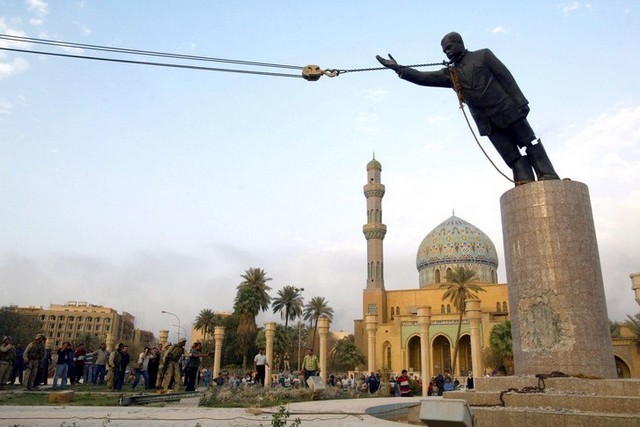
It might have made a bit more than a whimper had the US political scene not found itself in yet another paroxysm of the drama known as the Trump White House.  Fifteen years before, governments aligning with the dogs of war decided, in defiance of millions of protestors globally, to invade a sovereign state.  Papers cheered with blood lust; propagandists and public relations firms were hired to push the politics of regime change in a country that was already hemmed in by sanctions and surveillance.

The invasion of Iraq must, over time, be given its own specific criminal gravity.  It sundered the Middle East, it tore at the artificially imposed borders contrived by former colonial masters.  It emboldened new foes and generated further disagreements.  For generations, chaos will be guaranteed on the heaped folly of the 2003 decision.

“The results are in,” went a sombre Charles P. Pierce for Esquire.  “Iraq never recovered.  Syria devolved into civil war. We got closer than ever to the inhumane regime in Saudi Arabia, now engaged in mass slaughter in Yemen with weapons we supplied, because there’s never been a problem with that before.”

As Matt Taibbi reflected, the invasion had the element of “awesome drama, made more thrilling by the seemingly obvious craziness of it all.” The subtext was a lack of sensible reason, distorted by the mania that Iraq had somehow become a global threat with a trigger happy maniac. In place was ample hysteric delight, characterised by the opening phase of the campaign: “Shock and Awe”.

As with the Indochina War, the invasion mirrored an emerging malaise back home.  Invading Iraq was “one of the great crimes of this or any age and destined to be a crossroads event in the history of America’s decline”.  It was “a cold, calculated, opportunistic power grab, aimed as much at future targets, and even our own population, as at the Iraqi ‘enemy’.”

The US allies who, with unfazed enthusiasm went in with similar destructive intent, were also showing mixed degrees of reflection.  In Australia, former Prime Minister Kevin Rudd saw a chance to chastise his predecessor, John Howard, for having joined the US-led enterprise.  “John Howard’s decision to commit thousands of Australian troops to the invasion of Iraq 15 years ago,” began his opening salvo, “ranks as one of the two great failures of Australian foreign policy since the Second World War.”

Rudd can show periods of sensible reflection.  The decision to invade Iraq had to also rank alongside another US-led mission that was doomed: the Vietnam War.  Again, the leadership in Canberra felt it logical and automatic that the soldiers of the South Cross should shed blood alongside those of the Stars and Stripes.

In Rudd’s reflection, analysis of legitimacy and interest was lacking. There was no specific Australian take on it, not a consideration of “the credibility of American military strategy to both win the war and secure the peace, as well as the long-term consequences for Australian national interests.”

Being a former diplomat, Rudd’s survey of the grotesque consequences is even deeper than Pierce. Sectarian violence between the Shia majority and Sunni minority was unleashed; Christians, having co-habited with Muslims for some 1,300 years were, were brutally expelled; Iraq was pushed into Iran’s orbit while Iraq duly imploded, becoming the base for regional terrorist influences.

The apologist’s tactic in these instances is one tried in history.  We were sincere in inflicting our butcheries; we were solemn in making our errors of judgment.  We only did what was appropriate at the time.  Even if those weapons of mass destruction had never turned up, Saddam Hussein was vicious, a sadist, murderer and torturer. Never mind those who knew better.

For John Howard, it was a case of making a decision on “available evidence” from Australian intelligence agencies at the time tying the Saddam regime with those ultimately elusive weapons of mass destruction. Howard duly “concluded that Iraq had weapons of mass destruction” and insisted that Rudd place himself in “the shoes of the government at the time”.

In the case of the evangelised Tony Blair of Britain, such ham sincerity is pure theatre, even convincing the likes of Sir John Chilcot, chairman of the public inquiry examining the lead-up to the 2003 invasion.  While he was not “straight with the nation” about the reasons for invading Iraq, he was “emotionally truthful”.

As Chilcot explained to the BBC’s political editor, Laura Kuenssberg last July, “Tony Blair is always and ever an advocate.  He makes the most persuasive case he can.  Not departing from the truth but persuasion is everything.”

As for President George W. Bush, he remains, along with Howard and Blair, elusive from the judicial bench of any tribunal, foreign or domestic.  War criminals have received weighty sentences for less but this triumvirate are at little risk of being apprehended.  In the autumn of their lives, they are witnessing a conflagration they happily initiated when in office.

Dr. Binoy Kampmark was a Commonwealth Scholar at Selwyn College, Cambridge.  He lectures at RMIT University, Melbourne.  Email: bkampmark@gmail.com

23 March 2018

Source: https://countercurrents.org/2018/03/23/death-and-impunity-iraq-fifteen-years-after/

Israel’s Chief Rabbi calls black people ‘monkeys’

The human rights and Palestine solidarity organisation, BDS South Africa, condemns the racism by Israel’s Chief Rabbi Yitzhak Yosef who during his recent weekly sermon compared African people to monkeys.

In footage aired by the Israeli media house, Ynet news, Yosef (who is one of two Israeli state-elected rabbis) can be seen referring to black people by the word “kushi,” which in modern Hebrew has derogatory connotations, and comparing Africans to “monkeys.” Click here.

This is not the first time that Israel’s Chief Rabbi Yosef has used his position to justify and legitimize discrimination. In a sermon delivered in May 2017, he suggested that secular woman behave like animals because of the way they dress. In March 2016 Yosef declared that non-Jews should not live in Israel.

Israeli racism against African people is on the rise and is a view not only of the broader Israeli public, but also of the Israeli government and its officials. Currently Israel is expelling thousands of Africans, giving them an ultimatum: leave by 1 April 2018 or risk indefinite imprisonment. Israel has also offered one hundred thousand rands in bonuses to civilians who aide in hunting and forcibly deporting African asylum seekers. Click here

Israel has portrayed non-Jewish Africans as a threat to Israel’s Jewish character calling them “infiltrators” with Prime Minister Benjamin Netanyahu repeatedly calling for their expulsion and saying that Africans “threaten the social fabric of society.” Israel’s Minister of Interior, Eli Yishai, has said that African immigrants “think the country doesn’t belong to us, the white man.” The Israeli Minister of Culture and Sport, Miri Regev, has compared Africans to “a cancer”. In 2013 Israel admitted to have forcibly sterilised African women without their consent. Click here.

Israeli racism against Palestinians as well as Africans in particular was the focus of this year’s #IsraeliApartheidWeek campaign. Although #IsraeliApartheidWeek activities took place primarily between the 12th and 18th of March there are still certain events taking place in various cities and towns. Click here for the ongoing #IsraeliApartheidWeek schedule

ISSUED BY KWARA KEKANA ON BEHALF OF BDS SOUTH AFRICA

22 March 2018

Source: http://www.bdssouthafrica.com/post/israels-chief-rabbi-calls-black-people-monkeys/

Myanmar blocks returning Rohingya with barbed wire fence, land mines, security forces

By abc.net.au

Myanmar is fortifying its border with Bangladesh, where thousands of Rohingya refugees are sheltering after fleeing persecution in Myanmar’s Rakhine state.

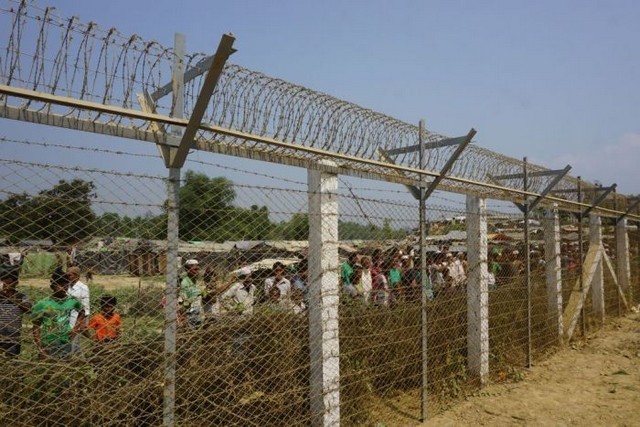
The military has built a new barbed wire fence, installed land mines and placed hundreds of security forces on the shared border.

More than 5,000 Rohingya are living on a narrow strip of land between the two countries since some 700,000 Rohingya fled Myanmar last August.

Bangladesh has warned the military build up will escalate tensions but Myanmar’s focus right now is on its own political future after the country’s president quit yesterday.

22 March 2018

Source: http://www.abc.net.au/radionational/programs/breakfast/myanmar-blocks-returning-rohingya/9574810

Google, Facebook, Algorithms, And The Building of the Iron Wall

By Chris Hedges

Sen. Ted Cruz of Texas, along with 18 members of the House of Representatives—15 Republicans and three Democrats—has sent a letter to Attorney General Jeff Sessions demanding that the Qatari-run Al-Jazeera television network register as a foreign agent under the Foreign Agents Registration Act (FARA). The letter was issued after Al-Jazeera said it planned to air a documentary by a reporter who went undercover to look into the Israel lobby in the United States. The action by the senator and the House members follows the decision by the Justice Department to force RT America to register as a foreign agent and the imposition of algorithms by Facebook, Google and Twitter that steer traffic away from left-wing, anti-war and progressive websites, including Truthdig. It also follows December’s abolition of net neutrality.

The letter asks the Justice Department to investigate “reports that Al Jazeera infiltrated American non-profit organizations.” It says that the “content produced by this network often directly undermines American interests with favorable coverage of U.S. State Department-designated Foreign Terrorist Organizations, including Hamas, Hezbollah, Palestinian Islamic Jihad, and Jabhat al-Nusra, al-Qaeda’s branch in Syria.”

“American citizens deserve to know whether the information and news media they consume is impartial, or if it is deceptive propaganda pushed by foreign nations,” the letter reads.

The ominous assault on the final redoubts of a free press, through an attempt to brand dissidents, independent journalists and critics of corporate power and imperialism as agents of a foreign power, has begun. FARA, until recently, was a little-used regulation, passed in 1938 to combat Nazi propaganda. The journalists Max Blumenthal and Ali Abunimah do a good job of addressing the issue in this clip on The Real News Network.

Those who challenge the dominant corporate narrative already struggle on the margins of the media landscape. The handful of independent websites and news outlets, including this one, and a few foreign-run networks such as Al-Jazeera and RT America, on which I host a show, “On Contact,” are the few platforms left that examine corporate power and empire, the curtailment of our civil liberties, lethal police violence and the ecocide carried out by the fossil fuel and animal agriculture industries, as well as cover the war crimes committed by Israel and the U.S. military in the Middle East. Shutting down these venues would ensure that the critics who speak through them, and oppressed peoples such as the Palestinians, have no voice left.

I witnessed and was at times the victim of black propaganda campaigns when I was a foreign correspondent. False accusations are made anonymously and then amplified by a compliant press. The anonymous site PropOrNot, replicating this tactic, in 2016 published a blacklist of 199 sites that it alleged, with no evidence, “reliably echo Russian propaganda.” More than half of those sites were far-right, conspiracy-driven ones. But about 20 of the sites were progressive, anti-war and left-wing. They included AlterNet, Black Agenda Report, Democracy Now!, Naked Capitalism, Truthdig, Truthout, CounterPunch and the World Socialist Web Site. PropOrNot charged that these sites disseminated “fake news” on behalf of Russia, and the allegations became front-page news in The Washington Post in a story headlined “Russian propaganda effort helped spread ‘fake news’ during the election, experts say.” Washington Post reporter Craig Timberg wrote in that article that the goal of “a sophisticated Russian propaganda effort,” according to “independent researchers who have tracked the operation,” was “punishing Democrat Hillary Clinton, helping Republican Donald Trump and undermining faith in American democracy.”

To date, no one has exposed who operates PropOrNot or who is behind the website. But the damage done by this black propaganda campaign and the subsequent announcement by Google and other organizations such as Facebook last April that they had put in filters to elevate “more authoritative content” and marginalize “blatantly misleading, low quality, offensive or downright false information” have steadily diverted readers away from some sites. The Marxist World Socialist Web Site, for example, has seen its traffic decline by 75 percent. AlterNet’s search traffic is down 71 percent, Consortium News is down 72 percent, and Global Research and Truthdig have seen declines. And the situation appears to be growing worse as the algorithms are refined.

Jeff Bezos, the owner of The Washington Post and the founder and CEO of Amazon, has, like Google and some other major Silicon Valley corporations, close ties with the federal security and surveillance apparatus. Bezos has a $600 million contract with the CIA. The lines separating technology-based entities such as Google and Amazon and the government’s security and surveillance apparatus are often nonexistent. The goal of corporations such as Google and Facebook is profit, not the dissemination of truth. And when truth gets in the way of profit, truth is sacrificed.

Google, Facebook, Twitter, The New York Times, The Washington Post, BuzzFeed News, Agence France-Presse and CNN have all imposed or benefited from the algorithms or filters—overseen by human “evaluators.” When an internet user types a word in a Google search it is called an “impression” by the industry. These impressions direct the persons making the searches to websites that use the words or address the issues associated with them. Before the algorithms were put in place last April, searches for terms such as “imperialism” or “inequality” directed internet users mostly to left-wing, progressive and anti-war sites. Now they are directed primarily to mainstream sites such as The Washington Post. If you type in “World Socialist Web Site,” which has been hit especially hard by the algorithms, you will be directed to the site—but you have to ask for it by name. Searches for associated words such as “socialist” or “socialism” are unlikely to bring up a list in which the World Socialist Web Site appears near the top.

There are 10,000 “evaluators” at Google, many of them former employees at counterterrorism agencies, who determine the “quality” and veracity of websites. They have downgraded sites such as Truthdig, and with the abolition of net neutrality can further isolate those sites on the internet. The news organizations and corporations imposing and benefiting from this censorship have strong links to the corporate establishment and the Democratic Party. They do not question corporate capitalism, American imperialism or rising social inequality. They dutifully feed the anti-Russia hysteria. An Al-Jazeera report on this censorship begins at 14:07 in this link.

The corporate oligarchs, lacking a valid response to the discrediting of their policies of economic pillage and endless war, have turned to the blunt instrument of censorship and to a new version of red baiting. They do not intend to institute reforms or restore an open society. They do not intend to address the social inequality behind the political insurgencies in the two major political parties and the hatred of the corporate state that spans the political spectrum. They intend to impose a cone of silence and the state-sanctioned uniformity of opinion that characterizes all totalitarian regimes. This is what the use of FARA, the imposition of algorithms and the attempt to blame Trump’s election on Russian interference is about. Critics and investigative journalists who expose the inner workings of corporate power are branded enemies of the state in the service of a foreign power. The corporate-controlled media, meanwhile, presents the salacious, the trivial and the absurd as news while fanning the obsession over Russia. This is one of the most ominous moments in American history. The complicity in this witch hunt by self-identified liberal organizations, including The New York Times and MSNBC, will come back to haunt them. When the voices for truth are erased, they will be next.

The steps to tyranny are always small, incremental and often barely noticed, as Milton Mayer wrote in “They Thought They Were Free: The Germans 1933-1945.” By the time a population wakes up, it is too late. He noted:

But the one great shocking occasion, when tens or hundreds or thousands will join you, never comes. That’s the difficulty. If the last and the worst act of the whole regime had come immediately after the first and the smallest, thousands, yes, millions would have been sufficiently shocked. If, let us say, the gassing of the Jews in ’43 had come immediately after the “German Firm” stickers on the windows of non-Jewish shops in ’33. But of course this isn’t the way it happens. In between come all the hundreds of little steps, some of them imperceptible, each of them preparing you not to be shocked by the next. Step C is not so much worse than Step B, and if you did not make a stand at Step B, why should you at Step C? And so on to Step D.

And one day, too late, your principles, if you were ever sensible of them, all rush in upon you. The burden of self-deception has grown too heavy, and some minor incident, in my case my little boy, hardly more than a baby, saying “Jew swine,” collapses it all at once, and you see that everything, everything has changed and changed completely under your nose. The world you lived in—your nation, your people—is not the world you were born in at all. The forms are all there, all untouched, all reassuring, the houses, the shops, the jobs, the mealtimes, the visits, the concerts, the cinema, the holidays. But the spirit, which you never noticed because you made the lifelong mistake of identifying it with the forms, is changed. Now you live in a world of hate and fear, and the people who hate and fear do not even know it themselves; when everyone is transformed no one is transformed. Now you live in a system which rules without responsibility even to God. The system itself could not have intended this in the beginning, but in order to sustain itself it was compelled to go all the way.

Despots, despite their proclaimed ideological, national and religious differences, speak the same language. Amoral, devoid of empathy and addicted to power and personal enrichment, they are building a world where all who criticize them are silenced, where their populations are rendered compliant by fear, constant surveillance and the loss of basic liberties and where they and their corporate enablers are the undisputed masters.

The Israeli newspaper Haaretz reported that the Qatari government is seeking to improve relations with the Trump administration by forging alliances with right-wing Jewish organizations in the United States. It has promised Jewish leaders, the paper reported, not to air the Al-Jazeera documentary about the Israel lobby. Al-Jazeera in 2016 shut down Al-Jazeera America, which broadcast to U.S. audiences. With no broadcaster in the U.S., the program would have reached few American viewers even if Al-Jazeera had put it on the air.

Haaretz reported that Jewish organizational leaders who have visited Qatar in recent months include Mort Klein of the Zionist Organization of America; Malcolm Hoenlein, the executive vice chairman of the Conference of Presidents of Major American Jewish Organizations; Jack Rosen of the American Jewish Congress; Rabbi Menachem Genack of the Orthodox Union; Martin Oliner of the Religious Zionists of America; and attorney Alan Dershowitz.

“What these leaders share is that none of them are considered critics of the right-wing Netanyahu government in Israel or the Trump administration in Washington,” Haaretz correspondent Amir Tibon wrote in the newspaper.

The despotism of the United States and the despotism of Israel have found an ally in the despotism of Qatar. Professed beliefs are meaningless. Israel is bonded with the regime in Saudi Arabia and the Christian right in the United States, each of which is virulently anti-Semitic. Dissidents, including Jewish and Israeli dissidents, are attacked as “self-hating Jews” or anti-Semites only because they are dissidents. The word “traitor” or “anti-Semite” has no real meaning. It is used not to describe a reality but to turn someone into a pariah. The iron wall is rising. It will cement into place a global system of corporate totalitarianism, one in which the old vocabulary of human rights and democracy is empty and where any form of defiance means you are an enemy of the state. This totalitarianism is being formed incrementally. It begins by silencing the demonized. It ends by silencing everyone.

“You walk into the room with your pencil in your hand,” Bob Dylan sang in “Ballad of a Thin Man.” “You see somebody naked and you say, ‘Who is that man?’ You try so hard but you don’t understand just what you will say when you get home. Because something is happening here, but you don’t know what it is, do you, Mr. Jones?”

Chris Hedges writes a regular column for Truthdig.com.

21 March 2018

Source: https://countercurrents.org/2018/03/21/google-facebook-algorithms-and-the-building-of-the-iron-wall/

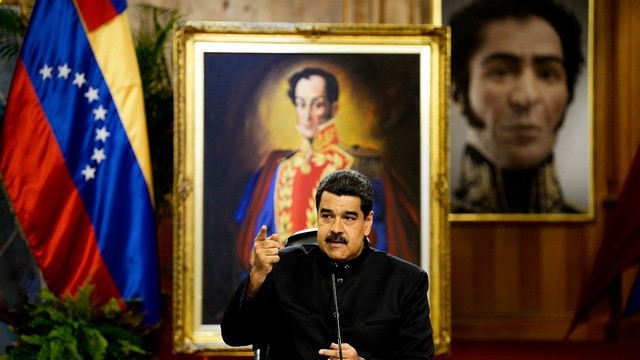
A Time of Urgency: Halting U.S. Political, Diplomatic, and Military Intervention in the Sovereign Affairs of the Venezuelan People and the Bolivarian Government of Nicolas Maduro

We, people from the United States, join the people and government of Venezuela, and people and their governments across Latin America, Canada, and the Caribbean in calling on the U.S. government to cease interference into the independent, sovereign, and self-determined affairs of the Bolivarian Republic of Venezuela.

We call on all people and governments to support peaceful debate and negotiations and to urgently and unequivocally denounce violent opposition, economic sabotage, biased media critiques, calls for foreign military intervention and regime change supported by U.S. rightwing politicians and the Trump-Administration State Department and military.

We make this urgent appeal in full acknowledgement that the people of the Bolivarian Republic of Venezuela are in the midst of an intense internal and conflicting self-defining moment. One that runs across ideological and political lines to determine constructive pathways forward in crafting their own national citizen-centered democracy and social justice development project. The process was launched by a majority vote under the mandate of the Bolivarian Revolution, the leftist political process, initiated by late Venezuelan president Hugo Chávez, and led by the current elected President Nicolas Maduro. Their internal differences are great and serious and are of profound importance for their nation’s future and for the future of participatory democracy and social justice development throughout Latin America and the Caribbean.

The government and people of the Bolivarian Republic of Venezuela, guided by the philosophy and practice of participatory democracy established in1999, achieved in less than two decades unprecedented levels of development in the active exercise of citizenship by its most marginalized, discriminated, and impoverished citizens. At one point under the Bolivarian Revolution Venezuela achieved the status of the country in the region with the lowest inequality level (measured by the Gini Coefficient) having reduced inequality by 54%, poverty by 44%. Extreme poverty was reduced from 40% (1996) to a very low level of 7.3% (2010). UNESCO recognized that under the Participatory Democracy citizen-government collaboration illiteracy was eliminated in Venezuela. Venezuelans became the 3rd county in the region whose population read the most. Governmental policies instituted tuition free education from daycare to university; 72% of children attended public daycares and 85% of school age children attended school. Venezuela became the 2nd country in Latin America and 5th in the world with the greatest proportions of university students.

Those admirable national humanistic achievements have been undermined mainly by the global economic crisis that diminished social spending and economic sabotage by U.S. led economic sanctions and limitations on the Venezuelan government’s normal access to global finance protocols.

We respect the right of people outside of Venezuela to express and to debate sincere and intense critical opinions about Venezuela’s internal affairs as long as they do not interfere with or compromise the rights and obligations of Venezuelans to mediate their own differences and to unite through their constitution around issues of mutual interests to establish their sovereign will and national development. The efficacy of the Maduro elected government, which the U.S. government is constantly maligning and attempting to overthrow, is solely a matter of evaluation and decision at the ballot box by the Venezuelan people. Therefore we support the Venezuelan constitutional mandate for the upcoming presidential elections in May and call a halt to U.S. imperial condemnation of the election before it takes place.

There is no justification based in international protocols between nations or of ethical solidarity among progressive and peace loving people for such illegal, injurious outside interference, threats of invasion, or regime change now dangerously underway by the U.S. government in Venezuela.

In the interests and integrity of the Venezuelan nation and for preservation of stability, respectful lawful engagement, mutual interests, and peace in the Americas we must support the negotiation process between Venezuelans of widely varying ideological and political perspectives to achieve self-determined resolutions. We must support the upcoming May presidential elections and implore the U.S. government to halt interference in Venezuelan people’s decisions to express their will—-as they have peacefully done in accordance with their Constitution and respectfully accepted as majority will at the ballot box time and time again since 1998.

Network of Intellectuals, Artists and Social Movements in Defense of Humanity, U.S. Chapter

We invite all other national chapters and nodes of the Network in Defense of Humanity, as well as any other intellectual, artist or social fighter who agrees with this statement, to join us by sending an email to: indefenseofhumanity.us@gmail.com

This urgent call was endorsed by: Network of Intellectuals, Artists and Social Movements in Defense of Humanity, Cuba Chapter

20 March 2018

The Global Elite is Insane Revisited

By Robert J. Burrowes

In 2014 I wrote an article titled ‘The Global Elite is Insane’. I want to elaborate what I explained in the earlier article so that people have a clearer sense of what we are up against in our struggle to create a world of peace, justice and ecological sustainability.

Of course, as I explained previously, it is not just the global elite that is insane. All those individuals – politicians, businesspeople, academics, corporate media editors and journalists, judges and lawyers, bureaucrats…. – who serve the elite, including by not exposing and resisting it, are also insane. And it is important to understand this if we are to develop and implement effective strategies to resist elite violence, exploitation and destruction but also avert the now-imminent human extinction driven by their insane desire for endless personal privilege, corporate profit and political control whatever the cost to Earth’s biosphere and lifeforms (human and non-human alike).

But first, who constitutes the global elite? Essentially, it is those extremely wealthy individuals – notably including the Rothschild family, Jeff Bezos, Bill Gates, Warren Buffett, Amancio Ortega, Mark Zuckerberg, Carlos Slim, the Walton family and the Koch brothers – as well as the world’s other billionaires and millionaires. See ‘Bloomberg Billionaires Index’.

Testament to their secretly and long-accumulated wealth and power, a 2012 investigation concluded that rich individuals and their families have as much as $32 trillion of hidden financial assets – which excludes non-financial assets such as real estate, gold, yachts and racehorses – in offshore tax havens. See the Tax Justice Network.

If this sum was devoted to programs of social uplift then starvation, poverty, homelessness and other privations would vanish immediately and environmental restoration projects as well as research, development and implementation of visionary sustainability initiatives would flourish instantly. The idea of an ‘underdeveloped’ or ‘developing’ national economy would vanish from the literature on Africa, Asia and Central/South America.

In addition to these individuals, however, the global elite includes the major multinational corporations, particularly including the following – although, it should be noted, this list simplifies the picture considerably by ignoring the conglomerate nature of many of these corporations and not including many of the (more difficult to identify) private corporations that should be listed in any comprehensive presentation:

* the major weapons manufacturers (such as Lockheed Martin, Boeing, BAE Systems, Raytheon, Northrop Grumman and General Dynamics)

* the major banks (including Industrial & Commercial Bank of China, China Construction Bank, HSBC Holdings, JPMorgan Chase, Mitsubishi UFJ Financial Group and Bank of America) and their ‘industry groups’ like the International Monetary Conference

* the major investment companies (including BlackRock, Capital Group Companies, FMR, AXA, and JP Morgan Chase)

* the major financial services companies (including Berkshire Hathaway, AXA, Allianz and BNP Paribas)

* the major energy corporations including coal companies (such as Coal India, Adani Enterprises, China Shenhua Energy, China Coal Energy, Mechel, Exxaro Resources, Public Power, Glencore and Peabody Energy) as well as the oil and gas corporations (such as Saudi Aramco, Gazprom, Rosneft, PetroChina, ExxonMobil, Lukoil, BP, Royal Dutch Shell, Petrobras, Chevron, Novatek, Total S.A. and Eni)

* the major media corporations (including Alphabet [Google owner], Comcast, Disney, AT&T, News Corporation, Time Warner, Fox, Facebook, Bertelsmann and Baidu)

* the major marketing and public relations corporations (including Edelman, W2O Group, APCO Worldwide, Deksia, BrandTuitive, Fearless Media, and Citizen Group)

* the major agrochemical (pesticides, seeds, fertilizers) giants (including Bayer, Syngenta, Dow, Monsanto and DuPont)

* the major pharmaceutical corporations (including Johnson & Johnson, Roche, Pfizer, Novartis, Sanofi and GlaxoSmithKline)

* the major biotechnology (genetic mutilation) corporations (again including Johnson & Johnson, Roche, Pfizer and Novartis)

* the major mining corporations (including Glencore Xtrata, BHP Billiton, Rio Tinto, Vale, Anglo American, China Shenhua Energy, Freeport McMoRan Copper & Gold, and Barrick Gold)

* the major nuclear power corporations (including Areva, Rosatom, General Electric/Hitachi, Kepco, Mitsubishi, Babcock & Wilcox, BNFL, Duke Energy, McDermott International, Southern, NextEra Energy, American Electric Power, and Westinghouse)

* the major food multinationals (including Cargill, Archer Daniels Midland Company [ADM], Nestlé, PepsiCo, Coca-Cola, Unilever, Danone, General Mills, Kellogg’s, Mars, Associated British Foods and Mondelez)

* the major water corporations (including Veolia, Suez Environnement, ITT Corporation, United Utilities, Severn Trent, Thames Water, American Water Works).

Of course, the global elite also includes elite fora where various combinations of elite individuals from the corporate, political, media and academic worlds gather to plan their continuing violence against, and exploitation of, the Earth and its inhabitants. This is intended to consolidate and extend t heir control over populations, markets and resources to maximize their privilege, profit and power at the expense of the rest of us and life generally. Among intergovernmental organizations, it includes the World Bank and the International Monetary Fund.

A quick perusal of the agenda of such elite gatherings – including the World Economic Forum, the Bilderberg Group and the Trilateral Commission – reveals a comprehensive lack of interest, despite rhetoric and the occasional token mention, of pressing issues ranging from the threat of nuclear war and the climate catastrophe to the many ongoing wars, deepening exploitation within the global economy, extensive range of environmental threats and the refugee crisis, each of which they generated and now continue to deliberately exacerbate. See, for example, the agenda of the recent WEF meeting in Davos.

Primary servants of the global elite include political leaders in major industrialized countries (who legislate to progressively expand elite power, profit and privilege, such as Donald Trump’s recent tax cuts for the wealthy at the expense of social programs), the judges and lawyers (who defend elite power using the elite-designed and manipulated legal system: ever heard of a wealthy individual convicted in court and given any serious punishment or of any major corporation genuinely held to legal account for its exploitation of indigenous peoples or destruction of the natural environment?), as well as corporate media editors and journalists, entertainment industry personnel, academics, industry organizations (such as the European Round Table of Industrialists) that represent the interests of major corporations, so-called ‘think tanks’ (such as the Council on Foreign Relations and the Brookings Institution) and ‘philanthropic trusts’ (such as the Rockefeller, Carnegie and Ford foundations) all of which justify, ignore or divert attention from elite violence and exploitation.

Importantly too, primary servants of the global elite include those who work within elite-directed agencies, notably including those in the so-called ‘intelligence community’ (such as the US CIA, British MI6, Russian SVR RF, Chinese Ministry for State Security and Israeli Mossad), who perform elite functions in relation to spying, surveillance and secret assassinations (particularly of grassroots activists), ostensibly under the direction of national governments. But it also includes many lower-level servants such as those who work as political lobbyists or in the bureaucracy as well as the education, police and prison systems.

So why do I claim that the elite and those who serve them are insane?

Any dictionary will offer a simple definition of ‘sanity’ along the lines of ‘soundness of judgment or reason’ and ‘the ability to think and speak in a reasonable way and to behave normally’.

But if we use this definition of sanity then, obviously, ‘sanity’ must be interpreted to mean that it is ‘sound judgment, reasonable and normal’ to further perpetrate the violence and exploitation that are overwhelmingly characteristic of our world. After all, most people powerlessly accept this incredibly violent state of affairs and, if they discuss it, do so in terms of its merits, politically, economically, morally or otherwise. Few people argue, simply, that violence is just insane.

So I would like to propose a more rigorous definition of sanity: Sanity is the capacity to consider a set of circumstances, to carefully analyze the evidence pertaining to those circumstances, to identify the cause of any conflict or problem, and to respond appropriately, both emotionally and intellectually, to that conflict or problem with the intention of resolving it, preferably at a higher level of need satisfaction for all parties (including those of the Earth and all of its living creatures).

Clearly, my proposed definition of sanity is designed to imply that any conceptions we have of ‘sound judgment’, ‘reasonable’ and ‘normal’ mean that they are qualities we associate with individuals who possess the desirable capacity to improve the overall state of human affairs, whether an interpersonal relationship or geopolitically. This means, as an absolute minimum, the capacity to reduce violence or exploitation in one context or another.

You might, of course, accuse me of writing a definition of ‘sanity’ that serves my agenda to dramatically improve world order in the direction of peace, justice and sustainability. And you are right! But whose interest does it serve to have sanity defined as behavior that involves ‘sound judgment’ and is considered ‘reasonable and normal’ in the context of perpetuating extraordinary violence?

Alternatively, you might argue that my definition of insanity is too broad. Surely, you might say, we can account for many of the behaviors outlined above in terms of different belief systems, ideologies and religions. Doesn’t a person who believes in killing people to win wars (or for other reasons) just have a worldview different from those who believe that people should resolve conflict nonviolently? Doesn’t a capitalist just have a worldview different from those who believe that people should share resources equally? Doesn’t a person who believes in the unlimited accumulation of wealth just have a worldview different from those who believe in ecological sustainability?

But there is a more fundamental issue here. As I explained in my original article, cited at the beginning of this one: Do you really believe that someone who is capable of perpetrating extraordinary violence, inequity and biosphere-threatening behavior – and thus clearly incapable of experiencing and expressing the love, compassion, empathy and sympathy that would drive a nonviolent approach to the world – is sane? Given that emotional qualities such as love, compassion, empathy and sympathy are an evolutionary gift to those not seriously damaged during childhood, what happened to those individuals who do not possess them? See ‘Why Violence?’ and ‘Fearless Psychology and Fearful Psychology: Principles and Practice’.

Or, to explain it based on my longer definition of sanity highlighted above: Casual observation of the state of our world, including the primary threat of near-term human extinction through climate catastrophe or nuclear war – see ‘On Track for Extinction: Can Humanity Survive?’ – clearly reveals that none of the elite is paying considered attention to the perilous state of our world, analyzing the evidence in relation to it, identifying the cause(s) driving it or responding powerfully to end it. Why is this?

In essence, it is because one manifestation of their insanity drives them to deny reality to make huge profits from weapons production used to kill people, the burning of climate-destroying fossil fuels, environmental destruction (through, for example, mining and rainforest logging), commercial farming based on the poisoning and genetic mutilation of foods, the mass production and sale of poisoned, processed and nutritionally-depleted foods, the consumption of health-destroying and dependency-creating drugs, and control over the sale of water, once considered a human right. Moreover, insanity makes the elite do everything in its power to maintain this highly profitable state of affairs. See ‘Profit Maximization is Easy: Invest in Violence’.

Moreover, of course, there is no evidence of committed elite engagement in efforts to end the many local wars (from which they make huge profits), end corporate exploitation of human beings (which kills, through starvation alone, 100,000 people every day but from which they make huge profits) and nonhuman beings (which drives 200 species of life to extinction daily but from which they make huge profits) or end local environmental destruction in a myriad ways (from which they make huge profits).

So, in summary, given our ongoing rush to extinction, it is clear that those who exacerbate this threat through failure to consider and act with awareness (as well as encourage aware action by others) fail to satisfy the definition of sanity that I offered above. In short: Gambling on the future of humanity is not sane.

As an aside, it should be noted: Often enough too, the elite can rely on a largely insane population to mindlessly consume the latest consumer product, no matter how unnecessary, or they can rely on their marketing and advertising agents to persuade those of us who show the slightest reluctance to buy the latest inanity.

So with an insane global elite and its many insane servants as well as a largely insane consumer population, what can those of us who have the sanity to respond powerfully to the many threats to our survival do?

Well, if you want a child who is emotionally and intellectually engaged with the world and therefore capable of responding powerfully to their circumstances (which includes being able to resist the lure of serving the elite and being suckered by its marketing), then terrorizing the child into obedience is not the way to go about it. So, you might like to consider making ‘My Promise to Children’.

If you are sane enough to investigate the evidence and to act intelligently and powerfully in response to it, I encourage you to do so. One option you have if you find the evidence in relation to one or more of the threats mentioned above compelling, is to join those participating in ‘The Flame Tree Project to Save Life on Earth’.

If you are self-aware enough to know that you are inclined to avoid ‘difficult issues’ and to take the action that these require, then perhaps you could tackle this problem at its source by ‘Putting Feelings First’. Unfortunately, as mentioned above, few of us had a childhood that nurtured our sanity.

If you want to mobilize people to campaign effectively on the climate, war, rainforest destruction or any other elite-driven violence that threatens our future, consider developing a comprehensive nonviolent strategy to do so. See Nonviolent Campaign Strategy.

And if you want to participate in the worldwide effort to end the insanity we call violence in all of its manifestations, you are welcome to consider signing the online pledge of ‘The People’s Charter to Create a Nonviolent World’.

Elite insanity, if not stopped, will drive us out of existence. If you believe that the elite and their servants will ‘see the light’ before it is too late, I invite you to seek out the evidence to justify your belief. I have found none.

I also see no evidence that individual members of the elite will do the emotional healing necessary to be able to act sanely in response to the extinction-threatening crisis it has generated.

So it is up to those of us who can think and act sanely to stop the rush to extinction before it is too late.

Are you one of those people?

Robert J. Burrowes has a lifetime commitment to understanding and ending human violence. He has done extensive research since 1966 in an effort to understand why human beings are violent and has been a nonviolent activist since 1981.

21 March 2018

Anti-Muslim Violence in Sri Lanka: What does it Indicate and What to Learn From it?

By Dr. Abdullah Al- Ahsan

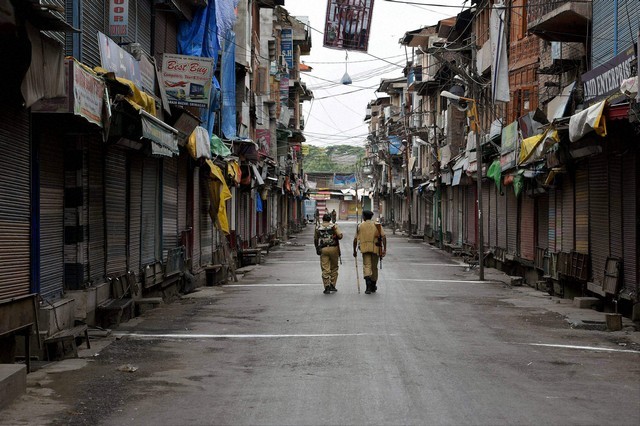
The government of Sri Lanka has just lifted the nationwide emergency imposed about two weeks ago to stop anti-Muslim communal violence in the country. Couple of decades ago it would have been inconceivable to ımagıne of any anti-Muslim violence in Sri Lanka. Approximately about ten percent of the total population, the Muslims are very much part of the Sri Lankan society for centuries. They have participated in business, politics, education and humanitarian activities along with theır majority Sinhalese compatriots. However, after the defeat of LTTE, the Tamil separatists, in 2009 Muslims seem to have become target as an antagonist group of people and the recent violence has prompted the government to declare emergency in country. Why has this happened? What does this violence indicate? Who benefits from this violence? What should one learn from this conflict? Let us examine these questions in the light of latest developments.

Origin of the Conflict

Undoubtedly, Sri Lankan Muslims are the maın sufferer in this conflict. But wouldn’t this conflict affect the Sinhalese community too? Loosing trust of a companion that has made significant contribution to country’s economy for centuries will definitely impinge upon the whole nation. Agaın the question is – who is going to benefit from this violence? This questıon should lead us to examine how this latest flare up has occurred. According to some reports, an extremist group called Bodu Bala Sena or Buddhist Power Force and some similar other entities are responsible for this development. According to one researcher from the International Crisis (ICG) “These attacks are organised, well-planned … And there is good reason to believe they are partly designed to provoke a Muslim response, which would then justify more violence against Muslims.” This observation makes sense because this explains why all of a sudden the Sri Lankan Muslim community has become a target for provocation. Sri Lanka has fought a long war agaınst the Tamil separatists and durıng this long war Srı Lanka has wıtnessed some sort of unity among the Sinhalese population. It seems that after the defeat of the Tamil separatists some Sinhalese nationalist leaders felt the need for a new enemy for the continuation of the Sinhalese nationalist feelings for national unity. Among these nationalist leaders, the former president and current opposition leader Mahindra Rajapakse seems to be at the forefront. But is it wise on his part to target the Muslim community for the purpose? Is it going to work?

Following the Clash of Civilizations Thesis

Rajapakse seems to have been motivated by the political theory that one needs a common enemy in order to stimulate collective unity of a gıven political community. Former Harvard University professor Samuel P Huntington’s successful application of this theory in defining international relations in post cold war world in the name of clash of civilizations seems to have convinced Rajapakse to find a new enemy in his Sri Lankan context. But has he been wise in his selection of the Muslim community for this purpose? Has the application of the clash of civilizations thesis reduced violence around the world? Has the Muslim community’s role in history of Sri Lanka been the same as the Tamil community? No, Muslims in Sri Lanka have never demonstrated any separatist tendency. In fact, on the contrary they have generally participated along with Sinhalese based political parties for ındependence and natıonal development. Even now they have representation in most national political parties. Why then have the Sinhalese extremists targeted Muslims as their adversaries? Thıs questıon leads us to look for specific reasons for the conflict.

Allegation against Muslims

Muslims have been accused of being unpatriotic, being involved in drugs and narcotics, producing children much faster than theır Sinhalese counterparts and thus converting Sri Lanka Sinhalese minority by the year 2050. Muslıms also have been accused of selling sterilization drugs to infertile Sinhalese women, Islamizing Sri Lanka by importing, selling and exporting ‘halal’ goods in Sri Lanka and by doing so bringing Shari’ah in Sri Lanka etc. There are also reports of extremist Buddhist monks going around complaining about Muslims controlling businesses and purchasing commercially valuable lands. However, no evidences have been produced to support the accusations and, of course, some accusations do not make any sense at all.

Nevertheless, the fact remains that these accusations would perhaps provoke some Muslims to respond as dıd three drunken Muslims did ın the case of the recent flare up of vıolence. This is what exactly had happened in the case of the proposition of the clash of civilizations thesis where Muslims were identified as adversaries to US ınterests. The ICG researcher quoted above has rightly pointed out that the objective of the Sinhalese extremists is to provoke some Muslim response so that more violence could be initiated against Muslims. The clash of civilizations thesis, proposed immediately after the cold war, has defınıtely ıncreased vıolence all over the world. Researchers have rıghtly pointed out that, “India’s Intelligence service, known as the Research and Analysis Wing (RAW), is believed to have provided training and weaponry to the LTTE up until the mid-1980s” and most observers belıeve that LTTE has not died down yet. It is always possible for different spy agencies to use these terrorists to recruit individuals from various backgrounds to conduct subversive activities in various parts of the world. The LTTE, whıch has successfully introduced suicide activities ın the world stage sınce the late 1980s, has been reported to have close contact with other terrorist groups including the Abu Sayyaf group in the Philippines, Taliban and its affiliates in Pakistan, PKK and other Kurdish groups west Asia. Therefore, there are strong possibilities for the Sri Lankan conflict will not only to further explode; it may also spread to other parts of the world.

How to Stop the Violence

However, there are some positive signs as well. The ICG researcher has pointed out that the Muslim community has “been admirably restrained” so far and also the Sri Lankan Buddhist monks have rallied in the capital city Colombo against the anti-Muslims riot in the country. Both the ICG and the peace loving Buddhist monks who have demonstrated their courage to oppose ultra-nationalist sentiments must be appreciated. But the role of the United Nations on the conflict commended most.

Commendable Role of the UN

Within days after the declaration of the emergency the UN dispatched its Under Secretary General for political affairs to Sri Lanka and the visiting diplomat categorically “condemned the breakdown in law and order and the attacks against Muslims and their property.” The lessening of violence and lifting of the emergency seems to be a direct result of the UN intervention on the issue. The Sri Lankan government is reported to have established enquiries, but the government’s seriousness to find a solution will depend on how the enquiry report is handled. If the government fails to make the report public, it will only mean that the government is not serious in resolving the conflict. If such activities are encouraged, facilitated and followed, we would know that we have learned from history.

21 March 2018

Dr. Abdullah Al- Ahsan is a JUST member.


China throws sinking Brunei a lifeline

By Nile Bowie

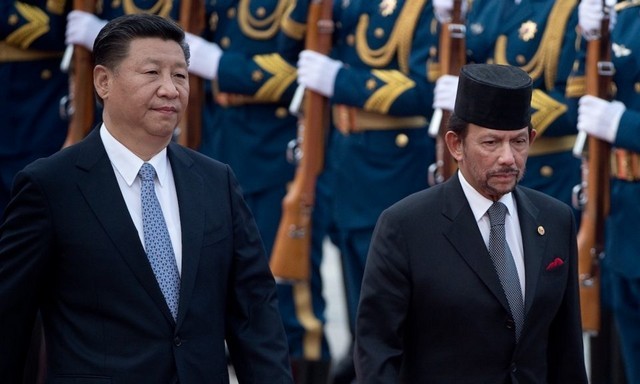
Brunei’s ruler, Sultan Hassanal Bolkiah, is in a race against time as his nation’s once deep stores of oil and gas rapidly run dry. While other foreign investors up stakes, China is giving the Southeast Asian sultanate a new lease on economic life.

International banks such as HSBC and Citibank have recently ceased operations in Brunei in sight of its contracting oil and gas business, driven down by years of depressed global energy prices. But one major financial institution has filled the vacuum: Bank of China (BOC).

BOC established a branch in Brunei in 2016 to facilitate Beijing’s foreign direct investments. Yang Jian, China’s ambassador to Brunei, last year described the sultanate as an important node in the US$1 trillion Belt and Road Initiative (BRI), President Xi Jinping’s signature continental and maritime infrastructure development initiative.

Some observers believe China intends to leverage its major investments and close political ties with Brunei’s ruler to sway the country’s stance on territorial disputes in the South China Sea, where the sultanate is also a rival claimant. That, they say, would deter other Southeast Asian claimants from reaching consensus on the issue.

“China is placing huge pressure on Brunei to concede ‘joint development’ in its exclusive economic zone (EEZ). These are rights that clearly belong to Brunei by any reading of the UN Convention on the Law of the Sea (UNCLOS),” says Bill Hayton, associate fellow at the Asia-Pacific Program at Chatham House.

“Brunei would be happy to take investment from Japan, other Southeast Asian states, the United States or Europe. However, at the moment, only Chinese entrepreneurs are looking at the opportunities,” he told Asia Times, noting that Brunei was so far “standing firm” with regards to upholding its rights to maritime resources.

Beijing has deepened diplomatic ties with other regional governments by offering investment projects, generous aid packages and trade deals. Those moves have sometimes spurred opposition and anti-Chinese sentiment on sovereign concerns. Until now, Brunei’s oil wealth had enabled it to avoid economic dependence on China.

But unless new sources are discovered, those reserves will be depleted within two decades at the current pace of extraction, according to various research projections. Though it has supported regional free trade and promoted non-energy sector investments, observers believe the small country is ill-prepared for the hurdles ahead.

Brunei’s monarch, long wary of the country’s unhealthy reliance on the energy sector, now appears to see Beijing’s checkbook diplomacy as necessary to jumpstart diversification. He is thus allowing the sultanate to become a regional outpost for Chinese business, if not strategic, interests.

The two sides established the Brunei-Guangxi Economic Corridor (BGEC) in 2014 to boost bilateral trade and investment. BGEC is slated for over US$500 million in joint investments that will deepen economic engagement with China’s southern Guangxi Zhuang region, which has direct access to the South China Sea.

China is by far Brunei’s largest foreign investor, with total investments estimated at around US$4.1 billion. The China-backed Muara Besar refinery and petrochemical complex, the largest foreign investment project in Brunei’s history, will fortify that position. Chinese investment has paid the first phase of construction worth US$3.4 billion; the second phase will cost an estimated US$12 billion.

Hengyi Industries International Pte Ltd, a privately run Chinese company based in Bandar Seri Begawan, is constructing the facility and expects to start operations by the first quarter of 2019. The complex is expected to create more than 10,000 jobs and includes a 175,000-barrel-per-day capacity that will produce gasoline, diesel and jet fuel.

A new strategic joint venture between China’s Guangxi Beibu Gulf Port Group and Darussalam Assets Sdn Bhd, a government-linked investment company, began operating last year the Muara Container Terminal, Brunei’s largest port. Chinese companies are also invested in the sultanate’s telecommunications and agriculture sectors.

“Brunei’s government is well-aware of the risks of over-close engagement with China. It coordinates very closely with the government of Singapore on such matters,” says Hayton. “The UK also has a special defense arrangement with Brunei and the Anglo-Dutch energy company Royal Dutch Shell dominates the country’s oil industry.”

Britain’s military presence in Brunei has persisted since the country’s independence, achieved in 1984, at the request of the sultan. London’s last remaining military base in the region is seen by British authorities as an important outpost against the backdrop of the percolating South China Sea disputes.

The sultan, the world’s second-longest reigning monarch, also directly finances Britain’s military presence and entrusts a Gurkha unit retired from the British army with his personal security. He rules through a Cabinet of Ministers similar to the British system and pegs Brunei’s national currency to the Singapore dollar in the absence of a central bank.

Speaking at Brunei’s annual session of parliament earlier this month, the Muslim monarch called for greater diversification of the economy to reverse the country’s declining fortunes. “Wawasan 2035,” or Vision 2035, aims to transform the country into a regional trading and financial hub within the next two decades.

The launch of a long-planned Brunei stock exchange, slated to open in coming years, will lay the groundwork for promoting more investment outside of the energy sector and provide an alternative funding source for fledgling small businesses. Telecom, downstream energy firms and financial institutions are expected to list on the market.

Sultan Hassanal, 71, holds the portfolios of prime minister, defense minister, finance minister and minister of foreign affairs and trade. He marked 50 years in power last October with a golden jubilee procession. Though revered among his subjects, the citizenry appears frustrated with a sluggish economy, corruption and unemployment.

Hydrocarbon revenues have until now financed generous subsidies and welfare policies, including free education and healthcare for its largely ethnic Malay population. But as energy reserves and national finances dwindle, those policies could soon give way to austerity measures.

After four years of a downturn, Brunei’s economy is expected to see a modest recovery in 2018, linked to recovering global oil prices. The sultanate collected US$3.76 billion in revenues last year, with 75% derived from hydrocarbons, but will still record a US$1.5 billion fiscal deficit. In 2016, the deficit hit US$2.6 billion.

Attracting more FDI is the sultanate’s current prerogative. Brunei is a signatory to the TPP-11, or the Comprehensive and Progressive Agreement for Trans-Pacific Partnership (CPTPP), trade pact and a party to ongoing negotiations for the Regional Comprehensive Economic Partnership (RCEP) regional trade deal advanced by China.

China’s substantial string of investments represent an important vote of confidence for Brunei’s monarch. Dwindling hydrocarbon reserves and pressing diversification needs have tilted the sultanate decidedly into China’s corner, where it is seen as a potential key ally to Beijing as it pursues its own strategic maritime objectives.

“Vietnam, Singapore, the Philippines, Malaysia and Indonesia are either US treaty allies or China-wary countries. Brunei is the only place where Beijing would least likely meet any resistance to its blue-water naval aspirations,” says Maung Zarni, a former associate professor of Asian Studies at the University of Brunei.

“In light of recent geopolitical and strategic developments, this tiny sultanate with apparent insignificance as a consumer market and limited resource potential has become important to China’s planners and strategists,” he said.

Nile Bowie (@NileBowie). Writer and journalist with @asiatimesonline covering current affairs in Singapore and Malaysia.

18 March 2018

Source: http://www.atimes.com/article/china-throws-sinking-brunei-lifeline/

Monks, troops help Muslims after race riots in Sri Lanka

By ucanews.com

Scores of army personnel and Buddhist monks team up to clear debris from damaged homes, mosques

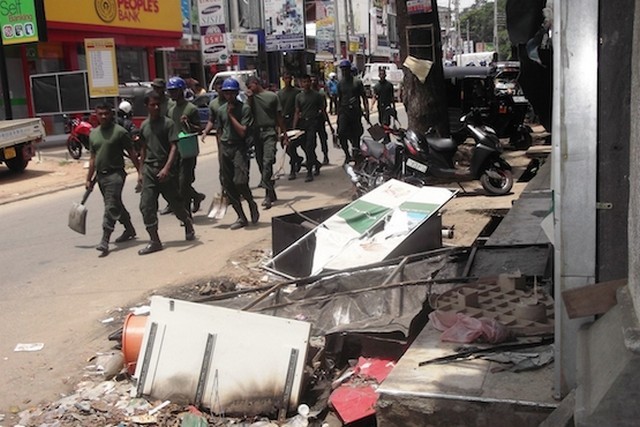
Buddhist monks and army troops have begun rebuilding and renovating scores of properties damaged during a series of anti-Muslim riots near Kandy in Sri Lanka’s Central Province, an area known for its scenic tea plantations.

The government announced a nationwide state of emergency after two people were killed in the sectarian violence, which also saw nearly 450 Muslim-owned homes and numerous shops damaged.

As racial tensions boiled over, 60 vehicles were torched and more than 20 mosques attacked as violence erupted in key cities across the nation.

Sinhala Buddhist mobs attacked Muslims at their homes, businesses and mosques but security forces said calm has since been restored despite the problems between the two religious groups.

A group of Buddhist monks and army troops started to clear the debris as the first stage of the process to restore religious venues, places of business and damaged houses on March 16.

Venerable Pilhatha Mahanama Thera, the chief monk of Rajagalla Ranthatipokuna Buddhist Temple, joined another 10 monks in clearing away the rubble from damaged mosques, homes and Muslim-owned shops.

“More than 250 people including army personnel and Buddhist monks have teamed up for this project,” the Venerable Mahanama Thera said. “If we all do what we can, we can move toward reconciliation and find our own way to contribute to the [healing],” he told ucanews.com.

“We are helping Muslims to rebuild after the unrest, in the interests of greater mutual understanding,” he added.

“I was very saddened to see this. We are deeply concerned about those who came here from other areas to carry out the riots, but as Buddhist monks we stand in solidarity with the Muslims,” he said.

In recent years, hard-line Buddhist groups like Mahasohon Balakaya, Bodu Bala Sena and Ravana Balaya have preached hatred against Muslims and warned of a growing Muslim population in Sri Lanka.

Across the country, rights activists have also urged caution regarding the growing wave of religious intolerance and extremism.

Many Muslim families have sought out private security guards or other forms of protection as they fear for their safety.

Cader Mohamed Nijam, a member of the Muslim Local Council, said more than 200 army personnel were called in to clear the debris.

The damaged workplaces, homes and places of worship were in a relatively contained area just east of Kandy. The ruined buildings stretched from the village of Digana to Kengalla, a distance of several kilometers.

“The first stage of the cleaning work took place at Digana Mosque, which was attacked by Buddhist mobs. We also cleaned up 30 houses that were vandalized,” Nijam told ucanews.com.

“Those who were affected by the riots are eligible for immediate compensation from the Ministry of Prison Reforms, Rehabilitation, Resettlement and Hindu Religious Affairs,” he added.

UCAN needs your support to continue our independent journalism

Access to UCAN stories is completely free of charge – however it costs a significant amount of money to provide our unique content. UCAN relies almost entirely on donations from our readers and donor organizations that support our mission. If you are a regular reader and are able to support us financially, please consider making a donation.

20 March 2018

Source: https://www.ucanews.com/news/monks-troops-help-muslims-after-race-riots-in-sri-lanka/81835

The Tariq Ramadan Case: A Comprehensive Review

By Alain Gabon

Tariq Ramadan, Europe’s most influential Muslim intellectual and an international Islamic institution all by himself, has been in preventive detention and solitary confinement in France since February 2nd, 2018. Ramadan’s incarceration followed two charges of rape—allegations he has fully denied, calling them a “a smear campaign” coordinated by his old French enemies. Due to inadequate medical care in Fleury-Mérogis prison (Ramadan has multiple sclerosis and another neurobiological disease that requires substantial daily treatment), his health has rapidly deteriorated in jail. It was in an ambulance, under medical escort, that he arrived to his first appeal hearing.

On February 17th, we learned from an Agence France Presse (AFP) news release that Ramadan’s first medical examination in prison concluded that his health condition was “incompatible with detention.” The medical document specified: “Since his arrival, this patient has been experiencing unbearable pain in his lower limbs with permanent sensory trouble,” for which the treatments available in jail are drastically insufficient. This official document directly corroborated assessments by Ramadan’s private physicians (one in London, the other in Geneva).

Despite this, the judge decided to prolong Ramadan’s detention and solitary confinement. Further, his wife and children were again denied visitation rights with neither explanation nor justification, a radical measure that falls well outside of French judicial norms, as even confirmed murderers are routinely granted visitation rights. For these reasons, the handling of Tariq Ramadan’s case involves not only the denial of basic legal rights (how could anyone properly prepare a legal defense in such conditions?); it also represents a case of human rights abuse.

In what follows, I suggest that the truly odd legislative developments in the Ramadan case—the justice of exception we are witnessing at work, which will be addressed in the second half of this article—may be explained at least partially by the national (and to a lesser extent European) context in which they are occurring: a culture characterized by intense and pervasive Islamophobia in general (whose varied manifestations and links to France’s colonial history are beyond the scope of this piece) and more specifically, an already old French campaign to eliminate Ramadan from the intellectual, social, political and religious landscape of the nation. That campaign long predates the recent charges of rape for which Ramadan is in detention. Anyone familiar with the French political landscape knows that for years, since at least 2003, the Swiss Islamic philosopher has been the ruling elites’ Muslim Enemy Number One.

This being said, none of what follows implies in any way that Ramadan is either innocent or guilty. It is actually important that the accusations of Henda Ayari and “Christelle” have been fully considered and heard empathically by all—media and the courts included (though one may question how they are already being treated as proven facts). While allegations of rape are frequently disregarded or taken lightly, this case has demonstrated a rare exception to the rule: the charges against Ramadan have become the center of global attention— for Islamists, Islamophobes, and everyone in between.

The French Context

In order to understand the Ramadan case, it is essential to contextualize it without assuming either innocence or guilt. At this point, anyone doing otherwise can only do so out of bad faith, prejudice, or disingenuity.

The passions around Ramadan, both positive and negative, friendly and hostile, admiring and heinous, are most intense in France. For this reason it may be surprising for a non-French audience to witness the combination of contradictory emotions and reactions elicited by the Swiss Islamic intellectual: on the one hand, the immense clout, awe, gratitude and admiration he has for years enjoyed in France among much of the Muslim youth (and many of the not-so-young as well), especially the so-called “reislamized” third-generation, which often gravitates around the Union of French Islamic Organizations (UOIF)—France’s biggest umbrella federation, which hosts Europe’s largest annual Islamic Fair, where Ramadan is every year the star speaker for impressively packed audiences in the thousands. On the other hand, we observe visceral hatred against him from the quasi totality of France’s ruling establishment including governments (both left and right), political parties (all of them, from the far right of Marine le Pen to the far left of Jean-Luc Mélenchon), state institutions, mainstream media, talking heads, and influential public intellectuals, with rare exceptions.

In the past several decades, few individuals have been the object of such spite and hatred, the target of such violent hostility by the ruling elites, the bête noire of so many individuals and sworn enemies. The worst of whom being Caroline Fourest, a freelance journalist, essayist, media figure, and laïcist activist-feminist. Since at least the early 2000s, Fourest has made it her mission in life to discredit Ramadan by whatever means possible. Fourest has built her media notoriety and presence almost entirely around her personal crusade against Ramadan, and is herself a favorite of the political and media establishment, which has been generous in providing her with talk show host positions on public radio channels and a columnist position at the daily newspaper Le Monde (as well as commissioned work such as documentaries for the public channel Arte).

In France, the violence against Ramadan has reached such a level that if one wishes to discredit someone else, say, a political opponent, all one has to do is claim that the adversary is a friend or “ally” of Tariq Ramadan, that s/he has talked to, worked with, or simply shared a stage, forum, or seat in a debate with Ramadan, or that s/he has signed a petition also signed by Ramadan. This is no exaggeration and three examples, gleaned from what are now hundreds of similar cases, aptly illustrate this reality:

In 2013, Prime Minister Manuel Valls and Minister of Education Najat Vallaud-Belkacem withdrew their participation in a European forum in Italy after they learned Ramadan had also been invited. In 2003, three top leaders of the Socialist Party, all ministers at some point (Jean-Luc Mélenchon, Vincent Peillon, and again Manuel Valls), published an open call to the organizers of the European Social Forum to cancel their invitation to the theologian, accusing him of antisemitism on the basis of ludicrous pseudo-evidence from an article he had published about a few well-known Jewish intellectuals.[1]

In 2011, the pressure and intimidation tactics of conservative party leader Jean-François Copé pushed Socialist leaders and former ministers Martine Aubry and Laurent Fabius to withdraw their signatures from a petition denouncing the conservative party’s Islamophobia. The only thing Copé had to do to force them to cancel their support for that campaign was point out that Ramadan too had signed the petition. His two political opponents did not even argue, they simply quit—sheepishly and effectively shamed. Outside of such examples, even having a photo taken with Ramadan on a stage (even if one were debating him as an opponent) is in France enough to seriously discredit one’s reputation.

These few cases are enough to demonstrate that many years before the two recent accusations, but also long before the emergence of ISIL or the first jihadist attacks of Mohammed Merah in 2012 and Charlie Hebdo in 2015, Ramadan had already been turned, through systematic vilification, relentless conspiracism, and smear campaigns (Fourest looms large here), into a toxic figure—a “dangerous Islamist,” a “radical fundamentalist,” an insidious “preacher” practicing “double language,” a stealth agent of the “global Islamist plot”—that mere proof of contacts of any type with him has been enough to scare away even the most established and powerful politicians.

Ramadan’s Powerful Adversaries

In 2016, Ramadan made public his decision to apply for French citizenship. Given his stunning accomplishments, marriage to a French citizen, French children, permanent activities in France where he has offices—but also his superb mastery of the French language, history, literature and philosophy—he fully deserved it. Further, he has demonstrated respect for France’s institutions throughout this whole ordeal (despite his inhumane treatment by the French state).

Yet, as soon as he made his intention to apply for citizenship known, France’s Prime Minister Manuel Valls (a notorious islamophobe obsessed with banning hijabs everywhere) himself went public, red with rage, to declare that Ramadan’s application for naturalization was “a provocation against the French Republic” and that he would “personally make sure it gets rejected”—not hesitating, incidentally, to violate French institutions since it was not in his prerogatives as PM to do so.

Ramadan responded by emphasizing how ironic it was for Valls to describe his citizenship application as being incompatible with “the values of the French Republic” shortly after giving the Legion of Honor (France’s highest official state honor) to the Crown Prince of Saudi Arabia, an absolute monarchy which does not recognize the core values France claims to uphold: freedom of religion, gender equality, and freedom of expression. Ramadan’s rhetorical acumen silenced Manuel Valls, who had nothing with which to respond.

In 2003, in another epic “Ramadan vs. French State” confrontation, it was Nicolas Sarkozy himself, then Minister of the Interior and soon-to-be Presidential candidate, who personally took the theologian head-on, making it his personal business to demonize Ramadan’s international call for a moratorium on “corporal punishment, stoning, and the death penalty in the Islamic world” on prime time live.

One could forever multiply such examples. In short, France’s most powerful government members, Prime Ministers and Presidents like Sarkozy and Valls, backed by the mainstream media and its cohort of “anti-Islamist” columnists and talking heads, have escalated their permanent anti-Ramadan campaign, moving from mere vilification or simply avoiding any contact with him to active attempts to take him down, put him out of business for good, and destroy him politically, socially and even religiously. But, time and again, they were not able to best him in intellectual debate.[2]

It is also important to understand that Ramadan’s critics also seek to delegitimize anything they associate with him: “Islamism,” “Salafism,” “political Islam,” the Muslim Brotherhood, the Union of Islamic Organisations of France, independent and critical journalists like Mediapart’s Edwy Plenel. In a recent column, Algerian writer and journalist Kamel Daoud[3] even claims the allegations of rape against Ramadan (which he takes for granted as proven facts) are “symptomatic of the miserable humanity of all preachers,” who “dissimulate” a similar predatory sexual perversity “behind their religious commerce.” Unlike Ramadan, Daoud is the kind of Arab intellectual the French media and political establishment absolutely adore: the easily instrumentalized type who thinks naively that he is paraded and celebrated on all television, newspaper and radio forums because of his smarts and literary talent, rather than the function he serves (that of a useful tool for Islamophobes).

In particular, by discrediting Ramadan, by putting and keeping him in jail for as long as they can by whatever means possible, they want to end his whole project for European Muslims and roll the clocks back to the 1970s, a time when, as the French sometimes say with nostalgia, “les musulmans rasaient les murs” (Muslims would lower their heads, try not to be seen, out of shame and intimidation). More than anyone, Ramadan has incarnated this groundbreaking tide of the Euro-Islam “Muslim Pride” movement, especially among the youth. Adam Shatz aptly summarizes his powerful message:

In the nineteen-nineties, Tariq Ramadan attracted a following among French Muslims, both in the banlieues and in the professional middle classes. His message was simple, revolutionary, and electrifying: Islam was already a part of France, and so Muslim citizens were under no obligation to choose between their identities. They could practice their faith freely, even strictly, and still be French, so long as they respected the country’s laws. French Muslims, he argued, should overcome their “victim mentality” and embrace both their faith and their Frenchness. By the same token, France should recognize that Islam is a French faith; Muslim citizens are scarcely in need of “assimilation” into a country to which they already belong, a paternalist notion with roots in France’s colonial history.

In a nutshell: Ramadan has been cast as the Devil. The AntiChrist of the French Republic, declared by many a supreme danger to State and Nation. He has been in the crosshairs of the powerful since at least 2003 (the key moment of his first frontal confrontation with Nicolas Sarkozy). Ramadan has no friend or ally in any state institution, only hostile enemies who would be thrilled to see him disappear for good—preferably in shame.[4] From this standpoint, it is clear that the castigation of Ramadan has been less about supporting victims of rape, and more about disempowering European Muslim populations.

Even France’s publishing industry has made it its mission to destroy Ramadan: recently, the journalist Ian Hamel, himself a sworn adversary of Ramadan who wrote a book against him, revealed during an interview how Flammarion (France’s famed publishing house) commissioned a book from him about Ramadan, which was supposed to be a fierce attack against the theologian. Hamel wrote the book, but when he sent his manuscript to the publisher, they declined it: they wanted him to describe Ramadan as a terrorist, too. Hamel declined as he did not want to publish outright and obvious lies. For that reason, Flammarion rejected his manuscript, which he had to publish elsewhere.

The fact that one of France’s oldest, largest and most prestigious publishing houses would commission a book to an author with the specific objective to attack Ramadan and lie about him being a terrorist speaks volumes too.

The Legal Process

Due to the decision to keep Ramadan in prison despite a medical record demonstrating he was in no condition to sustain incarceration even for a few days (and it has been a month since February 2), Ramadan has for weeks been rendered unable to adequately tend to his own defense. That should have been reason enough to release him on February 22nd, when his case came again under review.

Further, Ramadan has been denied the possibility of bail. This decision even surprised some of Ramadan’s adversaries, since incarceration is supposed to be a measure of last resort when other options including house arrest, or the wearing of an electronic bracelet are not available or realistic. Ramadan and his lawyers themselves suggested such alternative options, but they never were considered. The authorities justified this by arguing it would keep Ramadan from pressuring his accusers—a ridiculous excuse, as it would be foolish for Ramadan to do so, knowing full well this would further aggravate his case. Authorities also claimed Ramadan may be trying to escape to some foreign country—an even more ludicrous excuse, considering Ramadan’s full cooperation with the state (something no one denies), however awful and inhumane it has been to him.

Outside of these factors, Ramadan has also been confined to an isolation cell, and denied visitation rights and calls from his wife and children, another gratuitously cruel measure for which the authorities have provided no explanations.

Then there is the incomprehensible fact that although the first complaint against Ramadan was filed at the Public Prosecutor’s office of the provincial city of Rouen, the case was sent to the Paris Prosecutor’s office and transferred to Prosecutor François Molins, who typically works on cases of Islamic terrorism with national jurisdiction. Molins, now in charge of Ramadan’s case, has become a familiar figure to the French through his live updates on the Charlie Hebdo case, the Nice attack, and a few less deadly cases that followed. For the French, François Molins has thus become the main face of counter-terrorism—the “Prosecutor of French Jihadists” as some fondly call him.

Lost Alibi

In a further aggravation of these legal injustices: on December 6, 2017, Ramadan’s lawyers filed a key piece of evidence with the Paris Prosecutor’s office. This legal item was actually Ramadan’s hard alibi against one of the two charges. It contained travel documents including a London-Lyon plane ticket showing that around the time the second accuser (the anonymous “Christelle”) stated Ramadan was raping her in his Lyon hotel room shortly before a conference, the man was not even on French soil. If formally validated, this may have called into question at least one of the women’s accounts.

The problem, however, is that this crucial piece of evidence, Ramadan’s hard alibi for one of the two cases, was “lost” as soon as it was filed, and disappeared for two months while the investigation was being conducted.

It was only on February 1st, 2018 that Ramadan’s lawyers realized that this most important piece of exculpatory evidence had actually never been added to his court file nor transmitted to the investigators, and had therefore never been considered and verified, despite the fact the Paris Prosecutor’s office did formally confirm on December 6 (the same day they filed it) that it had indeed been sent to the proper authorities for inclusion in the investigation.

Clearly, the document was never actually lost, since it resurfaced on February 1st, immediately after the lawyers realized it was missing and asked what had happened over the past two months. But the harm was done: it was too late for formal judicial consideration of the travel document and verification of Ramadan’s alibi. The next day, Ramadan was incarcerated. To this day, no explanation for that prolonged “loss” has been offered by the Paris Prosecutor’s office. Though the document was added (again) to his file on February 1st, to this day, it has still not been verified by the police and court authorities!

This so far unexplained disappearance also does not square well with the fact that the authorities in charge of the case have repeatedly declared they are aware of the sensitive character of this affair, adding that this was even the reason why they put three judges on the case.

A Travesty of Justice

The French judicial process, here a travesty of justice, has been so unusual that even some of Ramadan’s adversaries are worried this may durably affect the integrity of the institution and the confidence people can place in it. Take for example French attorney Régis de Castelnau, by no means a friend or ally of Ramadan, who disparagingly and contemptuously calls him “a preacher” and a “guru.” He has been one of Ramadan’s consistent political opponents and a man very much engaged in France’s crusade against “Islamism.” His concern, however, has been that the extreme perversion of the judicial procedure in this case might actually backfire against those who, like him, want and need to keep using this institution to fight so-called “radical Islamism.” His legal analysis of the Ramadan case is sobering and concludes—upon close examination of all the documentation and data available so far—that the denial of due process has been severe and constant. And he came to that conclusion on February 9, before recent developments, such as the news of Ramadan’s collapsing health under state custody.

In his article, “Ramadan in Prison: What Now?” De Castelnau begins by reminding us that according to French law, the preliminary “investigation” (the one that never considered Ramadan’s alibi for one of the two alleged rapes) was mandated by executive powers, and that investigators are actually in no way obligated to follow standards and protocols of impartiality. De Castelnau concludes that the entire investigation leading to Ramadan’s preventive detention on February 2nd was conducted entirely and exclusively “à charge” (meaning exclusively against the defendant), and “severely so.” He also observes with surprise that none of the inconsistencies and contradictions in the testimonies of the plaintiffs were raised by the judges, while Ramadan’s lawyers, who at that time still did not have access to those court files, were thus not able to use them for his defense.

Henda Ayari and “Christelle”

At no point were the judges interested in some frankly surprising declarations by alleged victims Henda Ayari and “Christelle”—especially their own admissions (reiterated to the press and now proven further by documentation including e-mails) that long after the alleged rapes, they pursued Ramadan with great insistence on Facebook. They also traveled from conference to conference seeking encounters with Ramadan.

Henda Ayari declared to the press that she had “a sexual epistolary relationship” with Ramadan for at least a year, and that in June 2013, fifteen months after her alleged rape, she herself attempted to resume a relationship with him through a cordial and warm e-mail starting with “Hey it’s been a while I wanted to have some news of you.” Ramadan, surprised, blocked her from his Facebook page but on June 6, 2013, she reopened a second account and reached out to him once more, asking (begging actually, from the transcript) that he “let her in,” stop blocking her, and refrain from depriving her of at least “his Facebook page and his beautiful books.” While Ayari testified to having finally stopped all attempts to contact Ramadan in mid-2013, Ramadan’s lawyers uncovered and formally submitted nearly 300 e-mails sent by Ayari to Ramadan between June and August 2014.

Furthermore, none of that—now admitted by Ayari herself and her lawyers—squares in any way with her initial testimonies of being so traumatized and scared of Ramadan that she remains unable to even pronounce his name—a claim she made in her first high-profile interview in 2017. Ayari, who now has her own “laïcist and anti-Islamist” association, declares at every opportunity that “for Ramadan, women must either be veiled or raped”—a crude and cynical account, since the Islamic theologian certainly never said, wrote, or suggested anything of the sort. Rather, he has consistently spoken forcefully against violence done to women, which he has repeatedly presented as unjustifiable under any circumstances.

The second alleged victim (“Christelle”) declared that after being raped, she stayed in the room all night, waiting for Ramadan to return after he left for his conference. After being asked why, first she claimed he had taken her clothes and phone with him and left her dress on top of the room’s closet. Due to her handicap, she could not grab it as it was too high. Then, though that is hardly a point of detail, she changed her story in her testimony to the judge and declared that Ramadan had also taken her dress with him “in a large white bag”—the dress that she initially said he had “suspended too high” for her to grab. Even assuming she was traumatized and in shock following her rape, it is difficult to see how one might be confused about such a thing. This, incidentally, also contradicts Caroline Fourest’s affirmation that “Christelle never deviated from her initial declarations including in the most sordid details of her story.”

Further, the two women first stated they did not previously know each other. Then, when faced with evidence from Ramadan’s lawyers, they suddenly remembered that they had talked to each other years ago. Apparently they both forgot. In addition, both have admitted to having long and sustained contact with Ramadan’s greatest adversaries—especially his worst one, Caroline Fourest (see above), who actually “coached” Christelle and presented her to the judge. Fourest herself has since been formally charged with witness tampering after she readily admitted prolonged and sustained contact with both women.

Both accusers were also in close contact with Fiammetta Venner, whom they called hundreds of times, as phone records now demonstrate. Fiammetta Venner is the founder/manager of a “laïcist and anti-islamist” website, Ikhwan Info, a conspiracist blog dedicated to exposing the “Islamization” of Europe and the so-called global “Islamist plot.” The website especially demonizes the Muslim Brotherhood, but also other Islamic organizations including benign Islamic feminist associations like Lallab. The Fourest/Venner dynamic duo also blacklists anyone—journalists, intellectuals, or scholars—they deem to be a “collaborator” of the “Islamofascists” (namely anyone not trying to destroy Ramadan as they themselves have tried for 15 years). Besides being a declared adversary of Ramadan, Fiammetta Venner is also Caroline Fourest’s lover and companion in life, as well as her book’s co-author and personal photographer.

Even more troubling, it appears that “Christelle” may be using forged evidence. After losing her cell phone (which supposedly contained incriminating evidence) for three months, she claimed to have found it. She then showed a text thread between her and Ramadan on the talk show of star journalist Patrick Cohen, one of the worst enemies of Ramadan, who, among other things, declared on television that Ramadan should never be invited by any media and then proceeded to attack anyone still inviting him on their own shows.

The “incriminating” text thread produced from “Christelle’s” newly-found cell was shown on the Cohen show, and can clearly be seen here. Yet, this thread is more than a little problematic. Far from incriminating Ramadan in any way, it actually contains clear proof that it is forged: Ramadan could not possibly have called her “Christelle” as he supposedly writes here on October 10, 2009, since as is now well known, “Christelle” is a pseudonym that was given to her by the French media like BFM TV on November 2017 (8 years after that thread) to protect her identity when she pressed charges against Ramadan. But none of this seems to bother the judges or the media.

Of course, none of that adds up to discrediting the two women’s testimonies. The possibility they were indeed raped remains despite all of the above (which is only a partial exposé). But at the very least, those facts, now fully confirmed and publicly admitted by both women, should raise some serious eyebrows from any judge. Yet, at no point so far have any authorities in charge of the case been bothered by any of it.

Double Standards in Justice and Government

The exceptionalism with which Ramadan has been treated, itself a violation of France’s constitutional obligation to guarantee equality before the law (especially for a country whose elites pompously brag 24/7 about “the values of the Republic”) becomes even more obvious when we compare it to similar charges against other high-profile figures. Among dozens of such cases of rape that have come out in France (and elsewhere) during the Ramadan case and in the wake of the #MeToo movement, Ramadan’s has been the only one to result in jail time in the conditions outlined earlier in this essay.[5]

The most blatant examples of France’s differential treatment and two-tier justice system (one quick, zealous, merciless and cruel against people like Ramadan, another slow, gentle, merciful, and soft against the real Powers that Be) has been on display for weeks through the cases of two star ministers of the Macron government similarly accused of rapes (each by two women, like Ramadan): Budget minister Gérald “The New Sarkozy” Darmanin and Minister of the Environment Nicolas Hulot, a former ecological activist, journalist and immensely popular television figure (in France a true  cultural icon since the 1980s). Besides some embarrassing media attention, about which they complained at length in deeply empathic and compassionate interviews, during which they could also defend themselves (unlike Ramadan), the worst for them has been a brief police interrogation as is obligatory in such cases.

In these cases, as soon as the rape charges were made public and the normal legal procedure began, the totality of the Macron government including Prime Minister Edouard Philippe and President Emmanuel Macron himself immediately rallied around Darmanin, then Hulot. The most striking moment in this unanimous show of support was without a doubt when Darmanin entered the French National Assembly the day after the first preliminary investigation against him was opened. There, the MPs of the Macron majority even gave him a standing ovation (after the man had actually admitted he had sex with the “call-girl” accusing him of rape, in exchange for granting her a legal favor)!

The Case of Marlène Schiappa

But the most hypocritical behavior has been that of France’s “Minister of Women’s Rights and the Family,’ Marlène Schiappa. While before the Darmanin and Hulot cases, Schiappa was ceaselessly praising the #MeToo movement every chance she got, celebrating the “liberation of women’s voices,” lamenting the lack of mediatization around related issues, and exhorting other women to “break the law of silence,” she suddenly performed a spectacular and radical about-face the second charges of rape targeted two of her governmental peers.

While earlier, she denounced how women are doubted when they disclose instances of sexual assault, now she articulates her “full confidence” in her male colleagues’ words (who were denying the accusations) over those of their accusers. Before, Schiappa declared:

One can no longer tell women how they should express themselves…if social networks can help in this liberation of the victims’ voices, it’s extremely positive. Of course Twitter is not a justice court and can not replace tribunals, but you have to encourage all initiatives who favor exposing these problems…the social networks are an echo chamber that can also become a weapon for us. Besides, I myself use them that way.

Now, it is Schiappa herself who is leading a campaign against the media for having outed Darmanin and Hulot, calling the magazine who published the first initial investigative report “irresponsible,” and asking this “excessive mediatization” be stopped on the grounds that this “media lynching may condemn innocent men.” In her account, the cause of women is not served in the media but “in secure places” far from the limelight, where alleged victims’ words can be heard by “specially trained professionals.” Schiappa is now even attacking as “abject” those who are encouraging the victims to contact the media, as she herself was enthusiastically doing a few weeks ago.

Double Standards in Media Reporting

The same double standard can be observed in the media’s treatment of Ramadan compared to that of Darmanin/Hulot. While the best Ramadan got was feeble and occasional lip service to the presumption of innocence, since the Darmanin affair emerged, popular media has suddenly switched to a much more “embarrassed” tone, and to a new theme: that of “media ethics” that need to be reaffirmed to avoid the “excess” of the “out-of-control” coverage of the Hulot case.

French mainstream media is suddenly practicing a critical self-examination, deploring the unjust “lynching” of Hulot, describing as “dérapage” (a bad mistake) the coverage of that affair (already so mild, cautious and “professional” compared to what Ramadan got), and forcefully reasserting Hulot’s presumption of innocence. They are now even campaigning against the “tyranny of transparency.” In apparent opposition to the #MeToo movement, sensationalist magazine covers and headlines are everywhere asking: “Should we expose everything” in our “media tribunals”?

Oddly enough, Ramadan is never evoked in these debates and remains utterly absent from such crises of conscience, which seem to benefit only Hulot, Darmanin, and a few others. And the same national news media that yesterday were featuring Ramadan’s accusers in the most empathetic, compassionate (and of course uncritical) manner are now using various methods of character assassination against the women who pressed charges against the two ministers!

None of this is to suggest Ramadan is either guilty or innocent. What all of these inconsistencies do suggest, however, is that the public intellectual cannot and will not receive fair judicial, political, or media treatment in France, and that the abuse of power and differential treatment against him have been great, and systematic.

Conclusion

Beyond Tariq Ramadan himself, three other things are being gravely damaged in this case: first, the justice system itself, since in addition to the highly variable and flexible justice demonstrated above, the whole burden of proof—the cornerstone of “freedom” in the French Republic—has been turned upside down, replacing innocent until proven guilty with guilty until you prove yourself innocent. Second, the public perception of Islam. French commentators now cite unproven information as fact, and more freely present Islam as “a religion of rapists.” Third, the #MeToo/BalanceTonPorc movement is being derailed and hijacked. The long overdue and valuable campaign against sexual violence is being instrumentalized as a means of stirring hatred against Islam and Muslims. Popular discourse surrounding Ramadan’s case assumes and forces a dichotomy between the critique of sexual violence on one hand, and critiques of Islamophobia and racism on the other. It is our responsibility as critical thinkers to consider what is being effaced and (re)produced in these unidimensional narratives.

Alain Gabon is a French citizen and Associate Professor of French Studies based in the United States. He is the head of the Department of Foreign Languages and Literatures at Virginia Wesleyan University and has written numerous papers and articles on contemporary France and Islam in Europe for academic journals and think tanks, including Britain’s Cordoba Foundation and mainstream media outlets, such as Saphirnews and Les cahiers de l’Islam .

Postscript

On February 22nd, a French appeals court denied Tariq Ramadan’s request to be released on medical grounds. The court solely considered the assessment of a physician whom that court had itself appointed and who declared after a 15-minute examination (and without Ramadan’s medical record) that he could sustain further detention. That physician’s note also seemed to deny the reality of Ramadan’s multiple sclerosis and neuropathy, for which he has been treated for years by numerous physicians in France, London, Geneva and elsewhere. The court decided to ignore four other medical records, including one from prison medical services themselves, which had all concluded that Ramadan could not sustain incarceration. The judge ordered Ramadan, who had refused to come to court after being denied a medical escort, to remain incarcerated for an indeterminate amount of time. The court denied his lawyers’ requests to end the preventive detention and rejected all alternative options they offered, including daily appearances at the police station, surrendering his passport, a substantial bail, wearing an electronic bracelet, and living in a communal house under police surveillance. The judge justified these decisions, which are well outside French judicial norms, by saying that even under these conditions, there was “a real risk” he would rape again. On February 27th, Ramadan was re-hospitalized again. He had already spent the previous weekend at the prison hospital. After he was taken back to his cell, a prison psychiatrist diagnosed “a grave anxiety-depression syndrome,” on February 20th. The justice has since asked for yet another medical report, which should be available by the end of March.

On March 7, 2018, a third woman (pseudonym: “Marie”) pressed charges against Ramadan for multiple rapes in various European cities between 2013 and 2014. She also accused Ramadan of blackmail. Her extremely graphic descriptions are a cut-and-paste, quasi word-for-word account of those from the second anonymous accuser (“Christelle”), themselves widely circulated in mainstream media. Like “Christelle” before her, “Marie” declared she has abundant “material evidence.” Yet, something needs to be noted here: despite those repeated claims, to this day, not a single piece of evidence of rape (or for that matter, wrongdoing of any kind) has been shared by anyone. As a matter of fact, though those media outlets claimed for weeks that “Christelle” had some hard proof and a “medical certificate,” they are now admitting reluctantly they actually have nothing.

Endnotes

[1] In France, merely describing a writer, intellectual or other public figure as “Jewish” is enough to expose you to accusations of antisemitism, even when those public figures present themselves as “Jewish,” as was the case here! Ramadan pointed that out in his defense, also emphasizing it was never a problem to describe him, and others as “Islamic” intellectuals, that he had relentlessly denounced anti-semitism every chance he got, but no one listened and the harm intended was done—Ramadan was from now on a raging “anti-Semite”, which was evidently the goal of the whole operation.

[2] See here the full Ramadan vs. Caroline Fourest 2011 debate, the only time Fourest tried to debate Ramadan fairly and was miserably defeated.

[3] Daoud became a household name after writing a crudely racist and Islamophobic op-ed describing all Arab men as real or potential pathological rapists, rendered sick in their sexuality and dangerous towards women by the “disease of Islam.”

[4] For more on Ramadan’s history in France see Slate’s excellent 3-part series.

[5] See the new wave of accusations of sexual aggressions with formal rape charges against the leaders of France’s main student union, a powerful organization over there.

19 March 2018

Source: https://www.milestonesjournal.net/articles/2018/3/19/the-tariq-ramadan-case-a-comprehensive-review