Just International

Starving and Bombed Children of Yemen Seek Entrapment in Flooded Thai Cave

By Robert J. Burrowes

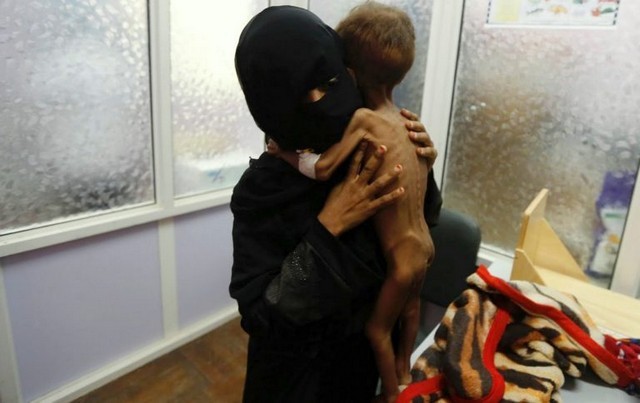
While the world watched and waited with bated breath for the outcome of the substantial global effort – involving over 100 cave divers from various countries, 1,000 members of the Thai Army and 10,000 others in various roles – to rescue a team of 12 young football players and their coach, who were trapped inside a flooded cave in Thailand for 17 days, 850,000 children were killed by human adults in other parts of the world, many of them simply starved to death in Yemen or other parts of Africa, Asia and Central/South America.

But other children were killed in ritual sacrifice, many children were killed after being sexually trafficked, raped and tortured, many were killed in wars (including in Yemen), many were killed while living under military occupation, many died as child soldiers or while working as slave laborers, and vast numbers of other children suffered violence in a myriad other forms ranging from violence (including sexual violation) inflicted in the family home to lives of poverty, homelessness and misery in wealthy industrialized countries or as refugees fleeing conflict zones. See ‘Humanity’s “Dirty Little Secret”: Starving, Enslaving, Raping, Torturing and Killing our Children’.

Why did the world’s corporate media highlight the flooded Thai cave story so graphically and why do so many ordinary people respond with such interest – meaning genuine emotional engagement – in this story? But not the others just mentioned?

And what does this tell us about human psychology and geopolitics?

Needless to say, a great deal.

During the Thai cave drama, major corporate media outlets, such as the Washington Post and the BBC, were routinely releasing ‘breaking news’ updates on the status of the rescue effort. At high points in the drama, reports on this issue were overshadowing major political and other stories of the day. At the same time, there were no ‘breaking news’ stories on any of the many myriad forms of violence against children, which were (and are still) killing 50,000 children each day.

So why the corporate media interest in this essentially local (Thai) story about a group of 12 children trapped in a cave? And why did it attract so much support, including foreign cave divers, engineers and medics as well as technology billionaire Elon Musk, who flew in to investigate rescue options and assist with the rescue effort. They and their equivalents are certainly not flying in to rescue children in a vast number of other contexts, including where the provision of simple, nourishing meals and clean water would do wonders.

Well, in essence, the story was a great one for the corporate media, simply because it reported on something of little consequence to those not immediately impacted and enabled the media to garner attention for itself and other (western) ‘heroes’ drawn into the story while engaging in its usual practice of distracting us from what really matters. And it was an easy story to sell simply because the media could use a wide range of safe emotional triggers to draw people into the dramatized story without simultaneously raising difficult questions about the (appalling) state of the world and responsibility for it.

In simple language: like sports events and other forms of entertainment, the cave rescue provided a safely contained time and space for people to feel emotionally engaged in (this case) a real-life drama (with feelings like fear and relief allowed an outlet) while carefully reinforcing their unconscious feeling of powerlessness to do anything about it and their acceptance of this. This is why it was so important that expert rescue efforts were highlighted: the key media message was that ‘there is nothing you can do’.

Of course, in this context, this was largely true. The problem is that the corporate media coverage wasn’t aimed at this context. It was aimed at all those other contexts which it wasn’t even discussing, let alone highlighting: the vast range of issues – including the many ongoing wars and endless military violence, the threat of nuclear war, the climate catastrophe and innumerable threats to our biosphere posed by such activities as rainforest destruction, the refugee crisis, military occupations, as well as the ongoing violence against children in so many contexts as touched on above – that need a great deal of our attention but for which the elite uses its corporate media to distract us and reinforce our sense of powerlessness.

Another aspect of the story was the way in which it highlighted the ‘accidental’ nature of the incident: no one was really responsible, even the hapless coach who was just trying to give his young players an interesting excursion and whom, according to reports, none of the parents blamed.

By focusing on the logistical details of the story (the distance into the cave, the narrowness of certain passages, rescue possibilities, equipment, the threat of monsoon rains…), without attributing blame, the media could reinforce its endless message that ‘no-one’ is responsible for the state of the world. Hence, no individual and no organization is responsible for doing anything either. Again, this message is designed to deepen a sense of powerlessness and to make people disinclined to act: to make them powerless observers rather than active participants in their own fate.

As an aside, of course, it should be noted that in those contexts where it serves elite interests to attribute blame, it certainly does so. Hence, elites might contrive to blame Muslims, Russians, Palestinians or the other latest target (depending on the context) for some problem. However, in these contexts, the story of ‘blame’ is framed to ensure that elites have maximum opportunity to act as they wish (often militarily) while (again) engendering a sense of powerlessness among the rest of us.

The tragedy of the Thai cave incident is that one man died and many boys spent 17 days in a situation in which they were no doubt terrified and suffering genuine physical privation. But elite media cynically used the event to distract us from vitally important issues, including ongoing grotesque violence against children in a large number of contexts, and to reinforce ‘The Delusion “I Am Not Responsible”’.

In short, while the 12 boys and their coach were rescued after 17 days trapped in a flooded cave in Thailand which required a sophisticated and expensive international effort, during the same period around the world, 850,000 children were killed by human adults. Even in Thailand during this 17-day period, apart from those children violated and killed as a result of sex trafficking and other violence, 119 children drowned (at the rate of seven each day). See ‘Swim Safe: Preventing Child Drowning’. Obviously, these children were ignored because there was no profit in reporting their plight and helping to mobilize an international effort to save them.

So what can we do?

Well, for a start, we can boycott the corporate media and certainly not spend any money on it. What little truth it contains is usually of even less value (and probably gets barely beyond a good sports report). Instead, invest any money you previously spent on the corporate media by supporting progressive news outlets. They might not have reported events in relation to the Thai cave rescue but they do report on the ongoing violence inflicted on children in more grotesque circumstances such as the war in Yemen. They will also report and analyze important global events from a truthful and life-enhancing perspective and will often offer strategies for your engaged involvement.

If you want to understand why most people are suckered by the corporate media, whose primary function is to distract and disempower us, you will get a clear sense from reading how adults distract and disempower children in the name of ‘socialization’. See ‘Why Violence?’ and ‘Fearless Psychology and Fearful Psychology: Principles and Practice’.

If you want to nurture children to be powerful agents of change who will have no trouble resisting attempts (whether by the corporate media or any other elite agent) to distract and disempower them, you are welcome to consider making ‘My Promise to Children’.

If you are easily conned yourself, you will vastly enhance your capacity to discriminate and focus on what matters by ‘Putting Feelings First’ which will, among other things, restore your conscience, intuition and ‘truth register’, vital mental functions suppressed in most people.

You are also welcome to consider participating in ‘The Flame Tree Project to Save Life on Earth’ which maps out a fifteen-year strategy for creating a peaceful, just and sustainable world community so that all children (and everyone else) has an ecologically viable planet on which to live.

And for the vast range of other manifestations of violence against children touched on above, you might consider using Gandhian nonviolent strategy in any context of particular concern to you. See Nonviolent Campaign Strategy or Nonviolent Defense/Liberation Strategy.

You might also consider signing the online pledge of ‘The People’s Charter to Create a Nonviolent World’ which explicitly identifies the role of the corporate media, among many other elite agencies, in promoting violence.

Am I pleased that the 12 children and their coach in Thailand were rescued? Of course I am. I just wish that an equivalent effort was being made to rescue each of the 50,000 children we will kill today, tomorrow, the next day and the day after that….

11 July 2018

Robert J. Burrowes has a lifetime commitment to understanding and ending human violence.

Mediterranean Sea – The Largest Graveyard in Modern History

By Peter Koenig

In June 2018 alone, more than 500 refugees drowned in the Mediterranean Sea. Their boatswere refused access to land in either Malta, or Italy. They were force-driven back by gun-boats to the North African shores they came from, mostly Libya, but many boats capsized and countless refugees didn’t make it.

These are de facto murders, high crimes against humanity, committed by the very European Union. The same “leaders” (criminals, rather), whose forebears are known to have raped, exploited, tortured,ravaged peoples and their lands of Asia, Africa, Latin America over the past 1000 years of abject colonization. Europeans have it in their genes – to be inhuman.This can possibly be extended to the ‘superior’ greedy white race in general. At least to those who make it to political or corporate high office in the formidable EU or exceptional US, or to those who appoint themselves into the European Commission. We should call them “The Heartless Bunch”.

This is the so-called West, now led by the United States of America – basically the British empire transplanted across the Atlantic, where they felt safer between two shining seas, than as a rickety island in the Atlantic, just in front of the enormous, contiguous land mass called Eurasia.The Old Continent, alias Europe, was given by the new trans-Atlantic empire, the new masters of the universe, a subservient role.And that was in the making for at least the last 100 years, when the new empire started weakening Europe, with two World Wars.

Today’s European (EU) leaders are puppets put in place by the Atlantist elites, to make sure that the rather educated Europeans do not go on the barricades, that they are debilitated regularly by free market corporatism creating unemployment, taking their hard worked-for social safety nets away, saturating them with fake news – and gradually oppressing them with growing police states, with a massive militarization – and finally using the articulately planned flood of refugees from the very US-EU-NATO destroyed countries – destroyed economically and by wars – as a further destabilizing weapon. Greece should serve as a vivid example of what’s really going on and is planned, starting with “inferior” southern EU states, those bordering on the strategic and economically important sea way – the Mediterranean Sea.

You think I’m crazy? – Start thinking again and connect the dots.

The refugee death toll in the Med-Sea in 2017 was about 3,200, 40% down from 2016, and more than 600 up to end of April 2018, and another more than 500 in June. This figure is bound to increase drastically, given the European closed-border policy – and more. The EU is contracting among others, the Libyan Coast Guard with gun boats to chase refugee vessels back to the Libyan shores, many sink – and saving those thrown into the sea is ‘forbidden’ – they are simply left to die. That’s the rule. Malta, a little island-appendix to Brussels, but important as a refugee transit, has issued strict bans on private fishing boats and NGOs trying to rescue refugees.

As a consequence, the by now well-known German NGO “Lifeline” boat with 234rescued refugees and migrants on board from Africa and the Middle East – miserably poor, sick, desperate people – struggling for sheer survival, many with small kids, who wanted nothing more than their children to have a better life – was rejected by Malta, turned back into the sea, under guidance of NATO and EU hired military-type private contractor gun-boats.Eventually Portugal offered her safe shores for the refugees. Malta has a Partnership for Peace (PfP) Agreement with NATO, i.e. obeys NATO orders. NATO, a killer organization, has, of course, not a shred of humanity in its structure, nor in the blood of the people at its helm – anywhere in the world.

Imagine – in this context, an EU summit took place at the end of June 2018 to “arrange” and agree on howtohandle the refugee crisis in the future, in other swords, how to keep them out of Europe. None of the countries, other than Germany, were even considering accepting some of these poor souls out of sheer humanitarian reasons, to give them shelter, food and medication. The discussion even considered where to build a wall – yes, fences were discussed to keep them out – Europe a xenophobic free-port for the rich, acting in questions of migration as a carbon copy of Trump. They deserve each other, Trump and Brussels, trade wars not withstanding – let them shred each other to pieces.

Well, this almost happened during, before and after the now-called “mini-summit”, with Madame Merkel almost losing her Chancellor’sjob, as she, against all odds, represented the most humanitarian view of all the 28 neolibs.This did not go down well with her partner party, the ultra-conservative Bavarian CSU. Calls for her resignation abounded. The GermanInterior Minister, Horst Seehofer, was about to resign over Merkel’s alleged refugee ‘generosity’ – in which case the highly fragile right-left coalition would have collapsed – and who knows how Germany may have continued to govern. Perhaps new elections would have had to be called, and then only god knows what might have happened. The empire could not allow this uncertainty to prevail, because Washington needs Germany as the chief-slave driver to lead Europe into total disarray and serfdom. It worked. Germany is alive and saved – and ticking.

Instead, the European refugee / migrant policy is in shambles. The EU are literally out to kill refugees, as a means of dissuasion? – Mass-murder as a means of discouraging the desperate toseek shelter in those very countries that were instrumental in destroying their livelihoods, their families, their towns, theirinfrastructure, their education and health facilities – their youth? Generations of young Middle Eastern and African people are gone, destroyed.

Did these high-ranking EU officials in Brussels mention their own huge responsibilityforthe refugeefloods with one single word? – No, of course not. Not with one breath. Has the conscience in one single head of these fake, neolibs-neonazis, as it were, self-serving EU heads of state been awakened by this very fact of guilt for what they are to confront? – Has it caused sleepless nights? I doubt it. They are far from this level of human compassion, they are monsters.

Then, there was and is Italy, with her strange new coalition, a coalition of convenience. The leftish 5-Star Movement in alliance with the right-wing Lega Norte, selling their human conscience to be able to reign, giving away their responsibility for migration to the xenophobic, narcissistic, and yes, close to fascist Lega Norte – which is adamant not to receive migrants. They would boycott any result that would force Italy to take in refugees, or even build border transit camps. In the end, they reached a toothless agreement; a non-agreement, rather; an accord that obliged none of the parties to do anything. Everything is voluntary. Period. And Macron said that this was the best refugee summit the EU ever had. So much for dismal brainlessness.

All was voluntary. The only agreement they could book for themselves, is to build refugee camps in North African countries for the shipped-back survivors. Fortunately, every North African country, from Egypt to Tunisia, Algeria, and Morocco said no. Having seen what happened in such literal slave camps in Libya, they had at least the compassion for these desperate human beings to prevent this from reoccurring.Compassion, a term, a feeling orsensation, the Europeans are devoid of.

However, no Israeli- Trump- Brussels-type wall or barbed-wire fence will keep the desperate in their economically, or by war, or western terrorism destroyed countries. The west, and only the west, is responsible for the endless destructive chaos, torture and lawlessness in these nations that the west wants todominate, for myriad reasons – to steal their energy, minerals; for their strategic location, and finally on the way to total fullspectrum world hegemony. This, the west will notachieve. That’s for sure. Evil will not prevail in the long run. Darkness will eventually cede to light. That’s the way nature works. But on its way to collapse, Evil will maim and kill millions of lives. Countless children will have no future, no parents, no education, no health services, no drinking water. They will be made toslaves as a means for their survival, to be raped and exploited or eventually killed. The European crime is of infinite dimension and nobody sees it, let alone stops it.

Peter Koenig is an economist and geopolitical analyst.

7 July 2018

Source: https://countercurrents.org/2018/07/07/mediterranean-sea-the-largest-graveyard-in-modern-history/

Has the U.S. Government Been Lying About Syria & About Ukraine?

By Eric Zuesse

And then, by the time of December of 2012, Obama’s team were relying mainly on Al Qaeda’s Syrian branch to lead the tens of thousands of the U.S.-Saudi alliance’s boots-on-the ground ‘moderate rebels’ in this overthrow-Assad war, fighters who have actually been fundamentalist Sunnis recruited from all over the world to come to Syria in order to replace the secular President of Syria, the Alawite Shiite, Assad. Propaganda in the U.S. portrays U.S. Government policy as being driven by a concern for the welfare of the Syrian people: to ‘protect their human rights’ — not to overthrow a government that refuses to cooperate with U.S. oil companies and other corporate interests in the U.S.But even with the anti-Obama Donald Trump in the White House, there has been nothing really new about any of this U.S. Government scam, any of this attempted-but-never-publicly-acknowledged conquest against the Syrian people. The U.S. Government — along with the U.S.-aristocracy-allied fundamentalist Sunni Saud family, the world’s wealthiest family, who own Saudi Arabia, and who finance the fundamentalist-Sunni Al Qaeda and similar Sunni jihadist organizations — has been trying ever since 1949 to control Syria, and still tries. The main difference between now and 1949 is that the Saud family have become more brazen about conquest than they were, back in 1949, when they had wanted merely that the Syrian Government approve an American-built pipeline for their oil to go into Europe. In the present day, the Sauds are openly at war against Shiites everywhere, even inside Saudi Arabia itself, and are bombing the hell out of the Shiite (Houthi) areas of Yemen, basically trying to take over the entire Middle East, and to destroy Iran, which is the leading Shiite country. The U.S. is allied with the Sauds in all of this.

On 30 March 1949, the CIA, in a coup planned by James Hugh Keeley Jr. and Miles Copeland Jr., replaced the democratically elected Syrian President Shukri al-Quwatli, replaced him with France’s stooge, General Husni al-Za’im, who displeased King Saud of Saudi Arabia, and so got overthrown and killed on 14 August 1949, by a different France-stooge General, Sami al-Hinnawi. Za’im had left his mark on Syria, however: “The pro-Western Za’im remained in power for three months — long enough to grant [the Saudi-American] Aramco’s Tapline concession to pipe Saudi oil to the Mediterranean.” But Hinnawi pleased the CIA and Sauds even more than Za’im did, so got the Presidency, and Za’im simply got killed. (The CIA and the Saud family are very demanding of their stooges.)

In December 1949, the CIA, in a coup planned by Miles Copeland (Syria’s third and final coup that year), carried out the desire of King Saud, and installed as Syria’s leader, Adib Shishakli. “The Kingdom of Saudi Arabia implemented a new policy towards Syria by giving financial support amounting to six million dollars.” Shishakli’s barbarism was so great that four years later, Syria’s generals formed the secular Ba’ath Party and on 6 September 1955, restored to power Syria’s democratically elected President, Quwatli, who in 1958 joined Syria into the United Arab Republic, which lasted till 1971. However, while Quwatli was still Syria’s President, the CIA, yet again, in 1957, tried to oust him via a coup, but that coup-attempt had to be called-off.

A permanent result of that brazen attempt in 1957 was to cause Syria to sever relations with the U.S.

; so, from that time forward, the U.S. regime works in Syria mainly by its agents and allies, such as King Saud who owns Saudi Arabia, and Emir Thani who owns Qatar. Both families are fundamentalist Sunni Arabs — the Saud family being Al Qaeda’s main financial backer, and the Thani family being the Muslim Brotherhood’s main financial backer. (Both Al Qaeda and Muslim Brotherhood are fundamentalist Sunni organizations, whereas Syria, at least after 1957, is strongly secular, anti-sectarian.) But now that King Saud wants to overthrow Emir Thani and take Qatar, and is trying to blockade Qatar, the U.S. regime has stayed with King Saud, but not to such an extent as to jeopardize Emir Thani’s willingness to host in Qatar America’s biggest Middle Eastern military base, Al Udeid Air Base, which the Thanis see as essential to their staying in power. So: the U.S., under Donald Trump, is mildly supportive of King Saud’s aggressions against Qatar, but not to such an extent as to withdraw from Al Udeid.As a result of the Sunni Sauds’ attacks against the Sunni Thanis, the Thanis have turned away from the Sauds, who hate Iran and all Shiites. Thus, the Thanis now are non-partisan in the Sauds’ longstanding efforts to conquer Iran and other Shiite-majority areas; the Thanis have become more pan-Arabic than when they were allied with the Sauds; they’re no longer dedicated to war against Shia. They are no longer allies of the Sauds against Shia.

The U.N. ‘peace’ talks on Syria are between Syria’s Government and Saudi Arabia’s Government, not between Syria’s Government and any authentically representative native Syrians versus the Syrian Government. The Saud family selected the “High Negotiations Committee” who are negotiating against Syria’s Government there, as  ‘representatives’ of ‘the opposition’. Even the U.S. subscription-only GlobalSecurity.org site admits “The High Negotiations Committee is a Saudi-backed coalition of Syrian opposition groups. The High Negotiations Committee (HNC) was created in Saudi Arabia in December 2015.”

Non-sectarian — even secular — Syria is the odd-man-out, insisting on its own national sovereignty, and secularism, no matter what, and willing to do whatever they must in order to maintain their independence. And the majority of the Syrian people thus support Assad (55% did, even at the very height of the ‘Arab Spring’ uprisings throughout the Arab world), and 82% of Syrians blame the U.S. Government for the presence of ISIS and other jihadists in their country.

This is history. What can the U.S. regime credibly present to the world as being justification for continuing its decades-long effort to conquer Syria? The U.S. regime condemns Syria’s non-sectarian Government for ‘humanitaian violations’ fighting against the U.S.-Saudi imported terrorists who are trying to overthrow and replace Syria’s Government. The U.S. has thousands of its own troops in their invasion and military occupation of Syria, and condemns Assad for leading the fight against that invasion-occupation.

As regards Ukraine, you can either see this terrific video-compilation documenting how Obama perpetrated a bloody coup which in February 2014 overthrew and replaced Ukraine’s democratically elected Government, or you can read my “Are Michael Isikoff And David Corn CIA Agents?” which documents the lies by those two ‘investigative journalists’, who spread the falsehoods about Ukraine that the U.S. aristocracy want to be spread against Russia, and which lies go against the realities that that video shows.

Incidentally, on 10 February 2017, in the video shown here, Isikoff interviewed Bashar al-Assad, who took his stenographed transmission of quite possibly fabricated ‘evidence’ against Assad, and turned it instead against the regime whose agent Isikoff so clearly does represent.

Obama’s coup destroyed Ukraine. The World Happiness Reports, from the U.N. and Columbia University, have been published for 2013, 2015, 2017, and 2018. Each year’s report covers, generally speaking, the surveys that were done worldwide during the preceding year. The American coup in Ukraine occurred in February 2014. So, the only pre-coup survey done was the 2013 publication, which covered the year 2012. As internationally ranked for happiness by the World Happiness Report, Ukraine went from #87 out of 156 nations, or 87/156 (the bottom 45%) in 2013, to 111/138 (the bottom 20%) in 2015, to 123/157 (the bottom 22%) in 2016, to 132/155 (the bottom 15%) in 2017, to 138/155 (the bottom 12%) in 2018. So: before the coup, Ukraine was in the worst 45%, but by 2018 it reached the worst 12%. That’s an enormous plunge. Barack Obama wanted the coup, he got it, and it destroyed Ukraine. The U.S. claims to be trying to save Ukraine from Russia, but the reality is the exact opposite: that the U.S. destroyed Ukraine in order to become enabled to bring Ukraine into NATO and position U.S. nuclear missiles less than ten minutes flight-time from Moscow. Ukrainians have every reason to hate the U.S. Government, for what it did to them. Like what it did to Afghans, and Iraqis, and Yemenese, and Hondurans — and Chileans, and Guatemalans, and so forth. And like what it’s doing to anyone who wants to avoid World War III — including the American people, who nominally (but not really) are represented by this rapacious Government, controlled by this rapacious aristocracy.

So: the documentation is unequivocally clear, that the U.S. Government lies shamelessly about both Syria and Ukraine — and Russia, and Iran, and much else.

Investigative historian Eric Zuesse is the author, most recently, of  They’re Not Even Close: The Democratic vs. Republican Economic Records, 1910-2010, and of  CHRIST’S VENTRILOQUISTS: The Event that Created Christianity.

7 July 2018

Source: https://countercurrents.org/2018/07/07/has-the-u-s-government-been-lying-about-syria-about-ukraine/

The Balkanization of South America – and the Role of Fifth Columns Throughout the World

By Peter Koenig

During the recent meeting in Caracas of the Venezuelan Presidential Economic Advisory Commission, in mid-June 2018, President Maduro said something extremely interesting, but also extremely disturbing – nonetheless highly important for the region to be aware of. Mr. Maduro mentioned Yugoslavia, the foreign induced local conflicts, the breakup and dismemberment of Yugoslavia, starting with the “Ten Days War” on Slovenia in 1991, the Croatian War (1991-95); the Bosnia War (1992-95); the Kosovo War (1998-99), culminating with the Clinton induced 69-day NATO bombing of Kosovo, under then European NATO leader Wesley Clark (today the Repentant – in retrospect it’s easy to be sorry), pretending to save the Kosovo Albanians from Serbian Milosevic’s atrocities. How Milosevic served as a patsy for the imperial forces is another story.

All of this would not have been possible without a decade long preparation by several Fifth Columns infiltrated and trained in and outside of Yugoslavia, the only country in Europe that in the 1980s and 90s flourished, with general wellbeing above that of the average Europeans, who were suffering recessions and increasing inequality, the beginning of xenophobia in the age of nascent neoliberalism. There was no extreme poverty in Yugoslavia, but prosperity without excesses for everybody. There was economic growth under a loose Mao-model socialism which could, of course, not be allowedto persist, lest it might serve the world as an example. Besides – the breakup of Yugoslavia into chaos was needed to create mini-states that are in conflict with each other, some of them still today, and that could be ‘accommodated’ against a hefty ‘fee’, of course, to accept the installation of NATO bases – ever an inch closer to Moscow’s door step.

Well, Mr. Maduro saw and sees it clearly. History repeats itself all too often, especially when it comes in the form of western neoliberal-neofascist atrocities, as people’s memories are dulled with lie-propaganda. In fact, there is hardly any real news, only ‘fake news’ in the western mainstream media. Mr. Maduro envisions that “their” plan for Latin America is similar to what “they” did to Yugoslavia. He is probably right. All signs point into this direction.

A pact between Colombia and NATO, a so-called “Security Cooperation Agreement” was first signed in June 2013 – but prepared way before. Records of first communications to this effect, by Juan Manual Santos, then President of Columbia – and Peace Laureate in 2016 for his traitorous Peace Agreement between the Colombian Government and FARC (vaya-vaya! Doesn’t this speak volumes by itself?), can be traced back to the early 2012.

President Hugo Chavez was the first one to warn his Latin American partners of the imminent clandestine infiltration of NATO into South America. Nobody listened. Today it’s a fact – too late to fight against. NATO troops are occupying gradually all seven American military bases in Colombia. They are just simply converting from US to NATO bases – sounds more palatable than US bases – for sure. In the minds of unfortunately still most uninformed or mal-informed people, NATO stands for security. NATO – the North Atlantic Treaty Organization – in South America, what an oxymoron! – Well, it is the same ‘security’ farce as is NATO in Afghanistan and bombing the Middle East.

Venezuela is full with Fifth Columnists. They are the ones that facilitate the highly speculative and inflationary manipulation from Miami of the black-market US dollar rate in the streets of Caracas; they are the ones that emulate the food shortages in Chile 1973, successfully disappearing duly paid-for imported merchandise, mostly food and medical supplies, ending up as smuggle-ware in Colombia, leaving empty supermarket shelves in Venezuela. All meant to instigate people to stand up against their government.

So far, this strategy has failed bitterly. On 20 May 2018, President Maduro has been overwhelmingly re-elected, under the most internationally observed elections the world has ever experienced – and the result was “the cleanest, most democratic elections we have witnessed in our history of worldwide 92 election observations” – so the US-based Carter Institute.

Yet, the Fifth Columnists are relentless. Worldwide. They are immersed in the government apparatus, institutions, military, police – even Parliament – and very important in the financial system, possible in the central bank. They “allow”, or rather promote, the manipulation of the US-dollar black market, causing sky-rocketing inflation and lack of food and medicine on supermarket shelves. They disrupt electricity, internet and water services. The approach is similar in every country that refuses to bend to the empire’s dictate. In Russia, Iran, China, Syria, South Sudan, possibly even in Cuba – they are in control of the financial system – that’s also how they are easily being financed, through the dollar-based monetary fraud of the west, to which most countries still have some links – fortunately every day less.

Take Russia, the Central Bank is still largely run by the Fifth Columnists, whose ‘chief’ is Putin’s just recently re-appointed Prime-Minister, Dmitry Medvedev, an arch-Atlantist. The structure of the Russian Central Bank is even today mainly a remnant of the Russian Reserve Bank, designed by the FED after the collapse of the Soviet Union, with the help of the UN-masked Bretton Woods crooks, the IMF, World Bank.

Similarly, part of the masked international promoters of instability, are the Bretton Woods regional associates, the so-called regional development banks, the Inter-American Development Bank (IDB), the Asian Development Bank (ADB), African Development Bank (AfDB) and their sub-regional cohorts. In the nineties, the Gang was joined by WTO – the World Trade Organization. And here they are, the world’s three most hated international UN-backed financial and trade organizations, IMF, World Bank and WTO. All three are promoting fundamentalist “free-marketeering” across the globe, especially throughout the southern hemisphere (though Greece and southern Europe do not escape), indebting and enslaving countries to the western corporate oligarchs. All well-structured to control the world’s financial system – so as to march towards world hegemony of a One World Global Economy. We are almost there, though not quite yet. There is always hope. Man’s last shred to hang on to life is HOPE. And only Man can translate hope into reality. So, as long as we have life, it’s not too late.

Why is it so difficult, say – impossible to get rid of them, the Fifth Columnists, the vermin of any unaligned political system? – Why did President Putin re-assign Medvedev as his PM? – Mr. Putin knows that he supports a network of Atlantist oligarchs that seek nothing more than to ‘putsch’ him, Mr. Putin – and ultimately to destroy the rather egalitarian, though capitalist-based, economic system Russia has enjoyed for the last almost 20 years – becoming self-sufficient in agriculture, food, industry, high-tech science, pharmaceuticals. – Russia has developed herself into an exemplary “Resistance Economy”, ready to be emulated by any western-named ‘rogue’ state that is sick and tired of the Empires boots and bombs and forced ‘democracies’ through ‘regime change’.

There are many western countries that just wait for a leader – one that moves head-on. Russia, China, Venezuela, Iran, Cuba, are shining examples. They are gradually escaping the yoke of the dollar-dominated western economy.

So, why are countries like Russia, Iran and maybe Venezuela afraid to get rid of their Fifth Columnists? For fear of a civil war, of a blood bath? Yes, we have seen the violent unrest they caused in preparation of the two major democratic elections in Venezuela in the last 12 months, the National Constituent Assembly (30July 2017) and the Presidential Elections on 20 May 2018, when altogether close to 200 people died. The media immediately blamed the death on police and military oppression and violence – but the only armed protesters were those armed and funded by Washington, and responsible for more than 80% of the death. Chavistas cheered for their Government with their bare fists.

The question remains in the room – why does Mr. Putin not get rid of them, the Fifth Columnists? – Would they cause a civil, war? –  It seems to me they wouldn’t have sufficient supporters in Russia, but they could disrupt the internal economy, as the Russian internal financial systems – especially private banking – is still in the hands of these Atlantists. They are also in China, but it appears that President Xi Jinping has better control of them.

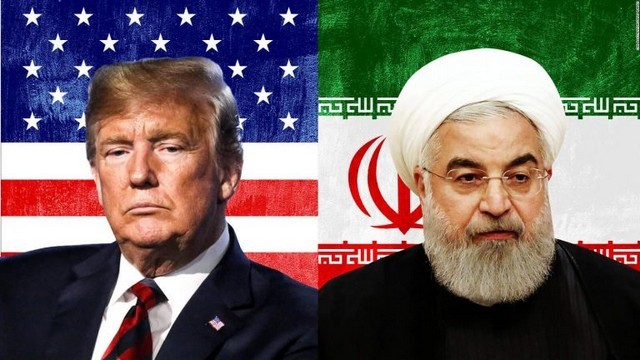
How about Iran? Why are they still able to hold on to and fight for ‘western deals’, i.e. the upholding of the Nuclear Deal that Trump has stepped out from and now is sanctioning Iran ‘with the most severe sanctions the world has ever seen’ – sounding similar to what he said to Mr. Kim Jong-un, the ‘Little Rocket Man’, with whom Trump then made peace a few weeks later? – Or something like it. One never knows with the Donald, what’s the meaning of Trump’s trumpeting, other than screwing up alliances and creating physical and sociopsychological chaos. He is also threatening European corporations, mostly oil companies, with heavy sanctions if they dare maintaining their contracts with Iran.

Many cave in. Among them, the French-UK owned Total, Italy’s Eni and Saras, Spain’s Repsol and Greece’s Hellenic Petroleum. In the case of Total, according to the director of the Venezuelan branch, instead of filling their contracts with US-“fracking” oil, as Trump would expect, they are negotiating with Russia, to fulfill their obligations in Europe and elsewhere. “We cannot trust Brussels to fend for us, therefore we have to fend for ourselves”, the Total representative said.

Iran doesn’t really need the Europeans to buy their oil. Europe constitutes only about 20% of the Iranian hydrocarbon market – an amount easily taken up by China. The same with other European corporations that may choose similar ways of self-protection – cutting ties with Iran – like the Peugeot-Citroen automobile giant – Iran doesn’t need them. That these sanctions and EU corporate reactions to the US sanctions, are causing hardship and unemployment in Iran – is just western propaganda, a vast exaggeration, at worst a temporary affair. As Mr. Rouhani said – we might go through a short period of difficulties but will recover rapidly by becoming self-sufficient. And that’s true. Iran is well embarked on their “Economy of Resistance”, aiming at self-sufficiency through import-substitution and orienting themselves towards eastern markets.

In fact, Iran is already part of the Eurasian Economic Community and will soon become a full-fledged member of the Shanghai Cooperation Organization (SCO). – So – why can Iran not get rid of their Fifth Columnists? – This is a question I can only answer with “fear from bloody civil unrest, prompting possibly western military intervention”.

Back to Venezuela – it could be similar fears that prevent the Maduro Government from taking drastic actions, like declaring a temporary state of emergency and drastic measures of de-dollarization to stop inflation and speculation, and strengthen the local currency, the Bolivar, by backing it with their internationally accepted cryptocurrency, the Petro.

On 20 May 2018, six million Venezuelan’s mostly Chavistas, voted overwhelmingly for President Maduro and his Government, a 68% majority, representing a solid block of people supporters. If you have the choice between an artificially made-to-starve population and a crumbling what used to be a solid block of 6 million Chavistas behind you – but gradually disappearing because of lacking actions by the government – what do you do? – Perhaps the only way is to economically isolate the Fifth Columnists or Atlantists, despite their apparent control of the economic system. What Atlantists are actually controlling is the dollar-based economy. Quitting the dollar-base, they may become rather powerless.

Venezuela faces a dire dilemma: Die or be killed. Venezuela has already started moving out of the dilemma, with the creation of the totally dollar-detached Petro, the government controlled blockchain currency based on hydrocarbons and precious minerals. Today, Venezuela imports about 70% of their food, and guess from where? – You guessed right – from the US of A. Thus, de-dollarization at first sight is a challenge.

Therefore, a massive diversification of imports, and efforts to become food self-sufficient, is in the order. Venezuela has the agricultural potential to become 100% food self-sufficient. In the meantime, Russia, China and other Eurasian countries will substitute. Venezuela may apply for SCO membership. Why not? After all, China has already about 50 billion dollars’ worth of investments in Venezuela, mostly in hydrocarbons, and just declared making another 5-billion-dollar equivalent loan to refurbish the Venezuelan petrol industry. China and Russia have big stakes in Venezuela, an excellent defense strategy. Now, Venezuela’s membership in the SCO would be another big step away from the dollar economy.

The Balkanization of Latin America is already happening. When Mr. Maduro referred to the 7 US bases in neighboring Colombia, aka, now NATO bases, with a porous 1,500 km (out of a total of 2,000 km) uncontrollable jungle border with Venezuela, and even open and welcoming borders with Peru, Ecuador and Brazil, he said it all. It will be easy to suffocate any uprising – NATO will do it, by now the generally accepted world police, as generally accepted as the recently intact, totally unelected and self-appointed world government, the G7. They are now crumbling, thanks heaven for Mr. Trump’s egocentric pathology, his “Let’s make America Great Again”; and thanks to Mr. Putin’s non-intervening but strategic sideline observance.

Will Trump continue to provide majority support for NATO? He recently warned the Europeans to contribute their share, i.e. increasing their NATO contribution to 2% of their GDP – or else. Well, what is “else”? – Reducing NATO, an enormous cost to the US? – And counting on the CIA-trained and NED-funded destabilizing insurgents (NED = National Endowment for Democracy, a state department financed “regime change’ and “democratization” NGO) throughout the world? – Insurgents in alliance with the local Atlantists? Will this be enough in a rapidly changing international monetary and payment system
The US scheme for Balkanizing Latin America, and by extension the world, is as porous as the 1,500 km long tropical forest border between Colombia and Venezuela. The hegemony of the dollar-economy hangs in the balance. Only drastic actions by victimized but courageous countries, like Venezuela, Iran and Russia can break the balance and destroy the western monetary hegemony.

Peter Koenig is an economist and geopolitical analyst.

6 July 2018

Source: https://countercurrents.org/2018/07/06/the-balkanization-of-south-america-and-the-role-of-fifth-columns-throughout-the-world/

Egypt: Five years after President Morsi’s overthrow by military junta

By Abdus Sattar Ghazali

Five year after the overthrow of first democratically elected President Mohammad Morsi on July 3, 2013, Egyptian President, Field Marshall Abd al-Fattah al-Sisi’s government continues to rule with worst human rights violations as police systematically used torture, arbitrary arrests, and enforced disappearances to silence political dissent.

Egypt’s human rights crisis continued unabated, says Amnesty International. “The authorities used torture and other ill-treatment and enforced disappearance against hundreds of people, and dozens were extrajudicially executed with impunity.”

The crackdown on civil society escalated with NGO staff being subjected to additional interrogations, travel bans and asset freezes. Arbitrary arrests and detentions followed by grossly unfair trials of government critics, peaceful protesters, journalists and human rights defenders were routine, the Amnesty International said adding: Mass unfair trials continued before civilian and military courts, with dozens sentenced to death. Women continued to be subjected to sexual and gender-based violence and were discriminated against in law and practice. The authorities brought criminal charges for defamation of religion and “habitual debauchery” on the basis of people’s real or perceived sexual orientation.

Morsi spends his fifth year in prison

Egypt’s first democratically elected president Mohamed Morsi spends his fifth year behind bars since he was ousted by the military in a coup in 2013.

He was tried in six cases; a mass jailbreak, murder, spying for Qatar, espionage with Palestinian group Hamas and Lebanese group Hezbollah, insulting the judiciary and terrorism.

“Verdicts against Morsi are politically-motivated,” Alaa Abdulmunsif, head of Salam Organization for Protection of Human Rights, told Anadolu Agency.  “The regime wants to get rid of him,” he said.

In June 2016, an Egyptian court placed Morsi on the country’s official list of “terrorists” for three years.

In the same year, the Court of Cassation, Egypt’s highest appellate court, upheld a 20-year jail term against Morsi on charges of murder during deadly clashes between supporters and opponents outside the Ittihadiya presidential palace in 2012.

Morsi, along four other Brotherhood leaders, was also sentenced to death for alleged involvement in a mass jailbreak in 2011 during a popular uprising that swept former autocrat Hosni Mubarak from power.

However, the Court of Cassation overturned the verdicts and ordered a retrial in 2016.

Morsi was slapped with a life sentence for allegedly spying for Qatar. He was also sentenced to three years in prison for offending the judiciary.

The former president is also standing a retrial on charges of a mass jailbreak and espionage with Hamas.

Saeed Sadek, professor of political sociology at the American University in Cairo, was quoted by Anadolu Agency as saying that Morsi’s trials are the result of “political competition”. “How come those who overthrew him would set him free” he asked.

Sadek ruled out any reconciliation between the Egyptian regime and the Muslim Brotherhood in the near future. “The regime now is very strong and will not look into reconciliation with the Muslim Brotherhood,” he said.

Egyptian Kangaroo Courts

Hundreds of anti-government people are on death row while thousands sentenced to long-term jail by Egypt’s Kangaroo Courts.

On March 10, 2018, an Egyptian Kangaroo court sentenced 10 people to death and five others to life in prison for allegedly forming a “terrorist group” to plot attacks on security forces and other institutions.

Egypt has cracked down on anti-government elements since the overthrow in July 2013 of Mohammad Mursi by General Abdel Fattah al-Sisi who later assumed the title of Field Marshall. Mursi was the first democratically elected President of Egypt.

Hundreds of anti-government people, including Muslim Brotherhood supporters and members, have received death sentences since 2013, and Egypt has carried out dozens of executions, according to security sources and rights groups.

According to Cornell Center on the Death Penalty Worldwide database, in recent years there has been a sharp increase in Egyptian courts’ use of capital punishment, with the number of death sentences jumping from 109 in 2013 to at least 509. Since the beginning of 2015, there have been reports of at least 354 death sentences.

The Cornell Center believes there are at least 1,700 people under sentence of death, but no official figures are available due to intense state secrecy surrounding capital punishment. Amnesty International indicates that at least 1,413 death sentences were issued between 2007 and 2014.

Human rights defenders

The authorities continued to curb the work of human rights defenders in an unprecedented manner as part of their relentless efforts to silence all critical voices, according to Amnesty Internatonal.

In May 2017, US client President al-Sisi signed a draconian new law giving the authorities broad powers to deny NGOs registration, dissolve NGOs and dismiss their boards of administration.

Between January and May 2017, courts sentenced at least 15 journalists to prison terms ranging from three months to five years on charges related solely to their writing, including defamation and the publication of what the authorities deemed “false information”.

Security forces arrested at least 240 political activists and protesters between April and September 2017 on charges relating to online posts the authorities considered “insulting” to the President or for participating in unauthorized protests.

Security forces continued to arrest hundreds of people based on their membership or perceived membership of the Muslim Brotherhood, rounding them up from their homes or places of work or, in one case, from a holiday resort, the Amnesty International pointed out adding:

The authorities used prolonged pre-trial detention, often for periods of more than two years, as means to punish dissidents.

Forces of the Ministry of the Interior continued to subject to enforced disappearance and extra-judicially execute people suspected of engaging in political violence. According to the Egyptian Commission for Rights and Freedoms, security forces subjected at least 165 people to enforced disappearance between January and August 2017 for periods ranging from seven to 30 days.

Thousands of civilians were tried by military courts, Human Rights Watch (HRW) says adding: “By introducing new restrictive NGO legislation, detaining journalists, and prosecuting human rights defenders and subjecting them to travel bans, the government is working to eradicate independent civil society in the country.”

Activists arrested in dawn raids

Egyptian police and National Security forces have carried out a wave of arrests of critics of President Abdel Fattah al-Sisi in dawn raids since early May 2018, Human Rights Watch said. The charges against them appear to be solely based on their social media posts and peaceful activism. Security briefly held several of the detainees incommunicado.

Those arrested include Hazem Abd al-Azim, a political activist, on May 27, and well-known journalist and rights defender Wael Abbas on May 23. Security forces blindfolded him and kept him for almost 36 hours in an unknown location before taking him before prosecutors. Others include Shady al-Ghazaly Harb, a surgeon; Haitham Mohamadeen, a lawyer; Amal Fathy, an activist; and Shady Abu Zaid, a satirist.

“The state of oppression in Egypt has sunk so low that al-Sisi’s forces are arresting well-recognized activists as they sleep, simply for speaking up,” said Sarah Leah Whitson, Middle East and North Africa director at Human Rights Watch. “The message is clear that criticism and even mild satire apparently earn Egyptians an immediate trip to prison.”

Prosecutors hold broad power in Egyptian law, in violation of international law, that allow them to hold those suspected of major offenses in pretrial detention for up to five months without bringing them before a judge, which judges can extend up to two years without proper hearings or substantive justification. Tens of thousands of prisoners remain in jail without trial in Egypt.

Abdus Sattar Ghazali is the Chief Editor of the Journal of America (www.journalofamerica.net) email: asghazali2011 (@) gmail.com

5 July 2018

Source: https://countercurrents.org/2018/07/05/egypt-five-years-after-president-morsis-overthrow-by-military-junta/

By razing Khan al-Ahmar, Israel will bulldoze illusions of peace process

By Jonathan Cook

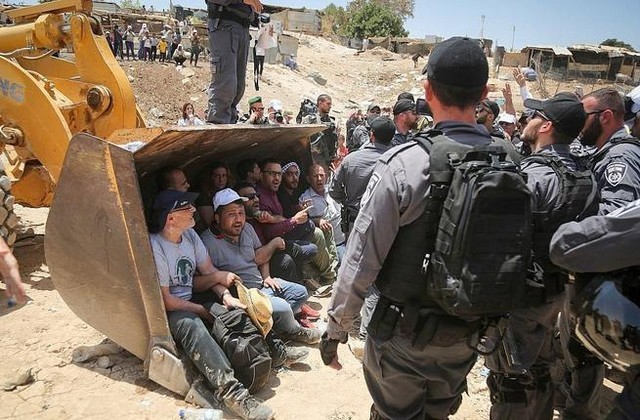
Nazareth: Israel finally built an access road to the West Bank village of Khan al-Ahmar last week, after half a century of delays. But the only vehicles allowed along it are the bulldozers scheduled to sweep away its 200 inhabitants’ homes.

If one community has come to symbolise the demise of the two-state solution, it is Khan al-Ahmar.

It was for that reason that a posse of European diplomats left their air-conditioned offices late last week to trudge through the hot, dusty hills outside Jerusalem and witness for themselves the preparations for the village’s destruction. That included the Israeli police viciously beating residents and supporters as they tried to block the advance of heavy machinery.

Britain, France, Germany, Italy and Spain have submitted a formal protest. Their denunciations echoed those of more than 70 Democratic lawmakers in Washington in May – a rare example of US politicians showing solidarity with Palestinians.

It would be gratifying to believe that Western governments care about the inhabitants of Khan al-Ahmar – or the thousands of other Palestinians who are being incrementally cleansed by Israel from nearby lands but whose plight has drawn far less attention.

After all, the razing of Khan al-Ahmar and the forcible transfer of its population are war crimes.

But in truth Western politicians are more concerned about propping up the illusion of a peace process that expired many years ago than the long-running abuse of Palestinians under Israeli occupation.

Western capitals understand what is at stake. Israel wants Khan al-Ahmar gone so that Jewish settlements can be built in its place, on land it has designated as “E1”.

That would put the final piece in place for Israel to build a substantial bloc of new settler homes to sever the West Bank in two. Those same settlements would also seal off West Bank Palestinians from East Jerusalem, the expected capital of a future Palestinian state, making a mockery of any peace agreement.

The erasure of Khan al-Ahmar has not arrived out of nowhere. Israel has trampled on international law for decades, conducting a form of creeping annexation that has provoked little more than uncomfortable shifting in chairs from Western politicians.

Khan al-Ahmar’s Bedouin inhabitants, from the Jahalin tribe, have been ethnically cleansed twice before by Israel, but these war crimes went unnoticed.

The first time was in the 1950s, a few years after Israel’s creation, when 80 per cent of Palestinians had been driven from their homes to clear the path for the creation of a Jewish state.

Although they should have enjoyed the protection of Israeli citizenship, the Jahalin were forced out of the Negev and into the West Bank, then controlled by Jordan, to make way for new Jewish immigrants.

A generation later in 1967, when they had barely re-established themselves, the Jahalin were again under attack from Israeli soldiers occupying the West Bank. The grazing lands the Jahalin had relocated to with their goats and sheep were seized to build a settlement for Jews only, Kfar Adumim, in violation of the laws of war.

Ever since, the Jahalin have dwelt in a twilight zone of Israeli-defined “illegality”. Like other Palestinians in the 60 per cent of the West Bank declared under Israeli control by the Oslo peace process, they have been denied building permits, forcing three generations to live in tin shacks and tents.

Israel has also refused to connect the village to the water, electricity and sewage grids, in an attempt to make life so unbearable the Jahalin would opt to leave.

When an Italian charity helped in 2009 to establish Khan al-Ahmar’s first school – made from mud and tyres – Israel stepped up its legal battle to demolish the village.

Now, the Jahalin are about to be driven from their lands again, as though they are nothing more than wayward cattle. This time they are to be forcibly re-settled next to a waste dump by the Palestinian town of Abu Dis, hemmed in on all sides by Israeli walls and settlements.

In the new location they will be forced to abandon their pastoral way of life. As resident Ibrahim Abu Dawoud observed: “For us, leaving the desert is death.”

In another indication of the Palestinians’ dire predicament, the Trump administration is expected to propose in its long-awaited peace plan that the slum-like Abu Dis, rather than East Jerusalem, serve as the capital of a future pseudo-Palestinian state – if Israel ever chooses to recognise one.

Khan al-Ahmar’s destruction would be the first demolition of a complete Palestinian community since the 1990s, when Israel ostensibly committed to the Oslo process.

Now emboldened by Washington’s unstinting support, Benjamin Netanyahu’s government is racing ahead to realise its vision of a Greater Israel. It wants to annex the lands on which villages like Khan al-Ahmar stand and remove their Palestinian populations.

There is a minor hurdle. Last Thursday, the Israeli supreme court tried to calm the storm clouds gathering in Europe by issuing a temporary injunction on the demolition works.

The reprieve is likely to be short-lived. A few weeks ago the same court – in a panel dominated by judges identified with the settler movement – backed Khan al-Ahmar’s destruction.

The Supreme Court has also been moving towards accepting the Israeli government’s argument that decades of land grabs by settlers should be retroactively sanctioned – even though they violate Israeli and international law – if carried out in “good faith”.

Whatever the judges believe, there is nothing “good faith” about the behaviour of either the settlers or Israel’s government towards communities like Khan al-Ahmar.

Saeb Erekat, the Palestinians’ veteran peace negotiator, recently warned that Israel and the US were close to “liquidating” the project of Palestinian statehood.

Sounding more desperate than usual, the Europe Union reaffirmed this month its commitment to a two-state solution, while urging that the “obstacles” to its realisation be more clearly identifed.

The elephant in the room is Israel itself – and its enduring bad faith. As Khan al-Ahmar demonstrates all too clearly, there will be no end to the slow-motion erasure of Palestinian communities until western governments find the nerve to impose biting sanctions on Israel.

A version of this article first appeared in the National, Abu Dhabi.

Jonathan Cook won the Martha Gellhorn Special Prize for Journalism.

9 July 2018

Source: https://countercurrents.org/2018/07/09/by-razing-khan-al-ahmar-israel-will-bulldoze-illusions-of-peace-process/

How to Judge the Success of the BRICS Summit? Three Questions Will Do the Trick

By Danny Bradlow

8 Jul 2018 – The 10th BRICS summit [25-27 Jul] to be hosted by South Africa is going to be closely watched. It comes at a time when extraordinary global political and economic challenges are facing the world.

The BRICS bloc is made up of 5 of the leading countries in the global South — Brazil, Russia, India, China and South Africa.

The challenges facing the world range from country specific problems relating to domestic poverty, inequality and unemployment to climate change and a global economic system that is biased in favour of corporate interests, particularly in finance and technology.

One of the most immediate political challenges relate to the changing dynamics in global economic governance. The current global powerhouse, the US, appears intent on starting trade wars with both China and the European Union. Africa can’t avoid being adversely affected by a trade war between these three economic powers, which are its three largest trading partners.

The US is also pulling back from multilateral governance arrangements that it created. For example, it withdrew from the upcoming United Nations (UN) conference on migration and from the UN Human Rights Council. And Washington is effectively paralysing the World Trade Organisation (WTO) by refusing to agree to the appointment of new judges at the WTO Appellate Body.

These developments are creating a volatile and unpredictable situation for all countries. Small players on the global stage, like South Africa and other countries on the continent, face the prospect of becoming collateral damage in the destruction of the current global governance arrangements.

Given all these complex challenges, how should we judge the success of the BRICS Summit?

We can use three tests: is BRICS being strengthened? What benefits will accrue to Africa? And how is the bloc planning to influence global economic governance reform?

BRICS strengthening

One goal of the upcoming summit should be to strengthen the relationship between the BRICS partners.

A concrete way of measuring this will be to look at the number and quality of agreements to emerge out of the summit. A successful summit will result in a range of substantial agreements being reached. The world will be able to scrutinise the outcome in the communique released at the end of the meeting.

It is important to note that the summit is the apex event in a year-long process. During the year various groups of BRICS government officials, civil society groups and technical experts meet to discuss issues of common interest. They have included technical groups such as the BRICS water forum and a committee looking at customs cooperation. Others have involved political matters, such as meetings of foreign affairs ministers and government officials who help guide their leaders to the summit (known as Sherpas).

The participants in these meetings try to reach agreements on issues of mutual interest – such as establishing a BRICS vaccine research centre – or finding ways to collaborate in sectors like tourism. Their job is also to try and resolve differences.

These efforts feed into the work of the summit as the Sherpas prepare the statement of what has been agreed. Details of the agreements that have been struck will be released in a statement at the end of the summit.

BRICS in Africa

Given that the theme for this year’s summit is: “BRICS in Africa: Collaboration for Inclusive Growth and Shared Prosperity in the 4th Industrial Revolution”, it’s reasonable to expect the BRICS summit to produce benefits for Africa.

One area that would be beneficial for the continent would be a signal from the leaders that the BRICS members are willing to commit to funding infrastructure projects on the continent. This is important because Africa is in the process of putting in place an ambitious new Continental Free Trade Agreement. Successful implementation will require constructing infrastructure that can link the continent both internally and with other parts of the world.

BRICS could position itself for a critical role in the funding of these infrastructure projects.

Two obvious vehicles for such funds are the BRICS’s New Development Bank and the funds that China has created to support its One Belt One Road Initiative.

Thus a test for summit success will be whether it generates new financing for sustainable infrastructure in Africa, and the nature of the financing.

Global governance reform

One goal shared by all the BRICS states is reforming global economic governance structures like the World Bank and International Monetary Fund (IMF). The bloc hasn’t been particularly successful in this mission. But this year may be an opportune time to promote reform.

Actions by the US have undermined its leadership position in the world and may have made other countries more open to governance reforms in key international economic organisations. This is particularly relevant for the IMF which is reviewing its quota allocations. A shift would lead to the world body being more responsive to the concerns of its poorer member countries.

There is a longstanding call for the inclusion of a third African chair on the IMF board. It is unconscionable that the 46 sub-Saharan African countries have the lowest level of representation of any region on the IMF board. South Africa should push BRICS to stand behind this call.

The BRICS should also support making the IMF more accountable to countries affected by its operations. This could be done by demanding that the IMF create an independent accountability mechanism. It is currently the only multilateral financial institution without one.

A key benefit of the BRICS is its potential to lead efforts to meaningfully reform the global economic system. It therefore behoves the citizens of BRICS countries to hold their governments accountable for fulfilling this potential.

Danny Bradlow – SARCHI Professor of International Development Law and African Economic Relations, University of Pretoria

9 July 2018

Source: https://www.transcend.org/tms/2018/07/how-to-judge-the-success-of-the-brics-summit-three-questions-will-do-the-trick/

As Hudaida falls to Saudi-Emirati coalition, peace for Yemen seems remote

By Afro-Middle East Centre (AMEC)

As the Saudi-UAE offensive on the Yemeni port city of Hudaida continues and intensifies, there seems to be no solution that will serve the people of the city. Despite his efforts, the UN special envoy to Yemen, Martin Griffiths seems unable to get the warring parties to agree, especially since some parties have more long-term ambitions that cannot be achieved through his proposals.

The recent and ongoing Saudi-Emirati offensive on the Yemeni port city of Hudaida will render UN special envoy Martin Griffiths’s ‘new’ solution to the five-year-long Yemeni crisis difficult to implement. The partial success of the Hudaida offensive has already emboldened the UAE to demand the return of the city to troops aligned to Yemen’s president Abd Rabbuh Mansour Hadi. As Griffiths engages the different players, it is likely that the Houthi, who currently control the port city, will be willing eventually to hand Hudaida over to a third party. Griffiths alluded to this when he referred to his meetings with Houthi officials as ‘fruitful’. This despite the group’s initial rejection of the envoy’s proposal. Clearly, the devastating military hardware supplied by Saudi Arabia and the UAE confronted the group wicth insurmountable odds, and it has reevaluated its position.

Griffiths will, however, likely face pressure from Saudi Arabia and the UAE, which insist that Hudaida be transferred to their direct control, and that UNSC resolution 2216, which calls for Houthi disarmament, be the basis for negotiations. Their belligerence is fuelled by the lack of consequences for their offensive, which has been condemned by the United Nations and most global powers.
Before the Hudaida offensive commenced on 12 June, Griffiths had been meeting roleplayers in an attempt to formulate an enduring solution to the current impasse. His solution closely resembled the 2016 Kuwait and Kerry initiatives, and called for a ceasefire that would end with the disarmament of the Houthi.

The major difference between his proposal and the other two was that he proposed a unity government be formed before disarmament. Other issues, including reconciliation, the status of southern Yemen, and the holding of elections were to be decided in a second phase. Disagreements over the ceasefire and the handover of Hudaida to a third party aborted his initiative. Saudi Arabia and the UAE had previously insisted that the port be handed over to a third party without commensurately agreeing to lift the blockade on Sana’a airport. Significantly, UNSC resolution 2216, adopted in April 2015, ratified Hadi as Yemen’s president and advocated Houthi disarmament and withdrawal. This resolution remains skewed and unrepresentative of the balance of forces, but Saudi Arabia and the UAE insist on it as a basis for negotiations, thus ensuring that no initiative can succeed.

Hudaida is a strategic port through which northern Yemen receives over seventy per cent of its aid; the Saudi coalition has been plotting its capture for two years. The plan to take the city is consistent with the UAE’s recent attempts to secure control of ports along both the Asian and African sides of the Red Sea. In Yemen alone, Abu Dhabi controls the port of Mukallah, Mocha and Aden, and has significant influence in Socotra; in the Horn of Africa it controls the ports of Assab (Eritrea), Berbera (Somaliland/Somalia) and Bosaso (Somalia), and had previously attempted to control Djibouti’s main port.

Fearing that Saudi-Emirati control of Hudaida would halt aid to northern Yemen, the international community had previously scuppered an attack on the city.  Significantly, even the USA, in Donald Trump’s first year as president, refused to endorse the operation, and refused to supply Saudi Arabia with military hardware required to detect and remove sea mines and land-sea missiles that have prevented Saudi-backed forces from being able to amphibiously dock in the port.

However, on 12 June, Saudi- and Emirati-supported troops commenced their operation to capture Hudaida, despite warnings from the UNSC, which condemned the offensive and unsuccessfully attempted mediation talks the day before. Worryingly, Saudi Arabia and the UAE forced Yemen’s exiled president, Hadi, to endorse the offensive when it seemed that the international community would not. Under duress, he supported it, believing that his failure to do so would not halt UAE actions, but would, instead, allow the Emiratis to control Hudaida in the same way that they control Aden. Hadi’s lesson from Aden goes back to January when UAE-supported forces routed troops aligned to him. In February 2017, the UAE even forcefully prevented Hadi, a southerner and the internationally-recognised president of Yemen who the UAE supposedly supports, from returning to the region.  He was allowed to enter Aden only four months later, on 14 June, after his acquiescence with the Hudaida offensive.

Griffiths has travelled to Sana’a twice in the past two months – between16 and 20 June and from 2 to 4 July in an unsuccessful attempt to secure a ceasefire. His proposal to broker a solution, including the handover of Hudaida to a third party, was accepted by the Houthi in June, even though they publicly rejected it. Although the group’s support is largely intact, its lacks the military hardware, especially airpower, to contain Emirati- and Saudi-backed forces, allowing them to rapidly capture Hudaida’s airport. Houthi fighters are attempting to stall the offensive through guerrilla tactics. Their leaders realise the asymmetry of forces, and will likely accept a solution which allows them a stake in governance and allows them to keep their weapons. They unsuccessfully proposed a second ceasefire offer following Griffiths’s June visit, offering to surrender the whole of Hudaida to the UN in return for Houthi fighters being allowed to remain. This was rejected by Hadi. The UAE and Saudi Arabia are unwilling to accept any solution that will allow the Houthi to maintain their arms. Further, they have demanded that Hudaida be transferred to Hadi, rather than accepting third party control. The ‘pause’ in operations during Griffith’s recent visit was thus an attempt by the Saudi-UAE coalition to allow him the space to convince the Houthi to capitulate, and has little to do with the flow of aid. Significantly, it was the UAE, not Hadi, that announced the ‘pause’, clearly indicating its oversized influence in the conflict.

The Houthi still control most of northern Yemen, including the capital Sana’a, where the majority of the country’s population resides. Moreover, the group’s ability to use guerrilla tactics will ensure that recapturing territory will be a protracted process for the Hadi-Saudi-Emirati coalition, especially since northern Yemen is mostly mountainous. Even in Hudaida, UAE-backed forces are seeking to avert street battles, which would result in a large number of deaths. The UAE ‘pause’ is thus both tactical and strategic.

Despite global criticism of the Saudi-Emirati offensive, there have been no concrete consequences for their actions, which will likely embolden them further. Even the USA, which previously had cautioned against the offensive, now tentatively supports it. With the capture of Mukallah and Mocha, Saudi- and UAE-backed troops no longer required equipment to detect and remove sea mines and to counter land-to-sea missiles since they are able to travel on land along the coast. Additionally, the defection of troops aligned to former president Ali Abdullah Saleh from the Houthi to the Hadi camp, opened another front against the former. Abu Dhabi also countered concerns that a siege of Hudaida will prevent aid from reaching northern Yemen by sending aid, instead, overland through the UAE. The blockade on Hudaida thus also has economic benefits for the UAE.

Griffiths’s initiative, based on a leaked draft, fails to adequately address Yemen’s complexities. His travels in the past few weeks indicate that he has been forced to adopt a piecemeal approach to find common ground. This too has largely failed owing to Saudi and UAE intransigence, which will likely intensify if Hudaida is handed to Hadi. A solution for Yemen needs to be holistic, allowing for the parties to agree on sets of measures simultaneously in an attempt to catalyse compromise.
In his 18 June report to the UNSC, Griffiths promised that a new peace plan would be presented in July. However, the new situation will render it difficult for him to formulate a solution acceptable to both the Hadi and Houthi coalitions. Further, the leaked plan does not account for the many smaller conflicts within Yemen’s larger milieu.

In addition, the Saudi-UAE rejection of the UN process illustrates how little influence Hadi has in the conflict. Indeed, while he is touted as the recognised president, he is increasingly marginalised. The UAE’s increasing support for Tariq Saleh, nephew of former president Ali Abdullah Saleh, could result in Abu Dhabi having him play a role similar to that of Khalifa Haftar in Libya, to ensure that the conflict endures, especially since Saleh’s rise will further pressure the already-fragmented Hadi coalition. Southern Transitional Council (STC) officials, based in Aden, have acknowledged that a battle for southern independence will likely commence after the Houthi are defeated. It is probable that Abu Dhabi will continue supporting the STC to secure control of the country’s Red Sea ports, most of which are located in southern provinces.

8 July 2018

Source: http://www.amec.org.za/yemen/item/1568-as-hudaida-falls-to-saudi-emirati-coalition-peace-for-yemen-seems-remote.html

Turkish – Syrian Border: Confusion, Destruction And Grief

By Andre Vltchek

When we first met in 2017, the Turkish poet, Mustafa Goren, stood proudly and defiantly next to a monstrous concrete wall built on orders from Ankara. The partition has just recently separated two towns with the same culture: Turkish Karkamis and Syrian Jarabulus.

The poet then read some of his verses, and my friend, a translator of my books, originally from the city of Adana, tried to keep pace, interpreting.

The poem began with quite an unusual opening, and it warned Europe and its people:

“One day, true leaders of the world will come, and they’ll cut off all the gas and petrol supplies to you, and you’ll find yourself in even deeper shit thanthe one into which you are throwing this part of the world! You’ll have to burn your designer clothes and shoes, just to stay warm. You forgot, but you will soon be reminded, Europe: we are all human beings!”

He was raising his right hand accusingly, shouting towards the sky. Somehow, he looked like the Soviet revolutionary poet Vladimir Mayakovski.

The poet was obviously indignant. It was 2017 then. Everything at the border was still raw, new, and terribly painful. Everything, good and bad, seemed to be possible: full-scale Turkish – Syria war, even a war between Turkey and Russia, or perhaps a Turkish exit from NATO and much closer alliance with Russia and Iran against the West.

Like so many patriots and thinkers in his country, Mustafa Goren strongly disliked the West. He was expressing his full-hearted support for his friends – the people and the state of Syria.

Stopping the Syrian war was all that mattered to him; it was his mission. He was sustaining himself by selling cigarettes on the street of Carsi Mahallesi; a street that hugs the borderline and now the wall.

He did not care how he was making a living, as long as he had time to create, to write, to recite. He was full of determination, zeal and optimism.

*

Now, when I met him one year later, things definitely looked different. It was 2018, a different era, and totally different Karkamis.

The wall was still there, as well as the Turkish military operations behind it. The poet was still living and struggling in Karkamis, too, but his face looked defeated and tired. Now he was working in a small café. He was broke. His eyes had lost all their previous shine:

“Turkey is now fighting against the European Union…in ,” he said. But somehow it did not sound convincing.

My comrades and I then drove one kilometer towards the Euphrates River; to the ancient cemetery with a commanding view of the border and the Syrian town of Jarabulus.

This has been the best place in the area to take a leak, to film the border and to observe Turkish military operations inside Syria.

This time, shrapnel was flying too close, and the explosions were loud.

Two veiled ladies who were visiting the cemetery, spotted us.

“What are you looking for in this godforsaken ,” one of them asked. She gave us a hostile, or perhaps desperate look:

“What do you think you will find here? We are tired of this fight. We are bored of this conflict. All we want to do is to leave this place; to go far, very far away…”

We heard more shells flying nearby, and more explosions.

The lady couldn’t stop:

“Go away! Don’t you understand: we don’t want any foreigners here. Foreigners are the cause of this conflict!”

We tried to find our old contacts, including Mr. Bulent Polat, a Kemalist from the opposition Republican People’s Party. But his shop on the main street was gone, hermetically sealed. Nearby, an armored vehicle was parked, unceremoniously.

Like almost everyone we spoke to in Karkamis, Mr. Polat was a strong opponent of the war. And he was especially against the Turkish involvement in it:

“I know what we are doing there, across the border! To mobilize people against Assad, the anti-government militants supported by Turkey and the West, have been dressing in official Syrian military uniforms, then shoot at the civilians, killing many. Then they say: ‘Assad did it!’ It has been happening all over Syria.”

Now Mr. Polatwas gone.

Mustafa Goren, the poet, ordered tea for all of us. Then he sat down at a simple table, holding his head between two palms, before beginning to speak:

“Nobody wants to stay here, at the border, anymore. In Karkamis, there is more Syrians than Turks, now. If Syrians leave, the whole place will turn to a ghost town.”

Then he begins mixing everything together:

“Turkey is not fighting against the PKK and the Kurdish terrorist groups here and in Syria – it is fighting against the European Union. This is our own, internal issue, and if we have to die in this fight, we will!”

Such discourse can be heard all over Turkey. It is difficult and for many foreigners, hard to follow, but it is how it is. Turkey is in a complex transition: from where is obvious, but to where, almost no one knows.

“Mustafa,” I asked him softly. Despite all this pain, desperation and confusion, he is my comrade, a fellow poet. “What about Russia?”

His eyes softened up, as well as his entire facial expression:

“Russians never stabbed Turks in the back. During WWI, they helped us against the West, at Galipoli. They are honest people. We have to coordinate with the Russians…”

He nods towards the explosions.

For a while, we sit quietly, listening. Then we embrace. It is time to go.

Karkamis is getting de-populated. It is alarming but understandable. It is becoming truly dangerous to live here. Plus, there is almost no work left in this area.

The entire frontier region used to rely heavily on trade with Syria. There were strong friendships forged between the individuals and families on both sides of the border. People were visiting each other, and they were intermarrying. Goods and services were flowing between Turkey and Syria almost freely.

Now, there is a full stop. The border can only be crossed by armored vehicles, tanks, and ambulances.They are going back and forth, bringing soldiers, carrying the wounded and even corpses. No civilian can pass.

Further west, Elbeyli town is a bizarre hive of spies, a fortification. Everything here is monitored. It is because from here, the Turkish military forces are constantly invading Syrian territory. Here, no one dares to speak. To ask questions leads to immediate phone calls, arrests and interrogations.

Now, many villages around Elbeyli are half-empty. It is an eerie sight. The war has ruined entire communities.

What is thriving is the construction business. Not of the infrastructure, but of the military bases, spy antennas and above all, of the walls. An enormous, monstrous wall, which separates two countries – Turkey and Syria, in the past two inseparable sisters – is now scarring this ancient land. It is around 900 kilometers long, they say. How much money, how much concrete is being poured into it, and why?

Then the City of Killis.

We are shown destroyed walls of a house; a place “where rockets fell recently from the Syrian territory”. This is what the Turkish government uses as its justification for the invasion.

The local people have it all very clear. Several of them declare openly, but without revealing their names:

“If only the Turkish government and military would coordinate their operations with the legitimate government in Damascus!”

Things are tough in Killis. Like elsewhere along the border, businesses are closing down. An owner of a kebab stall couldn’t find any job for more than a year and had to try his luck in far-away Jakarta; in Indonesia which is much poorer than Turkey. He came back, had some luck and has now turned into an ultra-nationalist:

“Now the world can see the power of Turks!” He declared, passionately, voicing his full support for the invasion.

But here, at the border, he is clearly in the minority.

At a barbershop, “Salon Hassan”, several people are gathered, just in order to discuss politics. The most common assessment of the situation is:

“The biggest mistake is that the Turkish military is not coordinating its operations with President Assad.”

We are told that “some 8.000 of the refugees living in the camps all over the region are now returning back to Syria.”

But Turkey is hosting more than 3.5 million Syrian migrants. The situation is extremely complex, as intercommunal violence between Turks and Syrians tripled in the second half of 2017.

Turkish president Erdogan often declares that it is mainly because of his military forces operating across the border, that so many Syrian refugees now feel safe to return home. “Nonsense”, most Syrian people reply to such claims. “It is because of the Syrian army, President Assad, and his Russian and Iranian allies! Legitimate Syrian government is now winning the war. Only because of that, things are much safer for the Syrian people.”

“We love Russians here,” a local man professed, loudly. Some citizens of Killis also love Erdogan, as well as President Assad of Syria. ‘Too much love?’ Too many contradictory feelings? It is Turkey, after all. Here, nothing is ever simple.

But what is Russia here, to these people? In many parts of Turkey and all over the Middle East, more than a country, Russia became a symbol of defiance, proof that the West and its deadly designs can be confronted and stopped.

*

Things appear confusing, but in Turkey, they always are.

As we drive through this ancient, beautiful but wounded land, my Turkish friend and translator utters, in desperation:

“The ‘Elder dog’ (increasingly common derogatory nickname for the present leader) is going to lose during the next elections. I bet he is going to…”

“But is the Turkish policy towards NATO and towards Syria going to change, dramatically?” I wonder.

For a while, there is silence in the car.

“I wish hope,” friend, my comrade says, finally.

He doesn’t know. Of course, he doesn’t. In Turkey, anything is possible.

“I hope Turkey comes to its senses. I love this country,” I say honestly. “I am really tired of hating it.”

“So am I,” he nods.

We are literally licking a huge concrete wall. Behind it is Syria, clearly visible, beautiful.

Actually, it is all very simple. People there are fighting againstterror and against the Western imperialism.

People here, in Turkey, are still at the wrong side of the barricade. But they are waking up; many of them already understand. They may soon join those who are fighting for the survival of humanity. They may. Hopefully they will.

*

[First published by NEO – New Eastern Outlook]

Text and Photos: Andre Vltchek

Andre Vltchek is a philosopher, novelist, filmmaker and investigative journalist.

4 July 2018

Source: https://countercurrents.org/2018/07/04/turkish-syrian-border-confusion-destruction-and-grief/

‘Deal of the Century’ is Not New and the PA Leadership is Not a Victim

By Dr Ramzy Baroud

Donald Trump’s ‘deal of the century’ will fail. Palestinians will not exchange their 70-year long struggle for freedom for Jared Kushner’s cash; nor will Israel accept even if there is a demilitarized Palestinian state in the West Bank.

The order of that anticipated failure is likely to go something like this: the Palestinian Authority (PA) in Ramallah is likely to reject the deal once the full details of the US administration’s plan are revealed; Israel is likely to withhold its decision till Palestinians rejection is exploited thoroughly by pro-Israel US media.

The reality is that, considering the massive surge of the Right and ultra-nationalist forces in Israel, an independent Palestinian state even on one percent of historic Palestine will not be acceptable by Israel’s current political standards.

There is more to consider: Israeli Prime Minister Benjamin Netanyahu’s troubled career as a long-serving leader is being dogged by accusations of corruption and several police investigations. His position is too weak to even guarantee his own survival until the next general elections, let alone champion a ‘deal of the century.’

However, the embattled Israeli leader is expected to play along to win more favor with his American allies, distract the Israeli public from his own corruption, and hold Palestinians accountable for the political fiasco that this is sure to unleash.

It is Bill Clinton’s Camp David II and George W. Bush’s ‘Road Map for Peace’ all over again. Both initiatives, as unfair as they were to Palestinians, were never accepted by Israel in the first place, yet in many history books, it is written that the ungrateful Palestinian leadership had torpedoed US-Israeli peace efforts. Netanyahu is keen on maintaining this misconception.

The Israel leader, who has received the ultimate American gift of the relocation of US embassy to Jerusalem, knows how important this ‘deal’ is to the Trump Administration.

Before assuming his role as President, Trump spoke early on of his ‘ultimate deal’ in an interview with the Wall Street Journal on November 1, 2016. He offered no details, aside from the claim that he is able “to do … the deal that cannot be made … for humanity’s sake’.

Since then, we have relied on occasional leaks, starting in November 2017, up to recently. We learned that a demilitarized Palestinian state would be established on a small part of the West Bank, without Occupied East Jerusalem as its capital; that Israel will keep all of Jerusalem and will annex illegal Jewish settlements and even keep control of the Jordan Valley, and so on.

Palestinians will still have a ‘Jerusalem’, albeit an invented one, where the neighborhood of Abu Dis will simply be called Jerusalem.

Despite the hype, nothing is truly new here. The ‘deal of the century’ promises to be a rehash of previous American proposals that catered to Israel’s needs and interests.

Remarks by Trump’s son-in-law, Jared Kushner, in an interview with the Palestinian newspaper ‘Al-Quds’, corroborate this view. He claimed that the Palestinian people are “less invested in the politician’s talking points than they are in seeking how a deal will give them and their future generations new opportunities, more and better paying jobs.”

Where did we hear this before? Oh, yes, Netanyahu’s so-called ‘economic peace’ which he has been peddling for over a decade. Certainly, the Palestinian Authority (PA) has proven that its political will is a commodity to be bought and sold, but to expect the Palestinian people to follow suit is an illusion without historical precedent.

Indeed, the PA has grown to be an obstacle to Palestinian freedom. A recent survey conducted by the Palestinian Center for Policy and Survey indicated that the majority of Palestinians put the blame mostly on Israel and the PA for the Gaza siege, and that they mostly believe that the PA has “become a burden on the Palestinian people.”

It is hardly surprising that as of March 2018, 68% of all Palestinians want PA President Mahmoud Abbas to resign.

While Israel deserves most of the blame for its decades-long military Occupation, successive wars and lethal sieges, the US too stands accountable for backing and financing Israel’s colonial endeavors. However, the PA cannot play the role of the hapless victim.

What makes the ‘deal of the century’ particularity dangerous is the truth that the PA cannot be trusted. It has played its role, assigned by Israel and the US, so well and for so long. PA policy served as the local arm in the subjugation of Palestinians, thwarting their protests and ensuring the demise of any political initiative that does not revolve around the glorifying of Abbas and his goons.

It is hardly an achievement when much of PA foreign policy in recent years was invested to ensure the complete economic and political isolation of impoverished Gaza, as opposed to unifying the Palestinian people around a collective fight to end the horrific Israeli Occupation.

For PA officials to decry the ‘deal of the century’ as an infringement on Palestinian rights, while they have done little to respect these rights in the first place, is the very definition of hypocrisy. No wonder Kushner thinks the US can simply buy Palestinians with money in a “cash-in-your-chips, go-for-broke, take-it-or-leave-it (type of) deal’,” in the words of Robert Fisk.

What can the PA do now? It is trapped in its own imprudence. On the one hand, the PA’s financial sponsor in DC is turning off the money source, while on the other, the Palestinian people have lost the last iota of respect for its so-called ‘leadership’.

Trump’s ‘deal of the century’ may inadvertently mix up the cards leading to a “much-needed reckoning for all other parties involved”, argued Anders Persson. One option available for the Palestinian people is the expansion of the popular mobilization model which has been manifesting itself at the Gaza-Israel fence for many weeks.

The US-PA fallout and the looming destruction of the status quo might be the chance the Palestinian people need to unleash their power through mass mobilization and popular resistance at home, coupled with an active role for Palestinian communities in the diaspora.

– Ramzy Baroud is a journalist, author and editor of Palestine Chronicle.

4 July 2018

Source: https://countercurrents.org/2018/07/04/deal-of-the-century-is-not-new-and-the-pa-leadership-is-not-a-victim/