Just International

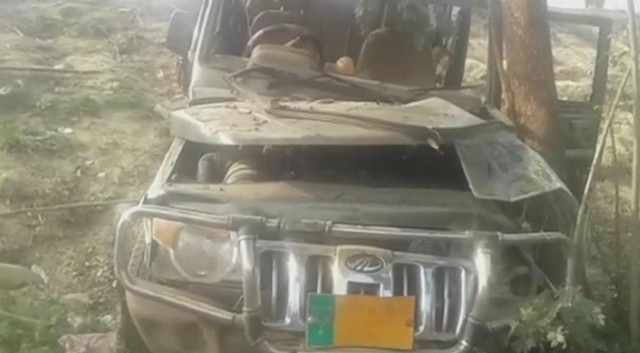
Media Went Crazy Over Sridevi But Was Unmoved By The Mowing Down Of School Children

By Vidyadhar Date

One can understand the BJP suppressing the involvement of its drunken leader in the killing of nine school children and injuring 20 other children in broad daylight in Bihar last week. But why did a large section of the media join in suppressing the news while it gave saturation coverage to the death of film star Sridevi ?.

We are disturbed by the regular shooting of school children in the U.S. and rightly so. But the Indian society in general seemed take little cognisance of the Bihar killing. May be because it was in a rural area and the kids were from poor families. But so many little kids are mowed down and there is little outcry ?

Similarly the death of 12 workers in a fire in a farsan shop in Kurla last December has been quickly forgotten while the death of the rich in a fire in the Kamala mill compound got wide publicity for several weeks.

The death in the fire and the road crash are more horrible than the gun shooting in the U.S.The death of the little children is particularly moving because these were real innocents and in no way responsible, they were sanding outside the school. Normally, the police and other authorities are quick to blame the victims of motor crashes in a bid to save the rich killers. The media often prepares the ground to acquit the killer through careless reporting by saying the motorist suddenly lost control, someone came in the way and so on. All this is usually a result of deliberate misleading feeding of information to gullible young reporters.

The way the media handled the killing of innocents in Bihar can only be considered unprofessional, shameful. It underplayed the news and in many cases downright suppressed it either because of political pressure or usual apathy.

None of the media had any clue to the involvement of the BJP man on the first day of the ghastly incident or even the day after. It is not as if the incident happened late in the day or night when the media could be under pressure. This happened in the afternoon, there were many witnesses naturally because this was outside a school with a lot of people in the area. The BJP’s flag was prominently displayed and it is so clearly visible in photographs. It was illegal of course but in a way it will greatly help in the prosectuion’s case.Even when the BJP man’s involvement became clear on subsequent days, a good section of the media remained silent.

Even the BJP now openly accepts that Manoj Baitha, the local leader, was at the wheel and no effort will be made to protect him. Yet, the authorities let him run away and hide for four days.

Some coverage was given partly because the opposition raised the issue in the legislature and Rahul Gandhi among others made public statements.

Chief minister Nitish Kumar has responded by announcing that a pedestrian road overbridge will now be built for the safety of children. A seemingly good measure but experts feel such a measure only punishes common people. The real solution is to tame the monstrous traffic, make crossing safe for children and adults. According to experts the police too show poor understanding of child psychology. It is almost sinister to transfer the responsibility of safety on little children. Elementary study of psychology shows that children’s faculties for safety are not sufficiently developed at that age. A centre at the Cooperage garden near Mantralaya in Mumbai shows how misplaced police understanding is as children are routinely brought here for training. Dinesh Mohan, the top most expert from IIT Delhi, has trounced such measures as useless.

India has the disgraceful record of being at the top of the chart in the world in road crash deaths, with more than 130,000 in a year and this is also a highly conservative as many deaths and injuries are not recorded, reported due to corruption, social apathy

Road safety is a top priority in advanced countries it is dealt with at the highest level of governance and road deaths are reduced through policy measures. In India the deaths are rising which reflects very poorly on governance. It is sad that in India politicians and bureaucrats, who should give the lead in safety, are contributing to deaths. Last month, Mumbai’s additional customs commissioner, an official of the administrative service, no less, allegedly knocked down two early morning walkes, killing one. The vehicle then went on a further 90 metres and crashed into a police.

The government and the influential automobile manufacturers have unleashed the motor car culture on the people without providing essential safeguards. The government machinery is largely ill equipped and corrupt as has been amply demonstrated so far. Recently, the Mumbai high court passed severe strictures on the RTO regional transport government machinery for having few facilities for testing the fitness of motor vehicles.

Germany like many other countries has sharply brought down the road death figures through various measures. A record 21,000 people were killed in the country in 1970 which is a very high figure considering its population. Now, the number is brought down to 3214 in 2016.

The U.S. is doing badly after some success. The daily toll there is 29. And with all its spectacular and high expenditure on infrastructure like highways and flyovers its cities experience the worst traffic jams, including Los Angeles, the car capital.
Yet, a good section of our media and the government machinery is unhappily compromised with the car culture.

Vidyadhar Date is a senior journalist and author of the book Traffic in the era of climate change.

1 March 2018

Source: https://countercurrents.org/2018/03/01/media-went-crazy-sridevi-unmoved-mowing-school-children/

Ecuador Endangered

By John Seed

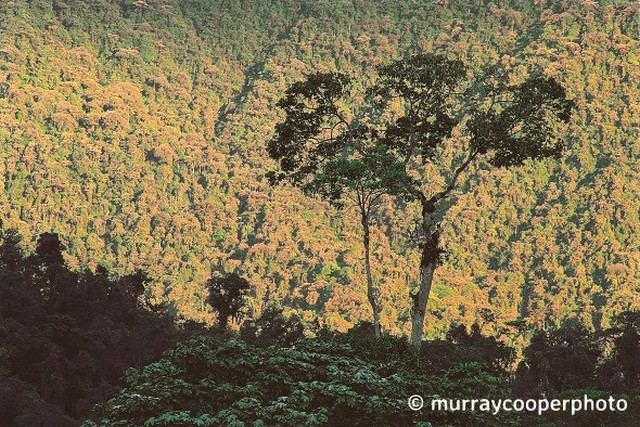
The tropical Andes of Ecuador are at the top of the world list of biodiversity hotspots in terms of vertebrate species, endemic vertebrates, and endemic plants Ecuador has more orchid and hummingbird species than Brazil, which is 32 times larger, more diversity than the entire USA.

In the last year, the Ecuadorian government has quietly granted mining concessions to over 1.7 million hectares (4.25 million acres) of forest reserves and indigenous territories. These  were awarded to transnational corporations in closed-door deals without public knowledge or consent.

This is in direct violation of Ecuadorian law and international treaties, and will decimate headwater ecosystems and biodiversity hotspots of global significance. However, Ecuadorian groups think there is little chance of stopping the concessions using the law unless there is a groundswell of opposition from Ecuadorian society and strong expressions of international concern.

The Vice President of Ecuador, who acted as Coordinating Director for the office of ’Strategic Sectors’, which promoted and negotiated these concessions, was jailed for 6 years for corruption. However, this has not stopped the huge giveaway of pristine land to mining companies.

From the cloud forests in the Andes  to the indigenous territories in the headwaters of the Amazon, the Ecuadorian government has covertly granted these mining concessions to multinational mining companies from China, Australia, Canada, and Chile, amongst others.

The first country in the world  to get the rights of Nature or Pachamama written into its constitution is now ignoring that commitment.

They’ve been here before. In the 80’s and 90’s Chevron-Texaco  dumped 18 BILLION gallons of crude oil there in the biggest rainforest petroleum spill in history.   This poisoned the water of tens of thousands of people and has done irreparable damage to ecosystems.

Now 14% of the country has been concessioned to mining interests. This includes a million hectares of indigenous land, half of all the territories of the Shuar in the Amazon and ¾ of the territory of the Awa in the Andes.

Please sign the  petition and contribute to the crowdfund which will help Ecuadorean civil society’s campaign to have these concessions rescinded.

As founder and director of the Rainforest Information Centre (RIC), I’ve had a long history of involvement with Ecuador’s rainforests.

Back in the late ‘80’s our volunteers initiated  numerous projects there and one of these, the creation of the Los Cedros Biological Reserve was helped with a substantial grant from the Australian Government aid agency, AusAID . Los Cedros lies within the Tropical Andes Hotspot, in the country’s northwest.  Los Cedros  consists of nearly 7000 hectares of premontane and lower montane wet tropical and cloud forest teeming with rare, endangered and endemic species and is a crucial southern buffer zone for the ¼ million  hectare Cotocachi-Cayapas Ecological Reserve.  Little wonder that scientists from around the world rallied to Los Cedros defense.

In 2016  a press release from a Canadian mining company alerted us to the fact that they had somehow acquired a mining concession over Los Cedros! We hired a couple of Ecuadorean researchers and it slowly dawned on us that Los Cedros was only one of 41 “Bosques Protectores” (protected forests) which had been secretly concessioned. For example, nearly  all of the 311,500 hectare Bosque Protector “Kutuku-Shaimi”, where 5000 Shuar families live, has been concessioned. In November 2017, RIC published a report by Bitty Roy, Professor of Ecology from Oregon State University and her co-workers,  mapping the full extent of the horror that is being planned.

Although many of these concessions are for exploration, the mining industry anticipates an eightfold growth in investment to $8 billion by 2021 due to a “revised regulatory framework”  much to the  jubilation of the mining companies . Granting mineral concessions in reserves means that these reserves aren’t actually protected any longer as, if profitable deposits are found,  the reserves will  be mined and destroyed.

In Ecuador, civil society is mobilising and has asked their recently elected government to prohibit industrial mining  “in water sources and water recharge areas, in the national system of protected areas, in special areas for conservation, in protected forests and  fragile ecosystems”.

The indigenous peoples have been fighting against mining inside Ecuador for over a decade.  Governments have  persecuted more than 200 indigenous activists using the countries anti-terrorism laws  to hand out stiff prison sentences to indigenous who openly speak out against the destruction of their territories.

Fortunately, the new government has signalled an openness to hear indigenous and civil society´s concerns, not expressed in the previous administration.

In December 2017, a large delegation of indigenous people marched on Quito and President Moreno promised no NEW oil and mining concessions, and on January 31 2018, Ecuador’s Mining Minister resigned a few days after Indigenous and environmentalist groups demanded he step down during a demonstration. On January 31, The Confederation of Indigenous Nationalities of Ecuador , CONAIE, announced their support for  the platform shared by the rest of civil society involved in the anti-mining work. Then on Feb 15 CONAIE called on the government to “declare Ecuador free of industrial metal-mining“, a somewhat more radical demand than that of the rest of civil society.

But we will need a huge international outcry to rescind the existing  concessions – many billions of dollars of mining company profits versus   some of the most biologically diverse ecosystems on Earth, and the hundreds of local communities and indigenous peoples who depend on them.

PLEASE SIGN THE PETITION TO SUPPORT THEIR DEMANDS.

From 2006, under the Correa-Glas administration, Ecuador contracted record levels of external debt for highway and hydroelectric dam infrastructure to subsidize mining.  Foreign investments were guaranteed by a corporate friendly international arbitration system, facilitated by the World Bank who had earlier set the stage for the current calamity by funding mineralogical surveys of national parks and other protected areas and advising the administration on dismantling of laws and regulations protecting the environment.

After 2008, when Ecuador defaulted on 3.2 billion dollars worth of its national debt, it borrowed $15 billion from China, to be paid back in the form of oil and mineral exports.  These deals have been fraught with corruption.  Underselling, bribery and the laundering of money via offshore accounts are routine practice in the Ecuadorean business class, and the Chinese companies who now hold concessions over vast tracts of Ecuadorean land are no cleaner. Before leaving office Correa-Glas  removed much of the regulation that had been holding the mining industry in check. And the corruption goes much deeper than mere  bribes.

The lure of mining is a deadly mirage. The impacts of large-scale open pit mining within rainforest watersheds include mass deforestation, erosion, the contamination of water sources by toxins such as lead and arsenic,  and desertification. A lush rainforest transforms into an arid wasteland incapable of sustaining either ecosystems or human beings. T

Without a huge outcry both within Ecuador and around the world, the biological gems and pristine rivers and streams will be destroyed .

But it doesn’t have to be this way. Civil society needs an open conversation with the state. Ecuador has enormous potential to develop its economy based on renewable energy and its rich biodiversity can support a large ecotourism industry. In 2010 Costa Rica banned open-pit mining, and today has socioeconomic indicators better than Ecuador’s. Costa Rica also provides a ‘Payment for Ecosystem Services’ to landholders, and through this scheme has actually increased its rainforest area (from 20% to just over 50% )

Ecuador’s  society and government must explore how  an economy based on the sustainable use of pristine water sources, the country’s incomparable forests, and other natural resources is superior to an economy based on short term extraction leaving  behind a despoiled and impoverished landscape. For example,  studies  by Earth Economics   in the Intag region of Ecuador (where some of the new mining concessions are located) show that ecosystem services and sustainable development would offer a better economic solution let alone ecological and social.

The Rainforest Information Centre is launching a CROWDFUND to support Ecuadorean NGO’s to mobilise and to mount a publicity and education campaign and to help advance  a dialogue throughout Ecuador and beyond : extractivism or a sustainable future?

We have set the crowdfund target at A$15,000 and  Paul Gilding, ex-CEO of Greenpeace International is getting the ball rolling with an offer to match all donations $ for $ so  every $ that you donate will be matched by Paul. Donations are tax-deductible in Australia and the US.

When you sign the  PETITION you will reach not just to the President of Ecuador and his cabinet. The  petition is also addressed to the other actors who have set the stage for this calamity, being:

– The World Bank who funded a project  which collected geochemical data from 3.6 million hectares of Western Ecuador  including seven national protected areas and dozens of forest reserves thus doing the groundwork for the mining industry.

– The international governments and NGO’s who funded the creation and upkeep of these Bosques Protectores and indigenous reserves and other protected sites and who now need to persuade  Ecuador  to prevent their good work from being undone.

The governments of the countries whose mining companies are preparing this devastation. Australian senator Lee Rhiannon (who was part of helping us create Los Cedros 30 years ago) wrote to the Canadian Environment Minister on our behalf and the Canadian Embassy has expressed concern about the bad name Cornerstone is giving the other Canadian mining projects. They have asked us for a meeting to discuss the reports of bad business practices by the company. Likewise, the Chinese government his beginning to  develop  some guidance which will come into effect in March 2018. We are lobbying the Australian government to put pressure on BHP, Solgold and other of our companies preparing to mine protected forests and indigenous reserves in Ecuador.

Visit Ecuador Endangered for more links to the history and causes of Ecuador’s mining crisis. There you will find research, detailed reports and news updates. Contact information can be found for those wanting to be involved in the campaign, which is being run entirely by volunteers. To let the Ecuadorean Government, World Bank and mining companies know you want them to invest in a sustainable future for all, a petition can be found here.

Please join, follow and share this campaign on Social Media.

John Seed is the founder and director of the Rainforest Information Centre in Australia. He has been campaigning to save the world’s rainforests since the 1970s.

23 February 2018

Source: http://www.rainforestinfo.org.au/forests/ecuador/article.htm

Press Release from the Libyan National Popular Movement

The Executive Committee of the Libyan National Popular Movement is following the circumstances and context of the cowardly assassination attempt of the fighter Dr. Bashir Saleh Bashir, member of the Executive Committee of the Movement, and wishes to inform the public of the following:

Firstly:
The medical condition of Dr. Bashir is still critical and has not passed the stage of danger and we all pray to Allah  to heal him quickly.

Secondly:
We have confirmed that the cowardly assassination attempt is not for ordinary criminal reasons, but rather a terrorist assassination for non-criminal motives.

Thirdly:
We call upon the authorities of the South African government to expedite their investigation and to identify the perpetrators and those behind them and bring them to justice.

Fourthly:
We call upon the national forces in Libya and all African national organizations to stand in solidarity with Haj Bashir Saleh and his family in these difficult circumstances, and to hold the local government authorities responsible for their security and personal protection.

The Movement renews its pledge to the masses of the Libyan people to continue the struggle for the restoration of the homeland. We further confirm that targeting our leaders with cowardly assassinations and intimidation will not deter us from carrying out our duty to the homeland.

Freedom for the homeland and sovereignty for the people.

Naser Said

Spokesperson

the Libyan National Popular Movement

25 February 2018

Nikki Haley: The U.S. Embarrassment at the United Nations

By Robert Fantina

23 Feb 2018 – Of all the shameless people serving in the administration of the shameless Donald Trump, one looks in vain for one more ignorant, ill-informed and crass than the United States Ambassador to the United Nations. Nikki Haley has proven repeatedly that she is an embarrassment on the world stage, and the fact that she seems completely oblivious to her repeated acts of appalling stupidity is only further evidence of it.

Her most recent foray into the world of head-scratching nonsense occurred on Tuesday, February 20.  She basically, in her most eloquent way (not!), told the Palestinian government that she wouldn’t ‘shut up’, as was very appropriately suggested to her. She suggested that the Palestinians take “…the path of negotiation and compromise”.

One wonders what color the sky is on Haley’s planet. Her disconnect from reality is so severe that it’s a wonder she is able to string two words together coherently (she seldom makes it much past two).  Why, one might reasonably ask, is it always the Palestinians who have to compromise? Why is no demand ever made on Israel?

A few facts, those pesky things that Haley apparent disdains, may be enlightening.

  • In 1947, the nation of Palestine, by decree of the newly-formed United Nations, was partitioned to establish Israel. Over 750,000 Palestinians were driven from their homes; many of them, and/or their descendants, live in refugee camps to this day. Thousands of Palestinians were brutally slaughtered.
  • Since that time, Israel has encroached on Palestinian land, destroying tens of thousands of Palestinian homes to make room for Israel-only settlements which are illegal according to international law.
  • Israel illegally occupies the West Bank, and arrests without charge men, women and children. It also kills unarmed men, women and children, sometimes on camera, with complete impunity.
  • The Israel Defense Forces (read: Israeli terrorists) stand idly by as Israeli settlers (another version of Israeli terrorists), assault and kill innocent Palestinians, raid their homes and forcibly and illegally evict them, and desecrate their sacred buildings.
  • The illegal Israel blockade of the Gaza Strip is slowly and painfully strangling the nearly 2 million people who live in what is often described as the world’s largest open air prison. These people are in this ‘prison’ despite never having been charged with any crime, other than, what, in Israel’s opinion, is the crime of being Palestinian.
  • Israel’s leaders have called for the murders of pregnant Palestinian women, saying the ‘little snakes’ must be destroyed.
  • Israel’s leaders justify racism by stating that it is necessary to maintain the ‘purity’ of the Jewish state.

Does Haley not see that Israel has any role in this? Does she fail to understand why Palestinians, including their spineless leaders, might feel some hostility towards Israel? Does she not recognize that Israel has a dismal human rights record and is in violation of numerous international laws? She seems to buy into the concept articulated by Palestinian activist Hanan Ashrawi:  “The Palestinians are the only people on earth required to guarantee the security of the occupier, while Israel is the only country that demands protection from its victims.”

Haley wants Palestinians to ‘negotiate and compromise’. Israel, in its oh-so-magnanimous way, is always willing to negotiate ‘without preconditions’. That means that it will talk at the negotiation table as it takes more and more Palestinian land, and kills and imprisons more and more innocent Palestinian people. Such ‘negotiations’ have occurred off and on for decades; the only result is decreasing Palestinian land and increasing oppression of the Palestinians by Israel.

The U.S. has been the dishonest mediator of these negotiations the entire time, and its clear bias towards Israel is nowhere questioned; it cannot now, and never could, be an honest mediator.

And this writer will ask once again why anyone thinks negotiations are possible or necessary. They are not possible, because negotiations can only occur between two parties, each of which has something the other wants, that it can only get by surrendering something it has. Israel takes whatever it wants from Palestine with complete impunity.

Negotiations are not necessary, because international law recognizes Palestine’s and Israel’s borders as those established in 1947. If this writer robs a bank, no one would suggest that he and the bank manager ‘negotiate’ how much of the money he must return. When caught, he must simply return it all, and suffer the consequences of his crime. Israel has stolen huge amounts of land from Palestine. The settlements must all be vacated, and the land returned to the Palestinians. Haley should be reminded that international law forbids an occupying country from moving its citizens permanently onto occupied land. Of course, with her disdain for international law, she would dismiss this concept, assuming she had sufficient intelligence to understand it.

In the U.S., following the most recent slaughter in a high school, there appears to be a shift happening in society. People who have long supported sensible gun control, such as banning the kind of automatic weapons, whose sole purpose is to kill lots of people very quickly, that were used in several mass murders, seem now to be taking control of the narrative. This is the first step towards real change.

Surveys in the U.S. repeatedly show diminished support for Israel, and increasing support for Palestine. This has alarmed even Israel’s leaders, who recognize that the younger generation of U.S. citizens, the U.S.’s future leaders, are no longer supportive of the racist ideology of Zionism. It is time for people who recognize Israel’s constant, horrific crimes, to seize the narrative, and confront Haley and the other administration officials, and the members of Congress, who are beholden not to their constituents, but to pro-Israeli lobbies, and enable the Palestinians to live in the peace and human dignity that all people deserve, and that the U.S. and Israel have for generations denied them. Haley’s ridiculous pronouncements at the U.N. notwithstanding, Palestine will be free. Those of us who believe in human rights must make it so.

Robert Fantina is an activist and journalist, working for peace and social justice. A U.S. citizen, he moved to Canada shortly after the 2004 presidential election, and now holds dual citizenship.

26 February 2018

Source: https://www.transcend.org/tms/2018/02/nikki-haley-the-u-s-embarrassment-at-the-united-nations/

America’s ‘Liberalism’ & Other Inhumane Styles of Governance at Home and Internationally

By Richard Falk

25 Feb 2018 – With apologies for this long post, which attempts to situate the struggle for an ethically and ecologically viable political future for the United States and the world in the overheated preoccupation with Trump and Trumpism, which is itself a distraction from the species challenges confronting the whole of humanity at the present time. Many of us, and I include myself, have allowed the side show to become the main attraction, which is itself a reason for struggle against the enveloping darkness.

The Psycho-Politics of Geopolitical Depression

It should not be all about Trump, although his election in 2016 as U.S. president is symptomatic of a menacing national tailspin. This downward political drift in the United States, not only imperils Americans, but threatens the world with multiple catastrophes, the most worrisome of which involves Trump’s double embrace of nuclearism and climate denialism. Unfortunately at present, the U.S. global role cannot be easily replaced, although it always had its serious problematic aspects and should not be sentimentalized, not least of which were associated with its many often crude military and paramilitary efforts to block the tide of progressive empowerment in the post-colonial world: first, as the global guardian of capitalism, and later, as the self-anointed bearer of human rights and democracy for the benefit of the world’s unenlightened and often shackled masses. As disturbing, has been the American leading role in the emergence and evolution of nuclearism and its foot-dragging bipartisan responses to ecological challenges.

During the early post-Cold War presidencies of George H. W. Bush, Bill Clinton, and George W. Bush, Washington was busy promoting the expansion of ‘market-based constitutionalism’ as supposedly leading the whole world to a bright global future, but such plans backfired badly, especially in the testing grounds of the Middle East, where intervention produced neither democracy nor order, but gave rise to turmoil, violence, and suffering that disrupted the lives of the peoples of the region. These democratizing ‘crusades’ were carried out beneath banners proclaiming ‘enlargement’ (the expansion of democratic forms of governance to additional countries) and ‘democracy promotion’ (induced by regime-changing military interventions and coercive diplomacy).

Democracy as a term of art included the affirmation of property rights and market fundamentalism.

Trump comes along, building upon this inherited warrior phase of triumphalist global leadership that was a legacy of the Cold War, dramatized by the collapse of the Soviet Union and the resulting supposed geopolitical vacuum. The United States sought to fill this vacuum, including an ideological arrogance that underpinned its shameless reliance upon the most powerful military machine in history to gets its way all over the planet, thereby forfeiting the opportunity to strengthen international law and UN as well as eliminate nuclear weaponry. Seemingly more benignly the American leadership role also strongly reflected its globally endorsed popular culture in dress, music, and food as well as appreciated for its encouragement of cooperative arrangements, the constitutional atmosphere of diversity and governmental moderation in the American heartland, and consumerist conceptions of human happiness.

Trump’s diplomacy defiantly turns its back on this softer, gentler (albeit nevertheless deficient) profile of American leadership. The United States is now becoming a country that bargains, intimidates, even bullies to gain every possible advantage in its international dealings, whether at the UN, in trade negotiations, or in an array of bilateral and regional dealings concerning global warming and security policy, with almost every international dealing being converted into a demeaning win/lose transaction. Trump’s antiquated bluster about ‘America, First’ has stripped away the earlier more mellow and selectively constructive win/win claims of ‘America, Liberal Global Leader.” By turning away from this earlier brand of self-interested ‘liberal internationalism’ the U.S. is losing many of these benefits that often accrued from international cooperation and win/win understandings of 21st century statecraft, at least as conducted within the structural and ideological boundaries of neoliberal globalization and the geopolitical management of global security.

More concretely, Trump’s presidency has so far meant a record military budget, relaxed rules of military engagement, geopolitical militarism, irresponsible regional coercive diplomacy, a regressive view that the UN is worthless except as an enemy-bashing venue, a negative assessment of multilateral treaties promoting a cooperative approach to climate change and international trade, as well as a hawkish approach to nuclear weaponry that features bravado, exhibits unilateralism, and in the end, employs on hard power and irresponsible threats to achieve goals formerly often pursued by liberal international global leadership. Without exaggerating the benefits and contributions of liberal internationalism, it did give science and rationality their due, was willing to help at the margins those suffering from slow and uneven economic and social development, and relied on international cooperation through lawmaking and the UN to the extent feasible, which was always less than what was necessary and desirable, but at least, not taking such a cynical and materialist view of the feasible as to create a condition of policy paralysis on urgent issues of global scope (e.g. climate change, nuclearism, migration).

Trump’s ideological prism, which is alarmingly similar to that of the many other leaders throughout the world who have recently been leaning further and further rightwards. The internal politics of many states has turned toward chauvinistic and mean-spirited forms of autocratic nationalism, while cooperation in meeting common global challenges has almost disappeared. Instead of hope and progress, the collective consciousness of humanity is mired in despair and denial, and what is more, the dialectics of history seem to be slumbering, with elites and even counter-elites afraid of utopias on the basis of a widespread (mis)reading of 20th century political experience, seemingly entrapped in cages constructed by predatory capitalism and rapacious militarism, designed to render futile visions of change adapted to the realities of present and emergent historical circumstances. Inside these capitalist and militarist boxes there is no oxygen to sustain liberating moral, political, and cultural imaginings. Trump is not only a distasteful and dangerously dysfunctional leader of the most powerful and influential political actor in the world. He is also a terrifying metaphor of an anachronistic world order stuck in the thick mud of mindlessness when it comes to fashioning transformative responses to fundamental challenges to the ways our political, economic, and spiritual life have been organized in the modern era of territorial sovereign states.

America’s ‘Liberalism’ Observed

In American political discourse the word ‘liberal’ denotes someone who is devoted to humane values, supports such civil society actors as Human Rights Watch and Planned Parenthood, hopes that U.S. foreign policy generaly conforms to international law and be quietly respectful of the UN (while coping skillfully with its alleged anti-Israel bias), is rabidly anti-Trump, but considered Sanders either an unrealistic or undesirable alternative to Clinton, and currently hopes for that the 2020 presidential contender will be chosen from familiar, seasoned sources, which means Joe Biden, or if not, then Corey Booker (senator from Ohio). This kind of thinking scoffs at the idea of Oprah or Michelle Obama as credible candidates. Such liberals support Israel, despite some misgivings about the expansion of settlements and Netanyahu’s style of leadership, and continue to believe that America occupies the high moral ground in international relations due to its support of ‘human rights’ (as understood as limited to social and political rights) and its constitutionalism and relatively open society at home.

In my view, such a conception of liberalism if more correctly understood as ‘illiberal’ in its essence under present world historical circumstances, at least in its American usage. The European usage of ‘liberal’ is centered on affirming a market-based economy of capitalism as preferable to the sort of state-managed economy attributed to socialism, and little else. In this sense, the U.S. remains truly liberal, but this is not the main valence of the term in its American usage, which is as a term of opprobrium in the hands of Republicans who brand their Democratic opponents as ‘liberals,’ which is then falsely conflated with ‘left’ politics, and even ‘socialism.’ Remember that George H.W. Bush resorted to villifying his Democratic opponent, Michael Dukakis, by identifying him with the American Civil Liberties Union, which he associated with being ‘in left field.’

More recently, the Trump base characterizes the Obama presidency as ‘leftist’ and ‘socialist,’ which is inaccurate and confusing. At most, on issue of domestic concern its policies could be characterized as ‘liberal’ or centrist, with no structural critique of capitalism or the American global imperial role. ‘Conservative,’ ‘American,’ ‘Nationalist,’ and ‘Patriotic’ are asserted as alternatives to what is being opposed. Part of this word game is to conflate ‘liberal’ with ‘left’ or ‘socialist,’ thereby depriving either term of any kind of usable meaning.

Such ideological and polemical labeling practices are confusing and wrong, muddling political categories. To be genuinely left in American politics means to care for the poor and homeless, and not be primarily preoccupied with the setbacks endured by the middle classes. It means to be skeptical of the Democratic Party establishment, and to favor ‘outliers’ as challengers on the national level at least as radical as Bernie Sanders or at least as humane and amateurish as Oprah Winfrey. Above all it means to be a harsh critic of Wall Street at home and neoliberal globalization as structurally predatory and ecologically hazardous. It also means anti-militarism, opposition to Washington’s ‘special relationships’ with Israel and Saudi Arabia, and a rejection of America’s role as the prime guardian of the established global order on the basis of its military prowess, specifically, its worldwide naval, space, and paramilitary and covert ‘full-spectrum dominance’ as deployed so as to project devastating destructive capabilities throughout the entire planet.

In effect, by this critique, the American liberal is more accurately regarded and sensitively perceived as mainly ‘illiberal.’ Why? Because insisting on swimming in the mainstream when it comes to political choices, reluctant to criticize Wall Street or world trade and investment arrangements, and above all else, reducing ‘human rights’ to civil and political rights, while disregarding ‘economic, social, and cultural rights,’ is to endorse, at least tacitly, an illegitimate status quo if assessed on the basis of widely shared ethical principles.

Such self-induced partial blindness allows ‘liberals’ to view Israel as ‘the only democratic state’ in the Middle East or to regard the United States to be the embodiment of democracy (with Trump and Trumpism viewed as a pathological and temporary deviation) despite millions mired in extreme poverty and homelessness, that is, by treating economic, social, and cultural rights as if they do not exist. Such ‘liberals’ continue to complain invidiously about the lack of freedom of expression and dissent in such countries as China, Vietnam, and Turkey while overlooking the extraordinary achievements of these countries if social and economic rights are taken into account, especially with respect to lifting tens of millions from poverty by deliberate action and in a short time. In other words, addressing the needs of the poor is excluded from relevance when viewing the human rights record of a country, which makes a country likeTurkey that has done a great deal to alleviate mass poverty of its bottom 30% no different from Egypt than has next to nothing when it comes to human rights. It is not a matter of ignoring failures with regard to political and civil rights, but rather of disregarding success and failure when it comes to economic, social, and cultural rights. It might also be noted that the practical benefits of achievements in civil and political rights are of primary benefit to no more that 10% of the population, while economic, social, and cultural rights, even in the most affluent countries, are of relevance to at least a majority of the population, and generally an even larger proportion.

Even if this discriminatory treatment of human rights were to be overcome, and the economic deprivations endured by the poor were to be included in templates of appraisal, I would still not be willing to join the ranks of American liberals, at least not ideologically, although lots of opportunity for common cause might exist on matters of race, gender, and governmental abridgement of citizen rights. Liberalism is structure-blind when it comes to transformative change for either of two reasons: the conviction that the American political system can only get things done by working within the established order or the firm belief that the established order in the country (and the world) is to be preferred over any plausible alternative. This reminds me of the person who drops a diamond ring in the middle of a dark street and then confines his search to the irrelevant corner where there the light happens to be shining brightly.

In my view, we cannot hope to address challenges of class, militarism, and sustainability without structural change, and the emergence of a truly radical humanism dedicated to the emergence of an ecological civilization that evolves on the basis of the equal dignity and entitlement of individuals and groups throughout the entire world. In other words, given the historical situation, the alternative to this kind of planetary radicalism is denial and despair. That is why I would not be an America liberal even if liberals were to shed their current ‘illiberal’ ways of seeing and being. At the same time, such a refocusing of political outlook entails the replacement of balance of power or Westphalian realism with some version of what Jerry Brown decades ago called ‘planetary realism.’

Yet progressives have their own blind spots. To denote the rise of Trump and Trumpism as ‘fascism’ is premature, at best, and alarmist at worst. There are plenty of reasons to complain about the failure of the leadership to denounce white supremists or to show respect for dissenting views, but to equate such behavior with fascism is not too much different from branding the Obama presidency as ‘socialist.’ There are tendencies on the right and left that if continued and intensified, could lead in these feared directions, but there are many reasons to doubt that such political extremism is the real objective of the varying forces vying for political control in the United States at the present time. The two sets of concerns are not symmetrical. A socialist future for the country seems desirable, if feasible, while for fascism, even its current glimmerings are undesirable. Of course, this is an expression of opinion reflecting an acceptance of a humanist ethos of being-in-the-world.

The End of American Democracy

There is a rather prescient article in the current issue of The Atlantic (March 2018, 80-87) written by Yascha Mounk, bearing the provocative title “America is Not a Democracy.” Mounk relies on recent empirical surveys of political effectiveness in political arenas to suggest results that are ‘shocking’ if appraised by reference to democratic myths about government of, by, and for the people of the country. What counts, according to Mounk, are “economic elites and special interest groups” (82) that can get what they want at least half of the time and stop what they don’t want nearly always. In contrast, the people, including mass-based public interest groups, have virtually zero influence on the policy process, and hence the conclusion, America is no longer democratic.

In Mounk’s words: ”across a range of issues, public policy does not reflect the preferences of the majority of Americans. If it did, the country would look radically different: Marijuana would be legal and campaign contributions more tightly regulated; paid parental leave would be the law of the land and public colleges free; the minimum wage would be higher and gun control much stricter; abortions would be more accessible in the early stages of pregnancy and illegal in the third trimester.”(82) All in all, such a listing of issues does make the case, especially if combined with the commodification of the electoral process, that America should no longer be considered a democratic states even if it maintains the rituals, and some of the practices of a genuine democracy—elections, freedom of assembly, freedom of expression.

Many, including Mounk, acknowledge that from the beginning the distinctive American undertaking was to establish a ‘republic,’ not a ‘democracy.’ As we all know, the founders were protective of slavery and property holders, opposed to women’s sufferage, and fearful of political majorities and special interests, degraded as ‘the mob’ and ‘factionalism.’ Yet little by little, with the American Civil War as one turning point and the New Deal as another, the legitimating foundation of the American system changed its foundational identity, increasingly resting its credibility on the quality of its ‘democractic’ credentials. Reforms associated with ending slavery and later challenging ‘Jim Crow’ racisim, through the support of civil rights, by giving women the vote and more recently validating claims to equality and accepting the need for adequate protection against harassment, and moving toward a safety net for the very poor and vulnerable were undertaken in the spirit of fulfilling the democratic mandate.

When it comes to social, economic, and cultural concerns, the U.S. leadership, personified by Trump and reinforced by the Trumpism of the Republican Party, the situation is even more grim than frustrating what Rousseau called ‘the general will.’ Anti-immigrant and anit-Muslim policies are openly espoused and enacted by the Executive Branch and Congress to the outer limits of what the courts, themselves being transformed to endorse the agenda of the right-leaning authoritarian state. Perhaps, even more revealing is the resolve of the Trump administration to save federal monies by cutting programs associated with the very poor. The Supplemental Nutrition Assistance Program (SNAP), lending necessary food assistance to as many as 41 million Americans, known popularly as ‘food stamps’ is illustrative.

Although the government spent about $70 billion on SNAP in 2017 this was less than 2% of the $4 trillion federal budget on SNAP, and yet the Trump administration wants to cut coverage by nearly 30% over the course of the next decade and reconstitute the program in ways that harm the self-esteem and dignity of recipients.

The overseas record of the United States has inflicted death on millions of vulnerable people since the end of World War II, as well as sacrificed hundreds of thousands American on various foreign killing fields, including those maimed, inwardly militarized and suicidal, and otherwise damaged mentally and physically. And for what? The Vietnam War experience should have enabled the Pentagon planners to learn from failure and defeat that military intervention in the non-Western world has lost most of its agency in the post-colonial world. This American learning disability is exhibited by the repetition of failure and defeat, most notably in Afghanistan and Iraq, where the human losses were great and the strategic outcome eroded further American legitimacy as global leader and manager of global security.

In a notable article, Matthew Stevenson summarizes the persisting significance of the Vietnam War in the period since 1945: “The Vietnam War and the history that followed exposed the myth of America’s persistent claim to unique power and virtue. Despite our awesome military, we are not invincible. Despite our vast wealth, we have gaping inequalities. Despite our professed desire for global peace and human rights, since World War II we have aggressively intervened with armed force far more than any nation on earth. Despite our claim to have the highest regard for human life, we have killed, wounded, and uprooted many millions of people, and unnecessarily sacrificed many of our own.” [“Why Vietnam Still Matters: an American Reckoning,” Counterpunch, Feb. 23, 2018, the first of an eight-part article, highly recommended.]

Where Next?

For those seeking justice, a hopeful future, humane governance, and the cultural worldview of an ecological civilization globally, nationally, and locally, it is vital to acknowledge and recognize that we currently living in a lamentable period in human history with storm clouds hovering over every horizon in sight.

The American scene has hardly ever been worse. A president that bluffs about engaging in nuclear war and seems never more comfortable than busy bullying yesterday’s associate or getting high on a string of belligerent tweets. And if Trump would mercifully move on, we are left with Pence, a sober evangelical who will walk the plank to enact the Republican miscreant agenda. And if Pence would also favor us with disappearance, the stage is left free for Paul Ryan to walk upon, a dour architect of a meanly reconstituted American reality along the dystopian lines of hierarchy and domination that Ayn Rand depicted in Fountainhead. There is a there there where angels fear to t*read.

Maybe there is enough wakefulness in the country that the Republicans will suffer a humbling defeat in the 2018 midterm elections. Maybe the youth of the country will march and issue demands, and not get tired, insisting on a Democratic Party that can be trusted with the nation’s future, and is not beholden to Wall Street, the Pentagon, and Israel. Symbolically and substantively this means a rejection of Joe Biden and Corey Booker as Democratic standard bearers. If fresh faces with fresh ideas do not take over the reins of power in Washington, we will do not better that gain a brief respite from Trump and Trumpish but the Doomsday Clock will keep clicking!

And even if the miraculous happened, and the Republican menace was somehow superseded, we would likely be left with the problems posed by the liberal establishment once reinstated in control of governmental practice. There would be no political energy directed toward nuclear disarmament, transforming predatory capitalism, and creating conditions whereby everyone residing in this richest of countries could look forward to a life where health care, education, shelter, and food were universally available, where international law genuinely guided foreign policy on matters of war and peace, and where ecological sensitivity was treated as the essence of 21st sovereignty. To address global migration patterns, walls and harsh exclusion would be replaced by direct attention to the removal of root causes explaining why people take the drastic step of uprooting themselves from what is familiar and usually deeply cherished for reasons of familiarity, memory, and sacred tradition.

Richard Falk is a member of the TRANSCEND Network, an international relations scholar, professor emeritus of international law at Princeton University, author, co-author or editor of 40 books, and a speaker and activist on world affairs.

26 February 2018

Source: https://www.transcend.org/tms/2018/02/americas-liberalism-other-inhumane-styles-of-governance-at-home-and-internationally/

“All I Wish is for Palestine to be Free” — Freedom Fighter Ahed Tamimi

By Priti Gulati Cox

The Palestinian cause is not just for Palestinians, not even just for Arabs. The Palestinian cause is a humanitarian cause. What makes me happy is to see the humanitarians of the world stand with us in solidarity to free our land.

— Ahed Tamimi, Empire Files: Abby Martin Meets Ahed Tamimi—Message From A Freedom Fighter.

In 1976, the Palestinian villages of Nabi Saleh and Deir Nidham were encroached upon by Israeli settlers, and their ever-expanding colony of Halamish was born. In December 2009, little Nabi Saleh began holding peaceful demonstrations every Friday in opposition to settlement growth and the usurpation of the land’s fresh water springs.

Eight years later, on Friday December 15, 2017, the residents of Nabi Saleh were protesting US president Donald Trump’s recognition of Jerusalem as the capital of Israel. During the protest, Israeli occupation forces shot 15-year-old Mohammad Tamimi in the face with a rubber bullet, seriously wounding him. Shortly afterward, Mohammad’s 16-year-old cousin Ahed Tamimi responded by accosting two Israeli soldiers right in front of her home. She reviled, slapped, and kicked them in a remarkable act of defiance. By Monday, a video of the confrontation taken by her mother had gone viral worldwide.

(Ahed has been resisting Israeli occupation since she was nine years old. And she’s not the only one in her family to do so. Her parents have been resisting the occupation for many years and several members of her extended family have been killed by Israeli troops. Most recently another of her cousins, Musab Firas al-Tamimi of Dier Nidham, was the first teen to be shot and killed by occupation forces earlier this year.)

In the early hours of December 19, Israeli forces raided Ahed’s home and arrested her. According to her father Bassem Tamimi, it  took “at least 30 soldiers” to carry out the raid. When that afternoon Ahed’s mother Nariman went to the police station where her daughter was being held, in order to be present for her interrogation, she herself was arrested.

On January 31, 2018 Ahed turned 17 in prison.

Ahed’s trial began on February 13, behind closed doors. She has been slapped with twelve charges, including stone-throwing, a charge levied against the vast majority of detained Palestinian children and punishable under military law by up to 20 years in prison. Stone-throwing and even participating in demonstrations are “security offenses” under the Israeli military court system.

When I first started work on this embroidered poster of Ahed Tamimi, I wanted it to be a testimony to her predicament. But as I read further about the treatment of Palestinian children at the hands of Israeli occupation forces and learned, for instance, that since the 2000 Al-Aqsa Intifada, more than 12,000 children have been detained by the Israeli military, I was reminded that beyond Ahed’s story are countless incidents that have yet to attract much media attention. For example, following Trump’s call to move the embassy to Jerusalem, the Israeli occupation forces detained not one but about 450 children.

It doesn’t matter how, when, or at what age a Palestinian might resist illegal Israeli military occupation. Any resistance is a crime in the eyes of the occupier’s law—in a nation whose own citizens’ first and last toy is fated to be a gun.

To such jaded eyes, a Palestinian resister, whether it be 13-year-old Abdel Raouf al-Bilawi from Dheisheh refugee camp in Bethehem, who was sentenced on January 22 to four months in prison for throwing stones or 24-year-old journalist and photographer Bushra al-Taweel who was arrested at her home in Um al-Sharyet, Ramallah on the night of November 1, 2017, Palestinians of every shape, size, age or gender are being gradually cleansed from their land.

A shocking tactic in the ethnic cleansing being carried out by the Israeli military is that they target their “enemy” when they’re young.  Bushra al-Taweel, for example, was first arrested on July 6, 2011 when she was just 18 years old. Get them young and then break them. That’s the strategy.

This trend—the arrest of Palestinian children by occupation forces—is a rising one. Over the years, the Prisoner Support and Human Rights Association Addameer has witnessed “a decrease in the overall prison population, but … a vast increase in the number of children being held,” and has found that around “700 Palestinian children under the age of 18 from the occupied West Bank are prosecuted every year through Israeli military courts after being arrested, interrogated and detained by the Israeli army.”

They [the Israeli soldiers] laughed and laughed at me. I told them: ‘You are laughing at us now, but you don’t know that Palestine will be free and we will laugh at you when you leave.’

— Ahed Tamimi.

Pity the occupier of Palestinians that’s viewing its “enemy” through the barrel of a gun—a barrel-visioned fighting force that never really grew up or maybe was never even really a child. Is it any wonder that such a force is incapable of distinguishing between a child and an adult? Not that it matters, because whether an adult or a child, each and every occupied Palestinian feels the hot wrath of occupation.

Denial of resources like water to Palestinians does not discriminate between the old and the young. It parches them equally. The wall that separates a farmer from his fields does not magically open up when a child approaches it. It sends a message equally. The tear gas that is fired by Israeli forces into Palestinian homes (before they are eventually bulldozed) tortures all who are inside. Even so, attacking and imprisoning children is unconscionable by any International law standards.

We often play, but we get shocked when soldiers enter places of play therefore they destroy all of our happiness. Children often go to school and encounter locked barricades, so they are forced to return to their homes…. We often come back from parties and find locked barricades so that destroys all the joy and happiness we had.

— Ahed Tamimi.

The systematic collective punishment imposed on Palestinians includes arrests, interrogations, house arrest,  and zero protection in their formative years. It thereby alienates them from their families and familiar surroundings and disrupts their studies. There are sexual threats aimed at coercing false confessions; deceptive techniques aimed at recruiting informants; psychological and physical torture; slapping, beating, kicking, and denial of food and water for long periods; and, of course, false accusations of terrorism.

While the focus on Ahed Tamimi is important and her commitment is something that we should all admire, it is essential that there is focus on the situation for all children in the occupied Palestinian territory. Ahed Tamimi’s case, and her treatment, is not exceptional; it is, unfortunately, the norm.

— Addameer, Prisoner Support and Human Rights Association, Palestinian child prisoner population doubles over last three years, January 18, 2018.

As of 2017, there are 350 children being held in Israel’s prisons. Each of them, as well as each of those who preceded them, is a freedom fighter like Ahed. They all deserve their own embroidered posters and media attention.

I leave you with some more of Ahed’s heartbreaking words, arising from a place where the most natural children’s activities—playing, studying—are barricaded, walled and settled. She describes the discovery of lost childhood pleasures under almost unimaginable circumstances.

These are the bullets which the soldiers shoot at us (the necklace Ahed is wearing in the embroidered poster.) We collect them after they leave the village. [Touching her necklace Ahed says] These came from my uncle who was martyred. My cousin gave them to me. We make beautiful things out of them, like jewelry. We create life from death. They come to kill us with it but we convert it into things which we enjoy and benefit from.

Priti Gulati Cox (@PritiGCox) is an interdisciplinary artist. She lives in Salina, Kansas. See more of her work here.

24 February 2018

Source: https://countercurrents.org/2018/02/24/wish-palestine-free-freedom-fighter-ahed-tamimi/

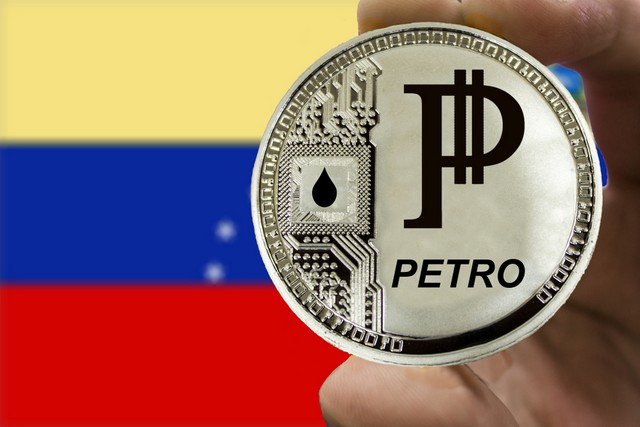
The Venezuelan “Petro” – Towards A New World Reserve Currency?

By Peter Koenig

As this article goes to print, Globovision TV quotes Venezuelan President Nicolas Maduro announcing the launch of a new cryptocurrency, the “Petro Oro”. It will be backed by precious metals. The launch of the new cryptomoney is scheduled for the next week. No details of the new offering are available at this point.

“I do not want to rush things, but we have a surprise regarding the petro and the gold, which will have the same dimension as it has been related to oil, but it is the theme of next week,” the President says. The first public offering, the ‘Pre-sale’ of 38.4 million of the oil-backed “Petro” on 20 February, has raised US$ 735 million equivalent which is considered a great success.

Imagine an international currency backed by energy? By a raw material that the entire world needs, not gold – which has hardly any productive use, but whose value is mostly speculative – not hot air like the US dollar. Not fiat money like the US-dollar and the Euro largely made by private banks without any economic substance whatsoever, and which are coercive. But a currency based on the very source for economic output – energy.

On February 20, 2018, Venezuela has launched the “Petro” (PTR), a government-made and controlled cryptocurrency, based on Venezuela’s huge petrol reserves of about 301 billion barrels of petrol. The Petro’s value will fluctuate with the market price of petrol, currently around US$61 per barrel of crude. The Petro was essentially created to avoid and circumvent illegal US sanctions, dollar blockades, confiscations of assets abroad, as well as to escape illegal manipulations from Florida of the Bolivarian Republic’s local currency, the Bolívar, via the black-market dollars flooding Venezuela; and, not least, to trade internationally in a non-US-dollar linked currency. The Petro is a largely government controlled blockchain currency, totally outside the reach of the US Federal Reserve (FED) and Wall Street – and it is based on the value of the world’s key energy, hydrocarbons, of which Venezuela has the globe’s largest proven reserves.

In a first batch Venezuela released 100 million Petros, backed by 5.342 billion barrels of crude from the Ayacucho oil fields of Orinoco; a mere 5% of total proven Venezuelan reserves. Of the 100 million, 82.4% will be offered to the market in two stages, an initial private Pre-Sale of 38.4% of so-called non-minable ‘tokens’, followed by a public offering of 44% of the cryptomoney. The remaining 17.6 million are reserved for the government, i.e. the Venezuelan Authority for Cryptomoney and Related Activities, SUPCACVEN.

When launching the currency, on 20 February 2018, Vice-president Tareck El Aissami declared, “Today, the Petro was born and we will formally launch the initial pre-sale of the Venezuelan Petro. Venezuela has placed herself in the vanguard of the future. Today is a historic day. Venezuela is the first nation to launch a cryptomoney, entirely backed by her reserves and her natural riches.” President Maduro has later affirmed that his country has already entered contracts with important trading partners and the world’s major blockchain currencies.

Can you imagine what this means? – It sets a new paradigm for international trade, for safe payment systems that cannot be tampered with by the FED, Wall Street, SWIFT, New York courts, and other Washington puppets, like the European Central Bank (ECB), the unelected European Commission (EC) and other EU-associated Brussels institutions. It will allow economic development outside illegal ‘sanctions’. The Petro is a shining light for new found freedom from a hegemonic dollar oppression.

What is valid for Venezuela can be valid for other countries eager to detach from the tyrannical Anglo-Zion financial system. – Imagine, other countries following Venezuela’s example, other energy producers, many if not most of whom would be happy to get out from under the Yankee’s boots of blood dollars inundating the world thanks to uncountable wars and conflicts they finance – and millions of innocent people they help kill.

Rumors have it, that in a last-ditch effort to salvage the faltering dollar, the FED might order the IMF to revert to some kind of a gold standard, blood-stained gold. – Of the 2,300 to 3,400 tons of gold mined every year around the globe, it is estimated that about a quarter to a third is illegally begotten, so called ‘blood’ gold, extracted under the most horrendous conditions of violence, murder, opaque mafia-type living (and dying) conditions, child labor, sexual enslavement of women, many of whom way under-age, abject poisoning of humans with heavy metals, mercury, cyanite, arsenic and more, contamination of surface and underground water ways, vast illegal deforestation of tropical rain forests – and more. That’s the legacy of gold, the MSM, of course, doesn’t talk about.

That’s what the west based its monetary system on until 1971, when Nixon decided to replace gold with the fiat dollar which then became de facto the world’s major reserve currency, albeit declining rapidly over the last twenty years. In desperation, Washington might want to apply another gold-based international norm to salvage the faltering dollar. Of course, a norm designed to favor the US, with the rest of the western and developing world destined to absorb the astronomical US debt.

Since the world’s major goldmining corporation and the illegal gold-digging mafia networks work hand-in-hand, smuggled gold works its way intricately into the dominium of shady traders, many of whom also deal with so-called white gold (drug powder), washing gold and drug-money simultaneously, thereby confounding and obscuring the origins of either. Eventually this illegal gold is purchased by major gold mining or refining corporations mixed with ‘legal’ gold, so that the illegal portion is no longer traceable.

Therefore, every ounce of gold that would back our money, the purchases of our livelihoods would be smeared in blood, in children’s abuse and death, in murdered and enslaved women and men, in poisoned water ways and in a contaminated environment. But the world wouldn’t go for it. No more. There are healthier and more transparent physical assets to back up international currencies, i.e. the Petro, backed by energy. Though not free from socio-environmental damage, petrol-energy may gradually convert into alternative sources of energy, like solar, wind and aquatic power or a combination of all of them.

What the world is to aim for is a monetary system based on each nation’s or group of nations or societies economic output. Today it’s the other way around – it’s the fiat money, designed by the Anglo-Zionist masters of finance, that defines economies. Thus, economies in our western world are prone to be manipulated by the rulers and their institutions – FED, IMF, World Bank, World Trade Organization (WTO) – that support the debt / interest-based monetary rules – they are purposefully maneuvered into booms and busts. With every bust, more capital is transferred from the bottom to the top, from the poor to an ever-smaller elite. The energy-based Petro is a first step away from this sham.

Imagine the Petro was to become the new OPEC currency! The world would need Petros, as it used to need US dollars to buy hydrocarbon energy. But Petros are blockchain-safe, less vulnerable for manipulation. They are not coercive, they are not made for blackmailing ‘unwilling’ nations into submission; they are not tools for violence. They are instruments of equitable production and trade. They are also instruments of protection from the fiat money abuses.

The world’s ten largest hydrocarbon reserve holders

Ranking        Country           Petrol (billion barrels)

1                  Venezuela       300.9

2                  Saudi Arabia    266.5

3                  Canada           169.7

4                  Iran                 158.4

5                  Iraq                 142.5

6                  Kuwait             101.5

7                  Emirates          97.8

8                  Russia             80.0

9                  Libya               48.4

10                Nigeria             37.1

Total                                    1,402.8

Source: TeleSUR / http://geab.eu/en/top-10-countries-with-the-worlds-biggest-oil-reserves/

have a capital base of 1.4 trillion barrels of crude. Not bad to start a worldwide cryptocurrency, based on energy, controlled by energy and by all those who will use energy – that might become a world reserve currency, at par with the Chinese economy- and gold-backed Yuan, but much safer than the fiat currencies of the US-dollar, Euro, British Pound and Japanese Yen.

We are talking about a seismic paradigm shift. Its potential is unfathomable. The move away from the US-dollar hegemony might result in an implosion of the western monetary structure as we know it. It may stop the predator empire of the United States in its tracks, by simply decimating her economy of fraud, built on military might, exploitation and colonization of the world, on racism, and on a bulldozing scruple-less killing machine. The Petro, a secured cryptocurrency based on energy that everybody needs, might become the precursor for an international payment and trading scheme towards a more balanced and equitable approach to worldwide socioeconomy development.

Peter Koenig is an economist and geopolitical analyst. He is also a former World Bank staff and worked extensively around the world in the fields of environment and water resources.

24 February 2018

Source: https://countercurrents.org/2018/02/24/venezuelan-petro-towards-new-world-reserve-currency/

The Syrian White Helmets at the Oscars . . . Again

By Judith Bello

This year, against the background of a massive US escalation of military force in Syria, “Last Men in Aleppo”, a documentary film about the White Helmets of Syria, has been nominated for an Oscar.   Last year, a documentary film called “The White Helmets” won an Oscar for documenting a story that had just unraveled after the liberation of east Aleppo. International TV stations aired footage of ISIS and Al Qaeda fighters shelling west Aleppo homes and schools adjacent to their encampment and snipers attacking civilians attempting to leave through the Humanitarian Corridors. They recorded the buses leaving with the last of the fighters who chose to leave rather than die.  This is the world the film denied.

When “Last Men in Aleppo” was filmed, occupied east Aleppo was the focus of international angst.  Today it is the Damascus suburb of Ghouta, still occupied by extremists and mercenaries.  While,  hundreds of thousands of ordinary people have now returned to reclaim their homes and businesses in Aleppo,  Ghouta remains a war zone. After all the information that has come out to undermine the story of “The White Helmets” and the lies that came out of the last stand of the militants in east Aleppo, one can only gasp at the audacity of the Oscars and the film’s promoters for reprising them today.

It is a stretch to call “Last Men in Aleppo” a documentary.   It isn’t formatted as a documentary, but rather scenes of some personable characters going about their lives and work are loosely strung together by a narrator telling their story   The film has no objective framework.  The reciprocal character of the war is not shown.  We see a battery of mortars but are not told it’s purpose. We are told that government held areas are safe. But the film was made during a time when the militias governing east Aleppo were firing mortars daily under the flags of Al Qaeda and ISIS into civilian homes and schools in west Aleppo.   Many people in west Aleppo, including children, were killed and maimed on a daily basis while pursuing the ordinary business of living their lives. (@EdwardDark, 2016; RT, Dec 2016)

“Last men in Aleppo”  is neither clearly political nor does it tell a deeply personal story. Individual scenes play like fiction. But as a fiction film, “Last Men in Aleppo” is lacking the depth of character development and interpersonal tensions that give substance to a drama.  It is romantic story is told through the musings of heroes trapped in a city under attack.  The men chat with one another and express their feelings about their humanitarian work, their fears and the stress of being under fire.   They don’t seem to understand why they are under fire.

The narrator is unnamed – except maybe in the credits, which are in Arabic.   At the end, we are told that a main character has indeed been martyred, and there is a list of others who died (in Arabic), giving the appearance that they were  the ‘last men in Aleppo’, unlike the people who developed the meme in the real world before heading out of town.  The lead actor is on the festival circuit with Fayyad.

At one point, the main character says “everyone knows what’s going on here”.   But that’s actually not true.   At the time of filming, what was going on in Aleppo was in dispute.  Today, the evidence has been revealed and the story they are telling does not reflect what was found to have been ‘going on’.   While his remark is meant to underscore the veracity of the production, in fact it is a lie.

“Last Men in Aleppo” has some technical redundancies with “The White Helmets” film from last year.   There are a couple of key scenes shown in both films.  One is a brief clip of a Russian bombing run during the night.  It lasts less than 30 seconds and looks something like a thunderstorm striking the ground and igniting fires. Exactly the same clip is repeated in different contexts in 2 different films.  Its a vivid image, but only one.  The significance of the strike is unclear since there was a war going on and we don’t know what was targeted.    The men claim to be terrorized but the film shows only one instance of such a strike. Were there no others?

Another scene shows the rescue of an infant from a collapsed building.  Men struggle and dig and grunt, and finally pull an infant from under the rubble to hold it aloft in joy.  It looks like a birth.   It is a moving scene, and so both movies start with it and end with it.    There are only a few actual rescues shown across both films, out of a claimed 80,000.  They are vividly detailed.  Are these scenes real or manufactured?  Who knows?   Its a movie.

“Last Men in Aleppo” has both implicit lies and explicit lies. Early in the film, one of the men says that a barrel bomb destroyed 2 buildings, well, two barrel bombs destroyed an entire compound, ’10 buildings!’  That is ridiculous.   You couldn’t put enough shrapnel and dynamite in a barrel to do more than damage one building.  They claim barrel bombs are indiscriminate, but they are dropped from helicopters whose pilots can see where they will land.  What constitutes a discriminate weapon?  A mortar?  A firebomb?

Everyone in “Last Men on Aleppo” appears to be well fed and fit as do the men in “The White Helmets”. In contradiction to the news of the day, which claimed that the people of east Aleppo were starving, one man expresses gratitude that he is (in the city) not in the countryside where people are starving. Only the buildings, largely empty, are bombed out and broken in the film.  The men interact affectionately with children, especially a small girl. But there are no women characters. The only women we see are background figures in a market and at a playground.

More than once, you see the men searching the sky with the sound of helicopter blades or a plane in the background.    There it is!    The men comment on the constant threat of attack, but it never results in an immediate attack.   And you never hear the sound of shelling from the internecine wars between the different volatile factions governing east Aleppo, and you don’t hear the sound of ISIS and al Qaeda shelling the civilians of adjacent west Aleppo, a daily reality.   In a different frame entirely, you hear a loud explosion -boom, then the heroes are off to the rescue.  Otherwise, the sounds of war are absent.

There is a scene where the men are repairing their car while the sirens are sounding.   It seems like an emergency.   People walk by and encourage them to hurry.   There is an ambulance parked right behind the car they are working on, but they don’t go and drive that.   The ambulance has the ISIS logo in the back window, but no one notices. Struggling to start your junker is a nice working class meme.  We can relate to that.

Before the liberation of Aleppo, Medicins Sans Frontiers was rubber stamping White Helmets’ claims from outside Syria.  Many of them were untrue but MsF didn’t have anyone on the ground to objectify.  AP has been rubber stamping their photos of unconfirmed events like gas attacks and the hospital bombings.  Vanessa Beeley documents deep connections between the White Helmets and known terrorists on 21st Century Wire.  The real Syrian Civil Defense and ordinary news reporters are not safe where White Helmets work so the WH have the last word and the last picture in most cases.

The White Helmets are getting awards for telling the story the elites want us to hear. Director Fares Fayyad, attended this year’s gathering of the rich and powerful at Davos.  However, co-producer  Kareem Abeed and White Helmets founder Mahmoud Al-Hattar will not join him at the Oscars.  An article in The Vulture , a Hollywood news mag, initially blames Syrian Government inaction which is strange because these men do not accept the sovereignty of the Syrian state, but later quotes Fayyad blaming the Trump Travel Ban, a more likely explanation.  The alliance behind the White Helmets and Al Nusra/Al Qaeda in Syria is veiled but well known to government officials.

The White Helmets have been given hundreds of millions of dollars by western governments.  Lately they are complaining of a lesser income than reported by their donors.   All that money requires an explanation they can’t offer.  People talk about them using the money to produce professional quality films, blockbusters, but these films are not professional and could not have cost hundreds of millions of dollars.   Nor is the rescue equipment they show us worth all that money. By saying it is, we give credibility to another layer of misrepresentation and glamor.

A good camera for their purposes costs at most a few thousand dollars.   They don’t pay million dollar salaries to big name actors.   There aren’t any significant stunts, or even very many extras in the films.   The footage is simple and limited.   The editing and sound are clean but unimaginative. Where did the rest of the money go?  Perhaps the fact that the White Helmets’ offices were in the same block as the Al Qaeda offices in east Aleppo gives us a clue.

Documentarian John Pilger’s widely quoted remark that “The White Helmets are a complete propaganda construct in Syria” says it all.   “Last Men in Aleppo”, is a kind of a repetition of “The White Helmets”.  Like “The White Helmets”, it is a fantasy about events that have been investigated and shown to be other than as represented in the film. The promotion of these films for an Oscar is one of the clearest examples of politically driven Hollywood propaganda in decades.

Judith Bello is a member of the Syria Solidarity Movement and has traveled in Syria twice since the war began, in 2014 and 2016.

27 February 2018

Source: https://countercurrents.org/2018/02/27/syrian-white-helmets-oscars/

Is Oxford University Complicit in Aung San Suu Kyi’s Genocide Denial?

By Maung Zarni

Just as Suu Kyi dismisses allegations of Myanmar’s international human rights crimes as designed to tarnish the image of Myanmar, the administration at Oxford University considers this a “public relations” issue.

19 Feb 2018 – When reality goes off the chart of what is thinkable, fiction is no match.

That Oxford University’s most iconic living graduate Aung San Suu Kyi may find herself at the International Criminal Court for her “complicity of silence in crimes against humanity” and even a genocide will go down in history as one such extraordinary tale.  Yet as the UN Special Rapporteur on the human rights situation in Myanmar, Yanghee Lee made unequivocally clear in her 6-minute interview with UK’s Channel 4 News on 14 February: this is no hyperbole.

In the eyes of many conscientious people, the Nobel Peace Prize winner and former icon of freedom, human rights and democracy has lost her hard-earned moral authority and the image as the “Queen of Democracy” for her role in what UN officially calls “a textbook example of ethnic cleansing” of nearly 700,000 Rohingyas of Myanmar in the last 6 months.

The finger pointing at the Oxford-educated Burmese politician comes not from her old nemesis, that is, the Burmese generals, who had routinely vilified her in their state-controlled media for several decades during her 15-years of house arrest.  Quite the opposite: former admirers and supporters such as Desmond Tutu, the Irish singer Bono who composed “Walk On,” a song dedicated to Suu Kyi; Sir Geoffrey Nice, former Prosecutor in the case against Slobodan Milosevic, who shared the televised Rule of Law Roundtable at LSE with her when she first returned to Britain in 2012; Head of the Human Rights Council Zeid bin Ra’ad Zeid al-Hussein and the Special Rapporteur on the human rights situation in Myanmar, Yanghee Lee, from the Republic of Korea, who, like many Asian women, considered the Burmese “a role model” – all have turned against her, bitterly disappointed at Suu Kyi’s “callous dismissal” of credible allegations as the UN Human Rights Chief put it, of mass atrocities under her watch.

Alarming parallel

In an alarming parallel, both Suu Kyi and Oxford University show a similar indifference to concerns regarding the persecution of the Rohingya – a prolonged history.

Aung San Suu Kyi’s government routinely issues blanket denials in response to any credible findings about its mass graves of Rohingyas executed in cold-blood; systematic and pervasive use of rape against Rohingya women and girls; or destruction of over 340 Rohingya villages in an area covering 100 kilometres.

Suu Kyi has shown a similar indifference to these concerns. In her internal memo to the UN Secretary General Antonia Gunterres, Pramila Patten, UN envoy on sexual violence in conflict, reportedly wrote that the “meeting with the state counsellor was a cordial courtesy call of approximately 45 minutes that was, unfortunately, not substantive in nature.” Suu Kyi expressed the “belief” that those (688,000 Rohingyas) who fled did so due to an affiliation with terrorist groups, and did so to evade law enforcement,” according to the Guardian (12 Feb 2017).

Meanwhile over 80 scholars, activists and public intellectuals including Gayatri Spivak, Noam Chomsky, Johan Galtung, Gregory Stanton, and Barbara Harrel-Bond have publicly sent a letter of concern to the Vice Chancellor of Oxford University, Louise Richardson, an expert on terrorism, regarding Oxford University Press’s choice of expert to opine on the victims of Burmese genocide which Suu Kyi is accused of ‘presiding over’, ‘whitewashing’ and ‘denying’.  Dr Jacques Leider is a well-known adviser to the Myanmar military who denies Rohingya identity, their unique history, and the crime of genocide the group has been subjected to for decades. The letter has been accompanied by a chorus of over 1,500 on-line citizens worldwide, who have signed a petition to Vice Chancellor Richardson, echoing these concerns of scholars and public intellectuals about the roles both Oxford University and Suu Kyi are playing in the still on-going genocide of Myanmar’s Rohingya Muslims.

The Vice Chancellor and her team have chosen so far not to even acknowledge the receipt of the letter of concerns (dated 5 Feb 2017).  Additionally, they did not respond to the genuine offer of assistance made in writing by the renowned post-colonial scholar Gayatri Spivak of Columbia University, an offer to help them select a scholar who will meet the standards of scholarly integrity regarding Rohingya history and identity. As a follow-up to the letter to the VC, Professor Spivak wrote, “I did indeed insist that future readers of the Oxford history not read a biased account of the Rohingya. The UN considers the Rohingya situation to be certainly ethnic cleansing and even genocide…. Professor Amartya Sen (an Honorary Fellow at All Souls College, Oxford) has called it a slow genocide. It is not necessary to take any political position in a scholarly entry. But the account must be impartial. I strongly recommend that the Press locate an impartial scholar to write the entry. I am in Calcutta, away from my desk. I will, however, be happy to help you in this matter if necessary.”

Just as Suu Kyi and her office have consistently dismissed the allegations and findings of Myanmar’s international human rights crimes against the Rohingya as “fake news” designed to tarnish the image of Myanmar, the administration at Oxford University apparently considers this challenge primarily a “public relations” issue concerning regard for the reputation of the Oxford University Press in Myanmar’s still unfolding campaign of destruction targeted at the Rohingya people as a group.

The written response from Oxford University Press on-line editor Louis Gulino to a group of East Oxford residents and the Vicar of Cowley St John’s Parish who also wrote to the Vice Chancellor, urged that any future correspondence should be directed at the publicity office of the OUP.  While OUP’s clear concern about its public relations is understandable in the light of such scandals as that which exposed shady ties between the Gaddafi regime of Libya and the London School of Economics in 2011, OUP assurances to date are inadequate.

Ella Percival, Communications Manager, emailed this response on 8 February: “As this is a publishing matter, the first stage of this process is for Oxford University Press to follow these review procedures and, if necessary, implement a more detailed review. If the article does not meet our strict standards of scholarly integrity, it will, of course, not be published. Please rest assured that this decision is currently being considered.  We are very aware that the history of the Rohingya is a complex and contentious area of research and, as always, the goal of the Press is to represent this history with accuracy, balance, and sensitivity.”

Also see the official statement now up at the OUP site. Here OUP is arguing that their strict refereeing process ensures fairness and accuracy. This does not appear to have been the case with the commissioning of the article in the first place. The fact that only Rohingya communalism was made the focus of the article suggests that there is at least a tacit acceptance that the opposing Buddhist community’s claim of its own authenticity as an ethnic group, which is not the case, is going unchallenged. Given the controversy over the history and ethnic “indigeneity” within Rakhine (which the OUP seems to believe only concerns doubts about the Rohingya), it would be necessary for fairness for an equivalent piece examining Rakhine Buddhist communalism to be commissioned and published simultaneously with the piece on the Rohingya.

This has not been done. OUP has in effect taken sides by focusing on the Rohingya in this controversy. For example, at no point did OUP consult one of the only history professors specialising in Rakhine religious communalism as a referee, Michael Charney of the School of Oriental and African Studies at the University of London. His University of Michigan doctoral thesis (1999) focused on the subject of religious communalism in Rakhine up through the colonial period and the SOAS  professor has continued to write on the region since.

Taking sides

Besides these failures by the OUP editors, the non-responses from the Vice Chancellor taken together with their press office spin demonstrate little understanding by the leaders and managers of the University of our concerns both on ethical and intellectual grounds. In numerous interviews – made available in Burmese translation to the Burmese readership inside Myanmar, as well as in public events including the ones sponsored by the Burmese military, the commissioned expert, Dr Jacques Leider, has repeatedly said that Rakhine identity is a “real ethnic identity” whereas the Rohingya group identity is an “invented political identity” by politically motivated Muslims in the 1950’s, the promotion of which has been revived only in the 1990’s, in spite of all the historical and official evidence available to the contrary.

Yet in the social sciences, for example, it has been generally agreed since the publication of the late Benedict Anderson’s influential work “Imagined Communities: Reflections on the Origin and Spread of Nationalism” (1983), that nations, national sentiments and national identities are all products of collective imaginations. They are all social inventions.

Furthermore, OUP’s selection of a French-educated expert on Myanmar with known ties to the Myanmar military from amongst the myriad of qualified scholars of Myanmar is only one of the ways in which Oxford University is involved with the Myanmar government. Oxford University has institutional ties with Yangon University, known to us as a platform for propagating justifications for the Burmese genocide, and Oxford-based or -trained Burmese who openly espouse anti-Rohingya racism in their Burmese-language social media posts on Facebook, the most widely-used medium that has been deployed for the incitement to commit genocide against the Rohingya, intentionally spreading misinformation designed to disparage the Rohingya and their claims of extreme repression and persecution.

In response to Aung San Suu Kyi’s appeal or “challenge” made during her visit to Oxford in 2012 during which she had conferred upon her an Honorary Doctorate, the University – then under the vice-chancellorship of John Hood – established an institutional link with Yangon University with the aim of helping to revamp higher education in a country reeling from 50-years of intellectual isolation and the absence of academic freedom. The British Government is said to have footed the bill of 4 million GBP.  Who indeed would object to a western university of Oxford’s calibre helping to improve the quality of Burmese university education?

Yangon University

But the problem is that the repressive character of the higher education sector in Burma has not changed, in spite of all the talk about democratic transition.  Recent news reports indicate that Yangon University still does not have any administrative or intellectual autonomy from the Ministry of Education.  Recently, the same Ministry expelled over 3 dozen students for holding a protest demanding an increase in the educational budget for universities, as the UN Special Rapporteur on the human rights situation in Myanmar Yanghee Lee pointed out in her Final Statement on Myanmar (dated 1 February 2018).

Suu Kyi’s own government stands accused of resorting to the old “repressive tactics” in the face of allegations of its criminal responsibility in the case of “a textbook example of ethnic cleansing” of the Rohingya, to borrow the words of UN Secretary General Antonio Gunterres. Most troublingly, the Yangon University website openly echoes the government’s blatant denial that the Rohingya exist, despite all historical and official evidence to the contrary. And many of its recent graduates join the loud chorus of Burmese voices which deny any wrong-doing is being committed by Myanmar, both from the government and the country’s above-the-law military.

Any scholar of genocides knows that the denial and dismissal of allegations of international state crimes including crimes against humanity and genocide has been a common feature in the systematic destruction of peoples and communities, from Nazi Germany to Rwanda, from Indonesia’s genocide of the Chinese to Bosnia and S. Sudan. The fact that Yangon University, its faculty and graduates are engaged in this classic denial of atrocities, should be an alarm call and a serious concern for Oxford University administration.

Finally, some well-known Burmese researchers who have been brought to Oxford University for research and academic residency have been observed spreading verifiable misinformation, ‘fake News’ in today’s parlance, including such allegations as that the “Bengali”, a Burmese racial slur in reference to the Rohingya, have been engage in burning down their own homes. Khin Mar Mar Kyi, Aung San Suu Kyi’s Gender Scholar based at Lady Margaret Hall, Oxford, is not alone in having been spotted sharing, approvingly, such official Myanmar Government propaganda on her Facebook page.

Recently, British Foreign Secretary Boris Johnson was seen on Britain’s Channel 4 News directly confronting Win Myat Aye, the Minister for Social Welfare and Aung San Suu Kyi’s point man on the humanitarian crisis, during a visit to the affected Rohingya region of Western Myanmar. Win Myat Aye was caught on camera repeating the official lie that “they (688,000 Rohingyas who fled to Bangladesh as the result of Myanmar military’s scorched earth “security clearance operations” since August) torched (their own villages)”. Johnson’s incredulous and instant response was, “why would they do that”? Subsequently, the Foreign Secretary told the media that he believed Myanmar was putting out these “farcical tales” in order to cover up its “industrial scale ethnic cleansing”.

Setting standards?

When it comes to standards for truth-telling, politicians, government officials and political leaders are not the first people in the world that anyone would turn to. However, when Oxford University – seen globally as a standard bearer in academic knowledge production and expected to uphold high standards of excellence in research, scholarship and publishing of intellectual integrity, factual accuracy and fairness in interpretation – finds itself peddling such a consistently false perspective, it is high time that the leadership of the University reviewed its institutional ties to Myanmar’s higher education sector.

On 29 January, the student-run Oxford Union devoted an evening of discussion on the subject of genocides in Rwanda, Cambodia, S. Sudan and Myanmar during which 4 scholars and practitioners of international law and activism against genocides took part. As the Burmese speaker on the panel, I thanked the Union and its bright, international, interested student audience for organizing and attending in large numbers a debate on subjects as grim and inhuman as these genocides. And I specifically called their attention to the complicity of Oxford University in my country’s on-going genocide of the Rohingya people.

Even the undergraduate students at St Hugh’s, Suu Kyi’s alma mater, voted to drop her name from their Junior Common Room and the college stored away her portrait, once hung proudly on its wall, into “a secure location” as of September 2017 while her government was accused of ethnic cleansing of the Rohingya.

Oxford students have indeed consistently shown their humane concerns as well as intellectual curiosity about genocides, past and present. But their university ought to stop letting itself be used, wittingly or not, by individual scholars and experts whose denialist stance on the Rohingya, their identity, history and sufferings should be ground for the withdrawal of commissioned work, professional ties, and support.

By all the current indications, Suu Kyi will be unable to salvage her condemned name at the 11th hour of her political career. But the administration of the University of Oxford still have a chance to do the right thing and avoid being recorded in the annals of genocide as a by-stander at best, complicit at worst, in the ongoing Burmese genocide.

A Buddhist humanist from Burma, Maung Zarni is a member of the TRANSCEND Network for Peace Development Environment, former Visiting Lecturer with Harvard Medical School, specializing in racism and violence in Burma and Sri Lanka, and Non-resident Scholar in Genocide Studies with Documentation Center – Cambodia.

26 February 2018

Source: https://www.transcend.org/tms/2018/02/is-oxford-university-complicit-in-aung-san-suu-kyis-genocide-denial/

Junk Planet: Is Earth the Largest Garbage Dump in the Universe?

By Robert J. Burrowes

Is Earth the largest garbage dump in the Universe? I don’t know. But it’s a safe bet that Earth would be a contender were such a competition to be held. Let me explain why.

To start, just listing the types of rubbish generated by humans or the locations into which each of these is dumped is a staggering task beyond the scope of one article. Nevertheless, I will give you a reasonably comprehensive summary of the types of garbage being generated (focusing particularly on those that are less well known), the locations into which the garbage is being dumped and some indication of what is being done about it and what you can do too.

But before doing so, it is worth highlighting just why this is such a problem, prompting the United Nations Environment Programme to publish this recent report: ‘Towards a pollution-free planet’.

As noted by Baher Kamal in his commentary on this study: ‘Though some forms of pollution have been reduced as technologies and management strategies have advanced, approximately 19 million premature deaths are estimated to occur annually as a result of the way societies use natural resources and impact the environment to support production and consumption.’ See ‘Desperate Need to Halt “World’s Largest Killer” – Pollution’ and ‘Once Upon a Time a Planet… First part. Pollution, the world’s largest killer’.

And that is just the cost in human lives.

So what are the main types of pollution and where do they end up?

Atmospheric Pollution

The garbage, otherwise labelled ‘pollution’, that we dump into our atmosphere obviously includes the waste products from our burning of fossil fuels and our farming of animals. Primarily this means carbon dioxide, methane and nitrous oxide generated by driving motor vehicles and burning coal, oil and gas to generate electricity, and agriculture based on the exploitation of animals. This is having a devastating impact on Earth’s climate and environment with a vast array of manifestations adversely impacting all life on Earth. See, for example, ‘The World Is Burning’ and ‘The True Environmental Cost of Eating Meat’.

But these well-known pollutants are not the only garbage we dump into the atmosphere. Airline fuel pollutants from both civil and military aircraft have a shocking impact too, with significant adverse public health outcomes. Jet emissions, particularly the highly carcinogenic benzpyrene, can cause various cancers, lymphoma, leukemia, asthma, and birth defects. Jet emissions affect a 25 mile area around an airport; this means that adults, children, animals and plants are ‘crop dusted’ by toxic jet emissions for 12 miles from a runway end. ‘A typical commercial airport spews hundreds of tons of toxic pollutants into our atmosphere every day. These drift over heavily populated areas and settle onto water bodies and crops.’ Despite efforts to inform relevant authorities of the dangers in the USA, for example, they ‘continue to ignore the problem and allow aviation emissions to remain unregulated, uncontrolled and unreported’. See Aviation Justice. It is no better in other countries.

Another category of atmospheric pollutants of which you might not be aware is the particulate aerosol emitted into the atmosphere by the progressive wear of vehicle parts, especially synthetic rubber tyres, during their service life. Separately from this, however, there are also heavier pollutants from wearing vehicle tyres and parts, as well as from the wearing away of road surfaces, that accumulate temporarily on roads before being washed off into waterways where they accumulate.

While this substantial pollution and health problem has attracted little research attention, some researchers in a variety of countries have been investigating the problem.

In the USA as early as 1974, ‘tire industry scientists estimated that 600,000 metric tonnes of tire dust were released by tire wear in the U.S., or about 3 kilograms of dust released from each tire each year’. In 1994, careful measurement of air near roadways with moderate traffic ‘revealed the presence of 3800 to 6900 individual tire fragments in each cubic meter of air’ with more than 58.5% of them in the fully-breathable size range and shown to produce allergic reactions. See ‘Tire Dust’.

A study in Japan reported similar adverse environmental and health impacts. See ‘Dust Resulting from Tire Wear and the Risk of Health Hazards’.

Even worse, a study conducted in Moscow reported that the core pollutant of city air (up to 60% of hazardous matter) was the rubber of automobile tyres worn off and emitted as a small dust. The study found that the average car tyre discarded 1.6 kilograms of fine tyre dust as an aerosol during its service life while the tyre from a commercial vehicle discarded about 15 kilograms. Interestingly, passenger tyre dust emissions during the tyre’s service life significantly exceeded (by 6-7 times) emissions of particulate matters with vehicle exhaust gases. The research also determined that ‘tyre wear dust contains more than 140 different chemicals with different toxicity but the biggest threat to human health is poly-aromatic hydrocarbons and volatile carcinogens’. The study concluded that, in the European Union: ‘Despite tightening the requirements for vehicle tyres in terms of noise emission, wet grip and rolling resistance stipulated by the UN Regulation No. 117, the problem of reduction of tyre dust and its carcinogenic substance emissions due to tyre wear remains unaddressed.’ See ‘Particulate Matter Emissions by Tyres’.

As one toxicologist has concluded: ‘Tire rubber pollution is just one of many environmental problems in which the research is lagging far behind the damage we may have done.’ See ‘Road Rubber’.

Another pollution problem low on the public radar results from environmental modification techniques involving geoengineering particulates being secretly dumped into the atmosphere by the US military for more than half a century, based on research beginning in the 1940s. This geoengineering has been used to wage war on the climate, environment and ultimately ourselves. See, for example, ‘Engineered Climate Cataclysm: Hurricane Harvey’, ‘Planetary Weapons and Military Weather Modification: Chemtrails, Atmospheric Geoengineering and Environmental Warfare’, ‘Chemtrails: Aerosol and Electromagnetic Weapons in the Age of Nuclear War’ and ‘The Ultimate Weapon of Mass Destruction: “Owning the Weather” for Military Use’.

With ongoing official denials about the practice, it has fallen to the ongoing campaigning of committed groups such as GeoEngineering Watch to draw attention to and work to end this problem.

Despite the enormous and accelerating problems already being generated by the above atmospheric pollutants, it is worth pausing briefly to highlight the potentially catastrophic nature of the methane discharges now being released by the warming that has already taken place and is still taking place. A recent scientific study published by the prestigious journal Palaeoworld noted that ‘Global warming triggered by the massive release of carbon dioxide may be catastrophic, but the release of methane from hydrate may be apocalyptic.’ This refers to the methane stored in permafrost and shelf sediment. Warning of the staggering risk, the study highlights the fact that the most significant variable in the Permian Mass Extinction event, which occurred 250 million years ago and annihilated 90 percent of all the species on Earth, was methane hydrate. See ‘Methane Hydrate: Killer cause of Earth’s greatest mass extinction’and ‘Release of Arctic Methane “May Be Apocalyptic,” Study Warns’.

How long have we got? Not long, with a recent Russian study identifying ‘7,000 underground [methane] gas bubbles poised to “explode” in Arctic’.

Is much being done about this atmospheric pollution including the ongoing apocalyptic release of methane? Well, there is considerable ‘push’ to switch to renewable (solar, wind, wave, geothermal) energy in some places and to produce electric cars in others. But these worthwhile initiatives aside, and if you ignore the mountain of tokenistic measures that are sometimes officially promised, the answer is ‘not really’ with many issues that critically impact this problem (including rainforest destruction, vehicle emissions, geoengineering, jet aircraft emissions and methane releases from animal agriculture) still being largely ignored.

If you want to make a difference on this biosphere-threatening issue of atmospheric pollution, you have three obvious choices to consider. Do not travel by air, do not travel by car and do not eat meat (and perhaps other animal products). This will no doubt require considerable commitment on your part. But without your commitment in these regards, there is no realistic hope of averting near-term human extinction. So your choices are critical.

Ocean Garbage

Many people will have heard of the problem of plastic rubbish being dumped into the ocean. Few people, however, have any idea of the vast scale of the problem, the virtual impossibility of cleaning it up and the monumental ongoing cost of it, whether measured in terms of (nonhuman) lives lost,ecological services or financially. And, unfortunately, plastic is not the worst pollutant we are dumping into the ocean but I will discuss it first.

In a major scientific study involving 24 expeditions conducted between 2007 and 2013, which was designed to estimate ‘the total number of plastic particles and their weight floating in the world’s oceans’ the team of scientists estimated that there was ‘a minimum of 5.25 trillion particles weighing 268,940 tons’. See ‘Plastic Pollution in the World’s Oceans: More than 5 Trillion Plastic Pieces Weighing over 250,000 Tons Afloat at Sea’ and ‘Full scale of plastic in the world’s oceans revealed for first time’.

Since then, of course, the problem has become progressively worse. See ‘Plastic Garbage Patch Bigger Than Mexico Found in Pacific’ and ‘Plastic Chokes the Seas’.

‘Does it matter?’ you might ask. According to this report, it matters a great deal. See ‘New UN report finds marine debris harming more than 800 species, costing countries millions’.

Can we remove the plastic to clean up the ocean? Not easily. The US National Oceanic and Atmospheric Administration has calculated that ‘if you tried to clean up less than one percent of the North Pacific Ocean it would take 67 ships one year’. See ‘The Great Pacific Garbage Patch’. Nevertheless, and despite the monumental nature of the problem – see ‘“Great Pacific garbage patch” far bigger than imagined, aerial survey shows’ – organizations like the Algalita Research Foundation, Ocean Cleanup and Positive Change for Marine Life have programs in place to investigate the nature and extent of the problem and remove some of the rubbish, while emphasizing that preventing plastic from entering the ocean is the key.

In addition, the UN Convention on Biological Diversity outlined a series of measures to tackle the problem in its 2016 report ‘Marine Debris Understanding, Preventing and Mitigating the Significant Adverse Impacts on Marine and Coastal Biodiversity’.In February 2017, the UN launched its Clean Seas Campaign inviting governments, corporations, NGOs and individuals to sign the pledge to reduce their plastic consumption. See #CleanSeas Campaign and ‘World Campaign to Clean Torrents of Plastic Dumped in the Oceans’.

Sadly, of course, it is not just plastic that is destroying the oceans. They absorb carbon dioxide as one manifestation of the climate catastrophe and, among other outcomes, this accelerates ocean acidification, adversely impacting coral reefs and the species that depend on these reefs.

In addition, a vast runoff of agricultural poisons, fossil fuels and other wastes is discharged into the ocean, adversely impacting life at all ocean depths – see ‘Staggering level of toxic chemicals found in creatures at the bottom of the sea, scientists say’– and generating ocean ‘dead zones’: regions that have too little oxygen to support marine organisms. See ‘Our Planet Is Exploding With Marine “Dead Zones”’.

Since the Fukushima nuclear reactor disaster in 2011, and despite the ongoing official coverup, vast quantities of radioactive materials are being ongoingly discharged into the Pacific Ocean, irradiating everything within its path. See ‘Fukushima: A Nuclear War without a War: The Unspoken Crisis of Worldwide Nuclear Radiation’.

Finally, you may not be aware that there are up to 70 ‘still functional’ nuclear weapons as well as nine nuclear reactors lying on the ocean floor as a result of accidents involving nuclear warships and submarines. See ‘Naval Nuclear Accidents: The Secret Story’ and ‘A Nuclear Needle in a Haystack The Cold War’s Missing Atom Bombs’.

Virtually nothing is being done to stem the toxic discharges, contain the Fukushima radiation releases or find the nuclear weapons and nuclear reactors on the ocean floor.

Waterways and Groundwater Contamination

Many people would be familiar with the contaminants that find their way into Earth’s wetlands, rivers, creeks and lakes. Given corporate negligence, this includes all of the chemical poisons and heavy metals used in corporate farming and mining operations, as well as, in many cases around the world where rubbish removal is poorly organised, the sewage and all other forms of ‘domestic’ waste discharged from households. Contamination of the world’s creeks, rivers, lakes and wetlands is now so advanced that many are no longer able to fully support marine life. For brief summaries of the problem, see ‘Pollution in Our Waterways is Harming People and Animals – How Can You Stop This!’, ‘Wasting Our Waterways: Toxic Industrial Pollution and the Unfulfilled Promise of the Clean Water Act’ and ‘China’s new weapon against water pollution: its people’.

Beyond this, however, Earth’s groundwater supplies (located in many underground acquifers such as the Ogallala Aquifer in the United States) are also being progressively contaminated by gasoline, oil and chemicals from leaking storage tanks; bacteria, viruses and household chemicals from faulty septic systems; hazardous wastes from abandoned and uncontrolled hazardous waste sites (of which there are over 20,000 in the USA alone); leaks from landfill items such as car battery acid, paint and household cleaners; and the pesticides, herbicides and other poisons used on farms and home gardens. See ‘Groundwater contamination’.

However, while notably absent from the list above, these contaminants also include radioactive waste from nuclear tests – see ‘Groundwater drunk by BILLIONS of people may be contaminated by radioactive material spread across the world by nuclear testing in the 1950s’ – and the chemical contamination caused by hydraulic fracturing (fracking) in search of shale gas, for which about 750 chemicals and components, some extremely toxic and carcinogenic like lead and benzene, have been used. See ‘Fracking chemicals’.

There are local campaigns to clean up rivers, creeks, lakes and wetlands in many places around the world, focusing on the primary problems – ranging from campaigning to end poison runoffs from mines and farms to physically removing plastic and other trash – in that area. But a great deal more needs to be done and they could use your help.

Soil Contamination

Our unsustainable commercial farming and soil management practices are depleting the soil of nutrients and poisoning it with synthetic fertilisers, herbicides, pesticides and antibiotics (the latter contained in animal manure) at such a prodigious rate that even if there were no other adverse impacts on the soil, it will be unable to sustain farming within 60 years. See ‘Only 60 Years of Farming Left If Soil Degradation Continues’.

But not content to simply destroy the soil through farming, we also contaminate it with heavy metal wastes from industrial activity, as well as sewer mismanagement – see ‘“Black Soils” – Excessive Use of Arsenic, Cadmium, Lead, Mercury…’– the waste discharges from corporate mining – see, for example, ‘The $100bn gold mine and the West Papuans who say they are counting the cost’ – and the radioactive and many other toxic wastes from military violence, discussed below.

We also lose vast quantities of soil by extensive clearfelling of pristine forests to plant commercially valuable but ecologically inappropriate ‘garbage species’ (such as palm oil trees – see ‘The Great Palm Oil Scandal’ – soya beans – see ‘Soy Changes Map of Brazil, Set to Become World’s Leading Producer’ – and biofuel crops). This leaves the soil vulnerable to rainfall which carries it into local creeks and rivers and deposits it downstream or into the ocean.

Staggering though it may sound, we are losing tens of billions of tonnes of soil each year, much of it irreversibly.

Is anything being done? A little. In response to the decades-long push by some visionary individuals and community organizations to convert all farming to organic,biodynamic and/or permaculture principles, some impact is being made in some places to halt the damage caused by commercial farming. You can support these efforts by buying organically or biodynamically-certified food (that is, food that hasn’t been poisoned) or creating a permaculture garden in your own backyard. Any of these initiatives will also benefit your own health.

Of course, there is still a long way to go with the big agricultural corporations such as Monsanto more interested in profits than your health. See ‘Killing Us Softly – Glyphosate Herbicide or Genocide?’, ‘Top 10 Poisons that are the legacy of Monsanto’ and ‘Monsanto Has Knowingly Been Poisoning People for (at Least) 35 Years’.

One other noteworthy progressive change occurred in 2017 when the UN finally adopted the Minimata Convention, to curb mercury use. See ‘Landmark UN-backed treaty on mercury takes effect’ and ‘Minamata Convention, Curbing Mercury Use, is Now Legally Binding’.

As for the other issues mentioned above, there is nothing to celebrate with mining and logging corporations committed to their profits at the expense of the local environments of indigenous peoples all over the world and governments showing little effective interest in curbing this or taking more than token interest in cleaning up toxic military waste sites. As always, local indigenous and activist groups often work on these issues against enormous odds. See, for example, ‘Ecuador Endangered’.

Apart from supporting the work of the many activist groups that work on these issues, one thing that each of us can do is to put aside the food scraps left during meal preparation (or after our meal) and compost them. Food scraps and waste are an invaluable resource: nature composts this material to create soil and your simple arrangement to compost your food scraps will help to generate more of that invaluable soil we are losing.

Antibiotic Waste

One form of garbage we have been producing, ‘under the radar’, in vast quantities for decades is antiobiotic and antifungal drug residue. See ‘Environmental pollution with antimicrobial agents from bulk drug manufacturing industries… associated with dissemination of… pathogens’.

However, given that the bulk of this waste is secretly discharged untreated into waterways by the big pharmaceutical companies – see ‘Big Pharma fails to disclose antibiotic waste leaked from factories’ – the microbes are able to ‘build up resistance to the ingredients in the medicines that are supposed to kill them’ thus ‘fueling the creation of deadly superbugs’. Moreover, because the resistant microbes travel easily and have multiplied in huge numbers all over the world, they have created ‘a grave public health emergency that is already thought to kill hundreds of thousands of people a year.’

Are governments acting to end this practice? According to the recent and most comprehensive study of the problem ‘international regulators are allowing dirty drug production methods to continue unchecked’. See ‘Big Pharma’s pollution is creating deadly superbugs while the world looks the other way’.

Given the enormous power of the pharmaceutical industry, which effectively controls the medical industry in many countries, the most effective response we can make as individuals is to join the rush to natural health practitioners (such as practitioners of homeopathy, ostepathy, naturopathy, Ayurvedic medicine, herbal medicine and Chinese medicine) which do not prescribe pharmaceutical drugs. For further ideas, see ‘Defeating the Violence in Our Food and Medicine’.

Genetic Engineering and Gene Drives

Perhaps the most frightening pollutant that we now risk releasing into the environment goes beyond the genetic mutilation of organisms (GMOs) which has been widely practiced by some corporations, such as Monsanto, for several decades. See, for example, ‘GM Food Crops Illegally Growing in India: The Criminal Plan to Change the Genetic Core of the Nation’s Food System’.

Given that genetic engineering’s catastrophic outcomes are well documented – see, for example, ‘10 Reasons to Oppose Genetic Engineering’ – what are gene drives? ‘Imagine that by releasing a single fly into the wild you could genetically alter all the flies on the planet – causing them all to turn yellow, carry a toxin, or go extinct. This is the terrifyingly powerful premise behind gene drives: a new and controversial genetic engineering technology that can permanently alter an entire species by releasing one bioengineered individual.’

How effective are they? ‘Gene drives can entirely re-engineer ecosystems, create fast spreading extinctions, and intervene in living systems at a scale far beyond anything ever imagined.’ For example, if gene drives are engineered into a fast-reproducing species ‘they could alter their populations within short timeframes, from months to a few years, and rapidly cause extinction.’ This radical new technology, also called a ‘mutagenic chain reaction’, combines the extreme genetic engineering of synthetic biology and new gene editing techniques with the idea ‘that humans can and should use such powerful unlimited tools to control nature. Gene drives will change the fundamental relationship between humanity and the natural world forever.’

The implications for the environment, food security, peace, and even social stability are breathtaking, particularly given that existing ‘government regulations for the use of genetic engineering in agriculture have allowed widespread genetic contamination of the food supply and the environment.’ See ‘Reckless Driving: Gene drives and the end of nature’.

Consistent with their track records of sponsoring, promoting and using hi-tech atrocities against life, the recently released (27 October 2017) ‘Gene Drive Files’ reveal that the US military and individuals such as Bill Gates have been heavily involved in financing research, development and promotion of this grotesque technology. See ‘Military Revealed as Top Funder of Gene Drives; Gates Foundation paid $1.6 million to influence UN on gene drives’ and the ‘Gene Drive Files’.

‘Why would the US military be interested?’ you might ask. Well, imagine what could be done to an ‘enemy’ race with an extinction gene drive.

As always, while genuinely life-enhancing grassroots initiatives struggle for funding, any project that offers the prospect of huge profits – usually at enormous cost to life – gets all the funding it needs. If you haven’t realised yet that the global elite is insane, it might be worth pondering it now. See ‘The Global Elite is Insane’.

Is anything being done about these life-destroying technologies? A number of groups campaign against genetic engineering and SynBioWatch works to raise awareness of gene drives, to carefully explain the range of possible uses for them and to expose the extraordinary risks and dangers of the technology. You are welcome to participate in their efforts too.

Nanoparticles

A nanoparticle is a microscopic particle whose size is measured in nanometers. One nanometer is one billionth of a meter. In simple English: Nanoparticles are extraordinarily tiny.

Nanoparticles are already being widely used including during the manufacture of cosmetics, pharmacology products, scratchproof eyeglasses, crack- resistant paints, anti-graffiti coatings for walls, transparent sunscreens, stain-repellent fabrics, self-cleaning windows and ceramic coatings for solar cells. ‘Nanoparticles can contribute to stronger, lighter, cleaner and “smarter” surfaces and systems.’ See ‘What are the uses of nanoparticles in consumer products?’

Some researchers are so enamored with nanoparticles that they cannot even conceal their own delusions. According to one recent report: ‘Researchers want to achieve a microscopic autonomous robot that measures no more than six nanometers across and can be controlled by remote. Swarms of these nanobots could clean your house, and since they’re invisible to the naked eye, their effects would appear to be magical. They could also swim easily and harmlessly through your bloodstream, which is what medical scientists find exciting.’ See ‘What are Nanoparticles?’

Unfortunately, however, nanoparticle contamination of medicines is already well documented. See ‘New Quality-Control Investigations on Vaccines: Micro- and Nanocontamination’.

Another report indicates that ‘Some nanomaterials may also induce cytotoxic or genotoxic responses’. See ‘Toxicity of particulate matter from incineration of nanowaste’.What does this mean? Well ‘cytotoxic’ means that something is toxic to the cells and ‘genotoxic’ describes the property of chemical agents that damage the genetic information within a cell, thus causing mutations which may lead to cancer.

Beyond the toxic problems with the nanoparticles themselves, those taking a wider view report the extraordinary difficulties of managing nanowaste. In fact, according to one recent report prepared for the UN: ‘Nanowaste is notoriously difficult to contain and monitor; due to its small size, it can spread in water systems or become airborne, causing harm to human health and the environment.’ Moreover ‘Nanotechnology is growing at an exponential rate, but it is clear that issues related to the disposal and recycling of nanowaste will grow at an even faster rate if left unchecked.’ See ‘Nanotechnology, Nanowaste and Their Effects on Ecosystems: A Need for Efficient Monitoring, Disposal and Recycling’.

Despite this apparent nonchalance about the health impacts of nanowaste, one recent report reiterates that ‘Studies on the toxicity of nanoparticles… are abundant in the literature’. See ‘Toxicity of particulate matter from incineration of nanowaste’.

Moreover, in January, European Union agencies published three documents concerning government oversight of nanotechnology and new genetic engineering techniques. ‘Together, the documents put in doubt the scientific capacity and political will of the European Commission to provide any effective oversight of the consumer, agricultural and industrial products derived from these emerging technologies’. See ‘European Commission: Following the Trump Administration’s Retreat from Science-Based Regulation?’

So, as these recent reports makes clear, little is being done to monitor, measure or control these technologies or monitor, measure and control the harmful effects of discharging nanowaste.

Fortunately, with the usual absence of government interest in acting genuinely on our behalf, activist groups such as the Institute for Agriculture and Trade Policy and the Organic Consumers Association campaign against nanotechnology as part of their briefs. Needless to say, however, a lot more needs to be done.

Space Junk

Not content to dump our garbage in, on or under the Earth, we also dump our junk in Space too.

‘How do we do this?’ you may well ask. Quite simply, in fact. We routinely launch a variety of spacecraft into Space to either orbit the Earth (especially satellites designed to perform military functions such as spying, target identification and detection of missile launches but also satellites to perform some civilian functions such as weather monitoring, navigation and communication) or we send spacecraft into Space on exploratory missions (such as the Mars Exploration Rover Opportunity).

However, getting spacecraft into Space requires the expenditure of vast amounts of energy (which adds to pollution of the atmosphere) and the progressive discarding of rocket propulsion sections of the launch craft. Some of these fall back to Earth as junk but much of it ends up orbiting the Earth as junk. So what form does this junk take? It includes inactive satellites, the upper stages of launch vehicles, discarded bits left over from separation, frozen clouds of water and tiny flecks of paint. All orbiting high above Earth’s atmosphere. With Space junk now a significant problem, the impact of junk on satellites is regularly causing damage and generating even more junk.

Is it much of a problem? Yes, indeed. The problem is so big, in fact, that NASA in the USA keeps track of the bigger items, which travel at speeds of up to 17,500 mph, which is ‘fast enough for a relatively small piece of orbital debris to damage a satellite or a spacecraft’. How many pieces does it track? By 2013, it was tracking 500,000 pieces of space junk as they orbited the Earth. See ‘Space Debris and Human Spacecraft’. Of course, these items are big enough to track. But not all junk is that big.

In fact, a recent estimate indicates that the number of Space junk items could be in excess of 100 trillion. See ‘Space Junk: Tracking & Removing Orbital Debris’.

Is anything being done about Space junk? No government involved in Space is really interested: It’s too expensive for that to be seriously considered.

But given the ongoing government and military interest in weaponizing Space, as again reflected in the recent US ‘Nuclear Posture Review 2018’, which would add a particularly dangerous type of junk to Space, the Global Network Against Weapons and Nuclear Power in Space has been conducting an effective worldwide campaign since 1992 to mobilize resistance to weapons and nuclear power being deployed and used in Space.

Military Waste

The carnage and waste produced by preparation for and the conduct of military violence is so vast that it almost defies description and calculation. In its most basic sense, every single item produced to perform a military function – from part of a uniform to a weapon – is garbage: an item that has no functional purpose (unless you believe that killing people is functional). To barely touch on it here then, military violence generates a vast amount of pollution, which contaminates the atmosphere, oceans, all fresh water sources, and the soil with everything from the waste generated by producing military uniforms to the radioactive waste which contaminates environments indefinitely.

For just a taste of this pollution, see the Toxic Remnants of War Project, the film ‘Scarred Lands & Wounded Lives’, ‘U.S. Military World’s Largest Polluter – Hundreds of Bases Gravely Contaminated’, ‘Depleted Uranium and Radioactive Contamination in Iraq: An Overview’ and ‘The Long History of War’s Environmental Costs’.

Many individuals, groups and networks around the world campaign to end war. See, for example, War Resisters’ International, the International Peace Bureau and World Beyond War.

You can participate in these efforts.

Nuclear Waste

Partly related to military violence but also a product of using nuclear power, humans generate vast amounts of waste from exploitation of the nuclear fuel cycle. This ranges from the pollution generated by mining uranium to the radioactive waste generated by producing nuclear power or using a nuclear weapon. But it also includes the nuclear waste generated by accidents such as that at Chernobyl and Fukushima.

Again, for just a taste of the monumental nature of this problem, see ‘Emergency Declared at Nuclear Waste Site in Washington State’, ‘Disposing of Nuclear Waste is a Challenge for Humanity’ and ‘Three Years Since the Kitty Litter Disaster at Waste Isolation Pilot Plant’.

While the London Dumping Convention permanently bans the dumping of radioactive and industrial waste at sea (which means nothing in the face of the out-of-control discharges from Fukushima, of course) – see ‘1993 – Dumping of radioactive waste at sea gets banned’ – groups such as Friends of the Earth and Greenpeace continue to campaign against the nuclear industry (including radioactive waste dumping) and to promote renewable energy.

They would be happy to have your involvement.

Our Bodies

Some of the garbage that ends up being dumped is done via our bodies. Apart from the junk food produced at direct cost to the environment, the cost of these poisoned, processed and nutritionally depleted food-like substances also manifests as ill-health in our bodies and discharges of contaminated waste. Rather than eating food that is organically or biodynamically grown and healthily prepared, most of us eat processed food-like substances that are poisoned (that is, grown with large doses of synthetic fertilizers, herbicides and pesticides that also destroy the soil and kill vast numbers of insects – see ‘Death and Extinction of the Bees’ and ‘Insectageddon: farming is more catastrophic than climate breakdown’ – and then cook this food in rancid oils and perhaps even irradiate (microwave) it before eating. Although microwave ovens were outlawed in the Soviet Union in 1976, they remain legal elsewhere. See ‘The Hidden Hazards of Microwave Cooking’, ‘How Your Microwave Oven Damages Your Health In Multiple Ways’ and ‘Microwave Cooking is Killing People’.

Unfortunately, however, considerable official effort still goes into developing new ways to nuclearize (contaminate) our food – see ‘Seven examples of nuclear technology improving food and agriculture’ – despite long-established natural practices that are effective and have no damaging side effects or polluting outcomes.

But apart from poisoned, processed and unhealthily prepared food, we also inject our bodies with contaminated vaccines – see ‘New Quality-Control Investigations on Vaccines: Micro- and Nanocontamination’, ‘Dirty Vaccines: New Study Reveals Prevalence of Contaminants’ and ‘Aluminum, Autoimmunity, Autism and Alzheimer’s’ – consume medically-prescribed antibiotics (see section above) and other drugs – see ‘The Spoils of War: Afghanistan’s Multibillion Dollar Heroin Trade. Washington’s Hidden Agenda: Restore the Drug Trade’– and leave the environment to deal with the contaminated waste generated by their production and the discharges from our body.

Many individuals and organizations all over the world work to draw attention to these and related issues, including the ‘death-dealing’ of doctors, but the onslaught of corporate media promotion and scare campaigns means that much of this effort is suppressed. Maintaining an unhealthy and medically-dependent human population is just too profitable.

If you want to genuinely care for your health and spare the environment the toxic junk dumped though your body, the ideas above in relation to growing and eating organic/biodynamic food and consulting natural health practitioners are a good place to start.

‘Ordinary’ Rubbish

For many people, of course, dealing with their daily garbage requires nothing more than putting it into a rubbish bin. But does this solve the problem?

Well, for a start, even recycled rubbish is not always recycled, and even when it is, the environmental cost is usually high.

In fact, the various costs of dealing with rubbish is now so severe that China, a long-time recipient of waste from various parts of the world, no longer wants it. See ‘China No Longer Wants Your Trash. Here’s Why That’s Potentially Disastrous’.

Of course there are also special events that encourage us to dump extra rubbish into the Earth’s biosphere. Ever thought about what happens following special celebrations like Christmas? See ‘The Environmental Christmas Hangover’ or the waste discharged from cruise ships? See ‘16 Things Cruise Lines Never Tell You’.

Does all this pollution really matter? Well, as mentioned at the beginning, we pay an enormous cost for it both in terms of human life but in other ways too. See ‘The Lancet Commission on pollution and health’.

Junk information

One category of junk, which is easily overlooked and on which I will not elaborate, is the endless stream of junk information with which we are bombarded. Whether it is corporate ‘news’ (devoid of important news about our world and any truthful analysis of what is causing it) on television, the radio or in newspapers, letterbox advertising, telephone marketing or spam emails, our attention is endlessly distracted from what matters leaving most humans ill-informed and too disempowered to resist the onslaught that is destroying our world.

So what can we do about all of the junk identified above?

Well, unless you want to continue deluding yourself that some token measures taken by you, governments, international organizations (such as the United Nations) or industry are going to fix all of this, I encourage you to consider taking personal action that involves making a serious commitment.

This is because, at the most fundamental level, it is individuals who consume and then discharge the waste products of their consumption. And if you choose what you consume with greater care and consume less, no one is going to produce what you don’t buy or discharge the waste products of that production on your behalf.

Remember Gandhi? He was not just the great Indian independence leader. His personal possessions at his death numbered his few items of self-made clothing and his spectacles. We can’t all be like Gandhi but he can be a symbol to remind us that our possessions and our consumption are not the measure of our value. To ourselves or anyone else.

If the many itemized suggestions made above sound daunting, how does this option sound?

Do you think that you could reduce your consumption by 10% this year.?And, ideally, do it in each of seven categories: water, household energy, vehicle fuel, paper, plastic, metals and meat? Could you do it progressively, reducing your consumption by 10% each year for 15 consecutive years? See ‘The Flame Tree Project to Save Life on Earth’.

I am well aware of the emotional void that makes many people use ‘shopping therapy’ to feel better or to otherwise consume, perhaps by traveling, to distract themselves. If you are in this category, then perhaps you could tackle this problem at its source by ‘Putting Feelings First’.

No consumer item or material event can ever fill the void in your Selfhood. But you can fill this void by traveling the journey to become the powerful individual that evolution gave you the potential to be. If you want to understand how you lost your Selfhood, see ‘Why Violence?’ and ‘Fearless Psychology and Fearful Psychology: Principles and Practice’.

You might also help ensure that children do not acquire the consumption/pollution addiction by making ‘My Promise to Children’.

If you want to campaign against one of the issues threatening human survival discussed briefly above, consider planning a Nonviolent Campaign Strategy.

And if you wish to commit to resisting violence of all kinds, you can do so by signing the online pledge of ‘The People’s Charter to Create a Nonviolent World’.

In the final analysis, each of us has a choice. We can contribute to the ongoing creation of Earth as the planet of junk. Or we can use our conscience, intelligence and determination to guide us in resisting the destruction of our world.

*
Robert J. Burrowes has a lifetime commitment to understanding and ending human violence. He has done extensive research since 1966 in an effort to understand why human beings are violent and has been a nonviolent activist since 1981. He is the author of ‘Why Violence?’ His email address is flametree@riseup.net and his website is here.

23 February 2018

Source: https://www.globalresearch.ca/junk-planet-is-earth-the-largest-garbage-dump-in-the-universe/5630052