Just International

U.S. Challenges Russia to Nuclear War

By Eric Zuesse

Now that the United States (with the cooperation of its NATO partners) has turned the former Soviet Union’s states other than Russia into NATO allies, and has likewise turned the Soviet Union’s Warsaw Pact allies into America’s own military allies in NATO, the United States is finally turning the screws directly against Russia itself, by, in effect, challenging Russia to defend its ally Syria. The U.S. is warning Syria’s Government that Syrian land, which is occupied by the U.S. and by the anti-Government forces that the U.S. protects in Syria, is no longer really Syria’s land. The U.S. is saying that there will be direct war between Syria’s armed forces and America’s armed forces if Syria tries to restore its control over that land. Tacitly, America’s message in this to Moscow is: now is the time for you to quit defending Syria’s Government, because, if you don’t — if you come to Syria’s defense as Syria tries to kill those occupying forces (including the U.S. troops and advisors who are occupying Syria) — then you (Russia) will be at war against the United States, even though the U.S. is clearly the invader, and Russia (as Syria’s ally) is clearly the defender.

Peter Korzun, my colleague at the Strategic Culture Foundation, headlined on May 29th, “US State Department Tells Syria What It Can and Can’t Do on Its Own Soil” and he opened:

“The US State Department has warned Syria against launching an offensive against terrorist positions in southern Syria. The statement claims that the American military will respond if Syrian forces launch an operation aimed at restoring the legitimate government’s control over the rebel-held areas, including the territory in southwestern Syria between Daraa and the Israeli-occupied Golan Heights. Washington is issuing orders to a nation whose leadership never invited America in in the first place! The very idea that another country would tell the internationally recognized Syrian government that it cannot take steps to establish control over parts of its own national territory is odd and preposterous by any measure.”

The pro-Government side calls those “terrorist positions,” but the U.S.-and-allied side, the invaders, call them “freedom fighters” (even though the U.S. side has long been led by Al Qaeda’s Syrian affiliate and has increasingly been relying upon anti-Arabic Kurds). But whatever they are, the United States has no legal authority to tell Syria’s Government what to do or not do on Syrian land.

Russia’s basic position, at least ever since Vladimir Putin came into power in 2000, is that every nation’s sovereignty over its own land is the essential foundation-stone upon which democracy has even a possibility to exist — without that, a land cannot even possibly be a democracy. The U.S. Government is now directly challenging that basic principle, and moreover is doing so over parts of the sovereign territory of Syria, an ally of Russia, which largely depends upon Russia to help it defeat the tens of thousands of invading and occupying forces.

If Russia allows the U.S. to take over — either directly or via the U.S. Government’s Al Qaeda-linked or its anti-Arab Kurdish proxy forces — portions of Syrian territory, then Russia’s leader, Vladimir Putin, will be seen as being today’s version of Britain’s leader Neville Chamberlain, famous, as Wikipedia puts it, for “his signing of the Munich Agreement in 1938, conceding the German-speaking Sudetenland region of Czechoslovakia to Germany.”

So: Putin will now be faced with either knuckling under now, or else standing on basic international democratic principles, especially the principle that each nation’s sovereignty is sacrosanct and is the sole foundation upon which democracy is even possible to exist or to evolve into being.

However, this matter is far from being the only way in which the U.S. Government now is challenging Russia to World War III. On May 30th, the Turkish newspaper Yeni Safak bannered “US trains armed groups at Tanf base for new terror corridor” and reported that:

New terror organizations are being established by the U.S. at the Tanf military base in southern Syria that is run by Washington, where a number of armed groups are being trained in order to be used as a pretext to justify U.S. presence in the war-torn country. …

Military training is being conducted for “moderate” opposition groups in al-Tanf, where both the U.S. and UK have bases.

These groups are made up of structures that have been established through U.S. financing and have not been accepted under the umbrella of opposition groups approved by Turkey and the FSA.

From Deir Ezzor to Haifa

Claiming to be “training the opposition” in Tanf, the U.S. is training operation militants under perception of being “at an equal distance to all groups.”

Apart from the so-called opposition that is linked to al-Qaeda, Daesh [ISIS] terrorists brought from Raqqa, western Deir Ezzor and the Golan Heights are being trained in the Tanf camp. …

The plan is to transport Iraqi oil to the Haifa [Israel] Port on the Mediterranean through Deir Ezzor and Tanf.

Actually, Deir Ezzor is also the capital of Syria’s own oil-producing region, and so this action by the United States is more than about merely a transit-route for Iraq’s oil to reach Israel; it is also (and very much) about America attempting theft of oil from Syrian land.

Furthermore, on May 23rd, Joe Gould at Defense News headlined “House rejects limit on new nuclear warhead” and he reported that the U.S. House, in fulfillment of the Trump Administration’s Nuclear Posture Review, which seeks to lower the threshold for nuclear war so as to expand the types of circumstances in which the U.S. will “go nuclear,” rejected, by a vote of 226 to 188, a Democratic Party supported measure opposing lowering of the nuclear threshold. President Trump wants to be allowed to lower the threshold for using nuclear weapons in a conflict. The new, smaller, nuclear warheads, a “W76-2 variant,” have 43% the yield of the bomb that the U.S. dropped on Hiroshima, but it’s called a ‘tactical nuclear weapon’ meaning that it is supposedly intended for use in ‘conventional’ wars, so that it is actually designed to eliminate altogether the previous meta-strategic principle, of “Mutually Assured Destruction” pertaining to nuclear war (that nuclear weapons are justifiable only in order to prevent another World War, never in order to win such a war) that successfully prevented nuclear war till now — that once a side has introduced nuclear weapons into a military conflict, it has started a nuclear war and is challenging any opponent to either go nuclear itself or else surrender — America’s new meta-strategic doctrine (since 2006) is “Nuclear Primacy”: winning a nuclear war. (See this and this.)

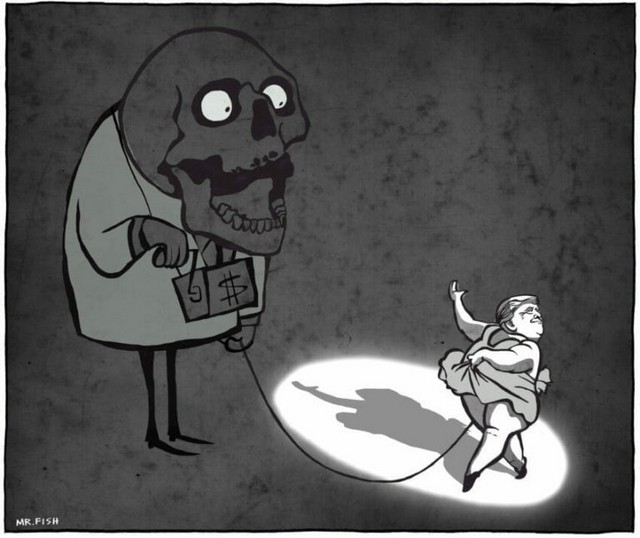
U.S. President Trump is now pushing to the limit, presumably in the confident expectation that as the U.S. President, he can safely grab any territory he wishes, and steal any oil or other natural resource that he wishes, anywhere he wants — regardless of what the Russian Government, or anyone else, thinks or wants.

Though his words often contradict that, this is now clearly what he is, in fact, doing (or trying to do), and the current U.S. House of Representatives, at least, is saying yes to this, as constituting American values and policies, now.

Trump — not in words but in facts — is “betting the house” on this.

Moreover, as I headlined on May 26th at Strategic Culture, “Credible Report Alleges US Relocates ISIS from Syria and Iraq into Russia via Afghanistan.” Trump is apparently  trying to use these terrorists as — again like the U.S. used them in Afghanistan in order to weaken the Soviet Union — so as to weaken Russia, but this time is even trying to infiltrate them into Russia itself.

Even Adolf Hitler, prior to WW II, didn’t lunge for Britain’s jugular. It’s difficult to think of a nation’s leader who has been this bold. I confess that I can’t.

—————

Investigative historian Eric Zuesse is the author, most recently, of  They’re Not Even Close: The Democratic vs. Republican Economic Records, 1910-2010, and of  CHRIST’S VENTRILOQUISTS: The Event that Created Christianity.

9 June 2018

Source: https://countercurrents.org/2018/06/09/u-s-challenges-russia-to-nuclear-war/

UN Warns 10 Million More Yemenis Expected to Starve to Death by End of Year

By Whitney Webb

According to the UN, the number of Yemenis in danger of starving to death would rise from the current figure of 8.4 million to 18.4 million by this December. That’s three times the estimated death toll of Jews killed during the Holocaust.

29 May 2018 – During a briefing last Friday, the UN warned that millions more Yemeni civilians are expected to starve to death before year’s end as a result of a blockade imposed on the country by the Saudi Arabia-led coalition. The Saudis’ unsuccessful bid to quash the Houthi-led resistance movement against Western and Saudi imperialism in Yemen has already claimed the lives of thousands of civilians and transformed the country into the world’s worst humanitarian crisis since the war began in 2015.

Mark Lowcock, the UN’s emergency relief coordinator, expressed his concern regarding the “recent decline of commercial food imports through the Red Sea ports” — adding that, if conditions do not improve, the number of Yemenis at the brink of starvation would rise from the current figure of 8.4 million to 18.4 million by this December. Given that there are approximately 28 million people in Yemen, a continuation of the Saudi-led blockade would mean that nearly two-thirds of the entire country’s population will soon face starvation.

The U.N.’s warning of a growing famine in Yemen comes during the holy month of Ramadan, when the first revelation of the Quran is celebrated by Muslims through fasting. Given the number of Yemenis facing starvation, many Yemeni Muslims will be without food to break their fast.

While the coalition — composed of Saudi Arabia and the UAE, with support from other Gulf monarchies and Western governments — has publicly claimed that it has lifted the blockade after international pressure, the coalition’s “ship inspections” continue to prevent critical supplies – such as food, fuel and medicine – from entering the most populated portions of the country, which remain under Houthi control.

Lowcock stated that the “lifting” of the blockade has had little impact on the crisis, noting that imports are “well short of pre-blockade averages” and are insufficient to prevent the mass starvation of Yemeni civilians. In addition, the blockade has prevented sufficient medicine from entering the country — allowing the worst cholera epidemic in recent history to ravage Yemen, even though cholera is easily treated with inexpensive medication.

The UN’s dire warning regarding the situation in Yemen, undoubtedly the worst humanitarian crisis in the world, comes just as the Saudi-led coalition, with support from the United States and the United Kingdom, is preparing for an assault on the key Yemeni port of Hodeidah. On Monday, a coalition spokesman announced that its forces were within 20 km from the Houthi-held port, which has long been a key coalition target. The UN and other groups have long warned that any assault on Hodeidah would drastically worsen the crisis and greatly increase the number of Yemenis facing starvation.

According to Reuters, tens of thousands of Yemenis have been fleeing the port city in recent days, as fighting in the area intensifies. It remains unclear exactly when coalition forces will attempt to take the city and whether such an operation has been approved by its Western backers, such as the United States, which has continued to supply the coalition with arms and munitions despite its well-documented tendency to target civilian infrastructure.

Beyond the blockade: targeting food production and waging total war

While the blame for the brunt of the crisis has been placed on the coalition’s blockade on the imports of food, fuel and medicine, the coalition has also deliberately targeted the country’s food production and distribution infrastructure. In just the first year of the conflict, the coalition bombed over 350 farms, markets, and other agricultural infrastructure, which had a grave impact given that only 2.8 percent of Yemen’s land is arable. Fisherman have also been heavily targeted over the course of the conflict, with more than 250 fishing boats damaged or destroyed and 152 killed by coalition ships and helicopters as of last December.

The targeting of the country’s food production infrastructure by the coalition continues unabated. Just last Wednesday, coalition planes bombed a series of mango farms in the Hodeidah province, killing at least six and injuring three – all of whom were engaged in harvesting the fruit at the time, according to local reports.

The fact that the coalition continues to deliberately target civilian infrastructure, particularly its ability to produce food domestically amidst the blockade, suggests that the coalition is intentionally targeting Yemeni civilians in an attempt to gain an upper-hand against the Houthis.

Indeed, despite being significantly better equipped and enjoying the support of Western militaries, the Saudi-led coalition has been unable to make significant progress against the Houthi militia. For instance, recent military operations conducted by the Houthi and allied groups have resulted in Yemeni resistance groups taking control of over 100 miles of Saudi territory and successfully raiding the Saudi military for equipment and ammunition.

Thus, the coalition’s inability to win militarily against the Houthis over three years since the war began suggests that they are deliberately targeting civilians to offset their lack of military progress, adopting a “total war” strategy that is set to end in the genocide of a majority of the nation’s population.

Whitney Webb is a MintPress contributor who has written for several news organizations in both English and Spanish; her stories have been featured on ZeroHedge, the Anti-Media, 21st Century Wire, and True Activist among others – she currently resides in Southern Chile.

11 June 2018

Source: https://www.transcend.org/tms/2018/06/un-warns-10-million-more-yemenis-expected-to-starve-to-death-by-end-of-year/

The West Is Turning a Blind Eye to the Gaza Massacre

By Jeremy Corbyn

5 Jun 2018 – I have asked for this statement to be read out at this evening’s Right of Return demonstration in London for justice for the Palestinian people:

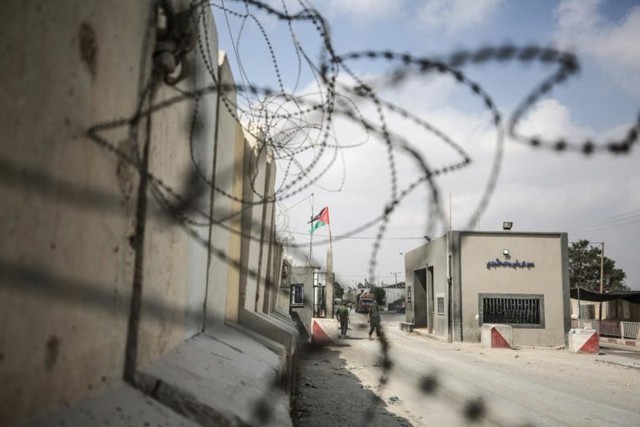
In recent weeks, scores of unarmed Palestinian civilians have been killed in Gaza by Israeli forces. Hundreds have been wounded. Most are refugees or the families of refugees from what is now Israel, and they have been demonstrating for their right to return, week after week.

The killing of Razzan Najjar, the 22 year old medical volunteer shot by an Israeli sniper in Gaza on Friday, is the latest tragic reminder of the outrageous and indiscriminate brutality being meted out, under orders from the Netanyahu government.

The silence, or worse support, for this flagrant illegality, from many western governments, including our own, has been shameful.

Instead of standing by while these shocking killings and abuses take place, they should take a lead from Israeli peace and justice campaigners: to demand an end to the multiple abuses of human and political rights Palestinians face on a daily basis, the 11-year siege of Gaza, the continuing 50-year occupation of Palestinian territory and the ongoing expansion of illegal settlements.

President Trump’s decision to recognise Jerusalem as Israel’s capital city, and move the US embassy there, in violation of international agreements, has demonstrated that the US has no claim to be any kind of honest broker for a political settlement of the Israel-Palestine conflict.

A sustainable, just peace between Israelis and Palestinians, that recognises the rights and security of all, and puts an end to the continuing dispossession of the Palestinian people, is an interest we all share, in the Middle East and far beyond.

We cannot turn a blind eye to these repeated and dangerous breaches of international law. The security of one will never be achieved at the expense of the other. And that is why we are committed to reviewing UK arms sales to Israel while these violations continue.

The UK Government’s decision not to support either a UN Commission of Inquiry into the shocking scale of killings of civilian protesters in Gaza, or the more recent UN resolution condemning indiscriminate Israeli use of force – and calling for the protection of Palestinians – is morally indefensible.

Britain, which is a permanent UN security council member and has a particular responsibility for a peaceful and just resolution of the Israel-Palestine conflict, should ensure there is a credible independent investigation, genuine accountability and effective international action to halt the killings – and bring Gaza’s ever-deepening humanitarian crisis to an end.

Go to Original – Jeremy Corbyn Facebook

11 June 2018

Source: https://www.transcend.org/tms/2018/06/the-west-is-turning-a-blind-eye-to-the-gaza-massacre/

Israel and its spokespeople can “justify” only through lies and deflections

By Rima Najjar

Chris Hayes’ incredulous tweet on the killing of Palestinian paramedic Razan al-Najjar in Gaza is being echoed everywhere it seems on social media.Hayes hosts All In with Chris Hayes, a weekday news and opinion television show on MSNBC.

On June 7, 2018 he tweeted:

“The wording of that [Israel Defense Forces] IDF video is so bizarre. Hamas “incited” a woman to…provide medical care to the wounded? That’s incitement?”

I wish to God it were only the wording that is bizarre in this latest chapter of the Palestinians’ long-running tragedy since the ungodly arrival of the Zionist Jewish state of Israel among them.

To decry the killing of Razan al-Najjar on the basis that she was unarmed and did not pose a threat, as some are provoked to do by the IDF tripe at which Hayes marvels, plays right into Israel’s “narrative” of defense rather than the reality of the aggression it needs to continue to exist as the exclusionist colonial-apartheid polity it is.

It means you cannot state that an armed Palestinian resisting the IDF who is then killed by them is also an unjustified killing.

Apologists and propagandists who try to justifyRazan al-Najjar’s killing are the same as those who justify Israel’s violent existence as a Jewish state in Palestine against the will of its indigenous people.

Israel’s repression of Palestinians is never justified. To Israel, such repression is standard operating procedure — because we exist and because we are not Jews. The exact circumstances are irrelevant hogwash.

The fact is that the mere existence of Palestinians is a threat to Israel — a so-called demographic threat. By and large, Israel justifies any and all resistance to its settler-colonial presence in the Arab world by pointing to its security and the sanctity of its non-existent borders.

Our existential threat to them is their justification for killing us — i.e., we don’t need to be armed to be killed or shoved into prison or ethnically cleansed. All we have to do is exist and procreate in a spot needed to build housing for Israel’s Jewish population.

They can and have been justifying their unconscionable actions against us through denial and deflection, turning the tables on us and feigning empathy where necessary, as described in the Al-Jazeera video clip [2:33 minutes]:How Israeli Propaganda Works: The Luntz Document/ Al-Jazeera.

‘If you want to understand how the propaganda works you need to read the Luntz document — “The key, [Frank] Luntz says, is the claim that the fight is over ideology, not land. About terror [Islamist terror in the form of Hamas, Iran or Hezbollah], and not territory.”’

Israel never fails to crank up its PR Machine whenever it fails to work as it is meant to do:

Groping for a convenient solution to its public relations problems, the Israeli government has turned to hasbara. The literal meaning of this Hebrew word is “explanation,” but when put into practice, most informed observers recognize it as propaganda. The more the State of Israel relies on force to manage the occupation, the more it feels compelled to deploy hasbara. And the more Western media consumers encounter hasbara, the more likely they are to measure Israel’s grandiose talking points against the routine and petty violence, shocking acts of humiliation and repression that define its treatment of the Palestinians.

And it isn’t just the 1967 occupation that is the problem with Israel for Palestinians; it is the whole racist and cruel Zionist idea of a settler-colonial Jewish state in Palestine dominating the Arab world in general.

As Steven Salaita writes:

Many of the people who defend Israel are consciously racist (clearly), but others dehumanize Arabs and Muslims by reproducing unexamined assumptions about Israel’s moral or civilizational superiority.

Beyond racism (Arabophobia), lies and deflection, there is Israel’s classic justification for its very existence as a settler-colonial Zionist Jewish state in Palestine, namely the “liberation” of the Jewish people. This central Zionist fabrication has long gained Israel impunity on the Western international front:

Writing in The Electronic Intifada, Ilan Pappe says, in ‘Finding the truth amid Israel’s lies’:

… [Palestinian] children were considered as part of the enemy, who had to be cleansed for the sake of a Jewish state or as Carmel put it — a day after he finished his Galilee tour — for the sake of liberation.
[ Moshe Carmel is the author of Northern Campaigns — first published in 1949, in which he describes the events of the Nakba thus: “Great sadness and suffering flooded the roads — convoy upon convoy of refugees making their way [to the Lebanese border’]]
,… Revisiting them [such books as Carmel’s], 70 years on, reveals an elementary truth: it would have been possible to write the “new history” of 1948 [i.e., a history of ethnic cleansing of Palestinians, colonization and Jewish Zionist usurpation by European Jews] without a single new declassified document, but only if these open sources, as I call them, had been read with non-Zionist lenses.

The crimes perpetrated during the Nakba and Israel’s ongoing crimes today are callous and unconscionable and equally unbearable for us Palestinians. They are connected by a thread no hasbara in the world can break.

In the first instance (the Nakba), we have a violent ethnic cleansing perpetrated against a mostly agrarian population in Palestine, whose aftermath is still with us today in the shape of the West Bank, the Gaza Strip, six million Palestinian exiles and refugees and, of course an Apartheid, Zionist, Jewish state, armed to the teeth, including with nuclear weapons.

In the second instance (Israel’s ongoing crimes today), we have a beautiful young woman (21), a paramedic wearing a uniform that identified her as such, fatally shot while evacuating and tending to the wounded east of Khan Younes.

In describing her funeral, Haaretzrefers to Razan’s “hometown of Khuza’a” in the Gaza Strip, rather than her true hometown of Salama, five km east of Jaffa, now documented by Visualizing Palestine in their updated infographic “Short Walk Home, Long Walk to Freedom”.

If you deny Razan’s fundamental human right to return to her hometown and call her protest a “riot”, if you believe that the existence of a Jewish state in Palestine trumps all else, no matter the price Palestinians must pay in dispossession and exile, then, like US Ambassador to Israel David Friedman, you can justify all violence against Palestinians by pointing to Israel’s security and simply debating how much violence is “justified” when pushing protesting Palestinians back into their camps (over 70% of the Palestinian population in the Gaza Strip are refugees). If a little violence doesn’t work, then by all means, use deadly violence:

Friedman said experts had told him tear gas, water cannons and other nonlethal means of crowd dispersal would not have been effective during the weeks of riots… “If what happens isn’t right, what is right? What do you use instead of bullets?” he asked rhetorically.’

Standard practice is to lie glibly about the Great March of Return, as this Fox news outlet does:

The Gaza protests are being organized by the territory’s militant Hamas leadership and are aimed at drawing attention to the decade-long Israeli-Egyptian blockade on the territory. The protesters are also demanding the “right of return” for Palestinian refugees from the 1948 war and their descendants.

Note how the Palestinian inalienable and internationally recognized right of return is in quotation marks. Note that the blockade is mentioned with no reference to the horrible conditions it has engendered in the Gaza Strip. But most of all, note how “militant Hamas leadership” are said to have organized the protests, when it is, in fact,

a grassroots movement calling for the right of return of Palestinian refugees to their homes, as per UN Resolution 194, from which they were expelled in 1948 when the state of Israel was created.

As Toufic Haddad, activist, academic and author of Palestine Ltd: Neoliberalism and Nationalism in the Occupied Territory, says in an interview, Hamas’ decision to abstain from governance opened the path

for popular forces, and particularly a younger generation of activists, to take the initiative and see what could be done to change the situation.

The tragedy, as Shane Wesbrockcomments on a post by Steve Salaita on Facebook, is that subliminal hasbara “justification” of Razan’s and all IDF killing is pervasive even on entertainment media outlets in the U.S.:

I just finished reading about Razan al-Najjar last evening and decided to watch some Netflix to redirect. I open up the page and there is a big advertisement for a “Netflix Original” where the Israeli hero is hunting the evil Palestinian “terrorist.” Talk about superior narratives! Its bloody invasive, not to mention aptly timed.

Israel and its Western allies want the whole world to celebrate Israel’s achievements as they define them and to hide its devastating failures and its crimes against humanity [yes, Palestinians are human]. Their advocates get angry when they realize that Palestinians will not lie still under the Zionist yoke — not 70 years hence, not a million years hence.

Because the Zionist cause is unjust and racist, Israel and its spokespeople can “justify” only through lies and deflections.

Rima Najjar is a Palestinian whose father’s side of the family comes from the forcibly depopulated village of Lifta on the western outskirts of Jerusalem.

11 June 2018

Source: https://countercurrents.org/2018/06/11/israel-and-its-spokespeople-can-justify-only-through-lies-and-deflections/

G7 vs. G6+1 – The War of Words

By Peter Koenig

Background

The war of words has intensified between the U-S and G-7 allies after President Donald Trump retracted his endorsement of the communiqué of the once-united group.

The German chancellor called Trump’s abrupt revocation of support for a joint communiqué sobering and depressing. Angela Merkel however said that’s not the end. France also accused Trump of destroying trust and acting inconsistently. Trump pulled the U-S out of the group’s summit statement after Canada’s Prime Minister Justin Trudeau announced the imposition of retaliatory tariffs on the U-S. The White House said Canada risked making the U-S president look weak ahead of his summit with the North Korean leader. But, Canada’s Foreign Minister Chrystia Freeland later reiterated that her country will retaliate against U-S tariffs in a measured and reciprocal way.

PressTV:

What do you make of Mr. Trump’s decision to renege on the G7’s final statement?

PK:

Trump pulling out from the final G7 statement is just show; the usual Trump show. He signed it, then he pulled out. We have seen it with the Iran Nuclear Deal, with the North Korea meeting, on and off, with the tariffs – first – about two months ago – the tariffs were on for Europe, Mexico and Canada, as well as China – then they were off for all of them – and now they are on again…

How serious can that be? – Trump just wants to make sure that he calls the shots. And he does. As everybody gets nervous and talks about retaliation – instead of practicing the “politics of silence” strategy.

In the case of Europe, the tariffs, or the equivalent of sanctions, as Mr. Putin recently so aptly put it, may well serve as a means of blackmailing Europe, for example, to disregard as Trump did, the Iran Nuclear Deal, “step out of it – and we will relieve you from the tariffs.”

In the case of Canada and Mexico, it’s to make sure Americans realize that he, Mr. Trump, wants to make America Great again and provide jobs for Americans. – These tariffs alone will not create one single job. But they create an illusion and that – he thinks – will help Republicans in the up-coming Mid-term Elections.

In China – tariffs are perhaps thought as punishment for President Xi’s advising President Kim Jong-Un ahead of the June 12 summit – and probably and more likely to discredit the Yuan as a world reserve currency, since the Chinese currency is gradually replacing the dollar in the world’s reserve coffers. But Trump knows that these tariffs are meaningless for China, as China has a huge trade surplus with the US – and an easy replacement market – like – all of Asia.

PressTV:

How could the silence strategy by the 6 G7-partners have any impact on Trump’s decision on tariffs?

PK:

Well, the G6 – they are already now considered the G6+1, since Trump at the very onset of the summit announced that he was considering pulling out of the G7. – So, the remaining 6 partners could get together alone and decide quietly what counter measures they want to take, then announce it in a joint communiqué to the media.

It does not have to be retaliation with reciprocal tariffs, it could for example be – pulling out of NATO – would they dare? – That would get the world’s attention. That might be a much smarter chess move than copying the draw of one peon with the draw of another one. Because we are actually talking here about a mega-geopolitical chess game.

What we are actually witnessing is a slow but rapidly increasing disintegration of the West.

Let’s not forget, the G7 is a self-appointed Group of the “so-called” world’s greatest powers. – How can that be when the only “eastern power”, Russia, and for that – much more powerful than, for example, Canada or Italy, has been excluded in 2014 from the then G8?

And when the world’s largest economic power – measured by the real economic indicator, namely purchasing power parity – China – has never been considered being part of the G-Group of the greatest?

It is obvious that this Group is not sustainable.

We have to see whatever Trump does, as the result of some invisible forces behind the scene that direct him. Trump is a convenient patsy for them, and he plays his role quite well. He confuses, creates chaos – and on top of it, he, so far single handedly wants to re-integrate Russia in the G-7 – i.e. the remaking of the G-8.
So far the G6’s are all against it. Oddly, because it’s precisely the European Union that is now seeking closer ties with Russia. – Maybe because they want to have Russia all for themselves?

If that is Trump’s strategy to pull Europe and Russia together, and thereby creating a chasm between Russia and China – then he may succeed. Because the final prize of this Trump-directed mega political chess game – is China.

Trump, or his handlers, know very well that they cannot conquer China as a close ally of Russia. So, the separation is one of the chess moves towards check-mate. But probably both Presidents Putin and Xi are well aware of it.

In fact, the SCO just finished their summit in China’s Qingdao on 9 June, about at the same time as the G7 in Canada’s Charlevoix, Quebec Province, and it was once more very clear that this alliance of the 8 SCO members is getting stronger – and Iran is going to be part of it. Therefore, a separation of Russia from the Association is virtually impossible. We are talking about half the world’s population and an economic strength of about one third of the world’s GDP, way exceeding the one of the G7 in terms of purchasing power.

This, I think is the Big Picture we have to see in these glorious G7 summits.

Peter Koenig is an economist and geopolitical analyst.

11 June 2018

Source: https://countercurrents.org/2018/06/11/g7-vs-g61-the-war-of-words/

US Trade War with the European Union

By Peter Koenig

Background
Brussels, June 6, 2018 (AFP)
The EU on Wednesday said a raft of retaliatory tariffs, including on whiskey and motorcycles, against painful metals duties imposed by the US would be ready as early as July.

The European Commission, which handles trade matters for the 28-country bloc, “expects to conclude the relevant procedure in coordination with member states before the end of June,” said European Commission Vice-President MarosSefcovic at a news briefing.

This would allow “that the new duties start applying in July,” he added.

“It is a measured and proportionate response to the unilateral and illegal decision taken by the US to impose tariffs on the European steel and aluminum exports which we regret,” said the former Slovak prime minister.

From blue jeans to motorbikes and whiskey, the EU’s hit-list of products targeted for tariffs with the US reads like a catalogue of emblematic American exports.

The European Union originally drew up the list in March but pledged not activate it unless US President Donald Trump followed through on his threat to impose 25 percent tariffs on steel imports and 10 percent on aluminum.

The Trump tariffs came into effect on June 1 and the EU now joins Mexico and Canada and other close allies that have announced their own wave of counter-duties against Washington.

The EU commission must now take their proposal to be signed off by the bloc’s member states amid divisions over what path to take against Trump’s unpredictable policies.

France and the Netherlands back a tough line against the US, while export powerhouse Germany has urged caution towards Trump’s “America First” policies.

PressTV
How do you think this will affect the US? Wouldn’t it create more unemployment in America?

Peter Koenig
First, I think we have to distinguish between the various trade blocks and trade wars, like China, Russia, the NAFTA partner countries, Mexico and Canada – and the European Union – the EU. They are all different in as much as they have different motives.

Second, there is much more behind the so-called trade wars than trade. Much of this trade war is propaganda, big style, for public consumption and public debate, where as in reality there are other negotiations going on behind closed doors.

And thirdly, there are mid-term elections coming up in the US this fall, and Trump must satisfy his home base, all the workers to whom he promised “Let’s Make America Great Again” – meaning bring back jobs, use US-made metals. So, Trump is also addressing those Americans who wait for jobs.As you know the unofficial but real figure of unemployment in the US is about 22% – and that does not even include the large segment of underemployed people, mostly youth.

I think we have to see the Big Picture here. And Trump, or rather those who give him orders, may not see all the risks that this complex multi-polar tariff war implies.

But for now, let’s stick to Europe.
It is very well possible that the EU will also impose import duties on US goods. But if it stays at that, it is very likely that this so-called trade war with the US is pushing Europe even faster than is already happening towards the East, the natural trading partners – Russia and China. As I said, its already happening.

But the Big Picture, in the case of Europe, I believe is IRAN. With tariffs on steel and aluminum – quite sizable tariffs, European producers of these metals, the second largest after China, would hurt. There may not be an immediate replacement market for America.

So, Trump may want to blackmail Europe into accepting his new sanctions on Iran. In other words, “either tariffs or you follow my dictate – abandon the Nuclear Deal and impose sanctions”.

Frankly, I doubt very much that this will work, since EU corporations have already signed billions worth of contracts with Iran. On the other hand, Germany in particular, is keen in renewing political as well as trade relations with Russia.

And the recent remark of the new US Ambassador to Germany, Richard Grenell, that he will support conservative right-wing movements in Germany and in Europe – did certainly not go down well in Germany, with already a Parliamentary movement to expulse him – which certainly doesn’t help US-German relations.

As we speak, most likely this type of “blackmail” negotiations, “either tariffs or you go with us against Iran”, are going on with the EU behind closed doors.

Of course, nobody knows the outcome.
Trump is like a straw in the wind, bending to whatever seems to suit him best at the moment.

Remember, a couple of months ago he already imposed tariffs on Europe, along with everybody else, on steel and aluminum, then he lifted them again – and now we are on again. It’s like with most everything he does. It’s probably his business negotiation strategy.

But, this would just confirm, that this trade war is much more than meets the eye, more than a trade war – it’s about geopolitics – like “show me your card – which camp are you in?”

Trump and those who manage him may still be under the illusion of the last 70 years, that the whole world, especially Europeans, have to bend over backwards to please the US of A, because they saved Europe – and the world – from the Nazi evil.

Not only is it time to stop the vassalage and become autonomous again, but also, many European start understanding that whom they really have to thank for liberating them from the Nazis – is Russia.

Peter Koenig is an economist and geopolitical analyst.

7 June 2018

Source: https://countercurrents.org/2018/06/07/us-trade-war-with-the-european-union/

Putin Asserts: World Imperialism Faces Difficult Times

By Farooque Chowdhury

Putin’s latest assertion signals that the world imperialism is going to face tough days in future.

Vladimir Putin, the Russian president, said: “Either Russia is a sovereign country, or there is no Russia.”

The world imperialism is not habituated to listen to such assertions. It’s also a tough message to hirelings of the world imperialism. The masters and their lackeys have to review self-positions, both strategic and tactical, in light of Putin’s latest assertion: Not at the cost of sovereignty.

Putin was speaking to Chinese TV prior to his China visit. His statements, observations and claims are worth-reading.

The Russian president said: “And, of course, the Russian people will always opt for [a sovereign Russia]. I think the Chinese people will too. We have no other option.”

The statement shows the compulsion the world imperialism has created for Russia, for China, and for countries facing imperialist “friendship” – “sermons”, demands, pressures, interferences, intervention, conspiracies. Thence, these countries “have no other option” other than asserting sovereignty.

This signifies intensified contradiction within countries, and between countries as the world imperialism will not accept assertion of sovereignty by countries, which will lead imperialism to organize/renew/intensify conspiracy, subversion, interference and intervention. The world imperialism is going to boost up its old hirelings, hire new lackeys, engage them, and create subversion, social disturbance, “civil” disobedience, political turmoil, internal strife.

Referring to sanctions, Putin said: However harsh they may be, will not force Russia to abandon its independent stance in the world, Russians will never accept trade-offs at the expense of sovereignty.

Putin specifically mentioned the world imperialism’s target: The Russian economy. He added an extra note: The sanctions will eventually backfire on those who followed the US’ lead in “punishing” Russia.

Now, it’s the countries following their masters’ lead to consider whether to take into account assurances from their masters or to heed to Putin. It’s not in terms of pronouncements, but in terms of economic measures – trade, etc., and tradeoff.

To countries in Europe that depend on Russia to many extents including gas from the rising power, the question of being a follower of the world imperialism or not bears one type of action and consequence. To peripheral countries facing imperialist mastery, the question bears another type of measures.

To the first group, there’s question of collaboration/amalgamation of capitals. There are collusion, cooption, or, competition. There is collusion in one area while competition in another. Now-a-days, it’s an intricate arithmetic, or an amalgamation of arithmetic, algebra and geometry.

To the peripheral group, the question is different. It’s different from two aspects: from the aspect of ruling elites, and from the aspect of people. And, the two bear different meanings. In this case, the mathematics turns more intricate as opposing interests – of the ruling elites’ and of the people – are to operate within a reality of competing capitals trying to strengthen/establish respective grip. At the same time, for both the opposing interests, there’s a common ground – a space to maneuver. Then, the question comes: Which capital is the biggest/direst threat? None will differ: It’s the dominating imperialist camp.

The US-led sanctions against Russia hurt a number of economies in Europe. A number of European state leaders including Austrian vice-chancellor Heinz-Christian Strache have expressed opinion not favoring the sanctions. The new government in Italy also bears similar position.

The EU is not happy with its US friends on the issue of US-introduced import tariffs on steel and aluminum – a gift from a friend. It’s the imperialist system’s one of the inherent problems – components’ interests very often move in incoherent way. It also creates scope for peripheral economies.

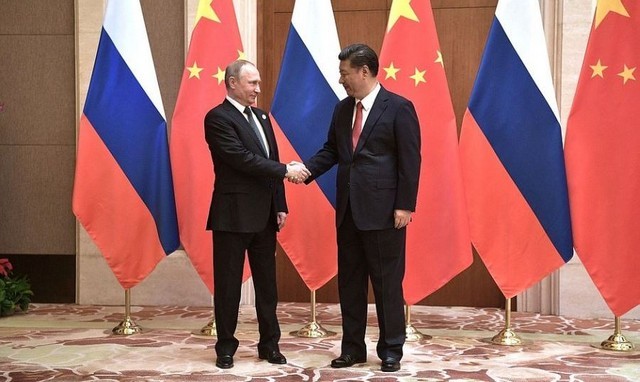
The Putin-assertion case turns difficult for the world imperialist order as the Russian leader is close to the Chinese leader Xi Jinping.

Putin has described Xi Jinping as a “reliable partner and good friend”.

Their friendship is so strong that once they celebrated Putin’s birthday together: “Chairman Xi Jinping is the only one among all the world leaders, to have celebrated my birthday with me,” Putin said, referring to his 61st birthday, which he marked at the 2013-Asia-Pacific Economic Cooperation meeting in Bali.

Putin termed Xi Jinping as “very accessible”, “very sincere”, “very reliable”, “good friend”, “good analyst”, “it is interesting to discuss outstanding international issues, economy problems with him”, “we always strive to fulfill our obligations”.

This expression of friendship carries strong signal for all: enemy and ally. China is to be counted. It’ll be foolish to ignore China. And, it’ll be foolish to ignore the Putin-Xi friendship.

Putin informed: China is and will continue to be Russia’s number one foreign trade partner.

China is Russia’s largest trading partner. Trade between the two countries grew last year, according to Putin, to $87 billion, and the first four months of 2018 its growth “equaled the figure for the whole of last year.” It’s already a 30 percent increase. In 2016, the trade turnover between the two countries was $69.52 billion. Putin expressed the desire to accelerate it further.

There is possibility of alliance between China-led One Belt, One Road and Russia-led the Eurasian Economic Union.

The two countries are bypassing dollar and other western currencies, and trying to make settlements in ruble and yuan. In 2017, nine percent of payments for supplies from Russia to China were made in rubles, and Russian companies paid 15 percent of Chinese imports in the renminbi.

The two close strategic partners are coordinating their moves on regional and global issues, helping safeguard each other’s national interests, and supporting each other in taking up larger roles on the world stage.

General Wei Fenghe, China’s defense minister, said at the recently concluded Moscow International Security Conference:

“I am visiting Russia […] to show the world a high level of development of our bilateral relations and firm determination of our Armed Forces to strengthen strategic cooperation.”

The Chinese military leader added: The visit is “to show Americans the close ties between the Armed Forces of China and Russia, especially in this situation. We’ve come to support you.

“The Chinese side is ready to express with the Russian side our common concerns and common position on important international problems at international venues as well.

Wei said: The strengthened military cooperation between the two is important for international peace and security.

Reciprocating similar attitude General Sergei Shoigu, Russian defense minister, said: “The efforts of the leadership of the both countries […] today has reached principally new unprecedented level, and have become a critical factor in keeping peace and international security.”

The message is explicit. And, the message is for all. It’s for those facing imperialist disturbance and threat, and for those searching for sources of benefit from their imperialist masters. The message is also for the greatest imperialist power: The days of unilateral dominance is going to be over.

Dmitri Trenin, director, Carnegie Moscow Center, writes in his Should Fear Russia We? (November 2016):

“[M]ore of Russia’s natural and military-technological resources would be made available to China. […I]n the larger scheme of things concerning the world order, Beijing and Moscow will be on the same side.”

The scholar adds:

“The Greater Eurasia that they are constructing will not be run from a single center, but their continental entente will essentially be aimed at limiting US dominance on the edges of the continent and in the world at large.”

Coming days will hear more tough words, which will signal more complicated moves on the world stage.

Farooque Chowdhury writes from Dhaka.

7 June 2018

Source: https://countercurrents.org/2018/06/07/putin-asserts-world-imperialism-faces-difficult-times/

Pompeo’s Demands On Iran At Odds With Reality

By Seyed Hossein Mousavian

Secretary of State Mike Pompeo laid out a list of demands on Iran in a speech threatening to “crush” the country on Monday. His bellicose words come weeks after President Donald Trump pulled the United States out of the Iran nuclear deal and are nothing short of an ultimatum demanding Iran’s total surrender to U.S. wishes.

“Sanctions are going back in full effect, and new ones are coming,” Pompeo declared, “The Iranian regime should know this is just the beginning.”

Pompeo’s twelve demands reflect a misunderstanding of Iranian foreign policy, international law, and the realities of the region.

The 12 Demands—Rebutted

First, Pompeo contended that Iran must “declare to the IAEA a full account of the prior military dimensions of its nuclear program.” However, as part of the nuclear deal (Joint Comprehensive Plan of Action or JCPOA), the International Atomic Energy Agency (IAEA) resolved the issue of “possible military dimensions” to Iran’s nuclear program after years of investigation, including visits to military sites. In December 2015, the agency issued its “final assessment on past and present outstanding issues regarding Iran’s nuclear program.”

Second, Pompeo called on Iran to “stop uranium enrichment and never pursue plutonium reprocessing,” including “closing its heavy water reactor.” Such a demand is in direct contravention to the nuclear Non-Proliferation Treaty (NPT), which allows signatories to develop the nuclear fuel cycle for civilian purposes, including enrichment.

As an NPT member, Iran has developed a uranium enrichment program, as have other states such as Brazil, Argentina, and Japan. Iran’s enrichment program was also recognized by UN resolution 2231, which endorsed the JCPOA.

Third, Pompeo stated that “Iran must also provide the IAEA with unqualified access to all sites throughout the country.” With the JCPOA, Iran has already accepted the highest standards on nuclear transparency in the history of nonproliferation. This includes accepting the safeguards agreement, additional protocol, and subsidiary arrangement 3.1.

Fourth, Pompeo said that Iran “must end its proliferation of ballistic missiles and halt further development of nuclear-capable missiles.” As arms control experts at organizations such as the International Institute for Strategic Studies have explained, none of Iran’s modern missiles is designed to be “nuclear capable.” Importantly, the context of Iran’s missile program is its falling victim to Iraqi missiles during the eight-year Iran-Iraq War, when Iran did not have the means to deter Iraq. Indeed, no nation in recent history has fallen victim to missile attacks as thoroughly as Iran has. Furthermore, ballistic missiles are a conventional armament that Iran has a strategic need to develop, especially to balance the threat posed by Israel’s nuclear-tipped missiles and Saudi Arabia’s long-range Dong Feng-3 missiles and, moreover, as a deterrence to possible U.S. attack.

Fifth, Pompeo called on Iran to “release all U.S. citizens … detained on spurious charges or missing in Iran.” In this regard, Pompeo should respect that Iran is a sovereign country, just like the United States. His demand is just as illegitimate as if Iran asked the United States to release all Iranian prisoners held in U.S. jails.

Sixth, Pompeo said that Iran “must end support to Middle East terrorist groups, including Lebanese Hizballah, Hamas, and Palestinian Islamic Jihad” even though these organizations represent major constituencies with legitimate grievances. In the case of Hamas and Hezbollah, they both have participated in and won in elections, with the later most recently making gains in Lebanon’s parliamentary elections.

Of course, Trump himself recently quipped that U.S. regional allies such as the UAE, Saudi Arabia, and Qatar fund terrorism, adding that “we’re stopping it.” In June 2017, former Qatari Prime Minister al-Thani also acknowledged that Qatar, along with the United States and other regional countries, made “mistakes” in “supporting the same groups” in Syria, among which were “extremists.”

Seventh, Pompeo stated that “Iran must respect the sovereignty of the Iraqi government and permit the disarming, demobilization, and reintegration of Shia militias.” This demand is ironic given that the United States currently has thousands of troops in Iraq, and a coalition headed by Hadi al-Ameri, a popular militia commander, came in secondplace in Iraq’s parliamentary elections. Senior Iraqi officials have recognized that without Iranian support, the Islamic State (ISIS or IS) “would be standing on the doorsteps of Baghdad.”

By positioning himself against the Popular Mobilization Units (PMUs), which are not monolithically Shia and were created after a fatwa by Iraq’s Grand Ayatollah Ali Sistani after IS overran large parts of the country in 2014, Pompeo has aligned the United States against the Iraqi people, not Iran.

Eighth, Pompeo asserted that Iran must “end its military support for the Houthi militia and work towards a peaceful political settlement in Yemen.” From the beginning of the Saudi-led coalition assault on Yemen in 2015, which the United Nations says has createdthe “world’s worst humanitarian crisis,” Iran has called for a political solution to the conflict. In April 2015, Iranian Foreign Minister Javad Zarif issued a four-point plan that outlined a negotiated settlement to the conflict.

Ninth, Pompeo stated that “Iran must withdraw all forces under Iranian command from Syria.” Iranian forces, just like Russian forces, are in Syria at the invitation of the legal Syrian government to combat armed rebel groups. Only the Syrian government can ask for their withdrawal. On the other hand, U.S. forces are in Syria illegally under international law, and Pompeo’s demand further infringes on Syria’s right to fight terrorist groups and to defend its sovereignty.

Tenth, Pompeo said that “Iran must end support for the Taliban and other terrorists in Afghanistan and the region, and cease harboring Al Qaeda.” To accuse Iran of supporting groups such as the Taliban and al-Qaeda is baseless, given that Iran has actively fought the ardently anti-Iranian groups, both of which were for years the main proxies for U.S. allies such as Saudi Arabia in Afghanistan. Both were also a direct outcrop of U.S.-backed forces in Afghanistan in the 1980s, which former Secretary of States Hillary Clinton recognized in 2011, stating: “The people we are fighting today we funded 20 years ago.”

Eleventh, Pompeo stated that Iran “must end the IRGC Quds Forces’ support for terrorists and militant partners.” The Quds Force’s mandate is the same as U.S. Central Command (CENTCOM) in the region. The difference is that Iran is in the region and has core national security interests to protect its borders and territorial integrity, while CENTCOM is operating thousands of miles away from American borders.

Twelfth, Pompeo said that Iran must “cease its threatening behavior against its neighbors.” He left out more than a little bit of history, such as how Saddam Hussein’s Iraq, an Arab country, invaded Iran in 1980 and received full support from the United States and most Arab states, including Saudi Arabia. The conflict cost hundreds of thousands of Iranian deaths and injuries. The reality is that the United States attacked Iraq, Afghanistan, and Libya—sowing widespread instability and turmoil in the region.

What Pompeo Really Wants

Pompeo’s list of demands simply recycles many of the same coercive policies and statements made by past U.S. administrations. This U.S. approach has already proved to be counterproductive and self-defeating for U.S. interests and regional stability.

Despite Pompeo’s faux call for diplomacy, his speech amounted to an official declaration of a regime-change policy against Iran. His untenable demands eliminate the prospects for U.S.-Iran diplomacy and set the two countries up for a dangerous escalation cycle that may lead to a catastrophic war.

What the world needs is genuine diplomacy. Since the Iranian nuclear crisis was the only regional crisis resolved through diplomacy, this model needs to be used to diplomatically resolve other regional crises.

Seyed Hossein Mousavian is a Middle East security and nuclear policy specialist at Princeton University, former spokesperson for Iran in its international nuclear negotiations, and author of “Iran and the United States: An Insider’s View on the Failed Past and the Road to Peace.” @HMousavian

22 May 2018

Seymour Hersh’s Memoir Is Full of Useful Reporting Secrets

By Matt Taibbi

31 May 2018 – Late in his new memoir, Reporter, muckraking legend Seymour Hersh recounts an episode from a story he wrote for the New Yorker in 1999, about the Israeli spy Jonathan Pollard.

Bill Clinton was believed to be preparing a pardon for Pollard. This infuriated the rank and file of the intelligence community, who now wanted the press to know just what Pollard had stolen and why letting him free would be, in their eyes, an outrage.

“Soon after I began asking questions,” Hersh writes, “I was invited by a senior intelligence official to come have a chat at CIA headquarters. I had done interviews there before, but always at my insistence.”

He went to the CIA meeting. There, officials dumped a treasure trove of intelligence on his desk and explained that this material – much of which had to do with how we collected information about the Soviets – had been sold by Pollard to Israel.

On its face, the story was sensational. But Hersh was uncomfortable. “I was very ambivalent about being in the unfamiliar position of carrying water for the American intelligence community,” he wrote. “I, who had worked so hard in my career to learn the secrets, had been handed the secrets.”

This offhand line explains a lot about what has made Hersh completely embody what it means to be a reporter. The great test is being able to get information powerful people don’t want you to have. A journalist who is handed something, even a very sensational something, should feel nervous, sick, ambivalent. Hersh never stopped feeling that way, remaining an iconoclast and a thorn in the side of officialdom to this day.

Hersh became famous in the late-’60s and early-’70s, at a time when the country was experiencing violent domestic upheaval and investigative reporters were for the first time celebrated like rock stars.

Hersh was best known back then for his reporting on American atrocities in Vietnam, in particular the massacre of hundreds of unarmed Vietnamese in the village of My Lai. The story did a great deal to puncture the myth of American beneficence in Southeast Asia.

A significant theme of Hersh’s work is that Americans are human beings, not immune from the horrific temptations of power that throughout history have afflicted and shamed those who have dominion over others.

For this, he has often been denounced as a traitor. In advance of a speech at Tulane in the wake of My Lai, for instance, the Times-Picayune called him a “communist sympathizer” and ran an editorial literally bordered in red protesting his appearance (de-platforming was a thing even then).

Being “more than a little pissed off at the cheap shot” (an unerring sense of pissed-off-edness is another of Hersh’s gifts), he gave the speech at Tulane and decided to improvise “with a purpose in mind.”

The room was full of Vietnam vets. Hersh asked if anyone in the audience had been a helicopter pilot in a certain Vietnamese province in 1968 or 1969. A man came onstage. Once Hersh reassured him that he had no interest in his name, he asked the soldier what chopper pilots sometimes did to “cope with the rage.”

The soldier, while claiming he didn’t do it personally, said he knew what Hersh was talking about. The practice involved spotting a civilian farmer on the way back after a mission, flying low and attempting to decapitate the fleeing figure with rotor blades. The crews would have to land short of the base to “wash the blood off the rotors.”

“I did not like what I did to the vet, who was stunningly honest,” he writes, “but I wanted to get back, in some way, at the Times-Picayune.”

Bob Woodward and Carl Bernstein of the Washington Post will be remembered by history as the “whiz kids” who cracked Watergate, but Hersh also wrote 40 front-page articles on the affair for the Times in the space of months. Many of those pieces “[moved] the needle closer to the president,” as he puts it here.

Hersh and Woodward in particular will likely forever be linked in a Magic-Bird sort of way. The two reporters continued after the Vietnam and Watergate years to crank out heavy tomes full of secrets about everyone from Henry Kissinger (in Hersh’s case) to CIA chief Bill Casey (in Woodward’s), solidifying reputations as the country’s top investigative reporters.

But Hersh and Woodward represented two starkly different approaches to the job. Woodward is the quintessential access journalist, able to write books like Bush at War that seem to place the reader practically inside the Oval Office during crucial moments in history.

But Woodward’s information often came from the very celebrity politicians who were chief characters in these books. Piecing together these insider versions of history, probably recounted over expensive lunches off the Mall, was a more institutionalized version of “being handed the secrets.”

Hersh, on the other hand, has had success mining the middle and lower ranks of agencies. He constantly keeps an eye out for sources among the lesser-known (but still powerful) officials who are leaving the game. Many of these techniques are detailed in Reporter.

“One of my quirks,” he writes, “has been to keep track of the retirement of senior generals and admirals; those who did not get to the top invariably had a story to tell in explaining why.”

He even watches for obituaries, which often let slip surprising information about the pasts of, say, deceased CIA operatives. And he will call wives or relatives and search for information that way.

Hersh, in other words, works from the edges inward, developing a grapevine of faceless sources that in turn generate rumors and stories of things he isn’t supposed to know – a secret program to recover a sunken Russian submarine, an incident of soldiers using fire ants to torture a terror suspect – anything.

These techniques were very much on display during the post-9/11 years. Hersh put out a spate of some of the most impactful reporting on the War on Terror, lifting a lid on some of America’s most barbaric practices. The Abu Ghraib stories were the best known, and the inside tale of how those came to light is told here.

Hersh learned a great deal from a three-day visit in Damascus with an Iraqi general who’d “retired” after the Iraq army was banned. The general was making a living selling vegetables from his garden when he decided to reach out to old U.N. contacts about troubling things he’d seen and heard about. This ex-general ended up in touch with Hersh and told many “sad tales, mostly secondhand, of the horrors of the American occupation.”

He described American soldiers raiding houses and robbing the inhabitants (many Iraqis kept their savings in dollars). He described tales of arrestees who were set free for a kickback. And he told of a regime of abuse in American detention centers so horrific that men would “write to their fathers and brothers and beg them to come kill them in jail.”

Much of this couldn’t be confirmed easily, but the tales squared with reports from human rights groups. Besides, Hersh writes, “his account also smelled right” (having a sense of who is and is not lying is a key skill, often the difference between giving up and continuing to dig). Hersh kept at it and uncovered a key internal report about the abuse, and his New Yorker story was an international sensation that changed the course of another war.

An interesting side-note is that Hersh was instrumental in getting the story out before his own story ran. He knew that 60 Minutes had photos of the Abu Ghraib abuse and was “skittish” about publishing them “after being urged by the Bush administration not to do so.” Hersh, in his inimitable pain-in-the-ass way, called a CBS producer on the story and essentially told her that if CBS didn’t run the story soon, “I would have no choice but to write about the network’s continuing censorship in the New Yorker.”

The photos aired in the next 60 Minutes broadcast, and Dan Rather – who, Hersh knew, had been fighting to get the story out – made a point to say on air that CBS only published when they learned other media had the story.

“It wasn’t hard to guess that he had been ordered to make such an asinine excuse for an important news story,” Hersh writes.

Hersh was also among the first to describe a burgeoning American assassination program that to this day is poorly understood.

Within weeks of 9/11, for instance, Hersh quoted a “C.I.A. man” claiming the U.S. needed to “defy the American rule of law… We need to do this – knock them down one by one.” He later reported on the existence of a “target list” and cited an order comparing the new tactics to El Salvadoran execution squads, reporting that much of this was going on without Congress being told.

Despite his reputation for irascibility and for troubled relationships with editors, it shines through in the book that he always felt tremendous loyalty to people like Abe Rosenthal of the Times and David Remnick of the New Yorker, and to the great organizations they represented.

But, as Hersh puts it in the end, “Investigative reporters wear out their welcome… Editors get tired of difficult stories and difficult reporters.”

At the end of Reporter, he recounts his falling out with the New Yorker. Hersh says he became concerned when he heard Remnick was planning on writing a biography of new president Barack Obama.

Earlier in his career, Hersh himself had actually worked for the campaign of antiwar Democrat Eugene McCarthy. And he himself liked candidate Obama. But this was a church-and-state issue. He had a thing about wearing two hats at once.

Regarding Remnick’s relationship to Obama, he writes:

“I had learned over the years never to trust the declared aspirations of any politician, and was also enough of a prude to believe that editors should not make friends with a sitting president.”

Ultimately, Hersh and the New Yorker fell out over the story of the assassination of Osama bin Laden. The magazine – with the input of then-Obama counter-terrorism adviser John Brennan – ended up running the “inside” account of the operation much as the Obama administration has always told it.

Hersh, meanwhile, had sources indicating a very different version of bin Laden’s end, one in which the U.S. killed bin Laden with the assent of the Pakistani intelligence agency ISI, which had had him in captivity for years.

In the end, Hersh was forced to publish his account in the London Review of Books, which is where he’s been publishing on and off ever since.

The journalism business is undergoing radical changes. Media figures are more famous than ever before, but those with the biggest profiles tend to be associated with one particular political demographic.

The job in many quarters has devolved into feeding captive audiences a steady stream of revelations framed to fit their preconceived ideas about the world, in order to keep them coming back. From Fox to MSNBC, the slant of programming has become more predictable, because audiences hate surprises and dislike being challenged.

As Hersh puts it, in such an environment, one of the first casualties is investigative reporting, “with its high cost, unpredictable result, and its capacity for angering readers…”

Hersh’s career is a tribute to the pursuit of the “unpredictable result.” We used to value reporters who were willing to alienate editors and readers alike, if that’s the way the truth cut. Now, as often as not, we just change the channel. This has been bad for both reporters and readers, who are losing the will to seek out and face the unpredictable truth.

When it comes time for the next generation of journalists to re-discover what this job is supposed to be about, they can at least read Reporter. It’s all in here.

Matt Taibbi is a contributing editor for Rolling Stone.

4 June 2018

Source: https://www.transcend.org/tms/2018/06/seymour-hershs-memoir-is-full-of-useful-reporting-secrets/

“Sympathy Is Not Enough”

By Richard Falk

1 Jun2018 – Ten days ago, while attending the opening ceremony of a conference in Vienna commemorating the 25thanniversary of the Vienna Declaration ofHuman Rights, I was struck by the simple words and sad demeanor of Nadia Murad, a Yazidi survivor of ISIS captivity featuring sexual slavery and institutionalized rape. [For an illuminating commentary on the Yazidi ordeal see Cathy Otten, “Slaves of Isis: the long walk of the Yazidi women,” The Guardian, 25 July 2017]

Nadia Murad’s words contained a single message: “Sympathy is not enough. Sympathy does not create change. We need action.” Her manner as a speaker was exceptionally calm, her intonation almost without inflection. Her words were enveloped in an aura of resignation and despair, but her talk avoided the shocking details of her experience, the details where horror resides. I grasped her words as they were being spoken as the gentlest of indictments. Her meaning came across. Empathy although welcome, does not save lives. Sympathy does not stop crimes against humanity. Action might. Action could be relevant. Action was not forthcoming when needed by the Yazidi communities in northern Iraq.

Her words were a muted cry for help, but after the fact. It is true that understanding must precede action, but most of us are content to brood over the human condition that let’s such brutality pass almost unnoticed. Despite the War on Terror the Yazidis were compelled to depend on their own meager resistance capabilities to survive to tell their latest story of abuse, and survival.

The Yazidis are an old syncretist religion that draws inspiration from Christianity via baptism, Islam via circumcision, and Zoroastrianism via fire. The religion is not theological. Its main practices consist of visiting sacred places and telling stories of their endurance and affliction. The ethnicity of Yazidis is primarily Kurdish, and they accept neither converts nor dilution of Yazidi identity (if a Yazidi marries outside the religion, it is assumed she or h has converted). The Yazidis were often persecuted by the Ottoman Empire as an infidel sect, somewhat similar to the perception of Bahi’as by Iran after 1979. The Yazidis number less than one million, many fleeing to Europe and elsewhere after the ISIS takeover of their region. The long history of the Yazidi people is one of struggle, persecution, and persistence of which this latest phase is perhaps the most excruciating.

Listening to the soft-spoken Arabic words of Nadia Murat I could not refrain from thinking of Palestinian suffering. Sympathy for Palestinians is widespread these days in response to the Jerusalem embassy move by the United States and IDF massacre of unarmed Palestinian demonstrators at the Gaza fence, yet still far less intense than Palestinian prolonged suffering and subjugation deserves. Action on their behalf remains anemic, and is subject to social, and even legal, pushback, even punishment. Israel shirks   responsibility. Israeli leaders offer allegations and inducements intended to distract onlookers, and heaps denunciation on those who do choose to act, however mildly.

Nadia Murad’s words were best heard as a non-accusatory lament, although inevitably also a commentary on the human condition: So long as evil is bold and good is pacified by its benign intentions, genocides will continue to happen. The Genocide Convention is there waiting to be implemented in more than a dozen places, but who among the movers and shakers of this world cares enough to lift a finger?

I believe that is what Nadia Murad’s brave witnessing was trying to teach us during her brief remarks in Vienna.

Richard Falk is a member of the TRANSCEND Network, an international relations scholar, professor emeritus of international law at Princeton University, author, co-author or editor of 40 books, and a speaker and activist on world affairs.

4 June 2018

Source: https://www.transcend.org/tms/2018/06/sympathy-is-not-enough/