Just International

Russia-China bond market play could kick-start new dollarless financial system

By rt.com

The Moscow stock exchange will soon issue nearly $1 billion-worth of yuan-denominated bonds. It could become the start of a new financial system not based on the US dollar, analysts say.

Russia will issue the 6 billion yuan (about $900 million) bonds with a five-year maturity in December or January. The Central Bank says it is testing the water for future investments.

“Such steps will make it possible to remove the dollar from mutual settlements and use only yuan and rubles (mostly yuan for the moment) in the mid-term, if more specialists from the Russian financial sector work in this direction,” Gleb Zadoya, Head of Analytics at Analitika Online told RT.

Russian bonds in yuan could be interesting for the Chinese, as China has trillions of dollars of excessive liquidity, as well as hundreds of thousands of new investors who are interested in trying new markets, the analyst said.

For Russia, facing a new round of US sanctions aimed at its bond market, it is a great opportunity to get closer to China, according to Zadoya.

Petr Pushkarev, Chief Analyst at TeleTrade, says investing in Russian yuan bonds is a great opportunity for Chinese investors to diversify their dollar-dominated portfolios.

“The step itself is more symbolic for now, because $1 billion is too little given the relations between Russia and China. Yet this is the beginning of a long journey, and this is a landmark move that shows the international monetary system is moving towards multipolarity, and that Russia is ready to take active steps in this direction with a certain development of events,” he told RT.

According to Pushkarev, It is very natural for China, Russia and other countries to want to create a dollarless system.

“By doing so, they can gradually abandon the obsolete system of dollar settlements, where the US dominates and doesn’t fully accept Russia or other countries as equal and respected partners,” said Pushkarev.

The Russian bonds boast high yields, and even western investors are likely to find ways to bypass any possible American sanctions, says Ivan Kapustiansky, Forex Optimum analyst.

“The five-year Russian euro bonds are trading at 3.2 percent per annum, and the Chinese government securities boast a 3.6-3.9 percent yield. However, Russian bonds in yuan are likely to offer a better yield than the Chinese national debt,” he told RT.

4 December 2017

Source: https://www.rt.com/business/411877-russia-china-bonds-dollar/

Protests Planned Across USA As Vote On FCC’s ‘Catastrophic’ Plan To Kill Net Neutrality Looms

By Jake Johnson

With the FCC set to vote on chairman Ajit Pai’s plan to kill neutrality in just over a week, a diverse coalition—ranging from consumer protection organizations to progressive lawmakers to Harvard professors—is denouncing the FCC’s proposals and scheduling nationwide protests to combat the agency’s move to let massive telecom companies “cash in on the internet” at the expense of consumers.

This is the free speech fight of our generation and internet users are pissed off and paying attention,” Evan Greer, campaign director of Fight for the Future, said in a statement. “Ajit Pai may be owned by Verizon, but he has to answer to Congress, and lawmakers have to answer to us, their constituents.”

Since Pai revealed his plan to gut net neutrality rules just before Thanksgiving, public outrage has continued to grow—even as corporate media outlets have neglected to cover it. Adding to the already record-breaking number of public comments submitted to the FCC over the last several months, more than 760,000 calls have flooded congressional phone lines since November 21, according to Battle for the Net.

Furthermore, protests have been planned throughout the nation over the coming days in opposition to the FCC’s “scorched-earth” attack on net neutrality: More than 600 demonstrations are scheduled to take place at Verizon stores and congressional offices across the country on Thursday, exactly one week ahead of the FCC’s planned vote.

“With what would be a catastrophic vote by the FCC to repeal net neutrality looming, people are ready to take to the streets in protest and to offer Congress one last chance to answer the question: ‘Do you stand for your constituents’ ability to communicate and connect, or do you stand for Verizon’s bottom line?” said Mark Stanley, director of communications for Demand Progress, citing the overwhelming bipartisan support for net neutrality rules found in poll after poll.

Demonstrations against Pai’s plan have also taken place online. Last week, internet users took to Reddit’s front page to highlight their senator’s support—or lack of support—for net neutrality and detail how much money their representatives have taken from the telecom lobby.

Building on the outrage expressed by the American public, a group of 27 senators including Maggie Hassan (D-N.H.), Elizabeth Warren (D-Mass.), and Bernie Sanders (I-Vt.) delivered a letter to Pai on Monday demanding that the FCC vote be delayed in the face of evidence that the public “record may be replete with fake or fraudulent comments, suggesting that your proposal is fundamentally flawed.”

A coalition of over 40 consumer protection groups also called on the FCC to postpone its vote on repealing net neutrality in a letter to Pai on Monday, citing a pending court case that could ultimately “leave consumers at the mercy of internet service providers.”

The case under consideration by the U.S. Court of Appeals for the Ninth Circuit involves whether or not the Federal Trade Commission (FTC) has the legal authority to regulate broadband providers.

Because one component of Pai’s plan is to give the FTC significant responsibility for shielding internet users from corporate throttling, any ruling that concludes the FTC does not have such legal authority would effectively leave telecom companies in charge of regulating themselves.

“If Chairman Pai and his fellow Republicans truly believe that the FTC will protect consumers, they have a responsibility to wait for the Ninth Circuit to decide if the FTC can actually do the job,” the groups’ letter concludes.

Craig Aaron, president and CEO of Free Press, told the International Business Times that even if the court rules in the FTC’s favor, “[t]he idea that the FTC will come to the rescue if net neutrality is destroyed at the FCC is a bad joke.”

“The heads of the Trump FCC and FTC are defanging their own agencies, watchdogs which had just started to show some bite during the last years of the Obama administration,” Aaron concluded. “And that’s exactly how AT&T wants them: toothless, tied up, and with their tails between their legs.”

Jake Johnson is a staff writer for Common Dreams. Follow him on Twitter: @johnsonjakep

5 December 2017

Source: http://www.countercurrents.org/2017/12/05/protests-planned-across-usa-as-vote-on-fccs-catastrophic-plan-to-kill-net-neutrality-looms/

Recognising Jerusalem: Unilateralism, International Law, And The Trump White House

By Dr Binoy Kampmark

What ramifications and when?  The recognition of Jerusalem as the natural capital for the State of Israel by US President Donald J. Trump was promised by the buffoonish steward of the empire.  Delivering on it was not necessarily expected – US presidents, keen on courting pro-Israeli groups, had been promising to do so for years.

Overthrowing the shackles of convention is something Trump believes is a valuable substitute for good sense.  Ruffle feathers, dirty assumptions, and hope that it catches.  One such convention is the steadfast refusal on the part of states to recognise Jerusalem as the Israeli capital in any de jure sense.

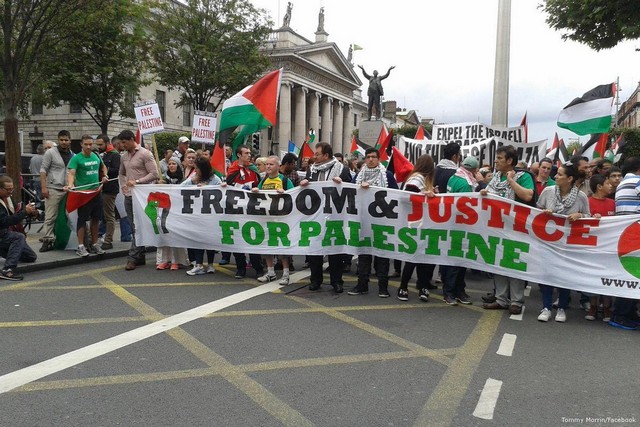
From the White House, Trump claimed he had “judged this course of action to be in the best interests of the United States of America, and the pursuit of peace between Israel and the Palestinians.”  Such best interests evidently did not include Palestinians as such, but was “nothing more or less than a recognition of reality”.

This is a reality born of brute force rather than guiding law.  In the case of the latter, it is without any distinct foundation, unless intangible spirits are accorded corporeal dimensions.  UN Resolution 181, passed by the UN General Assembly on November 29, 1947, deemed the city “a corpus separatum under a special international regime”.

Subsequent moves based around the force of arms were made in contravention of the resolution, though these never had the blessing of international law: Israel claimed West Jerusalem during the Arab-Israeli War of 1948; Jordan assumed control of East Jerusalem in 1950.

The Six-Day War of 1967 saw Israel seize the eastern portion of the city, an act that generated a string of finger pointing resolutions from the UN Security Council.  Resolution 267 (Jul 3, 1969), confirming resolution 252 (May 21, 1968) reaffirmed the position that “acquisition of territory by military conquest is inadmissible”.

Since then, the internal assumptions of the Israeli state have been unmistakable: legalise domination and legitimise control over the Holy City.  The Knesset, in 1980, decided to treat Jerusalem’s status as an internal matter. “Jerusalem, complete and united, is the capital of Israel.”  The UN Security Council gave a different serve, calling on all states “that have established diplomatic missions” in Jerusalem to withdraw them.

Israeli Prime Minister Benjamin Netanyahu had certainly scored a coup, calling the move a “genuine milestone in the glorious history of this city.”  The US Congress, heavily lobbied by AIPAC and then Israeli opposition leader Netanyahu, did much the same in 1995, passing legislation requiring the move of the US embassy to Jerusalem.  This measure effectively compelled administrations to sign a waiver every six months delaying the move.

Trump, in refusing to issue another waiver, delighted local political punters.  The Republican Jewish Coalition was so thrilled at the move from the White House, it took out an advertisement in the New York Times congratulating the President for “courageously recognizing Jerusalem as Israel’s Eternal Capital.”

Such moves are given the deceptive, even dangerous clothing of spiritual, immutable eternity.  Ever ready for the pulp fiction narrative, Trump would tweet that the city “has been the focus of our hopes, our dreams, our prayers for three millennia.”

In the at times unsteady world of international law and deliberation, the approach to Jerusalem has generally been stable: refuse to acknowledge any one claim to sovereignty over the city in favour of an international administration or accept an outcome drawn from a peace process.

The tangible outcome of the declaration is hard to say, though its message is unmistakable, treading with disdain on Palestinian assumptions that East Jerusalem be the capital of any future state.  It accords primacy to Israeli supremacy, and, importantly, the status of Judaism.  The status of the city, intended to be the subject of future discussion as outlined in the 1993 Israel-Palestinian peace accords, is directly brought into question by Trump’s move.  This is the nature of unilateral punchiness writ large.

Allies have been left stunned; Islamic states are waving their fists with threatening promise, more concerned with the reactions of their own populaces than anything else.  To predetermine the outcome of the fate of the Holy City, claims Mouin Rabbani with some colour, “would constitute an act of premeditated political pyromania with unforeseen local, regional and global consequences.”

Mahmoud Abbas of the Palestinian Authority has been put in a particularly difficult situation, caught between having to take a frothily angered stand (Palestinian figures are clamouring for three days of rage), but also what can be made of an essentially moribund peace process. “This,” he rightly notes, “is a reward to Israel.”

Inflammatory outcomes are also promised with typical relish.  Sheikh Ahmed al-Tayeb, imam of Egypt’s al-Azhar mosque, claimed Trump’s move would incite “the feelings of anger among all Muslims and threatens world peace.  The gates of hell will be opened in the West before the East.”

Most strikingly is the notion that unilateralism is tolerable, even desirable, when it comes to matters Israeli.  When other states, without Israeli consultation, choose to recognise anything Palestinian, even in terms of a nominal status, unilateral conduct becomes a matter for abuse and derision.

Short of not packing the diplomatic bags and upping stakes from Tel Aviv to Jerusalem, governments will maintain stony faces and deem such moves complicating, conditioned by a good degree of apocalyptic rhetoric against the US-Israel alliance. But over the years, the Palestinians have retreated into the recesses of a consciousness numbed by international rivalries among Muslim states.  They are no longer the poster boys and girls of revolutionary justice.

From the war in Syria to the conflict in Yemen, states of various shades of Islam are shoring up allies and rivalries with murderous consistency.  Such continuing disunity is exactly what Israel, and its US backers, will be hoping for, letting the babble over Jerusalem slide into its own eternity.

Dr. Binoy Kampmark was a Commonwealth Scholar at Selwyn College, Cambridge.  He lectures at RMIT University, Melbourne.  Email: bkampmark@gmail.com

7 December 2017

Source: http://www.countercurrents.org/2017/12/07/recognising-jerusalem-unilateralism-international-law-and-the-trump-white-house/

US Recognition Of Jerusalem As Capital Of Israel-A New Phase In Global Politics

By Dr Vivek Kumar Srivastava

In a major policy shift US President Donald Trump has decided to recognize the Jerusalem as capital of Israel and has directed the official to move the US embassy from Tel Aviv to Jerusalem which in his opinion the previous Presidents had promised but did not deliver. The President said “I’ve judged this course of action to be in the best interests of the United States of America and the pursuit of peace between Israel and the Palestinians. This is a long-overdue step to advance the peace process and to work towards a lasting agreement. Israel is a sovereign nation with the right like every other sovereign nation to determine its own capital. Acknowledging this as a fact is a necessary condition for achieving peace. It was 70 years ago that the United States, under President Truman, recognized the State of Israel. Ever since then, Israel has made its capital in the city of Jerusalem — the capital the Jewish people established in ancient times.”

This move has sparked the global reaction and Saudi Arabia the staunchest ally to USA has condemned it. Even the UNO has treated it as a matter of grave concern. UN Secretary General Guterres has called it as a time of great anxiety. He also emphasized that two nation state concept is the only way to solve the problem in the region. UK PM who recently had some tense relations with Donald Trump on the issue of terrorism has called East Jerusalem as part of the Occupied Palestinian Territories. Her statement suggests that UK is not in tune with USA on this issue. The Prime Minster Theresa May said: ‘We disagree with the US decision to move its embassy to Jerusalem and recognize Jerusalem as the Israeli capital before a final status agreement. We believe it is unhelpful in terms of prospects for peace in the region. The British Embassy to Israel is based in Tel Aviv and we have no plans to move it.’

UK has traditional friendship with USA and in two other occasions in Middle East-invasion in Iraq and removal from power seat of Col. Gaddafi in Libya, UK had stood with USA without any weakness but this time it has expressed its departure from the previous policies.

Countries like India have remained consistent supporter to the Palestinian cause but in the recent time relations with Israel have been upgraded. India is now close friend of Israel but has not diluted its commitment to support to Palestinian cause. It has committed at political level itself to return of situation to pre 1967 status when Israel occupied much of the area in six Day War which included Golan Heights, Gaza Strip, Sinai Peninsula, West Bank, and Old City of Jerusalem.

In response to queries regarding India’s position on recognition of Jerusalem as capital of Israel by the US, the Official Spokesperson said:”India’s position on Palestine is independent and consistent. It is shaped by our views and interests, and not determined by any third country.” (MEA)

President Trump has strong base in the US Jews lobby which is an important player in the political relationship system between US and Israel. Such a move inside Republican Party has been welcomed by this constituency. Trump is aware that he has unleashed a lethal force in the form of diplomatic decision and its repercussions may not be without troubles. Anticipating such a development he has therefore stated that ‘so today, we call for calm, for moderation, and for the voices of tolerance to prevail over the purveyors of hate.’ He also stated that ‘Jerusalem is today, and must remain, a place where Jews pray at the Western Wall, where Christians walk the Stations of the Cross, and where Muslims worship at Al-Aqsa Mosque.(and) to maintain the status quo at Jerusalem’s holy sites, including the Temple Mount, also known as Haram al-Sharif to maintain the status quo at Jerusalem’s holy sites, including the Temple Mount, also known as Haram al-Sharif’ but major issue is- how much US support the real establishment of peace in the region? As the establishment of two states can be fashioned by US if it influences Israel in diplomatic terms.

The US policy shift has caused a quake in the region though US has said that United States would support a two-state solution if agreed to by both sides. This is a problem zone as it will be much difficult to make convince both parties to reach a deal on the Two State solution; hence US should exercise its diplomatic power to realize this dream for Palestinians.

As the days pass the real impact of the decision will be seen but a diplomatic turmoil has started in the international politics. The national interests will determine the extent of impact of this particular move on the global politics and bilateral relations and in regional milieu.

Dr. Vivek Kumar Srivastava,Vice Chairman,CSSP, Kanpur; e mail: vpy1000@yahoo.co.in

7 December 2017

Source: http://www.countercurrents.org/2017/12/07/us-recognition-of-jerusalem-as-capital-of-israel-a-new-phase-in-global-politics/

CIA Agent Confesses On Deathbed: ‘I Killed Bob Marley’

By Baxter Dmitry

A 79-year-old retired officer of the CIA, Bill Oxley, has made a series of stunning confessions since he was admitted to the Mercy Hospital in Maine on Monday and told he has weeks to live. He claims he committed 17 assassinations for the American government between 1974 and 1985, including the music icon Bob Marley.

Mr. Oxley, who worked for the CIA for 29 years as an operative with top-level security clearances, claims he was often used as a hitman by the organization, to assassinate individuals who could represent a threat to the goals of the agency.

Trained as a sniper and marksman, Mr. Oxley also has significant experience with more unconventional methods of inflicting harm upon others, like poisons, explosives, induced heart attacks and cancer.

The 79-year-old operative claims he committed the assassinations between March 1974 and August 1985, at a time when he says the CIA “was a law unto itself.” He says he was part of an operative cell of three members which carried out political assassinations across the country and occasionally in foreign countries.

Most of their victims were political activists, journalists, and union leaders, but he also confesses to assassinating a few scientists, medical researchers, artists and musicians whose ideas and influence “represented a threat to the interests of the United States.”

He claims he had no problem with going through with the assassination of Bob Marley, because “I was a patriot, I believed in the CIA, and I didn’t question the motivation of the agency. I’ve always understood that sometimes sacrifices have to be made for the greater good.”

But Mr. Oxley confesses that Bob Marley remains unique among his victims, as he was the only victim he “felt anything for.”

“The others were assholes. Bob Marley was Bob Marley. I was no closer to being a long-haired hippy back then than I am now, but I must admit Bob’s music did move me. It held some power over me.”

He claims to have “mixed feelings” about Bob Marley’s death. On the one hand, Marley was “a good man, a beautiful soul” with “profound artistic gifts” who did not deserve to have his life cut short. But according to Mr. Oxley, Bob Marley was also placing the goals of the CIA in jeopardy and threatening the existence of the United States:

“He was succeeding in creating a revolution that used music as a more powerful tool than bullets and bombs. Bob Marley in 1976 was a very serious threat to the global status quo and to the hidden power brokers implementing their plan for a new world order. As far as the agency was concerned, Bob Marley was too successful, too famous, too influential… A Jamaican Rastaman who started using his funds and fame to support causes around the world that were in direct conflict with the CIA… To be honest, he signed his own death warrant.”

“It’s not like we didn’t warn him. We sent a few guys to shoot up his house in Kingston,” Mr Oxley says, referring to a shooting in the Marley residence that left the singer with an injured arm and chest.  “We had a message for him. We impressed upon him the gravity of the situation he found himself in. He didn’t listen.”

“Two days later, in the mountains, I stuck him with the pin.“

How Bob Marley was murdered by the CIA

Two days after Bob Marley was shot in the left arm by one of three gunmen who ambushed the singer and some of his crew in his house in Kingston, and after a brief stint in hospital, Bob Marley travelled to the protective hills of the Blue Mountains and spent time at the highest point in Jamaica, rehearsing for an upcoming concert.

According to Mr. Oxley, he used press credentials to gain access to Bob Marley during his Blue Mountains retreat. He introduced himself as a famous photographer working for the New York Times, and gave Bob Marley a gift.

“I gave him a pair of Converse All Stars. Size 10. When he tried on the right shoe, he screamed out ‘OUUUCH.‘

“That was it. His life was over right there and then. The nail in the shoe was tainted with cancer viruses and bacteria. If it pierced his skin, which it did, it was goodnight nurse.”

“There had been a series of high-profile assassinations of counter-culture figures in the United States in the late sixties, early seventies. By the time Bob Marley’s time came around, we thought subtlety was the order of the day. No more bullets and splattered brains.”

Mr. Oxley says he kept close contact with Marley during the final years of his life, ensuring the medical advice he received in Paris, London and the United States “would hasten his demise rather than cure him.” He died from cancer in May 1981. He was just 36 years old.

“The last time I saw Bob before he died he had removed the dreadlocks, and his weight was dropping like a stone,” he says.

“He was very withdrawn, unbelievably small. He was shrinking in front of us. The cancer had done it’s job.”

“The day he died in Miami was definitely one of the most difficult moments in my career. I felt real bad. For a long time I wasn’t comfortable with my part in his death. But eventually I came to realize it had to be done, for America.”

Baxter Dmitry is a writer at Your News Wire. He covers politics, business and entertainment. Speaking truth to power since he learned to talk, Baxter has travelled in over 80 countries and won arguments in every single one. Live without fear.

20 November 2017

Source: http://yournewswire.com/cia-agent-deathbed-bob-marley/

Senior Saudi figures tortured and beaten in purge

By David Hearst

Several detainees taken to hospital with torture injuries, while sources tell MEE scale of crackdown is bigger than authorities have revealed

Some senior figures detained in last Saturday’s purge in Saudi Arabia were beaten and tortured so badly during their arrest or subsequent interrogations that they required hospital treatment, Middle East Eye can reveal.

People inside the royal court also told MEE that the scale of the crackdown, which has brought new arrests each day, is much bigger than Saudi authorities have admitted, with more than 500 people detained and double that number questioned.

Members of the royal family, government ministers and business tycoons were caught up in the sudden wave of arrests orchestrated by Crown Prince Mohammed bin Salman, known as MBS, under the banner of an anti-corruption drive.

Some, but not all, of the top figures arrested were singled out for the most brutal treatment, suffering wounds to the body sustained by classic torture methods. There are no wounds to their faces, so they will show no physical signs of their ordeal when they next appear in public.

Some detainees were tortured to reveal details of their bank accounts. MEE is unable to report specific details about the abuse they suffered in order to protect the anonymity of its sources.

The purge, which follows an earlier roundup of Muslim clerics, writers, economists and public figures, is creating panic in Riyadh, the Saudi capital, particularly among those associated with the old regime of King Abdullah, who died in 2015, with power then passing to his half-brother, King Salman.

Many fear the primary purpose of the crackdown is a move by MBS to knock out all rivals both inside and outside the House of Saud before he replaces his 81-year-old father.

On Wednesday night, seven princes were released from the Ritz-Carlton Hotel in Riyadh, where they had been held since Saturday. The top royals have been moved to the king’s palace, sources told MEE.

The crown prince’s cousin, Mohammed bin Nayef, who continues be under house arrest, has had his assets frozen, the Reuters news agency reported. Sons of Sultan bin Abdulaziz have also been arrested and had their assets frozen.

One of the most famous is Prince Bandar bin Sultan, a former Saudi ambassador to Washington and confidant of former US president George W Bush.

Saudi authorities said that one of the corruption cases they are looking at is the al-Yamamah arms deal, in which Bandar was involved. But Bandar himself is not under arrest and living in Jeddah, a source told MEE.

Bandar bought a hamlet in Oxfordshire, in a picturesque area of central England, and a 2,000-acre sporting estate with part of the proceeds from kickbacks he received in the al-Yamamah arms deal, which netted British manufacturer BAE £43bn ($56.5bn) in contracts for fighter aircraft.

As much as $30m (£15m) is alleged to have been paid into Bandar’s dollar account at Riggs Bank in Washington and the affair led to corruption probes in the US and UK, although the case was dropped in the UK in 2006 after an intervention by then-prime minister Tony Blair.

Also among those arrested is Reem, the daughter of Al-Waleed bin Talal, the only woman to be targeted in the latest roundup.
Bank accounts frozen

To prevent others from fleeing, MBS has ordered a freeze on private bank accounts. The number of account closures and those banned from travel is many times the number of people who have been arrested, sources in Riyadh told MEE.

No one expected a crackdown of this scale and against princes of such seniority in the House of Saud, which is why so many of those detained were caught red-handed and had no time to flee.

The purge against other members of the royal family is unprecedented in the kingdom’s modern history. Family unity, which guaranteed the stability of the state since its foundation, has been shattered.

The last event of this magnitude was the overthrow of King Saud by his brother Prince Faisal in 1964. At one point in that saga, Prince Faisal ordered the National Guard to surround the king’s palace, but the king himself was never vilified.

His exit was dignified and all the senior figures, including Faisal himself, waved him goodbye at the airport.

Mohammed bin Salman vowed before becoming crown prince: “I confirm to you, no one will survive in a corruption case – whoever he is, even if he’s a prince or a minister.”

Today, however, the sons of all four key men in the House of Saud who comprised the core of the family through the last four decades have been targeted. They are the sons of King Fahd bin Abdulaziz, King Abdullah, Prince Sultan and Prince Nayef.

This represents an unprecedented attack on the position and wealth of the pillars of al-Saud, including the three most prominent figures of the ruling Sudairi clan.

King Salman is one of seven Sudairi brothers, the clan that has dominated the kingdom for the last 40 years. The other surviving Sudairi is Ahmed bin Abdulaziz, who has been sidelined.

Salman only gained the throne because two of his four full brothers, Sultan and Nayef, died as crown princes.

Even then his accession was a close-run thing, as MEE has previously reported. King Abdullah died before a decree writing Salman out of the line of succession could be signed and published.
Public humiliation

In Bedouin culture, the attack on his cousins will not be forgotten or forgiven. Their public humiliation, as well as the freezing of their assets, is seen as a blow to their honour, which surviving members of their family are duty bound to avenge.

The crown prince’s attack on leading business figures is equally risky.

One of those rounded up on Saturday was Bakr bin Laden, the head of Saudi Arabia’s biggest construction company. He had managed the biggest construction programmes for decades through a series of sub-contractors he paid directly.

Bin Laden was rich enough to absorb the costs, before he in turn had to “bribe” officials in the government to get paid for the original work and the contract they had agreed.

Once you remove the man or the company at the top of the sub-contractor pyramid, no one beneath him gets paid, thus risking throwing the entire construction industry into disarray. The same happened to Saudi Oger, the company owned by Saad Hariri, the former prime minister of Lebanon, which was declared bankrupt on 31 July.

Some of the ministers MBS promoted have also been caught by the purge.

Adel Fakeih, a former minister of planning and the economy, spearheaded the rollout of bin Salman’s ambitious privatisation drive called Vision 2030.

He was also key in the announcement of Neom, a proposed mega-city backed by $500bn in government money to be built on the shores of the Red Sea.

Fakeih, a former mayor of Jeddah, was arrested on 4 November. The same fate was suffered by Adel al-Torifi, the crown prince’s information minister.

Symbolically, the announcement of Neom was made at the Ritz Carlton hotel, where the princes have been detained since Saturday.

Many of Mohammed bin Salman’s colleagues must now be asking themselves how long they have before the ambitious prince turns on them.

By hitting the foundations of the unity of the family, as well as the oligarchs, and targeting independent Islamic scholars and public figures, MBS is turning his guns on the traditional pillars of the Saudi state, one analyst said.

“So far, the Saudi kingdom has used chaos as a policy in its near abroad, either in Iraq, Syria or in Yemen. However, it is now implementing the chaos theory at home too, and no one, least of all the prince himself, can be sure of what will now happen,” an informed person in Riyadh said last night.

“The stability of the kingdom was built on three pillars: the unity of the al-Saud family, the Islamic character of the state and the flourishing loyal domestic business community. By hitting all three simultaneously, the risk of the kingdom sinking into the sand is very high,” he said.

12 November 2017

Source: http://www.middleeasteye.net/news/exclusive-senior-figures-tortured-and-beaten-saudi-purge-1489501498

Backlash Against Russian ‘Fake News’ Is Shutting Down Debate For Real

By Dr Robin Andersen

A few days before the Halloween hearings held by the Senate Judiciary Subcommittee on Crime and Terrorism, where powerful tech companies would provide testimony about their roles disseminating “fake news” during the 2016 election, Twitter announced it would no longer accept advertising from the Russian government-sponsored broadcast channel Russia Today (RT), or the state-owned Sputnik.

In a Twitter PublicPolicy blog post (10/26/17), the company said it would “off-board advertising from all accounts” owned by RT and Sputnik. The decision was based on its own assessment of the 2016 US election “and the US intelligence community’s conclusion that both RT and Sputnik attempted to interfere with the election on behalf of the Russian government.” As substantiation, Twitter merely provided a link to the January 6, 2017, intelligence report (ODNI).

BuzzFeed (11/1/17) reported that Twitter based its decision on the intelligence report that called RT “the Kremlin’s principal international propaganda outlet,” also providing a link to the report without a word about its documentation or quality. Most reporting did the same, including the New York Times (10/26/17), which said Twitter’s decision “was informed by specific findings of the United States intelligence community, made public in January.”

A lonely voice critical of the Twitter ban was the Electronic Frontier Foundation (10/27/17), which warned the action was a threat to free expression, both in the US and globally.

At the time the report was published, Vox (1/6/17) repeated many of the “intelligence” assertions, including the Kremlin propaganda charge. Vox told readers that “RTis way more important than we think,” saying the report contained “striking observations” about RT’s reach, message and proximity to the Russian government. For example, staff at RT’s bureaus are not just close, but “very, very close to the Kremlin.” One network head was from Russia’s “diplomatic service,” and “London’s RTbureau is managed by the daughter” of a former Mikhail Gorbachev speechwriter.

It appeared that neither Vox nor those who penned the “intelligence report” remembered that under Soviet Premier Mikhail Gorbachev, glasnost (meaning openness) and a liberal press flourished in the Soviet Union. Gorbachev’s face appeared on the cover of Timemagazine (1/1/90) when it declared him the Man of the Decade, and later that year (6/4/90) the magazine quoted him as saying, “I detest lies.”

Taking a closer look at the seven pages of claims against RT (a full one-third of the total intelligence report on Russian interference) that led to Twitter’s decision, some journalists might have concluded that RT provided substantive news to the American public in 2012, and later during the election. They might also have noticed that the report makes shoddy, misleading arguments, embarrassing mistakes (such as confusing European and US date notations), unsubstantiated claims, and lacked any grounding in the foundations of journalism in a democracy. As Robert Parry (Truthdig, 7/31/17) pointed out, US government accusations against RT

have related more to it covering topics that may make the establishment look bad—such as the Occupy Wall Street protests, fracking for natural gas, and the opinions of third-party presidential candidates—than publishing false stories.

The US intelligence officials apparently do not like RT reporting about the abuses of the American Security apparatus. They complain that RT‘s reports often characterize the United States as a “surveillance state” and allege widespread infringements of civil liberties, police brutality and drone use (RT, 10/24/12, 10/28/12, 11/1–10/12).

RT is also condemned for reporting on Occupy Wall Street: It “created a Facebook app to connect Occupy Wall Street protesters via social media. In addition, RT featured its own hosts in Occupy rallies.” Airing material far outside acceptable discourse in mainstream commercial media, RT also “focused on criticism of the US economic system, US currency policy, alleged Wall Street greed and the US national debt.”

Repeated are familiar charges that Russians bolstered Donald Trump’s campaign and diminished Hillary Clinton’s. Claims that RT harmed Clinton point to broadcasts that include debates with third-party candidates like Jill Stein. Indeed, Ed Herman (7/8/17/)argued that no case was made by the ODNI report and that RT’s content was rather the “ongoing expression of opinion and news judgments.”

This intelligence report may go down as one of the shoddiest pieces of media criticism ever penned, and also the least scrutinized. (FAIR’s Adam Johnson was one of the few to take a close look at it—1/10/17.)

Ironically, RT’s own own reporting of the “intelligence” marshaled against it is a masterful illustration of decoding skills no longer very evident in the US commercial media. RT’sJanuary 7 broadcast with Kevin Owen spent almost 15 minutes on the US report, concluding that the “final assessment neither implies that there’s any evidence,” nor proves that there are any facts.

RT’s Fracking Programming

Screengrab from RT featured in the ODNI report.

Complaints about RT’s coverage of fracking were given a prominent position in the ODNI report: “RT runs anti-fracking programming, highlighting environmental issues and the impacts on public health,” it stated. It went on to claim:

This is likely reflective of the Russian government’s concern about the impact of fracking and US natural gas production on the global energy market and the potential challenges to Gazprom’s profitability.

Vox repeated intelligence claims about the alleged motivations for RT’s fracking coverage, but failed to say that stories contained health and environmental impacts of fracking.

Those in Congress representing the interest of the extractive industries have seized on this charge, equating anti-fracking coverage with “divisive messages” such as hate speech. The Washington Times (9/26/17) reported on a congressional probe into Russian “fracking-related social media ads.” The committee rallied against

divisive social and political messages conveyed through social media [that] have negatively affected certain energy sectors, which can depress research and development in the fossil-fuel sector and the expanding potential for natural gas.

Under pressure to block “fake news,” Twitter banned RT ads, and Google announced that it would “de-rank” stories from RT (and Sputnik as well), placing them lower in search results. But while RT is sponsored by the Russian government, it is still a legitimate international news agency, as are the UK’s BBC News at Ten, Qatar-owned Al Jazeera, and 20 Heures, produced by France 2’s broadcasting service. It offers critical, alternative perspectives unavailable on other channels. It is also clearly labeled, not hidden like a bot or a fabricated Facebook page, allowing the public knowledge of its origination and perspective.

RT’s reporting bears striking similarities to alternative and independent media content, and that is why letting the charges against RT stand unexamined is so dangerous. The actions being taken by tech giants to battle fake news are currently having devastating effects on alternative media and freedom of speech, while leaving the worst hate speech and junk news spinning across the internet by right-wing trolls.

‘Professional’ vs ‘Junk’ News

The way fake news is being defined in this battle is an attack on alternative journalism itself. CNN reported (10/26/17) on a study by Oxford University’s Internet Institute on “‘Junk News’ and 2016 Election,” finding that only 20 percent of sampled tweets contained links to “professional” news. (Together with “professional political news,” they comprise 30 percent of tweets.)  The anchor says, “You mean real news, like CNN,” to a nod of approval. Much of the rest of  Twitter content is lumped together as ill-defined “junk,” shown on a graph as “polarizing or conspiratorial: Inclu. Wikileaks and Russia”; no mention is made of the racist, hateful or misogynist content of white supremacist trolls.

Such classifications emerge from naïve technology researchers seemingly unaware that junk news and propaganda are deeply embedded within professional news brands: Iraq had weapons of mass destruction, global warming is not anthropogenic and tax cuts for the rich will benefit the middle class. (Media critic Edward Herman penned a long history of the New York Times‘ fake news about Russia, and before that the Soviet Union, that dates back as  as the 1917 revolution itself—Dissident Voice,7/8/17.)

Yet in the battle against fake news, much of the best, most accurate independent reporting is disappearing from Google searches. The World Socialist Web Site (8/2/17) reported that Google’s new search protocol is restricting access to leading independent, left-wing, progressive, anti-war and democratic rights websites. The estimated declines in traffic generated by Google searches for news sites are striking:

  • WSWS.org fell by 67 percent.
  •  AlterNet.org fell by 63 percent.
  • ConsortiumNews.com fell by 47 percent.
  • SocialistWorker.org fell by 47 percent.
  • MediaMatters.org fell by 42 percent.
  • CommonDreams.org fell by 37 percent.
  • DemocracyNow.org fell by 36 percent.
  • Truth-out.org fell by 25 percent.
  • CounterPunch.org fell by 21 percent.
  • TheIntercept.com fell by 19 percent.

Truthdig noted back on July 31 that

Google’s strategy is to downgrade search results for targeted websites based on a supposed desire to limit reader access to “low-quality” information, but the targets reportedly include some of the highest-quality alternative news sites on the internet.

As we enter a brave new world where artificial intelligence is deployed in calculations and algorithms purportedly targeting fake news, the winners are establishment and commercial media. This may be the reason for so little discussion, other than a few laudatory features praising the new technology. The New York Times (5/1/17) gushed about researchers harnessing digital technology to fact-checking programs in a hunt for fake news as  “a positive way of moving artificial intelligence forward while improving the political debate.” Tech giants, we are told, are partnering with computer scientists and start-ups to develop sophisticated algorithms computing “reams of online data to quickly — and automatically — spot fake news faster than traditional fact-checking groups can.”

The lack of transparency about the design of algorithms now extends to other players with open censorship in mind. A group of anonymous “researchers” on the website PropOrNot have created what Robert Parry of Consortium News (11/27/16) refers to as a blacklist. Consortium News was included among some 200 Internet sites spreading what PropOrNot deems “Russian propaganda.” Parry noted that the Washington Post (11/24/17) validated the authors of PropOrNot as sophisticated experts who “tracked” the Russian propaganda operation. The Post’s Craig Timberg  described the nameless players of PropOrNot simply as “a nonpartisan collection of researchers with foreign policy, military and technology backgrounds.”

FAIR (11/24/16) shows that despite respected media critics taking the report to task, thePost’s spurious claims were cemented as conventional wisdom across much of the media. Jeffrey St. Clair, a co-founder and editor of CounterPunch.org, another independent news site that made the list, told FAIR (12/8/16), “The morning after the Post published its article, I found 1,000 emails in my inbox, mostly hate mail and death threats.”

By contrast, commercial digital technologies continue to augment the reach of alt-right views. Recently ProPublica (8/19/17) surveyed the most visited websites of extremist groups identified by either the SPLC or the Anti-Defamation League. Researchers found that

more than half of them—39 out of 69—made money from ads, donations or other revenue streams facilitated by technology companies. At least 10 tech companies played a role directly or indirectly in supporting these sites.

The Islamaphobic Jihad Watch is an example of one the numerous sites that “monetize their extremist views through relationships with technology companies.”

And AlterNet (11/8/17) reported that “Google is continuing to allow the monetization of fake news via its advertising network AdSense,” and boosted numerous fake news stories after the Sutherland Springs, Texas, church massacre.

Twitter still has a white supremacy problem. The Root (11/9/17) reported that Twittergave its coveted “verified” status, denoted by a blue checkmark, to Jason Kessler, the organizer of the white supremacist Charlottesville rally that resulted in the murder of Heather Heyer and the brutal beating of DeAndre Harris at the hand of white supremacists. A blue checkmark from Twitter verifies the users’ tweets and profiles, and they are more likely to appear in searches, allowing messages to be spread faster and reach more people. By verifying Kessler’s account, Twitter is directly enabling white supremacy.

The Fundamental Problem

The expanding universe of lies, propaganda and fake news proliferating across the internet is a consequence of the monetized technologies that drive profits for the powerful tech industry. Facebook, Twitter and YouTube are not neutral platforms. They are deliberately designed to actively harvest human attention and sell it to advertisers, an immensely profitable enterprise. As a consequence, digital technologies blur the lines between paid ads, boosted posts and organic content on platforms such as Facebook, where ads and newsfeeds alike go viral. This is a design choice that came about because in-feed placement increased the engagement on the ads, and thus Facebook’s revenue. The business model is built into the technology. Writing in Politico (11/1/17), Renee Diresta and Tristan Harris note:

The self-serve ease and affordability of Facebook’s ads tool, and the fact that the platform can turn content viral quickly, is why advertisers and manipulators alike love it.

Twitter is a high-speed tool for breaking news, and for citizen journalists who need to reach the public and share information. On the other hand, refusing to alter its commercial design, the platform has failed to acknowledge and police the anonymous, automated army of bots. This leads to hashtags spreading vile anti-immigrant content, racism and misogyny as quickly as news and information.

Disentangling the hot-button, attention-grabbing stories that go viral from the advertising that supports that content would lower profit margins. Instead, companies are devising artificial intelligence and algorithms that purportedly detect fake news. In doing so, they are leading the charge to eliminate independent and alternative views under the guise of Kremlin propaganda, which started last January with charges against RT in the ODNI report.

Even in the face of Google’s testimony at the Halloween Hearings that the company’s own internal review found that RT broke none of Google’s rules or protocols, the Guardian (11/21/17) reported that Google searches would employ algorithms to de-rank the “state-run Russian news agencies, including Russia Today and Sputnik, which are accused of spreading propaganda by US intelligence agencies.” The Guardian went on to confuse RTwith twitter trolls:

At least 80 times, news sites, including the Telegraph, Metro and BuzzFeed,embedded or quoted tweets known to have been written by a notorious state-backed “troll army” based in St Petersburg.

Mainstream media continually equate RT with such troll armies, while downplaying the role of alt-right hate groups in the promulgation of fake news. Also outside of the Russiagate purview is the degree to which fake news content was amplified on the Internet by the Trump campaign and his supporters. The Nation (11/16/17) pointed out that as Russiagate reaches panic levels, freedom of speech is under fire:

Congress, led by Democrats, is also eyeing [RT], along with any other information source that could be deemed “Russian-linked.” At recent congressional hearings on how Russia allegedly used its platforms to influence the 2016 campaign, lawmakers denounced Facebook, Twitter and Google for failing to thwart…“a deliberate and multifaceted manipulation of the American people by agents of a hostile foreign power.”

In response, Twitter has

informed lawmakers that its new criteria for identifying a Russian-linked account now includes merely having a user name with Cyrillic characters or tweeting frequently in the Russian language.

The latest escalation of Russiagate is an open attack on whistleblowers and independent media. On November 27, the House Intelligence Committee issued a subpoena demanding that satirist and journalist Randy Credico provide testimony to the committee. In an earlier letter, Adam Schiff, the ranking Democrat on the Committee, demanded Credico’s “voluntary” cooperation with the panel’s “bipartisan investigation into Russian active measures directed at the 2016 US election.” Credico declined Schiff’s invitation and the sweeping demand for

the preservation and production of all documents, records, electronically-stored information, recordings, data and tangible things, including but not limited to graphs, charts, photographs, images and other documents, regardless of form other than those widely available (e.g. newspaper articles) related to the committee’s investigation, your interview and any ancillary matters.

Credico, who compared the action to the witchhunts of the McCarthy era, told Consortium News (11/28/17) that the committee probably wants access to the Pacifica Radio program, “my 14-part series on Assange, ‘Julian Assange: Countdown to Freedom,’ which includes WikiLeaks founder Julian Assange, his mom, and some of the most significant US government intelligence agency whistle blowers in modern history.”

With the spotlight on a “hostile foreign power,” tech companies are allowed to leave intact the commercial digital technologies that spin the weaponized hate of white supremacistsand misinformation across the internet.

On November 13, RT was forced to register as a “foreign agent,” under a 1938 law enacted to counter Nazi propaganda. As The Nation (11/16/17) points out, the Justice Department demand was unusual:

Although hundreds of foreign entities are registered under FARA, international media outlets are almost entirely exempt, and none have registered in over a decade.

The Washington director for PEN America, Gabe Rottman, expressed concern that the DoJ action could lead to “retaliation against US-supported outlets such as Voice of America or public broadcasters like the BBC.”

Time magazine cover (7/15/96) celebrating US intervention in the Russian presidential election

As predicted, by November 19, the Russian Justice Ministry put nine US government-funded news agencies on noticethat they would probably be designated “foreign agents.” The Voice of America (VOA), Radio Free Europe/Radio Liberty and seven separate regional outlets active in Russia could be affected under the new legislation designed specifically as retaliation for US actions against RT. (VOAreported its Russian counterpart’s blacklisting as a matter of fact—“Russia’s RT Registers as Foreign Agent in US,”  11/13/17—though when the tables were turned, the term was suddenly discovered to require scare quotes: “9 US-Funded News Outlets Could Be Forced to Register as ‘Foreign Agents,’” 11/19/17.)

In a prophetic and equally ironic comparison, media critic Edward Herman (7/8/17) noted back in July, “All the logic and proofs of a Russian ‘influence campaign’ could be applied with at least equal force to US media and Radio Free Europe’s treatment of any Russian election.” And, he added, “Of course the US intervention in the 1996 Russian election was overt, direct and went far beyond any ‘influence campaign.’”

The consequences of allowing unsubstantiated accusations against RT to stand unchallenged are helping distort the debate about fake news. In doing so, they allow open calls for censorship and algorithms that close down critical and independent views. This, together with the many other serious and numerous challenges to freedom of expression at the moment, should worry those who value life in an open society, and freedom of speech across the globe.

Dr Robin Andersen is Professor of Communication and Media Studies at Fordham University. In addition, she directs Fordham’s M.A. Program in Public Communication and the Peace and Justice Studies Program. Contact her by email: andersen [at] fordham.edu

30 November 2017

Source: http://www.countercurrents.org/2017/11/30/backlash-against-russian-fake-news-is-shutting-down-debate-for-real/

Trump Retweets Fascist Anti-Muslim Videos From Britain

By Fred Mazelis

US President Donald Trump retweeted three videos Wednesday morning that were posted by Jayda Fransen, the deputy leader of Britain First, a fascist outfit that has specialized in such activities as “mosque invasions” and “Christian patrols” in urban areas with large Muslim populations.

Trump’s latest tweeting is an escalation of a political strategy aimed at inciting and encouraging far-right forces. At the time of the fascist rampage in Charlottesville, Virginia in August that left one anti-fascist protester dead, Trump claimed that there were “good people” among the white supremacist demonstrators. Now he has openly associated himself with a fascist group.

The videos, entitled “Islamist mob pushes teenage boy off roof,” “Muslim Destroys a Statue of Virgin Mary,” and “Muslim migrant beats up Dutch boy on crutches,” are crude attempts to whip up hatred of Muslims. The Dutch video, from earlier this year, shows a fight in which no Muslims were involved, and the other two are four-year-old depictions of violence in Egypt and Syria, respectively—no more representative of all Muslims than the murderous rampages in California and Texas exemplified all Americans.

Trump had said nothing further about the tweets, but White House Press Secretary Sarah Huckabee Sanders defended them without reservation. “Whether it’s a real video, the threat is real,” she told reporters. “The threat is real, the threat needs to be addressed and the threat has to be talked about and that’s what the president is doing in bringing that up.”

Britain First was founded in 2011 by former members of the fascist British National Party. One of its founders was known for anti-abortion fanaticism, and the group has also been linked to extreme-right British Loyalists in Northern Ireland.

Jayda Fransen, now 31 years old, was found guilty in 2016 of religiously aggravated harassment for abusing a Muslim mother in front of her four young children in the city of Luton, about 30 miles northwest of London. Franzen screamed at the woman, who was wearing a hijab, that Muslim men force women to cover up to avoid being raped “because they cannot control their sexual urges,” and added, “that’s why they are coming into my country raping women across the continent.”

Thomas Mair, the fascist who killed British Labour MP Jo Cox during the Brexit campaign last year, shouted “Britain First!” as he shot and stabbed the MP, from the Batley and Spen constituency, near Leeds. Britain First, which parades in paramilitary uniforms, has no more than 1,000 supporters, according to the Guardian, but about 500,000 Facebook “likes.” Fransen received 56 votes when stood for parliament in 2014.

Trump’s open endorsement of the fascists was greeted with enthusiasm by Fransen herself, who tweeted her thanks to the White House in capital letters on Wednesday:

“THE PRESIDENT OF THE UNITED STATES, DONALD TRUMP, HAS RETWEETED THREE OF DEPUTY LEADER JAYDA FRANSEN’S TWITTER VIDEOS! DONALD TRUMP HIMSELF HAS RETWEETED THESE VIDEOS AND HAS AROUND 44 MILLION FOLLOWERS! GOD BLESS YOU TRUMP! GOD BLESS AMERICA!”

Within the US, fascist elements were similarly pleased. David Duke, former leader of the Ku Klux Klan, wrote on Twitter, “Thank God for Trump! That’s why we love him!”

Trump’s solidarization with fascists in Britain, like his praise for the Nazi demonstrators in Virginia, is not an aberration. That the president is openly solidarizing with such forces is an expression of the putrefaction of American democracy, under the impact of unprecedented social inequality and the drive to world war.

The current tweeting controversy comes only one day after the North Korean regime’s latest test of a long-range missile, amid worries over Trump’s continuous sabre-rattling that could lead to war, with massive casualties on the Korean peninsula and beyond.

Trump, undoubtedly working in concert or general agreement with his former chief adviser Stephen Bannon of Breitbart News, continues to lay the groundwork for a fascist movement in the US. The scapegoating of immigrants and Muslims is being stepped up, blaming ethnic or religious minorities for poverty and unemployment, and whipping up fear in the name of the “war on terror.”

Trump’s critics within the Democratic and Republican parties—who are themselves engaged in a ferocious neo-McCarthyite campaign alleging that Russia is “sowing divisions” within the US—are motivated primarily by concerns about the consequences for US imperialist interests abroad and domestic stability at home.

Senator Jeff Flake, Republican of Arizona, whom the mainstream press was calling a profile in courage recently in connection with his book critical of Trump and his decision not to run for reelection, could not seem to summon up much anger in this case. The Senator called Mr. Trump’s retweets “highly inappropriate,” adding, “I hope he takes them down and doesn’t do it again.”

The British political establishment felt obliged to issue its own disclaimers. A few Labour parliamentarians struck an angry pose. Labour leader Jeremy Corbyn said Trump’s actions were “abhorrent, dangerous and a threat to our country.” Prime Minister Theresa May’s reaction was notably bland, with May declaring, “It is wrong for the president to have done this.” Justin Welby, the Archbishop of Canterbury, added his meek plea for Trump to make a statement “to make clear his opposition to racism and hatred in all forms.”

Former Director of National Intelligence James Clapper spoke more directly to the interests of American imperialism, summing up the reaction in these circles as he has in the past. Clapper, who served under both Bush and Obama, said he worried that Trump’s actions could encourage anti-Muslim violence, “and it causes our friends and allies around the world to wonder about the judgment of the president of the United States.”

30 November 2017

Source: http://www.countercurrents.org/2017/11/30/trump-retweets-fascist-anti-muslim-videos-from-britain/

Decades of US diplomacy has failed: Why the US wants to shut down PLO office

By Ramzy Baroud

On 18 November, just days before the fiftiest anniversary of United Nations Resolution 242, the US State Department took its first step towards severing its ties with the Palestinian Liberation Organization (PLO).

The timing of this decision could not be any more profound.

The first formal contact between the US and the PLO occurred in mid-December, 1988, when US Ambassador to Tunisia, Robert H. Pelletreau Jr., picked up the phone to call the PLO headquarters in Tunis to schedule formal talks.

Palestinian PLO officials were ‘elated’ by the fact that the US made the first move, as reported by the New York Times.

This assertion, however, is quite misleading. For over a decade prior to that ‘first move’, PLO’s chairman, Yasser Arafat, had to satisfy many US demands in exchange for this low-level political engagement.

The ‘talks’ in Tunisia were prolonged, before the PLO was ready to make its final concession in secret meetings in Oslo, Norway in 1993.

Eventually, a PLO office was opened in Washington DC. It served little purpose, aside from being an intermittent platform to arrange Washington-sponsored talks between Israeli and PLO officials. For Palestinians living in the US, it was almost invisible until the US announced its decision to possibly shut it down.

The American threat followed a United Nations speech last September by Mahmoud Abbas, the leader of the Palestinian Authority (PA) and Chairman of the PLO. From an Israeli-US perspective, Abbas committed a mortal sin for seeking the jurisdiction of the International Criminal Court (ICC) to take Israel to task regarding its human rights violations in Occupied Palestine.

By doing so, Abbas, not only violated a peculiar US law that forbids the PLO from seeking ICC help, but also an unspoken rule that allowed the US to engage the PLO in 1988, where the US served the rule of the political and legal frame of reference for the so-called ‘peace process.’ The UN took a backseat.

But even that unequal relationship proved too much for the US government, which is moving fully and unconditionally into the Israeli camp. The Trump Administration is now working to rewrite the nature of US involvement in the Middle East, and, especially, in the Israeli-Palestinian conflict.

Unfortunately, Trump’s team has no concrete strategy and no frame of reference, aiming to change 50-years of US foreign policy – unfair to Palestinians and Arabs – but has no alternative plan of its own.

30 November 2017

Almost a year ago, Trump made a promise to Israel to be a more trustworthy ally than President Barack Obama, who gave Israel more money than any other US president in history. Obama, however, had violated a golden rule in the US-Israeli relationship: he did not veto a UN resolution that condemned the illegal settlements in the Occupied Palestinian territories.

Israel panicked at that unprecedented event, not because it feared that the UN Security Council would enforce its purportedly binding resolution, but because the US had, for once, refused to shield Israel from international censure.

Even before officially taking over the White House, the Trump team attempted to prevent UNSC Resolution 2334 from passing. It failed but, come January, it took over the Israeli-Palestinian file with a vengeance, threatening to cut off funds to Palestinians, blocking their efforts from expanding their international reach, and declaring its full and unconditional support for the rightwing government of Benjamin Netanyahu.

But there was more to Israeli alarm at Resolution 2334 than mere US betrayal. This Resolution – which asserted that Israeli settlements have no legal validity and constitute a flagrant violation of human rights – was partly predicated on, and clarified and added to, previous UNSC Resolution 242.

This means that 50 years of incessant Israeli attempts to absolve itself from any commitment to international law have failed miserably.

For Palestinians, and the larger Arab context, Resolution 242 marked their defeat in the war of 1967. Unsurprisingly, this Resolution has been cited in various agreements between Israel and the PLO, but only to give these agreements a veneer of international legitimacy.

However, the Oslo Accords of 1993 gave Israel the opportunity to use its leverage to bypass international law altogether: signing a peace agreement without ending its military occupation became the goal.

Against this backdrop, it is no wonder that Netanyahu was quite shocked to witness that a recommitment to Resolution 242 last year at the UNSC did not garner US opposition. Actually, the longstanding Resolution gained more substance and vigor.

The June 1967 war was Israel’s greatest military victory, and Resolution 242 enshrined a whole new world order in the Middle East, in which the US and Israel reigned supreme. Although it called for withdrawal of Israeli military from Occupied Palestinian and Arab lands, it also paved the way for normalization between Israel and the Arabs. The Camp David Agreement between Egypt and Israel was a direct outcome of that Resolution.

This is why Resolution 2334 has alarmed Israel, for it invalidated all the physical changes that Israel has made in 50 years of illegal occupation of Palestinian lands.

The Resolution called for “two democratic States, Israel and Palestine, liv(ing) side by side in peace within secure and recognized borders”.

Unlike Resolution 242, Resolution 2334 has left no room for clever misinterpretation: it references the pre-June 1967 lines in its annulment of the Israeli occupation and all the illegal settlements Israel has constructed since then.

The Resolution even cites the Fourth Geneva Convention, the UN Charter and the International Court of Justice’s advisory opinion of July 2004, which stated that Israel’s barrier in the West Bank was illegal and should be dismantled.

With international law, once more, taking center stage in a conflict which the US has long designated as if its personal business, Abbas was empowered enough to reach out to the ICC, thus raising the ire of Israel and its allies in the White House.

Even if the PLO’s office is permanently shut down, the decision should not just be seen as punishing Palestinians for seeking ICC support but, ultimately, as the culmination of disastrous US diplomacy, for which the Trump Administration has no clear alternative.

30 November 2017

Source: http://www.amec.org.za/palestine-israel/item/1551-decades-of-us-diplomacy-has-failed-why-the-us-wants-to-shut-down-plo-office.html

China income inequality among world’s worst

By Gabriel Wildau in Shanghai and Tom Mitchell in Beijing

Poorest quarter of households own just 1 per cent of country’s total wealth

Communist China has one of the world’s highest levels of income inequality, with the richest 1 per cent of households owning a third of the country’s wealth, a report from Peking University has found. The poorest 25 per cent of Chinese households own just 1 per cent of the country’s total wealth, the study found.

China’s Gini coefficient for income, a widely used measure of inequality, was 0.49 in 2012, according to the report. The World Bank considers a coefficient above 0.40 to represent severe income inequality. Among the world’s 25 largest countries by population for which the World Bank tracks Gini data, only South Africa and Brazil are higher at 0.63 and 0.53, respectively. The figure for the US is 0.41, while Germany is 0.3.

The study from the university’s Institute of Social Science Survey is likely to bolster calls for more progressive taxation and increased social welfare spending in the nominally communist country. The Gini coefficient has risen from roughly 0.3 in the 1980s.

There’s no doubt that the income gap is getting larger and larger,” said Zhou Xiaozheng, a sociology professor at Renmin University in Beijing. “To put it simply, the poor are getting poorer and the rich are getting richer.” “You don’t need a report to know that,” added Prof Zhou, who was not involved in the research.

While China’s income inequality is more severe than other large countries, wealth inequality is worse in the US. The wealthiest 1 per cent of US households owned 42 per cent of all US wealth in 2012, according to research led by Emmanuel Saez, economist at University of California Berkeley. Rampant corruption and unreported income presents challenges for estimating income and wealth levels in China.

The figures are notably higher than official estimates. China’s statistics bureau said last year that the country’s Gini coefficient had fallen slightly to 0.469 in 2014 from 0.477 in 2011. An other estimate by widely respected economists at the Southwest University of Finance and Economics in Chengdu put the Gini coefficient at 0.61 in 2010. The latest report is based on a survey of nearly 15,000 households in 25 different provinces.

Separately, the Hurun Report said on Thursday that the number of dollar millionaires in China had risen 8 per cent over the past year to 3.14m. According to Hurun’s 2015 China Rich List, the country is home to 596 dollar billionaires, more than the US. China’s leadership has pledged to address inequality. “We want to continuously enlarge the pie, while also making sure we divide the pie correctly. Chinese society has long held the value of ‘Don’t worry about the amount, worry that all have the same amount’,” Xi Jinping wrote in People’s Daily, a government mouthpiece, in 2014.

Additional reporting by Ma Nan and Wan Li

Twitter: @gabewildau

24 January 2016

Source: https://www.ft.com/search?q=China+income+inequality+among+world%E2%80%99s+worst