By Eric Zuesse
In a recent article, I documented that “U.S. Again Supports Al Qaeda in Syria”.
In a prior article, I had documented that since 2012 the U.S. Government has cooperated with the Sauds’ plan to install in Syria a fundamentalist-Sunni government to replace Syria’s existing secular Government, and that the fundamentalist-Sunni organization Al Qaeda has been the U.S. Government’s chief organization on the ground in Syria providing the leadership to that Saudi-U.S. effort. Part One of that report is especially important in order to understand the continuity between the policies of the current U.S. President Donald Trump and the prior U.S. President Barack Obama, in Syria.
The present article will provide the broader historical documentation behind this, starting in 1949, when the U.S. CIA, under President Harry S. Truman, did its second coup d’etat, overthrowing a democratically elected progressive Government (the first having been Thailand 1948, where the CIA had installed an extremely barbaric dictator replacing the democratically elected government that had been headed by a staunch anti-fascist, and simultaneously set up the CIA’s off-the-books supplementary funding mechanism from the international narcotics-trade — a CIA practice which has continued till perhaps the present; and, furthermore, the infamous Nugan-Hand affair, which involved Thailand, definitely involved the CIA’s Michael Hand and William Colby; so, clearly, the CIA is funded off-the-books from the narcotics business, and America’s anti-narcotics laws thus are actually keeping drug-prices and resultant burglaries and CIA profits artificially high, funneling that illicit money into CIA coffers; and any method to defund the CIA down to its core intelligence-gathering function and to eliminate its coup-function, which is the function that took control in Thailand and Syria and then Iran and many more, would need to regulate — instead of to continue outlawing — drugs, which might be the main reason why it hasn’t yet been done: illegal drugs provide wealth to the CIA and other gang-lords, including some U.S. Government officials).
The 1949 coup in Syria overthrew the democratically elected Syrian Government, which had blocked construction of a U.S.-Saudi oil pipeline through Syria into Europe. The CIA imposed upon Syrians a military dictatorship which was so bad, Syria’s military decided that their being stooges of the U.S. wouldn’t really work for them, after all; so, the generals allowed the democratically elected President to run again in 1955, and he won again. In 1957, the CIA tried to overthrow him yet a second time, but failed. The generals wouldn’t cooperate this second time around. In 1958, that democratic Syrian President merged Syria into Egyptian President Gamel Abdel Nasser’s United Arab Republic, which ended in 1960. Thereafter, a series of frequently replaced Syrian leaders ended in 1970, when the popular head of the institutionally secular Arab Socialist Ba’ath Party – Syria Region, Hafez al-Assad, came to power, and he included, in his Government, leaders from the Sunni, Shiite, and Christian, communities, in order to achieve a national Government that would be acceptable to all three of those communities, as well as to Syria’s many seculars. The CIA’s consistent plan has been to break Syria into religiously warring sub-states so that the Sunni one would allow the Sauds’ pipeline; and this plan became placed on-hold until the CIA’s plan for the “Arab Spring” rebellions succeeded in 2011 and seemed to make possible the U.S. regime’s ’democracy’ in Syria, this time meaning a breakup of Syria into Kurdish, versus fundamentalist-Sunni (Saudi-controlled), versus Shiite (pro-Iranian) nations. This also would please another U.S. and Saud ally, Israel, because then the Golan Heights part of Syria which Israel stole in 1967 would be able to become legally Israeli territory.
That 1949 coup in Syria was to enable America’s Bechtel Corporation to construct through Syria the proposed Trans-Arabian Pipeline for the Sauds’ and Rockefellers’ oil from Saudi Arabia to supply European countries and thus to crowd out oil from Russia. The EU is the world’s biggest energy-importer, and by far the largest energy-supplier to the EU is Russia. As Robert F. Kennedy Jr. recently headlined, regarding all of the Saudi-U.S. aristocracies’ grabs for Syria, “Syria: Another Pipeline War”. Syria has important (to the oil and gas industries) real estate. And the destruction of Syria by these foreign thugs has unfortunately resulted from this fact.
Syria is the most secular of all governments in the Middle East, and is the only government that’s committed, both in philosophy and in practice, to separation between church (or clergy) and state (government). I documented in that previous article America’s determination to overthrow the decidedly secular Ba’athist-Party Syrian Government, which is headed by Bashar al-Assad, whom both Riyadh and Washington demand to become “regime-changed” — replaced by a regime that’s acceptable to the rulers of Saudi Arabia (the royal Saud family) and of those rulers’ vassal-nation, the United States. In the present article I shall document that the Sauds have even been allowed by the U.S. regime to select the people who supposedly represent the Syrian public at the U.N.-sponsored Syrian peace talks — those are actually ‘peace’ talks not between the Syrian people and the Syrian Government (to settle a civil war, like the U.S. and its allies claim it is), but instead between the Saud family and the Syrian Government (to stop a foreign invasion, which it really is); this is what the U.S. regime actually supports: the Sauds, against Syria — the invader and its allies, against the victim and its allies. It’s the reality, even if all the ‘news’media are portraying it to be anything but a foreign invasion of the sovereign nation of Syria (which they, of course, are).
Europe — the EU — gets the refugees from America’s invasions and coups (including not only from the Middle East but also from America’s 2014 coup in Ukraine), but still allies itself with the U.S. Government, which nominally represents the American people, though actually representing only the billionaires in three countries: Saudi Arabia, Israel, and the United States. (What’s especially key to understanding U.S. foreign policies is that whereas the U.S. aristocracy is primarily focused against Russia, the Saudi-Israeli alliance is primarily focused against Iran.) Europe subordinates itself to that group of billionaires, but especially to the American ones, since the American ones control the NATO alliance and basically created the EU. (Whether America ever wears-out its welcome amongst European publics will be shown by the extent to which those publics repudiate both NATO and the existing EU, since those two organizations are the immediate agencies of U.S. control there; and the IMF and other U.S.-created entities are global, not merely European entities of these billionaires’ empire.)
Also documented in the prior article was an important part of the back-story to the present one, that:
The U.S., and the royal family of Saudi Arabia, had created Al Qaeda back in 1979, to be their “boots on the ground” against the Soviet Union, and used them not only in Afghanistan but also in Russia’s own Chechnya region, to weaken, first the Soviet Union itself, helping to break it up, and then, after the Cold War ended on the Russian side in 1991 when the Soviet Union and its communism and its Warsaw Pact military alliance all ended, America and the Sauds continued arming and funding Al Qaeda, so as to create terror in Russia, and to overthrow Russia’s allies abroad, such as Assad.
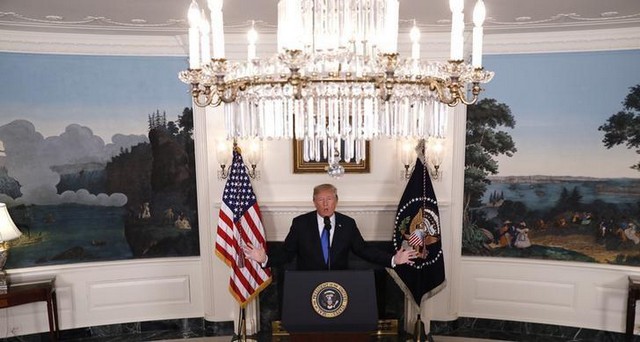
This U.S.-Saudi support of jihadists, in order to topple allies of Russia’s Government, and ultimately even to overthrow Russia’s Government itself, continues till the present day, under U.S. President Donald Trump.
What’s most important to make clear up-front, in order to show that America is waging the Sauds’ war against Syria — that the Sauds aren’t waging America’s war there — is that the U.S.-supported U.N.-managed peace talks in Geneva on the Syrian war are between the Syrian Government and the Saud family; the U.S. ceded to the Sauds the right to select the individuals who represent “the Syrian opposition” at those ongoing ‘peace talks’:
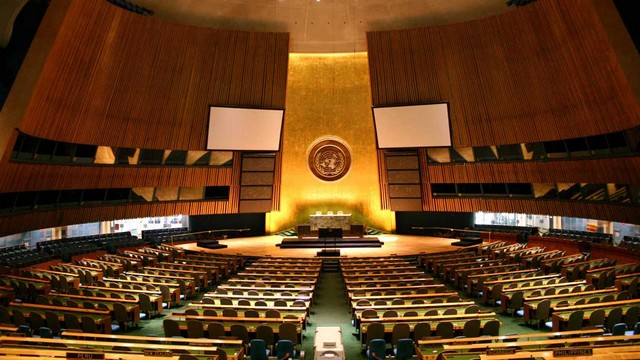
On 9 December 2015, as was reported to Europeans by AFP, the Saud family held an international conference in the Saudi capital, Riyadh, which AFP said was “Saudi-organized talks.” AFP said that these “talks” aimed “to go some way towards establishing an opposition negotiating team” against the Syrian Government. The Saud family had selected this conference’s invitees, in order to consider their applications to become the leaders, or even merely members, of this negotiating team under U.N. auspices, which would be called by the U.N. the “High Negotiations Committee” or “HNC” supposedly representing the people of Syria. However, no one was invited to this two-day Riyadh conference who “argues that Assad’s fate should be decided by the Syrian people.” The U.S. Government and the royal Saud family who own Saudi Arabia, and the royal Thani family who own Qatar, had previously established something they had called the “National Coalition.” Its deputy head was Hisham Marwa, who utterly rejected the idea that “Assad’s fate should be decided by the Syrian people.” AFP’s report said that Marwa was delighted at being surrounded at this conference by “the presence of military and political figures. This is the real opposition.” To him, the Syrian people were not. He was pleased that the Syrian people “will not affect the equation.” And they didn’t — but the royal Saud family did: they actually ran the HNC. Assad’s Government has been ‘negotiating’ against King Saud. That’s the reality, in the U.N.’s ‘peace talks.’
On 20 January 2016, the BBC headlined “Syria conflict: Islamist rebel named opposition chief negotiator” and reported that “A Syrian opposition committee has named an Islamist rebel as its chief negotiator at peace talks that the UN hopes to convene in Geneva on Monday. Mohammed Alloush is the political leader of the powerful, Saudi-backed group Jaysh al-Islam (Army of Islam).”
On 3 February 2016, the Saud-affiliated UAE’s The National newspaper bannered, “Why Jaish Al Islam and Ahrar Al Sham are at the heart of Geneva squabbles: While the groups both oppose ISIL [otherwise called ISIS], they are allies of Al Qaeda’s Syrian affiliate Jabhat Al Nusra,” and reported that “Jaish Al Islam … already has a central role in the discussions, with its leader Mohammed Alloush acting as chief negotiator for the opposition’s High Negotiations Committee team in Geneva. … Jaish Al Islam’s former leader Zahran Alloush spoke of Alawites and Shiites in derogatory terms and at times advocated that they be cleansed from parts of Syria.” The Alloushes, who had always been jihadists and pro-Saud Syrians, hated Shia just like the Sauds have hated Shia for hundreds of years (since 1744).
So: that’s how the U.S. Government ended up supporting, as constituting the supposed ‘representatives of the Syrian people’ ‘negotiating’ against Syria’s Government, in these U.N.-sponsored ‘peace’ talks, a team consisting of, and even being led by, agents who had been selected by the Saud family, who were determined to impose Sharia Law upon Syria.
It continues a lengthy U.S.-and-Saudi history of trying to replace Syria’s secular Government.
Here are key passages from historian Douglas Little’s excellent “1949-1958, Syria: Early Experiments in Covert Action”:
Declassified records confirm that beginning in November 1948, [CIA operative Stephen] Meade met secretly with Syrian Army Chief of Staff Col. Husni Zaim at least six times to discuss the “possibility [of an] army supported dictatorship.” U.S. officials realized that Zaim was a “‘Banana Republic’ dictator type” with a “strong anti-Soviet attitude.”
Building the Arabian American Oil Company’s Trans-Arabian Pipe Line from Saudi Arabia to Syria.
Meade and Zaim completed plans for the coup in early 1949. On 14 March, Zaim “requested U.S. agents [to] provoke and abet internal disturbances ‘essential for coup d’ etat’ or that U.S. funds be given him [for] this purpose.” Nine days later, Zaim “promised a ‘surprise’ within several days” if Meade could secure U.S. help. As rumors of a military coup grew stronger, Assistant Secretary of State George McGhee arrived in Damascus, ostensibly to discuss resettling Palestinian refugees but possibly to authorize U.S. support for Zaim. Shortly thereafter, … Meade reported on 15 April that “over 400 Commies [in] all parts of Syria have been arrested. … On 16 May, Zaim approved ARAMCO’s TAPLINE. … However, on 14 August, Zaim was overthrown and executed by Col. Sami Hinnawi. … On December 19, 1949, Col. Adib Shishakli ousted Hinnawi in Syria’s third coup in nine months. … Shishakli had a “cordial 2 hour discussion” with the CIA’s Miles Copeland and others at the U.S. embassy on November 23, 195l. When Ma’aruf Dawalibi, long regarded by U.S. observers as pro-Soviet, announced a week later that he would head Syria’s eighth cabinet in less than two years, Shishakli dissolved parliament and set up a military dictatorship. [This was the CIA’s 2nd Syrian coup; and it, too, established a dictatorship there.] … In short order, Syria initiated mutual defense talks with Turkey and renewed the TAPLINE concession. Shishakli was willing to consider a peace treaty with Israel and the resettlement of Palestinian refugees in Syria provided substantial U.S. financial and military aid was forthcoming. In 1952, the Truman administration pressed the World Bank to expedite Syria’s request for a $200 million loan. … CIA director Allen Dulles agreed that “the situation in that country is the worst of all the countries in that area.” … U.S. Ambassador Moose suggested on 8 January [1955] that “thought be given to other methods,” including an “anti-Communist coup” engineered by the SSNP. In March, Allen Dulles and CIA Middle East chief Kermit Roosevelt flew to London, where they worked out the details for the [third CIA Syrian] coup with Britain’s Secret Intelligence Service (SIS). …
During an unprecedented New Year’s [1957] Day meeting with key legislative leaders, Eisenhower requested congressional authorization to use U.S. troops to counter Soviet subversion in the Middle East. He “cited Syrian developments as evidence of Russian intent.” The House approved, 355 to 61 on January 30, 1957, and the Eisenhower Doctrine went into effect.
In August, Washington apparently gave authorization for Operation Wappen, the code name for the new U.S. covert operation against Syria. Howard Stone, a CIA political action specialist with experience in Iran and Sudan, had been planning a coup with dissidents inside the Syrian army for three months. Meanwhile, Shishakli assured Kermit Roosevelt [author of the CIA’s plan] that he was ready to reassume power in Syria. …
Syrian counterintelligence chief Sarraj reacted swiftly on August 12, expelling Stone and other CIA agents, arresting their accomplices and placing the U.S. embassy under surveillance. Left-wing Colonel Bizri used the fiasco as an excuse to wrest control of the army from his moderate rivals.
The U.S. encouraged Turkey and Iraq to mass troops along their borders with Syria. …
Eisenhower gradually edged away from the provocative scheme but the Turks refused to demobilize the 50,000 troops they had massed along the Syrian frontier. …
On July 15, Eisenhower pondered U.S. problems in the Arab world. “The trouble is we have a campaign of hatred against us, not by the governments but by the people.”
The U.S. regime’s enemies here were not any government, but instead “the people.” These people had good reason for hating America’s Government. Syrians didn’t want American thugs to control their lives. Already, the U.S. had become a dictatorship; and not only was it that: it became a dictatorship which is determined to be dictators to the entire world. The U.S. aristocracy demanded this, and still does.
The U.S. gang (the U.S. Government) weren’t dealing with a sufficiently psychopathic military in Syria; so, America’s rule over that country didn’t last long. But, finally, the born CIA asset Barack Obama tried his best to conquer Syria, and he too failed; and, now, the businessman Trump is settling for controlling merely portions of Syria, which the Sauds and the billionaires in Israel and in the U.S. still are demanding.
Thus, Syria hasn’t been sufficiently corrupt to satisfy the U.S.-Israeli-Saudi gang. Syria’s Government still represents the Syrian people. (Even Western polls of Syrians confirm it. And 72% of Syrians are opposed to the U.S. regime’s demand that Assad be removed from power prior to the next Syrian election and not be allowed to run again for the Presidency. And yet the U.S. says it supports democracy — even while trying to block it in Syria.) America’s aristocrats have tried mightily in Syria, many times, but have failed, each time.
What brought down the Soviet Union — Al Qaeda, supported by the aristocracies of the U.S. and Saudi Arabia — has consistently failed to bring down Syria, except to destroy it — and the perpetrators of that destruction (not only America’s dictators, but the Sauds, plus the Thanis who own Qatar, plus Turkey’s Erdogan) even have the gall now to blame their victims, for that $250-billion-plus reconstruction expense. That’s the perfection of conservatism: it’s the epitomization of the blame-the-victim ideology. It is fascism.
Investigative historian Eric Zuesse is the author, most recently, of They’re Not Even Close: The Democratic vs. Republican Economic Records, 1910-2010, and of CHRIST’S VENTRILOQUISTS: The Event that Created Christianity.
22 January 2018
Source: https://countercurrents.org/2018/01/22/americas-deceitful-secret-support-al-qaeda/