Just International

Key Myths And Facts About The Atomic Bombings Of Japan

By Robert J Barsocchini

In 1945, US president Harry Truman (who had dictatorial control over the atomic bomb) and his advisor James Byrnes intentionally prolonged the US war with Japan until, and apparently so that, they could target Japanese civilians, without warning, with atomic bombs.

The bombings were planned and carried out, as Alperovitz notes in an almost thousand-page study, in a way that “specifically avoided significant war” and “industrial installations”, and instead deliberately “target[ed] large numbers of civilians” so as to make the most “profound psychological impression” possible.

The documentary record illustrates that the important actors, including Truman and Byrnes, believed clarifying the terms of Japanese surrender and/or allowing a Russian declaration of war would end the war. Truman and Byrnes alone decided to defy these findings and reverse course, changing the US momentum and going out of their way to alter the surrender terms so they would not be clarified, and made efforts to delay the Russian declaration of war so fighting would continue until the atomic bombs were ready.

The record further reveals the high-level actors, including Truman and Byrnes, did not believe a US invasion would be carried out in the absence of atomic bombings. Contingency planning shows that if an invasion had been carried out, it would have been be months later and would have involved between 40,000 and 46,000 US deaths at the extreme high end (subsequent studies have found it may have involved as few as 0 or possibly 7,000 to 8,000 deaths), not 500,000 or a million – figures with no basis in the documentary record that were later invented to help try to justify to the public (in a successful propaganda effort) the US targeting, killing, and prolonged torture via radiation of large numbers of civilians. (The US has repeatedly performed non-consensual human experimentation with radiation.)*

After industrial-scale targeting of civilians throughout Japan, and after wiping out hundreds of thousands of civilians in two cities with two different kinds of nuclear bombs, the US, in a “carefully worded response”, accepted Japan’s surrender (which US planners believed would occur without atomic bombings or a US invasion) on August 11th. Japanese officials, who did not witness the bombings and did not know they were much different from what the US had already been doing, said the surrender was largely a result of the the impending Russian entry into the war. On August 14th, the US hit Japan with a “grand finale”, bombing Honshu with 1,014 planes in the biggest single TNT bombing raid in history up to that point.

Before the atomic bombings, Truman had drawn a connection to the US Declaration of Independence’s Protocols of the Elders of Zion-style reference to “merciless Indian savages” by referring to the “merciless” “Jap” “savages” (“the Japs are savages… merciless…”), a probably-inadvertent, subconsciously ingrained repetition postcolonial scholars would note illustrates a through-line in US thought from origins in dehumanizing and wiping out civilian inhabitants of land and stealing resources coveted by US nationalists to doing so in many other global locales. After US targeting of civilians in Germany, Truman also noted German civilians had to “atone for the crimes” of the German dictatorship, a logic identical to that of Osama bin Laden in rationalizing killing 3,000 US citizens on 9/11/01 as the US killed hundreds of thousands of Iraqis via siege.

James Byrnes, the sole man who went against the grain of all other top officials involved and convinced Truman to prolong the war so as to nuke Japanese civilians, went on, as a politician in his home state, to oppose the burgeoning grassroots civil-rights movement.

After the atomic bombings, major propaganda efforts were undertaken to cement an “acceptable”, though invented, rationale for the bombings in the public mind – a project that continues to be effective today, as US nationalists who have not studied the record continue to passionately insist on and believe the myths that the planners who decided to carry out the atomic bombings (Truman and Byrnes) thought a US invasion of Japan would take place and result in 500,000 or 1-million US deaths, that they thought the atomic bombings were necessary, that they were trying to end the war as soon as possible, and that they gave warning before carrying out the bombings. None of these claims are accurate.

Another noteworthy point is that when people in the US are asked whether they believe targeting civilians is ever acceptable, they mostly say no (though just barely; global polling has found “Americans are the most likely population in the world to believe military attacks targeting civilians are sometimes justified”). But when asked whether they think nuking civilians in Hiroshima and Nagasaki was justified, they still mostly say yes (though the number has been declining for years).

This may be an illustration of what George Orwell described as “doublethink” – holding two contradictory notions in mind at the same time – and may also relate to the self-serving notion that oneself or a group with which one feels associated is excused from laws and moral principles to which others must adhere, an idea prevalent in the US and which stems in large measure from the self-idolizing and self-serving attitudes of the religious and nationalist extremists who created the US state through slavery and the extermination or removal of the people occupying the lebensraum. However, thanks to propaganda efforts and psychological components of nationalism, most in the US may be unaware, or ideologically unable to accept, that the planners deliberately targeted civilians in the atomic bombings and sabotaged peace efforts, intentionally prolonging the war, to do so.

Robert J. Barsocchini is an independent researcher and reporter whose interest in the discrepancy between Western self-image and reality arose from working as a cross-cultural intermediary for large corporations in the US film and Television industry.

7 August 2017

Trump Finds Reason for the U.S. to Remain in Afghanistan: $1 Trillion in Untapped Mineral Deposits

By Mark Landler and James Risen

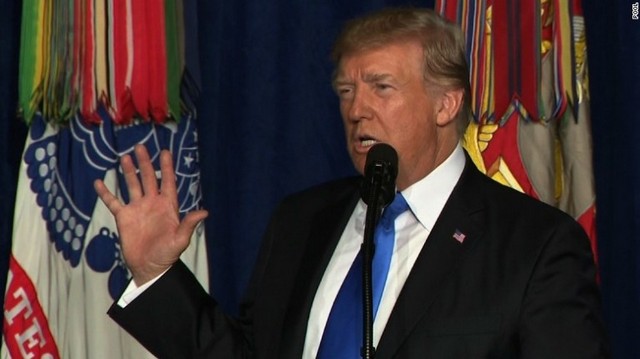
25 Jul 2017 — President Trump, searching for a reason to keep the United States in Afghanistan after 16 years of war, has latched on to a prospect that tantalized previous administrations: Afghanistan’s vast mineral wealth, which his advisers and Afghan officials have told him could be profitably extracted by Western companies.

Mr. Trump has discussed the country’s mineral deposits with President Ashraf Ghani, who promoted mining as an economic opportunity in one of their first conversations. Mr. Trump, who is deeply skeptical about sending more American troops to Afghanistan, has suggested that this could be one justification for the United States to stay engaged in the country.

To explore the possibilities, the White House is considering sending an envoy to Afghanistan to meet with mining officials. Last week, as the White House fell into an increasingly fractious debate over Afghanistan policy, three of Mr. Trump’s senior aides met with a chemical executive, Michael N. Silver, to discuss the potential for extracting rare-earth minerals. Mr. Silver’s firm, American Elements, specializes in these minerals, which are used in a range of high-tech products.

Stephen A. Feinberg, a billionaire financier who is informally advising Mr. Trump on Afghanistan, is also looking into ways to exploit the country’s minerals, according to a person who has briefed him. Mr. Feinberg owns a large military contracting firm, DynCorp International, which could play a role in guarding mines — a major concern, given that some of Afghanistan’s richest deposits are in areas controlled by the Taliban.

In 2010, American officials estimated that Afghanistan had untapped mineral deposits worth nearly $1 trillion, an estimate that was widely disputed at the time and has certainly fallen since, given the eroding price of commodities. But the $1 trillion figure is circulating again inside the White House, according to officials, who said it had caught the attention of Mr. Trump.

The lure of Afghanistan as a war-torn Klondike is well established: In 2006, the George W. Bush administration conducted aerial surveys of the country to map its mineral resources. Under President Barack Obama, the Pentagon set up a task force to try to build a mining industry in Afghanistan — a challenge that was stymied by rampant corruption, as well as security problems and the lack of roads, bridges or railroads.

None of these hurdles has been removed in the last eight years, according to former officials, and some have worsened. They warn that the Trump administration is fooling itself if it believes that extracting minerals is a panacea for Afghanistan’s myriad ills.

“It would be dangerous to use the potential for resource exploitation as a selling point for military engagement,” said Laurel Miller, a senior analyst at RAND who served until last month as the State Department’s special representative for Afghanistan and Pakistan. “The barriers to entry are really quite considerable, and that kind of argument could fuel suspicion about America’s real intentions in Afghanistan.”

But for Mr. Trump, as a businessman, it is arguably the only appealing thing about Afghanistan. Officials said he viewed mining as a “win-win” that could boost that country’s economy, generate jobs for Americans and give the United States a valuable new beachhead in the market for rare-earth minerals, which has been all but monopolized by China.

China already has a $3 billion contract to develop a copper mine about 25 miles southeast of the Afghan capital, Kabul. Officials said Mr. Trump was determined not to spend American lives and treasure in Afghanistan only to watch China lock up its rare-earth deposits, which are used to make products from wind turbines to computer chips.

Mr. Silver, the chemical executive, may head an effort to maximize the rights for American companies to extract these minerals, according to a senior official.

Mr. Trump’s interest also reflects how his military advisers have struggled to present him with other persuasive reasons to send troops to the country, where the United States has been at war since 2001.

The White House’s review of Afghanistan policy — led by Defense Secretary Jim Mattis and the national security adviser, Lt. Gen. H. R. McMaster — was supposed to be finished by the middle of July. Instead, it bogged down after Mr. Trump expressed displeasure with a proposal from General McMaster for a modest troop increase and a multiyear commitment to the country.

Policy meetings have become increasingly heated, officials said, as Mr. Trump and his chief strategist, Stephen K. Bannon, have squared off against General McMaster. Secretary of State Rex W. Tillerson is also said to be unhappy with the current proposals.

Vice President Mike Pence, not General McMaster, will lead a meeting Wednesday of National Security Council principals on Afghanistan. Some officials said that reflected General McMaster’s isolation; others said that the general welcomed Mr. Pence’s involvement and that the two were closely aligned on the policy.

But Mr. Trump, it is clear, is not. In June, he grudgingly agreed to give Mr. Mattis the authority to send additional troops — a number believed to be about 4,000 — as a stopgap measure to stabilize security in Afghanistan. But Mr. Mattis has not yet used his authority, perhaps reflecting his recognition that the commander in chief is uncomfortable with it.

When reporters last week asked Mr. Trump at a meeting at the Pentagon whether he planned to send more troops, he answered, “We’ll see,” and added, “ISIS is falling fast,” suggesting he viewed the counterterrorism threat in Afghanistan as declining.

Worried that Mr. Trump will be locked into policies that did not work for the last two presidents, Mr. Bannon and the president’s son-in-law, Jared Kushner, have brought in outside voices, including Mr. Feinberg and Erik D. Prince, a founder of the private security firm Blackwater International. Both have urged using more private contractors and giving the C.I.A. an oversight role in the conflict.

In addition, Mr. Feinberg has reached out to people involved in the Obama administration’s effort to build Afghanistan’s mining industry. Some warned him that the prospects for a profitable business are worse now than in 2009, given the decline in commodities prices and the deteriorating security in areas where the deposits are believed to lie.

Afghanistan’s deposits of copper and iron ore are trading at about a third of their 2010 prices. Most of the undiscovered deposits of rare-earth minerals are believed to be in Helmand Province, large parts of which are controlled by the Taliban.

“There are undoubtedly minerals to be exploited in Afghanistan, which could help provide economic stability to the country in the future,” said Daniel F. Feldman, a former special representative for Afghanistan and Pakistan. “But given all the obstacles, it could be many years before mining yields dividends for the Afghan people.”

One advantage is that the Trump administration would have a willing partner in the Afghan government. During the Obama administration, President Ghani resisted the rapid development of the mining industry, largely because he worried about the threat of widespread corruption that would come with it.

But as soon as Mr. Trump was elected, Mr. Ghani reversed his position, contacting the Trump team and promoting Afghanistan’s mineral wealth. He realized that Mr. Trump would be intrigued by the commercial possibilities, officials said.

Mr. Trump has said little publicly about Afghanistan since being elected. But his thinking about what the United States should reap for its military efforts was made clear in another context soon after his inauguration. Speaking to employees of the C.I.A., the president said the United States had erred in withdrawing troops from Iraq without holding on to its oil.

“The old expression ‘To the victor belong the spoils,’” Mr. Trump declared. “You remember?”

Mark Landler is a White House correspondent at The New York Times. In 24 years at The Times.

James Risen is an author, reporter and investigative journalist who has exposed various illegal activities by the US government and who is facing imprisonment for refusing to reveal the identity of one of his sources.

A version of this article appears in print on July 26, 2017, on Page A1 of the New York edition with the headline: Mineral Wealth In Afghanistan Tempts Trump.

7 August 2017

Ariel Gold, A New Breed Of Jewish Activist Against Israel

By Rima Najjar

I first heard of Ariel Gold through a Haaretz article that described her in the headline like this:

Jewish Mother and BDS Activist: Code Pink’s Ariel Gold vs. Israel’s Travel Ban: The pro-Palestinian provocateur is under attack after a newspaper alleged that she ‘tricked’ her way into Israel last month. She says she will be ‘heartbroken’ if the authorities ban her from ever returning.

Apparently, she tricked border police by deleting “her anti-Israel Facebook posts, going as far back as 2012”, according to  Israel Hayom, a widely-circulated daily newspaper in Israel that “outed” her.

Another Israeli sheet wrote:

The Wailing Wall wailed just a little louder on Tuesday, when two Jewish American, Code Pink activists Ariel Gold, of Ithaca, NY and Ariel Vegosen, of Oakland, CA, unfurled a banner at the old Wall that read, “American Jews support BDS.” … Representing the women’s peace organization, Code Pink, the two activists—both named after an angel, a modern Jewish city in Samaria, and a Disney mermaid—proudly expressed their “Jewish opposition to the Israeli occupation of Palestine” and endorsed “the Boycott, Divestment, and Sanctions movement [a link here is provided to an article headlined: Illinois, Latest State to Oppose BDS, Takes Concrete Action against Boycotters] as a nonviolent strategy to bring about a just peace in Palestine and Israel.”

Jewish Voice for Peace played a video clip of Ariel Gold reporting on the al-Aqsa boycott demonstrations form Jerusalem.  Gold also posted a video clip of Anat Cohen, a Jewish colonist in Al-Khalil (Hebron) attacking her.

Most recently, she posted a document of an order of protection issued against Cohen by an Israeli court: “Success — Jerusalem court issues order of protection for me against notorious illegal Hebron settler Anat Cohen. She cannot make contact with me in any way, cannot threaten me and cannot harass me.”

The travails of Ariel Gold, an American Jew, in the Jewish state are instructive on many levels.  The attacks against her as a Jew championing Palestinian rights are standard fare, long a part of Israel’s defamation campaign of such Jews in Jewish communities worldwide, but Ariel Gold is a new kind of Jewish critic of Israel.  She is a BDS activist, which means she advocates for all Palestinian rights.  Palestinians today, as Ali Abunimah expressed it, are reclaiming the right to demand all their rights

… their rights in full, an end to Israel’s colonial racism against Palestinian citizens of Israel, an end to occupation, colonization and siege in the West Bank and Gaza Strip, and the right to return.

This was not possible throughout the long decades of the “Peace Process”, when even discussing Palestinian right of return was taboo and the “right” of the Jewish state to “exist” was sacrosanct.

The injunction against Anat Cohen that Ariel Gold posted is startling on many levels, as comments on the post indicate.  Many of the comments on her Facebook post congratulate her and fear for her safety from a woman they describe as a lunatic who, among other things, has been throwing dirty diapers at activists, both international and Palestinian (some of those commenting have had first-hand experience with this!).

Given that Israel’s battalions (as many as seven by last count) are in Hebron for the sole purpose of safeguarding the illegal Jewish presence in the heart of a Palestinian Arab city, a few commenters rightly doubt the efficacy of the document:

Hula Coots: Ariel you are smarter than that, do you reallllly think this piece of paper will stop that leach, or stand up in any court? Let’s be real, this is Israel. That’s why she does it, she knows that no one will stop her, they praise maggots like this.

The most scathing comments, which in the euphoria of Gold’s “victory” over the system were sparse in the thread, have to do with the legal double standard Israel uses in its dealings with Jews and the Palestinian Arabs whose territory it is occupying:

Russell Ward: Isn’t it this a very clear instance of apartheid: you can get this order, very justifiably, but if you were Palestinian suffering the same abuse you couldn’t. Different laws in the same place depending on your race/nationality.

Virrginia Sheppard Lapham: But what if you were Palestinian? Would you have even gotten into Court? Be safe!

The fact is, had Ariel Gold been a Palestinian activist, she would have gotten to an Israeli military court in chains, like Issa Amro of Youth Against Settlements, with whom she delivered CODE PINK: Women for Peace petitions to the U.S. State Department, demanding protection for Palestinian human rights defenders in Hebron.

Ariel Gold’s injunction may be “a crack in the justice system” as some of the comments on her post claimed, but it is a crack in the wrong justice system, the one that sells “Jewish and Democratic”.  The people Israel calls “Arabs” and “Jews” (in the same vein as American Western films refer to “cowboys” and “Indians”) are governed by two sets of laws each.  Ariel Gold, as a Jew in the West Bank, tellingly appealed, not to the Palestinian legal system, but to the same legal system that governs Anat Cohen, the Jewish settler.

Although Israel’s Basic Laws protect the rights to equality of groups like women or people with disabilities, it denies the right to equality to Palestinian citizens of the Jewish state through discriminatory laws concerning citizenship.

Furthermore, Israel’s rule of law takes on a catastrophic dimension for Palestinians in the context of  the judicial arm of the occupation, which is described in an academic paper as, “a process of judicial domination that facilitates extensive control of the [Israeli] military authorities over the Palestinian civilian population through their judicial powers.”

Unlike Ariel Gold, many Jews who see themselves generally as liberal or progressive or humanists nevertheless continue to criticize Israel “for its own sake” or for the sake of Judaism, as Rabbi Michael Learner, the editor of the Zionist magazine Tikkun: to heal, repair and transform the world, does in 2014:

All my life I’ve been a champion of Israel, proud of its many accomplishments in science and technology that have benefitted the world, insistent on the continuing need for the Jewish people to have a state that offers protections from anti-Semitism that has reared its head continuously throughout Christian and Islamic societies, and enjoying the pleasures of long swaths of time in which I could study in Jerusalem and celebrate Shabbat in a city that weekly closed down the hustle and bustle of the capitalist marketplace for a full twenty-five hours … [But] Israeli behavior toward Palestinians is destroying Judaism and creating a new kind of hatred of Jews by people who never before had any issue with Jews.

Here, in contrast is British MP George Galloway explaining why Israel is in Palestine to a young Jew from the north of London who kept insisting, like Michael Lehrer above, that “Jews have a right to Palestine because they lost six million people in the Holocaust and suffered throughout history”:

The Jews have suffered racist anti-Semitism down the ages in many, many EU countries, including our own. They were subject to regular discrimination at best and pogroms at most, that’s undoubtedly true. The one place in the entire world the Jews were neither discriminated against nor subject to pogroms was the Muslim world. In fact so much that was the case that when Christianity came back to power in Spain in Andalusia, in the western extent of the Islamic empire, when the Muslims left, the Jews left with them, because they feared the Christian anti-Semitism, which would be unleashed in the wake of the departure of the Islamic civilization in the West, that’s why so many Jews are to be found, even today, and were to be found in profusion before the creation of the state of Israel in countries like Morocco and along the north African coast, because under the protection of the Muslims, the Jews left Europe and went to live in N Africa.

The Palestine that was wiped off the map when Britain granted you somebody else’s country had Jews living side by side with Christians and Muslims for centuries without the slightest taste of discrimination or violence or pogroms. So what happened is that Christian anti-Semitism in Europe, which massacred 6 million Jews in the greatest crime in human history was paid for, not by the Christian countries of Europe that either practiced or turned a blind eye to that anti-Semitism, but was paid by the very people who were completely innocent of that Holocaust, who had never persecuted the Jews, who had never pogrom-ed the Jews, and that seems to me to add insult to the injury suffered by a people whose country was wiped off the map, who were dispersed into exile to make way for a Zionist idea, which was granted to European Jews, because these were the first settlers, granted to European Jews, by Britain, as you have failed to acknowledge that Britain had no right to give away somebody else’s country – one country given to a second people land that actually belonged to a third people – it seems to me an all round injustice, don’t you think, Alex?

It was long before the Holocaust that Britain stepped in. Britain stepped in in 1917 with the Balfour Declaration made by the British Minister Balfour on our behalf to a group of atheistic Zionist Jews; I made the point about atheism because it is not a Biblical claim as if God was an estate agent. The men to whom Israel was promised were atheistic Jews; they were not only not speaking for all Jews, they represented at that time in 1917 a tiny proportion of the world’s Jews, Most of the world’s Jews supported communist or socialist parties, Zionist represented a sliver of Jews at the time and these are the people to whom Britain promised the land belonging to a third people without consulting either the British or the world Jews and least of all consulting the Palestinians.

Ariel Gold is a different breed of Jewish activist for Palestine.  She poses a real threat to the existence of Israel as a Jewish state with all that such a state embodies in Apartheid, racism and injustice to Palestinian Arabs. Her situation highlights the contradictions that the much-bandied about term “Jewish and Democratic” holds.

Here she is, an American Jew in the occupied West Bank, appealing to a court in illegally annexed and occupied Jerusalem to protect her against an illegal Jewish settler in Hebron.

Rima Najjar is a Palestinian whose father’s side of the family comes from the forcibly depopulated village of Lifta on the western outskirts of Jerusalem.

4 August 2017

Power To The People: Why Palestinian Victory In Jerusalem Is A Pivotal Moment

By Dr Ramzy Baroud

Neither Fatah nor Hamas have been of much relevance to the mass protests staged around Al-Aqsa Mosque compound in Jerusalem. Neither have American pressure, half-hearted European ‘concern about the situation’ or cliché Arab declarations made one iota of difference. United Nations officials warned of the grim scenarios of escalation, but their statements were mere words.

The spontaneous mass movement in Jerusalem, which eventually defeated Israeli plans to change the status of Al-Aqsa was purely a people’s movement. Despite the hefty price of several dead and hundreds wounded, it challenged both the Israeli government and the quisling Palestinian leadership.

Israel shut down Al-Aqsa compound on July 14, following a shootout between three armed Palestinians and Israeli occupation officers. The compound was reopened a few days later, but Palestinian worshipers refused to enter, as massive security installation, gates, cameras and metal detectors were installed.

The people of Jerusalem immediately understood the implication of the Israeli action. In the name of added security measures, the Israeli government was exploiting the situation to change the status of Al-Aqsa, as part of its efforts to further isolate Palestinians and Judaize the illegally occupied city.

The Israeli army occupied Palestinian East Jerusalem in 1967, annexing it in 1981 in defiance of international law and despite strong UN objection.

For 50 years, Jerusalem has endured daily battles. The Israelis fought to expand their influence in the city, increase the number of illegal Jewish settlers and cut off Jerusalem from the rest of the Palestinian Territories; while Palestinians, Muslim and Christians alike, fought back.

Al-Aqsa compound – also known as Haram Al-Sharif or the Noble Sanctuary – is the most symbolic element in the fight. It is a microcosm of the fate of the occupied city, in fact the fate of the entire Palestinian land.

The compound has been administered by Islamic Waqf, through an Israeli-Jordanian understanding. Many Israeli politicians in the Likud Party and the Netanyahu-led rightwing government coalition have tried to change this.

Palestinians understand that the fate of their mosque and the future of their city are tightly linked. For them, if Al-Aqsa is lost, then Jerusalem is truly conquered.

This fight, between Palestinian worshipers and the Israeli army happens every single day, usually escalating on Friday. It is on this holy day for Muslims that tens of thousands of faithful flock to Al-Aqsa to pray, oftentimes to be met by new military gates and army regulations. Young Palestinians, in particular, have been blocked from reaching Al-Aqsa, also in the name of security.

But the struggle for Jerusalem can rarely be expressed in numbers, death toll and televised reports. It is the ordinary Palestinians’ constant fight for space, for identity and to preserve the sanctity of their holy land.

In the last two years, the fight escalated further as Israel began expanding its illegal settlements in East Jerusalem and rightwing parties issued a series of laws targeting Palestinians in the city. One such law is the call for prayer law, aimed at preventing mosques from making the call for prayers at dawn, as has been the practice for a millennium.

Palestinian youth, many born after the failed Oslo Accords, are fed up as the Israeli military controls every aspect of their lives and their corrupt leadership grows more irrelevant and self-serving.

This frustration has been expressed in numerous ways: in non-violent resistance, new political ideas, in art, music, on social media, but also through individual acts of violent resistance.

Since the most recent Al-Quds Intifada – Jerusalem uprising – started in October 2015, “some 285 Palestinians have died in alleged attacks, protests and (Israeli) army raids,” reported Farah Najjar and Zena Tahhan. About 47 Israelis were killed in that same period.

But the Intifada was somehow contained and managed. Certainly, human rights groups protested many of the army killings of Palestinians as unnecessary or unprovoked, but little has changed on the ground. The Palestinian Authority has continued to operate almost entirely independent from the violent reality faced by its people on a daily basis.

The shootout of July 14 could have registered as yet another violent episode of many that have been reported in Jerusalem in recent months. Following such events, the Israeli official discourse ignores the military occupation entirely and focuses instead on Israel’s security problem caused by ‘Palestinian terror’. Politicians then, swoop in with new laws, proposals and radical ideas to exploit a tragic situation and remold the status quo.

Considering the numerous odds faced by Palestinians, every rational political analysis would have rightly concluded that Palestinians were losing this battle as well. With the United States fully backing Israeli measures and the international community growing distant and disinterested, the people of Jerusalem could not stand a chance.

But such understanding of conflict, however logical, often proves terribly wrong, since it casually overlooks the people.

In this latest confrontation, Palestinians of Jerusalem won, presenting an impressive model of mobilization and popular solidarity for all Palestinians. The Israeli army removed the barricades and the metal detectors, pushing Israel to the brink of a political crisis involving angry politicians, the army and internal intelligence, the Shin Bet.

The people’s victory was a massive embarrassment for Mahmoud Abbas, the President of the Palestinian Authority in Ramallah. He tried to ‘piggyback off the protests’ but failed, reported the Atlantic.

Other factions, too, moved quickly to mobilize on the people’s victory, but their efforts have appeared staged andinsincere.

“Today is a joyful day, full of celebration and sorrow at the same time – sorrow for the people who lost their lives and were injured,” a protester told Journalists, as thousands stormed the gates of Jerusalem armed with their prayer rugs, flags and voices hoarse from chanting for nearly two weeks.

“This is very much a grassroots movement – this isn’t led by Hamas or Fatah, the traditional political leaders of the Palestinians,” journalist Imran Khan reported from outside the compound.

This grassroot movement was made of thousands of women, men and children. They included Zeina Amro, who cooked daily for those who held steadfast outside the compound, was shot by a rubber bullet in the head, yet returned to urge the men to stand their ground the following day.

It also includes the child Yousef Sakafi, whose chores included splashing water over people as they sat endless hours under the unforgiving sun, refusing to move.

It also includes many Palestinian Christians who came to pray with their Muslim brethren.

Conveying the scene from Jerusalem, television news footage and newspaper photos showed massive crowds of people, standing, sitting, praying or running in disarray among bullets, sound bombs and gas canisters.

But the crowds are made up of individuals, the likes of Zeina, Yousef and many more, all driven by their insistence to face injustice with their bare chests in an inspiring display of human tenacity.

Of course, more violence will follow, as the Israeli occupation is enriched and relentless, but ordinary Palestinians will not quit the fight. They have held resolute for nearly 70 years.

Rational political analysis cannot possibly fathom how a nation undergoing numerous odds can still mobilize against an army, and win.

But the power of the people often exceeds what is seemingly rational. Almost leaderless, Palestinians remain a strong nation, united by an identity that is predicated on the pillars of human rights, resistance and steadfastness.

Dr. Ramzy Baroud has been writing about the Middle East for over 20 years.

3 August 2017

“Western” Feminists Betrayed Women in Afghanistan, Syria, and Beyond, Ignoring Threat of US-Backed Islamist Rebels

By Rania Khalek

Feminist scholar Valentine Moghadam discusses Western liberal delusions around Islamism, guerrilla movements and the Arab Spring.

Feminist author and scholar Valentine Moghadam participated in the Iranian revolution of 1979. But after the downfall of the Shah, she and her leftist comrades “were crushed immediately by the Islamists,” Moghadam told me. “That’s why so many of us are in exile and so many others were executed, tortured, arrested.”

Now a professor of sociology and international affairs at Northeastern University, where she is director of the Middle East and international affairs programs, Moghadam’s experience in Iran continues to influence her approach to the region and Islamist movements more generally. Much of her academic work, including several books, has focused on women’s movements in the Middle East and the implications of Islamism on their lives.

“It’s really on the basis of my experience in Iran that I have come to be totally suspicious of and opposed to any kind of Islamist movement,” she explained. “The lesson that I and many Iranians learned from the Iranian revolution and the Islamization that occurred almost immediately was that Islamist movements are very strong in the region and that Islamist movements are not good movements. They are not emancipatory, they are not egalitarian, they are not women friendly and they make things worse than the previous status quo,” she said.

In the 1980s, Moghadam was often a lone voice railing against U.S. support for the Afghan mujahideen, or anti-Soviet rebels, a subject she has written about extensively. She was particularly alarmed about the well-being of Afghan women and stunned by the silence of Western feminists and liberals as their governments funded a right-wing insurgency that sought to strip women and girls of basic rights.

In her book Globalization and Social Movements: Islamism, Feminism, and the Global Justice Movement, Moghadam attributed “the silence and confusion of the 1980s…to the anti-communism of liberal feminist groups, to an idealization of ‘Islamic guerrillas,’ to a misplaced cultural relativism, or to ignorance about Afghanistan.”

She expressed a similar critique of the feminist and leftist response to the conflict in Syria, where the U.S. tried to weaken the Syrian government by funding and arming a patchwork of religious fundamentalist groups that often worked side-by-side with Al Qaeda. In a strange affront to traditional leftist principles, large segments of the American left either stayed silent or expressed support for the armed insurgency, often whitewashing and denying its explicitly anti-democratic and sectarian agenda.

As’ad AbuKhalil, a professor of political science at University of California-Stanislaus, has observed that Syria coverage at the typically adversarial progressive program Democracy Now! has become indistinguishable from the one-sided State Department narrative promoted by establishment outlets. The Socialist Worker, the media arm of the International Socialist Organization, has published one piece after another glorifying the extremist-dominated insurgency and painting anyone opposed to it as “pro-Assadist.” One piece referred to the fighters in Al Qaeda’s Syria affiliate, Jabhat al Nusra, as “decent revolutionaries.” And Jacobin, a self-styled “leading voice of the American left, offering socialist perspectives on politics, economics, and culture” routinely publishes articles that whitewash the armed groups in shocking terms. A January 2017 piece in Jacobin claimed that Jaysh al-Islam and Ahrar al-Sham, two of the most fanatical armed opposition groups in Syria, “support national democratic transition” where “people will be able to choose their own representatives.”

This characterization couldn’t be further from the truth, as both groups are explicit about their intention to impose an Islamic state that woudl eradicate Syria’s tradition of pluralism. Until 2014, Ahrar al Sham worked arm in arm with the Islamic State, or ISIS. The groups had a falling out not over ideology, but over allegiance and tactics. Ahrar al Sham continued to work with Al Qaeda until a power struggle in the province of Idlib brought the two Islamist groups to loggerheads. Meanwhile, Jaysh al-Islam famously used caged Alawite families as human shields. Tellingly, Jacobin articles have repeatedly referred to the areas under the control of these groups as “liberated.”

Moghadam believes that these flawed analyses are rooted in the left’s enthusiasm for the Arab Spring, combined with ignorance about the Middle East, and as with Afghanistan, a romanticization of guerrilla movements.

Guerrilla groups that the American left has traditionally supported, like those that sprang up across Latin America in the post-colonial period, “had very clear and emancipatory social and economic and cultural projects which were quite explicit and they often included quite openly the emancipation and participation of women,” whereas the insurgencies in 1980s Afghanistan and today’s Syria “are Islamist and have absolutely no such emancipatory or egalitarian projects or programs.”

“A lot of hopes and aspirations, excitement and anticipation were pinned on the Arab Spring,” explained Moghadam. “I always took a more cautious approach to it because … the main opposition and the stronger alternative political movements to those authoritarian regimes were Islamists precisely because most of these authoritarian regimes … had not allowed the development and the growth and expansion of left-wing, progressive or even liberal activities.”

As a result, Moghadam cautions against “knee jerk support for any group that rebels against an authoritarian regime.” Instead, she advise that “leftists and feminists, when they are confronted with something like a rebellion in a country like Syria, should immediately ask themselves: Who are the rebels, what do they stand for? What is this regime, what does it stand for, what has it accomplished? And where would left-wing Syrians, where would Syrian women have more room for maneuver?”

I spoke to Moghadam in detail about the American left’s response to the war in Syria, the problem with Islamist movements and what a proper feminist response to right-wing rebellions against authoritarian regimes might look like. Below is a transcript of our conversation, lightly edited for clarity.

RANIA KHALEK: You have written extensively about the US-backed Islamist insurgency in Afghanistan in the 1980s and the silence at the time from feminists. I see a similar dynamic around Syria, where the US has funded and armed a sectarian and fundamentalist insurgency. Many feminists and leftists in the US have been supportive of this armed insurgency, despite its right-wing and fundamentalist agenda. Why do you think that is?

VALENTINE MOGHADAM: There is a certain amount of ignorance about the Middle East on the part of some of these groups and organizations. I think that ignorance might also be tied to a certain romanticization of rebellion, guerrilla groups and so on. It’s certainly the case that the rebels in Syria, just like the mujahedeen of Afghanistan in the 1980s, were nothing like the sorts of rebels and guerrilla groups that left wing organizations have traditionally supported. They’re nothing like, let’s say, the Vietcong or Fidel Castro and Che Guevara’s groups, nothing like the Nicaraguans or the El Salvador groups. The movements that I just mentioned had very clear and emancipatory social and economic and cultural projects which were quite explicit and they often included quite openly the emancipation and participation of women. These other groups, the more contemporary ones, many of them are Islamist and have absolutely no such emancipatory or egalitarian projects or programs.

The mujahedeen of Afghanistan in the 1980s, they were even opposed to the left-wing government’s plan for compulsory schooling for girls, and this in a country that was about 98 percent illiterate. And the United States supported them over a modernizing left-wing government. At the time, I was one of just a handful of people who were just appalled by the way almost the entire world, with the exception of course of the socialist block, had turned against Afghanistan and were cheering on the Mujahedeen. It was incomprehensible to me.

RK: Was it because of the way the media portrayed the Mujahedeen? Was it that people just weren’t aware of what their actual agenda was?

VM: I think there were several things going on. One was that this was still a time when the Soviet Union was in place, so there was an atmosphere of anti-communism in most of the western world. This was sort of the waning days of the cold war, but the cold war was still present. And so, anti-communism and cold war sentiments and anti-Soviet sentiments certainly played into all of this.

The American media, including human rights organizations, really played this up. The shocking misinformation and disinformation about, for example, education policy on the part of the left-wing government in Afghanistan at the time was that this was no more than Sovietization of schooling and a kind of ideological brainwashing of young Afghan minds. They were stooping that low to try to put the left-wing government and their Soviet allies in the worst possible light. This is a country that was 98 percent illiterate and the government was trying to bring the country into the 20th century and yet all these westerners were crafting the crudest form, but it was an effective form, of anti-Soviet and anti-Afghan government propaganda to steer people’s potential support for what the government was doing toward support for the tribal Islamist rebellion.

RK: This doesn’t sound so different from other propaganda at the time. There was a lot of propaganda around Nicaragua, but it doesn’t seem to have been as effective as it was with Afghanistan.

VM: If we’re just now focused on why left-wing movements were asleep, it was different because they were more familiar with and more knowledgeable about Central America than was the case with Afghanistan and think this is also the case with Syria, though Syria is a bit more complicated. But I do think that there’s a bit more knowledge of and familiarity with Central America, because of Cuba and the proximity but also the democratic transitions that had occurred in Argentina, Brazil and Chile. So people were much more familiar with what was going on in Latin America than what was going on in Afghanistan. There’s just a lot of ignorance about the Muslim majority world.

RK: In news articles from the 1980s Afghanistan war, I’ve noticed a great deal of excuse-making for the mujahideen’s opposition to girls going to school. A 1988 New York Times, for example, blamed the Afghan government’s ‘Marxist ideology’ for provoking the mujahideen’s extreme misogyny. What’s that about?

VM: There was a certain cultural relativist argument that was being bandied about. It’s a certain arrogant notion that these people have their own culture and it is not correct to impose western values and policies and procedures on their cultures. This idea that schooling is western rather than a universal notion of development and modernization, that this was somehow an imposition of the Soviet Union rather than recognizing that there was a certain social stratum of Afghans who themselves had been educated in various countries.

[Founding member of the Afghan communist party People’s Democratic Party of Afghanistan] President Nur Muhammad Taraki had been educated in India for heavens sakes. And these people were very eager to be able to extend the benefits of schooling and awareness and knowledge and skills to their countrymen and countrywomen, yet this was derided and denigrated, again propagandistically I think, as a form of cultural imposition and wrong-headed cultural policy. As if things were never imposed in Western countries too, I mean we’ve had compulsory education in America for what, over a century or more? That has happened in lots of countries. In lots of countries there’s compulsory conscription, even compulsory voting. These were very very weak arguments in terms of their logic and ethical content but they were effective unfortunately because the more you repeat this kind of disinformation and lies, the more effective they become.

RK: That bring us to the Syria issue. Across the political spectrum, everyone except for a few minor groups has been incredibly supportive and cheering on the rebel takeover of Syrian cities.

VM: That’s been really quite shocking to me on a number of levels, but let’s go back to why that occurred. Let’s go back to January, February, March of 2011. The Arab Spring had erupted. There was a great deal of celebration, of optimism. A lot of hopes and aspirations, excitement and anticipation were pinned on the Arab Spring.

I remember that time very well because I was more or less in the midst of it as a scholar. And I was being interviewed at the time about the possible prospects and outcomes. I always took a more cautious approach to it because, yes, the region was filled with authoritarian regimes and dictatorships but I also knew that the main opposition and the stronger alternative political movements to those authoritarian regimes were Islamists precisely because most of these authoritarian regimes–there are some exceptions, Tunisia is an exception, Morocco is an exception to a certain extent–but most of these regimes had not allowed the development and the growth and expansion of left-wing, progressive or even liberal activities. In Egypt, Mubarak had been far more oppressive than Ben Ali of Tunisia had been and really clamped down on civil society. I knew that in Egypt the main opposition force that would come to power was the Muslim Brotherhood and other Islamists and that’s exactly what happened. I felt the same way about some of the other countries.

So, if I had to choose between an authoritarian regime ruled by the secular Republican Baath party in Syria and some unknown Islamist groups, I would definitely prefer the secular Republic and albeit authoritarian regime of Bashar al-Assad. And yet others didn’t understand this. I might’ve understood it because of my experience with the Iranian revolution.

At that time of the Iranian revolution we were all in favor of the revolution but we were leftists and the leftists were crushed by Islamists. The lesson that I and many Iranians learned from the Iranian revolution and the Islamization that occurred almost immediately was that Islamist movements are very strong in the region and that Islamist movements are not good movements. They are not emancipatory, they are not egalitarian, they are not women friendly and they make things worse than the previous status quo.

So I’ve been extremely opposed to regime change anywhere for two reasons. One is because in principle I’m opposed to this kind of regime change on the part of Western powers because I think that’s just a form of blatant imperialism. But secondly, it’s because of the likely outcomes, which Islamist groups coming to power or something even worse, which is the collapse of these societies and political systems into the kind of chaos we have seen in Libya.

Part of the lies is that Assad is responsible for ISIS. It’s really interesting but also quite appalling because ISIS was formed out of the mess the US created in Iraq. Al Baghdadi is an Iraqi who was also in an American prison and then he formed ISIS. It’s precisely because of destabilization of the region from external intervention and regime change and attempted regime change that you have seen ISIS expand throughout the region. So none of this is the fault of Assad or anyone else. It is really the fault of the United States, England and France that really pushed for a regime change in Libya and compelled NATO into bombing the heck out of Libya and quite a number of Libyans died.

And look at Libya today. It’s just a complete mess and no one’s taking responsibility for it and no one’s been held to account for it and yet the lies are that Assad is responsible for this.

RK: He’s responsible for plenty of stuff, but not this.

VM: Right. Early on in 2011 he did make the mistake of harshly putting down those protests. But let’s face it, a lot of countries have harshly put down protests. At the time I remember pointing out, look what the UK did to Northern Ireland, to the IRA. There was a great deal of hypocrisy going on at the time. Yes, Assad’s regime made a mistake by repressing the protests, but also yes, a lot of countries have done that, including our much-vaunted democracies. And their mistake, actually their crime was then to immediately finance and arm the armed rebellion, which by the way is against international law. You’re not supposed to arm non-state actors. But they started to do that, in particular their proxies in the region: Turkey, Saudi Arabia, Qatar and so on.

So it’s true that the Syrian regime has been incredibly violent, but to a great extent it’s been forced to be because states do not simply put down their weapons and cry uncle. No state does that. If you look at the United States, even if you have just two or three armed militia groups that crop up every so often in places like Idaho or Texas, they react very, very harshly to them.

I actually blame all this terrible violence in Syria on these outside external forces. By encouraging and arming the rebellion, countries like the US and England and Turkey and Saudi Arabia and so on have simply been prolonging the misery of the Syrian people and creating chaos in that country. If they had not interfered back in 2011, 2012, 2013, there would have been some resolution that would have occurred organically between the government and the opposition. Either the government would have totally won and crushed the opposition on its own, and that happens time and again in our world, or there would have been some compromise.

RK: That would have been much better than seven years of violence and bloodshed. As much as I would love to see leftist movements and revolutions sweep across the region, that just isn’t the case.

VM: To the extent that there are left-wing groups and movements, they’re very small and weak, unfortunately. They simply cannot compete or compare with Islamist groups and movements. After all Islamist groups and movements have been getting their funding and logistical support from these big powers. If it’s not Saudi Arabia, then it’s Qatar or the Emirates or Turkey. We know that the CIA has also been supporting its so-called “moderate” rebels in Syria.

In the old days, of course, we had left-wing guerilla groups and progressive groups, but that was when the Soviet Union existed, so they could get some support from them, but we just don’t have that anymore.

RK: That’s what people with the Arab communist parties told me, that they can’t compete with the right-wing nationalist and Islamist groups because they have such a big funding stream and the leftists get nothing. The other thing I think is new in the region is this element of sectarianism that has become progressively worse. A lot of it has to do with the US, Saudi Arabia and their allies trying to counter Hezbollah and Iran by promoting anti-Shia sentiments and empowering Sunni extremist groups. In Syria, a major part of the rebel agenda has been the elimination of minorities. Was sectarianism this prevalent in Afghanistan?

VM: To some extent, but not as bad as it is today. The Taliban were more sectarian because they were almost exclusively Pashtun and almost exclusively Sunni. They carried out some horrific campaigns against Shia Hazaras and so on. But what is going on in the region today is really very troubling and disturbing and I think again the United States is largely responsible for it. It created this monster in Iraq. By invading and occupying Iraq, it opened up this Pandora’s box. Bush’s friend Maliki in particular became very sectarian and there was of course a legitimate resistance that developed in Iraq, but they turned increasingly violent and sectarian themselves, singling out Shia. This has spread across the region.

The other culprit is Saudi Arabia. For 30 years Saudi Arabia has been funding and encouraging and promoting a very draconian anti-feminist, anti-egalitarian Wahhabi Islamic ideology. Meanwhile, the US invades and occupies Iraq. One unintended consequences is the Shia government then becomes friendly with Iran. The United States is really concerned about this. Saudi Arabia is concerned about this. And then they keep pouring more fuel to fire by igniting and promoting sectarian divisions and differences.

The most extreme version of this is ISIS and the way they have systematically been targeting non-Sunnis all over the place.

I do want to say something about this sort of odd position of American left-wing media and groups, their utter silence over treatment of non-Muslims and non-Sunnis in the region. This systemic targeting of Christians, Yazidis, Alawites, Shias but also of secular Muslims, and not only in the Middle East but in other countries too, like Bangladesh, Pakistan—there’s utter silence about this. Absolutely nothing is being said about this targeted killing and mass migration from the region of all the religious minorities. And meanwhile at the same time that nothing is being said about that, we hear all this talk about Islamophobia.

RK: It seems to me that people are scared to touch on this topic because they don’t want to play into Islamophobia at a time when Muslims are being targeted by the U.S. government.

VM: Yes, there is a problem of Islamophobia in the United States and Europe, too. But any critique of Islamophobia has to be accompanied by or has to be a part of a larger critique of discrimination, oppression and the marginalization of all the religious minorities. And that includes the religious minorities in Muslim-majority countries. I would like to hear CAIR (Council for American Islamic Relations) and organizations like that talk about this, but they won’t. And to the extent that they will not, then for me Islamophobia becomes more marginal to some of the bigger issues and problems of the region, which is external intervention, regime change, the arms trade and the chaos that that creates.

RK: One thing I’ve noticed about the region is left-wing groups embracing Hezbollah. They oppose Islamism, but they don’t feel threatened by Hezbollah and instead view them as resistance to Israel and al Qaeda and ISIS. It’s an interesting dynamic.

VM: I was very suspicious of Hezbollah for a quite some time. But it’s interesting that more recently, they seem to be playing a more positive role especially in connection with Syria and trying to protect the integrity of the Syrian political system and the current regime there. It’s an extremely unpopular statement that I’m making and very, very controversial, but I think that just at this moment Hezbollah seems to be playing a positive role as I believe Iran is, even though people like me have suffered from the Islamization of the Iranian republic. But to be very objective about it, I think that both Hezbollah and the Iranian regime are correct to be insisting on the viability and integrity of the Syrian state. As for how the Lebanese view Hezbollah and what is the role of Hezbollah in Lebanon, that’s not for me to decide.

RK: Just to wrap it up, what should the feminist leftist response be to a conflict like Syria?

VM: I think that leftists and feminists, when they are confronted with something like a rebellion in a country like Syria, should immediately ask themselves: Who are the rebels, what do they stand for? What is this regime, what does it stand for, what has it accomplished? And where would left-wing Syrians, where would Syrian women have more room for maneuver? That is the question we always have to ask ourselves when we’re faced with something like this; not just this knee-jerk support for any group that rebels against an authoritarian regime. You have to ask yourself, what is the likely outcome and what does this rebel group stand for?

Rania Khalek is an independent journalist living in the Washington D.C. area.

31 July 2017

New Campaign: Close All US Military Bases On Foreign Soil

By Kevin Zeese & Margaret Flowers

The Coalition Against Foreign Military Bases is a new campaign focused on closing all US military bases abroad. This campaign strikes at the foundation of US empire, confronting its militarism, corporatism and imperialism. We urge you to endorse this campaign.

On the occasion of its announcement, the coalition issued a unity statement, which describes its intent as “raising public awareness and organizing non-violent mass resistance against U.S. foreign military bases.” It further explains that US foreign military bases are “the principal instruments of imperial global domination and environmental damage through wars of aggression and occupation, and that the closure of U.S. foreign military bases is one of the first necessary steps toward a just, peaceful and sustainable world.”

While the US sought to be an imperial force beginning just after the US Civil War and then escalated those efforts at the turn of the 20th Century, it became the dominant empire globally after World War II. This was during the time of de-colonization, when many traditional empires were forced to let their colonies become independent nations. So, while the US is the largest empire in world history, it is not a traditional empire in which nations are described as colonies of the US empire. Nations remain independent, at least in name, while allowing US bases on their soil and serving as a client state of the United States. They are controlled through the economic power of the US, World Bank and International Monetary Fund. The US has used regime change tactics, including assassination and military force, to keep its empire intact.

Commentators have described the United States as an “empire of bases.” Chalmers Johnson wrote in 2004:

As distinct from other peoples, most Americans do not recognize — or do not want to recognize — that the United States dominates the world through its military power. Due to government secrecy, our citizens are often ignorant of the fact that our garrisons encircle the planet. This vast network of American bases on every continent except Antarctica actually constitutes a new form of empire — an empire of bases with its own geography not likely to be taught in any high school geography class. Without grasping the dimensions of this globe-girdling Baseworld, one can’t begin to understand the size and nature of our imperial aspirations or the degree to which a new kind of militarism is undermining our constitutional order.

Our military deploys well over half a million soldiers, spies, technicians, teachers, dependents, and civilian contractors in other nations. To dominate the oceans and seas of the world, we are creating some thirteen naval task forces built around aircraft carriers whose names sum up our martial heritage — Kitty Hawk, Constellation, Enterprise, John F. Kennedy, Nimitz, Dwight D. Eisenhower, Carl Vinson, Theodore Roosevelt, Abraham Lincoln, George Washington, John C. Stennis, Harry S. Truman, and Ronald Reagan. We operate numerous secret bases outside our territory to monitor what the people of the world, including our own citizens, are saying, faxing, or e-mailing to one another.

We do not know the exact number of US military bases and outposts throughout the world. The Unity Statement says “the United States maintains the highest number of military bases outside its territory, estimated at almost 1000 (95% of all foreign military bases in the world). . . . In addition, the United States has 19 Naval air carriers (and 15 more planned), each as part of a Carrier Strike Group, composed of roughly 7,500 personnel, and a carrier air wing of 65 to 70 aircraft — each of which can be considered a floating military base.”

The annual Department of Defense (DoD) Base Structure Report says the DoD manages a massive “global real property portfolio that consists of nearly 562,000 facilities (buildings, structures, and linear structures), located on over 4,800 sites worldwide and covering over 24.9 million acres.” They value DoD property located in 42 nations at over $585 billion. It is difficult to tell from this report the number of bases and military outposts, which has led analysts like Tom Engelhardt to describe US empire as an “invisible” empire of bases. He points out the US military bases are rarely discussed in the media. It usually takes an incident, like US soldiers being attacked or a US aircraft being shot down, for them to get any mention in the media.

Many of the bases remain from previous wars, especially World War II and the Korean War:

According to official information provided by the Department of Defense (DoD) and its Defense Manpower Data Center (DMDC) there are still about 40,000 US troops, and 179 US bases in Germany, over 50,000 troops in Japan (and 109 bases), and tens of thousands of troops, with hundreds of bases, all over Europe. Over 28,000 US troops are present in 85 bases in South Korea, and have been since 1957.

The number of bases is always changing as the US seeks to continuously expand its empire of bases. Just this week the US is opening a military base in South Korea, which is described as a city of 25,000 people. The Washington Post reports:

“We built an entire city from scratch,” said Col. Scott W. Mueller, garrison commander of Camp Humphreys, one of the U.S. military’s largest overseas construction projects. If it were laid across Washington, the 3,454-acre base would stretch from Key Bridge to Nationals Park, from Arlington National Cemetery to the Capitol.

* * *

Now, the $11 billion base is beginning to look like the garrison that military planners envisaged decades ago.

The Eighth Army moved its headquarters here this month and there are about 25,000 people based here, including family members and contractors.

There are apartment buildings, sports fields, playgrounds and a water park, and an 18- hole golf course with the generals’ houses overlooking the greens. There is a “warrior zone” with Xboxes and Playstations, pool tables and dart boards, and a tavern for those old enough to drink.

Starting this August, there will be two elementary schools, a middle school and a high school. A new, 68-bed military hospital to replace the one at Yongsan is close to completion.

Also this week, it was reported that the United States has created ten new military bases in Syria. This was done without permission of the Syrian government and was exposed by Turkey in protest against the United States.

There is a cost to these bases, not only the $156 billion in annual funds spent on them, but also the conflicts they create between the United States and people around the world. There have been protests against the presence or development of US bases in Okinawa, Italy, Jeju Island Korea, Diego Garcia, Cyprus, Greece, and Germany. Some of the bases are illegal, as the unity statement points out, “The base that the U.S. has illegally occupied the longest, for over a century, is Guantánamo Bay, whose existence constitutes an imposition of the empire and a violation of International Law.”  Cuba has called for the return of Guantánamo since 1959. David Vine, the author of Base Nation, describes how these bases, which seek to project US power around the globe, create political tensions, are a source for military attacks and create alliances with dictators. They breed sexual violence, displace indigenous peoples, and destroy the environment.

The unity statement of the Coalition Against Foreign Military Bases concludes by urging all of us to unite to close US bases around the world because:

U.S. foreign military bases are NOT in defense of U.S. national, or global security. They are the military expression of U.S. intrusion in the lives of sovereign countries on behalf of the dominant financial, political, and military interests of the ruling elite. Whether invited in or not by domestic interests that have agreed to be junior partners, no country, no peoples, no government, can claim to be able to make decisions totally in the interest of their people, with foreign troops on their soil representing interests antagonistic to the national purpose.

Please endorse the statement and join the campaign to remove US military bases from foreign soil.

Kevin Zeese and Margaret Flowers co-direct Popular Resistance.

30 July 2017

114 Army Veterans Condemn The Targeting of Muslim, Dalits In An Open Letter To PM

By countercurrents.org

To: The Prime Minister of India, Chief Ministers of the States, and Lieutenant-Governors of the Union Territories.

30 July, 2017

We are a group of Veterans of the Indian Armed Forces who have spent our careers working for the security of our country. Collectively, our group holds no affiliation with any single political party, our only common commitment being to the Constitution of India.

It saddens us to write this letter, but current events in India have compelled us to register our dismay at the divisiveness that is gripping our country. We stand with the ‘Not in My Name’ campaign that mobilised thousands of citizens across the country to protest against the current climate of fear, intimidation, hate and suspicion.

The Armed Forces stand for “Unity in Diversity”. Differences in religion, language, caste, culture or any other marker of belonging have not mattered to the cohesion of the Armed Forces, and servicemen of different backgrounds have fought shoulder to shoulder in the defence of our nation, as they continue to do today. Throughout our service, a sense of openness, justice and fair play guided our actions. We are one family. Our heritage is like the multi-coloured quilt that is India, and we cherish this vibrant diversity.

However, what is happening in our country today strikes at all that the Armed Forces, and indeed our Constitution, stand for. We are witness to unprecedented attacks on society at large by the relentless vigilantism of self-appointed protectors of Hinduism. We condemn the targeting of Muslims and Dalits. We condemn the clampdowns on free speech by attacks on media outlets, civil society groups, universities, journalists and scholars, through a campaign of branding them anti-national and unleashing violence against them while the State looks away.

We can no longer look away. We would be doing a disservice to our country if we do not stand up and speak for the liberal and secular values that our Constitution espouses. Our diversity is our greatest strength. Dissent is not treason; in fact, it is the essence of democracy.

We urge the powers that be at the Centre and in the States to take note of our concerns and urgently act to uphold our Constitution, both in letter and in spirit.

Signatories (in alphabetical order of last name)

1. Lt Col EN Ambre

2. Brig VKS Antony

3. Maj MK Apte

4. Col CT Arasu

5. Lt Col Israr Asghar

6. Cdr CR Babu

7. Lt Cdr PS Bal

8. Lt Cdr Rakeh Bali

9. Maj Gen Dipankar Banerjee

10 Lt Gen CA Barretto

11. Brig Noel Barretto

12. Col TS Bedi

13. Surg Cdr P Bellubi

14. Petty Off Gajanan Bhat IN

15. Cdr PG Bhat

16. Gp Capt AV Bhagwat

17. Col V Bopiah

18. Maj Gen PR Bose

19. Vice Adm A Britto

20. Col RT Chacko

21. Lt Col M Chandrasekhar

22. Cdre R Clarke

23. Col KS Choudhry

24. Brig TPS Chowdhury

25. Brig Dileep Deore

26. Col Samuel Dhar

27. Lt Gen FT Dias

28. Lt Col AP Durai

29. Gp Capt MP Elangovan

30. Maj Gen Shyamal Ghosh

31. Col V Nanda Gopal

32. Cdre EC Govindan

33. Col V Govindarajan

34. Col RP Grover

35. Cdre PC Gulati

36. Cdr M Hari

37. Lt Col Muzaffar Hasan

38. Brig Prem Hejmadi

39. AVM Kapil Kak

40. Col AT Kalghatgi

41. Maj Gen MPS Kandal

42. Col MS Kapoor

43. Maj Gen TK Kaul

44. Lt Col PB Keskar

45. Lt Col V Kharkar

46. Wg Cdr R Khosla

47. Brig Anil Malhotra

48. Col Arun Malhotra

49. Lt Col RC Malhotra

50. Brig GK Malik

51. Cdre G Menezes

52. Wg Cdr SN Metrani

53. Maj GN Misra

54. AVM RP Misra

55. Col Biman Mistry

56. Col RB Mistry

57. Col AK Mitra

58. Col Pradip Mitra

59. Maj Gen H Mukherji

60. Maj Gen RPRC Naidu

61. Col Pavan Nair

62. Lt Col VK Nair

63. Col RLV Nath

64. Cdr M Nirmal

65. Lt Gen Vijay Oberoi

66. Rear Adm Alan O’Leary

67. Air Cdre Tanpat Pannu

68. Lt Col Niraj Pant

69. Col RC Patial

70. Cdr Hector Poppen

71. Capt Subbarao Prabhala IN

72. Brig Ranjit Prasad

73. Brig VHM Prasad

74. Wg Cdr KV Raghuram

75. Brig RS Rajan

76. Col SS Rajan

77. Cdr SM Rajeshwar

78. Air Marshal Philip Rajkumar

79. Col TN Raman

80. Admiral L Ramdas

81. Vice Adm IC Rao

82. Col TK Ravindranath

83. Air Marshal DS Sabhikhi

84. Lt Col Nagaraj Sastry

85. Lt Gen KM Seth

86. Col PD Shah

87. Brig Baqir Shameem

88. Lt Gen YN Sharma

89. Lt Col HD Shirmane

90. Vice Adm MR Schunker

91. Cdr MA Somana

92. Brig Amardeep Singh

93. Gp Capt DR Singh

94. Brig Joginder Singh

95. Brig Mastinder Singh

96. Cdr Rajiv Singh

97. Col Salam K Singh

98. Col S Srikantha

99. Brig M Sudandiram

100. Flt Lt R Suresh

101. Sgt MN Subramani

102. Lt Cdr P Subramanyam

103. Maj Gen L Tahliani

104. Cdr SP Taneja

105. Cdr TP Tharian

106. Lt Col JK Thomas

107. Cdr M Thomas

108. Cdr N Tripathy

109. Air Marshal NV Tyagi

110. Capt AK Varma

111. Wg Cdr BJ Vaz

112. Maj Rajah Velu

113. Lt Col R Venugopal

114. Maj Gen SG Vombatkere
______________

31 July 2017

Trump’s Fossil-Fueled Foreign Policy

By Michael T Klare

Who says President Trump doesn’t have a coherent foreign policy?  Pundits and critics across the political spectrum have chided him for failing to articulate and implement a clear international agenda. Look closely at his overseas endeavors, though, and one all-too-consistent pattern emerges: Donald Trump will do whatever it takes to prolong the reign of fossil fuels by sabotaging efforts to curb carbon emissions and promoting the global consumption of U.S. oil, coal, and natural gas.  Whenever he meets with foreign leaders, it seems, his first impulse is to ply them with American fossil fuels.

His decision to withdraw from the Paris Climate Agreement, which obliged this country to reduce its coal consumption and take other steps to curb its carbon emissions, was widely covered by the American mainstream news media.  On the other hand, the president’s efforts to promote greater fossil fuel consumption abroad — just as significant in terms of potential harm to the planet — have received remarkably little attention.

Bear in mind that while Trump’s drive to sabotage international efforts to curb carbon emissions will undoubtedly slow progress in that area, it will hardly stop it.  At the recent G-20 summit in Hamburg, Germany, 19 of the leaders of the world’s 20 largest economies reaffirmed their commitment to the Paris accord and pledged to “mitigate greenhouse gas emissions through, among other [initiatives], increased innovation on sustainable and clean energies.”  This means that whatever Trump does, continuing innovation in the energy field will indeed help reduce global greenhouse gas emissions and so slow the advance of climate change.  Unfortunately, Trump’s relentless drive to promote fossil-fuel consumption abroad could ensure that carbon emissions continue to rise anyway, neutralizing whatever progress might be made elsewhere and dooming humanity to a climate-ravaged future.

How the two sides of the ledger — green energy progress versus Trump’s drive to boost carbon exports — will balance out in the years ahead cannot be foreseen. Every boost in carbon emissions, however, pushes us closer to the moment when global temperatures will exceed the two degrees Celsius rise from pre-industrial levels that scientists say is the maximum the planet can absorb without suffering catastrophic consequences. Those would include rising sea levels that could drown New York, Miami, Shanghai, London, and many other coastal cities, as well as a sharp drop in global food production that could devastate entire populations.

Spreading the Cult of Carbon

President Trump’s pursuit of increased global carbon consumption is proving to be a two-front campaign.  He’s working in every way imaginable to increase the production of fossil fuels domestically, even as he engages in a diplomatic blitzkreig to open doors to American fossil-fuel exports abroad.

At home, he’s already reversed numerous Obama-era restrictions on fossil fuel extraction, including curbs on mountaintop removal — an environmentally hazardous form of coal mining — and on oil and gas drillingin Arctic waters off Alaska.  He’s also ordered the administrator of the Environmental Protection Agency (EPA), Scott Pruitt — a notorious enemy of environmental regulations opposed by the energy industry — to dismantle the Clean Power Plan, President Obama’s program to sharply reduce the use of coal in domestic electricity generation.

These and similar initiatives have gotten a fair amount of media attention already, but it’s no less important to focus on another key aspect of Trump’s pro-carbon global initiative which has gone largely unnoticed.  While, under the Paris climate accord, the other industrial powers are still obliged to help developing countries install carbon-free energy technologies, Trump has freed himself to sell American fossil fuels everywhere to his heart’s content.  At that G-20 meeting, for example, he forced his peers to insert a clause in their final communiqué stating, “The United States of America states it will endeavor to work closely with other countries to help them access and use fossil fuels more cleanly and efficiently.” (The “more cleanly and efficiently” was undoubtedly his modest concession to the other 19 leaders.)

To spread the mantra of fossil fuels, Trump has become the nation’s carbon-pusher in chief.  He’s already personally engaged in energy diplomacy, while demanding that various cabinet officials make oil, gas, and coal exports a priority.  On June 29th, for instance, he publicly ordered the Treasury Department to do away with “barriers to the financing of highly efficient overseas coal energy plants.”  In the same speech, he spoke of his desire to supply American coal to Ukraine, currently cut off from Russian natural gas thanks to its ongoing conflict with that country.  “Ukraine already tells us they need millions and millions of metric tons [of coal] right now,” Trump said, pointing out that there are many other countries in a similar state, “and we want to sell it to them, and to everyone else all over the globe who needs it.”

He added, “We are a top producer of petroleum and the number-one producer of natural gas.  We have so much more than we ever thought possible, and we’re going to be an exporter… We will export American energy all over the world, all around the globe.”

In his urge to preserve the reign of fossil fuels, President Trump has already taken on a unique personal role, meeting with foreign officials and promoting cooperation with key American energy firms.  Take the June 26th White House visit of Indian Prime Minister Narendra Modi.  While the media reported on how the two of them took up the subject of future arms sales to India, it made no mention of energy deals.  Yet Secretary of Energy Rick Perry revealed that this topic was crucial to their encounter.  At a Trump-hosted dinner for Modi at the White House, Perry reported, “we talked about the three areas of which there will be great back-and-forth cooperation — deal-making, if you will.  One of those is in LNG [liquefied natural gas].  The other side of that is in clean coal.  Thirdly is on the nuclear side. So there is great opportunity for India and the United States to become even stronger allies, stronger partners — energy being the glue that will hold that partnership together for a long, long time.”

To put this in context, making deals to sell coal to India is like selling OxyContin to an opioid addict.  After all, in 2015, that country overtook the United States to become the world’s second-biggest consumer of coal (after China).  To keep up the pace of its rapid economic growth, India had plans to increase its reliance on coal yet more, which would mean a steady increase in carbon emissions.  India now trails only China and the United States as an emitter of carbon dioxide and its share is expected to grow.  However, it is also likely to suffer disproportionately from climate change, which its emissions will only accelerate.  Given that future extreme heat events are expected to periodically destroy crops on which a large part of its population depends, Modi’s government has recently begun seeking ways to reduce the country’s long-term reliance on fossil fuels, in part by becoming a solar superpower.  In other words, in pitching coal to India — a true case of bringing coals to Newcastle (or at least Mumbai) — Trump is functionally working to sabotage India’s struggle to free itself from the scourge of carbon addiction.

He similarly pushed fossil-fuel exports in his first encounter with newly elected South Korean President Moon Jae-in.  Not surprisingly, press coverage of the event highlighted their discussions about the nuclear threat posed by North Korea.  Some reports also noted that trade issues came up, but none mentioned energy matters.  Yet, shortly before his state dinner with Moon, Trump announced that a U.S. company, Sempra Energy, had just that day signed an agreement to sell more American natural gas to South Korea.  “And, as you know,” he added, “the leaders of South Korea are coming to the White House today, and we’ve got a lot of discussion to do, but we will also be talking about them buying energy from the United States of America, and I’m sure they’ll like to do it.”  In other words, the president has made it eminently clear how foreign leaders in need of American support can please him.

His first overseas trips have also featured versions of such pitchmanship.  During his visit to Saudi Arabia in May, he evidently sought to promotecooperation between U.S. and Saudi energy firms.  Again, press coverage of his meeting with Saudi King Salman highlighted other topics, notably the war on terror, the regional divide between Sunnis and Shiites, and new Crown Prince Mohammed bin Salman’s hard line on Iran.  But the two of them did, in fact, issue a statement affirming “the importance of investment in energy by companies in both countries, and the importance of coordinating policies that ensure the stability of markets and an abundance of supplies.”  Where this might lead is anyone’s guess, but presumably to a commitment to the continued dominance of petroleum in the world’s future energy markets.

On the subject of his two meetings with Russian President Vladimir Putin at the G-20 summit (at the second of these without even an American translator), we obviously know far less.  It is, however, reasonable to assume that his interest in improving ties with Russia is at least partially energy-focused. During the first of those conversations, Trump was accompaniedonly by a translator and Secretary of State Rex Tillerson who, as CEO of ExxonMobil, had inked energy deals with Rosneft, the Russian state-owned oil giant, and lobbied against the imposition of sanctions on Russia’s energy sector.  (Those deals are now being investigated by the Treasury Department as possible violations of government-mandated sanctions then in effect.)  Five days later, while flying to Paris on Air Force One, Trump told reporters that he would like to meet again with Putin, once that became politically feasible, adding, “and, by the way, I only want to make great deals with Russia.”

To further boost the export of U.S. fossil fuels abroad, Trump has also leaned on various government agencies to facilitate such efforts.  In a talk he gave on June 29th to energy company officials at the Department of Energy, for example, the president hailed its approval of two long-term projects to promote U.S. energy abroad: the export of additional natural gas from a terminal in Lake Charles, Louisiana, and plans to construct a new oil pipeline to Mexico — about which, he assured listeners, “It will go right under the wall, right?… You know, a little like this [gesticulating].  Right under the wall.”

And keep in mind that we are undoubtedly catching no more than a glimpse of Trump’s efforts to promote the sale of American oil, coal, and natural gas abroad.  From what little has been reported on the subject in his meetings with Prime Minister Modi, President Moon, and King Salman, it’s reasonable to assume that the topic has come up in most of his conversations with foreign leaders and represents a far more significant aspect of his international policymaking than generally realized.

American Energy Dominance

Don’t imagine, however, that Trump’s fossil-fueled salesmanship is primarily driven by a desire to enrich American energy firms (though he would undoubtedly consider that a plus).  It’s clearly motivated by a deeper, more visceral set of urges.  Still trapped in his memories of his 1950s childhood when gas-guzzling American cars were a prominent symbol of national wealth and power, he has a deep belief in the capacity of fossil fuels to propel and sustain the country’s global dominance.  He often recalls that formativeperiod in his musings, describing it as a golden age when America won all its wars and was dominant on the world stage.  For him, oil equals vigor equals national ascendancy, and no other countries — least of all an international community united behind the Paris climate accord — should be able to deprive the U.S. of its carbon fix.

All this was implicit in that Energy Department speech, which offered a genuine window into his thinking on the subject.  Here’s the crucial passage, delivered in his usual extemporaneous style:

“Our country is blessed with extraordinary energy abundance… We have nearly 100 years’ worth of natural gas and more than 250 years’ worth of clean, beautiful coal… We have so much more than we ever thought possible.  We are really in the driving seat.  And you know what?  We don’t want to let other countries take away our sovereignty and tell us what to do and how to do it.  With these incredible resources, my administration will seek not only American energy independence that we’ve been looking for so long, but American energy dominance.”

Trump’s personal fascination with symbols of excess — think of those giant golden letters over his properties — is evident in that monologue.  It’s clear that he’s been especially taken with breakthroughs in the enhancement of American energy abundance, especially the success of hydraulic fracturing, or fracking.  That process has liberated vast quantities of oil and natural gas from previously unusable shale formations.  Prior to the introduction of fracking, oil and gas production in the United States had been in decline, but thanks to what’s been termed the “shale revolution,” production has soared.  In July 2017, at 9.4 million barrels per day, U.S. crude oil output was up 68%over six years earlier, when production was running at just 5.6 million barrels per day.  Natural gas has registered a similar leap.  All this, in turn, generated — at least for a time — a feeling of euphoria in the oil and gas industry, with some pundits even dubbing this country “Saudi America” and portraying it as a new energy El Dorado.

As this sense of euphoria took hold, American energy analysts began viewing the explosion of domestic hydrocarbon output as a crucial source of geopolitical clout.  The immense flood of cheap natural gas has “boosted U.S. economic competitiveness,” said Robert Manning of the Atlantic Council typically enough, “and by extension, U.S. comprehensive national power, and U.S. capacity for global leadership.” Think of it as Viagra for Washington policymakers.

Recently, however, some of this euphoria has dissipated as bargain-basement oil and gas prices, the inevitable consequence of overproduction, have been eating into corporate profits and forcing some over-exposed energy companies to declare bankruptcy.  Trump’s belief in the ability of petroleum to enhance America’s global clout has, however, clearly been unshaken.  “We’ve got underneath us more oil than anybody,” he declared in a conversation with journalists aboard Air Force One on July 12th.  “And I want to use it.”

Whatever the sources of his fascination with fossil fuels, six months into his presidency one thing is clear: he’s determined to spread the cult of American carbon internationally and this urge has already become a defining theme of his foreign policy, even if the mainstream media, despite its deluge of Trump-centered coverage, has hardly noticed.

A New American Legacy

Previous American presidents have sought fame through the promotion of freedom, democracy, and human rights abroad.  In fact, virtually every formal presidential expression of foreign policy in the post-Cold War era has ritualistically identified those values as America’s greatest exports (whatever values Washington was actually exporting). Not so for Donald Trump, however.  What he seeks to export are habit-forming, climate-altering hydrocarbons.

It remains to be seen how successful his drive to spread the cult of carbon will be.  As time goes on and the effects of climate change intensify in a warming world, more countries will undoubtedly begin to focus on easing or even ending their reliance on fossil fuels and promoting carbon-free alternatives.  Market forces will play a crucial role in this process, since the price of renewable energy — especially solar — has been dropping quickly and is already, in certain circumstances, a cheaper way to go than using coal to generate electricity.

Even if Trump’s fossil-fueled scheming doesn’t succeed in the long run, he will undoubtedly ensure that more greenhouse gases enter the planet’s atmosphere, meaning that temperatures will continue to climb and punishing droughts and heat waves will become ever more the new global norm.

It’s time to give his snake-oil-style energy salesmanship and the future environmental destruction that will accompany it the attention they deserve.  If humanity is to have any chance to survive the planetary warming to come in reasonable shape, all the American carbon Trump hopes to sell to foreigners has to stay in the ground.

Michael T. Klare, a TomDispatch regular, is a professor of peace and world security studies at Hampshire College and the author.

31 July 2017

MEMORANDUM FOR: The President

FROM: Veteran Intelligence Professionals for Sanity (VIPS)

SUBJECT: Was the “Russian Hack” an Inside Job?

Executive Summary:

Forensic studies of “Russian hacking” into Democratic National Committee computers last year reveal that on July 5, 2016, data was leaked (not hacked) by a person with physical access to DNC computers, and then doctored to incriminate Russia.

After examining metadata from the “Guccifer 2.0” July 5, 2016 intrusion into the DNC server, independent cyber investigators have concluded that an insider copied DNC data onto an external storage device, and that “telltale signs” implicating Russia were then inserted.

Key among the findings of the independent forensic investigations is the conclusion that the DNC data was copied onto a storage device at a speed that far exceeds an Internet capability for a remote hack. Of equal importance, the forensics show that the copying and doctoring were performed on the East coast of the U.S. Thus far, mainstream media have ignored the findings of these independent studies [see here and here].

Independent analyst Skip Folden, a retired IBM Program Manager for Information Technology US, who examined the recent forensic findings, is a co-author of this Memorandum. He has drafted a more detailed technical report titled “Cyber-Forensic Investigation of ‘Russian Hack’ and Missing Intelligence Community Dis­claimers,” and sent it to the offices of the Special Counsel and the Attorney General. VIPS member William Binney, a former Technical Director at the National Security Agency, and other senior NSA “alumni” in VIPS attest to the professionalism of the independent forensic findings.

The recent forensic studies fill in a critical gap. Why the FBI neglected to perform any independent forensics on the original “Guccifer 2.0” material remains a mystery—as does the lack of any sign that the “hand-picked analysts” from the FBI, CIA, and NSA, who wrote the “Intelligence Community Assessment” dated January 6, 2017, gave any attention to forensics.
NOTE: There has been so much conflation of charges about hacking that we wish to make very clear the primary focus of this Memorandum. We focus specifically on the July 5, 2016 alleged Guccifer 2.0 “hack” of the DNC server. In earlier VIPS memoranda we addressed the lack of any evidence connecting the Guccifer 2.0 alleged hacks and WikiLeaks, and we asked President Obama specifically to disclose any evidence that WikiLeaks received DNC data from the Russians [see here and here].

Addressing this point at his last press conference (January 18), he described “the conclusions of the intelligence community” as “not conclusive,” even though the Intelligence Community Assessment of January 6 expressed “high confidence” that Russian intelligence “relayed material it acquired from the DNC . . . to WikiLeaks.”

Obama’s admission came as no surprise to us. It has long been clear to us that the reason the U.S. government lacks conclusive evidence of a transfer of a “Russian hack” to WikiLeaks is because there was no such transfer. Based mostly on the cumulatively unique technical experience of our ex-NSA colleagues, we have been saying for almost a year that the DNC data reached WikiLeaks via a copy/leak by a DNC insider (but almost certainly not the same person who copied DNC data on July 5, 2016).

From the information available, we conclude that the same inside-DNC, copy/leak process was used at two different times, by two different entities, for two distinctly different purposes:

(1) an inside leak to WikiLeaks before Julian Assange announced on June 12, 2016, that he had DNC documents and planned to publish them (which he did on July 22)—the presumed objective being to expose strong DNC bias toward the Clinton candidacy; and

(2) a separate leak on July 5, 2016, to pre-emptively taint anything WikiLeaks might later publish by “showing” it came from a “Russian hack.”

* * *

Mr. President:

This is our first VIPS Memorandum for you, but we have a history of letting U.S. Presidents know when we think our former intelligence colleagues have gotten something important wrong, and why. For example, our first such memorandum, a same-day commentary for President George W. Bush on Colin Powell’s U.N. speech on February 5, 2003, warned that the “unintended consequences were likely to be catastrophic,” should the U.S. attack Iraq and “justfy” the war on intelligence that we retired intelligence officers could readily see as fraudulent and driven by a war agenda.
The January 6 “Intelligence Community Assessment” by “hand-picked” analysts from the FBI, CIA, and NSA seems to fit into the same agenda-driven category. It is largely based on an “assessment,” not supported by any apparent evidence, that a shadowy entity with the moniker “Guccifer 2.0” hacked the DNC on behalf of Russian intelligence and gave DNC emails to WikiLeaks.

The recent forensic findings mentioned above have put a huge dent in that assessment and cast serious doubt on the underpinnings of the extraordinarily successful campaign to blame the Russian government for hacking. The pundits and politicians who have led the charge against Russian “meddling” in the U.S. election can be expected to try to cast doubt on the forensic findings, if they ever do bubble up into the mainstream media. But the principles of physics don’t lie; and the technical limitations of today’s Internet are widely understood. We are prepared to answer any substantive challenges on their merits.

You may wish to ask CIA Director Mike Pompeo what he knows about this. Our own lengthy intelligence community experience suggests that it is possible that neither former CIA Director John Brennan, nor the cyber-warriors who worked for him, have been completely candid with their new director regarding how this all went down.

Copied, Not Hacked

As indicated above, the independent forensic work just completed focused on data copied (not hacked) by a shadowy persona named “Guccifer 2.0.” The forensics reflect what seems to have been a desperate effort to “blame the Russians” for publishing highly embarrassing DNC emails three days before the Democratic convention last July. Since the content of the DNC emails reeked of pro-Clinton bias, her campaign saw an overriding need to divert attention from content to provenance—as in, who “hacked” those DNC emails? The campaign was enthusiastically supported by a compliant “mainstream” media; they are still on a roll.
“The Russians” were the ideal culprit. And, after WikiLeaks editor Julian Assange announced on June 12, 2016, “We have emails related to Hillary Clinton which are pending publication,” her campaign had more than a month before the convention to insert its own “forensic facts” and prime the media pump to put the blame on “Russian meddling.” Mrs. Clinton’s PR chief Jennifer Palmieri has explained how she used golf carts to make the rounds at the convention. She wrote that her “mission was to get the press to focus on something even we found difficult to process: the prospect that Russia had not only hacked and stolen emails from the DNC, but that it had done so to help Donald Trump and hurt Hillary Clinton.”

Independent cyber-investigators have now completed the kind of forensic work that the intelligence assessment did not do. Oddly, the “hand-picked” intelligence analysts contented themselves with “assessing” this and “assessing” that. In contrast, the investigators dug deep and came up with verifiable evidence from metadata found in the record of the alleged Russian hack.

They found that the purported “hack” of the DNC by Guccifer 2.0 was not a hack, by Russia or anyone else. Rather it originated with a copy (onto an external storage device—a thumb drive, for example) by an insider. The data was leaked after being doctored with a cut-and-paste job to implicate Russia. We do not know who or what the murky Guccifer 2.0 is. You may wish to ask the FBI.

The Time Sequence

June 12, 2016: Assange announces WikiLeaks is about to publish “emails related to Hillary Clinton.”

June 15, 2016: DNC contractor CrowdStrike, (with a dubious professional record and multiple conflicts of interest) announces that malware has been found on the DNC server and claims there is evidence it was injected by Russians.

June 15, 2016: On the same day, “Guccifer 2.0” affirms the DNC statement; claims responsibility for the “hack”; claims to be a WikiLeaks source; and posts a document that the forensics show was synthetically tainted with “Russian fingerprints.”

We do not think that the June 12 & 15 timing was pure coincidence. Rather, it suggests the start of a pre-emptive move to associate Russia with anything WikiLeaks might have been about to publish and to “show” that it came from a Russian hack.

The Key Event

July 5, 2016: In the early evening, Eastern Daylight Time, someone working in the EDT time zone with a computer directly connected to the DNC server or DNC Local Area Network, copied 1,976 MegaBytes of data in 87 seconds onto an external storage device. That speed is many times faster than what is physically possible with a hack.

It thus appears that the purported “hack” of the DNC by Guccifer 2.0 (the self-proclaimed WikiLeaks source) was not a hack by Russia or anyone else, but was rather a copy of DNC data onto an external storage device. Moreover, the forensics performed on the metadata reveal there was a subsequent synthetic insertion—a cut-and-paste job using a Russian template, with the clear aim of attributing the data to a “Russian hack.” This was all performed in the East Coast time zone.

‘Obfuscation & De-obfuscation’

Mr. President, the disclosure described below may be related. Even if it is not, it is something we think you should be made aware of in this general connection. On March 7, 2017, WikiLeaks began to publish a trove of original CIA documents that WikiLeaks labeled “Vault 7.” WikiLeaks said it got the trove from a current or former CIA contractor and described it as comparable in scale and significance to the information Edward Snowden gave to reporters in 2013.

No one has challenged the authenticity of the original documents of Vault 7, which disclosed a vast array of cyber warfare tools developed, probably with help from NSA, by CIA’s Engineering Development Group. That Group was part of the sprawling CIA Directorate of Digital Innovation—a growth industry established by John Brennan in 2015.

Scarcely imaginable digital tools—that can take control of your car and make it race over 100 mph, for example, or can enable remote spying through a TV—were described and duly reported in the New York Times and other media throughout March. But the Vault 7, part 3 release on March 31 that exposed the “Marble Framework” program apparently was judged too delicate to qualify as “news fit to print” and was kept out of the Times.

The Washington Post’s Ellen Nakashima, it seems, “did not get the memo” in time. Her March 31 article bore the catching (and accurate) headline: WikiLeaks’ latest release of CIA cyber-tools could blow the cover on agency hacking operations.

The WikiLeaks release indicated that Marble was designed for flexible and easy-to-use “obfuscation,” and that Marble source code includes a “deobfuscator” to reverse CIA text obfuscation.

More important, the CIA reportedly used Marble during 2016. In her Washington Post report, Nakashima left that out, but did include another significant point made by WikiLeaks; namely, that the obfuscation tool could be used to conduct a “forensic attribution double game” or false-flag operation because it included test samples in Chinese, Russian, Korean, Arabic and Farsi.

The CIA’s reaction was neuralgic. Director Mike Pompeo lashed out two weeks later, calling Assange and his associates “demons,” and insisting, “It’s time to call out WikiLeaks for what it really is, a non-state hostile intelligence service, often abetted by state actors like Russia.”

Mr. President, we do not know if CIA’s Marble Framework, or tools like it, played some kind of role in the campaign to blame Russia for hacking the DNC. Nor do we know how candid the denizens of CIA’s Digital Innovation Directorate have been with you and with Director Pompeo. These are areas that might profit from early White House review.

Putin and the Technology

We also do not know if you have discussed cyber issues in any detail with President Putin. In his interview with NBC’s Megyn Kelly, he seemed quite willing—perhaps even eager—to address issues related to the kind of cyber tools revealed in the Vault 7 disclosures, if only to indicate he has been briefed on them. Putin pointed out that today’s technology enables hacking to be “masked and camouflaged to an extent that no one can understand the origin” [of the hack]. And, vice versa, it is possible to set up any entity or any individual that everyone will think that they are the exact source of that attack.”
kremlin.ru
President Vladimir Putin answers questions from NBC anchor Megyn Kelly on the sidelines of the St. Petersburg International Economic Forum, June 5, 2017.
“Hackers may be anywhere,” he said. “There may be hackers, by the way, in the United States who very craftily and professionally passed the buck to Russia. Can’t you imagine such a scenario? . . . I can.”

Full Disclosure: Over recent decades the ethos of our intelligence profession has eroded in the public mind to the point that agenda-free analysis is deemed well nigh impossible. Thus, we add this disclaimer, which applies to everything we in VIPS say and do: We have no political agenda; our sole purpose is to spread truth around and, when necessary, hold to account our former intelligence colleagues.

We speak and write without fear or favor. Consequently, any resemblance between what we say and what presidents, politicians and pundits say is purely coincidental. The fact we find it is necessary to include that reminder speaks volumes about these highly politicized times. This is our 50th VIPS Memorandum since the afternoon of Powell’s speech at the UN. Live links to the 49 past memos can be found at https://consortiumnews.com/vips-memos/.

FOR THE STEERING GROUP, VETERAN INTELLIGENCE PROFESSIONALS FOR SANITY

William Binney, former NSA Technical Director for World Geopolitical & Military Analysis; Co-founder of NSA’s Signals Intelligence Automation Research Center

Skip Folden, independent analyst, retired IBM Program Manager for Information Technology US (Associate VIPS)

Matthew Hoh, former Capt., USMC, Iraq & Foreign Service Officer, Afghanistan (associate VIPS)

Larry C Johnson, CIA & State Department (ret.)

Michael S. Kearns, Air Force Intelligence Officer (Ret.), Master SERE Resistance to Interrogation Instructor

John Kiriakou, Former CIA Counterterrorism Officer and former Senior Investigator, Senate Foreign Relations Committee

Linda Lewis, WMD preparedness policy analyst, USDA (ret.)

Lisa Ling, TSgt USAF (ret.) (associate VIPS)

Edward Loomis, Jr., former NSA Technical Director for the Office of Signals Processing

David MacMichael, National Intelligence Council (ret.)

Ray McGovern, former U.S. Army Infantry/Intelligence officer and CIA analyst

Elizabeth Murray, former Deputy National Intelligence Officer for Middle East, CIA

Coleen Rowley, FBI Special Agent and former Minneapolis Division Legal Counsel (ret.)

Cian Westmoreland, former USAF Radio Frequency Transmission Systems Technician and Unmanned Aircraft Systems whistleblower (Associate VIPS)

Kirk Wiebe, former Senior Analyst, SIGINT Automation Research Center, NSA

Sarah G. Wilton, Intelligence Officer, DIA (ret.); Commander, US Naval Reserve (ret.)

Ann Wright, U.S. Army Reserve Colonel (ret) and former U.S. Diplomat


Fear And Trepidation In Tel Aviv: Is Israel Losing The Syria War?

By Dr Ramzy Baroud

Israel, which has played a precarious role in the Syrian war since 2011, is furious to learn that the future of the conflict is not to its liking.

The six-year-old Syria war is moving to a new stage, perhaps its final. The Syrian regime is consolidating its control over most of the populated centers, while ISIS is losing ground fast – and everywhere.

Areas evacuated by the rapidly disintegrated militant group are up for grabs. There are many hotly contested regions sought over by the government of Bashar al-Assad in Damascus and its allies, on the one hand, and the various anti-Assad opposition groups and their supporters, on the other.

With ISIS largely vanquished in Iraq – at an extremely high death toll of 40,000 people in Mosel alone –  – warring parties there are moving west. Shia militias, emboldened by the Iraq victory, have been pushing westward as far as the Iraq-Syria border, converging with forces loyal to the Syrian government on the other side.

Concurrently, first steps at a permanent ceasefire are bearing fruit, compared to many failed attempts in the past.

Following a ceasefire agreementbetween the United States and Russia on July 7 at the G-20 meeting in Hamburg, Germany, three provinces in southwestern Syria – bordering Jordan and Israeli-occupied Golan Heights – are now relatively quiet. The agreement is likely to be extended elsewhere.

The Israeli government has made it clear to the US that it is displeased with the agreement, and Israeli Prime Minister, Benjamin Netanyahu, has been leading strong efforts to undermine the ceasefire.

Netanyahu’s worst fears are, perhaps, actualizing: a solution in Syria that would allow for a permanent Iranian and Hezbollah presence in the country.

In the early phases of the war, such a possibility seemed remote; the constantly changing fortunes in Syria’s brutal combat made the discussion altogether irrelevant.

But things have now changed.

Despite assurances to the contrary, Israel has always been involved in the Syria conflict. Israel’s repeated claims that “it maintains a policy of non-intervention in Syria’s civil war,” only fools US mainstream media.

Not only was Israel involved in the war, it also played no role in the aid efforts, nor did it ever extend a helping hand to Syrian refugees.

Hundreds of thousands of Syrians have perished in the merciless war; many cities and villages were totally destroyed and millions of Syrians become refugees.

While tiny and poor Lebanon has hosted over a million Syrian refugees, every country in the region and many nations around the world have hosted Syrian refugees, as well. Except Israel.

Even a symbolic government proposal to host 100 Syrian orphans was eventually dropped.

However, the nature of the Israeli involvement in Syria is starting to change. The ceasefire, the growing Russian clout and the inconsistent US position has forced Israel to redefine its role.

A sign of the times has been Netanyahu’s frequent visits to Moscow, to persuade the emboldened Russian President, Vladimir Putin, of Israel’s interests.

While Moscow is treading carefully, unlike Washington it hardly perceives Israeli interests as paramount. When Israel shot down a Syrian missile using an arrow missile last March, the Israeli ambassador to Moscow was summoned for reprimand.

The chastising of Israel took place only days after Netanyahu visited Moscow and “made it clear” to Putin that he wants to “prevent any Syrian settlement from leaving ‘Iran and its proxies with a military presence’ in Syria.”

Since the start of the conflict, Israel wanted to appear as if in control of the situation, at least regarding the conflict in southwestern Syria. It bombed targets in Syria as it saw fit, and casually spoke of maintaining regular contacts with certain opposition groups.

In recent comments before European officials, Netanyahu admittedto striking Iranian convoys in Syria ‘dozens of times.”

But without a joint Israeli-US plan, Israel is now emerging as a weak party. Making that realization quite belatedly, Israel is become increasingly frustrated. After years of lobbying, the Obama Administration refused to regard Israel’s objectives in Syria as the driving force behind his government’s policies.

Failing to obtain such support from newly-elected President Donald Trump as well, Israel is now attempting to develop its own independent strategy.

On June 18, the Wall Street Journal reported that Israel has been giving “secret aid” to Syrian rebels, in the form of “cash and humanitarian aid.”

The New York Times reported on July 20 of large shipments of Israeli aid that is “expected to (give) ‘glimmer of hope’ for Syrians.”

Needless to say, giving hope to Syrians is not an Israeli priority. Aside from the frequent bombing and refusal to host any refugees, Israel has occupied the Syrian Golan Heights in 1967 and illegally annexed the territory in 1981.

Instead, Israel’s aim is to infiltrate southern Syria to create a buffer against Iranian, Hezbollah and other hostile forces.

Termed “Operation Good Neighbor,” Israel is working diligently to build ties with various heads of tribes and influential groups in that region.

Yet, the Israeli plan appears to be a flimsy attempt at catching up, as Russia and the US, in addition to their regional allies, seem to be converging on an agreement independent from Israel’s own objectives or even security concerns.

Israeli officials are angry, and feel particularly betrayed by Washington. If things continue to move in this direction, Iran could soon have a secured pathway connecting Tehran to Damascus and Beirut,

Israeli National Security Council head, Yaakov Amidror, threatened in a recent press conference that his country is prepared to move against Iran in Syria, alone.

Vehemently rejecting the ceasefire, Amidror said that the Israeli army will “intervene and destroy every attempt to build (permanent Iranian) infrastructure in Syria.”

Netanyahu’s equally charged statements during his European visit also point at the growing frustration in Tel Aviv.

This stands in sharp contrast from the days when the neoconservatives in Washington managed the Middle East through a vision that was largely, if not fully, consistent with Israeli impulses.

The famed strategy paper prepared by a US study group led by Richard Perle in 1996 is of little use now, as the region is no longer shaped by a country or two.

The paper entitled: “A Clean Break: A New Strategy for Securing the Realm”, saw a hostile Arab world masterfully managed by US and Israel.

For a fleeting moment, Tel Aviv hoped that Trump would bring about change to the US attitude.

Indeed, there was that euphoric movement in Israel when the Trump administration struck Syria. But the limited nature of the strike made it clear that the US had no plans for massive military deployment similar to that of Iraq in 2003.

The initial excitement was eventually replaced by cynicism as expressed by this headline in the Monitor: “Netanyahu puts Trump on notice over Syria.”

In 1982, taking advantage of sectarian conflicts, Israel invaded Lebanon and installed a government led by its allies. Those days are long gone.

While Israel remains militarily strong, the region itself has changed and Israel is not the only power holding all the cards.

Moreover, the receding global leadership of the US under Trump makes the Israeli-American duo less effective.

With no alternative allies influential enough to fill the gap, Israel is left, for the first time, with very limited options.

With Russia’s determined return to the Middle East, and the decided retreat by the US, the outcome of the Syria war is almost a foregone conclusion. Surely, this is not the ‘new Syria’ that Israel had hoped for.

Dr. Ramzy Baroud has been writing about the Middle East for over 20 years.

27 July 2017