Just International

Suu Kyi’s Astute Move On Rohingya Issue in Myanmar

By Kalinga Seneviratne

This article is the 11th in a series of joint productions of Lotus News Features and IDN-InDepthNews, flagship of the International Press Syndicate.

BANGKOK (IDN) – With mounting demonstrations in support of Rohingyas in fellow ASEAN (Association of South East Asian Nations) Muslim majority countries Malaysia and Indonesia, Myanmar’s de-facto leader and Foreign Minister Aung San Suu Kyi made an astute move to summon Foreign Ministers of ASEAN for a one-day “retreat” to Yangoon on December 19 to brief them on the situation in Myanmar’s Rakhine State where most Rohingyas live.

A first of its kind for ASEAN where a member country has summoned ministers to discuss an internal affairs, yet, it demonstrated that Suu Kyi is no hostage to western human rights groups who supported her long campaign to bring “democracy” to Myanmar.

The Myanmar government has been irked by the behaviour of Malaysian Prime Minister Najib Razak after he participated in a protest rally in support of Rohingyas in Kuala Lumpur recently and appeared to be fuelling increasing public anger about alleged human rights violations against a fellow Muslim community in the region. Some 56,000 Rohingya refugees are believed to be living in Malaysia.

Many of Razak’s critics in Malaysia and in the region have accused him of using the Rohingyas to deflect corruption allegations against him in Malaysia and also waning support for his party among grassroots Malay Muslims.

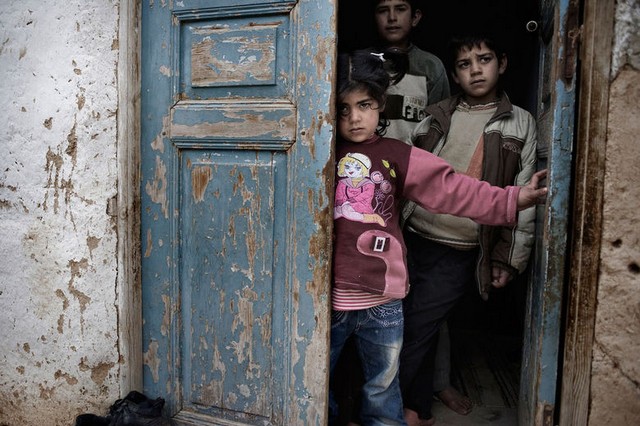
Rohingyas are a Muslim minority of Bengali origin who have been living mainly in the northern Rakhine State in Buddhist majority Myanmar for generations. But they are not recognized as citizens by Myanmar nor are they recognized as Bengalis by Bangladesh. Recently, Muslim majority Bangladesh closed its border to Rohingya refugees fleeing Myanmar.

For years, Buddhists in Myanmar have viewed the Rohingyas as a threat since they are among the poorest in the country, and susceptible to exploitation by foreign jihadi groups.

The latest flare up started on October 9 when Muslim militants with suspected links to Islamists overseas are believed to be behind attacks on security posts near Myanmar’s border with Bangladesh, in the north of Rakhine State that killed nine police officers. Since then there has been a heavy crackdown against the Muslim minority in the region with at least 86 people killed and an estimated 27,000 Rohingyas have fled to Bangladesh according to human rights groups.

Thus Rohingyas have become the latest rallying point for western and regional human rights groups and Muslim activists as well as the international media, especially Al Jazeera. Rohingyas have also become a lucrative new source of income for human traffickers and asylum lawyers.

On the eve of the ASEAN foreign ministers’ retreat in Yangoon, Amnesty International, which campaigned for long for Suu Kyi’s release during the military regime, released a report accusing her government of a campaign against the Rohingyas.

“While the military is directly responsible for the violations, Aung San Suu Kyi has failed to live up to both her political and moral responsibility to try to stop and condemn what is unfolding in Rakhine State,” Rafendi Djamin, Amnesty International‘s director for Southeast Asia and the Pacific, said in a statement.

But, many in the region see things differently. Thailand’s Nation newspaper published a report from Deutsche Press-Agentur (dpa) on December 16 that referred to an analysis of the International Crisis Group (ICG) with headquarters in Brussels. ICG has warned Myanmar that “a well-organised, apparently well-funded group” has been behind the recent attacks on the armed forces in Myanmar.

ICG says: “The insurgent group, which refers to itself as Harakah al-Yaqin (Faith Movement, HaY), is led by a committee of Rohingya émigrés in Saudi Arabia and is commanded on the ground by Rohingya with international training and experience in modern guerrilla war tactics. It benefits from the legitimacy provided by local and international fatwas (religious judicial opinions) in support of its cause and enjoys considerable sympathy and backing from Muslims in northern Rakhine State, including several hundred locally trained recruits.”

While human rights groups working with Rohingyas on the ground such as Burma Human Rights Network has rejected the allegations, Priscilla Clapp, a retired U.S. diplomat who was the chargé d’affaires at the American Embassy in Myanmar from 1999 to 2002, has in an interview with Radio Free Asia (RFA) questioned the veracity of the accusations by outside nongovernmental organizations and others. She told RFA’s Myanmar Service on December 12 that those who support such charges “don’t known what the situation is”.

“They don’t understand the language, and people make things up,” she said. “They make things up just to spread rumors.” Myanmar government has also often accused international media of spreading “fabricated” news stories.

During the retreat, which was closed to the media although about 100 journalists have arrived at the venue, Suu Kyi is believed to have briefed the foreign ministers about the ground situation.

In a statement released to the media after the retreat, the Myanmar leader reiterated her government’s commitment to resolving what she termed “complex issues” with regards to the Rohingyas and argued that they need time and space to resolve it.

In a direct reference to those from outside the region who want to internationalise the issue, the statement said that it would be resolved among “ASEAN family members through peaceful and friendly consultations”.

In a commentary in Thailand’s The Nation newspaper, regional analyst Kavi Chongkittavorn argues that Suu Kyi has displayed her “political instincts and diplomatic finesse” to engage ASEAN where she has overall control of the process. “As such, she wanted to keep this sensitive issue within the region,” he noted.

Chongkittavorn is critical of the role of Malaysian Foreign Minsiter Anifah Aman who proposed ASEAN coordinating humanitarian aid and setting up an independent expert group to investigate conditions there. “It was unlikely these proposals would receive backing from Suu Kyi or other ASEAN members,” he argues.

“Kudos must also go to Indonesian Foreign Minister Retno Marsudi, who has served as an honest broker,” he notes. “Jakarta has politely declined to collaborate with Malaysia’s call to show solidarity as the world’s largest Muslim country, knowing full well that it could polarise ASEAN. Her position was clear that ASEAN should not get involved in the region unless Myanmar invites the group to help.”

Immediately after the retreat, Marsudi visited Bangladesh to argue for more compassionate attitude towards Rohingyas crossing the border to Bangladesh. She asserted that the solution to the crisis has to come from the source country and the region need to support whatever initiatives Myanmar government is taking to ensure inclusive development in Rakhine state.

Meanwhile, Myanmar’s Buddhist neighbour Thailand has offered $200,000 at the retreat to help displaced people in Rakhine state and intensified cooperation with Myanmar authorities to apprehend several local human traffickers and their trawlers operating near coastal towns in the Andaman Sea, disrupting the flow of Rohingya from both Myanmar and Bangladesh that is fuelling the international outcry.

“As Myanmar moves forward with economic and democratic development, there are high hopes the ongoing peace process will proceed to end the half-century of fighting with ethnic armed groups,” argues Chongkittavorn. “This prospect of peace would enable more refugees to return home.” IDN-InDepthNews

27 December 2016

Britain Secretly Pulled the Strings on UN Vote Regarding Israel’s Illegal Settlements. Trump and Netanyahu Blame Obama

By Global Research News

According to Haaretz, in an article titled “Britain Pulled the Strings and Netanyahu Warned New Zealand It Was Declaring War: New Details on Israel’s Battle Against the UN Vote”  According to Haaretz: “The British secretly worked the Palestinians and urged New Zealand to move ahead with the resolution, and a call from Netanyahu to Putin triggered a real drama at the UN HQ just one hour before the vote.”

Last Friday, a few hours before the UN Security Council vote on the settlements, Prime Minister Benjamin Netanyahu phoned New Zealand’s foreign minister, Murray McCully. New Zealand, together with Senegal, Malaysia and Venezuela, was leading the move to resubmit for a vote the resolution from which Egypt had backed down the day before.

A few hours earlier, a senior official in the Foreign Ministry in Jerusalem called New Zealand’s ambassador to Israel, Jonathan Curr, and warned that if New Zealand’s move came to a vote, Israel might close its embassy in Wellington in protest. Ambassador Curr noted this and reported it to his government, but when dawn came in New York Israel understood that things were still moving ahead.

Netanyahu’s phone call to McCully was almost his last attempt to prevent the vote, or at least to postpone it and buy a little time. Western diplomats say the conversation was harsh and very tense and Netanyahu let loose with sharp threats, perhaps unprecedented in relations between Israel and another Western country.

“This is a scandalous decision. I’m asking that you not support it and not promote it,” Netanyahu told McCully, according to the Western diplomats, who asked to remain unnamed due to the sensitivity of the matter. “If you continue to promote this resolution from our point of view it will be a declaration of war. It will rupture the relations and there will be consequences. We’ll recall our ambassador to Jerusalem.” McCully refused to back down from the vote. “This resolution conforms to our policy and we will move it forward,” he told Netanyahu.

Just one month earlier, when McCully visited Israel and met with Netanyahu, he found the latter an entirely different man. Netanyahu was pleasant, friendly and overflowing with warmth. He showed McCully the famous PowerPoint presentation that he had shown in a round of background briefings for the media last summer. Laser pointer in hand, Netanyahu told McCully that Israel was expanding its foreign relations, breaking through in the region and making friends in Africa, Asia and Latin America.

The Western diplomats said that McCully, who over the past two years had been consistently pushing the Israeli-Palestinian issue in the UN Security Council, spoke with Netanyahu about the resolution his country wanted to promote. It was a much softer and more moderate version than the motion that passed last Friday. New Zealand’s resolution did talk about freezing construction in the settlements, but also about freezing Palestinian steps in the UN and the International Criminal Court in The Hague, and called for direct negotiations without preconditions. (Haaretz)

UNSC Resolution 2334, demands that

“[Israel] immediately and completely cease all settlement activities in the occupied Palestinian territory, including East Jerusalem… [Israeli settlements] have no legal validity and constitutes a flagrant violation under international law and a major obstacle to the achievement of the two-State solution and a just, lasting and comprehensive peace.”

The US did not exercise its veto on behalf of Israel. The US abstained and the resolution was carried.

It is worth noting that a week or so prior to the UNSC vote, the head of Mossad Yossi Cohen was (unofficially) in Washington for consultations with the Trump team.

This high level meeting was an initative of Netanyahu. It was the object of US media coverage.  The Israeli news report was dated December 17, The date of the “secret” meeting in Washington was not confirmed. One suspects that the head of Mossad Yossi Cohn met Donald Trump and members of his cabinet, although there was no confirmation by the Israeli media.

Following the UNSC resolution, Donald Trump criticized the United Nations Security Council resolution on Twitter. He also confirmed his intention to move the US embassy to Jerusalem.

Trump also intimated that things would change with regard to Palestine after his inauguration on January 20th.

In turn, Netanyahu blamed Obama for not having exercised the veto power in the UNSC vote.

…Israel’s ambassador to Washington, Ron Dermer, accused the Obama administration of orchestrating Friday’s U.N. vote behind the scenes, despite U.S. denials.

The diplomatic drama unfolded over the Christmas holiday, with twists and turns unusual even for the serpentine path followed by Netanyahu’s relationship with a Democratic president who opposes settlement building.

On Thursday, Netanyahu successfully lobbied Egypt, which proposed the draft resolution, to withdraw it — enlisting the help of President-elect Trump to persuade Cairo to drop the bid.

But the Israeli leader was ultimately outmaneuvered at the United Nations, where New Zealand, Venezuela, Senegal and Malaysia, resubmitted the proposal a day later.

It passed 14-0, with an abstention from the United States, withholding Washington’s traditional use of its veto to protect Israel at the world body in what was widely seen as a parting shot by Obama against Netanyahu and his settlement policy. (CNBC, December 26, 2016)

Michel Chossudovsky contributed to this report

27 December 2016

Senator Mike Gravel: ‘Hacking the Election’ Charge Is Ridiculous

Jason Ross of LaRouche PAC interviewed Mike Gravel, a Democratic U.S. Senator from Alaska 1968-81, on Dec. 14,

and replayed and reported on the interview on LaRouche PAC’s Weekly Webcast of Dec. 16. Edited excerpts follow.

Jason Ross: On Dec. 12, the VIPS group—the Veteran Intelligence Professionals for Sanity—released a memo called “Allegations of Hacking the Election Are Baseless,” in which they gave their reasons for coming to that assessment. We interviewed a leading member of the VIPS group, Senator Mike Gravel—former Senator from Alaska— to get his take on this; and we can play that for you now. Mike Gravel is one of the signers of a letter that was released by the Veteran Intelligence Professionals for Sanity a couple of days ago in response to the New York Times and the general media tumult around Russia hacking the elections—Russia denying Hillary Clinton the Presidency that she deserved as a gift from God. So, I’d like to ask Senator Gravel, who is a former adjutant top-secret control officer for the Communications Intelligence Service, and a special agent of the Counterintelligence Corps, in addition being a former Senator from Alaska. Senator Gravel, could you tell our viewers what you think of this notion that Russia hacked the election and determined the outcome of our Presidential election here in the U.S.?

Sen. Mike Gravel: First off, it’s ridiculous! It’s farfetched ridiculous! We know—and here we can be grateful to Edward Snowden—that the United States’ capability, along with their partners in Britain, have the capability of vacuuming up every single communication in the world. That means that the NSA has all of Hillary’s emails; has all of the communications between the U.S. and Russia. And so for the government to come out and say via the intelligence community, that this is all instigated by Russia, is just part of the demonization that we’ve seen taking place about Putin and Russia, as part of a plan in the United States to have regime change in Russia. Believe it. We’re seeing what’s happened in Syria with regime change, which is hundreds of thousands of people displaced and killed. And now we know that it was the U.S. that financed the coup in Kiev, that unseated Ukraine’s duly-elected President, who was favorable to Russia; which, of course, is normal, since they are neighbors and were essentially one country at one point. And so we destabilized
that, and that was admitted to by [the Assistant Secretary] Victoria Nuland, who’s still there; was there under Clinton. She admitted that the United States had spent $5 billion over a 10-year period, to destabilize the government of Ukraine. We succeeded. Then, of course, as a reaction to that, when Russia had to continue its fresh-water port, which is Sevastopol, which came under threat, they protected it by annexing it—re-annexing it, let’s put it that way—because it was part of Russia before. It was given away by Nikita Khruschev several years ago. So, in point of fact, we have all the knowledge in the
NSA. Maybe the NSA doesn’t talk to the FBI, or doesn’t talk to the CIA. I don’t know. We’ve had this problem in 9/11, with nobody connecting the dots; and may have that same problem right now. But there’s no question that the United States government does more activity in the cyber world than anybody else. Russia is probably a distant second. China is a distant second. But there’s nobody that holds a candle to what we’re capable of doing. So, for our government to turn around—or elements within our government, let’s put it that way—to turn around and say that the Democratic Party was hacked
and these hacks were given to WikiLeaks who then released them; well, it seems odd that the American government would have to be partners of WikiLeaks to let this stuff out. What seems more likely, is that somebody within the government, whether rogue or by intent, saw this as an ability to try and embarrass Russia; embarrass Putin, and to save face for Hillary, who was promptly losing the election with her skullduggery. As a result of this, we now see the New York Times— and this should not surprise us—the New York Times and the Washington Post, the two major national newspapers of note, have done a lot of disinformation over the years, and I think this is just one more instance of that disinformation coming out of the New York Times. Keep in mind it’s the New York Times that ginned up the war to invade Iraq. You can take your credits from there, as to what they’re capable of doing when they put their mind to it. So, that’s essentially what I think is the case. Here too, we have enough people with skills and knowledge, particularly with our group, the former intelligence officers in the government, very senior intelligence officers—because none of us are spring chickens—to be able to question what has been put out, and say that this doesn’t seem accurate, and doesn’t make sense.

To Sabotage New Relations with Russia
Ross: All of this might look like it’s a bunch of flailing around to explain the electoral defeat by blaming anybody except for the terrible candidate that the Democrats had, but it’s much more than this. You have to remember, this isn’t just domestic theatrics; the case is being made for—as Obama put it—a revenge attack or some kind of answer being made to Russia in some way or another. That is, threatening a nuclear-armed nation over allegations that have not been backed up with any specific evidence, and frankly, accusing Russia of things that the U.S. admits to doing all the time. So, we
asked Senator Gravel, what was the intent; why the anti-Russian hysteria? Is this just about the election? What’s the push for this? This is what he had to say: Sen. Gravel: The intent is to sabotage the potential new relationship [with Russia]. That’s what the intent is. But here too, I think Trump has his own areas of expertise in this regard. And the new Secretary of State designate, Rex Tillerson, he also has a great deal of experience with the Russian leadership. And so, as a result of that, they’re going to dictate their own policy. What we see right now, is the last regurgitation of a failed policy, one that was very dangerous. In demonizing Putin the way we’ve done in American media, Western media, and then turning around and levelling the charge at them that they are trying to destabilize Western and Eastern Europe—it’s ridiculous. I know of no instance—and I would question anybody to quote an instance — where Russia has threatened anybody in the last decade in Eastern Europe and Europe proper. He sells them oil and gas; why would he want to destabilize his customers? It makes no sense at all. But to the neocons, who are intent on trying to protect the hegemonic position of the United States in the world, this makes a lot of good sense for them. They need to demonize Russia and Putin, they need to demonize Chinese President Xi Jinping and China, and assert our military prowess in the world. We have a significant economic position in the world, and these militarists feel they’ve got to shore that position up, with militaristic policies that make no sense at all. What they should be doing, is joining with China in the New Silk Road (“One Belt, One Road”), to raise the economic level of the world to a higher level, and that would be the biggest contribution we could make to the well-being of people around the world, and to the issue of having world peace. That’s what we should be doing. But that’s not what’s happening. What’s happening is what we learned from the study of the “Thucydides Trap” [invoked by Harvard scholar Graham Allison], where the power which is the global power—which is the United States—is now facing the problem of an ascending power like China moving in and surpassing us. Well, our egos may not be able to take that, but certainly the people of the world could take it; because it would mean greater economic activity, on the part of China. So, it’s all mixed up with this insanity that exists within the American government, by a group of people called neocons. They start with Cheney. They go from Cheney/Rumsfeld, that crowd, into the present group of neocons. Here you have a person like John Bolton, who’s being considered for the Number Two man at the State Department. I can’t think of a person who’s more idiotic, as a neocon, than John Bolton. I think Trump is just wantonly picking people, hither and yon, to satisfy the conservatives. I think what they’re going to find, is when these neoconservatives attempt to assert policy positions that are at variance from Donald Trump, they’re going to find they’re short-lived. He’ll fire them. He’s done that on TV and he’s used to that. “Give me the wrong advice, you’re fired!” That’s what you’re going to see from a President who’s going to be tweeting. He’s going to be tweeting his policies to the American people and the world, all by himself, in his room, with his little computer.

Ross: You know, if you have time for one more question, I’d like to ask you about China, which you brought up. One of Trump’s recent appointments was the former governor of Iowa, which is a state that President Xi Jinping of China has close ties to—having lived there for years, studying agriculture when he was a lower-level figure in the government. You brought up the “One Belt, One Road” as a potential for the U.S. to be involved in. It’s currently something that, under the Obama administration, the U.S. has been opposing. The U.S. did not join the Asian Infrastructure Investment Bank; the U.S. urged other nations not to join it as well. What would you see as the proper or the best—what should the U.S. role in the world be? What should U.S. relations with China in particular be with regard to this program?

Sen. Gravel: Well, the U.S. role should, first and foremost, rest upon economic activity—raising the quality of life for the people in the United States and for the people in the world. That’s the goal that China has set with respect to its “One Belt, One Road.” We oppose that because we are refusing to accept the fact that China is the ascendant power, and that within a couple decades, will be the Number One economic power in the world; but not the military power. If you just look at the amount of money they’re spending, they spend about 10% of what we do on our defense posture. That demonstrates that they have no interest in becoming the militarily predominant power in the world. They’re ceding that to the United States. But that, of course, is not all that attractive, as you saw in Obama’s “Pivot to Asia.” Thank God that we have a new President, Duterte, in the Philippines, who is now creating a rapprochement to China, which is the most enlightened thing they could do. Their future is not with the United States; their future is as a player in the economy of Asia. That’s what a rapprochement with China portends—that the Philippines will be the recipient of extensive “One Belt, One Road” financing to raise the standard of living in the Philippines, which used to be superior to many of the other countries in Asia, and is now in the lower brackets. My recommendation for the United States and the new administration would be Trump negotiating his “deal.” And the deal he can negotiate is that, yes, the United States will join with China, and will raise the economic threshold of the world.

Ross: That sounds like an excellent direction for the U.S. Do you have any other, final thoughts you’d like to leave for our viewers?

Sen. Gravel: No, not at all, except to thank the LaRouche organization for doing good work in advancing the cause of peace, and in advancing the cause of economic growth. The only way we are going to bring about world peace is when we raise the standard of living of the people throughout the world. Again, thank you for the good work in that regard.

Ross: Senator Mike Gravel, thank you very much

Former US Senator Mike Gravel, best known for his role in exposing the Pentagon Papers, leading to the end of the Vietnam War, is also a former intelligence officer. In this interview with EIR, he exposes the absurdity of the Obama/CIA lie that the Russians stole the US election.

This interview appears in the December 23, 2016 issue of Executive Intelligence Review.

Will Proxy Politics Bring Death For Madaya Siblings Manal And Mohammed-Kamal?

By Franklin Lamb

Outside of Madaya, Syria: It was this past July that ten year old Ghina and six year old Nagham, old sisters of four year old Manal and three year old Mohammad-Kamal, left their apartment near the main street in Madaya, Syria to collect some medicine from the nearby town’s clinic for their mother Sahar. As they left the clinic and headed back home a sniper, one of the Lebanese or Iraqi militiamen who have enforced the siege of  Madaya since overrunning it 18 months ago, fired two shots at the girls hitting Ghina in the upper thigh and Nagham in her hand and arm. Ghina’s life threatening badly infected wound became known via social media (two OEN links to articles about Ghina and Nagham: A Children’s Story: Panic from Outbreak of Meningitis in “Death camp” Of Madaya September 9, 2016 and A Children’s Story in Syria, September 2, 2016)  and the Beirut, Nice, and Washington DC based NGO, Meals for Syrian Refugee Children Lebanon (MSRCL) (http://mealsforsyrianrefugeechildrenlebanon.com),has been advocating to reunite the mother,Sahar, with her still trapped in Madaya little ones.

Four year old Manal and three year old Mohamand-Kamal shown above in better days. Like literally hundreds among the thousands of children still trapped in Madaya, the children are fading fast from malnutrition and related illnesses without much  to eat, and no fruit or vegetables. And badly needing their mother and sisters Ghina and Nagham. Photo: Their mother Sahar given to this observer on 12/7/2016

Because there are only three medical attendants to treat approximately 40,000 Madaya residents, one being a veterinarian and  the other two dental students, and without medicines or equipment, the tentative decision was made to amputate Ghina’s badly shattered leg. According to former dental student Mohammad Darwish, he and his two colleagues have been forced to do amputations on many patients because of lack of equipment and medical knowledge, and they were simply unable to effectively treat Ghina’s leg and thigh splintering wound caused by an exploding bullet, A media campaign about her case and urging medical evacuations from Madaya was successful in getting Ghina out of Madaya and into a Damascus hospital. She is now much better and is learning to walk again with help from younger sister Nagham and Syrian Red Crescent Society (SARCS) supplied crutches.

Those remaining is mountainous Madaya, 5000 feet above sea level, which last week got its first snowstorm of the December-February snow season, and where there continue to be  more reported cases of death threatening starvation, sniping by militia manning the towns 65 checkpoints, and dozens of attempted suicides, some resulting in death, continue.

Two recent sniping victims were 30 year old Mohammad al-Mowwil who, this past month on Saturday November 12th was walking to his home in Madaya on Saturday November 12, when a sniper’s bullet pierced his abdomen and he died due to lack of emergency medical care. Three days later a 13 year old boy, by coincidence from a Madaya family known to Sahar, was killed by another sniper bullet. And the killing of innocent civilians continues as sectarian hatred spreads and intensifies in Syria and the region.

Noted below are a few current cases here, involving Shia-Sunni sectarian politics and hatred raging across the Middle East that may seal the fate of Manal and Mohammad-Kamal trapped inside Sunni Madaya as well as countless others in East Aleppo as well as Shia in other areas.

For example, Iran’s IRGC (al-Quds Force) leader QasemSolemani has reportedly arrived in Aleppo to oversee a population transfer that would move Sunnis from Madaya and nearby Zababani on the outskirts of Damascus near the border with Lebanon approximately 220 miles north to the Shia villages of Foah and Kefraya. The Shia residents of these villages would be uprooted and transferred south to Sunni Madaya and Zabadani.  Over the past 18 months all four villages have been under siege either by militia supporting the government or the opposition.

Why is Solemani insisting on the population swap before East Aleppines can be evacuated?  Because Iran expects that when the carnage in Syria finally ends, the geopolitics in Yemen, Iraq, Syria and Lebanon will have been deeply altered and the nascent Shia crescent will become fortified from this population transfer. This will help assure Iranian free access from the suburbs of Damascus 30 miles West to Lebanon’s Bekaa valley, and on down to South Lebanon and the border with Palestine.

The on-off again evacuation of those trapped in East Aleppo has hit several new political and sectarian snags over the past 48 hours as many of the thousands waiting for the Green buses to take them to safety are sleeping rough, without food, in bitterly cold temperatures. Hopefully the UN Security Council Resolution of 12/19/2016 on UN monitoring of all evacuations might help keep the evacuations on track.If it is adopted and implemented.

Some additional examples of new sectarian political complications include the following. Iran is now demanding the bodies of slain Shia militia fighters including members of Hezbollah and various Iraqi Shia militias as well as information on the whereabouts of Shia fighters taken prisoner by opposition militia over the past five years before they allow certain evacuations. Meanwhile the family of rebels and others not involved in the civil war as well as the UN insist on knowing the fate of approximately 600 men between the ages of 20-50 years whose families said were detained inside East Aleppo, or arrested at checkpoints as they tried to leave over the past two weeks. This observer met with some of recently released families at the Jibreen Center and Cotton Factory SE of Aleppo last week. Needless to say they are very worried about the fate of their loved ones.

In addition, a SARCS source advised this observer on 12/18/2016 that Jabhat Fatah al-Sham (Nusra Front) was blocking their buses from entering the besieged Shia villages of Foah and Kefraya. Plus pro-government forces backed by Iran now reportedly are demanding that a group of people needing medical treatment also be allowed to leave the two Shia areas before anyone will be allowed to leave East Aleppo. As is widely known, the past few days thousands trying to leave East Aleppo were stranded in freezing weather, without food or shelter sleeping wherever they could find a spot. Children are being massively traumatized as their parents, if they have any, despair. Hundreds need to be taken immediately to the nearby hospitals of Atmeh, Darkoush, Bab al-Hawa and Bab al-Salamah where this observer met some of the medical staff last week.

Plus there is the wording of the tit for tat evacuations of the four villages’ proposal itself which is problematical in this observers view.

As noted above, one key Iranian condition for the Aleppo evacuation to continue is for Shia resident of Foah and Kefaya to be allowed to leave first. Some rebels claim that the village evacuations of Madaya and Zabadani must be done simultaneously, but others claim that there no connection.

This issue can be worked out I believe but there is a more serious problem that must be fixed in my opinion and it bears directly on the chance of saving Manal and Mohammad-Kamal.

According to a new Iranian draft relating to the East Aleppo evacuations, which I was shown a copy of, it contains this key language: “The evacuation of humanitarian cases from the (ed: mainly Shia) Villages of Foah and Kefraya, in Idlib Governarate are to be achieved simultaneously with the evacuation of wounded from (ed: two government-besieged Sunni towns 25 km Northwest of Damascus near Lebanese border)  Madaya and Zabadani.”

Dear reader will note that two different standards for civilian evacuations are included by Iran, i.e. “humanitarian cases” for the Shia villages of Foah and Kefraya and “wounded” from the Sunni villages of Madaya and Zabadani. If literally applied, these evacuation standards would mean that potentially many Shia would be evacuated but few Sunni.

How so?

SARCS and the ICRC know of the Power of Attorney (PAO) that Sahar, the mother of Ghina, Nagham, Manal and Mohammed-Kamal signed in July 2016 appointing this observer as her family’s legal representative with respect trying to secure  the four children’s safety.  Frankly, being an American, the POA it helped a fair bit with the Damascus hospital and some UN affiliates when Ghina was being treated for two months this summer. Although for sure all ask me what I think of President elect Trump. I am usually speechless and just shake my head.

As the children’s  lawyer and “American Uncle”  my concern  with the latest Iranian draft is with the “humanitarian cases” language which applies to the Shia towns of Foah and Kefraya  and with the substitution of “wounded”  language which applies to the Sunni towns of Madaya (where Manal and Mohammad-Kamal remain in a weakening condition under brutal siege) and  nearby Zabadani.

The reason for my concern is that there are critical legal distinctions between the meanings and applications of “humanitarian cases” and “wounded.” I have insisted to SARCS, the ICRC, UNICEF, Syrian government officials and even some Hezbollah guys besieging Madaya that the language and standard must be the same for both the Shia villages of Foah and Kefraya and the Sunni villages of Madaya and Zabadani. The three and four year old Manal and Mohammad-Kamal  are sick, weak from malnutrition, terrorized and without their mother and sisters Ghina and Nagham for the past nearly half year.  All they have known is war and fear and death of many around them. Like nearly all children in Syria.

Under Iran’s draft evacuation agreement I cannot prove to SARCS, the ICRC or the UN that Manal and Mohammad-Kamal have been shot by a sniper as their sisters and more than 40 others were over the past 18 months, and are consequently wounded.  They were not wounded. But their lives are still in danger and they required immediate humanitarian evacuation.

But I do think that the NGO, MSRCL noted above, can meet our required burden of proof that Manal and Mohammad-Kamal’s is a “humanitarian case.” Those with the final say for who gets on the evacuation lists, Syria, Russia and Iran must be strongly and constructively encouraged to  apply the same standard to all  Four Villages when the evacuations continues, today in all likelihood.  And that standard must be the broader more inclusive “humanitarian cases.” applicable to all.

Meanwhile on Sunday, 12/18/2016, Russia, another major political player here, after once more insisting that there are only ‘terrorists’ left in East Aleppo threatened its 7th UN Security Council veto on the crisis in Syria.

This time to scuttle the French draft resolution which calls for immediately deploying U.N. observers to Aleppo to monitor the evacuations amid many reports of summary arrests, executions, and disappearances of young men between the ages of 20-50 trying to flee.

Russia’s substituted draft language significantly waters down the French draft language making effective UN action unlikely. It merely suggests that “arrangements be made to monitor the conditions of civilians remaining in Aleppo” while maintaining Moscow’s insistence that the civilians have all left East Aleppo and only ‘terrorists’ remain. We wait the UNSC Resolution hoping it’s not, like much we have all witnessed coming out of the UN these days with respect to Syria. Many nice and presumably sincere words, but nothing substantive to help the people of Syria. History is apt to judge the parties to this conflict harshly- including the UN -for their political posturing and failure to provide live saving humanitarian help.

Hopefully most of the recent political posturing and legal niceties can be put aside and the evacuation of East Aleppo and the Four Villages will proceed without more interruptions and that Manal and Mohammad-Kamal, like countless other children, innocent victims all of this carnage, will be allowed to reunite with their families in a safe location.

Franklin Lamb is doing research in Syria.  He is also legal adviser, The Sabra-Shatila Scholarship Program, Shatila Camp  (SSSP-lb.org)

22 December 2016

Under Cover Of Christmas, Obama Establishes Controversial Anti-Propaganda Agency That Threatens Press Freedom

By Lauren McCauley

In the final hours before the Christmas holiday weekend, U.S. President Barack Obama on Friday quietly signed the 2017 National Defense Authorization Act (NDAA) into law—and buried within the $619 billion military budget (pdf) is a controversial provision that establishes a national anti-propaganda center that critics warn could be dangerous for press freedoms.

The Countering Disinformation and Propaganda Act, introduced by Republican Sen. Rob Portman of Ohio, establishes the Global Engagement Center under the State Department which coordinates efforts to “recognize, understand, expose, and counter foreign state and non-state propaganda and disinformation efforts aimed at undermining United Sates national security interests.”

Further, the law authorizes grants to non-governmental agencies to help “collect and store examples in print, online, and social media, disinformation, misinformation, and propaganda” directed at the U.S. and its allies, as well as “counter efforts by foreign entities to use disinformation, misinformation, and propaganda to influence the policies and social and political stability” of the U.S. and allied nations.

The head of the center will be appointed by the president, which likely means the first director will be chosen by President-elect Donald Trump.

The new law comes weeks before the New York billionaire assumes the presidency, amid national outrage over the spread of fake news and what many say is foreign interference in the election, both which are accused of enabling Trump’s victory.

Those combined forces have already contributed to the overt policing of media critical of U.S. foreign policy, such as the problematic “fake news blacklist” recently disseminated by the Washington Post.

And for those paying attention over the holiday weekend, the creation of the a new information agency under the Propaganda Act appears to be another worrisome development.

First published by CommonDreams.org

27 December 2016

Syrian Civil War Is The Reenactment Of Soviet-Afghan Jihad

By Nauman Sadiq

George Santayana presciently said that those who do not learn from history are doomed to repeat it. The only difference between the Afghan jihad back in the ‘80s, that spawned the Islamic jihadists like the Taliban and al Qaeda for the first time in history, and the Libyan and Syrian civil wars, 2011-onward, is that the Afghan jihad was an overt jihad: back then the Western political establishments and their mouthpiece, the mainstream media, used to openly brag that the CIA provides all those AK-47s, RPGs and stingers to the Pakistani intelligence agencies, which then distributes those deadly weapons among the Afghan mujahideen (freedom fighters) to combat the Soviet troops in Afghanistan.

After the 9/11 tragedy, however, the Western political establishments and corporate media have become a lot more circumspect, therefore, this time around, they have waged covert jihads against the Arab-nationalist Gaddafi regime in Libya and the anti-Zionist Assad regime in Syria, in which the Islamic jihadists (aka terrorists) have been sold as “moderate rebels,” with secular and nationalist ambitions, to the Western audience.

Since the regime change objective in those hapless countries went against the mainstream narrative of ostensibly fighting a war against terror, therefore, the Western political establishments and the mainstream media are now trying to muddle the reality by offering color-coded schemes to identify myriads of militant and terrorist outfits that are operating in those countries: such as, the red militants of the Islamic State, which the Western powers want to eliminate; the yellow Islamic jihadists, like Jaysh al-Islam and Ahrar al-Sham, with whom the Western powers can collaborate under desperate circumstances; and the green militants of the Free Syria Army (FSA) and a few other inconsequential outfits, which together comprise the so-called “moderate” Syrian opposition.

It’s an incontrovertible fact that more than 90% of militants that are operating in Syria are either the Islamic jihadists or the armed tribesmen, and less than 10% are those who have defected from the Syrian army or otherwise have secular and nationalist goals.

As far as the infinitesimally small secular and liberal elite of the developing countries is concerned, such privileged classes can’t even cook breakfasts for themselves if their servants are on a holiday and the corporate media had us believing that the majority of the Syrian militants are “moderate rebels” who constitute the vanguard of the Syrian opposition against the Syrian regime in a brutal civil war and who believe in the principles of democracy, rule of law and liberal values as their cherished goals?

In political science the devil always lies in the definitions of the terms that we employ. For instance: how do you define a terrorist or a militant? In order to understand this, we need to identify the core of a “militant,” that what essential feature distinguishes him from the rest? A militant is basically an armed and violent individual who carries out subversive acts against the state.

That being understood, we now need to examine the concept of “violence.” Is it violence per se that is wrong, or does some kind of justifiable violence exists? I take the view, on empirical grounds, that all kinds of violence are essentially wrong; because the goals for which such violence is often employed are seldom right and elusive at best. Though democracy and liberal ideals are cherished goals but such goals can only be accomplished through peaceful means; expecting from the armed and violent thugs to bring about democratic reform is incredibly preposterous.

The Western mainstream media and its credulous neoliberal constituents, however, take a different view. According to them, there are two kinds of violence: justifiable and unjustifiable. When a militant resorts to violence for secular and nationalist goals, such as “bringing democracy” to Libya and Syria, the blindfolded liberal interventionists enthusiastically exhort such form of violence; however, if such militants later turn out to be Islamic jihadists, like the Misrata militia in Libya or the Islamic State and al-Nusra Front in Syria, the gullible neoliberals, who have been duped by the mainstream narrative, promptly make a volte-face and label them as “terrorists.”

Notwithstanding, on the subject of the supposed “powerlessness” of the US in the global affairs, the Western think tanks and the corporate media’s spin-doctors generally claim that Pakistan deceived the US in Afghanistan by providing clandestine support to the Taliban and the Haqqani network; Turkey hoodwinked the US in Syria by using the war against the Islamic State as a pretext for cracking down on Kurds; Saudi Arabia and UAE betrayed the US in Yemen by mounting airstrikes against the Houthis and Saleh’s loyalists; and once again Saudi Arabia, UAE and Egypt went against the “ostensible” policy of the US in Libya by conducting airstrikes against the Tripoli-based government, even though Khalifa Haftar, the military commander of the armed forces in eastern Libya, lived next door to the CIA’s headquarter in Langley, Virginia, for more than two decades.

If the US policymakers are so powerless and naïve then how come they still control the global economic order? This perennial whining attitude of the Western corporate media, that such and such regional actors betrayed them otherwise they were on the top of their game, is actually a clever stratagem that has been deliberately designed by the spin-doctors to cast the Western powers in a positive light and to demonize the adversaries, even if the latter are their tactical allies in some of the regional conflicts.

Fighting wars through proxies allows the international power brokers the luxury of taking the plea of “plausible deniability” in their defense and at the same time they can shift all the blame for wrongdoing on the minor regional players.

Regardless, back in the ‘80s, the Afghan so-called “freedom fighters” did not spring up spontaneously out of nowhere, some powers funded, trained, armed and internationally legitimized those militants; how else could such ragtag militants had beaten back the super power of its time?

Then in 2011, in the wake of the Arab Spring uprisings in Libya, those same powers once again financed, trained, armed and internationally legitimized the Libyan militants by calling them pro-democracy, “armed” activists against the supposedly “brutal and tyrannical” rule of Gaddafi regime.

Similarly, in Syria, those very same powers once again had the audacity to fund, train, arm and internationally legitimize the Syrian militants; how else could such peaceful and democratic protests have mutated into a full-blown armed insurrection?

And even if those protests did mutate into an armed rebellion, left to their own resources, the best such civilian protestors could have mustered was to get a few pistols, shotguns and rifles; where did they get all those machine gun-mounted pick-up trucks, rocket-propelled grenades and the US-made TOW antitank missiles?

You don’t have to be a military strategist to understand a simple fact that unarmed civilian population, and even the ragtag militant outfits, lack the wherewithal to fight against the organized and professional armed forces of a country that are equipped with artillery, armored vehicles, air force and navy.

Leaving the funding, training and arming aspects of the insurgencies aside, but especially pertaining to conferring international legitimacy to an armed insurgency, like the Afghan so-called “freedom struggle” of the Cold War, or the supposedly “moderate and democratic” Libyan and Syrian insurgencies of today, it is simply beyond the power of minor regional players and their nascent media, which has a geographically and linguistically limited audience, to cast such heavily armed and brutal insurrections in a positive light in order to internationally legitimize them; only the Western mainstream media, that has a global audience and which serves as the mouthpiece of the Western political establishments, has perfected this game of legitimizing the absurd and selling the Satans as saviors.

Notwithstanding, for the whole of the last five years of the Syrian proxy war, the focal point of the Western policy has been that “Assad must go!” But what difference would it make to the lives of the ordinary Syrians even if the regime is replaced now when the civil war has claimed hundreds of thousands of lives, created millions of refugees, displaced half of the population and reduced the whole country of 22 million people to rubble? I do concede that Libya and Syria were not democratic states under Gaddafi and Assad, respectively; however, both of those countries were at least functioning states.

Gaddafi was ousted from power in September 2011; five years later, Tripoli is ruled by the Misrata militia, Benghazi is under the control of Khalifa Haftar, who is nothing more than the stooge of Egypt and UAE, and the heavily armed militants are having a field day all over Libya. It will now take decades, not years, to restore even a semblance of stability in Libya and Syria; remember that the proxy war in Afghanistan was originally fought in the ‘80s and today, 35 years later, Afghanistan is still in the midst of perpetual anarchy, lawlessness and an unrelenting Taliban insurgency.

If we were to draw parallels between the Soviet-Afghan jihad of the ‘80s and the Syrian civil war of today, the Western powers used the training camps located in the Af-Pak border regions to train and arm the Afghan mujahideen against the Soviet troops in Afghanistan with the help of Pakistan’s intelligence agencies.

Similarly, the training camps located in the border regions of Turkey and Jordan are being used to provide training and arms to the Syrian militants in order to battle the Syrian regime with the support of Turkish, Jordanian and Saudi intelligence agencies.

During the Afghan jihad, it is a known historical fact, that the bulk of the so-called “freedom fighters” was comprised of Pashtun Islamic jihadists, such as the factions of Jalaluddin Haqqani, Gulbuddin Hekmatyar, Abdul Rab Rasul Sayyaf and scores of others, some of whom later coalesced together to form the Taliban movement.

Similarly, in Syria, the bulk of the so-called “moderate opposition” is comprised of Islamic jihadists, like the Islamic State, al-Nusra Front, Jaysh al-Islam, Ahrar al-Sham and myriads of other militant groups, including a small portion of defected Syrian soldiers who go by the name of the Free Syria Army (FSA.)

Moreover, apart from Pashtun Islamic jihadists, the various factions of the Northern Alliance of Tajiks and Uzbeks constituted the relatively “moderate” segment of the Afghan rebellion, though those “moderate” warlords, like Ahmad Shah Massoud and Abul Rashid Dostum, were more ethnic and tribal in their character than secular or nationalist, as such.

Similarly, the Kurds of the so-called Syrian Democratic Forces can be compared with the Northern Alliance of Afghanistan. The socialist PYD/YPG Kurds of Syria, however, had been allied with the Shi’a regime against the Sunni Arab jihadists for the first three years of the Syrian civil war, i.e. from August 2011 to August 2014.

At the behest of the American stooge in Iraqi Kurdistan, Massoud Barzani, the Syrian Kurds have switched sides in the last couple of years after the United States’ policy reversal and declaration of war against one faction of the Syrian opposition, the Islamic State, when the latter overstepped its mandate in Syria and overran Mosul and Anbar in Iraq in June 2014.

It’s very unfortunate that the haughty and myopic politicians and diplomats do not learn any lessons from history, otherwise all the telltale signs are there that Syria has become the Afghanistan of the Middle East and its repercussions on the stability of the energy-rich region and the security threat that the Syrian militants pose to the rest of the world will have far reaching consequences for many decades to come.

Nauman Sadiq is an Islamabad-based attorney, columnist and geopolitics’ analyst who has a particular interest in the politics of Af-Pak and MENA regions, energy politics and Petroimperialism.

27 December 2016

In The Time Of Trump, All We Have Is Each Other

By Chris Hedges

This Christmas I mourn the long, slow death of our democracy that led to the political ascendancy of Donald Trump. I fear the euphoria of those who have embraced the atavistic lust for violence and bigotry stoked by him. These nativist forces, part of the continuum of white vigilante violence directed against people of color and radical dissidents throughout American history, are once again being groomed as instruments of mass intimidation and perhaps terror. I know that our civil and political institutions, poisoned by neoliberalism and captured by the corporate state, have neither the will nor the ability to protect us. We are on our own. It won’t be pleasant.

A week ago in New York I spoke with Ellen Schrecker, the country’s foremost historian of McCarthyism and the author of “Many Are the Crimes: McCarthyism in America,” “No Ivory Tower: McCarthyism & The Universities” and “The Lost Soul of Higher Education: Corporatization, the Assault on Academic Freedom, and the End of the American University.”

“What am I seeing?” she asked about the nation’s political and cultural condition. “Am I seeing a replay of the McCarthy era? To a large extent some of the parallels are stunning. You can look at a figure like [Sen. Joseph] McCarthy, who symbolized a much broader repressive movement. I would say Trump plays the same role today for what really is a right-wing reactionary movement that has taken over the American government.”

“There are a number of fairly superficial comparisons we can make,” Schrecker went on. “I think both McCarthy and Trump are somewhat abhorrent characters—perhaps there’s a little sociopath involved there. McCarthy was a genius at working the press. He understood how to get himself on the front pages. He knew the deadlines that specific reporters had. He knew how to feed them stories. I think the parallels there are pretty obvious. Trump is a genius with regard to the media.”

The Wisconsin senator was, as Trump is now, very opportunistic, she said. McCarthy, a Democrat before he became a Republican, “was just a little bit late” in exploiting the Red Scare, Schrecker said, latching on to it in 1950, “by which time the Un-American Activities Committee had been hounding Hollywood.”

Trump and his Christian fascist minions, sooner than most of us expect, will seek to shut down the small spaces left for free expression. Dissent will become difficult and sometimes dangerous. There will be an overt campaign of discrimination and hate crimes directed against a host of internal enemies, including undocumented workers, Muslims, African-Americans and dissidents. The Christian right will be given a license to roll back women’s rights, insert their magical thinking into school curriculums and terrorize Muslims and the GBLT community. The Trump administration will hand our Christian jihadists a platform to champion a repugnant religious chauvinism that fuses the symbols and language of the Christian religion with American capitalism, imperialism and white supremacy.

Repressive measures, I expect, will be implemented swiftly. Speed blinds a captive population to what is happening. Already anemic democratic traditions and institutions, including the legal system, the two major political parties and the press, will crumble under the assault. Trump will use the familiar tools that make possible the authoritarian state: mass incarceration, militarized police, crippling of the judicial system, demonization of opponents real and imagined, and obliteration of privacy and civil liberties, all foolishly promoted by the political elites on behalf of corporate power.

Schrecker said the rise of Trump has been in the making for four decades. Corporations funded and established institutions to close the cultural, social and political openings made in the 1960s, especially in universities, the press, labor and the arts. These corporate forces turned government into a destructive power. America was pillaged and cannibalized for profit. We now live in a deindustrialized wasteland. This scorched-earth assault created fertile ground for a demagogue.

The late Lewis Powell, a general counsel to the U.S. Chamber of Commerce and later a Supreme Court justice, in 1971 wrote an eight-page memo outlining a campaign to counter what the document’s title described as an “Attack on American Free Enterprise System.” The memo established the Business Roundtable, which generated huge monetary resources and political clout to direct government policy and mold public opinion. The Powell report listed methods that corporations could use to silence those in “the college campus, the pulpit, the media, the intellectual and literary journals” who were hostile to corporate interests.

Powell called for the establishment of lavishly funded think tanks and conservative institutes. He proposed that ideological assaults against government regulation and environmental protection be directed at a mass audience. He advocated placing corporate-friendly academics and neoliberal economists in universities and banishing from the public sphere those who challenged unfettered corporate power—especially Ralph Nader, whom Powell cited by name. Organizations were to be formed to monitor and pressure the media to report favorably on issues that furthered corporate interests. Pro-corporate judges were to be placed on the bench.

Academics were to be controlled by pressure from right-wing watch lists, co-opted university administrators and wealthy donors. Under the prolonged assault the universities, like the press, eventually became compliant, banal and monochromatic.

“He spelled out a need for an alternative to academic knowledge,” Schrecker said of Powell. “He felt the academy had been undermined by the left. He wanted to establish an alternative source of expertise. What you’re getting in the 1970s is the development of things like the American Enterprise Institute [in existence since 1938] , The Heritage Foundation, a whole bunch of think tanks on the right who people in the media can go to and get expertise. But it’s politically motivated.”

“It was unbelievably successful,” she said of the campaign. “It’s pretty bad. What we’re seeing today is an assault on knowledge. What came out of this are the culture wars of the late 1980s and 1990s which created a set of stereotypes of professors as deconstructionist, raging feminists who hate men, cross-dressers, and, worse, who are out of touch with reality.”

The ideological attack was accompanied by corporate campaigns to defund public schools and universities, along with public broadcasting and the arts. The humanities were eviscerated. Vocational training, including the expansion of the study of finance and economics in universities, replaced disciplines that provided students with cultural and historical literacy, that allowed them to step outside of themselves to feel and express empathy for the other. Students were no longer taught how to think, but what to think. Civic education died. A grotesque kind of illiteracy—one exemplified by Trump—was celebrated. Success became solely about amassing wealth. The cult of the self, the essence of corporatism, became paramount.

Schrecker said that during the McCarthy era most of the Red baiting, blacklisting and censorship emanated from the government, especially J. Edgar Hoover’s Federal Bureau of Investigation. Hoover and McCarthy, along with Richard Nixon and Roy Cohn, left ruined lives and reputations in the wake of their vicious inquisitions. They effectively shut down freedom of speech and freedom of thought. Cohn, who was a prosecutor in the espionage case that sent Julius and Ethel Rosenberg to the electric chair, was later Trump’s lawyer and close friend for 13 years. Cohn was disbarred in 1986, shortly before his death, for what a court called unethical, unprofessional and “particularly reprehensible” conduct.

“There are … many more private entities” involved in today’s anti-democratic campaign, Schrecker said. “It’s a bit of everything. That’s why it’s so dangerous. It’s not just Trump. Trump is clearly about to become very powerful. Nonetheless, there have been these forces, the climate deniers, the oil people, all of them are coming together at this particular point in time.”

We must begin again. Any hope for a restoration of civil society will come from small, local groups and community organizations. They will begin with the mundane tasks of holding back the expansion of charter schools, enforcing environmental regulations, building farmers markets, fighting for the minimum wage, giving sanctuary to undocumented workers, protesting hate crimes and electing people to local offices who will seek to mitigate the excesses of the state.

“We have to reconstitute a civil society,” Schrecker said. “Intermediary institutions like the academy and the media have been hollowed out. Certainly, journalism is on life support. We have to resuscitate organizations and institutions that have atrophied.”

“There is an attack on the American mind,” she said. “A lot of what we’re seeing with Trump is the product of 40 years of dumbing down.”

A crisis is traditionally used by authoritarian and totalitarian regimes to put a country in lockdown. An economic meltdown, a large domestic terrorist attack, widespread devastation from climate change or the orchestrated escalation of hostilities with another country, perhaps Iran or China, will see Trump and his rogue generals, billionaires and conspiracy theorists plunge the United States into dystopia.

War is the usual vehicle that demagogues use to justify internal repression and wield unchallenged power. If the federal government expands our wars to create new enemies, even local resistance will be impermissible. All dissent will be criminalized. Institutions, fearful and weak, will carry out purges of those few who speak out. Most of society, intimidated by a war psychosis, will be compliant to avoid being targeted. Resistance will often be tantamount to suicide.

The late Rev. Daniel Berrigan declared in a 2008 conversation with me that the American empire was in irrevocable decline. He said that in the face of this dissolution we must hold fast to the non-historical values of compassion, simplicity, love and justice. The rise and fall of civilizations, he noted, is part of the cyclical nature of history.

“The tragedy across the globe is that we are pulling down so many others,” he said. “We are not falling gracefully. Many, many people are paying with their lives for this.”

We must not become preoccupied with the short-term effects of resistance. Failure is inevitable for many of us. Tyrants have silenced voices of conscience in the past. They will do so again. We will endure by holding fast to our integrity, by building community and by spawning new institutions in the midst of the wreckage. We will sustain each other. Perhaps enough of us will endure to begin again.

Chris Hedges writes a regular column for Truthdig.com. Hedges graduated from Harvard Divinity School and was for nearly two decades a foreign correspondent for The New York Times. He is the author of many books, including: War Is A Force That Gives Us Meaning, What Every Person Should Know About War, and American Fascists: The Christian Right and the War on America.  His most recent book is Empire of Illusion: The End of Literacy and the Triumph of Spectacle.

First published by Truthdig

27 December 2016

Russia, Iran And Turkey Issue Joint Declaration On Syrian Settlement

By Bill Van Auken

After meeting in Moscow on Tuesday, top officials of the Russian, Iranian and Turkish governments issued a joint eight-point statement of principles calling for the extension of a ceasefire throughout Syria and a negotiated settlement between the Syrian government and its opponents.

Much of the statement, dubbed by Russian officials as the “Moscow Declaration,” was boilerplate. It declared the three countries’ support for “the sovereignty, independence, unity and territorial integrity of the Syrian Arab Republic,” while affirming that “there is no military solution to the Syrian conflict.”

The timing of the statement and the geopolitical alignment of its three signatories, however, make the document extraordinarily troubling for Washington.

The meeting in Moscow was convened on the basis of the stunning defeat delivered to the nearly six-year-old US orchestrated war for regime change in Syria. Last week, Syrian forces, backed by Russia and Iran, retook eastern Aleppo, the last urban stronghold of the Islamist militias that served as US proxy forces in the fight against the Syrian government of President Bashar al-Assad.

That Turkey has now joined with Assad’s key allies, Russia and Iran, is an indication of the severity of this defeat. Previously Turkey had served as a key state sponsor of the Al Qaeda-linked militias fighting in Syria, allowing its territory to be used as a conduit for the shipment of CIA-supplied arms and “foreign fighters” into the country, while dispatching elements of its security forces to provide them aid and training.

Within the past week, however, Turkey joined with Russia in brokering a ceasefire with the so-called “rebels” in eastern Aleppo along with their evacuation together with that of thousands of civilians from the besieged enclave.

The Moscow statement declared that the three countries “welcome joint efforts in eastern Aleppo allowing for voluntary evacuation of civilians and organized departure of the armed opposition.” The statement stands in sharp contrast to the position taken by Washington, which has waged a propaganda campaign denouncing the government’s retaking of Aleppo as a “massacre” and even “genocide.”

That Turkey, a key NATO ally for the last six decades, with the second largest army in the US-led military alliance, has joined with the two countries viewed by Washington as the principal obstacles to its drive to assert hegemony over Middle East and Eurasia is a serious blow to US policy.

The Turkish government has sought a rapprochement with Moscow since last May, when it began efforts to assuage tensions that erupted after the Turkish air force carried out an ambush shootdown of a Russian warplane operating on the Turkish-Syrian border in November of last year, raising the threat of an armed conflict between the two countries, potentially drawing NATO into a war with nuclear-armed Russia.

Relations between the two countries grew closer after the abortive military coup against the government of Recep Tayyip Erdogan last July, which Erodgan and his supporters blamed on Washington and Berlin.

The Erdogan government has also clashed with Washington over the US alliance with the YPG, a Syrian Kurdish militia affiliated with the Turkish Kurdish PKK (Kurdistan Workers Party), which Ankara regards as a “terrorist organization” and against which it has waged a protracted counterinsurgency campaign. Erdogan ordered the Turkish army into Syria last August, ostensibly to join the US campaign against the Islamic State (ISIS), but more importantly to block the YPG from establishing a de facto Kurdish state on its border.

The issuing of the Moscow statement came on the heels of Monday’s assassination in Ankara of the Russian ambassador, Andrei Karlov, by an off-duty member of an elite Turkish police unit. While there was initial speculation that the killing could provoke a crisis between Russia and Turkey, the two governments have insisted that they are united in response to the assassination, while pro-government media and officials in both countries have made statements blaming Washington and NATO for the crime.

The affiliations and motives of the killer, 22-year-old Mevlut Mert Altintas, remain in dispute. Erdogan made a statement Wednesday categorically identifying Altintas as a supporter of the opposition Muslim cleric Fethullah Gulen, who lives in self-exile in Pennsylvania.

Erdogan and his ruling AKP party blamed Gulen supporters for the abortive July coup, and the government has since launched a massive purge of the military, the police forces and civil service that has seen over 100,000 people sacked and some 37,000 detained.

Meanwhile, Jaish al-Fatah (Army of Conquest), the joint command center of Islamist militias dominated by the Syrian Al Qaeda affiliate, issued a statement Wednesday claiming responsibility for the assassination. Such an affiliation is in line with the statements made by the assassin after pumping nine bullets into the Russian ambassador.

While it has been widely reported that he shouted out, “Don’t forget about Aleppo, don’t forget about Syria,” it was less widely acknowledged that he began his rant in Arabic, proclaiming himself one of those “who give Mohammed our allegiance for jihad,” a slogan used by Al Qaeda.

The Turkish prosecutor’s office has announced that it is investigating why police who responded to the scene of the assassination shot and killed the assassin rather than seeking to capture him. Sections of the Turkish media have also raised questions on the same subject, pointing out that killing Altintas served to impede the investigation into his real motives. Erdogan reacted angrily to the questions, suggesting that failing to kill him could have cost more lives.

The Turkish government has obvious motives for pinning the killing on the Gulenists, which would serve to legitimize its police-state crackdown, while also diverting attention from the deep ties forged between the Turkish security forces and the Islamists in Syria during the war for regime change against Assad.

The editorial reaction to the assassination and the subsequent trilateral meeting in Moscow by the two “papers of record” of the US political establishment Wednesday was telling.

The New York Times noted that “the most important thing to say about Monday’s dramatic assassination of Russia’s ambassador to Turkey by a lone gunman is that it has not ruptured relations between the two countries.” It concluded, “losing Turkey as an ally would be another unacceptable casualty of the Syrian war.”

The Washington Post was more blunt, stating that the assassination “might have been expected to derail a fragile detente between the regimes of Vladimir Putin and Recep Tayyip Erdogan. Instead, it has served to underline a budding alliance that could have the effect of excluding the United States from the endgame of Syria’s civil war and critically weakening U.S. influence across the Middle East.”

The paper described the killing as a “sign that Russia may pay a price in blowback for its intervention in Syria,” but concluded that Washington may be facing “a peace [in Syria] that will empower a string of anti-US strongmen from Damascus and Tehran to Ankara and Moscow.”

These suggestions by the two most influential US newspapers that a political assassination has had the opposite of the desired effect have ominous implications given the level of anti-Russian hysteria whipped up in recent months by both the US government and the corporate media.

This anti-Russian campaign saw the former director of the CIA, Michael Morell, tell a television interviewer last August that the US should respond to the events in Syria by “covertly” telling the “moderate” rebels Washington is supporting “to go after the Russians.” Asked if he meant “killing Russians,” Morell answered in the affirmative.

More recently, President Obama said in an interview last week that Washington would retaliate against Moscow over allegations of Russian interference in the US election “at a time and place of our own choosing.”

Whether or not Washington had a direct hand in the murder of Ambassador Karlov, evidence points to the killing having been carried out by someone affiliated with the US proxy forces in Syria. More fundamentally, the initial reaction to the reversals for US policy in the Middle East suggest that far greater acts of violence are being prepared.

First published by WSWS.org

22 December 2016

Russia And Turkey Condemn The Assassination Of Russian Ambassador In Ankara

By Bill Van Auken

An off-duty Turkish policeman shot and killed the Russian ambassador to Turkey, Andrei Karlov, Monday in front of a horrified audience at a photo exhibition in Ankara.

The gunman was identified as a 22-year-old member of the Ankara riot police, Mevlüt Mert Altintaş. Dressed in a black suit and carrying his police ID, he entered the art gallery where Karlov was introducing an exhibition of photographs titled “Russia through Turks’ eyes.” He drew a pistol, shot the ambassador repeatedly in the back, and then began shouting at the crowd in both Turkish and Arabic, “Don’t forget about Aleppo, don’t forget about Syria,” along with Islamist slogans.

Heavily armed Turkish police then stormed the gallery, killing the gunmen. At least three other people were wounded in the incident.

The chilling images of the ambassador’s murder and the subsequent ranting by his assassin were captured on video and have been widely circulated.

The assassination has taken place in the context of a ferocious anti-Russian campaign mounted by the Obama administration and the US media, in which Russia’s role in providing military aid to the Syrian government of President Bashar al-Assad in retaking the city of Aleppo from Western-backed Islamist militias has played a major role.

The killing of the ambassador also came on the eve of a scheduled meeting in Moscow between Turkish Foreign Minister Mevlüt Çavuşoğlu and his Russian and Iranian counterparts, Sergei Lavrov and Mohammad Javad Zarif, to discuss the ongoing ceasefire in and evacuation of previously opposition-held eastern Aleppo, along with proposals for a more comprehensive settlement of the five-and-a-half-year-old Syrian war.

Anger in the West over the loss of the last urban bastion of the Al Qaeda-linked militias—a strategic defeat in the US-orchestrated war for regime change—has been intensified by the collaboration of Ankara, Moscow and Tehran. Washington was excluded from today’s talks.

The Syrian regime change operation brought Russia and Turkey to the brink of war in November of 2015, when the Turkish air force ambushed and shot down a Russian warplane carrying out airstrikes near the Syrian-Turkish border. The incident resulted in a freezing of relations between Moscow and Ankara and Russia’s imposition of economic sanctions against Turkey.

Turkey’s President Recep Tayyip Erdogan sought a rapprochement with Moscow last June, offering an apology for the downing of the Russian plane. This was followed a month later by an abortive military coup, which supporters of Erdogan blamed on the United States and a movement led by opposition cleric Fethullah Gulen, who lives in Pennsylvania. Relations between Moscow and Ankara became closer following the coup, leading to the recent collaboration in brokering the plan for the evacuation of eastern Aleppo.

Both the Russian and Turkish governments condemned the assassination of Karlov as a “provocation” aimed at disrupting relations between the two countries. Both governments likewise described the killing as a terrorist act, though they appeared to differ in their assessment as to who was responsible.

“A crime has been committed and it was without doubt a provocation aimed at spoiling the normalization of Russo-Turkish relations and spoiling the Syrian peace process which is being actively pushed by Russia, Turkey, Iran and others,” Russian President Vladimir Putin told a televised meeting at the Kremlin. “We must know who directed the killer’s hand,” Putin added, addressing himself to Foreign Minister Sergei Lavrov, Sergei Naryshkin, the head of the SVR foreign intelligence service, and Alexander Bortnikov, the head of the domestic FSB security service, who were also in attendance.

Turkey’s President Erdogan, speaking in a televised address on Monday night, described the killing as a “provocation given our cooperation regarding Aleppo,” adding that he had spoken to Putin and stressed, “We are determined to maintain our ties with Russia.”

Both sides made clear that the planned tripartite meeting between the Russian, Turkish and Iranian ministers in Moscow would go ahead on Tuesday.

The gunmen’s statements about Aleppo and Syria and his shouting in Arabic about jihad strongly suggested that he was acting either in concert with or in support of the Islamist militias that have suffered a stunning reversal in Aleppo over the past several weeks.

According to some reports, the Islamic State (ISIS) denied any connection with the killing, while web sites connected with the Al Nusra Front, the Syrian Al Qaeda affiliate that has been the backbone of US-backed forces in Aleppo, hailed the killing.

Nonetheless, Turkish officials have indicated that they are pursuing an investigation aimed at proving that the riot policeman was actually a member of the Gulenist movement, which the government charged was behind last July’s coup attempt. Over the past several months, the Turkish government has purged thousands of civil servants, teachers, police and members of the military charged with being connected with the Gulenists.

Government officials have suggested that the slogans shouted by the gunman after the shooting were merely a diversion aimed at concealing his true affiliations. A spokesman for Gulen said that the cleric had condemned the killing and described the suggestions that he was responsible as “laughable.”

The Turkish government has obvious motives for denying that a member of an elite police unit was a sympathizer or operative of the Syrian Al Qaeda affiliate. Ankara covertly provided extensive support for the Al Nusra Front and similar Islamist militias, with its security forces collaborating in the funneling of arms and foreign fighters into Syria.

Any disagreements as to who was immediately responsible for the killing notwithstanding, leading political figures in both Moscow and Ankara blamed the US and the West for the assassination.

Ilnur Cevik, chief presidential advisor to Erdogan said Monday: “Growing relations and intensive cooperation in all areas between Turkey and Russia has created anger in the West, especially in the United States and Germany. The latest example has been the joint efforts of the two countries to save the civilian people of Aleppo. It was inevitable that the West would try to sabotage these relations. It is sad that they used a policeman affiliated to Fethullah Gulen’s terrorist organization to assassinate the ambassador.”

In Moscow Alexei Pushkov, a member of the Duma—the Russian legislature—and former chairman of its foreign affairs committee, charged that Western propaganda about Russia organizing a “massacre” and “genocide” in Aleppo served to incite the attack.

“The hysteria around Aleppo raised by the Western media has consequences,” Pushkov told Russian television. “This murder is precisely a consequence of attempts to blame Russia for all the sins and crimes she did not commit. They are completely ignoring the crimes of fighters in Aleppo, and that forms a distorted and false picture of what is happening in this city, which contributed to this terrorist act.”

Senator Frantz Klintsevich, deputy chairman of the Russian upper chamber’s defense and security committee, went further, charging that the assassination was “a planned action.”

“Everyone knew that he was going to attend this photo exhibition. It can be ISIS, or the Kurdish army which tries to hurt Erdogan.” he said. “But [it] may be—and it is highly likely—that representatives of foreign NATO secret services are behind it.”

Whatever the authorship of the assassination, the prospect of it further cementing ties between Russia and Turkey can only serve to heighten tensions with Washington, which, the impending change in administrations notwithstanding, remains committed to asserting US imperialist hegemony over the Middle East.

First published in WSWS.org

20 December 2016

Religious Pluralism is God’s Will

By Rabbi Allen S. Maller

Most college students have at one time or another asked, ‘If there is only one God why are there so many religions?’ This is a good question that I as a Rabbi have often been asked.

This is my answer. The Qur’an declares that Allah could have made all of us monotheists, a single religious community, but didn’t in order to test our commitment to the religion that each of us have been given by God.

“If Allah had so willed, He would have made you a single people, but (God’s plan is) to test you in what He has given you: so compete in all virtues as in a race. The goal of you all is to (please) Allah who will show you on the truth of the matters in which you dispute.” (Qur’an 5:48)

This means that religious pluralism is the will of God. Yet for centuries many believers in one God have chided and depreciated each other’s religions, and some believers have even resorted to forced conversions, expulsions and inquisitions. Monotheists all pray to the same God, and all prophets of monotheistic faiths are inspired by the same God.

So how did this intolerance come about, and how can we eliminate religious intolerance from the Abrahamic religions? Greek philosophy, with its requirement that truth must be unchanging and universal, influenced most teachers of sacred scripture during medieval times to believe that religion was a zero sum game: the more truth I find in your scripture the less truth there is in mine.

Instead of understanding differing texts as complementary, they made them as contradictory as they could; and declared the other religion’s sacred text to be false.

If religion is to promote peace in our pluralistic world we must reject the zero sum game ideology, and develop the pluralistic teachings that already exist within our sacred scriptures.

After all, all prophets are brothers. They have the same farther (God) but different mothers (mother tongues, motherlands and unique historical circumstances that account for all the differences in their scriptures).

Narrated Abu Huraira: “Allah’s Apostle said, “[…] The prophets are paternal brothers; their mothers are different, but their religion is one.” (Source: Bukhari). Again, Abu Huraira narrated: “[…] the Prophets are of different mothers, but of one religion […]” (Source: Muslim)

I am a Reform Rabbi who first became interested in Islam when I studied it at the Hebrew University in Jerusalem 56 years ago. I have continued my study of Islam off and on for many years, and for some time I have considered myself to be a Reform Rabbi and a Muslim Jew. Actually, I am a Muslim Jew i.e. a faithful Jew submitting to the will of God, because I am a Reform Rabbi.

As a Rabbi, I am faithful to the covenant that God made with Abraham—the first Muslim Jew, and I submit to the commandments that God made with the people of Israel at Mount Sinai.

As a Reform Rabbi I believe that Jewish spiritual leaders should modify Jewish tradition as social and historical circumstances change and develop. I also believe we should not make religion difficult for people to practice.

These are lessons that Prophet Muhammad taught 12 centuries before the rise of Reform Judaism in the early 19th century. In many ways, statements in the Qur’an about Orthodox Jewish beliefs and Ahadith relating Muhammad’s comments about Orthodox Judaism, and religion in general, prefigure the thinking of Reform Rabbis some 12-13 centuries later.

I could have written this essay about religious pluralism by using quotes only from the Hebrew Scriptures, such as:

They will beat their swords into plowshares and their spears into pruning hooks. Nation will not take up sword against nation, nor will they train for war anymore. Everyone will sit under their own vine and under their own fig tree, and no one will make them afraid, for the Lord God has spoken. All the nations will walk in the name of their gods, and we [Jews] will walk in the name of the Lord our God for ever and ever. (Micah 4:1-5)

Or, I could have used a pragmatic argument like a Jewish leader named Jephthah offered when he tried to avoid a war by appealing to an invading king as follows:

Do you not hold what Chemosh, your God, has given you? So we will hold on to all that Adonai, our God, has given us. (Judges 11:24)

Jephthah does not believe in Chemosh, nor does he think that Chemosh is just another name for the Holy One of Israel. He knows that the One God of Israel does not allow Jews to have any other god. But Jephthah recognizes the king’s religious beliefs and wants the king to equally recognize Israel’s.

Thus, Adonai the One God of Israel, is the only God for Jews; but others can have a different view of God that they submit to, as long as this God leads them to practice virtue.

As the Qur’an declares:

For every community We have appointed a whole system of worship which they are to observe. So do not let them draw you into disputes concerning the matter, but continue to call people to your Lord… God will judge between (all of) you on the Day of Resurrection about what you used to differ”.

(22:67&69)

I choose to use Qur’an and Hadith to illustrate that all religions, as well as my own, have statements proclaiming and endorsing religious pluralism. They also have other statements that appear to claim religious exclusivity. These opposing views are the will of God, so that we may be tested.

Choosing between good and evil is a moral choice that even agnostics and atheists can do. Believers should believe in all God’s words (plural), but if we value kindness, humility and peace, we are obligated to choose to understand the seemingly exclusive statements in the context of the accepting statements. The above statement “So do not let them draw you into disputes concerning the matter” of differences between monotheistic religions must and can be resolved, not by seeing truth as relativistic, but by seeing reality as pluralistic.

Thus, the statement that light travels in waves is true. The statement light is made of individual particles called photons is also true. But the greater truth is that light is both a wave and a particle, and how it appears depends on the framework the observer uses to view it.

This complex reality is the will of God, so that believers may be tested in their commitment to kindness, humility and peace.

Rabbi Maller has published more than 200 articles in more than two dozen journals, magazines and websites as varied as Jewish Social Studies, US Catholic, Islamicity and The Journal of Dharma. He is author of a book on Kabbalah (Jewish mysticism), and editor of the Tikun series of High Holiday Prayer Books.

Rabbi Maller’s web site is: www.rabbimaller.com

He can be contacted on malleraj@aol.com

20 December 2016