Just International

American liberals unleashed the Trump monster

By Jonathan Cook

The earth has been shifting under our feet for a while, but all liberals want to do is desperately cling to the status quo like a life-raft. Middle-class Britons are still hyperventiliating about Brexit, and now middle-class America is trembling at the prospect of Donald Trump in the White House.

And, of course, middle-class Americans are blaming everyone but themselves. Typifying this blinkered self-righteousness was a column yesterday, written before news of Trump’s success, from Guardian journalist Jonathan Freedland, Britain’s unofficial stenographer to power and Washington fanboy. He blamed everyone but Hillary Clinton for her difficult path to what he then assumed was the White House.

Well, here is some news for Freedland and American liberals. The reason Trump is heading to the Oval Office is because the Democratic party rigged the primaries to ensure that a candidate who could have beaten Trump, Bernie Sanders, did not get on the ticket. You want to blame someone, blame Clinton and the rotten-to-the-core Democratic party leadership.

But no, liberals won’t be listening because they are too busy blaming Julian Assange and Wikileaks for exposing the truth about the Democratic leadership set out in the Clinton campaign emails – and Russia for supposedly stealing them.

Blame lies squarely too with Barack Obama, the great black hope who spent eight years proving how wedded he was to neoliberal orthodoxy at home and a neoconservative agenda abroad.

While liberals praised him to the heavens, he poured the last US treasure into propping up a failed banking system, bankrupting the country to fill the pockets of a tiny, already fabulously wealthy elite. The plutocrats then recycled vast sums to lobbyists and representatives in Congress to buy control there and make sure the voice of ordinary Americans counted for even less than it did before.

Obama also continued the futile “war on terror”, turning the world into one giant battlefield that made every day a payday for the arms industry. The US has been dropping bombs on jihadists and civilians alike, while supplying the very same jihadists with arms to kill yet more civilians.

And all the while, have liberals been campaigning against the military-industrial complex that stole their political system? No, of course not. They have been worrying about the mass migrations of refugees – those fleeing the very resource wars their leaders stoked.

Then there is the liberal media that served as a loyal chorus to Clinton, trying to persuade us that she would make a model president, and to ignore what was in plain sight: that Clinton is even more in the pocket of the bankers and arms dealers than Obama (if that were possible) and would wage more, not less war.

Do I sound a little like Trump as I rant against liberals? Yes, I do. And while you are busy dismissing me as a closet Trump supporter, you can continue your furious refusal to examine the reasons why a truly progressive position appears so similar to a far-right one like Trump’s.

Because real progressives are as frustrated and angry about the status quo as are the poor, vulnerable and disillusioned who turned to Trump. And they had no choice but to vote for Trump because there was no one aside from him in the presidential race articulating anything that approximated the truth.

Sanders was ousted by Clinton and her corrupt coterie. Jill Stein of the Greens was made invisible by a corrupt electoral system. It was either vote for Clinton and the putrid status quo, or vote for Trump and a possibility for change.

Yes, Trump is very bad. He is as much a product of the plutocracy that is now America as Clinton. He, like Clinton, will do nothing to fix the most important issue facing humankind: runaway climate change. He is a climate denier, she is a climate evader.

But unlike Clinton, Trump understood the rising popular anger at the “system”, and he was articulate enough to express it – all it took was a howl of pain.

Trump isn’t the antithesis of liberal America. You liberals created him. You unleashed this monster. It is you in the mirror. You stayed silent, you took no stand while your country was stolen from you. In fact, you did worse: you enthusiastically voted time after time for those who did the stealing.

Now the path is clear and the route fast. The precipice is ahead, and American liberals are firmly in the driving seat.

Jonathan Cook is a Nazareth- based journalist and winner of the Martha Gellhorn Special Prize for Journalism.

9 November 2016

Economic Emergency In India And What Does That Mean For The Common People

by Binu Mathew

At the stroke of midnight November 9, 2016, Prime Minister of India, Narendra Modi imposed an undeclared economic emergency on India. With a stroke of pen he wiped out Rs 15 lakh crores in cash from the system. What prompted this drastic step? What will be the fall out of the action for Indian economy is a  billion dollar question.

First let us hear what are the reasonings of the government.  This what PM Modi said in an unprecedented address to the nation at 8 PM last night.

“In the past decades, the spectre of corruption and black money has grown. It has weakened the effort to remove poverty.

There comes a time in the history of a country’s development when a need is felt for a strong and decisive step. For years, this country has felt that corruption, black money and terrorism are festering sores, holding us back in the race towards development.

Terrorism is a frightening threat. So many have lost their lives because of it. But have you ever thought about how these terrorists get their money? Enemies from across the border run their operations using fake currency notes. This has been going on for years. Many times, those using fake five hundred and thousand rupee notes have been caught and many such notes have been seized.

On the one hand is the problem of terrorism; on the other is the challenge posed by corruption and black money.

To break the grip of corruption and black money, we have decided that the five hundred rupee and thousand rupee currency notes presently in use will no longer be legal tender from midnight tonight, that is 8th November 2016.

So, in this fight against corruption, black money, fake notes and terrorism, in this movement for purifying our country, will our people not put up with difficulties for some days? I have full confidence that every citizen will stand up and participate in this ‘mahayagna’.

New notes of five hundred rupees and two thousand rupees, with completely new design will be introduced.”

So, according to the government’s logic the demonitisation is to fight corruption, black money and terrorism. Well and good. They why the re-introduction of new 500 and even a new Rs 2000 note? Will this not be easier for black money hoarders, corrupt officials and terrorists to handle 2000 note? Then why is this surgical strike on economy?

First thing first.

The all important Uttar Pradesh (UP) elections are coming up. Modi came to power promising to bring back black money stashed in overseas banks and deposit into everyone’s bank account 15 lakh rupees each. Two and half years have passed since this promise made. Not a single rupee appeared in anyone’s bank account. He had to show his electorates that he is doing something to tackle black money. No one should ask how can Modi bring back black money hoarded in Swiss banks or elsewhere by demonitisation. One can blissfully forget that big money hoarders don’t stash their cash under their beds but in the safety of overseas banks in Switzerland, Mauritius or Maccau. Who is Modi fooling? The majority of poor Indians who are leading a life with just Rs 32 to spend a day.

And to the argument on corruption, here is a fact:

The Indian Express reported that “twenty-nine state-owned banks wrote off a total of Rs 1.14 lakh crore of bad debts between financial years 2013 and 2015, much more than they had done in the preceding nine years.” RBI refused to give the names of the beneficiaries. We can’t imagine that that the largesse went small loan holders. If it isn’t corruption, what else is?

What about the black money converted into gold and real estate?

Well, the corruption, black money, terrorism argument falls flat on its face. Then what must have been the government’s other motive?

Scrutinising Modi’s speech closely will give some more clues.

He said, from midnight onwards “…..The five hundred and thousand rupee notes hoarded by anti-national and anti-social elements will become just worthless pieces of paper.”

Here he gives it away. “Anti-national and anti-social elements”! All those who hold a 500 Rupee note or 1000 Rupee note is an anti-national! If you follow the argument to its logical conclusion most of Indian citizens have joined the long list of anti-nationals that this government has been making ever since it assumed office in 2014. Modi further says, “ ….in this movement for purifying our country, will our people not put up with difficulties for some days? I have full confidence that every citizen will stand up and participate in this ‘mahayagna’.”

Purify the country? De ja vu! Haven’t you heard this same rhetoric from Europe half a century before? What was the ‘final solution’?

Modi also draws from Aryan mythology and calls his mission a ‘mahayagna’. Nothing surprising to hear from the Prime Minister of a secular nation who calls himself “I’m a Hindu nationalist because I’m a born Hindu”.  These subtle insinuations will have a big impact on the coming UP elections, where Modi’s BJP is trying to consolidate Hindu votes against the ‘Muslim threat’. Remember that BJP orchestrated a riot in Muzaffarnagar in Western UP and boasted about it to gain to rich dividends. BJP won 72 of 80 seats in UP in 2014 parliament election.

Behind Modi’s move there is also the ambition of the PM to make India a cashless country. Even Sweden, one of the most advanced countries in the world, could not fulfill this ambition. How can India with a 80% or more of rural population achieve this? Recently hackers breached and the stole the details of 3.2 million debit cards in India. This breach is a warning that the move to cashless world is fraught with security dangers. Moreover, one can suspect, if this demonitisation is an act to help now emerging payment wallet companies like PayTM. PayTM has come out with a 2 page jacket advertisement praising Modi on demonitisation.

Is that all to the story? I think there is more to it than meets the eye.

Here are some facts.

>> Market capitalization of Public sector banks fell from 4.5 lakhs in Jan 2015 to 2.7 lakhs  in January 2016

>> Public sector banks sitting on over Rs 7 lakh crore stressed assets, including Non Performing Assets and restructured loans.

>> The Hindu Businessline reported that the sharp deterioration of public sector banks’ finances in the last couple of years has shaken investors’ confidence.

>> The Business Standard reported that  the Reserve Bank of India had to buy a lot of bonds from the secondary market – Rs 2.1 lakh crore in the past 12 months, to help banks come in a neutral liquidity zone now.

>> The Business Standard again wrote -unless a bank lends money, it can’t create more money. Since banks have slowed their lending exercise, enough money is not getting created and therefore, the multiplier has slumped to a multi-year low. This gap in money creation has led to liquidity shortage, prompting RBI to step in with bond purchase support.

>> The Business Standard again wrote -Liquidity in the banking system has again become tight because of a number of reasons. Apart from the weak money multiplier, currency in circulation has risen among the public because of festive demand. Holding cash means taking money away from banks and this contributes to the liquidity shortage. According to Credit Suisse estimates, the currency in circulation increased by Rs 2.6 lakh crore over the past 12 months.

From above all these reports it is amply clear that the Indian banks were facing a liquidity crisis. Ever since Modi came to power he was trying with all his might to kick start the economy. Like Donald Trump in USA his mantra was to make “India a manufacturing hub”. In spite of all his efforts, according to available data manufacturing output did not pick up but actually fell over the past few years.

Modi might have thought or his advisers coaxed him to believe that to kick start the economy and ‘make India great again’ a surgical strike on economy was necessary. RBI was helpless since it could not increase liquidity for fear of igniting inflation. So the last card on the table was to call back all the money in circulation and deposit it in banks thereby foisting the wobbling banking industry, and the chance of increasing liquidity after the pain of the surgery was over.

Look at the timing of the announcement. It was just after Diwali, the biggest festival in India, when largest amount of cash is in circulation.  India has physical cash circulation of Rs 17 lakh crore , of which 88 per cent is Rs 500 and Rs 1,000 notes. According to the RBI press conference after the announcement of the PM, there are 16.5 billion ‘500-rupee’ notes and 6.7 billion ‘1000-rupee’ notes in circulation right now.  Roughly Rs 15 lakh crores was sucked back from the   system. 15 lakh crore rupees will go back into banks. And there is restriction on how much you can withdraw from your account. Now it is Rs 20,000 for a week. There lies the catch.

By fractional banking, the banks can lend several times of that amount. Who will benefit? Not the poor farmers who are committing by their thousands every month. Not the children who are dying of malnutrition in several parts of the country. Not the small manufacturers who are struggling to keep up their businesses? Who will benefit? The crony capitalists that props up the Modi regime. This demonetization is the biggest crony capitalist neo-liberalist coup that has ever taken place in India. Never doubt it, India will have to pay a heavy price for it.

Last night, after the news broke, I looked at my wallet and found some ‘anti-national’ notes in it. I wanted some ‘nationalist’ notes to survive for the ‘hard days’ ahead. I went to several ATMs. Most of them had only 500, 1000 notes. One which I saw had a long  line of people standing in front of it. I went to a less crowded ATM machine. There was a small queue. One man who was in the cabin was furiously withdrawing money, keeping us all waiting. One gentleman got angry and barged into the ATM and asked him to stop and leave.

People are getting infuriated. Panic is spreading. Two days of complete banking ban, limits on withdrawal when the banks open. What will someone do in case of a medical emergency? A life support machine costs Rs 75000 in rent for a day! That’s for the people who are linked to banks.

What about nearly 80% of Indians who don’t have access to banks, or don’t depend on banks for their daily lives? How much hardship they’ll have to pay to change whatever little ‘anti-national notes’ they hold. If they have a bank account, and if they choose to go to bank, their money will be sucked into the loan they owe to the bank, which most in rural India do.

Some financial experts are worried about breaking the money chain. They are worried that breaking it will bleed the economy and getting it back on track will be a hard task. Who will suffer? The poor people of India. Real wages could plunge.   Will the poor and the middle classes remain mute spectators, while their wealth being sucked up by the banks and eventually the crony capitalists? Like that man in the ATM, will they revolt? If they revolt the financial emergency will turn to political emergency.

Meanwhile, the rich crony capitalists will laugh all the way to the bank.

Binu Mathew is the editor of www.countercurrents.org

9 November 2016

Why Palestinians Want To Sue Britain: 99 Years Since The Balfour Declaration

by  Dr Ramzy Baroud

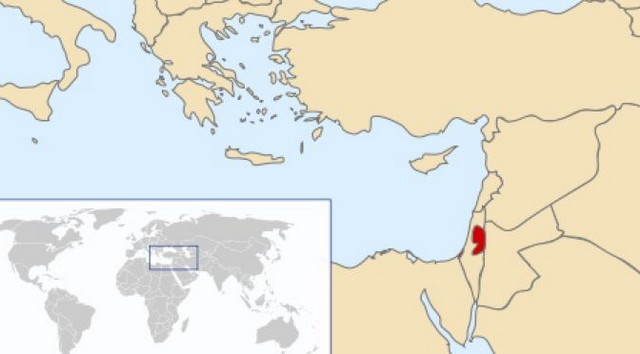
Last July, the Palestinian Authority took the unexpected, although belated step of seeking Arab backing in suing Britain over the Balfour Declaration. That ‘declaration’ was the first ever explicit commitment made by Britain, and the West in general, to establish a Jewish homeland atop an existing Palestinian homeland.

It is too early to tell whether the Arab League would heed the Palestinian call, or if the PA would even follow through, especially considering that the latter has the habit of making too many proclamations backed by little or no action.

However, it seems that the next year will witness a significant tug of war regarding the Balfour Declaration, the 100th anniversary of which will be commemorated on November 02, 2017.

But who is Balfour, what is the Balfour Declaration and why does all of this matters today?

Britain’s Foreign Secretary from late 1916, Arthur James Balfour, had pledged Palestine to another people. That promise was made on November 02, 1917 on behalf of the British government in the form of a letter sent to the leader of the Jewish community in Britain, Walter Rothschild.

At the time, Britain was not even in control of Palestine, which was still part of the Ottoman Empire. Either way, Palestine was never Balfour’s to so casually transfer to anyone else. His letter read:

“His Majesty’s government view with favour the establishment in Palestine of a national home for the Jewish people, and will use their best endeavours to facilitate the achievement of this object, it being clearly understood that nothing shall be done which may prejudice the civil and religious rights of existing non-Jewish communities in Palestine, or the rights and political status enjoyed by Jews in any other country.”

He concluded, “I should be grateful if you would bring this declaration to the knowledge of the Zionist Federation.”

Balfour was hardly acting on his own. True, the Declaration bears his name, yet, in reality, he was a loyal agent of an Empire with massive geopolitical designs, not only concerning Palestine alone, but with Palestine as part of a larger Arab landscape.

Only a year earlier, another sinister document was introduced, albeit secretly. It was endorsed by another top British diplomat, Mark Sykes and, on behalf of France, by François Georges-Picot. The Russians were informed of the agreement, as they too had received a piece of the Ottoman cake.

The document indicated that, once the Ottomans were soundly defeated, their territories, including Palestine, would be split among the prospective victorious parties.

The Sykes-Picot Agreement, also known as the ‘Asia Minor Agreement’, was signed in secret one hundred years ago, two years into World War I. It signified the brutal nature of colonial powers that rarely associated land and resources with people who lived upon or owned them.

The centerpiece of the agreement was a map that was marked with straight lines by a China graph pencil. The map largely determined the fate of the Arabs, dividing them in accordance with various haphazard assumptions of tribal and sectarian lines.

The improvised map consisted not only of lines but also colors, along with language that attested to the fact that the two countries viewed the Arab region purely on materialistic terms, without paying the slightest attention to the possible repercussions of slicing up entire civilizations with a multifarious history of co-operation and conflict.

The Sykes-Picot negotiations were completed in March 1916 and, although official, was secretly signed on May 19, 1916.

WWI concluded on November 11, 1918, after which the division of the Ottoman Empire began in earnest.

British and French mandates were extended over divided Arab entities, while Palestine was granted to the Zionist movement a year later, when Belfour conveyed the British government’s promise, sealing the fate of Palestinians to a life of perpetual war and turmoil.

Rarely was British-Western hypocrisy and complete disregard for the national aspiration of any other nation on full display as in the case of Palestine. Beginning with the first wave of Zionist Jewish migration to Palestine in 1882, European countries helped facilitate the movement of illegal settlers and resources, where the establishment of many colonies, large and small, was afoot.

So when Balfour sent his letter to Rothschild, the idea of a Jewish homeland in Palestine was very much plausible.

Still, many supercilious promises were being made to the Arabs during the Great War years, as the Arab leadership sided with the British in their war against the Ottoman Empire. Arabs were promised instant independence, including that of the Palestinians.

When the intentions of the British and their rapport with the Zionists became too apparent, Palestinians rebelled, marking a rebellion that has never ceased 99 years later, and highlighting the horrific consequences of British colonialism and the eventual complete Zionist takeover of Palestine which is still felt after all of these years.

Paltry attempts to pacify Palestinian anger were to no avail, especially after the League of Nations Council in July 1922 approved the terms of the British Mandate over Palestine – which was originally granted to Britain in April 1920 – without consulting the Palestinians at all. In fact, Palestinians would disappear from the British and international radar, only to reappear as negligible rioters, troublemakers, and obstacles to the joint British-Zionist colonial concoctions.

Despite occasional assurances to the contrary, the British intention of ensuring the establishment of an exclusively Jewish state in Palestine was becoming clearer with time. The Balfour Declaration was not merely an aberration, but had, indeed, set the stage for the full-scale ethnic cleansing that followed, three decades later.

In fact, that history remains in constant replay: the Zionists claimed Palestine and renamed it ‘Israel’; the British continue to support them, although never ceasing to pay lip-service to the Arabs; and the Palestinian people remain a nation that is geographically fragmented between refugee camps, in the diaspora, militarily occupied, or treated as second class citizens in a country upon which their ancestors dwelt since time immemorial.

While Balfour cannot be blamed for all the misfortunates that have befallen Palestinians since he communicated his brief, but infamous letter, the notion that his ‘promise’ embodied – that of complete disregard of the aspirations and rights of the Palestinian Arab people –that very letter is handed from one generation of British diplomats to the next, in the same way that Palestinian resistance to colonialism has and continues to spread across generations.

That injustice continues, thus the perpetuation of the conflict. What the British, the early Zionists, the Americans and subsequent Israeli governments failed to understand, and continue to ignore at their own peril, is that there can be no peace without justice and equality in Palestine; and that Palestinians will continue to resist, as long as the reasons that inspired their rebellion nearly a century ago, remain in place.

– Dr. Ramzy Baroud has been writing about the Middle East for over 20 years. He is an internationally-syndicated columnist, a media consultant, an author of several books and the founder of PalestineChronicle.com. His books include “Searching Jenin”, “The Second Palestinian Intifada” and his latest “My Father Was a Freedom Fighter: Gaza’s Untold Story”. His website is www.ramzybaroud.net.

3 November 2016

Burmese soldiers accused of raping and killing Rohingya Muslims

by Esther Htusan, Martha Mendoza

Just five months after her party took power, Burma’s Nobel Peace Prize-winning leader, Aung San Suu Kyi, is facing international pressure over recent reports that soldiers have been killing, raping and burning homes of the country’s long-persecuted Rohingya Muslims.

The US State Department joined activist and aid groups in raising concerns about new reports of rape and murder, while satellite imagery released Monday by Human Rights Watch shows that at least three villages in the western state of Rakhine have been burned.

Burmese government officials deny the reports of attacks, and presidential spokesman Zaw Htay said Monday that United Nations representatives should visit “and see the actual situation in that region.” The government has long made access to the region a challenge, generally banning foreign aid workers and journalists.

But the UN’s special rapporteur on human rights in Burma, Yanghee Lee, said serious violations, including torture, summary executions, arbitrary arrests and destruction of mosques and homes, threaten the country’s fledgling democracy.

“The big picture is that the government does not seem to have any influence over the military,” said Chris Lewa, director of the Arakan Project, an advocacy group that focuses on the Rohingya. Burma’s widely criticized constitution was designed to give the armed forces power and independence.

A three-week surge in violence by the military was prompted by the killings of nine police officers at border posts on 9 October in Rakhine, home to Burma’s 800,000 Rohingya. There have been no arrests, and a formerly unknown Islamist militant group has taken responsibility.

Although they’ve lived in Burma for generations, Rohingya are barred from citizenship in the nation of 50 million, and instead live as some of the most oppressed people in the world. Since communal violence broke out in 2012, more than 100,000 people have been driven from their homes to live in squalid camps guarded by police. Some have tried to flee by boat, but many ended up becoming victims of human trafficking or were held for ransom.

When Ms Suu Kyi’s party was elected earlier this year after more than five decades of military rule, the political shift offered a short, tense window of peace. But that quickly ended as the former political prisoner and champion of human rights failed to clamp down on military atrocities.

The current crackdown has prompted an estimated 15,000 people in the Rakhine area to flee their homes in the past few weeks. The satellite images from Human Rights Watch show villages burning, and residents report food supplies are growing scarce as they are living under siege.

US Ambassador Scot Marciel has urged Burma’s Foreign Ministry to investigate the allegations of attacks and restore access for humanitarian groups trying to help.

“We take reports of abuses very seriously,” said U.S. Embassy spokesman Jamie Ravetz in Yangon, Burma. “We have raised concerns with senior government officials and continue to urge the government to be transparent, follow the rule of law, and respect the human rights of all people in responding to the original attacks and subsequent reports of abuses.”

Families in Rakhine depend largely on humanitarian aid for food and health care, but that support has been cut off for weeks by officials who will not allow outsiders into the region. A government-sponsored delegation of aid agencies and foreign diplomats was supposed to visit the region on Monday, but local officials said they hadn’t seen anyone yet, and have not been informed they were coming.

“The government should end its blanket denial of wrongdoing and blocking of aid agencies, and stop making excuses for keeping international monitors from the area,” said Phil Robertson, deputy Asia director at Human Rights Watch.

Associated Press

31 October 2016

Inside the Invisible Government

By John Pilger

October 27, 2016 “Information Clearing House” – The American journalist, Edward Bernays, is often described as the man who invented modern propaganda. The nephew of Sigmund Freud, the pioneer of psycho-analysis, it was Bernays who coined the term “public relations” as a euphemism for spin and its deceptions.

In 1929, he persuaded feminists to promote cigarettes for women by smoking in the New York Easter Parade – behaviour then considered outlandish. One feminist, Ruth Booth, declared, “Women! Light another torch of freedom! Fight another sex taboo!” Bernays’ influence extended far beyond advertising. His greatest success was his role in convincing the American public to join the slaughter of the First World War.

The secret, he said, was “engineering the consent” of people in order to “control and regiment [them] according to our will without their knowing about it”.

He described this as “the true ruling power in our society” and called it an “invisible government”.

Today, the invisible government has never been more powerful and less understood. In my career as a journalist and film-maker, I have never known propaganda to insinuate our lives and as it does now and to go unchallenged.

Imagine two cities. Both are under siege by the forces of the government of that country. Both cities are occupied by fanatics, who commit terrible atrocities, such as beheading people. But there is a vital difference. In one siege, the government soldiers are described as liberators by Western reporters embedded with them, who enthusiastically report their battles and air strikes. There are front page pictures of these heroic soldiers giving a V-sign for victory. There is scant mention of civilian casualties.

In the second city – in another country nearby – almost exactly the same is happening. Government forces are laying siege to a city controlled by the same breed of fanatics. The difference is that these fanatics are supported, supplied and armed by “us” – by the United States and Britain. They even have a media centre that is funded by Britain and America. Another difference is that the government soldiers laying siege to this city are the bad guys, condemned for assaulting and bombing the city – which is exactly what the good soldiers do in the first city.

Confusing? Not really. Such is the basic double standard that is the essence of propaganda. I am referring, of course, to the current siege of the city of Mosul by the government forces of Iraq, who are backed by the United States and Britain and to the siege of Aleppo by the government forces of Syria, backed by Russia. One is good; the other is bad.

What is seldom reported is that both cities would not be occupied by fanatics and ravaged by war if Britain and the United States had not invaded Iraq in 2003. That criminal enterprise was launched on lies strikingly similar to the propaganda that now distorts our understanding of the civil war in Syria. Without this drumbeat of propaganda dressed up as news, the monstrous ISIS and Al-Qaida and al-Nusra and the rest of the jihadist gang might not exist, and the people of Syria might not be fighting for their lives today.

Some may remember in 2003 a succession of BBC reporters turning to the camera and telling us that Blair was “vindicated” for what turned out to be the crime of the century. The US television networks produced the same validation for George W. Bush. Fox News brought on Henry Kissinger to effuse over Colin Powell’s fabrications. The same year, soon after the invasion, I filmed an interview in Washington with Charles Lewis, the renowned American investigative journalist. I asked him, “What would have happened if the freest media in the world had seriously challenged what turned out to be crude propaganda?”

He replied that if journalists had done their job, “there is a very, very good chance we would not have gone to war in Iraq”.

It was a shocking statement, and one supported by other famous journalists to whom I put the same question — Dan Rather of CBS, David Rose of the Observer and journalists and producers in the BBC, who wished to remain anonymous. In other words, had journalists done their job, had they challenged and investigated the propaganda instead of amplifying it, hundreds of thousands of men, women and children would be alive today, and there would be no ISIS and no siege of Aleppo or Mosul. There would have been no atrocity on the London Underground on 7th July 2005.  There would have been no flight of millions of refugees; there would be no miserable camps.

When the terrorist atrocity happened in Paris last November, President Francoi Hollande immediately sent planes to bomb Syria – and more terrorism followed, predictably, the product of Hollande’s bombast about France being “at war” and “showing no mercy”. That state violence and jihadist violence feed off each other is the truth that no national leader has the courage to speak.

“When the truth is replaced by silence,” said the Soviet dissident Yevtushenko, “the silence is a lie.”

The attack on Iraq, the attack on Libya, the attack on Syria happened because the leader in each of these countries was not a puppet of the West. The human rights record of a Saddam or a Gaddafi was irrelevant. They did not obey orders and surrender control of their country.

The same fate awaited Slobodan Milosevic once he had refused to sign an “agreement” that demanded the occupation of Serbia and its conversion to a market economy. His people were bombed, and he was prosecuted in The Hague. Independence of this kind is intolerable. As WikLeaks has revealed, it was only when the Syrian leader Bashar al-Assad in 2009 rejected an oil pipeline, running through his country from Qatar to Europe, that he was attacked.

From that moment, the CIA planned to destroy the government of Syria with jihadist fanatics – the same fanatics currently holding the people of Mosul and eastern Aleppo hostage. Why is this not news? The former British Foreign Office official Carne Ross, who was responsible for operating sanctions against Iraq, told me: “We would feed journalists factoids of sanitised intelligence, or we would freeze them out. That is how it worked.”

The West’s medieval client, Saudi Arabia – to which the US and Britain sell billions of dollars’ worth of arms – is at present destroying Yemen, a country so poor that in the best of times, half the children are malnourished. Look on YouTube and you will see the kind of massive bombs – “our” bombs – that the Saudis use against dirt-poor villages, and against weddings, and funerals. The explosions look like small atomic bombs. The bomb aimers in Saudi Arabia work side-by-side with British officers. This fact is not on the evening news.

Propaganda is most effective when our consent is engineered by those with a fine education – Oxford, Cambridge, Harvard, Columbia — and with careers on the BBC, the Guardian, the New York Times, the Washington Post. These organisations are known as the liberal media. They present themselves as enlightened, progressive tribunes of the moral zeitgeist. They are anti-racist, pro-feminist and pro-LGBT.

And they love war.

While they speak up for feminism, they support rapacious wars that deny the rights of countless women, including the right to life. In 2011, Libya, then a modern state, was destroyed on the pretext that Muammar Gaddafi was about to commit genocide on his own people.  That was the incessant news; and there was no evidence. It was a lie.

In fact, Britain, Europe and the United States wanted what they like to call “regime change” in Libya, the biggest oil producer in Africa. Gaddafi’s influence in the continent and, above all, his independence were intolerable. So he was murdered with a knife in his rear by fanatics, backed by America, Britain and France.  Hillary Clinton cheered his gruesome death for the camera, declaring, “We came, we saw, he died!”

The destruction of Libya was a media triumph. As the war drums were beaten, Jonathan Freedland wrote in the Guardian: “Though the risks are very real, the case for intervention remains strong.” Intervention — what a polite, benign, Guardian word, whose real meaning, for Libya, was death and destruction.

According to its own records, Nato launched 9,700 “strike sorties” against Libya, of which more than a third were aimed at civilian targets. They included missiles with uranium warheads. Look at the photographs of the rubble of Misurata and Sirte, and the mass graves identified by the Red Cross. The Unicef report on the children killed says, “most [of them] under the age of ten”. As a direct consequence, Sirte became the capital of ISIS.

Ukraine is another media triumph. Respectable liberal newspapers such as the New York Times, the Washington Post and the Guardian, and mainstream broadcasters such as the BBC, NBC, CBS, CNN have played a critical role in conditioning their viewers to accept a new and dangerous cold war. All have misrepresented events in Ukraine as a malign act by Russia when, in fact, the coup in Ukraine in 2014 was the work of the United States, aided by Germany and Nato.

This inversion of reality is so pervasive that Washington’s military intimidation of Russia is not news; it is suppressed behind a smear and scare campaign of the kind I grew up withduring the first cold war. Once again, the Ruskies are coming to get us, led by another Stalin, whom The Economist depicts as the devil.

The suppression of the truth about Ukraine is one of the most complete news blackouts I can remember. The fascists who engineered the coup in Kiev are the same breed that backed the Nazi invasion of the Soviet Union in 1941. Of all the scares about the rise of fascist anti-Semitism in Europe, no leader ever mentions the fascists in Ukraine – except Vladimir Putin, but he does not count.

Many in the Western media have worked hard to present the ethnic Russian-speaking population of Ukraine as outsiders in their own country, as agents of Moscow, almost never as Ukrainians seeking a federation within Ukraine and as Ukrainian citizens resisting a foreign-orchestrated coup against their elected government.

There is almost the joie d’esprit of a class reunion of warmongers. The drum-beaters of the Washington Post inciting war with Russia are the very same editorial writers who published the lie that Saddam Hussein had weapons of mass destruction.

To most of us, the American presidential campaign is a media freak show, in which Donald Trump is the arch villain. But Trump is loathed by those with power in the United States for reasons that have little to do with his obnoxious behaviour and opinions. To the invisible government in Washington, the unpredictable Trump is an obstacle to America’s design for the 21st century.

This is to maintain the dominance of the United States and to subjugate Russia, and, if possible, China.

To the militarists in Washington, the real problem with Trump is that, in his lucid moments, he seems not to want a war with Russia; he wants to talk with the Russian president, not fight him; he says he wants to talk with the president of China. In the first debate with Hillary Clinton, Trump promised not to be the first to introduce nuclear weapons into a conflict. He said, “I would certainly not do first strike. Once the nuclear alternative happens, it’s over.” That was not news.

Did he really mean it? Who knows? He often contradicts himself. But what is clear is that Trump is considered a serious threat to the status quo maintained by the vast national security machine that runs the United States, regardless of who is in the White House. The CIA wants him beaten. The Pentagon wants him beaten. The media wants him beaten. Even his own party wants him beaten. He is a threat to the rulers of the world – unlike Clinton who has left no doubt she is prepared to go to war with nuclear-armed Russia and China.

Clinton has the form, as she often boasts. Indeed, her record is proven. As a senator, she backed the bloodbath in Iraq.  When she ran against Obama in 2008, she threatened to “totally obliterate” Iran. As Secretary of State, she colluded in the destruction of governments in Libya and Honduras and set in train the baiting of China. She has now pledged to support a No Fly Zone in Syria — a direct provocation for war with Russia. Clinton may well become the most dangerous president of the United States in my lifetime –a distinction for which the competition is fierce.

Without a shred of evidence, she has accused Russia of supporting Trump and hacking her emails. Released by WikiLeaks, these emails tell us that what Clinton says in private, in speeches to the rich and powerful, is the opposite of what she says in public. That is why silencing and threatening Julian Assange is so important. As the editor of WikiLeaks, Assange knows the truth. And let me assure those who are concerned, he is well, and WikiLeaks is operating on all cylinders.

Today, the greatest build-up of American-led forces since World War Two is under way – in the Caucasus and eastern Europe, on the border with Russia, and in Asia and the Pacific, where China is the target. Keep that in mind when the presidential election circus reaches its finale on November 8th,  If the winner is Clinton, a Greek chorus of witless commentators will celebrate her coronation as a great step forward for women. None will mention Clinton’s victims: the women of Syria, the women of Iraq, the women of Libya. None will mention the civil defence drills being conducted in Russia.  None will recall Edward Bernays’ “torches of freedom”.

George Bush’s press spokesman once called the media “complicit enablers”.

Coming from a senior official in an administration whose lies, enabled by the media, caused such suffering, that description is a warning from history.

In 1946, the Nuremberg Tribunal prosecutor said of the German media: “Before every major aggression, they initiated a press campaign calculated to weaken their victims and to prepare the German people psychologically for the attack. In the propaganda system, it was the daily press and the radio that were the most important weapons.”

This text is adapted from an address to the Sheffield Festival of Words, Sheffield, England, On 27 October 2016.http://johnpilger.com

Military Escalation in the Wake of the U.S. Presidential Elections? Stopping Hillary’s Coming War on Syria

by Shamus Cooke

With Hillary Clinton’s victory in the bag, there’s a growing fear that her presidency will begin with a bang: regime change in Syria. Clinton has said as much. Last year Reuters reported that “removing President Assad” would be Clinton’s “top priority.”

This regime change sentiment was echoed more recently by her foreign policy adviser, Jeremy Bash, who said that Clinton would “…work to get Bashar al-Assad, the Syrian president, “out of there.”

More spectacularly has been Clinton’s repeated insistence during debates that a “no fly zone” should be implemented in Syria, which, as the Libyan experiment proved, is a euphemism for regime change and war.

The fact that such blatant warmongering can go unchallenged is itself a major PR victory for the establishment. The anti-war movement seems speechless, immobile in the face of yet another war.

This paralysis is due, in part, to the Left’s splintering over Syria, where vicious infighting over a consistent anti-war perspective has spoiled debate.

Instead of focusing on stopping the next war, the Left continues to bicker about who deserves the most blame for the Syrian catastrophe. As a result, working people are left in the dark about the U.S. role in the Syrian war. They don’t know the U.S. has been leading a proxy war against the Syrian government, and they are unprepared for the full-scale military intervention that remains a real possibility.

The vast educational void around Syria is being filled, in part, by mainstream politicians, such as moderate Congressional Democrat Tulsi Gabbard, who sounds “radical” when she recently wrote in an online petition:

”The war to overthrow the Syrian government of Assad is creating more devastation, human suffering, and refugees…Have we learned nothing from Iraq and Libya? We must end our [U.S.] war to overthrow the Syrian government of Assad now.”

If only most Left groups spoke as clearly as Gabbard about Syria, whose petition is only radical because the Left has so thoroughly minimized the U.S. role in funding, arming, training, and coordinating the proxy war against the Syrian government.

A key mistake some Left groups make is focusing their anti-war actions on “all sides,” wrongly believing that this alone is an internationalist approach against imperialism and war. But a critical component gets ignored when this principle is clung to.

Stopping the U.S. war on Syria requires that U.S. activists actively educate and focus on the U.S. role, so that people can be agitated into action and mobilized by the tens of thousands. The principled “pox on both houses” approach leads, in practice, to inaction, making it an empty phrase when what is needed is a concrete strategy for effective on the ground organizing.

The essence of a revolutionary, internationalist approach to anti-war strategy was summarized by Leon Trotsky, when he said “In the struggle against imperialism and war the basic principle is: ‘the chief enemy is in your own country.’”

The quote is a guide to action for those living in imperialist countries, and the U.S. remains the world’s foremost imperialist country. Syria is not an imperialist country.

The focus, therefore, for U.S. anti-war activists should be on the U.S.’ actions abroad in order to mobilize to stop it. An internationalist approach is working to minimize the harm that your imperialist country can do to the working class abroad.

All anti-war organizers should base their actions on this premise, since this truism allows for the most effective anti-war strategy when put into practice. Straying from this principle can get you into serious trouble.

It’s in your own country where you actually organize people on the ground, where they can be educated and mobilized directly against the government to apply direct pressure.

Writing the occasional anti-war article that analyzes the various bad actors is fine, but when it comes to the realm of action and organizing, focus is required. You cannot organize effectively against all sides. Your efforts must be prioritized where you can have the most impact, and where your efforts cannot be co-opted by your government as war propaganda.

Your own government is the enemy because its foreign policy is dictated by the same U.S. corporations that exercise power domestically, who exploit workers in the U.S., who don’t pay taxes in the U.S., and who fund anti-worker legislation domestically.

Some of these same corporations want raw materials, contracts, and new markets abroad, and will bomb the world to smithereens to get it.  The fight against war always starts at home.

As Fred Halstead wrote in the groundbreaking work “Out Now,” the anti-Vietnam war movement was strong when it focused on educating and mobilizing U.S. society, from students, veterans, union members, etc., while also directly agitating U.S. troops stationed in Vietnam, who were emboldened by the mass rallies they saw at home. When U.S. soldiers began organizing against their officers by refusing to fight, the war could no longer continue. The excellent documentary “Sir No Sir” shows the power of organizing active duty military personnel.

The anti-Vietnam war movement didn’t focus on the violence of the North Vietnamese, or the role played by China and the U.S.S.R., they focused on the role played by the U.S., and because of this they were able to effectively educate and mobilize hundreds of thousands of people, stop the war, and effect a cultural change in the U.S. where for decades it was politically impossible to enact direct military intervention.

A similar approach was used by the Russian revolutionaries in World War I, where a massive anti-war movement was created, not by agitating against the Germans — who were arguably the aggressors — but by focusing first on the Czar of Russia, and then on the Russian capitalists who wanted to continue the war after the Czar’s downfall. The mobilization for “peace” grew to be one of the pillar demands of the successful revolution.

U.S. Left groups needn’t focus on the “evils” of Russia or the Syrian government; huge resources are already spent on this by multi-billion-dollar media conglomerates. Demonizing the enemy of U.S. imperialism doesn’t help U.S. workers in terms of mobilizing to stop the war. In fact, demonizing “the enemy” helps keep workers passive, since it makes the war appear “moral.”

A good example of this grave mistake comes from the International Socialist Organization (ISO), whose recent article criticizes the new antiwar coalition ‘Hands Off Syria.” The article reads:

“U.S. Hands Off Syria is exclusively focused on opposing U.S. military intervention and what it claims is Washington’s determination to achieve regime change in Syria. But this means the coalition and those who endorse it ignore the main source of the barbaric violence and repression in Syria today:  the Assad government, its allies within the region and the Russian empire that backs Assad to the hilt….”

Hands Off Syria keeps true to the antiwar maxim “the chief enemy is in your own country,” and the ISO ridicules them for it.

The same article goes on to slander Hands Off Syria by accusing them of “…supporting a dictator like Assad and an imperialist power like Vladimir Putin’s Russia.”

This “pro-Assad” slander has been aimed at anyone — this writer included — who focuses their fire on the U.S. involvement in the Syrian conflict. The smear campaign has ruined the discussion around Syria, helping to mis-educate people who might otherwise be organized into action.

The ISO fails to mention in its article that Hands Off Syria specifically mentions that “It is not our business to support or oppose President Assad or the Syrian government. Only the Syrian people have the right to decide the legitimacy of their government.”

The ISO calls Hands Off Syria “pro-Assad” because the group says, correctly, that Syria has the right to self-determination. In a nutshell “self-determination” means that non-imperialist countries, like Syria, have a right not to be interfered with by imperialist countries, such as the United States.

All revolutionaries have a duty to uphold this core tenant of anti-imperialism. Watering this principle down — because “Assad is a brutal dictator” — is another example of undercutting both theory and action around anti-war work.

The main demands of the Hands Off Syria coalition are completely supportable from an internationalist, socialist perspective, and deserve mention, since they went unmentioned in the ISO article that attacked them:

1   An immediate end to the U.S. policy of forced regime change in Syria and full recognition and compliance by the U.S., NATO and their allies with principles of international law and the U.N. Charter, including respect for the independence and territorial integrity of Syria.

2   An immediate end to all foreign aggression against Syria, and serious efforts toward a political resolution to the war.

3   An immediate end to all military, financial, logistical and intelligence support by the U.S., NATO and their regional allies to all foreign mercenaries and extremists in the Middle East region.

4   An immediate end to economic sanctions against Syria. Massive international aid for displaced people within Syria and Syrian refugees abroad.

Hands of Syria is a united front coalition that should have existed for several years; its late arrival is due to the gutter-level Syria debate among Left groups. So attacking this big step forward in anti-war work only detracts from the anti-war movement, and thus empowers the U.S. government to act with a freer hand in Syria.

A consistent antiwar approach means combining theory with action, going beyond intellectual exercises and into organizing. If an antiwar theory equals inaction in the face of war, that perspective is exposed as moribund, lifeless. An antiwar approach must have practical applications to movement politics, a way to connect with and mobilize the masses.

Blaming “all sides” has the unintended consequences of pacifying working people in the face of war, since the kind education that might agitate them into action — their own government’s actions — is being either minimized or crowded out by nonstop comparisons with the “worse” actions of other governments (those in the cross-hairs of U.S. imperialism).

To put anti-war work into practice, every effort must be made to explain the history of the U.S. intervention in Syria, and how this intervention continues today, and how the logic of this intervention inevitably leads to a full scale military confrontation, as very nearly happened in 2013 when Obama backed down from attacking the Syrian government.

A revolutionary approach to war lies in exposing the lies of the capitalist media and politicians, so that workers understand the propaganda that is leading them into war, so they can be prepared to mobilize against it when war breaks out. Anything less is an academic exercise, divorced from the realities of the class struggle in the U.S.

Most conflicts have several precipitating factors, so ascribing blame to who fired the first shot or who was the “most savage” cannot be a guiding force in anti-war work. It serves mainly to distract, to disorient.  By focusing on Russia and Syria, the U.S. war propaganda goes unchallenged, and thus can maintain a powerful stultifying force on working people in the face of war.

Any mass movement for peace wields revolutionary implications. Especially in the U.S., whose global empire of military bases acts as a stifling conservative political force across the globe, while the domestic politics have been stifled by this same “military industrial complex.” This behemoth of concentrated power will require an equal power to demobilize it, and that power can only be the working class mobilized.

Any effective anti-war work must stay true to the basic principles elaborated by Trotsky decades ago: the enemy remains at home.

Shamus Cooke is a social service worker, trade unionist, and writer for Workers Action (www.workerscompass.org). He can be reached out shamuscooke@gmail.com

27 October, 2016

Moroccan Elections: Where process trumps result

by Afro-Middle East Centre

The results of the recent, 7 October, Moroccan parliamentary election means little in terms of the exercise of actual political power, but is indicative of the continued popularity of the ruling Islamist Freedom and Development party (PJD) which won twenty-five per cent of the vote. Voter turnout stood at a low forty-three per cent because of apathy flowing from the realisation that King Mohammed VI will maintain control and the election meant little in terms of politics or power, and the belief that political parties’ objective was to join the extensive patronage networks rather than representing ordinary Moroccans’ grievances. Ideological polarisation and a skewed political system that inhibits the emergence of large political parties will further contribute to the legislature’s inability to keep the monarch in check.

With little real opposition to the king, the PJD’s victory is not terribly significant, especially in foreign policy and long term strategic planning. The party will rather attempt to further pry open the political space by confronting the palace on electoral and constitutional reform, and by focusing strongly on corruption. All this will be an incremental, attritional process.

Moroccan elections have been historically plagued by two major difficulties. First, the system promotes ideological fragmentation by encouraging the growth of multiple small parties. A low three per cent voting threshold is implemented, forcing larger parties to partner with small ones to gain a parliamentary majority. This inhibits ideological and policy coherence and allows Mohammed VI to stymie parliamentary opposition to his rule through what some call ‘political rationalisation’. Second, and more importantly, parliament has little actual power. Even though the king piloted constitutional reforms in July 2011 to curb his powers, he is still able to dissolve the government, and has absolute powers in the realms of foreign policy and strategic planning. Most major decisions must be ratified by the king, who chairs the supreme council of the judiciary, the national security council, and the council of ministers, and is the self-designated ‘amir al-mu’minin’ (leader of the faithful). Electoral power is thus circumscribed and many parties contest elections to gain access to the Makhzen (the palace) and thus its patronage networks.

This was manifest in the 7 October elections. The PJD increased its seat count from 107 in 2011 to 125, beating its main rival and the king’s favoured party, the Party of Authenticity and Modernity (PAM), which won 102 seats. The party must thus partner with some of the other thirty other parties to govern. It has entered into talks with the Democratic Front, consisting of the nationalist Istiqlal party (with forty-six seats), the Socialist Union of Popular Forces (USFP, twenty seats) and the Party for Progress and Socialism (PPS, twelve seats). These will likely form a coalition to exclude PAM. The PJD’s leader, Abdelilah Benkirane, has had to delicately balance his party’s opposition to aspects of the monarch’s power with the party’s need for monarchical endorsement to contest elections. Thus, although criticising the current political system that he calls tahakoum (politically manipulated authoritarianism), he repeatedly clarifies that he serves at the monarch’s behest and that bad decisions should be attributed to the monarch’s advisors and not Mohammed VI himself.

The low election turnout, down from forty-five per cent in the 2011 parliamentary election and fifty-three per cent in last year’s municipal vote, is due to voter apathy, and the boycott calls from the civil society Islamist movement Al Adl wa Al Ihsaane (Justice and Goodness) movement and the leftist Democratic Way party, which have been shunned from the political system. At the heart of the apathy is the realisation that the legislature’s power is severely curtailed. Hence the higher turnout for municipal elections, which many citizens see as more relevant to their needs.

The election has proven the popularity of the PJD, despite the Makhzen’s attempts to weaken it through ‘hard’ and ‘soft’ vote rigging and explicit backing for PAM. The PJD has improved from five per cent in the 2009 municipal election to sixteen per cent in the 2015 vote and from 107 seats in 2011 to 125 in the October poll. The party is thus likely to endure, despite its worse than expected performance in last year’s election, and in spite of the situation in the Middle East and North Africa region, that is unfavourable to parties referencing Islam. However, similar to Tunisia’s Ennahdha and Jordan’s Islamic Action Front, the PJD’s success lies in a focus away from ideology and toward partnerships with non-Islamist parties, and a reluctance to strongly pronounce on regional issues.

With youth unemployment at twenty per cent and graduate unemployment in many urban areas at forty per cent, the conditions that sparked the February 2011 Moroccan protests persist. Parties such as the PJD will need to carefully navigate the current political terrain else, or risk being seen as complicit when protests erupt again. Already around eighty per cent of people polled by the Arab Barometer III survey view the state as corrupt and judicial decisions as open to corruption.

27 October, 2016

Election 2016: A Political System In Crisis

By Nile Bowie

The outcome of strangest and most consequential election cycle in recent American history will soon be upon us. Regardless of who becomes the next president, this election will forever be synonymous with the rogue candidacy of Donald Trump and the demographic shifts that have emboldened the right.

Though it may be a close election, it is widely presumed that public antipathy towards Trump – the first major party candidate who is near-universally opposed by both major parties – will tilt the odds in Hillary Clinton’s favour. Nonetheless, Trump’s support base of primarily white, blue-collar Americans will be a major factor for the political establishment to contend with in the years ahead.

These voters are frustrated by their economic marginalisation wrought by neoliberal trade deals and economic policies, and are contemptuous of traditional political elite, their internationalism and liberal identity politics. For these voters, fear of immigration is entwined with the precarity of being working class, their troubling prejudices notwithstanding.

Economic disempowerment and political disenfranchisement have accelerated under President Obama, to the detriment of the American middle class. White, blue-collar Americans have witnessed the offshoring of their jobs and the erosion of their status in society, and Trump has masterfully stroked their resentment and discontent by playing on their fears of Muslims, immigrants and minorities.

Trump’s views often contain unusual contradictions and seem to be delivered impromptu. What remains consistent are his authoritarian views on crime and justice, vows to close the borders to refugees, Muslims and economic migrants, scepticism of overseas ‘democracy promotion’ and America’s role in international alliances, foreign policy views both isolationist and belligerent and of course, his distinctive megalomaniacal hubris.

Trump’s real problem with the Washington establishment is that he isn’t part of it. His campaign represents an insurgent faction of the oligarchical class that aims to displace and replace the standing political elites. Bipartisan opposition to Trump is grounded in the belief that he would be an unreliable proxy and a liability, someone too narrow and unpredictable to manage the common affairs of the ruling class and the US deep state.

Moreover, the US establishment is not interested in being led by such a contentious figure, who would draw protest and public opposition in a way that more conventional establishment candidates largely do not. For example, Trump’s rhetoric on immigration seems to engender more public outrage than the immigration policy under Obama, who has deported more people than any other president in history.

That being said, Hillary Clinton is a more dangerous candidate in many ways. Trump understands that the political system is rigged and the economy is oriented to serve various elite interests, a message that resonates across the political spectrum, even with anti-Trump segments of the electorate. As a hated political outsider not tied directly into the power and the money structure of the political system, there would be no shortage of gridlock and checks on the authority wielded by Trump in the unlikely event of his presidency.

By contrast, Clinton wields enormous political influence inside the corridors of political and corporate power through personal relationships and connections. Policy and legislation shaped by donor money, lobbyist groups and special interests have been a hallmark of the Clintons’ time in public office. The very fact that she is standing for office while being investigated by the FBI, having committed actions that would have ended the careers of other politicians and government employees, speaks for itself.

It has been reported by various sources that the FBI’s recent decision to reopen the investigation into the Clinton email scandal less than two weeks before election day has been motivated by an internal backlash within the agency’s rank and file, forcing FBI director James Comey’s hand as a means of addressing internal critics who believe he buried the Clinton probe for political reasons.

Clinton’s email scandal is not the real issue. She has spent her political career ruthlessly advancing the interests of high finance, the military industrial complex and corporate America, with dramatic repercussions for minorities and the marginalised inside the United States, and the civilian populations of countries targeted for US military intervention and destabilization during the her time as an influential first lady, senator and secretary of state.

Clinton has spent her long career advocating hawkish US military supremacy and banking deregulation, expanding the private prison industry to the detriment of impoverished African-American communities, dismantling the social safety net that marginalized families rely on, and enabling the consolidation of corporate power through secretive trade agreements. On the campaign trail, she has characterised her work as advancing the interests of women and families.

The Clinton campaign has repeatedly evoked the historic struggle for civil rights into a aspirational rhetoric of ‘breaking glass ceilings’ in the interest of a faux-feminism which prioritizes the equal opportunities of women to lead the nation’s highest office, while at once tone-deaf to the consequences faced by women and families on the receiving end of executive policies. The Democratic Party has become a parody of moral posturing, self-relishing its candidates with rhetoric that has no connection with policies in reality.

It is the party of establishment insiders and corporate donors who openly engineer the presidential nomination process to favour their preferred candidate by virtue of the undemocratic super-delegate system. Bernie Sanders, whose campaign inspired millions of Americans for good reason, has proven himself to be tepid and cowardly in the face of practices that have proven beyond doubt that the Democratic Party establishment conspired against him.

Bernie’s campaign centred around a rather modest, comparatively tame centre-left progressive platform that did not seriously question US militarism and the values of American exceptionalism. For the Democratic Party at large, the Sanders campaign represented a concession too far. The Clinton campaign even had the impudence to directly hire disgraced Democratic chairwoman Debbie Wasserman Schultz after leaked emails exposed her partisanship.

Rather than addressing the political substance of revelations uncovered by WikiLeaks, the Clinton campaign, backed by Obama administration officials, has reverted to neo-McCarthyism by labelling opposition as surrogates of Russia, explicitly accusing Moscow of meddling in the US election process. Accusations of Russian interference without accompanying evidence are at best a short-sighted means of deflecting responsibility for the corrupt actions of the Clinton campaign and Democratic Party insiders.

The next American president will have to confront the realities of strained relations with Russia. Clinton is known for her public enmity toward Russian President Vladimir Putin and would at best perpetuate the status quo of mutual distrust and limited cooperation. At worst, her policies could risk a military confrontation with Russia should she pursue the establishment of a no-fly zone over Syrian airspace, which she publically advocated during the presidential debates.

Trump is the most prominent American political figure to advocate détente with Russia, openly breaking with his neoconservative running mate Mike Pence. Trump has criticised Clinton for supporting anti-government insurgents in Syria and called for jointly targeting ISIS with the Russian, and by extension, Syrian militaries. Trump, being very critical of Iran, also signalled he was willing to fight against ISIS on the same side as Tehran.

He has also offered support for the establishment of a safe zone inside Syrian territory, potentially in cooperation with the Syrian government and its allies. Both candidates would pursue a different policy approach from the incumbent administration in Syria, but Clinton’s no-fly zone holds greater potential to deepen military hostilities between major powers. Clinton has generally been critical of Obama’s foreign policy in Syria and elsewhere for not asserting US power strongly enough.

Despite the differences in style and demeanour, the range of policies offered by the entrenched two-party system is limited to varying shades the centre to far right. Hillary Clinton and Donald Trump are the least trusted and most unpopular presidential candidates in modern history. Despite the public disillusionment with major party candidates, it remains to be seen whether American voters will cast ballots for third parties such as the Libertarian Party or Green Party, which are seeking to garner 5 percent of the popular vote to become eligible to receive public campaign funding.

More likely than not, American voters will cast their ballots ‘against’ Trump by voting for Clinton and vice versa, fueling the cyclical politics of the lesser evil that have been a feature of American presidential politics for decades. More than any other US election in recent history, the candidates represent the rot of an American political establishment marred by scandal, hypocrisy and the relentless pursuit of hegemony. To advocate one over the other is ultimately defeatist.

1 November 2016

Nile bowie is a Singapore-based political commentator and columnist for the Malaysian Reserve newspaper. He is also a JUST member.

US-Russian War Tensions Mount Over Eastern Europe And Syria

by Bill Van Auken

NATO defense ministers convened a two-day meeting in Brussels Wednesday to thrash out final plans for the deployment of some 4,000 combat troops organized in four battle groups within striking distance of Russia’s border.

These front-line forces are to be backed by a 40,000-strong rapid reaction force capable of going into battle within days.

The plan represents the largest military escalation in the region since the height of the Cold War between the US and the former Soviet Union and carries with it the heightened threat of an armed confrontation between Washington and Moscow, the world’s two largest nuclear powers.

At the end of Wednesday’s session, NATO Secretary General Jens Stoltenberg confirmed that the United States, Britain, Germany and Canada had agreed to provide the leading elements of the battle groups to be deployed respectively in Poland and the three former Soviet Baltic republics: Estonia, Lithuania and Latvia.

Stoltenberg added that other NATO member states would contribute soldiers and armaments to the buildup. Describing the deployment as “multinational,” he stressed that it underscored that “[a]n attack on any ally will be considered an attack on us all.”

US Defense Secretary Ashton Carter said that Washington would send a “battle-ready battalion task force” of approximately 900 solders into eastern Poland. The troops are to be drawn from the 2nd Stryker Cavalry Regiment, named for the Stryker armored fighting vehicle. The unit was sent repeatedly into the wars in Afghanistan and Iraq.

In addition, the Pentagon is sending the 3rd Armored Brigade Combat Team of the 4th Infantry Division, replete with battle tanks and heavy artillery, which will be based in Poland, but operate in the general periphery of ex-Soviet republics and former Warsaw Pact nations on Russia’s western flank. Also being sent is the 10th Combat Aviation Brigade, equipped with Black Hawk attack helicopters.

Washington has also announced it is dispatching 330 Marines to a base in Norway after the Norwegian government approved the deployment Monday. “We expect a sustained challenge from the East, from Russia, by way of its military activity,” David Lute, the US ambassador to NATO, said in explaining the move.

Britain, meanwhile, spelled out its plans to deploy 800 troops to Estonia, equipped with battle tanks, armored infantry fighting vehicles and drones. It is to be joined by units from France and Denmark. British warplanes are also being sent to Romania.

Germany will deploy a battalion of between 400 and 600 troops to Lithuania, marking the first entry of the German military into the country since its occupation by the Nazis, who carried out the murder of close to a quarter of a million Jews there. The German deployment will be backed by units from Netherlands, Norway, Belgium, Croatia and Luxembourg.

Canada is reportedly sending 450 troops to Latvia, to be joined by 140 Italian military personnel.

Defending the deployments in an interview with the German broadcaster, Deutsche Welle, the outgoing American deputy secretary general of NATO, Alexander Vershbow, claimed the US-led alliance “had no choice.”

“Russia changed the whole paradigm in 2014 with its aggression against Ukraine, its illegal annexation of Crimea,” said Vershbow.

This is a barefaced lie. The crisis in Ukraine was triggered not by “aggression” on the part of the Kremlin oligarchy, but rather the conspiracy of Washington and Berlin to overthrow the elected government in Kiev through the mobilization of violent fascist and right-wing nationalist forces. The US openly associated itself with this coup, with Assistant Secretary of State Victoria Nuland bragging that the US had spent $5 billion to further Ukrainian regime change.

The reintegration of Crimea into Russia–it was only placed under Ukrainian administration in 1956, when both Russia and Ukraine were part of the Soviet Union–was overwhelmingly supported by the territory’s population in a popular referendum. From Moscow’s standpoint, this was a defensive measure taken to safeguard the historic base of Russia’s Black Sea fleet.

The coup in Ukraine was the culmination of the relentless military encirclement of Russia, which has seen NATO shift its borders 800 miles eastward. Now, the deployments announced Wednesday have turned into a dead letter the agreement negotiated between NATO and Moscow not to send “substantial” numbers of Western troops into these areas.

In the wake of the Ukrainian coup, US President Barack Obama flew to Estonia to declare Washington’s “eternal” commitment to defend it and the other two Baltic states with “American boots on the ground,” thereby committing the US to war in defense of three tiny territories ruled by right-wing and fanatically anti-Russian governments eager for confrontation.

Further justifying the current NATO buildup, Stoltenberg declared Wednesday, “Close to our borders, Russia continues its assertive military posturing.” Given that NATO has expanded its reach to Russia’s own borders, this effectively means that Russia is a threat because it maintains armed forces on its own soil.

Tensions with Russia, as well as within the NATO alliance itself, have been further ratcheted up over Moscow’s dispatch of an eight-vessel flotilla led by the aircraft carrier Admiral Kuznetsov to the eastern Mediterranean to support Russian operations in support of the Syrian government.

After reports that this Russian flotilla would stop in Ceuta, the Spanish-ruled port city on the north coast of Africa, for refueling, the NATO powers exerted immense pressure on the Spanish government to refuse to allow the Russian warships to dock there.

British Defense Secretary Michel Fallon declared that his government “would be extremely concerned if a NATO member should consider assisting a Russian carrier group that might end up bombing Syria.”

Spain has reportedly allowed nearly 60 Russian warships to take on fuel and supplies in Ceuta since 2011. The practice led to denunciations in the US Congress and an amendment being attached last May to the US military spending bill requiring the Pentagon to report to Congress on countries hosting Russian vessels.

The Russian media reported Wednesday that Moscow rescinded its request to refuel at the port, while Russian government sources said the ships had adequate fuel and supplies to reach their destination.

The controversy reflects the widening divisions that have opened up within the NATO alliance under the pressure of the escalating confrontation with Russia. The countries of southern Europe, particularly Spain, Italy and Greece, have grown increasingly hostile to the regime of sanctions against Russia that has only deepened their own economic crises. Meanwhile, Germany and France have floated plans for turning the European Union into an independent military alliance, reflecting the growing conflict between US and European interests.

NATO officials have couched the issue of the Russian flotilla in alleged “humanitarian” concerns over the situation in Syria, with warnings that the fighter jets onboard the Kuznetsov will join in air strikes against eastern Aleppo and other areas controlled by the Al Qaeda-linked Islamist militias supported by Washington and its allies.

Undoubtedly a more fundamental concern is that the Russian naval buildup in the eastern Mediterranean, coupled with Russia’s deployment of fighter jets and advanced mobile S-400 and S-300 missile defense systems in Syria itself, is challenging the control of the area historically exercised by the US Sixth Fleet, which has been sorely depleted by the US “pivot” to Asia.

The Russian firepower in and around Syria has also effectively precluded the imposition of a “no-fly zone,” a policy promoted by Democratic presidential candidate Hillary Clinton and much of the US foreign policy establishment, outside of a direct military confrontation with Russia.

This was acknowledged Tuesday by US Director of National Intelligence James Clapper in remarks to the Council on Foreign Relations. “I wouldn’t put it past them to shoot down an American aircraft if they felt that was threatening to their forces on the ground,” Clapper said of the Russian military during a talk at the Council of Foreign Relations. “The system they have there is very advanced, very capable, and I don’t think they’d do it–deploy it–if they didn’t have some intention to use it.”

Whether the flashpoint emerges in Eastern Europe or in Syria, the drive by US imperialism to achieve global hegemony is steadily escalating the threat of world war.

27 October 2016

Review: “The Local Food Revolution: How Humanity Will Feed Itself In Uncertain Times”

By Carolyn Baker

“We are being ranched,” says Michael Brownlee, and what is more, most of us are living in one kind of food desert or another.

In this book, author Michael Brownlee is inciting a local food revolution, and this revolution is far more expansive, far more radical, and far more life-altering than creating a few farmers markets and promoting one’s local economy. According to Brownlee, our industrial food system “has itself become the greatest threat to humanity’s being able to feed itself.” However, this revolution is not merely an uprising against the global industrial food system but also a “coming together to build something new in the face of nearly impossible odds.” In fact, it is a spiritual, as well as a social and political event because it will require us to learn how to feed ourselves. What is more, it is a “center of aliveness in the midst of a dying civilization” which “provides more than hope; it is a revolution of the deeper meaning and purpose and presence that lie ahead, emerging mysteriously out of a convergence of seed, soil, soul, and stars.” The Unholy Alliance—Big Food, Big Ag, and Big Pharma, empowered by Big Banking and Big Government has deprived us of the autonomy of learning how to feed ourselves and has also convinced farmers, entrepreneurs, and investors that solutions for feeding the world are technological only.

In other words, in the local food revolution that must happen, “we are not attempting to change or fix the global industrial food system. We’re simply putting all our efforts into building our own food system, our own regional foodsheds.” According to Brownlee, we must “resign as consumers” and opt out of the global food system which is what the Unholy Alliance fears most: Losing control of our food supply, but more fundamentally, losing control of us.

The author has been aware of the collapse of industrial civilization for nearly two decades, and he has witnessed a number of revolutions coming and going, but he asserts that “real revolutions are called into being.” Called into being by what? According to Brownlee, “…by something greater than ourselves.”

If this declaration brings to mind the word “sacred,” that’s because “sacred” is exactly what the author has in mind. “Food is sacred,” he says, and “We need to make eating sacramental again and come to regard farming and ranching, along with preparing and cooking food, nothing less than a spiritual practice.”

Brownlee takes us through the watershed moments of our human development: The Agricultural Age, the Industrial Age, the Information Age, and the Anthropocene, but he does not stop there. Drawing on the wisdom of geo-logian, Thomas Berry, and physicist, Brian Swimme, who have written volumes about the notion of partnership between humanity and the Earth community, the author hypothesizes that this might lead to humanity devoting itself to repairing the destruction it has inflicted on the planet. Such a partnership could, in turn, lead to a greater community era in which “we may then emerge into a realm of life that goes far beyond our planetary sphere.”

The alternative, of course, is human extinction. For Brownlee, the realization that we are now facing impending catastrophic climate change has been life-changing in the way that near-death experiences often are. He notes that abrupt climate change is giving humanity a near-death experience that may provide, as such experiences often do, an entirely new outlook on life. Part of this new outlook for the author has been his countless epiphanies with regard to food and the possibility of an emerging food revolution. Such a revolution could not have occurred in the context of business as usual but rather, as Brownlee states, “the food revolution manifesting around local food can occur only at the moment of the death of a civilization…in the same way that the supernova process is possible only with the death of a star.”

Throughout The Local Food Revolution, the author uses the word foodshed, which simply refers to the geographic region that produces food for the population in that area. A student of the work of Christopher Alexander and his pattern language theory, Michael Brownlee suggests that “we can see that a pattern language for food localization could be about discovering the inherent patterns that bring aliveness, wholeness, and healing to our foodsheds—and our communities. This is an extremely potent development.”

The fundamental pattern to which Brownlee is ultimately referring is the pattern of relationships. “The essence of all the patterns presented here is relationship, relationships of a particular quality. What is emerging is a web of relationships that forms the underlying structure of an emerging foodshed…Perhaps the reason that local food work is so attractive and engaging—and so satisfying,” says the author, “is that it is really about recovering our very humanity and all else that has been lost with the rise of industrial civilization.”

In a chapter entitled, “The Secrets of Co-Creative Collaboration,” Brownlee lays out a detailed strategy for a local food revolution which advances from one individual waking up to our predicament, through the establishment of collaborative community resilience and self-reliance. The Local Food Revolution does not propose “a few easy” steps to creating this resilience and self-reliance, but offers a hands-on strategy for fully inhabiting our foodsheds, including a stunning “Local Food Declaration of Independence” that is certain to warm the heart and also challenge the assumptions instilled in us by the Unholy Alliance.

The Local Food Revolution is no-nonsense reading that is at once profoundly practical and wildly inspiring. I’d be willing to bet that after reading it, your relationship with food will never be the same.

Carolyn Baker, Ph.D., was an adjunct professor of history and psychology for 11 years and a psychotherapist in private practice for 17 years.

17 October 2016