By Zaakir Ahmed Mayet
Introductory Remarks
The overview below seeks to provide a clear picture of the forces which have motivated the recent actions against the Gulf State of Qatar. Contrary to much of the current discourse, it is argued that the genesis of the actions are not to be found in the Gulf but in the State of Israel. The analysis below first discounts the accusations against Qatar which have served as a means to justify Gulf Cooperation Countries’ drastic measures. The second part of the analysis takes a brief look at the history of Sykes-Picot which provides the current framework upon which the United States, Israel and the Gulf States are anchored. The term hegemony is used interchangeably, whether rightly or wrongly, to denote Western interests as well as those of Israel and the United States. Furthermore, Israel is to be viewed as a projection of Western and US interests in the region. The tools of hegemonic control, i.e. destabilisation via proxies and invasions, are also sketched out and which become crucial in understanding Syria’s role later on. The argument put forth is that the very foundation which ensured the existence of the GCC is intrinsically connected to Israel. If Israeli hegemony collapses and the State faces an existential threat to its existence, so too does the GCC. The analysis exposes the close connections between the Gulf culprits of the current Qatar row and the State of Israel. The adoption of Israel’s interests as the GCC’s interests demonstrates the dependency of the GCC on the hegemony but also the duplicity of the Arab states in relation to the issue of Palestine. The analysis, therefore, moves to focus on the threats faced by Israel which are the lynchpin of the GCC and their continued existence. The picture is sketched from largely Israeli and US sources that the very bedrock of Israel, i.e. its deterrence capacity, had collapsed due to its defeat at the hands of the Hezbollah. The situation progressively got worse not only endangering Israel but also by implication the existence of Israel’s dependents, the GCC. The analysis focuses on the military encirclement of Israel by Hezbollah and Hamas. The timeline runs between 2006 and 2017 in which the growing threat of a liberated Palestine looms. The picture of Israel, its future existence as a Zionist, apartheid, colonial, settler state, becomes critical in the space of 2016 – 2017 particularly due to Hezbollah. The analysis takes a step back to examine what the critical tipping point was for the change in Israel’s calculation of existence. It is argued that the Syrian conflict was meant to embroil the Assad regime in civil war and destabilisation by hijacking a legitimate revolution. This would have effectively weakened Hezbollah, Hamas and Iran. The equation changed drastically when sudden Iranian, Russian and Hezbollah intervention occurs. This links to the preceding portion which details how the Syrian theatre of operations did not weaken the axis of resistance (Al Mukawama – Iran; Syria; Hezbollah and even Hamas) but strengthened it. The developments caused panic in the Gulf and particularly Israel. These developments, when viewed in context, explain the openness surrounding previously clandestine ties with Israel in recent months as well as the current Qatar crisis. It is argued that the Qatari situation, despite the internal dynamics of the GCC, is not spurred on by domestic rivalry but a tangible threat to the very frameworks upon which GCC+1 (Egypt) and hegemony are anchored. Qatar is a small test to determine if sectarian rhetoric promoted by the GCC+1 was successful in splitting two powerful Islamic powers: political Islam (Ikhwan) and resistance Islam (Al Mukawama). The jury has returned and the verdict is out: the joint efforts between Iran and Turkey spell disaster for the GCC+1 and Israel. Pressuring Qatar, a small country with links to both Ikhwan and Al Mukawama has revealed a mega bloc significantly magnifying the threat faced by the monarchs, tyrants and the hegemony. Ten months before the Qatar siege, Israel and the United States policy makers, key military figures and analysts had extensive conferences to discuss the collapse of the hegemony and the danger of the emerging blocks of Ikhwan and Al Mukawama. What was not clear was whether or not an alliance would be formed between the two. Qatar was the answer to that question. The future of the Middle East is anyone’s guess. But the unbridled truth is that the entire geopolitical situation has an abstract link to the Gulf and a direct link to Israel.
May the Almighty accept this effort to expose the Truth. May the rights of the oppressed and forgotten be restored and may the forces which seek to cause harm collapse in the light of Justice. If there is any benefit, all praise be to the Almighty who taught us the use of the pen and gave us knowledge that we knew not. If there is any error I seek forgiveness and any error is but my own.
Qatar and the false pretext
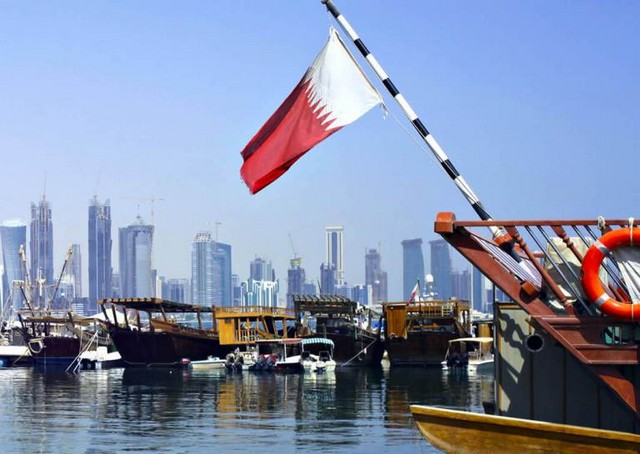
The last few days have been marked by dramatic diplomatic moves with Gulf Cooperation Countries with the inclusion of the Egypt besieging a fellow neighbour, Qatar. In the public domain, the furnished reasons have been that post the e-mail leaks from the Qatari Ambassador’s Hotmail account; new knowledge of terror sponsorship has emerged. This has allegedly catalysed the GCC States, post the Trump visit to the region, to take harsh action against the tiny Gulf country of Qatar. However, this begs the question: Were the GCC states truly unmindful of Qatari support for organisations such as ISIS and Nusrah? The factual record provides a vastly different narrative to the one being spun in the public domain at present. It is common cause that the Islamic State In the Levant (ISIL), also known as Daesh, had morphed from the Al Qaeda in Iraq. A strange pattern has emerged particularly in Western countries of ‘catch and release’ procedures. Ironically the subjects of these processes have gone on to commit heinous acts of terrorism. Enter 2004 with Camp Bucca housing ISIL leader Abu Bakr al-Baghdadi. The sand is ever shifting with regards to his period of detention as well as the locations at which Abu Bakr al-Baghdadi was held 1 . However, there is no dispute that he was in US custody and was ‘released’. Senior diplomat and author, Hardeep Singh Puri, stated in an interview that Michael Flynn [former security advisor to Trump and director of the Defense Intelligence Agency under Obama] confirmed the US origins of Daesh was a counter to Assad 2 . It is common cause in the equation of logic – but for US intervention – there would be no Daesh. The Clinton e-mail leaks confirmed a common observation that the GCC States (which is dominated by Saudi Arabia) were funding and providing logistical support to ISIS and Al Qaeda offshoots 3 . In fact, in Hillary Clinton’s private speech to Goldman Sachs she singled out the Kingdom of Saudi Arabia when she stated:
“That’s been complicated by the fact that the Saudis and others are shipping large amounts of weapons—and pretty indiscriminately—not at all targeted toward the people that we think would be the more moderate, least likely, to cause problems in the future… 4 ”
The incrimination of the GCC states was profound when Vice President Biden at Harvard University’s Kennedy School of Government in 2014 stated:
“Our allies in the region were our largest problem in Syria. The Turks were great friends, and I have a great relationship with Erdogan, [who] I just spent a lot of time with, [and] the
Saudis, the Emirates, etcetera. What were they doing? They were so determined to take down Assad, and essentially have a proxy Sunni-Shia war, what did they do? They poured hundreds of millions of dollars and tens of tonnes of weapons into anyone who would fight against Assad – except that the people who were being supplied, [they] were al-Nusra, and al-Qaeda, and the extremist elements of jihadis who were coming from other parts of the world. 5 ”
The most recent actions by the United States in the protection of ISIS entailed attacking Syrian forces advancing on the ISIS stronghold of Raqqa and this is a clear indication of the duplicitous rhetoric 6 .
It is clear from the aforementioned that the accusations being levelled against Qatar in relation to groupings such as Al Qaeda, Nusra, ISIS/ISIL and other factions are most aptly described by the English idiom, the pot calling the kettle black.
The question then becomes, what was the selection criteria for Qatar to be singled out as opposed to Bahrain, Oman or UAE for the purposes of example. The answer to this question is given by none other than the GCC+1 (GCC plus Egypt). It was reported by the leading Israeli publication that the Saudi Foreign Minister Adel Al-Jubeir listed the ceasing of support for the Palestinian resistance group Hamas and termination of support for the Muslim Brotherhood as the conditions for normalisation of ties with the GCC+1 7 . A further demand appears to have surfaced in the whirlwind of reports. A list of ten demands is alleged to exist. When the Deputy Foreign Minister of the Saudi monarchy was questioned about the alleged list he refused to comment and retorted that Qatar was aware of what needs to be done to normalise ties with the GCC+1. The most curious demand relates to the Doha-based news agency, Al Jazeera. In recent times Al Jazeera was targeted by the Sisi regime when three of their journalists were arrested for covering the Egyptian revolution. In 2013 Australian Peter Greste, Canadian Mohamed Fahmy and Egyptian Baher Mohamed were arrested and charged with:
‘Being members of a terrorist organisation, as the Egyptian government has designated the Muslim Brotherhood on December 25, 2013; Aiding and funding the group; Broadcasting false news and reports of civil strife in Egypt; Operating without licenses’.
It is common cause that the charges against these journalists were figments of the Sisi regime’s paranoia and was not credible by any measure of logic or law. The reason this is mentioned is simply due to the fact that Al Jazeera was not targeted in this instance alone. It was targeted by the overlord of the GCC+1 alliance i.e. the United States during its invasion of Iraq. It was the Bush administration who intentionally targeted Al Jazeera journalists covering the massacre unleashed on the city of Falluja 8 . It is alleged that George Bush had made attempts to convince then Prime Minister and known war criminal Tony Blair to bomb the Al Jazeera headquarters in Doha 9 . Interestingly, the General who was leading the ground operation against the resistance forces in Falluja was none other than the current US Secretary of Defence, General James ‘Mad-Dog’ Mattis 10 . The visit by Mattis to Saudi Arabia on the 19 th April 2017 is noteworthy 11 . In attendance was the Saudi Minister of Foreign Affairs Adel bin Ahmed Al-Jubeir and the former director of operation at US Central Command (Centcom) Navy Rear Adm. Craig S. Faller 12 . As per Al Arabiya news agency, a topic of concern was the military picture in Yemen. The wording of the topic of the discussion is vital for the latter parts of this overview. It stated, “aims to prevent them from establishing a ‘Hezbollah-like’ militia in Yemen 13 ”
On the 20 th April 2017, Mattis was seen in Cairo having met with Egyptian President Abdel Fattah el-Sissi and Egyptian Defence Minister Sedki Sobhy. The topic of discussion was ‘counter-terrorism’ and securing the borders in a “very complex” security environment 14 ’ The location at which the following statement was made provides a matrix of interpretation of the ‘borders’ that were referred to. “”We agreed on the need for a renewed and strong security partnership,” Mattis told reporters after arriving in Tel Aviv, Israel, which was the next stop on his trip. 15 ” The natural inference that must be drawn is that the border being referred to is the one of mutual interest to both Tel Aviv and Cairo, Rafah, Gaza. A common threat to both the Sisi regime and Israel was Al Jazeera. It was evident that Israeli thought leaders viewed Al Jazeera as a tool of Hamas. In 2014 Professor Eyal Zisser is the Vice Rector of Tel Aviv University and the Director of Moshe Dayan Center for Middle Eastern and African Studies 16 said to the Jerusalem Post with regard to Al Jazeera’s coverage of the Israeli invasion of Gaza; ‘Al Jazeera is fully supporting Hamas, and not the Palestinian people. Zisser said that the Qatar-owned station has been supporting the Muslim Brotherhood and was against the overthrow of former Egyptian Brotherhood president Mohamed Morsi. Qatar also funds Hamas 17 ”. The issue of Hamas has further implications under a different heading which will be addressed later on.
It is clear that Mattis has a historic axe to grind with Al Jazeera. The Sisi regime viewed Al Jazeera as a media extension of the Muslim Brotherhood and Israel shares a similar outlook.
There is a conflation of interests on all fronts ranging from Hamas and the Muslim Brotherhood to Al Jazeera. It is on this basis that Qatar was selected for the siege levelled by GCC+1 as well as the United States and Israel.
Qatar also has ties with the resistance block of Iran. The common gas field shared by Iran and Qatar forged a relationship of cooperation between the two countries 18 . The opening of airspace and port during the current siege of Qatar concretises the conclusion that substantial cooperation exists between Qatar and Iran 1920 .
Now that the selection criteria has been clearly defined i.e. Muslim Brotherhood , Hamas, Iran and Al Jazeera; we can determine what framework we shall utilise to interrogate the current events.
Sykes – Picot – the collapse of the political framework.
In August 2016 a special conference was hosted by the Israeli think-tank, the Jerusalem Centre for Public Affairs, which is connected to the Director General of Israeli Foreign Affair Dore Gold. In a Q&A session with panellists former ambassador of Israel to the United State and a member of the International Advisory Board of the Brookings Institution Itamar Rabinovich 21 and Col. (ret.) Dr Jacques Neriah, Former Deputy Head for Assessment of Israeli Military Intelligence and former Foreign Policy Advisor to Prime Minister Yitzhak Rabin 22 , a strangely pertinent question was posed by the chair of the session. The chair asked “You have talked about the need to neutralise radical Islamic and jihadi forces before the Middle East can move ahead. How does that happen at this juncture, does it happen through international intervention or can it happen as you mentioned at the end of your talk? Can the Arab world headed by Egypt and Saudi Arabic, the GCC put together political will and have the capability of self-securing as you will in this new Middle East? 23 ” To the mind of any reader, it would appear that the conference and the chair’s question was prophetic. He not only accurately identified the current alliance against Qatar but referred to the Middle East as a ‘new’ Middle East. The more plausible answer that ties into the discussion previously about Israeli interest is that the entire dynamic playing out around Qatar was formulated in Israel. It is vital to bear in mind that this conference took place ten months before these current events. It draws us to the question of Sykes – Picot. What is its relevance to Israel and the USA?
The Sykes-Picot agreement was concluded in 1916 with the fall of the Ottoman Empire. The hegemonic powers at the time who were key players in the division of the Ottoman Empire were the powers of Britain and France each represented by Mark Sykes and François Georges – Picot respectively. The important elements are not the negotiations of the agreement and the actual division by the principles which underlined the division; that being that the hegemonic powers would be able to retain control via direct and indirect means to secure their interests in the region. A key tool that was utilised was the Arab rebellion by the Emir of Najd Abdul Aziz al-Saud and King of Hejaz Sharif Hussein 24 . The Arab rebellion and acting in Western hegemonic interests crushed the Ottoman Caliphate. The rewards are seen today as the Kingdom of Saudi, named after the ruling family and the other Gulf States. Therefore it can be concluded that the monarchies of the Middle East were established upon the backs of the hegemonic powers and that their continued survival is intrinsically linked to their power within the region. As time proceeded French and British hegemony receded and was replaced by the hegemonic powers of the United States and the USSR. This is most clearly viewed in the annals of history documenting Arab nationalism and the various backers between Israel and the Arabs in their wars. The culmination of the Cold War which saw the collapse of the USSR left the United States as a singular hyper power with an extensive network of military bases throughout the world 25 . This allowed the United States to project Western interests and broad spectrum dominance, particularly within the Middle East. Interestingly, a particularly important development of disengagement policies in the Middle East was seen under the Obama administration. There was clearly decline by the Obama administration in attempts to outwardly project hegemony in the Middle East 26 which concerned the dependants of hegemony, those being Israel and the GCC+1. That is not to say that US projections of hegemony had ceased exposing their allies i.e. Israel and the GCC+1 to their own fates. The Trump administration was eagerly anticipated by the GCC and Israel in particular to reset Obama’s disengagement policy 27 . When analysing the US projections of hegemony we must seek the golden principle underpinning Sykes – Picot: control and protection of interests. This is primarily achieved via three permutations , these being destabilisation by backing factions internally causing friction and civil war, regime change and the installation of puppet rulers like the Gulf Monarchs. These were seen in El Salvador which later became known as the El Salvador option 28 which was later utilised by the US Military via Generals such as Stanley McCrystal and Michael Flynn. It also appeared in Somalia when the Supreme Council of Islamic Courts was formed which was the closest and most stable form of actual governance. Interestingly Al Shabaab was marginalised by more level-headed elements within the Court Union. The USA began funding Ethiopia and Kenya to engage the Court militarily, destabilising Somalia which left the only option of Al Shabab to protect the people 29 . This destabilisation often laid the groundwork for large footprint invasion as was seen during the Gulf war, Iraq, Afghanistan and later Somalia with regards to Al Shabab or limited kinetic operations via Special Forces and covert structures that lacked accountability such as Joint Special Operations Command; which interestingly operated out of Qatar for a portion of the War of Terror. The nett result of either is an installation of a pliable leader as was seen in the case of Afghanistan and Karzai or a case of continued destabilisation which allows the United States to achieve its strategic objective and allowing the continuation of the Wolfowitz, Rumsfeld, Chaney policy of the world as a battlefield 30 . Either of the permutations would be acceptable to the United States. It is at this point that it would be important to shift attention to Israel which is the projection of US interests in the region.
Israeli interests – the lens of the region
The lens through which recent events must be interpreted is that of Israel, which the central axis of the conflation of interest is. In relation to the US-Israel interests, one can describe their relationship as one of symbiosis. At times the interests of the United States and Israel were so perfectly aligned it could be perceived as if the United States was dependent on Israel as an extension of its policies in the Middle East. At other points, the divergence in certain aspects of policy creates the impression of independence and Israeli reliance on the United States.
This was particularly clear whilst perusing the annals of history documenting the US- Israel relations. A brief consultation of the records highlights two examples of the aforementioned. In May of 1970, a meeting took place between US President Nixon and Rabin an Ambassador at the time. As per Rabin’s account, Nixon asked: “In view of the Soviet involvement, is Israel’s position still…” Rabin answered, “give us the tools and we’ll do the job”. Nixon replied “Good, that’s all I wanted to know” 31 . In fact, the Israeli Ministry of Foreign Affair in a publication quoted Nixon as saying ““the best Soviet stopper in the Mideast 32 ”. Under Ronald Reagan, Israel was described as a strategic asset 33 . These statements provide a perception that Israel is ‘game-changer’ extension of the US policy within the Middle East. However, the antics of the Israeli Prime Minister Benjamin Netanyahu during the Obama administration reflected a slight divergence from the above interpretation and
demonstrated a dependency on the part of Israel of the United States 34 .
The relationship between Trump and Netanyahu prima facie may be likened to that of yesteryears as Trump pursues a heavy-handed approach not only to the Islamic Republic of Iran but also pledging to move the US embassy to Jerusalem which has dramatic implications in terms of international law. In summary, the US-Israeli position can be viewed as analogous in relation to the Middle East taking into considerations the various comments made by Mattis and company on the issues within the region.
The Zionist state has long held onto the fears of Muslim Brotherhood particularly manifested via the creation and growing strength of Hamas in Palestine, the fear of the 1979 Islamic Revolution in Iran and the formation of Hezbollah in Lebanon in response to Israel’s occupation of Beirut in 1982 35 . The next few points will address how the GCC+1 have aligned themselves with Israeli interests and have proverbially boarded the Israeli boat to support the hegemony.
It has been accepted that the Saudi monarchy is indeed the big brother of the GCC states and has influenced their trajectory. Therefore the greatest focus shall be on the conflation of interests between Saudi and Israel as depicted in their relationship. In 2012 Wikileaks released a flood of cables which date back to 2009 relating to the alleged permission that was granted to Israel by the Saudi regime to strike Iran. At the time the Saudi Foreign Minister denied such claims and stated that news of this nature only sought to fray Arab unity 36 . As the picture became clearer the Saudi – Israeli relations were indeed strengthening placing into question the Saudi Foreign Affairs minister’s denial. The extensive nature of the clandestine relationship between Saudi and Israel included secret discussions, special flights over Saudi air space for Israel personnel, publishing op-eds by Saudi policymakers in Israeli papers, sharing public platforms together, economic ties and security cooperation. In 2015 it was stated that Israeli goods are appearing under foreign names to circumvent the boycotts 37 . The Israeli Iron Dome was offered to the GCC states according to Haaretz 38 indicating the open avenues of communication. In recent times, the three striking actions symbolise the normalisation of ties between Saudi and Israel. The first is the flight of US President Trump directly from Riyadh to Tel Aviv 39 which attracted a fair deal of media coverage. The second is the ground-breaking move to allow a Saudi analyst, for the first time since the formation of Israel, to speak on Israeli television 40 . The final and most striking was in 2015 when Saudi General Anwar Eshki, spoke to Israel’s Channel 10 news during a remarkable event in Washington in which he shared a platform with the then incoming director-general of the Israeli Foreign Ministry, Dore Gold 41.
In the case of the United Arab Emirates, the relations between Israel and themselves have been less in the shadows, so to speak. The most explosive revelations occurred in 2015 when a senior official in the resistance structures confirmed that Israel had not intended to continue 2014’s Operation Protective Edge beyond a ten-day campaign in Gaza. It was only when the UAE undertook to bankroll the balance of the forty-one days that Israel continued their massacre. This is in keeping with the Israeli military literature commenting on the theory of war leading to Protective Edge. It was stated by Maj. Gen. Yossi Baidatz and Dr Dmitry Adamsky that the theory that was going to be used in Gaza 2014 was that of deterrence – driven operations 42 . This meant preferably short and aggressive operations with limited attacks carried out regularly between such operations. The drastic deviation from this theory not only lends credibility that a large portion of the operation was funded by a separate power but gives rise to a further possibility , that Israeli Defence Force attacks on Gaza were an attempted occupation which could not be achieved. In 2015 Israel opened its first diplomatic mission in the UAE which heralded strengthened economic and diplomatic ties between the States 43 . In March 2017 the UAE held joint military drills with Israel and the United States. This provides a clear indication of the UAE getting onto the Israeli boat of interests.
The other important key State involved is that of Bahrain. Bahrain has been conducting suppression operations to contain protests calling for democratic elections and political reform. In February 2017 sixty Israeli special forces personnel flew into the UAE to ‘train Bahraini riot police’ 44 . The irony is that the tactics that would be taught would be the same barbarism that is being practiced on the Palestinian people. The Israeli Minister of Regional Cooperation in January 2017 provided an explosive revelation regarding Bahraini-Israeli cooperation and relations when he said: “Bahraini riot commanders are being trained in Israel, Bahraini authorities have good relations with us, in addition to political affairs, medical actions for the king of Bahrain and his family are being done by Israeli specialists either in Tel Aviv or in Bahrain 45 ”.
The military economic and political relations between Israel and Egypt have never been a secret affair in recent years. Israel reopened its embassy in Egypt in 2015. Sisi has been a vital component in wrestling control away from the democratically elected Muslim Brotherhood and acts as Israel’s enforcer along the Gaza border. It was confirmed to me personally by the resistance that on August 1, 2014, Egypt allowed penetration into Gaza by the Israeli Defence Force via Rafah. This was meant to surprise the resistance fighters as much of the ground fighting had been directed to the northern and eastern parts of Gaza. During the surprise operation, Hamas was able to capture an Israeli soldier which activated something known as the Hannibal Directive which authorised the use of unbridled force to prevent such captures. It was narrated to me that the skies opened and fire rained down upon the Palestinian people. Figures indicated that after three hours of continuous bombardment, 135 civilians – 75 of them children were massacred. Amnesty International and other organisations gave this event the title of “Black Friday” denoting the crimes committed by Israel on the day 46 . It was stated by the Washington Institute that when Sisi overthrew the democratic government, Israel immediately threw its support behind the coup leader. In fact “Israel launched diplomatic missions in Washington and several major European capitals to support Egypt’s new political situation and prevent a diplomatic blockade on Cairo” 47 .
It is evident from the above that Israel’s outlook on the Muslim Brotherhood, Hamas, Iran and Hezbollah predate the policy shift of the GCC+1. It is therefore logical to reason that the GCC+1 has stepped on board the ship of Israeli-US interests and have effectively sacrificed the Palestinian people for their own personal gain.
This places us in the vital position to now strike at the crux of the issue. We have unpacked the fallacy of the public claim that Qatar was solely responsible for supporting terrorism in the region. We have determined that Israel, particularly during the Trump administration, is an extension of US interests in the region and that the survival of the strategic asset would be paramount. We have determined that the GCC+1 have been falling into the Israeli orbit and have imbibed Israel’s strategic concerns as their own. The nett effect of the analysis, therefore, is that the root of the current fiasco regarding Qatar is related far more closely to Israeli concerns that those of the GGC+1. That is not to say that the concerns of the GCC+1 are to be dismissed, however, the strategic concerns particularly those stated in the recent coverage i.e. Hamas, Brotherhood, Hezbollah, Iran, Al Jazeera are Israel interests and predate the GCC+1 arrival to the scene. It, therefore, begs the question… what aspect relating to the Israeli interests triggered the current event?
The dawn of Doomsday
There appears to be blood across the Israeli flag as politicians, the security establishment and parties with vested interests battle it out to direct the future of the colonialist state. As the fighting continues an inevitability has dawned on all role players including those in hardline circles, that the current trajectory of Israel mirrors that of Apartheid South Africa. The end result will be a one state solution which means the dismantling of the colonial outpost to reflect a Democratic state representative of its people. Recent statements at the Herzliya conference reflect a deeply fractured Israeli landscape. Former Defence Minister Ehud stated at the aforesaid conference "will surely result in a `one-state solution,’ which will either be an `Apartheid State’…. or a `bi-national state’ in which the Jews will become a minority within a couple of generations, and will most likely be in a continuous civil war.”48 This was not the only attack against the hard-line coalition. The erstwhile Foreign Minister Tzipi Livni added to the chorus by stating: ‘The decision of whether to work towards a two- state solution or towards a single united nation should be a national one, in order to “take back our democratic Jewish Israel.” 49 ’ The recent publication of the “Security First” report 50 authored by over 200 former Israeli Generals, Shabak and Mossad figures and the Center For A New American Security report 51 paint a similar picture of polarisation. The recognition by the Israeli security establishment that military force can no longer solve the problems Israel faces is a damning indictment of the failure of Israeli policy. Therefore the current discourse revolves around a two state or one state solution. The latter lifting the veil on the apartheid nature of Israel which is being exhibited by the current right-wing regime. The political crisis continues, however, Israel faces a far more fatal challenge.
The State of Israel was founded on the principles of terror and disproportionate force. The first true signs of this entrenched policy emerged in the massacres of Deir Yassin which were characterised with such brutality that it served as a primer for the mass exodus and ethnic cleansing of the indigenous Palestinian population. Menachem Begin stated “Without what was done at Deir Yassin there would not have been a State of Israel. He added further: While the Haganah was carrying out successful attacks on the other fronts… The Arabs began fleeing in panic, shouting ‘Deir Yassin’ 52 . It is this policy that remained the cornerstone of Israeli militarism. History is often written by the victor and the public narrative of the 1967 war is no exception. Israel was portrayed as a victim State, bullied and bludgeoned by its larger Arab neighbours and the victory projected as a miracle from the heavens confirming the justness of Zionist occupation. Occasionally, the true narrative pierces the proverbial propaganda veil and the truth gleams through. The catalytic deterrence capacity policy was the prime motivator for the first strike Israel conducted to spark the 1967 war. Ariel Sharon, a divisional commander at the time stated “deterrence capability…our main weapon — the fear of us 53 ”. The deterrence capacity policy of Israel has been characterised as one of deterrence by punishment which constitutes disproportionate force and punishment 54 . This particular shade of Israel’s deterrence doctrine was placed into operation by the Israeli defence force with the Dahiya doctrine. Major General (Ret) Giora Eiland who is thought to be the true mastermind behind the doctrine argued the ‘impossibility of defeating Hizbullah 55 ’. He devised a policy that would ‘lead to the elimination of the Lebanese military, the destruction of the national infrastructure, and intense suffering among the population’, so much so that ‘the suffering of hundreds of thousands of people are consequences that can influence Hezbollah’s behaviour more than anything else. 56 ’ The diabolical playbook of disproportionate force was utilised by the then head of Israel’s Northern Command, Gadi Eizenkot who stated: “What happened in the Dahiya quarter of Beirut in 2006 will happen in every village from which Israel is fired on. […] We will apply disproportionate force on it and cause great damage and destruction there. From our standpoint, these are not civilian villages, they are military bases. […]” 57 . This doctrine is premised on the fact that the sheer magnitude of destruction would discourage further engagement on the battlefield and furthermore would reinforce three concepts, that the IDF has the capacity to wipe out the opposition merely with the might of its bombardment (shock and awe). The second is that the IDF would act viciously against anyone, be they civilian or combatant, once they had commenced bombardment and finally, that their conduct should serve as a signifier of the fate which will await any who cross their path. This theory of deterrence via punishment was successful in all major Arab-Israeli wars particularly the 1967 war. The adaptation of Israeli policy of deterrence was also hinged on shorter and increasingly brutal engagements. The aim of these shortened engagements is to project deterrence whilst preventing a war of attrition. This rubric, however, was rewritten with the war against the Hezbollah in 2006 being the first effective failure of the cornerstone of Israeli militarism and deterrence capacity. This came on the back of Israel’s forced abandonment of a portion of Lebanon in 2000 due to the resistance of Hezbollah 58 . In a public lecture under the auspices of the Jerusalem Centre for Public Affair, Major General Uzi Dayan delivered a striking blow to the deterrence doctrine and the outward edifice of success that Israel was projecting post-2006 59 . He stated that Israel lost a lot of deterrence in the last war in Lebanon; this being a turning point not only for Israel but other resistance movements. This acknowledgement emerged from the then opposition leader Benjamin Netanyahu who stated: "The greatest failure as a result of the war is that Israel’s deterrent capability has been severely harmed, 60 ". The inability of Israel to adapt to changing environment resulted in the further implementation of the doctrine in Gaza during 2008. The stated aim of the operations in Protective Edge was to put an end to Hamas rocket fire, a feeble attempt at restoring Israel’s deterrence capacity. To the contrary, global opinion shifted drastically against Israel and discussions of prosecution of Israel leaders became louder 61 . The finding of the United Nations Fact-Finding Mission was a severe blow to Israel in the global arena 62 . Further engagements occurred within the Gaza Strip. Despite the brutality of Cast Lead the Palestinian resistance movement Hamas rolled out extensive rocket and mortar attacks on Israel in 2014. The record of prior engagements regardless of whether by Israeli creation or Palestinian evidences the fact that the deterrence or fear of Israel has not been re-established. According to the Washington Institute “Over time, deterrence in the Gaza situation will likely fail. Deterrence works best in essentially stable situations, wherein the sides clearly understand each other’s calculus” 63 . The continued siege on Gaza fuels instability which creates an appetite for resistance. The equation that follows: but for Israel’s occupation, there would be no need to resist. In fact, instead of deterring escalation, according to US analysis, the resistance is becoming stronger in Gaza. The same report by WI stated “The military capabilities of the Qassam Brigades and other organisations have increased, perhaps making them more confident as well as more dangerous. This may lead to sharper fighting along the buffer zone — and inevitably to more casualties, including IDF — along with increased pressure on the IDF to respond with greater force. 64 ” This deterrence failure was further captured in a Congressional Service Report by analyst Jim Zanotti in which it was stated “Teams of engineers, chemists, and machinists have improved the range and payload of the Qassam series rockets over time, and Israeli military raids have targeted several individuals and facilities associated with rocket research and production operations. Over the years, rockets have expanded in range beyond relatively small Israeli communities near the Gaza border, such as the town of Sderot (population est. 24,000), to the larger coastal cities of Ashqelon (population est.120,000) and Ashdod (population est. 200,000) and to the Negev city of Beersheva (population est. 185,000). Mid-range Gradstyle rockets (thought to be smuggled into Gaza) that travel farther than Qassam rockets have been fired from Gaza by Hamas, Palestinian Islamic Jihad (Al Quds series) and the Popular Resistance Committees (Nasser series). 65 ” The alleged success of Iron Dome appears to be fraudulent 66 . According to Theodore Postol, missile expert from the acclaimed Massachusetts Institute of Technology, the Iron Dome is only intercepting 5% or less of Hamas projectiles 67 . Further supporting evidence is the comments by Major General Uzi Dayan when he related the story of an Israeli who stated that if Israel cannot stop Hamas what chance do they have of stopping Iran 68 . The threat from Hamas was magnified in the last conflict via the penetration of resistance forces into Israeli territory via the sea. Footage appears to have leaked showing Hamas frogmen infiltrating Zikim beach military facility. The troops opened a new era of warfare which exposed a military threat to Israel from the Mediterranean 69 . This new front of operations is now open from the north via Hezbollah after they targeted the Israeli navy’s missile corvette, one of the most sophisticated pieces of Israeli military equipment; the Saar-5 during the 2006 Lebanon war 70 . In February of 2017, the Times of Israel ran a story stating that Hezbollah had acquired sophisticated anti – ship missiles during the Syrian conflict. This weapon in the hands of the Hezbollah as per the Israeli source would be a game changer thus severely constraining Israeli’s dominance 71 . Therefore a pincer-like threat engulfs Israel from both the north and south thus compromising the Western borders of the Zionist state and poses a tangible threat to Israel’s access to its gas fields 72 . This was communicated by Prof. Efraim Inbar who is Director of the BESA Center – Begin-Sadat Center for Strategic Studies and Professor emeritus of political science at Bar-Ilan University, in March of this year 73 .
The defeat of Israel in 2006 set the bar for Hamas and an opaque reference to same was made in the aforementioned report. “The Iran-backed Hezbollah movement in Lebanon provides military training as well as financial and moral support and has acted in some ways as a mentor or role model for Hamas, which has sought to emulate the Lebanese group’s political and media success 74 ”.
There was a distancing of Hamas from Iran during the Syrian conflict which weakened the axis of resistance 75 . However, post the elections within Hamas, there has been an embracing of Hamas by both Iran and Hezbollah. It has been reported that in the most recent speech of Sayed Hassan Nasrallah of Hezbollah he honoured Hamas which symbolised an important rapprochement. The meeting in 2016 between Iran and Hamas was of particular importance as one of the key meetings was between Hamas and Major General Qasem Soleimani, the Commander of the Quds Forces 76 . This marked a realignment of forces once again directed at the Zionist occupation of Israel. This reignited the fears of Israel and the United States as Israel is indeed an extension of its hegemonic policy in the Middle East. The threat to the existence of Israel was communicated in the erstwhile congressional report which said “Israel also fears that Iran, Syria, and possibly other actors in the region might use Hamas’s proximity to Israel either to facilitate a coordinated multi-front military attack or to mobilize regional and international political pressure against Israel through the precipitation of crises and causes célèbres. 77 ”
Moving to Hezbollah, there is no doubt that Hezbollah defeated Israel in 2006. This became evident via the August 2006 analysis by the New York Times 78 . The defeat at the hands of Hezbollah was of such a crushing nature that Israel sought no confrontation with Hezbollah for the last ten years. Hezbollah had a deterrence capacity before the engagement of 2006. When Major General Gadi Eizenkot, head of the Israel Defense Forces’, (IDF) operations branch heard of that strikes were ordered against Hezbollah Fajr rocket sites he said "We have to stop everything, they don’t realise what this means. 79 ” The fear was the retaliation by Hezbollah was would endanger the Northern Front with a hail of rockets and other weapons. In the space between 2006 and 2015 SSM – surface to surface missiles and rockets in Hezbollah’s possession is said to be in the range of one hundred and fifty thousand 80 . The Washington Institute in early 2015 exposed the vulnerability of Israel in relation to the surface to surface attacks when it said: “According to Israeli intelligence estimates, Hezbollah would likely attempt to sustain fire of around a thousand rockets and missiles per day, dwarfing the approximate daily rate of 118 achieved in 2006. Perhaps more important, Hezbollah now has missiles with the range and accuracy to strike large strategic targets such as airfields, headquarters, and economically important sites. An operation of this nature could overwhelm Israel’s anti-rocket systems. The weight of the attack would fall on northern and to a lesser extent central Israel, but Hezbollah can now reach targets in the south as well. 81 ” This does not only change the balance of the war but shifts it drastically in Hezbollah’s favour. Of most concern to Israel is the alleged possession of SA-17 and SA-22 ground-to- air missiles as well as P-800 Oniks air-to- sea missiles. The SA-17 and SA-22 now pose the greatest threat to the Israeli air superiority which provided an edge over Hamas and Hezbollah non-state actors during Israeli military operations. 82 The rhetoric of Hezbollah has changed from defensive operations against Israel to offensive operation. Nadav Pollak, a former analyst for the government of Israel, Nadav also served as an NCO in the IDF Intelligence Corps gave a lecture in August 2016 entitled: The Transformation of Hezbollah by Its Involvement in Syria. He detailed how offensive capabilities have now become part of the range of operations that may be conducted against Israel. He said: “This type of offensive experience could change the basic paradigms of many Hezbollah fighters. Naturally, some Hezbollah commanders who achieved important objectives using offensive operations in Syria might ponder that the same approach could work against Israel. 83 ” This opens a new range of threats against Israel. Unlike 2006 in which Israel crossed the border into Lebanon to conduct operations, now Hezbollah will invade Israel. This has been the edge of the psychological warfare that has been deployed by Hezbollah. An example of this is a trailer published on YouTube purportedly by Al Mayandeen in which the ‘decisive battle’ i.e. The Day would take place in 2019.
The most recent development that was not expected was the Hezbollah and Islamic Revolutionary Guard Corps (IRGC) presence along the Golan border. This growing threat was referenced by Moshe Yaalon the former IDF Chief of Staff and Defence Minister in his lecture at the Washington Institute. He said “We haven’t absorbed a single Sunni Jihadist Attack from the Syrian Side. We did absorb about a dozen IRGC proxies. 84 ” It was known that Israel was providing medical assistance and aid to rebels and Al Qaeda affiliates on the Golan border with Israel 85 . This picture changed in the latter parts of 2016 and into 2017. An announcement was made by the IRGC of a new division of forces known as Golan Liberation Brigade which is alleged to have ten thousand or more soldiers. 86 The development of a new front on Israel spurred Prime Minister Benjamin Netanyahu to frantically lobby the US and partner Jordan to demand a buffer zone 87 . This underscores the threat posed by IRGC and Hezbollah to Israel.
It, therefore, stands to reason that the threat on the Northern Front has been the most pressing for Israel with the developing Eastern Front effectively enclosing Israel. To the Israeli military establishment, one would be looking at the first tangible existential threat to Israel since 1973’s Yom Kippur war. Combining the pictures of then and now, we can effectively question the Syrian Theatre of operations and acknowledge that hegemony was indeed being threatened and drastic action was required. This point will be developed further in the latter portion of this analysis.
Strike the Hub – a hijacked revolution.
How to weaken Hezbollah and decapitate its ability to further its capabilities, that was the question that was mulling around in the minds of Israel as well as their GCC dependents. The natural answer was to attack the transit point of training and weapons, Syria. This knowledge was present in 2006 when Israeli officials stated that they were seeking to stop weapons from being supplied to Hezbollah via Syria from Iran 8889 . In the lecture given by N. Pollak at the Washington Institute, he made specific reference to the strategic importance of Syria for Al Mukawama (The Resistance against Israel). He said in his written report: “To understand the depth of Hezbollah’s commitment to the Syrian regime, one must understand the extent to which Syria is Hezbollah’s logistical lifeline. For years weapons have been delivered through Syria to the group by air and land. Using Syria as its main transit hub, the Quds Force of Iran’s Islamic Revolutionary Guard Corps (IRGC), headed by Qasem Soleimani,
has made sure Hezbollah’s arsenal has grown over the years in quantity and quality. The Syrian regime itself has contributed to Hezbollah’s military supply, mainly in the form of advanced anti-tank missiles received from Russia, along with rockets and other missiles. Reports also indicate that Hezbollah has maintained training camps in Syria and logistical bases for weapons storage. Beyond serving as a transit hub for weapons, Syria has done the same for Hezbollah fighters. Indeed, a key part of Hezbollah’s training routine over the years involved travelling to Iran through the Damascus airport. 90 ”
It is common cause that Syria was also at the heart of arming and training the Palestinian resistance movements as stated in the congressional report: “If sanctions weaken Iran and Syria in general terms, one could argue, resources and efforts allocated to helping Hamas and other potential proxies could be redirected to core internal matters related to regime survival” 91 . Damascus was also the home to the Hamas movement and served as a local tower which allowed free movement and interaction whilst being close enough to Palestine.
This draws us to question, what happened in Syria? Was the Syrian war all part of the plan?
The context in which the Syrian revolution emerged was in the wave of the Arab Spring. The spark of self-immolation in which Tarek El-Tayeb Mohamed Bouazizi sacrificed his life set off an inferno which spread quickly from Tunisia to Egypt, Libya to Yemen, Bahrain to Syria and even in the Saudi kingdom itself. The hegemony, i.e. US and Western interests, were under threat and a swift and rapid answer was required. The popular revolutions called for an end to monarch and military rule. The Egyptian revolution was crushed via a triple-sided threat which was the existing Mubarak officials in government structures, the military (SCAF) and the foreign elements of the United States 92 . The end result was grave miscalculations and internal dynamics which saw the Muslim Brotherhood shattered, its leadership imprisoned and its structures scattered to countries such as Turkey 93 and Qatar 94. Interestingly, at the time Qatar was also placed under pressure to cut ties with the Muslim Brotherhood 95 . The Libyan crisis developed rapidly into the benevolent dictator versus the people. Unlike the protests in Tunisia, Yemen, Bahrain and Egypt, the Libyan revolution turned into an armed rebellion and insurrection 96 . This devolving situation turned one of the most progressive States, in terms of services to its people, into a failed and lawless one. This opened the door for US hegemonic forces and the invasion of Libya. A quick survey demonstrated that the GCC states cooperated with the Western forces to re-establish the hegemonic foothold so as to ensure that the wave of revolution was quelled 97 . Not only did this civil war between State and people provide a perfect excuse for intervention, it also allowed for a continued status quo of civil war, demonstrated how armed insurrection could topple government and the tide of revolution was quelled which prevented civil momentum in those theatres. The protests in Libya began in February 2011 and the subsequent military operations came to an end in August 2011. The end result was that hegemonic oil interests were secured 98 , any positive regime change against Western interests quelled and the formula of insurgency for regime-change or perpetual conflict perfected.
Shortly after the beginning of the Libyan insurrection, the Syrian theatre exploded with protests for reform.
It is at this point that I believe it is important to place a proviso to ensure that the bulk of the analysis is captured in its correct light for the purpose of understanding the geo-political and military picture surrounding the current Qatari situation. The Syrian conflict, as we understand it today, is one that is charged with emotional and religious sentiment. It becomes an impossible task to suppress one’s emotions when hospitals are targeted, mosques are destroyed, refugees have their dignity ripped away from them, barrel bombs falling from the skies and reports of torture emerge. The violence from both sides is gross and ignites strong emotions. In order for the conflict in Syria to be understood, we have to accept that there are three dimensions to the conflict. The first is the humanitarian side to which our emotions are most strongly connected and rightly so. The second is the political dimensions which must be dealt with in the framework of negotiations, theories of democracy and even economics. The final and the most crucial in this piece is the military and geo-political aspect which demands an absence of emotion to view the Syria conflict in its truest form. It is on this premise that we proceed.
There have been numerous forms of analysis that have penned to explain the Syrian issue, each containing its own bias and failures. In all the analysis that I have been exposed to, only one has explained everything in a truthful and unbiased manner. In 2015 a senior official in the resistance movement structures explained what had happened in Syria. Syria had been ruled by Hafiz Al Assad, the current leader’s father. The reigns were taken over by his ophthalmologist son, Bashar. In March 2011, legitimate protests began calling for reforms within Syria as the people were unhappy about the hereditary lineage of leadership. The Syrian regime reached out to the Palestinian liberation movement Hamas to mediate a peaceful end to the protests. It was the position of Hamas that they do not intervene in internal State issues. However, after much persuasion, the movement assisted in trying to bring stability to the State that it had called home. The negotiation process was slow and in the interim Assad offered reforms to aid the process 99100 . It is said that during the process of reform Iran had advised Assad to enact these reforms and embrace the demands of his people via legitimate avenues. Assad’s younger brother, Maher Al-Assad, was not happy with the advice of Iran nor with the negotiations that were taking place. As a Commander of the Syrian Army’s 4th Armoured Division, Maher convinced his brother Bashar to quell the uprisings with live ammunition and force. Bashar went against Iranian advices, pulled Hamas and others out of the negotiations and deployed Maher to suppress the protests 101 . The results were catastrophic. Images of massacres in the streets fuelled the protests and lead to circumstances beyond Bashar’s control. He was shunned by his erstwhile allies Iran and Hezbollah and the situation began to deteriorate.
I shall deviate to explain the concept of destabilisation which is crucial as a tool for hegemonic powers. In 2013 one of the key think-tanks of the United States Military Establishment, the RAND Corporation, published an extensive publication entitled Ending The U.S. War In Iraq – The Final Transition, Operational Manoeuvre And Disestablishment Of United States Forces–Iraq. In said publication it was stated:
“Consequently, building the political, economic, and security capacity of the host nation was viewed as central to conducting a successful COIN [Counter Insurgency] operation. While building the capacity and legitimacy of the government, a COIN strategy must also seek either to delegitimize the insurgents and separate them from the population or to find a mechanism to bring the insurgents back into the political process. However, as the host government increases its capacity, especially in the security sector, the less likely it is that the government will seek a negotiated settlement with insurgents. Thus, a successful COIN campaign that strengthens the capacity of the government to conduct COIN operations may actually undermine the long-term resolution of a civil war because those who hold governmental power have little incentive to establish and enforce reconciliation and reintegration programs.”
This paragraph is explosive in that it highlights two realities, the first being that insurgencies or guerrilla warfare cannot be stopped by conventional militaries. This is true when looking at the record of superpowers versus asymmetric forces such as Russia v Afghanistan, Coalition v Afghanistan and the Coalition of the Willing v Iraq. The second reality is that the presence of armed movements or insurgents “undermines the long – term resolution of a civil war”. A perpetual status of instability which neutralises the State alternatively makes it susceptible to foreign intervention.
With this knowledge will we understand the importance of the acts that follow. After the massacre unleashed by Maher Assad, the Syrian opposition protestors followed the questionable Libyan model. On the 8 th July 2011, French and US Ambassadors in Syria joined protestors 102 . Shortly thereafter a wave of defections occurred from the Syrian military and on the 29 th July 2011, merely twenty days later, the first armed movement in Syria, The Free Syrian Army (FSA), was formed 103 . It was at this point that the legitimate and peaceful protests morphed into something very different and in line with hegemonic interests. As time progressed the rebel movement mutated into various strands. At one stage there were over forty different groupings within Syria. Assad had been receiving very little assistance from the Iranians and Hezbollah with the exception of advisors, this being the price paid for not following the advice of wiser and more astute powers. In August 2012 a report by Reuters had confirmed what analysts had been speculating from the very beginning, that the rebel movement in Syria was being supported by the hegemonic powers. The report stated “Obama’s order, approved earlier this year and known as an intelligence "finding," broadly permits the CIA and other U.S. agencies to provide support that could help the rebels oust Assad. 104 ” The aim underpinning support for the rebels were evident from an interview conducted with a key figure of the FSA by the Israeli publication, Israel Hayom. In the interview, the figure, identified only by an alias Kamal, stated: “Assad’s fall will eliminate the link in the chain that ties Iran with Hezbollah in Lebanon. Not only would you be rid of an enemy, but you [Israel] would also weaken two others 105 .”. In 2011 the Opposition formally established its headquarters in Turkey as announced by Burhan Ghalioun. Chants began filling the streets of Syria “No to Iran and No to Hezbollah, we want (Saudi) King Abdulla” 106 accompanied by the burning of Hezbollah flags in cities like Tabaqah in Hama. In an interview in December’12, Ghalioun told the Wall Street Journal that a change would be on the cards. The article said “that a Syrian government run by the country’s main opposition group would cut Damascus’s military relationship to Iran and end arms supplies to Middle East militant groups such as Hezbollah and Hamas, the group’s leader said, raising the prospect of a dramatic realignment of powers at the region’s core. 107 ” Ehud Barak in an interview in December 2011 was asked about the impact of the fall of Assad. He said “the fall of Assad will deal a crushing blow, to the radical axis, and this will weaken Hezbollah in Lebanon”. Similar sentiments were echoed by him at the World Policy Conference in Vienna. 108 Other rebel organisations expressed similar sentiments, “Once we are done with Syria we will slaughter with knives O Hassan Nasrallah 109 ”. Rebels stated when attacking Qusayr countryside, “bases of Hezbollah within Lebanese
territory will be targeted. 110 ” Messages from Nusra also indicated that they would be attacking Hezbollah in Lebanon. Qusayr strategically was the central corridor for weapons from Syria and Iran to Hezbollah. The threat to this corridor was always understood by the Israelis and Meir Dagan, the Mossad Chief, in 2012 stated at a conference: “Effort to lessen the influence of Iran in the region, will occur via bringing about a situation whereby Bashar al-Assad falls, which will weaken – automatically and directly – Hezbollah in dramatic and effective manners. 111 “ In 2012 a lecture at the Washington Institute entitled “Is the End Near in Damascus” provided a clear and direct insight into US-Israeli interests in Syria. It was said “But this nasty and ugly regime will be gone and with it the lynchpin of the Iranian position in the region and Hezbollah’s strategic position. I think we should be happy.” According to IDF analyst Nadav Pollak: “Along with Hezbollah and Iran, Syria is part of the greater “axis of
resistance,” which seeks to confront Israel, along with Western and Sunni interests in the Middle East. A weaker Syria thus would mean for Hezbollah and Iran a weaker resistance coalition, and Assad under threat, called for a response. Especially grim for Hezbollah and Iran was a scenario in which Assad might be replaced with a more Western-friendly government. 112 ”
In fact, in a Washington Institute discussion, Jeffrey White 113 said when questioned in 2012 about Iran and Lebanon “I think we’ve seen the limit of Iranian military intervention. They are not going to do anything greater, anything significantly different. They are not going to fly in revolutionary guards and try and save the regime. They might send an aeroplane to get Assad out but I don’t think we will see any grand Iranian involvement in the conflict. I think they understand the limits, geographic limits what we talking about and they almost certainly don’t want to commit their forces to a losing situation. They would be caught up in a collapse and defeat of the government. ” The collapse of Syria was manageable for Israel according to the analyst who said “you have tensions on the Golan front…. But the current security problem, the Israelis know how to deal with very effectively.”
According to the resistance official I had spoken to, it was only after an extensive assessment of attitudes of the Rebel movement, which was diverse in its composition, that a decision was taken. It was evident that the rebels were either partial towards Israel alternatively in line with Israel. This was a grave threat to the resistance axis. Attacks within Lebanon began increasing drastically and in 2013 Hezbollah officially entered the Syrian theatre with sizeable forces. On May 25, 2013, Hezbollah’s Sayed Hassan Nasrallah announced, “Syria is the backbone of the resistance and the support of the resistance. The resistance cannot sit with its hands crossed while its backbone is made vulnerable and its support is being broken, or else we will be stupid. 114 ”
This changed the face of the war in Syria into one with Iranian IRGC troops, Russian hi-tech weapons systems and Hezbollah with advanced capabilities. This rewrote the entire rubric of Western interests in the region and spelt the defeat of the hegemony. These events were completely unexpected and a resistance victory was not part of the calculation for the hegemony.
It is with this understanding of the Syrian conflict that we interpret the following statement in 2017 by Israel which provides the clearest connection to the recent developments with the GCC+1 and Israel/USA (Hegemony). In March’17 the Times of Israel covered the Meir Dagan Conference at the Netanya Military College. The head of Israel intelligence- Mossad’s Yossi Cohen and IDF Chief-of- Staff Lt.-Gen. Gadi Eizenkot took different views in defining Israel’s number one threat, with Cohen focusing on Iran and Eizenkot opting for Hezbollah. This symbolises the two most pressing threats to Israel. According to Cohen: “The Middle East is our home field and therefore we need to be involved in all matters in the region. We need to form alliances, to identify mutual interests with allies, and also with enemies on certain issues,”.
It is now clear that the existential threats posed by the extended presence of Hezbollah and IRGC in Syria and Iraq were the catalyst for the current conflict with Qatar. This is most accurately captured by the statements of Israel’s former defence minister Moshe Yaalon when he spoke in Washington on the 15 th September 2016. He said: “Iran’s Shiite axis, including the Assad regime, Hezbollah, and Yemen’s Houthis, the Muslim Brotherhood camp, led by Turkish President Recep Tayyip Erdogan but also encompassing elements in Egypt and Hamas, the global jihadist camp, including the Islamic State and al-Qaeda and the Sunni Arab camp, which comprises Saudi Arabia, Egypt, Jordan, Qatar, the United Arab Emirates, and others. Israel and the latter camp share several common adversaries, and while their cooperation is already robust (albeit quiet), it is in their mutual interest to increase it even further. The United States should join Israel in publicly aligning with the Sunni Arab camp. One recent step in this direction was the signing of a bilateral Memorandum of Understanding in which Washington will grant Israel $38 billion in military assistance over the next decade. 115
Qatar – Just a pawn in the game
The statement above by Moshe Yaalon gives us an indication as to what the siege of Qatar is about. As much as it may be about internal GCC rifts, there is no explanation as to what catalysed the drastic action if we are to assess it according to the above equation. The catalyst is elsewhere and as has been demonstrated above, the catalyst is Israel’s security picture, not only as an independent state but as the symbol of US and Western hegemony in the Middle East. The threat to US influence and hegemony via the extension of Israel threatens the GCC+1 as well. The Ikhwan, albeit weak in Egypt after the defeat under the boot of Sisi, in Turkey still poses a significant ideological threat in the form of political Islam. This means that politics, state craft and foreign policy must all be guided by the Islamic principles of Justice as opposed to self-interest which has been the mantra of the GCC. In fact, it was self-interest and reliance on Western Hegemonic powers by Emir of Najd, Abdul Aziz al-Saud and King of Hejaz, Sharif Hussein that formed ‘The Kingdom of Saudi Arabia’ and the other Gulf sheikdoms. The greater threat from a tangible military point of view has been the re- establishment of the resistance axis with capabilities of an Israeli doomsday and thereby threatening the GCC+1 who have always thrown their lot in with the Zionist regime.
It brings us back to the very first question which sparked this entire paper and the analysis above. Why Qatar? It is my submission that Qatar was never the main target, it was a litmus test. Qatar is the one counter that has links to both the Sunni Ikhwan and the Shia Al Mukawama. Huge sums of money was spent in promoting sectarianism to divide the brothers in resistance, Ikhwan and Al Mukawama, as cogently reported by the Middle East Institute, the burning question was, had the GCC+1 succeeded 116 ? The rallying of both Turkey as a projection of Ikhwan and Iran as a projection of Al Mukawama, to the aid of Qatar has demonstrated that both the Brotherhood and Iran are aware of the enemies being faced, that is, Israel/US and the GCC+1. There are numerous factors that have contributed towards this rapprochement that would be unnecessary to extrapolate at this point of the analysis. What is evident is that there is a rapprochement and the nett result is a mega bloc of Ikhwan and Al Mukawama. This narrative is borne out by the good cop bad cop play currently on show to the world. On the 12 th June 2017 reports of mediation offer to de-escalate the tension from other GCC countries such as Kuwait and Oman, offers by Morocco and even the United States signal an important point. The siege was meant to bring about a reaction. To test if the two blocks that Moshe Yaalon referred to “Iran’s Shiite axis, including the Assad regime, Hezbollah, and Yemen’s Houthis; the Muslim Brotherhood camp, led by Turkish President Recep Tayyip Erdogan but also encompassing elements in Egypt and Hamas” will combine to pose a formidable threat to US/Israeli hegemony and the GCC+1.
What does all the politics, military analysis and interpretation tell us? In summary, the western hegemony established by Sykes-Picot remained intact for an extended period of time. Israel was viewed as a strategic asset and as an extension of Western hegemony. With the advent of the Obama administration, a receding of hegemonic power was observed. They focused on covert operations as opposed to large footprint demonstrations of force like the Bush administration. This affected Israel negatively as simultaneously it was losing its deterrence capacity to a non- state actor, Hezbollah and later to Hamas. It was in relation to the declining projection of force by the hegemonic powers and Israel’s existential threats that the GCC rallied to support the hegemony that gave them their States in the first place. As the panic set in amongst the unholy alliance, the waves of revolution in the region were hijacked and exploited to achieve certain aims. The primary geopolitical interest was to destabilise Syria in the hope that rebel movements and ISIS would wipe out the corridor between Hezbollah, Hamas and Iran, thus neutralising the threat as Ikhwan had been neutralised by Sisi, the new addition to the parasite club. The equation went awry in horrendous proportions and the end result has been a stronger Hezbollah, Iran and Hamas. Political Islam is still alive and so is Resistance Islam. Both are threats to GCC+1 and Israel who have caused unimaginable hardships in the Muslim world from Palestine to Syria to Iraq and Yemen. Qatar was merely a test to determine not only the true alliances by but the capabilities of those alliances.
Where will this take us? Does it take us to the edge of a world war? Regardless of what may be, the outcomes are in the Hands of the Almighty. What we do know is that the GCC have come out openly in support of the Islamophob Donald Trump and the apartheid, Zionist, colonial, settler state of Israel. It now rests on us, after reading the above and knowing what we know now… Who do we support? If justice is your compass, the answer is simple:
We support Palestine
We are Ikhwan and Al Mukawama
Zaakir Ahmed Mayet is the current Chairperson of Media Review Network.
14 June 2017
______________________________________________________________________________________________________
1 https://theintercept.com/2016/08/25/u-s- military-now- says-isis- leader-was- held-in- notorious-abu- ghraib-
prison/
2 http://www.hindustantimes.com/books/us-funded- the-creation- of-isis- says-hardeep- singh-puri- at-jlf-
2017/story-Ftb3s4eYnTkhdz45MyKiaM.html
3 https://wikileaks.org/podesta-emails/emailid/55380#efmA_RBEL
4 https://theintercept.com/2016/10/10/in-secret- goldman-sachs- speech-hillary- clinton-admitted- no-fly- zone-
would-kill- a-lot- of-syrians/
5 https://www.washingtonpost.com/news/worldviews/wp/2014/10/06/behind-bidens- gaffe-some- legitimate-
concerns-about- americas-middle- east-allies/?utm_term=.5949c377c96f
6 https://www.rt.com/news/391392-us- strikes-pro- government-forces- syria/
7 http://www.haaretz.com/middle-east- news/1.794119
8 Blackwater – the most powerful mercenary army in the world; Jeremy Scahill; page 203
9 http://www.aljazeera.com/archive/2005/11/2008410151627996559.html
10 Blackwater; Jeremy Scahill; pages 156 -157
11 http://english.alarabiya.net/en/News/gulf/2017/04/19/Saudi-King- Salman-meets- US-Secretary- of-Defense-
James-Mattis- in-Riyadh.html
12 https://www.defense.gov/News/Article/Article/1057254/admiral-faller- to-serve- as-defense- secretarys-
senior-military- assistant/
13 Op Cit 11
14 https://www.voanews.com/a/defense-secretary- mattis-egypt/3817954.html
15 https://www.defense.gov/News/Article/Article/1158171/mattis-discusses- security-cooperation- after-egypt-
visit/
16 https://english.tau.ac.il/profile/zisser
17 http://www.jpost.com/Operation-Protective- Edge/Al-Jazeera- supporting-Hamass- narrative-in- Gaza-363635
18 http://www.haaretz.com/middle-east- news/1.793798
19 https://www.ft.com/content/09c45a96-4c61- 11e7-a3f4- c742b9791d43?mhq5j=e1
20 http://english.alarabiya.net/en/business/aviation-and- transport/2017/06/11/Iran-gets- involved-in- Gulf-
tensions-opens- air-route- to-Qatar.html
21 https://www.brookings.edu/experts/itamar-rabinovich/
22 http://www.bjpa.org/publications/downloadFile.cfm?FileID=19161
23 Sykes Picot Conference; Jerusalem Centre for Public Affair; August 2016.
24 https://interactive.aljazeera.com/aje/2016/sykes-picot- 100-years- middle-east- map/index.html
25 https://www.thenation.com/article/long-march- jeremy-scahills- dirty-wars/
26 Begin-Sadat Center for Strategic Studies; Prof. Efraim Inbar; March 2017; Strategic Challenges in the Eastern
Mediterranean"
27 How Resilient is the Current Middle Eastern State System?; Prof. Itamar Rabinovich; Jerusalem Center for
Public Affairs; August 2016.
28 Jeremy Scahill; Dirty Wars; page 165
29 Dirty Wars; Jeremy Scahill; page 192-196
30 Dirty Wars; Jeremy Schaill; Page 7 -8
31 Fortress Israel; Patrick Tyler; Page 213
32 http://mfa.gov.il/MFA_Graphics/MFA%20Gallery/Israel60/ch10.pdf
33 http://jcpa.org/article/understanding-the- u-s- israel-alliance- an-israeli- response-to- the-walt- mearsheimer-
claim/
34 http://highline.huffingtonpost.com/articles/en/bibi-obama/
35 http://mackenzieinstitute.com/the-muslim- brotherhood-threat- to-the- middle-east- israel-and- the-world/
36 https://wikileaks.org/gifiles/docs/11/1158237_re-g2- ksa-israel- iran-saudi- arabia-gives- israel.html
37 http://www.huffingtonpost.com/samuel-ramani/why- israel-is- strengthening_b_11946660.html
38 http://www.haaretz.com/israel-news/1.680291
39 https://www.washingtonpost.com/news/worldviews/wp/2017/05/22/why-trumps- flight-from- saudi-arabia-
to-israel- is-such- a-big- deal/?utm_term=.343d3610d4f4
40 https://www.thejc.com/news/world/israeli-tv- channel-features- saudi-commentator- in-first- for-jewish- state-
1.439633
41 http://www.timesofisrael.com/saudi-general- tells-israeli- tv-of- peace-hopes/
42 http://www.israeldefense.co.il/en/content/not-just- deterrence
43 https://www.pri.org/stories/2017-04- 19/israel-develops- new-ties- saudi-arabia- and-other- gulf-states
44 https://www.almasdarnews.com/article/60-israeli- special-forces- enter-bahrain/
45 http://awdnews.com/society/bahrain-has- close-economic- and-security- connections-with- israel
46 http://www.aljazeera.com/programmes/specialseries/2015/12/hannibal-directive- 151230124740787.html
47 http://www.washingtoninstitute.org/fikraforum/view/sisis-new- approach-to- egypt-israel- relations
48 https://www.rt.com/news/347093-netanyahu- israel-apartheid- barak/
49 http://www.jpost.com/Israel-News/Politics- And-Diplomacy/Livni- A-referendum- is-needed- now-to- see-if-
Israel-is- going-in- a-two- state-direction- 457099
50 http://en.cis.org.il/
51 https://www.cnas.org/press/press-release/cnas- releases-report- on-ensuring- security-in- an-israeli-
palestinian-two- state-solution
52 https://crescent.icit-digital.org/articles/the- never-ending- nakba-of- palestinians
53 http://normanfinkelstein.com/2009/01/20/finkelstein-on- gaza-war- massacre/
54 Roger W. Barnett, “Asymmetrical Warfare: Today’s Challenges to U.S. military power,” (DC: Brasseys, 2003),
pp. 96-98
55 Eiland, G., “The Third Lebanon War: Target Lebanon” INSS Strategic Assessment, 11 (2), Nov. 2008, pp. 9‐17,
p. 16.
56 Eiland, G., “The Third Lebanon War: Target Lebanon” INSS Strategic Assessment, 11 (2), Nov. 2008, pp. 9‐17,
p. 16.
57 http://www.thenational.ae/news/israels-war- against-goldstone
58 https://www.theguardian.com/world/2000/may/24/israelandthepalestinians.lebanon
59 Israel's Deterrence After the Second Lebanon War; Uzi Dayan; Jerusalem Center for Public Affairs; Feb 2007
60 http://www.haaretz.com/news/netanyahu-deterrence- loss-was- greatest-failure- in-lebanon- war-1.221800
61 http://www.telegraph.co.uk/news/worldnews/middleeast/israel/4323980/Israel-warns- soldiers-of-
prosecution-abroad- for-Gaza- war-crimes.html
62 https://www.democracynow.org/2009/9/16/un_inquiry_finds_israel_punished_and
63 http://www.washingtoninstitute.org/policy-analysis/view/tension- with-gaza- israels-deterrence- under-
pressure
64 Ibid
65 https://fas.org/sgp/crs/mideast/R41514.pdf
66 https://www.bloomberg.com/news/articles/2014-07- 21/israel-s- iron-dome- isn-t- working-a- weapons-
expert-s- warning
67 https://www.democracynow.org/2014/7/31/iron_dome_or_iron_sieve_evidence
68 Op Cit 59
69 http://www.haaretz.com/israel-news/videos/1.604066
70 http://israelbehindthenews.com/an-analysis- of-the- hezbollah-anti- ship-missile- strike-the- attack-on- ins-ahi-
hanit/4892/
71 http://www.timesofisrael.com/hezbollah-said- to-have- obtained-game- changing-anti- ship-missiles/
72 Begin-Sadat Center for Strategic Studies; Prof. Efraim Inbar; March 2017; Strategic Challenges in the Eastern
Mediterranean"
73 https://besacenter.org/author/einbar/#.WT2Y9JCGM2w
74 Op Cit 65
75 http://www.al-monitor.com/pulse/en/originals/2016/12/hamas- iran-relations- aleppo-condemn.html
76 http://www.al-monitor.com/pulse/originals/2016/02/iran- hamas-arab- spring-tehran- visit-repair-
relations.html
77 Op Cit 65
78 http://www.nytimes.com/2006/08/07/world/middleeast/07hezbollah.html
79 http://www.israeldefense.co.il/en/content/%D7%B4we-have- stop-this%D7%B4
80 http://www.timesofisrael.com/israel-raises- hezbollah-rocket- estimate-to- 150000/
81 http://www.washingtoninstitute.org/policy-analysis/view/a- war-like- no-other- israel-vs.- hezbollah-in- 2015
82 http://www.presstv.com/Detail/2016/02/15/450546/Lebanon-Beirut- Hezbollah-Russia- antiaircraft-
weaponry
83 http://www.washingtoninstitute.org/uploads/Documents/pubs/ResearchNote35-Pollak- 2.pdf
84 Washington Institute; Moshe Yaalon; 15th September 2016.
85 http://www.timesofisrael.com/yaalon-syrian- rebels-keeping- druze-safe- in-exchange- for-israeli- aid/
86 http://www.longwarjournal.org/archives/2017/03/irgc-controlled- iraqi-militia- forms-golan- liberation-
brigade.php
87 http://www.haaretz.com/israel-news/.premium- 1.782143
88 http://yalibnan.com/2010/04/18/israel-threatens- to-return- syria-to- the-stone- age-if- hezbollah-attacks/
8989 http://www.nbcnews.com/id/14163530/ns/world_news-mideast_n_africa/t/israel- says-st- phase-offensive-
completed/#.WT2fSJCGM2w
90 http://www.washingtoninstitute.org/uploads/Documents/pubs/ResearchNote35-Pollak- 2.pdf
91 Op Cit 65
92 Conversation in 2012 with Muslim Brother’s Gehad El Hadad, Cairo
93 https://nsnbc.me/2014/09/20/turkey-opens- door-exiled- ikhwan-leaders- continues-targeting- egypt/
94 Ibid
95 Op Cit 93
96 https://www.solidarity-us.org/site/node/3241
97 http://nationalinterest.org/feature/how-the- gulf-arab- rivalry-tore- libya-apart- 14580
98 https://www.rt.com/news/libya-all- about-oil- 818/
99 http://www.aljazeera.com/news/middleeast/2011/03/201133113439956857.html
100 http://articles.latimes.com/2011/jun/20/world/la-fgw- syria-assad- 20110621
101 http://www.telegraph.co.uk/news/worldnews/middleeast/syria/8564450/Thousands-of- troops-march- on-
Syrian-town- led-by- murderous-brother- of-Assad.html
102 http://www.france24.com/en/20110709-hama- protests-bolstered- visits-usa- france-ambassadors- ford-
chevallier-syria- assad
103 https://www.brookings.edu/wp-content/uploads/2016/11/iwr_20161123_free_syrian_army.pdf
104 http://www.reuters.com/article/us-usa- syria-obama- order-idUSBRE8701OK20120801
105 http://www.israelhayom.com/site/newsletter_article.php?id=3338
106 Protest footage; Syria; 2011
107 https://www.wsj.com/articles/SB10001424052970204397704577070850124861954
108 http://www.jpost.com/Diplomacy-and- Politics/Barak-Fall- of-Assad- would-be- a-blessing- for-ME
109 Rebel Footage from Damascus 18 July 2012
110 Rebel Footage from Qusayr
111 INSS Conference; Security Changes in the 21 st Century; Meir Dagan; July 2012
112 Op Cit 83
115 http://www.washingtoninstitute.org/policy-analysis/view/an- inside-look- at-israeli- national-security-
strategy
116 http://www.mei.edu/content/map/sectarian-backfire- assessing-gulf- political-strategy- five-years- after-arab-
uprisings