Just International

Pope And I In Cairo

By Andre Vltchek

In Cairo, Pope Francis, once again, did what he usually does best: he snapped at the state of immorality and selfishness, which is governing the world, particularly in the West. The message to Egypt’s priests couldactually be directed at the population of the European and North American cities:

“The first temptation is to letting ourselves to be led, rather than to lead… The second temptation is complaining constantly… The third temptation is gossip and envy… The fourth temptation is comparing us with those better off… The fifth temptation is individualism, ‘me, and after me the flood’… the final temptation is ‘keep walking without direction or destination…”

Pope Francis gave speeches, and met the President of Egypt, Abdel Fattah El Sisi. He appealed to Egypt to “Save the world from famine of love”. The Egyptian Gazette, an official English language newspaper, carried a headline with a photograph of Pope Francis and the President (and ex-general El Sisi), smiling at each other, as if this odd couple could truly become the entitycapable of returning both love and passion to the world.

“Although the Pope’s speeches were good, I have a big problem with anyone meeting the murderer El Sisi,” one of my friends wrote to me from exile in Paris, one of the ‘revolutionary doctors’, a man who used to be imprisoned and tortured here in Egypt.

And El Sisi he did meet, and they grinned at each other for the camera lenses.

There is one point that is hardly made in the local and international media: the Christians in Egypt fully embraced the military coup of July 2013, during and after which allegedly thousands of people were massacred (some in the poorest slums of Cairo), tens of thousands tortured, and more than a million imprisoned.

In 2012 and 2013 I was filming in Egypt for Telesur, directing and producing a documentary film about the end of the Arab Spring and the crashing of all hopes for a better, socialist Egypt. After witnessing the horrors of El Sisi’s crackdown on Morsi’s supporters, as well as on the Egyptian left, I went to the famous ‘Hanging Church’ in Coptic Cairo and asked the believers about the coup. They refused to even use the word ‘coup’, and expressed their unconditional support for the military junta.

Today, almost 4 years later, I went back to the same church, and confronted two leading Orthodox Christian clerics of Egypt, Father Jacoub and Father Samuel (they claim that in their mind there is “no difference between the Catholics and Orthodox Christians).

“Now that Egypt is bleeding and people are pushed to the edge, do Christians still support the military government?” I asked point-blank.

First, Father Samuel replied:

“Yes, now it is the same unwavering support as before. The church was behind the President, El Sisi from the very beginning, and it is with him now.”

Then Father Jacoub joined the litany:

“El Sisi protected us; he saved our country.”

Then Father Samuel again:

“President Sisi came to power during the difficult time for Egypt. He’s doing well, changing the country.”

“Isn’t it all sectarian, religious?” I wanted to know. “ Aren’t you supporting El Sisi because he attacked the Muslim Brotherhood?”

Another honest answer followed:

“Yes it is religious… Yes, it is one of the reasons for our support.”

I spoke to people in slums and on the street. Almost all of them were desperate. Food prices were skyrocketing and periodically, there have been shortages, even of some basic food.

A person with whom I used to work before, during the ‘days of hope’, was subdued, frustrated, and angry:

“Now people are really furious. Everything is getting more and more expensive. But currently, people don’t even dare to protest: the police and the army closely monitor everything. You dare to go to the streets, and they disappear you; you get immediately arrested. There are some 2 million people in our prisons, now… Perhaps one or two more years and things will explode again. It really cannot continue like this, forever.”

Egyptian people are well informed, but frightened and fragmented. They clearly comprehend what is taking place, but they are waiting for the right moment to return to the streets. I personally know those who were imprisoned and tortured in Egypt, after the coup. Every trip back here reminds me of extremely close calls, when I could have been killed myself, be it in Port Said, in Alexandria, and in Cairo. But Egypt is ‘addictive’: once you begin writing about it, it is extremely difficult to leave, forever.

“The military is everywhere,” I’m told inside the monumental Citadel built by the great Sultan Saladin, who fought against the European crusaders, defending vast areas between Egypt, Syria and Iraq:

“The military and the police; they are paid by the West, particularly by the United States. For decades, they were corrupted; they control Egyptian businesses, from A to Z. It would be suicidal to criticize them openly. And they love the West. Many of our people also have no choice but to ‘love the West’, because the economy of this enormous country has already collapsed. You are either miserably poor, or you are part of the armed forces, or in the tourist industry, or the few other services which are all somehow intertwined with the West.”

The same pattern as in Afghanistan, I realize. Endemic corruption mostly injected from outside, and hundreds, perhaps thousands of treasonous families, the elites, whoproduce nothing tangible but live well from selling their own country to the imperialist Western rulers. And then there are of course the army, the police, and dozens of their branches with complicated and proud names.

And countries are going to the dogs, while the Western mass media is busy demonizing Syria, Venezuela, the Philippines and North Korea.

This is an S.O.S. written to me a few months ago by one of the left-wing “revolutionary doctors”, with whom I was working on my Egypt film:

“The counter revolution has triumphed… Sisi dictatorship strengthened… All opposition parties and organizations squashed… thousands of revolutionaries imprisoned… Hundreds executed by court orders or liquidated by the police… Media suppressed and directly controlled by the regime… The military economic investment in the country has soared… Neoliberalism is taking hold… People are suffering.”

Is the Pope blind? Or is there perhaps some other, more complex game,which is being played?

Pope Francis is, after all, from Argentina, and his own country is deeply divided about his role during the military dictatorship there.

“POPE OF PEACE, IN EGYPT OF PEACE” one reads from the thousands of posters hanging on the electric poles of Cairo.

Really? Egypt of peace…

“The famine of love!”He and the General (currently President), together, are now ready to tackle it, heroically, hand in hand, while millions are rotting in prisons, and the country is gradually collapsing.

Andre Vltchek is philosopher, novelist, filmmaker and investigative journalist. He’s a creator of Vltchek’s World in Word and Images,a writer of revolutionary novel Aurora and several other books.

5 May 2017

In Yemen, Shocked to His Bones

By Kathy Kelly

The ruins carpeted the city market, rippling outwards in waves of destruction. Broken beams, collapsed roofs, exploded metal shutters and fossilized merchandise crumbled underfoot.

In one of the burnt-out shells of the shops where raisins, nuts, fabrics, incense and stone pots were traded for hundreds of years, all that was to be found was a box of coke bottles, a sofa and a child nailing wooden sticks together.

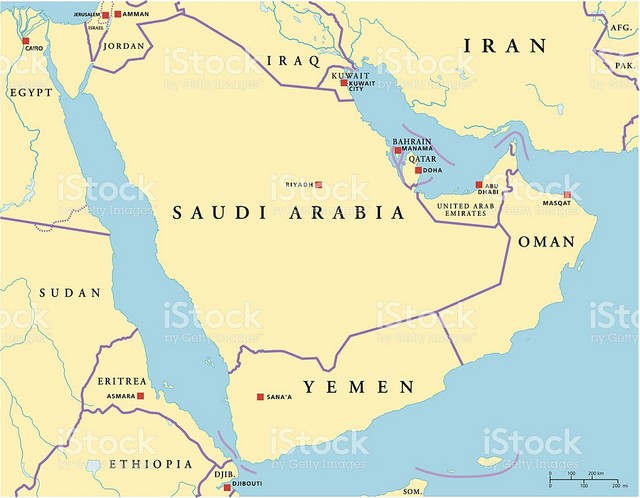
This is Sa’ada, ground zero of the 20-month Saudi campaign in Yemen, a largely forgotten conflict that has killed more than 10,000, uprooted 3 million and left more than half the country short of food, many on the brink of starvation.

Gaith Abdul-Ahad in The Guardian, 12/9/16

Yemen stands as the worst-threatened of four countries where impending famine conditions have been said to comprise the single-worst humanitarian crisis since the founding of the U.N.  On May 2nd, 2017, the UN Office for the Coordination of Humanitarian Affairs published a grim infographic detailing conditions in Yemen where 17 million Yemenis — or around 60 percent of the population — are unable to access food.  The U.S. and its allies continue to bomb Yemen.

Jan Egeland, who heads the Norwegian Refugee Council (NRC), says that seven million Yemeni people are on the brink of famine. “I am shocked to my bones,” said Egeland, following a five day visit to Yemen. “The world is letting some 7 million men, women and children slowly but surely be engulfed…” Egeland blames this catastrophe on “men with guns and power in regional and international capitals who undermine every effort to avert an entirely preventable famine, as well as the collapse of health and educational services for millions of children.” Egeland and the NRC call on all parties to the conflict, including Saudi Arabia, the United Arab Emirates, Iran, the U.S. and the U.K. to negotiate a cease fire.

This weekend, the situation stands poised to become dramatically worse with the apparently imminent bombing, by Saudi Arabia, one of the U.S.’ closest allies, of the aid lifeline which is the port of Hodeida.

Egeland stresses the vital importance of keeping humanitarian aid flowing through Hodeida, a port which stands mere days or hours from destruction. “The Saudi-led, Western-backed military coalition has threatened to attack the port,” said Egeland, “which would likely destroy it and cut supplies to millions of hungry civilians.”  U.S. congress people demanding a stay on destruction of the port have as yet won no concessions from the Saudi or U.S governments.

The U.S. Government has as yet sounded no note of particular urgency about ending or suspending the conflict, nor has its close ally in the Saudi dictatorship.  Saudi Arabia’s Defense Minister, Prince Mohammed bin Salman recently gave “a positive view of the war in Yemen.” (New York Times, May 2, 2017). He believes that Saudi forces could quickly uproot the Houthi rebels, but rather than endanger Saudi troops he says “the coalition is waiting for the rebels to tire out.”

“Time is in our favor,” he added.

Even if Hodeida is spared, reduced import levels of food and fuel from the Saudi-imposed naval blockade puts the price of desperately needed essentials beyond the reach of the poorest.  Meanwhile prolonged conflict, dragged out by a regime that feels “time is on its side” and punctuated by deadly airstrikes, has displaced the needy to those areas where food insecurity is the highest.

Refugees from three North African countries where conflict is also threatening to impose terrible famine have Yemen on their route to escaping the continent, so they have fled conflict and famine only to be trapped in the worst of this dreadful year’s arriving tragedies.

The UN’s High Commissioner for Human Rights, Zeid Ra’ad Al Hussein, describes the present situation, two years since Saudi airstrikes escalated the conflict:

“The violent deaths of refugees fleeing yet another war, of fishermen, of families in marketplaces – this is what the conflict in Yemen looks like two years after it began…utterly terrible, with little apparent regard for civilian lives and infrastructure.

“The fighting in Hodeida has left thousands of civilians trapped – as was the case in Al Mokha in February – and has already compromised badly-needed deliveries of humanitarian assistance. Two years of wanton violence and bloodshed, thousands of deaths and millions of people desperate for their basic rights to food, water, health and security – enough is enough. I urge all parties to the conflict, and those with influence, to work urgently towards a full ceasefire to bring this disastrous conflict to an end, and to facilitate rather than block the delivery of humanitarian assistance.”
Time is on no-one’s side as regards the crisis in Yemen. As nightmare visions of living skeletons with bloated bellies and pleading eyes once more appear on the planet’s TV screens, we in the U.S. will have missed a vital chance to avert a world in which untold millions are to be shocked to their bones.

Kathy Kelly, (Kathy@vcnv.org), co-coordinates Voices for Creative Nonviolence (www.vcnv.org)

5 May 2017

Avoiding Another War In North Korea

By William John Cox

During the Korean War, the United States dropped more bombs and napalm on North Korea than was used against the Japanese during World War II. The carpet bombing destroyed all of the cities and most of the villages in North Korea. More than 3,000,000 Korean civilians died in the war—most were in the North. Since the war ended with a cease fire in 1953, the North has been governed by the Kim family dictatorship, which uses the threat of American aggression to maintain its ironfisted physical and mind control of the North Korean people.

President Trump is now threatening another destructive war against the North Korean people and their society. He must not be allowed to do this—there is another way to deal with the problem. As a matter of policy, Trump can redirect his energy and efforts onto the person of Kim Jong-un, the country’s dictator, who not only threatens the safety of other nations, but who holds his own people in slavery. Why should the United States make war against a captive nation and its helpless people when there is a more effective solution?

The Failure of War as an Instrument of Public Policy

Making war against nation states and their people no longer works. Unstable and undemocratic countries, such as North Korea, are usually controlled by individuals and cabals against whom military force ends up harming their own domestic victims more than the entrenched leadership. The wrath of the people is directed against the outsiders who slaughter their children and helps solidify the rule of their domestic despots.

Destroying the infrastructure of a nation to turn its people against their “leadership” fails—as in Iraq—resulting in the deaths of thousands of innocent children. Targeting “insurgents” using drones and violent nighttime home invasions fails—as in Afghanistan—resulting in “collateral” deaths and injuries to children and noncombatants. Imposition of economic sanctions fail—as in Iran—resulting in the destruction of the middle class and small businesses that are essential to a free society. Support of “rebels” against their government fails—as in Libya—when the new government is controlled by hostile and undemocratic forces. Direct military strikes fail to make a difference—as in Syria—for all of these reasons; and the threat of violent war—as in North Korea—is simply stupid against an immature dictator who has nuclear weapons and nothing to lose by using them.

The use of war as an instrument of foreign policy fails in all of these situations because it does not produce the desired change. It primarily injures the innocent victims of their unrepresentative governments and results in their hatred of the aggressors, rather than their oppressors.

In addition, the use of war by the United States also harms its own people through the wasteful diversion of scarce tax resources to the military-industrial complex, the compiling of massive and unsustainable public debt, a reduction of personal freedoms by the intelligence-security complex, and a loss of respect by other people and nations around the world.

Moreover, continued use of aggressive—yet undeclared—wars by the United States has resulted in an undemocratic shift of power from the legislative branch to the executive branch of government. The Constitution provides that “The Congress shall have power . . . To declare War . . . .”  For the past 50 years, however, American presidents, rather than Congress, have repeatedly unleashed military force against far weaker nations and their people—who do not have the means or ability to fight back, except through acts of terror.

In addition to Afghanistan, Pakistan, Iraq, and Syria, the United States is also currently conducting military operations in Somalia and Yemen. Not only are these wars undeclared by Congress, their extent is largely concealed from the People. Moreover, in “fighting” these wars, the president, as Commander-in-Chief, claims the right to kill and detain “unlawful combatants,” including American citizens, anywhere in the world, without trial.

Americans no longer want to militarily intervene in other countries. A CBS/NYT poll found that 72 percent of Americans are opposed to removing dictators where it can, and a CNN poll found more than six in ten Americans desiring a more “non-interventionist” foreign policy. Part of President Trump’s electoral support resulted from his campaign promises to avoid military action in foreign nations. He said the United States. should “stay out of Syria and other countries that hate us.”

Yes, there is violence and repression in the world, some of which may threaten the security interests of the United States, and it would be naive to deny it. It is equally foolish, however, to believe that launching undeclared aggressive wars against nation states and their people can resolve each and every one of these threats. There has to be a better solution, one that is both legal and effective.

An Alternative to War

Let us, for a moment, think “outside the box” about an alternative public policy to deal with these dangerous geopolitical situations—one based on commonsense and the law.

Assuming that the Trump administration can make the case that Kim Jong-un and his regime pose a risk of danger to the People of the United States, shouldn’t President Trump present that evidence to Congress and allow it to decide what to do? Rather than an authorization to launch a violent military attack against North Korea—essentially a declaration of war—Congress could pass a resolution along these lines:

The Congress of the United States declares that Kim Jong-un and his administration of the government of North Korea pose a danger to the United States, and he is hereby declared to be an outlaw. Congress directs the President of the United States to file a legal proceeding against the government of North Korea in the International Court of Justice and to take all necessary and reasonable steps to compel the personal attendance of Kim Jong-un to defend his government and its conduct.

As a member of the United Nations, North Korea is automatically a party of the International Court; however, it must consent to jurisdiction in a specific case. The congressional resolution would, however, be directed against Kim, personally—as the dictator of North Korea—instead of the people of North Korea. It is narrowly designed to compel him to personally leave North Korea and to accept jurisdiction of the Court on its behalf. As a practical matter, once Kim leaves the country, the chances of his ever returning are very slim.

In many respects, the congressional resolution would act like an arrest warrant in a domestic criminal action. There, a judge finds probable cause for the arrest and directs the police to take the suspect into custody and deliver the defendant for trial. In doing so, the police are authorized to use all necessary and reasonable force to take custody of the accused.

The United Nations Human Rights Committee approved a resolution in 2014 calling for North Korea to be brought before another international tribunal, the International Criminal Court (ICC), on charges of human rights violations. During testimony before the UN Security Council in 2015, the UN High Commissioner for Human Rights asked the Council to refer North Korea to the ICC.  Following the recent assassination of Kim’s brother, Kim Jong-nam, the UN General Assembly again asked the Security Council to refer the North Korean leadership to the ICC  While a congressional resolution directing President Trump to secure the presence of Kim Jong-un before these international tribunals would be coercive, it would be far less violent than the unleashing of bombs and cruise missiles on the poor North Korean people.

Although the use of reasonable force personally directed against the outlaw dictator to “arrest” him might result in his death, the use of force would not have political assassination as its purpose. To the contrary—much like hostage negotiations by professional police officers—every attempt should be made to obtain his voluntary surrender. Reasonable rewards and incentives might also be offered for his surrender by members of his own government.

The Kim dictatorship dominates the North Korean media and carefully controls the information received by the people. Radios and television sets are preset to North Korean frequencies and must be registered with the authorities. Although there is little access to the Internet, there is a widespread market for USB flash drives which feature South Korean music and movies. It is not difficult to image infiltrating and “bombing” the nation with bootleg flash drives and other forms of person-to-person communications reassuring the North Korean people that the United States was renouncing the making of war against them and their nation in favor of rewards and benefits for the arrest and delivery of their dictator. While ordinary North Koreans might not have the ready ability, those most close to the person of Kim Jong-un might be sufficiently encouraged to take action.

Sounding the Alarm

On becoming the Commander-in-Chief of the United States military, President Trump immediately abdicated his command responsibility by empowering the Secretary of Defense and the Central Command to authorize military actions they deem appropriate. Because of the numerous scandals and dysfunction associated with his political staff, Trump is relying on the military to distract the public from his presidential failures.

Within days of Trump’s inauguration, a botched military counterterrorism operation in Yemen resulted in the deaths of 30 civilians, including an eight-year-old American girl. Trump blamed the failure on his generals and the Obama administration, while claiming unfounded successes. Trump’s military aggression continued with a massive tomahawk cruise missile attack against a Syrian airbase—which risked war with Russia—and the dropping of the largest conventional bomb in history in Afghanistan. Trump claimed that all of these attacks were successful, but the primary result was to divert attention from his rapidly falling popularity ratings, which are the lowest of all newly-elected presidents.

As Trump is now threatening to go it “alone” on North Korea, his senior policy adviser Stephen Miller has declared “the powers of the president to protect our country are very substantial and will not be questioned.” Secretary of State Rex Tillerson is warning of “catastrophic consequences” of a failure to take action against North Korea and warns that the United States will use military force if necessary. The Chief of the U.S. Pacific Command refuses to rule out an invasion of North Korea, even for the “heck of it.”

Claiming “bone spurs” as a young man, Trump dodged military service. Now as America’s leading “chicken hawk,” he is like a little boy playing with matches as he risks reigniting the Korean War. Perhaps it matters not to him that millions of North and South Koreans may once again die in the resulting war, but he will also risk the lives of American service members and the economic health of the nation in an entirely avoidable war.

Near the end of World War II, as allied forces discovered the conditions in the German concentration camps, General Eisenhower ordered that local citizens be forced to look inside the camps at the atrocities committed by their Nazi leaders. Following the conviction and execution of these leaders at the Nuremberg trials, the United Nations established the principle that “All members shall refrain in their international relations from the threat or use of force against the territorial integrity or political independence of any state . . . .”

The United States has not formally declared war on another nation since World War II; however, its presidents have repeatedly threatened to use, and have actually used, military force against other states. Truman and Eisenhower had the Korean War; Johnson and Nixon had Vietnam; Reagan invaded tiny Grenada; Bush Sr. invaded Panama and Iraq; Clinton bombed Sudan and Yugoslavia; and Bush Jr. invaded Iraq based on falsified evidence. Obama continued the “war against terrorism,” extended it worldwide, and institutionalized the presidential hit list.

President Trump repeatedly expresses his admiration for “strong,” yet repressive leaders, including Putin in Russia, Duarte in the Philippines, and Kim Jong-un—whom Trump calls “a pretty smart cookie.” Trump sees the world as a “vicious and brutal place” and imagines himself as the risk-taking, angry, tough, and authoritarian warrior who can win every game. In response to threats in the Middle East, Trump said, “I would bomb the s— out of them. . . . I’d blow up every single inch, there would be nothing left.” Conservative commentator George W. Will described Trump as having “an untrained mind bereft of information and married to stratospheric self-confidence.”

More than 53,000 mental health professionals have signed a petition sounding the alarm that Trump “manifests a serious mental illness that renders him psychologically incapable of competently discharging the duties of President of the United States.” The petition was started by Dr. John Gartner, who said “Worse than being just a liar or a narcissist” Trump is “paranoid, delusional and [engages in] grandiose thinking.”

With the most mentally unstable person ever to occupy the presidency having the most powerful military force in history at his unfettered disposal, Americans must ask themselves whether or not they approve of another war being launched in their name. If not, they must arrive at a solution to avoid their personal complicity with the consequences of their failure to act.

The American People are not powerless; however, they still have, restricted as it has become, the freedom to assemble and protest. They still have the power to contact their congressional representatives and implore them to take legislative action to avoid another war in Korea, and they still have the power to vote out of any office any representative who does not listen to their voice and respond to their demands. Their vote is the only real power left to the People; however, time is short. With an Army general now serving as the Secretary of Homeland Security, the United States is only one terrorist act away from the imposition of martial law by presidential order, in which all of these remaining rights may be forfeit.

William John Cox wrote the role of the police in America for President Nixon’s National Advisory Commission on Criminal Justice Standards and Goals in 1972. As a public interest lawyer, Cox filed a class-action lawsuit in the U.S. Supreme Court in 1979 against President Carter and the Congress alleging that the government no longer represented those who voted for it. In 1980, he ran a write-in campaign for president calling for a law enforcement alternative to making war against the innocent people of other nations. Cox continues to write about philosophy, politics, and public policy matters. His latest book is Transforming America: A Voters’ Bill of Rights.

5 May 2017

Restating existing positions; nothing dramatic about new Hamas ‘charter’

By Afro-Middle East Centre

Rather than signalling any major, dramatic or radical change in direction, the new ‘charter’ (officially called ‘A Document of General Principles and Policies’) of the Palestinian group Hamas formalises what has existed in terms of the party’s policies and practices for more than a decade, superseding its old charter which has largely been outdated, irrelevant and an albatross around the organisation’s neck.

The new document, which took two years to debate and draft (but has been in the making since 2006), replaces the ‘Covenant of the Islamic Resistance Movement’, which was authored by a single individual in 1988, and adopted barely nine months after Hamas’s founding. Hamas has variously defended, been apologetic about and embarrassed by the 1988 charter, but, for mysterious reasons, has not been able to get rid of, or even amend, it. The group’s spokespersons have often said broad consultation was too difficult within its security constraints – even though it regularly holds leadership elections that encompass its members in various parts of the world. In 2006, in the run-up to elections for the Palestinian Legislative Council (PLC), the first Palestinian Authority (PA) election that Hamas contested, the party issued an election platform that articulated changes in its positions from that contained in the original charter. But the platform was not comprehensive enough to be regarded as superseding the charter, and Hamas leaders themselves never referred to it in this way.

The platform did highlight the irrelevance and embarrassment of the old charter, and sparked a debate within the organisation on a range of issues – from the role of religion in the Palestinian struggle to the nature of a future Palestinian state. That debate culminated on 1 May 2017 with the launch of the new document. The process leading up to the launch was vigorous, and produced some issues of sharp disagreement within the movement. The 1 May document attempts to balance those debates within the Hamas constituency, and still provide a vision and strategies in a manner that will keep the organisation united, and allow all its members to feel satisfied.

Since the launch, much attention has been paid to the clause that accepts a Palestinian state along the 4 June 1967 border – essentially confining a future Palestinian state to the West Bank (including East Jerusalem) and Gaza. The clause, however, does not actually go as far as ‘accepting’ the 1967 borders or a two-state solution, but notes that ‘Hamas considers the establishment of a fully sovereign and independent Palestinian state, with Jerusalem as its capital along the lines of the 4th of June 1967…to be a formula of national consensus.’ The clause was qualified with its ‘rejection of the Zionist entity’, support for the right of return of all Palestinian refugees – including to their homes in Israel, and rejection of ‘any alternative to the full and complete liberation of Palestine, from the river to the sea’. It is debatable whether the 1967 border ‘formula’ ever was one of ‘national consensus’ among Palestinians. In the past few years, especially, after Israeli prime minister Binyamin Netanyahu repeatedly rejected any notion of a two-state solution, former US secretary of state John Kerry lamented its end, and US president Donald Trump refused to endorse the well-worn US support for such a solution, Palestinians have increasingly been arguing that a two-state solution is not possible, and the current reality is that there is already a single state from the Jordan River to the Mediterranean Sea that is governed by Israel. Despite the language in the document, however, after the launch Hamas leader Khaled Mesha’al, interpreted it as supporting a two-state solution. This contradiction between the charter’s insistence on Hamas’s ultimate goal being the ‘liberation’ of all of British Mandate Palestine, and the seeming acceptance of a two-state solution could prove to become a difficulty for the movement in the future, even though the notion of a two-state solution has already been articulated by Hamas spokespersons, including by its founder Shaykh Ahmed Yassin and by Mesha’al. The document’s position might be viewed as support for a two-state solution as the first phase towards a single state.

This is not the most significant aspect of the document, however. Perhaps most significant (and the most radical change) is the language and tone that describes Hamas as a nationalist Palestinian movement rather than as part of a global Islamist one. This begins with the description of Palestine as ‘the land of the Arab Palestinian people’, while the old charter regarded Palestine as ‘an Islamic Waqf [endowment] consecrated for future Muslim generations until Judgement Day’ – somewhat mirroring the Zionist conception of Israel as the land of all Jews. No longer. While Palestine is still ‘a land whose status has been elevated by Islam’, it belongs, according to Hamas to Palestinians, not to Muslims. Even in its characterisation of itself, Hamas now views itself as a ‘Palestinian Islamic national liberation and resistance movement’. The positioning of the words ‘Palestinian’ and ‘Islamic’ are not accidental. ‘Its goal is to liberate Palestine and confront the Zionist project. Its frame of reference is Islam,’ and there is no proclamation of ‘The universality of the Islamic Resistance Movement’ as in the old document. This new orientation is likely the reason that references to the Muslim Brotherhood (whose name and slogans peppered the earlier document) have been dropped. There is a glaring question that the document does not answer, however: if Palestine is ‘the land of Arab Palestinians’, what would be the place of Jews in a future Palestinian state.

Despite speculation that the document would attempt to placate Israel and western powers, it makes no serious attempt to do so. Even its strong emphasis that the ‘conflict is with the Zionist project not with the Jews because of their religion’ and its accusation that it is Zionists who have co-opted Judaism and Jews in service of its ‘colonial project and illegal entity’ reflects a change in the way the movement views Jews and Zionism, and is guidance provided to its own constituency, rather than a placatory gesture to outsiders. Indeed, the three demands that the West (through the Middle East Quartet, comprising of the UN, USA, EU and Russia) have made of Hamas since 2007 have been emphatically rejected in the charter. The demands were that Hamas recognises Israel; renounces violence; and accepts all previous agreements made by the PLO and PA with Israel. Instead, the charter emphasises that ‘There shall be no recognition of the legitimacy of the Zionist entity’; insists that ‘At the heart of [means of resisting occupation] lies armed resistance’; and rejects the Oslo Accords ‘and all that flows from them’.

Of course, the rejection of the Oslo presents a contradiction. The charter affirms a role for the PA (a creature of Oslo) ‘to serve the Palestinian people and safeguard their security, their rights and their national project’. Further, the movement contested elections for the PLC (another Oslo creation), plays a role as part of the PA, and has expressed no intention to extract itself from the PA and refuse to contest future elections.

If we ignore the opportunity Hamas provides us to do interesting analyses of a new document, its release is a rather ‘ho hum’ moment. In itself, it says nothing new, and only documents what has already become a reality within the movement through decade-and-half shifts in thought and practice. At most, it will allow its spokespersons a sigh of relief that they no longer have to defend the old anti-Semitic and irrelevant document. The timing of its release does has some significance. While it will be seen as Mesha’al’s swan-song (he did not contest the recent leadership election, whose results will be announced later this month), it also happens when more militant leaders are rising, and they have expressed no criticism of the document. Yahya Sinwar, for example, a leader of Hamas’s armed wing, the ‘Izz al-Din al-Qassam Brigades, who spent twenty years in an Israeli prison, is now the group’s Gaza leader and the ‘prime minister’ in the territory. His embrace of the document indicates that the political and military wings of the movement are united in supporting it, and it is not an imposition by ‘moderates’ on the rest of the organisation.

If Hamas was unconcerned about how its critics in Israel and the West might view its new charter, it should be concerned about criticism from Palestinians, particularly the disappointment (and even anger) expressed by some at the seeming acceptance of the two-state solution. For many Palestinians who have become weary of the shenanigans of the PA, Fatah and the PLO, who oppose the PA’s ‘security coordination’ with Israel, and who support the boycott, divestment and sanctions movement against Israel had hoped that Hamas would not compromise its support for armed resistance, and would clearly express support for a one-state solution. For some in this group, the new document does not distinguish Hamas from Fatah in terms of its vision for the future (even though that’s not a correct reading of the relevant clauses).

4 May 2017

Mass hunger strike tests Palestinian unity

By Budour Youssef Hassan

Hunger strikes don’t get any easier with experience.

So says the family of Palestinian prisoner Majd Ziada, who has participated in multiple collective strikes since his arrest by Israeli occupation forces in 2002.

“It is as if you are carrying the weight of 15 years of imprisonment on your shoulders,” Hurriyah Ziada, Majd’s youngest sister, told The Electronic Intifada. “It is like running the last kilometers of a marathon: at the start you have a lot of energy but you eventually become drained.”

Majd, whose family hails from the village of al-Faluja northeast of Gaza City, ethnically cleansed by Zionist forces in 1948, was 19 when he was swept up during a wave of mass arrests at the height of the second intifada.

He spent 50 days in incommunicado detention, during which he was subjected to physical and psychological torture, his father and lawyer say. The abuse exacerbated preexisting ear inflammation, resulting in a complete loss of hearing in Majd’s right ear.

During a hearing in an Israeli military court the year of his arrest, Majd proclaimed that he did not recognize the court’s legitimacy and that it was Israeli soldiers who should be put on trial.

Majd was convicted of carrying out armed attacks and organizing a resistance cell, receiving a 30-year prison sentence.

Majd’s attorneys requested a retrial, arguing that his conviction was rife with grave procedural errors. An Israeli military court issued a rare commutation last month, reducing Majd’s sentence to 20 years.

Majd, who was arrested in the occupied West Bank city of Ramallah, has most recently been held in Hadarim prison, in central Israel. The Fourth Geneva Convention forbids an occupying power such as Israel from transferring detainees from the territory it occupies, such as the West Bank, into its own territory. Majd’s imprisonment in Israel is thus a war crime.
Punishment

In her most recent visit to Hadarim, on 12 April, Hurriyah was told by Majd that he was planning to join the open-ended hunger strike set to begin five days later.

One of the main demands of the hunger strike is to end medical negligence of prisoners.

“[Majd] requires surgery to his ear and he is at risk of losing his hearing completely if it’s not performed,” Hurriyah said. “But the Israel Prison Service has refused to allow it and the only treatment he has received has come in the form of painkillers.”

Israel has punished hunger striking prisoners with a series of measures, including denying family visits and meetings with lawyers. All Hurriyah knows about her brother is that he was transferred from Hadarim and put in isolation. She does not know where he is currently being detained.

Palestinian prisoners on hunger strike are also protesting solitary confinement, night raids on prisoners’ cells, humiliating searches, the reduction of family visits, a ban on mobile phones, suspension of university education, restrictions on books and magazines, and widespread imprisonment without charge or trial, family members of striking prisoners and their lawyers told The Electronic Intifada.

“Through the battle of empty stomachs, prisoners are not only calling for their basic rights and demanding an improvement in prison conditions,” Abdel Nasser Ferwana, a writer who has done extensive research on the history of Palestinian hunger strikes, told The Electronic Intifada.

“They also seek to express their defiance, to reinvigorate public solidarity with the prisoners’ cause and to draw attention to their plight.”

A dangerous tactic of last resort, the first known hunger strike in the history of the Palestinian prisoners’ movement was in 1968, one year into Israel’s military occupation of the West Bank and Gaza Strip. Inmates at a prison in Nablus waged a three-day hunger strike protesting physical abuse and humiliating treatment by Israeli soldiers.

The first Palestinian prisoner to lose his life during a hunger strike was Abd al-Qader Abu al-Fahm, who died after being force-fed during a mass strike in Ashkelon prison in 1970.
History of struggle

Ferwana said that the current hunger strike is not an isolated event and is part of a long history of struggle.

“We need to remind people that Palestinian prisoners improved their conditions in jails and attained some of their rights thanks to their sacrifices, rather than Israeli generosity,” Ferwana said. “Some have lost their lives to secure those rights but this has been the most effective form of resisting and confronting the Israeli prison system.”

According to the Palestinian rights group Addameer, Israel currently holds 6,300 Palestinian political prisoners, 500 of whom are held without charge or trial under indefinitely renewable administrative detention orders issued by a military court.

Administrative detention has been the impetus for some of the more high-profile hunger strikes in recent years, such as those undertaken by Khader Adnan – a baker from the northern West Bank who has embarked on two lengthy strikes, becoming an icon of the prisoner movement – as well as journalist Muhammad al-Qiq, lawyer Muhammad Allan, and Bilal Kayed, who won his release after 15 years of imprisonment following a 71-day strike.

Hunger strikes waged by individual prisoners have been more prevalent than mass hunger strikes in recent years.

Esmat Mansour, who was imprisoned by Israel between 1993 and 2013, said this is a direct result of the fragmentation of the prisoners’ movement – a spillover of the bitter impasse between the two main Palestinian political parties, Fatah and Hamas, that has prevailed over the past decade.

Mansour pointed to the August 2004 mass hunger strike – which lasted up to 19 days, depending on the prison, yielding little improvement in prisoners’ conditions – as a turning point.
Overcoming failure

Several factors contributed to the failure of that strike, according to Mansour: the harsh repression of the Israel Prison Service, then headed by Yaacov Ganot. Mansour described Ganot as a “fascist,” adding that he reintroduced the practice of strip-searching and ordered the separation of prisoners from their visiting family members with glass instead of a net that allowed for physical contact.

The second intifada was still going on and Ariel Sharon, Israel’s prime minister at the time, was not willing to compromise. This was the first hunger strike for many of the prisoners, and they lacked experience to deal with the inevitable Israeli retribution.

“The leadership of the strike was divided and the fragmentation of the prisoners made it easier for the [prison authorities] to quell it and break our spirits,” Mansour, who participated in that strike, told The Electronic Intifada.

“It took a long time and effort for the prisoners’ movement to recover from that setback and to restore confidence among prisoners and rebuild the movement.”

It wasn’t until 2012 that prisoners from all political factions organized another sustained mass hunger strike involving multiple prisons and political parties.

Preceded by a series of individual hunger strikes in protest of administrative detention, thousands of prisoners began an open-ended strike on 17 April 2012 – Palestinian Prisoners’ Day – and refused food for nearly one month.

The hunger strikers demanded an end to solitary confinement for all prisoners and a resumption of family visits to prisoners from the Gaza Strip. Such visits had been done away with following the capture of an Israeli soldier in Gaza in June 2006 and maintained even after the soldier’s release in a prisoner exchange deal in October 2011.

The 2012 hunger strike was accompanied by popular protests and escalated mobilization on the ground, not seen in Palestine since the early days of the second intifada more than a decade earlier. Even though the Fatah leadership did not participate in that hunger strike and was even accused by some prisoners of not showing enough solidarity, according to Esmat Mansour, the Fatah base in the prisons did join the strike.

The agreement reached between Palestinian detainees and the Israeli prison authorities in May 2012 was said to include limitations on administrative detention, the end of prolonged isolation and resumption of family visits to prisoners from Gaza.
“No other option”

Five years on, Palestinian prisoners are having to resort to their empty stomachs again to fight for their rights.

“Prisoners have been preparing for this hunger strike for almost two months and my husband confirmed to me on 4 April that he was taking part,” said Khalida Hamdan, whose husband, Muhammad Mesleh, is sentenced to nine life sentences plus 50 years for his involvement in the killing of nine Israelis.

“I initially questioned his decision but he explained to me how the increasing crackdown by Israeli prison authorities had left them with no other option,” Hamdan told The Electronic Intifada.

Mesleh, a leading figure in Fatah’s armed wing, the al-Aqsa Martyrs Brigades, was arrested by Israeli occupation forces on 17 February 2001, leaving Hamdan to raise their months-old child on her own. For almost a decade, Hamdan was banned from visiting her husband on security grounds. In 2012, she went on hunger strike for seven days in solidarity with her striking husband.

Mesleh is a close companion of Marwan Barghouti, the high-profile Fatah leader serving multiple life sentences after his arrest in 2002, and the face of the current hunger strike.

“He pleaded with me to not go on a solidarity hunger strike this time around but since 17 April, I have been unable to cook, unable to sleep properly or think about anything else,” Hamdan said.

“I only hear about him in the media. Is he in solitary confinement? How is he handling pain and fatigue? How is he surviving the revenge of the prison guards? You cannot exorcise those thoughts when a loved one is on hunger strike.”
Unity

The current hunger strike, estimated by Addameer to include 1,500 prisoners, is being led by Fatah, but prisoners from all the major Palestinian factions are participating.

Following his release from Israeli prison on 20 April, former Palestinian minister Wasfi Qabaha said that the hunger strike in Hadarim prison, the epicenter of the protest, involved prisoners from all factions and that parties from across the political spectrum were represented in the strike leadership.

He added that strike leaders such as Marwan Barghouti and Karim Younes, the longest-serving Palestinian political prisoner currently held by Israel, were transferred to Jalameh prison and put in isolation.

Nadim Younes, brother of Karim Younes, who has been imprisoned by Israel since 1983, told The Electronic Intifada that family and lawyers lost all contact with Karim since he began his hunger strike.

“Karim is now 58 and 35 years of imprisonment have definitely taken their toll on his ailing body,” Nadim said. “The importance of this strike lies in the fact that it has brought together prisoners from all factions and from all over Palestine: Gaza, West Bank, Jerusalem and Palestinians from the ’48 territories [present-day Israel].”

There are lingering doubts about whether this hunger strike will avoid the failure suffered in 2004. Former prisoner Esmat Mansour does not dismiss those concerns.

“It is true that Barghouti is the undisputed leader of this hunger strike. Some believe that he is trying to send a message to the Fatah Central Committee that he remains an influential leader,” Mansour said.

“But prisoners are not puppets: they would not join this strike if they didn’t have pressing demands. And Marwan’s leadership of this strike has definitely given it momentum and unprecedented media attention.”

The unity and resilience of the prisoners’ movement in the face of Israeli repression, intimidation and attempts to delegitimize the strike are being put to the test. Moreover, it is a test of the capacity of Palestinian society to mobilize in support of the prisoners, to build sustained pressure on Israel, and overcome their divisions to stand behind the prisoners.

If there is one cause that has managed to bring Palestinians together in recent years, it has proven to be the prisoners’ struggle.

Budour Youssef Hassan is a Palestinian writer based in Jerusalem. She blogs at budourhassan.wordpress.com.

26 April 2017

Nobel Peace Laureate Mairead Maguire Appeals to President Trump for Peace Leadership

By The Peace People – TRANSCEND Media Service

1 May 2017 – Mairead Maguire, who visited the women’s peace movements of North and South Korea last year with 30 international women from around the world, made the following appeal to President Trump and the U.S. administration:

“The people of North and South Korea want peace and they want a peace treaty. They do not want their country to be bombed or their government to bomb others. Having visited both North and South Korea last year and walked with thousands and thousands of Korean women, North and South, I am convinced that peace is possible and what is needed is the political will of all parties to the conflict to dialogue and for negotiations to move from a Korean armistice to a Korean Peace Treaty.

“I therefore would like to appeal to President Trump and his administration not to carry out a military strike on North Korea, but to use the means of dialogue and diplomacy to reach a peace treaty for North Korea. Such peace leadership by President Trump will give hope to the people of Korea and all of humanity.

“The people of the world need to know that peace is possible between all the human family and that there are political leaders who have the courage to move from enmity to friendship and from war to peace.”

Mairead Corrigan Maguire, co-founder of Peace People, is a member of the TRANSCEND Network for Peace, Development and Environment. She won the 1976 Nobel Peace Prize for her work for peace in Northern Ireland. Her book The Vision of Peace (edited by John Dear, with a foreword by Desmond Tutu and a preface by the Dalai Lama) is available from www.wipfandstock.com. She lives in Belfast, Northern Ireland. See: www.peacepeople.com.

The Peace People began in 1976 as a protest movement against the ongoing violence in Northern Ireland. Its three founders were Mairead Maguire, Betty Williams and Ciaran McKeown. Over 100,000 people were involved in the initial movement and two of the founders, Mairead and Betty, received the Nobel Peace Prize for that year. Since its inception, the organization has been committed to building a just, peaceful society through nonviolent means – a society based on respect for each individual, and that has at its core the highest standards of human and civil rights. www.peacepeople.com

1 May 2017

Famine in Africa- Cry the beloved Continent

A new socio-political order – not aid – will alleviate the continent’s growing poverty and famine writes

By Firoz Osman

The spectre of famine haunts parts of Africa again, with more than 20 million people facing starvation across Somalia, Nigeria and South Sudan.

Only15% of the $4.4 billion that the UN appealed for has been delivered despite horrendous images of emaciated babies and forlorn men and women in flimsy tents made of rags emblazoned on our television screens.

How does such a scale of suffering occur on a continent of 1.2 billion people, so rich in mineral wealth and oil and so huge that it can hold almost every other continent in the world?

While famines frequently occur in different parts of the world, a closer examination of the recurrence of this misery in Africa suggests there is little natural about it.

From the 1950s African national liberation movements broke the yoke of colonialism and were granted independence but it turned out to be fraudulent and the continent continued to be invisibly looted under private auspices.

Former and current imperial and colonial powers such as France, Britain, the US and Israel, use the military-industrial-corporate complex, the IMF, World Bank, and the United Nations to exploit Africa’s resources.

African governments have been forced, through structural adjustments, to divert funds from agriculture, health and education, and into areas that benefits the West.

A major cause of the famines, however, is conflict and war. Strategically located Somalia has been at war since 1995 with numerous foreign interventions and famine has been a parallel occurrence. It now faces its third famine in 25 years, the last one in 2011 that claimed 250,000 lives.

South Sudan with half its population facing starvation is a country floating on oil. Emma Jane Drew, Oxfam’s Humanitarian programme manager, described the famine as “a man-made tragedy”. In 2014 the New York Times put the blame for the conflict on the US.

The third African country in dire need of humanitarian aid named by the UN is Nigeria. Independent journalist Thomas Mountain states that up to a third of Nigerian oil is stolen, secretly loaded onto oil tankers after bribes are paid to corrupt government officials.

Western oil companies loot some $140 billion a year of Nigeria’s black gold while nearly two-third of its people live on less than $2 a day. It boasts of the biggest economy on the continent but still in constant need for IMF bailouts.

Nigeria has the largest, best-equipped army in West Africa, benefitting mostly Western military industries. Instead of being wealthy and the envy of the world, its cities are filled with homeless children begging for bread.

Tom Burgis describes in his book The Looting Machine about a network of anonymous multinationals, corporate investors and bankers, who strike opaque deals with coup leaders and African elites to drain the continent’s resources.

This is illustrated by the colonial pact where 14 West African countries are obliged by France to put 85% of their foreign reserves into France’s national bank under the French minister of Finance control.

It is estimated that France now holds nearly $500 billion of the African countries’ money in its treasury. African leaders who object or resist are killed or become victims of coups. Those who obey are rewarded with security and a lavish lifestyle while their people endure extreme poverty.

Nearly 200 million people in Africa are malnourished. Malaria, dysentery, TB, HIV/AIDS, and pneumonia, ravage the continent. More than 5 million children under the age of five die annually and millions more face death by starvation, conflict and famine.

There is minimal primary health care, schooling, electricity, clean drinking water and sanitation. Many revolutionary leaders who freed their people from colonialism now rule through the same oppressive structures they overthrew.

Robert Lupton in Toxic Charity states that in the last 50 years, the continent has received $1 trillion in benevolent aid. Country by country, Africans are worse off today with more than half living on less than $1 a day. Life expectancy has stagnated, and adult literacy plummeted.

And yet charity has become a mammoth global industry worth $138.8 billion and employs 600,000 people, more than the most valuable industry, US Oil and Gas. In sub-Saharan Africa, it is worth an annual $55.8 billion, making it equal to the yearly output of Africa’s 20 poorest countries.

Dambisa Moyo, an Economist and author of Dead Aid, says that humanitarian aid is “the disease of which it pretends to be the cure”. It is not enough to treat the symptoms but not the cause.

Charity should not become a substitute for real justice merely to patch up the effects of fundamental injustices. An alternative socio-economic-political order must be developed where wealth is deployed to meet human needs.

(Dr Firoz Osman is with the Media Review Network of South Africa)

28 April 2017

Yemen: Effective Humanitarian Aid Depends on a Peace Accord

By Rene Wadlow

The United Nations (UN) together with the governments of Sweden and Switzerland which have often led humanitarian issues in the UN system held a high-level pledging conference in Geneva on April 25, 2017 to again draw attention to the deepening humanitarian crisis in war-torn Yemen, currently the largest food security emergency in the world. Some 60% of the population are in a food-insecure situation.

More than 3.5 million people have been displaced in the cycle of escalating violence. “We are witnessing the starving and the crippling of an entire generation. We must act now, to save lives” said Secretary-General Antonio Guterres who presided over the conference. Realistically, he stressed that funding and humanitarian aid alone will not reverse the fortunes of the millions of people impacted. Diplomatically, he called for a cessation of hostilities and a political settlement with talks facilitated by the Special Envoy of the Secretary General, the Mauritanian diplomat Ismail Ould Chekh Ahmed.

UN officials and most diplomats are reluctant to call the armed conflict by its real name: “a war of aggression”. The aggression of the Saudi Arabia-led coalition (Bahrain, Egypt, Jordan, Kuwait, Morocco, Qatar, Sudan, and the United Arab Emirates) against Yemen began on March 24, 2015.

The Saudi-led coalition is helped with arms and “intelligence” by the USA and the UK which appreciate Saudi money for arms and do not want to antagonize a large segment of the Arab world when the conflicts of Syria-Iraq-Kurds-Turkey is still “on the table.”

However, the aggression of the Saudi coalition is what has turned an internal Yemen struggle for power between the current and the former President of Yemen into a war with regional implications, now drawing Iran into the picture.

Intellectually, the “political solution” is clear. There needs to be an end to the Saudi bombing and a withdrawal of its coalition troops. Then, the different factions in Yemen can try to develop some sort of inclusive government. The Swiss Foreign Minister, a co-host of the conference, hinted to the issue in suggesting very briefly that, if asked, Switzerland could provide expertise on forms of decentralization and con-federal government.

The effort to create a centralized Yemen government has failed. The future lies in a very decentralized government with great autonomy for the regions, taking into consideration the diverse tribal configuration of the country. With intelligence and patience – always in short supply – a single, highly decentralized State might be developed.

The most difficult first-step is ending Saudi-led aggression, after which an effective humanitarian aid and development program can be put into effect.

Prof. René Wadlow is President of the Association of World Citizens.

28 April 2017

Middle Eastern Surgeon Speaks About The ‘Ecology Of War’

By Andre Vltchek

Dr. Gus Abu-Sitta is the head of the Plastic Surgery Department at the AUB Medical Center in Lebanon. He specializes in: reconstructive surgery. What it means in this part of the world is clear: they bring you people from the war zones, torn to pieces, missing faces, burned beyond recognition, and you have to try to give them their life back.

Dr. Abu-Sitta is also a thinker. A Palestinian born in Kuwait, he studied and lived in the UK, and worked in various war zones of the Middle East, as well as in Asia, before accepting his present position at the AUB Medical Center in Beirut, Lebanon.

We were brought together by peculiar circumstances. Several months ago I burned my foot on red-hot sand, in Southeast Asia. It was healing slowly, but it was healing. Until I went to Afghanistan where at one of the checkpoints in Herat I had to take my shoes off, and the wound got badly infected. Passing through London, I visited a hospital there, and was treated by one of Abu-Sitta’sformer professors. When I said that among other places I work in Lebanon,he recommended that I visit one of his “best students who now works in Beirut”.

I did. During that time, a pan-Arab television channel, Al-Mayadeen, was broadcasting in English, with Arabic subtitles, a long two-part interview with me, about my latest political/revolutionary novel “Aurora”and about the state of the global south, and the upsurge of the Western imperialism. To my surprise, Dr. Abu-Sitta and his colleagues were following my work and political discourses. To these hardened surgeons, my foot ‘issue’ was just a tiny insignificant scratch. What mattered was the US attack against Syria, the Palestine, and the provocations against North Korea.

My ‘injury’ healed well, and Dr. Abu-Sitta and I became good friends. Unfortunately I have to leave Beirut for Southeast Asia, before a huge conference, which he and his colleagues are launching on the May 15, 2017, a conference on the “Ecology of War”.

I believe that the topic is thoroughly fascinating and essential for our humanity, even for its survival. It combines philosophy, medicine and science.

What happens to people in war zones? And what is a war zone, really? We arrived at some common conclusions, as both of us were working with the same topic but lookingat it from two different angles: “The misery is war. The destruction of the strong state leads to conflict. A great number of people on our Planet actually live in some conflict or war, without even realizing it: in slums, in refugee camps, in thoroughly collapsed states, or in refugee camps.”

We talked a lot: about fear, which is engulfing countries like the UK, about the new wave of individualism and selfishness, which has its roots in frustration. At one point he said: “In most parts of the world “freedom” is synonymous with the independence struggle for our countries. In such places as the UK, it mainly means more individualism, selfishness and personal liberties.”

We talked about imperialism, medicine and the suffering of the Middle East.

Then we decided to publish this dialogue, shedding some light on the “Ecology of War” – this essential new discipline in both philosophy and medicine.

ECOLOGY OF WAR

(The discussion took place in Beirut, Lebanon, in Cafe Younes, on April 25, 2017)

Broken Social Contract In The Arab World, Even In Europe

G.A-S: In the South, medicine and the provision of health were critical parts of the post-colonial state. And the post-colonial state built medical systems such as we had in Iraq, Egypt and in Syria as part of the social contract. They became an intrinsic part of the creation of those states. And it was a realization that the state has to exercise its power both coercively, (which we know the state is capable of exercising, by putting you in prison, and even exercising violence), but above all non-coercively: it needs to house you, educate you, and give you health, all of those things. And that non-coercive power that the states exercise is a critical part of the legitimizing process of the state. We saw it evolve in 50’s, 60’s and 70’s. So as a digression, if you want to look at how the state was dismantled: the aim of the sanctions against Iraq was not to weaken the Makhabarat or the army, the aim of the sanctions was to rob the Iraqi state of its non-coercive power; its ability to give life, to give education, and that’s why after 12 years, the state has totally collapsed internally – not because its coercive powers have weakened, but because it was robbed of all its non-coercive powers, of all its abilities to guarantee life to its citizens.

AV: So in a way the contract between the state and the people was broken.

G.A-S: Absolutely! And you had that contract existing in the majority of post-colonialist states. With the introduction of the IMF and World Bank-led policies that viewed health andthe provision of health as a business opportunity for the ruling elites and for corporations, and viewed free healthcare as a burden on the state, you began to have an erosion in certain countries like Egypt, like Jordan, of the non-coercive powers of the state, leading to the gradual weakening of its legitimacy. Once again, the aim of the IMF and World Bank was to turn health into a commodity, which could be sold back to people as a service; sold back to those who could afford it.

AV: So, the US model, but in much more brutal form, as the wages in most of those countries were incomparably lower.

G.A-S: Absolutely! And the way you do that in these countries: you create a two-tier system where the government tier is so under-funded, that people choose to go to the private sector. And then in the private sector you basically have the flourishing of all aspects of private healthcare: from health insurance to provision of health care, to pharmaceuticals.

AV: Paradoxically this scenario is also taking place in the UK right now.

G.A-S: We see it in the UK and we’ll see it in many other European countries. But it has already happened in this region, in the Arab world. Here, the provision of health was so critical to creation of the states. It was critical to the legitimacy of the state.

AV: The scenario has been extremely cynical: while the private health system was imposed on the Arab region and on many other parts of the world, in the West itself, except in the United States, medical care remainspublic and basically free. We are talking about state medical care in Europe, Canada, Australia and New Zealand.

G.A-S: Yes. In Europe as part of the welfare state that came out of the Second World War, the provision of healthcare was part of the social contract. As the welfare state with the advent of Thatcherism and Reagan-ism was being dismantled, it became important to undergo a similar process as elsewhere. The difference is that in the UK, and alsoin countries like Germany, it was politically very dangerous. It could lead to election losses. So the second plan was to erode the health system, by a thousand blows kill it gradually. What you ended up in the UK is the piece-by-piece privatization of the health sector. And the people don’t know, they don’t notice that the system is becoming private. Or in Germany where actually the government does not pay for healthcare – the government subsidizes the insurance companies that profit from the private provision of healthcare.

AV: Before we began recording this discussion, we were speaking about the philosophical dilemmas that are now besieging or at least should be besieging the medical profession. Even the social medical care in Europe: isn’t it to some extent a cynical arrangement? European countries are now all part of the imperialist block, together with the United States, and they are all plundering the rest of the world – the Middle East, Africa, parts of Asia – and they are actually subsidizing their social system from that plunder. That’s one thing. But also, the doctors and nurses working for instance in the UK or Germany are often ‘imported’ from much poorer countries, where they have often received free education. Instead of helping their own, needy people, they are actually now serving the ageing and by all international comparisons, unreasonably spoiled and demanding population in Europe, which often uses medical facilities as if they were some ‘social club’.

G.A-S: I think what has happened, particularly in Europe is that there is a gradual erosion of all aspects of the welfare state. Politically it was not yet possible to get rid of free healthcare. The problem that you can certainly see in the United Kingdom is that health is the final consequence of social and economic factors that people live in. So if you have chronic unemployment, second and third generation unemployment problem, these have health consequences. If you have the destruction of both pensions and the cushion of a social umbrella for the unemployed, that has consequences… Poor housing has health consequences. Mass unemployment has health consequences. Politically it was easy to get rid of all other aspects of the welfare state, but they were stuck with a healthcare problem. And so the losing battle that the health systems in the West are fighting is that they are being expected to cater to the poor consequences of the brutal capitalist system as a non-profit endeavor. But we know that once these lifestyle changes are affecting people’s health, it’s too late in terms of cure or prevention. And so what the European health systems do, they try to patch people and to get them out of the system and back on the street. So if you have children with chronic asthma, you treat the asthma but not the dump housing in which these children are living in. If you have violent assaults and trauma related to violence, you treat the trauma, the physical manifestation, and not the breakdown of youth unemployment, or racism that creates this. So in order to sustain this anomaly, as you said, you need an inflated health system, because you make people sick and then you try to fix them, rather than stopping them from being sick. Hence that brain drains that have basically happened, where you have more Ghanaian doctors in New York than you have in Ghana.

AV: And you have an entire army of Philippine nurses in the UK, while there is suddenly a shortage of qualified nurses in Manila.

G.A-S: Absolutely! This is the result of the fact that actually people’s health ‘happens’ outside the health system. Because you cannot get rid of the health system, you end up having a bloated health system, and try to fix the ailments that are coming through the door.

Collapse Of The Health Care In The Middle East

AV: You worked in this entire region. You worked in Iraq, and in Gaza… both you and I worked in Shifa Hospital in Gaza… You worked in Southern Lebanon during the war. How brutal is the healthcare situation in the Middle East? How badly has been, for instance, the Iraqi peoples’ suffering, compared to Western patients? How cruel is the situation in Gaza?

A-S: If you look at places like Iraq: Iraq in the 80’s probably had one of the most advanced health systems in the region. Then you went through the first war against Iraq, followed by 12 years of sanctions in which that health system was totally dismantled; not just in terms of hospitals and medication and the forced exile of doctors and health professionals, but also in terms of other aspects of health, which are the sewage and water and electricity plants, all of those parts of the infrastructure that directly impact on people’s lives.

AV: Then came depleted uranium…

G.A-S: And then you add to the mix that 2003 War and then the complete destruction and dismantling of the state, and the migration of some 50% of Iraq’s doctors.

AV: Where did they migrate?

G.A-S: Everywhere: to the Gulf and to the West; to North America, Europe… So what you have in Iraq is a system that is not only broken, but that has lost the components that are required to rebuild it. You can’t train a new generation of doctors in Iraq, because your trainers have all left the country. You can’t create a health system in Iraq, because you have created a government infrastructure that is intrinsically unstable and based on a multi-polarity of the centers of power which all are fighting for control of the pie of the state… and so Iraqis sub-contract their health at hospital level to India and to Turkey and Lebanon, or Jordan, because they are in this vicious loop.

AV: But this is only for those who can afford it?

G.A-S: Yes for those who can, but even in those times when the government had cash it could not build the system, anymore. So it would sub-contract health provisions outside, because the system was so broken that money couldn’t fix it.

AV: Is it the same in other countries of the region?

G.A-S: The same is happening in Libya and the same is happening in Syria, with regards of the migration of their doctors. Syria will undergo something similar to Iraq at the end of the war, if the Syrian state is destroyed.

AV: But it is still standing.

G.A-S: It still stands and it is still providing healthcare to the overwhelming majority of the population even to those who live in the rebel-controlled areas. They are travelling to Damascus and other cities for their cardiac services or for their oncological services.

AV: So no questions asked; you are sick, you get treated?

G.A-S: Even from the ISIS-controlled areas people can travel and get treated, because this is part of the job of the state.

AV: The same thing is happening with the education there; Syria still provides all basic services in that area.

G.A-S: Absolutely! But in Libya, because the state has totally disappeared or has disintegrated, all this is gone.

AV: Libya is not even one country, anymore…

G.A-S: There is not a unified country and there is definitely no health system. In Gaza and the Palestine, the occupation and the siege, ensure that there is no normal development of the health system and in case of Gaza as the Israelis say “every few years you come and you mown the lawn”; you kill as many people in these brutal and intense wars, so you can ensure that the people for the next few years will be trying to survive the damage that you have caused.

AV: Is there any help from Israeli physicians?

G.A-S: Oh yes! Very few individuals, but there is…

But the Israeli medical establishment is actually an intrinsic part of the Israeli establishment, and the Israeli academic medical establishment is also part of the Israeli establishment. And the Israeli Medical Association refused to condemn the fact that Israeli doctors examine Palestinian political prisoners for what they call “fitness for interrogation”. Which is basically… you get seen by a doctor who decides how much torture you can take before you die.

AV: This actually reminds me of what I was told in 2015 in Pretoria, South Africa, where I was invited to participate as a speaker at the International Conference of the Psychologists for Peace. Several US psychologists reported that during the interrogation and torture of alleged terrorists, there were professional psychologists and even clinical psychiatrists standing by, often assisting the interrogators.

G.A-S: Yes, there are actually 2-3 well-known American psychologists who designed the CIA interrogation system – its process.

AV: What you have described that is happening in Palestine is apparently part of a very pervasive system. I was told in the Indian-controlled Kashmir that Israeli intelligence officers are sharing their methods of interrogation and torture with their Indian counterparts. And of course the US is involved there as well.

CONFLICT MEDICINE

Gus Abu-Sitta: War surgery grew out of the Napoleonic Wars. During these wars, two armies met; they usually met at the frontline. They attacked each other, shot at each other or stabbed each other. Most of injured were combatants, and they got treated in military hospitals. You had an evolution of war surgery. What we have in this region, we believe, is that the intensity and the prolonged nature of these wars or these conflicts are not temporal-like battles, they don’t start and finish. And they are sufficiently prolonged that they change the biological ecology, the ecology in which people live. They create the ecology of war. That ecology maintains itself well beyond of what we know is the shooting, because they alter the living environment of people. The wounds are physical, psychological and social wounds; the environment is altered as to become hostile; both to the able-bodied and more hostile to the wounded. And as in the cases of these multi-drug-resistant organisms, which are now a big issue in the world like the multi-drug-resistant bacteria, 85% of Iraqi war wounded have multi-drug-resistant bacteria, 70% of Syrian war wounded have it… So we say: this ecology, this bio-sphere that the conflicts create is even altered at the basic DNA of the bacteria. We have several theories about it; partly it’s the role of the heavy metals in modern ordnance, which can trigger mutation in these bacteria that makes them resistant to antibiotics. So your bio-sphere, your bubble, your ecological bubble in which you live in, is permanently changed. And it doesn’t disappear the day the bombs disappear. It has to be dismantled, and in order to dismantle it you have to understand the dynamics of the ecology of war. That’s why our program was setup at the university, which had basically been the major tertiary teaching center during the civil war and the 1982 Israeli invasion. And then as the war in Iraq and Syria developed, we started to get patients from these countries and treat them here. We found out that we have to understand the dynamics of conflict medicine and to understand the ecology of war; how the physical, biological, psychological and social manifestations of war wounding happen, and how this ecology of war is created; everything from bacteria to the way water and the water cycle changes, to the toxic reminisce of war, to how people’s body reacts… Many of my Iraqi patients that I see have multiple members of their families injured.

AV: Is the AUB Medical Center now the pioneer in this research: the ecology of war?

G.A.-S: Yes, because of the legacy of the civil war… of regional wars.

AV: Nothing less than a regional perpetual conflict…

G.A-S: Perpetual conflict, yes; first homegrown, and then regional. We are the referral center for the Iraqi Ministry of Health, referral center for the Iraqi Ministry of Interior, so we act as a regional center, and the aim of our program is to dedicate more time and space and energy to the understanding of how this ecology of war comes about.

AV: In my writing and in my films, I often draw the parallel between the war and extreme poverty. I have been working in some of the worst slums on Earth, those in Africa, Central America and Caribbean, South Asia, the Philippines and elsewhere. I concluded that many societies that are in theory living in peace are in reality living in prolonged or even perpetual wars. Extreme misery is a form of war, although there is no ‘declaration of war’, and there is no defined frontline. I covered both countless wars and countless places of extreme misery, and the parallel, especially the physical, psychological and social impact on human beings, appears to be striking. Would you agree, based on your research? Do you see extreme misery as a type of war?

G.A-S: Absolutely. Yes.At the core of it is the ‘dehumanization’ of people. Extreme poverty is a form of violence. The more extreme this poverty becomes, the closer it comes to the physical nature of violence. War is the accelerated degradation of people’s life to reaching that extreme poverty.But that extreme poverty can be reached by a more gradual process. War only gets them there faster.

AV: A perpetual state of extreme poverty is in a way similar to a perpetual state of conflict, of a war.

G.A-S: Definitely. And it is a war mainly against those who are forced to live in these circumstances. It’s the war against the poor and the South. It’s the war against the poor in the inner-cities of the West.

AV: When you are defining the ecology of war, are you also taking what we are now discussing into consideration? Are you researching the impact of extreme poverty on human bodies and human lives? In this region, extreme poverty can often be found in the enormous refugee camps, while in other parts of the world it dwells in countless slums.

G.A-S: This extreme poverty is part of the ecology that we are discussing. One of the constituents of the ecology is when you take a wounded body and you place it in a harsh physical environment and you see how this body is re-wounded and re-wounded again, and this harsh environment becomes a continuation of that battleground, because what you see is a process of re-wounding. Not because you are still in the frontline somewhere in Syria, but because your kids are now living in a tent with 8 other people and they are in danger of becoming the victims of the epidemic of child burns that we now have in the refugee camps, because of poor and unsafe housing.

Let’s look at it from a different angle: what constitutes a war wound, or a conflict-related injury? Your most basic conflict-related injury is a gunshot wound and a blast injury from shrapnel. But what happens when you take that wounded body and throw it into a tent? What are the complications for this wounded body living in a harsh environment; does this constitute a war-related injury? When you impoverish the population to the point that you have children suffering from the kind of injuries that we know are the results of poor and unsafe housing, is that a conflict-related injury? Or you have children now who have work-related injuries, because they have to go and become the main breadwinners for the home, working as car mechanics or porters or whatever. Or do you also consider a fact that if you come from a country where a given disease used to be treatable there, but due to the destruction of a health system, that ailment is not treatable anymore, because the hospitals are gone or because doctors had to leave, does that constitute a conflict-related injury? So, we have to look at the entire ecology: beyond a bullet and shrapnel – thingsthat get headlines in the first 20 seconds.

AV: Your research seems to be relevant to most parts of the world.

G.A-S: Absolutely. Because we know that these humanitarian crises only exist in the imagination of the media and the UN agencies. There are no crises.

AV: It is perpetual state, again.

G.A-S: Exactly, it is perpetual. It does not stop. It is there all the time. Therefore there is no concept of ‘temporality of crises’, one thing we are arguing against. There is no referee who blows the whistle at the end of the crises. When the cameras go off, the media and then the world, decides that the crises are over. But you know that people in Laos, for instance,still have one of the highest amputation rates in the world.

AV: I know. I worked there in the Plain of Jars, which is an enormous minefield even to this day.

G.A-S: Or Vietnam, with the greatest child facial deformities in the world as a result of Agent Orange.

AV: You worked in these countries.

G.A-S: Yes.

AV: Me too; and I used to live in Vietnam. That entire region is still suffering from what used to be known as the “Secret War”. In Laos, the poverty is so rampant that people are forced to sell unexploded US bombs for scrap. They periodically explode. In Cambodia, even between Seam Reap and the Thai border, there are villages where people are still dying or losing limbs.

G.A-S: Now many things depend on how we define them. It is often a game of words.

AV: India is a war zone, from Kashmir to the Northeast, Bihar and slums of Mumbai.

G.A-S: If you take the crudest way of measuring conflict, which is the number of people killed by weapons, Guatemala and Salvador have now more people slaughtered than they had during the war. But because the nature in which violence is exhibited changed, because it doesn’t carry a political tag now, it is not discussed. But actually, it is by the same people against the same people.

AV: I wrote about and filmed in Salvador, Honduras and Nicaragua, on several occasions. The extreme violence thereis a direct result of the conflict implanted, triggered by the West, particularly by the United States. The same could be said about such places like Jamaica, Dominican Republic and Haiti.It has led to almost absolute social collapse.

G.A-S: Yes, in Jamaica, the CIA played a great role in the 70’s.

AV: In that part of the world we are not talking just about poverty…

G.A-S: No, no. We are talking AK-47’s!

AV: Exactly. Once I filmed in San Salvador, in a gangland… A friend, a local liberation theology priest kindly drove me around. We made two loops. The first loop was fine. On the second one they opened fire at our Land Cruiser, with some heavy stuff. The side of our car was full of bullet holes, and they blew two tires. We got away just on our rims. In the villages, marassimply come and plunder and rape. They take what they want. It is a war.

G.A.-S: ICRC, they train surgeons in these countries. So the ICRC introduced war surgery into the medical curriculum of the medical schools in Colombia and Honduras. Because effectively, these countries are in a war, so you have to train surgeons, so they know what to do when they receive 4-5 patients every day, with gunshot wounds.

AV: Let me tell you what I witnessed in Haiti, just to illustrate your point. Years ago I was working in Cité Soleil, Port-au-Prince, Haiti. They say it is the most dangerous ‘neighborhood’ or slum on Earth. The local wisdom goes: “you can enter, but you will never leave alive”. I went there with a truck, with two armed guards, but they were so scared that they just abandoned me there, with my big cameras and everything, standing in the middle of the road. I continued working; I had no choice. At one point I saw a long line in front of some walled compound. I went in. What I was suddenly facing was thoroughly shocking: several local people on some wooden tables, blood everywhere, and numerous US military medics and doctors performing surgeries under the open sky. It was hot, flies and dirt everywhere… A man told me his wife had a huge tumor. Without even checking what it was, the medics put her on a table, gave her “local” and began removing the stuff. After the surgery was over, a husband and wife walked slowly to a bus stop and went home. A couple of kilometers from there I founda well-equipped and clean US medical facility, but only for US troops and staff. I asked the doctors what they were really doing in Haiti and they were quiet open about it; they replied: “we are training for combat scenario… This is as close to a war that we can get.” They were experimenting on human beings, of course; learning how to operate during the combat…

G.A-S: So, the distinction is only in definitions.

AV: As a surgeon who has worked all over the Middle East but also in many other parts of the world, how would you compare the conflict here to the conflicts in Asia, the Great Lakes of Africa and elsewhere?

G.A-S: In the Middle East, you still have people remembering when they had hospitals. Iraqis who come to my clinic remember the 80’s. They know that life was different and could have been different. And they are health-literate. The other issue is that in 2014 alone, some 30,000 Iraqis were injured. The numbers are astounding. We don’t have a grasp of the numbers in Libya, the amount of ethnic cleansing and killing that is happening in Libya. In terms of numbers, they are profound, but in terms of the effect, we are at the beginning of the phase of de-medicalization. So it wasn’t that these medical systems did not develop. They are being de-developed. They are going backwards.

AV: Are you blaming Western imperialism for the situation?

G.A-S: If you look at the sanctions and what they did to their health system, of course! If you look at Libya, of course! The idea that these states disintegrated is a falsehood. We know what the dynamics of the sanctions were in Iraq, and what happened in Iraq after 2003. We know what happened in Libya.

AV: Or in Afghanistan…

G.A-S: The first thing that the Mujahedeen in Afghanistan or the Nicaraguan Contras were told to do was to attack the clinics. The Americans have always understood that you destroy the state by preventing it from providing these non-coercive powers that I spoke about.

AV: Do you see this part of the world as the most effected, most damaged?

G.A-S: At this moment and time certainly. And the statistics show it. I think around 60% of those dying from wars are killed in this region…

AV: And how do you define this region geographically?

G.A-S: From Afghanistan to Mauritania. And that includes the Algerian-Mali border. The Libyan border… The catastrophe of the division of Sudan, what’s happening in South Sudan, what’s happening in Somalia, Libya, Egypt, the Sinai Desert, Syria, Yemen, Afghanistan, even Pakistan including people who are killed there by drones…

AV: But then we also have around 10 million people who have died in the Democratic Republic of Congo, since the 1995 Rwandan invasion…

G.A-S: Now that is a little bit different. That is the ‘more advanced phase’: when you’ve completely taken away the state… In the Arab world Libya is the closest to that scenario. There the oil companies have taken over the country. The mining companies are occupying DRC. And they run the wars directly, rather than through the Western armies. You erode the state, completely, until it disappears and then the corporations, directly, as they did in the colonialist phase during the East Indian Company, and the Dutch companies, become the main players again.

AV: What is the goal of your research, the enormous project called the “Ecology of War”?

G.A-S: One of the things that we insist on is this holistic approach. The compartmentalization is part of the censorship process. “You are a microbiologist then only look what is happening with the bacteria… You are an orthopedic surgeon, so you only have to look at the blast injuries, bombs, landmine injuries…” So that compartmentalization prevents bringing together people who are able to see the whole picture. Therefore we are insisting that this program also has social scientists, political scientists, anthropologists, microbiologists, surgeons… Otherwise we’d just see the small science. We are trying to put the sciences together to see the bigger picture. We try to put the pieces of puzzle together, and to see the bigger picture.

AV: And now you have a big conference. On the 15th of May…

G.A-S: Now we have a big conference; basically the first congress that will look at all these aspects of conflict and health; from the surgical, to the reconstruction of damaged bodies, to the issues of medical resistance of bacteria, infectious diseases, to some absolutely basic issues. Like, before the war there were 30,000 kidney-failure patients in Yemen. Most dialysis patients are 2 weeks away from dying if they don’t get dialysis. So, there is a session looking at how you provide dialysis in the middle of these conflicts? What do you do, because dialysis services are so centralized? The movement of patients is not easy, and the sanctions… One topic will be ‘cancer and war’… So this conference will be as holistic as possible, of the relationship between the conflict and health.

We expect over 300 delegates, and we will have speakers from India, Yemen, Palestine, Syria, from the UK, we have people coming from the humanitarian sector, from ICRC, people who worked in Africa and the Middle East, we have people who worked in previous wars and are now working in current wars, so we have a mix of people from different fields.

AV: What is the ultimate goal of the program?

G.A-S: We have to imagine the health of the region beyond the state. On the conceptual level, we need to try to figure out what is happening? We can already see certain patterns. One of them is the regionalization of healthcare. The fact that Libyans get treated in Tunisia, Iraqis and Syrians get treated in Beirut, Yemenis get treated in Jordan. So you already have the disintegration of these states and the migration of people to the regional centers. The state is no longer a major player, because the state was basically destroyed. We feel that this is a disease of the near future, medium future and long-term future. Therefore we have to understand it, in order to better treat it, we have to put mechanisms in place that this knowledge transfers into the medical education system, which will produce medical professionals who are better equipped to deal with this health system. We have to make sure that people are aware of many nuances of the conflict, beyond the shrapnel and beyond the bullet. The more research we put into this area of the conflict and health, the more transferable technologies we develop –the better healthcare we’d be allowed to deliver in these situations, the better training our students and graduates would receive,and better work they willperform in this region for the next 10 or 15 years.

AV: And hopefully more lives would be saved…

Andre Vltchek is a philosopher, novelist, filmmaker and investigative journalist. He has covered wars and conflicts in dozens of countries. Three of his latest books are revolutionary novel “Aurora” and two bestselling works of political non-fiction: “Exposing Lies Of The Empire” and  “Fighting Against Western Imperialism”.View his other books here. Andre is making films for teleSUR and Al-Mayadeen. Watch Rwanda Gambit, his groundbreaking documentary about Rwanda and DRCongo. After having lived in Latin America, Africa and Oceania, Vltchek presently resides in East Asia and the Middle East, and continues to work around the world. He can be reached through his website and his Twitter.

28 April 2017

The Shame of Killing Innocent People

By Kathy Kelly

On April 26th, 2017, in Yemen’s port city of Hodeidah, the Saudi-led coalition which has been waging war in Yemen for the past two years dropped leaflets informing Hodeidah’s residents of an impending attack.  One leaflet read:

“Our forces of legitimacy are heading to liberate Hodeidah and end the suffering of our gracious Yemeni people. Join your legitimate government in favor of the free and happy Yemen.”

And another: “The control of the Hodeidah port by the terrorist Houthi militia will increase famine and hinder the delivery of international relief aid to our gracious Yemeni people.”

Certainly the leaflets represent one aspect of a confusing and highly complicated set of battles raging in Yemen. Given alarming reports about near famine conditions in Yemen, it seems the only ethical “side” for outsiders to choose would be that of children and families afflicted by hunger and disease.

Yet the U.S. has decidedly taken the side of the Saudi-led coalition. Consider a Reuters report, on April 19, 2017, after U.S. Defense Secretary James Mattis met with senior Saudi officials. According to the report, U.S. officials said “U.S. support for the Saudi-led coalition was discussed including what more assistance the United States could provide, including potential intelligence support…”  The Reuters report notes that Mattis believes “Iran’s destabilizing influence in the Middle East would have to be overcome to end the conflict in Yemen, as the United States weighs increasing support to the Saudi-led coalition fighting there.”

Iran may be providing some weapons to the Houthi rebels, but it’s important to clarify what support the U.S. has given to the Saudi-led coalition.  As of March 21, 2016, Human Rights Watch reported the following weapon sales, in 2015 to the Saudi government:

– July 2015, the US Defense Department approved a number of weapons sales to Saudi Arabia, including a US $5.4 billion deal for 600 Patriot Missiles and a $500 million deal for more than a million rounds of ammunition, hand grenades, and other items, for the Saudi army.

– According to the US Congressional review, between May and September, the US sold $7.8 billion worth of weapons to the Saudis.

– In October, the US government approved the sale to Saudi Arabia of up to four Lockheed Littoral Combat Ships for $11.25 billion.
· In November, the US signed an arms deal with Saudi Arabia worth $1.29 billion for more than 10,000 advanced air-to-surface munitions including laser-guided bombs, “bunker buster” bombs, and MK84 general purpose bombs; the Saudis have used all three in Yemen.

Reporting about the role of the United Kingdom in selling weapons to the Saudis, Peace News notes that “Since the bombing began in March 2015, the UK has licensed over £3.3bn worth of arms to the regime, including:

– £2.2 bn worth of ML10 licences (aircraft, helicopters, drones)

– £1.1 bn worth of ML4 licences (grenades, bombs, missiles, countermeasures)

– £430,000 worth of ML6 licences (armoured vehicles, tanks)

What has the Saudi-led coalition done with all of this weaponry?  A United Nations High Commissioner for Human Rights panel of experts found that:
“At least 3,200 civilians have been killed and 5,700 wounded since coalition military operations began, 60 percent of them in coalition airstrikes.”

A Human Rights Watch report, referring to the UN panel’s findings, notes that the panel documented attacks on camps for internally displaced persons and refugees; civilian gatherings, including weddings; civilian vehicles, including buses; civilian residential areas; medical facilities; schools; mosques; markets, factories and food storage warehouses; and other essential civilian infrastructure, such as the airport in Sana’a, the port in Hodeidah and domestic transit routes.”

Five cranes in Hodeidah which were formerly used to offload goods from ships arriving in the port city were destroyed by Saudi airstrikes.  70% of Yemen’s food comes through the port city.

Saudi coalition airstrikes have hit at least four hospitals supported by Doctors Without Borders.

In light of these findings, the leaflets fluttering down from Saudi jets on the beleaguered city of Hodeidah, encouraging residents to side with the Saudis “in favor of the free and happy Yemen” seem exceptionally bizarre.

UN agencies have clamored for humanitarian relief. Yet the role the UN Security Council has played in calling for negotiations seems entirely lopsided.  On April 14, 2016, UN Security Council Resolution 2216 demanded “that all parties in the embattled country, in particular the Houthis, immediately and unconditionally end violence and refrain from further unilateral actions that threatened the political transition.” At no point is Saudi Arabia mentioned in the Resolution.

Speaking on December 19, 2016, Sheila Carpico, Professor of Political Science at the University of Richmond and a leading Yemen specialist called the UN Security Council sponsored negotiations a cruel joke.

These negotiations are based on UN Security Council resolutions 2201 and 2216. Resolution 2216 of 14 April 2015, reads as if Saudi Arabia is an impartial arbitrator rather than a party to an escalating conflict, and as if the GCC “transition plan” offers a “peaceful, inclusive, orderly and Yemeni-led political transition process that meets the legitimate demands and aspirations of the Yemeni people, including women.”

Although scarcely three weeks into the Saudi-led intervention the UN’s deputy secretary-general for human rights said that the majority of the 600 people already killed were civilian victims of Saudi and Coalition airstrikes, UNSC 2216 called only on “Yemeni parties” to end the use of violence. There was no mention of the Saudi-led intervention. There was similarly no call for a humanitarian pause or corridor.

The UN Security Council resolution seems as bizarre as the leaflets delivered by the Saudi jets.

The U.S. Congress could put an end to U.S. complicity in the crimes against humanity being committed by military forces in Yemen.  Congress could insist that the U.S. stop supplying the Saudi led coalition with weapons, stop helping Saudi jets to refuel, end diplomatic cover for Saudi Arabia, and stop providing the Saudis with intelligence support. And perhaps the U.S. Congress would move in this direction if elected representatives believed that their constituents care deeply about these issues. In today’s political climate, public pressure has become vital.

Historian Howard Zinn famously said, in 1993, “There is no flag large enough to cover the shame of killing innocent people for a purpose which is unattainable. If the purpose is to stop terrorism, even the supporters of the bombing say it won’t work; if the purpose is to gain respect for the United States, the result is the opposite…”  And if the purpose is to raise the profits of major military contractors and weapon peddlers?

Kathy Kelly (Kathy@vcnv.org) co-coordinates Voices for Creative Nonviolence (www.vcnv.org)

28 April 2017