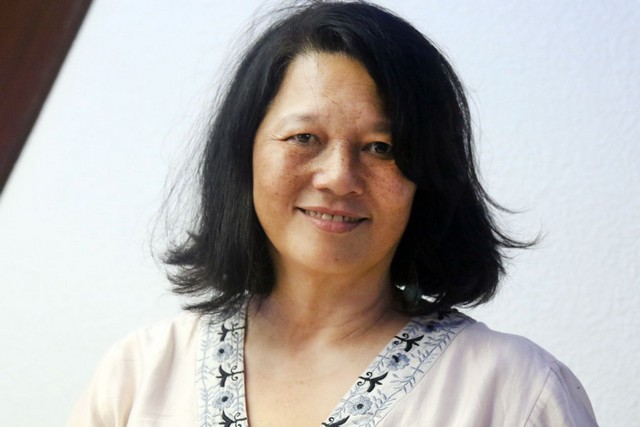
By Zainah Anwar
4th Raja Aziz Addruse Memorial Lecture
Royale Chulan, Kuala Lumpur, 21 September 2016
Ladies and gentlemen, I am really honoured to be standing here today to give the 4th Raja Aziz Addruse Memorial Lecture. Thank you to the Bar Council and Steven Thiru, and the Organising Committee, for this brave invitation. I give talks and lectures all over the world, but it is not often that I get invited to give such a public lecture to a big and particularly important audience in Malaysia. So thank you for this honour, not least because it is in the name of a man I have always admired, the late Raja Aziz Addruse – a man of integrity and honour, a man who upheld the rule of law, who was passionate about human rights, who had the courage of his convictions. And not least, a man who believed that no matter how tough the battle is, we must never give up – to stand up and speak out for what is right and what is just. So thank you once again for this honour.
Ladies and Gentlemen, when I began to speak publicly of finding equality and justice in Islam over 25 years ago, a common response was, “Why bother?” Muslim feminists told me it was a waste of time, a losing battle because Islam, in fact, all religions are inherently unjust and patriarchal: for every alternative interpretation I could offer to justify equality, the ulama could counter with 100 others. And it is their voice that is recognized as the voice of authority on matters of faith, not mine.
The secularists said it was a dangerous enterprise, as I was giving legitimacy to the position of religion in the public square. Religion is private between you and God and should have no role to play in public life, let alone in public law and policy. To argue that religion can be a source of good and a source of justice is to give strength to the place of religion in public life. Religion must remain personal, and be delegitimized in the public sphere.
And the human rights activists felt it was wrong to engage with religion as the fight for justice and equality can only and should only be fought through a human rights framework, through UN conventions and universal principles. This is our area of strength that the ulama and Islamist activists do not have, and we should focus our struggle within only this universal framework.
All fair arguments, but, I do not believe they are strategic. This decision of so many human rights and women’s rights activists to ignore religion has been harmful to the larger human rights movement and democracy building, not least for all us living in Muslim contexts. Religion has not gone away from public life. And to continue to wilfully ignore religion, its importance to the lives of citizens and the so many women we claim we want to help, and its use and abuse in politics and public law and policy, is I believe irresponsible and self-defeating.
Let’s get real here. We do not live in a country where there is a separation of religion and state, let alone religion and politics. The reality is we live in a country where religion, and in this particular context, Islam, is a source of law and public policy.
And yet, for too long, we have left the field of religion and public policy wide open for the most conservative and authoritarian forces within Islam to define, dominate and set the parameters of what Islam is and what it is not. They decide what a good or bad Muslim is, they dictate how to be a good Muslim woman, wife and daughter, and then prescribe laws and policies that keep us women, in particular, shackled as second-class Muslims, and indeed, third class citizens. For at the top of pecking order would be Muslim men, then non-Muslims, men and women, and then only Muslim women who certainly have less rights in this country than their sisters of other faiths.
Then, when we protest, they shut us up, because, they say, we have no authority to speak on Islam.
Yet, Islam, in their own words, is a way of life. Islam has all the answers. Islam is the solution. But how can Islam be a way of life, contain all the answers to all that is wrong in our lives and our society, and yet we – those who are directly affected by Islamic laws and practices – have no say in it? No right at all to define what Islam means to us? We are supposed to just listen and obey? How can it be relevant to our lives when too many of those who question the orthodoxy are intimidated into silence? How can it be a tenable solution when many are persecuted in the name of religion, and in some countries, even killed, beheaded, stoned to death, hands and feet cut off?
As a Muslim woman who believes in an Islam that is just, and a God that is just, I am outraged how the religion I love, the God I love has been hijacked by authoritarian forces who have turned it into a faith I cannot recognize. An authoritative God, an authoritative Text has been abused for authoritarian purposes.
What are the choices before us? I could turn my back on religion, as so many Muslim feminists and human rights activists have done all over the world. Forget about Islam; let’s focus our struggle for equality and justice from within the human rights framework only. However, I am a believer and turning my back on God was simply not an option. I felt compelled to understand my religion better, to ask questions, to search for answers to reconcile the supposed disconnect between my faith and my realities. Why must I choose between being a Muslim or a feminist, a Muslim or a human rights activist? Or for that matter, why should you, if you are a lawyer, choose between being a Muslim or a lawyer who believes in justice and equality, a Muslim or a judge upholding the rule of law and the Constitution as the supreme law of the land?
These are the questions I ask. I believe these choices we are asked to make are false binaries, constructed to divide us for political purposes, for an ideological project. Let us be clear about that. This is not about Islam. It is about politics, power and privilege.
So we can keep a blind eye, turn our back or as responsible citizens, we can engage, understand. My friends and I chose to make the effort to read, to learn, to open our minds, and our hearts, to the possibilities for beauty, justice and equality in the sacred Text.
And that was what the group I co-founded, Sisters in Islam, did. Read, (Iqraq) the first word God revealed to the Prophet Muhammad (pbuh). That was in 1987, almost 30 years ago. That’s how long we have existed! For us, opening the Qur’an once again with feminist eyes, was a revelation. It was the most liberating experience for us to discover numerous verses in the Qur’an that provide for an ethical vision of Islam, advocating the absolute moral and spiritual equality of women and men.
Verses such as Surah 33:35 on common and identical spiritual and
moral obligations placed on all individuals regardless of sex; Surah 3:195 which declares that men and woman are members, one of another; 2:187 which describes Muslim men and women as each other’s garments; 9:71, the final verse on the relationship between men and women which talks about them being each other’s ‘awliyya -protecting friends and guardians – and the obligations for both men and women, to enjoin what is just and forbid what is evil, to observe regular prayers, pay the zakat (tithe) and obey Allah and his Messenger and they will be equally rewarded. These verses are unequivocally egalitarian in spirit and substance, and reflect the Qur’anic view on the relationship between men and women.
This egalitarian vision also extends to human biology. The verses on creation of men and women talk about the characteristic of pairs in creation (51:49, 53:45,78:8, 50:7, 22:5, 36:36). Since everything created must be in pairs, the male and female must both be necessary, must exist by the definition of createdness. Neither one comes before the other or from the other. One is not superior to the other, nor a derivative of the other. This means that in Allah’s creation of human beings, no priority or superiority is accorded to either man or woman. These are incredibly empowering verses in the Qur’an.
So, if we are equal in the eyes of God, why are we not equal in the eyes of men?
What happened to the ethical voice of the Qur’an which insistently enjoins equality of all individuals? which insistently enjoins justice – even if it means going against your own personal interest, or your parents or your relatives? How did this voice become silent, and largely absent in the body of political and legal thought in Islam? When women decided to read the Qur’an for themselves, they discovered this ethical message of equality and justice in Islam. They began to question why this voice was silent in the exegetical and juristic Texts of the religion and in the codification of the teachings of the religion into public law. Who decided that these verses in the Qur’an shall be put aside? Why couldn’t these egalitarian and compassionate verses be used to guide the laws governing marital relations in Islam? Who decided the verses that could be read as discriminatory towards women be the source of law and public policy?
In making these choices, whose interests are served, protected, and advanced, and whose interests are shunted aside? Is this really about living the will of God on earth as these men in authority would like us to believe or is it more about how the word of God could be used, should be used, to perpetuate patriarchy and dominance and resist the changing realities galloping before their our very eyes?
The setting
Ladies and Gentlemen, my work over the past 30 years has centred on the struggle for equality and justice for Muslim women living in Muslim contexts.
I believe, one of the most profound challenges we as Muslims face today is the search for ways to live our faith in a world where democracy, human rights and women’s rights constitute the dominant ethical paradigm of the modern world. In the 21st century, there cannot be justice without equality. It is as simple and undisputable as that.
As someone who believes that God is just, that Islam is just, I am outraged that so much injustice, cruelty, and violence are perpetrated in the name of Islam. I will not go into the long and depressing list of outrageous acts against women and children justified in the name of Islam that occur daily throughout the Muslim world, and against those who think, act, believe and behave differently, and the violence and senseless killings and other barbaric acts, with the rise of the Islamic State, Boko Haram, Taliban, Al-Qaeda and other jihadist groups. We are all too familiar with these depressing horror stories that surface in national and global press coverage on a daily basis.
What I want to do today is to give you hope and possibility – to share with you how much the world of scholarship and activism have changed in many Muslim contexts over the past 20 years or so – and changed for the better. I want to share with you the courage and the will of Muslim women, working with outstanding Muslim scholars, who are taking the lead to define how religion is understood and practised, and who are demanding that OUR experience of living Islam and being impacted by laws and policies made in the name of Islam give us the right and the authority to decide and shape what Islam means and should mean in our daily lives, and as a source of law and public policy in our countries.
It is because women have borne the brunt of this suffering in the name of religion, that in many parts of the Muslim world today, it is women who are organized, and are at the forefront of our societies in pushing for change in the understanding and practice of our religion – to recognize equality and justice and to push for law reform to uphold these principles, and to end practices in the name of religion and culture that are harmful to us.
But of course bringing change is never easy. Those who have benefitted from the status quo are resistant to change and use all kinds of tactics to demonize and delegitimize the voice of change. Look at the constant attacks against Sisters in Islam. Our book, Muslim Women and the Challenge of Islamic Extremism, was banned because it supposedly was confusing the minds of Muslim women and was a source of public disorder! If only those men go to the supermarket and realize that women on a daily basis are faced with numerous choices, over what coffee to buy, what milk, what rice, what cereal. Making and weighing pros and cons of the wisdom of the decisions we make may be alien to some men, but not to women. Finding out that God actually says that men and women are equal before his eyes, that marrying one is best for you to prevent you from doing injustice, is music to women’s ears and a source of happiness, not a source of public disorder!
The reality is women’s lives throughout the world have changed. Our realities, our needs, our roles and status have changed. And yet, the understanding of Islam that those in authority use to govern our lives has not changed.
For many of us who have decided to engage with religion to fight for our rights, it is our utter faith in a just God and a just Islam that have made us embark on this perilous, but compelling public struggle to push for an understanding of Islam that recognizes the urgent necessity that we, women, be treated as human beings of equal worth and dignity. Is that such a radical and unIslamic notion? Really?
We believe these principles and the ideals of equality and justice are intrinsic to the Qur’an and are also of course upheld in universal human rights principles that regard all human beings as equal. What could be more Islamic than the first article of the UN Declaration on Human Rights which states “All human beings are born free and equal in dignity and rights”.
The Challenge
So, how do we as Muslims reconcile the tenets of our faith to the challenge of modernity, of plurality, of changing times and circumstances? Today citizens, women, men, youth, are out in the streets clamouring for justice, equality, freedom, dignity, respect for rule of law. This clamour must necessarily include justice, equality, freedom, dignity and respect for women as well, for the simple reason that we are part of the human race, too.
So how can the teachings of Islam be reconciled with the realities and aspirations of living in the 21st century?
I want to draw your attention to the incredible efforts of many scholars and activists living in Muslim contexts who have been engaged in the production of new feminist and rights-based knowledge in Islam, and are creating a public voice at the national and international levels, pushing for the possibility and necessity of reform of Muslims laws and practices to uphold the principles of equality and justice. What they have been doing is to bridge the seeming divide between Islam and human rights/women’s rights and break that constructed binary – as if all the forces of evil are on one side and the forces of good on the other.
They are separating patriarchy from Islam’s sacred Text; their work transcend ideological dichotomies such as ‘secular’ versus ‘religious’ feminism, or ‘Islam’ versus ‘human rights’ or ‘Islam’ versus ‘women’s rights’; they show these dichotomies to be false and arbitrary. They point out that the real battleground is not between Islam and secularism or human rights or women’s rights, but between despotism and patriarchy on the one hand, and democracy and gender equality on the other.
It is this voice that today is challenging the ideology of intolerance, misogyny, conservatism and extremism that dominate the mindsets of so many of those in authority in the Muslim world today.
It is led by Muslim scholars and activists who advocate a review and critical re-interpretation of the exegetical and jurisprudential texts and traditions within Islam. This work places emphasis on how religion is understood, how religious knowledge is produced, and how rights are constructed in the Islamic legal tradition and how they can be reconstructed. It locates the production of religious knowledge in the socio-historical context of its time and asserts that given changing times and circumstances, new religious knowledge needs to be produced to deal with new challenges, questions and issues that the tradition had not dealt with.
What makes this work exciting is that it is done not just at the theological level, but also at the political and social levels. It is cutting edge work at the intersection of Islam, politics, law and gender.
The Path
Let me share with you the beginning of one group, Sisters in Islam in Malaysia, the group that I co-founded in 1987. Yes, it was that long time ago before anyone noticed the importance of Islam and its use and abuse as a political ideology.
Like many other women’s groups, it is injustice, oppression and ill-treatment that mobilized us Muslim women. Sisters in Islam first got together because of our deep concerns over the injustice women suffered under the Shari’ah system. As professional women and as activists, other women often approached us to confide their marital problems and the challenges faced when they approached the religious authorities to seek redress to their issues. We got together first to look into the obstacles women faced in accessing their rights under the Islamic Family law. The difficulties in getting divorce, maintenance, a share of the marital assets, custody of their children – all rights that existed under the law, but given the gender bias in the system, women faced an uphill battle whenever their husbands decided to challenge their claims. This was 1987.
We felt angry and powerless in the face of complaints by women that they had to suffer in silence confronted by disempowering advice from the religious authorities; hearing talks, again and again, in religious classes, over radio and television, where women were often told that men are superior to women, that men have authority over women, that a man has a right to beat his wife, that a woman must obey her husband, the evidence of two women equals to one man, the husband has a God-given right to take a second wife, and therefore it is a sin for a woman to deny him that right, that a wife has no right to say no to sex with her husband, that hell is full of women because they leave their heads uncovered and are disobedient to their husbands.
Where is the justice for women in all these pronouncements? It was this kind of questioning, and above all, the conviction that Allah could never be unjust, that eventually led us to go back to the primary source of our religion, the Qur’an. We felt the urgent need to read the Qur’an for ourselves and to find out if the Text actually supported the oppression and ill-treatment of women.
Given the audience today, a little bit of Malaysian history is appropriate. We actually first began to meet under the auspices of the Association of Women Lawyers. The then President, Datuk Noor Farida Ariffin, was my housemate. So the AWL Shari’ah sub-committee members and a few of us outside the association who felt strongly about the issue, met in my house to discuss the need to do something about the administration of the Islamic Family law. And we organized a conference with the Women’s department in the Prime Minister’s Office and the then Pusat Islam to raise all these problems and find solutions.
As time went on, some of us felt that dealing with law alone was not enough. If the Qur’an was used to justify discrimination against women, then it was incumbent on us to read and understand what the source of those laws and practices actually said. Thus the decision to open the Qur’an to read for ourselves and find out if God really meant to treat women as second-class to men. Surprisingly, perhaps not to you who have been trained as lawyers, the lawyers in the group dropped out of the study session, one by one. Noor Farida had left for England to head the Gender Unit in the Commonwealth Secretariat and only one lawyer from AWL remained in the study group that eventually became Sisters in Islam.
Let me tell you, this process that Sisters went through was the most liberating and spiritually uplifting experience for all of us. We took the path of Iqraq (“Read”) and it opened a world of Islam that we could recognize, a world for women that was filled with love and mercy and with equality and justice. Women’s rights were actually rooted in our tradition, in our faith. Those verses I listed out earlier were empowering to us as women who believe in our right to justice and equality, to be treated as human beings of equal worth and dignity. We were more convinced than ever that it is not Islam that oppress women, but interpretations of the Qur’an influenced by cultural practices and values of a patriarchal society which regard women as inferior and subordinate to men.
For much of Islamic history, it is men who have interpreted the Qur’an and the
traditions for us. The woman’s voice, the woman’s experience, the woman’s
realities had been largely silent and silenced in the reading and interpretation of the Text. The silence of that interpretive voice was seen as the silence of the Text. But when Sisters read the Text, we discovered words, messages and meanings that many of us were not exposed to in the traditional education on Islam that we went through in our lives.
For us, it was the beginning of a new journey of discovery. It was a revelation to us that the verse on polygamy (Sura an-Nisa, 4:3) explicitly said “…if you fear you shall not be able to deal justly with women, then marry only one.” How come one half of the verse that said a man can have up to four wives becomes universally known and accepted as a right in Islam and is codified into law, but the other half of the very same verse that promotes monogamy is largely unheard of.
It dawned on us that when men read the verse, they only saw “marry two, three or four”. They stopped reading, for in that phrase, they saw the word of God that validated their desire for and their experience of multiple sexual partners. But women continued to read the verse, and it clearly said, “… if you fear you cannot deal justly with women, then marry only one.”
Those were the words of Allah that spoke to our fears of injustice and heartache. We understood that the right to polygamy was conditional, and if a man cannot fulfill those conditions of equal and just treatment, then Allah said marry only one. And I haven’t even gone on to the debate on whether it is only orphans or war widows and in times of warfare that polygamy can be practiced – not in peacetime, and certainly not in marrying 21-year-old model/actress/singer all rolled into one that many men these days seem to want to take as a second wife.
In fact the verse ends by saying that marrying only one “…will be best for you to prevent you from doing injustice.” What further validation do we need to argue that polygamy is not a right in Islam, but is actually a responsibility allowed only in exceptional circumstances.
The question that arose was obvious to us: WHO decides which verse, which
interpretation, which juristic opinion, which hadith, traditional practice of the Prophet, would prevail and be the source of codified law in this modern world, to govern our private and public lives and punish us if we fail to abide, and which verse would fall by the wayside? On what basis is that decision made? Whose interests are protected and whose interests are denied? It was clear to us that the outcome of this process was more about power, privilege and politics rather than living the divine will on earth.
As feminists, as believers, and as activists living within a democratic
constitutional framework, we decided to assert and claim our right to have our
VOICE heard in the public sphere and to engage in the decision-making
process on matters of religion that we believe must take into consideration the realities of our lives and the justice enjoined by the Qur’an.
The Challenge
Through letters to the editor, memorandums to the government, press statements, training programmes and publications, we took positions, guided by the principles of justice, equality and compassion found in the Qur’an, on contentious issues such as polygamy, equal rights, dress and modesty,
domestic violence, hudud laws, and eventually on larger issues of freedom of expression, freedom of religion and other fundamental liberties.
Of course by claiming our right and creating the space to speak out in public on Islam, we have made enemies. We are often criticized by patriarchal politicians, conservative scholars and Islamist activists – a common experience of other women’s groups and progressive scholars in other Muslim countries.
The attacks and condemnations usually take three forms:
First, they undermine our right and our legitimacy to speak on Islam by
questioning our credentials. They say we have no right to speak on Islam
because we are not traditionally educated in religious schools, we do not have a degree in Islam from a recognized Arab university, we do not speak Arabic, and we do not cover our heads. They say we are western-educated feminists
representing an elite strata of society who are trying to impose alien western values on Islam and the ummah.
Second, they accuse us of having deviated from our faith. They equate our
questioning and challenging of their obscurantist views on women and
fundamental liberties, and their interpretations of the Qur’an as questioning the word of God, and therefore they say we doubt the infallibility of God and the perfection of the message.
Third, they contend that it is dangerous to offer alternative opinions and
interpretations of the religion as this could confuse the ummah and lead to
disunity. There can only be one interpretation to be decided upon by the ulama and all citizens must abide by this interpretation.
It must be understood that while all Muslims accept the Qur’an as one, the human effort in interpreting the Qur’an had always led to diverse and differing opinions. Until today we have the diverse schools of law and schools of theology in the Islamic tradition that are still in use throughout the Muslim world. It is precisely because of this wealth of diversity that Islam spread and flourished in different cultures and societies – all could accommodate the universal message of justice in Islam. And yet in many Muslim societies today, there are many who condemn those who offer alternative views as infidels and apostates, and they willfully choose to deny or negate the richness, complexity and diversity of our heritage.
There is also a denial of the historical context within which Islamic jurisprudence, fiqh, itself was constructed, and of the consequently historical character of the corpus of the Islamic legal tradition as it was developed and applied within early and classical Islamic civilization.
For example, in classical Islamic jurisprudential texts, gender inequality is taken for granted, a priori, as a principle. Women are depicted as “sexual beings” not as “social beings” and their rights are discussed largely in the context of family law. The classical jurists’ construction of women’s roles and responsibilities was right for their times, for it reflected the world in which they lived where inequality between women and men was the natural order of things and women had little role to play in public life. Men were supposed to provide for and protect women and the family, in return women must obey and be available for men’s needs. But today, women provide for and protect their families as well, including the men, but they are still expected to obey and be treated unequally.
Our realities have changed. And yet the conservative ulama that dominate the religious authorities and so many Islamist activists of today seem unable or unwilling to see Islamic law from a historical perspective as rules that were socially constructed to deal with the socio-economic and political context of the time, and that given a different context, these laws have to change to ensure that the eternal principles of justice are served.
In this process, it is human agency that determines which Texts are relevant, and how they should be interpreted to serve the best interest of the
community. While the source is divine as it is the revealed word of God, human understanding of the word of God is a human construct that is fallible and changeable in accordance with changing times and circumstances. Therefore the role of human experience and intellect in engagement with the divine Text will lead to the production of Islamic knowledge and Islamic laws that cannot then be regarded as divine.
They can therefore be changed, criticized, refined and redefined. Unfortunately, in the traditional Islamic education most of our ulama have gone through, the belief in taqlid (blind imitation) and that the doors of ijtihad (reinterpretation) are closed is so strong. This rationale is based on the belief that the great scholars of the classical period who lived closer to the time of the Prophet were unsurpassed in their knowledge and interpretative skills.
But to adopt such an attitude is totally untenable in today’s world when we face new and different challenges: the issue of human rights, of democracy, of
women’s rights, the challenge of modernity, the challenge of change. How do we find solutions from within our faith if we do not exert in ijtihad and produce new knowledge and new understandings of Islam in the face of new problems? How do we ensure that the eternal principle of justice in Islam remains at the core of Islamic law in substance and in implementation?
This problem is compounded by the fact that most Muslims have traditionally
been educated to believe that only the ulama have the right to talk about Islam. What are the implications to democratic governance, to human rights and gender justice, if only a small group of people, the ulama, as traditionally believed, have the right to interpret the Qur’an, and codify the Text in a manner that very often isolates the Text from the socio-historical context of its revelation, isolates classical juristic opinion especially on women’s issues, from the socio-historical context of the lives of the founding jurists of Islam, and isolates our textual heritage from the context of contemporary society, the world that we live in today.
What you get today then is a disconnect between law and reality, between dogma and ideology, and reality. To continue to ignore the changing realities on the ground is untenable.
And yet, we see political leaders, religious leaders, international institutions in paralysis, or worse in complicity in dealing with the ways religion is used and abused in many societies.
As an activist of almost 30 years, I am near to giving up that change can come from the top. Today, I feel very strongly that the role played by civil society groups, the women’s rights and human rights activists who risk life and limb, and public intellectuals will be key in bringing about change in the terms of public engagement on Islam and its role and place in many Muslim societies.
For this to happen, however, the public space to debate on Islam and Islamic
issues have to open up. This is why I believe the struggle for a more just and liberating Islam has to take place within the struggle for democratization within Muslim societies. I am always amazed when Westerners, in particular, the Americans twist themselves into knots, puzzled as to why so much of what they see as Islam in the Muslim world remains misogynistic, undemocratic, extremist and cruel. Well, what do you expect? You cannot expect a democratic and progressive Islam to suddenly grow and thrive within despotic states, led by powerful leaders supported by the most powerful nation on earth.
The fight to open up the space for debate in Muslim contexts is extremely critical and so is the ability to stand your ground when under attack. For Sisters in Islam, every attack against us is seen as an opportunity to bring more voices into the public space and to challenge the myth that there can be only one opinion in Islam. For example: When the government banned our book Muslim Women and the Challenge of Islamic Extremism, we took them to court, challenging the ban on constitutional grounds. The government claimed that our book was a threat to public order as it confuses Muslims, especially women and those whose faith is shallow! We won at the High Court, the government appealed, we won again at the Court of Appeal and the government appealed yet again to the Federal Court, and the Federal Court threw out the government’s leave for appeal. It was music to our ears when one of the judges, in a panel of five, that included two women, said the Home Minister was supposed to apply his mind to this case, he did not, instead he applied the mind of the religious authorities.
Thank God for little mercies, it makes the struggle worth it.
Currently, we are under attack again by a state religious authority. A fatwa has been issued against Sisters in Islam, declaring us as deviants for subscribing to religious pluralism and liberalism, whatever that means. Again, we have taken this case to court challenging it on several constitutional grounds, including freedom of expression, freedom of religion and freedom of association. The High Court has thrown the case to the Shari’ah court, but we are appealing against that decision.
The idea that women have a voice and a say in how the religion is interpreted and practiced in a country that uses Islam as a source of law and public policy, remains a radical notion!! Trust what your heart says and you will know this is not rocket science.
Global Impact
Needless to say, the work of Sisters in Islam in Malaysia, has had a global impact. In 2007, we led the initiative to form Musawah, the Global Movement for Equality and Justice in the Muslim family.
Given the frustrations and opposition Muslim women activists faced in trying to push for reform of discriminatory Muslim Family laws and the issue of women’s rights in Islam, we felt it was high time that all us who have for decades struggled against patriarchs in government, society, and our private lives, come together and create a very collective international public voice of Muslim women demanding our right to equality and justice. Thus Musawah, which means equality in Arabic, was launched in February 2009 in Kuala Lumpur with over 250 participants from 47 countries, including 32 member countries of the OIC, Organization of Islamic Cooperation. It was an exciting moment that until today we rejoice in.
What Musawah hopes to bring to the larger women’s and human rights movement at the global level is this:
• an assertion that Islam can be a source of empowerment, not a source of oppression and discrimination;
• an effort to open new horizons for rethinking the relationship between Islam and human rights, equality and justice;
• an offer to open a new constructive dialogue where religion is no longer an obstacle to equality for women, but a source for liberation;
• a collective strength of conviction and courage to stop governments and patriarchal authorities, and ideological non-state actors from the convenience of using religion and the word of God to silence our demands for equality; and
• a space where activists, scholars, decision makers, working within the human rights or the Islamic framework, or both, can interact and mutually strengthen our common pursuit of equality and justice for Muslim women.
Since then, Musawah has gained an international reputation for its groundbreaking work in knowledge building, capacity building and international advocacy. It challenges patriarchal interpretations of the Shari’ah from within Islamic tradition. It links scholarship with activism to bring new perspectives on Islamic teachings, inserting women’s voices and concerns into the production of religious knowledge and legal reform in Muslim contexts. It uses a holistic framework, the Musawah Framework for Action, that integrates Islamic teachings, universal human rights principles, contemporary state constitutions and laws that recognize equality and non-discrimination, and the lived realities of women and men, to argue for the possibility of reform and for the necessity of equality and justice for women living in Muslim contexts.
Our latest Knowledge Building project on qiwamah and wilayah, twin legal concepts in the Islamic tradition that mandate male authority over women, has produced a ground breaking publication, Men in Charge? Rethinking Authority in Muslim Legal Tradition.
The book has received raving reviews from major Islamic scholars. The chapters in the book raise several important questions. Why and how did verse 4:34 (commonly interpreted to mean men have authority over women), and not other Qur’anic verses that uphold equality and justice and compassion between men and women, become the foundation for the legal construction of marriage in Islam? How and through what legal logic did these two concepts become organizing principles in Muslim family laws? Why are these concepts still the basis of gender relations in the imagination of modern-day jurists and Muslims who resist and denounce the idea of equality in marriage as alien to Islam? What do equality and justice mean for women and the family today?
I would urge you to buy the book now! Within a few months of its release, it has been used as recommended readings in 17 universities in eight countries, including several Arab countries. I hold my breath for the first Malaysian university to use this book.
Musawah also works in two other key areas – capacity building and international advocacy.
Our 7-day short course, called ‘Islam and Gender Equality and Justice’ exposes women’s rights activists to how knowledge is produced in the Islamic tradition, by examining the methodology and conceptual tools used to build the interpretive and legal traditions in Islam. Participants learn how the Qur’an is interpreted, how Hadith is transmitted, how Fiqh is constructed – all within a social context – and explore the possibilities of constructing new understandings to deal with changing times and circumstances and develop action plans on strategies for reform and building a voice and culture of public debate on matters of religion. In the past one year, we have held regional trainings – for South Asian activists from Pakistan, Bangladesh, India and Sri Lanka, for the Horn of Africa activists from Sudan, Somalia, Somaliland, Ethiopia, Kenya and Uganda, and for the Middle East activists from Egypt, Jordan, Palestine, Tunisia, Morocco, Algeria and Saudi Arabia.
Guys, the world is changing. Don’t be left behind.
Many find the course empowering and transformative as they discover an Islam that is liberating and that makes sense to their realities. The course builds their knowledge and confidence to critically engage with the ways their governments and religious authorities use Islam to justify discrimination against women and offer an alternative vision of Islam that upholds equality and justice. This training is critical as we believe that change can only happen if we can build a public voice and public will for reform to take place. And today, more and more women’s rights activists living in Muslim contexts have begun to recognize the strategic need to understand Islam better, acquire the knowledge and courage not just to challenge the ways Islam is used to discriminate against women, but more importantly to offer an alternative vision that reconciles religion with human rights and women’s rights. In countries and communities where Islam is used as a source of law and public policy and shape culture and tradition, I believe this is an imperative.
In the area of international advocacy, Musawah is engaged deeply with the CEDAW process (the Convention on the Elimination of all Forms of Discrimination against Women – the women’s international bill of rights that Malaysia has ratified). We did a major research on CEDAW and Muslim Family Laws, critically examining how governments from major OIC countries use Islam to justify reservations and non-compliance with treaty obligations. We critiqued their approach, and offer the Musawah Framework for Action as an approach that reconciles Islam with women’s rights, and provide the conceptual legal tools and language to argue for the possibility of equality and justice and reform of Muslim family laws. Today we regularly submit Thematic Reports and issue Oral Statements on Article 16 on marriage and family relations whenever key Muslim countries report before the CEDAW Committee. Governments that continue to say that the Muslim Family Law of their country which discriminate against women cannot be changed because they are God’s law are routinely challenged by CEDAW experts who are now aware of the diversity of interpretations and juristic opinions and the richness of the Muslim legal tradition that enables reform to take place. They use the examples we provide of good practices from various Muslim countries to question governments that if indeed these discriminatory laws are divine and cannot be changed, why then do different Muslim countries have different laws and practices on any particular issue – all on the basis of Islam. Why does Tunisia ban polygamy, why do Saudi Arabia, Syria, Jordan, Egypt and Lebanon allow a woman to include in her marriage contract that the husband cannot take a another wife and if he breaches this term, she is entitled to a divorce; why does Morocco have equal and minimum age of marriage for both boys and girls at 18, why do Pakistan, Bangladesh, Morocco, Tunisia not require a woman to have a wali/guardian in order to get married, why do Turkey and Tunisia recognize the mother’s equal right to guardianship of her children.
You see, ladies and gentleman, the issue indeed is not that there cannot be reform, there cannot be equality and justice for women in Islam; the issue is whether governments and those in religious authority have the political will to end discrimination against women. The arguments for reform are there – within Islam, within our Constitutional guarantees of equality and non-discrimination on the basis of gender, within the human rights principles we subscribe to when we agree to be part of the international system, and not least in the realities of women’s lives today and what it means to build and sustain the well-being of the family, all members of the family, not just one.
The Way Forward
Let me conclude this talk by urging all of us to exercise some clarity in the terms we use to engage publicly on Islamic matters and its role in public law and policy, especially to the lawyers and aspiring lawyers here today.
Let us understand a few key terms that are now bandied about freely and interchangeably today.
First, there are distinctions between Shari’ah, fiqh, hukum and qanun. Shari’ah literally means the way, the path. What we mean by Shari’ah, is God’s revelation to Prophet Muhammad (pbuh) as embodied in the Qur’an, encompassing ethical values and principles to guide humans in the direction of justice and correct conduct. No person nor institution has the authority to claim certainty in understanding the divine will. Only God possesses perfect knowledge.
This led to the development of fiqh, which literally means understanding. It is the process by which humans attempt to derive legal rules from the Qur’an and the Sunnah (practices) of the Prophet. The classical Muslim jurists developed rigorous methodologies and principles to establish a legal system that they believed could best reflect the divine will. And yet none of them ever claimed certainty over their opinions and rulings. Certitude belongs only to God. So while Shari’ah, God’s revelation, is immutable and infallible; fiqh is changeable and fallible. Much of what we freely label as “Shari’ah law” today is actually fiqh, a human construction. Polygamy is banned in Tunisia, permitted without restrictions in many countries, permitted with permission in countries like Malaysia and Singapore. These decisions are based on different fiqh opinions and understandings. It is decided by men, not God.
Hukum are legal determinations, rulings in any given case. Qanun are codified laws and regulations enacted by a government.
So what we are actually talking about when we dispute over khalwat, moral policing, cross dressing, hudud, and family laws are actually qanun laws based on fiqh, our human understanding of God’s teachings. They change with time and circumstance. We are not talking about Shari’ah, the divine word of God. We are talking and questioning the role and motivations of human agency and the methodologies used in the construction and implementation of those laws that have increasingly led to injustice and conflict of laws in our constitutional democracy today.
So the next time a self-appointed soldier of God tells you, ‘You don’t have a right to question or have a different opinion,’ ask him exactly what is it that you are not supposed to talk about – Shari’ah, fiqh, hukum, qanun? And be clear yourself that what you are talking about is not theology alone, but the intersection of theology, with law and public policy – and politics and gender. In the end, what we are discussing about is actually public law and public policy that governs and affects our lives in very fundamental ways. And every citizen within a democracy has a right to engage in this.
Second, there are categories of laws in the Muslim legal tradition. Ibadat (rules that regulate the relationship between humans and God) where there is little room for disputation, and mu’amalat, rules that regulate the relationship of humans with one another. Much of the debate and contestations going on now in Malaysia are about mu’amalat laws – where jurists of over 1,000 years ago have favoured human reason, human experience, and discretion to serve the well-being of society, depending on time and place. We all know the famous example of Imam Shafi’i who changed his legal rulings when he moved from Iraq to Egypt – because of different circumstances and social conditions. This was a principle established over 1,100 years ago, ladies and gentlemen! It is not a new invention of westernized feminists. It is our tradition.
Third, the Muslim legal tradition is packed with rich and sophisticated juristic concepts that make reform towards equality and justice possible. There are the principles of maslaha (public interest), ikhtilaf (differences of opinion), istihsan (choosing the best opinion in the interest of equity and justice), istislah (choosing the best opinion in the interest of public good). How do we apply these principles to solve the problems and contestations we face in the context of 21st century multi-ethnic and multi-religious Malaysia in order to ensure that justice is done? Or do we continue in our wilful resistance to the changing realities on the ground, and shunt aside all that is good and rich in our tradition?
Let’s build some pride and knowledge in our own legal tradition, instead of defiling it with shrill sloganeering that Islam is under threat, and Muslims are under siege. It’s your authoritarian will that is under threat. Not Islam.
In the end, what we need to ask is this: what is the purpose of Islam in public life and what is the purpose of these Islamic laws? Why would the citizens of Malaysia want an Islamic state with Islamic laws that assert different rights for Muslim men, Muslim women and citizens of other faiths and minorities, rather than equal rights for all? Why would those whose equal status and rights are recognized by a modern democratic system support the creation of such an Islamic state? If an Islamic state means an authoritarian theocratic political system committed to enforcing androcentric and dogmatic legal rulings that lead only to injustice, and silencing or even eliminating those who challenge state authority and its understanding of Islam, then why would those whose fundamental liberties and human rights are protected by a democratic state support such an Islamic state?
We as Muslims make the effort to comply with the divine will for a purpose – to do good, to bring about justice, to contribute to the well-being of family and society.
Alas, the ugly truth is too many abuse God and Islam to serve their own personal interest to remain in power, to enrich themselves, to remain privileged and protected or to get into power, only to do more of the same.
As we descend into an Orwellian society where wrong is right and bad is good, and where Big Brother watches our every move, let us who believe in justice and reason take strength in the legal maxim, attributed to Imams Shafi’i and Abu Hanifa: “We believe that our opinions are correct, but we are always cognizant of the fact that our opinions may be wrong. We also believe that the opinions of our opponents are wrong, but we are always cognizant of the fact that they may be correct.”
And in our search for solutions, let us be resolute and be guided by the words of the 14th century jurist, Ibn Qayim al-Jawziyyah, “The fundamentals of the Shari’ah are rooted in wisdom and promotion of the welfare of human beings in this life and the Hereafter. Shari’ah embraces justice, kindness, the common good and wisdom. Any rule that departs from justice to injustice, from kindness to harshness, from the common good to harm, or from rationality to absurdity cannot be part of Shari’ah …”
In the end, only God knows best. So let’s not play God on this earth.
For Sisters in Islam and Musawah, the journey towards our vision of an Islam that is kind and compassionate, that upholds equality and justice remains long and challenging. Many of us live in authoritarian states with little tolerance for dissenting voices. The barbarity of ISIS seems to have no bounds. Our political leaders, many of them unpopular, delegitimized and desperate to stay in power are ever willing to use and abuse religion for political ends.
But for many of us, there is no other choice. We don’t wish to emigrate and live in foreign lands. We must stay and fight for the country we love, we want to live in and leave for our children. The challenge is to expand this public space we have created, to open up the debate, to turn the dissenting voices into a clamour for justice and equality, for freedom and dignity at the national, regional and international levels. And for those in authority to realize that there is already a paradigm shift in Islamic scholarship and activism in Muslim contexts, and to support these critical, ground-breaking initiatives. For change to be sustainable, it must take place from within – not from the barrel of a gun, from foreign interventions. Change from within is slow, perilous, but there is no other alternative.
I hope you will agree, as many others do, and as I know the late Raja Aziz did, that indeed what groups like Sisters in Islam and Musawah stand for today are a source of hope to the world, not least the Muslim world, and that what we stand for today represents what it means to be Muslim in the 21st century. Look, it is a no brainer – it is SIS…. or ISIS.
Thank you for listening.