Just International

Moroccan Elections: Where process trumps result

by Afro-Middle East Centre

The results of the recent, 7 October, Moroccan parliamentary election means little in terms of the exercise of actual political power, but is indicative of the continued popularity of the ruling Islamist Freedom and Development party (PJD) which won twenty-five per cent of the vote. Voter turnout stood at a low forty-three per cent because of apathy flowing from the realisation that King Mohammed VI will maintain control and the election meant little in terms of politics or power, and the belief that political parties’ objective was to join the extensive patronage networks rather than representing ordinary Moroccans’ grievances. Ideological polarisation and a skewed political system that inhibits the emergence of large political parties will further contribute to the legislature’s inability to keep the monarch in check.

With little real opposition to the king, the PJD’s victory is not terribly significant, especially in foreign policy and long term strategic planning. The party will rather attempt to further pry open the political space by confronting the palace on electoral and constitutional reform, and by focusing strongly on corruption. All this will be an incremental, attritional process.

Moroccan elections have been historically plagued by two major difficulties. First, the system promotes ideological fragmentation by encouraging the growth of multiple small parties. A low three per cent voting threshold is implemented, forcing larger parties to partner with small ones to gain a parliamentary majority. This inhibits ideological and policy coherence and allows Mohammed VI to stymie parliamentary opposition to his rule through what some call ‘political rationalisation’. Second, and more importantly, parliament has little actual power. Even though the king piloted constitutional reforms in July 2011 to curb his powers, he is still able to dissolve the government, and has absolute powers in the realms of foreign policy and strategic planning. Most major decisions must be ratified by the king, who chairs the supreme council of the judiciary, the national security council, and the council of ministers, and is the self-designated ‘amir al-mu’minin’ (leader of the faithful). Electoral power is thus circumscribed and many parties contest elections to gain access to the Makhzen (the palace) and thus its patronage networks.

This was manifest in the 7 October elections. The PJD increased its seat count from 107 in 2011 to 125, beating its main rival and the king’s favoured party, the Party of Authenticity and Modernity (PAM), which won 102 seats. The party must thus partner with some of the other thirty other parties to govern. It has entered into talks with the Democratic Front, consisting of the nationalist Istiqlal party (with forty-six seats), the Socialist Union of Popular Forces (USFP, twenty seats) and the Party for Progress and Socialism (PPS, twelve seats). These will likely form a coalition to exclude PAM. The PJD’s leader, Abdelilah Benkirane, has had to delicately balance his party’s opposition to aspects of the monarch’s power with the party’s need for monarchical endorsement to contest elections. Thus, although criticising the current political system that he calls tahakoum (politically manipulated authoritarianism), he repeatedly clarifies that he serves at the monarch’s behest and that bad decisions should be attributed to the monarch’s advisors and not Mohammed VI himself.

The low election turnout, down from forty-five per cent in the 2011 parliamentary election and fifty-three per cent in last year’s municipal vote, is due to voter apathy, and the boycott calls from the civil society Islamist movement Al Adl wa Al Ihsaane (Justice and Goodness) movement and the leftist Democratic Way party, which have been shunned from the political system. At the heart of the apathy is the realisation that the legislature’s power is severely curtailed. Hence the higher turnout for municipal elections, which many citizens see as more relevant to their needs.

The election has proven the popularity of the PJD, despite the Makhzen’s attempts to weaken it through ‘hard’ and ‘soft’ vote rigging and explicit backing for PAM. The PJD has improved from five per cent in the 2009 municipal election to sixteen per cent in the 2015 vote and from 107 seats in 2011 to 125 in the October poll. The party is thus likely to endure, despite its worse than expected performance in last year’s election, and in spite of the situation in the Middle East and North Africa region, that is unfavourable to parties referencing Islam. However, similar to Tunisia’s Ennahdha and Jordan’s Islamic Action Front, the PJD’s success lies in a focus away from ideology and toward partnerships with non-Islamist parties, and a reluctance to strongly pronounce on regional issues.

With youth unemployment at twenty per cent and graduate unemployment in many urban areas at forty per cent, the conditions that sparked the February 2011 Moroccan protests persist. Parties such as the PJD will need to carefully navigate the current political terrain else, or risk being seen as complicit when protests erupt again. Already around eighty per cent of people polled by the Arab Barometer III survey view the state as corrupt and judicial decisions as open to corruption.

27 October, 2016

Election 2016: A Political System In Crisis

By Nile Bowie

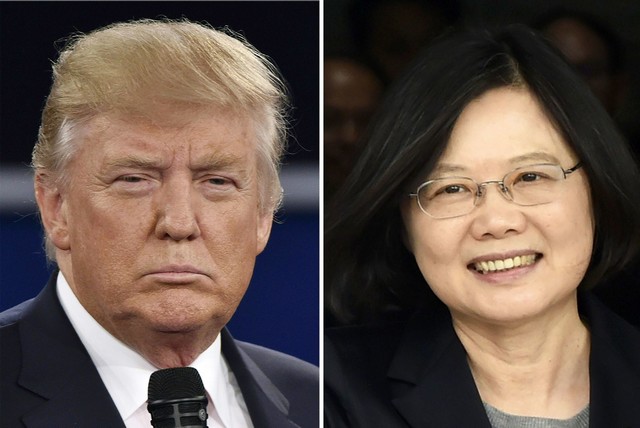
The outcome of strangest and most consequential election cycle in recent American history will soon be upon us. Regardless of who becomes the next president, this election will forever be synonymous with the rogue candidacy of Donald Trump and the demographic shifts that have emboldened the right.

Though it may be a close election, it is widely presumed that public antipathy towards Trump – the first major party candidate who is near-universally opposed by both major parties – will tilt the odds in Hillary Clinton’s favour. Nonetheless, Trump’s support base of primarily white, blue-collar Americans will be a major factor for the political establishment to contend with in the years ahead.

These voters are frustrated by their economic marginalisation wrought by neoliberal trade deals and economic policies, and are contemptuous of traditional political elite, their internationalism and liberal identity politics. For these voters, fear of immigration is entwined with the precarity of being working class, their troubling prejudices notwithstanding.

Economic disempowerment and political disenfranchisement have accelerated under President Obama, to the detriment of the American middle class. White, blue-collar Americans have witnessed the offshoring of their jobs and the erosion of their status in society, and Trump has masterfully stroked their resentment and discontent by playing on their fears of Muslims, immigrants and minorities.

Trump’s views often contain unusual contradictions and seem to be delivered impromptu. What remains consistent are his authoritarian views on crime and justice, vows to close the borders to refugees, Muslims and economic migrants, scepticism of overseas ‘democracy promotion’ and America’s role in international alliances, foreign policy views both isolationist and belligerent and of course, his distinctive megalomaniacal hubris.

Trump’s real problem with the Washington establishment is that he isn’t part of it. His campaign represents an insurgent faction of the oligarchical class that aims to displace and replace the standing political elites. Bipartisan opposition to Trump is grounded in the belief that he would be an unreliable proxy and a liability, someone too narrow and unpredictable to manage the common affairs of the ruling class and the US deep state.

Moreover, the US establishment is not interested in being led by such a contentious figure, who would draw protest and public opposition in a way that more conventional establishment candidates largely do not. For example, Trump’s rhetoric on immigration seems to engender more public outrage than the immigration policy under Obama, who has deported more people than any other president in history.

That being said, Hillary Clinton is a more dangerous candidate in many ways. Trump understands that the political system is rigged and the economy is oriented to serve various elite interests, a message that resonates across the political spectrum, even with anti-Trump segments of the electorate. As a hated political outsider not tied directly into the power and the money structure of the political system, there would be no shortage of gridlock and checks on the authority wielded by Trump in the unlikely event of his presidency.

By contrast, Clinton wields enormous political influence inside the corridors of political and corporate power through personal relationships and connections. Policy and legislation shaped by donor money, lobbyist groups and special interests have been a hallmark of the Clintons’ time in public office. The very fact that she is standing for office while being investigated by the FBI, having committed actions that would have ended the careers of other politicians and government employees, speaks for itself.

It has been reported by various sources that the FBI’s recent decision to reopen the investigation into the Clinton email scandal less than two weeks before election day has been motivated by an internal backlash within the agency’s rank and file, forcing FBI director James Comey’s hand as a means of addressing internal critics who believe he buried the Clinton probe for political reasons.

Clinton’s email scandal is not the real issue. She has spent her political career ruthlessly advancing the interests of high finance, the military industrial complex and corporate America, with dramatic repercussions for minorities and the marginalised inside the United States, and the civilian populations of countries targeted for US military intervention and destabilization during the her time as an influential first lady, senator and secretary of state.

Clinton has spent her long career advocating hawkish US military supremacy and banking deregulation, expanding the private prison industry to the detriment of impoverished African-American communities, dismantling the social safety net that marginalized families rely on, and enabling the consolidation of corporate power through secretive trade agreements. On the campaign trail, she has characterised her work as advancing the interests of women and families.

The Clinton campaign has repeatedly evoked the historic struggle for civil rights into a aspirational rhetoric of ‘breaking glass ceilings’ in the interest of a faux-feminism which prioritizes the equal opportunities of women to lead the nation’s highest office, while at once tone-deaf to the consequences faced by women and families on the receiving end of executive policies. The Democratic Party has become a parody of moral posturing, self-relishing its candidates with rhetoric that has no connection with policies in reality.

It is the party of establishment insiders and corporate donors who openly engineer the presidential nomination process to favour their preferred candidate by virtue of the undemocratic super-delegate system. Bernie Sanders, whose campaign inspired millions of Americans for good reason, has proven himself to be tepid and cowardly in the face of practices that have proven beyond doubt that the Democratic Party establishment conspired against him.

Bernie’s campaign centred around a rather modest, comparatively tame centre-left progressive platform that did not seriously question US militarism and the values of American exceptionalism. For the Democratic Party at large, the Sanders campaign represented a concession too far. The Clinton campaign even had the impudence to directly hire disgraced Democratic chairwoman Debbie Wasserman Schultz after leaked emails exposed her partisanship.

Rather than addressing the political substance of revelations uncovered by WikiLeaks, the Clinton campaign, backed by Obama administration officials, has reverted to neo-McCarthyism by labelling opposition as surrogates of Russia, explicitly accusing Moscow of meddling in the US election process. Accusations of Russian interference without accompanying evidence are at best a short-sighted means of deflecting responsibility for the corrupt actions of the Clinton campaign and Democratic Party insiders.

The next American president will have to confront the realities of strained relations with Russia. Clinton is known for her public enmity toward Russian President Vladimir Putin and would at best perpetuate the status quo of mutual distrust and limited cooperation. At worst, her policies could risk a military confrontation with Russia should she pursue the establishment of a no-fly zone over Syrian airspace, which she publically advocated during the presidential debates.

Trump is the most prominent American political figure to advocate détente with Russia, openly breaking with his neoconservative running mate Mike Pence. Trump has criticised Clinton for supporting anti-government insurgents in Syria and called for jointly targeting ISIS with the Russian, and by extension, Syrian militaries. Trump, being very critical of Iran, also signalled he was willing to fight against ISIS on the same side as Tehran.

He has also offered support for the establishment of a safe zone inside Syrian territory, potentially in cooperation with the Syrian government and its allies. Both candidates would pursue a different policy approach from the incumbent administration in Syria, but Clinton’s no-fly zone holds greater potential to deepen military hostilities between major powers. Clinton has generally been critical of Obama’s foreign policy in Syria and elsewhere for not asserting US power strongly enough.

Despite the differences in style and demeanour, the range of policies offered by the entrenched two-party system is limited to varying shades the centre to far right. Hillary Clinton and Donald Trump are the least trusted and most unpopular presidential candidates in modern history. Despite the public disillusionment with major party candidates, it remains to be seen whether American voters will cast ballots for third parties such as the Libertarian Party or Green Party, which are seeking to garner 5 percent of the popular vote to become eligible to receive public campaign funding.

More likely than not, American voters will cast their ballots ‘against’ Trump by voting for Clinton and vice versa, fueling the cyclical politics of the lesser evil that have been a feature of American presidential politics for decades. More than any other US election in recent history, the candidates represent the rot of an American political establishment marred by scandal, hypocrisy and the relentless pursuit of hegemony. To advocate one over the other is ultimately defeatist.

1 November 2016

Nile bowie is a Singapore-based political commentator and columnist for the Malaysian Reserve newspaper. He is also a JUST member.

US-Russian War Tensions Mount Over Eastern Europe And Syria

by Bill Van Auken

NATO defense ministers convened a two-day meeting in Brussels Wednesday to thrash out final plans for the deployment of some 4,000 combat troops organized in four battle groups within striking distance of Russia’s border.

These front-line forces are to be backed by a 40,000-strong rapid reaction force capable of going into battle within days.

The plan represents the largest military escalation in the region since the height of the Cold War between the US and the former Soviet Union and carries with it the heightened threat of an armed confrontation between Washington and Moscow, the world’s two largest nuclear powers.

At the end of Wednesday’s session, NATO Secretary General Jens Stoltenberg confirmed that the United States, Britain, Germany and Canada had agreed to provide the leading elements of the battle groups to be deployed respectively in Poland and the three former Soviet Baltic republics: Estonia, Lithuania and Latvia.

Stoltenberg added that other NATO member states would contribute soldiers and armaments to the buildup. Describing the deployment as “multinational,” he stressed that it underscored that “[a]n attack on any ally will be considered an attack on us all.”

US Defense Secretary Ashton Carter said that Washington would send a “battle-ready battalion task force” of approximately 900 solders into eastern Poland. The troops are to be drawn from the 2nd Stryker Cavalry Regiment, named for the Stryker armored fighting vehicle. The unit was sent repeatedly into the wars in Afghanistan and Iraq.

In addition, the Pentagon is sending the 3rd Armored Brigade Combat Team of the 4th Infantry Division, replete with battle tanks and heavy artillery, which will be based in Poland, but operate in the general periphery of ex-Soviet republics and former Warsaw Pact nations on Russia’s western flank. Also being sent is the 10th Combat Aviation Brigade, equipped with Black Hawk attack helicopters.

Washington has also announced it is dispatching 330 Marines to a base in Norway after the Norwegian government approved the deployment Monday. “We expect a sustained challenge from the East, from Russia, by way of its military activity,” David Lute, the US ambassador to NATO, said in explaining the move.

Britain, meanwhile, spelled out its plans to deploy 800 troops to Estonia, equipped with battle tanks, armored infantry fighting vehicles and drones. It is to be joined by units from France and Denmark. British warplanes are also being sent to Romania.

Germany will deploy a battalion of between 400 and 600 troops to Lithuania, marking the first entry of the German military into the country since its occupation by the Nazis, who carried out the murder of close to a quarter of a million Jews there. The German deployment will be backed by units from Netherlands, Norway, Belgium, Croatia and Luxembourg.

Canada is reportedly sending 450 troops to Latvia, to be joined by 140 Italian military personnel.

Defending the deployments in an interview with the German broadcaster, Deutsche Welle, the outgoing American deputy secretary general of NATO, Alexander Vershbow, claimed the US-led alliance “had no choice.”

“Russia changed the whole paradigm in 2014 with its aggression against Ukraine, its illegal annexation of Crimea,” said Vershbow.

This is a barefaced lie. The crisis in Ukraine was triggered not by “aggression” on the part of the Kremlin oligarchy, but rather the conspiracy of Washington and Berlin to overthrow the elected government in Kiev through the mobilization of violent fascist and right-wing nationalist forces. The US openly associated itself with this coup, with Assistant Secretary of State Victoria Nuland bragging that the US had spent $5 billion to further Ukrainian regime change.

The reintegration of Crimea into Russia–it was only placed under Ukrainian administration in 1956, when both Russia and Ukraine were part of the Soviet Union–was overwhelmingly supported by the territory’s population in a popular referendum. From Moscow’s standpoint, this was a defensive measure taken to safeguard the historic base of Russia’s Black Sea fleet.

The coup in Ukraine was the culmination of the relentless military encirclement of Russia, which has seen NATO shift its borders 800 miles eastward. Now, the deployments announced Wednesday have turned into a dead letter the agreement negotiated between NATO and Moscow not to send “substantial” numbers of Western troops into these areas.

In the wake of the Ukrainian coup, US President Barack Obama flew to Estonia to declare Washington’s “eternal” commitment to defend it and the other two Baltic states with “American boots on the ground,” thereby committing the US to war in defense of three tiny territories ruled by right-wing and fanatically anti-Russian governments eager for confrontation.

Further justifying the current NATO buildup, Stoltenberg declared Wednesday, “Close to our borders, Russia continues its assertive military posturing.” Given that NATO has expanded its reach to Russia’s own borders, this effectively means that Russia is a threat because it maintains armed forces on its own soil.

Tensions with Russia, as well as within the NATO alliance itself, have been further ratcheted up over Moscow’s dispatch of an eight-vessel flotilla led by the aircraft carrier Admiral Kuznetsov to the eastern Mediterranean to support Russian operations in support of the Syrian government.

After reports that this Russian flotilla would stop in Ceuta, the Spanish-ruled port city on the north coast of Africa, for refueling, the NATO powers exerted immense pressure on the Spanish government to refuse to allow the Russian warships to dock there.

British Defense Secretary Michel Fallon declared that his government “would be extremely concerned if a NATO member should consider assisting a Russian carrier group that might end up bombing Syria.”

Spain has reportedly allowed nearly 60 Russian warships to take on fuel and supplies in Ceuta since 2011. The practice led to denunciations in the US Congress and an amendment being attached last May to the US military spending bill requiring the Pentagon to report to Congress on countries hosting Russian vessels.

The Russian media reported Wednesday that Moscow rescinded its request to refuel at the port, while Russian government sources said the ships had adequate fuel and supplies to reach their destination.

The controversy reflects the widening divisions that have opened up within the NATO alliance under the pressure of the escalating confrontation with Russia. The countries of southern Europe, particularly Spain, Italy and Greece, have grown increasingly hostile to the regime of sanctions against Russia that has only deepened their own economic crises. Meanwhile, Germany and France have floated plans for turning the European Union into an independent military alliance, reflecting the growing conflict between US and European interests.

NATO officials have couched the issue of the Russian flotilla in alleged “humanitarian” concerns over the situation in Syria, with warnings that the fighter jets onboard the Kuznetsov will join in air strikes against eastern Aleppo and other areas controlled by the Al Qaeda-linked Islamist militias supported by Washington and its allies.

Undoubtedly a more fundamental concern is that the Russian naval buildup in the eastern Mediterranean, coupled with Russia’s deployment of fighter jets and advanced mobile S-400 and S-300 missile defense systems in Syria itself, is challenging the control of the area historically exercised by the US Sixth Fleet, which has been sorely depleted by the US “pivot” to Asia.

The Russian firepower in and around Syria has also effectively precluded the imposition of a “no-fly zone,” a policy promoted by Democratic presidential candidate Hillary Clinton and much of the US foreign policy establishment, outside of a direct military confrontation with Russia.

This was acknowledged Tuesday by US Director of National Intelligence James Clapper in remarks to the Council on Foreign Relations. “I wouldn’t put it past them to shoot down an American aircraft if they felt that was threatening to their forces on the ground,” Clapper said of the Russian military during a talk at the Council of Foreign Relations. “The system they have there is very advanced, very capable, and I don’t think they’d do it–deploy it–if they didn’t have some intention to use it.”

Whether the flashpoint emerges in Eastern Europe or in Syria, the drive by US imperialism to achieve global hegemony is steadily escalating the threat of world war.

27 October 2016

Review: “The Local Food Revolution: How Humanity Will Feed Itself In Uncertain Times”

By Carolyn Baker

“We are being ranched,” says Michael Brownlee, and what is more, most of us are living in one kind of food desert or another.

In this book, author Michael Brownlee is inciting a local food revolution, and this revolution is far more expansive, far more radical, and far more life-altering than creating a few farmers markets and promoting one’s local economy. According to Brownlee, our industrial food system “has itself become the greatest threat to humanity’s being able to feed itself.” However, this revolution is not merely an uprising against the global industrial food system but also a “coming together to build something new in the face of nearly impossible odds.” In fact, it is a spiritual, as well as a social and political event because it will require us to learn how to feed ourselves. What is more, it is a “center of aliveness in the midst of a dying civilization” which “provides more than hope; it is a revolution of the deeper meaning and purpose and presence that lie ahead, emerging mysteriously out of a convergence of seed, soil, soul, and stars.” The Unholy Alliance—Big Food, Big Ag, and Big Pharma, empowered by Big Banking and Big Government has deprived us of the autonomy of learning how to feed ourselves and has also convinced farmers, entrepreneurs, and investors that solutions for feeding the world are technological only.

In other words, in the local food revolution that must happen, “we are not attempting to change or fix the global industrial food system. We’re simply putting all our efforts into building our own food system, our own regional foodsheds.” According to Brownlee, we must “resign as consumers” and opt out of the global food system which is what the Unholy Alliance fears most: Losing control of our food supply, but more fundamentally, losing control of us.

The author has been aware of the collapse of industrial civilization for nearly two decades, and he has witnessed a number of revolutions coming and going, but he asserts that “real revolutions are called into being.” Called into being by what? According to Brownlee, “…by something greater than ourselves.”

If this declaration brings to mind the word “sacred,” that’s because “sacred” is exactly what the author has in mind. “Food is sacred,” he says, and “We need to make eating sacramental again and come to regard farming and ranching, along with preparing and cooking food, nothing less than a spiritual practice.”

Brownlee takes us through the watershed moments of our human development: The Agricultural Age, the Industrial Age, the Information Age, and the Anthropocene, but he does not stop there. Drawing on the wisdom of geo-logian, Thomas Berry, and physicist, Brian Swimme, who have written volumes about the notion of partnership between humanity and the Earth community, the author hypothesizes that this might lead to humanity devoting itself to repairing the destruction it has inflicted on the planet. Such a partnership could, in turn, lead to a greater community era in which “we may then emerge into a realm of life that goes far beyond our planetary sphere.”

The alternative, of course, is human extinction. For Brownlee, the realization that we are now facing impending catastrophic climate change has been life-changing in the way that near-death experiences often are. He notes that abrupt climate change is giving humanity a near-death experience that may provide, as such experiences often do, an entirely new outlook on life. Part of this new outlook for the author has been his countless epiphanies with regard to food and the possibility of an emerging food revolution. Such a revolution could not have occurred in the context of business as usual but rather, as Brownlee states, “the food revolution manifesting around local food can occur only at the moment of the death of a civilization…in the same way that the supernova process is possible only with the death of a star.”

Throughout The Local Food Revolution, the author uses the word foodshed, which simply refers to the geographic region that produces food for the population in that area. A student of the work of Christopher Alexander and his pattern language theory, Michael Brownlee suggests that “we can see that a pattern language for food localization could be about discovering the inherent patterns that bring aliveness, wholeness, and healing to our foodsheds—and our communities. This is an extremely potent development.”

The fundamental pattern to which Brownlee is ultimately referring is the pattern of relationships. “The essence of all the patterns presented here is relationship, relationships of a particular quality. What is emerging is a web of relationships that forms the underlying structure of an emerging foodshed…Perhaps the reason that local food work is so attractive and engaging—and so satisfying,” says the author, “is that it is really about recovering our very humanity and all else that has been lost with the rise of industrial civilization.”

In a chapter entitled, “The Secrets of Co-Creative Collaboration,” Brownlee lays out a detailed strategy for a local food revolution which advances from one individual waking up to our predicament, through the establishment of collaborative community resilience and self-reliance. The Local Food Revolution does not propose “a few easy” steps to creating this resilience and self-reliance, but offers a hands-on strategy for fully inhabiting our foodsheds, including a stunning “Local Food Declaration of Independence” that is certain to warm the heart and also challenge the assumptions instilled in us by the Unholy Alliance.

The Local Food Revolution is no-nonsense reading that is at once profoundly practical and wildly inspiring. I’d be willing to bet that after reading it, your relationship with food will never be the same.

Carolyn Baker, Ph.D., was an adjunct professor of history and psychology for 11 years and a psychotherapist in private practice for 17 years.

17 October 2016

Terrorists Attack Police Training College In Pakistan: 59 Cadets Killed And 120 injured

By Abdus Sattar Ghazali

At lease 59 cadets were killed and more than 116 injured as terrorists attack the Police Training College in Quetta, Pakistan, in one of the deadliest extremist attacks this year.

Three gunmen burst into the sprawling academy, targeting sleeping quarters home to some 700 recruits, and sent terrified young men aged between 15 and 25 fleeing, Dawn News reported.

Communication intercepts showed the attack was carried out by Al-Alimi faction of the Lashkar-i-Jhangvi militant group, IG Frontier Corps (FC) Major General Sher Afgan said. The group itself has not claimed the attack.

Most of the deaths were caused when two of the attackers blew themselves up. The third was shot dead by Frontier Corps (FC) troops. At least 120 people were injured, according to Dawn News.

The IG FC said “terrorists were communicating with their handlers in Afghanistan”. “There were three terrorists and all of them were wearing suicide vests,” he added.

The training college is situated on Sariab Road, which is considered to be one of the most sensitive areas of Quetta. Militants have been targeting security forces in the area for almost a decade.

The attack comes a day after militants belonging to the Baloch Liberation Army on a motorcycle shot dead two coast guards and a civilian and wounded a shopkeeper in a remote southwest coastal town in Balochistan.

In August, a suicide bombing at a Quetta hospital claimed by the Jamaat-ul-Ahrar faction of the Pakistani Taliban killed 73 people, including many of the city’s lawyer community who had gone there to mourn the fatal shooting of a colleague.

Last month Indian government formally offered political asylum to secessionist Baloch leaders. The Zee News of India reported that the media is buzz with reports that Brahumdagh Bugti, grandson of Nawaz Akbar Khan Bugti, is set to get Indian citizenship. He is currently living in exile in Switzerland.

Balochistan is a key region for China’s ambitious $46 billion China-Pakistan Economic Corridor infrastructure project linking its western province of Xinjiang to the Arabian Sea via Pakistan.

Security problems have mired CPEC in the past with numerous separatist attacks, but China has said it is confident the Pakistani military is in control.

18 Indian soldiers killed in an army base attack

The Quetta terrorist attack came five weeks after a militants attack on an army base in the garrison town of Uri in the Indian-administered Jammu and Kashmir — killing 18 soldiers. The attack on Sept 18, which took place near the de facto border between India and Pakistan in the disputed region, was one of the deadliest on an army base in Kashmir since militant attacks began in 1989, according to CNN.

Tension remains high between the neighbors following the Uri attack. The Indian Prime Minister, Narendra Modi, has been under intense pressure from his own party and the Indian public to respond to the Uri army base attack. Mr Modi came to power pledging to toughen India’s response to what he calls cross-border incursions from Pakistan. He vowed that the Uri raid “will not go unpunished”.

On September 29, India announced that it had carried out early morning “surgical strikes” on terrorist camps in Pakistani ­controlled Kashmir. However, Pakistan denied that a cross­ border strike had taken place, saying that Indian troops had fired small arms across the Line of Control, killing two soldiers and injuring nine. The notion of surgical strike linked to alleged terrorists’ bases is an illusion being deliberately generated by India to create false effects,” the Pakistani military said in a statement.

A senior Pakistani security official was quoted by the New York Times as saying that Pakistan would consider a cross ­border strike by India an act of war. The official warned that Pakistan could use tactical nuclear weapons in self-defense if India initiates a war.

Tough stand by Modi raises risk of war with Pakistan: NYT

The New York Times has warned that tough stand by the Indian Prime Minister Narendra Modi raises risk of war with Pakistan.

In a report about the current situation between the two nuclear armed neighbors, the paper pointed out that “as an opposition leader, Narendra Modi was a vocal critic of India’s government for not responding more forcefully to cross-border attacks from militants based in Pakistan. As prime minister, Mr. Modi has not shied away from openly retaliating in Pakistani-controlled Kashmir against the militants and stirring up nationalist passions. Now, with his tough stance, there are growing concerns that Modi may have narrowed his options, raising the risks of war with India’s nuclear-armed rival, Pakistan.”

The New York Times said experts are worrying about what India will do when allegedly Pakistan-based militants carry out another attack in India, as is almost certain. And how will Pakistan respond?

“We’re not at the point of no return, but we are in very dangerous waters,” said Bruce Riedel, a fellow at the Brookings Institution who served in the Central Intelligence Agency, where he advised several American presidents on South Asia.

“When we get to the next terror attack, which is probably only a matter of time, the prime minister has boxed himself in, and he can’t take the route his predecessors did and choose to use solely diplomatic alternatives without some loss of face,” Mr. Riedel said adding: “The big danger here is once you get started up the escalation ladder, how do you cool it off?”

“I’m scared,” retired Lt Colonel Ajay Shukla was quoted as saying. “We’re not Israel bullying Gaza, or the U.S. with Haiti. We’re the fourth-biggest army confronting the 11th-biggest army.”

Mr. Modi’s predecessors were more risk averse by nature, Mr. Shukla said. “Modi is better at brinkmanship than they were in these actions where there’s an element of risk,” Mr. Shukla said. “Manmohan Singh would not take that risk and would place India’s economic development ahead of it,” he said, referring to the previous prime minister.

That willingness to take risk derives in part from Mr. Modi’s ambition.

Nationalist sentiment, stoked by the Indian news media, has spiraled so high that even Mr. Modi may be powerless to contain it, Mr. Shukla said adding: “He’s gotten onto the tiger, and now he can’t get off.” With elections coming up in Uttar Pradesh, India’s largest state, Mr. Modi and his Bharatiya Janata Party will be motivated to keep nationalist sentiment high because it has quickly subsumed economic development as the party’s main election platform there, Mr. Shukla said.

Abdus Sattar Ghazali is the Chief Editor of the Journal of America (www.journalofamerica.net) email: asghazali2011 (@) gmail.com

25 October 2016

Neoliberalism – the ideology at the root of all our problems

By George Monbiot

Financial meltdown, environmental disaster and even the rise of Donald Trump – neoliberalism has played its part in them all. Why has the left failed to come up with an alternative?

Imagine if the people of the Soviet Union had never heard of communism. The ideology that dominates our lives has, for most of us, no name. Mention it in conversation and you’ll be rewarded with a shrug. Even if your listeners have heard the term before, they will struggle to define it. Neoliberalism: do you know what it is?

Its anonymity is both a symptom and cause of its power. It has played a major role in a remarkable variety of crises: the financial meltdown of 2007‑8, the offshoring of wealth and power, of which the Panama Papers offer us merely a glimpse, the slow collapse of public health and education, resurgent child poverty, the epidemic of loneliness, the collapse of ecosystems, the rise of Donald Trump. But we respond to these crises as if they emerge in isolation, apparently unaware that they have all been either catalysed or exacerbated by the same coherent philosophy; a philosophy that has – or had – a name. What greater power can there be than to operate namelessly?

So pervasive has neoliberalism become that we seldom even recognise it as an ideology. We appear to accept the proposition that this utopian, millenarian faith describes a neutral force; a kind of biological law, like Darwin’s theory of evolution. But the philosophy arose as a conscious attempt to reshape human life and shift the locus of power.

Neoliberalism sees competition as the defining characteristic of human relations. It redefines citizens as consumers, whose democratic choices are best exercised by buying and selling, a process that rewards merit and punishes inefficiency. It maintains that “the market” delivers benefits that could never be achieved by planning.

Attempts to limit competition are treated as inimical to liberty. Tax and regulation should be minimised, public services should be privatised. The organisation of labour and collective bargaining by trade unions are portrayed as market distortions that impede the formation of a natural hierarchy of winners and losers. Inequality is recast as virtuous: a reward for utility and a generator of wealth, which trickles down to enrich everyone. Efforts to create a more equal society are both counterproductive and morally corrosive. The market ensures that everyone gets what they deserve.

We internalise and reproduce its creeds. The rich persuade themselves that they acquired their wealth through merit, ignoring the advantages – such as education, inheritance and class – that may have helped to secure it. The poor begin to blame themselves for their failures, even when they can do little to change their circumstances.

Never mind structural unemployment: if you don’t have a job it’s because you are unenterprising. Never mind the impossible costs of housing: if your credit card is maxed out, you’re feckless and improvident. Never mind that your children no longer have a school playing field: if they get fat, it’s your fault. In a world governed by competition, those who fall behind become defined and self-defined as losers.

Among the results, as Paul Verhaeghe documents in his book What About Me? are epidemics of self-harm, eating disorders, depression, loneliness, performance anxiety and social phobia. Perhaps it’s unsurprising that Britain, in which neoliberal ideology has been most rigorously applied, is the loneliness capital of Europe. We are all neoliberals now.

The term neoliberalism was coined at a meeting in Paris in 1938. Among the delegates were two men who came to define the ideology, Ludwig von Mises and Friedrich Hayek. Both exiles from Austria, they saw social democracy, exemplified by Franklin Roosevelt’s New Deal and the gradual development of Britain’s welfare state, as manifestations of a collectivism that occupied the same spectrum as nazism and communism.

In The Road to Serfdom, published in 1944, Hayek argued that government planning, by crushing individualism, would lead inexorably to totalitarian control. Like Mises’s book Bureaucracy, The Road to Serfdom was widely read. It came to the attention of some very wealthy people, who saw in the philosophy an opportunity to free themselves from regulation and tax. When, in 1947, Hayek founded the first organisation that would spread the doctrine of neoliberalism – the Mont Pelerin Society – it was supported financially by millionaires and their foundations.

With their help, he began to create what Daniel Stedman Jones describes in Masters of the Universe as “a kind of neoliberal international”: a transatlantic network of academics, businessmen, journalists and activists. The movement’s rich backers funded a series of thinktanks which would refine and promote the ideology. Among them were the American Enterprise Institute, the Heritage Foundation, the Cato Institute, the Institute of Economic Affairs, the Centre for Policy Studies and the Adam Smith Institute. They also financed academic positions and departments, particularly at the universities of Chicago and Virginia.

As it evolved, neoliberalism became more strident. Hayek’s view that governments should regulate competition to prevent monopolies from forming gave way – among American apostles such as Milton Friedman – to the belief that monopoly power could be seen as a reward for efficiency.

Something else happened during this transition: the movement lost its name. In 1951, Friedman was happy to describe himself as a neoliberal. But soon after that, the term began to disappear. Stranger still, even as the ideology became crisper and the movement more coherent, the lost name was not replaced by any common alternative.

At first, despite its lavish funding, neoliberalism remained at the margins. The postwar consensus was almost universal: John Maynard Keynes’s economic prescriptions were widely applied, full employment and the relief of poverty were common goals in the US and much of western Europe, top rates of tax were high and governments sought social outcomes without embarrassment, developing new public services and safety nets.

But in the 1970s, when Keynesian policies began to fall apart and economic crises struck on both sides of the Atlantic, neoliberal ideas began to enter the mainstream. As Friedman remarked, “when the time came that you had to change … there was an alternative ready there to be picked up”. With the help of sympathetic journalists and political advisers, elements of neoliberalism, especially its prescriptions for monetary policy, were adopted by Jimmy Carter’s administration in the US and Jim Callaghan’s government in Britain.

After Margaret Thatcher and Ronald Reagan took power, the rest of the package soon followed: massive tax cuts for the rich, the crushing of trade unions, deregulation, privatisation, outsourcing and competition in public services. Through the IMF, the World Bank, the Maastricht treaty and the World Trade Organisation, neoliberal policies were imposed – often without democratic consent – on much of the world. Most remarkable was its adoption among parties that once belonged to the left: Labour and the Democrats, for example. As Stedman Jones notes, “it is hard to think of another utopia to have been as fully realised.”

It may seem strange that a doctrine promising choice and freedom should have been promoted with the slogan “there is no alternative”. But, as Hayek remarked on a visit to Pinochet’s Chile – one of the first nations in which the programme was comprehensively applied – “my personal preference leans toward a liberal dictatorship rather than toward a democratic government devoid of liberalism”. The freedom that neoliberalism offers, which sounds so beguiling when expressed in general terms, turns out to mean freedom for the pike, not for the minnows.

Freedom from trade unions and collective bargaining means the freedom to suppress wages. Freedom from regulation means the freedom to poison rivers, endanger workers, charge iniquitous rates of interest and design exotic financial instruments. Freedom from tax means freedom from the distribution of wealth that lifts people out of poverty.

As Naomi Klein documents in The Shock Doctrine, neoliberal theorists advocated the use of crises to impose unpopular policies while people were distracted: for example, in the aftermath of Pinochet’s coup, the Iraq war and Hurricane Katrina, which Friedman described as “an opportunity to radically reform the educational system” in New Orleans.

Where neoliberal policies cannot be imposed domestically, they are imposed internationally, through trade treaties incorporating “investor-state dispute settlement”: offshore tribunals in which corporations can press for the removal of social and environmental protections. When parliaments have voted to restrict sales of cigarettes, protect water supplies from mining companies, freeze energy bills or prevent pharmaceutical firms from ripping off the state, corporations have sued, often successfully. Democracy is reduced to theatre.

Neoliberalism was not conceived as a self-serving racket, but it rapidly became one
Another paradox of neoliberalism is that universal competition relies upon universal quantification and comparison. The result is that workers, job-seekers and public services of every kind are subject to a pettifogging, stifling regime of assessment and monitoring, designed to identify the winners and punish the losers. The doctrine that Von Mises proposed would free us from the bureaucratic nightmare of central planning has instead created one.

Neoliberalism was not conceived as a self-serving racket, but it rapidly became one. Economic growth has been markedly slower in the neoliberal era (since 1980 in Britain and the US) than it was in the preceding decades; but not for the very rich. Inequality in the distribution of both income and wealth, after 60 years of decline, rose rapidly in this era, due to the smashing of trade unions, tax reductions, rising rents, privatisation and deregulation.

The privatisation or marketisation of public services such as energy, water, trains, health, education, roads and prisons has enabled corporations to set up tollbooths in front of essential assets and charge rent, either to citizens or to government, for their use. Rent is another term for unearned income. When you pay an inflated price for a train ticket, only part of the fare compensates the operators for the money they spend on fuel, wages, rolling stock and other outlays. The rest reflects the fact that they have you over a barrel.

Those who own and run the UK’s privatised or semi-privatised services make stupendous fortunes by investing little and charging much. In Russia and India, oligarchs acquired state assets through firesales. In Mexico, Carlos Slim was granted control of almost all landline and mobile phone services and soon became the world’s richest man.

Financialisation, as Andrew Sayer notes in Why We Can’t Afford the Rich, has had a similar impact. “Like rent,” he argues, “interest is … unearned income that accrues without any effort”. As the poor become poorer and the rich become richer, the rich acquire increasing control over another crucial asset: money. Interest payments, overwhelmingly, are a transfer of money from the poor to the rich. As property prices and the withdrawal of state funding load people with debt (think of the switch from student grants to student loans), the banks and their executives clean up.

Sayer argues that the past four decades have been characterised by a transfer of wealth not only from the poor to the rich, but within the ranks of the wealthy: from those who make their money by producing new goods or services to those who make their money by controlling existing assets and harvesting rent, interest or capital gains. Earned income has been supplanted by unearned income.

Neoliberal policies are everywhere beset by market failures. Not only are the banks too big to fail, but so are the corporations now charged with delivering public services. As Tony Judt pointed out in Ill Fares the Land, Hayek forgot that vital national services cannot be allowed to collapse, which means that competition cannot run its course. Business takes the profits, the state keeps the risk.

The greater the failure, the more extreme the ideology becomes. Governments use neoliberal crises as both excuse and opportunity to cut taxes, privatise remaining public services, rip holes in the social safety net, deregulate corporations and re-regulate citizens. The self-hating state now sinks its teeth into every organ of the public sector.

Perhaps the most dangerous impact of neoliberalism is not the economic crises it has caused, but the political crisis. As the domain of the state is reduced, our ability to change the course of our lives through voting also contracts. Instead, neoliberal theory asserts, people can exercise choice through spending. But some have more to spend than others: in the great consumer or shareholder democracy, votes are not equally distributed. The result is a disempowerment of the poor and middle. As parties of the right and former left adopt similar neoliberal policies, disempowerment turns to disenfranchisement. Large numbers of people have been shed from politics.

Chris Hedges remarks that “fascist movements build their base not from the politically active but the politically inactive, the ‘losers’ who feel, often correctly, they have no voice or role to play in the political establishment”. When political debate no longer speaks to us, people become responsive instead to slogans, symbols and sensation. To the admirers of Trump, for example, facts and arguments appear irrelevant.

Judt explained that when the thick mesh of interactions between people and the state has been reduced to nothing but authority and obedience, the only remaining force that binds us is state power. The totalitarianism Hayek feared is more likely to emerge when governments, having lost the moral authority that arises from the delivery of public services, are reduced to “cajoling, threatening and ultimately coercing people to obey them”.

Like communism, neoliberalism is the God that failed. But the zombie doctrine staggers on, and one of the reasons is its anonymity. Or rather, a cluster of anonymities.

The invisible doctrine of the invisible hand is promoted by invisible backers. Slowly, very slowly, we have begun to discover the names of a few of them. We find that the Institute of Economic Affairs, which has argued forcefully in the media against the further regulation of the tobacco industry, has been secretly funded by British American Tobacco since 1963. We discover that Charles and David Koch, two of the richest men in the world, founded the institute that set up the Tea Party movement. We find that Charles Koch, in establishing one of his thinktanks, noted that “in order to avoid undesirable criticism, how the organisation is controlled and directed should not be widely advertised”.

The words used by neoliberalism often conceal more than they elucidate. “The market” sounds like a natural system that might bear upon us equally, like gravity or atmospheric pressure. But it is fraught with power relations. What “the market wants” tends to mean what corporations and their bosses want. “Investment”, as Sayer notes, means two quite different things. One is the funding of productive and socially useful activities, the other is the purchase of existing assets to milk them for rent, interest, dividends and capital gains. Using the same word for different activities “camouflages the sources of wealth”, leading us to confuse wealth extraction with wealth creation.

A century ago, the nouveau riche were disparaged by those who had inherited their money. Entrepreneurs sought social acceptance by passing themselves off as rentiers. Today, the relationship has been reversed: the rentiers and inheritors style themselves entre preneurs. They claim to have earned their unearned income.

These anonymities and confusions mesh with the namelessness and placelessness of modern capitalism: the franchise model which ensures that workers do not know for whom they toil; the companies registered through a network of offshore secrecy regimes so complex that even the police cannot discover the beneficial owners; the tax arrangements that bamboozle governments; the financial products no one understands.

The anonymity of neoliberalism is fiercely guarded. Those who are influenced by Hayek, Mises and Friedman tend to reject the term, maintaining – with some justice – that it is used today only pejoratively. But they offer us no substitute. Some describe themselves as classical liberals or libertarians, but these descriptions are both misleading and curiously self-effacing, as they suggest that there is nothing novel about The Road to Serfdom, Bureaucracy or Friedman’s classic work, Capitalism and Freedom.

For all that, there is something admirable about the neoliberal project, at least in its early stages. It was a distinctive, innovative philosophy promoted by a coherent network of thinkers and activists with a clear plan of action. It was patient and persistent. The Road to Serfdom became the path to power.

Neoliberalism’s triumph also reflects the failure of the left. When laissez-faire economics led to catastrophe in 1929, Keynes devised a comprehensive economic theory to replace it. When Keynesian demand management hit the buffers in the 70s, there was an alternative ready. But when neoliberalism fell apart in 2008 there was … nothing. This is why the zombie walks. The left and centre have produced no new general framework of economic thought for 80 years.

Every invocation of Lord Keynes is an admission of failure. To propose Keynesian solutions to the crises of the 21st century is to ignore three obvious problems. It is hard to mobilise people around old ideas; the flaws exposed in the 70s have not gone away; and, most importantly, they have nothing to say about our gravest predicament: the environmental crisis. Keynesianism works by stimulating consumer demand to promote economic growth. Consumer demand and economic growth are the motors of environmental destruction.

What the history of both Keynesianism and neoliberalism show is that it’s not enough to oppose a broken system. A coherent alternative has to be proposed. For Labour, the Democrats and the wider left, the central task should be to develop an economic Apollo programme, a conscious attempt to design a new system, tailored to the demands of the 21st century.

George Monbiot’s How Did We Get into This Mess? is published this month by Verso. To order a copy for £12.99 (RRP £16.99) ) go to bookshop.theguardian.com or call 0330 333 6846. Free UK p&p over £10, online orders only. Phone orders min p&p of £1.99.

15 April 2016

“Today Is One Of The Heaviest Days Of My Life”

By Cathy Breen

I’ve written often about our Iraqi refugee friend and his oldest son from Baghdad. I will call them Mohammed and Ahmed. They made the torturous flight last year from Baghdad to Kurdistan and then across Turkey. They were on three Greek islands before permission was granted them to continue their trip. They passed through several countries at the time the borders were being closed. They arrived finally at their destination in late September 2015. Finland.

Having lived with this family in Baghdad, I have the faces of the wife and each of the children before me. Below is a photo of two of Mohammed’s children.

Generally, I use Mohammed’s words, quoting him in a first person narrative. He told the story of their desperate life-threatening journey over a year ago. They went to Finland with the hope that fewer refugees would travel so far, that they would get asylum quicker and be reunited with their family, Mohammed’s wife and the other six children in Iraq. Together with a small group of friends, Kathy Kelly and I were able to visit them in Finland in the deep winter cold this past January. We were able to bring them for a few days from the camp to Helsinki where they were warmly received by many Finnish people involved in the peace movement, journalists among them.

In late June Mohammed wrote us about the depression and frustration among refugees in their camp as many of them were getting rejected for asylum. He wrote that even Iraqi refugees from Fallujah, Ramadi and Mosul were getting rejections. “I don’t know what I will do if I get a bad answer. For the last three weeks only bad answers are coming.” Then in late July came the crushing news that his own case had been denied.

“Today I got the immigration decision that my case was rejected. Me and Ahmed are not welcomed to Finland. Thanks for everything you did.” The next day he wrote again. “Today is one of the heaviest days of my life. Everybody, my son, my cousin and myself….we just kept silent. We are shocked from the decision. Losing my brother, jailed for 2 years, kidnapped, tortured, losing my house, parents, father-in-law, death threat letter and assassination attempt. Over 50 relatives killed. What more must I give them for them to believe me? Only one thing I forgot, to submit my death certificate. I feel I am being slaughtered. I don’t know what to tell my wife and children [in Baghdad].”

We have since learned that Finland is granting residency to only 10% of asylum seekers. An appeal is in progress, and several people have written letters on Mohammed’s behalf. It is by no means clear however that his request will be accepted.

In the meantime, the situation in Iraq and in Baghdad continues to worsen in terms of daily explosions, suicide bombings, assassinations, kidnappings, ISIS, police, army and militia activity. His wife lives in a particularly open and vulnerable rural area. His brother, who used to live a stone’s throw away, had to flee with his family several months ago due to death threats. This left Mohammed’s wife and children without protection. During Ramadan Mohammed wrote: “The situation is really terrible during these days. My wife was planning to take the kids to her mother’s village during EID but she cancelled this idea.” On another occasion he wrote “My wife is very worried about our second oldest son, afraid he will be kidnapped. She is thinking of moving from the village. Today we argued very hard as she blames me, telling me that I said we would be reunited within 6 months.”

On two recent occasions armed uniformed men came to Mohammed’s house seeking information about Mohammed and Ahmed. Mohammed wrote: “Yesterday at 5am the house was raided by armed official military guys in uniforms. Maybe the police? Maybe the militia or ISIS?” It is hard to imagine the fright of Mohammed’s defenceless wife and the children, the youngest of whom is only 3 years old. It is hard to imagine Mohammed and Ahmed’s fright being so far away. At times Mohammed’s wife has hidden the oldest boy in the reeds by their house, afraid he will be recruited by force by ISIS or the militia! She has also been afraid to send the children to school because the security situation is so dangerous. She is angry at Mohammed, scared and not understanding why they have not been reunited after a year’s time.

Recently Mohammed emailed: “Honestly, Cathy, every night I am thinking of returning home and ending these arguments. Living away from your beloved kids is really hard. If I get killed alongside of my family, then everyone will understand why we had to leave and the arguments will finish. Even the Finnish immigration will understand that what I told them was true. But the next morning I changed my mind and decided to await the court’s final decision.”

“Every night I am afraid from the next morning’s news from my family. My daughter asked me by phone last week ‘Dad, when can we live together again. I am now 14 years and you have been away so long.’ She broke my heart.”

Just a few days ago he wrote: “I’m so happy because the ice has melted between my wife and I.” His little boy, 6 years, and his youngest daughter 8 years went to school today. My wife is so brave….She decided to pay for a school bus for all of the kids. She said ‘I believe in God and I am sending the children and taking the risk.’”

I often ask myself how Mohammed gets up in the morning. How are he and his wife able to face the day? Their courage, their faith and their resilience inspires me, challenges me and pushes me to get out of my own bed in the morning.

Cathy Breen (newsfromcathy@gmail.com), lives and works at Maryhouse Catholic Worker in New York City. She is also co-coordinates Voices for Creative Nonviolence.
Photo credit: Cathy Breen

21 October 2016

Mosul Offensive Stirs A Cauldron Of Conflicts

By James Cogan

Iraqi Army units and troops of the autonomous Kurdish Regional Government (KRG), backed by US and allied air power, special forces and “advisors,” continue to push toward the Islamic State (ISIS)-held northern city of Mosul and the estimated 1.5 million civilians trapped within its confines. In the past 24 hours, Kurdish forces claimed to have captured villages and towns to the city’s north and east, while Iraqi Army units advanced from the south.

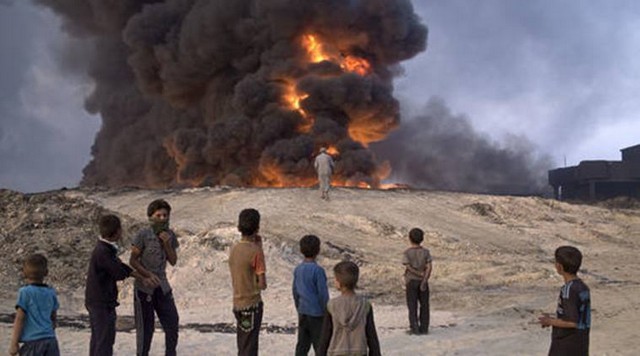
The assault is unfolding amid uncritical media coverage, with embedded journalists filing reports that in general laud the success of Kurdish and Iraqi forces in the face of supposed fanatical resistance and suicide attacks by ISIS defenders. Vast columns of black smoke rising over the battle zones are universally attributed to ISIS igniting oil wells and mounds of tyres to obscure their movements from aerial detection and attack.

No official estimates of Kurdish or Iraqi government casualties have been released, nor figures on ISIS losses. The US military confirmed yesterday that one of its special forces soldiers was killed by a roadside bomb to the north of Mosul.

Next to nothing is being reported about the devastation and casualties caused by US and allied air strikes on targets within the urban reaches of the city itself. Instead, the media is full of accusations that ISIS is using people as “human shields”—justifying civilian deaths in advance. American, British, Australian, French, Canadian and Jordanian bombers, jet fighters, helicopter gunships, drones and surveillance aircraft are involved in the air assault.

One indication of the destruction being inflicted was an October 19 report by the British Broadcasting Corporation that the University of Mosul, once one of the best equipped in the Middle East, is in ruin. A source stated: “The university is completely inoperative and air strikes have made it a difficult place to go. Most of the buildings have been brought down, it’s virtually gone.”

US and allied military commanders project that operations to recapture Mosul will last as long as three months. This suggests that much of the city will be reduced to rubble and the predominantly Sunni Arab civilian population will suffer horrific casualties from the bombing, starvation and disease.

Just five days into the Mosul offensive, however, it is stirring a cauldron of inter-state and ethno-sectarian conflicts that are the legacy of 25 years of US imperialist violence, intrigue and destabilisation in Iraq, Syria and the broader Middle East. Before the city even falls, savage fighting threatens to break out between nominal allies in the operations against ISIS.

The Syrian regime, with the assistance of Russian air power and Lebanese and Iraqi Shiite militias, claims it is on the verge of recapturing the eastern sectors of the city of Aleppo from Sunni Islamist militias that have received overt support from the US, Turkey, Saudi Arabia and the Gulf states to try to overthrow the government of President Bashar al-Assad. The fall of Aleppo would largely end the US-backed rebellion in the coastal regions of Syria and enable Assad’s military to shift focus to the ISIS-held areas in the interior and east of the country, particularly the city of Raqqa.

Both the Syrian regime and Russia are accusing US-backed Iraqi and Kurdish forces of deliberately allowing ISIS fighters in Mosul to escape the city to the west and cross into ISIS-controlled areas of Syria. Hundreds have allegedly successfully made their way to Raqqa to join the fighting against the Syrian government.

Iraqi Shiite militias, known as the Popular Mobilisation Units, are rushing to the west of Mosul to cut off such escape routes for ISIS and declared yesterday they will launch an assault on the ISIS-held city of Tal Afar in northwestern Iraq. The Shiite militias had been blocked from taking part in the attack on Mosul due to the sectarian killings and abuse of Sunnis they committed during earlier battles to recapture the western Iraqi cities of Fallujah and Ramadi.

A militia attack on Tal Afar raises the prospect of Turkish military intervention, as it has a predominantly ethnic Turkmen population, factions among which are calling for their own autonomous province. Turkey’s President Recep Tayyip Erdogan has made shrill vows to protect the Turkish diaspora—which includes Iraq’s Turkmen—from Eastern Europe, the Middle East and North Africa, to Central Asia and Afghanistan (see: “Amid Mosul offensive, Turkey denounces US policy, stakes claims in Balkans”).

Erdogan has also expressed alarm that US backing is strengthening the position of the Kurdish region in northern Iraq. The openly-stated intention of the KRG is to incorporate the areas it has taken from ISIS into its autonomous zone, not return them to the jurisdiction of the Shiite Arab-dominated government in Baghdad. A spokesman for one of the largest Shiite militias said in September they would fight against KRG annexations.

The Turkish establishment bitterly opposes any further expansion of the Kurdish region, fearing it will lead to the declaration of a Kurdish nation-state and fuel separatist agitation among the substantial Kurdish population in the east of Turkey, bordering Syria and Iraq.

Unable to act in Mosul itself at this point, Turkey responded yesterday with its most intense air attacks on the Kurdish YPG militia in northern Syria, which recently seized a number of villages from ISIS and expanded the areas of the country under their control. The Turkish military claimed to have killed up to 200 fighters of the YPG—which it alleges is a front for the Kurdish Workers Party (PKK) that advocates the separation of the Kurdish region of Turkey. This operation may well sharply escalate ethnic conflict inside Turkey itself, or attacks by Kurdish forces on the small number of Turkish troops that are in Iraq to the northeast of Mosul.

In a statement, the Syrian government said it viewed the Turkish air strikes as an attack on its sovereignty and vowed to engage any future incursions.

Anthony Cordesman, a leading US analyst for the Center for International and Strategic Studies (CSIS), expressed the perplexity among US imperialist strategists. On October 17 he commented: “[T]he most critical aspect of the battle may not be whether ISIS is defeated. It may be whether Iraq’s deeply divided factions can find some way to cooperate if they win. The alternative could be worse than ISIS: Sunni versus Shiite, Arab versus Kurd, and Turkey, Iran, outside Arab states, and Russia all competing to serve their own ends. ‘Winning’ could all too easily divide Iraq on a lasting basis and/or turn into new forms of civil conflict.”

The victims will be the long-suffering masses of Iraq and the Middle East. In recent days, some 5,000 people have made their way from Mosul to a squalid tent city in northeastern Syria, while several thousand have reached the overcrowded refugee camp of Dibaga in Iraqi Kurdistan. Hundreds of thousands more are predicted to follow, overwhelming unprepared relief agencies.

Disturbing video footage has already emerged of Iraqi government troops beating, with a hammer, a young boy who fled Mosul. All males over 14 who escape the city are being detained and interrogated on suspicion of ISIS loyalties.

First published in WSWS.org

21 October 2016

Failure to accept Russia’s position in Syria inching US closer to war

By Nile Bowie

In recent weeks, officials of Western governments have engaged in a dramatic escalation of rhetoric condemning the Syrian and Russian governments for alleged war crimes that have occurred since the collapse of a UN-backed ceasefire in late September.

The escalating charges aimed at Russia and Syria, reinforced by well-orchestrated media campaigns propagating official talking points, are familiar in the sense that such attempts to mould public opinion have traditionally been a precursor to Western military interventions.

Western and Gulf states have been unequivocal about their intention to topple the government of Syrian President Bashar al-Assad, presumably to replace it with a client regime that would maintain an adversarial relationship with Russia, Iran and various political forces associated with Shia Islam.

On the ground, the Syrian military, supported by Russian, Iranian and Lebanese Hezbollah allies are on the path to military victory over the rebel-held east of Aleppo, which would mark the restoration of government control in all of Syria’s largest population centres.

Insurgents that have been armed and supported by the United States are now besieged in eastern Aleppo fighting Syrian government forces in coordination with jihadist militants, including the al-Nusra Front, the former Syrian wing of al Qaeda that Washington itself classifies as a terrorist organisation.

Some 270 thousand civilians are besieged alongside the militants controlling the area. Though the ongoing offensive has undoubtedly put the civilian population of the area at risk, larger questions about the fighting in Aleppo have hardly been raised by Western media.

The dominant narrative about Aleppo asserts claims that Syria and Russia are ‘deliberately bombing schools and hospitals to kill civilians’ or maintaining a siege to ‘break the will of the population’.

Almost no serious questions are asked of the rebel leadership in control of eastern Aleppo. The insurgents’ routine shelling of government-held western Aleppo – where the vast majority of the population, reportedly 1.5 million, reside – is hardly reported.

It must be recognised that the primary armed opposition fighting in eastern Aleppo and elsewhere are jihadist insurgents who have either superficially distanced themselves from the al-Qaeda brand or openly associate with it. More so, it is common knowledge that these groups have committed beheadings and heinous rights abuses.

Given the ferocity of Russian and Syrian airstrikes, why haven’t more civilians attempted to leave eastern Aleppo? UN Syria Envoy Staffan de Mistura claimed that Jabhat Fateh al-Sham, the rebranded version of al-Qaeda’s Syria affiliate, is holding ‘hostage’ the civilian population of east Aleppo.

From a humanitarian perspective, it is pertinent to question the effectiveness of the forceful approach taken by the Syrian and Russian militaries. There is a precedent for a non-violent solution to the situation, advocated by De Mistura himself.

In August 2016, a deal between government forces and militants ended the four-year siege of the Damascus suburb of Daraya. Civilians were evacuated and militants were bused to rebel-held areas in northern Syria without surrendering their weapons. This took place with the full cooperation of government forces.

De Mistura has offered to personally accompany the jihadist fighters out of eastern Aleppo, while other (allegedly ‘moderate’) insurgents and civilians remain under conditions of a ceasefire. The botched September 2016 ceasefire also sought this outcome, a key condition being that US-backed rebels divorce themselves from jihadist al-Nusra fighters.

It is clear that expelling these jihadist forces is the prerequisite for quelling the fighting in Aleppo, but there is political resistance to this outcome from Western and Gulf states because it would imply the surrender of anti-Assad groups and the impotence of their regime change objectives.

Moreover, as Syria’s largest city, Aleppo represents a major strategic prize. If captured, the foreign-backed opposition could establish an alternative Syrian government, which Western and Gulf states would then treat as the sole legitimate government.

The battle for Aleppo has been characterised as an ‘existential crisis’ for the mainstream anti-Assad forces. Should the Syrian government retake eastern Aleppo, it would deal a devastating blow to regime change efforts, but it would not mean a decisive end to the war. Kurdish forces have maintained their hold over parts of Syria, while the Islamic State continues to hold much territory.

That being said, the United States, Turkey, Saudi Arabia and others have invested enormous political capital to regime change efforts in Syria. Washington is determined to avoid a costly and humiliating defeat in Aleppo and is currently reviewing measures to shore up its proxies.

Among the options under consideration is the establishment of a no-fly-zone and safe zones, staging attacks against the Syrian air force and arming the Syrian rebels with additional weaponry. Should the US attempt of these options, it would directly violate international law.

The United States is not technically at war with the Syria, nor is there a UN resolution authorising American forces to operate inside Syria’s borders. Establishing a no-fly zone over Syrian airspace, safe zones within Syrian territory, or US military attacks on the Syrian air force and its bases would directly constitute an act of war against Damascus – and by extension, Moscow.
The Washington Post reports:

“‘There’s an increased mood in support of kinetic actions against the regime,’ one senior administration official said. ‘The CIA and the Joint Staff have said that the fall of Aleppo would undermine America’s counterterrorism goals in Syria.’’

“One proposed way to get around the White House’s long-standing objection to striking the Assad regime without a U.N. Security Council resolution would be to carry out the strikes covertly and without public acknowledgment, the official said.”

It is deeply alarming and baffling that the US leadership has here equated the fall of the jihadist-occupied Aleppo as harmful to counterterrorism objectives. Should moral outrage be directed at any side, it should not be toward the Syrian and Russian governments, who are attempting to restore legal order over Syrian territory, albeit by controversial means.

Rather, it is the United States and its European and Gulf allies that have forged an alliance with terrorist organisations in an attempt to destroy an independent-minded secular nationalist government promoting a pluralistic and inclusive form of Islam that should most beget public condemnation.

This would certainly be the case if the Western public at large ever truly absorbed the gravity of what their governments have done in Syria. It is unlikely that President Obama would concede to a major military escalation during his final months in office, though the possibility remains.

Hillary Clinton, who will presumably become the next US president, publically supports the establishment of a no-fly zone in Syria and has openly stated her number one objective in Syria is the removal of Bashar al-Assad’s government.

Russia has begun to deploy advanced anti-missile and anti-aircraft systems in Syria. Trust between Russia and the United States has entirely eroded. Russia is holding the cards in Syria and it is difficult to imagine how open conflict can be avoided should the US pursue an escalation. The seriousness of this moment should not be understated.

Nile Bowie is an independent writer and current affairs commentator based in Singapore. He is a JUST member. He may be reached by email at nilebowie@gmail.com

21 October 2016

Pakistan’s Gwadar Port Is Now Operational As First Chinese Ship Docks

By Abdus Sattar Ghazali

First Chinese ship, named Tianfu, finally docked on Sunday (Oct 16) at Pakistan’s Gwadar port that is center of $46 billion China-Pakistan Economic Corridor project between Beijing and Islamabad.

The China-Pakistan Economic Corridor (CPEC) is about 3,000 kilometers long consisting of highways, railways and pipelines that will connect China’s Xinjiang province to rest of the world through Pakistan’s Gwadar port.

The money China is planning to pour into Pakistan is more than twice the amount of all foreign direct investment Pakistan has received since 2008, and considerably more than the entire assistance from the United States, Pakistan’s largest donor until now, since 2002, according to a BBC report.

According to The Guardian, US largesse to Pakistan, including payments of $1.5bn a year since 2010 under the so-called “Kerry-Lugar” act, has failed to elicit anything like such a warm relationship. Even though much of the cash was funneled to the Pakistani army, the country’s most powerful institution, relations were often tense and the US polled among the least loved nations in opinion polls.

In September 2015, the government of China announced that the $230 million Gwadar International Airport project would no longer be financed by loans, but would instead be constructed by grants which the government of Pakistan will not be required to repay.

For the Chinese, the CPEC has a geo-strategic significance.

The corridor through Gwadar gives them their shortest access to the Middle East and Africa, where thousands of Chinese firms, employing tens of thousands of Chinese workers, are involved in development work.

The corridor also promises to open up remote, landlocked Xinjiang, and create incentives for both state and private enterprises to expand economic activity and create jobs in this under-developed region.

China could also be trying to find alternative trade routes to by-pass the Malacca straits, presently the only maritime route China can use to access the Middle East, Africa and Europe. Apart from being long, it can be blockaded in times of war.

The Straits of Malacca provide China with its shortest maritime access to Europe, Africa, and the Middle East. Approximately 80% pass of its Middle Eastern energy imports also pass through the Straits of Malacca. As the world’s biggest oil importer, energy security is a key concern for China while current sea routes used to import Middle Eastern oil are frequently patrolled by the United States’ Navy. The sea-route via the Straits of Malacca is roughly 12,000 kilometres long, while the distance from Gwadar Port to Xinjiang province is approximately 3,000 kilometres, and another 3,500 kilometres from Xinjiang to China’s eastern coast. [Wikipedia]

In addition to its significance to reduce Chinese dependence on the Sea of Malacca and South China Sea routes, the port of Gwadar will provide China an alternative and shorter route for energy imports from the Middle East, thereby reducing shipping costs and transit times. The currently available sea-route to China is roughly 12,000 kilometres long, while the distance from Gwadar Port to Xinjiang province is approximately 3,000 kilometres, with another 3,500 kilometres from Xinjiang to China’s eastern coast. As a result of CPEC, Chinese imports and exports to the Middle East, Africa, and Europe would require much shorter shipment times and distances. [Wikipedia]

The Chinese provinces of Xinjiang and Tibet were closer to Pakistani ports than to any port in China and development of a trade corridor linking Xinjiang to the Middle East via Gwadar held great prospects. 60 per cent of Chinese import of crude came from countries in the Gulf and the amount would increase in next decade. Because of the proximity of the Gulf countries to Gwadar, oil flow from the region to China will be facilitated.

“The Gwadar port will also guarantee China’s naval ships’ maintenance and supply in the Indian Ocean. The move is widely seen as crucial for China, especially as it is unlikely that Sri Lanka will open its ports to Chinese naval ships,” Zhao Gancheng, director of South Asia Studies at Shanghai Institute for International Studies told state-run Global Times.

The new Sri Lankan government headed by President Maithripala Srisena reversed his predecessor Mahinda Rajapaksa’s policy of allowing Chinese submarines to dock in Colombo, following India’s concerns.

Pakistan’s decision to hand over strategic Gwadar port to China is a matter of “serious concern” for India, Defence Minister A K Antony said in 2013. “Chinese are now constructing that port on Pakistan’s request. In one sentence, I can say that it is a matter of concern to us. My answer is simple and straightforward,” he told a press conference.

Gwadar Port is approximately 120 km from the Iranian border. It is located 380 km away from Oman, and near key oil shipping lanes from the Persian Gulf. The greater surrounding region is home to around two-thirds of the world’s proven oil reserves. It is also the nearest warm-water seaport to the landlocked, but hydrocarbon rich, Central Asian Republics, as well as Afghanistan.

Upon completion of CPEC-related infrastructure projects, transit times between Kashgar and Pakistan’s Gwadar Port will be greatly reduced, which in turn will also reduce transit times to the Kyrgyzstan and hydrocarbon-rich Kazakhstan through already existing overland routes. The Chinese government has already upgraded the road linking Kashgar to Osh in Kyrgyzstan via the Kyrgyz town of Erkeshtam while a railway between Urumqi, China and Almaty, Kazakhstan has also been completed as part of China’s One Belt One Road initiative. Numerous land crossings already exist between Kazakhstan and China as well. Additionally, the Chinese government has announced plans to lay railway track from Tashkent, Uzbekistan, towards Kyrgyzstan with onwards connections to China and Pakistan’s coast. [Wikipedia]

Interestingly, In September 1958, the Gwadar enclave was purchased by Pakistan from Oman for US$3 million and Gwadar officially became part of Pakistan in December 1958, after 200 years of Omani rule.

It is expected that by 2017, the port will handle over one million tons of cargo, most of which will consist of construction materials for other CPEC projects. China Overseas Port Holding Company (COPHC) plans to eventually expand the port’s capacity to 400 million tons of cargo per year. Long terms plans for Gwadar Port call for a total of 100 berths to be built by 2045.

Abdus Sattar Ghazali is the Chief Editor of the Journal of America (www.journalofamerica.net) email: asghazali2011 (@) gmail.com

17 October 2016