Just International

Understanding the Politics of Saudi Sectarianism

By Junaid S. Ahmad

There has been an incredibly healthy debate in Pakistan concerning the Kingdom of Saudi Arabia’s ‘request’ that Pakistan militarily assist the former’s assault on the Houthi rebels – who are challenging the rule of its Yemeni ally. A solid majority of Pakistanis are legitimately skeptical of their state slavishly subordinating itself to the diktat of the gulf monarchy that believes its oil wealth can purchase blind subservience from a poor country like Pakistan. The intense questioning taking place in the country is quite exciting, for a number of reasons.

One of the most significant reasons is that the ostensible ‘sectarian’ nature of the conflict has not clouded the political judgment of most Pakistanis, whether Sunni or Shia. Despite the desperate attempts of the Saudis to characterize any development in the Middle East and beyond as a ‘Shia/Iranian conspiracy’ against Sunnidom, most folks are not buying it this time. The gratuitous and malignant interventions the Saudis carry out throughout the region and wherever they can get their hands on a Muslim community have become too obvious to overlook. The Kingdom’s recent machinations in Iraq, Egypt, Bahrain, and Syria have produced enormous bloodshed, mayhem, and new generations of puritanical and violent jihadis. This is of course consistent with the politically reactionary role the Saudis have always played – and our part of the world should know that best.

The fact that there is indeed commentary that is emphasizing how sectarianism is a camouflage for profoundly political causes is noteworthy and important. However, what is actually required now is deeper analysis to understand what is driving this ‘geo-sectarian’ card that the Saudis have been playing since 1979.

The Islamic Revolution in Iran in that year sent shockwaves throughout the region, but especially to the conservative gulf monarchies. The fear was that the revolutionary spirit of that moment would spread quickly, and would transcend any Shia-Sunni divide. In fact, it was doing that. Students, intellectuals, and oppressed groups who were reading either Sayyid Qutb, Che Guevara, or Mao Tse-tung were now immersing themselves in the vocabulary of Ali Shariati and Khomeini. There was no contradiction for them, neither the sectarian (Sunni vs. Shia revolutionary ideology) nor the secular vs. religious one. There was continuity in a discourse that challenged power and favored the oppressed.

Indeed, the central – and very simple – factor that caused the royal despots of the Gulf to unleash political and sectarian warfare to punish Iran was the Islamic revolution’s staunchly anti-monarchical orientation. It was, after all, the brutal regime of the Shah of Iran that the mass movement of Iranians sought to overthrow. The Saudis and the other sheikhdoms of the Gulf understood very well that the anti-monarchical impulse would seem to most Muslims as more compatible with an Islamic political ethos than the petro-autocracies of Arabia. And this is precisely why there was never any political argument used to discredit the Islamic revolution, but a virulently sectarian one: they are Sahaba-hating Shias trying to impose Shi’ism on everyone else. Period.

The sectarian vitriol emanating from Riyadh was disseminated throughout the Muslim world, and accompanied by support for state and non-state actors willing to do the dirty work for the Kingdom. The assault on the anti-monarchical tendency began right away, with the support for Iraq’s invasion of Iran in 1980 – and has continued ever since. But those efforts to engender religious divisions between Shia and Sunni failed in 2006. Hezbollah’s courageous resistance against Israeli aggression seemed to have captured the hearts and minds of all Arabs and Muslims regardless of theological orientation. The movement’s leader, Hassan Nasrallah, was by far he most popular Arab leader then.

Which is why, just like after 1979, the Saudis had to shift to hyper-sectarianism once again to discredit the politics of popular resistance and mass mobilization. The vicious Syrian civil war gave a boost to such reactionary politics, since it was described as Shia-Alawi assault on the Sunnis – and similarly portrayed in the case of Iraq.

But what reminds us that it is the political and not the religious/sectarian that is paramount is what happened in Egypt. The force that the Kingdom itself had nurtured, the Muslim Brotherhood, was then disowned and punished. General Sisi’s coup against President Morsi was wholeheartedly endorsed by the Saudis who no longer saw the Brotherhood as a conservative social force protecting the region from progressive ideologies, but as a political force rooted in mass, popular, agitational politics that of course all monarchies abhor.

It is, therefore, essential to think about the maneuvering of the Saudis and its neighbors in this deeply political way. Their politics is nothing but opposing any mass oppositional politics, be it Shia, Sunni, socially conservative or liberal. It is rarely described this way, but the real political battle in the region is between Muslim monarchical rule and Muslim republicanism. Meanwhile, the Saudis will persist in trying to fool you into believing it is about theology and creeping Shia expansionism. Fortunately, many more Muslims are now unwilling to give credulity to such shallow polemics – no matter how much oil wealth is poured into making the narrative seem believable.

Junaid S. Ahmad is Director for the Center for Global Dialogue, UMT, and has been teaching law and politics at LUMS.

April 2015


The death of neoliberalism and the crisis in western politics

By Martin Jacques

In the early 1980s the author was one of the first to herald the emerging dominance of neoliberalism in the west. Here he argues that this doctrine is now faltering. But what happens next?

The western financial crisis of 2007-8 was the worst since 1931, yet its immediate repercussions were surprisingly modest. The crisis challenged the foundation stones of the long-dominant neoliberal ideology but it seemed to emerge largely unscathed. The banks were bailed out; hardly any bankers on either side of the Atlantic were prosecuted for their crimes; and the price of their behaviour was duly paid by the taxpayer. Subsequent economic policy, especially in the Anglo-Saxon world, has relied overwhelmingly on monetary policy, especially quantitative easing. It has failed. The western economy has stagnated and is now approaching its lost decade, with no end in sight.

After almost nine years, we are finally beginning to reap the political whirlwind of the financial crisis. But how did neoliberalism manage to survive virtually unscathed for so long? Although it failed the test of the real world, bequeathing the worst economic disaster for seven decades, politically and intellectually it remained the only show in town. Parties of the right, centre and left had all bought into its philosophy, New Labour a classic in point. They knew no other way of thinking or doing: it had become the common sense. It was, as Antonio Gramsci put it, hegemonic. But that hegemony cannot and will not survive the test of the real world.

The first inkling of the wider political consequences was evident in the turn in public opinion against the banks, bankers and business leaders. For decades, they could do no wrong: they were feted as the role models of our age, the default troubleshooters of choice in education, health and seemingly everything else. Now, though, their star was in steep descent, along with that of the political class. The effect of the financial crisis was to undermine faith and trust in the competence of the governing elites. It marked the beginnings of a wider political crisis.

But the causes of this political crisis, glaringly evident on both sides of the Atlantic, are much deeper than simply the financial crisis and the virtually stillborn recovery of the last decade. They go to the heart of the neoliberal project that dates from the late 70s and the political rise of Reagan and Thatcher, and embraced at its core the idea of a global free market in goods, services and capital. The depression-era system of bank regulation was dismantled, in the US in the 1990s and in Britain in 1986, thereby creating the conditions for the 2008 crisis. Equality was scorned, the idea of trickle-down economics lauded, government condemned as a fetter on the market and duly downsized, immigration encouraged, regulation cut to a minimum, taxes reduced and a blind eye turned to corporate evasion.

It should be noted that, by historical standards, the neoliberal era has not had a particularly good track record. The most dynamic period of postwar western growth was that between the end of the war and the early 70s, the era of welfare capitalism and Keynesianism, when the growth rate was double that of the neoliberal period from 1980 to the present.

But by far the most disastrous feature of the neoliberal period has been the huge growth in inequality. Until very recently, this had been virtually ignored. With extraordinary speed, however, it has emerged as one of, if not the most important political issue on both sides of the Atlantic, most dramatically in the US. It is, bar none, the issue that is driving the political discontent that is now engulfing the west. Given the statistical evidence, it is puzzling, shocking even, that it has been disregarded for so long; the explanation can only lie in the sheer extent of the hegemony of neoliberalism and its values.

But now reality has upset the doctrinal apple cart. In the period 1948-1972, every section of the American population experienced very similar and sizable increases in their standard of living; between 1972-2013, the bottom 10% experienced falling real income while the top 10% did far better than everyone else. In the US, the median real income for full-time male workers is now lower than it was four decades ago: the income of the bottom 90% of the population has stagnated for over 30 years.

A not so dissimilar picture is true of the UK. And the problem has grown more serious since the financial crisis. On average, between 65-70% of households in 25 high-income economies experienced stagnant or falling real incomes between 2005 and 2014.

The reasons are not difficult to explain. The hyper-globalisation era has been systematically stacked in favour of capital against labour: international trading agreements, drawn up in great secrecy, with business on the inside and the unions and citizens excluded, the Trans-Pacific Partnership (TPP) and the Transatlantic Trade and Investment Partnership (TTIP) being but the latest examples; the politico-legal attack on the unions; the encouragement of large-scale immigration in both the US and Europe that helped to undermine the bargaining power of the domestic workforce; and the failure to retrain displaced workers in any meaningful way.
As Thomas Piketty has shown, in the absence of countervailing pressures, capitalism naturally gravitates towards increasing inequality. In the period between 1945 and the late 70s, Cold War competition was arguably the biggest such constraint. Since the collapse of the Soviet Union, there have been none. As the popular backlash grows increasingly irresistible, however, such a winner-takes-all regime becomes politically unsustainable.

Large sections of the population in both the US and the UK are now in revolt against their lot, as graphically illustrated by the support for Trump and Sanders in the US and the Brexit vote in the UK. This popular revolt is often described, in a somewhat denigratory and dismissive fashion, as populism. Or, as Francis Fukuyama writes in a recent excellent essay in Foreign Affairs: “‘Populism’ is the label that political elites attach to policies supported by ordinary citizens that they don’t like.” Populism is a movement against the status quo. It represents the beginnings of something new, though it is generally much clearer about what it is against than what it is for. It can be progressive or reactionary, but more usually both.

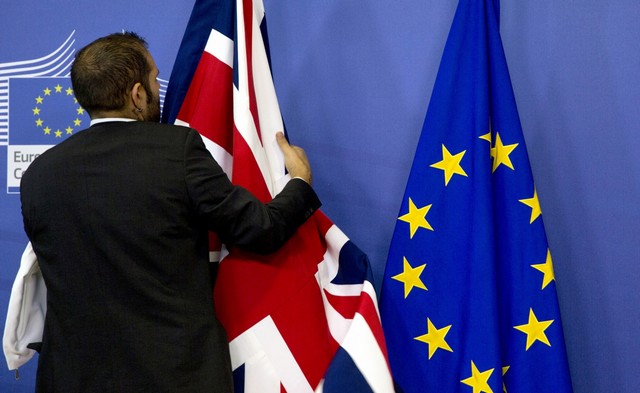
Brexit is a classic example of such populism. It has overturned a fundamental cornerstone of UK policy since the early 1970s. Though ostensibly about Europe, it was in fact about much more: a cri de coeur from those who feel they have lost out and been left behind, whose living standards have stagnated or worse since the 1980s, who feel dislocated by large-scale immigration over which they have no control and who face an increasingly insecure and casualised labour market. Their revolt has paralysed the governing elite, already claimed one prime minister, and left the latest one fumbling around in the dark looking for divine inspiration.

The wave of populism marks the return of class as a central agency in politics, both in the UK and the US. This is particularly remarkable in the US. For many decades, the idea of the “working class” was marginal to American political discourse. Most Americans described themselves as middle class, a reflection of the aspirational pulse at the heart of American society. According to a Gallup poll, in 2000 only 33% of Americans called themselves working class; by 2015 the figure was 48%, almost half the population.

Brexit, too, was primarily a working-class revolt. Hitherto, on both sides of the Atlantic, the agency of class has been in retreat in the face of the emergence of a new range of identities and issues from gender and race to sexual orientation and the environment. The return of class, because of its sheer reach, has the potential, like no other issue, to redefine the political landscape.

The re-emergence of class should not be confused with the labour movement. They are not synonymous: this is obvious in the US and increasingly the case in the UK. Indeed, over the last half-century, there has been a growing separation between the two in Britain. The re-emergence of the working class as a political voice in Britain, most notably in the Brexit vote, can best be described as an inchoate expression of resentment and protest, with only a very weak sense of belonging to the labour movement.

Indeed, Ukip has been as important – in the form of immigration and Europe – in shaping its current attitudes as the Labour party. In the United States, both Trump and Sanders have given expression to the working-class revolt, the latter almost as much as the former. The working class belongs to no one: its orientation, far from predetermined, as the left liked to think, is a function of politics.

The neoliberal era is being undermined from two directions. First, if its record of economic growth has never been particularly strong, it is now dismal. Europe is barely larger than it was on the eve of the financial crisis in 2007; the United States has done better but even its growth has been anaemic. Economists such as Larry Summers believe that the prospect for the future is most likely one of secular stagnation.

Worse, because the recovery has been so weak and fragile, there is a widespread belief that another financial crisis may well beckon. In other words, the neoliberal era has delivered the west back into the kind of crisis-ridden world that we last experienced in the 1930s. With this background, it is hardly surprising that a majority in the west now believe their children will be worse off than they were. Second, those who have lost out in the neoliberal era are no longer prepared to acquiesce in their fate – they are increasingly in open revolt. We are witnessing the end of the neoliberal era. It is not dead, but it is in its early death throes, just as the social-democratic era was during the 1970s.

A sure sign of the declining influence of neoliberalism is the rising chorus of intellectual voices raised against it. From the mid-70s through the 80s, the economic debate was increasingly dominated by monetarists and free marketeers. But since the western financial crisis, the centre of gravity of the intellectual debate has shifted profoundly. This is most obvious in the United States, with economists such as Joseph Stiglitz, Paul Krugman, Dani Rodrik and Jeffrey Sachs becoming increasingly influential. Thomas Piketty’s Capital in the Twenty-First Century has been a massive seller. His work and that of Tony Atkinson and Angus Deaton have pushed the question of the inequality to the top of the political agenda. In the UK, Ha-Joon Chang, for long isolated within the economics profession, has gained a following far greater than those who think economics is a branch of mathematics.

Meanwhile, some of those who were previously strong advocates of a neoliberal approach, such as Larry Summers and the Financial Times’s Martin Wolf, have become extremely critical. The wind is in the sails of the critics of neoliberalism; the neoliberals and monetarists are in retreat. In the UK, the media and political worlds are well behind the curve. Few recognise that we are at the end of an era. Old attitudes and assumptions still predominate, whether on the BBC’s Today programme, in the rightwing press or the parliamentary Labour party.

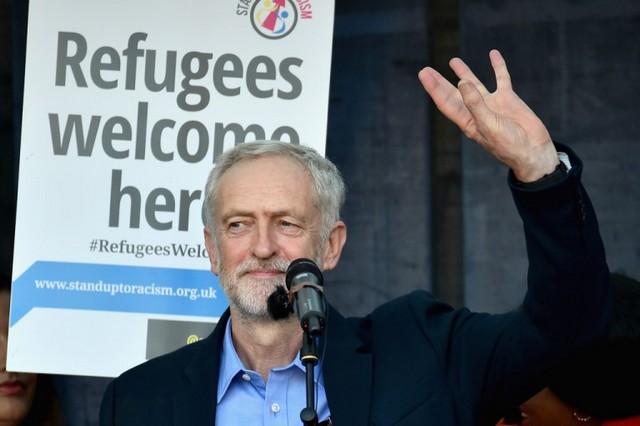
Following Ed Miliband’s resignation as Labour leader, virtually no one foresaw the triumph of Jeremy Corbyn in the subsequent leadership election. The assumption had been more of the same, a Blairite or a halfway house like Miliband, certainly not anyone like Corbyn. But the zeitgeist had changed. The membership, especially the young who had joined the party on an unprecedented scale, wanted a complete break with New Labour. One of the reasons why the left has failed to emerge as the leader of the new mood of working-class disillusionment is that most social democratic parties became, in varying degrees, disciples of neoliberalism and uber-globalisation. The most extreme forms of this phenomenon were New Labour and the Democrats, who in the late 90s and 00s became its advance guard, personified by Tony Blair and Bill Clinton, triangulation and the third way.

But as David Marquand observed in a review for the New Statesman, what is the point of a social democratic party if it doesn’t represent the less fortunate, the underprivileged and the losers? New Labour deserted those who needed them, who historically they were supposed to represent. Is it surprising that large sections have now deserted the party who deserted them? Blair, in his reincarnation as a money-obsessed consultant to a shady bunch of presidents and dictators, is a fitting testament to the demise of New Labour.

The rival contenders – Burnham, Cooper and Kendall – represented continuity. They were swept away by Corbyn, who won nearly 60% of the votes. New Labour was over, as dead as Monty Python’s parrot. Few grasped the meaning of what had happened. A Guardian leader welcomed the surge in membership and then, lo and behold, urged support for Yvette Cooper, the very antithesis of the reason for the enthusiasm. The PLP refused to accept the result and ever since has tried with might and main to remove Corbyn.

Just as the Labour party took far too long to come to terms with the rise of Thatcherism and the birth of a new era at the end of the 70s, now it could not grasp that the Thatcherite paradigm, which they eventually came to embrace in the form of New Labour, had finally run its course. Labour, like everyone else, is obliged to think anew. The membership in their antipathy to New Labour turned to someone who had never accepted the latter, who was the polar opposite in almost every respect of Blair, and embodying an authenticity and decency which Blair patently did not.

Labour may be in intensive care, but the condition of the Conservatives is not a great deal better
Corbyn is not a product of the new times, he is a throwback to the late 70s and early 80s. That is both his strength and also his weakness. He is uncontaminated by the New Labour legacy because he has never accepted it. But nor, it would seem, does he understand the nature of the new era. The danger is that he is possessed of feet of clay in what is a highly fluid and unpredictable political environment, devoid of any certainties of almost any kind, in which Labour finds itself dangerously divided and weakened.

Labour may be in intensive care, but the condition of the Conservatives is not a great deal better. David Cameron was guilty of a huge and irresponsible miscalculation over Brexit. He was forced to resign in the most ignominious of circumstances. The party is hopelessly divided. It has no idea in which direction to move after Brexit. The Brexiters painted an optimistic picture of turning away from the declining European market and embracing the expanding markets of the world, albeit barely mentioning by name which countries it had in mind. It looks as if the new prime minister may have an anachronistic hostility towards China and a willingness to undo the good work of George Osborne. If the government turns its back on China, by far the fastest growing market in the world, where are they going to turn?

Brexit has left the country fragmented and deeply divided, with the very real prospect that Scotland might choose independence. Meanwhile, the Conservatives seem to have little understanding that the neoliberal era is in its death throes.

Dramatic as events have been in the UK, they cannot compare with those in the United States. Almost from nowhere, Donald Trump rose to capture the Republican nomination and confound virtually all the pundits and not least his own party. His message was straightforwardly anti-globalisation. He believes that the interests of the working class have been sacrificed in favour of the big corporations that have been encouraged to invest around the world and thereby deprive American workers of their jobs. Further, he argues that large-scale immigration has weakened the bargaining power of American workers and served to lower their wages.

He proposes that US corporations should be required to invest their cash reserves in the US. He believes that the North American Free Trade Agreement (Nafta) has had the effect of exporting American jobs to Mexico. On similar grounds, he is opposed to the TPP and the TTIP. And he also accuses China of stealing American jobs, threatening to impose a 45% tariff on Chinese imports.

To globalisation Trump counterposes economic nationalism: “Put America first”. His appeal, above all, is to the white working class who, until Trump’s (and Bernie Sander’s) arrival on the political scene, had been ignored and largely unrepresented since the 1980s. Given that their wages have been falling for most of the last 40 years, it is extraordinary how their interests have been neglected by the political class. Increasingly, they have voted Republican, but the Republicans have long been captured by the super-rich and Wall Street, whose interests, as hyper-globalisers, have run directly counter to those of the white working class. With the arrival of Trump they finally found a representative: they won Trump the Republican nomination.

The economic nationalist argument has also been vigorously pursued by Bernie Sanders, who ran Hillary Clinton extremely close for the Democratic nomination and would probably have won but for more than 700 so-called super-delegates, who were effectively chosen by the Democratic machine and overwhelmingly supported Clinton. As in the case of the Republicans, the Democrats have long supported a neoliberal, pro-globalisation strategy, notwithstanding the concerns of its trade union base. Both the Republicans and the Democrats now find themselves deeply polarised between the pro- and anti-globalisers, an entirely new development not witnessed since the shift towards neoliberalism under Reagan almost 40 years ago.

Another plank of Trump’s nationalist appeal – “Make America great again” – is his position on foreign policy. He believes that America’s pursuit of great power status has squandered the nation’s resources. He argues that the country’s alliance system is unfair, with America bearing most of the cost and its allies contributing far too little. He points to Japan and South Korea, and Nato’s European members as prime examples.He seeks to rebalance these relationships and, failing that, to exit from them.

As a country in decline, he argues that America can no longer afford to carry this kind of financial burden. Rather than putting the world to rights, he believes the money should be invested at home, pointing to the dilapidated state of America’s infrastructure. Trump’s position represents a major critique of America as the world’s hegemon. His arguments mark a radical break with the neoliberal, hyper-globalisation ideology that has reigned since the early 1980s and with the foreign policy orthodoxy of most of the postwar period. These arguments must be taken seriously. They should not be lightly dismissed just because of their authorship. But Trump is no man of the left. He is a populist of the right. He has launched a racist and xenophobic attack on Muslims and on Mexicans. Trump’s appeal is to a white working class that feels it has been cheated by the big corporations, undermined by Hispanic immigration, and often resentful towards African-Americans who for long too many have viewed as their inferior.

A Trump America would mark a descent into authoritarianism characterised by abuse, scapegoating, discrimination, racism, arbitrariness and violence; America would become a deeply polarised and divided society. His threat to impose 45% tariffs on China, if implemented, would certainly provoke retaliation by the Chinese and herald the beginnings of a new era of protectionism.

Trump may well lose the presidential election just as Sanders failed in his bid for the Democrat nomination. But this does not mean that the forces opposed to hyper-globalisation – unrestricted immigration, TPP and TTIP, the free movement of capital and much else – will have lost the argument and are set to decline. In little more than 12 months, Trump and Sanders have transformed the nature and terms of the argument. Far from being on the wane, the arguments of the critics of hyper-globalisation are steadily gaining ground. Roughly two-thirds of Americans agree that “we should not think so much in international terms but concentrate more on our own national problems”. And, above all else, what will continue to drive opposition to the hyper-globalisers is inequality.

Martin Jacques is the author of When China Rules the World: The End of the Western World and the Birth of a New Global Order

21 August 2016

The Russia-Iran Strategic Game-Changer

By Pepe Escobar

Russian Tu-22M3 Backfire bombers – as well as Sukhoi-34 fighter bombers – leave from the Iranian Hamadan airfield to bomb jihadis and assorted «moderate rebels» in Syria, and immediately we’ve got ourselves a major, unforeseen geopolitical game-changer.

The record shows that Russia has not been present militarily in Iran since 1946; and this is the first time since the 1979 Islamic Revolution that Iran allowed another nation to use Iranian territory for a military operation.

Bets could be made the Pentagon would, predictably, freak out like a bunch of pampered, irate teens. They did not disappoint, complaining that Russia’s advance warning did not allow enough time to «prepare» – as in blaring all across the planet another episode of «Russian aggression», on top of it in cahoots with «the mullahs». Further desperation ensued, with Washington claiming Iran might have violated UN Security Council resolutions.

Moscow’s spin, in contrast, was a beauty; this was all about logistics and cost cutting. Admiral Vladimir Komoyedov, chair of the State Duma’s Defense Committee and a former commander of the Black Sea Fleet, gave a lovely explanation of the modus operandi:

«It is expensive and takes a long time to fly from bases in the European part of Russia. The issue of the cost of military combat activities is, at present, a priority. We must not go over the current Defense Ministry budget. Flying Tu-22s from Iran means using less fuel and carrying larger payloads… Russia won’t be able to find a friendlier and more suitable, from the point of view of security, country in that part of the world, and strikes must be carried out if we want to end this war… Airfields in Syria are not suitable because of the constant [need for] flying over areas of combat activities».

Don’t mess with the SCO

All fine and dandy then. The Pentagon will keep crying foul. Enraged Zionists in Israel and fanatic Wahhabis in Saudi Arabia will throw tantrums and turbo-charge the proverbial «Iranian existential threat» to apocalyptic levels. Whatever. These «facts in the skies» cannot be altered. Especially because if they open the way for a decisive victory in the battle for East Aleppo, the foreign-imposed Syrian civil war will be all but over.

Ali Shamkhani, head of Iran’s National Security Council, made no mistake this is all about Iran-Russia strategic cooperation in a – real – fight against ISIS/ISIL/Daesh terror, and not, as spun by Western corporate media, the return of Iran as a «military asset» of a great power.

Iraqi Prime Minister Haider al-Abadi, for his part, stressed, «I allowed the bombers to fly over because we received clear information about them. They make precise strikes, avoid casualties among civilians. So, we will consider all the requests concerning security of civilians in Syria».

This was code for Baghdad coolly allowing Russian access through Iraqi airspace for the TU-22M3 bombers. Next inevitable step would be the Russian Caspian fleet launching cruise missiles over Iranian and Iraqi airspace towards those Beltway-protected «rebels» in Syria.

And there’s more, much more.

A 2015 Moscow-Damascus agreement has now been ratified by Russia. That, in effect, turns the Russian air base at Khmeimim into a permanent military base in the eastern Mediterranean.

Beijing and Damascus, for their part, have just agreed on closer military ties on top of Chinese humanitarian aid. Syrian Arab Army personnel will eventually be trained by Chinese military instructors.

Beijing is now directly involved in Syria for a key national security reason; hundreds of Uyghurs have joined Daesh or follow al-Qaeda goon Abu Muhammad al-Julani, the much-appreciated-in-the Beltway leader of the Army of Syrian Conquest – and may eventually return to Xinjiang to wage jihad.

And then, there’s the absolutely delicious cherry in the cheesecake, as professor of Middle East Studies at Shanghai International Studies University, Zhao Weiming, told the Global Times; Beijing’s new power play in Syria is payback for Pentagon interference in the South China Sea.

So what will Hillary do?

All of the above points to the new look of what used to be a white elephant in the room; the Shanghai Cooperation Organization (SCO) now means serious business.

As the «4+1» (Russia, Iran, Iraq, Syria, plus Hezbollah) started to share intel and operation procedures last year, including a coordination center in Baghdad, analysts such as Alistair Cooke and myself saw it as en embryo of the SCO in action. This was definitely, already, an alternative to NATO’s «humanitarian» imperialism and regime change obsession. For the first time NATO was not free anymore to roam around the world like an out-of-control Robocop. Even though only Russia and China were SCO members, and Iran an observer, the cooperation involved – at the request of a government fighting jihadis and still a target for regime change – already qualified as a major, new geopolitical fact on the ground.

Now, this variant of the New Silk Roads – New Silk Airways? – involving Russia, Iran, Iraq and Syria and precisely targeting Salafi-jihadism, qualifies once again as accelerated Eurasia integration. Both SCO heavyweights China and Russia will not only admit Iran as a full member as early as next year; they know Iran is a key strategic asset in a battle against NATO, and they will never let Syria become the new Libya. In parallel, Russia’s strategic moves in Crimea and Syria are set to be dissected in excruciating detail in Chinese military academies.

Eurasia integration is being progressively intertwined with the SCO.

Whatever Tel Aviv and Riyadh – with their massive Washington lobbies – may fear about Russian-Iranian security cooperation, it’s NATO that’s livid. And much more than NATO, Hillary «Queen of War» Clinton.

The record shows Hillary with a severe crush on Assad to be dispatched the Gaddafi way. In the event of a Hillary presidency, bets can be made she will force the Pentagon to impose a no-fly zone in northern Syria and weaponize assorted «rebel» remnants to Kingdom Come.

And then there’s Iran. During the 2008 US presidential campaign, I was on the floor as Hillary addressed the AIPAC conference in Washington, a truly frightening spectacle. Using the – false – premise of an Iranian attack on Israel, she said, «I want the Iranians to know that if I’m president, we will attack Iran. In the next 10 years, during which they might foolishly consider launching an attack on Israel, we would be able to totally obliterate them».

Oh really? Over Russia-Iran strategic cooperation? Over a progressively integrated SCO? Bring it on, Queen of War.

20 August 2016

Provoking nuclear war by media

By John Pilger

The exoneration of a man accused of the worst of crimes, genocide, made no headlines. Neither the BBC nor CNN covered it. The Guardian allowed a brief commentary. Such a rare official admission was buried or suppressed, understandably. It would explain too much about how the rulers of the world rule.

The International Criminal Tribunal for the former Yugoslavia (ICTY) in The Hague has quietly cleared the late Serbian president, Slobodan Milosevic, of war crimes committed during the 1992-95 Bosnian war, including the massacre at Srebrenica.

Far from conspiring with the convicted Bosnian-Serb leader Radovan Karadzic, Milosevic actually “condemned ethnic cleansing”, opposed Karadzic and tried to stop the war that dismembered Yugoslavia. Buried near the end of a 2,590 page judgement on Karadzic last February, this truth further demolishes the propaganda that justified Nato’s illegal onslaught on Serbia in 1999.

Milosevic died of a heart attack in 2006, alone in his cell in The Hague, during what amounted to a bogus trial by an American-invented “international tribunal”. Denied heart surgery that might have saved his life, his condition worsened and was monitored and kept secret by US officials, as WikiLeaks has since revealed.

Milosevic was the victim of war propaganda that today runs like a torrent across our screens and newspapers and beckons great danger for us all. He was the prototype demon, vilified by the western media as the “butcher of the Balkans” who was responsible for “genocide”, especially in the secessionist Yugoslav province of Kosovo. Prime Minister Tony Blair said so, invoked the Holocaust and demanded action against “this new Hitler”. David Scheffer, the US ambassador-at-large for war crimes [sic], declared that as many as “225,000 ethnic Albanian men aged between 14 and 59” may have been murdered by Milosevic’s forces.

This was the justification for Nato’s bombing, led by Bill Clinton and Blair, that killed hundreds of civilians in hospitals, schools, churches, parks and television studios and destroyed Serbia’s economic infrastructure. It was blatantly ideological; at a notorious “peace conference” in Rambouillet in France, Milosevic was confronted by Madeleine Albright, the US secretary of state, who was to achieve infamy with her remark that the deaths of half a million Iraqi children were “worth it”.

Albright delivered an “offer” to Milosevic that no national leader could accept. Unless he agreed to the foreign military occupation of his country, with the occupying forces “outside the legal process”, and to the imposition of a neo-liberal “free market”, Serbia would be bombed. This was contained in an “Appendix B”, which the media failed to read or suppressed. The aim was to crush Europe’s last independent “socialist” state.

Once Nato began bombing, there was a stampede of Kosovar refugees “fleeing a holocaust”. When it was over, international police teams descended on Kosovo to exhume the victims of the “holocaust”. The FBI failed to find a single mass grave and went home. The Spanish forensic team did the same, its leader angrily denouncing “a semantic pirouette by the war propaganda machines”. The final count of the dead in Kosovo was 2,788. This included combatants on both sides and Serbs and Roma murdered by the pro-Nato Kosovo Liberation Front. There was no genocide. The Nato attack was both a fraud and a war crime.

All but a fraction of America’s vaunted “precision guided” missiles hit not military but civilian targets, including the news studios of Radio Television Serbia in Belgrade. Sixteen people were killed, including cameramen, producers and a make-up artist. Blair described the dead, profanely, as part of Serbia’s “command and control”. In 2008, the prosecutor of the International Criminal Tribunal for the Former Yugoslavia, Carla Del Ponte, revealed that she had been pressured not to investigate Nato’s crimes.

This was the model for Washington’s subsequent invasions of Afghanistan, Iraq, Libya and, by stealth, Syria. All qualify as “paramount crimes” under the Nuremberg standard; all depended on media propaganda. While tabloid journalism played its traditional part, it was serious, credible, often liberal journalism that was the most effective – the evangelical promotion of Blair and his wars by the Guardian, the incessant lies about Saddam Hussein’s non-existent weapons of mass destruction in the Observer and the New York Times, and the unerring drumbeat of government propaganda by the BBC in the silence of its omissions.

At the height of the bombing, the BBC’s Kirsty Wark interviewed General Wesley Clark, the Nato commander. The Serbian city of Nis had just been sprayed with American cluster bombs, killing women, old people and children in an open market and a hospital. Wark asked not a single question about this, or about any other civilian deaths. Others were more brazen. In February 2003, the day after Blair and Bush had set fire to Iraq, the BBC’s political editor, Andrew Marr, stood in Downing Street and made what amounted to a victory speech. He excitedly told his viewers that Blair had “said they would be able to take Baghdad without a bloodbath, and that in the end the Iraqis would be celebrating. And on both of those points he has been proved conclusively right.” Today, with a million dead and a society in ruins, Marr’s BBC interviews are recommended by the US embassy in London.

Marr’s colleagues lined up to pronounce Blair “vindicated”. The BBC’s Washington correspondent, Matt Frei, said, “There’s no doubt that the desire to bring good, to bring American values to the rest of the world, and especially to the Middle East … is now increasingly tied up with military power.”

This obeisance to the United States and its collaborators as a benign force “bringing good” runs deep in western establishment journalism. It ensures that the present-day catastrophe in Syria is blamed exclusively on Bashar al-Assad, whom the West and Israel have long conspired to overthrow, not for any humanitarian concerns, but to consolidate Israel’s aggressive power in the region. The jihadist forces unleashed and armed by the US, Britain, France, Turkey and their “coalition” proxies serve this end. It is they who dispense the propaganda and videos that becomes news in the US and Europe, and provide access to journalists and guarantee a one-sided “coverage” of Syria.

The city of Aleppo is in the news. Most readers and viewers will be unaware that the majority of the population of Aleppo lives in the government-controlled western part of the city. That they suffer daily artillery bombardment from western-sponsored al-Qaida is not news. On 21 July, French and American bombers attacked a government village in Aleppo province, killing up to 125 civilians. This was reported on page 22 of the Guardian; there were no photographs.

Having created and underwritten jihadism in Afghanistan in the 1980s as Operation Cyclone – a weapon to destroy the Soviet Union – the US is doing something similar in Syria. Like the Afghan Mujahideen, the Syrian “rebels” are America’s and Britain’s foot soldiers. Many fight for al-Qaida and its variants; some, like the Nusra Front, have rebranded themselves to comply with American sensitivities over 9/11. The CIA runs them, with difficulty, as it runs jihadists all over the world.

The immediate aim is to destroy the government in Damascus, which, according to the most credible poll (YouGov Siraj), the majority of Syrians support, or at least look to for protection, regardless of the barbarism in its shadows. The long-term aim is to deny Russia a key Middle Eastern ally as part of a Nato war of attrition against the Russian Federation that eventually destroys it.

The nuclear risk is obvious, though suppressed by the media across “the free world”. The editorial writers of the Washington Post, having promoted the fiction of WMD in Iraq, demand that Obama attack Syria. Hillary Clinton, who publicly rejoiced at her executioner’s role during the destruction of Libya, has repeatedly indicated that, as president, she will “go further” than Obama.

Gareth Porter, a samidzat journalist reporting from Washington, recently revealed the names of those likely to make up a Clinton cabinet, who plan an attack on Syria. All have belligerent cold war histories; the former CIA director, Leon Panetta, says that “the next president is gonna have to consider adding additional special forces on the ground”.
What is most remarkable about the war propaganda now in floodtide is its patent absurdity and familiarity. I have been looking through archive film from Washington in the 1950s when diplomats, civil servants and journalists were witch-hunted and ruined by Senator Joe McCarthy for challenging the lies and paranoia about the Soviet Union and China. Like a resurgent tumour, the anti-Russia cult has returned.

In Britain, the Guardian’s Luke Harding leads his newspaper’s Russia-haters in a stream of journalistic parodies that assign to Vladimir Putin every earthly iniquity. When the Panama Papers leak was published, the front page said Putin, and there was a picture of Putin; never mind that Putin was not mentioned anywhere in the leaks.

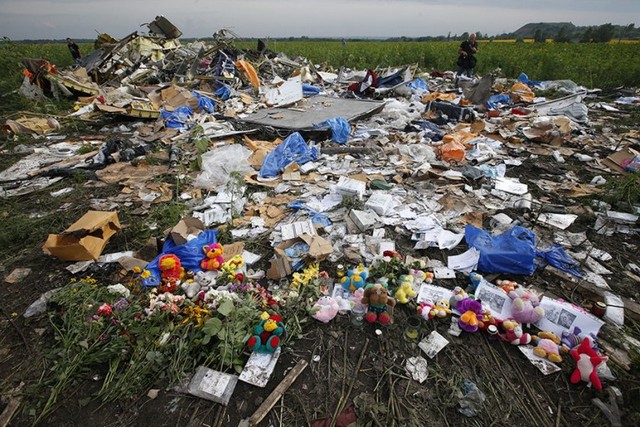
Like Milosevic, Putin is Demon Number One. It was Putin who shot down a Malaysian airliner over Ukraine. Headline: “As far as I’m concerned, Putin killed my son.” No evidence required. It was Putin who was responsible for Washington’s documented (and paid for) overthrow of the elected government in Kiev in 2014. The subsequent terror campaign by fascist militias against the Russian-speaking population of Ukraine was the result of Putin’s “aggression”. Preventing Crimea from becoming a Nato missile base and protecting the mostly Russian population who had voted in a referendum to rejoin Russia – from which Crimea had been annexed – were more examples of Putin’s “aggression”. Smear by media inevitably becomes war by media. If war with Russia breaks out, by design or by accident, journalists will bear much of the responsibility.

In the US, the anti-Russia campaign has been elevated to virtual reality. The New York Times columnist Paul Krugman, an economist with a Nobel Prize, has called Donald Trump the “Siberian Candidate” because Trump is Putin’s man, he says. Trump had dared to suggest, in a rare lucid moment, that war with Russia might be a bad idea. In fact, he has gone further and removed American arms shipments to Ukraine from the Republican platform. “Wouldn’t it be great if we got along with Russia,” he said.

This is why America’s warmongering liberal establishment hates him. Trump’s racism and ranting demagoguery have nothing to do with it. Bill and Hillary Clinton’s record of racism and extremism can out-trump Trump’s any day. (This week is the 20th anniversary of the Clinton welfare “reform” that launched a war on African-Americans). As for Obama: while American police gun down his fellow African-Americans the great hope in the White House has done nothing to protect them, nothing to relieve their impoverishment, while running four rapacious wars and an assassination campaign without precedent.

The CIA has demanded Trump is not elected. Pentagon generals have demanded he is not elected. The pro-war New York Times – taking a breather from its relentless low-rent Putin smears – demands that he is not elected. Something is up. These tribunes of “perpetual war” are terrified that the multi-billion-dollar business of war by which the United States maintains its dominance will be undermined if Trump does a deal with Putin, then with China’s Xi Jinping. Their panic at the possibility of the world’s great power talking peace – however unlikely – would be the blackest farce were the issues not so dire.

“Trump would have loved Stalin!” bellowed Vice-President Joe Biden at a rally for Hillary Clinton. With Clinton nodding, he shouted, “We never bow. We never bend. We never kneel. We never yield. We own the finish line. That’s who we are. We are America!”

In Britain, Jeremy Corbyn has also excited hysteria from the war-makers in the Labour Party and from a media devoted to trashing him. Lord West, a former admiral and Labour minister, put it well. Corbyn was taking an “outrageous” anti-war position “because it gets the unthinking masses to vote for him”.

In a debate with leadership challenger Owen Smith, Corbyn was asked by the moderator: “How would you act on a violation by Vladimir Putin of a fellow Nato state?” Corbyn replied: “You would want to avoid that happening in the first place. You would build up a good dialogue with Russia… We would try to introduce a de-militarisation of the borders between Russia, the Ukraine and the other countries on the border between Russia and Eastern Europe. What we cannot allow is a series of calamitous build-ups of troops on both sides which can only lead to great danger.”

Pressed to say if he would authorise war against Russia “if you had to”, Corbyn replied: “I don’t wish to go to war – what I want to do is achieve a world that we don’t need to go to war.”

The line of questioning owes much to the rise of Britain’s liberal war-makers. The Labour Party and the media have long offered them career opportunities. For a while the moral tsunami of the great crime of Iraq left them floundering, their inversions of the truth a temporary embarrassment. Regardless of Chilcot and the mountain of incriminating facts, Blair remains their inspiration, because he was a “winner”.

Dissenting journalism and scholarship have since been systematically banished or appropriated, and democratic ideas emptied and refilled with “identity politics” that confuse gender with feminism and public angst with liberation and wilfully ignore the state violence and weapons profiteering that destroys countless lives in faraway places, like Yemen and Syria, and beckon nuclear war in Europe and across the world.

The stirring of people of all ages around the spectacular rise of Jeremy Corbyn counters this to some extent. His life has been spent illuminating the horror of war. The problem for Corbyn and his supporters is the Labour Party. In America, the problem for the thousands of followers of Bernie Sanders was the Democratic Party, not to mention their ultimate betrayal by their great white hope. In the US, home of the great civil rights and anti-war movements, it is Black Lives Matter and the likes of Codepink that lay the roots of a modern version.

For only a movement that swells into every street and across borders and does not give up can stop the warmongers. Next year, it will be a century since Wilfred Owen wrote the following. Every journalist should read it and remember it…

If you could hear, at every jolt, the blood
Come gargling from the froth-corrupted lungs,
Obscene as cancer, bitter as the cud
Of vile, incurable sores on innocent tongues,
My friend, you would not tell with such high zest
To children ardent for some desperate glory,
The old lie: Dulce et decorum est
Pro patria mori.

23 August 2016

Gay people not ‘born that way,’ sexual orientation not fixed – US study

By RT News

A cross-discipline study has challenged the belief that human sexuality and gender identity are determined by biology and remain fixed, saying that there is no scientific proof of this. The study cautioned against drastic medical treatment for transgender children.

The notion that sexual orientation is predetermined by biology is an important part of the current LGBT discourse. If a person has no choice over whether to be gay or not, society cannot demand that he or she be straight, so the argument goes.

But regardless of its political worth, the “born this way” paradigm is not backed up by sufficient scientific data, according to a new paper published in the autumn issue of the New Atlantis, a journal focusing on political, societal and ethical ramifications of technological advances.

The study does not claim that being gay is a choice, merely that stating the opposite may be wrong.

The 144-page paper was written by Dr. Lawrence S. Mayer, an epidemiologist and biostatistician also trained in psychiatry, who is currently a scholar in residence at the Department of Psychiatry at Johns Hopkins School of Medicine, and Dr. Paul R. McHugh, a renowned psychiatrist, researcher, and educator and former chief of psychiatry at Johns Hopkins Hospital. The paper’s three parts focus on sexual orientation, links between sexuality and mental health, and gender identity.

Drawing on studies in fields varying from neurobiology to social sciences, the authors wrote that “The understanding of sexual orientation as an innate, biologically fixed property of human beings – the idea that people are ‘born that way’ – is not supported by scientific evidence.”

The term ‘sexual orientation’ itself is ambiguous and is used to describe attraction, behavior or identity by different researchers. Sometimes it refers to things such as belonging to a certain community or having certain fantasies.

“It is important, then, that researchers are clear about which of these domains are being studied, and that we keep in mind the researchers’ specified definitions when we interpret their findings,” the paper said.

There are biological factors associated with sexual behavior, the paper acknowledges, but there are no compelling “causal biological explanations for human sexual orientation.” Differences in the brain structures of gay and straight individuals identified by researchers are not necessarily innate and may be the result of environmental or psychological factors.

“The strongest statement that science offers to explain sexual orientation is that some biological factors appear, to an unknown extent, to predispose some individuals to a non-heterosexual orientation,” the paper said.

LGBT individuals are statistically at greater risk of having mental health problems than the general population, the authors say. As a more dramatic example, “the rate of lifetime suicide attempts across all ages of transgender individuals is estimated at 41 percent, compared to under 5 percent in the overall US population.”

The usually accepted explanation for this is social stress from discrimination and stigma, but the study said that those factors may not solely explain the disparity and that more scientific research on the issue is necessary.

The paper added that the notion that gender identity is fixed and determined by biological factors is also not backed up by data.

“In reviewing the scientific literature, we find that almost nothing is well understood when we seek biological explanations for what causes some individuals to state that their gender does not match their biological sex,” the authors said.

They strongly advocate caution in resorting to drastic medical treatment such as sex-reassignment surgery for people identified or identifying as transgender. This is especially true in children, whose sexuality is mutable and for whom such treatments may do more harm than good, they warn.

“There is little scientific evidence for the therapeutic value of interventions that delay puberty or modify the secondary sex characteristics of adolescents, although some children may have improved psychological well-being if they are encouraged and supported in their cross-gender identification,” the paper said. “There is no evidence that all children who express gender-atypical thoughts or behavior should be encouraged to become transgender.”

“Sexual orientation and gender identity resist explanation by simple theories. There is a large gap between the certainty with which beliefs are held about these matters and what a sober assessment of the science reveals. In the face of this complexity and uncertainty, we need to be humble about what we know and do not know,” it said.

The authors noted that their paper touches upon controversial issues and insist that first and foremost it is about science and the need for additional evidence in the field. Mayer said many people who contributed to the report asked not to be identified so as to distance themselves from the potential backlash.

“Some feared an angry response from the more militant elements of the LGBT community; others feared an angry response from the more strident elements of religiously conservative communities,” he said. “Most bothersome, however, is that some feared reprisals from their own universities for engaging such controversial topics, regardless of the report’s content—a sad statement about academic freedom.”

The paper was specifically written for the general public to draw attention to mental health problems of the LGBT community, the authors said. McHugh is an opponent of sex reassignment surgery for transgender people, arguing that it often fails to improve their well-being and instead does the opposite in the long run.

23 August 2016

The Coming Financial Enclosure Of The Commons

By Antonio Tricarico

Financial speculation in food commodities has become one of the main drivers of food price volatility, with devastating impacts on small producers and the poor. Yet the disruptive influence of financial speculation on food markets is only a preview of future crises. International financial markets are now attempting to dominate many conventional markets as a long-term strategy to extract greater profits and accumulate capital. While governments have been discussing the issue in the context of the G20’s focus on food security,1 their responses have been insufficient and contradictory so far and do not begin to address speculation in other hard commodities, where prices are even more volatile and the impacts on energy-dependent countries are equally severe.

The systematic financial speculation on commodities (and its systemically influential increase in recent years) has been driven mainly by deregulation of derivative markets. Derivatives markets, which trade in futures contracts and options, among other financial instruments based on other assets, enable the price risks for an asset (wheat, oil, pork bellies) to be transferred from the producer to other parties, often speculators, through the sale of “derivative” financial instruments. Speculation has also soared as investment banks, hedge funds and other institutional investors have jumped into the derivative market, often intro­ducing new financial instruments such as index funds and exchange-traded funds.

All of these trends have been accelerated by financial deregulation, which over the last decade, for the first time in history, has transformed commodities into financial assets. Until the beginning of the 2000’s, holding a ton of corn could not produce a revenue stream or rent, other then from sales based on market prices. Today, thanks to financial engineering, such financial schemes are not only possible, they are highly lucrative. The largely unregulated commodity derivatives markets have resulted in greater speculation on food commodities, which can cause high prices and shortages, particularly in poorer countries. Such “financial innovation” is part of a broader trend that is structurally transforming the global economy and natural resources management.

Contrary to common sense and what civil society often assumes, financial markets are penetrating deeper and deeper into the “real economy” of actual production. Speculative finance is increasingly influencing prices and thus productive output in agriculture and energy as well as natural resource commons that have historically functioned outside of markets. The result: speculative capital is becoming structurally intertwined with productive capital, including the commons as productive realms. This expansion of (finance) capital represents a new historic type of enclosure: investor-driven appropriations and control of many forests, fisheries, arable land and water resources historically managed as commons.

The 2007-2008 crash of financial markets and the global economy, coupled with investors’ need to diversify investments beyond traditional markets (including equity, bonds and real estate), has intensified the search for new ways to achieve high rates of return, cover heavy losses that some institutional investors experienced during the crisis, and absorb the massive liquidity of capital that exists globally. These needs have propelled the development and even the creation of new types of financial market risks. But in so doing, financial market operators are reformulating the fundamentals of the real economy where everyday production and consumption occur. A massive financial transformation is underway as financial entrepreneurs create new tradable asset classes out of existing commodities, which provide a physical source of value to support new structured financial instruments.

The new financial assets are being created from existing commodities. And where markets do not yet exist, natural resources are being converted into commodities so they can be traded. Indeed, new commodities and markets are being created from scratch to satisfy the demands by financial markets for new, high-return investments

A very good example of this kind of “Rumpelstiltskin capitalism” – the making of something valuable from nothing, like spinning straw into gold – is the carbon market. These markets trade the right to emit carbon, as authorized by state-issued permits of such rights. Carbon-trading rights are also generated by companies through the implementation of projects aimed to reduce emissions in the future and thus to offset real emissions that the same companies are generating today. A carbon credit or certificate is in itself a derivative contract, given that its value is based on the estimated future price of abating carbon emissions. Therefore holding or buying a carbon credit is in itself a bet about the future, something quite different from holding stock in a ton of corn. These rights to emit – or credits and certificates – are then resold on a secondary market, otherwise known as “emission trading.” Derivative financial products are built on the rights, credits and certificates, as in the case of other commodities. In this case, as with other commodities, speculative investors are simply trading financial risks associated with the carbon commodity – which itself is highly unstable and virtual.

HOW ARE FINANCIALIZATION AND NATURAL RESOURCES CONNECTED?

We live in a time of finance capitalism, where trading money, risk and associated products is more profitable than production itself, and often accu­mulates greater capital than trading goods and services. This has huge implications for where capital is invested and the everyday impact that capital markets have on people, as more and more aspects of everyday life – from home ownership to pensions to schooling – are mediated through financial markets (rather than conventional markets alone). This is what people mean when they talk about the “financialization” of the economy.

Financialization should be regarded as more than just a further stage of commodification. Financialization reduces all value that is exchanged (whether tangible, intangible, future or present promises, etc.) into either a financial instrument or a derivative of a financial instrument. Financialization seeks to reduce any work, product or service to an exchangeable financial instrument like currency, and thus make it easier for people to trade (and profit from) these financial instruments. A mortgage loan, for example, is a financial instrument that lets an employee trade a promise of future wages for ownership of a home. Financialization aims to transform labor, goods and services into tradable financial products as we know it from currency trade.

With financialization increasingly penetrating into the real economy, financial markets, financial institutions and financial elites are gaining greater influence over basic economic policies and economic outcomes. Financialization transforms the functioning of economic systems at both the macro and micro levels of the economy in three distinct ways: 1) It changes the structure and operation of financial markets; 2) It changes the behavior of non-financial corporations (whose profits are more and more generated through financial markets than through actual production); and 3) It changes the priorities of economic policy.

Financialization is now reaching into all commodity markets and transforming their basic functioning. Just as the first wave of financialization focused on privatizing public services such as pensions, health care, education and housing systems (in the quest for better returns on investment), so the new wave of financialization seeks to commodify natural resources. In many instances, this leads to enclosures of the commons, which in turn affects both resourceexploitation as well as resource conservation projects.

At the same time, growing global competition for the control and management of natural resources worldwide is intensifying pressures on national economies to exploit natural resources, resulting in what Michael T. Klare calls “resource wars” (Klare 2002). This is not simply a matter of rapid industrialization and emerging economies fueling greater global consumption and competition for limited resources. Resource wars are symptoms of new geopolitical and geoeconomic dynamics. The control of natural resources flows is increasingly seen as a key strategic tool for directing futures markets, political relations and economic supremacy.2

This trend is quite evident in recent large-scale land acquisitions at an international level by governments and the private sector. Their aim often goes beyond just securing future crop production for their own populations; they want to secure long-term, highly profitable positions in foreign markets to enable them to acquire and process natural resources as well as diversify their investments.3 In this context, advanced economies, particularly those reeling from the economic crisis, want to expand capital markets in other countries in order to establish a new private financial infrastructure that can generate enough financial resources to develop these new infrastructure investments. Financial markets awash in liquidity are desperate for such new investment vehicles: At the end of 2010, global capital markets were trading more than $200 trillion, which is almost four times more than the world’s GDP, according to the McKinsey Global Institute (McKinsey, 2011).

The emerging “turbo-capitalism” driven by financialization seeks to address two pressing problems now facing investors: how to invest the massive amounts of private wealth and liquidity present today in capital markets, and at the same time how to create new financial instruments that will generate additional revenues for the financial industry.

Developed markets currently account for $30 trillion of the estimated total $43 trillion of global equity market capitalization, according to a recent estimate by Timothy Moe, chief Asia-Pacific strategist at Goldman Sachs. Over the next 20 years, global market capitalization could expand to some $145 trillion, he predicted.4 Looking only at private wealth not channelled through institutional investors, private equity funds managed $2.5 trillion at the end of 2008 (a 15 percent increase compared to 2007, despite the financial turmoil). International Financial Services London forecasts that funds under management will increase to over $3.5 trillion dollars by 2015, starting from less than $1 trillion in 2003.5 More and more private equity funds will focus on emerging economies. Global hedge-fund assets surpassed the $2 trillion mark for the first time ever, Hedge Fund Research Inc. said in April 2011, marking an impressive industry rebound from market losses and customer flight during the financial crisis.6

This new stage of financialization will provide new economic and legal leverage for the further commodification of nature and the commons in general. More and more natural resources will be extracted and commercialized, unleashing a new massive attack on the global and local environment and the common wealth.

Capital markets regard this approach as a vital long-term strategy to secure and lock in a new structure of control over natural resources that assures attractive profits. But this finance-driven structure will also dramatically reduce the ability of communities to reclaim their shared wealth and assert their collective, locally responsive management. This systemic goal of “financial enclosure” of the commons, when coupled with existing trade and investment agreements,7 could produce a long lasting, legally durable enclosure that would seriously diminish (policy) space for any political player and for social movements – farmers, Transition Towns, Occupy Wall Street, and others. Most importantly, it threatens to extinguish the possibility of people reproducing their livelihoods independent of the overwhelming influence of financial markets.

COMMODITY SPECULATION, INFRASTRUCTURE FINANCING AND THE INVENTION OF NEW MARKETS

FOOD, LAND AND AGRICULTURE

After the first food crisis, financial speculators such as hedge funds managers acquired strong positions in markets for physical food commodities, most importantly rice, corn and wheat. In 2010, hedge funds dominated 24 percent of the maize market, enjoying the commodity’s 34 percent price rally. Hedge funds have also increased their control of the soya bean market by 19 percent, up from 13 percent in 2009. These infusions of finance capital have affected the customary functioning of these markets by enabling large players to engage in market abuses and manipulations that make food prices more volatile. Worse, major trading companies in physical markets, such as Cargill, ADM, BUNGE and Glencore, which already play monopoly roles in several cases, are becoming more and more financialized. This means that they generate most of their profits through financial activities instead of through production for physical commodity markets.

Hedge funds, private equity funds and other investors play a central role in large-scale land acquisition, through international speculative investments. This explains why land in most cases is not put immediately into production. Instead, it is used as a vehicle to hedge against inflation or other investments in the same countries; as a way to enter those countries’ markets or as simple short-term speculation in land as a financial asset. New investments in agriculture fostered today by international financial institutions must also be seen as investments in the future financialization of the economy. They aim at deepening financial markets in developing countries (or even building them, where they do not currently exist) by making small farmers and consumers more dependent on debt and retail financial markets. For example, financial institutions wish to encourage farmers to cope with food price volatility by financially hedging their risks, or by buying food commodity futures, weather derivatives and the like.

OIL, ELECTRICITY AND RENEWABLE ENERGY

Ever since oil became a highly financialized commodity in the late Eighties, the price of oil has structurally influenced most economic processes in fossil fuel-addicted societies. The volatility of the price of oil is thereby transferred to other commodities, including food, with severe impacts on other economic sectors and consumers. This process occurs not only through the workings of the “real economy” (as oil prices are incorporated into retail prices), but also through the operations of index funds and other pools of speculative investments.

It is important to remember that major energy companies, such as General Electric and energy trading companies such as Enron, have been highly “financialized” since the Nineties. Their involvement in financial markets and high-risk speculative strategies have led to bankruptcy, as in the case of Enron’s infamous speculation (and price manipulations) in the price of electricity. Similarly, today’s major energy traders are investment banks and hedge funds – namely JP Morgan, Goldman Sachs and the RAB Energy hedge fund – that control oil productions and stocks directly or indirectly through participation into energy companies, energy service companies and traders (stocks, options and other financial instruments).

Because of this extreme financialization, any policy strategies to inaugurate a “Green New Deal” that focuses on trying to shift patterns in energy consumption and production will not succeed if it does not contain at its core highly financialized features. This risk should not be underestimated. For example, private equity funds in India, both domestic and foreign, have played a key role in listing renewable companies on the stock market through IPOs (initial public offerings, in which stock is first sold to the public). The fact that these offers became significantly over-subscribed increased the value of the companies to the benefit of short-term speculators. Similarly, several exchange-traded funds have stakes in green technology companies, which has helped to raise their profiles among short-term, speculative investors. The financialization of green technologies means that decisions about future energy developments and projects are increasingly directed by short-sighted, profit-maximizing financial speculators biased toward resource extraction.

METALS AND OTHER HARD COMMODITIES

As for other hard commodities – coal, metals and non-metals – mining has already seen a strong influx of speculative capital over the last decade. Hedge funds have been playing a major role in financing mining projects and companies, including coal. Today many of the most significant mining multinationals systemically use derivative-based trading. The recent scam of transfer mispricing involving Glencore and its Mopani copper mine in Zambia8 is quite telling: the company used option derivatives to lock in copper sales to a Zug-based subsidiary – Zug is a well known tax haven within Switzerland – at below market prices and then the subsidiary was selling at market prices.

It is also telling that major investment banks like BNP Paribas are developing “structured commodity finance” as a new field of operation. This novel approach uses the full panoply of financial engineering based on securitization and derivatives to finance large-scale resource-extraction projects and companies. But unlike traditional project financing schemes that simply securitize the expected cash flows, structured commodity finance aims to securitize the expected future physical output of the project or company by issuing securities that are then tradable on financial markets. Such financial instruments would necessarily lead a variety of investors to intensify pressures on resource extraction, disempowering communities who wish to have some say in how their natural resources are managed.

WATER AND INFRASTRUCTURE

In July 2011 the chief economist of Citigroup, Willem Buiter, stated in one of the company’s regular thematic research briefings: “I expect to see a globally integrated market for fresh water within 25 to 30 years. Once the spot markets for water are integrated, futures markets and other derivative water-based financial instruments … will follow. There will be different grades and types of fresh water, just the way we have light sweet and heavy sour crude oil today. Water as an asset class will, in my view, become eventually the single most important physical-commodity based asset class, dwarfing oil, copper, agricultural commodities and precious metals.”9 This vision goes far beyond the current privatization of water services and utilities; it would require a significant increase in the production of fresh water (desalinization, purification) as well as the storage, shipping and transportation of water through a network of new dams and large-scale canal systems interconnecting different water basins. In short, water itself would become a financial asset, so that holding a physical quantity of water would generate a financial rent. (Ecological considerations of the flows and location of water would be considered secondary or irrelevant.)

Building new water supply infrastructure would have its own powerful appeal to financial markets because it would require a massive mobilization of capital to build it – once again helping sop up the huge supplies of capital on global markets searching for profitable investments. Here again, a highly financialized approach will be followed in building water infrastructure, as today is happening with private equity infrastructure funds.

Specific attention should be paid to the toll that financialization has taken on water companies. The much-touted public-private partnerships have been signi­ficant failures, yet the many privatized water companies – i.e., Obras Sanitarias de la Nacion in Argentina, water supplies in Metro Manila in the Philippines, water utilities in Dar es Salaam in Tanzania – are short of financing and not producing profits. But it is becoming harder and harder to reclaim these companies to serve the public good, and eventually convert their capital base into publicly held or commons-based assets, because financial markets have promoted sophisticated bond issuances that have produced crushing indebtedness.

CARBON, FOREST AND NEW MARKETS COMMODIFYING NATURE

Carbon markets deserve specific attention because they can be seen as a deliberate experiment to try to build a new commodity, from whose trading financial assets and a financial market can then emerge. Today carbon markets are unable to function well primarily because of the virtuality of the asset that is being traded as well as the absence of reliable mechanisms for pricing carbon. These new markets are a clear example of how a new commodity could be created on the basis of market-based environmental and financial regulations: a commodity that itself is a derivative – a bet on avoiding projected carbon emissions against a disputable baseline.

With the inclusion of REDD credits into carbon markets,10 forests too will be financialized in the name of the fight against climate change.11 This could well hurt people’s livelihoods, particularly those of indigenous people living in forest areas. Similarly today there are proposals in the UK and US for establishing markets for trading species, habitats and ecosystems.12 As in the case of carbon and forests, this would require national – and where possible, international – legislation to create new types of commodities, e.g., commitments to establish a new preserved habitat in the future, to plant trees in the future, or to protect some species, which could then be traded within a cap (a defined limit on the resource established by political institutions), and thus become a financial asset. This would lead to what some scholars and activists have called the final financial project, “Nature Inc.”13

PREVENTING FUTURE ENCLOSURE OF THE COMMONS

Today we are living a paradox where after the crisis, financial markets are reinventing themselves and are even growing further despite some limited attempts to regulate them. At the same time they are displacing public finance and acquiring a larger share over the management and control of natural resources and strategic physical assets. For financial investors and speculators, controlling natural resources offers significant competitive advantages – information asymmetries, arbitrage possibilities, and hedging by pitting one sector against another e.g., energy users vs. food consumers, regardless of the environmental, social and economic implications.

Financial market managers need to diversify the assets they build upon for security reasons and natural resources offer a very safe option if their management is framed under a market-based approach that from the outset is designed to create new financial assets. However, one thing is clear: the further commodification of the commons would generate new liquidity that would directly be invested in financial markets, thus creating new bubbles and crises. Therefore, the financial restructuring of our economies will only worsen the features of our current over-financialized economy, and make exit strategies out of finance capitalism ever harder.

The financial enclosure of the commons has important implications for civil society struggles and organizing. First, the pressures to extract and commodify natural and social resources will further threaten the livelihoods of local com­munities that rely on them for their own sustainable and democratic development. However, to date, communities on the ground are largely oblivious of the new financialization scenarios and the new mechanisms aimed at boosting private profits by shifting risks to governments and citizens. Therefore, there is an urgent need to research and explain in plain words what is new in this process of financialization of the commons and how it goes far beyond commodification. Financialization is actually a new paradigm for securing additional leverage for dispossession. We need to expose the key drivers and actors, and open more political space for struggles on the ground so that different constituencies can co-develop a new analytic framework and political narrative that will advance a shared agenda.

Financialization of natural resources will not just affect “developing” countries; it will also be visible in advanced economies and the European Union in particular, where more and more large infrastructure and extractive projects will be pursued, provoking struggles and resistance on the ground. This would allow activists to establish new links of solidarity among affected communities, and in particular between advanced and emerging economies, helping to create renewed forms of international solidarity.

Second, we need to better understand the critical role that international institutions and major decision-making forums, such as the G20 and international financial institutions (IFIs), will play in promoting financialization and infra­structure-building in the name of “development.” Key governments, IFIs and influential forums such as the G20 are poised to build on previous work carried out on financial regulation and investment agreements. This would entail “advice” by influential governments and institutions to deregulate subsectors of the financial system, such as public pension systems, so that public and private actors could begin to invest in risky long-term operations and/or heavily structured financial products.

Third, civil society should open up new avenues of policy that go well beyond market-based mechanisms and public finance for existing fiscal and investment mechanisms. By focusing on alternative approaches to public finance, and by reclaiming and defending the commons beyond market and state, civil society could slow the expansion of financial markets.

Finally, financialization of emerging and developing economies will necessarily have inevitable and severe impacts on development processes. It will have serious macroeconomic and macrofinancial implications that are not yet well understood, even by governments. A broader international civil society discussion questioning both micro and macro impacts of this trend through a sustained narrative could open up new political space for democratizing and reclaiming development processes. In particular, discussions should be focused at the local level by asking a number of key questions: What projects and infrastructure are needed by communities? For whom? For what purposes? What forms of financing are needed in order to mobilize domestic resources for development of self-reliant communities and promote existing and new alternative projects and processes?

While the impending new wave of financialization is a serious threat, it also opens new opportunities to bridge civil society struggles at both the micro/community level and macro/national and international levels. One can imagine a new and unifying global campaign framework that would evolve from the “our world is not for sale” approach that has animated previous struggles against the global free trade and investment agenda.

What will happen in the very next years will be crucial. The financial industry will seek to build the consensus and legal and physical infrastructure to achieve a finance-driven enclosure of the commons. To make all of this possible, states will be asked by corporate interests to enact new legislation and authorize new financial infrastructures through ad hoc regulations. In part, this is already happening. It is therefore urgent that civil society movements understand the financial industry’s ambitions and act to stop them before it is too late.

REFERENCES

Klare, Michael T. 2001. Resource Wars: The New Landscape of Global Conflict. New York, NY. Metropolitan Books.
McKinsey Global Institute. 2011. “Mapping Global Capital Markets, available at:http://www.mckinsey.com/Insights/MGI/Research/Financial_Markets/Mapping_….
1.The Group of 20 is the self-proclaimed club of the 20 strongest economic nations, which collectively produce up to 85 percent of the worlds global GNP. These nations will decisively determine economic and political developments in the decades to come.
2.See essays by Lili Fuhr and Liz Alden Wily.
3.See the essay by Liz Alden Wily
4.Udayan Gupta. “The New Urgency of Emerging Markets,” Institutional Investor (June 16, 2011), available at http://www.institutionalinvestor.com/Popups/PrintArticle.aspx?ArticleID =2848080.
5.IFSL Research, Private Equity, August 2009. http://www.thecityuk.com/assets/Uploads/Private-Equity-2009.pdf
6.http://online.wsj.com/article/SB10001424052748703922504576272683369646822.html
7.See the essay by Beatriz Busaniche on intellectual property rights and trade policy.
8.A detailed report about the dubious dealings of the Swiss company can be read here: http://www.zambianwatchdog.com/2011/05/04/detailed-report-on-glencore-mopani-mine-dubious-deals-in-zambia
9.Tracy Alloway, “Willem Buiter Thinks Water Will Be Bigger Than Oil,” Financial Times, July 21, 2001.
10.REDD (Reducing Emissions from Deforestation and Degradation) is a policy model that seeks to financialize the capacity of forests to serve as a carbon sink in the global metabolic cycle. The carbon that forests absorb is being given a monetary value, which can then be used to give different weightings to various economic decisions and to facilitate market trading of carbon credits. In this way REDD will advance the process of finanicalization.
11.Editors’ note: These ramifications of REDD are not considered by Shrikrishna Upadhyay’s essay.
12.See Joshua Bishop, “The Economics of Ecosystems and Biodiversity in Business and Enterprise” (Earthscan) at http://www.teebweb.org
13.See Andreas Weber’s essay.
Antonio Tricarico (Italy) is an engineer, campaigner, analyst and editor. He works for Re: Common, formerly the Campaign to Reform the World Bank (CRBM), in Rome, on international financial institutions, financial markets regulation and financial glob- alization related issues. He has co-authored several publications on IFI-related issues, the most recent being, “La Banca dei Ricchi,” and has been correspondent for the Italian newspaper Il Manifesto at several international summits.

First published in Wealthofthecommons.org

22 August 2016

Shifting Alliances: Turkey, Russia And The Kurds

By Nauman Sadiq

It is an irrefutable fact that the United States sponsors the militants, but only for a limited period of time in order to achieve certain policy objectives. For instance: the United States nurtured the Afghan jihadists during the Cold War against the erstwhile Soviet Union from 1979 to 1988, but after the signing of Geneva Accords and the consequent withdrawal of Soviet troops from Afghanistan, the United States withdrew its support to the Afghan jihadists.

Similarly, the United States lent its support to the militants during the Libyan and Syrian civil wars, but after achieving the policy objectives of toppling the Qaddafi regime in Libya and weakening the anti-Israel Assad regime in Syria, the United States relinquished its blanket support to the militants and eventually declared a war against a faction of Syrian militants, the Islamic State, when the latter transgressed its mandate in Syria and dared to occupy Mosul and Anbar in Iraq in early 2014.

The United States’ regional allies in the Middle East, however, are not as subtle and experienced in Machiavellian geopolitics. Under the misapprehension that alliances and enmities in international politics are permanent, the Middle Eastern autocrats keep on pursuing the same policy indefinitely as laid down by the hawks in Washington for a brief period of time in order to achieve strategic objectives.

For example: the security establishment of Pakistan kept pursuing the policy of training and arming the Afghan and Kashmiri jihadists throughout the ‘90s and right up to September 2001, even after the United States withdrew its support to the jihadists’ cause in Afghanistan in 1988.

Similarly, the Muslim Brotherhood-led government of Turkey has made the same mistake of lending indiscriminate support to the Syrian militants even after the United States’ partial reversal of policy in Syria and the declaration of war against Islamic State in August 2014 in order to placate the international public opinion when the graphic images and videos of Islamic State’s brutality surfaced on the mainstream media.

Keeping up appearances in order to maintain the façade of justice and morality is indispensable in international politics and the Western powers strictly abide by this code of conduct. Their medieval client states in the Middle East, however, are not as experienced and they often keep on pursuing the same counterintuitive policies of training and arming the militants against their regional rivals, which are untenable in the long run in a world where pacifism has generally been accepted as one of the fundamental axioms of the modern worldview.

Regarding the recent thaw [1] in the icy relationship between Russia and Turkey after the latter shot down a Russian Sukhoi Su-24 in November last year on the border between Syria and Turkey, although the proximate cause of this détente seems to be the attempted coup plot against Erdogan’s Administration last month by the supporters of the US-based preacher, Fethullah Gulen, but this surprising development also sheds light on the deeper divisions between the United States and Turkey over their respective Syria policy.

After the United States’ reversal of regime change policy in Syria in August 2014 when Islamic State overran Mosul in Iraq in June 2014 and threatened the capital of another steadfast American ally, Masoud Barzani’s Erbil in the oil-rich Iraqi Kurdistan, the Obama Administration has made the Kurds the centerpiece of its policy in Syria and Iraq.

Bear in mind that the conflict in Syria and Iraq is actually a three-way conflict between the Sunni Arabs, the Shi’a Arabs and the Sunni Kurds. Although, after the declaration of war against a faction of Sunni Arab militants, the Islamic State, the Obama Administration has also lent its support to the Shi’a-led government in Iraq, but the Shi’a Arabs of Iraq are not the trustworthy allies of the United States because they are under the influence of America’s archrival in the region, Iran.

Therefore, the Obama Administration was left with no other choice than to make the Kurds the centerpiece of its policy in Syria and Iraq after a group of Sunni Arab jihadists transgressed its mandate in Syria and overran Mosul and Anbar in Iraq from where the United States had withdrawn its troops only a couple of years ago.

The so-called Syrian Democratic Forces, which has recently captured Manbij near the border with Turkey only a couple of weeks ago, are nothing more than Kurdish militias with a tinkering of mercenary Arab tribesmen in order to make them appear more representative and inclusive in outlook.

As far as the regional parties to the Syrian civil war are concerned, however, Saudi Arabia, Jordan and the Gulf Arab States may not have serious reservations against this close cooperation between the United States and the Kurds in Syria and Iraq, because the Gulf Arab States tend to look at the regional conflicts from the lens of the Iranian Shi’a threat.Turkey, on the other hand, has been more wary of the separatist Kurdish tendencies in its northeast than the Iranian Shi’a threat, as such.

Notwithstanding, any radical departure from the longstanding policy of providing unequivocal support to the American policy in the region by the political establishment of Turkey since the times of Mustafa Kemal Ataturk is highly unlikely. But after this perfidy by the Americans of lending their support to the Kurds against the Turkish proxies in Syria, it is quite plausible that the Muslim Brotherhood-led government in Turkey might try to strike a balance in its relations with the Cold War-era rivals.

Remember that Turkey has the second largest army in the NATO, the United States has been conducting air strikes against the targets in Syria from the Incirlik airbase and around fifty American B-61 hydrogen bombs have also been deployed there, whose safety became a matter of real concern during the attempted coup when the commander of the Incirlik airbase, General BekirErcan Van, along with nine other officers were arrested for supporting the coup; movement in and out of the base was denied, power supply was cut off and the security threat level was raised to the highest state of alert, according to a report by Eric Schlosser for the New Yorker.

Sources and links:

[1] Turkish Foreign Minister’s exclusive interview to Sputnik News:

http://sputniknews.com/interviews/20160818/1044406014/turkey-cavusoglu-exclusive-interview.html

[2] The H Bombs in Turkey by Eric Schlosser:

http://www.newyorker.com/news/news-desk/the-h-bombs-in-turkey


Nauman Sadiq is an Islamabad-based attorney, columnist and geopolitical analyst focused on the politics of Af-Pak and MENA regions, neocolonialism and petroimperialism.

22 August 2016

Suicide Bombing Kills 51 At Wedding In Turkey

By Alex Lantier

Fifty-one people died and 69 were injured Saturday when a horrific suicide bombing hit a Kurdish wedding in the Turkish city of Gaziantep, near the border with Syria. At least 17 of the wounded are severely injured and clinging to life.

The pro-Kurdish People’s Democratic Party (HDP) has confirmed that one of its members was getting married at the wedding. The wedding party was winding down and guests were beginning to leave when the suicide bomber, identified as a boy aged 12 to 14, detonated his explosive vest. “The celebrations were coming to an end and there was a big explosion,” one of the guests said. “There was blood and body parts everywhere.”

Many of the victims were children, apparently because they had gathered to one side of the folk dancing at the party, and were therefore closer to the blast.

The bride and groom, Besna and Nurettin Akdogan, were injured. “They turned our wedding into a blood bath,” the bride told Turkey’s Anadolu News Agency after being released from the hospital.

The couple had reportedly fled the town of Siirt to Gaziantep in order to escape fighting between the Turkish army and ethnic Kurdish militias in Turkey. The government offensive against Kurdish separatists escalated as Kurdish militias across the border in Syria began playing a larger role in the war in that country.

Yesterday, a mass funeral was held for victims of the bombing in Gaziantep, though authorities said further DNA testing will be needed to identify all of the victims, many of whom were blown apart.

Several international heads of state issued condemnations of the bombing. Russian President Vladimir Putin called it “shockingly cruel and cynical,” and French President François Hollande denounced it as an “infamous terrorist attack.” German Chancellor Angela Merkel sent a letter to Turkish Prime Minister Binali Yıldırım regretting that “Again, innocent men, women, and children have fallen victim to cowardly and treacherous violence.”

Notable for his silence on the bombing was US President Barack Obama, whose relations with Turkish President Recep Tayyip Erdoğan have collapsed since Erdoğan publicly attacked Washington for supporting last month’s failed military coup against him.

While as of this writing no one has claimed responsibility for the Gaziantep bombing, international media and several Turkish officials blamed the atrocity on the Islamic State in Iraq and Syria (ISIS), which has reportedly recruited children to be used as suicide bombers.

“Initial evidence suggests it was an ISIS attack,” Erdoğan said while visiting Gaziantep after the bombing, which he called a “heinous” crime. Stating that the attackers aim to “provoke people by abusing ethnic and sectarian sensitivities,” he added, “Our country and nation have only a single message to those who attack us: you will not succeed.”

The atrocity in Gaziantep is the outcome of years of incitement of Islamist terror and ethnic bloodshed in the region by Washington and its imperialist allies in Europe as part of their proxy war for regime-change in Syria. Since 2011, the NATO powers and their Middle East allies have funneled billions of dollars and vast weapons shipments to Islamist and Kurdish nationalist militias fighting in Syria. Hundreds of thousands of Syrians have died and over 10 million have fled their homes, unleashing the greatest global refugee crisis since World War II.

Erdoğan’s attempts to follow the twists and turns of imperialist policy have had devastating consequences for Turkey itself, particularly since Washington and its European allies began attacking ISIS in 2014 after it invaded Iraq and threatened to topple the US-backed puppet regime in Baghdad. ISIS had developed an extensive logistical network in Turkey and, starting last year, retaliated with a string of terror bombings inside Turkey.

These included the October 2015 attack in Ankara that killed 105 people and the March 2016 bombing on Istiqlal Avenue in Istanbul, both of which were planned by ISIS forces in Gaziantep.

The latest attack is retaliation for an even broader shift in the alignment of forces in the Syrian war that has intensified the conflict between the Erdoğan government and ISIS. Since last year’s Russian military intervention tipped the scales of the war in favor of Syrian President Bashar al-Assad, the Turkish government has steadily shifted its policy. Having found itself isolated after it recklessly shot down a Russian bomber over Syria last fall, and facing the prospect of a defeat of US-backed forces in Syria, it reoriented its policy towards Moscow and the Assad regime.

This reorientation accelerated last month after Moscow warned Erdoğan of the coup being prepared against him by Turkish officers acting out of the Incirlik air base in Turkey, a critical staging ground for US and NATO air strikes on Syria and Iraq.

Both Washington and ISIS are furious at the developing ties between Turkey, Syria, Russia and now China, which pledged last week to begin expanding its aid to the Assad regime.

Shortly before the Gaziantep bombing on Saturday, Turkish Prime Minister Binali Yıldırım made clear that his government is considering taking the unprecedented step of allowing Moscow to use Incirlik air base to bomb ISIS. The base has historically been used by Washington to further its designs against Moscow. Yıldırım’s remarks confirmed rumors that have circulated since Igor Morozov, a member of the Russian upper house, called for Moscow to make an “agreement with Erdoğan that we get the NATO base at Incirlik as our primary air base.”

At a press conference, Yıldırım said, “Turkey opened Incirlik airbase to fight ISIS terrorists. It is being used by the United States and Qatar. Other nations might also wish to use the airbase, which the Germans are also now using.” Asked specifically if Moscow could also use Incirlik air base, Yıldırım replied, “If necessary, the Incirlik base can be used.”

US officials are increasingly desperate over these shifts, which threaten to split Turkey from the NATO alliance and create a broad realignment of major powers in Eurasia against the United States. They are responding by escalating their reckless threats of military action against Russian and Syrian government forces, at the risk of provoking a global war.

Last week, after Assad’s Air Force bombed Kurdish militia among whom were “embedded” US Special Forces operating extra-legally within Syria, Pentagon spokesmen warned that the US was prepared to attack anyone who threatened its troops, risking a direct clash with Russian, Iranian or Syrian forces.

On Saturday, the commander of US forces in Iraq and Syria, Lt. General Stephen Townsend, issued a more official threat to take military action against Syria and Russia. He told CNN, “We’ve informed the Russians where we’re at… [They] tell us they’ve informed the Syrians, and I’d just say that we will defend ourselves if we feel threatened.”

“If the Syrians try this again, they are at great risk of losing an aircraft,” an anonymous senior US military officials told CNN.

CNN commentators added that the situation “increases the probability of direct conflict” between US forces on the one hand, and Moscow and Damascus on the other.

First published by wsws.org

22 August 2016

Obama’s Legacy Of Failure In The Middle East

By Nauman Sadiq

In order to create a semblance of objectivity and fairness, the American policymakers and analysts are always willing to accept the blame for the mistakes of the distant past that have no bearing on the present, however, any fact that impinges on their present policy is conveniently brushed aside.

In the case of the creation of Islamic State, for instance, the United States’ policy analysts are willing to concede that invading Iraq back in 2003 was a mistake that radicalized the Iraqi society, exacerbated the sectarian divisions and gave birth to an unrelenting Sunni insurgency against the heavy handed and discriminatory policies of the Shi’a-dominated Iraqi government; similarly, the war on terror era political commentators also “generously” accept that the Cold War era policy of nurturing the Afghan so-called “freedom fighters” against the erstwhile Soviet Union was a mistake, because all those fait accompli have no bearing on their present policy.

The corporate media’s spin-doctors conveniently forget, however, that the creation of Islamic State and myriads of other Sunni Arab jihadist groups in Syria and Iraq has as much to do with the unilateral invasion of Iraq back in 2003 under the previous Bush Administration as it has been the consequence of the present policy of Obama Administration in Syria of training and arming the Sunni militants against the Syrian regime since 2011-onward, in fact, the proximate cause behind the rise of Islamic State, al Nusra Front and myriads of Sunni jihadist groups in Syria and Iraq has been Obama Administration’s policy of intervention through proxies in Syria.

Leaving the funding, training and arming aspects of the insurgencies aside, but especially pertaining to conferring international legitimacy to an armed insurgency, like the Afghan so-called “freedom struggle” during the Cold War, or the supposedly “moderate and democratic” Libyan and Syrian insurgencies of today, it is simply beyond the power of minor regional players and their nascent media, that has a geographically and linguistically limited audience, to cast such heavily armed and brutal insurrections in a positive light in order to internationally legitimize them; only the Western mainstream media, that has a global audience and which serves as the mouthpiece of the Western political establishments, has perfected this game of legitimizing the absurd and selling the Satans as saviors.

It is very easy to mislead the people merely by changing the labels while the content remains the same – call the Syrian opposition moderate and nationalist rebels or insurgents and they would become legitimate in the eyes of the Western audience, and call the same armed militants “jihadists or terrorists” and they would become illegitimate. How do people expect from the armed thugs, whether they are Islamic jihadists or supposedly “moderate” and nationalist rebels, to bring about democratic reform in Syria or Libya?

For the whole of the last five years of the Syrian civil war the focal point of the Western policy has been that “Assad must go!” But what difference would it make to the lives of the Syrians even if the regime is replaced now when the whole country has been reduced to rubble? Qaddafi and his regime were ousted from power in September 2011; five years later Tripoli is ruled by the Misrata militia, Benghazi is under the control of Khalifa Haftar who is supported by Egypt and UAE and a battle is being fought in Sirte between the Islamic State-affiliate in Libya and the so-called Government of National Accord.

It will now take decades, not years, to restore even a semblance of stability in Libya and Syria; remember that the proxy war in Afghanistan was originally fought in the ‘80s and even 35 years later Afghanistan is still in the midst of perpetual anarchy, lawlessness and an unrelenting Taliban insurgency.

The only difference between the Soviet-Afghan jihad back in the ‘80s, that spawned the Islamic jihadists like the Taliban and al Qaeda for the first time in history, and the Libyan and Syrian jihads 2011-onward is that the Afghan Jihad was an overt jihad – back then the Western political establishments and their mouthpiece, the mainstream media, used to openly brag that CIA provides all those AK-47s, RPGs and stingers to the Pakistani ISI which then forwards such weapons to the Afghan mujahideen (freedom fighters) to combat Soviet Union’s troops in Afghanistan.

After the 9/11 tragedy, however, the Western political establishments and corporate media have become a lot more circumspect, therefore, this time around they have waged covert jihads against the “unfriendly” Qaddafi regime in Libya and the anti-Israel Assad regime in Syria, in which the Islamic jihadists (terrorists) have been sold as “moderate rebels” to the Western audience. It’s an incontrovertible fact that more than 90% of militants operating in Syria are either the Islamic jihadists or the armed tribesmen, and less than 10% are those who have defected from the Syrian army or otherwise have secular and nationalist goals.

Notwithstanding, unlike al Qaeda, which is a terrorist organization that generally employs anticolonial and anti-Zionist rhetoric to draw funds and followers, Islamic State and Al-Nusra Front, both, are basically anti-Shi’a sectarian outfits. By the designation “terrorism” it is generally implied and understood that an organization which has the intentions and capability of carrying out acts of terrorism on the Western soil. Though, Islamic State has carried out a few acts of terrorism against the Western countries, such as the high profile November 2015 Paris attacks and the March 2016 Brussels bombings, but if we look at the pattern of its subversive activities, especially in the Middle East, it generally targets the Shi’a Muslims in Syria and Iraq.

A few acts of terrorism that Islamic State has carried out in the Gulf Arab States were also directed against the Shi’a Muslims in the Eastern province of Saudi Arabia and Shi’a mosques in Yemen and Kuwait. Moreover, al Qaeda Central is only a small band of Arab militants whose strength is numbered in several hundreds, while Islamic State is a mass insurgency whose strength is numbered in tens of thousands, especially in Syria and Iraq.

Additionally, Syria’s pro-Assad militias are comprised of local militiamen as well as Shi’a foreign fighters from Lebanon, Iraq, Iran and even Hazara Shi’as from Afghanistan. And Sunni jihadists from all over the region have also been flocking to the Syrian battlefield for the past five years. A full-scale Sunni-Shi’a war has been going on in Syria, Iraq and Yemen which will obviously have its repercussions all over the Middle East region where Sunni and Shi’a Muslims have coexisted in peace for centuries.

Regardless, it should be kept in mind here that the Western interest in the Syrian civil war has mainly been about ensuring Israel’s regional security. The Shi’a resistance axis in the Middle East, comprised of Iran, the Syrian regime and their Lebanon-based proxy Hezbollah, posed an existential threat to Israel; a fact which the Israel’s defense community realized for the first time during the 2006 Israel-Hezbollah War.

When protests broke out against the Qaddafi and Assad regimes in Libya and Syria, respectively, in early 2011 in the wake of the Arab Spring uprisings, under pressure from the Zionist lobbies, the Western powers took advantage of the opportunity provided to them and militarized those protests with the help of their regional allies: Turkey, Jordan and the Gulf Arab States.

All of the aforementioned states belong to the Sunni denomination and they have been vying for influence in the Middle East against the Shi’a Iranian axis. Since the beginning of the Syrian civil war in August 2011 to June 2014, when Islamic State occupied Mosul, an informal pact existed between the Western powers, their regional allies and the Sunni jihadists of the Middle East against the Shi’a resistance axis. In accordance with this pact, Sunni militants were trained and armed in the training camps located in border regions of Turkey and Jordan.

This arrangement of an informal pact between the Western powers and the Sunni jihadists of the Middle East against the Shi’a Iranian axis worked well up to August 2014, when Obama Administration made a volte-face on its previous regime change policy in Syria and started conducting air strikes against one group of Sunni jihadists battling against the Syrian regime, i.e. the Islamic State, after the latter transgressed its mandate in Syria and overran Mosul and Anbar in Iraq and threatened the capital of another steadfast American ally: Masoud Barzani’s Erbil in the oil-rich Iraqi Kurdistan.

After that reversal of policy in Syria by the Western powers and the subsequent Russian military intervention on the side of the Shi’a regime, the momentum of Sunni Arab jihadists’ expansion in Syria has stalled and they now feel that their Western allies have committed a treachery against the Sunni jihadists’ cause; that’s why, they feel enraged and they are once again up in arms to exact revenge for this betrayal.

If we look at the chain of events, the timing of the Paris and Brussels attacks has been critical: Islamic State overran Mosul in June 2014, Obama Administration started bombing Islamic State’s targets in Iraq and Syria in August 2014 and after a long time first such incident of terrorism took place on the Western soil at the offices of Charlie Hebdo in January 2015 and then the November 2015 Paris attacks and the March 2016 Brussels bombings.

Nauman Sadiq is an Islamabad-based attorney, columnist and geopolitical analyst focused on the politics of Af-Pak and MENA regions, neocolonialism and petroimperialism.
21 August 2016

Kashmir: A Cry From Hell!

By Dr Fayaz Ahmad Bhat

I have heard that the life in the hell would be very tough, painful and torment. One punishment will be followed by another. There will be guards watching and patrolling the hell so that no body from the hell has relief and escape. The screams of the cursed will fall upon the deaf ears and nobody will be ready to listen and help. When I make an analogue between Kashmir and the hell, I feel no difference between the two, rather I see Kashmir the worst since it is practical and the hell is hypothetical.

In Kashmir (hell) people suffer irrespective of their socio-economic background. The cries go unheard and fall upon deaf ears. During the daytime protesters “watch and guard” the streets and don’t allow anyone to move even ailing are not allowed to have access to health care. During nights “security” forces don’t allow anybody to step out even they barge into houses to “avenge” the people. Both the parties (security forces and protestors) employ different means and methods to punish “violators”. Protesters don’t allow people to move even from one village to another. Sometimes they force the “violators” to chant anti India and pro-Pak slogans those who resist are dealt strictly with the volley of stones. On the other hand “security forces” punish everyone physically and sometimes even damage the property (vehicles, household etc). This is the way how they guard and patrol the hell so that “cursed” have no relief and escape. I am sure that hypothetical hell won’t be so pathetic and torment, the guards there won’t be so cruel and merciless.

It is more than a month now that Kashmir is burning and life is at standstill. According to local media reports more than eight thousand civilian got injured, near about seventy died and hunderends lost eye sight in the ongoing unrest. The rest of the population is in flames (in Kashmir/hell) and their screams go unheard. There are no traces of government and law and order especially in the rural areas of Kashmir Valley. Important entry and exit points and most of the streets in rural areas are fully in the control of unruled protestors. “Separatists” who come up with strike programmes and protest calendars even dance on the tunes of protestors.

The situation is worsening day by day and taking an ugly shape. Another generation of Kashmiris is being radicalised and becoming scapegoat. Interactions and observations suggest that situation in Kashmir is quite different from late 1980’s when young Kashmiris opted gun to challenge Indian rule over Kashmir. A large number of youth who opted for weapons had very humble socio-economic and educational background. They were almost unaware about the political past of the state. The “educated” lot who joined the militant ranks were either Jammaat ideologues or politically disgruntled or the both. The present generation is altogether different. They are literate and well aware of the past especially of the blunders which New Delhi has been committing since late 1980’s in Kashmir. Above all the strategies adopted by New Delhi to handle the Kashmir issue are proving counter- productive, children from the very birth witness killings, protests, processions, mishandling of the issue and bear the brunt of violence. From the age of five and six years misleading and communal readings too reach out to children through oral lore and propaganda. This is one of the reasons that children belonging to the age group of nine to sixteen years are very active in the present unrest. It gives sleepless nights and restive days to see children from the mentioned age group blocking roads and not listening to anybody. They dare everyone; challenge “security” forces and respond bullet, pellet and tear gas shells with slogans and stones. They sometimes even try to barge into army camps and police stations. I remember my childhood days; we used to flee the village along with elders even after listening that vehicles in army camp some eight kilometers away from our village are faced towards our village. Today people (mostly children and young) march towards army camps and police stations to give vent to their anger and frustration. A good number of populace tries to be aloof but they too are not spared. They are labeled Indian agents, traitors, anti movement, anti Kashmiri by protestors and rented mob, pro-Pakistanis, fundamentalists and what not by the state (army, police, crpf etc).

Many Kashmiris want to know what their crime is. They shout they are neither anti Indian nor pro- Pakistani. They are simply Kashmiri who lost their childhood and schooling to curfews, crackdowns, chugs, strikes and cross firings. Their youth disappeared in depression, disappointment and hopelessness and they are longing for nothing but peaceful and harmonious future for their kids.

It is very painful but worth to mention that last Friday when I offered congregational prays I rushed home hurriedly to escape from any possible trouble but was traumatised to hear my three years old son asking her mother that he will go for stone pelting. The case may not appear serious and worth to be mentioned to many but being a student of sociology and misfortune of being brought up in a conflict zone I think, it is really exemplary, serious and alarming. I sense how cruel and merciless I was to my parents. By virtue of fatherhood, I am able to understand how grave wounds I have inflicted to my parents when I was young and death was dancing in every nook and corner of Kashmir. I understand why they (parents) were not only surrendering before my every adamant but bearing every absurd act of mine. Perhaps, they did so to see me alive and not to provide any “reason” for me to join militants. Now I understand despite they desired me to prosper in my studies why they turned mute spectators when I burnt my books. I am sure besides their love and care, the peaceful childhood they had had determinant for their endurance and handling my nonsense and absurdity.

I cry! Can I too do the same? I am certain I cannot! Though I too love my son more than anything but I can’t prove myself to be like my parents as the childhood we had was different. I have been brought up in the environment which knew no tolerance, respect for teachers, neighbours and relations even for parents. More than two decades long conflict has negative impact on my attitude and mentality. I must acknowledge I am weak. I am intolerant. I never introspect and always try to identify the faults of others. I am and psychologically too weak, turns intolerant and violent over nothing.

I cry! The people of Kashmir cry! We cry for the future of our children. We cry in pain and agony but our suffering and misery goes unnoticed rather people pretend to deaf and blind. Our screams annoy our own brothers and sisters and we are looked down as damned and evil mongers.

A Kashmiri narrative very well narrates the state and agony of common Kashmiris; once upon a time there was a fisherman, starvation and misfortune had caught him very badly. One day his mother succumbed to misfortunes and hardships of life. The poor fisherman did not burry the corpse his mother and decided to sustain on the flesh of his mother. The people living nearby smelled “meat” and interpreted that fisherman was enjoying fried fish.

The fellow citizens while sitting in luxurious air-conditioned rooms watching Kashmiris participating in protests and stone pelting, most of which are mourning, funerals, or reaction to atrocities of “security” forces, do not look at these gatherings beyond anti India demonstrations. They curse, curb and labeled all Kashmiris as traitors, Pakistanis and what not.

What is happening in Kashmir and response to it from the rest of country is not different from the narrative. All the Kashmiris are like the fisherman who ate the dead corpse of his mother to survive and the fellow citizens are like the neighbors who mesmerized the event and “thought” he enjoyed fried fish.

Dr Fayaz Ahmad Bhat, presently crying from the hell (Kashmir). He is a student of Sociology, social activist and teaching Sociology at Government Degree College, Sumbal Sonawari, Jammu and Kashmir, India.

21 August 2016