Just International

Why ISIS Persists

By Jeffrey D. Sachs

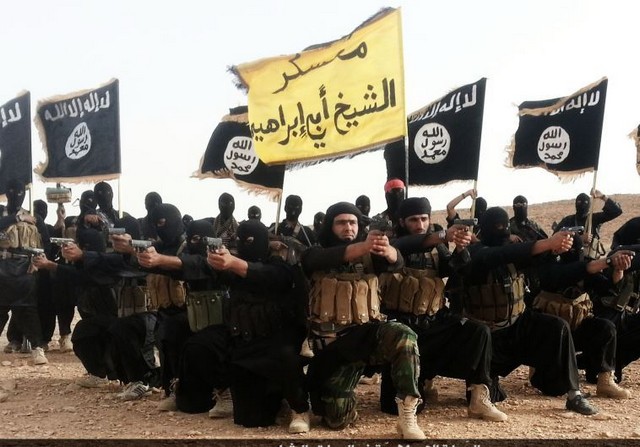
NEW YORK – Deadly terrorist attacks in Istanbul, Dhaka, and Baghdad demonstrate the murderous reach of the Islamic State (ISIS) in Europe, North Africa, the Middle East, and parts of Asia. The longer ISIS maintains its strongholds in Syria and Iraq, the longer its terrorist network will create such carnage. Yet ISIS is not especially difficult to defeat. The problem is that none of the states involved in Iraq and Syria, including the United States and its allies, has so far treated ISIS as its primary foe. It’s time they do.

ISIS has a small fighting force, which the US puts at 20,000 to 25,000 in Iraq and Syria, and another 5,000 or so in Libya. Compared to the number of active military personnelin Syria (125,000), Iraq (271,500), Saudi Arabia (233,500), Turkey (510,600), or Iran (523,000), ISIS is minuscule.

Despite US President Barack Obama’s pledge in September 2014 to “degrade and ultimately destroy” ISIS, the US and its allies, including Saudi Arabia, Turkey, and Israel (behind the scenes), have been focusing instead on toppling Syria’s Bashar al-Assad. Consider a recent candid statement by Israeli Major General Herzi Halevy (quoted to me by a journalist who attended the speech where Halevy made it): “Israel does not want to see the situation in Syria end with [ISIS] defeated, the superpowers gone from the region, and [Israel] left with a Hezbollah and Iran that have greater capabilities.”

Israel opposes ISIS, but Israel’s greater concern is Assad’s Iranian backing. Assad enables Iran to support two paramilitary foes of Israel, Hezbollah and Hamas. Israel therefore prioritizes the removal of Assad over the defeat of ISIS.

For the US, steered by neoconservatives, the war in Syria is a continuation of the plan for global US hegemony launched by Defense Secretary Richard Cheney and Under Secretary Paul Wolfowitz at the Cold War’s end. In 1991, Wolfowitz told US General Wesley Clark:

“But one thing we did learn [from the Persian Gulf War] is that we can use our military in the region – in the Middle East – and the Soviets won’t stop us. And we’ve got about 5 or 10 years to clean up those old Soviet regimes – Syria, Iran (sic), Iraq – before the next great superpower comes on to challenge us.”

The multiple US wars in the Middle East – Afghanistan, Iraq, Syria, Libya, and others – have sought to remove the Soviet Union, and then Russia, from the scene and to give the US hegemonic sway. These efforts have failed miserably.

For Saudi Arabia, as for Israel, the main goal is to oust Assad in order to weaken Iran. Syria is part of the extensive proxy war between Shia Iran and Sunni Saudi Arabia that plays out in the battlefields of Syria and Yemen and in bitter Shia-Sunni confrontations in Bahrain and other divided countries in the region (including Saudi Arabia itself).

For Turkey, the overthrow of Assad would bolster its regional standing. Yet Turkey now faces three foes on its southern border: Assad, ISIS, and nationalist Kurds. ISIS has so far taken a back seat to Turkey’s concerns about Assad and the Kurds. But ISIS-directed terrorist attacks in Turkey may be changing that.

Russia and Iran, too, have pursued their own regional interests, including through proxy wars and support for paramilitary operations. Yet both have signaled their readiness to cooperate with the US to defeat ISIS, and perhaps to solve other problems as well. The US has so far spurned these offers, because of its focus on toppling Assad.

The US foreign-policy establishment blames Russian President Vladimir Putin for defending Assad, while Russia blames the US for trying to overthrow him. These complaints might seem symmetrical, but they’re not. The attempt by the US and its allies to overthrow Assad violates the UN Charter, while Russia’s support of Assad is consistent with Syria’s right of self-defense under that charter. Yes, Assad is a despot, but the UN Charter does not give license to any country to choose which despots to depose.

The persistence of ISIS underscores three strategic flaws in US foreign policy, along with a fatal tactical flaw.

First, the neocon quest for US hegemony through regime change is not only bloody-minded arrogance; it is classic imperial overreach. It has failed everywhere the US has tried it. Syria and Libya are the latest examples.

Second, the CIA has long armed and trained Sunni jihadists through covert operations funded by Saudi Arabia. In turn, these jihadists gave birth to ISIS, which is a direct, if unanticipated, consequence of the policies pursued by the CIA and its Saudi partners.

Third, the US perception of Iran and Russia as implacable foes of America is in many ways outdated and a self-fulfilling prophecy. A rapprochement with both countries is possible.

Fourth, on the tactical side, the US attempt to fight a two-front war against both Assad and ISIS has failed. Whenever Assad has been weakened, Sunni jihadists, including ISIS and al-Nusra Front, have filled the vacuum.

Assad and his Iraqi counterparts can defeat ISIS if the US, Russia, Saudi Arabia, and Iran provide air cover and logistical support. Yes, Assad would remain in power; yes, Russia would retain an ally in Syria; and yes, Iran would have influence there. Terrorist attacks would no doubt continue, perhaps even in the name of ISIS for a while; but the group would be denied its base of operations in Syria and Iraq.

Such an outcome would not only end ISIS on the ground in the Middle East; it could lay the groundwork for reducing regional tensions more generally. The US and Russia could begin to reverse their recent new cold war through shared efforts to stamp out jihadist terrorism. (A pledge that NATO will not offer admission to Ukraine or escalate missile defenses in Eastern Europe would also help.)

There’s more. A cooperative approach to defeating ISIS would give Saudi Arabia and Turkey reason and opportunity to find a new modus vivendi with Iran. Israel’s security could be enhanced by bringing Iran into a cooperative economic and geopolitical relationship with the West, in turn enhancing the chances for a long-overdue two-state settlement with Palestine.

The rise of ISIS is a symptom of the shortcomings of current Western – particularly US – strategy. The West can defeat ISIS. The question is whether the US will undertake the strategic reassessment needed to accomplish that end.

Jeffrey D. Sachs, Professor of Sustainable Development, Professor of Health Policy and Management, and Director of the Earth Institute at Columbia University, is also Director of the UN Sustainable Development Solutions Network. His books include
The End of Poverty, Common Wealth, and, most recently, The Age of Sustainable Development.

5 July 2016

The Orlando Shootings: Police SWAT Team Involved in the Killings?

Prof Michel Chossudovsky

The first reports of shots came at 2.03am involving a confrontation between Mateen and a security guard at the entrance of the nightclub ”An off-duty cop working as a security guard at the club returned fire, prompting Mateen to retreat further into the hotspot and take hostages, officials said.” (New York Post, June 12, 2016).

According to police statements, there was, however, no “active shooter situation” at 2am in the morning, requiring an immediate police response. Moreover, there was no firm evidence that killings of hostages had taken place.

The Orlando police authorities initiated a process of negotiation with Mateen. When Mateen said that “there would be an imminent loss of life,” Orlando Police Chief John Mina (image right) was prompted “to end a three-hour standoff and ordered the assault that killed Mr. Mateen and freed dozens of people trapped in the club.” (New York Times, June 13, 2016).

Shortly after 5am, the police using an armored vehicle burst through the wall of the building. “A furious gunfight with 11 SWAT team members followed, during which Mateen was killed and a cop was saved from death when a shot struck his Kevlar helmet”. (New York Post ,June 12, 2016).

The Islamic State (ISIS) allegedly claimed responsibility for the attack in a statement released by its Amaq news agency, saying the onslaught “was carried out by an Islamic State fighter,” (Ibid).

What Really Happened?

The official FBI police report acknowledges shootings at 2am, it does not confirm the occurrence of killings of hostages prior to 5am. The killings started when the Police SWAT Teams stormed the Building at 5.13am. (see Timeline Below)

The Orlando Police Department Timeline summarized in an FBI Tampa Press release not only suggests that no one was killed before 5.13am when the SWAT team broke into the building, it also confirms that the first deadly shots were fired at 5.14am and that the suspect was killed one minute later at 5.15am. This assessment was confirmed by Judge Napolitano in a Fox News report.

The Police report does however acknowledge that individual SWAT members entered the building before 5am. According to the head of the SWAT team Capt. Mark Canty [image below] “both SWAT and patrol officers pulled “several” people out of the club during the three-hour standoff.”

The Killing of Omar Mateen

Mateen was allegedly involved in an exchange of gunfire with the SWAT team starting at 5.13am, While under attack of the SWAT team, Mateen could not have killed and injured over 100 people in 1-2 minutes; the FBI report confirms that he was killed at 5.15pm.

According to the Orlando Sentinel:

After most of the hostages got out, Mateen emerged from the first hole [in the wall] around 5:14 a.m.

There was a barrage of shots and Mateen was taken down in that hallway. [at 5.15am]

Possible Killings Perpetrated by the SWAT Team?

Barely mentioned by the mainstream media, police officials have acknowledged that some of the killings could have been perpetrated (“accidentally”) by the SWAT officers.

“The Orlando Chief of Police John Mina and other law enforcement officers offered new details about the shooting, including the possibility that some victims may have been killed by officers trying to save them.” (Naples Daily News, June 14, 2016)

Killing them in order to save them? An upside down diabolical concept. Kill with a view to saving lives?

It should however be mentioned that Orlando Police Chief John Mine was not directly in charge of the SWAT operation per se. The latter was under the command of Capt. Mark Canty.

Police Chief John Mina intimated that 8-9 SWAT officers might have killed people in the nightclub by accident (see quote below).

This important “detail” revealed by the Orland Chief of Police did not make the headlines of the mainstream media. It was reported locally in Florida, (Florida Naples News). It was not picked up by the national news media:

Mina said his decision to enter the club with such violence was tough. “It was a hard decision to make, but it was the right decision,” he said. “Our No. 1 priority is on saving lives, and it was the right decision to make.”

… Orlando officers walked into the nightclub and found lifeless club patrons strewn about a bar and lounge area. More bodies were found in a nearby bathroom.

“Some of the Victims Could have Been Killed by Officers who Were Trying to Save Them”

Saving People by Killing them? “New Normal”? The SWAT police officers were celebrated as HEROES by the mainstream media “for having saved dozens of lives”.

Source London’s Daily Mail

The possibility of SWAT killings at the Pulse nightclub was acknowledged and then casually dismissed by the Washington Post (June 20, 2016).

“The FBI is still working to determine if any of the victims at Pulse were hit by police fire, according to a U.S. law enforcement official who spoke on the condition of anonymity to discuss an ongoing investigation… The SWAT commander at Pulse said Sunday he was not sure if any victims may have been struck by officers’ gunfire, and the chief medical examiner has said he does not know.” (emphasis added)

No further investigation by the Washington Post was required.

Were the Victims shot by Omar Mateen or by the Police SWAT Team?

The Orlando Police Department Timeline (see below) (quoted by Judge Napolitano) suggests that no one was killed before 5.13am when the SWAT team stormed the building, it also confirms that the first deadly shots were fired at 5.14am and that the suspect was killed one minute later at 5.15am.

Within the scope of 1-2 minutes, Mateen is said to have killed 49 people and injured 53. And this happened while the suspect was been fired at by the SWAT team.

The reports are contradictory: First they say that the SWAT team was being fired upon by the suspect (see quote above) “who had hid in the bathroom” and then they acknowledge that he was killed when the hostages started pouring out of the building (through a hole in the wall, when they broke down the wall).

“A cop rammed his Bearcat armored vehicle through the club wall. Hostages poured out. So did Mateen, guns blazing. With quick efficiency, officers shot him dead.” (Naples Daily News, June 13, 2016)

What the above statement suggests is that Mateen was executed at point blank (“with efficiency”) upon exiting the building through a hole in the wall with members of the SWAT team waiting to kill him upon his exit through the hole. If Mateen had known that he was to be executed, he would not have attempted to exit the building through the hole in wall together with hostages.

Reports suggest that there was an extensive exchange of fire between Mateen and the SWAT team: “Omar Mateen, 29, was killed by police when he engaged them in a gun battle.” In the same Naples News report, quoting Chief of Police Mina:

“There’s a hole in the wall about two feet off the ground and three feet wide. We were able to rescue dozens and dozens of people who came out of that wall,” Mina said. “The suspect came out of that hole himself with a handgun and a long gun and engaged in a gun battle with officers where he was ultimately killed.”

Visibly this statement by Chief of Police Mina is convoluted to say the least: it would have been almost impossible for Mateen to have effectively engaged the SWAT officials upon exiting the hole in the wall. (See image). Mateen’s fate was similar to that of the dead (alleged ISIS-Daesh) terror suspects killed rather than arrested by the police in Brussels and Paris terror attacks.

The official story is that Mateen killed 49 people and injured 53 on the orders of the Islamic State (ISIS-Daesh).

And this allegedly took place –according to the OPD time line– in a lapse of 1-2 minutes before he was shot dead at 5.15am, while leaving the building through a hole in the wall.

There were eleven SWAT police officers who stormed the building at 5.13am; the suspect was reported dead at 5.15am. According to the Orlando Police Chief, 8 or 9 out of the 11 SWAT officers accidentally shot at the hostages. The statement of Orlando Police Chief Mina does not refer to an error of one or two SWAT officers, the entire SWAT team (8 or 9 out of 11) under the helm of SWAT Commander Capt. Canty “accidentally” fired at the nightclub patrons.

CCTV Camera Footage

Law enforcement officials have acknowledged that the CCTV footage from several cameras inside the Pulse nightclub were available and have been viewed and examined. Sofar the CCTV footage of what happened inside the nightclub including the “friendly fire” of the SWAT team, has not been released.

Did Mateen have the ability of shooting and killing 49 people and injuring 53 in the course of less than 2 minutes while also exiting the building through a hole in the wall at 5.14am and confronting the SWAT team in cross-fire. Is this corroborated by the CCCTV footage?

The autopsy reports as well as the ballistic reports have not been released.

Ballistics

It is worth noting that Mateen allegedly used the Sig Sauer MCX .223-caliber rifle with a magazine capacity of 30 rounds. He also had in his possession a Glock 17 9mm semi-automatic pistol with a standard magazine capacity of 17 rounds.

1. the semi-automatic parameters of the two weapons in his possession would not have allowed Omar Mateen to fire more than one hundred shots within a 1-2 minutes without magazine reloading. Note the time line: 5.13am-5.15am. 5.15am: Mateen is recorded dead.

See the video below which indicates the semi-automatic nature of the Sig Sauer MCX.

In this regard, the nature of Mateen’s semi-automatic weapons was acknowledged by a USA Today Report which intimates that some of killings were attributable to “friendly” police fire:

“It’s unclear how many rounds Mateen had with him, and authorities are investigating whether some of those killed were hit by friendly fire”. (emphasis added)

The USA Today’s couched statement tacitly recognizes that the SWAT officers might have been responsible for the some of the deaths inside the Pulse nightclub. But that truth has to be suppressed. It is not worthy of detailed investigation.

2. Both the SIG Sauer as well as the Glock 17 9mm firearms used by Mateen were also used by the police SWAT teams, which suggests that the ballistics for gunshot casualties in the Orlando nightclub (by Mateen and the SWAT team) would be hard to distinguish.

Bear in mind, irrespective of the number of magazine loads Mateen had in his possession, he would not have been able to kill and/or injure more than one hundred people in a time span of less than 2 minutes.

What is at stake is a coverup of what happened inside the nightclub which is casually acknowledged and at the same time denied by the mainstream media.

The unspoken truth is dismissed, the facts are twisted.

Conclusion

What we are dealing with is an orchestrated coverup. The Forbidden Truth has to be suppressed.

Lies, “half truths” and innuendos in mainstream media reporting. Nonetheless, straight from “The Horse’s Mouth”, the SWAT police team was allegedly involved in the Orlando Pulse nightclub killings:

“Officers may have shot Orlando Club patrons”

“the possibility that some victims may have been killed by officers trying to save them.” (Naples Daily News, June 14, 2016)

… [A]uthorities are investigating whether some of those killed were hit by friendly fire”. (emphasis added)

“The FBI is still working to determine if any of the victims at Pulse were hit by police fire,

“The SWAT commander [Capt. Canty] at Pulse said Sunday he was not sure if any victims may have been struck by officers’ gunfire”

Mina said his decision to enter the club with such violence was tough. “It was a hard decision to make, but it was the right decision,” he said. “Our No. 1 priority is on saving lives, and it was the right decision to make.”

The Obama Administration, the FBI, the Media have casually dismissed the possibility of police involvement in the killings despite the statements emanating from police sources. Theater of the absurd: The official story is that the killings were ordered by the Islamic State (ISIS, ISIL, Daesh) based in Raqqa, Northern Syria, which happens to be supported and financed by two of America’s staunchest allies, Turkey and Saudi Arabia in close liaison with Washington.

The CCTV camera footage which is available to law enforcement officials will, most probably, not be made public.

https://www.fbi.gov/tampa/press-releases/2016/investigative-update-regarding-pulse-nightclub-shooting

Michel Chossudovsky is an award-winning author, Professor of Economics (emeritus) at the University of Ottawa, Founder and Director of the Centre for Research on Globalization (CRG), Montreal, Editor of Global Research.

2 July 2016

‘Hero of the day’: Syrian refugee hands over €150k found in wardrobe

By Karim El-Bar

Muhannad said he couldn’t keep the cash he had discovered in the wardrobe because his religion forbids it

A Syrian refugee living in Germany discovered €150,000 ($166,500) in an old wardrobe donated by a charity earlier this week – then handed the cash over to police, German media reported.

The 25-year-old, who has been identified only as Muhannad M, told reporters that his religion forbade him from keeping the money.

“For the police and city, he is the hero of the day,” police spokesman Ralf Steinmeyer, 55, said in a statement released on Tuesday.

Muhannad, whose family is still living in Syria, hails from al-Houla, near Homs.

Al-Houla was the site of one of the Syrian uprising’s bloodiest massacres in 2012, when the army and pro-government militias killed 108 people, including 34 women and 49 children, according to UN figures. Most victims were summarily executed.

Muhannad reportedly reached Germany last October before gaining refugee status and being transferred to the town of Minden.

It was in this community of about 83,000 people, in western Germany, that the Syrian made his extraordinary discovery.

Muhannad had just moved into a flat paid for by a job centre and started to furnish his apartment with donations from charities.

While assembling and cleaning the donated wardrobe, he found a secret compartment made up of two boards screwed together. Inside he found the money.

“They were all new €500 notes. I thought it was fake money,” he told the German newspaper Bild, describing the €50,000 in cash he found inside the compartment.

He also found five savings books worth €100,000, bringing the total amount to €150,000.

After a brief internet search, and a crash course in telling fake money from real ones, he realised the cash was genuine.

If he was uncertain at first whether the money was real, he certainly had no qualms about what to do next.

“I am a Muslim. I’m not allowed to keep this money. My religion forbids it,” he told Radio Westphalia.

He alerted the local migration authorities who, in turn, informed the police.

“Allah would never allow me to finance my own interests with someone else’s wealth,” he added.

Police have identified the owner of the money, according to German daily Die Welt, and are still attempting to make contact.

“People often report small amounts of money found to the police,” Steinmeyer said. “But such a large sum is absolutely exceptional.”

“This young man has behaved in an exemplary manner and deserves great credit,” he added.

Muhannad is currently enrolled in a German language course and aims to study for a master’s degree in Germany, having finished his university studies in Syria in communications technology.

No good deed goes unpaid, however, as he will receive three percent of the value of the money he handed over – €4,500.

But Bild reported that it is possible the finder’s fee will be offset against the job centre’s overheads. Perhaps no good deed goes unpunished.

Karim El-Bar is an Egyptian-British, London-based staff writer/editor focused on the Middle East.

29 June 2016


Brexit is a disaster, but we can build on the ruins

By George Monbiot

Let’s sack the electorate and appoint a new one: this is the demand made by MPs, lawyers and the 4 million people who have signed the petition calling for a second referendum. It’s a cry of pain, and therefore understandable, but it’s also bad politics and bad democracy. Reduced to its essence, it amounts to graduates telling nongraduates: “We reject your democratic choice.”

Were this vote to be annulled (it won’t be), the result would be a full-scale class and culture war, riots and perhaps worse, pitching middle-class progressives against those on whose behalf they have claimed to speak, and permanently alienating people who have spent their lives feeling voiceless and powerless.

Yes, the Brexit vote has empowered the most gruesome collection of schemers, misfits, liars, extremists and puppets that British politics has produced in the modern era. It threatens to invoke a new age of demagoguery, a threat sharpened by the thought that if this can happen, so can Donald Trump.

It has provoked a resurgence of racism and an economic crisis whose dimensions remain unknown. It jeopardises the living world, the NHS, peace in Ireland and the rest of the European Union. It promotes what the billionaire Peter Hargreaves gleefully anticipated as “fantastic insecurity”.

But we’re stuck with it. There isn’t another option, unless you favour the years of limbo and chaos that would ensue from a continued failure to trigger article 50. It’s not just that we have no choice but to accept the result; we should embrace it and make of it what we can.

It’s not as if the system that’s now crashing around us was functioning. The vote could be seen as a self-inflicted wound, or it could be seen as the eruption of an internal wound inflicted over many years by an economic oligarchy on the poor and the forgotten. The bogus theories on which our politics and economics are founded were going to collide with reality one day. The only questions were how and when.

Yes, the Brexit campaign was led by a political elite, funded by an economic elite and fuelled by a media elite. Yes, popular anger was channelled towards undeserving targets – migrants.

But the vote was also a howl of rage against exclusion, alienation and remote authority. That is why the slogan “take back control” resonated. If the left can’t work with this, what are we for?

So here is where we find ourselves. The economic system is not working, except for the likes of Philip Green. Neoliberalism has not delivered the meritocratic nirvana its theorists promised, but a rentiers’ paradise, offering staggering returns to whoever grabs the castle first while leaving productive workers on the wrong side of the moat.

The age of enterprise has become the age of unearned income, the age of the market the age of market failure, the age of opportunity a steel cage of zero-hours contracts, precarity and surveillance.

The political system is not working. Whoever you vote for, the same people win, because where power claims to be is not where power is.

Parliaments and councils embody paralysed force, gesture without motion, as the real decisions are taken elsewhere: by the money, for the money. Governments have actively conspired in this shift, negotiating fake trade treaties behind their voters’ backs to prevent democracy from controlling corporate capital.

Unreformed political funding ensures that parties have to listen to the rustle of notes before the bustle of votes. In Britain these problems are compounded by an electoral system that ensures most votes don’t count. This is why a referendum is almost the only means by which people can be heard, and why attempting to override it is a terrible idea.

Culture is not working. A worldview that insists both people and place are fungible is inherently hostile to the need for belonging. For years now we have been told that we do not belong, that we should shift out without complaint while others are shifted in to take our place.

When the peculiarities of community and place are swept away by the tides of capital, all that’s left is a globalised shopping culture, in which we engage with glazed passivity. Man was born free, and he is everywhere in chainstores.

In all these crises are opportunities – opportunities to reject, connect and erect, to build from these ruins a system that works for the people of this country rather than for an offshore elite that preys on insecurity.

If it is true that Britain will have to renegotiate its trade treaties, is this not the best chance we’ve had in decades to contain corporate power – of insisting that companies that operate here must offer proper contracts, share their profits, cut their emissions and pay their taxes? Is it not a chance to regain control of the public services slipping from our grasp?

How will politics in this sclerotic nation change without a maelstrom? In this chaos we can, if we are quick and clever, find a chance to strike a new contract: proportional representation, real devolution and a radical reform of campaign finance to ensure that millionaires can never again own our politics.

Remote authority has been rejected, so let’s use this moment to root our politics in a common celebration of place, to fight the epidemic of loneliness and rekindle common purpose, transcending the tensions between recent and less recent migrants (which means everyone else). In doing so, we might find a language in which liberal graduates can talk with the alienated people of Britain, rather than at them.

But most importantly, let’s address the task that the left and the centre have catastrophically neglected: developing a political and economic philosophy fit for the 21st century, rather than repeatedly microwaving the leftovers of the 20th (neoliberalism and Keynesianism). If the history of the last 80 years tells us anything, it’s that little changes without a new and feracious framework of thought.

So yes, despair and rage and curse at what has happened: there are reasons enough to do so. But then raise your eyes to where hope lies.

George Monbiot is the author of the bestselling books The Age of Consent: A Manifesto for a New World Order and Captive State: The Corporate Takeover of Britain, as well as the investigative travel books Poisoned Arrows, Amazon Watershed and No Man’s Land.

28 June 2016


The Meaning of Brexit

By Jeffrey Sachs

NEW YORK – The Brexit vote was a triple protest: against surging immigration, City of London bankers, and European Union institutions, in that order. It will have major consequences. Donald Trump’s campaign for the US presidency will receive a huge boost, as will other anti-immigrant populist politicians. Moreover, leaving the EU will wound the British economy, and could well push Scotland to leave the United Kingdom – to say nothing of Brexit’s ramifications for the future of European integration.

Brexit is thus a watershed event that signals the need for a new kind of globalization, one that could be far superior to the status quo that was rejected at the British polls.

At its core, Brexit reflects a pervasive phenomenon in the high-income world: rising support for populist parties campaigning for a clampdown on immigration. Roughly half the population in Europe and the United States, generally working-class voters, believes that immigration is out of control, posing a threat to public order and cultural norms.

In the middle of the Brexit campaign in May, it was reported that the UK had net immigration of 333,000 persons in 2015, more than triple the government’s previously announced target of 100,000. That news came on top of the Syrian refugee crisis, terrorist attacks by Syrian migrants and disaffected children of earlier immigrants, and highly publicized reports of assaults on women and girls by migrants in Germany and elsewhere.

In the US, Trump backers similarly rail against the country’s estimated 11 million undocumented residents, mainly Hispanic, who overwhelmingly live peaceful and productive lives, but without proper visas or work permits. For many Trump supporters, the crucial fact about the recent attack in Orlando is that the perpetrator was the son of Muslim immigrants from Afghanistan and acted in the name of anti-American sentiment (though committing mass murder with automatic weapons is, alas, all too American).

Warnings that Brexit would lower income levels were either dismissed outright, wrongly, as mere fearmongering, or weighed against the Leavers’ greater interest in border control. A major factor, however, was implicit class warfare. Working-class “Leave” voters reasoned that most or all of the income losses would in any event be borne by the rich, and especially the despised bankers of the City of London.

Americans disdain Wall Street and its greedy and often criminal behavior at least as much as the British working class disdains the City of London. This, too, suggests a campaign advantage for Trump over his opponent in November, Hillary Clinton, whose candidacy is heavily financed by Wall Street. Clinton should take note and distance herself from Wall Street.

In the UK, these two powerful political currents – rejection of immigration and class warfare – were joined by the widespread sentiment that EU institutions are dysfunctional. They surely are. One need only cite the last six years of mismanagement of the Greek crisis by self-serving, shortsighted European politicians. The continuing eurozone turmoil was, understandably, enough to put off millions of UK voters.

The short-run consequences of Brexit are already clear: the pound has plummeted to a 31-year low. In the near term, the City of London will face major uncertainties, job losses, and a collapse of bonuses. Property values in London will cool. The possible longer-run knock-on effects in Europe – including likely Scottish independence; possible Catalonian independence; a breakdown of free movement of people in the EU; a surge in anti-immigrant politics (including the possible election of Trump and France’s Marine Le Pen) – are enormous. Other countries might hold referendums of their own, and some may choose to leave.

In Europe, the call to punish Britain pour encourager les autres – to warn those contemplating the same – is already rising. This is European politics at its stupidest (also very much on display vis-à-vis Greece). The remaining EU should, instead, reflect on its obvious failings and fix them. Punishing Britain – by, say, denying it access to Europe’s single market – would only lead to the continued unraveling of the EU.

So what should be done? I would suggest several measures, both to reduce the risks of catastrophic feedback loops in the short term and to maximize the benefits of reform in the long term.

First, stop the refugee surge by ending the Syrian war immediately. This can be accomplished by ending the CIA-Saudi alliance to overthrow Bashar al-Assad, thereby enabling Assad (with Russian and Iranian backing) to defeat the Islamic State and stabilize Syria (with a similar approach in neighboring Iraq). America’s addiction to regime change (in Afghanistan, Iraq, Libya, and Syria) is the deep cause of Europe’s refugee crisis. End the addiction, and the recent refugees could return home.

Second, stop NATO’s expansion to Ukraine and Georgia. The new Cold War with Russia is another US-contrived blunder with plenty of European naiveté attached. Closing the door on NATO expansion would make it possible to ease tensions and normalize relations with Russia, stabilize Ukraine, and restore focus on the European economy and the European project.

Third, don’t punish Britain. Instead, police national and EU borders to stop illegal migrants. This is not xenophobia, racism, or fanaticism. It is common sense that countries with the world’s most generous social-welfare provisions (Western Europe) must say no to millions (indeed hundreds of millions) of would-be migrants. The same is true for the US.

Fourth, restore a sense of fairness and opportunity for the disaffected working class and those whose livelihoods have been undermined by financial crises and the outsourcing of jobs. This means following the social-democratic ethos of pursuing ample social spending for health, education, training, apprenticeships, and family support, financed by taxing the rich and closing tax havens, which are gutting public revenues and exacerbating economic injustice. It also means finally giving Greece debt relief, thereby ending the long-running eurozone crisis.

Fifth, focus resources, including additional aid, on economic development, rather than war, in low-income countries. Uncontrolled migration from today’s poor and conflict-ridden regions will become overwhelming, regardless of migration policies, if climate change, extreme poverty, and lack of skills and education undermine the development potential of Africa, Central America and the Caribbean, the Middle East, and Central Asia.

All of this underscores the need to shift from a strategy of war to one of sustainable development, especially by the US and Europe. Walls and fences won’t stop millions of migrants fleeing violence, extreme poverty, hunger, disease, droughts, floods, and other ills. Only global cooperation can do that.

Jeffrey D. Sachs, Professor of Sustainable Development, Professor of Health Policy and Management, and Director of the Earth Institute at Columbia University, is also Director of the UN Sustainable Development Solutions Network.

25 June 2016


Oppose US Military Bases in Japan! US Troops Out Now!

APRN Statement on Protests vs US Military Troops in Japan

The Asia Pacific Research Network (APRN) vehemently opposes the continued presence of US military troops in Okinawa Prefecture, Japan and condemns the Abe Administration’s continued negligence to the voices of the Okinawan people that led to the recent murder and rape of a 20-year-old Okinawan woman by a former US Marine.

Last May 19, Kenneth Franklin Shinzato was arrested by Okinawan authorities over the death of Rina Shumabukuro whose body was found beside a road in central Okinawa after being reported missing last April 28. The former US Marine confessed to raping Shimabukuro before strangling and stabbing her to death after which he transported her body in a suitcase. This is not the first time this happened in Okinawa – in 1995, three US Marines gang-raped a 12-year old Okinawan schoolgirl which marked the groundswell of peoples opposition against military bases in Japan [1]. Massive demonstrations in 1995 prompted the US to publicly ‘pledge’ in reducing its military footprint in Okinawa which ironically until now still serves as a linchpin to US’ security relations with Japan and a strategic location for the US to pursue its pivot to East Asia.

The recent killing and rape of a local Okinawan woman sparked yet again simultaneous mass protests across the country that gathered tens of thousands of people in Japan calling for the ouster of US military bases in the country.

The heavy US military presence in Okinawa operates under the US-Japan Security Treaty first signed in 1952 which allows the US to take unfettered military actions in Japan in the interest of ‘maintaining peace’ in East Asia. The security treaty was further amended in 1960 to include a separate pact called the SOFA (Status of Forces Agreement) agreement which unduly protects US military personnel, servicemen, base employees and certain civilian workers who commit crimes in the country by giving the US jurisdiction over such cases [2]. It must be noted that in this case of violence against Rina, the former US Marine was arrested by the Okinawan authorities, and is expected to face criminal court under the local authority. However, that may not have been possible had he fled into the US bases, or if the violence had occurred while on duty.

The continued US military presence this treaty perpetuates puts the Japanese peoples at risk as it allows free reign for US soldiers and service people to commit crimes with impunity, and provides the US with unrestricted access to Japan’s resources to secure its geopolitical interests in the region. For seven decades now since the end of World War II, the people continue to bear the weight of vast US military bases in Okinawa along with the numerous human rights violations associated with them.

In addition, Okinawa’s land mass is less than 1 percent of Japan’s but it is home to 74% of exclusive-use US military facilities in the country [3]. Okinawa currently hosts 26,000 US military personnel, 32 US military installations, 20 air spaces and 28 water areas that serve as training zones exclusive for US military use [4].

This over burden is, in part, due to the ignorance by the Japanese Government to let this go on. As an island on the peripheries of the Japanese Archipelago, the Okinawan people have historically been subject to discrimination by Tokyo. Nearly 80 percent of people in Okinawa have always demanded that the burden be at least matched by other prefecture’s share of US bases. However, the voices only fell into deaf ears of the ruling Liberal Democratic Party, especially under the current Abe Administration, who himself is aggressively leading the militarization of the Far East.

APRN stands in solidarity with the Okinawan people demanding justice for the death of Rina and the immediate pullout of US military troops from their land. We likewise urge our members, partners and the international community at large to continue opposing the presence of US military bases across the Asia Pacific region.

OPPOSE MILITARY BASES IN JAPAN!

US TROOPS OUT NOW!

RESIST MILITARISM IN THE ASIA PACIFIC REGION!

June 24, 2016


How to stop Brexit: get your MP to vote it down

By Geoffrey Robertson

It’s not over yet. A law that passed last year to set up the EU referendum said nothing about the result being binding or having any legal force. “Sovereignty” – a much misunderstood word in the campaign – resides in Britain with the “Queen in parliament”, that is with MPs alone who can make or break laws and peers who can block them. Before Brexit can be triggered, parliament must repeal the 1972 European Communities Act by which it voted to take us into the European Union – and MPs have every right, and indeed a duty if they think it best for Britain, to vote to stay.

It is being said that the government can trigger Brexit under article 50 of the Lisbon treaty, merely by sending a note to Brussels. This is wrong. Article 50 says: “Any member state may decide to withdraw from the Union in accordance with its own constitutional requirements.” The UK’s most fundamental constitutional requirement is that there must first be the approval of its parliament.

Britain, absurdly, is the only significant country (other than Saudi Arabia) without a written constitution. We have what are termed “constitutional conventions”, along with a lot of history and traditions. Nothing in these precedents allots any place to the results of referendums or requires our sovereign parliament to take a blind bit of notice of them.

It was parliament that voted to enter the European Economic Community in 1972, and only three years later was a referendum held to settle the split in Harold Wilson’s Labour party over the value of membership. Had a narrow majority of the public voted out in 1975, Wilson would still have had to persuade parliament to vote accordingly – and it is far from certain that he would have succeeded.

Our democracy does not allow, much less require, decision-making by referendum. That role belongs to the representatives of the people and not to the people themselves. Democracy has never meant the tyranny of the simple majority, much less the tyranny of the mob (otherwise, we might still have capital punishment). Democracy entails an elected government, subject to certain checks and balances such as the common law and the courts, and an executive ultimately responsible to parliament, whose members are entitled to vote according to conscience and common sense.

Many countries, including Commonwealth nations – vouchsafed their constitutions by the UK – have provisions for change by referendums. But these provisions are carefully circumscribed and do not usually allow change by simple majority.

In Australia, for example, a referendum proposal must pass in each of the six states (this would defeat Brexit, which failed in Scotland and Northern Ireland). In other countries, it must pass by a very clear majority – usually two-thirds. In some US states that permit voting on public legislative proposals, there are similar safeguards. In the UK (except, under a 2011 act in the case of an EU expansion of power), referendum results are merely advisory – in this case, advising MPs that the country is split almost down the middle on the wisdom of EU membership.

So how should MPs vote come November, when prime minister Boris Johnson introduces the 2016 European Communities Act (Repeal) Bill? Those from London and Scotland should happily vote against it, following their constituents’ wishes. So should Labour MPs – it’s their party policy after all.

By November, there may be other very good reasons for MPs to refuse to leave Europe. Brexit may turn out to be just too difficult. Staying in the EU may be the only way to stop Scotland from splitting, or to rescue the pound. A poll on Sunday tells us that a million leave voters are already regretting their choice: a significant public change of mind would amply justify a parliamentary refusal to Brexit. It may be, in November, that President Donald Trump becomes the leader of the free world – in which case a strong EU would become more necessary than ever. Or it may simply be that a majority of MPs, mindful of their constitutional duty to do what is best for Britain, conscientiously decide that it is best to remain.

There is no point in holding another referendum (as several million online petitioners are urging). Referendums are alien to our traditions, they are inappropriate for complex decision-making, and without careful incorporation in a written constitution, the public expectation aroused by the result can damage our democracy. The only way forward now depends on the courage, intelligence and conscience of your local MP. So have your say in the traditional way: lobby him or her to vote against the government when it tries to Brexit, because parliament is sovereign.

Geoffrey Robertson QC is founder and head of Doughty Street Chambers and has argued many landmark human rights cases in British and Commonwealth Courts and the European Court of Human Rights.

27 June 2016

Gaza Fishermen Suffocated At sea

By Saleh el Namey

A group of Gaza fishermen were working an early morning shift when the Israeli navy opened fire.

Rajab Abu Riyala and his brother Khaled were shot during that 31 May incident. A bullet had to be removed from Rajab’s knee as a result.

They were among five fishermen arrested on two vessels by Israel. All were brought to Ashdod, a port in present-day Israel, and were detained for most of the day. Both of the vessels were confiscated. “Every Gaza fisherman who is arrested undergoes a long and cruel process of interrogation and strip searches,” said Bashir Abu Riyala, one of the five.

Bashir, a cousin of Rajab and Khaled, questioned why Israel behaves as if fishermen are a security threat. “The way they harass us cannot be tolerated,” he said. “Each time they arrest fishermen, they fail to get the information they are looking for. We do not know anything. All we want is to fish freely and safely.”

Bashir thinks it is unlikely that the vessel will be returned to them.

Due to the confiscation, he and his cousins are now out of work.

The fishermen were within three nautical miles of the Gaza coast, a zone in which Israel theoretically allows fishing to take place.

Israel has repeatedly attacked fishermen working within those limits.

The limits have also been subject to a number of changes.

Boost to economy?

In April, it was reported that fishing would be permitted within nine nautical miles off certain parts of the Gaza coast. Citing Israeli officials, The New York Times suggested that Israel was allowing fishermen to work in a wider area as part of efforts to boost Gaza’s economy.

Any benefits to Gaza’s population would have been short-lived.

Israeli authorities subsequently stated they were reimposing a limit of six nautical miles for the entire Gaza Strip.

That limit is considerably less than the 20-mile zone established for Gaza’s fishermen under the Oslo accords, which Israel and the Palestine Liberation Organization signed in the 1990s.

Last year, Maher Baker and his son Khader were fishing near Gaza’s coastline when Israeli forces shot at them repeatedly.

Khader was wounded in the arm and the two men were taken to Ashdod. After being shackled and forced to take off their clothes, the father and son were subjected to an aggressive interrogation.

“Even though we were fishing within three miles of the coast, the Israelis accused us of fishing in a dangerous and prohibited area,” Maher told The Electronic Intifada. “Simply, they do not want us to fish. They want the sea for themselves.”

The Bakers’ vessel has still not been returned to them. Since the incident occurred, they have been trying to scrape together enough money to buy a new one.

“I have just spent my whole day running from the union [for Palestinian fishermen] to charities, to the UN, looking for some kind of financial support,” said Khader.

The Palestinian Centre for Human Rights recorded 139 incidents in which Gaza’s fishermen were shot at by Israeli naval forces during 2015. Twenty-four fishermen were wounded.

There were also six incidents in which boats were shelled and chased.

More than 70 fishermen were arrested last year and 22 vessels were confiscated.

These incidents are part of the economic warfare Israel wages against Gaza’s fishermen.

Deprived of coast

The nine-year blockade of Gaza means that motors, spare parts and fiberglass — all essential for maintaining and repairing vessels — are scarce. Fuel is often unaffordable.

Muflih Abu Riyala, a member of the Palestinian Fishermen’s Syndicate, said that Gaza has suffered from equipment shortages for so long that fishermen “have gotten used to it.”

“Israeli procedures are suffocating the fishing industry,” he said. “Catches have fallen dramatically. Why are we deprived of fishing off our own coast?”

Before Israel imposed its siege, Gaza fishermen could catch as much as 4,500 tons per year, some of which was exported to the occupied West Bank. Catches since the imposition of the siege have fallen below 1,500 tons per year, according to Abu Riyala.

Forcing fishermen to operate within such strict limits has depleted many fish stocks in the waters next to the coast.

Amer al-Qaran, a fisherman from the Deir al-Balah area of central Gaza, works with his three sons for at least 15 hours a day.

The best time of day to fish is the early morning, he said. Yet because of Israeli restrictions, the most he can expect to catch in a six-hour morning shift is around 7 kilograms of fish. “That is sometimes not enough to cover the amount of fuel my boat uses during a shift,” he said.

“Sometimes I spend long hours at sea without catching any fish,” he said. “I am afraid that I will come under Israeli fire if I advance another mile.”

Isra Saleh el-Namey is a journalist from Gaza.

This article was first published by Electronic Intifada

26 June 2016

Brexit Backlash Against EU, Revolt Against Elites

By Kevin Zeese

Co-Written by Kevin Zeese & Margaret Flowers
The globalized economy is not working for most people of the world. International trade agreements and new government structures like the European Union serve corporate power and put the people and planet aside to ensure profits continue to come first. They undermine democracy and national sovereignty, leaving people feeling more powerless.

By pushing austerity and commodification of public services, people are now more economically insecure with less wealth and lower incomes. The response of many is anger. Some protest austerity, others blame people of a different skin color, heritage or ethnicity. The surprise vote in the UK to leave the European Union is the latest, and perhaps the biggest, example of the blowback economic and political elites are getting for their actions.

The Brexit Backlash

As economist Michael Hudson tells Chris Hedges, the negative impact of neo-liberal economics is augmented by US and NATO military actions. The war on Iraq, destruction of Libya, ongoing military conflict in Syria; along with the US regime change in Ukraine and lining Russian borders with NATO forces while the US demands Europe spend more on militarism; have led to a massive exodus of migrants from the Middle East which has exacerbated economic insecurity and nationalist fears.

The impact of the Brexit is just beginning. Hundreds of billions have been lost and bankers and investors are going to find themselves upside down. US and European banks, as well as UK banks, just lost 9 percent of their value because of the drop in the value of British currency. These financial elites will be demanding another bailout and the US and other governments controlled by the finance sector will comply. This will lead to greater anger at the bottom and the conflict between the elites and the people will grow, leading to new explosions.

The European political establishment has been hit with a shockwave. They did not see this coming. British prime minister David Cameron immediately announced his resignation, but that is just the beginning. Stock markets dropped around the world, the British pound fell to 1985 levels and another recession for Britain is on the horizon, which will create more shockwaves throughout Europe and the world. Populist views in multiple European nations are rising and there could be other countries seeking to leave the EU. The Brexit could be the beginning of the end for the EU.

The Brexit vote showed how out of touch the elites are with the lives of the people in England. They are unaware how austerity, unfair incomes and lack of wealth makes life unbearable for many. The same is true throughout the globalized economy, which is rigged for the 1% around the world. As the elites seek to protect themselves, at the cost of everyone else, it is time for the Left to escalate its actions against austerity, poverty and extreme inequality.

The popular movement for economic, racial and environmental justice must seize the moment to demonstrate that the real issues are economic and classist; that the economy rigged by and for the transnational corporations and the investor class is robbing people, treating them as wage slaves with no power and ignoring their hopes while highlighting their lack of political power. This is an opportunity for the movement, but the narrative must be reshaped to be about living standards, pensions, wages and wealth of the people.

As Left Unity argues the Brexit makes it more important for people in Britain to link with those in the Nuit Debout movement in France, with those struggling in Greece, Portugal, Spain, Italy and Ireland as well as with the various fronts of struggle in the US. We are all in this together, just as the transnational corporations have united to build their power in governments across the world.

The European Union Anti-Democratic, Favoring Austerity and Public Services Privatized

Brexit may be just the first country to seek to leave the EU. Movements in multiple countries are getting stronger because many are seeing the EU does not represent them. Even those who favored the UK staying in the EU, like Labour leader Jeremy Corbyn, agreed the EU needed major transformation.

Perhaps the greatest example of the EU missteps has been in Greece. After the 2008 economic collapse Greece did not recover. Greece sought a bailout from the EU and had to deal with the Troika, the European Commission (the executive body of the EU), International Monetary Fund and the European Central Bank. The troika required harsh terms to assist Greece in the sovereign debt crisis beginning in 2010 with a bailout and additional bailouts in 2012 and 2015.

Throughout this time there were protests against the Greek government and the EU austerity requirements. Its climax was in 2015 when Syriza put forward a national referendum on the required austerity measures. Two thirds of Greeks voted in the referendum and a landslide 61% to 39% of the pubic opposed the terms set by the Troika.

The Troika reacted aggressively, ignoring the views of the Greek people and continuing their demands showing deep conflicts in the Eurozone and highlighting the undemocratic nature of the EU. Syriza could have taken more aggressive action – nationalizing banks, creating their own currency, issued their own Euros – instead, amid nationwide protests the Syriza government approved the deal, causing divisions in its own party. Alexis Tsipras, forced to give in to the European bankers, knew the austerity policies forced on Greece were a “dead end.” He said he tried to represent the people against the powerful, but the powerful won.

The Troika forced a fire sale of Greek public works and infrastructure to their creditors – Greece was for sale, everything must go. This meant the sale of 14 regional airports, which the Germans took, major ports, gas transmission lines, motorways, the main telecommunication system, postal service, water utilities, casino licenses – you get the idea, everything. And, they were forced to sell in the midst of a depression for very low prices. How could this process help Greece be financially stable in the future? In fact, it assures Greece will not be a stable economy. Not only did the Troika take away Greek assets, it took away its dignity after showing that democracy in the birthplace of democracy had no meaning.

Not only did the people of Greece get the message of the abusive power of the EU but people all over the world witnessed it. There were 22 countries with a debt crisis at the time, with predictions that the number could grow to 71 nations. Germans in 14 cities protested against the abuse of Greece. There were members of the EU Parliament that showed their solidarity with the Greek people, but they did not have the power of the Troika. The view of the world was “we are all Greece.”

Bankers should go to jailThe world saw that the bankers rule in the EU, the people can get down on their knees and beg, but the bankers will make them grovel and give them nothing. The facts showed irresponsible German bankers were a greater threat to Europe than Greece, that Germany had built the façade of a strong economy on bad loans and that so much of the Greek economic problem was a tragedy and a lie. Nine months after this abusive agreement, a leak from the IMF showed that they may be negotiating the debt in bad faith and trying to precipitate another debt crisis to avoid fulfilling their side of the bargain. With the shock waves of the Brexit, economic collapse may be returning to Europe and a country like Greece, economically ravaged by the Troika, may be at great risk.

Some of the lessons from this Greek tragedy may lead to even more radical responses in the future. A Grexit has been talked about and called for, but at the time the people were not ready. Will they be in the near future? People are now recognizing that a left political party in one nation cannot challenge the ruling class of bankers and investors, a broader revolt in the future will be necessary. And, we may find that the power structure of the ruling class will destroy itself from the inside, not from the outside.

The Hypocrisy of the IMF on Austerity, Wealth Divide and Worker Rights

The International Monetary Fund was a key player in the Greek crisis and has been a key player in the globalized economy that serves transnational corporations and not the people. The IMF has pushed austerity on many nations around the world – shrinking their economies when they needed to be growing, pushing wealth to the top when the wealth divide needs to be made smaller; and weakening the power of workers.

IMF World Bank protest

The IMF knows these policies do not work and are counterproductive but they continue to insist on them. The IMF is a tool of the bankers and investment class. It does their work, even though they know it will be counterproductive for the economies of various nations as well as for the global economy. As the backlash against the EU and other global economic institutions designed by and for big business builds, the IMF’s policies will deserve a good deal of blame.

The IMF’s own reports indicate that neoliberalism has been oversold and that austerity is much worse for the economy than they realized. The IMF is now telling the United States that it needs to spend more money to build-up its economy.

In 2015 the IMF said in a report that income inequality is harming economies around the world, calling it the “defining challenge of our time.” The report came out one month before the Greek landslide vote against the austerity and other measures that would expand inequality being forced on Greece. The report found that inequality may show GDP growth but growth does not trickle down and creates a weaker economy.

A March 2015 IMF report, four months before the Greeks voted to oppose the Troika bailout, found that as worker rights and unions diminish, the CEO’s and investors get wealthier but workers get poorer. The wealth divide expands and the economy gets weaker. Yet, the IMF – one-third of the Troika – insisted Greece put in place policies that weakened workers and pushed money to the top.

The Backlash to Austerity Is Broader Than Brexit

The UK was in an uproar over the unfair economy produced by the austerity policies of David Cameron. Protests began immediately after Cameron was elected with only a plurality of the vote. Shortly after the “no” vote by the Greeks there were mass protests calling for an end to austerity by the EU. There was an occupation outside of Parliament when the 2015 budget was released. A broad coalition of 60,000 people protested outside of the Conservative Party meeting over promised austerity programs.5708f74a2e00006400950d3f

When it came out in the Panama Papers that Cameron’s family was hiding money offshore to avoid taxes, protests exploded with 150,000 in the streets of London and led to calls for his resignation last October. In September of 2015, Jeremy Corbyn defeated the Blairites and won the leadership of the Labor Party. The Blairites continue to try to remove him, but Corbyn is fighting back.

In Spain, Podemos (We Can) grew out of anti-austerity protest movements. They built their power in the streets, followed by a metamorphosis into a political party that became a major threat to Spain’s political establishment. In May of 2015 they and allied parties won major municipal elections, taking power at the city level. By December 2015, the two party system in Spain came to an end when Podemos, just two years old, came in third place in national elections with 21%, just 7% behind the leader. In December they refused a coalition with the other parties, preventing a majority government. Podemos is going into the upcoming national election in a strong position. It has allied with United Left and is willing to form a government with the Socialists included. It is calling for an increase in social spending of 6% of GDP over four years, paid for by progressive income taxes, an increased corporate tax, fighting tax fraud and financial transactions tax.

Another example: as another globalization project is attempted in Europe, the Trans-Atlantic Trade and Investment Partnership (TTIP), there have been mass protests throughout the continent. In April 2015 in an international day of action against TTIP hundreds of thousands of people protested across Europe, saying no to the sovereignty-killing agreement that would undermine the environment, food and jobs in Europe. Hundreds of thousands protested against TTIP in Germany in October 2015. In February of 2016, activists from seven countries blocked US-EU talks on TTIP in Brussels. When Obama came to Germany in April, 90,000 people protested his trade agenda calling for “free love, not free trade.”

As with Obama’s other big trade agreement, the Trans-Pacific Partnership (TPP), the TTIP gives big business power over legislation and prevents laws in the public interest. Leaks showed TTIP was empowering transnational corporations while threatening the environment and health. And, it has come out that the EU trade minister promised to reduce barriers for ExxonMobil and other oil companies, such rules would undermine the Copenhagen agreement. All of this has added up to the near death of the TTIP and recognition by Obama that he cannot finish negotiating it before he leaves office. The difficulty of passing the TTIP is leading the EU to try to undermine democracy further by claiming that a Canadian agreement, CETA, does not require ratification by each country, but only by the EU, according to leaks.GREECE-DEBT-FINANCE-LABOUR-STRIKE-EUROPE

All of this is fueling a broader democracy movement in Europe. Five anti-austerity, pro-democracy leaders in Europe called for a summit at the end of last year to plan a response to EU’s attack on the people. Former Greek finance minister, Yanis Varoufakis, announced a new European effort seeking democracy by 2025 in Berlin this past February. Varoufakis hopes to enable progressives throughout Europe to take back power from what he described as a “shadowy world of bureaucrats, bankers, and unelected officialdom.” The group seeks to end the EU’s “opaque decision-making process” and urgently seeks to democratize Europe.

Brexit Part of a New Era of Protest

In this broader context, Brexit should be seen as part of a longer rebellion, going back to the Indignado movement in the spring of 2011 (the European occupy) and building with anti-austerity revolts in multiple countries. The vicious attack on Greece ripped off the fig leaf of the EU and showed how it had become a big business, anti-democratic vehicle. Now we are in the midst of a new phase of a global protest against the United States, IMF, EU and web of international trade laws that are denying nation’s their sovereignty and undermining democracy around the world.

Brexit shows we have our work to do to educate people that this is not about racism and anger at ethnic groups, but is really the battle between the people and the elites. It is a conflict over whether we the people will have the power to decide our futures, whether we can create a fair economy that serves more than the 1% and whether we can act in ways that are consistent with the needs of the environmental crisis we face. There are multiple crises that are linked the crises in democracy, in capitalism and of environmental collapse. We are in an age of dissent and there is much more to come.

Kevin Zeese and Margaret Flowers are co-directors of Popular Resistance. This article is based on their weekly newsletter

26 June 2016

Why the British said no to Europe

By John Pilger

The majority vote by Britons to leave the European Union was an act of raw democracy. Millions of ordinary people refused to be bullied, intimidated and dismissed with open contempt by their presumed betters in the major parties, the leaders of the business and banking oligarchy and the media.

This was, in great part, a vote by those angered and demoralised by the sheer arrogance of the apologists for the “remain” campaign and the dismemberment of a socially just civil life in Britain. The last bastion of the historic reforms of 1945, the National Health Service, has been so subverted by Tory and Labour-supported privateers it is fighting for its life.

A forewarning came when the Treasurer, George Osborne, the embodiment of both Britain’s ancient regime and the banking mafia in Europe, threatened to cut £30 billion from public services if people voted the wrong way; it was blackmail on a shocking scale.

Immigration was exploited in the campaign with consummate cynicism, not only by populist politicians from the lunar right, but by Labour politicians drawing on their own venerable tradition of promoting and nurturing racism, a symptom of corruption not at the bottom but at the top. The reason millions of refugees have fled the Middle East – irst Iraq, now Syria – are the invasions and imperial mayhem of Britain, the United States, France, the European Union and Nato. Before that, there was the wilful destruction of Yugoslavia. Before that, there was the theft of Palestine and the imposition of Israel.

The pith helmets may have long gone, but the blood has never dried. A nineteenth century contempt for countries and peoples, depending on their degree of colonial usefulness, remains a centrepiece of modern “globalisation”, with its perverse socialism for the rich and capitalism for the poor: its freedom for capital and denial of freedom to labour; its perfidious politicians and politicised civil servants.

All this has now come home to Europe, enriching the likes of Tony Blair and impoverishing and disempowering millions. On 23 June, the British said no more.

The most effective propagandists of the “European ideal” have not been the far right, but an insufferably patrician class for whom metropolitan London is the United Kingdom. Its leading members see themselves as liberal, enlightened, cultivated tribunes of the 21st century zeitgeist, even “cool”. What they really are is a bourgeoisie with insatiable consumerist tastes and ancient instincts of their own superiority. In their house paper, the Guardian, they have gloated, day after day, at those who would even consider the EU profoundly undemocratic, a source of social injustice and a virulent extremism known as “neoliberalism”.

The aim of this extremism is to install a permanent, capitalist theocracy that ensures a two-thirds society, with the majority divided and indebted, managed by a corporate class, and a permanent working poor. In Britain today, 63 per cent of poor children grow up in families where one member is working. For them, the trap has closed. More than 600,000 residents of Britain’s second city, Greater Manchester, are, reports a study, “experiencing the effects of extreme poverty” and 1.6 million are slipping into penury.

Little of this social catastrophe is acknowledged in the bourgeois controlled media, notably the Oxbridge dominated BBC. During the referendum campaign, almost no insightful analysis was allowed to intrude upon the clichéd hysteria about “leaving Europe”, as if Britain was about to be towed in hostile currents somewhere north of Iceland.

On the morning after the vote, a BBC radio reporter welcomed politicians to his studio as old chums. “Well,” he said to “Lord” Peter Mandelson, the disgraced architect of Blairism, “why do these people want it so badly?” The “these people” are the majority of Britons.

The wealthy war criminal Tony Blair remains a hero of the Mandelson “European” class, though few will say so these days. The Guardian once described Blair as “mystical” and has been true to his “project” of rapacious war. The day after the vote, the columnist Martin Kettle offered a Brechtian solution to the misuse of democracy by the masses. “Now surely we can agree referendums are bad for Britain”, said the headline over his full-page piece. The “we” was unexplained but understood – just as “these people” is understood. “The referendum has conferred less legitimacy on politics, not more,” wrote Kettle. ” … the verdict on referendums should be a ruthless one. Never again.”

The kind of ruthlessness Kettle longs for is found in Greece, a country now airbrushed. There, they had a referendum and the result was ignored. Like the Labour Party in Britain, the leaders of the Syriza government in Athens are the products of an affluent, highly privileged, educated middle class, groomed in the fakery and political treachery of post-modernism. The Greek people courageously used the referendum to demand their government sought “better terms” with a venal status quo in Brussels that was crushing the life out of their country. They were betrayed, as the British would have been betrayed.

On Friday, the Labour Party leader, Jeremy Corbyn, was asked by the BBC if he would pay tribute to the departed Cameron, his comrade in the “remain” campaign. Corbyn fulsomely praised Cameron’s “dignity” and noted his backing for gay marriage and his apology to the Irish families of the dead of Bloody Sunday. He said nothing about Cameron’s divisiveness, his brutal austerity policies, his lies about “protecting” the Health Service. Neither did he remind people of the war mongering of the Cameron government: the dispatch of British special forces to Libya and British bomb aimers to Saudi Arabia and, above all, the beckoning of world war three.

In the week of the referendum vote, no British politician and, to my knowledge, no journalist referred to Vladimir Putin’s speech in St. Petersburg commemorating the seventy-fifth anniversary of Nazi Germany’s invasion of the Soviet Union on 22 June, 1941. The Soviet victory – at a cost of 27 million Soviet lives and the majority of all German forces – won the Second World War.

Putin likened the current frenzied build up of Nato troops and war material on Russia’s western borders to the Third Reich’s Operation Barbarossa. Nato’s exercises in Poland were the biggest since the Nazi invasion; Operation Anaconda had simulated an attack on Russia, presumably with nuclear weapons. On the eve of the referendum, the quisling secretary-general of Nato, Jens Stoltenberg, warned Britons they would be endangering “peace and security” if they voted to leave the EU. The millions who ignored him and Cameron, Osborne, Corbyn, Obama and the man who runs the Bank of England may, just may, have struck a blow for real peace and democracy in Europe.

25 June 2016